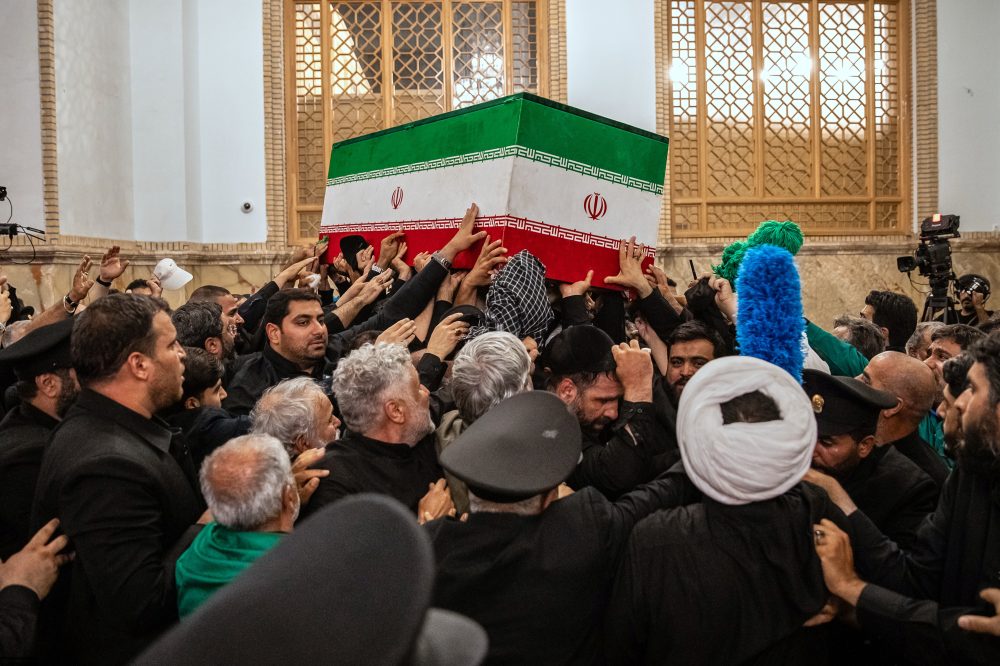

DUBAI, United Arab Emirates — President Donald Trump issued a sweeping military threat against Iran on Saturday, responding to open calls for his death that emerged during the funeral of Supreme Leader Ayatollah Ali Khamenei — the latest flashpoint in an already deeply unstable situation across the Middle East.
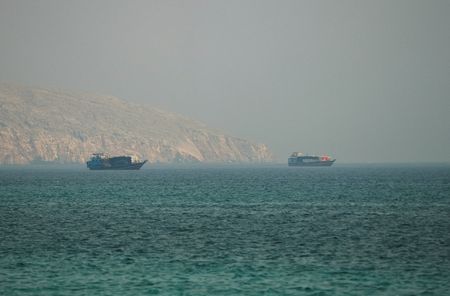
Trump took to his Truth Social platform to post the warning after senior U.S. officials pressed Iran to publicly declare that the Strait of Hormuz is open and that vessels passing through the critical waterway will no longer face attack.
Tehran has refused to make any such declaration. Instead, Iranian officials have insisted on maintaining exclusive control over the strait and have called for ships to pay fees to Iran for passage — a position that defies decades of international understanding treating the corridor as open international waters.
Earlier this week, Iran attacked three ships in the strait, prompting a series of U.S. airstrikes against Iran. Iran responded with retaliatory strikes targeting countries across the region, setting off multiple days of back-and-forth military action.
“1000 Missiles are Locked and Loaded and aimed at the Islamic Republic of Iran, with thousands of more to immediately follow, should the Iranian Government act on its threat,” Trump wrote in his post.
Trump framed his warning as a direct response to threats against his life. During Khamenei’s funeral, crowds of mourners held up posters and banners calling for Trump to be killed, alongside Israeli Prime Minister Benjamin Netanyahu.
Khamenei, who was 86 years old, was killed in an airstrike on February 28 — the opening moment of the Iran war. His body was transported to cities in both Iran and Iraq over the course of a multi-day funeral ceremony before being buried this week.
Trump also wrote in his post that the U.S. military would “completely decimate and destroy all areas of Iran — PRAISE BE TO ALLAH!”
Throughout the conflict and its uneasy ceasefire period, Trump has repeatedly invoked the name of God in Arabic and threatened to obliterate Iranian civilization. The Council on American-Islamic Relations, a national advocacy organization, has previously condemned what it called Trump’s “deranged mocking of Islam.”
U.S. officials, speaking anonymously to describe the current state of negotiations, said the renewed military strikes this week were triggered by what they characterized as a rogue faction of Iranian hardliners attempting to derail the ceasefire between Washington and Tehran.
Iran, however, has pushed back on that characterization, maintaining that its government is unified under the country’s new supreme leader, Ayatollah Mojtaba Khamenei, following the war.
Those same U.S. officials said Friday that Trump is giving American negotiators only a limited window to reach a deal with Iran, while also making clear that the president has a broad range of options available if those talks break down.
Just before the U.S. officials spoke, Iran’s diplomat at the United Nations told reporters that any decisions about the Strait of Hormuz — including whether it is open or subject to demining — “rests exclusively with Iran.”
Iran has demanded that all vessels pay fees to Tehran to pass through the strait, overturning a global norm that has treated the waterway as international territory for decades. Before the war began, roughly one-fifth of all oil and natural gas traded worldwide passed through the strait.
Iran’s stranglehold on the strait during the conflict triggered a worldwide energy crisis. Oil prices have since fallen sharply from a wartime peak of $120 per barrel, though tensions remain high.