A traffic incident on southbound Route 1 near Twin Willows Road has resulted in one lane being shut down, according to Delaware transportation officials.
The lane closure is the result of a crash in the area. Motorists traveling southbound on Route 1 near that stretch should anticipate slowdowns and allow extra travel time.
Drivers are encouraged to use caution when passing through the area and to follow the direction of any traffic personnel on scene. Updates on the lane closure will be provided as more information becomes available.
Northbound travelers on Interstate 95 are facing a right shoulder closure near Salem Church Road, situated between Chapman Street and South Chapel Road.
According to Delaware Department of Transportation, the lane restriction is the result of active construction work in that corridor.
The closure is expected to remain in place until 5 p.m. on July 23, 2026. Drivers are encouraged to remain alert and allow extra time when passing through the affected area.
During his final year of high school on the Puyallup Reservation, Gerald Dillon swapped much of his traditional coursework for hands-on career training. Every morning he stepped into a second-grade classroom as a teaching assistant, the young students would leap from their seats to greet him with hugs and fist bumps.
For Dillon, who was 18 at the time and had previously found school dull enough to coast through with minimal effort, those moments gave him a reason to show up.
“It motivates me. I like making connections with the kids, I like helping them,” Dillon said.
The shift began in his junior year when he signed up for career-focused courses. His grades climbed, and he ultimately graduated in June from Chief Leschi Schools in Washington state. He is now weighing the possibility of pursuing a college degree in education.
School administrators say the push toward technical and career-readiness training is showing real results, with more students finishing school on time rather than dropping out.
That kind of progress mirrors a broader trend across the U.S. Bureau of Indian Education, which oversees 183 elementary and secondary schools educating more than 40,000 students. In 2015, just over half of high school students at BIE-affiliated schools graduated within four years. By 2025, that figure had climbed to a record 79%.
Some educators within the BIE credit local program innovations for the improvement. Assistant Secretary of Indian Affairs Billy Kirkland has pointed to the gains as evidence of the Trump administration’s dedication to Native American students, including investments in teacher development. The agency also overhauled how it reports graduation data, correcting longstanding flaws that had caused the numbers to appear worse than they actually were.
Still, significant concerns remain. Moves to dismantle the U.S. Department of Education and ongoing disruptions tied to cuts made by DOGE have raised fears that the progress could be reversed before struggling schools have a chance to catch up.
Agency officials acknowledge that part of the jump in graduation figures reflects more accurate record-keeping rather than a sudden improvement in student outcomes. For years, school administrators throughout the system used faulty tracking methods — often counting students who transferred elsewhere as dropouts.
“We had to come to a consensus and set an accountability framework for our schools,” said Carmelia Becenti, the agency’s chief academic officer.
Starting in 2018, the BIE began standardizing how schools collect and report graduation data. According to Becenti, the result has been a clearer and more encouraging picture of student outcomes.
An Associated Press analysis of BIE data found that graduation rates across the system have risen 55% since the new reporting standards began rolling out, with nine secondary schools reporting growth of 100% or more.
Fewer than one-third of BIE schools are directly run by the federal agency. The remainder are operated by tribal governments using federal funding. At some of those schools, educators say the data improvements only tell part of the story.
Don Brummett, superintendent of Chief Leschi Schools, said his team recognized a “disconnect” between the school’s previous emphasis on college preparation and the reality that many students simply wanted to enter the workforce after graduation.
“We devalued the trades. That was a mistake,” Brummett said.
The school introduced its career and technical education program in 2020, backed by funding from the Puyallup Tribal Council. Since then, Brummett said students who might have otherwise walked away from school entirely have found new motivation through programs in health sciences, education, and fisheries management.
Dillon said the practical, job-focused training suited the way he learns best. “It was kind of the first time I felt excited to go to school,” he said, recalling the days he helped second-graders practice reading and study the life cycle of a frog. Between 2019 and 2025, Chief Leschi Schools saw its four-year graduation rate jump from 53% to 87%.
Career training is just one approach tribal-run BIE schools have taken to keep students on track. At Choctaw Central High School, operated by the Mississippi Band of Choctaw, administrators say a virtual learning experiment launched during the COVID-19 pandemic helped push graduation rates from roughly 70% to 93%.
“For certain kids that have more responsibilities at home, kids that need to work, we saw that (virtual learning) gave them a flexible schedule and an opportunity to earn their diploma,” said principal Alaric Keams.
After pandemic restrictions ended, the district kept the virtual option available to all high school students.
Not every tribal government, however, has the financial resources to fund these types of programs or take over management of BIE schools.
Peter Lengkeek, chairman of the Crow Creek Sioux Tribe in South Dakota, says the BIE-operated high school serving his community is chronically short-staffed and burdened by years of deferred maintenance — including a gymnasium with sinking walls and a rodent problem. The school has reported graduating fewer than 60% of its students on time in recent years.
“If we were able to, we would step in and try to remedy a lot of these things,” Lengkeek said. “We have to rely on the government to fulfill its treaty promise.”
Tribal leaders say they fear the combination of a dismantled federal education department, DOGE-driven staff reductions, and threats of deep funding cuts could erode the gains that have been made.
In November 2025, the Department of Education began transferring oversight of dozens of programs serving Native students over to the BIE. At a tribal consultation meeting held in February in Washington, D.C., dozens of tribal leaders voiced strong opposition, arguing the transition would pile additional responsibilities onto an agency already stretched too thin. Several accused the department of bypassing its legal obligation to consult tribes before moving forward.
“We are here too late,” said Herschel Gorham, lieutenant governor of the Cheyenne and Arapaho Tribes. “The ink was dry on the agreements before the tribes were ever notified. That should never, ever happen.”
Jason Dropik, executive director of the National Indian Education Association, said instability at the agency’s Washington headquarters ripples down to individual schools. He pointed to a Trump administration executive order that sought to transform the BIE into a school choice system — an effort that was scaled back following pushback from tribal nations.
“That caused some delays and disruptions to services,” Dropik said. “When drastic changes go into motion without tribal consultation, there can be unintended consequences for our students.”
Lengkeek said he worries the BIE will be consumed by political turmoil while schools like the one in his community continue to fall short.
“This system holds the future of our nations in its hands,” Lengkeek said. “We need stability. We need increased funding. We need infrastructure.”
Drivers traveling through Wilmington should be aware of intermittent lane closures currently affecting Baynard Boulevard between North Broom Street and Concord Avenue.
The closures are tied to construction work taking place in that stretch of road and are expected to remain in place through 5:00 PM.
Motorists in the area are encouraged to use alternate routes where possible or budget additional time for their commute until the work is completed.
Argentina edges Switzerland 3-1 in extra time, sets up semifinal clash with England
KANSAS CITY, Mo. — Argentina is headed to the World Cup semifinals after Julián Alvarez delivered a breathtaking long-range goal in the 112th minute to break a 1-1 deadlock against Switzerland. Lautaro Martinez then added a final goal in the closing seconds to seal the 3-1 result. Earlier in the match, Alexis Mac Allister converted off a corner kick set up by Lionel Messi. The match stirred controversy in the second half when a yellow card initially issued to Leandro Paredes was reversed through video review, and a Swiss player was sent off instead, leaving Switzerland to finish the game with only 10 men. Argentina will now face England on Wednesday in Atlanta.
Bellingham’s extra-time heroics send England to World Cup semis
MIAMI GARDENS, Fla. — Jude Bellingham scored twice — including a decisive strike in the 93rd minute — to push England past Norway 2-1 and into the World Cup semifinals for the first time since 2018. The Real Madrid star now shares the tournament scoring lead with teammate Harry Kane, each with six goals. England, which last won the World Cup in 1966, now needs just one more win to reach the championship match. Their next opponent will be Argentina in the semifinals.
Messi’s scoring streak snapped, but his playmaking still shines in Argentina’s win
KANSAS CITY, Mo. — Lionel Messi did not find the back of the net against Switzerland on Saturday, ending a run of nine consecutive World Cup matches with a goal. Still, the 39-year-old superstar contributed meaningfully, as his skillful play in the 10th minute drew a corner kick that led directly to Alexis Mac Allister’s opening goal. Switzerland tied things up in the 67th minute before Julián Alvarez and Lautaro Martinez took over in extra time to secure Argentina’s 3-1 victory. Messi holds the all-time record with 21 career World Cup goals.
McGregor’s UFC comeback cut short by knee injury in first round
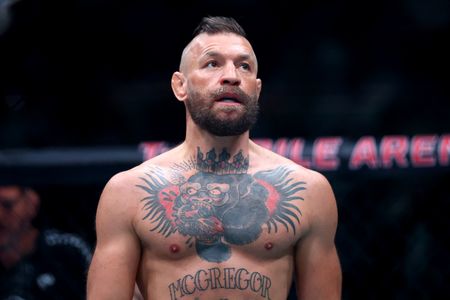
LAS VEGAS — Conor McGregor’s highly anticipated return to the octagon lasted just 1 minute and 9 seconds. Fighting for the first time in more than five years at UFC 329, McGregor launched a flying left roundhouse kick at the opening bell against Max Holloway but came down awkwardly on his right knee. Despite attempting to continue with two more strikes, it became apparent McGregor (22-7-0) could not carry on in the scheduled five-round welterweight bout. Holloway improved to 28-9-0 with the victory.
Noskova claims Wimbledon title in all-Czech final
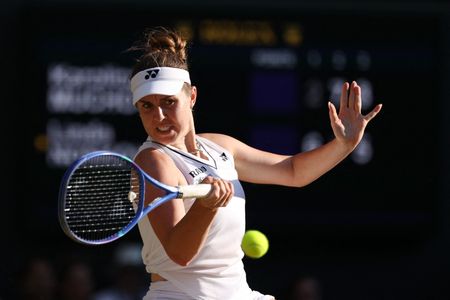
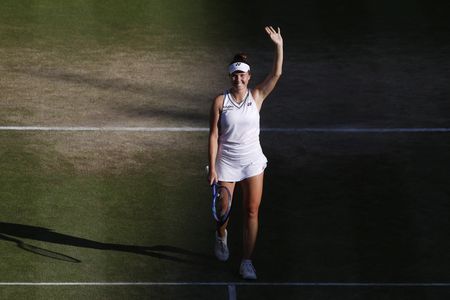
LONDON — Linda Noskova added her name to a long and distinguished list of Czech women to win Wimbledon. The 21-year-old rallied from a shaky second set — in which she squandered five match points — to defeat fellow Czech Karolina Muchova 6-2, 5-7, 6-3 and capture her first Grand Slam title. Noskova became the third Czech woman in four years to claim the grass-court championship, following Marketa Vondrousova in 2023 and Barbora Krejcikova in 2024. Two-time Wimbledon champion Petra Kvitova was among those watching, as was record nine-time champion Martina Navratilova, who was seated in the Royal Box alongside Kate, the Princess of Wales.
Khosla family agrees to buy Seattle Seahawks for $9.612 billion
The Khosla family, led by Vinod Khosla, has reached a formal agreement to purchase the defending Super Bowl champion Seattle Seahawks for $9.612 billion. The deal was announced Saturday by the estate of Paul Allen. A person with knowledge of the agreement shared the details with the Associated Press on the condition of anonymity, noting the sale still requires approval from the NFL before it becomes official.
Sinner’s hard-court prep paid off in Wimbledon semifinal rout of Djokovic
LONDON — Before dismantling Novak Djokovic on Wimbledon’s Centre Court, top-ranked Jannik Sinner made a strategic decision to practice on an indoor hard court two days prior. Coaches Darren Cahill and Simone Vagnozzi made the call to help Sinner rediscover the crisp ball-striking that makes him the most feared baseline player in the game. Tennis legend Andre Agassi noted on the BBC that Sinner “reminded himself just how much that ball can explode off his racket.” Sinner will now face French Open champion Alexander Zverev in Sunday’s final as he looks to defend his Wimbledon crown.
Reddick aims to reclaim NASCAR points lead at Atlanta
HAMPTON, Ga. — Tyler Reddick is hoping EchoPark Speedway in Atlanta can help him turn things around in the NASCAR Cup Series points race. Reddick won five of the first nine races on this year’s schedule, including at EchoPark Speedway in February — just one week after taking the Daytona 500. That fast start gave him a commanding lead in the standings, but that advantage has since evaporated. Denny Hamlin, who co-owns 23XI Racing with Michael Jordan, now leads Reddick by 44 points heading into Sunday night’s race. Reddick said he is “extremely” confident he can find success again at Atlanta.
Haaland kept off scoresheet as Norway’s World Cup journey ends
MIAMI GARDENS, Fla. — Erling Haaland was substituted out of Norway’s quarterfinal match against England with about 15 minutes remaining in extra time, and shortly after his exit, Norway’s World Cup run came to an end with a 2-1 defeat. Haaland was largely neutralized throughout the contest, possibly affected by the intense heat and humidity in South Florida. It marked the first time in this tournament that Haaland failed to score — he had netted six goals across his previous four appearances.
South Africa mourns World Cup midfielder Jayden Adams, 25
JOHANNESBURG — The soccer world is grieving the loss of South Africa midfielder Jayden Adams, who has died at the age of 25. South Africa’s minister of sport, arts and culture, Gayton McKenzie, confirmed the news in a statement posted on X, writing that “it is with profound shock and a heavy heart that I have learnt of the passing of Jayden Adams.” Adams had been part of the South African squad that made history by advancing to the World Cup knockout stage for the first time. No details about the cause of death were provided. A moment of silence in his memory was observed before the World Cup quarterfinal between Norway and England in Miami Gardens, Florida.
Drivers traveling through Wilmington should be aware of temporary lane restrictions currently affecting a stretch of Baynard Boulevard.
According to traffic officials, intermittent lane closures are in effect on Baynard Boulevard between Concord Avenue and North Broom Street. The closures are the result of active construction in the area.
The lane restriction is expected to remain in place until 5 p.m. Motorists are encouraged to allow extra travel time or consider using alternate routes to avoid delays.
Foreign ministers from the Southeast Asian bloc known as ASEAN received assurances Sunday from their Myanmar counterpart that former leader Aung San Suu Kyi, who has been held in detention since a military coup in 2021, is healthy and will be cared for. The update came from ASEAN’s special envoy to Myanmar following a diplomatic meeting in Bangkok.
Maria Theresa Lazaro, the Philippine foreign minister serving as ASEAN’s special envoy, has been pushing for direct access to Suu Kyi, who is 81 years old. Lazaro relayed what she heard from Myanmar’s foreign minister at a press conference, saying: “My recollection of the statement of the Myanmar foreign minister on Aung San Suu Kyi is that she’s in good health and that the premise of how he said this is that she is a relative, she’s a sister and therefore we will take care of her.”
Suu Kyi is currently serving a 27-year prison sentence, which was recently reduced by one-third. She was convicted on multiple charges — including incitement, corruption, election fraud, and violating state secrets laws — charges that her supporters say were invented to remove her from the political arena. Suu Kyi has maintained her innocence.
Sunday’s gathering marked the first time in years that the 11-member Association of Southeast Asian Nations held an in-person meeting with a Myanmar representative at the foreign minister level, since the country’s military leadership was barred from top-tier ASEAN gatherings following the coup. The exclusion stemmed from Myanmar’s failure to follow through on a “five-point consensus” peace agreement it had reached with the bloc.
The ongoing civil war in Myanmar has claimed an estimated 100,000 lives and forced several million people from their homes.
Since April, Myanmar has been governed by a nominally civilian administration that took shape after elections earlier this year. Former military chief Min Aung Hlaing now holds the presidency and has been working to rebuild ties with ASEAN.
The exact location where Suu Kyi is being held remains unknown, though Lazaro previously indicated she had been moved to a “designated location,” offering no further details.
Thai Foreign Minister Sihasak Phuangketkeow confirmed that Myanmar’s Foreign Minister Tin Maung Swe fielded pointed questions during Sunday’s informal Bangkok session about the condition of the Nobel Peace Prize winner. “We also made our comment that if the ASEAN special envoy could be given the opportunity to meet with Daw Aung San Suu Kyi, that would be even better so that we can be able to verify the claims that the foreign minister made,” he said, using a Myanmar honorific to refer to her.
Ukrainian President Volodymyr Zelenskiy announced Sunday that he is moving to replace Prime Minister Yulia Svyrydenko, signaling a significant shake-up within Ukraine’s government.
In a post on X, Zelenskiy expressed appreciation for Svyrydenko’s service, writing: “I am grateful to Yuliia for her clear, steady, and effective work as Prime Minister, for her years of productive service on Ukraine’s team, and I have offered her the opportunity to lead a new and important area of relations with a key partner.”
Zelenskiy went on to say, “I expect that, together with MPs, we will make the corresponding changes in the Government of Ukraine.”
The president stated the government overhaul was necessary to “ensure the implementation of an updated political strategy,” but did not elaborate further on what that strategy entails.
Svyrydenko had been appointed to the position in July 2025. Zelenskiy did not disclose what role she would move into, nor did he name a potential successor. He did note, however, that leadership changes would also take place within law enforcement agencies.
Opposition lawmaker Yaroslav Zhelezniak suggested on Telegram that Svyrydenko is expected to become Ukraine’s ambassador to the United States. “That means she will leave the post of prime minister and the entire government will be reshuffled,” Zhelezniak wrote.
Under Ukrainian law, the resignation of a prime minister must be approved by parliament and automatically triggers the resignation of the entire cabinet.
Lawmakers have floated several names as possible replacements, including Svyrydenko’s predecessor, Energy Minister Denys Shmyhal; Defence Minister Mykhailo Fedorov; and Serhiy Koretskyi, who heads the state energy company Naftogaz.
Drivers heading northbound on B Street should be aware of a lane restriction currently in place due to ongoing construction work.
The left lane on B Street northbound, between New Castle Avenue and Townsend Court, is closed to traffic. The closure is scheduled to remain in effect until 4 p.m.
Motorists traveling through the area are encouraged to allow extra time or consider alternate routes to avoid potential delays.
When it comes to flying in the United States, the choices passengers have may be fewer than they realize. The four largest American airlines now hold a combined 75% share of the domestic air travel market — a level of industry concentration that is historically unprecedented.
Consumer advocates and industry critics argue that this kind of consolidation is harmful to passengers, pointing to concerns about pricing, service quality, and reduced options on many routes. When fewer companies control the majority of flights, the argument goes, travelers have less bargaining power and fewer alternatives.
The airlines, however, push back on that characterization. Carriers maintain that meaningful competition still exists within the industry and that passengers continue to benefit from a functioning marketplace.
The debate over airline consolidation has gained renewed attention as travelers increasingly question whether the shrinking number of major players in the skies is working in their favor — or against them.
Drivers in the area should be aware that Oakwood Road, between Bybrook Road and Thomas Road, is experiencing intermittent lane closures due to construction activity.
The lane restrictions are expected to remain in place until 5:00 PM. Travelers passing through the affected stretch of roadway may encounter delays during that time.
Motorists are encouraged to allow extra travel time or consider using an alternate route to avoid the construction zone.
A section of Peachtree Run is currently closed to traffic following a downed tree in the area.
The closure affects the stretch of roadway between Sunny Meadow Drive and Fox Hollow Drive. Motorists traveling through the area are advised to find an alternate route until the obstruction is removed and the road is reopened.
No estimated time for the road to reopen has been announced at this time. Drivers should use caution and plan accordingly.
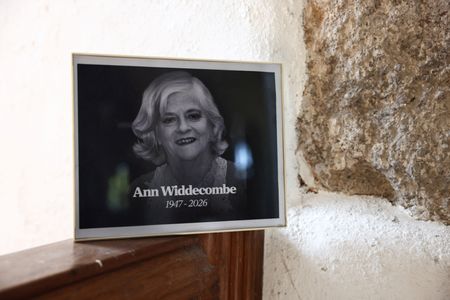
London — Police in the United Kingdom announced Sunday that their investigation into the death of former British government minister Ann Widdecombe has turned up no evidence of a political motive, following the arrest of a 28-year-old man on suspicion of murder.
Devon and Cornwall Police Assistant Chief Constable Matt Longman confirmed the arrest, which was announced late Saturday, and stated that investigators are not pursuing any other individuals in connection with the killing.
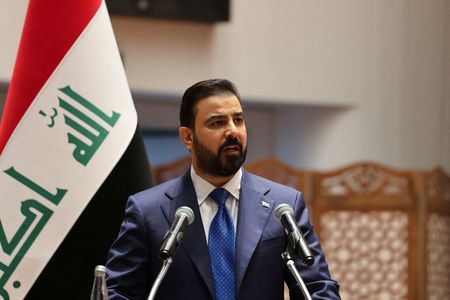
Iraqi Prime Minister Ali al-Zaidi is scheduled to depart for Washington on Monday, leading a formal government delegation following an official invitation from the United States, according to a statement made Sunday by government spokesperson Haider al-Aboudi.
Al-Aboudi addressed reporters at a press conference, saying, “The agreements to be signed will include several memorandums of understanding in the oil and gas sector as Iraq prepares to bring in various U.S. companies that will provide momentum to increase oil production capacity.”
The visit signals a push by Baghdad to deepen energy cooperation with American firms as Iraq works to expand its petroleum output.
INGLEWOOD, California — A top official at SoFi Stadium says a month of World Cup action has left the venue better prepared than ever for the high-profile events still to come, including the Super Bowl and the 2028 Los Angeles Olympics.
The $5 billion stadium in Inglewood hosted eight World Cup matches, among them the United States’ opening contest and two games featuring Iran, all without any major problems.
Otto Benedict, senior vice president of facility and campus operations at SoFi Stadium and Hollywood Park, told Reuters the experience confirmed years of careful preparation.
“From a public safety perspective, I think that went very, very well,” Benedict said. “The number of matches, the size of our matches, having two matches with Iran … all of our law enforcement partners, our federal assets and even our local assets worked collaboratively to create a very safe environment.”
The World Cup stretch served as a high-stakes rehearsal for a venue that will host February’s Super Bowl — its second, after also holding the NFL championship game in 2022 — along with swimming competitions and the opening and closing ceremonies for the 2028 Los Angeles Olympics.
Benedict noted that stadium systems covering ticketing, crowd movement, food and beverage service, and entry and exit points all held up well during repeated World Cup events, many of which brought first-time visitors to the venue.
“At no point as we walked around did we see areas where we thought, ‘Hey, we’re actually too tight here, there’s not enough space here,’” he said. “We saw everything flowing very well.”
He also pointed out that soccer crowds behave differently than NFL audiences, with a larger portion of fans leaving their seats simultaneously at halftime, placing heavier demands on walkways, concession stands, and restrooms all at once. The stadium managed those surges effectively, Benedict said, giving the operations team useful data heading into future events.
The temporary natural grass surface installed for the World Cup also drew positive attention. Benedict said the field exceeded expectations and was actually improving as the tournament progressed. However, he said keeping a permanent grass surface at the stadium would not be practical given that it houses two NFL teams, hosts concerts, and runs a packed year-round schedule.
“It just wouldn’t be a feasible operation,” he said, pointing to the stadium’s below-ground depth, its canopy structure, and its busy event calendar as key factors.
While Benedict expressed the view that SoFi should have been selected to host a semifinal or final, he said the tournament still demonstrated the stadium’s readiness for what lies ahead.
“It gives us the ability to say to anybody coming in, and even for our own operations, that what we’re doing is the right consistency,” he said. “Let’s keep moving these items forward.”
Good morning, Delmarva! We’re heading into a pleasant Sunday with partly sunny skies and a comfortable high near 83°F. A light east breeze of 5 to 10 mph will keep things feeling fresh throughout the afternoon — great news if you’re planning some time outdoors or heading to the beach today.
No storms or significant weather concerns to worry about this weekend, so enjoy it! Overnight, expect partly cloudy skies with temperatures easing down to a mild 68°F — a comfortable night for sleeping with the windows open.
Looking ahead to Monday, conditions look even better! Mostly sunny skies will return with another high near 83°F. Monday night brings mostly clear skies and a cooler low of 65°F, making for a beautiful start to the work week.
Overall, it’s a fantastic stretch of summer weather across the peninsula. Get outside and make the most of it, Delmarva! I’ll have updates throughout the day. Stay weather-aware and have a wonderful Sunday! 🌤️
If you have been receiving text messages from political campaigns lately, there is a chance the conversation on the other end is not coming from a human at all.
Ahead of the midterm elections, political campaigns are increasingly using artificial intelligence bots to reach out to voters through personalized text messages. These bots are trained to mimic the voice and style of actual candidates, making the exchanges feel like a genuine one-on-one conversation.
AI-generated texting has emerged as one of the latest strategies campaigns are deploying to engage with voters on a more personal level — without requiring a human staffer to be behind every message.
The technology allows campaigns to carry on what appear to be individualized conversations at a scale that would be impossible for human volunteers or staff to manage alone.
India’s largest software services company, Tata Consultancy Services, is assembling a specialized team of up to 8,900 engineers focused on artificial intelligence deployment — and it’s also on the hunt for AI-related acquisitions, according to two senior TCS executives who spoke with Reuters.
The move comes as investors grow increasingly worried that AI could shake up India’s $315 billion information technology services sector by shrinking demand for large engineering teams, cutting project timelines, and pushing down prices as clients look to capture productivity gains for themselves.
CEO K Krithivasan explained the company’s staffing target in an interview, saying, “We would be … ensuring that we have as many as 1% to 1.5% of our associates who could be what you would call FDEs.” Based on TCS’s headcount at the end of June, that percentage works out to somewhere between 5,900 and 8,900 employees. Krithivasan did not specify whether those positions would be filled through new hires or by retraining current staff.
These so-called forward-deployed engineers work directly alongside clients to speed up AI adoption and customize tools for specific business needs. The role has become one of the few bright spots for hiring in a tech sector otherwise feeling pressure from AI-driven efficiency improvements.
By building out this workforce, TCS is putting itself in competition with companies like OpenAI, Anthropic, and Microsoft, all of which have been expanding their own forward-deployed engineering teams to help clients put AI tools into practice.
The Mumbai-headquartered firm is also weighing potential acquisitions in AI, data security, and cybersecurity — a shift from its long-standing preference for organic growth that largely held until late 2025.
CFO Samir Seksaria described the acquisition strategy this way: “We are looking at where we can find things which will help us enable or enhance our strategic positioning.”
Krithivasan pushed back on the idea that AI poses a threat to the outsourcing model, arguing that businesses still need experienced partners like TCS to integrate and roll out AI systems effectively.
“What you need is a deep knowledge of the customer environment to make it work. That is where we differentiate ourselves. This has nothing to do with cost arbitrage. It’s essentially because of the talent pool that we have built,” he said.
He added that companies are increasingly running multiple AI models at once and need partners to connect those systems with existing infrastructure and manage data flows.
Despite the optimistic outlook, TCS’s annualized AI revenue growth slowed to 13% in the most recent quarter, down from 28% the quarter before. Krithivasan said he hopes to see roughly 25% quarter-over-quarter growth over the long run, though he acknowledged the path won’t be a straight line.
TCS invests approximately $1 billion per year on talent development and making AI tools accessible across the organization, with an emphasis on training programs, targeted hiring, and recruiting specialists in AI-native technologies, according to Seksaria.
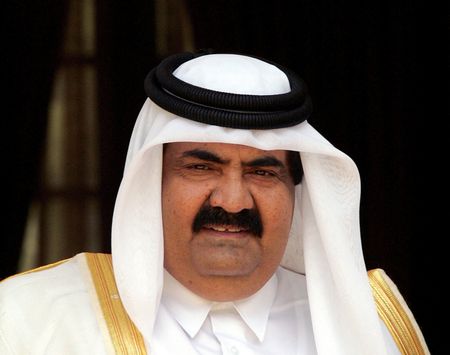
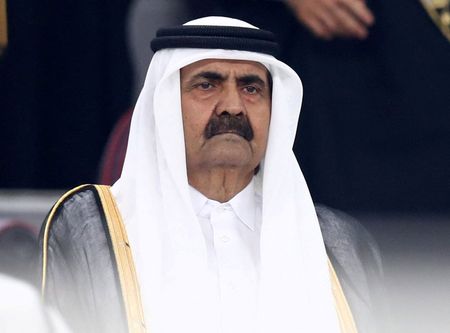
DOHA — Sheikh Hamad bin Khalifa Al-Thani, Qatar’s former emir who dramatically reshaped the tiny Gulf nation over nearly two decades in power, has passed away at the age of 74.
Qatar’s highest government authority, the Amiri Diwan, announced Sunday morning that Sheikh Hamad had died, offering no details about the cause of his death.
By the time Sheikh Hamad handed leadership to his son, the current Emir Sheikh Tamim bin Hamad Al-Thani, Qatar had already undergone a sweeping transformation driven by the elder ruler’s vision and ambition.
During his tenure, Sheikh Hamad oversaw one of the most significant chapters in Qatar’s history, guiding the country through rapid change that redefined its economy, international standing, and political reach.
Known for his strong will and independent thinking, Sheikh Hamad addressed the nation during his 2013 abdication, expressing his desire for a younger generation — one with “innovative ideas and active energies” — to carry the country forward.
Among his most lasting contributions was building out Qatar’s liquefied natural gas infrastructure, which allowed the country to tap into its enormous gas reserves and sell them on the world market. That move transformed Qatar into one of the globe’s top energy exporters and built the financial foundation for its remarkable wealth.
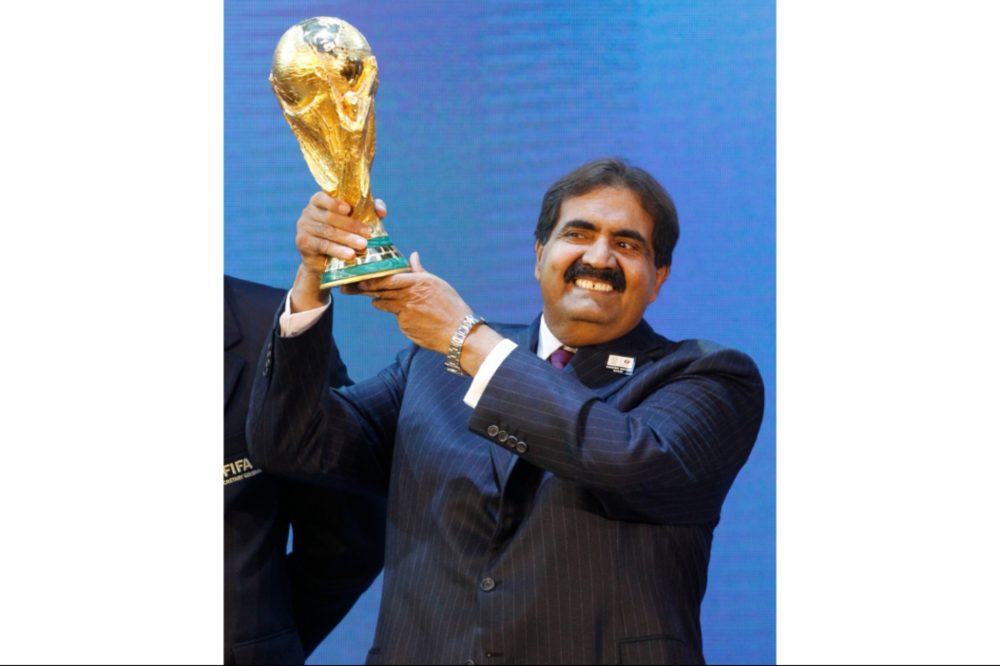
Sheikh Hamad also founded the Al Jazeera media network, which gave Qatar an influential voice throughout the Arab world and extended its reach well beyond the Gulf region. He additionally guided Qatar’s successful campaign to host the 2022 FIFA World Cup — a milestone that thrust the nation onto the global stage and sparked a decade of massive infrastructure development that transformed the capital city of Doha.
His approach to foreign policy positioned Qatar as a go-between in various international disputes, helping to broker negotiations in conflicts spanning Lebanon, Yemen, and Darfur. At the same time, Qatar maintained relationships with the United States — including hosting U.S. Central Command — as well as Iran and groups aligned with Tehran. That careful balancing act set the stage for Qatar’s ongoing involvement in talks between the U.S. and Iran, and in its extended efforts to help end the war in Gaza.
During the Arab Spring uprisings of 2011, Qatar under Sheikh Hamad took an active and divisive role, channeling its resources and influence to support revolutionary movements and Islamist groups throughout the region. While Doha described its actions as backing popular calls for political change, critics charged that Sheikh Hamad was selectively supporting factions that served Qatar’s own interests — particularly those tied to the Muslim Brotherhood.
That stance created friction with neighboring Gulf monarchies in Saudi Arabia and the United Arab Emirates, which viewed such movements as threats to regional stability and their own hold on power. Although Qatar’s regional influence grew, so did tensions with its neighbors, and the effects of that era continue to reverberate in Gulf politics today.
Sheikh Hamad’s decision to step down was partly aimed at ensuring a smooth transfer of power and reducing the risk of internal conflict within a royal family long marked by palace intrigue. He had himself come to power through a bloodless coup against his own father in 1995, and just a year later survived an attempted counter-coup believed to have been orchestrated by his father — who had similarly taken power in 1972 by removing his cousin.
One of Sheikh Hamad’s closest partners in reshaping Qatar was one of his wives, Sheikha Moza bint Nasser, whose public presence was unusual for a spouse of a Gulf ruler. As Sheikh Hamad worked to reposition Qatar at home and internationally, Sheikha Moza pursued a complementary agenda focused on education, research, and social development.
When he first came to power, Sheikh Hamad was the youngest head of state in the region at 44 years old. Unlike many Gulf Arab leaders, he was known for being approachable — often found at a favorite café in Doha’s souq, engaging with ordinary patrons.
Residents living near tidal waterways in New Castle County, Delaware should prepare for minor coastal flooding this evening. The National Weather Service has issued a Coastal Flood Advisory running from 8 p.m. until midnight tonight.
Authorities expect up to a half foot of water above ground level in low-lying areas along shorelines and tidal waterways. That’s enough to trigger flooding on the most vulnerable roads in the area, and some partial or full road closures are possible during the advisory window.
Salem County in neighboring New Jersey is also included in the advisory.
Officials are urging drivers to take precautions before the flooding begins. Do not park your vehicle in areas known to flood during high tides, and never attempt to drive through standing flood water — the water may be much deeper than it appears and could put you and your vehicle in serious danger.
The advisory remains in effect until midnight tonight. Conditions are expected to improve after that point.
For real-time water level information and local tide gauge data, visit the National Water Prediction Service at water.noaa.gov. Stay with TV Delmarva for updates as conditions develop throughout the evening.
The National Weather Service out of Mount Holly, New Jersey has put a Coastal Flood Advisory into effect for the region, beginning at 4:25 AM EDT on Saturday, July 12, and lasting through 11:00 PM EDT that same evening.
Residents living near the coast or in low-lying areas should take precautions, as minor coastal flooding is possible during this period. Authorities recommend avoiding flood-prone areas and staying alert to changing water conditions throughout the day.
Coastal flood advisories are typically issued when water levels are expected to rise enough to cause minor flooding in vulnerable spots, such as roads near the shoreline, low-lying properties, and tidal areas. While this level of advisory does not indicate a severe or life-threatening situation, it does warrant attention from those in affected zones.
Residents are encouraged to monitor updates from the National Weather Service and local emergency management officials as conditions develop throughout the day on Saturday.
BERLIN (AP) — Volkswagen’s chief executive signaled over the weekend that shutting down manufacturing facilities is not his preferred path forward as the automaker works to improve its financial performance.
The company, headquartered in Wolfsburg, Germany, is grappling with the need to reduce spending domestically while also facing growing competition in the highly profitable Chinese market.
Last week, Volkswagen announced that its ongoing “fundamental realignment” — now in its fourth year — had entered a new stage. As part of that effort, the automaker revealed plans to cut its vehicle model offerings by as much as half, though no specific details were provided. Questions continue to swirl about additional cost-reduction measures, including the fate of several German production facilities.
“There are more intelligent solutions than closing plants,” CEO Oliver Blume told the German newspaper Bild am Sonntag.
Blume noted that cost-cutting measures already in place in Germany are delivering results. “We were able to improve our factory costs in Germany by an average 20% last year alone,” he said, calling it “strong progress.”
The CEO acknowledged that while Volkswagen’s vehicles enjoy strong consumer demand, the company’s bottom line remains a challenge. “We just earn too little money with them. So we must continue to reduce our costs. In all kinds of costs,” Blume said.
Residents and visitors in parts of Delaware should prepare for minor coastal flooding tonight. The National Weather Service has issued a Coastal Flood Advisory for Kent County, Inland Sussex County, and the Delaware Beaches, in effect from 5 p.m. through 11 p.m. this evening.
Forecasters expect up to one foot of inundation above ground level in low-lying areas near shorelines and tidal waterways. The flooding could impact some of the most vulnerable roads in coastal and bayside communities, with partial or full road closures possible during the advisory period.
Authorities are urging drivers to use extreme caution. Do not drive through flooded roads — the water may be deeper than it appears, and doing so could put your life at risk and cause serious damage to your vehicle. If you typically park in a low-lying or flood-prone area, move your vehicle to higher ground before 5 p.m.
For real-time water level information and flood impacts at local tide gauges, visit the National Water Prediction Service at water.noaa.gov.
This Coastal Flood Advisory remains in effect until 11 p.m. tonight. TV Delmarva will continue monitoring conditions and bring you any updates as they develop.
The National Weather Service out of Mount Holly, New Jersey has put a Coastal Flood Advisory into effect, starting at 4:25 in the morning on July 12 and lasting through midnight on July 13.
The advisory signals that minor coastal flooding is possible during this timeframe. Residents living near the shoreline or in low-lying coastal areas are encouraged to take precautions and stay informed as conditions develop.
Coastal flood advisories are typically issued when tidal or storm-driven water has the potential to cause minor flooding in vulnerable areas, such as roads, parking lots, and properties close to the water’s edge.
Locals and beachgoers are urged to monitor the latest updates from the National Weather Service and be cautious around coastal zones until the advisory expires at midnight.
Israeli Prime Minister Benjamin Netanyahu and other senior Israeli officials extended their condolences Sunday in the wake of the death of U.S. Senator Lindsey Graham, with many describing him as one of Israel’s most devoted supporters.
“Lindsey understood that the security of Israel and America are inseparable,” Netanyahu said in an official statement.
“Israel has lost one of its greatest friends. America has lost a great patriot. I have lost a beloved friend,” Netanyahu added.
Israeli President Isaac Herzog, Defense Minister Israel Katz, Foreign Minister Gideon Saar, and former Prime Minister Naftali Bennett each took to the social platform X to share their own tributes, with all of them describing Graham as a genuine friend and one of the strongest advocates Israel had in the United States.
The governor of Russia’s Rostov region, Yury Slyusar, announced Sunday that a Ukrainian drone hit a tanker as the vessel was making its way into the Azov-Black Sea Canal.
Slyusar posted on the messaging app Telegram that firefighters brought the resulting blaze under control. He noted there was no danger of an oil spill since the tanker was carrying no cargo at the time, and confirmed that no one was injured in the attack.
The strike is part of a broader Ukrainian military effort that has targeted more than 40 Russian tankers in the Sea of Azov. Ukraine has described the campaign as a strategy to cut off fuel supplies reaching Russian forces and to isolate Moscow-occupied Crimea.
In recent weeks, Ukraine has stepped up its attacks on transportation and energy infrastructure throughout Crimea. Those strikes have contributed to fuel shortages on the peninsula and led authorities there to declare a state of emergency.
One Indian national is unaccounted for following an attack on the commercial ship GFS Galaxy in waters off the coast of Oman, according to India’s Ministry of External Affairs.
The ministry confirmed that 10 of the 11 Indian crew members aboard the vessel have been rescued. “Of the 11 Indian nationals on board, 10 have been rescued so far, while one Indian National is reportedly missing,” the ministry stated, adding that it strongly condemns the attack.
India’s embassy in Oman is actively tracking the situation and working alongside Omani authorities as the search and rescue operation remains underway, the ministry said.
Earlier, Iran stated that it had fired a warning shot that struck a vessel it claimed was traveling along an unapproved route.
U.S. Senator Lindsey Graham passed away Saturday evening following what his office described as a “brief and sudden illness,” according to an announcement from his office.
No additional details regarding the nature of his illness or the circumstances surrounding his death have been made public at this time.
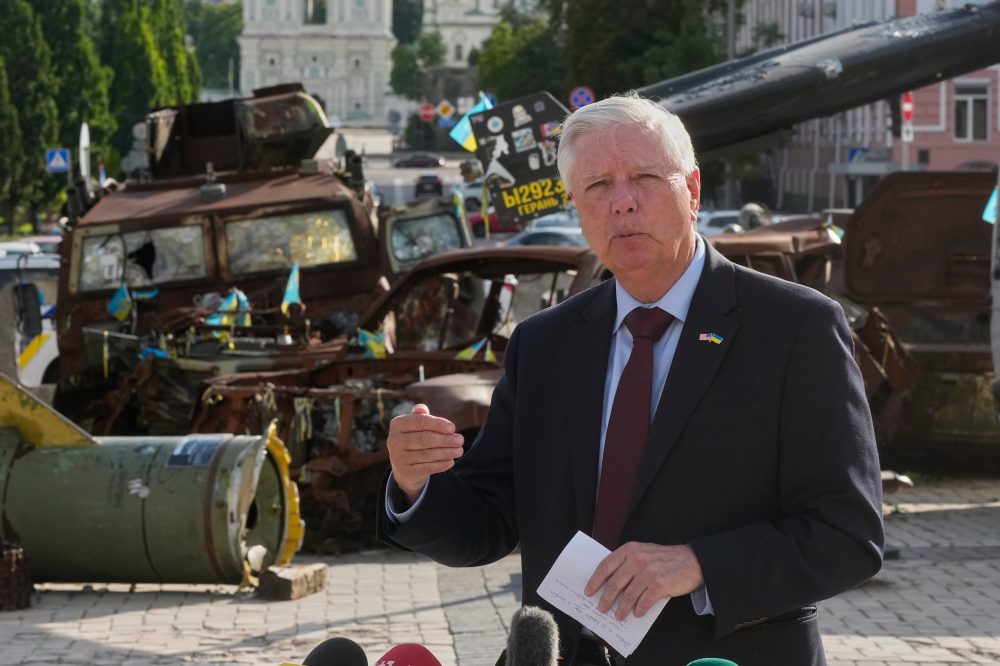
WASHINGTON — U.S. Senator Lindsey Graham, one of President Donald Trump’s most trusted allies on Capitol Hill, died Saturday night following what his office described as a “brief and sudden illness.” His office shared the news in a statement posted to social media.
Graham was 71 years old. His office, which represents the South Carolina Republican, offered no further explanation about the circumstances of his death.
“Senator Graham’s family appreciates prayers at this time and asks for privacy during this incredibly difficult period,” the statement read.
Graham was first elected to the U.S. Senate in 2002 and had been in the middle of a campaign for a fifth term. He made a brief bid for the presidency in 2016, during which he clashed with Trump and called him “unfit for office.”
Despite that early friction, Graham went on to become one of Trump’s most visible supporters, frequently speaking with the president and regularly joining him on the golf course.
Graham played a significant role in advising Trump on foreign policy, particularly regarding Iran and Russia. Just one day before his death, on Friday, he had announced an agreement with the Trump administration to move forward on a package of Russia sanctions.
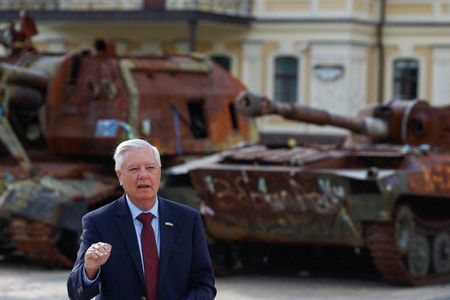
He had recently been in Ukraine, where he met with Ukrainian President Volodymyr Zelenskyy. It was Graham’s tenth visit to the country, and Zelenskyy acknowledged the trip, thanking him for “recognizing our warriors.”
Graham’s interest in Iran policy stretched back decades. As a member of the U.S. House in the 1990s, he championed efforts to isolate Iran and restrict its missile and nuclear programs. He publicly supported Trump’s decision to strike nuclear sites last year and backed the more recent conflict that began a few months ago.
At the time of his death, Graham was serving as chairman of the Senate Budget Committee, a position that placed him at the center of major legislative efforts during Trump’s second term. Republicans used a Senate process called reconciliation — which his committee oversaw — to pass significant legislation, including last year’s tax law, without facing a Democratic filibuster.
Graham had previously chaired the Senate Judiciary Committee during the 2020 confirmation of Supreme Court Justice Amy Coney Barrett. He was also in position to potentially reclaim that role if Republicans retained Senate control following this year’s midterm elections.
The brief and unexplained nature of Graham’s office statement has drawn attention at a time when there is growing concern about transparency surrounding the health of elected officials. Rep. Tom Kean Jr., a New Jersey Republican, was absent from Congress for several months without explanation before returning and revealing he had been diagnosed with depression. Separately, Sen. Mitch McConnell, a Kentucky Republican, was recently hospitalized for undisclosed health reasons.
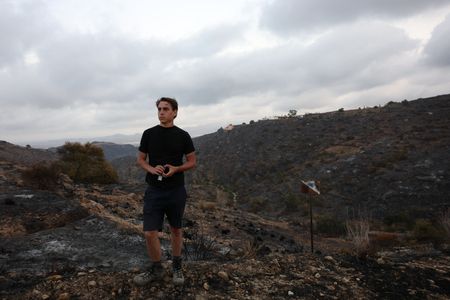
The son of a Belgian man who lost his life in deadly Spanish wildfires is challenging the official version of events, saying that authorities never warned his father or the others who perished before they attempted to flee.
Thomas-Wolf Verdonckt, a Belgian virologist, told reporters on Saturday that he was on the phone with his father — 63-year-old businessman Stanislas Verdonckt — just before 9 p.m. local time on Thursday evening as a wildfire bore down on the mountain village of Bedar, located in Spain’s southeastern Almeria province.
According to his 33-year-old son, Stanislas Verdonckt was among eight victims discovered dead in a valley beneath the Paraje el Curato area on the outskirts of Bedar, where he had owned a home for many years. Thomas-Wolf Verdonckt, who lives in Belgium, made the trip to Spain following the disaster and spoke with neighbors who survived.
He said no one in an official capacity told the group that the fire was approaching their location, nor were they advised whether it would be safer to remain indoors or attempt to evacuate.
“The people who died did not fail to follow any orders because no orders were given. No information was provided,” he said.
“They only started to run when the flames were almost upon them. That was their absolute last resort,” he added.
Spanish authorities have maintained that local officials and police either went door-to-door or called residents by phone to give instructions on whether to evacuate or shelter in place, based on how quickly the fire was moving in each area. Bedar’s mayor stated that he personally urged the group that included Stanislas Verdonckt to remain in their homes. The Andalusian regional government and the Spanish Civil Guard did not respond to requests for comment on Thomas-Wolf Verdonckt’s account.
In all, 12 people died while attempting to escape the wildfires as the blaze reached Bedar, which sits above the town of Los Gallardos. The victims were mostly foreign nationals, like Stanislas Verdonckt, along with one Spanish citizen. Their identities have not yet been officially confirmed, and firefighters were still working to bring the fires under control.
Thomas-Wolf Verdonckt described how the group of neighbors, including his father, first attempted to drive out Thursday night via a paved road, only to be turned back by the advancing flames.
“They couldn’t get through via the main road because they were not warned in advance. Nobody told them that the fire was coming from that direction, and when they tried to get out, it was too late,” he said.
The group then tried driving in the opposite direction along a dead-end dirt lane that runs along a mountainside, but that route also became impassable. They abandoned their vehicles and attempted to escape on foot.
“It was not a choice. They drove to the end of the trail, and when even that was in flames, some people chose to run and try to get into the valley,” he said.
A neighbor who managed to survive inside his home told Thomas-Wolf Verdonckt that the fire came close enough to touch the walls of the house. He described his father as an experienced hiker and photographer who was very familiar with the local terrain and fluent in Spanish.
During what turned out to be their last phone call, Stanislas Verdonckt calmly weighed his options, his son said. Thomas-Wolf Verdonckt described his father as someone who remained composed “even in the most desperate situations” and methodically went through his “plan A, B and C.”
“My father is one of the smartest people I know. He’s always very analytical and was just checking boxes: ‘Can we do this? Can we do that?’” he said. “At that point, it was just minutes before they were engulfed and they were trapped.”
Fourteen nations have come together to declare that China’s sweeping territorial claims over the South China Sea are without legal foundation, issuing a joint statement Sunday to commemorate the 10th anniversary of a major international court decision.
Back in 2016, the Philippines secured a victory at the Permanent Court of Arbitration, which determined that China’s broad assertion of sovereignty over the South China Sea violated international law. China has never accepted that decision and continues to reject it to this day.
The joint statement made clear where the signatory nations stand: “We reaffirm that the award rendered ten years ago by the Arbitral Tribunal is a significant milestone and is final, legally binding, and definitive between China and the Philippines.”
Tensions between the Philippines and China in the region have escalated in recent years. Manila has accused Beijing of carrying out “dangerous manoeuvres” within its exclusive economic zone, including deploying water cannons to disrupt supply missions to areas under Philippine control.
In addition to the United States, Japan, and the Philippines, the joint statement was signed by Australia, Britain, Canada, Estonia, Germany, Italy, Latvia, Lithuania, New Zealand, Romania, and Slovenia.
U.S. Senator Lindsey Graham died Saturday evening after falling suddenly and briefly ill, according to a post made early Sunday morning on X by his office’s communications director.
Graham was 71 years old and had represented South Carolina in the U.S. Senate as a Republican. Over the course of his political career, he went from being a sharp critic of President Donald Trump to becoming one of the president’s most dependable supporters in Congress.
His office released a statement on behalf of his family: “Senator Graham’s family appreciates prayers at this time and asks for privacy during this incredibly difficult period.”
Graham first won election to the U.S. House of Representatives in 1994, representing South Carolina’s third congressional district. He later moved to the upper chamber, winning a Senate seat in 2002, according to his official website.
Known as a strong advocate for national defense, his website noted that he had “consistently pushed for outcomes in the War on Terror that protect our long-term national security interests.”
At the time of his death, Graham was serving as chairman of the Senate Budget Committee. He also held seats on the Senate Appropriations Committee, the Senate Judiciary Committee, and the Senate Committee on Environment and Public Works.
Graham was unmarried and made his home in Seneca, South Carolina.
Sheikh Hamad bin Khalifa Al Thani, the former emir who turned Qatar into a powerful presence on the world stage before making history by willingly stepping aside for his son, has died at the age of 74, according to Qatar’s state-run news agency.
The Qatar News Agency announced his passing but provided no details about the cause of death.
During his 18 years as emir — a reign that ended in June 2013 — Sheikh Hamad was the driving force behind Qatar’s dramatic transformation from a largely overlooked Gulf state into a nation with global reach in diplomacy, media, and investment. Among his legacy projects: Qatar’s ownership of the Harrod’s department store in London and the founding of the Al Jazeera satellite news network, which became a major voice in international media.
Qatar’s influence today extends from North Africa to Afghanistan, and the country hosted the 2022 FIFA World Cup — the most-watched soccer event on the planet. Though he had long since left office, Sheikh Hamad received a rousing reception from Qatari fans at the tournament’s opening match.
However, Qatar’s ascent under his leadership also created friction with regional neighbors and Western allies. Critics pointed to the country’s close relationships with Iran, the Palestinian militant group Hamas, and Egypt’s banned Muslim Brotherhood as sources of tension. Al Jazeera, while widely praised for breaking from the traditionally cautious style of Arab journalism, also drew accusations of shaping its coverage to reflect the preferences of Qatar’s leadership.
When Sheikh Hamad announced his abdication, he addressed the nation with a message for the next generation: “The future lies ahead of you, the children of this homeland, as you usher into a new era where young leadership hoists the banner.” Power was passed to his son, the British-educated crown prince Sheikh Tamim bin Hamad Al Thani, who was 33 years old at the time.
Such a peaceful and deliberate transfer of authority was highly unusual in the region, where leadership changes typically come through death or forceful removal. Ironically, Sheikh Hamad had himself come to power by ousting his own father, Sheikh Khalifa, in a bloodless palace coup in 1995. His father subsequently lived in exile for nearly a decade.
His decision to step down was widely interpreted as an effort to get ahead of the reform movements sweeping the Arab world at the time and to respond to the growing influence of the region’s younger population. Qatar, a peninsula roughly half the size of New Jersey, is home to an estimated 300,000 citizens. Sheikh Hamad had also reportedly dealt with health issues for several years prior to his abdication. In December 2015, Qatari officials confirmed he had been flown to Switzerland for surgery after breaking his leg while vacationing.
Sheikh Hamad received his military training at Britain’s Sandhurst academy and went on to serve as commander of Qatar’s armed forces and as defense minister. He was designated crown prince in the late 1970s and steadily expanded his responsibilities to include overseeing the development of Qatar’s enormous oil and gas wealth.
After taking power, he quickly opened the previously insular nation to outside engagement. Al Jazeera became a symbol of that shift, though its willingness to broadcast statements from the al-Qaida terror network stirred anger in Washington — even as Qatar simultaneously hosted a major U.S. military logistics hub following the September 11, 2001 attacks and the subsequent invasions of Afghanistan and Iraq.
Sheikh Hamad also made sports a cornerstone of Qatar’s global image, most notably through the successful — though controversial — bid to host the World Cup. Critics alleged that Qatar used its vast financial resources to secure votes from less wealthy nations. Qatar’s sports footprint also includes sponsorship agreements with Spanish football club Barcelona and a majority ownership stake in Paris Saint-Germain.
Under his direction, Qatar Airways expanded into a major international airline in competition with neighboring carriers. The international airport in Doha, Qatar’s capital, which cost at least $15 billion to build, bears his name.
Sheikh Hamad pursued an ambitious diplomatic agenda as well, with Qatar serving as a mediator in conflicts ranging from Sudan’s Darfur region to political divisions in Lebanon and the internal rift between Palestinian factions Hamas and Fatah.
In October 2012, he became the first head of state to visit the Gaza Strip since Hamas had taken control five years earlier, pledging $400 million in investments and development projects. During that visit, Gaza radio stations broadcast a song called “Thank you, Qatar.”
Qatar also maintained a degree of engagement with Israel. Sheikh Hamad met with Israel’s then-foreign minister, Tzipi Livni, at the United Nations General Assembly in 2007, and Qatar allowed an Israeli trade office to operate in Doha until it was shut down in response to Israeli military action in Gaza in late 2008. While neighboring Bahrain and the United Arab Emirates formally recognized Israel in 2020, Qatar kept its distance from normalization.
During the Arab Spring, Qatar dispatched warplanes to support the NATO-led mission in Libya against Moammar Gadhafi’s forces and provided critical military and financial backing to the Libyan rebel movement. In Syria, Qatar played a leading role in supporting opposition forces against then-President Bashar Assad and pushed for increased weapons supplies to Syrian rebels.
Qatar’s support for Islamist groups, including the Muslim Brotherhood, strained its relationships with other nations in the region. Those tensions boiled over under Sheikh Tamim’s rule, when Bahrain, Egypt, Saudi Arabia, and the UAE launched a years-long diplomatic and economic boycott of Qatar — partly rooted in policies that had originated during his father’s tenure.
One of Sheikh Hamad’s final significant acts before leaving office was overseeing the formal opening of a Taliban office in Qatar, which eventually laid the groundwork for negotiations between the United States and the Taliban — talks that ultimately preceded the chaotic American and NATO withdrawal from Afghanistan in 2021.
Qatar’s former head of state, Sheikh Hamad bin Khalifa Al Thani, has died at 74 years old, according to an announcement made Sunday by the Amiri Diwan, the nation’s top governing body.
NAIROBI, Kenya — The biggest hurdle facing clean energy expansion across Africa is no longer about finding the right technology or resources — it’s about building the institutions, markets, and regulatory systems needed to bring those projects to life at a meaningful scale, according to experts.
This challenge is taking shape at a moment when renewable energy has reached a landmark achievement worldwide. In 2025, renewables accounted for 34% of global electricity generation, edging past coal’s 33% share. When combined with nuclear power, renewables are projected to supply half of all electricity worldwide by 2030.
As demand for electricity climbs due to industrialization, artificial intelligence, and electrification, experts say the main bottleneck in the clean energy transition has moved away from technology and toward the systems — including financing — that support it. Solving these problems is critical for the roughly 600 million people across Africa who still lack access to electricity.
“Clean energy is now cheaper than fossil fuels in virtually every part of the world,” said former New York City Mayor Michael R. Bloomberg, who serves as the U.N. Secretary-General’s Special Envoy on Climate Ambition and Solutions. He made the remarks in late June while unveiling a new $285 million Bloomberg Philanthropies effort aimed at strengthening clean energy industries in emerging and developing economies.
“But fixable obstacles are still slowing down deployment, and with energy demand rising at an unprecedented speed, we can’t allow those obstacles to continue standing in the way,” he added.
Rather than putting money directly into solar farms or wind energy projects, the initiative will channel funds into improving market design, building regulatory capacity, developing technical expertise, and strengthening industry institutions. These areas are increasingly seen as the key to drawing in private investment and speeding up the adoption of renewable energy.
The effort reflects a growing belief that Africa’s energy transition is held back less by a shortage of renewable resources or workable technologies, and more by the institutional capacity required to turn those advantages into financially sound projects that actually deliver power to the grid.
Many projects across the continent face delays stemming from poorly designed markets, limited grid planning, sluggish permitting, and fragmented regulatory systems.
“What has been missing is not the potential, but the institutional infrastructure and capabilities to unlock it,” said Saliem Fakir, executive director of the African Climate Foundation. “Philanthropy that targets those gaps directly is the kind of intervention that can shift the trajectory of a continent’s energy system.”
Across Africa, the cost of renewable energy has dropped significantly while investor interest continues to grow. Still, those investors point to policy uncertainty, slow permitting, and limited regulatory capacity as major obstacles to moving projects forward.
Wangari Muchiri, founder and chief executive of RE.Think Energy, said the funding commitment signals that “the next phase of the energy transition is not about proving clean energy works, it’s about removing the barriers preventing it from scaling fast enough.”
The Bloomberg initiative is focused not just on ambitious energy targets, but on helping projects secure long-term investment and successfully connect to national power grids.
“The next chapter of Africa’s renewable energy story will not be only by the projects it builds, but the institutions that make these projects possible,” Muchiri said.
MANILA, Philippines — Fourteen nations, including the United States and United Kingdom, came together Sunday to reaffirm that China’s broad territorial claims over the South China Sea have no legal standing, citing a 2016 international arbitration decision.
The countries released a joint statement rejecting what they described as “destabilizing” actions in the contested waters that put regional peace at risk.
The declaration marked the anniversary of a July 12, 2016, ruling handed down by a tribunal formed in The Hague under the United Nations Convention on the Law of the Sea. The signatories described that ruling as “a significant milestone and is final, legally binding and definitive.”
China refused to participate in the arbitration process, which was launched by the Philippines in 2013 following a tense maritime standoff the previous year — a confrontation that ended with Beijing effectively taking control of a disputed shoal.
Beijing has rejected the 2016 decision and continues to assert control over nearly the entire South China Sea, a critical global shipping corridor that has long been considered one of Asia’s most volatile flashpoints. The region has seen repeated territorial clashes involving China, the Philippines, Vietnam, Malaysia, Brunei, and Taiwan.
“We reaffirm the Arbitral Tribunal’s decision that there is no legal basis for China’s expansive maritime claims in the South China Sea, including those based on ‘historic rights,’” the joint statement read.
The tribunal had largely sided with the Philippines, determining under the U.N. Convention on the Law of the Sea that “there was no legal basis for China to claim historic rights to resources” in the South China Sea beyond the territorial zones recognized under the convention.
That convention, widely considered the governing treaty for the world’s oceans, entered into force in 1994 and has been ratified by more than 170 countries and parties — including both China and the Philippines.
Beyond the U.S. and Britain, the nations signing Sunday’s statement were the Philippines, Japan, Australia, New Zealand, Canada, Germany, Italy, Estonia, Latvia, Lithuania, Romania, and Slovenia.
“We reiterate our strong opposition to any destabilizing or unilateral actions including by force or coercion that threaten peace and stability in the region,” the statement declared.
The group also voiced firm opposition to the use of coast guard vessels, military forces, and maritime militia to “harass, obstruct, intimidate lawful operations by other states at sea or in the air,” warning that such actions endanger lives and undermine regional security.
The nations called for freedom of navigation and overflight to be upheld in accordance with the 1982 U.N. convention, and urged that all territorial disputes be resolved through peaceful means.
China did not issue an immediate response Sunday. However, through its embassy in Manila, Beijing had previously stated it would never accept the 2016 ruling, calling it “illegal, null and void.”
“The award will not alter the historical and factual basis for China’s sovereignty over the islands of the South China Sea and their adjacent waters,” the Chinese embassy in Manila said, adding that the ruling “will not weaken China’s resolve and determination to safeguard its sovereignty and maritime rights and interests.”
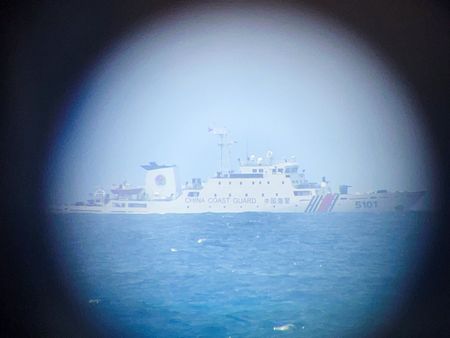
Tensions in the disputed waters have escalated in recent years, especially between Chinese forces and those of the Philippines and Vietnam. Chinese coast guard ships have deployed powerful water cannons, military-grade lasers, and dangerous blocking maneuvers against Philippine personnel and fishermen from competing claimant nations, resulting in collisions and high-risk aerial encounters.
Washington has repeatedly pressed Beijing to abide by the arbitration ruling. Both the former Biden administration and the current Trump administration have warned that the U.S. is treaty-bound to defend the Philippines — its oldest treaty ally in Asia — if Filipino forces, ships, or aircraft face an armed attack in the disputed waters.
The Pittsburgh Pirates needed a heroic performance to get past the Milwaukee Brewers in the first game of Saturday’s doubleheader, and Esmerlyn Valdez delivered exactly that. The Pirates edged the Brewers 7-6 as Valdez crushed a go-ahead grand slam, finishing the afternoon with six RBIs total.
Valdez had already given Pittsburgh a 3-2 advantage with a home run in the third inning. Then, after the Brewers rallied to take the lead, he launched his second homer of the game — a grand slam in the seventh — to put the Pirates back on top for good.
Braxton Ashcraft started on the mound for Pittsburgh, surrendering five runs on five hits while striking out six across five innings. Gregory Soto then worked out of a bases-loaded situation in the top of the ninth to earn his 12th save of the season.
For Milwaukee, starter Brandon Sproat gave up three runs on two hits and struck out three before being pulled after the third inning. Jake Bauers and Sal Frelick each hit home runs for the Brewers.
Pirates 3, Brewers 2 (Game 2)
Pittsburgh completed the sweep in the nightcap, with Bryan Reynolds going 2-for-3 and delivering the go-ahead run in a 3-2 victory. Starting pitcher Bubba Chandler was sharp, striking out six and holding Milwaukee to two runs on five hits across 4 2/3 innings. Valdez added yet another home run in Game 2, giving him home runs in three consecutive games.
Shane Drohan took the loss for Milwaukee, falling to 4-3 after allowing three runs on five hits with six strikeouts in 6 1/3 innings. The Brewers have now dropped three of their last four games after going 8-2 in the previous 10.
White Sox 1, Athletics 0
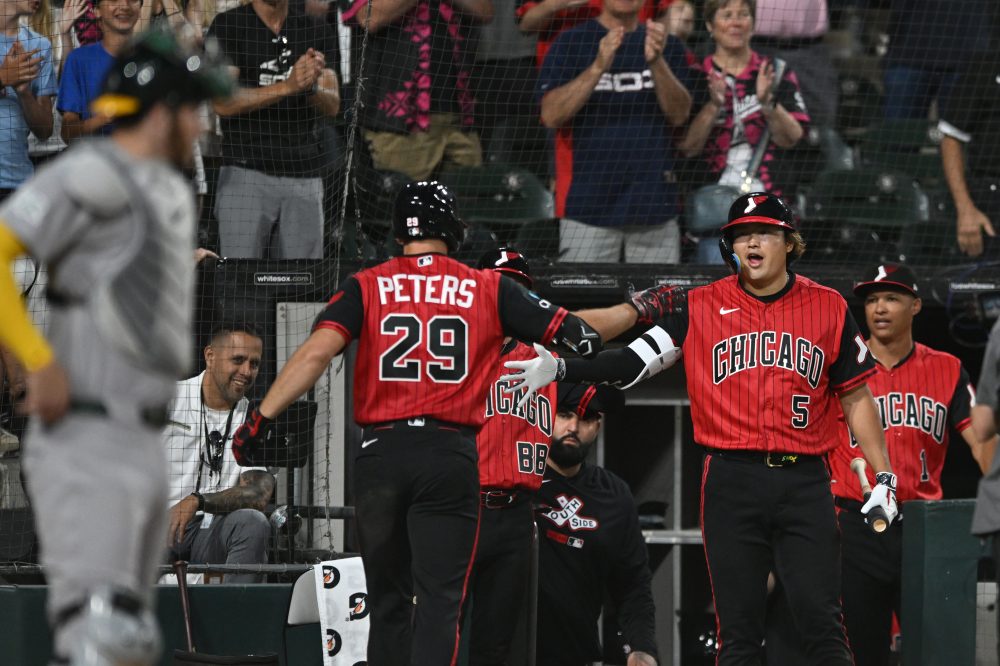
Chase Meidroth came through with an RBI double in the sixth inning to lift Chicago over the visiting Athletics in a tight, low-scoring affair. Meidroth finished 2-for-3, while Luisangel Acuna also had a pair of hits. Five White Sox pitchers combined to hold Oakland to just four hits. Erick Fedde improved to 5-6 with the win, tossing four scoreless innings while allowing just two hits. Athletics starter Gage Jump dropped to 3-4 after surrendering one run on five hits over 5 2/3 innings. Joshua Kuroda-Grauer went 2-for-4 with a double, and Jacob Wilson was 2-for-4 with a triple for Oakland.
Red Sox 4, Mets 0
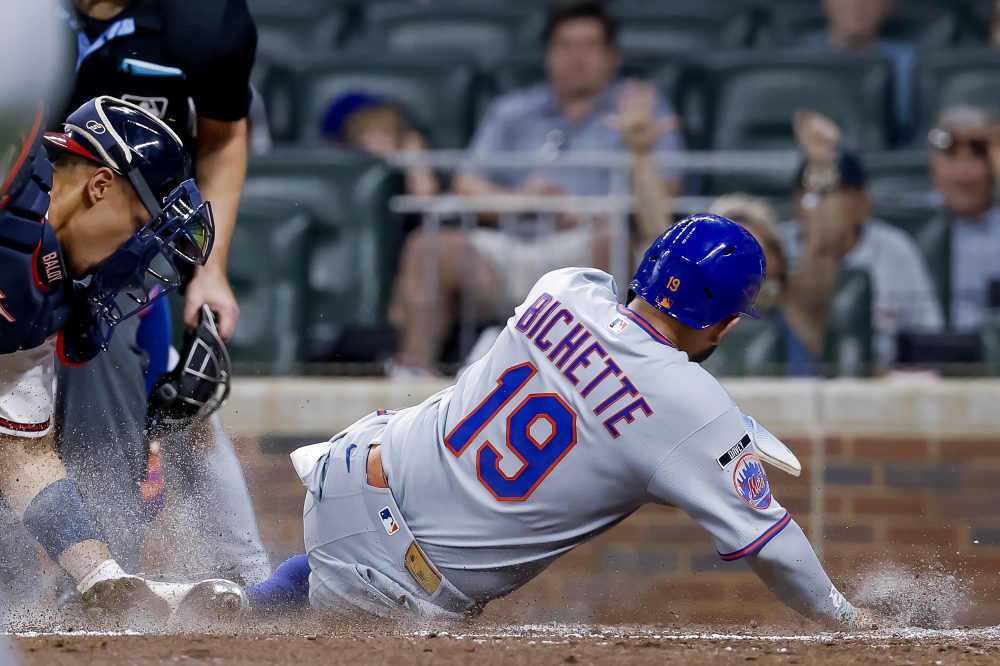
Boston made it eight wins in a row by blanking New York, with Andruw Monasterio and Masataka Yoshida each connecting on two-run home runs. Five Red Sox pitchers combined on a three-hit shutout. Reliever Jovani Moran picked up the win at 2-2 with 1 2/3 scoreless innings, while fill-in starter Eduardo Rivera turned in 3 2/3 scoreless frames in only his second big league appearance. Freddy Peralta absorbed the loss, dropping to 5-8 after working 4 1/3 innings and allowing two runs on three hits and five walks. New York went 0-for-8 with runners in scoring position and left nine runners on base.
Twins 5, Angels 3
Victor Caratini’s double down the left field line scored Royce Lewis for the go-ahead run in the bottom of the seventh as Minnesota held off Los Angeles in Minneapolis. Lewis had earlier hit a two-run home run to give the Twins a three-run cushion, but the Angels fought back to tie the game. Minnesota then responded with two runs in the seventh — starting with a Lewis double, followed by Caratini’s double and a run-scoring single from Alan Roden. Starter Joe Ryan went six innings, allowing two runs on six hits with six strikeouts. Ryan Johnson took the loss for Los Angeles, giving up three runs on three hits over five innings.
Guardians 4, Marlins 1
Steven Kwan, batting ninth in the order, lined a two-out, two-strike, two-run double and also made a run-saving defensive play as Cleveland topped host Miami. Patrick Bailey, hitting eighth, added another two-out, two-strike, two-run double in the eighth inning for insurance. Tanner Bibee earned the win, improving to 3-9 with a quality start — allowing five hits, four walks and one run across 6 2/3 innings. Eury Perez, who had thrown seven perfect innings in his previous start, took the loss at 5-7, giving up eight hits, two walks and two runs over six innings.
Giants 4, Rockies 2
Casey Schmitt broke a 1-1 tie with a three-run homer in the sixth inning to lead host San Francisco over Colorado. Heliot Ramos and Luis Arraez had opened the inning with singles before Schmitt launched his 19th home run of the season, tying him for the team lead. Arraez went 2-for-4, Tyler Mahle improved to 2-8 after allowing just one run on five hits over seven innings, and J.T. Brubaker closed out the final two innings for his first career save. Kyle Karros homered and Mickey Moniak went 2-for-4 for Colorado, which has lost three of its last four. Starter Kyle Freeland fell to 2-8 after giving up four runs and six hits in six innings.
Yankees 4, Nationals 2
New York rallied for the second consecutive game, this time with three eighth-inning home runs to top host Washington. Trailing 2-0, Ryan McMahon got things started with a solo shot off right-hander Orlando Ribalta. After Ben Rice drew a walk, Clayton Beeter came on and gave up a two-run blast to Trent Grisham, handing New York the lead. Paul Goldschmidt then followed with his 15th homer of the season. Brent Headrick improved to 5-1 with the win, and David Bednar earned his 18th save in the ninth. For Washington, James Wood had three hits including a homer, and Curtis Mead added a homer and a single. The Nationals recorded their 27th blown save of the season.
Rays 6, Mariners 1
Jonathan Aranda had three hits and drove in the go-ahead run as Tampa Bay claimed its final home series before the All-Star break with a win over struggling Seattle in St. Petersburg. Aranda went 3-for-4 with two doubles, with his first double in the third inning scoring Yandy Diaz to break a 1-1 tie. Pinch hitter Ryan Vilade then added a three-run home run in the seventh. Ben Williamson was outstanding, going 4-for-4 with a double, an RBI, a run scored and a stolen base. The victory lifted Tampa Bay’s home record to 35-14, the best in the majors. Starter Griffin Jax improved to 5-6 after allowing just one run on four hits over five innings. Seattle’s Logan Gilbert fell to 7-6, giving up four runs on nine hits in 6 2/3 innings as the Mariners dropped their fifth straight.
Phillies 4, Tigers 2
J.T. Realmuto delivered a two-run double and All-Star Cristopher Sanchez turned in more than seven strong innings as visiting Philadelphia snapped Detroit’s six-game winning streak. Sanchez improved to 11-4, allowing two runs on 10 hits while striking out seven — a strong bounce-back after surrendering nine runs to Kansas City earlier in the week. Jhoan Duran recorded his 24th save with a perfect ninth inning. Eduardo Valencia homered and Matt Vierling went 3-for-3 for the Tigers. Starter Casey Mize dropped to 4-6 after giving up all four runs — three earned — on five hits in 5 2/3 innings.
Orioles 6, Royals 1
Kyle Bradish carried a no-hitter into the seventh inning as Baltimore stretched its winning streak to three games against visiting Kansas City. Bradish finished at 6-9, working 6 2/3 innings and allowing just one run on two hits. Kansas City’s Jac Caglianone broke up the no-hit bid with a single to lead off the seventh and later scored on a Salvador Perez sacrifice fly. Pete Alonso hit a two-run homer for Baltimore, while Coby Mayo, Taylor Ward and Gunnar Henderson each added solo shots. The Orioles also snapped a four-series losing streak at their home ballpark. Royals starter Noah Cameron fell to 5-7 despite striking out nine in seven innings, charged with five runs on five hits.
Cardinals 4, Braves 1
Lars Nootbaar hit a three-run home run in the opening inning and Matthew Liberatore delivered six outstanding innings as St. Louis defeated visiting Atlanta. Liberatore improved to 5-6 with six scoreless frames, giving up four hits while striking out six and walking one. The Cardinals also clinched their final series before the All-Star break. Reynaldo Lopez took the loss at 4-2, allowing four runs on five hits over five innings. Mauricio Dubon homered for Atlanta, which has now dropped five of its last seven games. The loss also trimmed the Braves’ lead over the Philadelphia Phillies in the National League East to just two games.
Astros 9, Rangers 3
LaMonte Wade Jr. hit the first grand slam of his career in the third inning as visiting Houston cruised past Texas in Arlington. Yordan Alvarez launched his American League-leading 31st home run in the first inning, and Christian Vazquez added a solo shot as well. Starter Peter Lambert improved to 8-5, allowing just one run on three hits over six innings for his sixth win in seven decisions. Ezequiel Duran drove in all three Texas runs with a pair of home runs. Rangers starter Kumar Rocker fell to 2-8, continuing to struggle at home by giving up three home runs among seven runs on eight hits over 5 2/3 innings.
Cubs 5, Reds 3
Alex Bregman broke a tie game with a two-run homer in the seventh inning as Chicago defeated host Cincinnati for its fourth win in the last six games. Carson Kelly added a solo home run and Michael Busch had three hits for the Cubs. Drew Pomeranz improved to 2-3 with the win after pitching the sixth inning, though he allowed a run on two hits. Caleb Thielbar and Jacob Webb each threw a scoreless inning before Trent Thornton recorded the final out for his third save. Nathaniel Lowe, Eugenio Suarez and JJ Bleday each homered for Cincinnati, which has now lost five of its last eight. Starter Nick Lodolo exited with a blister on his left index finger after giving up a leadoff homer to Kelly in the sixth, having allowed two runs on five hits with three walks and four strikeouts to that point.
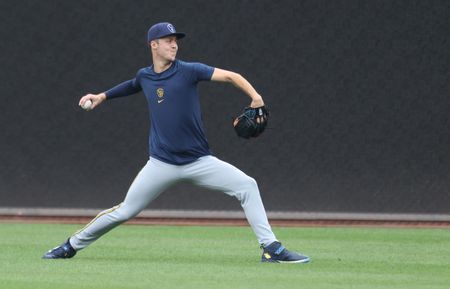
Jacob Misiorowski was set to take the mound Sunday afternoon against standout pitcher Paul Skenes and the host Pittsburgh Pirates, but the hard-throwing Milwaukee Brewers right-hander was removed from the lineup because of arm fatigue — and he will also sit out Tuesday night’s All-Star Game.
The 24-year-old told reporters he will not be placed on the injured list and anticipates returning to the starting rotation once the All-Star break concludes.
“It (stinks) to miss a start and the All-Star Game, but I know it’s the right thing to do in this situation,” Misiorowski said. “My arm is a little tired.”
Left-handed pitcher Robert Gasser will take Misiorowski’s spot in Sunday’s lineup as Milwaukee looks to salvage the final game of a three-game series against Pittsburgh.
Earning his second consecutive All-Star selection, Misiorowski has posted a 10-4 record across 18 starts covering 111 innings. He tops the major leagues with 167 strikeouts and a 1.62 ERA, while issuing just 27 walks. Over two professional seasons combined, he holds a 15-7 record with a 2.64 ERA in 33 appearances — 32 of them starts — totaling 254 strikeouts and 58 walks across 177 innings.
Among all starting pitchers this season, Misiorowski ranks first with an average four-seam fastball velocity of 100.5 mph. He has also thrown 670 pitches at or above 100 mph, the highest total in all of baseball.
Brewers manager Pat Murphy announced Misiorowski’s status following Saturday’s doubleheader sweep at the hands of the Pirates.
“He didn’t recover well from his last start, and his throwing program was clunky today, so we’re just going to give him some extra rest,” Murphy said.
U.S. military forces completed a third consecutive night of strikes against Iran on Saturday, according to a statement released by the Central Command on the social media platform X.
The Saturday operation targeted approximately 140 Iranian military sites, which included missile and drone installations, naval assets, ammunition storage areas, communication infrastructure, and coastal surveillance positions, the Central Command reported.
Across all three nights of operations this week, American forces have now struck more than 300 targets in total, according to military officials.
The Central Command stated that Saturday’s strikes were a direct response to an attack on a commercial ship in the Strait of Hormuz, and emphasized that commercial shipping traffic through the critical international waterway is continuing.
The American military action came just hours after Iran announced it had closed the strait, following a warning shot that struck a vessel traveling on what Iran described as an unapproved route. Iranian officials warned that any retaliation would be met with a “severe response.”
U.S. Central Command identified the targeted vessel as the M/V GFS Galaxy, a Cyprus-flagged container ship. Officials said the ship sustained serious damage to its engine room and that one civilian crew member is unaccounted for.
Conor McGregor’s eagerly anticipated comeback to the UFC cage came to a painful and abrupt end Saturday night in Las Vegas, lasting barely more than a minute after the Irish fighter suffered a severe knee injury during his UFC 329 matchup against Max Holloway.
McGregor, a former champion in two weight classes, had been away from competition since suffering a broken leg in a July 2021 bout against Dustin Poirier. In his return Saturday, he attempted a flying kick at the very start of the fight, but landed badly and immediately appeared to be in serious trouble.
He attempted to push through the pain for a brief moment before turning to the referee to indicate he was unable to go on.
Holloway, a former featherweight champion, said after the fight that he’d be willing to face McGregor again once the Irishman has recovered from the injury. “It is what it is, I’m going to sit down with the UFC,” Holloway said. “(There was) so much hype for that right there. We’ve got to run it back one more time. One more time for the boys.”
Saturday’s contest was actually a rematch — the two fighters first met back in 2013, when McGregor walked away with a unanimous decision victory.
McGregor’s career has been repeatedly derailed by both injuries and off-the-mat controversies. Beyond the leg injury against Poirier five years ago, a planned fight against Michael Chandler in June 2024 was called off after McGregor broke a toe during training camp. Later in 2024, an Irish civil court jury found the 37-year-old liable for the rape of Nikita Hand, an incident that allegedly occurred in 2018.
Adding to his troubles, McGregor accepted an 18-month ban in October 2025 for what were described as “whereabouts failures” — he had missed three attempts by Combat Sports Anti-Doping to collect biological samples from him during 2024. That suspension was backdated and officially expired in March.
In the co-main event at T-Mobile Arena on Saturday, British fighter Paddy Pimblett also made quick work of his opponent, submitting Frenchman Benoit Saint-Denis with a choke in less than a minute during their lightweight bout.
BEIJING (AP) — Typhoon Bavi came ashore in China’s eastern Zhejiang province before losing some of its punch, but the storm was still battering eastern China with dangerous winds and heavy rainfall throughout Sunday.
China’s national weather center reported that by early Sunday morning, the storm had weakened with maximum sustained winds of roughly 101 kilometers per hour — about 63 miles per hour — near its center. Forecasters expect the storm to continue tracking in a northwestward direction across eastern China.
Before reaching the Chinese mainland, Bavi passed to the north of Taiwan on Saturday without making a direct hit. Even so, the storm left its mark — Taiwan’s fire department reported that at least 134 people across the island had been injured as of 7 a.m. Sunday. Many of those hurt were motorcycle or bicycle riders caught in strong gusts, while others were injured on slick road surfaces.
China’s National Meteorological Center warned that numerous eastern Chinese cities should expect strong winds and heavy rain to continue throughout Sunday.
The scale of evacuations was massive. Authorities in Zhejiang province moved approximately 2.2 million residents out of harm’s way, while Shanghai relocated more than 290,000 people from vulnerable areas, according to state media. Fujian province also evacuated more than 180,000 residents.
Air travel took a major hit as well. The official Xinhua News Agency reported that Shanghai’s Pudong International Airport and Hongqiao International Airport were expected to cancel roughly 653 arriving and departing flights because of the typhoon.
In the coastal city of Yueqing, located in Zhejiang province, state broadcaster CCTV reported that more than 1,300 trees were knocked down, with at least 700 of them completely uprooted by the storm’s fury.
A new study out of London has found that retired professional soccer players show notable differences in brain structure and elevated rates of mental health struggles — but their memory and thinking skills remain intact, at least for now.
Researchers at Imperial College London examined 142 former British professional players between the ages of 30 and 60, comparing them to 56 similarly aged individuals who had no history of contact sports, military service, or prior concussions.
To assess brain health, the research team used questionnaires and cognitive tests, along with structural MRI brain scans from 124 of the former players and 40 people in the comparison group, looking specifically at differences in grey matter volume across brain regions.
The study was presented Sunday at the Alzheimer’s Association International Conference. Its authors described the work as part of a growing scientific movement to treat repeated head impacts as a potentially modifiable risk factor for dementia — similar to the way doctors already approach high blood pressure or high cholesterol.
The plan is for this to become a long-term project, with researchers intending to check in on participants every two years going forward.
“The field is taking a more holistic view of brain health and dementia risk,” said senior author Thomas Parker, a consultant neurologist at Imperial College London.
When it came to memory and thinking tests, the former players performed about as well as the control group after researchers accounted for variables like age and education level — showing no significant cognitive differences.
However, mental health was a different story. About 31% of the former athletes met the threshold for clinical depression, compared to just 9% in the control group. Similarly, 42% of the players reported clinical anxiety, versus 25% of the comparison group.
Brain scans also revealed that, as a whole, the former players had less tissue in areas of the brain associated with memory and emotion. Still, only 2% of the athletes showed individual signs of severe brain shrinkage that would suggest active, progressive neurodegeneration.
It’s important to note that the study has not yet been peer-reviewed. Researchers plan to submit a paper later this year that will include a larger sample size and more detailed analysis.
The study did not establish a direct connection to Alzheimer’s disease, the progressive condition that gradually erodes memory and is the leading cause of dementia.
Much of the existing research into sports-related brain damage has relied on post-mortem examinations and historical medical records to study chronic traumatic encephalopathy, or CTE — a degenerative disease tied to repeated head trauma that can only be confirmed after death.
By following athletes during mid-life, the Imperial College team hopes to track neurological changes well before dementia would typically be expected to appear.
These results are consistent with the team’s earlier peer-reviewed findings from 2025, which examined 200 retired rugby players and found similar reductions in grey matter and higher anxiety levels, alongside normal cognitive function.
Researchers were careful to emphasize that the current findings cannot be used to predict any individual’s personal risk of developing dementia.
“We’re at a very early stage of translating these findings to individual risk prediction,” Parker said.
KANSAS CITY, Missouri — Argentina kept their dream of back-to-back World Cup titles alive on Saturday, defeating Switzerland 3-1 after extra time to advance to the semi-finals in a match full of drama and late-game tension.
It marked the third straight knockout round match in which Argentina found themselves in a nail-biting situation, but they once again came out on top.
Alexis Mac Allister got Argentina on the board early, heading home a Lionel Messi corner kick in the 10th minute. Switzerland responded, however, with Dan Ndoye finding the equalizer in the 67th minute to level the match and force extra time.
Switzerland’s chances took a major hit in the 72nd minute when Breel Embolo was sent off following a Video Assistant Referee (VAR) review, leaving the Swiss a man down for the remainder of the contest.
Argentina capitalized on the advantage, with Julian Alvarez and Lautaro Martinez both finding the net during extra time to put the match out of reach and secure the 3-1 final.
Argentina will now turn their attention to Wednesday’s semi-final matchup in Atlanta, where they will face England, who also advanced after defeating Norway 2-1 in extra time.
Argentina’s run at the World Cup continues, but it has been anything but easy. The Albiceleste — as the Argentine squad is traditionally known — have now survived back-to-back close calls in the knockout stage, and Saturday’s quarterfinal against Switzerland in Kansas City was no different.
Despite being pushed to the edge once again, Argentina managed to hold on and advance to the semifinals, where a high-stakes showdown with England awaits.
This marks the third consecutive knockout match in which Argentina has faced a serious threat of elimination. The team’s ability to grind out results under pressure has become a defining characteristic of their 2026 World Cup campaign.
Lionel Messi, the Argentine forward and global soccer icon, was on the field working to control play during the tense quarterfinal contest, as the team fought to keep their championship hopes alive.
The semifinal matchup between Argentina and England is expected to draw enormous international attention, given the storied and often dramatic history between the two soccer powerhouses on the world stage.
DUBAI, United Arab Emirates — American forces carried out strikes against Iran in the early hours of Sunday morning, responding to an Iranian assault on a cargo vessel navigating the Strait of Hormuz. The attack left the container ship engulfed in flames, compelling its crew to evacuate the burning vessel. Iran then appeared to retaliate by launching strikes aimed at Bahrain, Qatar, and the United Arab Emirates.
The renewed hostilities in the Persian Gulf come on the heels of U.S. President Donald Trump indicating that a temporary agreement and ceasefire in the Iran conflict was finished.
U.S. Defense Secretary Pete Hegseth posted a blunt message online in response to the situation: “Iran made a poor choice. Now they pay.”
The United Arab Emirates issued a public warning Sunday about incoming missile and drone threats, while explosions were reported in neighboring Qatar. A missile alert system activated in Qatar shortly after those blasts, and Qatar’s military announced it had successfully intercepted the Iranian projectiles.
Missile alerts also rang out across Bahrain, a Persian Gulf island nation that serves as the home base for the U.S. Navy’s 5th Fleet.
It remained unclear early Sunday exactly which locations within the UAE were being targeted. The country had not previously been struck during this latest wave of Iranian attacks.
According to U.S. Central Command, the vessel hit in the Strait of Hormuz was a Cyprus-flagged container ship that sustained “significant engineroom damage” as a result of the Iranian strike. A civilian crew member was reported missing.
The United Kingdom Maritime Trade Operations center, which operates under British military oversight, reported that the ship had been traveling along a route close to Oman’s coastline — a path ships have been using to move in and out of the Persian Gulf while staying clear of Iranian territorial waters. The crew ultimately abandoned the vessel as it burned.
Iran’s paramilitary Revolutionary Guard claimed that several vessels had “disregarded our warnings and instructions to correct their course and proceed along the approved route,” and that one of those ships “was struck by a warning shot and brought to a stop.”
Iranian authorities declared the strait would remain closed “until further notice” and warned that “additional enemy bases in the region” could face targeting if Iran continued to come under attack.
Two people are dead and three others were wounded following a shooting at a popular outdoor festival in Toronto on Saturday, according to an emergency alert posted by police on X.
Officers responding to the scene located five individuals suffering from gunshot wounds. Two of those victims were pronounced dead at the scene. The conditions of the three remaining injured people were not immediately disclosed.
The violence broke out in Midtown Toronto during the Salsa on St. Clair festival, a well-known annual Latin cultural event, according to CTV News.
Residents and visitors in the area were urged by authorities to stay away from the scene and comply with all directions given by law enforcement as officers continued their investigation.
A spokesperson for the Toronto Police declined to go beyond what had already been shared on the department’s official X account when asked for further details.
Police indicated that additional updates would be released as the investigation progressed. As of the initial report, no information had been made available regarding a suspect, a possible motive, or any arrests.
Emergency crews armed with excavators and chainsaws spent Sunday clearing streets packed with fallen trees along China’s eastern coast, working in the wake of Typhoon Bavi — the most powerful storm to hit the country this year.
Bavi had weakened to a tropical storm by Sunday morning as it moved inland, but weather forecasters cautioned that the massive storm system — roughly the size of France — could bring prolonged, heavy rainfall across large portions of eastern and northern China. The storm had also triggered at least one landslide and left several areas underwater.
Ahead of the storm’s arrival, close to 2 million people were evacuated, most of them from Zhejiang province, a major hub for technology and economic activity in the world’s second-largest economy.
Bavi first came ashore near the coastal city of Yuhuan in Zhejiang at approximately 11:20 p.m. Saturday local time before striking again in Yueqing, part of the major city of Wenzhou, around midnight.
State broadcaster CCTV reported that more than 1,300 trees toppled across Yueqing, with over 700 of them pulled out by the roots entirely. Floodwaters in some spots reached a depth of roughly half the height of a vehicle tire.
Video footage broadcast by CCTV captured the aftermath of a landslide in the mountainous northern section of the city, where massive boulders rolled down onto a mountain road and nearby trees were swallowed by swollen river waters.
Before reaching mainland China, Bavi tracked north of Taiwan on Saturday, hammering much of the island with fierce winds and heavy rain. One area in the northern county of Miaoli recorded nearly 80 centimeters — about 31 inches — of rainfall.
Taiwan’s fire department announced Sunday that 134 people had been hurt, with most injuries stemming from people falling off motorcycles, slipping, or being struck by flying objects. No fatalities were reported. The island’s transport ministry said 137 international flights and 62 domestic flights were cancelled on Sunday due to the storm.
Good news for residents along the Delmarva coastline — water levels have dropped and the Coastal Flood Advisory for Kent County, Inland Sussex County, and the Delaware Beaches has expired as of late Saturday night.
The National Weather Service office in Mount Holly, New Jersey issued the expiration notice just before 11 o’clock Saturday night, confirming that tides have receded and water levels have fallen below flood stage.
However, forecasters are urging residents not to let their guard down just yet. The National Weather Service says additional advisories could be issued later tonight ahead of Sunday evening’s high tide cycle. Coastal communities along the Delaware Beaches and surrounding areas should continue to monitor conditions closely.
If a new advisory is issued, residents in low-lying areas near tidal waterways should avoid flood-prone roads and move vehicles and valuables to higher ground as a precaution. Never attempt to drive through flooded roadways — even shallow water can be deceptively dangerous.
TV Delmarva will continue to monitor conditions throughout the overnight hours and into Sunday. Stay with us on-air and online for the latest updates from the National Weather Service as soon as they become available.
A shooting near a popular Toronto street festival turned deadly Saturday, killing two people and injuring four others, according to Toronto police.
Officers responded to the area near St. Clair Avenue West and Arlington Avenue, where the annual Salsa on St. Clair festival was taking place. Six victims were discovered with gunshot wounds at the scene.
Authorities initially put out an urgent warning for the public to stay away from the area as they responded to what they described as an active shooter situation. While police later announced the scene had been brought under control, they noted that no suspect or suspects had been taken into custody.
A heavy police presence continued in the area surrounding the festival, which is a Latino-themed cultural event held in Toronto.
Ontario Premier Doug Ford expressed his grief over the tragedy on social media. “I am devastated by the senseless violence at the Salsa on St. Clair Festival that has claimed two lives and injured others,” he wrote. “My thoughts are with the victims, their families and everyone affected.”
The shooting is considered unusual for Toronto, which ranks among the safest major cities in North America. Deadly shootings — especially those involving multiple victims in a public setting — are not common occurrences in Canada’s largest city.
Ford Motor Company announced Saturday that it has reached a tentative three-year national labor agreement with Canadian auto union Unifor.
The proposed contract would cover more than 5,000 unionized Ford employees across Canada, according to the company.
Neither Ford nor Unifor responded to requests for comment on the specifics of the agreement outside of normal business hours.
Unifor launched negotiations with Ford last month as part of broader contract talks with Detroit’s Big Three automakers — Ford, General Motors, and Stellantis. The union, which represents nearly 19,000 workers at those three companies, entered talks seeking improvements in pay, job security, and benefits.
The union chose to begin negotiations with Ford first, saying last month that the automaker has shown the strongest commitment to keeping its operations running in Canada.
Before the deal can take effect, it must be ratified by Unifor members who work at Ford. The existing labor agreements between Unifor and the automakers are scheduled to expire on September 20.
Unifor kicked off bargaining earlier than it typically would, pointing to deteriorating economic conditions as the reason for the accelerated timeline.
Across the three automakers, approximately 6,000 workers have faced layoffs as the companies have shifted or suspended production at a number of facilities.
The Seattle Seahawks are on their way to a new ownership group, with the franchise announcing Saturday that a sale agreement has been reached.
The incoming ownership is headed by the Khosla family, with venture capitalist and Sun Microsystems co-founder Vinod Khosla at the helm. Khosla previously held a minority ownership stake in the San Francisco 49ers.
The team has been under the control of the Paul Allen estate since the NFL franchise owner passed away in 2018. Allen’s will directed that the Seahawks be sold and that the proceeds be distributed to various charitable causes.
Vinod Khosla expressed enthusiasm about the acquisition in a written statement: “We are honored to be entrusted as the next stewards of the Seattle Seahawks. We look forward to building on the winning legacy Paul Allen created and to earning the trust of the Seahawks organization and fans everywhere.”
While the financial terms of the agreement were not officially released, the Tacoma News Tribune reported the sale price at $9.61 billion — a figure that would shatter the previous NFL record. That amount would also rank as the second-largest sports franchise transaction in North American history, trailing only the $10 billion sale of the Los Angeles Lakers in 2025.
The deal is not yet finalized. It must go before NFL owners for a vote, a process expected to take place over the coming months.
The Milwaukee Bucks have reached an agreement with swingman Gary Trent Jr. on a four-year, $64 million contract, according to a report from ESPN released Saturday.
The agreement means Trent will remain in Milwaukee, where he suited up for 139 games — including 30 starts — across his two seasons with the team.
In his debut season with the Bucks, the combo guard/forward put up 11.1 points per game, but his scoring dropped to 8.1 points per game in the 2025-26 season — the lowest single-season average of his career since his rookie campaign.
The 27-year-old initially joined Milwaukee on a league minimum contract heading into the 2024-25 season. His performance earned him a follow-up two-year deal worth $7.5 million, which he chose to opt out of this past offseason.
That decision proved to be a smart one financially. Despite the Bucks holding his bird rights, Trent attracted considerable interest from other teams around the league.
Over his career, Trent has averaged 13.0 points per game, but the size of his new contract may make him a candidate for trade talks down the road. ESPN notes that his salary in the first year of the deal will be $15.2 million.
Malaysian Prime Minister Anwar Ibrahim’s political alliance suffered a significant setback Saturday when a key federal partner delivered a decisive blow in a regional election, throwing the stability of their national partnership into question.
The Barisan Nasional (BN) coalition, which governs Johor state in Malaysia’s south, swept to a commanding victory, capturing 48 of 56 state assembly seats according to final tallies released Sunday by the Election Commission. Anwar’s Pakatan Harapan grouping claimed only the remaining eight seats — a drop from the 12 it had previously held.
While the Johor result does not directly threaten Anwar’s majority in the national parliament, it risks deepening tensions between the two blocs, which set aside their rivalry to form a joint government following a hung general election in 2022.
BN Chairman Ahmad Zahid Hamidi wasted no time celebrating the win. “Hopefully, this win will trigger a blue wave across other states,” he told reporters at a late Saturday briefing, referencing his coalition’s signature banner color.
The strong showing is expected to embolden BN, which is led by the once-powerful United Malays National Organisation (UMNO), while raising alarms that Anwar’s bloc is bleeding support among ethnic Chinese voters and reform-minded backers who were instrumental in bringing him to power.
Growing frustration among progressive allies over the sluggish pace of promised reforms has added to the tension, as coalition partners have repeatedly clashed over how to handle sensitive racial and religious matters in the multi-ethnic, Muslim-majority nation.
The predominantly Chinese Democratic Action Party — the largest party within the ruling alliance — has signaled it may reconsider its role in the government arrangement. That announcement followed a similar defeat for Pakatan in Sabah state elections last year.
Both Pakatan and BN have publicly maintained that their federal partnership can weather disagreements at the state level. However, Anwar himself acknowledged in May that he would weigh calling a snap national election if internal divisions continued to grow.
The Johor vote arrives just weeks ahead of another critical test: a state election in Negeri Sembilan scheduled for August 1. Pakatan is expected to contest all 36 seats there, having previously won 17 in that state.
The opposition Perikatan Nasional bloc — which includes former Prime Minister Muhyiddin Yassin’s Bersatu group along with the Islamist party Pas — was shut out entirely in Johor, losing all 33 seats it entered. The newly formed Bersama party, led by Anwar’s one-time protégé-turned-rival Rafizi Ramli and buoyed by defectors from Pakatan, also suffered a resounding defeat.
MIAMI — Jude Bellingham delivered a two-goal performance, capping it with an extra-time winner, as England edged past a tenacious Norway squad 2-1 at Miami Stadium on Saturday to punch their ticket to the World Cup semifinals for the fourth time.
The match was deadlocked at 1-1 when regulation time expired. Norway had taken the lead in the 36th minute through a stunning strike by Andreas Schjelderup, but Bellingham answered just before the halftime whistle to level the score.
Three minutes into extra time, Morgan Rogers unleashed a long-distance shot that Norwegian goalkeeper Orjan Nyland could only deflect, and Bellingham pounced on the loose ball to finish it off — sending the 64,478 fans dressed in white into a frenzy.
England will now travel to Atlanta on Wednesday for a semifinal showdown against either Argentina or Switzerland. It marks the fourth time England has reached the final four in their last five major championships, as they chase a second World Cup title after their only triumph back in 1966.
England head coach Thomas Tuchel was candid in his assessment of the performance despite the positive result. “The result is fantastic. We’re in the last four. It’s amazing, but I’m not happy with the performance,” he said. “We made life very, very difficult for ourselves in the way we played. Sloppy, a lot of technical mistakes, not fast enough, not repetitive enough. We were lucky today.”
Norway, appearing in their first World Cup in 28 years, can leave with their pride intact despite the loss. Notably, England managed to keep Erling Haaland off the scoresheet for the first time in his last 16 appearances for his national team.
Norway captain Martin Odegaard reflected on the tournament experience. “It is a bit bitter, but it has been an adventure,” he said. “We must be proud. We are here for the first time in a long time, and we are making our mark. The whole world is talking about us.”
The opening half was a cautious contest, likely influenced by the intense heat. Norway showed the first real threat in the 35th minute when Julian Ryerson crossed for Haaland, whose header was saved by goalkeeper Jordan Pickford. Just a minute later, Patrick Berg stripped Harry Kane of the ball near midfield and fed Schjelderup down the left flank. The winger left makeshift England fullback Ezri Konsa in his wake before smashing the ball into the net.
Norway pressed their advantage, with Alexander Sorloth rattling a rising shot over the bar and Odegaard drilling a low effort that Pickford pushed away. In the 44th minute, Norway had a golden opportunity to double their lead during a two-on-one situation, but Sorloth opted against passing to Haaland and England’s defense recovered in time.
That missed chance proved costly when Bellingham conjured an equalizer of real quality in stoppage time. Taking a clever pass from Anthony Gordon along the edge of the box, Bellingham used one touch to guide the ball into the area, another to beat a defender, and then curled a shot past Nyland into the far corner.
Kane had the ball in the net before halftime, but the effort was ruled out for offside — a call confirmed by VAR.
Ten minutes into the second half, VAR was called upon again when Torbjorn Heggem believed he had put Norway back in front from a corner kick, but the goal was disallowed due to a push by Haaland on Elliot Anderson.
Norway’s introduction of winger Oscar Bobb in the 67th minute sparked another stretch of pressure, with England nearly conceding when David Moller Wolfe headed the ball off the crossbar. England substitute Bukayo Saka came close to giving his side the lead with a dangerous cross in the 78th minute, and later fired a low ball across the box from the byline that no England player could connect with. Another substitute, Djed Spence, caught Nyland off guard late in regulation, but the second half ended without a goal.
After Bellingham’s winner in extra time, VAR stepped in once more to overturn a penalty awarded to England for a foul on Spence. Haaland, who finished the tournament with seven goals, was taken off at the break in extra time. Norway pushed forward desperately seeking an equalizer, but England held firm to advance — matching their semifinal appearances at the 1966, 1990, and 2018 World Cups.
A visibly emotional Norway coach Stale Solbakken summed up the heartbreak. “I feel sorry for the lads, but this is top level sports at its best or its most gruesome,” he said. “We played fantastic football against a super team, but we didn’t make it.”
A record-breaking rainfall event has sent floodwaters surging through communities in several Missouri counties, triggering emergency rescues and forcing the evacuation of a summer camp with approximately 200 young campers.
The historic flooding prompted water rescue operations across the affected areas, as rising waters left neighborhoods and communities submerged. Among those who needed help were the hundreds of campers at a summer camp caught in the path of the floodwaters.
Emergency crews worked to carry out rescues as the extreme rainfall overwhelmed the region. The flooding also affected parts of Kentucky, adding to the scope of the disaster across the two states.
WASHINGTON — The United States military announced Saturday that it conducted a fresh series of strikes against Iran after forces from the Islamic Revolutionary Guard Corps attacked a Cyprus-flagged container ship as it traveled through the Strait of Hormuz.
According to a statement posted on X by the U.S. Central Command, the vessel suffered severe damage and is no longer able to continue its voyage. “A civilian crew member is missing and the vessel is unable to continue the journey due to an onboard fire and significant engineroom damage,” the statement read.
U.S. Central Command confirmed that the military action was carried out under orders from President Donald Trump.
At least two children have died following a deadly collision between a passenger ferry and a bridge over the Euphrates River in the eastern Syrian city of Deir al-Zor, according to the Syrian Civil Defence.
The incident took place on Sunday, when the vessel — which had more than 35 people on board — struck the bridge while making its way across the river. The impact sent everyone aboard plunging into the water below.
Rescue teams were able to pull more than 15 survivors from the river, the agency reported. Officials confirmed that search and rescue operations remained active as crews continued looking for those still unaccounted for.
MIAMI — Jude Bellingham delivered a two-goal performance, capping it with an extra-time winner, as England edged past a determined Norway squad 2-1 at Miami Stadium on Saturday to book a spot in the World Cup semifinals for the fourth time.
The match was deadlocked at 1-1 through 90 minutes after Andreas Schjelderup gave Norway the lead with a stunning strike in the 36th minute, only for Bellingham to level the score just before halftime.
Three minutes into extra time, Morgan Rogers unleashed a long-range effort that Norwegian goalkeeper Orjan Nyland could only deflect, and Bellingham pounced on the loose ball to drive it home. The goal sent the white-shirted supporters among the crowd of 64,478 into a frenzy.
England will now meet either Argentina or Switzerland in Atlanta on Wednesday, competing in their fourth semifinal across their last five major championships. The team is chasing a repeat of their only World Cup title, which came back in 1966.
England coach Thomas Tuchel was candid in his post-match remarks, saying the result was cause for celebration but the performance left something to be desired. “The result is fantastic. We’re in the last four. It’s amazing, but I’m not happy with the performance,” Tuchel said. “We made life very, very difficult for ourselves in the way we played. Sloppy, a lot of technical mistakes, not fast enough, not repetitive enough. We were lucky today.”
Norway, meanwhile, can feel hard done by despite the loss. They kept Erling Haaland off the scoresheet for the first time in his last 16 international appearances, and will leave their first World Cup in 28 years with their pride intact.
Norway captain Martin Odegaard reflected on the tournament with mixed emotions. “It is a bit bitter, but it has been an adventure,” he said. “We must be proud. We are here for the first time in a long time, and we are making our mark. The whole world is talking about us.”
The first half was a cautious, low-tempo affair — perhaps due to the oppressive heat — until Norway sparked to life when Julian Ryerson crossed for Haaland to head toward goalkeeper Jordan Pickford in the 35th minute. A minute later, Patrick Berg stripped Harry Kane of the ball near midfield and set Schjelderup free down the left side. The winger left makeshift England fullback Ezri Konsa in his wake before hammering a shot-cross hybrid into the net.
England looked shaken, and Norway pressed the advantage with Alexander Sorloth firing over the bar and Odegaard drilling a low shot that Pickford managed to push away. Norway nearly doubled their lead in the 44th minute when they had a two-on-one situation deep in England’s half, but Sorloth chose not to play Haaland in, allowing the defenders to recover and clear the danger.
Norway would pay for those missed opportunities when Bellingham conjured an equalizer of real quality just before halftime. Receiving a sharp pass from Anthony Gordon along the edge of the box, Bellingham used one touch to guide the ball into the area, another to beat a defender, then whipped a finish past Nyland into the far corner. Kane also got the ball into the net late in the half, but was ruled offside, a call confirmed by video review.
Video review was called upon again 10 minutes into the second half when Torbjorn Heggem believed he had put Norway back in front from a corner kick, but the goal was disallowed after officials determined Haaland had shoved Elliot Anderson in the buildup.
Norway gained momentum again after introducing speedy winger Oscar Bobb in the 67th minute, and England were fortunate to escape when David Moller Wolfe headed the ball over Pickford and onto the crossbar. England substitute Bukayo Saka nearly broke the deadlock with a dangerous cross in the 78th minute, and later created another chance from the byline, but no teammate could convert. Substitute Djed Spence caught Nyland off guard near the end of regulation, but the second half concluded with the score still level.
After Bellingham’s second goal in extra time, video review was used once more to overturn a penalty that had initially been awarded to England for a foul on Spence. Haaland, who finished the tournament with seven goals but couldn’t add to that tally, was substituted at halftime of extra time. Norway pushed for an equalizer but England held firm, matching the deep runs they made at the 1966, 1990, and 2018 World Cups.
A visibly emotional Norway coach Stale Solbakken offered a heartfelt assessment after the final whistle. “I feel sorry for the lads, but this is top level sports at its best or its most gruesome,” he said. “We played fantastic football against a super team, but we didn’t make it.”
The Seattle Seahawks officially announced Saturday that the Khosla family, including Vinod Khosla, has agreed to take ownership of the franchise — a move made in keeping with the wishes of the team’s late owner, Paul Allen.
According to a source with knowledge of the transaction, the Khosla family has entered into a formal agreement to buy the defending Super Bowl champions for $9.612 billion. The source spoke with The Associated Press under the condition of anonymity, as the deal has not yet received final approval from the NFL.
A social media post from the Seahawks confirmed that the Khosla family will take on the role of controlling owner.
“We are honored to be entrusted as the next stewards of the Seattle Seahawks,” Vinod Khosla said in a prepared statement. “We look forward to building on the winning legacy Paul Allen created and to earning the trust of the Seahawks organization and fans everywhere.”
Allen’s estate announced on February 18 that it had kicked off the process of selling the team, which recently captured its second Super Bowl title in franchise history. Investment bank Allen & Company LLC and law firm Latham & Watkins guided the sales process, which was expected back in February to stretch through the offseason.
As a condition of the purchase, the Khosla family will be required to sell off its ownership interest in the San Francisco 49ers.
NFL owners are still required to ratify a final purchase agreement. ESPN reported that team owners are expected to convene in August to vote on approving the transaction.
The Seahawks have been under Allen family ownership since 1997, when Paul Allen purchased the team for $194 million from then-owner Ken Behring. Allen played a pivotal role in keeping the franchise in Seattle, and the team is expected to remain there once the sale is complete.
The Seahawks hold a lease at Lumen Field that extends through 2032, with three additional 10-year options available.
Paul Allen, who co-founded Microsoft, passed away in 2018 from complications related to non-Hodgkin lymphoma at the age of 65. Since his death, both the Seahawks and the NBA’s Portland Trail Blazers have been managed by his sister, Jody.
In September, Allen’s estate reached an agreement to sell the Trail Blazers to an investment group headed by Carolina Hurricanes owner Tom Dundon. That deal, which includes a commitment to keep the Trail Blazers in Portland, is still awaiting final sign-off from the NBA Board of Governors.
The most recent NFL franchise sale before this one was the Washington Commanders in 2023, when a group led by Josh Harris — which includes Magic Johnson — purchased the team from longtime owner Dan Snyder and his family for a then-record $6.05 billion.
The Seahawks claimed the Super Bowl title this past February with a 29-13 victory over the New England Patriots.
MIAMI — England is heading to the World Cup semi-finals after a dramatic 2-1 extra-time victory over Norway in their quarter-final matchup at Miami Stadium on Saturday, with Jude Bellingham serving as the hero with two crucial goals.
It was Norway who drew first blood, with Andreas Schjelderup putting his team on the board in the 36th minute. Schjelderup’s powerful shot deflected off the far post and into the net, giving Norway the early advantage.
England found their equalizer in stoppage time at the end of the first half, when Bellingham made a smooth run into the penalty area and fired a shot past two defenders to level the match at 1-1.
With regulation unable to separate the two sides, the game moved into extra time. There, Bellingham proved to be the difference once again — reacting fastest to a rebound off a goalkeeper save to slot home the winning goal in the first half of extra time.
The double strike brings Bellingham level with Harry Kane at six goals for the tournament, making him one of the competition’s top scorers.
England will now wait to see who emerges from the other quarter-final matchup between Argentina and Switzerland, with the winner set to face them in the semi-finals.
KANSAS CITY, Missouri — The notion that soccer lacks a real following in the United States is “a little bit overstated,” according to “Ted Lasso” co-creator and star Brendan Hunt, who says the ongoing World Cup is helping make that case.
Hunt spoke with reporters in Kansas City ahead of the quarter-final matchup between Argentina and Switzerland on Saturday. He said he’s heard from viewers who claim the Apple TV comedy series sparked their interest in a sport they had previously ignored.
The show centers on an American coach who is unexpectedly brought on to lead an English soccer club. It became a major hit over its three-season run from 2020 to 2023, earning 13 Emmy Awards — including two for best comedy series.
When asked whether the show deserves some credit for boosting soccer’s profile in America, co-creator and star Jason Sudeikis offered a playful response: “I do within my own home.”
“It’s made it more popular,” Sudeikis added, before passing the question along to Hunt, who plays the character Coach Beard on the series.
Hunt jokingly suggested the show’s team had “tricked” some reluctant viewers into becoming soccer fans. But he was quick to point out that the sport’s rise in the United States started long before the show aired and is frequently underestimated.
The U.S. is currently co-hosting the World Cup alongside Mexico and Canada — the first time the country has hosted the tournament since 1994, more than 30 years ago. That earlier tournament helped fuel soccer’s growth in America, with Major League Soccer launching just two years afterward. Despite the presence of legendary players like Pele, David Beckham, and now Lionel Messi, soccer has yet to reach the dominant status enjoyed by other American sports.
Hunt noted that U.S. fans are far more knowledgeable and engaged heading into this World Cup compared to 1994, when awareness of the event was considerably lower.
“We’re not as far behind in terms of the sport’s popularity as is made out to be, and I think this World Cup has shown that,” he said.
“The stuff about soccer being not popular here is a little bit overstated … It’s getting there,” Hunt continued.
He also acknowledged that every World Cup brings in casual fans, adding: “Now, because every World Cup gets bandwagon fans in every country, whether some of them stick around a little bit more remains to be seen.”
As for the future of “Ted Lasso” itself — after years of uncertainty about whether the show would continue beyond its original three-season plan — a fourth season was officially announced in March 2025. It is set to debut on Apple TV on August 5, with the title character returning to his club in Richmond to coach a women’s second-division team.
Iran announced Sunday that it has closed the Strait of Hormuz following an incident in which a vessel traveling an unauthorized route was struck and stopped, with Iranian authorities warning that any act of aggression in response would trigger a “severe” counteraction.
The Navy of Iran’s Islamic Revolutionary Guard Corps released a statement saying a ship that had “jeopardized maritime security by switching off its systems was struck and brought to a halt,” though no details were provided identifying the vessel.
According to the IRGC, multiple ships attempted to pass through the waterway along an “unauthorised route” and ignored repeated warnings to change course. The strait, Iran declared, would remain closed “until further notice” and until “the end of U.S. interference in this region.”
The IRGC Navy added that acts of aggression against Iran “will be met with a severe response, and new enemy bases in the region will be targeted.”
Senior U.S. officials told reporters on Friday that Washington is demanding Iran publicly commit to halting attacks on ships in the strait and guarantee that all shipping lanes remain open with no fees charged to vessels passing through.
U.S. President Donald Trump stated Friday that the U.S. and Iran had agreed to keep diplomatic talks going despite a spike in hostilities earlier in the week — though he also declared the ceasefire officially over.
A senior Iranian source informed Reuters that Iran, the U.S., Qatar, and Pakistan had agreed to engage in negotiations through a call that mediators were working to set up for Saturday, while Iran’s Foreign Minister Abbas Araqchi was in Oman.
Whether those efforts succeeded was not immediately known. Araqchi and Omani Foreign Minister Sayyid Badr Albusaidi met in Oman to discuss, in the words of an Iranian foreign ministry statement, “appropriate mechanisms for the safe passage of ships through the Strait of Hormuz.” Oman’s state news agency later reported that negotiators from both countries would press forward with discussions “at the technical and political levels.”
Oman is serving as a mediator in a broader conflict that has rattled the Gulf region and driven up prices worldwide since the U.S. and Israel launched airstrikes on Iran on February 28. Before the war began, roughly one-fifth of the world’s oil supply moved through the Strait of Hormuz. Iran’s effective blockade of the waterway has sent energy prices soaring, contributing to global inflation.
CNN reported Saturday that Oman had put forward a draft proposal for managing traffic through the strait, which would allow free navigation through Oman’s southern corridor in its own territorial waters. Under the plan, ships traveling through the northern corridor in Iranian territorial waters would need to obtain advance approval from Iran, though no tolls would be required. The White House and State Department did not immediately respond to requests for comment on that report.
Earlier in the week, three Qatari and Saudi commercial tankers came under fire, which prompted the U.S. to strike Iranian targets. Iran then responded with its own strikes against U.S. military sites in Gulf states.
Araqchi blamed the United States for breaking the ceasefire agreement. The U.S. revoked a license permitting the sale of Iranian crude oil on Tuesday, following the tanker attacks. “There can only be mutual compliance,” Araqchi wrote on X on Friday.
While Iran has not officially claimed responsibility for the ship attacks, analysts say Tehran uses such incidents as leverage during negotiations.
The renewed hostilities cast fresh uncertainty over an interim agreement meant to end the conflict and pushed oil prices higher — a politically sensitive development for Trump with November congressional elections approaching.
“The Islamic Republic of Iran has asked us to continue ‘talks.’ We have agreed to do so, but the United States has stated to them, in no uncertain terms, that the Cease Fire is OVER!” Trump wrote on his Truth Social platform Friday.
Iran’s new supreme leader, Ayatollah Mojtaba Khamenei, issued a written statement Saturday vowing vengeance for the death of his father and predecessor, who was killed on February 28. The statement was released in connection with funeral ceremonies held Thursday for former leader Ayatollah Ali Khamenei — ceremonies the new leader did not attend. “We pledge to avenge the blood of the martyred leader and all the martyrs,” the message read.
Trump posted Friday that he had directed the U.S. military to be ready to fire thousands of missiles at Iran if Tehran moved to assassinate him. The Wall Street Journal and other American outlets reported this week that Israel had shared intelligence with Washington indicating Iran had recently developed a plan to kill Trump.
At Thursday’s funeral ceremonies, large crowds filled a courtyard, with some mourners carrying banners bearing the words “We Will Kill Trump.”
KANSAS CITY, Missouri — As Kansas City prepared to close the chapter on its World Cup hosting duties Saturday, those who organized the event were already looking back on a month that thrust the Midwestern city onto the world’s biggest stage.
The city served as the venue for six matches during the tournament, culminating in Saturday’s quarter-final showdown between Argentina and Switzerland at Arrowhead Stadium — the home field of the NFL’s Kansas City Chiefs.
But beyond the games themselves, organizers say the tournament’s true impact will be defined by the international supporters who made Kansas City their home away from home.
Fans from Algeria flooded the city and nearby Lawrence, Kansas, where the North African national team established their base camp. Supporters dressed in the Netherlands’ signature orange color marched through downtown streets, turning portions of the city center into a lively Dutch celebration.
Fans backing Argentina, Switzerland, Colombia, and numerous other nations filled fan zones, bars, and public gathering spots throughout the month — transforming the city that calls itself the “Soccer Capital of America” into a true crossroads of global culture.
Clark Hunt, honorary co-chair of the KC 2026 board and chairman and CEO of the Chiefs, reflected on the experience with reporters.
“The last month has been very special for Kansas City to have a chance to be on the international stage,” Hunt said. “Getting to see fans from all around the world coming to Kansas City to cheer on their teams … has been amazing.”
Hunt also hinted at interest in hosting future tournaments, saying, “If we have the opportunity to bid, we’ll do it.”
KC 2026 Chief Executive Pam Kramer said the event’s impact reaches well beyond the sport itself.
“We’ve proven we can handle the biggest sporting competition in the world,” Kramer said, noting that the World Cup had also put Kansas City in front of a global audience as a place for business, investment, and potential new residents.
When asked what moment stood out most, Kramer described a memorable conversation with an older man she happened to meet during the tournament.
“(He) said, ‘You know, I didn’t know much about soccer before and, I have to tell you, I thought it was maybe going to be overblown, it seemed like much to do about nothing,’” Kramer recalled.
“But what seems to have happened is that people put aside their differences and cheered for the teams for a couple of weeks, and I thought that was so insightful to what has happened here … that will stick with me,” she added.
Author and longtime soccer commentator Nate Bukaty said what moved him most was the sense of human connection the tournament created.
“Everything I loved about what the game of soccer does has been here for the past month,” Bukaty said of Kansas City. “And that’s the part, I think, more than the soccer itself, that I will cherish. I’m already kind of nostalgic about it and a little sad that it’s almost over.”
Bukaty said Kansas City residents had long wondered how the rest of the world would perceive their city. After a month of packed venues and enthusiastic international visitors, he believes that question has been answered decisively.
“The question I heard over and over was, ‘What’s the world going to think of us when they get here?’” he said. “My response was, ‘Is the world ready for Kansas City?’ … I feel like everybody’s been pleasantly surprised with this place. And I think we’ve acquitted ourselves very well.”
Argentina, England, the Netherlands, and Algeria all chose Kansas City as their base camp locations during the tournament.
Kramer said the city’s FIFA Fan Fest drew more than 310,000 attendees representing over 150 countries, with additional crowds expected for Saturday’s quarter-final. The Netherlands’ “Oranje Fanwalk” drew 36,000 supporters — the largest Dutch fan gathering ever recorded in the United States.
England is headed to the World Cup semifinals after a heart-pounding quarterfinal victory over Norway, winning by a score of 2-1 in a match that required extra time to decide.
The star of the show was England’s Jude Bellingham, who single-handedly kept his country’s World Cup dreams alive by scoring both of England’s goals in the thriller played in Miami Gardens, Florida.
The match made history as the first time England and Norway had ever faced each other on the World Cup stage, and it did not disappoint — going down to the wire before England finally pulled through.
British police announced Saturday that a 28-year-old man has been taken into custody in connection with the killing of Ann Widdecombe, a 78-year-old former government minister in the United Kingdom.
Authorities confirmed the suspect is a white British national who was apprehended in South Yorkshire and remains in police custody at this time.
Iran’s Revolutionary Guards navy announced in the early hours of Sunday that it has shut down the Strait of Hormuz indefinitely, according to reports from Iranian state media.
The closure was triggered after the naval force fired a warning shot at a ship that it claimed had tried to travel through a route that had not been approved, state media indicated.
No timeline was given for when the strategic waterway might reopen, with authorities stating the closure would remain in effect until further notice.
The Delaware State Police Sex Offender Apprehension and Registration Unit, known as SOAR, has released public notifications regarding both wanted and homeless sex offenders currently in Delaware.
Wanted Sex Offenders
SOAR is actively searching for six sex offenders who have failed to register or update their addresses as required by law. The individuals sought include Gene Dukes, Charles Fulton, Christopher Gartner-Hunter, Brandon Hicks, Michael Viscount, and Spencer Wright.
Anyone who knows the whereabouts of these individuals is asked to call SOAR at (302) 739-5882. Tips can also be submitted anonymously through Delaware Crime Stoppers at (800) 847-3333. The six individuals listed represent only a portion of those currently wanted — a full list is available on the Delaware Sex Offender Registry website.
Homeless Sex Offenders
SOAR is also notifying the public about four sex offenders who have recently reported being without a permanent residence. These individuals — Oubey Barrett, Lewis Brittingham, Thomas Burger, and Koshaun Mack — are not wanted for any registration violation at this time.
If anyone has information suggesting that any of these individuals are actually living at a residence, they are asked to report it by calling (302) 739-5882 or contacting Delaware Crime Stoppers at (800) 847-3333. As with the wanted list, these four represent only a portion of all currently homeless sex offenders in the state. The complete list can be found on the Delaware Sex Offender Registry website.
Two new national polls are shedding light on rising safety concerns among Jewish Americans and shifting attitudes toward Israel and Hamas since the October 7, 2023, terrorist attack.
According to an AP-NORC poll, approximately 6 in 10 Jewish adults in the United States report feeling less safe as Jews than they did before the Hamas attack on Israel. That number climbs even higher among those who identify as religiously Jewish, with roughly 7 in 10 expressing the same concern.
The survey also found that about 4 in 10 Jewish respondents said they are now less inclined to wear, carry, or display anything that identifies them as Jewish. Meanwhile, nearly 3 in 10 said that they or someone in their household had experienced some form of antisemitic incident over the past year — including physical assault, verbal abuse, online harassment, or property damage.
Around 6 in 10 Jewish adults described prejudice against Jews as an “extremely” or “very” serious problem in the United States. Those with strong emotional ties to Israel were even more likely to hold that view.
The AP-NORC Center for Public Affairs Research conducted its survey between June 11 and 17, 2026, questioning 3,040 American adults through NORC’s probability-based AmeriSpeak Panel.
A second survey, conducted by the Pew Research Center, found that 13% of Americans between the ages of 18 and 29 hold a favorable opinion of Hamas. While that figure is down from 18% the previous year and 14% in 2024, it still reflects notable support for the designated terrorist organization among younger Americans.
Overall, 13% of Democrats and 6% of Republicans expressed favorable views of Hamas. Breaking it down further by age and party, one in six young Democrats — those between 18 and 29 — viewed Hamas favorably, compared with one in nine young Republicans.
Among religious groups, favorable views of Hamas were highest among Muslims at 44%, a seven-point increase from 2024. Support was lowest among Jewish respondents at 2% and white evangelical Protestants at 4%.
The Pew data also showed a broader decline in favorable views of Israel. The share of Americans holding an unfavorable opinion of the Israeli people jumped from 25% in 2022 to 42%, while favorable views dropped from 67% to 52%. Negative views of the Israeli government rose even more sharply, climbing from 43% in 2022 to 62%.
Among Americans under 30, 58% said they sympathize more with Palestinians compared to 32% who sided with Israelis. Among young Democrats specifically, 72% expressed pro-Palestinian views while 26% were pro-Israeli.
The Pew Research Center surveyed 12,574 American adults in May, with a margin of error of 1.3%.
A traffic crash has resulted in the closure of Delaware Route 72 at its intersection with Delaware Route 71, according to state transportation officials.
Motorists traveling in the affected area are advised to avoid the intersection and plan for alternate routes until the roadway is reopened. The closure is in effect as crews respond to the scene.
No further details regarding the crash, including the number of vehicles involved or any injuries, have been made available at this time. Drivers should use caution and stay alert for updates from Delaware transportation authorities.
LONDON — When Alexander Zverev steps onto the court Sunday for the Wimbledon final against defending champion Jannik Sinner, he’ll be facing more than just a tough opponent. The 29-year-old German tennis star also manages Type 1 diabetes, requiring him to keep a close eye on his blood sugar and sometimes inject insulin right there on the court during match changeovers.
Zverev, who claimed the French Open title and is now chasing back-to-back Grand Slam championships, uses an insulin pen to administer injections to his thigh during breaks in play when necessary.
He first revealed his diagnosis publicly in 2022, though he had lived with the condition since he was 4 years old, according to his diabetes foundation. Before going public, Zverev handled insulin injections quietly during bathroom breaks so no one would notice.
His public announcement came alongside the launch of his foundation, which focuses on helping children affected by diabetes.
“If we as a foundation, and me just as a tennis player and somebody who has diabetes, can help even just a single kid or a single parent, I’ll be the happiest person in the world,” Zverev said following an early-round win at Wimbledon. “There’s a lot of great athletes, there’s a lot of actors, musicians, who have diabetes. It shows that with diabetes there shouldn’t be any limits.”
Zverev’s condition created a serious problem at a pre-Wimbledon warmup tournament in Halle, Germany. During his semifinal match against Taylor Fritz, his glucose sensor gave him a faulty reading — showing falsely elevated levels — which led him to inject more insulin than he actually needed.
Once he realized what had happened, Zverev consumed 350 grams of sugar through glucose gels within the first hour of the match in an attempt to bring his blood sugar back to a safe level. He described feeling “awful” and went on to lose the match in straight sets.
“The company’s investigating it, looking into it,” he said at a press conference ahead of Wimbledon, referring to the manufacturer of the sensor. “I’ve been using it for 10-plus years. This is the first time ever it happened.”
Despite that frightening incident, Zverev was quick to defend the technology overall.
“Those things are still very, very useful for a diabetic, make the life of a diabetic much easier than without them,” he said. “It was very unfortunate for me that it happened, but I think as a product, it still is very helpful for millions of diabetes patients.”
Grand Slam tournaments, including Wimbledon’s All England Club, have granted Zverev special permission to use his phone during matches to monitor his glucose readings. His sensor transmits data directly to the phone, eliminating the need for finger-prick blood tests. Phones are not otherwise permitted on court.
Zverev is far from the only elite athlete to compete at the highest level with Type 1 diabetes. NHL Hall of Famer Bobby Clarke played his entire professional career with the disease, and current NHL player Max Domi also has the condition. Baltimore Ravens tight end Mark Andrews, who was diagnosed as a child, regularly checks his blood sugar during games. Former NFL quarterback Jay Cutler received his diagnosis in his mid-20s, as did Olympic gold-medal swimmer Gary Hall Jr.
Advocates stress that visibility matters — both in sports and beyond. Last year, Mattel unveiled its first Barbie doll representing a person with Type 1 diabetes, complete with a continuous glucose monitor on her arm and a phone showing a diabetes management app.
The disease was once commonly called “juvenile diabetes” because it tends to develop in children and teenagers. The International Diabetes Federation estimates that approximately 9.2 million people worldwide are living with Type 1 diabetes.
According to the U.S. Centers for Disease Control and Prevention, the disease occurs when “your pancreas doesn’t make insulin or makes very little insulin.” Insulin is essential for allowing blood sugar to enter the body’s cells for energy. Without it, blood sugar builds up dangerously in the bloodstream, making insulin injections a daily necessity for those with the condition.
Ukrainian President Volodymyr Zelenskiy declared Saturday that officials who permitted a weapons warehouse to be located in a residential neighborhood on the outskirts of Kyiv would be held responsible after explosions there claimed 10 lives.
Earlier this week, a Russian strike targeted the small town of Vyshneve, located on the western edge of Kyiv, hitting an arms storage facility and triggering a devastating series of secondary blasts. The explosions left hundreds of nearby homes damaged.
Zelenskiy stated that an investigation conducted by the Ukrainian Security Service had pinpointed which officials within the state-run weapons manufacturer Ukroboronprom had approved the use of the Vyshneve warehouse for arms storage.
“This was a direct violation of both the law and a decision of the Supreme Commander-in-Chief’s staff,” Zelenskiy said. “The responsible officials have been identified and the state’s position is that each of them must be held accountable.”
Without naming the individuals involved, Zelenskiy said the leaders of two state-owned enterprises had acted in defiance of Ukrainian law and military directives. He added that other officials who may have played a role in those decisions would also come under scrutiny.
“Every enterprise manager must ensure that such tragedies are never repeated,” the president added.
The deadly incident has ignited public outrage, with local residents accusing authorities of negligence and criticizing the lack of transparency from government officials in the aftermath.
Delaware State Police have released the name of the man killed in a single-vehicle crash that took place Friday morning on Hastings Farm Road in Seaford. The victim has been identified as 25-year-old Kesnel Similien, a resident of Seaford, Delaware.
The Delaware State Police Collision Reconstruction Unit is continuing its investigation into the circumstances surrounding the deadly crash. Investigators are urging anyone who may have witnessed the accident or who has video footage of the incident to reach out to Master Corporal J. Smith at (302) 703-3267. Tips can also be submitted through a private Facebook message to the Delaware State Police or by calling Delaware Crime Stoppers at 1-800-847-3333.
Anyone who has been affected by this tragedy — whether as a witness, a victim of crime, or someone who has lost a loved one to a sudden death — can reach out to the Delaware State Police Victim Services Unit and the Delaware Victim Center. Support and resources are available around the clock through a toll-free hotline at 1-800-VICTIM-1 (1-800-842-8461). The Victim Services Unit can also be contacted by email at [email protected].
PORT-OF-SPAIN, Trinidad (AP) — Trinidad and Tobago has entered into formal agreements with American companies that will open the door for large-scale data centers to be built in the Caribbean nation, drawing both excitement and concern over the potential strain on the country’s energy and water resources.
The memorandums of understanding were signed on Friday with Florida-based Hummingbird AI Holdings and New York-based Ernst and Young LLP, according to a statement released by the office of Prime Minister Kamla Persad-Bissessar. Officials noted these are the first agreements of this kind signed with any Caribbean country.
The agreement with Ernst and Young LLP establishes a framework for building large-scale data centers, with the company intending to “partner with third parties in the development” of a facility with a 300 megawatt capacity, the statement indicated.
Meanwhile, the deal with Hummingbird AI Holdings creates a structure for “preliminary cooperation, due diligence and coordination” toward a proposed 150 MW artificial intelligence infrastructure and data center project.
A megawatt rating for a data center reflects its electrical power capacity when running at full load. The 300 MW facility, for reference, would consume 300 million watts of electricity at peak operation.
The announcements quickly sparked online debate about the environmental consequences of building such large facilities in the twin-island nation.
Prominent social activist Dr. Wayne Kublalsingh expressed his concerns directly to The Associated Press, questioning the energy demands the planned centers would place on the country. He argued the government is “trying to present something which looks like development, but which is not development.”
Adding to those concerns is Trinidad and Tobago’s long-standing struggle with water access. The country has dealt with chronic shortages and unreliable water delivery for years, and critics worry that water-intensive data centers could make an already strained system even worse. The state utility company operates on a water schedule, and many households rely on personal storage tanks since tap water may only flow once a week. In some communities, residents have gone weeks without any water service from the state provider.
A recent United Nations University report found that data centers worldwide could account for nearly 3% of global electricity consumption by 2030, representing approximately 935 trillion watt-hours. The report also noted that the environmental footprint of data centers already rivals that of some of the world’s largest nations.
On the electricity side, Trinidad and Tobago has seen improvements in recent years, with power outages becoming relatively infrequent, though they do still occur in certain areas.
A third agreement was also signed Friday, this one with American firm Pinnacle Steel and Vanadium Corporation, which recently took ownership of a local iron and steel plant. Government representatives said the deal opens the door for further discussions about restarting operations at the facility.
Taken together, officials said the three agreements are projected to generate more than 5,000 jobs combined.
Prime Minister Persad-Bissessar, who has been a vocal supporter of the Trump administration, noted that the U.S. government helped bring the parties together. Speaking Friday evening at an independence anniversary celebration hosted by the U.S. Embassy in Trinidad and Tobago, she described the deals plainly: “They’re going to invest here to work on data centers, two for data centers, and one to help us rejuvenate and rebuild our steel industry.”
A Democratic senator is accusing the Kennedy Center of cutting corners on construction projects rushed to please President Donald Trump, after whistleblowers came forward with detailed accounts of what they describe as serious building problems.
Sheldon Whitehouse of Rhode Island announced Saturday that he received a whistleblower disclosure from the Government Accountability Project, a nonprofit organization focused on protecting whistleblowers. The disclosure alleged that “the Center rushed a series of renovations driven by the President’s aesthetic whims and his desire to star in a series of televised events in December.”
Whitehouse went on to describe the fallout from those alleged shortcuts. “The Center’s subservience to the President’s desires and its corner-cutting contracting practices have resulted in steel columns that are rusting through fresh paint, a reflecting pool that may have to be torn out and rebuilt, and a brand-new bathroom floor torn out over an offending tile color,” he said. “This is waste, and it treats a national memorial to President Kennedy as if it were a private renovation project.”
The Kennedy Center did not respond to a request for comment on the allegations.
Trump moved to take control of the arts venue — named in honor of former President John F. Kennedy — at the start of his second term. He removed the center’s existing leadership and installed a new Board of Trustees, which named him chairman and added his name to the building.
Democrats filed a lawsuit to have his name removed, and a federal judge ruled in their favor, ordering Trump’s name off the venue. The center had also been hit with boycotts from artists during the upheaval. Trump attempted to shut the center down for two years, but a court blocked that effort, ruling that only Congress has the authority to change its name.
Whitehouse sent a letter to the center’s executive director, Matt Floca, demanding responses to his questions by July 23. He said the whistleblower report contained “firsthand accounts of multiple former Center project managers, supported by contemporaneous documents and photographs.” The senator also attached an 83-page appendix packed with internal documents, emails, and photographs allegedly showing poor construction work.
Among the specific allegations: the center pushed ahead with construction before receiving congressional authorization, reportedly so the work would be finished in time for Trump to accept the FIFA Peace Prize at the venue. According to the letter, the center bypassed required contracting procedures in the process, wasted money ripping out a bathroom because Trump disliked the color, and awarded no-bid contracts. One contract worth $8 million to replace the concert hall’s floor went to a company with no prior experience working in concert halls, Whitehouse alleged.
Los Angeles Dodgers pitcher Edwin Diaz is ready to take the mound again, beginning a rehab assignment with Single-A Ontario on Saturday after spending over two months sidelined due to a procedure on his pitching elbow.
The right-hander, who inked a three-year, $69 million contract with the Dodgers in the offseason, had a rough start to the season — posting a 10.50 ERA across seven outings with four saves before being placed on the injured list with loose bodies in his elbow.
Diaz, 32, carries a career record of 29-36 with a 2.91 ERA and 257 saves over nine seasons in the majors. He previously played for the Seattle Mariners from 2016 to 2018 and the New York Mets from 2019 to 2025. A three-time All-Star, he earned his most recent selection last season while still with New York.
The Dodgers bullpen has held its own during Diaz’s absence, though the team did suffer a 9-3 home defeat to the Arizona Diamondbacks on Friday. Heading into Saturday’s action, Los Angeles relievers collectively owned a 3.77 ERA — the fifth-best mark in the National League.
Diaz himself sounded optimistic about his recovery when speaking with reporters this past week. “I feel really good. I feel way better than early in the season,” he said. “I can see them missing the fastball. That’s something I couldn’t do early in the season, because I wasn’t right. Now I just gotta keep throwing strikes, making pitches.”
The team anticipates Diaz will be back on the active roster shortly after the All-Star break.
A Coastal Flood Advisory is in effect through 11 o’clock tonight for several areas across the Delmarva Peninsula, including Kent County, Inland Sussex County, and the Delaware Beaches.
The National Weather Service out of Mount Holly is warning residents that up to one foot of water above ground level is possible in low-lying areas near shorelines and tidal waterways. That’s enough to trigger flooding on the most vulnerable roads in coastal and bayside communities, and partial or full road closures are possible as the evening high tide rolls in.
This is not the end of the concern. Minor tidal flooding is expected to continue through Sunday evening’s high tide, and potentially into Monday as well. Additional advisories may be issued in the coming days.
Authorities are urging drivers to use extreme caution. Do not drive through flooded roadways — the water may be much deeper than it appears, putting you and your vehicle at serious risk. If you typically park in a low-lying area prone to tidal flooding, move your vehicle now.
For real-time water level and flood impact information at your local tide gauge, visit water.noaa.gov. TV Delmarva will continue to monitor conditions and bring you the latest updates throughout the evening.
The National Weather Service out of Mount Holly, New Jersey has put a Coastal Flood Advisory in place for the region, running from 4:27 PM through 11:00 PM on July 11.
A Coastal Flood Advisory means that minor flooding is possible in low-lying areas near the coast during this period. Residents who live or work near tidal waterways and shoreline areas are encouraged to take precautions and avoid areas prone to flooding.
The advisory is expected to expire late this evening. Forecasters urge the public to stay aware of changing conditions and check for any updates from the National Weather Service as the evening progresses.
NEW YORK (AP) — Mets infielder Bo Bichette has been kept out of the starting lineup for two days in a row due to soreness in his legs and right ankle, with the possibility that he may not return to action until after the All-Star break.
“It’s a day to day thing,” manager Andy Green said ahead of the club’s continuation of a three-game series against Boston. “If he’s feeling great tomorrow we’ll get him back out there. If not we’ll likely use the All-Star break to kind of get him a full reset.”
Green explained that the trouble started during last weekend’s series in Atlanta, where Bichette went 8 for 18 at the plate but repeatedly fouled balls off his legs throughout the series.
“In Atlanta, he fouled some balls off of his legs, kind of beat his legs up a little bit, played through a lot; the guy’s a warrior,” Green said. “Legs are just overall sore, got some right ankle soreness, as well, coupled with that.”
Before being held out, Bichette went 0 for 3 in Thursday’s 7-3 victory over Kansas City. Over his last 25 games, he has been batting .320 with two home runs and 11 RBIs.
On the season as a whole, Bichette is hitting .256 with 10 home runs and 51 RBIs in his first year with New York after spending seven seasons with the Blue Jays. He had a rough start to the year, going 2-for-22 out of the gate and sitting at just .219 through the first two months of play.
The Mets brought Bichette aboard with a three-year, $126 million contract signed in mid-January to fill the third base role. He ended up making most of his 44 starts at shortstop while Francisco Lindor was sidelined recovering from a calf strain. Bichette has the option to opt out of the contract after either the first or second season and enter free agency.
In other injury news, second baseman Marcus Semien did some running on Saturday after taking part in live batting practice against Clay Holmes on Friday. He could be starting a rehab assignment in the near future as he continues recovering from a left hip flexor strain.
However, Semien’s rehab assignment may be delayed until late next week, since both the Mets’ Triple-A and Double-A affiliates will be off during the All-Star break.
“Obviously, it’s tough timing with the All-Star break,” Green said. “Only games going on are in the FCL through the All-Star break and I’ve seen too many of those games in the last few years to feel great about putting our hitters in the batter’s box.”
Semien was placed on the 10-day injured list on June 25 and has now missed 16 games. He came to the Mets from Texas in exchange for Brandon Nimmo in November and is currently batting .214 with nine home runs and 29 RBIs across 80 games this season.
The world-famous Solomon R. Guggenheim Museum in New York City is among dozens of Manhattan buildings that have tested positive for the bacteria responsible for Legionnaires’ disease, as the city grapples with its latest outbreak of the serious respiratory illness.
On Friday, New York City’s health department released a list of 31 buildings on the Upper East Side that have been ordered to clean and disinfect their cooling towers. Legionnaires’ disease is a severe form of pneumonia, and the outbreak has prompted swift action from city officials.
The iconic cylindrical museum was among 19 buildings that had already completed the required remediation work, according to the health department’s list. The remaining buildings were expected to finish the process by Saturday.
City officials were careful to point out that a positive test result does not mean any of the buildings caused the outbreak. The tests used were unable to differentiate between living and dead bacteria, they explained.
Officials also confirmed the museum never closed its doors due to the positive test or the cleanup work. The Guggenheim released a statement Saturday saying, “The city has confirmed that there is no additional action needed at this time, and this poses no risk to anyone inside the building.” The museum noted that it employs an outside company to conduct regular monthly testing and treatment of its cooling tower.
Designed by legendary architect Frank Lloyd Wright, the Guggenheim holds UNESCO World Heritage status and is recognized as one of the defining architectural achievements of the 20th century.
According to the most recent figures from the city health department, more than 50 people have been diagnosed with Legionnaires’ disease tied to the Upper East Side cluster. Fewer than 20 remain hospitalized, and no fatalities have been reported.
Last year, a major outbreak in the upper Manhattan neighborhood of Harlem left seven people dead and sickened more than 100. That outbreak was ultimately traced to cooling towers on top of Harlem Hospital and a nearby construction site housing the city’s public health laboratory.
Legionella bacteria thrive in warm water and can spread through building water systems including showerheads, hot tubs, and cooling towers. These towers, typically located on rooftops, help regulate the temperature of refrigeration and similar systems — but they do not affect a building’s drinking water supply, indoor air, or air conditioning.
Legionnaires’ disease cannot be passed from one person to another. It is typically contracted by inhaling tiny droplets of water contaminated with the bacteria.
According to the U.S. Centers for Disease Control and Prevention, symptoms generally appear between two days and two weeks after exposure and can include coughing, fever, headaches, muscle aches, and difficulty breathing.
Those at higher risk for contracting the disease include people aged 50 and older, smokers or those who vape, individuals with chronic lung conditions, and people with weakened immune systems.
The disease got its name from a 1976 outbreak that struck participants at an American Legion convention held in Philadelphia.
Starting this Sunday, sending a first-class letter through the U.S. Postal Service will cost you a little more. The agency is bumping up the price of a stamp from 78 cents to 82 cents as it struggles to stay financially afloat.
The 4.8% increase was announced back in April. The USPS has cautioned that it may exhaust its cash reserves as early as next year if something doesn’t change.
Postmaster General David Steiner appeared before Congress last month and painted a stark picture of the agency’s finances. He described the postal service as operating under a broken business model, noting that the agency has accumulated net losses of roughly $120 billion since 2007. He called on lawmakers to step in and help fix its operations.
A big part of the problem is the dramatic decline in first-class mail — the agency’s most profitable product. Mail volume has fallen to levels not seen since the 1960s, largely because so much communication has shifted to digital channels. Despite that drop, the postal service is still required to keep up expensive delivery operations across the entire country.
Steiner suggested there may be room to raise prices even further, saying he believes Americans would be open to paying 90 or even 95 cents per letter. He pointed out that in much of the rest of the world, mailing a letter already costs $2 or more.
The Los Angeles Dodgers will have yet another representative at the All-Star Game after left-hander Justin Wrobleski was added to the National League roster on Saturday, stepping in for Cincinnati Reds right-hander Chase Burns.
Burns, who last took the mound for Cincinnati on Wednesday, was not expected to pitch in Tuesday’s Midsummer Classic at Philadelphia regardless of his roster status.
The addition makes Wrobleski the sixth Dodgers player on the NL squad — a team that will be led by Los Angeles manager Dave Roberts.
When All-Star rosters were first revealed earlier this week, Wrobleski was notably absent despite being tied for the league lead in victories. The 25-year-old pitcher acknowledged the roster crunch at the time but said being passed over would only push him harder.
“I mean, you want to be an All-Star, and I felt like I did enough to kind of put myself in that conversation, if not be there,” Wrobleski said last week. “To not get the selection, yeah, it definitely adds some fuel to the fire for the rest of this year. Go out there every outing and prove that I’m worthy of that, and that I’m going to be one of those guys moving forward.”
Through 16 appearances — 15 of them starts — Wrobleski has posted a 10-2 record with a 2.69 ERA this season. He also played a role in last October’s World Series, coming out of the bullpen in Game 7 to throw 1 1/3 scoreless innings in relief of Shohei Ohtani during the third inning, when the Dodgers were trailing the Toronto Blue Jays 3-0. Los Angeles came back to claim the championship in 11 innings.
Burns, 23, has had an impressive first full major league season, going 11-1 with a 2.54 ERA across 18 starts. Selected second overall in the 2024 draft, he has already logged 102 2/3 innings this year — nearly matching the combined 109 1/3 innings he threw between the majors and minors last season, his first as a professional.
Cincinnati will still have a presence at the All-Star Game through rookie infielder Sal Stewart.
President Donald Trump and Iranian Supreme Leader Mojtaba Khamenei are locked in a war of words, with both sides issuing stark threats while Washington and Tehran tell very different stories about the state of their diplomatic relationship — and remain sharply divided over control of a key waterway.
In a late Friday post on Truth Social, Trump declared that the United States has 1,000 missiles pointed at Iran and that a massive military response would follow if Tehran carries out — or even attempts — any plot to kill him. “1000 Missiles are Locked and Loaded and aimed at the Islamic Republic of Iran,” Trump wrote, warning that thousands more could “immediately follow” if Iran tries to assassinate the sitting U.S. president, adding, “in this case, ME!”
Trump also stated that the U.S. military was “ready, willing, and able” for up to one year — with the possibility of extension — to “completely decimate and destroy all areas of Iran — PRAISE BE TO ALLAH!”
Earlier this week, The Wall Street Journal and other American news outlets reported that Israel had passed along intelligence about an alleged Iranian plan to assassinate the president.
On the Iranian side, Khamenei vowed revenge for those who died in military conflict, including his father, Ali Khamenei. A message issued on his behalf stated: “Tehran is committed to avenging your blood (his father Ali Khamenei) and the blood of all those killed in the two wars. This revenge is the will of our nation and it must be done soon.”
Amid these threats, Trump claimed Iran’s leadership had reached out to restart diplomatic discussions, even though he had previously declared that a Washington-Tehran memorandum of understanding was finished. “The Islamic Republic of Iran has asked us to continue ‘talks.’ We have agreed to do so, but the United States has stated to them, in no uncertain terms, that the Cease Fire is OVER!” Trump wrote Friday.
Iran flatly rejected that account. The Iranian news agency Fars cited a source close to the country’s negotiating team who said talks would not happen “until the American side backs down from its positions.” Iran’s state broadcaster added that Tehran would not return to the table due to what it described as U.S. noncompliance with the Islamabad memorandum of understanding.
The dispute also extends to the Strait of Hormuz, a waterway that typically carries roughly one-fifth of the world’s oil supply. Senior U.S. officials said Friday that Washington is demanding Iran publicly commit to halting attacks on ships in the strait and allow free, unrestricted passage through all shipping lanes. Iran has refused to give up its grip on the waterway.
Iranian Foreign Minister Abbas Araghchi traveled to Oman to meet with his Omani counterpart, Badr al-Busaidi, to discuss how ships could move through the strait under the terms of the memorandum of understanding.
Saudi Crown Prince Mohammed bin Salman also held a conversation with Trump covering the U.S.-Iran talks, security in the waterway, and broader regional stability, according to the Saudi Press Agency.
PHILADELPHIA — The Chicago White Sox, already sitting atop the AL Central standings, made what many considered the obvious choice Saturday by selecting UCLA shortstop Roch Cholowsky as the first overall pick in Major League Baseball’s amateur draft.
Standing 6-foot-2 and batting right-handed, Cholowsky was a Golden Spikes Award finalist during his time at UCLA. In his junior season, he put up a 1.088 OPS to go along with 21 home runs and 60 RBIs, earning him Big Ten Player of the Year honors.
White Sox general manager Chris Getz praised the selection, saying: “Roch, his family and his support structure impressed us throughout the entire process, and his experience at UCLA certainly prepared him to take the next step as a professional. An outstanding defensive shortstop, Roch brings an impact bat to any lineup, and he is a leader on the field as well as in the clubhouse. He has more than lived up to very high expectations, and we cannot wait to get him into our organization, get started and see him continue his growth and success.”
The next two picks also went largely as analysts had forecast. Tampa Bay used the second pick to grab Texas high school shortstop Grady Emerson, while Minnesota went third and selected Georgia Tech catcher Vahn Lackey.
At just 18 years old, Emerson — a 6-foot-3, 185-pound left-handed hitter who throws right — is widely viewed as the most complete player available in this year’s draft. A University of Texas commit, Emerson moved to Fort Worth Christian for his senior year, where he played under head coach Rusty Greer, a nine-year MLB veteran who spent his entire career with the Texas Rangers.
Lackey, 21, didn’t draw a single Division I offer until his senior year of high school but has since developed into one of the draft’s premier catching prospects at Georgia Tech. The 6-foot-2, 215-pound Lackey also showed flexibility by playing third base at times.
San Francisco grabbed right-handed pitcher Jackson Flora — known for his love of fried chicken — out of UC Santa Barbara with the fourth pick. Pittsburgh followed by selecting LSU outfielder Derek Curiel fifth. Louisville outfielder Zion Rose went sixth to Kansas City, and Oak Grove High School outfielder Eric Booth Jr. from Mississippi landed with Baltimore at seventh.
Oakland chose Georgia Tech outfielder Drew Burress eighth, Atlanta took Virginia outfielder AJ Gracia ninth, and Colorado rounded out the top ten by picking Kentucky shortstop Tyler Bell.
The draft, held at a Philadelphia convention center just a few miles from Citizens Bank Park — home of Tuesday’s MLB All-Star Game — drew hundreds of fans, including former White Sox and Phillies players Jimmy Rollins and Greg Luzinski. For Chicago, this marks the first time the franchise has held the top draft pick since selecting Harold Baines in 1977. Baines was later inducted into the Hall of Fame in 2019.
The White Sox earned the No. 1 pick after losing 102 games last season and winning the draft lottery. The team has endured three consecutive 100-loss seasons but has since turned things around dramatically. Led by All-Star third baseman Miguel Vargas, Chicago entered Saturday in first place in the AL Central and is viewed as one of the biggest surprises in baseball this year. The organization hopes Cholowsky can one day help the franchise win its first World Series title since 2005.
Cholowsky becomes the first collegiate shortstop selected first overall since Vanderbilt’s Dansby Swanson in 2015 and the first UCLA player to go No. 1 since Gerrit Cole in 2011.
Notably, none of the draft prospects were present at the event in Philadelphia. MLB announced Friday that no amateur players were scheduled to attend — consistent with last year’s approach. Major League Baseball has floated the idea of requiring prospects to attend as part of collective bargaining negotiations, with a proposal that would bring up to 10 players to the draft, each receiving a $50,000 attendance bonus.
In the absence of the players, the loudest cheer of the evening went to the Phillie Phanatic during a mascot introduction segment. Phillies fans directed boos at the Braves’ mascot Blooper and also greeted MLB Commissioner Rob Manfred with jeers — though Manfred managed to win the crowd over somewhat by referencing celebrated names from Phillies history before the draft began. Manfred did stumble at the podium, mispronouncing Cholowsky’s name. For the record, it’s pronounced chil-OW’-skee.
MLB Network’s Siera Santos summed up the evening’s promise for the crowd: “We’re going to see the arrival of tremendous talent today” — even if that talent was watching from somewhere other than Philadelphia.
U.S. Representative Ro Khanna, a progressive California Democrat, says he was stopped and held against his will by armed settlers and Israeli military personnel during a visit to the occupied West Bank — and was only freed after his team reached out to the American Embassy in Jerusalem. The Israeli Defense Forces pushed back on that characterization, saying their troops did not detain anyone during the incident.
A spokesperson for Khanna said the confrontation took place on Wednesday, midway through a three-day trip through the West Bank. While the congressman was visiting a Palestinian village that had been abandoned following settler attacks, a group of masked, armed men surrounded his party and refused to let them leave.
The New York Times reported that one of its photographers witnessed the incident firsthand. Khanna’s office identified the location as the town of Khirbet Zanuta.
According to Khanna, when Israeli soldiers showed up, he was troubled to see them behaving in a friendly way toward the men who had stopped his group — and then joining in blocking the exit. It wasn’t until both the U.S. Embassy and Israeli police were contacted that his group was permitted to continue on their way.
“If this can happen to an American member of Congress, imagine what life is like for Palestinians who have no smartphones, no security, and no national platform,” Khanna wrote in a fundraising email sent out shortly after he posted about the incident Saturday. Khanna is said to be exploring a run for president in 2028.
In its official response, the IDF said it had received a report of Israeli civilians blocking foreign nationals and members of the media in Khirbet Zanuta. “Upon receiving the report, IDF troops were dispatched to the scene, quickly dispersed the Israeli civilians, and reopened the blocked road,” the military stated. “The IDF soldiers operating in the area did not take part in blocking the road.”
The episode comes amid growing friction between U.S. Democratic politicians and Israel, as the party’s voters have increasingly turned against the country. This past week, former Chicago Mayor Rahm Emanuel — whose father was born in Jerusalem and served in Israel’s war of independence — delivered a pointed speech in Tel Aviv calling Israel a “territorial pariah.” Emanuel is also considered a potential presidential contender.
A recent poll conducted by The Associated Press-NORC Center for Public Affairs Research found that roughly 58% of Democrats feel the United States is “too supportive” of Israelis.
In a separate incident also on Saturday, the Israeli military announced it had detained four individuals who attacked foreign journalists traveling to Sinjil, another West Bank community. The military said the attackers blocked and damaged the journalists’ vehicle and were carrying clubs and knives.
CNN reported that one of its crews was among the journalists targeted in that attack. The network said its team had traveled to the area to cover the one-year anniversary of the death of a Palestinian-American man who was beaten to death by Israeli settlers.
CHICAGO — One day after etching his name into White Sox history books, outfielder Tristan Peters received another major honor — a spot on the American League All-Star team. Peters was selected as a replacement for Athletics slugger Nick Kurtz, who was forced out of the All-Star Game due to a right thumb sprain.
Kurtz had been slated to start at first base for the American League in next week’s Midsummer Classic. He was placed on the 10-day injured list Saturday, with the move backdated to Friday. The 23-year-old sat out as the Athletics fell to the White Sox 14-1 in Chicago. Kurtz is currently hitting .266 on the season with 20 home runs, 66 RBIs, and a league-best 76 walks. Last year, he earned AL Rookie of the Year honors after batting .290 with 36 home runs and 86 RBIs. This marks the second time in his career he has landed on the injured list, following a strained left hip flexor in May 2025.
Peters now joins White Sox teammates Miguel Vargas and Munetaka Murakami on the 2026 All-Star roster. Murakami, a rookie from Japan, was added to the team just Friday — hours before he returned from a six-week absence caused by a right hamstring strain.
Still in his first full major league season, Peters has been nothing short of impressive. The 26-year-old rookie is hitting .303 with six home runs, 35 RBIs, 20 doubles, and three triples. His most recent triple came Friday night in the seventh inning of Chicago’s blowout win over Oakland, completing the cycle and making him the first White Sox player to accomplish the feat since Jose Abreu did it in September 2017.
Peters’ path to Chicago was unconventional. The White Sox acquired his rights from Tampa Bay last December. He had appeared in just four games with the Rays the previous season, going hitless in 12 plate appearances. A former Savannah Banana, Peters has found a home — and a breakout season — in Chicago.
Reflecting on his journey, Peters credited the organization’s support for helping him grow. “The White Sox gave me this opportunity and I went into it just trying to make the most out of it and just be who I am as a player, too,” he said. “I know there was a lot of bunting in the beginning and just trying to figure out who I am at the big league level and you know they give space for that, too. Just an incredibly supportive group and that’s helped me thrive.”
A native of Winkler, Manitoba, Peters became just the second Canadian player in major league history to hit for the cycle. He joins Cleveland right-hander Cade Smith and Miami infielder Otto Lopez — who holds dual Canadian-Dominican citizenship — as Canadian representatives on the 2026 All-Star roster.
Peters admitted that earning an All-Star selection felt like a distant dream at the start of the year, but his perspective shifted as the first half progressed. “I guess toward the end of this first half, I was like ‘OK, maybe there’s a chance,’” he said, “but there’s a lot of really, really talented players in this league.”
WASHINGTON — A federal judge has thrown out what remained of the government’s landmark prosecution against far-right Proud Boys members who were found guilty of seditious conspiracy for their roles in a plot to attack the U.S. Capitol and prevent the transfer of presidential power more than five years ago.
The case’s end on Friday was widely anticipated after Trump used his pardon authority last year to wipe out every prosecution stemming from the January 6, 2021 riot, when a crowd of his supporters stormed the Capitol building. The judge who oversaw the Proud Boys leaders’ trial found no legal grounds to uphold the convictions in the wake of Trump’s sweeping clemency action.
U.S. District Judge Timothy Kelly — who was appointed to the bench by Trump during his first term in office — wrote that there is “little mystery” as to why the second Trump administration chose to abandon this case along with all other January 6-related prosecutions.
“President Trump’s views about the prosecution of those who attacked the U.S. Capitol on January 6 — whether those views are based on fact or fiction — are well known, as is his intention to extend clemency to them,” Judge Kelly wrote in his ruling.
Kelly was careful to note that his order dismissing the case should not be interpreted as support for the Justice Department’s choice to drop the charges. He described the Capitol riot as “a perilous event” and characterized it as an assault on the constitutional requirement that power be transferred peacefully between presidential administrations.
“Moving forward, if this Nation’s experiment in self-government is to last another 250 years, the American people — no matter their partisan preferences — will have to act together to preserve, protect and defend that miracle through our constitutional framework,” Kelly wrote.
Separate juries in Washington, D.C., had convicted leaders of both the Proud Boys and another extremist organization, the antigovernment Oath Keepers, of coordinating violent efforts to keep Trump, a Republican, in power following his loss of the 2020 presidential election to Democrat Joe Biden.
A separate judge has yet to rule on the Justice Department’s request to also dismiss the seditious conspiracy convictions against Oath Keepers members.
Friday’s dismissal covered four of the five Proud Boys members convicted at trial: Ethan Nordean, Joseph Biggs, Zachary Rehl, and Dominic Pezzola. Trump had commuted their prison sentences, but they were not included in the president’s broader mass pardon.
Former Proud Boys national chairman Enrique Tarrio, who was convicted at the same trial, did receive a full pardon from Trump. Kelly had originally sentenced Tarrio to 22 years in prison — the longest sentence handed down in any Capitol riot case.
The Chicago White Sox kicked off the 2026 Major League Baseball Draft on Saturday in Philadelphia by choosing UCLA shortstop Roch Cholowsky as the first overall selection.
Cholowsky, who celebrated his 21st birthday in April, has drawn comparisons to some of the best shortstop prospects in recent memory. Draft analysts consider him the finest college shortstop prospect since Troy Tulowitzki was drafted in 2005, and he becomes the first college shortstop taken with the top pick since Dansby Swanson in 2015.
The UCLA standout was widely expected to land at the top of the board heading into draft day. Texas high school shortstop Grady Emerson and Georgia Tech catcher Vahn Lackey were also considered among the elite available talent. The Tampa Bay Rays held the second pick and the Minnesota Twins the third.
For Chicago, this marks the first time the franchise has held the top pick since 1977, when they selected prep outfielder Harold Baines, who was inducted into the Baseball Hall of Fame in 2019. The White Sox previously picked first overall in 1971 when they chose high school catcher Danny Goodwin, though they were unable to sign him.
Over three seasons and 178 games with the Bruins, Cholowsky posted a .329/.448/.624 slash line and hit 52 home runs. USA Baseball ranked him second among NCAA Division I shortstops in wins above replacement and defensive runs saved this past season, and named him a finalist for the Golden Spikes Award, which honors the nation’s top amateur player.
Cholowsky earned Big Ten Player of the Year honors twice — a feat only three players in history have achieved — and contributed to UCLA capturing a share of the last two conference titles. While his overall production remained strong as a junior, some analysts lowered their evaluations after he failed to stand out at the NCAA tournament, with the top-ranked Bruins falling short of the Men’s College World Series.
Analysts broadly project Cholowsky as at least a dependable major leaguer who can contribute on both offense and defense at a premium position. However, some scouts wonder whether his ceiling is as high as that of Emerson, the 18-year-old from Fort Worth Christian High School. Neither shortstop is projected to have the kind of impact that Kansas City Royals star Bobby Witt has made. Some analysts actually rated Lackey as the top player in the entire draft class, though concerns about his limited baseball experience and the physical demands of catching tempered his standing.
Standing 6-foot-2 and weighing 202 pounds, Cholowsky bats right-handed and reportedly could have accepted a college football scholarship to play quarterback at Notre Dame. He has acknowledged that he personally prefers football, but recognized that pursuing baseball exclusively offered him the best path to professional success.
Had Cholowsky entered the draft straight out of high school three years ago, he was projected as a top-50 pick. Baseball runs in his family — his father, Dan Cholowsky, was himself selected in the first round, 39th overall, by the St. Louis Cardinals in 1991. The elder Cholowsky spent eight professional seasons with four organizations, including 285 games at the Triple-A level, before transitioning into a career as an MLB scout.
Chicago has spent recent years rebuilding but has emerged as a surprise contender in the American League Central. Shortstop Colson Montgomery has grown into one of the better players at the position in a league filled with elite shortstop talent.
The White Sox also boast a loaded farm system with additional shortstop depth, including prospects Caleb Bonemer and Billy Carlson. One advantage of drafting a shortstop is the positional flexibility it provides — if Cholowsky is ready for the big leagues down the road, Montgomery and others could shift to different spots on the field.
CARACAS — The number of lives lost following two devastating earthquakes that hit Venezuela on June 24 has climbed to 4,333, National Assembly President Jorge Rodriguez announced to reporters on Saturday. He also revealed that housing distribution for survivors will get underway as early as next week.
Among those counted in the death toll, 315 victims have yet to be identified, Rodriguez noted.
The official injury count remains at 16,740. Rescue teams have pulled 6,462 people to safety, while approximately 17,000 individuals have been displaced from their homes.
Rodriguez said that acting President Delcy Rodriguez will assign the first 200 homes to earthquake victims next week, though no additional details were provided about the plan.
Rodriguez also reported that 856 structures sustained damage in the disaster, with 190 of those either fully collapsing or suffering significant structural failure.
Early government estimates indicate that around 25,000 homes will be needed to address the housing crisis. Authorities have already pinpointed roughly 40 parcels of land — totaling approximately 584,000 square meters — in the Osma and Chuspa areas that could be used for new housing developments.
Search and rescue efforts are still ongoing. Rodriguez offered an emotional statement about the continuing operations, saying, “As long as there is life, there is hope. We still have one or two sites where the situation remains uncertain, active sites where we are searching for survivors.”
LONDON — Twenty-one-year-old Czech Republic tennis player Linda Noskova claimed her first Grand Slam championship on Saturday, defeating her compatriot Karolina Muchova 6-2, 5-7, 6-3 in the Wimbledon women’s singles final.
Seeded ninth in the tournament, Noskova currently holds a WTA ranking of 12. The Wimbledon title is her first Grand Slam crown.
ROAD TO THE FINAL
Noskova’s path through the draw included the following results: a first-round win over Ella Seidel (6-4, 6-3), a second-round victory against Camila Osorio (6-3, 4-6, 6-2), a third-round triumph over Sorana Cirstea (6-2, 3-6, 7-6(9)), a fourth-round win against Madison Keys (6-4, 7-6(2)), a quarterfinal victory over Elise Mertens (6-3, 7-5), and a semifinal win against Marta Kostyuk (6-4, 6-4).
EARLY LIFE
Noskova made her first appearance in WTA qualifying competition in Prague in 2020. The following year, she captured the 2021 French Open girls’ singles title and put together an impressive 38-9 win-loss record for the season, which included four ITF Circuit titles — among them a W60 event held in Prerov, Czech Republic.
CAREER HIGHLIGHTS
She launched her professional career on the ITF circuit in 2022, winning six titles that year. On August 1, 2022, she broke into the top 100 of the world rankings following a semifinal run in Prague, making her the youngest player in the rankings at the time by surpassing Coco Gauff.
During a breakout 2023 season, Noskova reached the runner-up position at Adelaide 1 as a qualifier, falling to Aryna Sabalenka, and also finished second in Prague, where she lost to Nao Hibino. She additionally reached the quarterfinals in Lyon and the third round at both Indian Wells and Cincinnati, cracking the top 40 on October 9, 2023.
At the 2024 Australian Open, Noskova reached her first Grand Slam quarterfinal, highlighted by an upset victory over then-world number one Iga Swiatek in the third round before losing to Dayana Yastremska. That same year, she also claimed her first WTA singles title in Monterrey, beating Lulu Sun in the final, and reached the semifinals in both Prague and Brisbane.
In 2025, Noskova advanced to three tour finals — including her first WTA 1000 final in Beijing, where she fell to Amanda Anisimova, along with finals in Prague and Tokyo. She also made her top 20 debut that season and closed the year ranked a career-high No. 13.
Saturday’s Wimbledon final was Noskova’s eighth career WTA singles final. With the win, she becomes the fourth player since 2020 to reach their first Grand Slam singles final at Wimbledon, joining Elena Rybakina, Ons Jabeur, and Amanda Anisimova. She is also the youngest Wimbledon champion since Petra Kvitova won the title in 2011.
Linda Noskova had to dig deep on Saturday, overcoming a serious case of nerves to defeat fellow Czech Karolina Muchova 6-2, 5-7, 6-3 in one of the most dramatic Wimbledon women’s singles finals in recent memory.
The 21-year-old looked unstoppable early on, cruising through the opening set in just 32 minutes and building a 5-2 lead in the second. It was already a historic occasion — the first Grand Slam singles final between two women from the Czech Republic in the professional era.
Then everything started to unravel. Muchova, the 29-year-old veteran, refused to give in, saving three match points when trailing 2-5. Noskova then gifted another match point away with a double fault, and Muchova saved yet another at 4-5, suddenly turning what had been a one-sided affair into a Centre Court thriller.
Noskova dropped five straight games as Muchova forced a deciding third set. The ninth-seeded Noskova, however, found a way to clear her head and storm back, racing out to a 5-2 lead in the final set.
Muchova clawed one game back, but when Noskova stepped up to serve for the championship a second time, she delivered. After earning two more match points — more than an hour after her first opportunity — she fired an unreturnable serve and collapsed to the court, overcome with relief and emotion.
With the victory, Noskova becomes the third Czech player in four years to win the Wimbledon women’s title, following Marketa Vondrousova’s triumph in 2023 and Barbora Krejcikova’s win in 2024.
Gonzaga University’s basketball program has lost one of its key players, as point guard Mario Saint-Supery has departed the team and inked a deal with Spanish EuroLeague club Valencia.
According to the Field of 68, the signing caught Gonzaga off guard. Saint-Supery had been on the practice floor with the Bulldogs in Spokane, Washington, just earlier in the week before the news broke.
The 20-year-old’s contract with Valencia runs through June 30, 2030.
Saint-Supery spent one season with Gonzaga in 2025-26, earning a spot on the West Coast Conference All-Freshman Team. He suited up for all 35 games, starting 17 of them, and put up averages of 8.6 points, 2.8 rebounds, and 3.8 assists while logging 23.1 minutes per game.
He connected on 40.3% of his three-point attempts, going 48-for-119 from beyond the arc, and knocked down 87.8% of his free throws, hitting 65 of 74 attempts. His development throughout the season had positioned him as the expected starter at the point guard spot going forward.
Originally from Malaga, Spain, Saint-Supery is heading back to his home country to play under head coach Xavi Albert at Valencia.
Gonzaga head coach Mark Few had not yet made a public statement regarding the departure, but the loss is considered a significant setback for the program.
The Bulldogs are preparing for a move to the restructured Pac-12 and had already been working with a slim group of returning players — just three — from a squad that went 31-4 before falling to Texas in the second round of the NCAA Tournament this past March. With Saint-Supery now gone, that returning group shrinks to two.
Meta has pulled the plug on a feature tied to its recently released AI image tool after users and industry groups raised serious concerns about how public Instagram photos were being used.
The company acted on Friday, just days after rolling out Muse Image — its first image-generation model built into the Meta AI assistant. Muse Image is the parent company’s debut tool for creating images through artificial intelligence, and it’s available through both Instagram and Facebook’s platform.
In a statement, Meta explained its original intentions while acknowledging the public pushback. “Our intent was to provide a useful creative tool and to give people control over whether their public content could be referenced in this way,” the company said. “We’ve heard the feedback that this feature missed the mark, so it’s no longer available.”
Like other AI tools capable of generating images, Muse Image produces visuals based on prompts entered by users. However, the feature also automatically pulled photos from all public Instagram accounts, making them available as references when the AI created new images — without requiring any action from account holders.
The revelation sparked a wave of posts across social media, with users flagging privacy worries and sharing step-by-step guides on how to opt out of having their Instagram content accessed by the tool.
The entertainment industry was among the quickest to respond. The Screen Actors Guild-American Federation of Television and Radio Artists urged its members to update their Instagram privacy settings to safeguard their personal likeness from being used by the AI tool.
After Meta announced it was shutting down the feature, SAG-AFTRA posted a statement on X expressing its approval of the move. “With the dangers of nonconsensual digital replicas well known to all, a feature that encouraged that behavior is unwise,” the union wrote. “We appreciate its discontinuance. It is the right thing to do.”
WASHINGTON — President Donald Trump is claiming he has left standing military orders to strike Iran at unprecedented levels if Tehran acts on its longstanding threats to kill him. But national security experts say no such automatic trigger mechanism actually exists within the U.S. government.
In reality, if Trump were to be killed, the transfer of presidential power would be governed by the 25th Amendment and the Presidential Succession Act of 1947. That means Vice President JD Vance would instantly become commander in chief and hold sole authority over any military response.
Under that scenario, Vance could choose to carry out exactly what Trump has called for — but he would also have the option to ignore his predecessor’s orders or respond in an entirely different manner.
Author Garrett M. Graff, who wrote “Raven Rock: The Story of the U.S. Government’s Secret Plan to Save Itself — While the Rest of Us Die,” explained the situation plainly: “The U.S. has, for a whole variety of reasons, never utilized a technical ‘dead man’s switch.’”
The United States does maintain detailed contingency plans for keeping the government functioning in the event of a nuclear strike or catastrophic attack on Washington. However, those plans do not allow for automatic retaliatory strikes to be launched upon a president’s death, even if that president had previously ordered the military to be prepared to do so.
Despite this, Trump posted on his social media platform Saturday that Iran had made threats “to assassinate, or attempt to assassinate” him, and he declared that 1,000 “missiles are Locked and Loaded and aimed at the Islamic Republic of Iran, with thousands more to immediately follow, should the Iranian Government act on its threat.”
Hours after Trump’s post, Iran’s supreme leader Mojtaba Khamenei said Iranians would continue seeking revenge for the death of his father, Ayatollah Ali Khamenei, who died during the initial U.S. and Israeli strikes that began the war in late February. Funeral ceremonies for the elder Khamenei were held throughout Iran this week. The son declared that retaliation “is the will of our nation and must certainly be carried out.”
“We pledge to take revenge for the pure blood of you and all the martyrs of these two wars from the criminal and disgraceful killers,” Mojtaba Khamenei said in remarks broadcast on state television. “This revenge is the will of our nation and must certainly be carried out.”
The White House did not respond Saturday to questions about what would happen to Trump’s military directives if he were killed.
During the recent funeral proceedings in Iran, mourners were seen holding signs and banners calling for the deaths of both Trump and Israeli Prime Minister Benjamin Netanyahu.
The Wall Street Journal reported this week that Israel had alerted U.S. officials to new Iranian plots targeting Trump’s life. The White House declined to comment on the report, but Trump appeared to reference those threats during this week’s NATO summit in Turkey, telling reporters, “They want to take out the U.S. leader — me.”
Sabrina Singh, who served as deputy Pentagon press secretary under the Biden administration, said “Iran wanting to target senior American leaders is something that we know is happening.” She added, “You have to take these as credible threats.”
Trump has already survived two domestic assassination attempts during the 2024 presidential campaign and was present when a gunman stormed the White House Correspondents’ Association dinner he attended in April.
Adding to security concerns, Trump flew part of the return trip from Turkey this week aboard an older Air Force One aircraft rather than the newer Qatari-gifted plane. Images of the newer jet — which was retrofitted at an estimated cost of $400 million — show it lacks some of the missile detection and countermeasure systems found on earlier versions of the aircraft.
The travel decision came as the U.S. and Iran resumed trading military strikes, threatening the fragile deal reached last month to end the conflict. When asked about Iranian threats aboard Air Force One, Trump told reporters, “I’m No. 1 on their list.”
Graff noted that the U.S. spent decades developing plans for how nuclear launch authority would transfer in the event of a surprise attack, including keeping airborne command posts flying around the clock during 30 years of the Cold War, with a general aboard capable of authorizing nuclear strikes if Washington were destroyed.
“What I believe Trump is saying is that he’s left standing orders to attack if he’s killed, e.g., that the Pentagon should proceed with standard launch protocols,” Graff said. “There’s a lot of reason to doubt the legality of such standing orders, since in the event of a president’s death, the nuclear launch authority would immediately pass to the vice president or designated successor — and ultimately it would be up to him or her to determine whether to proceed.”
It should be noted that Trump’s social media post referred only to firing conventional missiles at Iran — something the U.S. has done many times since the conflict began. He did not explicitly mention nuclear weapons.
Graff added that Trump could also simply instruct Vance directly — saying something like “If I’m killed, nuke Iran” — which Graff said “would make more sense and would be absolutely legal.”
While U.S. officials regularly receive classified briefings about threats against the president and senior leaders from Iran and other adversaries, it is far less common for a sitting president to publicly declare that he personally has been targeted.
This is not, however, the first time Washington has issued warnings to Iran over threats against Trump. In 2022, the Biden administration warned Iran against attacking U.S. citizens after the Justice Department revealed that a member of Iran’s Islamic Revolutionary Guard Corps had plotted to assassinate John Bolton, Trump’s first-term national security adviser. Bolton, now a Trump critic, pleaded guilty last month to illegally retaining classified documents in a case pursued by Trump’s Justice Department.
Then-national security adviser Jake Sullivan said in 2022 that “should Iran attack any of our citizens, to include those who continue to serve the United States or those who formerly served, Iran will face severe consequences.”
Two years later, amid Trump’s 2024 presidential campaign against Democrat Kamala Harris, the Biden administration again quietly warned Iran — this time making clear that any attack on Trump would be treated as an act of war.
President Donald Trump took to social media Saturday to announce that he had completed a physical examination at Walter Reed National Military Medical Center, though he did not specify exactly when the checkup took place.
Questions remain about whether Trump was referring to a brand-new physical or the one he underwent in late May, after which he told the public that “everything checked out perfectly.”
In a post on Truth Social, Trump — who celebrated his 80th birthday in June — wrote: “I just finished a perfect physical at Walter Reed, I do it every six months, and I requested another Cognitive Test, the only President to do so, three times, and I aced them all — Got every question right.”
The announcement did not include any additional details about the results of the examination or when it was conducted.
The Milwaukee Brewers announced Saturday that left-handed pitcher Kyle Harrison has been placed on the 15-day injured list, sidelined by tightness in his forearm.
The roster move was made retroactive to Thursday — one day after Harrison threw four innings and absorbed the loss in Milwaukee’s 5-1 defeat at the hands of the St. Louis Cardinals.
Harrison, 24, has been one of the Brewers’ standout performers this season, his first in Milwaukee. He carries an impressive 8-2 record with a 3.01 ERA across 17 starts. The team acquired him from the Boston Red Sox back in February.
To replace Harrison on the active roster, Milwaukee recalled left-hander Robert Gasser, 27, from Triple-A Nashville on Saturday. Gasser holds a 2-3 record with a 4.15 ERA in eight starts with the Brewers this season.
Alexander Zverev steps onto Centre Court Sunday with a chance to make history, but standing between him and the Wimbledon title is world number one Jannik Sinner — an opponent who has beaten the German nine straight times and taken the last 14 sets between them.
Zverev arrives at his first-ever Wimbledon final riding a wave of momentum after claiming the French Open crown at Roland Garros. He is the first German man to reach the Wimbledon final since Boris Becker accomplished the feat in 1995.
His path to the Roland Garros title was aided by circumstances — 2025 champion Carlos Alcaraz was sidelined by a wrist injury, and Sinner suffered a shocking second-round exit in the Paris heat. Zverev capitalized, grinding out a tense victory over Italian Flavio Cobolli in the final to snap the Alcaraz-Sinner stranglehold that had produced the previous nine Grand Slam winners.
Wimbledon’s grass courts have historically not been kind to Zverev, but the confidence he carried out of Paris has translated beautifully to London. His second-week performances — victories over Czech player Jiri Lehecka, hard-serving American Taylor Fritz, and British wildcard Arthur Fery in the semifinals — paint the picture of a man playing without hesitation.
“Once you win a major you know how to do it and you feel like you can do it again. You have this feeling inside of you,” Zverev told reporters when asked about heading into the final.
One of the most striking developments during the tournament has been Zverev’s forehand. Once considered a vulnerability in his game, it has become a genuine weapon. In the semifinal against Fery, he produced 22 forehand winners compared to just eight on his trademark backhand.
“I’ve been trying to play a more aggressive game style. I’ve been trying to take on the game a bit more. For sure my forehand is a big part of it,” Zverev explained.
A victory Sunday would make Zverev just the seventh man in tennis history to win the French Open and Wimbledon in the same calendar year.
However, Sinner’s semifinal performance served as a sharp reminder of just how formidable the Italian is. He swept seven-time Wimbledon champion Novak Djokovic aside in straight sets on Friday, delivering 16 aces and surrendering only six points on his first serve throughout the match.
Sinner had entered the tournament under some scrutiny — questions swirled about his ability to handle London’s third heatwave of the summer, given a perceived sensitivity to heat. He also had a nervous moment in the first round, needing five sets to get past Serbian Miomir Kecmanovic. But from there, he found his rhythm and never looked back.
The last time Sinner lost to Zverev was at the 2023 U.S. Open. Their most recent Grand Slam final meeting — the 2025 Australian Open — ended in a straight-sets defeat for Zverev that the German described as deeply affecting.
Sinner acknowledged that Zverev’s French Open victory has given his opponent a new level of belief heading into Sunday’s match.
“Because he tried for so long, and then when you finally achieve it, it’s amazing and then gives you this confidence boost,” Sinner said. “We see it again here. We saw how aggressive he’s playing, serving very big. He is a tough player to play against.”
The New York Times says federal agents showed up at the homes of several of its journalists Friday night in an effort to force them to appear before a grand jury next week.
The subpoenas are connected to the reporters’ coverage of an Air Force One aircraft that was gifted to Trump by Qatar — a story that has drawn significant national attention.
The Justice Department’s move to compel testimony from journalists is being seen as a major press freedom issue, as reporters are being targeted for their newsgathering work.
The economy and inflation dominated headlines over the past week, with rising costs at the grocery store and gas pump continuing to squeeze American households and businesses alike.
The International Monetary Fund lowered its outlook for the global economy in 2026, pointing to the energy shock triggered by the Iran war as a primary driver. That blow is being partially cushioned by surging investment in artificial intelligence and other emerging technologies.
The IMF now projects world economic growth of just 3% in 2026, a step down from 3.5% last year and below the 3.1% it had predicted back in April. The fund does anticipate a recovery to 3.4% growth the following year.
For the United States — the world’s biggest economy — the IMF expects growth of 2.3% this year, a slight improvement over 2.1% in 2025 and consistent with its April projection. The 21 European nations sharing the euro are expected to grow a modest 0.9% this year, down from 1.4% in 2025, as higher energy prices take a heavy toll on that region.
Sales of previously owned homes slipped in June, but prices continued to climb. Existing home sales dropped 2.4% from May, landing at a seasonally adjusted annual rate of 4.09 million units, the National Association of Realtors reported. That figure came in below the 4.21 million pace that economists had anticipated, according to FactSet. Year-over-year, sales were up 2.8% compared to June 2024.
Even with the slower sales pace, the national median home price rose 1.8% in June compared to a year ago, reaching $440,600 — an all-time high in data stretching back to 1999. Home prices have now increased on an annual basis for 36 straight months, the NAR noted.
Inside the Federal Reserve, there is a clear disagreement about what comes next for inflation. Meeting minutes released this week — the first under new Chair Kevin Warsh — showed that Fed officials are split on whether inflation will stay elevated or cool off once the Iran conflict subsides.
Many of the Fed’s 19 officials indicated they believe the central bank’s key interest rate will end the year at or slightly below its current level of 3.6%. However, others expect it to be higher by year’s end. Forecasts from after the June 17 meeting showed exactly half of the 18 policymakers who submitted projections favored raising rates before the year is out, while the other half preferred holding steady or cutting. Warsh chose not to submit a forecast, citing his belief that doing so can unnecessarily tie policymakers to a fixed path when economic conditions may change.
Global oil demand is on track to fall this year for the first time since 2020, when the COVID-19 pandemic kept billions of people at home, according to the International Energy Agency. The agency projects demand will drop by 1 million barrels per day in 2026, driven by elevated prices and disruptions to oil supplies that have rippled across the world.
Much of that decline has been concentrated in Asia, which relies heavily on oil transported through the Strait of Hormuz — a route that has been largely closed to tanker traffic since the war began. Asian countries have responded by adjusting work schedules and implementing other energy-saving measures.
One notable exception to the global pullback in oil use was the United States, where gasoline consumption actually increased in the second quarter of 2026, even as pump prices sat nearly 50% above their pre-war levels as of May.
On the jobs front, the number of Americans filing for unemployment benefits edged down slightly last week, a sign that layoffs remain historically low. For the week ending July 4, new jobless claims fell by 2,000 to 215,000, the Labor Department reported Thursday — better than the 220,000 analysts surveyed by FactSet had expected.
Weekly unemployment filings are closely watched as a near real-time gauge of the job market’s health. However, last week’s broader June jobs report showed that employers pulled back significantly on hiring, adding just 57,000 jobs — less than half the total from the prior month and an indication that many companies are proceeding cautiously.
U.S. stock markets drifted to a quiet close Friday after a volatile stretch driven by concerns over how the Iran war could disrupt global oil supplies. The S&P 500 rose, putting it on pace for a fourth winning week out of the last five. The Dow Jones Industrial Average posted a slight gain, while the Nasdaq composite finished nearly flat. Oil prices held relatively steady despite a fresh round of unclaimed airstrikes on Iran following the conclusion of U.S. military operations.
A dangerous heat wave is taking shape across the United States, threatening to bring extreme temperatures to a vast portion of the country. Triple-digit highs are expected in the Southwest and Great Plains this weekend, with the heat then pushing eastward beneath a high-pressure dome that weather experts say could lock in oppressive conditions for a week or longer.
Weather forecasters are urging people to drink plenty of water and seek out air-conditioned spaces. Temperatures in many areas are expected to run 15 to 25 degrees Fahrenheit — or 8 to 14 degrees Celsius — above seasonal norms. What makes this event especially dangerous is that the heat won’t let up after sunset, leaving the human body no time to recover overnight.
“The heat doesn’t necessarily stop when it’s dark out,” said Josh Adam, a meteorologist with the National Weather Service in Bismarck, North Dakota. Temperatures there are forecast to exceed 100 F (37 C) through Tuesday — a dramatic departure for a state where summer highs typically hover in the 80s, Adam noted.
The National Weather Service projects that more than 90 local temperature records across the country will be tied or broken by Wednesday. Roughly two-thirds of those records are expected to be overnight heat records. Cities including Fort Lauderdale, Florida; Miami; Tampa, Florida; Galveston, Texas; and Charleston, South Carolina are forecast to see nighttime lows stay above 80 F (27 C).
Chad Merrill, a senior meteorologist with AccuWeather, described the current heat dome as one of the strongest to hit the Dakotas in 25 years. A heat dome forms when high pressure traps hot air in place while blocking the cooling effects of wind and rain.
Record-breaking triple-digit temperatures this weekend are expected across Nevada, Utah, Colorado, Wyoming, Idaho, Montana, North Dakota, and South Dakota.
Andrew Gorelow, a meteorologist with the National Weather Service in Las Vegas, said Nevada — a state no stranger to intense heat — is running even hotter than usual. Las Vegas is forecast to reach 111 F (48 C) on Saturday, Gorelow said.
Experts are stressing that staying hydrated and finding cool environments is essential during this event. They are also cautioning that the extreme heat could elevate wildfire danger in already-dry regions, particularly in the Rockies, where Merrill said dry thunderstorms may develop.
Scientists note that climate change, driven by the burning of coal, oil, and natural gas, is making heat waves more intense, longer-lasting, and more geographically widespread.
This year’s temperatures are also expected to be influenced by El Nino — a natural warming of the equatorial Pacific Ocean that disrupts weather patterns and pushes temperatures higher around the world. The current El Nino formed last month and is considered too new to have significantly contributed to this particular heat wave. However, experts say it has an 81% chance of reaching “very strong” status — the highest category — by fall, according to the U.S. National Oceanic and Atmospheric Administration, which made that announcement Thursday.