The Dover Police Department has released its most recent Megan’s Law sex offender notifications for the City of Dover.
The notifications, dated July 10, 2026, include information on registered sex offenders in the area. Residents are urged to review the posted information to stay informed about individuals living in their community.
Anyone with questions or concerns regarding the notifications is encouraged to contact the Dover Police Sex Offender Enforcement Unit directly through the department’s official website at doverpolice.org.
The Pesticide Advisory Committee has announced it will hold a virtual meeting on July 22, 2026, from 10:00 a.m. to 12:00 p.m.
Those who wish to attend can join online through Google Meet at the following address: https://meet.google.com/gqv-tmwb-xrq. Participants who prefer to join by phone can call (US) +1 402-921-2196 and enter PIN: 693 591 915# when prompted.
Officials note that the session will be recorded. Members of the public who would like to address the committee will be given an opportunity to speak during the meeting.
Delaware Governor Matt Meyer has released an official statement addressing a traffic stop and arrest involving a Delaware woman that took place in Dover.
The governor’s office issued the statement on Friday, July 10, 2026, with media contact listed as Jonah Anderson at [email protected].
In the statement, Governor Meyer acknowledged that his administration has taken notice of a video that has been spreading online in connection with the incident, saying: “My administration is aware of the recent video circulating on” — with the full statement to follow from the governor’s office.
Governor Meyer has pledged that a full investigation will be conducted into the circumstances surrounding the traffic stop and the subsequent arrest of the woman involved.
The Delaware Department of Transportation (DelDOT) is warning drivers about a series of upcoming road closures at the I-95 and SR 896 interchange in New Castle County.
During daytime hours, Monday through Friday, motorists can expect shoulder closures on southbound I-95 as crews carry out excavation work in the area.
Additionally, on Monday, overnight closures will affect both northbound and southbound lanes and shoulders on I-95, as well as the southbound lanes on SR 896.
Drivers are encouraged to allow extra travel time and use alternate routes when possible during the closure periods.
SAN JUAN, Puerto Rico — Barbados Prime Minister Mia Mottley is pushing back hard against a claim by a former British government official that Britain’s former colonies should pay the country back for what she described as its historical contributions to them.
Mottley took to X late Thursday, calling the suggestion “asinine” and making clear where she stands: “I cannot believe we are being asked to respond to the suggestion that the descendants of the enslaved should pay for the machinery that oppressed them. The Caribbean does not owe Britain for slavery, for colonial extraction, or for laws that treated African people as chattel. We are not asking for charity. We are asking for justice, and history itself has already told the truth.”
The controversy was sparked by Suella Braverman — a former British Home Secretary and current member of the anti-immigration Reform UK party — who posted on X on July 3 that the British Empire “did so much good for the world.” Braverman made the comment in response to another parliamentarian who noted that Jamaica was planning to formally petition for reparations later this year.
“If the government is seriously thinking about this then former colonies should pay the British back for the considerable investment, effort and contribution that this country made which laid the foundations for many flourishing democracies today,” Braverman wrote.
Mottley’s response came in the wake of a meeting in St. Lucia where Caribbean leaders who belong to the regional trade bloc Caricom gathered this week to address several issues, including the topic of slavery reparations.
The Barbados prime minister also suggested that some British politicians may be using the issue as a distraction from problems at home. “Those who wish to speak on this matter should first take the time to read enough history to understand it,” she wrote. “The Caribbean will not be used as a prop for anyone’s politics.”
Last month, Mottley led a subcommittee of Caribbean leaders that unveiled a new slavery reparations manifesto at a reparations conference held in Ghana.
Under Mottley’s leadership, Barbados severed its ties with Queen Elizabeth II in November 2021, ending its status as a constitutional monarchy. The prime minister, who has also gained international recognition for her efforts on climate change, secured a third straight term in office in February.
The broader reparations debate has seen Britain maintain in recent years that it will not make financial amends, while Caribbean leaders have continued to push for a formal apology and measures such as debt cancellations.
The U.N. human rights chief has stated that an estimated 25 million to 30 million Africans were forcibly removed from their homelands for the purpose of slavery, with many sent to labor on plantations throughout the Caribbean and the Americas.
Pakistani security forces, operating alongside military helicopters, have eliminated 75 insurgents during extended operations targeting a banned separatist organization responsible for a string of deadly attacks on military personnel, police officers, and civilians in the troubled Balochistan province, officials announced Friday.
The news came one day after Prime Minister Shehbaz Sharif traveled to Quetta, the provincial capital, where he met with the families of 42 people who lost their lives in the attacks. He assured them that their loved ones did not die in vain and pledged that those behind the violence would face justice.
The attacks this week have heightened concerns that separatist factions once viewed as relatively minor threats may be growing in both size and capability.
According to provincial officials, joint operations involving the army, the Frontier Corps, and police were launched late Monday after dozens of fighters from the Baloch Liberation Army, known as the BLA, struck a police post near Mangi Dam — a critical water source serving millions of residents in Quetta and the surrounding region.
The initial assault left nine police officers and 15 attackers dead. During the attack, 18 police officers were taken captive. Their bodies were later discovered in nearby mountains, with the officers found blindfolded and shot to death after apparently attempting to flee.
Pakistan has accused both the BLA and the Pakistani Taliban of maintaining bases in Afghanistan and receiving backing from India. Both Kabul and New Delhi have rejected those claims.
In response to the tragedy, the government approved compensation of 11.1 million rupees — equivalent to approximately $39,000 — for the family of each police officer killed during the attacks.
Balochistan, which is Pakistan’s largest province by land area but its least populated, has endured a long-running separatist insurgency driven by ethnic Baloch groups seeking either greater autonomy or full independence. The region has also been the target of attacks by the TTP, a militant group that is distinct from but aligned with the Afghan Taliban.
CONCORD, N.H. — Two transgender girls who were among the first to legally challenge President Donald Trump’s executive order titled “Keeping Men Out of Women’s Sports” have dropped their lawsuit in New Hampshire. Their attorney says the decision was driven by a recent U.S. Supreme Court decision upholding state-level bans on transgender athletes in girls’ sports, as well as significant personal struggles the girls and their families have faced.
“This case was always about two courageous young girls who simply wanted the same opportunities as their peers to participate in school life,” said their attorney, Chris Erchull of GLAD Law, in a statement issued Thursday. “Their willingness to stand up to extraordinary hostility made clear the human cost of laws that target transgender youth.”
The two teenagers, Parker Tirrell and Iris Turmelle, originally filed a complaint in 2024 against New Hampshire’s law prohibiting transgender girls from participating in school sports. They later updated that complaint to also challenge Trump’s executive order. A federal judge had issued a court order permitting them to continue playing sports while the case moved forward.
For Tirrell, that meant she could remain on her high school girls’ soccer team. For Turmelle, it gave her the opportunity to try out for various sports.
Both legal teams agreed to put the case on hold while the Supreme Court weighed similar laws from Idaho and West Virginia that barred transgender girls and women from competing on school and college athletic teams. Last month, the high court upheld those laws and ruled that excluding transgender girls and women from sports does not violate Title IX, the federal law prohibiting sex-based discrimination in education.
Turmelle and her family left New Hampshire last summer, citing a wave of proposed legislation targeting transgender people. Among those measures, Republican Gov. Kelly Ayotte signed a law prohibiting medical professionals from prescribing puberty blockers or hormone replacement therapy to new transgender patients under the age of 18.
“Though there may be a carve-out for people already receiving gender-affirming care, that is way too close a call for us to risk staying,” Turmelle’s mother, Amy Manzetti, wrote in an opinion piece at the time. “Other New Hampshire laws also seek to erase her.”
Over the past five years, most Republican-led states have enacted laws or policies restricting gender-affirming medical care for transgender minors, limiting bathroom access, and banning transgender youth from certain sports. The Williams Institute at UCLA estimates that roughly 3% of young people between ages 13 and 17 identify as transgender.
“The challenges with relocation are significant and burdensome — this includes having to find new employment, buying and selling homes, packing and moving possessions, integrating kids with a new school system, losing access to longstanding family and friends, and potential loss of income,” said Corinne Goodwin, executive director of the Eastern PA Trans Equality Project in Pennsylvania, in an email statement.
“But these families do so because they love their kids and know that supporting them with the care and opportunities they need is critical to their long-term success and happiness,” Goodwin added.
Tirrell, 17, started her junior year last fall playing on her school’s girls’ junior varsity soccer team. Early in the season, things seemed to be going well — each time she scored a goal, her parents would celebrate with a round of ice cream. But within a few weeks, she made the decision to stop playing.
“With all of the political stuff going on, soccer wasn’t just about the game anymore,” her mother, Sara Tirrell, told The Associated Press.
The atmosphere had shifted from one of sport to one of bracing for potential conflict. “Were there any local Facebook groups where they were sort of agitating about potential protests and how do we prepare, and what are we walking into, and we never kind of knew,” Sara Tirrell said. “We were on a lot of pins and needles, especially after the previous season.”
She referenced an earlier incident at an away game in which two fathers from an opposing team were removed from school grounds for wearing pink wristbands marked “XX” — symbolizing female chromosomes. Those men sued the school district, a judge ruled against them, and they have since appealed.
During last fall’s season, school administrators were more visibly present at games, and bus drivers parked closer to the field so students would not have to walk through the parking lot, Sara Tirrell said.
“Parker didn’t talk about it a lot, but I think she could see that stress for everybody — for her, for her teammates, for her coaches,” Sara Tirrell said. “She felt kind of bad about pulling them all into that circus again. And so she ultimately said, ‘This isn’t fun anymore and I don’t want to do it.’”
Parker’s father described the environment as one of “palpable tension.” Even at home games, “there would typically be a couple of police officers at the home games where there weren’t previously,” said Zach Tirrell.
Parker’s parents are hopeful she will return to soccer one day. For now, her mother said, “she plans to be around and use her voice to continue standing up to discrimination. In some ways she’s had to grow up a lot faster than some of her peers.”
Kia America has announced a new recall affecting close to 463,000 of its Telluride SUVs, asking owners to keep their vehicles parked outside and away from any structures after a number of customers reported fires even after a previous repair was performed.
The National Highway Traffic Safety Administration announced the recall this week, noting it replaces an earlier recall Kia put in place in 2024. The affected vehicles include certain Telluride models from the 2020 through 2024 model years. According to the NHTSA, the front power seat motor in these SUVs can overheat when the seat’s slide knob becomes stuck.
That overheating creates a risk of fire whether the vehicle is parked or in motion. Although Kia introduced a fix in 2024, recall documents show that multiple customers later filed complaints about fires breaking out beneath the passenger seat. After investigating vehicles that had already received the earlier repair, the automaker found what it described as “sporadic dealer workmanship issues” — and ultimately decided a new recall was necessary.
From October 2024 through April 2026, Kia North America’s safety office documented 18 incidents involving either localized fires in the seat area or melting of the seat motor, according to recall documents. No injuries or crashes have been linked to the defect.
The solution under the new recall will involve dealers installing an electronic fuse assembly at no cost to the owner. This component is designed to cut power to the seat motor if its switch becomes dislodged or damaged, preventing the overheating issue from occurring. A dealer notice published by the NHTSA indicates the repair will be available beginning in early August, and letters notifying owners are scheduled to be sent out starting August 13.
Until that repair is available, the NHTSA is advising owners to “park outside and away from structures until the recall repair is complete.”
Representatives for Kia America, which is headquartered in Irvine, California and operates as a subsidiary of the larger South Korean automaker, did not respond to requests for comment by press time.
The recall covers 462,869 Tellurides from model years 2020 to 2024 that were built between January 9, 2019 and May 29, 2024. Kia America estimates that roughly 1% of those vehicles actually have the defect. Owners can check whether their specific vehicle is included by visiting the NHTSA website or Kia’s own recall lookup tool.
Alexander Zverev put an end to Arthur Fery’s remarkable Wimbledon journey on Friday, defeating the British wildcard 7-6(0), 6-2, 6-4 to book his spot in the tournament’s final.
Coming off a landmark victory at Roland Garros that ended years of near-misses at major tournaments, the 29-year-old German is now competing in his fifth Grand Slam final. He will face either reigning Wimbledon champion Jannik Sinner or seven-time Wimbledon winner Novak Djokovic for the title.
On a warm and gusty afternoon at Centre Court, Zverev struggled to hit his rhythm early, trading service breaks with Fery before taking complete control in the tiebreak. The German dropped zero points in that tiebreak to claim the opening set.
Fery had been attempting to become just the second man in history to reach a Grand Slam final as a wildcard, following in the footsteps of Goran Ivanisevic at Wimbledon in 2001. The 23-year-old British player fought hard in the second set, but found himself trailing 1-4 as Zverev raised his level of play.
The passionate Centre Court crowd roared in support of Fery after the young Briton appeared to show his frustration on court, but Zverev quickly quieted the crowd by unleashing a powerful serve and forehand combination to take firm control of the match.
With a two-set lead secured, Zverev continued his dominant performance and closed out the match in efficient fashion, cementing his place as only the 13th man in professional tennis history — since the open era began in 1968 — to reach finals at all four Grand Slam tournaments.
WASHINGTON — The Federal Reserve issued a stark warning Friday, telling Congress that U.S. inflation “stepped up further this spring” as a combination of tariff impacts, rising energy costs tied to conflict in the Middle East, and the rapid expansion of artificial intelligence technology pushed prices higher — adding to pressures that were already building late last year.
The report stated that “inflation has risen this year and remains elevated relative to the Federal Open Market Committee’s longer-run objective of 2%.” The Fed’s preferred inflation measure, the Personal Consumption Expenditures Price Index, was running at roughly double that 2% target as of May, according to the document.
On the jobs front, the picture was more encouraging. The Fed noted that “the labor market has stabilized, with demand and supply roughly in balance,” and described the June unemployment rate of 4.2% as still “low.” However, the report pointed to shifting trends affecting the workforce, noting that “a marked slowdown in immigration and ongoing declines in labor force participation due to the aging of the population led to a slowdown in labor supply growth.”
This report is the first monetary policy update to Congress submitted under new Fed Chairman Kevin Warsh, who took over in late May after former Fed Chair Jerome Powell’s term concluded. Warsh is scheduled to appear before both House and Senate committees next Tuesday and Wednesday for what are intended to be semi-annual congressional reviews of monetary policy. Those hearings were delayed earlier due to a dispute between Powell and President Donald Trump.
The Fed has kept interest rates unchanged since December. Concerns about continued inflation have led investors to expect the possibility of rate increases later this year.
The inclusion of artificial intelligence as a factor driving near-term inflation is significant. While Warsh has expressed optimism that AI could eventually help bring inflation down by boosting productivity, he has more recently acknowledged that the timing of those gains remains uncertain — even as demand for electricity, computer chips, and other materials needed to build out AI infrastructure continues to grow.
Shopify has issued a directive to merchants using its web-hosting platform, telling them to pull all vape products from their online stores — a move the Ottawa-based company confirmed on Friday following a Reuters report.
The e-commerce infrastructure provider, which supports millions of online businesses worldwide, had been signaling this shift since June after facing pressure from a coalition of U.S. state and city law enforcement authorities. The coalition had raised concerns about widespread sales of illegal vape products through websites operating on Shopify’s platform.
The company’s updated policy goes further than initially anticipated, covering all vape-related products rather than just those deemed illegal.
A notice dated June 24 stated: “Due to changes in legal restrictions on the sale of Electronic Nicotine Delivery Systems (ENDS), Shopify no longer supports the sale of these products.” Merchants were instructed to remove all e-cigarette products by July 8 or face product suspension or complete store termination.
While Shopify verified the notice was genuine, the company declined to elaborate further. Earlier in June, Shopify had told Reuters that it does not permit illegal activity and that its enforcement decisions are guided by its review of legal requirements across different jurisdictions.
The policy change comes in response to pressure from attorneys general in California, Illinois, and Arizona, along with authorities in the City of New York, the District of Columbia, and Puerto Rico. That same coalition has also pushed for similar policy changes at other companies, including Mastercard.
California Attorney General Rob Bonta, who co-led the coalition alongside the City of New York, praised the decision. “This change will help significantly reduce the sale of illegal nicotine products. We will continue to hold companies accountable and protect public health,” Bonta said.
A spokesperson for Bonta confirmed to Reuters that Shopify’s ban is being applied on a global scale.
The U.S. Food and Drug Administration unveiled a proposed regulation on Friday designed to cut red tape for certain drug manufacturers and bring greater transparency to pharmaceutical supply chains.
The proposal centers on companies that operate using a so-called “hub-and-spoke” model — a setup where one central location manages quality control for multiple production sites making the same products in different places. Under current rules, every one of those individual sites must register separately with the FDA. The new proposal would allow the entire network to register as a single facility.
Here are the key details of what the proposal would do:
• Distributed manufacturing companies would be able to register all of their production units under one registration, rather than filing separately for each location.
• Manufacturing units could be added, moved, or removed through a simplified update process.
• Companies would be required to give the FDA advance notice before relocating any of their manufacturing units.
• The rule would also spell out clearer registration and drug-listing obligations for certain overseas facilities, including those that produce active pharmaceutical ingredients.
• The FDA noted that some foreign facilities that make drugs or drug components exclusively for shipment to other foreign locations may not currently be registered with the agency — a gap that limits the FDA’s ability to track products further up the supply chain.
• Under the proposed rule, those foreign facilities would face clearer requirements to register with the FDA and disclose what drugs they are producing, giving regulators better tools to trace products and act on potential safety issues.
• If the rule is finalized, the FDA said it is expected to lower registration costs for distributed manufacturing companies and create long-term efficiencies for both the industry and the agency itself.
Germany’s top automakers are facing a deepening crisis in China, where sales fell sharply during the April through June period as the world’s largest car market continues a prolonged downturn that is squeezing established brands competing against homegrown rivals.
Volkswagen, Mercedes-Benz, and BMW each posted sales declines of at least 30% in China during the second quarter, based on figures released by the companies. Volkswagen suffered the worst drop of the three, with a year-over-year decline of 36.6%.
Volkswagen sales executive Marco Schubert acknowledged the difficult environment, saying, “The situation remains challenging in China, where we were unable to escape the overall market decline of around 20%, despite initial positive momentum from our newly launched, locally developed electric vehicles there.”
Volkswagen had previously been knocked from its position as the top-selling automaker in China by Chinese electric vehicle giant BYD in 2024. The German brand briefly reclaimed that top spot earlier this year after launching a push toward electric vehicles in the country, a rebound that was partly tied to expiring subsidies for greener cars in China.
Analysts and industry observers note that German automakers built their reputation in China on gasoline-powered vehicles, a legacy that no longer appeals to younger, tech-focused Chinese consumers.
BMW has also been feeling the strain. Last month, the company cut its 2026 financial outlook — its third China-related profit warning in fewer than three years. BMW also pointed to the ongoing conflict in the Middle East as a factor driving up fuel costs and dampening Chinese consumer interest in the combustion-engine vehicles the company still heavily depends on in that market.
All three German automakers are working to introduce new electric vehicle models designed specifically for Chinese tastes and preferences. However, industry experts say the effort may not be moving fast enough.
“They’re trying to play catch-up at a very rapid pace, whilst their competition is running at twice the speed,” said Paul Bennett, managing partner at advisory firm Madox Square.
Car sales across China declined for a ninth straight month in June, pushing automakers to look increasingly toward export markets, including Europe, to make up the difference.
Despite those efforts, Volkswagen, Mercedes-Benz, and BMW were unable to recover their China losses through sales in other regions. For the second quarter, the three companies posted global sales declines of 8.6%, 8%, and 4.9%, respectively.
An investigation is ongoing into the death of a Black teenager in Mississippi after his body was found following reports that he had been left on an island.
The case centers on Nolan Wells, whose death has prompted continued scrutiny from law enforcement. An undated photo of Wells was provided to the Jackson County Sheriff’s Office on July 4, 2026.
Authorities have not yet released details about the findings of the investigation, but the case remains active as officials work to uncover what led to the teenager’s death.
The University of Delaware softball team has bolstered its roster with the addition of transfer outfielder Kylah Reading, who is coming over from Drexel.
Reading is set to suit up for the Blue Hens beginning with the 2027 season.
A Dover man has been taken into custody in connection with a shooting that sent three people to the hospital back in April, the Dover Police Department announced.
The incident took place around 11:15 p.m. on April 8, 2026, in the unit block of North Governors Avenue in Dover. When officers arrived, they found three shooting victims: a 57-year-old woman with graze wounds to her right arm and chest, a 19-year-old man with a gunshot wound to his lower body, and a 41-year-old man with a graze wound to his right arm. The woman and the 19-year-old were taken to a nearby hospital and treated for injuries that were not life-threatening. The 41-year-old declined medical attention at the scene.
Investigators determined that the shooting happened during a physical altercation involving multiple people. The suspect fired two rounds at the group before running westbound and then northbound through an alley located west of North Governors Avenue.
Through continued investigation, detectives identified Deivin Trower, 23, of Dover, as the suspect. Arrest warrants were obtained on June 26, 2026, and the following day, the U.S. Marshals Service First State Fugitive Task Force stepped in to help track him down.
On July 1, 2026, authorities learned Trower may be in the Fairway Lakes Drive area of Dover. Members of the U.S. Marshals Service, along with the Dover Police Department’s Drug, Vice and Organized Crime Unit and Street Crimes Unit, attempted to arrest him in that area. Trower fled on foot into a wooded area behind a Wawa on Route 8. Despite an extensive search, he was not found that day.
On July 9, 2026, investigators received a tip that Trower was staying at a residence in White Oak Apartments in Dover. During surveillance of the location, Tionna Harmon, 21, also of Dover, was observed leaving the residence and appeared to be acting as a lookout. Shortly after, Trower climbed out through a rear window of the residence and began heading toward White Oak Road, where he was caught while attempting to flee from law enforcement.
Both Trower and Harmon were taken into custody without incident. Harmon was found to be carrying a Polymer80 handgun frame that investigators believe belonged to Trower, and she was charged in connection with that discovery.
Trower faces charges stemming from the April 8 shooting and was committed to the Sussex Correctional Institution in default of a $175,100 cash bond. His charges include: Assault 1st Degree, Possession of a Firearm During Commission of a Felony, Assault 2nd Degree (two counts), Carrying a Concealed Deadly Weapon, Reckless Endangering 1st Degree, Possession of a Firearm/Ammunition by a Person Prohibited (two counts), and Wearing a Disguise During the Commission of a Felony.
Harmon was released on a $4,500 unsecured bond and faces charges of Carrying a Concealed Deadly Weapon and Hindering Prosecution.
The Dover Police Department credited a wide range of agencies for their role in bringing the case to a close, including the U.S. Marshals Service First State Fugitive Task Force, the Dover Police Department Special Operations Response Team, Drug Vice and Organized Crime and Street Crimes Unit, Dover PD K9 Unit, Patrol Division, Motor Unit, Criminal Investigations Unit, Delaware Probation and Parole, the Bureau of Alcohol Tobacco Firearms and Explosives, and the Delaware State Police Kent County Drug Unit.
The Pesticide Advisory Committee has announced it will hold a virtual meeting on Wednesday, July 22, 2026, from 10:00 a.m. to 12:00 p.m.
Those who wish to attend can join the session online through Google Meet at the following address: https://meet.google.com/gqv-tmwb-xrq. Participants who prefer to dial in by phone can call (US) +1 402-921-2196 and enter PIN: 693 591 915# when prompted.
Officials note that the meeting will be recorded. Members of the public who would like to address the committee will be given an opportunity to speak during the session.
The Maryland Department of Agriculture is expanding its leadership team with the addition of two new staff members, according to an announcement from Secretary of Agriculture Kevin Atticks.
One of the newly appointed individuals is Allie Carter Cavanagh, who has taken on the role of Director of Legislative and Government Affairs. In her new position, she will oversee all aspects of the department’s legislative and governmental relations work.
Secretary Atticks expressed enthusiasm about the new appointments, signaling confidence in the direction of the department moving forward.
Greek police took two people into custody Friday in connection with a deadly firebomb attack that dates back to 2010, in which three employees of an Athens bank lost their lives while some bystanders in the street below reportedly shouted for the victims to be left to perish in the flames.
The three victims — a man and two women, including one who was pregnant — worked at the Marfin bank branch that was targeted when protesters hurled firebombs into the building. The attack unfolded during a massive demonstration involving tens of thousands of people who had gathered for a general strike against government-imposed austerity measures.
Friday’s arrests mark the first time anyone has been taken into custody specifically for carrying out the firebombing. A previous suspect had been acquitted on all charges. In 2013, three bank officials were found guilty of failing to maintain adequate safety conditions inside the branch.
Greece’s Minister for Citizen Protection, Michalis Chrysochoidis, issued a statement following the arrests. “Our democracy is strong and always wins in the end. It does not win vengefully. Its victories have to do with vindication and the administration of justice,” he said.
He continued: “There cannot be a crime, the taking of a life, without the administration of justice. There cannot be democracy without the administration of justice.”
Chrysochoidis also noted that on the same day, three additional individuals were arrested in connection with a separate series of bomb attacks targeting members of Greece’s governing conservative New Democracy party. Those attacks occurred on July 1, leaving one person dead and four others injured.
The fatal arson at the Marfin bank took place on May 5, 2010, during the early phase of Greece’s prolonged financial crisis — a period that stretched nearly a decade and saw severe austerity measures, including significant cuts to pensions and wages, imposed on the Greek population in exchange for three consecutive international bailout packages.
The bank was located along the route of the large protest march held during the general strike. As the demonstration turned violent, some in the crowd began throwing Molotov cocktails into the building. The fire spread rapidly, cutting off escape routes for the employees inside.
When the trapped workers managed to reach a small balcony to escape the thick smoke, some of the crowd gathered below reportedly shouted for them to be left to burn, reportedly because the employees had been working during a general strike. Firefighters faced significant delays getting to the scene due to the size of the crowd blocking access.
Greek investigators reopened the case into the deaths in 2020. The financial crisis that spawned the protests ultimately erased roughly a quarter of Greece’s entire economy, pushing the country into a deep depression marked by soaring poverty and unemployment rates that climbed to approximately 27%. While Greece’s economy has gradually recovered since then, the crisis left lasting scars on the country’s society.
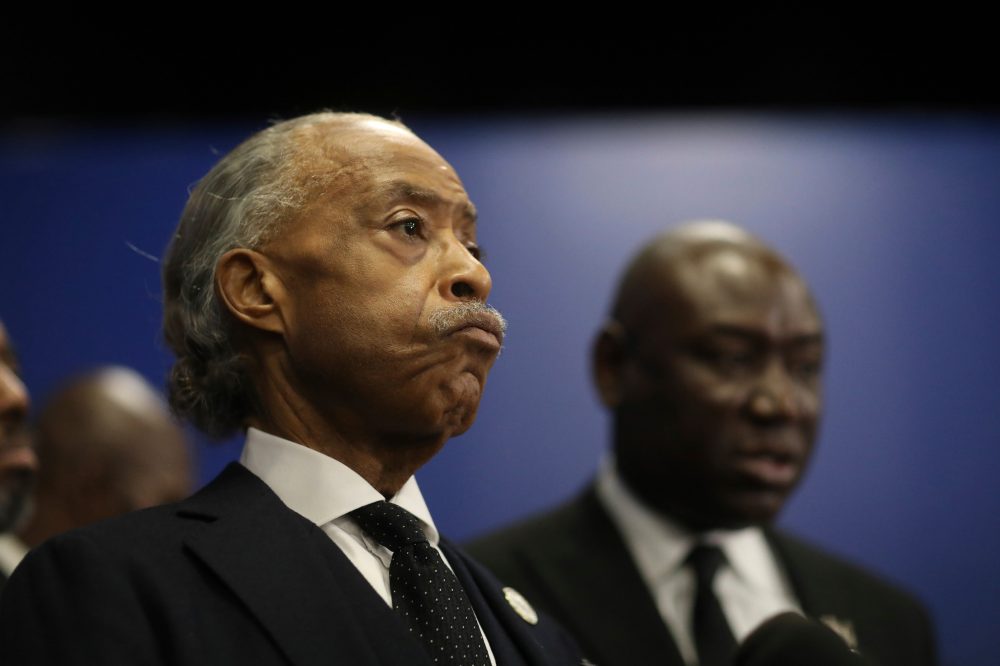
The family of an 18-year-old Mississippi college student who was discovered dead following a July 4 boat excursion to an island off the Gulf Coast is preparing to speak out Friday alongside civil rights attorney Ben Crump and the Rev. Al Sharpton, demanding greater transparency and a more thorough investigation into the young man’s death.
Crump, who was hired by the family of Nolan Xavier Wells earlier this week, has voiced the family’s concerns about how the investigation has been handled and announced plans for an independent autopsy. Wells had traveled by boat with a group of friends to Horn Island, Mississippi on July 4, but he did not return with them that afternoon. His body was discovered early Monday morning, more than a day after he was last seen.
The Jackson County Sheriff’s Office has stated that investigators do not believe foul play was involved in the death of the Black college student. However, the sheriff has publicly called on anyone who witnessed events on the popular beach island — located roughly 10 miles off the Mississippi coast — or who captured video there, to come forward and help piece together the circumstances surrounding Wells’ disappearance and death.
Family members have raised serious questions, saying they have seen footage of an alleged fight involving their son. They have also pointed out that Wells was a strong swimmer and an elite athlete. Wells, who would have celebrated his 19th birthday next month, was enrolled at Southwest Mississippi Community College, where he played wide receiver on the football team.
A photo circulating on social media, reportedly taken during the boat ride to the island, shows Wells with his arms around three white male friends. Online speculation about the circumstances of his death has been widespread, with many people drawing on the state’s history of racial tension and reflecting on what it means to be a Black person in a predominantly white environment.
Crump released a statement earlier this week making clear the family’s position: “We will not rest until every fact about what happened to Nolan on Horn Island is brought into the light, and we call on investigators to pursue this case with the urgency and transparency this family deserves.”
This marks the second case in recent months that Crump has taken on in Mississippi. He was also recently retained by the family of a 1-year-old who was killed after police fired into a moving vehicle.
Jackson County Sheriff John Ledbetter said Wells’ mother called to report him missing around midnight on the morning of July 5. A large-scale search involving crews from multiple local and state agencies got underway Sunday across the island and surrounding waters. Family members confirmed his body was recovered early Monday.
An official autopsy was completed Tuesday, though authorities have indicated it could take several weeks before the results are made available.
Sheriff Ledbetter noted that Wells’ friends have been cooperating with investigators. “From the people we’ve talked to, it sounds like he chose to stay on the island with the assumption that he was going to ride back to the mainland with someone else,” Ledbetter told the Associated Press earlier this week.
Wells’ mother, Christine Wonsley, took to social media to ask for videos and other documentation from the island. In an emotional post, she remembered her son: “My heart is broken for our sweet son who was always willing to cheer and uplift others. Nolan was a special soul, God took his time creating our son.”
The final day of a weeklong preliminary hearing is underway Friday for Tyler Robinson, the 23-year-old man charged in connection with the killing of conservative activist Charlie Kirk. Prosecutors are working to demonstrate they have sufficient evidence to bring the case to trial.
Robinson faces an aggravated murder charge stemming from the September 10 shooting death of Kirk on the campus of Utah Valley University. Prosecutors are pursuing the death penalty in the case.
Defense attorneys are calling a final witness Friday as they attempt to undermine the prosecution’s evidence. Throughout the week, Robinson’s legal team has questioned the reliability of ballistics testing performed on a bullet fragment recovered from Kirk’s body. They have also challenged the release of a recorded interview with Robinson’s roommate, Lance Twiggs, along with chat room messages Robinson allegedly posted on the platform Discord.
Public interest in the hearing has been intense, with people lining up well before the courthouse opens — some even sleeping outside overnight — hoping to secure one of just 14 daily wristbands that grant access to a courtroom seat. The wristbands are distributed on a first-come, first-served basis.
Court security director Chris Palmer issued a warning Thursday morning that tents and camping gear would not be permitted outside the courthouse on the final day of the hearing. He also cautioned against cutting in line or holding spots for others. Earlier in the week, security personnel discovered that some individuals had obtained colored wristbands in an attempt to gain unauthorized entry.
Defense attorney Michael Burt worked to raise questions about the ballistics analysis conducted on a bullet fragment found in Kirk’s body. Investigators had hoped to connect the fragment to the suspected murder weapon, but test results proved inconclusive. Samantha Karner of the Bureau of Alcohol, Tobacco, Firearms and Explosives testified on the matter, stating: “Saying anything but inconclusive was inappropriate.”
Earlier in the week, the defense also challenged DNA evidence that investigators said placed Robinson at the scene of the shooting. Scientific experts maintained that DNA testing methodology is reliable.
Robinson’s legal team plans to have a second ATF representative take the stand Friday. The prosecution concluded its portion of the hearing Thursday afternoon.
Once testimony wraps up, State District Judge Tony Graf will determine whether prosecutors have presented enough evidence to send the case to trial — though that ruling will not come right away. Both sides have indicated they want to review the full court transcript and submit written legal briefs before Graf makes his decision. Oral arguments on the evidence from the preliminary hearing have been scheduled for September 1. Graf is known for taking time before issuing rulings.
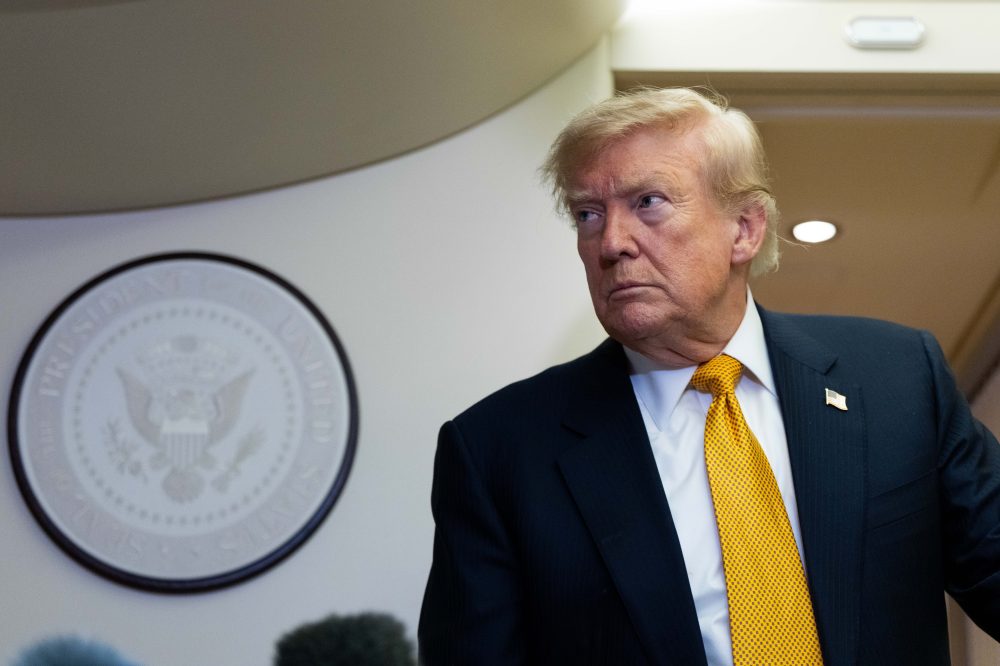
WASHINGTON — President Donald Trump announced Friday that he will allow a major bipartisan housing bill to become law without putting his signature on it, saying he is doing so as a protest against the Senate’s inability to pass strict voter ID legislation he has been championing.
“I will not sign the Housing Bill, which has been fully approved by Congress and sent to the White House, in PROTEST over the fact that the United States Senate is not capable of passing THE SAVE AMERICA ACT,” Trump wrote on social media.
The president had a 10-day window ending Friday to either sign the legislation, veto it, or allow it to take effect without his approval. By choosing the third option, Trump has undermined his own administration’s stated position that addressing inflation is a top priority.
Trump’s move deepens a rift with members of his own party during a midterm election year and cuts short congressional Republicans’ efforts to tackle one of voters’ top concerns — the rising cost of living. His announcement came more than a week after he abruptly canceled a planned signing ceremony, declaring he would use the housing bill as a bargaining chip to push through his preferred voting legislation.
The 21st Century ROAD to Housing Act is designed to bring down housing costs and encourage more home construction. It represents the most significant federal push in decades to tackle the nation’s housing affordability crisis, which has been worsened by state and local regulations that have made building new homes difficult in many areas with strong job markets. White House economists estimated earlier this year that the country is short roughly 10 million homes, and this legislation could help narrow that gap.
Despite the bill’s scope, Trump dismissed it as “a yawn” and “so unimportant” when compared to legislation that would require all voters to provide proof of citizenship.
Trump caught Republican lawmakers off guard on June 24, when he announced — just before a scheduled signing event at the Capitol — that he would withhold his approval until Congress first passed the voting bill.
That measure, known as the SAVE America Act, currently lacks enough Republican support to clear the Senate.
The housing bill had passed the Senate by an 85-5 margin and cleared the House with a 358-32 vote, reflecting broad support across party lines.
Among its key provisions, the housing legislation would cut federal red tape, streamline environmental reviews, speed up the home-building process, and restrict corporations from purchasing single-family homes.
The bill does not, however, address every factor contributing to the housing shortage — including a lack of construction workers, rising insurance premiums, and wages that have not kept pace with the cost of renting or buying a home.
Still, the measure has earned backing from the real estate industry and housing advocacy groups alike.
The broader U.S. housing market has been a major source of affordability strain in recent years, with soaring prices locking many would-be buyers out of the market. The National Association of Realtors reported Thursday that the median home sale price climbed 1.8% in June compared to a year ago, reaching $440,600 — an all-time high in data stretching back to 1999.
Foreign investors fled technology-heavy stock markets in South Korea and Taiwan at a historic pace last month, driving net emerging market equity outflows to $46.1 billion in June, according to new data from a banking industry trade group. The losses contributed to a second consecutive month of overall portfolio declines for developing economies worldwide.
A monthly report released Friday by the Institute of International Finance revealed that foreign investors withdrew $30.5 billion from South Korean stocks alone — the steepest outflows recorded in more than 25 years. Taiwan’s equity markets shed an additional $18.3 billion over the same period.
Despite the dramatic stock sell-off, the picture for bonds told a very different story. Emerging market debt attracted $28.3 billion in fresh investment during June, though overall portfolio flows still ended the month with a net loss of $17.8 billion.
IIF chief economist Jonathan Fortun addressed the divide in the report, writing: “Investors are still willing to lend to EM. They are less willing to add broad equity risk.”
The report also flagged potential headwinds ahead, warning that a more hawkish U.S. Federal Reserve under new chairman Kevin Warsh, combined with renewed swings in oil prices, could tighten the availability of dollars and raise the bar for emerging market investment.
Fortun pointed to several factors behind the equity pullback, including higher global discount rates, uncertainty surrounding China, weakening confidence in corporate earnings, and investor sensitivity to positions in technology and energy sectors.
The data revealed stark differences across regions. Emerging Asia as a whole recorded $27 billion in total portfolio outflows during June, while flows into Latin America, emerging Europe, and the Middle East and North Africa all remained positive.
China was a notable drag within the figures, with equity outflows reaching $14 billion — a sharp reversal from May, when the country saw $8.1 billion flow in. Foreign investors also pulled $3.7 billion out of Chinese debt instruments.
Fortun summarized the first half of the year bluntly: “The first half message is clear. EM has still attracted capital in aggregate, but only because debt inflows have more than offset persistent equity liquidation.”
Sovereign bond issuance for the first half of the year reached approximately $170 billion, the strongest opening half in recent memory, with net issuance topping $100 billion for the year. June saw international bond deals from Mexico, China, Latvia, and Bahrain, which the report said confirmed that access to global capital markets remained open across different regions.
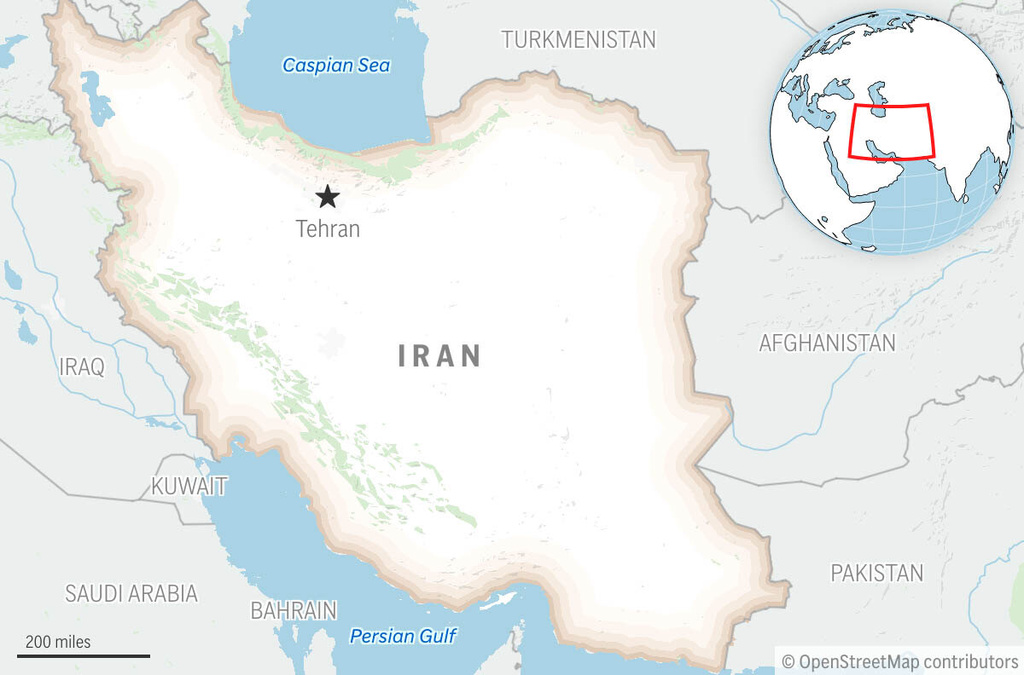
A delegation from Qatar arrived in Iran on Friday in what is believed to be a move by Doha to strengthen its position as a mediator following a recent surge in hostilities in the Gulf region, according to Iran’s semi-official Tasnim news agency.
Tasnim reported that the visit came on the heels of what it described as Qatari accusations directed at Iran regarding an alleged incident in the Strait of Hormuz, as well as subsequent U.S. military strikes targeting both Iranian military and civilian sites.
A source with direct knowledge of the situation told Reuters on Friday that Qatari negotiators were sitting down with Iranian officials with the goal of reducing tensions and laying the groundwork for broader diplomatic talks. The source added that these discussions were being carried out in coordination with the United States.
LONDON — Britain’s High Court issued a ruling Friday that the government had broken the law by taking away asylum seekers’ ability to challenge decisions that found they were not victims of human trafficking, before those individuals could be deported.
The country’s Home Office, which oversees interior affairs, changed its policy last September to prevent people who had been ruled out as trafficking victims from contesting that determination prior to removal from the country.
That policy shift came in response to a string of legal challenges that had been slowing down deportations under Britain’s “one in, one out” agreement with France — a deal designed to manage the flow of migrants crossing the English Channel.
Five asylum seekers who had been sent back to France, or were at risk of being sent back, challenged the policy in court. On Friday, the High Court sided with them, declaring the revised guidance unlawful.
The court found that many asylum seekers who had made the dangerous small-boat crossing from France across the Channel were being blocked from presenting critical evidence when their trafficking claims were reviewed.
Judge Clive Sheldon pointed to a striking statistic: in 2025, 79% of people initially found not to be trafficking victims later received a favorable decision when their cases were looked at again.
The Home Office announced plans to appeal the ruling. A spokesperson issued a statement saying, “Last-minute modern slavery claims must not be used to frustrate the removal of illegal migrants.”
Attorneys for some of the asylum seekers who brought the case called the ruling a victory, but noted that many individuals had already been sent back to France under the unlawful policy.
The decision represents another obstacle for the government as it tries to reduce illegal immigration — one of the most divisive issues in British politics, one that has even overshadowed concerns about the country’s struggling economy.
The arrival of migrants on small boats and the placement of asylum seekers in hotels have become flashpoints, sometimes sparking public protests and tensions in local communities.
Britain’s Labour government has been pushing stricter immigration measures in part to counter Nigel Farage’s anti-immigration Reform UK party, though that approach has drawn criticism from left-leaning supporters who argue there should be safer, legal pathways for people seeking asylum.
One of the five people who brought the court challenge — a person who was returned to France and was granted anonymity by the court, as is standard in asylum cases — described experiencing “a feeling of hopelessness.”
“When a lot of individuals enter the United Kingdom to seek refuge, and have experienced a lot of difficult situations, being further mistreated is simply heart-breaking,” the person said in a written statement.
“The overwhelming sentiment is that they do not treat people equally,” they added. “Some people they place in hotels, some they return to France, like me.”
DUBAI, United Arab Emirates — A string of airstrikes with no nation stepping forward to claim responsibility has landed on Iran in the hours following the United States’ announcement that it had finished its own military campaign, leaving the international community wondering who else may be behind the attacks on the Islamic Republic.
The strikes occurred on Thursday, at a moment when Iran was preparing funeral arrangements for its late Supreme Leader, Ayatollah Ali Khamenei. The explosions struck multiple locations across southern Iran. Iran’s government has stopped short of directly blaming any specific country for the attacks, though one member of the country’s parliament issued a pointed warning to the United Arab Emirates, accusing it of quietly supporting the American military effort against Iran.
Gulf Arab nations, which have repeatedly been on the receiving end of Iranian attacks since the conflict began February 28, did not respond to media requests for comment on Friday regarding the strikes. Both those countries and the United States have been vocal in insisting that the Strait of Hormuz — a critical passage for global energy supplies — must remain open to international shipping.
Iran, however, has staked out the opposite position, demanding sole authority over the strait and insisting that ships passing through must pay fees to Tehran. The international community has long regarded the waterway as open to all nations. Before the war began, roughly one-fifth of the world’s oil and natural gas flowed through that passage.
The U.S. military’s Central Command announced Thursday at approximately 6:30 a.m. local Iran time that it had completed a round of strikes hitting around 90 targets. Shortly after that announcement, Iranian news outlets and state media began reporting explosions and airstrikes in the country’s Bushehr and Sistan and Baluchestan provinces, as well as the cities of Ahvaz and Chabahar, among other locations.
A U.S. defense official, who spoke without being identified in order to discuss details of the ongoing military operation, confirmed that no new American strikes had taken place since the last round concluded Thursday morning.
Iran responded to the strikes by launching a broader wave of attacks across the Middle East, targeting Bahrain, Jordan, Kuwait, and Qatar. Missile warning sirens blared in all four countries, prompting residents to seek shelter. At least one person was reportedly injured in Kuwait as air defense systems worked to intercept the incoming fire.
The leader of the UAE, Sheikh Mohammed bin Zayed Al Nahyan, traveled to Kuwait shortly after the Iranian attack to meet with that country’s ruling emir. Gulf Arab nations also held calls with Qatar’s foreign minister, who has been playing a significant role alongside Pakistan in brokering negotiations between Iran and the U.S. aimed at maintaining a temporary halt to open warfare.
This is not the first time unclaimed airstrikes have occurred during the conflict. Officials later confirmed that both Saudi Arabia and the UAE had previously launched strikes on Iran after Tehran targeted energy infrastructure in those countries. A Gulf nation striking Iran again could be seen as an attempt to discourage further Iranian attacks on the region.
Israel, which has been conducting an aggressive campaign against Iran under Prime Minister Benjamin Netanyahu, has not struck the Islamic Republic since June. In most instances, Israel has openly acknowledged its strikes on Iran.
Israel’s government confirmed that Netanyahu spoke with U.S. President Donald Trump on Thursday evening, with Trump briefing Netanyahu on what was described as “American moves in the Gulf.”
Israel’s defense minister, Israel Katz, also issued fresh warnings that his country stood prepared to act against Iran if circumstances required it. “The Israeli military is on alert and ready to renew the campaign, to reestablish aerial superiority, and to carry out a blue-white (Israeli) strike in Iran to remove threats, even for a third time,” Katz told attendees at a military ceremony. “If we will have to return, we will return with even greater force.”
On Friday, Iranian state media reported that Esmail Kousari — a member of Iran’s parliament national security committee and a former commander in the paramilitary Revolutionary Guard — warned that the UAE would “pay the price for its cooperation with the United States.” He accused the Emirates of playing a “behind-the-scenes” role in the recent U.S. attacks on Iran.
Iran has repeatedly accused Gulf Arab states of actively aiding the American military effort, allegations those countries have denied. The United States has maintained a large military presence across the Gulf region since the 1991 Gulf War, including a base in Bahrain that serves as headquarters for the U.S. Navy’s 5th Fleet.
The Joint Maritime Information Center, a multinational organization operating under U.S. Navy oversight, issued a new advisory on Friday encouraging vessels to use the Strait of Hormuz route. A similar advisory issued earlier on Tuesday prompted an Iranian attack that struck three ships.
The Delaware Public Archives is preparing to unveil a new State of Delaware Historical Marker honoring a school that once served African American children in the Greenwood area during the period of racial segregation in education.
The ceremony is scheduled for Friday, July 17, 2026, beginning at 1:00 p.m. at 12655 North 1st Street in Greenwood, Delaware — the current location of New Process Fibre Company, Inc.
The marker will recognize Greenwood School 222-C, which was constructed in 1922 and provided education to Black students in the community at a time when schools were segregated by race.
President Donald J. Trump has announced he will allow a bipartisan housing affordability bill — already passed by Congress and delivered to the White House — to become law without his signature. The President says his refusal to sign is a deliberate act of protest aimed at the Senate’s failure to pass what he calls the “Save America Act.”
According to Trump, the Save America Act is polling at 97% support among Republicans and “very high” among what he describes as “non-politician” Democrats. He frames the legislation as straightforward: anyone wishing to vote must present a photo ID and proof of citizenship. The President also stated the bill would eliminate what he called “crooked, corrupt, destabilizing” mail-in ballots, with exceptions carved out for military personnel, people with disabilities, those who are ill, and travelers.
Trump called the Senate’s failure to advance the measure “crazy,” and issued a warning that any politician who votes against it faces serious political consequences. He is also pressing Republican lawmakers to eliminate the filibuster, arguing that doing so would allow the Save America Act — along with other legislation he describes as “true Republican” priorities — to move forward.
The President closed with a call for urgency and accountability, insisting the country must continue moving toward greatness — signing off with his signature phrase: “Make America Great Again — President Donald J. Trump.”
PRAGUE — Skoda Auto, the Czech-based arm of Volkswagen, announced Friday that it does not anticipate any direct consequences from its parent company’s sweeping restructuring initiative.
On Thursday, Volkswagen — Europe’s largest automaker — revealed plans to dramatically reduce the number of vehicle models it produces and scale back manufacturing capacity. Sources indicate the overhaul could result in the elimination of approximately 100,000 jobs. However, sources also say labor unions have taken steps to oppose the plan.
In a written statement, Skoda said: “This development has no immediate impact on our operations.”
The company added: “Business continues as usual. Skoda is currently the second best-selling automotive brand in Europe, and Skoda Auto production plants are operating at full capacity.”
The stakes for the Czech Republic are significant. Skoda is one of the country’s largest employers, with a workforce exceeding 34,000 people. The company also sits at the center of the Czech Republic’s sprawling auto parts sector, which depends heavily on exports to Western European carmakers. Any major shifts in that industry would send ripple effects throughout the broader Czech economy.
Wall Street was pointing toward a mixed start Friday morning, with investors keeping a close eye on the highly anticipated U.S. stock market debut of South Korean memory chip company SK Hynix, even as renewed tensions in the Middle East stirred fresh concerns about inflation.
Major U.S. indexes had closed higher the day before, driven largely by gains among chipmakers. Heading into Friday, both the S&P 500 and the Nasdaq were on pace to finish the week in positive territory, with artificial intelligence stocks back in the spotlight ahead of SK Hynix’s high-profile listing.
The offering is expected to rank as the largest share sale in the world since SpaceX’s record-breaking IPO last month. SK Hynix raised approximately $26.5 billion on Thursday by selling American Depositary Receipts at $149 each.
Kathleen Brooks, research director at XTB, offered an optimistic take on the listing. “We’ve heard that it’s oversubscribed and people want to own the stock. So I don’t think it’s going to be a disaster or cause any negative volatility. And in fact, if anything, once it starts trading, it could lift the entire chip sector as we move into the weekend,” she said.
Chipmakers have been among the top performers this year, riding a wave of enthusiasm around artificial intelligence and expectations of heavy investment in data centers and AI infrastructure. However, worries about high valuations and profit-taking have introduced some turbulence into the sector recently.
Semiconductor stocks faced selling pressure in premarket trading. Intel fell roughly 2.6%, while memory chip maker Micron Technology slipped 1.3% after surging 4.5% the previous session.
As of 8:28 a.m. Eastern Time, Dow E-minis were up 104 points, or 0.2%. S&P 500 E-minis dipped slightly, down just 1 point, or 0.01%, and Nasdaq 100 E-minis fell 84.25 points, or 0.28%.
Geopolitical tensions also weighed on markets after Iranian armed forces launched attacks on U.S. military infrastructure in Gulf states on Thursday, following U.S. strikes on Iran’s southern coastal and eastern provinces. The escalation renewed fears about the potential inflationary impact of the ongoing conflict.
New York Federal Reserve President John Williams said Thursday that he does not anticipate Middle East hostilities will cause a lasting increase in energy prices through the remainder of the year.
Investors are also looking ahead to June inflation figures due next week, which could provide clues about the Federal Reserve’s next policy moves. Fed Chair Kevin Warsh is also scheduled to testify before the House Committee on Financial Services.
Markets are currently pricing in at least one 25-basis-point interest rate increase before the end of 2026, according to LSEG data.
Delta Air Lines edged down 0.5% in volatile trading, despite issuing a third-quarter profit forecast that exceeded analyst expectations.
Cryptocurrency-linked stocks moved higher alongside gains in bitcoin. Strategy climbed 5.4%, while Coinbase and Riot Platforms rose 4.9% and 2.2%, respectively.
Earnings season is set to ramp up next week. Analysts tracking LSEG data expect S&P 500 earnings to climb 24% compared to the same period a year ago, with technology companies expected to lead much of that growth.
Federal Reserve Chairman Kevin Warsh announced Thursday the individuals he has chosen to lead a wide-ranging review of how the nation’s central bank carries out its policy operations.
Below is a closer look at each of the 13 men and two women who will guide the five taskforces Warsh has established.
COMMUNICATIONS
Peter Fisher, a professor of practice at the Foster School of Business at the University of Washington, previously served as under secretary of the U.S. Treasury for domestic finance during the first two years of former President George W. Bush’s administration. Before that, he managed the System Open Market Account at the New York Fed.
Arminio Fraga is the founder and chairman of Gávea Investimentos and a former president of the Central Bank of Brazil. During the 1990s, Fraga worked at the New York investment firm of global financier George Soros. He led Brazil’s central bank from March 1999 through December 2002, a period that immediately followed the Latin American nation’s era of extreme inflation. He has since operated his own investment firm, Gavea Investments, and sits on the advisory council of the Bretton Woods Committee, which supports international economic cooperation and the work of the International Monetary Fund and World Bank Group.
Mervyn King served as governor of the Bank of England for ten years, from 2003 to 2013, a span that included the global financial crisis. He is recognized among the generation of central bankers who championed inflation targeting and greater transparency in communications.
BALANCE SHEET POLICY
Karen Dynan is a professor of economics at Harvard University. She served as chief economist at the U.S. Treasury Department from 2014 to 2017 during former President Barack Obama’s second term. Earlier in her career, she spent 17 years as a staff economist at the Fed, where she led its household and real estate finance section from 2000 to 2007.
Raghuram Rajan is a professor of finance at the University of Chicago Booth School of Business and a former governor of the Reserve Bank of India. He led the RBI from 2013 to 2016 and, a decade before that, served as chief economist at the IMF. In 2022, he co-authored a paper for the Kansas City Fed’s annual Jackson Hole symposium examining the difficulties of reducing the Fed’s large balance sheet, titled “Liquidity Dependence: Why Shrinking Central Bank Balance Sheets is an Uphill Task.”
Jeremy Stein is a professor of economics at Harvard University and a former governor of the Federal Reserve Board. He served as a Fed governor for two years, from May 2012 to May 2014. Last year, he and two other academics co-authored a Brookings Institution paper titled “Treasury Market Dysfunction and the Role of the Central Bank,” which examined shifts in the U.S. Treasury securities market following the Fed’s large-scale bond purchases during the COVID-19 pandemic.
DATA
Raj Chetty is a professor of economics at Harvard University and leads the Opportunity Insights team there, which is widely known for influential research on the declining ability of lower-income Americans to move into the middle class. Harvard describes him as one of the youngest tenured professors in the university’s history, and his team uses large-scale data analysis to explore ways to improve outcomes for disadvantaged children.
Doug McMillon is the former president and CEO of Walmart, where he wrapped up a twelve-year tenure in January. He is credited with transforming the retail giant from a traditional big-box store into a technology-focused company capable of competing in the e-commerce space against rivals such as Amazon.
Kevin Murphy is a professor of economics at the University of Chicago. His research has centered largely on inequality, unemployment, and wage differences, as well as addiction and the economic value of advances in health and longevity, according to his university profile.
PRODUCTIVITY AND JOBS
Marc Andreessen is the cofounder and general partner of Andreessen Horowitz. He was an early pioneer of the Internet and is one of Silicon Valley’s most prominent venture capitalists. He is a well-known supporter and major financial donor to President Donald Trump and provided guidance to the administration’s cost-cutting Department of Government Efficiency, known as DOGE.
Charles “Chad” Jones is a professor of economics at Stanford University, currently on leave at the Anthropic Institute. He earned a doctorate in economics from MIT in 1993 and has spent his career studying the factors that drive economic growth. In a recent paper, he outlined a scenario in which artificial intelligence could fundamentally reshape the economy by dramatically boosting productivity over several decades, while also cautioning that it would be “prudent to spend the intervening time making preparations for the potentially large consequences for labor markets, inequality, and catastrophic risk.”
Asha Sharma serves as executive vice president and Xbox CEO at Microsoft. She first joined the company after graduating from the University of Minnesota in 2011, later worked at other technology firms including Facebook and Instacart — where she was chief operating officer during its 2023 IPO — before returning to Microsoft in 2024 to oversee internal AI development. Since February of this year, she has led the company’s gaming division, which this week announced it was eliminating 3,200 jobs as part of a restructuring. Microsoft stated the positions are not being replaced by artificial intelligence, though analysts have drawn a link between the cost-cutting and the heavy investment Big Tech has made in AI.
INFLATION FRAMEWORKS
Greg Mankiw is a professor of economics at Harvard University and a former chairman of former President George W. Bush’s Council of Economic Advisers. In 2024, he outlined views on inflation that align with those of Warsh, including skepticism about placing too much emphasis on the unemployment rate as a gauge of inflation pressure, and the notion that a central bank targeting 2% inflation should be willing to declare success when inflation rounds to that figure rather than hitting it precisely. In 2002, he co-authored a paper for the European Central Bank suggesting that an inflation-targeting central bank should use a price index that accounts for nominal wage levels; the ECB did not adopt that approach.
Thomas Sargent is a professor of economics at New York University and a 2011 Nobel laureate in economics. His published research spans a wide range of topics related to the causes of inflation. He has argued that when governments are running budget deficits, raising interest rates to combat inflation today could paradoxically lead to higher inflation down the road. In a recent paper, he attributed the Fed’s slow response to rising inflation in 2022 not only to the belief that it would be temporary, but also to uncertainty about how tight labor markets truly were and concerns that hiking rates would cause excessive economic harm.
William White is a senior fellow at the C.D. Howe Institute and a former economic adviser at the Bank for International Settlements. He earned his doctorate in economics from the University of Manchester in the United Kingdom in 1969 and held positions at both the Bank of England and the Bank of Canada before joining the BIS in 1996. There, he oversaw research and data operations and helped coordinate meetings of central bankers from around the world. During his time at the BIS, he published a critique of inflation targeting as a policy framework.
It started with a simple email to Rehoboth Beach Mayor Stan Mills back in April — and ended with a heartwarming connection between a Delaware beach town and a group of cyclists celebrating a once-in-a-lifetime journey from 50 years ago.
The email came from Edward Kruska, who wrote to the mayor with a special request. In it, he explained that during the summer of 1976 — America’s Bicentennial year — he was part of a youth group that pedaled bicycles from one coast of the country to the other. The group set off from Ocean Shores, Washington, on the Pacific Ocean in late June 1976 and wrapped up their journey in Rehoboth Beach, Delaware, in early August of that same year.
“Hello Mayor Mills,” the email began. “In summer 1976, America’s bicentennial year, I was part of a youth group that road bicycles from coast to coast. We started our trek in Ocean Shores, Washington in late June 1976 on the Pacific Ocean and concluded it in your fine beach city — Rehoboth Beach, Delaware, in early August 1976. It was a jubilant moment for sure when we arrived in Rehoboth Beach and saw the Atlantic Ocean!”
Kruska went on to explain that the group was planning a reunion on July 5 in Western Michigan, where the riders originally departed from, and asked whether the mayor might send along a letter or short message to be read aloud at the gathering. He also wondered if the mayor from 1976 might still be reachable.
Mayor Mills passed the email along to Communications Director Brooke Thaler, who then contacted Ed to learn more about the remarkable trip.
“Long story short, we were with a youth group and went coast to coast — Ocean Shores, Washington to Rehoboth Beach, Delaware — in 1976, America’s Bicentennial year,” Ed explained. “It was an amazing 3,463 mile journey on bicycles and ended right on the boardwalk in Rehoboth where we all jumped into the ocean on August 10, 1976. Yes, I have photos.”
And those photos tell quite a story — capturing a group of joyful cyclists at the water’s edge, with the Rehoboth Beach boardwalk and shoreline of 1976 serving as a vivid backdrop.
The city decided to go beyond a simple written response. On a sunny morning, Mayor Mills and Brooke made their way down to the beach — to the very spot where those riders had splashed into the Atlantic five decades earlier — and recorded a video message to be played at the reunion.
The reunion itself took place this past weekend, drawing 18 of the original bike riders along with several staff members from the 1976 trip. The group gathered at Stakenas Farm in Scottville, Michigan, for a picnic filled with stories, memorabilia, and songs. Some attendees even showed up still wearing their shirts from the original ride. The group received 10 letters from locations across the country, including messages from four mayors — but the one video greeting came from Rehoboth Beach.
Ed reported afterward that the event “exceeded expectations and was fantastic,” adding that “everyone loved Mayor Mills’ video.”
The City of Rehoboth Beach said it was thrilled to play a part in the celebration and to revisit those vintage images of the beach and boardwalk as they appeared back in 1976.
ANKARA, Turkey — World leaders arrived in Turkey this week for a NATO summit focused on global security challenges. What they didn’t expect was to leave carrying a firearm.
Turkish President Recep Tayyip Erdogan presented each attending leader with an engraved .357 Magnum revolver and six rounds of ammunition. According to Turkish media reports, the weapon is the Gumusay model — a vintage six-shot revolver manufactured by MKE, Turkey’s state-owned arms producer.
The gesture was designed to draw attention to Turkey’s booming defense industry, which has evolved over recent decades from being a heavy importer of military equipment to a largely self-sufficient producer of advanced systems, including drones and warships. The country is also working on its own next-generation fighter jet.
But the gift left many alliance members in a bind. Gun laws in several NATO countries made it impossible — or at least very complicated — for leaders to simply take the weapons home.
Canadian Prime Minister Mark Carney quipped about the awkward situation when speaking to reporters, saying his own gift of maple syrup suddenly seemed modest by comparison. “I would like to reassure Canadians, they keep guns away from me,” he said, confirming the revolver had been turned over to police.
Hungary’s new Prime Minister Péter Magyar shared a photo on X of the display box holding his revolver and six cartridges. “An unusual gift from President @RTErdogan at the NATO Summit: a Magnum revolver with ammunition, engraved with my name,” he wrote. What he ultimately did with the firearm was not immediately known.
European Union Commission President Ursula von der Leyen accepted the gift graciously, but her spokesperson confirmed it would be deactivated and donated to a military museum.
British Prime Minister Keir Starmer noted that the gift package included documentation waiving export controls, but said he still left the weapon behind since importing it into the United Kingdom would be illegal. It will be decommissioned.
Belgian Prime Minister Bart De Wever handed his revolver directly to airport police upon returning home. The firearms given to German Chancellor Friedrich Merz and Dutch Prime Minister Rob Jetten were left at their respective countries’ embassies in Ankara and will also be taken out of service, officials confirmed.
In Italy, the weapon was officially logged as a gift at Palazzo Chigi, the official office of Prime Minister Giorgia Meloni. Greek officials said their country’s firearm would go to the War Museum.
Croatian President Zoran Milanović said he wasn’t even aware Erdogan had given him a gun until after he had already returned home from the summit. His office indicated the revolver would likely be turned over to a police museum. Milanović offered a characteristically blunt take on the situation: “I didn’t take it. I shoot from different weapons,” a reference to his outspoken political approach.
The White House did not respond to questions about what happened to the revolver given to the American delegation.
Erdogan’s office has not made any public statement about the gifts. Turkish gun culture runs deep, and the gesture generated little reaction domestically. However, the gun control advocacy group Umut Vakfi noted that armed violence in Turkey has reached troubling levels, with more than 2,700 incidents recorded last year in the country of 86 million people.
In addition to the revolvers, Turkey’s state-run Anadolu Agency reported that summit attendees also received a copy of Erdogan’s biography, titled “The politics of courage: Erdogan and the rise of Türkiye.”
Eight South Carolina National Guard helicopter pilots are back in the cockpit after the Pentagon stepped in to lift their suspension, which had stemmed from a low-altitude flyover of packed beaches during a Fourth of July military tribute event.
Pentagon spokesman Sean Parnell made the announcement Friday morning via social media, writing, “Effective immediately, the suspension of all involved South Carolina pilots has been lifted. Carry on Patriots.”
The controversy centered around “Salute from the Shore,” an annual July 4 tradition in South Carolina that has honored military servicemembers since 2010. The event sends both vintage and modern military aircraft along the full 187-mile stretch of the state’s coastline, aiming to inspire patriotism among the thousands of holiday beachgoers watching from below.
This year’s event featured F-16s from the South Carolina Air National Guard’s 169th Fighter Wing at McEntire Joint Base, along with a C-17 from the 437th Airlift Wing at Joint Base Charleston. Apache helicopters joined the aerial parade for the first time, alongside privately owned vintage aircraft including T-34s and T-6s.
As is typical with the event, attendees shared video footage on social media — but this year, clips of the Apache helicopters appearing to fly at a very low altitude over crowded beaches raised red flags with the South Carolina National Guard. The Guard launched a safety review and temporarily grounded the eight pilots involved. Officials later clarified the suspension was “a routine, non-punitive safety measure, not a disciplinary action.”
Defense Secretary Pete Hegseth weighed in late Thursday night on social media, signaling the Pentagon’s intention to get involved: “We’ll fix this. Carry on, Patriots.”
South Carolina Republican lawmakers also pushed back against the suspension. Rep. Russell Fry, who represents the Myrtle Beach area, said Thursday that the pilots “should be celebrated, not sanctioned.”
Less than two hours before Parnell’s announcement, Republican Gov. Henry McMaster — who holds the title of commander-in-chief of the state’s National Guard — posted his own statement on social media expressing confidence in the pilots’ skills and judgment. “Surely, they know how to safely navigate the coast of South Carolina — and her scores of cheering residents and tourists on our 250th anniversary,” McMaster wrote.
Representatives from McMaster’s office and the South Carolina National Guard had not responded to requests for comment by Friday, including questions about whether McMaster — a longtime ally of President Donald Trump — had directly intervened in the matter. The Pentagon said it had nothing further to add beyond Parnell’s statement.
A massive heat dome is about to settle over much of the United States, and meteorologists say this one is different — bigger, stronger, and longer-lasting than what most Americans are used to seeing in the summer months. The National Weather Service is describing the coming conditions as “significant and dangerous.”
The heat wave is expected to kick off this weekend and stick around for at least a week, with some parts of the country not seeing relief until the final days of July. Temperatures across many regions could run 15 to 25 degrees Fahrenheit — or 8 to 14 degrees Celsius — above seasonal norms, and that includes overnight lows, which experts say is particularly alarming.
“This upcoming heat wave does look pretty remarkable,” said Daniel Swain, a climate scientist with University of California Agriculture and Natural Resources. “This is going to be a long duration, widespread and high-intensity heat event that’s going to affect millions of people for over a week.”
The heat dome works by trapping hot air beneath a high-pressure system, much like a pot lid holds in steam, while simultaneously blocking the cooling effects of wind and rain. It is expected to initially set up over the Northern Plains, but its sheer size means it could cover as much as two-thirds of the continental U.S. Though the East Coast may initially be spared, the dome is expected to shift over the next 10 days or more and could eventually stretch from coast to coast.
This weekend, forecasters are calling for record-breaking triple-digit temperatures in Nevada, Utah, Colorado, Wyoming, Idaho, Montana, North Dakota, and South Dakota.
The National Weather Service is projecting that more than 90 local temperature records across the country could be tied or broken by Wednesday alone. Roughly two-thirds of those records are expected to be overnight heat records — a particularly troubling trend because the body needs cooler nighttime temperatures to recover from daytime heat exposure.
“Nights can be just as dangerous as days. If you don’t get heat relief at night, that’s going to spill out into your daytime experience and become extremely dangerous,” warned meteorologist Bob Henson of Yale Climate Connections. “Heat is not to be played with. It’s just as dangerous as a tornado or hurricane that can kill you just as easily, just in a quiet and different way.”
Swain emphasized that what truly sets this heat wave apart is its geographic reach and how long it is expected to linger. In recent weeks, serious heat events have already hammered Europe, the U.S. East Coast, and the Southeast. He noted that any part of the country that managed to avoid those earlier July heat waves is now squarely in the crosshairs of this one.
In the Southeast, the situation could be especially unusual. Climate Central meteorologist Shel Winkley explained that rain sneaking in along the southern edge of the heat dome could create a strange weather combination — record-shattering nighttime heat paired with below-normal daytime temperatures, all driven by high humidity and added moisture.
The National Weather Service is already predicting record nighttime warmth from Texas to Florida to North Carolina on Saturday. In cities including Fort Lauderdale, Miami, Tampa, Galveston, and Charleston, South Carolina, overnight temperatures are not expected to dip below 80 degrees Fahrenheit — or 27 degrees Celsius.
While summer heat domes are not rare, Winkley said this one stands out for its intensity and its unusually northern position. It is expected to set records for the sheer amount of high pressure it contains.
Swain added that drought conditions are helping fuel the event’s staying power. Dry soil and air hold less moisture, which would otherwise help slow the warming process. Instead, the dry conditions heat the air faster, which in turn worsens drought — a vicious cycle that also increases the risk of wildfires in areas already dealing with dry conditions.
While a recently formed El Niño weather pattern is too new to significantly influence this particular heat wave, all three meteorologists agreed that human-caused climate change — driven by the burning of coal, oil, and natural gas — is clearly playing a role.
“We know that heat waves are becoming more intense, they’re lasting longer, they’re covering larger areas than they used to because of human-caused climate change,” Swain said. “And so when we see an event like this, we know there is at least a partial contribution by the long-term warming trend.”
Climate Central analyzed the forecast using 20 different computer models, comparing expected temperatures to what would occur in a world without greenhouse gas-driven warming. Their Climate Shift Index found that a 20,000-square-mile stretch of the country — from Southern California to northern Minnesota, home to 24 million people — will this weekend experience heat that is at least five times more likely to occur because of climate change. Similar findings were recorded for the East Coast heat wave around the July 4th weekend and the recent Southeast heat event.
“Using attribution science we know that those temperatures would be virtually impossible without the influence of climate change,” Winkley said.
Eight men are now facing federal murder and terrorism conspiracy charges following their alleged involvement in a foiled plot to carry out a drone and sniper attack on a UFC cage-fighting event that took place at the White House in June.
Court documents do not make clear how close the suspects may have gotten to actually executing the plan before it was stopped by authorities.
In a separate but significant development Thursday, the United States launched new airstrikes against Iran. Tehran responded by striking U.S.-allied nations in the Middle East. The scale of Thursday’s military exchange appeared larger than previous back-and-forth attacks between the two sides — exchanges that have increasingly put a fragile ceasefire at risk.
Also Friday, the White House confirmed that the president removed members of the bipartisan Election Assistance Commission, a federal body that distributes grants to states, oversees the testing of voting equipment, and manages national voter registration forms. The ousted members had resisted the president’s push to require people to prove U.S. citizenship before registering to vote.
The move is part of a broader effort by the Republican president to extend White House influence over how American elections are run. It follows a recent U.S. Supreme Court ruling that granted the president expanded authority to remove members of independent agency boards.
Adding to the confusion overseas, a series of airstrikes hit Iran on Thursday — strikes that have not been claimed by any party — just as the country prepared to hold burial services for late Supreme Leader Ayatollah Ali Khamenei. The attacks struck areas across southern Iran. While Iran’s government has not officially blamed any specific nation, one Iranian lawmaker issued a warning to the United Arab Emirates, accusing it of providing support to the United States during its campaign against Iran.
Gulf Arab nations, which have repeatedly been targeted by Iran since the war began on February 28, had not responded to requests for comment as of Friday. Both those nations and the United States have stressed that the Strait of Hormuz must remain open to maritime traffic.
President Donald Trump has removed key members of a bipartisan federal election oversight body after the commission pushed back on his efforts to require proof of U.S. citizenship for voter registration.
The White House confirmed Friday that it took executive action against members of the Election Assistance Commission — a federal agency responsible for distributing grants to state election offices, overseeing the testing of voting equipment, and maintaining the national voter registration form.
The move is the latest step in Trump’s ongoing effort to expand presidential influence over how elections are run in the United States. It follows a recent U.S. Supreme Court ruling that granted the president new authority to dismiss members of independent agency boards.
In a statement to the Associated Press, the White House said: “The President, and head of the Executive Branch, reserves the right to remove individuals that may not be totally aligned with the important task of securing America’s elections and ensuring every legal vote is counted. The Slaughter decision gives the President precedence to do so.”
Trump removed the commission’s two Democratic members, Thomas Hicks and Benjamin Hovland. Republican member Christy McCormick stepped down through resignation, while former Republican commissioner Donald Palmer had already departed voluntarily earlier this year.
The story was first reported by VoteBeat, a news organization focused on elections and voting issues across the country.
Although the White House did not provide a specific reason for the removals, the commission had previously refused to update the national voter registration form to include citizenship documentation requirements — a change Trump called for in a sweeping executive order on elections issued in March 2025. A federal judge struck down that order, ruling it overstepped presidential authority since the U.S. Constitution places control over elections with Congress and the states. The administration has signaled it will appeal that ruling.
It remains uncertain whether Trump intends to quickly nominate replacements or allow the seats to remain vacant. With midterm elections approaching, leaving the agency without a full board could block it from issuing new grants to state and local election offices and could complicate its role in certifying and testing voting systems nationwide.
“The Administration from the start has been working across all agencies and local partners to safeguard elections from fraud and abuse, and investing in a strong infrastructure to sustain that mission especially in the midterm elections,” the White House added.
Congress established the four-member commission through the Help America Vote Act, a bipartisan law signed by Republican President George W. Bush in 2002. The law requires the panel to include two Democrats and two Republicans, each nominated by the president and confirmed by the Senate. Hicks and McCormick were originally appointed by President Barack Obama, while Trump named Hovland during his first term in office.
According to VoteBeat, Hicks and Hovland learned of their dismissals through an email signed by Morgan DeWitt Snow, the deputy director of presidential personnel in the Executive Office of the President.
LUSAKA, Zambia — Zambia is preparing for an August presidential election in which incumbent President Hakainde Hichilema is considered the frontrunner for a second term, though opposition leader Brian Mundubile is shaping up to be a formidable challenger.
The election is widely being seen as a judgment on Hichilema’s handling of the economy since he came to power in 2021, when he inherited a country still reeling from a sovereign debt default.
Zambia, Africa’s second-largest copper producer, has experienced an economic turnaround backed by strong copper prices following a debt restructuring deal. However, the rising cost of living continues to weigh on many citizens — a vulnerability the opposition intends to highlight.
Annual inflation dropped to 6.5% in June, the lowest it has been in over eight years, pointing to a meaningful recovery from the country’s debt crisis. Still, many households say they continue to feel financial pressure.
At his campaign launch in the capital Lusaka, Hichilema addressed supporters directly: “A lot of our families still need support beyond what we are delivering today, but I want you to know we hear you.”
Hichilema, 64, is a businessman who won by a wide margin in 2021, defeating the late former president Edgar Lungu. His challenger, Mundubile, is a 55-year-old lawyer and former member of parliament who had never previously run for president. He entered the race relatively late after a divided opposition united behind him.
Despite Zambia’s history of peaceful democratic transitions, the opposition has leveled accusations that Hichilema has limited their ability to campaign and cracked down on political dissent — allegations the president denies.
A cybercrime law introduced in 2025 has drawn criticism from civil society organizations, who argue its broad language could discourage people from expressing themselves online. Additionally, Hichilema signed constitutional amendments in December that will expand the size of parliament — a change critics say could benefit his party.
In an interview with Reuters, Mundubile described a difficult environment for opposition activity: “Any dissenting voice is regarded as an enemy of the state, so it’s been very difficult for the opposition to engage their members.” He also said opposition gatherings had been broken up by police.
Hichilema, meanwhile, is leaning on positive economic data to make his case to voters. The International Monetary Fund projects Zambia’s economy will grow 4.3% this year, up from 3.8% in the prior year, and foreign investment has been increasing.
A survey conducted late last year by the Zambia Election Research Network found that 51% of respondents anticipated a free and fair vote, and 55% said they planned to support Hichilema — though the poll was completed before Mundubile formally entered the race.
“While the opposition started late to mobilise and organise, they should not be dismissed,” said Lee Habasonda, a political science lecturer at the University of Zambia.
The president also benefits from the advantages of incumbency, including access to government resources and aircraft, while his rivals must travel by road through a country roughly three times the geographic size of the United Kingdom.
Mundubile, however, argues that the government’s economic numbers have not translated into real improvements for everyday Zambians. “How can you boast that you have built $6.5 billion in foreign reserves when your people are going hungry?” he said at a campaign rally last month.
Indian police announced Friday that dozens of individuals have been taken into custody in connection with violent unrest that broke out this week following the rape and murder of an 11-year-old girl in an eastern state.
Authorities confirmed that an innocent bystander was killed by a mob during the chaos. Since the girl’s body was discovered in a pond on Sunday — one day after she was reported missing — angry crowds have been blocking roads and setting vehicles on fire in Baruipur city, located in West Bengal state approximately 30 kilometers, or about 20 miles, from Kolkata.
“We have arrested 35 people for violence and vandalism so far … others involved are being identified through multiple videos that went viral,” senior state police officer Arvind Kumar Anand told Reuters.
In a separate development, police reported that one of four men arrested in connection with the girl’s rape and murder was shot and killed by officers. The suspect, identified as Prabhas Mondal, was fatally shot in the early morning hours of Wednesday while allegedly attempting to flee. Authorities said he had been brought to the scene of the crime as part of the ongoing investigation when the incident occurred.
Mondal’s mother declined to claim his body, stating she did not want him brought home because he “did not do anything good.” In a television interview, she added, “The sin committed by my son, he has received punishment for it.”
Indian media reported that the family of one of the three remaining suspects claims their relative is innocent and was taken into custody due to a case of mistaken identity. No statements from the families of the other two suspects have been reported.
West Bengal’s chief minister, Suvendu Adhikari, who took office after Prime Minister Narendra Modi’s Bharatiya Janata Party secured victory in state elections in May, vowed there would be “no leniency” for those responsible for crimes like rape and violence, or for those who beat “innocent and blameless” people to death.
“This new government will pursue such criminals to the fullest extent of the law and ensure justice is served,” Adhikari wrote on X on Thursday.
The tragic case has once again drawn attention to ongoing concerns about the safety of women and girls throughout India. Stricter laws were enacted following nationwide outrage over the 2012 gang rape and murder of a 22-year-old woman in Delhi, a case that resulted in four convictions and executions by hanging.
West Bengal was also the center of international attention in 2024, when the rape and murder of a trainee doctor at Kolkata’s RG Kar Medical College and Hospital set off widespread protests across the country over women’s safety.
Global equity funds recorded their strongest weekly inflow in three weeks during the period ending July 8, as growing excitement over AI-driven technology products and fading fears of Federal Reserve rate hikes pushed investors toward riskier assets.
According to LSEG Lipper data, equity funds worldwide attracted a net $49.23 billion during the week — their biggest single-week haul since June 17.
Positive manufacturing reports for June pointed to robust demand for AI-related products such as chips and computers, helping fuel investor confidence heading into the week.
Expectations for strong earnings in the AI space also lifted market sentiment. Analysts’ estimates tracked by LSEG project the technology sector will report a 54.2% year-over-year increase in second-quarter net income.
Breaking down the numbers by region, U.S. equity funds took in $24.97 billion — also their strongest showing in three weeks. European funds attracted $13.67 billion, while Asian funds pulled in $6.95 billion.
Technology sector funds were a standout, drawing $11.49 billion in inflows — more than a quarter higher than the $8.88 billion recorded the prior week. Financial sector funds and industrial funds also saw meaningful inflows of $1.52 billion and $789 million, respectively.
Global bond funds posted their largest weekly inflow since at least 2019, bringing in $31.34 billion. Short-term bond funds led with $7.19 billion in net purchases, followed by euro-denominated bond funds at $3.87 billion, corporate bond funds at $2.92 billion, and government bond funds at $2.73 billion.
Money market funds also saw strong demand, with investors directing $83.76 billion into those accounts — the largest weekly net purchase since June 3.
Not all asset classes fared well. Gold and other precious metals commodity funds posted an eighth straight week of outflows, shedding $372 million.
In emerging markets, data covering 28,884 funds showed equity funds lost roughly $500 million, extending their losing streak to 11 consecutive weeks of outflows. Emerging-market bond funds, however, continued to attract interest, recording $1.66 billion in net inflows.
Greek police have made two arrests in connection with a deadly fire-bombing that took place during a large-scale general strike in Athens more than a decade ago, authorities announced Friday.
The fatal incident occurred on May 5, 2010, when tens of thousands of workers and civil servants took to the streets to demonstrate against the conditions tied to Greece’s first financial bailout from euro zone nations and the International Monetary Fund — marking the early days of the country’s severe debt crisis.
As masked protesters clashed with riot police, who deployed tear gas and flash bombs throughout the city center, attackers hurled petrol bombs at a Marfin bank branch. Three employees inside the building — one man and two women, one of whom was pregnant — were trapped and died after inhaling smoke from the resulting fire.
Along with the two arrests, police also issued a warrant for a third individual believed to be connected to the attack. According to a police official, investigators were able to identify the suspects by cross-referencing evidence and photographs gathered from that day’s events and other protests over the years.
A Taiwanese company that tests computer chips and supplies Nvidia is planning a major financial commitment to the United States, announcing Friday it intends to invest as much as $1.4 billion to build a new American facility.
King Yuan Electronics, known as KYEC, said the planned investment is designed to support the company’s growth and reinforce its role in the worldwide supply chain for semiconductors.
The announcement comes as Taiwanese semiconductor and electronics manufacturers have increasingly been setting up operations in the United States, a trend that accelerated following TSMC’s multibillion-dollar expansion into Arizona. Foxconn and Wistron are among the Taiwanese companies currently building artificial intelligence server manufacturing capacity in Texas for Nvidia.
King Yuan Electronics did not reveal which clients the new American facility would serve, nor did the company disclose where the plant would be located or when construction might begin.
WASHINGTON, D.C. — The National Chicken Council is throwing its weight behind the Trump Administration’s 2026 Unified Agenda of Federal Regulatory and Deregulatory Actions, expressing strong approval for the White House’s push to cut back on federal oversight of the poultry industry.
A key part of that support involves the U.S. Department of Agriculture’s plans to do away with three regulations that were put in place during the Biden administration under the Packers and Stockyards Act. The chicken industry group says those rules pose a serious risk to a business model it describes as both efficient and effective.
According to the council, the current industry structure benefits farmers financially while also helping to hold down the cost of chicken at grocery stores and restaurants across the country. The organization argues that the Biden-era rules, if left in place, would undermine that system.
By backing the administration’s deregulatory agenda, the National Chicken Council is aligning itself with broader efforts by the Trump White House to reduce the number of federal rules governing American industries.
MADRID (AP) — Deadly wildfires have swept across Europe over the past decade, claiming hundreds of lives, and experts say rising global temperatures will only make the situation worse in the years ahead.
A fire that tore through southern Spain overnight into Friday morning left at least 11 people dead, placing it among the most lethal wildfires ever recorded in that country. The blaze struck as scorching heat settled over much of the nation.
According to the European Union’s Copernicus Climate Change Service, Europe is warming faster than any other continent on the planet — temperatures there have risen at twice the global average rate since the 1980s. Worldwide, 2025 ranked as the third-hottest year ever recorded, bringing with it a series of punishing heat waves across the continent.
Researchers caution that the burning of fossil fuels such as gasoline, oil, and coal is driving climate change, which in turn is making heat and drought more frequent and more severe — conditions that set the stage for catastrophic wildfires in vulnerable regions.
Here is a look at some of the deadliest wildfires to strike Europe over the past ten years:
Greece suffered its worst wildfire on record in 2018, when a massive fire ripped through Mati, a seaside community east of Athens. Residents were trapped in their homes and on roadways as they attempted to escape. More than 100 people perished, with some drowning after jumping into the sea to flee the advancing flames.
Five years later, in 2023, Greek wildfires claimed more than 20 lives. Among the victims were 18 migrants who were moving through a forest in northeastern Greece when they were overtaken by what became the largest single wildfire ever recorded on the European continent.
Just last week, a wildfire in northern Greece killed a 12-year-old boy and his father.
Last July, 10 firefighters and rescue personnel lost their lives battling a wildfire in a forested section of Eskisehir province in northwestern Turkey. The victims included forestry workers and members of the AKUT rescue organization.
Forestry Minister Ibrahim Yumakli explained at the time that a sudden shift in wind direction caused the fire to change course and engulf the workers before they could escape.
Among those killed was a 28-year-old man who had returned from his honeymoon just two days before his death. One AKUT volunteer had previously spent a month helping to rescue survivors of a devastating earthquake that struck southern Turkey in February 2023.
Portugal’s deadliest wildfire occurred in 2017, when a blaze in Pedrogao Grande — located roughly 200 kilometers (120 miles) northeast of Lisbon — killed 66 people. The majority of victims died on a single road while trying to escape by car.
Additional fires later that same year pushed Portugal’s total wildfire death toll for 2017 past 120, making it the deadliest year on record for fire-related fatalities in the country. Among the dead were a one-month-old infant and the baby’s parents.
In the aftermath, the Portuguese government introduced a broad set of measures aimed at preventing and controlling future wildfires. Those steps included public education campaigns about fire prevention, the creation of a rapid-response firefighting force, the clearing of thousands of kilometers of firebreaks, and the deployment of a large number of firefighting resources.
In Cyprus, officials have repeatedly pointed to climate change as the driving force behind the growing ferocity of wildfires that have killed at least six people over the past five years.
In July 2021, the charred remains of four Egyptian workers were found near a fire-ravaged mountain village in what one official described as the most destructive wildfire the island nation had ever experienced.
Last July, rescue teams discovered the bodies of an elderly couple inside a burned-out vehicle on the side of a mountain road. The fire had scorched approximately 50 square miles of forested hillside with alarming speed, prompting President Nikos Christodoulides to state that “there’s never been anything like this before in Cyprus.”
Extreme winds, high temperatures, and severely dry conditions — the result of three consecutive winters with little rainfall — combined to create devastating circumstances at the height of the fire.
A study released in August of last year by World Weather Attribution concluded that climate change, which has fueled record heat and reduced rainfall, caused wildfires in Turkey, Greece, and Cyprus to burn far more intensely during that summer.
SK Hynix, one of the biggest memory chip manufacturers on the planet, has officially entered the U.S. stock market at a moment when the explosive growth of artificial intelligence is driving demand for its products far beyond what the company can currently produce.
The South Korean tech giant is already a major player on the Seoul stock exchange, trading alongside Samsung Electronics on the Kospi index. Despite a recent dip, the Kospi has climbed 77% this year, and SK Hynix shares have more than tripled in value.
The company set the price of its American depositary receipts, known as ADRs, at $149 apiece on Thursday. With 177.9 million ADRs offered at that price, the total proceeds came to $26.5 billion — making it the single largest U.S. debut ever by a foreign company. The shares were set to begin trading on the Nasdaq on Friday.
SK Hynix holds a commanding global share of the high bandwidth memory market, a type of chip that is essential to developing cutting-edge AI systems. The company recently formed a partnership with Nvidia, Wall Street’s most valuable company, to supply advanced memory chips as AI infrastructure continues to expand around the world.
The AI boom has been a major profit driver for chipmakers across the industry. As demand for memory chips outstrips supply, prices have risen sharply. Technology giant Apple recently announced it would raise prices on Macs and iPads, citing the increased cost of memory chips.
The United States is SK Hynix’s single largest market, generating 68.8% of the company’s revenue last year. The company is also planning to build its first U.S. manufacturing facility in Indiana. In 2025, SK Hynix posted revenue of just under $65 billion, with profits nearly doubling to around $28 billion.
The company recently joined Samsung and the South Korean government in announcing a combined investment of 800 trillion won — roughly $518 billion — to build a new semiconductor manufacturing hub in the southwestern part of South Korea. The initiative is part of a broader national effort to spread economic development beyond the greater Seoul area, which currently serves as the country’s financial and semiconductor hub.
The promise of continued profit growth has sent tech stock prices soaring, especially among chipmakers. Micron Technology’s stock more than tripled in 2025 and is on pace to do so again in 2026. Nvidia saw similar gains in earlier years and posted more modest growth in 2025.
Major chipmakers have grown into some of the most powerful and valuable companies on Wall Street, and their elevated stock prices have had an outsized effect on major market indexes, which have been hitting record highs largely on the strength of the tech sector.
SK Hynix shares trading in Seoul edged down 0.3% on Friday.
A court in Italy has found former crew members of the migrant rescue vessel Aquarius not guilty of illegally trafficking waste — a case that had been hanging over the accused for eight years. The charity SOS Mediterranee announced the acquittals on Friday.
The Aquarius was seized back in 2018 following a year-long investigation into how waste was being disposed of during rescue missions in the central Mediterranean Sea.
Prosecutors based in Catania, Sicily, had argued that items such as clothing left behind by rescued migrants, food scraps, and medical waste should have been treated as infectious sanitary waste subject to strict handling requirements.
Those prosecutors accused crew members and humanitarian aid workers of disposing of the waste improperly to cut costs, claiming the practice put public health at risk in Italy during the period between 2017 and 2018.
Approximately 24 individuals were placed under investigation when the case was first launched.
At the time, SOS Mediterranee was working alongside the medical charity Doctors Without Borders, also known as MSF. SOS Mediterranee consistently maintained that no rules were broken, and on Friday it celebrated the acquittals — which were formally issued earlier in the week — stating that all waste had been managed in full compliance with applicable regulations.
In a separate statement, MSF expressed hope that the ruling would bode well for other staff members facing a similar trial in Catania. That separate case involves comparable charges tied to another rescue vessel, the Vos Prudence.
MILAN — The company behind one of the world’s most recognizable cocktail ingredients is fighting to keep copycats at bay as the booming spritz market draws in a growing wave of competitors.
Campari, which owns the Aperol brand, is intensifying efforts to protect its flagship product as imitation orange aperitifs and alternative spritz-style drinks compete for customers in bars, restaurants, and grocery stores across Europe and beyond.
The global spritz market has expanded dramatically, with consumption climbing to nearly 4 billion servings in 2024 — up from fewer than 2.5 billion in 2019, according to data firm IWSR. Aperol sits at the center of that growth, representing roughly 26% of Campari’s total revenue.
The competition is sharpest in Italy, where Campari has responded with a new promotional campaign and a loyalty program for bars and restaurants that can verify they serve the genuine product. That program now covers 2,000 venues across the country.
A key part of the company’s strategy involves rolling out pre-prepared Aperol Spritz in keg form — a move designed to compete with ready-made mixes that have made it easier for establishments to substitute other products.
Andrea Neri, managing director of House of Aperitivi at Campari, explained that a newer trend has emerged since 2023. “The new development is that, since 2023, some bars and restaurants have begun serving orange-coloured drinks, often from tap, that are not necessarily made with Aperol,” he said, adding that many customers believe they are getting the real thing.
Italy is Campari’s second-largest individual market, trailing only the United States. The country is also where the Aperol Spritz was born and where consumers have long favored light, bittersweet cocktails — making it a particularly competitive battleground.
On supermarket shelves, the situation is similarly challenging. Orange-colored aperitif bottles that closely resemble Aperol have become increasingly common, often priced 30 to 40 percent below Aperol, which sells in Italy for around €10 a bottle.
Campari has pursued trademark protections on the brand’s distinctive orange color and has taken legal action against certain smaller competitors as part of a broader effort to defend its intellectual property.
Neri acknowledged the supermarket lookalike issue is not new. “The presence of similar products in supermarkets is not a new phenomenon and can be observed across Europe,” he said, while downplaying its effect on Aperol’s overall sales.
A marketing expert offered a different perspective. “The fact that there are lookalike products is a sign that Aperol is a very strong brand,” said Sandro Castaldo, a marketing professor at Bocconi University, noting that color is typically the first feature imitators try to replicate.
Beyond direct knockoffs, other spritz-style drinks are also gaining ground. Hugo Spritz — a lighter-colored drink made with elderflower syrup or liqueur and Prosecco — has been appearing more frequently on U.S. summer menus and in British pubs. Bacardi, which owns the French elderflower liqueur St-Germain — a popular Hugo Spritz ingredient — told Reuters the product has seen double-digit year-over-year sales growth driven by Hugo Spritz’s rising popularity.
Campari has not stood still in the face of these alternatives. In Europe, the company launched Sarti Rosa, a fruit-based aperitif marketed with a viral campaign targeting female consumers around the hot pink drink.
Neri noted a broader shift in consumer habits. “As the category leader, we have worked to expand our spritz portfolio across multiple brands,” he said, pointing to growing interest in lower-alcohol aperitif options and rising daytime drinking occasions.
Campari’s aperitif lineup extends beyond Aperol to include the Campari brand itself, Sarti, Cynar, non-alcoholic option Crodino, and an elderflower aperitif called Mondoro.
Despite the competitive pressure, Aperol’s global sales grew 1.4% last year to €785 million (approximately $897 million). Campari invested around €547 million in advertising and promotions in 2024, equal to 17.9% of net sales.
Industry analysts remain largely confident in Aperol’s staying power. “I don’t see lookalike products representing a threat for now,” said Theodore Duval-Segard, an analyst at AlphaValue. “Campari has literally reinvented the spritz. At this point, Aperol and spritz are almost inseparable.”
Neri acknowledged there could be some cost to the competition. “We could probably have grown even faster,” he said of the Italian market, while noting the company lacks precise figures to quantify the impact of lookalike products.
Fast-fashion powerhouse Shein has finally received Beijing’s blessing to move forward with a stock market listing in Hong Kong, according to a notice posted Friday on the website of China’s top securities regulator, the China Securities Regulatory Commission (CSRC). The approval clears the path for a public offering that previously fell through in both the United States and the United Kingdom.
A spokesperson for Shein declined to comment on the regulatory green light.
The online clothing retailer spent roughly a year waiting for Beijing’s approval — a process that required sign-off from the highest levels of China’s ruling Communist Party, according to a source with direct knowledge of the situation.
That source indicated Beijing has treated Shein as politically sensitive, citing concerns that the company could cause further embarrassment for China following a scandal in France involving a sex doll and widespread reports of poor working conditions at its supplier factories in China.
VALUATION NOW EXPECTED BETWEEN $40 BILLION AND $50 BILLION
At its peak in 2022, Shein carried a valuation of up to $100 billion. That figure was later scaled back as the pandemic-era surge in online shopping cooled and opposition from politicians, retailers, and regulators grew stronger. The company’s most recent private fundraising round, completed in May 2023, placed its value at $66 billion.
The source said Shein is now likely aiming for a valuation of $40 billion to $50 billion through its Hong Kong IPO. While that would be significantly smaller than its chief rival — Temu’s parent company PDD Holdings, which carries a market capitalization of $117 billion — it would still be roughly double the size of Swedish fast-fashion chain H&M, which is valued at around $24 billion and has lost ground to Shein in recent years.
FAILED ATTEMPTS IN NEW YORK AND LONDON
Shein was founded in 2012 by Chinese-born entrepreneur Sky Xu and originally based in Nanjing, China. The company, which now operates out of Singapore after relocating its headquarters there in 2022, sells items like $5 dresses and $10 jeans in roughly 150 countries worldwide.
Shein first attempted a U.S. stock market listing in November 2023, but that effort stalled in the face of mounting resistance from American lawmakers and regulators. The company then pivoted to London, where British financial regulators approved a draft prospectus — but the CSRC withheld its approval, blocking that path as well.
Shein’s lengthy struggle to go public reflects how geopolitical tensions have complicated the road for Chinese companies seeking international investment. It also illustrates how Beijing has tightened its oversight of major entrepreneurs since it abruptly halted the IPO of Jack Ma’s Ant Group at the last moment in 2020.
Rules adopted by the CSRC in 2023 gave the agency authority to review and block overseas stock listings that it determines could threaten China’s national interests. Even though Shein moved its headquarters to Singapore, it remained subject to those rules because the vast majority of its products are manufactured through a network of third-party suppliers based in China.
CONTROVERSIES OVER LABOR AND TRADE PRACTICES
Shein has faced criticism on multiple fronts. Competitors, regulators, and advocacy groups have raised concerns about its highly addictive app, labor conditions in its supply chain factories, and the environmental impact of shipping low-cost garments around the world by air.
Its business model — sourcing clothing in China and delivering it by air directly to customers’ doors — has also come under pressure as both the U.S. and European governments have moved to close customs loopholes and impose duties on inexpensive imported packages.
A successful Hong Kong listing would be a significant boost for the city, which has emerged as one of the world’s leading IPO destinations this year. Over the past 12 months, the CSRC has approved more than 180 other public offerings, according to public disclosures, helping fuel a surge in Hong Kong’s equity markets.
British pharmaceutical company GSK announced Friday that an experimental drug it is developing for patients with advanced or relapsed small-cell lung cancer has delivered promising results in a late-stage clinical study.
The drug, called Ris-Rez, which GSK obtained through a licensing agreement with China’s Hansoh Pharma covering markets outside that country, demonstrated what the company described as “statistically significant and clinically meaningful” improvements in overall survival when compared to standard treatment options.
Ris-Rez is an antibody-drug conjugate, meaning it is designed to deliver treatment directly to cancer cells by targeting a specific protein called B7H3 found on those cells. Beyond small-cell lung cancer, the drug is also being developed to treat other types of tumors, including prostate cancer.
This is not the first time GSK has highlighted promising cancer therapies from its partnership with Hansoh. Back in April, the company said another experimental targeted cancer drug, known as Mo-rez and also licensed from Hansoh, has the potential to become a blockbuster treatment.
MADRID — Firefighters in southern Spain continued battling one of the country’s deadliest wildfires on Friday, with at least 11 people confirmed dead and 19 others still unaccounted for. The fire swept through rural villages in the Andalusia region near Los Gallardos, sending terrified residents scrambling for any escape route they could find.
As smoke filled the air and flames closed in on their homes, many residents chose to flee — and for some, that decision proved fatal. Officials had instructed residents in certain mountain areas above Los Gallardos to leave via a designated evacuation route, while those in the forested hamlet of Bedar were told to stay inside their homes.
But as the fire moved in fast, some residents in Bedar found it impossible to remain. Antonio Rubio, a handyman who lives there, described leaving on his own initiative Thursday afternoon. “We left the house yesterday afternoon at 5 o’clock. The fire didn’t reach my house — it stopped just short of it — but we could already see so much smoke, even though the fire was some distance away, so we had to leave,” he said. “We did so of our own accord.”
A British woman named Sonia, who lives in Los Gallardos and chose not to share her last name, said she had taken in relatives after authorities told them to evacuate at 7 p.m. local time. She explained that residents were directed away from the main road out of Bedar and instead sent on a back route higher into the mountains before looping toward the coast.
“There are many houses in the middle of the countryside in the mountains, so people would take whichever roads they could,” she said. “The road from Bédar to Los Gallardos was blocked, since the fire had crossed the road and it was impassable.”
Antonio Sanz, who oversees emergency response for the Andalusia region, said residents in Bedar had been given two options: follow the designated evacuation route or remain sheltered in their homes given how close the fire was. He confirmed that some chose a different path — one that proved deadly.
“In situations like this, it is essential that we all follow the routes indicated,” Sanz said. “Unfortunately in this instance a decision was taken to use another route that wasn’t the one recommended for evacuation. Looking for another way out via a dry riverbed turned out to be a trap.”
Sanz said four people — believed to be British based on the right-hand placement of the steering wheel in their car — were found dead inside a single vehicle. Seven additional victims were discovered after apparently getting out of their cars and trying to flee on foot. Of the total confirmed dead, ten appeared to be foreign nationals and one was identified as Spanish.
“The village of Bedar in the end wasn’t affected by the flames in most cases, so that order to shelter in place avoided a more serious situation,” Sanz added.
As officials worked through the early morning hours Friday to identify the dead and locate the missing, worried family members from across the globe turned to social media and local online forums for information. One woman posting from the United States said her brother was among a group of ten people who attempted to escape through a valley near a stream. She shared GPS coordinates and pleaded with emergency responders to search the area.
Regional President Juanma Moreno acknowledged that the impulse to run is a natural human reaction. “When many people see a fire, the first thing they do is run away, don’t they? And of course, they think they know the routes but if they don’t have the right information, those routes can of course turn into a death trap,” he said.
Drivers heading northbound on Whiteleysburg Road should expect a lane restriction due to ongoing construction work in the area.
The right lane on Whiteleysburg Road (Road 59) northbound is currently closed between Vernon Road and Fox Hunters Road. The closure is expected to remain in place until 5 PM.
Motorists traveling through the area are encouraged to allow extra travel time or seek an alternate route to avoid potential delays.
Hastings Farm Road is closed in both directions between Concord Pond Road and Coverdale Road following a crash, according to traffic officials.
Motorists traveling in the area are advised to avoid Hastings Farm Road and plan for alternate routes until the roadway is reopened.
No additional details about the crash or an estimated reopening time have been provided at this time. Drivers should use caution in the surrounding area.
China declared a temporary ban on helium exports Friday, taking effect immediately, as renewed military fighting in the Middle East raises fears of fresh shortages of the gas that plays a vital role in computer chip production.
Conflict earlier this year between the U.S. and Israel against Iran triggered helium shortages that disrupted companies around the world, including those in China, where the artificial intelligence sector increasingly depends on domestically produced chips to train and operate AI systems. Helium plays a key role in managing heat during the semiconductor manufacturing process.
The helium export restriction is the latest move by Beijing to protect its own supplies of critical materials by limiting what leaves the country. China has previously taken similar steps with fuel, fertilizers, and sulfuric acid.
China is also working to expand its domestic chip-making capacity and reduce its reliance on advanced Nvidia semiconductors, which are subject to U.S. export controls.
While China has been working to grow its own helium production, it still relies heavily on imports from abroad. Analysts estimate that China sources roughly 85% or more of its helium needs from other countries. Qatar supplies a large portion of global helium output and has provided more than half of China’s imports in recent years.
The export ban could put additional pressure on global helium availability. Chinese companies have increasingly served as middlemen, buying Russian helium and reselling portions of it to markets overseas, including in Europe.
Helium is drawn from natural gas fields that contain unusually high concentrations of the gas and cannot be quickly produced through other industrial methods. In chip manufacturing, it is used in a range of processes including wafer cooling, plasma etching, chemical vapor deposition, atomic layer deposition, lithography support, and leak detection.
PARIS — The French presidency announced Friday that NATO Secretary General Mark Rutte and Ukrainian President Volodymyr Zelenskiy will both be present at Monday’s “Coalition of the Willing” gathering in Paris, a meeting designed to reinforce international backing for Ukraine.
The session is intended to build on the progress made at the NATO summit held earlier this week. According to the Elysee, discussions are still ongoing regarding security guarantees that would take effect once a ceasefire between Ukraine and Russia is established.
U.S. President Donald Trump has recently signaled a more supportive position toward Kyiv in its ongoing conflict with Russia, a shift that was evident at both the recent G7 and NATO summits.
The Elysee also confirmed that two additional nations — Moldova and North Macedonia — have now joined the coalition. European Union leaders Ursula von der Leyen and Antonio Costa are also expected to be in attendance at Monday’s meeting.
Eastbound travelers on Clay Road are facing intermittent lane closures between McNicol Road and Marsh Road due to active construction work in the area.
The lane restriction is expected to remain in place until 5 PM. Drivers are encouraged to allow extra travel time or consider alternate routes to avoid potential delays.
DAKAR, Senegal — Senegal’s highest judicial body has struck down a proposed constitutional amendment that would have expanded the role of parliament while limiting the powers of the country’s president.
The legislation had been approved last month, and the government indicated it would be put to a public vote. However, President Bassirou Diomaye Faye challenged whether the process was legally sound and asked the Constitutional Council to conduct an emergency review.
On Thursday evening, the council determined the law was unconstitutional, effectively killing what had been a central goal of the parliamentary majority.
The dispute over rewriting the constitution is unfolding against a backdrop of rising political friction between President Faye and his former prime minister, Ousmane Sonko. Sonko was removed from the prime minister’s post and subsequently elected as president of the National Assembly earlier this year. The political partnership that had carried both men to power in March 2024 has since fallen apart. A new prime minister has been named, and a new government is expected to be formed.
Critics in the opposition see the amendment push — put forward by Pastef, the party led by Sonko — as a political maneuver by the former prime minister, who continues to hold considerable sway over the parliamentary majority.
The proposed changes would have given parliament greater authority, replaced the Constitutional Council with a newly created Constitutional Court, and placed tighter restrictions on the president’s ability to dissolve the National Assembly.
Sonko responded positively to the council’s ruling, acknowledging it as final and binding. “This cycle reminds us that in a democracy, when institutions play their role, each within its sphere of influence, no crisis can arise,” he said.
Drivers heading eastbound on Clay Road should be aware of a temporary lane restriction currently in place between McNicol Road and Marsh Road.
According to traffic officials, the intermittent lane closure is the result of active construction in the area. The restriction is expected to remain in effect until 5 PM.
Motorists traveling through the affected stretch are encouraged to allow extra travel time or consider alternate routes to avoid potential delays.
A key federal planning body has moved ahead with early approval of plans for a proposed arch backed by President Trump, even after hours of criticism from the public.
The National Capital Planning Commission voted to advance preliminary site and building plans for the project, though commissioners made clear they are not finished with their review. The panel indicated it wants additional details addressed before what could be its final evaluation, currently anticipated to take place in September.
The decision came despite considerable pushback during the public comment period, which stretched on for hours before the commission reached its decision.
Motorists heading eastbound on Clay Road should plan for delays due to an intermittent lane closure currently in effect between McNicol Road and Marsh Road.
The lane restriction is the result of ongoing construction activity in the area. Drivers are advised to use caution and allow extra travel time when passing through the affected stretch of roadway.
The closure is expected to remain in place until 5 PM. No further details regarding the nature of the construction were provided.
Motorists in the area should be aware of an intermittent lane closure currently affecting Alley Corner Road between Underwood Corner Road and Wheatleys Pond Road.
The closure is the result of construction activity in the area. Drivers can expect periodic disruptions to traffic flow as work continues.
The lane restriction is expected to remain in place until 5 PM. Travelers are encouraged to plan accordingly and allow extra time if using this route.
BERLIN (AP) — Volkswagen released disappointing sales figures on Friday, one day after the major German automaker unveiled a sweeping restructuring plan that includes cutting its vehicle model lineup by nearly half amid a sharp decline in sales, especially in China.
The company, headquartered in Wolfsburg, Germany, reported that group-wide sales dropped 8.6% during the second quarter to just under 2.1 million vehicles. Sales in China alone collapsed by more than one-third during that period.
Following a board meeting on Thursday, Volkswagen announced that its ongoing “fundamental realignment” — now in its third year — had entered a new phase. The automaker said it intends to simplify its model offerings by up to 50%, though no specific details were provided.
CEO Oliver Blume outlined a strategy aimed at making the company faster and more competitive. His plan focuses on reducing complexity, honing in on key technologies, better coordinating across regional markets, and cutting excess production capacity. Blume pointed to an “increasingly demanding environment” as the driving force behind the changes.
Looking at individual brands, the core Volkswagen nameplate delivered just over 1 million vehicles in the second quarter — a 14% decline compared to the same period last year. Audi deliveries fell 8%, while Porsche saw an even steeper drop of 18%.
Not all brands struggled, however. Lamborghini, Skoda, and the company’s trucks division all reported sales increases. Sales also grew in both the Americas and Europe.
Volkswagen pointed to a turbulent year marked by geopolitical tensions, higher costs driven largely by tariffs, tighter regulatory requirements, and intensifying competition as factors weighing on its performance.
As recently as December, the automaker had been making major bets on the Chinese market, where electric vehicles have been rapidly gaining ground and competition has grown fierce.
Research firm BernsteinSG responded to Thursday’s announcement with skepticism. “VW stated that it is extending its technology leadership, a claim that will likely raise eyebrows given the pace of innovation among its Chinese competitors,” the firm wrote in a note.
Also on Thursday, hundreds of workers staged a protest outside Volkswagen’s plant in Zwickau, demanding job protections and pushing back against plans to shut down the facility. The factory had already fully transitioned to producing electric vehicles.
WASHINGTON (AP) — Back in December, after Make America Healthy Again activists drafted a petition calling for his removal, EPA administrator Lee Zeldin made a pledge: his agency would release a formal MAHA agenda outlining specific priorities, including protections from harmful chemicals and other public health concerns.
Eight months have passed since that first promise, and despite repeated assurances that the document was being drafted, no such agenda has been released. When reporters asked for an update this week, an EPA spokesperson said MAHA is an ongoing effort — not a single report.
That apparent reversal is the latest in a string of letdowns for supporters of Health Secretary Robert F. Kennedy Jr.’s MAHA movement. Many say they’ve lost confidence that the Trump administration will take meaningful action on pesticides, chemicals, or other issues they believe are driving America’s chronic disease crisis. The situation also highlights how the EPA has continued rolling back environmental regulations even as pressure mounts from a voting bloc that helped put President Donald Trump back in the White House.
“I had really hoped that there would be specific steps that were taken through a MAHA agenda,” said activist Kelly Ryerson, who runs the social media account “Glyphosate Girl,” which focuses on nontoxic food systems. “We haven’t had any of the wins that we were requesting.”
A broad and diverse group of MAHA supporters — whom Trump has credited with helping him reclaim the presidency — say they intend to vote based on issues rather than party in November’s congressional elections, adding political weight to their growing public clashes with the Republican administration.
“People are done with the profits of corporations being prioritized over public health,” said Alexandra Muñoz, a molecular toxicologist who works alongside activists on certain issues. “And I think that will have an important role in the midterms.”
The EPA under Zeldin — which he frequently refers to as “Trump’s EPA” — has aggressively pursued deregulation. Earlier this year, Zeldin proposed overturning the longstanding finding that climate change poses a threat to human health. He moved to dismantle dozens of environmental rules in what he called “the greatest day of deregulation our nation has seen,” froze billions in clean energy funding, and disrupted agency research operations.
The agency has also been working to ease restrictions on pollution from smokestacks, vehicle exhaust, and oil and gas producers during Trump’s second term.
At the same time, Zeldin has pointed to what he calls multiple “MAHA wins” — though activists dispute many of them. As one example, he announced the agency plans to regulate certain chemicals known as phthalates for environmental and workplace risks, but the announcement did not address the thousands of consumer products that contain those chemicals.
This week, the EPA walked back earlier statements that a MAHA report was in its “final stages,” telling the Associated Press via email that the agency’s actions should speak for themselves.
“The notion that MAHA is a single document waiting to be unveiled fundamentally misrepresents how we operate,” an agency spokesperson said, adding that work on MAHA priorities is “active and expanding every day.”
Ryerson and fellow MAHA activists say they have engaged directly with agency officials and occasionally made headway. Her network of farmers, for instance, worked with the administration on a recent executive order aimed at advancing regenerative agriculture. But she said the EPA then used that same order to justify new proposed uses for various herbicides — a move she described as “a slap in the face.”
That same week, the Supreme Court handed MAHA supporters another setback, ruling in favor of pesticide manufacturer Bayer in a case involving its legal liability for alleged health harm caused by its Roundup weedkiller. The Trump administration had sided with the company.
Environmental advocates say the rise of Kennedy and the MAHA movement has had a ripple effect across the administration, bringing greater public attention to pesticide concerns — and raising expectations for action.
“If RFK and the MAHA movement hadn’t put that issue in the center of the public spotlight, no one would be scrutinizing this nearly as closely,” said Sarah Starman, a senior food and agriculture campaigner at the nonprofit Friends of the Earth.
In a high-profile move seen partly as an outreach to MAHA supporters, Zeldin added microplastics and pharmaceuticals in April to a list of contaminants that could potentially be regulated under the Safe Drinking Water Act. Activists had spent months pushing the EPA to crack down on microplastics and other environmental contaminants.
But in a reversal at the end of June, the EPA excluded microplastics and pharmaceuticals from a list of chemicals it plans to test for under a mandatory program designed to identify concerning substances in drinking water that may be harming public health.
That reversal made the EPA’s earlier public health commitments “functionally toothless,” according to Betsy Southerland, a former senior official in the EPA’s water office.
Zeldin posted on social media that “the technology to test and treat for microplastics in drinking water is still in development.” The EPA stated in a Federal Register notice that it was “not feasible to develop a drinking water analytical method within the statutory timeframe.”
Southerland called the situation a “classic Zeldin bait-and-switch,” saying that after making “a big splash in the press” on microplastics, “EPA has quietly stalled that momentum.”
A White House Make America Healthy Again Report, released a few months into Trump’s second term, identified long-term exposure to environmental chemicals — including those commonly found in plastics — as a leading contributor to chronic disease in children.
Jeremy Symons, a senior adviser at the Environmental Protection Network — a group made up of former EPA employees and political appointees critical of the Trump administration — said Zeldin “pays lip service to MAHA, but sadly he is actually making Americans less safe from toxic chemicals.”
While MAHA advocates have tried to influence the EPA, industry lobbyists have also made significant inroads at the agency.
Kyle Kunkler, a former lobbyist for the soybean industry, now heads pesticide policy at the EPA. The agency recently approved continued use of dicamba, a weedkiller that has been linked to an increased risk of certain cancers.
Zen Honeycutt, a MAHA activist and founding executive director of Moms Across America, said the decision is “what happens when the EPA allows itself to be pressured by corporations and by business.”
The EPA also employs other former industry figures. Nancy Beck, previously an executive at the chemical lobbying group the American Chemistry Council, holds a top position in the EPA’s Office of Chemical Safety and Pollution Prevention. Lynn Dekleva, another former executive from the same council, serves as Beck’s deputy.
The EPA said Kunkler and other political appointees have consulted with agency ethics officials to address any potential conflicts of interest. A spokesperson said the MAHA movement has “driven this agency’s work since President Trump’s first day in office,” pointing to initiatives including $945 million in grants to help states and communities reduce PFAS — so-called “forever chemicals” — in drinking water, and identifying 30 drinking water contaminants proposed for nationwide monitoring.
But for Ryerson and others, the absence of a promised MAHA agenda looks like a deliberate strategy to sidestep accountability.
“It absolves them of any failures, especially when it comes to midterms,” Ryerson said. “They won’t have to point to some list that they haven’t been able to achieve really anything on.”
DUBAI, United Arab Emirates — A wave of unexplained, unclaimed airstrikes struck Iran following the U.S. military’s announcement that it had concluded its own campaign of attacks, raising fresh questions about who else may be taking aim at the Islamic Republic.
The strikes occurred on Thursday, at the very moment Iran was preparing to hold burial services for the late Supreme Leader Ayatollah Ali Khamenei. The explosions affected multiple locations across southern Iran. Iran’s government has stopped short of directly blaming any particular country, though one member of parliament issued a pointed warning to the United Arab Emirates, accusing it of secretly supporting the United States in its military campaign against Iran.
Gulf Arab nations, which have repeatedly been targeted by Iran since the conflict began on February 28, did not immediately respond when asked to comment on Friday about the strikes. Both those countries and the U.S. have been insisting that the Strait of Hormuz must remain open for international shipping. Iran, however, is demanding sole control over the strait — through which roughly one-fifth of the world’s oil and natural gas flows — and has called on vessels to begin paying fees to Tehran, despite the waterway being recognized internationally for decades as open to all.
Iran’s control over the strait during the conflict helped trigger a global energy crisis, though oil prices have fallen sharply from wartime peaks of $120 per barrel.
Israel, which participated in the war against Iran, has also not claimed responsibility for any recent strikes on Iranian territory.
The U.S. military’s Central Command announced around 6:30 a.m. local Iran time on Thursday that it had finished a round of strikes hitting approximately 90 targets. Shortly afterward, Iranian state media and news outlets reported additional explosions and airstrikes targeting the country’s Bushehr and Sistan and Baluchestan provinces, as well as the cities of Ahvaz and Chabahar, among other locations. Central Command did not respond to a request for comment about those additional strikes.
In response to Thursday’s attacks, Iran launched a broader round of retaliatory strikes across the Middle East, sending missiles toward Bahrain, Jordan, Kuwait, and Qatar. Air raid sirens sounded in all four countries, forcing residents to seek shelter. One person was reportedly injured in Kuwait as air defense systems worked to intercept incoming fire across the region.
The leader of the UAE, Sheikh Mohammed bin Zayed Al Nahyan, flew to Kuwait shortly after the Iranian attack to meet with that country’s ruling emir. Gulf Arab nations also held phone calls with Qatar’s foreign minister, who — along with Pakistan — has been playing a central role in mediating negotiations between Iran and the United States over the interim agreement currently in place to prevent a return to open warfare.
Officials say that during the Iran war, both Saudi Arabia and the UAE launched airstrikes against Iran after Tehran struck energy infrastructure inside their borders.
Israel, which under Prime Minister Benjamin Netanyahu has been engaged in an aggressive campaign against Iran, has not struck the Islamic Republic since June. Israel has also typically been quick to claim credit when it carries out attacks on Iran.
Israel’s government said Netanyahu spoke with Trump on Thursday evening, with Trump briefing Netanyahu “on American moves in the Gulf.”
Israel’s defense minister, Israel Katz, also renewed threats that his country was prepared to confront Iran if the situation demanded it. “The Israel military is on alert and ready to renew the campaign, to reestablish aerial superiority, and to carry out a blue-white (Israeli) strike in Iran to remove threats, even for a third time,” Katz said at a military ceremony. “If we will have to return, we will return with even greater force.”
On Friday, Iranian state media reported that Esmail Kousari — a member of the Iranian parliament’s national security committee and a former commander in the paramilitary Revolutionary Guard — warned that the UAE would “pay the price for its cooperation with the United States.” He accused the Emirates of playing a “behind-the-scenes” role in the recent U.S. strikes on Iran.
Throughout the conflict, Iran repeatedly accused Gulf Arab states of actively supporting the U.S. war effort — accusations those nations denied. The U.S. has maintained a significant military presence across Gulf Arab nations since the 1991 Gulf War, including in Bahrain, which serves as the headquarters for the U.S. Navy’s 5th Fleet.
Iran continues to insist it must have exclusive control of the Strait of Hormuz. Meanwhile, the U.S. is urging ships to take an alternate southern route through Oman’s territorial waters to steer clear of Iran. The Joint Maritime Information Center, a multinational body overseen by the U.S. Navy, issued a new advisory on Friday directing vessels to use that route. A similar advisory earlier in the week prompted an Iranian attack on Tuesday that resulted in three ships being struck.
“Notwithstanding recent unprovoked attacks on merchant vessels, mariners are reminded that the southern route of the (strait) has been expanded and remains available for all traffic,” the maritime center stated.
LONDON — The United Kingdom has formally identified Microsoft, Google, Amazon, and Oracle as critical third-party suppliers to its financial sector, placing all four tech giants under direct regulatory supervision for the first time.
The British government announced the designations on Friday, saying the step is intended to strengthen the financial industry’s ability to withstand major technology disruptions, including cyberattacks and service outages.
“As banks, insurers and financial market infrastructures become increasingly reliant on cloud services, disruption at a major supplier could affect multiple firms at the same time, potentially impacting services customers depend on,” the government said in a statement.
The specific entities designated are Microsoft Ireland Operations Ltd, Google Cloud EMEA Ltd, Amazon Web Services EMEA SARL, and Oracle Corporation UK Ltd. The designations officially take effect on July 13.
Going forward, the four companies will fall under the joint supervision of the Bank of England, the Prudential Regulation Authority, and the Financial Conduct Authority. Under the new framework, the firms will be required to conduct resilience testing, perform regular self-assessments, and report any significant incidents to regulators.
The UK’s approach differs from that of the European Union, which designated 19 technology and services companies under a comparable regulatory framework back in November.
A spokesperson for Google Cloud offered a positive response to the announcement, stating: “With effective implementation and meaningful industry engagement, this new Critical Third Party framework can enhance the long-term resilience of the UK’s financial ecosystem and increase understanding, transparency, and trust between all parties.”
SEOUL — When South Korean billionaire Chey Tae-won steps up to ring the bell at SK Hynix’s $26.5 billion Nasdaq listing ceremony on Friday, it will represent the ultimate vindication of a business decision that many once dismissed as foolhardy: purchasing a money-losing chipmaker that has since grown into a dominant force in the artificial intelligence industry.
SK Group’s purchase of Hynix back in 2012 was met with skepticism — even from within the conglomerate itself. Memory chips are known for their boom-and-bust cycles and require enormous capital investment. At the time, the company was bleeding money and lagging behind Samsung Electronics in both market share and technology.
But Chey had a vision. Determined to find an edge over Samsung, he steered SK Hynix toward high-bandwidth memory (HBM) chips — a niche technology at the time — and committed to that direction for more than a decade. That long-term bet proved to be a stroke of genius when HBM emerged as an essential ingredient in Nvidia’s AI accelerator chips, propelling SK Hynix to become the world’s top producer of the technology.
Nvidia CEO Jensen Huang made clear just how important that partnership has been. Speaking to reporters in Seoul in June, with the 65-year-old Chey standing at his side, Huang said: “SK is our largest memory partner. Without SK’s partnership, today’s AI industry would not have developed as wonderfully as it has.”
Kim Dae-il, a former SK Hynix board member and economics professor at Seoul National University, noted that Chey chose to elevate executives from within Hynix rather than importing managers from elsewhere in the SK Group. He pointed to Park Sung-wook, a veteran chip engineer appointed as CEO in 2013, as a key figure who refused to abandon HBM even when board members expressed doubt.
“There was enormous investment behind SK Hynix’s rise to that position. Ultimately, Chairman Chey’s achievement was making the right bets and putting the right people in place,” Kim said.
SK Hynix and SK Group did not respond to requests for comment.
Even as SK Hynix surfs the AI wave, Chey — who studied physics at Korea University and later pursued postgraduate work in economics at the University of Chicago — is grappling with concerns that demand may not keep up with the rapid rise in memory prices.
“We are facing a shortage of memory supply, which in some ways is a welcome problem for me,” Chey acknowledged in a speech delivered in April. “People may say, ‘Isn’t it good because you’re making a lot of money?’ But this situation cannot last forever,” he added.
Earlier this month, both SK Hynix and Samsung announced plans to invest hundreds of billions of dollars in new chip manufacturing facilities in South Korea, responding to surging demand after President Lee Jae Myung called for steps to reduce regional economic inequality. However, those expansion plans have sparked fresh worries about the possibility of oversupply in the notoriously volatile memory chip sector.
Chey serves as chairman of SK Group, a massive conglomerate with business interests spanning telecommunications, refining, and construction. He is not a direct shareholder of SK Hynix, but holds the largest stake in SK Inc., which in turn owns a 32% share in SK Square — SK Hynix’s top shareholder. Forbes estimates his personal wealth at $5.4 billion.
Chey stands out among South Korean business titans, most of whom tend to stay out of the public eye. His career has been marked by both controversy and personal hardship. In 2015, he published a letter in a local newspaper openly admitting he had grown apart from his then-wife and had fathered a child with another woman who had provided him emotional support. The unusually candid confession from a Korean business leader sparked divided reactions in a society where extramarital relationships carry deep social stigma.
Chey is currently embroiled in a bitter divorce lawsuit involving hundreds of millions of dollars — a case with potential implications for the ownership structure of South Korea’s second-largest conglomerate after Samsung Group.
His past also includes a prison sentence of more than two years for embezzling corporate funds. He received a presidential pardon in 2015, with the government at the time stating that freeing Chey and other business figures was intended to allow them to contribute to the country’s economic development.
Yet as SK Hynix takes center stage in the global AI revolution, the story of the businessman once ridiculed for buying a failing chipmaker is increasingly being rewritten as one of the boldest and most successful corporate wagers in South Korean history.
Circle, the company behind one of the world’s largest stablecoins, announced Friday that it has received final approval from the U.S. Office of the Comptroller of the Currency to open a national trust bank — a move that sent its stock price jumping 10% before markets officially opened.
The newly granted charter gives Circle the authority to serve as custodian for its own financial reserves and to hold cryptocurrency assets on behalf of large institutional clients.
Circle’s CEO Jeremy Allaire called the development a landmark moment. “OCC approval to establish Circle National Trust marks a defining step in bringing blockchain technology and digital assets into the core of the U.S. financial system,” he said in an official statement.
With the approval in place, Circle’s trust bank will now operate under direct federal supervision by the OCC, which serves as the main regulatory authority over national lenders and trust banks.
The milestone reflects a broader trend in the digital asset industry. As regulatory barriers have loosened over the past year, crypto companies have been pushing deeper into traditional financial services — seeking banking licenses, custody operations, and payment platforms.
Circle is the issuer of USDC, a stablecoin pegged to the value of the U.S. dollar. Stablecoins are a type of cryptocurrency engineered to hold a consistent value — typically by maintaining a one-to-one ratio with the dollar — and are commonly used to move money between different crypto tokens. According to data from CoinGecko, USDC currently carries a market value of roughly $73.2 billion.
Despite Friday’s surge, Circle shares have had a rough year overall, declining 20.5% since January through their most recent closing price. That performance gives the company a market capitalization of approximately $15.7 billion, based on figures from LSEG.
A Ukrainian court has ordered two men to remain behind bars without the possibility of bail after they were accused of killing a woman who was herself a suspect in a Monaco bombing, Ukraine’s top prosecutor announced Thursday.
The body of Anastasiia Berezovska, a 39-year-old Ukrainian national, was discovered with gunshot wounds to the head, with pistol cartridges found nearby. Ukrainian authorities made the announcement Tuesday, revealing that Berezovska had been sought by Interpol in connection with a June 29 bomb attack in Monaco.
Authorities identified the two men taken into custody as a current officer with Ukraine’s military intelligence agency, known as HUR, and a former law enforcement officer. Both were detained on suspicion of carrying out the killing.
The Prosecutor General’s Office confirmed Thursday that a Kyiv court formally ordered the pair held in detention, with no option for bail.
According to Ukrainian media reports citing court proceedings, the military intelligence officer has since recanted his confession. He claimed the other defendant was the one who fired the shots, and said he had only confessed because he feared for his own life.
The Monaco bombing on June 29 wounded Ukrainian-born property developer Vadym Yermolaiev, along with his partner and son, according to sources familiar with the case. Yermolaiev, who obtained Cypriot citizenship seven years ago, was placed under Ukrainian sanctions in 2023, following Russia’s invasion of Ukraine the year before.
Berezovska faced charges in Monaco that included attempted murder, placing an explosive device in a public location with criminal intent, and criminal conspiracy.
The Strait of Hormuz had slipped out of the headlines in recent weeks, overshadowed by turbulence in chip stocks, World Cup excitement, and sweltering heat waves across the globe. But a fresh series of back-and-forth military strikes between the United States and Iran this week thrust the narrow but critical waterway back into the center of global attention.
Despite the severity of the escalation, financial markets have responded with relative calm. That measured reaction suggests many investors have watched this kind of standoff play out before and believe it will ultimately lead back to the negotiating table rather than a full-blown war.
The United States launched its first wave of strikes against Iranian targets on Tuesday, simultaneously revoking sanctions waivers on Iranian oil exports. The move came after repeated Iranian attacks on shipping vessels in the strait. Iran fired back with strikes on U.S. bases in the region, and both sides continued trading blows on Wednesday and Thursday. At the NATO summit held in Ankara, Turkey on Wednesday, President Donald Trump initially declared that the memorandum of understanding aimed at ending the conflict was “over,” though he later said he did not anticipate a return to full-scale fighting.
This latest flare-up signals how emboldened Iran has grown during the 60-day negotiating window that began with last month’s interim ceasefire agreement — and how fiercely Tehran wants to maintain influence over the strait. For investors, the key question is not just how this particular confrontation gets resolved, but whether periodic outbursts of violence in the Gulf region might become the new normal. If so, that could spell serious trouble for energy producers throughout the region.
Oil prices climbed to a multi-week high on Wednesday before retreating the following day. Brent crude is still trading well below $80 a barrel, a threshold it last crossed on June 19.
Traders are now wrestling with a tangled web of geopolitical and logistical variables as they try to forecast how oil supply and demand will balance out in the months ahead.
On one side of the equation, tanker traffic through the Strait of Hormuz came to a near standstill again on Thursday. That is yet another setback for OPEC+, which recently announced plans to raise its production quotas by 188,000 barrels per day. Two major questions now loom: how much of that oil can actually leave the Gulf, and who will purchase it?
On the other hand, if shipping through Hormuz resumes, the market could actually face an oversupply problem as Gulf producers compete aggressively for market share. Global demand does not appear as strong as many had anticipated, at least in the near term. That has already pushed producers, including Saudi Arabia, to offer steep price discounts. In the end, OPEC+ itself could emerge as the biggest loser in this scramble.
The NATO summit in Ankara also produced significant developments beyond the Iran situation. While Trump’s sharp rhetoric about Iran and his threat to cut off trade with Spain initially dominated the gathering, his Wednesday meeting with Ukrainian President Volodymyr Zelenskiy yielded a major announcement: a commitment to grant Ukraine a license to manufacture Patriot missile interceptors. This represents a significant victory for Kyiv, which has long pushed for permission to produce these defensive weapons domestically.
Ukraine’s ongoing drone campaign targeting Russia’s energy infrastructure — widely seen as Moscow’s most vulnerable pressure point — appears to be taking a toll. Russia announced Wednesday that it was suspending diesel exports in order to shore up its domestic supply. That move could deal a serious blow to the global diesel market, which has little cushion left following the ongoing conflict in the Middle East.
The recent swings in crude oil prices are adding another layer of complexity for central banks and economic policymakers around the world trying to get a handle on inflation.
Minutes from the Federal Reserve’s June meeting, released Wednesday, revealed that a “few participants” saw a possible case for raising interest rates immediately, while several others noted that price pressures were becoming “more broad-based” — suggesting that energy costs are just one of several inflation concerns on policymakers’ radar.
Worries about rising prices are clearly widespread. That sentiment was reflected in a global spike in government bond yields this week, with Japan’s benchmark 10-year bond yield reaching its highest point in 30 years on Thursday.
However, Japanese government bond yields pulled back and the yen strengthened on Friday after the country’s finance minister announced that the government intends to steer its massive state pension funds toward “substantially” increasing investments in domestic assets.
In equity markets, semiconductor stocks continued to be a major story this week, swinging sharply after a massive run-up during the first half of the year. Shares of Samsung Electronics fell even after the company reported a 19-fold increase in second-quarter operating profit on Tuesday. South Korea’s chip-heavy KOSPI index briefly entered bear market territory on Wednesday before recovering on Friday as chip stocks bounced back. The index still sits more than 70% higher on the year.
Whether the market is genuinely reconsidering the artificial intelligence investment narrative, simply rotating out of recent winners, or some blend of both remains an open question.
One signal that enthusiasm for AI remains strong: Samsung rival SK Hynix saw its $26.5 billion U.S. share offering heavily oversubscribed. The South Korean chipmaker is set to make its Nasdaq debut today.
The economic calendar was relatively quiet this week, but that changes next week when U.S. consumer price inflation data for June arrives on Tuesday. Earnings season will also get underway in full force, with major financial institutions including JPMorgan, Bank of America, Goldman Sachs, Wells Fargo, and Citigroup all scheduled to report results.
Whether geopolitical developments will once again overshadow the economic data remains to be seen.
A federal agricultural health agency is seeking to continue its authority to collect information tied to the tracking of plant pests and diseases across the country.
The Animal and Plant Health Inspection Service, known as APHIS, has announced its intention to request an extension of approval for an existing information collection program. The data in question is connected to the reporting of plant pests and diseases, as well as activities carried out under the APHIS Asian Longhorn Beetle Program.
The move is being made in accordance with the Paperwork Reduction Act of 1995, a federal law that governs how government agencies gather and manage information from the public.
President Donald Trump kicked off this week with a historic first — ringing the stock market’s opening bell from the Oval Office.
That moment reflects a central theme of his second term. Trump has increasingly held up Wall Street’s performance as a measuring stick for his administration, treating record-high stock prices as evidence that his economic agenda is delivering results — even as millions of Americans struggle with elevated living costs and have no money invested in the markets at all.
Some economists say this approach risks confusing the performance of financial markets with the day-to-day financial reality of American households. According to Gallup polling, roughly four out of every 10 Americans have no stock market investments whatsoever.
Trump has pointed to climbing stock values to justify a wide range of policies — from military action against Iran to sweeping global tariffs and major domestic legislation. At the same time, his administration has pushed to expand stock ownership among everyday Americans and has taken an active role in the finances of some of the nation’s largest corporations.
White House officials describe Trump’s emphasis on markets as part of a larger effort to bring more American households into the world of investing — an approach that has drawn praise from investors who say the administration is in tune with the economy.
Trump regularly brings up stock market performance in a variety of settings — during meetings with foreign leaders, at campaign-style rallies, and even at military events. In June, before presenting three service members with the Medal of Honor — the nation’s highest military award — Trump told the audience, “The stock market just hit a new all-time high, the 401(k)s are at a new all-time high, and oil is dropping like a rock.”
The Republicans’ $4.1 trillion “One Big Beautiful Bill” created government-funded investment accounts for newborns, dubbed “Trump accounts.” In February, Trump also announced plans to match up to $1,000 in 401(k) contributions for workers who sign up for so-called “Trump IRA” accounts.
His economic vision has focused heavily on business growth as a stand-in for household financial well-being. The administration has also brokered deals with major corporations — including taking an equity stake in Intel, a “golden share” in U.S. Steel, and revenue-sharing agreements with Nvidia and AMD. Trump points to those companies’ success as signs of a growing economy, rather than the result of significant federal involvement in private markets.
A ‘K-Shaped’ Economy
But some economists say that focus leaves a large portion of Americans behind. About 40% of the country holds no stock, per Gallup data, while the wealthiest 1% control more than half of all U.S. capital market investments.
This divide is what economists call a “K-shaped” economy — one where spending by affluent households keeps markets afloat while middle- and lower-income Americans are pulling back.
The U.S. stock market has added $15 trillion in value since Trump returned to the White House — roughly a 25% increase — and stocks make up about a third of overall household wealth. But those gains are concentrated at the top. For the bottom half of American households, wealth is more likely tied up in real estate and physical goods, meaning stock market rallies do little to improve their immediate financial situation.
The broader U.S. economy is largely stable, with solid growth and low unemployment. However, recent inflation — driven in part by the conflict with Iran — has left some consumers feeling pessimistic about their financial outlook.
White House spokesman Kush Desai said in a statement that Trump was “simultaneously focused on ensuring every American has a stake in the successes of America’s next golden age with their own piece of the pie.”
An Imperfect Yardstick
Trump himself has significant personal exposure to the stock market. In the first three months of 2026, his investment accounts executed 3,600 stock trades valued at between $212 million and $695 million, according to his financial disclosures.
“You know why I’m profiting? Because the stock market’s going up, everybody’s profiting,” he said last week.
Even some of Trump’s strongest supporters admit the metric he leans on isn’t always a reliable gauge of the overall economy. “It’s not a perfect correlation. There are other measures of how businesses are doing,” said Stephen Moore, a conservative economist who periodically advises Trump and White House officials. “But a valuation of their stock is an important indication.”
Critics argue that Trump has reversed major policy decisions in response to market downturns — including walking back portions of his trade war after stocks fell sharply following its announcement.
He has also factored market performance into his thinking on the Iran conflict, mindful of comparisons to President Herbert Hoover, who was in office during the 1929 stock market crash. At the Group of Seven summit in June, Trump noted that “every time we talked about the possibility of peace, the stock market shot up like a rocket ship.”
“This is the way that people can get his attention or society can get his attention,” said Alex Jacquez, chief of policy and advocacy at the liberal think tank Groundwork Collaborative. “Where it’s dangerous is that it only seems to assert itself when corporate or financial interests are at stake.”
Jacquez also noted that using the stock market as an economic barometer leaves out young people with little equity exposure, as well as women and minority groups who are underrepresented in capital markets.
The metric also fails to capture the health of small businesses — which form the backbone of the U.S. labor market — or privately held companies. Many economists prefer to track annual gross domestic product and wage growth as more reliable indicators of economic health. U.S. GDP grew by 2.1% in 2025, and average hourly wages rose 3.5% — a meaningful raise for workers, but not quite enough to keep pace with recent inflation.
Investors who are pleased with the president’s attention to markets say it could help prevent major financial shocks from catching Wall Street off guard. Some Trump administration officials have echoed that view, though certain voices on Wall Street remain skeptical that any president can permanently insulate markets from downturns.
“Having President Trump always focused on the market helps investors sleep well at night,” said Dan Ives, global head of tech research at Wedbush Securities. “It almost creates some natural guardrails.”
The European Union took direct aim at Meta on Friday, accusing the tech giant of violating the bloc’s social media regulations by engineering Facebook and Instagram in ways that keep users compulsively engaged — and ordering the company to shut down what it calls “key addictive features.”
The EU’s executive body, the European Commission, issued a new round of charges against Meta Platforms as part of an ongoing investigation under the Digital Services Act — a sweeping set of digital rules that requires technology companies to safeguard internet users or face steep financial penalties.
According to the commission’s preliminary findings, Meta failed to properly evaluate how its platform design affects the physical and mental well-being of users, including children. While Meta does offer tools to help people manage their time on Facebook and Instagram, regulators said those tools are too easy to bypass, too easily dismissed, or too technically complicated for most people to actually use.
The commission said Meta must make structural changes to both platforms — specifically disabling features such as autoplay video and infinite scrolling so they are not switched on by default.
Meta now has an opportunity to respond and make its case before the commission issues a final ruling. If found in violation, the company could face a fine of up to 6% of its total worldwide annual revenue.
In a statement released Friday, Meta said the preliminary findings fail to acknowledge what the company has already done to protect teenagers. “Since this investigation began, we rolled out Teen Accounts that automatically protect teens and put parents in control — allowing them to block access to Instagram at night and cap daily screen time at just 15 minutes,” the company said. “We share the European Commission’s commitment to providing teens with safe, positive online experiences and will continue to engage constructively with them.”
Henna Virkkunen, an executive vice-president at the commission who oversees technology policy, said Europe remains firmly committed to holding platforms accountable for addictive design. “Protecting the physical and mental health of Europeans must be a priority for social media platforms,” Virkkunen said in a written statement.
Regulators described how features such as personalized content recommendations and constant push notifications create a never-ending flow of material that puts users’ brains on “autopilot,” driving compulsive scrolling and viewing habits.
The commission also noted that parental screen time controls can be “easily dismissed” and do not lead to any meaningful reduction in how much time teens spend on the platforms. Regulators added that the controls demand a level of technical knowledge, time, and effort that puts them out of reach for many parents.
Among the additional changes the commission is pushing for: better prompts encouraging users to take breaks from screens, and an overhaul of the content recommendation system to make it less focused on maximizing user engagement.
Friday’s charges are the latest development in an investigation that Brussels launched in 2024 amid concerns that Meta was not doing enough to protect children online. Earlier this year, the EU announced that its probe found Meta was failing to prevent children under 13 — the minimum age required to use Facebook and Instagram — from creating accounts, and was not doing enough to find and remove underage users who had already signed up.
NEW YORK — A frightening structural incident at a major Manhattan construction site this week has put a spotlight on the engineering hurdles involved in converting office buildings into apartments — a trend that has gained momentum across the country as cities struggle with housing shortages.
Two steel columns buckled inside the former Pfizer headquarters in midtown Manhattan, triggering evacuations and bringing work to a standstill on one of the largest office-to-residential conversion projects in the United States.
The ambitious project involves transforming two office buildings — one dating back to 1909 and another built in the 1960s — into roughly 1,600 apartments. The plan includes adding more than a dozen floors on top of the older structure and significantly redesigning and expanding the newer one. The column failure occurred on the 21st floor of the newer building, and crews have since installed temporary supports while an investigation is underway.
Structural engineering experts say the project is extraordinarily complex, requiring careful attention to whether older buildings can handle new weight loads and how office floor layouts can be reconfigured for people to actually live in.
Despite the setback, none of the experts interviewed said the incident should shake public confidence in engineers’ ability to carry out such work.
“I don’t think it really brings into question our understanding of how to do something like this,” said Ben Schafer, a structural engineering professor at Johns Hopkins University.
According to adaptive reuse firm Collaborative Construction Management’s website, the nine-story 1909 building will be “threaded through” with a new concrete addition of roughly 30 stories.
Schafer, who has no involvement in the project, explained that the likely approach is to keep the century-old building bearing its own weight while constructing an entirely new structural system to carry the added floors above it.
“My interpretation would be that they’re going to leave that building carrying its own load, and they’re just going to poke holes in it so that they can take the load from the building that they’ve put above it and bring it all the way down to the foundation,” Schafer said.
For the newer tower, Schafer said the challenge is different — cutting openings in existing floor plates to allow natural light into apartments, while also making sure the steel frame can handle the additional weight being placed on it.
City officials have not yet identified the cause of the column failure. However, both Schafer and Emily Guglielmo, a structural engineer based in San Francisco, believe the buckled columns were most likely caused by the increased load placed on the structure.
Spokespersons for MetroLoft, the project’s developer, did not respond to requests for comment. However, Nathan Berman, the firm’s founder, acknowledged in a Wall Street Journal interview that the extra weight from widening the top 15 or so floors of the building likely caused the damage.
Guglielmo believes the failure may have stemmed from incorrect original design assumptions, an error during the design or construction phase, or construction crews inadvertently overloading or weakening the structure.
She noted that adding floors to existing buildings is a common practice in densely built cities where land is limited, but it demands a thorough review of original construction documents and a careful inspection of the building before any additional stories are attempted.
“In cities and towns that don’t have that available geography, you’re going to see a lot more of this type of a design where there’s an adaptive reuse to an existing building,” Guglielmo said.
Many structural engineers view demolition as a last resort, pointing to both environmental and financial costs.
“Tearing buildings down is a terrible waste,” Schafer said, noting that buildings and the broader construction industry account for roughly 40% of the world’s energy-related carbon emissions. “From a sustainability standpoint, that’s a disaster.”
In addition to the environmental impact, tearing down and removing the debris from large buildings is especially costly in densely packed cities like New York.
James LaFave, a structural engineering professor at the University of Illinois, said a steel-framed building from the 1960s — like the former Pfizer structure — would typically be a “very good” candidate for a conversion project.
In recent years, cities nationwide have looked to office-to-housing conversions as a way to breathe new life into downtown areas that have struggled since the pandemic. New York City has been especially aggressive in this push, making zoning changes and offering tax incentives to encourage housing production. A report from the city comptroller’s office last year found 44 adaptive reuse projects in New York that, as of early 2025, had been completed, were underway, or had been cleared to move forward.
Pfizer vacated the building in 2023 after relocating to a new office near Penn Station, leaving the property empty. Construction on the conversion began in 2024.
Joshua Harris, director of Fordham University’s Real Estate Institute, said office-to-residential conversions remain a critical piece of addressing housing shortages in New York and beyond, even though they carry real risks.
“In a certain sense, it’s not terribly surprising that this happened, and we should have a little bit of grace,” he said. “These are very, very complicated surgical procedures being done to very old buildings.”
“This is part of the reality of fixing the housing crisis,” Harris added. “Things like this can happen. It doesn’t look as complex as putting a rocket into space, but, in a real estate sense, construction in an environment like Manhattan on 42nd Street and Second Avenue is very complex.”
Guglielmo said that strong building codes, regular inspections, and experienced construction crews make structural failures like this uncommon in the United States.
“We’re very fortunate here in the United States that we are not seeing these types of failures on a day-to-day basis,” she said. “We’re privileged to have really robust building codes that explain to us as engineers how to do our designs in a way that’s safe.”
Harris said the incident will likely serve as a wake-up call for the industry, prompting developers to take a closer look at similar projects already in progress.
“If this building has a problem, all the other projects that have been sort of greenlit, they’re going to want to review to make sure that it’s not something similar,” he said.
GENEVA (AP) — A minimum of 1 million women have been denied access to humanitarian assistance and other vital services over the past year and a half, according to the U.N. agency dedicated to women’s issues, which released the findings Friday.
The agency, UN Women, reports that 84% of women’s organizations it surveyed indicated they have seen growing demand for services since January 2025, when the United States — the largest contributor to the U.N. — began scaling back its foreign aid commitments under the Trump administration.
“Every dollar withdrawn from women’s organizations is a dollar withdrawn from survivors of conflict-related sexual violence, displaced mothers, girls forced from school and communities struggling to survive,” said Sofia Calltorp, UN Women’s chief of humanitarian action.
The survey results paint a troubling picture: nearly 90% of women’s groups said they are no longer able to meet current demand, and one out of every five organizations expects to shut their doors — either temporarily or for good — within the coming year.
“UN Women has spoken to 855 women’s organizations working in 52 countries, who have told us that these women and girls have been turned away due to funding cuts that are dismantling their organizations,” Calltorp told reporters in Geneva.
“We know that this number, at least 1 million women and girls, is just the tip of the iceberg,” she added.
UN Women also noted that conflict-related sexual violence doubled last year. The agency pointed to a recent report from the Organization for Economic Cooperation and Development — a group of 38 mostly developed nations — which found that global development assistance dropped by nearly 25% last year to $174 billion, marking the steepest single-year decline ever recorded.
“Without immediate action, the organizations that have kept women and girls alive through the world’s worst crises risk becoming another casualty of war,” Calltorp warned.
Across the broader United Nations system, thousands of jobs have been eliminated and aid programs have been scaled back worldwide over the last 18 months, driven largely by funding reductions from the United States and other major donor nations.
Meanwhile, the U.N. is also weighing whether to merge UN Women with UNFPA, the agency focused on sexual and reproductive health, as part of an ongoing organizational reform effort called UN80.
MIAMI — FIFA President Gianni Infantino’s push to use technology to eliminate refereeing disputes has had the opposite effect at the 2026 World Cup, where video review decisions have been at the center of nearly every major controversy.
The Video Assistant Referee system, known as VAR, has faced criticism ranging from accusations of overreach and inconsistent application to outright conspiracy theories suggesting it was being manipulated to benefit certain teams or players.
Egypt head coach Hossam Hassan voiced all of those concerns on Tuesday after his team lost 3-2 to Argentina in the round of 16. VAR wiped out an Egypt goal due to a foul that occurred at the opposite end of the field, while a potential penalty call for Egypt went unreviewed. “What’s happening isn’t fair,” Hassan said.
FIFA’s top referee official, Pierluigi Collina, pushed back in a Wednesday interview, defending the decision to disallow the Egypt goal. “There is no defined limit regarding either the distance from goal or the amount of time between the incident and the goal,” he wrote. “We believe that a foul is a foul. Regardless of whether the foul appears ‘obvious’, if the referee did not see it on the field of play, the VAR can intervene.”
VAR was originally created to correct glaring refereeing mistakes — the kind exemplified by Diego Maradona’s infamous “Hand of God” handball goal against England at the 1986 tournament. The system was blocked by then-FIFA President Sepp Blatter but was quickly embraced by Infantino after he took charge in 2016.
There were 20 VAR interventions across 64 matches at the 2018 World Cup, and fewer than 30 in the same number of games at the 2022 tournament in Qatar. Those figures have already been surpassed early in the 2026 competition, which features 104 total matches.
The increase was intentional. Collina expanded the scope of VAR in collaboration with the International Football Association Board, the governing body for the rules of the game, adding four new areas where the technology could be applied.
Network scientist Brennan Klein, who along with his team at Northeastern University has been analyzing data throughout the tournament, told Reuters that fans have already hit their breaking point. “This kind of dystopian future of over-refereeing everything kind of fails to address what it’s originally designed to intervene on,” Klein said. “My sense is that fans in the stadium, by and large, just hate this. They’ve sort of been informed that this is the right way to do things, but not really had a say in it. I think fans seem to be voting with their boos.”
One of the most debated moments came during the round-of-32 match between Croatia and Portugal. Josko Gvardiol scored in the 13th minute of stoppage time to level the match for Croatia, but VAR ruled the goal out after determining that the ball had made contact with Igor Matanovic before reaching Gvardiol, putting Matanovic in an offside position.
The contact was invisible to the naked eye and the ball’s path did not visibly change, but a sensor inside the ball registered what may have been a touch from Matanovic’s hair. FIFA defended the call on social media, saying the sensor “is capable of determining any slight contact … allowing officials an unprecedented level of data to make fast, accurate decisions.”
Croatian legend Luka Modric, whose 24-year World Cup career ended with the 2-1 defeat, was not satisfied. “For some things it’s useful, but it’s either being used incorrectly or selectively, depending on the size of the team or whatever else,” he said. “If it’s a 200% mistake, then you intervene. If it’s not, if it’s in a grey area, then there’s no reason to get involved.”
The Croatian football federation, which actually supports the use of VAR, sent a formal letter to FIFA requesting an explanation for the decision, describing it as “an abuse of technology.”
Klein noted that red cards have more than tripled compared to the 2018 and 2022 World Cups, with 13 issued through the end of the round of 16 — though that came across 94 matches versus 64 in each of the two prior tournaments. At least two of those red cards would not have been given without VAR, including ones shown to U.S. striker Folarin Balogun and England defender Jarell Quansah for fouls the on-field referee missed in real time.
The Balogun red card drew international attention when U.S. President Donald Trump revealed he had contacted Infantino directly to push for the one-match ban to be reversed, citing the “unfairness” of the call. Infantino later said he had no role in the ban ultimately being overturned.
England’s VAR troubles didn’t end with Quansah’s red card. A penalty was also awarded against England captain Harry Kane via video review during their round-of-16 match. Despite those setbacks, England still managed a dramatic 3-2 win over Mexico at the Azteca Stadium.
England manager Thomas Tuchel was furious after the match. “VAR overturns (but) is this a clear and obvious error for the penalty? For sure not,” he said. “They overturned a situation where (the referee) doesn’t even give a foul. Referees just not good enough, fourth officials just not good enough.”
Federal Reserve officials are keeping a close eye on inflation and have made clear they are prepared to push interest rates higher if prices don’t come down soon enough, according to the minutes from the central bank’s most recent policy meeting.
The record of the June 16-17 Federal Open Market Committee meeting, released Wednesday, revealed a nearly even division among policymakers — one group largely comfortable leaving rates where they are, and another believing higher borrowing costs are the right move. All of this is playing out against a backdrop of renewed conflict in the Middle East, which is adding pressure to energy and commodity prices.
The core takeaway from the minutes centered on how officials would respond to different economic conditions. If inflation proves stubborn and continues to spread across more sectors of the economy, most Fed officials said they would be ready to act by raising rates. On the other hand, if inflation begins to cool, most said they would be content to hold rates steady or eventually lower them.
New York Fed President John Williams addressed the minutes during a conference at his regional bank on Thursday. “I do think (the minutes) showed that richness of these scenarios,” he said. “There are certain parts of the inflation outlook that are probably maybe a little bit more benign, say on the tariffs, maybe on the energy prices, depending how that plays out. But there are other scenarios where inflation is more persistent and stays higher, which would … call for tighter monetary policy. I think that’s the right way to think about it.”
Williams added: “I think that the minutes actually captured a collective reaction function in a way, even though it’s not designed to do that.”
Economists took note of how brief and sparse the latest minutes were compared to previous releases. Some debated whether that reflected the influence of new Fed Chairman Kevin Warsh, who has been leading a review of how the central bank communicates with the public. Notably absent was a section on risk management that had been a regular feature under former Fed Chair Jerome Powell.
Gregory Daco, chief economist at EY-Parthenon, said the document still sent clear signals. “The minutes provide the clearest articulation yet of the Fed’s reaction function under Chair Warsh, marking a shift from broad risk-management language toward explicit scenario-based policymaking,” he wrote. “Our interpretation is that the Committee wants markets to recognize that additional tightening remains a live possibility if inflation proves more persistent.”
In a follow-up comment to Reuters on Thursday, Daco elaborated: “What struck me was that this scenario discussion was not framed as a risk-management strategy. Rather, it aimed to show consensus amongst policymakers as to their reaction function across different scenarios, even if there is an even split between the two views.”
One economist went so far as to call the June minutes “milquetoast,” saying they offered very little clarity on where interest rates are headed. Michael Feroli, chief U.S. economist at J.P. Morgan, summed up the situation bluntly in an email he titled “Milquetoast minutes reflect divided dots”: “The short version is: if inflation comes down, rates could come down, but if inflation doesn’t come down, rates could go up!”
By contrast, the minutes from the April 28-29 meeting had used stronger language. Those notes said “several” participants believed a rate cut would likely be appropriate once there were clear signs that inflation was heading back toward the Fed’s 2% target or if the job market showed significant weakness. Meanwhile, “a majority” of participants in April felt that “some policy firming would likely become appropriate” if inflation stayed too high. The shift in tone between April and June was notable.
The June minutes described two overlapping groups: “most” policymakers who saw scenarios where inflation could ease soon — in which case “almost all” would support holding rates steady or cutting them — and “most” who saw scenarios where inflation stays elevated, in which case “almost all” would back raising rates.
On a more encouraging note, the June minutes indicated that officials broadly expect inflation to remain elevated in the short term before eventually declining as the effects of tariffs, energy price increases, and supply disruptions tied to the closure of the Strait of Hormuz begin to fade. The April minutes had contained no such overarching expectation for inflation to fall.
Omair Sharif, founder and president of the forecasting firm Inflation Insights, noted that “this suggests somewhat greater confidence that temporary disruptions would fade” and that inflation would be lower down the road. He also pointed out that the June minutes dropped a phrase from April saying a “vast majority” of participants felt inflation would take longer than expected to return to 2%. “This clearly seems more dovish,” Sharif wrote.
Looking ahead, the Fed’s next big test will come from consumer and producer inflation reports for June, due out next week. Oil prices have pulled back to near pre-conflict levels amid ceasefire negotiations, which could mean some relief in those numbers. However, with the Consumer Price Index having risen 4.2% for the year through May and officials expressing concern about inflation spreading in the services sector, the central bank may not be ready to lower its guard anytime soon.
“I’ve spent much of my career as a policymaker talking about being data-dependent,” Williams said Thursday. “I have not changed. I still think we need to be data-dependent.”
Next week will also mark Chairman Warsh’s first appearance before Congress since formally taking over the Fed’s top job in late May. He is expected to face pointed questions — particularly from Democrats — about what the central bank plans to do to bring inflation under control.
Engineer Beth Flippo made a major life change in 2021, moving her family from New Jersey to rural Ohio to lead a grocery drone delivery pilot program for Kroger. The experiment didn’t last long — just eight months before both sides agreed to pull the plug.
“We couldn’t make any money,” said Flippo, who now heads drone company Dexa. The program required workers stationed throughout the community to keep the drones in their line of sight at all times, as federal regulations demanded. “It just couldn’t scale,” she said.
Those obstacles may soon be history. Following an executive order issued by President Donald Trump’s administration in June 2025, the Federal Aviation Administration has put forward new regulations aimed at fast-tracking drone deployment across the country.
U.S. officials have framed the push as part of a broader competition with China. “America – not China – will lead the way in this exciting new technology,” U.S. Transportation Secretary Sean Duffy said in a statement in August.
Flippo says Dexa is now in active discussions with Kroger about reviving the shelved program. A Kroger spokeswoman declined to confirm those talks. Dexa did eventually obtain an FAA waiver allowing it to fly drones beyond visual range — but the approval process dragged on for four years.
If the newly proposed FAA rules are finalized, that kind of lengthy wait could become a thing of the past, potentially opening the door to rapid industry expansion that’s already building steam.
Researchers at PwC estimated in 2024 that the U.S. drone market will grow at 65% per year through 2034. Globally, drone deliveries are projected to surge from roughly 13 million this year to more than 800 million by 2034, according to PwC’s forecasts.
The market is still relatively modest for now — worth a few billion dollars worldwide by most estimates. But retail giants Walmart and Amazon, which launched their drone programs in 2021 and 2022 respectively, are actively building out their networks. Food industry players including Papa John’s, Wonder, and DoorDash are developing earlier-stage programs, partnering with drone operators who have secured regulatory waivers.
“We’re at a commercial inflection point,” said Heather Rivera, chief business officer at Wing, the drone division of Alphabet, which counts Walmart as its largest client. Rivera was brought on board less than a year ago to strengthen commercial ties with retailers and restaurants — the first role of its kind at the 12-year-old company.
At Walmart, which also works with drone provider Zipline, the technology is primarily used for “last-minute, urgent, convenience-driven items,” according to Mike Walden, the retailer’s senior vice president of fulfillment innovation. That includes things like allergy medications, cat food, and condiments a backyard cookout host suddenly realizes are missing.
The Walmart app lets shoppers know upfront whether their purchase qualifies for drone delivery. If they choose that option, the app monitors the cart to ensure the order stays within weight limits. Payload capacity currently ranges from about 3 to 8 pounds depending on the drone, Walden said.
Walmart is “inching toward 2 million” drone deliveries, Walden said, with the bulk of those coming this year as the program accelerates. The company currently has drones operating out of 70 stores — a small slice of its roughly 4,600 U.S. locations — but plans to expand to more than 270 stores by the end of next year.
Amazon, which this week launched its 10th U.S. drone delivery network in Baton Rouge, Louisiana, says its drones can complete deliveries in under 30 minutes.
Challenges persist — some communities have raised concerns about noise and privacy — but the potential cost savings are hard to ignore. PwC researchers estimated that the cost per drone delivery could drop to as little as $2 by 2034, well below traditional delivery costs.
Neither Walmart nor Amazon would discuss their current per-delivery costs. “But if it wasn’t competitive, we wouldn’t be continuing to invest in the technology,” said Amazon’s global head of drone expansion, Matt McCardle.
Most U.S. drone operators and retailers are focusing on suburban areas, where large yards, heavy road traffic, and population density make aerial delivery an attractive option. Speed is a major selling point — Walmart claims to have completed a drone delivery in under five minutes and says drones are generally faster than ground-based delivery. Rivera noted she recently received ice cream via drone and it arrived still cold.
“Everyone is trying to scale as fast as they can,” said Amit Regev of Tel Aviv-based Flytrex, which announced a partnership with Little Caesars in April to deliver pizzas by drone.
The FAA’s proposed rule change, which has not yet been finalized, would allow certified drone operators to fly beyond the visual line of sight without going through a lengthy and sometimes expensive waiver process.
That could trigger “massive, exponential growth of the space over the next few years,” said Andreas Raptopoulous, CEO of California-based drone maker Matternet.
The push comes as China’s so-called “low altitude economy” — defined as aerial commerce below 3,000 meters — is projected to grow to more than 2 trillion yuan, or about $280 billion, by 2030, up from 1.5 trillion yuan in 2025, according to estimates from the Chinese Academy of Sciences, Peking University, and China’s Civil Aviation Administration. Drone deliveries there are concentrated in cities like Shenzhen and Guangzhou.
E-commerce company JD Logistics, which has tested drone delivery networks in Jiangsu, Shaanxi, and Sichuan, has stated publicly that its drones can cut shipping times for rural customers by as much as 70%.
Without the line-of-sight restriction, drone delivery becomes a low-labor operation, Flippo explained. A single controller earning around $25 an hour can monitor 40 drones at once on a screen — handling roughly 160 deliveries per hour — at a fraction of the cost of deploying a fleet of drivers.
Dexa has built smaller partnerships with food delivery services like Wonder, though Flippo acknowledges that going up against industry heavyweights like Alphabet “feels like fighting Goliath.”
Testing by Walmart and its competitors is also pushing the technology forward. “With each cycle, the hardware, battery, range and reliability all improve,” said Marios Savvides, a professor at Carnegie Mellon University’s College of Engineering. Technology matures “in the field — not in the lab,” he added.
European Union regulators took formal action against Meta’s Instagram and Facebook on Friday, accusing the tech giant of violating the bloc’s digital rules by using features designed to keep users endlessly scrolling and engaged.
The European Commission announced its preliminary findings after a two-year probe conducted under the EU’s Digital Services Act — a sweeping law that requires major online platforms to take stronger steps against harmful and illegal content.
The Commission said Meta failed to properly evaluate the addictive dangers posed by highly personalized content recommendations, autoplay videos, and infinite scroll — tools that continuously serve users new material and encourage them to keep watching. Regulators also flagged that reels and stories on both Facebook and Instagram could contribute to compulsive or excessive use.
Officials criticized Meta’s existing safeguards as insufficient, noting that time management tools can be easily ignored and that parental controls demand considerable effort and technical know-how to use properly.
The Commission is calling on Meta to turn off features like autoplay and infinite scroll by default, introduce meaningful screen-time breaks, and make its content recommendation system less focused on maximizing user engagement.
Meta pushed back against the charges. Spokesperson Ben Walters said, “We disagree with these preliminary findings, which don’t accurately take into account the significant steps we’ve taken to protect teens.”
Walters added, “Since this investigation began, we rolled out Teen Accounts that automatically protect teens and put parents in control — allowing them to block access to Instagram at night and cap daily screen time at just 15 minutes.” The company said it would continue engaging constructively with EU officials.
EU tech chief Henna Virkkunen told Reuters the matter is straightforward: “Our starting point is that, based on our findings, this design is too addictive and changes need to be made.” She warned, “The next step is either that Meta changes its design or a non compliance decision will follow.”
Meta could face fines of up to 6% of its total global annual revenue if found in violation. The company has the opportunity to respond to the charges before the Commission issues a final ruling in the months ahead.
The action against Meta comes just months after the Commission brought similar charges against TikTok in February, demanding comparable changes to that platform’s app. Last month, Meta also failed in its attempt to have claims dismissed from 29 U.S. state attorneys general alleging that Facebook and Instagram are addictive to children.
Regulators are separately looking into so-called “rabbit hole” effects caused by Facebook and Instagram’s recommendation algorithms, which can pull users deeper into prolonged viewing sessions through similar content suggestions. A separate case announced in April also directed Meta to do more to stop children under 13 from accessing its platforms.
The Commission is set to receive expert findings on Monday that could help lay the groundwork for a Europe-wide social media ban for teenagers — a move Commission President Ursula von der Leyen is expected to announce during her September state of the union address.
Social media companies are facing increasing pressure worldwide as concerns mount that their platforms are fueling a mental health crisis among young people, with some governments already moving to restrict or ban underage access.
LONDON — A special by-election will be held on August 13 to fill the parliamentary seat vacated by Nigel Farage, the head of Britain’s populist Reform UK Party, according to the local governing authority, which made the announcement on Friday.
Farage stepped down from his seat earlier this week amid a parliamentary investigation into millions of pounds worth of gifts he allegedly received from wealthy donors. In explaining his resignation, Farage said he wanted the voters in his southeast England constituency to be the ones to evaluate his behavior — rather than what he described as a liberal “establishment” that he claimed was working to undermine him.
With rival parties declaring they will sit out the election — dismissing it as nothing more than a publicity stunt — Farage is expected to be the only major candidate on the ballot.
Good morning, Delmarva! We’re heading into a warm and mostly sunny Friday, with temperatures climbing to a high near 89°F. A light west wind at 5 to 10 mph will be with us through the day, but don’t put away the umbrella just yet — a slight chance of showers and thunderstorms moves in late this afternoon, mainly between 4 and 5 PM. Storm chances remain low at just 20%, but if you have outdoor evening plans, keep an eye on the sky.
Tonight, storm chances pick back up as we hold onto a muggy low of 72°F, so keep those alerts handy.
Heading into Saturday, expect a similar setup — a slight chance of rain showers and thunderstorms with a comfortable high of 86°F. Saturday night brings another round of storm chances before skies gradually clear, with lows dropping to a more pleasant 68°F.
Overall, a classic summer Delmarva weekend! Stay cool, stay weather-aware, and we’ll see you back here for your next update. Have a great Friday!
The Interior Department is taking a bold and controversial stance: Washington, D.C.’s well-known height restrictions, which have shaped the city’s skyline for generations, simply do not apply to federal projects.
The argument is being made as part of the review process surrounding a proposed arch championed by President Trump. By challenging what has been accepted practice for about a century, the department is setting up a potentially landmark decision.
Experts say the stakes are high. If the panel currently reviewing the arch proposal agrees with the Interior Department’s position, the consequences for Washington, D.C. could be far-reaching — potentially opening the door to federal construction that towers above the city’s traditionally low-rise landscape.
A coalition of Republican-led states is taking steps to create a brand-new agency to accredit colleges and universities, framing the move as a way to bring greater “intellectual diversity” to higher education.
Accreditation agencies play a key role in higher education, as colleges and universities must be accredited for their students to qualify for federal financial aid. Creating a new accrediting body would give these states an alternative to existing agencies, which some conservatives have criticized as ideologically one-sided.
The push reflects a broader effort by Republican-led governments to reshape the landscape of higher education in the United States.
A federal program that helps schools and libraries across the country afford their monthly internet bills could soon be on the chopping block, as the head of the Federal Communications Commission has called for a review of the subsidy.
The FCC chairman asked for the program to be examined — a move that could ultimately lead to its elimination. Notably, the chairman had already been calling for an end to the program before he was selected for his current position.
The program works by funneling money collected from consumer fees through the federal government, which then helps schools and libraries reduce what they pay for internet service each month. Both public schools and some private schools benefit from the arrangement.
If the subsidy is cut, schools that rely on the program could face much steeper internet bills, potentially affecting students’ access to online resources and technology in the classroom.
Audi, the premium vehicle brand owned by German automaker Volkswagen, announced Friday that its worldwide deliveries dropped 7% during the first six months of this year compared to the same stretch in 2024.
The brand pointed to two major factors behind the decline: fierce market competition in China and the burden of U.S. tariffs, both of which weighed heavily on consumer demand.
In China, deliveries tumbled by nearly one-fifth during the January through June period. North American deliveries also suffered a significant blow, falling roughly 17% over the same timeframe.
The automaker addressed the situation in a formal statement, saying, “The market environment in China remains challenging and highly competitive.” The company cited pricing pressure, climbing fuel costs, and shifts in government subsidy policies as contributing factors to the difficult conditions.
A self-driving taxi company took the unusual step of remotely disabling one of its vehicles and contacting police after two teenage passengers allegedly engaged in troubling behavior during their ride.
The two 15-year-olds were reportedly drinking alcohol and firing toy guns from inside the driverless cab when the company intervened, shutting the vehicle down and alerting authorities.
The incident has reignited debate over how much autonomous vehicle companies monitor their passengers — and what they do with that information. Critics say the episode raises serious questions about rider privacy in an era of increasingly automated transportation.
KHARTOUM — In the year since Sudan’s military recaptured its capital city from a paramilitary group that had seized control at the beginning of the country’s civil war in 2023, more than two million of the five million people who abandoned their Khartoum homes have made their way back.
Despite government promises of a swift return to normalcy following the military victory, the reality on the ground tells a different story. Electricity remains largely unavailable, structures damaged during the fighting still stand in disrepair, and many workers have not received their paychecks. A number of returnees say they came back not by choice, but out of desperation — driven home by a crackdown on refugees in neighboring Egypt.
The government had relocated its ministries and administrative offices to the coastal city of Port Sudan during the conflict. Officials have since ordered civil servants back to their desks in Khartoum. Students, who had been allowed to attend classes online and sit for exams at temporary locations in other cities or even overseas, have now been directed to return to their school buildings.
Nisreen Altayeb was among those who escaped to Egypt with her family. She made the decision to return after authorities there began cracking down on refugees around the beginning of this year.
“We left Sudan in the first place because of the lack of security, but then we started finding the same thing. It wasn’t safe in Egypt,” Altayeb said.
When word spread that conditions back home were improving, she and her family chose to return. Now she is trying to resume her career as a schoolteacher, but like many other government employees, she has yet to receive even her modest salary.
LIMITED SIGNS OF RECOVERY
Whatever recovery has taken shape has been largely confined to Omdurman, Khartoum’s neighboring city on the other side of the White Nile, where the army had kept a partial foothold throughout the conflict. Khartoum itself, along with Bahri city to the north, continues to operate with little to no electricity or basic services.
The RSF paramilitary group has kept up drone attacks on power stations and military sites around the capital, making the road to recovery even harder.
Altayeb Saadeldin, a spokesman for the Khartoum state government, said those ongoing strikes have reduced the capital’s electricity supply to just one-third of what it was before the war.
“That third is being distributed so we can provide people for 8 hours a day,” he said.
The University of Khartoum sits in one of the most heavily damaged sections of the city. Students who were told to return for in-person classes and exams have arrived to find laboratories, lecture halls, and dormitories still bearing the scars of war.
“The city needs work just like the university needs work,” said student Megdad Kammal.
University administrators say repair and rehabilitation work is underway ahead of the new semester expected later this year.
SMALL BUSINESSES CAUGHT IN THE MIDDLE
Small business owners have also felt pressure to reopen, especially in Khartoum’s Souq al-Arabi, a large central marketplace that became a battlefield and was left riddled with land mines when the RSF pulled out.
While the authorities have resumed collecting taxes and other fees, many business owners say they still lack access to basic necessities like electricity.
“Our income is very low right now. They need to help us to come back, to encourage us to come back,” said Mohamed Abdelbasit, who runs a print shop. He argued that tax collection should be put on hold to give shopkeepers a chance to cover their expenses.
Saadeldin, the state government spokesman, acknowledged that some payment deferrals are being granted on a case-by-case basis. However, he noted that the cash-strapped state still needs revenue to keep basic services running, including public safety and the sewage system.
A devastating wildfire in southern Spain has killed at least 11 people, placing it among the most deadly fires ever recorded in the country, officials announced Friday as extreme heat continues to bake much of the nation.
The blaze, burning in the Almeria region, claimed several victims who were found inside charred vehicles. Eight additional people sustained injuries in the fire. A massive response effort is underway, with 150 firefighters and 220 soldiers from Spain’s military emergency unit working to bring the flames under control.
Regional emergency officials indicated that four British citizens appear to be among those killed. Andalusia’s regional leader Juan Manuel Moreno told the Cadena Ser radio station that 19 people remain unaccounted for. Authorities had initially reported 12 deaths but revised that figure down Friday morning.
The fire ignited in a small village situated in a dry, semi-arid zone near the Sierra de Los Filabres mountains. While officials have not confirmed an official cause, callers who first reported the fire told authorities they believed a downed power line had ignited a blaze that quickly spread into a neighboring forest.
In addition to the human toll, the fire forced road closures and prompted the evacuation of approximately 1,000 residents from the area.
Spanish Prime Minister Pedro Sánchez offered his condolences, posting on X that he felt “immense sadness and desolation in the face of the terrible consequences of the fire affecting the province of Almeria.”
Spain has faced increasingly severe and frequent heat waves in recent years, with temperatures regularly climbing above 40 degrees Celsius, or 104 degrees Fahrenheit. Dry conditions, high heat, and strong winds allow small fires to rapidly grow out of control. This past June, Spain endured several days of record-breaking heat, with more than 1,000 deaths linked to the extreme temperatures.
Parts of Western Europe are currently experiencing their third heat wave in just six weeks.
Europe is warming faster than any other continent on Earth, with temperatures rising at twice the global average rate since the 1980s, according to the European Union’s Copernicus Climate Change Service. Globally, 2025 ranked as the third-hottest year on record, bringing multiple intense heat events across the continent.
Scientists caution that climate change, driven in part by the burning of fossil fuels such as gasoline, oil, and coal, is making heat waves and dry conditions more frequent and severe — leaving regions like southern Spain increasingly at risk for catastrophic wildfires.
BEIJING (AP) — China’s space program reached a historic milestone Friday when it successfully recaptured the first stage of a rocket following launch, according to state media reports.
After liftoff, the first stage of a Long March-10B rocket detached from the second stage and made its way back to a platform positioned in the sea, the official Xinhua News Agency reported.
This marks the first time China has ever managed to recover a rocket’s first stage booster. The American company SpaceX has been performing similar recoveries for years as a way to reduce the cost of launches — by bringing back and reusing the booster section that helps propel the rocket’s cargo into space.
The Long March rocket lifted off from Hainan Island, located off China’s southern coast and known as a popular tourist and beach destination.
According to Xinhua, when configured for reuse, the rocket is capable of carrying a payload of up to 16,000 kilograms — roughly 35,275 pounds — into low Earth orbit.
By comparison, SpaceX’s Falcon 9 rocket can carry a maximum payload of 22,800 kilograms, or about 50,265 pounds, according to information on the SpaceX website. The Falcon rocket line is also used to transport astronauts and supplies to the International Space Station.
Search teams with the Pakistan Navy have pulled additional wreckage from the Arabian Sea following the crash of a cargo plane earlier this week, as rescuers pressed into a third day Friday in their effort to find five missing crew members.
The Pakistan Airports Authority announced via social media platform X that the Pakistan Navy and the Pakistan Maritime Security Agency were continuing search-and-rescue operations in deep waters, deploying aircraft and other resources in a coordinated mission to locate the missing crew. The authority indicated further details would be released at a later time, and the cause of the crash is still under investigation.
The aircraft, operated by Karachi-based private carrier K2 Airways, vanished from radar late Tuesday evening while on a flight from Sharjah in the United Arab Emirates bound for Karachi, Pakistan. Before disappearing, the crew reported a malfunction in the plane’s navigation system.
The first pieces of debris were found Wednesday, approximately 100 kilometers — or about 60 miles — off the coastal town of Ormara along Pakistan’s southwestern Makran coast in Balochistan province. Despite those discoveries, the main body of the aircraft and all five crew members have yet to be found.
Pakistan’s Prime Minister Shehbaz Sharif has ordered authorities to deploy every available resource in the search for the missing crew. K2 Airways has also stated it is fully cooperating with civil aviation officials conducting the crash investigation.
Rescuers have faced significant challenges due to harsh weather conditions at sea, including rough waters, powerful winds, and shifting ocean currents that can spread floating debris across a wide area and make it harder to identify the precise crash location.
According to the Pakistan Airports Authority, radar data showed the plane made a sudden change in direction and dropped rapidly in altitude before all radio and radar contact was lost at approximately 9:21 p.m. Tuesday. At that point, the aircraft was roughly 287 kilometers — around 178 miles — west of Karachi.
Pakistan has a history of deadly aviation accidents spanning several decades.
A newly released AP-NORC poll reveals that a large number of Jewish adults across the United States feel increasingly unsafe, with the majority reporting their sense of personal security has declined since Hamas carried out its attack on Israel on October 7, 2023.
The survey, conducted by The Associated Press-NORC Center for Public Affairs Research, documents a significant shift in how Jewish Americans view their own safety during a period when more Americans have grown critical of the close U.S. relationship with Israel. The ongoing war in Gaza has fueled protests across the country over Israel’s military campaign against Palestinians, and has coincided with a rise in violent incidents targeting Jewish communities in the United States.
The results paint a picture of widespread vulnerability among Jewish adults at a time when bipartisan support for Israel is weakening and sharp disagreements are emerging — even within the Jewish community itself — over what should and should not be considered antisemitism, especially when it involves protests directed at Israel.
Approximately 3 in 10 Jewish adults surveyed said that they or a member of their household had experienced some form of discrimination or attack in the past year — including physical assault, verbal abuse, online harassment, or property damage — specifically because of their Jewish identity.
Hal Guberman, a 30-year-old from New Jersey, now thinks twice before wearing a kippah in public after a stranger in a passing vehicle shouted a slur at him while he was walking down the street last year.
“That person, they don’t know anything about me. They don’t know my politics. They don’t know my beliefs. They don’t know my viewpoints,” Guberman said. “But they saw me being visibly Jewish, and they made an opinion about me.”
Roughly 6 in 10 Jewish adults consider antisemitism an “extremely” or “very” serious problem in the country today. That concern is even stronger among those who describe themselves as emotionally close to Israel.
When asked about their current sense of safety, about one-third of Jewish adults say they feel “very” or “somewhat” safe as a Jewish person in the U.S., while another third say they feel “very” or “somewhat” unsafe. The remaining roughly 3 in 10 say they feel neither safe nor unsafe. Jewish adults who have a strong connection to Israel, or who identify as Jewish by religion rather than by cultural or ethnic background alone, are more likely to report feeling threatened.
About 6 in 10 Jewish adults say they feel less safe now than before the October 2023 Hamas attack, a figure that rises to about 7 in 10 among those who practice Judaism religiously. Around one-third say their sense of safety has remained about the same, and very few say they actually feel safer.
Erin Baskin, a 36-year-old from Pennsylvania, said the October 7 attacks did not change how safe she feels because she had already encountered prejudice long before that day.
“I’ve always grown up with antisemitism,” she said. “Among the rural community I’m in, they conflate Judaism with Zionism all the time. Unfortunately, that’s kind of been my experience. It’s nothing new.”
The survey also found that many Jewish adults have become more cautious about visibly identifying themselves as Jewish since the October 7 attacks. About 4 in 10 say they are less likely than before to wear, carry, or display items that might signal their Jewish identity. About half say their behavior in this regard has not changed, while roughly 1 in 10 say they are actually more likely to display their identity.
Caitlin Rosendorn, a 24-year-old from Illinois, said she used to regularly wear a Star of David necklace but now hesitates, concerned that others might mistakenly assume it signals support for Israel’s military actions against Palestinians.
“I don’t want to wear a Star of David to work if that’s going to alienate somebody who sees the Star of David as a symbol of Israel as opposed to a symbol of Judaism,” she said. “I don’t want people to get the wrong idea about my views.”
About 1 in 10 Jewish adults reported that they or someone in their household had been physically assaulted in the past year because of their Jewish background. A similar proportion reported having property damaged or destroyed. Around 2 in 10 said they or a household member had been called a slur, threatened, or verbally harassed, and a similar share reported experiencing online harassment or cyberbullying. In total, about 3 in 10 Jewish adults said they or someone in their household had faced at least one of these incidents.
Jewish adults who attend religious services at least once a month were considerably more likely than the broader Jewish adult population to report experiencing harassment or attacks. Nearly half of frequent attendees said they or a household member had faced verbal harassment, a similar share reported online harassment, and about one-quarter reported physical attacks or property damage — a finding that reflects a pattern of targeted incidents at Jewish religious spaces in recent years.
Jon Kessler, 38, of California, who was raised in the Conservative tradition of Judaism, said many non-Jewish Americans may not realize how much security planning goes into Jewish community gatherings.
“Most people when they go to church don’t have armed security, but every synagogue has an armed security guard,” Kessler said. “My son’s Jewish daycare has an armed security guard.”
Protests connected to Israel-related events — including Israeli Prime Minister Benjamin Netanyahu’s address to Congress and appearances by campus speakers viewed as either too supportive or too critical of Israel — became more frequent in the wake of the Gaza war.
Jewish adults themselves are split on whether anti-Israel protests amount to antisemitism. About half say such protests are not a form of antisemitism, while roughly 4 in 10 say they are.
More than 73,000 Palestinians have died in Gaza since Israel launched its military response to the Hamas attack in 2023, according to the Hamas-run Gaza Health Ministry, which does not separate civilian from militant deaths.
About two-thirds of Jewish adults say criticizing Israel’s military conduct does not constitute antisemitism, though those with a strong emotional attachment to Israel are more likely to view such criticism as antisemitic. Few Jewish adults, however, say that criticizing Israel for any reason at all is inherently antisemitic.
Non-Jewish Americans are generally less likely to label anti-Israel protests or criticism of Israel’s military actions as antisemitism — but they are also far more likely to say they simply don’t have an opinion.
There is broader agreement among Jewish adults on certain behaviors they consider clearly antisemitic: vandalizing synagogues or Jewish-owned businesses over Israel’s actions, denying the Holocaust, blaming American Jews for Israel’s conduct, arguing Israel should not exist as a Jewish state, or claiming that Jewish Americans are more loyal to Israel than to the United States. Non-Jewish Americans show less consensus on these questions, with many saying they are unsure.
Amanda Goldsmith, 53, who lives in Chicago, said she is disturbed by how openly antisemitic views are now being expressed online — content she once believed was confined to extremist corners of the internet.
“Now, it seems like there was an undercurrent, and it’s a free-for-all, and everyone is free to say what they want,” she said. “The freedom with which people say horrible things about Jewish people is appalling.”
The AP-NORC poll was conducted June 11-17 and included 3,040 adults overall, with 1,022 identifying as Jewish. Respondents were drawn from NORC’s probability-based AmeriSpeak Panel, which is designed to represent the U.S. population. The margin of sampling error is plus or minus 2.8 percentage points for all adults and plus or minus 5.0 percentage points for Jewish adults.
Investors chasing the latest market trends are getting a reminder that a popular investment isn’t always a winning one.
The Roundhill Meme Stock ETF has climbed roughly 35% so far in 2026, including a 3.5% jump on Thursday alone. That rise has been fueled in part by gains from companies such as AST Spacemobile, Terawulf, and Lumentum Holdings.
Much of the excitement can be traced to the ongoing artificial intelligence boom, which has sent shares of profitable chip companies soaring while also reigniting a wave of speculative trading. That speculative energy has brought back leveraged ETFs, wild price swings in smaller companies, and a general sense that meme stock mania has returned.
But despite this year’s strong run, the fund — which holds about $20 million in assets — is still trading below the price it launched at in October 2025. That means investors who got in from the very beginning are still in the red, even after the 2026 rebound.
The situation illustrates a point that often gets lost during market booms: short-term investment gains can be driven by hype and popularity, but over time, factors like a company’s profitability, competitive standing, and the price originally paid tend to matter far more.
Olga Bitel, chief investment strategist at William Blair Investment Management, offered this perspective: “If you are looking to invest for the long term, however you define that long term, then you need to really understand the fundamentals of the business and what that business could potentially be worth.”
She added: “Just because retail investors participate en masse in these exciting companies and IPOs, doesn’t mean you shouldn’t do the work and figure out what this thing actually does, where it fits into the ecosystem and whether it can deliver on the promises.”
Those same concerns could apply to some of the most talked-about names in the market right now, including SpaceX and potential future public offerings from AI companies OpenAI and Anthropic. Both have attracted enormous investor interest thanks to rapid growth and their leading roles in emerging technology — but whether their financial results will live up to sky-high expectations remains an open question.
History offers a cautionary tale. During the dot-com boom in 2000, Cisco Systems became the most valuable company in the world as investors bet heavily on its role in the internet’s expansion. Cisco did go on to dominate the networking equipment market, but those who bought near the peak had to wait 25 years before the stock returned to its dot-com high.
Anthropic and OpenAI could face a similar test. Both carry massive private-market valuations despite not yet turning a consistent profit. In May, Anthropic raised money at a valuation of $965 billion — ahead of OpenAI, which was last valued at $852 billion back in March. Anthropic is just now approaching its first quarterly operating profit, while continuing to spend heavily on developing and deploying its AI systems. OpenAI also spent more than it earned in the first quarter of 2026.
As for the meme stocks themselves, the ETF closed Thursday at $8.41 — leaving those who bought at launch down about 15%. Meanwhile, the S&P 500 and the Nasdaq have each gained around 12% over that same period.
The fund’s construction reflects its high-risk nature. Its portfolio turns over nearly five times per year, one of the fastest rates on Wall Street, and nearly 60% of its assets are concentrated in its 10 largest holdings. Those include fuel cell energy developer Bloom Energy, fiber-optic manufacturer Applied Optoelectronics, and Australia-based data center company IREN Limited. Holdings are chosen largely based on implied volatility and retail trading activity, essentially making the fund a wager on investor sentiment.
Dave Mazza, CEO of Roundhill Investments, addressed the fund’s performance in a statement: “The MEME ETF is designed to provide investors exposure to stocks with the potential for meme-like behavior, and that comes with volatility in both directions. The fund’s inception coincided with the peak of the last retail cycle, which speaks to timing rather than to whether these stocks can deliver strong moves on the upside, as we have seen this year.”
Will McGough, chief investment officer at Prime Capital Financial, summed it up this way: “The retail army of traders certainly helps trends happen, but there’s obviously no free lunch in investing.”
A flood of fund managers are racing to get exchange-traded funds tied to SK Hynix into the market just as the South Korean chipmaker prepares to make its U.S. trading debut, according to regulatory filings.
At least 10 fund managers — including major issuers Direxion and ProShares — have submitted registration filings to list single-stock ETFs that would track SK Hynix once the company begins trading in the United States. Nearly all of the filings involve leveraged or inverse strategies tied to the chipmaker’s American Depositary Receipts, which are set to list on the Nasdaq.
SK Hynix is scheduled to begin trading on the Nasdaq on Friday, following a massive capital raise of $26.5 billion earlier this week.
Among those moving quickly is ThemesETFs, which plans to launch a 2x leveraged ETF and a 1x short ETF on the Cboe exchange on July 13 under its Leverage Shares brand, the company announced in a press release.
CorgiFunds has also filed to list a 2x leveraged SK Hynix ETF on the Cboe BZX Exchange, with trading expected to begin on the same date, according to the fintech firm.
Direxion is likewise pursuing a 2x leveraged SK Hynix ETF. The company said in a press release that it will “begin trading shortly after SK Hynix’s ADR lists on Nasdaq.”
The rush comes with some caution in the background. Leveraged ETFs tracking SK Hynix’s shares on the South Korean market have already drawn scrutiny, with the head of that country’s market regulator publicly stating regret over having approved them, citing concerns about their distorting effect on the Seoul market.
Chinese President Xi Jinping met with North Korean Premier Pak Thae Song in the Chinese capital of Beijing on Friday, according to a report from CCTV, China’s official state television broadcaster.
London’s Metropolitan Police are looking into at least £500,000 — roughly $671,300 — in donations made to Nigel Farage’s populist Reform UK party, according to a report from the Times newspaper. The funds in question were allegedly contributed by the mother of a close political associate of Farage who was convicted of wire fraud.
In an official statement, police confirmed the scope of the inquiry, saying they are examining potential violations of laws that govern political party donations. Those violations could include hiding the true source of funding or providing false information to a party treasurer.
“An investigation was launched in February 2025 after a referral was made to the Metropolitan Police by the Electoral Commission relating to donations made to a political party ahead of the 2024 UK General Election,” a Metropolitan Police spokesperson said.
Authorities confirmed that two individuals have been interviewed as part of the investigation but stressed that no arrests have been made. Police declined to identify those connected to the donations under scrutiny.
The Times reported that investigators are focusing on payments made by Fiona Cottrell, the mother of George Cottrell, to Reform UK prior to the 2024 election. George Cottrell, described as a long-standing political ally of Farage, served prison time in the United States in 2017 after pleading guilty to wire fraud. He currently works in the cryptocurrency industry.
Farage has been under growing pressure for weeks over questions surrounding his party’s finances and his own financial dealings. Those questions include undisclosed gifts from a cryptocurrency billionaire investor and ties to Cottrell, who has a fraud conviction in the U.S.
Farage has consistently denied any wrongdoing. He has argued that he received a donation from the crypto investor before he formally announced his candidacy in the 2024 election and therefore was not required to disclose it.
In a surprising move earlier this week, Farage — a leading voice behind Brexit — announced he would give up his parliamentary seat and run for it again, framing the decision as a way to seek a public vote of confidence amid the ongoing scrutiny of his finances.
The Philippines has confirmed a new outbreak of highly pathogenic H5N1 avian influenza affecting backyard poultry in its Oriental Mindoro province, according to the World Organisation for Animal Health, known as WOAH, which made the announcement on Friday.
The virus was identified in a small flock of 39 birds located in the town of Capalan. Philippine authorities reported the case to the Paris-based WOAH, which confirmed that all of the affected birds were destroyed as a precautionary measure to prevent the disease from spreading further.
The continued spread of avian influenza — widely known as bird flu — has put governments and the poultry industry on alert in recent years. The disease has devastated flocks across the globe, straining poultry supplies, pushing food prices higher, and heightening concerns about the potential for the virus to spread to humans.
Thousands of immigrants from Haiti and Syria who hold Temporary Protected Status could soon find themselves unable to legally work in the United States, following a recent decision handed down by the Supreme Court.
The ruling has placed TPS holders — a group that includes many Haitian and Syrian nationals — on the verge of losing the work permits that have allowed them to remain employed while living in the U.S. under the humanitarian protection program.
A potential loss of work authorization for Temporary Protected Status holders could put serious strain on an already struggling healthcare workforce across the country.
TPS holders currently account for 15% of all noncitizen workers employed in the healthcare sector. If their work permits are taken away, industry observers say the impact on staffing levels could be severe.
The U.S. healthcare system has faced persistent workforce shortages in recent years, and the removal of this group of workers could deepen those gaps at hospitals, clinics, and care facilities nationwide.
A closer look at the finances behind one of the country’s most visible white nationalist groups reveals how Patriot Front manages to bankroll its rallies and public demonstrations.
NPR domestic extremism correspondent Odette Yousef has been investigating how the group funds its operations, digging into the money trail that keeps Patriot Front active and organizing events nationwide.
The report examines the financial structure that allows the white nationalist organization to continue staging rallies, raising questions about where the money comes from and how it is used to support the group’s activities.
Two people who experienced the prison system from very different vantage points are now speaking out about what life is like once those prison doors close behind you for the last time.
A former corrections officer — someone who once worked inside a prison facility overseeing inmates — and a former prisoner are sharing their personal reflections on incarceration and the road that follows it.
Together, their stories offer a rare dual perspective on a system that affects millions of Americans, exploring what it means to move forward after time spent inside — whether as a guard or as someone serving a sentence.
Investigators are pressing forward in their effort to determine what happened to a Black teenager in Mississippi whose body was recovered after he was left on an island.
The case centers on Nolan Wells, a young man whose death has prompted an ongoing investigation by authorities. His body was found following reports that he had been left on the island, raising serious questions about the events that led to his death.
Details surrounding the case remain under investigation, and officials have not yet released conclusions about the cause or circumstances of his death.