
TIRANA — A Miami-based businessman wanted in Albania on allegations of laundering drug money is also suspected of forging the property documents used to sell land where Jared Kushner plans to build a multi-billion-dollar resort, according to case files from Albania’s organized crime-fighting agency reviewed by Reuters.
The businessman, Artur Shehu, denies every accusation leveled against him, according to his attorney, Kujtim Cakrani, who confirmed that Albanian prosecutors have issued a warrant for Shehu’s arrest on charges of laundering money on behalf of drug trafficking organizations.
The case files allege that Shehu and his associates smuggled South American cocaine into European ports and used the proceeds to build a real estate portfolio — including through the use of falsified land ownership records.
“Nothing that has been alleged regarding Mr. Artur Shehu’s character is true. He is neither a drug trafficker nor a forger of property documents,” attorney Cakrani said.
Cakrani added: “Mr. Shehu is aware of the allegations made by the Albanian prosecution. These allegations do not concern him because he maintains that the truth is entirely different from what the prosecution claims.”
A spokesperson for the U.S. Justice Department declined to say whether authorities had received any request from Albania to locate or detain Shehu in Miami.
This past April, Shehu sold the pristine strip of Albanian coastline earmarked for the resort to a company called Albania Land Development, which is owned by Sazan Real Estate Development — the Kushner-backed developers — along with other investors.
“Reasonable suspicions are formed, based on evidence, that the above-mentioned assets were acquired through the use of forged documents,” prosecutors wrote in the case files.
Importantly, the files contain no allegations of wrongdoing against Kushner himself, Sazan Real Estate Development, Albania Land Development, or any other investors connected to the resort project. Reuters found no evidence that any of the investors had knowledge of suspicions surrounding Shehu when they purchased the land.
A spokesperson for Sazan Real Estate Development did not directly address the allegations against Shehu but stated that the company believes the land purchases were conducted lawfully. Albania Land Development did not respond to requests for comment, and a spokesperson for Kushner also declined to comment. While Sazan has confirmed Kushner is an investor in the project, the specific nature of his role and the size of his investment have not been made public.
The allegations surrounding the property documents add yet another obstacle to a project already generating significant controversy. Mass protests have erupted over concerns that the development threatens local wildlife, and residents of the nearby village of Zvernec have been challenging Shehu’s claim to the land in court for more than a decade.
Last month, a dozen of those residents showed Reuters title deeds and tax records they say prove they are the rightful owners. Their attorney, Kostandin Beko, said the legal dispute remains open and that they intend to seek a court order to stop the resort from moving forward.
Albania, once among the poorest and most secluded nations in Europe, is now a candidate for European Union membership and is experiencing a construction surge along some of the last unspoiled coastline on the Adriatic Sea.
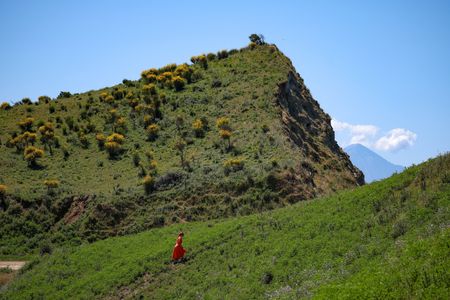
The planned resort sits along a stretch of wild beaches, forests, and wetlands that serve as habitat for sea turtles and flamingoes. Those birds have become symbols for opponents of the project, who have branded their demonstrations the “Flamingo Revolution.”
Kushner’s wife, Ivanka Trump, has said the couple came up with the idea for the resort after spotting the coastline from a yacht years ago. In 2024, Kushner announced the plans on social media, sharing an artist’s rendering depicting a hotel, villas, swimming pools, and yacht docks covering the land. He has not publicly disclosed the amount of money he has invested.
Albania’s government has been a strong supporter of the project, dismissing the protests as politically motivated. Prime Minister Edi Rama told Reuters last month that the development was “beautiful” and would proceed regardless of opposition. A government spokesperson, when asked about the allegations against Shehu, said the government would not intervene in private transactions and that the project was moving forward in compliance with Albanian and EU regulations.
The European Union has previously urged Albania — as a membership candidate — to follow EU environmental standards in connection with the project. A spokesperson for the EU’s executive Commission declined to provide additional comment.
The case files against Shehu were compiled by Albania’s Special Structure Against Corruption and Organised Crime, known as SPAK, an independent agency established in 2019 to combat corruption using its own investigators and prosecutors, separate from the regular police and prosecution service.
The documents span 200 pages and have not been released to the public. A SPAK spokesperson confirmed the agency is investigating the matter but declined to elaborate further.
The files are dated June 12, 2026 — the same day SPAK publicly announced arrest warrants for 20 individuals on charges of drug trafficking and money laundering. While the case files identify suspects by their full names, the arrest warrants follow standard Albanian practice and list suspects only by initials. The initials in the warrants correspond to the full names in the case files, including one suspect listed as “A.Sh.”
Shehu’s attorney, Cakrani, confirmed his client is a target of the warrant but expressed little concern, saying it was “widely believed” that Albanian prosecutors act under the influence of political and business figures. SPAK has not disclosed whether any of the 20 suspects have been arrested or formally charged.
According to the SPAK documents, Shehu sold the resort land for approximately €110 million. Prosecutors say they have ordered those funds frozen in a notary’s account, blocking the money from reaching Shehu.
The documents allege that Shehu and his associates “purchased land using illegally obtained funds and forged ownership documents by creating false property titles or artificially increasing the size of properties,” and that “the properties were then transferred or exchanged so they could not easily be traced by the authorities.”
Sazan Real Estate Development’s spokesperson responded: “We continue to believe the underlying land acquisitions were conducted lawfully and in accordance with applicable procedures. As always, we respect and will cooperate with any lawful process as required.” The company did not respond to follow-up questions asking why it considered the transactions lawful in light of the prosecutors’ allegations.
Shehu’s attorney told Reuters that Shehu’s family has held ownership of the land since the era of the Ottoman Empire, more than a century ago, and that the sale to resort investors was entirely legitimate. Cakrani also described Shehu as a law-abiding individual who sought political asylum in the United States in 1998 after witnessing “criminal gangs” kill his brother and uncle. Reuters was unable to independently verify that account.