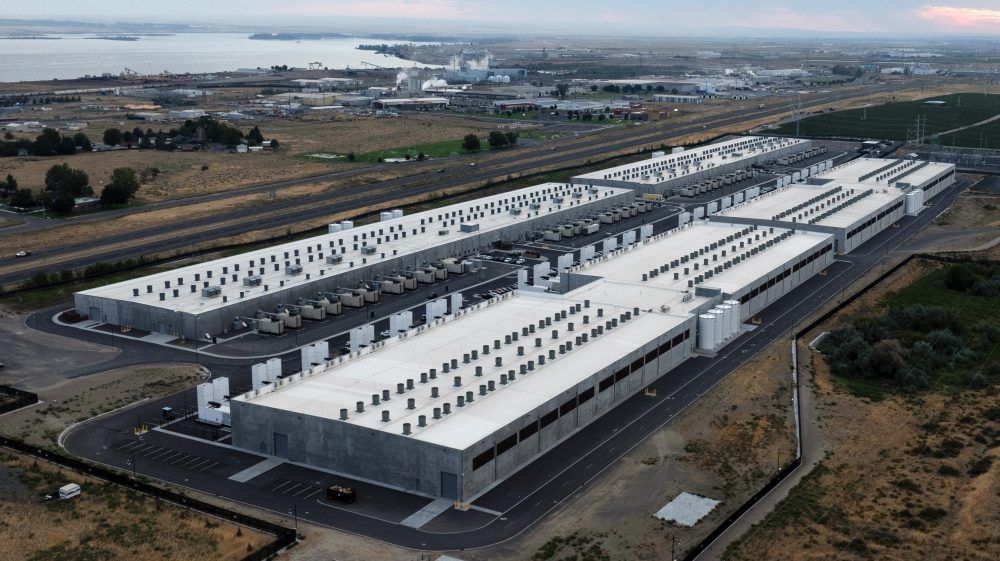

The surging electricity needs of artificial intelligence technology are sparking a revival of fossil fuel development — but supporters of clean energy are pushing hard to make sure massive data centers draw their power from climate-friendly sources as well.
In states with existing climate commitments, lawmakers are worried that the data center boom could undermine their targets for cutting greenhouse gas emissions. Meanwhile, in other states, environmental groups and businesses with clean energy pledges are working through regulatory channels to challenge the grip that monopoly utilities have long held over energy supply and grid access.
The core challenge facing clean energy advocates is that technology companies are demanding electricity at a pace and volume that wind and solar construction simply cannot match. Some individual data centers consume as much energy as a mid-sized city.
That gap has triggered the largest construction surge of natural gas-fired power plants in history. On top of that, utilities, power plant operators, and the federal government are moving to extend the lives of aging coal plants that were previously set for retirement.
A bill sitting on the desk of New York’s governor would require data centers above a certain size to hit renewable energy targets starting in 2030 and to draw at least 90% of their power from renewable sources by 2040. The legislation’s sponsor, state Sen. Kristen Gonzalez, a Democrat, said the goals are achievable.
“We are literally talking about the wealthiest companies in the world that are looking to build in New York state, and if they have the resources to put billions of dollars into data center development, then they certainly should have the resources to build out renewable energy sources to power them,” Gonzalez told The Associated Press.
Michigan, Oregon, and Minnesota have been out front on this issue, each passing laws within the past 18 months aimed at protecting their existing mandates requiring electric utilities to rely solely on emissions-free energy by 2040.
“That’s a challenging thing to meet with the data centers,” said Bob Jenks, executive director of the Oregon Citizens’ Utility Board, a nonprofit focused on lower utility bills and cleaner energy. “It was a challenging thing to meet without the data centers.”
Minnesota and Oregon directed regulators to align data center energy use with their emissions-reduction plans, while Michigan tied a lucrative sales tax exemption for large-scale data centers to a requirement that they meet a 90% clean energy standard within six years.
Similar legislation has surfaced in more than half a dozen other states, including California, Illinois, New Jersey, Pennsylvania, and Virginia.
“We just can’t do business as usual with a demand at this scale and facilities of this scale because the impacts are massive,” California state Sen. John Padilla, who introduced legislation in his state, told the AP.
Even as gas projects multiply, major tech companies like Google are pouring billions of dollars into their own zero-emissions initiatives, including solar, wind, geothermal, nuclear, and battery storage projects.
Tech firms frequently run into utilities that are unable to deliver power quickly enough to meet their needs. As a result, those companies — joined by environmental organizations, energy entrepreneurs, and business groups — are pressing regulators to open up greater access to the electrical grid, even in states where lawmakers resist clean energy requirements.
Greg Robinson, whose Raleigh, North Carolina-based company Aston Power helps secure power for data centers and other high-energy users, compared the situation to the rise of FedEx when businesses decided the U.S. Postal Service wasn’t fast enough.
“Then business said, ‘Hey we’re doing more things now, the postal service is not keeping up so maybe there’s an opportunity for a new service,’” Robinson said.
Part of the effort involves convincing utilities — which earn profits by constructing power plants and transmission lines — that expanding grid access to clean energy won’t hurt their finances, according to clean energy advocates.
One argument in their favor: utilities would gain access to a power source they don’t have to bill customers for, which is particularly appealing as electricity rates climb in many areas. They also gain a large, long-term customer that funds grid expansion rather than building its own off-grid power supply.
Last year, clean energy advocates successfully persuaded Colorado regulators to require the state’s largest electric utility, Xcel Energy, to develop a program allowing large power users to build clean energy projects connected to the grid.
In a regulatory filing this past April, Xcel Energy indicated it supported the concept and pointed to two Google projects — one in Nevada connecting 115 megawatts of geothermal power and another in Minnesota connecting 1,900 megawatts of wind, solar, and battery storage — that were approved under comparable arrangements.
However, a dispute over how Xcel Energy plans to structure the program is still pending before state regulators.
Google’s deal with NV Energy, Nevada’s largest for-profit utility, received regulatory approval last year and is widely considered a first-of-its-kind agreement. Google reports that similar arrangements have now been approved or are under review in eight additional states, including Indiana, Kansas, Missouri, and South Carolina.
The Corporate Energy Buyers Association — which counts major tech firms and large corporations among its members — negotiated a deal with Georgia Power that was approved by state regulators earlier this year, allowing members to build clean energy sources and tie them into the grid. The group is now pursuing a comparable agreement in North Carolina.
“These innovations are actually some of the most incredible and understated innovations we’re going to see in regulatory and energy procurement,” said Nidhi Thaker, the association’s senior vice president of policy, in comments to the AP. “And I think the actions that are being taken right now are actually going to set energy policy for the next two to three decades.”