HAGERSTOWN, Md. — Car horns echoed and demonstrators chanted “Stop ICE!” outside a Washington County meeting where officials discussed routine matters including waste management budgets.
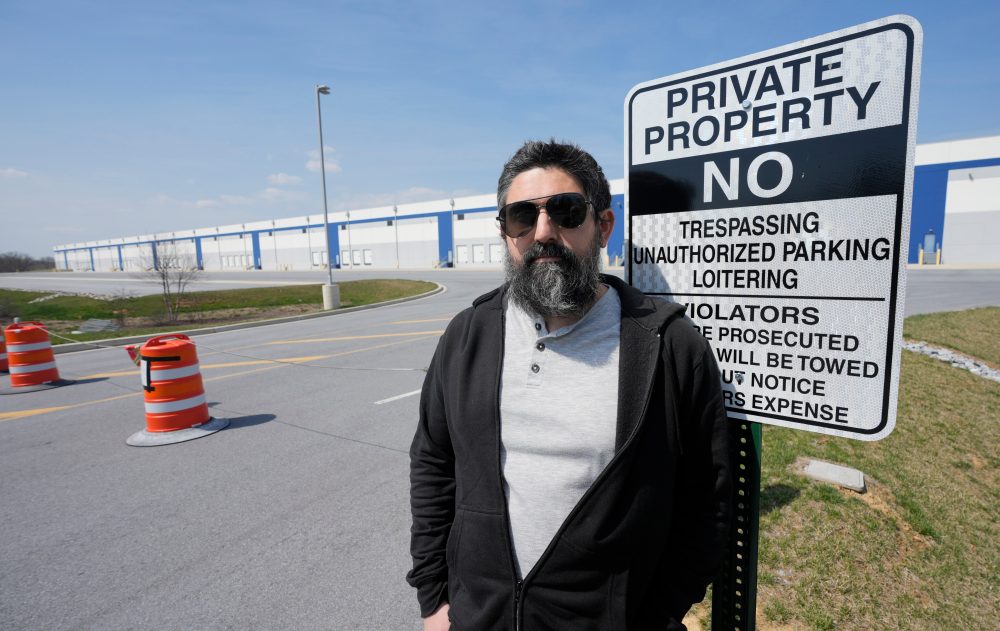
The protests have become a regular occurrence since the Department of Homeland Security acquired a massive 825,000-square-foot warehouse in Washington County as part of a nationwide initiative to convert commercial buildings into immigrant detention centers.
“This is a facility built for packages, not people,” said Patrick Dattilio, who leads Hagerstown Rapid Response, an organization opposing Immigration and Customs Enforcement, as he demonstrated outside the county commission session.
Federal authorities have encountered strong resistance in communities where they spent $1.074 billion purchasing 11 warehouses under a program now being evaluated by Homeland Security Secretary Markwayne Mullin. Washington County stands out as the most cooperative location — where local leaders expressed backing for ICE despite public outcry with whistles and shouting. The processing center was planned to be among the first operational facilities in a project initiated under Mullin’s predecessor, Kristi Noem.
However, DHS plans for the Washington County property are currently suspended — caught up in legal proceedings similar to other warehouse conversion projects nationwide. Uncertainty remains about whether Mullin will proceed with the facilities initiative or pursue alternative strategies as he implements President Donald Trump’s large-scale deportation program.
The massive blue-and-white warehouse in Washington County has generated significant controversy partly due to how commissioners expressed their ICE support.
While consistently stating their limited options since the federal government had already purchased the property, commissioners also passed a resolution during their February 10 session declaring their “unwavering support” for DHS and ICE.
The resolution, which didn’t directly reference the warehouse acquisition, prompted such intense booing and shouting that the commission president emptied the chamber.
The county also had its own interests. Officials sent the resolution to Noem the following day along with an email outlining hundreds of millions of dollars in sewer, airport and highway improvements they claimed were necessary, according to public records obtained by local resident Ethan Wechtaluk, who is seeking Congress in the district containing the warehouse.
ICE, backed by substantial congressional funding, has signed a $113 million contract to modify the building for 500 to 1,500 detainees, but a judge temporarily stopped construction after Maryland’s attorney general filed suit. A court hearing is set for April 15.
County commissioners ignored email and phone requests for comment. County administrator Michelle Gordon issued a statement saying commissioners were refusing all interview requests.
Numerous county residents — in an area Civil War enthusiasts visit to see the Antietam battlefield before traveling to nearby Gettysburg — are angry both due to ethical concerns about the facility and because they learned about the purchase after the fact.
“We have had no voice in this,” said Carroll Sager amid the noise of protesters and honking vehicles. Behind her, the sheriff’s department had blocked off part of the county building with crime scene tape to keep protesters away. Two deputies monitored the crowd.
Inside the meeting, Sager sat silently, displaying a sign reading: “Disenfranchised in Washington County.”
Resistance in other locations has included a New Jersey legal challenge alleging an “utter lack of communication” and a Michigan lawsuit questioning why DHS didn’t consider using vacant state prisons. Authorities in Salt Lake City and Pennsylvania have threatened to restrict or cut off water service. In Georgia, the town of Social Circle placed a lock on the water meter at a DHS-purchased warehouse.
Additionally, concerns have emerged about DHS payment amounts for some warehouses. The agency paid twice the tax-assessed value for the New Jersey warehouse and nearly five times the assessed value of the Social Circle warehouse.
During his confirmation hearing, Mullin faced questions about whether he would continue Noem’s warehouse-to-detention policy. Without making specific commitments, Mullin said the department wanted to “be good partners” with communities.
Shortly after taking office, DHS suspended new warehouse purchases intended for immigrant housing. The agency is reviewing all contracts executed under Noem.
Federal officials also stated in a recent Maryland lawsuit filing that “ICE is reconsidering the plans and scope of the warehouse.”
When asked about potential changes for the Maryland facility, DHS responded in a statement: “As with any transition, we are reviewing agency policies and proposals.”
The strategy involved converting the Maryland warehouse into an ICE processing center that would temporarily house recently detained immigrants before transferring them to other facilities for extended detention.
ICE representatives have indicated the Washington County warehouse would address detention space requirements for the Baltimore ICE office. State legislators have raised concerns about the George H. Fallon Federal Building housing ICE detainees in downtown Baltimore, partly because bacteria causing Legionnaires’ disease was discovered in the water system.
Activists and residents living near the Washington County warehouse continue monitoring developments.
For almost thirty years, Nica Sutch has owned a home in western Maryland’s rolling hills, where she raised children and hosted grandchildren.
When the warehouse was constructed several years ago to meet distribution center demand driven by online shopping growth, she convinced herself it could benefit the region economically.
Now that ICE has acquired the building, she’s considering relocating.
“I love the area,” she said during a backyard interview. “I love everything. This has been my home for 28 years.”
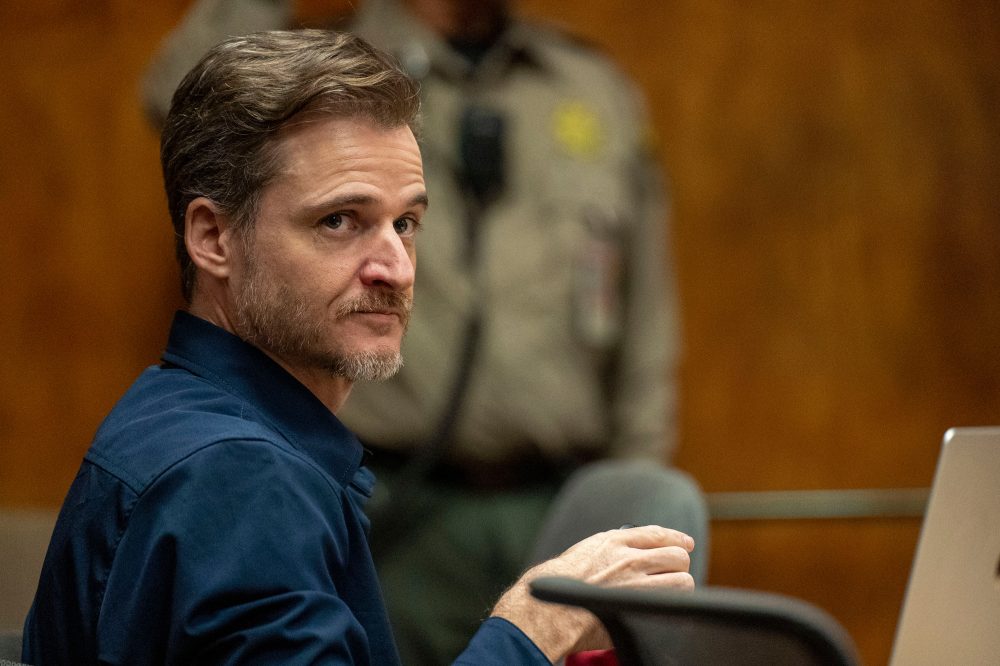
RIVERHEAD, N.Y. — After more than three decades, one of New York’s most notorious serial killing cases reached its conclusion this week when Rex Heuermann entered guilty pleas for multiple murders connected to the Gilgo Beach investigation.
The 62-year-old architect admitted Wednesday to seven murder charges – three first-degree counts and four intentional murder charges – for killings that occurred between 1993 and 2010. During the court proceedings, Heuermann also confessed to an eighth murder, though formal charges haven’t been filed in that death.
Showing no emotion during the hearing, Heuermann avoided looking toward the courtroom gallery where family members of his victims had gathered. His sentencing is scheduled for June, when he will receive life imprisonment without parole eligibility.
The investigation gained international attention after authorities began discovering human remains along Long Island’s South Shore coastline starting in late 2010. For more than ten years, victim families lost hope that justice would ever come as the case remained cold.
The breakthrough came in 2023 when DNA evidence linked Heuermann to the crimes, leading to his arrest.
During Wednesday’s proceedings, Heuermann acknowledged that he strangled eight women, dismembering several of them before disposing of their bodies at isolated coastal locations. Many of those he targeted worked in the sex trade.
Among his admitted victims was Karen Vergata, whom he killed in 1996, though prosecutors haven’t filed charges in her death.
Six victims’ remains were discovered along Ocean Parkway near Gilgo Beach: Melissa Barthelemy, Maureen Brainard-Barnes, Amber Lynn Costello, Valerie Mack, Jessica Taylor, and Megan Waterman. Sandra Costilla’s body was located over 60 miles away in the Hamptons, while Vergata’s remains were initially found on Fire Island in 1996, with additional remains discovered near Gilgo Beach in 2011.
Investigators identified Heuermann as a suspect in 2022 by cross-referencing vehicle registration records with witness accounts of a pickup truck seen when one victim vanished in 2010.
Authorities gathered cell phone records showing Heuermann had contacted several victims shortly before their disappearances. His online search history revealed an obsession with the Gilgo Beach murders.
The case broke open when surveillance officers followed Heuermann to his Manhattan workplace and watched him throw away pizza crust remnants. Crime lab analysis of DNA from those discarded crusts matched hair evidence found on burlap material used to restrain a victim.
Suffolk County District Attorney Ray Tierney explained how investigators maintained secrecy throughout their probe to avoid alerting Heuermann. “We wanted the one person who mattered, the murderer, to think it’s business as usual,” Tierney said.
As part of his plea agreement, Heuermann committed to full cooperation with the FBI’s behavioral analysis unit to assist in capturing other serial killers.
Victim family members filled the courtroom Wednesday, with some crying as Heuermann described the murders in detail.
Elizabeth Baczkiel, mother of victim Jessica Taylor, attended the hearing. Her 20-year-old daughter disappeared from Manhattan in 2003, with her remains found 45 miles east of Gilgo Beach in Manorville later that year.
“I am glad that this is over as far as him pleading guilty,” Baczkiel said. “It took a big chunk of stress off of me and my family.”
Melissa Cann, sister of victim Maureen Brainard-Barnes whose body was discovered in 2010, expressed gratitude for finally achieving justice.
“This has been a long journey of hope — hope that one day we would stand here and say her name with justice beside it,” Cann said at a post-hearing news conference. “Today, that long, painful journey brings us to this moment.”
Heuermann’s former wife, Asa Ellerup, and their daughter attended the guilty plea hearing. Ellerup expressed sympathy for victim families while requesting privacy for her own family. Their attorney, Robert Macedonio, confirmed that Ellerup and daughter Victoria had no knowledge of or involvement in the killings.
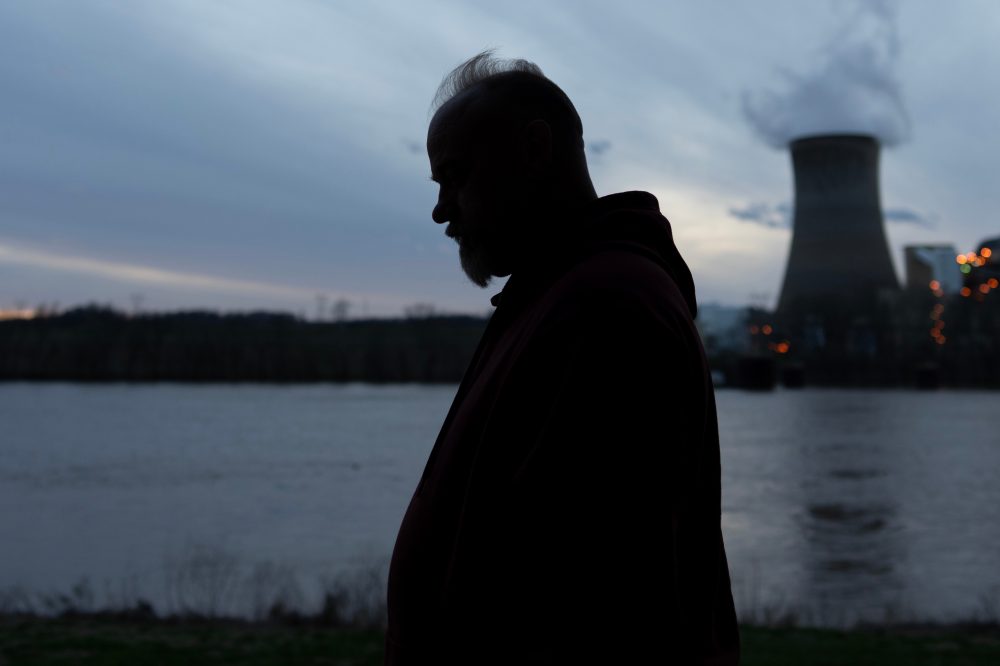
WEST COLUMBIA, W.Va. (AP) — Stacks of electricity bills cover Eric Pinson’s desk in organized rows, a constant reminder of the financial crisis hitting his camping trailer park in West Virginia. Located near a proposed data center and within sight of a massive coal-fired power plant that recently received millions in Trump administration funding for improvements, his facility has become ground zero for an affordability crisis.
The trailer park had served as a last resort for people barely getting by financially. However, when power costs spiked last year, Pinson had no choice but to raise his all-inclusive monthly rent from $350 to $400. The increase forced at least 16 residents to leave, including some who had lived there for years.
“They were just right on the edge. … It’s hard, just watching it happen, and so many of them,” he said, adding out-of-state workers have moved in to replace them as the state woos big investments such as data centers. “It’s all about change.”
Across West Virginia, thousands of residents have been sharing images of monthly utility bills they cannot afford to pay. Their frustration centers on skyrocketing energy costs that have exceeded rent and mortgage payments this winter in one of America’s most energy-abundant yet economically disadvantaged regions.
During his campaign, President Donald Trump pledged to “make America affordable again” by promising to slash Americans’ power bills by at least 50% within his first 12 to 18 months in office.
However, electricity costs climbed 4.8% nationwide in February, while natural gas prices surged 10.9% compared to the previous year, according to Labor Department Consumer Price Index data. These increases outpaced overall inflation even before recent U.S. and Israeli military actions against Iran caused energy prices to spike further.
Rebecca Michalski, who lives with a disability, was compelled to secure a loan this winter just to cover her electric bill due to excessive heating expenses. Her February statement totaled $940.08 — exceeding both her fixed income and mortgage payment. She remains behind on her bills and anticipates her power will eventually be disconnected.
“It’s breaking me. And there’s nothing that can be done for it, unless the president does something,” said Michalski, adding she no longer supports Trump. “And I don’t see him doing it. He’s had plenty of time.”
The White House stated that reducing electricity costs remains a primary objective for the president, emphasizing that he is “aggressively unleashing reliable energy sources like coal and natural gas.”
West Virginia stands apart nationally due to its reluctance to embrace cleaner, more cost-effective energy alternatives such as natural gas, nuclear power, and renewable sources like wind and solar. The state maintains its dependence on outdated coal-fired power facilities more than any other state — generating approximately 87% of its electricity from coal.
While monthly utility bills may be higher in other states, West Virginia wages have failed to keep up — it remains the only state where the median inflation-adjusted household income in 2023 fell below 1970 levels, according to Urban Institute research.
Rising demand, severe weather conditions, infrastructure modernization and maintenance costs, and increasing natural gas prices are all driving electricity bills upward. Customers are also growing concerned as more energy-intensive data centers for artificial intelligence and cloud computing are planned. They’re raising questions about noise pollution, massive water usage, and potential impacts on their electricity rates.
In February, Gov. Patrick Morrisey unveiled plans for a $4 billion data center spanning nearly 550 acres in Berkeley County.
Charles “Duke” Hodge expects another data center to be constructed near his mobile home. The veteran and former railroad employee lives with his two dogs in the riverside park that has lost multiple camping trailers over the past year due to rising energy costs. While he’s in a slightly better financial position, he’s been forced to occasionally work part-time jobs to help cover his expenses. During peak summer months, he paid up to $140 monthly for electricity. But once he activated his heating system last fall, his bills began climbing dramatically.
“Once fall hits, everybody expects it to go up, but not 200 to 300%,” he said. “I went from $120 a month to $275, then it went to $350. Now, the last one was $450.”
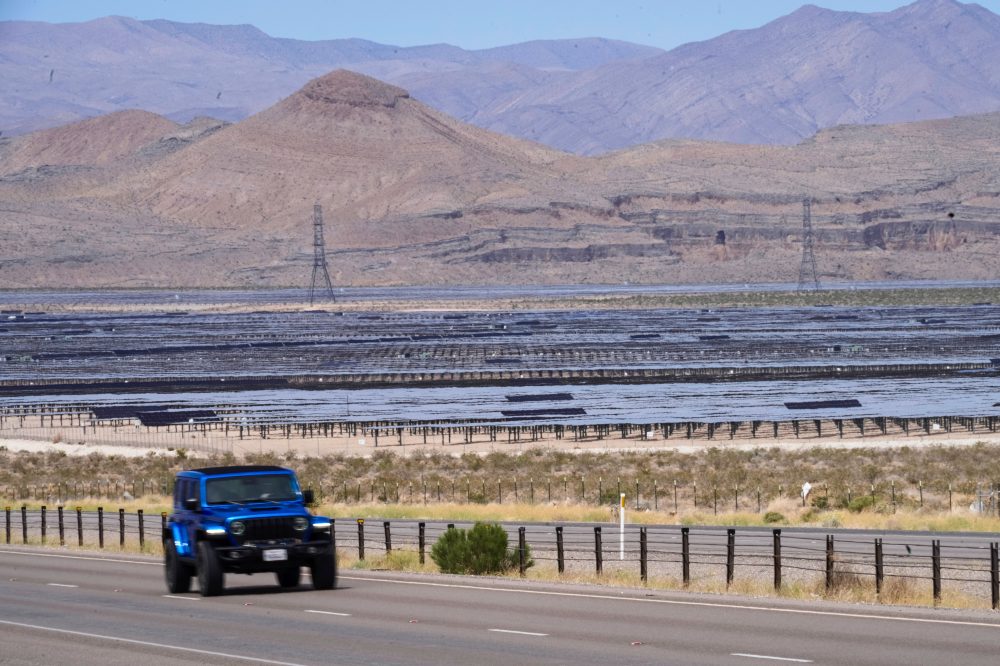
LAS VEGAS (AP) — Nevada’s primary electric company reports it will require electricity equivalent to three times what Las Vegas consumes simply to support planned data center facilities — and meeting that demand without fossil fuels appears unlikely.
This situation puts Nevada at risk of failing to achieve its renewable energy mandate of 50% clean power by 2030.
“I can’t remember a time in the history of the industry where we’ve seen as much interest in adding load, which is primarily driven by data centers,” stated Shawn Elicegui, senior vice president of regulatory and resource planning for NV Energy, the company supplying power to 90% of Nevada.
Electric utilities nationwide face similar challenges as they work to satisfy surging power demands from data centers supporting artificial intelligence while maintaining commitments to transition away from fossil fuels toward renewable and carbon-free energy sources.
North Carolina, experiencing its own data center boom, has seen its largest utility revise long-range plans to postpone coal plant closures and construct additional natural gas facilities. State legislators eliminated an intermediate carbon reduction target, raising environmental advocates’ concerns about meeting the 2050 zero-emission objective.
NextEra Energy, serving commercial customers in more than a dozen states, abandoned its 2045 zero-emission target entirely due to “demand for all forms of power generation,” according to a recent company filing.
The Trump administration has pushed states to utilize coal for manufacturing and data center energy needs. Technology companies are also scaling back their climate commitments to satisfy consumer artificial intelligence demands.
“It’s very alarming, and it’s probably the single largest natural resource issue of our time,” commented Olivia Tanager, director of the Sierra Club’s Toiyabe chapter covering Nevada.
Nevada ranks among America’s fastest-expanding data center markets due to its absence of corporate income taxes, affordable land prices, and data center tax incentives. Dozens of facilities already operate with additional projects planned. State legislators are now considering increased regulations while debating how to balance clean energy objectives with data centers’ economic advantages.
Some facilities claim they want to contribute to solutions; the data center industry accounted for half of all corporate renewable energy purchases in 2024, according to Dan Diorio, vice president of state policy for the Data Center Coalition.
However, renewable energy additions to the electrical grid aren’t expanding rapidly enough. Nationwide, gas turbine orders face backlogs while renewable project approvals require extensive time, industry analysts report.
Located south of the Las Vegas Strip, the Switch data center spans nearly one square mile. As Southern Nevada’s largest data facility, it operates completely on renewable power, according to Chief Strategy Officer Jason Hoffman. Unlike competitors, Switch holds licensing to develop its own renewable energy sources at utility-company scale. The company has constructed 1 gigawatt of solar capacity and continues building additional solar installations. Switch uses NV Energy’s grid solely for electricity delivery while sourcing power from independent suppliers.
Within the enormous buildings, hundreds of servers operate inside massive soundproof and waterproof enclosures. These systems store critical data for Switch’s customers, including major financial institutions, streaming platforms, e-commerce sites, casinos, and government agencies.
During summer heat waves, when equipment cooling requires additional energy, Switch can disconnect from the grid and operate independently, Hoffman explained. The facility’s design minimizes air conditioning needs throughout other seasons.
Many utilities and technology companies are adopting gas-powered generation for data centers, including the disputed xAI facility near Memphis utilizing mobile gas turbines mounted on semi-trailers.
Tanager from the Sierra Club noted that several proposed Northern Nevada data centers would employ hundreds of low-grade diesel backup generators, degrading air quality. These backup systems activate during power outages and typically see limited use.
During a recent seven-hour legislative session, Nevada residents voiced complaints to lawmakers about data center noise pollution and expressed concerns regarding water supply impacts and energy cost increases. Boulder City residents, home to Hoover Dam, are also opposing a proposed facility over similar issues.
NV Energy mandates that data center developers fund their own infrastructure and energy requirements — though renewable sources aren’t mandatory.
Nevada created a voluntary funding program allowing companies to finance NV Energy’s clean energy development and apply those investments toward corporate sustainability targets. This pioneering model led to a geothermal plant in Northern Nevada with Google as a partner.
Environmental organizations want the state to mandate this model but remain concerned it wouldn’t generate sufficient clean energy to satisfy demand. They also fear NV Energy might increase fossil fuel dependence without guarantees that all proposed data centers will be constructed.
NV Energy will require companies to execute contracts ensuring their state commitment before energy infrastructure development, Elicegui stated. The utility’s approach welcomes “growth” while ensuring companies accept responsibility for power requirements “whether they show up or not.”
Nevada’s public utilities commission may impose penalties, grant exemptions, or implement other measures if it determines NV Energy failed to achieve state clean energy targets. The utility plans to release a detailed report by month’s end.
Democratic Assemblymember Howard Watts of Las Vegas called it “unacceptable” to advance projects threatening the state’s renewable energy portfolio. Watts advocates requiring data centers to bear clean energy development costs. While many companies already take such steps, establishing these protections in law is essential, he argued.
“Building more gas plants seems like going in the exact opposite direction of what we need to do as a state,” he stated, emphasizing Nevada’s “tremendous solar and geothermal energy potential.”
Former President Donald Trump declared Wednesday that American military forces will continue their deployment in and around Iran until the country meets the terms of what he called a “real agreement.”
In a Wednesday post on his Truth Social platform, Trump stated: “All U.S. Ships, Aircraft, and Military Personnel, with additional Ammunition, Weaponry, and anything else that is appropriate and necessary for the lethal prosecution and destruction of an already substantially degraded Enemy, will remain in place in, and around, Iran, until such time as the REAL AGREEMENT reached is fully complied with.”
The former president’s announcement came without additional details about the specific agreement he referenced or the current status of military deployments in the region.
Investment banking giant Goldman Sachs has revised downward its oil price projections for the second quarter of 2026, cutting estimates to $90 per barrel for Brent crude and $87 for U.S. crude following Wednesday’s announcement of a temporary ceasefire between the United States and Iran.
The financial institution had previously anticipated Brent and West Texas Intermediate (WTI) oil would reach average prices of $99 and $91 per barrel respectively during that period.
“Given the reduction in the risk premium at the front of the curve and already edging up oil flows through the SoH (Strait of Hormuz), we nudge down our Q2 forecast for Brent/WTI,” the investment bank explained in its research note.
Oil markets have experienced significant volatility this week, with Brent crude declining more than 11% amid optimism that the strategically important Strait of Hormuz shipping lane could reopen following President Donald Trump’s agreement to the two-week ceasefire with Iranian leadership.
Despite the overall weekly decline, oil prices climbed during Thursday’s early Asian trading hours as market participants expressed skepticism about whether Middle Eastern oil production would return to full capacity, given uncertainty about the durability of the ceasefire and ongoing restrictions in the critical waterway.
For the latter half of 2026, Goldman Sachs maintained its price projections at $82 and $80 per barrel for Brent crude in the third and fourth quarters, while forecasting WTI at $77 and $75 respectively.
The investment bank cautioned that upward pressure on prices remains the primary risk to their forecasts, citing possibilities of extended supply disruptions and continued production shortfalls from crude-producing nations.
Should the ceasefire collapse and Middle Eastern oil production losses persist at approximately 2 million barrels daily, Goldman Sachs warned that Brent crude could surge to an average of $115 per barrel during the fourth quarter.
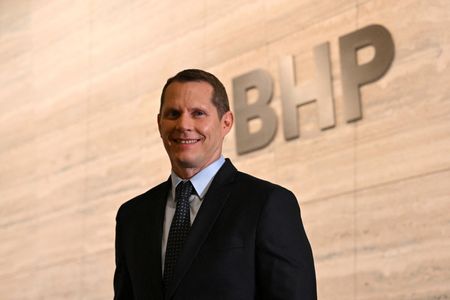
Brandon Craig, set to become the next chief executive of mining company BHP Group, traveled to Beijing this week for discussions with Chinalco leadership about expanding business partnerships, the Chinese aluminum corporation announced Thursday.
The visit has drawn attention from investors as BHP continues to navigate challenging negotiations with China’s Mineral Resources Group, its largest customer. The dispute has escalated to the point where CMRG has prohibited its steel manufacturing facilities from purchasing certain BHP products while both sides work to finalize annual supply agreements.
During last month’s statements, Craig indicated his priority would be improving BHP’s business relationships throughout China.
According to a WeChat social media post from the company, Chinalco’s Chairman Duan Xiangdong held Wednesday meetings with Craig, expressing optimism about expanded collaboration between the two corporations.
BHP representatives have not yet provided comments regarding the Beijing meetings.
Craig is scheduled to officially begin his role as chief executive on July 1st.
A major international commodities trading company has booked a massive oil tanker for Middle Eastern crude transport to Asia, representing what industry sources believe is the first such arrangement since the recent U.S.-Iran ceasefire agreement.
Glencore secured the Asian Lion, a massive vessel known as a very large crude carrier that can transport up to 2 million barrels of oil, according to shipping industry sources and LSEG tracking data. The supertanker is currently en route to the Middle East region.
The trading giant agreed to pay W580 using the Worldscale industry standard for calculating shipping costs, sources revealed. This represents a significant increase from the W230 rate recorded on February 27, just before the conflict began. Additionally, the daily waiting fee stands at $580,000, which covers costs if the vessel takes longer than expected to complete loading and unloading operations.
Company representatives from Glencore were not immediately available to provide comment regarding the vessel arrangement.
Despite the ceasefire announcement, shipping industry officials expressed Wednesday that they require additional clarification about the agreement’s specific terms before resuming regular passage through the Strait of Hormuz. Iranian authorities have maintained that the strategic waterway continues to be restricted to vessels operating without proper authorization.
Iranian officials indicated they would provide secure transit coordination through their military forces, though the country’s coastguard issued stern warnings Wednesday that unauthorized vessels would face being “targeted and destroyed.”
Iran’s Revolutionary Guards naval division released navigational charts showing recommended shipping lanes within the Strait of Hormuz designed to help vessels avoid underwater explosive devices, according to reports from the semi-official Iranian news agency ISNA early Thursday.
The six-week military confrontation virtually halted maritime traffic through the strategic waterway, which serves as a critical passage for approximately 20% of worldwide oil and liquefied natural gas shipments, causing global energy costs to surge dramatically.
Beloved college basketball announcer Dick Vitale revealed Wednesday that medical professionals discovered concerning findings during recent imaging tests, with the 86-year-old sports icon now preparing for a biopsy scheduled for this Friday.
“Like countless others, each time I go for any kind of test I am a nervous wreck,” stated Vitale, who has been fighting cancer since 2021, in a release from ESPN. “The latest example is my scans last week. The anxiousness you feel about the uncertainty is off the charts. You just never know what’s next and it can be surprising or scary. While I feel great physically and mentally, I heard from doctors that the latest tests (a PET scan, CAT scan and two MRIs) showed some abnormalities.”
“They are recommending some additional testing to determine next steps,” Vitale continued. “I’m hoping for the best, and we will see what the roadmap looks like after the upcoming biopsy.”
The veteran broadcaster has faced multiple cancer battles, receiving melanoma and lymphoma diagnoses in 2021, followed by vocal cord cancer in 2023. Most recently, he had surgery to treat lymph node cancer in 2024. Despite these health challenges, Vitale returned to the broadcast booth and worked a First Four matchup last month featuring North Carolina State versus Texas alongside Charles Barkley.
“Our teammate. Our friend. We love you, @DickieV. In your corner, always,” ESPN shared on social media platform X.
Born in Passaic, New Jersey, Vitale transitioned from coaching basketball at both collegiate and professional levels to broadcasting. He joined ESPN’s coverage team during the 1979-80 college basketball season and became a household name in the sport. His contributions earned him induction into the Naismith Memorial Basketball Hall of Fame in 2008. He currently resides in Lakewood Ranch, Florida, with his spouse Lorraine.
“As always,” Vitale concluded in his statement, “I plan to remain as active as ever and fight as hard as can be.”
A federal appeals court issued a decision Wednesday reversing the criminal conviction of Juan Orlando Hernandez, the former president of Honduras, and directed a lower court to dismiss all charges against him.
The appellate court’s ruling marks a significant legal victory for Hernandez, who had been facing criminal charges in the United States justice system.
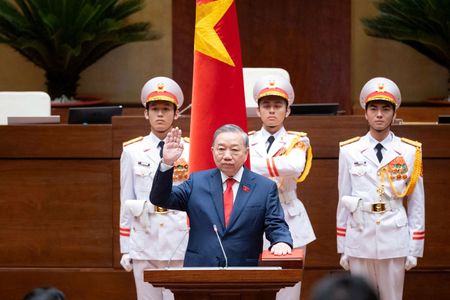
Vietnamese President To Lam is scheduled to make his inaugural international journey as the country’s leader next week, traveling to China for a four-day diplomatic mission from April 14 through 17.
China’s official news agency Xinhua confirmed the upcoming visit on Thursday, validating earlier reports about the planned trip by Vietnam’s state president and Communist Party chief to the nation’s most influential neighbor.
This marks Lam’s first foreign travel since assuming the role of state president, and sources indicate he is expected to hold discussions with Chinese President Xi Jinping during his stay.
The visit underscores the importance of the relationship between Vietnam and China, which serves as Vietnam’s largest trading partner and carries significant weight in both economic and geopolitical matters for the Southeast Asian nation.
Motorists traveling on southbound Route 13 in New Castle should expect delays as construction crews have shut down two left lanes near the median strip.
The lane closures are located on South DuPont Highway and are scheduled to remain in place until 5:00 AM, according to DelDOT officials.
Drivers are advised to use caution when traveling through the work zone and consider alternate routes if possible to avoid potential traffic backups during the construction period.
Federal prosecutors have filed charges against a former U.S. Army veteran who allegedly shared classified military secrets with a journalist writing about corruption and criminal activity at a North Carolina military installation.
Courtney Williams, 40, from Wagram, North Carolina, was indicted by a federal grand jury on Wednesday for allegedly transmitting classified national defense information to unauthorized individuals, including a reporter, according to the Department of Justice. The charges fall under the U.S. Espionage Act.
The indictment highlights ongoing tensions between government transparency and national security as free-speech advocates continue expressing worries about aggressive prosecution of government employees who leak information to the press.
From 2010 to 2016, Williams served with a specialized military unit at Fort Bragg, North Carolina, where she maintained a “Top Secret/Sensitive Compartmented Information security clearance,” federal officials stated.
According to prosecutors, Williams engaged in extensive communication with a journalist between 2022 and 2025, participating in over 10 hours of phone conversations and exchanging more than 180 text messages. The reporter was gathering material for both an article and book about Williams’ former unit.
Though court documents don’t name the journalist, author Seth Harp published “The Fort Bragg Cartel: Drug Trafficking and Murder in the Special Forces” last year, along with a related article that identified Williams as a source and quoted her statements directly.
Federal prosecutors claim some of Williams’ quoted statements contained “classified national defense information.” They also allege she made unauthorized disclosures of sensitive national defense details through her personal social media profiles.
Attempts to reach Williams’ legal representation were unsuccessful.
Following the indictment announcement, Harp defended Williams, describing her as a “courageous whistleblower who exposed rampant gender discrimination and sexual harassment in the U.S. Army’s Delta Force.” He noted that Williams requested to be identified by name in his reporting and characterized the federal charges as “vague and weak.”
The Justice Department referenced text messages Williams sent to the journalist around the book’s publication date, in which she voiced worries “about the amount of classified information being disclosed.” Prosecutors also said she messaged another unidentified person expressing fears about potential arrest related to her disclosures.
When Williams joined the special military unit in 2010 and again upon her departure, she signed classified information non-disclosure agreements, according to the criminal complaint.
Previous presidential administrations have occasionally pursued legal action against sources who leaked information to journalists attempting to expose government misconduct, with cases dating back to the Vietnam War-era “Pentagon Papers” and more recently involving Iraq war documents.
A Freeze Warning is in effect across the Delmarva Peninsula tonight as temperatures are expected to plummet to as low as 26 degrees, potentially damaging crops and tender vegetation.
The National Weather Service issued the warning Tuesday evening for portions of Delaware, the Eastern Shore of Maryland, and parts of New Jersey, with freezing conditions expected to continue until 9 AM Thursday morning.
Locally affected areas include New Castle, Kent, and Sussex counties in Delaware, as well as Queen Anne’s, Talbot, and Caroline counties on Maryland’s Eastern Shore. The warning also extends into parts of New Jersey including Cumberland, Atlantic, and Cape May counties.
The biggest concern is damage to sensitive plants and crops that have already begun their spring growth. The unexpected late-season freeze could also threaten unprotected outdoor plumbing.
Residents should take immediate action to protect tender plants by covering them or bringing potted plants indoors. Make sure to disconnect and drain garden hoses, and consider letting faucets drip slightly to prevent pipes from freezing.
The Freeze Warning will expire at 9 AM Thursday morning, with temperatures expected to moderate as we head into the weekend. Stay with TV Delmarva for continued weather updates.
The National Weather Service office in Mount Holly, New Jersey has issued a freeze warning that took effect Monday evening at 9:52 PM and will remain in place until 9:00 AM Tuesday morning.
The warning alerts residents to prepare for freezing temperatures that could damage sensitive vegetation and cause problems with exposed outdoor plumbing.
Gardeners and homeowners are advised to bring in potted plants, cover tender garden plants, and ensure outdoor water pipes are protected from the cold.
The freeze warning comes as unseasonably cold air moves through the region overnight, creating conditions that could harm plants that have already begun their spring growth.
Financial markets showed cautious optimism Thursday morning as the US dollar recovered from recent losses, with traders closely watching developments surrounding a precarious ceasefire agreement between the United States and Iran.
Currency trading data revealed the dollar index, which tracks the greenback’s performance against major world currencies like the euro and Japanese yen, climbed 0.03% to reach 99.09. Meanwhile, the euro dropped 0.07% to $1.1654 in early session activity.
The Japanese yen retreated from Wednesday’s stronger position, declining 0.06% against the dollar to settle at 158.7 yen per dollar. The British pound also slipped 0.04% to $1.3387.
Wednesday’s trading session saw the dollar tumble to its lowest point in a month following news of the Middle East truce announcement.
However, the ceasefire agreement faces significant challenges, with Israel maintaining its separate military operations against Iran-backed Hezbollah forces in Lebanon. Iranian officials have criticized both Israel and the United States for allegedly breaking the terms of the agreement, stating that continuing peace negotiations would be “unreasonable.”
Maritime traffic through the strategically important Strait of Hormuz continues to face restrictions, with vessels still requiring special permits for passage. Shipping companies report they need additional assurances before returning to normal operations in the waterway.
“Any signs that the ceasefire is breaking down, whether through renewed restrictions in the strait or spillover from regional conflicts like Lebanon, could push oil prices higher again, strengthen the U.S. dollar and weigh on risk assets,” explained Daniela Hathorn, senior market analyst at capital.com.
Among global currencies, the dollar has emerged as the primary winner during the Iran conflict, largely because America produces more energy than it consumes, making it less vulnerable to economic disruption compared to oil-importing nations such as Japan and various European countries.
The five-week military confrontation has undermined investor confidence worldwide, creating what experts describe as the most severe disruption to international oil and gas supplies in recorded history.
Market analysts suggest the uncertain peace deal leaves Iran with enhanced control over shipping through the crucial strait compared to pre-conflict conditions, particularly after President Donald Trump stepped back from earlier threats to target Iranian civilian infrastructure.
Thursday’s economic calendar includes the release of February personal spending figures and the PCE deflator from the United States. Akihiko Yokoo, senior analyst at Mitsubishi UFJ Bank, noted in a research report that while market sentiment has improved following the ceasefire announcement, the dollar-yen exchange rate may remain within current trading ranges during Tokyo sessions, though robust US economic data could spark a dollar rally.
Bank of Japan Governor Kazuo Ueda is scheduled to testify before parliament beginning at 0415 GMT Thursday.
Other currency movements included the Australian dollar weakening 0.13% against the greenback to $0.7034, while New Zealand’s currency declined 0.02% to $0.5821.
Cryptocurrency markets also showed declines, with bitcoin falling 0.50% to $71,018.20 and Ethereum dropping 0.96% to $2,188.86.
Delaware Department of Transportation officials have implemented a temporary lane restriction on US Route 13 that affects morning commuters.
The right travel lane has been shut down along the stretch of highway between New Sweden Street and Millside Drive. DelDOT indicates the lane closure will stay in place until 6:00 AM.
Motorists traveling through this section of Route 13 should expect potential delays and plan for reduced traffic capacity during the closure period.
Motorists traveling on South DuPont Highway should expect delays as construction crews have blocked the two left lanes between 5th Street and 2nd Street.
According to DelDOT traffic reports, the lane restrictions will stay in place until 7 AM while construction work continues in the area.
Drivers are advised to use alternate routes or allow extra travel time when passing through this section of South DuPont Highway during the overnight hours.
CARACAS, Venezuela (AP) — Venezuela’s acting President Delcy Rodríguez delivered a plea for patience to the nation’s workforce on Wednesday, acknowledging that current salaries fall far short of covering basic living expenses while her administration tackles the country’s struggling economy.
During a televised speech broadcast nationwide, Rodríguez announced plans for a salary boost beginning May 1. While she kept the specific amount under wraps, she emphasized the increase would be implemented carefully to prevent the surge in prices that occurred after the previous minimum wage adjustment.
“This increase, as we have indicated, will be a responsible increase,” Rodríguez said. “Likewise in the near future, as Venezuela enjoys more resources that allow for the sustainability of salary improvements and workers’ income, we will continue moving forward on this path.”
Government employees currently struggle to get by on approximately $160 monthly, while those in private companies earned an average of $237 last year. The nation’s minimum wage stands at 130 bolivars, equivalent to just $0.27, and hasn’t been adjusted since 2022. This amount falls dramatically short of the United Nations’ extreme poverty threshold of $3 daily.
According to International Monetary Fund data, Venezuela faces a crushing inflation rate of 682%, marking the highest figure among all tracked nations. The country’s central bank recently published inflation statistics for the first time since November 2024, revealing the annual rate jumped to 475% in 2025 from the previous year’s 48%.
These economic pressures have pushed food costs beyond the reach of many families.
Rodríguez’s nationwide address occurred just one day ahead of planned worker demonstrations in the capital city of Caracas, where employees plan to march demanding higher wages. She emphasized to viewers that economic recovery takes time and urged both workers and business owners across all sectors to collaborate with her administration “to begin a sustained recovery and maintain this path of growth.”
“It must be done with prudence, with awareness, with patience, but with a profound spirit of optimism about what the future holds for Venezuela,” Rodríguez said.
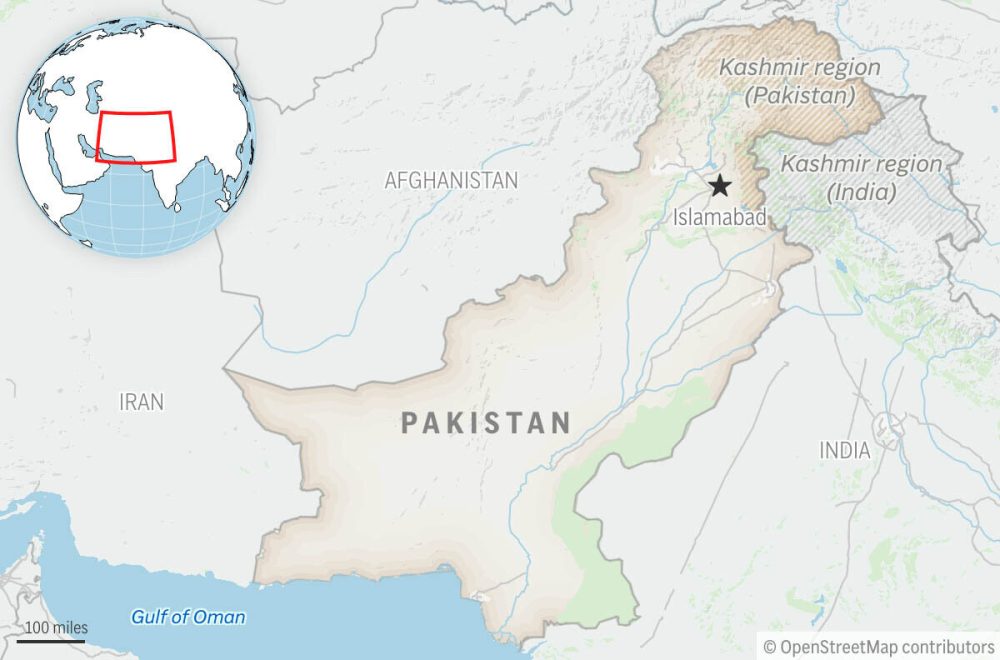
Two neighboring nations have pledged to pursue diplomatic solutions rather than military action following deadly border clashes that claimed hundreds of lives, according to Chinese officials who facilitated peace negotiations.
Representatives from Afghanistan and Pakistan concluded a week of discussions in Urumqi, a city in western China, where they committed to avoiding further military escalation while working toward long-term peace, Chinese Foreign Ministry spokesperson Mao Ning announced during Wednesday’s briefing in Beijing.
“The three parties agreed to explore a comprehensive solution to the issues in the relations between Afghanistan and Pakistan, and clarified the core and priority issues that need to be addressed,” Mao stated during her daily press conference.
According to the Chinese spokesperson, all participants recognized that “terrorism is the core issue affecting the relationship” between the two countries.
The warring nations promised they won’t “take actions that would escalate or complicate the situation,” officials said.
While Pakistani authorities remained silent about the diplomatic discussions, Afghanistan’s Foreign Ministry spokesman Abdul Qahar Balkhi confirmed the completion of the China-hosted negotiations on Wednesday.
Writing on social media platform X, Balkhi described the sessions as taking place in a “constructive atmosphere,” covering topics including diplomatic ties, security concerns and regional peace. He expressed gratitude to Beijing for facilitating the discussions and voiced optimism that the diplomatic process would enhance trust and cooperation throughout the region.
Chinese officials initiated the peace talks last week following the outbreak of hostilities between the neighboring countries in February.
Pakistan had declared itself in “open war” with Afghanistan and conducted aerial bombardments on Afghan territory, including strikes in the capital city of Kabul.
On Tuesday, Afghanistan’s Foreign Ministry characterized the negotiations as productive.
The United Nations humanitarian coordination office reported Tuesday that the military confrontation has forced 94,000 residents to flee their homes, while an additional 100,000 civilians in two Afghan border districts have been completely isolated by the fighting since February.
Despite the ongoing diplomatic efforts, Afghan officials have repeatedly accused Pakistan of conducting artillery attacks across the international boundary during the peace talks.
Pakistani authorities claim Afghanistan provides sanctuary to extremist groups responsible for deadly attacks on Pakistani soil, particularly the Pakistani Taliban organization known as Tehrik-e-Taliban Pakistan or TTP. This militant group maintains separate operations from but shares allegiances with the Afghan Taliban, which assumed control of Afghanistan in 2021 after American-led forces withdrew. Afghan leadership rejects these allegations.
A 42-year-old man from Guatemala entered a guilty plea Wednesday in federal court, admitting his role in a human trafficking operation that resulted in a catastrophic truck accident in Mexico that claimed over 50 lives in 2021.
Daniel Zavala Ramos now faces the possibility of life behind bars after entering his plea in U.S. District Court in Laredo, Texas. He admitted to one count of conspiracy to transport undocumented migrants from Guatemala through Mexico to the United States, an operation that put lives at risk and resulted in multiple deaths and serious injuries, according to the U.S. Department of Justice.
His sentencing hearing is scheduled for July 7.
Ramos represents the first conviction among six Guatemalan nationals charged in connection with the semi-truck disaster. The remaining five defendants have a final pretrial conference scheduled for June 3, court documents show. Ramos’ legal representative did not respond to requests for comment Wednesday evening.
The tragic incident occurred on December 9, 2021, when a semi-trailer carrying at least 160 migrants, predominantly from Guatemala, struck the support structure of a pedestrian overpass and flipped over, according to authorities. The collision resulted in at least 53 fatalities and left more than 100 people injured. Video from the scene revealed the horrific aftermath, showing victims trapped in a tangled mass within the truck’s destroyed cargo container.
Among those who perished were unaccompanied minors, the Justice Department confirmed.
The accident took place on a highway approaching the capital of Chiapas state, approximately 160 miles from the Guatemala-Mexico border and roughly 1,400 miles south of the Texas-Mexico border.
Law enforcement announced the arrests of Ramos and his five co-defendants in Guatemala and Texas in 2024, marking the third anniversary of the tragedy. Ramos was transferred from Guatemala to face charges in 2025, the DOJ confirmed.
Federal prosecutors revealed that the Guatemalan group orchestrated a scheme to transport migrants from Guatemala through Mexico to the United States in exchange for money. When dealing with unaccompanied minors, the defendants allegedly coached them on what to say if caught by authorities.
The trafficking network transported people on foot and in various vehicles including small buses, livestock trucks, and tractor-trailers, authorities said. They also used Facebook Messenger to coordinate the provision of fake identification documents to help migrants enter the United States, according to investigators.
HONOLULU — A Hawaii anesthesiologist facing murder charges for allegedly attacking his wife during a cliffside hike has been found guilty of the reduced charge of attempted manslaughter.
Gerhardt Konig, 47, was convicted Wednesday by a Honolulu jury following one day of deliberations. The conviction for attempted manslaughter based on extreme mental or emotional disturbance could result in up to 20 years behind bars.
Defense attorney Thomas Otake announced plans to file an appeal.
According to prosecutors, Konig orchestrated a plan to kill his wife Arielle during what was supposed to be a birthday weekend getaway to Honolulu in March 2025. The state alleged he attempted to force her over a cliff edge, tried to inject her with a syringe, and struck her with a rock before two passing hikers heard her screams and intervened.
Konig maintained during his testimony that his wife initiated the violence by hitting him with a rock first, claiming he responded in self-defense.
In closing arguments Tuesday, deputy prosecutor Joel Garner told jurors that Konig had developed multiple strategies for killing his wife during their birthday trip to Honolulu in March 2025. When his attempt to force her off the cliff failed, prosecutors said he tried injecting her with a syringe containing an unidentified substance.
“Every backup plan ends in Arielle’s death,” Garner stated while showing jurors the rock and photographs of her injuries.
The defense argued no such schemes existed, with Otake repeatedly questioning the credibility of Arielle Konig’s testimony. Gerhardt Konig entered a not guilty plea to attempted murder charges, maintaining he acted in self-defense against his wife’s initial attack.
Otake challenged the prosecution’s narrative, asking jurors why someone with access to a syringe in an isolated location would engage in a struggle before attempting to use it.
“You would use the syringe first,” Otake argued. “It makes no sense.”
The trial began last month, approximately one year after the couple’s hike on Honolulu’s Pali Puka trail ended with Arielle bloodied and shouting that her husband had tried to murder her.
The couple had left their two young sons at home on Maui during the trip. Prosecutors said Gerhardt Konig, angered by his wife’s relationship with a colleague, launched the attack near a scenic overlook. Only the intervention of two other hikers stopped the assault, according to Garner.
The proceedings, which were livestreamed by Court TV, revealed details about the couple’s marital troubles leading up to the hiking incident and conflicting accounts of what transpired on the trail.
During his testimony, Gerhardt Konig revealed he had discovered his wife’s affair by accessing her phone while she slept. Arielle Konig described the relationship as an “emotional affair” involving flirtatious text messages with a coworker, which became a topic of discussion during their hike.
Arielle Konig testified that her husband seized her and attempted to move her toward the cliff’s edge, prompting her to throw herself to the ground to maintain her grip. She said he positioned himself over her with a syringe in hand, which she managed to knock away. In her struggle to escape, she bit his forearm and grabbed his testicles, she testified.
Her husband disputed pushing her toward the edge and claimed she struck him in the face with a rock. He said he took the rock from her and hit her twice in self-defense.
Gerhardt Konig also denied carrying any syringes on the mountain or attempting to stab his wife. His defense team argued no syringe was recovered at the scene because none was ever present.
Otake portrayed Gerhardt Konig not as someone capable of attempted murder, but as a man grappling with marital infidelity and doing his best. The attorney read from a heart-shaped birthday card Gerhardt Konig had written to his wife, calling her “the heart of our family” and stating, “The kids and I hit the jackpot with you.”
Gerhardt Konig testified that after watching his wife crawl away, he felt his marriage and career were finished and contemplated suicide by jumping. Before doing so, he contacted his adult son from a previous marriage. The son later told authorities that his father confessed to trying “to kill your stepmom” — a statement Gerhardt Konig denied making.
Konig claimed he called his son to say farewell.
Garner noted that during that phone call, the defendant made no mention of striking his wife in self-defense.
He remained hidden on the mountain for approximately eight hours before deciding to come down, and even attempted to flee when police approached him, Garner said.
His wife has since initiated divorce proceedings.
EDITOR’S NOTE: This story discusses domestic violence. If you or someone you know needs assistance, please contact the national domestic violence hotline: 1-800-799-7233 in the U.S.
WASHINGTON — A federal appeals court in Washington D.C. on Wednesday declined to prevent the Pentagon from placing artificial intelligence company Anthropic on a blacklist, creating conflicting legal decisions on the same matter.
The D.C. Court of Appeals turned down Anthropic’s emergency request to halt Pentagon restrictions against the San Francisco-based AI firm while the court continues gathering evidence in the ongoing case. The company had sought protection from penalties related to a disagreement over military use of its Claude chatbot technology for autonomous weapons and potential domestic surveillance.
However, this legal defeat follows a victory for Anthropic in a separate San Francisco federal court case addressing identical issues. In that proceeding, a judge compelled President Donald Trump’s administration to eliminate a designation marking the company as a national security threat.
Last month, Anthropic initiated both lawsuits in San Francisco and Washington, claiming the Trump administration was conducting an “unlawful campaign of retaliation” due to the company’s efforts to restrict how its AI systems could be used militarily. The administration characterized Anthropic as a liberal organization attempting to control U.S. defense policy.
In the San Francisco proceeding, U.S. District Judge Rita Lin determined the Trump administration exceeded its authority by categorizing Anthropic as a supply chain threat unable to collaborate with defense contractors and implementing other measures that could damage a company competing for AI dominance against competitors like OpenAI’s ChatGPT and Google.
Following that ruling, the Trump administration eliminated the negative classifications from Anthropic and took additional actions allowing government workers and contractors to continue utilizing Claude and other AI chatbots, based on court documents filed in San Francisco this week.
The Washington appeals court reached a different conclusion, despite acknowledging the company would “likely suffer some degree of irreparable harm” from being labeled a supply chain risk. The appeals court found insufficient justification to issue its own directive reversing the administration’s actions, partially because “the precise amount of Anthropic’s financial harm is not fully clear.”
Additional evidence in the case will be presented during a hearing scheduled for May 19 before the appeals court.
“We’re grateful the court recognized these issues need to be resolved quickly and remain confident the courts will ultimately agree that these supply chain designations were unlawful,” Anthropic said in a statement.
Matt Schruers, CEO of the Computer & Communications Industry Association technology trade group, voiced concerns that the contradictory court rulings in the dispute between Anthropic and the Trump administration will create confusion in the business environment during a crucial period.
“The Pentagon’s actions and the DC Circuit’s ruling create substantial business uncertainty at a time when U.S. companies are competing with global counterparts to lead in AI,” Schruers said.
The shipping giant FedEx and the union representing over 5,000 of its aviators announced Wednesday they have struck a preliminary contract agreement following nearly three years of bargaining sessions.
Negotiations between FedEx executives and the Air Line Pilots Association (ALPA) have been ongoing since May 2021.
The proposed contract would boost pilots’ hourly compensation by approximately 40% by 2026, with additional yearly raises of 3% scheduled from 2028 through 2030, according to union officials.
Senior pilots serving as captains would receive retroactive compensation up to $150,000 for wages lost during the extended negotiation period, while first officers would collect up to $102,500 in back pay.
“The tentative agreement will next be presented to the FedEx Master Executive Council for their review,” union representatives stated, noting the agreement emerged from discussions facilitated by the National Mediation Board.
The Memphis-based shipping company, which maintains the globe’s largest cargo aviation fleet with 390 freight aircraft and 313 turboprop planes, has verified the preliminary contract with its aviators’ union.
Last year, company pilots voted down a previous proposed agreement that included a 30% salary boost and enhanced retirement benefits, with younger aviators expressing concerns about job outsourcing practices.
A Republican U.S. Senator traveled to Taiwan this week with a clear message for the island’s government: approve the massive defense spending package that’s been stuck in legislative limbo.
Senator Jim Banks, who serves on the Senate Armed Services Committee, met with Taiwan President Lai Ching-te on Wednesday in Taipei, where he pressed for action on a $40 billion military spending proposal that has faced opposition in Taiwan’s parliament.
The defense budget was introduced by President Lai last year as Taiwan seeks to strengthen its military capabilities amid ongoing tensions with China, which considers the democratic island part of its territory.
During their meeting, Banks praised Lai’s approach to military spending, comparing it to President Donald Trump’s proposed $1.5 trillion defense budget for the United States.
“But your Legislative Yuan has to do its part and pass the special budget, and that’s one message that I want to send to your leadership,” Banks stated, referring to Taiwan’s parliament by its official name.
The Indiana senator emphasized the broader implications of Taiwan’s decision, telling Lai: “When you pass the special budget in the legislature, that is a signal to China, and to the rest of the world, that Taiwan is serious about peace through strength. I appreciate President Lai’s leadership in making that happen.”
The spending proposal remains gridlocked in Taiwan’s Legislative Yuan, where opposition parties hold a majority and continue debating the government’s plan alongside alternative, lower-cost proposals.
Banks wasn’t the first American lawmaker to deliver this message recently. Another delegation of U.S. representatives visited Taipei last week with similar appeals for the defense budget’s passage.
The political dynamics surrounding the issue are complex. Cheng Li-wun, who leads Taiwan’s main opposition party, the Kuomintang (KMT), is currently visiting mainland China and may meet with Chinese President Xi Jinping. The KMT has stated it supports military spending but won’t approve what it calls blank checks, arguing that diplomatic dialogue with Beijing is equally crucial.
Relations between Taiwan and China remain tense under President Lai’s leadership. Beijing refuses diplomatic contact with Lai, labeling him a separatist. Lai has rejected China’s claims over Taiwan, maintaining that only the Taiwanese people should determine their island’s future.
Senator Banks was among 37 lawmakers from both parties who wrote to Taiwanese political leaders in February, expressing concerns about the delayed defense spending legislation.
Asian financial markets displayed a more cautious tone Thursday as the tenuous Gulf ceasefire began showing strain, pushing petroleum prices upward and serving as a reminder to investors that inflationary pressures will persist for an extended period.
The Strait of Hormuz showed little evidence of meaningful reopening, with Iran asserting authority over the crucial petroleum shipping lane and requiring fees for secure transit.
“You have a fifth of the world’s oil supply moving through a corridor that is still effectively under the influence of one of the parties to the conflict,” said Nigel Green, CEO at deVere Group. “That’s not stability.”
“You don’t need a full blockade to move oil markets sharply higher again,” he added. “Missiles are still being launched in the Gulf, Israel is still engaged on another front, and yet markets are behaving as though the region has normalised.”
Consequently, U.S. crude futures climbed 2.8% to reach $96.99 per barrel, while Brent crude increased 2.1% to $96.74.
Japan’s Nikkei index fluctuated around unchanged levels after surging 5.4% in the prior trading session. South Korean markets declined 0.4% following the previous day’s 6.8% rally. The MSCI Asia-Pacific index excluding Japan dropped 0.3%.
U.S. markets showed weakness in pre-market trading, with S&P 500 and Nasdaq futures both declining 0.2% as Wednesday’s rally momentum faded.
European markets presented mixed signals, with EUROSTOXX 50 futures gaining 0.1%, German DAX futures falling 0.3%, and British FTSE futures advancing 0.5%.
**PRICE PRESSURES MOUNTING**
Energy costs remaining approximately 40% above pre-conflict levels means an inflationary surge will soon appear in economic data worldwide.
Thursday’s expected U.S. core inflation data for February is projected to show a substantial 0.4% monthly increase for the second consecutive month, occurring before the recent energy price spike.
Federal Reserve meeting minutes revealed increasing numbers of officials believe interest rate increases may be necessary to combat inflation, though many still prefer rate reductions as the next policy move.
This development limited Treasury bond gains, which were smaller compared to significant advances in European debt markets. Ten-year U.S. Treasury yields remained at 4.29%, up from 3.96% before Iran was attacked.
Federal funds futures now indicate only 7 basis points of rate cuts for the remainder of this year, abandoning expectations for 50 basis points of reductions since February’s end.
“The committee broadly agreed that it was too early to act, suggesting the Fed will likely remain on hold this year, in line with our view,” said analysts at JPMorgan in a note.
They also anticipate risks shifting toward just one European Central Bank rate increase this year instead of two.
The changing interest rate outlook helped the dollar recover some initial losses, with the euro unchanged at $1.1660 and below its peak of $1.1721.
The dollar stabilized at 158.60 yen after declining to 157.89 during Wednesday’s session.
Gold remained flat at $4,718 per ounce following an overnight peak of $4,777.
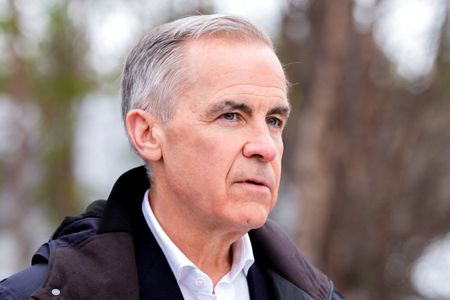
Canadian Prime Minister Mark Carney connected with astronauts aboard the historic Artemis II mission Wednesday, honoring the nation’s first astronaut to journey around the moon during what has been a bright spot in sometimes tense U.S.-Canada relations under President Trump’s administration.
Royal Canadian Air Force Colonel Jeremy Hansen, age 50, has achieved the distinction of being the first international crew member on a lunar mission. Hansen is flying alongside three American astronauts on NASA’s Artemis II lunar flyby, which represents a crucial milestone in the space agency’s ambitious goal to land astronauts on the moon by 2028, competing with China’s lunar ambitions.
The crew’s 10-day journey is scheduled to conclude Friday when their capsule splashes down in waters off San Diego.
“Canadians couldn’t be more proud of you personally, both this mission and our collaboration with the United States,” Carney told Hansen during their conversation.
The prime minister also made a lighthearted comment about hoping the crew preferred maple syrup over Nutella on their morning pancakes, referencing a moment that went viral when cameras captured a floating jar of Nutella in the spacecraft’s zero-gravity environment. The maple leaf serves as Canada’s national emblem.
Hansen, who joined Canada’s astronaut program in 2009 and pledged to return with a Canadian flag from the mission, represents decades of cooperation between the U.S. and Canada in human space exploration. During the call, he discussed the importance of accepting risk both in space missions and broader endeavors.
“As a country, we have to be willing to have some failures,” Hansen said. “And we fail in this space program, but we just assure ourselves we’re not going to stay or rest in those failures. We’re going to push through them,” the astronaut explained while also answering questions from Canadian students.
This historic mission occurs during a period of strained trade relationships between the neighboring nations, following Trump’s implementation of tariffs on Canadian products and his repeated suggestions that Canada should become America’s 51st state. The groundbreaking lunar mission has provided a positive focal point for U.S. relations amid various international tensions involving strikes on Iran, trade disputes, and challenges to global institutions.
The Walt Disney Company is reportedly preparing to eliminate up to 1,000 worker positions over the next several weeks, with a significant portion of the layoffs expected to impact the entertainment giant’s marketing division, according to a Wednesday report from the Wall Street Journal.
The newspaper cited unnamed sources familiar with the matter for its reporting on the anticipated workforce reduction. Reuters was unable to independently confirm the information, and Disney representatives had not provided a response to requests for comment as of Wednesday evening.
Motorists traveling along a busy stretch of US-13 will encounter intermittent lane restrictions as construction crews continue their work through the early morning hours.
The Delaware Department of Transportation reports that the section of US-13 running from Schafer Road to where it splits with US-40 will experience periodic lane closures as part of ongoing construction activities.
These traffic disruptions are expected to remain in effect until 5 a.m., potentially affecting early morning commuters and overnight travelers in the area.
Drivers are advised to allow extra travel time and exercise caution when navigating through the work zone during these overnight hours.
Motorists traveling on US-40 should expect delays tonight as left lanes remain blocked in both eastbound and westbound directions between Porter Road and Church Road.
According to DelDOT traffic officials, the lane restrictions will stay in effect until 3 AM. Drivers are advised to use caution when traveling through the work zone and allow extra time for their commute.
The nature of the work requiring the lane closures has not been specified by transportation officials.
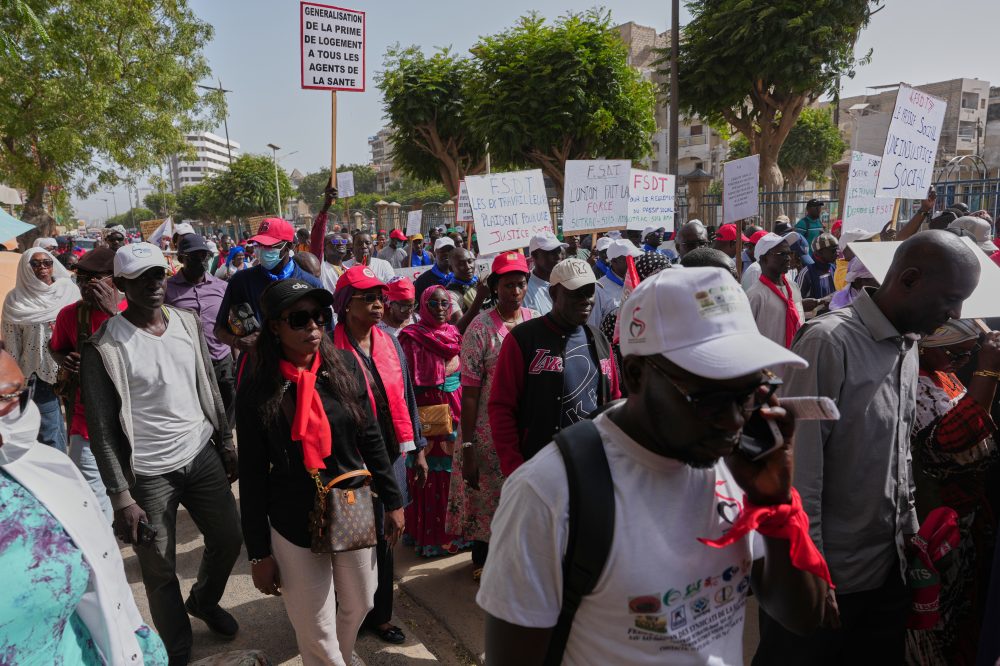
Workers, union representatives, and opposition members filled the streets of Dakar, Senegal on Wednesday, voicing anger over what they describe as unfulfilled government commitments and escalating living expenses amid the nation’s serious debt problems.
The demonstration was coordinated by Senegal’s primary labor organizations alongside an opposition group called the Front for the Defense of Democracy and the Republic (FDR).
According to Mody Guiro, who leads the National Confederation of Senegalese Workers – the nation’s biggest labor organization – officials had violated an agreement from the previous year that halted work stoppages in return for commitments to improve pay and workplace conditions. Government officials point to an unprecedented debt emergency left by the former administration as limiting available funds.
Demonstrators donned red scarves and union headwear while carrying signs calling for the reinstatement of dismissed government employees and reduced income taxation. Some voiced demands for Prime Minister Ousmane Sonko’s removal from office.
The current administration in this West African nation, headed by Sonko and President Bassirou Diomaye Faye, assumed control in April 2024 with pledges to implement sweeping changes, including anti-corruption efforts, youth employment initiatives, and better utilization of the country’s natural resources.
However, the PASTEF party’s transformation plans have encountered significant hurdles. A government review conducted in 2025 uncovered debt totaling $13 billion – higher than previously disclosed – left behind by the prior government. Discussions with the International Monetary Fund regarding new financial assistance have reached an impasse as the country’s budget situation deteriorates.
The nation’s debt compared to its economic output has climbed to approximately 132%, ranking among Africa’s most severe.
These financial challenges have intensified everyday hardships for citizens, particularly affecting young people who represent about 75% of the population under age 35.
In February of last year, demonstrations at the country’s premier public university regarding unpaid student assistance resulted in aggressive action by law enforcement, causing one student’s death.
“The nation has come to a halt. The government must find ways to restart Senegal’s economy rather than creating conflicts at every turn,” stated Mohamed Fall, a young activist participating in Wednesday’s demonstration.
Pape Laobe Samb, another demonstrator, represents one of over 700 Dakar port employees who lost their jobs since early 2025 as the government restructures state organizations.
“This isn’t what they told voters they would do. They claimed they would generate employment and advance the nation, but they’ve done exactly the reverse,” Samb explained to reporters after working at the port for more than twelve years before his dismissal.
The port’s administrator, selected shortly after President Faye took office, has characterized these actions as eliminating questionable contracts from the previous government. Union representatives dispute this explanation, contending that dismissed workers were primarily those connected to the former administration and that the terminations violated legal procedures.
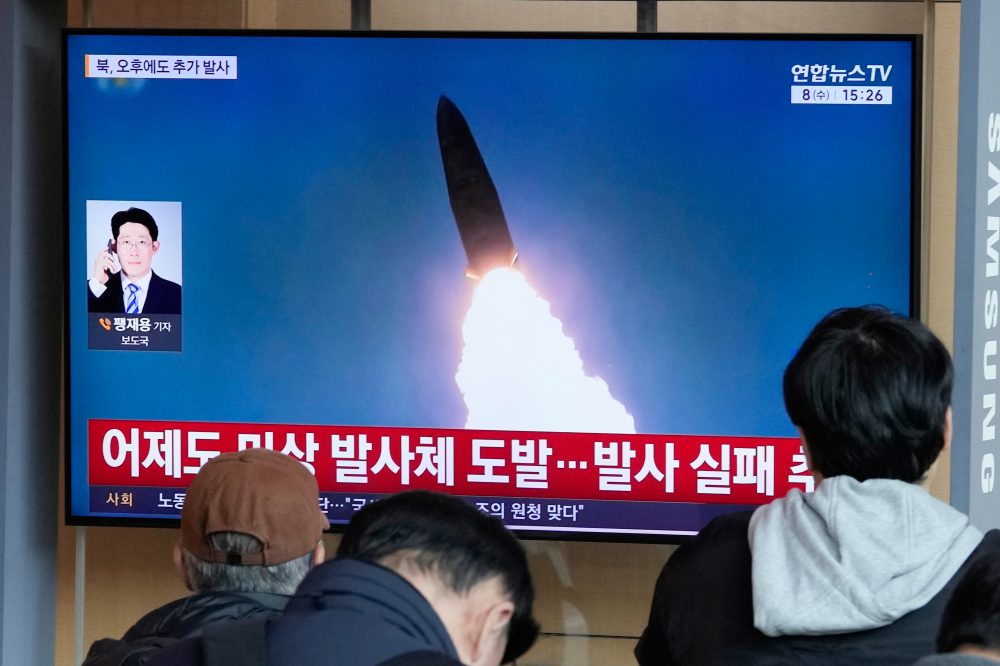
North Korea announced Thursday that its recent weapons testing included ballistic missiles equipped with cluster bomb warheads, marking another escalation in the country’s military capabilities targeting South Korea.
The announcement from North Korean state media followed South Korea’s detection of multiple missile launches from the North’s eastern coast on Wednesday, marking the second day of weapons testing this week.
According to the Korean Central News Agency, the weapons demonstrations spanned three days beginning Monday and featured anti-aircraft systems, alleged electromagnetic warfare equipment, and carbon-fiber explosives.
South Korean military officials reported that Wednesday’s missiles traveled between 240 and 700 kilometers (150 to 434 miles) before splashing down in the ocean. They also tracked at least one projectile fired Tuesday from near Pyongyang, North Korea’s capital.
Japanese defense officials confirmed that none of Wednesday’s weapons landed in Japan’s exclusive economic waters, while U.S. military representatives stated the Tuesday and Wednesday launches presented no direct danger to America or its regional partners.
The state news agency detailed tests of cluster munition systems mounted on Hwasong-11 ballistic missiles, which mirror Russia’s Iskander design with low-altitude, evasive flight patterns to bypass defense systems. According to the report, these short-range missiles with cluster warheads “can reduce to ashes any target covering an area of 6.5-7 hectares (16 to 17.2 acres) with the highest-density power.”
South Korean military officials have not yet responded to North Korea’s weapons claims.
The missile tests highlight ongoing hostilities between the neighboring countries, dampening South Korean expectations for improved diplomatic relations.
Jang Kum Chol, a senior official at North Korea’s Foreign Ministry, declared Tuesday evening that South Korea would forever remain the North’s “most hostile enemy state” and ridiculed Seoul’s current government for attempting to restart stalled negotiations, labeling its leaders “world-startling fools.”
North Korean leader Kim Jong Un has halted nearly all diplomatic engagement with Seoul and Washington following the breakdown of his nuclear negotiations with President Donald Trump in 2019. Since then, he has fast-tracked development of nuclear-armed missiles capable of reaching U.S. territories and allies across Asia.
Kim has also strengthened relationships with Russia, China, and other nations in conflict with the United States as he seeks to end international isolation and boost his regional influence. North Korean media reports that Chinese Foreign Minister Wang Yi is scheduled to arrive Thursday for a two-day visit as part of ongoing diplomatic cooperation between the two countries.
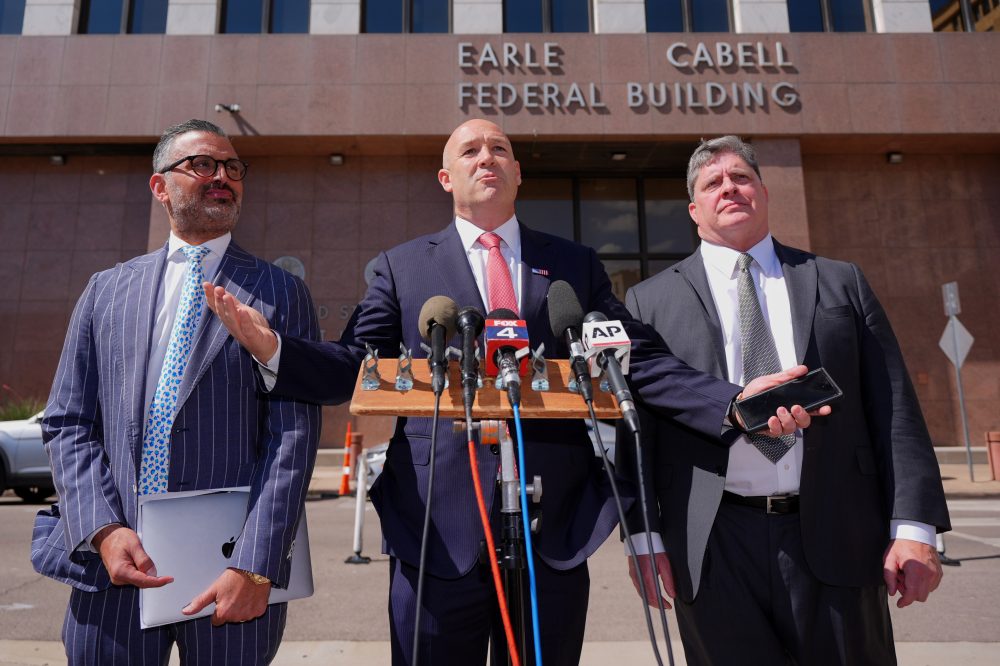
A Memphis rapper will stay behind bars after a federal judge in Dallas denied his release on kidnapping charges stemming from an alleged armed confrontation with Gucci Mane’s record label owner.
Lontrell Williams Jr., known professionally as Pooh Shiesty, faced U.S. Magistrate Judge Renee Harris Toliver on Wednesday during a detention hearing. Eight additional defendants have been charged in connection with the January incident at a Dallas recording studio, where authorities say multiple victims were held at gunpoint and robbed.
Federal prosecutors have not publicly identified the alleged victims, referring to them only by initials in court documents. One victim, identified as R.D., owns 1017 Records, the music label operated by Gucci Mane, whose real name is Radric Delantic Davis.
“I find that the weight of the evidence against you is strong,” Toliver stated during the proceeding.
The judge highlighted Williams’ previous criminal record and his failure to comply with home detention conditions following an earlier firearms conspiracy conviction in Florida.
Defense attorney Bradford Cohen challenged the prosecution’s case during the hearing. “The FBI doesn’t take three months to arrest someone if they believe everything that was said the night that it occurred,” Cohen argued.
Federal authorities arrested the rapper last week on allegations that he orchestrated the Dallas studio meeting to negotiate his recording contract with 1017 Records.
Court documents detail how Williams allegedly requested a private conversation with the record label owner in a studio booth. Prosecutors claim he then presented contract cancellation documents and brandished what appeared to be an AK-style weapon while compelling the executive to sign the papers.
The affidavit states Williams subsequently stole the victim’s wedding band, timepiece, jewelry, and money.
Though originally from Memphis, Tennessee, Williams had reportedly been residing in a luxury apartment building in Frisco, a Dallas-area suburb, according to federal investigators. Court records indicate several co-defendants made the trip from Memphis to Dallas before the alleged incident occurred.
Gucci Mane has established himself as a foundational figure in trap music, alongside Atlanta contemporaries T.I. and Jeezy. His career launched in the mid-2000s with the hit track “Icy” before developing an extensive musical portfolio.
NEW YORK — A 22-year-old activist from Brooklyn with multiple prior arrests at pro-Palestinian demonstrations has admitted guilt in federal court for deliberately burning 11 police department vehicles during a summer arson attack.
Jakhi McCray entered his guilty plea on Wednesday for the June 12 incident that resulted in $800,000 worth of damage to New York City Police Department property, according to law enforcement officials.
The conviction carries a required minimum sentence of five years behind bars, with the possibility of up to 20 years in federal prison at his upcoming sentencing hearing.
“By deliberately setting fire to multiple police vehicles in the pre-dawn hours, the defendant put at risk the lives of first responders and residents asleep in their beds nearby, and ultimately, strained resources meant to protect the community,” U.S. Attorney Joseph Nocella said in a statement Wednesday.
According to federal prosecutors, McCray climbed over a security fence to access a police vehicle storage facility in Brooklyn, where he ignited flames that destroyed 10 patrol cars and one trailer. When an officer on duty noticed him, he fled through a gap in the fencing, but investigators say he accidentally left behind evidence including a lighter used for cigars and eyewear containing his fingerprints.
McCray voluntarily surrendered to authorities one month following the incident. During that time, he issued a public statement condemning what he described as intimidation tactics used against individuals who have criticized “the genocide in Palestine and the kidnapping of migrants.” He revealed he had been taken into custody 12 times before and claimed both media outlets and law enforcement had repeatedly made false statements about him.
McCray’s legal representative, Ron Kuby, directed inquiries to an activist organization that has rallied behind McCray.
The Support Committee for Jakhi McCray released a statement Wednesday calling him a “dedicated organizer, activist, and community member whose work has touched countless lives.”
University of Delaware senior Sydney Shaffer etched her name into the record books Wednesday, becoming just the ninth player in Blue Hens softball history to reach 100 career runs scored during Delaware’s 5-2 victory over Villanova on April 8.
Shaffer achieved the milestone with a home run that helped propel the Blue Hens to their second win over the Wildcats this season, completing Delaware’s first season sweep of Villanova since 2017.
The victory also marked a significant turning point for the Blue Hens, lifting their record above .500 for the first time since their season-opening 1-0 start. The team’s improved performance against their Big East rivals demonstrates the program’s continued growth under the current coaching staff.
Shaffer’s achievement places her among an elite group of Delaware softball players who have consistently contributed to their team’s offensive success throughout their careers. Her milestone home run not only secured a personal accomplishment but also played a crucial role in the team’s latest victory.
PORT-AU-PRINCE – Haiti’s electoral authority announced Wednesday that it is delaying voter registration that was scheduled to commence on April 1st, stating that new registration dates will be revealed soon for what would be the Caribbean nation’s first presidential election in ten years.
The electoral council, known as CEP, had originally set August 30th as the date for the initial round of presidential voting in the region’s most populated Caribbean country.
But ongoing security deterioration throughout the nation has displaced more than 1.4 million residents – representing approximately 12% of Haiti’s total population – raising serious questions about whether authorities can conduct a legitimate and fair electoral process.
Acting President Delcy Rodriguez of Venezuela announced Wednesday that her administration plans to implement a wage increase for workers beginning May 1, describing it as a “responsible increase” to worker compensation.
Rodriguez did not specify the exact amount of the planned wage adjustment during her announcement.
Currently, Venezuela’s minimum wage stands at 130 bolivares monthly, a rate that has remained unchanged since March 2022 and equals only a few cents in U.S. currency. However, many government workers receive additional compensation through bonuses and supplemental payments that can bring their total monthly earnings to approximately $150.
“Our immediate, medium-term and long-term goal is to steadily and gradually restore workers’ incomes through productive growth in both the hydrocarbons and mining sectors, which generate immediate revenue once production recovery takes place,” Rodriguez stated during her televised announcement on state television.
The acting president emphasized that the wage adjustment would consider potential inflationary effects and indicated that Venezuela would continue progressing in this direction as additional resources become available to the country.
During her address, Rodriguez also renewed calls for the United States to lift economic sanctions imposed on the South American nation.
Relations between the two countries have improved following the U.S. capture of President Nicolas Maduro during a raid in Caracas earlier this year. The Trump administration has since been collaborating with Rodriguez and exploring opportunities to expand American involvement in Venezuela’s petroleum and mining industries.
Rodriguez, who has backed recent legislative efforts to encourage increased private and foreign investment in both sectors, announced plans to establish a commission that will identify which assets the state considers strategically important. She warned that those hoping for the privatization of PDVSA, the state-owned oil company, would be disappointed.
Delaware State University’s softball squad captured both games in a doubleheader matchup against Chestnut Hill, delivering a complete sweep for the Hornets.
The team’s performance showcased their ability to maintain momentum across multiple games in a single day, demonstrating the depth and consistency of the roster.
The doubleheader results continue Delaware State’s season as they work through their conference schedule and build toward postseason play.
PORTLAND, Ore. — A significant legal victory for utility company PacifiCorp could put more than $1 billion in wildfire victim compensation in jeopardy following a Wednesday decision by Oregon’s appeals court.
The three-judge panel at the Oregon Court of Appeals overturned a lower court’s verdict and ordered a new examination of the class-action lawsuit, citing problems with how the jury was instructed during a 2023 trial. That original trial had found PacifiCorp responsible for negligent conduct when it failed to shut off electrical power despite fire safety warnings from senior officials, resulting in punitive damages awarded to affected property owners.
Following that initial verdict, additional juries have mandated that PacifiCorp pay more than $1 billion in compensation to a class representing thousands of wildfire victims.
The appellate court determined that the trial judge made an error by telling jurors they could apply evidence from four separate wildfire incidents to every member of the plaintiff class.
“We conclude that … that instruction was legally erroneous, because certain evidence at trial, particularly related to causation, did not necessarily apply to every class member,” the judges wrote. “We further conclude that giving the instruction was prejudicial to PacifiCorp. Consequently, we reverse and remand.”
The court emphasized that class members owned more than 2,000 different properties affected by various fires, with some locations “separated by well over a hundred miles.” The disasters encompassed the Santiam Canyon blaze in northwestern Oregon, the Echo Mountain Complex fire along the coastline, and the South Obenchain and 242 fires in the state’s southwestern region.
Oregon’s Labor Day weekend fires in 2020 rank among the state’s most catastrophic natural disasters on record. The blazes claimed 11 lives, consumed over 1,560 square miles of land, and eliminated thousands of residential structures.
Questions remain about the lawsuit’s future direction and whether plaintiff attorneys will challenge the appellate decision before Oregon’s highest court. More than 1,000 class members have trials scheduled for 2026 and 2027.
“There are no winners in wildfire; however, the Court’s decision supports PacifiCorp’s longstanding belief that this process was prejudicial and not appropriate for managing wildfire litigation,” the utility said in a statement. “The company remains open to resolving reasonable claims and will continue to defend against unsupported claims.”
Legal representatives for the plaintiffs characterized the decision as a “procedural setback” while asserting that “nothing in this ruling suggests the jury got it wrong.”
“In fact, the Court rejected PacifiCorp’s efforts to win this appeal on the merits. Instead, what the court addressed was a single jury instruction, charting several paths forward — including fixing that instruction and trying the case again.”
In related developments, PacifiCorp has committed to paying more than $2 billion in settlements for various lawsuits connected to the 2020 fires, including $575 million to federal authorities for wildfire damage on government property in Oregon and California.
This past February, PacifiCorp revealed intentions to sell its wind energy, natural gas production, and distribution infrastructure in Washington state to Portland General Electric Company for $1.9 billion as part of efforts to strengthen its financial position. Despite challenging wildfire verdicts through appeals, PacifiCorp has been required to secure court bonds, creating pressure on the company’s available cash resources.
A former military contractor from North Carolina is facing federal espionage charges after authorities say she leaked classified information about an elite Army unit to a journalist, potentially endangering national security.
Federal prosecutors have charged Courtney Williams, 40, of Wagram, North Carolina, with violating the Espionage Act for allegedly disclosing sensitive details about her work supporting a specialized military unit at Fort Bragg.
“Anyone divulging information they vowed to protect to a reporter for publication is reckless, self-serving and damages our nation’s security,” said Reid Davis, FBI special agent in charge for North Carolina, in a Department of Justice statement.
According to federal officials, Williams broke her sworn commitment to protect national secrets during her time as a contractor and later employee supporting Army special operations.
“Williams swore an oath to safeguard our nation’s secrets as an employee supporting a Special Military Unit of the Army, but she allegedly betrayed that oath by sharing classified information with a media outlet and putting our nation, our warfighters, and our allies at risk,” stated Roman Rozhavsky, assistant director of the FBI’s Counterintelligence and Espionage Division.
Williams appeared in Raleigh federal court Wednesday, where a magistrate judge made public the charges that were initially filed last week. She remains in custody of the U.S. Marshals Service with additional hearings scheduled for next week.
Court documents do not identify Williams’ attorney, and a family member reached by phone declined to provide comment on the allegations.
While court papers don’t specify the journalist or military unit involved, the timing and circumstances align with a 2025 Politico story titled “My Life Became a Living Hell: One Woman’s Career in Delta Force, the Army’s Most Elite Unit.” The article accompanied journalist Seth Harp’s book “The Fort Bragg Cartel,” which details allegations of sexual harassment and discrimination.
Harp defended Williams in a statement to WRAL-TV, calling her “a brave whistleblower and truth-teller.”
“Former Delta Force operators disclose ‘national defense information’ on podcasts and YouTube shows every day, but the government is going after Courtney for the sole reason that she exposed sexual harassment and gender discrimination in the unit,” Harp’s statement read. “This is a vindictive act of retaliation, plain and simple.”
FBI Special Agent Jocelyn Fox detailed in court documents that Williams received security clearance as a defense contractor in April 2010 before becoming a Defense Department employee that November.
In her role as an operational support technician, Williams had access to “Tactics, Techniques and Procedures” used for planning and executing “sensitive missions” within the special military unit, Fox wrote.
Williams lost her classified access following an internal investigation, and she was debriefed in September 2015 when she signed additional nondisclosure agreements, according to the FBI agent.
Federal investigators allege Williams maintained contact with the unnamed journalist from 2022 through 2025, during which time they had more than 10 hours of phone conversations and exchanged over 180 messages.
Fox referenced a text message Williams allegedly sent around the time the book and article were published.
“Other than a few factual errors, I would definitely have been concerned with the amount of classified information being disclosed,” Williams’ message stated, according to court papers. “I thought things I was telling you so you could have a better general understanding of how the (SMU) was set up or operated would not be published and it feels like an entire TTP (Tactics, Techniques and Procedures) was sent out in my name giving them a chance to legally persecute me.”
The FBI affidavit also cited a conversation Williams had with her mother.
“I might actually get arrested, and I don’t even get a free copy of the book,” Williams allegedly told her mother. When asked why she might face arrest, Williams responded “for disclosing classified information.”
Investigators have identified at least 10 collections of documents that Williams apparently planned to share with the journalist, Fox wrote in the court filing.
The United Nations announced Wednesday that humanitarian workers worldwide are facing unprecedented dangers, with more than 1,000 killed in the last three years—a figure that represents almost three times the fatalities recorded in the prior three-year span.
Tom Fletcher, the UN’s top humanitarian official, addressed the Security Council with stark language about the crisis. “This is not an accidental escalation — it is the collapse of protection,” Fletcher stated.
The statistics Fletcher presented show that of the 1,010-plus humanitarian workers who lost their lives between 2023 and 2025, the Gaza Strip and West Bank accounted for more than 560 deaths. Sudan saw 130 fatalities, South Sudan recorded 60, while Ukraine and Congo each had 25 deaths. These numbers stand in sharp contrast to the 377 deaths documented from 2020 through 2022.
The dramatic increase in casualties coincided with the conflict that erupted between Israel and Hamas in October 2023. While a ceasefire took effect in October 2025, violence including shootings and airstrikes has continued.
Fletcher reported that 2024 marked a particularly deadly year, with 383 aid workers killed across global conflict zones as they provided essential services like food distribution, water access, shelter, and medical care. The previous year, 2023, saw at least 326 aid workers killed across 21 nations.
“They died in clearly marked convoys and on missions coordinated directly with authorities,” the undersecretary-general for humanitarian affairs explained.
The Security Council convened to review a resolution passed in May 2024 that condemned attacks on humanitarian personnel and UN staff, while demanding that all fighting forces protect these workers under international law.
Fletcher posed challenging questions to the 15-member council, asking whether the killings occurred because international law “is no longer convenient” or because “it is more important to protect those designing, selling, supplying and firing lethal weapons?”
“Or is it because member states see these numbers as collateral damage, part of the fog of war? Or worse, are we now seen as legitimate targets?” he continued. “Perhaps the most chilling question: If these deaths were ‘preventable’, why then were they not prevented?”
Beyond the killings, Fletcher described how humanitarian personnel face additional challenges, being “restricted, penalized and delegitimized” while being told which areas they cannot access and which populations they cannot assist.
Fletcher cited Yemen as a stark example, where Houthi rebels are holding 73 UN staff members and numerous NGO workers in arbitrary detention.
Other restrictions include Afghanistan’s prohibition on female humanitarian workers, Israel’s limitations on UN and international organizations operating in Gaza, and drone attacks in Ukraine that have forced aid workers to retreat from frontline areas.
“These trends, alongside the collapse in funding for our lifesaving work, are a symptom of a lawless, bellicose, selfish and violent world,” Fletcher declared.
He urged the UN’s 193 member countries to honor the 2024 resolution’s requirements to safeguard humanitarian workers and hold accountable those who commit crimes against them.
NASA’s groundbreaking Artemis mission has heightened the stakes for China’s ambitious plan to put astronauts on the lunar surface by 2030, as the space race between the two superpowers enters a critical phase.
This week, four American astronauts aboard Artemis II ventured past the moon’s dark far side, reaching depths of space never before achieved by humans. This milestone sets the foundation for Artemis IV’s planned lunar touchdown in 2028.
The planned American return to the moon after more than 50 years has captured Beijing’s attention, as China develops comprehensive technology for its inaugural crewed lunar mission. This includes the Long March-10 rocket system, the Mengzhou spacecraft, and the Lanyue lunar landing vehicle.
China has achieved remarkable progress recently, becoming the only nation to successfully retrieve robotic samples from both sides of the moon. Its human spaceflight program has also demonstrated expertise in space station operations and managing orbital emergencies.
“There is no bigger prize for China on the table today than landing people on the moon, this is the essential next step for China on the road to preeminence in space,” said Clayton Swope, deputy director of the Aerospace Security Project at the U.S.-based Center for Strategic and International Studies (CSIS).
Both Washington and Beijing are building institutional frameworks for future permanent lunar habitation. The American-led Artemis Accords for lunar exploration face competition from the Chinese and Russian-backed International Lunar Research Station initiative.
“The question now is no longer simply who gets there first, but who can stay longer and do more,” Kang Guohua, an aerospace professor at the military-linked Nanjing University of Aeronautics and Astronautics, told China’s state-backed Global Times last week.
UNTESTED TECHNOLOGY CHALLENGE
Beijing faces the significant challenge of validating completely new lunar mission technology within four years, proving that all equipment being developed for the 2030 mission can function reliably on its first deployment.
China’s space agency announced in 2023 that the mission would utilize two Long March-10 rockets – one carrying a crewed vessel and another transporting a lunar lander. These craft would meet and connect in lunar orbit, allowing two astronauts to descend to the surface, gather samples, return to orbit, reconnect with the main spacecraft, and journey home.
The Mengzhou spacecraft has capacity for up to seven astronauts, though China’s space agency hasn’t revealed the crew size or members for the 2030 mission.
China’s previous robotic lunar expeditions have provided valuable expertise in communications, spacecraft meetings, and docking procedures around the moon. However, human missions demand much stricter safety standards, and crucial mission components are still undergoing evaluation, including the rocket and spacecraft systems.
In February, China conducted the first low-altitude escape test for the Long March-10 carrying a Mengzhou spacecraft at a Hainan Island launch facility. The capsule’s return module successfully separated following an abort signal and landed safely in the ocean.
Last year, the Lanyue lunar lander’s ascent and descent systems underwent testing in Hebei province. Despite these important achievements, testing must intensify for China to approve the system for human lunar missions by 2030.
Nevertheless, CSIS’s Swope believes China is making consistent progress and considers it “very plausible” that the deadline will be met.
“China has a history of setting deadlines for space activities and closely meeting those deadlines, there are no public signs of any missteps or setbacks to Beijing’s crewed lunar landing plans,” he said.
POLITICAL IMPLICATIONS
The competition extends beyond technical achievements to geopolitical influence. As tensions between the U.S. and China escalate across trade, technology, and military domains, lunar exploration has emerged as another competitive battlefield.
American experts cite China’s increasing defense expenditures, use of space diplomacy to expand global influence, expanding private launch industry, and successful robotic lunar missions as proof that Beijing is highly determined to reach the moon rapidly, despite avoiding competitive language publicly.
“China might avoid directly using language that suggests there is a lunar or space race, but their overall strategic goal is to be the hegemon in space,” said Kathleen Curlee, a research analyst at Georgetown University’s Center for Security and Emerging Technology.
Meanwhile, China may be progressing faster than publicly acknowledged. Wu Weiren, chief architect of China’s lunar exploration program, told Reuters last year that the 2030 target was deliberately cautious.
“Eastern peoples always leave a little room when they speak,” he said. “If I can do a 10, I tend to say eight or nine.”
French President Emmanuel Macron reached out to both Iranian and American leadership Wednesday, pressing them to extend their newly established ceasefire to encompass Lebanon and other conflict zones while Israeli bombardments persist in Beirut.
Washington and Tehran established a two-week suspension of hostilities on Tuesday, yet Israel launched its most devastating assault on Lebanon Wednesday, resulting in over 250 deaths since hostilities with Hezbollah escalated last month.
While American and Israeli officials have stated that Lebanon falls outside the scope of the Iranian ceasefire arrangement, Pakistan, which served as a crucial mediator during negotiations, indicated the pause in fighting would encompass Beirut.
Sources close to Iran’s diplomatic stance reveal that Tehran has communicated through intermediaries that any ceasefire framework with America and Israel must encompass Lebanon.
During his conversations with Iranian President Massoud Pezeshkian and U.S. President Donald Trump on Wednesday, Macron emphasized that bringing Lebanon into the agreement represents “a necessary condition for the ceasefire to be credible and lasting.”
The French leader stressed that any comprehensive agreement between these nations must tackle issues surrounding Iran’s nuclear weapons development, ballistic missile capabilities, regional interference, and efforts to disrupt shipping lanes in the Strait of Hormuz.
Macron additionally contacted Lebanese President Joseph Aoun and Prime Minister Nawaf Salam, denouncing Israel’s “indiscriminate strikes” as a danger to maintaining any sustainable ceasefire arrangement.
“I reiterated the need to preserve Lebanon’s territorial integrity and France’s determination to support the efforts of the Lebanese authorities to uphold the country’s sovereignty and implement the Hezbollah disarmament plan,” Macron stated.
A dramatic diplomatic breakthrough occurred when Pakistan successfully facilitated a two-week ceasefire agreement between the United States and Iran, averting potential military action just hours before President Donald Trump’s strike deadline was set to expire. The temporary truce has opened a crucial diplomatic window following weeks of escalating tensions and concerns about a broader regional conflict.
Pakistan has swiftly positioned itself at the center of ongoing negotiations. As part of the agreement, Tehran has also consented to temporarily reopen the Strait of Hormuz, ensuring safe passage for shipping through this critical waterway that is essential to global energy markets. Pakistani leadership has framed this truce as an opportunity to transition from crisis management to substantive negotiations addressing sanctions, uranium enrichment, regional security, and future conflict resolution.
Demonstrating the high stakes of this diplomatic opening, President Trump is sending a senior delegation to Islamabad for the talks, headed by Vice President JD Vance and including special envoy Steve Witkoff and Jared Kushner.
On Wednesday, Pakistani Prime Minister Shehbaz Sharif announced that the United States and Iran, along with their respective allies, had reached an agreement for an immediate ceasefire across multiple conflict zones. In an early morning social media post, Sharif welcomed this development and expressed his “deepest gratitude” to leadership in both Washington and Tehran for what he characterized as a vital step toward regional stability.
Sharif has also extended invitations to both sides to send delegations for high-level discussions in Islamabad on April 10 to secure a more comprehensive settlement. Iran has confirmed its participation. According to a statement from the Prime Minister’s Office, Sharif conducted a 45-minute phone conversation with Iranian President Masoud Pezeshkian on Wednesday afternoon.
Pezeshkian expressed appreciation to the prime minister, commended Pakistan’s efforts in establishing a temporary ceasefire, and confirmed Iran’s participation in the upcoming Islamabad talks. Various media sources, citing Iran’s Islamic State News Agency, have reported that Iranian Parliament Speaker Mohammad Bagher Ghalibaf is expected to lead Tehran’s delegation for Friday’s negotiations.
Despite the pause in fighting, Iran’s negotiating stance indicates that Tehran is pursuing much more than just a brief halt to hostilities. Presented through Pakistani intermediaries on April 6, 2026, shortly before the breakthrough, Tehran’s 10-point framework outlines the terms it seeks for a broader, more lasting settlement with the United States and Israel.
Iran’s demands encompass military, nuclear, economic, and regional issues:
1. A firm commitment from the United States and Israel not to attack Iran in the future.
2. Continued Iranian sovereignty and control over the Strait of Hormuz.
3. Recognition of Iran’s right to pursue uranium enrichment for peaceful purposes.
4. Lifting of all primary US sanctions imposed on Iran.
5. Removal of all secondary sanctions targeting foreign companies and countries doing business with Iran.
6. Termination of all United Nations Security Council resolutions against Iran.
7. Ending all International Atomic Energy Agency resolutions related to Iran’s nuclear program.
8. A halt to attacks on Iran and its regional allies, including in Iraq, Lebanon, and Yemen.
9. Compensation or reconstruction support for damage caused during the conflict.
10. Broader regional de-escalation, including safe navigation arrangements in the Strait of Hormuz, possible transit mechanisms, elements of US military withdrawal from the region, and a framework for long-term peace and security guarantees.
These demands demonstrate that the Islamabad talks extend far beyond simply maintaining the ceasefire. They will also examine whether Washington and Tehran can begin to bridge differences over sanctions relief, recognition of peaceful uranium enrichment, control over the Strait of Hormuz, and broader security guarantees.
The American president characterized the proposal as “a workable basis on which to negotiate,” helping to pave the way for the temporary ceasefire. Confirming the pause on his official social media account, President Trump wrote: “Based on conversations with Prime Minister Sharif and Field Marshal Asim Munir of Pakistan, and wherein they requested that I hold off the destructive force being sent tonight to Iran, and subject to the Islamic Republic of Iran agreeing to the complete, immediate, and safe opening of the Strait of Hormuz, I agree to suspend the bombing and attack of Iran for a period of two weeks.”
Iranian Foreign Minister Abbas Araghchi stated in a social media post that “for a period of two weeks, safe passage through the Strait of Hormuz will be possible via coordination with Iran’s Armed Forces and with due consideration of technical limitations.” Israel announced on Wednesday that it supports the US president’s decision to suspend airstrikes on Iran but clarified that the ceasefire does not include Lebanon.
Pakistani officials and regional diplomats have described Islamabad as the primary intermediary once direct communication between Washington and Tehran broke down. They indicated that Pakistan helped shape the agreement while collaborating with Turkey, Egypt, Saudi Arabia, and other regional actors.
Egypt supported this effort through direct engagement with both sides. Foreign Minister Badr Abdelatty conducted high-level calls with US special envoy Witkoff and Iranian officials. Cairo also collaborated with Ankara and Islamabad on earlier proposals, including a 45-day pause tied to Gulf security concerns and the reopening of the Strait of Hormuz.
Turkey also worked to strengthen the communication channel Pakistan was helping to maintain. Under Foreign Minister Hakan Fidan, Ankara conducted quiet shuttle diplomacy, utilizing its relationships with both Washington and Tehran to encourage restraint, test compromise language on sanctions and regional assurances, and preserve communication channels when direct talks failed.
China appeared more indirectly in diplomatic accounts. Diplomatic sources suggested that Beijing was involved in consultations around the ceasefire framework. During an interview with AFP, the American president indicated that China played a role in bringing Iran to the negotiating table.
Last month, Pakistan’s Foreign Minister Ishaq Dar hosted a meeting with his counterparts from Saudi Arabia, Turkey, and Egypt to discuss de-escalation efforts before traveling to Beijing for further consultations. China, Iran’s largest trading partner, later called for joint efforts with Pakistan to help end the conflict.
Details of the back-channel diplomacy still depend heavily on accounts from officials and analysts. An Islamabad-based official familiar with the ceasefire process, speaking on condition of anonymity, told The Media Line, “Iran’s recent attacks on Saudi Arabia had significantly worsened the situation, pushing President Trump toward insisting on taking a very tough course of action.”
The same official indicated that the Trump administration was also aware of a growing perception, especially in Saudi Arabia, that the United States had abandoned its closest ally and was failing to ensure its protection.
That official added that “a complex internal rift appeared to be behind Iran’s recent attack, with indications that elements within the Iranian Revolutionary Guard carried out the operation without the consent of the political leadership and in opposition to a ceasefire. At a time when Pakistan-Iran negotiations had entered a decisive phase, the attack dealt a serious blow to peace efforts.”
The official further argued that Pakistan was operating in a challenging environment as it tried to prevent a wider war by acting as a bridge between Iran and Saudi Arabia, despite efforts by some actors to sabotage the process.
In that context, the official said, Pakistan remains engaged in seeking middle ground through what some officials have informally called the “Islamabad Accord.”
Pakistani officials described Islamabad’s role as central to the breakthrough, with Prime Minister Sharif and Field Marshal Munir facilitating back-channel exchanges between Washington and Tehran after direct communication stalled. Both held calls with President Trump and Iranian Foreign Minister Araghchi to help finalize the framework.
Saudi Arabia, which has faced major fallout from Iranian strikes in recent weeks, adopted what officials described as a restrained response.
Muhammed Alhamed, a Saudi geopolitical analyst specializing in Middle Eastern diplomacy, told The Media Line: “Riyadh understands that a wider war would not only threaten Gulf security but also put the global energy market and the broader economy at serious risk.”
He emphasized that “Saudi Arabia showed restraint under direct threat, prioritized stability, and acted with full awareness of the consequences that any broader escalation would have on the region and the world.”
Alhamed said the recent unprovoked attacks on Saudi territory clearly indicated Iran’s efforts to draw Riyadh into the conflict.
He said: “Iran’s brazen attacks on the Gulf States, combined with disruptions and the closure of the Strait of Hormuz, were dangerously provocative. Nevertheless, Saudi Arabia and the Gulf States responded with measured strategic patience, not from weakness, but from a profound sense of responsibility.”
Praising Pakistan’s diplomacy, Alhamed said careful dialogue, patience, and trust in Pakistan’s facilitation were essential to steer the region away from further escalation and toward a more durable outcome.
Aimen Jamil, a strategic affairs analyst based in Islamabad, told The Media Line that “Pakistan’s role in the emerging ‘Islamabad Accord’ reflects a calculated use of backchannel diplomacy rather than traditional mediation. Acting as a discreet facilitator, Islamabad positioned itself as a trusted conduit at a moment of acute escalation, enabling direct yet deniable communication between Washington and Tehran when formal diplomacy had stalled.”
She added that “Pakistan’s effectiveness stemmed from its unique strategic position, maintaining working ties with both the United States and Iran. Coordinated military and political engagement, along with quiet support from key partners such as China, helped sustain urgency, apply pressure, and reduce mistrust between the parties.”
Jamil said Pakistan’s push was driven not only by diplomacy but also by the risks of prolonged conflict, including energy disruptions, economic strain, and regional spillover.
While the ceasefire remains fragile and temporary, she said Pakistan has managed to create a viable de-escalation channel. Its longer-term significance, she argued, will depend on whether the Islamabad talks can turn a short pause into a broader and lasting agreement.
Mohsin Durrani, an Islamabad-based expert on regional security and diplomatic affairs, told The Media Line: “Pakistan’s role provided temporary stabilization, creating space for broader negotiations without ceding core leverage. While not guaranteeing a full resolution, it underscores the effectiveness of coordinated multilateral efforts. Upcoming Islamabad talks will test whether this pause can lead to lasting regional stability.”
He said: “Trump described Iran’s 10-point draft as a ‘workable basis’ for negotiation and announced a conditional two-week suspension of strikes, contingent on Iran reopening the Strait under its military oversight.”
Durrani said the arrangement allowed Washington to maintain that it had achieved its immediate military aims while shifting the focus of negotiations toward Iranian priorities.
He added that Israel, facing unanticipated operational costs, had adopted a more measured posture, though its longer-term territorial ambitions appeared deferred rather than abandoned.
Durrani also said that any enduring settlement would require Iran to address the two-state dimension in later discussions.
“It highlights Pakistan’s strategic importance in shaping regional stability and underscores the country’s diplomatic significance,” he added.
The test now is whether the Islamabad talks can move beyond the ceasefire and yield tangible progress on sanctions, uranium enrichment, regional security, and navigation through the Strait of Hormuz.
Israeli military officials announced Wednesday that Staff Sgt. Tuval Lipshitz, a member of the Golani Brigade, died during fighting with Hezbollah militants in southern Lebanon as military operations continue in the region.
The fatal encounter happened Tuesday afternoon when soldiers from Golani Battalion 13 were conducting reconnaissance operations in the village of a-Taybeh. During their mission to survey new territory, the troops came under attack from Hezbollah fighters who fired on them at point-blank range.
Lipshitz, who was from Beit She’an, lost his life in the firefight. Five other soldiers sustained injuries, with one critically wounded and four others suffering moderate to minor wounds. Military officials confirmed the injured personnel were transported for medical treatment and their families received notification.
Israeli troops responded with return fire during the confrontation, and the military launched aerial bombardments to secure the surrounding area. Military leaders believe several Hezbollah militants were eliminated as they sought shelter in nearby structures.
This death increases the total Israeli military fatalities in Lebanon to 12 since Operation Roaring Lion began in Iran.
The announcement comes after several recent military casualties. Earlier this week, Staff Sgt. Guy Ludar from the Maglan unit died in an accidental friendly fire incident in southern Lebanon. A unit officer was critically wounded and airlifted to Rambam Hospital in Haifa.
Monday saw four members of the Nahal Brigade reconnaissance unit killed in Lebanese combat operations: Capt. Noam Madmoni, 22, from Sderot; Staff Sgt. Ben Cohen, 21, from Lehavim; Staff Sgt. Maksim Antis, 21, from Bat Yam; and Staff Sgt. Gilad Harel, 21, from Modi’in Maccabim-Re’ut. That incident also left six soldiers wounded, with one in critical condition.
Israeli Prime Minister Benjamin Netanyahu declared that his nation will maintain its military objectives even during a temporary ceasefire with Iran, characterizing the current pause in hostilities as preparation rather than the end of military operations.
“Now I would like to emphasize that this is not the end of the campaign. This is a preparation for the achievement of all of our goals,” Netanyahu stated, emphasizing Israel’s readiness to resume combat operations. “Either by agreeing or by restarting the war, because we are ready to return to war at any time that is needed. The finger on the trigger.”
According to Netanyahu, the two-week halt in fighting was arranged in coordination with Israel and follows a period during which Iran was weakened and compelled to reopen the Strait of Hormuz while dropping previous demands.
Netanyahu highlighted close collaboration with President Donald Trump, describing recent military actions as historically significant. “Six weeks ago, for the first time in history, we went to war shoulder to shoulder with my friend, President Trump, and our great ally, the United States,” he explained. “We went to a historic operation, the greatest operation the Middle East has ever known.”
According to Netanyahu, Israeli operations have focused on Iran’s missile and nuclear capabilities, striking production plants, centrifuges, scientific personnel, along with military targets including missile installations, command facilities, naval assets, and transportation systems.
“We destroyed Iran’s missile production plant,” Netanyahu said. “Not only did we destroy existing missiles, we destroyed the factories that produce the missiles.”
Regarding nuclear materials, Netanyahu indicated that Israel and the United States share the objective of removing Iran’s enriched uranium. “As Prime Minister Trump said on election day, the enriched material will all leave Iran. Either it will leave in agreement, or it will leave in a war renewal.”
Netanyahu emphasized that the temporary ceasefire excludes Hezbollah, stating that Israeli military actions in Lebanon will persist. “Now, I stood up for this, that the temporary ceasefire with Iran will not include Hezbollah,” he said.
Israeli military forces attacked approximately 100 Hezbollah positions within a 10-minute timeframe on Wednesday, which Netanyahu characterized as the organization’s most devastating blow during the ongoing conflict.
“We still have goals to accomplish, and we will achieve them,” he concluded.
GRANTHAM, Pa. – Salisbury University’s softball squad experienced mixed results during Wednesday’s doubleheader matchup at Messiah University’s Starry Softball Field, claiming victory in the first contest while dropping the nightcap.
The Sea Gulls (14-10) dominated the opening game with a commanding 13-3 triumph that concluded after five innings due to the mercy rule. However, the team couldn’t maintain that momentum in the second matchup, falling to the Falcons (16-10) by a score of 10-6.
The split leaves both programs with identical records as they continue their respective seasons. Salisbury will look to build on the positives from their first-game performance while addressing the challenges that emerged in the second contest.
White House Press Secretary Karoline Leavitt announced Wednesday that federal authorities have secured their first conviction under the Take It Down Act, legislation supported by First Lady Melania Trump that targets the creation and distribution of non-consensual explicit imagery created with artificial intelligence.
“This is a huge achievement for the first lady [Melania Trump], and I know the President is very proud of his wife’s efforts in getting this critical legislation passed to protect America’s youth. So, we thank the first lady for her efforts,” Leavitt said.
James Strahler II, a 37-year-old Ohio resident, entered guilty pleas Tuesday to charges including cyberstalking, creating obscene child sexual abuse material, and distributing digital forgeries—the legal terminology for deepfake content, according to a Justice Department announcement released Tuesday. Federal investigators say Strahler employed artificial intelligence technology to produce non-consensual imagery targeting both adults and children.
Law enforcement officials report that Strahler’s arrest occurred in June 2025, and their investigation uncovered thousands of digitally manipulated images where children’s faces were superimposed onto adult or other children’s bodies for sexual exploitation purposes.
The White House press secretary characterized this prosecution as a landmark moment for the new federal legislation, which makes it a federal crime to distribute non-consensual sexual content, including artificially generated material and violent threats.
First Lady Melania Trump acknowledged the conviction through a social media post on X, stating: “Today marks the first conviction under the Take It Down Act–protecting victims from non-consensual AI-generated sexually explicit images, cyberstalking, and threats of violence.”
“Thank you US Attorney Dominick S. Gerace II for protecting Americans from cybercrimes in this new digital age,” she added.
The First Lady personally visited Capitol Hill last year to lobby for the legislation, which specifically addresses revenge pornography and artificially generated child sexual abuse content. The measure received overwhelming bipartisan support, passing the House of Representatives with a 409-2 margin and receiving unanimous approval in the Senate.
According to Leavitt, this conviction marks an important milestone in combating online exploitation and safeguarding victims amid what she characterized as an increasingly dangerous digital landscape.
A Freeze Warning is in effect for much of the Delmarva Peninsula tonight through Thursday morning, with temperatures expected to drop as low as 28 degrees.
The National Weather Service issued the warning for New Castle, Kent, and inland Sussex counties in Delaware, along with Kent, Queen Anne’s, Talbot, and Caroline counties on Maryland’s Eastern Shore. The warning takes effect at 10 PM tonight and remains active until 9 AM Thursday morning.
Meteorologists warn that sub-freezing temperatures could kill crops and other sensitive vegetation that may have emerged during recent warmer weather. Unprotected outdoor plumbing could also suffer damage from the overnight freeze.
Residents should take immediate action to protect tender plants by covering them or bringing potted plants indoors. Consider wrapping exposed outdoor pipes or allowing faucets to drip slightly to prevent freezing.
This late-season freeze is particularly concerning for gardeners and farmers who may have already planted spring crops or seen early growth from perennial plants. The timing makes vegetation especially vulnerable to cold damage.
The Freeze Warning expires at 9 AM Thursday morning, with temperatures expected to warm throughout the day. Stay with TV Delmarva for continuing weather updates.
Good morning, Delmarva! We’re looking at a chilly start to our Wednesday with partly cloudy skies and temperatures dropping to around 34 degrees tonight. Bundle up if you’re heading out late – we’ll see areas of frost developing after 11 PM, so it’s definitely time to bring in those tender plants or cover them up!
Southeast winds will be picking up throughout the day, gusting between 5 to 15 mph, so you might feel that extra bite in the air. But here’s the good news – we’re in for a beautiful warming trend!
Thursday starts with some lingering frost in spots, but we’ll see partly sunny skies as temperatures climb to a much more comfortable 55 degrees. Thursday night stays mostly clear with lows around 38.
Looking ahead to Friday, get ready for gorgeous weather! We’ll see sunny skies and temperatures soaring to a delightful 69 degrees – perfect for getting outside and enjoying some spring sunshine.
Stay warm tonight, Delmarva, and remember to protect those plants! I’m your meteorologist reminding you to dress in layers and have a wonderful Wednesday!
AUGUSTA, Ga. — Most weekends, 39-year-old Brandon Holtz can be found showing homes to clients or joining his regular 12-person golf scramble around Bloomington, Illinois.
This weekend, however, the real estate professional hopes to spend his time walking the legendary fairways of Augusta National Golf Club. After earning his spot through the U.S. Mid-Amateur Championship at Arizona’s Troon Country Club last September, Holtz is experiencing the Masters Tournament from an entirely new perspective — as a competitor rather than a spectator.
“I’m the old fat guy out here. It’s been great,” Holtz remarked about his Masters debut. He’s scheduled to begin play Thursday morning at 9:02 a.m. alongside two-time Masters winner Bubba Watson. “I’ve met a lot of guys, talked to them, just trying to understand their story a little bit. Played with Tommy Fleetwood (Tuesday), played with Jordan Spieth (Wednesday). Talk about two icons of the sport. Just learned some things from them. At points in time I was just sitting back and watching them play.”
While this marks Holtz’s 16th visit to Augusta National, his previous 15 trips were as a fan. His father Jeff, who’s serving as his caddie this week, received lifetime Masters passes in 2004. During Wednesday’s traditional par-3 competition, Brandon was joined by his wife Liz and their 6-year-old son Baker, with 2-year-old daughter Millie also part of the family gathering.
Holtz’s athletic background stems from college basketball at Illinois State University. Following graduation, he briefly pursued professional golf, but the financial realities of constant travel without sponsorship quickly became apparent. Two different basketball coaches at ISU later told him they would have encouraged him to focus on golf if they had known he possessed this level of talent.
“We can all — hindsight is 20/20,” Holtz reflected. “We can all sit and dream and wish. Just take life as it comes to you and live in the moment.”
When Holtz examines pre-tournament rankings of this week’s 91-player field, he typically finds his name near the bottom of lists topped by stars like Scottie Scheffler and Rory McIlroy.
Holtz feels no pressure to prove anything during Thursday and Friday’s rounds, or beyond if he advances to weekend play. However, he’s already benefiting from his presence at Augusta National. When he struggled with his driver — the club that helped him qualify — friends and USGA officials arranged to have his previous driver shipped to the course, which he expected to receive Wednesday.
“Only got half a day left, but sometimes you just got to get out there and play. Shut the brain off and tee it up and hit it and go find it and hit it again,” Holtz explained.
Typically, Holtz spends Saturdays at Lakeside Country Club, a nine-hole course where annual memberships for golfers under 40 cost $1,835. The casual atmosphere includes a gas station convenience store bordering two holes, where his group often makes snack runs between shots.
As for potentially playing a more demanding round this Saturday at Augusta, Holtz is staying focused on the immediate challenge.
“I’m taking one shot at a time, trying not to get too far ahead of myself,” he said. “You don’t know what you don’t know. Obviously I’ve been out here, but (it) hasn’t been tournament time yet. So one shot at a time and see what happens.”
Augusta National’s strict no-cellphone policy left Holtz wishing he could capture memories from his practice rounds with Fleetwood and Spieth.
“I wish I had my camera. I see all those people taking photographs and I’m wanting to take a shot or two myself. (Spieth is) a great guy,” Holtz said. “Just got a lot of information off him. We just talked, talked as people talk. Learned a little bit about his family and he was asking about mine. So it was just really, really fun to play with him.”
Ukrainian authorities confirmed Wednesday that Russian drone strikes hit electrical infrastructure in the southern Odesa region, marking the latest in a sustained campaign targeting the country’s power grid.
Odesa Region Governor Oleh Kiper reported via Telegram that emergency responders remained on scene following the attack on the power facility. No casualties were documented from the Odesa strike, Kiper stated.
Major private utility company DTEK confirmed that one of its electrical substations sustained damage in the assault. Repair teams are standing by until safety clearance allows work to begin. According to DTEK, the region has faced Russian bombardment “almost round the clock.”
Ukraine’s electrical grid has endured months of systematic attacks. The strategic Black Sea port city of Odesa, crucial for Ukrainian export operations, along with surrounding areas, has repeatedly been in Moscow’s crosshairs throughout the four-year war.
In the southeastern Zaporizhzhia region, Governor Ivan Fedorov confirmed that nighttime Russian glide bomb strikes claimed the life of one man in a village near the regional capital of Zaporizhzhia. The attack also left two women wounded.
Neighboring Dnipropetrovsk region saw nearly 40 separate Russian drone and artillery strikes targeting multiple communities throughout Wednesday, according to Governor Oleksandr Ganzha. At least three civilians sustained injuries in those attacks.
Additional drone strike casualties were documented in Sloviansk near the eastern front lines in Donetsk region, as well as in southern Kherson Region and northern Sumy Region along the Russian border, local officials reported.
The Goldey-Beacom Lightning baseball team kept their hot streak alive Tuesday, capturing both ends of a Central Atlantic Collegiate Conference doubleheader against Holy Family University in Philadelphia, Pennsylvania.
The Lightning claimed the first game 6-3 before dominating the nightcap 11-0, extending their current winning streak to an impressive 11 consecutive victories.
The doubleheader sweep represents another strong showing for Goldey-Beacom in conference play as they continue to build momentum during their stellar season.
Microsoft co-founder Bill Gates is set to appear before congressional investigators examining connections to Jeffrey Epstein, according to new developments in the House probe.
The House Oversight Committee has scheduled Gates to provide testimony in June as part of their continuing investigation into the disgraced financier’s network of associates.
In a separate development announced Wednesday, the Justice Department revealed that planned testimony from former Attorney General Pam Bondi has been postponed indefinitely. Officials did not provide a specific reason for the delay or indicate when Bondi might appear before the committee.
The congressional investigation continues to examine various individuals who had contact with Epstein before his death in federal custody in 2019 while awaiting trial on sex trafficking charges.
NEW YORK (AP) — Dozens of freshly opened accounts on prediction platform Polymarket earned massive profits by wagering on a U.S.-Iran ceasefire deal just hours before President Trump made his announcement, raising fresh concerns about potential insider information being used for financial gain.
The wagering activity occurred despite Trump’s increasingly aggressive rhetoric throughout Tuesday, including a social media warning that “a whole civilization will die tonight” unless Iran opened the Strait of Hormuz by his 8 p.m. Eastern deadline. Few public indicators suggested a peaceful resolution was approaching.
Blockchain data analysis using crypto platform Dune reveals that no fewer than 50 accounts placed substantial “Yes” wagers on Tuesday before Trump revealed the ceasefire agreement via Truth Social around 6:30 p.m. Eastern. Each of these accounts was making their inaugural bets on the platform.
One account established Tuesday morning around 10 a.m. Eastern invested approximately $72,000 in bets at an average cost of 8.8 cents per share. Betting shares range from $0 to $1, representing users’ assessment of outcome probability from 0% to 100%. This trader ultimately collected $200,000 in winnings.
A separate account that joined April 6th and focused exclusively on this event recorded gains of $125,500.
Another wallet, established just 12 minutes prior to Trump’s announcement, invested $31,908 in “Yes” positions at 33.7 cents per share, ultimately earning an estimated $48,500 profit. The elevated share price at that time may have reflected Pakistan’s late-day diplomatic efforts to secure a two-week extension of Trump’s deadline.
Some observers suggest these Polymarket participants may have anticipated Trump would retreat from his threats, following a pattern during his second presidency where bold ultimatums are followed by reversals — a trend critics have labeled “Trump Always Chickens Out,” or TACO.
While certain traders collected substantial winnings, others remain in limbo as Polymarket has designated the April 7 Iran-U.S. ceasefire contract as “disputed.” The designation stems from continued Iranian restrictions on Strait of Hormuz shipping and ongoing regional missile strikes. Resolution of the dispute may require up to 48 hours.
Public blockchain records cannot reveal the identity of wallet owners. Polymarket employs proxy smart contract wallets, allowing individual users to operate multiple accounts. Only Polymarket possesses internal data necessary to distinguish between new users and existing users opening additional wallets.
Polymarket declined to provide comment when contacted.
This pattern of newly established Polymarket accounts making strategic, precisely-timed wagers echoes previous incidents on the platform. Fresh accounts placed significant bets hours ahead of Venezuelan President Nicolás Maduro’s January capture, earning hundreds of thousands in profits. Similar account clusters have consistently profited from well-timed wagers on Iranian military actions.
These betting patterns have sparked ongoing questions from both the public and Congressional members regarding whether certain traders exploit insider information for prediction market profits. Bipartisan groups of senators and representatives have proposed legislation expanding insider trading definitions to encompass prediction markets.
Both leading industry platforms, Kalshi and Polymarket, have acknowledged the need for broader insider trading definitions on their services.
“This is why these markets need regulation,” stated Todd Philips, a Georgia State University professor who has researched prediction markets and industry regulations. “We can’t have people trading with inside information and expect other traders are going to be OK being in these markets.”
MISOOL, Indonesia — Beneath the waters of Raja Ampat, a distant island chain in eastern Indonesia, an underwater spectacle unfolds where sharks, manta rays and sea turtles swim through coral gardens found nowhere else on Earth, creating a vibrant tapestry of marine life.
“There’s nowhere on Earth that has as many fish, corals and everything else packed into one small place,” said Mark Erdmann, an American coral reef biologist who has spent more than two decades studying the region and became a central figure in building Raja Ampat’s conservation model.
This internationally celebrated diving destination lies within the Coral Triangle in southwestern Papua, where strong ocean currents deliver nutrients that support what researchers consider the planet’s most biodiverse marine environment.
Despite its reputation as a worldwide benchmark for marine conservation, Raja Ampat’s ecosystems face mounting challenges from expanding nickel extraction operations and a boom in international tourism.
The coral formations weren’t always as pristine as they appear now. During the early 2000s, fishing crews from across Indonesia and Southeast Asia deployed explosives and massive nets, destroying coral structures, wiping out shark communities and forcing local fishermen to venture up to 10 kilometers offshore to find adequate catches.
At that time, government officials relied primarily on mining and timber harvesting to drive regional economic growth.
This direction started changing in 2023 when Conservation International conducted a marine evaluation that initiated discussions between community leaders and conservation organizations about how protecting Raja Ampat’s marine environment could provide food security and sustainable tourism income while preserving a crucial ocean ecosystem.
“We brought some leaders to visit more developed areas such as Bunaken and Bali with the hope that they could see for themselves up close the benefits of natural resource management,” said Syafri Tuharea, a conservation expert who heads the Raja Ampat Marine Conservation Area.
These collaborative efforts established the foundation for 10 marine sanctuaries created starting in 2007, encompassing 2 million hectares across 45% of Raja Ampat’s coral formations, seagrass meadows and mangrove systems.
Currently, local residents monitor the waters, implement fishing regulations and oversee tourism activities, funded primarily through tourism income, including a 700,000 Indonesian rupiah ($40) marine park entrance fee.
Following twenty years of conservation efforts, the outcomes are remarkable. A 2024 study from the Misool Foundation, representing one of the protected islands, discovered that fish biomass increased by 109% — a metric that indicates ecosystem vitality.
These same waters now support 2,007 documented reef mantas, an impressive population given the species faces extinction threats from overfishing throughout the Indo-Pacific region.
This conservation achievement coincides with a global shift toward renewable energy, creating rapidly growing demand for nickel resources.
Government authorities approved new nickel extraction permits in 2025 for three northern Raja Ampat islands, including areas within a designated UNESCO Global Geopark and close to premier diving locations.
Nickel serves as a crucial element in electric vehicle batteries and remains essential for constructing wind and solar energy infrastructure. The mineral has become fundamental to Indonesia’s economic strategy — the nation contains approximately 43% of global reserves, according to U.S. Geological Survey data.
Extraction activities have created community conflicts, as residents rely on fishing and tourism industries that face potential disruption.
After widespread public opposition last summer, authorities canceled four permits, though one continues on Gag Island, where mining operations began in 2017.
“The heavy machinery, excavators, bulldozers — they’re still there (in the islands),” said Timon Manurung, director of Indonesian environmental group Auriga Nusantara.
He noted that no entity has accepted responsibility for addressing existing environmental damage.
Nickel extraction poses heightened environmental dangers due to the islands’ steep terrain and heavy precipitation, creating conditions that can wash sediment from mining operations directly into ocean waters.
“In the end, it will cause coral reefs to die,” said Tuharea, the marine park manager.
The impacted area also lies along an essential migration route for reef manta rays, among the archipelago’s primary tourist attractions.
Beyond its marine wealth, the region contains vast seagrass beds and mangrove forests — coastal environments covering just 0.1% of ocean floors and 1% of global tropical forests, according to U.N. Environment Program data. These systems serve as powerful natural carbon storage facilities that help regulate climate patterns.
Research conducted in March by Manurung’s environmental organization revealed that forest clearing has already affected nearly 1,000 hectares.
“It might not seem much for Indonesia, but it is a lot for small islands,” he said.
From observation platforms overlooking Raja Ampat’s Waigeo Barat islands, visitors from France, Spain and the United States observe vessels navigating between varying shades of turquoise and blue waters.
Tourist arrivals have remained consistent over the past decade, but visitor demographics have changed significantly. International travelers now represent 95% of approximately 42,000 annual visitors to Raja Ampat. Domestic tourism has dropped by more than two-thirds during the past decade, based on Raja Ampat Regency statistics.
Foreign tourists predominantly choose liveaboard vessels for week-long diving expeditions. These trips have expanded rapidly over the past decade, according to Kristanto Umbu Kudu, who has guided divers through these waters for 25 years.
Conservation specialists warn this trend increases pressure on coral systems through anchoring practices, along with waste and sewage disposal.
“Our data shows that in 2024, there were 218 tourist ships,” Tuharea said. “Can you imagine how many square meters of coral reef will be destroyed because of the anchors?”
Officials are now evaluating mooring infrastructure and potential vessel number limitations.
At Blue Magic, among the archipelago’s premier diving locations, previously clear waters now contain pink jellyfish entangled in debris.
“That’s something which still breaks my heart every time I see these big rafts of floating plastic,” Erdmann said.
For divers who have explored reefs worldwide, Raja Ampat remains exceptional. Pol Ramos, a Spanish marine biologist and co-founder of Odicean, a project combining ocean education with diving expeditions to the region, described its ecosystems as truly extraordinary.
“It is one of the few places in the world, alongside the Amazon, where biodiversity actually increases from year to year,” he said.
Raja Ampat hosts approximately 75% of known hard coral species globally and over 1,700 fish species, according to Erdmann.
However, what faces potential loss extends beyond ecosystems to include the genetic diversity they harbor. Each species contains millions of years of evolutionary data within its DNA, which Erdmann characterizes as nature’s solution library.
“As we go into a more and more uncertain future with climate change,” Erdmann said, “it’s that genetic diversity that’s what we have to work with in terms of how we adapt.”
ST. PAUL, Minn. — Legal representatives for two Minnesota school systems and the state’s primary educators union appeared in federal court Wednesday, requesting a judge halt Trump administration policy modifications that expanded immigration officials’ authority to conduct operations at and around educational facilities.
Last year, the Department of Homeland Security eliminated decades-old national guidelines that restricted immigration enforcement activities at designated “sensitive locations” including educational institutions, bus stops, religious facilities, and medical centers, which had previously made these areas largely protected except under extraordinary conditions.
The Fridley and Duluth school systems, along with Education Minnesota union, filed legal action to challenge this policy shift in February, coinciding with the Department of Homeland Security’s deployment of approximately 3,000 federal agents to the state for Operation Metro Surge. Two citizens were fatally shot by federal agents during the enforcement operation in Minneapolis during January.
The legal petitioners requested the court Wednesday to issue either a temporary stay or preliminary injunction to reinstate the former protective measures.
Legal counsel Amanda Cialkowski, representing the districts and union, informed media following the hearing that the potential scope of a favorable decision remained uncertain regarding its application beyond Minnesota’s borders or to other protected sites such as religious institutions and medical facilities.
“We’ll just have to wait and see what the judge does,” she said.
Educators nationwide have documented how Trump’s immigration enforcement efforts have affected their professional duties and student welfare. Court documents from an active lawsuit filed by national teachers organizations in Oregon federal court include accounts from teachers describing raid rumors that frightened students away, immigrant families who completely withdrew their children from school, and incidents of arrests occurring at bus stops involving parents and students.
Congressional Democrats’ insistence that federal agencies avoid enforcement activities around educational institutions, religious centers, and hospitals represents one of several unresolved disagreements in the ongoing legislative battle over Homeland Security funding.
Wednesday’s legal arguments before U.S. District Judge Laura Provinzino centered primarily on complex procedural questions regarding whether the school districts and union possessed proper legal standing to file suit, could demonstrate direct injury from the policy modification, and whether the new directives constituted the type of final administrative action subject to judicial review.
Department of Justice lawyer Jessica Lundberg argued that “swapping out” the current policy guidance for previous guidelines, as requested by plaintiffs, would not produce substantial practical changes. She noted that even under former regulations, enforcement activities near educational facilities remained possible.
Provinzino indicated she would deliver her decision “as quickly as I can … but also making sure I get it right.”
Both superintendents from the Fridley district in suburban Minneapolis and the Duluth district in northern Minnesota attended the courtroom proceedings.
Fridley Superintendent Brenda Lewis testified that the policy change “deeply impacted” student attendance as families felt unsafe sending children to school. She explained her schools needed to transition to remote learning for numerous students, creating additional resource demands.
Lewis also reported her district has lost 72 students since December, damaging funding tied to enrollment numbers and meal service. Some transferred to districts they perceived as safer, while others departed the country or are currently in detention facilities, she stated.
Although Operation Metro Surge officially concluded, meaning Fridley has not observed ICE officers on campus grounds for eight weeks, Lewis emphasized the consequences will persist for years.
Duluth Superintendent John Magas noted his district — located roughly 150 miles north of Minneapolis — lies well beyond the Twin Cities metropolitan region but began experiencing policy change effects long before the surge operation.
School systems throughout the Twin Cities region experienced dramatic absenteeism increases during the enforcement crackdown. St. Paul recorded over 9,000 absent students in mid-January, representing more than 25% of the district, based on attendance records obtained by The Associated Press.
Minneapolis Public Schools had over 8,000 students remain home on January’s final school day, approaching 30% of enrollment. Fridley witnessed attendance decline by nearly one-third, according to legal filings.
MADISON, Wis. — A Wisconsin mayor who physically hauled away an absentee ballot drop box prior to the 2024 election will not face criminal prosecution, a special prosecutor declared Wednesday.
Doug Diny, mayor of Wausau, was photographed sporting a hard hat and work gloves while personally removing the ballot collection container from in front of City Hall during September 2024. While city staff had not yet opened the box for use, absentee ballots had already been distributed to voters, city elections clerk Kaitlyn Bernarde reported.
The incident sparked heated debate about whether Wisconsin communities in this crucial swing state should permit absentee ballot collection boxes. Diny brought the container back one week afterward when Bernarde questioned the action’s impact on election security. The mayor maintained his innocence, explaining the container was not anchored to the ground and vulnerable to theft, prompting his decision to store it safely inside City Hall.
Wausau’s ethics board ruled in October 2024 that Diny had breached the city’s ethics standards. A Wisconsin Justice Department review concluded there were insufficient grounds for criminal charges.
While Wausau’s mayoral office is technically nonpartisan, Diny ran on a platform opposing absentee drop boxes and received Republican support during his campaign.
Eric Toney, the Fond du Lac County District Attorney who is a Republican challenging Democratic Attorney General Josh Kaul in the November 2026 race, conducted an additional investigation as special prosecutor. On Wednesday, Toney announced he could not establish any criminal charges beyond reasonable doubt. He explained that while Wisconsin statutes forbid breaking into ballot boxes and interfering with ballots inside them, the container Diny relocated stayed sealed and held no votes.
Toney further stated the drop box did not qualify as a ballot box under legal definitions because it was designed to collect various city materials, including both ballots and payments. He referenced the Wisconsin Elections Commission’s position that ballot boxes function within polling locations rather than for absentee ballot collection.
Diny has not responded to requests for comment regarding Toney’s findings.
Federal communications regulators are preparing to modernize decades-old restrictions on satellite internet operations, a move that could significantly enhance broadband access for rural communities across the country.
The Federal Communications Commission announced Wednesday that commissioners will consider new regulations on April 30th that would permit more intensive wireless spectrum usage for satellite-based internet services. Officials estimate these changes could generate approximately $2 billion in economic benefits through expanded broadband access.
Current regulations dating back to the 1990s impose restrictions on power output for satellite internet providers like SpaceX’s Starlink network. Under the proposed updates, these space-based broadband systems could potentially increase their capacity up to seven times current levels, delivering faster speeds, reduced costs, and improved service reliability.
The regulatory changes would particularly benefit residents in rural and isolated communities by enabling access to high-speed satellite internet services, according to commission officials.
“By discarding last century’s satellite regulations, we could see billions of dollars in benefits for the American economy and broadband speeds many times faster than what is available today,” FCC Chair Brendan Carr said.
SpaceX submitted a formal request for these rule modifications in August 2024, arguing to regulators last month that existing regulations “significantly overly restrict next-generation satellite systems, imposing massive unnecessary constraints that directly harm the millions of consumers reliant on these systems for high-speed broadband.”
However, established satellite companies Viasat and DirecTV have expressed opposition to the proposed changes, citing concerns that increased power levels could create interference problems with their existing satellite operations.
Earlier this year in January, the FCC granted SpaceX authorization to launch an additional 7,500 advanced Starlink satellites. These newer satellites are designed to provide direct cellular connectivity internationally and supplementary coverage within the United States, enabling next-generation mobile services and internet speeds reaching up to 1 gigabit per second.
Through its Starlink constellation, SpaceX has established itself as the world’s leading satellite operator, managing more than 10,000 satellites that deliver internet services to residential customers, government agencies, and business clients globally.
A federal appeals court in Washington D.C. has denied a request from artificial intelligence company Anthropic to temporarily stop the Pentagon’s national security blacklisting while legal proceedings continue, delivering a victory for the Trump administration on Wednesday.
The company behind the widely-used Claude AI assistant argues that Defense Secretary Pete Hegseth exceeded his legal authority when he labeled Anthropic as a national security supply-chain threat. This classification prevents the company from securing Pentagon contracts and may lead to a government-wide ban.
Company leadership has stated the designation threatens to eliminate billions in potential revenue and severely damage their reputation in the marketplace.
The three-judge panel from the U.S. Court of Appeals for the District of Columbia Circuit rejected Anthropic’s emergency request to suspend the designation during litigation. Wednesday’s ruling does not represent a final decision on the merits of the case.
This legal battle represents one of two separate lawsuits Anthropic has initiated challenging Hegseth’s unprecedented action, which followed the company’s refusal to permit military applications of Claude for U.S. surveillance operations or autonomous weapon systems due to ethical and safety considerations.
Hegseth implemented the designations using two distinct legal authorities, prompting Anthropic to file separate challenges against each order.
On March 26, a federal judge in California temporarily blocked one of the orders, determining the Pentagon appeared to have illegally punished Anthropic for its positions on AI safety protocols.
This marks the first instance of a domestic company being publicly classified as a supply-chain security threat under rarely-used government procurement regulations designed to shield military systems from foreign interference or sabotage.
In their court filings, Anthropic contends the government violated their First Amendment free speech protections by retaliating against their AI safety stance. The company also claims they were denied the opportunity to challenge their designation, violating their Fifth Amendment due process rights.
The legal documents characterize the designations as unlawful, lacking factual foundation, and contradicting the military’s previous positive assessments of Claude’s capabilities.
According to court documents, the Justice Department maintains that Anthropic’s unwillingness to remove usage restrictions could create operational uncertainty for the Pentagon regarding Claude’s deployment and potentially compromise military systems during critical operations.
Government officials assert their decision resulted from Anthropic’s rejection of contractual requirements, not from the company’s AI safety positions.
The D.C. case involves legislation that could expand the blacklist to encompass broader civilian government agencies following an interagency review process.
Meanwhile, the California case addresses more limited statutory authority that specifically bars Anthropic from Pentagon contracts involving military information systems.
Major League Baseball has issued disciplinary action against Los Angeles Angels slugger Jorge Soler and Atlanta Braves pitcher Reynaldo Lopez following a heated altercation that cleared both benches during Tuesday evening’s game in Anaheim, California.
Soler, who serves as the Angels’ outfielder and designated hitter, received a seven-game suspension along with an undisclosed fine. Lopez initially faced a seven-game ban as well, but successfully appealed to reduce his punishment to five games plus a fine.
The Angels player has chosen to challenge his suspension, which means the penalty will remain on hold until his appeal process concludes. The suspension was originally set to take effect during Wednesday’s series finale.
The confrontation began in the fifth inning when Lopez delivered a high inside fastball that deflected off catcher Jonah Heim’s mitt and rolled to the backstop, allowing baserunner Nolan Schanuel to move into scoring position. Soler, who had already connected for a two-run home run in the opening frame and been hit by a pitch on his left hand earlier in the game, became visibly upset with the location of the pitch.
After staring down the Braves pitcher for several moments, Soler charged toward the pitcher’s mound. The two players engaged in a physical altercation, exchanging punches that appeared to miss their targets as teammates from both dugouts rushed onto the field. Lopez defended himself using his glove while throwing punches with his pitching hand, which was still gripping the baseball.
Atlanta manager Walt Weiss ultimately helped end the melee by tackling Soler near the first base line.
At the time of his ejection, Lopez had thrown 80 pitches across 4 2/3 innings, recording seven strikeouts while giving up two unearned runs on three hits and two walks. The Braves went on to win the contest 7-2.
Notably, Soler earned World Series MVP honors with Atlanta in 2021 but has since played for three different organizations, including a return stint with the Braves in 2024 before joining the Angels.
The maker of Corona and Modelo beers delivered better-than-anticipated financial results for its latest quarter, driven by consistent consumer interest in its Mexican beer portfolio including Pacifico and Victoria brands.
Constellation Brands managed to outperform Wall Street expectations despite ongoing challenges across the alcohol industry, with strategic pricing adjustments and enhanced marketing campaigns boosting sales of flagship products like Modelo Especial and Corona Sunbrew.
The beverage company reported quarterly revenue of $1.92 billion for the period ending February 28, representing an 11% year-over-year decline that was less severe than the 13% drop analysts had predicted. Wall Street had forecast revenues of approximately $1.88 billion.
Per-share adjusted earnings reached $1.90 for the quarter, surpassing analyst expectations of $1.72 and providing a bright spot amid broader industry turbulence.
Company leadership expressed optimism about recent performance trends across its beer, wine, and spirits divisions, though executives acknowledged continued market volatility and limited visibility for future quarters.
The alcohol industry continues facing headwinds as consumers reduce discretionary spending amid economic uncertainty. In January, outgoing CEO Bill Newlands cautioned that beer sales would face pressure due to weakening demand among Hispanic consumers. Newlands will step down April 13, with Nicholas Fink taking over leadership.
Recent developments have provided some relief for the company’s cost structure. Under a new U.S. government announcement this month, Constellation’s products are exempt from aluminum tariffs beginning April 6, which should ease margin pressures moving forward.
The company is banking on product innovation to drive future growth, including new offerings like Modelo Chelada Suprema and Limon y Sal non-alcoholic beverages, along with expanded packaging options.
Looking ahead, Constellation projects fiscal 2027 organic sales will range from a 1% decline to 1% growth, a significant improvement from the anticipated 10% drop in fiscal 2026. Annual adjusted earnings are expected to fall between $11.20 and $11.90 per share for fiscal 2027, below analyst estimates of $12.36.
Company shares, which have declined approximately 38% in 2025, dropped an additional 1.5% in after-hours trading following the earnings announcement.
ATHENS – Greek Prime Minister Kyriakos Mitsotakis delivered sharp criticism Wednesday regarding Iran’s proposal to charge vessels for safe passage through the strategically vital Strait of Hormuz, calling such measures completely unacceptable and a threat to maritime freedom worldwide.
The ongoing conflict has jeopardized Gulf shipping operations and created significant disruptions to international commerce through the crucial waterway, which typically handles approximately 20 percent of global oil and liquefied natural gas transportation.
Greece operates one of the world’s most extensive commercial shipping fleets measured by cargo capacity.
As ceasefire negotiations continue involving the United States and Israel, Tehran has floated the idea of implementing passage fees for ships traveling safely through the strategic chokepoint it controls. President Donald Trump suggested Wednesday that America and Iran might jointly manage such toll collection, though White House officials emphasized their focus remains on fully reopening the waterway without restrictions.
Mitsotakis emphasized that unrestricted maritime passage through the strait has long been established and must remain so.
“I don’t think that the international community would be ready to accept Iran setting up a toll booth for every ship that crosses the strait,” Mitsotakis told CNN. “That seems to me to be completely unacceptable.”
The conservative leader suggested that new international agreements governing the strait might become necessary.
“But this agreement cannot, I repeat, cannot include a sort of a fee that ships will have to pay every time they cross the strait. This was not the case before the war started and it cannot be the case after the war finishes,” he said.
“We would be setting a very, very dangerous precedent, if that were to happen, for the freedom of navigation.”
Motorists traveling along Route 13 should prepare for traffic delays as construction crews continue work that requires periodic lane restrictions between DE-9 and DE-24.
The Delaware Department of Transportation reports that drivers will encounter sporadic lane closures in this corridor as part of ongoing construction activities. These traffic restrictions are expected to remain in effect until 5 a.m.
Commuters are advised to allow extra travel time and exercise caution when driving through the work zone area.
Drivers traveling northbound on Route 1 should expect delays as two right lanes remain blocked at the Roth Bridge due to police activity currently underway.
The Delaware Department of Transportation is advising motorists of the lane restrictions through their traffic incident reporting system. The nature of the police activity has not been disclosed at this time.
Travelers are encouraged to seek alternate routes or allow extra time if they must use this section of Route 1. Updates on when the lanes will reopen have not yet been provided.
Residents of a mobile home community in Durango, Colorado are taking steps to preserve affordable housing options as costs continue to rise across the region.
Mobile home parks serve as a crucial resource for budget-conscious housing in many areas, and this Colorado mountain community is determined to maintain accessibility for residents who depend on these lower-priced alternatives.
The effort in Durango represents a broader challenge facing communities nationwide as housing costs climb and affordable options become increasingly scarce, particularly in desirable locations.
The city of Montgomery, Alabama occupies a distinctive place in American history, serving as the backdrop for some of the nation’s most pivotal and contrasting moments. This Alabama capital witnessed the formation of the Confederate States of America while later becoming the launching point for the modern civil rights movement.
Today, Montgomery draws visitors from across the country who come to examine and contemplate the enduring impact of slavery on American society. The city’s historical significance spans from its role as the Confederate capital to its emergence as the epicenter of the fight for racial equality in the 1950s and 1960s.
Farming success depends on teamwork, according to the head of a major wheat growers organization who says collaboration is more crucial than ever as producers face mounting economic pressures.
Sam Kieffer, CEO of the National Association of Wheat Growers, writes in his latest column that farmers are grappling with rising input expenses driven by inflation and tariffs, unpredictable international markets, regulatory challenges, and an unstable agricultural economy. He emphasizes that working together remains essential to the organization’s mission.
Recent months have seen the wheat growers group team up with other agricultural organizations to petition the International Trade Commission to eliminate countervailing duties on phosphates imported from Russia and Morocco. The association also provided its own economic research and wheat-focused testimony to the commission, citing fertilizer expenses as a major burden that affects farmer profits and global competitiveness.
High-level government engagement has been another priority, with the organization taking part in West Wing discussions at the White House. These meetings included representatives from corn and soybean groups, Farm Bureau, and PepsiCo, all focused on farm economic conditions and supportive agricultural policies.
The wheat growers have also partnered with the North American Millers’ Association, USA Rice, maritime industry representatives, and others to advocate for robust congressional funding of Food for Peace programs. These alliances demonstrate shared recognition that exporting American-grown crops supports farmers, strengthens supply networks, and enhances global food security, which Kieffer describes as national security.
Research advocacy continues through partnerships with the National Wheat Improvement Committee and the US Wheat and Barley Scab Initiative, pushing for strong funding of USDA’s Agricultural Research Service. These investments support wheat development, disease and pest resistance, and grain quality improvements that directly impact grower competitiveness.
The organization has also maintained extensive dialogue with private agricultural companies including Bayer, Corteva, Syngenta, UPL, PepsiCo, Farm Credit, Ardent Mills, FMC, Bunge, and John Deere. These conversations address issues that may not require legislative fixes. One productive discussion with Nutrien executives about farm economics and phosphate duty impacts led to the company’s public statement supporting the removal of countervailing duties on phosphate fertilizers.
Despite wheat not being used for biofuel production, the association backs efforts by corn, soy, and refining groups to expand renewable fuel opportunities, following the principle that industry-wide growth benefits all sectors.
Grassroots engagement remains equally important, with ongoing visits to state association gatherings and events to hear directly from farmers about their concerns and provide Washington updates. These interactions help shape messaging around farmer-established priorities and keep advocacy efforts targeted effectively.
The organization also creates opportunities for grower input on policy outcomes, recently bringing Minnesota and North Dakota farmers to engage directly with EPA officials on regional issues. They’re also working to place grower leaders before media and influential audiences to advance wheat policy and increase awareness of modern wheat production.
Kieffer concludes that agriculture has always relied on relationships among farmers, throughout supply chains, and with policymakers. Strong partnerships lead to better results, whether in policy advocacy, research advancement, or marketplace challenges. Collaboration isn’t just strategy but necessity, and unified farm group efforts ultimately benefit all farmers.
Cecil County officials have opened the application process for their fiscal year 2027 Opioid Restitution Fund grant program, making $1 million available to qualifying organizations and initiatives.
The Maryland county announced that interested applicants have until May 1, 2026, to submit their proposals for funding from the opioid settlement money.
The grant program represents part of the ongoing distribution of funds received through legal settlements with pharmaceutical companies related to the opioid crisis that has impacted communities across the region.
NASHVILLE, Tenn. — Tennessee’s Supreme Court temporarily suspended a lower court decision Wednesday that would have granted journalists expanded viewing access during state executions.
The decision restores existing procedures before Tony Carruthers’ scheduled May 21 execution and will stay in effect throughout the appeal process. The expanded access ruling had never been implemented for any execution.
A Nashville judge issued a temporary injunction in January supporting a group of news organizations, including The Associated Press, who filed suit claiming state execution procedures violate constitutional rights to comprehensive and accurate news coverage.
The trial judge’s order would have required opening witness room curtains earlier during lethal injections, permitting observers to watch inmates being restrained on gurneys and IV line placement. The curtains would also stay open longer, remaining so until death is officially declared.
Additionally, the judge mandated that execution team members wear disposable protective clothing over their uniforms, ID badges and hair to protect their identities, with optional masks for further concealment.
State attorneys argued against the new regulations during their appeal, claiming media organizations lack First Amendment rights to witness executions, particularly the additional portions the trial judge ordered viewable. Officials also contended the expanded viewing significantly threatens execution team anonymity, introduces unproven procedures and relies on flawed statutory interpretation.
Legal representatives for the news organizations argued that preventing expanded access would deny the public crucial information about upcoming executions. They maintained they possess constitutional and legal authority to observe complete executions and that protective equipment would adequately shield execution team identities.
The ruling returns to previous execution procedures, where media observers only see events after condemned individuals are already secured to gurneys with IV lines connected. Witnesses cannot determine when injections actually start, and those conducting the procedure remain in a separate room.
Current protocol states that following saline and pentobarbital administration, a team leader signals the warden and a five-minute waiting period commences. Afterward, blinds close, cameras shut off, and a doctor enters to confirm death. Upon confirmation, the warden announces over the intercom that the sentence has been completed and directs witnesses to leave.
The camera and closed-circuit television system are used by execution teams, not media witnesses.
The media coalition includes AP, Gannett Co., Inc.; Nashville Public Media, Inc.; Nashville Public Radio; Scripps Media, Inc.; Six Rivers Media, LLC; and TEGNA INC.
ORLANDO, Fla. — Florida authorities are taking steps to obtain Tiger Woods’ medication records from a local pharmacy following the golf star’s recent arrest on driving under the influence charges after a vehicle crash.
Officials in Martin County announced Tuesday their intention to subpoena Lewis Pharmacy in Palm Beach for comprehensive prescription records covering the golf legend from January through last month. The request encompasses all medications on file for Woods during that timeframe.
The subpoena will demand detailed information including when prescriptions were dispensed, pill quantities, dosage specifications, and any accompanying guidance such as driving warnings, based on court documents available online.
Lewis Pharmacy and Woods’ legal representative Doug Duncan have 10 days to file any challenges to the subpoena with the State Attorney’s Office. Neither the pharmacy nor Duncan responded immediately to requests for comment.
Last week, Woods entered a not guilty plea to the DUI charges. A sheriff’s department report indicated that officers discovered two pain medication pills on Woods and observed signs of impairment following an incident where his SUV struck a trailer and overturned.
The crash happened on Jupiter Island’s beachfront residential streets, where Woods was reportedly driving at excessive speeds in a zone with a 30 mph limit. The vehicle sustained approximately $5,000 in damages, incident reports show. While Woods consented to a breath test that detected no alcohol, he declined to provide a urine sample.
Woods announced last week his decision to step back and pursue treatment.
This marks Woods’ second hiatus following a vehicle accident. Following a 2009 crash near Orlando where his SUV struck a fire hydrant and tree outside his residence, he took a four-month break before returning at the Masters tournament to focus on personal improvement.
Woods also survived a serious 2021 Los Angeles area crash that severely injured his right leg, with injuries so severe that medical professionals initially considered amputation.
Spring’s arrival brings perfect conditions for Maryland anglers as waters warm and fish become more active throughout the Chesapeake Bay region. April temperatures in the low to mid-50s are drawing gamefish toward their spawning areas, creating excellent opportunities for both freshwater and saltwater fishing enthusiasts.
Maryland Department of Natural Resources officials report that hatchery teams continue working to ensure quality trout fishing experiences during this peak season. Fishing enthusiasts can stay updated on trout releases and DNR activities by enrolling in the department’s email notification system.
The agency also encourages participation in volunteer angler surveys, which provide crucial data for fisheries management. According to DNR, the information collected helps scientists and managers track harvest numbers and monitor fish populations effectively.
Weekly Outlook: April 8-14
Chesapeake Bay waters are warming rapidly as spawning fish move northward. Temperature readings from monitoring buoys show main Bay surface waters and river mouths reaching the low to mid-50s, while smaller waterways maintain temperatures in the upper 40s to low 50s. Sheltered areas and sunny spots in smaller streams often reach the low 60s on warm days.
These temperature ranges create optimal spawning conditions for white perch (54-57 degrees) and hickory shad (55-65 degrees) as they migrate upstream. Striped bass are also moving toward spawning areas in low-salinity sections of the Bay and tidal rivers, where they spawn in 57-66 degree water.
Most Maryland rivers and streams show normal flow levels with typical water clarity expected throughout the Bay system. However, reduced visibility from algal blooms is anticipated near the Wicomico, Back, and Gunpowder rivers on the Potomac. Enhanced tidal currents are forecast for Monday and Tuesday due to the April 17 new moon.
Upper Chesapeake Bay
Catch-and-release striped bass fishing remains legal in Chesapeake Bay waters below the line connecting Abby Point to Worton Point. Waters above this boundary stay closed to protect spawning fish in the Susquehanna Flats area.
Successful anglers are trolling large tandem-rigged bucktail and soft plastic combinations along channel edges, particularly where schools of menhaden are present. Jigging with oversized soft plastics also proves effective for targeting these fish.
Hickory shad have appeared in the lower Susquehanna River, near Deer Creek’s mouth, the dam pool, and Octoraro Creek. Small metallic spoons in gold or silver, along with shad darts, remain the preferred lures, though color preferences change daily based on light and water conditions.
Blue catfish populate all regional tidal rivers and Bay waters south to the Bay Bridge. The largest specimens concentrate near the Susquehanna River mouth, Conowingo Dam pool, lower Chester River, and open Bay areas. Sandy Point State Park’s “rip” area offers excellent shore fishing opportunities using medium surf gear.
Cut bait works well for catfish, with non-offset circle hooks recommended due to striped bass presence. Alternative baits include chicken liver, marinated chicken breast, hot dogs, and processed meat products. Plastic mesh sponges help secure soft baits to hooks when wrapped with rubber bands.
White perch spawning runs are active in the Chester, Sassafras, Bush, Gunpowder, and Magothy rivers. Small 1/16 to 1/8-ounce jig heads tipped with grass shrimp, small minnows, or bloodworm pieces prove most effective.
Middle Bay
Catch-and-release striped bass fishing continues along steep channel edges, with anglers limited to six lines when trolling. All lures must be barbless without stinger hooks. Shore fishing and jigging with large soft plastics also produce results when menhaden schools are located.
Active striped bass spawning has occurred in the Choptank River above Dover Bridge for over a week, with water temperatures around 60 degrees. These fish will begin leaving the river by month’s end. The Choptank remains closed to catch-and-release fishing to protect stressed spawning fish in low-salinity conditions.
White perch have moved upstream to Red Bridges in the Choptank and provide consistent action throughout the upper river. The Tuckahoe also hosts spawning white perch populations. Small jigs with grass shrimp, minnows, or bloodworm work best.
Blue catfish and channel catfish remain active from Choptank town to Denton, with the Tuckahoe producing fish upstream to Hillsboro. Cut baits or scented offerings on 8/0 or 9/0 non-offset circle hooks work well on sliding sinker rigs near channel edges and deep river bends.
Lower Bay
Multiple catch-and-release opportunities exist for striped bass in lower Bay waters. Trolling large bucktails and soft plastics along shipping channel edges proves productive, especially near menhaden schools swept by strong currents. Evening casting from shore with large lures also produces results as fish move through shallower waters seeking warmer temperatures.
Proper fish handling remains critical for successful releases. Fish should be released in water when possible, with quick horizontal holds for photos using rubber landing nets when necessary.
Jigging works well when fish appear on depth finders beneath menhaden schools or along channel edges. The Potomac River offers numerous catch-and-release opportunities.
Hickory shad continue appearing in the Potomac below Little Falls and Mattawoman Creek’s Mason Branch. Small metallic spoons and shad darts cast near current breaks provide exciting catch-and-release action. The first American shad have been reported near Fletcher’s Landing, though Maryland anglers need District of Columbia licenses to fish above the DC boundary.
White perch spawning runs continue in the Patuxent, Potomac, Nanticoke, Wicomico, and Pocomoke rivers with large females reaching spawning areas. Small jig heads with grass shrimp or minnows worked near bottom in current-swept areas remain most effective.
Blue catfish provide excellent opportunities throughout tidal sections of the Potomac, Patuxent, Nanticoke, Wicomico, and Pocomoke rivers using cut bait or scented offerings.
Freshwater Fishing
Trout fishing remains the top freshwater activity as stocking continues in management waters primarily through central and western regions. Eastern and southern areas receive fewer stockings as warming waters become unsuitable for trout survival. Current stocking information and location maps are available on the DNR trout stocking website.
Smallmouth bass show activity in the upper Potomac River, Deep Creek Lake, and lower Susquehanna River. Swimbaits, tubes, and crankbaits work well near current breaks, underwater ledges, and rocky drop-offs.
Largemouth bass fishing reaches peak conditions this week as fish feed actively in transitional depths between shallow and deep water. Prime locations include emerging grass beds, submerged wood, and feeder creek mouths at Susquehanna Flats, upper tidal rivers, and regional reservoirs. Spinnerbaits, lipless crankbaits, jerkbaits, and various soft plastics all prove effective.
Northern snakeheads become active in upper tidal rivers and creeks during afternoon hours along sunny shorelines where water warms fastest. White paddletail lures and large minnows under popping corks or bobbers work best.
Crappie fishing continues near deeper submerged structure including sunken brush, fallen trees, marina docks, and bridge piers. Small minnows under slip bobbers remain popular, while small lures and bladed marabou jigs help cover water when searching.
Chain pickerel hold near sunken wood or emerging grass beds before moving into heavier cover during warmer months. Paddletail lures and spinners prove most effective.
Atlantic Ocean and Coastal Bays
Ocean City area water temperatures remain in the 40s, but welcome species are beginning to arrive. Surf anglers catch black drum on sand fleas or clams, though clearnose skates and dogfish make up much of the catch.
Tautog are moving inshore to jetties, bulkheads, and bridge piers around Ocean City Inlet. While many fish fall short of the 16-inch minimum, enough legal-sized fish are available for dinner. Sand fleas and crab pieces serve as preferred baits.
Flounder migrate through the inlet toward warmer back bay waters. Drifting inlet channels with squid strips and artificial baits on bottom rigs with spinner blades proves popular.
Catch-and-release striped bass fishing at Route 90 and Verrazzano bridge piers provides entertainment for anglers. Most fish measure just under the 28-inch minimum, though occasional keepers are caught. Paddletail lures see the most use.
Offshore anglers find tautog on inshore wreck and reef sites along with flounder on various lumps and shoals beyond Ocean City Inlet.
The Pittsburgh Pirates announced Wednesday they have secured rookie shortstop Konnor Griffin with a nine-year contract extension, marking a historic investment in the organization’s future.
While the Pirates didn’t disclose financial terms, ESPN reports the deal is valued at $140 million, setting records as both the largest guaranteed contract in franchise history and the biggest rookie deal ever signed.
Pittsburgh selected Griffin as the ninth overall draft pick in 2024 from Jackson Preparatory School in Flowood, Mississippi. The previous year, the organization chose pitcher Paul Skenes with their first overall selection.
Griffin, who will celebrate his 20th birthday on April 24, began this season playing for Triple-A Indianapolis before earning his major league call-up and debut on April 4.
“Signing Konnor is a meaningful commitment to this team, this city and our fans. It reflects our belief in Konnor, in this season’s club and in the future of our organization,” Pirates chair Bob Nutting said in a statement. “Konnor represents everything we value in a player — exceptional talent, strong character, a team-first mentality and a maturity that stood out to all of us from the beginning. He is the right person, from the right family. This is another important step in the work we have been doing to build a winning team, for this year and going forward.”
According to ESPN, the timing of the contract signing was strategic. By finalizing the agreement after Griffin’s major league debut, Pittsburgh positioned itself to receive a first-round draft compensation pick if Griffin earns Rookie of the Year honors or finishes in the top three for Most Valuable Player voting in 2026, 2027, or 2028.
“This week has been amazing, debut week, and then sitting here signing a contract, it’s been amazing,” Griffin said, per ESPN. “It’s one of the best weeks of my life. … But it’ll be even better if we can get a win today.”
Griffin earned minor league player of the year recognition in 2025 after posting impressive numbers across 122 games at three different levels. He batted .333 while contributing 21 home runs, 94 RBIs, and 65 stolen bases spanning Class A, High A, and Double A competition.
Through his initial five major league appearances with Pittsburgh, Griffin is batting .176 with three RBIs.
Griffin joins two other shortstop prospects who secured major extensions this spring. Seattle committed $95 million over eight years to Colt Emerson, while Milwaukee agreed to pay Cooper Pratt $50.75 million across eight seasons with additional team options.
Both Emerson and Pratt are currently competing at the Triple-A level to start the season.
The Pirates haven’t reached the playoffs since 2015.
Motorists will need to find alternate routes as construction work has forced the complete closure of Cherry Street today.
Delaware Department of Transportation officials report that both lanes of Cherry Street are blocked to traffic from South Woodward Avenue to Roselawn Avenue while crews perform construction activities.
The road shutdown is scheduled to remain in effect until 8 PM this evening. Drivers are advised to plan alternative routes and expect potential delays in the surrounding area during the closure period.
Financial markets across the globe experienced explosive growth Wednesday as news of an Iran ceasefire sent investors into celebration mode, while oil prices crashed by their steepest decline in half a decade.
The dramatic market movements raise questions about whether this represents merely a massive relief rally or signals a fundamental shift in investor confidence.
Stock markets delivered their strongest performance in a full year, with Asian markets leading the charge as South Korea jumped 7.5% and Japan climbed 5%. European markets gained 3.7% while Wall Street benchmarks surged between 2.5% and 2.9%, with the Nasdaq recovering to levels seen before the conflict began.
Energy markets told a different story entirely. Oil prices collapsed as Brent crude fell 13% and West Texas Intermediate dropped 16% – marking the sharpest single-day decline since April 2020. European liquefied natural gas prices also tumbled 15%.
The dollar weakened significantly, dropping 1% as investors moved away from safe-haven assets. Emerging market currencies posted strong gains, with the South African rand, Hungarian forint, and Chilean peso all rising approximately 2%.
Bond markets experienced substantial rallies, particularly in Europe where two-year German and UK yields plunged roughly 25 basis points. Ten-year yields fell 15-20 basis points. US Treasury movements were more restrained, with yields declining 6 basis points on the shorter end.
Minutes from the Federal Reserve’s March meeting revealed growing support among officials for potential interest rate increases. The documents showed a “strong case for a two-sided” approach to monetary policy, meaning the central bank could raise rates just as easily as cut them.
This marks an expansion from January when only “several” officials supported rate hikes. The minutes noted concerns about persistent oil price increases, which could remove rate cuts from consideration this year even if the ceasefire maintains.
Market analysts point to rising uncertainty as a key challenge for investors and businesses. Policy uncertainty has remained structurally elevated, making forecasting and planning increasingly difficult for all market participants.
Looking ahead, traders will monitor Middle East developments, energy market fluctuations, and several economic data releases including US jobless claims, inflation data, and final fourth-quarter GDP figures. A $22 billion Treasury auction for 30-year bonds is also scheduled.
While relief across financial markets remains evident, questions persist about whether current conditions represent sustainable recovery or temporary euphoria that could reverse quickly.
A Freeze Warning is in effect for much of the Delmarva Peninsula tonight through Thursday morning, with temperatures expected to plummet as low as 28 degrees.
The National Weather Service issued the warning this morning for Delaware counties including New Castle, Kent, and Sussex, along with Maryland’s Eastern Shore counties of Queen Anne’s, Talbot, and Caroline. The warning takes effect at 10 PM tonight and remains in place until 9 AM Thursday.
Meteorologists warn that these sub-freezing temperatures could be deadly for crops and sensitive vegetation that may have already begun sprouting with recent warmer weather. Unprotected outdoor plumbing could also suffer damage from the freeze.
“This is relatively late in the season for such cold temperatures, which makes it particularly concerning for plants that have started their spring growth,” said TV Delmarva Chief Meteorologist Sarah Johnson.
Residents should take immediate action to protect tender plants by covering them or bringing potted plants indoors. Check on outdoor pets and ensure they have adequate shelter. If you have irrigation systems or outdoor faucets, consider draining them or allowing water to drip to prevent freezing.
The Freeze Warning expires at 9 AM Thursday, with warmer temperatures expected to return by the weekend.
PINEDALE, Wyo. — A Wyoming resident has been sentenced to 18 months probation after pleading guilty to striking a wolf with his snowmobile, then transporting the injured animal to a local establishment before ultimately killing it.
Cody Roberts, 44, received his sentence Wednesday from District Judge Richard Lavery in Pinedale, following a plea agreement Roberts made with prosecutors back in February.
Along with the probation term, Judge Lavery imposed a $1,000 fine on Roberts and prohibited him from consuming alcohol, visiting bars or liquor establishments, or participating in hunting and fishing activities throughout his probation period.
During his plea hearing in March, Roberts expressed remorse for his actions and issued apologies to both his family and the local community, according to court records.
By accepting the plea deal, Roberts escaped potentially harsher penalties including up to two years behind bars and a maximum $5,000 fine. He had originally entered a not guilty plea, with a trial scheduled for March before changing his plea.
The disturbing incident took place in February 2024 in the small community of Daniel, which has approximately 150 residents and sits roughly 50 miles south of Jackson. Images depicting the wolf with its mouth bound by tape sparked widespread outrage and brought attention to Wyoming’s wildlife protection laws when they circulated online.
Additional footage captured the same animal lying motionless on the ground, still alive but severely injured.
Current Wyoming statutes permit residents to kill wolves and other predatory animals through various methods across most of the state’s territory. Roberts initially received only a $250 citation for unlawful wildlife possession, but a Wyoming grand jury later brought animal cruelty charges against him last year.
Motorists should expect delays on Hollymount Road this afternoon as construction crews have temporarily shut down the right lane in the westbound direction.
According to DelDOT officials, the lane closure affects the stretch of roadway between Joseph Lane and Gun Dog Lane. Work crews are expected to complete their activities and reopen the lane by 4:30 PM today.
Drivers are advised to use caution when traveling through the construction zone and allow extra time for their commute during the afternoon hours.
Motorists using Blue Field Road should plan for potential delays as lane restrictions remain in effect until 6 PM today along a key section of the roadway.
The Delaware Department of Transportation reports that drivers can expect periodic lane closures on Blue Field Road between Yellowstone Drive and Flyer Road throughout the day.
The intermittent nature of these restrictions means lanes may open and close as work progresses, requiring drivers to remain alert and follow posted signs and flagging operations.
Officials have not specified the exact nature of the work being conducted, but advise motorists to allow extra travel time when using this route before the 6 PM completion time.
Following more than a month of military operations against Iran, the objectives President Trump outlined at the beginning of the conflict remain largely unfulfilled, according to current assessments.
Defense Secretary Pete Hegseth discussed the ongoing situation during a Wednesday press conference at the Pentagon, as the administration faces questions about the war’s progress and direction.
The military engagement, now in its fifth week, has yet to deliver on the key targets the president established when hostilities began, raising concerns about the effectiveness of the current strategy.
President Donald Trump declared a temporary halt to military operations against Iran on Tuesday, announcing a two-week pause in what had been weeks of rising tensions between the two nations. However, the actual terms of this agreement remain heavily disputed, with Washington and Tehran presenting vastly different interpretations of what was negotiated.
The announcement came after Trump stated he decided to call off planned military strikes with less than two hours remaining before an 8 p.m. deadline. This decision followed discussions with Pakistani Prime Minister Shehbaz Sharif and Field Marshal Asim Munir, with the suspension contingent upon Iran fully reopening the strategically vital Strait of Hormuz shipping corridor.
Writing on his Truth Social platform, Trump explained his decision: “Based on conversations with Prime Minister Shehbaz Sharif and Field Marshal Asim Munir … and subject to the Islamic Republic of Iran agreeing to the COMPLETE, IMMEDIATE, and SAFE OPENING of the Strait of Hormuz, I agree to suspend the bombing … for a period of two weeks.” He characterized the arrangement as a “double sided CEASEFIRE.”
Trump indicated that American military forces had already accomplished their mission goals and suggested that a 10-point Iranian proposal could form the foundation for more comprehensive negotiations. Pakistan has extended invitations to both countries to continue diplomatic talks, with CNN reporting that meetings are anticipated in Islamabad. The White House is dispatching special envoy Steve Witkoff and chief adviser Jared Kushner to Pakistan’s capital for additional negotiations, with Vice President JD Vance also expected to participate.
Iran acknowledged the ceasefire but portrayed it as a strategic victory for Tehran. According to a statement from Iran’s Supreme National Security Council reported by Iranian state media and obtained by CNN, Washington had essentially accepted key elements of Iran’s proposal, including relief from sanctions, acknowledgment of Iran’s nuclear enrichment activities, and collaborative management of Strait of Hormuz shipping operations. Iranian Foreign Minister Abbas Araghchi indicated that secure passage would be coordinated through Iran’s military forces and that hostilities would cease if attacks on Iranian territory stopped.
Trump strongly disputed Iran’s version of events, labeling the reported statement as a “FRAUD” and criticizing CNN for spreading what he called misleading information. The White House portrayed the ceasefire as an American success, with press secretary Karoline Leavitt emphasizing military achievements. Leavitt also dismissed Iranian assertions that ships would face toll charges for using the Strait of Hormuz, stating that the US is working to guarantee unrestricted passage. Despite Iranian threats to limit or block shipping traffic, she emphasized that American military forces are taking action to maintain the waterway’s accessibility.
In subsequent interviews, Trump told AFP the result represented a “total and complete victory” and assured that Iran’s uranium stockpile would be “perfectly taken care of.” He also informed ABC News that the US might assist in managing strait shipping through a “joint venture” arrangement with Iran.
Initial indicators of improvement remained minimal. Data from MarineTraffic revealed that only two ships had successfully passed through the Strait of Hormuz by Wednesday afternoon, while hundreds of vessels remained stranded, including more than 400 oil tankers. Reports from Tasnim indicated that Iran was preparing to implement transit charges during the ceasefire period.
Meanwhile, military actions persisted in other regions. Kuwait reported that Iranian drone attacks inflicted substantial damage to petroleum facilities, electrical infrastructure, and water systems, while the United Arab Emirates announced it had intercepted incoming missiles and drones. The Financial Times also reported that a major Saudi oil pipeline was targeted by drone strikes.
According to Israeli Prime Minister Benjamin Netanyahu’s office, the ceasefire agreement does not apply to Lebanon, contradicting earlier suggestions from Pakistan. Israel announced it would stop attacking Iran directly but would maintain military operations against Hezbollah. Trump described the Lebanese conflict to PBS NewsHour as a “separate skirmish.”
Israeli military forces conducted significant strikes in Beirut, including a targeted operation against a Hezbollah commander, with Lebanon’s health ministry documenting substantial casualties. Israel’s foreign ministry justified these actions, claiming the Lebanese government had failed to take action against Hezbollah.
Iran’s Islamic Revolutionary Guard Corps (IRGC) issued warnings of retaliation if attacks on Lebanon continued, heightening concerns about broader regional conflict. In a statement broadcast by IRIB, the IRGC condemned Israel for conducting a “brutal massacre” in Beirut just hours after the ceasefire announcement and declared that if “aggressions” against “dear Lebanon” do not stop, it will “act upon our duty” and deliver a “regret-inducing response” to what it termed “evil aggressors in the region.”
At the Pentagon, Defense Secretary Pete Hegseth stated that any forbidden nuclear materials in Iran would be eliminated under the agreement, while Gen. Dan Caine confirmed that US forces remain prepared to restart combat operations if commanded, highlighting the uncertain nature of the ceasefire’s longevity.
Major League Baseball issued matching seven-game suspensions Wednesday to Los Angeles Angels designated hitter Jorge Soler and Atlanta Braves pitcher Reynaldo López after both players were thrown out of Tuesday night’s game for fighting.
Michael Hill, who serves as MLB’s senior vice president for on-field operations, said both athletes also face financial penalties, though the amounts were not disclosed. While the bans were set to take effect Wednesday, both players have filed appeals that will delay the suspensions.
The confrontation began building when Soler connected for a home run against López during the opening inning Tuesday evening. When Soler stepped into the batter’s box for his second plate appearance, López struck him with a 96 mph fastball. The situation escalated in the fifth inning when López delivered a high-and-inside wild pitch that deflected off catcher Jonah Heim’s glove, prompting Soler to rush toward the pitcher’s mound.
As Soler approached, López raised his hands and the two men stared each other down before exchanging blows.
López, a right-handed pitcher, kept the baseball gripped in his throwing hand while swinging at Soler during the altercation.
Both teams’ players and coaching staff rushed from their dugouts and bullpen areas as Braves manager Walt Weiss brought down Soler with a tackle. Soler previously earned World Series MVP honors in 2021 while playing for Atlanta.
Baseball has lost one of its most accomplished base runners with the passing of former Los Angeles Dodgers second baseman Davey Lopes, who died Wednesday at the age of 80.
The Dodgers organization received word of Lopes’ death in Rhode Island from Lin Lopes, his former spouse.
During his decade-long tenure with Los Angeles, Lopes earned four All-Star selections and became a cornerstone of one of baseball’s most celebrated infields. He participated in four World Series appearances, capturing a championship ring in 1981. His 1,134 games at second base remain unmatched in franchise history, while his 1,145 games in the leadoff position trail only Maury Wills’ 1,279 in team annals.
Lopes reached the major leagues relatively late, making his debut on September 22, 1972, at age 27.
The following season marked the beginning of a historic run, as Lopes joined Steve Garvey, Bill Russell, and Ron Cey to form an infield unit that would start together for 8½ straight seasons.
Speed became Lopes’ calling card as he developed into one of baseball’s premier base thieves. His 418 stolen bases in Dodger blue rank second in team history behind Wills’ 490, while his 83.1% success rate (among players with at least 100 steals) stands as the franchise benchmark.
Lopes made history on August 4, 1974, becoming the first Dodger since Wills to swipe four bases in a single contest. Twenty days later, he matched the National League mark with five steals against St. Louis. The 1975 season brought another milestone when Lopes set what was then a major league record by successfully stealing 28 consecutive bases.
His speed dominated the basepaths in back-to-back seasons, leading all of baseball with 77 steals in 1975 and pacing the National League with 63 the following year. The 1978 campaign saw remarkable efficiency as he succeeded on 45 of 49 steal attempts.
That same 1978 season delivered Lopes’ finest World Series performance, highlighted by a two-homer opening game against the New York Yankees. He also earned Gold Glove recognition that year.
Following his Dodgers career, Lopes continued playing for Oakland (1982-84), Chicago Cubs (1984-86), and Houston (1986-87). His career totals included 557 stolen bases (26th all-time), a .263 batting average across 1,812 games, 155 home runs, 614 RBIs, 232 doubles, and 50 triples.
Lopes transitioned to managing after retirement, leading Milwaukee from 2000-02. His coaching career spanned multiple organizations including Baltimore, San Diego, Washington, Philadelphia, and a return to Los Angeles.
He earned a second World Series title as Philadelphia’s first-base coach before rejoining the Dodgers as baserunning and first-base instructor from 2011-15. His final major league seasons came as Washington’s first-base coach in 2016-17.
Lopes leaves behind siblings Patrick and John, along with sisters Jean, Judith, Mary, and Nina.
TEHRAN, Iran — While conflict continues, residents of Iran’s capital city carry on with their normal activities in coffee shops, public spaces, and businesses throughout Tehran. Citizens gather with friends at local coffee establishments, engage in board games at parks, take their pets for walks, browse through marketplaces, and visit barbershops that remain operational.
The scenes captured in this photographic collection were assembled by Associated Press photography staff.
FRANKFURT, Germany (AP) — As part of negotiations to halt hostilities with the United States and Israel, Iran has put forward a demand to establish toll collection rights in the Strait of Hormuz before allowing the crucial oil shipping route to reopen.
However, imposing fees on vessels passing through this waterway would break a fundamental principle that has governed international maritime commerce for centuries: the freedom of peaceful navigation. This long-standing concept was formally written into the United Nations Convention on the Law of the Sea, which became binding in 1994.
Reopening this critical passage would relieve global economic pressures that have driven energy and fertilizer costs dramatically upward since hostilities commenced on February 28. However, accepting Iran’s toll collection demands would solidify the Islamic Republic’s authority over a waterway that carries 20% of global oil shipments — while financially benefiting the very military forces the conflict was launched against.
President Donald Trump has prioritized getting the strait reopened. However, the White House announced Wednesday that he rejects the toll proposal, and experts indicate Gulf oil-producing nations share this opposition.
Experts report they have observed no increase in shipping traffic through the waterway since ceasefire announcements, contrary to White House assertions.
Following the initiation of military action by the U.S. and Israel, Iran quickly used its strategic position by shutting down the strait through vessel attacks and attack threats, creating conditions too dangerous for safe passage. This blockade immediately created supply shortages in Asian nations heavily reliant on regional energy, drove up fuel costs in America and Europe, and posed risks to worldwide economic expansion.
Iran subsequently implemented a vessel screening process that shipping experts nicknamed the “tollbooth.”
Vessels received instructions to avoid the strait’s center in Iranian and Omani territorial waters, instead taking longer routes around Iran’s Larak Island. After providing comprehensive details about crew members and cargo to representatives of Iran’s Islamic Revolutionary Guards Corps, certain ships received passage approval — with at least two vessels reportedly making payments equivalent to $2 million in Chinese currency.
Iran’s comprehensive 10-point peace proposal contains language permitting Iran and Oman to impose charges on ships traveling through the Strait of Hormuz, according to a regional official who requested anonymity to discuss negotiations they personally participated in. This official indicated Iran would direct collected funds toward reconstruction efforts.
However, the Law of the Sea Treaty’s Article 17 ensures “innocent passage” rights for vessels that pose no threat to coastal nations. Therefore, permitting Iran and Oman to begin charging for strait passage would establish a concerning precedent, according to legal experts.
Maritime navigation freedom across global waters has remained a core right for centuries, based on “the idea that the sea doesn’t belong to anyone,” explained Philippe Delebecque, a professor and maritime law specialist at Paris’ Sorbonne University.
“Freedom of navigation has always been recognized, including specifically in straits,” he stated. The worry is that if the Strait of Hormuz could face closure, similar restrictions might follow at the Strait of Gibraltar between the Mediterranean and Atlantic, or the Strait of Malacca near Indonesia.
He described such a situation as “the end of an international society.”
Although 172 nations have approved the U.N. convention, both Iran and the United States remain among those that have not ratified it.
“Not having ratified the convention doesn’t give (Iran) total freedom of action in the Strait of Hormuz,” stated Julien Raynaut, who leads the French Association of Maritime Law, a professional organization. “It remains subject to international law and notably this customary right of passage.”
An Iranian toll system could prompt China to determine it could limit movement in the Taiwan Strait, Raynaut noted.
Oman and Iran may encounter diplomatic pressure to follow the convention, said Constantinos Yiallourides, a senior research fellow at the British Institute of International and Comparative Law.
Free passage “is in the interest of everyone,” he stated. “We all want to get the best products at the best prices.”
Some economists argue that from a purely financial perspective, the global economy would hardly notice additional expenses from Strait of Hormuz tolling.
As an example, a $2 million fee on a large tanker transporting 2 million barrels of oil equals a $1-per-barrel cost increase for that shipment’s oil.
“The burden does not fall on global consumers, but overwhelmingly on the Gulf states that supply the oil that transits the strait,” reported the Bruegel think tank in Brussels. It noted the world economy would immediately gain from strait reopening — returning 20% of global oil to markets and driving prices down.
Additionally, by reducing oil prices, it would remove a multibillion-dollar geopolitical advantage for Russia, whose oil has become more sought after despite sanctions.
International oil prices have risen from approximately $72 per barrel before the conflict to as much as $118 on March 31. On Monday, Brent crude, the global standard, was trading at $94.55, dropping significantly following ceasefire news.
Saudi Arabia, the largest Gulf producer, praised the ceasefire agreement between the U.S. and Iran but urged keeping the Strait of Hormuz accessible “without any restrictions.”
Gulf nations have been forced to halt approximately 12 million barrels daily of crude production because no practical alternative exists around the strait for most of their oil. The two pipelines that circumvent it lack sufficient capacity to compensate for all lost oil, and constructing new pipelines would require years.
Considering the negative aspects of the toll proposal, Gulf states would only accept it if all alternative options appeared significantly worse, Bruegel stated.
A primary Western concern is that toll revenue would likely benefit the Islamic Revolutionary Guard Corps, which oversees Iran’s ballistic missile development, suppresses domestic political opposition, and appears on terrorist organization lists maintained by the U.S. and European Union.
SEATTLE — Jim Whittaker, the pioneering mountaineer who made history as the first American to successfully summit Mount Everest, passed away Tuesday at his Washington residence. He was 97 years old.
Whittaker’s historic achievement occurred in 1963, a full decade after Sir Edmund Hillary and Tenzing Norgay became the first climbers to conquer the world’s tallest peak. His family confirmed he died at his Port Townsend, Washington home.
The towering climber’s Everest triumph transformed the previously reserved outdoorsman into an overnight sensation, leading to countless speaking engagements and requests to support charitable endeavors.
His mountaineering success also opened doors to high-profile social circles, particularly within the Kennedy family network. Whittaker developed a strong friendship with Robert Kennedy and later climbed a 14,000-foot Canadian mountain named Mount Kennedy following the politician’s 1968 assassination.
Having served as state campaign chairman for Kennedy, Whittaker was deeply affected by his friend’s death.
The 6-foot-5 mountaineer once described Bobby Kennedy as “one of the grittiest little guys you’ve ever seen,” adding that “It’s not how big you are but how tight you are wound that counts.”
Whittaker’s passion for climbing started during his Boy Scout days exploring Washington’s Olympic Mountains. He often spoke about how the combination of beauty and peril in mountaineering heightened one’s awareness.
“You’re in nature, participating in God’s creation … it’s such a high, such a spiritual thing,” Whittaker explained during a 1981 interview.
“I think it’s good to participate in that and to face life,” he continued. “When you live on the edge, you can see a little farther.”
He acknowledged that danger was an inherent part of the pursuit.
“The mountains are fair, but they really don’t care,” Whittaker observed in 1987.
His accomplishments on both Mount Everest and K2, the planet’s second-highest summit, secured his place in mountaineering history. He shared elite climbing status with his identical twin brother Lou, who spearheaded the first American team to climb Everest’s northern route.
Lou Whittaker passed away in 2024 at 95 years old.
However, Jim Whittaker often said his most meaningful accomplishment came in 1981 when he guided 10 disabled climbers to the summit of 14,410-foot Mount Rainier. For those participants, he later reflected, “that was Mount Everest.”
Despite scaling Mount Rainier over 100 times, Whittaker never underestimated the mountain’s challenges. He warned that unpredictable weather conditions, even on relatively smaller peaks, “can turn a good climber into a beginner” within hours.
After decades of confronting extreme risks on the world’s most treacherous summits, Whittaker shared in a 1980 conversation that he wished to “die in my sleep with the television on.”
In his later years, Whittaker joined other experienced climbers in opposing mandatory electronic tracking devices for mountaineers. Such requirements had been proposed for Oregon’s Mount Hood, where over 35 climbers had perished since the early 1980s.
Speaking to The Associated Press in 2007, Whittaker said individual climbers could choose to use such devices, but mandatory requirements would diminish climbing’s essential character.
“If you take all of the risk out of life, you lose a lot. You’re removing a personal liberty from somebody who wants to go and explore without having a safety net,” Whittaker explained during a phone call from Idaho, where he was on a climbing expedition. “You want to go into the wild and enjoy nature and not be followed.”
WASHINGTON — Digital warfare specialists are cautioning that Iran-affiliated cyber criminals intend to maintain their online assault campaigns against American and Israeli infrastructure, despite recent ceasefire agreements between the involved nations.
A prominent hacking organization called Handala announced following the truce that it would briefly halt its operations targeting the United States while maintaining strikes against Israel. The group pledged to restart its American campaigns at an opportune moment, highlighting how online warfare has become deeply embedded in modern military conflicts. The fragile two-week ceasefire already shows signs of deterioration as all parties claim triumph in the conflict.
Handala operates as a pro-Palestinian, pro-Iranian collective that functions independently from Tehran’s direct control. The organization has taken responsibility for disrupting operations at American medical device manufacturer Stryker and breaching FBI Director Kash Patel’s private email system, alongside numerous other digital intrusions. This group represents just one faction among multiple proxy hacking organizations aligned with Iranian interests.
“We did not begin this war, but we will be the ones to finish it,” Handala wrote on its X account. “And let it be clear: The cyber war did not begin with the military conflict, and it will not end with any military ceasefire.”
Federal authorities issued alerts Tuesday regarding Iran-supporting hackers who have infiltrated internet-connected systems that automate and manage technology across critical industrial infrastructure. These systems, called programmable logic controllers, operate within ports, electrical facilities, and water treatment plants — prime objectives for foreign cyber criminals seeking to disrupt American daily operations.
A collaborative warning from the FBI, National Security Agency, and Cybersecurity and Infrastructure Security Agency encouraged organizations utilizing this technology to verify their protective measures remain current. CISA has not yet responded to Wednesday inquiries regarding how the ceasefire might affect cybersecurity protocols.
Digital security professionals emphasize that organizations should treat these warnings seriously, regardless of any temporary peace agreements between warring parties.
Markus Mueller, who serves as a cybersecurity executive at Nozomi Networks, expects cyberattacks against American institutions to escalate rather than diminish following the ceasefire. He explains that any pause in active hostilities would enable hackers to redirect their focus from regional conflict participants toward infiltrating U.S. organizations that supported the war effort, including data centers, technology firms, and military contractors.
Mueller also forecasts that certain Iran or Russia-based groups might attempt to bypass the truce by executing a major cyberattack against an American target designed to capture public attention.
“With a ceasefire, we will likely see an expansion of cyber activity both in scale and scope,” Mueller said. “These groups will likely try to execute a high-profile attack such as what we saw with Stryker.”
To date, attacks linked to pro-Iranian hackers have generated significant activity but minimal actual damage, serving primarily to energize Iran’s supporters while highlighting ongoing security weaknesses despite military superiority.
Handala accepted responsibility last month for infiltrating Stryker, a Michigan-based major medical equipment supplier. The group claimed this breach served as payback for military strikes that resulted in Iranian student deaths.
Federal authorities responded by confiscating four internet domains the organization used for communications. Handala subsequently released several dated photographs of Patel after claiming successful penetration of the FBI director’s personal email account.
Additional pro-Iranian cyber groups have been connected to attempts at installing malicious software on Israeli mobile devices, compromising surveillance cameras throughout Middle Eastern nations to enhance Iran’s missile accuracy, and attacking data facilities and industrial infrastructure across Israel, Saudi Arabia, and Kuwait.
Media veteran Jeff Shell has departed from his role as president of Paramount, with the resignation coming as he faces a complex lawsuit and while the entertainment giant pursues its massive acquisition of Warner Bros. Discovery.
The company announced Wednesday that Shell had “elected to transition” away from his presidential duties and board position. While Paramount’s board investigated claims from a recent legal filing that accused Shell of breaking securities disclosure regulations, they discovered no proof of any violations. However, the executive chose to leave to concentrate on the pending court case.
“PSKY is grateful for Mr. Shell’s many contributions and to have relied on him as a valued advisor,” Paramount said in a statement. The entertainment company has not yet named Shell’s replacement.
The controversy began last month when R.J. Cipriani filed a fraud lawsuit against Shell, claiming he delivered 18 months of crisis communication work from 2024 through 2026 without receiving payment. Cipriani stated that Shell had promised to help him create an English adaptation of a Spanish series already broadcasting on Roku in return for these services, but allegedly reneged on that agreement. His March 9 legal filing in California seeks $150 million in damages.
The lawsuit also claims Shell disclosed confidential details about Paramount’s Ultimate Fighting Championship partnership and its planned Warner Bros. Discovery purchase, which Cipriani argues broke federal securities regulations.
Shell responded with his own legal action, charging Cipriani with defamation and extortion in what he described as a “shakedown” seeking a “massive payday” for unwanted services. He denied sharing any insider information about Paramount’s UFC or Warner negotiations.
The court battle has expanded since then, with Cipriani adding Paramount, CEO David Ellison and additional company executives to his lawsuit. Paramount stated Wednesday it would “respond in the proceedings to the frivolous and baseless claims” targeting the company and board members. Shell’s legal representatives declined additional comment.
This marks Shell’s second sudden exit from a major corporate leadership role. In 2023, he resigned as NBCUniversal’s CEO after Comcast investigated an inappropriate workplace relationship.
Shell played a key role alongside Ellison during Skydance’s Paramount takeover, which completed in August. The company now aims for an even larger target with its proposed $81 billion Warner acquisition that could dramatically transform Hollywood’s structure. After extensive negotiations that were initially contentious with Netflix, Paramount and Warner executives reached an agreement that shareholders will vote on April 23, while regulators continue their review process.
A temporary truce in the Middle East conflict involving Iran has reignited discussions about whether the Federal Reserve might lower interest rates before the year ends, though economic uncertainty remains high.
The two-week ceasefire agreement has somewhat reduced worries about rising inflation, leading financial markets to reconsider the likelihood of rate cuts. However, oil prices continue trading roughly 30% higher than before the conflict began, making any policy changes far from certain.
On Wednesday, traders analyzed how a potential long-term peace settlement and the reopening of critical shipping routes through the Strait of Hormuz might impact the economy. Yet ongoing military actions, including Israeli strikes in Lebanon and an Iranian attack on a Saudi oil pipeline, highlight the fragile nature of the temporary agreement.
Recent Federal Reserve meeting minutes revealed that some central bank officials believe they should remain open to raising rates if inflation continues at elevated levels. Upcoming economic data is expected to show March consumer prices increased at the fastest rate since the 2022 inflation peak that triggered the Fed’s aggressive rate hiking campaign.
Federal Reserve officials have indicated that short-term inflation spikes alone wouldn’t necessarily drive policy changes. However, if conflict continues and prices remain high enough to strain household budgets, policymakers could face a challenging decision between maintaining high rates to combat inflation or cutting them to support economic growth.
With American negotiators traveling to Pakistan for peace discussions this weekend, market participants are taking a cautious approach. Current interest rate futures suggest approximately a 25% probability of a U.S. rate reduction by December’s end. This represents a significant drop from the 65% chance markets initially priced in following the ceasefire announcement, though it’s still a notable shift from pre-ceasefire expectations when traders had factored in potential rate increases.
“With conditions much less likely to pressure the Fed to hike this year, we think the market should be pricing in closer to one full cut in the U.S.,” wrote Evercore ISI’s Krishna Guha.
International markets showed more dramatic shifts in central bank expectations following the ceasefire news, with traders reducing bets on multiple rate increases by both the European Central Bank and Bank of England.
San Francisco Federal Reserve President Mary Daly addressed the situation Wednesday during remarks to the St. George Area Chamber of Commerce in Utah, though she avoided focusing heavily on the ceasefire’s policy implications.
Daly emphasized it was premature to determine how the Iranian conflict and elevated oil prices might affect the broader economy, noting the outcome depends largely on the conflict’s duration.
“There’s a concern that maybe this will push inflation up: that’s our job, we’ll focus on that,” she said. “And there’s a concern that maybe the labor market isn’t as solid, but we’re not seeing that, we’re seeing it kind of settle at a good place.”
Philadelphia completed a trade deal Wednesday, bringing in outfielder Steward Berroa from Milwaukee in exchange for cash.
The 26-year-old Berroa was immediately sent down to Triple-A Lehigh Valley after joining the Phillies organization. Milwaukee had placed him on waivers the previous week.
To make space on their 40-man roster, Philadelphia released right-handed pitcher Yoniel Curet, who is 23 years old.
During his major league career spanning 30 games between Toronto in 2024 and Milwaukee this season, Berroa has struggled at the plate, posting a .167 batting average with just one run batted in.
President Donald Trump is demanding unrestricted passage through the Strait of Hormuz for oil tankers and commercial vessels, with no fees or other barriers, according to White House spokeswoman Karoline Leavitt.
Speaking to reporters Wednesday, Leavitt outlined the administration’s position on the strategically important waterway. “The immediate priority of the president is the reopening of the strait without any limitations, whether in the form of tolls or otherwise,” Leavitt said.
The White House noted increased vessel movement through the strait on Wednesday, though Leavitt refused to specify which entity currently oversees the waterway when questioned by reporters.
The narrow passage serves as a critical global shipping route, handling approximately 20% of worldwide seaborne oil and liquefied natural gas transportation, making it one of the planet’s most important maritime corridors.
As ceasefire negotiations continue involving the United States and Israel, Iran has been working to establish formal authority over the strait by proposing vessel fees for ships using the passage. Trump suggested Wednesday that both the U.S. and Iran might jointly collect such fees through a collaborative arrangement.
WASHINGTON – Federal Reserve officials demonstrated heightened consideration for potential interest rate increases during their March meeting, as persistent inflation continues to surpass the central bank’s established 2% objective, newly released meeting minutes reveal.
The March 17-18 meeting minutes, published Wednesday, show an expanding number of policymakers believed rate increases could become necessary to combat ongoing inflationary pressures, particularly with the economic disruption caused by the U.S.-Israeli conflict with Iran.
According to the official record, “Some participants judged that there was a strong case for a two-sided description of the (Federal Open Market) Committee’s future interest rate decisions in the post-meeting statement, reflecting the possibility that upwards adjustments to the target range for the federal funds rate could be appropriate if inflation were to remain at above-target levels.”
This represents a notable shift from January’s meeting, where only “several” officials expressed openness to possible rate hikes. By March, following the war’s outbreak, “many participants pointed to the risk of inflation remaining elevated for longer than expected amid a persistent increase in oil prices.”
The Federal Reserve maintained its key overnight interest rate within the 3.50%-3.75% range during the March meeting, acknowledging the new economic uncertainties introduced by the Middle Eastern conflict.
However, despite inflation concerns, “many participants” continued to anticipate rate reductions in their primary economic forecasts, with “most participants” believing that prolonged Middle Eastern conflict could sufficiently harm economic growth to justify additional cuts.
The minutes stated: “Most participants raised the concern that a protracted conflict in the Middle East could lead to a further softening in labor market conditions, which could warrant additional rate cuts, as substantially higher oil prices could reduce households’ purchasing power, tighten financial conditions, and reduce growth abroad.”
The meeting minutes were made public one day following a two-week ceasefire agreement between the United States and Iran, news that triggered oil prices to plummet over 15% to approximately $92 per barrel.
The policy discussions from last month’s meeting illustrated how the Middle Eastern conflict, which disrupted international shipping routes and drove oil prices up more than 50%, created competing pressures for Fed officials as they balance inflation control with employment objectives.
During the March meeting, Fed officials indicated they would likely maintain current policy rates until clearer evidence emerged regarding whether inflation risks or employment concerns posed the greater threat. Updated economic forecasts released with their policy statement projected higher inflation for the year while showing minimal changes to unemployment expectations.
Fed staff presentations during the meeting identified potential risks for weaker economic and employment growth alongside higher-than-anticipated inflation compared to January projections, citing “the potential economic effects of developments in the Middle East, government policy changes, and the adoption of AI.”
With inflation running above target levels since 2021, staff noted that “a salient risk was that inflation could prove to be more persistent than the staff anticipated.”
WASHINGTON – The White House announced Wednesday that President Donald Trump will send a diplomatic delegation to Pakistan for Iran negotiations, with Vice President JD Vance heading the mission.
White House Press Secretary Karoline Leavitt confirmed the initial discussions are scheduled for this Saturday in Pakistan.
The negotiating delegation will include U.S. Special Envoy Steve Witkoff along with Jared Kushner, Trump’s son-in-law, according to Leavitt’s briefing with reporters.
During the press conference, Leavitt emphasized that Vance has maintained an important and central position regarding Iran policy from the administration’s start. She also revealed that high-level discussions have occurred between senior U.S. officials and Chinese leadership.
DUBAI – Following almost six weeks of military conflict, Iran has positioned itself with strengthened control over the strategically vital Strait of Hormuz, even as President Donald Trump declares the recent ceasefire a victory for American forces.
Middle East experts warn that despite taking significant damage, Iran has emerged from the confrontation with enhanced influence over the narrow waterway that handles approximately 20% of global oil and gas shipments.
“This war will be remembered as Trump’s grave strategic miscalculation. One whose consequences reshaped the region in unintended ways,” Middle East scholar Fawaz Gerges told Reuters.
The conflict’s aftermath has created ripple effects throughout the global economy and destabilized neighboring Gulf nations that depend on regional stability for their economic well-being.
Previously, Iran monitored the strait and occasionally harassed commercial vessels but avoided claiming direct authority over the passage. Now, Tehran operates as the primary controller of the shipping lane, determining which vessels may pass and under what conditions. Iranian officials are seeking to impose fees on ships for safe transit.
Iran has also shown remarkable endurance throughout the sustained military campaign while maintaining its ability to escalate tensions further. The nation continues projecting power across multiple regional battlegrounds and critical maritime passages, extending its influence through Lebanon and Iraq via Hezbollah and Shiite militant groups, and reaching into the Red Sea’s Bab el-Mandeb strait through its Houthi allies.
Despite widespread infrastructure damage from American and Israeli bombing campaigns and a devastated economy, Iran’s governing structure remains intact and in firm control.
“What did the U.S.–Israeli war actually achieve?” questioned Gerges. “Regime change in Tehran? No. The surrender of the Islamic Republic? No. Containment of Iran’s stockpile of highly enriched uranium? No. An end to Tehran’s support for its regional allies? No.”
Regional analysts and Gulf government officials who spoke with Reuters indicate that Iran has weathered the military strikes while maintaining – and in some areas expanding – its fundamental sources of power.
The current situation reveals a more hardened Iranian establishment maintaining control over Hormuz, possessing unaccounted nuclear materials, continuing missile and drone manufacturing, and sustaining support for regional proxy forces.
Defense Secretary Pete Hegseth echoed Trump’s victory claims Wednesday, stating that Washington achieved a decisive military triumph and effectively eliminated Iran’s missile capabilities. The State Department and White House have not yet responded to requests for additional comment.
A two-week ceasefire agreement between the United States, Israel, and Iran is now in effect, with American and Iranian representatives scheduled to begin settlement discussions Friday.
Gulf officials caution that while the ceasefire may temporarily stop hostilities, its long-term success depends on resolving the underlying regional security and energy concerns.
Any agreement that fails to comprehensively address these issues risks solidifying Iranian advantages rather than limiting them, according to these officials.
Ebtesam Al-Ketbi, who leads the Emirates Policy Center, characterized the truce as an unstable temporary halt that could institutionalize new forms of regional instability without broader agreements.
“This ceasefire is not a solution; it is a test of intentions,” Ketbi told Reuters. “If it does not evolve into a broader agreement redefining the rules of engagement – in Hormuz and across proxy theatres – it will amount to little more than a tactical pause before a more dangerous and complex escalation.”
“If Trump reaches a deal with Iran without addressing core issues – ballistic missiles, drones, proxies, nuclear concerns, and the rules governing Hormuz – then the conflict is effectively left unresolved and the region exposed,” Ketbi added.
Iran has presented Washington with demands including sanctions removal, acknowledgment of uranium enrichment rights, war damage compensation, and maintained authority over the strait – highlighting the significant gaps between the negotiating positions.
Trump has acknowledged receiving Iran’s proposal and described it as “a workable basis to negotiate.”
Saudi analyst Ali Shihabi emphasized that for Gulf nations dependent on Hormuz for oil exports, the waterway represents an absolute priority. “Any outcome that leaves the waterway effectively in Iranian hands would be a defeat for President Trump,” he said, noting potential consequences including elevated energy costs that could impact midterm elections.
However, Shihabi suggested the conflict may create opportunities for Tehran to secure a negotiated agreement that could include sanctions relief.
From the Gulf states’ perspective, the situation presents serious concerns. Regional distrust of Iran has intensified following Tehran’s attacks on energy infrastructure and commercial centers throughout the area. The transformation of Hormuz into an explicit tool of pressure and intimidation represents an even more troubling development, according to analysts.
The economic implications are equally significant. Iran’s intention to charge transit fees for vessels using Hormuz shipping lanes as part of any permanent agreement would impact far beyond the Gulf region, affecting global energy markets and the economic foundations of nations along the opposite coastline.
“If Iran can extract millions per ship, the implications are enormous – not just for the Gulf, but for the global economy,” Ketbi explained. “In that sense, the outcome is not just a regional setback, but a systemic shift with worldwide consequences.”
Experts warn this development would represent a fundamental transformation in regional dynamics – shifting from a strait governed by international standards to one controlled by a hostile nation strengthened, rather than weakened, by warfare.
The ceasefire, facilitated by Pakistan, concluded a conflict initiated February 28 by Trump and Israeli Prime Minister Benjamin Netanyahu, who stated their goals included reducing Iran’s regional influence, dismantling its nuclear program, and creating conditions for Iranians to overthrow their government.
Both sides have claimed success. Trump labeled the ceasefire a “total and complete victory,” asserting American forces accomplished their mission, while Iran’s Supreme National Security Council maintained that Trump accepted their terms.
Yet the conflict has not eliminated Iran’s stockpile of weapons-grade enriched uranium or its capacity to attack neighboring countries with missiles and drones. The leadership, which previously faced massive domestic protests, survived the superpower assault without signs of governmental collapse.
A Gulf source indicated that rebuilding trust with Tehran would require strict, written guarantees – rather than informal promises – addressing non-interference, navigation freedom, maritime corridor security including Hormuz, and Gulf states’ national security needs.
These conditions were communicated to Pakistani mediators for inclusion in a comprehensive settlement, according to the Gulf source.
An Israeli official reported that senior Trump administration officials assured Israel they would maintain previous demands, including Iran’s nuclear material removal, enrichment cessation, and ballistic missile elimination.
Pakistan’s prime minister announced that Iranian and American delegations are expected to convene in Islamabad Friday for the first official peace negotiations since the conflict began.
A freeze warning is in effect for the entire Delmarva Peninsula tonight, with temperatures expected to plummet to as low as 28 degrees between 10 PM this evening and 9 AM Thursday morning.
The National Weather Service issued the warning at 8:55 AM today, covering New Castle, Kent, and Sussex counties in Delaware, along with Queen Anne’s, Talbot, and Caroline counties on Maryland’s Eastern Shore. Parts of New Jersey are also included in the warning.
Meteorologists warn that these sub-freezing temperatures will create frost and freeze conditions that could kill crops and other sensitive vegetation. Unprotected outdoor plumbing may also be at risk of damage.
Residents should take immediate action to protect tender plants by covering them or bringing potted plants indoors. Garden centers recommend using blankets, tarps, or specialized frost cloth to shield vulnerable vegetation.
This late-season freeze is particularly concerning for farmers and gardeners who may have already planted spring crops or seen early blooms on fruit trees. The timing makes it especially important to take protective measures today.
The freeze warning expires at 9 AM Thursday morning, with temperatures expected to return to more seasonal levels later in the day.
Armed militants on motorcycles carried out deadly raids on two Nigerian villages, resulting in at least 20 fatalities, according to local community members who spoke out Wednesday.
The violent incidents took place during the pre-dawn hours of Tuesday morning in the communities of Bagna and Erena, both situated within Niger state’s Shiroro region. This area sits approximately 155 miles from Nigeria’s capital city of Abuja, requiring about four hours of travel by road.
“They came on motorbikes and began shooting. It was a surprise attack, because it was in the early hours of the morning,” said Jibrin Isah, who lives in Erena.
While community members report at least 20 fatalities with additional people unaccounted for, local law enforcement officials provided significantly lower casualty figures. Police authorities confirmed only three deaths from the incident.
“Unfortunately, two vigilante members and a driver from the joint security team lost their lives during the attack, while some others were injured,” Niger state police spokesperson Wasiu Abiodun said in a statement.
According to village residents, the armed group maintained their assault for several hours, breaking into homes and forcing community members to escape to surrounding areas for protection.
“Those killed in the attacks were above 20,” Muhammad Tukur, a resident of Erena, told The Associated Press.
The violence reflects ongoing security challenges facing Nigeria, Africa’s most populated nation, which continues to confront widespread instability. The northern regions have been particularly affected by a decade-long militant uprising and various armed organizations that conduct kidnapping operations for financial gain.
Conflicts over territory and livestock grazing rights between predominantly Muslim Fulani cattle herders and primarily Christian agricultural communities regularly result in fatal confrontations. Criminal organizations also maintain active operations throughout these areas.
According to United Nations reports, the northeastern insurgency has resulted in significant casualties and forced population displacement across the region.
A state appeals court has delivered a significant victory for PacifiCorp, the utility company owned by Warren Buffett’s Berkshire Hathaway, in litigation stemming from catastrophic Oregon wildfires that occurred in 2020.
The Oregon Court of Appeals in Salem determined Wednesday that a lower court judge made an error when allowing the wildfire lawsuit to move forward as a class-action case. This ruling could substantially decrease PacifiCorp’s financial exposure, which Berkshire Hathaway has projected might reach tens of billions of dollars.
The legal battle centers on accusations from Oregon property owners and businesses who claim PacifiCorp acted negligently by keeping power lines energized during dangerous wind conditions over Labor Day weekend in 2020. These alleged failures reportedly sparked four separate fires — the Santiam Canyon, Echo Mountain Complex, South Obenchain, and 242 fires — which collectively damaged over 2,000 properties.
PacifiCorp, headquartered in Portland, argued that the trial court judge handling the James litigation made a mistake in combining fires that occurred more than 100 miles apart from each other, along with a fifth fire that the company attributes to lightning strikes rather than power line issues.
The three-member appeals panel took issue with jury instructions that allowed jurors to “assume that the evidence at the trial applies to all class members.”
Judge Anna Joyce explained that much of the testimony focused on “particular issues concerning particular wildfires,” including specific ignition points within the Santiam Canyon fire, which was the largest of the blazes.
Joyce noted in her written opinion that jurors should not “simply ‘assume’ that that evidence applied ‘to all class members.’”
Class-action lawsuits typically enable plaintiffs to seek larger financial recoveries while reducing legal costs compared to individual lawsuits.
The appeals court has sent the case back to Judge Steffan Alexander at the Multnomah County Circuit Court, giving him the opportunity to reconsider whether grouping all plaintiffs into one class remains appropriate given how the litigation has developed.
Attorneys representing the plaintiffs have not yet responded to requests for comment on the ruling.
In a public statement, PacifiCorp acknowledged it remains “sensitive to the profound losses” experienced by fire victims and continues to be willing to resolve legitimate claims.
“There are no winners in wildfire, however the court’s decision supports our longstanding belief that this process was prejudicial and not appropriate for managing wildfire litigation,” the company stated.
The James litigation has involved multiple “mini-trials” that started in January 2024 and were projected to extend through 2028.
Before a February 25 jury decision that granted $305 million to 16 plaintiffs (approximately $19 million per person), plaintiffs had typically received around $5 million each on average, including compensation for non-financial damages like emotional trauma.
Credit rating agency Standard & Poor’s issued a warning last month that it might downgrade PacifiCorp to “junk” bond status if future jury verdicts continue at such high levels.
As of late March, PacifiCorp had negotiated roughly $2.2 billion in settlements with about 4,600 wildfire claimants.
On February 20, the utility agreed to a $575 million payment to settle federal government claims connected to six wildfires across Oregon and California that burned government-owned land.
Berkshire Hathaway acquired PacifiCorp for $5.1 billion in 2006. The utility operates under Berkshire Hathaway Energy, previously led by Greg Abel, who took over as Berkshire’s chief executive on January 1, succeeding Warren Buffett. Buffett continues as chairman of the Omaha, Nebraska-based holding company.
Brazilian President Luiz Inácio Lula da Silva announced Wednesday his support for completely shutting down internet gambling platforms throughout the South American country, where the industry generates over $4 billion annually and represents one of the world’s largest betting markets.
The 80-year-old president, seeking reelection this October, described online gambling as creating “a massive tragedy” for countless Brazilian families struggling with mounting household debt.
“If it is up to me, we close them,” Lula stated during his interview with ICL Noticias website. “I am deeply worried about the indebtedness of the Brazilian people. If these platforms cause harm, why don’t we end them? We are discussing this very seriously.”
Lula acknowledged that implementing such a prohibition would need legislative approval, noting that many lawmakers maintain connections with gambling companies.
Internet sports wagering gained legal status in Brazil during 2018 under legislation signed by former President Michel Temer. Lula’s progressive government established industry regulations in 2025 following the previous year’s blocking of multiple betting platforms.
Officials now want to increase tax rates on these companies beyond the existing 12% levy on their earnings.
Industry representatives have supported creating regulations for a more trustworthy marketplace, but warn that raising taxes could prevent domestic companies from establishing operations in Brazil while international sites continue accessing Brazilian customers without licensing fees or other obligations.
Data released in March by a Brazilian trade and services organization revealed that more than 80% of the nation’s households carry some form of debt, marking the highest percentage since 2010. Economic experts have linked portions of this debt increase to the country’s expanding online betting sector.
Numerous Brazilian faith communities and social advocacy organizations have consistently denounced gambling companies for their influence, particularly since other forms of gambling remain illegal throughout Brazil. These betting firms serve as sponsors for nearly all major soccer teams competing in the country’s top two professional leagues.
Current and former soccer stars, including Vinícius Júnior, Ronaldo Nazário and Roberto Rivellino, serve as promotional ambassadors for both domestic and international betting brands.
HOUSTON (AP) — In a deeply moving moment during their return journey from the moon, the Artemis II crew made an emotional tribute that left NASA ground controllers speechless.
Mission Commander Reid Wiseman and his three fellow astronauts requested permission to name two small lunar craters during their historic flight this week — one honoring their spacecraft “Integrity” and another dedicated to Wiseman’s deceased wife, Carroll.
Canadian crew member Jeremy Hansen made the heartfelt appeal just before Monday’s lunar flyby, as Wiseman was too overcome with emotion to speak himself.
Carroll Wiseman worked as a neonatal nurse before losing her battle with cancer in 2020.
The touching gesture echoes a tradition established during the Apollo 8 mission in 1968, when astronaut Jim Lovell named a lunar mountain “Mount Marilyn” after his wife, who waited anxiously for his safe return to Houston during humanity’s inaugural moon voyage.
The current four-person crew represents the first humans to visit the moon since Apollo 17 concluded that remarkable era in 1972, making their crater-naming proposal a moment that temporarily stunned ground control.
“It was definitely a very emotional moment. I don’t think most of us knew it was coming,” NASA lunar scientist Ryan Watkins told The Associated Press on Wednesday from Johnson Space Center in Houston. “There was not a single dry eye.”
Mission Control’s lead scientist Kelsey Young had worked secretly with the Artemis II team before their departure, helping them select the two bright, relatively recent craters that became visible to them through telescopic lenses and with the naked eye once they approached the moon.
The proposed Carroll Crater sits at the moon’s left edge where the near and far sides meet, occasionally becoming visible from Earth. According to Watkins, it measures roughly 3 miles (5 kilometers) wide and has a relatively shallow depth. The somewhat larger Integrity crater lies entirely on the moon’s hidden far side.
The naming request occurred shortly after the crew surpassed Apollo 13’s record for the farthest human space travel. All four astronauts broke down in tears as they shared a group embrace.
“We lost a loved one. Her name was Carroll, the spouse of Reid, the mother of Katie and Ellie,” Hansen transmitted, his voice cracking with emotion. “It’s a bright spot on the moon and we would like to call it Carroll.”
Mission Control remained silent for almost a full minute before responding: “Integrity and Carroll crater, loud and clear.”
This emotionally charged moment marked a significant departure from the Apollo missions of the 1960s and 1970s in multiple ways. NASA’s Apollo crews, composed entirely of male test pilots, typically maintained strict professionalism and rarely displayed such emotional vulnerability.
“This is no fault of Apollo,” Watkins explained. “I think we’re seeing just a more human aspect.”
Following their Earth landing later this week, the crew will formally submit both proposed names to the International Astronomical Union for official approval.
Mount Marilyn waited nearly five decades between Apollo 8’s mission and the union’s official recognition in 2017.
The IAU’s Ramasamy Venugopal assured a decision regarding Carroll and Integrity within approximately one month, which represents the standard timeframe “for straightforward requests.”
The organization’s approved list already includes 81 astronaut-designated lunar features, such as Apollo 16’s “Baby Ray” and “Gator,” plus Apollo 17’s “Lara,” named for the primary female character from the 1965 movie “Doctor Zhivago.”
However, not all Apollo-era nicknames received official status.
Apollo 17 commander Gene Cernan, who holds the distinction of being the final person to walk on the moon, called a divided boulder “Tracy’s Rock” after his young daughter in 1972.
Similarly, in 1969, Apollo 12 commander Pete Conrad playfully nicknamed his landing location “Pete’s Parking Lot.”