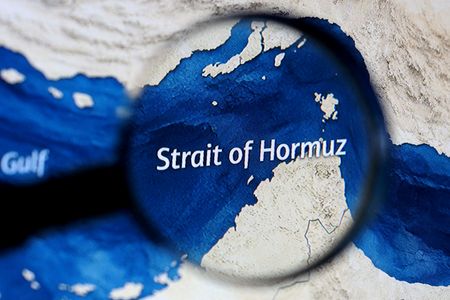

DUBAI – Following almost six weeks of military conflict, Iran has positioned itself with strengthened control over the strategically vital Strait of Hormuz, even as President Donald Trump declares the recent ceasefire a victory for American forces.
Middle East experts warn that despite taking significant damage, Iran has emerged from the confrontation with enhanced influence over the narrow waterway that handles approximately 20% of global oil and gas shipments.
“This war will be remembered as Trump’s grave strategic miscalculation. One whose consequences reshaped the region in unintended ways,” Middle East scholar Fawaz Gerges told Reuters.
The conflict’s aftermath has created ripple effects throughout the global economy and destabilized neighboring Gulf nations that depend on regional stability for their economic well-being.
Previously, Iran monitored the strait and occasionally harassed commercial vessels but avoided claiming direct authority over the passage. Now, Tehran operates as the primary controller of the shipping lane, determining which vessels may pass and under what conditions. Iranian officials are seeking to impose fees on ships for safe transit.
Iran has also shown remarkable endurance throughout the sustained military campaign while maintaining its ability to escalate tensions further. The nation continues projecting power across multiple regional battlegrounds and critical maritime passages, extending its influence through Lebanon and Iraq via Hezbollah and Shiite militant groups, and reaching into the Red Sea’s Bab el-Mandeb strait through its Houthi allies.
Despite widespread infrastructure damage from American and Israeli bombing campaigns and a devastated economy, Iran’s governing structure remains intact and in firm control.
“What did the U.S.–Israeli war actually achieve?” questioned Gerges. “Regime change in Tehran? No. The surrender of the Islamic Republic? No. Containment of Iran’s stockpile of highly enriched uranium? No. An end to Tehran’s support for its regional allies? No.”
Regional analysts and Gulf government officials who spoke with Reuters indicate that Iran has weathered the military strikes while maintaining – and in some areas expanding – its fundamental sources of power.
The current situation reveals a more hardened Iranian establishment maintaining control over Hormuz, possessing unaccounted nuclear materials, continuing missile and drone manufacturing, and sustaining support for regional proxy forces.
Defense Secretary Pete Hegseth echoed Trump’s victory claims Wednesday, stating that Washington achieved a decisive military triumph and effectively eliminated Iran’s missile capabilities. The State Department and White House have not yet responded to requests for additional comment.
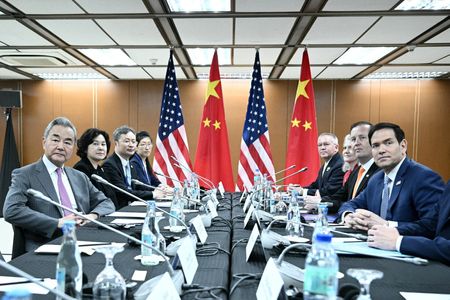
A two-week ceasefire agreement between the United States, Israel, and Iran is now in effect, with American and Iranian representatives scheduled to begin settlement discussions Friday.
Gulf officials caution that while the ceasefire may temporarily stop hostilities, its long-term success depends on resolving the underlying regional security and energy concerns.
Any agreement that fails to comprehensively address these issues risks solidifying Iranian advantages rather than limiting them, according to these officials.
Ebtesam Al-Ketbi, who leads the Emirates Policy Center, characterized the truce as an unstable temporary halt that could institutionalize new forms of regional instability without broader agreements.
“This ceasefire is not a solution; it is a test of intentions,” Ketbi told Reuters. “If it does not evolve into a broader agreement redefining the rules of engagement – in Hormuz and across proxy theatres – it will amount to little more than a tactical pause before a more dangerous and complex escalation.”
“If Trump reaches a deal with Iran without addressing core issues – ballistic missiles, drones, proxies, nuclear concerns, and the rules governing Hormuz – then the conflict is effectively left unresolved and the region exposed,” Ketbi added.
Iran has presented Washington with demands including sanctions removal, acknowledgment of uranium enrichment rights, war damage compensation, and maintained authority over the strait – highlighting the significant gaps between the negotiating positions.
Trump has acknowledged receiving Iran’s proposal and described it as “a workable basis to negotiate.”
Saudi analyst Ali Shihabi emphasized that for Gulf nations dependent on Hormuz for oil exports, the waterway represents an absolute priority. “Any outcome that leaves the waterway effectively in Iranian hands would be a defeat for President Trump,” he said, noting potential consequences including elevated energy costs that could impact midterm elections.
However, Shihabi suggested the conflict may create opportunities for Tehran to secure a negotiated agreement that could include sanctions relief.
From the Gulf states’ perspective, the situation presents serious concerns. Regional distrust of Iran has intensified following Tehran’s attacks on energy infrastructure and commercial centers throughout the area. The transformation of Hormuz into an explicit tool of pressure and intimidation represents an even more troubling development, according to analysts.
The economic implications are equally significant. Iran’s intention to charge transit fees for vessels using Hormuz shipping lanes as part of any permanent agreement would impact far beyond the Gulf region, affecting global energy markets and the economic foundations of nations along the opposite coastline.
“If Iran can extract millions per ship, the implications are enormous – not just for the Gulf, but for the global economy,” Ketbi explained. “In that sense, the outcome is not just a regional setback, but a systemic shift with worldwide consequences.”
Experts warn this development would represent a fundamental transformation in regional dynamics – shifting from a strait governed by international standards to one controlled by a hostile nation strengthened, rather than weakened, by warfare.
The ceasefire, facilitated by Pakistan, concluded a conflict initiated February 28 by Trump and Israeli Prime Minister Benjamin Netanyahu, who stated their goals included reducing Iran’s regional influence, dismantling its nuclear program, and creating conditions for Iranians to overthrow their government.
Both sides have claimed success. Trump labeled the ceasefire a “total and complete victory,” asserting American forces accomplished their mission, while Iran’s Supreme National Security Council maintained that Trump accepted their terms.
Yet the conflict has not eliminated Iran’s stockpile of weapons-grade enriched uranium or its capacity to attack neighboring countries with missiles and drones. The leadership, which previously faced massive domestic protests, survived the superpower assault without signs of governmental collapse.
A Gulf source indicated that rebuilding trust with Tehran would require strict, written guarantees – rather than informal promises – addressing non-interference, navigation freedom, maritime corridor security including Hormuz, and Gulf states’ national security needs.
These conditions were communicated to Pakistani mediators for inclusion in a comprehensive settlement, according to the Gulf source.
An Israeli official reported that senior Trump administration officials assured Israel they would maintain previous demands, including Iran’s nuclear material removal, enrichment cessation, and ballistic missile elimination.
Pakistan’s prime minister announced that Iranian and American delegations are expected to convene in Islamabad Friday for the first official peace negotiations since the conflict began.