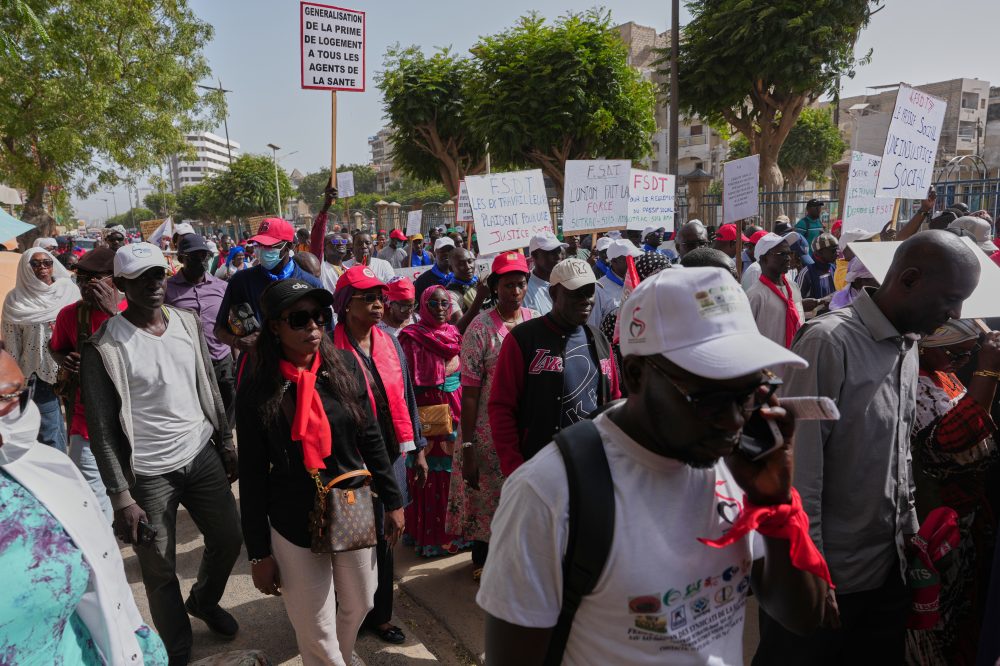

Workers, union representatives, and opposition members filled the streets of Dakar, Senegal on Wednesday, voicing anger over what they describe as unfulfilled government commitments and escalating living expenses amid the nation’s serious debt problems.
The demonstration was coordinated by Senegal’s primary labor organizations alongside an opposition group called the Front for the Defense of Democracy and the Republic (FDR).
According to Mody Guiro, who leads the National Confederation of Senegalese Workers – the nation’s biggest labor organization – officials had violated an agreement from the previous year that halted work stoppages in return for commitments to improve pay and workplace conditions. Government officials point to an unprecedented debt emergency left by the former administration as limiting available funds.
Demonstrators donned red scarves and union headwear while carrying signs calling for the reinstatement of dismissed government employees and reduced income taxation. Some voiced demands for Prime Minister Ousmane Sonko’s removal from office.
The current administration in this West African nation, headed by Sonko and President Bassirou Diomaye Faye, assumed control in April 2024 with pledges to implement sweeping changes, including anti-corruption efforts, youth employment initiatives, and better utilization of the country’s natural resources.
However, the PASTEF party’s transformation plans have encountered significant hurdles. A government review conducted in 2025 uncovered debt totaling $13 billion – higher than previously disclosed – left behind by the prior government. Discussions with the International Monetary Fund regarding new financial assistance have reached an impasse as the country’s budget situation deteriorates.
The nation’s debt compared to its economic output has climbed to approximately 132%, ranking among Africa’s most severe.
These financial challenges have intensified everyday hardships for citizens, particularly affecting young people who represent about 75% of the population under age 35.
In February of last year, demonstrations at the country’s premier public university regarding unpaid student assistance resulted in aggressive action by law enforcement, causing one student’s death.
“The nation has come to a halt. The government must find ways to restart Senegal’s economy rather than creating conflicts at every turn,” stated Mohamed Fall, a young activist participating in Wednesday’s demonstration.
Pape Laobe Samb, another demonstrator, represents one of over 700 Dakar port employees who lost their jobs since early 2025 as the government restructures state organizations.
“This isn’t what they told voters they would do. They claimed they would generate employment and advance the nation, but they’ve done exactly the reverse,” Samb explained to reporters after working at the port for more than twelve years before his dismissal.
The port’s administrator, selected shortly after President Faye took office, has characterized these actions as eliminating questionable contracts from the previous government. Union representatives dispute this explanation, contending that dismissed workers were primarily those connected to the former administration and that the terminations violated legal procedures.