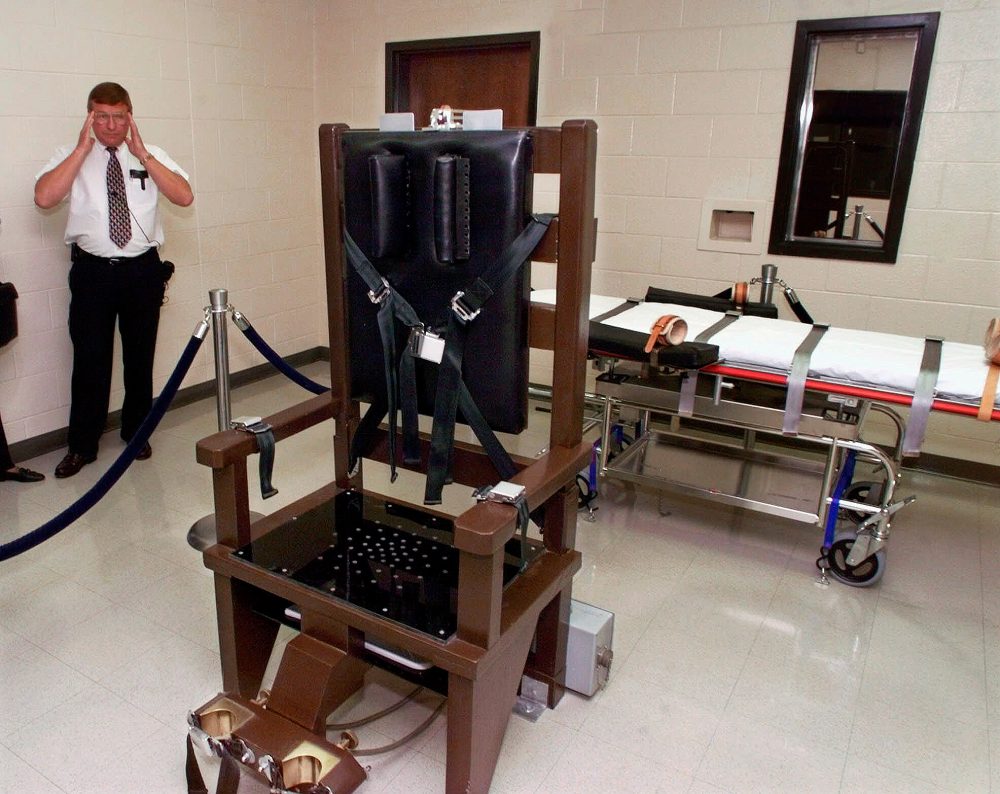

NASHVILLE, Tenn. — Tennessee’s Supreme Court temporarily suspended a lower court decision Wednesday that would have granted journalists expanded viewing access during state executions.
The decision restores existing procedures before Tony Carruthers’ scheduled May 21 execution and will stay in effect throughout the appeal process. The expanded access ruling had never been implemented for any execution.
A Nashville judge issued a temporary injunction in January supporting a group of news organizations, including The Associated Press, who filed suit claiming state execution procedures violate constitutional rights to comprehensive and accurate news coverage.
The trial judge’s order would have required opening witness room curtains earlier during lethal injections, permitting observers to watch inmates being restrained on gurneys and IV line placement. The curtains would also stay open longer, remaining so until death is officially declared.
Additionally, the judge mandated that execution team members wear disposable protective clothing over their uniforms, ID badges and hair to protect their identities, with optional masks for further concealment.
State attorneys argued against the new regulations during their appeal, claiming media organizations lack First Amendment rights to witness executions, particularly the additional portions the trial judge ordered viewable. Officials also contended the expanded viewing significantly threatens execution team anonymity, introduces unproven procedures and relies on flawed statutory interpretation.
Legal representatives for the news organizations argued that preventing expanded access would deny the public crucial information about upcoming executions. They maintained they possess constitutional and legal authority to observe complete executions and that protective equipment would adequately shield execution team identities.
The ruling returns to previous execution procedures, where media observers only see events after condemned individuals are already secured to gurneys with IV lines connected. Witnesses cannot determine when injections actually start, and those conducting the procedure remain in a separate room.
Current protocol states that following saline and pentobarbital administration, a team leader signals the warden and a five-minute waiting period commences. Afterward, blinds close, cameras shut off, and a doctor enters to confirm death. Upon confirmation, the warden announces over the intercom that the sentence has been completed and directs witnesses to leave.
The camera and closed-circuit television system are used by execution teams, not media witnesses.
The media coalition includes AP, Gannett Co., Inc.; Nashville Public Media, Inc.; Nashville Public Radio; Scripps Media, Inc.; Six Rivers Media, LLC; and TEGNA INC.