
A dramatic diplomatic breakthrough occurred when Pakistan successfully facilitated a two-week ceasefire agreement between the United States and Iran, averting potential military action just hours before President Donald Trump’s strike deadline was set to expire. The temporary truce has opened a crucial diplomatic window following weeks of escalating tensions and concerns about a broader regional conflict.
Pakistan has swiftly positioned itself at the center of ongoing negotiations. As part of the agreement, Tehran has also consented to temporarily reopen the Strait of Hormuz, ensuring safe passage for shipping through this critical waterway that is essential to global energy markets. Pakistani leadership has framed this truce as an opportunity to transition from crisis management to substantive negotiations addressing sanctions, uranium enrichment, regional security, and future conflict resolution.
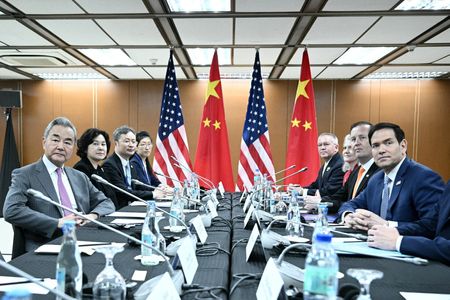
Demonstrating the high stakes of this diplomatic opening, President Trump is sending a senior delegation to Islamabad for the talks, headed by Vice President JD Vance and including special envoy Steve Witkoff and Jared Kushner.
On Wednesday, Pakistani Prime Minister Shehbaz Sharif announced that the United States and Iran, along with their respective allies, had reached an agreement for an immediate ceasefire across multiple conflict zones. In an early morning social media post, Sharif welcomed this development and expressed his “deepest gratitude” to leadership in both Washington and Tehran for what he characterized as a vital step toward regional stability.
Sharif has also extended invitations to both sides to send delegations for high-level discussions in Islamabad on April 10 to secure a more comprehensive settlement. Iran has confirmed its participation. According to a statement from the Prime Minister’s Office, Sharif conducted a 45-minute phone conversation with Iranian President Masoud Pezeshkian on Wednesday afternoon.
Pezeshkian expressed appreciation to the prime minister, commended Pakistan’s efforts in establishing a temporary ceasefire, and confirmed Iran’s participation in the upcoming Islamabad talks. Various media sources, citing Iran’s Islamic State News Agency, have reported that Iranian Parliament Speaker Mohammad Bagher Ghalibaf is expected to lead Tehran’s delegation for Friday’s negotiations.
Despite the pause in fighting, Iran’s negotiating stance indicates that Tehran is pursuing much more than just a brief halt to hostilities. Presented through Pakistani intermediaries on April 6, 2026, shortly before the breakthrough, Tehran’s 10-point framework outlines the terms it seeks for a broader, more lasting settlement with the United States and Israel.
Iran’s demands encompass military, nuclear, economic, and regional issues:
1. A firm commitment from the United States and Israel not to attack Iran in the future.
2. Continued Iranian sovereignty and control over the Strait of Hormuz.
3. Recognition of Iran’s right to pursue uranium enrichment for peaceful purposes.
4. Lifting of all primary US sanctions imposed on Iran.
5. Removal of all secondary sanctions targeting foreign companies and countries doing business with Iran.
6. Termination of all United Nations Security Council resolutions against Iran.
7. Ending all International Atomic Energy Agency resolutions related to Iran’s nuclear program.
8. A halt to attacks on Iran and its regional allies, including in Iraq, Lebanon, and Yemen.
9. Compensation or reconstruction support for damage caused during the conflict.
10. Broader regional de-escalation, including safe navigation arrangements in the Strait of Hormuz, possible transit mechanisms, elements of US military withdrawal from the region, and a framework for long-term peace and security guarantees.
These demands demonstrate that the Islamabad talks extend far beyond simply maintaining the ceasefire. They will also examine whether Washington and Tehran can begin to bridge differences over sanctions relief, recognition of peaceful uranium enrichment, control over the Strait of Hormuz, and broader security guarantees.
The American president characterized the proposal as “a workable basis on which to negotiate,” helping to pave the way for the temporary ceasefire. Confirming the pause on his official social media account, President Trump wrote: “Based on conversations with Prime Minister Sharif and Field Marshal Asim Munir of Pakistan, and wherein they requested that I hold off the destructive force being sent tonight to Iran, and subject to the Islamic Republic of Iran agreeing to the complete, immediate, and safe opening of the Strait of Hormuz, I agree to suspend the bombing and attack of Iran for a period of two weeks.”
Iranian Foreign Minister Abbas Araghchi stated in a social media post that “for a period of two weeks, safe passage through the Strait of Hormuz will be possible via coordination with Iran’s Armed Forces and with due consideration of technical limitations.” Israel announced on Wednesday that it supports the US president’s decision to suspend airstrikes on Iran but clarified that the ceasefire does not include Lebanon.
Pakistani officials and regional diplomats have described Islamabad as the primary intermediary once direct communication between Washington and Tehran broke down. They indicated that Pakistan helped shape the agreement while collaborating with Turkey, Egypt, Saudi Arabia, and other regional actors.
Egypt supported this effort through direct engagement with both sides. Foreign Minister Badr Abdelatty conducted high-level calls with US special envoy Witkoff and Iranian officials. Cairo also collaborated with Ankara and Islamabad on earlier proposals, including a 45-day pause tied to Gulf security concerns and the reopening of the Strait of Hormuz.
Turkey also worked to strengthen the communication channel Pakistan was helping to maintain. Under Foreign Minister Hakan Fidan, Ankara conducted quiet shuttle diplomacy, utilizing its relationships with both Washington and Tehran to encourage restraint, test compromise language on sanctions and regional assurances, and preserve communication channels when direct talks failed.
China appeared more indirectly in diplomatic accounts. Diplomatic sources suggested that Beijing was involved in consultations around the ceasefire framework. During an interview with AFP, the American president indicated that China played a role in bringing Iran to the negotiating table.
Last month, Pakistan’s Foreign Minister Ishaq Dar hosted a meeting with his counterparts from Saudi Arabia, Turkey, and Egypt to discuss de-escalation efforts before traveling to Beijing for further consultations. China, Iran’s largest trading partner, later called for joint efforts with Pakistan to help end the conflict.
Details of the back-channel diplomacy still depend heavily on accounts from officials and analysts. An Islamabad-based official familiar with the ceasefire process, speaking on condition of anonymity, told The Media Line, “Iran’s recent attacks on Saudi Arabia had significantly worsened the situation, pushing President Trump toward insisting on taking a very tough course of action.”
The same official indicated that the Trump administration was also aware of a growing perception, especially in Saudi Arabia, that the United States had abandoned its closest ally and was failing to ensure its protection.
That official added that “a complex internal rift appeared to be behind Iran’s recent attack, with indications that elements within the Iranian Revolutionary Guard carried out the operation without the consent of the political leadership and in opposition to a ceasefire. At a time when Pakistan-Iran negotiations had entered a decisive phase, the attack dealt a serious blow to peace efforts.”
The official further argued that Pakistan was operating in a challenging environment as it tried to prevent a wider war by acting as a bridge between Iran and Saudi Arabia, despite efforts by some actors to sabotage the process.
In that context, the official said, Pakistan remains engaged in seeking middle ground through what some officials have informally called the “Islamabad Accord.”
Pakistani officials described Islamabad’s role as central to the breakthrough, with Prime Minister Sharif and Field Marshal Munir facilitating back-channel exchanges between Washington and Tehran after direct communication stalled. Both held calls with President Trump and Iranian Foreign Minister Araghchi to help finalize the framework.
Saudi Arabia, which has faced major fallout from Iranian strikes in recent weeks, adopted what officials described as a restrained response.
Muhammed Alhamed, a Saudi geopolitical analyst specializing in Middle Eastern diplomacy, told The Media Line: “Riyadh understands that a wider war would not only threaten Gulf security but also put the global energy market and the broader economy at serious risk.”
He emphasized that “Saudi Arabia showed restraint under direct threat, prioritized stability, and acted with full awareness of the consequences that any broader escalation would have on the region and the world.”
Alhamed said the recent unprovoked attacks on Saudi territory clearly indicated Iran’s efforts to draw Riyadh into the conflict.
He said: “Iran’s brazen attacks on the Gulf States, combined with disruptions and the closure of the Strait of Hormuz, were dangerously provocative. Nevertheless, Saudi Arabia and the Gulf States responded with measured strategic patience, not from weakness, but from a profound sense of responsibility.”
Praising Pakistan’s diplomacy, Alhamed said careful dialogue, patience, and trust in Pakistan’s facilitation were essential to steer the region away from further escalation and toward a more durable outcome.
Aimen Jamil, a strategic affairs analyst based in Islamabad, told The Media Line that “Pakistan’s role in the emerging ‘Islamabad Accord’ reflects a calculated use of backchannel diplomacy rather than traditional mediation. Acting as a discreet facilitator, Islamabad positioned itself as a trusted conduit at a moment of acute escalation, enabling direct yet deniable communication between Washington and Tehran when formal diplomacy had stalled.”
She added that “Pakistan’s effectiveness stemmed from its unique strategic position, maintaining working ties with both the United States and Iran. Coordinated military and political engagement, along with quiet support from key partners such as China, helped sustain urgency, apply pressure, and reduce mistrust between the parties.”
Jamil said Pakistan’s push was driven not only by diplomacy but also by the risks of prolonged conflict, including energy disruptions, economic strain, and regional spillover.
While the ceasefire remains fragile and temporary, she said Pakistan has managed to create a viable de-escalation channel. Its longer-term significance, she argued, will depend on whether the Islamabad talks can turn a short pause into a broader and lasting agreement.
Mohsin Durrani, an Islamabad-based expert on regional security and diplomatic affairs, told The Media Line: “Pakistan’s role provided temporary stabilization, creating space for broader negotiations without ceding core leverage. While not guaranteeing a full resolution, it underscores the effectiveness of coordinated multilateral efforts. Upcoming Islamabad talks will test whether this pause can lead to lasting regional stability.”
He said: “Trump described Iran’s 10-point draft as a ‘workable basis’ for negotiation and announced a conditional two-week suspension of strikes, contingent on Iran reopening the Strait under its military oversight.”
Durrani said the arrangement allowed Washington to maintain that it had achieved its immediate military aims while shifting the focus of negotiations toward Iranian priorities.
He added that Israel, facing unanticipated operational costs, had adopted a more measured posture, though its longer-term territorial ambitions appeared deferred rather than abandoned.
Durrani also said that any enduring settlement would require Iran to address the two-state dimension in later discussions.
“It highlights Pakistan’s strategic importance in shaping regional stability and underscores the country’s diplomatic significance,” he added.
The test now is whether the Islamabad talks can move beyond the ceasefire and yield tangible progress on sanctions, uranium enrichment, regional security, and navigation through the Strait of Hormuz.