
North Korea announced Thursday that its recent weapons testing included ballistic missiles equipped with cluster bomb warheads, marking another escalation in the country’s military capabilities targeting South Korea.
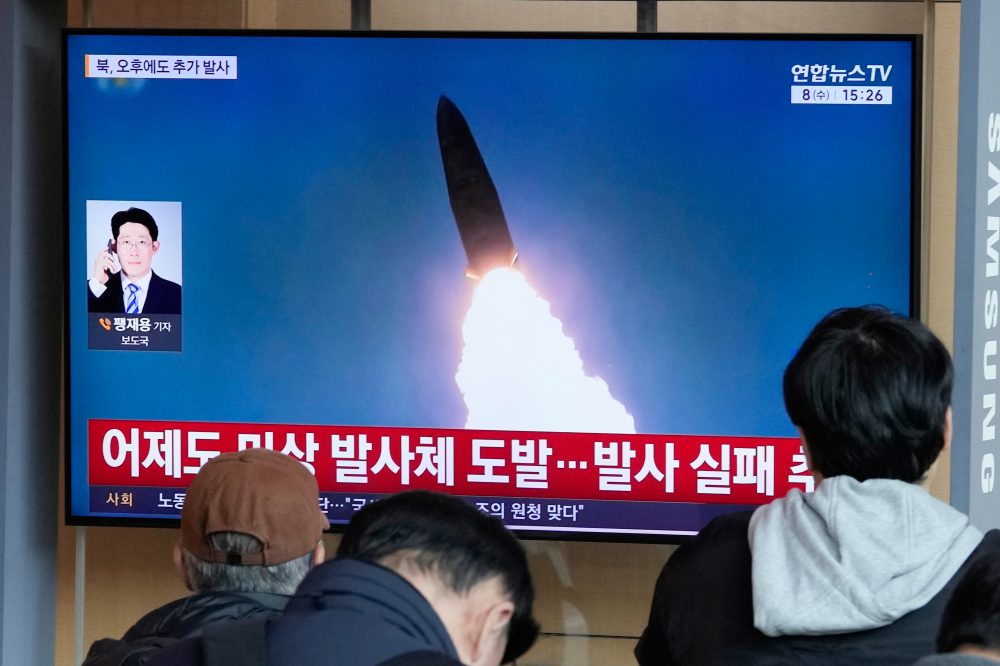
The announcement from North Korean state media followed South Korea’s detection of multiple missile launches from the North’s eastern coast on Wednesday, marking the second day of weapons testing this week.
According to the Korean Central News Agency, the weapons demonstrations spanned three days beginning Monday and featured anti-aircraft systems, alleged electromagnetic warfare equipment, and carbon-fiber explosives.
South Korean military officials reported that Wednesday’s missiles traveled between 240 and 700 kilometers (150 to 434 miles) before splashing down in the ocean. They also tracked at least one projectile fired Tuesday from near Pyongyang, North Korea’s capital.
Japanese defense officials confirmed that none of Wednesday’s weapons landed in Japan’s exclusive economic waters, while U.S. military representatives stated the Tuesday and Wednesday launches presented no direct danger to America or its regional partners.
The state news agency detailed tests of cluster munition systems mounted on Hwasong-11 ballistic missiles, which mirror Russia’s Iskander design with low-altitude, evasive flight patterns to bypass defense systems. According to the report, these short-range missiles with cluster warheads “can reduce to ashes any target covering an area of 6.5-7 hectares (16 to 17.2 acres) with the highest-density power.”
South Korean military officials have not yet responded to North Korea’s weapons claims.
The missile tests highlight ongoing hostilities between the neighboring countries, dampening South Korean expectations for improved diplomatic relations.
Jang Kum Chol, a senior official at North Korea’s Foreign Ministry, declared Tuesday evening that South Korea would forever remain the North’s “most hostile enemy state” and ridiculed Seoul’s current government for attempting to restart stalled negotiations, labeling its leaders “world-startling fools.”
North Korean leader Kim Jong Un has halted nearly all diplomatic engagement with Seoul and Washington following the breakdown of his nuclear negotiations with President Donald Trump in 2019. Since then, he has fast-tracked development of nuclear-armed missiles capable of reaching U.S. territories and allies across Asia.
Kim has also strengthened relationships with Russia, China, and other nations in conflict with the United States as he seeks to end international isolation and boost his regional influence. North Korean media reports that Chinese Foreign Minister Wang Yi is scheduled to arrive Thursday for a two-day visit as part of ongoing diplomatic cooperation between the two countries.