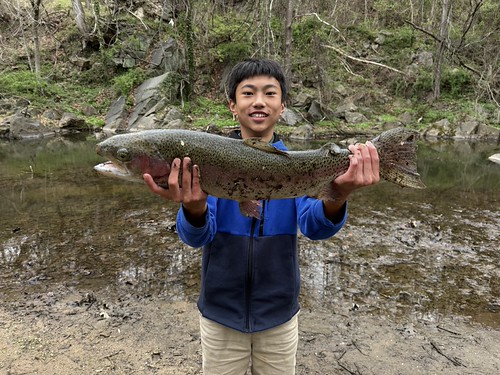

Spring’s arrival brings perfect conditions for Maryland anglers as waters warm and fish become more active throughout the Chesapeake Bay region. April temperatures in the low to mid-50s are drawing gamefish toward their spawning areas, creating excellent opportunities for both freshwater and saltwater fishing enthusiasts.
Maryland Department of Natural Resources officials report that hatchery teams continue working to ensure quality trout fishing experiences during this peak season. Fishing enthusiasts can stay updated on trout releases and DNR activities by enrolling in the department’s email notification system.
The agency also encourages participation in volunteer angler surveys, which provide crucial data for fisheries management. According to DNR, the information collected helps scientists and managers track harvest numbers and monitor fish populations effectively.
Weekly Outlook: April 8-14
Chesapeake Bay waters are warming rapidly as spawning fish move northward. Temperature readings from monitoring buoys show main Bay surface waters and river mouths reaching the low to mid-50s, while smaller waterways maintain temperatures in the upper 40s to low 50s. Sheltered areas and sunny spots in smaller streams often reach the low 60s on warm days.
These temperature ranges create optimal spawning conditions for white perch (54-57 degrees) and hickory shad (55-65 degrees) as they migrate upstream. Striped bass are also moving toward spawning areas in low-salinity sections of the Bay and tidal rivers, where they spawn in 57-66 degree water.
Most Maryland rivers and streams show normal flow levels with typical water clarity expected throughout the Bay system. However, reduced visibility from algal blooms is anticipated near the Wicomico, Back, and Gunpowder rivers on the Potomac. Enhanced tidal currents are forecast for Monday and Tuesday due to the April 17 new moon.
Upper Chesapeake Bay
Catch-and-release striped bass fishing remains legal in Chesapeake Bay waters below the line connecting Abby Point to Worton Point. Waters above this boundary stay closed to protect spawning fish in the Susquehanna Flats area.
Successful anglers are trolling large tandem-rigged bucktail and soft plastic combinations along channel edges, particularly where schools of menhaden are present. Jigging with oversized soft plastics also proves effective for targeting these fish.
Hickory shad have appeared in the lower Susquehanna River, near Deer Creek’s mouth, the dam pool, and Octoraro Creek. Small metallic spoons in gold or silver, along with shad darts, remain the preferred lures, though color preferences change daily based on light and water conditions.
Blue catfish populate all regional tidal rivers and Bay waters south to the Bay Bridge. The largest specimens concentrate near the Susquehanna River mouth, Conowingo Dam pool, lower Chester River, and open Bay areas. Sandy Point State Park’s “rip” area offers excellent shore fishing opportunities using medium surf gear.
Cut bait works well for catfish, with non-offset circle hooks recommended due to striped bass presence. Alternative baits include chicken liver, marinated chicken breast, hot dogs, and processed meat products. Plastic mesh sponges help secure soft baits to hooks when wrapped with rubber bands.
White perch spawning runs are active in the Chester, Sassafras, Bush, Gunpowder, and Magothy rivers. Small 1/16 to 1/8-ounce jig heads tipped with grass shrimp, small minnows, or bloodworm pieces prove most effective.
Middle Bay
Catch-and-release striped bass fishing continues along steep channel edges, with anglers limited to six lines when trolling. All lures must be barbless without stinger hooks. Shore fishing and jigging with large soft plastics also produce results when menhaden schools are located.
Active striped bass spawning has occurred in the Choptank River above Dover Bridge for over a week, with water temperatures around 60 degrees. These fish will begin leaving the river by month’s end. The Choptank remains closed to catch-and-release fishing to protect stressed spawning fish in low-salinity conditions.
White perch have moved upstream to Red Bridges in the Choptank and provide consistent action throughout the upper river. The Tuckahoe also hosts spawning white perch populations. Small jigs with grass shrimp, minnows, or bloodworm work best.
Blue catfish and channel catfish remain active from Choptank town to Denton, with the Tuckahoe producing fish upstream to Hillsboro. Cut baits or scented offerings on 8/0 or 9/0 non-offset circle hooks work well on sliding sinker rigs near channel edges and deep river bends.
Lower Bay
Multiple catch-and-release opportunities exist for striped bass in lower Bay waters. Trolling large bucktails and soft plastics along shipping channel edges proves productive, especially near menhaden schools swept by strong currents. Evening casting from shore with large lures also produces results as fish move through shallower waters seeking warmer temperatures.
Proper fish handling remains critical for successful releases. Fish should be released in water when possible, with quick horizontal holds for photos using rubber landing nets when necessary.
Jigging works well when fish appear on depth finders beneath menhaden schools or along channel edges. The Potomac River offers numerous catch-and-release opportunities.
Hickory shad continue appearing in the Potomac below Little Falls and Mattawoman Creek’s Mason Branch. Small metallic spoons and shad darts cast near current breaks provide exciting catch-and-release action. The first American shad have been reported near Fletcher’s Landing, though Maryland anglers need District of Columbia licenses to fish above the DC boundary.
White perch spawning runs continue in the Patuxent, Potomac, Nanticoke, Wicomico, and Pocomoke rivers with large females reaching spawning areas. Small jig heads with grass shrimp or minnows worked near bottom in current-swept areas remain most effective.
Blue catfish provide excellent opportunities throughout tidal sections of the Potomac, Patuxent, Nanticoke, Wicomico, and Pocomoke rivers using cut bait or scented offerings.
Freshwater Fishing
Trout fishing remains the top freshwater activity as stocking continues in management waters primarily through central and western regions. Eastern and southern areas receive fewer stockings as warming waters become unsuitable for trout survival. Current stocking information and location maps are available on the DNR trout stocking website.
Smallmouth bass show activity in the upper Potomac River, Deep Creek Lake, and lower Susquehanna River. Swimbaits, tubes, and crankbaits work well near current breaks, underwater ledges, and rocky drop-offs.
Largemouth bass fishing reaches peak conditions this week as fish feed actively in transitional depths between shallow and deep water. Prime locations include emerging grass beds, submerged wood, and feeder creek mouths at Susquehanna Flats, upper tidal rivers, and regional reservoirs. Spinnerbaits, lipless crankbaits, jerkbaits, and various soft plastics all prove effective.
Northern snakeheads become active in upper tidal rivers and creeks during afternoon hours along sunny shorelines where water warms fastest. White paddletail lures and large minnows under popping corks or bobbers work best.
Crappie fishing continues near deeper submerged structure including sunken brush, fallen trees, marina docks, and bridge piers. Small minnows under slip bobbers remain popular, while small lures and bladed marabou jigs help cover water when searching.
Chain pickerel hold near sunken wood or emerging grass beds before moving into heavier cover during warmer months. Paddletail lures and spinners prove most effective.
Atlantic Ocean and Coastal Bays
Ocean City area water temperatures remain in the 40s, but welcome species are beginning to arrive. Surf anglers catch black drum on sand fleas or clams, though clearnose skates and dogfish make up much of the catch.
Tautog are moving inshore to jetties, bulkheads, and bridge piers around Ocean City Inlet. While many fish fall short of the 16-inch minimum, enough legal-sized fish are available for dinner. Sand fleas and crab pieces serve as preferred baits.
Flounder migrate through the inlet toward warmer back bay waters. Drifting inlet channels with squid strips and artificial baits on bottom rigs with spinner blades proves popular.
Catch-and-release striped bass fishing at Route 90 and Verrazzano bridge piers provides entertainment for anglers. Most fish measure just under the 28-inch minimum, though occasional keepers are caught. Paddletail lures see the most use.
Offshore anglers find tautog on inshore wreck and reef sites along with flounder on various lumps and shoals beyond Ocean City Inlet.