Beauty company Coty is facing legal trouble from DB Ventures, the business entity behind soccer legend David Beckham’s fragrance line, according to court filings reviewed by Reuters.
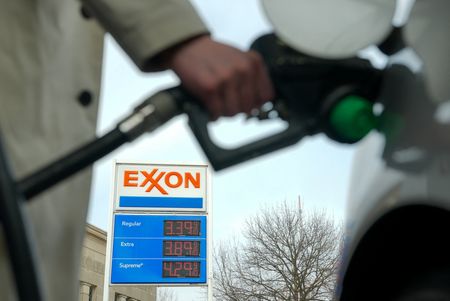
The lawsuit, filed April 23 in New York, accuses Coty of serious violations of their licensing contract and claims the company damaged the Beckham brand by allowing fragrances to be distributed through gas stations.
“How could this possibly have happened? Desperation and greed,” the legal filing states.
This legal challenge represents yet another blow to Coty’s fragrance division, which serves as the company’s primary source of income.
DB Ventures isn’t alone in its complaints against Coty. Nautica has also filed a similar lawsuit against the beauty company. Both DB Ventures and Nautica are owned by American conglomerate Authentic Brands.
Nautica’s legal action claims Coty’s “flagrant and persistent violation” of their licensing deal has caused permanent harm to the Nautica brand. Both lawsuits contend that Coty worked with unauthorized distributors.
When asked about the pending litigation, a Coty representative responded: “Coty does not comment on ongoing legal matters. The claims are without merit, and we will defend ourselves vigorously.”
Authentic Brands chose not to provide comment.
The troubles pile up for interim CEO Markus Strobel, who took over from Sue Nabi in January after her five-year tenure ended. Strobel, a former Procter & Gamble executive, now faces the challenge of reviving the CoverGirl parent company.
Coty’s stock price reached historic lows in early April and has plummeted 78% over the past year. The company has already cautioned investors about disappointing third-quarter results, scheduled for release next Tuesday.
In February, Coty pulled back its annual projections and warned that third-quarter adjusted EBITDA would likely fall between $100-$110 million, significantly below the $201.6 million analysts had predicted.
While fragrances generate most of Coty’s revenue, this business segment is contracting as the company prepares to lose important licenses. The most significant loss will be Gucci’s beauty business, which analysts expect to end in 2028 when it moves to competitor L’Oréal.
Adding to these challenges, Authentic Brands announced in January that it had decided to transfer the licensing rights for DB Ventures and Nautica fragrances to Interparfums when current Coty agreements end. The DB Ventures contract expires in April 2028, while the Nautica deal runs until January 2030.
Despite the legal disputes, both fragrance lines have shown strong sales growth. David Beckham fragrance sales jumped 71.9% between 2023 and 2025, reaching $22.9 million, according to Global Fusion data from Nielsen’s market intelligence platform. Nautica sales increased 34.2% to $29.1 million during the same period.
Interparfums declined to comment on the situation.
The pressure on Coty intensified last month when the chairman of French beauty giant L’Oréal publicly criticized the smaller company, claiming Coty lacks a viable business model.
Strobel is currently developing a new strategic direction, promising to invest more resources in key brands as the company attempts to boost sales. Coty has identified Kylie Cosmetics and its long-term partnerships with Burberry and Marc Jacobs as valuable assets moving forward.
The company initiated a comprehensive review of its consumer cosmetics division in September, exploring various options including partnerships, sales of brands, and potential spin-offs for products like Rimmel and Max Factor.
Delaware Department of Transportation officials have temporarily shut down a left turn lane on eastbound Lockmeath Way for ongoing construction activities.
The lane closure affects the stretch of roadway between Peachtree Run and Brookfield Drive, according to DelDOT’s traffic incident reporting system.
Motorists traveling through the area should expect delays and plan alternate routes if possible. The construction work is expected to wrap up by 3 PM today, at which point normal traffic patterns will resume.
Drivers are advised to exercise caution when navigating through the construction zone and to follow all posted signs and traffic control devices.
Delaware Department of Transportation officials are alerting drivers to expect delays on Route 9 northbound this afternoon due to ongoing roadwork.
A flagging operation is currently underway along the shoulder of Route 9 northbound in the stretch between Grantham Road and Washington Street. The work zone is expected to remain active until 3 PM today.
Drivers are advised to use caution when traveling through the area and to allow extra time for their commute. The flagging operation may cause temporary slowdowns as traffic is directed around the work zone.
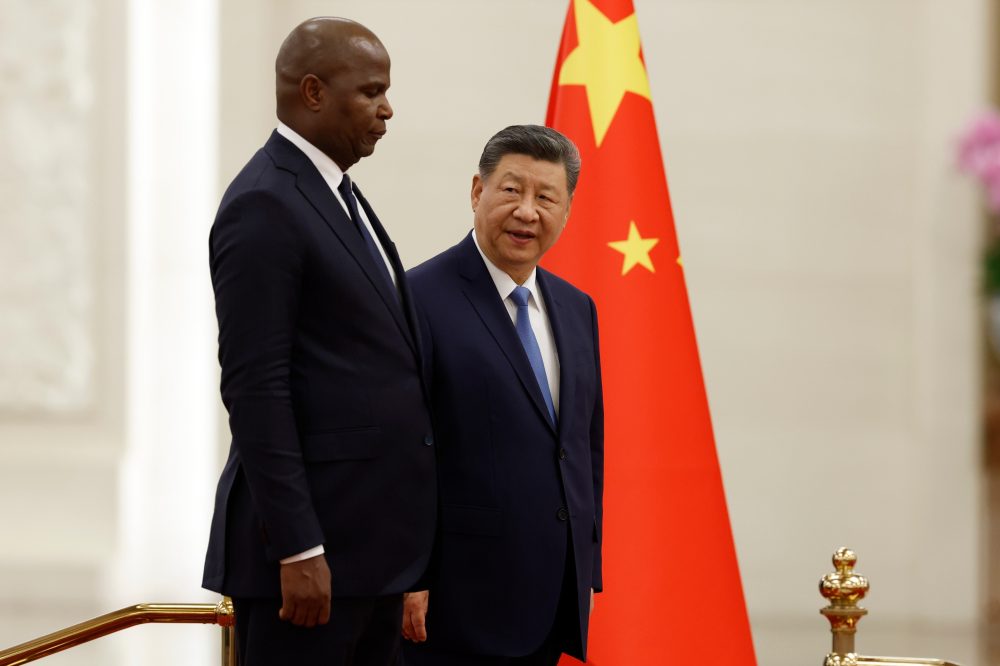
CAPE TOWN, South Africa — China launched a sweeping trade initiative Friday that eliminates import duties for nearly every African nation, creating a stark contrast with the United States’ move toward increased protectionism under President Donald Trump.
The new Chinese policy extends duty-free market access to Africa’s 20 most significant economies for the next two years, encompassing nations like South Africa, Egypt, Nigeria, Algeria and Kenya. Combined with existing agreements covering 33 smaller African nations, this expansion means 53 of Africa’s 54 countries now qualify for tariff-free trade privileges with China.
Only Eswatini remains excluded from the arrangement due to its unique status as Africa’s sole nation maintaining official diplomatic relations with Taiwan.
China’s Customs Tariff Commission of the State Council announced the policy would foster mutual economic growth between China and African nations. State media reported that a 24-metric-ton apple shipment from South Africa, processed through Shenzhen customs early Friday morning, marked the first cargo to benefit from the zero-tariff framework.
The Commerce Ministry highlighted that the policy would particularly advantage African exports such as cocoa from Ivory Coast and Ghana, coffee and avocados from Kenya, and citrus fruits plus wine from South Africa — products that previously faced import duties ranging from 8% to 30%, according to official Chinese media.
Ivory Coast dominates global cocoa production, and together with Ghana, the two nations supply over half the world’s cocoa. South Africa ranks among the world’s leading citrus exporters.
Multiple major African economies indicated they would seek alternative markets for goods previously destined for the United States after the Trump administration implemented reciprocal tariffs last year — reaching 30% for South Africa and exceeding 40% for other African countries.
“South Africa looks forward to working with China in a friendly, pragmatic and flexible manner,” South African Trade Minister Parks Tau stated in February during bilateral discussions in China.
Although the U.S. Supreme Court ruled Trump’s comprehensive global tariffs unconstitutional in February, the Republican president announced his administration possessed “very powerful alternatives” and quickly implemented temporary import taxes as replacements.
China already serves as Africa’s primary trading partner. The continent houses 1.5 billion people and is projected to nearly double to 2.5 billion by 2050, according to United Nations estimates, representing more than 25% of the global population at that time.
While China promoted its tariff-free agreement as encouraging mutual development, a significant trade imbalance exists between China and Africa, with African nations owing Beijing substantial debt obligations.
Trade between China and Africa hit a record $348 billion in 2025, with China’s exports to Africa rising approximately 25% to $225 billion, while Chinese imports from Africa increased only about 5% to $123 billion, expanding Africa’s trade deficit.
China has historically purchased raw materials from Africa while exporting manufactured products in return. Thierry Pairault, a China-Africa specialist at France’s National Center for Scientific Research, noted that while the new framework might benefit agricultural exports, most African raw material exports including oil and minerals already enjoyed tariff-free access to Chinese markets.
“(Chinese leader) Xi Jinping is positioning China as the antithesis of Western protectionism. This gesture is intended to appeal to both African public opinion and global markets,” Pairault wrote in an analysis published by the China Global South Project, which examines China’s relationships with developing nations.
However, Pairault observed that the policy “only applies where it costs (China) almost nothing.”
LONDON — Authorities have filed criminal charges against a 49-year-old woman whose vehicle crashed into an end-of-school celebration at a London elementary school, resulting in the deaths of two young girls and injuries to multiple others.
Claire Freemantle now faces two counts of causing death by dangerous driving and seven counts of causing serious injury by dangerous driving, prosecutors announced Friday. The charges stem from a July 6, 2023 incident when her Land Rover crashed through a fence and struck a tea party celebration at the Study Preparatory School in Wimbledon, south London.
The crash claimed the lives of 8-year-old students Nuria Sajjad and Selena Lau, while more than a dozen other people sustained injuries. Ten individuals, including several children, required hospital treatment following the collision that also damaged the school building.
Initially, prosecutors declined to file charges after determining Freemantle had suffered an epileptic seizure. At that time, she released a statement expressing her “deepest sorrow” while stating she had no memory of the events.
However, the Metropolitan Police reopened their investigation following persistent complaints from the victims’ families. Authorities discovered new evidence during this second investigation, though they have not disclosed the specific nature of these findings.
London police have acknowledged mishandling the initial investigation and issued an apology. The department has also submitted its officers’ conduct to an oversight agency for review regarding potential misconduct.
Freemantle’s defense team has questioned the decision to reverse the original determination and indicated she will enter a not guilty plea. Her first court appearance is scheduled for June 16 at Westminster Magistrates’ Court.
BERLIN — Georg Baselitz, the influential German Neo-Expressionist painter celebrated for his controversial inverted artworks, passed away Thursday at the age of 88.
The Thaddaeus Ropac Gallery, which served as Baselitz’s representative, confirmed the artist’s death through a family statement on Thursday. While the gallery noted he died “peacefully,” no specific cause of death was provided.
Originally named Hans-Georg Kern, the artist adopted his professional name from Deutschbaselitz, the eastern Saxony village where he was born on January 23, 1938, during Nazi Germany’s rule before World War II began. Following his childhood amid wartime devastation, he fled East Germany in 1957 during a period of mounting political tensions and relocated to West Germany.
“I was born into a destroyed order, into a destroyed landscape, into a destroyed people, into a destroyed society,” he reflected to the German news agency dpa prior to reaching his 85th birthday.
The gallery described him as “a titan of contemporary painting, sculpture, drawing and printmaking” and “one of the most important artists of our time,” crediting him with influencing both fellow artists and the global art community.
His debut exhibition in 1963 sparked significant controversy when authorities identified pornographic content in two of his works, leading to their confiscation by a vice squad.
Critics frequently labeled him an “artist of rage,” and he embraced a philosophy of “contradiction,” according to dpa reporting.
Museums worldwide display his creations, and his pieces have sold for millions at international auctions. German authorities announced in 2017 that they had retrieved 15 stolen Baselitz paintings and drawings valued at approximately 2.5 million euros ($2.9 million).
Baselitz remembered gaining early recognition during the 1960s through his golden-hued “Hero” painting series, inspired by fictional characters from Russian civil war literature. These works showed damaged figures stumbling toward viewers in tattered military clothing, featuring distorted proportions with oversized hands and undersized heads. His war-torn hero piece, “Der Hirte (The Shepherd)” from 1966, earned worldwide recognition.
In 1969, Baselitz produced “Der Wald auf dem Kopf” (The Forest on its Head), marking his first “inverted” artwork that displayed trees in an upside-down orientation, establishing what would become his signature style.
“Georg Baselitz did not just turn his paintings upside down; he also turned our thinking routines upside down,” stated German President Frank-Walter Steinmeier. “Having experienced the destruction and suffering of the Second World War as a child, the collapse of all order forced him to question everything around him.”
In a recent video interview, Baselitz reflected on his lengthy artistic journey, noting that “typical painting has never appealed to me.”
“I actually wanted to be more of a black-and-white painter, and above all, I didn’t want to work spatially, perspectively, with shadows and light and such things that arise with the imitation of nature,” he explained while sitting in a wheelchair wearing a paint-stained jacket.
“I must say that throughout my life, I was not aware that I was a painter of color, even though I am constantly told that I have such wonderful colors,” Baselitz remarked.
The artist explained his goal to “construct my connection to the world, to myself and to my wife,” utilizing the most “simple and ordinary” methods available. His comments came from a video recorded at the Giorgio Cini Foundation in Venice, which currently features an exhibition of Baselitz’s “Golden Heroes” collection running from May 6 through September 27.
A “Naked Masters” exhibition at Vienna’s Kunsthistorisches Museum in 2023 showcased five decades of his work, exploring provocative nudity themes featuring the artist and his wife, Elke, displayed alongside classical oil paintings by old masters that similarly depicted nude subjects.
He leaves behind his wife and two sons, Daniel Blau and Anton Kern, according to the gallery.
ST. JOHN’S, Antigua — Prime Minister Gaston Browne made political history as his Antigua and Barbuda Labor Party captured a record-breaking fourth straight term in office during an early election that devastated opposition representation in the Caribbean nation’s parliament.
Election results announced early Friday morning revealed a sweeping victory that sent jubilant party supporters into the streets to celebrate the overwhelming win.
Browne’s ABLP dominated the contest by claiming 15 out of 17 available parliamentary positions in the twin-island Caribbean country. The main opposition United Progressive Party suffered a crushing defeat, dropping from five seats to just one, with only Jamale Pringle surviving the electoral rout. Independent candidate Trevor Walker of the Barbuda People’s Movement also secured a seat, continuing his winning streak in every election since 2004 except for 2014.
The early election was called two years before required by the constitution, with campaign discussions centered around increasing living expenses and plans for improving the nation’s infrastructure.
“We will build one nation united and inclusive where all who are willing to come together under the banner of one Antigua and Barbuda will share in the reward of their efforts,” Browne told ABLP supporters.
Voting officials praised how smoothly the election process went, reporting that ballot locations throughout both islands functioned without major problems.
Browne and Attorney General Steadroy Benjamin are scheduled for swearing-in ceremonies Friday morning, with additional cabinet appointments to be announced over the next several days.
The pharmaceutical company responsible for manufacturing OxyContin will cease operations and transform into a public-focused organization as a comprehensive legal agreement involving thousands of opioid lawsuits becomes active this Friday.
This agreement represents one of the most significant in a string of legal resolutions addressing the devastating impact of opioid addiction in recent years. The case has drawn particular attention because many experts trace the origins of America’s opioid crisis to the aggressive marketing campaigns surrounding OxyContin, a potent prescription pain medication that entered the market in 1996.
Federal statistics indicate that opioid overdoses have claimed more than 500,000 American lives since 1999. The crisis initially stemmed from prescription painkillers, later shifted to heroin, and has now reached its deadliest phase with fentanyl-related deaths.
The Purdue agreement mandates a minimum payment of $7.4 billion. The majority of these funds—no less than $6.5 billion—will come directly from Sackler family members who previously held ownership of the company. The family relinquished control of the pharmaceutical manufacturer before its 2019 bankruptcy filing and has surrendered all ownership stakes. The settlement creates Knoa Pharma as Purdue’s replacement, featuring a state-appointed board dedicated to combating the opioid epidemic.
Analysis from the Opioid Settlement Tracker shows that total opioid litigation settlements have reached an estimated $50 billion since 2019. Companies that have reached agreements with state and local authorities include drug manufacturers, distribution companies, pharmacy chains, and consulting firms. Settlement terms typically require that most funds address epidemic-related issues.
Purdue’s settlement payments will be distributed over an 18-year period, with larger amounts scheduled for the initial years.
The Department of Justice investigation into Purdue resulted in criminal charges against three individuals and a corporate guilty plea by the company.
In 2024, five Supreme Court justices rejected an earlier settlement version, determining that Sackler family members would have inappropriately gained personal lawsuit protection through the corporate bankruptcy proceedings. The final agreement allows groups that decline payments to pursue legal action against family members.
A 2019 audit revealed that Sackler family members collected $10.8 billion from Purdue between 2008 and 2018, with no distributions received since that time. Nearly half of those funds went toward taxes the Sacklers paid on the company’s behalf. Congressional analysis in 2021 estimated the family’s combined net worth at $11 billion.
The settlement requires the release of 30 million company documents to the public. Similar to other opioid industry materials, these records will be housed at the University of California San Francisco and Johns Hopkins University.
Individuals who can demonstrate harm from prescribed Purdue opioids may receive up to $48,000 in compensation, along with survivors of those affected. Other major industry settlements do not provide direct payments to victims.
Educational systems across the nation are pulling back on digital device usage as four states have enacted new laws restricting screen-based instruction and testing for students.
The Los Angeles public school system, which serves as the country’s second-largest educational district, has joined this movement by implementing its own limitations on screen time for students.
These new regulations specifically target the amount of time students spend learning through digital devices and taking computer-based assessments during school hours.
The trend represents a significant shift in educational policy as lawmakers and school administrators reassess the role of technology in classroom learning environments.
LONDON (AP) — King Charles III earned widespread acclaim for his diplomatic skills during a recent state visit to the United States, where President Donald Trump expressed admiration for the British monarch and even removed certain tariffs on Scotch whisky in the royal couple’s honor.
The monarch demonstrated exceptional diplomatic finesse throughout the trip, balancing compliments for his American hosts with carefully worded critiques. However, experts question whether this royal charm offensive will significantly improve the strained relationship between the two nations, particularly given ongoing disagreements about the Iran conflict.
“In the short term probably yes, in the long term probably no,” said Kristofer Allerfeldt, a University of Exeter professor specializing in American history. But he said Charles had “definitely clawed back some of the prestige of the monarchy” in his homeland with his assured performance.
“He’s done us proud,” Allerfeldt said.
The carefully orchestrated four-day journey to Washington, New York and Virginia by Charles and Queen Camilla represented a strategic diplomatic mission requested by the British government. Scheduled to coincide with America’s 250th anniversary celebrations, the visit aimed to repair tensions between the UK government and Trump’s administration.
Trump has repeatedly criticized Prime Minister Keir Starmer — previously someone he commended — for refusing to participate in American military operations against Iran, calling Britain’s leader “not Winston Churchill,” referencing the wartime leader who first described the “special relationship” between the two nations.
This disagreement reflects broader friction between Trump and NATO partners, whom he has labeled “cowards” and “useless” for declining to join Iranian military action.
Despite these political tensions, Trump’s appreciation for British royalty appears unchanged and may have grown stronger following his historic second state visit to the UK last September.
Several UK opposition figures had urged cancellation of the king’s reciprocal visit, fearing the president might create embarrassing situations for the monarch.
Ultimately, the visit proceeded smoothly with considerable warmth and minimal uncomfortable incidents — although Trump occasionally broke protocol by discussing private royal conversations publicly.
During Tuesday’s formal state dinner, Trump declared that “Charles agrees with me, even more than I do” regarding preventing Iran from acquiring nuclear weapons.
Trump also claimed that “if that were up to him,” the king “would have followed the suggestions we made with respect to Ukraine.”
Buckingham Palace seemed untroubled by Trump’s Iran remarks, stating that “the king is naturally mindful of his government’s longstanding and well-known position on the prevention of nuclear proliferation.”
However, clear differences emerged on Ukraine policy. Britain has strongly supported Kyiv against Russian aggression, and during his Congressional address, the king emphasized the necessity of “unyielding resolve” in backing Ukraine.
This represented one of multiple indirect challenges to the “America first” administration’s policies during his speech, which served as the visit’s highlight.
Speaking with royal restraint and refined pronunciation, Charles emphasized NATO’s vital importance, the necessity of limiting executive authority, climate change dangers, and the value of “vibrant, diverse and free societies.” He also mentioned his pride in Royal Navy service, despite Trump’s previous disparagement of that force.
“It’s difficult to imagine he could have gone much further in what he said and what he didn’t say,” historian Anthony Seldon told The Guardian. “He judged it incredibly well: very brave, very smart, very clever.”
Allerfeldt highlighted the “extraordinary” bipartisan response to the Congressional speech, which generated numerous standing ovations.
“Apart from the section on the natural world and the environment, both Republicans and Democrats stood up and applauded,” he said.
At the state banquet’s more relaxed atmosphere, the king even generated laughter by referencing British forces burning the White House in 1814.
The visit succeeded despite controversy surrounding the king’s brother Andrew Mountbatten-Windsor, formerly Prince Andrew, who lost his royal title and public role amid police investigation of his Jeffrey Epstein connections. He maintains his innocence of any wrongdoing.
Epstein survivors had requested meetings with the king, which didn’t occur, though he addressed the matter indirectly during his Congressional remarks, noting the importance of supporting “victims of some of the ills that, so tragically, exist in both our societies today.”
Andrew Lownie, who wrote “Entitled,” a biography of the former Prince Andrew, called the speech “the best defense of the monarchy in years.”
Following the royal departure, Trump announced tariff reductions on certain Scotch products “in honor of the King and Queen of the United Kingdom.”
Buckingham Palace welcomed this decision, stating the king “sends his sincere gratitude for a decision that will make an important difference to the British whisky industry and the livelihoods it supports.”
Trump praised the king as “a phenomenal representative” for Britain before returning to familiar criticism of Starmer.
Speaking to Sky News, the president said Charles is “a much different person than your prime minister.
“Your prime minister has to learn to deal the way he deals, and he’ll do a lot better,” he said.
Major pharmaceutical companies are ramping up their buying spree of biotech firms this year, driven by the looming threat of losing exclusive rights to their most profitable medications.
Industry data reveals that biotech acquisition deals totaled $84 billion during the first three months of 2026, a significant jump from $44.4 billion during the same period last year. This marks the strongest opening quarter for pharmaceutical mergers and acquisitions since 2019.
The accelerated deal-making stems from what industry experts call the “patent cliff” – a period when pharmaceutical companies lose exclusive marketing rights to their top-selling drugs, opening the door for generic competition.
Among the companies facing this challenge is Merck, whose cancer treatment Keytruda accounts for more than half the company’s total revenue but will lose patent protection in 2028. Other pharmaceutical giants including Eli Lilly, Gilead, Bristol Myers Squibb, and Pfizer are also approaching patent expirations on major revenue-generating medications.
According to Eason Hahm, who directs biopharma investment banking at William Blair, the industry faces potential revenue losses exceeding $300 billion over the next five years due to patent expirations.
“The combination of strategic urgency, tighter private funding, and an uncertain IPO market has created the perfect environment for accelerated dealmaking,” explained Patrice Mesnier, founding partner at investment firm Oldenburg Capital Partners.
Bill Holodnak from advisory firm Occam Global described the situation as companies acting out of “anxiety” regarding their shrinking drug portfolios. “The pharmaceutical industry is always going to have to come to terms with drugs going generic … and if they can’t invent the drugs themselves, they’re going to have to acquire drug candidates on the outside,” Holodnak noted.
Strong financial positions are enabling these acquisition sprees. Eli Lilly, a leader in diabetes and weight-loss medications, finished 2025 with over $7.27 billion in cash reserves and has already spent more than $35 billion on acquisitions through late April.
“Big pharma … do not have the luxury of waiting eight, nine, 10 years to build internal pipelines,” Mesnier observed. “They are no longer buying optionality. They are buying time.”
Leadership changes at companies like GSK and Novo Nordisk have coincided with more aggressive acquisition strategies. Similar shifts in executive roles at Bristol Myers Squibb, Gilead, and AbbVie have also influenced deal negotiations and risk assessment approaches.
If current trends continue, total pharmaceutical merger and acquisition activity could surpass $250 billion for 2026, which would represent the second-highest annual total on record, trailing only 2019’s $328 billion.
Emily Oldshue, a partner at law firm Ropes & Gray who has advised on recent pharmaceutical deals, noted increased activity in mid-sized transactions. “Especially in the sub-$10 billion size range, we are seeing companies risk-on for M&A,” she said. “Companies are placing multiple bets and deploying a variety of structures to hedge and spread risks.”
Cancer treatment development remains the primary focus for acquisition targets, though companies are also showing strong interest in immunology, neurology, heart disease, and obesity treatments. These therapeutic areas offer potential for high-revenue drugs that could offset upcoming patent losses.
Artificial intelligence and machine learning companies focused on drug discovery are emerging as particularly attractive acquisition targets. Mark Kvamme, CEO of the O.H.I.O. Fund investment advisory, believes AI technology will significantly accelerate drug development timelines.
“Because of AI, you’re going to be able to develop these things much more quickly,” Kvamme explained.
Industry analysts from Bernstein noted that the revenue exposure to patent expiration over the next seven years is approximately 2.5 times higher than what the industry experienced over the past 16 years, creating sustained pressure for continued deal-making activity.
WASHINGTON – Manufacturing activity across the United States maintained stability during April, though companies faced mounting pressure from escalating input costs that reached their highest point in four years due to Middle East shipping disruptions.
The Institute for Supply Management released data Friday showing their manufacturing index held at 52.7 for the month, matching March’s figure and staying near a four-year peak. Any reading above 50 signals growth in the manufacturing sector, marking the fourth consecutive month of expansion.
Industry analysts surveyed by Reuters had anticipated the index would climb to 53. The steady performance was supported by rising new orders, which increased to 54.1 from March’s 53.5, as companies accelerated purchasing to prevent shortages and avoid higher prices related to the ongoing U.S.-Israel conflict with Iran.
Supply chain challenges intensified significantly, with the supplier deliveries measurement climbing to 60.6 from 58.9 the previous month. Readings above 50 indicate slower delivery times. These delays forced manufacturers to absorb higher costs, pushing the prices paid indicator up dramatically to 84.6 – the steepest level since April 2022 – compared to 78.3 in March. This surge reinforced economists’ predictions that inflation will continue accelerating throughout the year.
Government data released Thursday showed the U.S. personal consumption expenditures price index experienced its largest monthly gain in nearly four years during March, with annual PCE inflation posting its biggest increase since May 2023.
The Federal Reserve monitors the PCE price index as part of its 2% inflation goal. On Wednesday, the central bank maintained its key overnight interest rate between 3.50% and 3.75%, acknowledging mounting inflation concerns.
Financial markets anticipate the Fed will maintain current rates through 2027. Prior to the conflict, manufacturing faced challenges from President Donald Trump’s comprehensive import tariffs, which the U.S. Supreme Court overturned. The White House has implemented new duties, arguing tariffs are essential for revitalizing domestic industrial capacity.
While advance purchasing appears to be driving orders higher, backlogged orders continued declining last month, and export weakness persisted. Consequently, factory employment dropped for the 15th consecutive month. Manufacturing jobs have decreased by approximately 85,000 positions since January 2025.
KÜHBACH, Germany — While a traditional brass ensemble filled the air with regional melodies and residents enjoyed cold beverages, the young men of this southern German community used lengthy wooden poles to hoist their fresh maypole skyward until it stood perfectly upright.
Beyond the local residents, visitors traveled from throughout Bavaria and neighboring regions to the community of approximately 4,500 people on Friday to witness the maypole installation — a tradition practiced for hundreds of years and deeply embedded in Bavarian cultural heritage.
“The Maypole is a symbol of togetherness,” Mayor Karl-Heinz Kerscher explained while observing the young people raising the pole. “All these young guys, when they give it their all, when they show their strength, that’s just proof that we’re powerful, that Bavaria means something, and that here in Kühbach it’s twice as beautiful.”
While May 1 serves as a national holiday throughout Germany, installing maypoles at village centers represents a cherished tradition practiced mainly in Bavaria, Austria, and additional southern German regions as an emblem of community unity, spring’s arrival, and fertility.
In Kühbach, significant effort and time goes into this ritual every three years when a fresh pole gets erected.
During the previous winter, the Kühbacher Burschen, a local organization boasting 240 members, selected an impressive spruce from a neighboring forest, felled it, removed all branches and bark, allowed it to dry, then applied three coats of white and blue paint — Bavaria’s official colors.
Along the tree’s sides, they mounted metal plaques displaying the village’s guild symbols, and most crucially, they maintained constant surveillance over their valuable maypole, which had been stored in a former lumber mill for weeks to prevent theft.
Taking each other’s fresh maypoles represents another cherished Bavarian tradition. When such theft succeeds, the robbed community must purchase back its maypole, creating significant expense: as much as 200 liters (422 pints) of beer plus an entire roasted pig with potato dumplings and brown sauce — costs that can easily reach 3,000 euros ($3,325).
By Friday morning, however, Kühbach’s maypole remained secure, and early that day the predominantly young participants, wearing their finest lederhosen and light-blue dirndl dresses, gathered at the sawmill to proudly transport it to their village center.
“Our motto is, ‘preserve traditions, shape the future’ — that really sums it up pretty well,” said Florian Oberhauser, 26, who leads the Kühbacher Burschen, or Kühbach Boys.
The 28-meter (92-foot) maypole was positioned horizontally on wooden wagons and transported into the village by two strong horses from the neighborhood brewery.
When the parade — featuring children seated in a long line atop the pole — reached the market square, the Catholic priest, who had recently concluded his May Day service, sprinkled the tree and young men with blessed water. Everyone gathered closely for prayer before the actual labor commenced.
Armed with extended wooden rods, the youth formed pairs on either side of the pole and encouraged one another with calls of “Hau-Ruck” while gradually raising the Maybaum, its German name.
Once the maypole stood upright against the clear sky, the marching band performed an additional fanfare, crowds filled the large festival tent, settled onto benches, enjoyed pork roast and sausages for lunch — along with additional beer.
Simone Nodlbichler, 41, who performed clarinet throughout the morning while her band accompanied the maypole parade through the village, past the church and into Kühbach’s market square, smiled brightly as she stored her instrument.
“This tradition is being passed down from generation to generation,” she explained while her two teenage daughters watched. “As you can see, both young and old are involved.”
“I think there’s a wonderful sense of community here, and it’s still very much alive,” she added.
DelDOT and Delaware State Police will launch automated speed enforcement on northbound Interstate 95 through the Churchmans Marsh construction zone beginning Saturday, May 2, 2026.
The Electronic Speed Safety Program will monitor traffic speeds in the work area, with officials providing a three-week grace period where violators receive warnings instead of citations. Starting May 23, 2026, vehicle owners caught speeding will face a minimum $20 fine plus additional penalties for each mile per hour above the 50 mph work zone speed limit.
The speed monitoring system represents a joint effort between the Delaware Department of Transportation and state police to protect construction workers and motorists in active work zones along the busy interstate corridor.
Salisbury University’s women’s tennis squad is making final preparations for the 2026 Coast-to-Coast Conference Championship tournament. The Sea Gulls are among the teams set to compete in this year’s conference championship event.
The tournament represents a culmination of the season’s efforts for participating teams across the Coast-to-Coast Conference. Salisbury’s tennis program continues to build momentum as they head into championship competition.
Additional tournament details and scheduling information are expected to be released as the championship event approaches. The Sea Gulls will look to make their mark in conference play during the upcoming tournament.
The Delaware Division of the Arts has revealed that Deputy Director Kristin Pleasanton will be stepping down from her position next month, marking the end of an extensive career in public service.
Pleasanton’s final day will be June 1, 2026, bringing to a close 33 years of dedicated work for the state of Delaware. Her remarkable tenure has seen her serve through the administrations of eight different governors.
Her journey with Delaware state government began in 1988 when she took on the role of Kent County Site Supervisor, launching what would become more than three decades of commitment to Delaware’s arts community and state operations.
The announcement was made public on May 1st by the Delaware Division of the Arts, recognizing Pleasanton’s long-standing contributions to the organization and the state’s cultural landscape.
Delaware agricultural producers have less than two weeks remaining to provide crucial planting information that will determine their qualification for extra federal base acres through a new program established by Republican legislation passed in July 2025.
The Agriculture Department issued guidance on April 20 establishing the May 15 deadline for farmers to supply necessary data for the additional base acre program created under the reconciliation package (Public Law 119-21), nicknamed the “One Big Beautiful Bill.”
This legislation establishes a distribution of 30 million additional base acres nationwide, with allocations determined by each farm’s planting patterns from 2019 through 2023. The law mandates that all property owners receive notification regarding their potential qualification for these extra base acres, which will be automatically assigned unless owners choose to decline participation.
Federal base acres serve as the foundation for calculating payments through government agricultural programs including Agricultural Risk Coverage and Price Loss Coverage, with higher base acre totals generally resulting in increased payment amounts. Updating planting records with USDA also enables farmers to receive compensation that better matches their operation’s specific requirements.
Research from the University of Missouri’s Rural & Farm Finance Policy Analysis Center indicates that corn, soybeans, and wheat will likely receive the most substantial base acre allocations. The analysis projects Virginia may gain up to 268,000 additional base acres for these three crops, though the majority of increases are anticipated in Midwest and plains regions.
Should the collected information indicate demand exceeding the 30 million acre limit, allocations will be reduced proportionally across all participants.
Local and state Farm Service Agency locations must collaborate to guarantee that historical acreage information is finalized and entered into both the CRM Farm Records system and Acreage History and Base Allocation programs before 6 p.m. Eastern Time on May 15. Updates to farm records covering base reductions and restorations, producer partnerships, and cropland designations must also meet this same deadline, when all information will be extracted from the system.
Farms requiring data restoration back to 2019 must provide this information to state FSA offices by May 4. State offices must also forward requests for newly established farms to the Farm Records Remediation platform by May 8 when assistance from the national FSA office is required.
Farmers risk receiving incorrect eligibility decisions if their records remain incomplete or outdated.
To qualify for the program, producers must have cultivated at least one currently supported commodity or been prevented from planting due to natural disasters between 2019 and 2023. Furthermore, farmers’ revised base acreage calculations, which incorporate their historical planting data from 2019-2023, must surpass their existing base acreage totals.
THE HAGUE, Netherlands — A 33-year-old individual is scheduled for a court appearance next week following his detention for allegedly planning an assault on two members of the Dutch royal family, according to prosecutors who announced the case on Friday.
Court documents released by The Hague Public Prosecutor’s Office reveal that the individual is accused of planning an assault targeting Princess Amalia, the 22-year-old future queen of the Netherlands, along with her younger sister, 20-year-old Princess Alexia, during February in The Hague.
The court filing detailed disturbing evidence allegedly found in the suspect’s possession. “The suspect was allegedly in possession of two axes in early February with the words ‘Alexia’, ‘Mossad’, and ‘Sieg Heil’ carved into them, and he allegedly had a handwritten sheet with the words ‘Amalia’, ‘Alexia’, and ‘Bloodbath,’” the scheduling order said.
A representative from The Hague prosecutor’s office refused to provide additional information about the investigation before Monday’s procedural hearing. Authorities have not disclosed the location or timing of the man’s arrest. Following Dutch privacy laws, the suspect’s identity remains confidential.
The Royal House has not yet responded to requests for comment regarding the incident.
This is not the first time Princess Amalia has been targeted with threats. In 2022, the crown princess was compelled to abandon her university studies in Amsterdam and return to her family’s royal residence due to security concerns linked to criminal organizations. During that period, Queen Maxima revealed that Amalia “can’t leave home” and that the situation has “enormous consequences for her life.”
Following those threats, Amalia relocated to Madrid for several months. She later expressed gratitude to the Spanish capital by inaugurating a tulip garden there to thank residents for their warm welcome.
This case follows a previous incident in 2020 when another individual was found guilty of making threats against the princess, including sending menacing messages through Instagram to the then-16-year-old royal and one of her companions.
The Mexican capital is experiencing land subsidence at an alarming rate of almost 10 inches annually, new NASA satellite data shows, placing it among the globe’s most rapidly sinking major cities.
Home to approximately 22 million residents across 3,000 square miles, Mexico City and its surrounding metropolitan areas sit on what was once an ancient lake bed. Historic downtown canals have been transformed into modern streets, though waterways still exist in outlying rural areas.
Decades of intensive groundwater extraction combined with massive urban expansion have severely depleted the underground water supply, causing the capital to gradually descend for more than 100 years. This ongoing subsidence has left historic structures like the Metropolitan Cathedral, whose construction started in 1573, noticeably leaning. The shrinking aquifer has also worsened an ongoing water shortage that experts predict will continue to deteriorate.
“It damages part of the critical infrastructure of Mexico City, such as the subway, the drainage system, the water, the potable water system, housing and streets,” said Enrique Cabral, a researcher studying geophysics at the National Autonomous University of Mexico. “It’s a very big problem.”
The rate of descent is so dramatic that it’s detectable from orbital observation platforms.
NASA’s latest findings indicate certain areas are dropping at an average of 0.78 inches monthly, including locations near the primary airport and the famous Angel of Independence monument.
This translates to an annual subsidence rate of roughly 9.5 inches. During the span of less than a century, the total drop has exceeded 39 feet, Cabral noted.
“We have one of the fastest velocities of land subsidence in the whole world,” he said.
The space agency’s calculations come from data collected between October 2025 and January 2026 using an advanced satellite called NISAR, which monitors real-time surface changes on Earth through a collaboration between NASA and the Indian Space Research Organization.
NISAR scientist Paul Rosen explained that capturing Earth’s details from orbit “telling us something about what’s actually happening below the surface.”
“It’s basically documentation of all of these changes within a city,” Rosen said. He added: “You can see the full magnitude of the problem.”
The research team anticipates eventually achieving even greater precision, potentially measuring subsidence on individual structures.
Scientists plan to expand this technology globally to monitor natural disasters, seismic fault activity, climate change impacts in regions like Antarctica, and other environmental shifts.
Rosen suggested the system could enhance warning networks, enabling researchers to notify governments about necessary evacuations during volcanic eruptions, for instance.
For Mexico City, this technology represents a significant breakthrough in understanding and addressing the subsidence crisis, according to Cabral.
Government officials have historically paid little attention to this issue beyond reinforcing foundations beneath landmarks like the cathedral. However, recent water crisis episodes have prompted authorities to increase research funding, Cabral explained.
Data from the NISAR satellite will be essential for scientists and policymakers developing strategies to tackle this challenge.
“To do long-term mitigation of the situation,” Cabral said, “the first step is to just understand.”
For over ten years, Melani Candia has successfully renewed her immigration status every two years, allowing her to remain in the United States with her spouse and pets while working as a special education teacher in Florida.
However, this cycle brought unprecedented delays in processing Deferred Action for Childhood Arrivals applications, causing Candia to lose her employment and live in constant worry about detention in the nation she has considered home since age 6.
“Fear has become my new baseline” as an immigrant in America, Candia explained. “But now, having a new level of vulnerability, it was a very quick increase in the fear.”
Processing delays for the Obama administration program, which provides temporary protection and work permits for individuals brought to America as children, have reached levels not witnessed since 2016’s major technical problems.
Hundreds of thousands of program participants, commonly called “Dreamers,” have experienced months-long waits only to watch their deadlines expire without decisions. This creates a precarious situation where employment authorization vanishes, driver’s licenses often become invalid, and their ability to remain in the country faces jeopardy.
“It’s not just anecdotal; it’s happening at a larger scale than we’ve ever seen before,” stated Greisa Martinez Rosas, executive director of United We Dream, an immigrant youth-led network.
Officials have not released statistics showing how many individuals recently missed renewal deadlines despite submitting applications 120 to 150 days early, as U.S. Citizenship and Immigration Services suggests.
“Under the leadership of President Trump, USCIS is safeguarding the American people by more thoroughly screening and vetting all aliens, which can lengthen processing times,” agency spokesperson Zach Kahler explained in a statement.
The DACA program provides qualified individuals with two-year renewable permits for living and working in America. While it doesn’t grant legal status, it offers deportation protection.
Between October 2025 and February 2026’s end, median renewal waiting periods reached approximately 70 days, compared to roughly 15 days in fiscal year 2025, according to USCIS data. This represents the longest median processing time since 2016’s 79-day average, with 2020 data excluded due to pandemic disruptions.
The Department of Homeland Security blamed 2016’s delays on technical problems during the transition to fully electronic DACA renewal processing.
By late April 2026, USCIS reported most renewal applications were completed within approximately 122 days, marking a two-week increase from earlier monthly estimates.
Congressional representatives and advocacy organizations report some applicants recently waiting six months or longer—about 183 days or more.
“The delays that people are concerned about used to be sort of a matter of weeks at a time,” U.S. Sen. Alex Padilla, D-Calif., said during an interview. “Now it’s from a few months to many, many months.”
Padilla joins dozens of legislators who have written to federal agencies questioning extended wait times and whether individuals missing renewal deadlines face arrest or deportation targeting.
More than five months after submitting her DACA renewal application, Elsa Sanchez continues awaiting a response. When her deadline passed in early April, her healthcare IT company placed her on leave, leaving the single mother of a college freshman without income.
This uncertainty affects everything from travel plans to household spending decisions on items like shampoo and cleaning supplies.
“I’m like, ‘I don’t know, maybe I can cut down on that. Maybe I don’t need this,’” she explained. “Because I’m saving every penny.”
Sanchez experienced similar delays about ten years ago, but current fears intensify amid President Donald Trump’s mass deportation initiatives.
Since DACA’s 2012 launch, the program has endured numerous legal challenges, including two Supreme Court cases. While the government continues approving renewals, a 2025 federal court ruling halted first-time application processing and potentially opens another Supreme Court review.
During 2025’s first eleven months, over 250 DACA recipients faced arrest and 86 experienced deportation, according to then-Homeland Security Secretary Kristi Noem. She indicated most arrestees had “criminal histories” without specifying crime types or distinguishing between arrests, charges, or convictions. Separate DHS responses to Democratic congressional inquiries reported conflicting figures of 270 arrests and 174 removals in 2025’s first nine months.
DACA eligibility partly depends on lacking felony convictions, significant misdemeanors, or three misdemeanor offenses. Previously, individuals facing status issues received warnings and opportunities to contest decisions before immigration officers initiated detention and deportation proceedings.
“Any illegal alien who is a DACA recipient may be subject to arrest and deportation for a number of reasons —including if they committed a crime,” he stated.
U.S. Immigration and Customs Enforcement didn’t respond to questions about targeting DACA beneficiaries after missed renewal deadlines.
Federal lawmakers have recently documented cases of ICE arrests following DACA lapses.
Protection may have weakened further following last week’s Board of Immigration Appeals precedent decision determining DACA status alone cannot prevent deportation.
Experts suggest extended wait times might relate to restarting biometric appointments paused during the pandemic. Some applicants may miss deadlines by not submitting applications within recommended timeframes.
Immigration attorney and DACA recipient Maria Fernanda Madrigal submitted her renewal application approximately six weeks before her deadline, previously sufficient processing time. She also waited for her employer’s DACA workshop to waive the $550-plus renewal fee.
Earlier this month, Madrigal’s DACA expired and the mother of three lost her position.
“My first concern was my cases, to be honest, because I knew I was going to have to hand off everything, and my team is already overworked,” Madrigal said.
Immigration lawyers report USCIS has suspended renewal processing for individuals from dozens of countries the agency labeled “high-risk” in recent policy memorandums following presidential proclamations. The National Immigration Law Center estimates 3,000 to 4,000 people could be affected.
“This process that has no timeline is leading to people from certain countries experiencing a pause. And we don’t know how long that pause will be in place,” explained Ignacia Rodriguez Kmec, National Immigration Law Center attorney.
Candia checks her renewal status daily, most fearing detention in poor ICE facility conditions while also considering what returning to Bolivia after 25-plus years would mean.
“If God forbid that happened, it would break my heart because I’ve been in this country since I was 6,” she said. “My entire life is here.”
The Worcester County Board of Electrical Examiners will not hold its previously scheduled meeting on Monday, May 18, 2026.
The session was originally planned for 3:00 p.m. at the Worcester County Government Center, located at 1 West Market Street in Snow Hill, Maryland. The meeting was to be held in Meeting Room 1102.
County officials posted the cancellation notice on Friday, May 1st. An agenda had been prepared for the session, but no reason was provided for the cancellation.
The Board of Electrical Examiners typically handles licensing and regulatory matters related to electrical work within Worcester County.
When Moira Cathleen Delaney learned she had an aggressive intestinal cancer, she began planning how she wanted her body handled after death. Her passion for gardening, wildlife, and forests led her to choose natural organic reduction, a process that transforms human remains into soil.
Following her death in October at 57 years old, Delaney’s family scattered portions of her transformed remains beneath her beloved backyard tree and distributed other portions in glass containers to close friends and family members for planting.
“For her, it was a very comforting thought to be able to return to the earth in that kind of way, and to have her final physical act contributing to the life process,” said Marcos Moliné, her son.
Research conducted for the National Funeral Directors Association shows growing interest in environmentally conscious body disposal methods. Experts and researchers note that people are increasingly concerned about how traditional death practices like embalming, fire cremation, and vault burials impact climate, environment, and human health. Many also desire their final resting place to be in natural outdoor settings they treasured.
“How we die does lead to a substantial impact on not only the people around us and our communities, but the earth itself,” said Mark Shelvock, a psychotherapist and lecturer at Western University in Canada, who co-wrote a paper on green death practices.
Available options differ depending on location and local regulations. Traditional practices carry significant environmental costs.
The embalming process uses known cancer-causing chemicals like formaldehyde, which are injected into veins to preserve bodies for viewing. While the Environmental Protection Agency has labeled formaldehyde gas an “unreasonable risk” to public health, studies suggest minimal likelihood of soil and groundwater contamination.
Fire cremation, chosen by nearly two-thirds of respondents in funeral association surveys, typically relies on fossil fuel energy. The Cremation Association of North America calculates that a standard cremation uses energy equivalent to powering a 2,000-square-foot home for one week.
Casket and vault production requires substantial resources, involving wood harvesting, mining, and energy-intensive manufacturing. Concrete production alone accounts for approximately 8% of global carbon dioxide emissions and 2% in the United States.
Traditional cemeteries demand ongoing maintenance including mowing, watering, and fertilizing, requiring continuous energy and resource consumption.
“There’s all of this management that goes into conventional cemeteries that looks very much like a golf course,” said Samuel Perry, a funeral director and president of the Green Burial Council, a global nonprofit that guides green burial standards and certification.
Prairie Creek Conservation Cemetery in Florida combines natural burials with land preservation efforts. Workers dig graves manually, and bodies must be placed in biodegradable caskets or shrouds made from materials like bamboo or cotton. The facility prohibits embalmed bodies and vaults, requiring cremated remains to be stored in chemical-free, biodegradable urns.
The approach emphasizes natural decomposition processes.
Scott King initially doubted his mother Linda’s wish for this burial method, but research convinced him of its elegant simplicity. Linda was interred in a Prairie Creek meadow last October, and recently, King buried his brother Kenneth nearby.
“Through death, life begets life,” said King. “She really liked that idea, too, that she can, in her passing, help give life to something else. That was very important to her. My brother, I think, sort of went along with the ride.”
The cemetery collaborates with a land trust to manage, restore, and protect property from development. Staff remove invasive plant species, introduce native vegetation, and conduct controlled burns.
Executive director Heather Grove explains the benefits extend beyond burial practices. The area now supports increased biodiversity and wildlife populations, and “if you want talk about carbon capturing and all that, conservation is key to sequester,” she said.
Green Burial Council data indicates that eco-friendly burials sequester approximately 25 pounds of carbon.
Elena Slominski, a researcher studying environmentally conscious disposal methods, describes conservation burial as “by far the best thing you can do because it’s actually, technically a carbon sink. It actually restores ecological habitat and protects the land.”
However, this option faces limitations in areas where space is scarce, and critics argue it’s impractical due to land requirements.
Earth Funeral specializes in natural organic reduction, sometimes called terramation or human composting. Bodies remain in sealed containers for 30 to 45 days alongside mulch, wood chips, and flowers. Microorganisms break down remains into soil through natural processes that generate heat reaching 131°F or higher, sufficient to eliminate pathogens.
“What we are fundamentally doing is using science and technology to accelerate a completely natural process” using renewable energy sources, said Tom Harries, the company’s co-founder and CEO. Families receive portions of the resulting soil, while remaining amounts go to conservation or reforestation projects.
Fourteen states currently permit this process, with 15 others considering legislation to legalize it, according to Earth Funeral. Experts recommend this option for urban residents facing limited and expensive burial space.
Alkaline hydrolysis also aims to accelerate natural decomposition. Colorado-based water cremation company Be a Tree places bodies in vessels containing 95% water and 5% potassium hydroxide, then heats the mixture to approximately 200°F for about 18 hours.
Remaining skeletal material is air-dried, processed, and returned to families as powder in urns or formed into stone shapes. Most families use some liquid for houseplants or gardens, while the majority goes to land conservation partners as fertilizer, said founder and CEO Emily Nelson. Other companies discharge remaining liquid with regular wastewater.
This method consumes roughly 90% less energy than fire cremation.
Perry from the Green Burial Council addresses frequent questions about whether post-death disposal choices significantly impact individual environmental footprints.
“The quick and dirty answer is no, I don’t think this one thing is going to change a whole lot. But it’s always about changing industries. And as an industry, if we do better, we are making a bigger impact.”
Motorists traveling on Twaddle Mill Road should expect delays this morning due to ongoing mobile striping operations affecting both eastbound and westbound lanes.
The Delaware Department of Transportation reports that road crews are conducting striping work along the stretch of Twaddle Mill Road situated between Kennett Pike and Montchanin Road.
The lane restrictions and potential delays are expected to remain in effect until 12 PM today. Drivers are advised to allow extra travel time or consider alternate routes when possible.
Commuters traveling on Beaver Valley Road should expect potential delays this morning as mobile striping crews conduct road work in the area.
The striping operation is affecting both eastbound and westbound lanes of Beaver Valley Road between Thompson Bridge Road and Concord Pike (Route 202). According to DelDOT, the road work is expected to wrap up by 10 AM today.
Drivers are advised to allow extra travel time or consider alternate routes while the striping work continues.
KYIV, May 1 – Ukrainian President Volodymyr Zelenskyy announced Friday that his country will implement comprehensive military reforms, including enhanced compensation for armed forces personnel, improvements to the military contract system, and potential gradual release programs for long-term service members.
Speaking through his official Telegram channel, Zelenskyy outlined the timeline for these changes. “In June, the reform will begin – and the first results must already be delivered in June, particularly in the area of financial support for soldiers, sergeants, and commanders of the Defence Forces of Ukraine,” the president stated.
The military overhaul represents a significant shift in how Ukraine manages its armed forces as the country continues to face ongoing challenges.
LUSAKA – Washington has publicly rebuked Zambia for refusing to participate in negotiations over a massive health assistance package worth more than $1 billion, with American officials saying their repeated attempts at communication have been disregarded as a key April 30 deadline came and went without an agreement.
Departing U.S. Ambassador Michael Gonzales stated that the inability to complete the memorandum of understanding has resulted in funding operating without structure, lacking a unified strategy for programs addressing HIV, malaria, maternal and child health, and disease readiness.
“Instead of continuing to languish without engagement, the actual funding under our Health MOU should have started this month,” Gonzales stated during Thursday evening comments as he prepared to conclude his diplomatic assignment.
Healthcare advocacy groups have raised concerns that the agreement connects financial assistance to mining privileges and creates potential data security vulnerabilities. Gonzales dismissed what he termed “disgusting and patently false” claims that Washington was threatening to block essential medical support “unless we get critical minerals.”
Zambian Presidential Spokesperson Clayson Hamasaka indicated his government would communicate with Washington using proper diplomatic procedures.
“We appreciate the support we have received from the U.S. and other countries…If there are any concerns, we are open to dialogue but that should be done through laid down diplomatic channels,” Hamasaka responded to Gonzales’ statements.
The blocked agreement has created tensions after Washington previously reduced assistance due to stolen donated medications, highlighting administrative problems within Zambia’s healthcare infrastructure.
The deal also mandates approximately $340 million in matching funds from Zambia’s government during the same timeframe, based on a draft document examined by Reuters.
Gonzales reported that Washington had encountered “effectively zero substantive engagement” from Zambian leadership since January, with phone calls remaining unanswered and scheduled meetings being canceled, blocking productive discussions about future collaboration.
The deal was originally scheduled for signing in November but encountered delays after updated versions were distributed.
Gonzales emphasized that America would maintain its established commitment to Zambian citizens, including supplying antiretroviral medications and stopping mother-to-child HIV transmission, but cautioned that extensive aid would require substantial improvements.
Cosmetics powerhouse Estee Lauder revealed on Friday it will eliminate up to 3,000 additional positions worldwide while boosting its yearly earnings outlook, as the company accelerates a comprehensive restructuring initiative. The announcement sent company stock soaring approximately 11% during pre-market trading.
The beauty conglomerate behind Clinique and M.A.C brands, currently in discussions for a potential merger with Puig (owner of Jean Paul Gaultier), disclosed that total workforce reductions will now reach between 9,000 and 10,000 positions. This represents an increase from the previously announced target of up to 7,000 job cuts, with the company targeting cost savings of up to $1.2 billion.
The expanded reduction plan could affect roughly 17.5% of Estee Lauder’s global workforce of 57,000 employees as of June 30, 2025, based on the company’s most recent annual report.
“The increase in planned job cuts could be an indication that in light of merger plans, Estee Lauder will be able to shed more positions on its side while retaining Puig employees,” said eMarketer analyst Sky Canaves.
According to company officials, more than 70% of the new job eliminations will target department store personnel as the organization pivots toward rapidly expanding digital and specialty retail platforms including Ulta, Sephora, Amazon and TikTok Shop.
Under CEO Stephane de La Faverie’s “Beauty Reimagined” initiative, the company’s emphasis on premium product launches and supply chain optimization has generated improved quarterly revenue in luxury markets across China and Europe.
Management updated its full-year adjusted earnings projection to a range of $2.35 to $2.45 per share, surpassing the previous forecast of $2.05 to $2.25. The company also anticipates organic revenue growth at the upper portion of its earlier 1% to 3% projection.
However, Estee Lauder cautioned that current projections assume no worsening of global political tensions or related consequences, including potential tariffs and shifts in consumer confidence, along with business interruptions in Middle Eastern operations beyond May 2026.
The beauty manufacturer reported quarterly revenue of $3.71 billion, exceeding analyst predictions of $3.69 billion compiled by LSEG. Adjusted earnings of 88 cents per share also surpassed expectations of 65 cents per share.
Delaware Department of Transportation crews are performing road striping work in Millsboro today, focusing on the Mt Joy Road and Cannon Road corridors and nearby streets.
The mobile striping operation began earlier today and is expected to wrap up by 3:00 PM this afternoon. Drivers traveling through the area may encounter slower traffic and should allow extra time for their commute.
DelDOT advises motorists to exercise caution when driving through active work zones and to follow posted signs and flagging personnel directions.
Motorists traveling southbound on Interstate 95 should expect delays this afternoon due to an ongoing litter removal operation near the Delaware-Maryland border.
The cleanup effort is taking place along the left shoulder of I-95 South, stretching from the Route 141 overpass down to the Maryland state line. Delaware Department of Transportation officials report the operation will continue until 4 PM today.
Drivers are advised to use caution when passing through the work zone and consider alternate routes if possible to avoid potential traffic backups during the cleanup period.
Motorists traveling on Commerce Street westbound are facing lane restrictions today due to ongoing construction work.
DelDOT reports that the right lane is currently blocked between Farmington Road and Brown Street, creating potential delays for drivers in the area.
The lane closure is scheduled to remain in effect until 4 PM today. Drivers are advised to plan alternate routes or allow extra travel time when passing through this section of Commerce Street.
Construction crews are working to complete the project as quickly as possible while maintaining safety for both workers and motorists.
A straightforward and flavorful soup recipe was showcased by Chef Tammy Brawley during Virginia Farm Bureau’s weekly television show called ‘Real Virginia.’
The hearty chicken taco soup brings together Mexican-inspired flavors using convenient pantry staples. The recipe calls for one 15-ounce can each of black beans (drained and rinsed), pinto beans (drained and rinsed), diced tomatoes, and corn. Additional ingredients include 12 ounces of canned chopped chicken breast, 15 ounces of chicken broth, one 10.75-ounce can of cream of chicken soup, 10 ounces of green enchilada sauce, and one packet of taco seasoning.
Preparation involves combining all canned items in a large stockpot, followed by stirring in the enchilada sauce and taco seasoning packet. The mixture should be brought to a rolling boil, then reduced to simmer for 10 to 15 minutes.
For serving, the soup pairs well with various toppings including tortilla chips, sour cream, freshly chopped cilantro, and diced avocado pieces.
A vibrant summer recipe featuring fresh herbs was showcased by Chef Tammy Brawley during an episode of “Real Virginia,” the weekly television show produced by Virginia Farm Bureau.
The refreshing herb salad combines multiple garden-fresh ingredients for a light seasonal dish.
Fresh Herb Summer Salad
Ingredients: 2 pita bread slices 1 cucumber 1 cup cherry tomatoes 1 bunch green onions 2 cups fresh parsley 1 cup fresh mint 1 cup fresh basil 1 cup fresh dill 1 fresh lemon 4 tablespoons olive oil 2 tablespoons balsamic vinegar
Begin by heating the pita bread in a 350-degree oven until warmed through and lightly crispy. Slice each piece into 8 portions and set them aside.
Prepare the vegetables by dicing the cucumber into small pieces, cutting the cherry tomatoes into quarters, and thinly slicing the green onions. Mix these together in a bowl. Remove the herb leaves from their stems and roughly chop them. Create the dressing by squeezing the lemon juice into a small bowl and whisking it together with the olive oil and balsamic vinegar. Toss the chopped vegetables and herbs with the lemon dressing. Add salt sparingly and black pepper according to your preference.
Serve the finished salad alongside the toasted pita pieces, dividing everything evenly among four serving bowls.
The White House is claiming that military hostilities with Iran have concluded due to a ceasefire implemented in April, a position that would exempt the administration from seeking congressional authorization as a Friday deadline approaches.
This stance builds upon testimony given by Defense Secretary Pete Hegseth before the Senate on Thursday, where he stated that the ceasefire had effectively halted the conflict. Using this logic, the White House argues it hasn’t triggered the 60-day requirement under a 1973 statute that mandates congressional approval for extended military operations.
Despite the ongoing ceasefire extension, Iran continues controlling the Strait of Hormuz while U.S. naval forces maintain a blockade preventing Iranian oil vessels from reaching international waters.
Republican lawmakers who previously expressed concerns about Trump’s Iranian military engagement had highlighted May 1 as a crucial date for congressional intervention. However, that deadline appears likely to pass without GOP action as legislators continue supporting the administration’s position.
The War Powers Resolution of 1973 requires Congress to either declare war or approve military force within 60 days — with Friday marking that deadline — or within 90 days if the president requests additional time. Congress has made no effort to enforce this provision, having left Washington on Thursday following the Senate’s sixth rejection of Democratic efforts to end the conflict.
The administration has demonstrated no willingness to pursue congressional authorization, maintaining that the legal deadlines are irrelevant since Iranian hostilities effectively ceased when the April ceasefire took effect.
Senate Majority Leader John Thune of South Dakota stated Thursday that he has no plans to schedule votes authorizing Iranian military action or otherwise intervening in the matter.
A senior administration official, speaking anonymously about the government’s stance, declared that regarding the 1973 law, “the hostilities that began on Saturday, Feb. 28 have terminated.” The official noted that American and Iranian forces haven’t engaged in combat since the two-week ceasefire beginning April 7.
WASHINGTON — House Speaker Mike Johnson has expressed his wish to lead what he calls a “normal Congress,” but the Republican-controlled chamber he oversees continues to operate in anything but ordinary fashion.
Marathon overnight sessions have become commonplace. Extended periods pass with no legislative activity on the House floor. Bills get drafted hastily in private meetings. Votes get called with little warning. Major legislative efforts collapse spectacularly. Yet occasionally, as occurred this week, the House manages surprising victories when bills actually get approved.
“Sometimes it’s an ugly process, sometimes it’s a long process,” Johnson remarked following House approval of bipartisan legislation funding a significant portion of the Department of Homeland Security, bringing an end to the agency’s longest shutdown on record. “But we got it done.”
The GOP majority, facing challenging odds to maintain their narrow House control in this election cycle, frequently appears to still be finding their footing, despite regaining power in 2022, as they prepare to seek voter approval for another term this November.
The week’s procedural stumbles — including a five-hour delay while Johnson met privately to rescue his legislative agenda, followed by an unexpected vote tally occurring close to 11 p.m. — would traditionally have been viewed as politically and procedurally shocking. Today, such chaos represents just typical Wednesday business.
Two weeks prior, what began as a standard House Rules Committee session transformed into a late-night venue for unveiling a hastily crafted 14-page measure modifying surveillance legislation, specifically the Foreign Intelligence Surveillance Act, before being expedited to the floor for a 2 a.m. vote that ultimately failed.
“House Republicans have shown again that they can’t govern,” stated California Rep. Ted Lieu, who serves in Democratic leadership.
“They routinely pass bills to the Senate that are way too extreme, then it ends up that we have all these floor session days where we’re just doing nothing,” he explained.
Johnson, who assumed leadership following Kevin McCarthy’s removal more than two years ago, currently manages one of the narrowest House majorities in recent memory, providing him virtually no margin for error when attempting to advance legislation through party-line votes without Democratic support.
The speaker must balance not only former President Donald Trump’s legislative priorities but also accommodate the diverse factions comprising his majority, ranging from the conservative House Freedom Caucus to the remaining pragmatic GOP conservatives.
Johnson’s own leadership tenure remains uncertain, given Republicans’ track record of forcing previous speakers, including McCarthy, John Boehner, and Newt Gingrich, into early departures.
Last year, the Louisiana congressman successfully guided passage of his party’s primary legislative accomplishment, a comprehensive package of tax reductions and safety net program cuts that Trump ultimately signed. During that effort, he commented on the challenges of achieving legislative success.
“I do so deeply desire to have just a normal Congress,” the speaker stated in July.
“But it doesn’t happen anymore,” he continued. “Our way is to plow through and get it done.”
Looking toward fall elections, Johnson and fellow Republican legislators have outlined an agenda featuring promises of another GOP-exclusive budget package similar to the tax legislation, which they could advance through both chambers without requiring Democratic support.
Budget Committee Chairman Jodey Arrington, R-Texas, indicated Thursday that he anticipates “the centerpiece” of that package “will be supporting our troops” through more than $100 billion in funding for military operations against Iran, plus resources to replenish defense supplies and address other Pentagon requirements.
Despite this week’s House turbulence, Arrington described what they’re terming budget reconciliation 3.0 as the “next order of business.”
However, GOP legislators might determine it’s preferable to avoid the difficult work of crafting legislation, along with the dramatic disruptions typically accompanying such efforts, and instead focus on campaigning to attract voters.
Rep. Richard Hudson, R-N.C., who chairs the National Republican Congressional Committee, the House GOP’s campaign organization, admitted that attempting to pass legislation with such a narrow majority “can be rough. It’s ugly.”
“I’d be fine with letting us go home and campaign,” Hudson acknowledged. “But we’ve got a lot of important work still to do.”
Some of Johnson’s most vocal critics among conservative Republican lawmakers directed their frustration over the disorganized process not toward Johnson’s leadership but toward their GOP colleagues in the Senate, who frequently dismiss House legislative efforts.
“Yeah, sometimes, it gets a little tense,” said Texas Republican Rep. Chip Roy. “But we’re still getting stuff done. We’re sending it over to the Senate. So we look forward to them doing their job.”
Delaware’s farming community faces unique mental health challenges including financial pressures, social isolation, and unpredictable economic conditions. As the nation observes Mental Health Awareness Month this May, local agricultural organizations are taking action to address these concerns head-on.
A collaborative effort between the Delaware Farm Bureau’s Promotion and Engagement Committee and the University of Delaware Cooperative Extension will bring a specialized mental health workshop to farmers and their families. The educational session is scheduled for Wednesday, May 27, 2026, running from 5:30 to 6:30 p.m. at the Delaware Agriculture Museum, with no admission charge.
The workshop aims to equip participants with hands-on techniques for identifying and addressing mental health warning signs including stress overload, exhaustion, and depression in both themselves and their peers. Attendees will also receive information about local mental health services and how to access professional care when needed.
Leading the presentation will be Maria Pippidis from UD Cooperative Extension, who will deliver a University of Maryland Extension curriculum called “Observe, Engage, Share.” This specialized program teaches participants to better understand mental health challenges and spot early warning signs of psychological distress.
Pippidis brings extensive experience to the role as a Family and Consumer Sciences Extension Educator Emeritus, having served UD Cooperative Extension since 1992. Her expertise spans financial planning, healthcare navigation, community building, and personal growth, with recent focus on agricultural stress management and building stronger farm families.
“Farmers are incredibly resilient, but resilience doesn’t mean facing challenges alone,” said P&E Co-chair Maci Carter. “By bringing this conversation into the open, we’re reminding our agricultural community that support is available and that taking care of mental health is just as important as taking care of the farm.”
Participants will receive take-home materials including contact information for the 988 Suicide and Crisis Lifeline, ensuring immediate access to professional crisis intervention services when needed.
Additional information about Delaware Farm Bureau programs can be found at defb.org. Questions regarding the upcoming seminar should be directed to DEFB Assistant Executive Director and Marketing Coordinator Mikayla Paul at [email protected].
A British jury delivered a guilty verdict Friday against James Holder, the 54-year-old businessman who helped establish the popular Superdry clothing brand, on charges of rape stemming from a May 2022 incident.
At Gloucester Crown Court, jurors found Holder guilty on the rape charge while clearing him of a second accusation involving assault by penetration related to the same evening.
According to court testimony, the victim stated that Holder climbed into her taxi and followed her into her residence without permission after both had spent time drinking at a Cheltenham establishment. The woman told the court that the attack occurred after Holder had briefly fallen asleep, and that she wept while pleading with him to stop as he continued the assault.
The businessman, who is married with two children, maintained his innocence throughout the proceedings, claiming that any intimate contact had been mutually agreed upon.
Holder has been remanded into custody while he awaits his formal sentencing hearing, which is scheduled for May 7 at Bristol Crown Court.
The nation’s two largest oil corporations experienced significant earnings drops during the first three months of the year, even as crude oil and gasoline costs soared to new heights. However, industry analysts say the reduced profits are merely accounting setbacks caused by hedging strategies that went wrong following military strikes by the United States and Israel against Iran in late February.
Both Exxon Mobil and Chevron released their quarterly financial reports on Friday, with both companies exceeding Wall Street’s adjusted earnings forecasts. Stock prices for both firms rose in pre-market trading, building on gains made earlier this week.
At the beginning of the year when energy costs were lower, both Exxon Mobil and Chevron had established hedging arrangements to protect against price swings, which is common practice throughout the oil industry.
However, after the U.S. and Israeli strikes on Iran, oil shipments became nearly impossible as the Strait of Hormuz was effectively blocked. Both companies cannot record profits from their hedging positions until they can physically receive the crude oil deliveries.
The virtual shutdown of the Strait of Hormuz near Iran’s coastline has become a major conflict zone and is causing widespread economic disruption worldwide. Approximately 20% of global oil shipments typically move through this waterway daily, but the passage has been severely restricted since hostilities began in late February.
Exxon’s earnings reached $4.18 billion, equivalent to $1 per share, for the quarter ending March 31. This compares to $7.7 billion, or $1.76 per share, during the same period last year. The company suffered nearly $4 billion in losses during the quarter due to what it described as “unfavorable estimated timing effects” from its hedging activities.
When excluding these one-time impacts, Exxon’s earnings came to $1.16 per share, significantly surpassing the $1.07 per share forecast by analysts polled by Zacks Investment Research. The company does not modify its official earnings reports to account for one-time events like asset transactions.
During the first quarter, net production averaged 4.6 million oil-equivalent barrels daily, representing a decrease from the 5 million oil-equivalent barrels per day produced in the preceding quarter.
Chevron announced first-quarter earnings of $2.21 billion, or $1.11 per share, down from $3.5 billion, or $2 per share, in the previous year’s first quarter.
The company noted that its quarterly results included a $360 million net loss tied to a legal reserve, while foreign exchange rate fluctuations reduced earnings by $223 million.
Chevron’s adjusted earnings totaled $1.41 per share, significantly outperforming Wall Street’s expectation of 92 cents per share. Similar to Exxon, Chevron does not modify its official earnings reports for one-time events such as asset transactions.
The company generated $48.61 billion in revenue, which also exceeded expectations.
Both Exxon and Chevron join other major oil producers releasing earnings this week. BP announced on Tuesday that its first-quarter profits more than doubled compared to the previous year.
These oil company results emerge as U.S. gasoline prices reach their highest levels in several years, creating growing frustration among travelers, families, and businesses that are especially vulnerable to rising energy costs.
According to AAA, the national average gasoline price reached $4.39 on Friday, marking an increase of more than 8% for the week.
U.S. inflation accelerated significantly last month amid the largest monthly gasoline price surge in six decades, based on Labor Department statistics. The dramatic rise in fuel costs has strained household budgets for lower- and middle-income families, making it harder to afford basic necessities.
The situation is also affecting business operations, especially for companies sensitive to fuel cost increases. Airlines across the globe have started canceling flights as Middle East conflicts disrupt jet fuel availability and drive up airfare prices.
MCCOYSVILLE, Pa. — Conrad Fisher’s path through music has led him from his Amish heritage in Pennsylvania to Nashville’s music scene and back home again. Now the singer-songwriter creates videos and recordings featuring artists from Amish and Mennonite backgrounds, reaching audiences far beyond their traditional religious circles.
This past weekend, Fisher performed at a former Presbyterian church he purchased at a bargain price and transformed into a performance venue and recording facility called Ragamuffin Hall, located in rural McCoysville, Pennsylvania.
Fisher shared the stage with Ben and Rose Stoltzfus, a husband-and-wife duo whose Amish heritage and harmonious vocals have attracted millions of YouTube viewers. The sold-out performances served as preparation for upcoming shows at significantly larger venues across Pennsylvania and Indiana.
“Ragamuffin Hall is supposed to be a place where those weird things that’ll get you ostracized everywhere else, we’re like, ‘Oh, no, that’s a gift. And here’s how you use it,’” Fisher explained.
Fisher’s parents both came from Amish families, though his father later joined a Mennonite church as a young man. The Mennonite congregations Fisher attended during childhood rarely incorporated musical instruments into their services.
Despite this, his father enjoyed Johnny Cash and didn’t monitor Fisher’s MP3 player too closely. Fisher’s musical awakening came when his brother returned from a camping trip with a compilation CD featuring Chuck Berry, Buddy Holly, the Everly Brothers and the Beach Boys.
“It blew my mind, right?” recalled Fisher, who is now 31. He began studying keyboards before expanding to guitar, bass and drums, eventually learning music production “mostly because I was dead set on making a living with music.”
“My buddies would be like, ‘Hey, I wrote a song for my girlfriend. Can you do a track?’ And I’m like, sure,” he said.
As a young adult, Fisher relocated to Tennessee and spent three years working within the songwriting industry — the Oak Ridge Boys even recorded one of his compositions. However, the touring lifestyle didn’t appeal to him, especially performing at bars.
“There’s drinking and carrying on,” Fisher noted. “It’s just not me. I’m not a prude, but I just don’t enjoy that scene.”
Fisher prioritizes his wife and three children while remaining committed to his Mennonite faith — his pastor once questioned why he didn’t simply start a woodworking business and launch a prison ministry. His music production work eventually became successful enough that he could leave carpentry behind three years ago.
In 2022, Fisher discovered an old brick church several miles from his residence was available for purchase. After presenting his concept for converting it into a music incubator, the sellers agreed to a below-market price.
Musicians now regularly visit Ragamuffin Hall, primarily to record “clean country music” and traditional bluegrass with strong gospel influences. Fisher has worked with various acts including an Amish steel guitarist who performed with his son’s group, a musician who traveled hours from Missouri, and an Amish band from Ohio.
During last Saturday’s performance, Fisher mixed his original compositions with songs popularized by Waylon Jennings, Alison Krauss and Don Williams. Following his five-piece band’s opening set, they remained on stage to accompany Ben and Rose. Fisher performed using an electric guitar crafted from a beam salvaged during his church renovation project.
The predominantly white afternoon audience consisted mainly of older attendees, including several musicians’ relatives. The venue’s lower level offered Ragamuffin Hall merchandise alongside $3 homemade whoopie pies, a popular Pennsylvania Dutch treat.
While the isolated culture and simple lifestyle of conservative Anabaptist communities aren’t typically linked with music, Amish sacred music spans five centuries. Their 900-page hymnal — the “Ausbund” — was partially written by imprisoned Anabaptists in 16th-century Germany and remains in use today.
Fisher’s Amish background and fluency in Pennsylvania Dutch, the dialect spoken by Old Order Amish, helps him connect with similar musicians.
However, Amish church music traditionally involves only group singing without instruments or individual performers. The community typically discourages public performances and other displays considered prideful.
“There’s a lot of great talent in that community that goes undeveloped because,” Fisher explained, using a Pennsylvania German expression, “that’s just, ‘we don’t do that,’ you know.”
This type of criticism emerged in February after Fisher posted an energetic live performance of “Swing Low, Sweet Chariot” on YouTube. Fisher felt compelled to address the backlash.
“I’m a believer, I’m a man of faith, and I’m not ashamed of that,” he responded in a video message. “But I do play a lot of different kinds of music, just like, you know, if you’re a shed builder you build sheds for all kinds of people, not just churches and schools.”
Elam Stoltzfus, who directs the Nicholas Stoltzfus Homestead in Wyomissing, Pennsylvania, described attending a charity fundraiser where Ben and Rose performed as “one of the shocks of my life.” (Stoltzfus is a widespread surname among the Amish.) The event featured bright lighting, a video display, barbecued chicken and vendors selling merchandise, CDs and books.
Stoltzfus, whose family departed the Old Order in the mid-1960s when he was 10, noted the gathering was filled with Mennonite and Amish attendees. While they didn’t dance, they did applaud.
“I was thrilled to see this happen, because I knew this was a paradigm shift,” he said. “When I was a teenager, it would never have happened.”
Amos Raber from Goshen, Indiana, also grew up in a traditional “horse and buggy” Amish household and identified as Amish until age 22. Today, he supports his family through concert performances and income from what he reports are millions of monthly clicks across YouTube, Spotify, Apple Music and Facebook.
Raber has observed Amish youth increasingly gathering with guitars to sing in recent decades. Yet they still face restrictions on public performances.
“Most times, if you see someone who’s really Amish doing that kind of thing, they’re probably not going to be Amish long,” Raber explained. Since beginning their recording and performing career, Ben and Rose have departed their Amish church and joined a different Christian denomination. They declined to comment for this story.
LeRoy Stoltzfus, a singer-songwriter living near Lancaster, was 13 when his family left the Amish church. He said recent changes in the Lancaster Amish settlement have made it easier for people to leave without losing family and friend connections, avoiding the traditional practice of “shunning” that has long intrigued outsiders.
After years playing guitar as a church worship leader and completing four years at a Colorado Bible college, he now earns his living as a musician, combining concerts with online advertising revenue and recordings for a fan base that includes many current and former Amish people.
“Ever since I can remember I wanted to be a star,” LeRoy Stoltzfus said. “But the older I got, I realized it wasn’t about me — it was about putting out music and helping people.”
Justin Hiltner, a Nashville banjo player and songwriter who serves as managing editor of the roots music blog “The Bluegrass Situation,” said he was impressed with the music’s quality after investigating it. He also sensed that Ben and Rose, Conrad Fisher and others are creating a musical community.
“This is clearly not just insular music that’s just facing other Amish folks or other Mennonite folks,” Hiltner observed. “Clearly it’s ‘broken containment’ here.”
Hiltner described the music — and Fisher’s videos — as “really compelling.”
“To kind of an outsider, this is the performance of American essentialism, the rural American ideal, right?” Hiltner said. “I did hear a level of talent that’s very clearly pushing and pulling these folks towards bringing their music to a wider audience.”
Religiously conservative musicians can distribute their recordings through a network of bookstores throughout the United States and Canada. At Ken’s Educational Joys in Ephrata, Pennsylvania, CD collections are displayed alongside floor-to-ceiling Bible selections.
Owner Lydell Zimmerman said his top music sellers are a cappella recordings, but he’s observed that Ben and Rose have developed a strong following.
“I think their presence as an Amish couple singing online is what brought people’s attention to them,” Zimmerman noted.
Ben and Rose came to Fisher’s studio when Ben’s brother, a Lancaster friend of Fisher’s, scheduled a recording session there.
Fisher immediately recognized Ben and Rose’s talent. Using Fisher’s production expertise, they’ve accumulated over 30 million YouTube video views. Eventually, Fisher suggested live performances and the couple agreed.
“I started recording when I was 14,” Fisher said. “If you would have told me two years ago that what’s going to put me on the map or boost my business in a big way, it’s going to be an Old Order Amish couple, I would have laughed at you.”
BEREA, Ky. — Kentucky State Police have arrested a suspect believed to be connected to Thursday’s deadly bank robbery that resulted in the shooting deaths of two U.S. Bank employees.
Trooper Justin Kearney announced Friday that authorities have detained someone who is “believed to be involved” in the fatal incident that occurred at the Berea branch.
According to state police, the gunman entered the U.S. Bank location Thursday dressed in a gray-white hoodie, mask, and gloves before opening fire on a male and female worker.
The manhunt involved multiple law enforcement agencies conducting house-to-house searches for evidence and video footage, while helicopters, drones, and K-9 units scoured the area. The investigation included personnel from the Lexington Police Department, county sheriff’s departments, FBI, and the Bureau of Alcohol, Tobacco, Firearms and Explosives.
“This was a team effort,” Kearney wrote in his Friday morning social media post.
The trooper declined to release additional information about the arrest.
Local schools were placed under lockdown protocols Thursday as a precautionary measure until officials confirmed campus safety. State police reported that bus transportation was suspended, requiring parents to personally retrieve their children from school.
U.S. Bank officials released a statement expressing their cooperation with investigators and commitment to assisting the victims’ loved ones and staff members.
“We’re deeply saddened by the tragic event that took the lives of two of our employees at our Berea, Kentucky branch earlier today,” the financial institution stated. “Our hearts go out to the families of the victims, our colleagues and the entire Berea community.”
Berea is located approximately 36 miles south of Lexington.
WASHINGTON (AP) — During his Senate confirmation hearing, Homeland Security Secretary Markwayne Mullin told lawmakers his objective for executing President Donald Trump’s large-scale deportation plan was to keep his agency out of newspaper headlines.
To a certain extent, he’s succeeded. The days of viral social media footage showing former Border Patrol commander Greg Bovino confronting demonstrators have ended. While his predecessor Kristi Noem made her inaugural secretary trip to New York City for Immigration and Customs Enforcement arrests, Mullin traveled to North Carolina to assess hurricane recovery operations.
The Republican administration seems to be adjusting its strategy for a signature policy that helped return Trump to office, shifting away from confrontational, highly visible enforcement methods toward more discreet operations. However, officials maintain they haven’t abandoned their ambitious deportation targets despite this tactical change.
“Clearly they’ve stepped back from the, for want of a better word, the Bovinoist tactics of before,” said Mark Krikorian, the president of the Center for Immigration Studies, which advocates for immigration restrictions. “But it’s not clear this means they’re actually stepping back from immigration.”
Last year, the Trump administration initiated multiple immigration enforcement campaigns primarily in cities controlled by Democrats, resulting in increased arrests through large-scale operations. These crackdowns generated confrontations between demonstrators and enforcement personnel and resulted in the fatal shootings of two American citizens in Minneapolis.
Following these incidents, the president’s strict anti-immigration policies have become less popular among voters, and no new major city-focused operations have been announced, prompting questions about the administration’s approach.
“We’re still enforcing immigration laws. We’re still deporting illegals that shouldn’t be here. We’re still going after the worst of the worst — but we’re doing it in a more quiet way,” Mullin said in an interview April 16 with CNBC.
ICE apprehensions have declined in recent months, with immigration detention numbers falling from approximately 72,000 in January to 58,000 this week, according to Associated Press data.
However, demonstrating ongoing commitment, ICE budget documents indicate plans to remove 1 million individuals during this fiscal year and next, compared to approximately 442,000 people last year. The agency also has substantial funding for its operations, with Congress allocating more than $170 billion to the Department of Homeland Security for Trump’s immigration initiatives last year.
The administration targets detention capacity for roughly 100,000 people this fiscal year, more than doubling last year’s average daily ICE detention population. Officials have already increased detention space by acquiring 11 warehouses nationwide.
“They are working really on building a juggernaut of a system,” said Doris Meissner, who headed the U.S. Immigration and Naturalization Service, a predecessor to ICE, during President Bill Clinton’s Democratic administration and is now a senior fellow at the Migration Policy Institute.
White House spokesperson Abigail Jackson said there had been no change to Trump’s strategy.
“President Trump’s highest priority has always been the deportation of illegal alien criminals who endanger American communities,” Jackson said.
ICE did not respond to repeated requests for comment.
Immigration advocates anticipate the Trump administration will focus more intensively on removing protections for migrants with temporary legal authorization to stay in the U.S. while their cases undergo review.
Demonstrating this approach, green card approvals by U.S. Citizenship and Immigration Services fell by half during a year under the Trump administration, according to Cato Institute analysis, which supports U.S. immigration. Humanitarian visas for refugees and asylum seekers experienced the largest decreases.
USCIS spokesman Zach Kahler attributed the decline to enhanced applicant screening by the administration.
The Trump administration has also sought to eliminate Temporary Protected Status from hundreds of thousands of individuals, with a crucial case about potential executive overreach being considered by the Supreme Court this week.
Advocates view this as messaging designed to intimidate immigrant communities while making more people subject to deportation. This approach also allows the department to function without the public attention generated by workplace raids or residential arrests.
Over the past year, ICE has concentrated on establishing partnerships with jurisdictions nationwide, enabling local and state police to perform expanded immigration enforcement duties, from verifying immigration status of jail inmates to conducting immigration checks during regular traffic stops.
These partnerships, called 287g agreements, have expanded from 135 in 20 states before Trump’s presidency to over 1,400 in 41 states and territories currently.
Several states, particularly Florida and Texas, have mandated various forms of local law enforcement cooperation with ICE.
Meissner from MPI said Trump’s border czar, Tom Homan, will likely emphasize further discussions about municipal and state cooperation with ICE.
“At the end of the day, some of this may very well succeed in increasing the numbers,” Meissner said.
Conservative supporters of increased deportations argue the only effective way to reduce illegal immigration is making employment so difficult for migrants that they voluntarily depart.
The Trump administration has implemented measures to complicate life for undocumented individuals, including restricting public housing eligibility by immigration status, sharing Medicaid data with ICE, and requiring undocumented individuals to register with federal authorities.
Krikorian from the Center for Immigration Studies suggested the Social Security Administration could notify employers when employee names don’t match Social Security numbers. Authorities could conduct regular audits of I-9 employment eligibility forms that companies must complete for new employees. Banks could be required to collect citizenship information from customers.
Regardless of future strategy, the administration faces significant pressure to maintain its objectives.
“The numbers are too low,” said Mike Howell, part of the Mass Deportation Coalition, which launched a playbook for how the administration can actually get to a million deportations a year by using tactics such as worksite enforcement.
“The deportation numbers are just too low,” Howell said, “and they need to be much higher, and they can be much higher.”
Chinese electric vehicle manufacturer BYD continues facing significant challenges as vehicle sales dropped for the eighth consecutive month in April, marking a 15.5% decline compared to the same period last year. This represents the company’s most extended period of declining sales as it grapples with sluggish domestic demand.
Despite domestic struggles, BYD’s international operations showed promising growth, with overseas passenger vehicle and pickup truck sales surging 35% to reach 130,000 units last month, according to calculations from a social media post by BYD executive Li Yunfei.
While the company hasn’t revealed its complete sales goals for this year, BYD has expressed confidence in achieving international sales of at least 1.5 million vehicles.
The Chinese automaker, which serves as Tesla’s primary competitor in China, reported its most significant profit decline since 2020 during the first quarter. The company faces intensifying competition in the budget vehicle market, particularly for models priced below 150,000 yuan ($21,936), with rivals Geely and Leapmotor applying pressure.
BYD’s current sales slump surpasses its previous record decline, which lasted six months during the elimination of government electric vehicle incentives that concluded in December 2019.
To address domestic market challenges, including reduced trade-in programs for entry-level electric and hybrid vehicles that are pushing consumers toward premium models, BYD is introducing vehicles equipped with faster-charging battery technology and developing a high-speed charging infrastructure to demonstrate its technological capabilities.
The company also announced it will increase pricing for its proprietary driving assistant system feature starting Friday, attributing the change to rising costs for memory hardware components worldwide.
A Federal Reserve official is warning that the ongoing conflict with Iran could force the central bank to raise interest rates multiple times to combat rising inflation.
Minneapolis Federal Reserve President Neel Kashkari explained his opposition to this week’s Fed policy decision, stating that oil price shocks from the Middle East conflict could significantly alter the inflation picture.
“With an extended closure of the Strait of Hormuz and potentially further damage to energy and commodity infrastructure in the Middle East…the price shock wave could be much larger than is currently expected,” Kashkari said in a statement released after Wednesday’s Fed meeting concluded. “We would likely have to follow through with a strong policy response…Federal funds rate increases, potentially a series of them, could be warranted even at the risk of further weakness to the labor market.”
Kashkari joined three other officials in dissenting from this week’s Federal Reserve decision, marking the most divided policy vote the central bank has seen since 1992.
The majority decision, approved 8-4, maintained language suggesting the Fed’s next move would likely be to lower rates rather than raise them. Kashkari opposed this messaging, along with two colleagues, while a fourth dissenter actually favored cutting rates immediately.
The Minneapolis Fed leader emphasized he supported keeping current interest rates unchanged, but believes geopolitical risks have grown too significant for the Fed to continue signaling future rate cuts.
Global oil markets have experienced dramatic price swings due to threats against the Strait of Hormuz shipping route and Middle Eastern energy facilities. Crude oil has climbed well above $100 per barrel in recent weeks, reaching $126 this week compared to $70 when the conflict began.
Kashkari argued that the Fed’s current policy language, while not a firm commitment to cut rates, creates expectations among market participants that reductions are coming next.
“Given recent economic developments and geopolitical developments and the high level of uncertainty,” he stated, the Fed “should offer a policy outlook that signals that the next rate change could be either a cut or a hike.”
Even under the most optimistic scenario where shipping lanes reopen quickly and commodity flows resume normally, Kashkari projects underlying U.S. inflation would remain around 3% for the year. That level sits well above the Federal Reserve’s 2% target and would justify maintaining current interest rate levels in his assessment.
Drivers using Holland Glade Road are experiencing traffic delays today as construction crews work along a busy stretch of roadway.
According to DelDOT, the roadway between Hebron Road and Coastal Highway (Route 1) is subject to periodic lane restrictions as work continues throughout the day.
The construction-related lane closures are scheduled to remain in effect until 5 PM today, with traffic patterns returning to normal after that time.
Motorists are advised to plan for additional travel time when using this route and consider alternate paths if possible during the construction period.
Motorists traveling southbound on Philadelphia Pike are encountering lane restrictions today as construction crews work in the area.
DelDOT reports that the right lane is currently blocked between Seminole Avenue and Governor Printz Boulevard due to ongoing construction activities.
The lane closure is expected to remain in effect until 3 PM this afternoon. Drivers are advised to allow extra travel time and use caution when passing through the work zone.
Traffic may experience delays during peak travel hours, and motorists should consider alternate routes if possible.
New Castle County police have arrested a suspect in connection with a shooting incident that left a man critically injured last month in Newark.
On April 20, 2026, around 2:50 in the afternoon, law enforcement officers were dispatched to Christiana Hospital after receiving reports of a gunshot victim who had arrived seeking medical care. When police arrived at the hospital, they found a 30-year-old man who had been shot in the upper portion of his body and was listed in critical condition.
The shooting incident took place on Concord Bridge Place, according to authorities. Police have now taken a suspect into custody in relation to this case, though additional details about the arrest have not been released at this time.
The investigation into this shooting remains ongoing as detectives work to determine the circumstances surrounding the incident.
RAMALLAH, West Bank — Authorities in Israel have detained a 36-year-old suspect captured on camera assaulting a nun in the most recent incident of violence against Christians in the vicinity of Jerusalem’s Old City, police announced Friday.
The unidentified individual was taken into custody following Wednesday’s assault near David’s Tomb — a sacred location outside Zion’s Gate on the Old City’s southern perimeter — “on suspicion of a racially motivated attack,” and continues to be held by authorities.
Video footage released by police revealed the nun with visible injuries and showed the perpetrator dressed in tzitzit, a religious fringed garment typically worn by devout Jewish men.
The victim works as a researcher at the French School of Biblical and Archaeological Research, according to the institution’s director, Olivier Poquillon. In a social media post, he characterized the assault as an “act of sectarian violence.”
The walled Old City district in Israel-controlled east Jerusalem represents a historic enclave spanning thousands of years and houses sacred locations for Jewish, Christian, and Muslim faiths. The area frequently becomes a source of conflict as questions of access and control over these religious sites remain deeply connected to the historical and political disputes central to the Israeli-Palestinian crisis.
Various religious organizations have recorded increasing incidents of intimidation and attacks against Christian visitors, religious leaders, and Palestinian Christian locals, including physical assaults and spitting, frequently perpetrated by ultra-Orthodox Jewish seminary students.
According to Wadie Abunassar, who coordinates the Holy Land Christian Forum, violence directed at Christians represents an escalating trend. He suggested the swift police action in this case resulted from the availability of video evidence.
“I feel great anger on the system and great sadness because I feel that this will not end anytime soon,” he stated. Among the challenges, he cited insufficient deterrent measures against such attacks.
“Many times in such cases there are no arrests and if there are arrests, sometimes after one or two days, (suspects) are released,” he explained. “In some cases, the police do not recommend the prosecution to file charges or to indict them. And in some cases, when there is indictment, the indictment is mild.”
This detention occurs amid increased examination of Israel’s treatment of religious minorities, following recent police restrictions on holiday worship access for Muslims and Christians, including Latin Patriarch’s Cardinal Pierbattista Pizzaballa.
Israel faced global condemnation after a soldier photographed himself destroying a fallen crucifix statue with an ax in southern Lebanon. Israeli officials subsequently condemned the action and announced disciplinary measures.
“In a city sacred to Jews, Christians, and Muslims alike, we remain committed to protecting all communities and ensuring those responsible for violence are held accountable,” Israeli police stated in their social media announcement regarding the arrest.
Israeli military forces have transported two organizers of a humanitarian aid convoy to Israel for interrogation after intercepting their Gaza-bound flotilla in international Mediterranean waters.
The detained leaders are Saif Abukeshek, who holds Palestinian-Spanish citizenship, and Thiago Ávila, a Brazilian national. Both served on the steering committee of the Global Sumud Flotilla, which aimed to challenge Israel’s naval blockade while delivering humanitarian supplies to Palestinian territories.
Israeli naval units intercepted approximately 20 vessels carrying 175 activists near Crete’s coastline. According to activist reports, Israeli forces boarded their ships, destroyed engines, and arrested several participants. The confrontation took place hundreds of miles from Gaza and Israeli territory during overnight hours from Wednesday into Thursday.
Israeli officials justified their preemptive action by citing the large number of vessels involved, stating they needed to act before the flotilla entered Israeli territorial waters.
On Friday, Israel’s Foreign Ministry announced via X that both activists would face questioning in Israel. The ministry alleged Abukeshek has “suspected ties to a terrorist organization” while Ávila faces “suspected illegal activity” charges, though no supporting evidence was provided.
The Global Sumud Flotilla organization has called for international intervention. “We demand that all governments do all they can to pressure the Israeli regime to release all the illegal abductees,” the group stated Friday.
Most flotilla participants were freed in Crete late Thursday. Organizers reported that 31 of the original 53 vessels reached safety and planned to continue their mission to “break the illegal siege of Gaza.”
The convoy departed Barcelona, Spain earlier this month. Organizers had anticipated more than 70 boats and 1,000 international participants would join the effort, with additional vessels planned to meet the original fleet as it crossed the Mediterranean eastward.
Greece’s foreign ministry said Thursday it had requested Israel remove its ships from the area and offered assistance to help activists disembark in Greece for repatriation.
Solidarity demonstrations supporting the flotilla took place in multiple cities including Rome, Athens and Istanbul.
Neither Spain nor Brazil has issued statements regarding their citizens’ detention and transfer to Israel. However, both countries joined other nations in a Thursday statement condemning Israel’s interception and detention of activists in international waters as “flagrant violations of international law and international humanitarian law.”
This marks the second attempt by the Global Sumud Flotilla to reach Gaza within a year. Israeli authorities previously stopped a similar effort involving approximately 50 boats and 500 activists, including climate activist Greta Thunberg, Nelson Mandela’s grandson Mandla Mandela, and several elected officials.
Israel arrested and later deported all participants from that previous attempt, including Ávila, who alleged mistreatment during detention. Israeli authorities rejected those accusations.
WASHINGTON — Treasury Secretary Scott Bessent is troubled by Americans’ attraction to get-rich-quick schemes, from lottery tickets to cryptocurrency promises, cautioning that these approaches typically push people away from true financial security rather than toward it.
“There are a lot of young people, mostly young men, going to blue-collar construction jobs, playing the lottery. It drives me crazy,” Bessent said in an interview.
“The best thing you can do is not play the lottery,” he said — rather, people should invest and “then watch it grow.”
The Treasury Secretary discussed fundamental principles of creating budgets and building savings during a recent Associated Press interview, marking the conclusion of Financial Literacy Month. This educational campaign has become a central focus for the former billionaire hedge fund executive since he joined President Donald Trump’s team, motivated by his own impoverished childhood experiences.
While previous Treasury leaders like Hank Paulson and Tim Geithner gained recognition for steering America through the financial crisis, and Steven Mnuchin became known for crafting the 2017 Tax Cuts and Jobs Act, Bessent hopes his dedication to educating community bankers, seniors, and students about budgeting and debt management will help shape his professional legacy.
This financial education campaign unfolds as Americans struggle with rising costs for housing, food, energy, and daily necessities, while expressing doubt about the Republican administration’s economic handling. Recent AP-NORC polling reveals Trump’s economic approval ratings fell from 38% in March to 30% in April.
The country faces unprecedented debt levels, exceeding $39 trillion as of March, prompting questions about how Bessent can encourage personal savings while the federal government battles its own massive debt burden.
“The Trump administration in particular has a problematic record on cutting taxes without offsets and growing spending,” said Maya MacGuineas, president of the Committee for a Responsible Federal Budget.
The 63-year-old Bessent built his wealth through extensive hedge fund experience, including collaboration with George Soros, a financier and philanthropist frequently criticized by Trump and fellow Republicans. Bessent played a notable role in the Soros organization’s 1992 British pound speculation during Black Wednesday, generating enormous returns. He subsequently established his own investment firm, Key Square Group.
Despite his financial success, Bessent frequently references his modest origins in rural South Carolina near Myrtle Beach, where he began working at age 9 as a restaurant busboy and setting up beach equipment. His real estate developer father had squandered generations of family wealth through excessive borrowing.
Bessent’s 1979 Naval Academy aspirations were blocked due to his openly gay status, which also prevented foreign service opportunities.
He attended Yale University, where professor David Darst taught him about emerging financial market instruments. Darst characterized Bessent as a “guy who’s working at the highest levels, but he’s interested in people learning the ABCs of finance.”
In 2025, Bessent made history as America’s first openly gay treasury secretary. “I sit here knowing that President Trump chose me because he believes I’m the best candidate, not because of my sexual preference, not because treasury secretaries with green eyes do better,” Bessent said at his confirmation hearing.
Upon taking office, Bessent quickly revived the Treasury Department’s Financial Literacy Month program.
“Wall Street has grown wealthier than ever before, and it can continue to grow and do well,” Bessent has emphasized in multiple speeches, maintaining that his Trump administration efforts remain “focused on Main Street.”
During a Treasury Department roundtable with community financial institutions last month, Bessent heard bankers discuss rising sophisticated fraud targeting customers and challenges engaging high school students in saving programs.
“It could be as simple as a 14-year-old starting a savings account and watching interest compound at 4% a year,” said Thomas Fraser, CEO of First Mutual Holding Co. in Lakewood, Ohio, who participated in the discussion.
Financial education advocacy isn’t new territory for Bessent. Geoff Canada, president of Harlem Children’s Zone, has maintained a 30-year relationship with Bessent and reports the treasury secretary has guided one program scholar for over ten years. Canada credits Bessent with “deep understanding that financial literacy is essential for fostering real social and economic mobility for America’s children.”
Canada noted Bessent “has championed this issue long before joining the administration, and I know it remains a top priority.”
Financial literacy discussions with Bessent consistently lead to Trump Accounts — a proposed program providing $1,000 to babies born during the Trump presidency. Private companies would invest this money in stock markets, with children accessing funds at age 18.
Bessent believes this initiative will inspire young people to embrace investing by demonstrating “the power of compounding, because that money is locked up for 18 years.”
However, Bessent argues Americans across all age groups and income levels need better money management skills. “There’s a narrative that doctors are famously terrible at finance,” Bessent observed.
Critics challenge the treasury secretary’s strategy, arguing the core issue involves insufficient disposable income for investment rather than lack of financial knowledge, as living costs continue climbing and the Iran conflict drives energy prices higher.
“You cannot preach penny-pinching while making it harder for Americans to pay their grocery, utility and healthcare bills,” said Emily DiVito, senior adviser for economic policy at the left-leaning Groundwork Collaborative. “If Secretary Bessent is serious about advancing financial literacy, he should focus on lowering the cost of living for working families.”
Bessent’s investment advocacy occurs amid record-breaking U.S. debt levels, with the growth trajectory concerning budget specialists.
National debt reached $37 trillion in August, then $38 trillion just two months later. Currently at $39 trillion, it now exceeds the entire economy’s size.
Budget expert MacGuineas cautioned that continued borrowing and rising interest payments will force Americans to confront difficult fiscal choices ahead.
She commended Bessent’s goal of halving deficits and reducing them to 3% of gross domestic product but emphasized “it’s going to take a combination of spending reductions, revenue increases and economic growth” to achieve this target.
The Treasury Department maintains that federal deficits declined during Trump’s initial year back in office and that Republican tax cut provisions have returned money to Americans’ wallets.
“It’s hard to disagree with the fact that we need more financial literacy in this country,” MacGuineas said. “The bigger picture, of course, is that we should also probably give a financial literacy class to our lawmakers.”
Delaware State Police have shut down the left lane of southbound Interstate 495 at Terminal Avenue due to police activity currently underway in the area.
The lane closure is affecting traffic flow on the busy highway, and motorists traveling through the area should expect potential delays during their commute.
Drivers are advised to use caution when passing through the area and consider alternate routes if possible while authorities handle the situation.
No additional details about the nature of the police activity have been released at this time.
Electric vehicle registrations for Tesla showed impressive growth across multiple European nations in April, though Chinese automotive manufacturers continued to gain market position against the American company.
The electric car manufacturer has demonstrated remarkable recovery throughout Europe this year following two years of declining sales, including a significant 27% drop in 2025.
European sales for the company increased by nearly 45% during the first three months of the year. The surge in both new and pre-owned electric vehicle interest across Europe has been attributed to rising fuel costs following the Iran conflict that started February 28.
Elon Musk’s automotive company received additional momentum in European markets last month when Dutch regulatory officials approved its driver-assistance technology. The Netherlands vehicle authority RDW has informed the European Commission about plans to pursue continent-wide authorization for the software, which Tesla offers through monthly subscriptions.
Vehicle registration data, which reflects actual sales figures, showed dramatic increases across several countries in April compared to the previous year. Denmark experienced a 102% jump according to bilstatistik.dk, while PFA data revealed France saw a 112% increase. The Netherlands automotive industry group BOVAG documented a 23% rise.
This recovery occurs even though Tesla maintains a limited vehicle portfolio with only two aging models available. The company hasn’t introduced a new mainstream vehicle since launching the Model Y in 2020.
The electric vehicle manufacturer continues confronting increased pressure from expanding Chinese competition and established automakers as additional electric models reach the marketplace.
Market performance data from April showed Chinese EV company Xpeng exceeded Tesla’s sales numbers in Denmark, while BYD surpassed Tesla’s performance in the Netherlands.
Energy giant Exxon Mobil Corporation exceeded Wall Street expectations for first-quarter profits on Friday, despite facing substantial losses from Middle East conflict disruptions and complex financial timing issues.
The oil company reported adjusted earnings of $1.16 per share for the January-March period, surpassing analyst predictions of $1.00 per share compiled by LSEG. However, the company’s overall net income fell to $4.2 billion, a significant drop from $7.7 billion during the same quarter last year, marking the weakest performance since early 2021.
The adjusted earnings figure excludes a substantial $700 million loss from oil shipments that couldn’t be delivered due to the ongoing U.S.-Israeli conflict with Iran. When also removing impacts from financial derivatives, earnings would have reached $2.09 per share.
Exxon’s operations were helped by rising oil prices and stronger output from key production sites in the Permian Basin and Guyana, which partially compensated for Middle East production setbacks.
Company CEO Darren Woods acknowledged the challenges in a statement, noting that while Exxon has grown stronger in recent years, “events in the Middle East tested that strength with the safety of our people remaining our top priority.”
The Middle Eastern crisis has pushed oil prices upward since late February, though the impact on major oil companies’ profits has varied significantly across the industry.
Exxon had previously revealed it expected multi-billion-dollar impacts from timing effects that should reverse in coming quarters. This contrasts with British oil giant BP, which reported improved profits this week thanks to successful oil trading activities.
The company employs financial derivatives to protect against price fluctuations during the time needed to deliver oil shipments to customers. Since the physical shipment value isn’t recorded in earnings until transactions complete, this creates timing gaps, according to company explanations.
“In general, it takes a few months for that to unwind,” Chief Financial Officer Neil Hansen explained during an interview. He noted the difficulty in forecasting future timing effects, which depend on commodity price movements.
Hansen emphasized that the core business showed resilience, with net income actually growing year-over-year when excluding timing impacts and undelivered shipments.
Approximately 20% of Exxon’s oil and gas production occurs in the Middle East, representing one of the highest regional exposure levels among major competitors. By comparison, Chevron, America’s second-largest oil producer, reported Friday that less than 5% of its production comes from the Middle East.
War-related disruptions reduced Exxon’s first-quarter production by 6% compared to the previous quarter, according to regulatory filings released earlier this month.
Company executives are expected to face questions during Friday’s analyst conference call about repair timelines for damaged Middle Eastern assets, which also represent a significant portion of Exxon’s liquefied natural gas operations.
The energy company maintains ownership stakes in two Qatar-based liquefied natural gas facilities that sustained damage from Iranian attacks.
Exxon’s primary upstream operations center on Permian Basin activities and offshore Guyana production. Hansen reported that Guyana achieved record production levels while Permian operations continue expanding.
The company generated $2.7 billion in free cash flow during the quarter, down from $8.8 billion in the comparable 2023 period. Exxon distributed $4.3 billion in dividends and bought back $4.9 billion worth of company shares during the three-month period.
Capital expenditures totaled $6.2 billion, aligning with the company’s full-year spending projections.
Dallas-based HF Sinclair Corporation delivered an unexpected financial win in the first quarter, reporting adjusted earnings that caught analysts off guard on Friday.
The energy company earned 69 cents per share for the three months ending March 31, a dramatic turnaround from analyst predictions of a 6-cent loss per share, according to LSEG data.
The company’s success stems from improved refining margins and stronger refined product sales volumes during a period of global energy market turbulence.
American refiners are currently experiencing some of their most profitable margins in recent years, driven by Middle Eastern supply disruptions linked to ongoing conflicts involving Iran that have increased demand for U.S. fuel exports.
Iran’s effective blockade of the Strait of Hormuz — a vital shipping lane handling approximately 20% of worldwide oil and gas transport — has created supply concerns, elevated crude oil prices, and triggered significant volatility throughout energy markets.
American refining companies, which rely less heavily on Middle Eastern crude oil sources, are positioned to capitalize on global fuel shortages by increasing international sales from Gulf Coast facilities.
“Looking forward, we remain focused on the execution of our strategic priorities and believe each of our business segments is well positioned to take advantage of the current favorable macroeconomic backdrop,” CEO Franklin Myers said in a statement.
Industry-wide refinery margins in the United States, tracked through the 3-2-1 crack spread measurement, jumped approximately 73% during the first quarter compared to the same period last year.
HF Sinclair’s adjusted refinery gross margin reached $9.95 per barrel during the quarter, an increase from $9.12 per barrel in the previous year’s first quarter.
The company’s refining division generated an adjusted core profit of $55 million for the quarter, a significant improvement from the $8 million loss recorded during the same period last year.
Meanwhile, HF Sinclair’s renewables division posted adjusted core earnings of $133 million, reversing a $17 million loss from the prior year.
The lubricants and specialties division also showed growth, with adjusted core profits climbing to $103 million from $85 million in the previous year.
Former Brazilian President Jair Bolsonaro departed his Brasília residence early Friday morning for medical treatment, according to a social media announcement from his wife Michelle Bolsonaro.
The ex-president is scheduled to undergo surgery on his right shoulder to treat an ongoing condition that has caused continuous discomfort and restricted his range of motion.
Currently, Bolsonaro is serving a humanitarian house arrest sentence under a 90-day medical authorization while managing additional health concerns.
Last year, the former leader was found guilty of attempting to orchestrate a coup following his close electoral loss to Luiz Inácio Lula da Silva in Brazil’s 2022 presidential race.
Connecticut has enacted new legislation that eliminates religious exemptions for state-mandated vaccinations, a move that legal experts anticipate will face court challenges. The law removes the ability for families to cite religious beliefs when seeking to exempt their children from required immunizations.
The new statute includes specific provisions stating that Connecticut’s Religious Freedom Restoration Act cannot be invoked to avoid vaccination requirements for students attending public or private educational institutions. Legal experts suggest the Trump administration may launch an investigation into Connecticut regarding this new vaccination policy.
Pro-choice advocates in Indiana are taking their fight against the state’s abortion restrictions directly to the highest court using an unconventional legal approach. The challengers are invoking Indiana’s Religious Freedom Restoration Act, claiming the abortion ban interferes with their faith-based convictions that support access to the procedure.
This unique legal strategy represents a creative approach that could influence similar litigation across the country. The Indiana Supreme Court has agreed to fast-track the case, allowing the challengers to bypass lower court proceedings. Oral arguments are scheduled to take place in September.
A biblical verse from Proverbs 22:6 states “Train up a child in the way he should go and when he is old he will not depart from it.” New research from the Pew Research Center appears to validate this ancient wisdom, showing that children who experience positive religious environments during their upbringing have a significantly higher likelihood of maintaining their faith as adults.
The research findings demonstrate a clear correlation between the level of religious involvement in a child’s household and their likelihood to continue practicing faith later in life. According to the study, youngsters raised in more devoutly religious homes show greater tendencies to preserve their spiritual beliefs when they reach maturity.
Investment professionals are cautioning against automatically following the time-honored Wall Street saying ‘sell in May and go away’ as market participants debate whether to exit positions before what has historically been a challenging period for stocks.
The S&P 500 has mounted an impressive recovery, bouncing back from nearly a 10% drop in just 11 trading sessions following a sell-off caused by global oil supply disruptions. This quick rebound has market watchers questioning whether the difficult times are behind us or if seasonal headwinds lie ahead.
Historical data from CFRA shows that since 1945, the S&P 500’s average return during the May through October period has been a modest 2%, significantly trailing the roughly 7% average gain seen from November through April. However, the past decade tells a different story, with summer months delivering a stronger 7% average return, including a remarkable 22.1% surge last year.
‘You hate to say to ignore ‘sell in May, go away’ … but it hasn’t worked at all in the last decade,’ explained Ryan Detrick, chief market strategist at Carson Group.
‘Investors would really have hurt themselves if they blindly, truly sold in May, went to cash, or even if they went defensive,’ Detrick added, pointing to market performance over the past ten years.
A Reuters analysis reveals that since May 2016, maintaining a continuous $10,000 investment in the S&P 500 would have grown to approximately $34,000, nearly doubling what investors would have earned using a sell-in-May approach that moved to cash during summer months.
Market analysts point to several encouraging factors for equities this year that argue against becoming overly pessimistic based solely on calendar patterns. Stock prices have rebounded sharply from recent declines as concerns about major escalation in the U.S.-Iran conflict have diminished. Robust corporate earnings have lifted investor confidence, while the American economy has demonstrated strength despite energy market volatility from the Iran conflict.
‘If there were ever a year where you might want to throw seasonality out of the window, it might be this one,’ noted Jim Carroll, portfolio manager at Ballast Rock Private Wealth.
However, Sam Stovall, chief investment strategist at CFRA Research, highlighted one significant factor that suggests caution about abandoning the sell-in-May approach: 2026 is a midterm election year when Americans will vote for Congressional representatives.
Reuters analysis shows that in half of the last ten midterm election years, the S&P 500 fell during the May through October timeframe, posting average declines of roughly 1.5%.
Additional concerns include the ongoing U.S.-Iran situation and its potential impact on global economic growth. Market participants must also navigate leadership changes at the Federal Reserve, with Kevin Warsh anticipated to succeed Jerome Powell during a period when experts predict a more volatile interest rate environment.
‘There’s certainly an awful lot out there to worry about,’ Stovall observed.
Despite these challenges, analysts believe strong market momentum could help equities overcome potential obstacles. CFRA data indicates that since World War II, markets have typically gained more than 8% in the three months following complete recovery from pullbacks ranging from 5.5% to 9.9%.
‘Yes, it’s a midterm year. Yes, ‘sell in May’ is coming, but the trend going into this is very important,’ Detrick emphasized.
Tesla and SpaceX CEO Elon Musk spent more than seven hours on the witness stand across three days this week in an Oakland courtroom, defending his legal battle against OpenAI, the company behind ChatGPT. The world’s wealthiest individual framed his lawsuit as protecting charitable organizations everywhere.
Musk has filed suit against OpenAI CEO Sam Altman and President Greg Brockman, alleging they broke their commitment to him and society by departing from their original mission to serve as responsible guardians of artificial intelligence technology for all people.
Here are the major highlights from Musk’s court testimony:
DESCRIBING OPENAI AS A CHARITABLE ORGANIZATION
While the term ‘charity’ never appeared in OpenAI’s 2015 founding announcement as a nonprofit AI research organization, Musk consistently referred to it as such during his testimony. He stated that Altman and Brockman broke their original commitment to maintain the nonprofit structure.
“It was specifically meant to be for a charity that does not benefit any individual person. I could’ve started it as a for-profit and I specifically chose not to,” Musk stated under oath.
CLAIMING CREDIT FOR OPENAI’S CREATION
Developing an artificial intelligence research facility demands exceptional talent and substantial computational resources. According to Musk’s testimony, OpenAI depended on his professional network for both requirements.
“I came up with the idea, the name, recruited the key people, taught them everything I know, provided all of the initial funding,” Musk declared.
Musk testified that he successfully recruited top researcher Ilya Sutskever away from Google, despite persistent efforts by Google founders Larry Page and Sergei Brin to retain him.
“After I recruited Ilya to OpenAI, Larry Page refused to speak to me ever again,” Musk told the court.
Regarding computational resources, Musk claimed OpenAI benefited from his relationships with Microsoft CEO Satya Nadella and Nvidia CEO Jensen Huang. “The only one who could actually call Satya Nadella and have him pick up was me,” Musk testified. “The only reason he’s in this thing is because of me. Those are his words.”
Musk described learning through conversations with Larry Page that the Google co-founder showed little worry about AI safety risks.
“I said, ‘What if AI wipes out all humans?’ He said that would be fine so long as artificial intelligence survives. I said that was insane, that’s just crazy. And then he called me a ‘speciesist’ because I care about humans more than AI. … The reason OpenAI exists is because Larry Page called me a ‘speciesist.’ … What would be the opposite of Google? An open-source nonprofit.”
DESCRIBING AN ALLEGED BRIBERY ATTEMPT
Musk testified about questioning Altman in late 2022 regarding Microsoft’s $10 billion investment in OpenAI, which Musk characterized as a “bait and switch” in text messages presented to the jury.
Altman replied, “I agree this feels bad.” Following this exchange, Altman proposed giving Musk a chance to purchase OpenAI shares, which Musk characterized as follows: “frankly, it felt like a bribe.”
DEFENDING HIS OWN AI VENTURE
When questioned about using OpenAI to develop his xAI company while simultaneously calling OpenAI’s technology dangerous, Musk responded: “It is standard practice to use other AIs to validate your AI.” When asked why his company operates for profit rather than as a charity, Musk answered, “For profit companies can be socially beneficial.”
COURTROOM TENSIONS
The cross-examination conducted by William Savitt, representing OpenAI, became heated at several points. Musk criticized Savitt for using misleading and suggestive questions, which the judge ruled acceptable. The judge reprimanded Savitt for interrupting Musk’s responses. “Few answers are going to be complete especially when you cut me off all the time,” Musk complained.
Additional tension arose before trial when Musk’s legal team sought permission to question an expert witness about AI extinction risks, which OpenAI’s lawyers opposed. “Extinction risk is a real problem. This is a real risk. We all could die,” argued Musk’s attorney Steven Molo.
The judge restricted the expert’s testimony scope and noted the contradiction, saying “it’s ironic that your client, despite these risks, is creating a company that’s in the exact space.”
Wall Street investors are banking on upcoming corporate earnings reports and April employment figures to keep the current stock market surge alive next week, even as oil prices climb and Federal Reserve officials take a tougher stance on interest rates.
The major stock indexes reached record territory Thursday, capping off a remarkable recovery from earlier worries about economic damage from Middle East conflicts. Strong corporate profit reports have been boosting investor confidence and helping offset other market challenges.
Both the S&P 500 and the tech-focused Nasdaq finished April with their strongest monthly performance since 2020. The S&P 500 climbed more than 10% during April, while the Nasdaq soared over 15%.
“We have these fast-rising profits on one side, and then on the other, we have upward pressures on oil prices and bond yields,” said Angelo Kourkafas, senior global investment strategist at Edward Jones. “We’ve rallied a lot in April, so potentially we may enter some period of consolidation as this pull and push is playing out.”
This week, markets mostly ignored a fresh spike in oil costs, with Brent crude oil reaching above $120 per barrel and hitting a four-year peak before retreating. Energy markets remain volatile due to the ongoing two-month conflict between the U.S.-Israel alliance and Iran, which has disrupted major oil supplies. Although a ceasefire helped spark the stock market recovery, ongoing Middle East tensions continue to worry investors.
“With each passing day, the economic risk grows,” said Jeff Buchbinder, chief equity strategist for LPL Financial. “If we’re sitting here in a month or two, and Brent crude is still over $120, and we’ve still got a blockade and maybe bombs are still falling, that is a very different scenario than what we’re looking at right now.”
Over 100 S&P 500 companies are scheduled to release quarterly results next week, representing the peak of earnings season. Through Thursday, overall S&P 500 company profits were tracking to increase more than 20% in the first quarter compared to last year, according to Tajinder Dhillon, head of earnings and equity research at LSEG Data & Analytics.
This week brought mixed reactions to results from major technology companies investing heavily in artificial intelligence. Alphabet shares jumped Thursday after Google’s parent company delivered exceptional cloud computing growth, while Microsoft and Meta Platforms stocks declined following disappointing results.
High-profile companies reporting next week include data analytics firm Palantir, entertainment giant Walt Disney, and restaurant chain McDonald’s.
Semiconductor company Advanced Micro Devices will also draw attention, given recent spectacular gains for chip stocks, noted Michael O’Rourke, chief market strategist at JonesTrading. AMD shares have surged approximately 80% over the past month, while the Philadelphia SE Semiconductor index has risen over 45%.
“This is the group that is dominating the tape and dominating the market,” O’Rourke said. “Any datapoints you get are going to be really important.”
The April jobs report, scheduled for release May 8, is projected to show 73,000 new positions added, according to economists surveyed by Reuters. This would represent a decrease from March’s 178,000 jobs but an improvement from February’s sharp employment drop.
“It’s a slow job market, but the job market is still hanging in there,” Buchbinder said.
Thursday’s economic data revealed that U.S. growth accelerated during the first quarter, with artificial intelligence spending helping boost business equipment investments.
The upcoming employment data comes as prospects for stock-friendly interest rate reductions appear less likely this year. This week’s Federal Reserve meeting exposed unexpected divisions within the central bank, as three board members opposed policy statement language they believed inadequately addressed inflation risks that might necessitate rate increases.
This more aggressive Fed position, combined with rising oil prices, drove benchmark U.S. Treasury yields to one-month highs. The closely watched 10-year Treasury yield recently stood near 4.4%. Higher yields could create problems for stocks by increasing borrowing costs for consumers and businesses.
“The 10-year above 4.5% will certainly catch more investors’ attention,” Kourkafas said. “At that point, investors might start rethinking valuations and get a little more worried.”
The U.S. Navy has awarded a substantial contract worth nearly $100 million to enhance its artificial intelligence capabilities for detecting Iranian mines in the strategically important Strait of Hormuz, according to recently disclosed contract information.
San Francisco-based Domino Data Lab received the contract to develop advanced AI software that can rapidly train underwater drones to recognize different types of explosive devices. This technology aims to dramatically reduce the time needed to clear mines from one of the world’s most vital shipping corridors for oil transport.
The contract, valued at up to $99.7 million, expands Domino’s involvement in the Navy’s Project AMMO — Accelerated Machine Learning for Maritime Operations — which seeks to make underwater mine detection more efficient, precise, and less reliant on human personnel.
“Mine-hunting used to be a job for ships,” explained Thomas Robinson, Domino’s chief operating officer, in a Reuters interview. “It’s becoming a job for AI. The Navy is paying for the platform that lets it train, govern, and field that AI at a speed required for contested waters that block global trade and imperil sailors.”
The AI platform combines information from various sensor technologies, including side-scan sonar and visual imaging equipment, while allowing Navy officials to track the effectiveness of different detection models in real-time and implement improvements as needed.
The technology’s primary advantage lies in its rapid deployment capability. Previously, updating AI systems aboard unmanned underwater vehicles to recognize new or unfamiliar mine designs required up to six months. Domino’s innovation has shortened this timeframe to just days.
Robinson provided a practical example of the system’s strategic value: “If there were UUVs in the Baltic Sea trained on Russian mines, and then they needed to be deployed to the Strait of Hormuz to detect Iranian mines, with Domino’s technology, the Navy could be ready in a week rather than a year.”
President Trump has stated that Navy forces are actively removing Iranian mines from the strait, a crucial waterway whose disruption poses significant threats to the global economy. The mine-sweeping operation could extend for months despite an unstable ceasefire following weeks of conflict between the United States and Iran.
Navy representatives were not immediately available to provide additional comments on the contract award.
Delaware seniors who rely on Medicare Advantage plans should prepare for potential reductions in supplemental benefits such as fitness memberships, vision care, and dental coverage starting next year, according to industry analysts and investment professionals.
Federal officials announced this month that payments to insurance companies operating Medicare Advantage programs for individuals 65 and older or those with disabilities will increase by an average of 2.48% for 2027. Dr. Mehmet Oz, who leads the Centers for Medicare & Medicaid Services, has been working to reduce federal healthcare program expenditures.
Insurance company leaders have indicated in recent weeks that these payment rates, despite being higher than initially proposed, remain insufficient. Humana specifically announced Wednesday that benefit reductions would be necessary.
Supplemental services such as vision, hearing, dental care, fitness programs, meal delivery, and transportation support have successfully attracted approximately half of the nation’s 70 million Medicare beneficiaries to choose managed care options over the government’s traditional fee-for-service model.
Industry observers expect benefit reductions and potential market exits from certain regions could help Humana and competitors like UnitedHealth Group’s UnitedHealthcare and CVS Health’s Aetna manage increased expenses, according to five investment professionals.
Medicare Advantage programs represent 80%, 33%, and 12% of total revenue for Humana, Aetna, and UnitedHealthcare respectively.
“All insurers are likely to cut back on benefits, but Humana will be cutting back the most,” stated Kevin Gade, chief operating officer at Bahl and Gaynor.
Reducing these supplemental benefits tends to encourage expensive members with higher medical utilization to switch to different plans, Gade explained.
A CVS Health representative said, “Aetna continues to offer quality insurance coverage in a manner that is sustainable for our clients and our business.” UnitedHealth chose not to provide comment.
During a Wednesday conference call with analysts and investors, Humana CEO Jim Rechtin explained that benefit cuts would be necessary to achieve profitability goals, though the company would attempt to preserve the most valued member benefits.
“We will adjust benefits to remain on track to deliver our 2028 commitment of returning to a sustainable margin of at least 3%,” Rechtin stated.
Bobby Hunter, who oversees government programs at UnitedHealthcare, mentioned earlier this month that Medicare Advantage funding remains below expectations for 2027, but did not indicate specific benefit reductions.
An AHIP spokesperson, representing the insurance industry trade organization, commented: “As health plans incorporate recently released policies, they will continue to focus on keeping coverage and care as affordable as possible.”
Morningstar analyst Julie Utterback noted that Humana has been providing more comprehensive benefits in its 2026 offerings compared to competitors.
“Potential benefit changes in 2027 may just be a matter of leveling the playing field for Humana relative to peers,” Utterback observed.
Medicare Advantage insurers typically wait until June to reveal plan modifications, she noted. Given UnitedHealth’s recent statements, Utterback suggested changes are “not out of the question.”
Investment professionals indicated that Medicare Advantage companies would distinguish themselves through quality, or “Star” ratings, which influence bonus payments and enhance profitability.
“You have to be very particular within managed healthcare right now, especially companies with high government exposure and average ‘Star’ ratings, which is where Humana sits,” said Stephanie Link, chief investment strategist at Hightower Advisors, which holds less than 1% of UnitedHealth shares.
Medicare Advantage enrollment begins in October, coinciding with U.S. midterm elections that will decide whether Republicans maintain Congressional control. Voter frustration over increasing costs typically impacts the governing party.
“When Medicare Advantage funding doesn’t keep pace with costs, seniors pay the price. We’ve seen it play out year after year,” said Susan Reilly, vice president of communications at Better Medicare Alliance, a coalition supporting these plans.
Senior citizens consistently vote in substantial numbers.
Alex Mills, a professor at Baruch College’s Zicklin School of Business, suggested customers might be caught off guard by rising out-of-pocket expenses, potentially creating political pressure.
“It would not be shocking if there’s somewhat of a backlash,” said Bill Smead, founder and chief investment officer of Smead Capital.
MINNEAPOLIS — Minnesota’s basketball season featured inconsistent stretches during regular play, with the Timberwolves appearing to cruise through games while trying to rediscover the championship-level performance that carried them to back-to-back Western Conference finals in recent seasons.
However, their playoff intensity emerged forcefully in their matchup against Denver, exactly as team members had predicted. That competitive fire reached its peak during Thursday’s decisive Game 6 triumph, where Minnesota overcame the loss of their top three ball handlers to defeat the Nuggets 110-98.
“Still part of our growth,” head coach Chris Finch explained. “We’ve been really good with the high moments. Our consistency sometimes throughout the season isn’t always there, which we don’t really like about ourselves, but we know we have it in ourselves to meet these moments.”
Forward Jaden McDaniels exemplified that championship mindset perfectly.
No player better represents the unpredictable character of this tight-knit yet temperamental Minnesota squad than McDaniels, the sixth-year veteran who established himself as a series standout.
McDaniels relentlessly pursued All-Star point guard Jamal Murray through picks and defensive schemes across the court’s perimeter, holding him to just 4-of-17 field goal attempts in the clinching game while contributing significantly on offense.
Without key scorers Anthony Edwards, Donte DiVincenzo and Ayo Dosunmu available due to injuries, McDaniels stepped up dramatically, connecting on 13-of-25 field goals for 32 points while grabbing 10 rebounds.
“What I was the most proud about him was just his emotional control, being able to stay poised, not overreact to adversity, calls or missed shots, or mistakes,” center Rudy Gobert commented. “He stayed present, and he stepped up big time when we needed him the most, so I’m really, really proud of him.”
McDaniels added fuel to this heated rivalry earlier in the series by calling Denver “bad defenders,” making clear his extra motivation when facing anything labeled with “Denver” or “Nuggets.”
“The only thing I said to him, after he had made his comments, was, ‘Now it’s time to back it up,’” Finch recalled. “And talking doesn’t matter. You’ve got to go do it. I knew he was going to put the effort in, so he was ready for it, and he owned it, and he responded.”
The forward also frustrated Denver superstar Nikola Jokic by scoring an easy basket during garbage time of Minnesota’s dominant Game 4 victory, leading to a brief scuffle between players.
After struggling in Game 5’s road defeat Monday, where Denver fans frequently jeered him, McDaniels bounced back at home with arguably his finest professional performance.
As Minnesota worked to seal the victory, McDaniels provided the crucial basket — nailing his trademark mid-range jumper to extend their advantage to seven points with 1:06 remaining. He then stole an errant Jokic pass to regain possession and help ice the game at the free-throw line.
Following the final buzzer, Jokic embraced McDaniels, showing respect from the three-time league MVP despite the frustration caused throughout the series.
“I’m just happy it’s over, happy we were able to come out on top,” McDaniels stated. “Stuff was said. I’m just happy we were all able to prove our point, get the win and move on to the next round.”
San Antonio, led by Victor Wembanyama, awaits Minnesota in the next round. The Spurs will host the opening game Monday.
“I figured the real winner of this series was going to be San Antonio, because both these teams were going to take a lot of pieces out of each other, and did,” Finch observed. “So I’m not sure what we have left standing there before we go down there.”
Despite potential personnel shortages and difficult odds, Minnesota appears prepared for another challenging battle.
“You have to believe that you can win, no matter what,” Gobert emphasized. “Obviously we’re missing some pretty important players, right? But no matter who’s out there, we believe in our defense. We believe in trusting one another. Anything’s possible.”
The Eurovision Song Contest reaches a milestone 70th anniversary this year, though political tensions are casting shadows over the celebrated musical competition.
Vienna, Austria will host the spectacular event from May 12-16, featuring performers from 35 nations vying for Europe’s most prestigious musical title. However, notable countries have chosen to boycott the competition in protest of Israel’s continued participation.
The international singing competition began in 1956 as a way to test emerging live broadcast technology while promoting unity following World War II’s devastation. What started with seven participating countries has expanded to include dozens of European nations, plus Israel and Australia from beyond the continent’s borders.
The competition blends theatrical spectacle with genuine celebration of cultural diversity and national identity, attracting a massive global following. Last year’s event drew 166 million viewers worldwide, while fans from 75 countries purchased tickets to attend this year’s live performances in Vienna.
Eurovision has produced both wonderfully absurd moments—with winning songs like “La, La, La” and “Boom Bang-a-Bang”—alongside genuine pop masterpieces such as ABBA’s 1974 triumph “Waterloo.”
Notable past champions include Canadian singer Celine Dion representing Switzerland in 1988, Austrian drag performer Conchita Wurst in 2014, Italian rock group Måneskin in 2021, and Ukrainian folk-rap ensemble Kalush Orchestra in 2022.
Despite its “United by Music” slogan, Eurovision frequently becomes entangled in global politics. Russia faced expulsion in 2022 following its invasion of Ukraine.
The 2024 competition in Malmo, Sweden, and last year’s event in Basel, Switzerland, witnessed pro-Palestinian demonstrations demanding Israel’s removal over its Gaza military operations and alleged vote manipulation attempts.
Political tensions peaked in December when Iceland, Ireland, the Netherlands, Slovenia and Spain withdrew after organizers permitted Israel to continue competing.
Bulgaria, Moldova and Romania have rejoined after missing recent years due to artistic or financial constraints, bringing this year’s total to 35 countries, down from 37 in 2025. Multiple pro-Palestinian demonstrations are scheduled during Eurovision week.
Eurovision expert Dean Vuletic described the contest as “Europe’s biggest election,” with winners determined through combined national jury panels and public voting.
Finland leads betting odds with “Liekinheitin” (“Flamethrower”), an energetic collaboration between violinist Linda Lampenius and pop artist Pete Parkkonen.
Other strong contenders include 17-year-old French performer Monroe with the pop-opera love song “Regarde!” and Denmark’s Søren Torpegaard Lund performing the seductive “Før Vi Går Hjem” (“Before We Go Home”).
Australia, an enthusiastic Eurovision participant despite geographic distance from Europe, has selected established artist Delta Goodrem with “Eclipse,” a polished mid-tempo ballad. Greece’s Akylas is gaining fan support with the party-rap number “Ferto” (“Bring It”).
Vuletic also highlighted Cyprus’ entry, the folk-influenced dance-pop track “Jalla” by Antigoni. The song has already gained YouTube popularity and “could be the up-tempo feelgood song that people vote for,” he noted.
Israel, a four-time Eurovision champion and 2025 runner-up, has selected vocalist Noam Bettan with the ballad “Michelle.” Singer Senhit, representing San Marino, has recruited 1980s star Boy George for a guest appearance on party anthem “Superstar.”
Paul Jordan, known as Dr. Eurovision, explained that the competition has evolved beyond its “sugary pop” reputation. This year’s entries span from classical “popera” to electronic pop, power ballads and folk-inspired compositions.
“There’s not a lot of cheesy pop numbers,” Jordan observed. “There’s such diversity that I don’t think there is such a thing as a ‘Eurovision sound’ anymore.”
Typically, the previous year’s winning country hosts the following competition. Last year’s champion was Austrian performer JJ with the pop-opera piece “Wasted Love.” The 2026 contest takes place at Vienna’s Wiener Stadthalle, marking the third time Austria’s capital has welcomed Eurovision.
National broadcasters in participating countries will air the competition, along with streaming service Peacock in the United States and the Eurovision YouTube channel in select regions.
Each participating nation presents a singer or group performing an original composition lasting no more than three minutes, often featuring elaborate stage productions.
Two semifinal rounds on May 12 and 14 will narrow the field to 25 finalists for the grand finale on May 16, hosted by Austrian singer and crystal heiress Victoria Swarovski alongside actor Michael Ostrowski.
Viewers in participating countries can vote during the live final via phone or text, though they cannot support their own nation’s entry. Audiences in the United States and other non-participating countries can vote online at www.esc.vote.
Each country’s public votes convert to points on a one-to-twelve scale for top-performing acts.
The European Broadcasting Union, Eurovision’s organizing body, has strengthened voting procedures following vote-manipulation allegations, reducing votes per payment to 10 and implementing stronger protections against “suspicious or coordinated voting activity.”
Following a voting intermission, each country announces its jury and public vote results in sequence, with points displayed on-screen until a winner emerges. The rapidly shifting rankings and suspense over which country might receive the dreaded zero points add to the excitement.
The departure of countries including seven-time winner Ireland and Spain—one of the “big five” nations providing major funding—represents a significant setback as public broadcasters face financial pressures and social media competes for audience attention.
Eurovision is expanding globally, with the inaugural Eurovision Song Contest Asia scheduled for Bangkok in November.
Jordan believes that at 70 years old, Eurovision remains “part of our European culture” and can survive current challenges.
“It still gets people talking. It still brings us all together. It still gets huge viewing figures, it’s still creating hits,” he stated. “At a time when broadcasting is changing, people still make a date with their television set on that Saturday night.”
MELBOURNE, Australia — Violent protests erupted at a hospital in Australia’s Outback region where medical staff were treating a man charged with murdering a young Indigenous child.
Jefferson Lewis stands accused of kidnapping the 5-year-old girl from an Indigenous settlement near Alice Springs in central Australia over the weekend. Authorities discovered the child’s remains on Thursday. Following Indigenous customs that prohibit speaking the names of the deceased, she is being referred to as Kumanjayi Little Baby.
Before his arrest Thursday, Lewis was severely beaten and left unconscious by community members, according to police reports.
Medical personnel at Alice Springs Hospital treated Lewis while hundreds of demonstrators gathered outside late Thursday, calling for him to face traditional Indigenous punishment known as payback, which typically includes spearing or physical beatings.
Law enforcement officers deployed tear gas and rubber bullets to break up the demonstration. Multiple police cruisers sustained damage during the unrest.
Once doctors cleared Lewis for release, authorities immediately transported him by aircraft to Darwin, the Northern Territory’s capital city located 900 miles north, where he remains in protective custody.
Formal charges against Lewis are anticipated to be filed Friday.
A documentary filmmaker’s Academy Award has disappeared during air travel after security officials forced him to place the trophy in checked baggage, calling it a potential security threat.
Pavel Talankin, the Russian director whose film “Mr. Nobody Against Putin” earned this year’s Oscar for best documentary, lost his statuette while traveling from John F. Kennedy International Airport to Frankfurt on a Lufthansa flight.
Transportation Security Administration officers at JFK prevented Talankin from carrying the 8.5-pound award onto the aircraft, according to his co-director David Borenstein, who shared details of the incident on social media Thursday.
“At the airport, a TSA agent stopped him and said the Oscar could be used as a weapon,” Borenstein wrote on Instagram.
Since Talankin lacked checked luggage, security personnel placed the trophy in a container and sent it to the aircraft’s cargo hold, Borenstein explained. He posted photographs showing the box containing the award.
“It never arrived in Frankfurt,” Borenstein stated.
Lufthansa has acknowledged the serious nature of the situation and launched an investigation.
“We deeply regret this situation,” a company representative told Reuters when asked for comment.
“Our team is handling this matter with the utmost care and urgency and we are conducting a comprehensive internal search to ensure that the Oscar is found and returned as soon as possible.”
Speaking with Deadline.com after reaching Germany Thursday, Talankin expressed bewilderment over the security classification.
The filmmaker said it was “completely baffling how they consider an Oscar a weapon.”
Talankin noted that he had previously traveled with the statuette “in the cabin, and there never was any kind of problem” on other airlines.
The award-winning documentary features two years of recordings Talankin made while working at a school in Russia’s Chelyabinsk region, documenting how students received pro-war propaganda.
The 35-year-old filmmaker, who left Russia in 2024, has described the film as historical documentation showing how “an entire generation became angry and aggressive.”
Elon Musk’s SpaceX has poured more than $15 billion into developing its massive Starship rocket system, according to IPO documents obtained by Reuters, representing an enormous financial commitment as the company approaches nearly a decade of work perfecting a completely reusable launch vehicle.
The enormous investment vastly exceeds the approximately $400 million SpaceX invested in creating its reliable Falcon 9 rocket, which currently dominates the commercial launch market. Starship represents the cornerstone of SpaceX’s future operations as the company prepares for public trading with a valuation of $1.75 trillion.
The towering two-stage rocket system is essential to Musk’s grand vision of deploying larger groups of Starlink satellites, transporting astronauts to lunar and Martian destinations, and eventually launching thousands of artificial intelligence computing satellites to serve as space-based alternatives to energy-intensive Earth-based data centers.
“We have continued to invest significantly in further increasing our lead by pursuing full and rapid reusability at scale, including investing over $15 billion in our next-generation rocket, Starship,” SpaceX stated in its confidential IPO registration documents.
According to the filing, SpaceX plans to begin deploying its next-generation Starlink satellites, designated V3, during the latter half of 2026. These advanced satellites will likely launch aboard Starship, which features a cargo bay specifically designed to accommodate up to 60 of the upgraded satellites per mission.
This capacity represents a significant improvement over Falcon 9’s typical payload of approximately 24 smaller Starlink satellites, demonstrating how closely Starship’s performance is tied to Starlink’s financial viability.
Development of Starship now represents the majority of SpaceX’s research investments. The company allocated $3 billion to space segment research and development in 2025, with the entire amount directed toward the Starship program, according to filing documents. This marks a substantial increase from the previous year’s $1.8 billion investment.
Since 2023, SpaceX has completed 11 Starship test missions, experiencing both dramatic setbacks and remarkable achievements. Notable successes include capturing the rocket’s enormous Super Heavy booster using giant mechanical arms upon its return to Earth, a technique intended to significantly improve reusability efficiency.
Despite these advances, SpaceX acknowledges in its filing that numerous unprecedented obstacles must be overcome before Starship can achieve Musk’s ambitious target of “thousands of launches per year.” The company indicates this launch frequency would be necessary to deploy 100 gigawatts of solar-powered AI satellites annually, equivalent to roughly one-quarter of America’s yearly energy consumption.
“They’re getting really close,” commented Chris Quilty, president of Quilty Space, a space and satellite industry research company. “But what we still don’t know, and won’t know for a while is, can they do it repeatedly?”
Among Starship’s most significant challenges is constructing the massive ground infrastructure required to support Musk’s desired launch frequency, including fuel supply systems, water infrastructure, and developing a heat shield capable of withstanding multiple atmospheric re-entries for the main spacecraft.
Each Starship launch requires natural gas equivalent to 244 tanker trucks, according to Federal Aviation Administration analysis. Approximately one million gallons of water are needed to suppress the rocket’s powerful acoustic vibrations during takeoff.
“There is not enough water in the water system to support the launch of Starship” at such a massive scale, Quilty explained.
Another major hurdle involves in-orbit refueling, an untested and dangerous procedure requiring Starships to dock with tanker variants to transfer fuel. This capability would be crucial for deep space missions and would require multiple Starship launches to accomplish.
“That’s probably the last big challenge,” said Hans Koenigsmann, former SpaceX Vice President of Flight Reliability and one of the company’s founding employees. “If that happens, then I think from then on it should be more or less, success.”
The complexity increases due to the propellant requirements. Liquid oxygen must remain at extremely cold temperatures and be perfectly sealed to prevent leakage into space.
“In-orbit refueling is complex, and we have not yet demonstrated or attempted it,” SpaceX acknowledged in its filing.
“We may not be able to develop, commercialize, scale, or successfully implement these or other strategic initiatives on the timelines we currently anticipate, or at all,” the company added.
During the past decade, SpaceX has constructed an extensive development facility in South Texas called Starbase, dedicated entirely to Starship operations. The facility supports a manufacturing approach designed to produce rockets at speeds comparable to commercial aircraft rather than traditional spacecraft.
“When you build up your production before you actually have the product, you obviously run the risk that if you change your mind… every change on the rocket has a change on the factory now too,” Koenigsmann explained.
Test failures have necessitated hundreds of design modifications to the vehicle. Koenigsmann characterized Starship as “a totally different animal” compared to Falcon 9.
SpaceX is currently preparing for its first Starship test mission since October, representing the program’s longest gap between flights. The upcoming mission will introduce the Starship V3 prototype.
“Version 3 is basically a clean-sheet design of the ship,” stated Charlie Cox, Director of Starship Engineering, in a video SpaceX released on X Friday.
The V3 Starship, featuring dozens of critical improvements, is designed for orbital missions, extended space testing, and crewed lunar landings—the rocket’s most demanding mission type for which NASA has paid SpaceX at least $3 billion through its Artemis moon program.
“That Version 3 is what HLS is going to be based on,” said Kent Chojnacki, Deputy Manager of NASA’s Human Landing System program. “A lot’s gonna be dependent on this first flight.”
More than 100 pro-Palestinian volunteers were brought to the Greek island of Crete on Friday following the seizure of their humanitarian ships by Israeli naval forces in international waters, according to flotilla organizers.
The volunteers were participating in the second Global Sumud flotilla, organized in recent months to challenge Israel’s Gaza blockade through humanitarian supply deliveries. The convoy departed from Barcelona, Spain on April 12.
Israeli military vessels transferred 168 flotilla crew members to Greek boats on Friday, which transported them to shore where buses and an ambulance awaited their arrival, organizers reported and Reuters video confirmed. Two volunteers remained in Israeli custody, organizers stated.
An unnamed source revealed that while Israel intercepted 22 vessels, 47 additional boats continued sailing near southern Crete with plans to dock temporarily before proceeding toward Gaza. Each vessel carries approximately one ton of food, medical supplies, and other equipment, the source indicated.
Israeli forces captured the 22 ships late Wednesday in international waters near Greece’s Peloponnese peninsula, located hundreds of miles from Gaza, flotilla organizers announced.
Israel’s foreign ministry labeled the flotilla organizers as “professional provocateurs,” while German and Italian foreign ministries released a joint statement expressing they were monitoring developments with “deep concern.”
The U.S. State Department issued a Thursday statement warning of potential “consequences” for flotilla supporters, characterizing the effort as pro-Hamas.
Pro-Palestinian advocates argue that Israel and the United States incorrectly equate Palestinian rights advocacy with Hamas extremist support.
Israeli military forces stopped a previous flotilla from the same organization last October, detaining Swedish climate activist Greta Thunberg along with over 450 participants. This incident followed other maritime attempts to reach blockaded Gaza.
Palestinian officials and international humanitarian organizations maintain that Gaza supply deliveries remain inadequate, despite an October ceasefire agreement that included provisions for increased aid.
The majority of Gaza’s population exceeding two million has been forced from their homes, with many now residing in damaged buildings and temporary shelters erected on vacant land, streets, or destroyed building sites.
Israel, which maintains complete control over Gaza Strip access, disputes claims of withholding resident supplies.
A high-ranking United Arab Emirates official declared Friday that Iran cannot be relied upon for any independent agreements concerning the Strait of Hormuz, highlighting the deep distrust among all parties as diplomatic efforts to resolve the ongoing conflict continue to stall.
The crucial shipping lane remains mostly shut down two months after hostilities began, due to Iran’s blockade and U.S. Navy restrictions on Iranian oil exports. This closure has disrupted one-fifth of global oil and gas distribution, driving up worldwide energy costs and sparking fears of economic recession.
While a ceasefire has held since April 8, reports that President Donald Trump would receive briefings on potential new military operations to force Iran into negotiations sent oil prices soaring to four-year peaks Thursday.
According to two senior Iranian officials speaking anonymously to Reuters, Iran has prepared its air defense systems and is planning a comprehensive response if attacked, anticipating a brief but intense U.S. assault possibly followed by Israeli strikes.
The White House has remained silent about its future actions. Trump expressed dissatisfaction Tuesday with Iran’s most recent proposal, while mediator Pakistan has yet to schedule additional negotiations to end the conflict that has claimed thousands of lives, primarily in Iran and Lebanon.
Following U.S. and Israeli air attacks on February 28, Iran retaliated against American bases, infrastructure, and U.S.-affiliated companies throughout Gulf nations. Meanwhile, Iran-supported Hezbollah fired missiles at Israel, prompting Israeli counterstrikes on Lebanon.
Highlighting Gulf state anxieties, UAE presidential adviser Anwar Gargash emphasized that “collective international will and provisions of international law” serve as the main guarantees for navigation freedom through the strait.
“And, of course, no unilateral Iranian arrangements can be trusted or relied upon following its treacherous aggression against all its neighbors,” Gargash stated.
Trump confronts a Friday deadline under the 1973 War Powers Resolution to either conclude the conflict or justify its continuation to Congress. However, this deadline appears unlikely to change the war’s trajectory, as a senior administration official indicated that hostilities technically ended with the April ceasefire between Tehran and Washington.
Financial and energy markets remain volatile due to concerns about the negotiation deadlock and potential extended closure of the Strait of Hormuz.
Brent crude futures climbed again Friday, rising slightly above $111 per barrel and heading toward a 5.7% weekly increase after reaching $126 Thursday, the highest point since March 2022.
Iranian Foreign Ministry spokesman Esmaeil Baghaei warned Thursday against anticipating rapid progress from diplomatic talks.
A senior Revolutionary Guards official threatened that any fresh U.S. attack on Iran, regardless of scope, would trigger “long and painful strikes” against American regional installations. Aerospace Force Commander Majid Mousavi was quoted in Iranian media saying: “We’ve seen what happened to your regional bases, we will see the same thing happen to your warships.”
Trump reiterated Thursday that Iran will not be permitted to obtain nuclear weapons and predicted that gasoline prices—a key Republican concern before November’s midterm elections—would “drop like a rock” once the war concludes.
Iran maintains its nuclear program serves exclusively civilian purposes.
While Trump described Iran’s economy as “a disaster” Thursday, analysts suggest that if he expects Iran to surrender first in this economic standoff, he may face a lengthy wait.
The conflict has worsened Iran’s severe economic difficulties, threatening post-war catastrophe, but the nation appears capable of enduring a Gulf standoff for now, despite the U.S. blockade eliminating its energy exports.
Axios reported that military leaders were scheduled to brief Trump Thursday on a plan involving ground forces to seize part of the strait and reopen commercial shipping. Officials indicate Trump is also weighing options to expand the U.S. blockade or declare unilateral victory.
Washington has not disclosed specific details about its intentions.
Signaling potential U.S. preparation for hostilities to end, a State Department message scheduled for oral delivery to partner nations by May 1 invites them to join a new coalition called the Maritime Freedom Construct to facilitate ship navigation through the strait.
France, Britain, and other nations have discussed contributing to such a coalition but stated they would assist in reopening the Strait only after the conflict ends.
Stock market futures showed gains Friday morning following Wall Street’s most impressive monthly performance in years, as strong corporate earnings helped offset worries about significant disruptions in global oil markets.
Technology giant Apple saw its shares climb 2.8% during pre-market trading after strong sales of its iPhone 17 and MacBook Neo devices led the company to project healthy revenue growth for its upcoming fiscal third quarter.
Fresh economic data revealed that U.S. growth picked up momentum during the opening quarter of the year while inflation rose in March, supporting arguments for maintaining higher interest rates, though these factors haven’t dampened the stock market surge.
The current buying enthusiasm might face challenges ahead. Household spending, which drives most economic activity, slowed during the quarter. Additionally, the rate at which Americans save money dropped, indicating people are drawing from their savings accounts to maintain their spending habits.
The economic figures only capture one month of disruption from the ongoing Middle East conflict. As this war continues with no clear resolution, rising fuel costs could place additional strain on family budgets, particularly as first-quarter tax refund benefits fade.
Oil prices for Brent crude have surged past $110 per barrel due to ongoing disruptions affecting the critical Strait of Hormuz shipping corridor.
“GDP expanded at a respectable-looking pace in Q1, but a glance under the hood suggests the economy’s underlying momentum already was anemic before the energy shock was felt in earnest,” said Samuel Tombs, chief U.S. economist at Pantheon Macroeconomics.
This situation arrives at a challenging time for investors as markets move into May, which historically marks the beginning of a six-month period of weaker stock performance.
Historical data from Fidelity shows that from 1945 through April 2026, the S&P 500 has averaged approximately 2% growth from May through October. This contrasts with roughly 7% average gains during the November through April period.
Early Friday morning at 5:12 a.m. ET, Dow E-minis had gained 44 points or 0.09%, while S&P 500 E-minis increased 4.5 points or 0.06%. Nasdaq 100 E-minis declined 40.25 points or 0.15%.
April concluded with the S&P 500 recording its largest monthly percentage increase since November 2020, while the Nasdaq Composite posted its strongest showing since April 2020. The Dow’s monthly advancement represented its best performance since November 2024.
Notable pre-market movements included gaming platform Roblox, which dropped 23.5% after reducing its annual bookings projections.
Social media platform Reddit jumped 16.1% following an optimistic quarterly revenue outlook.
Good morning, Delmarva! We’re starting off this beautiful Friday with fantastic weather across the peninsula. Expect plenty of sunshine today with temperatures climbing to a comfortable 66 degrees. Light west winds around 5 mph will keep things pleasant, making it a perfect day to get outside and enjoy some fresh air.
However, changes are coming as we head into the weekend. Tonight, we’ll see our first chance of rain showers moving in, with temperatures dropping to around 48 degrees. Pack an umbrella if you’re heading out for Friday night activities!
Saturday brings continued shower chances throughout the day, so weekend outdoor plans might need to be flexible. Highs will be cooler at around 60 degrees, and those scattered showers will likely persist into Saturday night as temperatures dip to 43 degrees.
While the weekend won’t be a washout, it’s definitely looking like indoor activities might be your best bet. Enjoy today’s sunshine while we have it! Stay dry, Delmarva, and have a wonderful weekend!
Drivers traveling on southbound Foulk Road should expect delays this afternoon as construction crews have closed the right lane at the Silverside Road intersection.
According to the Delaware Department of Transportation, the lane restriction is in place due to active construction work in the area. Officials say the closure will remain in effect until 3:30 PM today.
Motorists are advised to use caution when traveling through the work zone and consider alternate routes if possible to avoid potential traffic backups during the afternoon commute.
A concerning movement known as ‘looksmaxxing’ is gaining traction among teenage boys and young men, prompting child development experts to sound the alarm about potentially harmful practices being promoted online.
This emerging trend focuses on maximizing physical attractiveness through various methods, but specialists warn that some techniques being promoted can pose serious health risks to impressionable young people seeking to improve their appearance.
Mental health professionals and pediatric experts are now encouraging parents to engage in open conversations with their sons about developing a healthy relationship with their body image and understanding the difference between safe self-improvement and dangerous practices.
The phenomenon has caught the attention of researchers who study adolescent behavior, as social media platforms continue to amplify content that may influence young people’s perceptions of ideal physical standards.
Experts emphasize the importance of fostering positive self-esteem in young men while teaching them to critically evaluate online content that promotes unrealistic or potentially harmful beauty standards.
Federal agencies have maintained a busy schedule this week, prompting a new quiz to test how closely Americans have been following current events.
The weekly challenge asks readers to fill in the blank regarding which target the Trump administration focused on during recent days. According to the quiz creators, those who have been keeping up with the news deserve recognition for their attention to detail.
This week’s government activities have encompassed a wide range of developments, from building renovations to legal proceedings and the creation of special commemorative products. The quiz format encourages civic engagement by rewarding those who stay informed about federal operations and policy decisions.
Activists across the country organized May Day demonstrations on Thursday, urging Americans to participate in widespread boycotts as a form of protest against current federal policies.
The coordinated effort encouraged people to skip work, avoid shopping, and stay home from school as part of what organizers called a statement against Trump administration initiatives. Demonstrators gathered in cities including Washington, D.C., where crowds marched toward the White House.
According to protest leaders, the demonstrations aimed to challenge what they view as excessive influence by wealthy individuals in government decision-making. The movement adopted messaging around rejecting what activists termed a “billionaire takeover” of federal institutions.
The May Day protests represented a continuation of ongoing political activism, with organizers hoping the economic boycott would amplify their message about democratic governance and corporate influence in politics.
Railway companies nationwide are witnessing dramatic increases in passenger traffic as Americans look for alternatives to driving amid soaring fuel costs.
The surge in train travel comes as gasoline prices have climbed to their highest levels since the Iranian conflict began, prompting more travelers to consider rail transportation as a cost-effective option.
Amtrak, the national passenger rail service, documented a 5% rise in ridership during March when compared to the same period last year. The increase reflects a broader trend of consumers seeking transportation alternatives as they feel the pinch at gas pumps across the country.
Meanwhile, Brightline, Florida’s privately-operated passenger rail system, achieved its most successful month on record in March. The company’s exceptional performance highlights how regional rail services are benefiting from the shift away from automobile travel.
The connection between rising fuel costs and increased rail usage demonstrates how economic pressures influence American travel habits, with many passengers choosing trains over cars for both short and long-distance journeys.
Nebraska launched new Medicaid work requirements on May 1st, marking the first implementation of rules that will soon affect most states across the nation.
The new mandate requires many Medicaid recipients in Nebraska to demonstrate employment as a condition of maintaining their healthcare coverage. This change comes as a result of President Trump’s budget legislation, which establishes similar work verification requirements that other states must begin enforcing starting in January.
The implementation has generated concern among healthcare advocates and beneficiaries who worry about potential coverage gaps for vulnerable populations who may struggle to meet the employment documentation standards.
Prime Minister Gaston Browne of Antigua and Barbuda has secured his fourth consecutive term in office following Thursday evening’s emergency parliamentary election, which was heavily influenced by ongoing tensions with the United States regarding visa policies.
According to initial official results, Browne’s Labour Party captured a commanding 15 out of 17 available seats in the nation’s parliament, demonstrating strong voter support despite the diplomatic challenges facing the Caribbean nation.
The snap election was called amid mounting concerns over restrictions placed on visas between the two countries, an issue that became a central focus of the campaign leading up to the vote.
Japan’s currency experienced a dramatic surge Friday following stern warnings from Tokyo officials that they stand ready to take additional market action, just hours after the country conducted its first currency intervention in nearly two years.
The sharp rise in the yen’s value triggered widespread speculation among currency traders that Japan may be preparing another round of market intervention.
After remaining stable through the night, the dollar tumbled during London trading hours, declining as much as 0.66% to reach a session low of 155.60 from an earlier high of 157.12, fueling further intervention speculation among already anxious traders.
“Liquidity is thin and people are nervous after yesterday so there is a susceptibility to volatility in the dollar/yen,” explained Jeremy Stretch, head of G10 FX strategy at CIBC Capital Markets.
The escalated warnings from Tokyo come as Japan’s currency faces continued pressure from significant interest rate differences between the U.S. and Japan, with officials particularly concerned about potential speculative attacks during the upcoming holiday period.
When questioned about possible market intervention, Japan’s top foreign exchange diplomat Atsushi Mimura told reporters: “I won’t comment on what we’ll do ahead. But I will tell you that Japan’s Golden Week holidays have just started.”
Mimura’s statements followed Thursday’s warning from Japanese Finance Minister Satsuki Katayama that “decisive action” was approaching. Katayama also advised reporters to keep their smartphones readily available throughout the holidays, sending a clear message about Tokyo’s willingness to act against speculators who might exploit reduced trading volume to weaken the yen further.
Following those warnings, Japan entered the market to bolster the yen, marking its first official currency intervention since nearly two years ago, according to two sources familiar with the situation who spoke to Reuters. The action sent Japan’s currency soaring by as much as 3%.
When asked directly about Thursday’s market intervention, Mimura refused to comment. Regarding whether currency movements remained speculative in nature, he stated: “There’s no change to my view on markets.”
Mimura emphasized that Japan maintains “extremely close contact” with the United States, noting that both nations agree action may be necessary based on market conditions.
“Every time we see a substantial move in the yen there will be questioning about what is driving this given the warnings we have had,” Stretch from CIBC Capital Markets observed.
Following Thursday’s intervention that pushed the yen to 155.5 per dollar, the currency gave back some gains and traded at 156.99, still stronger than the 160 level that Japanese authorities reportedly view as their intervention threshold.
Market anxiety was evident in options trading, where the cost of hedging against major yen fluctuations over the next week approached its highest level in a month, according to LSEG data.
Prior to this latest action, Japan’s most recent currency market intervention occurred in July 2024, when officials purchased yen after it reached a 38-year low of 161.96 against the dollar.
Data from U.S. market regulators shows speculators currently hold their largest bearish yen position since July 2024, valued at approximately $7.5 billion.
Japanese financial markets will remain closed Monday through Wednesday for Golden Week celebrations, which analysts warn could trigger significant yen volatility due to reduced trading activity.
The Bank of Japan’s gradual approach to interest rate increases has contributed to yen weakness. Even the central bank’s more aggressive signals on Tuesday failed to provide sustained support, as the dollar strengthened on expectations that rising inflation will prevent the U.S. Federal Reserve from reducing rates.
“The yen will remain under downward pressure on inflation concerns from high oil prices, slow BOJ rate hikes and the hawkish tone of other central banks,” said Rinto Maruyama, FX and rates strategist at SMBC Nikko Securities.
Mimura has previously indicated Japan might intervene in crude oil futures markets due to concerns that oil market volatility could impact yen movements.
“We have conditions in place and are always ready to take action,” Mimura told reporters when asked about volatile crude oil futures trading.
BAKU – Azerbaijan’s government called in the European Union’s top diplomat Friday to formally object to a recent EU resolution that criticized how the country handles Armenian detainees and supports the rights of people from Nagorno-Karabakh.
The EU measure criticized what it termed Azerbaijan’s “unjust detention” of Armenian prisoners of war, detainees and hostages and demanded their immediate release. The resolution also restated EU support for the rights of Nagorno-Karabakh Armenians and called for accountability for the destruction of Armenian cultural and religious heritage.
Azerbaijan’s foreign ministry Friday rejected the resolution as “unfounded and biased,” stating that Karabakh Armenians had departed the area of their own accord. The ministry added that individuals the EU describes as prisoners of war had committed serious crimes, including war crimes.
Armenian ethnic groups in Karabakh, which is internationally recognized as part of Azerbaijan, separated from Baku’s authority as the Soviet Union collapsed in 1991.
Two conflicts erupted between Azerbaijan and Armenia over the mountainous region before Baku regained control in 2023, prompting the entire Armenian population of approximately 100,000 residents to escape to Armenia.
Karabakh leaders detained during that period faced trial in Baku starting in January 2025, facing multiple accusations including war crimes. International human rights organizations have expressed concerns about whether the proceedings are fair.
In February, Ruben Vardanyan, an Armenian-born billionaire banker who held a high-ranking position in Nagorno-Karabakh, received a 20-year prison sentence.
A private girls’ summer camp in central Texas will remain shuttered this summer following a devastating flood disaster that claimed 27 lives last year.
Camp Mystic officials announced they have pulled their application to resume operations for the upcoming summer season. The facility became the site of tragedy when flooding swept through the central Texas area, resulting in the deaths of 27 individuals.
The decision means families who may have been hoping to send their daughters to the camp will need to make alternative arrangements for summer activities.
Rail companies across America are reporting significant increases in passenger numbers as fuel costs have spiked following the outbreak of conflict in Iran. The rising cost of gasoline is driving more travelers to consider train travel as an alternative to driving.
Florida’s Brightline railroad, which operates as a private passenger service, achieved record-breaking ridership numbers during the month of March, marking the company’s strongest performance since beginning operations.
The trend reflects a broader shift in travel patterns as Americans seek more cost-effective transportation options amid the current fuel price surge linked to international tensions in the Middle East.
Russia’s space program achieved a milestone Thursday evening with the inaugural test flight of its advanced Soyuz-5 rocket, according to an announcement from the nation’s space agency.
The rocket departed from Kazakhstan’s Baikonur launch facility at 9 p.m. Moscow time on April 30th without complications, Roscosmos officials reported. The space agency touts the vehicle as featuring the globe’s most potent liquid-fuel propulsion system.
According to Roscosmos, the advanced rocket can transport cargo weighing as much as 17 metric tons while delivering substantial cost savings compared to previous models. The agency emphasized the vehicle’s enhanced efficiency for deploying satellites and other equipment into low Earth orbit.
Dmitry Bakanov, Roscosmos director, praised the achievement as representing a “new step in space exploration” and predicted the program would generate employment opportunities across Russia and Kazakhstan.
The Soyuz-5 represents Russia’s first newly engineered launch system since 2014, according to previous statements Bakanov made to President Vladimir Putin.
Violence erupted in Alice Springs, Australia, on Thursday evening when roughly 400 Indigenous protesters confronted emergency responders following the detention of a suspect in the murder of a 5-year-old Aboriginal girl.
The confrontation occurred at the medical facility where 47-year-old Jefferson Lewis was receiving treatment after community members beat him unconscious when he turned himself in at a local town camp. Lewis is the primary suspect in the death of the young girl, who has been named Kumanjayi Little Baby according to traditional Indigenous practices.
Northern Territory Police Commissioner Martin Dole explained during a press briefing that Lewis voluntarily appeared at one of the community camps. “As a result of presenting himself, members of that town camp decided to inflict vigilante justice upon Jefferson,” Dole stated.
The demonstration turned destructive as participants hurled objects and set fires, resulting in injuries to several law enforcement officers and medical personnel. Emergency vehicles, including police cars, ambulances, and fire trucks, sustained damage during the unrest. Authorities deployed tear gas to break up the crowd.
Video coverage from Australia’s public television network ABC captured protesters demanding traditional Aboriginal justice, which typically involves physical retribution.
The child disappeared from her residence on the outskirts of Alice Springs late Saturday night. Search teams consisting of hundreds of volunteers discovered her remains Thursday in the thick wilderness surrounding the tourist town in Australia’s Northern Territory.
Lewis, who had been identified as a person of interest earlier in the week, has a criminal history including assault convictions and was recently discharged from prison.
For security reasons, authorities transferred Lewis to Darwin, the territorial capital, in the early morning hours of Friday. Formal charges are expected to be filed within days.
Australian Prime Minister Anthony Albanese acknowledged the community’s “anger and frustration” while encouraging unity and peaceful resolution.
Robin Granites, a respected Aboriginal community leader speaking for the victim’s family, called for moderation in response to the arrest.
“This man has been caught, thanks to community action, and we must now let justice take its course while we take the time to mourn Kumanjayi Little Baby and support our family,” Granites said in his statement. “Now is not the time to be heroes on social media or make trouble.”
Northern Territory Chief Minister Lia Finocchiaro announced emergency measures including a temporary prohibition on off-premise alcohol sales and the deployment of additional officers from Darwin to maintain order. The community already operates under partial alcohol restrictions on specific weekdays as a crime prevention strategy.
The tragedy highlights ongoing tensions in Australia’s relationship with its Indigenous communities, who have occupied the continent for approximately 50,000 years but faced marginalization under British colonial rule.
While Indigenous Australians represent roughly 3.8% of the nation’s 27 million residents, they consistently rank lowest in most economic and social measures and experience significantly higher rates of suicide and imprisonment.
Many Indigenous families, including the victim’s relatives, reside in settlement areas called camps around Alice Springs, where adequate housing and essential services are frequently lacking.
The iconic motorcycle manufacturer Harley-Davidson has issued a safety recall affecting 88,039 bikes across the United States, according to federal transportation safety officials who announced the action Friday.
The National Highway Traffic Safety Administration reports that the recalled motorcycles have a defective breathing port in the airbox backplate that can become obstructed. When this happens, dangerous pressure can accumulate within the engine’s crankcase, creating a potential safety hazard for riders.
The federal safety agency made the recall announcement on May 1, alerting motorcycle owners to the mechanical flaw that affects tens of thousands of Harley-Davidson vehicles nationwide.
TOKYO – Japan has finalized its initial $2.2 billion financing package to launch the first wave of projects under a massive $550 billion investment commitment to the United States, marking the beginning of funding connected to a trade agreement that reduced American tariffs on Japanese goods to 15%.
The state-owned Japan Bank for International Cooperation announced Friday that it will supply approximately one-third of the $2.2 billion in funding, while private banking institutions will cover the remaining portion.
According to sources with knowledge of the arrangement, the private sector financing will come from Mitsubishi UFJ Financial Group, Sumitomo Mitsui Financial Group, and Mizuho Financial Group, with backing from the government-owned Nippon Export and Investment Insurance.
The initial trio of projects carries a total value of $36 billion and encompasses an oil export terminal in Texas, a facility for manufacturing industrial diamonds in Georgia, and a natural gas power generation plant in Ohio.
The financial structure between Japan and the United States calls for splitting investment returns equally between both nations until reaching a predetermined threshold, at which point 90% of proceeds will flow to the United States.
Senior military officials at an American Army training base in Germany defended the strategic importance of U.S. forces stationed in Europe, just one day after President Donald Trump indicated he was considering reducing American troop strength in the region.
Speaking to reporters at the Hohenfels training facility in southern Germany on Thursday, several high-ranking officers outlined key advantages of maintaining the current military presence, including strengthening partnerships with NATO allies, discouraging hostile nations, and incorporating tactical knowledge gained from the ongoing conflict in Ukraine.
The military leaders either avoided discussing Trump’s statements directly or refused to address them when asked. Representatives from U.S. Army Europe and Africa Command, as well as European Command, did not provide immediate responses regarding how potential troop cuts might affect operations.
Germany currently hosts America’s most significant military presence in Europe, with approximately 35,000 active-duty service members stationed throughout the country. The nation functions as a crucial training center, particularly the Hohenfels installation, which covers 163 square kilometers of forested terrain and conducts large-scale combat exercises for American forces alongside NATO partners.
During Thursday’s visit, an armored brigade was midway through an intensive 10-day training exercise that included avoiding enemy surveillance and drone attacks. The unit was completing a nine-month assignment in Poland and other Eastern European locations as part of an Army program designed to strengthen NATO partnerships and military readiness.
Colonel Michael Ziegelhofer, the brigade commander, emphasized that the European presence demonstrates to potential enemies that any conflict would involve “the most ready, trained, lethal fighting force, and not just the United States, but the United States and its NATO allies.” He added, “The fact that we’re out here represents, you know, really our country’s support for NATO and our allies.”
Standing near a simulated village used for training scenarios, Ziegelhofer stressed the importance of joint exercises with international partners. “If a crisis were to take place over here, we’d be in the fight together, so training like this helps us to build the interoperability, not just with the equipment that we have, but between the people and the systems and the processes in our unit,” he explained.
The colonel noted that his brigade has gained valuable experience with unmanned aircraft during their European deployment. “We worked all the way from learning how to fly them to getting pretty sophisticated in understanding the systems and processes, both in using them ourselves and how to counter the enemy’s use of those since we’ve been over here,” Ziegelhofer said.
Lieutenant Colonel Michael Cryer, who leads the permanent opposition force at Hohenfels known as the “warrior” battalion, explained how lessons from the Russia-Ukraine war are being integrated into current training programs, particularly regarding drone technology and electronic warfare capabilities.
“It’s been a cat-and-mouse game, as you’ve seen in Ukraine,” Cryer observed. “Where one side develops this capability, another side develops a countermeasure.”
According to Cryer, one of the most significant tactical challenges involves conducting offensive operations while under constant drone surveillance. “It is nearly impossible to hide,” he stated. “Across the army, we haven’t totally come to grips with that.”
Ford Motor Company announced a major safety recall affecting nearly 180,000 vehicles across the United States due to defective front seat components, federal transportation officials reported Friday.
The recall encompasses 179,698 Ford Ranger pickup trucks and Bronco SUVs from the 2024 through 2026 model years, according to the National Highway Traffic Safety Administration.
Safety investigators discovered that bolts securing the front seat frames can become loose or detach completely, creating a serious hazard for vehicle occupants during collisions.
Federal regulators warned that compromised seating systems may fail to adequately protect passengers in the event of a crash when the bolt becomes dislodged.
Ford dealerships will examine affected vehicles and install replacement pivot links and bolts where needed, with all repair work provided free of charge to owners, transportation safety officials confirmed.
Congressional Republicans are expressing their continued support for President Donald Trump’s approach to handling the delicate ceasefire agreement with Iran.
GOP lawmakers indicated they plan to follow Trump’s lead on the matter as tensions remain high during this critical diplomatic period.
The backing from Republican members of Congress comes at a time when the ceasefire with Iran remains unstable and requires careful navigation of international relations.
Defense officials, including Secretary of Defense Pete Hegseth and Chairman of the Joint Chiefs of Staff Air Force Gen. Danial Caine, recently appeared before the Senate Armed Services Committee to discuss the Department of Defense budget amid these ongoing tensions.
MINNEAPOLIS — The championship glory that Nikola Jokic brought to Denver three seasons ago feels like a distant memory after the Nuggets’ disappointing first-round playoff elimination.
The Minnesota Timberwolves knocked out Denver in six games, sending the team into an uncertain offseason filled with questions about whether they can compete for another title in the competitive Western Conference. For the first time since 2020, the Nuggets won’t be playing basketball in May.
“We just lost in the first round, so I think we are far away,” Jokic commented after recording 28 points, 10 assists and nine rebounds in Thursday’s 110-98 series-ending defeat.
Minnesota’s defensive anchor Rudy Gobert, a four-time Defensive Player of the Year, effectively contained Jokic throughout the series using his wingspan, tireless energy and smart positioning to limit the Serbian center’s impact.
While Jokic showed improvement in the final two contests, his running mate Jamal Murray struggled significantly. The All-Star guard, who appeared in a career-high 75 regular season games, was consistently stifled by Minnesota defender Jaden McDaniels. Murray managed only 4 of 17 field goal attempts in the finale with a team-worst minus-18 plus-minus rating.
“When I get the looks that I need, they don’t go down,” Murray explained. “So that’s the frustrating part, not showing up when my team needed me the most tonight. I feel like if I would’ve played a little bit better we would’ve had that game.”
Denver’s depth issues became apparent with key forwards Aaron Gordon sidelined for half the series due to a calf problem and Peyton Watson unavailable throughout with a hamstring injury. While Cameron Johnson provided a late scoring burst with 27 points in Game 5, the Nuggets lacked sufficient offensive contributions beyond their two stars against a Timberwolves squad also dealing with backcourt injuries. The trademark pick-and-roll chemistry between Jokic and Murray was notably missing.
“They were missing a bunch of guys tonight, and they still won. So did we need them? Definitely, but if they are not here, we cannot think, ‘If, if, if, if,’” Jokic noted.
Denver led the NBA in offensive efficiency during the regular season and scored under 100 points just twice. Against Minnesota’s aggressive defense, they failed to reach triple digits three times in six games.
“It’s a miss-or-make league. We couldn’t make any shots,” Jokic observed. “I’m confident in my and Jamal’s two-man game.”
The three-time MVP, who will begin his 12th NBA season in 2026-27, becomes eligible for another maximum contract extension this summer. When questioned about his future plans, his response was immediate.
“I still want to be Nuggets forever,” he declared.
Head coach David Adelman lacks similar job security after completing his first full campaign. Could organizational changes be coming to Denver?
“That’s not my decision,” Jokic responded. “Definitely, if we were in Serbia, we would all be fired.”
However, the center known as “The Joker” expressed strong support for his coach.
“It’s not his fault we couldn’t rebound. It’s not his fault we couldn’t catch the ball very well. There is nothing to blame David Adelman. It was all us,” Jokic stated.
The disappointing finish came after Denver closed the regular season with 12 consecutive victories.
“Very disappointing end to the season. I’m the head coach. I take responsibility for things that didn’t go well here,” Adelman said.
NEW YORK (AP) — Eight New York City police officers were injured when a Queens residence exploded in a dramatic blast that hurled the responding officers across a yard during the early morning hours of Thursday.
The officers had been called to the scene regarding reports of an armed individual with a knife and the odor of gas when the devastating explosion occurred. All eight officers sustained minor injuries, including burns and at least one head wound, according to police officials. Medical personnel treated the injured officers, and authorities confirmed that everyone who had been inside the residence was located, though several required hospital treatment.
Dramatic body camera footage captured the terrifying moment just before 3 a.m. when officers approached the small Queens home. As one officer began opening the front door, a tremendous explosion erupted, shattering windows and launching the officers backward across the yard into a fence. The video shows the officers struggling to get back on their feet amid the debris while smoke poured from the damaged structure, with officers checking on each other’s welfare.
“You guys good?” one of the officers can be heard saying.
The footage then jumps forward about a minute, showing an officer assisting two young children from the home while several other residents stumbled out of the building.
“I want to be clear: We got very lucky today, alright,” Assistant Chief Christopher McIntosh of the New York Police Department said at a news briefing hours later. “This could have turned out really differently.”
“Thankfully, today, luck was on their side,” he said of the officers.
According to McIntosh, the individual who triggered the initial emergency call had come to the residence while intoxicated, carrying a knife and two garbage bags containing canisters filled with an “unknown substance.” The man forced entry by pushing through an air conditioning unit to access a basement apartment where his wife, daughter and two grandchildren were living.
The family members managed to escape the building before officers arrived on scene. The suspect remains missing, McIntosh reported.
The residence completely collapsed following the explosion, and surrounding homes also sustained damage, authorities confirmed.
LONDON – The Japanese yen experienced a sharp upward movement against the U.S. dollar on Friday, occurring one day following widespread speculation that Tokyo officials had stepped in to support their nation’s currency.
The U.S. dollar declined as much as 0.66% during trading, reaching a daily low of 155.60 yen compared to its earlier position of 157.12.
The specific factors driving this currency shift remained uncertain.
Financial markets across the globe are bracing for a turbulent period as multiple economic pressures converge, from escalating oil costs due to Middle East warfare to critical employment data and central bank policy decisions.
Market analysts from major financial centers are monitoring several key developments that could shape trading in the coming days.
Energy Crisis Deepens
Crude oil costs have surged once more, momentarily climbing past $120 per barrel this week to reach levels not seen since 2022, driven by the ongoing Iran conflict now in its third month.
The United States and Iran are under mounting pressure to resolve hostilities that have effectively blocked the Strait of Hormuz, creating what experts describe as the most significant energy supply disruption in recent history.
Each additional week of strait closure and sustained high oil prices amplifies economic dangers through increased inflation, sluggish growth, or potentially both scenarios simultaneously. Japan recently took action to support its yen, which has weakened due to the conflict’s impact.
Despite the turmoil, international stock markets continue showing resilience, supported by solid corporate earnings and artificial intelligence developments. However, market observers question whether this stability can persist if the war continues.
With a new month beginning, some investors are considering the traditional market wisdom: “sell in May and go away.”
Employment Report on the Horizon
While the American economy deals with consequences from Middle Eastern warfare, Wall Street’s attention shifts to Friday’s April employment statistics.
Economic forecasters surveyed by Reuters predict the creation of 73,000 new positions. March employment figures showed an increase of 178,000 jobs, marking the strongest performance since December 2024, though this followed February’s significant drop.
These employment numbers arrive as Federal Reserve officials display increasingly hawkish attitudes, with Donald Trump’s nominee Kevin Warsh preparing to assume the chairmanship while the president advocates for interest rate reductions.
The Federal Reserve maintained current rates on Wednesday as anticipated, but three policymakers objected because they believed language suggesting an “easing bias” was no longer suitable, suggesting the Fed may face obstacles in cutting rates this year.
Political Pressure in Britain
Thursday’s local elections across Britain, typically insignificant for investors, may significantly impact markets, with polling data suggesting a substantial loss for Prime Minister Keir Starmer’s Labour Party.
British government bonds have declined this year during periods threatening Starmer’s political standing.
The Prime Minister faces criticism for naming Peter Mandelson as Britain’s U.S. ambassador, despite Mandelson’s documented connections to deceased American sex offender Jeffrey Epstein.
A decisive electoral defeat could trigger broader calls for his removal among party legislators and increase expectations of a replacement more inclined toward relaxed fiscal policies, potentially harming British bonds further.
The 10-year government bond has already become the poorest performer among G7 nations since the Iran conflict began February 28, by a considerable margin.
European Corporate Results
European companies face a significant earnings week, with energy giants Shell and Equinor, banking institutions Commerzbank and HSBC, and defense contractors Rheinmetall, Leonardo and Renk scheduled to report.
Collectively, European corporate earnings are projected to demonstrate strong 3.2% growth for the first quarter, according to LSEG I/B/E/S data.
However, the underlying situation presents greater complexity.
This growth is anticipated to come from only three industries: financial services, technology, and energy. The energy sector stands to benefit most from the Iran conflict through elevated oil and gas prices.
Should the war and energy price increases continue, Europe’s overall earnings prospects could shift.
The current reporting period may be premature for companies to reflect these concerns in their guidance, but it warrants monitoring in upcoming months.
This uncertainty may explain why investors are redirecting focus toward climbing U.S. equities.
Australian Rate Decision
The Reserve Bank of Australia’s Tuesday decision regarding a possible third consecutive rate increase may be extremely close, as inflation concerns and Middle East conflict remain as unclear as during the previous meeting.
The RBA increased its benchmark rate by 25 basis points to 4.1% in March following a narrow 5-4 vote, the closest margin since detailed vote breakdowns began last year. Meeting records revealed that war duration concerns were paramount as officials balance inflation and economic risks.
Another increase would push the RBA’s rate to a post-pandemic peak and reverse all of last year’s rate reductions.
Governor Michele Bullock emphasized the division reflected timing rather than policy direction, with all board members agreeing additional tightening was needed. Markets expect an 80% probability of an increase, slightly reduced from before Wednesday’s lower-than-expected core inflation data.
Defense Secretary Pete Hegseth underwent his initial congressional testimony following the commencement of military operations against Iran under the Trump administration, encountering sharp criticism from Democratic lawmakers.
During the House Armed Services Committee session focused on the Department of Defense’s Fiscal Year 2027 budget, Hegseth confronted intense scrutiny from doubtful Democratic representatives who challenged the administration’s military strategy and decision-making process.
The April 29, 2026 Capitol Hill hearing marked Hegseth’s debut appearance before Congress since hostilities with Iran escalated, setting the stage for what proved to be a contentious exchange between the Defense Secretary and skeptical committee members.
Restaurant operators in Dubai are facing significant challenges obtaining specialty ingredients as the ongoing conflict in Iran enters its second month, forcing many establishments to reduce their offerings and adapt their business models.
Shaw Lash, who operates the Mexican eatery Lila Molino, typically imports avocados and tomatillos – small green fruits essential to Central American cooking – to create her vibrant, spicy menu items. However, the Iranian conflict has disrupted supply chains and increased transportation costs throughout the Gulf region.
The restaurant owner has implemented several cost-cutting measures including reducing staff hours, purchasing smaller ingredient quantities, and scaling back overall production. She’s currently emphasizing her popular take-home fajita packages and retail product line while waiting for conditions to improve.
“The reality is cargo has gotten more expensive, gas prices have gone up, the Strait of Hormuz is still blocked,” Lash explained during an interview at her establishment located in Dubai’s popular Alserkal Avenue cultural district. “This is really creating a problem for us as far as our supply.”
Restaurants throughout the cosmopolitan city are modifying their menus in response, with many switching to regional ingredients or reducing the number of dishes they offer. Local government officials have implemented economic assistance programs, reduced various fees, and launched promotional campaigns to encourage dining out.
The situation poses significant challenges for the United Arab Emirates’ restaurant industry, which market research firm Mordor Intelligence valued at $9.5 billion in the previous year. Prior to the conflict, analysts had projected 20% growth reaching $11.3 billion for this year.
However, the war may alter these projections. Following strikes by the United States and Israel against Iran in late February, the Gulf region experienced weeks of Iranian missile and drone attacks. While a ceasefire took effect on April 8, the Strait of Hormuz – the UAE’s only maritime access point – remains essentially blocked. The country relies on imports for over 80% of its food supply.
The conflict has reduced tourist arrivals, decreased shopping activity in upscale retail centers, affected luxury vehicle sales, and disrupted restaurants – a cornerstone of Dubai’s thriving hospitality sector built on its reputation for luxury and security.
Research conducted by Juniper Strategy and the Global Restaurant Investment Forum revealed that UAE food service businesses are experiencing an average 27% decline in customer demand compared to last year. Supply costs have increased by an average of 13%, according to their report based on surveys of 30 industry executives between April 1-8, representing approximately 400 restaurants.
The study found that establishments in tourist areas and business districts face the most pressure, while neighborhood restaurants have shown better resilience and some have even grown.
The Dubai Department of Economy and Tourism acknowledged in a statement that some businesses are navigating a “period of disrupted footfall” while finding innovative solutions.
“Across the city, restaurants, chefs and platforms are adapting through new formats, targeted offers and community-led initiatives,” the department stated in materials provided to Reuters.
Kelvin Cheung, head chef at the fusion establishment Jun’s Dubai, described the difficulty and expense of finding alternative transportation methods for delicate specialty items like Norwegian scallops or specific Japanese seafood products.
“Your only option was then to fly air freight, which would increase our costs by about thirty, thirty-five percent,” Cheung noted, explaining that he has shifted to featuring local fish varieties on his menu.
Air transportation costs have surged up to 70% on certain routes as the conflict has disrupted Gulf oil shipments and driven up aviation fuel prices. Flight operations to and from the UAE are gradually returning to normal levels.
“Tourism has taken a huge hit,” Cheung observed. “That massive influx of tourists who provide that extra boost of economy, of spend, across all industries is what we’re missing now.”
Cheung has launched a six-course dining experience priced at 225 dirhams ($61) featuring locally sourced ingredients. His restaurant has maintained its full workforce. Additional establishments plan to offer discounted fixed-price meals during May’s Restaurant Week promotion.
Food industry expert Courtney Brandt, who has worked in the region since 2007, noted that the conflict has intensified existing problems including high operational costs, dependence on tourism, and supply chain vulnerabilities. She pointed out that the market was already oversaturated before the war began.
“We were due for a correction,” Brandt explained, suggesting that international restaurant chains with celebrity chef partnerships and stronger financial backing might weather the crisis better, though rising costs remain challenging despite local government support. “Difficult decisions have to be made if businesses are going to survive.”
Several upscale dining establishments, including venues in the luxury Atlantis resort complexes on Dubai’s famous artificial palm-shaped island, have temporarily closed for renovations without specifically citing the war as a factor. Meanwhile, new restaurants continue opening, including the Italian restaurant Siena in Dubai in early April and Isabel Mayfair in the UAE capital of Abu Dhabi.
Both Lash and Cheung remain optimistic about market recovery.
“Over the last few weeks, especially with the ceasefire and schools resuming, we’ve started to see a positive uplift in business and overall movement across the city. There is a sense of normalcy slowly returning,” Cheung said.
LONDON (AP) — Authorities have filed attempted murder charges against a 45-year-old man following knife attacks that targeted Jewish men in London this week.
Essa Suleiman is facing three separate counts of attempted murder in connection with the Wednesday incidents, according to police. Two of the charges stem from an assault in the Golders Green neighborhood, while the third charge relates to another attack that occurred elsewhere in the city on the same day.
Suleiman is scheduled to appear before a judge for his initial court hearing on Friday.
Following Wednesday’s stabbings, British officials have committed to addressing the growing problem of antisemitism in the country.
Commercial aviation between the United States and Venezuela has returned after a seven-year hiatus, with direct flights now operating between the two countries once again during the week of April 24-30, 2026.
The restoration of air service marks a significant development in US-Venezuela relations after years of suspended commercial flights.
Meanwhile, other major events unfolded across Latin America and the Caribbean during the same period. In Colombia, funeral services were held for victims killed in an assault on the Pan-American Highway, with government officials attributing the attack to former FARC rebel groups that rejected peace agreements.
In Haiti, displaced children living in emergency shelters received a special visit from Princess Sarah Zeid of Jordan, who serves as an adviser to the World Food Program. The youngsters are among families forced from their homes due to ongoing gang violence plaguing Port-au-Prince.
The week’s events were documented through photography curated by Leslie Mazoch, a photo editor working from Mexico City.
Overnight drone strikes launched by Russian forces targeted shipping facilities in Ukraine’s Odesa region, leaving two civilians injured and causing significant damage to port operations, according to regional governor Oleh Kiper’s Friday announcement.
The attacks struck residential areas in Odesa city, completely destroying one apartment unit and igniting a rooftop fire in a 16-story residential building. A separate high-rise structure suffered extensive damage when flames consumed its 12th floor, emergency responders reported.
Emergency services released images showing the burning high-rise structure and rescue teams actively working to combat the fires at multiple locations.
Ukraine’s maritime port authority confirmed that facilities within the Greater Odesa shipping hub as well as Danube River ports were targeted during the assault.
The authority reported that the bombardment resulted in damage to docking areas and warehouse facilities while sparking several fires that emergency crews successfully extinguished.
Despite the attacks, port operations remain functional, officials confirmed.
MADRID, May 1 – Belgian tennis player Alexander Blockx turned what should have been a qualifying tournament appearance into a career-defining moment at the Madrid Open, advancing to the semifinals after receiving a last-minute spot in the main draw due to player withdrawals.
The 21-year-old athlete defeated several higher-ranked opponents, including Brandon Nakashima, Felix Auger-Aliassime, and Francisco Cerundolo, before stunning defending champion Casper Ruud with a straight-set victory of 6-4, 6-4 on Thursday. His remarkable run earned him a semifinal matchup against Alexander Zverev.
Blockx, who climbed from outside the world’s top 100 just two months ago to his current ranking of 69th, could potentially break into the top 30 with another victory. However, the young player acknowledged his week has already exceeded all expectations.
“I was already happy with getting into the main draw … at the last minute on Friday, just before the deadline. Winning my first match (against Cristian Garin) was already a bonus,” Blockx explained.
“Then all the other matches, I never thought I’d get that far. But once you get confident and you feel your game, a lot can happen.”
After facing challenges maintaining consistency on the professional tour following his appearance in the Next Gen ATP Finals championship match last December, Blockx began showing renewed promise with a third-round performance at the Monte Carlo Masters in recent weeks.
His impressive Madrid performance, highlighted by defeating two-time French Open finalist Ruud, has provided additional confirmation of his abilities on clay courts.
“It’s nice beating the defending champion, whose favourite conditions are here. That shows I can play well on clay too,” Blockx stated.
“The ranking is going up really fast. It’s nice to be able to play bigger tournaments now. I don’t know the ceiling, I’ll just see match by match, and hopefully get as high as I can.”
Blockx’s semifinal against Zverev is scheduled for Friday, while world number one Jannik Sinner faces Arthur Fils in the tournament’s other semifinal match.
South Australia finds itself in a difficult situation regarding a $32 million golf course renovation project following news that Saudi Arabia will discontinue funding for LIV Golf after the 2026 season.
The Saudi Public Investment Fund, which has invested over $5 billion in the breakaway golf tour since it began in 2022, announced Thursday that financial backing will cease at the end of 2026, forcing LIV officials to search for alternative funding sources.
The Australian state has already begun construction on transforming the North Adelaide Golf Course with a design by Greg Norman, intending to host the LIV tournament there starting in 2028.
Environmental activists have organized protests against the development, which requires cutting down nearly 600 trees. Demonstrators held a “vigil” at the golf course this week to oppose the tree removal.
State lawmaker Robert Simms, who opposes the renovation, criticized the government’s commitment to the project. “The government only ever committed to this project on the basis that it was going to be supposedly the jewel in the crown for LIV Golf,” Simms stated.
However, Premier Peter Malinauskas, South Australia’s top elected official, stood by the decision to move forward with the project, which received approval more than a year ago.
“Well look, LIV hasn’t been cancelled so I think … we’d be putting the cart before the horse if we just, sort of, decided to cancel the golf course when LIV very much intend to be here into the future,” Malinauskas said during a Friday interview with ABC Radio Adelaide. “Now, let’s wait and see how that plays out.”
Despite criticism from traditional golf fans who dislike LIV’s team-oriented format and entertainment focus, the Adelaide tournament has achieved remarkable success since its 2023 debut in a nation that typically struggles to attract top golf talent.
The February event at The Grange Golf Club drew more than 115,000 spectators, with Saturday’s attendance of 38,500 setting a new record for the largest single-day crowd in LIV Golf history.
The tournament has earned recognition as the World’s Best Golf Event for three consecutive years from the World Golf Awards, an industry organization focused on golf tourism.
State officials consider the event a cornerstone of the Labor government’s major events strategy, claiming the tournaments from 2023-2025 generated approximately $217 million for South Australia’s economy.
Malinauskas revealed that LIV Golf CEO Scott O’Neil has provided guarantees that the Adelaide event will proceed as scheduled.
“As far as South Australia’s concerned, particularly given the unqualified success this event has been economically for our state, that’s a good thing,” the Premier explained. “Having said that, I’m not naive to the fact that these reports have been going on for a good, you know, almost a fortnight and it’s something we continue to monitor very closely.”
While major American and European tours have prohibited LIV participants from competing in their events, Australia’s smaller professional tour has welcomed these players and benefited from the attention they generate.
The all-Australian Ripper GC team, led by captain Cameron Smith, claimed the team championship in Adelaide this February, thrilling local fans and golf administrators.
“Not only are they great golfers, they’re great ambassadors for Australia,” said James Sutherland, CEO of Golf Australia. “They not only play here on the local tour but push their mates on the LIV tour to come down as well.”
OG Anunoby dominated the first half with 26 of his 29 total points, propelling the New York Knicks to a crushing 140-89 win over the Atlanta Hawks on Thursday night. The victory sealed the Knicks’ first-round Eastern Conference playoff series triumph at 4-2.
The performance marked several franchise milestones for New York. Their 140 points represented the highest-scoring playoff game in team history, while the 51-point blowout became their largest postseason victory margin ever. The Knicks’ only bigger win came during the regular season this year when they demolished Brooklyn 120-66 on January 21st.
Atlanta suffered through their second-worst playoff loss in franchise history. The most devastating defeat occurred when the St. Louis Hawks fell 133-75 to Minneapolis on March 19, 1956.
New York dominated early with a commanding 63-11 first-half surge and held leads as large as 61 points. They captured three consecutive victories against Atlanta to reach the conference semifinals for the fourth consecutive season. Karl-Anthony Towns achieved his second career playoff triple-double, recording 12 points, 11 rebounds, 10 assists and three steals. The starting players were benched by the middle of the third quarter due to the massive lead.
Timberwolves 110, Nuggets 98
Terrence Shannon Jr., thrust into the starting rotation due to multiple injuries, delivered a career playoff-best 24 points to help Minnesota eliminate Denver in Game 6 at home.
The sixth-seeded Timberwolves will now face the second-seeded Spurs in the Western Conference semifinals, beginning Monday night in San Antonio.
Minnesota played without several key contributors including All-NBA guard Anthony Edwards (knee injury), Donte DiVincenzo (Achilles), Game 4 standout Ayo Dosunmu (calf strain) and veteran Kyle Anderson (illness). Shannon, who sat out the series’ first three contests, responded brilliantly by shooting 9-of-20 from the field and delivering a critical three-point play that sparked a decisive 10-1 closing run.
Jaden McDaniels led all scorers with 32 points in the victory. Nikola Jokic kept Denver competitive throughout, posting team-leading totals of 28 points, 10 assists and nine rebounds.
76ers 106, Celtics 93
Tyrese Maxey poured in 30 points as Philadelphia defeated visiting Boston once again, setting up a winner-take-all Game 7 in their opening-round matchup.
The second-seeded Celtics previously controlled the series 3-1 after demolishing Philadelphia by 32 points on Sunday. However, the seventh-seeded Sixers have responded with consecutive double-digit victories in Games 5 and 6. The deciding contest will take place Saturday in Boston, where Philadelphia hopes to complete their first-ever 3-1 series comeback.
Paul George contributed 23 points for the Sixers, while Joel Embiid added 19 points, 10 rebounds and eight assists in just his third appearance since undergoing emergency appendix surgery. Jaylen Brown paced Boston with 18 points but struggled with ball security, committing five of the team’s 13 turnovers.