The United States poultry industry recorded substantial gains in recent reporting periods, with production and sales values jumping 16 percent compared to previous measurements, according to new data from federal agricultural officials.
The growth figures represent a significant boost for the nation’s chicken, turkey and egg producers, indicating strong market conditions and consumer demand across the sector.
The National Agricultural Statistics Service released the production value information as part of its regular tracking of major agricultural commodities nationwide.
Industry analysts view the double-digit percentage increase as a positive indicator for agricultural markets, particularly given ongoing economic uncertainties in other sectors.
Mississippi Governor Tate Reeves announced Wednesday the formation of a new state office dedicated to managing the distribution of nearly $206 million in federal funding designed to enhance rural healthcare services.
The newly created office will operate under the governor’s supervision with certified public accountant Richard Grimes serving as its director. Alongside the office launch, Reeves introduced a public website intended to offer citizens clear visibility into state healthcare initiatives, available funding, and program advancement.
“This is a massive step forward for healthcare in Mississippi,” Reeves stated in a press release. “By establishing a dedicated office and launching this website, we are putting the structure and transparency in place to deliver real, lasting improvements for our rural communities.”
Mississippi received the substantial funding allocation in December through the federal Rural Health Transformation Program. The nationwide $50 billion initiative provides payments to states across a five-year period, specifically targeting support for rural healthcare facilities and helping offset anticipated challenges from federal budget reductions approved by Congress during the summer.
The governor’s administration spearheaded Mississippi’s funding application last fall and maintains control over how the money gets distributed. The state’s comprehensive strategy encompasses a statewide rural health evaluation along with programs focused on care coordination, workforce development, establishing a statewide health information network, expanding telehealth services, and upgrading infrastructure.
Several state lawmakers have voiced dissatisfaction with their limited involvement in both the application process and fund allocation decisions, criticizing what they view as insufficient transparency from Reeves regarding program management.
“If you haven’t received a personal invitation from the governor, you have no input at all,” Senate Public Health Chairman Hob Bryan, a Democrat from Amory, previously told Mississippi Today.
State legislators approved oversight legislation in March designed to ensure rural communities receive the program funding and mandate spending reports to the Legislature. However, Reeves rejected the bill, contending it might threaten the state’s funding access by creating delays in distribution and potentially costing up to $1 billion over the five-year period. Lawmakers were unable to successfully overturn his veto.
In Wednesday’s announcement, Reeves emphasized that the funding will face scrutiny from the Centers for Medicare and Medicaid Services along with federal procurement regulations.
“Governor Reeves and his staff worked to address and push back on proposed state legislation that could have introduced unnecessary complexity or slowed implementation, ensuring the State remains well-positioned to execute its vision effectively,” the press release stated.
The Centers for Medicare and Medicaid Services is currently reviewing states’ program budgets. Mississippi’s budget remains pending approval, according to the state’s program website.
The website indicates that funding application information will be published once final details are confirmed. Mississippi must utilize the $206 million federal award by September 2027, or the funds will be reallocated to other states per CMS requirements.
MILAN (AP) — Days before the world’s most prestigious contemporary art exhibition was set to open, the entire international jury for the Venice Biennale stepped down Thursday amid controversy over Russia’s participation in the event.
The arts organization announced that jury president Solange Farkas along with members Zoe Butt, Elvira Dyangani Ose, Marta Kuzma, and Giovanna Zapperi had all resigned, though officials provided no official explanation for the unprecedented decision.
The resignations occurred after Italian Cultural Ministry representatives visited the Biennale on Wednesday to investigate the reopening of Russia’s pavilion. Italy’s leadership has publicly criticized the exhibition’s choice to welcome Russian participation.
Originally, the jury was scheduled to announce winners of the coveted Golden Lion award and other honors when the exhibition officially launches May 9. With the jury’s departure, organizers announced that attendees will now vote for two recognition categories: Best Participant in the 61st curated Exhibition “In Minor Keys” and Best National Participation among the 100 country pavilions. Winners will be revealed on the final day, November 22.
When questioned about the resignations, Prime Minister Giorgia Meloni restated her administration’s disagreement with allowing Russian involvement while recognizing the Biennale’s independence. She indicated uncertainty about whether the resignations were linked to her Culture Ministry’s inspection decision.
Cabinet Minister Matteo Salvini praised the shift to public voting, calling it “a great idea” by Biennale leadership. “So it will be an autonomous and democratic Biennale,” he said. “It doesn’t get any better than that.”
Last week, the European Union reduced its financial support to the Venice Biennale by 2 million euros ($2.3 million) due to Russia’s return to the exhibition for the first time since Moscow’s 2022 Ukraine invasion.
Russian artists pulled out of the 2022 event, and Russia didn’t mount an exhibition in 2024 for its permanent pavilion space, instead lending it to Bolivia. Russia’s last participation in the International Art Exhibition occurred in 2019.
In a statement, the Biennale explained it “does not have the authority to prevent a country from participating. Any country recognized by the Italian Republic may request to participate.”
Because Russia owns its pavilion constructed in 1914 within the historic Giardini grounds, it needed only to notify organizers of its intention to participate, according to Biennale officials.
“La Biennale di Venezia rejects any form of exclusion or censorship of culture and art. The Biennale, like the city of Venice, continues to be a place of dialogue, openness and artistic freedom, encouraging connections between peoples and cultures, with the constant hope for an end to conflicts and suffering,” the organization stated.
The Venice Biennale contemporary art showcase stands as the globe’s oldest and most significant exhibition of its kind, featuring a central exhibition alongside individual country pavilions that participating nations curate independently.
Historically, the Biennale has resisted external pressure to ban countries from participating, including previous calls to exclude Iran and Israel.
KYIV, Ukraine — Ukraine’s President Volodymyr Zelenskyy announced Thursday that his administration is working to gather more information about a temporary halt in fighting that Russia’s Vladimir Putin suggested to President Donald Trump.
Putin floated the idea of pausing combat on May 9 — a date that marks Russia’s Victory Day celebration — during a telephone conversation with Trump earlier this week, the Kremlin confirmed.
“We have instructed our representatives to contact the United States president’s team and clarify the details of the Russian proposal for a short-term ceasefire,” Zelenskyy said.
The diplomatic developments came as violence continued on both sides, with Russian strikes overnight claiming one life in Dnipro and injuring dozens in the port city of Odesa. Ukraine maintained its own offensive operations, targeting Russian industrial sites for the second consecutive day.
A vessel that sparked tensions between Israel and Ukraine left Israeli waters Thursday without offloading what Ukrainian officials claimed was grain stolen from occupied Ukrainian territories.
Yuri Ushakov, an advisor to Putin, confirmed that the Russian leader had brought up a potential ceasefire during the May 9 holiday — when Russia commemorates its World War II victory over Nazi Germany — in Wednesday’s call with Trump.
However, Kremlin spokesman Dmitry Peskov indicated Thursday that no final arrangements have been established, emphasizing that Putin would determine any specific conditions.
“For now, no concrete decision has been made,” Peskov stated.
Zelenskyy indicated Ukraine favors a more extended pause in hostilities. “We will find out exactly what is being discussed, whether it’s a few hours of security for a parade in Moscow or something more,” he wrote on Telegram.
The controversial grain ship had been stationed near Haifa port for multiple days before departing Thursday morning, according to MarineTraffic.com vessel tracking data.
The Israel Grain Importers Association reported that the nation’s primary grain importing business turned down the shipment due to the delicate circumstances involving Ukraine, Israeli news outlets said. “The Russian supplier of the wheat cargo will be forced to find another destination to unload the cargo,” the association stated.
Ukraine’s Foreign Minister Andrii Sybiha praised the outcome.
“This demonstrates that Ukraine’s legal and diplomatic actions have been effective,” he wrote on X.
Zelenskyy had warned of potential sanctions against Israel earlier this week if the ship was allowed to unload. Israeli Foreign Minister Gideon Saar announced that the country’s tax authorities had launched an inquiry into the vessel.
In Dnipro, drone strikes resulted in one death and five injuries, according to Dnipropetrovsk regional leader Oleksandr Hanzha, who reported damage to a store, residential structure and vehicles.
Odesa region chief Oleh Kiper said Russian forces conducted multiple waves of drone assaults on homes and civilian infrastructure overnight, injuring 20 people.
Kiper noted that while Ukrainian air defense systems intercepted many incoming threats, successful hits and debris from destroyed drones damaged apartment buildings, a hotel, a kindergarten and a government facility. The attacks also sparked fires in several areas that were subsequently extinguished.
Ukraine’s Security Service, known as the SBU, conducted strikes in Russia’s Perm region in the Ural Mountains for the second straight day, a security source revealed.
The source, speaking anonymously due to lack of authorization for public comment, said the drone assault disrupted operations at the Lukoil-Permnefteorgsintez refinery, situated more than 1,500 kilometers from Ukraine.
Regional Governor Dmitry Makhonin confirmed an industrial site was struck but reported no casualties or major damage, declining to elaborate further.
In a separate incident, Krasnodar regional governor Veniamin Kondtratyev announced online that firefighters had extinguished a blaze caused by a Ukrainian drone attack on a Russian oil facility in the Black Sea port of Tuapse after it burned for nearly two days, with petroleum products spilling onto city streets.
Ukraine’s Navy reported striking two Russian ships in the Kerch Strait using maritime drones in overnight operations leading into Thursday.
The naval forces said the attacks damaged a Russian patrol vessel called “Sobol” and another ship named “Grachonok.”
The Kerch bridge, finished in 2018, connects mainland Russia to the Crimean Peninsula, which Russia illegally seized in 2014.
WASHINGTON — President Donald Trump plans to sign an executive order Thursday establishing a federal website designed to help American workers locate and evaluate private retirement savings options, targeting millions of employees whose companies don’t provide such benefits.
The directive seeks to expand access to retirement accounts ahead of next year’s launch of a federal matching program for low- and middle-income earners, a White House official confirmed while requesting anonymity before the formal announcement.
The matching benefit, called the Saver’s Match, stems from 2022 legislation enacted during Democratic President Joe Biden’s administration. Beginning in January, the program will provide matching funds up to $1,000 annually for employees earning under $35,000.
Trump’s directive targets approximately 50 million Americans lacking employer-sponsored retirement benefits. The Republican president will instruct the Treasury Department to create TrumpIRA.gov, a platform where employees can evaluate private-sector retirement options.
The initiative doesn’t establish a new federal retirement program but instead connects workers with existing private company plans.
News outlet Semafor initially disclosed details of the executive order.
During his February State of the Union speech, Trump addressed this concept, highlighting that roughly half of Americans lack access to workplace retirement plans with employer matching.
“To remedy this gross disparity, I’m announcing that next year my administration will give these often-forgotten American workers — great people, the people that built our country — access to the same type of retirement plan offered to every federal worker,” Trump stated.
The Saver’s Match initiative will provide maximum matching benefits of $1,000 for individual tax filers and $2,000 for married couples filing together. Reduced matching amounts will be available for single filers earning below $46,000 annually. The program covers contributions to 401(k) accounts, traditional IRAs, and Roth IRAs.
DEIR AL-BALAH, Gaza Strip — The sound of approaching water trucks sends the Abu Daqqa family into action, rushing to fill whatever battered plastic containers they can find, each marked with their family name to avoid confusion in the chaos that follows.
Yehia Abu Daqqa carefully divides the precious resource among her children, allowing just one container per child and carefully pouring small amounts into a sippy cup for her daughter outside their temporary shelter in Muwasi, a massive tent settlement now home to hundreds of thousands of displaced Palestinians.
“The water truck arrives, and some 500 to 1,000 people throw themselves at it,” Abu Daqqa said. “They start fighting. It’s real suffering.”
The ongoing water crisis has plagued Palestinians for over half a year since the ceasefire agreement between Israel and Hamas brought an end to most combat operations in Gaza. United Nations officials report that nearly 90% of the territory’s water systems were demolished during the conflict, including facilities that remove salt from seawater and plants that process sewage.
Prior to the conflict, both government agencies and private businesses supplied water through truck deliveries and underground pipeline networks. Wastewater moved through underground pipes to processing centers. Rebuilding this infrastructure remains a top priority for Gaza’s recovery efforts, though progress has stalled as Israel insists Hamas must completely give up its weapons first.
The WASH Cluster, a UN-coordinated group of humanitarian organizations working on water and sanitation issues, calculates that roughly 80% of Gaza’s population depends on truck-delivered water at central pickup locations. For resident Azmy Abu Lehya, this means walking more than 500 meters to his neighborhood’s distribution site, sometimes successfully obtaining water to carry back through Muwasi, and sometimes returning empty-handed.
“On two days, the water trucks come, and on the other two days, they don’t,” he said.
Israeli officials state they no longer impose restrictions on water imports. COGAT, the military organization handling humanitarian matters in Gaza, claims it has facilitated pipeline access to provide adequate water for sanitation, sewage treatment, drinking, and washing purposes, and has not restricted bottled water imports.
However, Palestinians report that bottled water — primarily delivered by private companies and sold in local markets — costs far more than most can afford, especially with Gaza’s economy devastated and residents unable to find employment or reliable income sources.
Muwasi resident Sharif Abu Helal avoids even looking at water bottles in his local market because he knows they’re beyond his financial reach.
“I am not ready to buy each person a bottle of water,” he said. “I have eight people. Is a gallon of water enough for them?”
Numerous materials essential for water cleaning and transportation — including pipes, fuel, cement, and chemicals like chlorine — fall under Israel’s “dual use” category and face restrictions due to concerns they might be converted into weapons or missile components.
Water access problems and shortages have been a constant challenge throughout the Gaza conflict, with pipeline systems destroyed, water delivery trucks struck by military attacks, and unexploded ordnance contaminating underground water sources that supply many wells.
In a water and sanitation assessment released this week, Doctors Without Borders (MSF), a humanitarian organization, charged Israel with weaponizing water access, “systemically depriving” residents in what they describe as a “campaign of collective punishment.” Similar charges have been made by other organizations, including Human Rights Watch.
“While Gazans are deprived of water and sanitation, Israeli authorities are using aid as a tap, closing or opening slightly to allow only drops of aid to enter the Strip,” the report said.
MSF ranks as Gaza’s second-largest water provider. Drawing from interviews conducted in late 2025 following the October ceasefire, the organization reported that Israel frequently prevented essential infrastructure components like water pumps from entering Gaza, forcing aid workers to repair old or broken parts to maintain desalination and water treatment systems. According to MSF, water shortages create widespread problems for Gaza’s 2.1 million residents, leading to sewage system failures, sanitation breakdowns, and increased rates of water-related and hygiene-related diseases.
“Israeli authorities know that without water life ends, yet they have deliberately and systematically obliterated water infrastructure in Gaza, while consistently blocking water-related supplies from entering,” said Claire San Filippo, MSF emergency manager.
While the report focused on past conditions rather than current circumstances, the organization urged Israel to permit entry of water and sanitation materials, noting that restrictions continue: “There are also not enough pipes available to create distribution networks,” the report said.
COGAT firmly rejected the MSF report’s accusations, calling them “a desperate attempt to regain legitimacy.” The organization stated that Israel permits over 70,000 cubic meters of water — approximately 33.3 liters (8.8 gallons) per person — to enter daily. Humanitarian organizations estimate individuals require at least 15 liters (4 gallons) daily for cleaning, washing, drinking, and bathing needs.
New Castle County police have arrested a suspect in connection with multiple car break-ins that occurred at a Newark-area townhome community.
The investigation began on Tuesday, April 28, 2026, when New Castle County Division of Police officers responded to reports of vehicle thefts at Glasgow Pines Townhomes on Lockhaven Court.
During their investigation, police discovered that thieves had broken into at least five different vehicles during nighttime hours, making off with various personal items and property from inside the cars.
The break-ins all occurred within the Glasgow Pines community, raising concerns among residents about the security of their vehicles parked overnight.
Police have not yet released details about what specific items were taken from the vehicles or the identity of the arrested suspect.
The investigation remains ongoing as officers work to determine if additional vehicles may have been targeted during the same timeframe.
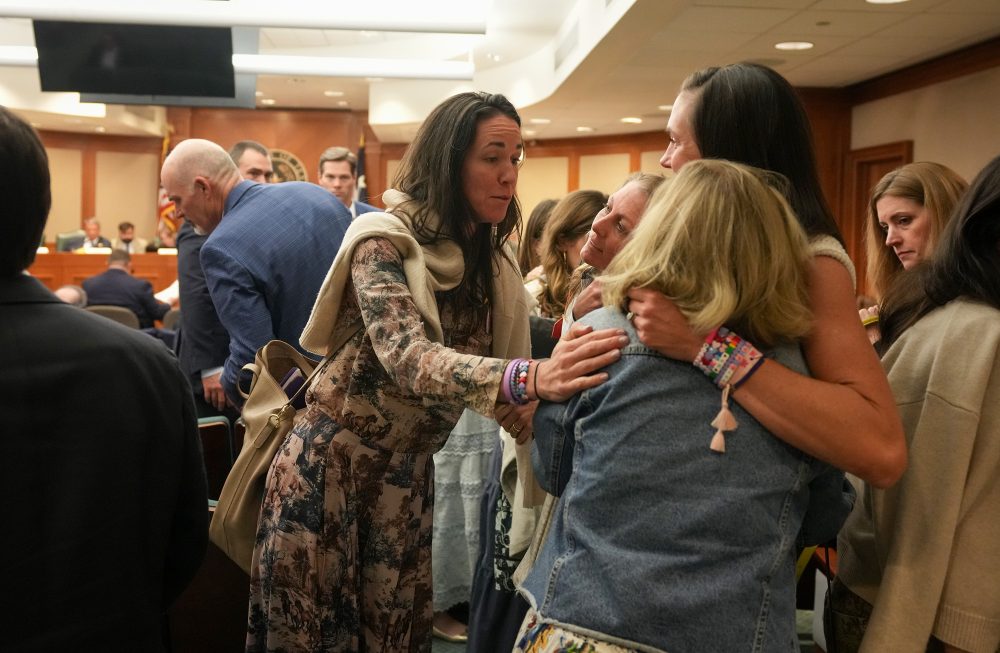
AUSTIN, Texas — Camp Mystic administrators announced Thursday they are pulling back their licensing application to operate during the upcoming summer season, stating they want to allow more time for bereaved families to mourn their losses.
The announcement follows several days of intense scrutiny from Texas state legislators who have been examining how camp leadership handled the catastrophic flooding that occurred on July 4th. That disaster took the lives of 25 young campers and two teenage staff members. Camp owner Dick Eastland also perished in the flood waters.
“No administrative process or summer season should move forward while families continue to grieve, while investigations continue and while so many Texans still carry the pain of last July’s tragedy,” Camp Mystic said in a statement.
The Texas Department of State Health Services verified Thursday that camp officials had indeed withdrawn their licensing request.
WASHINGTON (AP) — Congressional lawmakers voted Thursday to provide funding for most Department of Homeland Security operations following weeks of political gridlock, bringing the historic agency shutdown to a close with bipartisan legislation now heading to President Donald Trump.
White House officials had issued warnings that temporary funding measures Trump had used to maintain Transportation Security Administration operations and other critical agency functions were nearing depletion, raising concerns about potential airport service interruptions.
The Department of Homeland Security had operated without standard funding authorization since February 14, creating financial difficulties for agency employees, although much of Trump’s immigration policy priorities at the center of the funding dispute continue to receive separate financial support.
“It is about damn time,” said Rep. Rosa DeLauro of Connecticut, the top Democrat on the House Appropriations Committee, who proposed the bill more than two months ago.
Lawmakers approved the legislation through a swift voice vote rather than conducting a formal recorded vote.
House Speaker Mike Johnson’s narrow Republican majority has faced repeated legislative obstacles, with party members engaged in internal disagreements across multiple policy areas, including this homeland security funding debate. Despite the Senate’s unanimous approval of the bipartisan measure one month earlier, the legislation remained stalled in the House chamber.
BEIRUT (AP) — Syrian authorities acknowledged Thursday that they are holding a German reporter who vanished several months ago.
Eva Maria Michelmann, 36, disappeared on January 18 alongside a Kurdish-Turkish coworker when Syrian government troops allegedly apprehended them during the capture of Raqqa amid combat operations targeting the Kurdish-controlled Syrian Democratic Forces, according to the Committee to Protect Journalists, which issued a statement earlier this week.
The press freedom organization has demanded her freedom.
Syria’s Information Ministry released a statement saying Michelmann and a Turkish individual — whom CPJ identified as Kurdish-Turkish reporter Ahmed Polad — were discovered during an Interior Ministry sweep of Raqqa inside a structure previously utilized by the SDF as a “security headquarters.”
According to the ministry, both foreign individuals had “refused to disclose their true identities and possessed no official documentation verifying who they were.” The statement indicated that during preliminary interrogation, they “claimed to be engaged in humanitarian work and made no mention of any journalistic role” and falsely stated they were employed by the United Nations.
The Information Ministry reported they subsequently tried to flee and were apprehended again on “suspicions that they may be foreign fighters present in Syria illegally.”
The announcement indicated both individuals were “formally detained, and legal proceedings have been initiated in preparation for referral to the competent judicial authorities.” No specific accusations against them were revealed.
CPJ reported both reporters were employed by Istanbul-based Etkin News Agency ETHA and Özgür TV, which broadcasts from multiple European locations.
Frank Jasenski, a lawyer representing Michelmann and her relatives in Germany, stated earlier this week, “We assume that her health is very, very poor and we demand her immediate release.”
Germany’s Foreign Office confirmed last week it had contacted the imprisoned journalist but provided no additional information, referencing privacy regulations.
Syrian government troops captured Raqqa, previously under SDF control, during a January offensive. The SDF and Damascus subsequently established a ceasefire and announced a deal integrating the SDF into the national military.
The truce continues while the integration agreement progresses gradually. Syria’s current leadership has faced challenges establishing complete control over the war-ravaged nation since overthrowing former President Bashar Assad in December 2024, following nearly 14 years of civil conflict.
Family members and community mourners carried the body of a young Palestinian through the streets of Ramallah on Thursday, following his death in what officials describe as part of an ongoing wave of deadly encounters in the region.
Ibrahim Al-Khayyat lost his life after sustaining gunshot wounds to his torso and stomach area in Hebron, as confirmed by Palestinian health authorities and emergency medical services. Family members told reporters the young man had been walking to a nearby convenience store when the shooting occurred on Wednesday.
Military officials from Israel stated that their forces opened fire on Palestinian individuals during a security operation in Hebron after coming under attack from thrown stones.
Al-Khayyat’s educator, Mumtaz Shabaneh, characterized the fatal shooting as part of a broader campaign of aggression targeting Palestinians across Gaza and the West Bank, calling it an effort “to break our will and undermine our perseverance to remain steadfast on this land.”
Wednesday’s violence claimed a second Palestinian life when Abdulhalim Hamad, 37, was killed during an Israeli military operation in Silwad, located northeast of Ramallah. Palestinian media reported that Hammad died in his residence during the raid.
These latest fatalities bring the year’s total to more than 40 Palestinians killed by Israeli military personnel and settlers in the occupied West Bank, according to United Nations humanitarian coordination officials. Young people have been disproportionately affected, with three teenagers losing their lives in the previous week alone.
Meanwhile, an aerial attack struck Gaza City, resulting in three deaths, according to medical personnel at Shifa Hospital who received the victims. Israeli military representatives had not provided immediate comment regarding the strike.
Although major combat operations throughout the Gaza Strip have diminished following an unstable ceasefire agreement between Israel and Hamas in October, Israeli forces continue conducting nearly daily military strikes across the territory. Gaza health officials report more than 820 Palestinian deaths from these ongoing operations. The health ministry, operating under Hamas governance, keeps casualty statistics that international agencies and independent analysts generally consider credible, though they do not distinguish between civilian and combatant deaths.
A Newark resident will spend the rest of his life behind bars after admitting to a deadly crime that shook the community in 2024.
Nobert Matara, age 33, entered a guilty plea to first-degree murder charges on April 29, 2026, during proceedings at New Castle County Superior Court. The case stems from the killing of 33-year-old Tracy Nyariki in December 2024.
Delaware Attorney General Kathy Jennings expressed her reaction to the disturbing nature of the crime, stating: “The facts of this case are beyond disturbing. It is difficult to […]”
The guilty plea comes after an extensive investigation into Nyariki’s death, which occurred nearly two years ago. Court records show Matara will serve a life sentence for the conviction.
The satirical news publication The Onion has encountered another legal obstacle in its attempt to acquire the Infowars brand from conspiracy theorist Alex Jones.
A Texas appeals court has approved Jones’s petition to temporarily halt the transaction that would have permitted The Onion to obtain licensing rights to the Infowars name and transform the controversial program into a satirical version of itself.
The acquisition deal was part of efforts to satisfy financial judgments against Jones related to his false claims about the Sandy Hook Elementary School shooting. The Onion had planned to completely reimagine the Infowars platform as a parody that would mock conspiracy theories rather than promote them.
This latest legal challenge represents another setback for The Onion’s unconventional bid to purchase and rebrand one of America’s most notorious conspiracy theory platforms. The appeals court’s decision means the satirical publication must wait longer before potentially taking control of the Infowars brand and executing its plans to turn the show into a mockery of its former self.
Maryland election officials have rolled out a new smartphone application designed to help residents navigate the voting process more easily.
The Maryland State Board of Elections has officially introduced “Go Vote Maryland!” – a mobile app that serves as a comprehensive voter resource tool for state residents.
The application represents the state’s effort to modernize voter outreach and provide citizens with digital access to election information and services.
Election officials hope the new mobile platform will make it more convenient for Maryland voters to stay informed about upcoming elections and access the resources they need to participate in the democratic process.
WASHINGTON (AP) — Following months of political stalemate, lawmakers in the House of Representatives passed legislation Thursday to restore funding to most Department of Homeland Security operations, sending the bipartisan measure to President Donald Trump’s desk and bringing closure to an unprecedented agency shutdown.
The administration had cautioned that emergency funding Trump had utilized to maintain operations for the Transportation Security Administration and other critical personnel was nearing depletion, raising concerns about potential airport service interruptions.
The Department of Homeland Security has operated without standard appropriations since February 14, creating financial strain for employees. However, much of Trump’s immigration enforcement priorities at the center of the funding dispute continue to receive separate financial support.
“It is about damn time,” declared Rep. Rosa DeLauro of Connecticut, the leading Democrat on the House Appropriations Committee, who had introduced the legislation over two months earlier.
Lawmakers quickly approved the legislation through a voice vote, bypassing the need for an official recorded vote.
House Speaker Mike Johnson’s slim Republican majority has faced repeated setbacks, with internal party conflicts hampering progress on multiple legislative priorities, including the homeland security appropriations. Despite the Senate’s unanimous approval of the bipartisan package four weeks ago, the legislation remained stalled in the House chamber.
WASHINGTON — President Donald Trump announced Thursday he is withdrawing Casey Means’ nomination for surgeon general and will instead nominate Fox News Channel contributor Nicole Saphier after Means faced significant Senate opposition over her vaccine views and medical background.
Trump praised Saphier in a Thursday social media announcement, calling her “a STAR physician who has spent her career guiding women facing breast cancer through their diagnosis and treatment.”
Means encountered intense questioning from senators across party lines regarding her positions on vaccines and other health issues during a difficult confirmation hearing, raising serious concerns about whether she could gather sufficient support for confirmation.
Before announcing the switch, Trump defended Means on social media Thursday morning, calling her “a strong MAHA Warrior” while attacking what he termed “intransigence and political games” from Louisiana Republican Senator Bill Cassidy, who had pressed Means hard on vaccine issues during her hearing.
The decision to pull Means’ nomination represents a significant setback for Health Secretary Robert F. Kennedy Jr. and his movement, which had strongly backed Means for the surgeon general position despite her unconventional medical background and past controversial statements regarding vaccines and health policy.
The nomination collapse followed heated confrontations between Means and senators from both parties that cast doubt on her ability to secure enough committee votes to advance. Her nomination had been stuck since her late February confirmation hearing, despite efforts by Kennedy’s Make America Great Again movement supporters who flooded Republican Senators Lisa Murkowski of Alaska and Susan Collins of Maine with phone calls, though both had expressed concerns about the selection.
Trump’s original nomination of Means last May was aimed at installing a Kennedy ally as the country’s chief medical officer. Means, a Stanford-trained doctor who became disillusioned with traditional healthcare and transitioned to writing and business ventures, advocates for principles central to the MAHA movement, arguing that Americans receive excessive medical treatment and that dietary and lifestyle modifications should be prioritized in combating chronic diseases nationwide.
NEW YORK — Celebrity-filled spring fundraising events are nothing new in New York City, but Wednesday night’s King’s Trust Global Gala had an extra royal touch that made all the difference.
King Charles III made his debut at the annual charity event, marking the first time in the gala’s five-year existence that the monarch has attended the fundraiser supporting his organization that assists young people in finding employment opportunities.
Though his visit was brief — lasting just three and a half minutes for his speech — the king’s presence created a noticeable excitement among the high-profile attendees at Christie’s New York auction house. Guests including Lionel Richie and Vogue editor Anna Wintour were spotted positioning themselves along velvet barriers and stretching to catch a glimpse of the royal visitor.
The anticipation was clear even before the event began. British makeup mogul Charlotte Tilbury approached Martha Stewart, who had chosen a shimmering blue gown for the occasion, asking her to mention to Charles that she selected “royal blue just for you.” Meanwhile, Natasha Poonawalla, who serves as executive director at the Serum Institute of India, the globe’s biggest vaccine producer, observed that “everyone’s been waiting for him.”
“I think the fact that he’s here is going to strengthen the presence of the foundation so much more,” Poonawalla remarked.
The royal attendance appears to have paid off financially. Event coordinators announced a record-breaking fundraising achievement of more than $3 million, validating expectations that having the king and Queen Camilla present would increase donations as the charity works to create an endowment for its UK operations and expand relationships across more than 24 nations.
This appearance caps off Charles’s inaugural American visit since becoming king, a four-day journey designed to commemorate 250 years since America’s independence from Britain while working to repair strained diplomatic ties between the nations.
The King’s Trust has touched the lives of 1.5 million individuals globally through its educational and job training initiatives spanning five decades. During his short address before the dinner portion began, Charles highlighted how many program graduates eventually return to mentor other disadvantaged youth facing similar challenges.
“Only now do quite a lot of them actually admit they were started (here),” the king quipped.
Former British Vogue editor-in-chief Edward Enninful, who served as a gala co-chair, has witnessed the trust’s influence firsthand in West London. He shared that his own family members, including cousins and brothers, have been able to build successful lives despite being dismissed by society as “not worthy.”
Enninful characterized Charles’s participation as the charity’s “glory moment.”
“He’s set the example that philanthropy matters,” Enninful explained to The Associated Press. “No matter how well you are doing, you’re not doing enough unless you’re passing it on to a newer generation.”
This year’s gathering was more exclusive than in previous years, hosting approximately 160 attendees. Musical entertainment was notably absent, with Richie announcing upfront that he wouldn’t be performing, which prompted Charles to joke that the Rock & Roll Hall of Fame member “must gargle with port.” The guest list also featured supermodels Karlie Kloss and Iman, actors Leo Woodall and Meghann Fahy, plus fashion designers Donatella Versace and Stella McCartney.
Stewart reflected on her own fortunate path while building her multimillion-dollar lifestyle and media brand focused on cooking, entertaining, and home management. The business mogul noted that scholarships enabled her to afford her “fine education” and that she was blessed with consistently “excellent” employment opportunities.
“But I know today there’s a big challenge in getting a good job, a big challenge in getting a good education,” she stated. “And we’re here to help those people.”
WASHINGTON — While Americans feel the financial sting of the Iran conflict every time they fill up their tanks, certain economic factors are helping cushion the blow to the nation’s economy — at least temporarily — including substantial tax refunds and a surge in artificial intelligence investments.
Economic data released Thursday revealed that inflation climbed at its steepest rate in nearly three years last month, while U.S. economic expansion remained stable and unemployment claims dropped this week.
The Federal Reserve’s preferred inflation measurement — the Commerce Department’s Personal Consumption Expenditures price index — jumped 0.7% between February and March, with a 3.5% increase compared to the previous year. This annual increase marked the largest since May 2023.
The driving force behind this surge was clear: Gas prices skyrocketed 21% from February to March following Iran’s response to U.S. and Israeli military actions by shutting down the Strait of Hormuz, creating what experts call the most significant oil supply disruption in recorded history.
The data also revealed that price increases outpaced American earnings — including wages, business profits, and government assistance — for the consecutive second month in March.
Thursday’s Commerce Department report showed that U.S. gross domestic product — measuring the nation’s total goods and services output — maintained a steady 2% annual growth rate during the first quarter, falling short of economist predictions but improving from the disappointing 0.5% growth in the final quarter of 2025. The October-December period saw the 43-day federal government shutdown reduce growth by more than a full percentage point.
Corporate investment is experiencing a dramatic upswing due to the artificial intelligence revolution. Business investment, excluding housing, jumped 10.4% in the first quarter, marking the largest increase in almost three years.
Consumer spending, which represents 70% of American economic activity, grew at a 1.6% annual rate from January through March. Americans benefited from substantial tax refunds resulting from President Donald Trump’s 2025 tax legislation.
However, this economic support may be short-lived. Michael Pearce, Oxford Economics’ chief U.S. economist, explained the situation: “Rising tax refunds were outpacing the increased burden of gasoline spending two to one in March and most of April.” He added, “With tax refund season winding down and gas prices still climbing, the hit to consumer spending will become more evident from May.”
Regular gasoline prices increased by another 7 cents overnight, reaching $4.30 per gallon. This compares to $3.18 on the same date last year. Gasoline prices have reached new multi-year peaks for three consecutive days.
As consumers allocate more money toward fuel costs, they’re expected to reduce spending on other products and services. Economists anticipate this shift will negatively impact GDP. Joe Brusuelas, RSM’s chief economist at the tax and advisory company, has revised his U.S. economic growth projection for this year downward to 1.7% from his earlier estimate of 2.4%.
“A year that was set to benefit from tail winds associated with a large tax cut and boom in artificial intelligence-led investment has been partially derailed by the impact of what as of today is an adverse and growing supply shock caused by the war in Iran,” Brusuelas explained. “Unfortunately, war and the supply shock that ensued has altered the probable growth path this year.”
The combination of increasing prices and potential economic growth threats has created a challenging situation for the Federal Reserve and other central banks worldwide. They must decide whether to reduce interest rates to support their economies or maintain current rates — or even consider increases — to address inflation concerns.
Currently, they’re maintaining their positions. The Bank of England maintained its primary interest rate at 3.75% Thursday while suggesting potential future increases as officials evaluate the war’s economic consequences. Similarly, the Federal Reserve, Bank of Japan, and European Central Bank have all chosen to keep rates unchanged while monitoring the conflict’s economic effects.
Despite these challenges, American workers maintain strong job security. The Labor Department reported Thursday that unemployment benefit applications — an indicator of layoffs — dropped last week to their lowest point in over five decades.
While companies aren’t releasing workers, they’re also not actively hiring. Last year’s job growth was the weakest outside of a recession since 2002. This year has shown inconsistent patterns — strong performance in January (160,000 new positions) and March (178,000) but weakness in February when employers eliminated 133,000 jobs.
Economic experts describe a “no-hire, no-fire” environment that prevents young job seekers from entering the employment market. Simultaneously, concerns are mounting that artificial intelligence is eliminating entry-level positions.
How did residents of a colonial capital navigate life during a war that tore apart neighborhoods, split families, and fractured entire communities? The Delaware Public Archives will explore this question during their upcoming educational presentation.
On Saturday, May 2, 2026, at 10:30 a.m., the archives will present their complimentary First Saturday Program titled “Dover During the Revolution.” Margaret Raubacher Dunham will lead the discussion.
The program will examine how Dover functioned as much more than just a modest colonial settlement during the Revolutionary period. The city served dual roles as the county seat and as an emerging center of government operations.
Internal discord among Lebanon’s highest-ranking officials is undermining Saudi Arabia’s diplomatic efforts to help the nation establish a cohesive approach toward potential peace discussions with Israel, according to Lebanese sources and international diplomats who spoke with Reuters Thursday.
The Saudi kingdom, which brokered the 1990 accord that concluded Lebanon’s lengthy civil conflict, has increased its diplomatic involvement with Lebanon in recent weeks. This comes as a fragile U.S.-mediated ceasefire has struggled to completely end the nearly two-month conflict between Israel and the Iranian-supported militant organization Hezbollah.
Relations between Saudi Arabia and Lebanon had deteriorated over several years due to Hezbollah’s dominant influence in Lebanese governance and security matters. However, the Sunni-majority kingdom now perceives an opportunity following the militant group’s significant weakening during its 2024 confrontation with Israel.
The April 16 ceasefire between Israel and Lebanon was designed by the United States to pave the way for direct peace negotiations, potentially reshaping Lebanon’s internal political landscape and regional position. However, Lebanese leadership remains divided on both the format and objectives of such negotiations.
Lebanese President Joseph Aoun has advocated for direct meetings with Israel in Washington and stated the ceasefire should evolve into “permanent agreements.” While he hasn’t explicitly endorsed a comprehensive peace treaty, two sources with knowledge of Aoun’s stance revealed to Reuters that he has privately indicated willingness to establish normal relations with Israel to end the conflict.
Parliament Speaker Nabih Berri, who maintains ties with Hezbollah, opposes direct negotiations, mirroring the Shiite militant organization’s stance. According to two Lebanese sources familiar with his views, Berri favors pursuing a non-aggression agreement with Israel rather than a comprehensive peace treaty.
Saudi envoy Prince Yazid bin Farhan traveled to Beirut last week to urge Aoun, Berri, and Lebanese Prime Minister Nawaf Salam to develop a unified negotiating position and demonstrate solidarity through a joint meeting, according to two senior Lebanese political sources who met with bin Farhan and a Western official briefed on the discussions.
However, plans for such a gathering this week collapsed due to escalating tensions after Berri publicly criticized Aoun’s statements about negotiations as “inaccurate, to say the least,” all three sources confirmed.
Neither Aoun’s office nor Saudi government media representatives immediately responded to requests for comment. The presidency announced Thursday that Aoun met with Salam, notably excluding any mention of Berri.
The disagreements between Aoun and Berri, whose positions are determined by Lebanon’s sectarian power-sharing arrangement, mirror wider societal divisions regarding negotiations with Israel.
Some Lebanese citizens view direct talks and rapid peace agreements as the only solution to end Lebanon’s long history of Israeli military incursions.
However, Hezbollah and much of the broader Shiite Muslim community, who have suffered the heaviest casualties from Israeli attacks, strongly reject face-to-face negotiations and diplomatic normalization. Protesters opposing talks earlier this month demanded the government’s removal.
Saudi Arabia’s intervention with Lebanese officials was motivated by concerns about potential instability and worries that Lebanon was advancing toward peace with Israel too rapidly, according to a Gulf source with knowledge of the situation, the two senior Lebanese political sources, and the Western official.
Bin Farhan obtained assurances that Hezbollah would not attempt to overthrow the Lebanese government and warned Lebanese leaders last week that Beirut’s peace progress with Israel should not exceed Saudi Arabia’s pace, the four sources indicated.
Saudi Arabia has consistently maintained it will only join the Abraham Accords normalizing relations with Israel if there’s agreement on a framework for Palestinian statehood.
U.S. President Donald Trump, eager to expand the accords, announced this month he would invite Aoun and Israeli Prime Minister Benjamin Netanyahu to the White House for discussions.
Bin Farhan recommended that Lebanese authorities postpone any meeting between Aoun and Netanyahu, the two senior Lebanese political sources reported.
Nevertheless, Saudi Arabia does support Lebanon working toward a “detente” with Israel that would end regional instability, according to the Gulf source and one of the Lebanese sources.
Israeli military actions have resulted in over 2,500 deaths in Lebanon and displaced more than 1.2 million people since the current round of fighting between Israel and Hezbollah commenced March 2, Lebanese authorities report.
The April 16 ceasefire, which enabled separate negotiations regarding the Iran conflict, halted strikes on Beirut and its southern suburbs but continued in other Lebanese regions. An Israeli attack in southern Lebanon Tuesday resulted in three civil defense workers’ deaths.
WASHINGTON, April 30 – House Republicans have announced plans to hold a vote Thursday afternoon on legislation that would provide funding for the Department of Homeland Security and its key agencies.
The funding measure, which has already received approval from the Senate, would allocate resources to critical security organizations including the Secret Service, the Transportation Security Administration, and the U.S. Coast Guard.
The vote is scheduled to take place during the early afternoon hours on Thursday, according to the Republican-controlled chamber’s leadership.
Duke University has entered into a historic agreement with Amazon that will see three Blue Devils men’s basketball games broadcast on Prime Video during the upcoming season.
This groundbreaking collaboration represents Amazon’s inaugural venture into live college sports broadcasting. The streaming service will feature Duke’s matchup with UConn on November 25 in Las Vegas, their contest against defending national champion Michigan at Madison Square Garden in New York City on December 21, and their game versus Gonzaga on February 20 in Detroit.
“In addition to our outstanding partnership with ESPN, we are excited to work with Prime Video on this groundbreaking initiative,” Duke athletic director Nina King said. “As Prime Video’s first college sports partner, this collaboration not only expands the global reach of Duke Men’s Basketball, but also creates meaningful opportunities for our student-athletes in a way that reflects innovation and excellence.”
The agreement revealed on Thursday encompasses more than just game broadcasts, including Name, Image and Likeness opportunities for Duke student-athletes and an expanded retail partnership that will be detailed in future announcements.
Prime Video has established itself in sports broadcasting since 2017 with NFL coverage, including “Thursday Night Football.” The platform recently launched an 11-year media agreement with the NBA this season.
Duke stands among college basketball’s most successful programs in NCAA Division I history, reaching 18 Final Four appearances and claiming five national titles. The Blue Devils completed this past season with a 35-3 record before falling to UConn in the Elite Eight round.
CHICAGO – A state-appointed panel in Illinois is urging local district attorneys to examine potential wrongdoing by federal immigration officers following last year’s intensive enforcement operations in the Chicago region.
The Illinois Accountability Commission, headed by former U.S. District Judge Rubén Castillo, released findings Thursday that detailed what the group characterized as systematic “unjustified and excessive force” and “indiscriminate use of chemical agents” by federal personnel.
After collecting witness statements and examining extensive court documents and news coverage, the commission called for additional scrutiny by Cook County State’s Attorney Eileen O’Neill Burke along with other local law enforcement officials and federal agencies capable of gathering more evidence.
The enforcement initiative, known as Operation Midway Blitz under the Trump administration, resulted in thousands of detentions and violent clashes between federal immigration officers and demonstrators. According to body camera recordings, agents fired shots at two individuals – killing one – while threatening to shoot additional people. Officers used tear gas, pepper projectiles and rubber bullets against protesters gathered outside an immigration detention facility in Broadview, Illinois, and throughout various Chicago communities.
The White House has not yet provided a response to requests for comment.
At Thursday’s press briefing, Judge Castillo referenced the shooting incident involving Marimar Martinez, an American citizen who teaches at a Montessori school in Oak Park, by Border Patrol Agent Charles Exum. “You would think that she was shot by some gang member on the South Side of Chicago. And she was. But guess what? That gang was Customs and Border Patrol. And the person who sent that gang to Illinois and to Chicago? Someone living on Pennsylvania Avenue in the White House,” Castillo said. Martinez recovered from her injuries and initially faced federal criminal charges in one of many cases that were subsequently dismissed.
Delaware recreational anglers will now follow identical black sea bass fishing rules regardless of whether they cast their lines in state or federal waters, thanks to recent regulatory changes.
The Delaware Department of Natural Resources and Environmental Control updated its recreational fishing guidelines for black sea bass due to growing populations of the fish species, providing more opportunities for local anglers.
Following federal regulatory changes implemented this week, Delaware fishermen will operate under unified rules starting May 1, eliminating the previous distinction between state and federal water regulations for black sea bass fishing.
SALISBURY, Md. – The Salisbury University women’s lacrosse program continues to make waves after completing a flawless regular season campaign. Eight Sea Gulls players earned recognition on the All-C2C First Team, the conference revealed Wednesday morning.
The second-ranked Sea Gulls capped off their perfect 16-0 regular season with a commanding 15-9 win against 18th-ranked Christopher Newport. This marks the third time in program history that Salisbury has gone undefeated during the regular season.
The impressive haul of first-team conference honors reflects the dominant performance by the Sea Gulls throughout their unblemished campaign. The team’s stellar play has positioned them as a top contender heading into postseason competition.
Ocean City, Maryland is gearing up for what officials expect to be a bustling 2026 tourism season, with Memorial Day weekend marking the official start of the resort town’s busy summer period.
City officials announced on April 30, 2026, that May will feature a packed calendar of activities and events designed to draw visitors to the popular coastal destination. The month represents a crucial period for Ocean City’s yearly tourism industry, setting the stage for what the town hopes will be a successful season.
According to city representatives, May traditionally serves as the launching pad for Ocean City’s annual visitor season, with Memorial Day weekend historically drawing the first major wave of tourists to the area.
The announcement comes as part of Ocean City’s broader tourism promotion efforts, which include the introduction of a new “Weekday Smiles Campaign” designed to encourage mid-week visits to the resort community.
Home loan costs climbed higher this week, making it more expensive for potential buyers to finance purchases during the busy spring real estate season.
Mortgage giant Freddie Mac reported Thursday that the standard 30-year fixed-rate home loan increased to 6.3% from the previous week’s 6.23%. Despite this week’s jump, rates remain below last year’s average of 6.76% during the same period.
This week’s climb halts a three-week period of declining rates, returning borrowing costs to levels seen two weeks earlier.
Homeowners looking to refinance also face higher costs, as 15-year fixed-rate mortgages climbed to 5.64% from 5.58% the week before. Freddie Mac noted this rate stood at 5.92% one year ago.
Several economic forces drive home loan pricing, including Federal Reserve policy choices and bond market investor sentiment regarding economic growth and rising prices.
The weekly increase in 30-year loan costs mirrors movement in 10-year Treasury bond yields, which banks use as a benchmark for setting home loan prices.
Thursday’s midday bond trading showed the 10-year Treasury yield at 4.39%, climbing from 4.34% seven days earlier. This yield was just 3.97% in late February, before Middle East conflict erupted.
Just weeks ago in February, 30-year mortgage costs had dropped below 6% for the first time since late 2022. Rates haven’t returned to that level since regional tensions began, driving energy costs higher and sparking inflation concerns.
Ongoing conflict has kept both bond yields and mortgage costs unpredictable.
Rising oil prices influenced the Federal Reserve’s Wednesday announcement to maintain current interest rate levels rather than implementing cuts.
Though the central bank doesn’t directly control mortgage pricing, its short-term rate decisions closely influence bond investor behavior and ultimately impact 10-year Treasury yields.
Lower rates could stimulate economic activity, but they also risk accelerating inflation, which might push mortgage costs even higher.
Recent fluctuations in home loan costs have created uncertainty for the spring buying season.
America’s housing market has struggled since 2022, when mortgage rates began climbing from pandemic-era lows. Previously owned home sales remained essentially unchanged last year, hitting a 30-year bottom. Sales have continued to lag this year, with January, February and March showing declines compared to the same months last year.
Mali conducted a state funeral Thursday for Gen. Sadio Camara, the former defense minister who orchestrated the West African nation’s military alliance with Russia following recent coups.
Camara died during a weekend series of coordinated militant strikes that marked the most significant assault on the country in more than ten years.
Experts suggest his death, along with the substantial losses suffered by Mali’s military forces and their Russian mercenary partners, may cause rifts within the ruling military government and potentially force a reassessment of ties with Moscow.
Following two days of official mourning, military leader Gen. Assimi Goita attended Camara’s funeral service, which was televised nationally. Officials placed the casket beneath Mali’s green, yellow and red flag while oversized photographs of the deceased minister surrounded the ceremony venue.
Born in 1979 in the garrison community of Kati near capital city Bamako, Camara was killed at that same location when a vehicle bomb detonated near his residence Saturday.
During his early military career, he served in northern Mali during the late 2000s as armed insurgencies connected to Al-Qaeda began emerging. Following his graduation from military school, he completed multiple international training programs, including coursework at a Russian military institution.
Malian citizens first encountered Camara in August 2020 when he appeared on state television as a colonel alongside four other military officers who had removed President Ibrahim Boubacar Keita from power.
The military group criticized Keita for accepting French support while failing to adequately address widespread militant violence throughout the nation. They promised enhanced security measures.
After seizing control, the new military government established Russia as its primary security ally, removing French forces and United Nations peacekeeping personnel.
Camara became instrumental in developing Russia as Mali’s principal security collaborator. He held the defense minister position under both military administrations — initially after the 2020 takeover and again following a second coup in May 2021 that elevated Goita to leadership.
Ulf Laessing, who directs the Sahel program at Germany’s Konrad Adenauer Foundation, described Camara as the “architect of cooperation with Russia,” noting his role in bringing Russian mercenaries in 2021 and removing the U.N. peacekeeping operation called MINUSMA.
According to Laessing, Camara’s regular visits to Moscow and his crucial involvement in both coups made him essential to the military government despite worsening security conditions across the country.
The newly established Africa Corps — a Russian military formation answering to Moscow’s defense ministry with approximately 2,000 personnel in Mali — announced Monday that its forces had retreated from Kidal, following separatist claims of capturing the strategic northern city.
Rida Lyammouri, a senior fellow at Morocco’s Policy Center for the New South think tank, suggested Camara’s death combined with increasing dissatisfaction among citizens and military officials regarding Russian mercenaries’ failure to control insurgencies might prompt the junta to reconsider its Moscow partnership.
Laessing noted that Goita, who met with Russia’s Mali ambassador Tuesday, “seems open to collaboration with some Western countries, such as the United States.”
Vatican prosecutors have openly challenged an appeals court mandate to provide complete evidence files to defense teams in a major financial corruption case, potentially escalating tensions in the protracted legal proceedings.
In a three-page response submitted Thursday, prosecution officials stated they would permit appeals judges to review the disputed materials directly. However, they refused to file the documents with the court registry for defense access as commanded, claiming the evidence was “irrelevant” and could potentially damage Vatican interests.
The appeals court’s response to this defiance remains uncertain, with the next scheduled hearing set for June 22.
The contested evidence stems from prosecutors’ extensive probe into a 350-million-euro (approximately $410 million) property purchase in London made by the Vatican Secretariat of State. Following a two-year legal proceeding that concluded in December 2023, a cardinal and eight additional defendants received convictions on various financial crimes. However, the prosecution’s central allegation of a comprehensive conspiracy to defraud the Holy See was rejected.
Defense counsel maintained throughout the proceedings that their clients were denied fair representation due to crucial evidence being either heavily censored or completely withheld by prosecutors. They specifically highlighted the complete questioning sessions of a primary prosecution witness and materials from his confiscated electronic devices.
Prosecution teams justified their redactions as essential for protecting other active investigations and previously rejected a court directive from October 6, 2021, demanding the evidence release.
Defense lawyer Luigi Panella, representing financial manager Enrico Crasso, contended from the trial’s opening in July 2021 that the charges were invalid because prosecutors concealed evidence from defense teams.
After five years of legal wrangling, the appeals court sided with Panella and fellow defense attorneys on March 17. The court commanded prosecutors to file “all investigation acts and documents in their complete form” with the court registry by April 30.
In Thursday’s response, prosecutors reiterated their opposition to the ruling and maintained the materials were “irrelevant” to the proceedings. They argued releasing the evidence to defense lawyers “could pose a grave danger” to public interests. Prosecutors informed judges the materials remained in their offices and were accessible for judicial “consultation” through USB drives.
The appeals court had concluded that prosecutors’ refusal to share complete evidence with defense teams during the initial trial invalidated the original charges. The court declared a partial mistrial and mandated new proceedings.
Defense lawyers characterized the prosecutors’ response as contempt of court.
“In what country in the world can it be that the acts (of an investigation) are shown to the judge but not to the defense?” Panella questioned during a phone conversation. “What concept of ‘fair trial’ can this type of statement represent?”
Legal representatives Cataldo Intrieri and Massimo Bassi, defending former Vatican administrator Fabrizio Tirabassi, described the prosecutors’ actions as without precedent.
“We wonder how a fair judgment can be reached under these conditions,” they stated in a release urging the court to dismiss the entire case.
Lawyers Fabio Viglione and Maria Concetta Marzo, representing Cardinal Angelo Becciu, argued that prosecutors failed to follow the court’s directive.
“This is precisely the selective discretion that the court has ruled out: the prosecution cannot unilaterally decide which documents the defense has the right to access,” they explained. “The right to defense, the equality of the parties, and the adversarial process require full access to the documents.”
Swiss federal authorities closed their own investigation launched in 2020 after the Vatican Secretariat of State filed complaints against Crasso, their former financial manager, alleging embezzlement, fraud and breach of fiduciary duty. These accusations mirrored charges brought against Crasso in Vatican court.
Crasso had overseen the Secretariat of State’s financial portfolio while working at Credit Suisse Italia and Credit Suisse in Switzerland, before establishing his own firm and investment fund that assumed control of Vatican accounts.
In an April 23 decision, Swiss federal prosecutor Annina Scherrer observed that the Vatican tribunal had definitively cleared Crasso and his companies of identical charges, leading to the closure of the Swiss case.
However, in her 31-page decision, Scherrer expressed “a certain surprise” that Vatican prosecutors rejected her requests to interview key witnesses after the requests were clearly forwarded to the Vatican Secretary of State for review. She stated this demonstrated the Secretariat of State’s “influence” over the Vatican’s supposedly independent judicial system.
MEXICO CITY — Mexican President Claudia Sheinbaum declared Thursday that her administration will not tolerate interference from the United States in Mexican sovereignty, announcing that the country’s attorney general will examine accusations from a New York federal indictment charging 10 current and former Mexican officials with collaborating with the Sinaloa Cartel in drug trafficking operations.
The federal charges have identified several active officials from Sinaloa state, including members of Sheinbaum’s progressive Morena political party, creating significant political controversy as the new president works to balance pressure from Washington while maintaining support from her domestic political base. Following the indictment’s release, Mexican authorities confirmed they had received extradition requests from the United States for 10 Mexican nationals, though they declined to identify the individuals.
Among those named in the charges, Sinaloa Governor Rubén Rocha Moya represents the most prominent figure, serving as a leading Morena party member and trusted associate of former President Andrés Manuel López Obrador, who served as Sheinbaum’s political mentor.
During Thursday’s announcement, Sheinbaum explained that Mexican legal authorities will conduct their own examination of the cases and compile independent evidence to “determine whether there is evidence establishing that the allegations made by U.S. authorities have a legal basis for requesting arrest warrants.”
The Mexican leader has previously stated that she has not observed any supporting evidence for the American accusations.
Sheinbaum indicated her willingness to take a firm stance should their investigation reveal “no clear evidence” that the accused individuals engaged in criminal activity.
“If it is evident that the Justice Department’s charges are politically motivated, let there be absolutely no doubt: under no circumstances will we allow a foreign government to interfere in decisions that are the exclusive prerogative of the Mexican people,” Sheinbaum said.
NEW YORK — Defense attorneys for Harvey Weinstein conducted cross-examination of his accuser during his rape retrial on Thursday, signaling their intention to scrutinize her complicated emotions and intricate relationship with the former entertainment industry mogul.
This marks the third occasion that Jessica Mann has faced questioning from Weinstein’s legal team in a New York courtroom. However, new attorneys are now representing the former studio executive whose fall from grace became a catalyst for the #MeToo movement addressing sexual misconduct. Whether their questioning will reach the emotional intensity of Mann’s previous cross-examinations remains uncertain.
Defense attorney Teny Geragos initiated her questioning of Mann on Wednesday by focusing on her mixed emotions regarding Weinstein throughout their complicated relationship, which included some consensual intimate encounters.
During earlier testimony under prosecution questioning, Mann revealed that despite the alleged assault, she had feelings of love for “a part of him” due to his kindness and support regarding her personal challenges and career aspirations, describing their relationship as having “some pretty human moments.”
“What did he do for you that made parts of you really love him?” Geragos inquired.
“It was the validation,” Mann responded.
When Geragos continued questioning about the “human moments,” Mann described an incident where she struck Weinstein, believing he wanted it as part of intimate play, but he subsequently told her, “Jess, that’s not you.”
“So when you were talking about the validation that you received … and the human moments that you shared with Harvey, it was that you slapped him?” Geragos pressed.
Mann clarified she was actually referring to his comment that “that’s not you.”
The court session ended shortly thereafter. When proceedings resumed Thursday, Geragos continued examining Mann about her initial encounters with Weinstein.
The 73-year-old Weinstein is facing his third trial on charges alleging he sexually assaulted Mann at a New York hotel in March 2013. While he received a conviction in 2020, an appellate court reversed that decision. His first retrial ended with a hung jury on the rape charge.
Mann also claims Weinstein assaulted her again in Beverly Hills, California, in late 2013 or early 2014. No criminal charges have been filed related to that allegation.
“He just treated me like he owned me,” she testified to jurors this week.
The 40-year-old Mann admits she sometimes accepted his sexual advances but maintains the two assaults occurred while she objected and begged him to stop.
Weinstein’s legal team argues that all interactions between the pair were consensual and part of a supportive, caring relationship. They contend Mann gained advantages from her association with an Academy Award-winning producer and only made accusations later during the #MeToo movement of 2017 and 2018.
Mann first encountered Weinstein at a Los Angeles-area gathering around early 2013. She was working as a financially struggling hairstylist and actress hoping to succeed in entertainment.
The married Weinstein invited her to a bookstore, purchasing movie-related books for her. Soon after, he took her to dinner at a Beverly Hills hotel.
“From your perspective in 2013, going to dinner with another man who’s older than you can imply certain ideas, like a date, correct?” Geragos questioned.
Mann said she hadn’t considered it a romantic encounter. Since his assistant arranged the dinner, it appeared “somewhat professional,” she testified.
Following the meal, Weinstein invited her to his hotel suite, where Mann said he pressured her to remove her shirt and allow him to massage her. She testified that she massaged his back instead to “de-escalate” the situation.
Geragos suggested Mann could have simply exited the room.
“In theory. Because I could have done a lot of things,” Mann answered.
The alleged assault occurred weeks following the dinner meeting.
The Associated Press typically does not identify individuals who report sexual assault, unless they consent to being named, as Mann has chosen to do.
WASHINGTON — The California man facing charges for allegedly attempting to assassinate President Donald Trump at the White House Correspondents’ Association dinner has consented to staying behind bars while his case proceeds through the courts.
Cole Thomas Allen made no plea entry during his Thursday court appearance, just days after law enforcement says he charged past security screening at the Washington Hilton carrying firearms and knives, disrupting one of Washington D.C.’s most prominent annual gatherings.
Saturday evening’s incident left Allen wounded, though he was not struck by gunfire. A Secret Service officer sustained a gunshot wound but survived thanks to protective body armor, according to officials. Federal prosecutors indicate Allen discharged his shotgun at least one time while a Secret Service agent returned fire with five rounds. Authorities have not definitively stated whether Allen’s weapon caused the officer’s injury.
Court documents filed Wednesday seeking Allen’s continued incarceration reveal that he photographed himself in his hotel room moments before the attack, equipped with ammunition pouches, a gun holster, and a knife in its sheath. In communications that prosecutors say illuminate his intentions, Allen described himself as a “Friendly Federal Assassin” and made indirect references to complaints about various Trump administration policies.
Defense attorneys reversed course during the hearing before U.S. Magistrate Moxila Upadhyaya, agreeing to keep Allen incarcerated after previously advocating for his release in earlier filings.
Wednesday’s defense filing stated that the prosecution’s argument “is based upon inferences drawn about Mr. Allen’s intent that raise more questions than answers” and emphasized that Allen’s written statements never specifically named Trump. The defense team indicated they may seek Allen’s pre-trial release at a later date.
“The government’s evidence of the charged offense –- the attempted assassination of the president –- is thus built entirely upon speculation, even under the most generous reading of its theory,” defense lawyers wrote.
Allen’s legal team claimed that some remarks from acting Attorney General Todd Blanche “indicate that the recovered ballistics evidence is inconsistent with aspects of the government’s theory, evidence collected by the government and/or statements made by witnesses.”
The Justice Department countered that evidence demonstrates Allen fired his shotgun at least once toward the Secret Service agent. Crime scene investigators found at least one fragment matching a buckshot pellet, according to prosecutors.
“The government is aware of no physical evidence, digital video evidence, or witness statements that are inconsistent with the theory that your client fired his shotgun in the direction” of the officer or that the officer “was indeed shot once in the chest while wearing a ballistic vest,” prosecutors wrote.
Monday’s charges against Allen include the assassination attempt plus two additional weapons violations, including firing a gun during a violent crime. The assassination charge alone carries a potential life sentence upon conviction.
The 31-year-old Allen hails from Torrance, California, and works as an educated tutor while developing video games as a hobby.
Dover police have taken three Maryland men into custody following a dangerous shooting incident at a local hotel that put three young children at risk Wednesday night.
The shooting occurred at the Capital Inn on North DuPont Highway around 11:26 p.m. on April 30th. Police responded after receiving reports of gunfire at the hotel location.
During the incident, a witness contacted emergency services and reported seeing suspects flee the scene in a gray Ford Flex SUV heading south on DuPont Highway. When officers arrived at the hotel, they found a room occupied by three minors – ages 17, 13, and 12 – had sustained significant damage including a broken window and multiple bullet holes in the door. Investigators recovered 12 shell casings from the scene.
Delaware State Police later stopped the gray Ford Flex in Camden, Delaware. Inside the vehicle were Isaiah Williams, 21, of Salisbury, Maryland; Tashawn Gantt, 24, of Delmar, Maryland; and Keangello Crump, 18, of Eden, Maryland. A 34-year-old woman was driving the vehicle but was not charged in connection with the shooting.
The three suspects were wearing identical clothing to what was captured on surveillance video from the Capital Inn shooting. Police discovered two 9mm handguns in the vehicle, including one that had been reported stolen from Delaware State Police Troop 7.
Williams faces a $165,100 cash bond and multiple charges including two counts each of Possession of Firearm During Commission of Felony and Possession of Firearm by Person Prohibited, three counts of Reckless Endangering 1st Degree, Wearing a Disguise During Commission of Felony, Receiving a Stolen Firearm, Conspiracy 2nd Degree, and Criminal Mischief.
Gantt was given a $166,100 cash bond on similar charges, with an additional count of Assault 3rd Degree added to his list of offenses.
Crump received a $105,100 secured bond and faces charges including two counts of Possession of Firearm During Commission of Felony, three counts of Reckless Endangering 1st Degree, Wearing a Disguise During Commission of Felony, Receiving a Stolen Firearm, Conspiracy 2nd Degree, and Criminal Mischief.
All three men have been committed to Sussex Correctional Institution. The investigation was handled by Dover Police Department, with Lieutenant Mark Hoffman serving as the Public Information Officer for the case.
The National Milk Producers Federation is celebrating after the House of Representatives approved the 2026 Farm Bill, with the organization’s leadership calling it essential legislation for the nation’s dairy industry.
Gregg Doud, who serves as President and CEO of the federation, praised congressional members for their support of agricultural interests. “NMPF commends lawmakers who today stood up for farmers by passing legislation that’s critically important for dairy producers,” Doud stated.
According to Doud, the legislation that cleared the House includes several key provisions beneficial to dairy operations. The bill maintains agricultural safety net programs, keeps current conservation initiatives that benefit dairy and livestock operations, strengthens trade promotion efforts while safeguarding traditional food naming rights, acknowledges dairy’s nutritional importance, and backs animal health initiatives.
The dairy federation leader specifically recognized House Agriculture Committee Chairman GT Thompson and other congressional supporters for their efforts in advancing the measure through the lower chamber.
With House passage complete, the organization is turning its attention to the Senate. “We look forward to the Senate taking up the farm bill without delay. At a time where farmers face unprecedented challenges, Congress needs to provide the stability of a five-year, comprehensive farm bill,” Doud explained.
The federation plans to continue working with leadership from both political parties in both chambers of Congress to secure final passage and presidential approval of the agricultural legislation.
Delaware Department of Transportation crews are conducting construction work that has resulted in a shoulder closure on northbound Route 141 at Exit 6.
The lane restriction began earlier today and is expected to continue until 3:00 PM this afternoon, according to DelDOT traffic reports.
Motorists traveling northbound on Route 141 in the area should expect potential delays and are advised to use caution when passing through the construction zone.
DelDOT recommends drivers consider alternate routes if possible or allow extra travel time when using this corridor during the closure period.
ARLINGTON, Va., April 30, 2026 — The National Grain and Feed Association (NGFA) expressed strong support today following the House of Representatives’ approval of farm legislation that provides crucial policy stability for American agriculture while renewing the U.S. Grain Standards Act (USGSA).
The organization praised House Agriculture Committee members and Chairman Glenn “GT” Thompson’s leadership for moving forward with the bipartisan measure that benefits farmers, grain handlers, and the entire agricultural supply network.
“A long-term farm bill is essential to maintaining a strong and competitive U.S. agricultural sector,” said NGFA President and CEO Mike Seyfert. “This legislation provides the certainty needed for businesses across the grain and feed industry to make investments, manage risk, and continue supporting a resilient and efficient supply chain.”
The association particularly welcomed an amendment renewing the U.S. Grain Standards Act, which maintains the federal grain inspection and weighing system that supports both domestic and international trust in American grain products.
“We are grateful to Congresswoman Mariannette Miller-Meeks for her efforts to reauthorize the U.S. Grain Standards Act, which is critical to avoiding disruptions in Official grain inspection services and reinforcing the reliability and integrity of the U.S. grain marketing system,” Seyfert said. “These authorities are foundational to maintaining global trust in U.S. agriculture. We thank Chairman Glenn ‘GT’ Thompson and Ranking Member Angie Craig for moving this amendment forward. NGFA also recognizes the leadership of Subcommittee Chairman Austin Scott and Ranking Member Sharice Davids for their work in advancing key provisions that support the grain and feed industry.”
The association highlighted that important elements of the farm legislation match industry goals, including preserving the existing Conservation Reserve Program (CRP) limits and boosting funding for the Market Access Program (MAP) along with other significant trade initiatives that enhance export possibilities and strengthen U.S. agricultural competitiveness.
The NGFA anticipates collaborating with Senate leadership and the administration to achieve final approval, President Trump’s signature, and successful implementation of the measure to ensure lasting advantages for the complete agricultural supply network.
WASHINGTON – White House economic adviser Kevin Hassett announced Thursday that the administration is actively discussing ways to rapidly boost domestic oil production as the Iran conflict threatens global energy supplies.
Speaking to reporters at the White House, Hassett revealed ongoing discussions with energy companies about expediting production increases. “We’ve been in constant communication with the oil companies, and have been considering measures that we could take here in the U.S. to increase U.S. production really soon,” Hassett stated.
The economic adviser indicated that regulatory barriers may be slowing potential production increases. “There are things, regulations that are holding up, like how quickly stuff could come through … and we’re studying those, how we can change those, and we’ve been talking to oil companies about that,” he explained.
The administration’s focus on domestic energy production comes as officials seek to minimize the economic impact of supply disruptions caused by the ongoing conflict involving Iran.
The Trump administration has filed a legal appeal seeking to reverse a federal court ruling that halted efforts to reduce childhood vaccination recommendations across the nation.
Wednesday’s appeal comes as a delayed response to a March 16 court decision that prevented Health Secretary Robert F. Kennedy Jr. from eliminating widespread vaccination recommendations for children. The blocked changes would have ended routine recommendations for flu shots, rotavirus, hepatitis A and B vaccines, certain meningitis protections, and RSV immunizations for kids.
Federal Judge Brian Murphy also halted proceedings for a vaccine advisory committee that Kennedy had restructured. The court-imposed freeze remains active during the appeals process.
The administration’s brief appeal filing offered no explanation for why the court’s block should be removed. Federal health officials have not provided comment on the filing or explained the six-week delay in submitting their appeal.
This legal challenge stems from a lawsuit initiated in July by the American Academy of Pediatrics along with other medical organizations. The original case focused on Kennedy’s decision to discontinue COVID-19 vaccination recommendations for most children and expectant mothers.
Medical groups expanded their legal challenge as Kennedy implemented additional policy changes that concerned healthcare professionals. The updated lawsuit sought court intervention to prevent the reduction of the national childhood immunization schedule and address Kennedy’s modifications to the Advisory Committee on Immunization Practices.
Kennedy, who was a prominent vaccine critic before assuming his current role as the country’s chief health official, dismissed all 17 members of the advisory panel and appointed replacements that include multiple vaccine skeptics.
Judge Murphy, appointed by former Democratic President Joe Biden, determined that Kennedy’s committee restructuring likely broke federal regulations. The court suspended both the new appointments and any decisions made by the reformed panel.
The Republican administration recently modified the committee’s charter to expand member qualification criteria, potentially allowing Kennedy supporters to join. However, this change has not resolved the ongoing legal dispute, according to Richard Hughes IV, legal counsel for the pediatrics organization.
Hughes expressed disappointment this week over the government’s decision to appeal but voiced confidence in ultimately winning the case. He vowed to stop Kennedy’s “steady destruction of vaccine policy and public health.”
WASHINGTON, D.C., April 30, 2026 – More than 60,000 pork producers across the United States are celebrating after the House approved the 2026 Farm Bill in a decisive bipartisan vote.
The Farm, Food, and National Security Act of 2026 passed by a margin of 224-200, delivering every policy priority requested by the National Pork Producers Council. Most notably, the legislation includes significant provisions addressing California’s Proposition 12 animal housing regulations.
“Today’s House farm bill passage is a testament to the power of rural America when we stand up for our farms and future generations with a unified voice,” said Rob Brenneman, NPPC president and pork producer from Washington County, Iowa. “We wholeheartedly thank our champions—House Agriculture Committee Chairman GT Thompson, Rep. Ashley Hinson, and others—for not backing down from the fight for what is right for rural America. He and congressional supporters on both sides of the aisle heard our plea to help America’s pork producers. Now, we look to the Senate to follow suit and pass this farm bill for us and others in agriculture without delay.”
Industry representatives warn that without addressing Proposition 12 in the final legislation, pork producers would face conflicting state regulations on animal housing that disproportionately burden smaller operations, limit veterinary decision-making, drive up food costs, and challenge state authority.
Beyond the California regulation relief, the 2026 Farm Bill addresses numerous other priorities important to pork producers:
The legislation provides funding to transform the Feral Swine Eradication and Control Pilot Program into a permanent initiative. It also boosts funding for agricultural trade promotion efforts, including the Market Access Program, Foreign Market Development Program, E. Kika de la Garza Emerging Markets Program, Technical Assistance for Specialty Crops, and Priority Trade Fund.
Additional provisions require the USDA to analyze how changes to the U.S.-Mexico-Canada Agreement might impact agriculture and establish an Agricultural Trade Enforcement Task Force to identify and address trade obstacles.
The bill expands the Animal Health Protection Act to enhance animal disease tracking capabilities and allows for new training centers under the Beagle Brigade Act. It also mandates comprehensive documentation of USDA’s capacity to shield producers from substantial financial losses during foreign animal disease outbreaks.
Cost controls are included through caps on administrative expenses for the National Animal Disease Preparedness and Response Program and the National Animal Health Laboratory Network, ensuring more funds go toward research. The legislation also directs USDA to develop research on insurance policies protecting pork producers from catastrophic disease-related financial losses.
The National Pork Producers Council and its member producers expressed gratitude to the House Agriculture Committee and full House for advancing this important legislation.
LONDON (AP) — The mysterious street artist known as Banksy has taken credit for a sculpture that materialized overnight in London’s heart, showing a figure stepping away from a pedestal while a flowing flag obscures his vision.
The secretive artist revealed his involvement Thursday through a comedic Instagram video displaying clips of the nighttime installation process. The artwork was positioned during the early morning hours Wednesday on a pedestal located on a traffic island at Waterloo Place, not far from Buckingham Palace.
Prior to Banksy’s social media confirmation, curious onlookers and visitors had already suspected the piece belonged to the famous artist due to his distinctive signature carved into the pedestal’s base.
The new installation sits in proximity to monuments honoring King Edward VII, who ruled from 1901 to 1910, and celebrated nurse Florence Nightingale, along with the memorial commemorating the Crimean War.
Three-dimensional sculptures represent a departure from Banksy’s usual medium. The artist gained recognition primarily through his graffiti work on building walls, beginning his career in the early 1990s in Bristol, located in southwestern England. His influence has expanded worldwide, with his artwork and installations commanding millions at auction houses. His public pieces frequently become targets for theft and destruction.
The artist, whose true identity remains unknown to the public, belongs to a movement of underground creators who consider the clandestine placement of their work a form of rebellious artistic statement.
Worcester County residents can review the upcoming Solid Waste Advisory Board meeting details, scheduled for Thursday, April 30th, 2026 at 9:00 AM.
The board’s meeting agenda document has been made available to the public through the county’s official website. Citizens interested in waste management issues can access the agenda materials prior to the session.
This represents the board’s continued efforts to maintain transparency in municipal waste oversight and policy decisions affecting Worcester County.
The Newark Water Wastewater Advisory Board will convene for a scheduled meeting on Wednesday, April 29th, 2026, beginning at 3:00 PM.
Officials have made the meeting agenda available to the public through the Worcester County website. Community members interested in the proceedings can access the agenda document online prior to the meeting.
The advisory board meeting represents part of the ongoing municipal oversight of water and wastewater services in the Newark area.
NEW YORK (AP) — The workplace landscape is experiencing a dramatic shift as artificial intelligence technology becomes deeply integrated into daily professional routines across numerous industries.
Educators are utilizing these digital tools to develop curriculum materials and evaluate student work. Sales and marketing teams are deploying AI to network effectively and analyze potential customer requirements. Meanwhile, project coordinators are turning to artificial intelligence as a translator when complex technical discussions become difficult to follow during workplace meetings.
While many professionals embrace these technological advances, some express worry that widespread adoption might diminish analytical reasoning abilities, particularly in younger generations. These users emphasize the importance of carefully reviewing AI-generated work, noting that these systems can produce errors or fabricated information.
Below are examples of how various professionals incorporate artificial intelligence into their work routines to increase efficiency and spark innovation.
Kristin Moore, who works as a technical product manager at PERQ, a digital marketing platform serving property management firms, has discovered an innovative application for AI in workplace communication. When attending meetings where engineers discuss complex topics beyond her technical background, she records these conversations and processes them through Claude, Anthropic’s AI assistant, requesting simplified summaries of her required follow-up actions.
“It picks up on all of that terminology that I don’t understand, and it can simplify it into something that I can consume,” Moore said.
Additionally, she employs the AI system to analyze emails, customer service requests, recorded discussions, and client communications to identify development priorities for her organization.
“It’s definitely freed up hours and hours of my week,” Moore said.
Kyle Weimar works as an elementary educator with Charter Schools USA while coordinating his Florida school’s multi-tiered support program, focusing on creating intervention strategies for students in the lowest-performing 20% academically.
In this capacity, he inputs academic assessments, progress reports, and medical data into his district’s artificial intelligence platform. Prior to student support meetings, he requests brainstorming assistance to develop targeted help strategies for individual children.
Weimar has also implemented AI for assignment evaluation. He can process 100 student papers through an AI system, provide scoring criteria, and receive graded work with immediate student feedback. “I can do that in 30 minutes, whereas it would have taken me a week before,” he said.
Given that educators face overwhelming workloads, “so any tools that we can use to make that a little bit more viable, we’re really excited about using,” Weimar said.
Ashley Smith serves as marketing director for HireQuest, a staffing and recruitment firm operating approximately 400 franchise locations. She utilized Claude to construct an analytical dashboard that examines web traffic information and social media patterns. This system identifies content that resonates with HireQuest’s audience versus material that receives little engagement, helping Smith advise franchise owners on business development strategies.
During a recent major manufacturing industry conference attended by her sales staff, she instructed them to photograph companies they wanted to target. She then uploaded these images to an AI platform, requesting a comprehensive list containing company names and projections about their potential staffing requirements over the following 18 to 24 months, based on public announcements and financial documents.
The time Smith conserved by delegating this research to AI allowed her to increase direct consultation time with franchise partners.
“AI has not replaced anything. It’s only expanded what we’re able to offer to our franchisees,” Smith said. “It allows us to do things that, candidly, we just weren’t able to deliver even as short as two years ago.”
Andrew Markle, a design executive at Georgia Pacific, the manufacturing company behind Dixie cups, Quilted Northern toilet paper, and various household products, employs AI for rapid visual concept development. During brainstorming sessions for modernizing the Brawny paper towel brand, his team used AI to visualize different appearances for the mascot character on their product packaging, including variations in facial hair length.
This AI assistance accelerated the team’s idea evaluation process while providing predictions about target customer reactions, Markle explained.
“It’s not replacing the creative eye of what’s good and what’s appropriate for our business,” Markle said. “Ultimately, we knew we were going to partner with our ad agency. We have an illustrator that’s going to do the final vision.”
Kenneth Lynch works as a special education instructor in Tulsa, Oklahoma, teaching life skills to developmentally disabled students to promote independent living. He uses AI to create educational assessments and study materials. When working with a student interested in automotive careers, Lynch uploaded mechanical training manuals to an AI system that produced chapter-specific quizzes.
However, he exercises caution when seeking AI guidance on psychological conditions. “When I look up different types of diagnosis and try to connect comorbid diagnoses together, it really struggles with understanding how those fit together,” Lynch said.
Ravi Pendse, serving as chief information officer at the University of Michigan, employs AI for meeting preparation by requesting predictions about potential questions he might face.
“It has made me a lot more efficient,” Pendse said. “It gives me more time to focus on my own mental health and wellness.”
The University of Michigan has also developed an AI tutoring system that faculty members can customize to provide students with round-the-clock academic support. Despite these benefits, Pendse emphasizes responsible implementation.
“We all should be thinking about how we ensure that AI does not erode our critical thinking skills, especially those of our children,” Pendse said. “As we grew up, we learned from our mistakes. We wrote bad papers, and we got better.”
Bob Jones, the university’s assistant vice president for emerging technology and support services, utilizes AI to refine his email communications for specific audiences.
“If I’m communicating about a particularly sticky topic, I want to make sure that I’m neutral and thoughtful,” Jones said. “So the idea of really assessing how I’m presenting myself, AI is really good at that.”
Natalie Blythe, marketing director at SumnerOne, a company providing printing equipment, copying machines, and IT solutions, requests AI assistance for developing email marketing campaigns, social media content, and presentation materials. She also leverages the technology to better understand her target customers.
When targeting printing services to higher education institutions, she asked ChatGPT, OpenAI’s AI platform, to develop a demographic profile for a typical university admissions director. She then requested predictions about this professional’s primary challenges and ways her company’s offerings could address these issues.
“When it first started up, I was in the camp of, ‘Oh my God, this is the end for us,’” Blythe said about AI’s early development. Rather than simply fearing the technology, she committed to learning its applications.
“The efficiencies gained out of it have been tremendous,” she said.
LENEXA, Kan. — A prominent religious leader who oversees the country’s biggest United Methodist congregation announced Thursday his bid for the Democratic U.S. Senate nomination in Kansas, dramatically reshaping the political landscape in a traditionally red state where the GOP’s narrow congressional control appears increasingly vulnerable.
Rev. Adam Hamilton joins the contest as a potentially powerful contender, though questions remain about whether any of the eight other lesser-known Democratic hopefuls will exit the August 4th primary race. The Democratic nominee will challenge sitting Republican Senator Roger Marshall, who closely allied himself with former President Donald Trump during his initial 2020 Senate campaign.
At 61 years old, Hamilton commands a nationwide audience among mainstream Protestant denominations and has grown his Church of the Resurrection congregation to approximately 22,000 members over three and a half decades in the Kansas City region — providing him with an established network for recruiting campaign workers and financial supporters.
Hamilton initially contemplated an independent campaign, informing his parishioners he could help heal partisan rifts during these deeply divided political times, though many Democratic leaders worried such a move would divide opposition votes against Marshall and boost the Republican’s chances for reelection.
“Every week, it seemed there was another news story in the last year where I would find myself shaking my head and thinking, we have to do better,” the minister, who describes himself as a fifth-generation Kansas native, shared with his congregation.
Although Democrats and Republicans have alternated control of the Kansas governor’s mansion over six decades, Republicans have maintained an unbroken streak in U.S. Senate contests dating back to 1932. Despite a competitive Democratic challenge in 2020, Marshall secured victory by more than 11 points, even while Democrat Joe Biden defeated Trump nationally and Democrats gained congressional majorities.
Hamilton’s campaign bears similarities to Texas Democratic candidate James Talarico, a Presbyterian seminary student who frequently discusses how his religious beliefs shape his policy positions, though Hamilton brings significantly more life experience at a generation older.
Among other Democratic candidates, state Senator Patrick Schmidt stands out as the most recognizable name, having mounted an unsuccessful congressional campaign in 2022.
Hamilton, a resident of Stillwell near the Kansas City metropolitan area, has consistently demonstrated an ability to build large followings. After completing his education at Oral Roberts University in Tulsa and Southern Methodist University in Dallas, his denomination selected the 25-year-old to establish a new church in suburban Kansas City specifically targeting non-churchgoers.
The congregation began meeting in a modest funeral home chapel and has since expanded to nine locations. The primary campus spans 76 acres in an upscale suburb and resembles a small college campus. Their annual Christmas Eve collection, dedicated to missionary activities, sometimes exceeds $2 million.
“I’ve raised a lot money over the years and I’m not afraid to do that,” Hamilton stated before his official announcement.
Hamilton has authored numerous published works and his video-based educational content is widely used in Sunday school programs nationwide. In 2013, he delivered remarks at the National Prayer Service.
His campaign launch occurs during what appears to be a difficult midterm election cycle for Republicans. Public opinion surveys indicate most Americans believe U.S. military actions against Iran have been excessive and voters express growing concern about Trump’s inability to tackle cost-of-living challenges.
Hamilton’s Johnson County home base represents the state’s most populated area, housing 643,000 residents — more than 20% of all Kansans. Previously a Republican stronghold, the county has shifted toward Democratic candidates, rejecting Trump in both recent presidential elections.
This demographic change explains how a state with a heavily Republican legislature maintains a Democratic governor.
Hamilton’s political positioning remains crucial, as he must attract disenchanted Republicans and independent voters — the same coalition that powered Democrat Laura Kelly’s 2018 gubernatorial victory and narrow 2022 reelection.
His congregation includes roughly equal numbers of Republicans, Democrats and Independents, and Hamilton characterizes himself as “a liberal conservative and a conservative liberal.”
While Hamilton lacks elected office experience, his extensive record of sermons, podcasts and social media content provides insight into his viewpoints.
During increased federal law enforcement activity in Minneapolis, Hamilton referenced Old Testament scripture instructing Israelites to treat foreigners with love and justice.
Regarding abortion rights, the father of two who married his high school girlfriend revealed during a recent listening tour that he opposed a state constitutional amendment that would have enabled stricter abortion limitations or complete bans in Kansas.
“I didn’t think that our state legislators should be the ethicists and the spiritual guides for all of the women of the state of Kansas,” he explained while emotionally recounting his counseling of sexual assault survivors and his mother’s consideration of abortion when she became pregnant with him as a teenager. “I feel both of these things at the same time.”
His church also exerted financial influence before the United Methodist Church conference overturned long-standing anti-LGBTQ policies. “We’ve lost a thousand people over the years because this was our commitment, and so I want to say that I will take that commitment with me to Washington D.C.,” he declared during his listening tour.
Hamilton indicated that if elected, he would continue his pastoral duties while reducing his preaching schedule to approximately 12 to 18 services annually.
“Can you imagine a future,” he asked, “where Republicans and Democrats and Independents work together to actually solve problems?”
CHRISTIANA, Tenn. — At first glance, a solar installation in central Tennessee appears similar to countless others scattered across rural communities nationwide, featuring endless rows of dark panels capturing sunlight to produce clean electricity.
However, what sets this facility apart is the green pasture flourishing underneath the panels, where a small group of cattle peacefully grazes and seeks shelter from the sun.
The company behind this 40-acre installation near Nashville, Silicon Ranch, views cattle grazing as the newest development in agrivoltaics — a practice that has traditionally focused on cultivating crops or allowing sheep to graze around solar equipment.
Company officials unveiled this innovative project this week and plan to spend the coming year demonstrating that larger livestock can successfully coexist with solar operations. Success could accelerate new developments to satisfy increasing electricity needs from expanding data centers while avoiding carbon emissions and helping ranchers maintain their property and income sources.
“Solar is one of the most powerful tools we have for cutting emissions and … is cost-competitive with fossil fuels,” said Taylor Bacon, a doctoral student at Colorado State University who has studied ecological outcomes at solar grazing sites. “I think we’re starting to see enough research that, when you do it well, the land use can be more of an opportunity than a downside.”
While America has significantly more cattle than sheep, their substantial size creates obstacles at solar facilities, where expensive equipment and animals weighing over 1,000 pounds must both remain safe.
Traditional solar panels typically rotate to nearly vertical positions to maximize sun exposure, creating insufficient space below for cattle movement. Simply elevating all panels would be financially unfeasible due to increased steel requirements. Silicon Ranch addressed this by slightly raising panel height while creating specialized software that workers can use to position panels nearly flat during grazing periods, providing adequate room for cattle movement, explained Nick de Vries, the company’s chief technology officer.
Staff members move the livestock — currently consisting of 10 adult cows and their offspring — between different sections every few days, allowing panels in non-grazing areas to function normally and generate approximately 5 megawatts of power for Middle Tennessee Electric, a rural utility cooperative.
Company leaders expressed optimism that this technology will eventually gain wider acceptance.
“We know it works,” said de Vries. “But you need to prove it to other people.”
Solar developers typically find agricultural properties easier to develop compared to other locations. However, many farmers and local communities require convincing that solar grazing will provide benefits, given previous practices that damaged topsoil and permanently removed land from agricultural use.
“For many agricultural stakeholders, it is offensive to see high-quality farmland getting graded and piled when that’s a farm family’s legacy,” said Ethan Winter, national smart solar director at American Farmland Trust.
Winter recognizes potential for solar grazing partnerships to help farmers maintain productive land use while generating supplemental revenue.
“Agriculture is in a really tough spot right now, so maybe this is our moment where we can be helping states meet their energy needs and do that in a way that’s providing new opportunities for farmers,” Winter said.
Silicon Ranch expects to manage nearly 15,000 acres of grazed pastureland — primarily with sheep — by year’s end, building on five years of experience while collaborating with ranchers, farmers, university researchers and others to establish optimal practices for maintaining soil and animal health.
Their research reveals that grassland beneath solar panels retains greater moisture levels, improving drought resistance, according to Anna Clare Monlezun, a rancher and rangeland ecosystem scientist involved in the Tennessee project. Animals grazing in shaded conditions experience reduced heat stress, allowing better weight gain while requiring less water consumption.
“There are more win-wins than trade-offs,” she said.
Farmers typically receive approximately $1,000 per acre through solar land leases, representing roughly ten times their historical earnings from conventional farming, Winter noted. This additional income can help diversify operations, reduce debt and finance land purchases.
“I think you’ll start to hear more interest from farmers who are up against a serious financial wall right now and looking for income diversification opportunities that keep land in production,” Winter said. “We need and want to grow America’s energy capacity but not at the expense of our best farmland or at the expense of agricultural livelihoods.”
COLUMBIA, S.C. — Former South Carolina Governor Mark Sanford has withdrawn from his congressional campaign just one month after announcing his candidacy, choosing instead to launch a nonprofit organization dedicated to tackling the nation’s debt crisis.
The 65-year-old Republican, whose political career was severely damaged by a highly publicized extramarital affair in 2009, informed The Associated Press on Thursday that he was closing down his campaign for South Carolina’s 1st Congressional District seat.
“What I hope to do is to indeed build a grassroots organization — start small, but I have a fair size circle of friends and folks with whom I have some degree of influence and contacts,” Sanford explained to the AP. He also mentioned that with his first grandchild expected soon, he recognized during his campaign launch that he wanted more time with his family.
Sanford had jumped into an already crowded Republican primary field on the final day for candidate registration, facing multiple opponents who had been preparing their campaigns for months.
This wasn’t Sanford’s first time as a political underdog. When he initially ran for Congress in 1994, he was virtually unknown but managed to secure second place in the GOP primary before winning the runoff. After serving six years in the House, he successfully navigated another competitive primary to become governor, defeating the state’s last Democratic governor.
However, Sanford’s gubernatorial tenure became synonymous with scandal when he vanished for several days in 2009, claiming he was hiking the Appalachian Trail while actually visiting his mistress in Argentina. His wife, staff, and family were left unaware of his whereabouts during his absence.
Despite facing impeachment proceedings and widespread calls for his resignation, Sanford refused to step down and completed his gubernatorial term. His then-wife Jenny Sanford left the governor’s mansion in Columbia, took their four children to their Charleston-area beach house, and eventually divorced him.
Sanford staged a political comeback in 2013, winning a special election to reclaim his former House seat by defeating 15 primary opponents through multiple rounds of voting. He secured two additional full terms before losing in 2018 to a Republican challenger endorsed by then-President Donald Trump.
Following that defeat, Sanford attempted another comeback by challenging Trump for the 2020 Republican presidential nomination, positioning himself as a fiscally conservative alternative to Trump’s divisive messaging. However, he abandoned that effort just before the New Hampshire primary.
During his recent campaign activities, including appearances at county Republican gatherings and candidate debates, Sanford reported receiving “a warm reception” from voters. Nevertheless, he concluded that working outside of Congress would give him greater freedom to focus exclusively on debt-related matters.
“There are no guarantees with life, but I think that this has a better chance of elevating that issue, if I worked earnestly on it, than I was going to with the course that I was on with the campaign,” Sanford stated.
For his new South Carolina-based organization, Sanford plans to utilize over $1.3 million remaining in his federal campaign account from his 2019 departure from Congress. Using these funds, he said, demonstrates his commitment to stepping away from personal political ambitions.
When asked about permanently leaving politics, Sanford remained characteristically unpredictable.
“Look, if there’s ever a guy who would say, ‘Never say never,’ it’s me,” Sanford remarked. “But I think, realistically, yeah, and it’s recognition of that being the case.”
The Post and Courier of Charleston first broke the story of Sanford’s campaign withdrawal.
BATON ROUGE, La. — Louisiana has called off its May congressional primary elections following a Wednesday Supreme Court decision that invalidated a majority-Black congressional district, state leadership announced Thursday.
Republican Governor Jeff Landry and GOP Attorney General Liz Murrill announced in a combined statement that the high court’s Wednesday decision prevents the state from conducting primaries using existing district boundaries. Early voting was set to commence Saturday ahead of the May 16 primary date.
“The State is currently enjoined from carrying out congressional elections under the current map,” Landry and Murrill said in the statement posted to social media. “We are working together with the Legislature and the Secretary of State’s office to develop a path forward.”
Democratic officials criticized the election postponement.
“This is going to cause mass confusion among voters — Democrats, Republicans, white, Black, everybody,” said Louisiana state Sen. Royce Duplessis, a Democrat who represents the New Orleans area. “What they’re effectively doing is changing the rules of the game in the middle of the game. It’s rigging the system.”
Louisiana’s current U.S. House delegation includes four Republicans and two Democrats. A redrawn map might allow Republicans to gain at least one additional seat during November’s midterm elections — contributing to GOP advances elsewhere in an unprecedented national redistricting fight.
Congressional districts are normally redrawn once per decade following each census. However, former President Donald Trump last year encouraged Texas Republicans to redraw House districts to benefit the GOP in midterm races. California Democrats responded similarly, and redistricting efforts subsequently spread to other states.
Wednesday saw Florida become the newest state to redraw its U.S. House districts, approving a new map supported by Republican Governor Ron DeSantis that might allow the GOP to capture several more seats.
The Florida decision happened just hours after the U.S. Supreme Court’s conservative majority released a decision that substantially reduced minority safeguards under the federal Voting Rights Act. The court determined that Louisiana officials placed excessive emphasis on race when creating a congressional district currently represented by Democrat Cleo Fields.
Following the 2020 census, Louisiana officials created House district boundaries that preserved one Black-majority district and five predominantly white districts, in a state where approximately one-third of residents are Black.
A federal judge subsequently invalidated the map for Voting Rights Act violations. The following year, the Supreme Court determined that Alabama must establish its own second majority-Black congressional district.
Louisiana’s legislature and governor then approved a new House map establishing a second Black-majority district. However, this map faced court challenges as well, resulting in the latest Supreme Court decision.
NEWARK, Del. – The University of Delaware’s Department of Athletics, Community, and Campus Recreation has brought Fritz Stueber aboard as their latest Director of Development, according to an announcement made Thursday.
Senior Associate Athletic Director for Development Casey Macdonald revealed the new hire, marking another addition to the Blue Hens’ administrative team.
Stueber will take on development responsibilities within the athletic department as the university continues to build its fundraising and community outreach efforts.
Delaware Department of Transportation crews are conducting traffic control operations on River Road (Route 9) that will impact drivers through this afternoon.
The flagging work is taking place along the stretch of roadway between Grantham Lane and Washington Street, with shoulder closures currently in effect in the construction zone.
DelDOT officials say the traffic control operations and lane restrictions will remain in place until 3 PM today. Motorists traveling through the area should expect delays and plan for extra travel time.
The Norwegian Nobel Committee revealed Thursday that 287 candidates are being evaluated for the 2026 Nobel Peace Prize, with President Donald Trump expected to be included among the nominees.
Committee Secretary Kristian Berg Harpviken disclosed that this year’s submissions include 208 individual candidates and 79 organizations, representing a significant number of fresh nominations compared to the previous year.
“Since I am new in the job, one of the things that has to some extent surprised me is how much renewal there is from year to year on the list,” Harpviken explained during an interview. He assumed his role in January 2025.
Even as global conflicts increase and international collaboration faces challenges, Harpviken emphasized the continued importance of the peace award.
“The Peace Prize is even more important in a period like the one we’re living in,” he stated. “There is as much good work, if not more, than ever.”
TRUMP’S NOMINATION SUGGESTED BUT UNCONFIRMED
Officials from Cambodia, Israel and Pakistan have publicly announced their intention to nominate Trump for this year’s honor. If submitted, these nominations would have occurred during spring and summer 2025, meeting the January 31 deadline requirements.
However, verification remains impossible since nomination records stay confidential for five decades, and Harpviken refused to confirm Trump’s inclusion on Thursday.
The committee clarifies that receiving a nomination does not constitute an endorsement from the award organization.
Beyond committee members, thousands of individuals globally hold nomination privileges, including government officials, parliament members, current heads of state, university professors in history, social sciences, law and philosophy, plus previous Nobel Peace Prize winners.
Betting websites feature numerous potential winners, including Yulia Navalnaya, widow of deceased Russian opposition figure Alexei Navalny, Pope Leo, and Sudan’s Emergency Response Rooms volunteer aid organization.
WORRIES OVER IMPRISONED IRANIAN WINNER’S CONDITION
Harpviken expressed serious alarm regarding 2023 Peace Prize recipient Narges Mohammadi’s deteriorating health following a heart attack while incarcerated in Iran.
Advocates warned Wednesday that the Iranian human rights activist faces life-threatening circumstances.
“Her sister was able to visit her in prison yesterday and the reports coming out after that are actually quite alarming as to her health condition,” Harpviken noted.
“We see there is a lot of international pressure now. So we hope that the Iranian authorities do pay attention to that and release her so that she can have proper medical treatment.”
ADDITIONAL POTENTIAL CANDIDATES
Other possible contenders include Alaska Senator Lisa Murkowski and Danish Parliament member Aaja Chemnitz, who represents Greenland, according to the Norwegian legislator who put forward both names.
“Together they have worked relentlessly to build trust and to secure a peaceful development of the Arctic region over many years,” explained nominator Lars Haltbrekken.
Greenland has attracted heightened attention recently due to Trump’s persistent efforts to purchase the territory from Denmark, a NATO partner.
The 2026 Nobel Peace Prize winner will be revealed October 9, with the awards ceremony scheduled for December 10.
Venezuela’s Maria Corina Machado received last year’s prize.
Drivers using Philadelphia Pike southbound should expect delays this afternoon as construction crews have shut down the right travel lane in a busy corridor.
The Delaware Department of Transportation reports that the right lane remains blocked between Seminole Avenue and Governor Printz Boulevard due to ongoing construction activities.
Officials indicate the lane restriction will stay in place until 3 PM today, after which normal traffic patterns should resume.
Motorists are advised to allow extra travel time and use caution when passing through the work zone area.
Facebook’s parent company Meta Platforms is preparing to issue investment-grade bonds worth between $20 billion and $25 billion, according to a Bloomberg News report published Thursday that cited sources familiar with the deal.
This potential bond offering comes after Meta completed a record-breaking $30 billion debt sale in 2023, marking part of a broader trend among major technology companies to pursue debt financing rather than relying solely on their historically strong cash generation to fund business investments.
When contacted by Reuters for comment about the reported bond sale, Meta has not yet provided a response.
The Facebook and Instagram owner announced Wednesday that it was increasing its projected capital spending for 2026 by $10 billion, bringing the total forecast to a range between $125 billion and $145 billion.
Maryland’s fishing industry is getting help preparing for climate change through a new state initiative funded by a nearly $97,000 grant.
The Maryland Department of Natural Resources’ Fishing and Boating Services division received $96,572 from the Blue Convergence Fund, a nonprofit organization, to create a comprehensive climate adaptation strategy for the state’s fisheries. The funding came through the organization’s Climate Resilient Fisheries Engagement Grants program in February 2026, with Maryland’s proposal being selected from just 11 accepted worldwide.
The initiative stems from the Chesapeake Bay Legacy Act, which Governor Moore signed into law in 2025 after passage by the Maryland General Assembly. This legislation broadened the state’s authority to implement climate adaptation measures for fisheries under state management.
Jackie Specht, DNR’s Resilient Systems Officer, emphasized the urgency of the situation. “Climate change is already impacting Maryland,” Specht stated. “A climate resilient fishery management plan will allow Maryland to prepare for both the challenges and opportunities that arise for Maryland’s fishing resources and communities in the future.”
The environmental changes are already measurable. Chesapeake Bay water temperatures have increased by approximately 2.5 degrees Celsius since 1985, while rising sea levels have transformed 29,100 acres of dry land forests and agricultural areas into tidal marshes since 1984. These shifts create significant challenges for coastal ecosystem health, fishing operations both recreational and commercial, and the state’s capacity to manage fisheries resources effectively.
The department’s strategy involves gathering climate data from regional partner organizations, distributing this information to fishing communities, and working collaboratively with these groups to establish a management structure that can sustain fisheries despite environmental changes.
Maryland DNR is currently recruiting members for a fishery management plan workgroup that will bring together state fishery officials, scientific researchers, and community fishing representatives to combine their expertise. Participants will attend meetings, collect information, and work alongside DNR personnel and fellow members to create and review the management plan. Once completed, the plan may be incorporated into existing state fishing regulations to build long-term resilience and support fishing communities going forward.
The application process is open to any adult residing within the Chesapeake Bay watershed who wants to contribute to developing adaptation and resilience approaches for Maryland’s fisheries management. Those interested can access the application materials and submission instructions on the DNR website. The application deadline is May 13, with workgroup activities scheduled to run from spring 2026 through spring 2027.
Tyler Jones embodies a troubling trend affecting young Americans nationwide. Despite maintaining steady employment since finishing high school and carrying zero debt, the 21-year-old finds homeownership seemingly impossible to achieve.
“Every time I get a paycheck, it’s all already spoken for,” Jones explained. The Massachusetts resident juggles jobs at both a delicatessen and a nonprofit organization in Springfield, yet his dream of owning a home remains financially out of reach, causing significant frustration.
Jones’s struggle reflects a broader housing crisis. Research from Harvard’s Joint Center for Housing Studies reveals that two-thirds of working-age renters cannot meet their monthly obligations after covering housing expenses. Additionally, nearly half of all renters faced cost-burden situations in 2024, meaning they allocated more than one-third of their earnings to housing and utility bills, based on recent census information.
John Hankins, a certified financial therapist, warns that overwhelming anxiety about never achieving homeownership can cause people to abandon financial planning entirely. “Anxiety becomes kind of a self-perpetuating cycle,” Hankins explained.
For those aspiring to purchase homes despite feeling overwhelmed, financial experts recommend several strategies.
The foundation of any homeownership plan involves understanding your complete financial picture. This means calculating total income, tracking all expenses, and identifying areas where spending cuts could create savings opportunities.
Jones faces additional challenges beyond tight finances. The constant worry about potential eviction due to his paycheck-to-paycheck lifestyle prevents him from focusing on long-term homeownership planning.
“I’d want to come back to this anxiety, this sadness that stopping him from getting his arms around his finances,” Hankins observed.
Experts stress that avoiding financial realities only delays solutions and makes future problems more difficult to resolve.
Jones’s debt-free status, while admirable, creates another obstacle. After witnessing his parents struggle with significant debt burdens, he has avoided all borrowing, including student loans and credit cards. However, establishing credit history is essential for future mortgage approval.
Finding balance between building credit and avoiding debt traps requires careful strategy, according to Hankins. “Once you have a credit card, it’s a dangerous thing,” he cautioned. “So let’s be really understanding how you’re going to manage this so that it doesn’t get out of control.”
Jones frequently measures his progress against his parents’ achievements, noting they purchased their first home during their mid-twenties while working restaurant jobs. Hankins discourages such comparisons as counterproductive.
“It’s not a reflection on you that you haven’t been able to achieve what your parents achieved,” Hankins emphasized. “They were operating under a whole different set of rules.”
A 30-year-old woman named Justene Bologna is struggling with more than $200,000 in educational debt from her undergraduate and graduate studies, creating significant mental health challenges alongside financial strain.
“I have severe stress and anxiety,” Bologna explained.
Bologna’s financial struggles extend beyond her educational loans. After welcoming twins several years ago, she also faces mounting medical bills. The combined debt burden has restricted her daily spending power, making it difficult to purchase groceries and cover essential expenses while also straining her personal relationships.
“Sometimes people underestimate the way that these big financial stresses impact all of the aspects of our lives,” explained Helen Colby, a professor at Indiana University.
Following the pandemic pause on federal student loan payments, over 40 million Americans have resumed making payments on their educational debt. The combination of higher living costs and increasing debt in other areas is creating widespread difficulties.
Financial experts recommend three approaches for managing the mental health effects of educational debt:
When debt becomes all-consuming and interferes with long-term planning, Colby suggests designating specific periods to step away from financial concerns and concentrate on broader life objectives.
“Sometimes we can give ourselves permission to stop worrying about those other things and focus on the big picture if we delineate the time,” Colby noted.
During these broader planning sessions, some individuals may discover they need to change careers for better income opportunities, while others might consider relocating to areas with lower living costs to free up money for debt payments. Regardless of the specific strategy, creating dedicated time for planning can provide relief even during stressful periods, according to Colby.
Managing finances effectively requires understanding your total debt load and creating a repayment strategy. However, when the prospect of reviewing those numbers feels overwhelming, Colby recommends using mental bootstrapping techniques.
“It’s this idea that, if you’re doing to do something you really don’t want to do, either giving yourself a reward afterwards or doing something fun and then going to do that thing that you really don’t want to do,” Colby described.
This might involve watching an hour of an uplifting television program before spending time on budget review, or enjoying a favorite treat after dedicating several hours to debt repayment planning.
Combining enjoyable activities with stressful financial tasks can make challenging goals more manageable to accomplish.
Since debt often creates feelings of isolation, discussing your situation with trusted family and friends can benefit your overall well-being.
“In many situations, I talk with people and their family doesn’t know they’re struggling, their friends don’t know, their boss doesn’t know,” Colby observed. “And you don’t necessarily have to share everything.”
Opening up about financial concerns to whatever degree feels comfortable can help reduce the stress burden you’re carrying.
A Minnesota healthcare worker’s financial stability crumbled when medical emergencies struck her family twice. Jennifer Vall watched her debt pile up after her son received a leukemia diagnosis in 2020, followed by her own thyroid cancer discovery a year later.
Despite starting with excellent credit and no existing debt, the 37-year-old Department of Human Services training specialist found herself drowning in medical expenses totaling thousands of dollars.
“I was able to utilize my credit to survive because one thing with cancer is (that) bills don’t stop just because somebody gets sick,” Vall explained.
The financial burden took a severe toll beyond her bank account. Vall prioritized medical care and debt payments while neglecting her mental health needs.
Certified financial therapist Ashley Agnew warns that monetary stress manifests in physical symptoms. “When you’re under a great deal of financial stress, it does present physically in forms of insomnia, migraines, and relational troubles,” Agnew noted.
After struggling for years to reduce her medical debt, Vall eventually partnered with a debt management company to address her remaining $21,000 balance.
Financial experts recommend three essential steps for those facing similar healthcare debt challenges:
Begin by calculating your total debt amount, Agnew advises. Understanding exactly what you owe creates the foundation for developing an effective repayment strategy.
“It’s important to take a deep dive in. What parts of that are accumulating interest? How far out is the debt in the 30, 60, or 90-day cycle?” Agnew added.
Getting a comprehensive picture of your financial situation allows you to craft a specific debt elimination plan. Consider contacting organizations that specialize in creating manageable payment arrangements if needed.
During her son’s treatment, Vall purchased everything he wanted to comfort him through his difficult journey. Though her son has recovered, she now questions some of those spending decisions.
“At the time, it was rightfully so,” Vall said. “And looking back, I don’t know that I would have changed that. But part of me regrets doing that, (given) that he is here and there is more to be given to him.”
Agnew encourages people in similar situations to practice self-compassion instead of dwelling on past financial choices. Remember that you made the best decisions possible given your circumstances at the time.
While working toward debt freedom, consider defining your future relationship with money. This might involve setting concrete objectives like homeownership or focusing on intangible goals such as creating meaningful memories with loved ones.
“When you really take a deep dive into your money story and into your relationship with money, what’s really fulfilling?” Agnew said. “Sometimes it’s not a thing but an experience or a feeling.”
PORTLAND, Maine — Maine Governor Janet Mills announced Thursday she is ending her campaign for the United States Senate, withdrawing from the Democratic primary scheduled for June 9 in what had become a closely watched contest.
Mills cited inadequate campaign funding as the primary reason for her decision to step aside from the race that was seen as crucial for Democrats hoping to gain Senate control.
“While I have the drive and passion, commitment and experience, and above all else – the fight – to continue on, I very simply do not have the one thing that political campaigns unfortunately require today: the financial resources,” Mills stated in her announcement. “That is why today I have made the incredibly difficult decision to suspend my campaign for the United States Senate.”
The two-term governor and veteran Maine political figure had been viewed as a premier Democratic candidate for 2026 when she launched her Senate campaign last year. Mills received support from Senate Minority Leader Chuck Schumer and several progressive advocacy organizations in their effort to defeat Republican Senator Susan Collins and potentially shift Senate control to Democrats.
However, Mills found herself unable to match the momentum generated by newcomer Graham Platner, her primary challenger. Platner has sustained significant support despite facing scrutiny over previous online statements and a tattoo widely associated with Nazi imagery.
In her withdrawal statement, Mills refrained from backing Platner but pledged to continue protecting constitutional principles and democratic values during her remaining time as governor.
Following Mills’ announcement, Schumer and Democratic Senatorial Campaign Committee Chair Senator Kirsten Gillibrand of New York indicated they would collaborate with Platner in the effort to unseat Collins.
“Our North Star is winning a Democratic Senate majority, and over the past year, Senate Democrats have carved out multiple paths to do that,” they said in a joint statement.
The Mills-Platner primary battle exemplified larger Democratic Party discussions about the most effective strategies for defeating Republican candidates and regaining influence in Washington under President Donald Trump’s administration, where Republicans hold the presidency and both congressional chambers.
Platner has earned endorsements from Vermont Senator Bernie Sanders, who serves as an independent but aligns with Democrats, along with Democratic Senators Elizabeth Warren of Massachusetts, Ruben Gallego of Arizona, and Martin Heinrich of New Mexico.
Mills had attempted to position herself as the strongest candidate to challenge Trump, frequently referencing her confrontational stance toward the former president, including her declaration that she would “see him in court” regarding Maine’s legal battles with the Trump administration over federal funding and transgender athlete policies.
Despite these efforts, Mills’ messaging often seemed overshadowed by Platner’s growing appeal among voters. His campaign events have drawn thousands of attendees as he promoted his populist platform and maintained a heavy advertising presence.
The age factor also emerged as a campaign issue, with some Democrats advocating for younger leadership within the party. Mills, at 78, is significantly older than the 41-year-old Platner, while Collins is 73.
Political analysts had initially expected Platner, rather than Mills, might be the candidate forced to exit the race.
Platner has faced persistent questions regarding a skull-and-crossbones tattoo on his chest that resembles Nazi symbolism, which he says he obtained during a drinking incident while on military leave in Croatia. He reports the tattoo has been modified to eliminate the problematic imagery. He has also addressed criticism over controversial statements in past online posts, which he has since rejected.
However, Platner’s openness about addressing these past issues appears to have strengthened his standing with voters.
LONDON – A newly released government study shows that British companies continue to face significant cyber security challenges, with nearly half of all businesses experiencing digital attacks during the past year.
The official Cyber Security Breaches Survey revealed that 43% of UK companies fell victim to cyber incidents during 2025/26, representing roughly 612,000 businesses across the country. This figure matches the previous year’s statistics, indicating that cyber threats remain a persistent challenge for British enterprises.
Phishing schemes emerged as the primary method used by cybercriminals, targeting 38% of businesses – unchanged from the prior year’s data. These email-based attacks typically trick employees into revealing sensitive information or clicking malicious links.
While the current numbers remain concerning, they do represent an improvement from 2023/24, when half of all businesses reported experiencing cyber incidents. The seven percentage point decrease suggests some progress in corporate security measures.
Government officials are emphasizing the urgency of enhanced cyber defenses, particularly as artificial intelligence technology creates new vulnerabilities. Britain’s cyber security minister has called on company executives to strengthen their protective measures immediately, citing AI’s role in making digital threats more sophisticated.
Adding to these concerns, the director of Britain’s national cyber security organization recently warned about increasing attack risks from foreign adversaries. Government ministers have also issued formal correspondence to business leaders highlighting the emerging cyber risks associated with artificial intelligence technologies.
Former President Donald Trump launched a public rebuke against German Chancellor Friedrich Merz on Thursday, urging the European leader to prioritize ending the Russia-Ukraine conflict rather than meddling in efforts to address Iran’s nuclear capabilities.
The confrontation between Trump and Merz has escalated in recent days over Iran-related matters. Earlier this week, Trump dismissed Merz’s understanding of the situation after the German chancellor claimed that Iranian forces were embarrassing the United States during negotiations to conclude the two-month conflict.
Trump delivered his sharp response through a post on his Truth Social platform.
“The Chancellor of Germany should spend more time on ending the war with Russia/Ukraine (Where he has been totally ineffective!), and fixing his broken Country, especially Immigration and Energy, and less time on interfering with those that are getting rid of the Iran Nuclear threat, thereby making the World, including Germany, a safer place!” Trump stated.
Caribbean voters in Antigua and Barbuda will cast ballots Thursday in an unexpected general election where American visa restrictions have become the dominant campaign issue, as Prime Minister Gaston Browne campaigns for his fourth consecutive term.
The election discourse has been shaped largely by the United States’ January decision to halt visa processing for citizens of Antigua and Barbuda — creating significant hardship for residents who depend on regular travel to America for employment opportunities.
The visa suspension stems from American officials’ concerns about Antigua and Barbuda’s investment-based citizenship program, which allows foreign nationals to obtain citizenship through financial contributions. US authorities worry that criminal elements could abuse this system to gain unauthorized entry into the United States.
Browne’s government maintains it is collaborating with American officials and has implemented new measures to strengthen oversight and transparency within the Citizenship by Investment Program.
Opposition leader Jamale Pringle of the United Progressive Party has similarly committed to working with Washington to reinstate visa privileges for the island nation’s citizens.
The ruling Labour Party, which has governed since 2014, announced the surprise election last month — calling for new voter approval two years before the scheduled election date, citing the need for a fresh mandate during ongoing international challenges.
The 59-year-old prime minister, who previously worked in banking and business, has consistently urged the United States and other developed nations to increase support for Caribbean countries struggling with mounting climate change costs.
Before parliament was dissolved for the election, Browne’s Labour Party controlled 9 of the 17 parliamentary seats. The United Progressive Party, which previously held power for two terms before 2014, represents the primary opposition challenge.
The Coast-to-Coast Conference men’s tennis championship is approaching, and Salisbury University’s Sea Gulls are making final preparations for the tournament competition.
The annual conference tournament will determine which team advances as the C2C champion in men’s tennis for 2026.
Salisbury University’s athletic department has released preview materials highlighting the upcoming championship event, as teams across the conference prepare for the competitive tournament format.
The Sea Gulls tennis program will be looking to make their mark in this year’s conference championship as they face off against other C2C member institutions.
Tournament scheduling and bracket information will be available as the championship event approaches.
WASHINGTON — Weekly unemployment benefit applications dropped significantly below the 200,000 mark last week, even as economic challenges from the ongoing Iran conflict continue to impact markets.
New claims for jobless benefits during the week that concluded April 25 decreased by 26,000 to reach 189,000, a notable decline from the prior week’s total of 215,000, according to Thursday’s Labor Department data. The figure came in substantially lower than the 214,000 new claims that economists polled by FactSet had predicted.
Weekly unemployment benefit applications serve as a key indicator of layoff activity across the nation and provide nearly immediate insights into employment market conditions.
The conflict in Iran, which has now entered its ninth week, continues to create significant economic uncertainty regarding its potential impact on both domestic and international markets, despite an existing ceasefire agreement between Iran and the United States.
American financial markets have recovered to near-record territory while crude oil prices hover around $104 per barrel. Though this represents an improvement from earlier monthly highs of $112, current prices remain 50% above pre-war levels. Gasoline costs have also surged since hostilities began, with AAA reporting Thursday’s national average at $4.30 per gallon, creating additional financial strain for both businesses and consumers.
The steepest monthly gasoline price increase in six decades pushed consumer prices 3.3% higher in March compared to the same period last year, as recently announced by the Labor Department. This marks a sharp increase from February’s 2.4% rate and represents the largest annual jump since May 2024. Month-over-month, prices climbed 0.9% from February to March, the most significant monthly rise in nearly four years.
These developments occur while U.S. inflation already exceeds the Federal Reserve’s 2% benchmark. Wednesday saw Fed officials maintain current benchmark rates, pointing to Middle East instability and persistent inflation as key factors in their decision.
While reduced interest rates can stimulate economic growth and job creation, they also have the potential to accelerate inflation.
Federal Reserve policymakers implemented three rate cuts to conclude 2025, responding to concerns about weakening employment conditions.
Earlier this month, the Labor Department announced that U.S. employers surprisingly added 178,000 new positions in March, pushing the unemployment rate down to 4.3%. This followed an unexpected loss of 92,000 jobs in February. Additionally, revisions removed 69,000 jobs from December and January totals, indicating ongoing labor market pressures.
Several major corporations have recently announced workforce reductions, including Morgan Stanley, Block, UPS, Amazon, and multiple technology firms.
Since the economy’s recovery from pandemic-related recession, weekly unemployment claims have generally remained within a 200,000 to 250,000 range. Nevertheless, hiring activity began declining approximately two years ago and slowed further in 2025 due to President Donald Trump’s unpredictable tariff implementations, federal workforce reductions, and continued effects from elevated interest rates designed to combat inflation.
Last year, employers created fewer than 200,000 jobs, a significant decrease from approximately 1.5 million positions added in 2024, according to FactSet data.
Economic experts describe the current American employment landscape as a “low-hire, low-fire” environment that maintains historically low unemployment rates while making job searches challenging for those seeking work. The ongoing artificial intelligence expansion and associated investment requirements are also contributing to employer hiring hesitation.
Thursday’s Labor Department data revealed that the four-week moving average for jobless claims, which smooths weekly fluctuations, reached 207,500, approximately 3,500 lower than the previous week.
The overall count of Americans receiving unemployment benefits for the week ending April 18 dropped to 1.79 million, representing a 23,000 decrease.
JAKARTA, Indonesia — The children’s gaming platform Roblox announced Thursday it will implement facial scanning technology to verify the ages of users under 16 in Indonesia, marking the company’s response to new government restrictions on youth access to digital platforms.
During a Jakarta press conference, Nicky Jackson Colaco, who serves as Roblox’s vice president and global head of public policy, revealed these changes represent some of the most stringent measures the platform has ever enacted worldwide.
The company has created two distinct account types specifically for Indonesian users: Roblox Kids designed for children ages 5 to 12 without any chat capabilities, and Roblox Select for teens ages 13 to 15, which allows limited chat functions only with parents or approved family members and friends.
This implementation will automatically affect 23 million existing accounts that were identified as belonging to users under 16, requiring them to complete age verification through facial scanning technology.
“Any user in Indonesia who has not used that tool, who has no facial age estimated, will be automatically placed in a Roblox Kids account and will not have access to chat,” Jackson Colaco explained.
The verification process requires users to record a video selfie that analyzes their age, though Jackson Colaco emphasized the information is immediately destroyed afterward. “We don’t keep anything,” she stated.
According to Communication and Digital Affairs Minister Meutya Hafid, Indonesia hosts roughly 45 million Roblox users, with approximately 23 million being children.
Indonesian authorities designated Roblox as the sole gaming platform classified as high-risk, resulting in access limitations for children that differ from other social media platforms.
Beyond age-based account categories and interaction restrictions, the gaming platform will also organize available games by age groups. Government regulations have also pushed Roblox to establish usage time limits aimed at preventing children from developing platform addiction.
“To address concerns about addiction, screen time limits are now in place. Parents can set specific times or hours for their children to play games,” Hafid noted.
Indonesia launched new government regulations in late March that prohibit children under 16 from accessing digital platforms that might expose them to addiction, pornography, online fraud, and cyberbullying.
Among the eight platforms identified as high-risk, seven companies including YouTube, TikTok, Facebook, Instagram, Threads, X, and Bigo Live have agreed to implement access restrictions for children.
Beyond age-based access controls, Indonesia is also requesting social media companies and digital platforms to provide data on suspended accounts as part of enforcing the new regulations protecting children.
Delaware transportation officials are warning drivers about upcoming lane restrictions this Saturday morning as crews work to remove dangerous trees along a busy New Castle County roadway.
DelDOT will close one lane of southbound Route 41 (Lancaster Pike) starting at Mitchell Road and continuing to Route 48 on Saturday, May 9th between 6:00 AM and noon for hazardous tree removal operations. A brief lane closure will also affect westbound Route 48 traffic near Trinity Church during the same timeframe.
Officials are advising motorists to drive carefully through the work zone and plan for possible minor delays while crews complete the tree removal work.
New Castle County police investigators launched a probe into Newark resident Cleveland Quarles, age 37, following reports of multiple alleged sexual assaults received in December 2023.
According to authorities, the investigation revealed that Quarles employed false identities, including going by the name ‘Tim,’ during inappropriate sexual encounters with a 14-year-old girl.
The case remains under investigation as authorities work to locate Quarles, who was reportedly found in Florida following the initial investigation into the unlawful sexual contact allegations.
PORTLAND, Maine — Maine Governor Janet Mills announced Thursday she is ending her campaign for the United States Senate, withdrawing from the race just weeks ahead of the June 9 Democratic primary in what had become a contentious battle highlighting divisions within the party about electoral strategy.
“While I have the drive and passion, commitment and experience, and above all else – the fight – to continue on, I very simply do not have the one thing that political campaigns unfortunately require today: the financial resources,” Mills stated in her announcement. “That is why today I have made the incredibly difficult decision to suspend my campaign for the United States Senate.”
The two-term governor and veteran Maine political figure had been considered among the Democratic Party’s strongest potential candidates for 2026 when she launched her campaign last year. Mills enjoyed endorsements from Senate Minority Leader Chuck Schumer and several progressive organizations eager to challenge Republican Senator Susan Collins and potentially shift control of the narrowly divided Senate.
However, Mills found herself unable to match the campaign energy generated by political newcomer Graham Platner, her rival in the upcoming Democratic primary. Platner has sustained significant support from voters despite facing scrutiny over previous online statements and a tattoo that has been identified as a Nazi symbol.
In her withdrawal statement, Mills chose not to back Platner’s candidacy, instead pledging to continue protecting constitutional principles and democratic values during her remaining time as governor.
Senate leadership quickly pivoted to support the remaining candidate, with Schumer and Democratic Senatorial Campaign Committee Chair Senator Kirsten Gillibrand of New York announcing their commitment to working with Platner against Collins.
“Our North Star is winning a Democratic Senate majority, and over the past year, Senate Democrats have carved out multiple paths to do that,” they said in a joint statement.
The Mills-Platner primary battle exemplified larger Democratic Party discussions about the most effective approaches to challenging Republican incumbents and regaining influence in Washington under President Donald Trump’s administration, where Republicans control both the executive branch and Congress.
Platner has secured backing from Vermont Senator Bernie Sanders, who caucuses with Democrats, along with Democratic Senators Elizabeth Warren of Massachusetts, Ruben Gallego of Arizona, and Martin Heinrich of New Mexico.
Throughout her campaign, Mills emphasized her readiness to confront Trump, frequently referencing her past declaration that she would “see him in court” — alluding to Maine’s legal challenges against the Trump administration regarding federal funding disputes and transgender athlete participation policies.
Despite these efforts, Mills’ messaging often seemed overshadowed by Platner’s growing campaign momentum. His rallies have drawn thousands of attendees as he promoted his populist platform and maintained a heavy advertising presence across media outlets.
Generational differences also emerged as a campaign factor, with some Democrats advocating for younger leadership within the party. Mills is 78 years old, compared to Platner’s 41 years, while incumbent Senator Collins is 73.
Political analysts had initially expected Platner, rather than Mills, might be the candidate forced to exit the race.
Platner has faced persistent questions about a skull-and-crossbones tattoo identified as Nazi imagery, which he says he received on his chest during a drinking episode while on military leave in Croatia. He has stated the tattoo has been modified to eliminate that symbolism. He has also addressed criticism over provocative statements in previous online posts, which he has since renounced.
However, Platner’s openness in discussing these past errors appears to have contributed to his positive public reception.
DENVER — Light drizzle began to fall as Heather Grady carefully moved young beet plants into her garden soil, though the brief precipitation wasn’t nearly enough to calm her concerns about the parched winter that has left water reservoirs dangerously low.
Facing widespread drought conditions across Colorado, Grady and her spouse Terrance started exploring methods to reduce water consumption in their home vegetable plot.
“We feel personally responsible, even though it’s not a problem we created,” Grady explained. She documents her sustainable gardening practices on the Homesteading in Denver Instagram page while committing to significant water reductions.
An unprecedented winter with minimal snowfall throughout the western United States translates to reduced snowmelt for the rivers and reservoirs that provide the region’s water supply. This reality has delivered an urgent warning to communities, farmers, and businesses that water conservation is no longer optional.
Municipal governments are enacting outdoor irrigation limitations. Denver Water implemented drought measures on March 25, marking their earliest restrictions on record. Salt Lake City has requested voluntary conservation from residents while requiring government facilities to reduce usage. Metropolitan areas including Los Angeles, Las Vegas, and Albuquerque maintain permanent seasonal watering regulations.
Food garden irrigation typically remains permitted under these restrictions within specific guidelines.
Even in areas without formal limitations, cultivating homegrown produce can be accomplished using water-efficient methods, including in arid desert environments. Agricultural specialists offer practical advice for getting started.
Greg Peterson, who developed The Urban Farm educational platform, recommends evaluating all available water sources, including unconventional options. Beyond municipal water, households can collect rainfall in containers, save water from vegetable washing or shower warming, Peterson explained. His preferred technique involves capturing air conditioner condensation by positioning containers beneath exterior drainage pipes.
Don Titmus, Peterson’s educational partner, employs multiple greywater collection strategies for his desert food garden and pollinator sanctuary in Mesa, Arizona. During summer months, Titmus showers outdoors, directing the runoff toward nearby plants. He also washes dishes in basins using environmentally safe soaps, then applies that water to his garden beds.
When precipitation does occur, capturing it for later use proves far more economical than purchasing municipal water, according to Jamiah Hargins, founder and executive director of Crop Swap LA, a nonprofit that cultivates food on vacant Los Angeles properties. The advantages extend beyond reducing utility costs.
“Rainwater has more oxygen than (tap water),” Hargins noted. “It actually makes the roots happier and the plants grow much better.”
Choosing plant varieties that flourish with natural local conditions represents one of the simplest water-saving approaches. Consider hybrid varieties developed for reduced water needs or heritage plants native to your region, suggests Noelle Johnson in her publication “The Water-Smart Garden.”
Healthy soil contains five elements: earth, internal air pockets, organic material, moisture, and living organisms. Quality soil requires less fertilization and irrigation than poor soil, Peterson explained.
Soil analysis can reveal deficiencies in essential nutrients, said Josie Hart, Associate Director of Sustainable Agriculture at Denver Botanic Gardens Chatfield Farms. Home gardeners can typically submit soil samples for evaluation through local public universities or private laboratories.
For initial soil preparation, break apart compacted earth using a tiller or spade, then incorporate compost or leaves to achieve a loose consistency. In subsequent seasons, simply add compost to the surface and allow earthworms to distribute nutrients naturally, Titmus advised.
Solar radiation and wind represent the main factors that dehydrate garden plants. Positioning crops near fencing, trees, or buildings can provide protective barriers, Hart noted.
Shade coverings also minimize evaporation for plants stressed by intense, sunny conditions by blocking approximately half the sunlight. These fabric or burlap materials can be suspended from hooks attached to structures or draped over frames positioned above the plants.
Johnson, the Arizona-based author, advocates for intensive vegetable cultivation, a technique that reduces wasted space compared to conventional row arrangements. This intensive approach places plants closer together in offset patterns, allowing mature plant foliage to create shade and decrease evaporation.
Direct ground planting also benefits water retention since raised beds face greater exposure to weather elements, Johnson explained.
Gardeners in dry climates might consider constructing waffle beds that utilize small raised soil ridges in grid formations around plants, Hart suggested. This traditional method used by Indigenous cultivators helps channel rainfall toward root systems.
“Creating a waffle bed is going to capture any moisture you have going and it will keep it there,” Hart stated.
Finally, mulching proves essential for soil protection by retaining moisture and preventing weeds, all experts emphasized. However, exercise caution with wood mulch, which can deplete nutrients from vegetables.
Employ irrigation methods that gradually deliver water directly into soil, specialists recommend. Options include soaker lines, drip systems, or drip tape. Any spray application will lose water to evaporation.
While choices may seem overwhelming, abundant online resources provide assistance, including complimentary drip tape workshops through urbanfarm.org. Local garden centers and water utilities frequently offer free or affordable educational programs.
Using these systems, water thoroughly but infrequently to encourage deep root development where moisture accumulates, Hart advised. Gardeners in hot, arid regions may believe frequent watering benefits plants, but this practice maintains shallow root systems. Hart suggests operating drip systems for at least one hour during summer, then waiting three days between watering sessions.
In Denver, adjusting the watering schedule represents one change Heather and Terrance Grady intend to implement this season. They plan to attempt deep watering three times weekly instead of brief daily applications.
WASHINGTON — America’s economy showed renewed strength during the opening months of 2026, posting a 2% growth rate between January and March as the nation bounced back from the effects of a 43-day government shutdown that occurred last autumn. Despite this positive development, economic forecasters are expressing concern about potential impacts from the ongoing Iran conflict.
Thursday’s data release from the Commerce Department revealed that the country’s gross domestic product — measuring total production of goods and services — improved significantly from the weak 0.5% growth recorded during the final quarter of 2025. Federal government expenditures and investments surged at a 9.3% annual rate during the first three months of this year, contributing more than half a percentage point to overall growth after reducing growth by 1.16 percentage points in the previous quarter.
Consumer purchases, representing roughly 70% of all economic activity in the United States, decreased to a 1.6% growth rate during the first quarter compared to 1.9% at 2025’s conclusion. Americans reduced their purchases of physical items like food and apparel, while also cutting back on service-related spending.
However, corporate investments showed strong performance, climbing at an 8.7% rate, potentially fueled by artificial intelligence-related expenditures. The housing sector remained a drag on economic performance, with residential investments declining at an 8% annual rate — marking the fifth consecutive quarterly decrease and the steepest drop since late 2022. When housing is removed from calculations, non-residential investments jumped 10.4%, representing the largest increase in almost three years.
Rising imports, which increased at a 21.4% annual rate during the January-March period, reduced first-quarter growth by more than 2.6 percentage points.
Iran’s blockade of the Strait of Hormuz, a critical waterway handling one-fifth of global oil and liquefied natural gas shipments, has pushed energy costs upward, intensifying inflation pressures and straining household budgets. The Federal Reserve acknowledged this challenge Wednesday when maintaining current interest rates, pointing to “a high level of uncertainty” stemming from the international crisis.
Carl Weinberg, chief economist at High Frequency Economics, chose not to issue any first-quarter GDP predictions. “The truth is that we do not have any defensible basis for trying to project how these indicators will print,” Weinberg stated in Monday commentary. President Donald “Trump’s war with Iran has led to a total blockade of the Strait of Hormuz. We do not know how to model the impact of that event, as we have never seen anything quite like it.”
The Commerce Department will release two additional revised estimates of Thursday’s economic data in coming months.
WASHINGTON — March witnessed a dramatic surge in a critical inflation indicator as fuel costs skyrocketed, marking the latest evidence that ongoing conflict with Iran is driving up household expenses and potentially postponing Federal Reserve interest rate reductions.
The Federal Reserve’s preferred inflation metric climbed 0.7% during March compared to February, representing a sharp acceleration from the prior month, according to Thursday’s Commerce Department data. Year-over-year price increases reached 3.5%, marking the steepest annual rise in nearly three years.
When removing volatile food and energy sectors, underlying inflation increased 0.3% month-over-month in March, with annual growth hitting 3.2% compared to the previous year. This yearly figure exceeded February’s 3% reading.
Rising fuel costs have driven inflation further from the Federal Reserve’s 2% objective. Fed Chair Jerome Powell indicated during Wednesday’s press briefing that the central bank would likely maintain current policy for several months while assessing the Iran conflict’s economic effects. The Fed has maintained its primary short-term rate steady following three reductions last year. Central banks typically maintain elevated rates — or increase them — when confronting rising inflation.
Gasoline prices surged nearly 21% in March versus the previous month, Thursday’s data revealed, while food costs actually declined 0.1%. Apparel expenses rose 1% during March alone.
National average gasoline prices reached $4.22 per gallon Thursday, according to AAA data, climbing from $2.98 before hostilities commenced. Domestic crude oil prices retreated slightly Thursday morning but remained above $105 per barrel, up from approximately $67 pre-conflict.
However, the Federal Reserve generally focuses more heavily on core pricing, and the extent to which elevated energy expenses influence core inflation during upcoming months will significantly impact the central bank’s future decisions.
“We’re very well aware that people are experiencing higher gas prices all over the country now,” Powell stated Wednesday. “And that hurts.”
Thursday’s data also revealed consumer spending jumped 0.9% last month, with the majority of that increase attributed to sharp price increases. Yet it also suggests Americans boosted their purchasing somewhat even when accounting for inflation, demonstrating consumer strength.
Economic growth reached a moderate 2% annual pace during the year’s first quarter, the Commerce Department reported Thursday, improving from just 0.5% expansion in last year’s fourth quarter, when the six-week government shutdown constrained growth.
SALISBURY, Md. – Salisbury University’s baseball program has made an adjustment to its upcoming schedule. The Sea Gulls, currently ranked seventh nationally, will face Cairn University in their final regular season matchup on Friday, May 1st, with first pitch set for 3 p.m.
The game will take place at Donnie Williams Stadium on the Salisbury campus, serving as the season finale for the Sea Gulls’ regular season campaign.
The European Union launched a major trade agreement with South American nations on Friday, moving forward with a disputed deal aimed at helping European businesses weather the impact of American tariffs.
The pact with Mercosur countries represents the EU’s most significant tariff-cutting agreement ever, concluding negotiations that stretched across 25 years. European officials hope the deal will provide relief to exporters struggling under U.S. trade restrictions while reducing dependence on China for essential materials.
Nations like Germany and Spain champion the agreement as necessary protection against President Donald Trump’s tariff policies. However, France leads opposition voices who worry the deal will flood European markets with inexpensive beef and sugar, hurting local agricultural producers. Environmental groups also express concern about increased Amazon rainforest clearing.
The European Parliament challenged the agreement in court earlier this year, with a ruling potentially two years away. Despite this legal challenge, the European Commission chose to begin provisional implementation starting May 1st.
Since Trump’s return to office, European leaders have accelerated efforts to secure trade partnerships with India, Indonesia, Australia and Mexico. These agreements aim to strengthen global free trade principles while Trump’s tariffs and Chinese restrictions on critical materials threaten established international commerce rules.
European officials project their exports to America could drop 15% or more, potentially reducing the region’s economic output by 0.3% this year alone.
Economic experts remain skeptical about these new partnerships fully replacing American trade relationships. Carsten Brzeski from ING Research noted the significant difference in purchasing power.
“Put simply, GDP per capita in the U.S. is by far larger than in these new trading partners,” he said.
The European Commission estimates the Mercosur deal will increase EU economic output by just 0.05% by 2040. Even the India agreement, which officials call the “mother of all deals,” would only add 0.1% to GDP according to the Kiel Institute for the World Economy.
These modest gains won’t materialize for at least a decade when agreements reach full implementation, while Trump’s tariff effects hit immediately.
European companies also face intense competition from Chinese businesses that have spent twenty years building market presence in these regions.
“The elephant in the room is China,” said Lucrezia Reichlin, an economics professor at London Business School.
“And this is not just about tariffs. If you look at what China has done in Asia and in Africa, it has been about investment and the energy transition, too.”
Maximiliano Mendez-Parra from ODI Global explained that circumstances have shifted dramatically since his 2020 research predicted modest EU benefits from the Mercosur agreement. Chinese companies have significantly expanded sales of vehicles and machinery – the same products European businesses want to export.
While reduced tariffs should help European firms compete against typically lower-priced Chinese products, the competitive challenges continue growing.
China has already begun compensating for U.S. tariff impacts, achieving a record trade surplus approaching $1.2 trillion in 2025 through increased exports to non-American markets.
Global Trade Alert research shows U.S. tariffs redirected approximately $150 billion worth of Chinese exports, with Southeast Asian nations absorbing over $70 billion in additional Chinese goods, alongside substantial increases to Latin America, sub-Saharan Africa and Gulf regions.
While these new trade agreements should provide some assistance, European officials recognize that replacing lost American exports requires internal focus as well. Since 60% of EU exports flow between member countries, creating a more efficient and competitive internal market could easily compensate for external losses.
French authorities have launched a formal criminal investigation targeting a 15-year-old suspected of infiltrating the nation’s identification database and attempting to auction off personal information belonging to millions of citizens through underground online marketplaces.
Paris prosecutors announced Thursday that the minor was taken into custody on April 25 for questioning after investigators connected him to the online handle “breach3d.” This cybercriminal had advertised between 12 and 18 million stolen data records on hacker forums, according to the prosecutor’s statement.
Under French law, illegally accessing and stealing government-managed information can result in up to seven years imprisonment and fines reaching 300,000 euros, equivalent to approximately $350,000.
ANTS, the government agency responsible for maintaining French citizens’ sensitive data including identification cards, passports, driver’s licenses, and vehicle registrations, verified that the compromised information being sold was genuine. The agency reported discovering “unusual activity” within its computer systems on April 13.
This same organization also operates France’s age-verification system designed to block children under 15 from accessing social media platforms.
Nine days following the security breach, on April 22, ANTS notified millions of French residents via email about the cyber incident. The agency warned citizens to exercise heightened vigilance regarding suspicious phone calls or emails and emphasized never sharing personal details with unknown contacts.
While ANTS stated that appropriate security measures had been implemented, officials did not elaborate on the specific actions taken to address the vulnerability.
The security incident has sparked debate throughout France regarding the risks associated with consolidating all citizen information within a single centralized government database system.
European Union competition authorities announced sweeping changes Thursday to how corporate mergers will be evaluated, potentially making it easier for companies to complete major deals by emphasizing benefits beyond traditional market concerns.
The European Commission, which serves as the EU’s competition watchdog, introduced the revised guidelines following pressure from member nations and businesses, particularly telecommunications companies, who want more flexibility in creating larger European corporations capable of competing against American and Asian giants.
Under the new framework, companies will be permitted for the first time anywhere in the world to justify their mergers by demonstrating advantages in sustainability, resilience, investment, and innovation, rather than solely addressing regulators’ traditional concerns about consumer harm and reduced market competition.
Companies seeking approval will need to demonstrate that these advantages enhance their capacity or motivation to invest, develop new or better products and services, or improve their distribution and production methods.
Despite the changes, the bar for approval is expected to remain elevated, with officials continuing to prioritize concerns about potential price increases that could hurt consumers and negative effects on competing businesses.
The updated rules also introduce another worldwide first: a protection mechanism for deals involving startups or research and development initiatives that could enhance market competition.
This protection, however, excludes transactions where the purchasing company dominates the relevant market or has been designated as a gatekeeper under the Digital Markets Act, legislation designed to limit Big Tech’s influence.
The European Commission announced that stakeholders have until June 26 to submit comments before the new regulations take effect.
WINCHESTER—Fruit producers throughout Virginia are grappling with losses ranging from significant setbacks to complete devastation following an unusually harsh spring freeze season.
Farmers across the state endured unpredictable weather patterns during late winter and early spring, as periods of unseasonably warm temperatures accelerated growth in freeze-vulnerable crops before several damaging cold snaps arrived.
A freeze in early April caused near-total destruction to Virginia’s apple and peach harvests, with certain orchards in Winchester and Frederick County areas suffering complete crop failure.
“The freeze happened at the most sensitive time of flower development, which is full bloom,” said Sherif M. Sherif, Virginia Tech associate professor of pomology. “This has been the most devastating damage I’ve seen since I started with Virginia Tech.”
Although some trees began producing secondary blooms following the initial damage, another freeze on April 21 eliminated remaining hopes for this year’s harvest season. Only orchards located mainly in Central Virginia managed to survive.
Mark Sutphin, a Virginia Cooperative Extension agriculture and natural resources agent working in the Northern Shenandoah Valley, recently gathered with local orchard owners to discuss recovery strategies following what they called “one of the worst freeze events this region has ever seen.”
Despite efforts by numerous orchard operators to create warmth through propane torches, smudge pots, wind machines and additional frost protection methods, temperatures dropped about “10 degrees too cold” for these measures to be effective.
“The springtime is your one chance to set fruit,” Sutphin said. “Unfortunately, it’s going to be a very light crop for most of our growers.”
Vineyard operators faced comparable challenges on April 21, with wine grape operations statewide reporting between 30-90% shoot damage, according to Drew Harner, Virginia Tech assistant professor of viticulture.
“When we get below 29 degrees, that’s really when we start to see damage on primary shoots,” he explained. “A lot of fruit growers use different strategies to try to buffer the temperature in their vineyards, but those mechanisms weren’t enough.”
Harner noted it remains too early in the growing season to assess complete yield losses. Numerous producers are working intensively to promote secondary bud development, which generally yields approximately 30% of primary shoot production. Those who lost reserve buds are confronting even greater losses.
Numerous grape producers draw upon recollections of the “catastrophic” freeze that occurred around Mother’s Day in 2020 for context.
“In situations like these, you realize how resilient of a community it is, and how everyone is willing to say, ‘Alright, here’s how we’re going to move forward, and how can we help each other?’” Harner reflected. “And it’s only April—there’s still a lot of time for us to see where this year is going.”
While the extent of freeze damage to the state’s blackberry and blueberry harvests remains undetermined, consumers can anticipate abundant strawberries this season.
Following an intensive four-month period of extensive row cover applications, strawberry producers maintain substantial berry supplies ahead of favorable May weather forecasts—with certain early-season varieties even showing increased size and sweetness, according to Jayesh Samtani, Virginia Tech small fruit Extension specialist.
He urges consumers to support local producers.
“It’s always a very rewarding experience for growers to see customers, because their mind goes back to all the hard work that was put into growing those crops,” Samtani remarked.
“Focus on your local industry, your farm markets and pick-your-own operations—they need our support right now,” Sherif encouraged.
Sherif continues conducting research into possible mitigation strategies for tree fruit frost damage at the Alson H. Smith Jr. Agricultural Research and Extension Center. The research team seeks letters of support from producers as they pursue research grants and additional funding. Producers should contact their local Extension office for more information.
Furthermore, initiatives are in progress to gather information supporting applications for state and federal disaster relief funding. Any producers with crops affected by recent spring freezes are urged to report potential damage to their local Extension office.
ZUNI, Va.—Virginia farmers are grappling with severe drought conditions that have brought spring planting operations to a standstill across the state.
The U.S. Drought Monitor has classified conditions as “severe” throughout Virginia, with southeastern counties experiencing extreme drought levels. The Virginia Department of Environmental Quality, working alongside the Virginia Drought Monitoring Task Force, has issued drought warning advisories covering 83 counties and 31 cities.
Agricultural equipment remains parked as farmers wait for adequate moisture to plant corn, cotton, peanuts, and soybeans. March 2026 ranked as Virginia’s 17th driest March on record since 1895.
“In my lifetime as a grower, I haven’t seen it like this,” stated Scott Sink, President of Virginia Farm Bureau Federation and a Southwest Virginia farmer. “Planters are sitting still, and there’s no significant rain forecast anytime soon. Combined with the recent frost and high input prices, these drought conditions may have some farmers facing tough choices this season.”
Taylor Hubbard, director of government affairs for the Virginia Grain Producers Association, reported that Central Virginia soils contained sufficient moisture for corn planting in recent weeks.
“But planting soybeans went full stop because of persistent drought conditions last week in particular,” Hubbard explained on April 28. “If we have a little rain in the coming week, I think soybeans will go into the ground. But if we don’t get anything in the next 10 days—red flags will be flown.”
Cotton and peanut producers continue waiting for improved conditions before beginning their planting operations.
Southampton County farmer Gary Cross, who cultivates cotton, peanuts, corn, wheat, and soybeans, has weathered numerous Virginia summer droughts throughout his career.
“But it’s highly unusual in springtime,” Cross noted. “And the worst I’ve ever seen.”
Cross, who serves central Virginia farmers on the VFBF board of directors, refuses to plant without proper soil moisture for seed germination, saying he’s “not putting out $120 an acre’s worth of cotton seed” under current conditions.
“If I had a crystal ball, I’d see us planting on through May,” Cross predicted. “And if peanuts are planted too much later, you risk an early fall frost when it’s time to dig.”
Some producers who began planting corn and soybeans early have succeeded, while others now wait for rainfall. Farmers with irrigation systems have activated them, though Hubbard noted the state lacks extensive irrigated cropland.
“Droughts have a severe impact on total farm income, especially for a row crop producer,” Hubbard emphasized.
Essex County farmer Jay Hudley suspended spring planting two weeks ago due to drought conditions. His remaining corn and soybean acreage spans counties throughout the Northern Neck and Middle Peninsula regions.
This April represents the driest conditions Hudley can recall.
“My father is 89, and he doesn’t remember it ever being this dry this early either,” Hudley said.
Meanwhile, Hudley irrigates his corn and small grain fields while monitoring unusually high water salinity levels.
“There are no beans yet, but if it doesn’t hurry up and rain, we’ll be pumping water on that too,” he explained. “Some wheat fields are OK, and others aren’t looking good. But, if we get some rain, I could make half a crop.”
The combination of drought and freezing temperatures has devastated Hudley’s barley crop, which “isn’t expected to yield a bushel an acre.” Hay production also faces significant challenges.
While rainfall will eventually arrive, Hudley prefers “sooner than later.” Should dry conditions persist, he plans concentrating efforts on crops under irrigation systems as field edges suffer from drought stress.
Hudley concluded with his remaining strategy for the season: “Just get on my knees and pray.”
Salisbury, MD — City crews will shut down a portion of North Division Street this Thursday, April 30, to remove a water connection as part of ongoing maintenance to Salisbury’s water infrastructure.
The Waterworks Utilities Division plans to eliminate a water service line in the 300 block of North Division Street, requiring a full street closure between East William Street and Walnut Street. City officials expect the work to start at 9 a.m. and wrap up by approximately 3:30 p.m., unless unexpected issues arise.
Utility locating services and the Central Alarm system have been given advance notice of the scheduled work.
City officials are asking residents for their understanding during the temporary road closure. Anyone with questions can reach the Utilities Division at 410-548-3103.
ALEXANDRIA, Virginia — James Comey, who previously served as FBI Director, made his way to a federal courthouse in Virginia Wednesday, one day following criminal charges filed against him for what authorities describe as threatening President Donald Trump through social media.
The former law enforcement chief surrendered on two criminal counts: threatening a president’s life and sending threatening communications across state boundaries. During his brief courtroom appearance, Comey remained silent while his legal representative, Patrick Fitzgerald, indicated plans to challenge what he termed vindictive prosecution designed to retaliate against his client’s constitutional rights.
Federal Magistrate Judge William Fitzpatrick from Virginia’s Eastern District allowed Comey’s release without imposing restrictions. The case will move to North Carolina, where a federal grand jury issued the charges Tuesday. Family members of Comey arrived at the courthouse before proceedings commenced.
Comey maintains his innocence and plans to contest the allegations through legal channels.
These charges represent continued legal pressure from Trump’s Justice Department against Comey, who faced unsuccessful prosecution previously in an unrelated matter. This development reflects an intensified effort to pursue criminal cases against individuals viewed as Trump’s political opponents. Trump specifically named Comey in social media posts last year demanding criminal prosecution of his rivals.
During Wednesday’s hearing, Comey remained attentive as Judge Fitzpatrick announced the charges, which could result in up to five years imprisonment.
CONTROVERSIAL SOCIAL MEDIA POST
The criminal allegations center on Comey’s Instagram post from last May displaying seashells positioned on sand to create “86 47.”
Restaurant industry slang uses “86” to mean removing or ejecting someone, while “47” potentially references Trump as America’s 47th president.
Federal prosecutors contend any reasonable person receiving this message would understand it as threatening Trump.
Speaking to media Wednesday, Trump characterized “86” as a “mob term.”
“People think of it as something having to do with disappearing, but the mob uses that term to say when they want to kill somebody,” Trump told reporters at the White House.
When questioned about whether the post endangered his safety, Trump replied, “Probably. I don’t know.”
Comey removed the post quickly after publication, explaining he intended it as political commentary and didn’t realize the numbers could suggest violence.
This marks Comey’s second criminal case under Trump’s current administration, following a dismissed congressional perjury case.
ONGOING POLITICAL CONFLICT
Trump has consistently criticized Comey regarding his supervision of FBI investigations into alleged connections between Trump’s 2016 campaign and Russian representatives.
Acting Attorney General Todd Blanche has rapidly implemented Trump’s demands for criminal prosecutions. His predecessor, Pam Bondi, lost her position partly for insufficient progress on these cases.
Since Blanche assumed leadership this month, the Justice Department has filed charges against the Southern Poverty Law Center, restored firing squad and electrocution for federal executions, published criticism of previous anti-abortion activist prosecutions, and indicted an assistant to Dr. Anthony Fauci, former National Institute of Allergy and Infectious Diseases director, for allegedly hiding COVID-19 research documents.
CONSTITUTIONAL CONCERNS
Legal experts have broadly criticized Comey’s prosecution, arguing it violates First Amendment free speech protections. Supreme Court precedent establishes strict requirements for threat prosecutions, demanding proof defendants knew or should have understood their communications would be perceived as death or injury threats.
“It is shocking that this indictment was even brought, and there really is no explanation for it other than it is part of a retaliatory campaign against Comey,” said Thomas Berry, a constitutional lawyer at the libertarian Cato Institute. “There is no chance he will ever be convicted.”
Blanche refused Tuesday to reveal prosecutorial evidence against Comey but indicated the government would demonstrate intent through documents, witness statements, and Comey’s behavior.
Legal scholars highlighted Comey’s own disclaimers about the post following controversy and the unclear meaning of “86” in this situation. First Amendment protections extend to political expression using violent or threatening language.
“The bar is high because under the First Amendment, we don’t criminalize speech. Words are not crimes, except under a very limited number of circumstances,” said Jared Carter, a professor with the Cornell Law School First Amendment Clinic.
RICHMOND—Virginia has reopened its Farm Recovery Block Grant Program for agricultural producers and timber owners whose operations suffered damage from Hurricane Helene.
Governor Abigail Spanberger announced the second chance for affected farmers and landowners to seek assistance if they failed to submit applications during the original recovery funding period.
The powerful Category 4 hurricane struck northern Florida and devastated six states in late September 2024, unexpectedly hitting Southwest Virginia and causing approximately $159 million in agricultural and forest damage. The storm’s fierce winds and flooding knocked down trees, demolished farm fencing, and inundated cropland while washing away livestock, equipment, and supplies. Federal disaster assistance totaling nearly $61 million was provided by the U.S. Department of Agriculture to Virginia farmers for infrastructure, timber, and income losses related to Helene.
Many qualified farmers and forestland owners failed to seek relief funding during the initial application phase. Officials decided to reopen the grant application system to guarantee all eligible producers and timber owners can access disaster assistance.
The Virginia Farm Recovery Block Grant Program application window opens April 27 and ends July 1. Applications are available for producers throughout 21 counties and six independent cities that received federal disaster declarations because of the hurricane.
“I would encourage any farmer who is negatively impacted by Hurricane Helene to apply for the recovery block grant funds if they haven’t already,” said Tony Banks, senior assistant director of agriculture, development and innovation at Virginia Farm Bureau Federation.
The Virginia Department of Agriculture and Consumer Services manages the grant program alongside the Virginia Department of Forestry and Virginia Cooperative Extension.
“Agriculture and forestry are major economic drivers for the Virginia communities impacted by Helene,” said secretary of agriculture and forestry Katie Frazier. “The Virginia Farm Recovery Block grant provides direct funding for losses not covered by other federal disaster assistance programs. Reopening the Virginia Farm Recovery Block Grant is vital to the rebuilding process by ensuring all eligible producers have ample opportunity to apply for this valuable assistance.”
Farmers and timber owners with documented agricultural or forest losses can find additional information by clicking the grant alert banner at vdacs.virginia.gov or email [email protected] for general inquiries.
VDACS will conduct an in-person training session at 10 a.m. on May 1 at the Southwest Virginia Higher Education Center in Abingdon to help producers with the application process. A virtual session is also available through registration at vdacs.virginia.gov.
Media contacts include Banks at 804-290-1114 and Michael Wallace, VDACS communications, at 804-786-1904.
The University of Delaware’s men’s basketball squad has welcomed a new addition to their upcoming roster with the signing of transfer player Nick Petronio, according to an announcement made Thursday by head coach Martin Ingelsby.
Petronio will be joining the Fightin’ Blue Hens for the 2026-27 season after completing two years of play at Boston College. The transfer represents another strategic move by Coach Ingelsby to strengthen the team’s lineup for the upcoming campaign.
The Newark-based program continues to build its roster through the transfer portal as they prepare for the next season of competition.
PHILADELPHIA — Defenseman Cam York fired home the overtime winner that sparked a Philadelphia celebration more than a decade in the making, then broke free from his celebrating teammates to hurl his stick high into the crowd.
York threw his stick skyward, watching it sail like a home run ball, though nobody knew exactly where it would land in the moment.
“I hope everyone’s OK,” York said with a laugh. “Definitely don’t want a lawsuit. Just honestly blacked out. I didn’t know what to do. I was so excited.”
How does a team mark their first playoff series victory in over a decade?
York wound up like he was throwing a boomerang. Philadelphia fans sounded horns and whistles throughout the arena while repeatedly chanting the opening notes of the White Stripes’ “Seven Nation Army.” Forward Christian Dvorak’s celebration got a bit too intense — he suffered a cut above his right eye during the on-ice festivities, leaving blood running down his face.
It looked like he’d been in a boxing match.
More accurately, it was six demanding games against Sidney Crosby and a Pittsburgh squad that has claimed Stanley Cup championships and dominated their Pennsylvania rivals so frequently over the past 15 years that their meetings often seemed less like an intense rivalry and more like the Flyers serving as a minor obstacle during the regular season.
This year was different. This was in Philadelphia.
Not even when the rejuvenated Penguins threatened to make playoff history by rallying from a 3-0 series deficit and crushing the hopes of a Flyers squad that became the NHL’s first team to reach the postseason after sitting 10 points outside playoff position with 22 games or fewer left.
York and netminder Dan Vladar, who stopped 42 shots, had different ideas.
The Flyers’ 1-0 Game 6 overtime triumph over Pittsburgh on Wednesday evening provided early proof that general manager Danny Briere made smart moves in executing a long-overdue reconstruction, resulting in their first playoff series victory in a complete NHL campaign since 2012. Philadelphia exceeded their postseason expectations — largely thanks to the mid-season emergence of teenage star Porter Martone — and are essentially playing with bonus time as they prepare for a second-round matchup against top-seeded Carolina.
“We played a great series,” Flyers forward Travis Konecny said. “Now we get a chance to play again.”
Flyers coach Rick Tocchet and his players unanimously agreed when they held a 3-0 series advantage that Crosby and the experienced Penguins were too skilled and playoff-seasoned to surrender easily. Crosby dominated Pittsburgh’s 3-2 Game 5 victory and had the Penguins convinced they could join just the fifth NHL team ever to win a series after falling behind 3-0.
Vladar, a well-traveled goaltender turned Olympian who earned team MVP honors this season, stopped everything Pittsburgh sent his way throughout most of the series. He recorded his first shutout of the year with 27 saves in Game 2, overcame an undisclosed arm injury in Game 3, and carried the Flyers in Game 6 — outdueling the excellent Arturs Silovs — to stabilize a position that had been problematic for the organization since their Stanley Cup championship era with Bernie Parent.
Vladar managed to blank the NHL’s third-highest scoring offense from the regular season.
“There was never a doubt,” Vladar said. “Good things happen to good people, and we are good people here.”
Vladar also acknowledged the long odds Philadelphia faced just to reach this stage and noted teammates wearing their lucky clothing.
The Flyers celebrated in T-shirts featuring Parent’s 1970s mask design with “3.8 percent” printed on the sleeves, referencing their minimal playoff chances from two months earlier.
Vladar — the fifth goaltender in franchise history to record a series-clinching shutout — also made the fourth-most saves in a series-ending shutout victory over the last 70 years. Only Patrick Roy (63 saves in Game 4 of the 1996 Stanley Cup Final), Andrei Vasilevskiy, and Carey Price have made more.
“danvladar you are a BAADDDDD man!!” former Phillies World Series champion Jimmy Rollins posted on social media.
The Flyers remained euphoric long after the final buzzer.
Regarding York’s stick? It found its target and was enthusiastically caught by a fan in a white Flyers sweatshirt.
He celebrated with high-fives from surrounding fans and secured quite the playoff memento.
Philadelphia can only hope May brings much more excitement ahead.
Pakistan officially launched its first advanced Hangor-class submarine during a ceremony in China on Thursday, representing a significant advancement in the nation’s naval capabilities through its growing defense alliance with Beijing, military officials announced.
The launch ceremony took place in Sanya, a port city in southern China, with Pakistani President Asif Ali Zardari serving as the primary dignitary. Navy Chief Admiral Naveed Ashraf and high-ranking military leaders from both nations attended the event. Zardari has made numerous official trips to China in recent years as part of strengthening bilateral relations.
During his official Chinese visit, Zardari described the submarine’s introduction as a “historic milestone” for Pakistan’s naval forces, demonstrating the country’s commitment to maintaining effective and balanced military capabilities. He emphasized that Pakistan possesses the ability to safeguard its national sovereignty, defend maritime assets, and protect crucial economic shipping routes.
Military experts widely consider the Hangor-class vessel to be derived from China’s Type 039A submarine design. The vessel accommodates 38 crew members with extra space for special operations personnel, and features torpedo systems and anti-ship missile capabilities. Pakistan has contracted to obtain eight such submarines total, with the remaining four scheduled for construction at Karachi Shipyard & Engineering Works in the nation’s southern coastal region.
Pakistan has historically depended on submarine warfare capabilities as a cornerstone of its military deterrence strategy against India, its neighboring rival with whom it has engaged in three conflicts since both countries achieved independence in 1947. During the previous year’s border tensions concerning Kashmir, Pakistan deployed Chinese-manufactured J-10C fighter aircraft and reported shooting down Indian military planes, including French-built Rafale jets, though India has not verified these claims.
Admiral Ashraf addressed the gathering, noting that disruptions at crucial maritime passages increasingly endanger international commerce and energy supplies, highlighting the importance of maintaining a modern naval force. He explained that the Hangor-class submarines, featuring sophisticated detection equipment, weaponry, and air-independent propulsion technology, will contribute to regional stability and protect essential shipping channels throughout the Arabian Sea and broader Indian Ocean waters.
The Admiral noted that the “Hangor” designation holds special meaning, honoring a Pakistani submarine that destroyed an Indian naval vessel in 1971 — marking the first such naval victory since World War II. He characterized the submarine’s commissioning as a new phase in the enduring military cooperation between Pakistan and China.
In the previous year, Pakistan and China committed to enhancing economic collaboration and investment through the China-Pakistan Economic Corridor, a major component of China’s international Belt and Road Initiative.
Pentagon chief Pete Hegseth returns to Capitol Hill Thursday for another round of intense questioning from lawmakers, as senators prepare to challenge or defend his management of the ongoing Iran conflict.
The Defense Secretary endured nearly six hours of contentious questioning Wednesday before the House Armed Services Committee, where both Democratic and Republican lawmakers pressed him on the financial burden of the war, casualty figures, and depleting supplies of essential military equipment.
Thursday’s Senate Armed Services Committee session will include discussion of the Trump administration’s proposed 2027 defense budget, seeking to increase military spending to an unprecedented $1.5 trillion. Hegseth will appear alongside Joint Chiefs Chairman Gen. Dan Caine to advocate for expanded drone capabilities, enhanced missile defense infrastructure, and additional naval vessels.
In other developments, a federal appeals court Wednesday declined to reconsider an $83 million defamation judgment against President Trump involving magazine columnist E. Jean Carroll. The 2nd U.S. Circuit Court of Appeals refused to hold an “en banc” hearing months after Trump challenged a separate $5 million verdict in favor of Carroll at the Supreme Court level.
Carroll’s legal representative, Roberta Kaplan, expressed her client’s desire to conclude the litigation that began in 2019. “She is eager for this case, originally filed in 2019, to be over so that she can finally obtain justice,” Kaplan stated.
Meanwhile, Senate Democrats criticized the Trump administration’s environmental policies during Wednesday hearings, condemning proposed cuts that would slash the EPA’s budget by half. Administrator Lee Zeldin defended the reductions during his third budget hearing this week, having already overseen staff reductions to historically low levels.
Zeldin has dismantled major climate initiatives, advanced what he describes as America’s most significant deregulation effort, and terminated billions in Biden-era environmental justice funding to eliminate what he calls “EPA’s radical diversity, equity, and inclusion programs.”
Oil markets reacted sharply Thursday as Brent crude briefly exceeded $126 per barrel amid stalled U.S.-Iran negotiations. The uncertainty surrounding Strait of Hormuz reopening and potential war resolution drove June Brent crude up 3.3% to $121.90, while U.S. benchmark crude rose 1.3% to $108.28. Before the conflict began in late February, Brent traded around $70 per barrel.
Federal Reserve Chairman Jerome Powell announced Wednesday his intention to remain on the Fed board following the end of his chairmanship next month, citing concerns about Trump administration attacks on central bank independence. “I worry these attacks are battering this institution and putting at risk the things that really matter to the public,” Powell said during a press conference after the Fed maintained current interest rates.
Powell’s decision to stay as a governor until potentially January 2028 prevents Trump from appointing another ally to the seven-member board. The Senate Banking Committee has already approved Trump nominee Kevin Warsh as Powell’s replacement on a party-line vote.
Returning to Thursday’s Senate hearing, Hegseth and Caine will likely face additional scrutiny regarding European troop deployments after President Trump threatened Wednesday to reduce U.S. military presence in Germany during his dispute with Chancellor Friedrich Merz over Iran war strategy.
OMAHA, Neb. — Union Pacific has filed a revised application with federal regulators for its massive $85 billion takeover of Norfolk Southern railroad, hoping the second attempt will convince officials that the deal benefits the nation.
The U.S. Surface Transportation Board turned down Union Pacific’s first proposal, demanding additional information about how the merger would impact competition among the five remaining major freight rail companies and affect customers.
According to Union Pacific CEO Jim Vena, the updated application presents an even more compelling argument for the merger’s advantages. He believes the deal would reduce shipping times by one to two days for many deliveries since cargo wouldn’t need to transfer between different railroads in the nation’s center. The Omaha-based company estimates the merger could move 2.1 million truck loads from highways to rail transport.
However, the STB implemented strict standards for major railroad consolidations around 2000 after previous mergers created freight bottlenecks and extended disruptions as companies struggled to combine their operations. Union Pacific must now prove this transaction will boost competition rather than limit it.
The agreement contains a clause allowing Union Pacific to potentially abandon the deal if the STB demands concessions exceeding $750 million, though such requirements wouldn’t automatically kill the merger, according to documents filed Thursday along with their merger contract.
The current railroad landscape has Norfolk Southern and CSX operating in the eastern United States, while Union Pacific and BNSF handle western regions. Two major Canadian railways compete where possible, with tracks spanning Canada and extending into the U.S. and Mexico.
A combined Union Pacific would likely control approximately 40% of national freight, though the company notes that BNSF currently handles a similar portion. Railroad officials argue the deal would simply change which company leads the market without significantly altering competitive dynamics.
Rival railroads BNSF and CPKC formed a new coalition Wednesday, expressing concerns that the merger could harm shippers and ultimately consumers through higher rates for companies with limited alternatives to rail transportation. The coalition includes trade organizations representing chemical and agricultural shippers, plus unions for engineers and track maintenance crews.
“This did not begin with a customer asking for a UP-NS merger to happen,” BNSF CEO Katie Farmer said. “It’s driven by Wall Street on the promise of a big shareholder payout. It will eliminate competition, raise costs for consumers, and destabilize the supply chain that powers the American economy.”
Despite opposition, the largest rail union and hundreds of shipping companies support the deal, which would reduce America’s major freight railroads to five.
Union Pacific has guaranteed employment for life to every union worker employed by either company when the merger occurs, though workforce numbers could still decline through natural attrition if shipping volumes decrease. The company expressed optimism Thursday, forecasting more than 1,200 new positions by the third year following completion to manage increased freight volumes.
This represents an increase from the previously projected 900 new jobs. Updated traffic analysis from all major freight railroads convinced executives that greater job growth is probable.
Should the STB approve this new application, regulators will likely spend over a year examining every element of the proposed deal.
MUNSTER, Germany — For the second time in recent years, President Donald Trump has suggested the United States might withdraw its military forces from Germany, one of America’s most important NATO partners and Europe’s economic powerhouse. European officials say they’ve heard similar warnings before.
The president’s Wednesday social media message came after German Chancellor Friedrich Merz criticized the U.S., saying Tehran was “humiliating” America through slow diplomatic progress regarding the ongoing U.S.-Israel conflict with Iran.
This isn’t the first time Trump has floated the idea of pulling American troops from German soil, and he has recently criticized NATO allies for not supporting the U.S. in its two-month military engagement.
NATO partners have been anticipating potential troop withdrawals since the Trump administration took office, with warnings that European nations would need to handle their own defense responsibilities, including protecting Ukraine.
Currently, between 80,000 and 100,000 American military personnel are typically deployed across Europe, with numbers fluctuating based on training exercises, operations, and troop rotations. NATO officials expect that forces deployed following Russia’s 2022 invasion of Ukraine would likely be withdrawn first.
Germany houses multiple crucial U.S. military installations, including European and Africa command headquarters, Ramstein Air Base, and the Landstuhl medical facility that treats wounded American service members from conflicts in regions like Afghanistan and Iraq. The country also hosts U.S. nuclear weapons.
Ed Arnold, a European security specialist at London’s Royal United Services Institute, believes America benefits significantly from its German military presence through logistics support and coordination for Middle Eastern operations, making a complete withdrawal unlikely.
Arnold characterized Trump’s latest statement as probable “bluster.”
“There is a difference between the military view and the political view,” Arnold said. “The issue with some of these threats is that they are not quite as galling as they were a couple of years ago.”
Neither NATO leadership nor German officials provided immediate responses to the president’s comments.
While visiting military personnel at a training facility in northern Germany’s Munster on Thursday, Chancellor Merz avoided directly addressing Trump’s remarks but referenced working “shoulder to shoulder for mutual benefit and in deep trans-Atlantic solidarity.” He emphasized his administration’s efforts over the past year to “strengthen Germany’s security.”
According to Arnold, European leaders are more worried about practical concerns like the U.S. moving Patriot missile systems and ammunition from Germany to Middle Eastern operations, plus notifications to countries like Estonia about delays in American weapons deliveries due to U.S. government priorities.
A high-ranking Western official told The Associated Press they weren’t aware of any ongoing discussions between the U.S. and Germany or other allies about potential German troop reductions.
The official, speaking anonymously about sensitive diplomatic matters, pointed out that Europe and Germany are assuming greater responsibility for continental security, with Germany recently unveiling its updated military strategy.
Last October, the U.S. confirmed plans to reduce forces along NATO’s Ukrainian border. The decision to cut 1,500 to 3,000 troops came with little advance notice and concerned ally Romania, where NATO operates an air facility.
The current administration informed allies early last year about reviewing its military “posture” throughout Europe and other regions. Results from that assessment were expected to be released by late 2025 but haven’t been made public.
Nevertheless, the U.S. promised to give allies advance warning about any modifications to prevent security vulnerabilities while Russia remains increasingly aggressive.
Multiple European leaders worry that Russian President Vladimir Putin might attempt attacks elsewhere in Europe before the decade ends, particularly if he succeeds in Ukraine.
The U.S.-Israel conflict with Iran has increased withdrawal possibilities, prompting numerous meetings between administration officials, NATO Secretary-General Mark Rutte, and European leaders since fighting began February 28.
Throughout the past year, European allies and Canada have recognized they’ll need to provide Europe’s conventional defense capabilities. America’s primary NATO deterrence contribution going forward will likely be nuclear weapons presence and limited troop deployment.
The Trump administration has previously created European confusion with defense support announcements.
In September, plans to suspend some security assistance funding for European countries bordering Russia caused confusion when Baltic defense officials said they hadn’t received official notification.
Beyond uncertainty about American personnel levels, allies have adapted to Trump’s public outbursts, enduring insults like being called “cowards” or hearing NATO described as a “paper tiger” by their strongest ally in recent weeks.
Continuous threats about complete withdrawal or issues related to defense spending have made them less sensitive to social media posts suggesting Trump might be considering various actions.
The most significant damage to NATO unity came from Trump’s focus on Greenland and his intention to annex the island, which is a semi-autonomous territory of ally Denmark, including sending family members and administration officials there.
Motorists traveling on Broadkill Road should expect delays this afternoon as construction crews have reduced traffic to a single lane in both directions.
The Delaware Department of Transportation reports that flaggers are controlling traffic flow on Route 16 in the area between Jefferson Road and Grant Drive. The lane restriction is scheduled to remain in effect until 5 PM today.
Drivers are advised to allow extra travel time when using this route and to exercise caution when approaching the work zone. Alternative routes may help avoid potential delays during the afternoon rush hour.
Heavy equipment manufacturer Caterpillar has increased its yearly revenue projections following a strong first quarter that surpassed profit expectations on April 30th. The company’s power equipment division saw substantial gains from the artificial intelligence infrastructure expansion, while construction equipment sales to dealers also showed impressive growth.
Widely regarded as an indicator of global industrial health, Caterpillar also reduced its estimated tariff impact to between $2.2 billion and $2.4 billion for the year, down from the previous $2.6 billion projection.
The company’s stock price climbed 5.3% during pre-market trading following the announcement.
Throughout the past year, Caterpillar’s power and energy division has experienced robust sales as data centers with high electricity demands invest significantly in power generation and backup systems to support artificial intelligence expansion.
Financial analysts had previously noted that the company’s earnings would likely benefit from dealers restocking construction equipment inventory and successful completion of outstanding AI-related orders.
Caterpillar now expects full-year revenue growth in the low double-digit percentage range, a significant increase from its earlier projection of approximately 7% compound annual revenue growth.
The company reported first-quarter adjusted earnings per share of $5.54 for the January through March period, up from $4.25 during the same period last year. This figure exceeded analyst predictions of $4.62 per share based on LSEG data.
Total revenue increased 22% to $17.42 billion, surpassing expectations of $16.61 billion.
The construction segment saw revenue jump 38%, while the power and energy division posted 22% growth. Both areas benefited from robust customer demand in North America, which represents Caterpillar’s largest market.
The company noted that gains from increased sales volume and improved pricing were partially reduced by unfavorable manufacturing costs totaling $710 million, primarily related to higher tariff expenses.
American industrial companies were significantly impacted by previous U.S. tariffs, which increased costs for imported raw materials and production equipment, while the broader economy experienced effects from delayed business activity and reduced corporate investment.
Laboratory Corporation of America announced Thursday it has increased its annual profit and revenue projections after delivering first-quarter financial results that surpassed analyst expectations, driven by consistent demand for medical testing services.
The company’s core diagnostic testing operations, including both routine and specialized laboratory work, have provided strong performance that helped balance out reduced spending from biotechnology companies using its drug development services division.
During the previous 12 months, both Labcorp and competitor Quest Diagnostics have secured valuable contracts to operate hospital laboratory facilities, allowing both companies to grow their market presence significantly.
The laboratory giant has revised its annual adjusted earnings projection upward to a range of $17.70-$18.35 per share, compared to its earlier estimate of $17.55-$18.25. Wall Street analysts had anticipated adjusted earnings of $17.87 per share for the full year, based on LSEG data.
For 2026 revenue, the company increased its forecast to between $14.65 billion and $14.80 billion, up from the previous range of $14.61 billion to $14.79 billion. Industry analysts had projected revenue of $14.66 billion.
“Labcorp delivered another quarter of strong results… driven by continued momentum across our Diagnostics and Central Laboratory businesses,” CEO Adam Schechter stated.
The company reported it has been broadening its specialty and companion diagnostic services while making significant investments in automation technology and artificial intelligence capabilities.
First-quarter revenue for Labcorp’s diagnostic laboratories division, which represents its primary business segment, climbed 5% to reach $2.76 billion, powered by internal growth and recent acquisitions.
The Biopharma Laboratory Services division, which offers contract research and central laboratory support to pharmaceutical companies, saw sales surge 8.2% to $780.6 million, primarily due to expansion in central laboratory services, according to company officials.
Overall company revenue grew 5.8% to $3.54 billion during the three-month period ending March 31, surpassing the analyst consensus estimate of $3.51 billion. The company’s adjusted quarterly earnings of $4.25 per share exceeded projections of $4.09.
Japan’s currency experienced its most dramatic single-day surge in more than three years on Thursday, climbing 3% after government officials issued stern warnings about possible intervention to support the struggling yen.
By 1250 GMT, the dollar had dropped to 155.94 yen as Japan’s currency made significant gains. The American dollar was heading toward its steepest daily decline since December 2022, when it plummeted 3.8% in one trading session.
Finance Minister Satsuki Katayama delivered her most forceful indication yet that currency intervention might be approaching, stating earlier Thursday that the moment for “decisive action” in financial markets was drawing near.
Market analysts noted that the sharp decline, which began around 1026 GMT, showed characteristics typical of government purchasing activity. However, previous instances of official intervention have typically resulted in even more rapid dollar-to-yen movements.
Societe Generale currency strategist Kenneth Broux weighed in on whether Bank of Japan intervention might be driving the yen’s movement, saying: “It certainly looks like it and short covering.”
“The ‘final warning’ comment has rattled a few accounts for sure,” he added.
Recent positioning data reveals that investors currently maintain their largest short position against the yen since July 2024, betting the currency will continue to weaken.
Officials at Japan’s finance ministry foreign exchange division were unavailable for immediate response.
The last time Tokyo stepped into currency markets was in July 2024, when the yen had weakened to nearly 162 against the dollar.
Market participants have remained cautious about intervention possibilities ever since the New York Federal Reserve reportedly conducted a rate check in January, which traders interpreted as at least implicit U.S. support for yen strengthening.
Bank of America senior FX strategist Kamal Sharma noted: “There’s been no confirmation from the BOJ but there is a heightened sense of urgency this morning on the willingness to intervene.”
“I suspect the market was poised for a move once we got over 160 yesterday and now we are back down near 157. In real terms the yen is trading near record lows,” Sharma explained.
The yen has weakened against the dollar amid ongoing Middle East tensions involving the U.S. and Israel’s conflict with Iran, with Prime Minister Sanae Takaichi’s government emphasizing the economic consequences.
Japan’s weakened currency has made imported fuel costs even more expensive for the nation.
The Bank of Japan maintained current interest rates this week, though three of its nine board members pushed for rate increases, reflecting concerns about inflation pressures stemming from the regional conflict.
A Texas-based biotechnology company is working to bring back an extinct African antelope species that disappeared more than 200 years ago due to hunting by European colonists.
Colossal Biosciences, headquartered in Dallas, revealed Thursday that the bluebuck antelope has become the sixth extinct species in their revival program. The distinctive animal, which featured a silvery slate-blue coat and curved horns, once roamed South Africa’s southwestern Cape region before being completely eliminated around 1800.
“We’re two years into the bluebuck project and have already completed several foundational steps,” company CEO and co-founder Ben Lamm explained to Reuters. “We are equally excited about how our technology can help living antelopes today. About a third of the world’s roughly 90 antelope species are threatened or near-threatened.”
The bluebuck measured approximately four feet tall at the shoulder and possessed distinctive backward-curving black horns that extended roughly 22 inches in length. Hunters valued the animals for their uniquely colored pelts, driving them to extinction within just 34 years of their initial scientific documentation.
“Humans did this. European settlers shot the bluebuck out of the Cape in under 34 years. There’s no ambiguity about the cause and there’s no ambiguity about the responsibility. If we have the capability to right that wrong, I think we have an obligation to,” Lamm stated.
The company’s approach involves modifying genetic material from the roan antelope, which shares more than 98% of its genome with the extinct bluebuck. Scientists are currently in the gene-editing phase, introducing bluebuck characteristics into roan antelope cells.
“We are now in the genome-editing phase, where we introduce key bluebuck edits and genes into roan antelope cells,” Lamm explained. “After finishing the various edits, the next step will be to use the edited cells to create an embryo and move toward implantation. From there, gestation would take about nine months.”
Researchers obtained bluebuck DNA primarily from a preserved specimen housed at the Swedish Museum of Natural History in Stockholm. The team has successfully developed pluripotent stem cells from roan antelopes, which Lamm described as “essentially versatile ‘starter cells’ that can become many different cell types.”
“We’ve also made breakthroughs in reproductive methods, including successfully collecting eggs from antelope species using advanced techniques,” he added.
Colossal’s portfolio includes five other extinct species: the dire wolf, woolly mammoth, thylacine (Tasmanian tiger), dodo, and moa. In April 2025, the company announced the birth of three genetically engineered wolf pups created using ancient DNA from dire wolf fossils.
“The dire wolves are doing great,” Lamm reported. “The three dire wolves live on a 2,000-acre secure, expansive ecological preserve that allows us to monitor and manage them while providing them a semi-wild habitat to thrive in. We hope to have more dire wolf pups by the end of the year.”
While some scientists debate the ethics of species resurrection, Lamm argues that traditional conservation methods are insufficient for the current extinction crisis.
“Honestly, I think the debate sometimes functions as a way to avoid a harder conversation, which is that conservation as currently practiced is not winning. We are losing species faster than our existing toolkit can address,” he said.
The company expects to announce scientific progress on their mammoth, dodo, thylacine, and moa projects before the end of the year.
Young Americans are dramatically changing how they consume news, with teenagers increasingly turning to social media platforms and online content creators instead of traditional journalism outlets, according to new research.
The Media Insight Project’s latest study reveals that 57% of teenagers between ages 13 and 17 check social media for news at least once daily, significantly higher than the 36% of all U.S. adults who do the same.
The research also shows that 57% of teens obtain information about national issues and events from influencers or independent content creators at least occasionally, compared to 43% of adults. The study represents a partnership between The Associated Press-NORC Center for Public Affairs Research, the American Press Institute and journalism programs at Northwestern University and the University of Maryland.
The findings highlight how deeply social media has become embedded in teenage life and demonstrate that young people are increasingly consuming news through these platforms rather than going directly to established news organizations.
Although Americans haven’t completely turned away from traditional news sources, they are reassessing which outlets they consider trustworthy, according to Robyn Tomlin, executive director of the American Press Institute.
“Traditional national and local outlets continue to stand out as a trusted source, but people, especially younger audiences, are also building relationships with younger creators they believe are transparent and authentic,” Tomlin said. “That reality has enormous implications for the future of news.”
Beyond social media platforms, teenagers also show greater willingness to use search engines and artificial intelligence chatbots when looking for news information.
The research indicates that roughly 40% of teens access news daily through search engines, while approximately 20% report using AI chatbots for the same purpose.
However, age groups show similar patterns when it comes to digital news websites, apps, television and streaming services. About 40% of both U.S. adults and teenagers watch television news at least once daily, with comparable numbers visiting digital news sites.
“The idea that television is going away is a misapprehension,” said Tom Rosenstiel, journalism professor at the University of Maryland who participated in the survey. “Watching news through video is not going away. It’s changing. The way you see it on YouTube is different than on the ‘CBS Evening News.’”
Even though many teenagers receive news from influencers and AI sources, they maintain considerable skepticism about these information sources.
While teens express more confidence than adults in AI chatbot information, relatively few show high trust levels. Only 11% of teenagers demonstrate strong confidence in AI-generated information, compared with just 4% of adults.
Teenagers also believe they’re better equipped to identify whether content comes from humans or artificial intelligence. Approximately one-third of teens feel highly confident in their ability to distinguish between AI-created and human-created content, while only about 20% of adults share that confidence.
Similar doubt exists regarding influencers. Just 12% of teenagers express strong confidence in information from independent creators or influencers across television, social media or other platforms. While this exceeds the 6% of U.S. adults who feel similarly, it remains quite low overall.
As expected, the survey found teenagers show greater interest in celebrity news, music, movies, sports and entertainment content. Adults demonstrate more concern for political developments, business matters and economic issues.
Both teenagers and adults experience significant news fatigue, particularly concerning political coverage, Rosenstiel noted. Most Americans in both age groups report they frequently or occasionally try to avoid stories about national government and politics, with about 60% saying they actively avoid news related to President Donald Trump.
“People are tired of the feeling that things are spinning out of control that they’re very judicious in what they’re spending their time on,” Rosenstiel said.
Rosenstiel explained that many teens approach news gathering differently than older generations. They’re much less inclined than adults to avoid celebrity coverage or news delivered through social media channels. He suggested that the most valuable journalism for some people might be content that helps them navigate daily life, even if it comes from unconventional sources.
“Part of the problem for traditional journalism,” Rosenstiel said, “is the traditional journalism definition of what is real news.”
The Media Insight Project survey represents a collaborative effort between the American Press Institute, Northwestern University Medill School of Journalism, Local News Network at the University of Maryland’s Philip Merrill College of Journalism and The Associated Press-NORC Center for Public Affairs Research. The poll surveyed 2,101 Americans, including 1,092 adults aged 18 and older and 1,009 teenagers aged 13 to 17. Adult polling occurred February 5-8, while teen polling took place February 2-16 using NORC’s probability-based AmeriSpeak Panel, designed to represent the U.S. population. The margin of error is plus or minus 4.1 percentage points for adults and plus or minus 4.3 percentage points for teenagers.
Executives from more than two dozen prominent news organizations worldwide are demanding that Israel end restrictions preventing foreign journalists from independently covering Gaza, barriers that have remained in effect since fighting began in 2023 and continue despite a ceasefire lasting over six months.
The statement, released Thursday morning at 5 a.m. ET, included leadership from major outlets ranging from The Associated Press and BBC to CNN, Reuters, The Washington Post, and German news agency dpa.
“Being on the ground is essential. It allows journalists to question official accounts on all sides, to speak directly with civilians and report back what they witness firsthand,” the executives wrote. “That is why news organizations send their reporters into the field, often at great personal risk.”
According to the media leaders, Israeli officials have not responded to their attempts to discuss the matter, and they’re challenging the government’s justifications for maintaining these limitations.
Israel initially defended the restrictions by claiming foreign reporters could compromise Israeli troop locations and safety. Officials also cited the active combat zone’s dangers as reasoning. While the military has occasionally escorted foreign journalists on tightly supervised visits, news organizations are seeking unrestricted access.
The editors argue circumstances have changed significantly. “The heaviest fighting is over and there is a ceasefire in place,” their statement noted. “The hostages have come home. Journalists do not pose a threat to Israeli troops. There is a mechanism in place—however restrictive—that allows aid workers to enter and exit the territory. Why not journalists?”
Legal efforts to challenge the ban are ongoing. The Foreign Press Association, representing international media covering Israel, Gaza and the West Bank, has awaited an Israeli Supreme Court decision on their 2024 petition for independent Gaza access. However, rulings have faced repeated postponements, including one in January.
Without foreign correspondent access, reporting on ground conditions has fallen entirely to local Palestinian journalists. These reporters face extraordinary challenges beyond typical war coverage dangers, including destroyed homes, killed family members, and severe food shortages that prompted concerns from Agence France-Presse, AP and Reuters about their colleagues’ survival.
Thursday’s statement emphasized this burden: “This has pushed the responsibility for covering this devastating war and its aftermath almost entirely on our Palestinian colleagues… They should not have to shoulder this burden alone, and they should be protected.”
The Committee to Protect Journalists reports that over 200 journalists and media workers have died in this conflict, exceeding casualties in other conflicts like the Russia-Ukraine war.
Among the victims was 33-year-old visual journalist Mariam Dagga, who freelanced for AP and other organizations. She died alongside four other journalists, including Reuters cameraman Hussam al-Masri and freelancer Moaz Abu Taha, in an Israeli strike on a medical facility last August where journalists were known to gather.
AP’s reporting questioned the Israeli government’s justification for targeting the hospital, and both AP and Reuters subsequently demanded explanations and protective measures for reporters.
The media executives timed their Thursday statement during Press Freedom Week. “Freedom of the press is a basic value in any open society. It is time for the delays to end. Let us into Gaza.”
WASHINGTON — When President Lyndon B. Johnson signed groundbreaking civil rights legislation in August 1965, he understood its historic importance and chose to hold the ceremony at the U.S. Capitol rather than the White House.
The signing took place on August 6, 1965, just five months following the violent confrontation known as “Bloody Sunday” in Selma, Alabama, which had galvanized support for what became the Voting Rights Act.
For more than sixty years, this legislation has stood as one of America’s most influential laws, blocking discriminatory practices against minority voters and enabling the election of thousands of Black and Hispanic officials across all government levels.
However, the U.S. Supreme Court delivered a devastating blow to the law’s protections on Wednesday, dismantling another crucial component that had safeguarded against racial bias in voting and political representation. This latest ruling follows the court’s 2013 decision that already weakened other essential aspects of the legislation, subsequently triggering restrictive voting measures across multiple states. Civil rights organizations now express deep concern about the future impact on minority communities.
“It means that you have entire communities that can go without having representation,” said Cliff Albright, a co-founder of the group Black Voters Matter. “It is literally throwing us back to the Jim Crow era unapologetically, and that’s not exaggeration.”
Kareem Crayton, vice president of the Brennan Center for Justice’s Washington office, said the court’s steady work to erode the Voting Rights Act, culminating in Wednesday’s decision, amounted to “burying it without the funeral.”
The high court’s decision emerged from a Louisiana congressional redistricting dispute involving a newly drawn district that resulted in the state gaining its second Black congressional representative.
The court determined this map violated constitutional principles because racial considerations influenced the boundary drawing process. Justice Samuel Alito authored the majority opinion for the court’s conservative wing, arguing that Section 2 of the Voting Rights Act was intended solely to prevent deliberate discrimination.
In her dissenting opinion, Justice Elena Kagan argued that requiring proof of intentional discrimination creates “an almost insurmountable barrier for challenges to any voting rights issues to prove discrimination.”
Legal experts specializing in voting rights warn this decision reduces the Voting Rights Act to a mere shadow of its former strength and opens pathways for political map-drawers across all levels of government — from school boards to state legislatures to Congress — to weaken minority political influence.
“We’re witnessing the evisceration of America’s greatest legislative landmark at the hands of a far right Supreme Court,” Democratic U.S. Rep. Ritchie Torres of New York said.
Maria Teresa Kumar, president of Voto Latino, said the decision will allow more aggressive “cracking and packing” of populations to dilute their votes, “not just in congressional districts but also in state legislatures, county commissions, school boards and city councils.”
The law’s transformative impact over the decades cannot be questioned, according to voting rights specialists.
Sherrilyn Ifill, a law professor at Howard University and the former president of the NAACP Legal Defense Fund, noted that approximately 1,500 Black elected officials served nationwide in 1970, compared to more than 10,000 today.
“And it isn’t because of the goodness of people’s hearts,” she said.
This progress resulted directly from Black communities, civil rights activists and attorneys having legal mechanisms through the Voting Rights Act to challenge attempts to weaken Black and Hispanic voting power. The majority of Section 2 lawsuits have focused on representation in local government positions.
The impact extends beyond mere statistics.
Reduced representation, particularly in state legislatures and Congress, will result in minority communities losing influence on critical issues including healthcare, education and essential infrastructure improvements, according to Sophia Lin Lakin, deputy director of the American Civil Liberties Union’s Voting Rights Project.
“States can now point to partisan objectives to justify maps that strip voters of color of representation, and federal courts will have little basis to intervene,” she said.
Johnson’s historic legislation from 61 years ago underwent various amendments over time, but the most significant change occurred in 2013 with the Supreme Court’s Shelby County v. Holder ruling. That decision effectively eliminated the provision requiring certain states and local jurisdictions to obtain federal approval before implementing voting-related changes.
This 2013 ruling enabled predominantly Republican states to enact numerous restrictive election laws, particularly following former President Donald Trump’s unfounded claims of widespread fraud in his 2020 election loss to Democrat Joe Biden.
In an unexpected 2023 ruling, the Supreme Court had upheld Section 2 in an Alabama redistricting case, but Wednesday’s decision essentially overturned that precedent.
The immediate concern now centers on the consequences for minority representatives and their constituents.
In Louisiana, the ruling places Democratic Rep. Cleo Fields in a precarious position. Fields has experienced redistricting challenges before, serving two terms in the 1990s before the state redrew his congressional district.
“I’ve been down this road before, you know, 33 years ago,” he said.
Shomari Figures, who secured the Alabama seat created following the court’s 2023 decision, explained that while the ruling doesn’t immediately affect Alabama’s current congressional districts, it significantly increases the difficulty of proving future racial discrimination in redistricting cases.
“It will lead to states, primarily in the South, launching immediate efforts to redraw districts in ways that will dilute the impact of Black voters and drastically reduce the number of realistic opportunities to elect Black members to Congress,” he said.
Shalela Dowdy, an Alabama resident who served as a plaintiff in the lawsuit that led to the creation of Figures’ district, expressed concern that the decision could result in rolling back the 2023 district, which provided Black voters with stronger representation.
“Putting it in the hands of the states on this level is dangerous,” Dowdy said. “There’s just been a history of the states not doing the right thing based off their state population.”
DUBAI, United Arab Emirates — Iran’s top leader delivered a combative message Thursday, declaring that the nation will defend its nuclear and ballistic missile programs as essential national resources, drawing a firm stance while President Trump pursues broader negotiations to solidify the current fragile ceasefire.
Ayatollah Mojtaba Khamenei delivered his remarks through a written declaration broadcast by state television, as has been his practice since assuming the role of supreme leader. He adopted an aggressive posture, declaring that Americans have no business in the Persian Gulf except “at the bottom of its waters” and proclaimed that a fresh era was unfolding in regional affairs.
These statements emerge while Iran’s petroleum sector faces mounting pressure from a U.S. naval blockade preventing Iranian oil vessels from reaching international waters. Oil markets responded sharply Thursday, with Brent crude futures for June climbing to $126 per barrel as Iran continues controlling the Strait of Hormuz, the critical waterway that handles one-fifth of global oil and natural gas shipments.
These developments are creating additional economic strain worldwide as Trump considers his next moves.
“By God’s help and power, the bright future of the Persian Gulf region will be a future without America, one serving the progress, comfort and prosperity of its people,” Khamenei stated in the declaration, delivered in the same manner as all his public statements since he allegedly sustained injuries in the February 28 attack that claimed his father’s life — the 86-year-old Supreme Leader Ayatollah Ali Khamenei.
“We and our neighbors across the waters of the Persian Gulf and the (Gulf) of Oman share a common destiny. Foreigners who come from thousands of kilometers away to act with greed and malice there have no place in it — except at the bottom of its waters.”
As an unstable ceasefire holds, Washington and Tehran remain deadlocked over the strategic waterway. The American blockade aims to cut off Iran’s oil revenue while potentially forcing Tehran to halt production due to storage limitations.
Iran’s closure of the strait has created political pressure for Trump, as fuel costs have surged before important midterm elections, while also affecting his Gulf partners who depend on the passage for their energy exports.
Iran recently proposed delaying discussions about its nuclear activities. Trump has cited preventing Iranian nuclear weapons development as a primary justification for military action. Tehran consistently claims its nuclear work serves peaceful purposes, despite enriching uranium to 60% purity — approaching weapons-grade levels.
During remarks commemorating Persian Gulf Day in Iran, Khamenei’s words indicated that nuclear matters and missile development would not be negotiated away.
“Ninety million proud and honorable Iranians inside and outside the country regard all of Iran’s identity-based, spiritual, human, scientific, industrial and technological capacities — from nanotechnology and biotechnology to nuclear and missile capabilities — as national assets, and will protect them just as they protect the country’s waters, land and airspace,” Khamenei declared.
He used the term “Great Satan” when referring to America, an epithet Iranian officials have employed against the United States since the 1979 Islamic Revolution.
Khamenei’s comments suggested Iran intends to maintain dominance over the waterway, which passes through Iranian and Omani territorial waters. Reports indicate Iran has demanded approximately $2 million from vessels seeking passage through the strait.
“Islamic Iran, by giving practical thanks for the blessing of exercising control over the Strait of Hormuz, will make the Persian Gulf region secure and put an end to the hostile enemy’s abuses of this waterway,” Khamenei said. “The legal rules and new management of the Strait of Hormuz will bring comfort and progress for the benefit of all the region’s nations, and its economic gains will gladden the hearts of the people.”
International law recognizes the strait as open waters accessible to all nations without fees. Arab Gulf states, particularly the United Arab Emirates, have condemned Iran’s strait control as maritime piracy.
WASHINGTON — Delaware families and businesses may be getting hit with excessive insurance costs as part of a nationwide overcharging pattern worth $150 billion annually, according to fresh research that calls for federal intervention to provide relief.
The Vanderbilt Policy Accelerator study, shared exclusively with The Associated Press, reveals that insurance companies are distributing far less money for claims following accidents, natural disasters, and other covered events compared to previous decades. In 2024, insurers returned just 62 cents in claim payments for every dollar collected through premiums, a significant drop from the 80-cent average during the 1980s and 1990s.
This research enters complex economic and political territory as insurance providers navigate climate change risks while consumers struggle with expensive groceries, fuel, and housing costs. Insurance companies defend their premium increases by pointing to rising home and vehicle values plus increased repair expenses.
“The fact that the loss ratios are so low means that the insurance industry is charging too much,” stated Brian Shearer, who directs competition and regulatory policy at the Vanderbilt University research center and previously served as a senior adviser at the Consumer Financial Protection Bureau.
Industry representatives counter that current payout ratios reflect recent financial challenges and necessary measures to maintain stable, solvent insurance operations.
“Current loss ratios reflect the impact of enormous financial losses over the last several years and the steps insurers have taken (to) maintain and restore financial strength so funds are available to pay future claims,” explained Don Griffin, vice president for policy and research at the American Property Casualty Insurance Association, in an email response. “Loss ratios in the 1990s were driven to nearly unsustainable levels by Hurricane Andrew in particular.”
Despite President Donald Trump’s second-term pledge to control inflation, he has also dismantled agencies like the CFPB that worked to identify consumer savings opportunities. Housing expenses remain especially burdensome, with average mortgage rates staying above 6%, and Trump’s executive order promoting new home construction will require years to impact housing affordability.
During Trump’s March signing of the housing regulation order, the Republican president stressed his elimination of enhanced standards designed to protect homes from natural disaster damage and improve energy efficiency, claiming these requirements inflated construction expenses.
“We will slash many of these pointless regulations that do nothing for safety and add lots of costs,” he declared during the ceremony.
Economic research conducted by Benjamin Keys and Philip Mulder discovered that homeowner insurance premiums jumped 28% after adjusting for inflation between 2017 and 2024, reaching an average annual expense of $2,750. Their findings identified contributing factors: approximately one-third stemmed from elevated construction costs, while another 20% resulted from increased disaster exposure. The research also highlighted rising expenses for financial products like reinsurance, which insurers buy to shield themselves from catastrophic losses.
The Vanderbilt study takes a different approach by examining the difference between insurance company collections and customer payouts. By returning to the historical 80-cent payout rate per dollar collected, researchers estimate households and businesses could have retained approximately $150 billion from the more than $1 trillion in premiums paid during 2024.
The research includes draft federal legislation language establishing higher mandatory loss ratios for insurers. While state governments currently oversee most insurance regulation, federal requirements would prove more difficult for companies to contest.
The study further contends that insurers are directing premium money toward “corporate perks, corporate jets, stock-buy backs, excessive executive compensation, excessive dividends, excessive advertising, and excessive agent commissions.”
“Companies are competing against each other, not based on price but just based on brand awareness,” argued Shearer, who authored the analysis, claiming excessive marketing spending drives up costs.
STARKE, Fla. — A 70-year-old Florida man faces execution Thursday evening for the brutal murder of his 13-year-old step-niece nearly five decades ago.
James Ernest Hitchcock is scheduled to die by lethal injection at 6 p.m. at Florida State Prison near Starke. He was originally condemned to death in 1977 following his conviction for first-degree murder in the July 31, 1976, slaying of Cynthia Driggers. After multiple appeals, courts repeatedly upheld his death sentence in 1988, 1993, and 1996.
The execution would mark the state’s sixth this year, continuing a dramatic surge that followed a record-setting 19 executions in 2025. Under Republican Governor Ron DeSantis, Florida carried out more death sentences in 2025 than any governor since capital punishment resumed in 1976, shattering the previous high of eight executions set in 2014.
Court documents reveal that Hitchcock had been living with his brother’s family in Orlando for several weeks before the tragic incident. On the night of July 31, 1976, the then-20-year-old returned home after drinking beer and using marijuana with friends. Investigators say he then sexually assaulted Cynthia Driggers, his brother’s stepdaughter.
When the teenager told Hitchcock she was hurt and intended to inform her mother, he prevented her from leaving her bedroom and began strangling her, authorities stated. He then dragged the girl outside, where he continued beating and choking her until she died, before hiding her body in nearby bushes. Hitchcock subsequently showered and went to sleep.
During his trial, Hitchcock changed his story, claiming his brother discovered him and the girl after what he described as consensual sex. He testified that his brother flew into a rage and killed the girl outside, and that he had only confessed initially to shield his sibling.
Hitchcock maintained “he had initially taken the blame to protect his brother.”
Last week, the Florida Supreme Court rejected an appeal to stop the execution. Defense lawyers contended their client was innocent and argued the state unlawfully denied access to public records concerning capital punishment cases.
A final appeal remains under consideration by the U.S. Supreme Court.
Nationwide, 47 individuals were executed in 2025, with Florida leading due to numerous death warrants issued by DeSantis. Alabama, South Carolina, and Texas each carried out five executions, tying for second place.
Florida has another execution planned for May 21, when Richard Knight, 47, is set to receive a lethal injection for fatally stabbing his cousin’s girlfriend and her 4-year-old daughter.
The state’s execution protocol involves a three-drug combination consisting of a sedative, a paralytic agent, and a heart-stopping medication, according to the Department of Corrections.
The controversial LIV Golf league is working rapidly to secure its future after learning that its massive Saudi Arabian financial support will disappear following the 2026 season, officials announced Thursday.
Industry insiders revealed to Reuters Wednesday that Saudi Arabia’s Public Investment Fund, which has provided over $1 billion annually since the league’s 2022 launch, plans to withdraw its backing when the current agreement expires.
In response to the funding crisis, LIV Golf announced Thursday it was moving away from its startup phase toward what it called a “diversified, multi-partner investment model.” The organization also revealed the formation of a new independent governing board headed by business veterans Gene Davis and Jon Zinman.
“LIV Golf has built something truly differentiated – a global league with passionate fans, world-class talent, and demonstrated commercial momentum,” stated Davis, who will serve as board chairman.
“The executive leadership team, along with Jon and I, see a clear opportunity to help the league formalize its structure, attract and secure long-term capital, and position the business for growth.”
The upstart golf organization shocked the professional golf community in late 2021 when it used Saudi billions to lure away top talent from the established PGA Tour circuit.
Notable champions including Bryson DeChambeau, Jon Rahm, Phil Mickelson, Dustin Johnson, Brooks Koepka and Patrick Reed all signed lucrative deals to participate in the team-based format that offers substantial prize pools for events worldwide.
The organization now faces the challenge of convincing these high-profile athletes, who signed expensive multi-year agreements, that LIV Golf remains financially stable without Saudi funding backing it.
Several prominent players have already chosen to return to the traditional PGA Tour structure.
Koepka, a five-time major champion, has already rejoined through a special Returning Member Program this season, while former Masters winner Reed has announced plans to restore his PGA Tour membership beginning in 2027.
League officials claim they’ve achieved a 100% revenue increase compared to last year and believe their team-oriented approach will appeal to potential investors.
“We are now leveraging this momentum to engage in constructive, forward-looking discussions with prospective global investors and partners who share our vision for an inclusive and modernized game,” the organization stated.
“For our fans, players and partners, our commitment to world-class golf remains unchanged as this process unfolds.”
SRN News has launched a new daily audio program designed to keep listeners informed about religious developments worldwide. The program, called “Global Landscape,” offers a compact two-minute briefing covering the most important faith-related stories of the day.
The audio segment focuses on delivering quick updates about religious news, cultural changes, and major events that impact the relationship between faith communities and world affairs. Listeners can access this daily feature to stay current on how religious matters are influencing global developments.
The program represents SRN News’ effort to provide accessible coverage of religious topics in a format that fits busy schedules while maintaining comprehensive reporting on faith-based issues affecting communities around the globe.
Advocates pushing for assisted suicide legislation have encountered consecutive setbacks across the United Kingdom. British Parliament members this month voted down proposed legislation that would have permitted terminally ill adults in England and Wales to choose to end their lives. Similarly, Scottish Parliament representatives rejected comparable assisted suicide measures last month. While several European nations including Luxembourg, the Netherlands, Portugal and Spain have enacted such laws, pro-life organizations have strengthened their opposition efforts, as demonstrated by these recent victories in England, Scotland and Wales. Currently, 13 U.S. states have approved assisted suicide legislation.
The National Hockey League faces mounting pressure from LGBT advocacy groups demanding Commissioner Gary Bettman take stronger action to advance gay rights initiatives, even as players have recently resisted such efforts. Bettman has attempted to address the criticism by highlighting the league’s established partnership with You Can Play, an organization focused on LGBT inclusion in hockey. However, his push for all NHL teams to host Gay Pride Night celebrations has generated significant pushback. Many professional hockey players hail from Eastern Europe and practice Orthodox Christianity, leading most to decline participation in LGBT pride activities, with several teams canceling such events entirely.
A judicial panel in Brno, the Czech Republic’s second-largest city, has imposed a seven-year prison sentence on a man for his involvement in an anti-Semitic assault. The convicted individual was among two teenagers who attempted to ignite a Brno synagogue in January 2024 using a makeshift explosive device. Both were members of a five-person teenage group arrested last year following alleged online radicalization by ISIS. Global anti-Semitic incidents have increased in recent years and experienced a sharp rise following Hamas’s 2023 assault on Israel. The ongoing conflict with Iran has also triggered additional attacks on synagogues and Jewish institutions worldwide.
Restoration work has begun at Beth Israel synagogue in Jackson, Mississippi, following an arson fire that destroyed the building’s interior earlier this year. A Madison County resident faces trial for what authorities describe as an anti-Semitic assault, having entered not guilty pleas to three federal charges including arson, destruction of religious property, and using fire to commit a felony. Working alongside a local architect, synagogue leadership anticipates construction will commence by late summer, aiming to resume worship services in the rebuilt facility by the Jewish New Year in October 2027. The complete reconstruction cost remains undetermined.