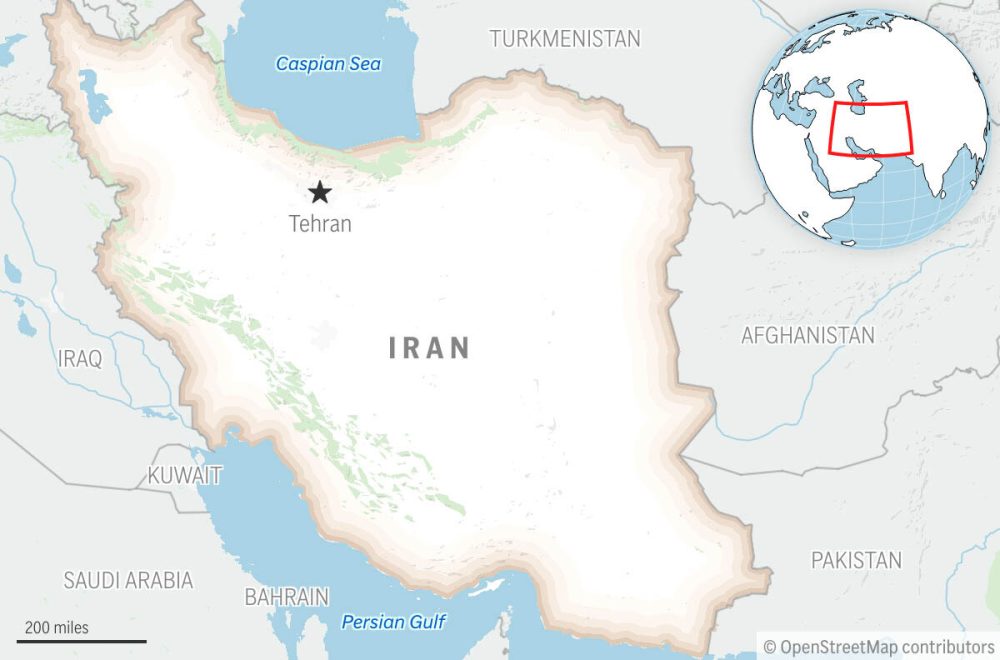
Delaware drivers feeling the pinch at the pump are turning to hybrid vehicles as fuel costs continue climbing following the outbreak of conflict in Iran, new automotive industry data reveals.
According to Motor Intelligence research, hybrid vehicle purchases across the United States jumped 37% during the two-month period following the start of the Middle East conflict in late February. This surge far exceeded the 15% growth seen in overall automotive sales during the same timeframe.
However, fully electric vehicles haven’t captured the same consumer enthusiasm, despite gasoline prices climbing above $4 per gallon in late April – marking a four-year peak according to American Automobile Association data.
Electric vehicle sales increased by only 11% in the two months after the conflict began, trailing behind the broader automotive market’s performance, Motor Intelligence statistics indicate. EV purchases continue lagging behind last year’s figures, still struggling from the impact of a $7,500 federal tax incentive that ended last fall.
This American consumer preference contrasts sharply with European trends, where electric vehicle demand is surging alongside higher fuel costs. European markets offer more budget-friendly electric options and operate under much stricter emissions regulations than the United States.
British electric vehicle sales skyrocketed 79% in the two months after the Iran situation developed, outperforming their general automotive market. German fully-electric car purchases similarly exceeded industry-wide performance, climbing 39% during this period.
Industry experts and dealership representatives identify several factors driving Americans toward hybrid technology – which combines lithium-ion batteries and electric motors with traditional gasoline engines for improved fuel efficiency.
Hybrid models typically cost less than electric vehicles and offer consumers more variety in selection. Additionally, buyers don’t need to adapt to new charging routines or modify their daily habits, such as plugging in vehicles overnight.
“People were already interested in hybrids before gas prices started to go up,” explained Kevin Roberts, who serves as director of economic and market intelligence at CarGurus online marketplace. “Higher gas prices just kind of increased that interest even further.”
Online shopping patterns reflect this growing interest in fuel-efficient options. CarGurus website searches for hybrid vehicles represented 14% of all April vehicle inquiries, rising from 12% the previous month. Electric vehicle searches comprised 5%, up from 3.4%.
“Customers are really looking at every penny,” noted Brad Sowers, who operates Kia, Stellantis and General Motors dealerships in the St. Louis region. His Kia location saw hybrid sales reach 35% of total April purchases, increasing from approximately 30% in March.
Toyota Motor has capitalized on hybrid technology’s rising popularity, having pioneered this approach in the late 1990s with the Prius launch. Recently, the automaker transitioned two bestselling models – the RAV4 SUV and Camry sedan – to hybrid-only configurations.
Toyota’s electrified vehicle sales in America grew 34% during the two months since Middle East tensions began, primarily reflecting hybrid business growth along with limited full-electric offerings. The company’s total U.S. sales increased 23% over this period.
Despite elevated fuel costs, some vehicle categories remain unaffected. Large pickup truck purchases in March and April rose 20% compared to pre-war February levels, according to Catalyst IQ dealership data services.
Todd Szott, operating Toyota, Ford Motor and Stellantis locations in Michigan, observes that while customers notice gas prices, manufacturer incentives carry more influence. Often, the largest discounts apply to gasoline-powered vehicles.
“We’re still selling lots of pickup trucks,” he stated.
Scientists using NASA’s James Webb Space Telescope have achieved an unprecedented view of a planet’s surface beyond our solar system, revealing a hostile world that bears striking similarities to Mercury.
The telescope collected information about a rocky planet roughly 30% bigger than Earth, showing it to be a barren, atmosphere-free world with extreme temperature variations. One hemisphere experiences blazing heat while the opposite side remains frozen in perpetual darkness.
The distant world goes by the name LHS 3844 b, though scientists have nicknamed it Kua’kua—meaning butterfly in a Costa Rican indigenous language. It circles a dim star approximately 49 light-years away from Earth, where one light-year equals 5.9 trillion miles.
“This planet is not a nice place,” stated Laura Kreidberg, who leads the Max Planck Institute for Astronomy in Germany and co-authored the research published in Nature Astronomy this week.
“It’s a hellish, barren rock—much more similar to Mercury than it is to the Earth. There is no trace of an atmosphere. Instead we’re seeing a dark surface, likely old. Picture a bare rock hurtling through space for billions of years. You wouldn’t want to go there,” Kreidberg explained.
Scientists believe the planet’s surface consists of ancient, darkened debris—loose rocky fragments covering solid bedrock that formed over billions of years from constant bombardment by space radiation and tiny meteorite strikes.
The Webb telescope, which launched in 2021 and began operations the following year, has transformed scientists’ ability to study distant worlds. Its powerful infrared sensors can analyze the chemical makeup and atmospheric behavior of exoplanets, including identifying cloud types.
Now Webb allows researchers to examine the geological features and surface materials of these far-off worlds directly, according to Sebastian Zieba, the study’s primary researcher from Harvard & Smithsonian’s Center for Astrophysics in Massachusetts.
“That was very challenging before the James Webb Space Telescope. This, therefore, also puts the Earth and the solar system as a whole into greater context, allowing us to check if processes or surface compositions familiar within the solar system are common around other stars, too,” Zieba explained.
“It’s like we suddenly cleaned our glasses and can see the planets clearly for the first time,” Kreidberg noted.
Kua’kua orbits what astronomers call a red dwarf star—a widespread stellar type with only 15% of our sun’s mass and roughly one-third of its brightness. The planet maintains an incredibly tight orbit, completing one revolution every 11 hours while remaining “tidally locked,” meaning the same side always faces its star, similar to how our moon relates to Earth.
The planet’s sun-facing “dayside” reaches approximately 1,340 degrees Fahrenheit (725 degrees Celsius), while researchers detected no measurable warmth on the permanently dark “nightside.”
Webb’s instruments allowed the team to identify infrared light emanating directly from the planetary surface.
“Different rocks have different spectral fingerprints, just like atmospheres do. Dark volcanic rocks like basalt matched our observations much better than brighter, silica-rich rocks like granite,” Zieba noted.
Both Mercury’s and the moon’s surfaces contain primarily basalt rock.
“On Earth, widespread granite formation is linked to water and plate tectonics,” Zieba said, referencing the geological forces that slowly shift our planet’s massive surface plates. “So if you ever robustly identified granite-like surfaces on an exoplanet, that would not (automatically) mean life, but it would suggest a much more Earth-like geological history compared to other surfaces.”
Researchers also considered whether recent volcanic activity might explain their observations, but their search for volcanic gases like sulfur dioxide came up empty.
The absence of any atmosphere means virtually no shield against harmful stellar radiation or charged particles, plus no possibility for liquid water—widely considered essential for life.
“So overall, this is almost certainly not a habitable world,” Zieba concluded.
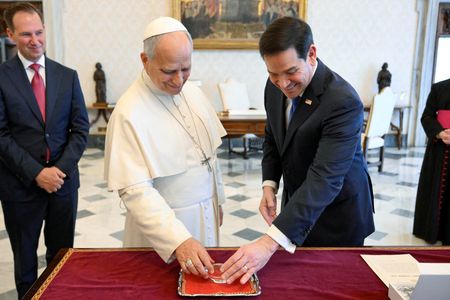
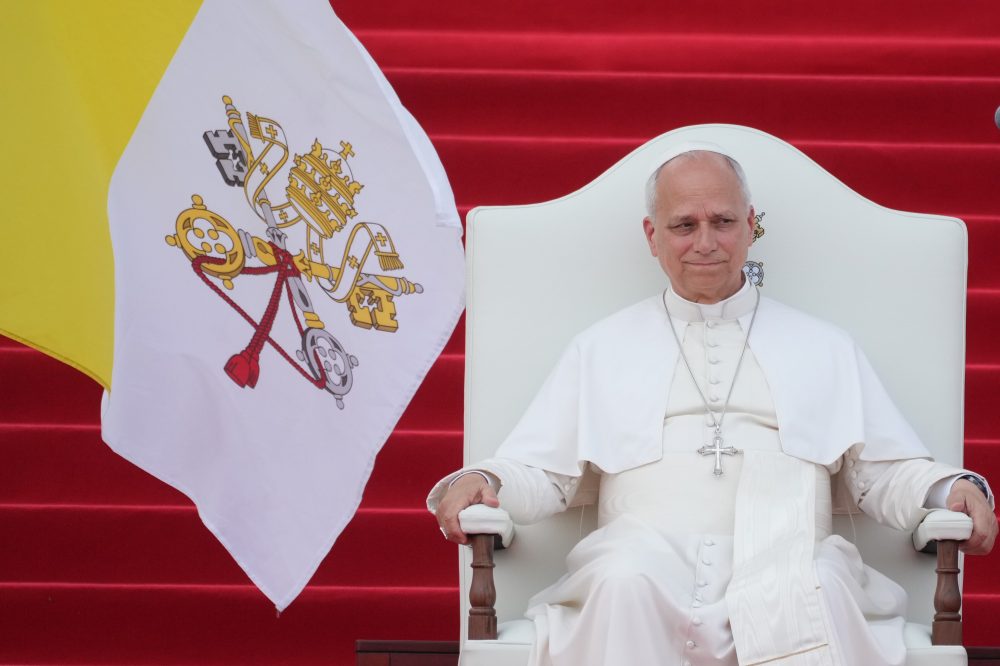
Pope Leo commemorated his first year leading the Catholic Church by calling on world leaders to ease international tensions and reject violence during a Friday address, coming just one day after meeting with U.S. Secretary of State Marco Rubio at the Vatican.
The pontiff, who has faced criticism from President Donald Trump over his opposition to the Iran war, encouraged followers to pray for governments worldwide to abandon violent approaches.
During his visit to the modern city of Pompei, located approximately 152 miles south of Rome near the famous ancient volcanic ruins, Leo said he would join in prayers for God to begin “touching hearts, calming rancour and fratricidal hatreds, and enlightening those who have special responsibilities of government.”
Leo, who became the first American pope, conducted discussions with Rubio on Thursday amid ongoing diplomatic strain with Washington, as Trump has frequently criticized the religious leader through social media posts.
Vatican officials reported afterward that both parties committed to strengthening their diplomatic relationship, which sources described as an uncommon acknowledgment of extraordinary tensions between the two entities.
Following the meeting, the U.S. embassy to the Holy See posted on X that Leo and Rubio had explored “topics of mutual interest in the Western Hemisphere.”
Leo, previously known as Cardinal Robert Prevost, was chosen by cardinals worldwide to replace the late Pope Francis as leader of the Church’s 1.4 billion members on May 8, 2025.
Prevost, who dedicated decades to missionary work and served as a bishop in Peru before his papal election, maintained a modest public presence during his initial 10 months but has recently become more vocal against warfare and authoritarian rule.
Speaking to thousands gathered in Pompei’s central square on Friday, the pope expressed concern that global peace faces threats from “international tensions and by an economy that prefers the arms trade to respect for human life.”
He encouraged the crowd to resist becoming desensitized to conflict.
“We cannot resign ourselves to the images of death that the news shows us every day,” Leo stated.
SINZIG, Germany – Authorities in western Germany are managing an ongoing hostage crisis at a local savings bank where multiple individuals are being held against their will, according to law enforcement officials.
The incident began Friday morning around 7 a.m. GMT in the center of Sinzig, a town located in the Rhineland-Palatinate region. Among those trapped inside the financial institution is at least one armored car driver who was apparently conducting a cash delivery.
“It is currently believed that there are several perpetrators and hostages inside the bank,” police said in a statement, adding that the situation was currently “stable.”
Law enforcement has deployed significant resources to the scene and established a wide security perimeter around the affected area. Officials emphasized that civilians outside the restricted zone face no immediate threat.
The crisis remains active as authorities work to resolve the standoff safely.
International food costs surged to their highest levels in more than three years last month, according to a Friday report from the United Nations Food and Agriculture Organization. The spike was largely attributed to escalating vegetable oil prices amid Middle East warfare and the virtual shutdown of the Strait of Hormuz shipping route.
Máximo Torero, the FAO’s Chief Economist, explained that rising energy expenses are pushing vegetable oil costs higher by increasing demand for biofuels produced from organic sources like oil-rich crops.
Despite conflict-related supply chain interruptions, Torero noted that agricultural food networks have demonstrated remarkable stability. Grain costs have seen only modest increases due to sufficient stockpiles from earlier harvests.
The organization’s Food Price Index, which tracks price movements in internationally traded food products, increased for three consecutive months in April, reaching an average of 130.7 points. This represented a 1.6% jump from March’s adjusted figure and marked the highest reading since February 2023.
The index previously peaked at 160.2 points in March 2022 following the outbreak of the Ukraine conflict.
Vegetable oil prices in the FAO’s April assessment jumped 5.9% compared to the previous month, hitting their highest mark since July 2022. The increase reflected higher costs for soy, sunflower, rapeseed, and palm oils, with palm oil particularly affected by biofuel policy incentives.
Meanwhile, cereal prices showed much smaller gains, rising just 0.8% from March and 0.4% compared to April of the previous year. The modest increases in wheat and corn prices were linked to weather-related concerns, higher fertilizer costs, and growing biofuel consumption.
The UN organization anticipates reduced wheat planting for the 2026 season as farmers consider switching to crops requiring less fertilizer due to dramatically increased input costs.
April meat prices climbed 1.2% month-over-month to reach record levels, driven by limited availability of cattle ready for slaughter in Brazil. Sugar prices, however, declined 4.7% based on projections of abundant supplies from Brazil, China, and Thailand.
In a companion report, the FAO marginally increased its projection for 2025 worldwide cereal production to a record 3.040 billion metric tons, representing a 6% increase over the previous year’s output.
A weekly news quiz is drawing attention to a video featuring Kash Patel that captured media attention over the past several days.
The quiz format covers multiple trending stories from the week, with Patel’s video being highlighted as one of the notable headlines that readers should know about.
Beyond the Patel story, the quiz also touches on several other high-profile topics that dominated news cycles, including coverage of the Met Gala event, developments related to GameStop, news from Canada, and yet another story involving the mysterious street artist Banksy.
The quiz appears to be part of a regular feature that tests readers’ knowledge of current events and pop culture moments that gained significant media coverage during the week.
Drivers traveling through the intersection of Pelican Road and Coastal Highway (Route 1) should be aware of temporary lane modifications currently in effect due to work being performed in the vicinity.
According to DelDOT, the lane shifts will continue until 4 PM today. Motorists are advised to use caution when traveling through the area and to expect possible delays.
The traffic pattern adjustments are necessary to accommodate crews working near the intersection of these two roadways.
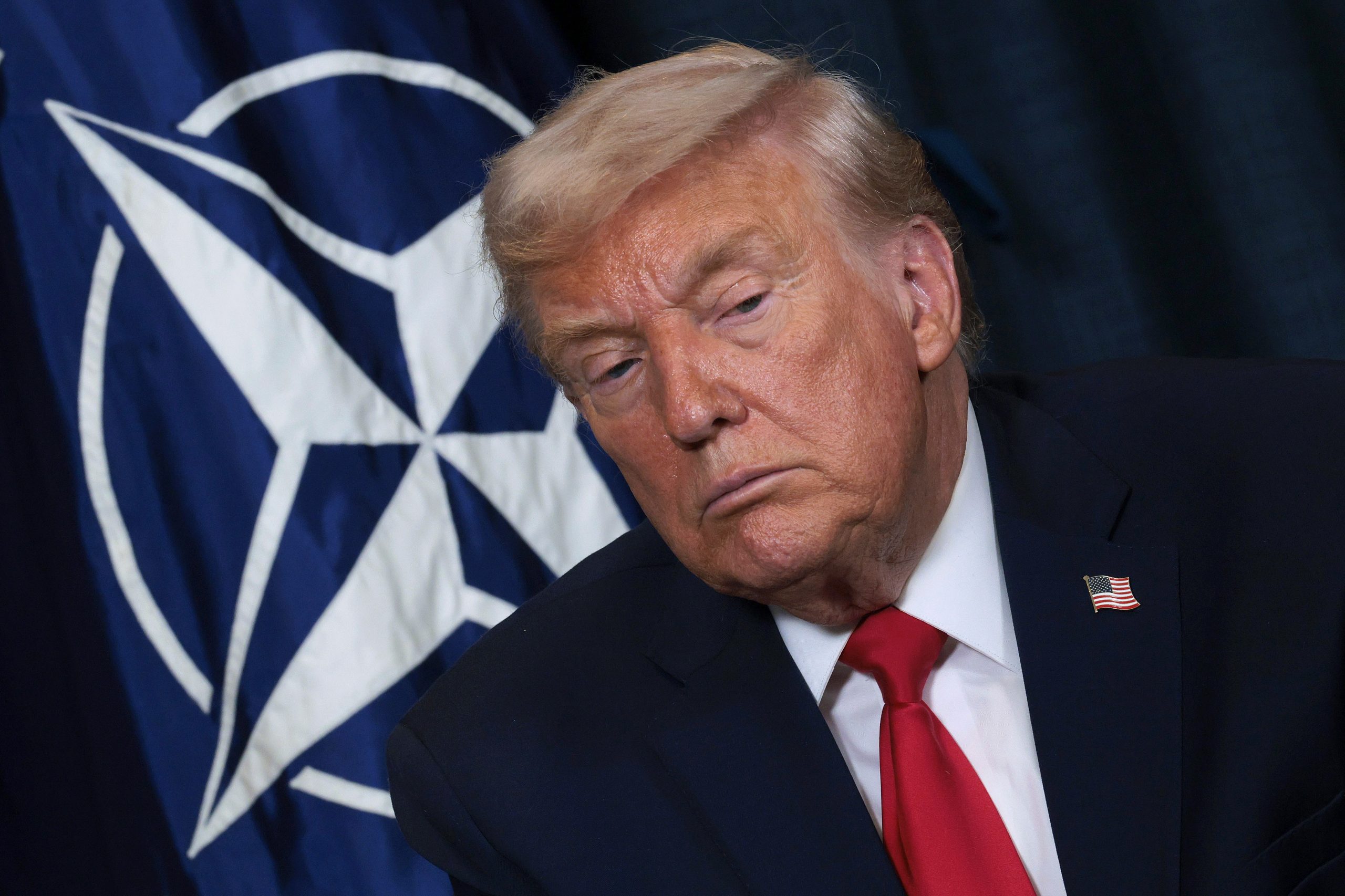
A significant shift is occurring within the North Atlantic Treaty Organization as European member nations increasingly assume leadership positions while American influence appears to be waning.
The changing dynamics within the alliance have become more pronounced as coordination issues and strategic disagreements create new challenges for the decades-old military partnership.
This transformation represents a notable departure from the traditional structure where the United States has historically played the dominant role in NATO operations and decision-making processes.
The evolving leadership structure comes at a time when alliance members are grappling with questions about future cooperation and strategic alignment on key international issues.
These developments highlight the ongoing evolution of transatlantic relationships and the changing nature of international security partnerships in the current geopolitical climate.
Good morning, Delmarva! We’re waking up to crystal clear skies this Friday morning with temperatures starting around a comfortable 48 degrees. Those light northwest winds at 5 mph are keeping things pleasant as you head out the door.
Today is shaping up to be absolutely beautiful across the peninsula! Expect wall-to-wall sunshine with temperatures climbing to a delightful 70 degrees – perfect weather for any outdoor plans you might have. Tonight stays nice with partly cloudy skies and lows dipping to around 53 degrees.
Looking ahead to your Saturday, we’ll see temperatures reach 72 degrees, but keep an eye on the sky as we’re tracking some changes. Rain showers are possible during the day, with the chance for showers and thunderstorms developing as we head into Saturday evening and overnight.
So enjoy this gorgeous Friday – it’s one of those days that reminds us why we love living on the Delmarva Peninsula! I’ll have your complete weekend outlook coming up tonight at 6 and 11. Have a wonderful day out there!
Drivers using Interstate 95 southbound should expect delays this morning as construction crews have shut down multiple lanes between the Delaware Welcome Center and the Newark Toll Plaza.
According to the Delaware Department of Transportation, two left lanes remain blocked for construction activities, with the closure expected to remain in effect until 7 a.m. today.
Additionally, motorists who typically use EZ Pass for quicker toll processing will need to use alternative lanes, as the electronic toll collection lanes at the Newark Toll Plaza are also temporarily closed as part of the construction project.
DelDOT advises drivers to allow extra travel time and consider alternate routes if possible during the morning commute.
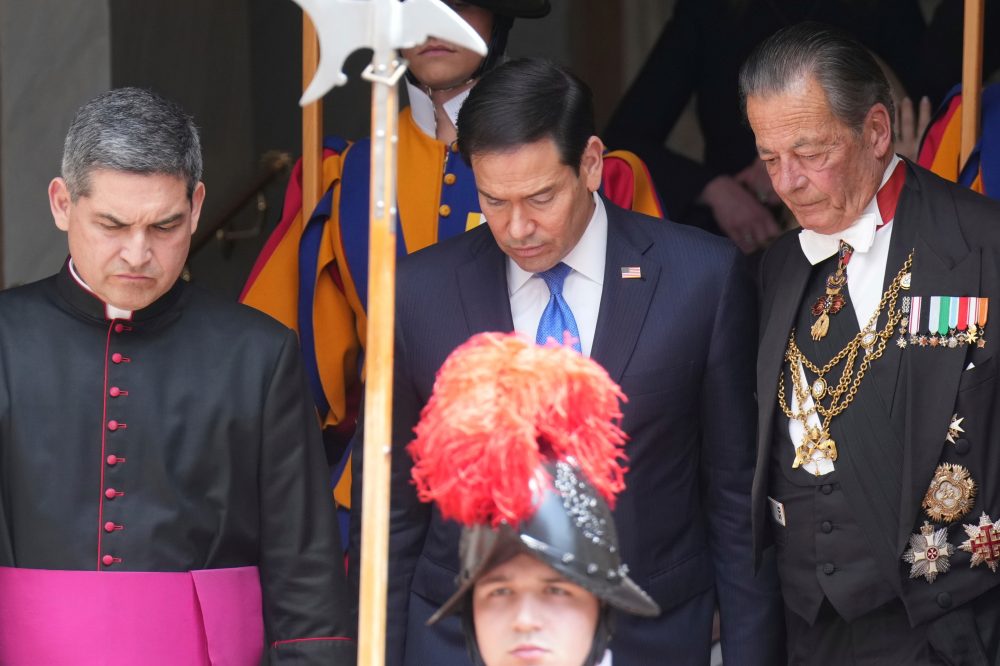
VATICAN CITY – Diplomatic experts are reading between the lines of a Vatican statement following Pope Leo’s Thursday meeting with U.S. Secretary of State Marco Rubio, suggesting the carefully chosen words reveal unusual strain in U.S.-Vatican relations.
The 45-minute discussion between the American-born pontiff and Rubio marked the first encounter between Pope Leo and a Trump administration official in nearly a year, coming amid ongoing public disputes between President Trump and the Vatican over the Iran conflict.
Following their meeting, Vatican officials released a statement noting that both leaders had “renewed the shared commitment to fostering good bilateral relations” – language that diplomatic observers say signals underlying problems.
“(The) statement makes it clear that, at present, there is work to do,” explained Peter Martin, who previously served as a diplomat at the U.S. Embassy to the Holy See under both Democratic and Republican presidents.
Vatican expert Austen Ivereigh, who collaborated on a book with the late Pope Francis, interpreted the emphasis on building bilateral ties as an indication “that they are at the moment not good.”
The diplomatic messaging stood in stark contrast to other Vatican encounters that day. When Pope Leo met with Polish Prime Minister Donald Tusk, Vatican officials specifically “expressed satisfaction for the good relations” between Poland and the Holy See – notably different phrasing.
Following the papal audience, the U.S. embassy posted on social media that Leo and Rubio had discussed “topics of mutual interest in the Western Hemisphere.” Rubio later wrote on X: “The United States and Holy See partnership in advancing religious freedom is strong,” referring to his additional meetings with senior Vatican officials.
However, the official Vatican statement covering both the papal meeting and Rubio’s other Vatican discussions made no mention of either Western Hemisphere issues or religious freedom concerns.
The Vatican’s release only acknowledged an “exchange of views” on global matters without identifying any areas of mutual understanding beyond the commitment to strengthen diplomatic ties.
Kenneth Hackett, who directed the U.S. Catholic Church’s international relief operations for 18 years before becoming Ambassador to the Holy See during the Obama presidency, interpreted the Vatican’s language as indicating “there were no substantive agreements.”
Martin, who witnessed Trump’s 2017 Vatican visit with the late Pope Francis while serving at the U.S. embassy, noted that the statement from that encounter had “expressed satisfaction for the good relations” between America and the Vatican – using identical language to Thursday’s Polish statement.
“In the world of diplomacy – especially Vatican diplomacy – every word matters,” emphasized Martin, who currently teaches at Boston College.
The current tensions stem from Pope Leo’s criticism of the U.S.-Israeli military actions against Iran and the Trump administration’s strict immigration enforcement policies. Trump has maintained an unusual pattern of public criticism directed at the pontiff in recent weeks, drawing condemnation from Christian leaders across political lines.
Pope Leo, who assumed the papacy one year ago, and President Trump have not met in person.
The Vatican’s decision to reveal specific discussion details from the papal meeting also broke with standard protocol. Typically, such statements only disclose topics addressed during a visiting official’s meetings with Vatican diplomats, not content from papal audiences.
Ivereigh suggested the Vatican felt compelled to issue a detailed statement due to significant media attention and “in anticipation of any White House spin.”
The last instance of the Vatican disclosing such papal meeting specifics occurred in September following Pope Leo’s encounter with Israeli President Isaac Herzog, when officials revealed the pontiff had discussed the “tragic situation in Gaza” during their conversation.
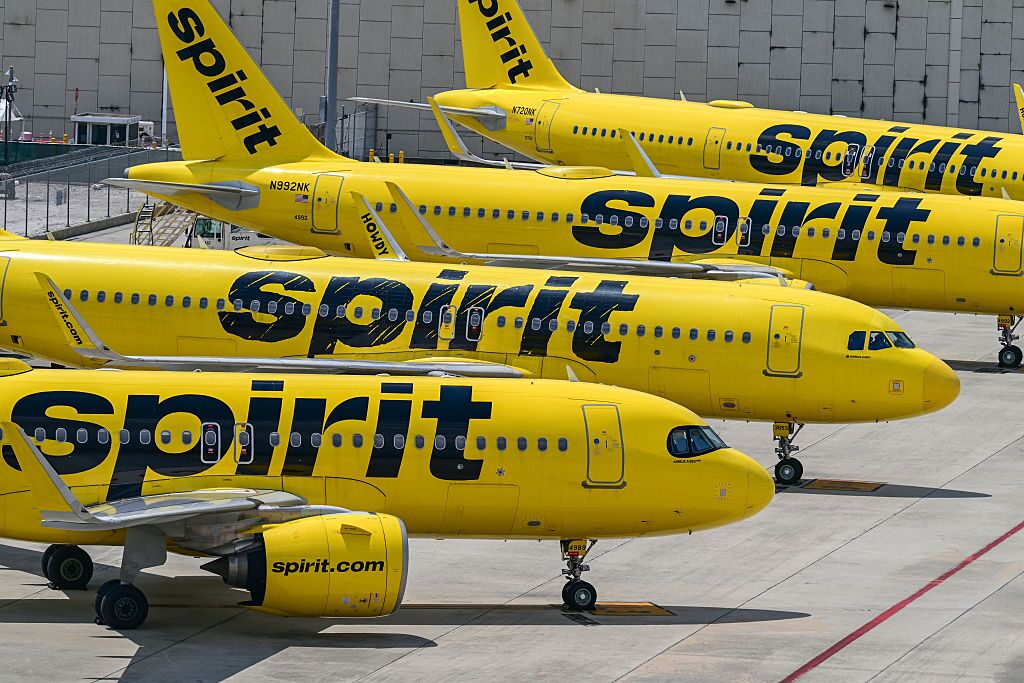
The sudden halt of Spirit Airlines operations over the weekend has resulted in approximately 90 aircraft being stranded at airports throughout the United States. The budget airline now faces the complex task of managing its fleet during the liquidation process.
According to reports, a significant portion of these grounded jets will be returned to leasing companies that hold ownership rights. Meanwhile, Spirit Airlines is exploring ways to generate cash from the remaining aircraft that the company owns outright.
The airline’s abrupt shutdown has created logistical challenges as the carrier works to coordinate the return of leased aircraft to their respective owners while simultaneously trying to extract value from its owned fleet during the bankruptcy proceedings.
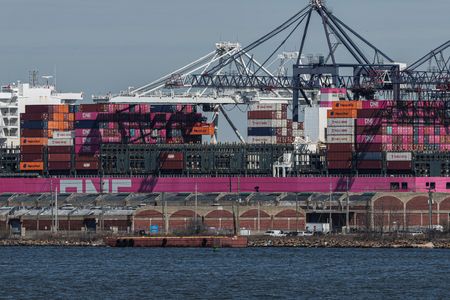
American container imports experienced a significant decline in April, falling 5.5% as businesses grapple with uncertain trade policies and international shipping challenges, according to a report released Friday by supply chain technology company Descartes Systems Group.
The decrease in containerized cargo volumes stems from shifting trade policies under President Donald Trump’s administration and disruptions caused by Iran’s blockade of the Strait of Hormuz, a critical shipping route for energy transportation, following military strikes by the United States and Israel against Iran.
Economists often view import patterns as an indicator of America’s economic strength, with volumes typically increasing during periods of growth and declining when the economy weakens.
According to Descartes data, American seaports processed 2,277,965 twenty-foot equivalent units during April, representing a 3.2% decrease from March figures. This represents the first month-to-month decline for April since 2022.
Despite the recent downturn, April’s container import numbers remained approximately 19% above pre-pandemic levels recorded in April 2019, which the company characterized as evidence of “continued resilience in underlying demand.”
Year-to-date containerized imports have fallen 5% through 2026, while shipments originating from China specifically dropped 15.3% compared to the previous year, totaling 680,778 TEUs in April 2026.
Descartes noted that importers may experience “a short-term cash flow boost” when the U.S. Customs and Border Protection agency begins issuing initial tariff refunds starting May 12, though the company cautioned that ongoing policy uncertainty and financial pressures will continue since “replacement tariffs remain in effect.”
TOKYO — Gaming powerhouse Nintendo reported a remarkable 52% jump in annual profits during its most recent fiscal year, driven by strong performance of Switch 2 console sales and game titles.
The Kyoto-based entertainment company, known for creating beloved franchises like Super Mario and Pokemon, revealed plans to increase console pricing due to difficult market circumstances.
Nintendo’s net earnings reached 424 billion yen ($2.7 billion) for the fiscal period ending in March, representing a substantial increase from the previous year’s 279 billion yen.
The company saw annual revenue double, climbing 99% to reach 2.3 trillion yen ($15 billion) compared to 1.2 trillion yen in the prior year. This growth occurred as Switch 2 demand remained strong, even while original Switch sales showed signs of weakening.
Starting May 25, Nintendo will implement a Switch 2 price increase in Japan, raising the cost to 59,980 yen ($382) from the current 49,980 yen ($318). The company stated this decision came “in light of changes in market conditions, and after considering the global business outlook.”
American consumers will face a September price adjustment, with the Switch 2 cost rising to $499.99 from $449.99.
While Nintendo didn’t elaborate on specific reasons, Japanese exporters across industries are grappling with President Trump’s tariff policies and additional expenses amplified by ongoing conflict in Iran.
Looking ahead, Nintendo Co. anticipates an 11% drop in profits for the fiscal year ending March 2027, projecting 2.1 trillion yen ($13 billion). This forecast incorporates the upcoming price adjustments.
Bright spots include Nintendo’s cinematic venture “The Super Mario Galaxy Movie,” which has earned over $800 million in box office revenue since debuting one month ago.
Recent gaming successes include popular software releases “Mario Kart World” and “Donkey Kong Bananza.”
The title “Tomodachi Life: Living the Dream” has achieved sales exceeding 3.8 million copies in just two weeks since launch.
For the upcoming fiscal year through March 2027, Nintendo projects Switch 2 hardware sales of 16.5 million units, representing a nearly 17% decrease from the previous year’s 19.86 million. However, the company expects Switch 2 software sales to continue expanding, targeting 60 million units — a 23% increase from 48.7 million.
Industry patterns typically show gaming consoles experiencing initial strong sales followed by gradual decline, while software sales tend to maintain growth momentum. The Switch operates as a versatile gaming system, serving both as a traditional home console and portable handheld device.
Nintendo has committed to expanding Switch 2 software offerings this year, including partnerships with external developers for titles such as the newest “Final Fantasy” installment.
Following the earnings announcement, Nintendo’s stock value increased by 3.6%.
POMPEII, Italy — Pope Leo XIV marked exactly one year since his election to the papacy by making a spiritual pilgrimage to the ancient Italian city of Pompeii on Friday, where he participated in prayers at a revered Catholic shrine.
The pontiff arrived by helicopter in the city near Naples to observe the May 8 feast of Our Lady of Pompeii, an important religious celebration that began in 1876 when construction started on a shrine honoring the Virgin Mary in the historic location.
The religious sanctuary sits close to the famous archaeological ruins of the city destroyed in 79 A.D. when Mount Vesuvius unleashed devastating volcanic ash and gases across the surrounding area. Unlike the ancient ruins that attract countless tourists annually, the shrine serves as a destination for Catholic faithful who hold special devotion to rosary prayers.
Speaking to crowds of worshippers gathered inside the sanctuary before celebrating Mass, Leo expressed his joy at the occasion. “What a beautiful day, how many blessings the Lord wanted to give to all of us,” he said. “I feel I am the first blessed to be able to come here to the sanctuary of the Madonna on the day of her feast and on this anniversary.”
This journey represents the beginning of several planned excursions throughout Italy that Leo will undertake in coming weeks, allowing him to become more familiar with the Italian Catholic community he leads as Rome’s bishop.
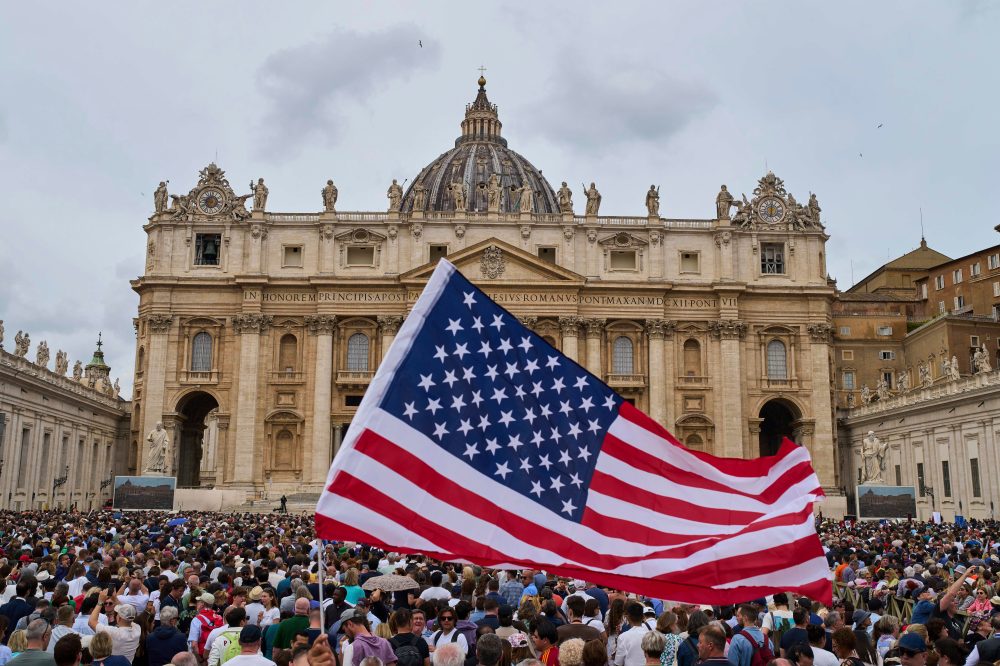
The anniversary date recalls when Cardinal Robert Prevost became the first pope from the United States in church history. During his initial appearance to the world from St. Peter’s Basilica following his election, Leo had specifically mentioned the Pompeii feast day and guided those gathered in the square below in prayers for his new role.
During that memorable evening, he emphasized Mary’s constant presence, saying she “always wants to walk at our side, to remain close to us, to help us with her intercession and her love.”
“Let us pray together for this new mission, for the whole church, for peace in the world, and let us ask Mary, our Mother, for this special grace,” Leo had declared that night.
The Pompeii sanctuary holds deep connections to St. Bartolo Longo, who established the basilica and gained recognition throughout Italy for his charitable efforts supporting orphaned children, incarcerated individuals, and other vulnerable populations. Pope Francis had given final approval for Longo’s sainthood from his hospital bed shortly before his death, and Leo formally canonized him last October.
Leo began his Pompeii visit by spending time with ill and disabled individuals receiving care at a charitable facility connected to the sanctuary, which Pope Leo XIII designated as a pontifical basilica in 1901.
During his opening address, Leo reflected on Longo’s early work in the area, noting that when the saint first came to the Pompeii region, “he found a land plagued by great poverty, inhabited by a few very poor farmers, and ravaged by malaria and bandits.”
“He was able to see, however, the face of Christ in everyone: in the great and the small, and especially in the orphans and the children of prisoners, to whom he made the beating of God’s heart felt through his tenderness,” the pope explained.
Enthusiastic Italian crowds welcomed Leo, with some supporters having waited since midnight to see him. Many attendees expressed approval of his recent diplomatic tensions with U.S. President Donald Trump regarding the Iran conflict.
Rita Borriello, a resident of nearby Torre del Greco, praised the pope’s steadfast approach. “He doesn’t let anyone intimidate him. Look at the recent issues with Trump,” she observed. While Trump offered criticism, Leo “simply answered, ‘I preach the Gospel’. I see him as a very humble pope, very close to us, a pope who entered in our hearts.”
Health authorities have identified another potential hantavirus infection involving a British citizen on Tristan da Cunha, one of the world’s most isolated inhabited islands in the South Atlantic Ocean, officials announced Friday.
The development comes as international health agencies continue their efforts to track down passengers and close contacts from the luxury cruise vessel MV Hondius, where a deadly virus outbreak has already claimed three lives.
British health security officials have not released additional information about the latest suspected infection on Tristan da Cunha, which houses approximately 200 residents and served as a port of call for the cruise ship on April 15.
The outbreak aboard the MV Hondius has resulted in three fatalities: a married Dutch couple and a German passenger. Additionally, four confirmed cases are currently receiving medical care in hospitals across multiple countries – two British nationals, one Dutch citizen, and one Swiss passenger are being treated in the Netherlands, South Africa, and Switzerland respectively.
The first death occurred on April 11 when a Dutch man, later identified as ‘patient zero,’ died aboard the vessel. His wife passed away on April 24, shortly after disembarking from the ship.
The World Health Organisation announced it would release updated figures on both suspected and confirmed cases later Friday.
Dutch health officials reported Thursday that two individuals who had close contact with the deceased woman before she was removed from an aircraft in Johannesburg on April 25 due to worsening health conditions have tested negative for the virus.
One of those tested was a flight attendant who had been hospitalized in Amsterdam after showing potential infection symptoms, according to Friday’s WHO statement. Dutch public health authorities indicated they were still awaiting definitive test results for a third case.
While hantavirus typically spreads through rodent contact, the particular strain affecting the Hondius passengers can occasionally transmit between people in unusual circumstances.
The U.S. Centers for Disease Control and Prevention has designated this hantavirus situation as a ‘level 3’ emergency response, representing their lowest emergency activation category.
Medical experts continue emphasizing the minimal likelihood of widespread transmission, though the outbreak has prompted heightened vigilance among authorities who are advising anyone who contacted passengers departing the Hondius before the outbreak became known to watch for potential symptoms.
Multiple U.S. states have reported monitoring asymptomatic residents who returned home after leaving the cruise ship. Singapore authorities isolated and tested two residents Thursday who had traveled aboard the vessel.
Oceanwide, the cruise line operating the ship, stated Thursday that no passengers currently aboard are showing infection symptoms. The vessel is scheduled to arrive in Tenerife in the Canary Islands early Sunday morning.
The WHO is developing comprehensive guidelines for when the remaining dozens of passengers disembark and return to their home countries. British health services announced that UK nationals aboard the ship who remain symptom-free will be transported home and required to isolate for 45 days.
Spanish clothing giant Zara is pushing back against allegations that it violated Estée Lauder’s trademark rights by using Jo Malone’s name on fragrance products, according to court documents filed in London’s High Court.
The retail company argues it followed specific guidelines that Estée Lauder’s own legal team established in 2020 regarding how the famous perfumer’s name could be used in marketing materials.
The dispute stems from Estée Lauder’s 1999 acquisition of Malone’s original fragrance company, which included purchasing the commercial rights to her name. After departing the cosmetics conglomerate in 2006, Malone created her new brand “Jo Loves” in 2011 and began working with Zara on fragrance collaborations in 2019.
Estée Lauder filed suit in March against Malone, her “Jo Loves” company, and Zara’s British operations. The lawsuit focuses on Zara’s website product descriptions mentioning “Jo Malone” and packaging text reading “Created by Jo Malone CBE, founder of Jo Loves.”
In its defense, Zara’s UK subsidiary ITX points to correspondence from 2020 when Estée Lauder initially objected to Malone’s name appearing on Zara’s Chinese social media. The cosmetics company’s attorneys later indicated this usage was acceptable and provided specific naming conventions for future reference.
Those guidelines recommended using variations like “Jo Malone CBE,” “Ms Jo Malone,” “Ms Malone” or simply “Jo” to distinguish between the individual and the brand name, while avoiding references to her as the original Jo Malone brand founder.
ITX maintains its current product descriptions comply with these recommendations. Zara’s website now describes the fragrances as collaborations “with perfumer Ms. Jo Malone CBE, founder of Jo Loves.”
The case raises fundamental questions about how Malone can legitimately reference herself given Estée Lauder’s trademark ownership, according to Zara’s legal filing.
Malone addressed the controversy in an Instagram video last month, explaining her perspective on the partnership. “Seven years ago, I started to work with Zara, they approached me, they didn’t approach a company, they didn’t approach a brand, they didn’t approach a logo, they approached me, Jo Malone, the person … we have gone above and beyond to make sure everyone understands this has nothing to do with Jo Malone London the company,” she stated.
Zara also disputes Estée Lauder’s “passing off” allegations, which claim the retailer misleads customers into believing its products come from another company. The fashion chain additionally objects to characterizing its fragrances as “budget” options.
The pricing difference between the competing products is substantial. Zara’s collaborative scents, including “Energetically New York,” “Elegantly Tokyo,” and “Fashionably London,” retail for approximately $49 per 100ml bottle on the UK website. Comparable Jo Malone brand perfumes start at $165 for the same quantity.
Estée Lauder representatives declined to provide additional comments beyond their original March statement, which noted that Malone agreed in 1999 to restrictions on using the Jo Malone name for commercial fragrance marketing purposes.
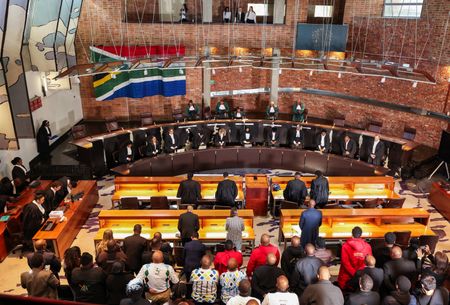
JOHANNESBURG – South Africa’s constitutional court delivered a victory Friday to opposition forces attempting to restart impeachment proceedings against President Cyril Ramaphosa related to a controversy known locally as “Farmgate.”
The controversy nearly ended Ramaphosa’s presidency when it emerged in 2022 following findings by an independent panel that suggested possible misconduct on his part.
While Ramaphosa has consistently denied any wrongdoing and faced no criminal charges, the scandal created significant political turmoil.
At the time, his African National Congress (ANC) party stood by him, leveraging their parliamentary control to block any impeachment proceedings from moving forward.
The Economic Freedom Fighters (EFF), a far-left opposition party, took the matter to South Africa’s highest court in 2024, contending that parliament violated the law by refusing to hold Ramaphosa accountable for his actions.
CHISINAU, May 8 – The European Union’s foreign policy chief Kaja Kallas announced Friday that while no specific timeline has been established, the bloc is eager to accelerate formal membership negotiations with Moldova.
“We haven’t set that date, but it’s clear that we need to move fast,” Kallas stated during a joint news conference alongside Moldova’s President Maia Sandu. She emphasized that recent governmental transitions in various nations have created a favorable political climate.
“So that’s why I also think that we should move while nobody is against Moldova, because you never know when there comes a government that might have, you know, a bilateral issue,” Kallas explained.
The EU official praised Moldova’s advancement in implementing necessary reforms and assured that the separatist territory of Transdniestria “will not become an obstacle” to Moldova’s European integration goals.
President Sandu reaffirmed her nation’s commitment to finalizing the membership agreement by 2028.
Two major technology companies announced Friday their intention to establish a collaborative partnership in Japan dedicated to creating advanced camera sensor technology.
Sony Semiconductor Solutions and Taiwan Semiconductor Manufacturing Co revealed their plans to merge Sony’s specialized sensor design knowledge with TSMC’s advanced manufacturing capabilities, building upon their existing business relationship.
Under the proposed arrangement, Sony will hold majority control of the partnership, which will establish research and manufacturing operations at Sony’s upcoming fabrication facility in Koshi City, located in Japan’s Kumamoto region.
According to company announcements, the firms have executed a preliminary memorandum of understanding and are currently evaluating potential financial commitments for the collaboration, pending final agreements and standard regulatory approvals.
The financial investments, combined with additional capital expenditures by Sony at its current Nagasaki facility, will be implemented gradually based on market conditions and anticipated support from Japanese government officials, the companies stated.
The alliance will also investigate potential applications in physical artificial intelligence sectors, including automotive technology and robotics systems.
Sony has previously indicated its willingness to consider external investment partnerships for its semiconductor operations, emphasizing the critical importance of manufacturing investment.
The two companies currently operate another separate collaborative venture called Japan Advanced Semiconductor Manufacturing (JASM), established in 2021 with TSMC holding majority ownership. JASM’s initial manufacturing facility in Japan began full-scale production in late 2024.
Preservation specialists and historic building experts are sounding alarms over President Trump’s proposal to apply white paint to the Eisenhower Executive Office Building, citing concerns that such action could inflict lasting harm on the structure’s historic granite exterior.
The plan has drawn opposition from those who work to protect historically significant architecture, who argue that painting over the building’s original granite surface would compromise its integrity and could not be undone without causing additional damage to the federal landmark.
Massachusetts Democratic Representative Bill Keating recently participated in an interview with NPR’s Leila Fadel regarding ongoing U.S. military operations against suspected drug smuggling vessels.
The conversation centered on the military’s continued efforts to intercept and strike suspected narcotics trafficking boats operating in both Pacific and Caribbean waters.
Keating, who serves as a Democratic representative from Massachusetts, provided his perspective on these ongoing maritime interdiction operations during the NPR interview.
Growing criticism surrounds U.S. military operations targeting suspected drug-trafficking vessels, as the death toll from these maritime strikes has exceeded 190 individuals across Caribbean and Pacific waters.
The military campaign, which focuses on intercepting boats believed to be involved in narcotics trafficking, is now facing heightened examination regarding the legal authority for such actions and questions about oversight of these deadly encounters.
Legal experts and human rights advocates are demanding greater transparency about the rules of engagement governing these operations and the processes in place to ensure accountability when lives are lost during these maritime interdictions.
A special review panel created by President Trump has issued a call for sweeping reforms to the Federal Emergency Management Agency, the nation’s primary disaster response organization.
The council, tasked with examining FEMA’s operations and effectiveness, has put forward proposals for substantial changes to how the agency functions during national emergencies and natural disasters.
A Minneapolis family recently shared their perspective on activism and community engagement through this week’s StoryCorps segment.
The mother and son duo opened up about their shared commitment to peaceful demonstration and civic participation, describing how advocacy work has shaped their family’s values and identity.
During their conversation, the pair discussed the impact that standing up for important causes has had on their lives and their community involvement in Minneapolis.
Spanish emergency officials are making final preparations to handle the arrival of a cruise vessel carrying more than 140 individuals aboard the hantavirus-affected MV Hondius, which is approaching the Canary Islands for urgent medical evacuations.
The ship is anticipated to dock at Tenerife, located off West Africa’s coast, either Saturday or Sunday, according to Spanish authorities.
“They will arrive at a completely isolated, cordoned-off area,” Virginia Barcones, Spain’s emergency services director, stated Thursday.
Barcones explained that Spain is working with multiple nations to coordinate evacuation procedures for their citizens currently on the vessel.
American officials have committed to dispatching an aircraft to the Canary Islands to transport 17 U.S. nationals from the cruise ship, she confirmed. British authorities have similarly announced plans to charter a flight for evacuating approximately 24 British passengers still aboard the MV Hondius.
The outbreak has claimed at least three lives, with additional individuals reported ill. However, the World Health Organization has assessed the threat to the general population as minimal.
The virus typically spreads through breathing in contaminated rodent waste particles and does not easily pass from person to person. Initial symptoms generally appear between one to eight weeks following exposure.
Netherlands-based Oceanwide Expeditions, the cruise operator, reported Thursday that no remaining passengers or crew members are currently showing symptoms.
Medical officials spanning four continents continue efforts to locate and monitor passengers who left the vessel before the fatal outbreak was identified, while attempting to trace individuals who may have contacted them subsequently.
On April 24, nearly two weeks following the first passenger death aboard the ship, more than 24 people from at least 12 nations departed the vessel without proper contact tracing, according to the ship’s operator and Dutch officials who spoke Thursday.
Friday brought news from U.K. health authorities of a third British citizen suspected of contracting the hantavirus.
The U.K. Health Security Agency reported the suspected case is located on Tristan da Cunha, an isolated British territory in the south Atlantic where the vessel made a stop during April.
Officials have not released information regarding the individual’s medical status.
Two additional British nationals from the cruise have received confirmed hantavirus diagnoses. One remains hospitalized in the Netherlands while the other is receiving treatment in South Africa.
South African health officials are also working to identify contacts of passengers who previously departed the ship. Their focus has centered primarily on an April 25 flight traveling from St. Helena to Johannesburg, occurring one day after passengers disembarked at that location.
Relatives and human rights advocates are urgently requesting the immediate release of Chinese journalist Dong Yuyu, citing severe deterioration of his health while incarcerated.
Yuyu, who worked as an editor for the state-run Guangming Daily newspaper, was arrested during a lunch meeting with a Japanese diplomat in 2022 and received a seven-year espionage conviction in 2024.
“Yuyu is now effectively facing a death sentence,” his family declared in a Thursday statement.
According to his relatives, Yuyu was admitted to a Tianjin prison medical facility on April 27, where physicians discovered irregular heart rhythms and a lung mass that his family worries may be cancerous.
His relatives report that he has been forced to work extended shifts manufacturing clothing while imprisoned and has been denied adequate rest periods.
“My mother and I are very sad and anxious,” stated his son Dong Yifu, who lives in the United States and has been campaigning for his father’s freedom.
“The international community must increase pressure on Beijing to secure his release on medical parole, as well as permission for him to travel abroad for treatment and reunite with his family,” declared Aleksandra Bielakowska from Reporters Without Borders.
The family hopes President Donald Trump’s administration will address Yuyu’s situation during next week’s planned summit with Chinese President Xi Jinping.
While employed at Beijing’s government-supported Guangming Daily, Yuyu also contributed to various other outlets, including Chinese periodicals and The New York Times’ Chinese-language platform.
His writings promoted constitutional democracy, governmental reform, and political openness — perspectives that were previously tolerated but are now prohibited topics in China.
ROME — Secretary of State Marco Rubio continues his diplomatic mission in Rome today with a scheduled meeting with Italian Prime Minister Giorgia Meloni, as both nations work to repair damaged relations stemming from disagreements over the Iran conflict.
The diplomatic rift has widened in recent weeks following President Trump’s implementation of new tariffs, his criticism of European nations for not supporting the U.S. position on Iran, and his public disputes with Pope Leo XIV. These issues have created significant strain between the United States and Italy, two nations that have historically maintained close ties.
Rubio’s agenda also includes discussions with Italy’s Foreign Minister Antonio Tajani as part of his broader diplomatic effort to restore trans-Atlantic cooperation.
The Secretary’s visit began Thursday with a meeting with Pope Leo XIV, marking the start of his mission to reduce tensions across the Atlantic. Italian officials plan to use these discussions to maintain their strategic alliance with America while resisting Washington’s demands regarding the Iran situation.
President Trump has publicly denounced both the Vatican and Italy’s leadership for their opposition to the war. Meloni has characterized the conflict as “illegal” and described Trump’s comments about the pontiff as “unacceptable.”
In response, Trump has questioned Meloni’s leadership, calling her “negative” regarding U.S. war efforts and suggesting she lacks courage. The Italian Prime Minister, once considered among Trump’s strongest European supporters, now finds their relationship significantly deteriorated, as Trump has publicly acknowledged.
Washington has already announced plans to relocate 5,000 military personnel from Germany, and Trump has warned of potential troop withdrawals from Italy and Spain due to their positions on the Iran conflict.
Italy serves as a crucial operational center for American and allied activities throughout the Mediterranean, Middle East, and North Africa. Any reduction in military presence could significantly impact NATO’s strategic positioning in southern Europe.
Military cooperation faced a significant test in late March when Italy refused to permit U.S. bombers heading to the Middle East to use the Sigonella base in Sicily without legislative authorization.
Italy’s constitutional framework and international agreements specify how military installations may be utilized, permitting logistics and training within NATO parameters while typically prohibiting direct combat operations like bombing missions without explicit approval.
Both Meloni and Tajani have consistently stated Italy will not participate in the Iran conflict, emphasizing that any American request to use Italian facilities for combat purposes requires parliamentary consent, where war opposition remains substantial.
Rome faces significant challenges regarding both its security relationship with Washington and the economic consequences of the conflict. Meloni has expressed concern that closure of the Strait of Hormuz is increasing energy expenses and reducing consumer spending power, while potential American tariff policies threaten Italy’s export-dependent economy.
The Prime Minister is dealing with political challenges following a March referendum loss and growing domestic opposition to the war, further complicating her diplomatic position.
Since assuming office in 2022, Meloni has attempted to position herself as a dependable American partner and intermediary between Washington and Europe, but current disputes over Iran and trade policies, combined with her recent political difficulties, have highlighted the constraints of this approach.
During his Vatican visit Thursday, Rubio spent two and a half hours in discussions with Pope Leo XIV and Vatican Secretary of State Cardinal Pietro Parolin, addressing “efforts to achieve a durable peace in the Middle East” and other shared concerns, according to State Department officials.
Both nations emphasized that Rubio’s meetings with the Pope and Vatican leadership demonstrated the strength of bilateral relations.
American officials indicated the conversations reinforced “the strong relationship between the United States and the Holy See” and mutual dedication to advancing peace and human dignity.
A vehicle collision has forced the closure of two right lanes on southbound Interstate 95 approaching the Delaware Route 141 interchange, according to Delaware Department of Transportation officials.
The crash is causing significant traffic backups for drivers traveling south on the major highway during the evening commute. DelDOT traffic management systems are reporting the lane restrictions remain in effect as emergency responders and cleanup crews work at the accident scene.
Drivers are advised to use caution when approaching the area and consider using alternative routes to avoid potential delays. The timeframe for reopening the affected lanes has not yet been announced.
Federal authorities are investigating allegations that a company connected to Thailand’s artificial intelligence program facilitated the illegal transfer of billions of dollars in advanced computer technology to China, according to a Bloomberg News report published Friday.
Sources familiar with the investigation told Bloomberg that Bangkok-based OBON Corp is believed to be the Southeast Asian intermediary that prosecutors have labeled “Company-1” in court documents related to the smuggling operation.
Chinese e-commerce giant Alibaba Group was reportedly among the final recipients of the illegally exported technology, according to the report.
When contacted by Bloomberg, an Alibaba representative denied any connection to the alleged scheme, stating: “The company has no business relationship with Super Micro, OBON or any third-party brokers mentioned in the indictment.”
The Justice Department filed criminal charges in March against three individuals connected to Super Micro Computer: company co-founder Yih-Shyan Liaw, sales manager Ruei-Tsang Chang, and contractor Ting-Wei Sun. Federal prosecutors accuse them of orchestrating a complex operation to send American-manufactured servers through Taiwan to Southeast Asia, where the equipment was repackaged in unmarked containers before being shipped to China.
According to the indictment, the defendants facilitated the transfer of at least $2.5 billion worth of American artificial intelligence technology, with more than $500 million in shipments occurring between April and mid-May of this year alone.
The Bloomberg report indicates that some of the $2.5 billion in servers sold to OBON ultimately reached Alibaba.
Washington implemented restrictions on exporting advanced Nvidia semiconductors to China in 2022, citing national security concerns about potential military applications. However, the administration did authorize limited sales of Nvidia’s H200 chips to China under specific conditions beginning in January.
In a related development, Super Micro Computer faces a separate lawsuit filed by shareholders in March. The investors accuse the Silicon Valley-based company of securities fraud, claiming executives deliberately hid the company’s dependence on Chinese sales that allegedly violated federal export regulations.
Representatives from Nvidia, Super Micro Computer, Alibaba Group, and OBON Corp were not immediately available to provide statements regarding the investigation.
Japanese investment giant SoftBank Group has scaled back its ambitious borrowing plans, reducing the target for a loan secured by its artificial intelligence investment from $10 billion to $6 billion, Bloomberg News reported Friday.
The tech conglomerate made the decision after encountering reluctance from potential lenders who were hesitant to participate in the margin loan backed by SoftBank’s stake in OpenAI, according to sources familiar with the negotiations cited by Bloomberg.
During recent discussions between SoftBank executives and banking partners, the conversation has shifted toward securing a significantly smaller amount, with figures as low as $6 billion being mentioned, the report indicated.
Reuters noted it was unable to independently confirm the Bloomberg report at the time of publication.
AMSTERDAM – Health officials confirmed Friday that a Dutch airline crew member who was exposed to a deadly hantavirus case has tested negative for the infection, according to the World Health Organization.
The KLM flight attendant had come into contact with a woman who later died from hantavirus in Johannesburg, South Africa. As a precautionary measure, the crew member was taken to an Amsterdam hospital on Thursday after showing potential symptoms of infection.
The World Health Organization announced the negative test results, clearing the flight attendant of any hantavirus infection concerns.
Small business owners throughout Russia are facing mounting challenges as government-imposed internet limitations severely impact their daily operations and customer communications.
Natalia Kukovinets, who operates a dog clothing business called Wag’n Tails, exemplifies the struggles faced by web-reliant entrepreneurs. She has been forced to repeatedly change communication platforms to maintain contact with her clientele as authorities continue expanding digital restrictions.
The government’s actions include limiting access to widely-used messaging platforms like Telegram, restricting VPN services, and implementing security-related mobile internet blackouts throughout various regions. These unpredictable disruptions particularly burden smaller enterprises, potentially jeopardizing billions in online commerce.
Kukovinets has relied entirely on Telegram for sales since Russian officials blocked Instagram in 2022 and WhatsApp earlier this year. Working from her Moscow studio where she creates embroidered accessories for pet enthusiasts, she explained the platform’s importance.
“Telegram is basically everything when it comes to client communication,” Kukovinets stated while wearing a custom shirt reading ‘Peace, friendship, puppy.’
However, she noted significant operational difficulties: “It has become harder to track incoming requests. It does not work without a VPN turned on, and notifications often do not come through.”
The impact extends far beyond individual cases. According to state news agency Interfax, approximately 2.9 million small and medium enterprises plus 14.1 million independent contractors depend on messaging applications for business purposes.
Despite these widespread effects, the Kremlin announced this week it would not provide financial compensation to businesses affected by its extended mobile internet shutdown in Moscow. The capital experienced nearly three weeks of blocked coverage in March, with regular disruptions occurring in other areas.
President Vladimir Putin has defended these internet limitations as necessary security measures. However, the approach has drawn unusual criticism from business leaders, and a March poll by independent research firm Levada found over two-thirds of Russians believe the restrictions have complicated their lives.
Moscow restaurant Skrepka experienced firsthand consequences when an April glitch prevented processing numerous online orders for traditional Easter desserts.
“Telegram was down, so the customers started shouting,” explained manager Daria Teterina. “It was a reputational loss.”
While official economic impact data remains unavailable, the Association of Internet Trade Companies reported that digital platform sales reached 11.5 trillion roubles ($153.74 billion) in 2025.
Anton Belykh, who manages Moscow property company DNA Realty, described ongoing communication problems affecting his business operations.
“When I’m in the city centre, I don’t see messages until much later,” Belykh said. “Overall, it creates a lot of inconvenience. Clients lose revenue, communication becomes more difficult, and both we and our clients end up losing money.”
The Kremlin has dismissed comparisons to Soviet-era information control, characterizing the measures as temporary. However, normal messaging app access appears unlikely to resume soon, as authorities pursue criminal charges against Telegram’s founder while promoting a government-supported alternative called MAX.
Russian users have shown reluctance to adopt MAX, with Belykh reporting only 2-3% of his clients using the platform. Both Kukovinets and the restaurant manager indicated they would continue using Telegram when possible.
“There is… a risk that not all our customers would be ready to move to platforms that are currently allowed. So we made the decision to stay with Telegram,” Kukovinets concluded.
Japan’s leading automaker Toyota experienced a significant earnings decline in its most recent fiscal year, with former President Donald Trump’s trade policies taking a substantial bite out of the company’s bottom line.
The automotive giant posted annual earnings of 3.85 trillion yen (equivalent to $25 billion) for the fiscal period ending in March, representing a 19% decrease from the previous year’s nearly 4.8 trillion yen.
Toyota Motor Corp., known for manufacturing the Camry, Prius hybrid vehicles, and Lexus luxury cars, announced Friday that Trump’s trade tariff strategy reduced its yearly operating earnings by approximately 1.4 trillion yen ($9 billion).
Currency exchange fluctuations also negatively impacted profit margins for the company, which operates from its headquarters in Toyota city in central Japan.
Despite these financial challenges, Toyota demonstrated resilience by achieving strong sales performance, delivering almost 9.6 million vehicles worldwide compared to roughly 9.4 million in the prior year.
Revenue from these sales increased 5.5% to reach 50.7 trillion yen ($323 billion), up from the previous year’s 48 trillion yen.
Looking at quarterly performance, Toyota’s earnings surged 23% to 817 billion yen ($5.2 billion) compared to 664 billion yen. Sales for the January through March period climbed nearly 2% to 12.6 trillion yen ($80 billion).
For the upcoming fiscal year ending March 2027, Toyota anticipates selling 9.6 million vehicles while maintaining conservative profit projections of 3 trillion yen ($19 billion), pointing to potential complications from Middle Eastern conflicts.
The automaker expressed concerns about supply chain interruptions resulting from the Strait of Hormuz closure, which has been effectively shut down due to the Iran conflict. Additionally, Toyota’s vehicle sales in Middle Eastern markets have experienced declines.
Japan relies on imports for nearly all its petroleum needs, with much coming from Middle Eastern sources. The ongoing war has driven up oil prices and costs for numerous materials. Companies are facing increased expenses as they use longer shipping routes to avoid the strait passage.
Toyota restated its commitment to evolving into “a mobility company,” indicating plans to expand beyond automobiles into boats and aircraft. The company also pledged continued innovation as it ventures into other technology sectors, including robotic arms for retail shelf restocking and medical equipment transportation devices.
The corporation outlined plans to become more efficient through model reorganization and increased local sourcing while reducing operational costs.
Following the earnings announcement, Toyota’s stock price dropped 2.2%.
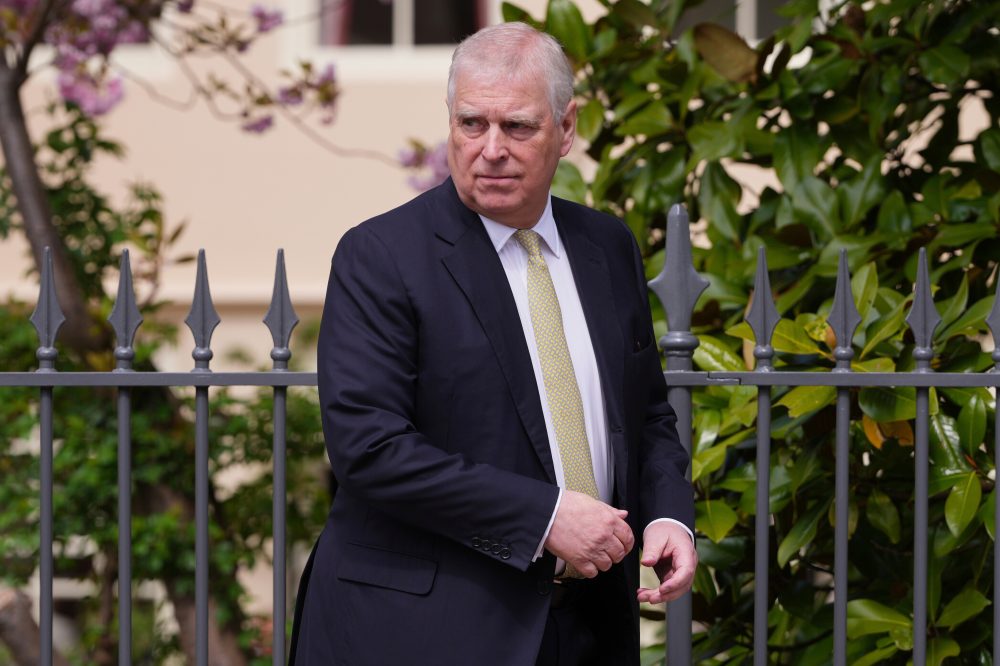
LONDON — Authorities have filed harassment charges against a 39-year-old individual following reports that the former Prince Andrew was confronted by a masked individual in a threatening manner while walking his dogs near his residence.
Alex Jenkinson is scheduled to appear before Norwich Magistrates Court on Friday to answer two charges of employing threatening, abusive, or insulting language or conduct that constitutes harassment or causes alarm or distress. Norfolk Constabulary made the announcement regarding these charges Thursday evening.
Authorities stated that the defendant was taken into custody Wednesday evening following reports of a man “conducting himself in an intimidating fashion” in the vicinity of Andrew’s residence in eastern England.
According to The Daily Telegraph, an individual wearing a ski mask approached the former royal while yelling offensive language.
The 66-year-old Mountbatten-Windsor, who is the younger sibling of King Charles III, relocated to the monarch’s private Sandringham Estate, approximately 100 miles north of London, following his removal from his long-term residence near Windsor Castle due to revelations concerning his association with Jeffrey Epstein.
The royal family removed all his honors and titles and excluded him from public duties following years of controversy surrounding his financial difficulties and connections to dubious individuals, including Epstein.
Virginia Giuffre, one of Epstein’s accusers, claimed she was compelled to engage in sexual activity with the then-prince on three occasions beginning at age 17. While he disputed these allegations, he ultimately reached a settlement for an undisclosed amount and recognized Giuffre’s suffering as a trafficking victim. Giuffre died by suicide in April 2025 at age 41.
In February, he made history as the first senior British royal in nearly 400 years to face arrest when British authorities detained him for several hours on suspicion of misconduct in public office related to his Epstein connections.
Law enforcement had previously indicated they were “evaluating” allegations that Mountbatten-Windsor provided trade intelligence to Epstein, a wealthy financier and convicted sex offender, in 2010, during his tenure as the U.K. special envoy for international trade.
Communication between the two individuals was made public by the U.S. Justice Department as part of millions of pages of documentation from the American investigation into Epstein.
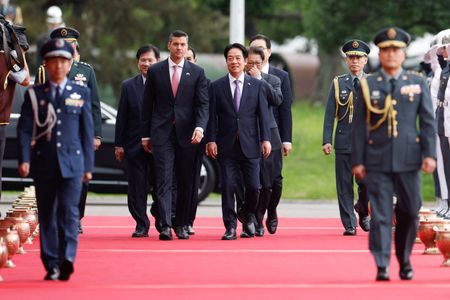
Paraguay’s leader delivered a strong message of support for Taiwan on Friday, publicly rejecting China’s latest attempt to isolate the island democracy by pressuring its remaining diplomatic partners.
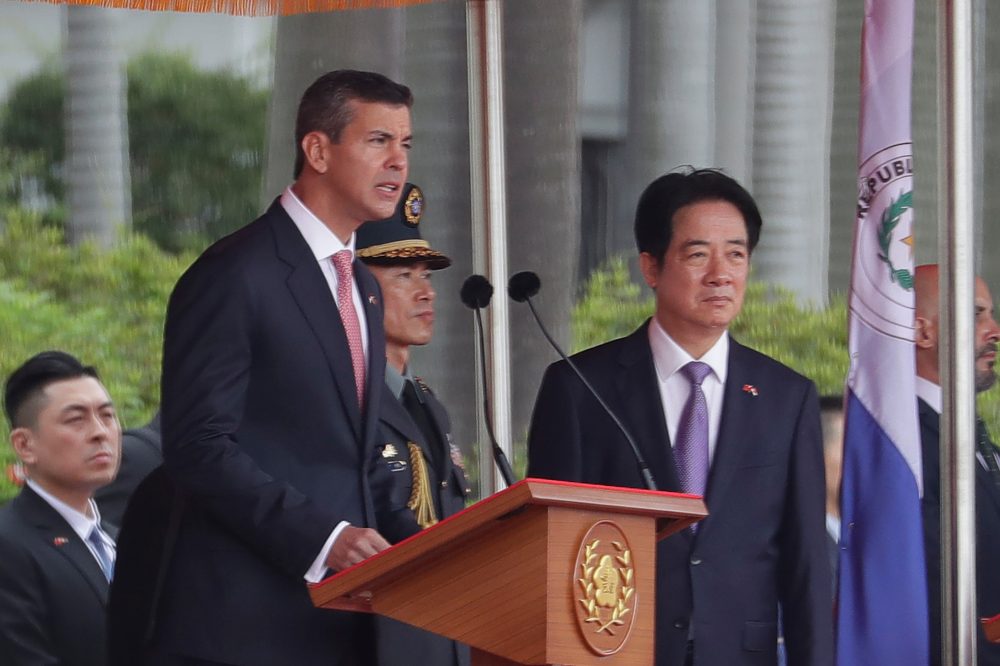
President Santiago Peña declared his nation’s commitment to Taiwan during a ceremonial military event, emphasizing the deep value Paraguay places on the relationship just one day after Beijing called for the South American country to abandon its Taiwan ties.
Speaking through an interpreter outside Taiwan’s presidential office, Peña described the ceremony as representing both nations’ steadfast commitment to strengthening their partnership and cooperation.
“Paraguay highly values the relationship,” Peña stated, according to his interpreter.
The Paraguayan leader emphasized that his country would continue backing Taiwan based on shared democratic principles, freedom, and human rights values, while working to advance their strategic bilateral partnership.
Taiwan’s President Lai Ching-te expressed gratitude to Paraguay’s government for advocating on Taiwan’s behalf and maintaining strong support for the island’s participation in international affairs.
“I believe the friendship between Taiwan and Paraguay will further deepen and their cooperation will become closer through the visit of President Peña,” Lai remarked.
This show of solidarity followed Thursday’s statement from Chinese foreign ministry spokesperson Lin Jian, who pressed Paraguayan officials to “come to the right side of the history as soon as possible” by ending diplomatic recognition of Taiwan. Lin cited the one-China principle as fundamental to international relations, noting that 183 nations maintain diplomatic ties with China.
During Friday’s bilateral meeting, Peña made a passionate appeal for Taiwan’s international recognition, arguing that Taiwan’s people deserve the right to determine their own future according to democratic and fair principles.
“I want to stress that excluding Taiwan from the important United Nations system is not only unfair, but also undermines the legitimacy of the United Nations as the most representative organization of democratic countries in the world,” he declared.
The two leaders oversaw the signing of several bilateral agreements, including a memorandum of understanding regarding artificial intelligence computing center investment.
In a separate interview with Taiwan’s Central News Agency, Peña revealed he had spoken with Honduran President Nasry Asfura before arriving in Taiwan for his four-day visit. While they didn’t directly address the possibility of Honduras resuming relations with Taiwan, Peña told Asfura about Paraguay’s positive relationship with the island nation.
Honduras switched its diplomatic recognition from Taiwan to China in 2023. However, Asfura, who gained the presidency with backing from U.S. President Donald Trump, has initiated a review of agreements between his country and Beijing, sparking speculation that Honduras might distance itself from China as part of the Trump administration’s efforts to counter Chinese influence in Latin America.
Paraguay stands as Taiwan’s only remaining diplomatic partner in South America and one of just 12 countries globally that officially recognize the island democracy. Beijing views Taiwan as part of its territory and has intensified efforts in recent years to convince Taiwan’s diplomatic allies to switch sides, while simultaneously escalating military pressure around the island.
The diplomatic tensions highlight ongoing challenges for Taiwan’s international standing. Last week, President Lai traveled to Eswatini, Taiwan’s final diplomatic ally in Africa, after being compelled to delay the trip when several countries reportedly denied him permission to fly through their airspace due to Chinese pressure.
While China didn’t confirm or deny these allegations, Beijing expressed “high appreciation” for countries that respect the “one China principle,” referring to China’s territorial claims over Taiwan.
The division between China and Taiwan dates back to 1949, when Communist forces took control in Beijing following a civil war. Defeated Nationalist Party members retreated to Taiwan, which eventually evolved from military rule into a multi-party democratic system.
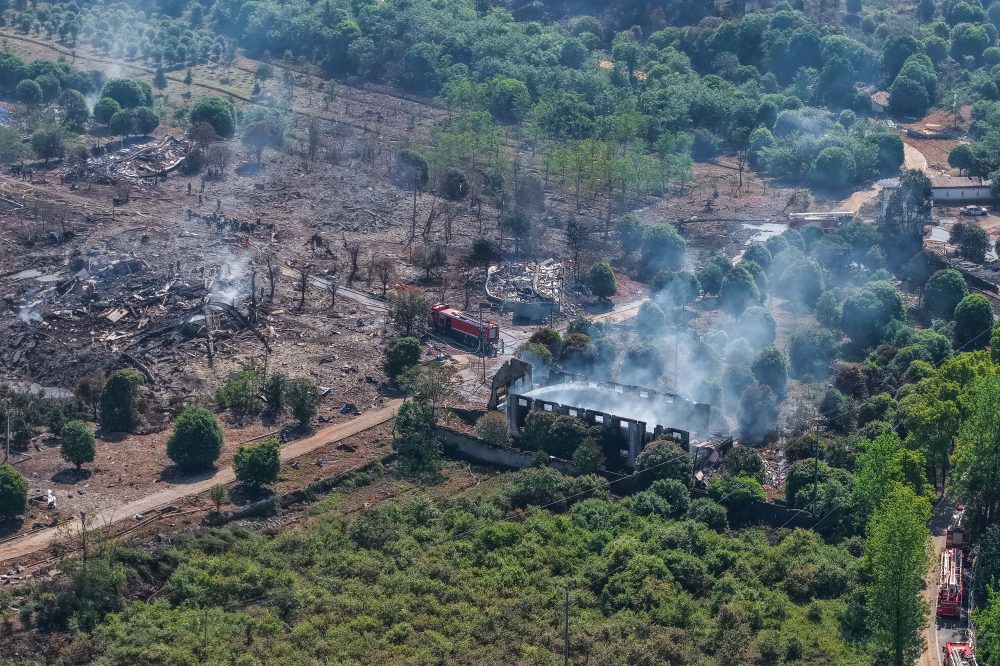
A deadly explosion at a fireworks manufacturing facility in central China has claimed 37 lives, with one person still unaccounted for, according to Chinese state media reports released Friday.
The devastating blast took place Monday at a production facility in Changsha, located in Hunan province, as confirmed by China’s official news agency Xinhua.
More than 60 individuals sustained injuries in the explosion, according to initial reports from the scene.
Officials are continuing their investigation into what caused the deadly incident and have mandated that all fireworks production operations in the surrounding region cease operations immediately.
The facility was run by Huasheng Fireworks Manufacturing and Display Co., situated in Liuyang, a county-level city under Changsha’s administration that serves as one of China’s major fireworks production centers, according to China Daily.
Liuyang holds significant historical importance in fireworks manufacturing. According to Guinness World Records, the region is connected to the first documented firework – the Chinese firecracker – which was created by Li Tian, a monk who resided near Liuyang during the Tang dynasty period spanning approximately 618 to 907 C.E.
This tragedy follows two fatal explosions that occurred at fireworks retail locations during February’s Lunar New Year celebrations, as previously reported by Chinese authorities.
Japan is banking on coordinated efforts between its central bank and U.S. Treasury Secretary Scott Bessent to strengthen its currency intervention strategy and halt the yen’s ongoing weakness.
The approach depends on cooperation between key players – Japan’s central bank, its finance ministry, and Washington officials – with the goal of making it more expensive for investors to bet against the yen rather than achieving a complete turnaround.
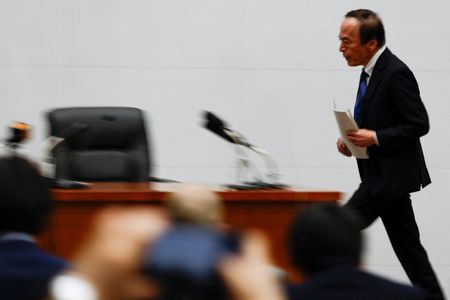
Bank of Japan Governor Kazuo Ueda’s shift toward tighter monetary policy last month created a turning point, bringing the central bank into rare agreement with Japan’s Ministry of Finance and presenting a more coordinated approach to stopping the currency’s fall.
Just two days following Ueda’s statements on April 28, Japan’s finance ministry executed its first yen-strengthening intervention in almost two years – followed by additional actions in May, according to sources who spoke with Reuters.
After reportedly investing nearly 10 trillion yen ($63.7 billion) in recent intervention efforts, financial experts believe Tokyo is hoping Bessent’s upcoming visit to Japan will provide additional support, either through direct endorsement or strategic statements indicating U.S. acceptance of Japan’s currency actions.
“At this time, it is a significant alignment,” stated Bart Wakabayashi, branch manager at State Street in Tokyo, discussing Japanese officials collaborating with the U.S. to counter yen short-sellers.
“It is significant, particularly in the fact that Japan is not doing this alone. We’re looking to see if something comes out of these Bessent meetings, but I think even just the appearance that they’re talking about FX levels is important,” he explained.
Bessent previously supported the yen in January by advocating for faster Bank of Japan interest rate increases to prevent currency declines and prompting the U.S. to conduct an unusual rate check – widely interpreted as preparation for potential joint intervention.
During his three-day visit, Bessent is scheduled to meet with Japanese counterpart Satsuki Katayama, Prime Minister Sanae Takaichi, and potentially BOJ Governor Ueda.
“No one wants to fight the U.S.,” commented Atsushi Takeuchi, a former central bank official who participated in Tokyo’s previous market interventions.
“I’m sure Japanese policymakers are approaching Washington on various fronts, as it would make a huge difference if Bessent openly endorses Tokyo’s intervention,” he added.
Senior currency official Atsushi Mimura revealed Thursday that Tokyo maintains daily communication with U.S. authorities, noting that his counterparts “fully understand our thinking and our actions.”
After Bessent’s departure from Tokyo, responsibility returns to the Bank of Japan to support the finance ministry’s yen stabilization efforts.
Market participants will closely examine upcoming speeches by senior officials before the June policy meeting for any indication that last month’s hawkish stance is becoming actual policy.
Unlike previous instances when Ueda’s dovish messaging encouraged yen selling, his current emphasis on inflation risks from currency weakness has kept a June rate increase as a possibility.
Several finance ministry sources, speaking anonymously, described Ueda’s communication as unusually successful in shaping market expectations.
“If the BOJ indeed raises rates in June, that makes it easier to squeeze in another hike by year-end,” said a source familiar with the central bank’s thinking.
Ueda will deliver a closely monitored speech on June 3, just before the June 15-16 meeting where markets are questioning whether policymakers will increase rates to 1.0% from 0.75%.
Deputy Governor Ryozo Himino and board members Kazuyuki Masu and Junko Koeda will also speak this month, with any suggestion they might support a rate increase likely to encourage yen buyers.
All three voted to maintain steady rates in April, while three other board members dissented and called for raising rates to 1.0%.
A potential complication involves Prime Minister Takaichi, a long-time supporter of loose monetary policy who has previously opposed central bank tightening. Though publicly quiet, she has appointed monetary policy doves to the central bank board and recently criticized trade minister Ryosei Akazawa for suggesting rate increases could help the yen.
“The premier doesn’t want the BOJ to raise rates. But she also wants to do something about rising living costs,” making yen-buying intervention the only practical choice, a government source told Reuters.
Broader economic forces are creating additional pressure. Japan’s heavy dependence on energy imports means the oil price surge from Middle East conflicts is worsening the trade deficit, adding downward pressure on the currency despite domestic policy changes, analysts note.
However, Tokyo’s renewed market interventions, supported by stronger policy signals, could provide authorities time to maintain stability until global conditions improve.
“Critics often argue that intervention serves little purpose beyond delaying the underlying market trend,” said Rong Ren Goh, a portfolio manager at Eastspring Investments in Singapore. “But even if intervention has not fundamentally reversed the market’s directional bias, it has at least broken the momentum.”
Without intervention, continued yen selling could have escalated into more chaotic depreciation, Goh explained, making it “much harder for the authorities to contain.”
South Korean lawmakers have abandoned efforts to vote on constitutional changes that would have restricted presidential powers to declare martial law, following sustained opposition from conservative legislators.
Parliamentary Speaker Woo Won-shik announced Friday that the proposed amendment would not advance to a full assembly vote after the conservative People Power Party conducted a filibuster to block the measure.
The legislation, backed by six political parties including the governing Democratic Party, would have mandated that presidents obtain legislative consent before implementing martial law. Under the proposed framework, any presidential martial law declaration would become void if parliament rejected it or failed to approve it within a 48-hour window.
The constitutional revision effort emerged following the political turmoil caused by conservative former President Yoon Suk Yeol’s short-lived martial law order in late 2024, which sent shockwaves through the nation.
Beyond martial law restrictions, the amendment would have added language to the constitution’s introduction honoring the Gwangju uprising, a pivotal moment in South Korea’s democratic evolution. The May 18, 1980 civilian revolt against military dictator Chun Doo-hwan resulted in hundreds, potentially thousands, of deaths.
Constitutional modifications require support from a minimum of 191 members in the 286-seat legislature, according to Woo’s statement. An initial attempt to pass the amendment on Thursday collapsed when People Power Party members boycotted the proceedings, preventing the necessary quorum from being reached.
The presidential administration expressed disappointment over the amendment’s failure due to PPP resistance and called on lawmakers to resume constitutional reform discussions during the latter portion of their current term.
Germany’s second-largest bank, Commerzbank, announced Friday it will eliminate 3,000 positions while boosting its financial projections in an effort to resist an acquisition attempt by Italian banking giant UniCredit.
The Frankfurt-based financial institution revealed its enhanced strategy following UniCredit’s formal takeover bid earlier this week, valued at 37 billion euros ($43.43 billion) — a price below current market rates.
This ongoing corporate battle has created a months-long stalemate between UniCredit CEO Andrea Orcel’s expansion ambitions and the German bank that serves as a crucial financing source for Europe’s biggest economy and its financial center in Frankfurt.
Commerzbank criticized its Italian suitor’s approach on Friday, stating: “UniCredit’s communicated plan remains vague and bears considerable execution risks, while using misleading narratives that discredit Commerzbank.”
The upcoming workforce reduction represents the bank’s third wave of layoffs in recent years. The institution previously eliminated 10,000 positions — roughly one-third of its German staff — earlier this decade, and revealed plans last year to cut an additional 3,900 jobs. Orcel has indicated he would significantly reduce the Frankfurt headquarters if successful.
The German bank expects approximately 450 million euros in restructuring expenses related to the job cuts.
This corporate struggle has evolved into a significant test of Germany’s capacity to resist foreign acquisition attempts and protect its financial sector from losing another major commercial banking institution.
Germany’s number two bank hopes its Friday announcement will demonstrate to investors that it can prosper without foreign ownership.
The institution raised its revenue projection for 2028 to 15 billion euros, up from its previous 14.2 billion euro target. It also increased its 2028 profit forecast to 4.6 billion euros, surpassing the earlier goal of 4.2 billion euros.
Financial analysts had already anticipated Commerzbank would exceed the 2028 objectives established last year.
Orcel surprised Germany’s business and political leaders in 2024 when his Italian bank — also that country’s second-largest — acquired a substantial Commerzbank stake and began advocating for a merger in the most aggressive pan-European banking consolidation attempt to date.
Last month, Orcel unveiled his own restructuring proposal for Commerzbank, projecting cost savings of 1.3 billion euros and workforce reductions of 7,000 employees.
UniCredit, now Commerzbank’s biggest shareholder with nearly 30% ownership, contends that its German rival isn’t reaching its full potential and argues that Europe needs larger banks in today’s unstable geopolitical environment.
Meanwhile, Commerzbank has pledged to maintain its independence. Leadership from both institutions held discussions earlier this year, but negotiations collapsed after Easter.
UniCredit’s acquisition attempt has encountered strong resistance in Germany. On Thursday, German Chancellor Friedrich Merz declared that Germany opposes hostile and aggressive banking sector takeovers.
“This is not how one treats institutions such as a bank in Germany, namely Commerzbank. This is how trust is destroyed, not how new trust is fostered,” Merz stated.
The German government retains a 12% stake in Commerzbank from a bailout during the financial crisis two decades ago. Some politicians and banking officials are urging Berlin to expand its ownership to block UniCredit, though such action would face considerable obstacles.
These developments coincided with Commerzbank’s quarterly earnings report, showing first-quarter net profit increased 9.4% to 913 million euros, exceeding the 868 million euro analyst consensus.
Oklahoma City Thunder stars Chet Holmgren and Shai Gilgeous-Alexander each put up 22 points Thursday night, leading their team to a commanding 125-107 victory over the Los Angeles Lakers at home and securing a 2-0 lead in their Western Conference second-round playoff matchup.
The Thunder continue their flawless postseason run as the best-of-seven series shifts to Los Angeles for Game 3 this Saturday.
Oklahoma City managed to dominate despite Gilgeous-Alexander struggling with foul issues throughout the contest, which restricted his playing time to just 28 minutes.
“I’ve got the utmost confidence in our whole team,” Thunder head coach Mark Daigneault commented regarding playing without Gilgeous-Alexander. “We’ve shown that during the year. … We’ve tried to train that muscle and we’ve got guys that are competitors. They see the challenges of the game as opportunities and they attack them.”
During the opening moments of the third quarter, Gilgeous-Alexander received a flagrant-1 offensive foul call while Austin Reaves was defending him.
With four fouls accumulated, Gilgeous-Alexander was forced to the sideline as Los Angeles gained a five-point advantage.
Nevertheless, even without their star player on the court, Oklahoma City responded with an impressive 25-7 scoring streak that gave them a 13-point cushion late in the period.
“Guys stepped in and made confident plays up and down,” Daigneault noted.
The momentum shift featured Jaylin Williams converting a four-point play that pushed Oklahoma City ahead 85-74 with under three minutes remaining in the third quarter. Holmgren initiated the sequence by stealing the ball from Reaves near the basket on the defensive end.
Oklahoma City capitalized on Los Angeles’ seven third-quarter mistakes for 11 points and finished the game with 26 points generated from the Lakers’ 21 total turnovers.
Los Angeles managed to narrow the gap to five points early in the final quarter, but Holmgren responded with five straight points to restore the double-digit margin.
Approximately four minutes into the fourth quarter, both Gilgeous-Alexander and Lakers superstar LeBron James fell during the same sequence after Reaves fouled Gilgeous-Alexander.
James, attempting to block the shot from behind, tried to jump over Gilgeous-Alexander along the baseline but couldn’t prevent contact with the Thunder player.
Both players went down, with James clutching his right wrist after hitting the floor while Gilgeous-Alexander briefly showed signs of discomfort.
Neither Gilgeous-Alexander nor James left the contest following the incident.
Reaves, who managed only 3 of 16 shots in the series opener, performed significantly better Thursday evening, leading all scorers with 31 points on 10-of-16 shooting.
“I thought he (Reaves) did a good job touching the paint,” Lakers head coach JJ Redick observed. “Those touch shots were there tonight, got some good looks from three. He played a solid game.”
James contributed 23 points for Los Angeles, which shot 50% from the field as a team.
Oklahoma City’s Ajay Mitchell provided 20 points in support. Holmgren connected on 7 of 11 field goal attempts while recording nine rebounds, four steals and two blocked shots.
Jared McCain delivered 18 points coming off the bench for the Thunder, whose substitute players outproduced the Lakers’ reserves 48-20.
Health authorities in the United Kingdom have reported that a third British citizen is suspected of contracting hantavirus in connection with a fatal disease outbreak aboard a high-end cruise vessel.
The UK Health Security Agency announced Friday that they have confirmed hantavirus infections in two other British citizens as part of their ongoing surveillance of the dangerous outbreak. The cases are linked to incidents on the remote South Atlantic island of Tristan da Cunha.
Officials continue to monitor the situation as they track the spread of this serious viral infection among passengers from the luxury cruise ship.
Pope Leo XIV has completed his inaugural twelve months as the Catholic Church’s first American leader, dedicating his efforts to pastoral guidance centered on bringing together a divided religious community and world. Drawing from his Augustinian religious foundation, the pontiff has prioritized reconciliation and mending rifts throughout Vatican leadership while establishing his unique position as America’s first pope.
The Associated Press photo desk has compiled a visual collection documenting this historic first year.
VATICAN CITY — As Pope Leo XIV completes his first year in office, his leadership style stands in stark contrast to Pope Francis, who immediately launched sweeping changes through rapid reforms and new appointments. Instead, Leo XIV has adopted a more measured approach, taking time to establish his bearings while developing a long-term vision for his papacy.
While Leo has implemented some notable changes during his initial year, he confronts several major challenges on the horizon.
Multiple upcoming appointments both in the United States and within Vatican leadership will provide Leo with opportunities to reshape the church’s power structure according to his vision and priorities.
Cardinal Blase Cupich of Chicago reached age 77 this past March, placing him two years beyond the standard retirement age for bishops. This means Leo may soon select a new archbishop for his home city.
Come December, Los Angeles Archbishop José Gomez will turn 75, opening the door for Leo to appoint new leadership for America’s largest archdiocese.
Leo has already selected Archbishop Ronald Hicks to succeed retiring Cardinal Timothy Dolan in New York. However, according to Michael Moreland, a professor of law and religion at Villanova University (Leo’s former school), this appointment “didn’t ideologically code dramatically one way or the other … in keeping with Leo’s overall kind of approach to a lot of these decisions.”
Within Vatican walls, British Cardinal Arthur Roche recently turned 76. He currently oversees the liturgy office, which implemented Francis’ disputed restrictions on the traditional Latin Mass. Close attention will be paid to Roche’s eventual replacement as an indicator of how Leo might handle this contentious matter.
American Cardinal Kevin Farrell represents another significant Vatican figure. At 78, he has exceeded retirement age but continues leading the family and laity office. Additionally, he serves as camerlengo (the official who supervised the conclave that elected Leo) and sits on the most crucial Holy See committees overseeing financial investments and the city state’s supreme appeals court.
Canadian Cardinal Michael Czerny will celebrate his 80th birthday in July, making him not only the oldest Vatican prefect — he leads the office handling migrants, environment and development — but also removing him from eligibility to vote in future conclaves.
This change will drop the number of voting-eligible cardinals to 117, falling short of the typical 120-member limit for cardinals under 80 who retain voting rights. This situation suggests Leo might announce his first group of new cardinals within the coming year to help select his eventual successor.
When Francis began his papacy, he encouraged young people to create upheaval in their dioceses and “make a mess.” Leo has already begun addressing some of these disruptions.
This past April, the Vatican terminated a Francis initiative called the World Day of Children, which had generated confusion about its goals and purpose. The cancellation followed Leo’s official elimination of the temporary pontifical commission Francis had established for this event in 2024.
In December, Leo disbanded a Holy See fundraising commission established under questionable conditions in 2025 while Francis was hospitalized during his final weeks. The commission consisted exclusively of Italians lacking professional fundraising backgrounds. Its leader was the assessor of the Secretariat of State, the same Vatican department Francis had previously prohibited from managing assets after losing tens of millions of euros in a controversial London real estate transaction.
Leo subsequently announced the formation of a new committee to create fundraising proposals and frameworks.
“The Holy Father was clearly paying attention,” stated Ward Fitzgerald, president of The Papal Foundation, an organization of affluent U.S. donors funding papal charitable projects in developing nations. “He realized that it was not going to be highly functional.”
Leo also reversed a 2022 regulation issued by Francis that centralized financial authority within the Vatican bank. Leo created his own legislation permitting the Holy See’s investment committee to utilize banks beyond the Vatican when financially advantageous.
Leo has also conducted meetings with activist survivors of clergy sexual abuse, who report he pledged to engage in ongoing dialogue as they urge the Vatican to establish a global zero-tolerance policy for abuse. While Francis regularly met with individual abuse survivors, he maintained distance from advocacy and activist organizations.
Leo’s private meetings have offered insights into his areas of focus and concern, indicating his willingness to hear diverse perspectives while revealing little about his personal views.
This pattern was evident when he met on March 16 with Gareth Gore, author of “Opus: The Cult of Dark Money, Human Trafficking and Right-Wing Conspiracy Inside the Catholic Church,” discussing alleged misconduct within the influential Opus Dei movement.
On February 6, Leo held a private meeting with representatives from Courage International, a church-affiliated organization claiming to help individuals with same-sex attraction live celibately. Critics have labeled Courage as anti-gay and accused it of promoting conversion therapy, allegations the organization disputes.
On March 5, Leo met with Stephen Bullivant and Stephen Cranney, authors of “Trads. Latin Mass Catholics in the United States.” They had conducted research surveying Catholics who participate in traditional Latin Mass services.
Leo recognizes the controversy surrounding Francis’ restrictions on the Latin Mass and has shown interest in consulting with traditionalists to comprehend their perspectives as he considers how to bridge divisions over the ancient liturgy.
The Latin Mass controversy may reach a critical point on July 1 when four new traditionalist Catholic bishops are scheduled for consecration in a ceremony without Leo’s approval. These bishops belong to the breakaway traditionalist Society of St. Pius X, and their consecration will present the most significant challenge to Leo’s authority thus far. If conducted, it would constitute a schismatic action virtually guaranteeing their automatic excommunication.
While the SSPX represents a fringe element within the broader traditionalist Catholic community, traditionalist Catholics maintaining full communion with the Holy See are monitoring Leo’s response.
On the other end of the theological spectrum, the Vatican confronts potential major conflict with the German Catholic Church regarding its extended reform initiative called the Synodal Path. This has resulted in proposals for creating a permanent joint body of German bishops and lay Catholics making shared decisions, representing a significant departure from Catholic ecclesiology that places governing authority exclusively with bishops.
The Vatican has already expressed opposition to such joint governance and has disagreed with German proposals to formalize blessings for same-sex couples, which Francis permitted only on an informal, spontaneous basis.
A confrontation may occur when German proposals are submitted to Rome for final authorization.
While some might argue Leo’s primary challenge involves his relationship with President Donald Trump and a potential U.S. visit — none is currently planned this year — Leo would likely emphasize his eagerly anticipated first encyclical. Expected within the coming weeks, it addresses artificial intelligence and other peace and justice concerns.
Leo has already stated he views the AI revolution as having existential significance comparable to worker rights concerns at the turn of the century that confronted the previous Pope Leo XIII in his groundbreaking encyclical “Rerum Novarum” (“Of New Things”).
“Like his namesake Leo XIII with the Industrial Revolution, Leo clearly sees the church as having something important to offer in an era of what may turn out to be epochal technological change,” explained Dan Rober, associate professor of Catholic studies at Sacred Heart University.
The entertainment and electronics powerhouse Sony Group Corp. experienced a modest decline in annual earnings but announced Friday its projection for unprecedented profits in the current fiscal year.
The Tokyo-headquartered company posted net earnings of 1.03 trillion yen ($6.6 billion) for the fiscal year ending in March, representing a 3.4% decrease from the prior year’s 1.07 trillion yen.
The company’s financial performance took a hit from the termination of its electric vehicle collaboration with Japanese automaker Honda Motor Co. Additionally, escalating semiconductor costs negatively impacted earnings and continue to pose challenges for the diversified corporation, which operates across film, music, and gaming sectors.
Looking ahead, Sony anticipates achieving record-setting profits of 1.16 trillion yen ($7.4 billion) for the current fiscal year, marking a substantial 13% increase over the recently concluded period.
Revenue for the completed fiscal year climbed 3.7% compared to the previous period, reaching nearly 12.5 trillion yen ($8 billion). This growth was driven by successful theatrical releases including the newest “Demon Slayer” installment and “Kokuho,” along with robust performance in gaming and digital services.
Examining quarterly performance, the company behind PlayStation consoles, Bravia televisions, and “Spider-Man” films saw profits plummet 63% to 83 billion yen ($529 million), down from 224 billion yen during the corresponding quarter last year.
However, quarterly revenue showed positive momentum, increasing 8% to reach 3 trillion yen ($19 billion), according to the entertainment giant whose roster of musical talent includes Bad Bunny and Sza.
The company is banking on strong box office performance from forthcoming releases like “Spider-Man: Brand New Day” and “Jumanji: Open World” to strengthen financial results throughout the current fiscal period.
In additional corporate news announced Friday, Sony revealed plans to repurchase up to 230 million shares through a buyback program valued at 500 billion yen ($3.2 billion).
Sony’s stock price, which has been hovering around 3,000 yen ($19) in recent trading, rose 1% on Friday.
The University of Delaware Blue Hens softball team saw their season come to an end during day two of the Conference USA Tournament competition.
The team’s postseason hopes were dashed as they were knocked out of the tournament, bringing their campaign to a close. The Blue Hens had advanced to the second day of the conference tournament before their elimination.
The conclusion marks the end of another chapter for Delaware softball as they competed in Conference USA play this season.
OMDURMAN, Sudan (AP) — After being displaced from his farmland for two years due to Sudan’s ongoing war, Omer al-Hassan made his way back to restart agricultural operations. However, Middle Eastern conflicts are now threatening to deepen his financial struggles and food insecurity as costs for fuel and fertilizer continue climbing.
Al-Hassan and fellow agricultural workers across Sudan are preparing for a costly planting season in the coming weeks. Several told The Associated Press they plan to reduce crop production or abandon planting entirely — alarming developments for a nation where three years of warfare have created widespread hunger.
The conflict involving Iran has “affected everything related to agriculture,” al-Hassan explained while harvesting onions with other workers. After spending two months clearing overgrown weeds from their land, “plowed the soil and we said God bless, and even then we struggled so much, one had to sometimes skip a meal.”
Al-Hassan and ten fellow farmers working his property explained they cannot manage agricultural expenses without governmental assistance, leading to production cuts and fertilizer rationing on his farm that also grows potatoes and tomatoes.
Fellow farmer Mohammed al-Badri explained he could only afford to cultivate half his property due to increasing expenses: “The rest of it is nothing.”
The Gulf area, where hundreds of commercial vessels have remained stuck for weeks due to Iran’s control over the Strait of Hormuz, supplies more than half of Sudan’s sea-imported fertilizer. Additionally, fuel costs have increased approximately 30%.
This means food costs throughout Sudan are also rising sharply.
Sorghum. Millet. Sesame. These essential Sudanese crops now face significant threats.
Agricultural workers already strained by domestic warfare between Sudan’s military forces and the paramilitary Rapid Support Forces are now witnessing cost increases for fertilizer, gasoline needed for farm machinery, and diesel required for irrigation systems.
These increasing expenses have established “a dangerous reality” for farmers who will face difficulties without governmental intervention, explained Abdoun Berqawi, an agricultural worker in Gezira, among the nation’s primary food-production areas.
Berqawi reported that a 50-kilogram (110-pound) urea fertilizer bag now costs approximately $50, increased from $11 during the same timeframe last year. Tractor fuel has jumped from $2.50 to $8 per gallon.
Agriculture ministry officials in Sudan did not immediately respond to requests for information about their crisis response plans.
A military media representative accompanied the AP during its visit, including during interviews. The AP maintains complete editorial control over its content.
The Iranian conflict has created a “dangerous chain reaction … at the wrong moment” as farmers prepare for planting season, stated Melaku Yirga, Mercy Corps vice president for the Africa region, who recently traveled to Sudan’s Kassala and Gedaref provinces, another major food-production area.
“People are buying less food, cutting or skipping meals, selling assets and taking greater risks just to survive,” Yirga explained. “Mothers are being forced to make painful choices about who gets to eat the little food that is available, while some families are resorting to leaves or animal feed just to get by.”
Farmers who obtained bank loans face potential imprisonment if poor harvests prevent loan repayment, noted Merghany Omar, an agricultural worker in al-Matammah in River Nile province. He explained that onion cultivation, a regional staple, no longer generates enough income to cover planting expenses.
These developments are happening alongside existing challenges including currency devaluation, explained Samy Guessabi, country director for Action Against Hunger in Sudan.
Residents in some of the nation’s most isolated regions, Kordofan, White Nile, Darfur and Blue Nile, are suffering most severely where “agricultural zones are remote and poorly connected,” he noted.
Even in Sudan’s metropolitan areas, vegetables and dairy products have increased approximately 40% due to fuel price spikes.
The domestic war had already created widespread hunger. The U.N. World Food Program estimates 19 million people throughout Sudan are experiencing acute hunger, with numerous families approaching famine conditions. Last year, famine was officially declared in two major areas, Darfur and Kordofan.
Currently, humanitarian response efforts have been significantly delayed by the Iranian conflict and its impact on supply chains.
WFP reported its Sudan-destined food aid shipments are traveling 9,000 kilometers (5,500 miles) further to reach their destinations, increasing both costs and delivery times.
This occurs partly because many ships also avoid the Bab el-Mandeb Strait at the Red Sea’s southern entrance, another vital waterway, according to WFP shipping chief Henrik Hansen. Iranian-supported Houthi rebels in Yemen have threatened shipping operations there.
Mubarak al-Nour, a farmer and former parliamentary member in Gedaref, explained that even if Sudanese farmers obtain fertilizer, delays could cause them to miss the planting season running from June through November. Some farmers are switching to cheaper crops requiring minimal or no fertilizer and reducing cultivation of corn, sesame and other rain-dependent crops.
Even if agricultural supplies arrive in Sudan timely, challenges remain.
Fuel shortages in certain areas result from warring factions blocking essential supplies, explained Mathilde Vu, an advocacy manager with the Norwegian Refugee Council. She noted local fuel markets have been heavily targeted in recent months during a “senseless escalation” of drone attacks nationwide.
VATICAN CITY — During his inaugural year as pontiff, Pope Leo XIV attempted to emphasize his fundamental mission as a shepherd guiding his congregation. However, ongoing public disputes with President Donald Trump and Leo’s increasingly direct responses have complicated this effort and cast a shadow over Friday’s one-year anniversary of his papal election.
The pope commemorated the eve of this milestone by hosting U.S. Secretary of State Marco Rubio, who traveled to the Vatican for diplomatic discussions aimed at repairing relations. Trump’s continuous public attacks against the first American pope in history have created an extraordinary exchange of criticisms regarding Iran war policies and peace initiatives, putting strain on diplomatic ties between the United States and the Holy See.
Following the diplomatic meeting, both Vatican officials and the State Department emphasized their robust bilateral relationship. However, this ongoing conflict has forced Leo beyond his preferred role and into the international spotlight, prompting sharp responses such as his recent statement following Trump’s latest mischaracterization of his positions. “If someone wants to criticize me for announcing the Gospel, let him do it with the truth,” Leo declared.
This confrontational approach contrasts sharply with Leo’s natural temperament — during this first year, the world has discovered he is fundamentally a gentle, 70-year-old missionary priest from the Midwest with a quiet disposition. He enjoys solitary tennis matches, can recite 5th century philosopher St. Augustine from memory, and maintains he is simply citing Scripture when advocating for peace.
Beyond the Trump-Leo conflict, the former Robert Prevost appears motivated not by dramatic actions or attention-seeking controversies that often characterized his predecessor, Pope Francis. Instead, Leo draws inspiration from quiet, steady dedication to Gospel preaching and — influenced by his Augustinian theological background — focuses on community building and reconciliation.
Leo launched his unlikely papal tenure with promises to pursue unity in a divided world and church, and at this one-year milestone, he appears to be fulfilling that commitment.
Following Francis’ transformative and occasionally controversial 12-year leadership, Leo has provided a soothing influence to both the Vatican and the broader church community. He appears determined to bridge divides, even as new threats of separation continue to surface.
This approach has been evident as he addresses some of the most challenging issues confronting the Catholic Church: conflicts between traditional and progressive factions, financial difficulties at the Holy See, and the international crises central to the Trump-Leo disagreements.
“I think the challenge that the Holy Father has is to strengthen the unity of the church,” explained Cardinal Wilton Gregory, a Chicago native like Leo and former Washington archbishop. While divisions have always existed, Gregory noted that social media has magnified them, and Leo appears committed to reducing these tensions.
“Social communication makes it possible for people to take sides, and sometimes taking sides adds to the divisiveness that we have to deal with and that the Holy Father, as the Bishop of Rome, has to respond to,” Gregory explained during an interview.
“He has to call us to our better angels,” he continued.
This appeared to be Leo’s approach when, during his recent African journey, he temporarily reduced Trump’s public attacks by essentially stating he was above the president’s social media commentary. While affirming he would continue delivering the Gospel message of peace, Leo said it “is not in my interest at all” to engage in debates with Trump.
“I primarily come to Africa as a pastor, as the head of the Catholic Church to be with, to celebrate with, to encourage and accompany all the Catholics throughout Africa,” he explained.
He reinforced this message at the trip’s end, stating that the political responsibilities accompanying the papal role, as head of state and global moral leader, were not his main focus.
For many observers, the surprise of an American pope, who challenged the traditional prohibition against a Rome-based moral opposition to the White House, remains striking.
“It’s been the first year of an American pope who has been critical of what America is doing for the most part,” noted Anthea Butler, senior fellow at the Koch Institute, Oxford University.
She emphasized that Leo approaches criticism “not coming full-on like Francis would,” but addressing issues indirectly. He avoids naming specific individuals, instead focusing on Gospel teachings.
This strategy has benefited some American Catholic organizations, particularly after the American church developed a notably strained relationship with Francis. His critiques of American-style capitalism were amplified by conservative Catholic media outlets in the United States during his leadership.
Many Vatican observers felt the Argentine pope simply didn’t understand America, and the feeling was mutual. Some American Catholics eventually reduced their donations to the Holy See under Francis, following persistent reports of mismanagement, corruption and scandal.
However, with a Chicago mathematics graduate now serving as pope, “he can’t be dismissed as being ignorant of the realities in the United States,” said Kerry Alys Robinson, chief executive of Catholic Charities USA, a national network of Catholic organizations.
Robinson reported unprecedented unity among American Catholic bishops, particularly when discussing the dignity of immigrants and impoverished individuals. She attributes this to various factors, including the Trump administration’s immigration enforcement and budget reductions that have created shared purpose. However, she acknowledges the unifying influence of Leo’s message delivered in English.
“It’s very different when you are hearing the message without it being mediated through translation,” she observed.
Ward Fitzgerald, president of The Papal Foundation, which supports the pope’s charitable initiatives in developing nations, said an English-speaking pope has particularly benefited the United States and Europe, where anecdotal evidence suggests a “Leo effect” encouraging new conversions.
“I think there’s lots of reasons for it, but I certainly think that having a pope who speaks English helps young people understand the messages of the Holy Father,” Fitzgerald explained during an interview. This also impacts church donors, especially from America.
“When you tell a donor, ‘I really appreciate what you do’ in English — and they’re English — I think it resonates,” Fitzgerald said. “And so they give a little more.”
The Papal Foundation recently revealed that 25 new families have joined since Leo’s election, a significant number considering membership requires a minimum $1.25 million commitment.
Fitzgerald and foundation members met with Leo recently and gathered at St. Peter’s Basilica for Mass celebrated by Cardinal Timothy Dolan, the influential figure in American Catholic leadership and a key player in the 2025 conclave that elected Leo.
Dolan also maintains a friendly relationship with Trump and serves on his Religious Liberty Commission.
During his homily, Dolan praised the qualities of St. Joseph, Christ’s father and a figure so cherished in the church that he serves as patron saint for more causes than any other saint. Dolan also shared his thoughts about Leo, whom he witnessed in the Sistine Chapel become the 267th pope one year ago Friday.
St. Joseph was characterized by silence, Dolan explained, calm and confident in his role.
“A man who exuded a sense of depth and substance. A man who is shy, all right, a man who is focused on his mission,” he continued. “A man, always attentive to God’s plan.”
Dolan then asked the Americans in attendance if they could identify anyone else matching St. Joseph’s characteristics.
“I can,” Dolan responded. “Pope Leo reminds me of Joseph.”
LONDON — The BBC organized a celebration at London’s Royal Albert Hall, movie theaters showcased his wildlife documentaries, and colleagues spent weeks honoring the renowned naturalist as Sir David Attenborough marked his 100th birthday on Friday.
However, the globally recognized wildlife broadcaster likely felt uneasy about all the fanfare surrounding his centennial celebration, according to Alastair Fothergill, who has produced several of Attenborough’s most celebrated documentaries.
“He’s always been very clear to all of us that work with him: ‘Remember, the animals are the stars, I’m not,’” Fothergill told The Associated Press. “So, yes, surprisingly for one of the most famous men on the planet, he doesn’t like being famous at all.”
Nevertheless, Attenborough had to embrace the recognition this week as researchers, government officials, and environmental advocates honored the broadcaster who has delivered playful gorillas, jumping whales, and miniature toxic frogs into households across the globe for more than seven decades.
Using BBC series including Life on Earth, The Private Life of Plants, and The Blue Planet, Attenborough has revealed nature’s magnificence, intensity, and occasional strangeness through his quiet, musical narration that expresses his personal wonder at the scenes before him.
Audiences who might never venture beyond their local communities were taken to the Himalayas, the Amazon rainforest, and the uncharted woodlands of Papua New Guinea. Behind the remarkable footage lay a dedication to scientific precision that educated viewers about complicated topics including evolution, wildlife behavior, and ecosystem diversity.
As scientific evidence accumulated, he started warning about climate change, marine plastic pollution, and other human-driven dangers to our planet.
This approach helped audiences grasp not just how species developed but, more crucially, the importance of conservation efforts, explained Ben Garrod, an evolutionary biologist at the University of East Anglia and fellow broadcaster who has collaborated with Attenborough.
According to Garrod, Attenborough originally viewed himself as an impartial observer but felt obligated to advocate when he witnessed that political leaders, corporate executives, and citizens weren’t treating the crisis with appropriate urgency.
“He is showing you the majesty, the ferocity, the fragility of the natural world. He shouldn’t have ever had to have turned to policymaking and advocacy,” Garrod said.
“I think it’s very easy for a lot of people to say, ‘He should have done it sooner. Why didn’t he act 20 years, 30 years, 40 years ago?’” Garrod then asked: “Why didn’t we?”
Attenborough entered the world in London on May 8, 1926, sharing his birth year with the late Queen Elizabeth II. He grew up on the campus of what is currently the University of Leicester, where his father held an administrative position.
His passion for the natural world emerged during childhood, when he would bicycle through nearby rural areas collecting treasures like empty bird nests, snake skin that had been shed, and most significantly, fossils.
“I’d find a fossil and show it to my father and he’d say ‘Good, good, tell me all about it.’ So I responded and became my own expert,” Attenborough told Smithsonian Magazine in 1981.
He continued his education by studying geology and zoology at the University of Cambridge.
Attenborough began working at the BBC in 1952, handling behind-the-scenes duties on “everything from ballet to short stories.” After approximately two months with the network, the discovery of a “living fossil” near East Africa’s coastline created worldwide excitement, and he was assigned to create a brief segment about the coelacanth.
The piece featured Professor Julian Huxley, an evolutionary biologist, presenting the story from the studio using preserved animal specimens and a coelacanth photograph to describe the fish’s importance.
Yet Attenborough believed television had greater potential.
“I’d always wanted to do films on animals around the world,” he recalled in a 1985 interview with The Associated Press. “But the attitude was, ‘We’ve got TV cameras in the studio. What’s this about spending money abroad?’”
In 1954, he successfully convinced the BBC to allow him to join a London Zoo expedition traveling to West Africa for specimen collection. This launched a ten-year period as presenter and producer of “Zoo Quest,” launching his field-based career.
Among the most memorable instances of his extensive career occurred during the 1979 program “Life on Earth,” when Attenborough met a mountain gorilla family in a forest along the Rwanda-Congo border.
In that sequence, selected as one of Britain’s greatest television moments ever, a young gorilla rests on his body while baby gorillas attempt to pull off his shoes. Attenborough smiles, chuckles, and appears overwhelmed with joy.
“I honestly don’t know how long it was,” Attenborough later told the BBC. “I suspect it was about 10 minutes, or even a quarter of an hour. I was simply transported.”
“Extraordinary, really,” he reflected. “It was one of the most privileged moments of my life.”
Attenborough has merged his television expertise, audience awareness, and scientific dedication to develop a persona capable of presenting complex wildlife, conservation, and natural history topics to mainstream viewers, noted Jean-Baptiste Gouyon, a science communication professor at University College London.
“Basically he gave wildlife television a figure, a front of the house person … which has come to embody television discourse about nature,” Gouyon said.
On his centennial birthday, admirers made efforts to reach him. In a recorded message, he mentioned expecting to observe the day quietly. That didn’t happen.
“I’ve been completely overwhelmed by birthday greetings from preschool groups to care home residents and countless individuals and families of all ages,” he said. “I simply can’t reply to each of you all separately, but I would like to thank you all most sincerely for your kind messages.”
According to Fothergill, he has no plans to retire.
“He said to me recently he feels unbelievably privileged that a man in his late 90s is still being asked to work. And, you know, he will go on forever. He will die in his safari shorts.”
LONDON — Early election returns from England revealed significant setbacks for Prime Minister Keir Starmer’s Labour Party on Friday, while Nigel Farage’s Reform UK party made substantial inroads across the country.
Political observers are interpreting these local contests as an informal assessment of Starmer’s leadership, who took office fewer than two years ago.
Overnight ballot counting showed Reform UK securing hundreds of council positions in blue-collar communities throughout northern England, including Hartlepool.
The electoral landscape may shift as Friday progresses, with results expected from most local councils, including traditional Labour strongholds such as London. Vote tallying will also occur for regional legislative bodies in Scotland and Wales.
A decisive Labour defeat could prompt restless party members to challenge a leader who brought them to victory in July 2024. Even if Starmer weathers the current storm, numerous political experts question whether he will guide the party through the next general election, which must occur by 2029.
Deputy Prime Minister David Lammy urged party members against removing the prime minister, stating “you don’t change the pilot during the flight.”
BAD STAFFELSTEIN, Germany — A startling display awaits visitors to the Benedictine monastery church of Banz in southern Germany: four complete human skeletons dressed in luxurious silk and brocade fabrics, decorated with jewels, delicate gold work, silver ornaments and intricate lace that have been exhibited for hundreds of years.
These skeletal remains — called Vincenzius, Valerius, Benedictus and Felix Benedictus — are examples of what historians call catacomb saints, transported to this Benedictine religious site near Bad Staffelstein from Rome during the 1600s and 1700s.
“It’s actually a little creepy,” whispered church custodian Anita Gottschlich as she looked at one of the skeletons. It seemed to be staring right back at her through its hollow eye sockets.
“I notice that when older people come here who visited as children, they always look for the Holy Bodies, because they can still remember them,” she added, noting the enduring fascination the skeletons hold for people of all ages.
Though these displays might appear strange or even unsettling to contemporary visitors, catacomb saints — also called Holy Bodies — remain common features in numerous Baroque Catholic churches and religious houses throughout Bavaria.
These skeletal displays, typically housed in glass containers resembling coffins, are also regularly seen in churches across Austria, Switzerland, Czech Republic, and Italy.
According to tradition, these sacred remains belonged to early Christian martyrs in Rome who were unearthed during the 1500s from anonymous burial sites within the city’s underground catacombs.
“At the time, the church simply designated them all as saints,” said Catholic priest Walter Ries. “And, of course, in many countries, including Germany, people wanted to have such holy remains, such relics, simply because this enhanced the status of their own church or monastery and perhaps turned it into a place of pilgrimage.”
Ries serves a congregation of 211 members connected to the monastery church. This represents a dramatic decline from the institution’s peak years, as the monastery was established by Benedictine monks in 1070 and thrived for centuries before being disbanded in 1803. Today, only the church remains operational for religious services; the former monastery buildings now house a political foundation.
“A great deal has changed over the course of the centuries,” the priest said. “Back then, these relics were very important, but today they really aren’t anymore.”
The worship of catacomb saints during the late 1600s and 1700s occurred while much of Europe, including Bavaria, was still recovering from the devastating Thirty Years’ War. This conflict started as a religious conflict between Catholic and Protestant forces and resulted in an estimated 4 to 8 million deaths from warfare, starvation, and disease.
“That was a terrible time,” said Ries. “And so people tried to open the gates of heaven through the Baroque. That’s why everything was designed so beautifully. It was an escape from the present, which was often so terrible. That’s also why these eerie skeletons were so beautifully draped and depicted as lifelike as possible.”
The monastery leaders at Banz, along with their ornately decorated church featuring abundant gold, angels, and Baroque artwork, dispatched representatives to Rome in 1680 and once more in 1745. These missions successfully secured the four skeletal remains, which were then ornately dressed by religious sisters in the nearby city of Bamberg.
To maintain the special nature of viewing the Holy Bodies, they remain hidden throughout most of the year behind wooden panels showing painted images of the respective skeletons attached to their display cases. During significant religious occasions, including All Saints’ Day, these covers are removed to reveal the Holy Bodies to worshippers.
Overall, the ornate decorations “is not meant to show the dead body of a saint, but rather to show his glorified body,” said Günter Dippold, a historian who has been researching the catacomb saints and the Banz monastery.
“It is therefore intended to show the faithful who view it what we will look like after the resurrection, after being raised from the dead, when we no longer have our earthly bodies but rather glorified ones.”
BUDAPEST, Hungary — Péter Magyar will be sworn in as Hungary’s new prime minister this Saturday inside the country’s ornate neo-Gothic parliament building, while thousands of supporters are expected to fill the square outside celebrating the end of Viktor Orbán’s 16-year leadership.
Last month, Magyar’s center-right Tisza party achieved a stunning electoral victory over Orbán’s nationalist-populist Fidesz party, securing more votes and parliamentary seats than any political party since Hungary emerged from Communist rule.
The overwhelming electoral mandate will enable Tisza to reverse numerous policies that earned Orbán criticism as an authoritarian leader among his detractors, while also investigating the economic arrangements that significantly enriched many of his associates and relatives.
Prior to beginning his governing duties, Magyar has invited Hungarians to join a daylong “regime-change” festival on Saturday to commemorate his swearing-in ceremony and the conclusion of the Orbán period.
“We will step through the gateway of regime change with a huge party. Come along, and invite your family and friends!” Magyar wrote in a social media post Sunday.
The 45-year-old attorney established Tisza in 2024 following years working within Orbán’s political circle, and has pledged to eliminate government corruption that he claims has denied Hungarians economic prosperity.
Among his primary objectives is securing approximately 17 billion euros ($20 billion) in European Union funding for Hungary that was withheld during Orbán’s administration due to concerns about rule-of-law violations and corruption. These funds are desperately needed to revitalize Hungary’s faltering economy, which has remained stagnant over the past four years.
Magyar has also committed to mending his nation’s relationships with EU allies that Orbán had severely strained, and to reestablish Hungary’s standing among Western democratic nations that had been questioned as Orbán developed closer ties with Russia.
Demonstrating this dedication, Tisza representatives announce they will restore the EU flag to the parliament building’s exterior starting Saturday, after Orbán’s administration took it down in 2014.
While there is widespread celebration over Orbán’s departure, many of the nearly 3.4 million Hungarians who supported Tisza anticipate Magyar will pursue accountability from Fidesz officials and their business partners for alleged wrongdoing during the previous administration.
Magyar intends to establish the National Asset Recovery and Protection Office, an agency responsible for investigating and attempting to reclaim public money allegedly misappropriated during Orbán’s time in power. He has also promised to halt operations at Hungary’s public broadcasting news divisions — commonly viewed as a propaganda tool for Orbán’s party — until impartiality can be reestablished.
Tisza is anticipated to implement significant reforms throughout Hungary’s government structure, including creating individual ministries for health, environmental protection and education that were absent under Orbán’s system.
Magyar has stated he will bring expertise back to Hungary’s government, nominating several cabinet members who have gained international recognition in their respective areas.
The future leader has suggested diplomat and foreign policy specialist Anita Orbán, who shares no family connection with the departing prime minister, for foreign affairs minister, former Shell executive István Kapitány for economy and energy minister, and economist András Kármán for finance minister.
Magyar is scheduled to take his oath of office at approximately 3 p.m. local time Saturday, followed by remarks to the assembled crowd outside. In his event invitation, he guaranteed artistic performances and unexpected special guests.
Budapest’s liberal mayor, Gergely Karácsony, has separately organized a “system-closing” celebration along the Danube River, describing it as an opportunity to honor Hungarians who courageously opposed Orbán’s governance for years.
“Teachers fired, civilians and journalists humiliated, small churches torn apart,” Karácsony wrote in a social media post. “We can finally leave this era behind us — but first, let us remember the everyday heroes and express our gratitude with a farewell to the system.”
During the first week of May 2026, workers throughout Latin America and the Caribbean participated in widespread May Day demonstrations and rallies.
The events, which took place from May 1-7, 2026, featured large gatherings where participants voiced opposition to various policies, including those of U.S. President Donald Trump. The demonstrations represented a significant show of solidarity among workers across the region.
In Brazil, international pop star Shakira performed at a massive free concert on Rio de Janeiro’s famous Copacabana Beach, attracting an estimated 2 million attendees to the beachfront venue.
Meanwhile, in Bolivia’s capital city of La Paz, educators demanding increased salaries engaged in heated protests near the presidential palace, with some demonstrators hurling tomatoes at riot police officers during the confrontation.
The photo collection documenting these regional events was assembled by photojournalist Andre Penner, who is based in Sao Paulo.
SEOSAN, South Korea — A massive oil tanker flying under Malta’s flag docked off South Korea’s western coastline Friday, delivering one million barrels of crude oil after successfully navigating the contested Strait of Hormuz last month, officials from a major South Korean refinery announced.
South Korea, similar to numerous other Asian countries, relies heavily on Middle Eastern crude oil imports. This recent delivery of one million barrels represents between 35 and 50 percent of the nation’s daily oil requirements.
Iran’s control over the Strait of Hormuz has sent shockwaves through global markets and triggered rising fuel costs, while the ongoing Iranian conflict has sparked fears of an impending energy shortage in South Korea’s export-reliant economy. The nation has implemented gasoline and petroleum product price controls for the first time in decades to prevent dramatic cost increases, while directing refineries to redirect naphtha exports for local consumption as officials work urgently to establish backup oil sources and alternative shipping lanes.
The vessel, named Odessa, arrived in waters near Seosan, a western port city, on Friday morning, several weeks after transiting the Strait of Hormuz while Iran and the United States were engaged in ceasefire negotiations, HD Hyundai Oilbank reported.
The tanker is expected to dock at the company’s offshore terminal facility later Friday to begin offloading its cargo. HD Hyundai Oilbank announced plans to process the crude oil into various petroleum products including gasoline, diesel fuel, and naphtha. The company operates refining capabilities that can handle up to 690,000 barrels of crude oil daily.
Last year, South Korea received over 60 percent of its crude oil and 50 percent of its naphtha—an essential petrochemical ingredient for plastic production—via the Strait of Hormuz shipping corridor.
CEBU, Philippines — Government leaders from across Southeast Asia convened for their yearly conference on Friday, facing mounting concerns about how Middle East hostilities could affect their nations’ economies and populations. Thailand’s foreign minister characterized the Iran conflict as something that “should not have occurred in the first place.”
The urgency felt by Association of Southeast Asian Nations officials became evident through their decision to prioritize emergency preparedness discussions, particularly focusing on securing reliable energy and food resources for their rapidly developing region that depends heavily on Middle Eastern oil and gas imports.
The gathering took place on Cebu island in the Philippines, where President Ferdinand Marcos Jr. directed organizers to eliminate customary ceremonial elements due to global economic uncertainties.
A major concern confronting ASEAN officials involves potential mass evacuations from Middle Eastern countries, where over one million Southeast Asian workers currently reside, should conflicts escalate significantly.
Multiple Southeast Asian nationals have lost their lives following military actions launched by the United States and Israel against Iran on February 28. Intermittent fighting has persisted despite a ceasefire agreement established a month ago, particularly around the crucial Strait of Hormuz.
According to a preliminary joint statement reviewed by The Associated Press, the emergency strategy urges the organization’s 11 member countries to coordinate information sharing and strengthen partnerships with global organizations “to ensure the safety and welfare of ASEAN nationals in affected areas.”
While ASEAN representatives typically employ measured diplomatic language, Thailand’s foreign minister Sihasak Phuangketkeow spoke more directly, advocating for an indefinite extension of the current U.S.-Iran ceasefire and guaranteed safe maritime passage through the Strait of Hormuz.
“This war should not have occurred in the first place,” Sihasak stated during a brief AP interview, emphasizing that all ASEAN nations share these concerns. “We don’t know what the objectives are right?”
“The peace talks seem to be moving but we want the war to end,” Sihasak added.
The regional emergency strategy encompasses several initiatives, including potentially approving an emergency fuel-sharing agreement this year, developing an interconnected power network, expanding crude oil supplier diversity, encouraging electric vehicle adoption, and exploring emerging technologies such as civilian nuclear power.
While Middle Eastern concerns dominated the abbreviated summit designed to reduce expenses, leaders also addressed ongoing regional tensions, including South China Sea territorial disagreements with Beijing, Myanmar’s five-year internal conflict, and recent border disputes between Thailand and Cambodia.
In a forthcoming maritime policy statement, leaders committed to “endeavour to conclude the negotiation of an effective and substantive Code of Conduct in the South China Sea.”
Discussions regarding this proposed non-aggression agreement between ASEAN and China have continued for over ten years amid escalating confrontations, particularly between Chinese and Philippine maritime forces.
These prolonged negotiations have fueled criticism of ASEAN as an ineffective forum where officials gather annually in traditional attire for symbolic unity photographs despite underlying disagreements.
Four ASEAN members—Brunei, Malaysia, Vietnam, and the Philippines—are directly involved in the longstanding South China Sea disputes. The remaining regional partners include Cambodia, East Timor, Indonesia, Laos, Myanmar, Singapore, and Thailand.
Markets across Asia tumbled Friday while crude oil costs surged following missile and drone strikes that threatened to undermine the delicate ceasefire between the United States and Iran, triggering American military responses against Iranian installations.
Despite escalating tensions in the Middle East conflict, futures for U.S. markets showed gains.
Market watchers continue monitoring the military situation as diplomatic talks between Washington and Tehran to resolve the conflict show minimal advancement. Iranian officials announced Thursday they were still reviewing the most recent American proposals aimed at ending hostilities.
Japan’s Nikkei 225 declined 1.1% to finish at 62,174.12, falling from Thursday’s record close of 62,833.84. During Thursday’s session, the index had momentarily surpassed 63,000 for the first time ever. SoftBank Group, among Japan’s major corporations, dropped more than 5%.
Other Asian markets also posted losses: South Korea’s Kospi decreased 1.1% to 7,409.63, while Hong Kong’s Hang Seng fell 1.3% to 26,289.50. China’s Shanghai Composite declined 0.3% to 4,167.56, and Australia’s S&P/ASX 200 lost 1.7% to 8,729.40.
Taiwan’s Taiex dropped 0.5%, and India’s Sensex fell 0.6%.
Energy prices moved higher Friday morning after declining the previous day. Brent crude, the global benchmark, increased 1.1% to $101.13 per barrel. Before the Iran conflict started in late February, Brent crude traded around $70 per barrel.
U.S. benchmark crude gained 0.7% to $95.47 per barrel.
U.S. Central Command reported Thursday that it stopped “unprovoked” Iranian strikes targeting Navy vessels in the Strait of Hormuz, though no ships sustained damage. However, President Donald Trump informed reporters the ceasefire with Iran remained in effect.
The United Arab Emirates, an American ally, announced early Friday that its air defense systems were “actively engaging” with incoming missiles and drones.
Energy costs are anticipated to stay high while the Strait of Hormuz, a crucial passage for petroleum and natural gas shipments, remains mostly blocked and American naval restrictions on Iranian ports continue.
Thursday saw U.S. markets retreat from record levels. The S&P 500 benchmark dropped 0.4% to 7,337.11. The Dow Jones Industrial Average slipped 0.6% to 49,596.97, and the tech-focused Nasdaq composite fell 0.1% to 25,806.20.
Whirlpool shares plummeted 11.9% following disappointing earnings results, while Shake Shack crashed 28.3% for similar reasons. McDonald’s edged down 0.1% despite reporting quarterly revenues that exceeded analyst predictions.
Currency markets saw the U.S. dollar weaken to 156.87 Japanese yen from 156.93 yen. The euro strengthened to $1.1729 from $1.1726.
Major shareholders are calling for environmental commitments as Unilever moves forward with spinning off its food operations to merge with American spice giant McCormick in a massive $65 billion transaction announced this past March.
The merger will create a food industry powerhouse combining McCormick with Unilever’s food division, bringing together well-known products such as Hellmann’s mayonnaise and Cholula hot sauce under one corporate umbrella. McCormick will oversee operations nearly double its current scale, managing a more intricate worldwide supply network that introduces new sustainability challenges related to farming, raw materials, and small agricultural producers.
Because Unilever has established itself as a sustainability leader, various investors want clarity on the merged company’s future sourcing policies.
Vemund Olsen, a senior analyst with Norwegian investment firm Storebrand, which holds significant stakes in both companies, stated: “We will be seeking assurances about the intention of the combined company to uphold and build upon best practice with regard to deforestation-free sourcing of commodities.”
Olsen explained that such practices involve avoiding suppliers who source from cleared or converted forestland throughout the supply network, maintaining public complaint mechanisms, and ensuring complete tracking of raw materials back to their plantation origins.
A representative from Union Investment, a Frankfurt-based firm ranking among the top 40 investors in both corporations, indicated they would pursue transparency “about how it integrates sustainable practices moving forward.”
The regulatory landscape presents complications, as McCormick, headquartered in Hunt Valley, Maryland, operates under U.S. disclosure requirements that are less demanding than the detailed sustainability reporting standards Unilever must meet as a UK-based company in Europe.
European companies face EU-mandated sustainability reporting obligations, though full compliance may require several years, creating an interim period where disclosure levels depend primarily on voluntary corporate commitments.
Cailin Dendas, environmental health program senior coordinator at shareholder advocacy organization As You Sow, warned: “If Unilever-McCormick decide to turn their backs (on sustainability), this could create significant risk for shareholders and the new entity.”
“We saw this happen when Kellanova separated from Kellogg in 2023 and dropped its pesticide commitments, among other sustainability goals,” Dendas added.
Mars purchased Kellanova the following year but did not provide comment when contacted.
Under the merger agreement, Unilever will become the largest shareholder in the new entity with approximately 10% ownership and four board positions. However, smaller investors will have restricted influence over board decisions.
When questioned about whether Unilever would use its ownership position to encourage McCormick to adopt Unilever’s environmental standards, a company representative responded: “We are working closely with McCormick ahead of the completion of the transaction to support the transition of our Foods-related sustainability programmes and commitments.”
Hannah Schalk, an analyst with ESG evaluation firm Sustainalytics, categorizes McCormick as presenting “medium-risk” from a sustainability perspective. She noted that McCormick’s sustainability documentation lacks a clear company-wide anti-deforestation pledge and offers fewer specifics regarding supply chain tracking, auditing, and certification processes.
Schalk also highlighted that McCormick will need to expand its sustainability infrastructure as its supply chain grows significantly.
McCormick has recognized in its reports that achieving its indirect emissions reduction and responsible sourcing objectives partly relies on enhanced data collection and stronger supplier relationships.
“While we cannot comment on future targets at this time, we are already well underway on a comprehensive strategic update process for our sustainability program, and we’ll share more details on our approach as the process unfolds,” McCormick stated in written responses.
America’s standing on the world stage has taken a significant hit, with international opinions of the United States now ranking lower than those of Russia, according to a new study released Friday.
The annual Democracy Perception Index, conducted by Denmark’s Alliance of Democracies Foundation, shows this marks the second year in a row that America’s global reputation has declined. The research also found that the United States ranks among the top countries considered a major global threat, following Russia and Israel.
Anders Fogh Rasmussen, who founded the alliance and previously served as NATO Secretary General, expressed disappointment but not surprise at the findings.
“The fast decline of the United States’ perception around the world is saddening but not shocking,” Rasmussen stated.
He pointed to recent American foreign policy decisions as contributing factors, saying: “U.S. foreign policy over the past 18 months has, among other things, called into question the transatlantic relationship, imposed widespread tariffs, and threatened to invade a NATO ally’s territory.”
Several specific policy moves have created tension with international partners, including trade tariffs implemented by President Trump, his ongoing statements about potentially taking control of Greenland from Denmark (a NATO member), reduced assistance to Ukraine, and the military conflict with Iran that has led to higher oil prices worldwide.
The strain on international relationships deepened when Trump expressed frustration with European nations for not deploying naval forces to keep the Strait of Hormuz open for global shipping during the Iran conflict. In April, the president even suggested the possibility of America leaving NATO, which further damaged alliance relationships.
The survey’s numerical rankings place the United States at negative 16 percent, a dramatic shift from positive 22 percent just two years earlier. Russia scored negative 11 percent, while China received a positive 7 percent rating, though the study didn’t explain the favorable view of China.
Nira Data, the polling company that conducted the research, gathered responses from more than 94,000 people across 98 nations between March 19 and April 21. The portion measuring country perceptions included 46,600 participants from 85 different countries.
The findings were made public in advance of the Copenhagen Democracy Summit scheduled for May 12.
BEIJING – A catastrophic explosion at a fireworks manufacturing plant in China has claimed 37 lives, with authorities confirming Friday that the death count has increased from the previously reported 26 fatalities, according to China’s state news agency Xinhua. One individual remains unaccounted for following the Monday afternoon disaster.
The devastating blast occurred at approximately 4:40 p.m. local time in Liuyang, a city located in southern China’s Hunan province. This community serves as the nation’s primary fireworks production hub, responsible for manufacturing 60% of China’s domestic fireworks supply and approximately 70% of the country’s pyrotechnic exports.
Emergency response teams have concluded their search and rescue operations at the blast site, while medical facilities continue treating 51 injured individuals, state media reported.
Chinese authorities have initiated a comprehensive investigation into the incident, with law enforcement officials bringing in eight individuals for questioning in connection with the fatal explosion. The inquiry is being overseen by China’s highest prosecutorial authorities, demonstrating the severity of the incident.
In response to the tragedy, Hunan provincial officials have mandated that all fireworks manufacturing facilities in Liuyang cease operations temporarily while safety inspections are conducted.
This marks the most deadly industrial accident in China since a 2019 chemical facility explosion in Jiangsu province that resulted in 78 deaths. Earlier this year in June, another fireworks plant explosion in Hunan province killed nine workers.
British Prime Minister Keir Starmer faced a political crisis Friday as his Labour Party experienced devastating defeats in local elections, with results demonstrating widespread public dissatisfaction with his administration just two years following his overwhelming general election triumph.
Labour witnessed dramatic losses across multiple regions where results were announced overnight, including longtime party strongholds in former manufacturing areas of central and northern England, as well as portions of London.
Reform UK, the anti-immigration populist movement led by Brexit advocate Nigel Farage, emerged as the primary winner, securing over 200 council positions throughout England. The party positioned itself to potentially become the leading opposition force in Scotland and Wales against independence-supporting parties like the Scottish National Party and Plaid Cymru.
“The picture has been pretty much as bad as anyone expected for Labour, or worse,” stated John Curtice, Britain’s most respected pollster.
These contests for 136 local councils across England, plus devolved parliaments in Scotland and Wales, constitute the most important gauge of public sentiment ahead of the next general election scheduled for 2029.
Labour Party legislators indicated that poor performance in Scotland, potential loss of control in Wales, and failure to retain many of approximately 2,500 council seats being defended in England would intensify pressure on Starmer to resign or announce his departure timeline.
Initial returns revealed the ongoing breakdown of Britain’s historic two-party structure into a multi-party system, which political experts describe as among the most significant shifts in British politics over the past century.
Both Labour and Conservative parties saw support drain to Reform, while the left-wing environmental Green Party gained ground on the opposite end of the political spectrum. Nationalist movements were anticipated to claim victories in Scottish and Welsh elections.
Farage described the outcomes as “way exceeding” his projections and representing a “historic change in British politics.”
Labour suffered complete defeats in several closely monitored early contests.
The party surrendered control of Tameside council in Greater Manchester for the first time in nearly five decades after Reform captured all 14 seats Labour had been defending.
In neighboring Wigan, a former coal mining area under Labour control for more than 50 years, the party lost all 20 seats it was defending to Reform. In Salford, Labour retained only three of 16 seats it had been protecting.
The outcomes were “soul-destroying,” according to Rebecca Long-Bailey, a Labour parliament member representing Salford.
Although governing parties typically face challenges during mid-term elections, polling experts predicted Labour could lose more council seats than any local election since former Prime Minister John Major lost over 2,000 in 1995 during his scandal-plagued administration.
Reform UK gained 253 council seats in England with results from more than 4,200 positions still pending. Labour lost 185 seats while the Conservative party dropped 93 seats.
Most election outcomes, including Scottish and Welsh parliamentary seats, were expected to be announced Friday afternoon and evening.
Starmer, a former attorney, won office in 2024 with one of the largest parliamentary majorities in contemporary British history, promising stability over charisma following years of political turmoil.
However, his tenure has been characterized by multiple policy reversals, frequent adviser changes, and the problematic selection of Peter Mandelson as Britain’s U.S. ambassador, who was dismissed nine months into the position due to connections with deceased convicted sex offender Jeffrey Epstein.
Starmer maintains he will lead Labour into the next election, and the party has never successfully ousted a sitting prime minister throughout its 125-year existence.
The prime minister benefits from the fact that two leading potential successors — Greater Manchester mayor Andy Burnham and former Deputy Prime Minister Angela Rayner — are not currently positioned to launch leadership campaigns, while other possible challengers appear reluctant to challenge him presently.
Energy minister Ed Miliband rejected Thursday a Times newspaper report claiming he had suggested Starmer consider establishing a departure timeline from Downing Street.
JAKARTA – Emergency rescue teams in Indonesia are working urgently to reach 20 hikers who became trapped following Friday morning’s eruption of Mount Dukono on Halmahera island, according to local rescue officials.
The volcano, situated in North Maluku province, began erupting at 7:41 a.m. local time on Friday, launching volcanic debris and ash approximately 6 miles high into the atmosphere, Indonesia’s volcanology agency reported.
Agency head Lana Saria confirmed in an official statement that the mountain’s alert level remains at the third-highest warning status.
Local rescue agency chief Iwan Ramdani confirmed to Reuters that search teams consisting of numerous personnel, including law enforcement officers, have been dispatched to locate the stranded hikers. Among those trapped, nine individuals are citizens of Singapore while the remaining eleven are Indonesian nationals, Ramdani reported.
Officials have issued safety warnings urging local residents to avoid all activities within a 2.5-mile radius of the volcanic crater.
The volcanology agency has also cautioned about potential dangers from volcanic mudflows that could occur during rainfall.
Aviation authorities have not yet reported any flight cancellations or delays resulting from the volcanic activity.
WASHINGTON – Employment specialists are forecasting that April’s job creation numbers will demonstrate a cooling in hiring activity across the United States, as temporary elements that previously elevated employment figures start to diminish, according to predictions ahead of Friday’s Labor Department report.
The anticipated employment data is expected to reveal that joblessness remained stable at 4.3% while showing an uptick in salary growth during the previous month. This combination would likely strengthen financial market predictions that the Federal Reserve will maintain current interest rates through 2027.
Employment conditions have remained in what experts and officials describe as a “slow hire, slow fire” pattern. This stagnation has been attributed to President Donald Trump’s trade and immigration strategies, along with recent conflict impacts that have driven up fuel costs and commodity prices for goods transported through the Strait of Hormuz.
“The status quo holds, we haven’t had sufficient time for the war to dislodge demand for labor, which is typically determined months in advance of actual hiring,” said Joe Brusuelas, chief economist at RSM. “The Fed will take a look at the earnings … and most importantly the unemployment rate, and it will confirm the new consensus, which is we are not going to get rate cuts based on weakness in the labor market this year.”
Economic forecasters predict nonfarm employment rolls expanded by approximately 62,000 positions in April, following a recovery of 178,000 jobs in March, based on a Reuters economist survey. Projections varied widely, from a 15,000 job decline to gains of 150,000 positions. Employment figures have shown irregular patterns since mid-2025, swinging between increases and decreases.
Analysts have linked some of this inconsistency to modifications in the birth-and-death model used by government agencies to calculate employment changes from business openings and closures. Some experts noted that significant business turnover has complicated the Bureau of Labor Statistics’ ability to accurately estimate job creation from new enterprises.
Climate conditions, labor disputes, public sector workforce reductions, and substantial labor force changes due to the Trump administration’s immigration enforcement have contributed to the fluctuating numbers. Economic analysts suggest examining three-month employment averages for a clearer labor market picture.
“Averaging through recent months would still imply modestly positive job growth,” said Veronica Clark, an economist at Citigroup. “This alone would not be concerning given substantial change in immigration flows that have led to a much lower average pace of job growth this year.”
Employment expansion averaged 68,000 monthly during the first quarter. Economists calculated that the economy requires between zero and 50,000 new positions monthly to match working-age population growth. With this breakeven threshold significantly lower than previous years, analysts don’t anticipate unemployment rate spikes even if job gains slow substantially.
RURAL HOSPITALS ARE CLOSING DOWN
Healthcare and social assistance industries likely maintained their leadership in employment growth last month, driven by demographic aging, though expansion rates have moderated.
“A lapse in subsidies for the Affordable Care Act, curbs on Medicaid in many states, tariffs and a jump in the cost of H-1B visas for immigrant doctors and nurses are headwinds,” said Diane Swonk, chief economist at KPMG. “Rural and poor urban hospitals rely most on H-1B doctors and nurses to fill open positions. They cannot afford the new $100,000 fee for visas. Many rural hospitals have already closed.”
Manufacturing employment likely continued growing amid increased business activity as companies accelerate orders anticipating higher costs and supply shortages from Middle Eastern conflicts. Government payrolls are expected to decline further, having dropped in nine of the past twelve months as the White House works to reduce federal employment levels, though some agencies are pushing to rebuild staffing.
Salary growth likely accelerated, with average hourly pay projected to increase 0.3% after March’s 0.2% gain. This would push annual wage increases back to 3.8% from March’s 3.5%. While stronger nominal wages suggest labor market stability, some economists noted this partly reflects reduced working hours.
The average work week decreased to 34.2 hours in March from February’s 34.3 hours, likely remaining unchanged at 34.2 hours in April.
“This is one piece of evidence suggesting strong job growth is more reflective of technical factors than a true pick-up in activity and demand for workers,” said Citigroup’s Clark.
Rising wages are being offset by elevated inflation, with gasoline prices exceeding $4.50 per gallon.
Consequently, some economists suggest labor market stability is concealing economic weaknesses, as lower-income families struggle financially. The economy receives primary support from higher-income households whose wealth has grown through stock market gains.
“People in the low end of the income spectrum have been suffering and cutting back,” said Sung Won Sohn, a finance and economics professor at Loyola Marymount University. “If people at the upper end of the income spectrum were to feel a similar way, the economy would be in trouble.”
President Donald Trump will travel to Beijing next week with a considerably reduced group of American business executives, according to five sources familiar with the planning process. The smaller delegation signals internal disagreements within the administration regarding economic strategy toward China and modest hopes for the upcoming diplomatic meetings.
The White House and Treasury Department considered extending invitations to representatives from roughly twelve American corporations for the May 14-15 summit, a sharp contrast to Trump’s previous 2017 Beijing trip when 29 prominent business leaders joined the presidential entourage.
While Reuters could not verify the complete roster of invited companies, Semafor reported that executives from major firms including Nvidia, Apple, Qualcomm, Citigroup, and Boeing received invitations to participate in the diplomatic visit.
The business leaders would participate in an official state dinner hosted by Chinese President Xi Jinping alongside Trump, according to two sources briefed on the arrangements.
Sources indicated that invitation offers were distributed unusually late due to disagreements within the administration about both the delegation’s size and which executives should receive invitations.
The scaled-back American business presence contrasts sharply with recent visits by other Western leaders to Beijing. British Prime Minister Keir Starmer brought 60 business and cultural representatives during his January trip, while German Chancellor Friedrich Merz traveled with 29 industry leaders the following month.
U.S. Trade Representative Jamieson Greer had expressed reluctance about bringing a large group of high-profile CEOs to Beijing when the summit was originally scheduled for March, preferring to maintain focus on “managed trade” discussions, Reuters previously reported.
Reva Goujon, a geopolitical strategist with consulting firm Rhodium Group, commented on the approach: “A small CEO delegation that aligns with the actual concessions and negotiating points would make sense… Greer seems very conscious of not setting expectations too high.”
Nvidia CEO Jensen Huang, whose company has faced obstacles selling artificial intelligence chips to China, told CNBC Tuesday that he would participate in Trump’s China visit “if invited.”
Three sources revealed that major American beef and soybean producers were also being considered for inclusion in the delegation.
All individuals who spoke with Reuters requested anonymity because state visit planning remains in progress.
Trump’s 2017 Beijing visit emphasized ceremony and commercial agreements. Xi Jinping provided Trump with an exclusive private tour of the Forbidden City, and the trip featured deals valued at more than $250 billion, including a $37 billion agreement for 300 Boeing aircraft and energy projects worth $69 billion.
However, many of those agreements consisted of non-binding memoranda of understanding or multi-year purchasing frameworks rather than immediate contracts.
The 2017 American delegation included ten companies from the gas and energy sectors. Qualcomm, a chip supplier that considers China its largest market, was among the few technology companies that participated.
Boeing CEO Kelly Ortberg stated last month that this year’s summit represents a crucial opportunity for securing China’s first major Boeing order since 2017. Industry sources indicate that Boeing and China have conducted extended negotiations for a potential deal involving 500 737 MAX aircraft plus additional widebody jets.
Summit discussions will also address the possibility of extending October’s trade truce, during which both nations suspended retaliatory export controls. Beijing seeks at least a one-year extension while Washington prefers a six-month timeline, according to two sources.
China additionally wants the Trump administration to pledge against future retaliatory trade measures such as technology export controls and to eliminate existing restrictions on chipmaking equipment and advanced memory chips, according to individuals briefed on summit preparations.
A Libyan physician who treats approximately 1,000 patients in rural southwestern Indiana faces an uncertain future as he awaits renewal of his green card under immigration policies that have frozen applications from dozens of nations considered high-risk.
Dr. Faysal Alghoula’s current authorization expires this September if officials reject his renewal request.
However, federal authorities recently created a special exception for physicians awaiting visa or green card decisions, potentially enabling Alghoula’s case to proceed. Medical associations and immigration lawyers had advocated for this change for months, pointing to severe physician shortages and the fact that foreign-educated doctors often serve communities with limited medical access, data from the National Library of Medicine shows.
The doctor shortage concerns Alghoula deeply, as he works as a lung specialist and ICU physician serving rural communities across Indiana, Illinois and Kentucky.
“It is about four to five months wait to get the pulmonologist here,” he said.
However, immigration lawyers and affected individuals express uncertainty about the exemption’s actual impact. While doctors can now have their cases evaluated, approval isn’t guaranteed. Questions also remain about whether immigration officials can process these applications before critical deadlines like Alghoula’s arrive.
Alghoula expressed distrust of the administration’s intentions, citing reports of immigrants being detained during renewal appointments similar to his upcoming interview.
“I’m still scared to go to my interview,” said Alghoula, who has resided in America since 2016.
The application freeze continues affecting thousands of others, including scientists and business owners from 39 nations such as Iran, Afghanistan and Venezuela. During this suspension, many cannot legally work, obtain health coverage or driver’s licenses. Leaving the United States means they cannot return.
Federal officials implemented the review suspension last year for applicants from countries labeled high-risk, later expanding it to cover visa seekers from over 75 nations due to concerns about potential public assistance dependency. These actions align with broader immigration restrictions under the current administration.
The suspension followed a shooting incident involving two National Guard members by an Afghan national, which officials said demonstrated “what a lack of screening, vetting, and prioritizing expedient adjudications can do to the American people.”
The Department of Homeland Security, which supervises immigration agencies, declined to address questions about the suspension or physician exemption but stated via email that proper applicant screening is essential after determining previous administrations failed in this area.
“There are lots of bans and lots of pauses that are happening right now,” said Greg Siskind, a Memphis-based immigration lawyer. “It is all about making life miserable for people who are here legally so they will choose other countries.”
The exact number of affected physicians remains unknown, though an American Academy of Family Physicians representative confirmed multiple doctors have contacted the organization seeking assistance.
Prior to the exemption, numerous immigrants pursued federal litigation demanding decisions on their pending cases.
Among them was Iranian physician Dr. Zahra Shokri Varniab, who arrived in America three years ago for radiology research. While awaiting green card approval to enter a residency program, her application became trapped in the suspension. After filing suit for a decision, a federal judge ordered immigration authorities to review her case.
Officials reviewed and rejected her application. The 33-year-old doctor suspects retaliation for her lawsuit motivated the denial.
Government attorneys argued in court documents that Shokri Varniab’s application contained contradictions regarding her plans to practice medicine versus conduct research. She maintains she intends to pursue both paths.
Since her case received a decision, the physician exemption may not apply to her situation, though she continues seeking court intervention.
Highly skilled workers in science and technology report inability to work during the suspension while awaiting employment authorization paperwork. Some describe depleting funds for housing and food while fearing career destruction if forced to leave America.
Iranian nationals face particular anxiety about returning home amid ongoing conflicts with U.S. and Israeli forces. They report difficulty contacting family due to government internet restrictions and cannot depend on relatives for financial assistance.
Kaveh Javanshirjavid arrived from Iran seven years ago to pursue doctoral studies in agriculture. Though scheduled to begin laboratory work in January, he requires employment authorization and his application remains frozen.
The 41-year-old borrows money from friends for rent while depending on his wife’s graduate stipend for essentials. However, this arrangement’s sustainability is questionable since she also needs work authorization after completing her degree this summer as another Iranian national.
ARROYO GRANDE, Calif. — California law enforcement officials will brief the public Friday morning about their recent search of a property linked to the Kristin Smart murder case, as investigators continue looking for the remains of the college student who disappeared nearly three decades ago.
The San Luis Obispo County Sheriff’s Office has scheduled the press conference for 9 a.m.
Deputies executed a search warrant Wednesday at the residence of Susan Flores, the mother of Paul Flores, who was found guilty in 2022 of murdering Smart. While officials haven’t disclosed what led to the search, specialists in human decomposition analysis and soil examination collected ground samples from the property.
Tim Nelligan, a specialist in soil vapor analysis, confirmed Thursday by telephone that he was present at the location, collecting samples from both the Flores property and an adjacent neighbor’s yard. He explained that his team has developed “a methodology to assess soil vapor” related to “human cadaver decomposition,” though he declined to discuss details of the ongoing investigation.
Smart disappeared from California Polytechnic State University in May 1996 following her return from a party off campus. District attorneys claimed she died during an attempted sexual assault and that Paul Flores, a fellow student, was the final person seen with her. She was officially declared dead in 2002.
This long-running case has drawn widespread public attention, partly due to a podcast creator who assisted investigators by encouraging additional witnesses to come forward. Chris Lambert, host of the “Your Own Backyard” podcast, was first to report on the property search in the central coast community of Arroyo Grande, located roughly 100 miles northwest of Los Angeles.
Efforts to contact Susan Flores for a statement on Wednesday and Thursday were unsuccessful. She has not been charged with any crimes in connection with the case.
Nelligan and fellow scientists used instruments to penetrate the ground and extracted lengthy tubing samples. The emerging field of soil vapor analysis involves gathering underground gas specimens to identify volatile organic compounds linked to human decomposition.
Lambert, the podcast host, stated he had limited knowledge about the search details but expressed hope that investigators might finally locate Smart’s remains. He noted that previous searches of Susan Flores’ property had been incomplete.
“This property in particular has been overlooked for quite some time,” he said Thursday while standing in front of the residence.
Paul Flores and his father, Ruben Flores, were taken into custody in 2021.
Prosecutors claimed Smart’s body was initially buried on Ruben Flores’ land before being relocated. He was cleared of accessory charges. That location differs from the current search site.
Paul Flores received his prison sentence in March 2023, and has suffered physical assaults behind bars on at least two occasions. In 2024, a judge ordered him to pay Smart’s family slightly more than $350,000 to cover expenses they faced following her death.
The family has indicated they would waive the financial compensation if Flores would reveal the location of their daughter’s body. Flores’ legal representative, Harold Mesick, stated in 2024 that the defense team has no knowledge of where her remains are located. Flores continues to deny guilt.
MONTGOMERY, Ala. — Republican legislators in Alabama may vote Friday on legislation allowing new congressional primaries if federal courts permit the state to implement different U.S. House district boundaries before November’s midterm elections.
The proposed Alabama bill, requiring just one final Senate approval before reaching Republican Governor Kay Ivey, attempts to capitalize on a recent Supreme Court decision in a Louisiana case that substantially diminished Voting Rights Act safeguards for minority communities.
GOP officials across Southern states have rapidly moved to exploit this court decision. Tennessee passed new congressional boundaries Thursday that divide a Democratic-controlled, predominantly Black district in Memphis. Louisiana has delayed its House primaries while legislators craft new district lines. South Carolina House Republicans have also introduced a fresh congressional map.
Even prior to the Supreme Court decision, both major parties were already locked in intense redistricting fights, with each side pursuing advantages in midterm contests that will decide control of the narrowly divided House.
Following former President Donald Trump’s push for Texas to redraw its congressional boundaries last summer, nine states total have implemented new House districts. Republicans believe they could secure up to 14 additional seats from these changes, while Democrats estimate they might gain as many as 10. However, aggressive gerrymandering could potentially harm both parties in highly contested districts.
Alabama officials have petitioned federal judges to remove a court mandate requiring the state to maintain a second district where Black voters constitute a majority or near-majority. This district resulted in the 2024 election of Democratic Representative Shomari Figures, who is Black.
Instead, Republicans seek to implement a map that state lawmakers created in 2023 — previously rejected by federal courts — that could enable them to regain control of Figures’ district. Black residents currently comprise approximately 48% of the district’s voting-age population, which would decrease to roughly 39% under the 2023 proposal.
Republicans anticipate federal courts might view their case more favorably following the Supreme Court’s Louisiana ruling. Should a court approve Alabama’s petition, the pending legislation would bypass the May 19 primary for certain congressional races and authorize the governor to organize new primaries using the revised districts.
“It is an if, and only if, the courts take action,” stated Republican state Senator Chris Elliott.
The House approved the measure along party lines Wednesday, and a Senate committee advanced it to the full chamber Thursday.
Speaking before the Senate committee, Figures expressed that his concern extends beyond his own position to people who have struggled for decades “to have a voice in what government looks like.”
“I ran into a gentleman last night, and he said, ‘Hey man, I hear your job is on the line.’ And I told him, ‘No, Shomari Figures is going to be OK. Your voice is on the line,’” Figures testified.
Several Democrats emphasized that the state’s segregationist history remains relatively recent, noting that districts established under the Voting Rights Act enabled Black representation following centuries of voter disenfranchisement.
“How long are we going to have to repeat history before we realize that all people deserve to be respected and deserve to have the feeling that they are valued?” questioned Democratic state Senator Linda Coleman-Madison, who is Black.
South Carolina House Republicans unveiled a proposed new congressional map Thursday that would enhance GOP prospects for winning the sole seat currently held by a Democrat.
The plan would remove Democratic Representative Jim Clyburn from the 6th District he has served since 1992, while dividing the district among four separate ones. Clyburn’s existing district contains nearly 50% Black voters, and in the 2024 presidential race, more than 60% of residents supported Democrat Kamala Harris.
The suggested map would also separate the Democratic stronghold of Columbia and its more conservative suburbs across four different districts.
The state House Wednesday passed a resolution authorizing lawmakers to reconvene after their regular session ends May 14 to continue redistricting discussions. However, the Senate Thursday postponed action on the resolution because members wanted clarity about potential new district configurations, according to Republican Senate Majority Leader Shane Massey.
Following the House plan’s release, Massey voiced ongoing concerns. He noted that up to four districts might become competitive, demanding significant resources for Republican candidates and potentially damaging down-ballot party races.
“If we get too cute with this, we could end up losing seats,” Massey warned.
The state’s primary elections are scheduled for June 9.
A Utah judge will make a crucial decision Friday regarding media access to the murder trial of a man accused of killing prominent conservative activist Charlie Kirk.
Defense lawyers for Tyler Robinson contend that allowing news organizations to film, photograph and broadcast the proceedings could prejudice future jurors. They claim biased reporting and social media commentary portray their client as evil or showing no remorse based on his courtroom appearance and behavior. The defense team maintains that live coverage is generating harmful stories that threaten Robinson’s constitutional right to an impartial trial.
However, media companies, state prosecutors and Kirk’s widow, Erika Kirk, support continued camera access. They believe transparency serves as the most effective defense against conspiracy theories that have emerged following Kirk’s assassination on Sept. 10, when a gunman shot him in the neck as he spoke to thousands of students at Utah Valley University in Orem.
State District Judge Tony Graf has already imposed stricter camera guidelines after media pool members broke courtroom rules by filming Robinson’s restraints and capturing close-up shots of him conferring with his legal team. Graf moved cameras to the back of the courtroom, positioning them behind Robinson to make photographing him more difficult.
However, the judge has generally favored media transparency in other aspects of the case. He denied Robinson’s attorneys’ efforts to block the release of transcripts from private hearings. In December, Graf stated that transparency was “foundational” to the court system.
Before his death, the 31-year-old Kirk and his conservative youth organization, Turning Point USA, had become a significant political force credited with helping President Donald Trump win a second term. Prosecutors plan to pursue capital punishment if Robinson is found guilty. He faces charges including aggravated murder and has not yet entered a plea.
Claims that Robinson targeted Kirk due to his political beliefs have intensified public interest in the case, fueling ongoing debates about courtroom cameras in high-profile trials.
Visual documentation has revealed the inner workings of America’s most notorious criminal proceedings, from the Lindbergh baby kidnapping case to O.J. Simpson’s double murder trial. Such coverage has also created friction between transparency supporters and defense attorneys seeking to protect their clients from negative publicity.
The consequences are particularly significant in capital cases like Robinson’s, where jurors may evaluate the defendant’s character when making their decision. Video of Robinson appearing to smirk while speaking with his lawyers during a December hearing prompted Fox News commentators to describe him as unremorseful and treating Kirk “like a trophy.”
While the Constitution prioritizes a defendant’s right to a fair trial over public access to case information, cameras have become increasingly prevalent in state courtrooms recently.
Federal criminal trials typically prohibit cameras. Under New York state regulations, Trump’s trial and 2024 conviction in a hush money case notably excluded cameras during active proceedings. News organizations relied on sketch artists to document those hearings.
Judges usually maintain extensive authority over which portions of cases can be broadcast and which individuals can be filmed or photographed.
Graf will also decide Friday on a defense motion to postpone Robinson’s preliminary hearing, currently scheduled for May. During that proceeding, prosecutors must demonstrate they possess adequate evidence to advance to trial.
Officials report that DNA matching Robinson’s profile was discovered on the rifle’s trigger, the discharged shell casing, two unused cartridges and a towel that wrapped the weapon. Robinson’s legal team argues the hearing should be delayed until federal agencies provide additional details about their DNA testing.
Such a postponement could delay the case for months.
Prosecutors maintain they have compelling evidence beyond DNA to secure a conviction, including surveillance footage and a handwritten note Robinson allegedly left for his romantic partner admitting to the crime.
A federal judge in Phoenix is set to sentence the sole individual charged in connection with the 2021 vanishing of Navajo elder Ella Mae Begay, whose disappearance highlighted the ongoing crisis of violence targeting Native American communities.
Preston Henry Tolth, age 26, could receive up to five years in federal prison under terms of his plea deal, though he would get credit for three years already served behind bars. Tolth admitted guilt to robbing Begay and taking her pickup truck.
Should U.S. District Judge Douglas Rayes approve the plea arrangement during Friday’s proceedings, it would bring an end to the government’s lengthy prosecution of Tolth, a case hampered by limited physical evidence and the exclusion of Tolth’s confession.
Begay’s relatives plan to ask Judge Rayes to refuse the agreement at Friday’s sentencing hearing, emphasizing their position that Tolth should remain incarcerated until he reveals Begay’s location to authorities.
The 62-year-old grandmother, known for her skill in creating traditional Navajo pictorial rugs, disappeared from her residence in Sweetwater, Arizona, located on the Navajo Nation, during June 2021. The timing of Tolth’s sentencing coincides with Missing and Murdered Indigenous Peoples awareness week, which draws attention to the disproportionate rates of violence affecting Native communities.
Since Begay’s disappearance, her loved ones have coordinated search efforts, demanded accountability from law enforcement agencies, and even undertook a cross-country walk to maintain public focus on her case. Civil rights advocates have drawn parallels between Begay’s situation and that of Gabby Petito, a young white woman whose vanishing that same summer generated widespread media coverage, social media engagement, and law enforcement resources that eventually led to finding her body in Wyoming.
Law enforcement officers from the Navajo Nation police and FBI pinpointed Tolth as a person of interest just days after Begay went missing. Tolth, whose father had been in a relationship with Begay’s sister, first claimed he had no connection to her disappearance. During a subsequent questioning session, an FBI agent deceived Tolth by claiming officers had recovered Begay’s vehicle and were analyzing evidence that would connect him to the crime. Following this deception, Tolth gave up his right to stay silent and admitted to taking Begay’s truck, assaulting her, and abandoning her injured on a roadside.
While U.S. law enforcement agencies are generally permitted to use deceptive tactics during questioning, Judge Rayes determined that the FBI agent did not properly respect Tolth’s initial decision to remain quiet, leading to the confession being excluded from evidence. An appeals court panel supported this decision.
Federal prosecutors admitted in legal filings that losing the confession severely damaged their case against Tolth, leading them to pursue a plea deal instead of proceeding to trial.
In an uncommon decision, Judge Rayes previously rejected an earlier plea arrangement that would have resulted in Tolth serving only his time already spent in custody, calling the punishment too mild. Begay’s family members had provided emotional testimony and expressed their preference for the case to go to trial.
“Accountability is not time served,” Begay’s niece Seraphine Warren said through tears during an April court session. “It’s about truth, and we still don’t have the truth.”
Michael Henderson, who serves as public safety director for the Navajo Nation, stated that locating Begay remains a top priority for tribal police.
“One of the hindrances is that the federal investigation is still pending,” Henderson explained.
Henderson noted that once the federal case concludes, Navajo Nation police may obtain access to information that could assist in their ongoing search efforts.
During an official visit to Taipei this Friday, Paraguay’s President Santiago Pena emphasized his nation’s strong commitment to maintaining diplomatic relations with Taiwan, even as China intensifies pressure to sever those ties.
Taiwan’s President Lai Ching-te formally welcomed Pena in a ceremony where both leaders highlighted their shared democratic principles. Paraguay stands among just 12 nations worldwide that recognize Taiwan diplomatically, and represents Taiwan’s final diplomatic partner in South America as well as its largest ally by geographic size.
This marks Pena’s second presidential visit to the self-governing island that Beijing considers part of its territory. China made a direct appeal Thursday urging Paraguay to cut its Taiwan connections.
During the welcoming ceremony, Pena made clear his position on the partnership. “Paraguay deeply values this relationship and reiterates its commitment to continue supporting Taiwan in a strategic alliance based on shared values such as democracy, freedom, human rights, and the rule of law,” he stated.
President Lai responded by acknowledging Paraguay’s consistent international advocacy for Taiwan. “The Paraguayan government has long spoken up for Taiwan in the international arena and firmly supports Taiwan’s international participation,” Lai remarked.
“I believe that through President Pena’s visit this time, the friendship between Taiwan and Paraguay will become even deeper and cooperation even closer,” the Taiwan leader added.
Pena maintains strong connections with Washington, having visited the U.S. capital in February for President Donald Trump’s new peace board initiative, where Trump referred to him as a “young handsome guy.”
Beijing maintains that Taiwan constitutes a Chinese province without sovereign rights, a stance that Lai’s administration firmly rejects.
Paraguay’s leadership has consistently emphasized that its Taiwan relationship stems from common democratic principles. However, China has intensified its diplomatic outreach to Paraguayan officials, with a March Reuters investigation revealing that over a dozen Paraguayan legislators, media figures, and opposition leaders have traveled to China since late 2023, sparking internal discussions about potential economic consequences of the Taiwan relationship.
Southeast Asian nations convened an emergency summit Friday on the Philippine island of Cebu to forge a unified approach against the energy crisis stemming from the Middle East conflict.
The Association of Southeast Asian Nations (ASEAN) is grappling with severe economic pressure as the nearly 70-day blockade of the Strait of Hormuz has disrupted oil supplies to the import-dependent region.
Philippine President Ferdinand Marcos Jr., serving as ASEAN’s current chair, emphasized the need for collective action during his opening address.
“We must ensure regional energy security and resilience,” Marcos stated. “At a time of heightened volatility, ASEAN must strengthen coordination and reinforce preparedness, pursue practical collective measures to safeguard a stable energy supply and improve interconnectivity.”
The economic ministers who met Thursday in Cebu “identified practical, concrete response measures” for maintaining energy and food security, though their proposals remained vague on implementation details.
The suggested measures involve expanding supplier networks and transportation routes while establishing emergency communication systems, but specific actions remain uncertain.
With nearly 700 million residents and economies totaling $3.8 trillion, the region faces substantial risks from the Iranian conflict’s aftermath. The Philippines has already declared a national energy emergency and is advocating for an ASEAN oil-sharing agreement based on voluntary commercial arrangements.
However, achieving coordination poses significant obstacles for the organization. While member nations have experienced rapid individual economic expansion, regional integration has lagged due to stark differences among the 11 countries and the absence of centralized enforcement mechanisms.
During Friday’s leadership retreat, officials plan to advocate for diplomatic negotiations between the United States and Iran while calling for the Strait of Hormuz to reopen. Before the conflict, this waterway facilitated passage for approximately 130 vessels daily and carried one-fifth of global oil and gas shipments.
According to a preliminary statement draft reviewed by Reuters Thursday, leaders will encourage member states to finalize domestic procedures needed for the fuel-sharing agreement’s “earliest possible entry into force.”
Despite the war’s dominance over discussions, other diplomatic advances occurred Thursday. Marcos facilitated talks between Thai and Cambodian leaders amid their fragile ceasefire, resulting in renewed engagement commitments following last year’s deadly border clashes.
Foreign ministers also scheduled a virtual conference with Myanmar’s representative, as that nation seeks to restore normal ASEAN relations and resume summit participation after being banned following its 2021 military takeover, which sparked nationwide protests and civil conflict.
Myanmar’s situation has created lasting divisions within the bloc, with some members supporting engagement with the new civilian government headed by former military leader Min Aung Hlaing, who recently assumed the presidency after elections dominated by pro-military parties.
A group of British Parliament members will travel to China later this month, marking the first such diplomatic visit in five years, according to sources with knowledge of the planning.
Twelve lawmakers representing both Labour and Conservative parties will embark on the five-day journey in mid-May, organized through the Great Britain-China Centre. This non-governmental organization receives funding from Britain’s Foreign, Commonwealth and Development Office to foster diplomatic relationships with China.
The sources requested anonymity since arrangements for the visit remain in development. Reuters was unable to confirm which specific lawmakers will participate or obtain their planned schedule.
Neither the organizing center nor the Foreign Office provided immediate responses when contacted for comment.
This parliamentary visit comes as British lawmakers have traveled to Taiwan nine times since 2022. Taiwan operates as a democratic territory that China considers part of its sovereign land, though Taiwan disputes this claim.
Diplomatic tensions escalated in 2021 when China placed sanctions on nine British citizens, including former Conservative Party leader Iain Duncan Smith. Beijing accused these individuals of promoting “lies and disinformation” regarding alleged human rights violations in China’s Xinjiang region.
Relations began improving in January when President Xi Jinping met with Prime Minister Starmer during his China visit. Both nations described this meeting as a “reset” of their relationship, and Beijing subsequently removed sanctions from six active lawmakers.
Previous years saw deteriorating relations due to disagreements over pandemic response, human rights concerns, and espionage allegations.
China continues maintaining sanctions against two British academics and legal professionals, plus four Britain-based organizations, all connected to Xinjiang-related issues.
The upcoming British visit follows a March trip by nine European Parliament members, their first such journey in eight years after China removed sanctions on select European lawmakers in 2025.
These renewed parliamentary exchanges represent cautious steps toward rebuilding diplomatic communication following years of strained relationships between China and European nations.
Nevertheless, ongoing controversies persist, including allegations of Chinese espionage activities and China’s proposed large embassy construction project in London.
Earlier this week, a London court convicted two individuals of conducting espionage operations for Hong Kong and China, specifically targeting prominent democracy advocates now residing in Britain.
Both convicted men hold dual Chinese and British citizenship and maintained their innocence throughout proceedings. China’s London embassy has denounced Britain for what it calls manufactured accusations against the defendants.
The United Arab Emirates activated its air defense systems to counter incoming missiles and drones launched by Iran during the early morning hours Friday, marking another challenge to the fragile month-old truce between the United States and Iran.
Limited information was immediately available regarding this most recent assault on the UAE, which occurred just one day following hostile exchanges between American and Iranian forces near the Strait of Hormuz. The attack comes as Washington continues waiting for Tehran’s response to a diplomatic proposal aimed at resolving the ongoing conflict. Since hostilities began on February 28, Iran has repeatedly launched strikes against the UAE and other Gulf nations that provide bases for U.S. military operations.
On Thursday, President Donald Trump reported that three American Navy destroyers faced hostile fire while navigating through the strait, a critical waterway that handles approximately 20 percent of global oil and liquefied natural gas shipments—a passage Iran has effectively blocked since fighting commenced.
“Three World Class American Destroyers just transited, very successfully, out of the Strait of Hormuz, under fire. There was no damage done to the three Destroyers, but great damage done to the Iranian attackers,” Trump posted on Truth Social.
Speaking to reporters afterward, Trump maintained that the ceasefire remained intact while downplaying the severity of Thursday’s confrontation.
“They trifled with us today. We blew them away,” Trump stated from Washington.
Iranian military leadership countered by alleging American forces breached the ceasefire through attacks on an Iranian oil vessel and another ship, along with conducting aerial strikes against civilian locations on Qeshm Island within the Strait of Hormuz and nearby mainland coastal regions of Bandar Khamir and Sirik. Military officials claimed they retaliated by striking U.S. naval assets positioned east of the strait and south of Chabahar port.
An Iranian spokesperson from the Khatam al-Anbiya Central Headquarters claimed their counterstrikes caused “significant damage,” though U.S. Central Command reported no American assets sustained hits.
Iran’s Press TV subsequently announced that after several hours of combat, “the situation on Iranian islands and coastal cities by the Strait of Hormuz is back to normal now.”
Both nations have periodically engaged in armed exchanges since the April 7 ceasefire implementation, with Iran conducting attacks against targets throughout Gulf states, including the UAE.
Asian markets saw oil prices climb Friday morning, with Brent crude surging past $100 per barrel following the latest U.S.-Iran clashes.
Despite Thursday’s military action, Trump indicated that diplomatic discussions with Tehran continue progressing, telling reporters, “We’re negotiating with the Iranians.”
Prior to the recent strikes, American officials had presented a proposal designed to formally conclude the conflict, though the plan reportedly does not address crucial U.S. requirements for Iran to halt nuclear activities and reopen the strait passage.
Tehran indicated it has not yet made a determination regarding the proposed agreement.
Nevertheless, Trump claimed Iranian officials had accepted his demand prohibiting Iran from acquiring nuclear weapons, a restriction he said was included in the American proposal.
“There’s zero chance. And they know that, and they’ve agreed to that. Let’s see if they are willing to sign it,” Trump explained.
When asked about potential timeline for reaching an agreement, Trump responded, “It might not happen, but it could happen any day. I believe they want to deal more than I do.”
The ongoing conflict has created challenges for Trump’s relationship with his domestic political supporters, particularly given his campaign promises to avoid foreign military entanglements and reduce fuel costs.
According to American Automobile Association data, average U.S. gasoline prices have increased more than 40 percent since late February, rising approximately $1.20 per gallon to exceed $4, as Strait of Hormuz shipping disruptions have driven crude oil prices higher.
The Minnesota Vikings have bolstered their wide receiver group by signing former San Francisco 49ers pass-catcher Jauan Jennings to a contract on Thursday.
While Minnesota has not revealed contract specifics, reports from The Athletic indicate the agreement is for one season with an $8 million base value that could reach $13 million through performance bonuses.
The 28-year-old Jennings was selected by San Francisco in the seventh round of the 2020 draft and developed into a key offensive weapon. His standout 2024 campaign featured 975 receiving yards and six scoring catches on 77 receptions, while he paced all 49ers receivers with 643 yards the previous year and hauled in a personal-best nine touchdown passes.
Throughout his five-year tenure in San Francisco, Jennings accumulated 210 receptions for 2,581 yards and 22 touchdowns.
With the 49ers choosing not to retain him during the offseason, Minnesota was able to enhance what is already considered one of the NFL’s top receiving units as Jennings will team up with Justin Jefferson and Jordan Addison.
This talented receiving trio will provide excellent targets for whichever quarterback emerges from Minnesota’s competition between 2024 first-round selection J.J. McCarthy and newly-acquired free agent Kyler Murray.
American cattle ranchers and beef processors are pinning their hopes on upcoming high-level diplomatic discussions to regain access to China’s lucrative market, where export privileges have been systematically withdrawn over the past year.
The beef industry’s access to Chinese consumers reached its peak in 2022 with $1.7 billion in exports before becoming collateral damage in ongoing trade tensions between Washington and Beijing.
Chinese authorities have allowed export licenses for more than 400 American beef processing facilities to lapse during the past twelve months, eliminating roughly two-thirds of previously authorized plants, according to Chinese customs records. The U.S. Meat Export Federation reports that three additional facilities will lose their export status in June.
Joe Schuele, a spokesperson for the trade organization, noted that Beijing has provided no explanation for allowing these registrations to expire, despite requirements under the Phase One trade agreement signed between the countries in 2020.
Industry leaders are optimistic that the May 14-15 summit between President Donald Trump and Chinese President Xi Jinping could provide the diplomatic opening needed to restore these critical export licenses.
Justin Tupper, president of the United States Cattlemen’s Association and a cattle producer from South Dakota, revealed that White House officials recently confirmed the beef access issue would be addressed during the summit discussions.
“We asked them to make sure that it would be part of the discussion, and the answer was: It will,” Tupper stated. “We’re pushing to make it a big part of the discussion.”
When contacted for comment, White House representatives directed inquiries to the Department of Agriculture, which did not provide a response. Chinese Ministry of Commerce and General Administration of Customs officials also remained silent on the matter.
Market conditions may actually favor renewed Chinese access for American beef producers. Record-high domestic beef prices, driven by shrinking cattle herds, have reduced U.S. export volumes while increasing imports.
The timing could prove advantageous as Australia approaches its quota limits under China’s new import system, Schuele explained. China implemented a beef import quota structure last December, imposing a 55% tariff on shipments exceeding established limits for major suppliers including the United States and Australia, designed to shield domestic producers.
Australian beef exports already consumed over half of their allocated quota during the first quarter, based on customs information.
However, Chinese industry insiders express skepticism that restored access would immediately translate into significant import increases. American beef faces a 10% higher tariff compared to Australian products, while also competing against increasingly sophisticated domestic Chinese producers.
A director at a Beijing-based firm specializing in international beef market access described the situation as leverage for China, noting that “This is a bargaining chip for China, because the U.S. wants China to open up, but China does not lack beef.”
Another executive from a beef importing and breeding company characterized any potential license restoration as “purely a political gesture.” Both executives requested anonymity due to the sensitive nature of the trade discussions.
Chinese government policy currently emphasizes developing domestic high-quality cattle production rather than maintaining dependence on American or Australian imports, according to the import industry executive.
DUBAI, United Arab Emirates (AP) — Defense officials in the United Arab Emirates confirmed Friday morning that the nation’s air defense systems were “actively engaging” incoming missiles and drones, marking another test of the fragile truce between the U.S. and Iran.
UAE defense authorities warned citizens to stay away from any fallen debris and urged people not to photograph or handle “any debris or fragments that have fallen as a result of successful air interceptions.”
The attack came just hours after American military forces reported stopping Iranian assaults on three U.S. Navy vessels in the Strait of Hormuz late Thursday, with the military subsequently striking back at “Iranian military facilities responsible for attacking U.S. forces.”
According to U.S. Central Command’s social media statement, American forces successfully defended against “unprovoked Iranian attacks” and launched defensive counterstrikes in response.
Military officials confirmed that none of the American ships sustained damage during the encounter. The U.S. military emphasized it does not want to escalate tensions but “remains positioned and ready to protect American forces.”
Speaking to media in Washington, President Donald Trump maintained that the ceasefire was still intact despite the recent violence.
The fragile peace agreement between Washington and Tehran has mostly survived since taking effect on April 8. Diplomatic efforts last month in Pakistan, where representatives from both nations met face-to-face, failed to produce a lasting resolution to the conflict that started February 28 when American and Israeli forces conducted joint military operations against Iranian targets.
MELBOURNE, Australia — Authorities have filed slavery and terrorism charges against three Australian women following their return from Syria, where officials claim they maintained connections to the Islamic State terrorist organization.
The women arrived Thursday on Qatar Airways flights from Doha, along with seven other individuals — four women and nine children total — who had been detained for years at Roj Camp in Syria’s desert region. Despite government warnings that criminal charges awaited their return, the group proceeded with their journey home.
Melbourne court proceedings on Friday resulted in charges against Kawsar Abbas, 53, and her daughter Zeinab Ahmed, 31. Law enforcement officials allege the family purchased a female Yazidi slave for $10,000 during their time in Syria.
Defense attorneys indicated they plan to request bail for both women when court reconvenes Monday.
According to police allegations, Abbas relocated to Syria in 2014 with her husband and children during the height of ISIS’s self-declared caliphate. Authorities claim Abbas participated in acquiring the slave, who was subsequently held at the family’s residence.
The elder woman faces four counts of crimes against humanity under Australian legislation, while her daughter confronts two slavery-related charges. Each count potentially carries a 25-year prison sentence.
Kurdish military forces detained both women in March 2019, and they have remained at Roj Camp with other family members since that time.
A third woman, age 32, was apprehended at Sydney Airport and charged with terrorist organization membership and unlawfully entering territory under terrorist control. These charges each carry maximum 10-year prison terms.
Investigators say this woman followed her ISIS-affiliated partner to Syria. Australian law prohibited travel to Raqqa, the former Syrian ISIS stronghold, without legitimate justification between 2014 and 2017.
The Sydney defendant plans to seek bail release during Friday court proceedings.
Government officials have criticized these women for supporting Islamic State militants through their Syrian travel and have declined to assist in their repatriation efforts.
Law enforcement agencies have conducted investigations into potential Australian involvement in Syrian atrocities for over ten years.
Twenty-one additional Australian women and children continue to be held at Roj Camp in northeastern Syria near the Iraqi border. Advocacy groups have informed media outlets they intend to secure their return within the coming weeks.
One woman among those remaining faces a temporary exclusion order preventing her Australian return.
Such exclusion orders allow Australia to block high-risk citizens from returning for up to two years.
These legal measures were established through 2019 legislation designed to prevent defeated ISIS combatants from returning to Australia. No previous public reports exist of such an order being implemented.
Children under 14 cannot be subject to exclusion orders, and Australia has rejected policies that would separate children from their mothers.
Australian administrations have previously facilitated the return of Australian women and children from Syrian detention facilities on two separate occasions. Additional Australians have returned through independent means without government support.
SEOUL, South Korea — North Korean leader Kim Jong Un announced Friday that his military will position new long-range artillery weapons this year with the capability to reach South Korea’s capital area, while also preparing to put the nation’s first naval destroyer into active service within weeks.
This declaration follows recent reports from South Korea indicating that North Korea’s updated constitution has removed all mentions of Korean reunification, aligning with Kim Jong Un’s pledges to sever relations with South Korea and create a two-nation framework on the Korean Peninsula.
On Wednesday, Kim toured a weapons manufacturing facility to examine the production of 155-mm self-propelled gun-howitzers scheduled for placement at an artillery position near the southern border before year’s end, according to the North’s state-run Korean Central News Agency.
The news agency quoted Kim stating that the firing distance of this heavy-caliber weapon exceeds 60 kilometers (37 miles). “Such a rapid extension of striking range and remarkable improvement of striking capability will provide a great change and advantage in the land operations of our army,” Kim said according to KCNA.
Kim indicated that multiple operational and tactical missile platforms along with advanced multiple rocket launcher systems are also planned for border deployment.
While North Korea’s artillery weapons receive less international scrutiny than its ballistic missiles, which face U.N. Security Council launch prohibitions, the country currently maintains numerous artillery pieces positioned near the South Korean border. These weapons present a significant danger to Seoul, South Korea’s capital housing 10 million residents located approximately 40 to 50 kilometers (25 to 30 miles) from the border.
KCNA reported that Kim boarded the destroyer Choe Hyon on Thursday to evaluate its performance capabilities off North Korea’s western coastline. Kim directed officials to transfer the vessel to naval forces by mid-June as planned, after expressing satisfaction that all testing for the destroyer’s operational readiness proceeded without issues, the news agency stated.
Photographs released by KCNA showed Kim’s teenage daughter accompanying him on the destroyer during her most recent public appearance with her father. One image captured her positioned behind Kim as he addressed navy personnel, while another depicted them sharing a meal with the ship’s crew. South Korea’s intelligence agency suggested last month that she might be viewed as Kim’s potential successor.
The destroyer, which received significant publicity when revealed last year, represents North Korea’s largest and most sophisticated naval vessel. North Korea subsequently introduced a second destroyer of identical design, though it sustained damage during a failed launch event. Kim has expressed intentions to construct two additional destroyers.
Kim’s recent military facility visits occurred after South Korea announced Wednesday that North Korea’s new constitution eliminated previous commitments to peaceful reunification with South Korea and redefined the country’s boundaries to include only the northern portion of the Korean Peninsula.
These modifications reflect Kim’s increasingly aggressive position toward South Korea, which he has designated as his nation’s eternal and primary adversary while diplomatic efforts remain stagnant and tensions escalate over his nuclear programs. In January 2024, Kim directed constitutional revisions to remove concepts of shared governance with South Korea, a move that would abandon his predecessors’ longstanding aspirations of peacefully achieving Korean unity under Northern terms.
Kim’s hostile rhetoric toward the South has dealt a significant blow to Seoul’s progressive administration, which seeks renewed engagement and has implemented preliminary measures to reduce tensions, including ending propaganda transmissions along the border.
North Korea has rejected dialogue opportunities with both South Korea and the United States, instead concentrating on expanding its nuclear and missile capabilities since Kim’s comprehensive nuclear negotiations with President Donald Trump failed in 2019.
A federal judge delivered a sharp rebuke Thursday to the Trump administration’s cancellation of hundreds of humanities grants, declaring the actions unconstitutional and discriminatory.
U.S. District Judge Colleen McMahon ruled that last April’s elimination of more than 1,400 grants — worth over $100 million in congressional funding to scholars, writers, research institutions and humanities organizations — violated constitutional protections.
The grant cancellations were conducted as part of cost-reduction efforts overseen by billionaire Elon Musk through the Department of Government Efficiency.
“The Government engaged in blatant viewpoint discrimination,” McMahon stated in her ruling, criticizing what the Trump administration described as efforts to eliminate diversity programs.
According to the judge’s decision, the cancellations breached both First Amendment free speech protections and Fifth Amendment equal protection guarantees. The court also determined that DOGE lacked legal standing to cancel the grants.
“What mattered to DOGE was not whether a grant lacked scholarly merit, failed to comply with its terms, or fell outside NEH’s (National Endowment for the Humanities) statutory purposes. What mattered was that the grant concerned a ‘minority group’,” McMahon wrote in her opinion.
“DOGE swept in race and ethnicity – including grants concerning Black, Asian, Latino, and Indigenous communities – as well as national origin and immigration status; religion and religious identity (including Jewish, Christian, and Muslim subjects); sex; and sexual orientation, as criteria for grant termination.”
The judge additionally noted that DOGE personnel’s reliance on the artificial intelligence platform ChatGPT to justify certain grant terminations did not excuse the government’s actions.
“The government cannot escape liability for DOGE’s work by scapegoating ChatGPT,” McMahon stated.
Civil rights organizations have expressed alarm over Trump’s targeting of educational and cultural institutions, diversity programs, and historical sites and museums, warning these actions could reverse decades of social advancement and diminish recognition of important periods in American history.
Trump has claimed that numerous cultural, arts and educational organizations serve as strongholds of liberal and “anti-American” ideologies that fail to present U.S. history favorably.
The former president has threatened to eliminate federal funding for institutions over pro-Palestinian demonstrations protesting U.S. ally Israel’s military campaign in Gaza, transgender policies, climate programs and diversity initiatives.
His criticism has encompassed prestigious universities, the Smithsonian Institution and the Kennedy Center, as well as media organizations such as National Public Radio and the Public Broadcasting Service.
Most universities in the Big 12 Conference are passing on a groundbreaking private equity loan program that could have provided each school with as much as $30 million in credit, according to a Thursday report from Front Office Sports.
The financing arrangement with RedBird Capital Partners and Weatherford Capital received approval from conference university presidents in late April. Under the program’s structure, participating schools would repay the loans through reduced annual revenue payments from the Big 12.
The investment firms had prepared to distribute up to $500 million total if every school participated, but numerous universities have already announced they won’t join the program. Texas Tech, Iowa State, and Colorado directly told Front Office Sports they’re declining the offer. Local media reports indicate TCU, Cincinnati, Baylor, West Virginia, UCF, Houston, and Kansas State have also decided against participating.
Schools have a full year to decide whether to join the program, and RedBird Capital Partners emphasized this won’t be their only opportunity.
“This partnership is much bigger than just capital to schools — it’s a commercial partnership where RedBird and Weatherford are delivering commercial revenue to the Big 12,” RedBird Capital Partners told Front Office Sports. “We are playing the long game where schools have one year to opt in for when the landscape becomes clearer for the ecosystem and individual needs. It’s not intended to be a one-time offer, it’s a long-term feature of a broader agreement for the Big 12 and their member schools.”
While this marks the first conference-wide private equity agreement in collegiate athletics, similar arrangements have been attempted before. The Big Ten Conference came close to finalizing an investment partnership with UC Investments, the University of California system’s pension fund, in the previous year, but abandoned the plan after several member schools objected.
WASHINGTON – The White House announced late Thursday evening that President Donald Trump will hold a public address in the Rose Garden on Friday afternoon at 12:00 p.m. Eastern time.
Officials have not revealed the subject matter that the president plans to discuss during his scheduled appearance. The announcement came as part of Trump’s official calendar released by White House staff.
The Rose Garden address is set to take place at 4:00 p.m. Greenwich Mean Time for international audiences.
Immigration and Customs Enforcement agents will stay away from this summer’s World Cup soccer matches in Miami, according to organizing committee leadership.
Miami host committee co-chair Rodney Barreto said Thursday he has received guarantees from Secretary of State Marco Rubio that ICE will not have a presence at the international soccer tournament.
“ICE is not going to be at the stadium,” Barreto said in an interview with The Athletic. “This is not going to turn into some ’round them up’ type of thing. That’s not the purpose of this.”
Barreto expressed optimism about the event’s success, stating: “It’ll be a great experience for everybody. I think that we’re lucky that we do have a president who loves sports and has given us the resources to reimburse the cities for their police protection.”
The committee co-chair also discussed passport processing for international visitors, saying: “I spoke to Marco and, first of all, he’s going to make sure that the passports get processed and people can get here and there is an orderly process so people won’t be held up. It’s going to be a major undertaking by the federal government to do that. We feel very comfortable that we’re going to be in good hands.”
Immigration enforcement operations have expanded under President Donald Trump’s second administration, creating nationwide political tensions around the issue.
Miami’s selection as a World Cup venue comes after security problems during the 2024 Copa America final at Hard Rock Stadium in Miami Gardens, where ticketless fans broke through barriers, causing injuries and delaying the Argentina-Colombia championship match.
Reflecting on those incidents, Barreto explained: “(The Miami World Cup organizing committee) took the position that we didn’t want to be critical of the planners of that event. It wasn’t our event. But now that time has passed, I would tell you that where the failure was, which was that there were no perimeters.”
He continued: “People without tickets should have been nowhere near the entrance ways of that stadium. It didn’t take much to overrun an entrance. But listen, you learn from all these events, and you learn to do it better and come up with different scenarios which mitigate this from happening in the future. So that’s where we’re at.”
Professional hockey teams will be allowed to spend a record-breaking $104 million on player salaries during the 2026-27 season, according to a Thursday announcement from the National Hockey League and its Players Association.
The new spending limit represents an $8.5 million boost, marking an 8.9% jump from the current 2025-26 ceiling.
Teams must spend at least $76.9 million on player contracts, with the midpoint set at $90.4 million. The league’s explosive financial growth is evident when considering that today’s minimum spending requirement surpasses what teams were allowed to spend as recently as 2018.
According to PuckPedia data, seven franchises went beyond the spending cap during 2025-26, with the Vegas Golden Knights leading at $107.49 million. Organizations can exceed these limits without facing penalties by utilizing salaries of players on long-term injured reserve.
The rebuilding Chicago Blackhawks invested $82.35 million in player salaries, which remained well above the required minimum spending threshold.
Broadcasting partnerships with ESPN and TNT Sports are projected to push league revenues beyond $7 billion in combined currencies this season. The NHL recently achieved unprecedented television ratings during the opening round of Stanley Cup playoff action.
“It’s a really good time, and we don’t even have the biggest markets (involved in the playoffs),” league commissioner Gary Bettman said recently in an appearance on The Pat McAfee Show. “This is about how good the hockey is.”
Individual players will be eligible to earn up to $20.8 million during the 2026-27 campaign.
Early forecasts suggest an even more dramatic increase for 2027-28, with projections showing a potential $9.5 million rise to $113.5 million.
WASHINGTON (AP) — A federal judge ruled Thursday that current guidelines directing immigration officers on how to conduct arrests without warrants fail to satisfy legal requirements for probable cause and should be discontinued.
U.S. District Judge Beryl A. Howell in Washington, D.C., extended a preliminary injunction she first granted in December, stating that immigration enforcement agents operating in her district cannot use the probable cause standards outlined in a five-page directive from Immigration and Customs Enforcement’s former acting director when making civil immigration arrests without warrants.
The judge identified several problems with the guidance, particularly noting that it did not require officers to evaluate an individual’s ties to their local community before determining whether that person posed a flight risk warranting immediate detention.
This ruling represents another development in litigation brought by four non-citizens and the advocacy group CASA in Washington during 2025, challenging their detentions during federal immigration operations that were part of an enforcement initiative directed by President Donald Trump.
Judge Howell granted the plaintiffs’ request for additional documentation to clarify how the policy would be carried out, though she dismissed certain arguments and acknowledged the government had complied with portions of her earlier injunction.
When asked about Thursday’s decision, the Department of Homeland Security stated in an email that “ICE has authority for lawful arrests.”
“Law enforcement officers use ‘reasonable suspicion’ to investigate immigration status and probable cause to make arrests consistent with the Fourth Amendment to the U.S. Constitution,” the DHS statement continued. “The Supreme Court has already vindicated us on these practices.”
Madeline Gates, associate counsel with the Washington Lawyers’ Committee for Civil Rights and Urban Affairs, said “We got what we were asking for essentially.” She explained the decision “reaffirms that federal agents have to comply with the law. They do not get a pass in doing immigration enforcement.”
“This particular case is all about what happens at the outset, before the arrest is made,” Gates added.
A major cyberattack has disrupted Canvas, the popular educational platform used by colleges and universities nationwide for managing coursework and student grades, according to reports from multiple student publications across the country.
Student journalists at Harvard University’s newspaper, The Crimson, reported that access to the platform was blocked starting Thursday afternoon. The cybercriminal organization ShinyHunters took credit for the breach, stating that Harvard was among “thousands of schools allegedly affected by a breach of Instructure, Canvas’ parent company.”
According to The Crimson’s reporting, when students attempted to log into Canvas, they were instead shown a message from ShinyHunters acknowledging their role in the attack and displaying a catalog of compromised educational institutions.
By Thursday evening, Instructure acknowledged the disruption through its official status webpage, announcing that Canvas and associated platforms had been switched “in maintenance mode” while the company worked to resolve “an issue where some users are having difficulties logging into Student ePortfolios.”
“We anticipate being up soon, and will provide updates as soon as possible,” the company stated on its website. Instructure has not yet responded to media requests for additional information.
The Daily Pennsylvanian at the University of Pennsylvania revealed that ShinyHunters had posted a threatening message on Penn’s Canvas portal the previous week, demanding that any university wanting to prevent data disclosure should reach out to the group before May 12th.
Duke University’s student publication, The Chronicle, confirmed their institution was also impacted by the security breach, which reportedly affected more than 9,000 educational facilities.
Additional student news outlets from UCLA, the University of Nebraska, and other universities have confirmed their schools were also targeted in the widespread attack.
This latest incident continues a pattern of high-profile breaches by ShinyHunters, which has previously targeted major corporations worldwide. Just last month, the group announced they had successfully stolen approximately 80 million business records from Rockstar Games, the company behind the popular Grand Theft Auto video game series.
ANAHEIM, Calif. — The intensity of Stanley Cup playoff hockey has a way of transforming teams. The elevated stakes and electric atmosphere push players who can rise to the occasion toward new heights of determination, skill and excellence.
The Anaheim Ducks represent the newest young squad flourishing under their inaugural experience with postseason intensity.
While breaking their organization’s seven-year absence from the playoffs, the Ducks struggled defensively throughout the regular season, frequently accepting lackluster defensive coverage and inconsistent goaltending that often went unpunished due to their scoring prowess. Anaheim gave up the fourth-highest goal total in the NHL, by far the worst among playoff qualifiers, then allowed 21 goals against the equally offensive-minded Edmonton in round one.
However, when the Ducks needed to preserve a 2-0 advantage against the experienced Vegas Golden Knights with under seven minutes remaining in Wednesday’s Game 2 of the second round, they demonstrated the postseason’s transformative power.
In one chaotic sequence near the goal, three short-handed Ducks threw themselves onto the ice to stop multiple shots — Mikael Granlund even used an extended toe to make one block — while netminder Lukas Dostal scrambled frantically from post to post, later joking he was “playing more soccer goalie than hockey goalie out there.”
The additional playoff intensity was unmistakable, and their bench teammates jumped up in celebration. Anaheim held on for a 3-1 victory, tying the series and building another layer of crucial experience for a young roster planning to compete for Stanley Cups for years ahead.
“A lot of us are going through it together for the first time … and the whole experience is just bringing us closer together,” Ducks forward Troy Terry said Thursday. “I think what you’re seeing, we can feel in our room, just how much we’re coming together at this time of year. Whether it’s a blocked shot, a goal, whatever it is, you can feel the closeness. All of us have just been so hungry for this opportunity. We were all well aware of what it would take to be successful in the playoffs, but you never really know until you get in these positions.”
Postseason action continues Friday with the Montreal Canadiens traveling to face the Buffalo Sabres before Anaheim welcomes Vegas for Game 3.
Most of the Golden Knights’ veteran core has played together for several seasons, developing the chemistry and responsibility needed for peak postseason performance.
This represents uncharted territory for the Ducks, and they’re welcoming the challenge. Anaheim has surrendered just four goals across two contests against Vegas, including an empty-net goal in Game 1 and an inconsequential power-play score with 5.6 seconds remaining in Game 2.
“I know this team had some growing pains we had to go through, but all year long we said, ‘I just can’t wait to get to the playoffs so we can see just how good these guys can be,’” coach Joel Quenneville said. “Across the board, I would have to say for sure we’re playing the best hockey we’ve shown all year.”
Anaheim posted a perfect 3-0 record at Honda Center during the opening round versus the Oilers. Orange County supporters haven’t witnessed May hockey since 2017, when the Ducks reached the Western Conference finals.
When/Where to Watch: Game 2, Friday, 7 p.m. EDT (TNT, HBO MAX).
Following some mistakes, the Buffalo Sabres executed their fast-paced, aggressive offensive style in capturing Game 1 against Montreal.
Now the Canadiens must rediscover their approach while adjusting to a contrasting opponent after Wednesday’s 4-2 defeat.
Despite Montreal’s resilience and skill in the opening round during their seven-game victory over the slower, more physical and defensively-focused Tampa Bay Lightning, the Canadiens must adjust their strategy against Buffalo.
“I can’t say that I learned anything yesterday, but I will tell you that I know we can play with them,” Canadiens coach Martin St. Louis said. “We’re just going to have to do some things a bit better.”
An improved beginning would benefit them, as the Sabres established a 2-0 first-period advantage. Though Montreal outshot Buffalo 11-1 in the final period, most attempts came from outside scoring areas.
Beyond that, the result — from Montreal’s viewpoint — was determined by several unlucky bounces.
Defenseman Lane Hutson lost his footing and lost possession in a turnover that created Buffalo’s first goal. Mike Matheson’s clearing pass was then deflected by Buffalo’s Ryan McLeod, leading to Bowen Byram’s goal that extended the lead to 4-1 during the second period.
“It’s a little bit different, but we know what to expect now,” forward Cole Caufield said when contrasting Tampa and Buffalo.
Following his team-high 51 regular season goals, Caufield focused on rediscovering his scoring ability during a four-game scoreless stretch.
“As a whole, not where I want it to be. I expect more out of myself, and my teammates do too,” he said. “Just trying to get better every game and just trying to make a difference.”
Montreal has avoided consecutive wins or losses this postseason, coming off a Tampa Bay series where all seven contests were decided by single goals — with four settled in regulation.
The Sabres also recognize room for improvement after managing just 16 shots, their lowest playoff total.
“Some of our puck decisions, I thought, weren’t up to the level that we had,” coach Lindy Ruff said, suggesting their four-day layoff may have contributed.
“I hate to say rust — but you haven’t been up and running, your game tempo isn’t quite there,” he added. “Some of our puck decisions led to opportunities, what I call giving up free offense. It wasn’t from lack of effort.”
WASHINGTON — Federal officials are examining Mexico’s network of 53 diplomatic facilities throughout America, an evaluation that may result in some locations being shuttered, according to a State Department source who spoke Thursday.
The anonymous official, who lacked authorization for public statements, provided no explanation for the assessment’s purpose or scope, though the development threatens to escalate already strained relations between the neighboring nations. CBS News first disclosed the review.
Trump has pursued an unusually assertive approach toward Latin American affairs compared to recent presidents, conducting military operations that captured Venezuela’s leadership, demanding sweeping Venezuelan changes, implementing petroleum sanctions against Cuba, intervening in elections across Argentina and Honduras, and issuing military threats against Mexican drug organizations.
Mexican leader Claudia Sheinbaum has worked to preserve positive ties with Trump while countering American pressure through intensified anti-cartel enforcement, which has contributed to declining murder rates. However, recent controversies have triggered significant political turbulence in Mexico.
Initially, two CIA operatives perished during anti-drug operations alongside local forces in northern Chihuahua state, prompting days of conflicting statements from Mexican officials. Subsequently, American prosecutors filed drug trafficking charges against multiple members of Sheinbaum’s political party, including a close associate.
Trump reiterated his position earlier this week, stating: “If Mexico doesn’t act, we will.”
These developments have intensified Trump administration pressure on Sheinbaum while sparking debate about her commitment to protecting Mexican independence.
Mexico operates the largest foreign diplomatic presence within American borders. These facilities assist Mexican nationals residing in the US through document services, legal support, and various citizen needs.
Dylan Johnson, assistant secretary of state for public affairs, explained: “The Department of State is constantly reviewing all aspects of American foreign relations to ensure they are in line with the President’s America First foreign policy agenda and advance American interests.”
Washington has previously shuttered diplomatic facilities from other nations, including a Chinese consulate in Houston and three Russian locations spanning San Francisco, Washington area, and New York region.
Thousands of educational institutions faced major disruptions Thursday when hackers targeted Canvas, a widely-used learning management platform, just as students nationwide were preparing for final examinations.
According to Luke Connolly, a cybersecurity analyst with Emisoft, the hacking collective known as ShinyHunters has taken credit for infiltrating Instructure, the company that operates Canvas. The platform serves as a digital hub where students access coursework, grades, assignments, and lecture materials.
The cybercriminals claim their breach affected approximately 9,000 educational institutions globally and compromised billions of private communications and academic records, Connolly reported. Screenshots obtained by security experts reveal the hackers began making threats on Sunday to release stolen information, setting initial deadlines for Thursday and May 12.
Connolly noted that the extended timeline suggests possible ongoing negotiations over ransom demands. Instructure has not yet responded to media inquiries or clarified whether Canvas was shut down preventively or due to the attack itself.
Educational institutions have become increasingly attractive targets for international cybercriminals seeking valuable digital information that was once stored in physical filing systems. Previous high-profile attacks have targeted major school systems including Minneapolis Public Schools and Los Angeles Unified School District.
The Canvas incident bears striking resemblance to an earlier attack on PowerSchool, another educational technology provider, which resulted in criminal charges against a Massachusetts college student, according to Connolly.
ShinyHunters operates as a loosely organized network of young hackers primarily based in the United States and United Kingdom, Connolly explained. The group has previously been linked to other major breaches, including an attack on Ticketmaster, which is owned by Live Nation.
Affected schools moved quickly to inform their communities about the disruption. The University of Iowa’s information technology director described the situation as “a national-level cyber-security incident” while expressing hope for a swift resolution.
Virginia Tech issued a statement acknowledging the impact on final examinations and other critical end-of-semester activities. “Additional guidance will be shared soon via email and posted on the university status page,” administrators wrote.
Harvard University also experienced system outages, according to reports from the student newspaper. Meanwhile, public school districts worked to reassure families, with Spokane, Washington officials stating they were not “aware of any sensitive data contained in this breach.”
The timing of the attack has created particular challenges for students and faculty who depend heavily on digital platforms for academic activities during the crucial final exam period.
LOS ANGELES (AP) — Federal authorities conducted a sweeping drug enforcement operation near downtown Los Angeles at a location notorious for narcotics activity and homeless camps, timing that coincided with the start of mayoral election voting in a city grappling with ongoing public safety challenges.
Democratic Mayor Karen Bass, who has faced a challenging first term marked by devastating wildfires and recovery efforts, has been pushing city council members to fast-track police department hiring as she campaigns for another four-year term. The primary voting period concludes on June 2.
The Wednesday operation led to 18 people being taken into custody and focused on disrupting fentanyl and methamphetamine trafficking in the MacArthur Park area, situated in a heavily populated immigrant community west of the city center. The enforcement action followed years of neighborhood residents voicing concerns about criminal activity, drug dealing, and gang presence in the vicinity.
Municipal officials have faced mounting pressure to halt a needle distribution initiative at the park that critics argue perpetuates rather than addresses local problems. These harm reduction programs supply clean syringes to drug users with the intention of preventing HIV and other bloodborne disease transmission.
At a Wednesday candidate forum, Bass indicated she would terminate the park’s needle program, aligning her position with Republican challenger Spencer Pratt, who has called for eliminating needle exchanges throughout the city. Democratic City Councilmember Nithya Raman, also running for mayor, stated she would continue the program.
Department-wide police data indicates both property crimes and violent offenses have decreased this year compared to 2025.
“No matter what these crime statistics are telling anybody, it’s not how people feel on the street,” Pratt said.
Security concerns extend beyond local boundaries. World Cup matches are scheduled to begin in Southern California next month, and Los Angeles will serve as host for the 2028 Olympics. While federal agencies lead Olympic security planning, questions already exist about whether the Los Angeles Police Department will have sufficient funding and staffing to fulfill its responsibilities.
President Donald Trump has maintained a contentious relationship with heavily Democratic California. In 2019, he made threats to intervene in the state’s homelessness situation but took no action. California serves as headquarters for the so-called Trump resistance, and Trump frequently portrays California as embodying everything he considers problematic about America.
Los Angeles specifically has drawn administration criticism. Trump sent National Guard troops and Marines to the city last summer over objections from Bass and Gov. Gavin Newsom following protests that erupted after immigration enforcement sweeps throughout the region. A newly established federal anti-fraud unit has focused attention on Los Angeles regarding extensive hospice fraud, although Newsom maintains his administration has been working on the issue for an extended period.
However, federal officials did collaborate with the LAPD on the drug enforcement operation.
First Assistant U.S. Attorney Bill Essayli, appointed during the Trump administration, released a statement saying authorities were “reclaiming MacArthur Park from criminals and drug addicts to return this public space to the citizens.” Bass stated the operation had been in development for “many months.” Pratt expressed support for increased federal participation, describing the joint operation as “unbelievable.”
The mayoral campaign in the nearly 4 million-person city is unfolding during a particularly difficult period, with persistent complaints about homelessness, deteriorating infrastructure, and rising housing costs. The previously growing region is experiencing population decline — Los Angeles County saw approximately 54,000 residents leave between July 2024 and July 2025, representing the nation’s largest numerical population decrease for any county, according to federal statistics.
When campaigning four years ago, Bass discussed expanding police department size. However, officer numbers have declined significantly from a peak of 10,000 sworn officers in 2020 to approximately 8,700 currently.
Bass highlights statistics showing her administration has decreased the homeless population, but deteriorating tent camps and rows of abandoned recreational vehicles continue to be common sights across much of the city.
The race in strongly Democratic LA — which also features tech entrepreneur Adam Miller and community activist Rae Huang — resembles the 2022 election, when billionaire developer Rick Caruso campaigned on promises to increase police spending amid widespread worries about crime and homelessness. Bass won that contest decisively.
Norm Langer, who operates Langer’s Delicatessen across from the park, had contemplated shuttering the well-known restaurant due to drug activity and encampments that he claimed were deterring customers.
He informed reporters Wednesday he was “absolutely thrilled” about the federal operation but also seemed to doubt Bass’ dedication to ending the needle distribution at the park.
The program, he said, is “prolonging these people getting help.”
John Alle, who owns the restaurant building, said the LAPD had reduced patrols in the park.
“We’ve got a day or two where we don’t have MacArthur Park patrolled. And we’re suffering the consequences,” Alle said. “The crime has not gone down.”
A Manhattan federal judge has permanently blocked the Trump administration from eliminating more than $100 million in humanities funding, declaring the grant cancellations violated constitutional protections and exceeded the Department of Government Efficiency’s legal authority.
U.S. District Judge Colleen McMahon ruled Thursday in favor of The Authors Guild and other organizations whose grants were terminated, issuing a permanent injunction against the administration and condemning DOGE’s reliance on artificial intelligence to identify programs for defunding.
Federal attorneys had defended the elimination of over 1,400 congressionally-approved grants as lawful implementation of President Donald Trump’s executive orders, arguing the cuts targeted diversity, equity and inclusion initiatives while reducing discretionary expenditures aligned with administration goals.
Neither the White House nor the Department of Justice, which represented the government in the litigation, responded to requests for comment Thursday night. Officials have not indicated whether they plan to appeal the decision.
In her ruling, McMahon determined the government breached First Amendment protections and Fifth Amendment equal protection guarantees, finding DOGE lacked proper authorization to terminate the funding. She characterized the DEI-based grant cancellations as “a textbook example of unconstitutional viewpoint discrimination.”
“The public interest favors permanent relief,” McMahon stated in her decision. “The public has a strong interest in ensuring that federal officials act within the bounds set by Congress and the Constitution.”
Organizations that challenged the government’s actions, including the American Council of Learned Societies, American Historical Association and Modern Language Association, celebrated the outcome in a collective statement.
“This ruling in an important achievement in our effort to restore the NEH’s ability to fulfill the vital mission with which Congress charged it: helping to create and sustain ‘a climate encouraging freedom of thought, imagination, and inquiry’ through the humanities,” stated Sarah Weicksel, executive director of the American Historical Association.
Authors Guild attorney Yinka Ezekiel Onayemi characterized the funding terminations as “a direct assault on constitutional free speech and equal protection.”
“We’re pleased with the Court’s decision, which vindicates our clients: the brilliant academics, writers, and institutions doing work that is deeply important to our democracy,” Onayemi declared. “It also reaffirms that Congress’s 60 year old commitment to the humanities cannot be dismantled by an overreaching executive.”
The judge examined how administration officials categorized grant programs as DEI-related and employed ChatGPT to identify them for budget elimination. McMahon noted one instance where officials used the AI system to classify an anthology called “In the Shadow of the Holocaust: Short Fiction by Jewish Writers from the Soviet Union” as a diversity initiative, among numerous other examples.
McMahon dismissed the government’s contention that constitutional violations were avoided because ChatGPT, rather than human officials, made the viewpoint determinations.
“ChatGPT was the Government’s chosen instrument for purposes of this project, and DOGE’s use of AI to identify DEI-related material neither excuses presumptively unconstitutional conduct nor gives the Government carte blanche to engage in it,” she explained.
The funding cancellations were announced in April 2025, following Trump’s January executive order called “Ending Radical and Wasteful Government DEI Programs and Preferencing.” A February 2025 executive order implemented DOGE’s “cost efficiency initiative.”
Michael McDonald, serving as interim National Endowment for the Humanities chairman, notified grant recipients of their funding terminations through written correspondence.
In an April 1, 2025 letter to one recipient organization, he stated, “The NEH has reasonable cause to terminate your grant in light of the fact that the NEH is repurposing its funding allocations in a new direction in furtherance of the President’s agenda.”
Most terminated grants had been approved during the Biden presidency, with approximately 40 Biden-era grants surviving the elimination process, according to the judge’s findings.
McMahon acknowledged that incoming administrations may legitimately pursue different funding priorities, but emphasized “it has no license to suppress disfavored ideas.”
In an earlier temporary restraining order addressing First Amendment concerns, the judge determined that “defendants terminated the grants based on the recipients’ perceived viewpoint, in an effort to drive such views out of the marketplace of ideas.”
WASHINGTON — President Donald Trump made a surprise visit Thursday to the Lincoln Memorial, where he inspected the Reflecting Pool following renovations that added what he describes as an ‘American flag blue’ coating to the water feature.
During the unannounced visit, Trump not only examined the work but also drove his vehicle across the pool while speaking with reporters who had been brought to the scene ahead of his arrival.
The Republican commander-in-chief indicated he has additional plans for modifications to the Lincoln Memorial structure itself, though he declined to provide specific details about those proposals.
‘We have a beautiful plan for that too,’ Trump stated when discussing potential changes to the memorial honoring President Abraham Lincoln. However, construction crews have already been working for several years on developing an underground visitors’ center at the site.
Trump first revealed the reflecting pool renovation plans last month during an unrelated appearance in the Oval Office. He explained that the project was motivated by criticism from a German friend who visited Washington and described the pool’s water as dark, dirty and unsightly.
This renovation represents yet another effort by Trump to implement his vision for changes throughout the nation’s capital, following his previous decision to tear down the White House East Wing to construct a large ballroom in that location.
More than half of people in Britain express concern that their nation’s diminishing connection to Christian faith could harm coming generations, according to new research from Whitestone Insight.
The polling data shows 52 percent of British citizens believe their country’s continuing movement away from Christianity will create negative consequences for future generations.
In contrast, just one-fifth of those surveyed indicated they view the religious decline as beneficial for Britain’s future.
Additional findings from the research show that almost 60 percent of Britons recognize Christianity’s potential value to their nation, whether through ethical direction or everyday practical influence.
A newly released international study identifies China as the world’s leading nation for detaining individuals due to their religious practices, according to Global Christian Relief’s yearly Red List report.
While Christians face the most severe persecution in the populous nation, the report notes that Muslims and practitioners of Falun Gong also face imprisonment for their beliefs.
The study places Russia in the second position, with authorities there focusing enforcement actions against religious groups outside the Russian Orthodox faith. Completing the top five countries where believers face the highest arrest risk are Iran, Vietnam, and Nicaragua.
A thrilling comeback victory unfolded at Goldey-Beacom College as the Lightning defeated Jefferson 8-6 in Central Atlantic Collegiate Conference Tournament action, thanks to a dramatic walk-off home run by freshman Kaden Barmer of Edgewood, Maryland.
The Lightning found themselves trailing entering the bottom of the eighth inning but managed to plate three runs to pull within one run of their opponents. The momentum-shifting rally set the stage for what would become a memorable finish.
With the game hanging in the balance in the ninth inning, Barmer stepped to the plate and delivered the decisive blow, launching a walk-off homer that sent the home crowd into celebration and secured the tournament victory for Goldey-Beacom.
The dramatic finish capped off an impressive rally that showcased the team’s resilience and ability to perform under pressure in tournament play. The win advances Goldey-Beacom in the CACC Tournament as they continue their postseason run.
A comprehensive new survey conducted by the Becket Fund, a Christian legal organization, shows that three-quarters of American adults approve of allowing parents to use government-funded vouchers for private school tuition, including enrollment at faith-based institutions.
The research found that 77% of respondents support parents having access to state vouchers for private education and using those funds at religious schools, while 23% are opposed to such policies.
The survey results mirror recent trends in the judicial system, where courts have consistently upheld the legality of applying school voucher programs to religious educational institutions, reinforcing the practice through multiple favorable rulings.
New research from Arizona Christian University’s Cultural Research Institute reveals that America’s youngest generation is showing increased interest in biblical texts and Christian identity, though their theological perspectives often differ significantly from traditional teachings.
The study found that while more members of Generation Z are engaging with scripture and adopting Christian labels, many of their core beliefs diverge from conventional doctrine. Notably, these young adults tend to view traditional biblical marriage as just one acceptable relationship model rather than a divine requirement.
According to the Cultural Research Institute, this generation demonstrates spiritual curiosity and openness, but their interpretations frequently stray from established religious orthodoxy.
A transgender performer has initiated legal proceedings against a Manhattan hotel following an incident involving restroom access.
Wesley Han, a transgender woman, was a guest at the Soho Grand Hotel when the incident occurred. According to Han, other female guests objected to her presence in the women’s restroom facilities.
Han alleges that hotel security personnel removed her from the women’s restroom and directed her to use the men’s facilities instead.
The legal challenge comes in New York, a state known for its progressive policies and strong protections for LGBTQ+ individuals, which may complicate the hotel’s defense strategy.
In response to the lawsuit, representatives from the Soho Grand Hotel issued a public statement emphasizing their commitment to promoting diversity and inclusion.
The nation’s biggest Protestant church organization is preparing for its yearly summer assembly in Orlando this June.
Representatives from the Southern Baptist Convention will converge at the Orange County Convention Center from June 7th through June 10th for their annual meeting.
Convention planners anticipate hosting approximately 200 different sessions and gatherings throughout the four-day event.
While the denomination faces ongoing challenges with declining membership numbers, officials report encouraging growth in baptism rates.
Recent survey data from the Public Religion Research Institute reveals a significant correlation between religious engagement and views on abortion across the United States.
The research shows that seven out of ten Americans who favor abortion access seldom or never engage with religious texts. Additionally, approximately two-thirds of this group do not participate in worship services, while roughly half report never engaging in prayer.
Conversely, individuals who identify as pro-life demonstrate higher levels of religious participation, including regular Bible reading, church attendance, and prayer practices.
The survey identified White Evangelical Protestants and Hispanic Protestants as the religious communities with the most pronounced pro-life positions.
Reproductive rights advocates have successfully gathered the required number of petition signatures to bring a ballot measure before voters this November that would modify the state’s existing abortion restrictions. The proposed initiative seeks to remove criminal penalties currently imposed on medical professionals who violate abortion laws.
The collected signatures are now awaiting official verification before the measure can be formally placed on the ballot. If voters approve the initiative, it would eliminate the threat of imprisonment for healthcare providers who perform procedures that violate current abortion statutes.
Existing state law currently subjects medical professionals to potential prison sentences of up to five years for conducting abortions that violate statutory restrictions. The ballot measure joins similar reproductive rights questions that voters in multiple states will consider during the upcoming November election cycle.
A prominent Salvadoran investigative news organization says government authorities have frozen financial assets and property belonging to two of its staff members, marking what the outlet describes as an escalation in political retaliation for their critical reporting on President Nayib Bukele’s administration.
El Faro’s Director Carlos Dada revealed during a Thursday press conference that bank accounts and real estate had been seized, calling the action part of a coordinated effort to silence the publication’s work.
“It’s another level of attack against us with a clear purpose,” Dada stated. “These are not fiscal measures. They are political measures trying to silence us.”
The news organization has engaged in ongoing conflicts with Bukele regarding their investigative work into governmental corruption, particularly their reporting that revealed secret negotiations between his administration and criminal gangs. The asset seizures occurred shortly after El Faro collaborated with PBS Frontline on a documentary examining these gang negotiations.
Since taking office in 2019 as the region’s youngest head of state on promises to combat corruption, Bukele has drawn mounting criticism from human rights organizations for suppressing opposition and authorizing abuses during a four-year emergency decree that has resulted in over 91,000 imprisonments.
While Bukele’s administration did not provide immediate comment on the asset freezing, the president has previously dismissed El Faro’s investigative work as “fake news.”
According to Dada, the publication discovered the asset seizures through banking institutions and property records rather than receiving official government notification.
Salvadoran tax authorities have conducted continuous audits of the outlet since 2020, claiming the organization owes $200,000 in unpaid taxes—allegations that Dada has rejected.
El Faro’s reporting staff has faced cyberattacks using surveillance software, with Pegasus spyware discovered on more than 20 journalists’ mobile devices in 2022. The publication subsequently filed a federal lawsuit against NSO Group in U.S. courts.
Due to the increasingly hostile environment in El Salvador, El Faro relocated its main operations to Costa Rica in 2023, with all staff members now living outside their home country.
Bukele’s suppression of dissent expanded in 2025 with the detention of well-known human rights advocate Ruth López, who remains imprisoned a year later without trial and with restricted access to family and legal representation. Following her arrest in July 2025, Cristosal, the nation’s premier human rights organization where López was employed, announced its departure from El Salvador citing escalating intimidation and legal pressure.
Similar tactics of conducting government audits and seizing assets to intimidate opposition voices have been employed elsewhere in the region, particularly in Nicaragua under Daniel Ortega’s leadership.
Claudia Paz y Paz, who heads the Costa Rica-based Center for Justice and International Law and represents El Faro before the Inter-American Commission of Human Rights, described the asset seizures during Thursday’s press conference as “retaliation” aimed at the publication’s journalism and an attempt to “silence the voices of journalists.”