
British Prime Minister Keir Starmer faced a political crisis Friday as his Labour Party experienced devastating defeats in local elections, with results demonstrating widespread public dissatisfaction with his administration just two years following his overwhelming general election triumph.
Labour witnessed dramatic losses across multiple regions where results were announced overnight, including longtime party strongholds in former manufacturing areas of central and northern England, as well as portions of London.
Reform UK, the anti-immigration populist movement led by Brexit advocate Nigel Farage, emerged as the primary winner, securing over 200 council positions throughout England. The party positioned itself to potentially become the leading opposition force in Scotland and Wales against independence-supporting parties like the Scottish National Party and Plaid Cymru.
“The picture has been pretty much as bad as anyone expected for Labour, or worse,” stated John Curtice, Britain’s most respected pollster.
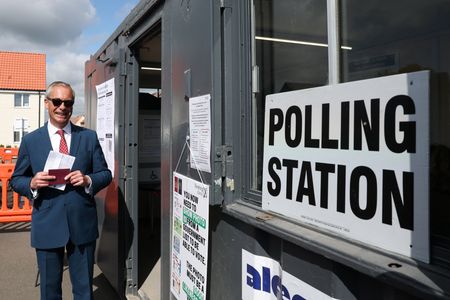
These contests for 136 local councils across England, plus devolved parliaments in Scotland and Wales, constitute the most important gauge of public sentiment ahead of the next general election scheduled for 2029.
Labour Party legislators indicated that poor performance in Scotland, potential loss of control in Wales, and failure to retain many of approximately 2,500 council seats being defended in England would intensify pressure on Starmer to resign or announce his departure timeline.
Initial returns revealed the ongoing breakdown of Britain’s historic two-party structure into a multi-party system, which political experts describe as among the most significant shifts in British politics over the past century.
Both Labour and Conservative parties saw support drain to Reform, while the left-wing environmental Green Party gained ground on the opposite end of the political spectrum. Nationalist movements were anticipated to claim victories in Scottish and Welsh elections.
Farage described the outcomes as “way exceeding” his projections and representing a “historic change in British politics.”
Labour suffered complete defeats in several closely monitored early contests.
The party surrendered control of Tameside council in Greater Manchester for the first time in nearly five decades after Reform captured all 14 seats Labour had been defending.
In neighboring Wigan, a former coal mining area under Labour control for more than 50 years, the party lost all 20 seats it was defending to Reform. In Salford, Labour retained only three of 16 seats it had been protecting.
The outcomes were “soul-destroying,” according to Rebecca Long-Bailey, a Labour parliament member representing Salford.
Although governing parties typically face challenges during mid-term elections, polling experts predicted Labour could lose more council seats than any local election since former Prime Minister John Major lost over 2,000 in 1995 during his scandal-plagued administration.
Reform UK gained 253 council seats in England with results from more than 4,200 positions still pending. Labour lost 185 seats while the Conservative party dropped 93 seats.
Most election outcomes, including Scottish and Welsh parliamentary seats, were expected to be announced Friday afternoon and evening.
Starmer, a former attorney, won office in 2024 with one of the largest parliamentary majorities in contemporary British history, promising stability over charisma following years of political turmoil.
However, his tenure has been characterized by multiple policy reversals, frequent adviser changes, and the problematic selection of Peter Mandelson as Britain’s U.S. ambassador, who was dismissed nine months into the position due to connections with deceased convicted sex offender Jeffrey Epstein.
Starmer maintains he will lead Labour into the next election, and the party has never successfully ousted a sitting prime minister throughout its 125-year existence.
The prime minister benefits from the fact that two leading potential successors — Greater Manchester mayor Andy Burnham and former Deputy Prime Minister Angela Rayner — are not currently positioned to launch leadership campaigns, while other possible challengers appear reluctant to challenge him presently.
Energy minister Ed Miliband rejected Thursday a Times newspaper report claiming he had suggested Starmer consider establishing a departure timeline from Downing Street.