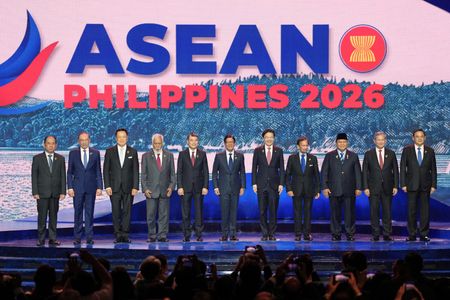

Southeast Asian nations convened an emergency summit Friday on the Philippine island of Cebu to forge a unified approach against the energy crisis stemming from the Middle East conflict.
The Association of Southeast Asian Nations (ASEAN) is grappling with severe economic pressure as the nearly 70-day blockade of the Strait of Hormuz has disrupted oil supplies to the import-dependent region.
Philippine President Ferdinand Marcos Jr., serving as ASEAN’s current chair, emphasized the need for collective action during his opening address.
“We must ensure regional energy security and resilience,” Marcos stated. “At a time of heightened volatility, ASEAN must strengthen coordination and reinforce preparedness, pursue practical collective measures to safeguard a stable energy supply and improve interconnectivity.”
The economic ministers who met Thursday in Cebu “identified practical, concrete response measures” for maintaining energy and food security, though their proposals remained vague on implementation details.
The suggested measures involve expanding supplier networks and transportation routes while establishing emergency communication systems, but specific actions remain uncertain.
With nearly 700 million residents and economies totaling $3.8 trillion, the region faces substantial risks from the Iranian conflict’s aftermath. The Philippines has already declared a national energy emergency and is advocating for an ASEAN oil-sharing agreement based on voluntary commercial arrangements.
However, achieving coordination poses significant obstacles for the organization. While member nations have experienced rapid individual economic expansion, regional integration has lagged due to stark differences among the 11 countries and the absence of centralized enforcement mechanisms.
During Friday’s leadership retreat, officials plan to advocate for diplomatic negotiations between the United States and Iran while calling for the Strait of Hormuz to reopen. Before the conflict, this waterway facilitated passage for approximately 130 vessels daily and carried one-fifth of global oil and gas shipments.
According to a preliminary statement draft reviewed by Reuters Thursday, leaders will encourage member states to finalize domestic procedures needed for the fuel-sharing agreement’s “earliest possible entry into force.”
Despite the war’s dominance over discussions, other diplomatic advances occurred Thursday. Marcos facilitated talks between Thai and Cambodian leaders amid their fragile ceasefire, resulting in renewed engagement commitments following last year’s deadly border clashes.
Foreign ministers also scheduled a virtual conference with Myanmar’s representative, as that nation seeks to restore normal ASEAN relations and resume summit participation after being banned following its 2021 military takeover, which sparked nationwide protests and civil conflict.
Myanmar’s situation has created lasting divisions within the bloc, with some members supporting engagement with the new civilian government headed by former military leader Min Aung Hlaing, who recently assumed the presidency after elections dominated by pro-military parties.