
VATICAN CITY — During his inaugural year as pontiff, Pope Leo XIV attempted to emphasize his fundamental mission as a shepherd guiding his congregation. However, ongoing public disputes with President Donald Trump and Leo’s increasingly direct responses have complicated this effort and cast a shadow over Friday’s one-year anniversary of his papal election.
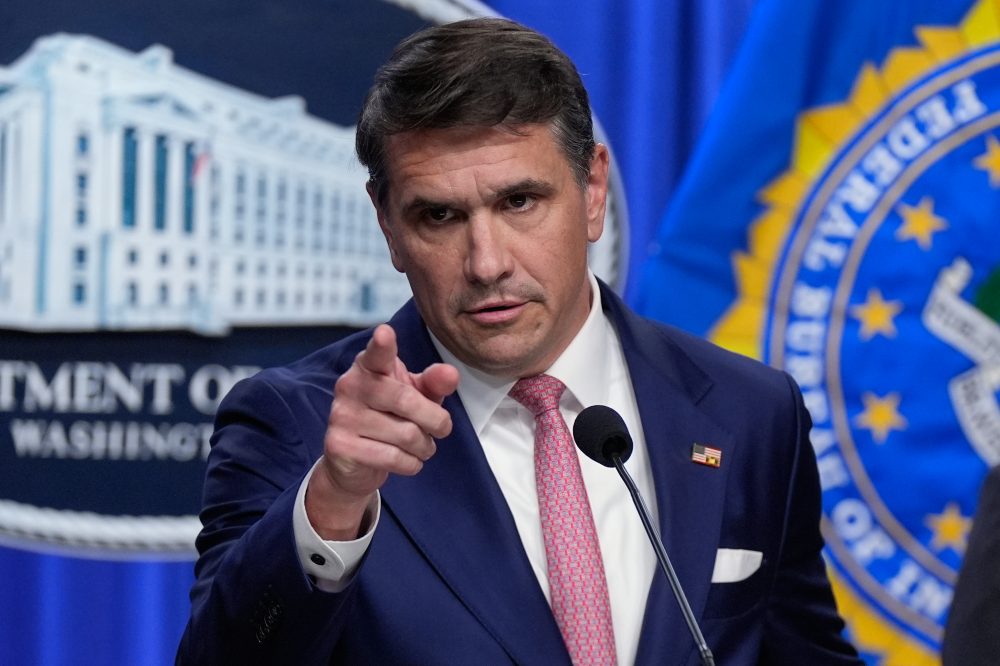
The pope commemorated the eve of this milestone by hosting U.S. Secretary of State Marco Rubio, who traveled to the Vatican for diplomatic discussions aimed at repairing relations. Trump’s continuous public attacks against the first American pope in history have created an extraordinary exchange of criticisms regarding Iran war policies and peace initiatives, putting strain on diplomatic ties between the United States and the Holy See.
Following the diplomatic meeting, both Vatican officials and the State Department emphasized their robust bilateral relationship. However, this ongoing conflict has forced Leo beyond his preferred role and into the international spotlight, prompting sharp responses such as his recent statement following Trump’s latest mischaracterization of his positions. “If someone wants to criticize me for announcing the Gospel, let him do it with the truth,” Leo declared.
This confrontational approach contrasts sharply with Leo’s natural temperament — during this first year, the world has discovered he is fundamentally a gentle, 70-year-old missionary priest from the Midwest with a quiet disposition. He enjoys solitary tennis matches, can recite 5th century philosopher St. Augustine from memory, and maintains he is simply citing Scripture when advocating for peace.
Beyond the Trump-Leo conflict, the former Robert Prevost appears motivated not by dramatic actions or attention-seeking controversies that often characterized his predecessor, Pope Francis. Instead, Leo draws inspiration from quiet, steady dedication to Gospel preaching and — influenced by his Augustinian theological background — focuses on community building and reconciliation.
Leo launched his unlikely papal tenure with promises to pursue unity in a divided world and church, and at this one-year milestone, he appears to be fulfilling that commitment.
Following Francis’ transformative and occasionally controversial 12-year leadership, Leo has provided a soothing influence to both the Vatican and the broader church community. He appears determined to bridge divides, even as new threats of separation continue to surface.
This approach has been evident as he addresses some of the most challenging issues confronting the Catholic Church: conflicts between traditional and progressive factions, financial difficulties at the Holy See, and the international crises central to the Trump-Leo disagreements.
“I think the challenge that the Holy Father has is to strengthen the unity of the church,” explained Cardinal Wilton Gregory, a Chicago native like Leo and former Washington archbishop. While divisions have always existed, Gregory noted that social media has magnified them, and Leo appears committed to reducing these tensions.
“Social communication makes it possible for people to take sides, and sometimes taking sides adds to the divisiveness that we have to deal with and that the Holy Father, as the Bishop of Rome, has to respond to,” Gregory explained during an interview.
“He has to call us to our better angels,” he continued.
This appeared to be Leo’s approach when, during his recent African journey, he temporarily reduced Trump’s public attacks by essentially stating he was above the president’s social media commentary. While affirming he would continue delivering the Gospel message of peace, Leo said it “is not in my interest at all” to engage in debates with Trump.
“I primarily come to Africa as a pastor, as the head of the Catholic Church to be with, to celebrate with, to encourage and accompany all the Catholics throughout Africa,” he explained.
He reinforced this message at the trip’s end, stating that the political responsibilities accompanying the papal role, as head of state and global moral leader, were not his main focus.
For many observers, the surprise of an American pope, who challenged the traditional prohibition against a Rome-based moral opposition to the White House, remains striking.
“It’s been the first year of an American pope who has been critical of what America is doing for the most part,” noted Anthea Butler, senior fellow at the Koch Institute, Oxford University.
She emphasized that Leo approaches criticism “not coming full-on like Francis would,” but addressing issues indirectly. He avoids naming specific individuals, instead focusing on Gospel teachings.
This strategy has benefited some American Catholic organizations, particularly after the American church developed a notably strained relationship with Francis. His critiques of American-style capitalism were amplified by conservative Catholic media outlets in the United States during his leadership.
Many Vatican observers felt the Argentine pope simply didn’t understand America, and the feeling was mutual. Some American Catholics eventually reduced their donations to the Holy See under Francis, following persistent reports of mismanagement, corruption and scandal.
However, with a Chicago mathematics graduate now serving as pope, “he can’t be dismissed as being ignorant of the realities in the United States,” said Kerry Alys Robinson, chief executive of Catholic Charities USA, a national network of Catholic organizations.
Robinson reported unprecedented unity among American Catholic bishops, particularly when discussing the dignity of immigrants and impoverished individuals. She attributes this to various factors, including the Trump administration’s immigration enforcement and budget reductions that have created shared purpose. However, she acknowledges the unifying influence of Leo’s message delivered in English.
“It’s very different when you are hearing the message without it being mediated through translation,” she observed.
Ward Fitzgerald, president of The Papal Foundation, which supports the pope’s charitable initiatives in developing nations, said an English-speaking pope has particularly benefited the United States and Europe, where anecdotal evidence suggests a “Leo effect” encouraging new conversions.
“I think there’s lots of reasons for it, but I certainly think that having a pope who speaks English helps young people understand the messages of the Holy Father,” Fitzgerald explained during an interview. This also impacts church donors, especially from America.
“When you tell a donor, ‘I really appreciate what you do’ in English — and they’re English — I think it resonates,” Fitzgerald said. “And so they give a little more.”
The Papal Foundation recently revealed that 25 new families have joined since Leo’s election, a significant number considering membership requires a minimum $1.25 million commitment.
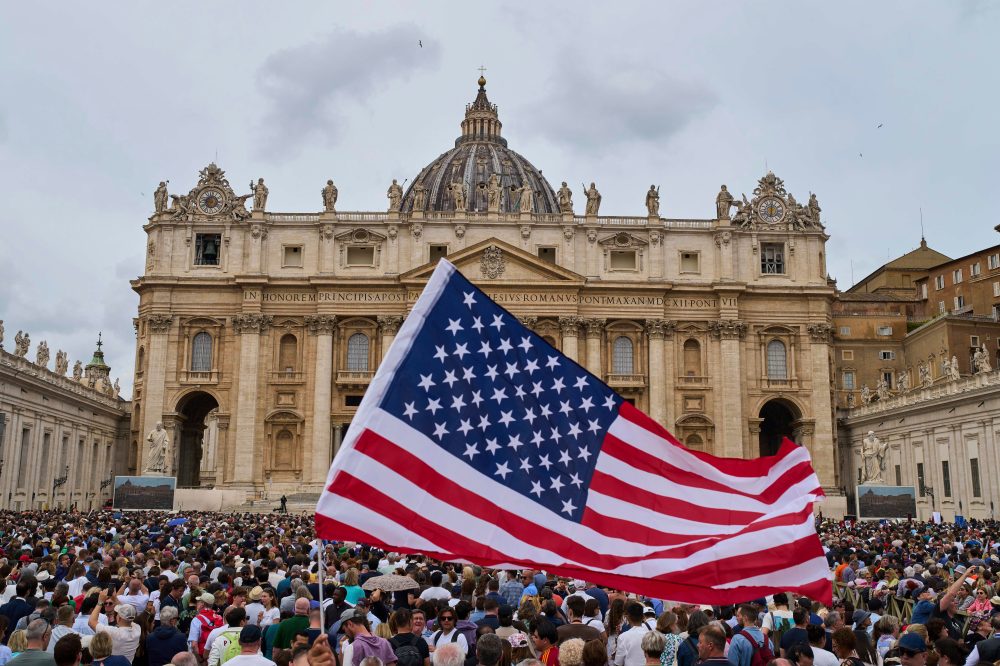
Fitzgerald and foundation members met with Leo recently and gathered at St. Peter’s Basilica for Mass celebrated by Cardinal Timothy Dolan, the influential figure in American Catholic leadership and a key player in the 2025 conclave that elected Leo.
Dolan also maintains a friendly relationship with Trump and serves on his Religious Liberty Commission.
During his homily, Dolan praised the qualities of St. Joseph, Christ’s father and a figure so cherished in the church that he serves as patron saint for more causes than any other saint. Dolan also shared his thoughts about Leo, whom he witnessed in the Sistine Chapel become the 267th pope one year ago Friday.
St. Joseph was characterized by silence, Dolan explained, calm and confident in his role.
“A man who exuded a sense of depth and substance. A man who is shy, all right, a man who is focused on his mission,” he continued. “A man, always attentive to God’s plan.”
Dolan then asked the Americans in attendance if they could identify anyone else matching St. Joseph’s characteristics.
“I can,” Dolan responded. “Pope Leo reminds me of Joseph.”