
MONTGOMERY, Ala. — Republican legislators in Alabama may vote Friday on legislation allowing new congressional primaries if federal courts permit the state to implement different U.S. House district boundaries before November’s midterm elections.
The proposed Alabama bill, requiring just one final Senate approval before reaching Republican Governor Kay Ivey, attempts to capitalize on a recent Supreme Court decision in a Louisiana case that substantially diminished Voting Rights Act safeguards for minority communities.
GOP officials across Southern states have rapidly moved to exploit this court decision. Tennessee passed new congressional boundaries Thursday that divide a Democratic-controlled, predominantly Black district in Memphis. Louisiana has delayed its House primaries while legislators craft new district lines. South Carolina House Republicans have also introduced a fresh congressional map.
Even prior to the Supreme Court decision, both major parties were already locked in intense redistricting fights, with each side pursuing advantages in midterm contests that will decide control of the narrowly divided House.
Following former President Donald Trump’s push for Texas to redraw its congressional boundaries last summer, nine states total have implemented new House districts. Republicans believe they could secure up to 14 additional seats from these changes, while Democrats estimate they might gain as many as 10. However, aggressive gerrymandering could potentially harm both parties in highly contested districts.
Alabama officials have petitioned federal judges to remove a court mandate requiring the state to maintain a second district where Black voters constitute a majority or near-majority. This district resulted in the 2024 election of Democratic Representative Shomari Figures, who is Black.
Instead, Republicans seek to implement a map that state lawmakers created in 2023 — previously rejected by federal courts — that could enable them to regain control of Figures’ district. Black residents currently comprise approximately 48% of the district’s voting-age population, which would decrease to roughly 39% under the 2023 proposal.
Republicans anticipate federal courts might view their case more favorably following the Supreme Court’s Louisiana ruling. Should a court approve Alabama’s petition, the pending legislation would bypass the May 19 primary for certain congressional races and authorize the governor to organize new primaries using the revised districts.
“It is an if, and only if, the courts take action,” stated Republican state Senator Chris Elliott.
The House approved the measure along party lines Wednesday, and a Senate committee advanced it to the full chamber Thursday.
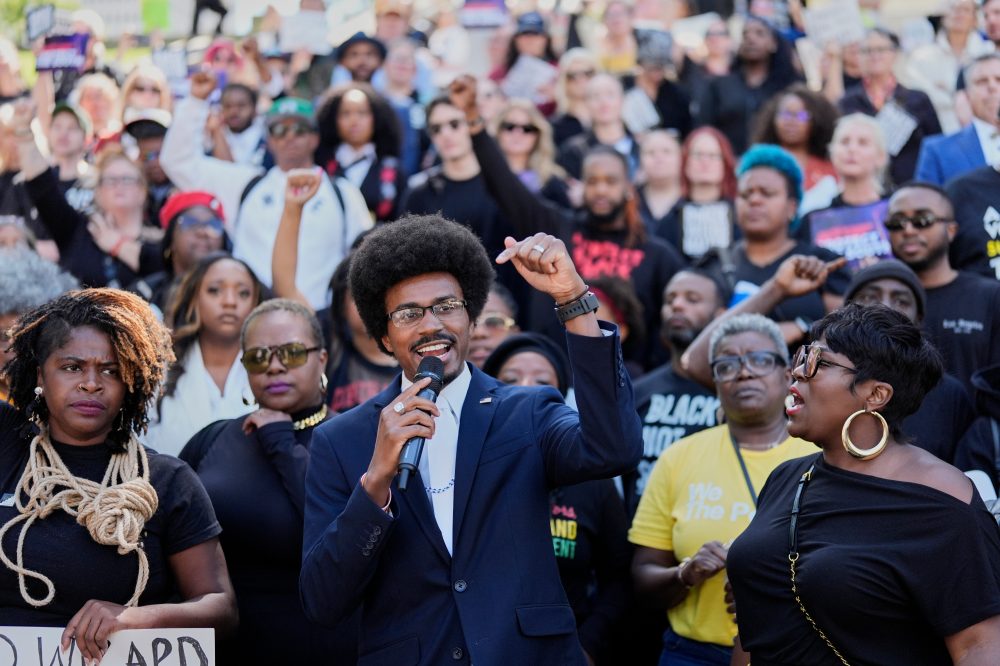
Speaking before the Senate committee, Figures expressed that his concern extends beyond his own position to people who have struggled for decades “to have a voice in what government looks like.”
“I ran into a gentleman last night, and he said, ‘Hey man, I hear your job is on the line.’ And I told him, ‘No, Shomari Figures is going to be OK. Your voice is on the line,’” Figures testified.
Several Democrats emphasized that the state’s segregationist history remains relatively recent, noting that districts established under the Voting Rights Act enabled Black representation following centuries of voter disenfranchisement.
“How long are we going to have to repeat history before we realize that all people deserve to be respected and deserve to have the feeling that they are valued?” questioned Democratic state Senator Linda Coleman-Madison, who is Black.
South Carolina House Republicans unveiled a proposed new congressional map Thursday that would enhance GOP prospects for winning the sole seat currently held by a Democrat.
The plan would remove Democratic Representative Jim Clyburn from the 6th District he has served since 1992, while dividing the district among four separate ones. Clyburn’s existing district contains nearly 50% Black voters, and in the 2024 presidential race, more than 60% of residents supported Democrat Kamala Harris.
The suggested map would also separate the Democratic stronghold of Columbia and its more conservative suburbs across four different districts.
The state House Wednesday passed a resolution authorizing lawmakers to reconvene after their regular session ends May 14 to continue redistricting discussions. However, the Senate Thursday postponed action on the resolution because members wanted clarity about potential new district configurations, according to Republican Senate Majority Leader Shane Massey.
Following the House plan’s release, Massey voiced ongoing concerns. He noted that up to four districts might become competitive, demanding significant resources for Republican candidates and potentially damaging down-ballot party races.
“If we get too cute with this, we could end up losing seats,” Massey warned.
The state’s primary elections are scheduled for June 9.