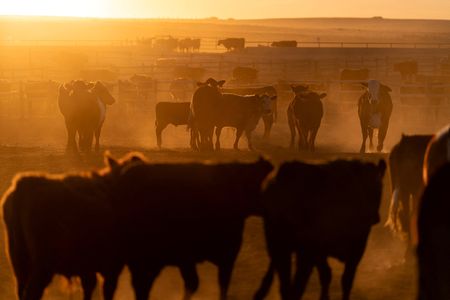

American cattle ranchers and beef processors are pinning their hopes on upcoming high-level diplomatic discussions to regain access to China’s lucrative market, where export privileges have been systematically withdrawn over the past year.
The beef industry’s access to Chinese consumers reached its peak in 2022 with $1.7 billion in exports before becoming collateral damage in ongoing trade tensions between Washington and Beijing.
Chinese authorities have allowed export licenses for more than 400 American beef processing facilities to lapse during the past twelve months, eliminating roughly two-thirds of previously authorized plants, according to Chinese customs records. The U.S. Meat Export Federation reports that three additional facilities will lose their export status in June.
Joe Schuele, a spokesperson for the trade organization, noted that Beijing has provided no explanation for allowing these registrations to expire, despite requirements under the Phase One trade agreement signed between the countries in 2020.
Industry leaders are optimistic that the May 14-15 summit between President Donald Trump and Chinese President Xi Jinping could provide the diplomatic opening needed to restore these critical export licenses.
Justin Tupper, president of the United States Cattlemen’s Association and a cattle producer from South Dakota, revealed that White House officials recently confirmed the beef access issue would be addressed during the summit discussions.
“We asked them to make sure that it would be part of the discussion, and the answer was: It will,” Tupper stated. “We’re pushing to make it a big part of the discussion.”
When contacted for comment, White House representatives directed inquiries to the Department of Agriculture, which did not provide a response. Chinese Ministry of Commerce and General Administration of Customs officials also remained silent on the matter.
Market conditions may actually favor renewed Chinese access for American beef producers. Record-high domestic beef prices, driven by shrinking cattle herds, have reduced U.S. export volumes while increasing imports.
The timing could prove advantageous as Australia approaches its quota limits under China’s new import system, Schuele explained. China implemented a beef import quota structure last December, imposing a 55% tariff on shipments exceeding established limits for major suppliers including the United States and Australia, designed to shield domestic producers.
Australian beef exports already consumed over half of their allocated quota during the first quarter, based on customs information.
However, Chinese industry insiders express skepticism that restored access would immediately translate into significant import increases. American beef faces a 10% higher tariff compared to Australian products, while also competing against increasingly sophisticated domestic Chinese producers.
A director at a Beijing-based firm specializing in international beef market access described the situation as leverage for China, noting that “This is a bargaining chip for China, because the U.S. wants China to open up, but China does not lack beef.”
Another executive from a beef importing and breeding company characterized any potential license restoration as “purely a political gesture.” Both executives requested anonymity due to the sensitive nature of the trade discussions.
Chinese government policy currently emphasizes developing domestic high-quality cattle production rather than maintaining dependence on American or Australian imports, according to the import industry executive.