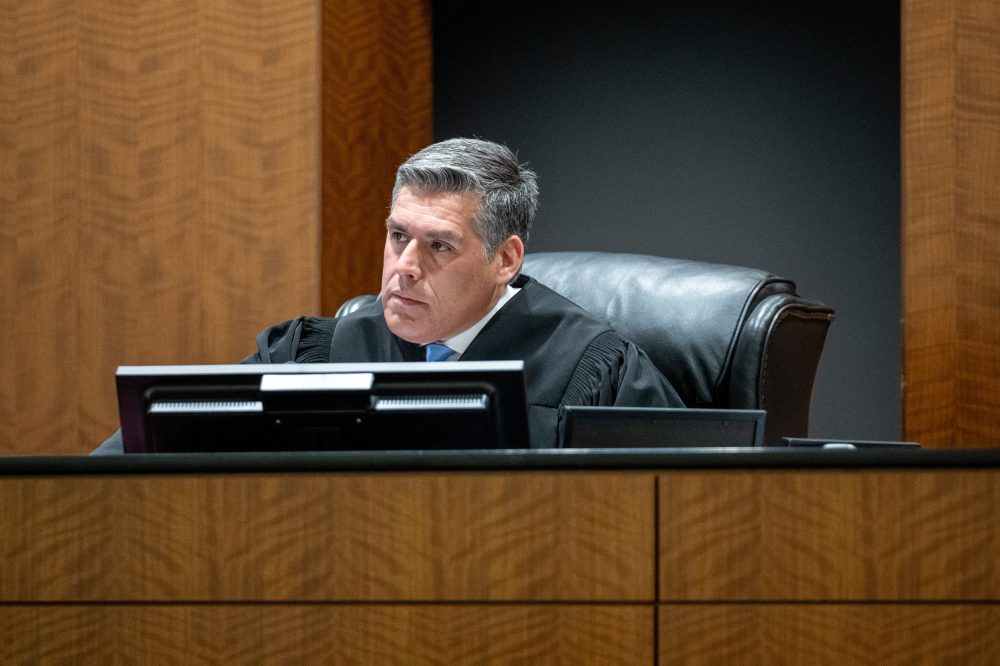

A Utah judge will make a crucial decision Friday regarding media access to the murder trial of a man accused of killing prominent conservative activist Charlie Kirk.
Defense lawyers for Tyler Robinson contend that allowing news organizations to film, photograph and broadcast the proceedings could prejudice future jurors. They claim biased reporting and social media commentary portray their client as evil or showing no remorse based on his courtroom appearance and behavior. The defense team maintains that live coverage is generating harmful stories that threaten Robinson’s constitutional right to an impartial trial.
However, media companies, state prosecutors and Kirk’s widow, Erika Kirk, support continued camera access. They believe transparency serves as the most effective defense against conspiracy theories that have emerged following Kirk’s assassination on Sept. 10, when a gunman shot him in the neck as he spoke to thousands of students at Utah Valley University in Orem.
State District Judge Tony Graf has already imposed stricter camera guidelines after media pool members broke courtroom rules by filming Robinson’s restraints and capturing close-up shots of him conferring with his legal team. Graf moved cameras to the back of the courtroom, positioning them behind Robinson to make photographing him more difficult.
However, the judge has generally favored media transparency in other aspects of the case. He denied Robinson’s attorneys’ efforts to block the release of transcripts from private hearings. In December, Graf stated that transparency was “foundational” to the court system.
Before his death, the 31-year-old Kirk and his conservative youth organization, Turning Point USA, had become a significant political force credited with helping President Donald Trump win a second term. Prosecutors plan to pursue capital punishment if Robinson is found guilty. He faces charges including aggravated murder and has not yet entered a plea.
Claims that Robinson targeted Kirk due to his political beliefs have intensified public interest in the case, fueling ongoing debates about courtroom cameras in high-profile trials.
Visual documentation has revealed the inner workings of America’s most notorious criminal proceedings, from the Lindbergh baby kidnapping case to O.J. Simpson’s double murder trial. Such coverage has also created friction between transparency supporters and defense attorneys seeking to protect their clients from negative publicity.
The consequences are particularly significant in capital cases like Robinson’s, where jurors may evaluate the defendant’s character when making their decision. Video of Robinson appearing to smirk while speaking with his lawyers during a December hearing prompted Fox News commentators to describe him as unremorseful and treating Kirk “like a trophy.”
While the Constitution prioritizes a defendant’s right to a fair trial over public access to case information, cameras have become increasingly prevalent in state courtrooms recently.
Federal criminal trials typically prohibit cameras. Under New York state regulations, Trump’s trial and 2024 conviction in a hush money case notably excluded cameras during active proceedings. News organizations relied on sketch artists to document those hearings.
Judges usually maintain extensive authority over which portions of cases can be broadcast and which individuals can be filmed or photographed.
Graf will also decide Friday on a defense motion to postpone Robinson’s preliminary hearing, currently scheduled for May. During that proceeding, prosecutors must demonstrate they possess adequate evidence to advance to trial.
Officials report that DNA matching Robinson’s profile was discovered on the rifle’s trigger, the discharged shell casing, two unused cartridges and a towel that wrapped the weapon. Robinson’s legal team argues the hearing should be delayed until federal agencies provide additional details about their DNA testing.
Such a postponement could delay the case for months.
Prosecutors maintain they have compelling evidence beyond DNA to secure a conviction, including surveillance footage and a handwritten note Robinson allegedly left for his romantic partner admitting to the crime.