BUDAPEST, Hungary — A new chapter began in Hungarian politics Saturday as Péter Magyar took the oath of office as prime minister, bringing Viktor Orbán’s lengthy 16-year tenure to a close.
Magyar made his way to the Parliament building Saturday morning alongside members of his center-right Tisza party, which delivered a historic upset victory over Orbán’s nationalist Fidesz party in last month’s elections. The electoral triumph marked the largest vote and seat count any party has achieved since Hungary transitioned from Communist rule.
The political shift positions Tisza to dismantle numerous policies that earned Orbán criticism as an authoritarian leader, tackle widespread corruption allegations, and reshape Hungary’s role in European Union politics, where the outgoing leader frequently blocked important bloc decisions.
Magyar’s party delegation included 140 representatives as they entered the impressive neo-Gothic parliament complex, securing control of 141 seats in the 199-member legislative body. Meanwhile, Orbán’s Fidesz-KDNP alliance saw their representation plummet from 135 seats to just 52, with the far-right Mi Hazánk party claiming the remaining six positions.
Notably absent from Saturday’s inaugural ceremony was Orbán himself, marking his first absence since Hungary established its initial post-Communist Parliament in 1990. Following his electoral defeat, Orbán announced plans to concentrate on reconstructing his nationalist political movement.
The incoming leader, a 45-year-old attorney who established Tisza in 2024 following years working within Orbán’s inner circle, has pledged to eliminate government corruption that he claims has deprived Hungarian citizens of economic advancement opportunities.
Magyar invited citizens to join a daylong “regime-change” festival outside Parliament to commemorate his swearing-in ceremony and mark the conclusion of the Orbán period. Following his 3 p.m. oath-taking, the new prime minister planned to speak to supporters gathered outside.
The new administration has committed to mending Hungary’s strained relationship with the European Union, which deteriorated significantly under Orbán’s leadership, and to reestablish the country’s position among Western democratic nations. Hungary’s democratic credentials faced scrutiny as Orbán developed increasingly close ties with Russia.
A primary objective for Magyar involves securing approximately 17 billion euros ($20 billion) in EU funding that was suspended during Orbán’s administration due to rule-of-law violations and corruption issues. These funds are essential for revitalizing Hungary’s economy, which has remained stagnant over the past four years.
Demonstrating their pro-EU stance, Tisza representatives announced they will restore the European Union flag to Parliament’s exterior, which Orbán’s administration removed in 2014.
Budapest’s liberal mayor, Gergely Karácsony, extended a public invitation to a riverside celebration along the Danube Saturday evening to mark Orbán’s departure and welcome the new government.
In his social media announcement, Karácsony described the gathering as an opportunity to honor Hungarians who courageously opposed Orbán’s system over the years. “Teachers fired, civilians and journalists humiliated, small churches torn apart,” he wrote on Facebook.
“We can finally leave this era behind us — but first, let us remember the everyday heroes and express our gratitude with a farewell to the system,” Karácsony posted.
A Frontier Airlines aircraft heading to Los Angeles was forced to halt its departure Friday evening at Denver International Airport after experiencing an engine fire, with reports indicating a pedestrian was struck during the emergency situation.
The Airbus A321 carried 224 passengers along with seven crew members when pilots detected smoke inside the aircraft cabin and immediately called off the takeoff, according to Frontier Airlines officials.
Airport fire crews quickly responded to extinguish the brief engine blaze, Denver International Airport confirmed.
All individuals aboard the aircraft were successfully evacuated without serious harm, though ABC News indicated at least one passenger sustained minor injuries during the evacuation process.
Details regarding the pedestrian who was allegedly struck remain unclear, as neither Frontier Airlines nor airport officials have released information about that aspect of the incident.
Frontier Airlines stated they are conducting a thorough investigation into what occurred and are working closely with airport officials and additional safety agencies to gather comprehensive details about the emergency.
Milwaukee’s Jacob Misiorowski delivered a masterful performance on the mound Friday night, recording 11 strikeouts during six shutout innings to lead the Brewers past the New York Yankees 6-0 in the opening game of their three-game series.
The powerful right-hander Misiorowski (3-2) dominated throughout his 95-pitch appearance, surrendering only two singles while issuing two walks. His velocity was particularly impressive early, as all 10 of his first-inning pitches exceeded 102 mph. The 24-year-old’s previous outing saw him throw 5 1/3 no-hit innings before leaving due to a hamstring cramp.
Rookie reliever Shane Drohan completed the shutout for Milwaukee, giving up just one hit during the final three frames to earn his first major league save. Brandon Lockridge contributed offensively with two hits and two RBIs before suffering an injury that required him to be carted off the field in the fourth inning due to a severe cut on his right knee.
The Yankees managed only three hits total, with Jose Caballero accounting for two of them. New York entered the contest having won six of their last seven games. Milwaukee broke the game open with a four-run second inning, during which their first five batters all reached base against Yankees starter Max Fried (4-2).
In other Friday action around Major League Baseball, the Chicago Cubs extended their winning streak to 10 games with a 7-1 victory over Texas. Seiya Suzuki launched a two-run homer while Michael Busch drove in three with a double. Ian Happ’s RBI single extended his on-base streak to 29 games.
The Los Angeles Dodgers rallied past Atlanta 3-1, with Shohei Ohtani delivering the go-ahead single in the fifth inning and Freddie Freeman homering against his former team in the sixth. Freeman’s blast ended a 26-game homerless drought.
Houston blanked Cincinnati 10-0, handing the Reds their eighth consecutive defeat. Zach Cole capped the scoring with a three-run homer during a five-run ninth inning, while Mike Burrows threw seven strong innings for the Astros.
Toronto ended their four-game skid by shutting out the Los Angeles Angels 2-0, as Dylan Cease struck out 10 batters over seven innings. Seattle powered past Chicago 12-8 behind Luke Raley’s grand slam and three-run homer, giving him seven RBIs on the night.
St. Louis pitchers combined for a one-hitter in a 6-0 victory over San Diego, while Colorado defeated Philadelphia 9-7 in 11 innings on Troy Johnston’s pinch-hit RBI double. The New York Mets edged Arizona 3-1 in 10 innings, and Oakland beat Baltimore 4-3 on Nick Kurtz’s two-run triple.
Boston’s pitching staff recorded their major league-leading sixth shutout in a 2-0 win over Tampa Bay, snapping the Rays’ seven-game winning streak. Cleveland topped Minnesota 6-4 behind rookie Travis Bazzana’s first major league homer, while Kansas City walked off against Detroit 4-3 on Kyle Isbel’s ninth-inning single.
Washington defeated Miami 3-2, San Francisco beat Pittsburgh 5-2, and several other games completed Friday’s full slate of action across the majors.
Chinese manufacturing exports experienced a dramatic acceleration in April as production facilities worked overtime to fulfill surging demand from artificial intelligence sectors and businesses stockpiling materials due to concerns that Middle East conflicts could drive global supply costs higher.
The robust export performance has expanded China’s trade surplus with the United States to $87.7 billion for the year, creating a key talking point for President Donald Trump’s upcoming Beijing visit next week for a leadership summit aimed at continuing last year’s trade ceasefire.
Although Chinese manufacturers have managed to navigate challenges from the Middle East crisis so far, economic experts caution that prolonged warfare and rising energy costs could eventually reduce international demand, leaving weak domestic spending unable to compensate for the shortfall.
Currently, economists are monitoring the speed of the artificial intelligence manufacturing surge and whether related equipment shipments can sustain China’s export momentum.
“The conflict in the Middle East pushed up demand for global manufacturing inventory replenishment, and under the upward cycle of semiconductors, imports and exports maintained a boom,” said Xing Zhaopeng, senior China strategist at ANZ.
“There is still room for expansion in this round of manufacturing cycle driven by AI, and it is expected that the annual export growth rate will be about 10%.”
Saturday’s customs data revealed exports jumped 14.1% compared to the previous year in dollar terms, significantly exceeding March’s 2.5% increase and surpassing economist predictions of 7.9% growth.
Separate manufacturing activity reports from last month indicated new export orders reached their peak level in two years during April.
Import activity also remained robust, increasing 25.3% compared to March’s 27.8% rise. Economic forecasters had anticipated 15.2% growth.
These figures pushed China’s monthly trade surplus to $84.8 billion in April, up from March’s $51.13 billion.
China’s broader economic performance showed strength in the opening quarter, with GDP expansion reaching 5% annually, matching the government’s yearly target ceiling and reducing pressure for immediate economic stimulus measures.
However, even China, frequently criticized by international partners for subsidy-supported low-cost production, faces challenges from reduced buyer spending power as fuel and shipping expenses climb.
Manufacturing data released last month indicated input costs stayed high, especially for processed goods and petroleum, coal, and chemical products.
Jobless rates also increased slightly while retail sales, measuring consumer spending, continued lagging behind industrial production.
Trump plans to meet with Chinese President Xi Jinping during his May 14-15 Beijing trip, as both nations work to stabilize relations strained by disputes over trade, Taiwan, and the Iran conflict.
Trump will likely seek trade concessions from Beijing before November’s U.S. midterm elections, though business leaders and analysts don’t anticipate major agreements.
When confronted with U.S. tariffs that temporarily reached triple-digit levels, Chinese exporters pursued alternative markets including South America by reducing prices. China concluded 2025 with a record $1.2 trillion trade surplus.
MINNEAPOLIS — Despite his smooth movements and natural grace on the basketball court, Victor Wembanyama’s battle-scarred arms told the real story of his dominant performance for the San Antonio Spurs on Friday night.
The fresh marks and bruises covering his lengthy limbs revealed the physical toll of battling in the paint all evening against the Minnesota Timberwolves, as the 7-foot-4 star compiled an impressive 39 points, 15 rebounds and five blocks in San Antonio’s 115-108 Game 3 triumph that put the Spurs ahead 2-1 in their second-round playoff matchup.
“It’s going to happen,” Wembanyama said. “They’re Wolves, after all.”
San Antonio maintained their perfect road record in this year’s postseason while capturing their first victory in a tight contest, following four first-round wins against Portland that were decided by margins ranging from 12 to 21 points.
“They just continue showing growth,” coach Mitch Johnson said.
Leading that development is Wembanyama himself. The 22-year-old French sensation, competing in his inaugural NBA playoffs, has appeared in just seven postseason contests but is already establishing an impressive historical mark.
Throughout NBA playoff history, only Hall of Fame centers Kareem Abdul-Jabbar, Hakeem Olajuwon, and Shaquille O’Neal had previously achieved the combination of 35 points, 15 rebounds, and five blocks in a single playoff contest. Wembanyama became the first to accomplish this feat while shooting above 70 percent from the field, connecting on 13 of 18 attempts and making 10 of 12 free throws.
“It’s good to be along with the big fellas,” said Wembanyama, who gave credit to Olajuwon for teaching him a spin fadeaway move that he successfully executed over his former mentor Rudy Gobert during a crucial 16-point fourth quarter.
Wembanyama achieved this performance despite receiving his fifth foul with 6:18 remaining, spending only about one minute on the bench during crunch time as he helped San Antonio pull away whenever Minnesota closed within striking distance.
“Just staying calm, getting my senses back,” Wembanyama said. “Our coaches tell us what to do. They give us the recipe, so as long as we stay steady and we trust our process we’re going to be all right.”
After establishing an NBA playoff record with 12 blocked shots in the series opener, Wembanyama expressed disappointment with his offensive contribution following Monday’s 104-102 defeat to Minnesota. He responded emphatically in Game 2 by immediately establishing control on both sides of the court, leading San Antonio to a commanding 133-95 victory on Wednesday, and maintained that momentum despite traveling to Minnesota.
Beginning with two spectacular dunks off alley-oop passes, including a reverse finish, Wembanyama tallied San Antonio’s first seven points as they jumped to an early 18-3 advantage. His defensive presence proved even more impactful, as he patrolled the lane and consistently forced Minnesota players to modify their close-range shots to avoid potential blocks.
“He’s a world-class defender. You’re always aware of him,” Wolves guard Ayo Dosunmu said. “Yeah, he’s a gift at that end of the court.”
A motor vehicle accident has resulted in lane closures on a major Delaware roadway during the commute period.
Two left travel lanes are currently blocked on southbound Route 202 where it connects to the Route 141 ramp due to a vehicle crash, according to Delaware Department of Transportation officials.
The incident is causing traffic delays in the area as vehicles are forced to merge into the remaining open lanes. DelDOT crews are on scene working to clear the accident and restore normal traffic flow.
Motorists traveling through the area should expect delays and consider alternate routes if possible. The duration of the lane closures has not yet been determined.
Diplomatic efforts to resolve the ongoing conflict between the United States and Iran showed little progress over the weekend as military confrontations intensified in the Persian Gulf, challenging a fragile ceasefire that began one month ago.
The latest escalation represents the most significant fighting near the Strait of Hormuz since the temporary truce took effect, with the United Arab Emirates facing fresh attacks on Friday.
The Biden administration continues to wait for Tehran’s answer to an American proposal designed to formally conclude hostilities before addressing more complex matters, particularly Iran’s nuclear activities. During remarks in Rome on Friday, Secretary of State Marco Rubio indicated the United States anticipated receiving Iran’s decision that day, though Iranian foreign ministry officials stated they were still deliberating their response.
Military engagements persisted Friday between Iranian naval forces and American ships operating in the Strait of Hormuz, according to Iran’s semi-official Fars news outlet. The Tasnim news service subsequently quoted an Iranian military official confirming the situation had stabilized while cautioning that additional confrontations remained possible.
American military officials reported striking two vessels with Iranian connections as they attempted to reach an Iranian harbor, with a U.S. fighter aircraft targeting their smokestacks and compelling them to retreat.
Since hostilities commenced with U.S.-Israeli air operations across Iran on February 28, Tehran has effectively prevented non-Iranian maritime traffic from using the strait. Previously, twenty percent of global oil shipments traveled through this critical waterway.
Last month, the United States established a blockade targeting Iranian ships. However, a CIA evaluation suggested Iran could endure economic pressure from American port blockades for approximately four additional months, according to a U.S. official with knowledge of the assessment. This intelligence raises concerns about President Donald Trump’s negotiating position in a conflict that has drawn criticism from both voters and American allies.
A senior intelligence official dismissed as inaccurate the reports regarding the CIA analysis, which the Washington Post initially disclosed.
Combat operations spread beyond the waterway itself. UAE authorities reported their air defense systems intercepted two ballistic missiles and three unmanned aircraft from Iran on Friday, resulting in moderate injuries to three individuals.
Iran has consistently attacked the UAE and other Gulf nations that provide facilities for U.S. military operations. Following what the UAE described as a significant escalation, Iran intensified its assault campaign this week after Trump unveiled “Project Freedom” to provide naval escorts for ships in the strait, an initiative he suspended after two days.
On Thursday, Trump maintained the ceasefire declared April 7 remained intact despite recent flare-ups, while Iran accused the United States of violating the agreement.
“Every time a diplomatic solution is on the table, the U.S. opts for a reckless military adventure,” Foreign Minister Abbas Araqchi stated on Friday. Iran’s Mehr news service reported that one crew member died, ten suffered injuries, and six remained missing following a U.S. Navy assault on an Iranian merchant vessel late Thursday.
The United States has struggled to gain international backing for the conflict. Following discussions with Italian Prime Minister Giorgia Meloni, Rubio criticized Italy and other partners for failing to support Washington’s campaign to reopen the strait, cautioning about establishing a dangerous precedent by permitting Tehran to control an international shipping route.
While continuing diplomatic initiatives, the United States also increased economic sanctions to pressure Iran.
Prior to Trump’s upcoming visit to China for meetings with President Xi Jinping, the U.S. Treasury Department announced Friday new sanctions targeting ten individuals and entities, including several based in China and Hong Kong, for supporting Iran’s military acquisition of weapons and raw materials for manufacturing Tehran’s Shahed drones.
Treasury officials stated in their announcement they were prepared to take action against any foreign corporation supporting illegal Iranian trade and could implement secondary sanctions on foreign financial institutions, including those connected to China’s independent oil refineries.
Mitch Marner delivered a career-defining performance Friday night, recording his first playoff hat trick in a dominant four-point showing that powered the Vegas Golden Knights to a commanding 6-2 victory over the Anaheim Ducks in Game 3 of their Western Conference semifinal matchup.
The win puts Vegas ahead 2-1 in the best-of-seven series as they look to advance deeper into the postseason.
“There’s a lot of work to still go,” Marner said. “It’s always nice to contribute, but we just want to do what we can to try and win hockey games.”
Supporting Marner’s explosive offensive display, Shea Theodore and Brett Howden each contributed a goal and assist, while Brayden McNabb also found the back of the net for the Golden Knights. Goaltender Carter Hart was stellar between the pipes, turning away 31 shots to secure the victory.
Vegas coach John Tortorella was pleased with his team’s performance after two challenging games to start the series.
“I thought we entered the series tonight,” Tortorella said.
The Golden Knights will attempt to seize control of the series when they face off against Anaheim in Game 4 on Sunday.
For the Ducks, Beckett Sennecke and Chris Kreider managed to light the lamp in the losing effort. Anaheim’s goaltending struggled early, as starter Lukas Dostal was pulled after allowing three goals on just eight shots in the opening period. Relief goalie Ville Husso performed better, making 17 saves on 19 attempts.
Anaheim coach Joel Quenneville acknowledged his team needs to elevate their play moving forward.
“I think there’s a lesson to take out of today’s game,” Quenneville said. “It’s only gonna get harder every single game, not gonna get any easier. So let’s get ready to go to war.
“They played like an experienced bunch and they know what’s necessary as you progress in a series. They got our attention.”
Vegas wasted no time establishing control after offensive struggles in the series opener. Theodore struck first, joining a rush and converting from the slot just 66 seconds into the contest.
McNabb extended the lead to 2-0 with a short-handed marker at the 12:13 mark, beating Dostal from the left faceoff circle after collecting a drop pass from Marner. The goal marked Vegas’s third short-handed tally of the playoffs.
Marner capped off a dominant first period with a power-play goal, cleaning up a loose puck beside the net with just 4.6 seconds left on the clock to make it 3-0.
The second period belonged to Marner as well. He netted his second goal near the midway point when Theodore found him with a perfect pass as he drove to the net, allowing him to tuck the puck inside the post.
Marner’s hat trick was completed when his sharp-angle attempt found its way past Husso with 2:04 remaining in the middle frame.
Anaheim finally broke through in the third period when Sennecke pushed a loose puck across the goal line at 6:30. Kreider added another Ducks goal with 4:41 left, firing quickly from the low slot to cut the deficit to 5-2.
Howden sealed the victory with an empty-net goal in the final two minutes of play.
The triumph came with a concerning development for Vegas, as captain Mark Stone exited the game after the first period with an apparent injury suffered while backchecking. Stone did not return for the remainder of the contest.
Tortorella offered no details about Stone’s condition following the game.
Victor Wembanyama delivered a dominant performance with 39 points, 15 rebounds and five blocked shots, leading the San Antonio Spurs to a 115-108 victory over the Minnesota Timberwolves in Game 3 of their Western Conference semifinal matchup Friday night in Minneapolis.
The towering star shot an impressive 13-of-18 from the field and connected on three of five three-point attempts, propelling San Antonio to a 2-1 advantage in the best-of-seven playoff series.
“I’ve really been waiting since I’ve been in the league to live those moments, those high-stakes games,” Wembanyama said postgame on Prime Video. “That’s what I love. … I’m built for this. I love this more than anything else.”
Supporting Wembanyama’s stellar effort, De’Aaron Fox contributed 17 points while Stephon Castle recorded 13 points and distributed 12 assists for the Spurs.
When asked about what fans are witnessing from Wembanyama during his inaugural postseason run, Fox didn’t mince words.
“Greatness,” Fox said. “We all know that. We see him every day. We see the work and the time that he puts into his game and his body, knowing that teams are going to come out here and try to be physical with him.”
“He fights through that. He doesn’t complain. He knows what he’s going to endure, and he comes out here and he produces.”
For Minnesota, Anthony Edwards paced the scoring with 32 points while collecting 14 rebounds. Naz Reid provided a spark off the bench with 18 points and nine boards, while Jaden McDaniels chipped in 17 points.
Timberwolves guard Ayo Dosunmu acknowledged his team allowed San Antonio too much offensive freedom throughout the contest.
“I don’t think our point-of-attack (defense) was where it needed to be,” Dosunmu said. “There were too many times that we made a shot and then they came right back and got a good look. So we’ve got to do a better job of matching up and do a better job of controlling the point of attack and not letting them just live off attacking us.”
The series continues with Game 4 scheduled for Sunday evening in Minneapolis.
Minnesota, which fell behind by 15 points during the opening quarter, managed to close the gap to 106-103 with 3:27 left on the clock when Reid sank a three-pointer.
Wembanyama answered immediately on San Antonio’s following possession, draining his third long-range shot of the night. Late free throws from both Wembanyama and Dylan Harper in the final minute helped secure the win for the Spurs.
The Spurs held an 86-79 lead entering the fourth quarter.
Tensions flared during the third period when Harper became entangled with McDaniels and struck his head while falling to the floor. As Harper remained down, Castle approached McDaniels, sparking a brief confrontation before officials intervened to restore order.
Both Castle and McDaniels were assessed technical fouls, while Harper was able to continue playing.
The teams entered halftime deadlocked at 51-51.
San Antonio opened the game with an explosive 18-3 run, fueled largely by Wembanyama’s early dominance as he tallied nine of the Spurs’ initial 11 points. Minnesota struggled mightily out of the gate, missing their opening 13 field goal attempts.
Edwards eventually found his rhythm as the Timberwolves closed the first quarter with a 19-5 surge, trimming their deficit to just one point. Minnesota’s early rally reached its peak when Edwards connected on a spectacular 31-foot buzzer-beater, bringing the score to 23-22 at the end of the first period.
VÖLKLINGEN, Germany — A historic German ironworks facility recognized by UNESCO has become the canvas for an extraordinary international art exhibition featuring creators from around the globe.
The Urban Art Biennale 2026 has launched at the Völklingen Ironworks, where 50 artists representing 17 nations are displaying their work throughout the massive industrial complex. This marks the continuation of an event that has occurred every two years for the past decade and a half.
“This location is at the core of street art and graffiti art,” explained Ralf Beil, who serves as general director of the facility that now operates as a public museum. “It all began in industrial places like this.”
According to Beil, the creators “love this place and they do works for the Völklinger Hütte, in the Völklinger Hütte, with the Völklinger Hütte.”
Among the featured works is an installation by France-based artist Tomas Lacque, who assembled a small vehicle, tire stack, playthings and rubble all coated in paint. Positioned within a hall that once housed active furnaces, the piece seems to suggest fossil-fuel transportation being buried in ash reminiscent of Pompeii.
Spanish creator Ampparito painted the phrase “no hay nada de valor” (meaning “There is nothing of value here”) in enormous white lettering across the roof of one building. The artwork is most visible from an observation deck positioned 45 meters (148 feet) high.
Dutch artist Boris Tellegen, who goes by Delta, created an enormous green-and-black wooden structure that illuminates the ironworks’ interior. Meanwhile, French collective Vortex-X, known for repurposing salvaged materials, suspended white industrial fabric strips across a building hall in their piece called “Memory in transit.”
The industrial site encompasses 6 hectares (nearly 15 acres) and forms a complex network of smokestacks and furnaces where visitors still see threatening warning signs from the industrial period, including alerts about “danger of crushing.” The facility towers over Völklingen, a town situated close to Germany’s French border.
UNESCO added the site to its world heritage registry in 1994, acknowledging it as “the only intact example, in the whole of western Europe and North America, of an integrated ironworks that was built and equipped in the 19th and 20th centuries.”
Production ceased in 1986, leaving the furnaces dormant, and the location has remained unchanged since that time. However, its visual character dates much earlier, as no new equipment was installed after the mid-1930s.
“It’s so dusty and it’s so old, but it’s beautiful, you know, there’s beauty in decay,” commented British artist Remi Rough. “I think what I’ve done makes you kind of just perceive it in a bit of a different way.”
Rough created small paintings designed to be “very clean and clinical,” providing contrast to the surrounding environment.
Danish creator Anders Reventlov expressed feeling “humble to be able to do something here.”
“As somebody told me … it was hell to work here,” Reventlov noted. “Now it’s not hell. It’s like a nice place, people walking around, there are bees, there are beautiful flowers, but yeah, we still remember the history and that’s super important.”
Beil emphasized that organizers “want pieces which are really original for this space and this also is then prohibiting (them) from being commercial.”
“This is an installation for the space,” he stated. “This is pure art.”
The exhibition begins Saturday and continues through November 15.
VENICE, Italy — Political turmoil has disrupted the world’s most prestigious contemporary art exhibition as the Venice Biennale opened Saturday without its coveted Golden Lion awards following the jury’s mass resignation over Israel and Russia’s involvement in the show.
The judging panel stepped down specifically to protest nations currently facing International Criminal Court investigations for human rights violations, though critics argue the United States should have faced similar scrutiny. British artist Anish Kapoor referenced “the politics of hate and war and all that that’s been going on now for too long.”
Instead of traditional jury selections, attendees at the Giardini and Arsenale locations will cast Eurovision-style votes to choose the top national pavilion among 100 entries and the best work from the main curated exhibition, “In Minor Keys.” Results will be revealed on the final day, November 22.
The centerpiece exhibition features a massive red-feathered sculpture adorned with beaded embroidery that welcomes guests. Drawing from New Orleans Black Masking traditions that trace back to enslaved African practices, this costume-inspired artwork establishes the show’s emphasis on marginalized voices.
Koyo Kouoh, who made history as the first African woman selected to oversee the main Biennale display, had gathered 110 artists and collectives before her passing last year. Five co-curators have continued her vision of highlighting overlooked perspectives.
“She was someone who thought about making spaces for everyone to shine and we see it in her exhibition, we see it with ourselves,” explained co-curator Marie Helene Pereira.
At the British Pavilion, Turner Prize recipient Lubaina Himid presents “Predicting History: Testing Translation,” examining the immigrant experience through vibrant paintings depicting couples navigating newcomer challenges.
One artwork shows two architects debating construction plans. “One of them is trying to decide, would we build a building here, that proves that we have contributed to the culture, and the other architect is saying ‘No, no, no, no, no. Let’s build something that we can escape in tomorrow,’” explained Himid, who was born in Zanzibar and has lived in Great Britain for over seven decades.
The Vatican offers a peaceful retreat from global conflicts through the Mystic Gardens of the Discalced Carmelite order, located near Venice’s central railway station.
Visitors stroll through vineyard paths, passing pomegranate trees and herb gardens while listening through headphones to compositions by 12th-century abbess, mystic and composer St. Hildegard of Bingen, reimagined by contemporary artists including Brian Eno and Patti Smith.
“Music also helps us delve into ourselves and understand, to use a phrase by Hildegard, the symphony that God has placed in our lives,” stated Rev. Ermanno Barucco, prior of the Carmelite order.
The Austrian Pavilion draws crowds with Florentina Holzinger’s provocative performance piece featuring a nude woman suspended as a human bell clapper. Inside, another naked performer circles on a Jet Ski within a tank, symbolizing Venice’s transformation into an overtouristed entertainment destination.
The installation “Seaworld Venice” includes a nude woman breathing through scuba gear in a large tank filled with treated wastewater from nearby restrooms that has undergone multiple filtration processes.
Romanian-born artist Belu-Simion Fainaru’s exhibit features water dripping from hanging tubes into a pool, pausing every 42 seconds to represent divine creative force in Jewish mystical tradition. Padlocks surrounding the pavilion, similar to those placed by couples on European bridges, bear Hebrew inscriptions of “Love thy neighbor as thyself” and the hopeful message “This too shall pass.”
“I am against boycott, I’m for dialogue, and that’s a political statement,” declared Fainaru, who condemned the jury’s exclusion of Israel as discriminatory.
Estonian artist Merike Estna will spend the entire Biennale creating a large-scale wall painting inside a community center gymnasium that previously served as a church. The building’s complex history reflects her technique of layering paint to create richly textured surfaces over time, representing women’s undervalued daily labor.
Curator Natalia Sielewicz compared the work to “the everyday feminism of sustaining life, of sustaining our planet.”
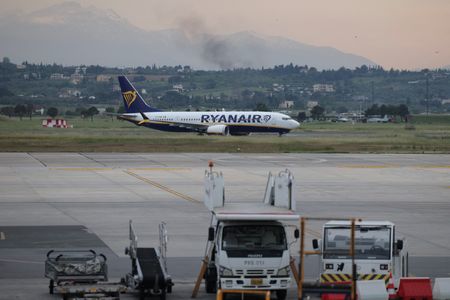
Europe’s biggest budget airline announced Friday it will close its operational hub at Thessaloniki airport in Greece during the upcoming winter season, citing excessive fee increases by the airport management company.
Jason McGuinness, Ryanair’s Chief Commercial Officer, told media in Athens that negotiations with Fraport, the German company operating several Greek airports, have reached a dead end over cost disputes.
“Fraport Greece continued to increase charges, which are now 66% above pre-Covid level,” McGuinness stated during the press conference.
However, Fraport Greece strongly disputed these claims in a statement released later Friday, calling any connection between their pricing and Ryanair’s departure “entirely unfounded.”
“The decision to reduce winter operations at Thessaloniki Airport Makedonia is exclusively related to Ryanair’s commercial strategy, business model, and profitability considerations,” the airport operator responded.
The Irish airline plans to withdraw three jets currently stationed in Thessaloniki, eliminating half a million passenger seats and discontinuing 10 flight paths during the winter months.
Ryanair operates 95 bases across Europe where it stations aircraft and crew. The company recently made a similar decision to abandon its Berlin operations last month, also citing increased taxes and fees.
McGuinness declined to specify whether the closure would result in layoffs among the 100 employees currently working at the Thessaloniki facility.
The airline is also reducing service at Athens airport this winter, creating a total loss of 700,000 seats and 12 routes throughout Greece. Additionally, operations at Chania and Heraklion airports will be suspended during slower travel periods.
The displaced aircraft will be moved to Albania, Italy and Sweden, “where airports have passed on their government’s aviation tax savings, resulting in more connectivity, tourism and jobs this winter,” McGuinness explained.
The executive warned that Ryanair’s departure could be “devastating for the city” of Thessaloniki, noting the airline supplied 90% of the city’s international flight capacity in the previous year.
Greece relies heavily on tourism as a cornerstone of its economy, particularly as one of the Mediterranean’s premier summer vacation destinations. Local Greek news outlets had predicted this closure, prompting worry from city officials about potential damage to tourism employment in the region.
A Thailand-based artificial intelligence company has issued a strong denial following accusations that it illegally transferred advanced computer technology to China in violation of U.S. trade restrictions.
SiamAI, headquartered in Bangkok, released a public statement Saturday addressing allegations that the firm helped circumvent export controls on sophisticated computer chips manufactured by American companies Super Micro Computer and Nvidia.
“SiamAI has not engaged in the export of AI servers to China,” the company declared in its official response.
The firm also emphasized its commitment to following international trade laws, stating: “SiamAI is committed to full adherence to all applicable U.S. export and re-export control laws and regulations.”
Federal prosecutors have made serious allegations regarding the scope of potentially illegal technology transfers, claiming that at least $2.5 billion worth of American artificial intelligence technology made its way to China. According to the prosecution, more than $500 million of this equipment was allegedly shipped during a brief period from April through mid-May 2025.
The controversy comes as Thailand has emerged as a major destination for technology investment in Southeast Asia. Over recent years, the country has successfully attracted substantial funding for data center construction from major tech giants including TikTok’s parent company ByteDance, Microsoft, and Google’s parent company Alphabet Inc.
Delaware State University’s softball team delivered an exciting performance on Friday, claiming a thrilling 3-2 victory over Coppin State University in a contest that extended into extra innings.
The Hornets managed to secure the win in the bottom of the ninth inning, capping off what proved to be a closely contested matchup between the two teams. The game remained tight throughout regulation play before Delaware State was able to break through for the decisive victory.
The extra-inning triumph showcases the determination and resilience of the Delaware State softball program as they continue their season. Both teams battled hard throughout the extended contest, with neither side able to gain a commanding advantage until the final frame.
This victory adds another memorable moment to Delaware State’s softball season, demonstrating the team’s ability to perform under pressure in crucial situations.
The Chicago Cubs have accomplished something that hasn’t been seen in nearly 90 years, securing their second 10-game winning streak of the season following a commanding 7-1 victory against the Texas Rangers in Arlington on Friday evening.
Michael Busch delivered a crucial three-run double while Ian Happ continued his impressive on-base streak, now at 29 consecutive games, as Chicago reached this historic milestone. Not since 1935 has the franchise recorded two separate 10-game winning streaks within a single season.
“That means you’re doing something that’s pretty rare, and I think we realize that,” said manager Craig Counsell.
The achievement places the Cubs in exclusive company. According to Sportradar, the last major league team to accomplish two 10-game winning streaks within their first 39 games was the 1955 Brooklyn Dodgers, who did so in just 24 games. The Cubs’ only better performance came in 1906 when they managed four such streaks.
Second baseman Nico Hoerner reflected on the rarity of the accomplishment: “Baseball is a game of a ridiculous amount of stats and things to look up, so anytime you have to go that far back, it is obviously a good sign, especially on a positive like that. We’re just going to keep it rolling.”
The speed at which Chicago achieved this feat is particularly noteworthy, completing both 10-game streaks by May 8. “That’s a crazy sentence,” Hoerner remarked.
Currently sitting at 27-12, the Cubs have captured 20 victories in their past 23 contests, with only three consecutive defeats separating their two extended winning runs. Last season, Milwaukee accomplished a similar feat with two 10-game streaks en route to claiming the NL Central division title, finishing five games ahead of Chicago.
“If you break it to small things, it’s just come and play a good game today, and we played a really good game today, a really well-rounded, well-pitched for sure, with some pressure a lot in a bunch of innings,” Counsell explained. “It’s been the recipe for a lot of wins.”
The last time the Cubs achieved multiple 10-game winning streaks was during their remarkable 1935 campaign, when Hall of Fame catcher Gabby Hartnett earned NL MVP honors under manager Charlie Grimm as the team won 100 games. The franchise has reached that 100-win mark only once since then, during their historic 2016 World Series championship season with 103 regular season victories.
Pitcher Ben Brown, who tossed four hitless innings in his first start of the season after 12 relief appearances, expressed amazement at the team’s achievement. “Two double-digit winning streaks in a season, that sounds pretty wild to me,” he said.
“That’s kudos to all the guys in the clubhouse, all the coaches, all the trainers, the sports staff,” Brown continued. “That is some goosebumps to think about how talented this team is. It’s special to be a part of, it’s special to witness, it’s special to watch.”
DEIR AL-BALAH, Gaza Strip — While Gaza remains gripped by a devastating humanitarian crisis and an unstable ceasefire, a small group of Palestinian surfers continues to seek solace and happiness in the Mediterranean waters along the territory’s coastline.
According to Tahseen Abu Assi, a Gaza City surfer, just three or four men continue to surf because of limited surfboards and lack of repair materials for damaged equipment.
Throughout the two-year conflict, Abu Assi transported his surfboard during each forced relocation because replacement would be impossible. “If something happened to it I won’t be able to get another one,” he explained, pointing out that surfboards haven’t been allowed into the Palestinian territory since 2007. Israel’s restrictions include surfboards among various sports equipment and other banned items.
This Tuesday, Abu Assi joined two other surfers in the waters near Gaza City’s port, including Khalil Abu Jiab, who celebrated while riding the large waves with his arms extended upward.
Following the conflict’s start, Israeli forces imposed severe limitations on maritime activities in Gaza, with UN reports documenting attacks on fishermen both on land and at sea, including those using small paddle craft.
In the previous year, Israel designated Gaza’s coastal waters as off-limits, prohibiting fishing, swimming, and ocean access, creating hazardous conditions for surfing.
Maritime activities remain forbidden and perilous in northern and southern Gaza waters. Even central Gaza’s waters, near Gaza City, pose risks due to Israeli naval patrols.
“There is fear of course, but we can’t leave this sport,” Abu Assi explained. “During the war, in the middle of the war, in the middle of the bombing and the planes above us, we used to go down and practice this sport.”
Since Gaza’s waves seldom reach suitable surfing heights, enthusiasts abandon all other activities when conditions improve, he noted.
Heavy combat throughout the region decreased following an unstable ceasefire that began October 10, though fatal Israeli attacks have persisted, with Hamas and Israel each blaming the other for truce violations.
The Israel-Hamas conflict started October 7, 2023, when militants launched an assault on southern Israel, resulting in approximately 1,200 deaths, primarily civilians, and capturing 251 hostages. Gaza’s Health Ministry reports that Israel’s military campaign has resulted in 72,628 Palestinian deaths and 172,520 injuries.
Gaza residents continue facing severe challenges obtaining food, clean water, healthcare, and housing following widespread destruction, collapsed medical infrastructure, and mass displacement of the population.
However, for the territory’s remaining surfers, the waves provide temporary relief from their circumstances.
“As soon as the sea gets high, you leave your work and leave your whole life,” Abu Assi said. “Work can be caught up on, as they say. We go practice this sport.”
VATICAN CITY — The Holy See is demonstrating both acceptance and boundaries in its approach to ministering to LGBTQ+ Catholics during Pope Leo XIV’s leadership, showing welcoming gestures while maintaining traditional restrictions that began under Pope Francis’s 12-year tenure.
LGBTQ+ Catholic supporters celebrated this week after a Vatican working group published a document that included testimonials from two married gay Catholics who discussed their sexuality, religious beliefs, and the pain caused by the Catholic Church’s negative stance on homosexuality.
Furthermore, during a recent in-flight press conference, Leo emphasized that the church’s social justice, equality, and freedom teachings hold greater significance than its sexual morality doctrines, indicating he won’t make this issue a top priority.
However, during that same press briefing, Leo suggested he won’t extend beyond Francis’s position regarding the controversial topic of same-sex blessings. The Vatican has recently reaffirmed its opposition to local initiatives that deviate from the Holy See’s official position.
Rev. James Martin, an American Jesuit who has led the church’s LGBTQ+ community outreach efforts in the United States, views these developments as maintaining strong consistency with Francis’s approach.
“If the Catholic Church has begun to listen to LGBTQ Catholics as part of its methodology, the church has already moved forward in a significant way,” he recently stated.
However, these developments have drawn criticism from conservative voices, who emphasize official Catholic doctrine — which remained unchanged even during Francis’s leadership — declaring homosexual activity as “intrinsically disordered.”
The Vatican working group document summarized expert analysis of controversial issues that arose following Francis’s extensive reform initiative. The document carries no official authority and serves only as a summary of discussions. Leo’s intended actions regarding this report remain unclear.
The gay men’s testimonials, published in appendices on the Vatican’s synod website, included emotional stories of how one Portuguese man accepted his homosexuality and wed his partner. He also described faith struggles stemming from insensitive comments from a Catholic spiritual advisor and forced “conversion therapy,” the scientifically debunked practice of attempting to change LGBTQ+ individuals’ sexual orientation or gender identity through therapy.
The second testimony, from an American, criticized therapy sessions and counseling received from Courage, a Catholic pastoral organization that assists people with same-sex attraction in living celibately.
“My sexuality isn’t a perversion, disorder, or cross; it’s a gift from God,” the individual stated.
Courage issued a Friday statement condemning the negative portrayal of their work, asserting they have never participated in “reparative therapy.”
“Courage has suffered calumny and detraction before, but usually from secular outlets,” the organization stated. “It is a great sadness and an additional wound to our members to have this false and unjust depiction in a Vatican document.”
Martin noted the publication represented the first instance of an official Vatican document including “such detailed stories from LGBTQ Catholics. As such, it marks a significant step forward in the church’s relationship with the LGBTQ community.”
Bishop Joseph Strickland, whom Francis dismissed as Tyler, Texas bishop, called the report “deeply alarming” and claimed it contradicted church teachings about sexuality, sin, marriage, and morality. In a personal website post titled “An Emergency in the Church,” Strickland argued the church’s homosexuality teachings stem from God, not prejudice.
“To suggest that the sin does not consist in the same-sex relationship itself is not merely confusing language. It is a direct assault upon Catholic moral doctrine and upon the words of Scripture itself,” he stated.
The LGBTQ+ outreach issue is reaching a critical point in Germany, where Catholic bishops have established guidelines for priests conducting same-sex blessings that appear to exceed what Francis’s Vatican authorized in 2023.
That year, the Vatican’s doctrine office released a declaration called “Fiducia Supplicans” that permitted priests to offer spontaneous, non-liturgical blessings to same-sex couples, provided these blessings aren’t mistaken for wedding ceremonies. Church doctrine maintains that marriage represents a lifelong bond between one man and one woman.
The declaration triggered unprecedented, continent-wide opposition from African bishops and other conservatives, forcing the Vatican to clarify that such blessings must be brief, lasting “10 or 15 seconds,” and don’t bless the union itself but rather the individuals involved.
In April 2025, German bishops and a prominent lay organization released implementation guidelines for the declaration.
While emphasizing the spontaneous, non-liturgical character of the blessing, the guidelines specify they apply to relationships rather than individuals, and establish criteria for proper celebrations. The guidelines recommend, for instance, appropriate liturgical readings, “care in the preparation” of the event, and that attendees should provide “acclamation, prayer and song.”
Leo disclosed last month, while returning from Africa, that the Vatican had informed the Germans of its disagreement with their proposals. This week, the 2024 letter containing the Holy See’s position was published online.
The letter, signed by doctrine chief Cardinal Victor Manuel Fernández, stated the guidelines’ reference to acclamation resembled marriage ceremonies and “in this sense effectively legitimizes the status of these couples, contrary to what is stated” in the Vatican’s 2023 declaration.
Fernández’s letter objected that the German guidelines’ mention of location, aesthetics, and music in blessings suggested a liturgical ceremony that “contradicts” Vatican permissions.
The letter didn’t completely reject the German guidelines but provided Fernández’s “observations.”
Leo met Thursday with German Cardinal Reinhard Marx, who — despite Fernández’s letter — recently advised priests in his archdiocese to use the German guidelines as foundation for their pastoral ministry.
Cardinal Pietro Parolin stated Wednesday that discussions of sanctions against German priests using the guidelines were “premature” and confirmed ongoing dialogue with German bishops.
The goal is “never to have to resort to sanctions, that problems can be resolved peacefully, as should be the case in the church,” Parolin explained.
Martin emphasized that the Vatican had clearly stated its 2023 declaration restricted same-sex couple blessings to specific circumstances only.
“But the synod has also made it clear that it is inviting the church to listen, in a new way, to the experiences of LGBTQ Catholics. So, to me, there is no contradiction,” he told The Associated Press. “Both ‘Fiducia’ and the synod report are steps forward in the church’s ministry to LGBTQ people.”
Francis DeBernardo, executive director of New Ways Ministry, which advocates for LGBTQ+ Catholics, commended Leo’s remarks about church teachings on sexual morality.
Returning from Africa, Leo was questioned about Marx’s adoption of the German guidelines and his plans to maintain church unity over the divisive same-sex blessing issue.
“It is very important to understand that the unity or division of the Church should not revolve around sexual matters,” Leo stated. “I believe there are much greater, more important issues, such as justice, equality, freedom of men and women, freedom of religion, that would all take priority before that particular issue.”
DeBernardo said it was “good to hear from the pope that he is making a decisive turn away from the church’s obsession with sexual matters.”
He also welcomed Leo’s “measured” remarks about the German same-sex guidelines.
“He did not condemn or even criticize German church leaders. He simply said there is disagreement, and that this is not a cause for disunity,” DeBernardo stated. “Both the new moral emphasis on social issues instead of sexuality, and the fostering of a more collegial church are good news for LGBTQ+ Catholics.”
MOSCOW — Russian President Vladimir Putin will address a heavily fortified Victory Day ceremony in Moscow’s Red Square on Saturday, commemorating the end of World War II amid unprecedented security measures and ongoing conflict with Ukraine.
For the first time in almost twenty years, the annual military display will exclude tanks, missiles, and other heavy weaponry, featuring only the traditional aircraft flyover. Putin, who has held power for over 25 years, typically uses Russia’s most significant national holiday to display military strength and build support for the ongoing Ukrainian conflict, now in its fifth year.
Russian officials attributed the modified parade format to the “current operational situation” and cited potential threats from Ukrainian forces. Kremlin representative Dmitry Peskov confirmed that authorities have implemented “additional security measures” for the event.
Both nations attempted ceasefires this week that ultimately failed. Russia announced a temporary halt to hostilities for Friday and Saturday, while Ukrainian leader Volodymyr Zelenskyy declared a truce beginning May 6, though both sides accused each other of continued attacks.
President Donald Trump announced Friday that both Russia and Ukraine agreed to his ceasefire proposal running Saturday through Monday, including a prisoner exchange, calling it potentially the “beginning of the end” of the conflict.
Zelenskyy, who earlier suggested Russian officials “fear drones may buzz over Red Square” on May 9, responded to Trump’s announcement by issuing a decree sarcastically allowing Russia to proceed with Victory Day celebrations while temporarily designating Red Square off-limits for Ukrainian attacks.
Peskov dismissed Zelenskyy’s decree as a “silly joke,” telling reporters, “We don’t need anyone’s permission to be proud of our Victory Day.”
While Russia’s larger military forces continue making gradual progress along the 1,000-kilometer front line, Ukraine has responded with increasingly effective long-range strikes targeting Russian energy infrastructure, manufacturing facilities, and military installations. Ukrainian forces have developed drone technology capable of reaching targets more than 1,000 kilometers inside Russian territory, far exceeding their pre-2022 capabilities.
Russian officials threatened a “massive missile strike on the center of Kyiv” if Ukraine attempts to interfere with Saturday’s celebrations. The Defense Ministry urged civilians and foreign diplomatic staff to “leave the city promptly,” though European Union representatives stated their diplomats would remain in the Ukrainian capital despite the warnings.
Putin has consistently utilized Victory Day ceremonies to promote national unity and emphasize Russia’s global influence. The Soviet Union suffered 27 million casualties during 1941-45 in what Russians call the Great Patriotic War, a massive loss that profoundly affected the national consciousness and remains one of the few unifying elements in the country’s complex Communist-era history.
Red Square Victory Day parades have featured extensive displays of military hardware — including armored vehicles and nuclear-capable intercontinental ballistic missiles — annually since 2008. Regional parades throughout the country have also been reduced or cancelled entirely due to security considerations.
As military units prepared for Saturday’s march, Moscow authorities restricted mobile internet and text messaging services throughout the capital, citing public safety requirements. The government has systematically increased internet restrictions and online monitoring, leading to growing public frustration and rare expressions of dissent.
International guests scheduled to attend the Moscow festivities include Malaysia’s King Sultan Ibrahim Iskandar, Laos President Thongloun Sisoulith, Kazakhstan’s President Kassym-Jomart Tokayev, Uzbekistan’s President Shavkat Mirziyoyev, and Belarus’ authoritarian leader Alexander Lukashenko. Slovakia’s Prime Minister Robert Fico, representing a European Union member nation, planned to meet with Putin and visit the Tomb of the Unknown Soldier memorial near the Kremlin but intended to skip the Red Square parade.
A traffic accident has resulted in the complete closure of southbound US Route 13 at the Route 14 intersection, according to the Delaware Department of Transportation.
DelDOT officials are directing drivers to find alternative routes while emergency responders and cleanup crews work at the crash site.
No additional details about the collision, including potential injuries or the number of vehicles involved, have been released at this time.
Motorists should expect delays in the area and plan accordingly for their commute.
The family of imprisoned Hong Kong democracy advocate Jimmy Lai is pinning their hopes on President Donald Trump’s upcoming meeting with Chinese leader Xi Jinping, believing diplomatic negotiations could be their last chance to secure his freedom.
Lai, who previously believed Trump might prevent China from implementing its controversial national security legislation, instead found himself sentenced to two decades behind bars under that very law.
The 78-year-old former newspaper publisher established a pro-democracy publication that authorities shuttered amid the government’s response to Hong Kong’s widespread 2019 demonstrations against Chinese rule.
Political analysts view Lai’s imprisonment as emblematic of eroding civil liberties that Beijing had guaranteed when Britain transferred Hong Kong’s sovereignty in 1997. His son Sebastien Lai expressed urgent concerns about his elderly father’s deteriorating situation in an Associated Press interview.
While Trump’s discussions with Xi are expected to cover trade relations, Middle East conflicts, and Taiwan tensions, the president has indicated plans to address Lai’s case. Speaking to radio host Hugh Hewitt, Trump noted “there’s a little bitterness, I would say, with him and Jimmy Lai.”
The 31-year-old son believes his father’s situation could be resolved more easily than other complicated international disputes the two leaders will tackle.
“My father will die in prison if he’s not freed,” he stated, warning that such an outcome would devastate his family while creating a martyred figure. “It’s a lose-lose scenario for every single person.”
Trump has publicly expressed compassion for the elder Lai’s predicament. “I feel so badly,” the president told journalists in December following Lai’s conviction for conspiring with foreign entities and publishing seditious content. Trump had previously raised the activist’s case during his October meeting with Xi.
Mark Clifford, who leads the Committee for Freedom in Hong Kong Foundation advocating for Lai’s release, said sources briefed on the October discussions indicated Xi and his team “noted” Trump’s comments without strong opposition. This response suggests willingness to engage in dialogue, Clifford explained.
According to Clifford’s sources, Trump directed Treasury Secretary Scott Bessent to mention Lai’s release during June trade negotiations with China. Bessent reportedly raised Trump’s interest in freeing the activist during recent talks with Chinese officials, who acknowledged the request without significant pushback.
“It is positive that senior Chinese officials have stopped pushing back on the issue,” Clifford observed. The Treasury Department declined to comment on these claims.
However, Beijing maintains its hardline stance publicly. In March, Chinese foreign ministry representative Guo Jiakun labeled Lai as the orchestrator behind the 2019 civil unrest that disrupted Hong Kong.
When questioned Thursday about potentially releasing Lai, the foreign ministry avoided direct answers, stating that Hong Kong matters are domestic concerns where external interference isn’t permitted.
Hong Kong’s government previously dismissed connections between Lai’s case and press freedoms. Officials told the AP that Lai received conviction through transparent and equitable legal proceedings, emphasizing their commitment to law enforcement.
The White House hasn’t responded to inquiries about how aggressively Trump will advocate for Lai’s freedom.
More than 100 bipartisan congressional members sent a Thursday letter urging Trump to pursue Lai’s release during the Xi summit.
Despite escalating U.S.-China tensions, diplomatic efforts have achieved some prisoner releases. American pastor David Lin gained freedom in 2024 after nearly two decades in Chinese detention, while both nations exchanged several prisoners through diplomatic arrangements that year.
Activists note Beijing’s growing reluctance to release human rights challengers. Chinese Nobel winner Liu Xiaobo died in a northeastern Chinese hospital in 2017 despite international appeals for his medical release abroad.
Human rights attorney Jared Genser, Liu’s former representative, said a White House official confirmed Trump had contacted Xi requesting Liu’s medical release.
Under Xi’s predecessor Hu Jintao, China prioritized economic cooperation and international image concerns, explained Genser, who secured another activist’s freedom in 2007. Xi’s administration emphasizes national sovereignty and rejecting foreign intervention.
“China knows that by taking a very tough and unrelenting position that most countries in the world are not going to be willing to do more than privately raise a case,” Genser said. “That self-censorship to me is the biggest factor… in our inability to secure the release of political prisoners under Xi Jinping, as compared to Hu Jintao.”
John Kamm, who founded the prisoner advocacy organization Dui Hua Foundation, said China previously offered concessions when seeking specific goals, like Olympic hosting rights.
However, he attributed reduced success in freeing detained activists partly to American inattention. “I don’t know of anyone in this administration who cares about political prisoners in China,” Kamm stated, suggesting Secretary of State Marco Rubio might be an exception, though focused elsewhere.
Kamm noted Trump’s emphasis on trade, investment, and Middle East conflicts, but suggested China might release Lai in exchange for American concessions on Beijing’s priorities.
Thomas Kellogg from Georgetown Center for Asian Law believes both governments have motivations for reaching an agreement.
Freeing Lai would allow China to demonstrate readiness to progress beyond the nearly six-year period since implementing Hong Kong’s security legislation, while Trump’s team could claim a diplomatic victory after “a difficult couple of months,” Kellogg explained.
Such an achievement would generate praise even from administration critics, he added. “If the Trump administration is pushing very hard for Jimmy Lai’s release, then we could get a positive outcome.”
Wilson Chan, co-founder of the Pagoda Institute think tank, doubts diplomatic resolution prospects, believing Beijing wants to send a message through Lai’s case.
Chan suggested that continued international attention might make Beijing view Lai as an influential figure still representing security threats, while silence would eliminate pressure for action.
Lai, who holds British citizenship, chose not to appeal his conviction and sentence. The government, which considers him Chinese, seeks to seize his assets citing national security justifications.
Sebastien Lai described this action as another instance of his father “still being attacked.”
The elder Lai experiences health problems including irregular heartbeat and diabetes, according to his Hong Kong legal representatives in January. Prosecutors cited medical reports indicating his overall health remains stable. Officials claim his solitary confinement resulted from his own request.
The London-based son has maintained correspondence with his father throughout more than five years of detention. He believes his father would prefer quiet retirement if granted early release.
“The Chinese government would be complicit in killing him,” he warned.
Chinese officials announced Saturday that the nation’s overseas sales jumped 14.1% in April compared to the same month last year, surpassing expectations despite ongoing conflicts in Iran and continuing effects from elevated U.S. trade tariffs.
The trade figures were published just days before a scheduled summit next week in Beijing between President Donald Trump and Chinese President Xi Jinping.
The April performance significantly exceeded economic forecasts and marked a substantial improvement over March’s modest 2.5% annual increase.
Meanwhile, Chinese purchases from other countries grew 25.3%, which represented a slight slowdown from March’s 27.8% rise but remained strong overall.
The upcoming Trump-Xi meeting occurs as the two nations face numerous challenges in their relationship, with diplomatic efforts to resolve the Iranian conflict taking precedence over traditional trade disputes.
“We’re expecting that overall external demand will remain a solid driver of growth this year,” said Lynn Song, chief economist for Greater China at Dutch bank ING, likely led by China’s exports of semiconductors and autos.
Earlier this year, Chinese officials established an economic growth goal of 4.5% to 5% annually, marking a decrease from the previous year’s 5% target and representing the most modest objective since 1991. International sales are anticipated to continue supporting the broader economy, particularly as shipments to European, Southeast Asian, Latin American and African markets have increased in recent months.
Beyond discussions about ending the Iranian conflict, the Trump-Xi talks will likely address trade policies and export restrictions, including rare earth materials and American technology limitations affecting China. These conversations follow a year-long trade agreement between the nations that was established when the leaders previously met in South Korea.
While major policy changes regarding export controls seem unlikely, the forthcoming meeting may produce gradual improvements to address trade tensions, according to HSBC economists in a recent analysis.
“On balance, China looks to have more leverage,” wrote Leah Fahy, senior China economist of Capital Economics, in a note. “But higher tariffs haven’t stopped China’s exports from continuing to surge over the past year, and Beijing has showed that it is prepared to wait out U.S. pressure.”
For Chinese manufacturers, rising oil and fuel costs due to the Iranian conflict are increasing production and transportation expenses across the country’s industrial facilities, according to Wei Li, head of multi-asset investments at BNP Paribas Securities (China). Additionally, global inflation pressures could reduce consumer spending power in China’s international markets.
Despite these challenges, China’s economy has demonstrated greater stability than many other nations, benefiting from substantial oil reserves and a more varied energy portfolio.
Political boundary lines across America are being redrawn at a rapid pace this week through court decisions and legislative actions, with the majority of these modifications anticipated to help Republicans maintain their grip on Congress during November’s voting.
The most significant developments occurred in Southern states, stemming from an important Virginia state court decision and ongoing consequences from a U.S. Supreme Court ruling issued last month.
Virginia’s Supreme Court delivered a narrow 4-3 ruling on Friday that overturned a Democratic congressional redistricting plan that voters had endorsed in April.
The rejected map would have positioned Democrats to potentially capture 10 of Virginia’s 11 House seats — a substantial increase from their current six seats. These boundary adjustments were part of both parties’ efforts to redraw districts favorably before the 2026 midterm elections.
The court’s majority pointed to procedural violations when dismissing the constitutional amendment that enabled the new maps. Constitutional amendments require lawmakers to approve them twice — before and after a legislative election. The court determined this requirement wasn’t met because the first approval occurred in October after early voting for the general election had already started.
Consequently, Virginia’s existing district maps will stay in effect for this year’s elections.
Several Republican-led Southern states moved this week to redesign their congressional boundaries following the April 29 U.S. Supreme Court decision that invalidated a Louisiana congressional district created with a Black majority population.
This Supreme Court decision was viewed as damaging to a Voting Rights Act provision that mandates political maps include districts where minority communities’ preferred candidates have winning opportunities.
Louisiana immediately postponed its May 16 primaries to allow legislators time to develop new districts. Voting rights advocates filled the state capitol to resist proposals for new maps that might eliminate one of the two existing majority-Black districts.
Alabama Republicans passed legislation Friday that would disregard their May 19 congressional primary results and conduct a new election instead — contingent on a federal court agreeing to remove an order requiring the state to establish a second congressional district with a Black majority or near-majority population. Republicans presently control four of Alabama’s six House seats and prefer using a map that could help them secure an additional seat.
South Carolina’s Republican-controlled legislature convened Friday to consider a proposal for a new map giving the party an opportunity to win all seven of the state’s House seats. However, some expressed concerns that dismantling the sole Democratic-held district might make other districts susceptible to Democratic victories.
Tennessee approved legislation Thursday establishing a new House map that divides a majority-Black House district in Memphis, currently the only seat held by a Democrat. This change would provide Republicans a strong opportunity to capture all nine of the state’s seats.
Typically, House districts undergo revision only after results from the ten-year U.S. Census are completed.
This situation represents a departure from normal practice.
President Donald Trump encouraged Texas officials to create new districts to improve his chances of maintaining Republican Congressional control following the 2026 midterm elections. Texas officials responded with a plan designed to deliver up to five additional seats.
Democratic-controlled California countered with a map aimed at gaining five new seats for their party. Additional states have implemented similar strategies. Following the Supreme Court decision, the tempo has intensified, though primarily in states where Republicans already hold nearly all seats, limiting potential gains.
Excluding the potential map modifications in Alabama, Louisiana and South Carolina, the mid-decade redistricting has generated 14 additional House seats that Republicans expect to win and six that could favor Democrats. This would create a potential eight-seat Republican advantage heading into a midterm election, when the president’s party typically loses seats.
However, as modifications and legal challenges continue — along with voter input — the outcomes remain uncertain.
Republicans currently hold 217 House seats compared to Democrats’ 212. One independent member serves, with five seats currently vacant.
Jalen Brunson delivered a dominant 33-point performance, propelling the New York Knicks to a commanding 108-94 victory over the Philadelphia 76ers in Game 3 of their Eastern Conference semifinal matchup. The triumph puts New York on the brink of advancing to the conference finals, holding a decisive 3-0 series advantage heading into Sunday’s Game 4 in Philadelphia.
Brunson sealed the victory with crucial baskets in the closing minutes, energizing the traveling Knicks supporters who made their presence felt at the Wells Fargo Center. Supporting Brunson’s stellar effort, Josh Hart contributed a double-double with 12 points and 11 rebounds, while Mikal Bridges chipped in 23 points. The victory moves first-year head coach Mike Brown’s squad within one win of reaching their second consecutive conference championship series.
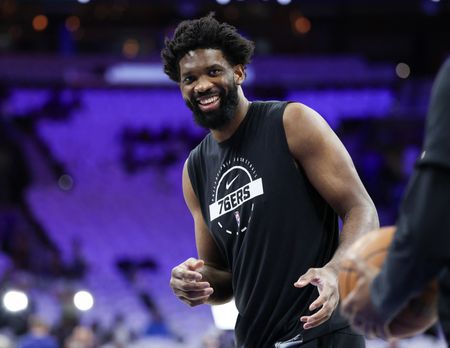
For Philadelphia, Joel Embiid returned to action after sitting out Game 2 due to injuries, managing 18 points in the losing effort. Despite his presence, the 76ers couldn’t generate enough offense to keep pace with the surging Knicks.
In other sports news, the NFL and its referees’ union reached agreement on a new seven-year collective bargaining deal, preventing a potential work stoppage that could have lasted through the 2032 season. League officials had begun preparing replacement referees last month as negotiations stalled, but the new agreement makes those contingency plans unnecessary. The resolution avoids a repeat of the 2012 situation when a 110-day lockout forced the league to use substitute officials.
The New York Jets secured their star running back for the long term, agreeing to a three-year, $45.75 million contract extension with Breece Hall, according to a source familiar with the negotiations. The deal, finalized Friday, makes Hall the NFL’s third-highest paid running back at $15.25 million annually. Hall had been playing under the franchise tag before the new agreement was reached. Last season, he rushed for a career-best 1,065 yards despite missing the final game with a knee injury.
Golf star Rory McIlroy has softened his stance on LIV Golf players potentially rejoining the PGA Tour, though he questions whether those players actually want to return. McIlroy believes the answer may depend on LIV’s financial stability after Saudi Arabia’s sovereign wealth fund recently ended future funding for the breakaway circuit. The tour had attracted top players like Jon Rahm and Bryson DeChambeau with guaranteed contracts, but their long-term commitment now appears uncertain. McIlroy called welcoming back quality players “good business practice” for strengthening the PGA Tour.
Celebrity fans Spike Lee and Timothée Chalamet were among the Knicks supporters who made the trip to Philadelphia for Game 3, despite the 76ers’ attempts to limit visiting fans through restricted ticket sales. Some creative fans like Brooklyn resident Lenny Rakhmanov found ways around the restrictions, while Philadelphia countered by donating tickets to local community organizations to maintain home-court atmosphere.
College basketball received a financial boost with March Madness expansion bringing $300 million in additional revenue through new alcohol sponsorships, providing temporary relief from ongoing challenges facing collegiate athletics. However, concerns persist as programs like Arkansas tennis face elimination, while conferences like the Big 12 and schools like Duke scramble for new revenue sources. The industry’s regulatory body, the College Sports Commission, continues dealing with structural issues. The expanded 76-team tournament format debuts next year.
Los Angeles Dodgers pitcher Blake Snell will make his season debut Saturday against Atlanta after teammate Tyler Glasnow was placed on the 15-day injured list with lower back spasms. The two-time Cy Young Award winner returns earlier than expected from left shoulder fatigue that had sidelined him since late March. Originally scheduled for another minor league rehabilitation appearance, Snell instead gets the call to face the Braves at Dodger Stadium. The team recalled right-hander Paul Gervase from Triple-A Oklahoma City to fill the roster spot.
Miami Marlins prospect Robby Snelling made his major league debut Friday in a 3-2 loss to Washington, with young fans already seeking his autograph before the game. The left-handed pitcher, who was the organization’s second-ranked prospect, earned his call-up from Triple-A Jacksonville this week. Originally drafted 39th overall by San Diego in 2022, Snelling came to Miami in a 2024 trade that sent Tanner Scott and Bryan Hoeing to the Padres.
Baltimore Orioles fans lined up early at Camden Yards for a unique Tupac Shakur bobblehead giveaway, with the rap legend’s sister throwing out the ceremonial first pitch. The promotion honored Shakur’s connection to Baltimore, where he was raised before relocating to California’s Bay Area in the late 1980s. Friday’s matchup against Oakland made for fitting timing, with “California Love” playing during the Athletics’ lineup introductions. The visiting A’s, who departed Oakland before last season, defeated Baltimore 4-3.
Rory McIlroy surged into contention at the Truist Championship in Charlotte, firing a 4-under 67 in his second round to move within four shots of leader Sungjae Im. The world’s second-ranked player, competing for the first time since his Masters victory on April 12, struggled early but caught fire on the back nine with a 32. After sitting eight shots back at the turn, McIlroy’s strong finish positioned him for a potential fifth victory at Quail Hollow.
Golf superstar Rory McIlroy has modified his position regarding LIV Golf players potentially returning to the PGA Tour, stating Friday that welcoming back these golfers could benefit the traditional circuit.
McIlroy’s comments came amid uncertainty surrounding LIV Golf’s future, as Saudi Arabia’s Public Investment Fund has announced plans to withdraw financial support following the current season. When questioned about how this development might affect the PGA Tour, the Northern Irish golfer offered a more welcoming perspective than he has previously expressed.
“It’s a question if (players) do want to come back,” McIlroy stated following his second round at the Truist Championship in Charlotte, where he finished tied for eighth. “Obviously we have seen the quotes over the last few days. And, you know, it seems like … it all depends on what happens to LIV.”
The four-time major champion continued: “But if it is a scenario where they have the option to come back and play on the traditional tours, you know, I think (PGA Tour CEO) Brian Rolapp has said anything that makes this Tour stronger, anything that makes the DP World Tour stronger, I think everyone should be open to that. That’s just good business practice.”
McIlroy also reflected on his previous criticism of the Saudi-backed league, acknowledging his earlier harsh stance. “I think everyone sort of knows my views on LIV and where it stands in the game of golf. I don’t think I need to rehash any of that. It’s never been for me and, look, it doesn’t mean that LIV is going to go away. They’re going to go and try and find alternative investment, whatever that may look like.”
He added a pointed observation about the financial implications: “But when one of the wealthiest sovereign wealth funds in the world thinks that you’re too expensive for them, that sort of says something.”
The PGA Tour has already established precedent for player returns through its Returning Member Program. Five-time major winner Brooks Koepka successfully rejoined the tour earlier this year after meeting specific requirements that included “heavy and appropriate limitations to both tournament access and potential earning that we believe properly holds returning members accountable for substantial compensation earned elsewhere.”
This program targets golfers who captured major championships including the Players Championship, Masters Tournament, PGA Championship, U.S. Open or Open Championship between 2022-25. Other eligible players under these guidelines include Bryson DeChambeau, Jon Rahm and Cameron Smith.
Reflecting on his evolution regarding LIV players, McIlroy admitted Friday: “I was probably too judgmental with the guys that went because I was seeing it from my point of view and maybe not seeing it from other points of view. But again, I’m not going to judge anyone for not wanting to play on the PGA Tour.”
He suggested alternative pathways for returning players: “Does that mean that they go play DP World Tour maybe. If that’s a pathway, that would make the DP World Tour stronger, and I would be delighted with that, because that’s my home Tour, at the end of the day.”
Despite his more accommodating tone, McIlroy maintained his belief in the PGA Tour’s superiority: “But … if you want to be the most competitive golfer you can be, (the PGA Tour) is the place to be. And if you don’t want to play here, I think that says something about you.”
The Women’s National Basketball Association made history Friday evening as the Toronto Tempo launched their debut season, marking the league’s first expansion beyond American borders.
A capacity crowd of 8,210 enthusiastic supporters packed Coca-Cola Coliseum to witness the Tempo face off against the Washington Mystics in their historic home opener. Spectators of all ages donned the team’s signature bordeaux and borealis blue colors, creating an atmosphere of excitement throughout the venue.
The evening began with tremendous energy as fans erupted in celebration following the Toronto Children’s Choir’s performance of “O Canada.” During game breaks, young girls wearing Tempo merchandise were featured on the arena’s large screen, entertaining the crowd with their spirited dance moves.
While Canadian player Kia Nurse received warm applause during team introductions, soccer legend Christine Sinclair generated some of the evening’s most enthusiastic and sustained ovations when she appeared on the video board.
This milestone represents a significant development for both the WNBA and Canada, as the country previously had no opportunity for women to compete in elite professional basketball within their homeland.
For 30-year-old Nurse, who was raised in the Toronto suburbs, this moment fulfills a long-held dream.
“It’s really special and it’s kind of a full-circle moment,” Nurse commented earlier this week, expressing that she’s “grateful for the opportunity to be on this stage and to be given this platform for growing women’s basketball in Canada.”
The city demonstrated its enthusiasm for professional women’s basketball in 2023 when an exhibition matchup between the Minnesota Lynx and Chicago Sky attracted nearly 20,000 fans to Scotiabank Arena, the home venue of the NBA’s Toronto Raptors.
Team members noticed the mounting anticipation even before taking the court, as devoted local supporters expressed their commitment in the days preceding the season opener.
According to Tempo center Temi Fágbénlé, who experienced a similar launch with the Golden State Valkyries last season, such enthusiasm typically accompanies being “the new thing in town.”
“But it’s more than just a new thing,” Fágbénlé explained. “It’s supporting women’s sports. So many young girls [and] older women as well haven’t seen this in Canada.”
Nurse anticipates this increased exposure will strengthen the national team program, predicting that eventually “you’ll be able to field an entire (Canadian) Olympic roster from WNBA players because these will be Tempo-influenced players.”
The veteran guard has also stressed to her fellow players that they carry the support of an entire nation.
Embracing their identity as “Canada’s team,” the Tempo will host two regular-season contests each in Montreal and Vancouver this year. Nurse believes these appearances will foster connection among fans and aspiring players nationwide.
“(Sports is) a place where you belong,” Nurse stated. “It’s a place where you can look out on the court and see somebody that looks like you and resonate with them, resonate with their story.”
“To be able to do that across Canada is truly special.”
Head coach Sandy Brondello, like her players, views the franchise as evidence of women’s basketball’s continued expansion.
With 27 years of WNBA experience and two championship titles, Brondello has witnessed the league’s transformation through franchise additions, corporate partnerships, and growing fan interest in women’s professional basketball.
She believes the Tempo’s arrival will sustain this positive trajectory, particularly throughout Canada.
“We are creating history,” Brondello declared. “But we want to make history, too.”
Motorists traveling on Route 7 should be aware of traffic delays after a vehicle collision forced authorities to shut down the left lane at AAA Boulevard.
The Delaware Department of Transportation is currently monitoring the situation and advising drivers to use caution when traveling through the area.
No additional details about the crash or potential injuries have been released at this time. Drivers are encouraged to seek alternate routes or allow extra travel time if they must pass through this location.
NAIROBI, Kenya — Ethiopia is spearheading a dramatic shift toward electric vehicles across Africa as mounting fuel costs and supply disruptions drive nations to embrace cleaner, more affordable transportation options.
Data from China’s Commerce Ministry reveals Africa purchased 44,358 electric vehicles from China in 2025, representing a significant jump from 19,386 units the previous year. These shipments, worth more than $200 million, demonstrate surging demand particularly in Ethiopia following its 2024 prohibition on new gasoline and diesel vehicle imports.
Ethiopia now operates more than 115,000 electric vehicles on its roadways, representing approximately 8% of its total vehicle fleet. During 2025, the country acquired one-third of all African EV imports from China, outpacing major markets including South Africa, Egypt, Morocco and Nigeria.
With the ongoing Iran conflict creating fuel supply disruptions throughout transportation networks and everyday life, Ethiopia’s push to reduce expensive oil and gas imports while bolstering energy independence has intensified. Yet this transition raises concerns about charging network development and vehicle costs.
Ethiopia allocates roughly $4.2 billion annually for fuel imports, putting pressure on its foreign currency reserves.
Trade and Regional Integration Minister Kassahun Gofe stated the nation also spends up to $128 million monthly on fuel subsidies, while deliveries have fallen short by over 180,000 metric tons due to Iran’s effective blockade of the Strait of Hormuz, a shipping channel handling approximately one-fifth of Gulf region oil exports before the conflict began.
Officials have intensified their push for accelerated EV adoption, positioning it as essential protection against external supply disruptions.
“From a general perspective, it is sustainable,” commented Hiten Parmar, executive director of The Electric Mission, based in South Africa. “By replacing imported fuel with domestically generated electricity, Ethiopia is strengthening its energy security position.”
Ethiopia benefits from having over 90% of its electricity sourced from renewable energy, primarily hydroelectric and solar power. The Grand Ethiopian Renaissance Dam, Africa’s most significant hydroelectric development, is projected to double the country’s power production, although the project has sparked a decade-long water rights disagreement with downstream nations Egypt and Sudan.
“That scale of generation creates a foundation for electrified transport,” Parmar noted. “It allows EVs to be powered by locally produced clean energy, rather than costly imports.”
“By gradually adopting EVs, that intensive fuel import expenditure can be reduced and redirected into other critical development needs,” Parmar explained.
According to the International Energy Agency, electric vehicles worldwide eliminated more than 1 million barrels of daily oil consumption in 2024.
Egypt, South Africa and Morocco are also pursuing electric vehicle transitions through policy incentives, manufacturing investments and clean energy development.
“That transition is beginning to ease pressure on fuel demand,” explained Bob Wesonga, policy and investments lead at the Africa E-Mobility Alliance.
“That’s over 100,000 vehicle owners who are no longer directly exposed to pump price shocks,” he noted. “In the medium to long term, this creates a buffer against global oil volatility.”
Those who have made the switch report substantial cost reductions.
“A private EV owner now spends roughly $4 a month on charging compared to about $27 previously spent on fuel,” Wesonga said. “For public transport operators, the difference is even more striking.”
The electric vehicle transition confronts significant infrastructure obstacles, Parmar acknowledges.
“The technology is already mature, the challenge is building it out fast enough,” he stated.
Ethiopia is installing ultra-fast charging stations in its capital Addis Ababa, but expanding them countrywide requires substantial time and financial commitment.
“The biggest hurdle is the last-mile power distribution,” Wesonga explained. “While Ethiopia has a surplus of generation, getting that power reliably to where it’s needed, especially outside Addis Ababa, remains a challenge.”
Power outages and delays in connecting high-capacity charging facilities have hindered infrastructure development despite growing electric vehicle demand.
“Charging infrastructure is still heavily concentrated in the capital and along a few corridors,” Wesonga observed. “That limits e-mobility to specific areas and creates a bottleneck as adoption grows.”
Ethiopia joins several African nations working to establish domestic EV manufacturing. Government records indicate 17 electric vehicle assembly facilities are planned in Ethiopia, with goals to expand that figure to 60 by 2030 as part of a broader localization and cost-reduction strategy.
Vehicle affordability continues as a significant obstacle. While operational expenses are reduced, electric vehicle prices remain elevated compared to typical household incomes.
“The purchase price is still out of reach for many,” Wesonga said. “At the same time, restrictions on fossil fuel vehicles have pushed up the cost of used cars, creating additional barriers.”
This situation could produce unexpected social consequences without careful management.
“A national fleet transition is always gradual,” Parmar said. “Existing combustion vehicles will remain in use for some time, and the transition needs to account for livelihoods tied to that system.”
Despite challenges, both specialists believe the long-term direction is evident. Reduced operating and maintenance expenses for electric vehicles could lower transportation costs over time, decreasing goods prices and improving economic opportunity access.
Ethiopia is also studying approaches from nations like China and Norway, where government support, infrastructure investment and consumer incentives have accelerated adoption.
“This is not just about transport,” Wesonga concluded. “It’s about reshaping how the country uses energy, and who benefits from that shift.”
Federal officials and the nonprofit organization managing Washington DC’s public golf facilities announced a new partnership agreement on Friday, resolving uncertainty over the future of the capital’s three municipal courses.
According to a joint announcement released Friday, National Links Trust will secure extended lease agreements to manage and improve both Langston Golf Course and Rock Creek Park Golf Course moving forward.
The arrangement also addresses East Potomac Golf Links, where National Links Trust will maintain temporary operations while the National Park Service prepares for what officials describe as a “historic restoration” of the waterfront facility.
Officials confirmed that golfers will continue to have access to all three Washington DC public courses throughout the transition period.
The new partnership comes after the Trump administration terminated National Links Trust’s previous management contract in December of last year.
Some observers viewed that earlier cancellation as part of broader efforts by the Trump administration to transform various aspects of the nation’s capital city.
Federal lawmakers are preparing to vote on groundbreaking cryptocurrency legislation next week that could reshape how digital assets are regulated across the United States.
The Senate Banking Committee will meet May 14 at 10:30 a.m. in Washington D.C. to review the Clarity Act, according to Committee Chairman Tim Scott. The proposed law would establish clear regulatory boundaries for the expanding cryptocurrency market and could resolve ongoing tensions between digital asset firms and traditional financial institutions.
If enacted, the legislation would determine which federal agencies oversee different aspects of the crypto industry and specify whether various digital tokens qualify as securities, commodities, or other asset types. This classification system would provide much-needed legal certainty for companies operating in the space.
A key component of the bill addresses a contentious issue between cryptocurrency platforms and banks regarding stablecoins – digital tokens backed by the U.S. dollar. The compromise, negotiated by Republican Senator Thom Tillis and Democratic Senator Angela Alsobrooks, would ban customer rewards on inactive stablecoin holdings due to their similarity to traditional bank deposits. However, rewards tied to active stablecoin transactions, like payment processing, would remain legal.
Banking organizations oppose this arrangement, arguing it provides cryptocurrency firms excessive freedom and could draw deposits away from the regulated banking sector. Industry representatives have intensified lobbying efforts targeting Republican committee members ahead of the scheduled vote.
Traditional financial institutions want the Clarity Act to address what they call a regulatory gap from previous legislation that permits intermediaries to offer interest payments on stablecoins. Banks warn this could trigger a mass exodus of deposits from federally insured institutions, potentially undermining financial stability.
Cryptocurrency advocates counter that blocking third-party platforms like exchanges from providing stablecoin interest would stifle competition.
The digital asset sector hopes Congress will approve the Clarity Act before November’s midterm elections, when Democrats might regain control of the House. While the House approved its version of the bill in July 2023, the Senate must pass the legislation by late 2026 to send it to President Trump.
Many Democratic lawmakers have criticized the proposal as insufficient regarding anti-money laundering requirements and believe it should include stronger measures preventing political figures from profiting through cryptocurrency investments. The bill would require support from at least seven Senate Democrats to advance.
President Trump actively courted cryptocurrency industry support during his campaign, promising to serve as a “crypto president.” His family’s involvement in digital asset projects has helped bring the sector into mainstream political discourse.
The University of Delaware Blue Hens baseball squad has commenced their weekend road trip with the start of a series against Sam Houston State University.
The team is currently competing away from their home field as they face off against the Bearkats in what promises to be an exciting multi-game matchup.
This series represents another opportunity for the Blue Hens to showcase their skills on the road as they continue their season campaign.
NEW YORK — Forensic handwriting specialists have determined that two notes connected to Jeffrey Epstein’s final weeks in jail were written by the same individual, according to an analysis conducted for The Associated Press.
The conclusion comes after three document examination experts studied both notes and identified matching characteristics including letter formation, spacing patterns, capitalization style, and distinctive punctuation marks.
One note, just released to the public this week, contains the text: “They investigated me for month — found nothing!!!” and references choosing the “time to say goodbye.” The second note, which has been available publicly for several years, lists complaints about jail conditions including showers, food quality, and “Giant Bugs.”
Although experts cannot definitively confirm Epstein authored the writings, the notes reflect his deteriorating mental state before his death and mirror complaints he made to jail staff about conditions at the deteriorating Metropolitan Correctional Center in Manhattan, a stark contrast to his previously luxurious lifestyle. The notes also contain language he had previously used.
Both writings, created with pen on notepad paper, feature the underlined words “NO FUN” and conclude with double exclamation marks — the initial mark in each showing similar curved characteristics. Each note begins with larger text that gradually decreases in size, and successive lines drift away from the left margin.
“These are the kinds of things that would suggest that we’re dealing with the same writer,” said Thomas Vastrick, the president of the American Society of Questioned Document Examiners.
“They are written by the same person,” said Bart Baggett, who founded the forensic analysis firm Handwriting Experts Inc. and has testified in court as an expert witness more than 130 times.
“Both of those documents have the same author,” said Grace Warmbier, who worked for a decade for the New York City Police Department performing document examinations and handwriting analysis.
The experts acknowledged they cannot definitively attribute the notes to Epstein, partly because confirmed samples of his handwriting are scarce among the millions of pages in recently released Justice Department records about the deceased financier.
Warmbier and Vastrick also examined writing samples from former cellmate Nicholas Tartaglione, including portions of a 2019 letter he sent to the New York Daily News denying involvement in Epstein’s death.
Warmbier eliminated Tartaglione as the author, citing “significant dissimilarities between his handwriting and the handwriting in question.”
Vastrick noted that Tartaglione’s writing samples showed “a wide range of variation from one to another” and contained some similarities requiring additional examination.
“At this point, I certainly would not eliminate him as a potential writer,” Vastrick said. “I don’t at the same time want to suggest that he is the writer.”
The first note remained largely unknown until Tartaglione discussed it on writer Jessica Reed Kraus’ podcast last summer. This revelation interested New York Times reporters, who successfully petitioned a judge Wednesday to unseal the note from an unrelated case.
Tartaglione, a former police officer now serving life imprisonment for four murders, claims he found the note in a book within his cell after guards discovered Epstein on July 23, 2019, on the floor with bedsheet material around his neck. Following this incident, Epstein was placed under suicide watch and relocated to another cell. He was alone when found dead on August 10, 2019.
Epstein and Tartaglione were cellmates for approximately two weeks, starting shortly after Epstein’s July 6, 2019 arrest on sex trafficking charges and ending with the suspected suicide attempt. Both men were awaiting trial.
Justice Department records show Tartaglione informed his attorney about the note four days after the July 23 incident. No evidence suggests jail officials or Epstein’s legal team were notified.
The note was subsequently submitted as evidence in Tartaglione’s criminal proceedings and sealed during a dispute over his legal representation. Government reports examining Epstein’s death circumstances never mentioned it, nor did it appear in Justice Department files. The second note, discovered after Epstein’s death, was featured on CBS’ “60 Minutes” in 2020 and appears in official files.
Beyond handwriting analysis, the notes’ language may provide authorship clues. The note Tartaglione claims to have found includes: “Watcha want me to do — Bust out cryin!!”
Epstein had previously used this phrase, mimicking dialogue from a 1931 “Little Rascals” film, in three emails included in Justice Department files, including one sent to his brother four months before his incarceration.
If you or someone you know needs help, the national suicide and crisis lifeline is available by calling or texting 988. Online chat is also available at 988lifeline.org.
A traffic collision has resulted in lane restrictions on a busy stretch of US Route 13, creating potential delays for commuters during the evening hours.
Delaware Department of Transportation officials report that the two left lanes of northbound US-13 have been blocked off at Bacon Avenue following a vehicle crash. The incident is causing traffic to merge into the remaining right lanes as emergency crews respond to the scene.
Drivers traveling northbound on this section of Route 13 should anticipate slower-than-normal traffic conditions and may want to seek alternative routes if possible. The duration of the lane closures has not yet been announced as authorities work to assess the situation and clear the roadway.
No additional details about the nature of the accident or any potential injuries have been released at this time.
Rescue operations have restarted in Indonesia as authorities continue searching for three hikers who disappeared when Mount Dukono volcano erupted on Halmahera island, according to local officials.
The volcanic explosion occurred Friday morning at 7:41 a.m. local time in North Maluku province, launching ash clouds reaching heights of 6.2 miles above the mountain, Indonesia’s volcanology agency reported.
Search teams had to suspend operations Friday night due to ongoing volcanic activity but returned to the field Saturday morning.
More than 100 rescue workers, along with military and police units plus two thermal drones, have been mobilized to locate the missing individuals, according to Iwan Ramdani, who leads the local rescue organization.
The missing hikers include two people from Singapore and one Indonesian citizen, Ramdani confirmed.
“We are focusing the search around the crater, covering an area around 700 metres,” Iwan stated.
Emergency teams successfully evacuated 17 people on Friday, including seven Singaporeans and 10 Indonesians.
Local police chief Erlichson Pasaribu reported that survivors indicated three individuals, two of them Singaporean, perished in the eruption, though rescue officials have not yet verified these fatalities as of Saturday.
Continued volcanic eruptions are creating obstacles for Saturday’s search mission, Iwan noted.
Lana Saria, who heads the volcanology agency, confirmed in an official statement that at least four additional eruptions were documented Saturday morning.
Mount Dukono remains at the third-highest alert level, Saria explained.
Officials are warning residents and visitors to avoid all activities within a 2.5-mile radius of the volcanic crater, she advised.
No airline flight cancellations have been reported due to the eruption.
Indonesia is located within the Pacific “Ring of Fire,” a region known for intense seismic activity where multiple tectonic plates meet.
A heavyweight fighter’s disruptive behavior stole the spotlight from the UFC’s historic White House event during Friday’s press conference for UFC Freedom 250.
The promotional event took place in Newark, New Jersey, where UFC 328 was scheduled for Saturday. However, attention centered on the groundbreaking Washington fight card, with all 14 scheduled competitors present for traditional staredowns.
Undefeated heavyweight Josh Hokit, set to battle Derrick Lewis, transformed the gathering into his own theatrical performance.
Wearing a black robe, sunglasses, American flag gloves and bandana, Hokit delivered wrestling-style rants targeting not only Lewis but also Alex Pereira and Ilia Topuria before UFC security escorted him out. His profanity-filled speeches attempted to rhyme and consistently concluded with “Am I right, New Jersey?”
Hokit referred to Lewis as “the Black Pillsbury Doughboy” and hurled multiple offensive slurs at other competitors. Most fighters avoided responding until Topuria rose to protect Pereira, who lacks English fluency and seemed confused by Hokit’s verbal attacks.
Topuria hurled a small object at Hokit before security removed the 28-year-old Californian from the venue.
The former college football player and wrestler maintained his perfect 9-0 mixed martial arts record after defeating Curtis Blaydes by unanimous decision at UFC 327 last month.
Separately, UFC CEO Dana White intervened during Mauricio Ruffy’s staredown with Michael Chandler when Ruffy extended his arms and touched Chandler’s chin with his fist. Other confrontations proceeded without problems.
White explained Friday why the UFC would distribute 85,000 free tickets for public viewing at Ellipse Park across from the White House, where fans will watch on large screens rather than attending the South Lawn directly.
“It’s on federal land,” White explained. “We’re (paying) the bill for this whole fight. And I can’t sell a hot dog, a T-shirt or a ticket. Nothing can be sold on federal land.”
White revealed approximately 4,000 people will attend the South Lawn where the octagon will be constructed. President Donald Trump will receive 1,000 tickets, while White and TKO Group CEO Ari Emanuel will each get 200, with remaining seats distributed among military branches.
Although Trump didn’t attend Friday’s press conference, he welcomed several UFC fighters at the White House on Wednesday and unveiled octagon renderings featuring the presidential residence as backdrop.
Milwaukee Brewers outfielder Brandon Lockridge sustained a leg injury Friday evening and required a cart to leave the field during his team’s home matchup against the New York Yankees.
The incident occurred in the fourth inning when Lockridge dove unsuccessfully for Cody Bellinger’s foul pop-up, colliding with the outfield barrier. The player appeared to make contact with the concrete beneath the wall padding at a corner where the barrier extends outward.
Prior to his exit, Lockridge was having an outstanding offensive performance, going 2-for-2 with one run scored. He contributed significantly to Milwaukee’s early lead with an RBI hit during a four-run rally in the second inning against pitcher Max Fried, then drove in another run with a single in the third frame that extended the Brewers’ advantage to 5-0.
The outfielder entered the contest with a .277 batting average, zero home runs, and 10 runs batted in for the season. Milwaukee officials have not yet provided an update regarding Lockridge’s condition or the extent of his injury.
University of Maryland Eastern Shore baseball standout Jonathan Gonzalez Perez reached a remarkable career achievement this week, becoming the latest Hawks player to surpass the 100-hit mark during his tenure with the program.
The milestone came during UMES’s doubleheader matchup against Le Moyne, though the Hawks were unable to celebrate with victories, falling in both contests of the twin bill.
Gonzalez Perez’s accomplishment represents another significant achievement in what has been described as a record-breaking campaign for the talented player. The 100-hit threshold places him among an elite group of UMES baseball alumni who have reached this prestigious career benchmark.
Despite the team’s struggles in the doubleheader, Gonzalez Perez’s individual success continues to highlight his exceptional contributions to the Hawks baseball program throughout his collegiate career.
Two NHL powerhouses are rewriting the playoff record books with their dominant performances this postseason.
Both the Carolina Hurricanes and Colorado Avalanche have maintained perfect records through their current playoff runs, showcasing the championship-caliber play that made them the league’s top regular season teams. These squads, whose weather-themed names match their destructive play on ice, have yet to taste defeat in this year’s postseason.
Carolina’s 4-1 victory over Philadelphia on Thursday night pushed their series lead to 3-0 and marked their seventh consecutive playoff triumph. This achievement places the Hurricanes among just 13 teams in NHL history to open a postseason with seven straight victories. Notably, eight of the previous 12 teams to accomplish this feat went on to capture the Stanley Cup.
The Hurricanes will rely on red-hot netminder Frederik Andersen in Saturday’s Game 4 as they attempt to eliminate the Flyers. A victory would make Carolina only the fourth team since 1985 to begin the playoffs with an 8-0 record.
“I would anticipate we’re going to give it our best, because we’re going to need to,” Carolina coach Rod Brind’Amour said. “We’re not going to win if we don’t put our best foot forward.”
While only three NHL teams have ever rallied from a 3-0 series deficit to win, many clubs have managed to extend their series to at least five games.
“The fourth one is the hardest one to win. No one wants to go home,” Hurricanes captain Jordan Staal said. “It’s going to be a brand-new challenge.”
In the Western Conference, Colorado sits just one victory away from matching Carolina’s historic start. The Avalanche have already lit up Minnesota for 14 goals in their semifinal matchup and could join the Hurricanes at 7-0 with a Game 3 victory Saturday night. The NHL scheduled a three-day break between games to align all four ongoing series.
“For our team, the energy and pace that we want to play with on a nightly basis that helps us have success, it doesn’t hurt,” Colorado coach Jared Bednar said. “It doesn’t hurt to be rested and recovered and still get a little practice time in to go out and feel good about your puck touches and your systems and everything. Meetings don’t have to get crammed in. You can take your time and get feedback from the guys.”
Under Brind’Amour’s leadership, Carolina has reached the playoffs in all eight seasons. Last year’s Eastern Conference finals loss to eventual champion Florida serves as motivation for this year’s run. Should the Hurricanes defeat Philadelphia on Saturday, they would tie for the 10th-longest winning streak in a single NHL postseason. Historical data shows that 18 of the 23 teams to win eight or more consecutive playoff games in one year claimed the Stanley Cup.
The 1992 Chicago Blackhawks stand as a cautionary tale, however. They matched the all-time record with 11 straight playoff wins but fell short of the championship. That same spring, the Pittsburgh Penguins also reached 11 consecutive victories while completing their Stanley Cup Final sweep.
Colorado hopes to mirror Carolina’s ability to silence hostile crowds, as the Hurricanes demonstrated in their Game 3 road victory in Philadelphia. Minnesota hasn’t hosted a playoff game this deep into the postseason since 2015.
“It will be a rockin’ environment,” Avalanche goalie Scott Wedgewood said. “That’s what makes playoff so fun, right?”
Philadelphia faces elimination Saturday at 6 p.m. EDT, with coverage on TNT, truTV, and HBO Max. The Flyers have managed only three goals across three games against Carolina’s suffocating defensive system. Their regular season struggles on the power play continue, converting just once in 12 opportunities this series and three times in 29 chances over nine playoff contests.
The Colorado-Minnesota series resumes Saturday at 9 p.m. EDT on the same networks, with the Avalanche holding a 2-0 advantage. Minnesota has used the extended break to address penalty kill issues, particularly challenging given injuries to center Joel Eriksson Ek and defenseman Jonas Brodin. After controlling play at even strength against Dallas in round one, the Wild have struggled to contain Colorado’s explosive forwards in 5-on-5 situations. Minnesota may turn back to rookie goaltender Jesper Wallstedt after Filip Gustavsson’s 5-2 loss in Game 2.
LOS ANGELES — Two-time Cy Young Award winner Blake Snell will take the mound Saturday for his first appearance of the season when the Los Angeles Dodgers host the Atlanta Braves in a showdown between National League division leaders.
The veteran left-hander’s return to the rotation comes earlier than expected following Tyler Glasnow’s departure from Wednesday’s game due to back issues. Los Angeles placed Glasnow on the 15-day injured list Friday with low back spasms and brought up right-hander Paul Gervase from Triple-A Oklahoma City.
A shoulder injury sidelined Snell for most of the 2025 regular season, limiting him to just 11 starts despite signing a five-year, $182 million deal in November 2024. However, the southpaw delivered when it mattered most, posting a 3-2 record across six postseason appearances as the Dodgers captured their second straight World Series championship.
Since late March, Snell has been dealing with left shoulder fatigue that landed him on the injured list. While originally scheduled for another minor league rehabilitation outing with Class A Ontario on Saturday, he’ll instead face Atlanta at Dodger Stadium.
Glasnow departed Wednesday’s contest against Houston after just one inning. Following an MRI examination, manager Dave Roberts told reporters Friday before the series opener against Atlanta that the results showed “nothing really significant.”
The 32-year-old Glasnow has compiled a 3-0 record with a 2.72 ERA through seven starts this season.
The towering 6-foot-10 Gervase, age 25, brings a 2-0 record and 3.65 ERA from nine appearances with Oklahoma City this year. His major league experience includes one outing with Los Angeles last season, where he recorded two strikeouts over two innings, plus five games with Tampa Bay that resulted in a 4.26 ERA.
WASHINGTON — Two people died Friday when U.S. forces destroyed what military officials described as a suspected drug smuggling vessel in the eastern Pacific, with one person surviving the attack.
Social media footage released by U.S. Southern Command captured the moment of impact, showing a dark vessel-like shape moments before an apparent blast, followed by flames shooting up from the water’s surface.
Military officials stated they “immediately notified the U.S. Coast Guard to activate the Search and Rescue system for the survivor.”
This latest incident follows President Donald Trump’s Wednesday approval of a revised counterterrorism strategy that prioritizes dismantling drug cartels across the Western Hemisphere as the administration’s top objective.
Since early September, the Trump administration has conducted an extensive operation destroying suspected narcotics trafficking boats throughout Latin American waters, spanning both the eastern Pacific and Caribbean regions, resulting in a total death toll of at least 193 individuals. Military officials have yet to present proof that any of the targeted vessels actually contained illegal drugs. These operations have intensified once again in recent weeks.
Simultaneously, Trump has been pushing leaders throughout the region to strengthen cooperation with the United States in combating cartels and to launch their own military operations against drug traffickers and international criminal organizations, which he characterizes as presenting an “unacceptable threat” to hemispheric national security.
However, critics continue to challenge the legal authority behind these vessel destruction operations.
Military officials announced Friday that American forces targeted a suspected drug smuggling vessel in the Eastern Pacific Ocean, resulting in two deaths and leaving one person alive.
According to U.S. Southern Command, two men lost their lives during the operation while a third individual survived the attack. Officials have requested Coast Guard assistance for search and rescue efforts following the incident.
This latest action represents a continuation of recent military operations targeting suspected narcotics trafficking vessels throughout the Eastern Pacific region. American forces have conducted similar attacks against multiple boats believed to be involved in drug smuggling activities over the past several weeks.
Since September, military strikes against such vessels operating in both Caribbean and Pacific waters have resulted in more than 190 deaths, according to official reports.
The aggressive tactics have drawn sharp criticism from international human rights organizations. Both Human Rights Watch and Amnesty International have condemned these military actions, characterizing the strikes as “unlawful extrajudicial killings.”
Four Israeli military personnel sustained injuries on Friday during multiple drone strikes carried out by Hezbollah, according to Israeli Defense Forces reports. One soldier received serious injuries while three others suffered moderate wounds in the separate incidents.
The most recent attack occurred when an unmanned aircraft penetrated Israeli airspace after crossing the border from Lebanon, injuring three soldiers. Military officials transported the wounded for medical care and contacted their families. An IDF spokesperson characterized the incident as “another violation of the ceasefire understandings by the terrorist organization.”
In an earlier Friday assault, Hezbollah detonated multiple explosive drones near Israeli troops conducting operations in southern Lebanon. One soldier received moderate injuries in that strike and was taken to a medical facility for treatment, with his family receiving notification.
Authorities also dealt with a separate security concern when law enforcement discovered an unmanned aircraft on a school rooftop in Nahariya. Police officers and explosive ordnance disposal specialists responded to the location, cleared the educational facility of occupants, and worked to safely disable and remove the device. Officials reported no casualties from this incident.
Israeli military leadership announced Thursday the cancellation of multiple public gatherings in northern Israel after intelligence assessments suggested Hezbollah might launch rocket attacks in retaliation for the death of Ahmed Ghaleb Balout, a Radwan Force commander killed in Beirut one day earlier.
Following a military confrontation between American and Iranian forces in the Strait of Hormuz on Thursday, President Trump minimized the significance of the clash while expressing confidence that a diplomatic agreement with Tehran could materialize soon.
Speaking to the press during a visit to construction work at Washington, DC’s Reflecting Pool, Trump described the incident in casual terms. “Yeah, it is. They trifled with us today. We blew them away,” the president stated, calling the engagement both a “trifle” and a “love tap.”
Despite the military escalation, Trump maintained optimism about diplomatic prospects with Iran.
“A deal with Iran might not happen, but it could happen any day. I believe they want the deal more than I do,” he told reporters.
The confrontation involved three American naval vessels – the USS Truxtun, USS Rafael Peralta, and USS Mason – which came under assault from Iranian unmanned aircraft, missiles, and speedboats during their passage through the strategic waterway, according to military officials.
US Central Command subsequently acknowledged conducting what they termed “self-defense strikes” targeting Iranian military installations, including facilities used to launch drones and missiles. American officials reported that Iranian vessels participating in the attack were eliminated.
Tehran’s official media outlets claimed Iranian military units engaged what they called “enemy units,” stating the action was a response to an American attack on an Iranian petroleum vessel.
Witnesses reported hearing explosions in the vicinity of Iran’s Qeshm Island and the port city of Bandar Abbas after the military exchange.
The United Arab Emirates activated its defensive systems to counter incoming Iranian projectiles and drones during the incident.
“UAE air defenses are currently engaging missile and drone attacks originating from Iran,” the UAE defense ministry announced on X, noting that sounds from intercepting weapons were audible “across various parts of the country.”
A Fox News correspondent reported that the American strikes on an Iranian coastal city and an island within the Strait of Hormuz came after the UAE and Saudi Arabia expressed frustration over previous Iranian attacks on the UAE that American officials had treated as minor incidents.
The military action occurred while diplomatic discussions about a potential ceasefire continue. The United Nations has documented that approximately 1,500 vessels remain stranded in the Gulf due to Iran’s ongoing closure of the strait, while petroleum markets experienced significant price increases following the renewed conflict.
The Islamic State has officially taken credit for a deadly car bombing that killed a high-ranking Shiite religious leader in Syria’s capital, marking a significant security breach in Damascus.
Sheikh Farhan Hassan al-Mansour, who served as the preacher and imam at the Sayyidah Zaynab shrine, died instantly when an explosive device detonated beneath his vehicle on May 1, 2026. The blast occurred near the Safir Al-Zahra Hotel in Damascus’s southern suburbs.
According to a Syrian security official who examined the bombing site, the explosive was placed under al-Mansour’s car and triggered from a distance. The attack also wounded multiple assistants traveling with the cleric and injured bystanders in the vicinity.
ISIS announced its role in the killing through official communication channels and its weekly publication, Al-Naba. The terrorist organization labeled al-Mansour as one of the “imams of the Rafida” – a slur extremists use against Shiites – and characterized the murder as an act of “revenge” in their ongoing campaign against religious leaders tied to Syria’s previous government and its supporters.
The target and location hold deep strategic meaning. The Sayyidah Zaynab shrine stands as one of Shiism’s holiest sites and previously symbolized Iranian and Hezbollah power in Syria before their influence waned after the Assad government’s collapse in December 2024.
The successful elimination of the shrine’s top religious figure at the center of his own territory demonstrates that ISIS dormant cells retain the capability to surveil, plan and execute operations within Damascus’s core areas.
Syrian officials responded by implementing increased security protocols throughout Damascus and surrounding regions. Multiple Syrian organizations, including the Supreme Islamic Shiite Council, paid tribute to al-Mansour, calling him a “martyr of the pulpit” recognized for his moderate stance and unity advocacy.
Damascus media outlets subsequently reported that authorities broke up a three-person cell operating in the Sayyidah Zaynab vicinity, believed to have provided logistics and support for the operation.
The strike occurs during a crucial transition period for Syria, as ISIS appears to be taking advantage of security gaps created by military repositioning and security forces focused on wider political issues.
Security experts note the organization has moved away from its previous territorial control approach – which effectively ended in 2019 – toward a strategy of “qualitative attrition” using targeted killings and surprise attacks designed to erode public trust and highlight government failures to safeguard important figures.
Al-Mansour’s murder creates fresh challenges for Syrian security forces. Though ISIS remnants primarily hide in Syrian desert areas, the group has again proven its operational capabilities can penetrate crucial urban areas, sparking concerns about current anti-terrorism approaches and the possibility that sleeper cells could alter the security environment.
Baseball fans arrived early at Camden Yards on Friday evening, eager to receive commemorative Tupac Shakur bobbleheads before the Baltimore Orioles game began.
“I grabbed three of them,” said Baltimore Orioles manager Craig Albernaz.
The legendary rapper spent his childhood years in New York and Baltimore before relocating to California’s San Francisco Bay Area during the late 1980s. His time living in Oakland in the early 1990s made Friday’s game between the Orioles and the Athletics a fitting occasion to celebrate the music icon, who died in 1996. During the A’s lineup announcement, the recognizable opening of “California Love” echoed through the stadium as a tribute to the team that departed Oakland after the previous season.
When discussing his preferred Tupac track, Albernaz referenced “Pain.”
“This is back on — I’m dating myself — Napster or LimeWire, trying to download that,” Albernaz explained.
The manager also noted that “All Eyez On Me” perfectly represents the current Baltimore squad.
Since every player on the Orioles’ current roster was born in 1989 or after, it remained uncertain whether the team members knew Shakur’s musical catalog.
“I hope so,” Albernaz commented. “I probably should ask around about that.”
Sekyiwa “Set” Shakur, the rapper’s sister, delivered the ceremonial opening pitch for the evening.
BUENOS AIRES, Argentina (AP) — Provincial authorities in Argentina’s Tierra del Fuego are disputing federal claims that a fatal hantavirus outbreak aboard a cruise ship may have started in their region, calling instead for investigations into other Argentine locations the infected passengers had visited before their voyage.
Local leaders in this southernmost archipelago of South America are rejecting the theory that the virus originated from a waste site in Ushuaia that national health officials identified earlier this week as the probable location where two Dutch tourists became infected while observing birds.
“I believe we are facing a smear campaign against this destination,” Juan Facundo Petrina, the province’s director of epidemiology, told reporters Friday in a press conference from Ushuaia.
Petrina said federal authorities failed to reach out to local officials initially, learning about the supposed Ushuaia connection through news coverage instead. He also noted that Tierra del Fuego has never documented a hantavirus case, particularly not the Andes strain linked to the ship outbreak, unlike northern Argentine provinces.
The Dutch pair, who both perished, remained in Tierra del Fuego for only two days during their four-month journey across Argentina and Chile, he noted, which “dramatically reduces the likelihood that the infection happened here.”
Serving as the primary departure point for Antarctic expeditions, the isolated community of Ushuaia welcomed more than 157,000 cruise travelers last year — nearly twice its resident population. Wealthy cruise tourists have become increasingly essential to Tierra del Fuego’s economic stability as its primary electronics manufacturing industry struggles under libertarian President Javier Milei’s elimination of trade protections and government subsidies.
“Now the whole world is associating Ushuaia, and cruise travel, with a lethal virus, and if this continues, reservations for next season are honestly going to plummet because nobody will want to be exposed,” said Rubén Rafael, the former health minister of Tierra del Fuego. “Ushuaia’s reputation as a tourist destination is suffering badly.”
When questioned Friday about whether the Argentine Health Ministry still supported the theory that the outbreak began at the Ushuaia landfill, a ministry representative, speaking anonymously due to lack of authorization to discuss the investigation, confirmed their position remained unchanged and Ushuaia was the sole location receiving investigators, while acknowledging the virus could have originated elsewhere in Argentina.
The Health Ministry revealed Wednesday it would send specialists from the government-supported Malbran Institute to capture rodents at the Ushuaia waste facility and surrounding areas for testing for the Andes hantavirus strain.
More than two days later, the research team has not yet arrived. The official attributed the postponement to Argentina’s typically sluggish government processes.
In Tierra del Fuego, Petrina expressed hope that national researchers would vindicate Ushuaia. He explained the delay was needed “to determine all the exact locations where trapping and analysis will take place.”
Others in the left-leaning province criticized the administration’s postponement and lack of openness as part of a broader trend since Milei dismantled the nation’s health infrastructure, pulling Argentina from the World Health Organization shortly after U.S. President Donald Trump made the same move and eliminating national programs that monitor infectious diseases.
“The health system in Argentina is going through a serious crisis,” said Rafael, the former provincial health minister. “The system is weakened, and as a result, the response to this outbreak has been very slow. That exposes all of us.”
Beyond Argentina, public health specialists emphasized that the investigation represents a crucial measure to prevent similar incidents.
“It’s not an extreme emergency, but it’s still of urgency in terms of collecting the data,” said Celine Gounder, an epidemiologist who serves as editor-at-large for public health at KFF Health News and previously advised the Biden administration on the coronavirus pandemic.
“If there is an Andes virus that is more infectious locally you’d want to know that so that you can warn local residents and take measures to prevent their infection. And if they haven’t started that process yet, that would be concerning.”
The Dutch travelers whom the WHO has confirmed as the initial cruise passengers infected with the Andes variant — the sole hantavirus that may transmit between people in uncommon instances — reached Argentina last November, according to the Argentine Health Ministry.
The travelers, ages 70 and 69, spent weeks driving throughout the nation before making multiple border crossings between Argentina and Chile over several months. They also journeyed between Argentina and Uruguay in March before starting their Antarctic cruise from Ushuaia on April 1.
The administrations of Chile, which has experienced fatal Andes variant outbreaks previously, and Uruguay, which has not, determined the couple could not have contracted the infection during their visits based on the virus’s up-to-eight-week incubation timeline. They provided no additional information.
Since the couple died, tracking their movements across the country proves extremely challenging, Argentine health officials stated, adding they are working to complete missing details of the couple’s itinerary.
Numerous independent Argentine disease specialists believe the hantavirus outbreak most likely originated from the forests of central Patagonia, another significant tourist area where officials have recently documented hantavirus cases and long-tailed rodents known to harbor the Andes variant are abundant — unlike in Ushuaia.
“With the media pressure now, it wouldn’t surprise me if the government’s response has been more about quieting criticism by appearing to act,” said Raul González Ittig, genetics professor at the National University of Cordoba.
A mining operation based in South Dakota has abandoned its plans to drill for graphite in the Black Hills following fierce resistance from tribal nations and advocacy organizations.
Pete Lien & Sons, headquartered in Rapid City, notified the U.S. Forest Service on Thursday that it was pulling back its operational proposal for the drilling venture, according to correspondence shared Friday by the Indigenous advocacy organization NDN Collective. The company stated it has no plans to submit a new proposal for this particular project.
Opposition to the mining plan centered on its location near Pe’Sla, a sacred meadow where Sioux tribal nations conduct religious ceremonies and prayers year-round. The area also serves as grazing land for buffalo herds.
Neither the Forest Service nor Pete Lien & Sons responded to requests for comment Friday afternoon.
A coalition of nine tribal governments from South Dakota, North Dakota and Nebraska had taken legal action against the Forest Service, claiming violations of both the National Historical Preservation Act and National Environmental Protection Act for issuing permits without conducting proper environmental assessments.
Additionally, NDN Collective joined with environmental organizations in separate litigation challenging the Forest Service’s decision to exempt the project from environmental review, arguing it failed to meet categorical exclusion standards. This second case resulted in a judge issuing a temporary restraining order on Monday that halted drilling activities for a two-week period.
NDN Collective released a statement saying “today’s win is multi-faceted and offers a blueprint for future land defense fights.”
The Black Hills region, which gets its name from the dark appearance of pine and spruce trees covering the landscape, houses popular destinations including Mount Rushmore and various state parks. However, the area remains a source of ongoing conflict between mining companies and tribal nations who view the territory as rightfully theirs.
Under the 1868 Treaty of Fort Laramie, the Black Hills were recognized as belonging to Sioux tribes, but the federal government later took control of the region following gold discoveries. While the Supreme Court eventually determined the tribes deserved financial compensation, they have refused payment and continue asserting their territorial rights.
OCEAN CITY, MD – Election officials in Ocean City, Maryland have released the official results from Friday’s municipal special election held on May 8, 2026.
Voters cast their ballots at the Roland E. Powell Convention Center during a 13-hour voting period that began at 7 a.m. and concluded at 8 p.m.
Following the completion of vote counting, the Ocean City Board of Supervisors Elections made the results public. The special election focused on filling two vacant council positions.
A North Carolina chocolate manufacturer has broadened its voluntary product recall over concerns about potential bacterial contamination that could pose health risks to consumers.
Spring & Mulberry announced on May 8, 2026, from Raleigh that it is expanding a previously issued recall of certain chocolate bar products due to possible Salmonella contamination.
The company had initially issued a recall for select chocolate bars and is now taking additional precautionary steps by widening the scope of affected products.
Salmonella contamination can cause serious foodborne illness, particularly in young children, elderly individuals, and those with compromised immune systems. Symptoms typically include fever, diarrhea, nausea, vomiting, and abdominal pain.
The Food and Drug Administration has posted details about the expanded recall on its website as part of ongoing safety monitoring efforts.
Consumers who have purchased Spring & Mulberry chocolate products are advised to check recall notices and avoid consuming any items that may be affected by the contamination concern.
Thailand’s Jeeno Thitikul, ranked second in the world, has established a commanding three-stroke advantage after Friday’s second round as she seeks to defend her title at the Mizuho Americas Open in West Caldwell, New Jersey.
The 23-year-old champion from last year’s tournament at Liberty National Golf Club fired a 3-under-par 69 on Friday, bringing her total to 8-under 136 at the relocated Mountain Ridge Country Club. Jennifer Kupcho sits in second place at 5-under after matching Thitikul’s 69, while Brooke Matthews holds third place alone at 4-under following a 72.
Thitikul’s second round featured plenty of action after beginning play on the back nine. From holes 17 through 4, she recorded four birdies alongside two bogeys, then closed out her round with strong birdies on the par-5 sixth and eighth holes to reach 8-under.
“I didn’t (play) well when the wind really picking up in the beginning,” Thitikul explained. “I mean, luckily we don’t have much wind on the back nine after the rain came and then the wind just like shut down. Then we just lucky. If we got the breeze the front nine, I don’t think my number is going to be that low for sure.”
The defending champion, who captured her eighth LPGA victory in February on home soil in Thailand, said her coach advised maintaining her normal approach.
“Just prepare things the same routine,” she noted. “I mean, just let golf be golf and let me be me. … So I think it’s just maybe stick to that process that just another day at the office and then whatever it’s turn out to be that turn out to be, and then you figure it out.”
Kupcho, who has not recorded a top-10 result this season, positioned herself well with Friday’s performance. She came close to matching Thitikul’s pace after recording four birdies on her opening nine holes and adding another at the 13th to reach 7-under, but dropped shots at holes 14 and 17 during her closing stretch.
“Like 14, 15, 16, 17, 18, all of those hole pin placements were on the sides of a hill,” Kupcho observed after completing her morning round. “For the wind and the speed we’re playing the greens, I don’t know that they’re going to be playable this afternoon, to be quite honest. It’s a really hard golf course.”
The day’s lowest score was 4-under 68, achieved by just two competitors: France’s Celine Boutier, who advanced to fourth place alone at 3-under, and Thailand’s Arpichaya Yubol, who joined a seven-player group tied for fifth at 2-under.
Former major winner Boutier echoed the widespread view that the course presented significant challenges, with wind conditions adding complexity.
“I feel like because I was first off this morning, I was able to take advantage of the first few holes that were less windy and then it started picking up in the middle of my front nine,” Boutier said.
“Yeah, I’m definitely glad to be done right now because it’s picked up even more. And I feel like it’s a course where you have to be really strong from the tee to green, so I think you have to be a very complete game to be able to score well.”
First-round leader Andrea Lee, who opened with a 66, struggled significantly in round two with a 79 that dropped her to 1-over for the tournament.
Several prominent players face elimination with the cut line set at 3-over par, including South Korea’s Sei Young Kim (5-over), Lexi Thompson (5-over), Canada’s Brooke M. Henderson (5-over), Japan’s Nasa Hataoka (5-over after an 80), Thailand’s Ariya Jutanugarn (6-over following an 80), England’s Lottie Woad (13-over) and Michelle Wie West (18-over).
Wie West posted rounds of 82-80 in her first LPGA competition in three years as she prepares for next month’s U.S. Women’s Open.
FIFA revealed Friday its plans to conduct individual opening ceremonies in each of the three nations hosting the upcoming World Cup, marking an unprecedented approach for the international soccer tournament spanning Mexico, Canada, and the United States.
The historic tournament begins June 11 in Mexico City, featuring Grammy-winning Mexican pop group Mana alongside performers Alejandro Fernandez and Belinda, according to FIFA’s announcement on social media platform X.
Sources indicate that Toronto will host its ceremony on June 12 before Canada faces Bosnia and Herzegovina in group stage play, with Canadian artists Alanis Morissette, Michael Buble, and Alessia Cara taking the stage, joined by Los Angeles-based DJ Sanjoy, who is of Bangladeshi American heritage.
That same day in Los Angeles, pop superstar Katy Perry will anchor the U.S. opening ceremony before the American squad takes on Paraguay, with Atlanta rapper Future (Nayvadius Wilburn) also slated to perform, according to sources.
The 2026 tournament represents only the second instance of multiple nations jointly hosting the World Cup. The previous co-hosted event occurred in 2002 when South Korea and Japan shared hosting duties, though South Korea handled the sole opening ceremony at that time.
A new study reveals Vietnam has significantly increased its artificial island construction activities in the contested Spratly Islands, creating 534 acres of new land over the past twelve months, according to research published by a Washington-based policy institute.
The Asia Maritime Transparency Initiative at the Center for Strategic and International Studies released findings Friday showing Vietnam’s continued development in the disputed South China Sea region. The recent construction brings Vietnam’s total artificial land creation in the Spratly archipelago to approximately 2,771 acres.
According to the research, Vietnam completed major landfill work at Barque Canada Reef during spring 2025, establishing what has become the country’s most extensive installation in the island chain. Following that project’s completion, Vietnamese forces initiated smaller development projects at multiple additional locations throughout the latter half of 2025.
The study documents significant infrastructure improvements, noting Vietnam has constructed three additional harbor facilities at Grierson Reef, Petley Reef, and South Reef. These additions increase Vietnam’s total harbor count in the archipelago to 15 facilities, with 11 of those built since 2021. Researchers also identified early construction phases of what appears to be another harbor project at Landsdowne Reef.
Environmental consequences have accompanied the expansion activities. The think tank calculated Vietnam’s reef destruction, encompassing areas buried under landfill and zones dredged for navigation channels and port facilities, now totals roughly 4,120 acres.
While Vietnam’s construction pace initially appeared to match China’s development rate in early 2025, recent Chinese activities at Antelope Reef have restored China’s lead in the region. Current estimates show China maintains approximately 5,460 acres of artificial land and has caused 6,224 acres of reef damage.
Vietnam’s embassy in Washington has not provided responses to requests for commentary on the construction activities. China previously expressed opposition to Vietnam’s development at Barque Canada Reef, asserting territorial claims over the area. Beijing maintains sovereignty claims over nearly the entire South China Sea, despite competing territorial assertions from Brunei, Malaysia, the Philippines, and Vietnam.
The Philadelphia 76ers welcomed back their All-Star center Joel Embiid for Friday night’s Game 3 matchup against the New York Knicks, after the big man was forced to sit out the second game of their Eastern Conference semifinal series due to injuries to his right hip and ankle.
The dominant center had previously sparked Philadelphia’s remarkable turnaround against Boston in the opening round, despite missing the series’ first three contests following appendix surgery on April 9. With Embiid back in the lineup, the 76ers captured all three remaining games against the Celtics, culminating in a Game 7 performance where he tallied 34 points, 12 rebounds and six assists.
In the current series opener, Embiid contributed 14 points during Philadelphia’s lopsided 137-98 defeat at Madison Square Garden, then was absent from the sidelines as his team suffered a closer 108-102 setback in the second contest, allowing New York to grab a commanding 2-0 series advantage.
The Knicks, however, will be without forward OG Anunoby, who injured his right hamstring during Game 2 after posting 24 points across 37 minutes of play. New York head coach Mike Brown confirmed Anunoby’s absence during his pre-game media session on Friday.
Throughout this playoff run, Anunoby has been a key contributor for the Knicks, posting impressive numbers of 21.4 points and 7.5 rebounds per game while connecting on an outstanding 61.9% of his field goal attempts.
The Goldey-Beacom College Lightning baseball team has made program history by earning their first-ever berth in the Central Atlantic Collegiate Conference championship game following a commanding 20-13 triumph over Felician University.
The historic victory came during tournament play in Waterbury, Connecticut, where the Lightning bounced back from an earlier setback in the winners bracket. Goldey-Beacom had opened tournament action with a narrow 10-8 defeat to Wilmington University but regrouped to secure the crucial win that propelled them to the conference final.
This marks a milestone achievement for the Lightning program as they prepare for their inaugural CACC championship appearance.
English golfer Aaron Rai shot a 4-under-par 67 during Friday’s second round to capture a one-shot advantage heading into the weekend at the ONEflight Myrtle Beach Classic in South Carolina.
Rai stands among the few players in this alternate tournament – running opposite to this week’s Truist Championship – who has already secured a spot in next week’s PGA Championship. The tournament victor will receive automatic qualification for the major championship if they haven’t already earned their way in.
Beginning his round at the 10th tee, the English player managed just 1-under on his opening nine holes before catching fire on the front side. He recorded four birdies across his first seven holes on the front nine before closing with consecutive pars to reach 10-under 132 for the tournament.
Despite holding the highest world ranking among competitors at No. 42, Rai emphasized the importance of not taking anything for granted at Dunes Golf and Beach Club.
“Everyone starts at the same playing field on Thursday, and everyone who is in this field is good enough to win. No one has any rights to walk in and play well and compete,” Rai said. “Just try to approach it as I would any tournament. Prepare as well as I can and, yeah, just run through as many good routines as I can during the week.”
Trailing by a single shot at 9-under are Brandt Snedeker, who posted a bogey-free 66, and Mark Hubbard, who carded a 67. Snedeker’s round featured five birdies without a blemish, while Hubbard battled through an uneven front nine with three bogeys and three birdies before surging with four birdies on the back nine, including back-to-back birdies on holes 9-12.
“Overall just found something in my putting,” Hubbard said. “I wasn’t really feeling that great early with it. Then just kind of found a little setup cue that turned things around and gained some confidence from there.”
Kevin Roy (66) and South African Christiaan Bezuidenhout (67) complete the top five at 8-under par.
Scotland’s Martin Laird, who held the first-round lead, struggled to a 4-over 75 on Friday and dropped into a tie for 30th place at 3-under.
Four-time major champion Brooks Koepka, who played alongside Rai during both opening rounds, managed a 1-under second round and enters the weekend tied for 22nd at 4-under par.
Australian golfer Lucas Herbert delivered an outstanding second-round performance at LIV Golf Virginia on Friday, shooting a flawless 9-under 63 to build a commanding six-stroke lead at Trump National DC in Potomac Falls, Virginia.
Herbert’s exceptional round improved on his already impressive opening day by one stroke, putting him at 17-under par for the tournament. Spain’s Sergio Garcia sits in second place at 11-under after shooting a 67, while England’s Richard Bland claimed third position at 7-under following the day’s second-best round of 66.
The 30-year-old Australian carded nine birdies without a single mistake during his round. His most impressive stretch came between holes 6-12, where he recorded six birdies in seven holes, before closing out his day with back-to-back birdies on the final two holes.
“It was kind of one of those days — probably 36 holes, two of those days — of things that probably just come easy in some respects,” Herbert explained after his round. “To be honest, I probably tried to enjoy it a little bit out there because I was able to in the moment see that that was happening and kind of just be able to sit back and appreciate it a little bit and understand this is pretty not normal. You don’t know how many times as a golfer you’re going to get to experience that kind of feeling.”
Herbert, who has claimed victories on the PGA Tour, DP World Tour, and Asian Tour, is still chasing his maiden LIV title in his third season with the breakaway league.
The tournament leader revealed he spent Thursday evening with his wife and her family, deliberately avoiding thoughts about his first-round advantage.
“It was kind of good to get away from the fact that I was sitting on a two-shot lead there and think about something else for a while,” Herbert noted. “I think we might be doing something pretty similar the way it worked out overnight.”
Herbert’s outstanding play has also propelled his all-Australian team, Ripper GC, to a six-shot lead in the team standings at 21-under par. The squad, which includes Marc Leishman, Elvis Smylie, and captain Cameron Smith, holds a comfortable margin over both Crushers GC and Cleeks Golf Club.
Garcia mounted a strong finish to his round, collecting birdies on holes 14, 16, 17, and 18. His late surge included impressive putts of 19 feet and 14 feet on the par-3 14th and 16th holes respectively.
“I felt like, if I could shoot 3 under, it would be a really nice round and stuff. I managed to shoot 5, and I’m still far away from the lead,” Garcia commented. “Yeah, it was a good day. Obviously tricky with the wind and everything and the greens getting firmer, but very, very happy with the way I handled it.”
Bland, at 53 years old, is also pursuing his first LIV championship. He started strong with three birdies in his opening five holes, then added three more on his back nine while avoiding any bogeys.
The veteran English golfer discussed his approaching retirement plans, indicating his competitive days are numbered.
“I kind of earmarked next year would probably be my last year of playing full-time, as I do right now. Then going forward, really kind of scattered, but play where I want to play… So, yeah, semi-retirement, it’s getting a lot nearer — and that’s fine. I’m OK with that. I’ve had one helluva ride out here and the best decision I ever made.”
Notable players Bryson DeChambeau and Spain’s Jon Rahm both struggled with 70s on Friday, leaving them tied for seventh at 5-under par as they prepare for next week’s PGA Championship.
PHILADELPHIA — Philadelphia 76ers star center Joel Embiid was back on the court Friday night for Game 3 of the Eastern Conference semifinals, returning after sitting out the second matchup due to a sprained right ankle and hip soreness.
The All-Star big man had a difficult outing in the series opener, where New York dominated with a 137-98 victory. Embiid managed only 14 points while shooting poorly at 3-of-11 from the field before coaches pulled the starting lineup as the contest became a rout.
Despite being marked as probable for that first game, the Knicks exploited Embiid’s limited movement throughout the night, consistently finding open scoring opportunities.
While many anticipated his participation in the second game, team officials made the decision to hold him out just hours before tipoff.
The veteran center underwent an appendectomy during the final stretch of the regular season. He made his comeback in the fourth game of Philadelphia’s opening playoff round against Boston, playing a crucial role as the 76ers mounted a historic comeback from a 3-1 series deficit to knock out the Celtics.
A Delaware federal court has rejected a defamation case brought by a former Trump supporter against Fox News, marking the second dismissal of his claims that the network destroyed his life with false conspiracy theories.
Raymond Epps, who served as a Marine, sued Fox News after the network incorrectly portrayed him as a federal agent who instigated violence at the U.S. Capitol on January 6, 2021, to frame Trump supporters. The harassment that followed Fox’s coverage became so severe that Epps and his wife were forced to sell their Arizona property and live in an RV, according to court documents.
U.S. District Judge Jennifer L. Hall ruled on Friday that Fox’s request to dismiss should be granted, determining that Epps had not provided sufficient proof that the network deliberately spread information they knew to be untrue.
This marks the second time Hall has thrown out the case in 2024, though she had previously allowed Epps an opportunity to refile his complaint. Her latest decision concluded that his revised filing still did not meet the legal standard.
The lawsuit specifically targeted former Fox host Tucker Carlson, who lost his job at the network in April 2023, as the primary person pushing the unfounded theory. During his tenure hosting Fox’s highest-rated program, Carlson featured Epps in over twenty segments, the court filing stated.
“In the aftermath of the events of January 6th, Fox News searched for a scapegoat to blame other than Donald Trump or the Republican Party,” lawyers for Epps wrote in their lawsuit. “Eventually, they turned on one of their own.”
Epps admitted guilt to a misdemeanor offense connected to the January 6 events and received one year of probation as his sentence. He later received a presidential pardon from Trump, who granted clemency to approximately 1,500 individuals involved in the Capitol incident.
Government prosecutors have supported Epps’ strong denials about being a federal informant or undercover operative. According to federal authorities, Epps has never worked for any government agency except for his military service in the Marines between 1979 and 1983.
Federal immigration officials have revoked the visas of 27 cruise ship employees and sent them back to their home countries following allegations involving child sexual abuse imagery, authorities announced Friday.
The enforcement action took place in late April when U.S. Customs and Border Protection agents boarded eight different cruise vessels and identified the workers, primarily Filipino nationals, for allegedly receiving, possessing, transporting, distributing, or viewing illegal images of child sexual abuse.
Officials terminated the visas of all 27 individuals and arranged for their immediate deportation to their countries of origin, according to the agency’s Friday statement.
Authorities declined to specify which cruise ships were inspected, the locations where the operations occurred, or the reasoning behind targeting those particular vessels. The agency also did not indicate whether any cruise passengers were believed to be victims and stated no further details would be provided.
At least some of the targeted ships had made port calls in San Diego.
Disney Cruise Line issued a response confirming their cooperation with law enforcement. “The company has a zero-tolerance policy for this type of behavior and fully cooperated with law enforcement. While the majority of these individuals were not from our cruise line, those who were are no longer with the company,” the company stated.
Advocacy organizations representing immigrant and worker rights have been unsuccessfully seeking information about the affected employees and the circumstances surrounding the enforcement operation. Benjamin Prado from Unión del Barrio said his organization held a press conference Tuesday in San Diego after receiving only a standard response from Customs and Border Protection.
Prado noted that the detailed statement later provided to media outlets this week was not posted on the agency’s official website, arguing such information should be publicly accessible.
The advocacy leader expressed concerns about potential surveillance activities that may have preceded the workers’ detention and questioned whether proper due process procedures were followed. He acknowledged his organization’s skepticism regarding information released by agencies like Customs and Border Protection.
“At this point, we doubt, we question their claims and so we do want to follow up with some of these workers to find out exactly what took place,” Prado explained.
Customs and Border Protection maintains that criminal charges are not necessary for visa revocation proceedings.
Boeing officials announced Friday they are still examining a fatal workplace incident that claimed the life of one of their employees last month, following demands from union representatives for complete transparency in the investigation.
Daniel Lussier, age 53, worked as an aircraft mechanic for Boeing and held membership in the International Association of Machinists and Aerospace Workers (IAM). He passed away in April after sustaining injuries in an accident at the company’s Wichita facility.
A Boeing company representative stated, “We continue to investigate last month’s workplace accident…”
Boeing officials emphasized their ongoing commitment to employee safety measures, which includes conducting “dedicated safety stand downs” designed to examine current procedures and enhance working conditions throughout their facilities.
Union officials from the IAM have demanded a comprehensive investigation into the fatal incident, noting that autopsy results confirmed that injuries sustained during the workplace accident were a contributing factor in Lussier’s death.
North Korean leader Kim Jong Un reinforced his nation’s alliance with Russia in a congratulatory message sent to President Vladimir Putin on Saturday, marking the anniversary of Nazi Germany’s defeat in World War Two.
In his communication, Kim emphasized North Korea’s stance to “give top priority” to its relationship with Russia and pledged continued adherence to “the implementation of the obligations of the inter-state treaty,” state media KCNA reported.
The two nations established a “Comprehensive Strategic Partnership Treaty” in 2024 when Putin traveled to Pyongyang, with the agreement containing provisions for mutual defense cooperation.
North Korea has deployed approximately 14,000 soldiers to assist Russian military operations in the Kursk region amid the ongoing conflict in Ukraine. Intelligence sources from South Korea, Ukraine, and Western nations report significant losses among these forces, with casualties exceeding 6,000 North Korean troops.
Russia conducted its most limited Victory Day military parade in recent years on Saturday, scaled down due to security concerns over potential Ukrainian attacks. Moscow’s campaign has faced challenges more than four years into what has become Europe’s most devastating conflict since World War Two.
Both Russia and Ukraine confirmed Friday their acceptance of a three-day ceasefire brokered by U.S. President Donald Trump, scheduled to last from May 9 through May 11.
Health officials announced Friday that a deadly hantavirus outbreak has struck passengers aboard a cruise vessel bound for Spain, resulting in three deaths among eight people who became sick.
The World Health Organization confirmed that laboratory testing has verified six cases of Andes virus, a form of hantavirus, while two additional cases remain under investigation.
When authorities first became aware of the health crisis on May 2, the vessel was carrying 147 passengers and crew members, though 34 individuals had previously departed the ship.
Medical facilities in South Africa, the Netherlands and Switzerland are currently treating four patients from the outbreak. A suspected case transported to Germany has since tested negative for the virus.
The Centers for Disease Control and Prevention announced Friday that it is actively tracking the situation involving American travelers on the affected cruise ship. Federal health officials plan to arrange a medical evacuation flight to transport U.S. passengers to Omaha, Nebraska.
According to cruise operator Oceanwide Expeditions, 17 American citizens are currently aboard the vessel.
The ship departed from Cabo Verde on May 6 and is traveling toward Spain’s Canary Islands, where passengers are scheduled to leave the vessel.
While the WHO assessed the threat to the general global population as minimal, officials described the risk level for those aboard the cruise ship as moderate.
Health investigators believe the initial infection may have occurred before the person boarded the ship, potentially during travel through Argentina and Chile, with subsequent transmission happening among passengers and crew during the voyage.
Ben Crane carded eight birdies during Friday’s opening round to grab the lead at the Insperity Invitational at The Woodlands Country Club in Texas.
The veteran golfer’s 7-under-par 65 put him one stroke ahead of a group including Shane Bertsch, Boo Weekley, Richard Green of Australia, and Thailand’s Thongchai Jaidee.
Sitting two shots behind Crane at 5-under 67 were New Zealand’s Steven Alker, South Africa’s Ernie Els, Slovakia’s Rory Sabbatini, and South Korean players Charlie Wi and Y.E. Yang.
The five-time PGA Tour winner celebrated his 50th birthday in March and continues his quest for a maiden Champions Tour victory. Crane came close with a second-place finish at last month’s Senior PGA Championship.
Crane’s hot start included six birdies over his opening 10 holes before his round slowed down. Following his only dropped shot at the par-3 14th hole, where his tee shot missed the green, Crane bounced back with birdies on the following two holes, capping it off with a long putt at the par-3 16th.
Bertsch, 56, captured his lone Champions Tour title in 2020 and hopes to return to victory lane. The golfer entered this week’s tournament as the second alternate.
“I’ve been in this position this year, unfortunately, just because of, you know, I’m not the greatest player last year, so I’ve been hanging around as first alternate a couple weeks,” Bertsch said. “… You could have a chance to get in and be out all of a sudden if you’re not around (at the course). So it’s kind of nerve-wracking. But it was nice to get in.”
Starting on the back nine, Bertsch posted four birdies against one bogey before reaching the green in two shots on the par-5 first hole for an eagle that boosted his position. He closed with another birdie at the par-5 sixth hole.
Defending champion Stewart Cink, who has won the season’s first two major championships, posted an opening-round 4-under 68.
South Korean golfer Sungjae Im captured the halfway lead at the Truist Championship on Friday, carding three back-nine birdies during his round at Quail Hollow Club in Charlotte.
Im’s consistent 69 brought him to 9-under 133 for the tournament, giving him a narrow one-stroke advantage over England’s Tommy Fleetwood, who recorded his second consecutive 67. Justin Thomas and England’s Alex Fitzpatrick share third place at 7-under after both shot 68s on Friday.
The South Korean professional is chasing what would be the most significant triumph of his career. While Im has captured two PGA Tour victories, his last came in October 2021, though he did claim a win on the Korean Tour earlier this year.
Thursday’s opening round of the $20 million signature event faced weather delays, forcing 20 players to finish their first rounds Friday morning. Im had just recorded an eagle to reach 7-under when play was suspended, completing his opening round with two pars on Friday.
Starting his second round, Im recorded nine consecutive pars before making birdie on the 10th hole and dropping a shot at the 12th. He drew even with then-leader Matt McCarty at 8-under by birdieing the short par-4 14th hole, then moved to 9-under with a skillfully executed birdie on the par-5 15th.
McCarty, who established the first-round lead with a 63, struggled in his second round and was 2-over with one hole remaining late Friday.
Alex Fitzpatrick holds a nine-shot advantage over his older brother Matt Fitzpatrick, who ranks third in the world but shot 70 on Friday to sit at 2-over for the tournament. The younger Fitzpatrick earned his PGA Tour credentials and entry into remaining signature events after he and his brother captured the Zurich Classic of New Orleans team competition last month.
SALISBURY, Md. – In a stunning display of resilience, Salisbury University’s nationally-ranked baseball squad pulled off an incredible comeback victory Friday afternoon, overcoming a five-run deficit to defeat Christopher Newport University 8-7 in the Coast-to-Coast Athletic Conference Tournament semifinals.
The Sea Gulls, ranked seventh nationally and seeded second in the tournament, found themselves in a desperate situation trailing 7-2 with only six outs remaining in the game. However, the team mounted an extraordinary rally, scoring six consecutive runs to complete the dramatic turnaround.
The thrilling conclusion came in the bottom of the ninth inning when Griffin Shirk connected for a walk-off RBI single, sending the home crowd into celebration at Donnie Williams Sea Gull Baseball Stadium. The clutch hit capped off the remarkable comeback against the third-seeded Captains.
The victory advances Salisbury to the championship round of the 2026 C2C Tournament, keeping their postseason hopes alive after what appeared to be a certain defeat just innings earlier.
PHILADELPHIA — New York Knicks forward OG Anunoby will miss Friday night’s Game 3 matchup against the Philadelphia 76ers due to a right hamstring strain, though the injury doesn’t appear to be severe and he’s being evaluated daily for the Eastern Conference semifinals.
The injury occurred during the final moments of Game 2, where Anunoby had contributed 24 points to his team’s effort.
New York currently leads the best-of-seven playoff series 2-0.
During Wednesday’s contest, Anunoby was performing well before he appeared to experience leg discomfort and signaled to exit the game. He departed for the locker room and didn’t rejoin his teammates on the sideline before New York secured their 108-102 win.
Throughout this postseason, Anunoby has been averaging 21.4 points per contest while maintaining impressive shooting percentages of 61.9% from the floor and 53.8% beyond the three-point arc.
The 6-foot-7 player, regarded as New York’s premier defensive specialist, previously dealt with a hamstring issue two seasons ago during the second round when the Knicks held a 2-0 advantage over Indiana. That injury forced him to sit out four consecutive games, and he managed only limited minutes in Game 7 as Indiana mounted a comeback to claim the series.
HAVANA — Secretary of State Marco Rubio stood behind the Trump administration’s latest sanctions against Cuba on Friday, with the most significant penalties targeting GAESA (Grupo de Administración Empresarial S.A.), a massive business empire controlled by Cuba’s military forces.
The penalties announced Thursday also hit Moa Nickel, a Cuban-Canadian partnership involving Sherritt International of Canada. The Canadian company responded immediately by announcing its complete withdrawal from Cuba, bringing to a close more than three decades of operations on the island.
According to Lee Schlenker, who researches at the Quincy Institute’s Global South program, the May 1 executive order and May 7 designations dramatically broaden Washington’s ability to impose penalties on foreign individuals and companies.
“Not only are they subject to having their assets frozen but their U.S. accounts as well as their travel to the U.S., that of their shareholders, investors or employees,” Schlenker explained. “This is bound to have an extremely significant impact of the presence of foreign companies” in Cuba.
Cuba specialist Pavel Vidal from Pontificia Universidad Javeriana described the new restrictions as “very concerning” for an economy that’s already “practically paralyzed.” Since January, Washington has prevented fuel deliveries to Cuba, worsening the nation’s prolonged economic troubles. Vidal predicted the sanctions would discourage GAESA’s existing business partners, noting that “very few will risk defying them.”
Vidal characterized the fresh measures as creating “total isolation,” powered by the fear they create among global financial institutions, insurance companies and multinational corporations.
Having examined GAESA’s internal records, Vidal emphasized that the organization’s extensive involvement across virtually all Cuban economic sectors makes any business relationship with the island potentially problematic under Washington’s new regulations.
Based on Vidal’s analysis of available data, GAESA controls approximately 40% of Cuba’s total economic output. By early 2024, the conglomerate possessed $14.5 billion in available cash, generating yearly income three times larger than Cuba’s entire government budget.
Created during the 1990s under military leadership, GAESA represented the Cuban Armed Forces’ calculated answer to the economic devastation following the Soviet collapse and intensified U.S. economic pressure during that period.
Though government-owned, GAESA operates without financial scrutiny from the Office of the Comptroller General. Former director Gladys Bejerano acknowledged this absence of oversight in a 2024 discussion before stepping down shortly afterward.
Luis Alberto Rodríguez López-Calleja ran GAESA for many years until his passing in July 2022. Married to former President Raúl Castro’s daughter, he represented a cornerstone of the ruling family — a position now carried forward by his son, Raúl Guillermo Rodríguez Castro. Though officially working as his grandfather’s personal security chief, the younger Castro has recently become a key go-between in delicate negotiations with Washington.
This week’s sanctions also placed Ania Guillermina Lastres on the U.S. penalty list. Taking over from López-Calleja, she now leads GAESA as executive president, directing the organization’s extensive global financial operations.
From available information, GAESA controls numerous retail businesses selling products ranging from groceries and clothing to household goods, plus an extensive service network including vehicle rentals and tourism agencies. The conglomerate also runs Cuba’s banking sector, currency exchange operations, and manages the nation’s primary hotel properties.
Speaking to reporters Friday, Rubio emphasized the sanctions targeted the regime rather than ordinary Cubans, describing GAESA as an organization that “is taking anything that makes money in Cuba and illegally putting it into the pockets of a few regime insiders.”
Cuban officials argue the sanctions represent “collective punishment” intended to devastate the island’s economy, claiming the Trump administration’s approach prioritizes political gains over Cuban citizens’ well-being.
These latest penalties against Havana arrive amid an ongoing U.S. energy embargo that has triggered widespread electrical and water service disruptions plus acute fuel and water shortages.
COHUTTA, Ga. — Town council members in a small northern Georgia mountain community scheduled an emergency session Friday night to address the reinstatement of their police force after Mayor Ron Shinnick dismissed the police chief and every officer on the force.
A public notice displayed at Cohutta Town Hall indicated the council would also review a demand for Shinnick’s “immediate resignation.”
Earlier this week, residents of the approximately 930-person community discovered a posted announcement declaring the police department had been “dissolved” by the mayor’s order. The notice directed citizens needing assistance to contact the county’s non-emergency line.
The police chief and roughly 10 officers lost their positions effective Wednesday morning. Specific explanations for the dismissals have not been made public, leaving residents seeking clarification at Friday’s council session.
Shinnick stated he acted due to social media posts made by officers. Former Sergeant Jeremy May explained the situation stemmed from complaints he and fellow officers filed regarding the mayor’s spouse, Pam Shinnick, who had worked as town clerk.
“This all comes to personal vendetta from the mayor, and I wholeheartedly believe that,” May told WRCB-TV. “We took a stand for transparency, and in result, every one of them has lost their jobs.”
Former Cohutta Police Chief Greg Fowler informed WRCB that he could not provide detailed comments while officers removed their equipment from the department building this week. The mayor expressed uncertainty about future plans to the television station.
Attempts to reach the mayor by phone and email Friday were unsuccessful.
Town attorney Bryan Rayburn stated via email, “Mayor Shinnick and the Town Council remain committed to transparency, accountability, and the responsible administration of town business.”
Rayburn declined additional comments but expressed confidence that the community’s “operations and public services will continue without interruption, including Municipal Court.”
The Whitfield County Sheriff’s Office issued a statement confirming deputies would provide assistance to Cohutta residents during the absence of local law enforcement. The community sits near the Tennessee border, approximately 100 miles northwest of Atlanta.
Several residents attempted to broadcast Friday evening’s meeting through social media platforms, but poor cellular reception in the area prevented successful streaming.
A Utah judge has decided to keep television cameras rolling during court proceedings for the man charged with murdering conservative activist Charlie Kirk, while agreeing to push back a crucial hearing.
District Court Judge Tony Graf on Friday turned down Tyler Robinson’s legal team’s request to eliminate live television broadcasts and photography from the courtroom. The judge stated that streaming video provides the greatest public transparency for court proceedings and ensures accountability within the judicial system. Graf noted the court has implemented safeguards to protect potential jurors from bias, including keeping Robinson’s restraints out of camera view.
Robinson’s defense attorneys had contended that live courtroom broadcasts were generating biased and sensationalized news reports that might influence prospective jurors in the aggravated murder case.
Erika Kirk, the victim’s widow, along with news organizations and prosecuting attorneys, pushed for continued camera access during hearings. They maintained this approach would best combat false information and conspiracy theories circulating about the case.
Judge Graf did approve the defense’s motion to reschedule a preliminary hearing from mid-May to July 6-10. During this hearing, prosecutors must demonstrate adequate evidence for Graf to determine whether a crime occurred and if proceeding to trial is warranted. Robinson’s attorneys explained they required additional time to analyze data files that allegedly contain Robinson’s DNA evidence on the weapon used to kill Kirk, along with other crucial evidence. The court’s next session is scheduled for May 19.
If convicted of Kirk’s September 10 killing, prosecutors plan to pursue capital punishment for Robinson.
The 23-year-old defendant was pursuing electrician training when the shooting occurred. Authorities allege he discharged a single shot from a building rooftop that fatally wounded Kirk while the activist was engaging in debate with students at Utah Valley University in Orem.
Kirk had gained recognition for encouraging young voter participation that contributed to President Donald Trump’s 2024 electoral victory. His public assassination before thousands of witnesses represented a disturbing example of escalating political violence across America.
A Tampa-based insurance company announced Friday its plans to go public on the New York Stock Exchange, revealing financial results that show revenues nearly doubled in the past year.
Safepoint Insurance submitted its initial public offering documents, showing the company earned $516.3 million in revenue for the year ending December 31, marking a dramatic 96.9% increase from the previous year’s $262.2 million. Net profits also jumped substantially, climbing from $24.3 million in 2024 to $165.6 million last year.
The strong performance comes as Florida’s property insurance sector has benefited from legislative changes implemented in 2022 that have transformed the marketplace. These reforms have made the state more attractive to insurers after years of challenges from frequent natural disasters that drove some major national companies to reduce their Florida operations.
One key improvement has been a substantial reduction in the number of litigation claims, which has encouraged new companies to enter the Florida market.
Safepoint joins several other Florida-based insurers that have recently gone public, including American Integrity Insurance, Slide Insurance, and Exzeo Group, all of which launched public offerings in New York during 2025’s strong year for insurance company debuts.
Established in 2013, Safepoint specializes in property and casualty coverage for coastal areas including Florida and Louisiana, along with other regions across the United States. The company focuses primarily on specialty homeowners insurance and commercial coverage.
The founder-controlled business remains majority-owned by its management team. Both the company and some current shareholders plan to offer shares in the upcoming public sale.
Deutsche Bank Securities and Morgan Stanley will serve as the lead underwriters for the stock offering. When trading begins, Safepoint shares will be listed under the ticker symbol “SFPT.”
General Motors has reached a $12.75 million settlement agreement with California officials to resolve accusations that the automotive giant unlawfully shared personal driving information from hundreds of thousands of state residents with third-party data companies, California Attorney General Rob Bonta announced Friday.
The proposed settlement, which requires judicial approval, encompasses $12.75 million in financial penalties along with new limitations on how GM can utilize customer driving information and a complete prohibition on selling such data to data brokerage firms.
The investigation centered on claims that the Detroit-based automaker improperly transferred location tracking and driving behavior information from California vehicle owners to data broker companies without proper authorization.
WASHINGTON – Federal officials announced Friday they have imposed financial penalties on 10 people and businesses accused of helping Iran’s armed forces acquire weapons and materials needed to manufacture Shahed drones.
The Treasury Department’s action targets several entities located in China and Hong Kong that allegedly assisted Tehran’s military procurement efforts. The sanctions were revealed just days ahead of President Donald Trump’s planned trip to China for discussions with President Xi Jinping, while diplomatic initiatives to resolve the Iranian conflict remain at an impasse.
Treasury officials stated their commitment to continued economic measures against Iran’s defense manufacturing infrastructure to prevent Tehran from rebuilding its production capabilities and extending its influence beyond Iranian borders.
The department also warned it stands ready to take action against any international companies supporting illegal Iranian trade operations, including aviation firms, and may apply secondary sanctions to foreign banks that facilitate Iran’s activities, particularly those linked to China’s smaller independent oil refineries.
“Under President Trump’s decisive leadership, we will continue to act to Keep America Safe and target foreign individuals and companies providing Iran’s military with weapons for use against U.S. forces,” Treasury Secretary Scott Bessent stated.
Personal belongings from Hollywood legend Marilyn Monroe are set to go under the hammer next month, providing an unprecedented look into the private life of the beloved actress and model.
The auction features items from Monroe’s personal collection, including clothing, accessories, correspondence, handwritten notes, artwork, and poetry that belonged to the iconic star.
“Marilyn is just an icon,” said Brian Chanes, senior director of Hollywood and entertainment at Heritage Auctions, during a preview of the collection on Friday. “People love and adore Marilyn to this day.”
Monroe, born Norma Jeane Mortenson in Los Angeles in 1926, rose to fame as an actress, model, vocalist and cultural icon recognized for her platinum blonde locks and distinctive figure. She passed away in 1962.
Heritage Auctions will begin accepting public bids on June 1st for items from the collection of poets Norman and Hedda Rosten, who maintained close friendships with Monroe. The timing aligns with the star’s centennial birthday celebration and showcases personal effects spanning 1955 through 1962.
The most compelling items include previously unseen documents that illuminate Monroe’s private thoughts and experiences. These papers detail her romantic entanglements, anxieties about a pregnancy loss, and contemplations about death.
“It’s really special because this isn’t material that’s been bought and sold over the decades,” Chanes said. “This is something that’s a discovery.”
The collection spans from costume jewelry Monroe owned to artwork she personally handled, giving potential buyers unprecedented access to her personal sphere. Also featured are letters from former spouse Arthur Miller, the celebrated playwright, which expose the emotional intricacies of their union, plus a previously unknown letter from Monroe’s mental health professional detailing her final day.
Chanes drew attention to one especially poignant item from Monroe’s time working on “Some Like It Hot.” Using Hotel del Coronado letterhead, she expressed desperation for assistance as her personal battles nearly stopped filming.
“Right before she was about to overdose and they had to halt filming, she wrote, ‘I feel like I’m drowning,’” Chanes recalled.
“You can feel the anguish in her writing,” he added, noting that Monroe sketched a stick figure submerged in water on the same stationery, begging for help — an image that highlighted the mental health struggles she faced throughout her career.
Good evening, Delmarva! We’re wrapping up this Friday with pleasant partly cloudy skies and temperatures settling around 53 degrees tonight. You’ll notice a southwest breeze picking up at 10 to 15 mph, so it’s a great night to leave the windows open for some fresh spring air.
Looking ahead to Saturday, get ready for a significant weather change! Temperatures will climb to a warm 74 degrees, but we’re tracking rain showers moving in during the day. By afternoon and evening, those showers could develop into thunderstorms, so keep an eye on the sky if you have outdoor plans.
Saturday night brings continued storm activity with temperatures dropping to 55 degrees. We may see some patchy fog developing late Saturday night into early Sunday morning.
The good news? Sunday looks much brighter! After any morning fog clears, expect mostly sunny skies with temperatures reaching a beautiful 81 degrees – perfect for those Mother’s Day celebrations!
Stay weather-aware this weekend, and I’ll see you back here tomorrow. Have a wonderful Friday night, Delmarva!
Motorists traveling along Rosedale Lane are experiencing periodic lane restrictions today as construction crews continue their work in the area.
The Delaware Department of Transportation reports that drivers should expect intermittent lane closures on Rosedale Lane in the stretch between Seeneytown Road and Pearsons Corner Road. The construction-related traffic disruptions are expected to continue through 5:30 PM this evening.
Drivers are advised to allow extra travel time when using this route and to exercise caution while passing through the work zone.
Delaware State University’s softball team pulled off a dramatic comeback victory Thursday, defeating Norfolk State 9-8 in an exciting matchup that showcased the Hornets’ resilience.
The star of the game was Ordonez, whose bat came alive at crucial moments to drive in four runs and power Delaware State’s rally from behind. Her clutch hitting proved to be the difference-maker as the Hornets overcame an early deficit.
The thrilling contest saw both teams battle back and forth, with Delaware State ultimately prevailing in the high-scoring affair. The victory demonstrates the team’s ability to fight back under pressure and highlights the offensive firepower that can emerge when players step up in key situations.
The win adds another chapter to Delaware State’s season as they continue their campaign with momentum from this hard-fought victory over their conference rivals.
An exhausted single mother caring for three children by herself reached her breaking point when faced with a pile of unwashed dishes in her kitchen sink. Instead of tackling the chore, she decided to throw the dirty dishes away entirely.
What happened next restored her faith in human kindness. A compassionate neighbor discovered the discarded dishes and took it upon themselves to wash every single item until they sparkled. The neighbor then returned the clean dishes to the struggling mother, accompanied by an uplifting note filled with encouragement.
The simple act of kindness came at a moment when the young mother needed it most, showing how small gestures can make a tremendous difference in someone’s life during difficult times.
DALLAS — The Dallas Mavericks announced Friday they have selected Mike Schmitz as their new general manager, bringing the Portland Trail Blazers’ assistant GM into the role just three days following the appointment of Masai Ujiri as team president and alternate governor.
Schmitz now assumes the position previously occupied by Nico Harrison, who was dismissed in November. Harrison’s firing came nine months after he orchestrated the trade sending Luka Doncic to the Los Angeles Lakers, a decision that proved disastrous for the franchise.
According to the team’s announcement, Schmitz will be responsible for supervising daily operations and ensuring strategic coordination within the basketball operations department.
The hiring leaves questions unanswered regarding the future of Michael Finley and Matt Riccardi, who were appointed as co-interim general managers following Harrison’s departure. The duo successfully completed the trade sending Anthony Davis, who was the primary asset obtained in the Doncic transaction, to Washington.
Both Schmitz and Ujiri, who was born in Nigeria, share connections to African basketball development. Schmitz has contributed to youth basketball programs in Ujiri’s native country and has worked as an assistant coach for Uganda’s national team.
Before joining Portland in 2022, Schmitz worked for five years analyzing draft prospects at ESPN.
“I have tremendous respect for Masai, this ownership group and the vision they have for the future of the franchise,” Schmitz said. “I’m excited to get to work alongside the talented people already in place and help build a championship-caliber organization.”
MOSCOW – Russia conducted its most diminished Victory Day celebration in years on Saturday, citing security concerns from potential Ukrainian attacks as Moscow’s military campaign continues to face challenges more than four years into Europe’s bloodiest conflict since World War Two.
The annual May 9th ceremony in Red Square represents Russia’s most honored national observance – an occasion to commemorate the Soviet Union’s triumph over Nazi Germany and honor the 27 million Soviet citizens, many of whom were Ukrainian, who died in the war.
Traditionally used as a showcase for Russia’s military might, including nuclear-capable long-range missiles, this year’s ceremony excluded tanks and other military hardware from rolling across Red Square’s historic cobblestones.
Military personnel still marched and celebrated near Vladimir Lenin’s Mausoleum, fighter aircraft soared over the Kremlin’s towers, and President Vladimir Putin delivered remarks before placing flowers at the Unknown Soldier’s memorial.
“In general, everything is as usual, except for the demonstration of military equipment,” Kremlin aide Yuri Ushakov told reporters.
Russia, which launched its invasion of Ukraine in 2022, has threatened that any Ukrainian attempt to interfere with the ceremony would trigger extensive missile attacks on Kyiv. Moscow advised foreign diplomatic missions to evacuate personnel from the Ukrainian capital should such strikes occur.
Ukrainian President Volodymyr Zelenskiy indicated his nation’s May 9th activities would depend on Friday’s developments, while accusing Moscow of breaking its own ceasefire agreement.
Multiple layers of air defense systems and electronic countermeasures protect Moscow, designed to intercept and destroy incoming drones and missiles targeting the capital and its surrounding region of 22 million residents.
THE UKRAINE CONFLICT OVERSHADOWS RUSSIAN CELEBRATION
Following Nazi Germany’s 1941 invasion of the Soviet Union, the Red Army ultimately drove German forces back to Berlin, where Adolf Hitler took his own life and the Soviet Victory Banner was hoisted over the Reichstag in May 1945.
Nazi Germany’s complete surrender took effect at 11:01 p.m. on May 8, 1945, recognized as “Victory in Europe Day” by Britain, the United States and France. Since it was already May 9th in Moscow, that date became the Soviet Union’s “Victory Day” in what Russians term the Great Patriotic War of 1941-45.
However, this year’s parade occurs during heightened anxiety in Moscow regarding the Ukrainian conflict’s eventual resolution.
The war has claimed hundreds of thousands of lives, devastated large portions of Ukraine and strained Russia’s $3 trillion economy, while European relations have deteriorated to their worst point since the Cold War’s peak.
“The crisis is still deepening gradually, but any sharp movement can send the economy (and not only the economy) into a tailspin,” imprisoned pro-war Russian nationalist Igor Girkin, who has criticized the Kremlin’s war management, wrote on Telegram.
Girkin, a former Federal Security Service official, used maritime imagery to suggest that Russia’s leadership was more concerned about losing their positions than preventing national disaster.
Kremlin spokesperson Dmitry Peskov rejected CNN and other Western media claims that Putin’s security had been enhanced due to coup or assassination concerns. Russian officials have called reports of coup plotting absurd.
However, just 21 years earlier, Putin hosted President George W. Bush at the Moscow parade alongside France’s Jacques Chirac and Chinese President Hu Jintao.
This year’s attendees included Belarusian President Alexander Lukashenko, Malaysia’s King Sultan Ibrahim and Laos’ Prime Minister Thongloun Sisoulith.
Bank of America has recruited a seasoned technology investment banker from UBS to fill a senior mergers and acquisitions role, according to an internal company memo obtained by Reuters on Friday.
Richard Hardegree will assume the position of vice chair of mergers and acquisitions at the nation’s second-largest bank starting in August. The veteran banker brings over three decades of M&A investment banking expertise, with particular focus on semiconductor industry transactions, and will work from the bank’s Palo Alto, California office.
In his new role, Hardegree will answer to Eamon Brabazon and Ivan Farman, who jointly lead Bank of America’s global M&A investment banking division.
Major financial institutions on Wall Street are aggressively recruiting talent from competitors as dealmaking activity shows signs of recovery. Bank of America has already brought aboard four experienced bankers from rival firms this year as part of its strategy to capture a larger portion of the technology dealmaking market.
Hardegree holds a law degree from Columbia Law School and previously held the position of vice chair of technology investment banking at UBS.
His track record includes providing advisory services on several high-profile technology sector transactions, such as guiding Broadcom through its VMware purchase, assisting Veeco with its Axcelis merger, and advising SAP on the Qualtrics sale to Silver Lake.
Industry professionals specializing in dealmaking express confidence that merger and acquisition activity will gain momentum through 2026, driven by expectations of more moderate regulatory oversight in the United States and continued investment in artificial intelligence technologies.
Deal announcements have totaled approximately $2 trillion so far this year, representing a 32% increase compared to the corresponding timeframe last year, based on Dealogic’s compiled data.
A Bank of America representative verified the accuracy of the internal memo’s contents.
NEWPORT NEWS, Va. – Salisbury University’s softball squad watched their season conclude Friday afternoon following a narrow 5-4 defeat to the University of Mary Washington in the Coast-to-Coast Athletic Conference Tournament semifinals at Captains Park.
The Sea Gulls concluded their 2026 campaign with an overall record of 24 wins and 15 losses, while Mary Washington advanced with a 17-24 season record.
The one-run loss marked the end of what had been a successful season for the Salisbury program, as they were unable to advance to the conference tournament championship game.
The United States has modified its United Nations resolution calling on Iran to cease attacks and mining operations in the Strait of Hormuz, though diplomatic sources indicate China and Russia remain poised to block the measure, according to Friday reports.
The timing presents diplomatic challenges as President Donald Trump prepares for his China visit next week, where the Iran conflict is anticipated to dominate discussions.
The revised draft, distributed to Security Council members Thursday afternoon, eliminated language referencing Chapter VII of the U.N. Charter, which would have enabled the council to authorize actions from economic sanctions to military intervention.
Despite this change, strong language condemning Iran persists, along with provisions stating that if Iran fails to comply, the council would “meet again to consider effective measures … including sanctions measures, in order to ensure the freedom of navigation in the area.”
No timeline has been established for when the Security Council might hold a vote on this resolution.
Although the current text stops short of explicitly authorizing military force, it doesn’t prohibit such action and “reaffirms the right of member States … to defend their vessels from attacks and threats, including those that undermine navigational rights and freedoms.”
Last month, Russia and China blocked a similar U.S.-supported resolution within the 15-member Security Council that appeared to create pathways for legitimizing American military response against Iran.
According to diplomatic sources, the initial version of this resolution, co-authored by the United States and Bahrain and circulated earlier this week, faced significant opposition from Chinese and Russian representatives.
One U.N. diplomat indicated that removing the Chapter VII language, which was also done with last month’s failed resolution, has not addressed the fundamental concerns raised by China and Russia.
China’s U.N. representatives declined to comment on the updated draft, while Russian officials did not provide immediate responses.
Thursday’s statement from Russia’s mission emphasized that Security Council members should avoid “pushing through one-sided and confrontational draft resolutions” that might “trigger a new wave of escalation in the Middle East.”
“It is precisely for this reason that on April 7, Russia, along with China, blocked the adoption of a draft resolution on the situation in the Strait of Hormuz,” the statement explained.
Earlier this week, U.S. Secretary of State Marco Rubio characterized the proposed resolution as a measure of the United Nations’ effectiveness and appealed to China and Russia to refrain from vetoing the proposal.
Motorists traveling eastbound on Hardscrabble Road should expect delays this afternoon and evening due to ongoing construction work.
Delaware Department of Transportation officials report that the right lane of Route 20 eastbound is currently closed between County Seat Parkway (Route 9) and Landfill Lane. The lane restriction is scheduled to remain in effect until 7 PM today.
Drivers are advised to use caution when traveling through the work zone and allow extra time for their commute. Traffic is being directed around the construction area using the remaining open lanes.
The National Football League and its officials union have successfully negotiated a seven-year labor agreement, preventing any disruption to game officiating through the 2032 season. The NFL Referees Association deal eliminates the need for replacement officials that the league had begun preparing last month when talks stalled. This agreement helps avoid a repeat of the 2012 situation when a 110-day lockout forced the use of substitute referees.
In New York, the Jets have secured running back Breece Hall with a three-year extension valued at $45.75 million, according to a source familiar with the negotiations. The Friday agreement makes Hall the NFL’s third-highest compensated running back at $15.25 million annually. The Jets had previously placed the franchise tag on Hall before finalizing this new deal. Hall achieved a career-best 1,065 rushing yards last season, though he missed the final game due to a knee injury. The source requested anonymity since the Jets have not officially announced the extension.
The Philadelphia 76ers are giving away 500 tickets for each remaining home playoff game in the second round to community organizations. This strategy aims to maintain a strong home crowd presence and counter the influx of New York Knicks supporters. The team had earlier attempted to restrict ticket sales through Ticketmaster to Philadelphia-area residents only. Friday’s Game 3 featured 250 healthcare workers and 250 local teachers as guests, while Sunday’s Game 4 will host 500 mothers and children from various community groups. With the Knicks holding a 2-0 series advantage, Joel Embiid has appealed to 76ers fans to keep their tickets rather than selling to opposing supporters.
This year’s Major League Baseball newcomers are demonstrating exceptional performance in the season’s opening weeks. Standout rookie hitters including Konnor Griffin, Kevin McGonigle, and JJ Wetherholt have excelled during the first six weeks of play. Young pitchers Nolan McLean and Parker Messick have also shown promise among the primarily offensive-minded rookie standouts. Arizona Diamondbacks manager Torey Lovullo noted that today’s young players arrive better equipped for major league competition than previous generations.
Miami’s second-ranked pitching prospect Robby Snelling is preparing for his major league debut against the Washington Nationals. The left-handed pitcher was already signing autographs for young Marlins supporters a day before his scheduled first start. Snelling was promoted this week from Triple-A Jacksonville after being acquired from San Diego in 2024 as part of a trade package that sent Tanner Scott and Bryan Hoeing to the Padres. The Padres originally selected Snelling 39th overall in the 2022 amateur draft.
Tennis veteran Novak Djokovic suffered an upset loss to Croatian qualifier Dino Prizmic at the Italian Open in Rome. The 20-year-old Prizmic defeated the 24-time Grand Slam winner 2-6, 6-2, 6-4, clinching victory with an ace on match point. This marked Djokovic’s return after a two-month absence due to a right shoulder injury, his first competition since falling to Jack Draper in Indian Wells during March. The 38-year-old Serbian player wore visible shoulder taping that became apparent when he changed shirts between sets.
Kansas City Chiefs assistant coach Dave Merritt has seen his misdemeanor domestic battery charges dismissed without prejudice. The dismissal comes less than three weeks after the 54-year-old Merritt pleaded not guilty and was released from Johnson County, Kansas jail. Merritt has served with the Chiefs since 2019 and contributed to five Super Bowl victories, including his previous tenure with the Giants. He took part in the Chiefs’ rookie minicamp last weekend. Head coach Andy Reid stated Saturday that Merritt has been transparent about the situation and stressed allowing law enforcement to handle the matter.
Formula 1 officials have approved engine modifications for the 2027 season that will boost internal combustion power output. The sport began this year with significant changes including equal power distribution between traditional engines and onboard battery systems. However, drivers immediately voiced concerns about the new configuration. The governing FIA conducted an online meeting Friday with teams and F1 representatives, reaching agreement in principle on the upcoming changes.
Lionel Messi’s remarkable journey toward a potential sixth World Cup appearance traces back to the Grandoli youth club in Rosario, Argentina. The 38-year-old star’s career began in 1992 when his grandmother brought 5-year-old Lionel to watch his older brother compete for the Grandoli team in Argentina’s third-largest city. The story of how young Messi ended up playing that day has become legendary at the club, whose members will be watching their former player on soccer’s grandest stage.
Palestinian runner Mohamad Al-Assi marked a personal milestone by finishing second in a West Bank marathon, just six months after resuming training following his release from Israeli detention. The 27-year-old from Dheisheh refugee camp was among thousands who participated in Friday’s race through the Bethlehem area, including sections along the barrier separating Israel from the occupied West Bank. Al-Assi had spent 32 months in Israeli custody before returning to competitive running. Race organizers emphasized how the marathon showcases the challenges facing the territory, where military checkpoints disrupt daily travel and expanding Israeli settlements continue claiming land.
Virginia’s highest court delivered a significant blow to Democrats on Friday, invalidating their congressional redistricting effort that had been approved by voters earlier this year.
In a narrow 4-3 decision, the Virginia Supreme Court determined that the Democratic-controlled legislature failed to follow proper procedures when they put the constitutional amendment before voters. Although the amendment passed by a slim margin on April 21, the court’s decision nullifies that electoral outcome.
Justice D. Arthur Kelsey, speaking for the majority, stated the legislature presented the proposed constitutional amendment to voters “in an unprecedented manner.”
“This violation irreparably undermines the integrity of the resulting referendum vote and renders it null and void,” Kelsey explained in his written opinion.
The invalidated redistricting plan could have potentially secured up to four additional U.S. House seats for Democrats in Virginia, which party leaders viewed as crucial for countering Republican redistricting victories elsewhere.
This decision, along with a recent U.S. Supreme Court ruling, has strengthened Republican advantages in congressional redistricting as the midterm elections approach.
Former President Trump celebrated the outcome on his social media platform, calling it a “Huge win for the Republican Party, and America, in Virginia.”
National Republican Congressional Committee Chairman Richard Hudson characterized the ruling as evidence of growing GOP momentum before the midterms.
“We’re on offense, and we’re going to win,” Hudson declared in his statement.
Virginia House of Delegates Speaker Don Scott, a Democrat, acknowledged his party’s acceptance of the court’s decision while expressing disappointment that it overruled voter preferences: “They voted YES because they wanted to fight back against the Trump power grab.”
The Virginia case represents part of an unusual wave of mid-decade redistricting efforts that began when Trump endorsed Republican redistricting initiatives in Texas last year.
This trend has spread nationwide, with California implementing new voter-approved districts favoring Democrats, while Utah’s supreme court mandated a congressional map that also benefits Democratic candidates. Conversely, Republicans have gained advantages through new House district maps in Florida, Missouri, North Carolina, Ohio and Tennessee. Additional Republican gains may emerge following the U.S. Supreme Court’s recent Voting Rights Act decision, which has encouraged other Republican-led states to consider map revisions before this year’s elections.
WASHINGTON — The nation’s job market demonstrated unexpected resilience in April, generating 115,000 new positions even as economic turbulence from the Iran conflict continues to impact global markets.
The monthly employment gains surpassed economist predictions of 65,000 new positions, although growth slowed compared to March’s robust 185,000 job additions. Unemployment held steady at 4.3%, according to Friday’s Labor Department data.
The ongoing Iran conflict has triggered unprecedented disruptions to worldwide oil distribution, pushing U.S. gas prices beyond $4.50 per gallon this week. However, America’s employment sector has largely withstood these pressures, while President Trump’s tariff policies from the previous year have proven less economically damaging than initially projected.
“The labor market is not booming, but it is proving harder to break than many feared,” economist Olu Sonola of Fitch Ratings observed.
Healthcare sectors led job creation with 37,000 new positions, while transportation and warehousing industries contributed 30,000 roles. Manufacturing bucked the trend, eliminating 2,000 positions in April and shedding 66,000 jobs annually despite Trump’s protectionist measures designed to boost factory employment.
“Businesses to some extent are viewing the conflict in Iran as temporary,” explained Gus Faucher, chief economist at PNC Financial. “We’re seeing strong business investment, particularly around tech and AI. The economy continues to expand. We’ve weathered some shocks. The worst of the tariff impact is likely over.”
However, Faucher warned that “the longer conflict in Iran lasts, the higher energy prices go, the longer they stay elevated the greater the drag on the economy.”
Department revisions reduced February and March employment figures by 16,000 positions.
Worker wages increased 0.2% monthly and 3.6% annually compared to April 2025, aligning with Federal Reserve inflation objectives of 2%.
The nation’s workforce contracted last month, with labor force participation declining to 61.8% — the lowest level recorded since October 2021.
Nevertheless, employment growth has maintained momentum throughout the year.
Economic activity has received support from substantial tax refund distributions this spring, stemming from Trump’s tax reduction legislation. These refunds enable increased consumer spending, encouraging businesses to expand their workforce in response to growing demand.
The employment landscape shows gradual improvement following a challenging 2025. Last year’s job creation averaged just 9,700 monthly positions — the weakest performance outside recession years since 2002. Elevated interest rates and uncertainty surrounding Trump’s economic agenda constrained hiring decisions.
March and April represented the first consecutive months exceeding 100,000 job gains since late 2024.
American military forces struck and incapacitated two Iranian oil vessels Friday following combat exchanges in the strategically vital Strait of Hormuz, according to reports from Dubai in the United Arab Emirates.
The confrontation puts additional strain on a fragile ceasefire agreement established one month ago, which Washington maintains remains active. American officials are currently waiting for Tehran’s response to the most recent diplomatic proposal aimed at ending hostilities, reopening the waterway, and scaling back Iran’s controversial nuclear activities.
Secretary of State Marco Rubio expressed optimism about receiving what he termed “a serious offer” from Iranian leadership Friday.
Pentagon officials confirmed their forces had neutralized two Iranian vessels attempting to break through America’s naval blockade of Iranian harbors. Earlier military reports indicated successful defense against strikes targeting three U.S. Navy vessels, followed by retaliatory attacks on Iranian military installations within the strait.
Since America and Israel initiated military action on February 28, Iran has largely shut down this crucial global energy corridor, triggering worldwide fuel cost increases and destabilizing international markets. Washington has responded by implementing its own embargo of Iranian shipping facilities.
UAE Defense Ministry officials reported three casualties after their air defense systems engaged two incoming ballistic missiles and three unmanned aircraft launched from Iran. Officials could not confirm whether all projectiles were successfully intercepted.
American military footage released Friday showed strikes against the smokestacks of both Iranian tankers by U.S. fighter aircraft. Earlier this week, American jets damaged the steering mechanism of another vessel allegedly attempting to violate the blockade.
Thursday evening, Pentagon sources reported successfully repelling Iranian assaults on three Navy ships in the Strait of Hormuz and conducting counter-strikes against Iranian military targets. No American vessels sustained damage in the engagement.
“They threaten Americans, they are going to be blown up,” Rubio declared to media representatives Friday.
Tehran’s Foreign Ministry denounced what officials characterized as “hostile” American military actions, claiming they breached ceasefire terms. Iranian Foreign Minister Abbas Araghchi wrote on social media: “Every time a diplomatic solution is on the table, the U.S. opts for a reckless military adventure.”
An overnight American attack resulted in one sailor’s death and injured ten others aboard a cargo ship that subsequently caught fire, according to reports from an Iranian judicial news service. It remains unclear whether this vessel was among the two tankers the U.S. confirmed targeting.
President Donald Trump continues to assert the ceasefire remains intact while reaffirming warnings to resume comprehensive bombing campaigns should Iran reject agreements to reopen the strait and curtail nuclear development.
Pakistani Prime Minister Shehbaz Sharif revealed his nation has maintained continuous communication with both Washington and Tehran “day and night” working toward ceasefire extension and peace negotiations.
Satellite imagery analyzed by The Associated Press reveals what appears to be an oil contamination zone in the Persian Gulf extending from the western coastline of Kharg Island, Iran’s primary crude oil export facility.
Friday’s satellite data shows the contamination covering approximately 71 square kilometers (27 square miles) with evidence suggesting continued leakage from the terminal, according to Ami Daniel, chief executive of maritime intelligence company Windward AI.
Daniel calculated that roughly 80,000 barrels worth of oil has leaked from Kharg Island since satellites first detected the contamination Tuesday. The cause remains undetermined, whether from equipment failure, aerial bombardment, or other factors.
“This is the risk of fighting in an oil-rich area,” Daniel explained, noting that cleanup operations are unlikely in Gulf waters that have become an active combat zone.
The contamination appears to be moving southwest and could potentially reach coastlines of the UAE, Qatar, or Saudi Arabia within two weeks, Daniel warned.
Nina Noelle, an international crisis operations specialist with Greenpeace Germany, said Friday that initial evaluations and recent imagery suggest the spill is beginning to break apart and likely won’t impact land areas. She noted that depending on wind patterns, wave action, and current conditions, portions of the contamination could still potentially affect sensitive marine ecosystems.
“More likely, it will dissipate offshore under prevailing conditions,” Noelle stated.
Pentagon representatives declined to discuss whether American forces are monitoring the spill or whether recent strikes occurred on the Iranian island. Based on earlier imagery from this week, the contamination began before the latest round of U.S. military action.
Rubio declared Friday that Iranian establishment of a government entity to inspect and tax vessels seeking strait passage is “unacceptable.”
Lloyd’s List Intelligence, a maritime data organization, reported Thursday that Iran has established this agency, designated as the Persian Gulf Strait Authority.
Iran’s move to establish formal oversight of the channel has generated fresh concerns about international maritime commerce, with hundreds of commercial ships trapped in the Persian Gulf and unable to reach open waters.
“Is the world going to accept that Iran now controls an international waterway?” Rubio questioned. “What is the world prepared to do about it?”
Iran has essentially sealed the strait, a critical passage for transporting oil, natural gas, fertilizer, and other petroleum derivatives, while America maintains its blockade of Iranian harbors.
A Chinese-operated oil tanker came under attack near the strait. China has maintained oil imports from Iran despite the effective waterway closure.
China’s Foreign Ministry voiced concerns, confirming the tanker held Marshall Islands registration with Chinese crew members aboard. No casualties were reported from this incident.
An oil vessel that transited the Strait of Hormuz in mid-April reached South Korean waters Friday carrying 1 million barrels of crude oil. South Korea, which imported over 60% of its crude through the strait last year, has implemented price controls on gasoline and other petroleum products.
Saturday’s WNBA season opener brings together the defending champion Las Vegas Aces and the Phoenix Mercury in a highly anticipated rematch of last year’s championship series.
The Aces enter the 2026 season having captured their third title in four years, powered by superstar A’ja Wilson, who just completed her record-breaking fourth MVP season.
Wilson made history by overtaking WNBA legends Lisa Leslie, Sheryl Swoopes and Lauren Jackson for most MVP awards in league history. This season, she has the opportunity to become the first player to earn the honor three years in a row.
As the WNBA welcomes an influx of emerging talent, Wilson begins her ninth professional season determined to maintain her position as the league’s premier player, according to her comments to the Las Vegas Review-Journal.
“I like proving people wrong,” Wilson said. “I like to let people just burn because me and my team are doing great, or they never could have imagined it could have been me in this situation or my team in this situation.”
Wilson’s 2025 campaign featured averages of 23.4 points and 10.2 rebounds per game, along with a career-high 3.1 assists. She earned Finals MVP honors after a dominant postseason where she scored 26.8 points per game — the highest mark across her seven playoff appearances — while adding 10 rebounds, 3.3 assists, 2.5 blocks and 2.1 steals.
The Aces completed a four-game championship series sweep over Phoenix, with Wilson delivering back-to-back performances of 34 and 31 points in the final two contests, ultimately ending the Mercury’s unexpected playoff journey.
Phoenix surprised many by reaching the Finals as the fourth seed, defeating top-seeded Minnesota 3-1 in the semifinals. Ten-year veteran Kahleah Copper contributed 17.8 points per game throughout the postseason.
Veteran leadership proved crucial for the Mercury, as 18-year league veteran DeWanna Bonner recorded two double-doubles in the Finals, while 12-year veteran Alyssa Thomas notched three Finals double-doubles and a triple-double in the series finale.
Though the experienced trio helped Phoenix reach the championship round, Thomas acknowledged during Wednesday’s media day that the playoff experience served as valuable education for the team’s younger players.
“We had a lot of people on our team who were … first time going through playoffs,” Thomas said. “I don’t think you can prepare people enough for how hard playoffs is.”
The Mercury’s young core includes Monique Akoa Makani, who started throughout her rookie campaign last season.
Makani and Phoenix’s backcourt will face the challenge of containing Las Vegas’ talented perimeter group featuring Jackie Young, Chelsea Gray, Jewell Loyd and new addition Chennedy Carter.
Delaware Department of Transportation crews are currently working to remove litter from the median strip along Summit Bridge Road (Route 896) in both northbound and southbound directions.
The cleanup operation is taking place between Pulaski Highway (Route 40) and Red Lion Road (Route 71), with work expected to wrap up by 4:30 PM today.
Motorists traveling through the area should expect to see DelDOT vehicles and crews working in the median during the cleanup efforts.
Delaware Department of Transportation officials have temporarily shut down a stretch of Coverdale Road as crews perform bridge construction work in the area.
The roadway closure affects the section running between Hastings Farm Road and Seashore Highway, according to DelDOT traffic incident reports.
Transportation officials have not provided a timeline for when the construction work will be completed or when the road will reopen to traffic.
Drivers are advised to seek alternate routes while the bridge work continues.
A Milwaukee-based food manufacturer has issued a voluntary recall of white cheddar seasoning products sold to consumers after discovering potential salmonella contamination.
Jonco Industries, Inc. announced the recall affecting certain consumer-sized packages of their White Cheddar Seasoning. The company took action after identifying the possibility that their products could contain salmonella bacteria.
Health officials warn that salmonella exposure can lead to severe infections that may prove life-threatening for vulnerable populations, including young children, elderly individuals, and people with compromised immune systems.
The recall specifically targets consumer-sized packaging of the seasoning product, though the company has not yet released additional details about specific lot numbers or distribution areas affected by the contamination concern.
Republicans have scored a major victory in Virginia’s contentious map-drawing dispute after the state’s highest court ruled against Democratic efforts in the redistricting fight.
The Virginia Supreme Court’s decision represents a significant setback for Democrats who have been battling Republicans over how electoral boundaries should be redrawn in the state.
The ruling marks the latest development in the ongoing redistricting conflict that has pitted the two major political parties against each other as they fight for control over the map-drawing process.
The original article content appears to contain only “SDS” which does not provide sufficient information to create a complete news story. Without additional details about the grant, its source, intended use, timeline, or quotes from university officials, a comprehensive article cannot be accurately written while maintaining journalistic integrity.
To properly report on this Delaware State University grant award, additional information would be needed about the funding agency, specific infrastructure improvements planned, project timeline, and statements from university leadership about the impact on research programs.
When parenting three children on her own became too much to handle, one single mother reached her breaking point over something as simple as dirty dishes. Facing a mountain of unwashed plates and cups in her sink, she made the desperate decision to throw them all away rather than deal with the overwhelming task.
What happened next restored her faith in human kindness. A thoughtful neighbor discovered the discarded dishes and took it upon themselves to wash every single item until they sparkled. The good Samaritan then returned the clean dishes to the struggling mom, accompanied by an encouraging note filled with hope and understanding.
The heartwarming act of compassion highlights how small gestures can make an enormous difference in someone’s life during their darkest moments. For this mother, what started as a moment of defeat became a powerful reminder that she wasn’t alone in her struggles.
FLORHAM PARK, N.J. — The New York Jets have locked up their offensive centerpiece after reaching a lucrative contract extension with star running back Breece Hall on Friday.
Hall and the organization finalized a three-year deal valued at $45.75 million, a source with knowledge of the negotiations confirmed to The Associated Press. The franchise had previously placed the franchise tag on Hall, and his new agreement averaging $15.25 million annually positions him as the NFL’s third-highest compensated running back.
The source requested anonymity since the Jets have not yet made an official announcement regarding the extension.
“Cried for the first time since I tore my ACL,” Hall shared on X, referencing his devastating rookie season injury in 2022. “This day really hit different for me man.”
Hall’s yearly earnings trail only Philadelphia’s Saquon Barkley at $20.6 million and San Francisco’s Christian McCaffrey at $19 million in terms of average annual value. His compensation edges out Baltimore’s Derrick Henry, who earns $15 million per season.
The 24-year-old back achieved a personal milestone last season, accumulating 1,065 rushing yards despite sitting out the final contest due to a knee issue. This performance marked the first time a Jets player had surpassed 1,000 rushing yards in a single campaign since Chris Ivory accomplished the feat in 2015. Hall has now recorded three consecutive seasons with at least 1,000 yards from scrimmage, joining just five other players in franchise history to reach this benchmark.
Selected in the second round of the 2022 draft from Iowa State, Hall will celebrate his 25th birthday on May 31. Unlike first-round teammates Sauce Gardner and Garrett Wilson, who received extensions last offseason, Hall’s future with the team remained uncertain. Trade speculation surrounded the dynamic back leading up to last year’s deadline.
However, head coach Aaron Glenn and general manager Darren Mougey consistently expressed their desire to retain Hall’s services.
“He’s a playmaker and we want to keep playmakers around on both sides of the ball,” Mougey stated during February’s NFL combine. “He’s a proven playmaker and a good player, a good person, so want to find a way to keep Breece around.”
The Jets initially envisioned a three-back rotation featuring Hall alongside Braelon Allen and Isaiah Davis last season. However, Allen’s knee injury that placed him on injured reserve left Davis as Hall’s primary backup.
With offensive coordinator Frank Reich and quarterback Geno Smith bringing new leadership to the unit, New York opted to franchise tag Hall, providing additional time for contract negotiations during the offseason.
The deadline for reaching an agreement was July 15, after which Hall would have been required to play under the one-year franchise tag worth $14.3 million.
Following the draft two weeks prior, Mougey suggested contract discussions would intensify. The organization completed the deal several weeks before voluntary organized team activities commence and well ahead of their mandatory minicamp.
New York’s restructured offense anticipates improved production this season after struggling with Smith at quarterback. The unit should benefit from Wilson’s return to full health following a knee injury that limited him to seven games, plus the addition of rookie tight end Kenyon Sadiq and wide receiver Omar Cooper Jr., both first-round selections.
Hall’s versatility as both a runner and receiver made securing his services beyond this season a top organizational priority for the Jets.
Three western states have unveiled an emergency water conservation strategy to address the Colorado River’s declining levels after experiencing the most severe winter drought in recorded history.
This month, Arizona, California and Nevada revealed their commitment to conserve as much as 1 million acre-feet (equivalent to 44 billion cubic feet) of Colorado River water by 2028. When combined with previously announced reductions by these states and Mexico, the total water savings would reach 3.2 million acre-feet (139 billion cubic feet) – sufficient to supply over 25 million people annually.
“We have kind of a crisis situation that this past winter has created,” Tom Buschatzke, Arizona’s lead negotiator, said earlier this week. “We need to do everything we can, and that’s what our plan does, to find a short-term fix.”
The U.S. Bureau of Reclamation has already announced it will discharge additional water into severely depleted Lake Powell earlier than normal to maintain hydroelectric power generation at one of the nation’s largest reservoirs.
Federal authorities and state legislatures must approve the three-state proposal, though officials describe it as comprehensive and beneficial to the entire river system.
The Colorado River provides water to 40 million residents across seven U.S. states, two Mexican states and Native American communities. Agricultural operations depend on it for irrigating vast farmlands, while approximately 155 utility companies rely on it for hydroelectric power generation.
Current water-sharing agreements are set to expire this year, but interstate negotiations have largely collapsed. The states haven’t engaged in meaningful discussions for roughly four months. Upper Basin states – Utah, Colorado, Wyoming and New Mexico – have called for mediation, while the Bureau of Reclamation is developing contingency plans in case states fail to reach agreement.
Kevin Moran from the Environmental Defense Fund expressed optimism that the water reduction commitment could spark collaborative solutions among all states.
“The Colorado River is tanking,” he said. “We are at the 11th hour in needing to have strong and collaborative solutions to protect the health of the river.”
Under the Lower Basin proposal, Nevada and Arizona would reduce their annual Lake Mead allocations by approximately one-third. California, holding the most extensive and established water rights, would decrease consumption by roughly 13 percent.
States have until August to determine how these reductions will be implemented across different sectors.
Arizona’s water allocation flows through the Central Arizona Project’s 336-mile canal network, serving 6 million residents in central and southern Arizona. The distribution system operates on a priority basis affecting farmers, municipalities, tribal communities and industrial users.
Agricultural operations consume the majority of the river’s water, particularly in areas like the Imperial Irrigation District – the largest single user of Colorado River water and a major producer of the nation’s winter vegetables.
The Metropolitan Water District of Southern California serves 19 million people and depends on the Colorado River for approximately 20 percent of its water supply. Board member Mark Gold noted that reducing Colorado River dependence will help prevent more severe shortages, though risks remain.
The Lower Basin strategy requires both state and federal financial support. Conservation measures may include farmers leaving fields unplanted or switching from water-intensive crops like alfalfa to drought-resistant alternatives.
Urban areas could experience higher water costs for residents and businesses due to reduced supply availability, Gold explained.
Persistent overuse, extended drought conditions and climate change-related temperature increases have reduced the river’s flow below allocations established over a century ago.
Lake Powell and Lake Mead, critical indicators of the river system’s condition, continue declining over time. If water levels drop below certain thresholds, hydroelectric generation would cease and downstream water delivery would become impossible.
The Bureau of Reclamation recently announced plans to release up to one-third of Flaming Gorge reservoir’s water upstream of Lake Powell to prevent this scenario. The Glen Canyon Dam’s hydroelectric facility powers more than 350,000 homes.
Bureau officials are evaluating the Lower Basin proposal while maintaining their focus on achieving a comprehensive interstate agreement.
Colorado’s lead negotiator Becky Mitchell called the Lower Basin plan a positive initial step but insufficient for protecting Lake Powell.
Upper Basin states want Lower Basin states to commit to avoiding legal challenges, which appears unlikely.
“While the Lower Division States have made progress, more is needed to protect the Colorado River System now and into the future,” she said in a statement. “These differences highlight the urgent need to come back together with the help of a mediator.”
All seven states continue disputing water reduction responsibilities and amounts during a drought spanning more than twenty years.
Upper Basin states recently agreed to federal plans sending nearly one-third of their annual water allocation to Flaming Gorge for Lake Powell protection. Water rights holders are also implementing earlier seasonal cuts, with some receiving only 14 percent or less of their normal allocations.
NEW YORK — ABC has submitted a forceful legal response to federal regulators, claiming the Trump administration is attempting to suppress constitutionally protected speech and obstruct open political debate.
At the center of the controversy is the morning talk show ‘The View’ and questions about whether it must comply with equal time broadcasting regulations.
The network’s submission to the Federal Communications Commission, released publicly on Friday, stems from a disagreement involving ABC’s Houston affiliate, KTRK-TV. However, the language suggests the network is preparing for a wider confrontation with the administration.
‘The Commission’s actions threaten to upend decades of settled law and practice and chill critical protected speech, both with respect to The View and more broadly,’ the document stated on behalf of both KTRK-TV and ABC.
The FCC responded through a statement sent to The Associated Press, saying equal time regulations ‘encourage more speech and empower voters to decide the outcome of elections. The FCC will review Disney’s assertion that ‘The View’ is a ‘bona fide news program’ and thus exempt from the political equal time rules.’
This filing represents another clash in the ongoing tensions between American news media and the Trump White House regarding what reporters view as presidential attacks on press freedom and journalism. Trump has consistently criticized news organizations whose coverage conflicts with his policies and preferences.
Current court battles include conflicts between the Pentagon and The New York Times regarding access rights, disagreements between the White House and The Associated Press about Gulf of Mexico terminology, and Trump’s criticism of The Wall Street Journal’s Jeffrey Epstein coverage.
The controversy involves material broadcast on ‘The View,’ ABC’s established morning program that blends entertainment with political interviews and frequently includes commentary opposing Trump. The filing referenced the FCC’s renewed examination of whether ‘The View’ should be governed by equal time requirements, which mandate providing equivalent airtime to rival political candidates.
News programming receives exemptions from these regulations. Trump’s FCC chairman, Brendan Carr, has signaled his intention to challenge ‘The View’s’ classification as a legitimate news program. This determination could impact other shows that similarly mix entertainment with political content.
ABC contended in its filing that ”The View’ has been broadcasting under a bona fide news exemption granted to it more than twenty years ago, consistent with longstanding Commission interpretations designed to minimize the serious First Amendment problems inherent in the equal time regime.’
The network further maintained that the decades-old equal time doctrine fails to reflect current media consumption patterns, noting that ‘the broadcast airwaves account for a slice of the numerous media options through which Americans get their political information. Indeed, the marketplace of ideas has never been more robust, and people can hear virtually any brand of political commentary by listening to a podcast, watching cable, scrolling social media, or streaming on a phone, computer or connected TV. The free flow of ideas flourishes on these non-broadcast platforms even though the equal opportunities rule does not apply there.’
Restricting the FCC’s established approach to news exemptions, the network argued, ‘would risk restricting political discourse exactly when it is needed most.’
The administration’s objections to ‘The View’ mirror its dissatisfaction with late-night television hosts who mock Trump, particularly ABC’s Jimmy Kimmel.
Both Donald and Melania Trump recently demanded ABC terminate Kimmel following a joke where the comedian characterized the first lady as having ‘the glow of an expectant widow.’
This joke aired two evenings prior to the White House Correspondents’ Association dinner, which ended abruptly when an armed individual attempted to breach the Washington venue where the Trumps were present alongside much of the nation’s political leadership and Washington press corps. Kimmel explained the joke was a lighthearted reference to the couple’s age gap and definitely not an assassination reference.
In a footnote, ABC emphasized that ‘The View’ has historically featured a diverse panel of women discussing current events.
‘Although the lineup of the co-hosts has changed over the years, ‘The View’ has consistently prioritized having a panel of women from different backgrounds in order to facilitate interesting discourse and the exchange of divergent perspectives,’ the filing stated.
The Biden administration is reportedly weighing the appointment of Kyle Diamantas, currently the FDA’s Deputy Commissioner overseeing food operations, to serve as interim leader of the federal agency, according to three individuals with knowledge of the deliberations.
This potential move comes as the White House has already approved plans to dismiss current FDA Commissioner Marty Makary, as Reuters reported earlier Friday. The Wall Street Journal was first to break this development.
Sources indicate that several candidates are under consideration for the permanent position leading the agency. Among those being evaluated are Stephen Hahn, who previously served as FDA commissioner, and Brett Giroir, who held roles as both acting commissioner and assistant Health Secretary.
The leadership shake-up at the Food and Drug Administration represents a significant change for the federal agency responsible for regulating food safety, pharmaceuticals, and medical devices across the United States.
The Colombian government has called upon mining giant Glencore to engage in discussions with regional officials and community leaders about shutting down the Cerrejon coal mine, according to a Friday announcement from the nation’s Ministry of Mines and Energy.
The massive mining operation, recognized as among the globe’s largest open-pit coal facilities, is situated in Colombia’s northern La Guajira province. Glencore currently runs the facility through a concession agreement scheduled to terminate in 2034.
Ministry officials emphasized the importance of including both provincial authorities from La Guajira and local community representatives in any closure planning discussions.
New York Jets running back Breece Hall has secured his financial future with a substantial three-year contract extension valued at $45.75 million, multiple sources confirmed Friday.
The lucrative agreement pays Hall an average of $15.25 million per year, positioning him as the NFL’s third-highest compensated running back. Only Philadelphia’s Saquon Barkley ($20.6 million annually) and San Francisco’s Christian McCaffrey ($19 million per year) earn more at the position.
Hall, who will celebrate his 25th birthday on May 31, confirmed the news on social media platform X by sharing the announcement and adding: “Shoutout everyone in my corner. Lot of work left to do. God Bless.”
The contract resolution comes after the Jets placed a non-exclusive franchise tag on Hall in early March, though team officials expressed their preference for negotiating a long-term deal.
Under the franchise tag terms, Hall would have earned a guaranteed $14.293 million for 2026 while retaining the ability to negotiate with other franchises. A transition tag would have provided $11.323 million for one season but potentially made him more appealing to competing teams.
“Ideally, we’d find a way to get a deal done and keep Breece around,” Jets General Manager Darren Mougey stated during the NFL Scouting Combine in late February. “I think I’ve said that for the last year since I’ve got here. Breece is a good player. We want to find a way to keep him around.”
Since New York selected him in the second round of the 2022 NFL Draft from Iowa State, Hall has accumulated 3,398 rushing yards and 18 touchdowns across four seasons.
The 2025 campaign marked a career milestone when Hall reached 1,065 rushing yards, making him the first Jets player to eclipse 1,000 rushing yards since Chris Ivory accomplished the feat in 2015.
Hall’s versatility extends beyond rushing, as he has contributed 188 catches for 1,642 receiving yards and nine touchdowns through 56 NFL appearances, including 50 starts.