
Japan is banking on coordinated efforts between its central bank and U.S. Treasury Secretary Scott Bessent to strengthen its currency intervention strategy and halt the yen’s ongoing weakness.
The approach depends on cooperation between key players – Japan’s central bank, its finance ministry, and Washington officials – with the goal of making it more expensive for investors to bet against the yen rather than achieving a complete turnaround.
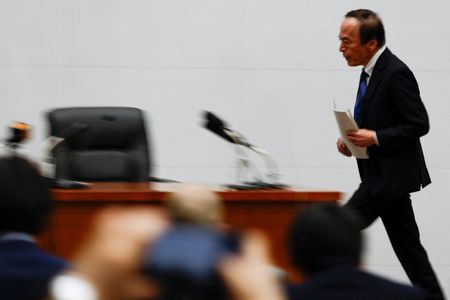
Bank of Japan Governor Kazuo Ueda’s shift toward tighter monetary policy last month created a turning point, bringing the central bank into rare agreement with Japan’s Ministry of Finance and presenting a more coordinated approach to stopping the currency’s fall.
Just two days following Ueda’s statements on April 28, Japan’s finance ministry executed its first yen-strengthening intervention in almost two years – followed by additional actions in May, according to sources who spoke with Reuters.
After reportedly investing nearly 10 trillion yen ($63.7 billion) in recent intervention efforts, financial experts believe Tokyo is hoping Bessent’s upcoming visit to Japan will provide additional support, either through direct endorsement or strategic statements indicating U.S. acceptance of Japan’s currency actions.
“At this time, it is a significant alignment,” stated Bart Wakabayashi, branch manager at State Street in Tokyo, discussing Japanese officials collaborating with the U.S. to counter yen short-sellers.
“It is significant, particularly in the fact that Japan is not doing this alone. We’re looking to see if something comes out of these Bessent meetings, but I think even just the appearance that they’re talking about FX levels is important,” he explained.
Bessent previously supported the yen in January by advocating for faster Bank of Japan interest rate increases to prevent currency declines and prompting the U.S. to conduct an unusual rate check – widely interpreted as preparation for potential joint intervention.
During his three-day visit, Bessent is scheduled to meet with Japanese counterpart Satsuki Katayama, Prime Minister Sanae Takaichi, and potentially BOJ Governor Ueda.
“No one wants to fight the U.S.,” commented Atsushi Takeuchi, a former central bank official who participated in Tokyo’s previous market interventions.
“I’m sure Japanese policymakers are approaching Washington on various fronts, as it would make a huge difference if Bessent openly endorses Tokyo’s intervention,” he added.
Senior currency official Atsushi Mimura revealed Thursday that Tokyo maintains daily communication with U.S. authorities, noting that his counterparts “fully understand our thinking and our actions.”
After Bessent’s departure from Tokyo, responsibility returns to the Bank of Japan to support the finance ministry’s yen stabilization efforts.
Market participants will closely examine upcoming speeches by senior officials before the June policy meeting for any indication that last month’s hawkish stance is becoming actual policy.
Unlike previous instances when Ueda’s dovish messaging encouraged yen selling, his current emphasis on inflation risks from currency weakness has kept a June rate increase as a possibility.
Several finance ministry sources, speaking anonymously, described Ueda’s communication as unusually successful in shaping market expectations.
“If the BOJ indeed raises rates in June, that makes it easier to squeeze in another hike by year-end,” said a source familiar with the central bank’s thinking.
Ueda will deliver a closely monitored speech on June 3, just before the June 15-16 meeting where markets are questioning whether policymakers will increase rates to 1.0% from 0.75%.
Deputy Governor Ryozo Himino and board members Kazuyuki Masu and Junko Koeda will also speak this month, with any suggestion they might support a rate increase likely to encourage yen buyers.
All three voted to maintain steady rates in April, while three other board members dissented and called for raising rates to 1.0%.
A potential complication involves Prime Minister Takaichi, a long-time supporter of loose monetary policy who has previously opposed central bank tightening. Though publicly quiet, she has appointed monetary policy doves to the central bank board and recently criticized trade minister Ryosei Akazawa for suggesting rate increases could help the yen.
“The premier doesn’t want the BOJ to raise rates. But she also wants to do something about rising living costs,” making yen-buying intervention the only practical choice, a government source told Reuters.
Broader economic forces are creating additional pressure. Japan’s heavy dependence on energy imports means the oil price surge from Middle East conflicts is worsening the trade deficit, adding downward pressure on the currency despite domestic policy changes, analysts note.
However, Tokyo’s renewed market interventions, supported by stronger policy signals, could provide authorities time to maintain stability until global conditions improve.
“Critics often argue that intervention serves little purpose beyond delaying the underlying market trend,” said Rong Ren Goh, a portfolio manager at Eastspring Investments in Singapore. “But even if intervention has not fundamentally reversed the market’s directional bias, it has at least broken the momentum.”
Without intervention, continued yen selling could have escalated into more chaotic depreciation, Goh explained, making it “much harder for the authorities to contain.”