The Pentagon has unveiled classified records documenting decades of investigations into unexplained aerial encounters, providing the public with unprecedented access to military UFO research.
The newly disclosed documents detail encounters ranging from Cold War-era accounts of spinning disc-shaped craft to contemporary observations of metallic oval objects hovering motionless in the atmosphere. These incidents fall under what the military now classifies as unidentifiable anomalous phenomena, or UAPs – the official designation for what were previously called UFOs.
Among the released materials is imagery captured during the 1969 Apollo 12 lunar mission, which according to Defense Department analysis shows astronaut shadows on the Moon’s surface along with a marked section above the horizon displaying what officials term ‘unidentified phenomena.’
The document release represents a significant shift in government transparency regarding aerial mysteries that have puzzled military personnel and researchers for generations.
PHOENIX (AP) — Twenty-year-old Pittsburgh Pirates sensation Konnor Griffin approached home plate Tuesday evening facing the Arizona Diamondbacks and launched a scorching 110.1 mph line drive that ricocheted off Chase Field’s center field wall, allowing him to coast into second base with a double.
Arizona manager Torey Lovullo watched in amazement from the dugout.
“Twenty years old and driving the ball off the center field wall,” Lovullo remarked. “Let’s go back to being 20 years old. I was just getting hair under my armpits, and this guy’s in a big-league baseball game. It’s impressive.”
Griffin — who celebrated his 20th birthday just weeks ago — represents a Major League Baseball freshman class that has delivered immediate results as spring transitions into May. His current statistics include a .256 batting average, two home runs, 16 runs batted in, and a perfect 8-for-8 stolen base record, all while excelling defensively at shortstop for Pittsburgh’s 21-17 squad.
The Pirates’ confidence in Griffin became evident when they offered him a nine-year, $140 million contract in April.
Lovullo, who has managed Arizona for a decade, observes a significant improvement in young players’ preparedness upon reaching the majors.
Statistical analysis supports this observation. According to Wins Above Replacement measurements, three of the top five most effective rookie batting classes since 1950 have emerged within the last four seasons: 2023 (67.5 WAR), 2022 (53.7), and 2024 (49). Current projections suggest this year’s group is tracking toward 47 WAR, which would place them fifth historically.
The 2025 rookie class, while less deep overall, still produced players capable of rapid major league success. Nick Kurtz accumulated only 210 minor league at-bats before joining Oakland, then posted a .290 average with 36 home runs and 86 RBIs across 117 games to capture American League Rookie of the Year honors.
“Everything is fast-forwarded now, everything’s on speed dial, everything happens really quick,” Lovullo explained. “These kids are developing. It’s the same message I send to our group about player development. We aren’t going to be the L.A. Dodgers or the Padres. Spots won’t be filled by Player ‘X’ coming off of free agency. Spots will be filled by someone in this clubhouse.”
Additional standout rookies have emerged throughout the season’s opening six weeks:
This 21-year-old secured his roster spot through excellent spring training performance and continues delivering results with a .299 batting average, two homers, 16 RBIs and an .845 OPS while alternating between shortstop and third base. He has arguably been Detroit’s top performer on an otherwise disappointing team, prompting the organization to secure him with an eight-year, $150 million deal in April.
Selected seventh overall in the 2024 draft from West Virginia, this highly-touted prospect has connected for seven home runs with a surprisingly competitive Cardinals squad in the National League Central. His performance suggests long-term stability in St. Louis.
DeLauter achieved the rare distinction of making his major league debut during last season’s playoffs, becoming one of few players in baseball history to receive their first call-up during postseason play. This spring has validated Cleveland’s decision to promote him for those high-pressure situations, as he maintains a .306 average with six homers and 23 RBIs.
The experienced Japanese power hitter has translated his success immediately to American baseball, smashing 14 home runs in just 37 contests. While strikeouts remain an issue and consistent batting averages may prove elusive, his power potential is undeniable at age 26.
At 29, this player is the oldest among featured rookies and initially struggled adapting from Japanese baseball. Recent weeks have shown improvement, bringing his numbers to .246 with 10 homers and 23 RBIs.
After making a positive impression during limited action last season, this 22-year-old has maintained his hitting success in expanded opportunities this spring. Operating primarily at first base, he shows a .245 average with 10 home runs and 30 RBIs.
While New York has disappointed overall, McLean provides a rare bright spot. Following an impressive eight-start introduction last season, the 24-year-old has continued his strong pitching in 2026 with a 2.97 ERA and 51 strikeouts across 39 1/3 innings through seven starts.
The former Florida State standout ranks among the American League’s top pitchers this season, posting a 3-1 record with a 2.40 ERA through seven outings. This left-handed pitcher has been instrumental in Cleveland’s current position atop the AL Central standings.
Electric vehicle manufacturer Tesla has announced two major safety recalls affecting hundreds of thousands of vehicles nationwide.
The first recall involves 173 Cybertruck vehicles due to potential wheel stud failures that could lead to dangerous driving conditions. The affected models include 2024-2026 Cybertrucks equipped with 18-inch steel wheels.
According to the National Highway Traffic Safety Administration’s findings, driving on rough terrain and taking sharp turns can put excessive stress on the wheel rotor’s stud holes, leading to crack formation. Continued operation of the vehicle could eventually result in complete wheel stud failure.
When wheel studs fail, drivers may lose control of their vehicle, significantly raising the chances of a serious accident.
Tesla will provide free replacement of front and rear brake rotors, hubs, and lug nuts with improved, more robust components for all affected Cybertruck owners.
Vehicle owners can reach Tesla’s customer service department at 1-877-798-3752 regarding recall number SB-26-33-003.
In a separate recall, Tesla is addressing software problems affecting more than 200,000 vehicles across its Model Y, Model S, Model X, and Model 3 lines. The issue causes the backup camera system to temporarily stop functioning.
When the rearview camera fails, drivers lose crucial visibility while reversing, which could result in collisions.
This camera-related recall carries the identification number SB-26-00-016.
Tesla reports that neither recall issue has been linked to any crashes, deaths, or injuries to date.
The technology company Google has agreed to pay $50 million to settle claims brought by Black workers who accused the firm of engaging in discriminatory employment practices regarding compensation, hiring decisions, and career advancement opportunities.
The class-action case originated in 2022 when former Google worker April Curley filed suit against the tech company, alleging it maintained systematic unfair treatment of Black staff members. According to the legal filing, the company directed these employees toward positions with lower compensation and fewer opportunities for growth, while creating hostile conditions for those who raised concerns about such treatment.
Civil rights lawyer Ben Crump, who served as legal counsel for the workers bringing the case, issued a statement saying: “This case is about accountability, plain and simple. For far too long, Black employees in the tech industry have faced barriers that limit opportunity. This settlement is a significant step toward holding one of the world’s most powerful companies accountable and making clear that discriminatory practices cannot and will not be tolerated.”
The company has not yet provided a response to requests for comment regarding the settlement agreement.
These allegations mirror previous concerns raised by Black workers at the California-based company, including well-known artificial intelligence researcher Timnit Gebru, who stated she was forced out of her position in 2020 following disagreements over her research examining potential societal risks associated with emerging AI technology.
The legal complaint filed two years ago accused the Mountain View-based corporation of evaluating Black job applicants using negative racial assumptions and claimed hiring personnel rejected Black applicants for not being sufficiently ‘Googly,’ which the lawsuit characterized as coded language for racial bias.
The court filing also alleged that during the interview process, Black candidates faced intimidation tactics and were deliberately placed in subordinate roles with reduced compensation and limited career prospects due to their race and associated stereotypes.
While the financial agreement does not require Google to acknowledge wrongdoing, the settlement terms mandate the company conduct regular pay equity reviews, increase salary transparency, and restrict the use of forced arbitration for workplace disputes until at least August 2026, according to attorney Crump.
An 18-year-old man faced murder charges in a Michigan courtroom on Friday following a deadly shooting that stemmed from a disagreement over children playing soccer at a school.
Rafael Martinez-Lopez appeared before a judge three days after authorities say he fatally shot a teenager and a woman who attempted to assist the boy during Tuesday’s incident in Grand Rapids. According to police court documents, Martinez-Lopez also attempted to fire at another child, but his weapon failed to discharge.
The western Michigan community has been shaken by the violence, prompting officials to temporarily shut down two local schools this week.
“Somebody stole from me, and that’s something I can’t get back,” said Mildred Griffin, whose 15-year-old son Jeremiah Griffin-Cuevas lost his life in the shooting.
Griffin described her son to WOOD-TV as a devoted young person. “Youth group every Wednesday, church every Sunday as a 15-year-old young man,” she said. “I know what I was raising, a young man, not no young thug.”
During his court hearing, Martinez-Lopez entered acknowledgments to the murder charges and additional counts. The judge ordered him held without bail. Defense attorney Craig Jenison noted that his client had no prior criminal history. Jenison did not respond to requests for further comment.
According to investigators, the violence began when Martinez-Lopez’s younger sibling requested to join a group of children playing soccer but was refused permission to participate. This rejection led to the confrontation that ended in gunfire.
The second victim, 38-year-old Savanah Rubio, also identified as Savanah Villarreal, was killed while attempting to aid Jeremiah, authorities reported.
“She gave her life to save my son. He considered Savanah his auntie,” Griffin said of the woman who died trying to help her child.
President Donald Trump announced Friday that both Russian and Ukrainian leadership have accepted his proposal for a temporary halt in fighting, along with a major prisoner exchange that could mark a turning point in the ongoing conflict.
The ceasefire will span three days from Saturday through Monday, coinciding with Russia’s Victory Day celebration that honors their World War II triumph over Nazi Germany, Trump revealed on social media.
Ukrainian President Volodymyr Zelenskyy confirmed his country’s participation in the agreement, though Russian President Vladimir Putin and Kremlin officials had not yet issued public statements about the deal.
“I am pleased to announce that there will be a THREE DAY CEASEFIRE (May 9th, 10th, and 11th) in the War between Russia and Ukraine,” Trump posted. “The Celebration in Russia is for Victory Day but, likewise, in Ukraine, because they were also a big part and factor of World War II.”
The Republican commander-in-chief explained that all combat operations will cease during this period, while both nations will release 1,000 prisoners each as part of the arrangement.
This development comes after a previous Russian-declared ceasefire for Friday and Saturday fell apart quickly, with each side accusing the other of violations, similar to how Ukraine’s earlier unilateral ceasefire attempt also failed.
Trump revealed he contacted both leaders personally to request the ceasefire. “Hopefully, it is the beginning of the end of a very long, deadly, and hard fought War,” he stated.
The president indicated that discussions about permanently ending the conflict that started in February 2022 are ongoing, saying “we are getting closer and closer every day.” Trump’s stance on the war has shifted between optimistic predictions of resolution and suggestions that the warring parties should continue fighting until a decisive outcome.
For Ukraine, the prisoner exchange component proved crucial in their decision to participate, as Zelenskyy noted that securing the return of captured soldiers has remained a top priority throughout the war.
“Red Square matters less to us than the lives of Ukrainian prisoners of war who can be brought home,” Zelenskyy wrote on Telegram, referencing the location where Russia traditionally holds its Victory Day military parade.
Following his initial statement, Zelenskyy issued an official presidential order “authorizing” Russia’s parade to proceed, while declaring Moscow’s Red Square off-limits for Ukrainian attacks during the celebration. This move appeared calculated to demonstrate Ukraine’s military reach into Russian territory while publicly linking their restraint to the ceasefire terms.
Zelenskyy credited American diplomatic efforts for facilitating the agreement and expressed gratitude to Trump and his administration for their involvement in the negotiations. He emphasized Ukraine’s expectation that Washington will ensure Russian compliance with the deal.
“We are counting on the United States to ensure that Russia fulfills its commitments,” Zelenskyy said.
The Ukrainian leader also directed his staff to immediately begin preparations for the prisoner exchange process.
Trump’s optimistic announcement contrasted sharply with earlier comments from Secretary of State Marco Rubio, who expressed pessimism about diplomatic progress in ending the four-year conflict.
“While we’re prepared to play whatever role we can to bring it to a peaceful diplomatic resolution, unfortunately right now, those efforts have stagnated,” Rubio told reporters during a visit to Rome and the Vatican. “But we always stand ready if those circumstances change.”
April’s employment statistics surpassed predictions for the second month running by a significant amount, with unemployment rates remaining stable despite ongoing geopolitical tensions and inflationary concerns from the U.S.-Israeli conflict with Iran.
However, beneath these positive headlines lies a more complex picture of the nation’s job market. Though businesses report unprecedented employment numbers, household surveys indicate declining employment levels. Additionally, America’s workforce is contracting rapidly, with participation rates hitting nearly five-year lows and hiring concentrated in fewer industries than typical.
CONFLICTING EMPLOYMENT MEASURES
The Department of Labor’s monthly jobs data combines two separate surveys: one tracking business and government payrolls, and another surveying American households about employment status. These surveys are painting vastly different pictures this year.
According to payroll data, which serves as the standard for monthly job creation figures, total employment reached an all-time high of 158.7 million workers, growing by 304,000 positions year-to-date. Conversely, household survey data, which determines the national unemployment rate, shows employment dropping by 1.37 million in 2026.
WORKFORCE CONTRACTION
America’s labor force – encompassing both employed individuals and those actively seeking work – has contracted since President Donald Trump began his second term. Approximately 700,000 fewer people participated in the workforce in April compared to January 2025, with declines occurring in four of the last five months.
UNPRECEDENTED WORKFORCE EXODUS
The workforce has been contracting at an extraordinary pace since late 2025. Roughly 1.55 million people have exited the labor force since reaching peak levels last November, representing the largest departure wave outside of the 2020 COVID-19 pandemic shutdowns. The substantial drop in labor force participation has prevented unemployment rates from rising despite household reports of significant employment losses.
PARTICIPATION RATES DECLINING RAPIDLY
Although unemployment rates remain steady, the participation rate – representing the percentage of the total population either working or seeking employment – continues falling. This key labor market indicator has declined for five consecutive months, reaching its lowest point since the mid-1970s, excluding the pandemic period.
IMMIGRATION POLICY EFFECTS
Trump’s return to office with promises of stricter immigration enforcement has significantly impacted labor market dynamics. Under his predecessor Joe Biden, immigrant workers drove most workforce and employment growth. Trump’s policies initially reversed this trend during early 2025, with all job gains and workforce expansion coming from native-born workers while immigrant participation declined. Since the fourth quarter, these patterns have largely shifted back, with native-born worker employment and participation returning to January levels. Immigrant levels remain down but less dramatically than mid-year.
LIMITED HIRING SCOPE
Beyond total job creation numbers, the breadth of hiring across different sectors remains important. Current hiring has concentrated heavily in select service industries, particularly healthcare. The Labor Department’s diffusion index, which measures hiring breadth, shows slightly more industries expanding than contracting recently, though the 12-month average still indicates narrowing employment patterns. Manufacturing, a key focus of Trump’s revival efforts through import tariffs, continues showing poor hiring breadth. April data revealed 2,000 manufacturing job losses, ending three months of factory employment gains, with 77,000 fewer factory positions than when Trump resumed office.
An artificial intelligence company has struck a massive cloud computing partnership worth $1.8 billion with technology firm Akamai Technologies, according to a Bloomberg News report released Friday that cited sources with knowledge of the agreement.
The deal between AI startup Anthropic and Akamai is designed to handle the rapidly increasing demand for Anthropic’s artificial intelligence software services.
Wall Street responded enthusiastically to news of the partnership. Akamai’s stock price jumped 25% on Thursday following the company’s earnings announcement, which revealed a major long-term cloud services contract with an unnamed AI provider. By Friday’s trading session, shares had climbed approximately 28% to reach $149.05.
Representatives from both Akamai and Anthropic refused to provide comments when contacted about the reported deal.
The cloud computing and cybersecurity company projected its second-quarter revenue will fall between $1.08 billion and $1.10 billion, which aligns closely with Wall Street analysts’ expectations of $1.10 billion, based on data from LSEG.
Akamai CEO Tom Leighton explained to Reuters that his company is well-positioned to obtain necessary computing components, including CPUs and GPUs, despite rising costs for these essential parts.
This partnership announcement comes just days after Anthropic revealed another significant computing agreement. On Wednesday, the AI company announced it would utilize computing infrastructure from Elon Musk’s SpaceX operation, representing a notable reconciliation with Musk, who had previously criticized the company. This SpaceX deal provides advantages for both organizations as they compete in the intensely competitive artificial intelligence marketplace.
NEW YORK – A chaotic scene unfolded at a New York City housing meeting Thursday night as officials took a preliminary step toward potentially fulfilling Mayor Zohran Mamdani’s campaign pledge to freeze rents for roughly one million regulated apartments.
The city’s Rent Guidelines Board conducted its provisional vote amid shouting and chanting from hundreds of tenants packed into a college auditorium. The board established ranges for rent adjustments ahead of their final June decision: zero to 2% for one-year lease renewals and zero to 4% for two-year renewals.
This annual process determines rent increase limits for rent-stabilized apartments, which house approximately 25% of New York City residents. Board members consider tenant incomes, landlord revenues, inflation rates, tax burdens, housing supply changes and various other economic factors in their deliberations.
During Thursday’s vote, which passed 7-1 with one abstention, tenant advocates repeatedly shouted “Freeze the rent!” and erupted in applause whenever board members mentioned zero percent increases. They booed any number higher than zero and chanted “Fight! Fight! Fight! Housing is a human right!”
The six board members appointed by Mamdani continued their proceedings despite the vocal demonstrations from hundreds of New Yorkers in attendance.
Mamdani campaigned for mayor as a democratic socialist, vowing to freeze rents and address rising costs for groceries, childcare and other essentials in a city where newly leased apartments average $3,950 monthly, according to StreetEasy data.
His electoral victory has drawn attention from fellow Democrats seeking to regain political ground nationally and even caught the notice of Republican President Donald Trump.
Since taking office in January, Mamdani moved from a $2,300 monthly one-bedroom Queens apartment to the five-bedroom Gracie Mansion. New Yorkers are watching to see if his straightforward campaign promises will become reality.
“We have a new mayor, and he also lived in a stabilized apartment, he worked in the past with the people who had housing issues,” said Moreom Perven before showing reporters her rent-stabilized studio in Jamaica, Queens. “He understands the situation of New York City, how we are suffering, and I expect this time, we’ll have the good news.”
Perven, 49, has occupied her apartment since 2000, currently paying just under $1,300 monthly to a real estate management company controlling over 2,000 city apartments. Her building houses 187 units with 270 active complaints and 66 open housing code violations, according to city records. Residents continuously battle their landlord over basic maintenance issues.
“Roaches, mice, broken tiles, then water leakage, mold, bed bugs,” Perven listed while sitting beside a second refrigerator-freezer she purchased after the landlord-provided unit stopped working. “They don’t want to invest money to fix the issue.”
Perven works part-time as a tenants counselor for a housing advocacy organization and attended Thursday’s meeting with neighbors.
Hundreds of tenants gathered outside the venue, carrying signs in English, Spanish, Chinese and Bengali while beating drums and blowing whistles that security prohibited inside the building.
Tenant groups have split into two factions. The Tenants Bloc demands a rent freeze, which has occurred only three times during 50-plus years of rent stabilization laws. The Rent Justice Coalition, including Perven, seeks an unprecedented “rent rollback” to counteract the cumulative 12% increases imposed during former Mayor Eric Adams’ four-year tenure.
Property owners have testified through the Real Estate Board of New York and similar organizations, arguing that operating expenses are climbing, especially for older buildings.
Despite appointing most board members, Mamdani cannot directly influence their decision beyond stating his preferences. He has utilized city resources to educate New Yorkers about their rights and boost attendance at the four remaining public hearings before the June 25 final vote.
Thursday evening, Mamdani issued a statement encouraging both tenants and landlords “to make their voices heard and speak directly to what this housing crisis looks like in their lives.”
REBNY executive Basha Gerhards, representing property owners, argued that the board’s preliminary ranges “ignore the clear financial distress shown in the data” and declared that “a freeze or near-freeze is unjustifiable.”
Perven departed the meeting disappointed as a rent rollback appeared unlikely this year. While pleased the range included zero, she and other tenants worried that final votes typically settle somewhere in the middle of proposed ranges.
“We need to organize. We need to fight back,” she stated. “Hopefully we’ll see the same energy until June, for the final vote.”
The shutdown of budget airline Spirit Airlines last week may offer unexpected relief for a critical aircraft engine shortage that has plagued the aviation industry, according to industry professionals and market analysts.
Spirit Airlines stopped all operations on May 1 after struggling with elevated fuel costs. The carrier’s bankruptcy has resulted in nearly-new Airbus A320neo aircraft being taken apart for components — continuing an industry pattern driven by a serious lack of available RTX Pratt & Whitney Geared Turbofan engines.
Following Spirit’s collapse, more A320neo aircraft have become accessible in the U.S. market, with their fuel-efficient GTF engines often proving more valuable than the planes themselves.
“We are seeing some of the GTF engines from the Spirit A320s being removed from the airframes and leased out to customers to support (aircraft on the ground),” explained Austin Willis, CEO of Willis Lease Finance Corp. He noted that rental costs for GTF engines remain unchanged.
“This is providing some limited temporary relief from the supply/demand imbalance,” Willis added.
The engine shortage has forced hundreds of A320neo aircraft to remain on the ground, partly because of extended wait periods for engine maintenance and repairs, combined with production issues at Pratt & Whitney that have limited GTF engine availability.
GTF engines are installed in no less than 40% of operating A320neos and face competition from CFM International’s LEAP engine for airline contracts.
Airbus has expressed frustration about GTF shortages affecting new aircraft production amid ongoing disputes over engine allocation priorities between new plane assembly lines and airlines awaiting repairs.
Lars Wagner, who leads Airbus’ Commercial Aircraft division, chose not to discuss the GTF situation during a Wednesday interview.
Dick Allewelt, who founded and operates Allewelt Aviation Consulting GmbH in Germany, stated that dismantling some Spirit aircraft “could have an easing effect on the spare engine market going forward.”
Sumisho Air Lease, which provided recent aircraft to Spirit, refused to provide comments. Aircraft lessor AerCap could not be reached for statement.
RTX, which also declined commentary, announced in April that fewer A320neo aircraft are remaining grounded thanks to expanded repair facility capabilities.
Arizona-based parts supplier KP Aviation reports that multiple former Spirit Airlines aircraft are currently being offered for dismantling and breakdown.
“There’s a lot of money in the engines,” stated KP Aviation Chief Commercial Officer Scott Butler. “The airframes, there may not be as much appetite” as additional Spirit aircraft enter the market, he explained.
In February, Dublin-based aviation asset manager EirTrade Aviation and Chicago-based aviation and rail lessor RESIDCO announced plans to break down two nearly-new Spirit A320neos for components.
KP Aviation intends to disassemble five-to-six-year-old aircraft from an earlier group of distinctive yellow Spirit planes that returned to the marketplace in late 2025.
Beyond engines, Butler mentioned strong demand exists for auxiliary power units, landing gear systems and flight control equipment.
Earlier this week, Spirit Airlines obtained approval from a U.S. bankruptcy court to speed up its liquidation process, including faster aircraft sales.
Spirit’s May fleet consisted of 114 Airbus A320-family aircraft, with 66 under lease agreements.
Court documents show the airline possesses 17 GTF engines owned by leasing companies. Lessors also control approximately 30 aircraft equipped with GTF engines, according to bankruptcy filings.
These aircraft won’t reach the market for several months, Butler indicated, as leasing companies gather technical documentation about the assets.
Agricultural producers nationwide experienced a boost in peanut pricing during the first week of May, according to new federal data.
Farmers received an average of 23.2 cents per pound for their farmer stock peanuts during the week that concluded on May 2, marking an increase of 2.0 cents compared to the prior week’s rates.
The pricing information comes from the latest agricultural market report tracking commodity values paid to producers for their harvested crops.
Salisbury, MD – Major construction work has begun at the Truitt Community Center as the facility undergoes significant improvements to better serve local residents.
The comprehensive renovation focuses on the gymnasium, featuring fresh insulation throughout walls and ceilings, protective wall padding, and new metal wall surfaces designed to withstand heavy recreational activities.
The gymnasium shut down on May 4th to accommodate the construction work, with outside contractors expected to complete all improvements before the facility reopens at June’s end.
“These upgrades will provide a more updated, suitable space for the community,” said Muir Boda. “We’re looking forward to reopening the gym and welcoming residents back into an improved environment.”
Mayor Randy Taylor emphasized the city’s dedication to community facilities, stating: “This is part of the City of Salisbury’s ongoing commitment to providing quality community center facilities. An investment in kids is vital to a successful city.”
Beyond the physical improvements, officials plan to launch a new booking system in early July designed to simplify the reservation process for individuals and groups wanting to use the center.
The Truitt Community Center remains a vital hub for local residents, and these enhancements will strengthen its position as a key location for recreational activities, social gatherings and community events.
Residents can stay informed about construction progress and reopening announcements through the City’s official communication platforms.
Salisbury University’s women’s lacrosse program is preparing for their upcoming NCAA tournament appearance as the 2026 championship competition approaches its opening stages.
The Sea Gulls are set to compete in the initial rounds of the national tournament, with the team focusing on their preparation for what promises to be intense competition ahead.
The tournament’s first and second rounds represent crucial opportunities for the program to advance deeper into the championship bracket and continue their season on the national stage.
Salisbury’s women’s lacrosse team will be looking to build on their regular season performance as they enter this high-stakes phase of collegiate competition.
The widely-used Canvas educational platform has resumed operations after experiencing a significant data breach that caused widespread disruption during final exam period at universities across the country.
A ransomware organization has taken responsibility for the cyberattack that temporarily knocked the learning management system offline. The incident affected approximately half of all higher education institutions throughout North America that rely on Canvas for coursework delivery and student assessments.
Despite the platform’s return to service, many universities are advising their students and faculty to hold off on accessing their Canvas accounts while additional security measures are implemented. The timing proved particularly problematic as the outage occurred during the critical final examination period when students needed access to course materials and online testing platforms.
Educational technology officials at affected schools are working to assess the full scope of the security incident and determine what student and faculty information may have been compromised during the breach.
Delaware State Police have taken an 18-year-old Dover man into custody following allegations that he menaced multiple residents in a Smyrna neighborhood while wielding a knife last month.
Aaron Jernigan now faces several serious charges, including three felony counts of aggravated menacing, after the April 18th incident at Holly Hill Estates community around 6:30 in the evening.
According to investigators, law enforcement officers were called to the Smyrna residential area following reports of a disruptive individual making threats against community members. Police say their initial findings showed that an unidentified male had become involved in a heated shouting match with multiple residents before pulling out a pocketknife and making threats to cause physical harm. The individual had left the scene by the time officers arrived.
Detectives continued working the case and eventually identified Jernigan as the alleged perpetrator, leading to an arrest warrant being issued.
Authorities apprehended Jernigan in Dover on May 5th and transported him to Troop 9 for processing. Following his arraignment before Justice of the Peace Court 11, he was sent to Howard R. Young Correctional Institution where he remains held on $16,100 secured bond.
Motorists traveling on northbound Route 15 should expect delays this afternoon as construction crews have shut down the right lane between Bison Road and Willow Grove Road.
The Delaware Department of Transportation reports the lane closure on Dundee Road (Route 15) is scheduled to continue until around 4:00 PM today.
Drivers are advised to use caution in the work zone and allow extra travel time when using this stretch of roadway during the construction period.
Climate forecasting models are indicating the development of an El Niño weather pattern that meteorologists say could shatter historical records and deliver unprecedented extreme weather conditions across the globe.
“I think we’re going to see weather events that we’ve never seen in modern history before,” said Jeff Berardelli, WFLA-TV Chief Meteorologist and Climate Specialist based in Tampa, Florida, speaking on Friday.
The World Meteorological Organization anticipates this El Niño phenomenon will emerge around mid-year, significantly affecting temperature and precipitation patterns worldwide. Though forecasting models suggest this could be an exceptionally powerful event, the WMO notes that springtime predictions tend to be less reliable.
This cyclical natural occurrence involves the warming of specific areas in the equatorial Pacific Ocean, which subsequently disrupts global weather systems. La Niña represents the opposite phase, characterized by below-average ocean temperatures.
According to Berardelli, El Niño essentially moves heat around the planet. Currently, warm water beneath the Pacific’s surface is traveling eastward and rising from deeper layers to the surface, marking El Niño’s early development phases.
The WMO’s Global Seasonal Climate Update documented rapidly increasing sea-surface temperatures. Wilfran Moufouma Okia, WMO’s chief of climate prediction, expressed strong confidence in El Niño’s emergence, followed by continued strengthening over subsequent months.
The WMO reports that El Niño events generally happen every two to seven years and persist for approximately nine to 12 months.
Daniel Swain, a climate scientist with the California Institute for Water Resources, believes the forecasting models appear accurate. He explained that the size and strength of the subsurface warm water anomalies — unusual warm water pulses that drive El Niño’s mechanics — rank among the largest observed in recorded history.
Meteorologists classify the most powerful occurrences as “super El Niños.”
“One of the key building blocks to make it fully materialize is, in fact, occurring,” Swain stated Friday. “We still don’t know exactly what’s going to happen. It’s not guaranteed it’ll be a super El Niño. But the potential is there for something genuinely remarkable.”
When the Pacific Ocean releases substantial amounts of heat, it amplifies the climate system and creates weather chaos, Berardelli explained. Increased heat will generate more severe heat waves and worsen drought conditions in certain regions, while simultaneously adding moisture to the atmosphere that produces more devastating floods.
El Niño also reduces Atlantic hurricane activity because the Pacific’s intense heat overshadows the Atlantic, Berardelli noted. Areas like the Caribbean will experience particularly dry conditions this summer with fewer tropical weather systems expected.
The phenomenon creates worldwide consequences. Throughout the United States, this summer appears likely to be hotter than typical, featuring substantial heat waves, Berardelli said. While precise details remain difficult to determine this far in advance, Berardelli also anticipates more regular daily thunderstorms across the southwestern United States.
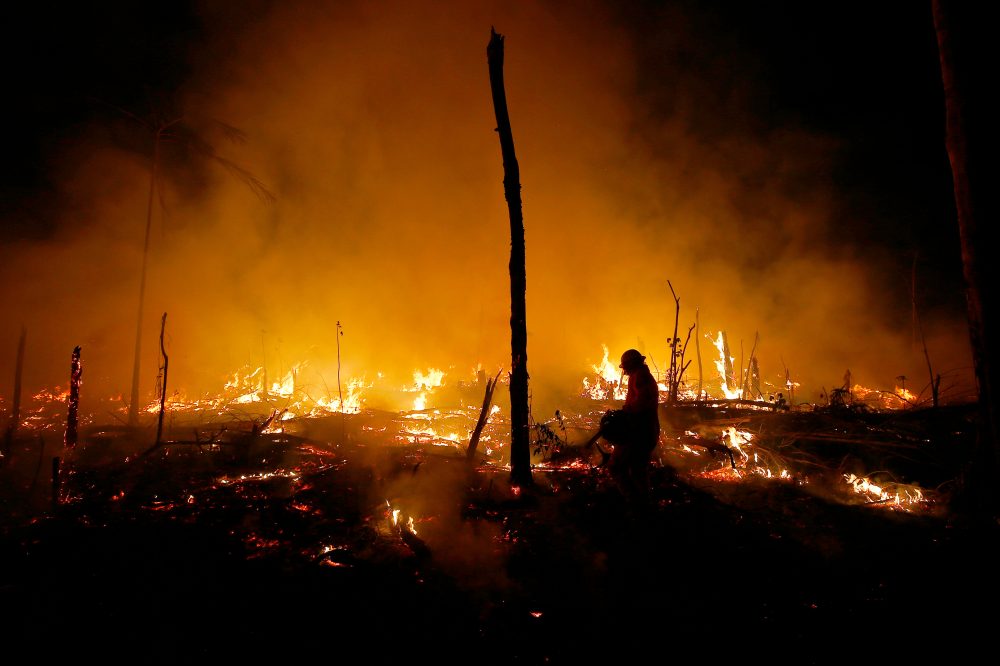
Amazon forest deterioration, caused by wildfires, logging, and drought, currently impacts approximately 40% of the region. A strong El Niño could worsen this situation in 2026.
The additional heat that El Niño brings to the surface, combined with ongoing planetary warming from climate change, will produce record-setting global temperatures, Swain predicted. He anticipates seeing unprecedented global warm temperatures either later this year, next year, or during both periods.
“All indicators are, at this point, that the next year is going to be a pretty wild year from a global climate perspective,” Swain said.
University of Pennsylvania climate scientist Michael Mann noted that while El Niño temporarily increases global temperatures for one to two years, it represents essentially a “zero-sum game.” The pattern typically shifts back toward La Niña, which subsequently decreases global temperatures for a similar duration. The real concern, Mann emphasized Friday, is the long-term, consistent warming trend that will persist as long as fossil fuel consumption continues.
GABORONE, Botswana (AP) — Festus Mogae, who led Botswana for a decade and transformed the nation’s approach to combating HIV and AIDS, passed away Friday at age 86, according to government officials. Authorities did not release details about what caused his death.
Current President Duma Boko announced that Mogae’s decade-long presidency from 1998 to 2008 brought the African nation international recognition for responsible financial stewardship and democratic values. The country will observe three days of official mourning to honor the late leader.
The southern African nation, known for its sparse population and dry climate, leads the world in diamond production by value and ranks second globally by volume, trailing only Russia. Diamond exports represent approximately 80% of Botswana’s total exports and contribute one-fourth of the nation’s economic output, based on International Monetary Fund data.
During his presidency, Mogae elevated the battle against HIV/AIDS to a top government priority and established no-cost antiretroviral treatment programs at government healthcare centers starting in 2002, later expanding access to non-citizens in 2019.
These initiatives resulted in a substantial reduction in HIV/AIDS rates throughout Botswana, which previously ranked among nations with the world’s most severe infection levels.
Boko praised Mogae for representing Botswana honorably on the global stage while consistently advocating for rational thinking, national unity, and advancement.
“Today Botswana mourns a distinguished statesman, a patriot whose life was devoted to the service of his country,” Boko declared during his national address.
Mogae received the Ibrahim Prize for Achievement in African Leadership, among Africa’s highest honors for governmental excellence, acknowledging his democratic governance and smooth transition of power.
The diamond-rich nation has discovered all of the world’s largest uncut diamonds during the past ten years, including a 2,492-carat gem found in the previous year that became the second-largest diamond ever extracted from a mine and the biggest discovery in over 100 years.
Before assuming the presidency, Mogae worked as an economist and held the position of central bank governor for the Bank of Botswana.
The Trump administration is directing managers of national parks, wildlife refuges and wilderness areas across the country to significantly reduce hunting limitations, sparking concerns about public safety and wildlife conservation.
Interior Secretary Doug Burgum signed a directive in January instructing federal agencies to eliminate what he called “unnecessary regulatory or administrative barriers” to hunting and fishing activities, while requiring justification for any restrictions they wish to maintain.
“Expanding opportunities for the public to hunt and fish on Department-managed lands not only strengthens conservation outcomes, but also supports rural economies, public health, and access to America’s outdoor spaces,” Burgum wrote. “The Department’s policy is clear: public and federally managed lands should be open to hunting and fishing unless a specific, documented, and legally supported exception applies.”
The directive affects 55 locations in the continental United States overseen by the National Park Service, according to the National Parks Conservation Association. Site administrators have already removed bans on tree stands that harm vegetation, dog training for hunting, using motorized vehicles to transport harvested animals, and hunting near recreational trails, based on an NPCA analysis of updated site rules conducted after the organization learned about the order.
Specific changes include extending the hunting period at Cape Cod National Seashore in Massachusetts into spring and summer months. At Lake Meredith National Recreation Area in Texas, hunters would be permitted to process their harvested animals in public restrooms. Meanwhile, alligator hunting would become permissible at Jean Lafitte National Historical Park and Preserve in Louisiana.
The directive comes amid a continued decrease in hunting participation as the nation becomes more urbanized. Federal data from the Fish and Wildlife Service and Census Bureau shows only approximately 4.2% of Americans over age 16 identified as hunters in 2024, reducing funding for state wildlife departments that depend on license fees and taxes from firearms and ammunition sales.
Supporters of hunting and conservative officials have pursued various strategies to maintain interest in the activity, including outreach to women and youth, establishing seasons for additional species, and increasing hunter access to government-owned property.
Currently, hunting is permitted on roughly 51 million acres managed by the National Park Service across 76 locations, though only about 8 million of those acres are in the continental United States, with the remainder in Alaska. Fishing is authorized at 213 locations. Park Service sites generally follow state hunting and fishing rules but can implement additional restrictions to ensure public safety and protect natural resources, such as prohibiting firearms use near trails or facilities.
Dan Wenk, who previously served as Yellowstone National Park superintendent and National Park Service deputy operations director, explained that park administrators developed their current rules through stakeholder consultation, resulting in widespread acceptance of most restrictions. He questioned the Trump administration’s decision to dismantle this framework without extensive public input.
“Process never seems to stand in the way of many things with this administration,” Wenk said in a telephone interview with The Associated Press. “This was never a big issue. I’d love to know the problem we’re trying to solve. Then I could understand the costs that it’s going to take to solve it in terms of resources and visitor safety.”
Interior Department spokesperson Elizabeth Peace described the order as a “commonsense approach to public land management” in an email statement, emphasizing that necessary closures or limitations for public safety, resource protection or legal compliance would continue.
“For decades, sportsmen and women have been some of the strongest stewards of our public lands,” she said, “and this order ensures their access is not unnecessarily restricted by outdated or overly broad limitations that are not required by law.”
Peace did not respond to additional questions about whether the department conducted public outreach before issuing the directive.
The Theodore Roosevelt Conservation Partnership, which advocates for hunting and fishing access, released a statement online in January describing the order as balancing wildlife management with outdoor traditions supported by hunters and anglers. Ducks Unlimited issued a statement in March saying Burgum’s directive acknowledges duck hunters’ “vital role.”
“This process will streamline federal regulations, make them more consistent with existing state rules, and provide more public-land access for outdoor recreation. Thank you, Secretary Burgum, for prioritizing America’s hunters and anglers,” the statement said.
Elaine Leslie, former director of the National Park Service’s biological resources department, criticized Trump for undermining a well-intentioned process, arguing the order lacks scientific foundation.
“I don’t want to take my young grandchildren to a park unit only to have a hunter drag a gutted elk they shot across a visitor center parking lot. Nor enter a restroom where hunters are cleaning their game,” Leslie said in a text to the AP. “There is a time and place for hunting, trapping and fishing … but that doesn’t mean every place has to be open to every activity especially at the expense of others and degrading our public resources.”
NEW YORK – Federal officials filed an appeal Friday following a judicial decision that rejected the legal foundation for a 10% worldwide tariff implemented in February.
The U.S. Court of International Trade determined Thursday in a split 2-1 ruling that Section 122 of the 1974 Trade Act was not designed to tackle trade imbalances that result when America purchases more foreign goods than it sells abroad. The judicial decision specifically prevented tariff collection from three parties that filed suit – two smaller companies and Washington state.
Although the decision affects levies scheduled to end in approximately two months, it represents another judicial obstacle to Trump’s worldwide tariff strategy and arrives one week before his planned trade discussions with Chinese President Xi Jinping in Beijing.
The ruling establishes groundwork for an extended legal fight concerning billions of dollars in potential tariff reimbursements, occurring three months following the U.S. Supreme Court’s rejection of Trump’s broad international tariffs enacted through national emergency legislation.
Speaking with reporters Thursday, Trump criticized the trade court’s decision, attributing it to “two radical left judges.”
In February, the Supreme Court determined Trump lacked legal power to enact the previous tariffs through the International Emergency Economic Powers Act, prompting Trump to establish substitute 10% levies on all imports through Section 122 of the Trade Act.
These newer tariffs served as an interim measure, scheduled to end July 24 without congressional extension.
Health officials in Argentina have ruled out their southernmost province as the source of a deadly hantavirus outbreak aboard a luxury cruise vessel, according to statements made during a Friday news conference.
Juan Petrina, who oversees epidemiology and environmental health for Tierra del Fuego province, explained that investigators analyzed the timeline between when passengers visited the region and when they began showing symptoms of the disease.
“The calculations don’t add up for them to have been infected in our province … the possibility is practically nil,” Petrina stated during the briefing held in Ushuaia.
The determination eliminates Argentina’s southernmost territory as a potential infection site for the cruise ship passengers who contracted the dangerous virus.
President Donald Trump has reportedly approved the dismissal of Food and Drug Administration Commissioner Marty Makary, according to a Wall Street Journal report published Friday that cited sources with knowledge of the situation.
Neither the White House nor the Department of Health and Human Services, which has oversight of the FDA, responded immediately to requests for comment.
Speculation about Makary’s possible removal has grown over the past week amid criticism related to disputed choices regarding drug approvals, vaccine policies, and the agency’s approach to mifepristone, commonly known as the abortion pill.
A White House insider indicated they were informed the FDA commissioner “is done” and that Trump had given his approval for the dismissal.
This departure would continue a pattern of turnover within federal health organizations, as top officials have already left positions at the Centers for Disease Control and Prevention, National Institutes of Health, and other agencies. The FDA currently has interim leadership overseeing its primary drug development divisions.
Makary, who serves as a surgical oncologist at Johns Hopkins University School of Medicine, received confirmation as FDA commissioner in March of last year. He has authored popular books addressing healthcare expenses and what he characterized as shortcomings in contemporary medical practice, and has served as a prominent supporter of the Make America Healthy Again initiative championed by Health Secretary Robert F. Kennedy Jr.
The Wall Street Journal noted that these plans remain preliminary and subject to modification.
The National Football League has successfully avoided potential chaos for the upcoming 2026 season after finalizing a seven-year collective bargaining agreement with the NFL Referees Association on Friday. The new contract extends through the 2032 season.
Union members and the NFLRA board of directors approved the new collective bargaining agreement during a Thursday vote. The previous contract was scheduled to end on May 31.
Specific terms of the agreement have not been disclosed, though the NFL stated the new deal addresses “economics, performance and accountability.”
“This agreement is a testament to the joint commitment of the league and union to invest in and improve officiating,” stated Troy Vincent, NFL executive vice president of football operations. “It also speaks to the game officials’ relentless pursuit of improvement and officiating excellence. We look forward to working together for the betterment of the game.”
The successful negotiations eliminate the possibility of using substitute referees when the 2026 season kicks off September 9, with the Super Bowl champion Seattle Seahawks hosting the season opener.
The league previously experienced significant controversy with replacement officials during a 2012 matchup between Green Bay and Seattle. In that game, substitute referees awarded Seattle a victory on a final-play touchdown despite what appeared to be simultaneous possession by both teams. The NFL subsequently acknowledged missing a pass interference call against Seattle that should have resulted in a Green Bay win.
Following two weeks of replacement officials in 2012, the league resolved its referee lockout just two days after the controversial Packers-Seahawks contest.
“We see this new CBA as a partnership with the league that benefits our membership but also seeks to make our game better,” commented NFLRA president Carl Cheffers on Friday. “It is good to get these negotiations behind us so we can focus on preparing for the 2026 season.”
The path to this agreement involved extended discussions between both parties.
After two years of negotiations resulted in a deadlock last winter, the NFL had begun preparing for the possibility of using replacement referees for the 2026 season. Reports indicated the league started identifying potential substitutes from lower-level college officiating ranks and planned to begin their training this month.
Both the NFL Players Association and the referees union expressed safety concerns regarding the use of replacement officials.
Just one month ago, league insiders informed ESPN that team owners were “alarmed” by the status of negotiations with the NFLRA. One source suggested it would require “an act of God” to resolve the financial disagreements between the parties before the contract expired.
The league had previously proposed a six-year contract featuring an average annual salary increase of 6.45%, according to ESPN. The typical NFL official earned $385,000 during the 2025 season.
Delaware’s Department of Agriculture is recognizing a significant achievement within its Plant Industries division as staff member Olivia Everett becomes the inaugural graduate of a new national certification program for seed inspectors.
Everett has successfully finished the AOSCA Turfgrass and Small Grains Inspector Credentialing Program, earning her place as part of the program’s very first graduating class to receive this specialized certification.
The certification program was created by the Association of Official Seed Certifying Agencies and represents a new standard in professional development for agricultural inspection personnel.
This accomplishment highlights Delaware’s commitment to maintaining high standards in agricultural oversight and ensuring qualified professionals are monitoring seed quality and certification processes throughout the state.
Delaware transportation officials are alerting drivers to prepare for overnight lane restrictions along a busy stretch of US Route 13 in Camden starting this Monday evening.
The Delaware Department of Transportation reports that both northbound and southbound lanes of US Route 13 will experience nighttime restrictions beginning Monday, May 11, and continuing through mid-June 2026. The affected area spans from Voshells Mill Road to Old North Road.
These temporary lane restrictions are necessary to accommodate the East Camden Bypass construction project. Transportation officials explain the overnight work will allow construction crews to complete milling and repaving operations along US Route 13 within the designated work zone.
Drivers who regularly travel this section of US Route 13 during evening and overnight hours should plan for potential delays and consider alternate routes when possible during the construction period.
Four Delaware residents with deep agricultural ties have been named to the Delaware Farm Bureau Foundation’s Board of Directors, the organization revealed recently.
The newly appointed board members are Sarah Bell from Camden, Harry Daisey from Bridgeville, Kathryn Simpson from Harrington, and Stacie Warner from Georgetown. All four individuals combine professional expertise with a commitment to farming, educational initiatives, and community involvement.
Bell works as an Education Associate and serves as the Agriculture, Technology, and CTE Program Quality Lead with Delaware’s Department of Education. She also advises the Delaware FFA Association. Growing up on a small farm near Felton, Bell participated in both 4-H and FFA programs, which ignited her dedication to agricultural education. She attributes her motivation to give back to the agriculture teachers and 4-H extension agents who influenced her. Bell is eager to collaborate with the Foundation to create more agricultural learning experiences for Delaware students. When not working, she enjoys outdoor activities, livestock care, and watching her sons compete in lacrosse.
Daisey operates as an insurance agent with Daisey Insurance in Bridgeville and spent his childhood working on the family farm, assisting with chicken house operations and crop planting. His farming upbringing inspired his commitment to educating the public about food origins and the dedication required in farming. Daisey views his Foundation position as a chance to help people recognize the value of a robust farming community. During his leisure time, he pursues hunting, woodworking, and canning activities with his granddaughters. Daisey also aspires to create a foundation supporting veterans, as a tribute to his late son who served in Iraq.
Simpson holds the position of Ag Relationship Manager at Horizon Farm Credit and contributes both personal and professional agricultural knowledge to the board. She was raised on her family’s farm and comes from generations of farmers on both her mother’s and father’s sides. Simpson participated in dairy cattle raising and showing with her siblings at the Delaware State Fair and has recently launched a farming venture with her brother. Her career background includes time with Hanover Foods Corporation before moving to Horizon Farm Credit in 2023. Simpson aims to leverage her hands-on farming knowledge to teach young people about agriculture and food production. She has a unique Farm Bureau connection, as her great-grandfather held the position of Delaware Farm Bureau’s inaugural president in 1945. In her personal time, she enjoys activities with her boyfriend Ryan and their dogs Bandit and Annie, including boating, gardening, and walking their farm property.
“Growing up on the farm instilled in me the values of responsibility, determination, and grit, which are all traits that guide me through my work today,” said Simpson. “I believe that the younger generations deserve to have similar experiences, or have the opportunity to learn more about agriculture and its importance.”
Warner serves as Vice President Relationship Manager at First Citizens Community Bank and brings over two decades of agricultural finance experience to the board. Raised on her family’s farming operation, Warner obtained a Bachelor of Science in General Agriculture from the University of Delaware and has dedicated her career to supporting farmers through financial services. She is driven to help connect consumers with producers, particularly as fewer people today maintain direct agricultural ties. Warner aims to assist the Foundation in enhancing public awareness of agriculture’s status as Delaware’s leading industry. Beyond her professional duties, she maintains lifelong membership at Providence Community Church and enjoys family time, four-wheeling in West Virginia, and attending musical performances.
The current DEFB Foundation Board also includes Chair Bill Powers, Vice Chair Steve Breeding, Troy Dickerson, Laura Hill, David Holtz, Kitty Holtz, Chuck Hoober, Stewart Ramsey, and June Unruh.
The Delaware Farm Bureau Foundation operates as a non-profit organization dedicated to building awareness, understanding, and positive public perception about Delaware’s farm operations, promoting fresh local food, and sponsoring the Ag Education Mobile Classroom. More information and support opportunities are available at www.defb.org/foundation/.
The National Football League and its referees union reached a labor agreement on Friday that prevents a potential work stoppage and eliminates the need for substitute officials through the 2032 season.
The seven-year contract received approval from the NFL Referees Association’s executive board and was confirmed through a membership vote.
“We see this new CBA as a partnership with the league that benefits our membership but also seeks to make our game better. It is good to get these negotiations behind us so we can focus on preparing for the 2026 season,” union President Carl Cheffers said.
Contract talks between the league and referees union started during summer 2024, with the previous agreement scheduled to end on May 31.
Last month, the NFL started recruiting substitute officials as contract discussions stalled, but those backup plans are no longer needed.
Both organizations released a joint statement explaining the contract addresses multiple areas including financial terms, job performance standards, and accountability measures.
“This agreement is a testament to the joint commitment of the league and union to invest in and improve officiating,” said Troy Vincent, NFL executive vice president of football operations. “It also speaks to the game officials’ relentless pursuit of improvement and officiating excellence. We look forward to working together for the betterment of the game.”
Specific contract details remain confidential.
However, sources familiar with negotiations told The Associated Press in March that the NFL had proposed a 6.45% yearly increase in referee pay over a six-year contract.
Back in 2012, contract negotiations broke down, leading to a 110-day lockout that forced the league to use substitute referees.
The replacement officials made numerous high-profile blunders, most notably the infamous “Fail Mary” incident when Russell Wilson threw a last-second touchdown pass to Golden Tate, giving Seattle a Monday night victory over Green Bay. Tate committed offensive pass interference that went uncalled and appeared to steal the ball from a Packers defender, yet officials still awarded him the touchdown catch despite conflicting calls on the field.
The league also deployed replacement officials during one preseason week and the 2001 season opener before resolving that labor dispute shortly after September 11th, allowing regular officials to return when play resumed after a one-week hiatus. That situation produced fewer notable officiating errors.
MIAMI — Before even throwing his first major league pitch, Robby Snelling found himself signing autographs for eager Miami Marlins fans a full day ahead of his anticipated debut.
The organization is hoping this scene becomes commonplace for their second-ranked pitching prospect, who earned a promotion from Triple-A Jacksonville this week to start Friday’s game against the Washington Nationals.
“It’s pretty surreal,” Snelling shared from Miami’s clubhouse Thursday, moments before heading to the dugout where supporters called out for his autograph. “Still trying to just kind of soak it in and get acclimated with all the guys again that I was around in spring and really take it all in and not let the moment get too big.”
The southpaw pitcher, who was chosen 39th overall by San Diego in the 2022 amateur draft, came to Miami as part of a 2024 trade that sent relievers Tanner Scott and Bryan Hoeing to the Padres.
Despite showing promise during spring training, Snelling failed to secure a spot on the Marlins’ opening day 40-man roster. He described the setback as both disappointing and inspiring.
“I was upset and not necessarily at anybody in general,” Snelling explained. “Just being told that you’re not going to get to do what you really had wanted to do as early as you wanted to do is a tough pill to swallow.
“But then you kind of come back down to earth and realize, ‘Alright, what do I need to do to get to that point where I want to be?’”
His response involved focusing on reducing his walk totals, particularly by throwing more first-pitch strikes. Through six outings with Triple-A Jacksonville this year, Snelling compiled a 3-1 record alongside the second-lowest ERA (1.86) among qualified hurlers. He issued more than three walks in just two of those six appearances.
“It’s exciting because Robby’s a great competitor,” commented Marlins skipper Clayton McCullough. “He’s worked really hard. He’s performing in a manner that he’s very deserving of this opportunity.”
Snelling’s opportunity arose when the team designated struggling starter Chris Paddack for assignment on Tuesday.
The veteran Paddack, 30, had signed a one-year, $4 million contract with Miami during the offseason with expectations of filling a back-end rotation role. However, Paddack faltered through seven starts, recording an 0-5 mark with a 7.63 ERA while lasting six innings just once.
While Miami had other veteran alternatives available, including southpaw Braxton Garrett, Snelling’s impressive recent work convinced the organization he had earned the chance.
“Coming into it we were certainly very high on Robby,” McCullough noted. “He performed incredibly well last year. This spring, he came into it in competition potentially for a spot in our rotation. Robby’s done well down there and continued to perform.”
Following the Jumbo Shrimp’s walk-off victory Wednesday, Snelling received word of his call-up. Triple-A manager David Carpenter summoned him to his office afterward, commending his concentration throughout the week despite uncertainty about whether his big league opportunity would materialize.
“I was like, ‘Man, it’s really hard to keep my sanity knowing that potentially it was an option for me to go up,’” Snelling remembered telling Carpenter, who responded with a casual inquiry.
“He’s like, ‘Yeah, you’re still good to go on Friday right?’” Carpenter said, referring to Snelling’s scheduled Triple-A start. “I was like, ‘Yeah.’ And he goes, ‘Well, you’re going to be throwing in Miami.’”
Snelling characterized the recent days as a reunion with teammates he bonded with during spring training, including catcher Joe Mack, another top prospect who also received a promotion this week. Mack crossed home plate with the game-winning run on a throwing mistake during Thursday’s ninth-inning victory over Baltimore.
The experience has also given Snelling appreciation for his path to the majors.
“It was always fun competing with those guys (in the minors),” he reflected. “It didn’t really matter where I was in my mind. Obviously this is the goal — being up here and staying up here is the goal.”
NEW YORK — New York Yankees pitcher Carlos Rodón reflected on the severity of his elbow problems from the previous season.
“I couldn’t really bend my arm. I couldn’t button a shirt,” the left-handed pitcher explained. “I couldn’t scratch my face. I couldn’t take a drink of water. … I could definitely never comb my hair.”
After seven months of recovery following elbow surgery, the 33-year-old athlete is scheduled to take the mound this Sunday when the Yankees face the Milwaukee Brewers. Though he’s feeling significantly better, Rodón acknowledges his arm isn’t what it was when he first entered the majors with Chicago a decade ago.
“That’s almost a virgin arm then,” he joked.
Throughout his 11 seasons in Major League Baseball, Rodón has compiled a 93-72 record with a 3.73 ERA. Since joining the Yankees on a six-year, $162 million deal in December 2023, he’s posted a 37-26 record.
Despite his arm troubles, Rodón managed an 18-9 record with a 3.09 ERA during last season. His four-seam fastball speed, which averaged 95.3 mph during his initial Yankees campaign, decreased to 94.4 mph in the first half of last year before falling further to 93.8 mph in the season’s latter half.
“He was great last year. So, just had to do it a different way. He didn’t have the range of motion,” Yankees manager Aaron Boone commented. “But I think if you talk to major league pitchers, especially ones that have done it for a while, you’re kind of always dealing with different stuff. So credit to him for being able to navigate it last year and with excellence.”
During his Division Series appearance against Toronto, Rodón’s fastball velocity fell to 93.4 mph as he surrendered six runs in just 2 1/3 innings.
“They were mending to him every day to get him to post,” pitching coach Matt Blake noted.
According to Rodón, his elbow problems developed gradually over three to four years. Despite the discomfort, he chose to push through last season rather than step away.
“Did it hurt? Sometimes sure, pitching, but I’d rather go out there and compete,” he stated. “I was throwing well, so I couldn’t just say, ‘Oh, I can’t pitch,’ but it was manageable.”
On October 15, Rodón underwent surgery to extract loose debris from his left elbow and smooth down a bone spur. His recovery hit a snag in late March when he experienced hamstring tightness while training at the Yankees’ Florida facility.
His rehabilitation process included two platelet-rich plasma treatments.
“The first one was early. I really remember it because it was vivid because my arm felt like it got ran over by a bus,” he recalled.
When spring training began, Rodón weighed in the mid-to-upper 250s, roughly 10 pounds over his ideal weight, though he expected to shed the extra pounds as he prepared for his comeback.
“I guess a happy offseason,” he said with a laugh. “I enjoy food.”
Starting April 24, Rodón completed three minor league rehabilitation starts, posting a 3.38 ERA with 16 strikeouts against three walks and three home runs across 16 innings.
His final rehab outing saw him throw 83 pitches, and he’ll face a similar limit when he takes on the Brewers.
“Not as daunting as Tommy John’s surgery,” said Rodón, who had UCL repair surgery in 2019. “You never want to go under the knife, for sure, but it’s good to be at the end of the road.”
Blake has observed improvements in Rodón’s pitching mechanics following the surgery.
“You can see there’s just a little more freedom of motion in the arm action,” he explained. “It looks a little easier. It’s not as much body creating the power.”
However, with his improved range of motion, Rodón must work to regain his pitching precision.
“I’m happy with the recovery,” he said. “So just keep going.”
WASHINGTON — Defense attorneys for the man accused of opening fire at the White House Correspondents’ Association dinner want senior Justice Department leaders removed from his prosecution, claiming their presence at the event creates a conflict of interest.
Cole Tomas Allen’s legal team filed court documents Thursday evening requesting that Acting Attorney General Todd Blanche and U.S. Attorney Jeanine Pirro be barred from making prosecutorial decisions in the case. Both officials were at the Washington Hilton on April 25 when Allen allegedly breached security and discharged a shotgun at a Secret Service agent.
Defense lawyers Eugene Ohm and Tezira Abe, both assistant federal public defenders, contend that having potential victims oversee the prosecution raises serious ethical concerns.
“As this case proceeds closer to trial, the country and the world will continue to wonder — how can the American justice system permit a victim to prosecute a criminal defendant in a case involving them?” defense attorneys Eugene Ohm and Tezira Abe wrote.
The defense team suggested appointing a special prosecutor and asked U.S. District Judge Trevor McFadden, nominated by Trump, to remove Pirro, Blanche and potentially other department officials from direct participation in the case.
“Both heard gunshots, which presumably forced them to duck below the tables with the rest of the occupants. They were quickly evacuated. Shortly thereafter, they learned that law enforcement believed the target was certain administration officials,” Ohm and Abe wrote.
Pirro announced her office would file a response to the defense motion and issued a strong statement about the case.
“We will not tolerate people who come to the District of Columbia to engage in antidemocratic acts of political violence; and we will prosecute all such acts to the fullest extent of the law,” Pirro said in a statement.
Allen faces arraignment Monday following Tuesday’s grand jury indictment in Washington. The charges include attempting to kill President Donald Trump, who maintains a close friendship with Pirro. Blanche previously represented Trump as a private lawyer before joining the Justice Department last year.
When contacted for comment, Blanche’s spokesperson directed inquiries to Pirro’s office.
Additional charges against Allen include assaulting a federal officer with a deadly weapon and two firearms violations. The attempted assassination charge alone carries a potential life sentence upon conviction.
During the incident, the targeted Secret Service officer sustained one gunshot to his bulletproof vest and returned fire five times without striking anyone. Allen, 31, from Torrance, California, suffered injuries but was not shot.
MIAMI — A federal jury in Miami has delivered guilty verdicts against four men who participated in the deadly conspiracy that led to the assassination of Haiti’s President Jovenel Moïse in 2021.
Federal prosecutors successfully argued that South Florida became the operational headquarters where conspirators organized and funded their scheme to remove Moïse from power and install their preferred replacement.
The defendants — Arcangel Pretel Ortiz, Antonio Intriago, Walter Veintemilla and James Solages — were convicted on multiple charges including conspiracy to assassinate or abduct Haiti’s democratically elected president and supplying resources for the deadly operation. Additional convictions for breaking the U.S. Neutrality Act mean each man could receive a life sentence behind bars.
The Haitian leader died on July 7, 2021, during a brutal assault on his residence outside Port-au-Prince carried out by approximately two dozen international hired soldiers, primarily from Colombia. His spouse, Martine, sustained injuries in the attack and was transported to the United States for medical care.
After nearly eight weeks of testimony in the Miami courthouse, the jury reached their decision. Moïse’s murder plunged the Caribbean island into chaos, with criminal organizations gaining unprecedented control and unleashing increased violence.
Court records show that Ortiz and Intriago operated Counter Terrorist Unit Federal Academy and Counter Terrorist Unit Security, companies known collectively as CTU, while Veintemilla ran Worldwide Capital Lending Group. All three businesses operated from South Florida locations.
Investigators identified Christian Sanon, who holds both Haitian and American citizenship, as the person conspirators originally wanted to install as Moïse’s successor. Meanwhile, Solages worked as CTU’s Haiti representative, maintaining contact with Sanon and other participants in the plot. Sanon awaits his own trial proceedings.
Five additional individuals have already admitted their guilt in the assassination conspiracy and received life prison terms.
Pro-life advocates are set to gather with White House officials on Friday amid mounting concerns that President Trump hasn’t pursued their agenda with sufficient intensity, particularly regarding enhanced abortion restrictions and stronger enforcement of current regulations.
The scheduled discussion follows recent criticism from Marjorie Dannenfelser, who leads Susan B. Anthony Pro-Life America, a prominent advocacy organization. Speaking to the Wall Street Journal, Dannenfelser pointed out that abortion numbers have increased nationwide following the Supreme Court’s 2022 decision to overturn Roe v. Wade, stating bluntly that “Trump is the problem.”
These developments highlight rising friction between Trump and segments of the anti-abortion community that previously served as crucial political supporters during his initial White House bid.
Though activists acknowledge Trump’s role in facilitating Roe’s reversal through his Supreme Court nominees, several organizations argue his administration hasn’t delivered on promised federal measures to limit abortion availability, particularly regarding stricter controls on the abortion medication mifepristone and crackdowns on internet-based pill distribution.
White House representative Allison Schuster pushed back against these criticisms, defending the administration’s accomplishments.
“President Trump is the most pro-life and pro-family president in American history, and his Administration has announced a series of bold actions to safeguard life and uphold Americans’ fundamental freedoms, including ending federal funding of abortion abroad,” Schuster stated.
Susan B. Anthony Pro-Life America declined to provide additional comments when contacted.
Research from the Guttmacher Institute indicates abortion procedures have actually increased since the high court’s 2022 decision that eliminated nationwide abortion protections. The organization estimates approximately 1,126,000 abortions were performed by medical providers in 2025, marking the highest total since 2009. This surge stems primarily from greater reliance on abortion medications, which now represent 65% of all procedures in states where abortion remains legal.
Political pressure has intensified recently as Republican legislators and anti-abortion organizations urge the Food and Drug Administration to reconsider safety protocols for mifepristone, the drug involved in more than half of American abortions. Senate Republicans initiated an investigation into abortion pill manufacturers in March while calling on the FDA to restrict online medication sales.
The mifepristone controversy has grown following multiple court decisions regarding mail-order availability of the medication.
Earlier this week, the U.S. Supreme Court issued a temporary order maintaining access to the drug via telemedicine and postal delivery while legal challenges proceed.
BUENOS AIRES – Argentine officials successfully stopped an aircraft carrying 400 kilograms of cocaine through a joint operation with United States drug enforcement authorities, the country’s security minister announced during a Friday briefing.
Security Minister Alejandra Monteoliva revealed the international drug interdiction operation during her press conference, highlighting the collaborative effort between Argentine forces and the U.S. Drug Enforcement Administration in the major narcotics seizure.
Cleveland Browns linebacker Jeremiah Owusu-Koramoah faces another full season away from football after the team officially placed him on the reserve/physically unable to perform list on Friday, marking his second consecutive year on the sidelines.
The 26-year-old defender has been recovering from a severe neck injury sustained on October 27, 2024, during a devastating collision with Baltimore Ravens running back Derrick Henry. The impact occurred when Henry’s right shoulder struck Owusu-Koramoah’s head and neck region during a 10-yard rushing play, forcing medical personnel to cart the linebacker off the field.
Following the frightening incident, Owusu-Koramoah spent one night in the hospital before doctors cleared him for release the following day, confirming he retained full movement in all extremities.
Prior to suffering the injury, Owusu-Koramoah had been a cornerstone of Cleveland’s defense, starting every game through the first eight weeks of the 2024 season. His impressive performance included leading the team with 61 tackles while recording three sacks and 10 tackles for loss. The Browns demonstrated their confidence in the linebacker by signing him to a three-year contract extension valued at up to $39 million in August 2024.
Cleveland originally selected Owusu-Koramoah during the second round of the 2021 NFL Draft following his collegiate career at Notre Dame. His exceptional play earned him Pro Bowl recognition in 2023.
Throughout his professional career spanning 49 games with 41 starts, Owusu-Koramoah has compiled 308 total tackles, 40 tackles for loss, 14 quarterback hits, eight sacks, six forced fumbles, and three interceptions.
PHILADELPHIA — In an effort to maintain home-court advantage and prevent visiting fans from taking over their arena, the Philadelphia 76ers announced they will provide 500 free tickets to local community organizations for each of their remaining second-round playoff home games.
This latest move comes after the team’s earlier attempt to limit ticket sales through Ticketmaster by restricting purchases to buyers in the Philadelphia metropolitan region, aimed at keeping New York Knicks supporters away.
For Friday night’s Game 3, the organization will welcome 250 healthcare workers from the front lines at Children’s Hospital of Philadelphia and Penn Medicine, along with 250 educators chosen through Learn Fresh, Breakthrough of Greater Philadelphia, and school districts in both Philadelphia and Camden, New Jersey.
Sunday’s Game 4 will see 500 mothers and children attending as guests, selected by organizations including the Uplift Center for Grieving Children, Boys and Girls Club of Philadelphia, and La Liga del Barrio.
Currently, the Knicks hold a 2-0 advantage in the best-of-seven playoff series.
During their first-round matchup two seasons ago, visiting New York fans flooded the Philadelphia venue, prompting Sixers star center Joel Embiid to make an urgent appeal to home supporters before this current series began.
“Last time we played the Knicks it felt like this was Madison Square Garden East. So we’re going to need the support,” Embiid said. “Don’t sell your tickets. This is bigger than you. We need you guys. The atmosphere we’ve had the last couple games in Philly, especially the last one pushing it to Game 7, I mean, we need all of it.”
OKLAHOMA CITY (AP) — Following a disappointing 125-107 defeat to the Oklahoma City Thunder on Thursday evening, the Los Angeles Lakers coaching staff and players expressed strong displeasure with the game’s officiating.
Head coach JJ Redick took issue with how referees handle calls involving LeBron James, while guard Austin Reaves felt he was treated inappropriately by the officiating crew. Multiple Lakers players approached the referees at center court following the contest, with Reaves directly addressing crew chief John Goble about an incident during a jump ball situation.
“At the end of the day, we’re grown men and I just didn’t feel like he needed to yell in my face like that,” Reaves said. “I told him that. I wasn’t disrespectful. I told him if I did that to him first, I would’ve gotten a tech. I feel like the only reason I didn’t get a tech was because he knew he was in the wrong. I felt disrespected.”
The foul trouble was evident for Los Angeles, with Reaves, Marcus Smart and Jaxson Hayes each accumulating five personal fouls. Oklahoma City attempted 26 free throws compared to 21 for the Lakers. The defeat puts Los Angeles in a challenging 2-0 series hole as they return home for Saturday’s Game 3.
Redick expressed frustration that a top-seeded team led by reigning MVP Shai Gilgeous-Alexander appears to receive favorable treatment from officials.
“They’re hard enough to play,” Redick said. “They’re hard to play, and you’ve got to be able to just call them. They foul. They do foul.”
Despite his continued ability to drive to the basket at 41 years old, James has only attempted five free throws through the first two games of the series.
“LeBron has the worst whistle of any star player I’ve ever seen. The smaller guys, because they can be theatric, they typically draw more fouls, and the bigger players that are built like LeBron, it’s hard for them,” Redick said. “They get clobbered, and he got clobbered again tonight a bunch.”
Throughout the game, Lakers players showed visible frustration with both calls and non-calls from the officiating crew. Meanwhile, Thunder players maintained their composure, which Redick believes may work in their favor.
“I think some of the reason that they’re officiated the way they are is because they don’t show emotion,” Redick said. “And that’s a credit to them. I mean, they really take the emotion out of the game. They’re super tight-knit. They don’t complain to the officials, and maybe they’re the beneficiaries of that, I don’t know.”
KANSAS CITY, Mo. — Prosecutors in Johnson County, Kansas have dropped domestic battery charges against Kansas City Chiefs assistant coach Dave Merritt without prejudice, just under three weeks after the veteran NFL coach pleaded not guilty and was freed from custody.
Merritt, 54, previously played linebacker in the National Football League before establishing himself as one of the top defensive backs coaches in professional football. Since joining Kansas City in 2019, and during his earlier tenure with the New York Giants, he has been part of coaching staffs that captured five Super Bowl championships.
The coach participated in Kansas City’s rookie minicamp this past weekend.
“Dave’s been very up-front with everything,” Chiefs head coach Andy Reid commented on Saturday. “We’re still going through that whole procedure. In this case, you always let the law enforcement part take care of itself and work its way out.”
Spanish health officials are making emergency preparations as a cruise ship struck by a deadly hantavirus outbreak makes its way toward the Canary Islands.
The MV Hondius, carrying more than 140 passengers and crew members, is expected to dock in Tenerife either Saturday or Sunday. At least three people aboard the vessel have lost their lives to the virus, with additional passengers falling ill. Currently, no other passengers or crew are showing symptoms of the disease.
Emergency officials will conduct a carefully orchestrated evacuation when the ship arrives. “Passengers will arrive at a completely isolated, cordoned-off area,” Virginia Barcones, Spain’s head of emergency services, announced Thursday.
Both American and British governments have committed to sending aircraft to retrieve their citizens from the stricken vessel. The U.S. will dispatch a plane to evacuate 17 American passengers, while Britain plans to charter a flight for nearly two dozen British nationals on board.
International health authorities are working around the clock to locate passengers who departed the ship before officials detected the outbreak. On April 24, more than two dozen individuals from at least 12 nations left the vessel without proper contact tracing, according to the ship’s operator and Dutch authorities. The hantavirus wasn’t confirmed in a passenger until May 2, according to the World Health Organization.
The tracking efforts span four continents as officials attempt to monitor those who disembarked and identify anyone who may have encountered them afterward. One Dutch passenger whose husband died aboard the ship became too sick to continue on an international flight to Europe and was removed from the aircraft in Johannesburg, where she later died.
A KLM flight attendant who worked on the April 25 flight from Johannesburg to Amsterdam later became ill but tested negative for the virus. She was placed in isolation at an Amsterdam hospital Thursday.
Health experts explain that hantavirus typically transmits when people breathe in contaminated particles from rodent waste. While these viruses have existed for centuries worldwide, they don’t spread easily between humans.
“This is not the next COVID, but it is a serious infectious disease,” explained Maria Van Kerkhove, director of epidemic and pandemic preparedness at the World Health Organization. “Most people will never be exposed to this.”
The World Health Organization maintains that the risk to the general public remains minimal. The disease received increased attention recently following the death of Betsy Arakawa, wife of late actor Gene Hackman, from a hantavirus infection in New Mexico last year.
The MV Hondius operates under a Dutch flag, and Dutch officials confirmed Friday they maintain close communication with the ship’s owner and authorities from nations whose citizens are aboard the vessel.
TEHRAN, Iran — In an unexpected cultural moment amid ongoing tensions between Iran and the United States, Tehran’s Museum of Contemporary Art has unveiled a striking exhibition featuring American artwork that critiques war and violence.
The display showcases six pieces by renowned 1960s American Pop artists Roy Lichtenstein, Robert Indiana, and James Rosenquist, specifically selected for their anti-war messages. The exhibition opened this week while anti-American imagery continues to dominate Tehran’s streets through billboards and posters.
These masterpieces belong to an extensive collection of American and European modern art purchased by former Empress Farah Pahlavi during the 1970s. Since the 1979 Islamic Revolution that overthrew the Western-allied shah, most of these valuable works have remained locked away from public view.
Young Iranian visitors have found deep connections with the displayed pieces after enduring weeks of U.S.-Israeli military strikes. Many spent time examining Rosenquist’s “F-111,” a Vietnam War-era collage that challenges America’s military-industrial complex through imagery combining aircraft components, nuclear explosions, and a child’s portrait.
Another featured work, Lichtenstein’s “Brattata,” presents his signature comic book-inspired style depicting a fighter pilot destroying an enemy aircraft.
“American artists have always had a really interesting way of ridiculing war, and that’s always fascinated me in their work,” said Ghazaleh Jahanbin, a Tehran artist visiting the show. “Maybe part of it, I don’t know, comes from their geographical distance from war itself.”
Museum director Reza Dabirinezhad explained to Iran’s ISNA news agency that the exhibition, called “Art and War,” was designed to address current regional developments. The government-operated facility, overseen by the Culture Ministry, chose works “that were either shaped by the experience of war or created as reactions to wars,” he stated.
The collection’s origins trace back to Shah Mohammad Reza Pahlavi’s government, which established the museum and acquired artistic treasures during the oil-rich 1970s when Iran served as America’s primary Middle Eastern ally. Former Empress Farah Pahlavi personally selected works from masters including Pablo Picasso, Vincent Van Gogh, Mark Rothko, Francis Bacon, and David Hockney.
However, the museum had operated for only two years before the shah’s overthrow led to Shiite clerical rule. Officials then stored the collection in museum vaults for decades to prevent conflicts with Islamic principles or perceptions of Western favoritism.
Beginning in 2012, museum staff occasionally organized temporary exhibitions featuring select pieces from the multi-billion-dollar collection. Despite Iran’s economic struggles under Western sanctions, officials have protected the artwork from sale. The country did exchange one Willem de Kooning painting in 1994 for a treasured Persian manuscript from an American foundation.
Current warfare had forced museums and cultural institutions throughout Iran to close until a fragile ceasefire in early April permitted reopening. Dabirinezhad noted that only limited pieces were exhibited in case renewed conflict required rapid return to secure storage.
Iranian culture enthusiasts welcomed the reopening as relief from wartime stress and an opportunity to reconnect with artistic expression.
“It was a such a great thing to happen. A couple of weeks ago I was talking with my friends and everybody was talking about how much they missed visiting museums,” said Jahanbin.
Concerns persist about potential conflict resumption as Iran and the United States maintain their military standoff, with Iran controlling the Strait of Hormuz while the U.S. blockades Iranian ports during ongoing diplomatic negotiations.
“This state of being undecided leaves you dazed and confused, everything is up in the air,” said Mohammad Sadegh Abbasi, one of the visitors perusing the exhibit. “I hope everything ends well soon and we get a secure and calm life.”
“Some of the works remind me of the scenes I saw (during the war),” he added.
The current six-piece display continues through May 10, with museum leadership planning weekly rotations of additional war-themed works from their extensive collection.
Joni Lamb, co-founder of the Daystar Television Network who helped build the Christian broadcasting empire into a global ministry reaching billions, passed away Thursday at age 65.
The network president had been battling significant health problems that worsened following a back injury, according to a statement from the organization. Officials did not disclose the specific cause of death.
“Joni’s love for the Lord and for the people we serve shaped this ministry from the beginning,” the network’s board of directors said in the statement.
Network officials confirmed that the ministry will move forward and that Lamb had ensured proper leadership succession was established.
Joni and Marcus Lamb launched their broadcasting venture in the Dallas region with a single station in 1993. By 1998, Joni had started hosting her popular daily women’s program that became her trademark show.
Operating from Bedford, Texas, Daystar expanded its reach to over 200 nations and features programming from prominent evangelical leaders such as Joel Osteen and T.D. Jakes.
The organization reports reaching 2.3 billion households across the globe.
The ministry embraced Pentecostal beliefs, emphasizing spirit-filled worship practices and teachings about contemporary miracles and spiritual warfare against dark forces.
Beyond her executive role as network president and behind-the-scenes work, Joni Lamb appeared regularly on-air hosting “Joni Table Talk,” where she addressed current topics and issues.
She supported her late husband during a difficult 2010 public admission when he confessed on television to having an extramarital relationship years earlier. Marcus Lamb also claimed three individuals attempted to blackmail him over the matter.
At that time, Joni Lamb revealed that discovering his unfaithfulness left her heartbroken, but she sought guidance through prayer to the Holy Spirit, who responded, “He’s worth fighting for.”
The pair stated they had rebuilt their marriage and wished to handle the situation privately.
“All you can do is tell the truth and take your pain and use it to try to help someone else,” Joni Lamb said.
After Marcus Lamb’s death at 64, she remarried Doug Weiss two years later. The couple co-hosted the program “Ministry Now” together.
Colleges and universities nationwide are dealing with major disruptions to final exams after hackers targeted Canvas, a widely-used online learning platform. The cyber attack occurred during one of the most stressful times of the academic year when students and faculty depend on the system for testing, grades, and course materials.
Instructure, which owns Canvas, announced late Thursday that service had been restored for most users following the security breach.
According to Luke Connolly, a cybersecurity analyst with Emsisoft, the hacking collective known as ShinyHunters took credit for the attack. By Friday, Canvas and Instructure were no longer listed on the website where ShinyHunters posts information about their targets.
Despite the restoration, some educational institutions continue restricting Canvas access as a precautionary measure while they evaluate potential security risks.
Canvas serves as a central hub for academic activities, functioning as a digital gradebook, repository for lecture materials and videos, discussion forum for class projects, and communication tool between educators and students.
Many courses also conduct quizzes and tests through the platform, or require students to submit final assignments and research papers through the system by specific deadlines.
Connolly explained that ShinyHunters operates as a loosely organized group of teen and young adult cybercriminals from the United States and United Kingdom, previously connected to major breaches including the Ticketmaster incident. The group’s website describes their activities as “rooting your systems since ’19,” referring to gaining unauthorized access to computer networks’ core systems.
This week, ShinyHunters threatened to release sensitive information from approximately 9,000 educational institutions and 275 million individuals unless schools paid their ransom demands by a May 6 deadline. The group later pushed back this deadline, suggesting some institutions had begun negotiating with them.
Educational institutions have become attractive targets for ransomware criminals due to the vast amounts of personal data they maintain on students, faculty, and staff. These attacks can target individual school districts, such as those in Minneapolis or Los Angeles, or strike third-party platforms like Canvas and PowerSchool that schools increasingly depend on for scheduling, coursework, and testing.
While most schools have regained Canvas access, the timing during finals week will likely cause ongoing complications throughout the remainder of the academic period.
The University of Massachusetts at Dartmouth announced it would delay Friday and Saturday examinations to give students additional time to access study materials that were unavailable during the system outage.
The University of Illinois postponed all Friday, Saturday, and Sunday exams for every course, including those that don’t typically use Canvas.
Montgomery County Public Schools in Maryland maintained restricted Canvas access on Friday, stating they were proceeding “with an abundance of caution while we work to better understand the full impact of the incident and any potential vulnerabilities involving information connected to the platform.”
Federal authorities in Miami are taking steps to remove U.S. citizenship from Manuel Rocha, the former American ambassador currently serving prison time for operating as a covert Cuban intelligence agent since the 1970s in what represents one of the most extensive betrayals in diplomatic service history.
Miami’s U.S. Attorney’s Office submitted a civil denaturalization lawsuit on Thursday that would finalize the downfall of the Colombia-born Rocha, removing the American citizenship he obtained after relocating to New York City at age 10 alongside his widowed mother and two brothers.
The 75-year-old Rocha was taken into custody in December 2023 and subsequently received a 15-year federal prison term following his confession to operating as a covert operative for communist Cuba across multiple decades. FBI undercover recordings captured him lauding Fidel Castro as “El Comandante” and boasting about his service to Cuba’s communist regime, describing it as “more than a grand slam” against the American “enemy.”
His guilty plea to 15 federal charges prevented a trial that could have revealed specific details about Rocha’s assistance to Cuba while he occupied high-ranking State Department roles including Bolivia’s ambassadorship and senior positions in Argentina, Mexico, the White House, and other U.S. locations. The timeline of when federal investigators initially suspected Rocha’s espionage activities remains unclear.
According to his plea agreement, Rocha admitted his initial contact with Cuban intelligence occurred in 1973 — five years prior to seeking U.S. citizenship — during his participation in a student exchange program in Chile near the conclusion of socialist President Salvador Allende’s administration. Following Havana’s instructions, he subsequently pursued graduate studies at Harvard and Georgetown Universities before securing employment with the U.S. State Department.
Federal law establishes significant evidentiary requirements for citizenship revocation, mandating prosecutors demonstrate compelling proof that an individual obtained citizenship through illegal means or achieved naturalization via “concealment of a material fact or by willful misrepresentation.”
Court documents show prosecutors claim Rocha provided false sworn testimony regarding his “belief in the U.S. Constitution” and denied any connections to Cuba’s Communist Party during his 1978 citizenship application process.
“The Southern District of Florida helped take down one of the most prolific Cuban spies ever uncovered in the United States,” said U.S. Attorney Jason A. Reding Quiñones for the Southern District of Florida. “This civil denaturalization case is about finishing the job.”
The Justice Department has substantially expanded its emphasis on denaturalization proceedings recently and released internal guidance last year instructing prosecutors to focus on individuals who “pose a potential danger to national security,” particularly through terrorism and espionage activities.
An Associated Press examination of Rocha’s case identified multiple warning signs that went unaddressed, including intelligence received by a veteran CIA officer nearly twenty years ago suggesting Rocha operated as a double agent. Additional intelligence indicated the CIA knew by 1987 that Cuban leader Fidel Castro had positioned a “super mole” within the U.S. government structure, with some officials suspecting Rocha’s involvement.
During the past two years, the FBI, U.S. State Department, and CIA have worked to determine the case’s most significant unknown element: precisely what classified information the career diplomat potentially compromised to Cuba. Rocha underwent several months of federal debriefing sessions during his early imprisonment period, though the value of information obtained from these interviews remains undisclosed.
For the seventh consecutive year, Olivia and Liam have maintained their positions as America’s most favored baby names, according to new data released by the Social Security Administration.
The federal agency unveiled its annual baby name rankings on Friday, just ahead of Mother’s Day, drawing from Social Security card applications submitted throughout 2025. This yearly compilation has been documenting American naming trends since 1880, providing insight into how cultural and demographic shifts influence parents’ choices.
Among girls’ names, Charlotte made a notable jump to claim the second spot, bumping Emma down after her six-year reign as runner-up. Meanwhile, Ava dropped from the top 10 entirely, with Eliana taking her place in the rankings.
The boys’ top four remained unchanged, with Liam, Noah, Oliver and Theodore holding their ground from the previous year.
The complete boys’ top 10 includes:
1. Liam 2. Noah 3. Oliver 4. Theodore 5. Henry 6. James 7. Elijah 8. Mateo 9. William 10. Lucas
For girls, the top 10 features:
1. Olivia 2. Charlotte 3. Emma 4. Amelia 5. Sophia 6. Mia 7. Isabella 8. Evelyn 9. Sofia 10. Eliana
Some names experienced dramatic surges in popularity. Kasai, which means “fire” in both Japanese and Swahili languages, jumped an impressive 1,108 positions to break into the top 1,000 for the first time. Among girls’ names, Klarity — an alternative spelling of “clarity” — saw the biggest climb, rising 1,396 spots to reach the top 1,000.
Conversely, several names lost favor with parents. Boys’ names showing the steepest declines included Karim, Khaza, Khai and Landen. For girls, Aubrie, Cattleya, Jaycee and Zendaya experienced the most significant drops in popularity.
The administration’s statistics reveal that 3.6 million babies were born in the United States during 2025, representing a small decline from the previous year’s total of 3.61 million births.
Parents and expectant families can explore the complete database of baby names through the Social Security Administration’s website.
SALISBURY, Md. – Two standout players from Salisbury University’s women’s tennis program captured multiple honors from the Coast-to-Coast Athletic Conference on Friday.
Gibelle Beaujon and Cleo Solomon both earned recognition on the All-C2C Second Team for their individual singles performances during the 2026 season. The talented pair also received All-C2C Second Team honors for their doubles partnership.
The dual recognition highlights the strength of Salisbury’s top tennis performers, with both athletes excelling in both individual and team competition formats. Their achievements represent the university’s leading singles competitors and premier doubles combination.
NFL quarterback Taylor Heinicke has called an end to his professional football career, announcing his retirement Thursday after seven seasons in the league.
The 33-year-old signal-caller shared his farewell message on social media, expressing gratitude to fans who supported him throughout his journey with seven different teams, including Minnesota, New England, Houston, Carolina, Atlanta, Washington, and the Los Angeles Chargers.
Heinicke’s most notable chapter came during his stint with Washington, where he compiled a 7-8 record across 15 starting appearances in 2021. His remarkable story began in December 2020 when Washington brought him onto their practice squad as a COVID-19 safety measure, keeping him isolated from the other quarterbacks on the roster.
At the time of Washington’s call, Heinicke was living on his sister’s couch in Atlanta while completing his degree through online courses at Old Dominion University. His most recent football experience had been serving as a backup in the XFL during 2019.
Just one month after joining Washington’s practice squad, Heinicke found himself starting in a playoff game against Tom Brady’s Tampa Bay Buccaneers. Despite the 31-23 defeat, his impressive performance – 306 passing yards, one touchdown throw, and one rushing score – secured him a starting role for the 2021 season.
“Many ups and downs throughout the years, but the ups outweigh the downs tenfold,” Heinicke wrote. “Never in my wildest dreams did I think I would’ve been able to live this life. … Excited for this next chapter of my life.”
Following his Washington years, Heinicke spent a season with Atlanta before joining Los Angeles for the 2024 campaign. The Chargers cut him last August, and he remained without a team for the rest of the season. During his brief 2024 appearance with the Chargers, he participated in four games with just five pass attempts.
Throughout his NFL journey, Heinicke started 30 games, including that memorable playoff appearance, accumulating 6,969 passing yards with 40 touchdown passes and 29 interceptions. He also contributed three rushing touchdowns to his career statistics.
NEW YORK (AP) — The brooding Danish prince is everywhere these days. William Shakespeare’s timeless tragedy “Hamlet” is experiencing an unprecedented cultural revival across screens, stages, and social media platforms.
The National Theatre’s production featuring Hiran Abeysekera has arrived at Brooklyn Academy of Music. Meanwhile, a contemporary film adaptation starring Riz Ahmed showcases the story within London’s South Asian community. At 88 years old, Anthony Hopkins has captivated TikTok users by performing portions of Hamlet’s famous “To be, or not to be” monologue. Jessie Buckley received an Oscar for “Hamnet” — a fictional account exploring the tragedy that supposedly inspired Shakespeare’s masterpiece. Taylor Swift’s “The Fate of Ophelia,” referencing Hamlet’s former love interest, reached the top of Billboard’s singles chart. Eddie Izzard continues her solo interpretation of the complete play during a global tour.
After four centuries, this tale of a troubled protagonist contemplating action following his father’s murder by his uncle remains remarkably relevant to contemporary audiences.
The cultural momentum shows no signs of slowing. A stage adaptation of Maggie O’Farrell’s “Hamnet” novel is touring throughout the United Kingdom with the Royal Shakespeare Company. Shakespeare & Company has scheduled a northeastern United States tour of “Hamlet” for this year. Canada presents “Hamlet, Sweet Prince” through a modern, queer perspective. New York’s Acting Company will feature a contemporary verse adaptation led by a female performer. Teatro La Plaza, a Peruvian theater group, recently staged an off-Broadway version featuring eight Spanish-speaking performers with Down syndrome.
According to Harvard Shakespeare expert Jeffrey R. Wilson, “Hamlet” perfectly captures our current moment, when overwhelming negative news prompts constant existential questioning about how everyone is coping.
“People are exhausted from the onslaught of awfulness in the world,” he says, “and ‘Hamlet’ gives audiences both permission to ‘go there’ to explore those emotions and a tool kit of ideas to help us process angst.”
These contemporary interpretations demonstrate remarkable creativity and energy, featuring everything from a beanie-wearing Hamlet in Brooklyn to one enjoying Bollywood-inspired choreography in London.
“Great plays survive not because they remain untouched, but because they can continue to be transformed,” says director and playwright Chela De Ferrari, from Teatro La Plaza, whose neurodiverse “Hamlet” is a visceral and urgent call from those often excluded from cultural narratives.
“Working with actors with Down syndrome and cognitive disabilities brought me back to something essential in ‘Hamlet’: that beneath its philosophical brilliance there is an exposed human being asking, in one way or another, how to exist in a world that keeps misreading him,” she said.
During one particularly powerful scene, a performer attempts to recreate Laurence Olivier’s famous delivery of Hamlet’s signature soliloquy while the legendary actor’s image appears on screen. The moment gains additional significance when delivered by someone whose presence in public or artistic venues is frequently challenged.
“I like to imagine a kind of continuity between our actors and all the great actors who have carried the play before. I believe Shakespeare lives in all of them,” says De Ferrari.
Filmmaker Aneil Karia recalls feeling disconnected during school visits to Shakespeare productions.
“I felt like I was primarily watching an intellectual experience unfold and I had to use my brain to keep up with the plot and the language and everything like that,” he says.
Karia collaborated with Ahmed and screenwriter Michael Lesslie to create a streamlined, contemporary retelling that emphasizes the protagonist’s discomfort with participating in corrupt business practices.
“That feels so pertinent to the moment we’re in politically and everything. It feels like the question a lot of people are asking,” says Karia. “It feels like these stories are actually a conversation through time itself.”
This modern Hamlet celebrates in neon-lit nightclubs and delivers his famous monologue while speeding through rain-soaked London streets in a BMW, removing his hands from the steering wheel as an oncoming truck approaches. The existential question becomes literally life-or-death.
“The best best-case scenario here is that it’s opening up Shakespeare to audiences who didn’t think it was for them, or who struggled with it previously,” says Karia, whose film starts streaming Tuesday. “This is a big call, but I feel like Shakespeare would approve. I feel his whole thing was like, ‘Take this stuff and do your thing.’”
The Brooklyn production emphasizes the play’s comedic elements for a practical reason: the actor portraying Hamlet possesses natural comic timing.
Abeysekera brings manic and playful energy while highlighting the work’s physical comedy, speaking directly to audiences during soliloquies and sometimes positioning himself at the stage’s edge to make direct eye contact.
“It’s a very self-aware play. It sort of really knows that it’s a play, if that makes any kind of sense,” says director Robert Hastie. “Hamlet knows he’s in a play called ‘Hamlet,’ like Deadpool knows he is in a film called ‘Deadpool.’”
Abeysekera approaches his “To be, or not to be” speech as a spontaneous reflection rather than the traditional planted-feet, theatrical delivery style.
“Rather than thinking, ‘Oh, here’s the big speech coming up and that’s freaking me out,’ I started thinking, ‘It’s such a thought that most of us kind of have,’” he says. “Sometimes, in front of the mirror, we just see ourselves and go, ‘Oof. Today’s a tough day.’”
Hastie considers “Hamlet” among those works that consistently reveals fresh insights. Rooted in universal human experiences, it communicates different messages to each audience while allowing us to uncover elements that were always present.
“One of the reasons I think why we’re still talking about Shakespeare, and this play in particular, is that whenever those words fuse with a new actor or a new group of actors, it becomes a different play,” he says. “Maybe that’s a good working definition of a classic.”
Caitlin Cardile works diligently to maintain the 400-year-old playwright’s relevance in today’s TikTok-dominated landscape. She and her three-member Mad Spirits Theatre Company maintain presence across virtually every social media platform to spread awareness.
“We wanted to bring Shakespeare to a modern audience and make it understandable,” Cardile says. “We want people to feel more comfortable with Shakespeare and not think that it’s old English and such a hard thing to understand.”
While they share live readings and play analysis on YouTube, their Instagram and TikTok content showcases true innovation. They discover popular audio clips — ranging from “The Office” dialogue to Lady Gaga songs — and assign Shakespeare characters to perform them.
Kitty Forman’s memorable “I may have been a little irrational today” line from “That ’70s Show” gets lip-synced by an actress portraying Ophelia. Dialogue between Scar and Simba from “The Lion King” is performed by actors playing Claudius and Hamlet.
“We’re like, ‘Hey, wouldn’t it be funny if we took these silly trending sounds that everybody’s doing and what if we put them to Shakespeare characters?’” says Cardile. “This has ended up being so much fun.”
Cleveland Browns management completed contract negotiations with eight of their 2026 draft selections on Friday, headlined by offensive lineman Spencer Fano who inked his rookie deal.
The Utah product, selected ninth overall in this year’s draft, secured a four-year contract worth $32.2 million in guaranteed compensation, featuring a $19.9 million signing bonus. The agreement includes a fifth-year option that remains under team control.
During his collegiate career, Fano appeared in 37 contests with 36 starts across three seasons, demonstrating versatility by playing both left and right tackle positions. His outstanding performance earned him the 2025 Outland Trophy, recognizing the nation’s top interior lineman.
The Browns simultaneously finalized deals with seven additional draft picks: Washington receiver Denzel Brown (second round), Florida tackle Austin Barber (third round), Alabama center Parker Brailsford (fifth round), Alabama linebacker Justin Jefferson (fifth round), Cincinnati tight end Joe Royer (fifth round), Arkansas quarterback Taylen Green (sixth round), and BYU tight end Carsen Ryan (seventh round).
Two selections remain unsigned: Texas A&M receiver KC Concepcion (first round) and Toledo safety Emmanuel McNeil-Warren (second round).
SALISBURY, Md. – Three members of Salisbury University’s men’s tennis squad received recognition from the Coast-to-Coast Athletic Conference on Friday, earning spots on the 2026 All-C2C teams.
The Sea Gulls had two players honored in singles competition, with Bobby Stabile and Aron Bursztyn both securing positions on the All-C2C Second Team Singles roster.
In doubles play, Stabile earned additional recognition by partnering with Nicholas O’Dea to claim All-C2C Second Team Doubles honors.
The conference awards recognize outstanding performance throughout the season, highlighting the strength of Salisbury’s tennis program and the individual achievements of these three student-athletes.
DOVER – Delaware has a new leader for its technology operations after Governor Matt Meyer officially installed Robert Osmond as the state’s Chief Information Officer on Thursday.
The appointment of Osmond to head the Department of Technology & Information came after Delaware State Senate members approved his nomination in a confirmation vote earlier in the day.
In his new role, Osmond will direct Delaware’s technology initiatives, oversee cybersecurity operations, and manage digital government services for residents across the state.
The Department of Technology & Information serves as the central hub for Delaware’s technological infrastructure and digital transformation efforts.
THE HAGUE, Netherlands (AP) — International authorities are coordinating efforts to manage 140 passengers and crew aboard a cruise vessel affected by a deadly hantavirus outbreak as it approaches Spain’s Canary Islands.
The ship is scheduled to arrive at Tenerife, located off West Africa’s coast, early Sunday morning.
The outbreak has claimed at least three lives, with additional passengers showing signs of infection.
Hantavirus typically spreads through breathing in contaminated particles from rodent waste. The disease’s symptoms emerge between one and eight weeks following exposure. While the World Health Organization states the general public faces minimal risk from this outbreak, the specific Andes strain involved in this incident can occasionally transmit between humans.
Officials and the cruise company continue releasing updates, though significant details remain unclear.
Here are the unanswered questions:
Argentine health investigators believe a Dutch couple initially caught the virus during a bird-watching excursion before joining the cruise in Argentina on April 1. However, no agency has verified the exact location or method of their infection.
Argentina’s Health Ministry has focused attention on Ushuaia, the country’s southernmost city. According to a written statement to The Associated Press, officials plan to visit the area in upcoming days, though no reason was provided for the postponement.
Spanish officials are making preparations to receive the remaining passengers and crew at Tenerife. Authorities announced Friday that upon the vessel’s arrival, passengers will be transferred via small boats to buses only after their homebound flights are confirmed ready for departure.
The United States has committed to dispatching an aircraft to the Canary Islands for American citizens, with Britain making similar arrangements. Other nations have not yet announced their evacuation strategies, leaving uncertainty about passenger wait times.
Virginia Barcones, Spain’s emergency services director, stated Friday that the country had requested medically equipped aircraft for symptomatic passengers, though availability remained uncertain.
Cruise operator Oceanwide Expeditions reports the MV Hondius left Ushuaia on April 1, making two port calls before the outbreak began.
Six additional passengers joined at Tristan da Cunha, a remote island. The vessel subsequently stopped at St. Helena island, where 30 passengers departed, including a Dutch woman and her deceased husband’s remains. Two of those 30 passengers have unknown nationalities, believed to be Chileans who boarded at Tristan da Cunha, the company stated.
Stephen Doughty, the U.K. minister of overseas territories, reported Friday that a Tristan da Cunha resident has been hospitalized with hantavirus symptoms. Whether this individual traveled on the ship remains unclear.
Oceanwide Expeditions initially reported the ship departed Argentina with 114 passengers plus an undetermined crew count. Updated company figures indicate 61 crew members from 12 nations were aboard, though potential crew changes during the voyage remain unknown.
The cruise company was compelled to revise passenger numbers and nationalities for those who disembarked at St. Helena after finding errors in their original data. Their revised count differs from Dutch Foreign Ministry estimates, with the discrepancy unexplained.
Numerous passengers who left at St. Helena continued to other destinations, including the Dutch woman whose husband perished aboard. She traveled to Johannesburg before briefly boarding an Amsterdam-bound flight. She was removed due to severe illness and later died.
South African and Dutch authorities are tracking anyone who contacted the deceased woman during her journey. A flight attendant who interacted with her tested negative for hantavirus after developing symptoms.
Certain governments, including the United Kingdom, have confirmed their citizens’ locations after leaving the vessel. U.K. health officials report two are self-quarantining at home, four remain on St. Helena, and one “has been traced outside of the U.K.” However, British officials have not disclosed or determined how many others these individuals may have contacted since departing.
BETHLEHEM, West Bank — As dawn broke over Bethlehem, Mohamad Al-Assi’s footsteps echoed along the concrete barrier separating Israel from the occupied West Bank. The 27-year-old Palestinian runner was participating in Friday’s Palestine Marathon, the first time the event had been held in three years.
The marathon represented a personal milestone for Al-Assi, who was freed from Israeli custody just six months earlier. Footage from his release shows a dramatically different man — thin and weak-looking, his athletic build diminished after spending more than two and a half years behind bars.
Since beginning his comeback training in December, Al-Assi has steadily increased his running distance each month. His fitness tracking app shows he covered 62 miles in that initial month, building up to 135 miles by April.
Training hasn’t been easy in his home at Dheisheh, a Palestinian refugee camp filled with cinderblock houses and narrow streets. His mother wakes him each morning for his runs through the challenging terrain.
“The main difficulties we face are the cars on the roads and the presence of Israeli security forces along the route where I train,” Al-Assi explained.
Military operations in the camp forced him to halt his preparation multiple times.
“I would return home feeling hopeless because I couldn’t do what I had intended to do,” Al-Assi said.
The unique geography of the West Bank means marathon runners cannot complete a full 26.2-mile course without encountering checkpoints or military barriers. Friday’s route addressed this by having participants complete the same circuit twice.
The course wound through narrow streets of two Palestinian refugee camps before descending to agricultural areas near Bethlehem, where farmland is divided by concrete walls, razor wire, and surveillance equipment. Runners concluded at Bethlehem’s historic Manger Square.
Race organizers emphasize how the event illustrates the movement restrictions Palestinians face in the occupied territory, where security checkpoints can interrupt daily travel and where Israeli settlements increasingly limit access to open spaces for recreation.
“Marathon runners anywhere may ‘hit a wall’ under the physical and emotional strain of completing the 42-kilometer race course,” organizers noted on their website.
However, in the West Bank, they noted, “runners literally hit the Wall.”
Despite economic hardships in the West Bank and ongoing tensions following Gaza’s fragile ceasefire, Bethlehem embraced a festive atmosphere. Spectators gathered near the Church of the Nativity to support runners at both the early morning start and finish. Traditional music filled the streets as bagpipers and drummers provided encouragement along the route.
Meanwhile, in Gaza’s Nuseirat area, a separate event took place along a beachside stretch roughly equivalent to marathon distance. Fifteen disabled participants, including amputees, completed a 2K race, while thousands more ran a 5K distance. The inclusion of women marked a significant change from 2013, when the UN refugee agency canceled a similar event because Hamas had prohibited female participation.
Haya Alnaji, a 22-year-old who participated in Gaza’s 5K race, viewed the turnout as evidence of Palestinian resilience after more than two years of conflict devastation.
“All of Gaza loves sports,” she stated.
Al-Assi’s imprisonment began in April 2023 under administrative detention, a system allowing Israel to hold individuals for extended periods without formal charges. Israeli human rights organizations and the Palestinian Prisoners Society report that 3,000 to 4,000 Palestinians currently remain under this system.
By October 2023, Al-Assi received a sentence for allegedly transferring funds to suspicious organizations, charges he disputes. Israel maintains strict oversight of financial transfers, particularly those involving Gaza, due to concerns about money reaching militant groups. Palestinians argue that legitimate donations and charitable contributions often get caught in these investigations. Israeli military, intelligence, and prison officials declined to comment on Al-Assi’s specific case.
During his incarceration, Al-Assi said widespread hunger affected nearly all detainees due to insufficient food provisions. The weight loss destroyed the endurance he had developed through a decade of athletic training.
“I have more muscle mass than fat, so when I lost weight, the loss came from my muscles rather than fat,” he explained. “This had a major impact on my physical fitness.”
Beyond physical recovery, he also needed to rebuild his mental strength for marathon competition.
“I was emotionally shattered after spending such a long period in prison,” he said.
After crossing Friday’s finish line in second place overall, Al-Assi dropped to his knees in gratitude as supporters and media surrounded him. He dedicated his performance to Palestinians still held in Israeli facilities.
“After 32 months in prison, Mohamad Al-Assi is first in his class!” he declared through tears, raising his arms skyward.
A Wisconsin snack manufacturer has issued a voluntary product recall for certain Giant Eagle brand pita chips over concerns about possible salmonella contamination.
Legacy Snack Solutions, based in Waukesha, Wisconsin, announced on May 7, 2026, that it is pulling specific production runs of Giant Eagle Baked Pita Chips With Parmesan, Garlic & Herb from store shelves due to potential bacterial contamination.
The company’s decision to recall these products comes after California Diaries, Inc. issued a recall for milk powder ingredients.
Salmonella contamination can cause serious foodborne illness, particularly in young children, elderly individuals, and those with compromised immune systems.
Consumers who have purchased these pita chips are advised to check their packages and dispose of any affected products rather than consuming them.
A food manufacturer based in Grove City, Pennsylvania has initiated a voluntary product recall affecting more than 13,600 pounds of sunflower seeds that potentially contain cashew allergens not listed on the packaging.
The George J. Howe Company announced the recall covers exactly 13,619 pounds of their sunflower seed products due to the presence of undeclared tree nut allergens, specifically cashews.
Health officials warn that consumers who have allergies or heightened sensitivity to tree nuts could experience severe or potentially fatal allergic reactions if they eat the contaminated sunflower seeds.
The recall affects products that may have been distributed to retailers and consumers without proper allergen labeling, creating a significant health hazard for individuals with tree nut allergies.
A California-based bakery company has issued a voluntary product recall after discovering they mistakenly labeled muffins containing tree nuts as a different variety that doesn’t include allergens.
The Brownie Baker, Inc., located in Fresno, announced the recall on May 7, 2026, for Nouria Banana Nut Muffins that were incorrectly packaged and sold as blueberry muffins. The error means consumers with tree nut allergies could unknowingly purchase and consume products containing walnuts, which are not disclosed on the packaging.
The mislabeling poses a potentially dangerous situation for individuals with tree nut sensitivities, as the product contains walnuts but the packaging fails to warn customers about their presence.
The company has voluntarily initiated the recall to address the labeling mistake and protect consumers from potential allergic reactions.
THE HAGUE, Netherlands — An explosive device that was inserted through a mail slot detonated at the political headquarters of Dutch Prime Minister Rob Jetten on Thursday evening, though no one was hurt in the incident, officials confirmed Friday.
Authorities in The Hague have taken a 37-year-old individual into custody in connection with the explosion at the D66 party’s offices, though police have not disclosed additional information about the suspect or potential reasons behind the attack.
According to Jetten, approximately 30 members of the party’s youth organization were conducting a meeting when the blast occurred, leaving them shaken but physically uninjured.
During his regular Friday press briefing, Jetten, who assumed the prime minister role in February, addressed reporters about the incident. “It’s pretty futile if you think you can intimidate politicians with these kinds of actions,” he stated.
Political leaders from across the spectrum have denounced the bombing alongside Jetten.
Dilan Yeşilgöz, who heads the center-right VVD party, described the incident as a “cowardly act” in a social media statement. Meanwhile, opposition figure Jesse Klave from the leftist PRO party characterized the explosion as “a direct attack on our democracy and the rule of law.”
This marks the second assault on the downtown Hague facility within twelve months. Last September, a right-wing protest turned violent, resulting in damage to the same office building just prior to the national elections.
When the earlier attack occurred in the fall, Jetten, who holds the distinction of being the Netherlands’ youngest prime minister in history, responded with similar resolve, referring to the perpetrators as “scum” on social media.
NASA’s Webb Space Telescope has delivered another breathtaking cosmic photograph, this time showcasing the radiant core of a distant spiral galaxy that dramatically outshines all surrounding celestial objects.
The newly released photograph features Messier 77, a galaxy positioned 45 million light-years from Earth within the Cetus constellation, also known as the whale constellation. To put this distance in perspective, one light-year equals approximately 6 trillion miles.
At the center of this galaxy lies an extraordinarily active core, driven by a colossal black hole weighing 8 million times more than our sun. Gas surrounding this black hole gets pulled into an extremely tight orbital path, heating up to such intense temperatures that it emits extraordinary amounts of radiation. Webb’s specialized mid-infrared equipment successfully recorded these remarkable cosmic details.
Since its deployment in 2021, this record-breaking space observatory has been continuously documenting spectacular images of our universe, establishing itself as the most advanced and largest telescope ever sent into space.
WEST GLACIER, Mont. — Park officials have discovered the body of a missing hiker in Glacier National Park, marking what appears to be the first fatal bear encounter at the Montana destination in more than 25 years.
According to a Thursday statement from the National Park Service, “His injuries are consistent with those sustained by a bear encounter.” Officials added that “Wildlife and law enforcement personnel are currently assessing the area for bear activity and any ongoing public safety concerns.”
Search crews located the victim’s remains Wednesday in thick forest vegetation approximately 50 feet from the Mt. Brown Trail. While park officials have not released additional specifics, they had been conducting a search operation for Anthony Pollio, a 33-year-old Fort Lauderdale, Florida resident who vanished on Sunday.
Park rangers have temporarily shut down several hiking paths that begin near Lake McDonald Lodge as the investigation continues.
Both grizzly and black bear populations inhabit Glacier National Park. Last summer, a bear struck a 34-year-old female hiker, injuring her arm and shoulder area. Park officials determined that the bear, which was traveling with two young cubs, likely reacted defensively after being startled.
The widely-used Canvas educational platform has resumed operations Friday following a cyber attack that caused widespread disruption for students preparing for final examinations at thousands of institutions worldwide.
According to Luke Connolly, a threat analyst with cybersecurity company Emisoft, the hacking collective known as ShinyHunters took credit for the security breach. Instructure, Canvas’s parent company, announced late Thursday evening that service had been restored for the majority of users.
The platform serves as a central hub for academic materials including student grades, class notes, homework assignments, and recorded lectures. Connolly reported that the criminal group claimed to have compromised nearly 9,000 educational institutions globally, gaining access to billions of private communications and confidential records.
Evidence provided by Connolly revealed the hackers had been making threats since Sunday to release the stolen information. However, by Friday, both Instructure and Canvas had been taken down from the ransomware group’s dedicated dark web site where they publish compromised data.
The timing of Thursday’s outage could not have been worse for students. Social media platforms were flooded with concerned posts from students who found themselves unable to access essential study materials for upcoming final exams.
Educators scrambled to develop alternative methods to help students prepare for tests and turn in final projects. Some institutions, including the University of Texas at San Antonio, decided to postpone Friday final examinations due to the service interruption.
Educational institutions like Princeton University used X on Thursday night to inform students that “Canvas appears to be available again” while noting that technology support teams were continuing to watch the situation closely.
Educational institutions have become attractive targets for international cybercriminals due to their wealth of digital information, as hackers systematically seek out and steal sensitive data that was once secured in physical filing systems. Previous attacks have targeted major school systems including Minneapolis Public Schools and the Los Angeles Unified School District.
Instructure has remained silent about the incident on its social media channels. The company has not responded to Associated Press inquiries regarding whether ransom payments were made or what steps are being taken with the compromised information.
Connolly noted similarities between the Canvas incident and a previous attack on PowerSchool, another educational technology provider, which resulted in criminal charges against a Massachusetts college student.
According to Connolly’s assessment, ShinyHunters operates as an informal network of teenagers and young adults primarily located in the United States and United Kingdom. The organization has been connected to additional cyber attacks, including a breach targeting Live Nation’s Ticketmaster division.
OCEAN CITY, Md. – The Beautification Committee in Ocean City, Maryland is calling for community members to submit nominations for their annual Beauty Spot Awards program for 2026.
The committee has established several categories for recognition, including residential properties, condominiums, retail establishments, hotels, motels, commercial businesses, restaurants, and boardwalk locations.
According to the committee, only properties that receive nominations will be considered for judging in the beautification awards program.
BURGAS, Bulgaria – French cyclist Paul Magnier from the Soudal Quick-Step team claimed victory in Friday’s opening stage of the prestigious Giro d’Italia, narrowly defeating Denmark’s Tobias Lund Andresen in a dramatic sprint finish that was disrupted by a late-race accident.
The collision occurred approximately 600 meters before the finish line, significantly reducing the number of competitors able to contest the final sprint to fewer than 10 riders. Despite the chaos, Magnier managed to stay clear of trouble and edged past the Danish cyclist at the line to secure his first-ever Grand Tour stage win. British rider Ethan Vernon rounded out the podium in third place.
The stage took place in Burgas, Bulgaria, marking an international start for one of cycling’s three major tours. The dramatic finish sets an exciting tone for the remainder of the three-week race through Europe.
Washington has officially locked in their top 2026 draft selection, finalizing a four-year deal with linebacker Sonny Styles on Friday.
The Ohio State product, selected seventh overall in this year’s draft, secured a lucrative contract worth $37.2 million in guaranteed compensation, featuring a $23.5 million signing bonus. Washington also holds a fifth-year option on the agreement.
The franchise completed their rookie signings by inking deals with their remaining draft selections: wide receiver Antonio Williams from Clemson (third round), defensive end Joshua Josephs from Tennessee (fifth round), running back Kaytron Allen from Penn State (sixth round), center Matt Gulbin from Michigan State (sixth round), and quarterback Athan Kaliakmanis from Rutgers (seventh round).
Originally a safety before transitioning to linebacker, Styles dominated during his final collegiate campaign, posting 82 tackles and 6.5 tackles for loss across 14 games while earning first-team All-American honors at Ohio State.
Throughout his time with the Buckeyes, the defensive standout compiled impressive numbers over 53 games: 244 total tackles, 22.5 tackles for loss, nine quarterback sacks, three forced fumbles, and one fumble recovery.
American military forces targeted two Iranian oil vessels on Friday that officials say were attempting to breach an active US blockade, according to an announcement from U.S. Central Command posted on social media.
The tankers, which were flying Iranian flags and reportedly empty at the time of the strike, were hit as part of ongoing enforcement operations. Military officials also revealed that a third Iranian vessel had been taken out of commission earlier in the week on Wednesday.
“All three vessels are no longer transiting to Iran,” Central Command said.
The military action represents the latest escalation in tensions involving Iranian shipping operations and U.S. maritime enforcement efforts in the region.
A Palestinian-American businessman is fighting back against federal terrorism allegations, asking a Miami judge to dismiss claims that his Gaza development projects inadvertently supported Hamas operations.
Bashar Masri, known for constructing upscale hotels in Gaza and developing the Palestinians’ inaugural planned city in the West Bank, faces a civil lawsuit filed by families affected by Hamas’ October 7, 2023 assault on Israel. The legal action claims his waterfront properties concealed underground passages that the militant organization utilized during their attack.
Prior to Israel’s current military campaign in Gaza, Hamas had constructed an extensive underground tunnel system spanning most of the territory. Companies faced difficult decisions about investing in an area controlled by an organization classified as terrorist by the United States, where major development required the group’s implicit consent.
The federal case, representing approximately 200 American claimants, contends that Masri was aware of Hamas tunnels beneath his two coastal hotels, alleging the organization accessed these passages through guest accommodations. The suit further claims the group drew electrical power for underground installations from solar equipment at an industrial complex he managed.
The claimants are pursuing financial compensation from Masri and four associated businesses through the Anti-Terrorism Act, which permits American terrorism victims to pursue damages in federal courts.
In their dismissal request submitted to Miami federal court, Masri’s legal team argued he bears no responsibility for the October 2023 Israeli attacks, characterizing them as “barbaric acts of terrorism.”
The defense team stated the defendants “unequivocally condemn Hamas’ violence and the suffering it inflicted upon innocent civilians,” while asserting the claimants failed to demonstrate Masri understood his activities could facilitate Hamas attacks.
The legal action represents mere “speculation” that Masri and his businesses “engaged in international terrorism merely by participating in economic development projects” in Gaza, his attorneys argued.
Masri refused additional commentary. Legal representatives for the claimants did not respond immediately to requests for statements.
Among the claimants is Israeli technology executive Eyal Waldman, a peace advocate and Masri’s former business associate whose youngest daughter died during the October 7 militant assault at the Nova music festival.
Masri has maintained prominence as a developer and received federal aid funding. His primary venture is Rawabi, a $1.4 billion West Bank development representing the first master-planned community created by and for Palestinians.
His Gaza enterprises featured two Mediterranean luxury destinations – the Ayan Hotel and Blue Beach Resort – plus the Gaza Industrial Estate near the Israeli border. All sustained significant damage during the conflict, as Israeli strikes devastated large portions of Gaza.
Waldman’s company previously hired over 100 Palestinian engineers in Rawabi and Gaza through a technology firm supported by Masri, an arrangement both leaders promoted as demonstrating how business collaboration could advance peace.
Waldman has not yet responded to requests for comment.
WASHINGTON – American consumers are feeling more pessimistic about the economy than ever before, with confidence levels dropping to an unprecedented low point in early May, according to new research released Friday.
Data from the University of Michigan’s consumer survey revealed that their Consumer Sentiment Index plummeted to 48.2 this month, down from April’s final measurement of 49.8. This marks the lowest reading since the survey began tracking consumer attitudes. Financial experts had predicted the index would decline to 49.5.
Rising fuel costs are putting serious pressure on family budgets and reducing what Americans can afford to buy, the research indicates.
“Consumers continue to feel buffeted by cost pressures, led by soaring prices at the pump,” explained Joanne Hsu, who oversees the consumer survey program. “Middle East developments are unlikely to meaningfully boost sentiment until supply disruptions have been fully resolved and energy prices fall.”
The study also tracked what Americans expect inflation to look like going forward. Survey participants predicted prices will rise 4.5% over the coming year, which represents a decrease from April’s projection of 4.7%. Looking further ahead, consumers anticipate inflation will reach 3.4% over the next five years, slightly lower than last month’s forecast of 3.5%.
American military officials announced that their naval forces have struck and rendered inoperable two additional Iranian oil vessels that attempted to break through a United States naval blockade in the Gulf of Oman waters.
The military action represents another escalation in tensions during what officials describe as an already unstable ceasefire agreement between the two nations.
The Iranian tankers were reportedly attempting to circumvent the American blockade of Iranian ports when U.S. forces engaged and disabled the vessels.
Costa Rica will inaugurate its new president Laura Fernandez on Friday, as the 39-year-old conservative leader prepares to launch an aggressive campaign against organized crime in the traditionally peaceful Central American country.
Fernandez has outlined ambitious plans to overhaul the court system and security legislation. During her announcement of Gerald Campos as security minister last week, she declared her intention to wage “a war without quarter, a heavy-handed war against organized crime.”
The nation has historically stood out as a peaceful haven in a turbulent region, having eliminated its armed forces in 1948 while neighboring countries struggled with brutal dictatorships, military coups and internal conflicts.
But during the administration of outgoing President Rodrigo Chaves, homicide statistics reached unprecedented levels over the past four years. U.S. officials have linked this surge to Costa Rica’s emergence as a major corridor for cocaine trafficking from South America to markets in the United States and Europe.
Fernandez previously held the position of presidency minister under Chaves, who will maintain significant political influence as head of the Sovereign People party and will serve as both presidency and justice minister in the new administration.
Constitutional term limits prevented Chaves from seeking re-election. During his tenure, he frequently clashed with judicial authorities, leading opponents to draw comparisons to El Salvador’s President Nayib Bukele and his authoritarian approach.
The country is currently constructing a high-security detention facility based on El Salvador’s controversial CECOT anti-terrorism complex, where hundreds of Venezuelan nationals were detained without trial following their deportation from the United States in early 2023.
Human rights organizations have documented allegations of torture, inadequate nutrition, limited medical treatment and restricted legal representation for prisoners, many of whom received sentences through expedited mass proceedings.
Fernandez secured victory in February’s election with 49% of voter support and her party captured 31 out of 57 legislative seats, giving the ruling coalition complete control of the unicameral congress. Her term will extend through 2030.
The swearing-in ceremony is planned for noon local time (1800 GMT) at the National Stadium in the capital, a facility completed in 2007 with Chinese funding, though Chaves shifted toward closer ties with Washington during his presidency.
Distinguished guests will include Spain’s King Felipe VI, Israeli President Isaac Herzog and U.S. Deputy Secretary of State Christopher Landau, along with the leaders of Panama, Guatemala and the Dominican Republic. Notable absences include El Salvador’s Bukele and Nicaragua’s President Daniel Ortega.
While murder statistics soared under Chaves, his administration oversaw robust economic growth following the pandemic, controlled inflation rates and decreased poverty levels, though employment opportunities remained constrained.
Fernandez assumes leadership of the nation’s 5 million residents during a period of global instability, including the ongoing Middle East conflict involving the U.S. and Israel against Iran that has driven up petroleum costs worldwide and created potential budget pressures.
Delaware transportation officials are alerting motorists about planned lane restrictions coming to a busy stretch of Interstate 95 in New Castle County.
According to the Delaware Department of Transportation, drivers can expect daytime lane closures on southbound I-95 for concrete demolition activities. The work is scheduled to take place from Tuesday through Thursday.
Additionally, DelDOT has announced that overnight multi-lane closures will affect southbound I-95 traffic beginning Sunday night.
The construction activity is focused on the I-95 and Route 896 interchange area in Newark.
Motorists are advised to plan alternate routes or allow extra travel time when using this corridor during the scheduled closure periods.
A Virginia court has delivered a setback to Democratic Party efforts to redraw congressional boundaries, rejecting a redistricting plan that could have added four House seats for the party.
The court decision blocks a redistricting initiative that Virginia voters had previously approved. Democratic leaders had promoted the plan as a necessary response to electoral advantages that former President Trump and Republican officials have secured in states where the GOP controls the redistricting process.
State Senate Minority Leader Ryan McDougle addressed reporters following court proceedings on the proposed congressional maps, which were heard by Virginia’s Supreme Court in Richmond back in April.
The ruling represents a significant political defeat for Democrats who viewed the redistricting effort as a strategic move to balance what they consider unfair Republican gains in congressional representation nationwide.
ATHENS – Greek officials launched an investigation Friday after fishermen discovered an armed Ukrainian naval drone hidden inside a cave on the island of Lefkada in the Ionian Sea.
The unmanned watercraft, identified as a MAGURA V3-type vessel manufactured in Ukraine, was found Thursday evening by local fishermen. Authorities remain puzzled about how the drone ended up in Greek territorial waters.
According to anonymous officials briefed on the discovery, initial examination revealed the sea drone was equipped with three detonators. One source indicated the vessel contained explosive materials, though Greek military officials have not yet verified this claim.
Explosive ordnance disposal teams have begun the careful process of disassembling the device, starting with battery removal, while underwater specialists have been deployed to the discovery site. Military personnel will spearhead the ongoing investigation to determine the drone’s technical specifications and intended mission, a defense official confirmed to Reuters.
Coast guard sources suggest investigators are exploring whether the unmanned vessel was designed to attack ships transporting Russian petroleum products throughout the Mediterranean region.
Maritime security experts theorize the drone may have been part of a larger fleet of similar devices or possibly veered off its planned route due to communication system malfunction.
Grammy-winning musician Amy Grant is sharing how a life-changing bicycle crash helped shape her newest musical project. The 65-year-old artist, who has spent nearly five decades in the music industry, suffered a traumatic brain injury in 2022 that led to extensive recovery work.
Grant’s latest album, “The Me That Remains,” released Friday, emerged from her healing process following the serious accident. The crossover Christian-pop star, whose cultural impact peaked in the late 1980s and early 1990s, has faced both acceptance and criticism from Christian audiences throughout her career over personal decisions including her divorce, transition to mainstream music, and choice to host her niece’s same-sex wedding.
During a recent interview with The Associated Press, Grant explained how songwriting became therapeutic during her recovery journey. “Two summers ago, I just started writing. It felt so good to write. I used to write as really a therapy process, and I had kind of lost touch with that a little bit, just because I was in other kinds of therapy — like physical recovery,” she shared.
The musician described reconnecting with her creative side as “magical” and noted significant changes in herself post-accident. “I think that the entrance into my creative self to go, ‘You’re not who you used to be, but you are somebody’ — everybody is — and that was the first lyric,” Grant explained.
When asked about how the injury affected her, Grant mentioned that even family members noticed differences. “I have a niece that said, ‘God, I think I like you better now,’” she revealed, adding that her processing abilities have changed but her physical health continues improving. She recently returned to bicycling in a controlled environment, describing the experience as deeply emotional.
The album explores themes Grant describes as sometimes going to dark places, which she views as authentic expression. “To me, the superpower of music is that it connects you, first and foremost, to yourself, and then to others, to God. Why pretend?” she stated. “I go dark sometimes. But I think everybody does.”
One track on the record, written by longtime songwriter Sandy Lawrence, took 15 years to complete but found its direction following the January 6th Capitol events. Grant noted the song addresses unrest, a theme she sees as universally relevant.
Addressing current global tensions, Grant emphasized individual responsibility for positive change. “There’s a lot going on, which, by the way, as a global community, there’s always a lot going on,” she observed. “I try every day to remind myself of the amazing power that every one of us has to affect the world by the daily choices we make.”
Throughout her career, Grant has worked to avoid being confined by others’ expectations or labels. She believes curiosity draws people together more effectively than predetermined categories. “Sometimes the way I’m introduced, I’m on the side of the stage waiting to go out and just the verbiage, I’d go, ‘Whew, I wouldn’t stay for that show,’” she admitted.
Regarding her faith journey, Grant maintains that spiritual seeking involves questioning and uncertainty. “I have stood outside under stormy skies, under a full moon at different times in my life and said, ‘Am I just talking to the ceiling? Are you really there?’” she shared. “I don’t know where else to turn. But that’s my journey.”
KINSHASA, Congo — Militants with ties to ISIS launched deadly raids on Congolese villages near the Uganda border, leaving at least 40 people dead and destroying homes, according to local civil rights leaders who reported the violence Friday.
The overnight assault was conducted by the Allied Democratic Forces from Wednesday evening through Thursday afternoon, said Charité Banza, who heads the Ituri civil society organization, and Kinos Katua, a group member residing in the affected region.
The Allied Democratic Forces originated in Uganda and declared loyalty to ISIS in 2019, maintaining a presence in the cross-border area for years.
Banza informed The Associated Press that the violence claimed 25 lives in border communities within North Kivu’s Beni territory, while another 15 people died in Ituri province.
The casualty count could climb higher as multiple residents remain unaccounted for following the raids, Katua warned.
Amnesty International released a report this week labeling the Allied Democratic Forces responsible for “war crimes and crimes against humanity.”
The ADF represents just one of many armed factions active in Congo that regularly target innocent civilians. This past July, the organization massacred 66 people in eastern Congo in what United Nations officials described as a “bloodbath.”
Congo continues to endure violence from approximately 100 additional rebel organizations, particularly the Rwanda-supported M23 movement, which has captured major urban centers throughout the eastern territories.
Virginia’s highest court delivered a crushing blow to Democratic congressional ambitions on Friday, invalidating a redistricting plan that voters had approved just months earlier.
The state’s top justices determined that Democratic lawmakers broke constitutional procedures when they put the redistricting amendment before voters. Although citizens narrowly backed the measure on April 21, the court’s decision has now nullified that outcome entirely.
“This violation irreparably undermines the integrity of the resulting referendum vote and renders it null and void,” the court declared in its written decision.
The invalidated redistricting scheme could have delivered Democrats up to four new congressional seats from Virginia, part of a broader strategy to counter Republican map-drawing efforts championed by former President Donald Trump across the nation. With this setback, combined with recent federal court decisions weakening voting rights protections, Republicans have gained a stronger position in the national redistricting battle ahead of November’s elections.
While congressional boundaries are normally redrawn every ten years following the census, Trump launched an unprecedented wave of mid-decade map changes last year by pushing Texas Republicans to redraw their districts for additional House seats to preserve their slim majority.
Other states have followed suit in this redistricting scramble. California has implemented new voter-backed districts favoring Democrats, while Utah’s supreme court imposed a congressional map also helping Democratic candidates. Conversely, Republicans are positioned to benefit from fresh House districts approved in Florida, Missouri, North Carolina, Ohio and Tennessee. Additional GOP gains could emerge following the Supreme Court’s voting rights decision, which has encouraged other Republican-controlled states to consider new maps before this year’s voting.
Virginia’s current House delegation includes six Democrats and five Republicans, all elected from court-imposed districts after a bipartisan redistricting panel couldn’t reach agreement following the 2020 census. The proposed Democratic map could have positioned the party to capture all but one of the state’s eleven congressional seats.
The Democratic design would have created five districts centered in northern Virginia’s Democratic stronghold, including one that stretched like a lobster claw to encompass Republican-leaning rural territory. Changes to four additional districts spanning Richmond, southern Virginia and Hampton Roads would have weakened conservative voting strength in those regions. A reconfigured western Virginia district would have combined three Democratic-friendly college communities to counterbalance other Republican voters.
Virginia’s Supreme Court consists of seven justices selected by the state legislature, which has shifted between Democratic, Republican and divided control in recent years. Legal scholars note the court lacks a clear ideological lean.
The legal challenge centered on the procedural steps lawmakers used to authorize the new districts, rather than questioning the maps themselves.
Since Virginia’s redistricting commission was created through a constitutional amendment approved by voters, legislators needed to propose another amendment to redraw the districts. This process required passing a resolution in two separate legislative sessions, with a state election occurring between them, before placing the amendment on the ballot.
Lawmakers first approved the amendment last October while early voting was already underway but before it ended on election day. The legislature’s second vote happened after the new session began in January. A separate February bill outlined the new districts, contingent on voter approval of the constitutional amendment.
Legal arguments centered on whether lawmakers’ initial amendment approval came too late, since early voting had already begun for the 2025 general election.
Defense attorney Matthew Seligman, representing the legislature, contended that “election” should be interpreted narrowly as referring only to the Tuesday general election date. Under this definition, he told judges, the legislature’s first redistricting vote occurred before the election and met constitutional requirements.
Plaintiff attorney Thomas McCarthy argued that “election” should encompass the entire voting period, which extends several weeks in Virginia. If correct, he told justices, then lawmakers’ initial redistricting endorsement violated the state constitution’s timing requirements.
In January, Circuit Judge Jack Hurley Jr. from rural Tazewell County in southwestern Virginia ruled that lawmakers violated their own procedures for adding the redistricting amendment to last fall’s special session. Hurley also determined that legislators failed to approve the amendment initially before public voting began in last year’s general election and didn’t publish the amendment three months before the election as legally required. He declared the amendment invalid and void.
The Virginia Supreme Court suspended Hurley’s ruling and permitted the redistricting vote to proceed while hearing arguments on the case.
WASHINGTON — Federal officials have announced a proposed agreement with a meat industry data firm that authorities claim contributed to rising grocery costs across the country.
The Justice Department celebrated the settlement with Agri Stats as a win in their campaign to restore fair pricing in the meat sector and reduce food expenses for American families. However, officials acknowledge that addressing high food costs remains complex with no easy fixes.
“A stable and affordable food supply is critical to our country’s well-being,” acting Attorney General Todd Blanche said in a statement. “This Department of Justice is laser-focused on making everyday life affordable for all Americans.”
Federal prosecutors targeted Agri Stats, a company based in Indiana that gathers confidential data from meat processing companies and distributes detailed industry reports. Authorities claimed these operations enabled poultry, pork and turkey producers to raise prices charged to restaurants, supermarkets and other purchasers who couldn’t access Agri Stats’ information.
The proposed agreement would force Agri Stats to provide U.S. buyers with most of the data it gathers from processing companies, according to the Justice Department.
Company leadership expressed satisfaction with resolving the legal dispute. “Agri Stats has been instrumental in the efficiency improvements in the chicken industry that have made such wonderful results possible, and we look forward to continue helping our subscribers improve their businesses, which will make chicken more affordable for all Americans,” Eric Scholer said in a statement.
Meanwhile, the Justice Department continues investigating possible antitrust violations within the beef processing sector. This probe stems from President Donald Trump’s directive to examine whether foreign-owned meat companies were inflating beef prices domestically.
Beef costs have risen consistently since 2020 and remain near historic peaks. Government data shows ground beef averaged $6.70 per pound in March, representing a 16% increase from the previous year.
Multiple factors contribute to these price increases, including severe drought conditions and declining cattle populations. A three-year dry spell starting in 2020 reduced grazing land nationwide and caused feed expenses to skyrocket. Weather challenges continue, with approximately 63% of U.S. cattle currently located in drought-affected regions, USDA reports indicate.
America’s cattle population has decreased for decades and now sits at its lowest level since 1951, according to federal agriculture data. While improved genetics and feeding methods allow ranchers to produce more meat per animal, they remain hesitant to expand herds due to expensive feed, labor costs and persistent dry conditions.
Border restrictions have also impacted pricing. Officials closed the U.S.-Mexico border to livestock shipments in late 2024 to prevent spread of the New World screwworm, a dangerous parasite. These closures have blocked approximately one million cattle from entering the United States from Mexico.
Secretary of State Marco Rubio expressed confidence Friday that America can maintain strong ties with the Catholic Church, even as President Donald Trump continues his public disagreements with Pope Leo.
Following his Thursday visit to Vatican City, Rubio described his meeting with church officials as “very positive” while speaking to reporters before departing Rome on Friday.
When questioned about the president’s public criticism of Pope Leo regarding his statements on the Iran conflict and other matters, Rubio defended Trump’s approach, saying the president acts in America’s best interests and “will always speak clearly about how he feels about the U.S. and U.S. policy.”
“I think we can do that and continue to also have a very productive and fruitful and important relationship with the church, because it plays an important role in the world as well,” Rubio stated.
Regarding Cuba’s ongoing energy shortage amid U.S. restrictions on oil deliveries to the island nation, Rubio announced America’s willingness to increase humanitarian assistance.
The announcement came as Washington imposed fresh sanctions Thursday targeting a Cuban military-run business conglomerate and a mining partnership, part of ongoing efforts to pressure the communist government toward implementing reforms.
According to Rubio, America has already delivered $6 million in humanitarian assistance to Cuban citizens through church channels and had proposed providing $100 million directly to the Cuban government, which declined to handle the distribution.
Spanish authorities have developed comprehensive evacuation procedures for a luxury cruise vessel that will dock Sunday after experiencing a deadly hantavirus outbreak during its voyage.
The MV Hondius, carrying 149 individuals representing 23 different nations, is scheduled to reach Tenerife in Spain’s Canary Islands around midday Sunday (1000 GMT), according to Spanish government officials.
The viral outbreak has resulted in three fatalities, with four additional confirmed infections and three more suspected cases under investigation. However, cruise operator Oceanwide Expeditions reported Thursday that no remaining passengers are currently showing signs of illness.
Rather than docking directly at port, the vessel will anchor offshore while passengers and crew are transported to land using smaller watercraft. This approach was requested by local island officials, though Spain’s central government emphasized that standard docking procedures would not have posed public health dangers.
The World Health Organization has assessed the broader public risk from this viral outbreak as minimal.
The cruise began its journey April 1 from Argentina, carrying 88 passengers and 61 crew members, including one deceased German citizen still aboard the ship.
Upon reaching Granadilla port in southern Tenerife, evacuees will be transported to the island’s primary airport approximately 10 minutes away, Spain’s civil protection and emergencies director Virginia Barcones explained to state broadcaster TVE Friday.
“They will likely be transferred to the airport on sealed-off buses whose drivers and emergency crew will be clad in protective gear,” Barcones stated. The specialized transport vehicles will deliver passengers directly to airport runways where they will board designated aircraft.
Multiple countries have committed to sending charter aircraft to retrieve their citizens. The United States and Britain have already confirmed flight arrangements, Barcones noted.
For nations unable to organize their own evacuation flights, officials indicated passengers could potentially travel on aircraft dispatched by other countries. Final coordination will involve the European Commission and the Netherlands, which serves as the ship’s flag nation.
Passenger distribution by nationality shows the Philippines with 38 people, Britain with 23, the United States with 17, Spain with 14, and the Netherlands with 13, according to Oceanwide data.
While authorities plan rapid departure for all evacuated individuals, local officials are establishing an isolated medical facility at a nearby hospital as a precautionary measure, confirmed by regional government and union representatives.
Spanish citizens aboard the vessel will be flown to a military medical facility in Madrid.
Regarding the three virus-related deaths, one victim remains on the ship. Dutch authorities will manage the evacuation of the deceased German passenger following established maritime and health protocols, Barcones confirmed.
The MV Hondius must continue to the Netherlands due to flag state requirements, explained Spain’s health secretary Javier Padilla, though he did not specify departure timing.
Canary Islands officials emphasized minimizing the ship’s presence in the archipelago, which is home to approximately one million residents in Tenerife alone.
Padilla noted that ship disinfection procedures while anchored near Tenerife remain under consideration. “It will be done in the moment and place considered most adequate. What we can guarantee is that it will be done without any (health) risks,” he stated.
Whether all crew members will depart the MV Hondius remains unclear, with Padilla indicating the vessel would eventually leave Spanish waters with the “necessary (number of) crew members” aboard.
British health authorities announced Friday they have identified a suspected hantavirus infection in a British citizen living on Tristan da Cunha, a remote South Atlantic island. Officials are working to locate passengers and close contacts from a luxury cruise vessel that visited the island last month.
The cruise ship MV Hondius made a stop at the island on April 15.
AMONG EARTH’S MOST ISOLATED COMMUNITIES
Tristan da Cunha stands as the sole populated island within a distant volcanic island chain, operating under British overseas territory status alongside Saint Helena and Ascension. The island’s single community, Edinburgh of the Seven Seas, housed 216 residents as of May 2026, with most families tracing their ancestry to a small group of 1800s colonists.
This location ranks among the planet’s most isolated populated territories. Saint Helena, the closest inhabited territory, sits approximately 1,500 miles away, while South Africa lies roughly 2,800 kilometers to the east.
Without any airports or landing strips, maritime transport provides the exclusive access route to the island. Ships traveling from Cape Town make the journey approximately ten times annually.
COMMUNITY-BASED ECONOMIC SYSTEM
The island chain’s official administration reports that Tristan da Cunha operates through subsistence agriculture and fishing activities, along with revenue from collectible stamps and currency sales, plus limited tourism income.
Visitor activities focus on outdoor adventures, including treks up Queen Mary’s Peak volcano. This same volcano’s 1961 eruption required emergency relocation of all residents to the United Kingdom temporarily.
The community functions on egalitarian values. Land ownership remains collective, with livestock numbers carefully controlled to maintain pasture resources and ensure economic balance between families. Outside individuals cannot purchase property or establish permanent residence on the island.
DOVER — Delaware welcomed its inaugural Inspector General on Thursday as Governor Matt Meyer administered the oath of office to Robert Storch at Legislative Hall.
The ceremony followed Storch’s confirmation by the Delaware State Senate earlier in the day, officially establishing the new oversight position within state government.
Governor Meyer expressed confidence in the appointment, stating that Storch’s seasoned background will enhance government operations. “With Robert Storch’s experienced leadership guiding the new OIG, I am confident the office will strengthen transparency and accountability across state government for the benefit of our” residents, Meyer said during the swearing-in ceremony.
The creation of the Inspector General position represents a significant step in Delaware’s efforts to increase oversight and accountability within state agencies and operations.
Residents living in the hills north of Santiago, Chile have suffered a legal defeat in their fight against Amazon’s planned data center facility that they believe will destroy their neighborhood’s natural landscape.
Patricio Hernandez, who calls the mountainous area near the Andes home, expressed deep concern about the project’s impact on his community. “This hill is very important to the community; it is a green space, a place for recreation and for community,” Hernandez explained during a walk along local trails beside a nearby creek.
Local opponents challenged the project’s approval, claiming officials failed to properly evaluate a high-voltage electrical transmission line that would likely be required to power the massive facility. However, their legal challenge was unsuccessful.
Chilean environmental regulators decided in early April that Amazon’s data center project could proceed, determining that any future power line proposals should undergo separate review processes.
Amazon Web Services defended their development plans, stating the facility would use limited energy and water resources while meeting all environmental standards.
The global expansion of data centers has accelerated as companies require more infrastructure to support data storage, computing power, and artificial intelligence capabilities. This growth has sparked resistance from communities worried about excessive energy and water usage, heat generation, noise issues, and dependence on fossil fuel energy sources.
“Our approach has been to design this infrastructure with a strong emphasis on resource efficiency, incorporating technologies that minimize both energy and water consumption,” explained Rafael Mattje, AWS Southern Cone technology chief, speaking from New Zealand.
Jeff Bezos’ technology company announced major expansion plans for Santiago last year through its data center division.
Amazon Web Services plans to spend over $4 billion across Chile during the next 15 years for building, operating and maintaining data infrastructure, creating the company’s third major Latin American center alongside existing hubs in Sao Paulo, Brazil and central Mexico.
Chile’s new President Jose Antonio Kast has supported reducing regulatory barriers, and the country’s extensive fiber optic network connectivity could attract additional data center developers to Santiago.
“Chile is a magnet for this industry,” noted Sebastian Diaz, who specializes in sustainable urban development and previously advised on Chile’s national data center strategy. However, he cautioned that Chile and neighboring countries must find ways to welcome investment while safeguarding communities and the environment from harmful effects.
The Santiago facility, located approximately 8 kilometers (5 miles) north of downtown, is designed to operate for roughly 30 years according to AWS. Once completed, it will join dozens of other AWS data centers throughout the Americas and more than 900 facilities globally.
Hernandez worries that building the data center and associated infrastructure will fundamentally alter residents’ quality of life.
“We wake up every day to a green hill that brings us a little joy amid the gray of the city,” he said.
JAKARTA, May 8 – Rescue operations for three hikers trapped by an ongoing volcanic eruption at Mount Dukono in Indonesia have been suspended until Saturday due to continued volcanic activity on Halmahera island, according to local emergency officials.
Iwan Ramdani, who leads the regional rescue agency, explained the decision to reporters Friday: “The search has been temporarily closed today and will resume tomorrow, not because we don’t want to search at night, but because Mount Dukono will continue to erupt.”
Emergency crews successfully evacuated 17 individuals from the area, including seven people from Singapore and 10 Indonesian nationals. The three hikers who remain unaccounted for consist of two Singaporeans and one Indonesian citizen.
The volcanic blast occurred Friday morning at 7:41 a.m. local time in North Maluku province, launching volcanic debris and ash approximately 6 miles high into the atmosphere, according to Indonesia’s volcanic monitoring agency.
Video footage captured by witnesses and confirmed by Reuters documented hikers rushing down the mountainside as massive clouds of smoke and ash billowed behind them. In the recording, a tour guide can be heard speaking in English: “Oh I hope they’re alive. Dukono always dangerous. When it’s really quiet, it means a big eruption is coming.”
Lana Saria, director of the volcanology agency, announced that the mountain’s alert level remains at the third-highest warning status. Agency video showed enormous clouds of superheated ash pouring from the volcanic crater and covering the mountain’s slopes.
While Mount Dukono’s volcanic activity diminished last year, it intensified again in late March with almost 200 smaller eruptions occurring since then.
Local police commander Erlichson Pasaribu reported that survivors indicated three people, including two from Singapore, perished in the eruption, though rescue authorities have not yet verified these fatalities. Pasaribu noted that climbing Mount Dukono has been prohibited since a previous eruption earlier in 2024.
Officials have issued warnings for people to avoid all activities within 2.5 miles of the volcanic crater. The volcanology agency also cautioned about potential volcanic mudflows during rainfall.
No airline schedule disruptions have been reported from the eruption so far. Indonesia is positioned along the Pacific “Ring of Fire,” a region known for intense seismic activity where multiple tectonic plates meet.
BEIRUT — Five people lost their lives Friday when Israeli forces conducted airstrikes in southern Lebanon, as the militant group Hezbollah launched rocket attacks into northern Israel that resulted in no injuries.
Lebanon’s Health Ministry reported that four individuals were killed and eight others injured when Israeli forces targeted the southern village of Toura, located near the coastal city of Tyre. Additionally, Lebanon’s National News Agency documented a separate strike near the southeastern village of Kfar Chouba that claimed the life of a paramedic working with the Lebanese Civil Defense.
These military actions occurred several hours after Israel’s Arabic-speaking military spokesperson had issued evacuation orders to residents in six villages throughout Tyre province, which included Toura.
During the early afternoon hours, Hezbollah launched multiple rockets toward communities in northern Israel. Israeli defense forces successfully intercepted one projectile while the remaining rockets landed in unpopulated areas, causing no harm to civilians.
This recent military confrontation between the two sides occurred despite an ongoing ceasefire that began on April 17, and came just two days following Israel’s first airstrike targeting Beirut’s southern suburbs since the truce took effect.
Israeli military officials announced Thursday that they had eliminated Ahmed Balout, whom they described as a commander within Hezbollah’s specialized Radwan Force, along with two additional fighters. Hezbollah has not yet responded to these claims.
Israeli forces claim to have eliminated more than 85 Hezbollah fighters and attacked 180 locations associated with the organization during the past week, though they have not provided supporting evidence for these assertions.
During Friday meetings with a European Union delegation, Lebanese President Joseph Aoun urged European nations to apply pressure on Israel to honor the ceasefire agreement and stop “detonating and bulldozing” residential properties in villages currently under Israeli control.
In statements released through his office, Aoun emphasized that Lebanon remains dedicated to the ceasefire in order to begin discussions that will resolve the current situation.
Following her meeting with Aoun, European Commissioner for Equality Hadja Lahbib told members of the press that both Israel and Hezbollah are holding Lebanon “hostage.”
“Hezbollah should stop its attacks and disarm, and Israel should put limits to its airstrikes that target and have targeted humanitarian centers,” Lahbib said.
Aoun subsequently held discussions with Simon Karam, who leads Lebanon’s delegation for negotiations with Israel in Washington. These talks are scheduled to take place in the U.S. capital during Thursday and Friday of next week.
The current conflict between Israel and Hezbollah commenced on March 2, when Hezbollah launched rockets into northern Israel, occurring two days after the United States and Israel initiated military action against Iran, Hezbollah’s primary supporter. Since then, Israel has conducted hundreds of aerial bombardments and begun a ground offensive in southern Lebanon, seizing control of numerous border towns and villages.
Subsequently, Lebanon and Israel engaged in their first face-to-face negotiations in over thirty years. The two nations have remained in an official state of war since Israel’s establishment in 1948.
A ten-day cessation of hostilities announced in Washington became effective on April 17, and was later extended for an additional three weeks.
Drivers traveling through a section of Baynard Boulevard should expect delays and plan alternate routes as construction crews continue work that requires periodic lane restrictions.
The Delaware Department of Transportation reports that intermittent lane closures are affecting the stretch of Baynard Boulevard running from Concord Avenue to Washington Street. These temporary restrictions are expected to remain active until 5 PM today.
Motorists are advised to allow extra travel time when navigating through the construction zone and to exercise caution around work crews and equipment.
New Castle County police have taken two Newark residents into custody on multiple felony charges after completing an investigation into alleged drug distribution activities throughout Newark and nearby communities.
The arrests involved 48-year-old Brian Flagg and 36-year-old Devyn Brohawn, both from Newark, according to authorities with the New Castle County Division of Police.
Members of the department’s Violent Crime Interdiction Team conducted the investigation and made the arrests. On Tuesday, May 5, 2026, investigators carried out search warrants with support from Delaware Probation and Parole officers.
Police have not yet released additional details about the specific charges filed or the scope of the alleged drug dealing operation under investigation.
Brazilian President Luiz Inácio Lula da Silva’s government regularly highlights its success in dramatically reducing Amazon deforestation, and the achievement is real. October’s upcoming official annual data is projected to show the lowest deforestation rates since 2012.
However, while progress has been made in preventing tree removal, numerous other dangers—from climate shifts to upcoming legislative proposals—are threatening the rainforest. Forest degradation caused by wildfires, timber harvesting, and drought now impacts approximately 40% of the Amazon and has surpassed clear-cutting rates in recent years. These problems could intensify in 2026 with a powerful El Nino event, which brings warmer temperatures and reduced rainfall to the rainforest, creating conditions that worsen wildfire risks.
“Degradation is slower and more silent. It is like a chronic condition,” said Taciana Stec, a climate policy specialist at Talanoa, a Brazilian climate think tank.
Although the Amazon continues functioning as a carbon sink—meaning it captures enormous amounts of planet-warming carbon dioxide—it may reach a critical threshold where recovery becomes impossible. Once that point is crossed, the forest might release more CO2 than it captures.
Researchers warn that ongoing stress could cause a regional or ecosystem-wide breakdown. A 2024 study published in Nature projected that by 2050, anywhere from 10% to 47% of the Amazon could face conditions that might trigger such a catastrophic transformation.
The Amazon spans nine South American nations, with Brazil controlling the largest portion—over 60%—meaning developments in Brazil’s section can influence the entire forest system.
Brazil’s official annual deforestation measurements cover August through July periods. Early data from DETER, Brazil’s official satellite monitoring system that issues real-time warnings, indicates both deforestation and forest degradation have dropped considerably compared to last year.
Nevertheless, degradation continues exceeding deforestation rates. Between August 2025 and April 2026, deforestation warnings covered approximately 1,700 square kilometers (656 square miles), while degradation impacted roughly 4,420 square kilometers (1,706 square miles).
The DETER system delivers daily notifications to environmental officials about active deforestation—complete tree removal—and degradation, which involves areas where human activities have exposed soil without completely destroying the forest.
Throughout the 2023 and 2024 El Nino periods, temperatures climbed 2 to 4 Celsius (3.5 to 7 Fahrenheit) beyond the forest’s typical range. Combined with extreme drought, the heat sparked the Amazon’s most devastating wildfires in twenty years, with forest degradation accelerating at approximately three times the rate of deforestation decline.
The overall impact resulted in net rainforest losses that counteracted deforestation improvements, according to research by Guilherme Mataveli, a scientist at Brazil’s National Institute for Space Research, or INPE.
A deteriorated rainforest might remain upright but loses its ability to fully sustain the ecosystem. This vulnerability can worsen due to outside influences like El Nino. Consider the Amazon as a person suffering from chronic illness, with El Nino acting like influenza, causing fever that weakens the body further. Two years pass before the flu returns, but the patient hasn’t completely healed. The fever intensifies, and the sickness strikes more severely.
Evaluating forests in this condition represents relatively new territory for scientists, since detecting degradation through satellite imagery proves more challenging than identifying tree removal. However, they increasingly emphasize its extended and harmful consequences.
This emerging situation demands government focus on forest restoration, specialists argue. Brazil aims to restore 12 million hectares (29.7 million acres) of native Amazon forest by 2030, fulfilling commitments made under the 2015 Paris Agreement. The Environment Ministry reports that 3.4 million hectares (8.4 million acres) are currently undergoing rehabilitation.
Most importantly, the nation must maintain its deforestation reduction efforts, experts emphasize. However, a fast-tracked congressional bill threatens the primary mechanism that allowed Brazil to control deforestation.
The proposed legislation by lawmaker Lucio Mosquini would ban IBAMA, Brazil’s environmental enforcement agency, from penalizing landowners for illegal deforestation based exclusively on satellite surveillance—a cornerstone of the country’s environmental enforcement strategy.
Mosquini argues satellite-based penalties unfairly impact farmers by denying them opportunities to defend themselves. Officials counter that farmers can contest sanctions within 20 days and have them reversed by proving the deforestation was permitted.
IBAMA began using satellite data in 2016 to supplement field investigations and enhance deforestation monitoring in isolated regions. Former President Jair Bolsonaro’s government suspended this practice in 2019 during environmental deregulation efforts, leading Amazon deforestation to reach a 15-year peak in 2021. Under Lula, who resumed office in 2023 after serving as president from 2003-2010, the environmental agency restarted remote surveillance.
The proposal has awaited a vote in Congress’ lower chamber since March. Approval there would send it to the Senate. Given agribusiness’s status as the country’s most powerful economic sector and strongest congressional influence, political analysts anticipate passage.
Approval would constitute “a major environmental setback,” IBAMA president Jair Schmitt told The Associated Press. “In effect, you end up encouraging environmental offenders and unfair competition.”
Satellite technology assists environmental enforcement similarly to how speed cameras help traffic officials, Schmitt explained. Cities cannot position guards on every corner, just as the federal government cannot place agents throughout every square kilometer of rainforest.
In March, the government announced hiring 4,600 firefighters and launched real-time fire outbreak monitoring. Schmitt said officials have pinpointed rural properties with elevated fire risks by analyzing historical heat data alongside deforestation and weather information. Some property owners are receiving notifications requiring preventive action.
“The situation this year is worrying. We’re still in the rainy season, and we’ve already recorded two fires in April,” said Tainan Kumaruara, a member of the Indigenous volunteer Guardioes Kumaruara fire brigade, in the Kumaruara Indigenous land in Para state.
“The forest is different from what it was 10 years ago. It’s much drier. The trees no longer behave as they did,” she added.
In 2024, severe drought fueled major wildfire seasons that impacted over 17 million hectares (42 million acres) of rainforest, according to MapBiomas, a nonprofit monitoring land usage. Most Amazon wildfires result from human activity rather than natural causes.
Alongside these concerns, an April study in Proceedings of the National Academy of Sciences provided additional insights into Amazon fire recovery patterns.
Yale University researcher Leandro Maracahipes, supported by Brazilian nonprofit Instituto Serrapilheira, conducted controlled burns at an Amazon research facility also experiencing drought conditions over 20 years to examine long-term impacts.
The research revealed that following repeated wildfires, the forest didn’t completely vanish or become savanna grassland as scientific models predicted. It remained rainforest but in degraded condition, featuring more open spaces and increased vulnerability, missing Amazon-specific species requiring dense coverage and particular conditions—plus time—for germination and growth.
“The forest is resilient, but our message is that we need to preserve it even more, and urgently,” Maracahipes said. “And it has to be now.”
BANGKOK (AP) — Gem workers in Myanmar have uncovered an exceptionally large ruby that experts believe ranks as the second-heaviest ever discovered in the war-torn Southeast Asian country, according to state media reports released Friday.
The precious stone weighs 11,000 carats (equivalent to 2.2 kilograms or 4.8 pounds) and was found close to Mogok town in the upper Mandalay region, which serves as the center of the nation’s profitable gem extraction operations. This area has recently seen heavy combat as part of Myanmar’s ongoing civil war.
State-run Global New Light of Myanmar reported that workers found the uncut ruby during mid-April, shortly following the country’s traditional New Year celebrations.
Though the gemstone weighs approximately half as much as a 21,450-carat (4.29 kilogram or 9.45 pound) specimen discovered in 1996, experts consider this latest find more precious because of its exceptional color and clarity. The stone displays a purplish-red coloration with yellow highlights, premium color grading, moderate see-through qualities, and a surface that reflects light exceptionally well.
The nation of Myanmar supplies approximately 90% of global ruby production, with most stones coming from the Mogok and Mong Hsu regions. Both legally traded and illegally smuggled precious stones represent a significant income source for Myanmar. Human rights advocates and organizations like the British-based Global Witness research group have called on jewelry companies to boycott gems from Myanmar, arguing that the industry has provided crucial funding to the country’s military leadership for many years.
A supposedly civilian administration took power this year following elections that human rights organizations and opposition groups condemned as fraudulent. The voting restored President Min Aung Hlaing to office, the military commander who orchestrated the latest coup in 2021. He and his cabinet members recently inspected the enormous ruby during a visit to his office in Naypyitaw, the nation’s capital.
Revenue from gemstone extraction also provides essential financing for ethnic rebel groups seeking independence, which has contributed to Myanmar’s decades-long internal warfare.
Safety conditions in these mining areas continue to be unstable. The Ta’ang National Liberation Army, known as TNLA, a rebel organization representing the Palaung ethnic community, seized control of Mogok in July 2024. While the TNLA managed the mining operations after taking over, Myanmar’s military eventually regained authority through a peace agreement negotiated by China that was finalized in late 2024.
JAKARTA, Indonesia — Three mountain climbers lost their lives when Mount Dukono volcano violently erupted on a remote Indonesian island, officials confirmed Friday.
Around 20 adventurers had begun their ascent of the 4,445-foot peak on Halmahera island Thursday, ignoring established safety barriers, according to North Halmahera police chief Erlichson Pasaribu.
The group found themselves trapped when the volcano exploded at 7:41 a.m. local time, launching a massive ash plume approximately 6.2 miles above the mountain’s peak. Seismic equipment registered the blast for over 16 minutes, Indonesia’s Geological Agency reported.
“They were aware that climbing was prohibited as the mountain is the restricted zone due to its high alert status, but insisted on going ahead,” Pasaribu said in a television interview.
Emergency crews mobilized after receiving distress signals from the volcanic area. Three men — two from Singapore and one Indonesian citizen — perished at the location, Pasaribu confirmed.
By Friday afternoon, rescue operations had successfully brought down 14 climbers, including seven international visitors. Five of those rescued sustained injuries. Search teams remained active looking for additional climbers thought to be making their way down the mountain.
Recovery of the victims’ remains has been impossible due to ongoing volcanic activity and hazardous conditions blocking rescue access to the site.
The Center for Volcanology and Geological Hazard Mitigation has maintained a long-standing prohibition on all activities within 2.5 miles of Dukono’s crater, warning of dangers including volcanic projectiles, ash deposits and poisonous gases. Officials suspect the hikers were within the forbidden area when the eruption occurred.
Even with social media alerts and posted warnings at the location, “many people remain determined to climb, driven by the desire to create online content,” Pasaribu said.
Mount Dukono ranks among Indonesia’s most restless volcanoes, maintaining nearly constant eruptions since 1933. The nation lies within the Pacific “Ring of Fire,” a region known for intense earthquake and volcanic activity, hosting over 120 active volcanic peaks.
Officials also cautioned about potential secondary dangers, including volcanic mud flows, particularly during heavy rainfall, which could flow down rivers originating from the volcano’s flanks.
Volcanic conditions at Dukono continue at elevated levels, with authorities maintaining the second-highest alert status. The volcano has demonstrated increased explosive activity since late March, recording nearly 200 eruptions since March 30 with roughly 95 daily occurrences.
“Friday’s eruption was among the strongest during this period,” said Lana Saria, director of Indonesia’s Geology Agency at the Energy and Mineral Resources Ministry. She noted that ash clouds varying from white to gray to black were drifting northward.
She cautioned that falling ash could impact surrounding communities, including Tobelo town, creating health concerns and disrupting transportation and everyday activities.
Authorities advised residents, visitors and mountaineers to stay composed, heed official instructions and stay away from prohibited zones while Mount Dukono monitoring continues.
SACRAMENTO, Calif. — A groundbreaking initiative announced Friday by Governor Gavin Newsom will make California the first state to distribute free diapers to new parents directly at hospitals when they take their babies home.
The program will initially launch at approximately 65 to 75 medical facilities across the state, serving roughly one-fourth of California births and primarily benefiting hospitals that care for families with lower incomes, according to the governor’s office. Plans call for expanding the initiative to additional hospitals throughout the state, though officials have not specified how many more will participate.
According to Newsom, this latest effort continues California’s mission to reduce the financial burden on families living in one of America’s most costly states. The governor pointed to recent initiatives including universal free school meals for students and no-cost preschool programs.
“Every baby born in California deserves a healthy start in life — and that means making sure parents have the basics they need from day one,” the Democratic governor stated.
State lawmakers allocated $7.4 million in the previous year’s budget to launch this program, with an additional $12.5 million proposed in the current budget to fund operations through June 2027.
New parents will receive 400 diapers per infant when discharged from participating hospitals, including sizes appropriate for newborns and babies weighing up to 14 pounds. This supply should last just over a month, considering newborns typically need eight to 10 diaper changes daily. The state has partnered with Baby2Baby, an organization dedicated to providing essential children’s items, to produce the diapers for participating medical centers.
This announcement follows Tennessee and Delaware becoming the first states two years ago to offer free diapers through their Medicaid programs for low-income families. Tennessee’s program allows families to collect 100 diapers monthly at pharmacies for children under age two. Delaware’s initiative, which started as a pilot program before permanent adoption in 2024, provides up to 80 diapers and one package of baby wipes weekly during an infant’s first 12 weeks.
While California’s Medicaid system does not currently cover diapers for newborns, it does provide them for participants age five and older who have medical requirements for the products.
Families typically spend approximately $100 monthly per child on diapers, according to research from the Center on Budget and Policy Priorities, a progressive policy organization. This financial pressure sometimes forces parents to leave soiled diapers on longer than recommended or attempt to reuse disposable products, potentially causing skin irritation and urinary tract infections, the organization reports.
California leaders are promoting this new program as a solution to reduce that economic stress on families.
“The first days at home with a newborn should be focused on the love, connection, and joy of an expanded family, not stress about affording diapers,” said Kim Johnson, the state’s health secretary. “This program helps ensure families can begin that journey with greater stability and peace of mind.”
WASHINGTON — The Department of Defense has started making new UFO documents available to the public, allowing Americans to form their own opinions about what officials call “unidentified anomalous phenomena.”
The transparency initiative involves multiple federal agencies working together, including the White House, national intelligence director, Energy Department, NASA and FBI.
In a Friday social media post, the Pentagon stated that while previous administrations attempted to discredit or discourage the American people, President Donald Trump “is focused on providing maximum transparency to the public, who can ultimately make up their own minds about the information contained in these files.” Defense officials indicated more documents will be made available gradually.
The Republican president has been hinting at this announcement since February. Trump has previously made public records concerning the killings of President John F. Kennedy, Sen. Robert F. Kennedy and Martin Luther King Jr., though those releases contained little new information beyond what was already public knowledge.
Defense Department officials have spent years working to declassify UFO-related documents, and lawmakers established a dedicated office in 2022 for declassifying this material. The office’s initial 2024 report documented hundreds of additional UAP incidents but discovered no proof that the U.S. government had ever verified a sighting of extraterrestrial technology.
Lawmakers directed the Pentagon to start making decades of UFO sighting files public in 2022 after military personnel began sharing encounters with unexplained aircraft.
A small group of Republican lawmakers has pushed for greater transparency, claiming the Pentagon has withheld documents. Rep. Anna Paulina Luna sent a March letter requesting 46 UAP videos that whistleblowers had identified. Luna announced on social media Friday that those videos are anticipated to be included in a future Pentagon release.
Rep. Tim Burchett expressed gratitude to Trump for “keeping his word” on transparency and disclosure.
“I would like to remind people that transparency won’t all happen at once, it will take some time,” Burchett said in a statement.
Specialists have recommended caution regarding the new file releases, noting that UAP videos are frequently misunderstood and misrepresented by people unfamiliar with sophisticated military equipment. The Pentagon’s 2024 report disputed assertions that the U.S. government has obtained alien technology or verified evidence of extraterrestrial life.
OSLO – A Norwegian court has ordered a Chinese national to remain in police detention for as long as four weeks while authorities continue their investigation into espionage allegations, officials announced Friday.
The woman represents one of multiple individuals under suspicion in the case and was taken into custody earlier this week. Norwegian law enforcement officials say she is believed to have participated in illegal efforts to access and download satellite information.
Attempts to contact the suspect’s legal representative were unsuccessful.
Should prosecutors decide to move forward with formal charges, the woman could face as much as a decade behind bars if convicted under Norway’s penal code section 122.
Eli Lilly’s recently introduced weight-loss medication Foundayo reached 7,335 prescriptions during its fourth week of availability in the United States, showing a gradual start compared to competing treatments, according to market analysts.
The pharmaceutical company is competing against Novo Nordisk’s Wegovy tablet, which gained an early advantage by launching in January, several months before Foundayo’s April debut.
RBC Capital Markets analyst Trung Huynh noted that although Foundayo’s prescription figures appeared lower than expected, “we’re beginning to see investors looking past initial weekly script tracking metrics as the barometer for Foundayo’s future potential.”
Market watchers believe the emerging generation of oral weight-loss medications could reach millions of patients while helping to reduce cost pressures in the healthcare sector.
Company officials from Lilly reported last week that Foundayo now has more than 8,000 healthcare providers prescribing the medication, with one-third being doctors who had never previously prescribed oral GLP-1 treatments. The company also stated that over 20,000 patients have received treatment with the drug.
Huynh emphasized that Foundayo’s prescription rates must increase quickly “in order to hit (the) consensus (expectation).”
The analyst explained that the medication would require approximately 22,000 weekly prescriptions to reach projected second-quarter revenue of $160 million.
U.S. regulators approved Foundayo on April 1st, with immediate prescription availability through LillyDirect. The company began shipping orders on April 6th, followed by widespread distribution through retail pharmacies and telehealth services starting April 9th.
The prescription data comes from IQVIA, a company that tracks retail pharmacy prescriptions and samples from telehealth platforms, Lilly Direct, and mail-order services.
Spanish health officials announced Friday they are investigating a potential hantavirus infection in a woman from Alicante province in southeastern Spain’s Valencia region, according to Secretary of State for Health Javier Padilla.
The woman in question traveled on the same aircraft as a passenger from the MV Hondius cruise ship, who subsequently passed away in Johannesburg after contracting the virus, Padilla explained to media representatives.
Medical staff have admitted the woman to an Alicante hospital where she is being kept in isolation, the health official reported. She is experiencing symptoms of coughing and “general malaise.”
According to Padilla, the Spanish woman’s seat was positioned two rows away from the cruise ship traveler, though their interaction “was brief” because the passenger had only been “on board for a short time” during the flight.
Valencia region health officials are currently conducting contact tracing to identify individuals who may have interacted with the woman in recent days, Padilla noted.
International stock funds maintained their momentum with a seventh consecutive week of new investments, as positive corporate earnings reports and diplomatic developments continued to fuel investor confidence through May 6.
Investment firms recorded $4.35 billion in net new money flowing into worldwide equity funds during the week, according to LSEG Lipper tracking data. However, this represented the smallest weekly gain since mid-March.
The MSCI World Index reached an all-time peak of 1,108.94 on Thursday, driven by a surge in technology shares and impressive financial results from semiconductor company Advanced Micro Devices.
Financial analysis of 1,060 companies within the MSCI World Index revealed first-quarter profits jumped 22% compared to the same period last year, surpassing expert predictions by approximately 6.3%.
Asian stock funds dominated regional investment flows, capturing $3.35 billion in new money, while European funds secured $1.56 billion. American funds bucked the trend, experiencing $2.26 billion in withdrawals.
Within specific industry categories, technology funds attracted $2.83 billion in new investments, while healthcare funds lost $2.05 billion as investors pulled money out.
International bond funds experienced their strongest week since mid-February, gaining $17.04 billion in fresh investments.
Medium-term bonds denominated in U.S. dollars performed exceptionally well, drawing $4.58 billion in their best showing since early February. Euro-based bond funds and short-term bond investments attracted $1.6 billion and $1.5 billion respectively.
Money market funds saw their highest demand since early January, with investors adding $148.18 billion in new funds.
Gold and precious metals investments faced continued pressure, losing $1.08 billion for the second straight week.
Emerging market activity showed mixed results, with bond funds losing $63 million after four weeks of gains, while stock funds saw $1.46 billion in withdrawals across 28,871 tracked funds.
WARSAW, May 8 – Poland has become the first European Union member nation to finalize a loan agreement through the bloc’s new defense financing initiative, obtaining 43.7 billion euros to bolster its military capabilities as Europe increases security measures in response to growing geopolitical tensions.
The agreement makes Poland the inaugural country to utilize the Security Action for Europe (SAFE) program, which seeks to enhance the EU’s defense readiness and acquire military equipment to address potential dangers from Russia or Belarus.
During Friday’s signing ceremony, Prime Minister Donald Tusk described the moment as significant. “This is a turning point in the history of Poland and the European Union,” Tusk stated.
“…This is a gigantic sum that will be invested directly in Polish security, the Polish arms industry, Polish companies that cooperate with the arms industry, and in our technological capabilities,” he added.
The Polish government moved forward with the SAFE program even after facing opposition from the nation’s nationalist president through a veto, revealing ongoing tensions about debt policy and Brussels’ influence on security matters in the politically split nation.
While Poland stands to receive the largest portion of the 150-billion-euro SAFE program, the presidential veto forced officials to rely on an existing military fund, blocking the release of approximately 7 billion zlotys that had been designated for border security forces and police operations.
Poland now leads Europe in defense expenditure as a percentage of national economic output and intends to allocate 4.8% of its GDP toward defense by 2026.
The nation has committed to substantial purchases of military equipment including tanks, artillery systems, and air defense technology, while simultaneously working to boost domestic manufacturing through partnerships with international defense contractors.
Federal agriculture officials have released new guidelines that will allow schools nationwide to serve whole milk and 2% milk options in breakfast programs and other federally-funded meal services, according to the National Milk Producers Federation.
The USDA’s new “Interim Final Rule” titled “Expanding Fluid Milk Options in Child Nutrition Programs” adds these higher-fat milk varieties to school breakfast, Special Milk and Child and Adult Care Food programs.
This regulatory change puts into action the Whole Milk for Healthy Kids Act of 2025, which became law in January after being signed by the president.
During the rule-making process, the National Milk Producers Federation had asked federal officials to ensure that schools could offer whole and 2% milk during breakfast service in addition to lunch programs. The new regulation addresses this concern and provides students with consistent milk choices throughout all school meals.
“Today’s announcement marks a significant step forward in delivering whole and 2% milk back into schools,” stated NMPF President & CEO Gregg Doud. “Offering whole and 2% milk in schools helps students meet recommended daily values for many essential nutrients. It’s logistically challenging for schools to offer this milk for lunches but not for other meals, which weakens the benefits that whole and 2% milk provide. Today’s rule provides much needed clarification so that schools can offer the same milk options during breakfast and lunch.”
The new legislation allows educational institutions to provide whole milk and 2% milk varieties alongside the existing 1%, fat-free, and flavored milk choices that have been available in government-funded programs. These fuller-fat options had been prohibited since federal regulations eliminated them in 2012.
“When the Whole Milk for Healthy Kids Act passed, NMPF pledged our fullest support to federal officials and school districts across the nation to help implement this important legislation,” Doud added. “We appreciate USDA’s swift, comprehensive efforts on implementation to ensure that schools have the information they need to make purchasing decisions and whole and reduced fat milk offerings return to school menus.”
The new federal rule becomes effective in one month and is currently accepting public feedback that will help shape the final version of the regulation.
Motorists traveling on Pennsylvania Avenue should expect delays today as construction crews have shut down the center lane in both the northbound and southbound directions.
According to the Delaware Department of Transportation, the lane closure affects the stretch of Pennsylvania Avenue running between North Bancroft Parkway and North Jackson Street. Officials say the construction-related closure will remain active until 7 PM this evening.
Drivers are advised to allow extra travel time and consider alternate routes when possible to avoid potential traffic backups in the area.
Drivers traveling eastbound on Walt Messick Road should expect delays this afternoon due to ongoing construction work.
The Delaware Department of Transportation reports that the right eastbound lane on Route 14 is currently closed between Whiteleysburg Road and Farmington Road. The lane restriction is part of construction activities in the area.
Officials say the closure will remain in place until 4:00 PM today. Motorists are advised to use caution when traveling through the work zone and allow extra time for their commute.
The construction is causing traffic to merge into a single eastbound lane in the affected stretch of roadway.
Motorists traveling on Kullen Drive are encountering intermittent lane restrictions today as work continues along a section of the roadway.
The lane closures are affecting traffic between the Kenmar Drive intersections and are scheduled to remain in place until 6 PM this evening, according to DelDOT traffic reports.
Drivers should plan for potential delays and consider alternate routes if possible while the temporary traffic pattern remains active in the area.
WASHINGTON — While the ongoing Iran conflict has triggered the most significant global oil supply disruption on record and pushed average gasoline prices in the United States beyond $4.50 per gallon this week, American employment appears largely unaffected so far.
Friday’s release of the Labor Department’s employment and jobless figures for April is anticipated to reveal that American businesses, nonprofit organizations, and government entities collectively created 65,000 new positions last month, based on FactSet’s polling data. This figure represents a decline from March’s unexpectedly robust addition of 178,000 jobs.
Under normal circumstances, creating 65,000 new positions monthly would seem modest. However, current conditions are far from typical. The retirement wave of Baby Boomers combined with President Donald Trump’s stricter immigration policies has reduced workforce competition and lowered the economy’s job creation requirements.
Oxford Economics’ Matthew Martin explains that the break-even threshold — representing monthly job creation needed to prevent unemployment rate increases — has dropped to approximately zero. FactSet projections suggest the unemployment rate likely held steady at 4.3% during April.
Following the February 28 military strikes by the United States and Israel, Iran responded by blocking the Strait of Hormuz, a critical passage for roughly 20% of global oil and liquefied natural gas shipments. This blockade has created severe energy price spikes and prompted economists worldwide to lower their growth projections for both global and domestic economies.
However, these economic repercussions have not yet materialized in American employment statistics.
ADP’s Wednesday report indicated private sector employers created a healthy 109,000 positions in April. While ADP’s numbers don’t reliably predict Friday’s official Labor Department announcement, the hiring pace represents the strongest performance since January 2025. Additionally, Tuesday’s Labor Department data showed gross hiring activity in March exceeded levels seen in over two years.
Economic momentum is receiving support from substantial tax refund distributions this spring, stemming from Trump’s previous year’s tax reform package. These refunds enable increased consumer spending, encouraging businesses to expand their workforce in response to growing demand.
Employment markets are displaying sporadic recovery signals following a disappointing 2025. Last year’s job creation averaged just 9,700 positions monthly, marking the weakest performance outside recession periods since 2002. Elevated interest rates and uncertainty surrounding Trump’s economic agenda constrained hiring decisions.
This year has shown improvement, though inconsistently — featuring two months of strong growth (160,000 new positions in January and 178,000 in March) alongside one decline (133,000 job losses in February).
American employment growth has been heavily concentrated in healthcare, as companies respond to the nation’s aging demographics by adding 360,000 healthcare positions over the past year. Meanwhile, all other sectors combined have eliminated 120,000 positions during the twelve months ending in March.
KPMG’s chief economist Diane Swonk cautions that the healthcare sector’s hiring surge may not continue indefinitely.
Last year, the Republican-controlled Congress permitted Affordable Care Act insurance subsidies to lapse. Trump’s tax legislation reduced Medicaid funding for low-income populations, while his administration implemented a $100,000 fee for H-1B visa applications. “Rural and poor urban hospitals rely most on H-1B doctors and nurses to fill open positions,” Swonk noted in Monday’s analysis. “They cannot afford the new $100,000 fee for visas. Many rural hospitals have already closed.”
Looking ahead, Oxford’s Martin observed in Wednesday’s commentary, “the question is whether the war will reverse (hiring) momentum. Heightened uncertainty impacts the labor market with a lag, and the fiscal stimulus from higher refunds will eventually wane, particularly as gas prices remain elevated.”
U.S. Secretary of State Marco Rubio concluded his diplomatic mission to Europe on Friday, meeting with Italian officials in an effort to rebuild relationships strained by recent conflicts and policy disputes.
Italy’s Foreign Minister Antonio Tajani emphasized the mutual dependence between Europe and America during his discussions with Rubio, expressing optimism that the visit had helped ease recent diplomatic friction.
“I believe things can go in the right direction,” Tajani stated. “I am convinced Europe needs America — Italy needs America — and the United States also needs Europe and Italy.”
Tajani expressed hope that “tensions have been calmed” following Rubio’s diplomatic outreach. The foreign ministers addressed multiple international issues, including the Iran conflict, developments in Lebanon, and situations in Venezuela and Cuba. Rubio also scheduled meetings with Italian Premier Giorgia Meloni.
The diplomatic tensions stem from President Donald Trump’s trade policies, European reluctance to support U.S. efforts in the Iran conflict, and Trump’s criticism of Pope Leo XIV, creating friction between the historically allied nations.
Meanwhile, Rubio indicated that U.S. officials expect Iran’s response to ongoing diplomatic negotiations later Friday. “We should know something today,” said Rubio, who also serves as White House national security adviser. “I hope it’s a serious offer. I really do.”
The fragile ceasefire in the Iran conflict faced additional pressure Friday as the United Arab Emirates faced missile and drone attacks, occurring just hours after American forces prevented strikes on three Navy vessels in the Strait of Hormuz and launched counterattacks against Iranian military installations.
No immediate damage reports emerged from the UAE incidents. Despite continued military exchanges, Iran and the United States have managed to avoid returning to full-scale warfare while negotiators work toward a resolution.
Key unresolved issues include Iran’s nuclear program, which prompted the U.S.-Israeli military action beginning February 28, and control of the Strait of Hormuz, a crucial shipping route that Iran has largely blocked to pressure the global economy.
Iranian officials announced Thursday they were reviewing the most recent American proposals for ending hostilities, delivered through Pakistani mediators.
In separate domestic developments, a federal judge in New York declared the Trump administration’s cancellation of over $100 million in humanities funding unconstitutional Thursday. U.S. District Judge Colleen McMahon ruled that the Department of Government Efficiency lacked authority to terminate the grants and permanently prohibited the administration from ending the funding.
The ruling favored The Authors Guild and other organizations whose grants were eliminated. Government attorneys had defended the cuts to more than 1,400 congressionally approved grants as legitimate implementation of Trump’s directives to eliminate diversity, equity and inclusion programs and reduce discretionary spending.
Additionally, a federal trade court struck down Trump’s global tariffs Thursday in a 2-1 decision. The Court of International Trade in New York determined the 10% worldwide tariffs exceeded presidential authority granted by Congress, ruling them “invalid” and “unauthorized by law.”
These tariffs were implemented after the Supreme Court invalidated broader tariffs in February. The administration is expected to appeal the decision.
In an unscheduled appearance Thursday, Trump visited the Lincoln Memorial to inspect the Reflecting Pool after having it coated in what he calls “American flag blue.” The nearly $2 million project replaced the pool’s original gray stone color, which Trump criticized as inadequate.
“It never had the color people wanted, but now it’s going to have the great color,” Trump declared, surrounded by Cabinet members including Interior Secretary Doug Burgum and Homeland Security Secretary Markwayne Mullin.
The United Nations World Food Programme issued an urgent warning Friday that Somalia could lose all humanitarian food assistance by July unless emergency funding is secured to address what officials describe as one of the world’s worst malnutrition emergencies.
Speaking to reporters from Rome via video conference, Matthew Hollingworth, the WFP’s assistant executive director for programme operations, described the deteriorating situation in stark terms.
“Somalia faces a really severe malnutrition crisis and is one of the biggest malnutrition hotspots in the world,” Hollingworth stated during the Geneva briefing.
The crisis has reached alarming proportions, with approximately 6 million Somalis – nearly one-third of the population – currently experiencing severe hunger. Additionally, 1.9 million children are suffering from acute malnutrition, according to WFP data.
The humanitarian emergency stems from a devastating combination of factors, including consecutive seasons of failed rainfall that have destroyed agricultural crops and decimated livestock herds. Persistent violence and instability throughout the country have compounded these challenges, occurring at a time when international aid has been drastically reduced and supply chains disrupted by Middle Eastern conflicts.
Somalia continues to grapple with overlapping security challenges, including the ongoing insurgency led by the Al-Shabaab militant organization against the federal government, as well as political tensions between the capital Mogadishu and regional authorities over governance and security matters.
The current crisis bears troubling similarities to 2022, when Somalia teetered on the edge of famine following an extended drought period. However, Hollingworth emphasized that the critical difference now is the absence of adequate funding to mount a large-scale humanitarian response.
The WFP, which handles 90% of Somalia’s food security operations, has been forced to dramatically scale back its assistance, reducing the number of people it can help from 2 million to just 500,000. Without immediate additional funding, the organization may be compelled to suspend all operations by July.
Complicating relief efforts further, humanitarian organizations are experiencing significant delays in obtaining essential supplies. Ready-to-use Therapeutic Food, a crucial treatment for malnourished children, is facing delivery delays of up to 40 days due to supply chain disruptions caused by ongoing conflicts in the Middle East region.