
ROME — Secretary of State Marco Rubio continues his diplomatic mission in Rome today with a scheduled meeting with Italian Prime Minister Giorgia Meloni, as both nations work to repair damaged relations stemming from disagreements over the Iran conflict.
The diplomatic rift has widened in recent weeks following President Trump’s implementation of new tariffs, his criticism of European nations for not supporting the U.S. position on Iran, and his public disputes with Pope Leo XIV. These issues have created significant strain between the United States and Italy, two nations that have historically maintained close ties.
Rubio’s agenda also includes discussions with Italy’s Foreign Minister Antonio Tajani as part of his broader diplomatic effort to restore trans-Atlantic cooperation.
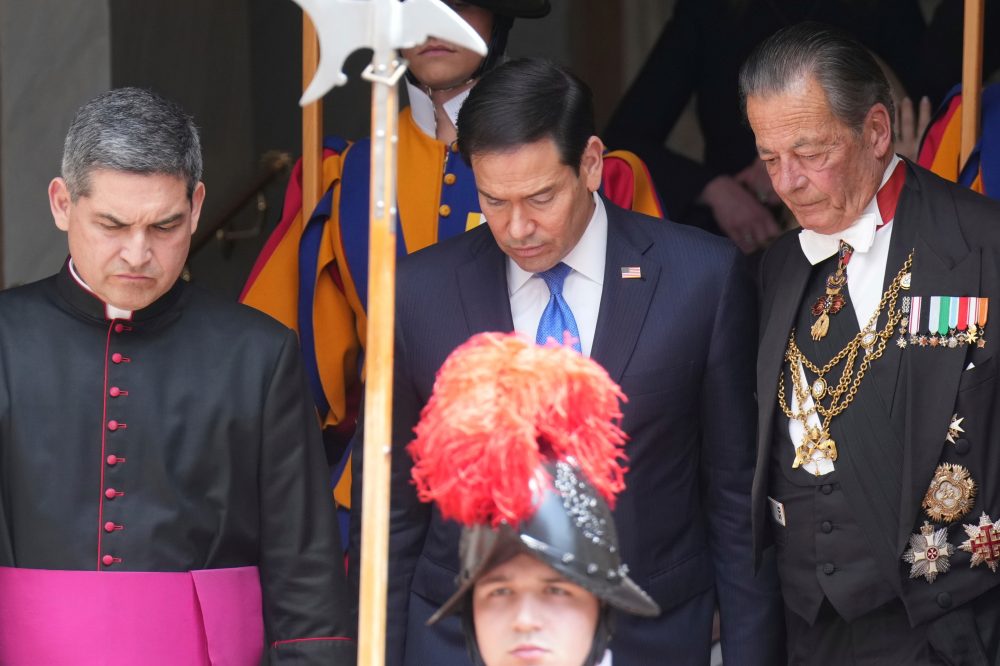
The Secretary’s visit began Thursday with a meeting with Pope Leo XIV, marking the start of his mission to reduce tensions across the Atlantic. Italian officials plan to use these discussions to maintain their strategic alliance with America while resisting Washington’s demands regarding the Iran situation.
President Trump has publicly denounced both the Vatican and Italy’s leadership for their opposition to the war. Meloni has characterized the conflict as “illegal” and described Trump’s comments about the pontiff as “unacceptable.”
In response, Trump has questioned Meloni’s leadership, calling her “negative” regarding U.S. war efforts and suggesting she lacks courage. The Italian Prime Minister, once considered among Trump’s strongest European supporters, now finds their relationship significantly deteriorated, as Trump has publicly acknowledged.
Washington has already announced plans to relocate 5,000 military personnel from Germany, and Trump has warned of potential troop withdrawals from Italy and Spain due to their positions on the Iran conflict.
Italy serves as a crucial operational center for American and allied activities throughout the Mediterranean, Middle East, and North Africa. Any reduction in military presence could significantly impact NATO’s strategic positioning in southern Europe.
Military cooperation faced a significant test in late March when Italy refused to permit U.S. bombers heading to the Middle East to use the Sigonella base in Sicily without legislative authorization.
Italy’s constitutional framework and international agreements specify how military installations may be utilized, permitting logistics and training within NATO parameters while typically prohibiting direct combat operations like bombing missions without explicit approval.
Both Meloni and Tajani have consistently stated Italy will not participate in the Iran conflict, emphasizing that any American request to use Italian facilities for combat purposes requires parliamentary consent, where war opposition remains substantial.
Rome faces significant challenges regarding both its security relationship with Washington and the economic consequences of the conflict. Meloni has expressed concern that closure of the Strait of Hormuz is increasing energy expenses and reducing consumer spending power, while potential American tariff policies threaten Italy’s export-dependent economy.
The Prime Minister is dealing with political challenges following a March referendum loss and growing domestic opposition to the war, further complicating her diplomatic position.
Since assuming office in 2022, Meloni has attempted to position herself as a dependable American partner and intermediary between Washington and Europe, but current disputes over Iran and trade policies, combined with her recent political difficulties, have highlighted the constraints of this approach.
During his Vatican visit Thursday, Rubio spent two and a half hours in discussions with Pope Leo XIV and Vatican Secretary of State Cardinal Pietro Parolin, addressing “efforts to achieve a durable peace in the Middle East” and other shared concerns, according to State Department officials.
Both nations emphasized that Rubio’s meetings with the Pope and Vatican leadership demonstrated the strength of bilateral relations.
American officials indicated the conversations reinforced “the strong relationship between the United States and the Holy See” and mutual dedication to advancing peace and human dignity.