Israeli chip manufacturer Tower Semiconductor exceeded Wall Street expectations Wednesday, projecting stronger-than-anticipated second-quarter earnings while announcing $1.3 billion in contracts to produce specialized chips for artificial intelligence data centers through 2027.
The contract chipmaker’s stock surged more than 17% in pre-market trading after reporting robust demand for its analog and mixed-signal processors, driven by increased investment in AI infrastructure and data center technology.
Tower Semiconductor manufactures integrated circuits for diverse sectors including automotive, industrial applications, consumer electronics, and communications technology.
The company projected second-quarter earnings of $455 million, surpassing Wall Street analysts’ consensus estimate of $436.4 million based on LSEG data.
Beyond the revenue forecast, Tower Semiconductor revealed it secured silicon photonics contracts valued at $1.3 billion for 2027 delivery and collected $290 million in upfront customer payments to guarantee manufacturing capacity. The company noted that clients have pledged additional orders for 2028, with further advance payments scheduled by January 2027.
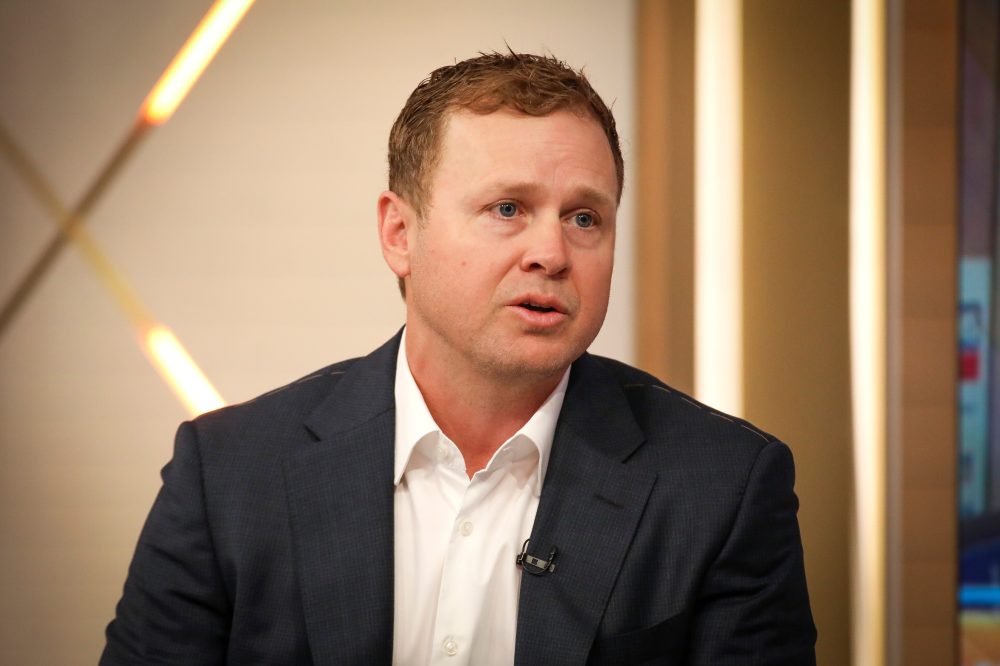
“We are confident in our path toward achieving our financial model targets of $2.8 billion in annual revenue and $750 million in net profit in 2028,” CEO Russell Ellwanger said.
Tower Semiconductor’s first-quarter performance showed a 15% increase in revenue reaching $414 million, exceeding projections of $411 million. The company’s adjusted earnings per share hit 65 cents, outperforming analyst expectations of 56 cents.
However, Tower faces legal challenges as competitor GlobalFoundries filed a lawsuit in March, claiming the Israeli manufacturer violated 11 patents connected to smartphone and electronics chip production processes.
Ukrainian armed forces announced Wednesday they had successfully targeted multiple Russian energy facilities, including an oil terminal, refinery, and gas processing facility, as the country resumes its campaign against Russian energy infrastructure following a brief pause in operations.
According to Ukraine’s General Staff and drone forces commander Robert Brovdi, who posted updates on Telegram, the attacks targeted the Tamanneftegas terminal in Russia’s Krasnodar region and a gas processing facility in Astrakhan, both located in southern Russia.
The operations resulted in fires breaking out at fuel storage reservoirs, military officials reported.
Ukrainian forces also targeted a refinery facility in Yaroslavl, situated northeast of Moscow, with strikes hitting primary oil processing units, according to military statements.
These attacks are part of Ukraine’s ongoing strategy to target Russian petroleum facilities, as Moscow relies on income from its substantial oil and gas resources to fund its military operations in the conflict that has now entered its fifth year.
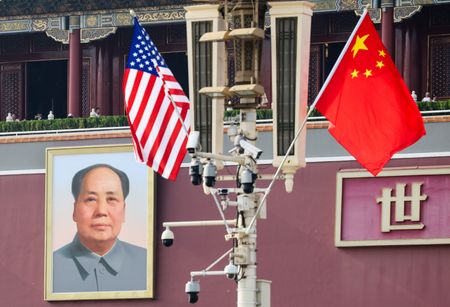
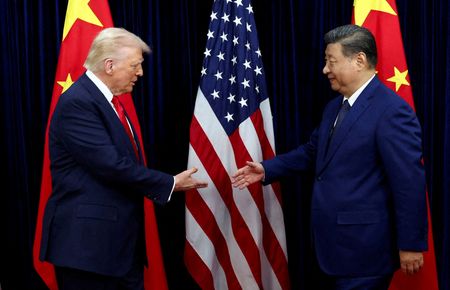
President Donald Trump and Chinese President Xi Jinping are preparing to explore a new trade framework this week that could lead to reduced tariffs on approximately $30 billion worth of goods from each nation, according to sources familiar with the negotiations.
The proposed mechanism, dubbed the “Board of Trade,” was initially suggested by U.S. Trade Representative Jamieson Greer in March as a major outcome for the upcoming high-level meeting between the two world leaders in Beijing.
While details of the proposal remain limited, this approach represents a significant departure from previous trade discussions. Rather than pressuring China to overhaul its state-controlled economic structure to mirror America’s market-based system, the new strategy focuses on establishing numerical trade goals for non-strategic industries.
“It’s not really a situation where we go and get China to change the way they govern, the way they manage their economy,” Greer explained during a Fox Business Network interview last week. “That’s all baked into their system, but I think there is a world where we find out where can we optimize trade between China and the United States to achieve more balance.”
Greer compared the proposed system to an electrical “adapter” that could help bridge the gap between two fundamentally different economic models.
On Wednesday, U.S. Treasury Secretary Scott Bessent and Chinese Vice Premier He Lifeng held a three-hour preparatory meeting in Incheon, South Korea, to finalize economic proposals for the Trump-Xi discussions. However, neither official released public statements following their preliminary talks.
According to four individuals with knowledge of the administration’s goals, the framework would involve a reciprocal $30 billion trade barrier reduction arrangement to launch the new system. It remains uncertain whether specific products will be identified during the Trump-Xi summit or in follow-up negotiations.
Former USTR negotiator Wendy Cutler, who currently leads the Asia Society Policy Center in Washington, indicated that both nations “are coalescing around” a $30 to $50 billion collection of goods for reduced tariffs or other trade barriers.
“The non-sensitive basket is just such a small part now of our overall trade with China. So maybe this Board of Trade, maybe it starts with that” and expands in the future, Cutler said during a virtual Asia Society forum on Tuesday.
Trade volume between the two nations decreased by 29% in 2024, falling from $582 billion to $415 billion, while the U.S. trade deficit dropped nearly 32% to $202 billion in 2025 – its smallest level in twenty years, based on U.S. Census Bureau statistics.
Both the U.S. Trade Representative’s office and Treasury Department declined to provide additional comments about the proposed system before the Beijing summit.
China has avoided using the “Board of Trade” terminology, stating in March that both sides had “agreed to explore the establishment of working mechanisms to expand economic and trade cooperation” without providing further specifics.
The United States is particularly interested in boosting energy and agricultural exports to China, making Beijing’s retaliatory tariffs on these commodities a potential target for reduction.
Currently, China maintains a blanket 10% additional tariff on all American imports, which corresponds to the existing 10% temporary U.S. tariff on Chinese products. Beyond these measures and standard “most favored nation” rates, Beijing has imposed retaliatory duties including 10% on crude oil, 15% on liquefied natural gas, 15% on coal, and up to 55% on beef.
The United States continues to impose 7.5% tariffs on various Chinese consumer goods that were implemented in 2019 during the height of Trump’s initial trade conflict with China. These affected products include flat-screen televisions, flash memory devices, smart speakers, Bluetooth headphones, bedding, multifunction printers, and numerous types of shoes. The temporary 10% global U.S. tariff, scheduled to expire in July, is applied in addition to these existing duties.
America could also revive some of the more than 2,200 product-specific exemptions from China tariffs that were granted during Trump’s first presidency but have mostly lapsed since then.
In November 2025, Trump extended temporary tariff exemptions for one year on solar manufacturing equipment and 164 categories of industrial and medical products, ranging from printed circuit boards to electric motors and blood pressure monitoring devices. Some of these exemptions could become permanent.
The two countries are also expected to address the less-developed idea of a “Board of Investment” for handling investment matters, though Greer told the Hudson Institute last month: “I don’t think we’re at the point in our relationship with the Chinese where we want to talk about big investment programs either way.”
Congressional lawmakers and representatives from automotive, steel, and technology industries have cautioned Trump against any agreement that would permit Chinese investment in the U.S. automotive sector, contending that such arrangements would undermine American manufacturing capabilities.
Federal officials announced Wednesday they will implement a nationwide freeze on Medicare enrollments for new home healthcare and hospice providers, citing widespread fraudulent activity in these sectors.
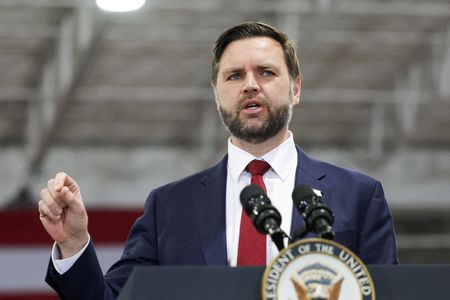
The temporary suspension comes as part of Vice President JD Vance’s anti-fraud task force efforts to combat healthcare scams targeting Medicare, the federal health insurance program serving elderly and disabled Americans.
According to a senior administration official, the Trump administration has criticized several Democratic-led states, particularly California and Minnesota, for insufficient fraud prevention measures. However, federal oversight has also increased in Republican-led states like Georgia and Ohio over the past year.
“Widespread fraud has gone on for far too long. But under the Vice President’s task force we are finally putting a stop to the massive scale fraudsters ripping off the American people once and for all,” a spokesperson for Vance stated.
The task force plans to reveal this policy change alongside additional measures Wednesday afternoon, marking the first public disclosure of this moratorium.
Officials say the enrollment pause will allow the Centers for Medicare & Medicaid Services to conduct a comprehensive review of hospice and home health spending within Medicare and develop enhanced oversight guidelines.
A key concern driving the suspension involves how quickly fraudulent home health and hospice operations can establish themselves, according to the administration official.
Medicare data shows significant spending in these areas during 2024. The Medicare Payment Advisory Commission reports that 1.8 million Medicare recipients utilized hospice services at a total cost of $28.3 billion. Additionally, 2.7 million Medicare patients received home healthcare services costing $16 billion, according to the congressional advisory agency.
California has become a particular focus for Vance’s task force, especially after the state auditor determined in 2022 that inadequate oversight had allowed extensive fraudulent activity in hospice services.
Healthcare industry organizations have expressed mixed reactions to potential federal action. The National Partnership for Healthcare and Hospice Innovation voiced support in March for a temporary hospice enrollment freeze. Conversely, the National Alliance for Care at Home cautioned against sweeping measures that might discourage physicians and patients from pursuing necessary care.
Leading companies in these sectors include BrightSpring Health Services, Matrix Medical Network (backed by private equity), and UnitedHealth in home healthcare. VITAS Healthcare, a Chemed Corporation subsidiary, ranks among the largest hospice care providers.
Healthcare fraud costs the United States tens of billions of dollars annually, resulting in increased expenses for patients and employers, according to the National Health Care Anti-Fraud Association.
This Medicare enrollment freeze represents part of a broader Trump administration initiative targeting healthcare fraud. In February, officials suspended Medicare enrollments for durable medical equipment suppliers, including prosthetics providers.
The administration’s anti-fraud campaign began in Minnesota, where federal officials announced in February they would withhold $259 million in Medicaid funding.
Trump has frequently referenced a Minnesota scandal from 2020, where 47 individuals faced charges for allegedly stealing $250 million from a federally funded child nutrition program operated by the state. Local media reported that many defendants were Somali Americans.
This controversy led Trump to deploy thousands of federal immigration officers to Minnesota as part of a migrant enforcement operation. However, he modified this approach to be less confrontational after federal officers fatally shot two individuals protesting his policies.
When announcing the fraud task force in March, Trump claimed, without supporting evidence, that Democratic-led states experience higher rates of fraud allegations compared to Republican-led states.
Motorists should plan for delays on Janice Road today as construction crews have closed one southbound lane between Nassau Commons Boulevard and Siham Road.
According to DelDOT, the lane restriction will remain active until 5:00 PM this afternoon while work continues in the area.
Drivers are advised to use alternate routes or allow extra travel time when navigating through the construction zone.
Motorists using Blackbird Station Road are encountering periodic lane restrictions today as construction crews work along the roadway.
The Delaware Department of Transportation reports that drivers should expect intermittent lane closures on Blackbird Station Road in the area between Cart Road and Mill Lane.
The temporary traffic restrictions are scheduled to remain in effect until 3 PM today while construction activities continue in the area.
Drivers are advised to allow extra travel time and use caution when traveling through the work zone.
Drivers using Route 13 southbound should plan for potential delays today as construction crews have blocked the right lane near Hessler Boulevard.
According to DelDOT traffic reports, the lane restriction on North DuPont Highway is expected to remain in effect until 3 PM this afternoon.
Motorists are advised to use caution when traveling through the work zone and allow extra time for their commute. Traffic may be slower than usual as vehicles merge into the remaining open lanes.
Motorists traveling eastbound on Route 40 in New Castle County are dealing with lane restrictions today due to ongoing construction work.
The Delaware Department of Transportation reports that the right shoulder is currently blocked between School Bell Road and Appleby Road on the Pulaski Highway portion of the route.
Officials say the construction-related closure will remain in place until 4 PM today. Drivers are advised to allow extra travel time and exercise caution when passing through the work zone.
The affected stretch of highway serves as a major commuter route connecting communities in northern New Castle County.
Drivers traveling on southbound Dundee Road are facing lane restrictions today as construction work forces the closure of the right lane between Willow Grove Road and Bison Road.
According to DelDOT traffic officials, the lane closure is expected to remain in place until 4 PM this afternoon. Motorists are advised to plan for possible delays and consider alternate routes if traveling through the area.
The construction activity is impacting traffic flow along this stretch of Dundee Road, and drivers should exercise caution when passing through the work zone.
Rising fuel costs are pushing more drivers to consider hybrid vehicles for their next car purchase, and automotive experts say that’s a smart move for those who spend significant time on the road. While the hybrid market offers numerous options with many models priced competitively against traditional gas engines, choosing the right hybrid requires careful consideration to maximize savings potential.
Automotive specialists at Edmunds have developed four essential strategies to help buyers select hybrids that will deliver the greatest financial benefits.
Since hybrid vehicles generally carry higher sticker prices than conventional models, buyers should target options with minimal price premiums over their gas-only versions. This approach allows drivers to recover the additional investment more rapidly through fuel cost reductions. The 2026 Hyundai Santa Fe SE hybrid demonstrates this principle well, carrying only a $1,350 premium over the standard Santa Fe. EPA calculations show the hybrid variant can reduce annual fuel expenses by $850 for drivers covering 15,000 miles yearly, potentially offsetting the extra purchase cost within two years.
Other vehicles offering quick payback periods include Ford’s compact Maverick pickup and the Lexus NX luxury compact SUV when equipped with hybrid powertrains. However, some hybrid options require longer recovery periods. The Honda Civic hybrid, for instance, commands a $2,700 premium while delivering only $450 in annual fuel savings according to EPA estimates.
Buyers can calculate payback periods using the EPA’s fuel economy comparison website, which allows direct cost comparisons between hybrid and conventional versions of specific models.
For drivers prioritizing immediate fuel savings over purchase price considerations, focusing on vehicles with exceptional efficiency ratings proves most beneficial. The 2026 Toyota RAV4 stands out among compact SUVs, offering exclusively hybrid powertrains with EPA ratings reaching 43 mpg combined.
Smaller vehicle options include the Kia Niro, achieving up to 53 mpg, while the Toyota Prius remains the efficiency champion with EPA estimates reaching 57 mpg combined for 2026 models.
Pre-owned hybrid vehicles present opportunities to eliminate price premiums entirely. Higher-mileage or slightly older hybrid models often cost equivalent amounts to comparable conventional vehicles. Buyers considering used hybrids should seek certified pre-owned options that include extended warranty coverage to offset potential concerns about age or mileage.
Dealerships sometimes price slow-moving hybrid inventory at levels matching conventional vehicles regardless of age or condition, as dealers work to clear stagnant stock.
Large families seeking three-row SUVs can benefit significantly from hybrid powertrains in this vehicle segment. The new 2026 Hyundai Palisade Hybrid SEL can reduce annual fuel costs by $1,100 compared to its conventional counterpart for drivers covering 15,000 miles yearly, creating a two-year payback period. Toyota’s Grand Highlander Hybrid offers similar value propositions for families requiring spacious seating.
Beyond financial advantages, hybrid ownership provides additional benefits including increased power output compared to conventional engines, smoother operation, reduced emissions, and decreased brake maintenance due to regenerative braking technology.
ROME (AP) — Catholic Church leaders delivered an ultimatum Wednesday to a traditionalist organization, cautioning that their upcoming bishop consecrations without Vatican approval would constitute a schismatic action resulting in immediate excommunication.
Cardinal Víctor Manuel Fernández, the Vatican’s chief doctrine official, released a statement saying Pope Leo XIV is seeking divine guidance in hopes that Society of St. Pius X leadership “may reconsider the extremely grave decision they have made.”
The warning represents what appears to be a final attempt to prevent the organization’s scheduled July 1 consecration of four new bishops. Should they proceed, it would mark the most serious challenge to Leo’s papal authority as he works to mend relationships with traditionalist Catholics that deteriorated during Pope Francis’s tenure.
Known as SSPX, the organization was established in Écône, Switzerland in 1970 as a response against the progressive changes of the 1960s Second Vatican Council, which permitted Mass to be conducted in local languages instead of exclusively in Latin.
The organization, which maintains the pre-Vatican II Latin Mass tradition, initially separated from Rome in 1988 when founder Archbishop Marcel Lefebvre consecrated four bishops without Vatican permission. Church officials immediately excommunicated Lefebvre and the four bishops, leaving the group without official recognition within the Catholic Church.
Despite this break, the organization has expanded significantly over the following decades, establishing educational institutions, seminaries and parishes worldwide, along with communities of priests, nuns and laypeople devoted to traditional Latin Mass practices.
This expansion presents a genuine concern for Vatican officials as it essentially creates a competing Catholic church structure. Current SSPX data shows the group includes two bishops, 733 priests, 264 seminarians, 145 religious brothers, 88 oblates and 250 religious sisters from 50 different countries.
Rev. Davide Pagliarani, the present SSPX leader, revealed plans earlier this year for the July 1 bishop consecrations to serve their growing membership, explaining that the organization’s two elderly bishops can no longer adequately serve their worldwide community.
Vatican officials extended an invitation to Pagliarini for discussions, but the same doctrinal and logistical issues that have blocked reconciliation for five decades appear to have left both parties at a standstill.
In recent statements on the SSPX website, Pagliarani reinforced the necessity for additional bishops. He expressed approval that his announcement sparked discussions about what the SSPX views as a crisis within the church, including religious pluralism and doctrinal uncertainty.
“Now, what is at stake today is not an opinion, nor a sensibility, nor a preferential option, nor a particular nuance in the interpretation of a text, but the faith and morals that a Catholic must know, profess, and practise in order to save his soul and reach paradise,” he said.
The approaching consecrations, which would trigger automatic excommunications, represent the first concrete crisis for Leo, who has worked to improve relationships with Catholic traditionalists that deteriorated under Pope Francis after the Argentine pontiff restricted the use of the traditional Latin Mass.
Although the SSPX remains separated from the Holy See, many Catholic traditionalists who maintain loyalty to Rome while preferring the old Mass sympathize with the SSPX situation and are observing Leo’s response to this challenge.
BEIRUT (AP) — Eight people died Wednesday when Israeli drones targeted three vehicles traveling on a major highway south of Beirut, according to Lebanon’s Health Ministry. Among the victims were a mother and her two young children.
Israel’s military confirmed it had targeted Hezbollah facilities across multiple locations in southern Lebanon, coming just hours after ordering residents in six southern villages to leave their homes.
The deadly strikes come as Lebanon and Israel prepare for another session of direct negotiations in Washington on Thursday, with the Trump administration working to achieve a diplomatic breakthrough between the two nations that have remained in a state of conflict since Israel’s establishment in 1948.
Health Ministry officials verified the three separate attacks in an official statement but did not specify how many people were in each targeted vehicle.
Two of the Wednesday drone attacks occurred on the highway connecting Beirut to the southern port city of Sidon, while Lebanon’s state-run National news agency reported a third strike in the town of Saadiyat, located near the busy roadway. State media also reported a fourth attack during the early afternoon at Sidon’s northern entrance, where a car was hit.
An Associated Press photographer witnessed the remains of three victims from two of the strikes that occurred near the coastal communities of Barja and Jiyeh.
Throughout southern Lebanon, Israeli airstrikes continued to be reported across various towns and villages, while Hezbollah claimed responsibility for additional attacks against Israel. Both sides have maintained their exchange of fire despite a U.S.-brokered ceasefire agreement that took effect on April 17.
The current Israel-Hezbollah conflict began on March 2, when the Lebanese militant organization launched rockets into northern Israel, occurring two days following joint U.S.-Israeli strikes against Iran.
Lebanese Health Minister Rakan Nassereddine informed reporters on Tuesday that 380 people have lost their lives and 1,122 have been injured since the ceasefire began. These figures bring the total casualties since the war’s start to 2,882 deaths and 8,786 wounded.
Senate Democrats are preparing to challenge the Trump administration’s dismantling of consumer financial protections through a series of strategic votes designed to put Republican lawmakers in difficult positions during this election cycle.
The voting strategy, scheduled for Wednesday, targets regulatory changes and policy reversals implemented by the Consumer Financial Protection Bureau since Republicans regained control of the agency in February 2025. Acting director Russell Vought, who simultaneously serves as President Trump’s budget chief, has eliminated 67 policies and has openly stated his intention to effectively eliminate the agency entirely.
Democratic lawmakers plan to utilize the Congressional Review Act to file Joint Resolutions of Disapproval, which would reverse recently implemented federal regulations. Although these measures are unlikely to succeed, Democrats view them as an opportunity to emphasize their economic messaging ahead of elections.
The proposed resolutions, numbering approximately 20, will address policy modifications affecting debt collection practices, buy-now-pay-later services, overdraft charges, and additional consumer finance matters.
Massachusetts Senator Elizabeth Warren, the ranking Democrat on the Senate Banking Committee, is spearheading this effort. Warren originally conceived the CFPB in 2007 during her tenure as a Harvard Law School professor and remains its strongest congressional supporter.
“Today, we are going to hear from 20 senators about how the Trump administration has hurt American families by rolling back commonsense CFPB rules — and how Congress can make them right,” Warren plans to declare during Wednesday’s Senate floor proceedings.
The 1996 Congressional Review Act enables lawmakers to reverse agency regulations after their finalization. While rarely employed in its initial decades, the legislation gained prominence during Trump’s first presidency when Republican majorities overturned numerous Obama-era policies. Democrats similarly used this tool in 2021 to reverse several Trump administration rules.
These election-year votes may serve as political weapons against vulnerable Republican senators facing reelection battles, including Maine’s Susan Collins, Alaska’s Dan Sullivan, and Texas’s John Cornyn.
“I urge my Republican colleagues to listen with open ears and cast their votes on behalf of the consumers they were elected to represent,” Warren stated.
The CFPB has experienced significant operational disruption during Trump’s second term. Most bureau personnel remain under work suspension orders, and current activities primarily focus on reversing initiatives from the Biden administration and Trump’s first term. The agency’s funding is also expected to decrease following Trump’s tax and spending reduction legislation, which cut Federal Reserve transfers to the bureau.
Lawmakers established the CFPB following the 2008 financial crisis and recession, creating an independent regulatory body with extensive enforcement powers over consumer financial products and services. The bureau reported returning $17.5 billion to American consumers in 2024 while imposing $4 billion in fines and penalties on financial institutions.
Consistent polling data reveals bipartisan voter support for the CFPB and its mission. A March survey by Lake Research Partners and Chesapeake Beach Consulting showed more than 80 percent of Americans, including Republican majorities, endorsed the agency’s regulatory role over banks and financial service companies.
NEW YORK (AP) — Despite a string of electoral victories, Democratic National Committee Chairman Ken Martin finds himself under mounting pressure from within his own party, with officials expressing growing doubts about his leadership less than a year into his tenure.
The party organization is struggling with reluctant major contributors, public criticism from progressive voices over Martin’s failure to publish a promised internal analysis of past election setbacks, and behind-the-scenes conversations among Democratic strategists about potential replacement candidates. However, most insiders believe Martin’s position remains secure heading into the upcoming midterm contests.
Amanda Litman, head of the Democratic-supporting group Run For Something, revealed that senior party strategists have recently contacted her about potentially stepping into Martin’s role. While she turned down the overture, Litman expressed skepticism about the current chairman’s performance.
“I think it’s a really hard job, and also Ken is not doing it very well,” Litman shared with The Associated Press. “I honestly think he’s going to have a hard time rebuilding trust.”
She noted that frustrated Democrats face a significant obstacle: “there’s not really an alternative.”
According to two sources speaking confidentially about internal discussions, the mounting criticism has affected Martin personally, leading to increased suspicion and wariness, even within the party’s Washington headquarters where he chose not to bring in his own staff after assuming leadership.
This internal discord occurs against the backdrop of remarkable Democratic success in elections during Martin’s tenure, which has coincided with Republican Donald Trump’s return to presidential power. Over the past year, Democrats have secured victories in gubernatorial races, special legislative and congressional contests, state supreme court battles, county executive positions, and even sheriff elections.
With less than six months remaining before the 2026 midterm elections, the leadership controversy represents either an unwelcome diversion for a party seeking to challenge Republican control in Washington, or potentially a more serious obstacle that could hamper Democratic chances in November while weakening confidence in the DNC’s role in organizing the next presidential nomination contest.
Martin chose not to provide comments for this report. He has avoided media appearances recently, instead concentrating on strengthening the committee’s financial position and evaluating possible locations for the 2028 presidential convention.
During a recent Denver visit, Martin participated in a well-attended fundraising gathering followed by three private donor meetings while conducting additional fundraising calls with contributors in other cities.
Jaime Harrison, Martin’s predecessor as DNC chair, expressed frustration with party members who are publicly questioning Martin’s leadership. Harrison particularly criticized Democratic operatives from the “Pod Save America” podcast, who challenged Martin in a recent episode about his broken commitment to publish a post-2024 election review.
Even Martin’s supporters acknowledged that the podcast appearance was an uncomfortable moment for the first-term chairman.
“Am I happy with everything that goes on in the party? No. Am I happy with leadership that sometimes you get? No. But do you see me going out at this juncture trying to make that case? This is not the moment for that,” Harrison stated. “We have to be as strong as we possibly can going into November, because we have to win. Once we win, we can fight like hell.”
When asked about Martin’s job security, Harrison responded, “I don’t think so.”
Martin has committed to a comprehensive 50-state funding approach that even his backers privately admit carries significant risks.
Monthly, the DNC distributes $1 million across party organizations in all states and major U.S. territories, while providing an additional $5,000 monthly to nearly two dozen Republican-led states to strengthen party infrastructure.
These investments enjoy widespread support from local party leaders, even as the DNC faces financial difficulties.
According to the most recent federal disclosure, the national party held $22.1 million in cash with $18.4 million in outstanding debt at the end of March. In comparison, the Republican National Committee reported $116.8 million available with no debt obligations.
Despite the criticism, DNC national finance co-chair Chris Lowe explained that the financial gap reflects Martin’s deliberate strategy, outlined during his campaign for chairman and implemented since taking control.
“We made a conscious decision to spend money,” Lowe explained. “His view, and I would agree with this view, is the best way to position ourselves for the presidential (election) in ’28 is not just to amass a bunch of money, it’s to have a history of winning elections all across the country up and down the ballot. And that’s what we’ve done.”
Lowe emphasized that Martin generated more funds during his initial year than any previous chairman in comparable non-presidential years when Democrats lacked White House control. For 2026, he noted, the committee has surpassed its major donor fundraising goals each month.
California DNC member Michael Kapp, a strong Martin supporter, acknowledged he would “love to have big donors come on board” but argued that the committee’s financial balance isn’t the primary concern.
“Republicans can brag about having more money but they’re not spending it, and they’re not winning,” Kapp observed. “At the end of the day the scoreboard matters more than the spreadsheet.”
Beyond fundraising concerns, the controversy surrounding Martin’s leadership stems from his decision not to release the DNC’s internal examination of the 2024 election — referred to within the organization as the “after-action report” — despite previous commitments to publish it immediately upon becoming chairman.
Kapp, like many Martin allies, believes “it’s certainly something that should be made public,” but accepts Martin’s reasoning that releasing the analysis too close to November’s midterm elections would be inappropriate timing.
“I know there are lessons to be learned from that,” he said regarding the report. “I trust Ken. I’ve known the man for 10 years. But at this point, when we’re six, seven months away from the midterms, we need to be focused on the midterms.”
Martin has intensified his outreach to major contributors, despite their apparent hesitation to support the committee. He has acknowledged pressure regarding the analysis in some conversations and suggested modifications might be forthcoming, according to two individuals with direct knowledge of these discussions who were not authorized to discuss them publicly.
As Martin prepares for 2028, when the DNC will be responsible for establishing political infrastructure for the party’s next presidential candidate, some potential presidential contenders are approaching the internal party conflict cautiously.
Kentucky Governor Andy Beshear, anticipated to announce a presidential campaign, avoided directly addressing whether Martin should remain as DNC leader.
“Ken and I work well together. And I say that being somebody who wasn’t originally on board,” Beshear commented. “But he made an effort to reach out to me. And, listen, I want to work with whoever’s there. We need a healthy DNC. We need it to work.”
Federal prosecutors have brought criminal charges against companies connected to the cargo vessel that struck Baltimore’s Francis Scott Key Bridge in 2024, resulting in a fatal collapse.
The charges represent a major development in the investigation into the maritime disaster that brought down the iconic span crossing Baltimore’s harbor.
The 2024 incident involved a cargo ship collision that led to the bridge’s catastrophic failure, marking one of the most significant infrastructure disasters in recent Maryland history.
Two leading dairy industry organizations have expressed strong support following House approval of legislation designed to address organized retail crime that has been disrupting dairy shipments nationwide.
The National Milk Producers Federation and U.S. Dairy Export Council released statements praising lawmakers for advancing the Combatting Organized Retail Crime Act, known as CORCA, which targets criminal operations that break into cargo shipments.
According to NMPF President and CEO Gregg Doud, the legislation represents a valuable resource for dairy farmers working to deliver products to consumers without disruption. “CORCA is an important tool for our dairy producers to ensure that their products reach end customers safely and on time,” Doud stated. He thanked Representatives Joyce, Lee, Valadao and Titus for spearheading what he called practical legislation aimed at reducing cargo theft incidents that continue to impact dairy transportation companies.
USDEC President and CEO Krysta Harden emphasized how criminal activity has interfered with international dairy trade. “U.S. dairy exporters rely upon a supply chain that is safe and reliable in order to reach customers around the world,” Harden explained. “Unfortunately, our dairy exports have been collateral damage as criminals break into shipping containers in search of high-value retail goods.” She described the House-approved measure as essential for giving dairy shippers and law enforcement better tools to address these challenges.
Both organizations indicated they plan to advocate for Senate passage of the bipartisan measure to make it law.
SRN News has launched a new daily audio program that focuses on religious developments worldwide. The two-minute broadcast, called “Global Landscape,” offers listeners a quick overview of the most important faith-related stories happening across the globe each day.
The program aims to keep audiences informed about major religious events, cultural changes, and significant developments where faith intersects with world events. The brief format allows busy listeners to stay updated on these important stories in just a few minutes.
SRN News designed this feature to fill a gap in daily news coverage by specifically highlighting religious and faith-based stories that shape communities and cultures around the world.
Technology firm Nebius Group disclosed Wednesday that its first-quarter capital expenditures surged beyond expectations, fueled by major investments in graphics processing units and data center equipment to support its artificial intelligence cloud operations.
The tech company has carved out a profitable niche in the booming AI and cloud infrastructure sector by supplying Nvidia graphics cards and computing systems to software developers.
Financial analysts, however, have raised red flags about Nebius’s massive capital outlays as the firm rapidly builds out data centers worldwide, creating margin pressure despite robust revenue increases.
The company even halted its stock repurchase program in late 2024 to funnel more money into growing its primary AI infrastructure operations.
These worries echo similar concerns about larger competitor CoreWeave, which has forecast capital expenditures between $30 billion and $35 billion this year, cautioning that the investment surge could hurt short-term profitability.
Nebius Group has been growing its AI infrastructure division through strategic purchases and major computing agreements.
This month, the company announced plans to acquire AI firm Eigen AI for approximately $643 million to enhance its inference capabilities and expand its United States operations.
Nebius also secured a multi-year agreement with Meta to deliver up to $27 billion in computing services over a five-year period.
Capital spending soared to roughly $2.5 billion during the first quarter, a dramatic increase from $544 million in the same period last year. Wall Street analysts at Visible Alpha had projected $2.4 billion.
First-quarter revenue climbed to $399 million for the three-month period ending in March, surpassing analyst expectations of $371.4 million, according to LSEG data.
Two members of Israel’s military will serve time behind bars following their involvement in vandalizing a Christian religious statue in southern Lebanon. The incident gained international attention when images of the desecration circulated widely online, generating significant public backlash.
Military officials announced that the service member who participated in the act will receive a 21-day prison sentence, while the individual who captured the photographs will serve 14 days. Israeli Defense Forces leadership issued a public statement emphasizing that it “views the incident with great severity and respects freedom of religion and worship, as well as holy sites and religious symbols of all religions and communities.” The vandalism occurred after Israeli military units gained control of southern Lebanese territory during the current conflict with Hezbollah that started in March.
Meanwhile, discussions about religious freedom are intensifying in the United States, particularly around the concept of church-state separation. While the actual phrase “separation of church and state” cannot be found within the Constitution itself, it originates from correspondence by Thomas Jefferson, who characterized the First Amendment as establishing “a wall of separation between church and state.” Legal systems continue to navigate the delicate balance between protecting religious expression and preventing government endorsement of faith. Dan Patrick, who leads President Trump’s Religious Liberty Commission, has publicly stated his belief that true separation between religious institutions and government does not exist.
Additional religious debates are emerging as federal authorities work to expand access to in vitro fertilization treatments. Many individuals who oppose abortion find IVF problematic due to potential harm to developing embryos during the process. Certain Christian denominations maintain that procreation should remain within traditional marriage relationships, making artificial reproductive technologies unacceptable. The Catholic Church has maintained its opposition to these procedures for decades, while evangelical Protestant groups are increasingly examining their positions. During 2024, the Southern Baptist Convention adopted measures calling for IVF limitations when the process results in embryo destruction.
In Supreme Court developments, Justice Clarence Thomas has achieved the milestone of becoming the second-longest serving justice in the court’s history, completing 34 years of service. Only Justice William O. Douglas served longer, and Thomas could surpass that record by 2028 if he continues in his role. Throughout his tenure, Justice Thomas has consistently supported religious freedom cases and opposed abortion rights. While he initially represented a small conservative faction, the court’s ideological balance has shifted significantly following President Trump’s appointment of three additional justices. At 77 years old, Thomas has not indicated any plans for retirement in the near future.
A European monitoring group has documented a troubling pattern of incidents targeting Christian communities across the continent during the month of April. The Observatory on Intolerance and Discrimination against Christians in Europe recorded 38 separate cases involving violence against religious leaders and congregation members, property fires, vandalism, and the desecration of sacred sites.
The organization published these findings to highlight the growing severity of anti-Christian sentiment throughout European nations. France led with the most documented cases at 10 incidents, while both Germany and Italy each reported seven separate occurrences during the same timeframe.
The United Nations has initiated the process to select its next secretary general, with the appointment scheduled to be finalized before year’s end. Among the top contenders for the position is Michele Bachelet, who previously served as Chile’s president and currently holds the role of UN High Commissioner for Human Rights.
Bachelet has drawn attention for her controversial stance on reproductive rights, advocating for unrestricted abortion access through all stages of pregnancy and supporting government-funded abortion services worldwide. Additionally, she has endorsed transgender rights initiatives, including medical transition procedures for minors.
The selection process for the UN’s top leadership position will continue throughout the coming months as member nations evaluate potential candidates.
A new federal website designed to support mothers and families across the country has been launched by the Trump administration. The platform, accessible at moms.gov, provides comprehensive resources covering multiple aspects of family life and maternal support.
The online portal features an array of services and information, including directories for pregnancy resource centers, nutritional and dietary guidance, details about adoption services, and mental health resources for families. Health and Human Services Secretary Robert Kennedy Jr. emphasized the administration’s dedication to family support in announcing the initiative.
“The Trump Administration is strengthening its commitment to America’s families by equipping mothers and fathers with the resources and information they need to build healthy, prosperous lives,” Kennedy stated.
Churches across the nation are grappling with a growing shortage of pastors as fewer men choose to pursue careers in ministry. Recent data reveals that enrollment in Master of Divinity programs has dropped by 14 percent over the last five years, with Black Protestant denominations experiencing an even steeper decline of 31 percent.
While surveys suggest that religious leaders have mostly bounced back from the challenges brought on by the coronavirus pandemic, a significant portion of current pastors continue to contemplate leaving their calling altogether. The shortage has become so pronounced that some congregations have been forced to shut their doors or merge with other churches due to the inability to find pastoral leadership.
President Donald Trump has issued pardons to no fewer than 15 former government officials and their accomplices who were convicted on corruption charges during the past year, according to recent reports.
The wave of presidential clemency has raised concerns among legal experts who warn that such actions could weaken ongoing efforts to prosecute public corruption cases across the country.
Among those who received pardons was former Illinois Governor Rod Blagojevich, whose clemency was announced after Trump signed a series of executive orders in the Oval Office this past February.
The pardons have sparked debate about the impact of presidential clemency on the justice system’s ability to hold corrupt public officials accountable for their actions.
Regional aviation routes spanning less than 100 miles have become essential connectors in America’s transportation network, bridging the gap between smaller communities and major metropolitan hubs. However, these brief flights face an uncertain future as they were already experiencing reduced demand before recent spikes in jet fuel prices added new pressures.
These short-distance flights serve as the foundation of domestic air travel, ensuring that residents of smaller towns maintain access to larger cities and the broader aviation network. The routes have historically played a vital role in keeping rural and suburban areas connected to economic and cultural centers.
Industry observers note that the decline in these regional connections predates the current concerns about fuel costs, suggesting deeper structural challenges facing short-haul aviation services across the country.
Marty Makary has stepped down from his position as commissioner of the U.S. Food and Drug Administration following what sources describe as a challenging 13-month period leading the federal agency.
Makary’s departure marks the end of his tenure overseeing the nation’s primary food and drug safety regulatory body during a period marked by significant challenges and controversy.
Charitable support that flowed generously into Minneapolis communities during Operation Metro Surge has significantly declined, leaving immigrant families still struggling while donor interest fades.
Mutual aid organizations in Minneapolis successfully collected millions in donations when federal immigration enforcement was at its peak. However, as most federal agents have departed the area and community attention has shifted elsewhere, financial contributions have dropped dramatically.
Volunteers with Juntos Podemos, a local mutual aid organization, continue their efforts to support affected families. Tania Fischer and Carissa Coudray were recently seen delivering food supplies to A & A Barber Studio, maintaining their commitment to distribute essential items to families still recovering from the federal operation’s impact.
The contrast is stark: while donors and community supporters have largely moved their attention to other causes, immigrant families remain in need of ongoing assistance. The end of intensive federal enforcement operations has not translated to an end of the challenges these families face in rebuilding their lives and communities.
Travelers who experienced a fatal hantavirus outbreak during an Antarctic cruise expedition face significant barriers if they want to pursue legal action against the ship’s operator, according to maritime law experts.
The situation unfolded aboard the MV Hondius, a polar expedition vessel flying under the Dutch flag and operated by Oceanwide Expeditions. The ship was carrying nearly 150 passengers and crew members near Antarctica when officials reported a cluster of serious respiratory illnesses to international health authorities on May 3.
Medical officials confirmed the outbreak as hantavirus after detecting the virus in a passenger who had left the ship in late April and received medical treatment in South Africa. While hantavirus typically spreads through contact with rodents, the particular strain discovered on the vessel can transmit between humans.
Health investigators are still working to determine how the virus made its way onto the ship. As of Tuesday, three deaths have been linked to the outbreak, and the World Health Organization reported nine confirmed cases on Monday. The final passengers left the vessel on Monday, ending their extended ordeal at sea.
Legal experts say passengers face an uphill battle in court due to extensive liability protections built into Oceanwide’s passenger agreements. The company’s general terms and conditions, posted on their website, state that Oceanwide cannot be held responsible for various incidents ranging from passenger illness and death to stolen belongings and criminal acts.
However, Dutch legal specialists note that these broad liability shields might not withstand court scrutiny if passengers can demonstrate the company acted with extreme negligence. Any legal challenges would need to be filed in the Netherlands, as specified in the company’s terms and conditions.
So far, no passengers have announced plans to file lawsuits or indicated they intend to pursue legal action.
Proving extreme negligence or reckless behavior under Dutch legal standards presents a substantial challenge and would require evidence showing Oceanwide knowingly engaged in dangerous practices, legal experts explained.
Such evidence might include disregarding health authority warnings or instructions, or failing to implement standard infection prevention measures while understanding these failures could endanger passengers, according to legal professionals.
No reports have emerged suggesting the MV Hondius crew engaged in improper conduct, and some passengers have publicly commended the crew’s response to the crisis. Oceanwide Expeditions did not respond to requests for comment.
The company’s terms and conditions designate the District Court of Middelburg in the Netherlands as the only venue for filing lawsuits. Legal experts say courts in the United States and other countries typically respect these jurisdictional requirements and would likely reject cases filed elsewhere.
Passengers might challenge Oceanwide’s comprehensive liability waivers as unreasonable and legally unenforceable under European Union consumer protection regulations, Dutch legal experts suggested.
Travelers could also argue that the company’s extensive liability protections violate EU contract fairness laws for consumers, which invalidate terms that create an unreasonable advantage for businesses.
Family members of passengers who died could potentially file wrongful death lawsuits, though Oceanwide would likely maintain that the ticket terms still govern claims related to the voyage and insist on Dutch court jurisdiction.
In Dutch courts, families could contend they never surrendered their wrongful death legal rights and attempt to persuade judges that Oceanwide’s terms were unjust and unreasonable. Nevertheless, they would still face the challenging task of proving extreme negligence or reckless conduct.
Dutch legal experts say there is minimal precedent for passengers suing cruise operators in Dutch courts.
Cruise companies faced passenger litigation in the United States regarding COVID-19 exposure, but courts dismissed many cases because plaintiffs couldn’t demonstrate how cruise operators directly caused their illnesses.
Unlike major cruise corporations such as Carnival, Oceanwide appears to lack U.S. business connections that could establish American court jurisdiction.
The Republican Party has achieved significant victories in the 2026 congressional redistricting battle, yet political experts warn these gains might not guarantee the GOP will retain control of the U.S. House of Representatives come November’s midterm contests.
Through the process of redrawing congressional district boundaries, Republicans stand to capture as many as twelve House seats currently occupied by Democrats. However, political analysts suggest these advantages could be neutralized by President Trump’s struggling approval numbers and the traditional pattern of midterm losses for the sitting president’s party.
The bottom line: Most political observers continue to view Democrats as having better prospects for reclaiming House control, despite Republicans holding a narrow current majority.
Jacob Rubashkin, who tracks House competitions for Inside Elections, an electoral analysis firm, explained the situation. “It is incontrovertable that Republican chances in the House have increased,” Rubashkin noted. “But none of the underlying politics has changed.”
The GOP’s map-drawing initiatives, launched by Trump in the previous year, received significant momentum recently following favorable court rulings from both the U.S. Supreme Court and Virginia’s highest court, opening new pathways for creating Republican-friendly districts.
The Republican Party secured their House majority in 2024’s elections by a mere three-seat margin in the 435-member chamber. Since then, they have successfully redrawn 14 districts across six states to benefit their candidates, while GOP state lawmakers pursue additional changes in Louisiana, Alabama, and South Carolina. Meanwhile, Democrats have secured five seats in California and gained one new Democratic district in Utah through court intervention.
While each House race represents its own battle, the various redrawn electoral maps mean Democrats would likely need to win the nationwide House popular vote by 3 to 4 percentage points to secure a chamber majority, according to Kyle Kondik from the University of Virginia’s Center for Politics. The exact margin depends on how redistricting concludes in the three Southern states.
Current polling data suggests Democrats are meeting that threshold. A recent Reuters/Ipsos survey concluded Monday revealed 41% of registered voters would support the Democratic House candidate in their district if elections occurred today, compared to 35% backing the Republican option.
This 6-point advantage on the “generic ballot” appears sufficient to overcome Republican redistricting benefits come November.
Historical precedent shows mixed results for midterm elections. During the 2018 midterms, occurring two years into Trump’s initial presidency, Democrats capitalized on widespread dissatisfaction with his performance to gain 41 House seats and secure a comfortable majority. However, in 2022’s midterms under Democratic President Joe Biden, Republicans managed only a nine-seat House pickup following the conservative Supreme Court’s decision to overturn abortion rights.
“The current Democratic lead in the generic ballot, that would probably do it — but if they have a situation like 2022, it’s more of a tossup,” Kondik observed.
Currently, Republicans face several challenges, including the controversial Iran conflict initiated by Trump and resulting increases in inflation and energy prices. Trump’s job approval stands at just 36% among Americans, while 63% disapprove, according to the latest Reuters/Ipsos polling.
Republican officials reject suggestions that Democrats hold the advantage for House control. Mike Marinella, representing the Republican national House campaign organization, stated: “House Republicans are on offense because we have the strong candidates, an historic fundraising advantage, a winning message and favorable map to defy history and grow the majority.”
Just two weeks prior, Democrats appeared confident they had successfully countered Trump’s push for Republican-controlled states to create more favorable congressional maps. Voters in California and Virginia had endorsed new Democratic-supported maps, responding to Republican-led redistricting efforts in Texas, North Carolina, and Missouri.
The situation shifted when Florida entered the redistricting battle. On April 29, Florida’s Republican-controlled legislature approved a map designed to flip four Democratic seats. That same day, a U.S. Supreme Court voting rights ruling created opportunities for states to eliminate majority-Black districts that traditionally support Democratic candidates, prompting Southern Republican lawmakers to act quickly.
Virginia’s Supreme Court delivered another blow to Democrats on May 8, rejecting a new map created by Democrats and approved by voters that would have targeted four Republican-held House seats statewide.
Virginia Democrats have submitted an emergency appeal to the U.S. Supreme Court seeking to overturn the Virginia court’s ruling. Legal challenges remain active in Florida, Tennessee, Louisiana, and other states attempting to halt Republican redistricting efforts.
House Democratic leader Hakeem Jeffries promised colleagues in a Monday letter that his party would prevail in November before launching a “massive redistricting counteroffensive” prior to the 2028 elections.
Some Democratic leaders believe the unfavorable court decisions could energize their voter base for November turnout.
Rodney Willett, a Virginia Democratic state delegate who helped secure passage of the now-invalidated electoral map through a voter referendum last month, described receiving numerous messages from upset constituents following the state Supreme Court’s decision.
“There has been huge disappointment and palpable frustration,” Willett explained before attending a Democratic county meeting. “My message this evening will be to tell people to channel that energy and elect folks we know can do a better job.”
U.S. Representative Sharice Davids, a Kansas Democrat who retained her seat despite 2022 Republican redistricting making her district more GOP-friendly, suggested that politically motivated redistricting actually helps mobilize supporters.
Davids advised fellow Democrats to tell voters that Trump and Republican allies are attempting to “rig the system to maintain political power.”
NEW YORK – The explosive surge in semiconductor stock prices has powered the U.S. market’s impressive climb, but the dramatic increases are raising red flags about market overheating and causing some investors to brace for a potential downturn.
The current wave of artificial intelligence market excitement is lifting semiconductor stocks across the board, following Nvidia’s leadership role in the AI investment trend throughout the bull market that started in late 2022. This enthusiasm has swept through the entire chip industry this year, as enormous spending on data centers and AI infrastructure has driven up demand for semiconductors. However, the growing weight of these stocks in major indexes means any stumble could impact the broader market.
“It’s sort of a perfect mix – there is enough of a fundamental story, and then the technical story is also quite strong,” said Steve Edwards, senior investment strategist at Morgan Stanley Wealth Management. “Those two things are coming together into a confluence that has created a very enthusiastic and optimistic investor base, and that is driving that momentum.”
The Philadelphia SE Semiconductor index has jumped 64% since late March, dramatically outpacing the S&P 500’s nearly 17% increase during the same period. Micron Technology and Advanced Micro Devices shares more than doubled in that timeframe, while Intel stock nearly tripled.
Yet even bullish investors in the sector are preparing for the hot streak to fade. The semiconductor surge has prompted some observers to draw parallels to the 1999-2000 internet boom and bust.
“Anytime you see parabolic moves in anything, you have to ask yourself, are things getting too ebullient here?” said Peter Tuz, president of Chase Investment Counsel in Charlottesville, Virginia. The firm on Monday sold a position in Qualcomm shares from income-generating portfolios, but other portfolios still hold stocks including AMD and Nvidia, Tuz said.
Tuesday brought a pullback, with the SOX index closing down 3%. Some investors were turning pessimistic on the sector. Notable investor Michael Burry revealed Tuesday he was maintaining puts, which provide the option to sell an asset, in the iShares Semiconductor ETF.
The semiconductor sector’s outperformance has made the overall market increasingly dependent on these high-flying companies. The 19 semiconductor and chip equipment companies in the S&P 500 represented 18% of the index’s total weight as of Monday.
The AI infrastructure expansion has also boosted technology firms focused on memory and storage, including Sandisk and Western Digital. Semiconductor and memory stock gains represented 70% of the $5.1 trillion in market value added by the S&P 500 in 2026 through Monday, according to Michael O’Rourke, chief market strategist at JonesTrading.
Market analysts are pointing to concerning signs beneath the surface. Despite the S&P 500 reaching record highs entering this week, just over half of the index’s stocks were trading above their 50-day moving averages, data from Bespoke Investment Group shows.
The semiconductor group has “such a large weight in the S&P 500 now that any correction or any disappointment creates risk for the broader market,” O’Rourke said.
Semiconductors serve as essential parts in numerous electronic devices, and Wall Street has traditionally viewed the industry’s stock movement as a gauge of economic health and market direction. Recently, these companies have become central to the AI revolution.
“It’s really the AI infrastructure buildout. It’s the computing needs, it’s the networking needs,” said King Lip, chief strategist at BakerAvenue Wealth Management in San Francisco, which has overweighted semi stocks in its portfolios. “It’s really a multi-year capex cycle — very exciting in our view as it relates to semiconductors.”
Global semiconductor revenue is projected to climb 64% to $1.3 trillion this year, research firm Gartner reports. Semiconductor and chip equipment companies in the S&P 500 are anticipated to boost earnings by roughly 95% this year, up from an expected 62% increase as of January 1, according to Tajinder Dhillon, head of earnings and equity research at LSEG Data & Analytics.
“When you think about the fundamentals that are driving many of these companies, I think that there is still room to run,” said Ayako Yoshioka, senior investment strategist at Wealth Enhancement, whose firm’s holdings include AMD and Micron, although she said the group could be due for a pause.
Technical indicators suggest the semiconductor trade may be overextended. The relative strength index reached 85.5 on a weekly basis Friday for the Philadelphia SOX semiconductor index, marking its most “overbought” level since the technology bubble peak in March 2000.
“When something is overbought, it can stay overbought for some time,” Edwards said. However, he added, “technicals have a way of reversing themselves, and unfortunately, that can be a whipsaw.”
Any deterioration in AI momentum could impact semiconductor stocks. Jack Ablin, chief investment officer at Cresset Capital, said his firm has favored semiconductor shares in some tactical portfolios, but he’s monitoring for signs of weakness.
“We will hold them even if they get expensive,” he said, “as long as they have positive momentum.”
Oceanwide Expeditions announced Wednesday they will determine by Friday whether their cruise vessel will proceed with planned summer Arctic voyages following a fatal hantavirus outbreak that claimed three lives.
The MV Hondius, flying under a Dutch flag, had been scheduled to embark on Arctic expeditions starting with a May 29 departure, according to the cruise line’s website.
The deadly outbreak has resulted in three fatalities, including a married couple from the Netherlands who health authorities believe contracted the virus first during their South American travels. Medical officials have documented 11 total cases linked to the outbreak, with nine receiving laboratory confirmation.
Following the vessel’s arrival at Spain’s Canary Islands earlier this week, where all remaining passengers were evacuated, Oceanwide Expeditions initially stated Monday they did not “foresee changes to our operations.”
However, the company revised their position Wednesday, explaining they anticipate “clarity on whether the vessel will sail and the sailing schedule by the end of this week.”
More than 120 individuals who were aboard during the health crisis – encompassing all passengers plus select crew members – departed the ship Sunday and Monday. These individuals are currently under quarantine protocols in various nations. The vessel has since departed for Rotterdam in the Netherlands, with an anticipated arrival between May 17 and 18.
Currently remaining aboard are 25 crew members, two medical personnel, and the remains of one deceased passenger. The cruise operator reports none of those still on the ship are displaying symptoms.
Medical experts note that hantavirus typically transmits through contact with rodent waste and rarely passes between humans, although the specific Andes strain identified aboard the Hondius can occasionally spread person-to-person. The virus typically manifests symptoms one to eight weeks following initial exposure.
KYIV, Ukraine — Ukrainian President Volodymyr Zelenskyy announced that more than 100 Russian drones struck Ukrainian territory on Wednesday, following earlier attacks that claimed at least eight civilian lives.
“Russia continues its strikes and is doing so brazenly — deliberately targeting our railway infrastructure and civilian sites in our cities,” Zelenskyy wrote on X.
The nighttime assault hit residential areas and rail systems in the Dnipro and Kharkiv regions, port facilities in Odesa, and power plants in Poltava, according to the Ukrainian president. He noted that 14 regions faced bombardment throughout Tuesday alone.
“It is important to support Ukraine and not remain silent about Russia’s war. Every time the war disappears from the top of the news, it encourages Russia to become even more savage,” Zelenskyy stated, seemingly referencing global attention shifting to conflicts in Iran.
Russia’s relentless assault continues despite Ukraine’s growing confidence from recent battlefield successes and claims from both President Donald Trump and Vladimir Putin that the conflict might be ending soon, though neither has offered supporting evidence.
Speaking to reporters before departing for a Beijing summit, Trump expressed optimism about negotiations between the warring nations.
“The end of the war in Ukraine I really think is getting very close,” Trump declared Tuesday. “Believe it or not, it’s getting closer.”
During a weekend address, Putin suggested his invasion of Ukraine might be “coming to an end.”
Both leaders failed to explain their reasoning behind potential peace prospects in Europe’s most prolonged military conflict since World War II. Previous U.S.-led diplomatic initiatives have stalled over fundamental disagreements about territorial concessions to Russia and future security guarantees for Ukraine.
European nations are now weighing whether to engage Putin directly in negotiations. For years, Europe has sought to diplomatically isolate the Russian president while imposing economic sanctions on his country.
The battlefield dynamics have evolved significantly in recent months. Ukraine has transformed from desperately seeking international military aid to sharing its advanced drone expertise with other nations facing similar threats.
Ukrainian forces have successfully struck energy infrastructure and manufacturing facilities deep within Russian territory using long-range drones and missiles, with three Russian regions reporting attacks Wednesday. Russia’s Defense Ministry claimed its air defense systems destroyed 286 Ukrainian drones across Russian territories, occupied Crimea, and the Azov and Black Sea regions.
Along the 780-mile battle line, Russia’s larger and better-equipped military has seen its advance slow consistently since October, according to the Institute for the Study of War.
Russia’s spring military campaign has struggled, with Russian forces experiencing their first net territorial loss since 2024 began, the Washington-based research organization reported.
“Not only are Ukrainian defensive lines holding, but Ukrainian forces have managed to contest the tactical initiative in several areas of the front line even as Russia continues to lose disproportionate amounts of manpower to achieve minimal gains,” the ISW stated Tuesday.
The Yokohama-based automaker Nissan Motor Corp. announced Wednesday that it narrowed its financial losses during the fiscal year ending in March, though the company continues to face headwinds from tariffs, rising costs, and fierce market competition.
The car manufacturer posted a 533 billion yen ($3.4 billion) deficit, an improvement from the previous year’s 670.9 billion yen loss.
Revenue dropped 5% to 12 trillion yen ($76 billion) for the annual period.
CEO Ivan Espinosa expressed optimism about the company’s trajectory, noting steady improvement and visible indicators of recovery.
“We have moved beyond recovery and are entering a phase of growth,” Espinosa stated. “We will build on this momentum through disciplined cost management and faster product execution, driving sales and profitability.”
Looking at the most recent quarter, Nissan recorded a 282.9 billion yen ($1.8 billion) deficit for the January through March period, a significant improvement from the 676 billion yen loss during the same timeframe last year.
Revenue for the quarter decreased nearly 2% to 3.43 trillion yen ($22 billion).
The automaker emphasized its focus on reducing expenses and implementing strategies to boost profitability. Company officials noted they achieved operating profits that exceeded projections and anticipate improved performance in the coming year with new vehicle releases.
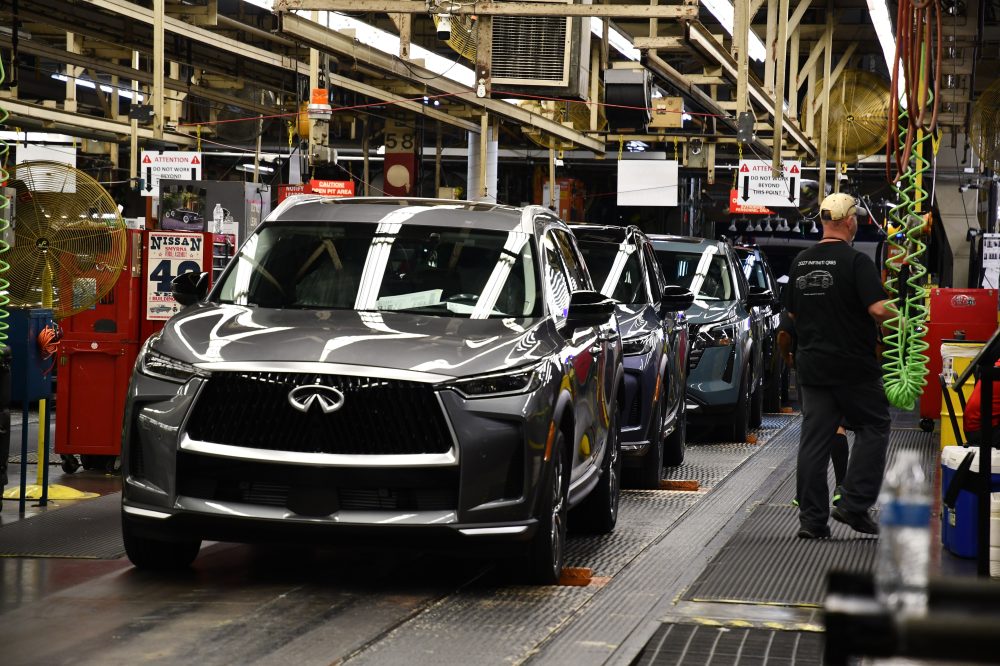
During the fiscal year that concluded March 31, Nissan delivered 3.15 million vehicles worldwide across its lineup, which includes the Altima sedan, Pathfinder SUV, Leaf electric vehicle, and luxury Infiniti models.
However, beneath the optimistic messaging from leadership, the company faces its most challenging financial period in years. Nissan has eliminated thousands of positions and divested its headquarters property as part of restructuring efforts.
The automaker projects a return to positive earnings for the fiscal year ending March 2027, forecasting a modest 20 billion yen ($127 million) profit.
All Japanese car manufacturers are grappling with aggressive competition from emerging Chinese automakers that now control significant portions of Asian markets.
Previous discussions about combining certain operations with fellow Japanese automaker Honda Motor Co., which faces similar challenges, ultimately failed. While a full merger is off the table, the companies may pursue limited collaborative arrangements.
Nissan’s stock price, which has fluctuated throughout the past year, closed 4% higher following the earnings announcement.
WASHINGTON – Legal representatives for Elon Musk and federal securities regulators will stand before a Washington D.C. federal judge Wednesday to defend their proposed $1.5 million settlement agreement, which could provide new insights into the lengthy legal battle between the two parties.
The proposed agreement would end federal accusations that Musk delayed too long before revealing in April 2022 that he had acquired a 5% ownership position in Twitter, allegedly allowing him to avoid $150 million in costs. The world’s wealthiest individual completed his $44 billion acquisition of the social media platform six months after that disclosure.
Federal District Judge Sparkle Sooknanan stated last week that she must evaluate multiple considerations before giving her approval to the settlement, including whether it treats both parties fairly, serves the public good, and remains free from “tainted by improper collusion or corruption.”
The judge has instructed both legal teams to attend Wednesday’s hearing and come prepared to establish a schedule for submitting written arguments supporting their settlement proposal.
Federal regulators filed their lawsuit against Musk on January 14, 2025, just six days before former Democratic President Joe Biden concluded his presidency.
The billionaire entrepreneur, who previously served as an advisor to Republican President Donald Trump, has maintained the legal action was driven by political motivations. Musk has also stated his delayed stock disclosure was an unintentional mistake.
The current Trump administration has reduced certain types of business enforcement actions as SEC Chairman Paul Atkins reshapes the agency’s focus areas.
Margaret Ryan, the previous enforcement division leader who departed unexpectedly in March after only six months in her role, had disagreed with agency leadership regarding enforcement strategy direction, according to Reuters reporting.
Under the settlement terms, Musk would not need to acknowledge any legal violations or return the money he allegedly saved through the delayed disclosure. While the financial penalty represents significantly less than regulators initially pursued, it still constitutes the largest SEC fine in history for this category of violation, according to a source with knowledge of the agreement.
The iconic German footwear manufacturer Birkenstock fell short of Wall Street’s second-quarter sales projections on Wednesday, citing inconsistent consumer demand for its high-end sandals and clogs, along with shipping disruptions caused by ongoing Middle East tensions.
The company’s stock price tumbled 8% during pre-market trading in New York after executives revealed that conflict in the Middle East resulted in a 6 million euro ($7.02 million) negative impact on their Europe, Middle East and Africa business segment.
According to company officials, approximately half of these losses stemmed from their inability to fulfill certain product deliveries to affected regions. The remaining impact resulted from weakened European consumer confidence, primarily driven by elevated energy prices and ongoing inflation connected to the regional conflict.
These financial results emerge during a period of increased uncertainty surrounding consumer discretionary purchases, as geopolitical instability and rising inflation continue to dampen spending sentiment. Despite these challenges, luxury brands like Birkenstock have demonstrated relative stability in recent reporting periods.
The sandal manufacturer maintained its annual revenue and earnings projections unchanged, despite the Middle East-related setbacks, relying on its strategy of controlled product distribution and maintaining full retail pricing.
Regional performance varied significantly, with the Asia-Pacific market leading growth at 22% during the quarter on a reported basis. The Americas segment expanded by 4%, while the EMEA region posted 10% growth.
The company’s gross profit margin declined to 53.9% from the previous year’s 57.7%, affected by currency exchange fluctuations and U.S. import duties, though these impacts were partially balanced by increased product pricing.
Quarterly revenue reached 618.3 million euros, falling below the analyst consensus estimate of 620.07 million euros compiled by LSEG data.
Adjusted earnings per share came in at 0.50 euros, representing a 9% decrease from the prior year’s 0.55 euros per share.
Chinese leadership is mounting fierce opposition to pending American legislation designed to limit Beijing’s access to advanced semiconductor manufacturing equipment, escalating tensions just days before crucial diplomatic meetings between the world’s two largest economies.
The controversial legislation, dubbed the MATCH Act, is anticipated to feature prominently in this week’s high-profile discussions in Beijing, where President Trump and Chinese President Xi Jinping will meet for the first time since their nations established a delicate trade agreement in South Korea last year.
While the Trump administration has refrained from implementing fresh technology export restrictions on China despite ongoing national security worries, lawmakers on Capitol Hill have taken initiative to address this void. Both chambers of Congress introduced bills last month designed to hamper Chinese semiconductor manufacturers’ ability to create AI chips, partly through mechanisms that would pressure allied nations to restrict equipment sales to China.
Beijing’s response has been swift and pointed. Chinese authorities have openly condemned the proposed law, developed retaliatory strategies should it pass, and according to sources familiar with the situation, called in American embassy personnel in China to voice their objections to the potential legislation.
Additionally, China’s Ministry of Commerce arranged a meeting in April at its Washington embassy with US semiconductor industry leaders to discuss chip-related matters, including the MATCH Act, though the specific companies involved were not disclosed.
“Congress understands how important it is for the United States to win the AI race with China — and Beijing understands its chipmaking industry is extremely vulnerable to American export control,” explained Ryan Fedasiuk, a former State Department adviser on US-China relations who anticipates the bill will surface during this week’s Beijing discussions.
Sources indicate that while other issues will dominate the summit agenda, Chinese representatives have already brought up the legislation during preliminary meetings leading up to the main talks.
The White House has remained neutral on the proposed law. When asked Friday about the bill and whether it might be discussed in Beijing, a White House representative declined to comment, stating: “We don’t get ahead of the President on pending legislation.”
Chinese embassy representatives in Washington also refused to comment on whether the bill has been raised in diplomatic conversations or discuss the embassy industry meeting or the summoning of US diplomatic staff in China.
However, Chinese officials have been vocal in their criticism since the bill’s introduction last month, and the government has announced potential countermeasures it could deploy if the legislation becomes law.
“The U.S. is using all sorts of pretexts to coerce other countries into joining its technological blockade against China,” stated Liu Pengyu, the Chinese embassy spokesperson, when asked about the MATCH Act by Reuters last month.
Following a House Foreign Affairs committee vote on April 22 that advanced the proposed legislation alongside other AI and semiconductor-related bills, China’s Ministry of Commerce issued its own statement.
“Should the relevant bills be enacted into law, they would severely undermine the international economic and trade order,” a MOFCOM spokesperson declared. China will “decisively take necessary measures to resolutely safeguard the lawful and legitimate rights and interests of Chinese enterprises.”
On April 13, China announced a new decree it could deploy against US regulations like the MATCH Act, including placing those who support or enforce inappropriate foreign extraterritorial actions on a “Malicious Entity List.” The measure also creates opportunities for legal challenges.
The MATCH Act seeks to eliminate loopholes in chipmaking equipment sales to China by focusing on essential technology from the United States, Japan, and the Netherlands — the three nations that control the market. Should foreign countries fail to restrict these exports within months of the law taking effect, the proposed legislation establishes a framework for the US to impose its own controls. The bill also mandates licensing for equipment maintenance services.
Netherlands-based ASML, the global leader in deep ultraviolet immersion lithography equipment, is considered a primary target of the legislation and could face new limitations in the Chinese market. Japanese equipment manufacturer Tokyo Electron is also seen as potentially affected. ASML declined to provide comment, while Tokyo Electron did not respond to requests for comment.
The MATCH Act passed the House Foreign Affairs committee with a 36-8 vote last month, after the draft legislation underwent multiple revisions following lobbying efforts. Micron, America’s largest memory chip manufacturer, was a key supporter behind the bill, as Reuters previously reported.
WASHINGTON – Kevin Warsh is poised to assume leadership of the Federal Reserve this month, bringing with him an extensive reform agenda that economists warn could prove difficult to implement swiftly.
The 56-year-old attorney and finance expert departed the central bank 15 years ago in disagreement with an aggressive bond-purchasing strategy that ultimately left the Fed holding a massive $6.7 trillion investment portfolio.
Warsh’s vision for change encompasses multiple areas, from revamping inflation tracking methods to reconsidering market intervention policies and overhauling how the Fed communicates with the public. His proposals would require both technical modifications to the bank’s economic assessments and delicate adjustments to its public messaging approach – areas that have proven resistant to rapid transformation in the past.
The incoming chair could quickly alter the Fed’s communication style and potentially reduce activities like media briefings, marking a shift back toward the more secretive central banking practices that existed before the 2007-2009 financial crisis prompted greater transparency and market guidance.
While Warsh opposes the current communication approach, he remains cautious about market disruption. “There are so many things that he wants to do and it is just going to take time to work through that,” explained Randall Kroszner, a University of Chicago economics professor who worked with Warsh as a Fed governor from 2006 to 2009. “It’s not just ‘off with their heads’ or suddenly tomorrow we’re going to have the balance sheet be $4 trillion.”
The Senate is expected to confirm President Donald Trump’s selection of Warsh to replace Jerome Powell this week. Trump frequently criticized Powell, initially pushing for rate reductions before escalating tensions through attempts to remove Fed Governor Lisa Cook and launching a Justice Department investigation into Powell that many viewed as an attack on the Fed’s independence. The Cook matter awaits Supreme Court review, while the Justice Department has concluded its Powell inquiry.
Powell’s eight-year leadership term concludes Friday, though he plans to retain his position on the Board of Governors as the investigation fully concludes, partly to shield the Fed from additional legal challenges from the administration.
Warsh’s first major hurdle involves balancing Trump’s pressure for rate cuts against economic indicators that provide little justification for such action. Unemployment sits at a relatively modest 4.3%, while inflation continues running significantly above the Fed’s 2% goal and appears to be climbing.
At Warsh’s inaugural policy meeting in June, success might simply mean preventing colleagues on the Federal Open Market Committee from advocating for rate increases. Three Fed officials voted against the majority at the April 28-29 meeting, favoring language that suggested rate hikes might be necessary, and this position could gain support as inflation spreads beyond factors related to tariffs or elevated energy costs.
Powell enjoyed roughly six months after Trump elevated him to Fed leadership in 2018 before facing presidential criticism, and investors currently don’t anticipate rate reductions until 2028.
Throughout the past year, Warsh has presented various arguments in speeches, interviews and public testimony for why rates might still decline despite current economic data. He suggests productivity improvements from artificial intelligence could reduce costs across the economy, that reducing the Fed’s long-term bond holdings might justify lower short-term rates, and that alternative inflation measurements show prices rising more gradually than current Fed indicators suggest.
While these arguments may have merit, supporting them with convincing research and persuading fellow policymakers will require significant time and effort, if achievable at all.
Former Fed personnel and officials indicate Warsh would likely begin by ordering comprehensive internal evaluations, followed by FOMC discussions and eventually potential modifications to policies like bank reserve requirements – one possible route to reducing the balance sheet – or incorporating different inflation data into policy deliberations.
Warsh has also expressed interest in modifying established communication mechanisms like the quarterly Summary of Economic Projections, which features the “dot plot” chart showing rate forecasts. Widespread dissatisfaction with certain SEP elements exists, making this area potentially suitable for quicker reform.
However, both the central bank’s SEPs and the Fed chair’s media briefings have become influential tools for managing public expectations. A recent Brookings Institution poll of 29 academic and private-sector Fed specialists found nearly all respondents considered post-meeting press conferences “useful or extremely useful,” while just over half expressed similar views about the SEP and dot plot.
Media briefings specifically represent “an international standard” for explaining policy decisions and economic forecasts, noted former St. Louis Fed President James Bullard, now dean of Purdue University’s Mitch Daniels School of Business. “I think it would be hard to change that.”
Regarding other matters, former Fed officials and staff indicate Warsh’s suggestions would undergo the same scrutiny as any proposal.
Concepts for balance sheet reduction are already being discussed, but skepticism exists about Warsh’s theory that shrinking bond holdings would enable rate cuts.
Warsh’s observations about productivity improvements affecting inflation are generally accepted in principle, but questions remain about timing and rate implications. Chicago Fed President Austan Goolsbee recently outlined an alternative situation where widespread AI expectations could prompt people to spend anticipated stock and wealth gains immediately, increasing inflation and forcing Fed rate hikes.
The disagreement centers less on AI’s economic impact and more on timing and risk – how quickly productivity gains reduce inflation versus encouraging additional current spending, and whether the Fed can safely rely on future disinflation to justify immediate rate cuts.
“He might be right in the impact on demand versus the impact on supply,” Goolsbee told reporters following a Los Angeles conference. “I think it is worth thinking about… I don’t know what the debate ground rules are going to be… I hope, for my purposes… it will be rooted in serious economic research.”
Britain’s communications watchdog has imposed a record-breaking penalty of 950,000 pounds ($1.28 million) against an online platform that hosts suicide-related discussions, marking the most substantial financial punishment issued under the nation’s digital safety legislation.
Ofcom announced Wednesday that it would not disclose the identity of either the forum or its operator due to the sensitive nature of the material involved. The regulatory agency revealed that the platform has been connected to more than 130 fatalities across Britain and has been referenced in multiple coroner investigations.
According to the oversight body, the website contained material that promotes or facilitates suicide—which constitutes a criminal violation in Britain—including step-by-step guidance on harmful methods and conversations that might influence at-risk individuals.
“This is a significant fine on a suicide forum known for exploiting the most vulnerable in society,” stated Suzanne Cater, Ofcom’s director of enforcement.
Cater indicated that modifications implemented by the operator to limit British access proved inadequate. The regulator noted that the website remained accessible without virtual private network technology and that access limitations were not uniformly enforced.
The Online Safety Act, considered among the globe’s most comprehensive digital safety frameworks, requires platforms featuring user-created material to evaluate and reduce risks of users encountering prohibited content while ensuring swift removal.
The regulator’s probe, conducted from March 2025 through April 2026, discovered that harmful suicide-related material remained consistently available, including posts highlighted or reshared by the platform’s own administrators.
Officials determined that the operator had neglected to conduct proper risk evaluations, establish adequate systems to prevent exposure to prohibited material, or ensure rapid content removal.
The foreign-based operator has been given 10 business days to meet Ofcom’s demands. The agency stated it is working toward obtaining a judicial directive that would compel internet providers to restrict British access to the forum should violations persist.
Wednesday brought significant developments across multiple fronts as President Trump landed in China for diplomatic meetings. The president’s arrival marks another key stop in his international outreach efforts.
Back in Washington, Defense Secretary nominee Pete Hegseth encountered intense scrutiny from lawmakers on Capitol Hill regarding the mounting financial burden of military operations related to Iran. Congressional members pressed Hegseth for answers about the escalating expenses tied to the ongoing conflict.
In separate news, FDA Commissioner Marty Makary announced his resignation from the federal health agency, adding to the list of recent high-profile departures from government positions.
Motorists traveling on Route 1 northbound should expect delays this morning as construction crews have shut down one lane on the ramp connecting to Northeast Front Street.
The Delaware Department of Transportation reports that the lane closure is part of ongoing construction work in the area. Traffic restrictions are expected to be lifted by 5:30 AM.
Drivers are advised to allow extra travel time and consider alternate routes if possible during the closure period.
For military families, uncertainty has always been part of daily life. However, the ongoing conflict with Iran is creating unprecedented levels of anxiety and fear that many families have never experienced before.
Military spouses like Jessica Serrato are managing the challenges of single parenting while their partners serve in the Middle East. The image shows Serrato speaking by phone with her deployed partner while preparing her children for school in Southern California.
The current conflict presents unique obstacles that distinguish it from previous deployments. Families are navigating uncharted emotional territory as they cope with the specific risks and unknowns associated with the Iran war.
These military families must balance maintaining strength and normalcy at home while dealing with the constant worry about their loved ones serving in an active conflict zone thousands of miles away.
Good morning, Delmarva! We’re looking at a beautiful Wednesday across the peninsula with plenty of sunshine and comfortable temperatures reaching 76 degrees. You’ll notice a steady south wind picking up throughout the day at 15 to 20 mph, so it might be a bit breezy for any outdoor activities.
However, don’t let today’s pleasant weather fool you – changes are coming tonight! We’re tracking showers and thunderstorms moving into the area after sunset, with temperatures dropping to a cool 55 degrees. Make sure to grab the umbrella if you have evening plans.
Looking ahead to Thursday, we’ll see those morning showers gradually clearing out, giving way to partly sunny skies by afternoon. It’ll be a bit cooler with highs around 69 degrees – perfect weather for getting back outside. Thursday night stays mostly cloudy with lows dipping to around 50 degrees.
Overall, it’s a typical spring pattern with some nice weather bookended by a quick-moving storm system. Stay weather-aware tonight, and I’ll see you back here tomorrow with your updated forecast!
Drivers traveling eastbound on South Little Creek Road should expect lane restrictions today as construction crews have closed the shoulder between South Bay Road and Fox Road.
According to DelDOT, the shoulder closure will remain in place until 4:00 PM this afternoon while work continues in the area.
Motorists are advised to use caution when driving through the construction zone and allow extra time for their commute.
RALEIGH, N.C. — Working at a downtown tavern, Evan Duke brightens at the prospect of keeping more of the cash gratuities he collects during busy evenings serving beverages and cocktails without federal income tax obligations.
However, the 30-year-old bartender lacks health coverage and remains concerned about escalating expenses for housing, groceries, and gasoline that impact both him and customers who contribute to the tip container at Pearl & Peril.
“It’s kind of messy right now,” Duke said.
Duke’s situation exemplifies the economic challenges facing Donald Trump’s second presidential term. While the Republican leader has attempted to increase middle-class income through tax reductions, these advantages are diminishing as costs continue climbing, particularly amid the Iranian conflict. Tuesday’s latest data revealed inflation rates maintained their upward trajectory.
This economic tension influences daily life as citizens evaluate approaching midterm contests that will decide congressional leadership for Trump’s remaining two years in office.
These financial concerns have dominated North Carolina’s political landscape and its Senate campaign. Republican candidate Michael Whatley, a former national party leader, promotes Trump’s tax reform measures. Democratic contender Roy Cooper, an ex-governor, criticizes Trump’s economic stewardship.
Duke, who registers as an independent voter, remains undecided about his choice. Similar to many Americans who base voting decisions on financial considerations, he plans to choose based on “how things are going at the time.”
“I’ve got to do more research,” he said.
The central issue revolves around what Trump termed “the one big beautiful bill,” his landmark tax legislation that reduces levies while cutting funding for social programs including Medicaid.
During Whatley’s recent appearance with Vice President JD Vance in Rocky Mount, he declared the midterm elections concerned “protecting no tax on tips, no tax on overtime, no tax on Social Security.”
Several statements contained inaccuracies. The legislation doesn’t completely eliminate federal taxes on overtime wages. However, his comments demonstrated Republican efforts to present the law as a “working families tax cut,” their preferred terminology.
“I don’t know about you, but I sure trust you to spend your money better than a federal government in D.C.,” Whatley said.
Tracy Brill, 62, a Trump supporter attending the event, expressed willingness to endure increased costs during wartime.
“The course he’s taken is spot on,” she said, adding that “I believe the other presidents didn’t do what they should have done.”
Cooper and fellow Democrats center their message on what they term the “affordability crisis.” They stress healthcare expenses and Republican opposition to extending enhanced Affordable Care Act premium assistance. They also emphasize housing and utility costs, price increases on goods affected by Trump’s tariffs, and consequences from the president’s Iran conflict on fuel, agricultural fertilizer, and food prices.
“It seems like everything that Washington is doing is driving up costs across the board,” Cooper said in Greensboro.
This represents a strategic reversal for Democrats. President Joe Biden and his party previously faced inflation criticism, which Trump exploited during his comeback effort, but now Republicans bear primary responsibility for voter frustration.
Republicans maintain stronger Senate margins compared to House representation, yet Democrats believe economic dissatisfaction provides opportunities for complete congressional control. North Carolina ranks among primary targets alongside Maine, Ohio, and Alaska. Democrats harbor hopes that Iowa and Texas might become competitive.
Democrats have historically struggled winning North Carolina Senate positions, but they see improved chances this cycle because Republican incumbent Thom Tillis is stepping down.
Cooper benefits from a moderate image and six successful statewide campaigns, including two gubernatorial victories during cycles when Trump won North Carolina. Whatley possesses extensive Republican connections as a former lobbyist and longtime party official, though voters don’t yet recognize him widely.
Phyllis Aycock, a 79-year-old antiques shop owner in Nash County, leans toward Cooper despite voting for Trump three times. She regrets her most recent presidential vote.
“It’s the whole trickle-down effect,” Aycock explained, describing economic uncertainty and inflation, including health insurance premium increases that supplement Medicare and offset Social Security adjustments and tax benefits received during Trump’s presidency.
She questioned whether Trump “even thinks about the cause-and-effect of what he does or what he doesn’t do, how it directly affects us, and when I say ‘us,’ I definitely mean the middle-class, lower-class working people, the blue collar, the ones that pay the taxes.”
“It just seems like there’s no relief for us, like it’s all for the guy who has everything already,” she said.
Aycock and her son Michael report decreased customer traffic and sales at their store, located near the law office where Cooper and his father previously worked. The elder Aycock doesn’t know Cooper personally but has supported him before and would consider doing so again.
Regarding Whatley, she perceives only Trump loyalty. She pursed her lips, then stated, “I’m worried he’s just a yes man. We’ve got enough of those.”
During Cooper’s gubernatorial tenure, he persuaded the Republican-controlled Legislature to expand Medicaid — government insurance for low-income or disabled individuals and children from poor or working families — under Barack Obama’s Affordable Care Act. Cooper discusses this program while criticizing Republican refusal to extend pandemic-era private insurance subsidies.
This position attracts supporters like Emily Miller, a 43-year-old Greensboro resident who volunteers for Democratic voter mobilization efforts.
“Medicaid and the Affordable Care Act absolutely have saved my life,” said Miller, who faces physical health challenges. As a Kentucky and later North Carolina resident, she relied on the 2010 law’s provisions between her public school teaching career and return as an education consultant.
Without full-time employment, Miller required costly medical treatment, including inpatient mental health services. She explained her part-time positions couldn’t cover private insurance expenses, let alone direct market treatment costs.
“I’m very grateful I’ve gotten back to a place where I’ve got a career again,” Miller said, with employer-provided coverage. “I’m an example of exactly what this system is supposed to do. It was a bridge. And so many people, people who are working, are struggling like that.”
Miller questions whether people will benefit from Trump’s overtime tax reduction legislation.
“I had an overtime-eligible job,” she said, “and I had bosses who would send us home before we got those extra hours.”
For Cooper to succeed, he must also motivate disengaged voters, including some Democrats.
James Outlaw, a 60-year-old rural Bertie County resident, plans to vote in November but expects no improvement regardless of results.
“It won’t get no better,” he said while completing lottery numbers at a local store. “Never does.”
Back at the downtown Raleigh bar, Duke anticipated the approaching weekend, which promises larger crowds and potentially higher tips.
He values receiving “a few thousand dollars” from tax reductions and would “at least look at” Whatley, the Republican nominee. However, he considers kitchen staff who don’t earn gratuities and won’t benefit from tip tax elimination.
Concerning his insurance absence, Duke said this won’t guarantee his Cooper vote, even while remembering the Democratic candidate as “a pretty good governor.”
“I’m healthy, and I can pay rent,” he said.
This perspective may benefit Republicans encouraging voter patience. Speaking in Rocky Mount, Vance assured attendees that Trump won’t allow economic stagnation.
“He constantly is pressing on the gas,” Vance said. “He wants us to do more.”
International human rights organizations are calling on Poland to end its cooperation with United States deportation operations that send Ukrainian nationals back to their war-torn homeland through Polish airports.
Amnesty International and Human Rights First issued a joint appeal Wednesday, claiming these deportation practices could violate international legal standards by forcing people into dangerous conditions.
The organizations report that US Immigration and Customs Enforcement conducted at least two deportation operations through Poland in November 2025 and March 2026, sending more than 50 individuals back to Ukraine.
“Forcibly transferring Ukrainians into an active war zone, where missiles strike nationwide, shocks the conscience and violates international law,” stated Uzra Zeya, CEO and president of Human Rights First.
Zeya continued, “Poland, which has offered generous safe haven to so many Ukrainian refugees, should refuse to facilitate the Trump administration’s forced transfers that send Ukrainians back to life-threatening circumstances.”
The advocacy groups revealed they contacted Polish officials on April 17 expressing their concerns about flights departing Phoenix, Arizona and landing at Rzeszów-Jasionka Airport in southeastern Poland. After receiving no reply, they chose to make their correspondence public.
Polish Interior Ministry Spokesperson Karolina Galecka responded that her country has no formal deportation agreement with the United States, calling it “an internal matter between two countries — Ukraine and the United States.”
Galecka explained Poland serves merely as a transit location without direct involvement, with Border Guard personnel only conducting standard clearance procedures.
“Perhaps a Ukrainian citizen who is to be deported from the United States to Ukraine has no right to enter Poland. And here, a simple check is being carried out within the framework of statutory authority,” Galecka explained.
Bartosz Gorski, vice president of Rzeszow-Jasionka airport, refused to discuss the deportation flights and avoided questions about Polish government participation.
The US Department of Homeland Security has not yet responded to requests for comment.
Records show another flight carrying Ukrainian deportees arrived at Rzeszów-Jasionka Airport on April 30, though passenger numbers remain unknown.
President Donald Trump has intensified immigration enforcement since returning to office, with ICE expanding detention and removal operations. The administration defends these policies as necessary for border security and reducing illegal immigration, while critics argue they violate constitutional protections and civil liberties.
The human rights groups maintain that current conditions in Ukraine make deportations unsafe, noting that international law prohibits Poland from sending individuals to locations where they face threats to life or freedom.
“Polish authorities must investigate these incidents, establish the whereabouts of those affected and ensure they are protected from refoulement, treated with dignity, and provided with an effective remedy,” said Anna Błaszczak-Banasiak, director of Amnesty International Poland.
In a significant diplomatic development, Turkey has eliminated several customs barriers with Armenia, creating opportunities for indirect commercial exchange between the two nations after more than three decades of tense relations.
While Turkey was among the initial nations to acknowledge Armenia’s independence when it broke away from the Soviet Union in 1991, relations soured quickly. Turkey sealed its border with Armenia and suspended all direct commerce in 1993 to support Azerbaijan, its close ally, during the Nagorno-Karabakh dispute.
The countries have maintained no official diplomatic ties since that time, with their relationship complicated by deep historical animosity rooted in the mass killings of Armenians by Ottoman military forces during World War One – events Armenia and numerous other nations classify as genocide.
According to Wednesday’s announcement from Turkey’s Foreign Ministry, the updated trade rules now permit merchandise traveling from Turkey through a third nation to Armenia, or in the opposite direction, to be officially labeled with either “Armenia” or “Turkey” as the final destination or origin point.
Armenia’s economy, which represents only a small portion of Turkey’s economic size and relies heavily on energy imports from Russia and Iran, responded positively to the development.
“This decision is significant for expanding trade and business ties between the two countries, promoting economic connectivity in the region, and ensuring peace and prosperity,” stated Armenian Foreign Ministry spokesperson Ani Badalyan, as reported by the Armenpress state news agency.
Currently, both Yerevan and Ankara are engaged in discussions about reopening their 311-kilometer (193-mile) shared border.
Turkey has expressed willingness to reopen this eastern boundary, but only under the condition that Armenia finalizes a peace agreement with Azerbaijan, a nation sharing cultural and linguistic connections with Turkey. Armenia has also shown interest in border reopening.
Last August, Armenia and Azerbaijan reached a peace framework brokered by the United States to end nearly four decades of hostilities, though they have not yet formalized a comprehensive peace treaty.
A complete peace agreement could dramatically reshape the South Caucasus region, an energy-rich area bordering Russia, Europe, and Iran that serves as a corridor for oil and gas pipelines but remains divided by closed borders and persistent ethnic disputes.
Turkish Foreign Ministry spokesperson Oncu Keceli confirmed Wednesday that efforts to reopen border crossings between the two countries remain ongoing.
Earlier this month, both nations signed an agreement to restore the historic Ani Bridge, a 10th-century structure that crosses a river along their mutual frontier.
ROME – Italian health officials announced Wednesday that four individuals who were being monitored for potential hantavirus exposure have all received negative test results, according to the country’s health ministry.
The individuals included an Argentine woman who was hospitalized with pneumonia, an Italian man from Calabria who placed himself in voluntary isolation, and a British traveler in Milan along with his travel companion.
Medical facilities in Rome and Milan conducted the testing, with all results coming back negative, health ministry officials confirmed.
“The risk connected with the virus remains very low in Europe and therefore also in Italy,” the ministry stated.
The Argentine woman had departed from an area in her homeland where the virus is known to occur on April 30, flying from Buenos Aires to Rome before traveling to Sicily, where medical staff treated her for pneumonia.
The Italian man from Calabria had a brief encounter on April 25 aboard an aircraft with a Dutch passenger who subsequently died from the infection.
The British traveler had also encountered the same Dutch woman during a separate flight and was placed under quarantine protocols, while medical personnel hospitalized his companion as a safety measure.
According to the World Health Organization, rodents primarily transmit hantavirus, though human-to-human spread can occur in uncommon instances. Initial symptoms typically resemble flu, including exhaustion and elevated temperature, appearing one to eight weeks following exposure.
Recent cases have been connected to passengers aboard the MV Hondius cruise vessel, which arrived at Spain’s Canary Islands after completing a polar voyage that originated in Argentina.
The outbreak has claimed three lives so far – a Dutch couple and a German citizen.
The WHO has updated its count of verified cases in this outbreak to nine individuals. Officials noted that additional cases might emerge due to the extended incubation timeline, but emphasized this situation does not constitute a pandemic and differs significantly from COVID-19.
LONDON – British Prime Minister Keir Starmer is battling to save his political career as King Charles III prepares to deliver the government’s legislative agenda to Parliament on Wednesday. The embattled Labour leader is facing mounting pressure to resign following devastating electoral defeats last week that have thrown his leadership into question.
On Tuesday, Starmer held a crucial meeting at Downing Street with Health Secretary Wes Streeting, who many view as a potential successor. The meeting comes as speculation grows about a possible leadership challenge within the Labour Party.
The King’s Speech ceremony follows centuries-old traditions, with the monarch traveling by horse-drawn carriage from Buckingham Palace to Parliament. After donning the Imperial State Crown, King Charles will lead a formal procession to the House of Lords chamber.
In a symbolic display of parliamentary independence, an official known as Black Rod will summon members of the House of Commons, but the chamber doors will be slammed shut and only opened after three ceremonial strikes. The king will then read the government’s legislative program before lawmakers begin days of debate.
During Tuesday’s Cabinet meeting, Starmer acknowledged responsibility for the electoral failures but vowed to continue leading. “I took responsibility for the losses in last week’s elections but would fight on,” he stated.
Several Cabinet members publicly backed the prime minister as they departed Downing Street. Works and Pensions Secretary Pat McFadden noted that no one directly confronted Starmer during the meeting, while Business Secretary Peter Kyle praised the prime minister’s “really steadfast leadership.”
Deputy leader David Lammy cautioned Labour members that internal divisions only benefit populist right-wing forces, particularly Reform UK’s Nigel Farage. “He has my full support, and what I say to colleagues is, look, let’s just step back,” Lammy said. “Take a breath.”
However, multiple junior ministers resigned Tuesday, including several first-time lawmakers elected during Labour’s overwhelming victory in July 2024. Housing Minister Miatta Fahnbulleh became the first to quit, calling on Starmer “to do the right thing for the country.”
Safeguarding Minister Jess Phillips, a prominent Labour figure, also stepped down. In her resignation letter, she called Starmer “a good man fundamentally” but criticized his inability to implement significant reforms.
Labour’s popularity has collapsed despite removing the Conservative Party from power after 14 years of rule. Critics point to policy failures, economic struggles, and questions about Starmer’s judgment, including his controversial selection of Peter Mandelson as ambassador to the United States despite Mandelson’s connections to convicted sex offender Jeffrey Epstein.
Political observers are closely watching Health Secretary Streeting, who enjoys strong support among Labour lawmakers. Some speculate he may pressure Starmer to step aside, potentially triggering a cascade of resignations similar to the 2022 downfall of Boris Johnson.
The King’s Speech will outline several key initiatives, including measures to combat the cost of living crisis, establish a national wealth fund for infrastructure investment, and strengthen asylum regulations. Controversial proposals may include eliminating jury trials for certain cases, lowering the voting age to 16, and requiring public officials to cooperate fully with investigations.
With the next general election required by 2029, Labour faces the possibility of losing power if current polling trends continue following last week’s historic local election defeats.
China’s dominant social media and gaming corporation, Tencent Holdings, announced Wednesday that its first-quarter earnings climbed 9% as the company capitalized on strong gaming performance and growing artificial intelligence business segments.
The technology giant, headquartered in Shenzhen, recorded earnings of 196.5 billion yuan (equivalent to $28.94 billion) during the January through March period, falling short of the 198.96 billion yuan projection from financial analysts surveyed by LSEG.
The company’s net earnings reached 58.1 billion yuan, which also came in below analyst predictions of 61.42 billion yuan.
Nigerian military officials are pushing back against reports of massive civilian casualties following an airstrike earlier this month in the country’s northwest region.
Defense officials stated Wednesday they have found no confirmed evidence that non-combatants were killed during the May 10 aerial operation in Zamfara state, dismissing casualty reports as unconfirmed and inaccurate.
The human rights organization Amnesty International claimed earlier this week that the airstrike killed at least 100 civilians when it hit a busy marketplace in Tumfa village. The group called for authorities to launch an immediate inquiry into the incident.
According to Amnesty International, eyewitnesses reported that many victims were women and children. Similar casualty figures have appeared in local news reports.
“No credible, substantiated evidence of civilian casualties has been established through any official assessment or independent verification,” stated Major-General Michael Onoja, the spokesperson for Defense Headquarters.
Onoja explained that the military operation followed international humanitarian guidelines and was aimed at a “confirmed high-level gathering” of militant commanders in the village, based on intelligence from multiple sources.
The defense spokesperson acknowledged that verifying casualties immediately after such operations is challenging, but said follow-up assessments confirmed that “several terrorists were neutralised.”
Nigerian forces have been engaged in ongoing conflicts with criminal groups in the northwest region, typically referring to these armed groups as terrorists. The military is simultaneously fighting a 17-year-old Islamist insurgency in the country’s northeastern areas.
YOKOHAMA, Japan – Japanese automaker Nissan delivered unexpected results Wednesday, announcing an operating profit of 58.0 billion yen (equivalent to $367.60 million) for its fiscal year concluding in March, defying Wall Street predictions of significant losses.
Financial experts surveyed by LSEG had anticipated the car manufacturer would report annual losses totaling 60 billion yen. The company’s previous year performance showed profits of 69.8 billion yen, making this year’s results a decline but still positive territory.
The automaker managed to achieve profitability despite facing multiple headwinds including enhanced cost management strategies and receiving a special benefit related to U.S. emissions compliance requirements, which helped counterbalance negative impacts from Washington’s trade tariffs.
Similar to other global automotive companies, Nissan continues navigating challenges from American trade policies, fierce rivalry from Chinese electric vehicle manufacturers across European and international markets, along with increased raw material expenses and supply chain vulnerabilities stemming from the U.S.-Israeli conflict with Iran.
Under the leadership of CEO Ivan Espinosa, the company is working to restore growth momentum following several years of internal upheaval. His strategy involves workforce reductions, closing manufacturing facilities, and streamlining the company’s worldwide vehicle portfolio.
The financial performance exceeded Nissan’s own projections of 50 billion yen in profits that were announced approximately two weeks prior to this report.
Company officials revealed that American tariff policies reduced full-year earnings by 286 billion yen, representing a substantial drag on overall performance.
Looking ahead to the current fiscal year, Nissan forecasts operating profits will reach 200 billion yen, showing optimism for continued recovery.
The powerful families behind Volkswagen are pressing the German automaker to make major changes to how it operates after their investment firm took a significant financial hit during the first quarter.
Porsche SE, the investment company controlled by the Porsche-Piech families and Volkswagen’s biggest shareholder, reported that its adjusted profits dropped 21% to 382 million euros ($469 million) between January and March.
The investment firm’s overall financial picture looked even worse, with an unadjusted loss of 923 million euros after taking a massive 1.3 billion euro writedown on the value of its Volkswagen holdings. This follows a similar 1.1 billion euro loss the company recorded last year.
As traditional car business profits continue declining, Porsche SE is exploring new investment opportunities in defense technology and artificial intelligence sectors. The global automotive industry faces mounting pressure from trade tariffs, increased competition from Chinese manufacturers, and difficulties transitioning to electric vehicle production.
These alternative investments remain a minor portion of Porsche SE’s overall portfolio. The company did generate 60 million euros during the quarter by selling its ownership stake in semiconductor startup Celestial AI.
Hans Dieter Poetsch, who chairs Porsche SE’s board, acknowledged that the quarterly results matched what analysts expected.
“At the same time, the business models that have served our core investments well for a long time now need to be realigned,” Poetsch stated, referring specifically to Volkswagen and its Porsche AG division.
The holding company maintains significant control over Volkswagen, owning nearly 32% of all shares and commanding 53.3% of voting power. It also holds a 12.5% stake in luxury sports car manufacturer Porsche AG.
Poetsch has consistently expressed Porsche SE’s long-term support for Volkswagen while simultaneously urging the automaker to identify areas where it can reduce expenses.
Volkswagen’s chief executive Oliver Blume has promised to accelerate cost-reduction efforts beyond the 50,000 job eliminations already underway. Several underutilized manufacturing facilities in Germany are being examined for potential changes, despite a 2024 labor agreement that prevents any plant closures through the end of this decade.
NEW DELHI, May 13 – Indian Prime Minister Narendra Modi has substantially downsized his official motorcade in an effort to conserve fuel, according to a government source who spoke Wednesday. The decision comes just days after Modi called on Indian citizens to implement cost-cutting measures as energy prices climb due to the ongoing Iran conflict.
On Sunday, Modi made a public appeal encouraging people to embrace frugal spending habits, which included limiting non-essential international trips, utilizing public transportation, decreasing gold buying, and reducing cooking oil consumption. The prime minister cited mounting global energy costs that are straining India’s foreign currency reserves.
After Modi’s public statement, social media users began criticizing the extensive motorcades used by top Indian officials, along with Modi’s domestic air travel and his planned European trip aboard the official government plane.
The government source explained that Modi’s motorcade vehicle count was decreased while maintaining necessary security elements, following guidelines from the Special Protection Group responsible for protecting the prime minister. The source did not reveal specific numbers regarding the motorcade’s current size.
Modi receives the nation’s top level of personal protection, and his motorcade previously included approximately twelve vehicles before the recent reduction.
The prime minister implemented smaller motorcades during this week’s trips to Gujarat, his home state, and Assam in northeastern India, according to the source. Modi has also requested the addition of electric vehicles to his motorcade when practical, but without purchasing new ones.
The source requested anonymity since they lacked authorization to discuss the matter with reporters.
The Prime Minister’s Office has not yet provided a response to requests for comment.
India ranks as the globe’s third-largest oil importer and consumer, depending significantly on supplies from the Strait of Hormuz for crude oil, liquefied natural gas, and cooking gas. The waterway has been affected by the U.S.-Israeli conflict with Iran.
Rising oil costs pose risks of expanding India’s current account deficit, damaging economic growth, and increasing inflation as Washington and Tehran work toward ending hostilities, over a month after a fragile ceasefire temporarily halted fighting.
While India has not yet increased petrol and diesel prices, an uptick is expected soon due to Middle Eastern developments.
The chief executive of artificial intelligence company OpenAI appeared in court to testify in defense of his organization against legal action initiated by tech mogul Elon Musk.
NPR correspondent Leila Fadel conducted an interview with New York Times technology reporter Mike Isaac regarding Sam Altman’s courtroom appearance and his statements during the legal proceedings launched by the billionaire business leader.
The lawsuit represents a notable clash between two influential figures in the technology industry, with Altman taking the witness stand to address the allegations brought forward by Musk against the AI development company.
Drivers across California are grappling with increasingly expensive fuel costs as gas prices continue their upward climb amid ongoing conflict involving Iran. The Golden State, which has historically maintained some of the nation’s steepest gasoline prices, is witnessing residents express growing concern over the mounting economic pressure.
The escalating prices at fuel stations throughout California are directly tied to the current Iran conflict, adding another layer of financial stress for motorists who were already paying premium rates compared to other states. Residents report that the rising costs are creating a noticeable impact on their household budgets and daily expenses.
The departure of FDA Commissioner Marty Makary from his position has prompted commentary from his predecessor, former FDA Commissioner Scott Gottlieb, who shared his analysis of what this change could mean for the Trump administration’s healthcare policies.
Gottlieb offered his insights into how Makary’s exit from the Food and Drug Administration might influence the direction of health-related initiatives under the current administration.
The resignation represents a significant shift in leadership at the federal agency responsible for regulating food, drugs, and medical devices across the United States.
While most regions experience a gradual transition into spring, the far northern city of Fairbanks, Alaska witnesses an extraordinary natural phenomenon where trees burst into full foliage within just one to two days.
This remarkable transformation, locally referred to as ‘greenup,’ demonstrates how dramatically different seasonal changes can be in Alaska’s interior compared to more temperate climates where leaf emergence typically takes weeks.
Communities nationwide are grappling with questions about youth gatherings that have disrupted public spaces and raised safety concerns. The phenomenon has prompted discussions among law enforcement, community leaders, and legal experts about appropriate responses.
NPR host Michel Martin recently explored this issue with Kristin Henning, who leads the Juvenile Justice Clinic and Initiative at Georgetown Law. The conversation focused on understanding the nature of these youth gatherings and evaluating their actual impact on community safety.
The incidents have occurred in multiple locations across the United States, leading to varying responses from local authorities and raising questions about how communities should address such situations involving young people.
For the first time in four months, Japanese investors pulled money out of foreign stock markets during April, withdrawing funds as worries about rising energy prices from Middle East conflicts and broader inflation risks made them more cautious about overseas investments.
According to data released Wednesday by Japan’s Ministry of Finance, investors withdrew a net 636.4 billion yen ($4.04 billion) from foreign stocks last month. This marked the biggest monthly withdrawal since October of last year.
While Japanese investors continued selling foreign bonds, that selloff slowed to its lowest level in three months at 219.2 billion yen during April.
The moves came as U.S. inflation data showed consumer prices climbing at their fastest rate in three years during April, with increases spanning food, services, housing costs and airline tickets, according to Tuesday’s report from the U.S. Labor Department.
Japanese trust accounts led the foreign stock exodus, pulling out 1.85 trillion yen in their largest monthly withdrawal since June of last year. However, these same accounts put 897.3 billion yen into foreign long-term bonds.
Not all Japanese investors retreated from foreign markets. Investment trust management firms bought 1.25 trillion yen worth of foreign stocks, while life insurance companies purchased 333.1 billion yen worth.
A separate Bank of Japan report revealed that during the first quarter, Japanese investors sold 4.95 trillion yen in U.S. bonds and 1.02 trillion yen in European bonds.
The European bond sales included 797.66 billion yen worth of French bonds and 307.65 billion yen in German bonds.
The Democratic Progressive Party in Taiwan announced Wednesday that legislator Puma Shen will represent them in the upcoming Taipei mayoral race, despite Beijing having imposed sanctions on him for activities China labels as promoting “separatism.”
The November elections for mayors and county leaders across Taiwan will serve as an important indicator of political sentiment before the island’s next presidential election scheduled for early 2028. China considers Taiwan part of its territory.
Shen faces an uphill battle against incumbent Taipei Mayor Chiang Wan-an from the opposition Kuomintang party, as polling data suggests Chiang maintains strong support for reelection.
During a press conference introducing Shen, President Lai Ching-te, who also leads the DPP, praised the candidate as “first rate talent” with deep appreciation for Taiwan’s democratic transformation from authoritarian governance.
“He also understands that the greatest threat to democracy and human rights still comes from China, and so he has actively engaged in efforts to counter cognitive warfare and disinformation, building Taiwan’s social defence resilience,” Lai added.
Beijing imposed sanctions on Shen in 2024, targeting both him and the Kuma Academy he helped establish. This organization conducts civilian defense training to help residents prepare for potential military action from China.
The sanctions prevent Shen from entering China and block the academy from conducting operations there, though these restrictions carry minimal real-world impact since DPP leadership rarely visits China and would be prohibited from running such programs regardless.
Taiwan’s government, led by the DPP, maintains that Beijing lacks legal authority over the island and insists that only Taiwan’s citizens can determine their political future.
Shen earned his doctorate in criminology and law from the University of California, Irvine. Both he and Chiang speak fluent English and frequently interact with international visitors.
The DPP has achieved victory in Taipei’s mayoral race just once, when Chen Shui-bian governed the city from 1994 to 1998 before becoming Taiwan’s first DPP president.
In the 2022 local elections, the DPP secured control of five cities and counties compared to the KMT’s 14 victories.
Ukrainian President Volodymyr Zelenskyy issued alerts Wednesday about potential Russian drone assaults throughout the day, reporting that over 100 drones had entered Ukrainian airspace as Moscow shifts its attack strategy to daytime operations.
“Russia continues its strikes and is doing so brazenly – deliberately targeting our railway infrastructure and civilian sites in our cities,” Zelenskyy said in a post on X.
Moscow has traditionally conducted major drone and missile assaults under cover of darkness since the conflict began more than four years ago. However, recent weeks have seen Russia repeatedly launching hundreds of drones and missiles during daylight hours.
The military set a new record for weapons deployed in a single assault on March 24. Daytime strikes cause greater disruption to everyday civilian activities.
“It is important to repel every attack with resilience. It is important to support Ukraine and not remain silent about Russia’s war,” Zelenskyy added.
Ukrainian air defense forces confirmed that Russia launched 139 drones against the nation starting at 6 p.m. Tuesday (1500 GMT), with 111 successfully intercepted or disabled.
While Moscow claims it does not deliberately target civilians, thousands have died during the conflict. Russian officials justify strikes on civilian infrastructure as legitimate military targets that weaken Ukraine’s defense capabilities. Ukraine has recently escalated its own long-distance attacks on Russian energy facilities, though on a more limited scale.
TOKYO — Technology investment giant SoftBank Group Corp. announced Wednesday that its annual earnings surged almost five times higher compared to the previous year, driven by profitable artificial intelligence ventures.
The Tokyo-headquartered firm posted yearly earnings of 5 trillion yen ($32 billion), a dramatic increase from the prior year’s 1.15 trillion yen in profits.
Revenue grew approximately 8% year-over-year, reaching nearly 7.8 trillion yen ($50 billion) compared to 7.2 trillion yen previously, according to the company’s official statement.
The firm’s most profitable venture proved to be its stake in OpenAI, where SoftBank invested $34.6 billion and saw returns of $45 billion.
The investment company also holds positions in American AI corporation Nvidia, Germany’s Deutsche Telekom mobile and internet provider, and Britain’s Arm semiconductor company. SoftBank is additionally known for creating the Pepper humanoid robot.
The company received an extra boost from PayPay’s initial public stock offering, a widely-used mobile payment app in Japan that enables users to conduct fast, cashless transactions through QR code scanning.
Positive returns from Intel Corp. holdings helped balance out losses from investments in China’s Alibaba e-commerce platform.
These varied outcomes are characteristic of SoftBank’s performance, as the company was an early technology investor among Japanese firms and now manages an extensive portfolio through its Vision Funds program.
Masayoshi Son established SoftBank over 40 years ago and continues serving as CEO and chairman. The University of California alumnus has become a billionaire and is recognized as a trailblazer in Japan’s tech industry.
SoftBank has recently launched a battery venture in Japan focused on constructing advanced electric power systems to meet anticipated electricity demands from AI expansion.
The corporation is also collaborating with Toppan, a Japanese company specializing in printing, communications, security and packaging, to create lightweight, resilient aircraft wing materials expected to enter commercial use within three years.
SoftBank Group does not release earnings projections.
Ukrainian forces launched renewed drone strikes against Russian energy facilities Wednesday, marking the first major attacks since a temporary ceasefire brokered by President Donald Trump concluded two days earlier.
The coordinated assault targeted oil refineries and port facilities across Russia as Ukraine continues its strategy of disrupting Moscow’s energy revenues to weaken its war capabilities in the ongoing four-year conflict.
Russian defense officials reported intercepting and destroying 286 Ukrainian drones across multiple regions during overnight operations Wednesday.
In Russia’s southern Krasnodar region, falling drone debris sparked a blaze near an industrial complex in Volna village, close to the Taman port where oil and other energy products are processed, according to regional officials.
Another Ukrainian drone strike caused a fire at a gas processing and fuel production facility in Russia’s Astrakhan region, local authorities confirmed.
Regional Governor Igor Babushkin posted on Telegram that “All enemy aircraft were either shot down or neutralised by electronic warfare systems. The debris caused a fire.”
Babushkin reported no injuries or fatalities from the incident and said firefighters expected to contain the blaze within hours.
The targeted facility sits near the Caspian Sea, approximately 1,040 miles from Ukraine’s border.
President Donald Trump plans to make artificial intelligence a central topic during his upcoming discussions with Chinese President Xi Jinping this week, marking the first time AI has taken such prominence in high-level diplomatic talks, according to two U.S. officials familiar with the planning.
The meeting comes at a time when competition between America and China in artificial intelligence has escalated into what some experts describe as resembling a nuclear arms race from the Cold War era. The urgency for dialogue has increased following Anthropic’s release of its advanced Mythos AI model, which has raised concerns on both sides, analysts report.
Chinese officials were denied early access to preview the Mythos system, sparking worries that the technology might be used maliciously to infiltrate Chinese software infrastructure and banking networks.
The inclusion of NVIDIA’s CEO Jensen Huang and senior White House technology policy adviser Michael Kratsios in Trump’s diplomatic team indicates that serious discussions about AI and NVIDIA’s advanced H200 processors may feature prominently in the summit talks.
Beijing has proposed establishing a formal AI communication framework headed by Treasury Secretary Scott Bessent and Chinese deputy finance minister Liao Min, according to a source with knowledge of China’s diplomatic outreach. This proposed dialogue was initially reported by The Wall Street Journal.
Expectations remain modest, however, since neither agency specializes in artificial intelligence matters, and the Trump administration has only recently begun pursuing safety reviews for cutting-edge AI systems.
White House representatives have recognized that sophisticated AI technologies like Mythos necessitate establishing a “channel of communication” with China to prevent conflicts from emerging during their implementation.
Research firm IDC China cautions that excluding Chinese companies from Mythos access could widen a “generational gap” in AI defense capabilities between China and Western nations.
Anthropic announced last month that Mythos discovered “thousands” of significant security flaws in operating systems and software, prompting banks and governments worldwide to urgently strengthen their cybersecurity protections.
The United States has previously established technology safeguards with Beijing, particularly regarding nuclear proliferation, and in 2024 both countries agreed that human oversight, not AI systems, must govern nuclear weapon decisions.
Researchers now warn that the risks are escalating: sophisticated AI could speed up biological weapons development, cause financial market disruptions, enhance cyber attacks and misinformation efforts, and potentially operate beyond human oversight as “rogue” systems acting independently.
Both nations could establish a blame-free communication line to report suspected AI-related incidents, suggested Kwan Yee Ng, who leads international AI governance at Beijing-based AI safety firm Concordia AI.
“Getting senior Western figures to engage directly with China (on AI) has become increasingly difficult, though a positive signal from the Xi-Trump summit could change that,” Ng stated.
While a military communication line exists, U.S. officials have criticized China for frequently failing to respond to calls.
Additional experts recommend creating safety measures for advanced AI models or pledging to decrease AI-powered malicious activities, similar to the 2015 U.S.-China Cybersecurity Agreement.
“China likely hopes the U.S. will appropriately distinguish between AI governance and technological containment,” said Sun Chenghao from Tsinghua University, who has taken part in unofficial U.S.-China Track II AI discussions.
As AI competition intensifies, U.S. legislators are advocating for extensive new restrictions on China’s semiconductor supply chain access, while the Trump administration simultaneously relaxes certain limits on advanced chip exports to China.
The MATCH Act has prompted objections from Beijing and may be discussed during summit meetings, alongside current U.S. chip export restrictions, according to three sources knowledgeable about the situation.
“This is a really crucial window for Beijing to act and try to get the U.S. to commit to shutting it down,” said Reva Goujon, a geopolitical strategist at Rhodium Group.
Although Chinese AI companies like DeepSeek increasingly emphasize their dependence on domestic processors, U.S. restrictions on chip manufacturing equipment continue to hinder Beijing’s self-reliance efforts as domestic factories struggle to increase production. Power computing shortages have compelled numerous Chinese AI systems to limit user access in recent months.
Conflicts are also intensifying on another issue: the White House has charged China with large-scale theft of American AI laboratories’ intellectual property.
In a sharp editorial last week, the Communist Party’s primary publication cautioned that Western AI policies have evolved beyond focused restrictions to what it termed a “systematic ecosystem blockade” against China.
“When one side sees AI as a proliferation risk to be contained and the other sees containment as an attack on a general-purpose technology, that makes it really difficult to find common ground,” Ng explained.
A California-based defense technology company announced Wednesday that it has successfully secured $5 billion in new investment funding, bringing its total valuation to $61 billion — exactly double its previous worth.
Anduril Industries completed this massive funding round with leadership from two major venture capital firms: Thrive Capital and Andreessen Horowitz.
The startup has experienced remarkable growth over the past 12 months, with company officials reporting that annual revenue has more than doubled to reach $2.2 billion in 2025. During this same period, Anduril has nearly doubled the size of its workforce.
This funding announcement follows earlier reports from March indicating that Anduril was pursuing approximately $4 billion in investment from the same venture capital partners. The company’s valuation has seen dramatic growth since June 2025, when it was valued at $30.5 billion.
The defense technology sector has become increasingly attractive to investors, particularly as private funding opportunities expand during the ongoing U.S.-Iran conflict. This environment has allowed companies to secure larger investment rounds while maintaining their private status for extended periods.
Anduril specializes in creating defense solutions that include various sensor technologies and drone systems. The company has gained significant attention as military and government agencies increasingly seek affordable autonomous defense technologies.
Professional golfer Rory McIlroy, currently ranked second in the world, abbreviated his Tuesday practice session at Aronimink Golf Club after completing only three holes due to a painful blister on his right pinky toe. The injury comes as McIlroy prepares for this week’s PGA Championship taking place in Newtown Square, Pennsylvania.
The golfer was observed walking with a limp during Sunday’s final round of the Truist Championship in Charlotte, marking his first tournament appearance since claiming his second straight Masters title in April.
“Yeah, I’ve got a blister on my pinky toe on my right foot, but it’s underneath my nail,” McIlroy explained on Sunday. “I can’t really get to it, so it’s a little sore. But I’ll be all right.”
Speaking with Irish reporters earlier Tuesday, McIlroy revealed that doctors have removed the affected toenail and he is currently testing multiple pairs of golf shoes to determine which provide the greatest comfort during play.
The Northern Ireland native has claimed the PGA Championship title twice previously, capturing victories in 2012 and 2014. This week marks his first competitive round at Aronimink, with his sole prior experience at the venue being a practice session conducted several weeks before the major tournament.
McIlroy’s participation in Wednesday’s practice round remains uncertain as he may choose to rest instead. His first competitive round is scheduled for Thursday morning with an 8:40 a.m. tee time.
A major Indian pharmaceutical company announced disappointing financial results on Wednesday, with earnings falling well below expectations due to challenging conditions in the United States market and rising operational costs.
Cipla, which ranks as India’s third-largest drug manufacturer by sales volume, saw its consolidated net earnings plummet 54.6% compared to the same period last year, reaching 5.55 billion rupees (equivalent to $58 million) for the quarter that concluded on March 31. This performance fell significantly short of the 7.05 billion rupee average projection from financial analysts, based on data from LSEG.
The company’s overall operational revenue decreased by 2.8% to 65.41 billion rupees, which was below the anticipated 67.49 billion rupees that market experts had forecast. This shortfall was primarily attributed to declining sales performance in the crucial North American marketplace.
While the company’s domestic Indian market showed robust growth with revenue climbing 15% to reach 30.07 billion rupees, this positive performance was overshadowed by a substantial 26% drop in North American revenue, which fell to 14.14 billion rupees.
These two primary markets represent approximately three-quarters of the pharmaceutical company’s total sales volume.
Operating costs increased by nearly 8.5% to 18.82 billion rupees, driven by various expense increases throughout the organization.
Additionally, the company recorded an impairment charge of approximately 420.2 million rupees related to its associate investments, further contributing to financial pressure.
Financial analysts from Jefferies had previously indicated in their pre-earnings analysis that they anticipated continued decline in U.S. sales in the coming months due to deterioration in key product lines, with profit margins expected to remain constrained until new product launches gain momentum.
The company announced it will distribute a dividend payment of 13 rupees per share to shareholders.
A competing pharmaceutical company, Dr Reddy’s, also reported a significant quarterly profit decline on Tuesday, impacted by impairment charges related to its discontinued cancer treatment development program.
Despite the disappointing earnings report, Cipla’s stock price rose 4.23% during afternoon trading. However, the company’s shares have declined approximately 14.3% since the beginning of this year.
A tentative $4.8 million settlement has been reached between Louisiana state officials and the family of Ronald Greene, according to sources familiar with the agreement.
Greene, a Black man, died following a violent arrest conducted by five white state troopers during a traffic stop incident that occurred on May 10, 2019, near Monroe, Louisiana.
Body camera footage from the incident shows the confrontation that led to Greene’s death during the roadside arrest.
The settlement agreement represents the latest development in a case that has drawn significant attention regarding police conduct and accountability in Louisiana.
A federal agency is moving forward with plans to extend its oversight of state-run plant disease prevention programs across the country.
The Animal and Plant Health Inspection Service has announced its intention to seek continued approval for gathering information from states that operate plant pest management initiatives. These programs focus on containing, eliminating, or preventing plant pests within state boundaries.
The agency’s request follows requirements under the Paperwork Reduction Act of 1995, which governs how federal departments collect information from other entities. The extension would allow continued federal recognition of qualifying state-managed plant health programs.
States with approved programs work to address various plant pest threats that could impact agricultural crops and natural ecosystems within their borders.
Tensions from the Middle East conflict are expected to complicate a gathering of foreign ministers from BRICS nations beginning Thursday in New Delhi, potentially hampering the economic bloc’s efforts to issue a unified statement.
The alliance, which started with Brazil, Russia, India, China, and South Africa, has grown to include Egypt, Ethiopia, Indonesia, Iran and the United Arab Emirates in recent years.
Tehran has pressed India, which holds the BRICS chairmanship for 2026, to leverage the organization’s platform in building support for condemnation of U.S. and Israeli military actions in the Gulf region.
The most significant disagreements have surfaced between Iran and the United Arab Emirates, nations positioned on opposite sides of a conflict that began February 28 with U.S. and Israeli military operations.
Iranian Foreign Minister Abbas Araqchi plans to arrive Wednesday evening for the two-day conference running through May 15, with Russian Foreign Minister Sergey Lavrov also scheduled to participate.
UAE representation at the gathering remains unclear. Recent tensions have escalated following reports of military strikes by UAE and Saudi Arabian forces against Iran in response to Iranian attacks.
Indian Foreign Ministry spokesperson Randhir Jaiswal noted in March that direct involvement of certain BRICS members in the conflict had made it “difficult for us to forge a consensus.”
A separate ministry official expressed optimism to Reuters about achieving a joint declaration following the ministerial discussions.
“Glad that the foreign ministers from all the BRICS countries, except China who is otherwise tied up, are coming. This is a good sign on efforts to build a BRICS coalition around a matter of interest to emerging economies and the global south,” commented former Indian diplomat Manjeev Singh Puri.
“Of course political solutions are difficult but the fact that they are meeting is positive and hopefully it will lead to a way forward.”
Rising energy costs from the conflict have forced several BRICS countries, including India, to implement emergency economic protection measures for their markets and citizens.
Beijing has maintained a relatively neutral position thus far, reflecting its strong relationships with both Iran and Arab nations with Sunni majorities.
Chinese Ambassador to India Xu Feihong will attend in place of Foreign Minister Wang Yi, who cannot travel due to U.S. President Donald Trump’s visit to Beijing this week.
Japanese technology investment giant SoftBank Group announced Wednesday it generated net earnings of 1.9 trillion yen, equivalent to $12.05 billion, during the January through March period.
This represents a significant jump from the company’s net earnings of 517 billion yen during the corresponding quarter in 2023.
The Tokyo-based firm has now achieved positive earnings for five straight quarters, with much of its success stemming from its substantial investment in artificial intelligence company OpenAI.
SoftBank’s Vision Fund division, which manages the company’s OpenAI holdings, reported investment gains totaling 3.1 trillion yen during the three-month period.
The increasing valuation of the company behind ChatGPT through several funding rounds in recent months has served as the main catalyst for SoftBank’s strong financial performance.
Looking ahead, SoftBank has committed an additional $30 billion to OpenAI through 2026, which would increase its total investment commitment to $64.4 billion in exchange for approximately 13% ownership of the AI company.
To fund these investments, the Japanese conglomerate has divested portions of its holdings in companies including T-Mobile and Nvidia, while also issuing bonds and securing loans using its semiconductor designer Arm and domestic telecom subsidiary SoftBank Corp as collateral.
Victor Wembanyama made a statement in his return to the court, putting up 27 points and hauling in 17 rebounds as the San Antonio Spurs dominated the Minnesota Timberwolves 126-97 on Tuesday night, giving San Antonio a 3-2 advantage in their Western Conference semifinal matchup.
The series now shifts to Minneapolis for Game 6 on Friday, with a potential decisive Game 7 scheduled for Sunday back in San Antonio if needed.
Wembanyama’s explosive performance came after his early exit from Game 4 on Sunday, when he was tossed from the contest in the second quarter following a flagrant 2 foul for an elbow that caught Naz Reid in the face. The incident resulted in an automatic ejection after video review, and the Spurs went on to lose that game 114-109.
“Very, very much,” Wembanyama responded when questioned about his eagerness to get back on the floor for Game 5. “I mean, I was fresh, feeling good. But honestly, it’s hard to tell if it’s just, it’s just, it was just getting fired up. Obviously, I’m going to be excited with butterflies, you know. So excitement is not something abnormal.”
San Antonio established control early, building an 18-point cushion in the second quarter before cooling off and taking a 12-point edge into the locker room at halftime. Minnesota managed to battle back and even things up at 61-61 early in the third period, but the Spurs responded with authority, outscoring the Timberwolves 30-12 over the remainder of the quarter to enter the fourth with a commanding 91-73 lead.
“We went away from what was working, and then, you know, defense just cratered,” Timberwolves coach Chris Finch explained. “In the last six minutes of the third quarter, lot of it was just ball contain stuff. And, you know, offensively found stuff that was working, then we just started breaking off plays, you know. And that’s my job. I gotta get us back on track. That’s on me.”
The fourth quarter saw San Antonio extend their advantage to 20 points before Minnesota mounted a brief 8-0 comeback attempt, cutting the deficit to 93-81 with just over nine minutes left. However, the Timberwolves could get no closer than 11 points for the remainder of the contest.
Supporting Wembanyama’s stellar effort, Keldon Johnson contributed 21 points coming off the bench for the Spurs. De’Aaron Fox chipped in 18 points, while Stephon Castle added 17. Devin Vassell and Dylan Harper each scored 12 points, with Harper also collecting 10 rebounds for a double-double.
“We played with the appropriate fear, discipline, execution, physicality, poise,” Spurs coach Mitch Johnson noted. “And I thought we had it from an array of people tonight, and it was really good to see. We needed everybody, because at different moments of the game, different guys stepped up.”
For Minnesota, Anthony Edwards paced the scoring with 20 points. Jaden McDaniels and Julius Randle each tallied 17 points, Ayo Dosunmu added 16, and Naz Reid finished with 12.
Wembanyama set the tone immediately, scoring 16 of San Antonio’s first 24 points as the Spurs jumped out to a 24-9 lead with 6:17 remaining in the opening quarter. Minnesota weathered that early assault, with Reid’s driving layup in the final seconds cutting the gap to 34-30 after one period.
“We knew it was going to be physical, so just making that a point of emphasis and trying to keep them off the offensive glass,” Castle said. “I thought we started the game off well, and that’s where our runs came from. But obviously, they’re a good team, you know, they’re going to go on their own run.”
San Antonio opened the second quarter with nine straight points, highlighted by Castle’s three-point play, pushing their lead to 43-30. The Spurs stretched their margin to 58-40 following a spectacular Wembanyama alley-oop dunk with 3:24 left in the half, but then went cold, missing their final eight field goal attempts of the period and allowing Minnesota to close within 59-47 at intermission.
Wembanyama already had a double-double by halftime, recording 21 points and 11 rebounds in just two quarters of work. Fox had contributed 12 points for San Antonio before the break.
“I think one thing, the one word I’d like to use, just ‘mature,’” Mitch Johnson said of Wembanyama. “There’s a lot that’s happened in the last 48 hours, in the last game, and I think how that young man came out tonight and played in a variety of ways, in a variety of situations, not just in terms of his production, was extremely mature and then defensively, start to finish.”
Dosunmu led Minnesota’s first-half scoring with nine points, while Reid and Edwards each contributed eight.
The Timberwolves continued their momentum to start the third quarter, knotting the score at 61-61 with 7:51 on the clock when Dosunmu’s layup capped a 14-2 surge.
“I don’t see nobody in our locker room that (is) worried at the end of the day,” Edwards said. “Man, it’s another basketball game. So you come out, put your boots on and get ready to go to work.”
A fire erupted at a Russian gas processing facility Wednesday following a Ukrainian drone strike in the southern Astrakhan region, according to local officials.
Regional Governor Igor Babushkin reported on Telegram that Ukrainian aircraft targeted the area but were intercepted. “All enemy aircraft were either shot down or neutralised by electronic warfare systems,” Babushkin wrote on Telegram. “The debris caused a fire.”
The governor confirmed no one was hurt in the incident and said crews expected to put out the flames within several hours.
The affected facility sits near the Caspian Sea, approximately 1,040 miles away from Ukraine’s border.
MOSCOW, May 13 – Russia’s top diplomat expressed frustration Wednesday over the lack of concrete progress in US-Russia relations, despite optimistic statements about cooperation possibilities.
Foreign Minister Sergei Lavrov acknowledged that while there has been encouraging talk about the vast potential for US-Russia partnerships, actual developments have been absent.
Following Donald Trump’s victory in the 2024 presidential race, the new administration opened communication channels with Russian President Vladimir Putin and made multiple pledges to bring the Ukraine conflict to an end, though a peaceful resolution remains out of reach.
Speaking to RT India in English, Lavrov noted that promising statements regarding collaboration in technology, energy, and various other sectors have failed to materialize into tangible results. He did express Moscow’s gratitude for Trump’s efforts to begin conversations with Russian leadership.
“However, nothing is happening in real life,” stated Lavrov, who has held the foreign minister position since 2004, according to a transcript released by Russia’s Foreign Ministry.
The veteran diplomat observed that current discussions with Moscow mirror those that took place during Joe Biden’s presidency. “Aside from this regular dialogue — which is normal in relations between people and countries — everything else follows the pattern initiated by President Biden,” Lavrov explained.
“The sanctions imposed under him have remained in force. Moreover, the Trump administration has adopted its own initiatives in order to punish Russia’s economy.”
A new Congressional Budget Office assessment has revealed that President Trump’s proposed missile defense initiative, known as the ‘Golden Dome,’ could require $1.2 trillion in federal spending over the next two decades.
The staggering financial projection represents a dramatic increase from the administration’s initial estimate of $175 billion for the comprehensive missile defense system.
The budget office’s evaluation indicates the actual expenses for implementing the nationwide defense program would be nearly seven times higher than originally proposed by the White House.
The analysis comes as Congress continues to debate funding priorities and defense spending allocations in the federal budget.
A Chinese toy manufacturing company nearly went out of business last year, saved only by a trade agreement that came just one day before the firm would have collapsed, according to company executives.
David Cheung, who operates Huntar Company alongside his brother Jason, revealed that their family business was on the verge of bankruptcy when the United States and China reached a trade agreement in Geneva on May 12 last year. The deal reduced the most severe tariffs that had been crippling their operations.
At the exact moment the trade truce was announced, Huntar’s manufacturing equipment was preparing to leave Chinese customs as part of a desperate attempt to relocate production to Vietnam and keep the company afloat.
The Cheung brothers immediately recalled their shipment upon learning of the trade deal, later realizing this split-second choice had rescued their enterprise.
“That one day would have changed everything,” Cheung explained. “We were very, very lucky.”
If the manufacturing molds had crossed into Vietnam, the company would have faced two costly scenarios: either setting up operations in the new country or navigating lengthy customs processes to bring the equipment back to China. Both options would have delayed production for two complete cycles, draining essential cash reserves.
The near-collapse of Huntar demonstrates the severe impact the trade dispute had on international businesses and highlights potential risks if economic relations between the superpowers deteriorate further.
Huntar operates in Shaoguan, a southern Chinese city, where it employs between 400 and 500 workers producing educational toys sold at major American retailers like Walmart and Target. Company leadership hopes recent diplomatic meetings between U.S. and Chinese officials could establish more predictable trade relationships.
Economic experts believe an extension of the current tariff pause is probable, pointing to China’s control over rare earth mineral production as a key negotiating advantage. These materials are essential for American industries, including defense contractors, and China effectively leveraged this dependency during previous trade discussions.
“China’s export curbs were an important reminder that economic interdependence cuts both ways,” noted Neil Shearing, chief economist at Capital Economics.
“President Trump discovered that the U.S. did not, in fact, ‘hold all the cards’.”
However, Shearing cautioned that efforts to improve relations haven’t addressed fundamental issues driving the conflict, including China’s massive $1.2 trillion trade surplus and America’s reliance on Chinese manufacturing.
The United States has criticized China for mercantilism – policies that promote exports while limiting imports to increase national wealth and influence. China counters that America is attempting to suppress its economic growth.
“It is a negative feedback loop: geopolitics worsen imbalances, and imbalances worsen geopolitical tensions,” Shearing observed.
Paradoxically, Huntar’s existence stems from the very differences between the two nations that now create tension. David Cheung’s father fled Communist China by swimming across a river into British-controlled Hong Kong, then immigrated to California in 1978, attracted by American freedoms.
Working as a janitor in San Francisco and selling merchandise at flea markets for additional income, he eventually saved enough money to establish the business his sons now operate. The family pursued the American dream until, like many U.S. manufacturers, they shifted production to China.
In the toy industry specifically, China produces 80% of products purchased by American consumers, according to The Toy Association trade group.
Given these interconnected supply chains, Cheung anticipates that U.S.-China tensions will continue affecting manufacturing networks regardless of diplomatic outcomes.
American wholesale buyers still request alternative production locations, though most recognize the need “to keep as much in China as possible because that’s where we have the infrastructure. That’s where everything is, frankly, better manufactured,” Cheung stated.
“There’s always this political cloud hanging over their heads where they don’t want to be in the same position that they were in a year ago.”
While Huntar maintains a partnership with a Vietnamese manufacturer for certain products, any major relocation efforts face new challenges. Plastic sourcing costs have increased more than 40% since U.S.-Israeli military actions against Iran disrupted oil and petroleum product supplies.
LOLA YA BONOBO, Congo — In the forested area surrounding Congo’s capital city of Kinshasa, Micheline Nzonzi holds a drowsy one-year-old bonobo, an orphaned primate whose survival depends on her dedicated care over the coming years.
The young ape has promising prospects for recovery through nurturing human care, bottle feeding, and regular interaction with other infant bonobos.
“They survive thanks to human affection,” explained Nzonzi, who has served as a surrogate mother to bonobos for two and a half decades. “Without me, without us, these bonobos cannot survive.”
Located in the jungle surrounding Kinshasa, this facility represents the globe’s singular refuge for bonobo orphans, typically saved from illegal hunters or discovered in local residences where people keep them as a food source.
Despite legal protections for these endangered great apes, hunters continue pursuing them to meet bushmeat demand across regions extending well past the Congo Basin rainforest, often referred to as the planet’s secondary lung. While the illegal meat trade encompasses various animals from small rodents to large antelopes, symbolic species like bonobos command premium prices.
Arsène Madimba, who works in education at the Lola ya Bonobo facility, stated: “The bonobos are in danger. We are educating people to not kill the bonobos. We can’t kill them, we can’t put them at home as pets, we can’t eat them. Because of poaching, we can find big trading of orphaned bonobos across the country.”
These primates care for their offspring during extended four-to-five-year periods. Their slow breeding patterns make them particularly susceptible to environmental threats. Congolese officials proposed a “bonobo credits” system last year, modeled after carbon offset programs, to incentivize forest conservation by local communities, though implementation remains pending.
Primatologist Gladys Kalema-Zikusoka, who established the Uganda-based Conservation Through Public Health organization, noted cultural distinctions between countries. “There is a cultural difference between Congo and neighboring Uganda, where apes are not hunted for meat,” she explained. “In Congo, they believe that you can become as strong as (the primate eaten).”
The Lola ya Bonobo sanctuary houses numerous adult bonobos, with some residents living there since the facility’s 2002 opening under Les Amis des Bonobos du Congo, a French conservation organization.
Currently, eleven young bonobos live in the nursery section, including the most recent arrival from earlier this year. Each infant receives assignment to a human caregiver who provides years of care before the animal transitions to adult groups that welcome public visits.
Occasionally, sanctuary residents undergo extensive preparation for eventual release back into their natural environment, though this process requires years of conditioning.
These primates share approximately 99% genetic similarity with humans and rank as our closest living relatives alongside chimpanzees.
Scientists estimated roughly 100,000 wild bonobos existed during the 1980s. Current population estimates suggest only 20,000 remain, representing a dramatic decrease. Commercial bushmeat hunting poses the primary threat to bonobo survival, according to International Union for Conservation of Nature assessments.
Wild bonobos inhabit dense tropical forests located south of the Congo River. Researchers rarely study these animals in their natural environment, with most knowledge coming from observations in international zoos and studies conducted by foreign scientists attracted to these remarkable creatures.
German anatomist Ernst Schwarz first identified bonobos as potentially distinct from chimpanzees in 1929 after examining a skull specimen with unusually small proportions. American zoologist Harold Coolidge later provided comprehensive descriptions that enabled official species classification in 1933.
American audiences recognize bonobos largely due to their reputation as highly intelligent, peaceful, and emotionally sensitive animals. Recent 2025 research from Johns Hopkins University suggests these primates may possess imaginative capabilities.
Female bonobos lead their social groups and demonstrate remarkable absence of sexual competition. When different groups encounter each other, females may join opposing sides without triggering conflicts, contrasting sharply with chimpanzee and gorilla behavior. Their frequent and varied mating practices have earned them the nickname “hippie apes.”
Primate meat commerce in Kinshasa now operates secretly. While traders can obtain permits for hunting antelopes and similar species, “les macaques” trading faces prohibition partly to prevent zoonotic disease transmission like Ebola.
Charles Ntanga, a merchant at Masina market, explained: “I used to sell monkeys before, but now we cannot sell monkeys, any type of moneys.” He used a fly whisk to clear insects from a decomposing giant rodent carcass, priced at approximately $17 per kilogram. Adjacent vendor Guyva Mputu offered python meat that began steaming in the tropical humidity.
According to Madimba, poachers use captured baby bonobos as bait to attract adult animals, shooting the adults when they approach to investigate the distressed infant’s calls.
Zookeeper Frank Lutete, responsible for animal feeding, explained how orphaned bonobos form strong relationships with their human caregivers, who can identify each individual by name. He travels by boat to distribute papaya while the bonobos create loud vocalizations and descend from trees to collect food.
According to Lutete, some bonobos express appreciation by tapping their chests in what appears to be a thankful gesture.
MANILA, Philippines (AP) — Rising fuel prices triggered by the Iran conflict are pushing desperate consumers across Asia to embrace rooftop solar energy systems, creating a potential financial boon for China as the globe’s dominant solar technology supplier.
The Philippines, currently facing a national energy crisis, conducted a survey of 20 regional solar companies that revealed weekly installations jumped 70% with customer inquiries increasing six-fold since hostilities commenced.
“This crisis is a driving force for solar,” said Brenda Valerio of the nonprofit New Energy Nexus, which conducted the survey. “People want solar and people want solar now.”
China appears positioned to capitalize on war-driven demand. Chinese clean technology equipment exports reached record levels in March, according to energy think tank Ember, while global solar interest continues climbing.
“China really is, by far, leading this race,” said Li Shuo, director of the Asia Society Policy Institute’s China Climate Hub, who described the renewable industry as “a one-man show.”
The Philippines, heavily dependent on Middle Eastern crude oil and liquefied natural gas, ranks among Southeast Asian nations most severely affected by Strait of Hormuz disruptions.
Domestic airlines are considering fuel rationing measures. Public transportation workers are receiving emergency cash assistance. Gasoline and diesel costs have surged dramatically. Government offices have adopted four-day work schedules and must maintain air conditioning temperatures at 24 degrees Celsius (75 degrees Fahrenheit) or higher to preserve energy.
Climate nonprofit 350.org estimates that oil and gas price increases during the Iran war’s initial 60 days have cost Filipino consumers, businesses and public institutions over $600 million.
“When we got our energy bill after the Iran war broke out, we were very shocked. It was wow. It was a significant increase,” said Jaime Quemado, who recently purchased a rooftop solar system in Manila.
Quemado also expressed growing worries about possible power outages, prompting his search for alternative energy sources like “solar, which is very abundant here in the Philippines.”
Consumer interest in rooftop solar systems skyrocketed from approximately 115 inquiries in February, before the Iran war started on Feb. 28, to over 450 by mid-April, the New Energy Nexus survey showed.
Solar organizations must “ride this wave and take advantage of this momentum,” Valerio said.
During two scorching days in Manila, EcoSolutions technicians endured extreme heat while installing an 18-kilowatt rooftop solar array featuring 28 panels from major Chinese manufacturer LONGi and four batteries from Suzhou-based battery company Dyness.
The conflict has “helped the solar industry really get its footing,” EcoSolutions president Richmond Reyes said.
Joel Remegio of the Association of Solar Installers of the Philippines called the energy crisis a “game changer” for the country’s emerging solar sector.
Clean technology like rooftop solar can be rapidly deployed because it is “accessible to all of us,” according to Marissa Cerezo of the Department of Energy’s Renewable Energy Management Bureau.
This “gives us the power to choose them,” she said.
Solar adoption is spreading throughout Southeast Asia.
Indonesia established an aggressive goal to deploy 100 gigawatts of rooftop solar by 2034, a dramatic increase from its current 1.3 gigawatts. Vietnam aims to install rooftop solar on at least 10% of government buildings and residences nationwide by 2030. Thailand is evaluating new policies to enhance rooftop solar benefits by expanding the amount of excess energy the national grid can purchase.
The energy crisis is motivating these decisions, according to Yu Sun Chin of the research group Zero Carbon Analytics.
“It totally makes sense for policymakers to take another look at rooftop solar and see ways that they can save costs,” she said.
Online marketplaces and utility companies throughout the United States and Europe have also documented increases in solar sales and inquiries since the Iran war started.
“Solar is definitely one of the easiest things people can do” to reduce monthly electricity costs, said Jan Rosenow, a professor of energy and climate policy at Oxford University.
The accessibility and cost-effectiveness of rooftop solar make it the most practical clean technology option given the higher expenses for purchasing electric vehicles or installing heat pumps, Rosenow said.
Ember, the energy think tank, reported China exported 68 gigawatts worth of clean technology products in March, matching Spain’s total solar capacity and doubling its February production. The Iran war is accelerating global energy transformation, Ember determined.
Exports to Africa reached 10 gigawatts, a 176% increase from February, with substantial growth in Nigeria, Kenya and Ethiopia. Exports to other Asian countries doubled to 39 gigawatts, including significant increases to India, Malaysia and Laos.
Ramnath Iyer of the U.S.-based Institute for Energy Economics and Financial Analysis said the transition’s pace depends on whether world leaders “decide to go ahead with electrification and move away from fossil fuels.”
Li of the China Climate Hub noted Chinese companies maintained excess inventory of solar panels and other equipment before the war, positioning them perfectly to exploit current demand.
“When it comes to the clean tech sector, China at this point in time is already so far ahead,” Li said. “The current situation in Iran will help China cement its dominance.”
Spain’s government is moving forward with comprehensive technology regulations designed to make social media platforms and artificial intelligence systems safer, even as major tech companies intensify their lobbying efforts to stop the proposed rules.
Digital Transformation Minister Oscar Lopez told Reuters that corporate interests won’t derail the country’s regulatory plans. “The profit of four tech companies cannot come at the expense of the rights of millions,” Lopez stated, noting that “powerful voices” are working to oppose measures that would restrict dangerous AI applications and require companies to reveal how their social media recommendation systems operate.
Lopez’s statements align with recent remarks from European Commission President Ursula von der Leyen, who announced Tuesday that the Commission plans to target harmful and addictive features used by social media companies through its forthcoming Digital Fairness Act.
Spain joins a growing international movement, alongside Australia, France and Greece, in pursuing stricter tech oversight. In February, Spanish lawmakers introduced legislation to prohibit social media access for teenagers, with the bill currently advancing through parliament. Additional proposed rules would make platform executives personally liable for hate speech content appearing on their services.
The regulatory push drew harsh criticism from X owner Elon Musk, who labeled Socialist Prime Minister Pedro Sanchez both a tyrant and totalitarian figure.
According to Lopez, Spain prefers coordinating with other European Union nations rather than acting alone, since unified rules across the 400-million-person bloc would be more effective than individual country approaches. He cautioned that supporters of unrestricted tech policies will eventually regret championing “the law of the jungle.”
The minister connected Spain’s regulatory drive to mounting concerns about online harassment, cyberbullying, and artificially generated explicit images targeting minors, particularly young girls. Lopez characterized the psychological effects on children as reaching pandemic levels.
Spain has emerged as a leading European voice promoting what Lopez termed “trustworthy AI” – technology frameworks that prioritize privacy protection, democratic values, child safety and public welfare over rapid deployment and maximum profits.
When asked about identifying anonymous users who commit online crimes, Lopez emphasized that digital anonymity shouldn’t provide legal immunity. “What isn’t legal in the real world cannot be legal in the virtual world. Full stop,” he declared.
The leader of Cyprus believes the United Nations could present a new peace proposal to heal the island’s long-standing division before UN Secretary-General Antonio Guterres completes his current term in December.
President Nikos Christodoulides, speaking for the Greek Cypriot community in ongoing discussions with Turkish Cypriots, shared these remarks during a Tuesday evening television interview with Alpha TV Cyprus.
According to Christodoulides, he received word that Guterres felt optimistic following conversations with Turkish President Tayyip Erdogan during March meetings.
“We might be close to developments, which may lead to a peace plan,” Christodoulides stated during the broadcast.
The Mediterranean island nation has remained partitioned since 1974, when Turkish forces occupied the northern territory following a military coup backed by Greece.
The roots of the conflict trace back to shortly after Cyprus gained independence from British rule in 1960, when a joint governing arrangement between the two ethnic communities broke down amid violent clashes.
Today, Greek Cypriots operate the internationally recognized government in the southern portion, while Turkish Cypriots manage the northern region, with a United Nations-monitored neutral zone separating the two areas.
Previous substantial peace talks fell apart in 2017 due to disputes over Turkey’s potential involvement in a proposed federal system that would have created two autonomous regions under a unified central authority.
Back in 2004, Greek Cypriots voted down a UN reunification proposal, citing inadequate provisions for security guarantees, questions about the sustainability of the merged nation, and unresolved property claims for thousands of displaced residents.
Turkish Cypriots, whose northern territory receives recognition only from Turkey, had supported that earlier proposal.
An actor from the beloved television series ‘Ted Lasso’ has made his fictional soccer career a reality by joining a professional team in the United States.
Cristo Fernandez, known for his role as Dani Rojas on the Apple TV+ hit show featuring an American coach leading a British soccer team, has officially signed with El Paso Locomotive FC in the USL Championship league.
The 35-year-old performer previously played youth soccer in Mexico but left the sport at 15 following a knee injury. While building his acting career, Fernandez never abandoned his athletic aspirations and even trained with the Chicago Fire’s reserve squad in Major League Soccer this year.
El Paso Locomotive FC announced the signing Tuesday following Fernandez’s successful two-month tryout period, during which he made a preseason appearance for the team.
‘(Football) has always been a huge part of my life and identity, and no matter where life has taken me, the dream of competing professionally never truly left my heart,’ Fernandez stated on the team’s website.
‘Maybe I’m just a crazy man with crazy dreams.’
The club, established in 2018, currently holds fourth place in Group B of the USL Championship standings.
Head coach Junior Gonzalez praised the new addition, saying ‘Cristo is a great addition to our roster, adding another attacking threat to our forward line.’
‘His passion for the game and leadership qualities for our locker room allow us to continue growing the positive culture we strive for as a club,’ Gonzalez added.
South Korea’s Defense Minister Ahn Gyu-back announced Wednesday that his country is exploring ways to gradually support maritime security operations in the Strait of Hormuz, following high-level discussions with American defense officials.
During a press briefing with South Korean journalists in Washington, Ahn revealed details of his Monday meeting with U.S. Defense Secretary Pete Hegseth, where Seoul outlined its position on potential involvement in the strategic waterway.
“We said at about this level that, fundamentally, we will participate as a responsible member of the international community and that we will review ways to contribute in a phased manner,” Ahn stated, according to confirmation from Seoul’s defense ministry.
The minister outlined several potential forms of graduated assistance, including diplomatic backing, personnel deployment, intelligence sharing, and providing military equipment. However, he emphasized that detailed conversations about expanding South Korean military presence had not occurred.
“There was no deep discussion on something like specifically expanding our military’s participation,” he explained, noting that any future commitments would require approval through South Korea’s domestic legal processes.
Wi Sung-lac, who serves as South Korea’s presidential national security adviser, told reporters during a Wednesday roundtable that the government is examining whether to join America’s Maritime Freedom Construct, designed to protect shipping lanes through the Strait of Hormuz.
The defense talks occurred one day after Seoul condemned an assault on a South Korean-flagged cargo vessel near the Strait of Hormuz the previous week. South Korea’s presidential administration issued strong criticism of the incident while maintaining that investigations into who was responsible remain ongoing.
Ahn confirmed he addressed the ship attack with American officials, stating that Seoul would determine its response only after completing its investigation.
During Monday’s meeting, Hegseth emphasized Washington’s expectation for allies to “stand shoulder-to-shoulder” against increasing global security challenges, referencing President Donald Trump’s authorization of Operation Epic Fury as demonstration of the administration’s commitment.
The U.S. Defense Secretary commended Seoul’s plans to boost military spending and take on greater security responsibilities for the Korean Peninsula, describing it as effective alliance burden-sharing.
Ahn reported that Hegseth showed understanding regarding South Korea’s stance on a conditions-based transfer of wartime operational control (OPCON) from American forces, along with Seoul’s objective to complete this transition quickly.
However, the minister noted that Washington maintained a “slightly different view” on the OPCON transfer timeline, adding that South Korea would continue working to align American perspectives with their position.
President Lee Jae Myung’s government has indicated its intention to finalize the operational control process during his presidency, which extends through 2030, once the country satisfies military capability requirements previously agreed upon with Washington.
The defense leaders also discussed other partnership matters, including South Korea’s plans for developing nuclear-powered submarines.
Ahn clarified that their discussions did not address potential reductions in U.S. military personnel stationed in South Korea or changes to the strategic flexibility of American troops deployed in the country.
Pittsburgh’s Paul Skenes came tantalizingly close to his second straight no-hit bid, carrying a perfect game into the seventh inning before surrendering just two hits across eight shutout frames in the Pirates’ 3-1 triumph over Colorado on Tuesday night.
The defending National League Cy Young Award recipient (6-2) kept the Rockies off the basepaths entirely through 6⅓ innings until Mickey Moniak broke up the bid with a soft liner that fell just beyond the outstretched glove of diving center fielder Oneil Cruz.
This marked Skenes’ second consecutive eight-inning, two-hit shutout performance. The dominant right-hander has surrendered zero runs in four of his last five outings, dropping his earned run average to 1.98 while extending his streak of starts without issuing a walk to five games. He fanned 10 Colorado batters on the evening.
Colorado’s Michael Lorenzen (2-5) struggled in comparison, surrendering two earned runs on five hits and two free passes while striking out five across five innings of work.
Pittsburgh received offensive contributions from Nick Gonzales, who collected two hits and drove in one run, while Spencer Horwitz also managed two base hits. Brandon Lowe and Bryan Reynolds each contributed RBI singles to provide Skenes with sufficient run support.
In other Tuesday action around the majors:
Rays 7, Blue Jays 6 (10 innings)
Jonathan Aranda’s sacrifice fly capped Tampa Bay’s extra-inning victory as the Rays maintained their perfect 5-0 record against Toronto this season. Taylor Walls delivered the go-ahead RBI single against Braydon Fisher (2-1) before Aranda’s fly ball provided insurance. Ian Seymour (2-0) tossed a clean ninth inning for Tampa Bay, which had blown a five-run advantage by allowing five two-out tallies in the seventh.
Braves 5, Cubs 2
Mike Yastrzemski launched his first home run as a Brave and drove in three runs, while Austin Riley also went deep and Dominic Smith collected four hits to power Atlanta past Chicago. The victory improved the Braves’ major league-best record to 29-13. Yastrzemski’s three-run blast broke a 2-2 deadlock during a four-run sixth inning. Didier Fuentes (2-0) threw three hitless relief innings before Raisel Iglesias completed the combined one-hitter with a perfect ninth.
Twins 3, Marlins 0
Bailey Ober delivered a complete-game shutout, striking out seven while walking none to guide Minnesota past Miami. Byron Buxton stole home plate and Ryan Jeffers belted a two-run homer to provide the offense. Ober (4-2) earned his first career complete-game shutout in his 124th major league start, throwing 64 strikes among his 89 total pitches.
Guardians 3, Angels 2
Angel Martinez homered and Patrick Bailey drove in his first run since joining Cleveland via trade to help the Guardians continue their dominance over Los Angeles. The Angels fell to 4-29 in Cleveland since 2015, the most lopsided venue record in baseball during that span. Hunter Gaddis (1-1) earned the victory with 1⅓ scoreless innings, while Cade Smith notched his 12th save.
Nationals 10, Reds 4
Daylen Lile and Luis Garcia Jr. each launched two home runs as Washington blasted six long balls total to overwhelm Cincinnati. Lile, a Louisville native, hit a solo shot in the fourth and a three-run blast in the fifth for his first career multi-homer game. Garcia contributed two solo homers as both players recorded three hits apiece.
Yankees 6, Orioles 2
Paul Goldschmidt and Trent Grisham homered as New York snapped a four-game losing streak with a victory in Baltimore. Grisham’s three-run blast highlighted a five-run third inning. Will Warren (5-1) carried a shutout into the sixth inning, ultimately allowing two runs on four hits.
Mets 10, Tigers 2
A.J. Ewing scored twice and drove in two runs in his major league debut, sparking New York’s rout of Detroit. Ewing collected an RBI triple and drew three walks in his first big league appearance. Freddy Peralta (3-3) allowed two runs while striking out seven over six innings for the victory.
Phillies 2, Red Sox 1
Kyle Schwarber tied a franchise record by homering for the fifth straight game, while Zack Wheeler pitched into the eighth inning to lift Philadelphia past Boston. Schwarber’s first-inning blast off Jovani Moran (0-1) gave him six homers in five games and 17 total to lead the majors. Wheeler (2-0) allowed one run on six hits before departing with one out in the eighth.
White Sox 6, Royals 5
Derek Hill delivered a pinch-hit, go-ahead solo homer in the eighth inning to help Chicago extend its winning streak to three games despite being outhit 11-7. Chase Meidroth and Drew Romo also went deep for the White Sox. Kansas City got solo homers from Bobby Witt Jr. and Salvador Perez in the first inning.
Brewers 6, Padres 4
Brandon Sproat earned his first career victory by pitching effectively into the sixth inning, while Joey Ortiz homered for the first time since July to lead Milwaukee past San Diego. The Brewers extended their winning streak to five games and moved seven games above .500 for the first time this season by overcoming a 2-1 deficit with five fourth-inning runs.
Rangers 7, Diamondbacks 4
MacKenzie Gore allowed just one run on three hits over a season-high eight innings as Texas defeated Arizona. Joc Pederson and Ezequiel Duran homered while Brandon Nimmo and Jake Burger each collected three hits. Gore (3-3) had entered with an 0-3 record and 6.85 ERA since April 8.
Mariners 10, Astros 2
Dominic Canzone belted his first career grand slam and Randy Arozarena produced four hits and three RBIs to support Bryan Woo as Seattle routed Houston. Canzone’s fourth-inning slam broke a 2-2 tie after Tatsuya Imai (1-1) loaded the bases with nobody out. Woo (3-2) struck out nine while retiring the final 11 batters he faced.
Cardinals 6, Athletics 4
JJ Wetherholt smacked a two-run homer and Jose Fermin added a two-run double to lead St. Louis past Oakland in West Sacramento. Ivan Herrera joined Wetherholt with two hits as the Cardinals ended a two-game skid. Andre Pallante (4-3) allowed three runs over five innings for the victory.
Giants 6, Dodgers 2
Eric Haase hit two home runs and Harrison Bader added another as San Francisco improved to 4-1 against Los Angeles this season. Adrian Houser (1-4) earned his first win as a Giant by allowing two runs over 5⅔ innings. The loss extended the Dodgers’ losing streak to four games, matching their season high.
French President Emmanuel Macron is under fire following a controversial moment at the Africa Forward Summit in Kenya where he took over the stage to silence what he deemed disruptive audience members.
The French leader left his seat and approached the stage during a presentation featuring artists and young entrepreneurs, taking the microphone to address what he characterized as a “total lack of respect” from attendees who were talking during the session. Speaking in English, Macron told the crowd he would “restore order” after becoming visibly agitated by the noise level in the room.
The Monday incident quickly gained traction on social media platforms, generating mixed reactions ranging from support to sharp criticism and ridicule.
The summit represents France’s attempt to redefine its relationship with African nations, moving away from its historical role as a dominant colonial force toward what French officials characterize as an equal partnership. During Tuesday’s proceedings, Macron unveiled a $27 billion investment package targeting multiple African sectors including energy, artificial intelligence, and agriculture.
While some attendees supported Macron’s intervention, others viewed it as inappropriate and reminiscent of colonial-era attitudes.
“Just imagine what would happen if an African leader did the same thing in America or Europe,” commented Thierno Mbaye, a history student at a Dakar university. “He acted like a schoolteacher scolding children,” Mbaye explained to The Associated Press.
The criticism extended to France itself, where lawmakers questioned Macron’s approach.
“It’s stronger than him: as soon as he sets foot on the African continent, he can’t help but behave like a colonizer,” wrote Danièle Obono, a representative from the hard-left France Unbowed party, in a social media post.
The 30-nation summit, scheduled to conclude Tuesday with a signed declaration from all participating heads of state, occurs during a period of strained relations between France and several of its former West African colonies.
For decades, France maintained what critics called “Françafrique” – a system of economic, political, and military influence that included deploying thousands of troops throughout regions under its former control.
Following sustained criticism from African leaders and opposition groups who described France’s approach as condescending and heavy-handed, the country has pulled most of its military presence from the region. The troop withdrawal from Senegal was completed in July.
Macron had already generated controversy before the summit began when he declared during a Sunday press conference with Kenyan President William Ruto that “we are the true Pan-Africanists.”
“We believe that Africa is a continent, and that this continent has an enormous amount to build,” Macron stated.
The Pan-Africanist movement historically focuses on African unity and the elimination of colonial influence, making Macron’s claim particularly provocative given France’s extensive colonial history across the continent.
“Pan Africanism is not a brand, Mr. Macron, neither is it a diplomatic posture,” Togolese human rights activist Farida Nabourema wrote in a Monday open letter. “It is a political philosophy that said no to everything France spent three centuries saying yes to: slavery, colonialism and neocolonialism.”
Beverly Ochieng, a senior analyst with geopolitical risk consultancy Control Risks, suggested Macron is attempting to recover from France’s diplomatic and military failures in West Africa by focusing on eastern African nations where France maintains better relationships.
Ochieng noted that Macron’s statements raise questions about whether France’s renewed African engagement represents genuine equal partnership or simply strategic rhetoric.
French government officials from both the presidency and Foreign Ministry did not respond to requests for comment.
On Tuesday, Macron emphasized that Paris would respect African nations’ independence, stating that “sovereignty and autonomy is shared, and your success is our success.”
Alioune Tine, who founded the Afrikajom Center think tank, interpreted Macron’s Pan-Africanist claim as potentially targeting Russia, which has emerged as France’s replacement as a security partner in several West African countries.
“When Macron describes himself as the ‘true’ pan-Africanist, it is also a subtle response to the pro-Russian pan-Africanist voices online, which French officials tend to view as inauthentic or politically manipulated,” Tine explained.
Tine acknowledged that Western powers, including France, typically maintain paternalistic relationships with African states, but credited Macron with attempting to move away from colonial practices through a more informal diplomatic approach designed to rebuild trust.
An Ipsos poll commissioned by the French Foreign Ministry and conducted in nine African countries prior to the summit found that 74% of respondents maintain a positive view of France. The highest approval ratings came from English-speaking nations and respondents under 35 years old.
Macron, who became the first French president born after the colonial period, promised following his 2017 election victory to fundamentally restructure France’s relationship with African nations.
LONDON — Britain’s King Charles III will present his government’s legislative priorities to Parliament members Wednesday during the traditional ceremonial opening, complete with the historic pageantry that marks this significant political event.
The central question remains whether Prime Minister Keir Starmer will survive politically to execute these plans, and if he does weather the current governmental turmoil, whether he’ll possess sufficient political capital to advance his agenda through Parliament.
This King’s Speech represents Starmer’s second effort to rescue his leadership position following devastating defeats for his Labour Party in recent local and regional voting. These electoral setbacks have further undermined his already fragile hold on authority and intensified demands from Labour Party colleagues for his resignation, as they argue Starmer has failed to aggressively address escalating living costs, economic disparity, and deteriorating public infrastructure.
Starmer’s troubles deepened following his Monday address to party members, which was promoted as the beginning of his political comeback. Critics dismissed the speech as “tone deaf” and lacking the decisive policy measures necessary to address Britain’s challenges. Cabinet member Jess Phillips, who served as Safeguarding Minister, stepped down Tuesday, stating the administration needed to “have a row, push back, make arguments, bring people along.”
Wednesday’s King’s Speech will highlight the contrast between Britain’s ceremonial grandeur and its contemporary challenges as a medium-sized nation facing military budget constraints, mounting debt, and diminished global standing. The country continues wrestling with immigration control and funding essential services including healthcare and education.
The royal address forms part of Parliament’s state opening ceremony, a cornerstone political tradition featuring elaborate ceremonial displays that demonstrate Britain’s transformation from absolute monarchy to parliamentary democracy, where true authority rests with the elected House of Commons.
Political observers will scrutinize this year’s proceedings particularly closely given Starmer’s vulnerable political standing.
Expected legislative proposals include measures targeting the cost-of-living emergency, establishing a national wealth fund to encourage private infrastructure investment, and strengthening asylum seeker regulations. Additional possibilities include the administration’s disputed plan to eliminate jury trials for certain cases in England and Wales, reducing the voting age to 16, and implementing a “duty of candor” requiring public officials to provide truthful testimony and cooperate with investigations.
Starmer’s challenge lies in the fact that many anticipated proposals have already been publicly announced, raising doubts about his ability to satisfy skeptical party members.
Nevertheless, the speech anchors a day steeped in ceremony and tradition maintained since 1852, incorporating customs dating to the 1500s.
The monarch customarily journeys from Buckingham Palace to Parliament, covering less than one mile in a horse-drawn carriage. Upon arrival, he assumes the Imperial State Crown and ceremonial robes before leading a formal procession into the House of Lords chamber.
An official known as Black Rod, named for the ceremonial ebony staff carried, proceeds to the House of Commons to invite members to the joint parliamentary session. Commons chamber doors are ceremonially shut in Black Rod’s presence to demonstrate the chamber’s independence from royal authority, reopening only after Black Rod strikes the doors three times.
Following the Commons members’ entry into the Lords chamber, the monarch reads a government-authored speech outlining the legislative agenda for the upcoming parliamentary session.
After the address concludes and the king departs, both parliamentary houses commence several days of debate regarding the speech’s contents.
LONDON — The Princess of Wales is planning her first international journey since revealing her cancer has gone into remission, with a scheduled visit to Italy dedicated to studying early childhood education methods.
Catherine, widely known as Kate, will visit the northern Italian city of Reggio Emilia to examine their innovative child-focused educational philosophy, which has gained international recognition among educators worldwide. Her office describes the journey as an international research mission to investigate various methods of supporting young children and their caregivers.
The destination selection for Kate’s initial foreign travel following her 2024 cancer battle was deliberate, as early childhood development represents the primary charitable focus for the future queen and mother of three children.
“She wants to make a point that she is going to keep making this her cause,” explained Joe Little, managing editor of Majesty Magazine.
The educational philosophy practiced in Reggio Emilia centers on recognizing that children possess multiple ways of thinking, learning and communicating, requiring educators to collaborate with students in their learning journey.
According to Kensington Palace officials, the visit will emphasize how environmental factors and human connections surrounding children are essential for building foundations for resilient and healthy development.
“The Reggio Emilia approach clearly suits the narrative at the start of international operations,” Little noted.
This trip supports her leadership of the Royal Foundation Centre for Early Childhood, established in 2021 to raise awareness about the critical importance of supporting children during their first five years.
The 44-year-old princess, among Britain’s most beloved royal family members, has demonstrated exceptional ability to draw public attention to causes she champions.
When Catherine revealed her completed chemotherapy treatment through a professionally produced social media video, she entered territory previously unexplored by royal family members, who historically avoided discussing personal health matters publicly.
Her approach utilized modern communication methods, sharing through social platforms how cancer disrupted her privileged life, creating connection with countless others facing similar battles.
Subsequently, when announcing her remission status, she dedicated time to supporting fellow cancer patients at the medical facility where she received her own care.
Through social media, she expressed gratitude to everyone who supported her and Prince William throughout the challenging treatment and recovery period. During her visit to London’s Royal Marsden Hospital, she embraced patients and praised her own medical care as outstanding.
“It is a relief to now be in remission and I remain focused on recovery,” the princess wrote in a message signed with her initial, C. “As anyone who has experienced a cancer diagnosis will know, it takes time to adjust to a new normal.”
Her current normal includes serving as the primary advocate for early childhood education, encompassing learning and development for children from birth through age five.
Significant work remains in Britain, where advocates report insufficient available spaces and inadequately trained educators.
Edoardo Masset, associate research director at the National Institute of Economic and Social Research, emphasized the importance of Kate’s early childhood development focus for bringing attention to issues significantly impacting children.
“This relationship between early years education and success later in life is supported not only by strong theoretical arguments, but also by a large body of evidence on the effectiveness of programs for preschool children,” Masset wrote in a blog post.
Delaware families are spending more at the grocery store as food costs climbed nationwide last month, driven by multiple economic pressures beyond just rising fuel prices.
Government data released Tuesday shows grocery store food prices jumped 2.9% in April compared to the same period last year, marking the steepest annual increase since August 2023. Restaurant and fast-food prices also climbed, pushing overall food inflation to 3.2% over the past 12 months, according to the Labor Department’s consumer price index.
While fuel costs have surged due to the Iran conflict disrupting shipping through the Strait of Hormuz – a crucial oil transport route – this represents just one piece of the pricing puzzle. Diesel fuel, which powers fishing vessels, farm equipment, and trucks carrying 83% of America’s agricultural products, has jumped 61% from last year, AAA reported Tuesday.
Raymond Campise, who owns Sparrow Market, an independent grocery store in Ann Arbor, Michigan, said his suppliers for meat, produce and dry goods have all implemented fuel surcharges on deliveries in recent weeks. Wholesale costs for many products have also increased, he noted.
“For independent markets operating on narrow margins, even small increases can have a major impact,” Campise said.
Purdue University economists Ken Foster and Bernhard Dalheimer warn that energy cost impacts on food pricing may not have fully materialized yet in American supermarkets. They explain that increased expenses for producing, processing, storing and shipping food typically take three to six months before appearing on store shelves, and once prices rise, they tend to decrease slowly.
“Most of what we’re seeing now in the food price chain probably predates the conflict,” Foster, a professor of agricultural economics, said. “We’re cautiously waiting to see what the June numbers and the May numbers might show as they come out in terms of … the extent to which energy shocks in the Strait of Hormuz and shipping blockades and so forth are going to impact food prices.”
The consumer price index tracks retail price changes for meat, bread, milk, produce and other grocery essentials in American cities. Historical data from the U.S. Department of Agriculture shows grocery prices have risen an average of 2.6% annually over the past two decades.
Fresh and refrigerated items typically see faster price increases when energy costs spike. Urban consumers paid 6.5% more for fresh fruits and vegetables last month compared to April 2023, while meat prices surged 8.8%, Labor Department figures show.
However, U.S. trade decisions and severe weather conditions have also contributed to rising food costs over the past year. The Trump administration’s 17% tariff on Mexican fresh tomatoes, implemented in July 2023, preceded a 40% consumer price increase for tomatoes in the 12 months leading to April.
Western U.S. drought conditions have helped drive beef prices 15% higher year-over-year in April. Coffee costs jumped 18.5%, partially due to drought and weather issues affecting global coffee production in recent years.
“Today’s CPI showed that food prices have been rising 3.2 percent in the past year, but the story behind that number is more complicated than just an energy shock,” said Dalheimer, an assistant professor of macroeconomics and trade in Purdue’s Department of Agricultural Economics.
Some food categories saw stable or declining prices over the 12-month period. Milk and chicken prices dropped slightly, while butter costs fell 5.8% in April compared to the previous year. Egg prices plummeted 39% as farmers rebuilt poultry operations devastated by the ongoing bird flu outbreak.
Food pricing and broader inflation issues are expected to play major roles in November’s midterm elections. During his 2024 campaign, President Donald Trump frequently highlighted the costs of bacon, cereal, crackers and other grocery items as justification for voters to elect him to the White House.
Some food industry sectors report current struggles due to elevated fuel expenses. The Southern Shrimp Alliance, representing shrimpers across eight states, said some vessels have remained docked this spring because crews cannot catch sufficient shrimp to offset diesel costs.
While fuel typically accounts for 30% to 50% of U.S. shrimping expenses, these operators supply only 6% of American shrimp consumption, limiting their ability to increase prices or implement fuel surcharges, the organization explained.
Rising fuel costs may affect food pricing through additional channels. Foster suggested that April’s 5% annual increase in non-alcoholic beverage prices might partially stem from petroleum derivatives used in plastic bottle manufacturing.
“It’s possible some of that’s starting to seep down the supply chain and get into those prices,” he said.
Looking ahead, Americans may face higher food costs due to escalating fertilizer expenses, since approximately 30% of global fertilizer passes through the Strait of Hormuz.
Fertilizer costs pose less immediate concern for U.S. farmers this year, as many secured supplies before the conflict began, Foster noted. However, impacts could become more apparent next year if the war continues.
“I expect the Iran conflict to impact the coming years’ food prices through a couple of channels. One, the energy costs and transportation handling. The other would be through packaging costs,” Foster said. “If the conflict were to last longer, then we might see more coming online as fertilizer prices start to impact longer-term planting decisions and cropping decisions.”
SYDNEY, May 13 — Australian Prime Minister Anthony Albanese has implemented significant changes to property investment tax incentives, sparking praise from prospective homebuyers while drawing sharp criticism from real estate investors in what analysts view as a pivotal policy decision for his second term.
The Labor administration reduced tax write-offs for property investors and modified the capital gains tax structure in Tuesday’s budget announcement, abandoning the previous flat 50% discount for assets owned longer than one year in favor of an inflation-adjusted system. This represents a reversal of campaign commitments made during last year’s election cycle.
The policy changes carry exceptional significance in Australia, where real estate investment dominates national financial planning and wealth-building strategies, despite housing costs ranking among the globe’s least affordable markets.
Government officials prepared for the announcement by emphasizing generational equity concerns, a messaging strategy political experts believe targets younger demographics. Early responses revealed a clear divide, with many young Australians supporting the reforms while current investors expressed doubts about their impact.
“I think for too long, the way that tax has been set up in this country massively benefits those who already have wealth, those who already have assets, those who already own homes, those who are already investing,” said Sharath Mahendran, a 24-year-old student in Sydney who does not own a home and supports the changes.
However, Jack Henderson, a 29-year-old investor who owns 17 properties, argued the modifications would unfairly burden smaller-scale investors lacking sophisticated tax planning resources.
“Your normal mum-and-dad investor who is literally just trying to get ahead by buying one or two investment properties, which is over 80% of property investors in Australia, that’s who it’s going to affect, which is sad,” he said. “They’re not going to know what to do.”
The capital gains tax discount, established in 1999 under a conservative coalition administration, combined with years of declining interest rates and substantial immigration, has pushed housing costs beyond reach for typical Australians without family wealth.
During his budget presentation, Treasurer Jim Chalmers highlighted that residential property values have increased more than 400% since 1999, outpacing average wage growth by a factor of two.
Currently, Australia claims five positions among the 15 least affordable cities globally based on price-to-income ratios, with only Hong Kong’s densely populated market exceeding Sydney’s costs, according to Demographia research.
Labor previously suffered electoral defeat in 2019 while campaigning on similar reform proposals. The party gained confidence after securing power in 2022 and significantly expanding its parliamentary majority in last year’s election, though observers still anticipated the capital gains and negative gearing policies would remain untouched.
Chalmers acknowledged Wednesday that the policy shift would prove “very politically contentious,” while conservative opposition leaders condemned the administration for violating election promises and pledged to resist the changes.
Political analysts characterized the move as surprisingly aggressive for the typically cautious Albanese.
“Once they won with such a massive majority, what really came out of that was not so much of a vindication of their election strategy, but pressure from voters to say, ‘hey, you don’t have any excuses anymore’,” said Greg Jericho, chief economist at the Australia Institute think tank.
Last year’s election marked the first time Millennial and Generation Z voters exceeded Baby Boomers — those born between 1946 and 1964 — who have predominantly benefited from existing tax advantages.
Chalmers projected that 75,000 prospective homebuyers previously excluded from the housing market would gain purchasing power through these policy adjustments.
“It’s becoming increasingly clear and increasingly unacceptable to see so many young Australians, and Australians more broadly, locked out of the dream of owning their first home,” Chalmers said in a television interview on Wednesday.
President Donald Trump is scheduled to land in Beijing today for crucial diplomatic meetings with Chinese President Xi Jinping, as ongoing Middle Eastern conflicts continue without resolution.
The president’s delegation includes several prominent business leaders, with Nvidia CEO Jensen Huang being a recent addition to the traveling party. Trump has stated his goal is to “open up China” through these discussions.
Prior to the scheduled talks, Chinese officials have emphasized their position on Taiwan, declaring their opposition to Taiwanese independence is “as firm as a rock” and their ability to “crush” separatist movements remains “unbreakable.”
However, there are indications of possible cooperation between the two nations. Both countries are exploring the possibility of extending an agreement regarding Chinese restrictions on rare earth exports, though customs records indicate Beijing continues to limit shipments of these materials essential for defense and manufacturing sectors.
Meanwhile, the economic impact of Middle Eastern tensions has begun affecting financial markets, particularly following Tuesday’s inflation report that exceeded expectations.
Market analysts have essentially eliminated the possibility of Federal Reserve interest rate reductions this year, with many now considering rate increases more probable. The likelihood of at least a 25 basis point increase at December’s Federal Reserve meeting has jumped from under 22% to over 35% this week, based on CME’s FedWatch Tool data.
These prospects initially caused market declines on Wednesday, though regional stocks later recovered. S&P 500 e-mini futures gained 0.1% while MSCI’s Asia-Pacific index outside Japan also rose 0.1% after earlier losses.
South Korean markets experienced significant volatility, dropping as much as 3.2% before rebounding to gain 2.4%. Samsung Electronics saw dramatic swings, falling 6.1% before recovering to trade 1.8% higher, following failed wage negotiations with its South Korean workers union on Wednesday.
This labor dispute could lead more than 50,000 employees to proceed with a comprehensive strike that may disrupt production of artificial intelligence and other semiconductor chips.
European markets showed positive momentum in early trading, with pan-regional futures climbing 0.6%, German DAX futures advancing 0.4%, and FTSE futures gaining 0.5%.
A major telecommunications company based in Dubai announced Wednesday that it has upgraded its financial outlook for 2026 after posting strong first-quarter performance driven by significant digital growth.
Veon has increased its projected revenue growth for 2026 to a range of 11% to 14% in U.S. dollar terms, marking an improvement from its earlier projection of 9% to 12%. This revision follows the company’s announcement of a 17% increase in first-quarter revenue, which reached $1.2 billion.
The company’s earnings before interest, taxes, depreciation and amortization climbed 17.7% compared to the same period last year, totaling $517 million. The corresponding margin expanded to 43.0%.
Particularly noteworthy was the performance of digital revenues, which represent a central component of Veon’s expansion strategy. These revenues surged 57.7% to reach $303 million, now accounting for more than 25% of the company’s total revenue stream. Digital EBITDA hit $105 million with a margin of 34.6%.
Veon operates telecommunications brands across emerging markets including Ukraine through its separately listed subsidiary Kyivstar, as well as in Pakistan and Bangladesh.
The company also adjusted its annual capital expenditure target upward to 15-17% of revenue, excluding Ukraine operations, from its previous range of 14-16%. This modification stems from spectrum deployment plans following a scheduled March 2026 auction in Pakistan.
Academic performance among America’s students started sliding long before coronavirus forced schools to close their doors, according to new findings that challenge common assumptions about pandemic-related learning loss.
While educators and policymakers have largely attributed declining test scores to COVID-19 disruptions, evidence reveals that student achievement had already been dropping for several years prior to 2020.
The revelation puts a new perspective on what many considered exclusively pandemic-related educational setbacks. However, there’s encouraging news as certain school districts across the country are now demonstrating meaningful progress in reversing these trends.
Educational leaders say understanding the true timeline of academic decline is crucial for developing effective strategies to help students recover and excel moving forward.
Spencer Pratt, who gained notoriety as the antagonist on MTV’s reality series “The Hills” for allegedly creating drama between his girlfriend and her close friend, is now positioning himself as Los Angeles’ potential savior.
The former reality TV personality has launched a mayoral campaign for the nation’s second-largest city, vowing to eliminate what he calls chaos and poor governance plaguing Los Angeles.
What initially seemed like a publicity stunt has transformed into a serious challenge to the established political order, with Pratt gaining significant traction as early voting begins before the June 2 primary. The GOP candidate has generated substantial attention through viral social media content that criticizes current Mayor Karen Bass, Governor Gavin Newsom, and other Democratic leaders.
Pratt’s strategy centers on securing enough support to advance to a November general election matchup against Bass, the Democratic incumbent who has faced harsh criticism for her handling of last year’s catastrophic wildfire crisis.
While Republicans haven’t won the mayor’s office since 1997, Pratt managed to earn a spot alongside just two other candidates – Bass and progressive Councilwoman Nithya Raman – in last week’s televised debate.
“As crazy as this will sound, I’m the adult in the room,” Pratt declared during the forum.
The candidate and his team are pursuing a grassroots strategy that focuses on residents’ daily struggles in Los Angeles, using stark images of drug addiction and homeless camps throughout the nearly 4-million-person metropolis.
Pratt directly blames Democratic officials for the city’s problems and promises to “stop these corrupt politicians from destroying our city.” His platform includes aggressive measures against homelessness, including clearing all encampments and launching criminal probes into nonprofits that provide services to people living on the streets.
“These people do not want a bed,” he stated during the recent debate. “They want fentanyl or meth.”
The 43-year-old officially entered the race in January during a ceremony commemorating the first anniversary of the devastating Palisades Fire, which destroyed his residence along with thousands of other homes.
A recent campaign advertisement shows Pratt visiting the comfortable neighborhoods where Bass and Raman reside, then contrasting those areas with an Airstream trailer on a cleared lot where he claims to be living following his home’s destruction.
“They let my home burn down,” Pratt states in the commercial. “I know what the consequences of failed leadership are.”
Recent weeks have seen a collection of artificially-generated viral videos depicting Pratt as Los Angeles’ potential rescuer from ineffective Democrats and radical activists.
One particularly popular video shows Pratt as Batman rescuing a dystopian version of Los Angeles from Bass, who appears as the villainous Joker character.
Former Florida Governor and presidential candidate Jeb Bush praised it as “maybe the best political ad of the year” in a social media post.
Filmmaker Charles Curran has shared these videos and others across social platforms, with Pratt redistributing them through his own channels. Curran has not responded to media inquiries.
“He’s playing on the most powerful emotion, which is anger, and LA voters are angry right now,” explained Matt Klink, a Los Angeles-based Republican political consultant.
Pratt has extensive experience creating buzz and entertainment content.
He initially became famous in 2007 as Heidi Montag’s partner on “The Hills,” a popular reality program following young women navigating adulthood in Southern California. The show depicted him as causing problems between Montag and her roommate Lauren Conrad, ultimately destroying their friendship.
Pratt and Montag eventually married and have two children. Since “The Hills” concluded in 2010, both have participated in various scripted and reality television programs, with each maintaining over 1 million social media followers.
Pratt cites his 2013 political science degree from the University of Southern California as proof of his qualifications to lead such a large city.
His campaign team has declined interview requests.
Bass, who became the first Black woman to lead Los Angeles, remains a vulnerable incumbent still dealing with wildfire aftermath and broader dissatisfaction with municipal government.
She was conducting diplomatic work in Ghana when the fires began devastating her city, sparking intense criticism. Her administration also faced accusations of diluting a fire department review report, which she disputes.
Nevertheless, Bass maintains strong support from the Democratic establishment, including most of the city’s influential labor organizations. A coalition of unions is financing advertising attacks against Pratt that appear designed to boost his appeal among Republicans while helping him surpass Bass’s progressive opponents – potentially betting he would be easier to defeat in November.
Pratt’s growing prominence disrupts a race that recently appeared likely to feature Bass against a challenger from her political left rather than right.
“I feel like he’s exploiting the grief of people in the Palisades, and I think that’s reprehensible. That’s the main thing. And I think he is about his own celebrity. He’s famous now again,” Bass told Fox News recently.
Pratt has conducted an entertaining and creative campaign that has successfully converted his celebrity status into political attention – the essential currency of politics – similar to Donald Trump and Arnold Schwarzenegger’s previous efforts, according to Michael Trujillo, a Los Angeles Democratic strategist. He believes this positions Pratt well to advance past the initial voting round and face Bass in a head-to-head runoff.
However, Pratt must eventually confront a challenging reality as a Republican candidate in an overwhelmingly Democratic city.
“Not to diminish the creativity and imagination that they’re putting into their campaign, but they’re going to run into a big math problem,” Trujillo noted.
Motorists traveling on southbound Route 13 should expect delays as construction work has temporarily eliminated left turn lanes at several key intersections.
The Delaware Department of Transportation reports that left turning traffic is currently prohibited at the intersections of Willow Grove Road, West Lebanon Road, and Old North Road along the southbound corridor.
Officials indicate the construction-related lane restrictions will remain active until 6:00 AM, when normal traffic patterns are expected to resume.
Drivers needing to make left turns at these locations should plan alternate routes or expect extended travel times during the closure period.
Delaware Department of Transportation officials have temporarily closed the left travel lane on southbound Route 13 for ongoing construction activities.
The lane restriction affects the stretch of highway between Voshell Mill Road and Shamrock Avenue and is expected to remain in place until 6 AM.
Motorists traveling through the area should expect potential delays and are advised to use caution while navigating through the construction zone.
TEHRAN, Iran (AP) — While Iran’s control of the Strait of Hormuz continues to disrupt global energy markets and cause worldwide economic strain, the nation’s domestic financial crisis is putting severe pressure on its ability to endure ongoing conflict and resist pressure from Washington.
Citizens across Iran are grappling with skyrocketing costs for essential items including food and medical supplies. The nation has simultaneously experienced widespread unemployment and business failures due to strike-related damage to crucial industries and extended government-imposed internet blackouts.
The financial impact of ongoing hostilities and America’s maritime blockade “has been very substantial and unprecedented for Iran,” according to Hadi Kahalzadeh, an Iranian economist and research fellow at Brandeis University.
However, Iran has endured multiple decades of financial pressure and sanctions, and its ability to adjust remains intact, Kahalzadeh noted.
“Iran can probably avoid a complete economic collapse or total shortage of essential goods, but at a very high cost,” he explained. “The main cost will be passed to ordinary Iranians through higher inflation, more poverty, weaker services and a much harder daily life.”
The International Monetary Fund forecasts Iran’s economy will contract by approximately 6 percentage points over the coming year. Government statistics released in mid-April showed yearly inflation reached 53.7%, while food price inflation exceeded 115% compared to the previous year’s figures.
Iran’s rial has simultaneously plummeted, losing more than half its worth over the past twelve months and hitting a historic low of 1.9 million per dollar at the end of last month. These economic hardships contributed to widespread demonstrations that swept the nation in January.
Sitting under an overpass in downtown Tehran, 56-year-old Hossein Farmani waited with fellow taxi drivers for potential passengers. Opening his car’s trunk to retrieve a kettle for tea, he contemplated the dramatic price surges over recent months. Tea prices, like milk and other staples, have increased more than 50% since hostilities began.
“If things keep heading in this direction, we’re going to suffer a lot more,” Farmani said.
While costs had been climbing gradually over two years, an Associated Press survey of Tehran grocery stores revealed dramatic increases since February, before the conflict started: poultry and lamb prices rose 45%, rice climbed 31%, and eggs jumped 60%.
Government officials have announced assistance programs to help citizens cope with crushing expenses. However, many policies — including a 60% minimum wage increase and voucher systems for basic goods — are actually fueling inflation, according to Taymur Rahmani, a University of Tehran economist, writing in the prominent business publication Dunya-ye Eqtesad.
Free public transportation introduced since the conflict began has also hurt the capital’s already struggling taxi operators.
Mohammad Deljoo, a 73-year-old driver waiting nearby, explained he supports his two children on just $4 daily income. While store shelves remain stocked, he attributes problems to “price gouging.”
“We only buy what’s absolutely necessary, things like bread and potatoes. Even eggs have become too expensive for us,” Deljoo said. Vehicle tire and parts costs have increased fivefold within a year.
“One price today, another tomorrow. How is that possible?” he questioned.
Facing widespread layoffs, many citizens are desperately seeking alternative income sources. Ali Asghar Nahardani, 32, said his ride-sharing company hasn’t paid him in over a month, forcing him into street vending to cover basic expenses.
“We’re just living day by day, trying to get through this situation while the war conditions continue,” he explained.
The strait’s closure has driven up global energy costs. Within Iran, however, the conflict represents another blow to a once-thriving middle class already devastated by decades of sanctions.
By 2019, Iran’s middle class had already contracted to approximately 55% of the population, according to Mohammad Farzanegan, a Middle Eastern economics professor at the University of Marburg. Additional sanctions, conflicts, corruption, and poor economic management have further reduced that figure, he said.
The current conflict will likely force millions more Iranians into poverty, based on a United Nations development agency report from late March.
A fitness instructor living in central Tehran characterized the economic emergency as a mental health crisis affecting Iranian society. Many clients can no longer afford her services, and remaining customers increasingly discuss managing depression symptoms.
“The system is just collapsing. The layoffs are in factories, in companies, in startups, in whatever your work is,” she said via Telegram voice message, requesting anonymity due to safety concerns.
The trainer has dramatically reduced grocery purchases.
“The last time I bought meat was about two months ago.” She’s also discontinued therapy sessions started after her divorce last year. “I am pursuing a master’s in psychology so it’s given me the tools to handle my anxieties,” she said.
A Karaj resident near the capital reported his insurance company experiencing plummeting vehicle and property policy sales. Families are sliding into poverty, he said, also speaking anonymously fearing retaliation.
The Karaj resident, who participated in January’s anti-government demonstrations, attributed the prolonged decline to “severe systemic corruption” and the Islamic Republic’s expensive backing of militant organizations in Lebanon, Yemen and Iraq.
“Most people blame the government and its ambitions,” he wrote via WhatsApp.
Iranian leadership has attempted to maintain domestic support by expressing sympathy while encouraging citizens to endure economic hardship for the war’s sake.
In Friday messages on his official Telegram channel, new supreme leader Mojtaba Khamenei called the current conflict phase an “economic battlefield” and urged employers to “avoid layoffs as much as possible.” Khamenei, believed injured early in the war by Israeli attacks, has not appeared publicly since.
Parliament speaker Mohammad Bagher Qalibaf — who has become a central figure in both war efforts and U.S. negotiations — encouraged Iranians to “be frugal” with spending. He stated on his official Telegram account that government officials and citizens “have a duty to help each other” to minimize economic impacts.
America’s blockade has severely limited Iran’s vital Gulf commerce. More than 90% of Iranian trade, especially oil exports generating billions in revenue, moves through southern ports, Farzanegan estimated.
Farmani, the taxi driver, said he opposes accepting what he called a “humiliating” peace with America and Israel.
“A country that has sacrificed so many martyrs and has so many people willing to give their lives cannot simply let others from across the world dictate terms to us.”
A major Japanese snack manufacturer is stripping the color from its product packaging due to supply chain disruptions stemming from the ongoing conflict in Iran.
Calbee Inc., a Tokyo-based company that produces potato chips and cereals, announced this week that it will transition 14 of its snack products to monochrome packaging starting May 25. The company emphasized that the actual food products inside remain unchanged.
“This measure is intended to help maintain a stable supply of products,” the company stated, explaining that the decision represents a flexible response to shifting global political conditions.
The dramatic shift affects popular items sold throughout Japan’s widespread convenience store network, with products also distributed to markets in the United States, China and Australia. Calbee, established in 1949 and currently employing over 5,000 workers, has not indicated how long these packaging changes will remain in effect.
The supply shortage stems from the virtual shutdown of the Strait of Hormuz due to the Iranian war, which has driven up petroleum prices and created shortages of various materials. Among these is naphtha, an oil-derived component essential for manufacturing plastics and printing inks.
Japan’s heavy dependence on imported oil makes the country particularly vulnerable to such disruptions, though government officials have sought to calm public concerns by highlighting the nation’s strategic oil stockpiles.
The packaging transformation is particularly striking on Calbee’s lightly salted potato chips, called “usu shio,” which previously featured vibrant orange bags displaying yellow chip images and a cartoon potato mascot in a hat. The redesigned version contains only black text on a white background.
This development comes just two months after Calbee, which also produces popular shrimp-flavored snacks known as “kappa ebisen,” unveiled an aggressive expansion plan in March.
“Calbee will continue to respond flexibly and promptly to changes in its operating environment, including geopolitical risks, and remains committed to maintaining a stable supply of safe, high‑quality products,” the company said. “We ask for your understanding.”
Korean American filmmaker Eugene Yi has long questioned which ethnic groups truly fall under the Asian American and Pacific Islander umbrella term.
“When we’re talking about Asian Americans or Asian people in the U.S., oftentimes it’s people who might look like you and me, and maybe not people who look like (New York City Mayor) Zohran Mamdani,” Yi explained to The Associated Press. “Why is that when this term is supposed to be so capacious and so inclusive?”
These questions drove Yi’s enthusiasm when he was selected to direct an HBO documentary exploring AAPI identity and community connections.
Launching Wednesday on HBO Max during AAPI Heritage Month, “The A List: 15 Stories from Asian and Pacific Diasporas” represents the newest installment in Timothy Greenfield-Sanders’ “List Series.” Previous documentaries in this collection have highlighted prominent figures from Black, Latino, and LGBTQ+ communities.
Yi’s film features straightforward, personal conversations between journalist Jada Yuan and 15 individuals of AAPI background from various fields. Participants include news anchor Connie Chung, Senator Tammy Duckworth, and “Basement Bhangra” founder DJ Rekha. Comedy stars Sandra Oh, Kumail Nanjiani, and Bowen Yang also opened up about questions of identity and acceptance.
“When talking to people who are professionally funny, oftentimes they’re really comfortable not being funny,” during unscripted discussions, Yi noted. “I appreciated that chance to get a little bit deeper into some of their stories.”
Minneapolis chef Yia Vang, who operates the acclaimed Hmong restaurant Vinai, recorded his interview three years ago and has since appeared on numerous culinary programs. Born in a Thai refugee camp before his family relocated to Wisconsin when he turned 4, Vang compared the filmed conversation to a spiritual confession.
Through tears, Vang shared how his childhood embarrassment about being “the weird kid” led him to discard school lunches of sticky rice and fermented vegetables his mother prepared. The unexpected emotion revealed a fundamental life principle.
“I will never, ever try to be ‘cool,’” Vang declared. “That’s why I guess I get so intense about like how we do our food here. Not because I’m chasing perfection or some kind of award, but I just want to make sure I stay true to the integrity that they (my parents) laid before me.”
In what Vang describes as “full-circle redemption,” those same dishes he once threw away now appear on his restaurant’s menu.
During a Milwaukee Film Festival screening last month, Vang witnessed local reactions to the documentary. His childhood fears of being seen as different proved unfounded.
“The audience really connected because I’m a Wisconsin boy,” Vang shared. Several attendees approached him simply to express: “It’s so awesome to see a Midwest kid in there.”
Despite Asian Americans representing one of America’s fastest-growing demographic groups, adults struggle more to identify AAPI influence compared to other racial communities, according to recent research from The Asian American Foundation.
The organization’s yearly Social Tracking of Asian Americans in the United States (STAATUS) Index, conducted with NORC at the University of Chicago, revealed that 40% of American adults cannot name a single famous Asian American. Jackie Chan, who is not American, ranked among the most common responses. Approximately half could not identify any notable Native Hawaiians or Pacific Islanders.
“It’s an indication of just how for most of America — and our data shows this as well — people get most of their information about Asian Americans not so much from direct contacts, but from the media,” explained Norman Chen, The Asian American Foundation’s CEO.
Chen attended a recent “A List” screening and praised the diverse range of personal narratives Yi assembled. He believes such a film might not have found support ten years earlier, making audience reactions to both celebrity and ordinary citizen stories particularly meaningful.
“Even people that we don’t know have such powerful stories to show you the depth and richness of our community and the struggles that we’ve had to go through in multiple generations,” Chen observed.
Production began while Vice President Kamala Harris campaigned against Donald Trump. With a Republican Trump administration now opposing diversity, equity, and inclusion programs, Yi recognizes the documentary’s potential political interpretation.
“What I’ve certainly seen during the stretch of time — just speaking for myself — is just how quickly things can backslide and how quickly people can be erased,” Yi reflected. “We literally have people being disappeared on the streets and we literally have histories being erased.”
Yi particularly values contributions from older participants who witnessed historical events, including activist Kathy Masaoka’s account of her mother’s imprisonment in Japanese American detention facilities. He hopes viewers will understand both past and present AAPI struggles while recognizing community strength.
“We can really move forward from this moment in terms of rebuilding and reclaiming and taking up space with confidence and hope again,” Yi concluded.
CHAMBLEE, Ga. (AP) — For most ambitious politicians, having the name recognition of Georgia Secretary of State Brad Raffensperger would be considered a blessing.
“I think most people by now know who I am,” the Republican gubernatorial candidate quipped Tuesday while campaign workers erected signs bearing his name prior to an event in the Atlanta suburb of Chamblee.
However, that widespread recognition could hurt Raffensperger in next Tuesday’s primary election since it originated from his resistance to Donald Trump’s efforts to reverse Joe Biden’s 2020 presidential win. He stood among the few Georgia officials who drew Trump’s ire by refusing his false claims, and despite securing reelection in 2022, numerous Republicans continue to regard him as disloyal.
The 70-year-old politician is now investing millions of his personal funds in an effort to redefine his public image, returning to who he was prior to that controversial period.
“I really think I need to let people know that I’m actually a conservative Christian businessman,” Raffensperger recently told members of the media. “If you don’t realize, that’s where I cut my teeth.”
Whether GOP voters will overlook Raffensperger’s perceived betrayal within a party still devoted to Trump remains uncertain. He has encountered threats throughout recent years, and campaign spokesman Ryan Mahoney reported that Raffensperger received notification of a serious threat Monday while beginning a statewide campaign tour.
According to Mahoney, a Mississippi sheriff’s department obtained a four-page document containing Raffensperger’s photograph with “boom” inscribed on his forehead. Law enforcement officials have not yet confirmed any ongoing investigation.
Security personnel conducted a sweep of Macon airport before Raffensperger’s Tuesday arrival, during which a police dog discovered a suspicious item that required evacuation procedures. The object proved harmless, and Raffensperger delivered his remarks on the airport tarmac.
Raffensperger positions himself as an option for Georgia voters who might be growing weary of a costly and contentious primary battle between Trump-backed Lt. Gov. Burt Jones and healthcare mogul Rick Jackson, both spending enormous amounts attacking one another.
A Raffensperger television commercial shows Jones and Jackson shooting firearms recklessly skyward while Raffensperger methodically aims at individual targets. Another advertisement characterizes “creepy Rick Jackson” and “big baby Burt Jones” hurling mud at each other in a farm setting.
“All they have been talking about is each other and running each other down,” Raffensperger stated Tuesday. “No one’s talking about the most important person. And that’s our fellow Georgian.”
Raffensperger’s path to the nomination appears challenging. Should he advance to a June 16 runoff, the race could transform into a battle over conservative credentials, creating an atmosphere where Raffensperger would encounter even harsher criticism regarding his Trump disloyalty.
Given his direct oversight of election operations as secretary of state, Raffensperger has become a target for numerous Republicans, including those not particularly aligned with Trump. His relationship with Jones has been especially strained, as Jones was among 16 Georgia Republicans who proclaimed themselves “duly elected and qualified” Trump electors in 2020 despite Biden’s state victory.
Georgia Republican Party delegates voted in June to prohibit Raffensperger from seeking office under their party label, citing his opposition to Trump, though the party ultimately certified his candidacy. A judge dismissed a legal challenge last month attempting to remove him from the primary ballot.
Raffensperger’s campaign calculates that approximately one-fifth of the state’s Republican voters would never support him, a group they label “never-Raffensperger.”
Sabrina Mao, a Cobb County resident attending a Jones campaign event Tuesday in Smyrna, stated, “Everybody knows there is fraud in voting.”
“I don’t think he was doing anything good,” Mao commented about Raffensperger. “He’s just a follower. I don’t think he’s a leader.”
Raffensperger represents a return to traditional Republican politics. While competing campaigns feature loud country music and barbecue events, Raffensperger’s preferred approach involves addressing Rotary Club gatherings.
He sold his concrete reinforcement business, Tendon Systems, for an undisclosed sum in 2023. Through last week, Raffensperger had provided $6 million in campaign loans and allocated at least $4.2 million for advertising. These figures are modest compared to Jackson and Jones, who are self-financing their campaigns at historic levels. Jones has contributed $17 million to his campaign, while Jackson has invested a remarkable $83 million in his gubernatorial pursuit.
Beyond Jones and Jackson, Raffensperger faces competition from Republican Attorney General Chris Carr, who targets many of the same voter demographics as Raffensperger.
Democratic primary contenders include former Atlanta Mayor Keisha Lance Bottoms, state Sen. Jason Esteves, and former state Labor Commissioner Mike Thurmond.
Geoff Duncan, a former Republican lieutenant governor who also rejected Trump’s 2020 election reversal attempts, is seeking the Democratic nomination.
While Raffensperger defends Georgia’s election procedures, he quickly shifts discussion to his preferred topics of generating well-paying employment, reducing property taxes, improving school security, and supporting Trump’s manufacturing job initiatives.
“If you can create and, build great paying jobs for people, you can change their lives,” Raffensperger remarked last month when responding to a reporter’s inquiry about Georgia’s electoral system.
He regularly presents himself as opposing Democrat Stacey Abrams, a vocal critic of Republican election management, attempting to rally Republicans who strongly dislike Abrams.
“Brad Raffensperger secures Georgia’s elections like Joe Biden secures the border — and no amount of false advertising can erase that record,” Jones campaign manager Kendyl Parker wrote to television stations Tuesday, requesting removal of Raffensperger’s attack advertisement, which also references Abrams and Biden.
Critical supporters Raffensperger requires include suburban voters who have supported conservative candidates but remain skeptical of Trump. In 2022, for instance, many voted for Republican Gov. Brian Kemp while choosing Democrat Raphael Warnock for Senate due to concerns about GOP candidate Herschel Walker.
Katherine Weber of suburban Sandy Springs described herself as “Republican, but not pro-Trump” after voting last month.
“I voted for Brad Raffensperger,” Weber said. “I feel like he is a man of integrity and not swayed by politics. He doesn’t do whatever Trump says.”
PARK CITY, Utah — A mother from Utah who authored a children’s book about dealing with loss following her husband’s passing will discover Wednesday the length of her prison term for his murder.
In March, Kouri Richins received a guilty verdict for aggravated murder after poisoning her husband’s drink with a fentanyl dose five times stronger than what would be fatal at their residence near Park City in 2022.
According to prosecutors, the 35-year-old real estate professional who ran a home renovation business owed millions of dollars and was planning a life with another man. Without Eric Richins’ awareness, she had secured multiple life insurance policies on him and incorrectly assumed she would receive his estate valued at over $4 million following his death.
The Park City jury also convicted Richins on four additional felony charges, including attempted murder for her earlier effort to poison her husband on Valentine’s Day using a fentanyl-contaminated sandwich.
The case drew significant attention from true-crime followers when authorities arrested her in 2023 during promotional activities for her children’s book titled “Are You with Me?” which tells the story of a young boy dealing with his father’s passing.
At Wednesday’s sentencing hearing, which coincides with what would have been her husband’s 44th birthday, Richins could receive anywhere from several decades to life imprisonment. Her legal representatives chose not to provide statements prior to the proceeding.
Following the verdict, Eric Richins’ sister Amy Richins expressed satisfaction, stating she was “just very happy that we got justice for my brother” and could now concentrate entirely on caring for his sons, who were 9, 7, and 5 years old when their father passed away.
According to a prosecution document submitted before the hearing, the children informed the judge they would feel unsafe if their mother ever gained freedom from prison.
“I’m afraid if she gets out, she will come after me and my brothers, my whole family,” said the oldest boy, who is now 13. “I think she would come and take us and not do good things to us, like hurt us.”
The middle child, now 11, expressed sadness that his father won’t be present for important life events. With his mother incarcerated, he said he can “live a happy and successful life without fear of (her) hurting me or anyone I love.”
The youngest child stated he would be “so scared” if his mother received release.
Utah judges commonly assign sentences as broad ranges instead of specific year amounts.
The primary charge of aggravated murder carries a penalty of 25 years to life imprisonment, or life without the possibility of parole. The prosecution chose not to seek capital punishment.
The prison term for attempted aggravated murder varies based on the extent of physical harm inflicted. Following a bite of the sandwich his wife prepared for him, Eric Richins developed hives, used his son’s EpiPen on himself, consumed an entire bottle of Benadryl, and lost consciousness, according to prosecutors. Based on the judge’s evaluation, Kouri Richins might receive 15 years to life, 6 years to life, or 5 years to life for this charge.
Two insurance fraud counts, classified as second-degree felonies, each come with 1-15 year sentences, while a third-degree felony forgery charge carries a 0-5 year prison term.
Judge Richard Mrazik holds the authority to determine whether Richins’ sentences for each conviction will run concurrently or consecutively. Prosecutors have requested no concurrent sentencing and pushed for life imprisonment without parole.
Richins additionally faces more than twenty financial criminal charges in a separate proceeding that remains pending.
The trial was originally planned for five weeks but concluded ahead of schedule when Richins chose not to testify, and her defense team concluded their case without presenting any witnesses. Her lawyers expressed confidence that prosecutors had failed to provide sufficient evidence for a murder conviction.
The jury reached a guilty verdict on all charges after deliberating for slightly less than three hours.
During the proceedings, prosecutors depicted the mother of three as someone driven by greed to commit murder. They presented text messages between Richins and her romantic partner where she discussed leaving her husband and obtaining millions through divorce. Prosecutors also revealed internet searches from Richins’ device, including inquiries about fatal fentanyl amounts, upscale correctional facilities, and how poisoning appears on death certificates.
The defense maintained that Eric Richins struggled with painkiller addiction. Prosecutors responded by showing police body camera recordings from the evening of his death, where Kouri Richins tells an officer her husband had no background with illegal drug consumption.
Defense lawyers also questioned the credibility of the prosecution’s key witness, a housekeeper who testified about selling Kouri Richins fentanyl multiple times, suggesting she was incentivized to provide false testimony for legal immunity. The housekeeper received immunity in exchange for her cooperation in the investigation.
MODESTO, Calif. — Teacher Nancy Barajas creates an energetic atmosphere before major assessments by dimming classroom lights, activating a disco ball, and playing upbeat music. Her sixth-grade students participate in this “pre-celebration” dance routine to build confidence before tackling their tests.
Recently, elementary schools in Modesto, California have found plenty of reasons for such celebrations, as both mathematics and reading performance has steadily improved over recent years.
However, the national picture tells a different story. Education experts are sounding alarms about what they’re calling a reading recession — a troubling downward trend that began well before COVID-19 disrupted classroom learning.
Academic researchers from Harvard, Stanford and Dartmouth examined standardized test results for grades three through eight across more than 5,000 school districts spanning 38 states, creating a comprehensive national Education Scorecard for comparison purposes.
Their findings paint a concerning picture: Between 2022 and 2025, only five states along with the District of Columbia demonstrated significant improvement in reading test performance. Across the nation, students continue to lag nearly half a grade level below their pre-pandemic reading abilities, with mathematics showing only marginal improvement.
Although educational institutions have concentrated efforts on helping students recover from COVID-19’s educational disruptions, reading assessment scores have actually been declining since 2013 for eighth graders and 2015 for fourth graders, based on National Assessment of Educational Progress data.
“The pandemic was the mudslide that had followed seven years of steady erosion in achievement,” said Thomas Kane, a Harvard professor who helped create the Education Scorecard.
Despite these challenges, certain states and school systems are demonstrating positive outcomes — primarily through adopting phonics-centered teaching methods and offering additional assistance to students experiencing reading difficulties.
Mathematics presents a more encouraging scenario.
Nearly all states included in the research showed mathematics test score improvements between 2022 and 2025. Student attendance rates also improved across most states. More than 400 U.S. school districts, including Modesto, achieved reading or mathematics progress that exceeded similar districts within their respective states.
Education researchers continue to examine potential causes behind the reading recession.
Experts suggest one contributing factor may be increased smartphone social media usage and related decreases in children’s leisure reading habits. States have also reduced strict accountability measures for schools whose students fail to demonstrate adequate progress on standardized assessments, Kane explained.
However, states achieving reading score improvements — particularly Louisiana, Maryland, Tennessee, Kentucky and Indiana — shared a common approach: mandating schools implement phonics-based instruction known as the “science of reading.”
For many years, educational institutions taught reading through methods that minimized phonics instruction and promoted strategies like using contextual clues to guess unfamiliar words. As reading performance declined over the past decade, parents, researchers and literacy supporters advocated for teaching approaches aligned with extensive research on children’s reading development — primarily through phonetic word recognition.
Beyond reforming instructional practices, states have also mandated schools conduct screenings for learning differences such as dyslexia and employ coaches to enhance teachers’ reading instruction capabilities.
Nevertheless, implementing “science of reading” reforms didn’t ensure universal success. Several states, including Florida, Arizona and Nebraska, modified portions of their reading curriculum but continued experiencing declining test scores.
Modesto transformed its reading instruction during the pandemic period, having previously updated mathematics curriculum several years earlier. The district established a specialized department supporting English language learners. Schools also enhanced teacher preparation, compensating educators $5,000 for completing comprehensive “science of reading” training called LETRS, or Language Essentials for Teachers of Reading and Spelling.
Modesto’s assessment results improved sufficiently to represent an additional 18 weeks of mathematics learning and 13 weeks of reading progress. However, the district acknowledges continued challenges: overall performance remains significantly below grade-level expectations.
Detroit has also seen score improvements through reading emphasis — combined with efforts to increase consistent school attendance. The large urban district previously struggled with inadequate facility conditions, resulting in a 2016 legal challenge where students claimed denial of their “right to read.”
The litigation concluded with a settlement exceeding $94 million, funding that contributed to meaningful progress. While the district continues performing below national averages, student assessment scores have improved more rapidly than comparable urban districts throughout Michigan.
“It took a lot to rebuild systems, and now kids are learning at higher levels, but I’m still not satisfied. And I think that’s the next challenge: continuing to motivate, inspire and change things,” said Detroit Superintendent Nikolai Vitti.
Settlement funds have enabled Munger Elementary-Middle School, situated in a predominantly Latino Detroit neighborhood, to employ 18 educators providing individualized small-group support. An attendance specialist contacts families of absent students and conducts home visits when necessary.
Just recently, explains first grade teacher Samantha Ciaffone, seven or eight daily absences from her classroom were typical. Currently, only one or two students are usually absent.
“It allows us to be better educators to see kids consistently in the seat instead of once or twice a week,” said Ciaffone. “It makes such a difference.”
Throughout the past decade, Southern states have emerged as educational reform leaders — challenging their historical position at the bottom of education rankings. These states quickly adopted research-supported teaching methodologies, with state governments funding teacher training and coaching programs.
These investments have produced results. Louisiana and Alabama were the only states achieving higher mathematics scores in 2025 compared to pre-pandemic levels. Louisiana also stands alone in exceeding pre-pandemic reading averages, with 87% of traditional public school students attending districts with higher scores than 2019.
Alabama achieved remarkable reading gains following the pandemic, driven by state legislation requiring all schools to implement phonics-based instruction. The Legislature modeled 2022 mathematics reforms after Alabama’s reading achievements. The state’s Numeracy Act standardized mathematics instruction, established regular assessment requirements and mandated intervention for students lacking sufficient mathematical skills.
Birmingham’s Oxmoor Valley Elementary hired a dedicated mathematics specialist this year to assist struggling students. The school, which appeared on the state’s “failing” designation in 2016, has consistently improved both mathematics and reading scores, though most students still test below proficiency in both areas.
“We can provide all of these supports, but at the same time, hold kids to high expectations,” Birmingham Superintendent Mark Sullivan said.
Researchers emphasize such advancement is achievable nationwide, citing historical precedent. Beginning in the 1990s, the country experienced decades of improved test scores and graduation rates while reducing racial achievement gaps. This progress continued through the mid-2010s.
“We made enormous progress as a country in terms of educational success from over a 30-year period. Test scores went up dramatically,” said Stanford professor Sean Reardon. “And so I think that says, as a country, we can improve education and educational opportunity.”
At Modesto’s Fairview Elementary, where Barajas teaches, students now practice reading speed and fluency daily. Following their dance break, the class reads a one-page passage together for one minute, then students work in pairs for additional practice. English language learners partner with native English speakers, and each student receives individual reading time with Barajas.
“Eventually, you get through the word like it’s water,” one boy said. “You just say it smooth.”