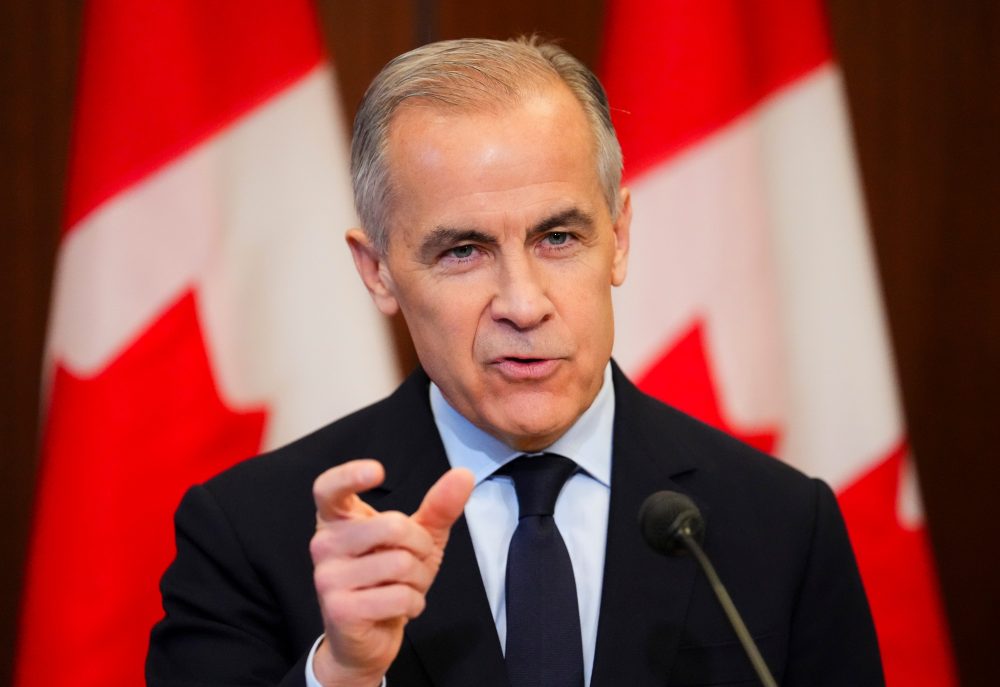

Canadian Prime Minister Mark Carney announced a comprehensive clean electricity initiative on Thursday that he claims will expand Canada’s power grid by 100% before 2050 while reducing energy bills for most Canadian families.
According to Carney, Canada confronts significant obstacles, including tariffs from the United States, increased energy expenses due to the conflict with Iran, and climate change impacts.
“When the world fundamentally changes, we must respond with new approaches,” he said.
The fresh initiative incorporates rules that will permit natural gas to have an expanded role in grid development. The project’s construction expenses are projected to exceed $1 trillion Canadian ($730 billion).
“The path to affordability is electrification,” Carney told a news conference in Ottawa. “The path to competitiveness is electrification. The path to net zero is electricity.”
According to Carney, the proposal encompasses fresh collaborations with Indigenous people and an openness to utilize diverse energy sources, including hydro, nuclear, wind, solar, some gas, carbon capture and geothermal.
“The scale is huge, the timeline is short and the task of getting the right mix of power is complex,” he said. “We can’t simply rely on restrictions and prohibitions. We must do things differently.”
Officials project that 130,000 additional workers will be required to expand the grid to double its current size.
This initiative represents a departure from current clean electricity rules introduced by the previous Liberal administration under Prime Minister Justin Trudeau. That earlier plan aimed to eliminate carbon from Canada’s electrical system by 2050 through restrictions on carbon dioxide emissions from nearly all power generation facilities using fossil fuels.
Power generation represents approximately 7% of Canada’s overall greenhouse gas emissions, a figure that has decreased significantly over the past 15 years as most provinces eliminated or reduced coal-fired power.
While the initiative does not specify the government’s financial commitment to reach this objective, it references providing tax incentives and reviving energy-efficiency improvements for as many as one million homes.
The Canadian Climate Institute, an organization focused on climate policy research, described the initiative as “pointing in the right direction” while noting that multiple crucial matters remain unclear or absent.
“Ultimately, the success of the strategy will depend on details of how — and how swiftly — the government follows through on expanding clean power generation, transmission and widespread electrification,” Dale Beugin, the institute’s executive vice president, said in a press release.