Federal officials announced Friday they have sanctioned an international network accused of secretly transporting Iranian liquid petroleum gas to Asian markets while falsely labeling it as originating from Oman.
The Treasury Department’s action comes as the administration continues applying economic pressure on Iran amid ongoing diplomatic talks between the nations.
According to information released by the department, the sanctions affect 12 organizations spread across several countries – five located in the Marshall Islands, four operating from the UAE, and one based in China. Additionally, six liquid petroleum gas tankers face restrictions, with four of those vessels flying Panama’s flag.
Treasury officials stated the operation utilized shell companies in both the UAE and China, along with overseas banking arrangements, to transport millions of barrels of Iranian LPG while hiding its true source to circumvent existing U.S. restrictions.
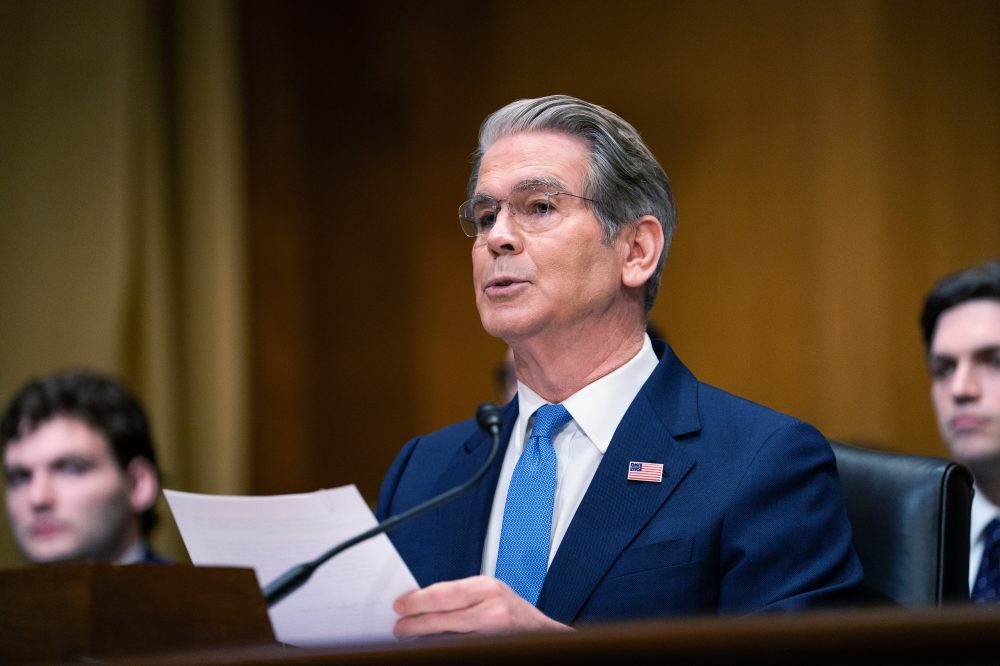
“Treasury will continue to sever Iran’s shadow fleet, shadow banking networks, and access to global trade,” Treasury Secretary Scott Bessent said in the statement.
The sanctions package also includes measures against the Iranian currency exchange firm Mehrdad Geramian Nik and Partners Co and its executives, who officials claim facilitated hundreds of millions of dollars in foreign currency transactions for Iranian banks already under sanctions.
The Inter Miami striker Lionel Messi has been selected to spearhead the MLS All-Star roster announced Friday for the upcoming exhibition against Liga MX’s elite players.
The two-time league MVP and current MLS Cup champion tops the 2026 MLS All-Star First XI chosen for the July 29 match at Bank of America Stadium in Charlotte.
Nashville SC contributes three players to the team, while the Chicago Fire adds two representatives. The selections came through voting by MLS supporters, players and media based on first-half season performance, with the league currently paused for the FIFA World Cup.
Messi, earning his third MLS All-Star selection, joins the forward line with Hugo Cuypers from Chicago Fire and Son Heung-Min from LAFC.
The midfield features Sebastian Berhalter from Vancouver Whitecaps, Zavier Gozo from Real Salt Lake and Hany Mukhtar from Nashville.
The defensive unit includes Anthony Markanich from Minnesota United, Mbekezeli Mbokazi from Chicago Fire, Tim Ream from Charlotte and Andy Najar from Nashville, with Brian Schwake from Nashville serving as goalkeeper.
The complete 26-player All-Star Game roster will be filled out with 13 additional players selected by Charlotte head coach Dean Smith and two more chosen by MLS Commissioner Don Garber.
Russian President Vladimir Putin dismissed Ukrainian President Volodymyr Zelenskiy’s proposal for direct peace negotiations during remarks made Friday at Russia’s annual economic forum in St. Petersburg.
Putin characterized Zelenskiy’s open letter, which suggested face-to-face discussions to end the ongoing conflict, as containing inappropriate language and lacking genuine diplomatic intent.
“This letter contains some rather rude remarks. Was it a way to create the conditions for a face-to-face meeting or a way not to set up a face-to-face meeting? I think it was the second,” Putin stated.
When directly asked whether he would be willing to meet with the Ukrainian leader, Putin responded: “I don’t see any point for now.”
During a separate media session the previous day, Putin maintained his uncompromising position regarding the conflict while claiming Russian forces continue making daily territorial gains. However, he suggested that U.S. President Donald Trump’s peace initiatives might bring an end to hostilities if Ukraine showed willingness to make concessions. Each side continues to blame the other for refusing to negotiate in good faith.
Russian nationalist figures also criticized Zelenskiy’s diplomatic overture on Friday, characterizing it as a calculated publicity campaign aimed at creating internal Russian discord rather than pursuing genuine conflict resolution.
Aircraft manufacturer Airbus finds itself uncertain about timing for the debut of an expanded A220 aircraft following tepid interest from major leasing firms and ongoing discussions about flight range and capabilities, according to six industry insiders.
The company had previously generated excitement among potential customers earlier this year by suggesting a possible announcement during this summer’s Farnborough Airshow, but has since backed away from those expectations.
A high-ranking Airbus official indicated that an announcement at Farnborough, scheduled for late July, was now “not probable,” though the company hasn’t completely eliminated the possibility of a 2024 launch.
“We are studying all the options; no decisions have been made,” an Airbus spokesperson stated.
An expanded A220 model would allow Airbus to rework agreements with suppliers and reduce manufacturing expenses, potentially helping the company address losses from the program it acquired for one dollar in 2018 after Canada’s Bombardier faced financial difficulties.
The A220 program continues to operate at a loss and has been dropping orders to Brazilian competitor Embraer.
Industry insiders report that Airbus has been promoting a relatively minor enhancement described as a “simple stretch” that wouldn’t increase maximum takeoff weight or require expensive Pratt & Whitney engine improvements.
The aircraft would accommodate approximately 180 passengers, an increase from the current 160-passenger capacity, resulting in roughly 10% lower per-seat costs but reduced flight range, according to two individuals with knowledge of the project.
Not all carriers are willing to sacrifice range, which limits the number of potential buyers. Airlines meeting in Brazil for an IATA conference this weekend also remain concerned about reliability issues with current Pratt & Whitney engines.
“Airlines are possibly sold on the economics, but not necessarily the performance,” aviation analyst Rob Morris commented.
RTX, Pratt & Whitney’s parent company, chose not to provide comment.
Airbus displayed greater optimism in January, informing financial professionals at the Airlines Economics conference in Dublin that 2026 would represent a “big year” for the A220, sources reported.
Five months later, prospective customers indicate they haven’t received the detailed information typically expected when an aircraft launch is imminent.
“One of the questions we’ll have to examine is the range of the aircraft,” Air Canada’s chief operations officer Mark Nasr shared with Reuters this week.
The urgency to develop something new also diminished when AirAsia committed to purchasing 150 units of the current model.
“It remains a matter of when … rather than if, but it’s not now,” Airbus CEO Guillaume Faury informed reporters in April, discussing the larger A220’s launch timeline.
Airbus is additionally evaluating potential effects on sales of its crucial A320neo narrow-body series, which is positioned slightly above the proposed A220-500 in terms of size, two sources familiar with the situation revealed.
Leasing companies also express concern about negatively affecting A320neo values.
“Lessors are so exposed to the A320 that the last thing they need is a new anything; the less disruption the better off they all are,” a senior industry source explained.
Aviation analyst Morris suggested this shouldn’t postpone the project indefinitely.
“The A320 lessors should be okay: the market for the plane has sufficient liquidity and a strong customer base,” he noted.
Five crew members aboard the International Space Station were directed to seek temporary shelter on Friday while repairs were underway to address a new air leak in the orbital facility.
The astronauts relocated to a SpaceX vehicle docked at the station as cosmonauts addressed the leak, which developed in the Russian section of the space laboratory.
“The decision was made out of an abundance of caution,” NASA spokesperson Bethany Stevens said via X.
After repair efforts were temporarily halted, the crew exited the capsule and resumed their normal duties aboard the station.
This section of the orbiting facility has experienced ongoing issues with structural cracks and air leaks in recent years. NASA reported that Roscosmos opted to conduct more comprehensive repairs following the discovery of additional problems.
Both space agencies continue their efforts to identify what’s causing the structural cracks to develop.
The artificial intelligence company that created the Claude chatbot is calling for leading AI developers around the globe to establish a unified approach for temporarily halting progress on sophisticated AI systems. The firm warns that technological advancement is occurring at such a breakneck pace that humanity risks losing oversight of these powerful tools.
In a Thursday blog post, the company behind Claude stated that as state-of-the-art AI becomes increasingly efficient at completing various tasks, “it would be good for the world to have the option to slow or temporarily pause” further development.
The firm announced that its internal research division will investigate this matter alongside other organizations and “take actions” to help establish frameworks for a legitimate slowdown or suspension, though they provided no additional specifics.
According to the company, AI systems are becoming more capable at an accelerating rate, particularly in their ability to independently handle software-related work such as computer programming. Current trajectory analysis suggests that with sufficient computational resources, an AI system might eventually become capable of creating and improving its own replacement through what experts call “recursive self-improvement.”
While such self-developing AI would represent a significant technological breakthrough offering advantages in scientific research, medical care, and other fields, the company noted it “also might increase the risks of humans losing control over AI systems.”
This concern has been voiced by various technology industry leaders for years.
The company’s statement follows a separate alert issued earlier this week by University of Toronto researchers who demonstrated how AI technology could potentially create a novel form of AI “worm” that modifies its cyber attack methods while spreading across devices and commandeering extensive computer networks.
“I think it’s really important that people understand that it’s not just the biggest, most powerful language models that pose the security concerns,” lead researcher Nicolas Papernot said in an interview.
The blog post authors, company co-founder Jack Clark and Marina Favaro, head of the research institute, explained that any pause would allow time for “societal structures and alignment research” to match the pace of AI development. Alignment refers to the industry goal of ensuring technology operates in harmony with human values and objectives.
Their proposed coordination system would enable advanced AI laboratories to confirm that international competitors have genuinely halted or reduced their research efforts, “and that a bad actor could not use the auspices of a coordinated slowdown to jump ahead in secret.”
The company emphasized that a coordinated international framework is essential because without such cooperation, an AI development slowdown might allow the “least cautious” participants to gain ground and intensify pressure on companies and governments facing difficult AI safety decisions.
This announcement comes while the company is competing with ChatGPT-maker OpenAI to launch public stock offerings, with a potential IPO valuation approaching nearly a trillion dollars.
Eight of the 15 Latin Americans who were sent to Congo in April as part of the Trump administration’s controversial immigration enforcement have now made their way back to their countries of origin, according to Congo’s government and legal representatives speaking Friday.
Federal immigration courts had previously determined these individuals would probably encounter persecution upon return to their home nations.
Congo represents one of no fewer than eight African countries that have entered into third-country deportation agreements with the United States.
Through a collection of frequently undisclosed agreements, the Trump administration has sent thousands of individuals to almost two dozen nations other than their countries of origin, according to advocacy groups. Legal experts in immigration law indicate the administration employs third-country deportations as a regulatory workaround to indirectly compel asylum seekers to return to their native countries.
Alma David, a U.S.-based attorney representing one of the 15 migrants, confirmed that eight deportees have traveled back to their home countries in recent weeks.
David’s client, a Colombian woman who had previously spoken with The Associated Press about her circumstances and uncertainty while in Congo, continues to remain in the central African nation, according to her lawyer.
Another Colombian, Adriana Maria Quiroz Zapata, also remains in Congo, despite a federal judge’s order last month directing the Trump administration to return her to the United States. She was sent to Congo even after that country had declined to accept her due to its inability to provide for her medical requirements.
Four individuals from Peru and three from Colombia traveled home earlier this week with assistance from the International Organization for Migration, a U.N.-affiliated agency, David reported.
Their return occurred through the IOM’s Assisted Voluntary Return program, where the organization covers transportation expenses and logistics for migrants who agree to return to their home countries, serving as an option instead of forced removal.
The attorney explained that these migrants had received court protections preventing their removal to their home countries by U.S. federal courts, which determined they would probably experience persecution upon return.
“The fact that they chose to return there anyway raises serious concerns that they likely felt backed into a corner because no viable alternative was presented to them,” David said.
The IOM has stated that assisted voluntary returns are “strictly voluntary and based on free, prior and informed consent.”
One Colombian man traveled back to his home country independently in recent days, David noted.
“These developments confirm the strictly transitional, temporary, and time-limited nature of this mechanism, as announced from its launch,” the Congolese government said in the statement. “Further departures will take place shortly as part of the implementation of the arrangement.”
This announcement coincides with rights attorneys filing a case against Equatorial Guinea before Africa’s leading human rights body, alleging the central African nation violated deportees’ rights by compelling them to return to their home countries from the U.S.
LJUBLJANA, Slovenia — Officials at Slovenia’s capital city zoo are celebrating three new arrivals that could help save one of the world’s most threatened species.
Three Siberian tiger cubs made their debut at the Ljubljana Zoo less than two weeks after their birth on May 27. The newborns represent a significant conservation victory for a species with only approximately 500 individuals surviving in their natural habitat.
These magnificent big cats face extinction primarily due to disappearing habitat and illegal hunting activities that continue to reduce their numbers.
The cubs’ parents, Arisa and Ussuri, have called the Ljubljana facility home since their 2004 arrival. Zoo officials say the birth followed extensive preparation and considerable optimism about the breeding program.
“We were not really expecting, but hoping, working on it because we have a good breeding pair,” she said. Despite introducing the pair during optimal timing, “we weren’t completely sure,” she added.
“So we were also a bit surprised and of course very happy,” Strus said.
Successfully reproducing wild species within captive environments presents numerous challenges and frequently fails to produce offspring.
The newborns remain extremely fragile and must stay separated from all individuals except their mother during this critical period. However, zoo personnel and guests can observe the family through live video feeds displayed on monitors.
Observers gathered around the screens showed obvious delight watching the mother tend to her offspring. Barbara Gallaido, visiting from San Francisco, described the experience as “really fabulous.”
“I’ve seen tigers in the wild in India, but not like this, not with cubs,” she said. “It was really great.”
Four-year-old Arisa is experiencing motherhood for the first time, and Strus reports she’s adapting excellently to her new role.
“She is constantly licking them (cubs,) breastfeeding them and they are resting together,” she said. “So far so good. But … we still need to wait and see what will happen.”
Strus explained that tiger offspring typically develop sight and hearing capabilities approximately two weeks following birth. The mother should bring her young outside their den for initial exploration when they reach one month of age.
New Castle County police have arrested a Wilmington resident on serious assault charges following a disturbance in a local neighborhood Wednesday evening.
Law enforcement officers were dispatched to Willis Place in the 1500 block within the Cleland Heights area around 10:41 p.m. on June 3, 2026, after receiving reports of an active altercation.
When police arrived at the scene, they identified the suspect as Jamir Garvin, age 26, of Wilmington. Garvin now faces charges of first-degree assault in connection with the incident.
British actor Anthony Head, whose smooth voice and sophisticated demeanor made him a beloved figure in television, has passed away at the age of 72, according to his family’s announcement on Friday.
His daughters, both actresses Emily and Daisy Head, confirmed through the Press Association news agency that their father died from complications related to pneumonia.
Head first captured British television viewers’ attention during the 1980s when he starred in a memorable series of Nescafe instant coffee commercials, playing one part of a romantic duo whose relationship kept audiences guessing.
American audiences came to know Head through his portrayal of librarian Rupert Giles, the wise mentor figure in the beloved supernatural television series “Buffy the Vampire Slayer,” which aired from 1997 through 2003.
In his latest role, Head portrayed Rupert Mannion, the antagonistic former spouse of Rebecca, the character played by Hannah Waddingham, in the popular series “Ted Lasso.”
“Our grief is far greater than the hole he has left behind, but we know his legacy will live on, in the shows he was a part of, and in the audiences that love them,” his daughters said. “How lucky we are to know we are able to watch him doing what he loved, even when he is no longer with us.”
WASHINGTON — Military leaders continue awaiting clear direction from Pentagon leadership after President Donald Trump’s shifting decisions regarding European troop deployments have disrupted service members’ lives and potentially cost American taxpayers millions, according to two U.S. defense officials who spoke with The Associated Press.
European NATO partners were confused in May when Trump announced plans to deploy 5,000 U.S. service members to Poland, coming just weeks after he directed the same number withdrawn from Europe following tensions with Germany’s Chancellor Friedrich Merz regarding the Iran conflict. Trump administration officials maintain that European troop reductions have been long-term plans developed in coordination with partner nations.
The Republican commander-in-chief posted on social media two weeks prior that he would deploy forces to Poland — on the identical day Pentagon leadership had formally directed the cancellation of a scheduled soldier rotation to that location, according to one defense official.
Military equipment for the unit was already in transit. Transporting it required $32 million in military spending, according to U.S. Transportation Command, the defense agency primarily responsible for global troop and equipment movement.
These sudden policy shifts are requiring military leadership to “retroactively engineer” policies matching the president’s most recent statements, the official explained. Both officials received briefings on these decisions and, alongside others, agreed to speak anonymously when discussing classified military operations.
This confusion is not only concerning European partners who worry about signals being transmitted to Russia, but also threatens to damage confidence among American service members — including some whose deployments were halted just before departure — while occurring during existing Army budget pressures.
The scheduled Poland deployment of 4,000 service members from the Army’s 2nd Armored Brigade Combat Team, 1st Cavalry Division, stationed at Fort Hood, Texas, was halted through a military memo distributed at May’s beginning. European partners learned about this decision during the month’s middle period.
Several troops received notification shortly before travel not to board Poland-bound flights, while those already deployed — initially approximately 1,000 service members — remain awaiting confirmation about their return, according to a U.S. military official.
Military leadership also continues awaiting Pentagon specifics regarding how to fulfill Trump’s directive to deploy 5,000 troops to Poland, that official stated. Current planning assumes these forces will come from units already stationed in Europe, rather than additional U.S.-based deployments, the official noted.
U.S. Transportation Command had contracted shipping to transport the team’s equipment from Texas to Poland and return departing unit gear to America. The incoming team’s transportation cost totaled $32 million, including ship charter and equipment loading and unloading operations.
Since the ship was contracted to transport one unit to Europe and return another to America, determining potential savings from an earlier deployment halt decision remains difficult.
Nevertheless, the military official indicated that unplanned personnel and equipment returns from Europe likely exceed Pentagon budget allocations and represent additional expenses.
Complete rotation cancellation costs remain difficult to calculate due to multiple variables, explained Joe Costa, a former senior Pentagon official who currently directs the Atlantic Council’s Forward Defense program focusing on U.S. military challenges.
Costs likely stem from returning equipment and troops deployed ahead of the main deployment and would probably represent the lower end of the rotation’s total expense, Costa stated. The more significant impact affects troop readiness when personnel trained for specific missions may receive different deployment assignments, he explained.
U.S. military contracts with private transportation companies include cancellation provisions that frequently impose additional charges when deployments are terminated, according to John Deni, a senior nonresident fellow at the Atlantic Council who has researched such expenses.
“The question is what additional costs were incurred by deciding to send them back prematurely, changing the arrangements, changing the plan?” asked Deni, a former U.S. military adviser and planner specializing in European forces.
Whether the Pentagon can recover those costs or expenses related to the unit’s European movement remains unclear. The Defense Department declined to answer questions regarding deployment plan change costs, and the White House directed comment requests to the department.
Pentagon leadership has consistently stated plans to reduce troop numbers to encourage Europe to assume greater defense responsibilities and described the decision as part of a “comprehensive, multilayered process.”
Last month’s memo also resulted in canceling a Germany deployment for a battalion specializing in long-range rocket and missile operations.
When Trump initially threatened European troop reductions of 5,000 personnel, Pentagon officials first suggested withdrawing the 2nd Cavalry Regiment, permanently stationed in Germany, the defense official stated.
Instead, officials chose to cancel the other unit’s Poland rotation. Then Trump’s subsequent decisions created additional confusion for that plan as well.
Withdrawing Germany-stationed troops could cost in the low billions since no dedicated U.S. space and infrastructure exists to house them and their families, Costa explained.
“The other option is basically breaking up the unit,” Costa noted. “They move the equipment in different places. They move the people to different places. That carries significant readiness costs because now you’re artificially jamming pieces of units into places where they don’t necessarily belong.”
Withdrawal or deployment pauses can also damage soldier and family morale since they plan for these assignments months and years ahead, Deni observed. The uncertainty creates disruption.
“That’s often the last thing you want to do to military families,” Deni stated.
What will happen to European-stationed U.S. troops remains uncertain, both officials indicated. Options include relocating military units assigned to Germany to Poland, but that could require several years and increased costs, the military official explained.
These changes occur while the Army faces budget shortfalls, which the service’s top uniformed officer, Gen. Christopher LaNeve, recently acknowledged to Congress.
Estimates place the deficit between $2 billion and $6 billion, according to an Army official who also spoke anonymously to discuss sensitive defense matters. One consequence has included reducing nationwide soldier training courses, which ABC News previously reported.
In a statement, the Army indicated it has provided guidance to its commands to “make tough and sound resource decisions that optimize and prioritize resources toward their most critical requirements, to include major training and readiness events.”
The Army official also noted the service has received missions including National Guard deployment in Washington, increased U.S.-Mexico border presence and its Iran war participation — all straining its budget.
The Department of Homeland Security expects to reimburse the Army for border mission costs.
Army Secretary Dan Driscoll told lawmakers at a May 15 hearing that he was “optimistic” there would be progress on those payments “within a week or two.” However, the Army has not yet received reimbursement.
“We want those backfilled payments,” Driscoll stated then.
The European U.S. military is also reducing non-combat training support and strictly prioritizing essential functions, the military official noted.
Federal immigration authorities have eliminated a policy requiring them to track and report deaths of individuals who die shortly after being released from detention centers, a move that medical experts say could hide the true impact of detention conditions on human lives.
The change removes a 2021 requirement established during the previous administration that mandated Immigration and Customs Enforcement to investigate and report to Congress any deaths occurring within 30 days of a detainee’s release from custody.
The original policy was designed to prevent the agency from escaping responsibility for deaths by releasing critically ill individuals from their facilities. In previous cases, people who were brain-dead or battling serious infections have died shortly after being released from immigration detention.
Medical professionals who have studied deaths in immigration custody condemned the policy shift on Friday.
“Tracking deaths immediately after custody is a standard approach that allows health systems in jails, prisons and immigration detention to learn about gaps in care that may occur before a person leaves a facility,” said Dr. Homer Venters, former chief medical officer of the New York City jail system. “Eliminating reporting of these deaths represents a willful act of ignoring the most serious health outcome that can reflect inadequacies in care or help track outbreaks.”
Records indicate that immigration detainees frequently die at medical facilities where they are transported for care after their health deteriorates while in detention centers. These individuals, though, have typically been classified as still being under agency custody.
The Washington Post initially disclosed the policy modification on Thursday. The Department of Homeland Security, which supervises the immigration agency, subsequently acknowledged the change in a statement describing it as “common sense.”
“Under this updated policy, when an individual is no longer in ICE custody then ICE will no longer be responsible for monitoring or reviewing deaths that may occur,” the statement said.
The statement indicated the agency maintains its dedication to transparency and noted the revised policy contains procedures for “timely notification, review and reporting of deaths occurring in ICE custody.” The agency has not yet released the complete updated policy.
The decision to restrict death reporting occurs as more immigration detainees are dying. A minimum of 18 detainees have died since January 1, a rate that could exceed last year’s death count, which marked the highest in twenty years. Detainees are taking their own lives at record levels, and specialists believe many other deaths from medical causes could have been prevented with proper healthcare.
Dr. Sanjay Basu, a University of California-San Francisco epidemiologist who recently published an analysis of more than 270 ICE custody deaths, said the policy change will “make the mortality statistics appear lower without any actual improvement in care.”
“The period immediately following release is when deaths attributable to inadequate care during confinement become apparent,” he said. “Missed diagnoses, interrupted medications, untreated infections, and decompensating chronic conditions don’t always kill someone while they’re still in the building.”
As of early April, the agency was housing more than 60,000 detainees throughout its nationwide detention facility network, an increase from approximately 40,000 at the beginning of President Donald Trump’s second term. The agency disputes claims that detainees experience medical neglect, stating they receive comprehensive healthcare services.
Prior to announcing Thursday’s policy modification, Department of Homeland Security acting assistant secretary Lauren Bis informed the Associated Press on Tuesday that no detainees died in agency custody during May. This marked the first month without a detainee death since November. At that time, Bis did not respond to questions about whether any death reporting policies had been altered.
“As we have repeatedly stated, deaths in ICE custody are exceedingly rare,” she said then.
A veteran character actor known for roles in major Hollywood films was fatally stabbed outside his Los Angeles residence, with authorities taking his girlfriend’s son into custody for the crime.
James Handy, 81, who had parts in “Jumanji” and “Top Gun: Maverick,” was discovered with a chest wound and unconscious outside his residence on Wednesday morning, according to the Los Angeles Police Department. Medical personnel transported him to a local hospital where he was declared dead.
Authorities responded to the residence following an emergency call in which the caller stated: “I am the son of man, I just killed the man of sin,” police reported.
Michael Gledhill was taken into custody after informing responding officers that he was the individual they sought, the department stated.
The 44-year-old suspect, who resides with his mother at the home, faces charges for one count of murder, police confirmed. Court records indicate his bond was established at $2 million.
Legal representation for the suspect remains unclear at this time. County jail records do not list an attorney, and attempts to reach the public defender’s office went unanswered.
A New York native, Handy built a career spanning multiple decades in both television and cinema.
His notable performances included playing an exterminator in the 1995 adventure film “Jumanji” and portraying bartender Jimmy in last year’s “Top Gun: Maverick,” based on IMDB records. His television credits featured appearances on prominent crime series such as “NCIS: Los Angeles,” “The Closer” and “Cold Case.”
“I could not have asked for a more talented, humble or gracious client and friend than James Handy,” Pam Ellis-Evenas, from the Ellis Talent Group, said in an email to The Associated Press.
SALISBURY, Md. – The Coast-to-Coast Athletic Conference has announced that Kai Smith from Salisbury University’s track and field team has been selected as the 2026 Outdoor Male Athlete of the Year.
Additionally, head coach Jim Jones and his coaching staff earned recognition as the C2C Men’s Coaching Staff of the Year, according to today’s announcement from the Coast-to-Coast Athletic Conference.
The honors recognize outstanding performance in the 2026 outdoor track and field season for both the individual athlete and the coaching team at Salisbury University.
The world’s most prominent cryptocurrency is on track for its weakest showing at this stage of the year in more than ten years, as surging artificial intelligence investments and attractive new stock offerings including SpaceX draw money away from digital assets.
The digital currency’s value has dropped approximately 15% over the past week, marking its steepest decline since November 2022 when the FTX exchange collapsed. Currently trading near $63,000, the cryptocurrency has shed roughly one-third of its worth during 2026, representing its largest loss at this point in any year since 2015 at minimum, according to LSEG data.
The situation worsened when Michael Saylor’s Strategy, which holds more bitcoin than any other corporation, announced Monday it had offloaded some of its digital currency holdings for the first time since 2022.
“It is instructive to see how assets can struggle as they move from being the flavour of the month to being suddenly out of fashion,” RBC BlueBay Asset Management chief investment officer, fixed income, Mark Dowding said in a blog.
The changing environment for the cryptocurrency, which reached unprecedented peaks above $125,000 in late 2024, shows several key shifts.
PRICING PRESSURES MOUNT
The digital asset now trades roughly 40% below its level when U.S. President Donald Trump assumed office in January 2025, despite his pledge to establish America as the global cryptocurrency hub. Multiple appointments of crypto-supportive officials to important regulatory and financial positions had initially lifted market confidence.
However, increased participation by major institutional investors and banks, along with readily available exchange-traded products, has reduced the very characteristics that made the cryptocurrency attractive as a portfolio diversifier – namely its extreme price swings and independence from traditional asset movements.
The DVOL index from crypto options platform Deribit, which measures expected volatility in bitcoin options, currently sits around 47, its peak since early April but only slightly above a record low of approximately 31 reached in late May. From the index’s 2021 debut through roughly April of last year, it rarely dropped below 50.
Regarding correlation patterns, before 2020 the cryptocurrency showed no consistent relationship with the S&P 500. However, throughout most of the past six years, both have moved together. This connection has recently reversed dramatically, with AI-powered stock gains continuing while the digital currency stagnates.
RIVALRY WITHIN DIGITAL ASSETS
The era when bitcoin dominated the cryptocurrency landscape has ended. The digital asset space now features major competing currencies including ether, solana and BNB, plus smaller “alt-coins” that collectively represent one-fifth of the total market, CoinGecko reports.
Stablecoins, which maintain fixed values tied to traditional currencies like the U.S. dollar, have also eroded bitcoin’s market position.
CoinGecko data shows bitcoin now represents 56% of the cryptocurrency market, down from 63% twelve months ago. While ether and alternative coins have maintained relatively stable market shares, stablecoins now comprise nearly 13% of the market compared to roughly 7% a year earlier.
Daily trading volume in the leading stablecoin tether now exceeds the combined volume of bitcoin and ether, while trading in second-place USDC matches the volume of the next ten digital currencies combined, CoinGecko data indicates.
CAPITAL MIGRATION PATTERNS
Bitcoin faces competition not only from other digital currencies but from traditional investments seeking investor funds. When artificial intelligence began gaining momentum following ChatGPT’s late 2022 debut, bitcoin initially benefited from investment flows targeting technology-related assets.
AI now commands stock market attention, with capital flowing into companies building data centers, semiconductor manufacturers, chip producers and even copper wire suppliers.
Over the past year, U.S. semiconductor stocks have jumped 170% while bitcoin has declined 40%. The money entering AI-focused investments must originate from existing positions.
Investors are withdrawing funds from major bitcoin ETFs at unprecedented rates, with more than $2.7 billion in net withdrawals during the week ending Thursday, LSEG data reveals. Total net outflows for 2026 have reached $3.1 billion.
The four largest semiconductor ETFs – VanEck’s Semiconductor ETF, the Roundhill Memory ETF, State Street’s SPDR S&P Semiconductor ETF and iShares Semiconductor ETF – have attracted over $3 billion in June’s first week alone and an impressive $21 billion year-to-date.
A groundbreaking cellular treatment initially created to combat blood cancers is now opening doors for kidney patients who previously had no chance of receiving a transplant, according to new research that could transform care for thousands of patients.
Medical researchers have successfully used CAR T-cell therapy to help patients whose immune systems are “sensitized” – meaning they’ve developed antibodies against foreign tissue from prior blood transfusions, pregnancies, or previous transplants. These antibodies typically cause their bodies to reject most available donor kidneys.
Finding compatible donor kidneys for these highly sensitized individuals has traditionally been extremely challenging or completely impossible.
The innovative treatment works by extracting a patient’s immune cells, altering them in laboratory settings to reduce antibody production, then returning the modified cells to effectively restart the patient’s immune response system.
Research teams working independently – one treating two patients at a U.S. medical facility and another caring for one patient in Germany – achieved remarkable results. All three individuals showed significant decreases in the dangerous immune antibodies that normally attack transplanted kidneys.
Consequently, all three patients successfully received kidney transplants, according to findings published Wednesday in The New England Journal of Medicine.
“This is the first demonstration that CAR T cells can be used not only to treat cancer, but also to help patients who previously had no opportunity to receive a compatible donor kidney,” said Dr. Ali Naji of the University of Pennsylvania, who oversaw treatment for the two U.S. patients.
“For patients who have spent years on the kidney transplant waiting list, this approach could be transformative,” Naji added.
The cellular therapy is also demonstrating potential benefits for difficult-to-treat autoimmune conditions, based on four preliminary studies presented at the European Alliance of Associations for Rheumatology conference in London.
In one trial, six individuals with treatment-resistant rheumatoid arthritis received an experimental CAR-T therapy called mivocabtagene autoleucel, developed by Kyverna Therapeutics. All participants showed reduced disease activity, with half achieving lasting remission.
During follow-up periods spanning 24 to 36 weeks, five of the six patients remained free from immunosuppressive medications, reported Fredrik Albach of Charité Universitätsmedizin in Berlin.
In separate research, Yajing Zhang from Beijing GoBroad Boren Hospital in China studied 11 patients with treatment-resistant systemic sclerosis, a serious autoimmune condition causing tissue hardening. Following CD19/BCMA CAR-T cell treatment, both skin thickness measurements and lung scarring showed substantial improvement.
“By effectively targeting both skin fibrosis and lung progression, this immunological ‘reset’ strategy offers true curative potential, paving the way for (mid-stage) trials to redefine the future management of this severe disease,” Zhang stated.
Additional research by Yuichi Maeda of the Friedrich-Alexander-Universität Erlangen-Nürnberg examined an experimental therapy called zorpocabtagene autoleucel from Miltenyi Biomedicine in patients with severe systemic lupus erythematosus, systemic sclerosis, or idiopathic inflammatory myopathy, focusing on improving intestinal bacterial balance.
Harmful bacterial overgrowth “decreased to levels comparable to those of healthy controls after the treatment,” researchers noted, while immune activity driving patient symptoms decreased significantly.
The study authors determined that CAR T-cell therapy modifies gut bacteria in autoimmune disease patients, and these immune-microbial changes may support extended disease remission.
Finally, Xiaobing Wang of Shanghai Changzheng Hospital and research partners documented that CAR-T cell therapy in four patients with systemic lupus erythematosus or systemic sclerosis achieved “deep, tissue-level remission.”
French anti-terrorism prosecutors announced Friday they have launched a preliminary investigation into allegations of torture and war crimes involving the treatment of French citizens by Israeli authorities during the interception of a Gaza-bound activist flotilla.
The flotilla participants said they were attempting to deliver humanitarian assistance to Gaza and protest Israel’s naval blockade of the Palestinian territory when Israeli forces intercepted their vessels.
According to the PNAT anti-terrorism prosecutor’s office, the investigation was initiated following a May 28 referral from the French foreign ministry under Article 40 of France’s criminal procedure code, which mandates that public officials report suspected criminal activity.
The inquiry focuses on allegations of torture and war crimes, with France’s central office for combating crimes against humanity and hate crimes, known as OCLCH, taking charge of the investigation.
Flotilla organizers claim activists faced mistreatment, with multiple individuals requiring hospitalization for injuries and at least 15 people reporting sexual assaults, including rape. All activists have since been freed from custody.
Israeli authorities have rejected these abuse allegations, and Reuters could not independently confirm the claims.
Several other Western nations, including Canada, Germany and Italy, have also criticized Israel’s handling of the activists.
German tennis player Alexander Zverev has secured his place in the French Open championship match after defeating Jakub Mensik in a four-set semifinal battle on Friday in Paris.
The 29-year-old overcame the 26th-seeded Czech player with scores of 7-5, 6-2, 3-6, 6-3 on Court Philippe Chatrier, bringing him one step closer to capturing his first Grand Slam championship.
Zverev, who has previously fallen short in three major finals including a French Open final two years earlier, will await the outcome of the all-Italian semifinal between 10th seed Flavio Cobolli and Matteo Arnaldi to determine his Sunday opponent.
“I knew that it would be my toughest challenge. I managed it and I won, so I’m happy,” Zverev commented after his victory, noting his achievement as only the fifth active player to reach multiple Roland Garros title matches.
“It’s amazing the way he (Mensik) played these last two weeks, he beat so many unbelievable players. He started playing amazing in the third set, stepping up his level, but this is a Grand Slam with best-of-five-set matches,” Zverev explained.
“Things happen and your opponents will play better. You have to deal with it. I hope to play another great match on Sunday,” he added.
The opening set remained competitive until Zverev capitalized on his opportunity in the 11th game, executing a crosscourt backhand winner to create a break point opportunity. He converted the chance when Mensik’s return found the net, allowing the world number three to serve out the set with a powerful ace.
Zverev maintained his momentum in the second set, breaking early as the 20-year-old Mensik struggled in his first Grand Slam semifinal appearance. The Czech player appeared overwhelmed during a changeover, sitting with a towel covering his head as Zverev extended his advantage with a second break to claim the set decisively.
Following a lengthy medical timeout to address a neck problem, Mensik regrouped in the third set, combining powerful serves with skillful drop shots to break Zverev’s serve and take a 4-2 lead before winning the set. However, Zverev responded strongly in the fourth set, closing out the match without significant difficulty to advance to his second French Open final.
STATEWIDE, Del. (June 5, 2026) – The Delaware Division of the Arts (DDOA) collected 20 honors during the Delaware Press Association’s yearly Communications Contest Awards ceremony, which took place May 13 in Dover. The recognition celebrated the agency’s outstanding achievements in communication and narrative excellence.
Although the competition primarily features journalists, it also welcomes other communicators and organizations.
The Mystic Harbour Water & Sewer Advisory Board has scheduled a meeting for Friday, June 5, 2026, beginning at 2:00 PM.
The board has published an agenda for the upcoming session, which is available for public review. Community members can access the meeting agenda through the county’s official website.
Those interested in attending or following the board’s activities can find additional information by returning to the events calendar on the county website.
German automaker Audi remains committed to Formula One despite ongoing discussions about major engine regulation changes that could bring back V8 power units by 2030 or 2031.
The company’s Chief Executive Gernot Doellner addressed concerns at the Monaco Grand Prix, stating that potential shifts away from current turbo hybrid systems wouldn’t force Audi out of the sport it just entered this season.
Formula One’s governing body FIA is pushing for less complex and more affordable engines in future regulations, with president Mohammed Ben Sulayem supporting a return to naturally aspirated V8 engines powered by sustainable fuels.
When reporters asked if the proposed changes could end Audi’s involvement, Doellner responded: “No, not right now. I believe and trust that we will have a good discussion regarding the regulations and we will definitely have sustainable fuels … it’s more in some areas a philosophical question.”
The CEO made his comments following Audi’s introduction of the Nuvolari, the manufacturer’s debut supercar featuring high-performance hybrid technology. While expressing openness to different engine configurations, Doellner emphasized his company’s preference for turbocharged systems.
“That’s definitely more important than talking about the number of cylinders,” he explained. “We prefer turbo due to the efficiency aspect. The Nuvolari has a V8. Audi has no problem with V8s.”
The FIA’s push for V8 engines stems from desires to cut expenses and simplify technology while bringing back the distinctive loud sounds that characterized Formula One racing in earlier eras.
Despite showing flexibility on cylinder count, Doellner stressed that Audi’s main concern involves shaping future rules that preserve energy efficiency and cost management while giving manufacturers room to enhance their power systems.
“Our focus is on the actual regulation and to optimise that, to optimise our drivetrain to the regulation we have,” he stated.
“Of course we just entered, we invested in a drivetrain concept, and so we are not keen on changing soon. We are happy with stability.”
The executive expressed confidence in ongoing regulatory discussions, noting: “The process is running. It’s in good hands and we are part of that process together with the other engine manufacturers. FIA is leading the process and I’m very optimistic that the outcome will be a good one.”
Current Formula One cars utilize V6 turbo hybrid power systems that split energy equally between traditional combustion and electric components.
Rising concerns about expenses and technical complexity have created momentum for adjusting that balance to 40-60 for the upcoming season, with possible elimination of hybrid systems entirely in favor of V8 engines not used since 2013.
WASHINGTON — The federal government’s financial crimes enforcement division has issued new guidance directing banking institutions to monitor for suspicious financial activities connected to individuals without legal immigration status, marking another step in the current administration’s immigration enforcement efforts.
The Financial Crimes Enforcement Network — known as FinCEN — released guidance on Friday instructing financial institutions to monitor for identity theft, payroll tax fraud, and money laundering operations connected to the employment of unauthorized workers.
The advisory follows President Donald Trump’s executive order from May requiring banking institutions to conduct enhanced reviews of customer citizenship status.
The directive instructs banking regulators and federal agencies to identify indicators that individuals lacking legal status may be establishing accounts or securing loans and credit cards. The order proved less stringent than financial institutions had anticipated, as previous reports indicated the administration was considering mandatory citizenship data collection requirements.
While avoiding broad-scale exclusion of entire population groups from banking services, the order and recent advisory work to limit financial system access for those residing in the country without authorization.
Treasury Secretary Scott Bessent stated that the Trump administration “will not allow illegal aliens to abuse financial institutions to steal billions of dollars from hardworking American taxpayers.”
“Schemes to pay unlawful workers often rely upon access to the U.S. financial system, including U.S. banks,” he said.
Given that banking institutions have historically not gathered citizenship or immigration status data from customers, no dependable public statistics exist regarding the financial system risks these customers may present.
The financial services sector had conducted intensive lobbying efforts for months to prevent the administration from implementing an executive order mandating citizenship status collection, contending such requirements would prove costly and create extensive administrative burdens. With the order providing guidance rather than requirements, it appears the banking industry successfully influenced the administration’s approach.
The advisory identifies more than twelve warning signs that financial institutions should monitor to identify individuals potentially residing in the country illegally.
Lebanon’s President Joseph Aoun delivered sharp condemnation of Iran on Friday, claiming Tehran is exploiting his nation as a negotiating tool in diplomatic talks with the United States. His remarks represent some of his harshest public criticism of Iran and its Lebanese partner Hezbollah amid the ongoing conflict with Israel.
During his CNN interview, Aoun declared that “the people of Lebanon are paying the price … for the sake” of Iran’s interests, adding that citizens were “fed up” with the Israel-Hezbollah conflict. His statements highlight the deep sectarian and political rifts within Lebanese society.
“They are using Lebanon as a bargaining chip in their negotiation with the United States,” Aoun stated regarding Iran, based on interview excerpts posted on CNN’s website. “It’s unacceptable.”
The Shi’ite Muslim organization Hezbollah, established by Iran’s Revolutionary Guards in 1982, sparked the current hostilities over three months ago by launching attacks in support of Tehran during a U.S.-Israeli offensive against Iran.
Aoun, a former military commander who now serves as head of state, belongs to the Maronite Christian community as mandated by Lebanon’s sectarian governance system.
Since parliament elected him to the presidency last year, he has advocated for Hezbollah’s peaceful disarmament. Early in the conflict, his call for direct negotiations with Israel further strained relations with the organization.
Iran has established a Lebanon ceasefire as a prerequisite for any broader peace agreement with Washington regarding the regional conflict that started with the U.S.-Israeli assault on Tehran on February 28.
On Thursday, Hezbollah turned down a ceasefire proposal that Lebanese and Israeli officials had endorsed during U.S.-facilitated discussions in Washington. The proposed agreement required Hezbollah to halt attacks and pull its forces back from southern Lebanon.
Hezbollah’s leader Naim Qassem declared in a Thursday written statement that the Washington proposal was opposed by “broad segments of the Lebanese people.”
Responding directly to Qassem, Aoun countered: “The Lebanese people are not your people.”
Lebanese officials report that Israeli military operations have resulted in thousands of deaths in Lebanon since March and forced approximately 1.2 million residents from their homes. Israeli forces currently control portions of southern Lebanon.
Nigerian officials announced Friday that 1,094 of their citizens have requested voluntary repatriation from South Africa in the wake of xenophobic violence, marking a significant increase from the 130 people who previously sought to return home.
According to Nigerian foreign ministry spokesperson Kimiebi Ebienfa, a joint screening operation involving foreign ministry representatives from both nations, along with South African immigration and police officials, is currently underway to assess eligibility for return.
“The screening by foreign ministry officials from both countries and South African immigration and police will conclude on Saturday, with only those cleared to be repatriated and final numbers and flights set thereafter,” Ebienfa told Reuters.
South African officials have agreed to waive penalties for immigration violations including visa overstays, though people facing criminal charges will not be permitted to leave, according to Ebienfa.
While Nigeria submitted its repatriation list before Ghana, Ghana received priority for the return process, Ebienfa explained. Ethiopia is scheduled next in line after Nigeria, with transportation arrangements to be finalized once the screening concludes.
Nigerian leadership has strongly criticized the violence targeting its citizens in South Africa, particularly condemning the deaths of two Nigerian nationals who were allegedly attacked by security personnel.
Russian officials announced Friday their intention to deploy a satellite internet constellation similar to Elon Musk’s Starlink system, with testing scheduled to begin within weeks and commercial service launching in 2027.
Alexei Shelobkov, CEO of Iks Holding, the firm behind the project, revealed the timeline during the St. Petersburg Economic Forum. “The good news is that it is already being created. Satellites are already being launched. In the coming weeks, we will begin testing, and as promised, it will start operating commercially in 2027,” Shelobkov stated during a panel discussion.
Military analysts have noted that recent Ukrainian drone strikes on Russian oil facilities and industrial targets have been aided by advanced AI-equipped drones capable of accessing SpaceX’s Starlink network, which offers better resistance to electronic interference.
Ukraine reported in January that Russian forces were utilizing Starlink terminals for drone navigation into Ukrainian airspace and stated they were collaborating with SpaceX to prevent such usage.
Bureau 1440, a subsidiary of Iks Holding, announced in March the deployment of its initial 16 low-orbit Rassvet satellites, with plans to expand the constellation to 900 satellites over multiple years. In comparison, SpaceX operates more than 10,000 satellites currently in orbit. Starlink services are prohibited in Russia, with penalties imposed for using the equipment.
A federal court has overturned immigration policies implemented during President Donald Trump’s tenure that prevented individuals from dozens of nations from receiving final determinations on their asylum requests, work authorization, permanent residency, and naturalization petitions.
U.S. District Judge John McConnell, presiding in Providence, Rhode Island, determined on Friday that the U.S. Citizenship and Immigration Services had put in place a collection of illegal policies that specifically targeted individuals from 39 nations across Africa, Asia, Latin America and the Middle East.
The invalidated policies had prevented people from countries included in the travel ban from obtaining final rulings on their immigration applications and requests for legal status in the United States.
The French president’s office announced that Emmanuel Macron will join British Prime Minister Keir Starmer and German Chancellor Friedrich Merz for discussions with Ukrainian President Volodymyr Zelenskiy on Sunday in London.
According to the Elysee’s statement, the gathering aims to maintain close cooperation on their joint commitment to backing Ukraine while applying greater pressure on Russia’s military campaign. The statement declared that “Russia is facing military, economic, and strategic failure — and persists, unsuccessfully, on the front lines in a deadly war.”
The Ukrainian president is seeking increased European leadership in efforts to end the ongoing conflict, particularly as concerns grow that U.S. President Donald Trump may be focused on Iranian issues instead.
Earlier this week, Zelenskiy published an open letter on Thursday calling on Russian President Vladimir Putin to engage in direct talks to conclude what has now been more than four years of warfare. The Kremlin confirmed Putin received the correspondence.
Speaking on Friday, Macron expressed support for direct dialogue, stating: “We have always advocated for direct negotiations between Ukraine and the Kremlin… I think that it is Ukraine and Russia who can build both a ceasefire and a peace plan. It is the Europeans who can help with this.”
During his visit to Montenegro, Merz echoed the sentiment for diplomatic engagement, saying “we are open to dialogue, what is missing is Putin’s willingness.”
The Delaware Department of Transportation (DelDOT) has issued notice of several overnight lane restrictions scheduled for this week at the Interstate 95 and Route 896 interchange area.
Officials say multiple southbound I-95 lanes will be shut down overnight from Monday through Thursday to allow crews to complete pavement marking work. The closures will also affect toll lanes during this period.
Additionally, one northbound I-95 lane will be closed overnight Wednesday, with rolling roadblocks implemented to accommodate sign structure maintenance.
Route 72 will also see overnight lane restrictions in both directions for bridge maintenance work beginning Monday, according to the transportation department.
ROME, June 5 (Reuters) — Italian officials made an urgent plea Friday for the freedom of two of their citizens being held in eastern Libya, who along with eight other pro-Palestinian advocates have been refusing both food and water for four consecutive days.
In May, Israeli military forces detained 430 individuals aboard 50 vessels in international waters, stopping a “Global Sumud Flotilla” mission attempting to deliver humanitarian aid to the Gaza Strip.
The individuals currently detained in Libya represent a different faction of Flotilla advocates who attempted to reach the Palestinian territory through overland routes.
Officials in the eastern Libyan city of Benghazi could not be reached for immediate response.
Italian Consul Filippo Colombo has made formal requests to local authorities seeking the freedom of the two Italian citizens and has asked for authorization to meet with them, according to the foreign ministry.
The ten prisoners have now entered their fifth day of refusing sustenance in opposition to their confinement and alleged abuse, Global Sumud Flotilla announced in a Thursday statement, noting that their physical condition is rapidly declining.
“A dry hunger strike (refusing to drink as well as eat) is rapidly fatal; without immediate intervention, this humanitarian crisis will turn into a tragedy,” the Flotilla said.
The organization reported that the volunteers are being confined in remote, non-civilian detention facilities run by the Libyan Interior Ministry, and are receiving conflicting information and empty assurances of freedom.
Global Sumud Flotilla called for immediate access by independent medical observers and foreign diplomatic personnel, along with the prompt, unconditional freedom of all volunteers.
The group has remained in custody since May 24, when the delegation came to the city of Sirte seeking to arrange safe transit for a humanitarian convoy destined for Gaza with Libyan officials.
However, all ten individuals were taken into custody on immigration violation charges.
Chinese military officials announced Friday they sent naval vessels and aircraft to observe and track a Dutch warship as it sailed through the Taiwan Strait, saying they managed the situation “effectively.”
The Dutch frigate HNLMS De Ruyter had previously drawn criticism from Beijing last week when Chinese authorities claimed the vessel unlawfully entered the Paracel Islands region in the contested South China Sea. Dutch officials responded at that time by stating their warship was navigating through South China Sea waters for diplomatic, security and economic purposes while following international maritime law.
According to the People’s Liberation Army Eastern Theater Command (ETC), the Dutch naval ship’s journey through the Taiwan Strait occurred following its operations near the Paracel Islands beginning May 27.
“Forces of the PLA ETC will stay on high alert at all times and resolutely safeguard China’s sovereignty and security, as well as regional peace and stability,” Xu Chenghua, spokesperson of the PLA Eastern Theater Command, said in a Friday statement.
Dutch naval officials were not immediately available to provide a response.
Beijing considers the strategically important and narrow strait to be Chinese territorial waters, in addition to asserting control over democratically governed Taiwan.
WASHINGTON — The nation’s employment sector displayed remarkable durability in May, weathering the financial burden of the Iran war with stronger-than-anticipated results.
Companies nationwide created 172,000 new positions last month — nearly twice what economic analysts had predicted — while unemployment remained steady at 4.3%.
Friday’s Labor Department data revealed that May’s employment growth dipped modestly from April’s revised figure of 179,000 jobs. The jobless rate held at the same low 4.3% mark.
Employment creation has recovered this year following a disappointing 2025, demonstrating durability amid economic instability and severely elevated fuel costs stemming from the Iran war.
May’s employment increases spanned multiple sectors. Municipal governments brought on 55,000 new employees, while dining establishments and taverns hired 48,000 workers, and medical facilities added 35,000 positions.
Additional evidence of labor market vigor came through Labor Department adjustments that incorporated an extra 93,000 positions across March and April. Employment expansion averaged 188,000 monthly from March to May, representing the strongest three-month hiring period since early 2024.
“The hiring recession is over. American firms are hiring again,” said Heather Long, chief economist at Navy Federal Credit Union. “The job rebound is happening in almost every industry … This is encouraging news for job seekers and for the U.S. economy. The labor market has stabilized and is showing early signs of a genuine rebound.”
With five months remaining until significant midterm elections in the U.S., citizens have expressed mounting dissatisfaction over increasing expenses, leaving uncertainty about whether this year’s robust employment figures will offset those concerns.
Recent inflation statistics revealed that beyond fuel costs, grocery prices, apparel, and utility bills are climbing, suggesting inflation could be becoming more deeply rooted.
Despite increased hiring activity, salary improvements remained limited. Average hourly compensation increased 0.3% from April and 3.4% compared to May 2025, aligning with the Federal Reserve’s 2% inflation objective.
Employees, job hunters, and companies remain trapped in an uncomfortable “no-hire, no-fire” employment environment. “Those who have jobs are clinging to them, while those without are left wanting,” Diane Swonk, chief economist at the tax and consulting firm KPMG, wrote in a commentary ahead of the jobs report. “The result is a sense of being frozen or left in a sort of labor market purgatory.”
Numerous young adults face difficulties entering a stagnant employment landscape. Workers who experienced layoffs encounter challenges returning to employment. Almost 28% of jobless individuals in April remained without work for over six months, the largest proportion since December 2021.
Recognizing diminished opportunities, citizens hesitate to abandon current positions for potentially better alternatives. In April, voluntary departures fell to the lowest point since the alarming period of August 2020, when COVID-19 was spreading widely.
During the previous year, companies created 9,700 positions monthly, the smallest increase outside a recession since 2002.
This year, recruitment has improved, generating an average of 114,000 new positions monthly from January through May. Substantial tax refunds — resulting from President Donald Trump’s 2025 tax reductions — have boosted the economy, counteracting higher energy costs since the United States and Israel launched attacks on Iran in late February. However, most refunds have been saved, while gasoline prices stay above $4 per gallon.
Medical companies have led much of the hiring activity over the past year.
Martha Gimbel and Ryan Nunn of Yale University’s Budget Lab note that strong healthcare hiring isn’t surprising as Americans age and need more prescriptions and trips to the doctor. In fact, the industry’s job growth is in line with Labor Department predictions from a decade ago. “The question is not why healthcare has kept hiring—it is why other industries have not,” they wrote in a report published Tuesday, suggesting that one explanation might be an immigration crackdown that has reduced the supply of foreign-born workers.
At minimum, the United States requires fewer new positions than previously. Declining immigration and increasing Baby Boomer retirements mean fewer individuals compete for employment. Consequently, the break-even threshold — new jobs needed to maintain stable unemployment — has likely fallen to nearly zero, down from the typical 155,000 monthly positions required two or three years ago, according to a Federal Reserve report.
Some experts worry that artificial intelligence will eliminate entry-level positions. However, economists Gregory Daco and Lydia Boussour of the tax and consulting firm EY-Parthenon wrote in a commentary Tuesday that AI “adoption is proving more gradual and costly than many anticipated. Firms are increasingly using AI to enhance productivity and control labor costs.” But AI, they wrote, has reduced hiring rather than “triggering broad-based layoffs.”
Additionally, a new study by the Federal Reserve Bank of New York identified a different culprit for young people’s struggle to land jobs after college: the rise of remote work. Businesses, it seems, are reluctant to hire new grads for work-at-home jobs because it is harder to train and mentor them when they aren’t coming into the office.
U.S. financial markets declined following the positive employment data as expectations for Federal Reserve interest rate reductions continue diminishing.
ST. PETERSBURG, Russia — The Russian president delivered remarks Friday at the annual St. Petersburg International Economic Forum, claiming that emerging nations have taken on a more significant position in worldwide commerce while Western nations’ economic influence has diminished.
During his address, he criticized Western countries for harming international economic stability through one-sided sanctions policies.
He argued that Western nations damaged confidence in their own monetary systems by freezing Russian financial assets overseas.
“The sanctions and blocking of Russia’s sovereign reserves have irreversibly impacted the standing of international currencies, the dollar and the euro,” he stated. “Just like Russia, any other country could lose access to their legitimate assets in dollars or euros, as well as Western financial and payment systems.”
The leader also claimed that excessive government debt has contributed to declining worldwide confidence in Western financial institutions.
“The roots of the current global turbulence lie in the transition from a vertical, hierarchical model, which served the interests of a small number of states, to a more complex, distributed and multipolar one,” he remarked. “Russia views global changes not only as a threat but also as immense opportunities. And to capitalize on them, we aim to act swiftly and pragmatically.”
The gathering occurs while Russia faces economic challenges related to the ongoing Ukrainian conflict. Government officials have implemented tax increases and expanded domestic borrowing to manage budget shortfalls.
During a Thursday media session, the Russian leader disputed claims that his nation’s economy was in serious trouble. He explained that his administration had deliberately implemented cooling measures to control rising prices.
The St. Petersburg event, often compared to the World Economic Forum in Davos, Switzerland, traditionally serves as a platform for showcasing the country’s economic progress and attracting international investment. Since military operations began in Ukraine in 2022, Western officials and business representatives have avoided attendance, prompting Russia to invite participants from other regions to support its vision of a “multipolar world.”
This year’s attendees include a substantial delegation from Saudi Arabia, along with the presidents of Uzbekistan and Tanzania and China’s vice president. Notably, a U.S. official, Rodney Mims Cook Jr., head of the U.S. Commission of Fine Arts, is participating for the first time in several years.
On Thursday, he also discussed Ukrainian drone strikes within Russian territory and promised to strengthen defensive capabilities.
“To our regret, some of them break through,” he told reporters regarding the aerial attacks. “Russia has an air defense system, we need to improve it, strengthen it, and we will do that.”
Just before the forum began Wednesday, a Ukrainian drone strike ignited an oil facility in the city and struck a nearby military installation.
The Russian leader indicated openness to Ukrainian compromise based on agreements from last year’s meeting with U.S. President Donald Trump in Anchorage, Alaska, stating that Ukraine must accept these terms to resolve the conflict, now in its fifth year.
Thursday brought a public letter from Ukrainian President Volodymyr Zelenskyy proposing direct negotiations. Zelenskyy recognized changing U.S. priorities, noting it would be unwise to wait for America to refocus on Ukraine while dealing with the Iran conflict.
From Washington, Trump expressed support for potential talks between the two leaders, calling such a meeting “great.”
Kremlin spokesman Dmitry Peskov reported that the Russian president had not yet reviewed the letter and reiterated previous statements that Zelenskyy could visit Moscow for discussions, a proposal Zelenskyy has firmly declined. Last month, the Russian leader suggested the possibility of meeting in a neutral location, but only when there is an agreement ready for signing.
Speaking Thursday, he again dismissed Zelenskyy’s calls for an immediate ceasefire, emphasizing Moscow’s preference for a complete resolution rather than temporary peace.
“Naturally, the Ukrainian side would like us to suspend the advances made by Russian troops,” he explained. “But it would be better to end the war by agreeing to the compromises that were discussed in Anchorage.”
THE HAGUE, Netherlands — A Dutch court on Friday handed down identical 47-month prison terms to three men who orchestrated the brazen theft of ancient Romanian gold artifacts from a museum.
The Northern Netherlands District Court declined to identify the convicted thieves due to privacy regulations, but stated they deserved imprisonment given “the nature and gravity” of their criminal actions.
The stolen items — the Cotofenesti helmet along with three golden bracelets representing treasured artifacts from Romania’s ancient Dacia civilization — were taken from the Drents Museum during January 2025 while part of a traveling exhibition.
Cornel Constantin Ilie, who serves as interim director of Bucharest’s National History Museum, characterized the artifacts as “relics of our historical memory, as the legacy of a civilization that continues to define us.”
Authorities recovered the helmet and two bracelets after reaching an agreement with two defendants who assisted in their return in exchange for prosecutors seeking lighter sentences. One bracelet remains unaccounted for.
“The art treasures are part of Romania’s past and are of great importance to current and future generations,” the court’s written decision stated.
Officials valued the stolen collection at 5.7 million euros ($6.6 million) for insurance purposes, though the court noted “that is just a number, whereas the importance and value of objects like these cannot be expressed in money. They are, in a literal sense, priceless.” Romania has reclaimed the recovered pieces.
The perpetrators employed an improvised explosive device and sledgehammer to force entry into the museum. Police surveillance footage released following the break-in showed three individuals prying open a museum entrance with a crowbar before an explosion occurred.
Despite only two suspects cooperating with authorities to retrieve the artifacts, the judges reduced sentences for all three defendants, determining they should all “profit from the return of the treasures.”
Financial turbulence in private lending markets is now affecting private equity firms, with major investment managers restricting client withdrawals this week. Swiss investment firm Partners Group, which manages approximately $185 billion in assets, implemented withdrawal limits after experiencing increased redemption requests driven by market-wide instability in private credit sectors that typically provide financing for private equity deals.
The asset management company cited growing withdrawal demands from its investment funds and acknowledged being impacted by industry-wide turbulence from private credit markets. Until now, such financial strain had been limited to specific situations in the equity sector, such as software company Medallia, which private equity firm Thoma Bravo is transferring to its creditors.
Declining share prices for Partners Group triggered similar drops among comparable firms across Europe and the United States, demonstrating widespread investor skepticism about the asset category.
Similar to other private investment platforms, Partners Group confronts obstacles to its accelerated expansion, as growing investor concerns about asset valuations, market transparency, and liquidity in private markets affect its growth path.
Reuters previously documented mounting concerns about Partners Group’s performance over several months, especially regarding its evergreen funds, an industry innovation created to provide clients with easier access to their investments.
Private credit investment funds are also facing ongoing withdrawal pressure during the second quarter of 2026.
Blackstone’s private credit fund limited withdrawals to 5% after receiving requests for 10% of outstanding shares. Likewise, Cliffwater’s $31.3 billion fund received 17% in redemption requests, which were also restricted to 5%.
These developments follow $7.1 billion in withdrawals across eight major investment vehicles during the first quarter, demonstrating continued investor interest in removing capital from private markets.
The swift growth of private credit has also stalled temporarily, with U.S.-focused direct lending activity dropping 40% to $44.76 billion in the second quarter of 2026. Market data shows reduced fundraising activity and heightened withdrawal requests from investors, indicating a cautious period for the sector.
This pattern may reduce revenue for private credit managers by restricting asset expansion and transaction fees, particularly as funds maintain cash reserves while managing withdrawal demands.
Norway’s top diplomat is firing back at American accusations that the Scandinavian nation hasn’t adequately addressed forced labor issues, calling the claims baseless and arguing they shouldn’t be grounds for new trade penalties.
The dispute emerged after the Trump administration this week unveiled plans for tariffs reaching 12.5% on goods from 60 nations, including Norway, citing their alleged failure to combat products made through forced labor – a characterization numerous American trade allies have disputed.
“We strongly disagree with the U.S. authorities’ assessment that Norway is not doing enough to prevent forced labour,” Norwegian Minister of Foreign Affairs Espen Barth Eide said in a statement to Reuters late on Thursday.
The foreign minister highlighted his country’s early adoption of anti-forced labor measures, stating: “Norway was among the first countries to introduce legislation to prevent forced labour in supply chains, through the Transparency Act. We have communicated this clearly to U.S. authorities.”
According to experts, business organizations, and certain human rights advocates, President Trump’s proposed tariff strategy against trading partners is unlikely to effectively combat modern slavery and might actually worsen the situation.
Investment firms are identifying major profit opportunities across multiple industries as the 2026 FIFA World Cup approaches, with analysts predicting the massive soccer tournament will drive billions in economic activity.
The upcoming championship, running from June 11 to July 19, represents the largest soccer competition in history and could stimulate consumer spending during a period when overall economic demand remains uncertain.
This marks the first World Cup hosted by three countries simultaneously — the United States, Canada and Mexico — and FIFA’s economic impact study, developed alongside the World Trade Organization, projects the event will add roughly $41 billion to worldwide GDP.
Investment research firm B. Riley projects approximately 13.1 million people will attend the World Cup, including both ticket holders and other visitors, resulting in 21.3 million hotel reservations through digital booking platforms.
Financial experts identify major U.S. hotel chains Marriott, Hilton and Hyatt, plus online booking services Airbnb, Booking Holdings and Expedia, as companies positioned to gain from increased travel demand.
Marriott anticipates World Cup-related business momentum will extend into the third quarter, while Airbnb predicts property owners in the New York-New Jersey region, Boston and Los Angeles will see the highest earnings during the competition.
Goldman Sachs views the World Cup as potentially beneficial for domestic airlines, noting that “June is typically a seasonally lower inbound leisure and corporate travel period, with a meaningful amount of peak July/August outbound travel season occurring after the WC is over.”
However, rising jet fuel costs linked to conflict with Iran have pushed airlines to increase ticket prices, causing cost-conscious travelers to postpone or abandon summer vacation plans.
Jefferies research estimates over 1 billion beer servings will be consumed worldwide during the tournament, providing a 0.3% volume increase for the brewing industry, with improvements anticipated in markets including the U.S., Mexico, Brazil and China.
“After five successive years of volatility, beer should be better in 2026,” Jefferies analysts stated.
The tournament’s scheduling and location work favorably for beer consumption, with approximately 75% of games taking place in the U.S. and 84% of participating team matches occurring in time zones where beer drinking is culturally common.
Multiple investment firms including Bernstein, Goldman and Jefferies expect Anheuser-Busch InBev, which produces Corona beer and serves as the official tournament beer sponsor, to see the greatest gains. Heineken, the globe’s second-largest brewing company, should also benefit through its presence in Latin America and Europe.
Goldman Sachs anticipates increased fan merchandise purchases will boost revenue at Dick’s Sporting Goods and Academy Sports.
Athletic apparel companies including Adidas, Puma and Nike stand to gain through enhanced brand recognition and marketing opportunities during the World Cup, analysts noted.
Goldman highlighted that Adidas, serving as the official match ball sponsor with team uniform agreements across several squads, is well-positioned to capitalize on global tournament exposure.
Citi identified conventional grocery chains like Albertsons and Kroger, along with major retailers Walmart and Target, as likely beneficiaries of increased household spending throughout the World Cup period.
Restaurant sales are also expected to climb, supported by tourism and group viewing events, potentially benefiting McDonald’s, Domino’s Pizza, Wingstop and Chipotle, alongside food distribution companies Performance Food Group, US Foods and Sysco.
“We expect the 2026 men’s World Cup to generate the highest US advertising revenue in the event’s history,” Deutsche Bank analysts predicted.
Morgan Stanley estimates the tournament could produce approximately $300-$400 million in advertising income for Fox, which owns English-language broadcasting rights. Deutsche Bank identified Comcast-owned Telemundo, holding Spanish-language rights, as another beneficiary.
Digital companies like Alphabet’s YouTube and Meta Platforms’ Instagram may see gains from heightened user engagement, according to Citi.
Deutsche Bank expects online sports wagering companies Flutter Entertainment and DraftKings to outperform competitors, as World Cup betting activity will likely increase overall gambling volumes.
Macquarie projects global betting will surpass $50 billion — approximately $0.5 billion per game — for the tournament, compared to more than $35 billion during the 2022 competition.
NASA ordered crew members aboard the International Space Station to take shelter in their docked spacecraft and get ready for a possible emergency departure on Friday while Russian personnel work to repair a deteriorating air leak in the Russian section of the space laboratory.
The four crew members from NASA’s Crew-12 mission currently stationed on the ISS — including two American astronauts, one French astronaut and one Russian cosmonaut — received instructions from NASA mission control at 9:04 a.m. Eastern Time on Monday to board their Crew Dragon vehicle attached to the station and put on their spacesuits as a precautionary measure in case the air leak becomes severe enough to require an emergency departure, according to a NASA official.
Twenty years of government investment have positioned Turkey as a significant supplier of military drones and defense equipment worldwide, with the NATO alliance member seeking to capitalize on this growth as Western nations boost military spending and security partnerships evolve.
The country, which previously depended heavily on international arms manufacturers, now provides military equipment to approximately 40 nations, primarily throughout the Gulf region, Africa, Asia, and portions of Europe. Customers view Turkish weapons as more affordable, quicker to obtain, and easier to modify compared to other options.
Following Russia’s military action in Ukraine, European nations are reevaluating their security dependencies and questioning the reliability of U.S. security commitments. This has led many NATO partners to view Turkey not just as a strategic military position on the alliance’s southeastern border, but also as a valuable industrial collaborator.
The Turkish government anticipates that hosting U.S. President Donald Trump and fellow NATO leaders at next month’s summit will boost arms sales and collaborative manufacturing in Western markets, especially within the European Union. Turkish companies currently encounter significant obstacles there, including defense programs limited to EU members and political opposition stemming from various diplomatic disagreements.
Trade data examined by Reuters reveals that Turkish defense sales, which include the prominent armed drones utilized by Ukrainian military forces, have increased more than threefold since 2021, reaching $10 billion in the previous year. This represents approximately 3.7% of the major emerging economy’s total export revenue.
Sales to Europe and the United States nearly quadrupled during this timeframe, totaling $5.6 billion.
This expansion demonstrates the maturation of Turkey’s domestic defense sector, which encompasses drone manufacturer Baykar, Turkish Aerospace Industries, and smaller companies like Arca Defense and Kale.
Industry experts indicate that consistent government support, adaptable supply networks, and willingness to tailor systems for customers have enabled these companies to rapidly enter markets where Western manufacturers face production limitations or extended purchasing processes.
CONFLICT CREATES CHALLENGES AND OPPORTUNITIES
Turkey’s defense agency reports the country seeks to double defense exports within two years, potentially creating essential income as it works to reduce debt and finance additional development.
Located between two significant conflicts — Ukraine to the north and Iran to the southeast — Turkey’s security interests are also involved, considering its defensive gaps in air protection and aircraft and tank engines that could be resolved through commercial and technology agreements.
Can Kasapoglu, senior fellow at the Hudson Institute, stated Turkey’s defense industry had achieved a “major leap” through exporting sophisticated systems, particularly aerial drones.
He explained that the Ukrainian conflict demonstrated modern combat relies not only on advanced equipment but also on manufacturing capacity and sustainability — areas where Turkey has established credibility.
NATO GATHERING HIGHLIGHTS CAPABILITIES
Turkey provides roughly 65% of armed drones utilized globally and serves as a significant ammunition exporter. The country also manufactures, or intends to manufacture, naval vessels, an aircraft carrier, air defense systems, and armored vehicles. Indonesia announced last year it would purchase 48 Turkish fighter aircraft currently in development.
Turkey’s goals also present political and image-related challenges. Recently, the country revealed a prototype domestic intercontinental ballistic missile at an Istanbul defense exhibition, drawing criticism from some specialists regarding practicality and messaging after a promotional video showed a theoretical launch that seemed to target North America.
Turkish representatives indicate the defense industry will be emphasized at the NATO conference in Ankara on July 7–8. Alliance leader Mark Rutte has described a scheduled defense industry forum there as NATO’s most extensive to date.
EUROPEAN OBSTACLES
U.S. demands for NATO partners to increase their defense responsibilities, including plans to remove thousands of soldiers from Germany, present both possibilities and uncertainty for Turkey, which maintains the alliance’s second-largest armed forces.
Defense Minister Yasar Guler stated in April that European allies should eliminate security arrangements excluding non-EU NATO members like Turkey, contending such policies might “harm Europe’s security and resilience more than the U.S. reduction of forces in Europe”.
Turkey remains mostly excluded from the EU’s Security Action for Europe (SAFE) programme, while certain governments have maintained distance from Ankara due to regional policy disagreements and concerns regarding democratic decline, including an extensive legal campaign against the primary opposition party.
Despite this, Turkish companies have obtained defense contracts with Poland, Spain, Portugal, and Romania, while Baykar has purchased Italy’s Piaggio Aerospace and formed partnerships with Leonardo for production.
WORLDWIDE MILITARY INVESTMENT SURGE
International military expenditure increased 24% to almost $2.9 trillion over five years through 2025, including a 75% rise in Europe, based on Stockholm International Peace Research Institute data.
During the same timeframe, Turkey’s defense agency expanded the number of supported research and development projects to over 1,400, doubling the previous amount.
Defense analyst Arda Mevlutoglu indicated conditions exist for enhanced cooperation with Europe if political barriers can be addressed.
“Europe needs solutions that can be implemented rapidly … but high-level political will is needed for this cooperation to move healthily,” he stated. “Turkey is in a process of realignment and recalibration toward both Europe and … NATO.”
This article could not be processed as it contains only technical website elements and links rather than substantive news content. The source appears to be a blog post from the United Soybean Board, but no actual article text was provided for rewriting.
A stretch of summer-like weather across the Delmarva Peninsula will come to an end this weekend as a cold front sweeps through the region Saturday night, bringing the potential for scattered showers and thunderstorms, including a few strong storms.
Saturday is expected to remain largely dry with warm temperatures and increasing humidity. However, attention turns to the west Saturday evening as thunderstorms develop ahead of an approaching cold front. Those storms are expected to move eastward into portions of the Mid-Atlantic during the overnight hours.
The latest outlook from the National Weather Service’s Storm Prediction Center places areas north and west of the Interstate 95 corridor under a Marginal Risk for severe weather, with a Slight Risk extending into portions of northern New Jersey and the southern Poconos. While the greatest severe threat is expected to remain northwest of Delmarva, a few stronger storms could survive long enough to reach parts of eastern Pennsylvania, New Jersey, and northern sections of the region.
Damaging wind gusts and hail are the primary threats with any stronger thunderstorms. The overnight timing is expected to limit the overall severe weather risk as storms will likely weaken after sunset and continue to diminish as they move eastward.
Rainfall amounts also appear somewhat disappointing for a region desperately in need of moisture. Forecast rainfall totals generally range from one-tenth to one-quarter inch north and west of I-95, with locally higher amounts possible under heavier thunderstorms. Some communities may receive little or no rainfall at all.
The lack of widespread rainfall continues to be a concern as portions of Delaware, Maryland, New Jersey, and Pennsylvania remain under drought watches or drought warnings. Unfortunately, this frontal passage may represent the only meaningful opportunity for measurable precipitation over the next week.
Any lingering showers along the Delaware and New Jersey beaches Sunday morning should gradually move offshore as a secondary cold front pushes through the region. Drier and less humid conditions are expected to return later Sunday, providing a pleasant finish to the weekend.
Residents are encouraged to monitor forecasts through Saturday, especially if they have outdoor plans during the evening and overnight hours. While widespread severe weather is not expected across Delmarva, a few thunderstorms could still produce gusty winds, brief heavy rain, and frequent lightning.
RALEIGH, N.C. — A wild final quarter-hour of hockey saw the Carolina Hurricanes and Vegas Golden Knights light up the scoreboard with five goals Thursday night in Game 2 of the Stanley Cup Final, with one additional score disallowed.
The dramatic conclusion somehow topped the excitement from the series opener two days prior, when Vegas’ Tomas Hertl netted the game-winner with 3:24 remaining on the clock. With the series now even, the Hurricanes mounted an incredible comeback from a multiple-goal disadvantage.
Here’s the breakdown of the action:
Trailing 2-0 after generating minimal offensive pressure through two periods and most of the third, Carolina trapped the Golden Knights in their defensive zone, firing three shots at goaltender Carter Hart. When Vegas cleared the puck down the ice, the home crowd sensed their team gaining momentum.
“The building got going,” captain Jordan Staal said. “Obviously, we just needed a spark.”
Logan Stankoven, who has emerged as one of Carolina’s top performers throughout the playoffs, decided to create his own opportunity. He stripped the puck from Rasmus Andersson behind the goal, moved toward the net and deflected the puck off defender Jeremy Lauzon for the score.
“It’s tough to find goals,” Staal said. “We got a bounce. That’s kind of all it took.”
The shift in energy was immediate, and Carolina’s fourth line maintained the pressure. William Carrier managed to stay onside and, while getting entangled with Lauzon, fed the puck to teammate Mark Jankowski on the rush, who beat Hart to level the score.
“I didn’t have a lot of time, honestly,” said Jankowski, who notched his first playoff goal after having two others disallowed. “Just got it on my stick, got my head up and just tried to give my best shot possible. Didn’t have a lot of thought behind it, honestly. Instinct half kicked in there.”
With Vegas forward Ivan Barbashev, a two-time Cup winner, positioned near the net with space to work, Carolina netminder Frederik Andersen extended across his crease to deflect the puck with his stick blade. After players swarmed the area, the puck found its way into the net, but referee Jean Hebert immediately nullified the goal, ruling goaltender interference due to contact with Andersen.
Golden Knights coach John Tortorella disputed the decision. Officials and the NHL’s on-site review center quickly upheld the original call, awarding Carolina a power play opportunity.
“I saw a loose puck in front of Freddie,” Tortorella said. “Our player stabbed it, didn’t move the goalie and it goes through him into the other side. I’d challenge it 10 out of 10 times.”
Carolina entered the man-advantage having failed on all four previous power play chances in the series and converting just 7 of 60 opportunities during the playoffs. Shayne Gostisbehere fired from the blue line, with Staal deflecting the shot past Hart from close range to give the Hurricanes their first lead of the contest.
“Just shooting pucks and finding ways to get it to the net,” Staal said. “Just finding ways to get a good, quality shot.”
Jackson Blake’s interference penalty on Barbashev gave Vegas their own power play chance. Carolina’s penalty killers successfully defended the advantage, maintaining their impressive 56-for-60 record, good for 93.3% efficiency.
Moments after the man-advantage ended and with Hart pulled for an extra attacker, Golden Knights captain Mark Stone evened the score. The puck deflected off Stone, and Carolina’s Jaccob Slavin accidentally directed it into his own goal.
Hertl’s tripping penalty on Staal at 3:17 of overtime gave the Hurricanes another power play opportunity.
Gostisbehere connected with Seth Jarvis, who had been moved to the third line by coach Rod Brind’Amour due to his recent struggles. Jarvis unleashed a one-timer that beat Hart, securing a 4-3 victory for his team.
“It’s huge,” Jarvis said. “To be able to contribute to win and help the team out like that is nice, get the power play going even more after Jordo, follow his lead. Just keep this wave rolling now.”
PARIS (AP) — French officials faced intense criticism Friday following the suspected murder of an 11-year-old girl, with authorities under fire for failing to properly handle prior sexual assault allegations against the man now in custody.
The search for Lyhanna, the young girl identified by law enforcement, has captured nationwide attention since she vanished following school on May 29 in southwest France.
Authorities described her last-seen outfit as a striped black-and-white shirt, dark shorts, and yellow socks featuring imagery from the Japanese anime “One Piece.”
Following nearly a week of intensive searching by law enforcement and community volunteers, officials revealed Thursday that a child’s remains wearing “similar clothes” had been discovered at a remote farm location in the Gers region of southwestern France. Medical examiners have been called to conduct an autopsy.
President Emmanuel Macron expressed his outrage over the case during a diplomatic trip to Montenegro Friday, breaking from his typical practice of avoiding domestic commentary while abroad. The president described feeling “shocked” and said the incident exposed serious flaws in France’s systems.
“Things didn’t happen as they should have done. That is clear. And so it is unacceptable,” Macron said. “We cannot look her family in the face and say everything went well.”
News outlets report that a 41-year-old suspect was observed outside Lyhanna’s school in Fleurance and later captured on security footage driving with the child. According to media accounts, the man claimed to investigators he left her near the town’s public pool.
Regional prosecutor Clémence Meyer revealed this week that the suspect had been the subject of numerous prior complaints from young victims and their families, including rape accusations.
One allegation involving the sexual assault of a child at the suspect’s residence in 2020 underwent investigation, including medical examinations and police questioning, but officials dismissed the case this year citing insufficient evidence, according to the prosecutor.
The man was already under active police investigation for separate rape allegations when Lyhanna disappeared. In that ongoing case, a child claims the suspect repeatedly assaulted her at his home during 2024 and 2025, with the case moving between different legal jurisdictions, the prosecutor explained.
Meyer noted that yet another minor came forward with rape allegations against the man just this week.
Government officials have initiated a formal review of the handling of these cases. Justice Minister Gerald Darmanin announced investigators will examine delays in transferring cases between jurisdictions, reliance on paper rather than digital communication, apparent police failures to follow directives, and “why we didn’t intervene despite many months of complaints against the man.”
“It’s completely unacceptable,” Darmanin stated Thursday. “We are all terrified by this malfunction.”
The minister said the case highlights “our poor organization and without doubt, the fact that at the Justice Ministry and elsewhere, we don’t take the words of children seriously.”
Health officials have confirmed the discovery of a dangerous parasitic insect in a young cow in Texas. The New World screwworm, a flesh-eating fly species, was wiped out from American territory during the 1960s but has now resurfaced.
The detection represents a significant concern for livestock producers across the country. This parasitic fly species is known to cause severe damage to cattle and other animals, making its reappearance particularly troubling for the agricultural sector.
Close to 600 police officers from throughout Delaware will participate in the milestone 40th Annual Law Enforcement Torch Run for Special Olympics Delaware, scheduled for June 10-12, 2026. The officers will carry the Flame of Hope to honor Special Olympics Delaware athletes.
The inspiring three-day journey will cover multiple segments from Fenwick Island to Wilmington, demonstrating law enforcement’s unwavering dedication to inclusion and supporting people with intellectual disabilities. Since beginning, Delaware’s Law Enforcement Torch Run has generated more than $13 million to fund year-round athletic training and competitions for children and adults with intellectual disabilities.
Wednesday, June 10
The northern route kicks off at 9:00 a.m. from New Castle County Police Department, proceeding to Wilmington PD for a 9:30 a.m. ceremony, then continuing via Kirkwood Highway to Delaware State Police Troop 6.
The southern route starts at 3:30 p.m. in Fenwick Island, traveling to the Rehoboth Beach Bandstand for a 7:00 p.m. ceremony. After the ceremony, officers and athletes will run one mile to Grove Park.
Thursday, June 11
Two southern torch segments begin early morning—from Delmar PD at 6:15 a.m. and Georgetown Circle at 6:55 a.m.—merging in Harrington and proceeding to Dover for a 1:45 p.m. ceremony at Legislative Mall.
The northern segment departs Middletown PD at 10:30 a.m., also reaching Dover for the afternoon ceremony. Law enforcement personnel, Special Olympics athletes, and state legislators are welcome to participate.
Friday, June 12
The torch departs Newark Shopping Center at 2:30 p.m. and concludes its journey with the final segment to the University of Delaware’s Bob Carpenter Center, where the 2026 Summer Games Opening Ceremony begins around 4:00 p.m.
The Law Enforcement Torch Run represents more than just a relay—it serves as a beacon of hope, inclusion, and community spirit. Officers from police departments statewide unite to celebrate the courage and perseverance of Special Olympics athletes while helping guarantee Delaware athletes maintain access to opportunities for skill development, confidence building, and friendship.
Special Olympics Delaware provides year-round training and competition opportunities across 16 sports, supported by a dedicated community of volunteers, coaches, and sponsors. Events like the Torch Run help enable these experiences for thousands of athletes throughout the state.
In an early morning vote Friday, the U.S. Senate approved funding for President Donald Trump’s immigration enforcement operations, concluding weeks of political standoffs and intense opposition to a controversial settlement fund that nearly blocked the measure.
Additionally, Trump announced Thursday that federal housing finance regulator Bill Pulte, whom he selected as acting director of national intelligence, will not serve as his “permanent” selection for this crucial security role after lawmakers from both parties criticized Pulte’s limited national security background in recent days.
Employment data released Friday by the Labor Department showed job creation decreased modestly last month compared to a revised figure of 179,000 positions added in April. The jobless rate remained steady at a low 4.3%.
The employment sector has shown signs of improvement this year following a challenging 2025, demonstrating resilience despite elevated energy costs and growing economic instability after the United States and Israel launched attacks against Iran in late February.
Employment gains have rebounded this year after a difficult 2025, displaying surprising resilience amid economic uncertainty and severely high energy costs resulting from the Iran conflict.
The previous occasion when Washington, D.C., voters selected both a new congressional delegate and mayor in a single election cycle, gasoline cost $1.33 per gallon and George H.W. Bush occupied the White House.
This autumn, they will repeat this process under dramatically different conditions.
With the city approaching crucial primary elections this month to select nominees for these positions, President Trump’s impact on the nation’s capital is emerging as a significant campaign topic. The new group of candidates is considering the best strategy for dealing with Trump’s Republican administration and congressional oversight of the predominantly Democratic city’s operations.
“It’s going to be a big sea change in city politics, no matter how the elections shake out,” said Amanda Huron, a professor at the University of the District of Columbia who teaches courses on D.C. history and politics. But Washington’s lack of full autonomy brings “all sorts of peculiarities around the city’s governance.”
Trump, who has long supported the New York Knicks, announced his intention to attend an NBA Finals match at Madison Square Garden next week following an invitation from the team’s owner.
Calling himself a “big fan” of both the team and owner James Dolan, Trump revealed Thursday that he will attend at least one game next week. The NBA considers this would mark the first time a sitting president has attended an NBA Finals game.
“The answer is yes — he’s invited me, I’m going,” Trump said regarding Dolan’s invitation. While speaking with reporters in the Oval Office, Trump indicated he was considering Game 3 on Monday but didn’t eliminate Game 4 on Wednesday. “Maybe I’ll do both.”
Trump, who is managing a war in Iran, congressional tensions, and approaching midterm elections, mentioned he ensured he watched portions of Game 1 on Wednesday when the Knicks defeated the San Antonio Spurs and gained a 1-0 series advantage.
Water started flowing back into the recently restored Lincoln Memorial Reflecting Pool on Thursday, Trump revealed from the Oval Office.
During an unrelated event, Trump displayed a video showing water flowing into the newly painted basin located at the base of the Lincoln Memorial.
“That’s clean, beautiful water,” the president stated.
Live footage displayed water collecting in the basin’s center, with workers and vehicles still present inside the pool area.
Trump mentioned the project to paint the shallow basin in a dark color, which he refers to as “American flag blue,” was finished Wednesday. The administration indicated in a legal document that the pool would be completely filled with water by Sunday at the latest.
Trump also revealed plans to construct a “promenade” that would enable visitors to walk from behind the Lincoln Memorial to the Potomac River.
Trump stated Thursday that federal housing finance regulator Bill Pulte, his selection for acting director of national intelligence, will not become his “permanent” choice for this vital security position.
The Republican president’s announcement that he was eliminating Pulte from permanent consideration followed bipartisan criticism on Capitol Hill recently regarding Pulte’s insufficient national security credentials. The role requires Senate approval, which legislators suggested was improbable if Pulte became the official nominee.
“He’s not going to be permanent because, you know, I don’t think he’d want to be permanent,” Trump stated while answering questions in the Oval Office following a coal-related event. He described Pulte as a “very smart guy” and mentioned he might examine previous elections that Trump alleges, without reliable proof, were “rigged” against him.
The Senate approved measures to fund Trump’s immigration enforcement operations early Friday, following weeks of postponements and intense opposition to an unrelated $1.776 billion settlement fund that nearly prevented the bill’s passage.
Lawmakers voted 52-47 to approve the $70 billion measure funding Immigration and Customs Enforcement and Border Patrol for the next three years, extending through Trump’s term, after Democrats had prevented the funding for months. The legislation will now proceed to the House, which is anticipated to consider it next week.
The final vote occurred just before 5 a.m., after Republicans narrowly rejected several attempts by members from both parties to include provisions in the bill that would permanently prohibit Trump’s settlement fund for supporters who claim they’ve faced political persecution.
LIMA, June 5 – Peru’s upcoming presidential election this Sunday may be determined by the voting power of small-scale gold miners who have thrived under relaxed regulatory oversight through a government program established in 2016 and initially scheduled to conclude in 2020.
The REINFO initiative permits these miners to function without complete environmental clearances or full operational licenses, and has seen multiple extensions as worldwide gold values climbed and the unofficial mining industry grew in scope, worth, and political clout.
Currently, approximately 500,000 unofficial miners across Peru generate roughly $11 billion in gold shipments for 2025, representing nearly half of the nation’s total output. This mining workforce creates a massive economic and voting constituency based primarily in countryside areas that may determine the outcome of Sunday’s final election round between conservative candidate Keiko Fujimori and leftist contender Roberto Sanchez.
Despite representing opposing political philosophies, both Fujimori and Sanchez are actively seeking support from small mining operations. Current polling indicates a close contest with Fujimori holding a narrow advantage. In 2021, she was defeated by Pedro Castillo by approximately 45,000 votes, representing just 0.25% of the total, while Sanchez draws backing from the same rural territories where Castillo prevailed.
The REINFO program faces expiration on December 31, though neither presidential hopeful seems prepared or capable of eliminating the initiative, which has evolved into a significant force in Peruvian governance.
Advocates describe REINFO as an essential economic support system for millions living in poverty-stricken rural communities. Opponents argue it has established protection for unlawful mining operations and criminal organizations while causing extensive environmental destruction.
A Reuters examination of REINFO registration information and voting records reveals that small miners enrolled in the program have diversified their political investments, while government officials have struggled to remove problematic participants.
The Sanchez campaign gains momentum from rural inland regions where unofficial mining operations are common. Lima and nearby metropolitan areas generally favor Fujimori, who has appealed to major mining corporations that resist the REINFO program, pledging to eliminate illegal mining while updating the unofficial sector and increasing government financing access.
As a lawmaker, Sanchez supported REINFO extension and suggested reallocating unused mining rights to small-scale operators. Mining territories helped advance him to the final round despite trailing in initial polling.
Mining represents almost 12% of Peru’s GDP, making the country a significant worldwide source of copper, gold and silver. However, numerous mining areas still lack fundamental infrastructure and government funding, an issue Sanchez has promised to tackle.
“Thirty years of mining and the mining towns are still the poorest in our country,” Sanchez told Reuters.
Magna Ismael Palomino, coordinator of CONFEMIN, Peru’s largest artisanal mining organization, stated that small-scale miners and related industry workers are supporting Sanchez. Palomino expressed desire for unused mining rights held by major corporations to be transferred to artisanal miners and wants REINFO extended for a minimum of three years.
“We’ve realized that the economic power of big mining has set the governing agenda,” Palomino said. “They dictate how small, artisanal mining should be and want it to disappear.”
By the end of 2025, almost 20 million hectares were designated for mining concessions in Peru, with more than half controlled by medium and large corporations. Only approximately 10% of this territory was actively being explored or mined, based on government and NGO information.
CONFEMIN and artisanal miners have organized demonstrations throughout mining regions supporting Sanchez. Records indicate millions of soles flowing from around 450 REINFO-connected individuals to political organizations, though contributions cross party lines and often relate to regional campaigns or self-funded efforts.
“We reject that. We have never been accustomed to financing any congressman,” Palomino said. “We self-finance our mobilizations… but we have never had that bad habit of giving money in exchange for a project becoming viable.”
Iván Arenas, a mining consultant, noted that much political backing goes unreported officially.
“There’s indirect financing through logistics, mobilization, resources,” Arenas said, referencing demonstrations organized by mining federations supporting Sanchez.
Major mining corporations claim the expanding influence of unofficial mining is distorting both the political framework and the industry.
Peru has approximately $63 billion in mining developments planned. Disputes with unofficial miners have postponed some projects, particularly the $2.6 billion Los Chancas development.
Raúl Jacob, finance vice president at Southern Copper, stated that the magnitude of unofficial mining revenues can “create or enable illegal avenues to obtain permits or certain legislation.”
Julia Torreblanca, head of Peru’s mining chamber, emphasized that political funding should be more open.
“Today, illegal mining is a more powerful economy than drug trafficking,” she said. “We need transparency on candidates and officials financed by this illegal economy.”
A Reuters analysis of more than 24,000 active REINFO permits revealed that a 2025 cleanup removing over 50,000 permit-holders charged with violations left most of the framework unchanged.
A total of 1,005 individuals whose individual permits were canceled now function as legal representatives in companies holding REINFO permits. Additionally, 1,255 companies experienced at least one permit cancellation but maintained operations with remaining permits.
The framework recovers rapidly. Approximately 2,600 legal representative appointments in current REINFO companies occurred in 2025 or 2026. Some individuals possess up to 20 permits spanning multiple companies and personal registrations. International citizens and large corporations also control multiple permits in a framework originally intended for small-scale local miners.
Compañía Minera Agregados Calcáreos holds the most permits with 35 permits despite losing 13 permits in 2025. According to Peru’s SUNAT tax agency, it is controlled by Holcim Peru, a subsidiary of Swiss cement giant Holcim, which did not respond to a request for comment.
Drivers traveling on Elderon Drive should plan for potential delays today due to ongoing construction activities causing periodic lane restrictions.
According to traffic officials, the lane closures will continue intermittently throughout the day until 6 PM as crews complete necessary work along the roadway.
Motorists are advised to allow extra travel time and use alternate routes when possible to avoid delays in the area.
Motorists traveling on Interstate 495 should be aware of ongoing cleanup activities taking place in the highway’s median strip today.
Crews are conducting trash removal operations along both the northbound and southbound lanes of I-495 in the area between Newport and Claymont. The cleanup work is expected to wrap up by 4 p.m. this afternoon.
Drivers are advised to exercise caution while passing through the work zone and may experience minor delays during the cleanup period.
ST PETERSBURG, Russia, June 5 – An entertainment venue in St. Petersburg, Russia has given one of its attractions the same name as a nuclear-capable hypersonic missile that Moscow has launched three times against Ukraine – the “Oreshnik.”
The rocket-shaped ride sends guests soaring upward before sending them plummeting in sudden drops that leave stomachs churning.
The naming choice has drawn criticism from some park guests.
“I don’t think it fits. The best name for it would be ‘Rocket’… I don’t understand what it’s got to do with the Oreshnik – who came up with that name?” one woman said.
Another visitor at the park on Friday shared his concerns with Reuters: “A children’s attraction should have a children’s name, that’s my personal opinion.”
The Oreshnik missile – which Russia initially launched against Ukraine in 2024, with the most recent firing occurring last month – can travel distances exceeding 5,000 km (3,100 miles). President Vladimir Putin has claimed the weapon cannot be intercepted, though Western experts have challenged this claim.
During a Thursday press conference, Putin revealed to reporters that Russia has not deployed the Oreshnik against Ukraine under actual combat circumstances, but has only conducted tests to study the outcomes. He indicated these test results would guide Moscow’s future decisions regarding full-scale deployment of the weapon, potentially targeting urban areas.
Motorists traveling northbound on Christiana Road over Interstate 95 should expect traffic pattern changes due to ongoing work in the area.
A right shoulder lane shift is currently in effect on the Route 273 bridge crossing, with the traffic modification scheduled to continue until 4 PM today.
Drivers are advised to use caution when traveling through the work zone and allow extra time for their commute.
Dover police have taken into custody 36-year-old Binbido Jean-Raymond Pierre, a homeless Dover resident, after a cigarette theft investigation escalated into a barricade situation and kidnapping incident Thursday night.
The incident began on June 4, 2026, around 9:13 p.m. when Dover officers were called to the Wawa at 2800 N. DuPont Highway for a theft report. According to the investigation, a 32-year-old store worker was helping a customer when Pierre came to the checkout counter asking for a pack of cigarettes. As the worker went to get the cigarettes, Pierre pulled up his shirt to reveal what looked like a weapon – described as a dark, shiny item. Pierre then demanded the cigarettes, making the worker fear for his well-being. The employee gave him the cigarettes, and Pierre walked away with a carton worth about $104.
Following the theft, Pierre stayed on the store property behaving erratically before departing ahead of police response. Officers examined security video and started working to identify the suspect.
That same night around 11:23 p.m., Dover police were dispatched to the Holiday Inn Express at 1780 N. DuPont Highway for reports of a disruptive person who might be carrying weapons. Witnesses said Pierre became confrontational with hotel workers, physically shoved a 22-year-old male staff member, and made death threats while showing a dark object.
Upon police arrival, Pierre ran away to the nearby First State Inn at 1760 N. DuPont Highway. Officers quickly discovered that Pierre had broken into a motel room without authorization and trapped himself in a bathroom with a 33-year-old man, leading to deployment of the Dover Police Special Operations Response Team (SORT) and Crisis Negotiation Team (CNT). During talks with negotiators, officers found out that Pierre was carrying at least one knife and was stopping the victim from exiting the bathroom. The victim said Pierre made threats to kill him if he tried to leave, forcing him to stay in the room involuntarily.
Through ongoing dialogue, officers persuaded Pierre to let the victim go safely and give himself up peacefully. The investigation showed that Pierre had illegally broken into the motel room, made threats against several people, and held the male victim captive while carrying knives.
Following both investigations, Pierre faces these charges:
• Robbery First Degree • Burglary First Degree • Kidnapping Second Degree • Possession of a Deadly Weapon During the Commission of a Felony • Offensive Touching • Two counts of Terroristic Threatening
Pierre was sent to SCI with a $123,600 secured bond. A booking photo was not provided at the time of this report.
Anyone with further information about these incidents should call the Dover Police Department at (302) 736-7111.
Canadian immigration authorities are streamlining the citizenship process for LGBT Americans seeking to relocate north of the border, according to CIC News reports. While typical American applicants face approximately a year-long wait for Canadian citizenship approval, LGBT individuals are receiving expedited processing with some cases resolved in as little as two weeks.
Immigration officials report a noticeable increase in applications from LGBT Americans. The accelerated approval process reflects Canada’s stated goal of protecting LGBT individuals from potential “harm” they might face in the United States.
Illinois state legislators have passed legislation that would permit minors to obtain birth control without requiring parental consent. The Democratic governor, J.B. Pritzker, has indicated his intention to sign the bill into law. Pritzker has been a strong advocate for abortion rights and, working alongside a supportive legislature, has pushed to establish Illinois as one of the nation’s most abortion-friendly states. The state has also positioned itself as a destination for women traveling from states with more restrictive abortion laws who seek to terminate their pregnancies.
Legislation passed by New York lawmakers would substitute gender-neutral language for traditional parental terms throughout the state’s legal code. The measure, now awaiting approval from Democratic Governor Kathy Hochul, would eliminate “mother” from all state statutes in favor of “gestating parent.” Similarly, “father” would be replaced with “non-gestating parent” under the proposed changes.
The initiative has faced pushback from conservative officials in the state. State Conservative Party Chairman Gerard Kassar criticized the proposal, describing it as “Woke culture run amok. It’s an example of how out of tune the New York legislature is. It’s an unnecessary and wasteful use of time.”
A devastating vehicle breakdown in Niger’s Sahara Desert has claimed the lives of 49 people who died from dehydration after being stranded in the harsh wilderness, local officials confirmed.
The tragedy unfolded when a transport vehicle carrying Nigerien citizens home from a religious celebration in Mali experienced mechanical failure over 80 kilometers west of Assamaka, close to the Mali and Algeria borders, according to Niger’s Agadez region governorate in a statement released Thursday evening.
Two survivors managed to escape the deadly situation by walking over 50 kilometers to find water, then continued their journey to Assamaka where they notified local authorities about the stranded group.
An investigative team dispatched by Agadez Region Governor Gen. Ibra Boulama Issa discovered the vehicle had been traveling for multiple days from Talhandek, a Malian community located approximately 300 kilometers from Niger’s border.
Officials have not yet determined what caused the mechanical failure or the duration of time passengers remained stranded in the desert.
“On the spot, the findings were particularly disturbing. Dozens of lifeless bodies were found under the immobile truck and in its surroundings,” the Agadez governorate said.
Images released by regional authorities depicted the tragic scene with bodies scattered across the desert landscape alongside personal items and clothing.
“Deprived of water and unable to repair the vehicle despite the efforts of the driver, his apprentice and passengers, travelers found themselves trapped in the heart of a hostile environment where extreme temperatures and lack of supply points make survival extremely difficult,” the governorate said.
All 49 deceased individuals were laid to rest in collective burial sites at the location where they perished, which authorities described as a “particularly delicate and emotionally exhausting task” for those who survived.
Human rights attorneys have filed a lawsuit against Equatorial Guinea with Africa’s premier human rights commission on Friday, alleging the West African country illegally forced deportees from America back to their home nations in breach of their protections.
The legal filing requests the African Commission on Human and Peoples’ Rights, which serves as the African Union’s primary human rights authority, to command Equatorial Guinea to stop all future deportations, transfers or removals while enhancing detention standards. The petition also seeks financial compensation for individuals already sent back to their origin countries.
Multiple advocacy organizations, including the Global Strategic Litigation Council coalition, are pursuing the lawsuit on behalf of 14 African migrants expelled from America to Equatorial Guinea from November 2025 through April 2026.
While the African Commission on Human and Peoples’ Rights has authority to issue rulings and emergency measures, plus refer matters to the Africa Court on Human and Peoples’ Rights, these directives lack binding power. However, advocates believe this groundbreaking case could pressure African governments accepting US deportees.
This represents the region’s first legal challenge involving individuals with legal removal protections who were nonetheless transported to countries where persecution awaits them, according to Beatrice Njeri, the Global Strategic Litigation Council’s regional litigator for Africa.
In March, the commission had previously approved a lawsuit questioning the illegal and extended detention of third-country deportees in the African kingdom of Eswatini.
One month following that decision, Eswatini’s Supreme Court determined that four men sent there could finally access legal representation after being refused in-person attorney meetings for nine months while confined at a maximum-security facility.
Through multiple frequently-classified agreements, the Trump administration expelled thousands of individuals to almost two dozen nations other than their own, according to advocates, as part of America’s extensive immigration enforcement efforts. Immigration attorneys stated the Trump administration utilized third-country deportations as a legal workaround to indirectly return asylum seekers to their origin nations.
Equatorial Guinea represents one of no fewer than eight additional African countries with which America has negotiated third-country deportation arrangements.
Last week, Equatorial Guinea officials transported six deportees to their eastern African country of origin, which attorneys characterize as “chain refoulement,” the indirect transportation of people to locations where persecution threatens them, despite legal safeguards from American courts.
The attorneys stated the migrants encounter political, religious and ethnic persecution in their origin countries, plus violence targeting sexual orientation. Some had previously faced arrest or detention by police or military forces there, with many experiencing torture and sexual violence. All had received protection from US immigration judges against being returned to their home nations under federal immigration statutes.
Following arrival in their home country, two deportees later escaped to another nation and entered hiding. Another has remained unreachable since his forced removal last week, with lawyers expressing serious concerns about his safety.
Three others were sent back to Equatorial Guinea after their origin country declined admission due to lacking proper travel documentation and receiving no advance notification of their arrival.
The migrants were subsequently returned to Equatorial Guinea, where they continue facing legal uncertainty.
“They have effectively been rendered stateless,” said Bella Mosselmans, director of the Global Strategic Litigation Council, characterizing the process as “a cycle of hell.”
Under a secretive $7.5 million agreement with Washington, no fewer than 32 individuals were expelled from America to Equatorial Guinea, which the top Democrat on the Senate Foreign Relations Committee, Jeanne Shaheen, has described as “one of the most corrupt governments in the world.”
The Associated Press documented the circumstances of deportees forced back to their home nations. It also obtained exclusive entry to a hotel converted into a detention facility for asylum seekers deported from the United States by Equatorial Guinea’s all-powerful president, Teodoro Obiang Nguema Mbasogo.
Equatorial Guinea ranks among Africa’s wealthiest nations due to its petroleum reserves. It also suffers widespread corruption and human rights violations, according to US officials.
Virtually no dissenting voices exist in Equatorial Guinea, where the government faces accusations from rights organizations and the US State Department of detaining, torturing and even executing those who dare challenge authority.
The nation’s primary foreign investors are American companies, while its military receives funding for training from the US government.
A sea-based drone connected to the ongoing conflict in Ukraine detonated Friday morning at Romania’s Constanta port along the Black Sea, though no injuries occurred, according to the country’s Defense Ministry.
The ministry reported that the device exploded on its own around 10:30 a.m., with the location already secured and cordoned off by Romania’s Intelligence Service, coast guard personnel, and defense officials.
Officials confirmed the drone did not belong to Romania’s military forces and was unrelated to recent training operations conducted by Romanian forces in the Black Sea region. Emergency responders evacuated the surrounding area as a precaution.
This maritime explosion follows another drone incident from the previous week, when a Russian aerial drone targeting Ukraine veered off course and hit an apartment complex in Romania’s Galati, a Danube port city, wounding two residents in the NATO member nation.
The head of the Department for Emergency Situations, Raed Arafat, announced during a press briefing that helicopter crews were dispatched to scan for additional drones while officials sent emergency text alerts to local residents.
“There is a possibility that there may be other drones,” he said. “We are not panicking. These are preventive measures. If there are other drones, we want to make sure there is not another explosion in an area where people are not evacuated.”
Emergency officials evacuated more than 1,300 individuals from multiple Black Sea coastal areas and shut down access roads leading to those locations.
Romanian President Nicusor Dan praised law enforcement and security agencies for acting “quickly and preventively” ahead of the blast, emphasizing that protecting lives and securing port facilities remained the top priority.
“With a military conflict on the border, it is obvious that the security environment we are in is a sensitive one, which is why we will maintain a high level of vigilance,” he said, adding that the incident is a “direct consequence of the war of aggression unleashed by Russia against Ukraine.”
These two events represent additional examples in an ongoing pattern of drone intrusions from both Russian and Ukrainian forces affecting NATO territory since Moscow began its comprehensive assault on Ukraine in February 2022.
Romanian military forces eliminated another maritime drone in Black Sea waters on Wednesday. Since the conflict began in the neighboring country, the Defense Ministry reported that Romanian naval units have destroyed nine out of 156 sea mines discovered in Black Sea waters.
French President Emmanuel Macron offered Romania assistance Friday following the explosion, stating, “We will do whatever your authorities consider as a necessity in order to protect the sovereignty of the land and the air.”
“You can count on us,” he said.
The European Union expressed “full solidarity and support to Romania,” according to European Council President António Costa on Friday.
“The EU condemns the repeated violations of airspace of Member States and reaffirms its unwavering commitment to the security of all Member States,” he said in a post Friday online. “This is the third significant security incident in Romania in recent weeks. These incidents are a direct consequence of Russia’s war of aggression against Ukraine.”
KATHMANDU, Nepal — A mountaineering guide who endured seven days on Mount Everest’s dangerous terrain was receiving medical care at a Nepal hospital on Friday, as his relatives pursued legal remedies over what they called delayed rescue operations.
The 57-year-old Dawa Sherpa was discovered Thursday moving through snow near the Khumbu Icefall area, located just beyond Everest’s base camp, seven days following his disappearance. He was transported by aircraft to Kathmandu where he rejoined his relatives. Medical staff at HAMS Hospital reported he was receiving care for frostbite, dehydration and leg injuries, though his condition remained stable during recovery.
Relatives expressed frustration over the delayed start to search operations and initiated legal proceedings against Dawa’s employer, Himalayan Traverse company based in Kathmandu, while also lodging a formal complaint with the Department of Tourism, the agency overseeing Nepal’s mountaineering activities.
“Action needs to be taken by the mountaineering department. It was negligence of the company that resulted in so much delay in starting rescue,” stated Karma Gelje Sherpa, Dawa’s nephew. “If he had been a foreign climber, rescue would definitely have been organized much faster and prompt, but he happened to be an old Nepali.”
Representatives from Himalayan Traverse were unavailable for immediate response on Friday.
Dawa was last observed around May 29 making his way down the peak, though he failed to return to base camp despite two international climbers who accompanied him successfully completing their descent. These climbers were among the final group on the mountain as the seasonal climbing period concluded and equipment was being removed.
His final known position was at Yellow Band, situated above Camp 3 at an elevation of 7,200 meters (23,622 feet). Base camp sits at 5,300 meters (17,388 feet).
Dawa had been climbing alongside British mountaineer Chris Thrall and a Polish climber whom local news outlets identified as Mariusz Chmielewski. In a social media post, Thrall explained he needed to assist the Polish climber during descent due to his deteriorating condition and frostbite injuries.
“He (Dawa) had been in death zone for 19 hours and at that point, a decision was made that we needed to descent through the Icefall,” Thrall wrote earlier this week, describing his reasoning for not ascending to search for Dawa.
Helicopter search missions dispatched to locate him proved unsuccessful.
Officials have not explained why the climbing party remained on the mountain after authorities had already removed route ladders on May 29.
Dawa’s relatives had abandoned hope for his survival and were conducting their second day of funeral ceremonies, which traditionally continue for multiple days.
The group that located him belonged to the Sagarmatha Pollution Control Committee, an organization responsible for installing ladders and ropes at the beginning of each climbing season before removing equipment and conducting cleanup operations after climbers depart.
FAIRFAX, Va. — A former IRS law enforcement officer from Virginia will learn his fate Friday when he receives sentencing for orchestrating the deaths of his wife and an innocent victim who was deceived into coming to their residence.
Brendan Banfield had maintained that he fatally shot Joseph Ryan after discovering Ryan assaulting his wife on the morning of Feb. 24, 2023. However, prosecutors demonstrated that Banfield worked alongside au pair Juliana Peres Magalhães to orchestrate Ryan’s deception as part of an elaborate plot to eliminate Christine Banfield, who worked as a pediatric intensive care nurse.
The defendant is facing a potential life sentence. Beyond the murder charges, a jury in February also found Banfield guilty of endangering a child since the couple’s 4-year-old daughter was present in the home when the killings occurred.
Throughout the proceedings, Magalhães provided testimony revealing that Banfield had expressed his desire to wed her and start a family together, but explained he needed to “get rid of” his wife beforehand. According to Magalhães, who began employment with the family in 2021 at age 21, he rejected the idea of divorce proceedings because “she would have more money than he would” and due to his desire to maintain custody of their daughter.
The au pair informed jurors that she and Brendan Banfield created a false identity using Christine Banfield’s information on a website dedicated to sexual fetishes. They utilized this platform to deceive Ryan into visiting their Herndon, Virginia residence under the pretense of a sexual encounter involving a knife, then arranged the scene to appear as though they had defended themselves against a dangerous intruder.
According to Magalhães’ testimony, on the day the murders took place, she remained outside the residence in a vehicle with the couple’s child. Upon Ryan’s arrival, she contacted Brendan Banfield, who had positioned himself at a nearby McDonald’s restaurant. The two brought the child downstairs before proceeding to the bedroom where they confronted Ryan. Brendan Banfield shot Ryan, then used the knife Ryan had brought to stab Christine Banfield. When Magalhães observed Ryan still moving, she fired an additional shot that resulted in his death.
Following her agreement to provide testimony against Brendan Banfield, Magalhães entered a guilty plea to manslaughter charges. She received a 10-year prison sentence after Banfield’s trial concluded.
WASHINGTON (AP) — When Washington, D.C., voters last selected both a congressional delegate and mayor in a single election cycle, gasoline cost $1.33 per gallon and George H.W. Bush occupied the White House.
They’re preparing to make those choices again this autumn — in dramatically altered conditions.
With the district approaching crucial primaries this month to select nominees for these positions, President Donald Trump’s impact on the federal city has become a dominant campaign theme. Candidates are evaluating the best strategies for dealing with Trump’s Republican administration and congressional oversight of the predominantly Democratic municipality’s operations.
“It’s going to be a big sea change in city politics, no matter how the elections shake out,” said Amanda Huron, a professor at the University of the District of Columbia who teaches courses on D.C. history and politics. But Washington’s lack of full autonomy brings “all sorts of peculiarities around the city’s governance.”
Following Trump’s return to the presidency last year, the National Guard maintains an indefinite presence as part of what he describes as a crime-fighting initiative. He’s placing his personal mark on the capital’s historic monuments. Additionally, significant federal workforce reductions have intensified economic challenges for the city, which faces one of the nation’s highest jobless rates.
The district has historically maintained a complex, often tense relationship with federal authorities: Although residents elect local officials, Washington’s federal district status restricts their actual influence over municipal matters. This already constrained independence has faced additional pressure under Trump and his federal law enforcement intervention, which began last year.
This autumn, sitting council members Janeese Lewis George and Kenyan McDuffie lead the competition to succeed Mayor Muriel Bowser, who won election in 2014. The primary contenders seeking to replace longtime congressional Del. Eleanor Holmes Norton are Robert White Jr. and Brooke Pinto, both serving on the D.C. council.
Primaries scheduled for June 16 will determine these positions, which in the heavily Democratic city typically determine November’s winners.
Washington differs from other municipalities in lacking control over its destiny.
Voter options exist through a restricted home rule compact approved by Congress in 1973 that permitted residents to choose their local government officials.
However, Congress maintains authority over municipal matters, including budget approval and laws enacted by the city council. Congressional representatives elected by constituents thousands of miles distant regularly propose measures affecting city operations.
This arrangement requires local officials to navigate constituent pressures alongside congressional and administrative demands — a balancing act Bowser repeatedly faced.
Throughout Trump’s initial presidency, she directed the creation and designation of Black Lives Matter Plaza, located north of the White House, in 2020. Months following Trump’s second-term inauguration, she consented to its removal following pressure from congressional Republicans.
This action, federal workforce cuts by the Department of Government Efficiency, and increased federal law enforcement and National Guard deployment have become key election themes. Currently, approximately 3,500 troops operate in the city — a figure officials expect will reach 5,000 as the nation’s 250th anniversary celebrations near.
Trump has consistently claimed his intervention has transformed Washington into “one of the safest” and most attractive cities nationwide, experiencing a significant crime reduction.
George told The Associated Press that her primary focus involves tackling “the affordability crisis here in D.C., which the Trump administration has only made worse by unjustly firing federal employees en masse and militarizing our streets.”
McDuffie identified public safety as his main concern as crime remains problematic. He proposes adding 1,000 police officers across four years, fully staffing the 911 call center following years of persistent understaffing, and implementing a public health approach to violence prevention.
“We cannot have an affordable city,” he said, “without public safety as its foundation.”
Both candidates pledged to strengthen the city’s legal protections against federal interference and criticized Bowser for excessive cooperation with federal authorities targeting the city’s immigrant population.
Alex Dodd, co-founder of Free DC, an activist group supporting city independence, said the organization endorsed George because of her willingness to be more aggressive in opposing Trump and congressional Republicans.
“When our leaders comply with this administration before being forced, they are giving this regime an enormous advantage,” he said.
Pat Wheeler, a native Washingtonian and communications consultant who served as a department head at Morgan State University, applauded Bowser for cooperating with the Trump administration on some aspects. She noted failure to do so could have sparked retribution and a loss of what little control city officials have.
“Trump can snap his finger and the whole Republican Congress will say, ‘Let’s put a federal control board over the mayor,’” she said.
The D.C. delegate position carries no voting power, but provides the district’s nearly 700,000 residents, who lack other congressional representation, a platform through House floor speeches and legislation proposals.
However, critics argued the 88-year-old Norton became less effective during Trump’s second administration and insufficiently visible in challenging administrative and congressional interference with city autonomy. She submitted paperwork ending her reelection campaign in January.
Norton, serving 18 terms, has maintained a distinguished career. Both she and her predecessor, Walter Fauntroy Jr., achieved national prominence emerging from the civil rights movement.
“Eleanor Holmes Norton is maybe one of the last major political figures who comes out of the civil rights movement,” said Matt Dallek, a political historian at The George Washington University. “It’s a real passing of the torch.”
Campaigns for her replacement have emphasized local autonomy, Trump’s influence, and affordability concerns. Leading candidates and council members Pinto and White have also engaged in personal disputes questioning campaign funding sources and Republican connections.
Pinto told the AP her primary objective involves self-governance, which has “never been a true reality for the people of D.C.”
She identified affordability for middle-class and working families as another priority.
White’s campaign stated he’s “not willing to continue to see our tax dollars used to allow DC police to cooperate and conspire with federal agents to trample our constitutional rights and to terrorize our communities.”
Brenda Manley, a longtime resident of Ward 7, an area with a storied Black history across the Anacostia River, said the city was well managed despite the tensions with Trump. But she said she hoped all the candidates would spend more time on the campaign focusing on programs that are beneficial to all residents, like a tuition grant program championed by Norton or major strides made in education during Bowser’s tenure.
MADRID, June 5 – Spain’s Prime Minister Pedro Sanchez on Friday rejected allegations that he was aware of a suspected conspiracy to obstruct corruption investigations targeting his Socialist Party, expressing his disappointment and anger regarding the matter.
A High Court judge recently commanded the seizure of multiple documents and digital files from party offices during an investigation focusing on Santos Cerdan, Sanchez’s former political ally who previously served as the Socialists’ organization secretary, as well as additional party members, attorneys, a business owner and a law enforcement official.
The individuals face allegations of trying to sway administrative choices and sabotage judicial processes or law enforcement activities that could impact the Socialist Party or the administration. Cerdan has rejected any wrongdoing.
“I never endorsed it, nor did I ever have any information or knowledge of something I would never have tolerated,” Sanchez stated to media members upon arriving at a European Union summit in Montenegro.
The Prime Minister described his administration as “clean” and noted that the party’s legal representatives were reviewing all court filings connected to the matter.
“My party has integrity and the corruption only involves a few people,” Sanchez declared.
The leader, who assumed office eight years ago after removing a scandal-ridden center-right administration while promising to reform politics, faces criticism even from supporters due to multiple corruption cases proceeding through Spain’s judicial system.
Sanchez has not been identified in any of the investigations and has characterized them as part of an effort to remove him from office.
A Swiss construction chemicals company is repositioning its business strategy to capitalize on China’s building renovation sector and American infrastructure development, according to comments from the firm’s chief executive published June 5.
Thomas Hasler, CEO of Sika, discussed the company’s evolving approach during an interview with Finanz und Wirtschaft that appeared Friday. He explained that the manufacturer has broken down its Chinese operations into smaller segments to better serve the diverse local markets across the country.
The company has adjusted its Chinese business model, which previously concentrated heavily on new construction projects, to now emphasize renovation work as well. This shift is particularly important in cities like Shanghai, Beijing and Guangzhou, where markets have reached near-saturation levels.
Despite the elimination of electric vehicle subsidies, Hasler noted that the company continues to see steady expansion in China’s automotive sector.
In the United States, Hasler identified infrastructure construction as a promising area for growth, noting that such projects remain largely unaffected by President Donald Trump’s resistance to renewable energy initiatives.
The company is gaining market share in traditional infrastructure development including roads and bridges, though it has experienced a decline in commercial construction where reshoring had been a major growth factor before tariff tensions increased.
Regarding data centers, Hasler called them “a definite growth driver,” explaining that operators seek the most secure facilities to prevent operational interruptions.
The executive reported that the company’s data center project pipeline is at capacity, as the sector experiences rapid growth across Europe and Asia as well.
Despite continued challenges, Hasler expressed optimism about potential improvements in markets like Germany and France, pointing to increased building permit numbers as an encouraging sign among the company’s customer base.
WASHINGTON – A critical foreign surveillance program is heading toward expiration next week after the U.S. Senate failed to advance renewal legislation on Friday.
The chamber voted 47-52 against proceeding with debate on reauthorizing Section 702 of the Foreign Intelligence Surveillance Act, which is set to lapse on June 12 without congressional intervention. Seven Republicans crossed party lines to join Democrats in opposing the procedural motion, with only Pennsylvania Democrat John Fetterman supporting it.
Senate Majority Leader John Thune expressed disappointment that nearly all Democrats voted against moving forward with the debate. The outcome represents a major blow for Republicans, who hold slim majorities in both congressional chambers.
Democratic opposition centers on President Donald Trump’s decision to name Federal Housing Finance Agency Director Bill Pulte as acting director of national intelligence, citing his absence of national security credentials.
Thune indicated the Trump administration may need to evaluate whether Pulte’s appointment is hindering efforts to extend the warrantless domestic surveillance authority, which lawmakers previously extended for 45 days on April 30.
“Next week, it gets real,” Thune told reporters. “A few days from now … the program goes dark. I just think that would be a dangerous mistake for the country. Hopefully, responsible folks will come to the table and at least help us figure this out.”
While acknowledging the timing of Pulte’s appointment “arguably wasn’t the best,” Thune maintained, “I still don’t think it ought to derail something that’s this important.”
This legislative defeat adds to a series of instances where some Senate Republicans have resisted various Trump proposals, including his request for $1 billion to construct a 90,000-square-foot White House ballroom and create a $1.776 billion fund for compensating political allies who claim government mistreatment.
Public polling indicates limited support for such initiatives as voters seek Washington action on rising inflation rates, partly attributed to the United States’ conflict with Iran that has disrupted global oil transportation.
A prominent Chinese Communist Party leader has been selected to lead the organization’s prestigious training academy, state television reported Friday.
Cai Qi, age 70, was named to head the central party school according to broadcasts on CCTV. The official currently serves as the de facto chief of staff for President Xi Jinping and directs the Communist Party Central Committee’s general office. His position on the seven-member Politburo Standing Committee places him among China’s most influential leaders.
The appointment means Cai will take over from Chen Xi, 72, who previously stepped down from leading the Organization Department in 2023.
Beijing houses the central party school, which serves as China’s top facility for educating high-ranking officials and developing party doctrine. Both Xi Jinping and Hu Jintao, the nation’s two most recent leaders, previously held the position of school director before rising to China’s highest office.
Pentagon officials announced Friday that American military personnel seized control of a sanctioned ship without national registration in the Indian Ocean during an overnight mission.
The Indo-Pacific Command identified the vessel as M/T DAVINA and explained the boarding operation in a social media statement.
“We will continue global maritime enforcement to disrupt illicit networks and interdict vessels providing material support to Iran, wherever they operate,” the command stated in its Friday post.
The seizure represents the latest action in escalating maritime tensions, as the United States has established a naval blockade targeting Iran’s ocean commerce. Meanwhile, Iranian forces have attacked vessels to block passage through the Strait of Hormuz, a critical shipping lane leading into the Middle East Gulf.
American naval forces have stopped numerous merchant ships and petroleum tankers in the Indian Ocean over recent months as part of these enforcement operations.
Motorists traveling southbound on Interstate 95 should be aware of ongoing debris removal activities in the highway median today.
Cleanup crews are currently working to clear trash from the median strip along the southbound lanes between mile marker 15 and the Wilmington vicinity. The removal operation is expected to wrap up by 4PM this afternoon.
Drivers in the area may notice the work crews and should exercise caution while passing through the work zone.
Motorists traveling on Christiana Road (Route 273) should be aware of ongoing lane adjustments in the vicinity of the I-95 overpass.
A left lane shift is currently affecting traffic on Christiana Road where it passes over I-95, as well as on the entrance ramp from Christiana Road onto I-95.
The lane shift will remain active until 4 PM today as work continues in the area.
Drivers are advised to use caution and allow extra time when traveling through this section of roadway.
Motorists traveling on N Star Road are encountering periodic lane restrictions today as construction crews continue their work along a stretch of the roadway.
The lane closures are affecting the section of N Star Road that runs between Planet Road and Beech Hill Drive, according to traffic officials.
The construction-related restrictions are expected to remain in place until 5 PM today. Drivers are advised to plan for potential delays and consider alternate routes if possible during the affected hours.
Motorists traveling on Jupiter Road should plan for potential delays as construction work continues to impact traffic flow in the area.
Lane closures are occurring intermittently along Jupiter Road between Sun Court and Venus Drive as crews complete construction activities. The restrictions are expected to remain in place until 3 PM today.
Drivers are advised to allow extra travel time and exercise caution when passing through the construction zone.
Dover Police have published updated sex offender notifications under Megan’s Law for residents in the city. These latest notifications provide community members with current information about registered sex offenders in their area.
The notifications include detailed information about multiple individuals who are required to register under Delaware’s sex offender laws. The updates cover various types of notifications including residential changes, employment updates, and status changes for individuals currently without permanent housing.
Community members who have questions or concerns about these notifications are encouraged to reach out to the Dover Police Sex Offender Enforcement Unit for additional information. The unit handles all matters related to sex offender registration and monitoring within the city limits.
These public notifications are part of ongoing efforts to keep Dover residents informed about registered sex offenders living or working in their community, as required under state law.
A Swedish court has determined that authorities acted within the law when they confiscated a cargo vessel in the Baltic Sea and has approved transferring the ship to Ukraine for investigation into alleged war crimes.
The vessel, known as the Caffa, was detained by Swedish police and coast guard forces near southern Sweden in March. Authorities alleged the ship was operating under fraudulent documentation and had breached maritime safety regulations due to being unseaworthy.
Legal representatives for the vessel’s owner, Caffa Shipping Limited, had contested the confiscation and requested the ship’s return, according to the court’s June 4 decision.
Ukrainian officials want custody of the vessel as part of their probe into suspected war crimes related to stealing and transporting property from territories under Russian occupation, the court stated.
“The court has confirmed that the seizure of the CAFFA, etc., was legally founded and that the vessel may be surrendered to Ukraine,” public prosecutor Hakan Larsson said in an emailed statement to Reuters.
The district court determined that the suspected activities could qualify as war crimes under Swedish legal statutes, opening the door for transferring the ship and associated evidence to Ukrainian investigators.
Larsson noted that the decision must become final before any handover occurs, explaining that the owners have a three-week window to file an appeal.
Legal counsel for Caffa Shipping did not provide immediate comment when contacted.
According to police reports from the time of seizure, most of the Caffa’s 11 crew members held Russian nationality. Ship-tracking service MarineTraffic identifies the vessel as a 96-metre general cargo ship.
ST. AUGUSTINE, Fla. (AP) — Far from the coastline, Chris Kemp battles with his fishing rod as he works to reel in a catch from 150 feet beneath the surface. After a lengthy struggle, he successfully brings aboard a 10-pound red snapper onto the charter vessel Jodie Lynn II.
His celebration is short-lived. While Kemp holds up his catch for a photograph, the boat’s captain quickly approaches and pierces the fish’s air-filled swim bladder with a sharp instrument. This federally mandated process aims to increase the fish’s survival odds when returned to the water.
“Throw it back,” the captain commands. With those words, Kemp’s dream of taking his prize home for dinner vanishes.
Sport fishermen such as Kemp find themselves in opposition to commercial fishing interests and conservation groups in a court battle that stopped what should have been the most extended snapper season in recent memory. This conflict highlights wider disagreements surrounding the administration’s push to relax fishing regulations and reduce ocean oversight.
In support of these deregulation goals, the National Oceanic and Atmospheric Administration granted states relief from certain restrictions under the Magnuson-Stevens Act, the key legislation governing fisheries oversight, back in May. However, a federal judge in Washington prevented this decision from taking effect by issuing a court order blocking the plan.
The Atlantic red snapper has earned recognition for its fierce resistance when hooked and its appeal as table fare. Following years of excessive harvesting, authorities implemented strict recreational fishing limits in 2010, restricting access to just a few days annually or banning it entirely.
Beginning the previous year, the governor led an initiative alongside officials from Georgia, North Carolina and South Carolina to assume control over recreational Atlantic snapper management, describing the effort as protecting anglers’ “God-given right to fish.”
In May, NOAA granted special authorization releasing the states from certain legal obligations regarding fish protection. Rather than implementing complete fishing prohibitions on bottom fishing during winter months, as NOAA had suggested the prior year, the agency established an Atlantic snapper season across four states lasting between 39 and 62 days, permitting anglers to retain one fish daily.
“We were excited,” Kemp stated, explaining he had scheduled a charter trip to align with the season’s first day.
The dispute reached federal court just prior to the May 22 season launch, and U.S. District Judge Rudolph Contreras granted an injunction partly due to environmental considerations. His decision referenced projections from the nonprofit Ocean Conservancy indicating recreational catches might total up to 485,000 in Florida alone during the extended season — twenty times the permitted landed catch quota.
Kemp discovered the judge’s ruling through a text from a friend while traveling to the marina.
“Originally we thought it was a joke, given the severity,” Kemp remarked.
The decision triggered immediate criticism. State wildlife authorities condemned the ruling as the action of a “rogue federal judge,” while some fishermen named in the lawsuit received threats after the governor incorrectly claimed they sought to monopolize the quota for their own benefit.
Among the plaintiffs, North Carolina fisherman Jeff Oden explained that commercial fishing operations face difficult conditions due to increased expenses and competition from foreign seafood imports. He expressed concern that expanded recreational harvesting might reduce snapper availability when the commercial season opens later this year.
“We’re vanishing,” Oden stated. “You as a consumer, you’re the loser.”
The disagreement partially originates from differing views on the fishery’s condition. NOAA calculates that approximately 25% of released red snapper perish, despite survival-enhancing methods like bladder puncturing to release gases that accumulate when fish are brought up from deep waters, preventing their return to their natural habitat.
Many fishermen maintain the population is healthy. Kemp’s party caught roughly twelve fish in just 40 minutes after reaching a reef off the coast.
“To be completely honest, we have never seen an unhealthy stock,” said Haley Stephens, who operates the charter boat Sea Spirit with her husband in Ponce Inlet.
Researchers argue that the prevalence of juvenile fish creates false impressions and reference biological studies showing most caught fish haven’t achieved full reproductive capability.
“It’s tricky because this is a rebuilding fish stock,” explained Meredith Moore, a program director at Ocean Conservancy. “So people out in the water are seeing more of the fish than they have seen in a long time, and so that gives them the sense that everything is great.”
NOAA refused to discuss the snapper controversy, referencing active legal proceedings. The agency noted it collaborates with fisheries administrators nationwide “to better prioritize work around existing resources, explore efficiencies, and streamline operations” following the “Restoring American Seafood Competitiveness” executive order signed by the president last year.
In his decision, the judge criticized the states for refusing to supply their own catch estimates. State representatives countered that current federal projections were unreliable and would eventually be replaced with enhanced state-gathered information.
Oden acknowledged recreational fishermen’s frustrations but insisted everyone must participate in conservation efforts.
“There’s only so many fish to go around,” he concluded.
Representatives from the Southern Baptist Convention will convene Tuesday in Florida for their yearly gathering, where they’ll once again consider whether to officially prohibit member churches from having women serve in pastoral capacities beyond just the senior pastor position — marking the fourth consecutive year this issue has dominated discussions.
While debate over women’s roles in ministry will likely take center stage, the political leanings of many Southern Baptists, who form a core component of white conservative evangelical backing for President Donald Trump, are expected to receive less attention.
Leaders of the Southern Baptist Convention, America’s most populous Protestant denomination, report that over 11,000 church delegates have registered in advance for the two-day gathering in Orlando.
During the past three yearly conventions, a majority of delegates supported changing the SBC constitution to prohibit churches from appointing women to any pastoral positions. However, these proposals have consistently fallen short of the required two-thirds supermajority needed across two consecutive years to enact constitutional changes.
The denomination’s doctrinal statement, known as the Baptist Faith and Message, states that pastoral positions are reserved for men. Though this guideline isn’t mandatory for member churches, it has led the SBC to remove some congregations that have women in senior pastoral positions. Current discussions focus on those who deliver sermons or work in lower-level pastoral roles.
This year’s proposed amendment, put forward by Albert Mohler, president of The Southern Baptist Theological Seminary, would ban any church that chooses “to affirm, appoint, or endorse a woman serving in the office or function of a pastor/elder/overseer, specifically preaching to the assembled congregation.”
Mohler observed that the ongoing debate has taken up excessive time and energy. “Clarity in the constitution would settle that,” he said.
The departing SBC president, Clint Pressley, backs the amendment, along with both individuals seeking to replace him.
A separate non-binding resolution containing similar wording will also be reviewed. This measure needs only a simple majority for approval.
As a coalition of autonomous congregations, the SBC cannot dictate their actions. However, it can remove any church considered not to be in “friendly cooperation.” The convention has expelled churches in recent years that named women to senior pastoral roles or claimed the authority to do so. Yet the standing of churches with female assistant pastors remains under discussion.
During his podcast, Mohler recently stated it would be problematic for a church podcast to feature a woman discussing that week’s sermon.
This position sparked online criticism, including from well-known Bible teacher Beth Moore, who departed the SBC after facing backlash for supporting sexual abuse victims and questioning evangelical support for Trump despite issues like his vulgar sexual comments.
“How in heaven’s name a woman discussing a sermon on a podcast could be objectionable to some is beyond me and what I believe to be beyond scripture,” she posted on X.
She later added: “Which has been the greater problem: women trying to become your senior pastors or pastors misusing or abusing women?”
Amy Sims, associate pastor of preschool and children at Sugarland Baptist Church in Sugarland, Texas, highlighted the annual timing conflict between preparing vacation Bible school while Southern Baptists debate women’s ministry roles.
“I preach. I teach. I disciple children and families,” she wrote on the independent site Baptist News Global. “I walk with parents through crises. I visit hospitals. I help lead people to faith in Christ. I perform baptisms. … I serve now at a church that is beautifully supportive of my work and calling as a woman and pastor.”
Each June, Sims noted, “there are those who seem determined to remind me they do not believe God could have called me to do the very work I am doing.”
Despite declining membership, the yearly convention continues to indicate religious and political directions among evangelicals. As usual, the primary focus will be whether the already-conservative SBC chooses to shift even further right.
The approaching meeting comes after internal data revealed continued membership decline spanning nearly twenty years. Numbers have dropped to 12.3 million, the smallest figure since 1973.
Southern Baptists have, nevertheless, experienced increased baptisms. They view this as an important spiritual indicator since it reflects conversions, although the growth isn’t sufficient to reverse the overall membership drop.
Southern Baptists will review additional policy statements. One proposed resolution advocates for compassionate treatment of immigrants and rejecting hostile and dehumanizing language while also supporting government responsibility for immigration enforcement.
Another condemns antisemitic violence and conspiracy theories, particularly those emerging after the Oct. 7, 2023, Hamas attack on Israel. Simultaneously, the resolution affirms Southern Baptists’ desire for Jewish conversion to Christianity.
In 1996, an SBC resolution promoted Jewish evangelization, leading major Jewish leaders to call it harmful to interfaith relationships.
Apart from denominational matters, the predominantly white SBC represents a central element of the broader, mainly white evangelical base that has rallied behind Trump. Leading Southern Baptists indicate they see minimal change in this support.
They favor Trump’s official policy acknowledging only two, biologically determined genders, though they express concern about his administration’s moderate stance on abortion. Baptist leaders have generally endorsed his war against Iran, but quickly distanced themselves from Trump’s April social media post they considered blasphemous.
Trump received backing from approximately 8 in 10 white evangelical Christian voters in 2020 and 2024, according to AP VoteCast, a comprehensive voter survey.
About two-thirds of white born-again Protestants approved of Trump’s overall performance in April, compared to roughly one-third of U.S. adults generally. These findings come from The Associated Press-NORC Center for Public Affairs Research.
Mohler said evangelicals were widely disturbed by the Trump social-media post showing himself as a healing savior.
“You had the vast majority of evangelicals saying this is fundamentally wrong,” Mohler said. But that’s “within the context of the fact that overwhelmingly evangelicals supported President Trump as president.”
Robert Jeffress, senior pastor of the large First Baptist Church in Dallas and a longtime Trump supporter, said he appreciated that the president “had enough sensitivity to remove” the post after the criticism.
Stressing that he spoke personally rather than for his church or the SBC, Jeffress added that he supported Trump’s establishment of a Religious Liberty Commission, where Jeffress testified about what he claimed was unfair scrutiny of his church by the IRS.
Jeffress also backed Trump’s decision to go to war against Iran, saying a president has “not only the right but the God-given duty to protect our nation.”
Mohler concurred, but sought to moderate expectations. He said he supported previous wars in Iraq and Afghanistan but now understands that some of their goals, such as nation-building, were unrealistic. A just war requires “limited and honest aims,” he said.
Dwight McKissic, senior pastor of Cornerstone Baptist Church in Arlington, Texas, has criticized fellow Southern Baptist leaders for both their political direction and their gender emphasis.
The Black pastor posted on X that the SBC and its theologians have been incorrect about issues from slavery and segregation to the mistreatment of sexual-abuse survivors.
“And now they expect us to just blindly trust them on gender theology and women in ministry issues?” McKissic wrote.
Israeli military aircraft bombed multiple locations across southern Lebanon on Friday following evacuation orders issued for nine communities, including one area that had largely avoided damage and was housing thousands of war refugees.
According to Lebanon’s state news agency, the bombardment resulted in six deaths. The evacuation directives prompted hundreds of families to abandon the village of Anqoun and the Aarnaya region, located near the edge of the mainly Christian community of Maghdoucheh, close to the southern coastal city of Sidon.
These military operations occurred one day after the Hezbollah militant organization turned down the most recent ceasefire proposal between Israeli and Lebanese officials, insisting on full Israeli military withdrawal from Lebanese territory.
The Lebanese conflict, where Israeli military units have captured significant portions of the south since March 2, jeopardizes attempts to conclude the Iran war and restore access to the Strait of Hormuz. Iranian officials have insisted that any permanent peace deal must include Lebanon. Israeli Prime Minister Benjamin Netanyahu, facing upcoming elections this year, seeks to continue Israel’s military campaign until Hezbollah no longer represents a security threat.
Approximately three hours following the evacuation notices delivered by the Israeli military’s Arabic spokesperson, Israeli fighter jets bombed the communities, including Anqoun. The Lebanese news agency NNA reported that roughly 2,500 displaced individuals were taking refuge in Anqoun.
On Friday, U.N. peacekeeping forces and Lebanese military personnel were observed at a Dibbine village entrance, close to Marjayoun town, after Israeli forces retreated following heavy fighting with Hezbollah combatants.
The ceasefire proposal requires Lebanon’s military to assume security control over Lebanese zones where militants would be prohibited.
This marked the initial Israeli troop withdrawal from any southern Lebanon location since the current Israel-Hezbollah conflict started three months ago. At the village entrance, numerous destroyed homes were visible from the battles and air attacks. A peacekeeping force bulldozer was clearing the primary road into Dibbine.
Israeli forces have captured approximately one-fifth of Lebanon, advancing deeper into the country’s southern region than at any point since Israel’s 1982-2000 occupation ended. The recent ceasefire proposal emerged from U.S.-mediated negotiations between Israeli and Lebanese government officials, with Lebanon’s government accusing Hezbollah of involving the nation in warfare and attempting to disarm the group before current hostilities.
On Thursday evening, an airstrike in the southern city of Tyre resulted in three deaths and seven injuries, including three children and two women, according to the Health Ministry.
Over 3,500 individuals have died in Lebanon since the war started. The conflict has resulted in at least 29 Israeli military deaths and three civilian casualties.
GALPATHA, Sri Lanka (AP) — A devastating blaze at an unlicensed care facility for individuals with mental health conditions in western Sri Lanka has claimed its 13th victim, officials confirmed Friday, as another injured person died from burns sustained in the fire.
The charred remains of the facility in Anguruwatota, located approximately 55 kilometers (34 miles) southeast of Colombo, now stand empty with scattered eyeglass cases, medications, and reclining chairs among the debris. Survivors from the facility have been relocated to another care home in the area.
Law enforcement reports indicate 71 individuals with mental health conditions were housed at the facility when the fire broke out. Emergency responders, local residents, and firefighters managed to save 50 people, while seven required hospital treatment.
A police official from the Anguruwatota station, who requested anonymity due to lack of authorization to speak with media, confirmed Friday’s additional fatality from burn injuries.
Authorities have detained the facility’s director on charges related to causing deaths through negligent conduct. The individual appeared in court Thursday and received a week-long detention order while investigators continue their work.
Dhanuja Chathuranga, a 32-year-old staff member at the facility, told the Associated Press that investigators believe an electrical malfunction in wiring connected to a water pump sparked the blaze.
“The flames first ignited a stack of mattresses and pillows before rapidly engulfing the entire building,” he explained, noting that while staff rescued most residents, 10 individuals perished in the fire and three additional victims later died at the hospital.
Video footage from the Associated Press revealed the completely destroyed structure with burned furniture and equipment visible throughout. Television broadcasts showed emergency personnel, law enforcement, and community members battling the intense flames, while police and military officials transported survivors via bus to secure locations.
Chathura Mihudum, who heads the National Secretariat for Elders, confirmed the facility operated without proper registration as a nursing home despite receiving previous warnings about compliance with regulations.
The facility was severely overcrowded, housing 71 individuals in a space designed with sleeping arrangements for only 15 people, he noted.
Government inspectors had previously conducted visits to the institution and directed management to comply with legal requirements, though he did not provide additional specifics.
Thailand announced Friday it will participate in a United Nations arbitration process that Cambodia has initiated to resolve an ongoing maritime boundary disagreement, while simultaneously suspending other bilateral negotiations between the two nations.
Cambodia this week launched a mandatory conciliation procedure under the United Nations Convention on the Law of the Sea (UNCLOS), following Thailand’s decision last month to unilaterally terminate a 2001 framework agreement for discussions regarding a disputed maritime area.
The two countries have been locked in a dispute for over 25 years regarding approximately 26,000 square kilometers (10,000 square miles) of ocean territory in the Gulf of Thailand. The contested area is believed to contain nearly 12 trillion cubic feet of natural gas and substantial oil reserves, with an estimated total worth of $300 billion.
Foreign Minister Sihasak Phuangketkeow announced Friday that Thailand will dispatch two representatives to the UN-supported negotiations, though he expressed disappointment with Cambodia’s decision to also address resource-sharing issues during the proceedings.
“I told my Cambodian colleagues, ‘Why don’t we give talks a chance? Six months or something,’” he said during an interview with Reuters.
“‘If we cannot make progress, then we can agree on the next step, which of course includes compulsory conciliation, but it also includes voluntary conciliation.’”
Sihasak noted that Cambodia announced its decision to pursue the mandatory conciliation process publicly on Tuesday before formally informing Thailand.
“And since June 2, we’ve not had any discussion informally, formally with the Cambodian side.”
When contacted by Reuters, Cambodian Foreign Minister Prak Sokhonn stated that bilateral attempts to resolve the disagreement had been depleted, leading to Cambodia’s decision.
“Cambodia hopes that the Thai government will engage with this process in good faith,” he stated.
Thai Prime Minister Anutin Charnvirakul declared that despite participating in the mediation, Thailand will not engage in any other bilateral discussions, including those aimed at managing and resolving land border disputes.
“We will use UNCLOS, which means from now on there will be no more talks … or other forms of cooperation,” he stated. “We will not discuss the restoration of relations yet.”
He added that all border crossings between Thailand and Cambodia would remain closed.
Relations between the nations have been strained following two periods of severe border conflicts last year that resulted in nearly 150 deaths and displaced at least 300,000 people on both sides, though a December ceasefire remains in effect.
Sihasak, who also serves as Thai deputy prime minister, said Cambodia’s selection of mandatory conciliation, which involves a five-member panel providing non-binding recommendations, will not enhance overall relations between the countries.
“We simply don’t agree with how they approached this,” he said.
To date, only East Timor, also called Timor Leste, has successfully utilized the UN-supported process to resolve a lengthy maritime dispute with Australia, completing the process in just under two years.
“If we do this through bilateral talk in a friendly way, it may take a shorter time to reach an amicable solution,” Sihasak said. “Now, we don’t know how long this will take.”
German Chancellor Friedrich Merz called on the European Union to demonstrate its capacity and commitment to welcoming new member states during a Friday gathering with Western Balkan officials in Montenegro’s coastal city of Tivat.
The drive for EU expansion has gained renewed urgency following Russia’s military action in Ukraine, as Kyiv seeks membership to solidify its place in Europe’s political center, while EU leadership views expansion as a way to limit foreign influence in neighboring regions.
However, the membership process typically involves lengthy and complicated procedures, requiring extensive negotiations and legal changes, with unanimous approval from all 27 existing EU nations needed at each stage.
“The European Union has to show that it is capable of enlarging and willing to enlarge and we want to discuss that here,” Merz stated to journalists at the Montenegro summit.
“There are, of course, a whole range of questions that we must answer, that we must answer together, but above all else, it must be clear that this part of Europe belongs within the European Union’s future,” Merz continued.
“The fact that we have not admitted any new members for 13 years now shows that there have also been shortcomings on the part of the European Union.”
Six nations from the Western Balkans are seeking EU membership – Albania, Bosnia, Serbia, Montenegro, North Macedonia and Kosovo – though each country stands at varying points in the admission process.
Montenegro, home to only 630,000 residents, is generally viewed as leading the pack and would be relatively straightforward to integrate into the EU, which encompasses 450 million people.
However, Montenegro still confronts challenges, particularly concerning judicial reform and anti-corruption efforts, with many experts considering its 2028 membership target overly optimistic.
Before the summit began, Germany and France put forward a proposal to provide prospective EU members with increased access to EU programs and the single market prior to full membership.
Last month, Merz also floated the idea of granting Ukraine “associate member” status, which would permit Ukrainian representatives to participate in EU summits and ministerial gatherings – without voting privileges – as a transitional step toward complete membership.
YAWOTA, Nigeria, June 5 (Reuters) — During a typical morning, Aduke Balogun spotted a masked individual dressed in military clothing approaching her children’s school. Moments afterward, shots rang out, additional armed men emerged, and locals ran for safety.
During the mayhem, her younger daughter Feranmi, age six, managed to get away, but her older child, eight-year-old Kausarat, was among more than 30 pupils and one educator who were captured and taken into the wilderness near Yawota, located in Oyo state in Nigeria’s southwest region.
Online footage showing abducted children has been shared widely, though Balogun finds herself unable to view them, and it remains uncertain whether the videos feature students from the Baptist Nursery and Primary School her daughters attended.
“Every day, I pray and hope for their safe return,” she shared with Reuters while working at her roadside stand selling beverages, bread and snacks positioned across from the educational facility.
The attack on May 15 — along with coordinated strikes on two additional schools in the area — has shocked a territory previously viewed as comparatively secure when measured against more volatile northern regions, raising concerns that ransom-seeking criminal groups are extending their reach well beyond their usual operating zones.
Extensive abduction activities and the growing influence of armed organizations throughout Nigeria — the continent’s most populated nation — are expected to become central concerns leading up to the country’s upcoming national voting in January.
“The Oyo abductions mark a dangerous escalation from a crisis once largely confined to Nigeria’s north and Middle Belt into the southwest,” said Cheta Nwanze, partner at security consultancy SBM Intelligence. “As the 2027 elections approach, Nigerians will judge politicians primarily on whether they can keep classrooms and communities safe.”
EDUCATOR KILLED DURING ESCAPE ATTEMPT
The Nigerian administration has faced ongoing difficulties addressing security concerns for years, dealing with everything from conflicts between herders and farmers in central areas to various bandits, religious extremists and local defense groups operating throughout northern territories.
During this violence, criminal organizations regularly abduct drivers, religious leaders and school students, detaining them until ransom money is provided. SBM Intelligence reported that kidnappers received no less than 2.57 billion naira ($1.89 million) in ransom payments throughout Nigeria during the year ending in June 2025.
Two weeks following the Yawota abductions, school supplies, textbooks, lunch containers, water bottles and children’s shoes remained spread across classroom floors at the Baptist Nursery and Primary School. A police patrol vehicle sat outside, with armed personnel maintaining surveillance beneath a fig tree.
At LA Primary School, located 5 km (3 miles) from where Balogun’s daughter was taken, one educator was fatally shot while attempting to flee through a classroom window during a separate assault, according to Lamidi Waheed, an instructor at the facility.
During the third incident, six additional teachers and seven students were abducted from the Community High School in Ahoro-Esinele, Waheed reported.
Subsequently, online video appeared to show gunmen executing a teacher captured in this assault.
Reuters could not confirm the authenticity of the footage.
Due to security fears and absence of cellular networks for emergency calls, many residents of agricultural communities in Oyo’s Oriire district, approximately 300 km northeast of Lagos, Nigeria’s business center, have evacuated, local chief Tajudeen Abioye informed Reuters.
‘WE WANT OUR CHILDREN BACK’
Upon assuming office three years ago, the president pledged — similar to previous leaders — to address security issues by hiring additional military personnel and police officers, while ensuring better equipment and compensation.
Nevertheless, the Oyo incident, combined with last month’s abduction of 42 school students in the conflict-affected northeastern Borno state, has heightened examination of the administration’s security performance before the 2027 elections.
The current president will pursue reelection and is expected to begin the campaign as the frontrunner since the opposition, headed by rivals Atiku Abubakar and Peter Obi, continues to be fragmented.
Still, deteriorating security conditions may impact his electoral prospects.
No organization has taken credit for the Oyo incidents, though military officials have attributed them to Boko Haram religious militants, who typically conduct operations in the northeast.
Several security personnel sustained injuries during an initial rescue effort for the children and educators from the Community High School, chief Abioye stated.
Following that incident, officials have established communication with the abductors and eight individuals have been arrested and are assisting authorities, police spokesperson Olayinka Ayanlade reported, declining to provide additional information.
Officials have encouraged families to remain patient and avoid sharing rumors or unconfirmed videos.
Grace Ojo, whose seven-year-old grandchild was taken from the Baptist school, has a simple plea. “We don’t need money, foodstuffs or anything. We just want our children back,” she stated.
Financial markets faced a turbulent week as investors’ high expectations for both artificial intelligence growth and resolution of international conflicts fell short of reality.
Technology stocks, which had been driving market gains for weeks, hit a significant roadblock when major chipmaker Broadcom failed to meet revenue expectations. Despite generating more than $22 billion in quarterly sales, the company’s results disappointed Wall Street, causing its stock to plummet over 12% and eliminating approximately $300 billion in market value.
The semiconductor company’s shares had climbed 55% through Wednesday before the earnings announcement sent ripples through the Nasdaq index. While the S&P 500 managed to recover by Thursday’s close, Asian markets declined Friday morning and Wall Street futures pointed to a lower opening.
Nevertheless, excitement around artificial intelligence technology continued with several major developments throughout the week. On Monday, Nvidia introduced a revolutionary chip that incorporates AI functions directly into personal computers, which analysts believe could transform how people interact with artificial intelligence.
The AI sector saw additional activity as Anthropic submitted paperwork for a public stock offering, joining an already crowded field of upcoming listings that includes SpaceX’s record-breaking $75 billion initial public offering.
Google’s parent company Alphabet made headlines Monday by announcing plans for an $80 billion equity offering, with investment giant Berkshire Hathaway purchasing $10 billion of the shares. Meanwhile, chip designer Marvell Technology’s stock surged more than 25% Tuesday after Nvidia’s CEO Jensen Huang suggested the company could become the “next trillion-dollar company.”
Microsoft also contributed to the AI buzz by unveiling a new quantum computing chip designed using artificial intelligence, with the company expressing confidence it will have commercially viable quantum machines operational by 2029.
Currency markets drew attention as Japan’s yen approached the critical 160-per-dollar threshold that previously triggered government intervention to support the currency. Authorities reportedly invested more than $73 billion in recent weeks attempting to strengthen the yen, raising questions about the effectiveness of this approach.
Energy markets remained focused on fluctuating peace negotiations between the U.S. and Iran. Oil prices jumped more than 4% Monday following Iranian reports that peace discussions had stalled, though American officials later challenged this claim. Brent crude stayed below $100 per barrel, responding to news developments as military actions continued in the Gulf region.
The fragile ceasefire between Israel and Lebanon appeared increasingly unstable after Hezbollah, the Iranian-supported militant organization currently fighting Israel, announced Thursday it would not honor the agreement terms.
Despite these geopolitical tensions, markets showed relatively little concern even as the risk of a major energy shortage intensified due to rapidly declining global oil inventories. U.S. gasoline reserves have dropped at nearly record speed just as summer driving season approaches.
China has emerged as a stabilizing factor in global energy markets, with its seaborne crude oil imports falling to nearly 10-year lows in May. This helped Asia adapt to losing at least 10 million barrels daily from Strait of Hormuz blockades, though questions remain about the sustainability of this trend.
Interestingly, more oil appears to be moving through the contested strait through unofficial channels, with increasing numbers of vessels transiting “under the radar” of satellite monitoring systems. Rather than signaling a return to normal operations, these covert shipments may preview the opaque energy market structure likely to emerge from the Iran conflict.
Domestic employment data painted a mixed picture this week. Tuesday’s JOLTS report revealed job openings increased by the largest amount in five years during April, while private sector employment exceeded forecasts with 122,000 new positions added in May.
However, initial weekly unemployment claims unexpectedly rose 6.1%, and corporate layoff announcements jumped 11% in May according to Challenger, Gray & Christmas data, with nearly 40% of those job cuts attributed to artificial intelligence implementation.
Attention now turns to Friday’s May nonfarm payrolls report, where a projected net gain of 85,000 jobs would represent a strong result compared to earlier pessimistic predictions.
This complex employment landscape could present challenges for new Federal Reserve Chair Kevin Warsh ahead of the central bank’s upcoming meeting. His policy direction may differ from previous expectations, particularly given persistent inflation pressures.
Beyond Iran-related energy costs threatening global price increases, the current artificial intelligence investment surge appears likely to create short-term inflationary pressure, even if AI proves deflationary over time.
The coming summer months may prove challenging across multiple economic fronts.
Investment funds worldwide experienced their strongest weekly performance in three weeks during the period ending June 3, as artificial intelligence enthusiasm and impressive technology sector earnings drove investor confidence to new heights.
Data from LSEG Lipper reveals that stock funds globally pulled in $21.44 billion in net investments during the week, marking the highest total since May 13.
Technology companies Dell and HP delivered exceptional financial results, with their stock prices jumping 42.6% and 7.1% respectively throughout the week.
The technology sector’s strong performance pushed the MSCI World Index to an all-time peak of 1,138.3 during the early part of this week.
European investment funds dominated regional performance, capturing $11.16 billion in net investments for the week. American funds drew $7.43 billion while Asian funds brought in $760 million in net inflows.
Technology sector funds received the largest investor interest, attracting $9.02 billion in their strongest weekly performance since May 13. Industrial sector funds and metals and mining investments also performed well, gaining $1.61 billion and $747 million respectively.
Bond funds worldwide continued their positive streak, drawing $24.23 billion for their ninth consecutive week of growth.
Dollar-based medium-term bond funds attracted $3.13 billion, while short-term bond funds and high-yield bond investments brought in $2.89 billion and $2.53 billion respectively.
Money market funds worldwide saw massive interest, pulling in $159.83 billion in net investments, representing the largest weekly total since January 7.
However, gold and precious metals funds experienced their third straight week of losses, with investors withdrawing $1.94 billion.
Emerging market equity funds faced continued challenges, losing $2.42 billion in their sixth consecutive week of net withdrawals. Bond funds in these markets showed resilience, attracting $787 million in net investments, according to data covering 28,972 funds.
While the VA medical facility in West Los Angeles has faced years of disputes and construction setbacks, an Iraq War veteran has dedicated himself to restoring a Japanese garden situated within the sprawling campus grounds.
The veteran’s efforts to rehabilitate the garden have persisted throughout the facility’s troubled period, providing what appears to be a peaceful refuge amid the ongoing institutional challenges.
A financial journalism team has documented the complete journey of how tax loopholes emerge and are ultimately eliminated by authorities.
The investigation follows the entire process from the initial creation of these tax strategies through their discovery by financial professionals and their widespread exploitation, culminating in their eventual closure by regulators.
Educators across the country believe artificial intelligence will fundamentally change education in ways that surpass the transformative effects of the internet and computers, according to a recent survey conducted by NPR and Ipsos.
The polling data shows that numerous teachers have begun incorporating AI technology into their daily routines, using these digital tools to streamline their workload and enhance the quality of their instructional materials.
Despite this growing adoption, the survey reveals a significant concern among educators. The majority of teachers who participated in the study expressed apprehension about how artificial intelligence might negatively affect students’ ability to develop and maintain critical thinking skills.
The findings highlight the complex relationship educators are navigating as they balance the potential benefits of AI technology with worries about its long-term impact on student learning and cognitive development.
Officials have confirmed the discovery of New World screwworm in a Texas calf, marking the return of a dangerous parasite that agricultural authorities eliminated from the United States during the 1960s.
The parasitic insect, known for consuming living tissue, represents a significant danger to livestock operations nationwide. Agricultural experts are closely monitoring the situation as the cattle industry faces potential widespread impacts from this unwelcome reappearance.
Britain’s highest-ranking military officer issued an urgent warning Friday that the nation is running short on time to strengthen its defenses against escalating Russian threats, as a critical defense spending plan remains stalled after months of delays.
Chief of the Defence Staff Richard Knighton expressed alarm about Russia’s increasingly aggressive posture during an interview with BBC Radio. “Russia is definitely raising the stakes and risks crossing a line,” Knighton stated. “We need to spend more on defence and do it faster.”
The delayed Defence Investment Plan is designed to outline funding for military hardware and services needed to bring Britain’s armed forces to “warfighting readiness.” However, news reports indicate the plan has been stuck in limbo since last year due to disagreements over spending within the government.
During a Friday visit to a drone manufacturing facility, Prime Minister Keir Starmer announced the plan would be released prior to the July 7 NATO summit, following intensive collaboration between government officials and military leadership.
“It is no exaggeration to say that we’re living in more dangerous and volatile times than at any time in my life,” Starmer declared.
U.S. President Donald Trump, who has consistently urged Starmer and other European allies to increase defense expenditures and reduce dependence on Washington for continental security, is expected to participate in the upcoming summit.
According to Knighton, the security risks and threats facing Britain have reached levels not seen since the Cold War era, requiring corresponding increases in defense investment.
“The challenge for ministers is to make those difficult trade-off decisions,” he explained.
News outlets report that military leadership has informed Starmer of a £28 billion funding gap over the coming four years, which sources say is responsible for the investment plan’s postponement.
While Starmer has committed to the most significant sustained defense spending increase since the Cold War, targeting 3% of national output during the next parliament, critics argue he has failed to deliver on these commitments.
George Robertson, who held positions as Britain’s defense secretary in the 1990s and later as NATO’s chief, criticized Starmer in April, stating there was a disconnect between his words and actions and that he was “not willing to make the necessary investment” in defense.
Knighton described how Russia has intensified its threatening behavior through increased violations of British airspace and constant “probing, challenging, testing” of defense systems, while also conducting cyberattacks, sabotage operations, and technology theft attempts.
“We do need to step up and enhance our capability as the threats from potential adversaries grow,” he emphasized.
The Federal Reserve’s diminishing worries about employment, which earlier this year drove many officials to support lowering interest rates, face a crucial test Friday when new employment figures are released. The data will also set the stage for Kevin Warsh’s first policy discussions as the new leader of the nation’s central bank.
Reuters polling shows economists anticipate employers added 85,000 positions in May, down from April’s surprisingly robust increase of 115,000 but sufficient to maintain the jobless rate at 4.3%.
Following a monthly average of less than 10,000 new positions throughout 2025, with hiring hampered by uncertainty surrounding import tariffs, the Trump administration’s immigration enforcement and economic prospects, job creation during 2026’s initial four months has averaged 76,000. While this would have represented weak performance in previous years, given the immigration policy changes, it has maintained relatively stable unemployment levels.
This performance has also shifted interest rate expectations away from additional reductions, with influential policymakers like Fed Governor Christopher Waller indicating they now view the employment situation as largely steady and consider fighting stubbornly high inflation the Fed’s primary focus – a perspective that may represent the majority position as Warsh leads his first policy session on June 16-17.
“I can no longer rule out rate hikes further down the road if inflation does not abate soon,” Waller stated in remarks last month that marked a decisive move away from employment concerns that had led him to support rate reductions in 2025 and advocate for them through early this year when he was also being considered for Fed leadership. “Recent jobs data show that the labor market appears to be stabilizing and the unemployment rate is fairly low and stable.”
This reasoning has gained traction among Fed policymakers recently. Without a significant negative development in Friday’s employment report or inflation figures due June 10, Warsh may confront a challenging decision in two weeks.
Warsh, who succeeded former Fed Chair Jerome Powell in mid-May, contended during his nomination process by President Donald Trump that interest rates could decline because the president’s policies and artificial intelligence expansion would generate higher productivity and accelerated growth while slowing inflation.
Current data trends differently, with inflation appearing stuck one percentage point or more above the Fed’s 2% goal and heading toward a sixth consecutive year exceeding that benchmark. The persistence of these price pressures has made Warsh’s colleagues increasingly concerned about potential damage to the central bank’s credibility.
External observers also anticipate elevated inflation continuing longer. The International Monetary Fund now projects inflation won’t reach the Fed’s 2% target until late 2027 rather than mid-next year due to effects from the U.S.-backed conflict with Iran.
“So we’ve now delayed a bit further the return to target,” IMF spokesperson Julie Kozack stated Thursday. “We do see sort of upside risk to inflation, and that it implies that the Fed’s policy actions will need to proceed with caution and will need to be carefully calibrated to incoming data.”
Three Fed policymakers opposed the April 28-29 meeting outcome, favoring a shift toward a more aggressive stance that would enable rate increases rather than suggesting cuts as the next likely move. Waller has indicated he now supports this approach and other policymakers have spoken more openly about potentially tightening policy – contrary to Trump’s expectations that rates will fall under Warsh.
Market participants expect a rate increase by early next year, with roughly even odds the Fed will act at its December 8-9 meeting, according to CME Group’s FedWatch tool.
Comments by Fed officials before this month’s meeting stressed “a reduced focus on labor market risks and a much heavier emphasis on inflation,” with rate increases likely later this year even if inflation simply holds at current levels, Stephen Brown, chief North America economist for Capital Economics, wrote in analysis. “For Warsh in particular, it remains to be seen whether he will adopt a less dovish tone than was the case when he was seeking the nomination.”
The situation is delicate given Trump’s expectations, pressure from some of Warsh’s colleagues for tougher monetary policy, and November’s U.S. midterm elections that may depend on economic conditions.
Some current inflation stems from the Iran conflict, now in its fourth month and causing an oil shock that continues affecting the economy. Benchmark crude prices have declined recently, but traffic through the vital Strait of Hormuz near Iran remains disrupted and a conflict resolution has not been achieved.
In economic analysis from the Fed’s 12 regional districts released Wednesday, business and community contacts described the lasting impact of surging oil prices that appears to have encouraged other price increases as executives transfer higher costs for items like fertilizer, shipping, and metals to consumers.
Employment appeared stable even as companies maintained a cautious “low-hire, low-fire” approach.
“The big question now is do we stay patient?” Kansas City Fed President Jeffrey Schmid asked Thursday at an economic forum in Oklahoma. “Our inflation numbers have probably crept up into the 3.50% range, which nobody likes. Is it temporary … Or do we act? Do we say, ‘okay, now it’s time to raise rates a quarter (of a percentage point) or two and see if we can’t tamp this thing down?’”
A federal appeals court will decide Friday whether the Trump administration can move forward with a controversial $400 million ballroom project at the White House, in a legal battle that tests the boundaries of presidential power.
The dispute centers on the administration’s decision to demolish the East Wing of the White House complex and replace it with a massive 90,000-square-foot ballroom without obtaining Congressional authorization.
The East Wing historically served as workspace for the first lady and her staff within the White House grounds in Washington.
Last year, the National Trust for Historic Preservation filed a lawsuit challenging the project after the administration demolished the East Wing in October 2025 and started construction on the ballroom facility.
The ballroom initiative represents part of a larger effort by the Republican leader to transform the architectural landscape of government buildings and monuments throughout central Washington.
The case will be argued at 9:30 a.m. EDT before a three-judge panel of the U.S. Court of Appeals for the District of Columbia Circuit, a influential federal court positioned just below the Supreme Court.
U.S. District Judge Richard Leon, who was nominated by Republican former President George W. Bush, has issued two separate orders halting above-ground construction while permitting underground work to proceed.
Leon ruled that no federal law even “comes close to giving the President” the necessary authority to build the ballroom without Congressional approval.
The appeals panel reviewing the administration’s challenge consists of Democratic-appointed D.C. Circuit judges Patricia Millett and Bradley Garcia, along with Trump-appointed Judge Neomi Rao. Last month, the appeals court issued an order permitting construction to move forward during the ongoing litigation without deciding the case’s underlying merits.
The administration has defended the ballroom project as essential for national security, pointing to recent assassination attempts against Trump.
“The East Wing Project answers that critical security need, and ensures that the President can fulfill his constitutional duties in a safe and heavily secured facility,” the Justice Department argued to the appeals court in May.
Historic preservation advocates dispute this reasoning. The National Trust for Historic Preservation argues that the D.C. Circuit and U.S. Supreme Court have never permitted a president to “usurp powers vested in Congress by the Constitution based on nothing more than his claim of necessity.”
In court documents, the organization stated that “the public has a strong interest in pausing a project that will irreparably damage what is perhaps the most significant historic site in the country.”
Trump’s broader redevelopment plans also include constructing a 250-foot arch near the National Mall, the landscaped area stretching between the U.S. Capitol and the Lincoln Memorial, plus renovating the Kennedy Center performing arts facility.
A federal judge issued an order last week requiring Trump to remove his name from the Kennedy Center building and preventing his plans to shut down the venue for renovations.
Trump has announced that his planned ballroom is expected to be completed around September 2028.
The nation’s highest court delivered twin victories to federal regulators Thursday, reinforcing the authority of two key agencies while maintaining previously established boundaries on government oversight.
In separate decisions, the nine justices sided with both the Federal Communications Commission and Securities and Exchange Commission, turning away attempts to further restrict regulatory powers beyond limits already in place.
The court’s conservative majority issued Thursday rulings that supported the FCC’s penalty system and upheld the SEC’s extensive authority to reclaim unlawful profits through a financial tool known as disgorgement.
Georgetown University law professor David Super characterized the outcomes as “small, largely technical wins” for both agencies.
“These cases should be understood as the court telling Congress and administrative agencies that, if they adhere to the rigid limits on public regulation in its prior decisions, the court will not come back and move the goalposts,” Super said.
President Donald Trump’s administration supported both agencies throughout the legal proceedings.
WIRELESS CARRIERS DEFEATED
The FCC prevailed in an 8-1 decision that dismissed a legal challenge from telecommunications giants AT&T and Verizon. The dispute centered on whether the agency’s internal enforcement system violates constitutional jury trial rights, following a 2024 Supreme Court decision that restricted the SEC’s in-house proceedings in SEC v. Jarkesy.
The justices Thursday dismissed arguments from AT&T and Verizon that the Jarkesy decision should apply similarly to FCC operations.
However, the court emphasized that financial penalties from the agency, called forfeiture orders, don’t prevent companies from challenging the fines in court.
“The court didn’t take the opportunity to expand the reach of its prior decision in Jarkesy, but it also stressed that companies have no legal obligation to comply with the FCC’s forfeiture orders until a jury weighs in,” University of Michigan Law School professor Daniel Deacon said.
Deacon expressed no surprise at either the result or the Trump administration’s defense of agency authority.
“The Trump administration knows that it can use the administrative state for its own ends, and it hasn’t uniformly opposed agencies’ claims to authority,” Deacon said.
SEC AUTHORITY PRESERVED
A unanimous 9-0 decision strengthened the SEC’s disgorgement powers, supporting an expansive interpretation of one of the financial watchdog’s primary enforcement tools.
The central question involved whether the agency must demonstrate that victims experienced financial harm, or pecuniary loss, before seeking the return of illegal profits.
Defendant Ongkaruck Sripetch had urged the court to expand a previous ruling while challenging a court order requiring him to return over $3 million in unlawful gains and interest from a financial fraud case. The 2020 Liu v. SEC decision had restricted disgorgement to net profits from the questionable conduct.
Thursday’s ruling determined that the Liu decision didn’t support Sripetch’s challenge against the SEC.
Jose Lopez, an attorney at Dorsey & Whitney and former SEC lawyer, said the court’s decision “preserved one of the SEC’s most potent weapons in its enforcement arsenal.”
The court has previously limited federal agency authority through several significant rulings.
Recent years have seen the court establish a conservative legal theory called the major questions doctrine, granting judges broad authority to strike down executive agency actions with “vast economic and political significance” unless Congress clearly authorized them.
In another setback for federal regulatory authority, the court in 2024 eliminated a landmark 1984 precedent that had deferred to U.S. agencies when interpreting the laws they enforce. This principle, known as “Chevron deference,” had faced long-standing opposition from conservatives and business groups.
Brianne Gorod, chief counsel at the Constitutional Accountability Center, a liberal legal organization that supported the SEC and FCC in their cases, described Thursday’s decisions as victories for the regulators and “everyone who benefits from these agencies being able to do their jobs.”
“While this court has a history of favoring big business interests and making it more difficult for federal government agencies to do their jobs, today’s decisions are a reminder that it’s not always possible to predict what this court will do,” Gorod said.
Drivers should expect delays at the intersection of Wescoats Road and Savannah Road due to ongoing construction work that has forced the closure of a right turn lane.
The lane closure is scheduled to remain in place until 12 PM today, according to traffic officials.
Motorists are advised to plan alternate routes or allow extra travel time when passing through the area during the construction period.
Travis Arcamone received recognition as flight attendant of the year at Spirit Airlines’ Orlando, Florida location in April. Just one month afterward, he found himself unemployed when the airline went through a second bankruptcy and shut down in early May.
The collapse of Spirit has created a challenging job market for thousands of former workers seeking employment in an aviation sector where finding new positions can require several months. Airlines typically establish fixed annual quotas for pilot and flight attendant recruitment and have already completed hiring for the busy summer travel period. The industry faces immediate capacity reductions due to increasing jet fuel expenses while simultaneously preparing for future expansion.
According to Sara Nelson, president of the Association of Flight Attendants-CWA, AFL-CIO, several hundred of Spirit’s 3,500 flight attendants may need four to five months to begin working at different airlines, even under optimal circumstances.
Arcamone, who lost his position just one month before reaching his ninth year with Spirit, has taken a position selling automobiles while continuing his search for aviation opportunities.
Aviation professionals face distinct challenges compared to other sectors, as newly hired pilots and flight attendants lose their accumulated seniority and begin at entry-level compensation rates, sacrificing control over work schedules and base assignments.
“My nearly decade of experience at Spirit might help me get a job somewhere else, but it means absolutely nothing when it comes to how good that job will be when I walk in the door,” a former Spirit pilot explained to Reuters, requesting anonymity to protect employment opportunities.
“I’ll be a peer to someone who has never flown a jet before,” the pilot added, representing one of approximately 1,800 pilots employed by Spirit when operations ceased.
A class-action legal case was initiated by former Spirit employees last month, claiming the company failed to provide adequate termination notification. The lawsuit seeks 60 days of compensation and benefits for roughly 17,000 workers, according to their legal representative. Spirit must file a response by mid-July. During court proceedings, a company attorney stated the airline provided notification as quickly as possible.
INDUSTRY RESPONSE
Bureau of Labor Statistics data shows approximately 130,000 flight attendants in the United States receive average annual compensation of $77,440, while just over 100,000 airline pilots, copilots, and flight engineers earn an average yearly salary of $288,650.
Leading airlines have expressed openness to hiring displaced Spirit personnel, though recruitment opportunities remain constrained, particularly for flight attendants.
Airlines generally establish recruitment strategies at the beginning of each fiscal year based on anticipated retirements, fleet expansion, and operational requirements, which limits how quickly they can increase hiring efforts. Certain positions are connected to busy travel seasons, creating narrow recruitment windows, while unpaid training periods delay regular income.
United Airlines, planning to recruit 1,300 pilots in 2026, reported receiving 2,800 applications from former Spirit workers for different positions. Delta Air Lines announced intentions to hire hundreds of pilots and flight attendants during 2026.
Most other domestic airlines declined to reveal specific hiring plans, citing competitive considerations.
American Airlines reported that 2,000 former Spirit employees have submitted job applications, while Southwest Airlines created a specialized website for Spirit workers to examine available positions. Frontier Airlines indicated it will continue recruiting former Spirit staff as positions become available, and JetBlue Airways announced a temporary hiring suspension.
The flight attendants’ union noted that airlines have reduced training programs or suspended recruitment, creating additional obstacles for quickly integrating displaced workers.
“Some of these airlines had been doing weekly classes of around 100 people per week. That has been cut back at the major airlines to 30 every other week or so,” Nelson explained.
Pilots may find returning to cockpit duties somewhat easier as airlines plan long-term capacity growth and prepare for upcoming retirement waves. Those with specialized qualifications such as check airmen — authorized to evaluate, train, and certify other pilots — or simulator instructors are expected to face higher demand.
However, pilots face significant financial consequences unless they obtain uncommon direct-entry captain positions.
“It’s a huge pay cut and a huge change from your previous quality of life,” explained Taylor Brown, a former Spirit pilot who departed the struggling airline in October for a position with UPS. UPS indicated to Reuters that current pilot staffing meets their needs.
SAN ANTONIO (AP) — Before the opening game of the NBA Finals, Victor Wembanyama briefly left the basketball court to receive greetings from several supporters wearing San Antonio Spurs uniforms, then lowered his head to participate in a brief prayer with them.
These supporters are the Salesian Sisters of St. John Bosco.
During basketball games, they go by the name Spurs Nuns.
While New York boasts celebrity superfans like Ben Stiller, Tina Fey, and Tracy Morgan, San Antonio features a collection of nuns who don Spurs uniforms over their religious clothing. This connection spans approximately two decades, and the sisters believe it serves their purpose perfectly.
“We’re serving the poor and the young,” said Sr. Bernadette Mota, the director of the department of mission advancement for the Salesian Sisters. “And in order to reach the young where they’re at, you have to love what they love and then they’ll love who you love. So, we have that affinity with the Spurs because it gives us an avenue to do our mission with the young people that we serve.”
This unusual story began in an extraordinary manner.
According to the account, approximately twenty years ago, some retired sisters — who were Texas natives and devoted Spurs supporters — would follow the games through television or radio broadcasts, with some even watching from hospital beds. They would root for every player and coach Gregg Popovich. However, when Popovich appeared frustrated during games, several sisters decided to send him correspondence.
“They would write to Coach Popovich and let him know when they thought he was he doing great and let him know when he lost his temper — but they were really supporting him,” Mota said. “He’s the one that actually responded back to them, thanking them for their support for him and for the Spurs. It was really just a very organic conversation that started all of this.”
Indeed, the sisters would gently correct Pop when he misbehaved.
“They would, in a nice way, in a very nice way,” Mota said. “They’d be like, ‘Coach, you lost your temper there, come on, we’re praying for you, you can do better.’”
Popovich and the Spurs have maintained their connection with the sisters ever since. Popovich’s deceased wife Erin, who passed away in 2018, also maintained strong relationships with the sisters and supported their work. The partnership has benefited both sides; the Spurs enjoy having the sisters attend games, and publicity about the nuns’ activities beyond basketball has resulted in numerous people volunteering to support their cause.
“We’ve had a number of individual people reach out and they’ve been donating anywhere from $10 to $100 and we’ve had a few ones who have larger capacity reach out, too,” Mota said. “All of this is divine providence, God’s gift, because we’re actually very much in need. Our mission, we rely on the generosity of people who are our partners and collaborators in our mission.”
The sisters represent just one fan organization that the Spurs have welcomed. This season also introduced the Jackals — a supporter group conceived by Wembanyama with goals of recreating the atmosphere found at European soccer games, featuring coordinated cheers, percussion, and similar activities throughout contests.
The nuns offer prayers. The Jackals sing “Olé, Olé, Olé.”
Different methods, identical goals.
“I’ve known for years that the Spurs community had this strength in them,” Wembanyama said. “Now to finally see it being channeled into something organized and efficient and effective, it’s a great joy.”
Joy. That’s the same term the sisters employ.
Those within the Spurs organization certainly observed that the sisters provided Luke Kornet with a special blessing during the Western Conference finals, and he subsequently made an amazing defensive block late in the fourth quarter of Game 7 in Oklahoma City, helping secure San Antonio’s victory in that contest and their advancement to this championship series.
Divine intervention? Perhaps.
The sisters also recognize that Pope Leo XIV’s prayer intention for June focuses on the importance of sports and their ability to foster peace and respect worldwide.
“I don’t know if his people who helped him out in terms of creating prayer intentions were also in tune with what’s going on with the sisters and the San Antonio Spurs,” Mota said. “Maybe, maybe not. I have no idea. But I just thought it was pretty awesome that his prayer intention for June is for sports.”
LONDON (AP) — Andrew Mountbatten-Windsor generated income by subletting three cottages located on an estate where he resided without paying rent for twenty years, a British government spending oversight report revealed Friday.
The National Audit Office document also revealed that his daughters, Princess Beatrice and Princess Eugenie, reside in palace properties with controlled rents that are covered by their uncle, King Charles III.
According to the audit office findings, Andrew Mountbatten-Windsor earned money from leasing the cottages situated on the Royal Lodge property, where he lived near Windsor Castle for more than two decades. Documentation from a 2003 lease agreement indicates he paid only a token amount called a “peppercorn rent” for the estate, which contained a mansion with 30 rooms and eight cottages, with permission to sublet three of them.
The report did not specify the rental income amount, an exclusion that Margaret Hodge, a Labour member of the House of Lords and former head of Parliament’s Public Accounts Committee, found troubling.
“It’s shocking that the National Audit Office was not able to establish how much money Andrew Mountbatten-Windsor secured from the properties he let,” she said.
Lawmakers requested the audit office investigation after Mountbatten-Windsor lost his royal titles and was removed from Royal Lodge by his brother, the king, due to revelations regarding his association with the late convicted sex offender Jeffrey Epstein. Mountbatten-Windsor relocated this year to the king’s Sandringham Estate in eastern England.
In February, the 66-year-old former prince was detained and questioned by authorities regarding allegations of misconduct in public office. Mountbatten-Windsor has consistently denied any wrongdoing and faces no charges.
The audit office findings indicate that 11 working royals receive complimentary housing in palaces as compensation for their official responsibilities. This group includes the king and Queen Camilla, Prince William and his wife Catherine, and the king’s youngest brother, Prince Edward, and his wife Sophie.
William and Kate maintain a separate family residence near Windsor, paying annual rent of 307,200 pounds (approximately $413,000).
Eugenie’s cottage rent at Kensington Palace and Beatrice’s apartment rent at St. James’s Palace are calculated as a percentage of market value, ranging between 50% and 68% in recent years. The Privy Purse, the monarch’s personal funds, covers both rental payments.
Neither daughter is classified as a “working” royal with public responsibilities, and both maintain employment outside the royal family.
Buckingham Palace stated the audit office report “is in line with the royal household’s commitment to transparency. We hope that the findings will help correct, clarify or contextualize a number of points regarding royal properties.”
Monarchy critics pointed to these discoveries as proof the royal family fails to cover its expenses.
“It shows an absolute total contempt for the taxpayer, not only that Andrew was able to have a peppercorn rent for a gigantic property, but then to make potentially millions on the side from subletting properties,” said former Liberal Democrat lawmaker Norman Baker, a longtime critic of royal finances.
Mountbatten-Windsor appears in millions of pages of Epstein-related documents released by the U.S. Department of Justice in January, demonstrating how the wealthy financier leveraged an international network of influential contacts to gain power and sexually exploit young women and girls.
British authorities are investigating allegations that Mountbatten-Windsor shared confidential trade information with the disgraced financier during his tenure as U.K. trade envoy from 2001 to 2011. Investigators indicate they may expand their probe to include sexual misconduct allegations and have requested witnesses to step forward.
Mountbatten-Windsor has seldom appeared publicly since relocating to the Sandringham Estate, located about 100 miles (160 kilometers) north of London. He was photographed Thursday in a vehicle displaying a large facial bruise.
The Times of London reported, without naming sources, that the bruise resulted from a “nonserious medical condition.”
Soccer enthusiasts typically travel across the globe to witness their national teams battle on the world’s biggest sporting platform, the World Cup. They gather in bars and supporter zones, chanting songs and discussing championship predictions.
However, this year presents a different scenario for devoted followers, who claim tournament organizers have created the most unwelcoming World Cup atmosphere they’ve encountered. High ticket costs, expensive intercity transportation, and worries about U.S. entry procedures have led some to remain in their home countries.
Mike Wilson, an IT worker based in London, has attended four World Cups during the last two decades. This summer, he plans to stay in Europe and view portions of the competition from a beach in Portugal.
Emiliano Becerra, an Argentine physician, typically supports his team throughout each elimination phase. This tournament, he’ll watch two initial games before returning home.
Peter Bergakker, a Dutch-born finance manager, traveled to South Africa to witness the Netherlands compete in the 2010 World Cup championship match. However, regardless of how far the “Oranje” progress this summer, he stated he won’t journey to the U.S.
The precise number of supporters choosing to stay away remains unknown, but concerning indicators exist.
Hotel reservations have been weaker than anticipated in numerous U.S. host cities. Additionally, the president of the travel agency association in soccer-enthusiastic Uruguay reported organizing tour packages for approximately 3,000 supporters, substantially fewer than those who attended recent World Cups.
The demographic of supporters capable of traveling and taking extended time off work to support their teams during the World Cup naturally tends toward the affluent. However, past tournaments remained within reach for enthusiasts who, in many instances, would save for years to afford their flights and game tickets.
Four years earlier, lower-category Category 3 tickets for group stage games cost $69. This year, FIFA has sold them for up to $265.
The previous two tournaments in Russia and Qatar provided match attendees with complimentary transportation between host cities, although many games were significantly closer than the extensive area encompassed by the 16 stadiums hosting matches throughout the U.S., Canada and Mexico.
While supporters at those events were prohibited by FIFA from selling their tickets on the official resale platform above face value, the sports governing organization has adopted a different strategy this time — permitting fans to resell tickets at any price they choose, with FIFA collecting 30% in fees during the process. FIFA did not respond to a comment request Thursday but has previously justified ticket prices as reflecting “record-breaking” demand.
Tomonori Akutsu, who resides outside Tokyo, said if he had understood how costly this tournament would be when he began planning, he might have reconsidered attending his sixth consecutive World Cup.
Without doubt, he believes, the U.S. has been the poorest host, and tournament organizers have shown a “complete lack of hospitality in every aspect,” referencing elements like ticket prices, an inflated resale market, expensive hotel rates and fan festivals that charge admission.
“Simply, my impression is ‘this is America,’ the ultimate capitalism,” Akutsu said.
Becerra, from Argentina, paid $1,100 to watch Argentina defeat France in the 2022 final in Qatar. For the previous three World Cups, he supported Argentina through the knockout phases.
Not this time.
This year, he paid even more — $1,200 — for a resale ticket to watch Argentina’s game against low-ranked Jordan in Dallas.
“It’s absolutely crazy – it’s just a group stage match,” said Becerra, a 64-year-old ophthalmologist who lives in Neuquén, in northern Patagonia.
Becerra will return home before the knockout stage starts. The prices, he said, are “just not possible for me.”
Wilson, the IT specialist from England, said he and his friends chose to skip this summer’s tournament because they couldn’t justify paying the prices they were seeing.
Wilson had never paid more than $200 for any World Cup match, a price that, on the resale market, barely purchases a nosebleed seat at a group stage match between two obscure teams. Instead, he and his friends have reserved a Portugal vacation.
For Wilson, the World Cup is more about the atmosphere than the matches.
“That’s the great thing about these tournaments: You’re sitting at a hostel, chatting with U.S. fans, and then you go to a bar up the road and there are loads of Chileans who have just taken over the place,” Wilson said, recalling a memorable night in Johannesburg in 2010. “It’s stuff like that which makes the World Cup. But now they’ve just priced everyone out.”
Mark Doidge, a sociologist at England’s Loughborough University, said World Cups have long been characterized by their traveling supporters, pointing to Colombia’s famous “Birdman” and the sea of St. George’s crosses at every England match. Rising costs, he said, risk losing exactly those fans.
“Most of those buying expensive tickets are not those passionate fans, but wealthy people paying for an experience,” he said.
There is at least one group of supporters that appears determined to come regardless of the cost: the Scots, who are eager to see their team compete in their first World Cup in 28 years.
Campbell Lewis and his friends began booking refundable accommodations across the U.S. as soon as Scotland qualified last year before prices rose.
With tens of thousands of Scottish fans expected to attend, tickets for their team’s matches have proven harder to obtain.
But after prices began to drop in recent weeks, Lewis bought two tickets for Scotland’s second match for him and his 10-year-old son. He and his friends are still waiting until the final days to get tickets to the team’s opener against Haiti, though. As of Thursday, the cheapest resale ticket for that match outside Boston exceeded $600.
“For a lot of Scottish people of my generation, this is a once-in-a-lifetime thing,” he said. “We were all kids the last time we qualified. And even though the prices have gotten out of hand, there’s just this determination that we want to go.”
U.S. entry requirements may also be limiting international visitors.
Unlike Russia in 2018, which waived visa requirements for ticketholders, and Qatar in 2022, which streamlined entry for fans, many traveling to the U.S. still face strict visa requirements. Until the U.S. reversed course last month, ticket-holding fans from Algeria, Cape Verde, Ivory Coast, Senegal and Tunisia were even going to have to pay as much as $15,000 in bonds to enter the country.
Carlos Pera, president of Uruguay’s travel agency association, recently told Uruguay’s Subrayado that U.S. visa requirements were among the reasons fewer Uruguayans are making the trip this year.
U.S. officials have pushed back on concerns about visitors encountering an unwelcome environment, and the White House’s World Cup task force has highlighted efforts to prioritize visa interviews for fans with tickets. Andrew Giuliani, who leads the task force, dismissed concerns Thursday that traditional traveling supporters may be staying away.
“We want superfans and first-time visitors alike to know: America welcomes you to what will be the greatest World Cup yet,” he said in a statement.
For some fans, however, the concern goes beyond visas and cost.
Bergakker, a 48-year-old Dutch financial controller who lives near Heidelberg, Germany, said President Donald Trump’s “hostile” approach toward European allies has changed his view of traveling to the U.S.
Bergakker has attended two World Cups and four European Championships and said he is extremely susceptible to “Oranjekoorts” — the orange fever that grips Dutch fans as a tournament progresses.
A deep Netherlands run usually would be all it takes to get him on a plane, no matter the price of tickets. But Bergakker said he worries his criticism of Trump on social media could lead to problems at the border, a concern the White House rejected. A spokesperson said Thursday that a Customs and Border Protection proposal to scrutinize World Cup visitors’ social media accounts was never enacted.
Still, Bergakker said that as long as Trump is president, “this Oranje fan won’t be visiting.”
Hungary’s parliament will receive new anti-corruption legislation next week that officials say is essential for accessing billions in suspended European Union funding, according to Transport and Investment Minister David Vitezy’s announcement Friday.
The legislative package comes after Prime Minister Peter Magyar defeated longtime nationalist leader Viktor Orban in April elections and subsequently obtained 16.4 billion euros ($19.1 billion) in May based on commitments to eliminate Orban-era policies the EU considered harmful to democratic institutions.
Financial markets have responded positively to Magyar’s European Union-friendly approach and his commitment to prepare Hungary for euro adoption before 2030, with the forint currency and government bonds showing significant gains.
“This will be a comprehensive anti-corruption bill that also improves the transparency of Hungarian public life,” Vitezy explained to reporters. “This represents the rule-of-law criteria that will allow us to bring the EU funds home.”
The minister indicated the new laws would unlock access to 10 billion euros from the EU’s pandemic recovery program for transportation and clean energy initiatives, plus additional support for small enterprises and affordable housing development.
Under the proposed changes, Hungary’s Integrity Authority anti-corruption agency would receive expanded authority, while public officials would face stricter asset disclosure requirements with potential prison sentences of up to two years for violations, Vitezy detailed.
The government plans to allocate approximately 3.5 billion euros in EU recovery funding to the state development bank MFB for project financing while ensuring no funding is lost before the late August deadline, he added.
According to Vitezy, Hungary will also receive credit for 2.6 billion euros in previously self-funded investments through EU reimbursement, providing the government additional budget flexibility following deficit increases from substantial pre-election expenditures during Orban’s tenure.
Railway and transportation infrastructure improvements will receive 4.2 billion euros from EU cohesion funds, while higher education will benefit from an additional 2.2 billion euros that had been suspended due to concerns about academic freedom restrictions, Vitezy concluded.
Azerbaijan’s Foreign Ministry announced Friday that five citizens of the country died and three more were wounded during attacks on two cargo ships in the Sea of Azov.
The ministry, responding to inquiries about the vessels struck in Taganrog Bay, confirmed that a total of 25 Azerbaijani nationals were working aboard the ships as crew members, though the vessels themselves are not owned by Azerbaijan.
Ukraine claimed responsibility for the attacks earlier Friday, stating that its unmanned aircraft had targeted five ships operating in the ports of Mariupol and Berdyansk, along with vessels in coastal waters under Russian control.
Robert Brovdi, the commander of Ukrainian drone forces, issued a statement saying his aircraft struck dry cargo vessels and a tanker that were participating in “stealing” Ukrainian grain and moving military cargo and fuel, with the ships’ names covered over and their radar systems disabled.
Aviation safety officials in Germany have initiated a formal investigation following the failure of front landing gear on a Boeing 787 aircraft that occurred Thursday while the plane was stationed at Frankfurt airport, a spokesperson for the German Federal Bureau of Aircraft Accident Investigation confirmed.
The investigation team expects to release a preliminary report within approximately eight weeks, with a comprehensive final report anticipated in roughly one year, the spokesperson stated.
Lufthansa, the airline operating the aircraft, confirmed that multiple crew members and ground personnel sustained minor injuries and required hospitalization following the incident. Two Lufthansa workers who received brief hospital treatment on Thursday were discharged the same day.
The airline indicated that the affected Boeing 787-9 aircraft will undergo repairs once the investigation concludes.
No passengers had boarded the plane when the incident took place.
The nose gear collapse happened at 12:45 p.m. (1045 GMT) on Thursday, affecting a flight scheduled to travel to Los Angeles operating as flight LH450.
The Boeing 787-9 represents a recent fleet addition for the Lufthansa Group, which has announced plans to systematically retire older, less fuel-efficient aircraft while streamlining its overall fleet composition.
International food costs experienced a minor decline in May compared to the previous month, though prices continue hovering near three-year peaks, according to data released Friday by the United Nations Food and Agriculture Organization.
The organization’s Food Price Index, which tracks price movements in a collection of internationally traded food products, reached 130.8 points during May. This represents a 0.2% decrease from April’s adjusted figure of 131.0 points, while showing a 2.9% increase compared to the same period last year.
Even with the slight downward adjustment to April’s numbers, the index stayed close to its peak level since January 2023 and remained 18.4% under its March 2022 high point.
Grain costs increased by more than 2.6% during the month, with wheat prices climbing for the fourth consecutive month due to reduced export harvest expectations, including in the United States, and rising fuel and fertilizer expenses connected to the Iran conflict.
The agency reported that corn prices also received support from increased import demand and reduced supply availability in Brazil and the U.S.
Meanwhile, vegetable oil costs dropped 4.6% from the previous month, marking their first monthly decrease this year, as declining palm and soy oil prices exceeded increases in rapeseed and sunflower oil. Following five months of consecutive growth, international palm oil prices fell, reflecting expectations of reduced global import demand and uncertainty in crude oil markets.
However, vegetable oil prices remained more than 20% higher than last year on average, as increased energy costs following the effective closure of the Strait of Hormuz boosted demand for biofuels produced from organic materials, such as oil-rich plants.
Sugar costs surged 7.5% from the previous month to 95.1 points, though they stayed 13.1% below their level from a year ago. The rise was primarily caused by worries over an expected tightening of global sugar supplies in upcoming months.
In a separate report on cereal supply, the organization stated it anticipates world cereal production — including rice in milled equivalent — to contract 2% in 2026/27 to 2.98 billion tons.
Output of all major cereals is expected to decrease, though for many from record levels achieved in 2025, with the largest year-over-year reduction in percentage terms projected for wheat and the smallest for corn and barley.
The small Himalayan nation of Bhutan has launched a financial incentive program aimed at reversing its declining birth rates by offering monthly payments to families who have more children.
Located between China and India in the eastern Himalayas, the kingdom with a population under 800,000 will provide families with monthly payments of 10,000 ngultrums (approximately $105) for each third child and any additional children born on or after June 4, 2026, continuing until the child reaches age three, according to a government announcement made Thursday.
The program will also extend benefits to eligible third and subsequent children who were born prior to that date but have not yet reached three years of age when the policy takes effect.
Cabinet Secretary Kesang Deki explained that the financial support would apply to families regardless of how many children they have beyond the second child. “They can have three, four, five, six or seven children,” she stated to Reuters on Friday.
Government data reveals that annual births in Bhutan have dropped from 11,001 in 2015 to 8,153 in 2024, representing approximately a 26% decrease, while the total fertility rate has fallen to nearly the replacement level of 2.1 children per woman during this timeframe.
According to the government statement, the combination of a shrinking and aging population along with emigration poses significant challenges for Bhutan’s workforce, communities, and economic growth over the long term.
Many young people from Bhutan are looking for opportunities in other countries, particularly Australia, as economic dissatisfaction grows within the landlocked Buddhist nation.
The government described the new initiative as demonstrating its “commitment to the welfare of mothers, children, and families, and to the long-term sustainability of Bhutan’s population.”
In a similar move, the neighboring Indian state of Sikkim introduced incentives in 2023 including year-long maternity leave for women, month-long paternity leave for men, and financial assistance for those pursuing in-vitro fertilization.
Bhutan has gained recognition for creating the Gross National Happiness index, an innovative economic measurement that incorporates elements typically overlooked by traditional gross domestic product calculations, including recreation and emotional well-being.