
A groundbreaking cellular treatment initially created to combat blood cancers is now opening doors for kidney patients who previously had no chance of receiving a transplant, according to new research that could transform care for thousands of patients.
Medical researchers have successfully used CAR T-cell therapy to help patients whose immune systems are “sensitized” – meaning they’ve developed antibodies against foreign tissue from prior blood transfusions, pregnancies, or previous transplants. These antibodies typically cause their bodies to reject most available donor kidneys.
Finding compatible donor kidneys for these highly sensitized individuals has traditionally been extremely challenging or completely impossible.
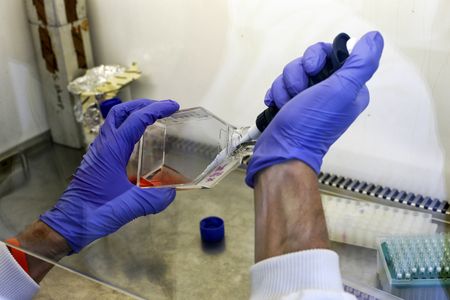
The innovative treatment works by extracting a patient’s immune cells, altering them in laboratory settings to reduce antibody production, then returning the modified cells to effectively restart the patient’s immune response system.
Research teams working independently – one treating two patients at a U.S. medical facility and another caring for one patient in Germany – achieved remarkable results. All three individuals showed significant decreases in the dangerous immune antibodies that normally attack transplanted kidneys.
Consequently, all three patients successfully received kidney transplants, according to findings published Wednesday in The New England Journal of Medicine.
“This is the first demonstration that CAR T cells can be used not only to treat cancer, but also to help patients who previously had no opportunity to receive a compatible donor kidney,” said Dr. Ali Naji of the University of Pennsylvania, who oversaw treatment for the two U.S. patients.
“For patients who have spent years on the kidney transplant waiting list, this approach could be transformative,” Naji added.
The cellular therapy is also demonstrating potential benefits for difficult-to-treat autoimmune conditions, based on four preliminary studies presented at the European Alliance of Associations for Rheumatology conference in London.
In one trial, six individuals with treatment-resistant rheumatoid arthritis received an experimental CAR-T therapy called mivocabtagene autoleucel, developed by Kyverna Therapeutics. All participants showed reduced disease activity, with half achieving lasting remission.
During follow-up periods spanning 24 to 36 weeks, five of the six patients remained free from immunosuppressive medications, reported Fredrik Albach of Charité Universitätsmedizin in Berlin.
In separate research, Yajing Zhang from Beijing GoBroad Boren Hospital in China studied 11 patients with treatment-resistant systemic sclerosis, a serious autoimmune condition causing tissue hardening. Following CD19/BCMA CAR-T cell treatment, both skin thickness measurements and lung scarring showed substantial improvement.
“By effectively targeting both skin fibrosis and lung progression, this immunological ‘reset’ strategy offers true curative potential, paving the way for (mid-stage) trials to redefine the future management of this severe disease,” Zhang stated.
Additional research by Yuichi Maeda of the Friedrich-Alexander-Universität Erlangen-Nürnberg examined an experimental therapy called zorpocabtagene autoleucel from Miltenyi Biomedicine in patients with severe systemic lupus erythematosus, systemic sclerosis, or idiopathic inflammatory myopathy, focusing on improving intestinal bacterial balance.
Harmful bacterial overgrowth “decreased to levels comparable to those of healthy controls after the treatment,” researchers noted, while immune activity driving patient symptoms decreased significantly.
The study authors determined that CAR T-cell therapy modifies gut bacteria in autoimmune disease patients, and these immune-microbial changes may support extended disease remission.
Finally, Xiaobing Wang of Shanghai Changzheng Hospital and research partners documented that CAR-T cell therapy in four patients with systemic lupus erythematosus or systemic sclerosis achieved “deep, tissue-level remission.”