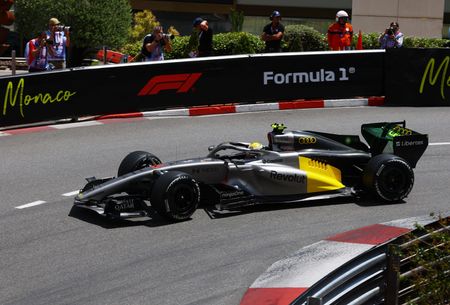

German automaker Audi remains committed to Formula One despite ongoing discussions about major engine regulation changes that could bring back V8 power units by 2030 or 2031.
The company’s Chief Executive Gernot Doellner addressed concerns at the Monaco Grand Prix, stating that potential shifts away from current turbo hybrid systems wouldn’t force Audi out of the sport it just entered this season.
Formula One’s governing body FIA is pushing for less complex and more affordable engines in future regulations, with president Mohammed Ben Sulayem supporting a return to naturally aspirated V8 engines powered by sustainable fuels.
When reporters asked if the proposed changes could end Audi’s involvement, Doellner responded: “No, not right now. I believe and trust that we will have a good discussion regarding the regulations and we will definitely have sustainable fuels … it’s more in some areas a philosophical question.”
The CEO made his comments following Audi’s introduction of the Nuvolari, the manufacturer’s debut supercar featuring high-performance hybrid technology. While expressing openness to different engine configurations, Doellner emphasized his company’s preference for turbocharged systems.
“That’s definitely more important than talking about the number of cylinders,” he explained. “We prefer turbo due to the efficiency aspect. The Nuvolari has a V8. Audi has no problem with V8s.”
The FIA’s push for V8 engines stems from desires to cut expenses and simplify technology while bringing back the distinctive loud sounds that characterized Formula One racing in earlier eras.
Despite showing flexibility on cylinder count, Doellner stressed that Audi’s main concern involves shaping future rules that preserve energy efficiency and cost management while giving manufacturers room to enhance their power systems.
“Our focus is on the actual regulation and to optimise that, to optimise our drivetrain to the regulation we have,” he stated.
“Of course we just entered, we invested in a drivetrain concept, and so we are not keen on changing soon. We are happy with stability.”
The executive expressed confidence in ongoing regulatory discussions, noting: “The process is running. It’s in good hands and we are part of that process together with the other engine manufacturers. FIA is leading the process and I’m very optimistic that the outcome will be a good one.”
Current Formula One cars utilize V6 turbo hybrid power systems that split energy equally between traditional combustion and electric components.
Rising concerns about expenses and technical complexity have created momentum for adjusting that balance to 40-60 for the upcoming season, with possible elimination of hybrid systems entirely in favor of V8 engines not used since 2013.