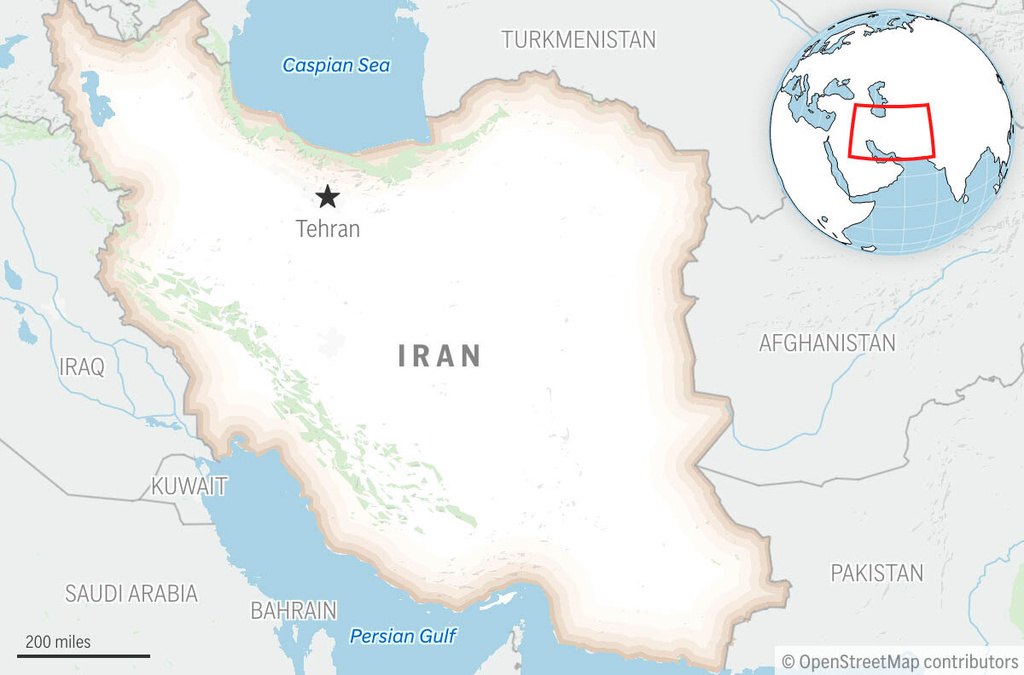
Israeli military leadership announced Monday that American forces assisted in defending against Iranian missile strikes, while Israeli warplanes carried out extensive attacks on Iranian military targets and prepared for potential extended combat operations.
In a military briefing, Israel Defense Forces (IDF) Spokesperson Brigadier General Effii Defrin discussed recent tensions with Iran and claimed Tehran broke the ceasefire agreement.
“Iran allegedly connects the IDF strike in Dahieh to its attack, it violated the two-month ceasefire yesterday with its fire toward Israel. This may indicate the Iranians’ inability to sign an agreement with the Americans, and to buy time they violated the ceasefire,” Defrin stated.
Regarding collaboration with Washington, Defrin explained: “We coordinated with CENTCOM [US Central Command] also in defense. They took part in the interceptions yesterday.”
Military sources reported that IDF Chief of Staff Lt. Gen. Eyal Zamir has held three separate conversations with CENTCOM commander Adm. Brad Cooper.
The armed forces revealed that numerous Israeli Air Force aircraft carried out an extensive mission against Iran’s key air defense infrastructure. Military officials said Iran had recently positioned defense equipment at various sites to rebuild detection and protection capabilities that were previously compromised. The attacks eliminated these installations and, the military stated, enhanced the Israeli Air Force’s ability to operate within Iranian airspace.
During nighttime operations, multiple Israeli Air Force jets attacked nine Iranian air defense installations across western and central Iran. On Monday morning, Israeli aircraft also hit three manufacturing facilities at a petrochemical site in southwest Iran.
The IDF indicated it is readying for several additional days of combat and has prepared for the potential of an extended confrontation.
By Monday midday, Iran had fired no fewer than 20 ballistic missiles toward Israel, the military reported. The IDF stated these missiles were either stopped by defenses or struck unpopulated regions.
The IDF additionally noted that Iran-backed Houthis in Yemen launched two ballistic missiles at Israel on Monday morning. Military officials said one projectile was intercepted while the other failed to reach Israeli territory.
US Ambassador to Israel Mike Huckabee shared social media updates from a Jerusalem bomb shelter Monday while Iranian missiles targeted Israeli territory, expressing strong support for Israel and harsh criticism of Iran during the attack.
Writing on X during the missile barrage, Huckabee stated: “Iran fired missiles at Israel last night & early today. The missile alerts sounded at 6am in Jerusalem. They were intercepted thank God! Iran & its proxy agents of evil want to incinerate America & Israel. Mothership of Satan is in Tehran.”
Approximately one hour afterward, the ambassador shared another update indicating he had moved to a shelter as more warning sirens activated.
“In the shelter now. Hearing loud booms overhead. Hopefully it’s the interception. Another day we live under threat of crazed Iranian regime,” he posted.
These social media messages occurred during ongoing military conflict between Israel and Iran that extended into Monday. Iranian forces launched eleven separate missile volleys at Israel the night before, forcing Israeli citizens to take cover in shelters. The Home Front Command shuttered educational institutions and limited large public events, while major medical centers relocated their operations to basement levels.
Huckabee’s statements backed Israel’s defensive measures and held Iran responsible for escalating tensions.
Meanwhile, President Trump revealed he had advised Israeli Prime Minister Benjamin Netanyahu against launching counter-strikes following Iran’s assault.
During a conversation with Channel 12’s Barak Ravid on Sunday evening, President Trump commented: “The Iranian strikes didn’t hurt anybody. Hopefully Israel is not going to retaliate. If Bibi strikes them back, it’s just gonna keep going like the last 47 years, or the last 3000 years.”
President Trump additionally stated: “We are very close to a final deal with Iran. It is going to be a good deal. I don’t want it to blow up because of what is happening now.”
“I am going to call Bibi right now and tell him not to retaliate. Each of them had their fun. Israel had its strike and Iran had its strike. We don’t need another one,” he added. “I don’t want to see an additional attack tonight.”
In a separate Financial Times interview, President Trump declared: “Netanyahu will have no choice but to accept a deal with Iran. He doesn’t decide, I decide.”
He further noted that “the (Iranian) attack did not change my desire to complete the negotiations with Iran.”
Israeli military officials announced Monday they successfully intercepted all Iranian missiles launched toward their air bases, while acknowledging their forces struck a petrochemical facility in Iran during the latest exchange between the two nations.
The Israel Defense Forces (IDF) stated they shot down all missiles fired from Iran on Monday morning, contradicting Tehran’s assertions that Iranian projectiles successfully hit the Nevatim and Tel Nof air bases.
An Israeli official verified that their Air Force targeted a petrochemical plant in Iran. The governor of Iran’s Khuzestan province informed the Iranian news agency Fars that Israeli forces attacked the Karoun petrochemical plant in Mahshahr, resulting in partial damage to the facility.
Iran’s Revolutionary Guards issued a statement explaining their actions: “The operation was carried out in response to a missile attack launched by the Zionist regime… against several radar sites in three different places” in Iran.
Emergency sirens echoed throughout Israel, forcing citizens into protective shelters. The Home Front Command maintained active restrictions, including limitations on school activities and gatherings exceeding 200 people.
The Health Ministry’s director-general ordered hospitals to move operations to underground areas and prepare staff for emergency protocols. The IDF simultaneously mobilized to support hospital operations.
Rescue services reported damage to multiple homes in a West Bank settlement from debris believed to be from an Iranian missile. No casualties were recorded, with the IDF determining the damage likely resulted from fragments of an intercepted projectile.
Alerts extended beyond Israeli borders. Saudi Arabia’s Ministry of Defense confirmed sirens in Al-Kharj province and near the Prince Sultan US base. Early Monday, the US Department of Defense noted “there are indications of missiles or drones in Jordanian airspace,” prompting the US Embassy in Jordan to advise residents to stay near protected locations.
Israeli Ambassador to the United States Yechiel Leiter posted on X late Sunday: “Iran launched 11 ballistic missiles toward Israel today. Each of these missiles can destroy an entire neighborhood and kill hundreds. No self-respecting nation in the world would tolerate such an attack, and neither will Israel. Israel is now targeting Iranian surface-to-surface missile launch sites, as well as infrastructure facilities unrelated to the energy sector.”
These comments followed President Trump’s statement that he encouraged Israeli Prime Minister Benjamin Netanyahu to avoid responding to Sunday’s Iranian strikes. In an interview with Channel 12’s Barak Ravid, President Trump stated: “The Iranian strikes didn’t hurt anybody. Hopefully Israel is not going to retaliate. If Bibi strikes them back, it’s just gonna keep going like the last 47 years, or the last 3000 years.”
President Trump continued: “We are very close to a final deal with Iran. It is going to be a good deal. I don’t want it to blow up because of what is happening now.”
“I am going to call Bibi right now and tell him not to retaliate. Each of them had their fun. Israel had its strike and Iran had its strike. We don’t need another one,” he added. “I don’t want to see an additional attack tonight.”
In remarks to the Financial Times, President Trump also declared that “Netanyahu will have no choice but to accept a deal with Iran. He doesn’t decide, I decide.” He emphasized that “the (Iranian) attack did not change my desire to complete the negotiations with Iran.”
RALEIGH, N.C. (AP) — While the Carolina Hurricanes celebrated their advancement to their first Stanley Cup Final in twenty years, defenseman Jalen Chatfield faced an urgent situation requiring his immediate departure.
Chatfield discovered his wife Drew had entered labor just before the team’s Eastern Conference Final victory. Following a quick shower and clothing change, he jumped into an unmarked police vehicle for an emergency rush to the medical facility with lights flashing.
“Everything was good, yeah, I made it on time with a couple of hours to spare,” Chatfield said of son Rhodes. “He was born at like 2 a.m., so, perfect.”
The pressure of pursuing hockey’s ultimate prize creates enough stress for both the Hurricanes and Vegas Golden Knights in this unpredictable series featuring nightly comeback victories and two overtime conclusions. Adding life-altering events at home while managing diaper duties or sleepless nights with crying infants creates an overwhelming situation.
Since early May, three Hurricanes players have become fathers during these playoffs. Several Golden Knights members are anticipating their own arrivals this month, potentially expanding the postseason birth surge during hockey’s premier event that could extend until June 17 with a potential Game 7. Vegas holds a 2-1 series advantage entering Tuesday night’s Game 3.
“It’s going to be a lot of great stories to talk about,” said Vegas center Nic Dowd, whose wife, Paige, is due for their third child this month. “Having a new baby and trying to win a Stanley Cup, I’m going to compartmentalize those things. They’re different than each other, but definitely exciting and stressful. The biggest challenges in life are going to have the best rewards.”
This became evident watching Hurricanes defenseman K’Andre Miller following their Montreal series victory in the Eastern Conference Final on May 29.
Nearly four weeks prior, Miller and girlfriend Addison Clark welcomed son Kashton just hours before Miller played almost 21 minutes in their 3-0 victory opening Round 2 against Philadelphia. On the evening Chatfield rushed to the hospital, viral footage showed an emotional Miller on the bench afterward, cradling Kashton while shaking his head and taking deep breaths during a touching moment.
Teammate Sean Walker experienced a hectic 36-hour period that will become family legend for years to come.
Following the Hurricanes’ road victory over the Flyers in Game 3, Walker received a 1 a.m. phone call from wife Taylor in North Carolina. Labor had begun. Her water broke, and their first child was arriving. Walker immediately contacted team services manager Mike Brown for emergency flight arrangements — maintaining FaceTime contact with his wife during travel — and arrived in time for daughter Quinn’s birth.
“The baby gods were on my side for that one,” Walker said.
The following day, he consumed his pregame meal in the hospital cafeteria before flying back to Philadelphia, arriving approximately four hours before the sweep-completing victory on May 9. Fortunately, the Hurricanes enjoyed an 11-day break between series, the longest playoff gap in over a century, allowing the Walker-Miller defensive partnership to adjust as new fathers.
Walker treasures those weeks as a meaningful period in an ongoing journey. When the Cup final commenced, his mother-in-law was visiting in an “all hands on deck” home support effort. Teammates contributed by delivering regular meal deliveries and simple gestures like coffee throughout the process.
“There was so much food, I kind of lost who all brought over everything,” Walker chuckled. “The support’s been amazing. It’s a family and everyone’s really showed that for us.”
Teammate Eric Robinson relates completely. He and forward Sebastian Aho became fathers during last year’s Eastern final run.
“The coolest part is you get to experience two of the best moments of your life kind of happening at the same time,” Robinson said.
Multiple Vegas players shared this experience during their 2023 Stanley Cup campaign. History could repeat itself.
Along with Dowd, captain Mark Stone, Jack Eichel, Noah Hanifin and Shea Theodore — who scored the Game 3 double-overtime winner Saturday — are competing for the Cup while preparing for baby arrivals.
Theodore’s wife, Mariana, expects their second child this month “very shortly” after the series concludes; the gender remains unknown.
“My wife is handling it amazing,” Theodore said. “I think especially when you’re in a playoff grind, there’s just some days where I’m not available. So she’s been handling everything so good, she’s been really good with it.”
Hanifin’s wife, Monique, is expecting a daughter.
“It’s probably more stressful for my wife, to be honest,” Hanifin said before Game 1. “She’s at home going through it all, but we have a lot of family in town right now, just kind of with her, which is huge. … Hopefully everything goes smoothly and we can win and celebrate a new baby at the end of June.”
Stone’s wife, Hayley, gave birth to a daughter just before their 2023 championship run. She’s expecting again with a delivery that could occur during this series.
“I guess my wife will be the telling tale of that one,” Stone said.
Chatfield’s wife contacted Brown’s assistant announcing her labor with the couple’s second child shortly before Game 5 of the Eastern final against the Canadiens. However, she requested they wait until afterward to inform him.
Brown delivered the news to Chatfield following the traditional post-series handshake ceremony. Chatfield participated in the team photograph with the Prince of Wales trophy, then departed immediately.
“It was a special night for me, to be able to win the Eastern Conference Final and then shoot to the hospital,” Chatfield said. “My adrenaline was still going. It was a very confusing moment: I just went from celebrating with the guys to rushing out and being in a quiet hospital room, getting ready to have a baby. But there was no other way I’d rather have it. It was special and one of the best nights of my life.”
Hurricanes coach Rod Brind’Amour has witnessed everything from a unique viewpoint. He has coached his son Skyler in several Hurricanes games over the past two seasons and observed players in the dressing room evolve from emerging prospects to veterans with expanding families, learning to navigate life with newborns.
“It’s supposed to be a little crazy,” Brind’Amour said last month.
This proves especially accurate in this Cup final, both during games and away from the rink.
“To be able to get these moments already with our new children is so special,” Walker said. “Obviously, they won’t really remember it at all. But we will.”
WASHINGTON — The United States imposed travel restrictions on over 100 Nicaraguan government officials and their relatives Monday, escalating pressure on the Central American nation’s leadership over human rights violations.
The new penalties were announced by Secretary of State Marco Rubio, who cited the recent death of imprisoned activist Brooklyn Rivera as a key factor in the decision. Rivera had been a vocal critic of Nicaraguan President Daniel Ortega and his wife and co-president Rosario Murillo before his death last month while in custody.
“The United States stands with the Nicaraguan people who, like Rivera, aspire to see a free Nicaragua,” Rubio stated.
Nicaraguan government representatives have not yet provided a response to the sanctions announcement.
These latest restrictions bring the total number of Nicaraguan officials and family members barred from U.S. entry to more than 2,350. Officials did not disclose the names of those targeted in this most recent action.
The U.S. Bureau of Western Hemisphere Affairs posted on X expressing concern about six of Rivera’s relatives and associates who have disappeared, condemning their vanishing.
Earlier this year in April, the current administration imposed penalties on two sons of Nicaragua’s co-ruling couple.
Rivera was a prominent Indigenous rights advocate who dedicated years to championing his community’s causes before authorities detained him in September 2023. His imprisonment occurred amid an extended government campaign against civil society groups and opposition voices that started after widespread demonstrations in 2018, which officials violently suppressed.
According to Nicaragua’s government, Rivera’s death resulted from a bacterial infection that developed after his health deteriorated following a COVID-19 diagnosis, causing both physical and neurological decline.
International human rights advocates and organizations condemned Rivera’s death, and U.S. officials had demanded his freedom after the government released images showing him hospitalized in serious condition.
Nicaragua’s administration has detained political opponents, religious figures, journalists and others before forcing them into exile, removing citizenship and seizing property from hundreds of individuals. The government has closed over 5,000 organizations since 2018, mostly religious groups, while compelling thousands of citizens to leave the country.
Donald Trump will make history as the first sitting U.S. president to watch an NBA Finals game in person, creating massive security challenges that will force New York Knicks supporters to deal with extensive safety zones surrounding Madison Square Garden and potentially long waits to enter the venue.
The protective measures for Game 3 featuring the Knicks versus San Antonio Spurs created an atmosphere similar to Times Square during New Year’s celebrations, with fans experiencing airport-like procedures. Attendees were told to arrive two hours before tipoff and must present tickets at multiple security stations while passing through metal detectors similar to those used by TSA.
The presidential attendance prompted the New York Police Department and Secret Service to create a security zone spanning several blocks around the venue, shut down an outdoor viewing event, and ban bags for those with tickets. Supporters had been congregating outside the Garden to watch games throughout this postseason run, during which the Knicks have secured 13 consecutive victories to reach the championship series for the first time since 1999 and stand just two wins away from their first NBA championship since 1973.
“The NYPD in coordination with the Secret Service made the decision for Game 3, where we have a presidential visit, that we could not support watch parties right outside of the Garden,” Police Commissioner Jessica Tisch said at a news conference Monday. “We are looking forward to bringing back watch parties for Game 4. But I think New Yorkers are used to presidents coming to town, and they understand that that generally means lockdowns of areas and that’s what you’re going to see tonight at the Garden.”
Trump has been present at numerous high-profile sporting events during his presidency, with the security protocols causing significant inconvenience for spectators.
Thousands of attendees missed the opening of last year’s U.S. Open men’s singles championship match between Carlos Alcaraz and Jannik Sinner due to extended security delays. Despite the U.S. Tennis Association delaying the match start by 30 minutes, many spectators still couldn’t enter because enhanced protocols required screening both upon arrival at the Billie Jean King National Tennis Center and again before entering Arthur Ashe Stadium, where Trump observed from a private box.
When asked about Trump’s attendance, Knicks center Mitchell Robinson said: “Cool, I guess. We can still get out there and play (no matter) who’s here and who’s not.”
Mayor Zohran Mamdani and other dignitaries are also expected to be at the game Monday night.
Access to Madison Square Garden was already challenging for Knicks supporters due to sky-high ticket costs. The cheapest available ticket exceeds the typical monthly rent payment in New York, climbing above $6,000. Premium seating options cost tens of thousands of dollars. Mamdani said he bought his ticket for about $1,000 directly from Madison Square Garden.
The challenges of attending the game in person have led supporters to pack bars, streets and viewing events throughout the city. The outdoor viewing event near the Garden has become a significant attraction during the entire playoff run, but with Trump’s presence, that gathering will relocate several blocks away outside the security zone, to Bryant Park.
“We improvise,” said Knicks guard Jose Alvarado, who is a New York native. “We’re New Yorkers. We’re going to find a way to watch a game, and that’s what we’re doing.”
A distinguished historian whose scholarship shaped how Americans understand their nation’s founding has died at age 92. Gordon Wood, professor emeritus at Brown University, passed away Sunday following a tragic accident in which he was struck by a vehicle in a supermarket parking lot in East Providence, Rhode Island, according to local police.
Wood authored numerous books and scholarly articles that became essential reading for understanding America’s early independence period. While he never achieved the widespread popularity of historians such as David McCullough and Doris Kearns Goodwin, his research became foundational material for academic discussions about the nation’s formation and revolutionary legacy. Colleagues viewed the white-haired, gentle-appearing Wood as the quintessential scholarly historian, one who prioritized factual evidence over ideological interpretation.
President Barack Obama honored him in 2011 with a National Humanities Medal “for scholarship that provides insight into the founding of the nation and the drafting of the U.S. Constitution.”
However, recent years brought increasing criticism from younger scholars who argued that Wood represented outdated academic approaches that overlooked the experiences of enslaved people, women, and Indigenous populations. John L. Brooke, a history professor at Ohio State University, criticized him for “a distinct avoidance of interpretative paradox and complexity,” while still acknowledging Wood’s “scale and scholarly enterprise.”
Wood’s academic impact began early and endured throughout his career. His debut work, “The Creation of the American Republic,” earned the Bancroft Prize in 1970 and influenced countless students who grappled with Wood’s argument that the Constitution was accidentally revolutionary—a document created by elite leaders that ultimately led to “the destruction of the very social world they had sought to maintain.”
“The Radicalism of the American Revolution” earned him the Pulitzer Prize in 1993, while his comprehensive work “Empire of Liberty” received finalist recognition in 2009.
Wood demonstrated openness to some scholarly developments, particularly embracing Annette Gordon-Reed’s “persuasive contextual case” regarding the relationship between enslaved Sally Hemings and Thomas Jefferson. In “Empire of Liberty,” which examined the period from 1789 to 1815, he devoted substantial attention to slavery, describing it as a cancer “eating away at the message of liberty and equality.”
However, Wood also fiercely opposed certain contemporary historical interpretations. He became a vocal opponent of The New York Times’ Pulitzer Prize-winning 1619 Project and its assertion—which was later modified—that preserving slavery motivated the American Revolution. He claimed the project promoted feelings of “victimhood” and being “aggrieved,” despite admitting he had not read most of the material. Wood maintained that the founders, including plantation owners like Jefferson and James Madison, incorrectly believed slavery would naturally disappear, and argued that the revolution actually strengthened American abolitionist efforts.
“We all want justice, but not at the expense of truth,” he wrote in 2019, adding the controversial statement, “I don’t know of any colonist who said that they wanted independence in order to preserve their slaves.”
Wood’s connection to history began with his birthplace: Concord, Massachusetts, former home to Ralph Waldo Emerson, Henry David Thoreau, and Louisa May Alcott. Despite this historical setting, his love for the subject didn’t emerge until his college years. He found high school history classes tedious, enduring sessions where instructors merely recited from textbooks.
His Latin teacher inspired him to pursue higher education at Tufts University, where he graduated summa cum laude. Wood continued his studies at Harvard University, earning both master’s and doctoral degrees while working under renowned Revolutionary War historian Bernard Bailyn. Bailyn’s groundbreaking “The Ideological Origins of the American Revolution,” which explored the intellectual foundations of independence, provided the foundation for Wood’s “The Creation of the American Republic.”
In his 2011 introduction to “The Idea of America,” Wood reflected on his career and the changing nature of historical scholarship. He acknowledged the founders’ numerous mistakes while cautioning against judging historical figures by contemporary standards—a practice he and others termed “Presentism.”
“The drama, indeed the tragedy of history, comes from our understanding of the tension that existed between the conscious wills and intentions of the participants in the past and the underlying conditions that constrained their actions and shaped their future,” he wrote.
“If the study of history teaches anything, it teaches us the limitations of life. It ought to produce prudence and humility.”
Seattle tight end AJ Barner anticipates being cleared for training camp this summer after undergoing two surgical procedures during the offseason.
The 24-year-old player started in all games during the previous season and scored a touchdown in Seattle’s Super Bowl LX championship win over the New England Patriots.
The former fourth-round draft selection battled through multiple injuries throughout the season — including issues with his hip, elbow, shoulder, knee, ankle and calf — though he did not reveal which specific problems required surgical intervention.
“I’m going to feel much better, and I’m already feeling much better, and I think that’s where I’ll see strides,” Barner said, per the team’s website. “I’m feeling good, and I’m chomping at the bit trying to get back out there.”
During the regular season, Barner hauled in 52 receptions for 519 yards and six touchdowns across 17 games, while contributing an additional six catches for 67 yards and one touchdown during three playoff victories.
Since Seattle selected him from Michigan in the 2024 draft, he has accumulated 82 catches for 764 yards and 10 touchdowns across 34 games, with 23 starts.
Apple faces a crucial test Monday as the company launches its annual developer conference, with market watchers eager to see whether artificial intelligence enhancements can breathe new life into Siri and help the tech giant compete in the rapidly evolving AI landscape.
The iPhone manufacturer has been working to narrow the distance between itself and competitors like Microsoft and Alphabet’s Google, companies that have moved more quickly to integrate “agentic” AI software capable of handling sophisticated tasks into standard computing operations.
The central question revolves around Apple’s willingness to embrace change. The corporation has historically maintained strict oversight of its software and customer information, adopting a measured stance toward AI development that includes partnerships with companies like Google, utilizing their Gemini models to enhance new features.
This careful strategy differs from competitors who are wagering on AI agents that might eventually supplant conventional applications and transform device usage patterns. Companies such as Microsoft have hinted at a world where AI “agents” replace traditional operating systems and applications, while Nvidia collaborates with computer manufacturers to create laptops designed to compete directly with Apple’s premium MacBooks.
“Agents are critical, as they can potentially become the primary touch point of how consumers interact with their devices,” said Tarun Pathak, research director at Counterpoint Research. “The era of Agentic AI may pan out very differently from the way we think, but it’s too big a risk to miss out and Apple must follow swiftly.”
Apple’s more deliberate methodology has helped the company sidestep the enormous data center investments made by competitors. However, this may be changing, as financial chief Kevan Parekh announced during Apple’s recent earnings call that the company would abandon its longstanding practice of returning excess cash directly to investors, indicating potential for increased spending.
In pursuing AI development, Apple holds an advantage few competitors possess: sophisticated processors in numerous phones and laptops that can operate AI agents without additional cost since customers already purchased the computing capability with their devices. Apple also maintains an extensive collection of personal information stored on iPhones.
Apple’s Worldwide Developers Conference, the company’s flagship annual showcase for new software, operating systems and development tools, begins at 1700 GMT in Cupertino, California, on Monday.
Industry experts believe Apple’s Monday challenge involves successfully transforming Siri, which the company is redesigning with assistance from Google’s Gemini AI model, into a more intelligent and practical tool using personal data.
“A more capable, context-aware, and everyday-useful Siri would be a game changer for Apple,” said Dipanjan Chatterjee, vice president and principal analyst at Forrester.
Experts anticipate numerous new developer features, including enhanced tools allowing Siri to communicate with applications and innovative methods to utilize the company’s specialized chips. However, they also expect Apple to avoid focusing extensively on technical terminology like “tokens” – an AI computing measurement frequently referenced by Nvidia CEO Jensen Huang. Instead, Apple will likely demonstrate practical AI benefits for consumers.
“The company’s historical strength has been translating complex technologies into intuitive experiences that customers actually use,” Chatterjee said. Apple will “continue shifting the AI narrative away from technology toward an experience story, where success is measured by usefulness, simplicity and trust rather than technical specifications.”
Ocean cleanup volunteers working in Mediterranean waters between Italy and North Africa have recorded what marine experts believe represents the first underwater video of a fully grown great white shark in the central Mediterranean region.
The remarkable encounter happened while a cleanup crew organized by the Healthy Seas Foundation was pulling discarded fishing nets from a sunken vessel in the Strait of Sicily, an area known for rich marine biodiversity but heavily affected by commercial fishing operations.
The recording, captured last week and made public on Monday, reveals the massive predator swimming alongside approximately twelve striped pilot fish, which commonly follow large ocean hunters hoping to feed on scraps.
Volunteer diver Derk Remmers from Ghost Diving, a partner organization in the cleanup effort, filmed the shark encounter. “An offshore underwater shark encounter in the Mediterranean is insane,” Remmers stated.
Team member Pascal van Erp posted on Facebook that the shark was likely attracted to deceased sea creatures trapped in the discarded fishing equipment, including numerous sea turtles.
Though great white sharks have been spotted occasionally in Mediterranean waters, scientists don’t know how many exist in the region, and previous encounters haven’t been documented on film by underwater divers, according to the foundation.
“Moments like this remind us how much life can still exist in offshore Mediterranean waters and how important it is to protect it from preventable threats like abandoned fishing gear or overfishing,” stated Healthy Seas director Veronika Mikos.
Scientists involved in the mission believe the sighting could enhance knowledge about where these critically endangered sharks live and how they behave, though additional study will be needed before drawing wider conclusions.
Vehicle sales in China continued their downward spiral in May, creating significant challenges for international automakers, particularly Volkswagen, which is attempting to revitalize its Chinese operations through locally-developed electric vehicles.
According to data released Monday by the China Passenger Car Association (CPCA), vehicle sales plummeted 22.3% compared to the same period last year, reaching 1.53 million units. This marks the eighth straight month of declining sales.
The trade association has revised its annual forecast downward, now predicting an 11% drop in full-year vehicle sales, a sharp contrast to the previously estimated 1% decline.
Cui Dongshu, secretary-general of the CPCA, attributed the decline primarily to reduced gasoline vehicle purchases caused by rising oil costs related to Middle East tensions. He anticipates a gradual improvement during the latter half of the year that could help offset the current downturn.
January through May sales figures show a 19.7% decrease to 7.18 million vehicles.
The sustained decline highlights a growing disconnect between China’s overall economic expansion and consumer appetite for major purchases like automobiles. Despite Beijing’s economic growth target of 4.5% to 5% for this year, automotive demand has suffered from diminished consumer confidence, reduced government incentives, and market saturation following years of rapid growth.
Electric vehicle and plug-in hybrid sales, representing 62.2% of total sales, decreased 7.5% year-over-year in May, continuing a five-month streak of declines.
“China’s auto market is already the largest in the world at 23 million to 25 million retail sales annually and car ownership levels are relatively high, especially for an emerging market,” said Eugene Hsiao, head of China equity strategy at Macquarie Capital. “This means the market is already at a mature stage of development.”
Hsiao projected that China’s overall retail automotive market would expand at single-digit rates over the coming five to ten years, though top EV manufacturers might continue outperforming the general market as adoption increases.
NIO Chief Executive William Li commented last month that China’s automotive sector had likely passed its “golden era” due to stagnating domestic demand, despite robust export performance.
While NIO maintains its domestic focus, many competitors have shifted toward international markets.
International sales of EVs and plug-in hybrids surged 112.6% in May compared to the previous year, outpacing the 74.7% growth in total vehicle exports.
The domestic market weakness comes at a crucial time for global manufacturers, especially Volkswagen, which is working to maintain its traditional leadership position in China through an accelerated and more localized electric vehicle approach.
Volkswagen has increased its reliance on Chinese partnerships and suppliers, including a notable alliance with Xpeng, as it attempts to narrow the technological divide with domestic EV brands in areas like intelligent cabin systems, driver assistance features, and software-based vehicle design.
However, the initial launch of the first Volkswagen-Xpeng vehicle also demonstrates distribution challenges confronting foreign manufacturers as they attempt to establish EV operations alongside existing joint ventures and traditional combustion engine sales channels, according to industry analysts.
Bill Russo, CEO of Shanghai-based advisory firm Automobility, noted that while separating EV retail operations from traditional dealer networks might make strategic sense, it also introduces implementation challenges regarding brand uniformity, customer outreach, after-sales service, and retail scope.
“Traditional OEMs attempting to build parallel EV sales structures often face organizational fragmentation and slower market responsiveness,” Russo said.
The European Union is planning a more concentrated strategy for the upcoming global climate summit this November, following difficulties advancing its environmental priorities during last year’s negotiations, according to an internal strategy document obtained by Reuters.
The strategy paper, developed by Ireland as it prepares to lead the 27-member European Union, outlines the bloc’s approach for the United Nations’ COP31 climate conference scheduled to take place in Turkey.
According to the document, the EU’s negotiating position should be “shorter, sharper and more strategic” compared to previous years.
“We should say fewer things, more clearly – and stand firmly behind them,” the document states.
Last year’s global climate conference, COP30, concluded in Brazil without reaching agreements on key EU objectives, including speeding up reductions in greenhouse gas emissions and decreasing reliance on fossil fuels.
“Europe should continue to stand firmly for ambitious climate action and for the integrity of the multilateral process. But ambition alone is not a strategy,” the strategy paper noted.
During the Brazil discussions, conversations centered on creating a plan to eliminate fossil fuels and proposals to boost climate financing. However, the 15-page EU negotiating framework that member nations had approved before the summit lacked specific positions on these critical topics.
According to some diplomats, the EU’s inability to successfully promote its priorities stemmed partially from insufficient advance preparation.
This year’s climate summit faces additional challenges as nations worldwide grapple with energy supply disruptions caused by the Iran war, leading some countries to expand renewable energy while others increase coal consumption.
Ireland’s strategy also emphasizes early diplomatic outreach by EU member nations to other countries, fostering cooperation with both supporters and critics in the negotiations.
The approach involves distributing negotiating duties among member states’ ministers to ensure they are “deployed strategically both in the lead-up to and during COP31 itself.”
“Political ownership matters. Ministers should not arrive at COP only to react to events as they unfold,” the document emphasized.
When asked about the strategy document, a spokesperson for Ireland’s climate ministry confirmed the country is taking a focused approach to COP preparations, “concentrating our efforts where we can make the greatest contribution and on key priorities.”
“Climate diplomacy is not just about two weeks at a COP; it is a year-round process of engagement, relationship-building and delivery,” the spokesperson explained.
Motorists traveling on Valley Road northbound are encountering lane restrictions today due to ongoing construction work.
The lane closure affects the stretch of roadway between Limestone Road (Route 7) and Lantana Drive. Traffic restrictions are expected to remain in place until 5 PM this afternoon.
Drivers are advised to allow extra travel time and consider alternate routes if possible to avoid potential delays in the construction zone.
Motorists traveling on Valley Road northbound are experiencing lane restrictions today as construction crews work between Limestone Road (Route 7) and Lantana Drive.
The lane closure is expected to continue through 5 PM this afternoon, according to traffic officials. Drivers in the area should plan for potential delays and consider alternate routes if possible.
The construction work is taking place along the northbound direction of Valley Road within the specified stretch between the two intersections.
Tennis superstar Roger Federer is set to make his comeback to the US Open this August for a special exhibition match, tournament officials announced Monday. This will mark the legendary player’s first time back at the major championship since his last competitive appearance there in 2019.
The 44-year-old tennis icon will be the main attraction at a special event called “Roger Federer: An Icon Returns to New York” scheduled for August 25. Federer holds the unique distinction of being the sole player to capture five straight US Open championships.
The Swiss tennis great accumulated 20 major championship victories during his career, becoming the first male player to achieve that landmark. He collected 103 total tournament wins before stepping away from professional tennis in 2022, ending his remarkable 24-year career at the Laver Cup in London.
Joining Federer for the exhibition will be 2003 US Open winner Andy Roddick, along with tennis Hall of Famers Andre Agassi and John McEnroe.
“The US Open has always been one of the most special tournaments for me,” Federer stated. “So many unforgettable moments of my career happened in New York, and Arthur Ashe Stadium is a place that means a great deal to me. I’ve missed being part of that atmosphere and feeling the incredible energy that the fans bring every year.”
Additionally, Federer is scheduled to receive induction into the International Tennis Hall of Fame during ceremonies planned for August in Newport, Rhode Island.
A Dover resident will spend more than two decades behind bars after being convicted on multiple drug trafficking charges.
Tyleer Mills, age 51, received a 22-year prison term from a Superior Court judge on May 26, 2026. The lengthy sentence came after Mills was found guilty of Drug Dealing Tier 2 involving fentanyl and Drug Dealing Tier 3 involving cocaine.
The case represents another significant prosecution in ongoing efforts to combat drug trafficking operations throughout the state.
NEWARK, Del. – Athletic department officials at the University of Delaware announced Monday that their student-athletes achieved a record-breaking semester grade point average of 3.405 during the spring 2026 term.
This outstanding academic performance brings the department’s overall yearly average to 3.365 for the 2025-26 academic year, continuing an impressive streak of academic excellence for the Fightin’ Blue Hens.
The achievement represents the 25th consecutive semester that Delaware’s student-athletes have maintained a collective GPA above 3.0, extending their remarkable run to 12 straight years of sustained academic success.
New Castle County police are conducting a homicide investigation following a fatal shooting that took place Saturday afternoon in Claymont.
Law enforcement officers were dispatched to the Woodstream Garden Apartments in the 900 block of Peachtree Road on June 6, 2026, after receiving reports of gunfire at approximately 4:17 p.m.
When police arrived at the scene, they discovered a male victim who has been identified as a 21-year-old man.
The New Castle County Division of Police is handling the investigation into the deadly shooting incident.
LIMA, Peru — Peru’s presidential runoff election has left the nation without a clear leader as counting continues in an extremely tight race between conservative Keiko Fujimori and nationalist congressman Roberto Sánchez.
Current tallies from 93% of counted ballots show Fujimori leading with 8.75 million votes representing 50.095%, while Sánchez trails closely with 8.73 million votes at 49.905%.
The eventual victor will become Peru’s ninth president within a decade. Both candidates — Fujimori, whose father was a disgraced former president, and Sánchez, who supports an incarcerated ex-president — advanced to this runoff after defeating 33 other contenders in April’s initial election, though neither secured even 20% support in that contest. Election officials required over a month to confirm their advancement.
Roberto Burneo, the nation’s top election official, urged voters and political groups to “act with democratic responsibility” during the ongoing count. He indicated final results would be announced within 30 days.
Voter participation in Lima, the capital, seemed reduced compared to the earlier election, with minimal waiting lines at most polling locations despite mandatory voting requirements. The extended counting timeline stems from regulations requiring every ballot and summary sheet from each polling station to be transported to over 100 counting facilities. Ballots and tally sheets must also be shipped to Lima from 63 countries for inclusion in the count.
Criminal activity, especially extortion, dominated voter concerns. A 2025 survey by the state’s National Institute of Statistics and Informatics revealed 84% of urban respondents feared becoming crime victims within the next year.
Analysts connect Peru’s growing organized crime influence to profits that established criminal organizations generate from unauthorized gold mining operations in the Andes and Amazon regions.
Neither candidate’s anti-crime platforms resonated strongly with voters, many of whom connect both potential presidents to problematic Peruvian political figures.
Fujimori carries associations with her deceased father Alberto Fujimori’s authoritarian and corrupt administration from the 1990s. She assumed Peru’s first lady role in 1994 following her parents’ divorce.
Sánchez maintains close ties to jailed former President Pedro Castillo, widely viewed as corrupt and disorganized. Castillo’s 16-month presidency featured over 70 Cabinet personnel changes.
April’s official election results showed Fujimori capturing 17% of votes while Sánchez earned 12%. An Ipsos poll conducted one week before the election found comparable support levels for both candidates, with approximately 30% of voters remaining undecided.
Food vendor Magali Quiquia chose to submit a blank ballot, explaining she found neither candidate appealing.
“Five years ago, I was disappointed by Castillo with his corruption, and … Roberto Sánchez is the same,” said Quiquia, 44. She continued that she believes “Fujimori hasn’t done anything either” despite her party holding multiple Congressional seats.
Peruvians between ages 18 and 70 must vote or face fines reaching $32.
Over 27 million citizens are registered voters. Approximately 1.2 million were projected to vote internationally, primarily from the United States and Argentina.
Throughout her fourth presidential bid, the 51-year-old Fujimori focused on crime reduction promises. Her platform included deploying tracking technology against extortion, militarizing national borders, and expanding police and military presence in dangerous zones. She also proposed requiring prisoners to work and “repay society” under her leadership.
During the sole pre-runoff debate, Fujimori supported her father’s administration and vowed to eliminate crime as effectively as he defeated the Shining Path extremist organization. Sunday evening, she counseled supporters to stay patient.
“So far, there is no winner in this race,” Fujimori stated from a Lima hotel.
Sánchez, a 57-year-old former minister with strong rural support, committed to fighting police corruption and advancing reforms allowing military assistance in security operations. The wide-brimmed peasant hat wearer, a gift from Castillo, told debate audiences he would welcome “all options to generate jobs and progress” while emphasizing support for Chinese investments.
Sunday evening, he appeared on a Lima hotel balcony, thanking Indigenous communities, farmers and other supporters “who have decided to come and reclaim the government for the people.”
The runoff winner will begin a five-year term on July 28.
TORONTO (AP) — Former Supreme Court Justice Louise Arbour officially assumed her duties as Canada’s governor general following Monday’s installation ceremony.
In her new role, the governor general serves as the official representative of Britain’s King Charles III. Canada remains part of the Commonwealth, with the British monarch serving as the nation’s head of state.
At 79 years old, Arbour takes over from Mary Simon, who made history in 2021 as Canada’s first Indigenous person to hold the position. While the governor general carries significant constitutional responsibilities, the role functions primarily in a ceremonial and symbolic capacity. Prime Minister Mark Carney selected a Francophone candidate for the position.
The installation was marked by the Central Band of the Canadian Armed Forces performing “God Save the King” while the Governor General’s Flag was hoisted above Parliament Hill.
Arbour brings extensive credentials as an internationally recognized legal expert, judicial leader, and champion of human rights and justice. Her judicial career included appointments to the Supreme Court of Ontario, Ontario’s Court of Appeal, and Canada’s Supreme Court.
The United Nations appointed her in 1996 to serve as Chief Prosecutor for the International Criminal Tribunals addressing crimes in the former Yugoslavia and Rwanda. Under her leadership, these efforts achieved the first genocide conviction since the 1948 Genocide Convention and marked the first time war crimes charges were brought against a serving head of state.
From 2017 to 2018, she held the position of U.N. Special Representative for International Migration.
During her inaugural address as the monarch’s Canadian representative, she emphasized that peaceful coexistence amid differences remains essential for preserving a society governed by law and established rules.
Arbour addressed concerns about artificial intelligence’s expanding influence, warning against excessive dependence on such technology. She pointed out that immediate access to enormous volumes of information creates a strong temptation to ignore the credibility of information sources.
“The lines between knowledge and belief, between truth and falsehood, between facts and assumptions are increasingly blurred,” Arbour said. “AI could be threatening not only the way we live and work, but also the control we exercise over our own destiny.”
She highlighted Canada’s significant global resources, noting the country encompasses nearly 7% of the world’s land area and contains 20% of global freshwater reserves, while representing just half of 1% of the world’s population.
She said the world “looks at us with justifiable envy.”
Last week, Arbour held a meeting with King Charles at Buckingham Palace.
While the United States broke away from British rule, Canada maintained its colonial status until 1867 and continues operating as a constitutional monarchy featuring a British-modeled parliamentary government.
WASHINGTON — Federal investigators have uncovered serious security vulnerabilities in a controversial program that permits Immigration and Customs Enforcement to obtain taxpayer records from the Internal Revenue Service, according to a newly released Treasury watchdog report.
The Treasury inspector general’s findings represent the first comprehensive review of the scope and problems associated with the taxpayer information exchange program, which sparked multiple court challenges and internal disputes when it was implemented in 2025.
Treasury’s inspector general, known as TIGTA, determined that the disputed 2025 arrangement between ICE and Treasury — which enables ICE to submit immigrant names and addresses for verification against tax databases — suffered from data formatting inconsistencies and flawed matching standards that produced inaccurate results.
The controversial program prompted the then-acting commissioner of the IRS to step down from the position.
According to the report’s findings, ICE submitted requests for address details on over 1.2 million individuals following the agreement’s implementation, with the IRS eventually supplying last-known address information for approximately 47,000 people.
TIGTA’s investigation revealed that the IRS’s computerized matching system contained significant defects. Data formatting problems from ICE’s submissions created unreliable matches, including instances where partial or incorrect addresses received validation as accurate information, the report indicates.
Treasury and IRS officials did not provide responses to Associated Press inquiries seeking comment.
The taxpayer and immigration data cross-checking initiative represents a component of President Donald Trump’s border security priorities and his comprehensive national immigration enforcement campaign, which has included deportation operations, workplace enforcement actions and implementation of an 18th century wartime statute for removing Venezuelan migrants.
This disclosure marks the second time that extensive taxpayer information sharing with ICE has come to light.
A federal judge ruled in February that the IRS violated federal law through its unauthorized disclosure of confidential taxpayer records to Immigration and Customs Enforcement, specifically referencing the same 47,000 information releases highlighted in TIGTA’s findings.
U.S. District Judge Colleen Kollar-Kotelly determined that the IRS improperly provided taxpayer records for thousands of individuals to the Department of Homeland Security under the agencies’ disputed information-sharing arrangement designed to identify and remove people residing illegally in the United States.
The latest TIGTA report contains no formal recommendations, according to correspondence from Nancy A. LaManna, deputy inspector general for inspections and evaluations.
“However, we plan to share some concerns we identified during our review with the DHS Office of Inspector General,” her letter states.
MCKINNEY, Texas — Defense attorneys brought forward additional witnesses Monday in their effort to strengthen self-defense arguments for a teenager accused of fatally stabbing another student at a high school track competition.
The defendant, Karmelo Anthony, age 19, faces murder charges in connection with the death of 17-year-old Austin Metcalf. The incident occurred at a school stadium in Frisco, located in the Dallas metropolitan area, during April 2025.
According to prosecutors, the stabbing constituted an unprovoked assault that arose from a disagreement about Anthony’s presence under Metcalf’s team shelter during inclement weather at the track competition. However, defense counsel maintains that Anthony perceived a threat and believed defensive action was necessary when physical confrontation occurred.
The case has garnered widespread public interest, partly due to social media activity that framed the incident in racial contexts. Anthony, a student at Frisco Centennial High School, is Black, while Metcalf, who attended Frisco Memorial High School, was white.
The prosecution concluded presenting their evidence Saturday in Collin County court. During the previous week, jurors listened to testimony from multiple individuals who witnessed the track meet events, including those who described Anthony as the initial aggressor at the shelter and stated he quickly acknowledged committing the stabbing.
During Monday’s proceedings, a teammate of Anthony’s described him as being “distraught.”
“I was hearing him say, ‘I told him not to touch me,’” the witness testified.
Judge John Roach Jr. has ruled that young witnesses cannot be publicly identified.
Federal authorities announced Monday they have taken action to revoke the citizenship of 17 naturalized Americans who face allegations of various criminal activities, including sexual offenses, fraudulent schemes, and illegal drug trafficking.
The U.S. Justice Department revealed the denaturalization efforts on June 8, targeting individuals who obtained their citizenship through the naturalization process but are now accused of serious criminal conduct.
A Texas district judge has granted quarterback Brendan Sorsby’s petition for a temporary injunction against the NCAA on Monday, clearing the way for him to compete for Texas Tech this season.
The NCAA had declared Sorsby ineligible after he acknowledged placing bets on college football games, including wagers on his own team during his time at Indiana.
District judge Ken Curry issued his decision Monday in Lubbock County, Texas, reinstating Sorsby’s playing status and ruling that the NCAA cannot stop him from “practicing, playing or otherwise participating on Texas Tech’s football team for the 2026 season.”
The court found that Sorsby “will suffer a probable, imminent, and irreparable injury if this Court does not issue this temporary injunction because he will be unable to participate as a member of Texas Tech University’s 2026 Football season.”
Under the injunction’s conditions, as recommended by his legal representatives, Sorsby will sit out two games. This suspension will apply to Texas Tech’s matchups against visiting Abilene Christian on Sept. 5 and at Oregon State on Sept. 12.
Sorsby ranked among the most sought-after quarterbacks in this year’s transfer portal class following his departure from Cincinnati. He began a treatment program for gambling addiction on April 27.
He acknowledged betting on college football games along with other sports. NCAA regulations forbid college athletes from wagering on any sports for which the organization conducts competitions, both professional and collegiate levels.
Sorsby’s lawyer, Jeffrey Kessler, had sought a decision by June 15. The quarterback faces a June 22 deadline to enter the NFL’s supplemental draft if his collegiate eligibility remains in jeopardy.
Legal filings from Sorsby’s attorneys revealed he made no fewer than 40 bets on the Indiana football team during his tenure with the Hoosiers in 2022 and 2023. Overall, he placed approximately $90,000 in wagers using multiple sportsbook accounts registered under friends’ and a family member’s names across a four-year span.
Sorsby compiled 5,613 passing yards, 45 touchdown passes and 12 interceptions during his two seasons at Cincinnati. He added 1,027 rushing yards and 18 rushing touchdowns across 24 games.
Texas Tech captured its inaugural Big 12 championship last season and earned a College Football Playoff berth as the No. 4 seed, losing its quarterfinal game to No. 5 Oregon 23-0.
Atlanta Hawks head coach Quin Snyder has secured a multi-year contract extension with the franchise, the organization revealed Monday.
Team officials did not disclose financial details or the length of the new agreement.
Atlanta completed the regular season with a 46-36 record, capturing the Southeast Division title for the first time since the 2020-21 campaign. The Hawks’ playoff run ended with a six-game series loss to the New York Knicks in the opening round.
The team demonstrated remarkable resilience after sending four-time All-Star guard Trae Young to the Washington Wizards in a January trade, posting a 19-5 record over their final 24 regular season contests.
“Quin has been a phenomenal leader for our team, and extending his contract reflects our commitment to stability and sustained growth as we build toward high-level success,” said Onsi Saleh, Atlanta’s president of basketball operations. “Over the past three seasons and amid an evolving roster, we’ve seen clear, measurable progress, which is a testament to the culture he’s established and the leadership he brings every day. He has created an environment where our players are challenged, supported, and empowered to grow, and that focus on player development has elevated our entire program.”
The 59-year-old Snyder holds a 132-135 record during his three seasons leading the Hawks. His overall NBA coaching record stands at 504-399, including eight seasons with the Utah Jazz from 2014-22. He took over as Atlanta’s head coach in 2023.
Snyder achieved a unique distinction as the first NBA head coach to develop consecutive Most Improved Player award winners, coaching Nickel Alexander-Walker (2025-26) and Dyson Daniels (2024-25) to the honor.
A private aircraft that burst into flames during a fatal crash on Sunday was traveling to collect retired St. Louis Cardinals catcher Yadier Molina and his family from Texas, the former baseball star confirmed through social media.
The accident happened Sunday at La Romana airport in the Dominican Republic, just minutes following takeoff of the U.S.-registered Gulfstream G200 aircraft. The flight crew had radioed about a mechanical problem and was trying to circle back to the airfield for an emergency landing.
According to USA Today’s reporting, the aircraft overshot the landing strip, slid off course, struck an obstacle and ignited.
Both the pilot and co-pilot were the sole occupants of the aircraft and died in the crash, Molina stated in his Instagram story.
“My condolences to the pilots and their families,” he wrote. “This plane was on its way to pick up me, my family, and friends in Texas to return to Puerto Rico. This is all so heartbreaking.”
Molina currently lives in Texas and was spotted Friday in the bleachers supporting his son, Yanu, also a catcher, during the UIL Texas 6A D1 state championship game. His son is a player for Lake Travis High School in Austin.
The former catcher, age 43, played his entire 19-season career with the Cardinals, capturing two World Series titles, earning 10 All-Star selections and claiming nine Gold Glove honors. He concluded his playing career following the 2022 season and will appear on the Baseball Hall of Fame ballot for the first time with the 2028 class.
Tennis superstar Roger Federer will make his return to the U.S. Open this summer as part of a special tribute event celebrating his remarkable career.
The exhibition match, titled “Roger Federer: An Icon Returns to New York,” is scheduled for August 25 at 7 p.m. ET inside Arthur Ashe Stadium in New York.
The 44-year-old tennis legend, who captured five U.S. Open championships, will soon be enshrined in the International Tennis Hall of Fame in Newport, R.I., just days following the exhibition.
The retired Swiss champion, who claimed 20 Grand Slam titles and made his final U.S. Open appearance in 2019, will take the court alongside former rival Andy Roddick and tennis legends Andre Agassi and John McEnroe.
“The U.S. Open has always been one of the most special tournaments for me,” Federer stated. He remains the sole player of any gender to capture five consecutive U.S. Open singles championships, accomplishing the feat from 2004 through 2008.
“So many unforgettable moments of my career happened in New York, and Arthur Ashe Stadium is a place that means a great deal to me. I’ve missed being part of that atmosphere and feeling the incredible energy that the fans bring every year. To return to Arthur Ashe and share the evening with Andy, Andre and John makes it even more meaningful. I’m looking forward to celebrating those memories, seeing the fans again, and enjoying a very special night together,” he added.
The tennis icon stepped away from professional competition in September 2022, concluding a career that included 103 ATP Tour singles championships, 310 weeks ranked as the world’s top player, and prize earnings exceeding $130 million.
“It goes without saying that Roger Federer is one of the greatest champions to ever step onto a tennis court, and his legacy at the U.S. Open will carry on for generations,” commented Brian Vahaly, the USTA’s chairman of the board, president and interim co-CEO. “We’re thrilled to welcome him back for this unique and special event, giving fans an opportunity to celebrate Roger’s legacy and thank him for all he has meant to our sport.”
Public ticket sales for the exhibition begin June 11.
Three Maryland fishermen have reached the pinnacle of recreational angling achievement, receiving Master Angler Milestone Awards from the Maryland Department of Natural Resources in May 2026.
George Cropper from Princess Anne, Joshua Bernstein from Frederick, and Alex Gaillardo Perez from Millersville became the 31st, 32nd, and 33rd anglers to reach this prestigious milestone since the FishMaryland program launched in 2019. To earn this distinction, recreational fishermen must land 10 trophy-sized fish representing different species throughout Maryland waters.
The FishMaryland initiative serves as the state’s recreational fishing recognition program, designed to encourage year-round angling while highlighting Maryland’s accessible, diverse, and high-quality fishing experiences. The program features more than 60 species eligible for awards.
George Cropper’s Journey
Cropper began his angling journey at age 6 alongside his father, with those early freshwater excursions igniting his lifelong passion. He now prefers fishing Tangier Sound and the Wicomico, Manokin, and Annemessex rivers near his Somerset County residence.
His initial qualifying catch was a 31.5-inch Chesapeake Channa (northern snakehead) taken from Wicomico Creek backwater using his preferred buzzbait lure for the species.
Ocean fishing represents Cropper’s favorite pursuit, contributing three of his 10 award species. His most thrilling experience involved a marathon 4.5-hour fight with a massive 600-pound, 112-inch bluefin tuna. He hooked the giant fish in late February while drifting a whole Atlantic mackerel during a charter trip to Norfolk Canyon.
Cropper’s complete list of qualifying catches included: Chesapeake channa (31.5 inches), spotted seatrout (25 inches), swordfish (60 inches), bluefin tuna (112 inches), white perch (13 inches), blue crab (8 inches), gar (36.5 inches), red drum (47 inches), blueline tilefish (29 inches), and striped bass (42 inches).
“There are so many different types of fish to fish for in Maryland,” Cropper noted, emphasizing his love for continuous learning through angling.
His advice for aspiring Master Anglers: “Keep going and fish as much as you can. You can’t catch them from the living room couch.”
Joshua Bernstein’s Achievement
Bernstein describes himself as a seasonal angler, adapting his techniques and target species throughout the year. His fishing adventures span from ice fishing at Deep Creek Lake during winter months to offshore excursions and Chesapeake Bay fishing in summer.
Growing up trout fishing with his father, Bernstein now regularly fishes with friends. He particularly enjoys offshore charter trips from Ocean City, trolling for pelagic species like white marlin and wahoo. Deep-water jigging for blueline and golden tilefish also contributed to his award collection.
Bernstein’s qualifying species were: white marlin (76 inches), wahoo (78 inches), red drum (50 inches), northern snakehead (32.5 inches), striped bass (42 inches), crappie (16 inches), yellow perch (14.14 inches), blueline tilefish (28 inches), smallmouth bass (20.14 inches), and golden tilefish (39 inches).
His most memorable catch was a 56-pound striped bass, while he considers the upper Savage River brook trout fishing among his most impressive angling locations.
“Keep fishing no matter what, the big fish will come,” Bernstein advises fellow anglers.
Alex Gaillardo Perez’s Path
Perez transformed his fishing passion into a career as a fishing manager at an Annapolis tackle shop, joking that he sometimes feels like he’s working for free given his constant tackle purchases.
His angling roots trace back to age 5 when he caught his first fish—a bluegill sunfish at Lake Waterford—while fishing with his father. At 12, his father introduced him to fly fishing with a simple rod, sparking an interest he maintains today.
One of his most surprising catches occurred while fly fishing with a small popper in southern Dorchester backwater, targeting small largemouth bass. A 30-inch Chesapeake channa (northern snakehead) unexpectedly struck the small lure, creating an unforgettable battle.
“I’m always pushing myself to do something different, a challenge,” Perez explained. “I love trying to figure things out and putting the pieces of the puzzle together as a self-taught angler. I have enjoyed learning how to fish successfully for several fish species that have caught my interest.”
Fishing licenses are available for purchase online or through licensed agents, with proceeds supporting the Department of Natural Resources’ fish and wildlife conservation efforts.
A previous curator at the John F. Kennedy Center for the Performing Arts recently provided insights into what may be coming next for the renowned Washington cultural institution.
NPR’s Michel Martin conducted an interview with Josef Palermo, who served in both artistic and curatorial roles at the venue, discussing his experience working at the Kennedy Center and his perspective on the direction the performing arts center might take moving forward.
The conversation explored Palermo’s time in his curatorial position and his thoughts on the institution’s trajectory as it continues its mission as one of the nation’s premier cultural destinations.
Two prime courtside seats at an NBA Finals game have commanded a seven-figure price tag in what organizers call a record-breaking charity auction.
The New York Knicks revealed that bidders paid $1 million for a pair of celebrity row tickets to Monday night’s Game 3, marking the venue’s first NBA Finals contest since 1999.
Two organizations shared the record-setting bid: law firm Gibson, Dunn and Crutcher LLP and private equity firm Veritas Capital. All proceeds went to the Garden of Dreams Foundation, with the Knicks confirming this represents the foundation’s biggest single contribution ever. The foundation partners with MSG’s companies to help disadvantaged children throughout the tristate region.
The premium spots are positioned in section VIP 10, row AA, seats 25 and 26, directly adjacent to center court. These particular seats normally aren’t available for purchase, as the team reserves them for well-known fans including Tracy Morgan and Timothée Chalamet who regularly appear courtside.
Ticket prices throughout the arena reached astronomical levels. The most affordable upper-level seats were listed at over $6,000 on resale platforms including StubHub, SeatGeek and VividSeats as of Sunday evening. Meanwhile, other courtside experiences commanded prices exceeding $75,000.
A significant surge of summer heat is expected to develop across the Delmarva Peninsula during the second half of the week, with forecasters increasingly concerned about potentially dangerous heat and humidity levels by Thursday and Friday.
After a relatively warm start to the week, a warm front is forecast to move north through the region on Wednesday. This will open the door for a much hotter and more humid air mass to overspread the Mid-Atlantic, setting the stage for the hottest weather of the season so far.
Current forecast guidance indicates Thursday will likely be the peak of the heat wave. Strong southerly winds behind the warm front will transport very warm air into the region, allowing temperatures to climb well into the 90s across much of Delmarva. When combined with increasing humidity, heat index values could reach or exceed 100 degrees during the afternoon hours.
While there remains some uncertainty regarding Friday’s temperatures, confidence is high that the region will remain uncomfortably hot. Some forecast models suggest an upper-level ridge could strengthen over the East Coast, resulting in temperatures even warmer than Thursday. Other solutions indicate a weak disturbance could bring additional clouds and slightly lower temperatures. Regardless of the exact scenario, widespread highs in the 90s are expected.
The humidity will play a major role in determining the overall impacts of this heat event. Persistent southerly flow will continue to transport moisture northward from the Gulf and Atlantic, keeping dew points elevated. This combination of heat and humidity will increase the risk of heat-related illnesses, especially for those spending extended periods outdoors.
Residents are encouraged to stay hydrated, limit strenuous outdoor activities during the hottest part of the day, and check on vulnerable individuals, including the elderly, young children, and pets.
Relief from the heat appears possible over the upcoming weekend as a pair of cold fronts approach the region. The timing of these fronts remains uncertain, but they should eventually bring cooler temperatures and a reduction in the threat for extreme heat.
For now, Delmarva residents should prepare for several days of summer-like conditions, with Thursday currently appearing to be the most dangerous day of the upcoming heat wave.
Despite ongoing Middle East warfare pushing prices higher, Americans’ expectations for future inflation remained largely steady last month, according to a Federal Reserve survey released Monday.
The New York Federal Reserve’s monthly survey found the public expects inflation to reach 3.5% one year from now, down slightly from April’s 3.6% projection. Looking further ahead, respondents predicted inflation rates of 3.1% in three years and 3.0% in five years.
Though inflation projections stayed relatively flat in May, the survey detected increased uncertainty about future price trends in the short term, alongside mounting worries about Americans’ current and future financial well-being.
The steady inflation outlook will likely provide comfort to Federal Reserve officials as they approach their June 16-17 policy meeting. Economists anticipate the central bank will maintain its key interest rate between 3.50% and 3.75% during that session, as policymakers await additional economic data regarding the U.S.-backed conflict with Iran.
The Middle East fighting has virtually stopped trade through the Strait of Hormuz and triggered a spike in gas prices, pushing overall inflation measures upward. The conflict is also creating significant supply chain problems that could further fuel price increases.
These inflation concerns have complicated the Federal Reserve’s policy decisions. Several Fed officials have started suggesting interest rates might need to climb higher to bring the central bank’s primary inflation measure – the Personal Consumption Expenditures Price Index – back to its 2% goal. That index hit 3.8% year-over-year in April.
Arguments for raising rates gained strength Friday when May employment data came in stronger than anticipated. The robust job market indicates Fed officials may face fewer difficult choices as they try to support employment while controlling inflation.
Federal Reserve leaders have highlighted the stability of long-term inflation expectations as evidence the public believes prices will eventually return to target levels, though University of Michigan data has painted a more concerning picture of future price trends.
“If we see inflation expectations starting to migrate away from that 2% objective, that’s a signal that this inflationary mindset might be setting in,” Cleveland Fed President Beth Hammack said in a speech on June 2. “I’m not seeing signs of that right now, but it’s something that I’m watching closely.”
The survey showed Americans expect gasoline prices to rise 5% over the next year, a slight decrease from April. Meanwhile, projected home price growth jumped to 3.5% from 3% in April, reaching the highest level since July 2022.
The study revealed conflicting attitudes about employment, with reduced concerns about rising unemployment but increased worry about losing jobs involuntarily. Survey participants also expressed less confidence about finding new work if they became unemployed.
Respondents showed greater anxiety about their financial circumstances in May, with those reporting deteriorating current conditions reaching the highest point since January 2023. The gap between those expecting better versus worse financial futures hit its narrowest margin since October 2022.
(Note: This article contains offensive language in a later section)
JERUSALEM, June 8 – Israel carried out fresh attacks against Iran on Monday, openly ignoring Donald Trump’s public demands for restraint, in what appears to be an effort to secure influence in peace negotiations where the U.S. president has sidelined Israeli participation.
Although Trump had openly urged Israel to cease hostilities, Israeli forces targeted Iranian sites for the first time since an April ceasefire, following Iranian missile attacks on Israel that Tehran described as payback for Israeli operations against Lebanon’s capital.
Both Israel and Iran ended their exchange Monday after Trump instructed them to cease fire, though each nation indicated fighting could potentially resume.
However, by conducting these operations, Israel delivered a clear signal to Washington that any final Iran agreement must consider Israeli concerns, according to Danny Orbach, a military historian at Israel’s Hebrew University.
“Because if it tramples too heavily on Israeli interests, Israel can overturn the table.”
TRUMP EXCLUDES ISRAEL FROM NEGOTIATIONS
Trump, who initiated the conflict alongside Israel in February, has been pursuing a negotiated resolution with Iran while keeping Israel out of those discussions.
The president has openly pressured Israeli Prime Minister Benjamin Netanyahu to avoid actions that might derail negotiations, including maintaining restraint in Lebanon, which Israel entered in March while pursuing the Iran-backed Hezbollah movement.
Iran maintains it will reject any peace agreement with Washington unless Lebanon also observes a ceasefire.
Netanyahu canceled planned Beirut airstrikes last week following a Trump phone call. Trump later acknowledged calling the Israeli leader “fucking crazy” during their heated conversation, though he maintained their relationship remains positive.
Netanyahu’s domestic opponents criticized him for essentially giving up sovereignty by limiting Israeli military operations to preserve U.S. diplomatic efforts, despite having no negotiating role.
ISRAEL SEEKS TO RETAIN ABILITY TO ATTACK IN LEBANON
Following Israel’s Lebanon operation Sunday and Iran’s retaliatory strikes on Israel, Trump indicated he considered the matter settled.
“Each of them had their fun,” he told the Axios website. “Israel had its strike and Iran had its strike. We don’t need another one,” Trump said.
However, Israel determined that only by targeting Iran directly could it demonstrate that Iran should not gain future authority over Israeli operations in Lebanon.
Israel could not tolerate a situation where Iranian attacks on Israel were viewed as legitimate “tit-for-tat response” to Israeli operations in Lebanon, a senior Israeli defence official told Reuters.
Prior to authorizing Iran strikes, Netanyahu assembled top security and defence officials to evaluate objectives of potential short-term escalation, according to the senior defence official and two other Israeli officials with knowledge of the discussions.
One objective involved establishing that any future U.S.-Iran agreement would preserve Israel’s authority to target Hezbollah in southern Lebanon and maintain troop deployments there, the senior defence official explained.
Netanyahu had discussed this concern during weekend conversations with Trump, the senior defence official noted.
Netanyahu has remained silent publicly since resuming Iran operations early Monday. His office did not immediately respond to comment requests.
ISRAEL CANNOT SUSTAIN LONG IRAN AIR CAMPAIGN ALONE, ANALYSTS SAY
The short-lived renewal of Israel-Iran hostilities and Netanyahu’s defiance of Trump’s instructions represent the latest incident highlighting tensions that have periodically surfaced between the two conservative leaders.
Privately, Netanyahu has admitted difficulty swaying Trump’s Iran policy, telling staff he has “no manoeuvre” to influence the president’s choices.
While Israel possesses capabilities to attack Iran independently, it would still require Washington’s approval and assistance to maintain extended air operations beyond several weeks, military experts indicate.
“There’s no doubt that Israel (cannot) go alone in this war for a long, long time, because (the) ammunition is consumable,” said Yehoshua Kalisky, a senior researcher at Israel’s Institute for National Security Studies.
Detroit Red Wings captain Dylan Larkin would reportedly consider joining three specific NHL franchises if traded, according to Monday reporting from the Detroit Free Press.
The veteran forward would reportedly agree to waive his complete no-trade clause for potential deals with the Florida Panthers, Minnesota Wild, or Vegas Golden Knights, the report indicates.
The 29-year-old Michigan native has played his complete 11-season NHL tenure with Detroit. The Red Wings organization, though, has struggled through a decade-long absence from postseason play. Larkin’s playoff experience includes just five games after the 2015-16 campaign, where he netted a single goal.
Representatives for Larkin and Red Wings management have not issued public statements regarding continuing speculation about the captain’s potential departure.
This season, Larkin achieved personal bests with 34 goals and added 33 assists across 74 contests.
His current eight-year deal worth $69.6 million has two seasons left, running until the conclusion of the 2030-31 campaign.
The gold medal winner from the 2026 United States Olympic squad in Italy has accumulated 643 career points through 276 goals and 367 assists over 808 NHL games since Detroit selected him 15th overall in the 2014 NHL Draft.
Two residents from the Washington area are seeking court intervention to prevent President Donald Trump from holding an Ultimate Fighting Championship event at the White House next week, according to legal documents filed in federal court.
The residents submitted their request on Sunday to U.S. District Judge Amit Mehta, asking for an emergency order to stop the mixed martial arts competition and prevent the construction of a massive metal structure known as “the Claw” on the South Lawn of the executive mansion.
Judge Mehta responded on Monday by requesting attorneys to establish a timeline for addressing the urgent petition.
The planned event, titled “UFC Freedom 250,” is scheduled to align with President Trump’s 80th birthday celebration on June 14. The competition would take place within a towering octagon-shaped cage measuring 92 feet in height, with fighter weigh-ins planned for the Lincoln Memorial.
The legal challenge, submitted to the court on Saturday, claims that approvals granted by the National Park Service and Interior Department were improper and should be overturned.
“This nation’s public monuments should not be loaned out for private exploitation,” the plaintiffs said.
White House officials responded by characterizing the legal action as an “obstructionist, baseless, and dilatory lawsuit” and defended the planned event by stating it “is no different than the various other White House-hosted events on the South Lawn and properly permitted events on the Ellipse and National Mall throughout the year.”
The legal filing argues the event breaks regulations that prohibit sporting competitions on the South Lawn and at the Lincoln Memorial, and claims the construction of such a large arena facility needs approval from Congress.
This legal challenge adds to other ongoing court cases involving Trump’s construction initiatives at the White House and throughout the capital, including his plan to build a 90,000-square-foot ballroom on the site of the demolished East Wing, and his proposal to renovate and close The John F. Kennedy Center for the Performing Arts.
NEW YORK (AP) — The excitement surrounding the Knicks has transformed Game 3 of the NBA Finals matchup with San Antonio into a can’t-miss spectacle — both within Madison Square Garden and throughout the streets and establishments of New York City.
The Knicks haven’t reached the finals since 1999, and with their current 2-0 series advantage, their initial home contest of this championship round has become an extremely coveted ticket. Entry-level pricing now surpasses what most people pay monthly for housing in America’s largest city.
By Sunday night, the most affordable upper-level tickets were selling for more than $6,000 through resale platforms including StubHub, SeatGeek and VividSeats. Those seeking courtside access faced prices exceeding $75,000.
“I don’t care who you are, that’s a lot of money for a ticket,” said guard Jose Alvarado, a New York native who was planning a viewing party in Brooklyn and pointed out his Queens high school also is hosting one. “People that could afford it, we’re grateful with them coming out, and it just shows you our team is really special and we’re doing something here that hasn’t been done in a long time.”
The team stands just two wins from capturing their first title since 1973, and the excitement surrounding Game 3 features expected visits from President Donald Trump and Mayor Zohran Mamdani. Trump’s attendance resulted in the cancellation of a planned outdoor viewing event near the venue, where supporters have congregated during this remarkable playoff journey that featured a 13-game victory streak.
“Hope has been brought back to the city,” center Karl-Anthony Towns said. Teammate Josh Hart expects “it’s going to be rocking” but lamented the high cost just to get into the Garden.
“I kind of wish the ticket prices weren’t as crazy as they are,” Hart said. “I feel like a lot of people who have been waiting for this moment for a very long time unfortunately aren’t able to get into the building.”
No NBA squad has ever taken a 2-0 finals lead away from home and failed to claim the championship. The prospect of a four-game sweep pushed individual ticket costs above $10,000, with a potential Game 6 carrying similar pricing.
Fewer than 20,000 individuals will have the chance to attend each contest. Alvarado understands many more will be tuning in via television throughout the region.
“The people that can’t afford it, we improvise,” he said. “We’re New Yorkers. We’re going to find a way to watch a game, and that’s what we’re doing.”
Both last season’s Most Valuable Player and Cy Young Award recipients from the American League find themselves sidelined with injuries.
While one pitcher appears ready to return to action, the other player just landed on the injured list within recent days.
A stress fracture in his rib will sideline slugging outfielder Aaron Judge from the New York Yankees lineup for an extended period. Meanwhile, the Detroit Tigers have played without their star pitcher Tarik Skubal for more than a month, though he completed five innings during a rehabilitation outing with Class A West Michigan on Sunday.
Despite Skubal’s potential return, the Yankees currently hold a better position than the Tigers. New York has capitalized on Tampa Bay’s recent struggles and now sits just percentage points behind the Rays for the AL East lead. In contrast, Detroit sits 12 games below .500. While the American League’s overall mediocrity keeps the Tigers within reach of playoff contention, they remain tied for last place in the AL Central despite winning five of their past six contests.
Skubal last took the mound on April 29. Detroit has gone 12-23 in his absence.
Judge has appeared in no fewer than 148 games during four of his previous five seasons. The exception came in 2023, when the Yankees failed to reach the playoffs. Without him this month, they have dropped three of their last five games.
As supporters of both the Yankees and Tigers eagerly anticipate seeing Judge and Skubal back in action, several other notable injuries could impact playoff races:
— Cal Raleigh, Mariners. Following his 60-home run campaign last season, Raleigh is hitting only .161 with seven homers in 2026, and has been unavailable since May 13 due to a right oblique strain. While Raleigh has participated in pregame activities, he will likely require a rehabilitation assignment before rejoining the team. Seattle maintains its lead in a competitive AL West division despite his absence.
— Elly De La Cruz, Reds. The standout shortstop joined the injured list last Monday with a right hamstring strain. His expected return timeline spans 2-4 weeks. Cincinnati occupies last place in the NL Central but trails a wild card spot by just 2 1/2 games.
— Francisco Lindor, Mets. New York’s shortstop remains out with a left calf strain and hasn’t appeared in a game since April 22. The Mets have shown improvement recently but still sit five games behind a wild card position.
Philadelphia’s Cristopher Sánchez extended his consecutive scoreless innings streak to 50 2/3 before it ended against San Diego on Wednesday night. Orel Hershiser holds the record with a 59-inning streak in 1988.
Hershiser also faced the Padres when he surpassed Don Drysdale’s record. How many scoreless innings did he pitch in that game to reach 59?
Detroit’s Dillon Dingler recorded two home runs, a double and a single Monday night during a 10-9 victory over Tampa Bay.
Houston rallied with six runs in the bottom of the eighth inning to defeat Pittsburgh 11-9 on Wednesday night. The Astros had trailed 8-3 in the seventh.
Isaac Paredes connected on a two-run homer for Houston in the seventh, but with the score 9-5 in the eighth, Pittsburgh’s win probability reached 98.1% — according to Baseball Savant — after Houston’s first two batters struck out.
The game-changing rally then unfolded: Nick Allen and Christian Vázquez delivered consecutive doubles. Following Jeremy Peña’s walk, Yordan Alvarez and Christian Walker produced back-to-back RBI singles. The tying run scored on a wild pitch before Cam Smith launched a two-run triple to give Houston the lead.
Hershiser broke Drysdale’s record because his final 1988 start extended into extra innings. He pitched 10 scoreless innings in that game against the Padres on Sept. 28, 1988.
Kenya’s former top judicial official David Maraga reported being taken into custody Monday during demonstrations opposing proposed development within Nairobi National Park.
The former Chief Justice was detained and subsequently freed while participating in a road blockade near the park’s primary entrance. He donned a green shirt matching those of fellow demonstrators.
Authorities have not yet provided an explanation for the detention.
In a social media post, Maraga stated he was apprehended while attempting to deliver a formal complaint to the Kenya Wildlife Service.
“Our national heritage and environment must be safeguarded from greed and unnecessary destruction without public participation,” he said.
Hundreds of environmental advocates participated in demonstrations opposing the proposed park development and orphanage relocation, describing the plans as an effort to seize public property.
The nation has a history of illegal land seizures, with conservation groups frequently objecting when parks and environmental areas face encroachment.
Kenya’s Amnesty International chapter voiced support for the demonstrators and demanded public involvement in choices affecting the nation’s environmental legacy.
“We want to categorically state that Nairobi National Park is not for sale; our public spaces, our environment, and our rights cannot be traded away behind closed doors,” the rights group said.
On Sunday, the Kenya Wildlife Service justified the development as part of orphanage expansion and visitor enhancement efforts, rejecting accusations of land seizure.
MADRID (AP) — During his weeklong visit to Spain, Pope Leo XIV called on the nation’s Catholic leadership Monday to compensate survivors of clergy sexual abuse and address the crisis with transparency, with an anticipated meeting with survivors on the horizon.
The pontiff urged Spanish bishops that the church community as a whole must maintain an “ever more determined commitment to prevention and a culture of care.” For decades, Spain’s Catholic hierarchy had largely downplayed the extent of abuse within their institution until media outlets started exposing a pattern of abuse and concealment.
“Faced with this scourge, the ecclesial community is called to respond with listening, truth, justice reparation,” Pope Leo XIV stated. “Every wounded person must be able to find sincere listening, welcome, protection and real paths to healing.”
Following public anger over the abuse scandal, Spain established a compensation program this year for clergy abuse cases that are too old for criminal prosecution, requiring cooperation between the Catholic Church and Spanish authorities.
While other nations and religious institutions have created compensation programs to pay survivors and offer therapy, Spain’s approach stands out by giving government officials significant involvement in the procedure and ultimate authority over payment decisions.
The voluntary system, which has received both support and doubt from advocacy organizations and survivors, allows individuals one year to submit applications.
Before the anticipated encounter with Pope Leo XIV, multiple survivor advocacy groups reported being kept uninformed about the meeting details and staged a small demonstration outside the Vatican’s embassy in Madrid.
“Our associations are pleased that a group of victims from the reparation plan can be heard by the pope, but they do not represent all the victims, and deep down they are being used by the church, by the bishops conference, to clean up the image of a Spanish church that has never been able to live up to its victims,” stated Juan Cuatrecasas, a spokesperson for the Robbed Childhood association.
Globally, sexual abuse by clergy and subsequent cover-up scandals have shaken Catholic dioceses, harming the church’s standing more than thirty years since the crisis initially became public in Western nations.
Pope Leo XIV also reinforced the Catholic Church’s position on maintaining confidentiality in the sacrament of confession, despite efforts across Europe and other regions to require Catholic priests to report abuse discovered during private conversations.
Investigations worldwide into clergy abuse have pointed to the seal of confession as a significant barrier to exposing and stopping abuse, with calls for its elimination. These studies have shown how perpetrators exploited the confessional to abuse minors and then depended on confession secrecy to hide their crimes.
Speaking to Spain’s parliament Monday, Pope Leo XIV presented the church’s right to maintain confidential priest-penitent discussions as an issue of religious freedom.
“To protect it legally, as is done in a similar way in some professions, means preserving a sacred space of inner freedom, where the believer can open his or her soul to God without fear of external pressures,” he explained.
Several former members of the influential Catholic organization Opus Dei, which originated in Spain and maintains significant influence there, were denied a meeting with Pope Leo XIV. They had hoped to discuss psychological and other forms of abuse they claim to have experienced within the movement.
“We do not speak out of bitterness, nor do we seek any kind of revenge; rather, we speak out of a sense of responsibility and moral duty as those who have firsthand knowledge of a reality that has caused grave harm to the church and suffering to many people,” eight former members wrote to Pope Leo XIV on May 24 requesting an audience.
While the pontiff’s office received their correspondence, they could not schedule the meeting due to the short notice, according to Gareth Gore, an author who met with the pope at the Vatican in March regarding his 2024 book about alleged abuses in Opus Dei, which the organization firmly rejected as baseless.
By refusing the meeting, Pope Leo XIV may be avoiding any appearance of interfering with church and Argentine investigations into the organization. In 2024, Argentine prosecutors determined there was sufficient evidence to begin a criminal investigation into the movement’s top South American leaders on human trafficking and labor exploitation charges involving 44 women.
Opus Dei’s Argentine branch has rejected these allegations.
BERLIN — A temporary contemporary art exhibition featuring modern installations, video and audio works, photography, and classic oil paintings will debut this week at Bellevue Palace, Germany’s presidential residence, before the building undergoes extensive renovations.
During a media preview Monday, German President Frank-Walter Steinmeier expressed his enthusiasm for opening the largely vacant Berlin residence to artists and the general public.
“We need art,” Steinmeier stated. “A democracy without free art loses its capacity for self-criticism, and art without freedom loses its social relevance.”
The historic structure, originally constructed as a Prussian royal palace during the 1700s, will undergo comprehensive restoration work including roof repairs, installation of modern air conditioning, and office upgrades. The renovation timeline spans eight years, which means Steinmeier will not return to live there, as his second and final presidential term concludes next year.
The temporary exhibition called Freiraum Kunst, meaning roughly “free art space,” has been coordinated by the city’s Academy of Arts.
Academy president Manos Tsangaris expressed gratitude to Steinmeier for allowing the use of “these wonderful spaces.”
“An opportunity like this to truly bring art to life is something we greatly appreciate,” he stated.
The exhibition opens Friday for public viewing and continues through June 28. The presidential residence, typically closed to visitors, will welcome anyone who secures complimentary tickets through online reservations.
Public enthusiasm for touring the official presidential home was overwhelming, causing the reservation website to crash within hours of launching last month.
The art showcase is expected to draw significant attention, featuring pieces by renowned artists Katharina Grosse, Wolfgang Tillmans and Monica Bonvicini, among others.
Visitors entering the palace will first encounter two works by artist El Bocho. One piece displays an enlarged portrait of a young woman with vibrant orange hair titled “Die Bundespräsidentin,” meaning The Female President.
Opposite hangs a painting depicting three anonymous men in business attire called “Die Alten” or “The Old Ones.” Curator Anh-Linh Ngo explained the artist aims to question why Germany has not yet elected a female president.
Exhibition organizers noted that all participating artists received complete creative freedom regarding their messages to viewers, with many choosing to engage with the building’s political significance.
Artist Karin Sander crafted a small-scale sculpture of Steinmeier and positioned it within the “political speeches room” — the sole area artists were instructed not to modify, as it must remain available for potential presidential addresses.
The 36-centimeter (14-inch) plaster figure now stands on a pedestal at the room’s center, surrounded by elaborate chandeliers and light-blue silk drapery. It will remain there until the actual Steinmeier, whose duties are primarily ceremonial, requires the space for speeches or formally inaugurates his temporary residence near Berlin’s main railway station.
The presidential relocation, already underway, should conclude by summer’s end.
Before completing their visit, guests will pass through the former entrance hall, which will host film presentations, dance and musical performances, and literary readings. Visitors will also have opportunities to interact directly with participating artists.
Federal agriculture officials confirmed Monday that two additional animals in Texas have tested positive for New World screwworm, highlighting the challenge of containing a dangerous pest that threatens America’s cattle ranching industry.
The destructive pest is actually a type of fly that produces larvae which consume living tissue rather than decaying matter. Female flies deposit eggs in open wounds on any warm-blooded creature, including cattle, wild animals, domestic pets, and sometimes humans.
According to the U.S. Department of Agriculture, the latest infections were discovered in a calf and a dog located hundreds of miles from each other in La Salle and Andrews counties. This increases the confirmed case count to four total. Officials initially identified the screwworm in a 3-week-old calf the previous week, followed by a second infection in another young calf just miles from the first location.
“While we address these instances that require immediate attention, and continue to sample suspected cases, we are simultaneously working to eradicate the pest entirely,” Dudley Hoskins, the USDA’s marketing and regulatory undersecretary, said in a statement.
The fly represented a significant seasonal threat to cattle operations before being wiped out across the United States during the 1960s.
Federal officials and the American cattle sector have been working urgently to stop an outbreak since the pest appeared in Mexico in late 2024, marking its return after being confined to southern Panama for decades.
Authorities combat the fly through a breeding program that produces sterile male flies, which then reproduce with wild females that mate only once during their several-month lifespan. When females mate with the sterile males, they cannot produce offspring, eventually stopping outbreaks.
The USDA has revealed intentions to boost sterile fly production at international facilities while constructing a fly breeding facility in Texas.
USDA Secretary Brooke Rollins will receive a briefing on the outbreak Monday afternoon at the U.S. Livestock Insects Research Laboratory in Kerrville, Texas.
State government job seekers will have a new opportunity to explore career options at an upcoming employment event in Wilmington.
The Delaware Department of Human Resources and Department of Labor are organizing a career fair scheduled for June 12, marking the third such statewide event this year. The fair aims to bring together individuals looking for work with available positions across various state government agencies.
Those interested in attending can sign up through the state’s employment website at statejobs.delaware.gov, where registration is currently available.
The event represents an effort to fill open positions within state government while providing job seekers direct access to potential employers and career opportunities.
The Delaware Public Archives has launched a fresh online exhibition that chronicles the evolution and memories of the state’s shoreline areas. The digital collection, titled Delaware Beach: Rewind, combines vintage photographs, historical postcards, film clips, and before-and-after images to showcase the transformation of Delaware’s seaside and vacation spots throughout the years.
The exhibition features digital materials from the archives’ collection that document the changing landscape of the state’s coastal regions over time.
Motorists traveling on Interstate 495 southbound should expect delays at the Terminal Avenue exit due to construction activity affecting the shoulder area.
The shoulder closure on the ramp leading to Terminal Avenue, also known as Route 9, is part of ongoing construction work in the area. Officials indicate the closure will remain in place until 3PM today.
Drivers are advised to use caution when exiting at this location and to expect potential delays during the construction period.
Investors from Japan pulled money out of international equity markets at their fastest rate in roughly half a decade during May, as worries about conflicts in the Middle East and fears that technology-fueled market gains had gone too far dampened investor confidence.
According to information released Monday by Japan’s Ministry of Finance, these investors withdrew a net 2.72 trillion yen ($16.98 billion) from overseas stocks throughout the month, representing their largest net pullback since April 2021.
The MSCI World Index, which reached a record high of 1,138.3 last week, has declined approximately 2.9% during this month as a strong U.S. employment report sparked selling in popular artificial intelligence-related technology shares.
While pulling back from stocks, Japanese investors purchased a net 2.9 trillion yen in foreign debt securities, marking the highest level since May 2025.
Ministry of Finance figures revealed that trust accounts sold off a net 3.38 trillion yen in international stocks while simultaneously investing 3.16 trillion yen in overseas bond markets.
On the other hand, investment trust management companies and life insurers purchased net amounts of 614.6 billion yen and 77.5 billion yen respectively in foreign equities during the previous month.
Additional data from the Bank of Japan indicated that Japanese investors had acquired 1.91 trillion yen in U.S. equities and 826.4 billion yen in European stocks during the year’s first four months.
During that same January-through-April period, they had purchased 285.5 billion yen in British stocks and 80.1 billion yen in Spanish equities.
Google’s parent company has contracted with Intel to produce more than three million specialized artificial intelligence processing chips scheduled for delivery in 2028, according to a Monday report from The Information that cited sources familiar with the negotiations.
The report also indicated that Nvidia is considering whether Intel’s manufacturing capabilities could produce a specialized processor that merges four graphics processing units into one component, though no formal contract has been established with Intel at this time.
Following the news, Intel’s stock price jumped over 9% during early Monday trading, building on the company’s impressive 169% stock increase throughout this year as investors see signs of recovery under the leadership of Lip-Bu Tan.
When contacted for comment, Intel chose not to discuss the report, while both Alphabet and Nvidia have not yet provided responses to media inquiries. Reuters was unable to confirm the report through independent sources.
This substantial contract for Google’s proprietary artificial intelligence processors would strengthen Intel’s third-party manufacturing division as the company works to reclaim its former dominance in chip production, which it lost to Taiwan’s TSMC after a series of strategic missteps over recent years.
However, the explosive growth in chip demand driven by artificial intelligence applications has created supply shortages at TSMC. This capacity shortage has led multiple major AI chip companies to explore Intel as an alternative manufacturer, according to The Information.
Under Tan’s leadership, Intel has attracted billions in funding from the Trump administration, Nvidia, and SoftBank.
An administration official revealed last month that the Trump administration has actively worked to generate new business opportunities for Intel.
In April, Tesla CEO Elon Musk announced that the electric vehicle manufacturer intends to utilize Intel’s upcoming 14A production technology for chip manufacturing at its proposed Terafab facility, an advanced AI chip manufacturing complex planned for Austin.
The Wall Street Journal reported last month that Intel has negotiated a preliminary agreement to manufacture certain chips for Apple products after more than a year of intensive discussions.
Meanwhile, Google has been working to establish its proprietary AI processors as a competitive option to Nvidia’s market-leading graphics processing units, with revenue from its tensor processing unit sales contributing significantly to the company’s cloud computing division growth.
Arizona Cardinals quarterback Jacoby Brissett plans to show up for the team’s mandatory three-day minicamp that kicks off Monday, despite his ongoing contract standoff with the organization.
The 33-year-old signal-caller, who is projected to be the team’s starting quarterback, has been in a contract dispute with Arizona and chose not to attend voluntary spring training sessions. His decision to report for minicamp will help him avoid potential fines totaling $107,911 that the Cardinals could have imposed for missing the three-day requirement.
However, showing up to minicamp doesn’t necessarily mean Brissett will take full part in activities. ESPN reports that he continues to seek contract modifications that would better reflect his role as the Cardinals’ presumed starting quarterback and provide guaranteed compensation extending beyond the current season.
Brissett’s existing deal runs through the 2026 season, paying him $4.88 million that year, with the possibility of earning up to $5.39 million through performance bonuses. Only $1.5 million of that money is guaranteed.
Meanwhile, veteran quarterback Gardner Minshew, who Arizona brought in during the spring, has $5.14 million guaranteed for this season.
ESPN’s reporting indicates that a new contract agreement for Brissett is not expected in the immediate future.
While Brissett may not rank among the league’s elite quarterbacks, he delivered strong performance in 2025, particularly after stepping in when starter Kyler Murray was benched. During 14 games with 12 starts, he accumulated 3,366 passing yards, 23 touchdown passes, and eight interceptions – all career-best statistics for the veteran quarterback.
Throughout his decade-long career spanning six different franchises, Brissett has maintained a 61.9% completion percentage while throwing for 14,766 yards, 76 touchdowns, and 32 interceptions.
The Cardinals have since moved on from Murray, cutting ties with the former first overall draft pick from 2019 and two-time Pro Bowl quarterback on March 3. The Minnesota Vikings signed the 28-year-old Murray nine days after his release.
The director of the United Nations nuclear monitoring agency urged Iran on Monday to restart cooperation so that inspections can begin again at nuclear facilities bombed by the United States and Israel one year ago, while Western nations pushed for a formal demand at the agency’s governing board meeting.
Rafael Grossi, who leads the International Atomic Energy Agency, made his appeal as Iran continues to withhold information about what occurred at the bombed nuclear locations or the fate of nuclear materials, including uranium enriched close to weapons-grade levels, that were housed at those facilities.
Although the bombing attacks destroyed or severely damaged uranium-enrichment equipment, officials believe much of the highly enriched uranium survived, including material enriched up to 60% – dangerously close to the approximately 90% level needed for weapons production.
Speaking to the IAEA’s 35-member Board of Governors during their quarterly session, Grossi emphasized the urgency of renewed dialogue.
“It’s very important that we re-engage,” Grossi stated during his board address.
In his written remarks to board members, he elaborated: “I call on Iran to engage the Agency constructively in order to facilitate the full and effective implementation of safeguards in Iran.”
While the IAEA has managed to conduct some inspections at facilities that escaped bombing, these activities stopped in February due to safety concerns from additional military action. Since then, inspectors have only been permitted to monitor Iran’s operational nuclear power facility at Bushehr.
During a news conference following his board presentation, Grossi described the communication breakdown with Iranian officials.
“I have sporadic contacts with the foreign minister and others, but basically the channel of communication is broken,” he explained.
Meanwhile, the United States spearheaded an effort, with formal support from Britain, France and Germany, to have the board approve a resolution this week demanding Iran provide “precise information” about the bombed locations and enriched uranium “without delay.”
Diplomatic sources indicated the resolution would likely gain approval by a substantial margin, similar to a comparable measure passed in November. However, they warned it could complicate ongoing discussions between Washington and Tehran focused on extending their current ceasefire and establishing groundwork for broader negotiations covering Iran’s nuclear program.
Iran’s diplomatic mission to the IAEA responded sharply on social media, criticizing the proposed resolution and defending their position.
“Responsibility for an internationally wrongful act rests with the perpetrator and cannot be transferred to the victim. The Board must not be instrumentalized to relieve those who carried out these attacks of their responsibility,” the mission posted, referencing the U.S. bombing of Iranian nuclear installations.
Iranian officials have historically reacted to critical board resolutions by expanding nuclear activities or reducing cooperation with the IAEA.
“The Board should be cautious on the path forward. Coercion and confrontation do not lead to cooperation. It undermines prospects of a diplomatic solution,” the mission added.
The diplomatic tensions occurred as Israel and Iran conducted military strikes over the weekend and Monday, prompting President Donald Trump to demand they “immediately stop ‘shooting.’”
In comments to the Financial Times following Iran’s missile attacks on Israel Sunday, Trump indicated the military escalation would not affect potential negotiations.
“It’s not going to have any impact on the deal (with Iran),” Trump said.
This week marks the annual observance of National Fishing & Boating Week, a celebration that shines a spotlight on America’s fishing and boating traditions.
The week-long recognition focuses on both recreational and commercial fishing activities, while also emphasizing the importance of boating safety for those who take to the water.
The observance serves as an opportunity to encourage participation in fishing and boating activities across the nation, celebrating these popular pastimes that connect people with waterways and marine resources.
Motorists traveling eastbound on Route 40 are encountering traffic delays due to ongoing construction work that has forced the closure of the right lane.
The affected stretch runs between Wilton Boulevard and the DuPont Parkway (Route 13), where crews are conducting roadwork that requires the lane to remain closed.
State transportation officials indicate the right lane restriction will stay in place until 3 PM today, after which normal traffic flow is expected to resume.
Drivers are advised to allow extra travel time and exercise caution when passing through the construction zone.
Summer vacation planning takes on new urgency as weather forecasters predict temperatures will climb above normal levels this season.
Weather experts warn that higher-than-typical temperatures may dominate the summer months, with a developing El Nino pattern potentially bringing even hotter conditions later this year or next summer. These blazing temperatures present more than just discomfort – they pose serious health risks including heat exhaustion and potentially fatal heat stroke.
Vacation planning should incorporate heat safety measures to ensure enjoyable trips, experts advise.
“The same way that we prepare for more extreme travel in the cold, we should start to consider those tips to keep us safe in the summer months,” said Dr. Alexander Azan with NYU Langone Health, who co-directs the Project HEATWAVE initiative.
Prior to departure, travelers should research both daytime and nighttime temperatures as well as heat index readings, which factor in humidity levels, Azan advised.
When forecasts show extreme heat, maintain scheduling flexibility. Consider moving to cooler coastal areas or higher altitude destinations. Schedule demanding outdoor activities such as hiking or extended walking during early morning or late evening periods, avoiding peak heat times. Indoor alternatives like theaters, museums, or cafes work better during midday hours.
Verify that accommodations feature dependable air conditioning and research whether the destination has experienced recent electrical outages or power reductions. Research public cooling facilities and keep emergency contact numbers accessible.
Consider travel companions’ health needs alongside packing lists. Certain medical conditions and medications can increase heat vulnerability during travel.
“A lot of the prescription drugs that we take for common conditions like high blood pressure, anxiety, depression, they actually interrupt our body’s ability to thermoregulate,” said Ashley Ward, director of the Heat Policy Innovation Hub at Duke University.
Seniors, pregnant individuals, young children, and babies face heightened risk – requiring modified plans. Carrying infants close to the body increases heat transfer, for instance.
Essential items include refillable water containers and light-colored, breathable garments for temperature control. Include sunscreen, sunglasses, wide-brimmed hats, and cooling towels. Portable fans help in moderate temperatures but become counterproductive in extreme heat by circulating hot air.
Road trip preparations should include vehicle maintenance several weeks ahead, focusing on engine cooling systems and battery condition. International travelers should confirm rental vehicles include air conditioning.
Stock vehicles with water and snacks for passengers and animals, planning regular stops for hydration and movement – never leaving children, pets, or elderly passengers unattended in vehicles, even briefly.
Maintain vehicle coolness by seeking shaded parking and using windshield protectors. When entering hot vehicles, activate air conditioning without recirculation initially to expel stale air. Crack windows slightly, then close them and engage recirculation once cooling begins.
Prevent roadside emergencies by maintaining fuel levels above one-quarter tank, advised AAA senior automotive manager David Bennett. If stranded with a functioning engine, cycle it periodically for air conditioning access. Avoid walking roadside in dangerous heat – remain in the vehicle or nearby shade with reflectors or cones positioned for visibility. Keep car chargers available for emergency calls.
Vacation behavior changes can amplify heat dangers. Extended outdoor exposure, intensive activities, or increased alcohol consumption elevate heat-related health risks.
Problems arise when people disregard environmental conditions and physical warning signs. “They think they can push through. That is a mistake,” Ward said.
During daily activities, use partner systems to monitor heat illness symptoms including dizziness, nausea, muscle cramps, and cool, clammy perspiration. When feeling unwell, move to shade, sip water slowly, and loosen restrictive clothing.
Serious symptoms requiring immediate medical attention include slurred speech, unconsciousness, severe confusion, or hot skin temperature – indicating possible heat stroke.
When extreme temperatures make travel impossible, cost recovery options exist. Cancel-for-any-reason travel insurance provides partial reimbursement for heat-related cancellations. Services like Sensible Weather and WeatherPromise offer reimbursement for travel and lodging costs when trips are disrupted by rain, heavy snow, or excessive heat. These weather guarantees require additional fees when booking through participating travel and hotel partners.
As temperatures rise, health experts emphasize that vacationers must prioritize body awareness and maintain flexible planning.
Through vigilant monitoring, cooling measures, and plan adjustments when needed, travelers can maintain both safety and enjoyment during their trips.
The United Nations mission operating in Afghanistan has voiced objections to reported detentions of women in the country’s western region for allegedly failing to follow dress code regulations.
In a statement posted on X Sunday evening, the U.N. Assistance Mission in Afghanistan said the reported arrests and detentions in Herat city create “serious human rights concerns.”
The statement lacked specific details. Officials from Afghanistan’s Ministry for the Propagation of Virtue and the Prevention of Vice rejected the detention reports, labeling them as “rumors.”
“We remind the de facto authorities that all people have the right to freedom of movement and that all persons, both women and men, are entitled to equality before the law,” the U.N. mission stated on X. The organization had voiced similar objections regarding comparable detentions in the Afghan capital, Kabul, during the previous year.
An anonymous human rights monitor, speaking without authorization to share information with media outlets, confirmed Monday that observers had documented no fewer than 16 arrests and detentions in Herat starting Friday, including one pregnant woman, for alleged failure to meet dress code standards.
During Friday prayers, religious leaders at Herat mosques made announcements on behalf of the vice and virtue ministry declaring that women could not leave their residences without wearing hijab. The human rights monitor reported that the arrests and detentions commenced soon afterward.
“The issues being spread about women being arrested in Herat are all rumors,” stated the vice and virtue ministry’s information office. The statement continued that “hijab is a divine command, a law that we are obliged to implement.” The required covering includes headscarves and loose garments that cover the complete body.
Since the Taliban regained control of the nation in 2021 following the disorganized departure of U.S.-led military forces, Afghan leadership has established severe limitations on women and girls. These measures encompass prohibitions on schooling past elementary level and employment restrictions to only a handful of occupations, along with stringent rules governing women’s public attire.
Current government rules require women to appear in public only while wearing complete hijab plus facial coverings that expose solely the eyes. Numerous Afghan women utilize face masks similar to those used during the COVID pandemic to meet these requirements.
WASHINGTON — Maine’s state primary election Tuesday presents numerous competitive contests featuring candidates from well-known political dynasties.
The primary elections for U.S. Senate and House seats will determine the nominees for a midterm general election where Maine is anticipated to be crucial in determining which party controls both congressional chambers. Maine voters will also get the chance in November to showcase the state’s notably independent political character when selecting a new governor.
The candidate field includes a U.S. senator’s son, a congresswoman’s daughter, a former governor’s brother, and relatives of two presidents.
Republican Sen. Susan Collins faces no opposition in seeking renomination for a sixth term, positioning her to potentially become Maine’s longest-serving Senate member.
Collins stands as the sole Senate Republican representing a state that Democratic presidential nominee Kamala Harris won in 2024, making her a key figure in the battle for chamber control this November. Her 51% vote share in 2020 marked her weakest performance since receiving 49% in her initial successful campaign in 1996. Democrats consistently target her as a top incumbent to defeat, though her Democratic challengers have never exceeded 44% in her five prior races.
Graham Platner emerges as the frontrunner for the Democratic nomination to face Collins. The Marine and U.S. Army veteran turned to oyster farming after serving combat tours in Iraq and Afghanistan. Platner initially confronted a challenging primary against Gov. Janet Mills, whom some national Democratic leaders favored, but the second-term governor withdrew from the race in April due to fundraising difficulties.
Two other primary opponents remain for Platner, including one write-in candidate. Mills remains on the ballot despite ending her campaign.
Through May 20, Platner had raised more money than all candidates, including Collins, though Collins maintained a larger cash reserve.
Vermont U.S. Sen. Bernie Sanders provided crucial early endorsement for Platner and maintained his support despite recent accusations that Platner sent sexually explicit text messages to multiple women while married. Earlier in the campaign, Platner faced separate controversy over a tattoo he previously had that was identified as a Nazi symbol.
In the 2nd Congressional District, Democratic U.S. Rep. Jared Golden announced in November he would not pursue a fifth term in a district Trump carried in 2024, along with its single electoral vote. Maine ranks among two states that distribute some presidential electoral votes by congressional district.
The Democratic candidates seeking to replace Golden include former congressional aide Jordan Wood, state Auditor Matt Dunlap and state Sen. Joe Baldacci, brother of Democratic former Gov. John Baldacci.
The Democratic winner will challenge former two-term Republican Gov. Paul LePage, who runs uncontested for the nomination.
Wood has significantly outpaced the entire field, including LePage, in campaign fundraising, though LePage held the largest cash balance as of May 20.
For the gubernatorial primaries, state Secretary of State Shenna Bellows, former state Senate President Troy Jackson, renewable energy company co-founder Angus King III, former state House Speaker Hannah Pingree and former Centers for Disease Control and Prevention Deputy Director Nirav Shah all pursue the Democratic nomination.
Republican candidates include former healthcare CEO Jonathan Bush, former U.S. State Department official Bobby Charles, former state Senate Majority Leader Garrett Mason and businessman Ben Midgley.
King is the son of independent U.S. Sen. Angus King. Pingree is the daughter of Democratic U.S. Rep. Chellie Pingree. Bush is related to Republican former Presidents George H.W. Bush and George W. Bush.
Maine’s governor’s office regularly switches between parties. The state hasn’t chosen consecutive governors from the same party in 74 years.
While Maine contains 16 counties, elections are administered by the state’s hundreds of cities and towns, a typical New England practice. Portland stands as Maine’s largest city by far and serves as the core of the state’s Democratic support. The two congressional districts generally align with the state’s political makeup. The 1st Congressional District along Southern Maine’s coast leans heavily Democratic, while the expansive 2nd District northward encompasses most smaller, rural communities where Trump performed strongest.
The state employs a ranked-choice voting system where voters rank candidates by preference. When no candidate achieves a majority of first-place votes, the last-place candidate gets eliminated, and their votes get redistributed among remaining candidates based on those voters’ preferences. This continues until one candidate obtains a majority.
Key election details and data points the AP Decision Team will track during vote counting:
Polls close at 8 p.m. ET.
The Associated Press will deliver vote results and announce winners in contested primaries for U.S. Senate, U.S. House, governor, state Senate and state House.
Registered party members can vote only in their party’s primary. Democrats cannot participate in Republican primaries and vice versa. Independent or unaffiliated voters may join either primary.
January registration showed approximately 354,000 registered Democrats, about 309,000 registered Republicans and roughly 334,000 unaffiliated voters.
Around 69,000 Democratic primary votes and approximately 60,000 Republican primary votes were cast in 2022’s gubernatorial primaries, when both nominees ran without opposition.
Roughly 26% of Democratic primary votes and about 12% of Republican primary votes in 2022’s gubernatorial primaries were cast before primary day.
Through Thursday, approximately 56,000 ballots had been submitted for Tuesday’s election, including about 33,000 from Democrats, roughly 13,000 from Republicans and around 10,000 from unaffiliated voters.
During the 2024 general election, the state’s largest cities and towns typically released results from all voting methods simultaneously at night’s beginning.
In 2024’s general election, the AP initially reported results at 8:44 p.m. ET, 44 minutes after poll closing. Approximately 50% of total votes were counted by 12:54 a.m. ET, with counting halting at 4:11 a.m. ET. By 3:13 p.m. ET the following day, roughly 90% of votes were tallied.
The AP doesn’t make projections and declares winners only when determining no scenario exists for a trailing candidate to overcome the gap. For uncalled races, the AP will continue covering newsworthy developments, including candidate concessions or victory claims, while clarifying it hasn’t declared a winner and explaining why.
Under 2025 law, Maine recounts occur automatically for tied votes. Candidates for statewide or multicounty office may request and fund recounts, though charges are waived if the margin doesn’t exceed 1% of total votes cast or 1,000 votes, whichever is smaller. The AP may declare winners in recount-eligible races if determining the lead is too substantial for recounts or legal challenges to alter outcomes.
As of Tuesday, 147 days remain until the 2026 midterm elections.
SRN News has launched a new series called Faith and Freedom to commemorate America’s upcoming 250th anniversary celebration.
The network is presenting this special series as part of recognizing the nation’s milestone birthday. The fifth episode of the series is now available in audio format.
American shoppers are adjusting their purchasing habits as escalating fuel costs impact household budgets, though consumer spending continues across the country. Corporate leaders and industry experts report that customers are making strategic changes to both their shopping destinations and purchase decisions.
The shifts in consumer behavior remain nuanced but telling. Motorists are increasingly choosing warehouse retailers like Costco and Sam’s Club for fuel purchases, though many are no longer completely filling their vehicles’ tanks. Research companies indicate decreased visitor numbers at apparel and electronics retailers. Leadership at major chains including Walmart, McDonald’s and Dollar General have observed significant reductions in spending among customers with lower incomes.
Economic experts and industry watchers anticipate broader spending pullbacks as the combined effects of higher gasoline, grocery and general merchandise costs impact additional consumer segments.
In technology news, the tech giant is preparing to reveal new artificial intelligence capabilities at its yearly developers gathering starting Monday, marking the final such event with CEO Tim Cook before John Ternus assumes leadership in September. The World Wide Developers Conference draws thousands of software creators from approximately 60 nations to the company’s Silicon Valley campus, traditionally emphasizing software innovations rather than the autumn hardware launches.
Industry observers expect announcements regarding enhanced AI functionality and expanded capabilities, including advances to the Siri voice technology. The iPhone manufacturer has been working to match AI progress made by other major technology companies.
Financial markets showed positive momentum while petroleum prices experienced significant fluctuations amid Middle Eastern military actions. Crude oil costs initially surged over $4 per barrel as tensions between Israel and Iran intensified, before retreating after Iranian military officials announced the cessation of offensive activities.
Pre-market indicators showed S&P 500 futures gaining 0.6%, Dow Jones Industrial Average futures increasing 0.2%, and Nasdaq futures climbing 1.2%. Memory chip manufacturer Micron advanced 7.2%, while server and data storage company Super Micro Computer rose 6.3%. Brent crude, the global benchmark, traded at $94.21 per barrel by 8 a.m. Eastern, up $1.12 after overnight gains of $4.60.
Regional conflict escalated as Iran launched ballistic missiles and drone attacks toward Bahrain and Kuwait, according to Bahraini officials. American forces intercepted multiple projectiles targeting Gulf partner nations and the Strait of Hormuz on Saturday. Bahrain urged Tehran to halt what it termed a “serious escalation.” Iranian officials claimed they targeted American military installations, with their foreign ministry alleging U.S. strikes on surveillance infrastructure at Qeshm Island, calling it a ceasefire violation. The U.S. Treasury Department is exploring options for Gulf allies to access frozen Iranian funds for war damage compensation.
A growing movement against throwaway culture is gaining momentum through community Repair Cafes, offering alternatives to the disposable goods economy that has prevailed for decades. These no-cost gatherings connect skilled volunteers with neighbors seeking to repair household items rather than discard them.
The concept originated in the Netherlands with one location in 2009 and has expanded into an international nonprofit organization. At a recent New Paltz, New York event, volunteers assisted participants in fixing everything from lighting fixtures and kitchen utensils to audio equipment and stuck zippers. Similar initiatives include the Buy Nothing Project and expanding tool-lending libraries, all promoting repair, exchange and donation over traditional commerce.
Armenian citizens participated in parliamentary elections Sunday as their government pursues reduced dependence on Moscow while strengthening Western partnerships. Two political coalitions and 17 individual parties competed in the voting. Prime Minister Nikol Pashinyan and his ruling party sought voter approval for their new international direction.
Political analysts widely predict Pashinyan will maintain his lead, though opposition groups favor maintaining Russian connections, with some openly supporting Moscow. Russian authorities have recently restricted Armenian product exports, while President Vladimir Putin and senior officials have issued implicit warnings.
Medical personnel at the center of Congo’s health crisis report working under difficult conditions with inadequate compensation and minimal rest periods. The mining community of Mongbwalu draws numerous workers to major gold extraction operations, with crowded worker housing facilitating disease spread through close contact with infected individuals’ bodily fluids.
Congolese health officials reported Sunday that confirmed cases reached 488, including 86 fatalities. The Central African country recorded 71 new infections Thursday, indicating ongoing community spread. Neighboring Uganda has documented 19 confirmed cases and two deaths.
Chinese robotics companies are demonstrating impressive humanoid capabilities, from acrobatic movements to traffic management and beverage preparation, while seeking profitable applications for their advanced machines. Government support has aided development efforts, with startups reporting thousands of orders from public and private organizations as China addresses demographic aging and increasing employment costs.
Domestic demand appears robust across industrial and retail applications. While American companies lead in artificial intelligence development for robotic systems, China dominates manufacturing and hardware production, potentially enabling significant price reductions in the near future.
LONDON, June 8 – The United Kingdom announced a major £1.1 billion ($1.47 billion) initiative on Monday aimed at enhancing the nation’s artificial intelligence computing infrastructure, featuring a national supercomputer project and financial support for domestic semiconductor companies.
This comprehensive approach expands upon a £400 million pledge that Prime Minister Keir Starmer revealed during London Tech Week on Monday for acquiring specialized AI processors, which represents part of a broader initiative to enhance the nation’s independent computing capabilities.
The government outlined several key components of Britain’s financial commitment:
• A £750 million national AI supercomputer scheduled for deployment in 2030, utilizing a hybrid processor system that combines established and cutting-edge technology.
• £400 million from the supercomputer allocation will target advanced processors, with £150 million designated for inference processors to be acquired this summer from domestic companies.
• An investment fund managed by U.S. venture capital firm Playground Global and supported by up to £150 million from the British Business Bank will finance UK AI hardware enterprises.
• The BBB’s participation represents the largest individual fund investment the institution has ever undertaken.
• Playground Global will establish its initial office outside the United States in the UK.
• A £120 million AI hardware innovation initiative will provide funding for British companies to create, develop and evaluate innovative processors.
• £45 million in additional skills assistance increases total government AI hardware sector skills investment to £80 million.
Fox announced Monday it has secured a multi-year broadcasting agreement to televise National Football League games across Mexico beginning with the 2026 season.
The partnership represents another example of media companies investing heavily in live sports programming to attract viewers and grow their subscriber base as competition intensifies in the streaming market.
Key elements of the agreement include:
• Mexican audiences will receive access to an extensive lineup of games annually, featuring Thursday Night Football, Sunday regular-season contests, and Thanksgiving Day games.
• The broadcasting rights encompass all NFC playoff games, the Pro Bowl Games, and the Super Bowl championship.
• Fox plans to distribute programming through multiple platforms including its traditional FOX and FOX+ television channels, the FOX One streaming platform, and selected content via FOX on Tubi’s free streaming service.
• In addition to live game coverage, Fox will produce four weekly original NFL programming shows tailored for Mexican viewers, featuring two weekly fantasy football-focused programs.
Federal agriculture officials announced Monday they have identified two more instances of New World screwworm affecting animals in Texas – one involving a young cow in La Salle County and another affecting a dog in Andrews County.
According to the U.S. Department of Agriculture, investigators continue examining both situations to determine how the animals became infected.
Officials describe New World screwworm as a dangerous parasite that poses risks to farm animals, household pets, wild animals, and occasionally humans. The parasite’s offspring tunnel into living animal tissue, creating serious injuries, causing animal distress, and resulting in substantial financial damage to agricultural operations.
These latest confirmations follow Friday’s announcement of another screwworm case in Texas, discovered only a short distance from where officials reported the first detection of this flesh-eating parasite in the United States in many years.
Motorists traveling through the Milford area should expect traffic delays on Route 14 due to ongoing roadwork restrictions.
The affected section spans from Church Hill Road to Canterbury Road (Route 15) along the Milford Harrington Highway. Traffic is currently shifted into alternate lanes due to a closure of the northbound shoulder.
The lane restrictions and shoulder closure are scheduled to remain in effect until 5 PM today. Drivers are advised to allow extra travel time when using this route during the restriction period.
Motorists traveling on Milford Harrington Highway should expect altered traffic conditions through this afternoon.
A shoulder closure and lane shift is currently in place on Route 14 in the northbound direction. The work zone spans the area between Church Hill Road and Canterbury Road (Route 15).
The traffic restriction is scheduled to remain in effect until 5 PM today.
Motorists traveling on Route 14 in the Milford area should plan for potential delays due to ongoing traffic restrictions.
The northbound shoulder is currently closed on Milford Harrington Highway between Church Hill Road and Canterbury Road (Route 15), with traffic being shifted into alternate lanes.
According to traffic officials, these restrictions will remain in effect until 5PM today. Drivers are advised to use caution when traveling through the area and allow extra time for their commute.
Professional basketball’s championship series has returned to Madison Square Garden, creating excitement throughout New York City – though notably not involving the home team many expected.
NEW YORK (AP) — The legendary Madison Square Garden venue has hosted countless memorable sporting and entertainment events, from Muhammad Ali’s initial bout against Joe Frazier to the inaugural Wrestlemania. However, NBA championship games have been notably absent. The New York Knicks have successfully brought the finals back to their home arena for the first time in 25 years. Supporters are paying extraordinary amounts for tickets and the opportunity to witness a celebration that has been over 50 years in development. Holding a 2-0 advantage against Victor Wembanyama and the San Antonio Spurs, the Knicks are positioned midway toward their first title since 1973. Monday’s Game 3 will feature President Donald Trump among the spectators.
Security concerns have eliminated plans for a public viewing event near Madison Square Garden as President Donald Trump attends Monday’s NBA Finals Game 3.
NEW YORK (AP) — Law enforcement officials canceled an NBA Finals viewing gathering near Madison Square Garden, while the New York Knicks advised supporters to arrive at Monday’s contest at least two hours ahead of schedule due to heightened security protocols surrounding President Donald Trump’s attendance. Trump, a devoted Knicks supporter, announced Friday his intention to attend New York’s first NBA Finals contest since 1999. Among the consequences of Trump’s presence was the elimination of a Game 3 viewing event outside MSG. The NYPD stated this decision was coordinated with the Secret Service. Additionally, the Knicks are advising supporters to minimize their belongings for Game 3 and encouraging early arrival as part of enhanced security protocols related to Trump’s attendance.
Carolina finds itself behind Vegas in the Stanley Cup Final and faces an important goaltending decision for Game 4.
The Carolina Hurricanes have reached a crucial juncture in the Stanley Cup Final. They fell behind by four goals during Game 3 against the Vegas Golden Knights, switched goaltenders, yet still suffered a double-overtime defeat to fall behind 2-1 in the best-of-seven series. Following numerous squandered leads by both teams and momentum shifts in both directions, the question of who will start in goal for Carolina between Frederik Andersen and Brandon Bussi remains unresolved, as does which team can seize control of this matchup between NHL powerhouses that has become unpredictable through three contests.
FIFA leadership faces bipartisan criticism as the World Cup approaches.
WASHINGTON (AP) — FIFA President Gianni Infantino recently spoke to U.S. municipal leaders, making light-hearted comments about soccer “conquering” America with the approaching World Cup. While Infantino maintains a solid relationship with President Donald Trump, FIFA faces criticism across party lines. Numerous leaders condemn FIFA for corruption and elitism. The World Cup, co-hosted by the U.S., Mexico and Canada, begins this week. The tournament aligns with the Republican president’s efforts to boost his image through sporting events. The 48-team tournament also underscores America’s political divisions, with varying perspectives on immigration and national pride. Despite these tensions, some Americans anticipate the event will bring people together across political and cultural boundaries. FIFA has not responded to requests for comment.
Eriksen is ‘doing well’ and anticipated to be discharged from the hospital following his on-field medical emergency, according to Denmark’s team officials.
ODENSE, Denmark (AP) — Denmark’s national team physician reports that Christian Eriksen is “in good spirits” and anticipated to be released from the hospital shortly after his latest on-field collapse. The 34-year-old Eriksen grabbed his chest with both hands before falling to the ground during the 65th minute of Denmark’s international friendly match against Ukraine in Odense, Denmark, on Sunday. The Danish soccer federation reported that the midfielder departed the field independently after receiving medical attention and underwent additional testing at a hospital. In a statement from the federation, team physician Morten Boesen stated: “I spoke with Christian this morning, and he is doing well.” Boesen added that Eriksen “is with his family and is in good spirits. The expectation is that he will be discharged soon and can return home.”
Nelly Korda captures U.S. Women’s Open championship with dramatic final putt, securing her second consecutive major title.
LOS ANGELES (AP) — Nelly Korda captured the 81st U.S. Women’s Open for her second straight major championship. She edged out Charley Hull and Gaby Lopez by a single stroke when her closing 2 1/2-foot par putt rolled dangerously around the cup before finally falling in. Korda’s inaugural U.S. Open victory marks the fourth major championship of her career, achieved with a consistent 2-under 69 in the final round. However, only after her final putt caught the left rim and traveled halfway around the hole’s circumference before dropping. Korda sank a 9-foot birdie putt on the 17th hole.
J.T. Poston surrenders a 4-shot advantage and delivers under pressure to capture Memorial in playoff action.
DUBLIN, Ohio (AP) — J.T. Poston has claimed victory at the Memorial, though not in the manner anyone anticipated. Poston returned Sunday morning to finish the third round and established a four-stroke advantage. However, that lead evaporated at the turn and transformed into a chaotic battle. Poston sank a 7-foot birdie putt on the closing hole for a 72 to force a playoff with Ryan Gerard. He prevailed on the second playoff hole when Gerard three-putted from approximately 55 feet. Gerard played error-free golf most of the day until missing a 6-foot par putt. The victory secures Poston a position in the next three major championships.
Denny Hamlin honors Kyle Busch with NASCAR triumph at Michigan after matching him on career victories list.
BROOKLYN, Mich. (AP) — Denny Hamlin advanced from last to first once again Sunday, claiming victory at Michigan International Speedway to secure his second straight NASCAR Cup Series win from the pole position. Similar to last week’s triumph at Nashville Superspeedway when the Joe Gibbs Racing vehicle was penalized for an early start, Hamlin earned pole position at Michigan but dropped to the rear at the green flag due to a penalty for unauthorized modifications to his No. 11 Toyota. He secured the lead permanently on a three-wide maneuver during a restart with 38 laps left, sweeping into first position around Daniel Suarez and Carson Hocevar.
From Ben Stiller to Fat Joe, the Knicks’ famous supporters engage during NBA Finals practice session.
NEW YORK (AP) — Mike Brown believed he had completed his press conference Sunday when a voice shouted from the rear of the media room. Fat Joe requested the microphone. The rapper playfully criticized the New York Knicks coach about his shoe selection, then requested an autographed pair if they capture the championship, as the team’s celebrity supporters joined the excitement during a practice day at the NBA Finals. Actor Ben Stiller also attended Madison Square Garden, recording video and meeting the coach for the first time. Fat Joe stated that the Knicks’ first NBA Finals appearance since 1999 has brought the city together.
Stacey King, veteran Bulls broadcaster who competed on three NBA championship squads, passes away at 59.
CHICAGO (AP) — Stacey King, who competed on three straight NBA championship teams with the Chicago Bulls from 1991-93 before rejoining the organization as an Emmy-winning broadcaster, has passed away. He was 59. The Bulls announced King’s death on Sunday and indicated a family member had informed them. No additional details were immediately provided. King competed from 1989-97 during an NBA career that also featured stints in Minnesota, Miami, Boston and Dallas. He subsequently spent more than two decades as a commentator for Bulls games and entertained fans with his unforgettable calls and nicknames.
Motorists traveling on northbound US-113 are experiencing lane restrictions at Avenue of Honor as transportation crews work on signal repairs.
The left lane of northbound US-113 has been closed to traffic while the repair work is completed. Drivers should expect delays and plan alternate routes if possible.
The duration of the lane closure has not been specified as crews continue working on the traffic signal system.
Motorists traveling on DuPont Parkway should expect delays due to ongoing construction work affecting traffic flow in both directions.
Construction crews have closed the left lanes on Route 13 traveling both north and south between Blackbird Forest Road and Summit Bridge Road. The lane restrictions are scheduled to remain in place until 5 PM today.
Drivers are advised to allow extra travel time and use caution when passing through the construction zone.
Drivers on southbound US-13 are facing lane restrictions in the New Castle area this evening.
The Delaware Department of Transportation reports that the right lane is currently blocked along the southbound corridor between the US-13/40 split and Llangollen Boulevard.
Motorists should anticipate potential delays and consider alternate routes if possible while crews work to address the situation.
Motorists traveling westbound on Route 10 should expect delays this afternoon as trash collection crews work in the area.
The lane restrictions are affecting the stretch of westbound Route 10 between Route 1 near the Air Force base and Route 13 at South DuPont Highway.
Transportation officials say the trash removal operation is scheduled to wrap up by 2 PM today. Drivers are advised to use alternate routes or allow extra travel time when passing through the work zone.
Motorists traveling on Elderon Drive should plan for potential delays as construction crews continue work that requires periodic lane restrictions.
The construction activity is taking place on Elderon Drive at the loop area, where workers are implementing intermittent lane closures throughout the day.
The lane restrictions are expected to remain in effect until 6 PM today, according to traffic officials.
Drivers are advised to allow extra travel time when using this route and to exercise caution when passing through the construction zone.
President Donald Trump has rejected suggestions that initiating military action against Iran contradicts his campaign promise to avoid new conflicts during his presidency.
The statement comes as tensions escalate in the Middle East, with Israel and Iran engaging in recent retaliatory attacks that risk pulling the broader region into widespread conflict.
In other developments, Trump, who has long supported the New York Knicks, announced Friday his plans to attend the first NBA Finals game held in New York since 1999. The NYPD has responded by canceling watch parties near Madison Square Garden and advising game attendees to arrive at least two hours early due to heightened security protocols.
A recent survey from The Associated Press-NORC Center for Public Affairs Research reveals declining American confidence in their nation’s global standing as the country prepares to mark its 250th anniversary. The polling data shows growing uncertainty about the future of democratic governance, especially among younger Americans, creating a stark backdrop for the upcoming commemorative celebrations.
The research indicates only about 25% of Americans believe the United States surpasses all other nations globally, while 44% consider it among the world’s top countries alongside others. Approximately 30% now view other nations as superior to the U.S., representing a significant increase from the 19% who held this view in a June 2016 AP-NORC survey.
Legal action has been filed to stop a planned UFC event scheduled for the White House South Lawn, coinciding with President Trump’s 80th birthday and the nation’s anniversary celebration. The Public Integrity Project, representing two Virginia residents, filed the Saturday lawsuit claiming the Trump administration’s June 14 event approval violates federal regulations.
The legal challenge argues the authorization breaches National Park Service rules against sporting events on federal lands, lacks congressional approval for construction elements, and proceeded without required environmental assessments. White House officials dismissed the lawsuit as “an obstructionist, baseless, and dilatory” effort to block the event, comparing it to other standard South Lawn gatherings and permitted National Mall activities.
Trump has granted clemency to Stephen Buyer, a former Republican congressman from Indiana who completed nearly two years in federal prison for illegal stock trading using insider information after leaving office. Buyer received a 22-month sentence in 2023 for trades conducted while working as a consultant and lobbyist, along with orders to surrender over $350,000 in illegal profits and pay a $10,000 penalty before his 2025 release.
The Supreme Court declined to hear Buyer’s appeal in May without commentary or dissenting opinions. Trump’s “full, complete, and unconditional pardon,” dated Thursday and announced Friday evening, praised Buyer’s military service as a judge advocate general and his congressional career as “distinguished and highly productive.”
Security measures for Monday’s NBA Finals game have prompted police to cancel a watch party near Madison Square Garden, with the New York Knicks urging fans to arrive two hours early. Trump confirmed Friday his attendance at the first NBA Finals game in New York since 1999, adding to his list of major sporting events attended during his second term, including the 2025 Super Bowl, Daytona 500, and Ryder Cup.
The NYPD announced Sunday that the Game 3 watch party cancellation was coordinated with the Secret Service due to the presidential visit. “There will be no watch parties outside of Madison Square Garden for Game 3 only,” the department stated. “This was done fully in coordination with the Secret Service because of the presidential visit. We expect watch parties at Madison Square Garden to resume for Game 4.”
Addressing criticism about his campaign messaging, Trump told NBC’s “Meet the Press” in a Sunday interview that he “didn’t guarantee” there would be no wars if he returned to office. “First of all, I didn’t guarantee no war. Why would I have built the strongest military in the world?” Trump stated.
The interview aired just hours before Israel and Iran conducted retaliatory strikes threatening to escalate Middle Eastern conflicts into full regional warfare, marking the first hostile exchange since an April 8 ceasefire agreement. Trump also defended plans for a canceled $1.8 billion compensation fund for Republican allies and reiterated unfounded claims about California’s recent primary vote counting process before ending the interview early due to frustration with NBC’s Kristen Welker’s questioning.
ISLAMABAD (AP) — Deadly violence between security forces and members of a prohibited political organization in Pakistan-administered Kashmir resulted in seven fatalities, including four security personnel, according to officials who spoke Monday. The bloodshed happened just one day ahead of a scheduled demonstration concerning political representation and legislative rights.
The fighting that broke out Sunday left dozens of additional people injured, including both law enforcement officers and civilians. The violence followed a ruling by the Supreme Court of Pakistan-administered Kashmir declaring that 12 legislative positions designated for Kashmiri refugees residing in Pakistan have constitutional protection and cannot be eliminated without amending the constitution.
This significant court decision preceded a demonstration scheduled for Tuesday by the prohibited Joint Awami Action Committee, known as JAAC. The organization has consistently called for expanded political representation for regional residents and elimination of the refugee positions, arguing that refugees wield excessive political power. The group has staged major demonstrations in recent years, with some becoming violent.
Law enforcement reported that the casualties included four security personnel and three JAAC supporters.
Regional police stated that armed members of the organization fired upon security forces in Rawalakot, a municipality in Pakistan-administered Kashmir, and subsequently encircled the Combined Military Hospital, interfering with medical operations. Officials said security forces ultimately scattered the crowd and reestablished control.
Authorities accused demonstrators of starting fires and destroying both government and private facilities.
Officials reported that standard hospital functions had returned and that primary roadways, shopping areas and business districts were operating normally by Monday. Authorities indicated that legal proceedings were in progress against those participating in the disturbances.
Regional tensions have been mounting for weeks but intensified following the court’s decision issued in response to a presidential inquiry requesting constitutional guidance regarding the refugee positions and forthcoming elections for the 45-member Legislative Assembly.
In Sunday’s decision, the court determined that the 12 refugee positions could not be eliminated through administrative action and that modifications would require a constitutional amendment by the Legislative Assembly. The court additionally stated that public safety could not be compromised under the pretense of political demonstration and that elections must occur within constitutionally mandated timeframes.
The present assembly has finished its term, with elections set for next month.
Regional authorities recently prohibited the JAAC, referencing public safety concerns, and law enforcement detained numerous supporters last week. The disputed refugee positions are designated for individuals who relocated to Pakistan from Indian-controlled Kashmir decades earlier and are designed to represent communities displaced by the ongoing conflict over the Himalayan territory.
Regional officials say they approved 36 of JAAC’s 38 requests during discussions last year involving the organization, regional leadership and Pakistan’s federal government. Two outstanding requests involved constitutional issues that could only be resolved by the Legislative Assembly.
Kashmir remains split between Pakistan and India, with both nations claiming complete control over the territory and having engaged in two conflicts over the region since gaining independence from British control in 1947. Last year, confrontations between demonstrators and security forces in Pakistan-administered Kashmir resulted in multiple deaths, including police officers.
Nevada voters will decide several key primary contests on Tuesday, with the state’s gubernatorial race drawing the most attention and campaign dollars.
Current Governor Joe Lombardo, who took office after his 2022 victory, will defend against six fellow Republicans seeking their party’s nomination. Meanwhile, six Democrats are vying for the chance to challenge for the governor’s office in November’s general election.
The governor’s race holds particular significance as Nevada remains a crucial swing state, and the eventual winner could influence the 2028 presidential race if the state keeps its position as the first western nominating contest for both major parties.
Lombardo made history in 2022 by becoming the sole challenger nationwide to unseat a sitting governor, narrowly defeating Democratic incumbent Steve Sisolak by just 1.5 percentage points.
The Democratic gubernatorial primary features state Attorney General Aaron Ford and Washoe County Commissioner Alexis Hill among the candidates.
Since there are no presidential or U.S. Senate contests on Nevada’s ballot this election cycle, the governor’s race has become the primary focus for campaign advertising expenditures, including spending by dark-money organizations that can collect and spend unlimited funds without revealing their contributors.
Several U.S. House seats are also up for grabs. The state’s only Republican representative, Mark Amodei from the 2nd District, has decided not to pursue an eighth full term. This seat is anticipated to remain safely Republican in the fall election, as Amodei secured reelection in 2024 with 55% support while Donald Trump captured approximately 56% in the same district during the presidential contest.
The Republican primary for Amodei’s seat includes former state Senator James Settelmeyer, financial adviser and small business owner David Flippo, and 11 additional candidates. Trump has given his endorsement to Flippo. The primary winner will likely claim the seat in November.
More competitive general election battles are expected for the districts currently represented by Democratic U.S. Representatives Dina Titus, Susie Lee, and Steven Horsford. All three Democrats are running for reelection, though only Horsford in the 4th District faces no primary challenger.
State legislative races include roughly half of Nevada’s 21 state Senate positions and all 42 state House seats. Democrats currently control both legislative chambers.
In Henderson, the state’s second-largest city, Mayor Michelle Romero is seeking another term in the nonpartisan race against four opponents, including former Henderson police Chief Hollie Chadwick. A runoff election in November will occur if no candidate wins a majority.
Clark County, which encompasses Las Vegas and Henderson, represents the state’s largest population center and typically accounts for about 69% of statewide election totals. Washoe County, home to Reno, ranks second in population and usually provides around 18% of statewide votes. These two counties serve as critical indicators for both Republican and Democratic primary outcomes.
Polling locations close at 7 p.m. Pacific Time (10 p.m. Eastern Time), but state regulations mandate that polls remain open until every voter in line by closing time has cast their ballot.
The Associated Press will report vote tallies and announce winners in contested primaries for U.S. House, governor, lieutenant governor, secretary of state, state treasurer, state controller, state attorney general, state Senate, state Assembly, and Henderson’s mayoral contest. Statewide constitutional office ballots include a “None of these candidates” option, though this choice doesn’t appear for congressional or legislative races.
Primary participation is restricted to voters registered with each respective political party – Democrats cannot vote in Republican primaries and vice versa. However, eligible voters may register or switch party affiliation at polling sites on Election Day or during early voting periods.
Registration figures as of June 1 showed approximately 670,000 registered Democrats and about 659,000 registered Republicans. Around 162,000 voters registered with other parties, while 965,000 remained unaffiliated with any party.
Nevada’s 2024 primaries for U.S. Senate drew roughly 157,000 Democratic primary votes and about 171,350 Republican primary votes.
Mail-in ballots represented about 65% of votes in the 2024 state primary and approximately 57% in the 2022 state primary. Early in-person voting accounted for roughly 17% in 2024’s primary and about 22% in 2022’s primary.
By Friday, approximately 246,000 ballots had been submitted for Tuesday’s election – about 42% from Democrats, roughly 42% from Republicans, and the rest from other registered voters.
Nevada’s 17 counties follow different procedures for releasing early in-person and mail voting results. Most counties typically report all or nearly all early in-person voting totals in their initial update, while fewer than half include mail voting results in the first release.
Both Clark and Washoe counties traditionally include all early in-person voting results and partial mail voting totals in their first update before releasing any Election Day in-person results.
During the 2024 state primaries, the AP initially reported results at 11:04 p.m. Eastern Time – more than an hour past scheduled closing time, as the state waits until voting concludes in all counties before releasing any totals. The final vote update occurred at 11:55 p.m. Eastern Time for the Republican primary with about 94% of votes tallied, and at 2:28 a.m. Eastern Time for the Democratic primary with approximately 85% counted.
The AP does not make projections and only declares winners when determining no possible scenario exists for trailing candidates to overcome their deficit. For uncalled races, the AP continues covering significant developments like candidate concessions or victory claims while clarifying that no winner has been declared and explaining the reasoning.
Nevada does not conduct automatic recounts, but candidates may request and fund recounts regardless of vote margins. The AP may declare winners in races subject to potential recounts if the lead appears too substantial for recounts or legal challenges to alter the outcome.
As of Tuesday, 147 days remain until the 2026 midterm elections.
Voters in South Carolina will head to the polls Tuesday to select candidates for governor and additional state positions, marking another measure of President Donald Trump’s influence among Republican voters.
Ten candidates total—seven Republicans and three Democrats—are vying to replace Republican Gov. Henry McMaster, who cannot seek reelection due to term limits following his decade in the governor’s mansion. The winner, regardless of political party, will hold significant influence during the early phases of the 2028 presidential contest, as South Carolina is anticipated to maintain its position hosting crucial first-in-the-South presidential primaries.
Trump’s recent backing of Lt. Gov. Pamela Evette to take McMaster’s place may prove crucial in a state where he won three presidential elections with no less than 55% support. However, a recent Iowa Republican gubernatorial primary demonstrated that Trump’s support, though influential, doesn’t guarantee victory. In that contest, Trump’s chosen candidate, U.S. Rep. Randy Feenstra, was narrowly defeated by businessman Zach Lahn.
Despite this, Trump’s backing remains highly sought after. U.S. Rep. Nancy Mace, who previously strongly supported Trump but later disagreed with him by advocating for the Jeffrey Epstein files’ release, continues to highlight a previous Trump endorsement on her gubernatorial campaign website.
Additional Republican gubernatorial contenders include U.S. Rep. Ralph Norman and state Attorney General Alan Wilson, whose father is Republican U.S. Rep. Joe Wilson.
McMaster has also given his support to Evette.
Seeking the Democratic nomination are state Rep. Jermaine Johnson, attorney Mullins McLeod, and businessman Billy Webster, who previously served as chief of staff in the U.S. Department of Education during the Bill Clinton administration.
In the Senate race, U.S. Sen. Lindsey Graham confronts five Republican primary opponents as he seeks a fifth term. Graham also carries Trump’s endorsement.
Democratic candidates include Annie Andrews, a physician who ran unsuccessfully against Mace for her House seat in 2022.
Financial reports show Graham had spent over $29 million on his reelection campaign through May 20, significantly outspending all Republican and Democratic rivals. He concluded the primary campaign’s final phase with approximately $4.2 million in remaining funds, more than twice what the entire remaining Republican field possessed combined.
Mace’s gubernatorial campaign creates an opening in her 1st Congressional District seat. Primary ballots will feature seven Democrats and 11 Republicans, though one Republican, former Gov. Mark Sanford, has withdrawn from the race.
While none of South Carolina’s seven congressional districts is anticipated to be highly competitive in November, these seats became the focus of a mid-decade redistricting push supported by Trump to eliminate the state’s only Democratic-held district. The Republican-controlled state Senate blocked this initiative, leaving candidates to compete under current district boundaries.
Candidates must secure a majority to win outright, or face a June 23 runoff between the top two finishers.
The state’s most populated counties—Greenville, Horry, Charleston, Richland and Spartanburg—hold considerable sway in both parties’ primaries, though large counties with substantial Black populations, including Richland, Florence and Sumter, typically carry greater weight in Democratic races.
Key election details and data points the AP Decision Team will track include:
Voting concludes at 7 p.m. ET.
The Associated Press will report vote totals and announce winners in competitive primaries for U.S. Senate, U.S. House, governor, secretary of state, treasurer, attorney general, comptroller, state school superintendent, agriculture commissioner and state House.
All registered voters may vote in any party’s primary.
Registration reached approximately 3.4 million voters as of Friday. South Carolina doesn’t require party registration.
Previous Republican gubernatorial primaries in 2018 and 2022 each recorded roughly 368,000 votes. Democratic gubernatorial primaries saw approximately 240,000 votes in 2018 and about 182,000 in 2022.
Early voting comprised about 29% of Democratic primary votes and roughly 17% of Republican primary votes in 2022’s gubernatorial primaries.
By Friday, approximately 279,000 ballots had been submitted for Tuesday’s election, primarily through early in-person voting.
Most of South Carolina’s 46 counties typically report their complete or near-complete early in-person and mail voting tallies in the evening’s first update, usually before releasing Election Day in-person voting results.
During the 2022 primary, the AP issued its first results at 7:21 p.m. ET, 21 minutes after polls closed. The final vote update occurred at 1:14 a.m. ET, with 99.9% of votes tallied.
The AP doesn’t make projections and only declares winners when no possible scenario exists for a trailing candidate to overcome the deficit. For uncalled races, the AP will report significant developments like candidate concessions or victory claims while clarifying that no winner has been declared and explaining the reasoning.
South Carolina mandates automatic recounts when the margin between winning and losing candidates equals 1% or less of total votes. The AP may call a winner in recount-eligible races if the lead appears too substantial for a recount or legal challenge to alter the outcome.
Following Tuesday’s primary, 14 days remain until June 23 primary runoffs and 147 days until the Nov. 3 general election.
Poland’s prime minister urged for unity and direct discussions between Warsaw and Kyiv on Monday following a diplomatic crisis sparked by Ukraine’s decision to name a military unit after World War Two nationalist fighters responsible for killing Polish civilians.
The controversy began last month when Ukrainian President Volodymyr Zelenskiy renamed an army unit to honor the Ukrainian Insurgent Army (UPA), which was active during the 1939-45 conflict.
This disagreement has pushed relations between Ukraine and one of its most reliable allies since Russia’s 2022 invasion to a troubling point, coming as Kyiv works to strengthen backing for its European Union membership aspirations.
On Monday, a Polish advisory committee convened to consider a recommendation from Polish President Karol Nawrocki to revoke Zelenskiy’s Order of the White Eagle, Poland’s most prestigious honor.
Tusk advocated for face-to-face discussions between Nawrocki and Zelenskiy.
“Since diplomacy has yielded no results, I publicly appeal to Presidents @NawrockiKn and @ZelenskyyUa for a direct and honest conversation,” Tusk, a political opponent of Nawrocki, wrote on X.
“Before emotions destroy our solidarity, which was born in the face of the Russian threat. Cooperation is in the interest of both our states and nations, and conflict is in the interest of Moscow.”
Should Nawrocki choose to remove Zelenskiy’s honor, Tusk’s approval would probably be required for the action to take place, though legal scholars disagree on this point.
Polish public opinion regarding Ukraine has grown increasingly critical due to exhaustion from hosting large numbers of war refugees, disagreements over grain trade, and the historical memory of World War Two killings of Poles by Ukrainian nationalists.
Former President Andrzej Duda presented Zelenskiy with the Order of the White Eagle in 2023, but Nawrocki announced in May that an advisory panel should consider removing the honor because of the unit renaming decision.
Certain Ukrainians view the UPA as freedom fighters for their opposition to both the Soviet Union and Nazi Germany.
However, the UPA participated in the Volhynia massacres, a sequence of attacks between 1943 and 1945 during which Poland reports approximately 100,000 Poles were murdered by Ukrainian nationalists. Thousands of Ukrainians also perished in revenge attacks.
Ukrainian Foreign Minister Andrii Sybiha has stated the designation was selected by soldiers wanting to honor the UPA’s resistance against Moscow and who had no desire to insult Poland.
Yemen’s Iran-backed Houthis declared Monday they will prohibit vessels connected to Israel from using the Red Sea following Israel’s renewed military operations against Iran, heightening worries about worldwide shipping routes and energy supplies.
The announcement carries significant implications for ongoing regional conflicts and the global energy crisis.
GLOBAL ENERGY MARKET IMPLICATIONS
Since Israel and the United States launched attacks on Iran February 28, Iran has blocked the Strait of Hormuz, cutting off most oil and energy shipments from the Gulf region. This action has driven up prices and created a substantial energy crisis worldwide.
In response, Saudi Arabia has rerouted over 70% of its typical daily oil shipments through the Red Sea port of Yanbu.
This alternative route has provided crucial support for energy markets, helping maintain manageable global oil prices.
Any prolonged Houthi interference with Red Sea shipping, including possible strikes on vessels or port facilities, could create serious complications.
A Houthi source informed Reuters that blocking Israeli ships from Red Sea passage represents “a first step” but warned that continued escalation would prompt the group to halt any Israel-bound vessels along with additional actions.
During previous Gaza conflict operations, the group’s stated focus on Israel-connected ships encompassed any vessel owned by companies utilizing Israeli ports, and their attacks effectively deterred most shipping firms from using the waterway.
HOUTHI BACKGROUND
The Houthis developed as a military, political and religious organization in northern Yemen during the 1990s, conducting guerrilla campaigns against the Sanaa government.
They follow the Zaydi branch of Shi’a Islam, and following the 2011 Arab Spring, they built stronger connections with Iran and exploited regional instability to take the capital in 2014, disrupting a Gulf-supported political transition process.
Saudi Arabia and Arab coalition partners initiated military intervention months afterward to reinstate the displaced government and remove a group they viewed as an Iranian proxy, given Riyadh’s primary regional rivalry with Tehran.
As Yemen’s internal conflict reached a deadlock, the Houthis struck oil facilities and other critical infrastructure in Saudi Arabia and the United Arab Emirates using missiles and drones.
Nevertheless, a 2022 ceasefire agreement between Yemen’s opposing factions has remained mostly intact.
IRANIAN PROXY RELATIONSHIP
Iran supports the Houthis as part of its regional “Axis of Resistance,” which encompasses Lebanon’s Hezbollah and Iraqi Shi’ite militias, although its connections with the Yemeni organization are less defined than with other affiliated groups.
The Houthis do not acknowledge Iran’s supreme leader as their ultimate religious guide in the manner that Hezbollah and Iraqi factions do. Their primary motivations remain domestic, despite ideological alignment with Iran.
The U.S. maintains that Iran has provided weapons, funding and training to the Houthis with Hezbollah assistance. The Houthis reject claims of being an Iranian proxy and assert they produce their own armaments.
PREVIOUS RED SEA ATTACKS
Following Hamas’s October 7, 2023, assault on Israel and Israel’s extensive Gaza campaign, the Houthis commenced attacks on Israel and international Red Sea shipping, claiming solidarity with Palestinians.
The Houthi Red Sea operations severely interrupted global shipping, forcing Maersk, Hapag-Lloyd and other major carriers to redirect routes around Africa — a considerably longer and costlier alternative.
A U.S.-coordinated effort to restore Red Sea navigation freedom included repeated strikes against Houthi positions and defensive operations that intercepted hundreds of drones and missiles.
However, some Houthi attacks persisted through last summer, concluding entirely only with the Gaza ceasefire in October.
CURRENT CONFLICT INVOLVEMENT
While Hezbollah and Iraqi groups entered the war early with rocket and drone attacks following initial U.S. and Israeli strikes on Iran, the Houthis have remained relatively inactive.
The group’s leader Abdul Malik al-Houthi stated on March 5: “Our fingers are on the trigger at any moment should developments warrant it.”
Iranian military leadership has consistently warned that the Houthis might enter the conflict, with Revolutionary Guards Quds Force commander Esmaeil Qaani declaring on June 1 they could block the Red Sea.
Prior to this week, the group’s sole participation involved limited missile and drone strikes on Israel during late March and early April.
The reasons for the Houthis’ comparative restraint remain unclear.
They and Iran may have intended to use the possibility of another major energy route blockade to discourage further escalation by Israel and the United States.
The Houthis may also feel less obligation to Iran’s security compared to Tehran’s other regional partners.
Additionally, the group may wish to avoid provoking its powerful, affluent neighbor Saudi Arabia and risking renewed domestic conflict.
Stock prices for technology firm Marvell Technology rose more than 7% during early Monday trading after the semiconductor company secured a position in the S&P 500 index, adding to recent gains for the rapidly growing stock.
The company’s stock value has increased approximately 59% starting May 27, following management’s projection that their specialized chip division would exceed $10 billion in annual revenue by fiscal 2029. The CEO of Nvidia also praised Marvell as the next “trillion-dollar company.”
Despite recent success, the stock fell 16.7% during Friday’s regular session as part of a wider market decline that eliminated $1.3 trillion from the semiconductor industry’s total worth. The firm’s market capitalization stood at roughly $230 billion at Friday’s closing.
Both Marvell and its bigger competitor Broadcom create customized processors for cloud computing facilities owned by major tech companies, serving a rapidly expanding market as these firms look for options beyond the costly and scarce AI chips from Nvidia.
Officials at S&P Dow Jones Indices announced Friday evening that Marvell would take the place of swimming pool equipment distributor Pool Corp within the major stock index. These modifications become active before trading begins on June 22.
Investment funds that mirror stock indexes must modify their holdings to match any adjustments, forcing them to purchase shares of companies joining the index, which typically boosts those stocks as new investment money flows in during the inclusion period.
The company qualified for inclusion after posting positive earnings under standard accounting rules during the quarter ending in December and across its latest four-quarter period, clearing a significant hurdle that had previously prevented its entry.
Marvell’s entry highlights how artificial intelligence growth is transforming leading U.S. stock market indexes. Semiconductor manufacturers and data center infrastructure companies are gaining larger representation in benchmark indexes due to strong investor confidence.
Semiconductor stocks continue showing gains despite Friday’s decline, with the Philadelphia Semiconductor Index rising more than 72% year-to-date. Marvell’s value has increased by more than triple, reaching all-time peaks.
Yemen’s Iran-aligned Houthis announced Monday they will completely prohibit Israeli vessels from navigating through Red Sea waters, creating additional obstacles for worldwide maritime commerce in the Middle East amid the current Iran conflict.
The militant organization issued a declaration stating they had conducted an assault against Israel and implemented a comprehensive prohibition on Israeli maritime traffic in the Red Sea, cautioning of potential intensification.
Maritime attacks by Houthis in Red Sea waters could create greater concern for energy markets, occurring more than three months after Iran blocked the Strait of Hormuz, with hostilities resuming during the night.
A source within the Houthi organization informed Reuters that blocking Israeli vessels from Red Sea passage represents an initial action, with potential escalation possibly leading to halting any Israel-bound ships along with additional actions.
Maritime assaults by Houthis in Red Sea waters throughout the two-year Gaza conflict starting in October 2023 caused major corporations like Maersk and Hapag-Lloyd to reroute vessels around Africa — creating significantly longer and costlier journeys.
Throughout this timeframe, Houthi strikes on vessels the organization described as Israeli-connected expanded to encompass any maritime companies utilizing Israeli ports.
The consequences of any persistent Red Sea shipping threats could prove more substantial currently, considering the Strait of Hormuz closure.
The majority of Gulf energy output has remained unable to exit the area since hostilities commenced on February 28. Nevertheless, substantial amounts of Saudi petroleum have moved through pipeline systems to the Red Sea export facility at Yanbu.
The United Arab Emirates has additionally succeeded in exporting petroleum from Fujairah, positioned beyond the Strait of Hormuz, although Iranian strikes have also targeted this facility.
PARIS, June 8 – France’s Justice Minister Gerald Darmanin announced Monday that he has directed public prosecutors to examine 70,000 pending allegations of violence against children, following widespread anger over the killing of an 11-year-old girl.
The child’s death sparked public fury after officials revealed they had failed to take action on earlier child sexual assault accusations against the primary suspect in the case.
Darmanin characterized the situation as a “terrible failure from the state, and of the justice system.”
He instructed prosecutors to examine all formal complaints submitted to authorities nationwide by July 14, calling it “an absolute priority.”
When questioned about potential resignation, Darmanin stated: “If any shortcomings are identified, I will take responsibility and propose disciplinary actions ranging from a reprimand to dismissal.”
Politicians from various parties indicated the incident demonstrates how the justice system has failed to safeguard women and children from sexual violence.
Motorists traveling eastbound on W Newport Pike are dealing with lane restrictions today due to ongoing construction work.
The right lane is currently closed along the eastbound stretch between Tolliver Dr and First State Blvd, according to traffic officials.
The lane closure is scheduled to remain in effect until 5 PM today. Drivers are advised to allow extra travel time and use caution when passing through the construction zone.
Motorists traveling southbound on Route 13 are facing traffic delays today due to construction activity near Memorial Drive.
Construction crews have blocked off the right lane on the southbound side of N DuPont Highway at Memorial Drive, creating potential backups for commuters and travelers in the area.
The lane restriction is expected to remain in place until 3 PM today, according to traffic officials.
Drivers are advised to allow extra travel time and consider alternate routes if possible while the construction work continues.
BUNIA, Congo (AP) — Physical affection was off-limits, warm embraces were forbidden, and the dance floor remained nearly empty. Yet romance prevailed.
Congo continues fighting an Ebola disease outbreak that has claimed close to 100 lives among more than 500 confirmed infections, prompting local officials to implement stringent controls to contain the virus, including restrictions on public events and mandatory physical distancing.
Jean Claude Érable and his new wife Solange Hahati found themselves marking their Saturday wedding ceremony under these challenging circumstances, which meant several family members and friends could not attend their special celebration.
“We had planned 300 guests (but) only 50 people were allowed to enter,” Hahati told The Associated Press. “It was really difficult because we wanted to celebrate with our friends.”
The current Ebola disease outbreak, triggered by the uncommon Bundibugyo virus, has centered in Congo’s eastern Ituri province. Health officials in Congo report 515 confirmed infections, with 91 fatalities. The actual case count is suspected to be greater since the outbreak’s confirmation came weeks behind schedule, and containment efforts face additional hurdles due to the absence of an approved vaccine or therapeutic treatment for this virus strain.
In efforts to reduce transmission, regional officials have encouraged residents to minimize physical interaction, maintain frequent hand hygiene, and promptly notify authorities of any suspected infections.
Inside the Catholic Church located in Bunia, Ituri’s capital city, where Érable and Hahati exchanged vows, the religious service included multiple couples participating in their wedding ceremonies.
These safety protocols, while not universally followed, are transforming community customs in a nation where marriage celebrations traditionally feature lively, all-day festivities that unite hundreds of family members, friends, and community supporters.
While the choir performed and brides wearing white dresses proceeded down the church aisle, the small gathering of relatives and friends inside maintained proper spacing, offered cheers, and captured photographs. Beyond the church walls, a group gathered to sing with enthusiasm.
“We are adhering to the preventive measures and respecting social distancing,” said Érable, the groom. “I must say that there is no problem, no obstacle, because we are doing our best to respect all the measures dictated by the state.”
His new wife beamed as he placed the wedding band on her hand. Following the wedding service, she joyfully showed off the ring while her husband escorted her to their vehicle.
The newlyweds relocated portions of their celebration to an outdoor setting, providing guests with additional space to maintain distance.
Religious leaders emphasize that adaptation has become necessary.
Several families have already delayed their planned wedding ceremonies due to the new health protocols, according to the Rev. Aimé Lokanabego, who conducted their wedding service.
The church has suspended other religious ceremonies that present greater exposure risks, including baptisms, he explained.
“This is, in a way, how we are dealing with this Ebola epidemic at our level. The situation is critical,” said Lokanabego.
ZAPORIZHZHIA, Ukraine — Expectant mothers across Ukraine are facing dramatically increased rates of early deliveries, emergency surgical births, and other serious pregnancy-related medical issues.
Regions closest to active combat zones have experienced premature birth rates that have nearly doubled following Russia’s 2022 invasion, based on United Nations statistics. Medical professionals point to multiple factors behind this alarming trend, with the intense mental and physical strain of wartime conditions on expectant mothers playing a significant role.
“We’re seeing this real link between acute stress and birthing and pregnancy-related complications,” said Isaac Hurskin, a spokesperson for the U.N. Population Fund.
This report accompanies a photo collection assembled by Associated Press photography staff.
Ukrainian military forces conducted overnight drone operations targeting petroleum infrastructure across Russia and Russian-controlled territory, officials from both nations reported Monday, continuing Ukraine’s strategy of inflicting economic damage on Moscow through the conflict.
Moscow’s defense ministry reported intercepting 310 Ukrainian drones during the nighttime hours leading into Monday, with interceptions occurring across the Moscow area, western and southwestern Russian territories, Russian-held Crimea, and waters of the Black and Azov Seas.
In return, Russian forces launched 155 drones toward Ukraine, with Ukrainian air defense systems successfully downing or neutralizing 124 of those aircraft, Ukraine’s Air Force reported.
According to Ukraine’s General Staff, their forces successfully targeted Russia’s Krasnodar Krai region during the overnight operation. The military said they hit the Grushovaya oil transshipment base located near Novorossiysk. This facility represents one of southern Russia’s most significant hubs for transferring oil and petroleum products.
Local Russian authorities acknowledged that a Ukrainian drone ignited a blaze at the installation, though they reported no fatalities. Officials did not detail the scope of destruction but noted that 130 emergency responders and 39 pieces of equipment were deployed to extinguish the flames.
Ukrainian forces also targeted the Krasny Yar “linear production and dispatching station” in the Volgograd region, the General Staff reported. The strike caused a fire at the location, according to their statement. Russian Gov. Andrei Bocharov confirmed the incident without specifying the facility’s production activities, but noted no injuries occurred.
The overnight operations extended to the Semykolodezkaya oil base located in Russian-controlled Crimean Peninsula on Sunday evening, igniting fires at that installation as well.
This facility serves as storage for fuel supplies that support Russian military operations, according to information shared on Telegram.
Ukrainian military forces additionally targeted a petroleum depot located near Feodosia in Crimea, the General Staff confirmed.
In a separate incident, a Ukrainian drone struck a passenger train traveling from Moscow to Simferopol in occupied Crimean territory overnight, resulting in injuries to the operator and the death of the operator’s assistant, according to Kremlin-appointed regional leader Sergei Aksyonov’s early Monday report.
Aksyonov noted that passengers remained unharmed in the incident.
However, the attack prompted authorities to suspend all passenger rail operations throughout Crimea, with travelers being evacuated and substitute bus transportation arranged, Russian operator Grand Service Express announced on Telegram that morning.
WASHINGTON — Tuesday’s state primary in North Dakota will feature a partial repeat of last year’s congressional nomination battle, as the state’s single U.S. House representative seeks renomination. The ballot also includes a constitutional amendment proposal and a mayoral race in the state’s largest city.
Republican U.S. Rep. Julie Fedorchak is pursuing her second term and confronts another primary contest from Alex Balazs, a former foreign service officer who finished fourth in last year’s race with 4% of votes trailing Fedorchak and other candidates. Fedorchak subsequently captured the general election with 69% of votes over Democrat Trygve Hammer, who is running once more and will face this year’s Republican primary victor.
Voters will select candidates for various top statewide positions, though most of these races feature unopposed candidates for offices including secretary of state, state attorney general and state agriculture commissioner.
Several of the state’s highest elected positions, including governor, lieutenant governor, treasurer and both U.S. Senate seats, will not appear on ballots until 2028 or beyond.
In a separate statewide decision, voters will consider a ballot measure that would prevent future proposed constitutional amendments from covering multiple subjects simultaneously. The measure would restrict amendments to addressing only a single topic.
Fargo, the state’s most populous city, will choose a new mayor to replace term-limited incumbent Tim Mahoney. Five candidates are competing for the nonpartisan position. This election brings two major changes from past mayoral contests. The City Commission decided in 2025 to convert the mayor’s role from part-time to full-time. Additionally, this marks the first mayoral election since the state prohibited the distinctive voting method Fargo residents had implemented in 2018. The city’s former “approval voting” system allowed voters to select unlimited candidates, with victory going to whoever received the most votes. This approach was intended to elect winners with widespread voter support.
State Legislature primaries also appear on ballots. Slightly more than half of North Dakota’s 47 state Senate positions and 94 state House seats face election in 2026. Republicans maintain commanding supermajorities in both legislative chambers.
North Dakota ranks among the nation’s most dependably Republican states. Republican presidential nominees have carried the state in the past 15 elections. The state was Donald Trump’s fourth-strongest in 2016 and 2020 elections, and his third-best in 2024 when he earned 67% of votes.
Polling locations close at 7 p.m. local time, translating to 8 p.m. and 9 p.m. ET. Most polling sites operate in Central time and close at 8 p.m. ET, while some Mountain time locations close at 9 p.m. ET.
The Associated Press will deliver vote tallies and announce winners in competitive primaries for U.S. House, state Senate, state House, Public Service Commission and state school superintendent, plus the general election for Fargo mayor and the statewide ballot question.
All eligible voters may participate in any party’s primary election.
North Dakota stands as the sole state without voter registration requirements. Any U.S. citizen who reaches 18 by the general election and has resided in North Dakota for 30 days before Election Day qualifies to vote. Approximately 594,000 eligible voters existed in North Dakota as of the 2024 general election.
Around 372,000 North Dakota voters participated in the 2024 presidential general election. Primary turnout runs significantly lower. During 2024 state primaries, roughly 20,000 voters joined Democratic primaries for U.S. Senate and governor when nominees faced no opposition. Republican participation that year reached about 83,000 voters in an uncontested U.S. Senate primary and approximately 93,000 in a contested gubernatorial primary.
Early in-person and mail voting accounted for roughly 41% of total votes across both parties’ 2024 primaries. This figure was about 48% during 2022 state primaries.
By Friday, approximately 37,000 ballots had been submitted for Tuesday’s election.
North Dakota’s 53 counties handle result reporting differently for early in-person and mail votes, but over two-thirds typically release complete or nearly complete results in their initial report. This encompasses all voting methods: early in-person, mail ballots, and Election Day in-person voting. The four largest counties – Cass, Burleigh, Grand Forks and Ward – generally release mixed vote types throughout the evening.
During the 2024 state primary, the AP initially published results at 9 p.m. ET, coinciding with final poll closures. The evening’s final vote update occurred at 11:56 p.m. ET, with approximately 99% of total votes tallied.
The AP avoids making projections and declares winners only when determining no possible scenario exists for trailing candidates to overcome deficits. When races remain uncalled, the AP continues covering significant developments like candidate concessions or victory claims while clarifying it has not declared winners and explaining reasons.
Automatic recounts occur in North Dakota primaries when vote margins equal 1% or less of votes received by the leading candidate. Primary candidates may request and fund recounts when margins exceed 1% but remain under 2% of the top vote-getter’s total. Ballot measures decided by 0.25% margins or less receive automatic recounts. The AP may declare winners in races subject to recounts if determining leads are too substantial for recounts or legal challenges to alter outcomes.
As of Tuesday, 147 days remain until the 2026 midterm elections.
Motorists traveling southbound on Peach Tree Run are experiencing lane restrictions today due to ongoing construction activities.
The right lane is currently closed along the roadway between Jeffrey Drive and Fox Hollow Drive, creating potential delays for commuters in the area.
According to traffic officials, the lane closure is expected to remain in effect until 6 PM today. Drivers are advised to use caution when traveling through the construction zone and allow extra time for their commute.
An extensive research effort led by Italian scientists has revealed that genes associated with antibiotic resistance have spread throughout ocean waters worldwide, reaching even the most isolated marine environments, according to results announced Monday.
The SeA Care research initiative discovered these resistance genes across various ocean regions including the Mediterranean, Atlantic, Arctic and other waters, with the highest levels found near major shipping lanes and heavily populated coastlines.
According to the research team, these findings indicate that the world’s oceans function as a massive storage and transport system for contamination from terrestrial sources, moving genetic markers of antibiotic use and municipal waste far from where they originated.
The researchers noted that this process could potentially help these resistance genes reach isolated populations around the globe.
The research, unveiled Monday during a conference on marine and human health in Rome organized by Italy’s National Health Institute (ISS), also identified microplastics, PFAS “forever chemicals” and genetic remnants of SARS-CoV-2 in both open ocean areas and distant regions.
“Protecting human health today inevitably means taking care of the seas and oceans,” ISS Director General Andrea Piccioli said, adding that pollutants released into the environment are redistributed globally through water, food and climate systems.
SeA Care represents an Italian-spearheaded program connecting environmental and human wellness concerns. The effort combines resources from organizations including ISS, the Italian Navy and international research facilities to establish a worldwide ocean surveillance network.
The initiative utilizes established naval pathways and scientific partnerships to gather samples during standard operations, cutting expenses and environmental consequences.
During its initial three-year period, researchers collected more than 4,000 ocean water samples from over 140 locations spanning the Mediterranean, Atlantic, Pacific, Arctic and Indian oceans.
Researchers indicate the program shows how ocean systems can function as an advance alert mechanism for worldwide health dangers, informing policies designed to address contamination, climate change and developing risks to public health.
The ride-sharing giant has begun accepting registrations from interested passengers who want to experience London’s inaugural self-driving taxi service, which uses artificial intelligence developed by British startup Wayve. The company anticipates launching the service within months once regulators provide approval.
Self-driving technology represents a key strategic focus for the ride-hailing platform, which has formed partnerships with over 30 companies globally for autonomous freight, delivery and transportation services. The company reports that millions of driverless trips have already been completed through these partnerships.
The London program will collaborate with Wayve to offer services operating under the standard UberX, Uber Electric and Uber Comfort categories, with the key difference being artificial intelligence controlling the vehicle instead of a human driver.
“This is the first time the general public will be able to hail an autonomous vehicle in the UK,” Wayve’s VP of commercial and operations Kaity Fischer said in an interview.
Fischer explained that while a trained operator will remain in the driver’s seat to monitor the system, passengers should expect the journey from pickup to destination to occur without human intervention. The companies indicated that completely driverless operations are planned for the future.
The ride-hailing service announced that passengers can join a waitlist before the official launch.
“Together, with Wayve, we’re bringing a new way to ride in London while helping establish the UK as a global hub for autonomous innovation,” said Annie Duvnjak, Uber’s Global Head of Autonomous Mobility Operations.
Duvnjak noted that customers paired with a Wayve autonomous ride can choose to accept the service or request a traditional vehicle instead, emphasizing that the self-driving option will not carry extra charges.
The Ford Mustang Mach-e cars, displaying Uber x Wayve branding, feature surrounding cameras and radar systems that collect information processed within the vehicle. Fischer mentioned the technology has undergone testing on London streets since 2018.
During a test ride conducted by Reuters, the vehicle successfully navigated challenging London traffic conditions including buses merging in and out of lanes, cyclists weaving between cars, and pedestrians entering crosswalks.
The graphics chip manufacturer’s launch of its RTX Spark superchip represents more of a risky wager on unproven market demand than a game-changing innovation for everyday computer users, according to industry experts.
During last week’s Computex technology conference in Taiwan, the company unveiled its vision of laptops capable of operating advanced AI systems directly on the device, functioning as personal digital assistants without requiring internet connectivity.
This concept mirrors promises that computer manufacturers HP and Dell have promoted for almost three years, yet both Wall Street investors and everyday consumers have remained doubtful, with expensive price tags failing to justify clear advantages.
However, the chip company appears to be targeting a different market segment than current AI-enabled computers, focusing primarily on software developers and content professionals who have traditionally preferred Apple’s premium MacBook Pro models. Six major manufacturers – Microsoft, Asus, HP, Lenovo, Dell, and MSI – plan to incorporate the new processor into their systems. Share prices for these companies jumped following the June 1 announcement.
“RTX Spark doesn’t make traditional PCs obsolete. It creates a new category between the workstation and the AI server,” said Kevin Hein, analyst at Tirias Research.
The processor integrates a main processing unit, graphics capabilities, and as much as 128 gigabytes of shared memory, enabling it to operate sophisticated AI programs locally – something today’s AI computers cannot accomplish effectively. The company claims this technology could transform computer interaction, with AI assistants managing complex tasks like video creation or software troubleshooting.
Current AI-enabled computers, heavily promoted over recent years, have focused on basic capabilities such as voice transcription or photo enhancement, failing to generate substantial sales increases for manufacturers and their technology partners including Arm and Qualcomm.
COST BARRIERS LOOM
High pricing and a shortage of memory components, which has already increased device costs, will likely restrict RTX Spark computers to specialized markets, analysts predict.
The expense “won’t deter all the big computer makers from working with the chip company on this, but the bulk of PC sales for the next several years will still be more traditional Windows-based PCs with chips from Intel, AMD and Qualcomm,” said Bob O’Donnell, president at TECHnalysis Research.
HP and Dell shares had been rising even before the superchip announcement, gaining 18% and 223% respectively this year. However, this growth stems less from AI computer sales and more from widespread business upgrades to Windows 11, plus surging demand for AI infrastructure equipment, particularly benefiting Dell.
During its most recent financial quarter, HP projected a significant downturn in the PC market during the year’s second half. The company highlighted robust AI computer demand, especially from business clients, though overall PC division revenues continued declining.
The computer sales forecast appears challenging this year, with IDC projecting worldwide PC shipments to drop 11.3% in 2026.
COMPETING WITH APPLE
Whether devices using the new processor will surpass Mac performance remains uncertain. The chip company stated that battery life and other performance details would be revealed closer to the products’ fall release.
Nevertheless, these laptops could make Windows computers competitive with Macs for the first time regarding memory speed, a critical limitation for AI applications that continuously transfer information between processors and memory, creating delays.
This advancement brings Windows machines closer to Apple’s proprietary processors, which have incorporated unified memory architecture since 2020.
“I expect some companies will take the leap to test out the long-term viability of on-device inferencing,” said Tom Mainelli, a group vice president at IDC.
For decades, Brazil’s inexpensive and plentiful farmland enabled agricultural producers to establish massive, cost-effective operations that captured export markets from American farmers, particularly after China shifted suppliers during trade disputes under President Donald Trump’s administration.
While American agricultural land has remained relatively static this century, Brazil expanded its farming territory by approximately 50%, establishing itself as a global agricultural giant. However, the South American nation’s competitive advantage faces serious challenges as ongoing Middle East conflicts drive fertilizer costs to unprecedented levels.
Approximately one-third of global fertilizer supplies have become trapped within the Strait of Hormuz since hostilities commenced. The United States manufactures most of its fertilizer domestically, while Brazil depends significantly on international suppliers, forcing many producers to reduce their fertilizer acquisitions.
Industry analysts warn that Brazilian farmers face serious difficulties even if the Middle East situation resolves quickly. Currently, they manage thousands of acres generating declining profits or actual losses, with many beginning to accumulate substantial debt burdens.
Furthermore, numerous American farmers possess soil quality sufficient for reasonable harvests even when skipping fertilizer treatments for one season. Brazilian producers rarely have this luxury.
Seasonal planting differences compound the problem. Brazil’s spring cultivation begins in September, exposing farmers to current elevated fertilizer prices. American producers had largely completed their purchases before the conflict started.
Brazilian farmers also lack access to government assistance programs or financial bailouts available to their American counterparts.
“Profitability just isn’t there,” stated Murilo Rabelo Martins Pereira, a producer in Goias state in central Brazil.
“Expansion is something everyone is rethinking right now.”
Pereira, age 34, cultivates soybeans, corn and tomatoes across 800 hectares. He explained that escalating production expenses make farm expansion too dangerous, despite receiving opportunities to lease additional property.
“For sure we’ll not see the same trend” of agricultural expansion in Brazil, commented Purdue University agricultural economist Joana Colussi, a Brazilian native.
She anticipates growth will pause, at minimum temporarily, as producers allocate more resources to fertilizer, fuel, seeds and other supplies, leaving less for expansion.
Brazil’s remarkable agricultural expansion originated from surging Chinese demand. Enormous grassland areas transitioned from livestock grazing to crop production like soybeans and corn, creating direct competition between Brazil and the United States.
Brazil typically emerged victorious. Trade restrictions Trump implemented against China during his presidency encouraged Beijing to find alternative sources, with Brazil among the primary beneficiaries.
In 2000, American soybean exports to China nearly doubled Brazil’s volumes. By late 2025, this relationship reversed, with Brazil selling almost twice the soybeans to China compared to the United States.
Brazil’s expansion relied on access to extensive, affordable land. Much of this territory has deteriorated because farmers traditionally relocated to fresh ground when their fields became unproductive, rather than investing in soil improvement.
With widespread land degradation, large-scale commercial farming in Brazil requires significant quantities of fertilizer, pesticides, genetically modified seeds and other increasingly expensive biological inputs.
“Right now farmers everywhere, including Brazil, are operating on razor-thin margins. If you have better soil, you can weather lower fertilizer application, or no application. You can weather a shock like this better,” explained Saswato Das, global head of corporate affairs at agricultural company Syngenta.
Many American farmers maintain average production levels even when skipping seasonal applications of essential fertilizers like potash and diammonium phosphate, or DAP. Thousands have adopted this approach this year. However, on Brazilian farms, potash and DAP effectiveness lasts only one growing season.
American producers are “just skimping out” on DAP, whose prices have approximately doubled since the Middle East war started, noted Marshall Lee Davis, who cultivates peanuts and cotton in Georgia.
Davis mentioned that even American farmers capable of skipping applications worry about sustained high fertilizer costs affecting fall purchases for their 2027 spring planting in March.
Brazilian farmers, who must navigate their 2026 spring planting this September and second-crop planting in early 2027, have confronted elevated fertilizer prices since shortly after the conflict began in late February.
“North American farmers are in a better spot than Brazilian farmers due to seasonality,” observed Expana analyst Murphy Campbell.
Brazil depends heavily on DAP imports and nitrogen-based urea, the world’s most commonly used fertilizer.
Brazil’s government-owned oil company Petrobras is resuming operations at previously shuttered fertilizer facilities that were closed under former President Jair Bolsonaro. The company aims to supply 35% of the nation’s nitrogen-fertilizer requirements in upcoming years.
Despite elevated fertilizer expenses, commodity prices for corn and soybeans have increased only modestly since the war started, as abundant recent harvests have built global inventory levels. This situation has compressed farmer profit margins worldwide, particularly affecting those dependent on fertilizer imports.
Brazilian soybean producers had purchased approximately 50% of their total 2026/27 fertilizer requirements by late May, according to Expana’s Campbell. He noted that historically “over 60% is booked by late May.”
Reduced fertilizer usage translates to lower yields and decreased profits or outright losses for farmers carrying increasing debt loads.
“They are overleveraged,” stated Bruno Fonseca, a Rabobank analyst in Brazil, describing the country’s agricultural producers.
Fertilizer costs are projected to stay elevated for at least six months even with a Middle East peace agreement, according to Expana’s Campbell.
For Pereira, the Brazilian farmer, the challenging outlook requires difficult choices.
“We had planned this year to replace our harvesters, which are quite old,” he said. “We decided not to go ahead.”
The question of whether someone is taking weight loss medication is becoming more common as these drugs gain popularity.
Each year brings wider acceptance of GLP-1 receptor agonists, medications prescribed for weight management and diabetes control that are also showing potential in other medical applications. These treatments are transforming how Americans look, feel, and eat.
However, these breakthrough medications come with trade-offs. While users may consume fewer calories and better control their weight, nutritional needs remain constant, making each meal choice more significant. The dairy industry argues their products are uniquely suited for this new reality.
The industry points to several key advantages:
Protein content tops the list. Dairy items deliver complete, high-quality protein in compact servings, which matters when medication suppresses hunger. Products like Greek yogurt, milk, and cheese contain all necessary amino acids, helping preserve muscle mass and metabolic function during weight reduction.
Nutritional density extends beyond protein. Dairy supplies 13 vital nutrients, particularly micronutrients that become harder to obtain when eating less. Elements like calcium, vitamin D, potassium, and vitamin B12 support bone strength, nervous system function, and energy processing. Preserving bone health during weight loss remains important, and dairy contributes to this objective.
Convenience also plays a role when portion sizes shrink. When full meals feel too heavy, options like yogurt, cottage cheese, or smoothies become more manageable. These products offer flexibility through combinations with fruit, blended drinks, or as ingredients in other dishes. This adaptability helps people maintain steady nutrition without feeling overwhelmed.
Dairy products also contribute to feelings of fullness and blood sugar management. The mix of protein, fats in certain varieties, and carbohydrates slows digestion and extends satisfaction. For those balancing glucose levels while using GLP-1 treatments, milk and yogurt offer steady, moderate carbohydrate sources that avoid sudden blood sugar increases, working alongside the medication’s glucose-lowering properties.
When hunger decreases, nutritional value per bite becomes paramount. Dairy combines protein, vital nutrients, easy digestion, and lasting satisfaction. For GLP-1 users, these products offer a straightforward method to sustain proper nutrition and support ongoing health goals.
As SpaceX prepares for its highly anticipated public debut on Friday in what analysts expect to be a record-breaking IPO, the milestone represents the culmination of two decades during which founder and CEO Elon Musk worked to revolutionize rocket technology, satellite communications and human space exploration.
Throughout this journey, a largely behind-the-scenes executive has provided crucial leadership: company president Gwynne Shotwell, who has dedicated 24 years to developing and marketing SpaceX using her technical background and business acumen.
During this time, associates say the 62-year-old Shotwell mastered a particularly challenging skill: effectively working with Musk.
Shotwell describes her role in straightforward language, explaining to Time magazine this year that she aims to be “helpful to Elon” and “add value.” However, SpaceX veterans and industry analysts view her as a crucial leader at the aerospace company, whose career advancement has positioned her among the globe’s most influential female business leaders.
“She was a bridge between what Elon wanted and what could be done,” explained Jim Cantrell, a former SpaceX executive who assisted in bringing Shotwell to the company.
This positions her within a recognizable corporate pattern: the reliable deputy who transforms a visionary founder’s concepts into practical results, similar to executives like Tim Cook working with Apple’s Steve Jobs or Sheryl Sandberg supporting Meta’s Mark Zuckerberg.
“When Elon says something, you have to pause and not blurt out ‘Well, that’s impossible,’” Shotwell explained during a 2018 TED conference. “You zip it, you think about it and you find ways to get it done. I’ve always felt like my job was to take these ideas and turn them into company goals, to make them achievable.”
Associates describe how Shotwell established herself as demanding high performance and making tough staffing choices, while maintaining employee dedication and team unity. A former worker noted she could provide harsh criticism “and it would taste like honey.”
This delicate approach faces greater challenges following the IPO as SpaceX pursues increasingly ambitious objectives, goals that have led investors to consider valuing the enterprise at an impressive $1.75 trillion.
Leading up to the stock market debut, Musk has continuously shared on his social media platform X about an expansive new direction that reaches beyond rockets to include artificial intelligence and orbital data facilities.
Shotwell’s efforts have remained more traditional: presenting Starlink at a telecommunications conference in Barcelona, building relationships with policymakers in India as the service pursues regulatory clearance, and discussing with Washington officials the consequences of AI’s increasing power requirements.
SpaceX declined to provide comments or arrange an interview with Shotwell.
A mechanical engineer who studied at Northwestern University, Shotwell started her professional life at Aerospace Corporation in California, combining commercial innovations with government and military space initiatives.
She came to SpaceX in 2002, its founding year, and rapidly became its business development leader. Her industry connections provided access to government agencies, contractors and initial clients when Musk remained relatively unknown in the aerospace field.
She obtained launch agreements even before SpaceX achieved orbital success, contributing to the company’s reputation building. The major breakthrough occurred in 2008, when SpaceX secured a $1.6 billion NASA agreement to supply the International Space Station, which provided stability for SpaceX following multiple Falcon 1 setbacks that had created financial difficulties.
Musk acknowledged her contributions by elevating her to president and chief operating officer.
Her earnings have increased alongside SpaceX’s achievements. In the previous year, her total compensation reached $85 million, primarily from equity grants, based on IPO documentation. For context, Boeing CEO Kelly Ortberg’s compensation package totaled $9.4 million in 2025, even though the aerospace corporation’s revenue exceeds SpaceX’s by more than four times.
In 2010, SpaceX obtained an agreement with satellite company Iridium that represented the largest space launch contract any commercial organization had secured at that point. Former founding engineer Tom Mueller remembered receiving the announcement at a distant testing location: “We all drank the champagne.”
Typically wearing dark blazers and jeans, Shotwell displays an engineer’s modest assurance rather than the showmanship often linked with executive leadership, former staff members observed, with one characterizing her as “the glue” maintaining company cohesion.
Previous colleagues remembered her practice of entering mission control or visiting the production floor to pose very detailed inquiries, covering everything from astronaut preparation exercises to manufacturing operations.
SpaceX’s upcoming chapter will depend on Shotwell’s strength: implementation. Starlink, the satellite internet service Shotwell helped develop commercially, generates the majority of the company’s earnings, and it provides funding for SpaceX’s substantial capital investments in artificial intelligence and experimental projects including orbital data centers and lunar settlements.
These goals, along with supporting NASA’s Artemis initiative to send astronauts back to the Moon and expanding Starlink worldwide, will determine whether the operational excellence Shotwell established for rockets can apply to a much larger business operation.
A devastating livestock pest not seen in Texas for decades has returned, leaving cattle ranchers frustrated with federal officials’ handling of the crisis.
Federal agriculture officials confirmed this week that New World screwworm has been detected in two Texas locations – marking the state’s first confirmed cases since the 1970s. The announcement has divided local ranchers and residents, with many questioning whether the government agency’s response measures are adequate or swift enough.
Susan Storey, now 62, remembers the horror of previous screwworm invasions from her childhood in South Texas. She can still recall watching writhing maggots burrow into live animals and the stench of burning calf carcasses that were beyond saving.
“We’re fighting for this so our grandchildren can keep what we have,” Storey explained while driving her pickup along a dusty ranch road lined with cattle and green fields. “I don’t want my herd threatened.”
Cattle producers across the nation have been preparing for a domestic screwworm case for more than a year as the parasite moved northward through Mexico. Agricultural experts warn that a major outbreak could inflict $1.8 billion in economic losses on Texas and devastate the state’s wildlife populations. For ranchers like Storey who survived the previous outbreak, this latest development has damaged their confidence in federal agriculture officials and spurred them to seek independent solutions.
The screwworm is a parasitic fly species whose females deposit eggs in wounds on any warm-blooded creature. After hatching, hundreds of larvae consume living tissue with razor-sharp mouths, ultimately killing their host without treatment. The parasites primarily spread when infected animals move to new locations and present no food safety risks while rarely affecting people, according to specialists. When screwworm was last widespread in America, the cattle industry required three decades to fully recover, Agriculture Secretary Brooke Rollins noted.
Federal and Texas authorities established a restricted area around the outbreak sites while increasing trap deployment and monitoring activities, sending response teams, and continuing to release sterilized flies. Rollins expressed confidence that the agency will successfully contain the Texas discoveries and prevent the pest from establishing itself permanently in America.
“Well before the first U.S. detection of New World Screwworm, since February of 2025, USDA has worked around the clock with our state, local, industry, and ranchers on the ground. The secretary herself made four trips to South Texas, more than anywhere else in the country,” a USDA spokesperson told Reuters. “The idea that this department has not been transparent is absurd and does not match what ranchers are telling the department and our partners directly.”
Previous reporting revealed that hundreds of veterinarians, support personnel, and laboratory workers at the federal agriculture department’s animal health division departed after the Trump administration requested resignations, reducing the number of specialists available to address animal disease emergencies and heightening preparedness concerns.
Last Friday, approximately 100 ranchers wearing muddy boots and cowboy hats filled a small high school cafeteria for a Texas Animal Health Commission presentation about screwworm, bombarding officials with questions and expressing anger over what they perceived as sluggish federal action.
“As Texans, we’re not afraid to take this on,” declared John Paul Schuster, a 55-year-old rancher and Kinney County judge, drawing applause and supportive gestures from attendees.
Several ranchers have suggested collecting funds to construct a privately financed sterile fly production facility, with initial costs estimated at approximately $4 million. Screwworms were initially eliminated from America when scientists began releasing enormous quantities of sterilized male screwworm flies that breed with wild females to create sterile eggs. Present sterile fly production falls well below levels needed to control the outbreak, although two additional facilities are being built.
Following the meeting, Schuster criticized what he considered the sluggish pace of sterile fly facility construction, warning that a broader infestation could threaten the ranching and hunting sectors vital to Kinney County’s 3,000 residents’ economy.
“If it’s not controlled in two years and eradicated in five years, my little county will be done,” Schuster stated.
While federal agriculture officials have outlined their screwworm containment approach, some ranchers have objected to what they consider insufficient transparency, including the agency’s choice not to reveal precise locations where sterile flies are being deployed.
“We need to know what’s being done because it’s our financial investment. It’s our livelihood that’s on the line,” Storey explained. “They’re not betting their herd – they’re betting ours.”
Additional ranchers rejected the federal agency’s guidance – including daily animal inspections and preventive treatments – as unrealistic for operations covering thousands of acres, facing serious labor shortages, and lacking experienced cowboys.
“It’s not really feasible. There’s no more cowboys anymore and there’s no good ranch horses,” said DJ Rubio, a 62-year-old rancher and Storey’s husband.
Monty Martin, a 61-year-old rancher living near both confirmed screwworm cases in Zavala County, Texas, adopted a more balanced approach and commended federal and Texas Animal Health Commission teams working in the field.
“People need to stop politicizing this, stop finger pointing, it doesn’t do anyone any good,” he stated. “Those people that are on the front lines have been tremendous, and I have the utmost respect and admiration for them.”
All main roads entering the approximately 12-mile-wide infected area surrounding the original detection location display flashing orange warnings directing livestock-carrying vehicles to stop at checkpoints where state workers inspect animals for screwworm, though staff had left by early evening.
The duty of identifying new screwworm cases, however, rests primarily with ranchers themselves. Anthony Gallegos, a 43-year-old rancher in Zavala County, said the outbreak has increased his vigilance in monitoring his cattle.
“Come on, girls,” he called out, shaking a container of feed as a group of Black Angus cattle ran toward him. “They just pretty much run to me like their dad’s here.”
Gallegos explained that his close bond with his animals and relatively small herd enables him to carefully watch for concerning symptoms and administer preventive medications as federal officials recommend.
Elon Musk’s rocket and satellite company SpaceX is revolutionizing how companies go public this week with a groundbreaking $75 billion initial public offering that defies Wall Street conventions in unprecedented ways.
The aerospace manufacturer is shattering traditional investment banking practices through five distinct approaches that have never been attempted at this scale.
Fixed Stock Price Strategy
Rather than allowing market forces to determine share value, SpaceX has established a firm $135 per share price targeting approximately $1.8 trillion in company valuation. This non-negotiable pricing approach eliminates the typical investor roadshow process where companies gauge market interest before setting price ranges.
“This is a real break from the normal IPO process, as typically the price range gives investors a starting point and lets the company adjust based on feedback during the roadshow,” explained Matt Kennedy, senior strategist at Renaissance Capital, a provider of IPO-focused research and ETFs.
“Starting with a set price turns the roadshow from a price-discovery exercise into more of a sales process.”
Musk’s personal involvement in investor presentations remains uncertain, with reports indicating he participated virtually in initial meetings as a last-minute agenda addition.
Expanding Access to Individual Investors
Breaking from standard practice that typically excludes smaller investors, SpaceX plans to reserve up to 30% of available shares for individual retail investors rather than institutional buyers alone. This massive allocation aims to capitalize on Musk’s devoted fan base.
“The retail allocation is so massive that they probably think of the mob of individuals out there clamoring for this as a type of safety net,” noted Brian Jacobsen, chief economic strategist at Annex Wealth Management.
The company has also successfully lobbied for Nasdaq index rule modifications that could enable rapid inclusion in the Nasdaq 100, forcing index-tracking funds to purchase shares. However, S&P 500 inclusion remains blocked due to profitability requirements that SpaceX currently cannot meet.
Modified Employee Share Restrictions
Unlike typical public offerings that lock employee shareholders out for six months, SpaceX workers will receive staged selling opportunities before the standard restriction period expires. This unusual provision suggests company confidence that insider trading won’t negatively impact stock performance. Musk himself faces approximately one year of selling restrictions.
Maintaining Executive Control
Despite selling shares publicly, Musk will retain an extraordinary 85.1% of total company voting power following the offering. The company has implemented additional governance measures making shareholder challenges more difficult, including elevated ownership requirements for legal actions and limitations on shareholder proposals. Notably, Musk cannot be removed as chief executive without his consent.
Investment in Unproven Technologies
Investor enthusiasm has generated roughly $150 billion in demand for the $75 billion offering, despite SpaceX operating at a loss due to substantial artificial intelligence computer investments. The company’s business model centers on unestablished concepts including space-based solar data centers and Mars colonization initiatives.
Current revenue primarily comes from the developing Starlink satellite internet service, while future success depends heavily on the still-testing Starship rocket system.
The company describes its ambitious goals stating: “Our mission is to build the systems and technologies necessary to make life multiplanetary, to understand the true nature of the universe, and to extend the light of consciousness to the stars.”
Final pricing will be determined June 11, with Nasdaq trading beginning the following day.
SRN News has created a daily audio program called “Global Landscape” that focuses on religion-related news stories from across the globe. The two-minute segment serves as a brief overview of the most important faith-based news happening each day.
The audio feature aims to keep audiences updated on major religious developments, changes in cultural practices, and important events where faith intersects with world events. The program is designed to give listeners quick but meaningful updates on how religion shapes current affairs internationally.
The Southern Baptist Convention will convene its yearly conference in Orlando this week, where delegates plan to tackle multiple controversial topics. For the fourth consecutive year, representatives will discuss whether to officially prohibit congregations that have female pastors. Additional proposed measures include a resolution advocating for compassionate treatment of undocumented immigrants while supporting government immigration enforcement responsibilities. Another resolution condemns anti-Semitic attacks and conspiracy theories.
Over 11,000 church delegates have already registered for the two-day conference. While the SBC’s membership has dropped to levels not seen since 1973, the denomination continues to be America’s largest Protestant group.
In international news, a Nigerian federal court has issued death sentences to four radical Muslim attackers for killing at least 50 worshippers during a 2022 church assault in the country’s southwest region. The attack occurred on June 5th, 2022, as services were concluding at the church in Ondo state, with children among the victims. Many others suffered injuries that overwhelmed local medical facilities. The four defendants were found guilty on terrorism charges, while a fifth suspect was cleared due to insufficient evidence. According to prosecutors, the convicted men belonged to the al-Shabab Islamic terror organization and operated from a base in north-central Nigeria.
In South Carolina, a truck-driving minister who intervened in an alleged kidnapping incident captured on his dashboard camera says he was simply serving God’s purpose. Anthony Moore was traveling his regular route in Aiken County last month when a woman with bound hands ran directly into his truck’s path. A man in a vehicle parked roadside quickly pulled in front of the truck before fleeing the scene. Authorities later apprehended the suspect. Moore reflected on the incident, saying “I just see it as a divine assignment from God, because had I not been there, they probably wouldn’t have caught the man. It was a special assignment from God.”
A religious freedom monitoring organization called Bitter Winter has documented efforts by China’s Communist Party to influence religious teachings across the country. According to the watchdog group, Party officials have conducted gatherings with religious leaders throughout China, instructing them that they must teach their followers that “national law takes precedence over religious norms.”
The organization reports that Catholic bishops selected by the Communist Party have accepted this directive and are now actively spreading this message. Under China’s current system, the Party chooses Catholic bishops and then seeks Vatican approval for these appointments.
While survey data suggests public support for LGBTQ initiatives has declined and many companies are pulling back from the most progressive aspects of these campaigns, Delta Air Lines continues its approach. The social media account Libs Of Tik Tok shared on X that the carrier’s employment listings use terms like “birthing parents” and “non-birthing parents” rather than traditional references to mothers and fathers. This comes as numerous businesses have scaled back or toned down their Pride Month activities.
The Southern Baptist Convention is preparing to leverage the upcoming World Cup tournament as a major evangelism opportunity, according to church leadership.
The global soccer championship represents the world’s largest single sporting competition and will be hosted primarily in the United States this year, creating what church officials see as unprecedented outreach possibilities. An SBC spokesman Tim Dowdy explained to Baptist Press that “The World Cup presents a unique chance for our family of churches to engage people from all over the world with the Gospel.”
The tournament is scheduled to take place from June 11th through July 19th and is projected to attract up to 25 million attendees from around the globe.
MADRID (AP) — In an unprecedented address to Spain’s parliament Monday, Pope Leo XIV urged lawmakers to embrace renewed respect for migrant rights and international law, marking a historic moment of Catholic Church acceptance in the nation’s overwhelmingly secular political landscape.
The American pontiff became the first pope to address Spain’s legislature, emphasizing the need for “moral renewal” in government and public service to protect the inherent worth of all individuals, particularly migrants, the unborn, and society’s most vulnerable members.
“The moral greatness of a nation is manifested, above all, in its capacity to accompany, protect and love those lives that are most fragile,” Leo stated during his speech.
Papal addresses to foreign legislative bodies remain uncommon due to the implications of religious leader recognition by elected officials. Pope Francis spoke to the U.S. Congress in 2015, while Pope Benedict XVI addressed Germany’s Bundestag in 2011.
Leo’s invitation to speak at Las Cortes Generales demonstrated remarkable acceptance of Catholic Church presence in Spain’s political arena — something that would have seemed impossible just years ago. The Church served as a cornerstone of Gen. Francisco Franco’s dictatorship, wielding extensive control over Spanish society until democracy emerged in the 1970s.
Though many Spaniards maintain Catholic identity, religious participation has declined dramatically due to secularization trends affecting other historically Christian nations.
Despite this backdrop, lawmakers across party lines honored Leo with an extended standing ovation, chanting “Viva el Papa!” — “Long live the pope!”
Leo’s remarks occurred amid escalating tensions between Israel and Iran through retaliatory attacks threatening to plunge the Middle East into comprehensive regional conflict. The American pope reiterated his call for diplomatic dialogue to settle international disputes.
“Peace demands diplomatic courage, ethical responsibility and a vision for the future grounded in respect for the identity of every people and in the obligation of states to resolve their disputes through the peaceful means offered by international law,” he declared.
He expressed concern over growing European defense spending as nations prepare to counter Russian threats following the Ukraine war and potential reduced American financial and military assistance under the Trump administration.
“It is therefore a cause for concern that, in various parts of the world — and in Europe as well — rearmament is once again being presented as an almost inevitable response to the fragility of the international situation,” he observed.
The pope renewed his call for “rigorous ethical oversight” of artificial intelligence-powered automated weapons systems “so that decisions regarding life and death are never left to automated systems nor removed from the moral responsibility of the human person.”
Leo referenced the 16th century Spanish intellectual movement known as the School of Salamanca, which established foundations for international law and inherent human rights following Spain’s colonial expansion in the Americas.
He commended the theologians who “understood that reason could not be invoked to legitimize whatever force or self-interest that seemed convenient” and recognized “moral limits of power.”
“It must be acknowledged that society and the church herself did not always live up to these insights found in their own Christian tradition,” Leo acknowledged.
This statement addressed the Catholic Church’s historical involvement in the trans-Atlantic slave trade and colonial conquest, referencing Leo’s recent apology for the Holy See’s role in legitimizing slavery and Spanish and Portuguese colonial expansion in the Americas.
Regarding contemporary human trafficking, Leo advocated for enhanced international cooperation to combat migrant smuggling while creating conditions allowing people to remain in their homelands.
For those fleeing conflict, poverty, and climate change, he emphasized the importance of welcome and integration. Pope Francis prioritized refugee issues reaching Europe during his papacy, and Leo has continued this focus, particularly defending migrant dignity in his native United States during the Trump administration’s immigration enforcement.
“This gives rise to a twofold demand for social justice: to offer safe and legal pathways, a respectful welcome and real opportunities for integration; and, at the same time, to promote the right to remain in one’s own land, working to ensure that no one has to leave their home due to a lack of peace, security or decent living conditions, including economic inequalities and the effects of the climate crisis,” he explained.
Spain’s Socialist-led government has opposed prevailing European and American immigration trends by supporting immigration for economic and humanitarian reasons, initiating legalization efforts this year for hundreds of thousands of unauthorized immigrants living and working in the country. Sánchez has emphasized legal migration benefits for Spain’s economy, which faces an aging workforce and declining birth rates.
Leo’s visit occurs during a challenging period for Spanish Prime Minister Pedro Sánchez.
Sánchez’s Socialist Party faces multiple corruption scandals, though none directly involve him personally. Investigations opened last month into a former Socialist Spanish prime minister for alleged influence peddling and other crimes connected to a government airline bailout. Additional probes have affected some of Sánchez’s closest advisors, as well as his wife and brother.
These developments unfold as Spain experiences increasing political polarization, with citizens unable to agree on common solutions. Sánchez’s leftist minority government has struggled to pass legislation, including budgets for the past three years.
Leo, apparently referencing Spain’s polarization, cautioned: “political pluralism should not degenerate into the constant disparagement of one’s adversary.”
Beyond migration issues, Spain’s progressive leader, who is an atheist, and the American pontiff align on major global political matters. Last month, following a Vatican meeting with Leo, Sánchez praised Leo as a “moral compass.”
Sánchez has emerged as Europe’s strongest critic of U.S. and Israeli military actions in Iran, Gaza, and Lebanon, while Leo has condemned strikes on Iran as “unjust.”
The Spanish leader has consistently advocated for dialogue and diplomatic negotiation to resolve conflicts, which Leo echoed. “Weapons may impose a temporary silence; but they can never build a genuine and lasting peace,” Leo stated.
This alignment proves significant given the Catholic Church in Spain has traditionally maintained closer ties with the conservative Popular Party rather than leftist parties that have championed social issues including same-sex marriage, abortion rights, and euthanasia.
DUBAI, United Arab Emirates — The Middle East teetered on the brink of renewed warfare Monday as Israel and Iran exchanged military strikes for the first time since a ceasefire took effect two months ago, raising fears of a return to full-scale regional conflict.
The ongoing conflict, which began when the U.S. and Israel launched coordinated attacks against Iran on February 29, has disrupted global markets, sent energy costs soaring worldwide, and increased prices for essential goods including food. Despite a ceasefire agreement reached on April 8, diplomatic efforts to transform the temporary truce into a lasting peace settlement have failed to make progress.
Throughout the ceasefire period, Iran has continued controlling the Strait of Hormuz, a vital shipping route for global oil and natural gas supplies that has been the primary driver of worldwide fuel price increases. Meanwhile, Israel has maintained its military operations against Hezbollah, Iran’s Lebanese ally, advancing further into Lebanese territory. Yemen’s Houthi rebels, another Iranian proxy, launched attacks on Israel Monday and threatened to resume targeting Israeli-linked vessels in the Red Sea.
With peace negotiations stalled, renewed fighting between Israel and Iran, and Houthis re-entering the conflict, the danger of full war resumption appeared greater than at any time since the ceasefire began.
Following Monday’s military exchanges, U.S. President Donald Trump issued his first public statement on the escalation, posting online: “Israel and Iran must immediately stop ‘shooting.’”
Emergency Diplomatic Push Underway
Two regional officials confirmed that urgent diplomatic initiatives were launched Monday to preserve the fragile ceasefire between Iran and the United States.
Representatives from Egypt, Saudi Arabia, Turkey, Pakistan and Qatar have pressed the Trump administration to compel Israel to halt its attacks on Iran and Beirut. These same nations have also appealed to Iranian leadership to cease strikes against Israel, according to the officials, who requested anonymity as they lacked authorization to speak publicly.
One official involved in mediation between Iran and the U.S. revealed that Pakistan-led negotiators were incensed by Israel’s Sunday attack on Beirut’s southern districts, which occurred while Pakistan’s interior minister was in Tehran attempting to advance U.S.-Iranian diplomatic talks.
Military Exchanges Resume
Iran conducted multiple waves of attacks against Israel on Monday, while Israel responded with strikes targeting central and western Iranian territory, marking their first direct combat since the ceasefire implementation.
Iranian state media reported explosion sounds in Isfahan, Karaj, Tabriz and Tehran, though details were not immediately provided. Iranian authorities shut down airspace surrounding Tehran’s Imam Khomeini International Airport following the Israeli assault.
The semiofficial Fars and Mehr news outlets reported that Israeli forces struck a petrochemical facility in Mahshahr city within Khuzestan province, though damage assessments were not provided. Israeli military officials later acknowledged the petrochemical plant attack and indicated they also targeted mobile missile launching systems.
Israeli officials characterized their strikes as retaliation for Iranian missile attacks. Tehran had warned Sunday of retaliation following Israel’s unannounced strike on Beirut’s southern areas. After Israel’s counterattack, Iran launched additional missiles.
Iran’s paramilitary Revolutionary Guard announced it had struck two Israeli military installations, calling the operation “Operation Nasr” or “Victory.” The Guard stated it fired missiles after Israel attacked radar installations across three Iranian regions.
Air defense systems activated across central Israel as explosions echoed from attempts to intercept incoming Iranian projectiles. Warning sirens also activated throughout neighboring Jordan.
Iranian officials blamed the United States for the escalating violence.
“No one believes that the Israeli regime would take any action without coordination with the United States,” Iranian Foreign Ministry spokesman Esmail Baghaei told reporters in Tehran. “The United States bears responsibility for the Israeli regime’s aggression.”
Growing Strain Between Trump and Netanyahu
Trump and Israeli Prime Minister Benjamin Netanyahu initiated the war through closely coordinated military action, with Israeli officials celebrating unprecedented “shoulder to shoulder” collaboration throughout the 100-day conflict that reached that milestone Monday.
However, since the initial strikes, the two leaders have pursued divergent paths, with disagreements occasionally becoming public. Netanyahu appears to have directly defied Trump through Sunday’s Beirut strike and subsequent Iranian attacks, while Trump has expressed frustration with Israel, sometimes using harsh language or diminishing Netanyahu by telling the Financial Times that “I call all the shots.”
The White House did not respond to inquiries about Monday’s Israeli strikes or whether they were coordinated with U.S. officials.
The leadership divide appears rooted in each leader’s domestic political pressures. Netanyahu confronts elections this fall and faces intense public demands to respond to continued Hezbollah attacks on northern Israel. He also seeks to avoid appearing overly submissive to Trump.
The U.S. president, meanwhile, faces congressional elections in November and wants to conclude a war that has disrupted global economics and increased consumer costs.
Houthis Claim Israeli Attack
Yemen’s Iran-supported Houthi rebels announced an attack on Israel Monday and declared that Israeli-affiliated ships would again become targets in the Red Sea, endangering that waterway along with the Gulf of Aden and the narrow Bab el-Mandeb Strait that connects them. Brig. Gen. Yahya Saree made the announcement on the Houthis’ al-Masirah satellite television network.
This threat could further increase oil prices since Saudi Arabia utilizes its East-West Pipeline to transport oil through the Red Sea as an alternative to the Strait of Hormuz.
The Houthis issued similar warnings during the Israel-Hamas conflict in Gaza, killing at least nine sailors and destroying four vessels across more than 100 attacks, frequently targeting ships with minimal or no Israeli connections.
These attacks disrupted Red Sea shipping routes, through which approximately $1 trillion in goods traveled annually before the conflict began.