
WASHINGTON — Tuesday’s state primary in North Dakota will feature a partial repeat of last year’s congressional nomination battle, as the state’s single U.S. House representative seeks renomination. The ballot also includes a constitutional amendment proposal and a mayoral race in the state’s largest city.
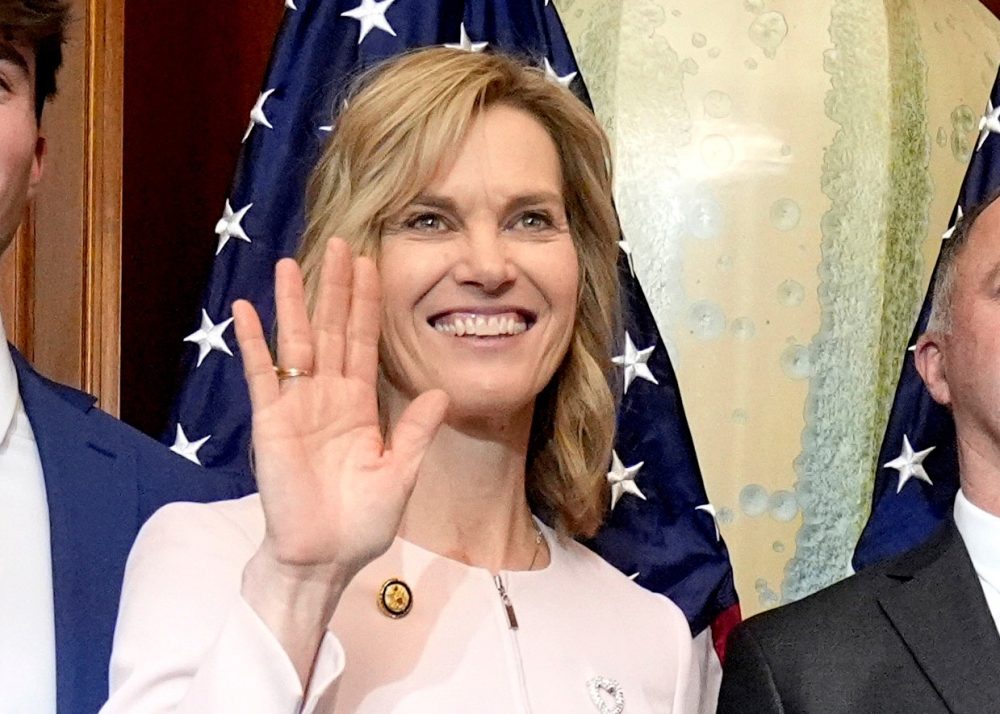
Republican U.S. Rep. Julie Fedorchak is pursuing her second term and confronts another primary contest from Alex Balazs, a former foreign service officer who finished fourth in last year’s race with 4% of votes trailing Fedorchak and other candidates. Fedorchak subsequently captured the general election with 69% of votes over Democrat Trygve Hammer, who is running once more and will face this year’s Republican primary victor.
Voters will select candidates for various top statewide positions, though most of these races feature unopposed candidates for offices including secretary of state, state attorney general and state agriculture commissioner.
Several of the state’s highest elected positions, including governor, lieutenant governor, treasurer and both U.S. Senate seats, will not appear on ballots until 2028 or beyond.
In a separate statewide decision, voters will consider a ballot measure that would prevent future proposed constitutional amendments from covering multiple subjects simultaneously. The measure would restrict amendments to addressing only a single topic.
Fargo, the state’s most populous city, will choose a new mayor to replace term-limited incumbent Tim Mahoney. Five candidates are competing for the nonpartisan position. This election brings two major changes from past mayoral contests. The City Commission decided in 2025 to convert the mayor’s role from part-time to full-time. Additionally, this marks the first mayoral election since the state prohibited the distinctive voting method Fargo residents had implemented in 2018. The city’s former “approval voting” system allowed voters to select unlimited candidates, with victory going to whoever received the most votes. This approach was intended to elect winners with widespread voter support.
State Legislature primaries also appear on ballots. Slightly more than half of North Dakota’s 47 state Senate positions and 94 state House seats face election in 2026. Republicans maintain commanding supermajorities in both legislative chambers.
North Dakota ranks among the nation’s most dependably Republican states. Republican presidential nominees have carried the state in the past 15 elections. The state was Donald Trump’s fourth-strongest in 2016 and 2020 elections, and his third-best in 2024 when he earned 67% of votes.
Polling locations close at 7 p.m. local time, translating to 8 p.m. and 9 p.m. ET. Most polling sites operate in Central time and close at 8 p.m. ET, while some Mountain time locations close at 9 p.m. ET.
The Associated Press will deliver vote tallies and announce winners in competitive primaries for U.S. House, state Senate, state House, Public Service Commission and state school superintendent, plus the general election for Fargo mayor and the statewide ballot question.
All eligible voters may participate in any party’s primary election.
North Dakota stands as the sole state without voter registration requirements. Any U.S. citizen who reaches 18 by the general election and has resided in North Dakota for 30 days before Election Day qualifies to vote. Approximately 594,000 eligible voters existed in North Dakota as of the 2024 general election.
Around 372,000 North Dakota voters participated in the 2024 presidential general election. Primary turnout runs significantly lower. During 2024 state primaries, roughly 20,000 voters joined Democratic primaries for U.S. Senate and governor when nominees faced no opposition. Republican participation that year reached about 83,000 voters in an uncontested U.S. Senate primary and approximately 93,000 in a contested gubernatorial primary.
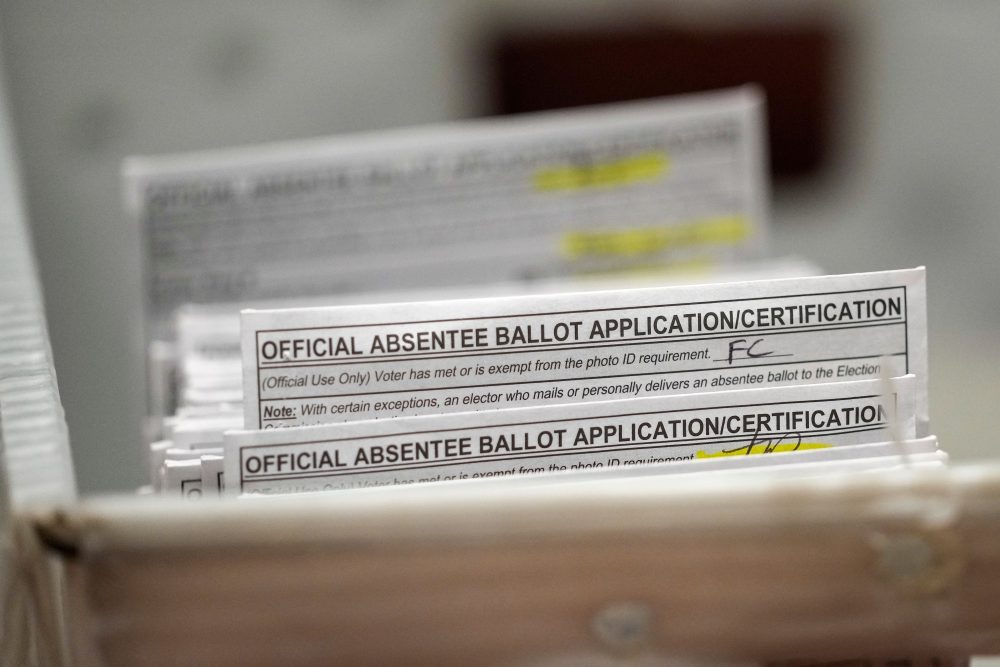
Early in-person and mail voting accounted for roughly 41% of total votes across both parties’ 2024 primaries. This figure was about 48% during 2022 state primaries.
By Friday, approximately 37,000 ballots had been submitted for Tuesday’s election.
North Dakota’s 53 counties handle result reporting differently for early in-person and mail votes, but over two-thirds typically release complete or nearly complete results in their initial report. This encompasses all voting methods: early in-person, mail ballots, and Election Day in-person voting. The four largest counties – Cass, Burleigh, Grand Forks and Ward – generally release mixed vote types throughout the evening.
During the 2024 state primary, the AP initially published results at 9 p.m. ET, coinciding with final poll closures. The evening’s final vote update occurred at 11:56 p.m. ET, with approximately 99% of total votes tallied.
The AP avoids making projections and declares winners only when determining no possible scenario exists for trailing candidates to overcome deficits. When races remain uncalled, the AP continues covering significant developments like candidate concessions or victory claims while clarifying it has not declared winners and explaining reasons.
Automatic recounts occur in North Dakota primaries when vote margins equal 1% or less of votes received by the leading candidate. Primary candidates may request and fund recounts when margins exceed 1% but remain under 2% of the top vote-getter’s total. Ballot measures decided by 0.25% margins or less receive automatic recounts. The AP may declare winners in races subject to recounts if determining leads are too substantial for recounts or legal challenges to alter outcomes.
As of Tuesday, 147 days remain until the 2026 midterm elections.