Oversight agencies may find it difficult to monitor wagering on upcoming midterm elections, as thousands of contests create numerous opportunities for those with inside knowledge to profit illegally on expanding betting platforms, according to specialists and recent information.
A spike in questionable trading activity on the nation’s two biggest prediction market platforms has raised concerns that these rapidly expanding markets are opening fresh channels for insider trading violations.
One major platform suspended three congressional hopefuls in April after they placed wagers on their own electoral contests, while authorities are examining whether former congressman George Santos potentially engaged in insider trading on the same platform.
Specialists in insider trading violations believe this could represent just the beginning of a larger problem. With no fewer than 6,590 state and federal legislative positions being contested this year, an anticipated wagering surge will challenge protective measures in an emerging market where insider trading laws remain unclear and regulatory oversight is limited, according to industry observers.
“We may see a slow response or we may see no response if and when insider trading happens in the midterms,” said Ilya Beylin, a professor at Seton Hall Law School who has studied prediction market oversight. He noted that questionable trades could damage Americans’ confidence in democratic processes when polling already indicates many citizens believe the system faces threats.
Both major platforms and the Commodity Futures Trading Commission, which seeks oversight authority over prediction markets, maintain they possess adequate monitoring capabilities and resources to address these challenges.
The companies are strengthening their safeguards, with one platform prohibiting political figures and campaign staff from election wagering while another increases enforcement against trading based on private information. The Senate implemented a ban on prediction market betting by members and staff in April.
Monthly worldwide trading activity on the two leading platforms jumped nearly five times from September to approximately $24 billion in April, exceeding the roughly $14 billion wagered monthly through legal sports betting operations in the United States last year, based on research center data.
“As innovation expands the reach and complexity of our markets, we are continuing to grow alongside it, both operationally and technologically,” a CFTC spokesperson said, adding the agency will “enforce the law aggressively.”
Legal representation for Santos chose not to provide comment.
These markets enable participants to purchase and sell contracts based on whether specific events will occur, offering “yes” or “no” positions on various outcomes.
Participants can wager on congressional control by political parties, state legislature composition, individual contests, and related campaign events and candidate activities.
Beyond approximately 470 congressional races, 6,122 state and territorial legislative positions face election this year, according to the National Conference of State Legislatures, plus local contests for prosecutor, mayor, judicial, and other positions. Every candidate creates potential insiders including campaign workers, polling specialists, fundraising staff, financial contributors, personal contacts and relatives.
Although insider trading faces prohibition in commodity derivatives markets, legal specialists note relatively few enforcement cases have occurred. Election-related insider information spans a wide range, from unreleased polling results to developing controversies, much of which regulators may not fully understand, according to Beylin.
“They will need to learn, and that learning process often involves trial and error,” he noted.
The scope of potential inside information continues expanding as election wagering becomes increasingly specialized. During the major election year of 2024, one platform featured 1,293 election-related markets with $7.26 billion in trading activity, according to the Anti-Corruption Data Collective, a nonprofit research organization.
With fewer significant contests last year, election markets on the platform decreased, but the ratio of markets to races increased seven-fold to 17.4, showing election wagering is becoming more detailed, according to Michelle Kendler-Kretsch, a researcher with the organization.
These markets increasingly emphasize race variables rather than simple winners and losers, including voter participation, victory margins, and candidate withdrawal timing, based on the group’s analysis, which has not been previously published.
For instance, one platform last year offered multiple markets on “inactive” ballot percentages, meaning votes for eliminated candidates, in the Democratic primary for New York City mayor.
This development “creates a more significant information asymmetry, while the number of potential insiders grows and the risk of insider trading increases,” Kendler-Kretsch explained.
Beyond the two major platforms, at least four other authorized U.S. platforms offer election contracts, several brokers provide access to these products, and additional companies plan to launch services. Like traditional markets, these companies provide initial oversight.
One platform recently established U.S. operations, though its primary exchange lacks U.S. regulation and typically hasn’t required identity verification checks. While it prohibits U.S. residents, authorities have noted concerns that these restrictions can be easily circumvented.
“We maintain a comprehensive market integrity framework” and focus on transparency, a company spokesperson stated.
Through internal monitoring, the platform has reported nearly 100 user accounts to law enforcement, including one allegedly used by a U.S. soldier for insider wagering on Venezuelan leader Nicolas Maduro’s potential removal, the spokesperson said.
One platform defines insiders as individuals positioned to directly affect a contract’s outcome, said Robert DeNault, the company’s enforcement director. Besides identity checks, the company uses public records to identify federal politicians and campaign staff before trading and plans similar verification for local elections where information is available. It also monitors trading for unusual patterns.
The company can then focus on suspicious activity subsets, DeNault explained. “You can leverage the tools … to gather a lot of information,” he said, adding that while workloads can be substantial, they remain manageable.
Despite these tools’ capabilities, each lead requires human investigation, said Aitan Goelman, who served as CFTC enforcement director from 2014 to 2017. The cases one platform identified in April demonstrated the need for human verification of user identities.
With CFTC enforcement staffing at 105 positions, representing its lowest level in at least two decades according to budget information, and many experienced investigators having departed, the agency may lack sufficient personnel to examine numerous referrals, Goelman suggested.
The agency spokesperson said it relies on experienced staff and has maintained continuous hiring since December.
However, Goelman argued the agency’s resources were “not even close” to meeting its requirements.
Disease surveillance specialists will spend this summer analyzing sewage systems and social media platforms to protect soccer enthusiasts and communities from serious health threats during the World Cup, which represents one of the most massive and internationally diverse gatherings ever planned.
A Washington D.C.-based public health team intends to track wastewater and online discussions to identify and monitor infectious diseases that might surface in U.S. or Canadian cities welcoming World Cup teams, matches, and millions of visitors, according to event coordinators.
The 39-day tournament begins in Mexico on Thursday. Over 6.5 million soccer enthusiasts from more than 100 nations are anticipated to attend 104 matches across the U.S., Canada and Mexico.
The magnitude of the competition and worldwide travel patterns create elevated risks for swift disease spread during a period when overwhelmed U.S. public health systems are managing domestic and international outbreaks of measles, Ebola and hantavirus, according to health security specialists.
Funding reductions and personnel cuts during the Trump administration, combined with the U.S. exit from the World Health Organization, have intensified these difficulties, according to coordinators of the new disease-monitoring program.
The recently established team of public health specialists has transformed a Georgetown University laboratory into an epidemiological operations center. The setup combines academic institutions, non-profit organizations and private companies supporting government agencies.
The group is currently developing daily status updates to identify emerging threats and any urgent action requirements for hospital emergency coordinators and public health officials at local, state, federal and international levels, plus FIFA, soccer’s governing organization and World Cup coordinator.
The command center, established through partnership with the MedStar Health regional hospital network, serves as a practice run for upcoming events, including the 2028 Summer Olympics in Los Angeles. MedStar operates one of the country’s 13 biocontainment facilities.
Sophisticated wastewater testing, utilizing DNA and RNA sequencing to identify genetic material from various microorganisms without requiring laboratory cultivation, represents a crucial component in tracking infectious disease dangers, explained Rebecca Katz, director of Georgetown’s Center for Global Health Science and Security and leader of the new disease monitoring program.
“It’s incredibly powerful,” Katz said. Her group is currently obtaining such information from collection points in the U.S. and Canada, plus various other health monitoring resources in all three World Cup host nations.
Identifying disease-causing organisms in wastewater can indicate a developing outbreak, providing health authorities time to alert medical professionals to watch for symptoms of illnesses that could otherwise be incorrectly diagnosed, and to encourage the public to take protective measures.
Significant media coverage has concentrated on the ongoing Ebola crisis in Africa. However, Katz described the frequently deadly hemorrhagic fever as presenting a “very low risk to the general public” in North America. The World Cup squad and support personnel from the Democratic Republic of Congo, the nation at the center of the Ebola outbreak, have undergone precautionary isolation in Belgium before traveling to the United States, though most players were in Europe when the outbreak occurred.
Katz indicated her team would focus particularly on measles transmission, which is nearing a record for U.S. case totals this year – approximately 2,000 thus far – and has returned in areas of Mexico and Canada.
Further dangers come from mosquito-transmitted illnesses such as dengue, also called “breakbone fever,” and a related disease, chikungunya. Both emerge from tropical regions and can be transported by infected travelers and then spread by mosquitoes.
Katz recruited 20 colleagues plus donated support and help from 30 additional organizations for her operations facility. These include multiple wastewater monitoring companies that are gathering and examining sewage samples and providing their findings to Katz’s team at no cost.
Additional essential methods include monitoring anonymous information from electronic health records and examining open-source social media sites for details indicating transmission clusters, Katz explained.
She referenced a previous case of public health officials identifying a gastrointestinal illness outbreak through social media discussions about a sudden increase in toilet paper purchases.
The Georgetown team will supplement the efforts of multiple U.S. agencies, including the Centers for Disease Control and Prevention and the Administration for Strategic Preparedness and Response, Katz noted.
Funding for the center has originated from a small family foundation and Georgetown, along with donated contributions from partners such as the University of Nebraska.
Indian shipping officials confirmed Monday that a blaze broke out aboard an oil tanker carrying 24 Indian crew members, but reported that all personnel are safe.
Television news outlets in India indicated the burning vessel was positioned in waters near Oman’s coastline.
Pope Leo delivered a historic address to Spain’s parliament on Monday, declaring that rising conflicts, growing polarization, and widespread human rights violations have plunged the world into a severe crisis during one of his most comprehensive political speeches to date.
The pontiff, who has recently taken a stronger stance against current global leadership trends, reiterated his opposition to rising European defense expenditures, calling on political leaders to focus on ending global conflicts and assisting migrants instead.
“The world is undergoing a profound spiritual and cultural crisis, which is manifested in multiple forms of violence, polarization, and mutual distrust,” Pope Leo stated during his address, delivered just hours after Israel and Iran resumed hostilities in the most significant challenge to a two-month ceasefire.
“Weapons can impose a temporary silence; but they can never build an authentic and lasting peace,” he declared.
The papal address, delivered in Spanish and met with a seven-minute standing ovation from legislators, marked an unprecedented moment as the first time a pope has spoken before Spain’s parliament. The speech is part of a week-long tour during which the pontiff has engaged with migrants and homeless individuals while urging national leaders to stop creating divisions among their citizens.
Pope Leo’s visit will conclude with meetings with migrants in the Canary Islands who risked treacherous Atlantic crossings to reach Europe. He told lawmakers that insufficient support for global migrants threatens “the ethical foundation of the international order.”
The pope emphasized that nations must seek solutions beyond “the mere management of flows” and should tackle root causes forcing people to flee their homelands, including warfare, poverty, and climate change.
“The moral greatness of a nation is manifested above all in its capacity to accompany, protect, and love those lives that pass through the greatest fragility,” Pope Leo told parliament.
According to NGO Caminando Fronteras, over 3,000 people perished in 2025 attempting to reach the Canary Islands off Africa’s western coast, often in improvised boats. Prime Minister Pedro Sanchez’s administration has launched a comprehensive amnesty program, enabling approximately 500,000 immigrants to seek legal status.
Pope Leo, who released an urgent manifesto last month calling for governments to regulate AI development, urged “rigorous ethical vigilance” regarding artificial intelligence use in military applications on Monday.
He described increasing European defense spending, which reached its highest levels since the Cold War ended amid pressure from U.S. President Donald Trump, as “troubling.”
Spanish Prime Minister Pedro Sanchez has rejected Trump’s demands for NATO nations to boost defense spending to 5% of GDP, though expenditures have tripled during his tenure since 2018, climbing from approximately 10 billion euros ($11.5 billion) to over 34 billion euros.
Last month, the pope characterized European rearmament as a democratic betrayal.
Pope Leo also provided his most detailed comments to date on Church-state relations, advocating for religious freedom protection and arguing that faith “cannot be relegated to silence as though it were irrelevant to public life.”
The pontiff also defended the confidentiality of Catholic confession, which requires priests to maintain secrecy regarding information shared by penitents.
Multiple nations, including France, have considered requiring priests to report sexual abuse revealed during confessions following scandals that have impacted the Church globally.
Preserving confession confidentiality, Pope Leo argued, maintains “a sacred space of inner freedom, where the believer can open his or her soul before God.”
A 2023 investigation by Spain’s human rights ombudsman estimated hundreds of thousands of clerical abuse victims across decades. The Vatican announced the pope would meet with victim representatives during his visit but has not provided additional details. The pope did not address Catholic clergy abuse in his parliamentary speech.
South Korea’s technology leadership announced Monday they will pursue expedited access to Nvidia’s advanced Vera Rubin graphics processing units amid concerns about potential shipping delays.
Science and ICT Minister Bae Kyung-hoon revealed that his government issued an official notice for the country’s graphics processing unit initiative earlier that day. He noted that deliveries of Nvidia’s B300 processors appear to remain on track.
“B300 supply looks like it will come in time, but Vera Rubin looks likely to be slightly delayed, so we will request priority supply for that,” Bae told reporters.
The minister later indicated that South Korea’s goal is to secure these chip supplies within the current year.
Good morning, Delmarva! We’re starting off this beautiful Monday with fantastic weather across the peninsula. Expect mostly sunny skies today with a pleasant high of 74 degrees – perfect for any outdoor activities you have planned. You’ll feel a gentle east breeze around 10 mph, making it feel comfortable throughout the day.
There’s nothing dramatic in our forecast – no storms or extreme temperatures to worry about. Just classic early June weather that’s ideal for spending time outside, whether you’re in Salisbury, Dover, or anywhere along our beautiful coastline.
Tonight will be mostly clear with temperatures dropping to a comfortable 53 degrees – great sleeping weather with the windows open! Looking ahead to Tuesday, we’ll see a slight warm-up with mostly sunny conditions and highs reaching 82 degrees. Tuesday night stays pleasant with partly cloudy skies and lows around 66.
It’s shaping up to be a wonderful start to the week across Delmarva. Enjoy this beautiful weather, and I’ll see you back here tomorrow with your updated forecast!
New research indicates that the phenomenon of “ideological sorting” involves more complex factors than people simply relocating to areas that align with their political beliefs.
According to recent studies, political preferences represent just one of several considerations that influence where Americans choose to live. Other significant factors include tax policies and community safety concerns.
The findings suggest that while the political divide between states is genuine, the underlying causes are more nuanced than previously understood, with residents weighing multiple practical considerations when making relocation decisions.
Iran’s Foreign Ministry spokesperson Esmaeil Baghaei pointed blame at the United States on Monday following nighttime military confrontations between Iranian and Israeli forces, describing the situation as worsening an already “chaotic diplomatic process” between Tehran and Washington. Baghaei indicated that Iran and the US are currently communicating through messages in an atmosphere marked by “extreme suspicion.”
According to Baghaei, Israeli military operations in Lebanon are designed to undermine diplomatic efforts, regardless of whether the US has prior knowledge or approval of such actions. He emphasized that Washington holds direct accountability for ceasefire violations as a participant in the April 8 agreement, including strikes linked to Israel, warning that the international community should worry about escalating regional warfare.
“The United States bears direct responsibility for any action the Zionist regime (Israel) takes in relation to violating regional peace and security against Iran,” Baghaei stated.
The spokesperson noted that Pakistan’s interior minister traveled to Tehran on Sunday as part of ongoing efforts to maintain indirect communication channels with Washington.
In a separate matter, Baghaei announced that Iran would counter any resolution targeting the country during this week’s U.N. nuclear watchdog Board of Governors meeting.
He criticized International Atomic Energy Agency chief Rafael Grossi for ignoring conflict realities and maintaining biased political positions that undermine the organization’s credibility.
WASHINGTON — With the United States gearing up for elaborate festivities marking its 250th birthday, a recent national survey reveals Americans are growing less convinced their nation stands apart from others worldwide.
Research from The Associated Press-NORC Center for Public Affairs Research shows widespread concern about the future of American democratic institutions, especially among younger generations. This sentiment creates a stark backdrop as cities and towns across the nation plan commemorative events for the milestone anniversary.
The polling data shows just one in four Americans believes the United States surpasses all other nations globally, while 44% view it as among the world’s top countries alongside others. Roughly 30% now say other nations outperform the U.S., marking a significant jump from the 19% who held this view in a June 2016 AP-NORC survey.
The research reveals Americans continue to disagree on whether diversity defines the nation’s character, while consensus on other foundational elements appears to be weakening. Fewer citizens now consider democratically elected leadership as “extremely” or “very” crucial to America’s national identity compared to recent years. Currently, about two-thirds of adults view democratic governance as highly significant to the country’s identity, dropping from 80% recorded in 2021.
“It’s not that the democracy part is not working,” said Derricka Wall, 24, of Chickasaw, Alabama. “It’s the people that are actually being put in office that is the problem.”
Wall contends that elected officials have undermined America’s governmental framework, originally created to guarantee representation and prevent governmental overreach.
She described America as “not what it used to be. I feel like our founding fathers would be kind of disappointed with how it is now.”
The survey found younger Americans express significantly less belief in U.S. superiority compared to older citizens.
Among adults under 30, approximately 44% believe other countries surpass the United States, contrasting with 22% of those aged 60 and above who share this view.
Additionally, fewer young people consider democracy central to American identity. Only half of Americans under 30 hold this belief, compared with 81% of those 60 and older.
Wall explained that the founders who created the system of balanced governmental branches believed they were establishing protections against concentrated power. However, she thinks they couldn’t anticipate how quickly these safeguards would fail when officials stopped upholding them.
“I feel like they would actually roll out of their graves,” she said. “I feel they would be very disappointed in us.”
Dissatisfaction with political effectiveness spans beyond younger demographics. Kent Stage, 62 and a retired senior enlisted man in the Army, is a registered Republican in Indiana. He doubts the existing political framework can solve national challenges. He advocates for congressional term limits and increased working-class representation in government.
“I’ll trust the ambulance-chasing lawyer and a shady used car salesman before I trust the politician,” he said.
Stage, who is also a former Marine, thinks elected officials prioritize personal and family interests “while mine and yours still got to hit the old grindstone.”
The polling also reveals extensive doubt about America’s promise of opportunity. Approximately half of adults, 51%, believe the American Dream — the concept that hard work leads to advancement — was once valid but no longer applies. About one-third maintain it “still holds true” while 15% say it was never accurate.
Jack Hermanson, a 27-year-old software developer in Denver, said his faith in the American Dream shifted after watching his engineer husband’s job search difficulties. “That really shattered my impression that if you work hard, you get what you deserve,” Hermanson said.
Just 22% of Americans under 30 believe the American Dream remains valid, compared with 46% of Americans ages 60 and older.
Angela Toombs, 31, works at a senior living facility in Atlanta where her clients describe how easily they purchased homes while working entry-level positions in their twenties and express disbelief about the challenges facing Toombs’ generation. Toombs recently abandoned her apartment to rent a room for financial savings.
Doubt about the American Dream is more common among Democrats and independents than Republicans. Most Republicans, 57%, maintain the American Dream remains achievable, compared with about one-quarter of independents and 17% of Democrats.
Republicans also show much higher rates of viewing the U.S. as exceptional. About half of Republicans consider the U.S. superior to all other nations, compared with only 7% of Democrats.
Quintin Sharpe, 28, lives in a resort town on Lake Geneva in Wisconsin. A financial planner who is Republican, he said the American Dream stays within reach and he takes pride in the country. “It’s been a great experiment.”
“The opportunity is there for those who want to work for it,” he said. Sharpe considers the country “a meritocracy, and the best ideas, the best work ethic, those with the best succeed regardless of race, skin color, any of those factors.”
He and his wife plan to mark the country’s 250th anniversary by watching fireworks over the lake.
Slightly more than half of adults — 56% — consider shared American culture and values as “extremely” or “very” significant to national identity, declining from 65% in 2017. Younger Americans show less likelihood than older ones to view unified values as important to U.S. identity.
However, Americans stay deeply split on the importance of embracing diverse viewpoints: About half of adults, 51%, consider the capacity for people to arrive from other nations to flee violence or seek economic opportunities as “extremely” or “very” important to American identity, while 55% say this about blending cultures and values from worldwide.
Only about 40% of Republicans view the mixing of global cultures and values as fundamental to national identity, compared with 76% of Democrats.
Rose Nunez, 70, of San Antonio, was a small business owner but now is a caregiver for family members. Nunez, who tends to vote for Democrats, said there is an unease and tension that are just beneath the surface, especially focused on Hispanics. She said some people have started carrying their papers showing their immigration status in case they are challenged.
“It is hard to celebrate when the feelings towards immigrants and communities of color are so strong,” she said of the upcoming America 250 celebrations.
She said even citizens are questioned now. If it gets to a point where being naturalized is challenged, “guess what, my mom would be leaving. She’s been living in this country since she was maybe four years old. She’s 93.”
The AP-NORC poll of 2,596 adults was conducted April 16-20 using a sample drawn from NORC’s probability-based AmeriSpeak Panel, which is designed to be representative of the U.S. population. The margin of sampling error for adults overall is plus or minus 2.6 percentage points.
A historic British company with roots dating back to the 1850s has been purchased by an American corporation in a deal worth $3.6 billion. Tate & Lyle, one of Britain’s most established industrial enterprises, accepted a cash buyout offer from US-based Ingredion on Monday, creating what will become a major global player in food and beverage ingredients.
The acquisition represents the latest chapter in a remarkable business story that began more than 160 years ago in London’s East End. Here’s how the company evolved from Victorian-era sugar refining to today’s specialty ingredients business:
1859-1872 Henry Tate began working in the sugar industry, with his family later founding the Henry Tate & Sons refinery following the dissolution of an earlier business partnership.
1875 Henry Tate brought cube sugar to the British market for the first time.
1883 Abram Lyle & Sons began sugar melting operations approximately 1.5 miles from the Henry Tate & Sons’ Thames Refinery location in East London.
1899 Henry Tate died.
1921 The two rival companies, Henry Tate & Sons and Abram Lyle & Sons, combined operations to create Tate & Lyle, which then controlled approximately half of Britain’s sugar production.
1937 Michael Kroyer Kielberg, a businessman originally from Denmark, transferred ownership of his Liverpool sugar refinery to Tate & Lyle in return for partnership rights in the company’s new West Indies sugar operations.
1938 The company went public with shares trading on the London exchange.
1953-1965 Following Kielberg’s retirement, Tate & Lyle purchased his United Molasses company and expanded its molasses trading operations.
1976 Working alongside scientists at Queen Elizabeth College, University of London, Tate & Lyle developed sucralose, a zero-calorie sweetener still widely used today. The product reached consumers as SPLENDA through a partnership with McNeil Nutritionals.
1980s-1990s The company pursued multiple acquisitions to expand beyond its traditional sugar and sweetener operations.
Early 2000s Launched an initiative to eliminate underperforming business units.
Mid- to late-2000s Gained exclusive manufacturing rights for SPLENDA, grew its specialty ingredients division, and reduced its sugar refining and trading activities.
2010 Divested its European Union sugar operations to concentrate on its rapidly expanding food ingredients division. This transaction concluded the company’s direct involvement in refined sugar manufacturing, though the Tate & Lyle Sugar brand continued through licensing agreements.
Early- to late- 2010s Continued selling off various assets while expanding its dietary fiber and sweetener product lines.
2020 Purchased Sweet Green Fields to enhance its capabilities in alternative sweeteners including stevia.
2021 Divested majority ownership in its primary products commercial sweeteners division, establishing Primient as a separate company while refocusing on healthier food and beverage products.
2024 Sold its remaining ownership stake in Primient early in the year, then acquired US-based CP Kelco in June to strengthen its specialty ingredients portfolio and capitalize on growing demand for plant-based products.
Market reports in October indicated that private equity firm Advent was preparing a takeover proposal for Tate & Lyle potentially worth more than £2.8 billion in total market value. That proposed deal never materialized.
May 14, 2026 Ingredion, the US food ingredients manufacturer, announced it was conducting acquisition discussions with Tate & Lyle.
June 8, 2026 Both companies confirmed they had reached agreement on the takeover terms.
LONDON – Britain’s Prime Minister is pressuring major technology companies to implement protective measures on children’s devices that would stop minors from sharing explicit images, threatening legislative action if they refuse to comply.
The proposed initiative would require companies such as Apple and Google to develop or enable technological features on mobile devices and tablets that can identify and prevent nude images from being transmitted by underage users, according to government officials. Adult users would maintain access to such content through age confirmation systems.
Speaking at London Tech Week on Monday, Prime Minister Keir Starmer addressed technology companies directly: “Today I’m calling on tech companies operating in this country to introduce device controls that prevent children from sending and receiving sexually explicit images. This is not an impossible challenge.”
Government officials announced that technology firms have a three-month window to implement these protective measures voluntarily before facing mandatory legislation.
“This will include fines for companies. Nothing is off the table, and as a last resort the government is exploring whether this could extend criminal liability for tech bosses who fail to comply,” according to the official government announcement.
In December, Australia made history as the first nation worldwide to prohibit social media access for youth under 16, preventing them from using platforms such as TikTok, Alphabet’s YouTube, and Meta’s Instagram and Facebook.
Here’s an overview of actions countries and companies are taking to control social media access as worries grow about its effects on young people’s wellbeing and security.
AUSTRALIA
Groundbreaking legislation requires major social media companies to prevent access for minors under 16 starting December 10, 2025, representing some of the strictest rules targeting big tech companies globally.
Platforms that don’t comply risk fines up to A$49.5 million ($34.9 million).
BRITAIN
British Prime Minister Keir Starmer plans to announce restrictions on “harmful” online platforms for youth under 16 while allowing access to certain safer social media options, according to a Times report from June 8.
Starmer reportedly chose to move forward with these limitations after meeting with grieving parents and reviewing evidence from Australia.
CHINA
The nation’s cyberspace regulator has established a “minor mode” system requiring device-level limitations and app-specific guidelines to limit screen time based on age.
DENMARK
In November, Denmark announced plans to prohibit social media for youth under 15, though parents could grant access to specific platforms for children as young as 13.
FRANCE
The National Assembly approved legislation in January to prohibit children under 15 from using social media due to increasing concerns about cyberbullying and mental health dangers. The proposal must pass the Senate before a final lower house vote.
GERMANY
Youth between 13 and 16 may only access social media with parental permission. Child advocacy groups argue these protections are inadequate.
GREECE
The country is “very close” to declaring a social media prohibition for children under 15, a senior government source informed Reuters on February 3.
INDIA
The nation’s chief economic adviser advocated for age limits on social media platforms in January, calling them “predatory” in their user engagement tactics, just two days after tourist destination Goa announced it was considering restrictions similar to Australia’s.
ITALY
Youth under 14 must have parental approval to create social media accounts, while those above that age need no consent.
MALAYSIA
The country started preventing those under 16 from creating social media platform accounts, according to its communications regulator on June 1.
NORWAY
In 2024, the Norwegian government suggested increasing the consent age for social media terms from 13 to 15, though parents could still approve access for younger children.
Officials have also started developing legislation for an absolute minimum age of 15 for social media access.
POLAND
The ruling party is developing new legislation to ban social media for children under 15 and make platforms responsible for age verification, announced on February 27.
SLOVENIA
The country is creating legislation that would prevent children under 15 from using social media, Deputy Prime Minister Matej Arcon stated on February 6.
SPAIN
The nation will advance new regulations to make social networks and AI safer despite heavy tech industry lobbying, Digital Transformation Minister Oscar Lopez told Reuters in May.
Prime Minister Pedro Sanchez announced in February that Spain would prohibit social media access for minors under 16, requiring platforms to implement age verification systems.
SWEDEN
A government-appointed commission recommended on June 2 that the country should establish a minimum age of 15 for social media use.
A prohibition could be structured so platforms handle age verification, investigator Lisa Englund Krafft explained at a news conference with Social Affairs and Public Health Minister Jakob Forssmed.
UNITED STATES
Legislation designed to force social media companies to better protect children and teens passed a significant political milestone after Republican Senator Ted Cruz announced his support on May 12.
Cruz stated at a Washington event that he would support the Kids Online Safety Act, which would require social media companies to “exercise reasonable care” when designing features that could harm minors, according to the bill.
This legislation is distinct from the existing Children’s Online Privacy Protection Act, which stops companies from gathering personal information from children under 13 without parental permission. Multiple states have enacted laws requiring parental consent for minors’ social media access, but these have faced legal challenges on free speech grounds.
EU LEGISLATION
On May 12, European Commission President Ursula von der Leyen announced the European Union would pursue stronger protections for children from harmful social media features.
Von der Leyen said the Commission would address “addictive and harmful design practices” in its Digital Fairness Act, planned legislation set for proposal later this year, while an expert panel develops guidance on implementation.
In November, the European Parliament approved a resolution demanding an EU-wide prohibition on platform access for children under 16 without parental consent, and complete bans for those under 13.
TECH INDUSTRY
Social media platforms like TikTok, Facebook and Snapchat require users to be at least 13 to register.
Child protection advocates argue these measures are insufficient, and government data from several European nations reveals vast numbers of children under 13 maintain social media accounts.
Chicago Cubs officials are still determining how serious starting pitcher Jameson Taillon’s hamstring injury is, but they’re confident the veteran right-hander will land on the injured list.
The 34-year-old pitcher exited Sunday night’s matchup against the San Francisco Giants in the second inning with a runner on base and no outs. Following a six-pitch walk to Matt Chapman that opened the second frame, Taillon called for medical staff to come to the mound.
Taillon was removed from the contest, limping noticeably as he made his way to the dugout and down into the clubhouse. Javier Assad took over pitching duties, throwing 6 1/3 innings without allowing a run in what became a 2-1, 10-inning victory for San Francisco.
“It’s a left hamstring strain,” manager Craig Counsell said following the game. “Imaging tomorrow … it’s an IL. We’ll get more information tomorrow (regarding) severity and maybe an idea of a timeline.”
Taillon expressed cautious optimism about his long-term outlook while accepting that he’ll be sidelined for some period.
“I don’t think it’s crazy,” Taillon said to media members postgame. “Like, I’m walking around and moving around. Obviously, it will be an IL stint but, hopefully, we can keep the arm conditioned and moving around. … But I don’t it’s surgical or anything like that. I’m getting an MRI tomorrow and we’ll know more.”
Going into Sunday’s contest, Taillon held a 2-5 record with a 5.19 ERA through 67 2/3 innings over 13 starts this season.
During his fourth campaign with Chicago, Taillon has compiled a 33-30 record with an ERA slightly over four across 94 appearances (93 starts) for the Cubs.
Throughout his 10-year major league career, he has posted an 84-65 record with a 3.94 ERA while playing for the Cubs, Pittsburgh Pirates (2016-19) and New York Yankees (2021-22).
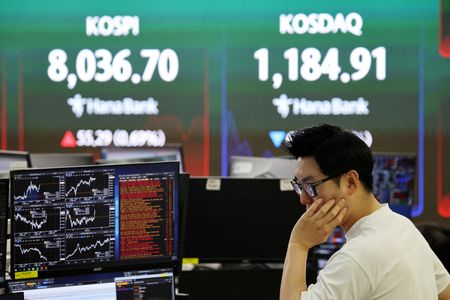
A Seoul resident’s investment story illustrates the mounting risks facing South Korea’s stock market as individual investors increasingly use borrowed funds to chase soaring share prices.
Laura Byun, who typically favored American mutual funds over domestic Korean stocks, changed her strategy when the KOSPI index’s dramatic surge made it the world’s top-performing benchmark. Not wanting to miss out on the rally, she borrowed approximately 15 million won ($9,687) through a bank overdraft to purchase a leveraged fund focused on the electronics giant, initially seeing returns of around 20%.
However, her fortunes quickly reversed. Following a technology sector selloff on Wall Street, the KOSPI dropped more than 8%, sending her investment position to negative 17% by Monday morning. The leveraged fund connected to the chip manufacturer plummeted as expectations of a Federal Reserve interest rate increase ended a nine-week winning streak on Wall Street.
“I’m not gonna do anything. I don’t know, I’m gonna wait for a rebound, unless like it halves or something,” Byun said.
Byun’s situation reflects a growing concern in South Korean financial markets, where retail investors known as “ants” are using increasing amounts of borrowed money to participate in a runaway stock rally, causing worry among regulators about heightened volatility and potential sharp corrections.
Data from the central bank released Thursday revealed that leveraged equity investments by individual investors reached an unprecedented 60 trillion won ($39.06 billion) at the end of May, coinciding with the KOSPI more than doubling over six months to claim the title of world’s best-performing index.
Contributing to this debt surge was the May 27 launch of South Korea’s inaugural single-stock leveraged funds tied to semiconductor companies whose earnings have skyrocketed alongside the artificial intelligence boom. These products offer investors double the daily returns of the underlying stocks.
Interest was so intense that the training website required for retail investors crashed on the first day, according to applicants including Byun. More than 350,000 individuals have since completed the mandatory course, the financial investment association reported.
However, leverage amplifies losses just as much as gains. The funds double both positive and negative movements within South Korea’s limit of twice a stock’s daily fluctuation – a characteristic regulators believe many newcomers may not fully understand.
“Investors should be cautious of amplified market volatility during potential downturns, particularly if late comers to the market increasingly rely on leverage to chase stock surges out of FOMO (Fear Of Missing Out),” the central bank warned, noting that margin loans are heavily concentrated in chip stocks.
The finance minister also expressed concerns last week about rising leveraged stock investments, promising to address risks associated with “excessive herd-like behaviour.”
A financial services official, speaking anonymously, said the commission monitors leverage levels and maintains regular contact with brokerages, though no immediate plans exist for additional restrictions beyond current training requirements.
The two major semiconductor companies now represent more than half the index’s market value, and daily swings of 5% to 10% on the KOSPI have become routine.
This leverage trend is part of a broader initiative to attract Korean investors back from U.S. markets, where many had shifted their focus since the pandemic began.
The strategy has succeeded – perhaps excessively so – as ants have shown enormous appetite upon returning to domestic markets. Margin-based equity investment surged 72.5% in 2025 alone, significantly exceeding growth rates of 36.3% in the United States, 36% in China, and 21% in Japan, according to central bank figures.
Daily trading volume reached a record 106.2 trillion won in May, nearly 60% higher than January through April averages and approximately four times the 2025 average.
Brokerage surveys showed investors in their 40s were the largest buyers, representing 28.9% of total inflows into single-stock leveraged funds linked to the chipmakers between May 27 and June 1. Those in their 50s comprised 28.7%, while people in their 30s accounted for 22.2%.
“I used to trade U.S. equities, but I bought SK Hynix just before the war broke out,” said a 40-year-old Seoul housewife who requested anonymity.
“Everyone is talking about the leveraged ETFs. SK Hynix had run up too high to buy outright, so I bought the double-leveraged ETF instead. But the volatility is extreme, and it makes me anxious. I’ll probably sell soon.”
A former curator and artist who worked at the Kennedy Center recently shared his perspective on where the renowned venue might be headed in the coming years.
Josef Palermo, who served as both an artist and curator at the cultural institution, discussed his experience there during a conversation with NPR’s Michel Martin. The interview covered Palermo’s time at the Kennedy Center as well as his thoughts on what lies ahead for the venue.
More than 2,000 women participated in Turning Point USA’s yearly women’s leadership conference this past weekend.
The gathering has raised questions about whether there may be divisions emerging within the conservative movement that helped secure President Trump’s victory in the 2024 election.
Listen to the Morning Delmarva Farm Report Update — June 8, 2026
DELMARVA — Beef production nationwide is projected to drop nearly 1% next year. The USDA expects 25.31 billion pounds of beef in 2027, down from this year’s totals. Analysts say fewer cattle heading to slaughter will drive the decline, though heavier carcass weights should offset some of that loss.
Closer to home, cattle producers are wrestling with whether to background calves or sell them at weaning. With cattle prices at elevated levels, the temptation to cash in is strong, but industry observers say ranchers need to weigh the broader economic picture before making that call.
Markets
Dairy trading closed mixed Friday at the Chicago Mercantile Exchange. Butter gained $0.01.25 to finish at $1.69.25 per pound. 40-pound cheese blocks dropped to $1.47.25. Nonfat dry milk fell $0.06.50 to $2.04.50. Barrels held at $1.44. Dry whey was unchanged at $0.67.
For cash grain, corn at Laurel Grain Company in Laurel, Delaware is bringing $4.61 a bushel for July delivery. Soybeans there are $10.57 for July.
Forecast
Mostly sunny today with a high of 73° and east winds at 10 mph. Tonight clears to 58°. Tomorrow stays mostly sunny, 73° again with light south winds. Rain chances arrive Wednesday.
This article is based on the Delmarva Farm Report Update Morning Edition, June 8, 2026. Hosted by Tom Bradley.
A century has passed since renowned Catalan architect Antoni Gaudí met his tragic end when a tram struck him down in Barcelona in 1926. Witnesses failed to provide immediate medical assistance because they mistook him for a homeless person.
During that period, Gaudí was residing in simple quarters within the construction site of the Sagrada Familia basilica. His unique, flowing and vibrant architectural designs faced severe criticism from Barcelona’s newspapers throughout his professional life.
Now, marking the 100th anniversary of Gaudí’s passing, Pope Leo XIV is scheduled to travel to Barcelona this Wednesday to officially open the 172.5-meter Tower of Jesus Christ at his renowned masterpiece, the Sagrada Familia (Holy Family).
With this tower’s completion, the Sagrada Familia now holds the distinction of being the tallest church structure globally.
Today, Gaudí’s architectural contributions attract millions of tourists to Barcelona annually, with seven of his creations recognized as UNESCO heritage sites. According to local newspaper La Vanguardia, the primary Gaudí structures in Barcelona collectively bring in approximately 240 million euros ($276 million) each year through admission fees.
This papal visit marks the third such occasion and follows the Vatican’s approval last year of a significant milestone in Gaudí’s path toward sainthood.
“The most remarkable aspect of Pope Leo’s visit is that, in addition to blessing the Tower of Jesus Christ, he is coming to encounter Gaudí as a spiritual companion,” explained Gaudí and architecture scholar Chiara Curti.
“There has been a transformation in how people view Gaudí’s work. Previously, his creations faced criticism — although some people valued them. Today, all focus has turned toward the individual himself.”
‘MAGICAL ARCHITECTURE’
Dutch art historian and Gaudí biographer Gijs van Hensbergen believes this church recognition suits a man driven by deep religious convictions.
“(Gaudí) embodies the 19th century romantic notion of the bohemian artist, someone who lived completely dedicated to a calling, without concern for others’ opinions,” he explained, noting that Gaudí would likely be amazed by his current fame.
The Sagrada Familia’s construction began in 1882 but faced a devastating blow when fire destroyed Gaudí’s workshop in 1936. Because Gaudí’s supporters managed to save numerous sketches and scale models, the project is now expected to reach completion around 2035, featuring three facades and 18 towers.
The basilica welcomed 4.9 million visitors last year, establishing a new attendance record, with entrance fees supporting the continued construction efforts.
Among recent visitors were Czech friends Aneta Ederová, 27, and Adam Bašta, 26, who explored three Gaudí structures during an eight-hour cruise ship layover in Barcelona.
While admiring Gaudí’s Casa Milà, Ederová shared that Barcelona had long been on her “bucket list” and described Gaudí’s buildings as “magical.” “They capture your attention immediately,” she remarked.
Japanese electronics manufacturer Panasonic Holdings announced Monday its intention to begin large-scale manufacturing of battery cells designed for data center use at a facility in Kansas by fiscal year 2028, which concludes in March 2029.
The Tokyo-based company revealed several key investment details:
• Panasonic will dedicate approximately 350 billion yen ($2.18 billion) from its previously disclosed 500 billion yen AI infrastructure investment spanning fiscal years 2026-2028 to its Energy division, which currently serves Tesla. The remaining 150 billion yen will go toward its Industry segment.
• The company’s Energy division also intends to construct a third manufacturing facility in Mexico, with large-scale production expected to begin in fiscal year 2028.
• Kazuo Tadanobu, CEO of Panasonic Energy, described the division’s 950 billion yen revenue goal for data center energy storage systems in fiscal 2028 as a “minimum commitment,” stating the business would work toward exceeding 1 trillion yen in sales.
The currency conversion rate stands at $1 equals 160.1900 yen.
Military fighter jets from NATO successfully intercepted and destroyed an unmanned aircraft that violated Latvian airspace on Monday after crossing from Russian territory, according to the Baltic country’s military forces.
Officials have not yet determined where the drone originated from.
In recent months, Ukraine has increased its long-distance drone operations targeting Russia, including missions in the Baltic Sea region, where multiple Ukrainian military drones have accidentally entered the airspace of Finland, Latvia, Lithuania and Estonia.
“Allied fighter jets successfully shoot down a drone flying into Latvian airspace!,” Latvia’s army said in a post on social media X.
Earlier Monday, officials issued warnings to residents in Latvia’s eastern areas, advising them to take cover inside their homes because of the potential danger. Military officials said the alert was lifted after the drone was destroyed.
The increasing frequency of military drones accidentally crossing into airspace belonging to Russia’s neighboring countries has raised worries that Ukraine’s conflict is expanding beyond its borders into NATO’s northern territories.
In the previous month, a NATO military aircraft destroyed what was believed to be a Ukrainian drone flying over Estonia.
YEREVAN, Armenia — Armenia’s Prime Minister Nikol Pashinyan declared victory in his nation’s general election during the early morning hours Monday, with initial vote counts showing his Civil Contract party secured first place by capturing 49.81% of ballots cast.
The prime minister and his Civil Contract party are seeking a robust public endorsement for Armenia’s shifting foreign policy direction, which includes moving away from ties with Moscow while pursuing membership in the European Union.
Pashinyan’s primary challenger was Samvel Karapetyan, a wealthy businessman who built his fortune in Russia and currently faces house arrest on charges of promoting government overthrow. Karapetyan’s Strong Armenia bloc finished second with 23.29% of votes, though he maintains the accusations against him are politically driven.
The nation’s Central Election Commission reported that four political parties exceeded the required 4% vote threshold to gain parliamentary seats following Sunday’s voting, with some holding strong pro-Russian positions.
The Strong Armenia party led by Karapetyan advocates for strengthening commercial relationships with Russia and has criticized Pashinyan for potentially provoking conflict with the Kremlin.
Two additional parties earned legislative representation: Armenia secured 9.94% of votes while Blossoming Armenia reached exactly 4%. Election officials recorded voter participation at 59.97%.
Speaking with reporters at his campaign headquarters before official results were announced, Pashinyan stated his party achieved an unprecedented electoral success and would establish a government independently.
Senior European Union leaders offered congratulations to Pashinyan after the closely fought contest, which European observers viewed as a measure of Russian sway over the former Soviet nation.
“The spirit of the Velvet Revolution you led in 2018 is alive and well,” European Commission President Ursula von der Leyen wrote Monday on social media, referencing the widespread demonstrations initiated by Pashinyan’s advocacy that removed Armenia’s previous Prime Minister Serzh Sargsyan from power.
“We deeply value our partnership with a democratic Armenia that is drawing ever closer to Europe. Armenia can count on us,” von der Leyen stated.
European Council President António Costa similarly congratulated Pashinyan through a post on X, discussing expanded EU involvement in Armenia and the wider South Caucasus area, which connects Europe’s energy-seeking markets with Central Asian natural gas resources.
“Together, the EU and Armenia are building stronger links between people and creating new opportunities in energy, trade, and digitalization. Our strong partnership is an investment in a more peaceful and prosperous future for the region as a whole,” he wrote.
CHISINAU, June 8 – An unmanned aircraft entered Moldovan airspace during the early hours of Monday, with explosive debris later discovered in farmland close to the Ukrainian border near the eastern community of Lopatna, according to Moldova’s defense ministry.
The country’s monitoring systems tracked the aircraft entering Moldovan territory at 12:20 a.m. local time (2120 GMT) Monday, coming from the Mihailovca-Lopatna area, ministry officials reported.
“It was confirmed that fragments from an unmanned aerial vehicle were found on an agricultural field near the Lopatna locality,” the ministry stated in their announcement.
Evidence at the location showed “the previous occurrence of an explosion,” officials added.
The defense ministry referenced a Russian nighttime assault on nearby Ukraine and indicated the aircraft debris would undergo analysis to determine its source and the circumstances surrounding the incident.
“What happened underscores the risks and consequences that the Russian Federation’s war of aggression against Ukraine poses to regional security and neighbouring states,” Moldova’s foreign ministry declared in their statement.
The country has experienced multiple instances of Russian unmanned aircraft entering its airspace or wreckage falling in border regions.
On Sunday, President Maia Sandu stated that the Ukrainian conflict demonstrated her nation’s urgent need for advanced interceptor drone technology, noting that new laws would be necessary to enable their production.
Swiss drug manufacturer Roche announced Monday it has signed an exclusive partnership and licensing deal with Nurix Therapeutics valued at up to $2.3 billion.
The agreement centers on developing bexobrutideg, a blood cancer treatment that works by breaking down specific proteins. The medication is scheduled to begin phase III clinical testing for chronic lymphocytic leukaemia (CLL) during the summer months.
Under the terms, Nurix Therapeutics will collect $700 million in immediate payments, along with potential additional compensation tied to development progress, regulatory approvals and sales achievements.
“We believe bexobrutideg could represent a major leap forward in the fight against complex blood cancers and other diseases,” stated Levi Garraway, Roche chief medical officer and head of global product development.
The partnership is scheduled to finalize during the third quarter of 2026.
Roche will shoulder 60% of the drug’s development expenses, while Nurix will handle the remaining 40%.
Both companies plan to jointly market the treatment within the United States, sharing profits and losses equally. For international markets outside the U.S., Roche will handle commercialization independently while paying royalties to Nurix.
Stock prices for Zealand Pharma plummeted over 20% during Monday morning trading following the release of clinical trial results that revealed concerning issues with the company’s weight-loss medication survodutide.
The trial data indicated that patients taking the obesity treatment experienced more severe adverse reactions and were more likely to discontinue participation in the study when compared to competing medications in the same therapeutic category.
The Danish pharmaceutical company’s significant stock decline occurred in Copenhagen markets as investors reacted to the disappointing clinical findings on June 8th.
One of the NFL’s most uncertain quarterback situations may be moving toward clarity as training camps approach in just over a month.
ESPN reported late Sunday that Jacoby Brissett plans to attend the Arizona Cardinals’ mandatory minicamp this week, temporarily ending a holdout that kept the quarterback away from all team activities during the offseason.
Brissett, who is seeking a new contract, would face $107,911 in fines for missing minicamp when it starts Tuesday, according to ESPN’s report referencing the NFL’s collective bargaining agreement.
Despite Brissett’s expected attendance at minicamp, two significant questions persist:
1) How much field time will the 33-year-old participate in, and 2) when will negotiations between him and the organization result in a new contract agreement.
His existing deal ends following this season and would pay him $4.88 million in 2026, potentially increasing to $5.39 million. Only $1.5 million of that amount is guaranteed.
Arizona signed veteran Gardner Minshew during the spring, securing him $5.14 million guaranteed for this season.
ESPN’s report indicates no contract resolution is anticipated before minicamp begins.
While not considered among the league’s elite quarterbacks, Brissett performed well in 2025, particularly after stepping in when starter Kyler Murray was benched. He recorded 3,366 passing yards with 23 touchdowns and eight interceptions across 14 games (12 starts). These statistics represent career-best numbers for Brissett.
Throughout 10 NFL seasons with six different franchises, Brissett has achieved a 61.9% completion rate for 14,766 yards, 76 touchdowns and 32 interceptions.
The Cardinals subsequently released Murray, cutting ties with the 2019 first overall draft pick and two-time Pro Bowl quarterback on March 3. The Minnesota Vikings signed the 28-year-old nine days afterward.
British Prime Minister Keir Starmer plans to unveil restrictions on dangerous online platforms for children under 16 while preserving access to safer social media alternatives, according to a Monday report from the Times newspaper.
The prime minister, scheduled to deliver remarks later Monday, reportedly made his decision following conversations with grieving parents and after reviewing evidence from Australia, which implemented restrictions for those under 16 in December.
When questioned about the report, a Downing Street source stated: “The prime minister is not afraid about taking on the tech companies and their bosses to protect young people.”
However, a source familiar with the situation indicated that formal restrictions would not likely be announced this week. Instead, the government may provide immediate details about initiatives to stop children from creating sexualized content online that could be exploited for sextortion.
Concerns about social media’s effects on mental wellness and digital safety led Britain to conduct a public consultation on children’s social media access earlier this year, examining potential curfews, usage limits and restrictions on addictive platform features.
Several European nations are exploring stricter social media regulations for minors, including France, Denmark and Poland, while Greece announced in April that it would prohibit access for those under 15 beginning in January 2027.
According to a Sunday statement from his office, Starmer is expected to address how the government can ensure technology creates positive outcomes during his Monday speech.
Current British online safety legislation already mandates that social media platforms implement protections for children against illegal and harmful digital content.
Specialists remain split on whether complete restrictions would prove effective, while a group of young Londoners recently expressed opposition to such limitations in interviews with Reuters.
Motorists traveling on Poly Drummond Hill Road should expect periodic lane restrictions as construction crews continue their work along a busy section of the roadway.
The construction activity is causing intermittent closures in both the northbound and southbound directions along the stretch that runs between Kirkwood Highway/Capitol Trail (Route 2) and Forge Road.
These lane restrictions are scheduled to remain in effect until 5:00 AM, according to traffic officials.
Drivers are advised to plan for possible delays and consider alternate routes if traveling through this area during the construction period.
The tech giant Apple is preparing to showcase fresh artificial intelligence capabilities at its yearly developers conference that kicks off Monday, marking the final such gathering under CEO Tim Cook’s leadership before he steps down in favor of John Ternus this September.
The World Wide Developers Conference draws thousands of software developers from approximately 60 nations to Apple’s Silicon Valley campus, typically emphasizing software innovations rather than the autumn hardware launches that introduce new iPhones.
Industry watchers anticipate the company will provide updates on emerging AI functionalities and enhancements, particularly regarding improvements to its Siri voice technology.
“While hardware products are rarely launched at a developer show, we could see hints of Apple’s expansion into foldables, wearables, and smart home products by way of developer and ecosystem updates,” said Emarketer senior analyst Gadjo Sevilla, who called 2026 a “transition year” for the conference.
The company has been working to match its Big Tech competitors in the AI space and currently relies on Google’s Gemini AI model to support its artificial intelligence capabilities.
According to Sevilla, he expects Siri to be transformed into an AI chatbot with enhanced conversational abilities, memory functions to recall past interactions, and the capacity to handle multiple tasks from a single command.
He noted there’s considerable enthusiasm surrounding the possibilities for an improved Siri.
“An upgraded, agentic version of Siri — capable of managing conversations and tasks across iPhones, Macs, and iPads — could become as ubiquitous as features like AirDrop and Handoff, which already unify Apple’s ecosystem,” Sevilla said.
Cook revealed his retirement plans in April, concluding a 15-year tenure during which the company’s market valuation increased by over $4 trillion throughout an iPhone-driven period of growth. Ternus has worked at Apple for 25 years, spending the last five years managing the engineering behind the iPhone, iPad and Mac products, positioning him as a leading choice to replace Cook.
The leadership change occurs during a crucial period for Apple, as artificial intelligence has created the biggest industry disruption since Jobs introduced the original iPhone in 2007. The company has faced challenges in AI development after encountering difficulties delivering promised AI-powered features that were announced almost two years ago.
HAVANA — Cuba’s legendary vintage American automobiles, known locally as “almendrones,” are facing their biggest challenge in decades as a severe fuel shortage forces many of these iconic vehicles off the roads.
The classic gas-hungry cars, which have served as essential shared transportation and symbolized Cuban resourcefulness for generations, are now parked unused across the island due to fuel scarcity that began in January. Cuban authorities attribute the crisis to U.S. energy restrictions.
In Las Minas, a community of roughly 2,000 residents near Havana, Diriel Valdez works on rebuilding a 1951 Chevrolet Deluxe outside his humble concrete home on an unpaved street. While the wine-colored vehicle’s body remains solid and its original motor still functions, obtaining gasoline has become nearly impossible.
Valdez joins countless other Cubans relying on a government fuel reservation system through a mobile app that has ironically come to represent the very shortages it aims to address.
“I signed up in February … I’m still somewhere around number 2,800,” said the 27-year-old who runs an auto body shop from his home.
His lengthy wait would eventually yield just 20 liters (5.3 gallons) of gasoline — barely enough fuel, Valdez notes, for a trip to the coast.
The term almendrón derives from the Spanish word meaning almond, referencing the curved silhouette of the massive American sedans brought to Cuba prior to the 1959 revolution.
Throughout many years, trade restrictions, supply shortages and minimal imports transformed Cuban auto mechanics into experts at creative solutions. Motors were replaced, frames reconstructed and spare components obtained from any available source.
During a recent evening in Havana, while yet another power outage plunged most of the capital into darkness, taxi operator Leonardo Daniel González navigated a borrowed bright purple 1948 Chevrolet Fleetmaster through the unlit streets.
“These cars are passed down from generation to generation,” said González, 30. “I had one that belonged to my great-grandfather. It went from him to my grandfather, then to my father, and then to me.”
Cuba faces one of its worst energy emergencies in recent memory. Citizens, already struggling through years of economic hardship and supply shortages, now endure daily power outages lasting as long as 20 hours in certain areas of the nation.
The island generates approximately 40% of its fuel needs domestically and relies extensively on foreign supplies to operate power facilities and maintain transportation systems.
Beginning in January, the Trump administration intensified restrictions on Cuba as part of its continued pressure strategy against the island’s communist leadership. Trump has also warned of potential tariffs against nations that sell or ship petroleum to Cuba, creating additional obstacles for the country’s fuel procurement efforts. Only one Russian oil tanker has reached the island since that time.
Next to his Chevrolet in Las Minas, Valdez, the auto body shop owner, explained how the fuel crisis impacts his business. He acquired auto repair skills from his stepfather and has been fixing classic automobiles since age 13.
“People don’t want to do major repairs anymore,” he said. “A lot of them have their cars parked. They don’t have much hope that they’ll be circulating the way they used to.”
With gasoline becoming increasingly scarce through official channels, numerous motorists are accessing Cuba’s underground market, where fuel can typically be located faster, albeit at dramatically inflated costs reaching $8 per liter ($30 per gallon).
Omar Everleny Pérez, a former economist at the University of Havana’s Center of Cuban Economic Studies, explained that the nation’s transit infrastructure continues to rely substantially on almendrones since contemporary vehicles remain financially impossible for most Cubans.
“They’ve been vital to the transportation of ordinary Cubans,” he said. “Not only in Havana but throughout the country.”
While newer automobiles have become purchasable in Cuba recently, their costs remain far beyond what most government employees can afford, Pérez noted. This reality has helped maintain the elderly American vehicles in service, even as alternative transportation options begin appearing on Cuban roads.
Electric motorcycles from China have grown more prevalent. Compact electric cars are also emerging, supported by an expanding system of solar-powered charging facilities that the government promotes as part of its renewable energy initiative.
In Havana, González remains optimistic about the almendrones’ future. Despite fuel scarcity and dramatically reduced tourism, he continues earning income from the vintage Chevrolet.
“There are … several WhatsApp groups for us to find rides and so on,” said González. “But tourism in Cuba is in very bad shape.”
Despite escalating fuel costs from the ongoing Iran conflict impacting global travel, affluent individuals including business executives, celebrities, and athletes are increasingly turning to private aviation for luxury destinations and prestigious events.
This trend reflects what industry experts describe as a “K-shaped” economic recovery, where wealthy consumers continue spending freely while middle and lower-income travelers reduce their travel budgets, particularly affecting discount airlines.
Aviation fuel expenses have approximately doubled since the conflict began in late February, compelling commercial airlines to eliminate routes and increase fares. Additionally, military strikes near the Gulf region have reduced flights by nearly half in what was previously a major international travel hub.
“The world is in turmoil, but not our passengers,” said Deniz Weissenborn, owner of Platoon Aviation, which operates eight-seat aircraft charters. He explained that their clientele possesses sufficient wealth to handle increased costs.
“If you fly in a private jet, I don’t think you’re bothered by an increase of 1,000 or 2,000 euros,” Weissenborn added.
Data from aviation analytics company WINGX reveals private flight activity has grown approximately 4% worldwide this year, representing thousands of additional trips. Meanwhile, overall global airline capacity has decreased 3-4% during the same timeframe, according to Cirium aviation data.
Charter aviation professionals report increased bookings as wealthy passengers abandon premium commercial seating options to avoid potential flight cancellations and airport disruptions related to the conflict.
Kolin Jones, founder and CEO of Amalfi Jets, noted approximately 25% more booking requests for Cannes compared to the previous year, while Monaco GP requests increased nearly one-third as travelers shifted from commercial options.
“Lots who could afford it but flew commercial are now happy to pay more for the safer option,” Jones explained. “Cannes Film Festival, Monaco Grand Prix, and World Cup-related travel from Europe to the U.S. are driving demand.”
Eight private aviation executives indicated that while Middle Eastern travel has declined due to airspace safety issues, European and U.S. travel demand may reach unprecedented levels this year.
“It is as busy as ever,” commented Andy Spencer, a private jet pilot operating Middle Eastern and Asian routes.
During February’s U.S. Super Bowl in California, private aircraft traffic at surrounding airports tripled normal levels, WINGX reported. April’s Masters Golf Tournament in Augusta saw private traffic increase tenfold, jumping from under 50 flights to over 400.
“Our customers’ flight hours continue to hit record highs month after month,” Francisco Gomes Neto, CEO of private jet manufacturer Embraer, stated at a May executive aviation exhibition in Sao Paulo, Brazil.
Environmental organizations and activists have criticized private aviation, arguing it highlights global inequality, threatens environmental protection, and lacks adequate regulatory oversight.
A European Business Aviation Association representative defended the industry’s role in European connectivity, calling criticism overly simplified. Manufacturers and charter companies maintain that affluent clients simply seek enhanced security during uncertain periods.
“Every time there are world events, private aviation gets a little bit of a bump, every single time,” said Jason Middleton, owner of Silver Air Private Jets, referencing the Iran conflict, COVID-19 pandemic, and South American unrest.
“It’s like a safety thing…People feel safe when they have control,” Middleton concluded.
A Polish gaming studio specializing in horror titles has revealed plans for two major new releases based on popular entertainment franchises during a weekend gaming event in Los Angeles.
Bloober Team made the announcement at Summer Game Fest on June 8, unveiling details about upcoming games tied to the Saw and Star Trek properties. The developer also shared information about additional content coming to one of its existing titles.
The Saw-themed project, called “Saw: Genesis,” will arrive on PC through early access during the final quarter of 2026. This multiplayer horror experience pits three players against one in a setting that takes place a century before the timeline of the original Saw movies and the Jigsaw storyline. Lions Gate Ancillary owns the Saw property, and the game will be created through a partnership between Anshar Studios, Lions Gate, and Broken Mirror Games, with Bloober Team handling publishing duties.
The Star Trek project, titled “Star Trek: Shadow Frontier,” represents a story-focused action-adventure game played from a third-person perspective within the Star Trek world. Actress Michelle Forbes will return to voice her character Ro Laren, a role she played in both “Star Trek: The Next Generation” and “Star Trek: Picard” television shows. Bloober Team is developing this title, while Paramount Games will serve as publisher. Players can expect the game on PC, PlayStation 5, Xbox Series X|S and Nintendo Switch 2 platforms in 2027.
Additionally, the studio announced expansion content for its acclaimed title “Cronos: The New Dawn.” The downloadable content, named “Cronos: Lazarus,” will become available during the fourth quarter of 2026 across PC, Xbox Series X|S, PlayStation 5 and Nintendo Switch 2 platforms.
Italy’s largest banking institution Intesa Sanpaolo revealed Monday its plans to pursue a €30.6 billion ($35 billion) unsolicited acquisition of competitor Monte dei Paschi di Siena (MPS), launching a new wave of industry consolidation.
After capturing one-fifth of Italy’s banking market through its 2020 purchase of mid-sized UBI, Intesa remained on the sidelines during last year’s merger activity across the sector, citing regulatory restrictions that blocked additional domestic growth opportunities.
To overcome regulatory hurdles, Intesa announced it has reached an agreement with insurance company Unipol, which holds the largest stake in BPER Banca, to divest a banking operation that includes 635 MPS locations and the MPS brand name, contingent on the bid’s success.
The partnership between Intesa and Unipol mirrors their collaboration during the UBI transaction.
According to Intesa, the merged organization would rank as the eurozone’s second-largest banking institution by market capitalization, following Spain’s Santander, boasting a valuation of €126 billion and targeting €16 billion in net income by 2029, compared to the combined €13.6 billion earned last year.
MPS, which received government assistance in 2017 before returning to private ownership in 2023-2024, became a central player in Italian banking consolidation following its acquisition of Mediobanca last year.
The Mediobanca purchase positioned MPS as the primary shareholder in insurance firm Generali, a highly sought-after entity within Italian financial circles.
Intesa, which centers its operations around wealth management and insurance services, previously pursued Generali in 2017 but abandoned those efforts and instead expanded its insurance operations independently.
UniCredit, Italy’s second-largest banking institution, established a significant position in Generali during the previous year.
In its announcement, Intesa stated its proposal includes a 12.5% premium above MPS’s Friday closing stock price, representing a total investment of €30.6 billion compared to MPS’s current market valuation of €27.4 billion.
Over the weekend, as speculation grew about Intesa’s potential move, Banco BPM revealed its board had unanimously decided to pursue discussions with MPS regarding a possible equal-partnership merger between the two institutions.
The political party of Armenian Prime Minister Nikol Pashinyan has captured nearly half of all votes cast in the nation’s parliamentary elections, according to official results released Monday.
Civil Contract, the governing party, received 49.81% of votes, the country’s central election commission announced.
Meanwhile, the opposition Strong Armenia party garnered 23.29% of the vote, commission officials reported.
While major technology leaders from companies like Nvidia, Intel and SK Group gathered in Taiwan last week to highlight the island’s essential role in global AI supply chains, tensions with Chinese military forces were escalating in nearby waters.
During the final day of the prominent Computex technology conference in Taipei on Friday, Taiwan’s coast guard confronted Chinese vessels in the disputed South China Sea.
“Peace in the Taiwan Strait is vital to the stability of the global economy, and the lifeline of the technology industry,” Taiwan’s coast guard announced in a message directed at a Chinese ship operating near the Taiwan-controlled Pratas Islands.
The island nation hosts TSMC, the globe’s biggest contract semiconductor manufacturer that supplies chips to Nvidia and Apple, plus Foxconn, which serves as Nvidia’s primary server producer, alongside numerous other firms throughout the AI technology sector.
Beijing considers the democratically-run island part of its territory and has intensified military activities to reinforce its territorial claims over recent years, especially during the past month.
Throughout the June 2-5 Computex conference, Taiwan’s defense ministry documented 79 Chinese military aircraft operating in the vicinity of the island, highlighting concerns about potential disruption to global AI supply networks if Beijing follows through on its threats to seize Taiwan through military action.
Chinese forces conducted another “joint combat readiness patrol” around Taiwan on Wednesday.
China’s defense ministry declined to respond to requests for comment regarding its military activities during the conference period.
Massive financial investments are flowing into Taiwan to manufacture the technology components driving the artificial intelligence boom, but significant security concerns remain, according to David Feith, senior fellow at U.S. think tank the Hudson Institute and a former U.S. Deputy Assistant Secretary of State.
“There’s an enormous security threat, and it emanates from Beijing,” he stated to Reuters on Saturday during a forum in Taipei organized by DEST, Taiwan’s National Science and Technology Council-backed think tank.
“I do think that markets globally and governments, I fear, are underestimating the risk of a crisis.”
Nvidia CEO Jensen Huang revealed last month his company intends to invest approximately $150 billion each year in Taiwan, a significant increase from the roughly $10 billion to $15 billion spent five years earlier. AMD CEO Lisa Su, who visited Taiwan shortly before the conference though she didn’t attend Computex, has announced more than $10 billion in investments for Taiwan’s AI sector.
When questioned about security concerns during his Tuesday press conference, Huang deflected the topic, stating supply chains should be as “diversified and as redundant” as possible to ensure resilience, while noting Taiwan technology companies are investing in the United States.
“However, it doesn’t change the fact that Taiwan is incredible at manufacturing, especially technology manufacturing,” he continued. “This is the epicentre of the ecosystem.”
Taiwan President Lai Ching-te addressed the security situation more directly during Computex opening remarks.
“The government will firmly safeguard peace and stability across the Taiwan Strait and is committed to maintaining the status quo,” he declared.
“This is an unwavering national policy, as well as Taiwan’s most responsible commitment to the global technology supply chain.”
The Computex conference included a military component, featuring participation from several drone manufacturers.
The president has prioritized drone technology as a central element of his military modernization strategy.
Palmer Luckey, founder of U.S. drone manufacturer Anduril Industries, which is collaborating with Taiwan on missile development, attended the conference on Thursday. He informed the official Central News Agency that approximately 30 Taiwanese companies now participate in his company’s supply networks.
“There are things in this world that only exist because Taiwan is the leader in technology, and that’s not something that I want to disappear,” he commented.
Swiss citizens will head to voting booths on June 14 to decide whether their nation should impose a 10 million person population limit in a referendum that business leaders are comparing to Brexit in terms of potential economic damage.
The population restriction proposal, backed by the right-wing Swiss People’s Party (SVP), stems from concerns that Switzerland’s growing population is overwhelming infrastructure, transportation systems, and public services while contributing to higher housing costs and increased crime rates.
Corporate leaders and employers are expressing alarm that approving the measure would restrict Switzerland’s ability to recruit qualified workers and could harm the country’s relationship with the European Union, which represents its largest export destination.
Martin von Moos, who serves as CEO of luxury hotels Belvoir in Ruschlikon and Sedartis in Thalwil near Zurich, expressed deep worry about the proposal’s implications. “As a Swiss citizen, it concerns me very much for the future of our country and its prosperity,” von Moos stated.
He emphasized his business’s dependence on international workers, saying “If we lost all of our foreign staff, the hotel simply wouldn’t function,” while noting that nearly half of his 115 employees come from other countries.
Recent polling data indicates a close contest, with 47% of respondents supporting the cap and 52% opposing it.
Switzerland’s population has expanded to 9.1 million by the end of 2025, representing significant growth from the 7.3 million residents when the country established free movement agreements with the European Union in 2002. Foreign nationals currently represent nearly 28% of the total population.
SVP lawmaker Yvan Pahud defended the proposal to Reuters, stating “Switzerland is a small country with a limited territory, and it has experienced the highest population growth in recent years.”
The referendum reflects a broader European trend of right-wing political movements capitalizing on public concerns about immigration, housing availability, and public services, similar to Britain’s 2016 decision to leave the EU and the growing support for parties like France’s National Rally and Germany’s AfD.
Business opponents warn that the population restriction could seriously harm one of Europe’s strongest economies.
Molecular Partners, a Zurich-based biotech firm where more than half of approximately 120 employees are non-Swiss, already faces challenges recruiting necessary talent.
Daniel Steiner, senior vice president of targeted radio therapeutics at the company, warned that limiting hiring to Swiss workers “would basically be a showstopper.” He added, “We may be forced to move things out of Switzerland.”
Rudolf Minsch, chief economist of business association economiesuisse, characterized the cap as a “populist attempt” to address complicated issues through an oversimplified approach. “It sells the illusion of a free lunch, and will not solve our housing or traffic problems,” Minsch explained.
Switzerland confronts demographic challenges common throughout Europe, with an aging population creating workforce concerns. Government statistics project that by 2055, the working-age population between 20 and 64 will decrease from 60% to 56%, while those over 65 will increase from the current 21% to 27%.
Critics of the population cap point to the economic contributions of immigrants, highlighting major companies like Nestle, Swatch and ABB that were established wholly or partially by foreign entrepreneurs. A 2023 Avenir Suisse study found that 39% of all company founders in Switzerland were foreigners.
Switzerland’s political system relies heavily on direct democracy, with citizens voting on national and regional matters four times annually.
The current proposal would require government action to prevent reaching 10 million people once the population hits 9.5 million, projected for 2031. The 10 million threshold is expected in 2042.
Upon reaching the 10 million limit, the government would be obligated to cancel international agreements that promote population growth, including the EU free movement accord that provides Switzerland access to European single market benefits.
Claude Maurer, chief economist at BAK Economics research institute, calculated that abandoning bilateral agreements with Brussels would reduce Swiss economic growth by 7.1% between 2028 and 2045, equivalent to losing 685 billion Swiss francs ($867 billion). He predicted slower growth and higher inflation driven by wage increases could lead to elevated interest rates.
Thomas Matter, another SVP lawmaker and banker, rejected these economic warnings as fear tactics. He argued that only one in ten immigrants possess sought-after skills and that per-capita GDP growth has declined since immigration increased.
“We are not against immigration, but it has to be moderate and controlled so we bring in the right people,” Matter explained. “Before we had qualitative immigration, now we have quantitative immigration. Switzerland is still the same size as it was in 1848, and more and more people are living in the same space.”
Major Swiss corporations including Roche, Nestle, ABB, UBS and Novartis have publicly opposed the population cap.
Roche stated its rejection of the initiative, warning that approval would “threaten agreements with the EU and exacerbate a shortage of skilled workers.” The company emphasized that “Companies depend on access to qualified workers — especially from the EU.”
Hotelier von Moos, who also leads the Swiss hotels association, predicted that some hotels would close, prices would increase, and non-European visitors would face greater difficulty traveling to Switzerland.
“We call this initiative a wolf in sheep’s clothing. It’s a simple message but it hides serious consequences,” he concluded.
Aviation authorities issued a ground stop order for San Francisco International Airport on Sunday, according to a Federal Aviation Administration advisory that offered no explanation for the flight suspension.
The temporary halt prevents all aircraft departures from the California airport, though officials have not disclosed the reason behind the decision. Airport representatives have not yet responded to requests for information about the situation.
The affected airport serves as a major travel hub, processing more than 54 million passengers in 2025 based on facility records. Major airlines operating from the location include United Airlines, Air Canada, American Airlines and several other carriers.
Earlier this year in March, aviation regulators announced plans to implement new safety measures at the airport that would restrict certain landing operations and result in substantial flight delays.
Economic forecasters anticipate that China’s overseas sales momentum picked up pace in May, bolstered by international buyers accelerating their purchasing schedules to avoid potential energy cost increases linked to Middle Eastern conflicts, combined with ongoing worldwide appetite for computer chips and artificial intelligence components.
Analysts surveyed predict the world’s second-largest economy saw its overseas shipments climb 15% compared to the same period last year when measured in U.S. dollars, based on responses from 32 economic experts polled. This represents an uptick from April’s recorded increase of 14.1%.
While the ongoing Middle Eastern crisis hasn’t yet impacted China’s export performance – a key economic growth mechanism favored by government officials – analysts believe disruption is inevitable. They expect that as international purchasers complete their inventory building and the advantages of accelerated ordering diminish while production costs climb, buyers will reduce stockpiles and delay purchases until conflicts resolve.
Expert opinions varied significantly regarding China’s international shipping performance last month. China Industrial Securities, Huachuang Securities and Zheshang Securities projected the most conservative estimates around 10% expansion, while the Economist Intelligence Unit and JP Morgan anticipated export growth would moderate to approximately 12%. ING provided the most optimistic projection of a 19.5% surge.
Additional manufacturing sector information for May revealed a steep monthly decline in new overseas orders following their peak at a two-year high in April, when facility supervisors characterized operations as “booming” during a rush by international manufacturers to secure supplies before possible cost increases, indicating the advance ordering trend may be weakening.
Robust international sales helped drive the $20 trillion economy beyond projections during the initial quarter, though progress has subsequently slowed, strengthening analysts’ worries that insufficient internal demand leaves China vulnerable should external circumstances deteriorate, potentially necessitating additional government intervention.
Incoming goods are projected to have increased by 25%, maintaining roughly the same trajectory as April’s 25.3% rate. South Korea’s overseas sales, an important indicator of China’s purchasing activity, jumped 80.9% in June, driven by semiconductors and technology components utilized in China’s production networks.
However, Chinese leadership faces mounting international criticism to strengthen domestic spending. Detractors contend the government relies excessively on bringing in components and shipping out completed products rather than encouraging internal consumption, an approach that threatens to push other developing nations out of more valuable manufacturing sectors.
The Organisation for Economic Cooperation and Development reinforced this worry recently, stating in a publication that almost 60% of Chinese companies’ “market share gains can be explained by subsidies received.”
A recent U.S. Federal Reserve study determined that China’s trade surplus – calculated relative to worldwide economic output – has exceeded 1%, surpassing the highs achieved by Japan and Germany during the late 20th century, with minimal indication of reduction. This suggests ongoing Chinese industrial excess capacity will continue reshaping global manufacturing for the foreseeable future.
A highly anticipated meeting last month between U.S. President Donald Trump and President Xi Jinping helped reduce friction but yielded no substantial progress, either regarding tariff disagreements or collaboration on resolving the Iran conflict.
China’s trade surplus is expected to reach $92.1 billion in May, rising from $84.8 billion the previous month and $51.3 billion in March.
Investment banking giant Goldman Sachs has shifted its Federal Reserve interest rate predictions further into the future, now anticipating the central bank will maintain current borrowing costs through 2026 before implementing reductions in 2027, the firm announced Friday following robust employment data.
The financial institution now projects interest rate decreases in June and December of 2027, replacing its previous timeline that called for 25-basis-point cuts in December 2026 and March 2027.
This revised outlook stems from employment figures that exceeded expectations, demonstrating continued strength in the job market and providing the Federal Reserve additional flexibility to maintain current rates even as inflationary concerns persist due to Middle East tensions.
Goldman Sachs has joined other financial firms anticipating an extended period without rate adjustments, including Nomura, which projected last month that the Fed would maintain its current position through 2026.
“The resilient activity and employment data also lower the bar for a rate hike, less because they suggest a risk of overheating than because a stronger starting point for the economy reduces the risk that a hike could end up looking like a costly mistake,” Goldman said in a note.
The investment bank noted that while increases in borrowing costs remain improbable, such moves are somewhat more conceivable than before.
Goldman Sachs indicated it now anticipates the Fed will postpone rate reductions until the impact of tariffs, elevated oil costs related to the Iran conflict and other war-related economic pressures diminish, and until annual core PCE inflation approaches the 2% goal, combined with a decline in what it considers inflated AI-driven demand.
Market participants anticipate the central bank will implement rate increases with a 75.5% likelihood before year-end, based on the CME FedWatch tool.
Iran’s diplomatic representative in Moscow announced Monday that the Strait of Hormuz will resume operations under revised terms established by Iranian and Omani officials, which will include charging transit fees.
Oil shipments through the waterway have been dramatically reduced due to the ongoing U.S.-Israeli conflict with Iran. Prior to hostilities, approximately one-fifth of global oil supplies traveled through this critical passage. While some tankers have recently managed to exit the Gulf, petroleum and liquefied natural gas transportation remains heavily restricted.
“Of course, this strait will be open, but with new conditions to be determined by the Iranian and Omani authorities,” Ambassador Kazem Jalali stated during an interview with Russian publication Izvestia released Monday.
“We understand that Iran and Oman provide certain services related to this strait. And fees will be charged for those services,” he explained, though he did not provide additional details.
Iranian officials have maintained that any lasting peace agreement should permit them to collect charges from vessels transiting the strait, with varying costs based on ship type, cargo contents, and current circumstances.
This stance faces strong resistance from U.S. President Donald Trump. During late May, American officials cautioned Oman against participating in any Iranian initiative to establish such tolls, and Treasury Secretary Scott Bessent reported that Oman’s ambassador assured him no plans existed to implement these charges.
Monday also saw Israel announce strikes against military installations in western and central Iran, despite reports that Trump had advised Israeli Prime Minister Benjamin Netanyahu to avoid additional attacks.
Japan, which relied on Middle Eastern sources for roughly 95% of its oil imports before the conflict began, confirmed it did not pay any fee when a Japanese-connected crude oil tanker navigated through the waterway during May.
Technology shares suffered steep losses across Asian markets Monday as investors hit the pause button on the scorching artificial intelligence investment surge, with South Korea’s KOSPI index plunging more than 8% and activating trading halts.
The downturn mirrored last week’s turbulence on Wall Street, sparked by stronger-than-expected U.S. employment figures that heightened anticipation for Federal Reserve rate increases — which typically hurt growth-oriented stocks.
Financial markets now estimate a greater than 70% probability the Fed will implement a rate hike in December, climbing from 45% odds just one week prior, based on CME FedWatch tool data.
Friday’s employment report arrived shortly after Broadcom delivered disappointing earnings results last week, causing its shares to tumble and pulling down other tech company valuations.
“But that’s the price to pay for perfection – when expectations run so high, even a small miss can deliver a huge blow.”
Market experts and investors have largely characterized the recent decline as a “healthy correction,” noting that concentrated holdings and borrowed investment positions have intensified the market swings, though the duration of the downturn remains uncertain.
In currency markets, the dollar reached a two-month peak, supported by Fed rate increase speculation and U.S. economic strength.
The strengthening dollar drove the yen further into potential intervention levels, keeping investors watchful for additional yen-purchasing measures from Tokyo to halt the currency’s decline.
Updated economic output figures released Monday revealed Japan’s economy slowed during the January-March period compared to the prior quarter due to weak business investment spending.
Monday’s economic calendar remains sparse, though the upcoming week features the major SpaceX public offering and U.S. price inflation statistics, along with a European Central Bank policy decision.
Meanwhile, Middle East conflicts continue, with Israel reporting strikes on military installations in western and central Iran on Monday, despite reports that U.S. President Donald Trump advised Israeli Prime Minister Benjamin Netanyahu to avoid additional attacks.
Important market developments for Monday include:
– Boeing scheduled to announce May delivery and order figures
– International airline executives convening for a conference in Rio de Janeiro
– France conducting reopened auctions for 3-month, 4-month, 6-month and 11-month government securities
– Germany holding reopened sales of 5-month and 11-month government bonds
Investment managers across Asia are facing an unusual problem: their most successful stock picks have become too big to hold onto.
Sam Konrad, who manages Asian investments at Jupiter Asset Management, exemplifies this challenge. Despite stellar performance from artificial intelligence-driven companies in Taiwan and South Korea, his fund’s concentration rules are forcing difficult decisions.
“We have been forced sellers of TSMC, Samsung and MediaTek,” Konrad explained, referring to semiconductor companies that have surged 52%, 159% and 184% respectively this year.
The root of the problem lies in extreme market concentration. Three Asian technology giants – TSMC, Samsung and Korean memory chipmaker SK Hynix – now represent nearly one-third of the MSCI Asia Pacific ex-Japan Index. This level of dominance exceeds what most active investment funds consider acceptable risk.
This mandatory selling by funds like Konrad’s represents just one consequence of a rally driven primarily by a small number of companies. The situation has created market distortions while the required selling has intensified pressure on South Korea’s struggling currency.
Research from HSBC indicates that TSMC has become the largest underweight position among Asian and global emerging-market funds, as the region’s historic rally warps equity benchmarks and makes it difficult for portfolio managers to maintain pace.
The risks of such concentration became evident during recent sharp declines, with South Korean equities dropping 12% and Taiwan falling 6% over three trading sessions from record peaks as investors grew concerned about artificial intelligence valuations.
Profit growth expectations have pushed TSMC to represent 41.5% of Taiwan’s TAIEX index, while Samsung and Hynix constitute 55% of South Korea’s KOSPI. These indexes have essentially become wagers on one or two companies, undermining their purpose as diversified market representations.
This concentration makes it even harder for active managers to outperform these benchmarks.
Herald Van der Linde, who leads equity strategy for Asia Pacific at HSBC in Hong Kong, described the concentration level as creating “structural challenges.”
“As equities continue to outperform, funds will find it increasingly difficult to add exposure, reinforcing a cycle of forced selling and enlarging underweight positions even amid strong fundamentals,” Van der Linde noted in research commentary.
Adding to the complexity, many top alternatives to these three stocks remain connected to artificial intelligence themes, meaning sector diversification hasn’t improved returns. Information technology shares have dominated regional gains with explosive growth, while other sectors including consumer staples and healthcare have underperformed, according to Goldman Sachs analysis.
The same pattern appears at the country level. While the MSCI Asia Pacific ex-Japan index has climbed 27% year-to-date, excluding Korea and Taiwan shows a 4% decline, the bank reports.
This dynamic mirrors developments in the United States, where the “Magnificent Seven” technology stocks represent roughly one-third of the S&P 500 index and have drawn investor money from active funds into passive, market-tracking alternatives.
However, Asia’s concentration is more severe, developed more rapidly, and has accelerated the shift toward passive investing.
During the past five years, Asia’s active funds have experienced $269 billion in cumulative outflows, while passive funds attracted $510 billion, with one-quarter of that influx occurring in just the last six months, according to BNP Paribas analysis of EPFR data.
“The size of recent inflows into the region’s passive funds … has no precedent across the last 10 years,” said William Bratton, who heads cash equity research for Asia-Pacific at BNP Paribas Securities.
In response to these concentration challenges, stock selectors have moved deeper into the artificial intelligence supply chain, purchasing smaller companies while highlighting advantages of investment approaches that don’t passively track imbalanced market indexes.
Isaac Thong, senior investment director for Asian equities at Aberdeen Investments, has recently acquired ASMPT and Grand Process Technology Corp, both mid-sized suppliers to chipmaking companies.
Jupiter’s Konrad favors larger companies and has allocated nearly half his fund to Taiwan and South Korea. His holdings include electronics manufacturers Hon Hai and Quanta, plus SK Hynix, with his largest position in chip designer MediaTek.
“Our funds are very different to the benchmark, and the way we invest very different to our peers, which we think has helped us to outperform,” Konrad stated.
Asia’s concentration risk has grown more severe than when Baidu, Alibaba and Tencent were market favorites and comprised 37.14% of the narrower MSCI China benchmark at their October 2020 peak.
The turbulence driving fund flows is also historically unprecedented in magnitude.
Portfolio rebalancing by foreign investors generated a record $27.9 billion outflow from South Korean stocks in May, exchange data revealed, while simultaneously Nomura tracked an unprecedented $20.4 billion year-to-date inflow from U.S.-based funds into South Korea and Taiwan.
“The relentless rally since April has increased concentration risk in Asian equities that we have never seen before,” said Rupal Agarwal, Asia quantitative strategist at Bernstein.
NEW YORK — Authorities canceled an NBA Finals viewing event near Madison Square Garden and advised New York Knicks supporters to arrive at Monday’s game at least two hours ahead of schedule due to heightened security protocols surrounding President Donald Trump’s attendance.
The president, who has long supported the Knicks, announced Friday his plans to attend New York’s first NBA Finals contest since 1999. During his current term, Trump has been present at several major athletic competitions, including the 2025 Super Bowl, Daytona 500 and Ryder Cup.
Among the consequences of the presidential appearance was the elimination of a Game 3 viewing event outside MSG. The New York Police Department announced Sunday that this choice was coordinated with the Secret Service.
“There will be no watch parties outside of Madison Square Garden for Game 3 only,” the statement said. “This was done fully in coordination with the Secret Service because of the presidential visit. We expect watch parties at Madison Square Garden to resume for Game 4.”
These gatherings, where thousands of supporters congregate to view games on large screens, have created challenges for the city’s law enforcement, even without presidential security complications.
Over two dozen individuals faced arrest when Friday’s viewing event extended into surrounding streets after the Knicks defeated the Spurs in San Antonio. Authorities said one woman was charged with striking a police officer in the face.
Prior to the NBA Finals, city officials had initially planned to eliminate outdoor viewing events at the arena entirely due to disruptive conduct at unauthorized gatherings, but later changed course and issued a permit for Game 1 last Wednesday.
Matt McCool, special agent in charge of the U.S. Secret Service’s New York field office, acknowledged that fans might feel disappointed given the Knicks’ remarkable playoff performance.
“At the same time, our responsibility is to ensure the highest level of public safety,” he said. “After careful coordination and assessment, the Secret Service and the NYPD jointly determined that outdoor watch parties could not be accommodated in the immediate vicinity of Madison Square Garden due to the security requirements associated with an event of this scale and the need to maintain a secure environment for protective operations.”
Official team viewing events will continue at Wollman Rink in Central Park and Brooklyn Bowl, according to the Knicks website. Both locations required advance registration and had reached capacity by Sunday afternoon.
Stringent guidelines were established for game attendees. The Knicks advised supporters to bring minimal items to Game 3 and urged arrival at least two hours before the opening tip as part of increased security protocols.
The team announced Saturday that a complete bag prohibition would be enforced and “TSA-style screening procedures” would be implemented for fans entering Madison Square Garden for the contest scheduled to start shortly after 8:40 p.m. EDT.
The Knicks stated that MSG would not provide storage for forbidden items brought to the venue. A complete list of prohibited materials is available at https://www.secretservice.gov/prohibiteditems.
Entertainment fans have plenty of new content to choose from this week as streaming platforms add fresh movies, television shows, music releases and video games.
Among the notable additions recommended by entertainment journalists: a new season of a popular drama series, a young adult romance show and an environmentally-focused survival game.
The biographical film about Michael Jackson is making its home debut for $24.99 starting June 9 on major platforms including Apple TV, Prime Video and YouTube, even as it continues earning nearly $900 million at movie theaters. The film by Antoine Fuqua features Jaafar Jackson in the lead role and received approval from Jackson’s estate, with estate executors serving as producers. According to film writer Jake Coyle’s review for The Associated Press, the movie “slides a sequin glove over the pop star’s tarnished legacy, shrouding Michael Jackson’s complications with a conventional biopic that, if you cover your ears, sounds great.”
Kate Hudson’s Academy Award-nominated role in “Song Sung Blue” arrives on Netflix starting June 13. Hudson portrays Claire Sardina, part of a Neil Diamond tribute duo from Milwaukee, appearing alongside Hugh Jackman in what Mark Kennedy described in his review as “big-hearted but misguided.”
Following the resolution of the legal dispute between Blake Lively and Justin Baldoni regarding the troubled production of “It Ends With Us,” the romantic drama becomes available on Hulu June 9. Kennedy’s review noted the film was “uneven” in trying to “balance the realities of domestic violence inside a rom-com and a female-empowerment movie.”
Abbas Kiarostami’s acclaimed “Where is the Friend’s House” joins Kanopy’s catalog on June 12. Greta Gerwig described it as “a perfect film” during a conversation with The Criterion Channel.
Pop sensation Olivia Rodrigo releases her third studio effort “You Seem Pretty Sad for a Girl So in Love,” moving away from the four-letter album titles of her previous works “SOUR” and “GUTS.” The collection showcases her evolution as an artist who combines emotional depth with ’80s-influenced guitar sounds, featuring standout tracks like the Cure-inspired “Drop Dead” and “The Cure,” which includes what may be a contender for best bridge of the year.
Festival enthusiasts who prefer staying home can catch Bonnaroo Music & Arts Festival streaming on Disney+ and Hulu from Thursday through Friday, featuring performances by The Strokes, Noah Kahan, Skrillex, RÜFÜS DU SOL and other major acts.
Four-time Grammy winner Keith Urban ventures into yacht rock territory with “Flow State,” arriving Friday with 10 cover songs including Bread’s “The Guitar Man” featuring John Mayer and Walter Egan’s “Magnet and Steel” with Little Big Town. The album’s only original composition, “We Go Back” with Michael McDonald, complements the West Coast-influenced collection.
Rapper Rick Ross drops “Set in Stone” Friday, a 19-track release that remains largely under wraps. The preview single “Minks in Miami,” created with French Montana and Max B and sampling Rare Earth’s 1971 classic “I Just Want to Celebrate,” suggests the full album will deliver quality content.
Prime Video expands its young adult programming with “Every Year After,” an eight-episode adaptation of Carley Fortune’s novel launching Wednesday. The series follows Percy (Sadie Soverall) and Sam (Matt Cornett), childhood friends whose romantic relationship ended due to complications before a family tragedy brings them back together, reigniting past emotions.
“Sweet Magnolias” returns for season five on Netflix Thursday, June 11, continuing the story of lifelong friends played by JoAnna Garcia Swisher, Heather Headley and Brooke Elliott as they handle relationships, parenthood and professional challenges in their small South Carolina community.
Gamers can explore “Solarpunk” starting Monday, June 8, a survival title from German developer Cyberwave that emphasizes creating sustainable civilization using renewable energy from sun, wind and water sources. Players build communities on floating sky islands and construct airships for inter-island travel, offering a more peaceful alternative to typical dystopian gaming experiences. The cooperative game launches on PlayStation 5, Xbox X/S, Switch 2 and PC platforms.
Basketball fans can experience “NBA The Run” beginning Tuesday, June 9, a 3-on-3 street basketball game from debut developer Play By Play Studios that recreates classic arcade action reminiscent of “NBA Jam.” The game features 32 professional players including Victor Wembanyama of the San Antonio Spurs and Jalen Brunson of the New York Knicks, with courts spanning from New York to Beijing and gameplay including spectacular dunks and potentially flaming basketballs. The title releases on PlayStation 5, Xbox X/S and PC.
In the war-torn Ukrainian city of Zaporizhzhia, Marharyta Nekhoroshyva experienced overwhelming terror when she first laid eyes on her newborn child. Her son arrived at only 26 weeks gestation, weighing a mere 940 grams (2 pounds), with diapers small enough to fit in an adult’s palm.
“The doctors told me that if he survived the first three days, everything would be OK,” she said, tears filling her eyes. “I don’t believe in God, but I was praying.”
Today, at 9 months old, Mark displays energy and liveliness but struggles with persistent respiratory issues that demand regular hospital visits.
Nekhoroshyva faces the challenge of managing her son’s medical needs while living under continuous threat of bombardment in Zaporizhzhia, where medical facilities cover their windows with boards due to glass regularly breaking from Russian attack blast waves. She handles this burden without her husband, who is serving in the military.
Ukrainian regions are experiencing an upward trend in early births — occurring before 37 weeks of gestation — especially in areas close to combat zones, where certain locations have witnessed rates climbing to nearly twice their pre-conflict levels since Russia’s 2022 invasion began.
Medical professionals explain that early delivery causes are multifaceted, but the severe mental and physical strain that warfare places on expecting mothers plays a role. The delicate process of sustaining these vulnerable infants becomes even more challenging amid ongoing conflict.
At Zaporizhzhia’s primary pediatric medical facility, Nekhoroshyva joins other mothers in bringing their babies to underground shelters nightly. Within these confined, poorly lit corridors, they comfort and lull their infants to sleep.
Although Ukraine sees fewer overall births due to population displacement, emigration, and wartime circumstances, early deliveries represent a growing portion of births, based on United Nations data and recent research findings.
The southern Kherson region experienced its preterm birth rate climbing from 5.4% in 2019 to 9.8% in 2025, according to U.N. statistics. The Zaporizhzhia region, also located in the south, saw increases from 5.7% in 2019 to 7.6% in 2025. Poltava, a northeastern Ukrainian region, witnessed rates climbing from 7.7% to 9.8% during the same timeframe.
Combat lines run through both Kherson and Zaporizhzhia regions, where civilian areas face regular bombardment. While Poltava sits farther from front lines, it experiences frequent aerial bombardments.
The connection between expectant mother stress and early delivery involves complexity, but expanding research indicates that extended psychological pressure raises the likelihood of early birth, according to medical experts. This may connect to heightened infection risk, a recognized catalyst for early labor, explained Dr. Andrew Weeks, a professor of international maternal healthcare at the University of Liverpool.
“Premature birth is very affected by infection,” he said. “And if you can’t get to a place where you can get appropriate diagnosis and treatment early, then actually the chance of you going into premature labor is higher.”
Ukraine faces increases not only in early births but also emergency cesarean deliveries and additional complications, stated Isaac Hurskin, spokesperson for the U.N. Population Fund.
“We’re seeing this real link between acute stress and birthing and pregnancy-related complications,” he said.
These complications may worsen a population crisis. Ukraine’s birth rate has dropped to among the world’s lowest levels, falling to approximately one child per woman during the past three years — significantly below the 2.1 replacement rate, Hurskin noted.
Within an incubator at Zaporizhzhia city’s maternity hospital intensive care unit rests an infant born at 30 weeks weighing only 700 grams (1 pound, 9 ounces) — considerably under the 2,500 gram (5 pounds, 8 ounces) threshold that the World Health Organization defines as low birth weight.
Her small form survives within the climate-controlled incubator. Intravenous tubes provide nutrition and medicine, while breathing equipment assists her lungs. A blanket covers the incubator to shield her delicate, developing vision from the ward’s bright fluorescent lighting.
Medical care concentrates on helping early babies gain weight and develop independent breathing, but potential complications are widespread, explained Dr. Andrii Lobanov, head of neonatal intensive care at Zaporizhzhia’s children’s hospital. Oxygen management requires precision due to risks of abnormal eye blood vessel development, potentially causing blindness in serious cases.
Beyond intensive care discharge, children born early frequently need ongoing medical attention — potentially lifelong — for breathing, neurological, developmental, or immune system issues.
This creates financial strain on resource-limited nations like Ukraine.
“It is very expensive and of course a country in a war situation has to decide what it’s going to spend on, so hospital services invariably get hit. Both literally and metaphorically,” Weeks said.
Warning sirens have integrated into routine operations within neonatal intensive care facilities. When alarms sound, medical staff remain with infants rather than evacuating them to shelters, understanding that relocating these fragile newborns presents greater risks. The alerts occur too regularly to halt operations each time.
Dr. Nataliia Bohuslavska, head of the neonatal unit at the maternity hospital in Zaporizhzhia, started one recent day with air raid warnings about approaching missile strikes. By afternoon, a Russian glide bomb had hit a business district, killing at least 12 people.
Medical services continued throughout: Physicians conducted two cesarean procedures and delivered an infant while treating a 42-year-old woman who lost her pregnancy after experiencing an airstrike.
The following day, a black banner flew near the hospital entrance honoring the deceased.
Bohuslavska recognizes each mother in her ward personally — understanding their complex medical situations, anxieties, and tiny infants struggling for life. She has served at this hospital for 26 years and was delivered there herself.
Warfare intensifies challenges faced by every expecting woman under her care, she explained.
“She wonders what kind of world her child will be born into, under what conditions the birth will happen, and whether it will be a moment of joy or one gripped by fear with shells exploding nearby,” she said.
Numerous mothers face this experience without support while their spouses serve in combat.
“When a patient calls to say her husband has been killed in the war, the only thing I can tell her is: ‘Come to us. We will take care of you,’” Bohuslavska said.
“We have to support her constantly, so that even in the midst of this terrible loss, she can find the strength to give new life a chance and save her baby.”
For Mariia Skladan, the moment for departure had arrived.
Her daughter, Elina, arrived in January at only 26 weeks, weighing 740 grams (1 pound, 10 ounces). Five months afterward, having grown to a robust 3 1/2 kilograms (nearly 8 pounds), physicians determined she was ready for release.
Skladan has a uncommon liver condition that doctors cautioned would make conception nearly impossible. Her pregnancy was viewed as miraculous, Bohuslavska stated.
“If there’s a war, what does it mean? Not to live?” Skladan asked. “You want to keep going.”
When she and Elina exited the maternity facility, her relatives waited with flowers. Skladan wept with happiness.
However, the comfort proved brief.
The following day, Elina returned to intensive care after developing a virus during the night.
HONG KONG (AP) — Officials in Hong Kong unveiled new legislation Monday that would grant the city’s chief executive authority to classify specific criminal activities as national security violations, marking another step in the territory’s ongoing crackdown on dissent amid concerns about diminishing freedoms.
Following widespread pro-democracy demonstrations that shook the financial center in 2019, Beijing implemented a national security statute that led to the detention of numerous prominent activists. Local authorities added a second security measure in 2024, focusing on additional crimes including espionage and revealing state secrets.
Opponents argue these two security measures have undermined the Western-style freedoms Beijing pledged to preserve when the former British territory returned to Chinese control in 1997. However, officials maintain these laws are essential for maintaining stability in the city.
In documentation presented to lawmakers Monday, the Security Bureau and Department of Justice outlined subsidiary legislation to clearly establish the classification process for “other offenses endangering national security under the law” in Hong Kong.
Officials explained that when the chief executive provides certification determining that actions in a criminal case involve national security, the case would be categorized accordingly.
When defendants face charges for national security violations along with alternative charges for identical actions, those alternative charges would also be treated as national security threats, according to the proposal.
“Amid the present complicated geopolitical landscape, national security risks still exist. Stating clearly the above mechanism by way of subsidiary legislation can improve the legal system and enforcement mechanisms for Hong Kong to safeguard national security,” officials stated in their documentation.
Authorities described the legislation as intended to clarify procedural details and provide more certainty in implementing specific provisions.
“The subsidiary legislation does not involve the creation of any new criminal offense, penalty or enforcement power,” they noted.
Officials said the territory should finish the legislative process “as soon as possible” and will complete the proposed legislation after receiving input from lawmakers. The measure would become effective immediately upon publication in the official government gazette.
A federal courtroom in Los Angeles will see the start of an arson trial Monday for a man prosecutors say ignited last year’s catastrophic Palisades Fire, while the affected community continues its difficult recovery and the disaster influences the city’s mayoral contest.
Jonathan Rinderknecht, 29, has entered a not guilty plea to accusations he set off what would become one of California’s most devastating wildfire disasters. Federal prosecutors allege Rinderknecht ignited a blaze on Jan. 1, 2025, which smoldered unnoticed in underground root systems before erupting again on Jan. 7.
The resulting Palisades Fire claimed 12 lives and leveled thousands of residences as flames swept through hillside communities in Pacific Palisades and the city of Malibu. If found guilty on charges including malicious destruction by means of a fire, Rinderknecht could face a minimum five-year prison sentence.
Lead defense attorney Steve Haney has argued that Rinderknecht is being unfairly blamed for the Los Angeles Fire Department’s inability to completely put out the Jan. 1 fire. The jury selection process is anticipated to span several days before opening arguments commence midweek. Court proceedings are expected to continue for approximately two weeks.
Word of the trial has sparked varied responses from Pacific Palisades residents, who have dedicated the past year and a half to navigating insurance disputes and bureaucratic hurdles for construction permits while attempting to restore stability to their lives.
“It drums up all of the emotions over this past year and makes me think about all of the suffering and chaos of all of our neighbors and friends’ lives,” said Meghan Wald, whose home was among the few left standing in her block.
Construction trucks and workers now fill Palisades streets, and burned trees have regained their vibrant green foliage. However, empty lots remain widespread, overgrown with weeds and wildflowers alongside the bare frameworks of former homes. Among more than 450 building projects underway, just 17 residences have received occupancy approval.
Wald and her family have relocated to nearby Brentwood, though she returns weekly to patronize the small number of businesses that have reopened, including her hair salon, her regular CVS pharmacy and the Palisades Garden Cafe, where her children once bought after-school treats.
“It’s great to see the shops that we know and love coming back,” Wald said. “It’s also hard to imagine what it’s going to be like. It will never be the same.”
The wildfire has become a major issue in incumbent Mayor Karen Bass’s reelection campaign as she defends the city’s recovery efforts. Bass was in Ghana as part of a presidential delegation when the flames ignited. One of her challengers, reality TV personality Spencer Pratt, lost his home in the blaze and has made what he calls municipal ineptitude a central campaign message. It’s not yet clear if Pratt won enough votes in the primary to face Bass in November’s runoff election.
Judge Anne Hwang has ruled that the defense can’t introduce evidence or arguments about alleged negligence by the fire department, saying it was irrelevant and could confuse the jury.
Defense attorneys had planned to include testimony from a firefighter that the earlier fire was visibly smoldering when first responders left the scene. That was gathered as part of a civil lawsuit filed by fire victims against the city.
Haney said he also plans to argue that the government lacks solid evidence or witness testimony linking Rinderknecht to the first fire, and that first responders heard fireworks in the vicinity of where the blaze started.
Prosecutors say geolocation data from Rinderknecht’s phone shows that he was in the area of the fire as it rapidly grew, and investigators later seized a Bic barbecue lighter from his car that he admitted to having with him on the trail. They will claim he was upset about a failed relationship as well as thwarted plans for New Year’s Eve, and that he ranted to his Uber passengers that evening about being angry at the world, according to an April 29 pretrial memo filed by the U.S. attorney’s office.
Lena Loh, who opened a skin care clinic in the Palisades three months before the fire, said Rinderknecht’s prosecution gives her no sense of relief. She has been struggling to reopen and is looking to leave because she can’t sustain the business financially anymore.
“I don’t necessarily think putting him on trial is gonna fix anything,” she said. “This is a city issue. The city needed to manage that small speck of fire better.”
Major Chinese online shopping platforms are experiencing significant challenges as escalating jet fuel prices and reduced consumer spending power in Western nations connected to Middle Eastern conflicts impact their profit margins.
Popular platforms including Temu, Shein and AliExpress are feeling the pressure from these mounting costs, which affect their business strategy of shipping inexpensive items like $5 dresses directly from Chinese manufacturing facilities to customers worldwide.
These companies were already facing difficulties after the U.S. President introduced new tariffs and eliminated customs exemptions for small-value packages in the previous year.
Rising transportation expenses related to Middle Eastern tensions are creating additional challenges, according to industry data and experts, with shipping companies such as DHL Express implementing substantial fuel-related fees.
Data analysis from the Luxembourg-based consultancy Trade and Transport Group reveals that China’s budget-friendly e-commerce shipments, which had grown dramatically over six years, decreased by 10.9% in April to $9.81 billion, representing the fifth month in a row of year-over-year declines.
Diana Qiao, who operates a women’s clothing business on Temu from Shenzhen, explained that she increased her product prices by $2 due to a $1 rise in shipping costs per item.
“The final burden is ultimately borne by consumers,” Qiao stated, explaining that the price adjustment was necessary to maintain her profit levels, and while sales have dropped somewhat, she hasn’t yet found it necessary to modify her shipping methods.
Industry experts and analysts suggest that declining export numbers indicate not only financial pressure but also signal that the period of explosive growth for major discount shopping platforms may be ending.
Frederic Horst, who serves as managing director at Trade and Transport Group, believes these companies are likely shifting toward storing larger quantities of merchandise in regional warehouses for local distribution instead of flying everything directly from China.
“It would make sense given the air freight cost relative to the value of the product,” Horst explained. “If you’re buying a top that is 300-400 grams you’re getting to the stage where air freight is 60% of the cost.”
Shein has been increasing its European warehouse operations, recently launching its third facility in Cannock, located near Birmingham in Britain.
An Alibaba representative, which owns AliExpress, informed Reuters that the company continues to focus on “maintaining value-for-money pricing for consumers and providing a stable environment for sellers and consumers despite the volatility in global transportation costs.”
Neither Shein nor Temu provided responses to inquiries regarding how air freight expenses are affecting their operations.
While export levels remain significantly higher than two years ago, and early 2025 saw considerable advance purchasing before U.S. tariffs took effect, returning to previous growth rates will prove more difficult.
This challenge stems from Shein and Temu having already captured substantial market portions, while rising fuel costs are straining household finances across the U.S. and Europe. Additionally, the European Union plans to implement a €3 charge on small-value e-commerce packages starting July 1.
A China-based freight forwarding executive, who requested anonymity due to media restrictions, noted that while air freight expenses have an impact, the platforms are also experiencing a period of slower expansion, and international consumer spending is declining due to inflation.
Judah Levine, who leads research at freight platform Freightos, indicated that air freight prices will likely remain elevated due to jet fuel costs and will require time to decrease even if Middle Eastern conflicts resolve.
“If the costs stay very high, or even increase further, companies may switch to other modes of transport or hold back some of their shipments,” said Martin Habisreitinger, chief operating officer of airfreight at Hellmann Worldwide Logistics.
MANILA, June 8 – Authorities in the Philippines confirmed Monday that a powerful 7.8 magnitude earthquake claimed the lives of at least three people and left four others wounded when it struck a southern island in the archipelago nation.
Officials have not yet provided specific information regarding the circumstances of the deaths.
South Korean President Lee Jae Myung condemned ballot paper shortages during last week’s local elections as severely damaging his country’s standing as an exemplary democracy, expressing support for protesters who have questioned the election’s integrity.
During a Monday news conference, the president called the June 3 situation that left voters standing in line for hours awaiting ballot deliveries “just ridiculous.”
“It was probably something that’s hard for even people in a lesser developed democracy to imagine that people couldn’t vote because they didn’t have ballot papers,” the president stated. “Shocking.”
Outside a Seoul ballot counting facility, thousands of demonstrators, predominantly young adults in their twenties and thirties, have gathered to demand fresh elections.
Taking responsibility for the crisis, the leader of the National Election Commission, the independent agency responsible for overseeing the nation’s elections, has stepped down from the position.
According to the commission, ballot papers were prepared for 73% of eligible voters based on historical participation rates, but some districts experienced delays receiving supplementary ballots when supplies ran low.
The president has called for a comprehensive investigation into the ballot shortage, while the ruling Democratic Party announced plans for a nationwide inquiry.
The president argued that the constitutional independence granted to the election commission created overconfidence that revealed serious flaws in election administration.
While dismissing critics’ suggestions of electoral fraud, the president indicated some individuals might face criminal charges related to the incident.
The liberal Democratic Party performed strongly in the elections for provincial governors, mayors and local assembly positions, though opposition conservatives maintained control of Seoul’s mayoral office.
NEW YORK, June 7 – Broadway’s most prestigious awards ceremony concluded Sunday evening with “Schmigadoon!” claiming the Tony Award for outstanding musical, while productions addressing social themes swept several major categories.
The television series adaptation “Schmigadoon!” pays homage to classic Broadway musicals through the story of a contemporary couple who find themselves transported into a theatrical fantasy realm.
“Liberation” secured the award for outstanding play, adding to its 2026 Pulitzer Prize recognition. Writer Bess Wohl made history as only the fourth woman to receive the Tony for best play and the first since 2009. The production explores themes from the 1970s women’s liberation movement.
The musical revival category went to “Ragtime,” which defeated “Cats: The Jellicle Ball.” The winning production weaves together narratives of Black, immigrant, and wealthy white characters while examining themes of race, social class, and American opportunity during the early 1900s. Caissie Levy and Joshua Henry earned leading performer awards for their work in the production.
John Lithgow, age 80, received the leading actor award for his performance in “Giant,” where he depicts writer Roald Dahl during the 1980s confronting controversy over statements considered antisemitic. This marked Lithgow’s third Tony victory, with his first coming 53 years earlier for his Broadway debut in “The Changing Room.”
“At every point we had to figure out, ‘Why is this man doing this?’” he told reporters later. “Antisemitism, cruelty of all kinds … these are things that we’re dealing with these days up front and personal … that’s what makes ‘Giant’ so important and such a success.”
Lesley Manville earned the leading actress award for her portrayal of Jocasta in Robert Icke’s modern interpretation of the Sophocles tragedy “Oedipus” reimagined as a political thriller.
Joe Mantello’s production of Arthur Miller’s “Death of a Salesman” won the play revival category, with Mantello also receiving the directing award. Laurie Metcalf captured the supporting actress prize for playing Linda Loman, marking her third Tony win. The cast also features veteran performer Nathan Lane.
The awards ceremony marked the conclusion of Broadway’s most successful financial year, with productions earning $1.91 billion as audiences flocked to both long-running favorites and new offerings.
Pop artist Pink served as host at Radio City Music Hall, opening the show with a Broadway-style version of “Lady Marmalade” featuring cast members from every nominated musical production.
The opening performance included notable moments, with veteran performer Lea Michele singing “We don’t do it for the awards” and trans performer Dylan Mulvaney contributing “Protect the dolls.” Michele, who stars in the revival “Chess,” did not receive a nomination this season.
Zhailon Levingston and Bill Rauch shared the musical directing award for “Cats: The Jellicle Ball,” Andrew Lloyd Webber’s reimagined musical set within New York’s ballroom culture scene.
Shoshana Bean won supporting actress in a musical for “The Lost Boys,” based on the 1987 vampire film about brothers relocating to a California coastal community overrun by vampires. The victory came after Bean’s third nomination.
Ali Louis Bourzgui earned supporting actor in a musical for playing the lead vampire character in the same production. Alden Ehrenreich took supporting actor in a play for “Becky Shaw.”
The evening featured anniversary celebrations for several landmark productions including “Chicago,” “The Book of Mormon,” “A Chorus Line” and “Rent.”
Queen Latifah, who appeared in the 2002 film adaptation of “Chicago,” introduced a Pink-led performance honoring the 30th anniversary of the musical’s ongoing revival.
The original cast of “The Book of Mormon” performed in recognition of its 15th anniversary, while Rachel Zegler sang “What I Did for Love” from “A Chorus Line” for its 50th anniversary celebration. Leslie Odom Jr. performed “Without You” from “Rent,” also marking 30 years, during the memorial tribute segment.
During pre-ceremony awards, Qween Jean won costume design for a musical and Omari Wiles with Arturo Lyons won choreography, both for “Cats: The Jellicle Ball.” According to the show’s publicist, Qween Jean became the first openly transgender person to receive a Tony Award.
The Arizona Diamondbacks announced Sunday they have acquired outfielder Max Kepler, despite the fact that he remains under an 80-game suspension for a positive performance-enhancing drug test.
Financial details of the agreement were not disclosed by the organization.
Kepler cannot join the team until his suspension concludes on June 25. Until that date, he will stay on the restricted list and won’t occupy a spot on Arizona’s 40-man roster.
In January, Kepler tested positive for Epitrenbolone, which is a metabolite of Trenbolone found in certain bodybuilding supplements and previously used in cattle growth products. Kepler became the first major league player to receive a suspension for this particular substance since MLB began publicly announcing penalty specifics in 2005.
The 33-year-old player posted a .216 batting average last season with Philadelphia, recording 18 home runs and 52 RBIs after signing a one-year, $10 million deal. His 2024 performance was hampered by left patellar tendinitis, and he underwent core surgery following the season to address a sports hernia.
Originally from Germany, Kepler joined the Twins organization in 2009 when he was just 16 years old. Throughout his 11-season major league career, he has maintained a .235 batting average while hitting 179 home runs and driving in 560 runs.
The summer movie season continues to deliver surprises as unconventional films drive ticket sales nationwide.
Following three consecutive weeks where independent horror films ruled theaters, the comedy parody ‘Scary Movie’ claimed the weekend’s top position with $55 million in ticket sales, according to studio projections released Sunday. The performance easily surpassed the disappointing results for ‘Masters of the Universe.’
Movie theaters have witnessed an unusual shift recently, with younger audiences gravitating toward horror films ‘Obsession’ and ‘Backrooms,’ both created by filmmakers who started on YouTube. These productions have even managed to eclipse The Walt Disney Co.’s ‘Star Wars: The Mandalorian and Grogu.’
Comedy emerged as the weekend’s surprise victor. Despite the genre’s struggles in recent theatrical releases, the sixth ‘Scary Movie’ installment achieved the franchise’s strongest opening ever with $105.5 million in worldwide earnings. The Wayans brothers’ latest effort even surpassed its main comedic inspiration, the ‘Scream’ series. Earlier this year, ‘Scream 7’ launched with $97 million globally.
Paramount Pictures handles distribution for both film series, while Miramax served as producer for the newest ‘Scary Movie.’ The sequel features writing contributions from Marlon, Shawn, Keenan and Craig Wayans, signaling the family’s comeback to the series after leaving due to creative disagreements following 2001’s ‘Scary Movie 2.’
‘This is an outstanding opening for a comedy sequel this far into the series,’ said David A. Gross, who runs the movie consulting firm FranchiseRe. ‘It’s a huge bounceback after the last episode crashed in 2013 when Anna Faris and Regina Hall were excluded. The weekend figure is triple the average for the genre.’
Critical reception proved lukewarm with 26% positive reviews on Rotten Tomatoes, while moviegoers gave it a ‘B’ rating through CinemaScore. However, these mixed reactions didn’t prevent the $30-million production from overwhelming its higher-budget rivals.
‘Masters of the Universe,’ an action-adventure film drawing from the 1980s cartoon series and Mattel toy line, struggled to resurrect the inactive property. The Amazon MGM release, serving as the second film in the franchise after a 1987 movie with the same name, earned $29.3 million in domestic theaters.
The film starring Nicholas Galitzine as He-Man brought in an additional $25 million from international markets. Given production costs approaching $200 million, the opening weekend needed significantly stronger numbers to suggest future profitability.
This represents Mattel Studios’ debut release since 2023’s ‘Barbie.’ Following that film’s remarkable $1.45 billion earnings, ‘Masters of the Universe’ appears headed toward disappointment for the toy manufacturer.
A24’s ‘Backrooms,’ which led last weekend’s rankings, experienced a sharp decline in its second frame, falling 68% to $25.9 million. Despite this drop, ‘Backrooms,’ a $10 million production based on 20-year-old Kane Parson’s YouTube content, continues breaking records. The film has become A24’s most successful release ever with $212 million worldwide, surpassing ‘Marty Supreme.’
Nearly tied for third position, Focus Features’ ‘Obsession’ earned $25.6 million during its fourth weekend. This represented just a 7% decrease from the prior weekend for 26-year-old Curry Barker’s horror creation. Without adjusting for inflation, no horror film has achieved better fourth-weekend performance.
‘Obsession,’ following a man hoping for reciprocated romantic feelings, was produced for under $1 million. The film has now accumulated $152.1 million domestically and $224.8 million globally, setting a new record for Focus.
During its third weekend, ‘The Mandalorian and Grogu’ dropped to sixth place with $10 million. It was even overtaken by Fathom Entertainment’s ‘The Amazing Digital Circus: The Last Act,’ which combines the final two episodes of the animated series and collected $12.7 million.
Several other releases reached significant benchmarks.
Lionsgate’s Michael Jackson biographical film ‘Michael’ became the studio’s most successful movie ever with $898 million worldwide. This achievement places it ahead of the top-earning films from both the studio’s ‘Twilight’ and ‘Hunger Games’ series, without inflation adjustments.
Meanwhile, 2026 welcomed its first billion-dollar earner as ‘The Super Mario Galaxy Movie’ surpassed $1 billion globally for Universal.
The weekend’s overall performance jumped an impressive 63% compared to the corresponding period last year, according to Comscore data. Annual ticket sales have increased more than 13%. Steven Spielberg’s ‘Disclosure Day’ is scheduled to debut next weekend.
Final domestic numbers will be announced Monday. The following rankings reflect estimated ticket sales from Friday through Sunday at theaters across the United States and Canada, per Comscore:
1. ‘Scary Movie,’ $55 million.
2. ‘Masters of the Universe,’ $29.3 million.
3. ‘Backrooms,’ $25.9 million.
4. ‘Obsession,’ $25.6 million.
5. ‘The Amazing Digital Circus: The Last Act,’ $12.7 million.
6. ‘Star Wars: The Mandalorian and Grogu,’ $10 million.
Military tensions escalated dramatically in the Middle East Monday as Israel conducted airstrikes against Iran following missile attacks from Tehran, creating the most significant hostilities since a ceasefire agreement in April and threatening to derail ongoing peace negotiations.
State television in Iran confirmed that explosions were audible in Isfahan, Tabriz and Tehran, though officials provided no immediate additional details. The Iranian missile barrage marked the first such attack on Israel since the fragile truce began in early April, heightening fears of renewed intense combat.
The Iranian response came after Israel conducted an unannounced strike on Beirut’s southern suburbs Sunday, going against Washington’s recent appeals to avoid escalation. Israeli officials stated that the Iranian-backed Hezbollah had earlier targeted northern Israel.
Missile warning sirens were activated Monday morning in Saudi Arabia near an air base housing U.S. military personnel.
The Israeli military action appeared to contradict President Donald Trump, who had advised Israeli Prime Minister Benjamin Netanyahu against further retaliation.
In a telephone conversation with The Financial Times prior to Israel’s Iran strike, U.S. President Donald Trump claimed he was directing Israeli Prime Minister Benjamin Netanyahu’s military strategy.
‘He won’t have any choice,’ Trump told the newspaper in a telephone interview. ‘I call the shots. I call all the shots. He (Netanyahu) doesn’t call the shots.’
Additional developments include:
Israeli forces reported detecting a missile from Yemen aimed at their territory Monday. Warning sirens activated throughout Israel following the Yemeni missile threat.
The Iranian-backed Houthi rebels operate from Yemen. While the Houthis have targeted Israel during the Israel-Hamas conflict and afterward, they have not been fully engaged in the Iran conflict.
Saudi Arabia activated missile warning sirens Monday morning near an air base hosting U.S. military forces. Saudi government media confirmed the alert in the Al Kharj governorate, location of Prince Sultan Air Base.
Officials provided no further information. The warning followed Israel’s strikes on Iranian targets.
In his interview with The Financial Times before Israel’s Iran operation, U.S. President Donald Trump claimed he was controlling Israeli Prime Minister Benjamin Netanyahu’s military decisions.
‘He won’t have any choice,’ Trump told the newspaper in a telephone interview. ‘I call the shots. I call all the shots. He (Netanyahu) doesn’t call the shots.’
The White House has not responded to Sunday inquiries regarding the strikes or whether they were coordinated with U.S. officials.
Iran shut down airspace surrounding Tehran’s Imam Khomeini International Airport, the nation’s primary aviation facility, following the Israeli attack.
Israeli officials confirmed strikes on central and Western Iran after receiving missile fire, while Tehran reported explosions heard across multiple cities.
TOKYO (AP) — Markets across Asia plummeted Monday following Wall Street’s steepest decline in months, as concerns over technology sector investments and increased likelihood of interest rate increases weighed on investor sentiment.
Japan’s primary Nikkei 225 index tumbled 4.2% to close at 63,804.77. Japanese officials also adjusted their first-quarter economic growth projection downward to an annualized rate of 1.8%, reducing it from the previous forecast of 2.1%.
Energy prices climbed sharply as Israel conducted early Monday airstrikes against central and western regions of Iran, responding to previous missile attacks. Iran’s state-run television confirmed explosions were audible in Isfahan, Tabriz and Tehran, though details were not immediately provided.
While American and Iranian representatives agreed to a preliminary ceasefire extension last week, the arrangement remains incomplete, and Monday’s military actions complicate ongoing peace negotiations.
International benchmark Brent crude oil climbed $3.50 to reach $96.59 per barrel. U.S. benchmark crude increased $3.48 to $94.02 per barrel.
Across other Asian markets, South Korea’s Kospi index dropped 6.8% to 7,605.42, with Samsung Electronics, the nation’s largest corporation, falling 7%. SK Hynix decreased 3.3%.
Taiwan’s Taiex declined 3.8%.
Hong Kong’s Hang Seng index fell 1.3% to 24,631.64. Shanghai’s Composite index decreased 1.1% to 3,984.75.
Australian markets remained closed Monday in observance of the King’s Birthday holiday.
Wall Street concluded last week with the S&P 500 declining 2.6% to 7,383.74, following robust employment data that strengthened predictions the Federal Reserve might implement rate increases this year.
The decline represented the largest single-day loss since Oct. 10, when the Trump administration threatened imposing a 100% tariff on Chinese imports. The Dow Jones Industrial Average decreased 1.4% to 50,866.78. The Nasdaq composite dropped 4.2% to 25,709.43.
Treasury yields rose after Labor Department data revealed the U.S. unexpectedly gained 172,000 jobs in May. The figures represent continued evidence of strong employment conditions despite inflationary pressures affecting businesses and consumers.
The 10-year Treasury yield increased to 4.54% from 4.50% immediately before the employment report’s release. The 2-year Treasury yield, which closely follows Federal Reserve policy, rose to 4.16% from 4.04% prior to the announcement.
The Federal Reserve has maintained current interest rate levels while assessing continuing effects from increasing inflation. Prices had already been rising due to tariff impacts. The U.S. conflict with Iran has effectively prevented crude oil shipments from passing through the Strait of Hormuz.
In early Monday currency markets, the U.S. dollar rose slightly to 160.35 Japanese yen from 160.25 yen. The euro traded at $1.1530, increasing from $1.1515.
Officials in the Philippines are working to confirm reports that at least five people died following a powerful 7.8 magnitude earthquake that struck the southern part of the country on Monday.
Agripino Dacera, who serves as the disaster management chief in General Santos, told reporters that crews are still working to verify the reported deaths while teams continue evaluating the full scope of destruction caused by the powerful tremor.
The chief executive of technology giant Nvidia announced Monday that his company has formed a partnership with South Korea’s LG Group to develop humanoid robotics and data center technology.
Speaking to members of the press following discussions with LG Group Chairman Koo Kwang-mo in Seoul, Jensen Huang explained the scope of the collaboration.
“We are working with them in motor technology as well as mechanical systems so that we can bring together humanoid robotics and the future of robotics,” he told reporters after a meeting with LG Group Chairman Koo Kwang-mo in Seoul.
The partnership extends beyond robotics into infrastructure development, according to Huang.
“We’re also working with LG in architecting the future data centers,” he said.
Israeli forces carried out early Monday morning strikes targeting military installations across western and central regions of Iran, according to military officials. The operations occurred just hours following Iran’s missile barrage directed at Israeli positions, which Tehran launched as payback for a previous strike on southern districts of Beirut.
LIMA, June 7 – Initial polling data from Peru’s presidential election reveals an extremely narrow margin between the leading candidates, with Roberto Sanchez capturing 50.3% of the vote compared to Keiko Fujimori’s 49.7%, according to early results from polling firm Ipsos.
Representatives from Ipsos characterized the razor-thin margin as a statistical dead heat between the two candidates.
The polling organization’s preliminary tally draws from a representative sample of voting locations throughout Peru. Though these numbers are not the official election results, Ipsos’ early counting methodology has proven to be a reliable predictor of final outcomes in past electoral contests.
A devastating 7.8 magnitude earthquake struck the southern Philippines during the early morning hours Monday, damaging structures in a major coastal city and prompting tsunami alerts across multiple regional coastlines.
Authorities immediately issued evacuation orders for residents to seek higher ground. No casualties have been confirmed at this time, though officials remain uncertain whether anyone was trapped or hurt when a small structure collapsed in General Santos city. This coastal community, home to over 700,000 residents, serves as a major commercial center on Mindanao island and is recognized for its tuna processing operations.
According to the Philippine Institute of Volcanology and Seismology, the earthquake’s center was located 13 kilometers (8 miles) southwest of General Santos at a depth of 10 kilometers (6.2 miles). The tremor occurred at 7:37 a.m.
The Pacific Tsunami Warning Center announced that tsunami waves reaching up to 3 meters (10 feet) could potentially impact certain Philippine coastlines. Indonesia and Malaysia faced the possibility of waves up to 1 meter (3 feet) along some of their shores.
“We advise people to evacuate to higher grounds or go further inland,” warned Teresito Bacolcol, the head of the Philippine institute, addressing those in coastal communities.
Minor sea level changes were anticipated in Taiwan, Japan, Guam, Papua New Guinea and various island nations and territories throughout the western Pacific. However, the PTWC confirmed no danger existed for Hawaii.
Manila’s DZRH radio station confirmed that the small commercial structure housing its regional office experienced partial collapse, with staff members quickly evacuating to the ground level without sustaining injuries. Officials remained unsure whether others might be trapped within the debris of the four-story office structure, as the earthquake occurred prior to standard business hours.
The tremors were also experienced by residents in north-central Indonesia, where tsunami waves measuring up to 18 centimeters (7 inches) were documented along certain shores of North Sulawesi and North Maluku provinces.
The U.S. Geological Survey reported subsequent aftershocks reaching magnitudes up to 6.5. Their measurements placed the initial earthquake at 55 kilometers (34 miles) in depth. Different agencies commonly report varying measurements immediately following seismic events.
As one of the globe’s most disaster-susceptible nations, the Philippines frequently experiences earthquakes and volcanic activity because of its position along the Pacific “Ring of Fire,” a chain of seismic fault lines surrounding the ocean. The island nation also endures approximately 20 typhoons and tropical storms annually.
Israeli forces conducted early morning airstrikes targeting military installations in Iran’s central and western regions on Monday, responding to missile attacks launched from Tehran that have heightened fears of broader regional conflict across the Middle East.
Reports from Iranian state media confirmed explosions were audible in multiple cities including Isfahan, Karaj, Tabriz and Tehran, though specific details were not immediately provided. A local witness in Tehran reported hearing at least one significant explosion from the western direction of the capital. Following the Israeli assault, Iran shut down airspace surrounding Tehran’s Imam Khomeini International Airport, the nation’s primary aviation hub.
Iranian authorities have not disclosed information regarding which facilities were targeted or the extent of any damage sustained. Iran’s paramilitary Revolutionary Guard stated that Israel employed air-launched ballistic missiles during Monday morning’s operation, but provided no additional specifics.
As the strikes commenced at dawn in Iran, the Israeli military released a brief statement declaring: “A short while ago, the Israeli Air Force struck military targets belonging to the Iranian terror regime in western and central Iran.” No further elaboration was provided.
The White House has not responded to inquiries regarding the strikes or whether they were conducted with U.S. coordination.
Recent days have seen stalled negotiations between Iran and the United States concerning the fragile ceasefire in the ongoing conflict, complicated by fighting between Israel and the Lebanese Shiite militia Hezbollah. Israel currently maintains control over southern Lebanon, advancing into territories not occupied for twenty-five years, raising concerns about potential expansion of their military operations.
Israel conducted airstrikes in Beirut’s southern suburbs on Sunday. Iran responded with its own strike against Israel, prompting Monday morning’s Israeli attack on Iran.
U.S. President Donald Trump previously stated to a Fox News Channel reporter his desire for Iran to cease missile launches and resume diplomatic negotiations. He also indicated that Israel’s Sunday strikes in Lebanon were conducted without U.S. coordination, expressing his displeasure with the action.
A senior U.S. official revealed that Trump contacted Netanyahu, urging him to refrain from immediate retaliation following the Iranian missile attack. The official, speaking anonymously regarding the private conversation, indicated Trump believed he had persuaded Netanyahu to delay action.
Trump “got Bibi to hold off for the time being,” the official stated. The official declined to provide additional call details, and Netanyahu’s office has not issued immediate comment.
LOS ANGELES (AP) — Several days following California’s primary election, Nithya Raman and Spencer Pratt continue awaiting results to determine which candidate will advance to November’s Los Angeles mayoral runoff against current mayor Karen Bass.
Election officials had not yet declared a winner by Sunday, with vote tallies showing Raman climbing to second position behind Bass for the first time since Tuesday’s conclusion of voting and start of counting. This development places Raman, who serves as a progressive member of the city council, in front of Pratt, who previously appeared on the reality show “The Hills.”
Previously holding third position, Raman has consistently increased her vote total compared to Pratt with each update released by Los Angeles election officials since Tuesday.
California’s ballot counting process moves at a notably slow pace due to state regulations that effectively require an extended tallying period. Every qualified voter receives a mailed ballot, and these are tallied if postmarked by Election Day and delivered to election offices within one week.
Los Angeles and other California counties handle and tally mail-in ballots approximately in the sequence they arrive, meaning the final submissions received are processed last.
Following Tuesday’s poll closure, Los Angeles announced results from early-returned and pre-processed mail ballots along with same-day voting totals. Subsequently, the county has been handling and announcing results from mail ballots that came in later.
Voting data indicates substantial numbers of Democratic voters retained their mail ballots before submitting them during the campaign’s closing days, which accounts for Bass and Raman performing better than Pratt in ballots tallied since primary day.
The mayoral contest operates on a nonpartisan basis, meaning no party labels appeared beside candidate names on ballots. Both Raman and Bass are Democrats, whereas Pratt is a Republican.
During election night, Bass maintained a 4.4 percentage point advantage over Pratt, who held an 8.1-point margin over Raman. Since that time, Bass’s margin over Pratt has expanded to nearly 8 points while Raman currently leads Pratt by approximately 0.4 points, representing 3,100 votes. The Associated Press calculates that slightly under 150,000 ballots remain to be processed.
The extended counting period has generated unsubstantiated fraud allegations from certain Republicans, including President Donald Trump, who announced his Department of Justice would conduct an investigation.
The president claimed that California Democrats were manipulating results to eliminate two candidates he supports — Pratt and Republican Steve Hilton in the gubernatorial race — from the top two positions, thereby preventing their participation in November’s general election. Democrat Xavier Becerra has secured advancement to the general election in the governor’s race, but The AP has not determined the second position. Hilton maintains a 4.3-point lead over Democrat Tom Steyer for the second advancement spot, though his margin has decreased by nearly half since election night.
Los Angeles’s general election will likely serve as an evaluation of Bass’s leadership whether she competes against Raman or Pratt. However, the two potential opponents would approach the campaign from distinctly different angles.
Pratt, representing conservative viewpoints, would present a more forceful opposition to liberal policies in the Democrat-controlled city. He has emphasized homeless reduction as a central campaign issue and has strongly criticized Bass’s handling of the January 2025 Pacific Palisades wildfire that destroyed his residence and thousands of other homes. His celebrity status has generated significant attention for his candidacy, though it remains uncertain whether this publicity will produce sufficient votes for runoff qualification.
Raman, conversely, is challenging Bass from a more progressive stance. She has committed to accelerating housing development, restoring entertainment industry employment, and enhancing services in a city recognized for unclean streets and damaged roadways. She won her council seat with support from the Democratic Socialists of America, although the organization has not formally endorsed any mayoral candidate. Her late entry into the race surprised many after she had previously endorsed Bass for reelection.
Taiwan’s Defense Minister Wellington Koo denounced Chinese Coast Guard activities in waters east of the island as aggressive actions on Monday, promising military coordination with Taiwan’s maritime forces in response.
Beijing, which considers the democratically-ruled island part of its territory, became upset last month when Japan and the Philippines announced they would start official discussions about establishing their maritime borders in what China sees as waters near Taiwan. This delimitation process involves legally defining a nation’s territorial boundaries at sea.
Chinese state media reported late Saturday that vessels had been deployed for what they called a “special maritime traffic law-enforcement operation” in eastern Taiwan waters, responding to the Japanese-Philippine border talks announcement.
Taiwan’s maritime authorities dispatched their own vessels to confront the Chinese ships and announced Sunday that they had successfully “expelled” them from restricted areas.
“First this is a provocative act, and second it is cognitive warfare,” Koo told parliament members.
“They are attempting to first claim the eastern waters as their domain, like casting a large spider’s web over the area,” he continued. “This is a serious affront to our national sovereignty.”
China’s Taiwan Affairs Office had not provided a response to requests for comment. Beijing does not acknowledge any Taiwanese sovereignty claims.
Koo explained that military forces would maintain collaboration with the Coast Guard through ongoing intelligence coordination.
“We will also carry out a very thorough and detailed division of responsibilities with them and at all times act in accordance with resource agreements to safeguard our national sovereignty and maritime security,” he stated.
Taiwan’s naval forces typically track and issue warnings to Chinese military vessels, while the Coast Guard handles monitoring of Chinese maritime patrol ships and would support naval operations during wartime.
Chinese military aircraft and naval vessels already conduct operations near Taiwan almost every day.
Taiwan is also tracking an ongoing deployment of China’s aircraft carrier Liaoning in the Western Pacific region. Koo reported the vessel was currently positioned in waters east of the Philippines.
China has not ruled out using military force to bring Taiwan under its authority. Taiwan’s leadership dismisses Beijing’s territorial claims.
President Trump declared Sunday that recent military exchanges between Israel and Iran will not derail his administration’s ongoing diplomatic efforts with Tehran, emphasizing that Israeli Prime Minister Benjamin Netanyahu “doesn’t call the shots.”
The president has pressured Israel to cease its military operations in Lebanon to create space for negotiations aimed at ending the broader conflict with Iran, even using harsh language with Netanyahu during a phone conversation last week. Despite this pressure, Israel conducted strikes in the Beirut area Sunday for the first time since the U.S. revealed a truce proposal for Lebanon last week.
Tehran responded by launching a barrage of missiles targeting Israeli locations, threatening to derail U.S.-Iran diplomatic discussions. However, Trump maintained that reaching an agreement to conclude the broader conflict remains achievable.
“It’s not going to have any impact on the deal,” Trump stated to the Financial Times. “I call the shots. I call all the shots. He doesn’t call the shots.”
Netanyahu had not issued any public statement about the Iranian missile attack five hours after it occurred.
The renewed fighting caused oil prices to surge more than 2% during early Monday trading, pushing benchmark Brent futures back over $95 per barrel.
Iran’s Revolutionary Guards reported they had aimed at Ramat David air base, located near Nazareth. Israeli military officials confirmed they detected missiles launched from Iran and that their defensive systems successfully intercepted them.
Trump, who was at his golf club in Bedminster, New Jersey for the weekend, held a phone conversation with Netanyahu on Sunday lasting just under 30 minutes, according to an Israeli official who provided no additional information. Neither the White House nor the Israeli prime minister’s office immediately responded to requests for comment.
During their call, Trump urged Netanyahu to avoid additional strikes because “we are close to doing something good in terms of a deal,” a U.S. official told Axios. The official indicated Trump had “bought a little bit of time,” according to Axios.
Just after midnight Monday, the Israeli military released a short statement quoting Chief of Staff Eyal Zamir, who said his forces had not received orders to strike Iran yet, but would act “with determination” when commanded to do so.
Throughout the U.S.-Iran negotiations designed to stop the war, Israel has maintained its military operations in Lebanon during its conflict with Hezbollah, which Israeli leaders argue should remain separate from any Iranian ceasefire agreement.
Tehran has consistently stated that any peace agreement with the U.S. must include a ceasefire in Lebanon, which Israel entered in March while pursuing Iran-supported Hezbollah militants who launched rockets and drones across the border in support of Tehran.
Iran’s chief peace negotiator, parliamentary speaker Mohammed Baqer Qalibaf, declared that U.S. bases and Israeli assets represent legitimate targets due to hostile actions, including the “violation of agreements over Lebanon.”
Prior to Sunday’s events, Iran had not struck Israel since a ceasefire in the wider conflict began in April, though Hezbollah has continued such attacks.
Trump has consistently claimed that Washington and Tehran are approaching an agreement to end the war.
“We’re very close to a deal, or I’m going to blow the hell out of them,” Trump said during a pre-recorded NBC News “Meet the Press” interview that broadcast Sunday to commemorate 100 days of the conflict.
Israel has never stopped its Lebanon military campaign, which has resulted in thousands of deaths and displaced hundreds of thousands from their homes. Hezbollah, which did not participate in the truce negotiations, has maintained its attacks and declares it will not surrender its weapons unless Israel stops its operations and withdraws from Lebanon.
Netanyahu explained that Sunday’s Israeli strikes on Beirut’s southern suburbs, a district called Dahiyeh that has historically served as a Hezbollah stronghold, were commanded in response to Hezbollah firing toward Israel.
The broader war has remained at a standstill since the U.S. and Israel suspended their attacks on Iran in early April, with Tehran blocking most maritime traffic through the Strait of Hormuz, the primary passage for one-fifth of global oil shipments. Washington has established its own blockade of Iranian ports.
While Washington and Tehran claim they are approaching a preliminary agreement that would reopen the strait, they have continued exchanging strikes, with recent escalations including attacks on neighboring Arab nations hosting U.S. bases.
Trump has indicated any war-ending agreement must stop Iran from creating a nuclear weapon, and he faces pressure to secure terms stricter than those reached in 2015 under then-President Barack Obama in an agreement Trump later abandoned.
Tehran’s requirements include removing U.S. and international sanctions, acknowledging its control over the strait, and releasing billions of dollars in frozen assets.
A source knowledgeable about U.S. plans informed Reuters on Saturday that Washington might make Iranian assets accessible to Gulf neighbors for repairing damage caused by Iran.
Iran’s Deputy Foreign Minister Kazem Gharibabadi stated Sunday that any such redirection of Iranian assets would be unlawful, and Tehran would respond with countermeasures.
Netanyahu faced criticism last week from political opponents regarding a new Lebanese ceasefire ahead of this year’s national election.
Officials in the Japanese city of Utsunomiya made the unprecedented decision to close all 94 elementary and middle schools under municipal control following the community’s first-ever bear encounter, according to a city representative.
The community of 500,000 people, located roughly 100 kilometers north of Tokyo, reported that residents first spotted the bear Saturday evening in a neighborhood close to a local park. The animal has not been captured and was most recently observed early Monday morning approximately half a kilometer away from one of the middle schools.
Japan has experienced a growing number of bear encounters in metropolitan areas, leading officials to establish a special task force this year focused on preventing injuries and fatalities.
Just last week, an incident in the northeastern community of Fukushima resulted in injuries to at least four individuals when a bear attacked. Surveillance video from a local steel manufacturing facility captured footage of a black bear pursuing and knocking down an employee near the building’s entrance.
While Asiatic black bears face vulnerable status worldwide, population estimates suggest their numbers in Japan have increased threefold since 2012, partly due to reduced hunting activity.
Researchers attribute the increase in bear-human encounters to climate-related reductions in natural food sources such as acorns and beechnuts, combined with rural population decline and increasing amounts of unused agricultural land that encourage bears to search for food closer to populated areas.
Apple’s highly anticipated developer conference at its Cupertino, California headquarters on Monday is expected to showcase a major transformation of Siri, the AI voice assistant that the tech company pledged to enhance two years ago but has yet to deliver meaningful improvements.
Since launching in 2011, Siri has been available across Apple’s massive ecosystem of 2.5 billion devices. However, hundreds of millions of users have gravitated toward AI applications from OpenAI and Anthropic instead. Meanwhile, consumers in China and other regions are embracing AI agents – automated programs capable of handling complicated tasks for users – to organize daily activities and manage routine responsibilities.
Industry experts believe Apple possesses an untapped AI treasure trove through the personal information stored on each iPhone – including emails, text messages, calendar entries and other data spread throughout the device’s operating system and applications. This information could enhance Siri’s response quality and improve the assistant’s effectiveness in completing user tasks.
The company’s obstacle lies in the fact that this valuable data remains secured within its operating systems for privacy and security purposes. Third-party applications are intentionally prevented from accessing each other’s data, and Apple itself cannot reach much of this information without explicit user consent.
Apple’s mission involves unleashing this data’s potential for both the company and app developers.
“They have to make Siri not suck, but Apple also has to put the framework together of how their developers can take advantage of AI themselves,” said Patrick Moorhead, founder of tech consulting firm Moor Insights & Strategy. “It sounds kind of boring, but AI is all about data, because data is what creates context and what creates better results.”
Despite this, Wall Street hasn’t penalized Apple for its AI strategy. The company’s stock has climbed approximately 50% in the past year, trailing Google parent Alphabet’s roughly 120% increase driven by its successful Gemini model, but outperforming Microsoft’s 7% drop during the same period. Microsoft has faced criticism for appearing to lag behind competitors like Anthropic, partly due to its strong connections with OpenAI.
Monday’s most prominent announcements will likely include introducing a “chat” feature for Siri and a “personal context” setting allowing users to share their data with the assistant, according to Andrew Cornwall, a senior analyst with tech research firm Forrester.
Cornwall anticipates Apple will allow developers to integrate their applications with Siri through what the company terms “extensions” and enable those developers to select from AI models offered by OpenAI, Anthropic, and Google’s Gemini for their apps. Apple may also unveil a new approach for accessing the AI processing power of its specialized chips, Cornwall noted.
Analysts generally agree that Apple will likely present AI not as mere technology but as practical experiences or capabilities that customers will find valuable. Surveys indicate Americans remain skeptical about AI, and while Apple users in other significant markets like China view AI more favorably, Apple has traditionally avoided adopting technology simply for its own sake.
While Nvidia and Microsoft have recently focused on developing OpenClaw, a technology enabling multiple AI agents on personal computers to access user accounts and perform tasks for business customers, Ben Bajarin, CEO of tech consultancy Creative Strategies, doesn’t expect Apple to pursue this direction immediately.
Bajarin stated he doesn’t anticipate Apple emphasizing emerging technologies like OpenClaw, which continue to present potential security risks.
“It’s way too early for the consumer,” Bajarin said. “Honestly, I’m not even sure businesses are ready for this in an uncontrolled context.”
A distinguished psychiatrist and author who dedicated his career to understanding children facing hardship has passed away at age 97, according to family members.
Robert Coles, a Harvard University professor who earned a Pulitzer Prize for his work documenting young people’s struggles with poverty and racial segregation, died Thursday at a hospice facility in Lincoln, Massachusetts, his son confirmed to The Associated Press on Sunday.
Coles gained widespread recognition for his research into children’s experiences, especially those navigating difficult social circumstances. His acclaimed five-part “Children of Crisis” series brought him the Pulitzer Prize for general nonfiction in 1973, specifically for the second and third installments.
Writing in a 1965 Washington Post piece, he noted his surprise at what he discovered while studying impoverished children: “I was constantly surprised at the endurance shown by children we would all call poor or, in the current fashion, ‘culturally disadvantaged.’”
“What enabled such children from such families to survive emotionally and educationally ordeals I feel sure many white middle-class boys and girls would find impossible?” he questioned.
His research approach involved building relationships through repeated visits to the same households, often bringing art supplies so young subjects could express their thoughts and feelings through drawings.
The psychiatrist’s contributions earned him the Presidential Medal of Freedom in 1998 and made him among the initial recipients of a MacArthur Foundation fellowship. A panel of experts later placed “Children of Crisis” at number 44 on their ranking of the 20th century’s top 100 English-language nonfiction works.
Published between 1967 and 1978, the “Children of Crisis” collection began with an examination of how school integration affected young people. The second installment explored the lives of migrant laborers, tenant farmers, and mountain community residents.
Volume three, which he called “The South Goes North,” tracked both Black and white Southern families relocating to Northern cities. The fourth book studied Native American, Alaska Native, and Hispanic children, while the final volume turned attention to wealthy and privileged youth.
Beyond this signature series, Coles authored “Their Eyes Meeting the World,” which interpreted children’s artwork, along with “The Moral Life of Children,” “The Political Life of Children,” and “The Spiritual Life of Children.” He also penned biographical works about psychoanalyst Anna Freud and social activist Dorothy Day.
Though much of his research focused on American children, Coles studied young people internationally throughout his career. His complete bibliography includes over 50 books plus hundreds of scholarly articles and essays.
Not all colleagues viewed his methodology favorably, with some questioning whether his approach qualified as rigorous psychiatric research.
“He’s a very good journalist who talks to kids sensitively and tells stories well,” Harvard professor Lawrence Kohlberg, an expert in moral development, told AP in 1986. “But no psychiatrist would take what he says seriously.”
Coles’ interest in children’s crisis responses began during the early 1960s while working as an Air Force physician in the South. He became particularly fascinated by Ruby Bridges, a 6-year-old who endured intense hostility as the first Black student at a previously segregated New Orleans elementary school.
“She demonstrated moral stamina; she possessed honor, courage,” he reflected in 1986. This admiration led him to write a children’s book titled “The Story of Ruby Bridges” in 1995. Artist Norman Rockwell similarly honored her courage in his 1964 painting “The Problem We All Live With.”
His wife Jane assisted with child interviews throughout his research career.
“At first the children were frightened to death of us — they’d never had white people in their homes before,” Coles explained to People magazine. “But I began to throw away my questions. I threw away my necktie. I began to sit on the floor.”
A 1995 PBS documentary called “Listening to Children: A Moral Journey with Robert Coles” captured his interview techniques and analysis methods, showing him working with diverse American children and studying their artwork.
“A child is an opportunity and a moral challenge. How are we going to do justice to this new life with all its possibilities?” he observed. “If we fail as parents, we are failing also as citizens.”
At Harvard, Coles maintained a long-term position as a research psychiatrist with University Health Services. He became a professor of psychiatry and medical humanities in 1977, then joined the School of Education as a social ethics professor in 1995.
Students flocked to his popular course called the Literature of Social Reflection, nicknamed “Guilt 105,” where he emphasized that “we should look inward and think about the meaning of our life and its purposes,” as he told People magazine in 1990.
A Boston native, Coles completed his undergraduate studies at Harvard in 1950 before earning his medical degree from Columbia University’s College of Physicians and Surgeons in 1954. According to a 1972 Time magazine cover story, he chose psychiatry as “the most philosophical of the disciplines” — and because he felt distressed watching children cry during vaccinations.
Despite documenting poverty and hardship, Coles acknowledged his own comfortable lifestyle, telling The New York Times in 1997: “It makes me uncomfortable, seeing the disparities between the world I document and the world I inhabit.”
He was preceded in death by his wife in 1993. The couple had three sons.
SEOUL, South Korea — Chinese President Xi Jinping is scheduled to arrive in North Korea’s capital on Monday for his first visit to the country in seven years, marking a significant diplomatic move aimed at strengthening China’s special relationship with North Korea while offering economic and political advantages.
The Chinese leader will spend two days in the country meeting with North Korean leader Kim Jong Un. This will mark their first face-to-face discussion since their September meeting in Beijing, which took place after both attended a military parade alongside Russian President Vladimir Putin and other international leaders.
Officials have not released details about what topics will be discussed. International analysts expect the meetings will significantly impact relations between the two nations and have broader implications, as both countries work to rebuild their historic partnership while facing separate disputes with the United States.
“A Chinese leader doesn’t just visit North Korea because a visit is due. Xi’s trip will have real implications for China-DPRK relations,” said Leif-Eric Easley, a professor at Ewha University in Seoul, using the abbreviation for North Korea’s full name.
The visit follows Xi’s recent consecutive meetings with U.S. President Donald Trump and Putin in Beijing last month. Xi is scheduled to meet with Trump again during a planned U.S. visit in September.
Xi aims to showcase China’s “sway over the Korean Peninsula” and “a leadership role in entire Northeast Asia in the ages of strategic competitions with the U.S.,” said Kwak Gil Sup, the head of One Korea Center, a website specializing in North Korea affairs.
China has historically served as North Korea’s primary economic supporter and key diplomatic ally. The country is thought to have avoided completely implementing U.N. sanctions against North Korea and provided secret assistance to help its struggling ally survive economically. This year represents the 65th anniversary of when both nations signed a mutual defense agreement.
However, their relationship has faced scrutiny recently, as North Korea has focused on building closer ties with Russia by providing soldiers and weapons for Russia’s conflict in Ukraine. North Korea has received economic and military support from Russia in exchange.
Reestablishing exclusive control over North Korea would provide Xi with an advantage when dealing with Trump, who has consistently stated his interest in resuming diplomatic talks with Kim, according to experts.
“Implementing U.N. Security Council resolutions and enforcing sanctions do not appear to be priorities for China,” Easley said.
In a piece published in North Korea’s primary Rodong Sinmun newspaper Monday, Xi stated that China and North Korea should enhance strategic partnership and collaborate to resist “hegemonism and coercive politics” while working toward an organized multipolar world.
Xi will likely present Kim with economic assistance packages including rice and fertilizer shipments, renewed Chinese group travel to North Korea, and collaborative economic initiatives, according to analysts.
“North Korea can’t solely rely on Russia. It needs to align with China,” Kwak said.
In a Monday editorial, the Rodong Sinmun newspaper described Xi as “the most honored state guest,” noting that the capital’s streets “are filled with an atmosphere of friendship.”
Xi may also avoid pressuring Kim about North Korea’s nuclear disarmament and instead speak generally about peace and stability on the Korean Peninsula. This approach would be crucial for Kim, who desperately wants international acceptance as a nuclear weapons state to justify calls for removing U.N. sanctions against North Korea.
“Chinese officials have taken the position of not speaking publicly about denuclearization on the Korean Peninsula while still maintaining it as a long-term goal. Kim appears to want Xi to accept North Korea as a nuclear neighbor,” Easley said.
Last week, Kim revealed a new facility for producing nuclear materials and promised to strengthen the country’s nuclear capabilities “at an exponential rate.” He also watched sea trials of a new naval destroyer and demanded faster progress in developing a nuclear-equipped navy.
On Sunday, Kim’s sister and senior official, Kim Yo Jong, supported her brother’s position, describing U.S. efforts for North Korea’s denuclearization as an “escapist and anachronistic dream.”
Kim Jong Un has rejected American and South Korean proposals for negotiations and concentrated on expanding and modernizing his nuclear weapons program since his important diplomacy with Trump failed in 2019. The North Korean leader stated in September that he still maintained “good personal memories” of Trump but demanded the U.S. abandon its requirement for North Korea to give up nuclear weapons as a condition for restarting diplomacy.
Experts believe Kim would eventually seek arms reduction negotiations with the U.S. to secure benefits in exchange for partially giving up his nuclear arsenal.
Authorities have arrested a suspect following a violent stabbing incident at New York’s Penn Station Sunday evening that left five people wounded.
Emergency medical teams arrived at the scene around 7 p.m. and discovered victims with varying degrees of injuries, according to the city’s fire department. One person sustained serious wounds, while two others suffered moderate injuries and the remaining victims had minor injuries. Medical personnel transported all five victims to Bellevue Hospital for treatment. Officials confirmed the suspect was taken into custody but provided no additional details.
The violent episode took place at one of New York’s most heavily trafficked transportation centers just one day before President Donald Trump is scheduled to attend Game 3 of the NBA Finals at Madison Square Garden, located directly over Penn Station.
Security measures have already been increased throughout the arena and nearby streets in preparation for the presidential appearance, with the Secret Service, New York Police Department and additional agencies planning a significant security presence for the nationally broadcast basketball game.
Officials have not yet revealed whether Sunday’s stabbing will impact security arrangements for Monday evening’s game. The incident happened in a location where millions of travelers, visitors and sports enthusiasts travel through annually. Penn Station is anticipated to see especially heavy crowds before the first NBA Finals contest at the venue since 1999.
SINGAPORE, June 8 (Reuters) — Markets across Asia continued a punishing decline that started last week, with chip manufacturing companies bearing the brunt of losses and South Korea’s KOSPI index falling more than 4.5%.
American markets dropped significantly on Friday after robust employment figures increased the likelihood of an interest rate increase this year, prompting investors to flee from some of the year’s most successful investment strategies.
Financial market experts shared their perspectives on these dramatic movements:
FRANK BENZIMRA, HEAD OF ASIA EQUITY STRATEGY, SOCIETE GENERALE, HONG KONG:
“What you see is some extreme sensitivity of the market to earnings, because what has made this market rise so much … is the fact that the earnings have been constantly revised upwards. So when you start to see some doubt on this positive earnings momentum … you see the market becoming very, very nervous.
“You have some leveraged ETFs which have been bought and by nature of the function of those structures, it is amplifying the decline … so this is creating volatility.”
THOMAS MATHEWS, HEAD OF MARKETS FOR ASIA-PACIFIC, CAPITAL ECONOMICS:
“The weaker-than-expected Broadcom result late last week has probably brought back a few of investors’ nerves around the AI trade. The U.S. labour market data and associated shift in Fed expectations wouldn’t have helped much, either. But the bigger picture is that semiconductor companies are still making lots of money and the broader economy is strong, which isn’t typically a backdrop for a sustained drawdown.”
FABIEN YIP, MARKET ANALYST, IG, SYDNEY:
“The sharp declines have been triggered by the large correction concentrated in tech last Friday in the U.S. If the optimism on the AI trade fades, it will have a toll on the picks and shovels companies in Asia. Further, the weak won and potential tightening from South Korea may potentially add strain for the leveraged positions.
“A correction following a sustained advance can be healthy for the market – for now corporate fundamentals remain solid. Risks linger, however: forced unwinding of leveraged positions could amplify near-term volatility, while upcoming inflation prints may push bond yields higher, applying additional pressure on growth stock valuations.”
MARC VELAN, HEAD OF INVESTMENTS, LUCERNE ASSET MANAGEMENT, SINGAPORE:
“The move looks more like a positioning and momentum unwind than a reassessment of the long-term AI story. Korean technology names have been among the strongest performers globally and were heavily owned, so when rate expectations shifted after the jobs report, they became a natural source of liquidity. The key question is whether hyperscaler AI spending slows. At this stage, we are not seeing evidence of that.”
A drone attack by Ukrainian forces targeted a passenger train in Crimea early Monday morning, resulting in the death of an assistant train operator and injuries to the main operator, according to Sergei Aksyonov, the Russian-appointed governor of the peninsula.
The train was traveling between Moscow and Simferopol, Crimea’s primary city, when the attack occurred. Aksyonov reported via Telegram that passengers aboard the train escaped without injury.
Moscow took control of the Crimean peninsula in 2014, years ahead of its comprehensive military offensive against Ukraine that began in 2022. The takeover followed widespread demonstrations in Kyiv that led to the departure of a pro-Russian leader from Ukraine. The region remains a favored vacation spot for Russian citizens.
Early Monday morning, drone attack warning sirens also activated in Novorossiysk, a Black Sea coastal city that serves as a crucial shipping point for petroleum and grain exports. The port city sits in Russia’s Krasnodar region, roughly two hours by car from the bridge Moscow constructed to link the mainland to Crimea, according to local officials posting on Telegram.
Recent Ukrainian drone operations targeting energy facilities have compelled Russian authorities controlling Crimea to implement stricter fuel rationing measures.
Reuters was unable to independently confirm all aspects of these reports.
The US dollar reached its strongest position in two months on Monday following an unexpectedly robust employment report that has traders increasing their expectations for Federal Reserve interest rate increases this year, while the Japanese yen continued its slide toward levels that could trigger government intervention.
Currency trading activity remained relatively quiet early in the session with Australian markets closed for a holiday, though the dollar maintained the significant gains it achieved after the employment data revealed nonfarm payrolls grew by 172,000 positions last month, significantly surpassing forecasts.
The euro dropped to a two-month low of $1.1507 against the dollar, while the British pound struggled at a three-week low of $1.33165.
Both the Australian and New Zealand dollars also declined to two-month lows, reaching $0.7016 and $0.5779 respectively.
“The U.S. payrolls report released… paints a picture of a U.S. labour market that is strengthening despite the ongoing energy price shock,” said Jonas Goltermann, chief markets economist at Capital Economics.
“That combination makes policy tightening by the Fed later this year increasingly probable… we now expect the FOMC to deliver two 25-basis-point rate hikes later this year, in response to the energy supply shock and the re-acceleration of the U.S. labour market.”
Before the employment report’s release, market participants had been steadily increasing their predictions for a Fed rate increase this year, as the worldwide energy crisis connected to the Iran war poses risks of rising inflation.
U.S. President Donald Trump said on Sunday he would tell Israeli Prime Minister Benjamin Netanyahu not to strike back after Iran fired a salvo of missiles at Israeli targets in retaliation for an attack on the outskirts of Beirut, news outlet Axios reported.
Financial markets are now factoring in more than a 70% likelihood that the Fed will implement a rate increase in December, a sharp rise from the 45% probability calculated a week earlier, based on the CME FedWatch tool.
The dollar’s strength has created additional challenges for the yen, which traded at 160.29 per dollar.
Japan’s currency has now given back all the progress it made following Tokyo’s 11.7 trillion yen ($73.01 billion) market intervention just over a month ago, when it dropped to its weakest level since July 2024 at 160.725.
“The yen remains under pressure due to the persistent interest rate disadvantage, with the Bank of Japan still slow to normalise policy despite hawkish shifts at other central banks,” said David Meier, an economist at Julius Baer.
“While the interventions have bought the authorities some time, the outlook hinges largely on monetary policy action.”
Sources told Reuters that the BOJ is expected to raise interest rates this month unless a sharp escalation in the Middle East conflict upends markets.
In digital currency markets, bitcoin gained more than 1% to $62,838.60, recovering after falling to its weakest point since October 2024 last week.
Ether climbed more than 3% to $1,680.87, also bouncing back from a 14-month low reached last week.
Booming AI stocks and a series of glittering upcoming new listings such as SpaceX have lured capital away from bitcoin, leaving the world’s largest cryptocurrency struggling since the start of the year.
Malaysia has become the newest nation attempting to shield minors from online risks by implementing restrictions that bar children under 16 from maintaining social media profiles. The enforcement of these regulations represents Malaysia’s contribution to an international movement focused on strengthening digital safety measures. Young users currently under 16 will receive 30 days to handle their account information before the new limitations take effect. Organizations that don’t follow the requirements will face substantial financial penalties. Specialists note that minors face particular risks from sex-trafficking and pornographic content through social media platforms, prompting an increasing number of nations to implement protective measures. Within the United States, family advocacy groups are pushing for stronger governmental action.
Canadian Prime Minister Mark Carney has stated that his nation is failing its Jewish citizens, who face severe targeting through hate-motivated attacks. Carney indicates that anti-Semitic incidents in Canada have reached unprecedented levels since the conclusion of World War Two. He notes that more than two-thirds of all religiously-motivated hate crimes targeted Jews last year, even though they represent only one percent of the nation’s population. Recent months have witnessed anti-Semitic individuals shooting at Jewish educational institutions, hurling incendiary devices at synagogues, and assaulting community facilities. They have also targeted businesses owned by Jewish people and forced Jewish students away from shared campus areas.
Recent Gallup polling data reveals that American support for same-sex marriage and relationships has plateaued following twenty years of growth. Approximately two-thirds of American adults currently support legal same-sex marriage, representing a decline from 71 percent recorded in 2022 and 2023. Republican voters primarily drive this shift, while Democratic and independent perspectives have remained relatively unchanged. The same Gallup survey indicates that roughly four out of ten Americans view gender transition as morally acceptable, down from nearly half in 2021. These shifting attitudes present challenges for the Democratic Party, which has established LGBT agenda acceptance as a fundamental requirement.
Texas Children’s Hospital in Houston must establish a detransition clinic for individuals who no longer want to live as the opposite gender. This requirement stems from a settlement agreement with the state regarding the hospital’s previous practices of assisting children in living as the opposite sex through hormone therapy and puberty-blocking medications. The new facility will offer multiple services, including endocrinology and psychiatric care. The settlement also requires Texas Children’s to develop a website for the detransition clinic and include a donation page where individuals can contribute financially to support the clinic’s work.
A powerful earthquake measuring 8.2 on the Richter scale hit the Mindanao region of the Philippines on Monday, according to the German Research Centre for Geosciences (GFZ).
Officials reported the earthquake occurred at a shallow depth of 10 kilometers, or approximately 6.2 miles below the surface.
The German research center initially measured the tremor at magnitude 7.3 before revising it upward to 8.2. Following the seismic event, the U.S. Tsunami Warning System issued a tsunami alert for the affected region.
Markets throughout Asia were preparing for declines Monday morning following a substantial technology sector selloff that brought Wall Street’s impressive nine-week rally to an end, while escalating Middle East tensions drove oil prices and the dollar upward.
Early indicators including futures trading and Friday’s exchange-traded fund activity suggested significant losses ahead for Japanese and South Korean markets, with S&P 500 futures declining 0.2% during early Asian trading hours.
Friday saw the Nasdaq tumble 4.2%, with semiconductor companies bearing the brunt of the selling pressure after strong employment data heightened expectations that the Federal Reserve will implement additional interest rate increases, effectively halting what had been a remarkable artificial intelligence-fueled market surge.
Treasury yields on two-year notes climbed more than 11 basis points Friday, while benchmark 10-year Treasury futures dropped approximately five ticks during early Monday morning trading in Asia.
“The AI-drives-everything narrative frayed last week,” said Bob Savage, head of markets macro strategy at BNY.
“Whether this is a healthy pause in the nine-week equity rally or a top remains the key question. The IPO focus on SpaceX and Anthropic is part of the pause – whether to make room for the new market cap or to rethink value.”
The upcoming week features the highly anticipated SpaceX public offering, scheduled to price Thursday and begin trading Friday, while also bringing inflation data into focus with U.S. consumer price information expected Wednesday alongside central bank meetings in Canada and Europe.
Bitcoin experienced its worst weekly performance since the FTX cryptocurrency exchange collapse in late 2022, dropping approximately 16% and trading near $63,000 Monday.
The SpaceX launch is anticipated to precede additional major public offerings from Anthropic and OpenAI in upcoming months, with brokers expressing concern that the massive capital raising could pull money away from other investments.
Middle East developments continue creating market uncertainty, with Brent crude futures climbing roughly 2.6% to $95.45 per barrel Monday morning following Israeli operations in Beirut that triggered Iranian missile strikes against Israeli positions.
OPEC+ members agreed Sunday to implement their fourth oil production target increase in four consecutive months.
Currency markets showed dollar strength, with the greenback maintaining levels above 160 yen while pushing the Australian dollar to $0.7038. The euro remained steady at $1.1518.
BARCELONA, Spain — Florentino Pérez will continue leading Real Madrid for another four years after claiming victory in the club’s presidential election held Sunday.
Speaking to his supporters during a late-night celebration, Pérez declared his commitment to continued success. “We are going to keep working so that Real Madrid keeps winning more titles,” he stated after the club’s television network announced his triumph over opponent Enrique Riquelme.
The soccer club has not yet released official voting tallies to the public.
With his electoral success secured, Pérez can now move forward with plans to bring back Portuguese coach José Mourinho for another coaching period at Madrid. Mourinho previously led the team from 2010 through 2013 and appeared in campaign materials supporting Pérez during the election cycle.
Expressing his enthusiasm about the coaching change, Pérez stated he was “proud that José Mourinho, one of the best coaches in the world, is set to return.”
Beyond coaching changes, Pérez has outlined ambitious player acquisition goals, including pursuing Liverpool center back Ibrahima Konaté and Inter Milan right back Denzel Dumfries. He has also committed to announcing a major signing worth over 150 million euros ($173 million) within the coming week.
The 79-year-old executive previously served as Madrid’s leader from 2000-2006 and again starting in 2009. During his tenure, the club has captured seven of its record-setting 15 European Cup championships.
According to Forbes rankings, Madrid has maintained its position as the world’s most valuable soccer club for five consecutive years.
Pérez, who operates an international construction business, had not faced electoral opposition for Madrid’s top position in more than two decades. Previous elections in 2009, 2013, 2017, 2021 and 2025 saw him run without challengers.
However, recent years have brought setbacks for the longtime president. His proposed Super League alternative to UEFA’s Champions League failed to launch, and Madrid has endured two seasons without capturing any titles despite adding star striker Kylian Mbappé to the roster.
Additional criticism emerged last year when Pérez suggested potentially selling a 10% stake in the club to private investors, which would end the organization’s 124-year tradition of member ownership.
Following the election results, Riquelme offered congratulations to Pérez while hinting at future political ambitions. Pérez’s new term extends through 2030.
“For us, this is not the end, this is the beginning,” Riquelme declared. “Real Madrid won’t spend another 20 years without holding elections.”
The 37-year-old renewable energy executive entered the race after Pérez announced the election during a heated news conference last month, where he challenged potential opponents and criticized what he characterized as media efforts to remove him from power.
Though largely unknown to the general public, Riquelme built significant support by securing endorsements from former Madrid stars including Raúl González, Fernando Hierro and Iker Casillas. His campaign also featured promises to acquire Manchester City striker Erling Haaland, though both City and Haaland’s representative have ruled out a summer transfer to Madrid.
The election drew from a pool of 98,000 eligible club members. Voting took place at Madrid’s basketball facility since the Santiago Bernabeu Stadium was occupied by an event featuring Pope Leo XIV during his week-long Spanish visit.
JERUSALEM (AP) — The Middle East finds itself on the brink of renewed warfare as Iran launched a missile attack against Israel late Sunday, marking the first bombardment of its kind in two months following a ceasefire agreement.
An April truce between Iran and other parties has failed to extend into Lebanon, where Israeli forces continue combat operations against Hezbollah militants backed by Iran. Israeli officials maintain they are protecting northern border communities from ongoing drone and rocket attacks launched by Hezbollah.
Iranian leadership views Israel’s ground offensive, involving thousands of soldiers, along with aerial bombardments in Lebanon as violations of ceasefire terms. Tehran maintains that any agreement with the United States must include an end to Lebanese hostilities. Israeli officials reject this position.
The following timeline outlines major developments:
Initial conflict erupted when the United States and Israel launched attacks against Iran, beginning the current war.
Hezbollah joined the fighting by launching rocket attacks against Israel, prompting Israeli counterstrikes.
Officials announced a temporary ceasefire in the Iran conflict, with ongoing negotiations planned. Israel was excluded from these discussions.
Israeli forces conducted intensive bombing of Lebanon’s capital city, Beirut, resulting in more than 300 deaths during a 10-minute assault.
Direct diplomatic discussions between Lebanon and Israel took place in Washington, representing their first such talks in decades.
A temporary ceasefire between Israel and Lebanon was declared, though Hezbollah was not involved in the agreement. Combat operations quickly resumed on both sides.
Israeli ground forces launched their deepest penetration into Lebanon in more than 25 years.
Israeli Prime Minister Benjamin Netanyahu issued warnings of strikes against Beirut unless Hezbollah ceased its attacks. U.S. President Donald Trump announced that Israel and Hezbollah had agreed to reduce fighting.
Israeli drone operations in Lebanon resulted in 11 fatalities.
Both Israel and Lebanon announced agreement to restore the temporary ceasefire and establish security areas excluding Hezbollah presence.
Hezbollah’s leadership refused the ceasefire terms and called for complete Israeli withdrawal from Lebanon.
Iran’s paramilitary Revolutionary Guard declared “there will be no calm in the region” unless Israel withdraws its forces.
Israeli air operations targeting southern Lebanon killed three Lebanese military personnel.
Hezbollah resumed attacks on Israel, prompting Israeli strikes on Beirut’s southern areas, followed by Iranian missile attacks on Israel.
A celebrated Australian cancer researcher who transformed himself into a test subject for experimental treatment has passed away at age 59, leaving behind a legacy that revolutionized how doctors treat melanoma.
Richard Scolyer died Sunday night after battling glioblastoma, an aggressive form of brain cancer, according to Australian media reports.
The pathologist and co-medical director of Melanoma Institute Australia received the honor of joint 2024 Australian of the Year alongside his longtime research partner Georgina Long. Their groundbreaking work in immunotherapy transformed advanced melanoma from a death sentence into a manageable condition for countless patients.
After receiving his glioblastoma diagnosis in 2023, Scolyer volunteered for an unprecedented treatment approach that adapted melanoma therapy techniques to target his brain tumor. Long and her research team developed the innovative treatment, which involved using immunotherapy prior to surgical intervention to trigger the body’s immune system to attack the cancer. This groundbreaking approach has since launched a clinical trial in the United States earlier this year.
Throughout his illness, Scolyer maintained a public presence, documenting his journey to shed light on the challenges faced by cancer patients and their families while encouraging continued research innovation. In a posthumous letter, he shared his motivation for transparency during his battle.
“Having dedicated my 35-year working life to patient care, cancer research and improving lives, I wanted to keep contributing, even in my darkest hour,” he wrote.
Prime Minister Anthony Albanese mourned the loss, describing Australia as having lost “one of our brightest lights and one of our biggest hearts.”
“Every day, this remarkable man – the cancer specialist who became his own subject – took us into his confidence, and he lifted us all in the process,” Albanese posted on X, characterizing Scolyer’s public battle as “an act of profound generosity.”
The Prime Minister noted that a newly created Richard Scolyer Chair at Sydney cancer centre Chris O’Brien Lifehouse will honor his memory, stating: “One day when a cure is found, Richard’s name will be spoken.”
Scolyer leaves behind his wife, Dr Katie Nicholl, and three children: Emily, Matthew and Lucy.
NEW YORK — For New York Knicks supporters who weren’t alive during their last championship run in 1973, seeing their team on the brink of an NBA title feels like uncharted territory.
However, what the San Antonio Spurs are attempting to accomplish — capturing a championship after dropping their first two home games — has truly never been done before.
New York will attempt to move one step closer to a long-awaited title while San Antonio looks to get back into contention when the Knicks host the Spurs for Game 3 on Monday evening.
New York secured a 2-0 series advantage in the best-of-seven matchup on Friday evening. The visiting Knicks weathered a 14-point fourth-quarter comeback by the home team before Victor Wembanyama’s shot attempt fell short at the final buzzer, allowing New York to escape with a 105-104 victory.
The victory extended New York’s winning streak to 13 games, with the team showcasing their trademark defensive intensity along with the mental toughness they last displayed on May 19, when they erased a 22-point fourth-quarter deficit to shock the Cleveland Cavaliers 115-104 in the opening game of the Eastern Conference finals.
“It’s an amazing feeling as a coach to know how mentally tough your team is, no matter what the situation is in front of them,” Knicks head coach Mike Brown said. “To see them continue to fight and fight and fight and fight, no matter what the score is, no matter how much time is on the clock, it’s just a fantastic feeling.”
Victories in Games 3 and 4 would not only tie the longest postseason winning streak in NBA history — the Golden State Warriors began the 2017 playoffs with 15 consecutive victories — but would also enable the Knicks to secure their highly anticipated NBA championship on home court, something that has energized the city for weeks.
“The NBA is tough,” Brown said. “You don’t get to experience what I’m experiencing with this group a ton. And it is a freaking joy to be around.”
Monday’s contest will mark the first NBA Finals game played in New York since June 25, 1999, when the Spurs secured the championship with a 78-77 victory in Game 5.
“Fans have earned the right and deserve the right to see Finals basketball be played here at Madison Square Garden,” said Knicks center Karl-Anthony Towns, who grew up in New Jersey. “For this to be the first game in a long time that they have seen Finals basketball, it’s up to us to bring it, give them something to cheer for, give them something to get loud for and also give them something to believe in.”
The Spurs must engineer a historic turnaround of their own to claim their first championship since 2014.
San Antonio, which also surrendered a double-digit advantage in Wednesday’s 105-95 Game 1 defeat, becomes only the third franchise to lose their opening two NBA Finals games on home court. The 1993 Phoenix Suns lost to the Chicago Bulls in six games while the 1995 Orlando Magic were eliminated by the Houston Rockets in four.
“We need to capitalize — actually use all the efforts we (used),” Wembanyama said. “It felt like we did a lot, we did a lot of things wrong. But we also were relentless and kept pushing, but kind of wasted that effort.”
New York has created challenges for Wembanyama — and consequently the Spurs, whose 199 total points through two games represent their lowest scoring output in any two-game stretch during these playoffs.
Wembanyama is posting 27.5 points per game through the Finals’ first two contests, but he’s converting just 40.5% of his 21 field goal attempts per game. The 7-foot-4 star averaged 23.2 points while shooting 51% and taking only 15.2 shots per game during his initial 17 playoff appearances.
The increased shot volume in the Finals has occurred inconsistently for Wembanyama, who took eight of his 21 attempts during Game 1’s first half but managed only four shots in Friday’s opening half.
“I have to make sure there’s environments that the ball finds him,” Spurs head coach Mitch Johnson said. “There are times I think when he was open on rolls or around the paint and his teammates (have) got to give him the ball.
“But yeah, four shots in a half on this stage is not acceptable.”
Chinese financial authorities provided reassurance on June 8 that their recent enforcement action against unauthorized international investment activities will not result in mandatory closure of mainland investors’ foreign accounts or forced selling of assets worth approximately $54 billion.
Following Beijing’s surprise enforcement initiative last month targeting what it called unauthorized international securities trading, mainland Chinese savers have been traveling to Hong Kong seeking ways to preserve their investments in the financial center.
The regulatory enforcement and penalties imposed on international brokerage firms for improperly facilitating Chinese investors’ purchases of foreign securities will not impact their legitimate offshore business operations, the financial watchdog explained in response to Reuters inquiries.
The China Securities Regulatory Commission’s statement represents the most definitive signal to date that international brokerages may continue providing authorized offshore services to mainland customers.
This clarification comes as Chinese investors face mounting uncertainty about managing their funds and holdings in international brokerage accounts, which Kaiyuan Securities estimates at roughly $54 billion in value.
Concerns about mandatory asset liquidation sparked immediate selling of Chinese companies listed in U.S. markets when the enforcement action was announced on May 22.
“Safety of investors’ assets will not be affected by the rectification campaign,” the CSRC said in the statement. “Existing accounts will not be forcibly closed, and assets held in those accounts will not be subject to mandatory cleanup.”
Mainland Chinese investors retain the ability to sell holdings and withdraw funds from the impacted accounts, while brokers must cease providing unauthorized services within China, including through websites and trading platforms, within two years, according to the CSRC.
Tiger, Futu, and Longbridge have informed their mainland Chinese customers that beginning in mid-June, they will no longer be able to establish new accounts, increase positions, or deposit additional funds, though offshore services will continue operating normally.
The CSRC emphasized that its regulatory goals are transparent – the enforcement effort seeks to “purify” China’s financial markets, safeguard investors, and combat unauthorized capital outflows from the nation.
“No country, or region would tolerate overseas institutions conducting illegal activities within its border,” the commission stated, adding that such activities must be addressed decisively as they “seriously disrupt market order, increase financial risks, and harm investors.”
When Reuters asked whether the stricter capital controls also aim to direct investment toward domestic financial markets, the securities regulator described Chinese assets as “appealing” without providing additional details.
“We welcome both domestic and international investors to participate in China’s capital markets and share the dividends of the country’s high-quality economic growth.”
A leading South Korean memory chip manufacturer revealed on Monday that it has formed a long-term technology collaboration with Nvidia to develop cutting-edge memory solutions for artificial intelligence data centers around the world.
SK Hynix stated that this partnership will allow the company to expand into emerging AI sectors, including personal AI and physical AI applications. The agreement is also expected to ensure consistent memory supply availability despite the extended development timelines typically required for advanced memory technologies.
Technology giant Nvidia announced Monday that South Korean internet company Naver will utilize Nvidia’s systems to construct artificial intelligence manufacturing facilities on a gigawatt scale.
According to Nvidia, the initiative is designed to address increasing worldwide demand for AI services and physical AI applications.
NEW YORK — Jazz Chisholm Jr. discovered a creative solution to maintain Aaron Judge’s impact on the New York Yankees’ offense despite the captain’s absence from the field.
Following a sluggish start through the opening frames, Chisholm utilized equipment from the sidelined Yankees leader. His decisive three-run blast using Judge’s bat model highlighted a dominant five-run eighth inning during Sunday’s 6-1 victory against the Boston Red Sox.
“When I pick up his bat I know I can’t swing as hard as I can or else I’ll tear an oblique like last year,” Chisholm said. “It just helps me to just go out there and just control the barrel and just try to touch the ball.”
Chisholm regularly borrows equipment from teammates. He currently wears Giancarlo Stanton’s loose-fitting pants and previously used José Caballero’s 34-inch, 31-ounce Victus bat on May 18 for a game-deciding, two-run homer during the seventh inning of a 7-6 victory against Toronto.
“I probably use almost everybody’s bat in here, except probably Goldy and Stanton,” Chisholm said, referencing Paul Goldschmidt. “They’re a little bit extra big.”
Chisholm typically swings a 34-ounce, 31-inch model, while Judge’s equipment measures 35/33, also manufactured by Chandler.
“It’s a heavy bat but doesn’t feel that heavy,” said Cody Bellinger, whose solo homer off Justin Slaten snapped a 1-all deadlock in the eighth. “I didn’t even know he used Judge’s bat. It’s hilarious.”
Judge suffers from a fractured rib and faces restricted activity for an extended period. He will undergo follow-up imaging in approximately four-to-six weeks.
Stanton has remained out of action since April 24 due to a strained right calf, while catcher Austin Wells was added to the injured list Saturday because of cervical headaches.
New York maintains confidence in winning without Judge, their three-time AL MVP.
“I’m already a little tired of answering the question and we’re only a couple of days into this,” manager Aaron Boone said. “We got grownups in the room, for sure.”
New York holds a 2-3 record without Judge, posting a .226 batting average with 19 runs scored.
“Everybody just, it feels like they’ve got to find a way to contribute as best they could in his absence,” Chisholm said.
Chisholm failed to connect while leading off the third, fifth and seventh against Ranger Suarez, then launched his eighth homer of the season on an opening-pitch cutter from Joe La Sorsa, who had recently entered for Slaten.
“I was swinging and missing when I thought I was hitting the ball,” Chisholm said. “Sometimes you need a little bit more weight and a little less on your swing.”
Chisholm suffered a right oblique strain on April 28 last year while using Judge’s bat at Baltimore. The injury kept him out until June 3 but didn’t stop him from earning his second All-Star selection.
He began this season slowly but has posted a .306 average with four homers and 11 RBIs over his previous 19 contests, improving his overall average to .234.
Judge also started poorly by his standards and currently bats .248 with 17 homers and 38 RBIs.
“Just having his name in that lineup is a presence,” Bellinger said. “Aaron being out is just such a huge loss.”
Stanton may return shortly. He has been taking batting practice on the field and running.
Wells, batting .166 with seven RBIs across 47 games, reported feeling pressure at the top of his head and experiencing headaches. He will have scans Monday and plans to use a hockey-style catcher’s mask upon returning behind the plate.
“Hopefully rule out anything serious,” he said. “In my mind it’s just the cumulative buildup over the last couple weeks.”
New York (38-26) secured a split of the weather-shortened, two-game series and moved within percentage points of first-place Tampa Bay (37-25), which has topped the AL East since May 10.
Chisholm will likely continue borrowing teammates’ equipment during the pennant chase. He remains uncertain about his next target.
Motorists should be aware of ongoing roadwork on Route 896 southbound as crews conduct mobile lane striping operations.
The striping work is currently underway along a stretch of the highway from Welsh Tract Road to Cobble Creek Curve. According to traffic officials, the operation is expected to conclude by 5:00 AM.
Drivers traveling through this area should exercise caution and expect possible delays while the work is being completed.
Crude oil futures surged more than $2 per barrel during Monday morning trading sessions following Israeli military strikes in the Beirut region over the weekend.
The strikes, which took place on Sunday, represented the first such military action in the Beirut area since the United States put forward a ceasefire proposal for Lebanon.
U.S. crude futures climbed $2.57 to reach $93.11 per barrel at 2215 GMT, while Brent crude futures increased by $2.67 to hit $95.76 per barrel.
New York Yankees catcher Austin Wells spoke with the media Sunday following his placement on the 10-day injured list due to cervical headaches, a move the team made on Saturday.
“I feel better already today, so I think it just needs a couple of days, let the brain catch up a little bit and get back to work,” Wells said. “I think in my mind, it’s just a cumulative buildup over the last couple of weeks, a month, whatever it is and just need to give it a couple of extra days to let it catch up.”
On Saturday, Manager Aaron Boone dismissed the possibility that Wells suffered a concussion when the team transferred him to the injured list and brought up J.C. Escarra as his replacement on the roster.
Wells suggested the problem has persisted for an extended period, although he was unable to identify a specific timeline for when it began.
“There’s not a certain time that it kind of started, but a lot of pressure in the top of my head, some headaches,” he said. “So, I’ve been feeling it for a bit. I felt like it got to the point where I should say something.”
The 26-year-old has struggled offensively this season, posting a career-low .166 batting average across 47 games, while his slugging percentage of .255 falls well short of his career mark of .398. His seven RBIs this year pale in comparison to the 71 he drove in during the previous season.
Nevertheless, Wells has continued as New York’s starting catcher due to his strong defensive play, with Statcast ranking him in the 91st percentile for pitch framing.
Escarra is expected to share catching duties with Ali Sanchez, who joined the team from Triple-A earlier this week. Sanchez started Saturday’s contest that was postponed due to rain and was behind the plate Sunday during a 6-1 victory over the Boston Red Sox.
Sanchez, 29, went hitless in two at-bats during Sunday’s game and carries a .180 batting average in 122 career plate appearances.
Escarra, 31, is hitting .177 in 62 at-bats this season.
Democratic Senate candidate Graham Platner will face voters directly at a town hall meeting Sunday evening in Portland, Maine, as his campaign works to address recent allegations concerning his past behavior toward women.
The gathering occurs just two days ahead of the Democratic primary election, where Platner continues to hold frontrunner status despite questions about whether the recent controversies have dampened voter support for his unconventional campaign.
Recent reporting by The New York Times on Thursday detailed accusations from a former girlfriend claiming Platner repeatedly seized her by the shoulders during disputes and on one occasion twisted her arm behind her back before confining her to a room. Platner has consistently denied these violence allegations as false.
Additional former romantic partners spoke with the Times, with some describing favorable interactions while others characterized him as unpredictable and demeaning. These revelations followed earlier reports disclosing that Platner had sent sexually explicit communications to multiple women during his marriage.
No prominent Democratic leaders who previously backed Platner have withdrawn their endorsements following these allegations. Platner seeks to defeat Republican Sen. Susan Collins in the November general election.
At a Friday rally in Bar Harbor featuring California Rep. Ro Khanna, Platner received enthusiastic applause and stated that Maine residents “have my back.”
The military veteran has acknowledged ongoing battles with alcohol dependency and post traumatic stress disorder following his service, while maintaining he has transformed as a person.
These recent developments have intensified concerns among some Democratic supporters regarding Platner, who previously drew criticism for social media content that minimized sexual assault and for displaying a skull tattoo associated with Nazi imagery. Platner has issued apologies for the posts and concealed the tattoo, claiming he was unaware of its meaning when he received it.
Rahm Emanuel, considered a possible 2028 Democratic presidential contender who was campaigning in nearby New Hampshire over the weekend, expressed uncertainty about Platner’s chances against Collins.
“Everybody is holding their breath whether this is the start of something or the end of something,” he said. “If it’s the end, that’s one thing. If it’s the beginning of something and we’re not done, that’s another thing.”
Drivers traveling eastbound on Kirkwood Highway should expect delays due to construction activity affecting traffic flow in the area.
A right lane closure is currently in effect on the eastbound side of Kirkwood Highway, specifically between Poplar Avenue and Anna Way. The lane restriction is part of ongoing construction operations in the corridor.
According to traffic officials, the lane closure will remain active until 6:00 AM. Motorists are advised to plan for additional travel time and exercise caution when driving through the work zone.
The construction activity is taking place along the section of roadway also known as Route 72.
HARRISON, NJ – Norway’s captain Martin Odegaard found the back of the net with 15 minutes left on the clock to secure a 1-1 tie against Morocco during their World Cup preparation match on Sunday.
The North African squad had seized control early when Brahim Diaz blasted home a strike from just outside the penalty box in the seventh minute, but Norway mounted a determined comeback and nearly claimed victory against the team that reached the semifinals in Qatar’s World Cup four years ago.
Despite challenging hot weather conditions, Norway maintained relentless pressure in the closing stages, with Kristian Thorstvedt nearly securing the winning goal nine minutes from the final whistle when his header off Julian Ryerson’s free kick sailed just past the post.
Odegaard had brought his team level with a clever left-footed strike after Oscar Bobb weaved his way into the penalty box and delivered a short pass.
Morocco dominated the early proceedings, with Diaz receiving ample time and room following a wide pass to hammer home his shot. The goal marked his first for Morocco since the Africa Cup of Nations tournament earlier this year, where he claimed the top scorer honor but also missed a crucial penalty in the championship match.
His teammate Abdessamad Ezzalzouli nearly extended Morocco’s advantage at the 30-minute mark, spinning to connect with a full volley from Diaz’s cross but sending the attempt off target.
Morocco created another scoring chance when Norway goalkeeper Orjan Nyland deflected Diaz’s 57th-minute effort, with the loose ball headed over the crossbar by Neil El Aynaoui.
However, the Moroccan side found themselves under increasing pressure as the match wore on and had to mount a strong defensive effort to preserve the draw.
Morocco will begin their World Cup journey in Group C facing Brazil in New York on Saturday, while Norway opens Group I play against Iraq in Boston on June 16.
Motorists traveling westbound on Route 2 will encounter lane restrictions overnight as the left lane remains blocked between Greenville Circle and Harmony Road.
The lane closure is expected to stay in place until 6 AM, according to traffic officials.
Drivers are advised to use caution in the area and allow extra travel time while the restriction remains active.
Iran unleashed four waves of missiles targeting northern Israel on Sunday evening, following through on threats of retaliation after Israeli military operations against Hezbollah positions in Beirut’s southern neighborhoods.
Israeli military officials confirmed on social media that missiles had been fired from Iranian territory and that defensive systems were actively working to neutralize the incoming threats. Military sources reported successfully intercepting two of the projectiles. Emergency authorities sent warning alerts to cell phones throughout affected regions and directed civilians to seek shelter in protected areas when alarms sounded.
This marks Iran’s first direct assault on Israel since a ceasefire took effect on April 8th.
Throughout the day, Iranian leadership had issued warnings that Israel would face repercussions for its attacks on Hezbollah facilities in the southern districts of Lebanon’s capital city.
Ebrahim Rezaei, spokesperson for the Iranian parliament’s foreign policy and national security committee, characterized the planned retaliation as forceful. He posted on social media: “We will give a decisive and painful response to the Zionist regime’s attack on the suburbs … Watch the sky of the occupied territories tonight.”
Mohammad Bagher Ghalibaf, speaker of Iran’s parliament and the country’s top negotiator, declared that American military installations and resources throughout the region had become “legitimate targets” after the Israeli strikes.
Regarding current diplomatic efforts, Ghalibaf posted on social media: “They are neither committed to a ceasefire nor believe in dialogue, and through the naval blockade and violation of agreements regarding Lebanon they showed that they only understand the language of power.”
Channel 12 News reported that Israeli security officials had elevated alert status following intelligence analysis suggesting Iran had previously communicated it would respond directly if Israel targeted Hezbollah’s base of operations in southern Beirut. The report indicated Tehran had signaled several days earlier that strikes in the Dahiyeh area would prompt a missile counterattack.
Israeli forces confirmed they conducted operations Sunday against Hezbollah infrastructure in Beirut’s southern districts after the organization launched attacks toward northern Israeli territory.
Meanwhile, Haim Bibas, chairman of the Federation of Local Authorities in Israel, declared that all municipal governments would transition to restricted operations starting at 10 p.m. following updated emergency directives. School activities were suspended, outdoor events were restricted to 200 participants, and indoor gatherings were capped at 500 people in locations with access to standard protective shelters.
Law enforcement officials in Greece have taken a 37-year-old Palestinian man into custody over allegations he was planning a terrorist attack targeting an Israeli-operated cruise ship scheduled to arrive in Crete this week, Cyprus Inform reports.
The suspect was apprehended Saturday evening following a collaborative investigation between Greek and Cypriot intelligence agencies. Originally from Gaza, the man had been granted political asylum in Greece and was employed at a hotel in Agios Nikolaos, Crete.
Officials say he was allegedly plotting an attack against a cruise vessel operated by Mano Maritime set to arrive at the port on Tuesday. Greek intelligence officials determined the suspected plot had not advanced beyond the planning stages.
During questioning, investigators report the man confirmed his affiliation with Hamas and acknowledged maintaining communications with people recently taken into custody in Cyprus on terrorism-related charges.
Law enforcement officials also revealed his connection to two Palestinians detained in Cyprus on suspicion of terrorism offenses. Police believe all three suspects were part of the same operational cell.
According to investigators, the men had received Hamas training together in explosive handling and deployment techniques.
The detention came after intelligence was shared from Cyprus, where officials recently made arrests linked to Hamas operations and bombing incidents in Jerusalem. The Hellenic Police stated the operation required coordination between Cypriot intelligence services, Greece’s National Intelligence Service, and the Anti-Terrorist Service.
During the investigation, security teams conducted searches at several sites across Crete and Athens. Officials confiscated electronic equipment, including a laptop computer and cell phones, as well as bank cards and laboratory materials. Authorities said chemicals and measuring devices found during the searches were suspected to be for creating explosive devices.
Greek state broadcaster ERT reported the suspect had previously leased an apartment in downtown Athens.
No additional arrests have been announced by Greek authorities. The investigation remains active as security officials analyze evidence gathered during the operation and examine the suspect’s reported connections to those detained in Cyprus.
A debate concerning Israel’s ultra-Orthodox community has evolved beyond religious and political considerations into a pressing economic question: Can the nation sustain its changing demographics?
During a major economic policy conference this week, experts examined whether Israel can maintain its current trajectory as defense expenditures climb toward 8% of gross domestic product and approximately a quarter of the national budget, while the ultra-Orthodox population is expected to comprise an increasing portion of military-age Jewish citizens.
Military service forms part of Israel’s social framework, defense expenditures consume an expanding portion of national resources, and the armed forces represent a shared experience for most Jewish citizens. As these pressures intensify, ultra-Orthodox integration appears not merely as a disagreement over exemptions or religious matters, but as a budgetary, military, and economic challenge.
The implications are clear-cut. As the ultra-Orthodox become a larger portion of Israel’s population, the combination of military exemptions, restricted core education, reduced male workforce participation, and sectoral political influence could burden the military, tax revenue, and the skilled economy upon which Israel increasingly relies.
This concern permeated the Eli Hurvitz Conference on Economy and Society, hosted by the Israel Democracy Institute in Jerusalem. The gathering addressed defense expenditures, artificial intelligence, technology sectors, living costs, reconstruction, healthcare, and government budgets. Nevertheless, the ultra-Orthodox matter repeatedly emerged, sometimes explicitly and sometimes through broader discussions of human resources, labor participation, education, and public priorities.
The ultra-Orthodox community refers to Israel’s rapidly expanding religious population whose traditional male institutions emphasize comprehensive Torah study. Many ultra-Orthodox boys do not receive equivalent core instruction in mathematics, English, and science compared to other Israelis; many ultra-Orthodox men do not perform military service, and many join the workforce late or remain outside it for prolonged periods. Ultra-Orthodox women participate in employment at higher rates, frequently supporting large families, but household earnings remain comparatively modest.
Gilad Cohen Kovacs, a researcher at the Israel Democracy Institute who delivered a presentation on “The Economy as a Driver of Change in Haredi Autonomy,” contended that the matter also involves how a separate institutional framework influences growth, employment, and the welfare system.
Cohen Kovacs stated that subsidies supporting the current ultra-Orthodox model total approximately 35 to 37 billion shekels annually, or roughly 5.5% of the government budget. Without modifications, he cautioned, that amount could increase to more than 60 billion shekels yearly in future decades. These numbers were presented as part of his conference examination of ultra-Orthodox autonomy and government support.
He emphasized that the matter should not be viewed as a simple transfer of “money to Haredim.” In his assessment, part of the funding encourages behaviors that maintain ultra-Orthodox men outside the workforce, while another portion strengthens what he characterized as a parallel system of authority, educational networks, community institutions, and political influence.
A welfare system, Cohen Kovacs explained, is designed to assist those unable to work, protect individuals who have suffered harm, and facilitate mobility. In the ultra-Orthodox situation, he maintained, part of the subsidy supports the reverse pattern: reduced utilization of earning potential, partial employment, large families, and a yeshiva-focused lifestyle.
“These are not the conditions for which the welfare state was built,” he said.
This distinction redirects attention from individual poverty toward policy incentives that, according to Cohen Kovacs, maintain dependence and separation. His broader finding was that the current arrangement creates a substantial intersectoral transfer from non-ultra-Orthodox Jewish households to ultra-Orthodox households through tax differences, public services, subsidies, and exemptions from shared responsibilities.
Former Prime Minister Naftali Bennett also referenced studies on that net balance. According to Bennett, what he termed a “Zionist household”—a non-ultra-Orthodox Jewish household integrated into military service and the labor market—contributes approximately 6,000 shekels more monthly than it consumes or receives, while an ultra-Orthodox household receives about 4,000 shekels more monthly than it contributes. He characterized this as a difference of approximately 10,000 shekels monthly between the two household categories.
The comparison brought the fiscal discussion from national budgets to family income. It was not presented as a claim that one particular family directly funds another, but as an aggregate measurement of taxes, government services, subsidies, benefits, and participation in public duties.
Dr. Gilad Malach, a researcher at the Israel Democracy Institute who presented a separate study on the defense burden, told The Media Line that his research addressed one specific aspect of the larger subsidy discussion: security. He said Israel typically treats defense spending as a national budget item, without examining how that burden is distributed across different sectors of society.
Malach said it would be “too simplistic” to explain the gap just by noting that the ultra-Orthodox public is poorer and therefore pays less tax. “You might say, ‘OK, this is a poor society, so they pay less than their share in the population,’” he said. “But we see that the gaps between them and others—it’s much more than that.”
According to Malach, the visible security budget stands at about 120 billion shekels annually, but the actual cost approaches 150 billion once hidden burdens are included: conscripts paid below their labor value, delayed workforce entry, and the cost to employers when reservists leave their positions for extended service.
If the ultra-Orthodox represent about 14% of Israel’s population, he said, they should account for roughly 21 billion shekels of that burden. In practice, he estimated, they contribute about 6 billion.
“So, the gap is 15 billion,” he said.
The figure carries political weight because it places the draft discussion within a broader fiscal equation: who pays for security, who serves, and who bears the indirect costs of a society built around lengthy military service.
Malach was careful not to claim that the gap can be closed quickly. He said the policy tools he presented could reduce it, but not eliminate it. At most, he estimated, the immediate effect could be several billion shekels, not the full 15 billion.
“Just to make the situation less unequal, more equal than today, but not a real equality between the population,” he said.
The demographic warning was more severe. Some projections, Malach said, place the ultra-Orthodox population at around 30% of Israel’s total population within roughly four decades. The more significant number, he added, is not the overall population share, but the share among draft-age Jews.
Among Jewish 18-year-olds, he said, the ultra-Orthodox share could exceed half. In his view, that projection, if realized, would mean that “We won’t have manpower for an army if the situation would be that they are not serving in the army. And we can’t have a prosperous economy if so many people won’t have the ability to work in a modern labor market.”
Reem Aminoach, a senior researcher at the Institute for National Security Studies who previously served as financial adviser to the Israel Defense Forces chief of staff, told The Media Line that the problem is often made to appear more complex than it is.
“All you need is to cancel the deferral,” he asserted, referring to the legal mechanism that has allowed many ultra-Orthodox men to avoid conscription as long as they remain in yeshiva study.
In his view, canceling the deferral would force a clearer choice: service, employment, or some other publicly accountable framework, rather than a system in which avoiding the army also discourages work. Aminoach said the army’s need is practical and immediate.
“The army lacks fighters, not clerks,” he said.
Shaul Meridor, a former senior Finance Ministry official, brought the discussion from national aggregates to the level of a single Israeli family. He described a middle- or lower-middle-class family in places such as Migdal HaEmek or Dimona, with five children, one of them serving in Lebanon, and unable to make ends meet. According to figures he cited from a recent study, such a family subsidizes a comparable low-income ultra-Orthodox family by nearly 1,000 shekels monthly.
“Many times we talk about high-tech and the rich and all kinds of other people who subsidize,” Meridor said. “I am talking about socioeconomic cluster four. Whoever knows what that means understands that this is not high-tech, and these are not people sitting in Tel Aviv or Ramat Hasharon. These are people who do not finish the month.”
He said the moral question after October 7 was no longer abstract.
“Why should a family that does not finish the month have to allocate, from money it does not have, 1,000 shekels net a month to subsidize a Haredi family that chose a different life?”
Meridor also argued that Israel’s current policies harm ultra-Orthodox children themselves by steering them toward poverty.
“As leadership, we must not condemn Haredi children to poverty,” he said. “And that is what we are doing today.”
His proposed principle was direct: those who serve should receive, those who do not serve should not. Combat service, he said, should receive the most; other service should receive less; evasion should receive nothing. But he cautioned that dismantling ultra-Orthodox autonomy would not happen through a single major law. It would require changes in thousands of government decisions, benefits, tax rules, and allocations that currently favor institutions over individuals.
Political speakers approached the same issue from different directions. Bennett focused on education and subsidies, using his speech to attack daycare payments for families in which the father does not work and does not serve. He also proposed a broad education reform built around a shared state curriculum, while preserving limited community autonomy.
Avigdor Liberman, chairman of Yisrael Beitenu and a former defense and finance minister, framed the issue through coalition politics. In a conversation with Yohanan Plesner, president of the Israel Democracy Institute, Liberman argued that Israel cannot sustain higher defense spending while preserving sectoral budgets and avoiding structural reform. He said any serious change would require a government not dependent on the ultra-Orthodox parties Shas and United Torah Judaism.
Former Defense Minister Benny Gantz offered a more cautious critique. He said parts of the ultra-Orthodox leadership were making a grave mistake by perpetuating a situation in which the community is more important than the state. At the same time, he emphasized that there are ultra-Orthodox individuals who work, study, serve, and contribute to the economy, and that they deserve respect.
Meirav Cohen, a Yesh Atid lawmaker and former minister for social equality, used Jerusalem as a warning. Speaking as a Jerusalemite, she said the capital already shows what happens when integration in the army, employment, and education does not move fast enough. Jerusalem, she said, has fallen in less than three decades from socioeconomic cluster five to cluster two. Every second household receives a municipal property tax discount, she said, meaning the other half must carry some of the highest municipal tax burdens in Israel.
“There is no economic model for this,” Cohen said. “You don’t need prophecies or warnings. Look at what happened to us in Jerusalem.”
The ultra-Orthodox discussion occurred during a conference dominated by the rising cost of security and the shrinking space for civilian spending. Former Bank of Israel Governor Karnit Flug said in the opening budget session that Israel’s economy had shown resilience, but that the Israel-Hamas war had imposed a heavy price. Defense spending, she said, now stands near 8% of GDP, compared with a little more than 4% before October 7, 2023. Its share of the total budget has risen to about one-quarter, compared with 16% before the war.
That larger fiscal picture helps explain why ultra-Orthodox integration is no longer treated only as a dispute over religious exemptions. Israel is trying to fund a larger defense establishment, increased rehabilitation needs, more support for reservists, reconstruction in the north and south, health-system gaps, transportation infrastructure, and a technology sector facing global competition. Speakers also warned that insufficient investment in Arab society carries its own cost in lost output, making the broader point that Israel cannot afford to underinvest in any large population group while defense and rehabilitation needs are rising.
Artificial intelligence and technology added another layer. The Israel Innovation Authority’s 2026 report, presented at the conference, showed that technology remains Israel’s main growth engine. In 2025, the sector contributed roughly half of the economy’s growth, reached 18.3% of GDP, accounted for 58% of exports, and employed more than 400,000 people. But the same report also warned of stagnation in employment share, a decline in research and development jobs in Israel, expansion of activity abroad, and growing pressure from the shekel’s appreciation.
That is why ultra-Orthodox integration now intersects with the artificial intelligence discussion. Israel wants to compete in a global economy built on advanced skills, data science, engineering, defense technology, and artificial intelligence. But a growing share of its future workforce is educated in systems that often do not provide the tools required for that economy. The point was not that every Israeli must work in technology, but that the next economy will demand basic quantitative and digital skills across far more jobs.
Eli Hurvitz, CEO of the Eddie and Jules Trump Family Foundation, told the conference that the children currently choosing what to study in high school will be the workforce of 2040. In an artificial intelligence-driven world, he said, mathematics, data, teamwork, and independent learning will become basic conditions for opportunity.
The challenge of ultra-Orthodox integration does not fit neatly into familiar categories of minority rights or welfare policy. In Israel, it is tied to compulsory service, repeated wars, high defense costs, a knowledge-based economy, and a parliamentary system in which sectoral parties can hold the balance of power. The ultra-Orthodox community is a growing part of Israel’s electorate, budget, labor market, and future security burden. That is why the discussion has become one of the country’s central tests of governance.
The conference produced no single, comprehensive solution. Some speakers emphasized immediate enforcement of the existing draft framework. Others focused on incentives, core education, tax benefits, or direct ties between the state and ultra-Orthodox individuals rather than through communal institutions. Some warned against coercion that could backfire, while others argued that decades of gradualism have failed. But there was a striking convergence around one point: the status quo is no longer to be treated as a manageable inconvenience.
The discussion, as reflected in the conference sessions and interviews cited here, was dominated by economists, former senior officials, and political figures warning about the long-term costs of the current model. Representatives of the major ultra-Orthodox parties were not quoted in those sessions or interviews.
Malach put the warning in the starkest terms. Israel has survived enormous shocks, he said, and remains a wealthy country with a strong economy. But if current patterns continue as the ultra-Orthodox population grows, the problem will not remain a matter of resentment or budgetary imbalance. It will become a question of manpower, productivity, and national resilience.
“Right now, it’s very hard, but we are handling,” he said. “The point is that if you call today’s situation very bad, things would be worse than that.”
What emerged in Jerusalem was more than an argument over the draft. It was a broader economic reckoning over who serves, who pays, who studies the skills needed for the next economy, and whether the state can continue financing separate rules for a growing part of its population. Israel’s next election may decide the coalition arithmetic. The harder question, raised throughout the conference, is whether any government will be willing to change the arithmetic of the country itself.
Syria’s new leadership is grappling with one of its most complex postwar security challenges: determining the fate of thousands of international combatants who participated in the country’s conflict and remain armed following the collapse of Bashar Assad’s regime.
The issue gained renewed attention after Uzbek fighters in Syria issued a statement condemning the new government’s policies toward foreign combatants and warning of potential repercussions. The declaration highlighted the mounting pressure Damascus faces as it works to establish control over military and security forces while managing various armed groups that established themselves during more than ten years of warfare.
The resolution of this situation will be crucial for Syria’s ability to regain full sovereignty, eliminate independent military networks, and maintain long-term stability.
International Combatants in Syria
Beginning in 2012, thousands of international fighters arrived in Syria from numerous nations, especially from Central Asian republics, the Caucasus region, China, Afghanistan, North African countries, and Europe. The Syrian war drew foreign recruits driven by religious and ideological motivations, with many joining armed factions and extremist organizations.
Several international groups became major players on the battlefield over time. Notable among them were the Turkistan Islamic Party, consisting primarily of ethnic Uyghur combatants from China, and the Imam Bukhari Battalion, which includes Uzbek fighters. Chechen and other Caucasian groups also held significant positions, along with international fighters formerly connected to the Islamic State organization or other extremist groups.
While exact numbers are not available, the International Crisis Group estimated in May that approximately 5,000 foreign fighters who participated in Assad’s overthrow remain armed in Syria. Other analysts have similarly estimated around 5,000, excluding family members who relocated to the country during the conflict years.
“The foreign fighters no longer represent the large military force they once were during the early years of the war,” said Orabi Abdel Hay Orabi, an expert on jihadist groups, in comments to The Media Line. “However, they still possess combat experience and organizational networks that make dealing with them a highly sensitive security issue.”
The varied nationalities and organizational connections among international fighters makes developing a unified policy approach challenging.
Most arrived in Syria during the conflict’s initial years through international recruitment networks, exploiting the nation’s security breakdown and expanding warfare. Eventually, some international groups established autonomous command structures and gained substantial military power, especially in northern Syria.
That power has diminished in recent years due to military and political changes, ceasefire agreements, the departure of some fighters to other war zones, and the dramatic decrease in foreign recruitment that marked the war’s earlier stages.
Firas Allawi, a Syrian researcher specializing in Islamist armed movements, told The Media Line that the influence of foreign fighters today cannot be measured solely by numbers.
“Many have established deep social ties within local communities over the years,” he said. “A significant number have settled with their families and become part of the social fabric in some areas, which makes any purely security-based approach to the issue increasingly difficult.”
Challenge for Damascus
Since Syria’s new government took power, the foreign fighter situation has emerged as one of the nation’s most complex postwar obstacles, with consequences for domestic security, international relations, and future military structure.
Syrian authorities have consistently stressed the government’s commitment to restoring state control, monopolizing force, and dismantling armed formations operating beyond official institutions. They consider this essential for lasting stability and rebuilding Syria’s military and security apparatus on national principles.
Meanwhile, supporters of some foreign fighters contend that many of these individuals battled throughout Syria for years and now face uncertainty regarding their legal standing, personal safety, and their families’ futures.
Damascus also faces continuous international monitoring regarding these groups’ future. Many Western and regional governments view the management of foreign fighters as a crucial measure of the government’s capacity to ensure stability and combat extremism.
Incorporation Rather Than Deportation
Currently, the favored strategy appears to be containment and gradual incorporation instead of mass expulsion or direct confrontation.
Multiple reports indicate the government seeks to integrate some foreign fighters into official military structures under Syrian leadership as part of a comprehensive plan to dismantle independent armed networks and bring them under state control.
Political analyst and security affairs expert Kinana al-Kurdi told The Media Line that integration represents the least costly option in the short term.
“Deporting thousands of fighters or engaging in large-scale confrontations with them would be extremely difficult,” she said. “Many of these individuals cannot return to their countries of origin because they face legal prosecution or security-related repercussions.”
The expulsion option encounters major obstacles. Some nations refuse to accept their citizens back, while others require immediate prosecution upon return. Many fighters also fear detention or harsh punishment in their home countries.
However, the potential for security confrontations persists if some groups resist the new arrangements or try to maintain their military and organizational autonomy.
Threats to Stability
Inadequate handling of this issue could directly impact Syria’s internal stability. Foreign fighters have extensive military expertise, and some maintain international ideological and organizational ties.
Counterterrorism experts warn that applying too much pressure on these groups, or trying to eliminate them through force, could drive some individuals back to extremist organizations or promote the creation of new underground cells beyond state control.
This situation would create concerns not only within Syria but also among neighboring nations and international partners.
Regional governments in Central Asia and elsewhere are carefully watching developments, worried that fighters might move to other conflict areas or reactivate extremist networks in their home countries.
Four Potential Outcomes
Experts outline four main possibilities for foreign fighters’ future in Syria.
The first and most positive outcome involves successful integration of foreign fighters into state institutions, enabling Damascus to enhance stability and consolidate power.
The second possibility envisions ongoing tensions and limited demonstrations without escalating to direct conflict, leaving the matter unresolved for an extended time.
A third option is that some foreign fighters depart Syria for other nations or emerging conflict areas, either independently or through specific agreements.
The fourth and most hazardous scenario would involve tensions developing into security clashes between state forces and factions rejecting integration. This development could spark a new period of instability and undermine efforts to establish peace and state authority.
Ultimately, any government strategy’s success will depend not only on security actions but also on the state’s capacity to create legal, social, and humanitarian solutions for thousands of fighters and their families, preventing this issue from becoming a persistent postwar crisis.
As Syria manages these competing possibilities, the foreign fighter situation will likely continue testing Damascus’ ability to balance security needs with state-building goals while handling international pressure and the complex aftermath of years of conflict.
A new research study has uncovered concerning risks tied to the increasing adoption of artificial intelligence technology in athletic recruitment and youth talent evaluation, cautioning that certain AI platforms could perpetuate current disparities and introduce fresh ethical dilemmas, based on findings released in Big Data and Cognitive Computing.
The research analyzed AI technologies utilized for assessing athletic capabilities and spotting talented young players. These platforms are becoming more dependent on extensive data collections, machine learning processes, video evaluation, and additional digital testing approaches to aid in recruitment and talent selection choices throughout the athletic world.
The investigation revealed that computer algorithms developed using past data can duplicate social and financial prejudices that already exist in current data collections. The study indicated that AI platforms might utilize indirect markers, including residential location, educational institution history, and additional socioeconomic elements, as substitutes when assessing players. Consequently, chances for young athletes could be affected by elements unconnected to sporting talent.
The investigation also emphasized worries about what researchers called “early determinism,” where AI-based profiling could categorize young people at an early age and affect their future prospects. The study’s authors cautioned that these platforms could create additional barriers for athletes who develop later in life to receive acknowledgment if initial evaluations become too powerful in talent recognition programs.
Data protection issues represented another area of focus in the research. The study’s authors stated that the expanding utilization of comprehensive data collections, including details that could encompass social media behavior, creates concerns regarding the extended management of private information and the possible application of youth data beyond athletic purposes.
The research additionally observed that AI platforms frequently rely on past data collections that could include current imbalances, possibly magnifying disparities while neglecting to consider emotional, inspirational, and other personal elements that affect athletic growth.
Even with these worries, the study’s authors noted that AI technology could potentially help decrease prejudice under specific circumstances. The research referenced a “blind scouting” method where identifying characteristics are eliminated from game recordings, forcing scouts to assess strategic performance instead of physical traits or demographic information.
The study’s authors determined that the growing application of AI in youth athletics demands continuous human supervision, clear governance of AI technologies, and robust ethical protections to help guarantee fair and responsible decision-making.
Federal officials have given initial clearance for a nearly $2 billion military equipment sale to Kuwait, centered on advanced technology to combat drone attacks threatening the Gulf nation.
The State Department announced the preliminary approval for the $1.98 billion Foreign Military Sale, which would provide Kuwait with sophisticated systems to identify, monitor and neutralize unmanned aircraft threats. Officials described the deal as part of efforts to bolster the defensive capabilities of a key Middle Eastern partner.
State Department officials revealed that the proposed transaction encompasses both physical and electronic combat systems, plus monitoring, command operations and support infrastructure. Anduril Industries, a defense technology firm based in California, is anticipated to serve as the primary contractor for the deal.
The Defense Security Cooperation Agency outlined that the equipment bundle features Roadrunner-Munition and Anvil-Kinetic interception technologies designed to target threatening drones. The package also incorporates Lattice C2 software platforms and Menace tactical command centers to facilitate operational coordination.
Further components in the proposal feature extended-range Sentry observation towers, including portable and enhanced-distance models, sea-based Sentry installations, and deployment containers created to boost monitoring and identification functions. The arrangement also encompasses Pulsar electromagnetic combat systems engineered to neutralize unmanned aircraft through digital interference.
In addition to equipment, the potential transaction covers staff education, software creation, supply chain assistance, and technical guidance from both federal agencies and private contractors.
State Department representatives indicated the arrangement would equip Kuwait with both physical and electronic combat tools to counter threats from unmanned aircraft systems.
This authorization follows a pattern of significant weapons agreements the United States has pursued with Middle Eastern allies. These transactions aim to assist regional partners in deterring threats from Iran and securing vital energy facilities and ocean shipping lanes, according to the official statement.
Unmanned aircraft have emerged as a growing security concern for military bases and sea commerce throughout the region. The announcement highlighted that Iran regularly utilizes relatively inexpensive drones, forcing the deployment of costly American missile defense systems to intercept them.
The potential transaction continues to undergo the Foreign Military Sales review process. Upon completion, the package would supply Kuwait with a comprehensive anti-drone defense network covering surveillance, operational command, electronic combat, and interception technologies worth roughly $1.98 billion.
The Carolina Hurricanes find themselves at a critical juncture in what has become an increasingly dramatic Stanley Cup Final.
After squandering a two-goal advantage in their opening game loss, the Hurricanes bounced back from a two-goal hole to capture Game 2, then mounted an incredible comeback from four goals down in Game 3, only to fall in double overtime on an unlucky ricochet.
The team has experienced the emotional rollercoaster of an intensely competitive series with the Vegas Golden Knights and enters Tuesday night’s Game 4 with virtually no room for mistakes. Despite all three opening contests being settled by one goal, moral victories mean nothing when facing a 2-1 series hole that must be erased.
“It’s part of the gig, and it’s never easy,” captain Jordan Staal said. “It’s never going to be easy, and we know that and we understand that. We’ve got a bigger hill to climb now, but we’re excited for the challenge and excited to keep playing hard and keep moving forward.”
The Hurricanes confront multiple unresolved issues, particularly the goaltending choice between Frederik Andersen and Brandon Bussi. Andersen handled all duties through the first 15 playoff contests before being pulled during Saturday’s second intermission while trailing 4-0, and Bussi performed flawlessly in relief until a Shea Theodore shot caromed off the boards and deflected into the net off the goalie’s left skate 5:38 into the second overtime.
Coach Rod Brind’Amour postponed the decision until after Monday’s practice, possibly longer.
“I don’t anticipate a lot of changes to our lineup,” Brind’Amour said on a video call with reporters Sunday. “We’ll see how (Andersen is) feeling. I haven’t made any decisions on the lineup, so I can’t tell you.”
Whether Andersen sustained any injury remained unclear. The 36-year-old Danish netminder wasn’t primarily responsible for surrendering four goals on 16 shots in Game 3.
“You obviously don’t want to give up some of the chances we’ve given up, but overall I thought he’s been fine,” Brind’Amour said. “You ask him to make the saves that he’s got to make, and I think he’s done that. A couple bad bounces, they are what they are. He’s been solid for us, Buss came in and was solid for us, so that’s got to continue.”
A too many men penalty shifted Saturday’s momentum in Vegas, following Brind’Amour’s successful challenges that nullified two Golden Knights goals. Dependable defenseman Sean Walker’s own-goal came at a costly moment, as did fourth-liner William Carrier’s failure to clear their zone.
Mitch Marner capitalized on both mistakes and completed his hat trick plus four-point second period with a breakaway score. Moving forward, preventing Marner from generating premium scoring opportunities will be crucial.
“We have to know when he’s on the ice because that’s kind of how he loves to play,” Brind’Amour said. “If we can eliminate some of those, I call ’em freebies … that’ll definitely help.”
Getting Carrier back would also provide a boost after he sat out the third period and overtime due to an upper-body injury. Brind’Amour offered no update beyond hoping Carrier would be available for Game 4.
Regardless of his status, the Hurricanes face essentially a must-win scenario at the arena on The Strip known as the “Fortress.” Just one team among 39 that has trailed 3-1 in the final has rallied to claim the championship: Toronto in 1942.
Noting his squad is merely a couple of shots from potentially holding a 3-0 series advantage, Brind’Amour isn’t concerned about players fixating on this deficit since they understand how narrow the margins have been.
“I think we can tighten some things up and be a lot better, and I think we’re right there,” veteran winger Jordan Martinook said. “We’ll look at some things and see where we can improve and come back Tuesday ready to try and even this up.”
NEW YORK (AP) — Coach Mike Brown was wrapping up his Sunday press conference when someone from the rear of the media room spoke up.
It was Fat Joe requesting the microphone.
The hip-hop artist playfully teased the New York Knicks coach about his choice of footwear, then requested a signed pair of shoes should the team capture the title, as the franchise’s famous supporters joined the festivities during an NBA Finals practice session.
Ben Stiller was also present at Madison Square Garden, filming and having his first encounter with the coach.
“A great day for me today,” Brown stated at the beginning of his comments. “For the first time I got a chance to meet Ben Stiller. I don’t know if he’s in here or not. I actually gave him a handshake and a hug. I got my man Fat Joe sitting in the back. This is a great day for Mike Brown.”
Stiller was there, capturing footage from a spot along the side of the room.
Brown, who is in his inaugural season with New York, previously mentioned that Fat Joe was the celebrity he had developed the closest relationship with. His spouse spotted Stiller on the court when the Knicks secured the Eastern Conference title in Cleveland, though she was too hesitant to request a photo.
The Knicks’ star-studded fanbase, featuring personalities like filmmaker Spike Lee and performers Tracy Morgan and Timothée Chalamet, has been supporting the squad both at home games and away contests throughout the playoffs. Fat Joe described how the journey to the NBA Finals, the team’s first appearance since 1999, has united the city.
“I’ve seen Hasidic Jews breakdancing with Black kids outside the stadium. This is the greatest unification you’ve ever seen of this New York City in your life since 9/11,” he said. “If you want to know what we felt like in 9/11 after the tragedy, it’s what you’re seeing around New York City, is everybody together. This is insane.
“I’ve got a friend, he puts a screen in his backyard. He said the whole neighborhood, people he’s never talked to in his life are walking through his house, opening the refrigerator. This is like, unbelievable.”