
WASHINGTON — Maine’s state primary election Tuesday presents numerous competitive contests featuring candidates from well-known political dynasties.
The primary elections for U.S. Senate and House seats will determine the nominees for a midterm general election where Maine is anticipated to be crucial in determining which party controls both congressional chambers. Maine voters will also get the chance in November to showcase the state’s notably independent political character when selecting a new governor.
The candidate field includes a U.S. senator’s son, a congresswoman’s daughter, a former governor’s brother, and relatives of two presidents.
Republican Sen. Susan Collins faces no opposition in seeking renomination for a sixth term, positioning her to potentially become Maine’s longest-serving Senate member.
Collins stands as the sole Senate Republican representing a state that Democratic presidential nominee Kamala Harris won in 2024, making her a key figure in the battle for chamber control this November. Her 51% vote share in 2020 marked her weakest performance since receiving 49% in her initial successful campaign in 1996. Democrats consistently target her as a top incumbent to defeat, though her Democratic challengers have never exceeded 44% in her five prior races.
Graham Platner emerges as the frontrunner for the Democratic nomination to face Collins. The Marine and U.S. Army veteran turned to oyster farming after serving combat tours in Iraq and Afghanistan. Platner initially confronted a challenging primary against Gov. Janet Mills, whom some national Democratic leaders favored, but the second-term governor withdrew from the race in April due to fundraising difficulties.
Two other primary opponents remain for Platner, including one write-in candidate. Mills remains on the ballot despite ending her campaign.
Through May 20, Platner had raised more money than all candidates, including Collins, though Collins maintained a larger cash reserve.
Vermont U.S. Sen. Bernie Sanders provided crucial early endorsement for Platner and maintained his support despite recent accusations that Platner sent sexually explicit text messages to multiple women while married. Earlier in the campaign, Platner faced separate controversy over a tattoo he previously had that was identified as a Nazi symbol.
In the 2nd Congressional District, Democratic U.S. Rep. Jared Golden announced in November he would not pursue a fifth term in a district Trump carried in 2024, along with its single electoral vote. Maine ranks among two states that distribute some presidential electoral votes by congressional district.
The Democratic candidates seeking to replace Golden include former congressional aide Jordan Wood, state Auditor Matt Dunlap and state Sen. Joe Baldacci, brother of Democratic former Gov. John Baldacci.
The Democratic winner will challenge former two-term Republican Gov. Paul LePage, who runs uncontested for the nomination.
Wood has significantly outpaced the entire field, including LePage, in campaign fundraising, though LePage held the largest cash balance as of May 20.
For the gubernatorial primaries, state Secretary of State Shenna Bellows, former state Senate President Troy Jackson, renewable energy company co-founder Angus King III, former state House Speaker Hannah Pingree and former Centers for Disease Control and Prevention Deputy Director Nirav Shah all pursue the Democratic nomination.
Republican candidates include former healthcare CEO Jonathan Bush, former U.S. State Department official Bobby Charles, former state Senate Majority Leader Garrett Mason and businessman Ben Midgley.
King is the son of independent U.S. Sen. Angus King. Pingree is the daughter of Democratic U.S. Rep. Chellie Pingree. Bush is related to Republican former Presidents George H.W. Bush and George W. Bush.
Maine’s governor’s office regularly switches between parties. The state hasn’t chosen consecutive governors from the same party in 74 years.
While Maine contains 16 counties, elections are administered by the state’s hundreds of cities and towns, a typical New England practice. Portland stands as Maine’s largest city by far and serves as the core of the state’s Democratic support. The two congressional districts generally align with the state’s political makeup. The 1st Congressional District along Southern Maine’s coast leans heavily Democratic, while the expansive 2nd District northward encompasses most smaller, rural communities where Trump performed strongest.
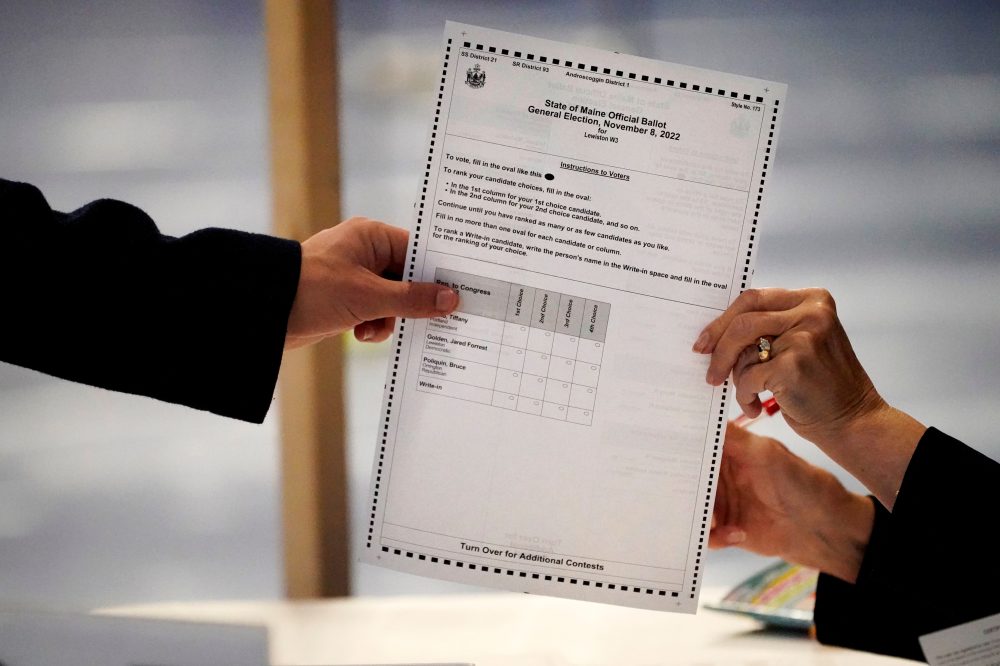
The state employs a ranked-choice voting system where voters rank candidates by preference. When no candidate achieves a majority of first-place votes, the last-place candidate gets eliminated, and their votes get redistributed among remaining candidates based on those voters’ preferences. This continues until one candidate obtains a majority.
Key election details and data points the AP Decision Team will track during vote counting:
Polls close at 8 p.m. ET.
The Associated Press will deliver vote results and announce winners in contested primaries for U.S. Senate, U.S. House, governor, state Senate and state House.
Registered party members can vote only in their party’s primary. Democrats cannot participate in Republican primaries and vice versa. Independent or unaffiliated voters may join either primary.
January registration showed approximately 354,000 registered Democrats, about 309,000 registered Republicans and roughly 334,000 unaffiliated voters.
Around 69,000 Democratic primary votes and approximately 60,000 Republican primary votes were cast in 2022’s gubernatorial primaries, when both nominees ran without opposition.
Roughly 26% of Democratic primary votes and about 12% of Republican primary votes in 2022’s gubernatorial primaries were cast before primary day.
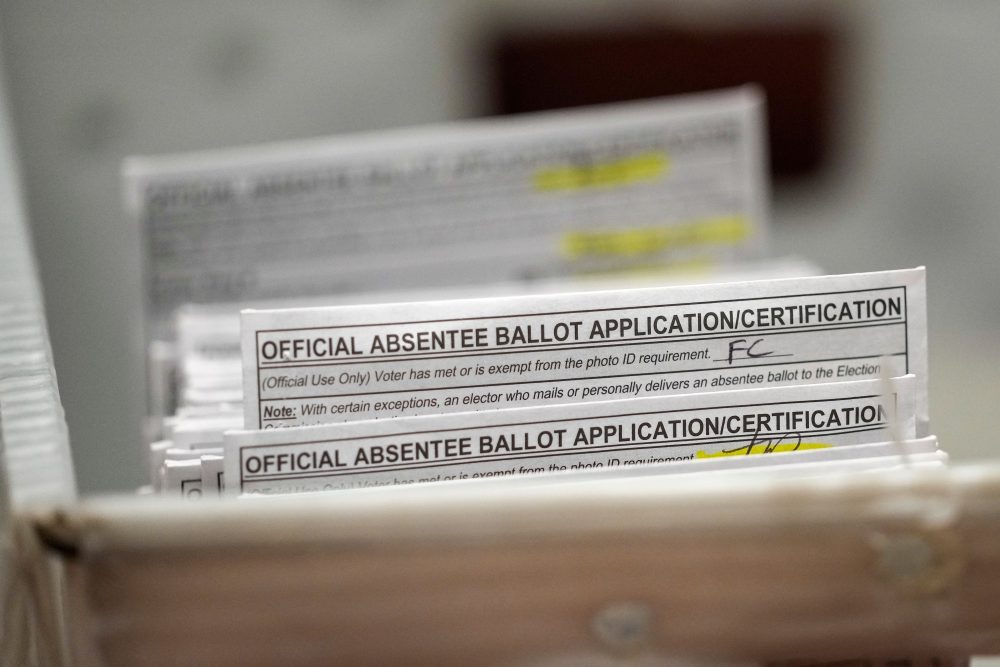
Through Thursday, approximately 56,000 ballots had been submitted for Tuesday’s election, including about 33,000 from Democrats, roughly 13,000 from Republicans and around 10,000 from unaffiliated voters.
During the 2024 general election, the state’s largest cities and towns typically released results from all voting methods simultaneously at night’s beginning.
In 2024’s general election, the AP initially reported results at 8:44 p.m. ET, 44 minutes after poll closing. Approximately 50% of total votes were counted by 12:54 a.m. ET, with counting halting at 4:11 a.m. ET. By 3:13 p.m. ET the following day, roughly 90% of votes were tallied.
The AP doesn’t make projections and declares winners only when determining no scenario exists for a trailing candidate to overcome the gap. For uncalled races, the AP will continue covering newsworthy developments, including candidate concessions or victory claims, while clarifying it hasn’t declared a winner and explaining why.
Under 2025 law, Maine recounts occur automatically for tied votes. Candidates for statewide or multicounty office may request and fund recounts, though charges are waived if the margin doesn’t exceed 1% of total votes cast or 1,000 votes, whichever is smaller. The AP may declare winners in recount-eligible races if determining the lead is too substantial for recounts or legal challenges to alter outcomes.
As of Tuesday, 147 days remain until the 2026 midterm elections.