
For decades, Brazil’s inexpensive and plentiful farmland enabled agricultural producers to establish massive, cost-effective operations that captured export markets from American farmers, particularly after China shifted suppliers during trade disputes under President Donald Trump’s administration.
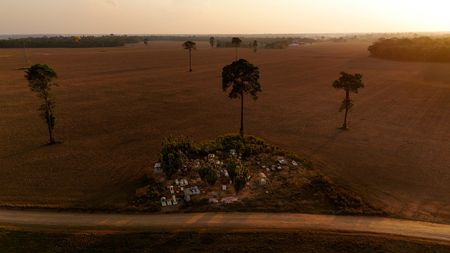
While American agricultural land has remained relatively static this century, Brazil expanded its farming territory by approximately 50%, establishing itself as a global agricultural giant. However, the South American nation’s competitive advantage faces serious challenges as ongoing Middle East conflicts drive fertilizer costs to unprecedented levels.
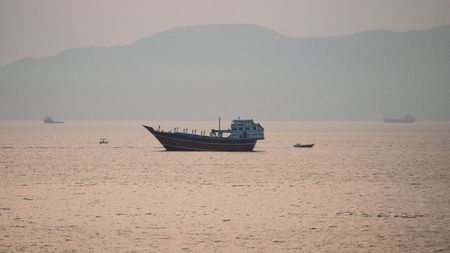
Approximately one-third of global fertilizer supplies have become trapped within the Strait of Hormuz since hostilities commenced. The United States manufactures most of its fertilizer domestically, while Brazil depends significantly on international suppliers, forcing many producers to reduce their fertilizer acquisitions.
Industry analysts warn that Brazilian farmers face serious difficulties even if the Middle East situation resolves quickly. Currently, they manage thousands of acres generating declining profits or actual losses, with many beginning to accumulate substantial debt burdens.
Furthermore, numerous American farmers possess soil quality sufficient for reasonable harvests even when skipping fertilizer treatments for one season. Brazilian producers rarely have this luxury.
Seasonal planting differences compound the problem. Brazil’s spring cultivation begins in September, exposing farmers to current elevated fertilizer prices. American producers had largely completed their purchases before the conflict started.
Brazilian farmers also lack access to government assistance programs or financial bailouts available to their American counterparts.
“Profitability just isn’t there,” stated Murilo Rabelo Martins Pereira, a producer in Goias state in central Brazil.
“Expansion is something everyone is rethinking right now.”
Pereira, age 34, cultivates soybeans, corn and tomatoes across 800 hectares. He explained that escalating production expenses make farm expansion too dangerous, despite receiving opportunities to lease additional property.
“For sure we’ll not see the same trend” of agricultural expansion in Brazil, commented Purdue University agricultural economist Joana Colussi, a Brazilian native.
She anticipates growth will pause, at minimum temporarily, as producers allocate more resources to fertilizer, fuel, seeds and other supplies, leaving less for expansion.
Brazil’s remarkable agricultural expansion originated from surging Chinese demand. Enormous grassland areas transitioned from livestock grazing to crop production like soybeans and corn, creating direct competition between Brazil and the United States.
Brazil typically emerged victorious. Trade restrictions Trump implemented against China during his presidency encouraged Beijing to find alternative sources, with Brazil among the primary beneficiaries.
In 2000, American soybean exports to China nearly doubled Brazil’s volumes. By late 2025, this relationship reversed, with Brazil selling almost twice the soybeans to China compared to the United States.
Brazil’s expansion relied on access to extensive, affordable land. Much of this territory has deteriorated because farmers traditionally relocated to fresh ground when their fields became unproductive, rather than investing in soil improvement.
With widespread land degradation, large-scale commercial farming in Brazil requires significant quantities of fertilizer, pesticides, genetically modified seeds and other increasingly expensive biological inputs.
“Right now farmers everywhere, including Brazil, are operating on razor-thin margins. If you have better soil, you can weather lower fertilizer application, or no application. You can weather a shock like this better,” explained Saswato Das, global head of corporate affairs at agricultural company Syngenta.
Many American farmers maintain average production levels even when skipping seasonal applications of essential fertilizers like potash and diammonium phosphate, or DAP. Thousands have adopted this approach this year. However, on Brazilian farms, potash and DAP effectiveness lasts only one growing season.
American producers are “just skimping out” on DAP, whose prices have approximately doubled since the Middle East war started, noted Marshall Lee Davis, who cultivates peanuts and cotton in Georgia.
Davis mentioned that even American farmers capable of skipping applications worry about sustained high fertilizer costs affecting fall purchases for their 2027 spring planting in March.
Brazilian farmers, who must navigate their 2026 spring planting this September and second-crop planting in early 2027, have confronted elevated fertilizer prices since shortly after the conflict began in late February.
“North American farmers are in a better spot than Brazilian farmers due to seasonality,” observed Expana analyst Murphy Campbell.
Brazil depends heavily on DAP imports and nitrogen-based urea, the world’s most commonly used fertilizer.
Brazil’s government-owned oil company Petrobras is resuming operations at previously shuttered fertilizer facilities that were closed under former President Jair Bolsonaro. The company aims to supply 35% of the nation’s nitrogen-fertilizer requirements in upcoming years.
Despite elevated fertilizer expenses, commodity prices for corn and soybeans have increased only modestly since the war started, as abundant recent harvests have built global inventory levels. This situation has compressed farmer profit margins worldwide, particularly affecting those dependent on fertilizer imports.
Brazilian soybean producers had purchased approximately 50% of their total 2026/27 fertilizer requirements by late May, according to Expana’s Campbell. He noted that historically “over 60% is booked by late May.”
Reduced fertilizer usage translates to lower yields and decreased profits or outright losses for farmers carrying increasing debt loads.
“They are overleveraged,” stated Bruno Fonseca, a Rabobank analyst in Brazil, describing the country’s agricultural producers.
Fertilizer costs are projected to stay elevated for at least six months even with a Middle East peace agreement, according to Expana’s Campbell.
For Pereira, the Brazilian farmer, the challenging outlook requires difficult choices.
“We had planned this year to replace our harvesters, which are quite old,” he said. “We decided not to go ahead.”