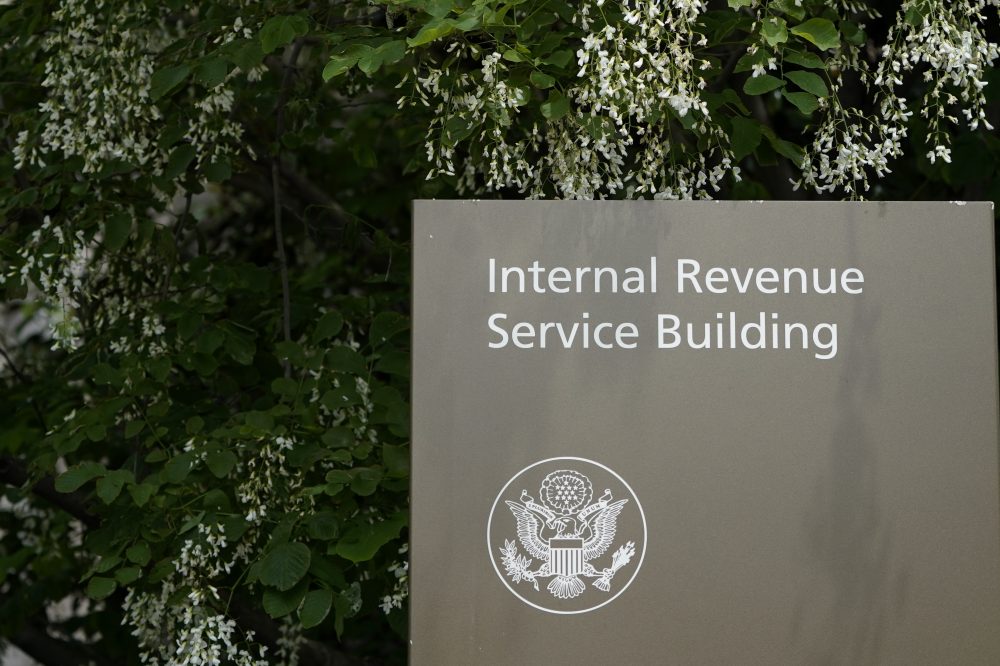

WASHINGTON — Federal investigators have uncovered serious security vulnerabilities in a controversial program that permits Immigration and Customs Enforcement to obtain taxpayer records from the Internal Revenue Service, according to a newly released Treasury watchdog report.
The Treasury inspector general’s findings represent the first comprehensive review of the scope and problems associated with the taxpayer information exchange program, which sparked multiple court challenges and internal disputes when it was implemented in 2025.
Treasury’s inspector general, known as TIGTA, determined that the disputed 2025 arrangement between ICE and Treasury — which enables ICE to submit immigrant names and addresses for verification against tax databases — suffered from data formatting inconsistencies and flawed matching standards that produced inaccurate results.
The controversial program prompted the then-acting commissioner of the IRS to step down from the position.
According to the report’s findings, ICE submitted requests for address details on over 1.2 million individuals following the agreement’s implementation, with the IRS eventually supplying last-known address information for approximately 47,000 people.
TIGTA’s investigation revealed that the IRS’s computerized matching system contained significant defects. Data formatting problems from ICE’s submissions created unreliable matches, including instances where partial or incorrect addresses received validation as accurate information, the report indicates.
Treasury and IRS officials did not provide responses to Associated Press inquiries seeking comment.
The taxpayer and immigration data cross-checking initiative represents a component of President Donald Trump’s border security priorities and his comprehensive national immigration enforcement campaign, which has included deportation operations, workplace enforcement actions and implementation of an 18th century wartime statute for removing Venezuelan migrants.
This disclosure marks the second time that extensive taxpayer information sharing with ICE has come to light.
A federal judge ruled in February that the IRS violated federal law through its unauthorized disclosure of confidential taxpayer records to Immigration and Customs Enforcement, specifically referencing the same 47,000 information releases highlighted in TIGTA’s findings.
U.S. District Judge Colleen Kollar-Kotelly determined that the IRS improperly provided taxpayer records for thousands of individuals to the Department of Homeland Security under the agencies’ disputed information-sharing arrangement designed to identify and remove people residing illegally in the United States.
The latest TIGTA report contains no formal recommendations, according to correspondence from Nancy A. LaManna, deputy inspector general for inspections and evaluations.
“However, we plan to share some concerns we identified during our review with the DHS Office of Inspector General,” her letter states.