
BUNIA, Congo (AP) — Physical affection was off-limits, warm embraces were forbidden, and the dance floor remained nearly empty. Yet romance prevailed.
Congo continues fighting an Ebola disease outbreak that has claimed close to 100 lives among more than 500 confirmed infections, prompting local officials to implement stringent controls to contain the virus, including restrictions on public events and mandatory physical distancing.
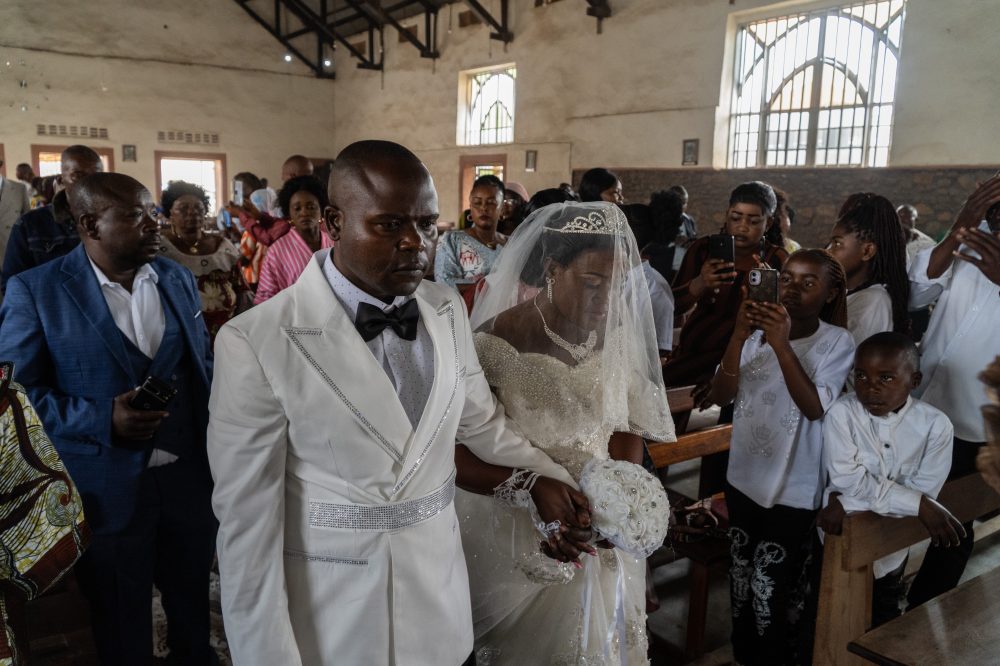
Jean Claude Érable and his new wife Solange Hahati found themselves marking their Saturday wedding ceremony under these challenging circumstances, which meant several family members and friends could not attend their special celebration.
“We had planned 300 guests (but) only 50 people were allowed to enter,” Hahati told The Associated Press. “It was really difficult because we wanted to celebrate with our friends.”
The current Ebola disease outbreak, triggered by the uncommon Bundibugyo virus, has centered in Congo’s eastern Ituri province. Health officials in Congo report 515 confirmed infections, with 91 fatalities. The actual case count is suspected to be greater since the outbreak’s confirmation came weeks behind schedule, and containment efforts face additional hurdles due to the absence of an approved vaccine or therapeutic treatment for this virus strain.
In efforts to reduce transmission, regional officials have encouraged residents to minimize physical interaction, maintain frequent hand hygiene, and promptly notify authorities of any suspected infections.
Inside the Catholic Church located in Bunia, Ituri’s capital city, where Érable and Hahati exchanged vows, the religious service included multiple couples participating in their wedding ceremonies.
These safety protocols, while not universally followed, are transforming community customs in a nation where marriage celebrations traditionally feature lively, all-day festivities that unite hundreds of family members, friends, and community supporters.
While the choir performed and brides wearing white dresses proceeded down the church aisle, the small gathering of relatives and friends inside maintained proper spacing, offered cheers, and captured photographs. Beyond the church walls, a group gathered to sing with enthusiasm.
“We are adhering to the preventive measures and respecting social distancing,” said Érable, the groom. “I must say that there is no problem, no obstacle, because we are doing our best to respect all the measures dictated by the state.”
His new wife beamed as he placed the wedding band on her hand. Following the wedding service, she joyfully showed off the ring while her husband escorted her to their vehicle.
The newlyweds relocated portions of their celebration to an outdoor setting, providing guests with additional space to maintain distance.
Religious leaders emphasize that adaptation has become necessary.
Several families have already delayed their planned wedding ceremonies due to the new health protocols, according to the Rev. Aimé Lokanabego, who conducted their wedding service.
The church has suspended other religious ceremonies that present greater exposure risks, including baptisms, he explained.
“This is, in a way, how we are dealing with this Ebola epidemic at our level. The situation is critical,” said Lokanabego.