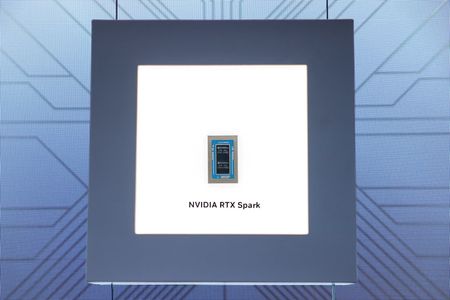

The graphics chip manufacturer’s launch of its RTX Spark superchip represents more of a risky wager on unproven market demand than a game-changing innovation for everyday computer users, according to industry experts.
During last week’s Computex technology conference in Taiwan, the company unveiled its vision of laptops capable of operating advanced AI systems directly on the device, functioning as personal digital assistants without requiring internet connectivity.
This concept mirrors promises that computer manufacturers HP and Dell have promoted for almost three years, yet both Wall Street investors and everyday consumers have remained doubtful, with expensive price tags failing to justify clear advantages.
However, the chip company appears to be targeting a different market segment than current AI-enabled computers, focusing primarily on software developers and content professionals who have traditionally preferred Apple’s premium MacBook Pro models. Six major manufacturers – Microsoft, Asus, HP, Lenovo, Dell, and MSI – plan to incorporate the new processor into their systems. Share prices for these companies jumped following the June 1 announcement.
“RTX Spark doesn’t make traditional PCs obsolete. It creates a new category between the workstation and the AI server,” said Kevin Hein, analyst at Tirias Research.
The processor integrates a main processing unit, graphics capabilities, and as much as 128 gigabytes of shared memory, enabling it to operate sophisticated AI programs locally – something today’s AI computers cannot accomplish effectively. The company claims this technology could transform computer interaction, with AI assistants managing complex tasks like video creation or software troubleshooting.
Current AI-enabled computers, heavily promoted over recent years, have focused on basic capabilities such as voice transcription or photo enhancement, failing to generate substantial sales increases for manufacturers and their technology partners including Arm and Qualcomm.
COST BARRIERS LOOM
High pricing and a shortage of memory components, which has already increased device costs, will likely restrict RTX Spark computers to specialized markets, analysts predict.
The expense “won’t deter all the big computer makers from working with the chip company on this, but the bulk of PC sales for the next several years will still be more traditional Windows-based PCs with chips from Intel, AMD and Qualcomm,” said Bob O’Donnell, president at TECHnalysis Research.
HP and Dell shares had been rising even before the superchip announcement, gaining 18% and 223% respectively this year. However, this growth stems less from AI computer sales and more from widespread business upgrades to Windows 11, plus surging demand for AI infrastructure equipment, particularly benefiting Dell.
During its most recent financial quarter, HP projected a significant downturn in the PC market during the year’s second half. The company highlighted robust AI computer demand, especially from business clients, though overall PC division revenues continued declining.
The computer sales forecast appears challenging this year, with IDC projecting worldwide PC shipments to drop 11.3% in 2026.
COMPETING WITH APPLE
Whether devices using the new processor will surpass Mac performance remains uncertain. The chip company stated that battery life and other performance details would be revealed closer to the products’ fall release.
Nevertheless, these laptops could make Windows computers competitive with Macs for the first time regarding memory speed, a critical limitation for AI applications that continuously transfer information between processors and memory, creating delays.
This advancement brings Windows machines closer to Apple’s proprietary processors, which have incorporated unified memory architecture since 2020.
“I expect some companies will take the leap to test out the long-term viability of on-device inferencing,” said Tom Mainelli, a group vice president at IDC.