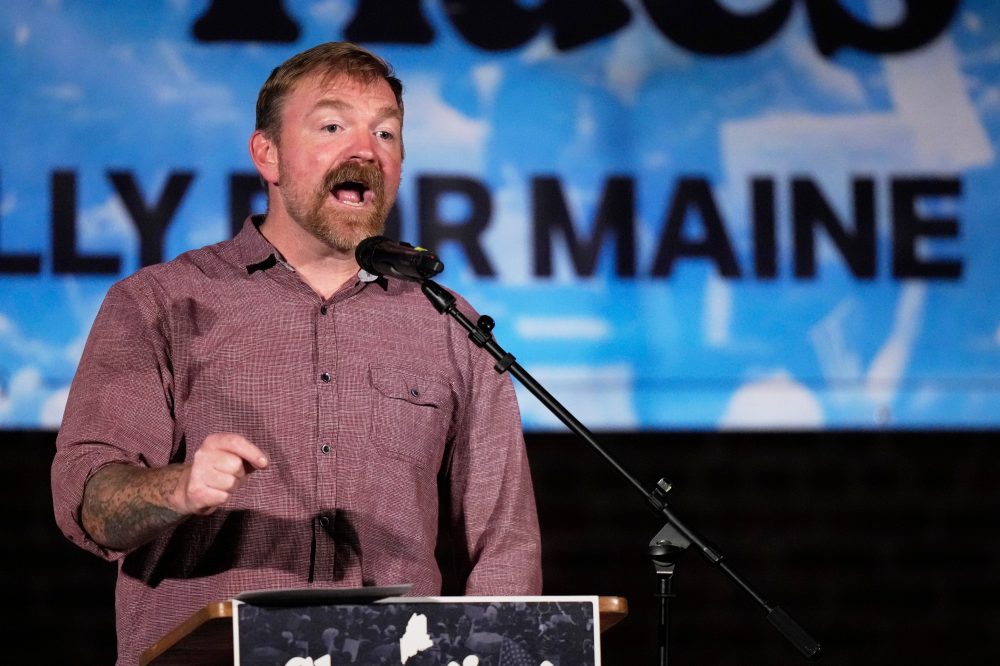
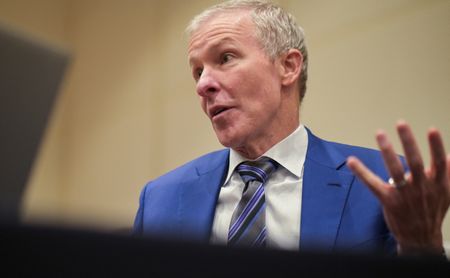
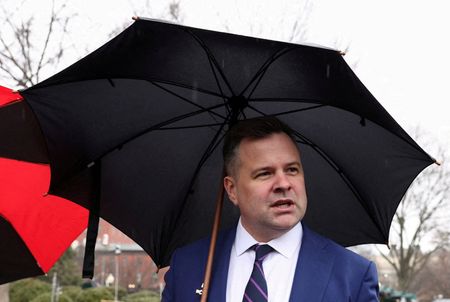
Democratic Senate candidate Graham Platner will face voters directly at a town hall meeting Sunday evening in Portland, Maine, as his campaign works to address recent allegations concerning his past behavior toward women.
The gathering occurs just two days ahead of the Democratic primary election, where Platner continues to hold frontrunner status despite questions about whether the recent controversies have dampened voter support for his unconventional campaign.
Recent reporting by The New York Times on Thursday detailed accusations from a former girlfriend claiming Platner repeatedly seized her by the shoulders during disputes and on one occasion twisted her arm behind her back before confining her to a room. Platner has consistently denied these violence allegations as false.
Additional former romantic partners spoke with the Times, with some describing favorable interactions while others characterized him as unpredictable and demeaning. These revelations followed earlier reports disclosing that Platner had sent sexually explicit communications to multiple women during his marriage.
No prominent Democratic leaders who previously backed Platner have withdrawn their endorsements following these allegations. Platner seeks to defeat Republican Sen. Susan Collins in the November general election.
At a Friday rally in Bar Harbor featuring California Rep. Ro Khanna, Platner received enthusiastic applause and stated that Maine residents “have my back.”
The military veteran has acknowledged ongoing battles with alcohol dependency and post traumatic stress disorder following his service, while maintaining he has transformed as a person.
These recent developments have intensified concerns among some Democratic supporters regarding Platner, who previously drew criticism for social media content that minimized sexual assault and for displaying a skull tattoo associated with Nazi imagery. Platner has issued apologies for the posts and concealed the tattoo, claiming he was unaware of its meaning when he received it.
Rahm Emanuel, considered a possible 2028 Democratic presidential contender who was campaigning in nearby New Hampshire over the weekend, expressed uncertainty about Platner’s chances against Collins.
“Everybody is holding their breath whether this is the start of something or the end of something,” he said. “If it’s the end, that’s one thing. If it’s the beginning of something and we’re not done, that’s another thing.”
Drivers traveling eastbound on Kirkwood Highway should expect delays due to construction activity affecting traffic flow in the area.
A right lane closure is currently in effect on the eastbound side of Kirkwood Highway, specifically between Poplar Avenue and Anna Way. The lane restriction is part of ongoing construction operations in the corridor.
According to traffic officials, the lane closure will remain active until 6:00 AM. Motorists are advised to plan for additional travel time and exercise caution when driving through the work zone.
The construction activity is taking place along the section of roadway also known as Route 72.
HARRISON, NJ – Norway’s captain Martin Odegaard found the back of the net with 15 minutes left on the clock to secure a 1-1 tie against Morocco during their World Cup preparation match on Sunday.
The North African squad had seized control early when Brahim Diaz blasted home a strike from just outside the penalty box in the seventh minute, but Norway mounted a determined comeback and nearly claimed victory against the team that reached the semifinals in Qatar’s World Cup four years ago.
Despite challenging hot weather conditions, Norway maintained relentless pressure in the closing stages, with Kristian Thorstvedt nearly securing the winning goal nine minutes from the final whistle when his header off Julian Ryerson’s free kick sailed just past the post.
Odegaard had brought his team level with a clever left-footed strike after Oscar Bobb weaved his way into the penalty box and delivered a short pass.
Morocco dominated the early proceedings, with Diaz receiving ample time and room following a wide pass to hammer home his shot. The goal marked his first for Morocco since the Africa Cup of Nations tournament earlier this year, where he claimed the top scorer honor but also missed a crucial penalty in the championship match.
His teammate Abdessamad Ezzalzouli nearly extended Morocco’s advantage at the 30-minute mark, spinning to connect with a full volley from Diaz’s cross but sending the attempt off target.
Morocco created another scoring chance when Norway goalkeeper Orjan Nyland deflected Diaz’s 57th-minute effort, with the loose ball headed over the crossbar by Neil El Aynaoui.
However, the Moroccan side found themselves under increasing pressure as the match wore on and had to mount a strong defensive effort to preserve the draw.
Morocco will begin their World Cup journey in Group C facing Brazil in New York on Saturday, while Norway opens Group I play against Iraq in Boston on June 16.
Motorists traveling westbound on Route 2 will encounter lane restrictions overnight as the left lane remains blocked between Greenville Circle and Harmony Road.
The lane closure is expected to stay in place until 6 AM, according to traffic officials.
Drivers are advised to use caution in the area and allow extra travel time while the restriction remains active.
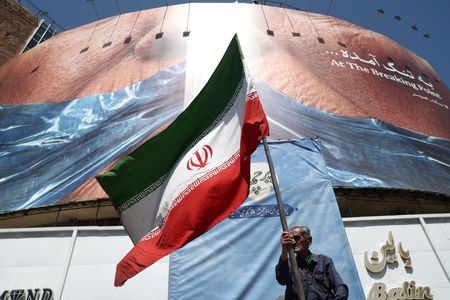
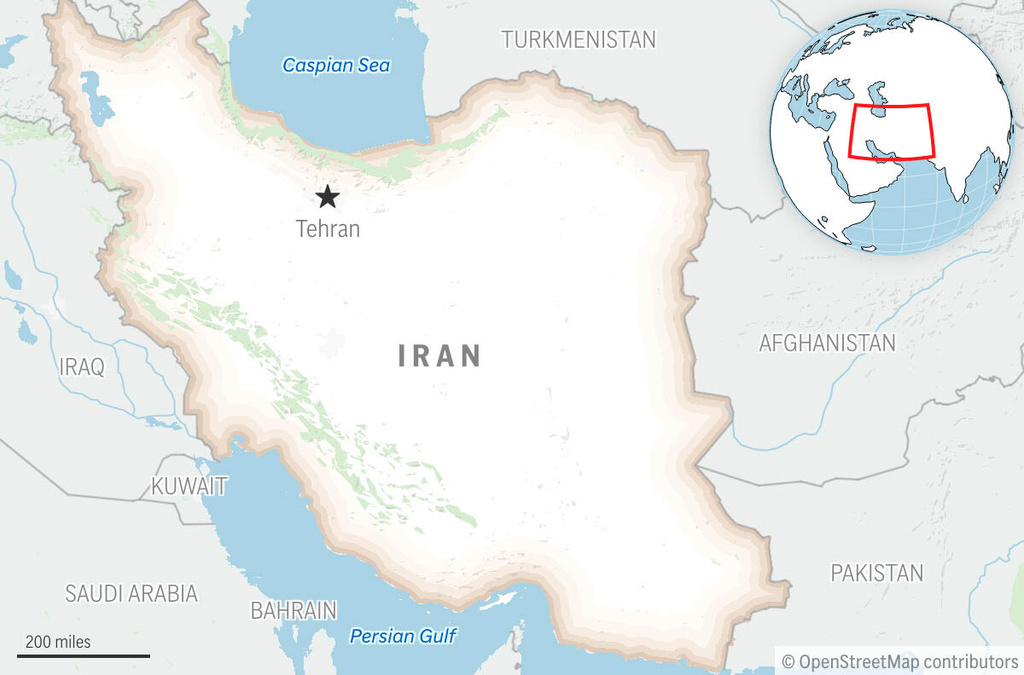
Iran unleashed four waves of missiles targeting northern Israel on Sunday evening, following through on threats of retaliation after Israeli military operations against Hezbollah positions in Beirut’s southern neighborhoods.
Israeli military officials confirmed on social media that missiles had been fired from Iranian territory and that defensive systems were actively working to neutralize the incoming threats. Military sources reported successfully intercepting two of the projectiles. Emergency authorities sent warning alerts to cell phones throughout affected regions and directed civilians to seek shelter in protected areas when alarms sounded.
This marks Iran’s first direct assault on Israel since a ceasefire took effect on April 8th.
Throughout the day, Iranian leadership had issued warnings that Israel would face repercussions for its attacks on Hezbollah facilities in the southern districts of Lebanon’s capital city.
Ebrahim Rezaei, spokesperson for the Iranian parliament’s foreign policy and national security committee, characterized the planned retaliation as forceful. He posted on social media: “We will give a decisive and painful response to the Zionist regime’s attack on the suburbs … Watch the sky of the occupied territories tonight.”
Mohammad Bagher Ghalibaf, speaker of Iran’s parliament and the country’s top negotiator, declared that American military installations and resources throughout the region had become “legitimate targets” after the Israeli strikes.
Regarding current diplomatic efforts, Ghalibaf posted on social media: “They are neither committed to a ceasefire nor believe in dialogue, and through the naval blockade and violation of agreements regarding Lebanon they showed that they only understand the language of power.”
Channel 12 News reported that Israeli security officials had elevated alert status following intelligence analysis suggesting Iran had previously communicated it would respond directly if Israel targeted Hezbollah’s base of operations in southern Beirut. The report indicated Tehran had signaled several days earlier that strikes in the Dahiyeh area would prompt a missile counterattack.
Israeli forces confirmed they conducted operations Sunday against Hezbollah infrastructure in Beirut’s southern districts after the organization launched attacks toward northern Israeli territory.
Meanwhile, Haim Bibas, chairman of the Federation of Local Authorities in Israel, declared that all municipal governments would transition to restricted operations starting at 10 p.m. following updated emergency directives. School activities were suspended, outdoor events were restricted to 200 participants, and indoor gatherings were capped at 500 people in locations with access to standard protective shelters.
Law enforcement officials in Greece have taken a 37-year-old Palestinian man into custody over allegations he was planning a terrorist attack targeting an Israeli-operated cruise ship scheduled to arrive in Crete this week, Cyprus Inform reports.
The suspect was apprehended Saturday evening following a collaborative investigation between Greek and Cypriot intelligence agencies. Originally from Gaza, the man had been granted political asylum in Greece and was employed at a hotel in Agios Nikolaos, Crete.
Officials say he was allegedly plotting an attack against a cruise vessel operated by Mano Maritime set to arrive at the port on Tuesday. Greek intelligence officials determined the suspected plot had not advanced beyond the planning stages.
During questioning, investigators report the man confirmed his affiliation with Hamas and acknowledged maintaining communications with people recently taken into custody in Cyprus on terrorism-related charges.
Law enforcement officials also revealed his connection to two Palestinians detained in Cyprus on suspicion of terrorism offenses. Police believe all three suspects were part of the same operational cell.
According to investigators, the men had received Hamas training together in explosive handling and deployment techniques.
The detention came after intelligence was shared from Cyprus, where officials recently made arrests linked to Hamas operations and bombing incidents in Jerusalem. The Hellenic Police stated the operation required coordination between Cypriot intelligence services, Greece’s National Intelligence Service, and the Anti-Terrorist Service.
During the investigation, security teams conducted searches at several sites across Crete and Athens. Officials confiscated electronic equipment, including a laptop computer and cell phones, as well as bank cards and laboratory materials. Authorities said chemicals and measuring devices found during the searches were suspected to be for creating explosive devices.
Greek state broadcaster ERT reported the suspect had previously leased an apartment in downtown Athens.
No additional arrests have been announced by Greek authorities. The investigation remains active as security officials analyze evidence gathered during the operation and examine the suspect’s reported connections to those detained in Cyprus.
A debate concerning Israel’s ultra-Orthodox community has evolved beyond religious and political considerations into a pressing economic question: Can the nation sustain its changing demographics?
During a major economic policy conference this week, experts examined whether Israel can maintain its current trajectory as defense expenditures climb toward 8% of gross domestic product and approximately a quarter of the national budget, while the ultra-Orthodox population is expected to comprise an increasing portion of military-age Jewish citizens.
Military service forms part of Israel’s social framework, defense expenditures consume an expanding portion of national resources, and the armed forces represent a shared experience for most Jewish citizens. As these pressures intensify, ultra-Orthodox integration appears not merely as a disagreement over exemptions or religious matters, but as a budgetary, military, and economic challenge.
The implications are clear-cut. As the ultra-Orthodox become a larger portion of Israel’s population, the combination of military exemptions, restricted core education, reduced male workforce participation, and sectoral political influence could burden the military, tax revenue, and the skilled economy upon which Israel increasingly relies.
This concern permeated the Eli Hurvitz Conference on Economy and Society, hosted by the Israel Democracy Institute in Jerusalem. The gathering addressed defense expenditures, artificial intelligence, technology sectors, living costs, reconstruction, healthcare, and government budgets. Nevertheless, the ultra-Orthodox matter repeatedly emerged, sometimes explicitly and sometimes through broader discussions of human resources, labor participation, education, and public priorities.
The ultra-Orthodox community refers to Israel’s rapidly expanding religious population whose traditional male institutions emphasize comprehensive Torah study. Many ultra-Orthodox boys do not receive equivalent core instruction in mathematics, English, and science compared to other Israelis; many ultra-Orthodox men do not perform military service, and many join the workforce late or remain outside it for prolonged periods. Ultra-Orthodox women participate in employment at higher rates, frequently supporting large families, but household earnings remain comparatively modest.
Gilad Cohen Kovacs, a researcher at the Israel Democracy Institute who delivered a presentation on “The Economy as a Driver of Change in Haredi Autonomy,” contended that the matter also involves how a separate institutional framework influences growth, employment, and the welfare system.
Cohen Kovacs stated that subsidies supporting the current ultra-Orthodox model total approximately 35 to 37 billion shekels annually, or roughly 5.5% of the government budget. Without modifications, he cautioned, that amount could increase to more than 60 billion shekels yearly in future decades. These numbers were presented as part of his conference examination of ultra-Orthodox autonomy and government support.
He emphasized that the matter should not be viewed as a simple transfer of “money to Haredim.” In his assessment, part of the funding encourages behaviors that maintain ultra-Orthodox men outside the workforce, while another portion strengthens what he characterized as a parallel system of authority, educational networks, community institutions, and political influence.
A welfare system, Cohen Kovacs explained, is designed to assist those unable to work, protect individuals who have suffered harm, and facilitate mobility. In the ultra-Orthodox situation, he maintained, part of the subsidy supports the reverse pattern: reduced utilization of earning potential, partial employment, large families, and a yeshiva-focused lifestyle.
“These are not the conditions for which the welfare state was built,” he said.
This distinction redirects attention from individual poverty toward policy incentives that, according to Cohen Kovacs, maintain dependence and separation. His broader finding was that the current arrangement creates a substantial intersectoral transfer from non-ultra-Orthodox Jewish households to ultra-Orthodox households through tax differences, public services, subsidies, and exemptions from shared responsibilities.
Former Prime Minister Naftali Bennett also referenced studies on that net balance. According to Bennett, what he termed a “Zionist household”—a non-ultra-Orthodox Jewish household integrated into military service and the labor market—contributes approximately 6,000 shekels more monthly than it consumes or receives, while an ultra-Orthodox household receives about 4,000 shekels more monthly than it contributes. He characterized this as a difference of approximately 10,000 shekels monthly between the two household categories.
The comparison brought the fiscal discussion from national budgets to family income. It was not presented as a claim that one particular family directly funds another, but as an aggregate measurement of taxes, government services, subsidies, benefits, and participation in public duties.
Dr. Gilad Malach, a researcher at the Israel Democracy Institute who presented a separate study on the defense burden, told The Media Line that his research addressed one specific aspect of the larger subsidy discussion: security. He said Israel typically treats defense spending as a national budget item, without examining how that burden is distributed across different sectors of society.
Malach said it would be “too simplistic” to explain the gap just by noting that the ultra-Orthodox public is poorer and therefore pays less tax. “You might say, ‘OK, this is a poor society, so they pay less than their share in the population,’” he said. “But we see that the gaps between them and others—it’s much more than that.”
According to Malach, the visible security budget stands at about 120 billion shekels annually, but the actual cost approaches 150 billion once hidden burdens are included: conscripts paid below their labor value, delayed workforce entry, and the cost to employers when reservists leave their positions for extended service.
If the ultra-Orthodox represent about 14% of Israel’s population, he said, they should account for roughly 21 billion shekels of that burden. In practice, he estimated, they contribute about 6 billion.
“So, the gap is 15 billion,” he said.
The figure carries political weight because it places the draft discussion within a broader fiscal equation: who pays for security, who serves, and who bears the indirect costs of a society built around lengthy military service.
Malach was careful not to claim that the gap can be closed quickly. He said the policy tools he presented could reduce it, but not eliminate it. At most, he estimated, the immediate effect could be several billion shekels, not the full 15 billion.
“Just to make the situation less unequal, more equal than today, but not a real equality between the population,” he said.
The demographic warning was more severe. Some projections, Malach said, place the ultra-Orthodox population at around 30% of Israel’s total population within roughly four decades. The more significant number, he added, is not the overall population share, but the share among draft-age Jews.
Among Jewish 18-year-olds, he said, the ultra-Orthodox share could exceed half. In his view, that projection, if realized, would mean that “We won’t have manpower for an army if the situation would be that they are not serving in the army. And we can’t have a prosperous economy if so many people won’t have the ability to work in a modern labor market.”
Reem Aminoach, a senior researcher at the Institute for National Security Studies who previously served as financial adviser to the Israel Defense Forces chief of staff, told The Media Line that the problem is often made to appear more complex than it is.
“All you need is to cancel the deferral,” he asserted, referring to the legal mechanism that has allowed many ultra-Orthodox men to avoid conscription as long as they remain in yeshiva study.
In his view, canceling the deferral would force a clearer choice: service, employment, or some other publicly accountable framework, rather than a system in which avoiding the army also discourages work. Aminoach said the army’s need is practical and immediate.
“The army lacks fighters, not clerks,” he said.
Shaul Meridor, a former senior Finance Ministry official, brought the discussion from national aggregates to the level of a single Israeli family. He described a middle- or lower-middle-class family in places such as Migdal HaEmek or Dimona, with five children, one of them serving in Lebanon, and unable to make ends meet. According to figures he cited from a recent study, such a family subsidizes a comparable low-income ultra-Orthodox family by nearly 1,000 shekels monthly.
“Many times we talk about high-tech and the rich and all kinds of other people who subsidize,” Meridor said. “I am talking about socioeconomic cluster four. Whoever knows what that means understands that this is not high-tech, and these are not people sitting in Tel Aviv or Ramat Hasharon. These are people who do not finish the month.”
He said the moral question after October 7 was no longer abstract.
“Why should a family that does not finish the month have to allocate, from money it does not have, 1,000 shekels net a month to subsidize a Haredi family that chose a different life?”
Meridor also argued that Israel’s current policies harm ultra-Orthodox children themselves by steering them toward poverty.
“As leadership, we must not condemn Haredi children to poverty,” he said. “And that is what we are doing today.”
His proposed principle was direct: those who serve should receive, those who do not serve should not. Combat service, he said, should receive the most; other service should receive less; evasion should receive nothing. But he cautioned that dismantling ultra-Orthodox autonomy would not happen through a single major law. It would require changes in thousands of government decisions, benefits, tax rules, and allocations that currently favor institutions over individuals.
Political speakers approached the same issue from different directions. Bennett focused on education and subsidies, using his speech to attack daycare payments for families in which the father does not work and does not serve. He also proposed a broad education reform built around a shared state curriculum, while preserving limited community autonomy.
Avigdor Liberman, chairman of Yisrael Beitenu and a former defense and finance minister, framed the issue through coalition politics. In a conversation with Yohanan Plesner, president of the Israel Democracy Institute, Liberman argued that Israel cannot sustain higher defense spending while preserving sectoral budgets and avoiding structural reform. He said any serious change would require a government not dependent on the ultra-Orthodox parties Shas and United Torah Judaism.
Former Defense Minister Benny Gantz offered a more cautious critique. He said parts of the ultra-Orthodox leadership were making a grave mistake by perpetuating a situation in which the community is more important than the state. At the same time, he emphasized that there are ultra-Orthodox individuals who work, study, serve, and contribute to the economy, and that they deserve respect.
Meirav Cohen, a Yesh Atid lawmaker and former minister for social equality, used Jerusalem as a warning. Speaking as a Jerusalemite, she said the capital already shows what happens when integration in the army, employment, and education does not move fast enough. Jerusalem, she said, has fallen in less than three decades from socioeconomic cluster five to cluster two. Every second household receives a municipal property tax discount, she said, meaning the other half must carry some of the highest municipal tax burdens in Israel.
“There is no economic model for this,” Cohen said. “You don’t need prophecies or warnings. Look at what happened to us in Jerusalem.”
The ultra-Orthodox discussion occurred during a conference dominated by the rising cost of security and the shrinking space for civilian spending. Former Bank of Israel Governor Karnit Flug said in the opening budget session that Israel’s economy had shown resilience, but that the Israel-Hamas war had imposed a heavy price. Defense spending, she said, now stands near 8% of GDP, compared with a little more than 4% before October 7, 2023. Its share of the total budget has risen to about one-quarter, compared with 16% before the war.
That larger fiscal picture helps explain why ultra-Orthodox integration is no longer treated only as a dispute over religious exemptions. Israel is trying to fund a larger defense establishment, increased rehabilitation needs, more support for reservists, reconstruction in the north and south, health-system gaps, transportation infrastructure, and a technology sector facing global competition. Speakers also warned that insufficient investment in Arab society carries its own cost in lost output, making the broader point that Israel cannot afford to underinvest in any large population group while defense and rehabilitation needs are rising.
Artificial intelligence and technology added another layer. The Israel Innovation Authority’s 2026 report, presented at the conference, showed that technology remains Israel’s main growth engine. In 2025, the sector contributed roughly half of the economy’s growth, reached 18.3% of GDP, accounted for 58% of exports, and employed more than 400,000 people. But the same report also warned of stagnation in employment share, a decline in research and development jobs in Israel, expansion of activity abroad, and growing pressure from the shekel’s appreciation.
That is why ultra-Orthodox integration now intersects with the artificial intelligence discussion. Israel wants to compete in a global economy built on advanced skills, data science, engineering, defense technology, and artificial intelligence. But a growing share of its future workforce is educated in systems that often do not provide the tools required for that economy. The point was not that every Israeli must work in technology, but that the next economy will demand basic quantitative and digital skills across far more jobs.
Eli Hurvitz, CEO of the Eddie and Jules Trump Family Foundation, told the conference that the children currently choosing what to study in high school will be the workforce of 2040. In an artificial intelligence-driven world, he said, mathematics, data, teamwork, and independent learning will become basic conditions for opportunity.
The challenge of ultra-Orthodox integration does not fit neatly into familiar categories of minority rights or welfare policy. In Israel, it is tied to compulsory service, repeated wars, high defense costs, a knowledge-based economy, and a parliamentary system in which sectoral parties can hold the balance of power. The ultra-Orthodox community is a growing part of Israel’s electorate, budget, labor market, and future security burden. That is why the discussion has become one of the country’s central tests of governance.
The conference produced no single, comprehensive solution. Some speakers emphasized immediate enforcement of the existing draft framework. Others focused on incentives, core education, tax benefits, or direct ties between the state and ultra-Orthodox individuals rather than through communal institutions. Some warned against coercion that could backfire, while others argued that decades of gradualism have failed. But there was a striking convergence around one point: the status quo is no longer to be treated as a manageable inconvenience.
The discussion, as reflected in the conference sessions and interviews cited here, was dominated by economists, former senior officials, and political figures warning about the long-term costs of the current model. Representatives of the major ultra-Orthodox parties were not quoted in those sessions or interviews.
Malach put the warning in the starkest terms. Israel has survived enormous shocks, he said, and remains a wealthy country with a strong economy. But if current patterns continue as the ultra-Orthodox population grows, the problem will not remain a matter of resentment or budgetary imbalance. It will become a question of manpower, productivity, and national resilience.
“Right now, it’s very hard, but we are handling,” he said. “The point is that if you call today’s situation very bad, things would be worse than that.”
What emerged in Jerusalem was more than an argument over the draft. It was a broader economic reckoning over who serves, who pays, who studies the skills needed for the next economy, and whether the state can continue financing separate rules for a growing part of its population. Israel’s next election may decide the coalition arithmetic. The harder question, raised throughout the conference, is whether any government will be willing to change the arithmetic of the country itself.
Syria’s new leadership is grappling with one of its most complex postwar security challenges: determining the fate of thousands of international combatants who participated in the country’s conflict and remain armed following the collapse of Bashar Assad’s regime.
The issue gained renewed attention after Uzbek fighters in Syria issued a statement condemning the new government’s policies toward foreign combatants and warning of potential repercussions. The declaration highlighted the mounting pressure Damascus faces as it works to establish control over military and security forces while managing various armed groups that established themselves during more than ten years of warfare.
The resolution of this situation will be crucial for Syria’s ability to regain full sovereignty, eliminate independent military networks, and maintain long-term stability.
International Combatants in Syria
Beginning in 2012, thousands of international fighters arrived in Syria from numerous nations, especially from Central Asian republics, the Caucasus region, China, Afghanistan, North African countries, and Europe. The Syrian war drew foreign recruits driven by religious and ideological motivations, with many joining armed factions and extremist organizations.
Several international groups became major players on the battlefield over time. Notable among them were the Turkistan Islamic Party, consisting primarily of ethnic Uyghur combatants from China, and the Imam Bukhari Battalion, which includes Uzbek fighters. Chechen and other Caucasian groups also held significant positions, along with international fighters formerly connected to the Islamic State organization or other extremist groups.
While exact numbers are not available, the International Crisis Group estimated in May that approximately 5,000 foreign fighters who participated in Assad’s overthrow remain armed in Syria. Other analysts have similarly estimated around 5,000, excluding family members who relocated to the country during the conflict years.
“The foreign fighters no longer represent the large military force they once were during the early years of the war,” said Orabi Abdel Hay Orabi, an expert on jihadist groups, in comments to The Media Line. “However, they still possess combat experience and organizational networks that make dealing with them a highly sensitive security issue.”
The varied nationalities and organizational connections among international fighters makes developing a unified policy approach challenging.
Most arrived in Syria during the conflict’s initial years through international recruitment networks, exploiting the nation’s security breakdown and expanding warfare. Eventually, some international groups established autonomous command structures and gained substantial military power, especially in northern Syria.
That power has diminished in recent years due to military and political changes, ceasefire agreements, the departure of some fighters to other war zones, and the dramatic decrease in foreign recruitment that marked the war’s earlier stages.
Firas Allawi, a Syrian researcher specializing in Islamist armed movements, told The Media Line that the influence of foreign fighters today cannot be measured solely by numbers.
“Many have established deep social ties within local communities over the years,” he said. “A significant number have settled with their families and become part of the social fabric in some areas, which makes any purely security-based approach to the issue increasingly difficult.”
Challenge for Damascus
Since Syria’s new government took power, the foreign fighter situation has emerged as one of the nation’s most complex postwar obstacles, with consequences for domestic security, international relations, and future military structure.
Syrian authorities have consistently stressed the government’s commitment to restoring state control, monopolizing force, and dismantling armed formations operating beyond official institutions. They consider this essential for lasting stability and rebuilding Syria’s military and security apparatus on national principles.
Meanwhile, supporters of some foreign fighters contend that many of these individuals battled throughout Syria for years and now face uncertainty regarding their legal standing, personal safety, and their families’ futures.
Damascus also faces continuous international monitoring regarding these groups’ future. Many Western and regional governments view the management of foreign fighters as a crucial measure of the government’s capacity to ensure stability and combat extremism.
Incorporation Rather Than Deportation
Currently, the favored strategy appears to be containment and gradual incorporation instead of mass expulsion or direct confrontation.
Multiple reports indicate the government seeks to integrate some foreign fighters into official military structures under Syrian leadership as part of a comprehensive plan to dismantle independent armed networks and bring them under state control.
Political analyst and security affairs expert Kinana al-Kurdi told The Media Line that integration represents the least costly option in the short term.
“Deporting thousands of fighters or engaging in large-scale confrontations with them would be extremely difficult,” she said. “Many of these individuals cannot return to their countries of origin because they face legal prosecution or security-related repercussions.”
The expulsion option encounters major obstacles. Some nations refuse to accept their citizens back, while others require immediate prosecution upon return. Many fighters also fear detention or harsh punishment in their home countries.
However, the potential for security confrontations persists if some groups resist the new arrangements or try to maintain their military and organizational autonomy.
Threats to Stability
Inadequate handling of this issue could directly impact Syria’s internal stability. Foreign fighters have extensive military expertise, and some maintain international ideological and organizational ties.
Counterterrorism experts warn that applying too much pressure on these groups, or trying to eliminate them through force, could drive some individuals back to extremist organizations or promote the creation of new underground cells beyond state control.
This situation would create concerns not only within Syria but also among neighboring nations and international partners.
Regional governments in Central Asia and elsewhere are carefully watching developments, worried that fighters might move to other conflict areas or reactivate extremist networks in their home countries.
Four Potential Outcomes
Experts outline four main possibilities for foreign fighters’ future in Syria.
The first and most positive outcome involves successful integration of foreign fighters into state institutions, enabling Damascus to enhance stability and consolidate power.
The second possibility envisions ongoing tensions and limited demonstrations without escalating to direct conflict, leaving the matter unresolved for an extended time.
A third option is that some foreign fighters depart Syria for other nations or emerging conflict areas, either independently or through specific agreements.
The fourth and most hazardous scenario would involve tensions developing into security clashes between state forces and factions rejecting integration. This development could spark a new period of instability and undermine efforts to establish peace and state authority.
Ultimately, any government strategy’s success will depend not only on security actions but also on the state’s capacity to create legal, social, and humanitarian solutions for thousands of fighters and their families, preventing this issue from becoming a persistent postwar crisis.
As Syria manages these competing possibilities, the foreign fighter situation will likely continue testing Damascus’ ability to balance security needs with state-building goals while handling international pressure and the complex aftermath of years of conflict.
A new research study has uncovered concerning risks tied to the increasing adoption of artificial intelligence technology in athletic recruitment and youth talent evaluation, cautioning that certain AI platforms could perpetuate current disparities and introduce fresh ethical dilemmas, based on findings released in Big Data and Cognitive Computing.
The research analyzed AI technologies utilized for assessing athletic capabilities and spotting talented young players. These platforms are becoming more dependent on extensive data collections, machine learning processes, video evaluation, and additional digital testing approaches to aid in recruitment and talent selection choices throughout the athletic world.
The investigation revealed that computer algorithms developed using past data can duplicate social and financial prejudices that already exist in current data collections. The study indicated that AI platforms might utilize indirect markers, including residential location, educational institution history, and additional socioeconomic elements, as substitutes when assessing players. Consequently, chances for young athletes could be affected by elements unconnected to sporting talent.
The investigation also emphasized worries about what researchers called “early determinism,” where AI-based profiling could categorize young people at an early age and affect their future prospects. The study’s authors cautioned that these platforms could create additional barriers for athletes who develop later in life to receive acknowledgment if initial evaluations become too powerful in talent recognition programs.
Data protection issues represented another area of focus in the research. The study’s authors stated that the expanding utilization of comprehensive data collections, including details that could encompass social media behavior, creates concerns regarding the extended management of private information and the possible application of youth data beyond athletic purposes.
The research additionally observed that AI platforms frequently rely on past data collections that could include current imbalances, possibly magnifying disparities while neglecting to consider emotional, inspirational, and other personal elements that affect athletic growth.
Even with these worries, the study’s authors noted that AI technology could potentially help decrease prejudice under specific circumstances. The research referenced a “blind scouting” method where identifying characteristics are eliminated from game recordings, forcing scouts to assess strategic performance instead of physical traits or demographic information.
The study’s authors determined that the growing application of AI in youth athletics demands continuous human supervision, clear governance of AI technologies, and robust ethical protections to help guarantee fair and responsible decision-making.
Federal officials have given initial clearance for a nearly $2 billion military equipment sale to Kuwait, centered on advanced technology to combat drone attacks threatening the Gulf nation.
The State Department announced the preliminary approval for the $1.98 billion Foreign Military Sale, which would provide Kuwait with sophisticated systems to identify, monitor and neutralize unmanned aircraft threats. Officials described the deal as part of efforts to bolster the defensive capabilities of a key Middle Eastern partner.
State Department officials revealed that the proposed transaction encompasses both physical and electronic combat systems, plus monitoring, command operations and support infrastructure. Anduril Industries, a defense technology firm based in California, is anticipated to serve as the primary contractor for the deal.
The Defense Security Cooperation Agency outlined that the equipment bundle features Roadrunner-Munition and Anvil-Kinetic interception technologies designed to target threatening drones. The package also incorporates Lattice C2 software platforms and Menace tactical command centers to facilitate operational coordination.
Further components in the proposal feature extended-range Sentry observation towers, including portable and enhanced-distance models, sea-based Sentry installations, and deployment containers created to boost monitoring and identification functions. The arrangement also encompasses Pulsar electromagnetic combat systems engineered to neutralize unmanned aircraft through digital interference.
In addition to equipment, the potential transaction covers staff education, software creation, supply chain assistance, and technical guidance from both federal agencies and private contractors.
State Department representatives indicated the arrangement would equip Kuwait with both physical and electronic combat tools to counter threats from unmanned aircraft systems.
This authorization follows a pattern of significant weapons agreements the United States has pursued with Middle Eastern allies. These transactions aim to assist regional partners in deterring threats from Iran and securing vital energy facilities and ocean shipping lanes, according to the official statement.
Unmanned aircraft have emerged as a growing security concern for military bases and sea commerce throughout the region. The announcement highlighted that Iran regularly utilizes relatively inexpensive drones, forcing the deployment of costly American missile defense systems to intercept them.
The potential transaction continues to undergo the Foreign Military Sales review process. Upon completion, the package would supply Kuwait with a comprehensive anti-drone defense network covering surveillance, operational command, electronic combat, and interception technologies worth roughly $1.98 billion.
The Carolina Hurricanes find themselves at a critical juncture in what has become an increasingly dramatic Stanley Cup Final.
After squandering a two-goal advantage in their opening game loss, the Hurricanes bounced back from a two-goal hole to capture Game 2, then mounted an incredible comeback from four goals down in Game 3, only to fall in double overtime on an unlucky ricochet.
The team has experienced the emotional rollercoaster of an intensely competitive series with the Vegas Golden Knights and enters Tuesday night’s Game 4 with virtually no room for mistakes. Despite all three opening contests being settled by one goal, moral victories mean nothing when facing a 2-1 series hole that must be erased.
“It’s part of the gig, and it’s never easy,” captain Jordan Staal said. “It’s never going to be easy, and we know that and we understand that. We’ve got a bigger hill to climb now, but we’re excited for the challenge and excited to keep playing hard and keep moving forward.”
The Hurricanes confront multiple unresolved issues, particularly the goaltending choice between Frederik Andersen and Brandon Bussi. Andersen handled all duties through the first 15 playoff contests before being pulled during Saturday’s second intermission while trailing 4-0, and Bussi performed flawlessly in relief until a Shea Theodore shot caromed off the boards and deflected into the net off the goalie’s left skate 5:38 into the second overtime.
Coach Rod Brind’Amour postponed the decision until after Monday’s practice, possibly longer.
“I don’t anticipate a lot of changes to our lineup,” Brind’Amour said on a video call with reporters Sunday. “We’ll see how (Andersen is) feeling. I haven’t made any decisions on the lineup, so I can’t tell you.”
Whether Andersen sustained any injury remained unclear. The 36-year-old Danish netminder wasn’t primarily responsible for surrendering four goals on 16 shots in Game 3.
“You obviously don’t want to give up some of the chances we’ve given up, but overall I thought he’s been fine,” Brind’Amour said. “You ask him to make the saves that he’s got to make, and I think he’s done that. A couple bad bounces, they are what they are. He’s been solid for us, Buss came in and was solid for us, so that’s got to continue.”
A too many men penalty shifted Saturday’s momentum in Vegas, following Brind’Amour’s successful challenges that nullified two Golden Knights goals. Dependable defenseman Sean Walker’s own-goal came at a costly moment, as did fourth-liner William Carrier’s failure to clear their zone.
Mitch Marner capitalized on both mistakes and completed his hat trick plus four-point second period with a breakaway score. Moving forward, preventing Marner from generating premium scoring opportunities will be crucial.
“We have to know when he’s on the ice because that’s kind of how he loves to play,” Brind’Amour said. “If we can eliminate some of those, I call ’em freebies … that’ll definitely help.”
Getting Carrier back would also provide a boost after he sat out the third period and overtime due to an upper-body injury. Brind’Amour offered no update beyond hoping Carrier would be available for Game 4.
Regardless of his status, the Hurricanes face essentially a must-win scenario at the arena on The Strip known as the “Fortress.” Just one team among 39 that has trailed 3-1 in the final has rallied to claim the championship: Toronto in 1942.
Noting his squad is merely a couple of shots from potentially holding a 3-0 series advantage, Brind’Amour isn’t concerned about players fixating on this deficit since they understand how narrow the margins have been.
“I think we can tighten some things up and be a lot better, and I think we’re right there,” veteran winger Jordan Martinook said. “We’ll look at some things and see where we can improve and come back Tuesday ready to try and even this up.”
NEW YORK (AP) — Coach Mike Brown was wrapping up his Sunday press conference when someone from the rear of the media room spoke up.
It was Fat Joe requesting the microphone.
The hip-hop artist playfully teased the New York Knicks coach about his choice of footwear, then requested a signed pair of shoes should the team capture the title, as the franchise’s famous supporters joined the festivities during an NBA Finals practice session.
Ben Stiller was also present at Madison Square Garden, filming and having his first encounter with the coach.
“A great day for me today,” Brown stated at the beginning of his comments. “For the first time I got a chance to meet Ben Stiller. I don’t know if he’s in here or not. I actually gave him a handshake and a hug. I got my man Fat Joe sitting in the back. This is a great day for Mike Brown.”
Stiller was there, capturing footage from a spot along the side of the room.
Brown, who is in his inaugural season with New York, previously mentioned that Fat Joe was the celebrity he had developed the closest relationship with. His spouse spotted Stiller on the court when the Knicks secured the Eastern Conference title in Cleveland, though she was too hesitant to request a photo.
The Knicks’ star-studded fanbase, featuring personalities like filmmaker Spike Lee and performers Tracy Morgan and Timothée Chalamet, has been supporting the squad both at home games and away contests throughout the playoffs. Fat Joe described how the journey to the NBA Finals, the team’s first appearance since 1999, has united the city.
“I’ve seen Hasidic Jews breakdancing with Black kids outside the stadium. This is the greatest unification you’ve ever seen of this New York City in your life since 9/11,” he said. “If you want to know what we felt like in 9/11 after the tragedy, it’s what you’re seeing around New York City, is everybody together. This is insane.
“I’ve got a friend, he puts a screen in his backyard. He said the whole neighborhood, people he’s never talked to in his life are walking through his house, opening the refrigerator. This is like, unbelievable.”
NEW YORK — Victor Wembanyama is embracing the intense spotlight of the NBA Finals, and his San Antonio teammates wouldn’t have it any other way.
Just under two days after the 22-year-old French sensation missed a crucial final shot in Game 2 that could have defeated the New York Knicks and tied the series, the emerging face of professional basketball says the mounting pressure doesn’t faze him as San Antonio prepares for Game 3 while trailing 2-0.
“There’s really no reason to overthink it,” Wembanyama stated Sunday. “This is what I’m built for.”
The towering center hasn’t been San Antonio’s weakness in the Finals. He paced the team with 26 points in their first contest and topped all scorers with 29 points in Game 2.
After Wembanyama’s potential series-tying jumper bounced off the rim, teammate Keldon Johnson delivered a simple message: “Shoot it again.”
“He’s our guy,” Johnson explained. “From day one, he’s been our guy. He’s the engine offensively and defensively. You can’t make every game-winner, but you can’t make a shot you don’t take. And we’re living with that shot. Every day of the week, twice on Sundays, we’re living with Vic taking our game-winning shot because that’s our guy and that’s the belief that we have in Victor.”
Players expressed unwavering confidence during practice at Madison Square Garden, knowing they’ll face a hostile crowd Monday evening. Guard Stephon Castle described both opening games at home as winnable contests, but the consecutive defeats have intensified their focus.
“Our sense of urgency is probably the highest it’s been all playoffs,” Castle remarked, adding that his ankle feels better than anticipated after Friday’s injury. “I think it’s just human nature to come out with a certain sense of urgency, especially after a loss.”
San Antonio dropped consecutive contests to Oklahoma City during the Western Conference finals, though that occurred after capturing the series opener. The Spurs haven’t suffered three straight defeats all season.
“If they’re not desperate now, I don’t know,” Knicks guard Deuce McBride observed. “They know their backs are against the wall, and they’re going to have to come out and they’re going to have to fight. We’re going to be ready, we’re going to exceed that and we’re going to do everything we can do to bring home a win.”
In preparation for the turnaround effort, Spurs coach Mitch Johnson hadn’t yet explored New York City before Sunday’s practice session. He and his coaching staff stuck to their established playoff routine.
“You dig into the film, you argue, beat yourself up,” Johnson explained. “You give each other feedback, figure out how to help the guys for the next game.”
Johnson believes his squad hasn’t performed to its capabilities like New York, which has captured 13 consecutive victories. A change of venue might provide the spark they need.
San Antonio holds a 6-3 road record this postseason, including a Game 7 victory over the defending champion Thunder in the West finals. Keldon Johnson expressed confidence that he and his teammates can succeed “regardless of where we’re playing at, whether it’s here, on Mars, away, home.”
Center Luke Kornet finds excitement in the challenging environment.
“All the adversity, noise and all that stuff just honestly helps you sharpen up and kind of focus even more on the basketball,” said Kornet, who spent his initial two NBA seasons with the Knicks from 2017-19. “That kind of you-against-everybody-else-in-the-building atmosphere, the pressure kind of brings you together.”
The stakes have reached their peak, considering no franchise in NBA history has overcome a 2-0 home Finals deficit to claim the championship. Veteran leaders encourage the Spurs to move past their heartbreaking loss and avoid dwelling on what happened.
“The only thing that matters is what’s in front of us right now,” forward Harrison Barnes stated. “We can’t take last game and bring it into this game. You can learn from it, but I think the biggest thing for us how do we focus on making the plays, focus in on just how to begin as a team and just going out there and just playing free.”
The Los Angeles Angels have sidelined right-handed pitcher Jack Kochanowicz with right elbow inflammation on Sunday, placing him on the injured list just one day following a difficult performance where he allowed seven runs during the opening inning versus the Los Angeles Dodgers.
To fill the roster spot, the team brought back left-handed pitcher Sam Aldegheri from their Triple-A Salt Lake affiliate.
The 25-year-old Kochanowicz saw his record fall to 2-5 with a 6.05 ERA for the current season following Saturday’s rough outing. While he began the year strong at 2-0 with a 3.09 ERA across his first six starts, his performance has declined significantly with a 9.62 ERA over seven starts beginning in May.
Throughout his three-year tenure with the Angels, Kochanowicz holds a 7-22 record with a 5.84 ERA spanning 47 starts.
The 24-year-old Aldegheri brings a 1-0 record and 2.45 ERA from three appearances this season, including one start, with the Angels. Across parts of three major league seasons, the first player born and raised in Italy to pitch in the majors carries a 2-4 record with a 5.26 ERA over 10 appearances, six of which were starts.
Aldegheri represented Italy during this spring’s World Baseball Classic, posting a 1-0 record with a 3.00 ERA across two tournament starts.
Moldova’s leader is calling for advanced drone defense capabilities as the ongoing conflict in Ukraine continues to impact her nation’s security.
President Maia Sandu announced that new laws must be passed to enable the production of high-tech interceptor drones, citing the urgent need highlighted by the war next door. The country, which aims to join the European Union by 2030, has faced repeated violations of its airspace by Russian aircraft and falling debris near border areas.
The president, who has been vocal in her opposition to Russia’s military actions in Ukraine, pointed to a recent incident where a drone hit a home in Galati, Romania, near the borders with both Moldova and Ukraine, leaving two people injured.
Speaking during a podcast with a local blogger aired Sunday, Sandu emphasized the vulnerability her constitutionally neutral nation faces.
“Those who want our country to be completely defenceless must understand that there is a risk that drones will fall on us and we won’t be able to do anything about it,” she stated.
“I have asked the government, particularly in the context of recent events, to begin introducing or preparing legislative amendments,” she added.
The proposed laws would enable both government and private sector collaboration in weapons manufacturing, while also creating opportunities for international investment in the defense sector.
Sandu revealed that her country has already begun discussions with Ukraine about drone technology, noting that Ukraine has developed significant expertise after more than four years of defending against Russian drone attacks.
“Ukrainians are the best in terms of interceptor drones,” she explained. “We will try to secure technology from there to the extent that we can with our capabilities. In order to use these technologies, we must first build up a team of experts.”
Moldova’s armed forces have been unable to respond to more than 20 separate occasions when Russian drones have entered the country’s airspace or when drone wreckage has fallen near Moldovan communities.
Iran’s Deputy Foreign Minister Kazem Gharibabadi dismissed on Sunday any notion that regional governments could seek compensation through Iranian assets, responding to reports suggesting the United States might utilize these funds to pay Gulf allies for war-related damages.
In a post on X, Gharibabadi declared that Iran’s assets were “neither war spoils for Washington nor a payment fund for its allies.”
According to a Saturday Reuters report citing a knowledgeable source, the United States plans to make Iranian assets accessible to Gulf partners for reconstruction efforts and repairs following future Iranian-caused damage.
The source indicated that America would also explore using these funds for previous damage repairs, noting that U.S. Treasury Secretary Scott Bessent had tasked a team with evaluating costs of harm already caused to Gulf allies by Iran.
Throughout the conflict, Iran conducted missile and drone strikes against multiple Gulf nations, claiming it targeted American and Israeli interests across the region.
Saturday saw Iran announce ballistic missile launches at American bases in Kuwait and Bahrain. U.S. forces reported intercepting six missiles while a seventh failed to reach its intended target. Kuwait confirmed property damage without casualties, and Bahrain advised citizens to take shelter.
Research firm Rystad Energy estimated in April that Middle East conflict reconstruction could cost up to $58 billion for energy infrastructure repairs alone.
Gharibabadi warned that any seizure, transfer, or allocation of Iranian funds without Tehran’s approval would represent “a new internationally wrongful act,” creating U.S. liability while Washington claims to pursue negotiations with Iran. He indicated such actions would trigger an “appropriate response” from Iran, though he provided no specifics.
Iran has requested partial release of its confiscated funds through a framework both nations are discussing to conclude the Iran war.
The Deputy Foreign Minister stated that certain regional governments had made their territories and facilities available “at the service of aggression against Iran” and therefore lacked standing to seek reparations. He argued these governments should fully compensate Iran for damages inflicted upon it.
Tehran’s war-ending conditions include releasing billions in frozen assets, removing U.S. and international sanctions, and acknowledging its control over the Strait of Hormuz.
Parents preparing to return to their jobs following parental leave can find guidance through a newly released resource offering practical advice for this significant transition.
The guide addresses key challenges including schedule coordination, setting realistic expectations, and building support systems as new parents navigate returning to the workplace after this major life change.
NEW YORK (AP) — The world’s most famous arena has witnessed legendary moments from the first heavyweight clash between Muhammad Ali and Joe Frazier to the inaugural Wrestlemania spectacle.
However, NBA Finals action has been notably absent from Madison Square Garden.
The New York Knicks have returned championship basketball to their home venue for the first time in 25 years and hold the power to ensure it stays there this season. Supporters are paying extraordinary amounts for seats and the opportunity to witness a celebration that has been building for more than 50 years.
Leading Victor Wembanyama and the San Antonio Spurs 2-0, the Knicks stand two victories away from their first title since 1973. They’ve become the city’s biggest attraction, yet the team itself remains focused while everyone else gets swept up in the excitement.
“I know the fan base is really excited, as they should be,” captain Jalen Brunson said. “But as a team, us inside the locker room, we have more work to do.”
Monday’s Game 3 will feature President Donald Trump among the attendees. Whether they’ve competed on this floor or watched from the upper levels — though affordable seating doesn’t exist this time with resale prices exceeding $10,000 — everyone understands this evening will be extraordinary.
“I think it’s going to be through the roof,” Spurs guard Dylan Harper said. “I think it’s going to be everything that I’ve kind of seen or dreamed of times 10.”
This marks the first NBA Finals contest at Madison Square Garden since June 25, 1999, when the Knicks watched the Spurs claim their inaugural championship with a Game 5 victory.
That series and the 1994 finals represent the only championship games held at MSG since the Knicks captured the 1973 crown. They rarely came close again until this remarkable 13-game winning streak, the second-longest by any franchise in a single postseason, with the city’s energy intensifying after each triumph.
“Fans have earned the right and deserve the right to see finals basketball be played here at Madison Square Garden,” Knicks center Karl-Anthony Towns said. “For this to be the first game in a long time that they have seen finals basketball, it’s up to us to bring it, give them something to cheer for, give them something to get loud for and also give them something to believe in.”
Wembanyama, Brunson and their teammates will share Monday’s spotlight with the first sitting president to attend an NBA Finals game and the celebrity supporters who fill courtside seats. Some were already present Sunday for practice sessions, with Knicks coach Mike Brown finally meeting actor Ben Stiller before having his press conference extended when rapper Fat Joe demanded speaking time from the back of the room.
Wembanyama previously showcased his talents at MSG during his sophomore campaign when the Spurs received the featured Christmas Day matchup and he recorded 42 points. Such high-profile experiences, which the Spurs have increasingly enjoyed since selecting the 7-foot-4 French sensation, could prove valuable for Monday’s challenge.
“This arena’s like no other. The added circumstances will be on top of that,” Spurs coach Mitch Johnson said. “We’ve been fortunate to play some games in this arena recently that have been, again, not finals, but a Christmas game. Again, I just think added attention around Victor and being in this arena a few times, we’ve experienced that. I would expect tomorrow will be more than that.”
The Knicks’ dominance during this playoff run has limited their home appearances. They’ve hosted just four games since May 4, when they began the second round. Even the home squad finds it difficult to describe what Monday’s atmosphere will deliver.
“I’ve seen a lot of crazy atmospheres,” guard Deuce McBride said. “I don’t think I’m going to know what to expect, but I’m just proud to be here, I’m so blessed to play here and I know the fans are going to bring it and we’re going to do everything we can.”
The venue that erupted when Willis Reed entered for Game 7 in 1970 will thunder again Monday. The current MSG had opened just years before, while the previous Garden never hosted NBA Finals games. The Knicks reached three consecutive finals from 1951-53, but those contests occurred at the 69th Regiment Armory on Lexington Avenue because the Garden was occupied by the circus.
Game 3 launches a massive sports week in the New York area, with a World Cup match set for Saturday in nearby East Rutherford, New Jersey, which will host the tournament final. Knicks forward Josh Hart had accepted an ambassador position for the local World Cup organizing committee but acknowledges the Knicks have overshadowed even soccer’s premier global event.
“I love football, man, so obviously a little bummed I can’t go to some of those matches, but I have something a little more interesting right now going on in my life,” Hart said. “It also adds to the energy of the city.”
A devastating bus accident in southern Iraq claimed the lives of 21 people and left 19 others injured on Sunday, according to police and health authorities. The tragedy unfolded near Nassiriya when a passenger bus crashed and erupted in flames.
Authorities report that the driver lost control of the vehicle while traveling on a highway close to Nassiriya, leading to the bus flipping over and igniting. The violent crash resulted in immediate casualties and widespread injuries.
Iraqi Prime Minister Ali al-Zaidi has called for a full investigation into what caused the deadly incident and has instructed officials to provide a comprehensive report detailing the circumstances of the accident, according to his office.
Emergency responders and medical personnel confirmed that 21 individuals died either at the crash site or after being transported to medical facilities, while 19 survivors sustained injuries in the incident.
Health authorities indicated that the majority of those hurt in the crash are fighting for their lives in critical condition, with many suffering from extensive burn injuries.
Law enforcement officials stated that investigators are working to determine what led to the fatal crash.
Such vehicular accidents occur frequently throughout Iraq, where excessive speed, deteriorating roadway infrastructure, and insufficient traffic law enforcement result in numerous deaths annually.
Brazil’s national soccer team encountered another setback in their search for defensive stability when Wesley was removed from their World Cup roster on Sunday following a left thigh muscle injury, prompting officials to bring in Atalanta midfielder Ederson as his replacement.
The AS Roma defender, who served as the sole dedicated right back on Carlo Ancelotti’s 26-player roster, sustained the injury during Saturday’s 2-1 exhibition victory against Egypt in Cleveland, according to the Brazilian Football Confederation (CBF).
With Wesley sidelined, Ancelotti will need to rely on adaptable center-backs Danilo and Ibanez to cover the right flank position as Brazil gears up for their Group C tournament debut against Morocco on Saturday.
“The MRI scan revealed a muscle injury to the adductor muscle in his left thigh,” the CBF said in a statement.
“The CBF regrets the injury. Wesley is a player much loved by the squad and will always be considered part of this team as it seeks to win its sixth World Cup title.”
Officials confirmed that Ederson will arrive to join the team in the United States on Monday.
The five-time World Cup champions are scheduled to compete against Morocco, Haiti and Scotland in Group C play.
Democratic Senate candidate Graham Platner continues to lead in Maine primary polling despite growing discomfort within his own party regarding recent revelations about his personal conduct, just days before Tuesday’s primary election.
Several Democratic members of Congress appeared on Sunday morning television programs to voice their concerns about the party’s frontrunner for November’s Senate race, though no lawmakers urged him to abandon his campaign following news reports about inappropriate text exchanges with women during his marriage and allegations from former romantic partners who characterized his conduct as “toxic.”
New York Representative Tom Suozzi told CNN’s “State of the Union” that recent media coverage has highlighted his existing concerns about the candidate. “I’ve been unsettled about Graham Platner for a long time about the issues and the positions he takes on issues, not just the allegations about his personal conduct,” Suozzi stated.
Virginia Senator Mark Warner described the allegations as “disturbing” if proven accurate during his appearance on ABC’s “This Week.” However, Warner noted that President Donald Trump’s electoral success demonstrates politicians can overcome accusations of inappropriate behavior toward women.
“I think President Trump set a new standard,” Warner explained. “Whether that low standard is what we ought to proceed with, I think it’s going to be again in the hands of the voters.”
Platner’s campaign has not yet responded to requests for comment. The candidate has previously issued apologies for the text messages while dismissing the reports as politically motivated attacks.
California Representative Ro Khanna, who recently campaigned for Platner in Maine, suggested on CBS’s “Face the Nation” that Democrats should acknowledge the inappropriate behavior before moving forward with their focus on national priorities.
“We should focus on acknowledging it was misogynistic, acknowledging it was wrong, moving on with redemption,” Khanna said during the Sunday program.
Should Platner secure victory in Tuesday’s primary, he would likely face incumbent Republican Senator Susan Collins in what observers expect to be one of the nation’s most competitive Senate races.
Republican officials also criticized Platner during their television appearances. The candidate is set to conduct a town hall meeting in Maine on Sunday evening.
Pennsylvania Representative Brian Fitzpatrick called Platner’s history “very, very troubling” during his CNN interview. “We have to set a higher bar,” Fitzpatrick declared.
Pennsylvania Republican Senator Dave McCormick labeled Platner among the Democrats’ “extreme” nominees during Fox News’s “Sunday Briefing.”
“Who would have thought you could be a misogynist, have allegations of violence against women … and have the mainstream of your party endorsing you?” McCormick questioned.
Brazil’s national soccer team announced Sunday that Atalanta midfielder Ederson will join the World Cup roster as a replacement for injured defender Wesley.
The midfielder, who has earned three international appearances for Brazil, is scheduled to meet up with the squad on Monday.
Wesley sustained an adductor muscle injury in his left thigh and will be unable to participate in the World Cup, according to Sunday’s announcement from the Brazilian Football Confederation (CBF). The AS Roma defender suffered the injury during Saturday’s 2-1 exhibition victory against Egypt in Cleveland.
In an official statement, the CBF expressed disappointment over the setback. “The CBF regrets the injury,” the organization stated. “Wesley is a player much loved by the squad and will always be considered part of this team as it seeks to win its sixth World Cup title.”
Brazil is set to begin Group C competition with a match against Morocco on Saturday in East Rutherford, N.J. The team’s remaining group stage games include a June 19 contest versus Haiti in Philadelphia and a June 24 matchup with Scotland in Miami.
Stacey King, a three-time NBA champion with the Chicago Bulls who later became a beloved voice for the franchise, passed away Sunday at the age of 59.
ESPN 1000 in Chicago reported that King experienced “a fall at his home,” though officials have not released an official cause of death.
The Bulls selected King as the sixth overall pick in the 1989 NBA Draft following his standout career at Oklahoma. He captured his first championship ring in 1991 as part of the Michael Jordan-led Bulls dynasty that claimed three straight titles.
“Stacey King was a cherished member of the Bulls family and one of the truly unique personalities in our organization’s history,” Bulls chairman Jerry Reinsdorf said in a statement. “His connection to Chicago, the Bulls and our fans spanned more than three decades, first as a player and later as the unmistakable voice that helped bring Bulls basketball into the homes of generations of fans.”
During his eight-year NBA career spanning 1989-97, King posted averages of 6.4 points and 3.3 rebounds across 438 games with 63 starts. Following his initial four-and-a-half seasons in Chicago, King went on to play for the Minnesota Timberwolves, Miami Heat, Dallas Mavericks and Boston Celtics.
King transitioned to broadcasting in 2006, initially serving as a studio analyst for Bulls telecasts before moving into the color commentator role in 2008.
During his college career at Oklahoma, King put up impressive numbers in the 1987-88 season with averages of 22.3 points, 8.5 rebounds and 2.6 blocked shots as the Sooners fell to then-Big 8 conference rival Kansas in the national title game. His senior campaign saw him earn Big 12 Player of the Year honors and consensus first-team All-American recognition while posting 26.0 points, 10.1 rebounds and 2.3 blocked shots per game.
Oklahoma honored King by retiring his No. 33 jersey in 2008.
Israeli officials reported Sunday that Iran had fired missiles toward their territory, marking the first attack of this kind since a tentative ceasefire was established in early April, further complicating ongoing diplomatic efforts to bring the conflict to an end.
Iranian state media verified the missile launch, and residents in northern Israel reported hearing multiple explosions. Israeli military officials stated they were attempting to intercept the incoming missiles but acknowledged “the defense is not hermetic,” noting that warning sirens were activated across multiple regions.
The Iranian response followed Israel’s unannounced attack on Beirut’s southern neighborhoods on Sunday, carried out despite Washington’s recent appeals to refrain from such actions. Israeli officials described their strike as retaliation for earlier attacks by the Iranian-backed Hezbollah against northern Israeli territory.
The Israeli bombardment of Beirut occurred just days after Lebanese and Israeli officials had reached a ceasefire agreement through U.S.-mediated negotiations, although Hezbollah has refused to accept the arrangement. According to Lebanon’s health ministry, the attack on a residential structure resulted in two deaths and 20 injuries.
Iranian officials had previously stated that any assault on Beirut would trigger renewed widespread conflict throughout the Middle East region, even as Pakistan attempts to facilitate renewed dialogue between Tehran and Washington. Iran maintains that any agreement must encompass an end to hostilities in Lebanon.
Israel’s military operations and ground offensive in Lebanon targeting Hezbollah, along with the militant organization’s refusal to disarm, have hindered progress toward a comprehensive regional peace agreement. Iranian leadership insists that any settlement must address the cessation of fighting in Lebanon.
The White House has not issued a statement regarding Israel’s Beirut operation. Israeli authorities had previously announced plans to target southern areas of Lebanon’s capital on Monday, but intensive discussions through Washington prevented this action on the condition that Hezbollah cease attacks on Israeli border communities.
Hezbollah has not yet taken responsibility for the earlier Sunday attacks on Israel.
The militant group opposes the direct negotiations between Lebanon and Israel, instead backing Iran’s position that a comprehensive ceasefire arrangement between Tehran and Washington should address the Lebanese situation.
Diplomatic initiatives for a broader agreement continued Sunday as Pakistan’s interior minister traveled to Iran for official discussions, while Egypt announced that its foreign minister and his Qatari counterpart had reviewed “proposed elements” of a possible deal, though specific details were not disclosed.
U.S. President Donald Trump has not addressed the conflict on Sunday, but in a “Meet the Press” interview recorded Friday and broadcast afterward, he expressed support for “a more surgical attack on Hezbollah.” He also indicated he was “not demanding” that Lebanon be included in any comprehensive ceasefire agreement regarding the Iran conflict.
Meanwhile, Iran has maintained its control over the Strait of Hormuz while the U.S. continues blocking Iranian ports, disrupting shipments of oil, natural gas and fertilizer and causing economic strain globally.
Israeli Prime Minister Benjamin Netanyahu, facing elections later this year, intends to continue Israel’s military campaign until he determines that Hezbollah no longer represents a threat.
Pakistan’s interior minister was present in Tehran on Sunday. Mohsin Naqvi was carrying a communication to Iranian Supreme Leader Ayatollah Mojtaba Khamenei from Pakistan’s army chief Field Marshal Asim Munir, according to Iran’s state-run IRNA news agency. The message’s specific contents were not revealed.
Khamenei has remained out of public view since assuming leadership of the Islamic Republic following his father’s death on Feb. 28, the conflict’s opening day.
According to official Iranian media, Naqvi held meetings with Iranian Interior Minister Eskandar Momeni on Saturday evening and Foreign Minister Abbas Araghchi on Sunday.
Pakistani officials have indicated that Islamabad, working alongside regional partners including Qatar, Turkey and Egypt, is attempting to facilitate dialogue between the United States and Iran.
In Cairo, Egyptian Foreign Minister Bader Abdelatty and Qatari counterpart Sheikh Mohammed bin Abdulrahman Al Thani reviewed “proposed elements” of a potential U.S.-Iran agreement, according to the Egyptian foreign ministry, though no specifics were provided.
Ukraine’s president arrived in London Sunday for high-level discussions with European leaders about continued support for his country and strategies to end the ongoing conflict.
Volodymyr Zelenskiy met with Britain’s Keir Starmer at Downing Street, joined by French President Emmanuel Macron and German Chancellor Friedrich Merz for the June 7 talks.
“The main focus is our defence in the war, greater cooperation for the security of all of Europe in the area of air defence, and our shared view of diplomatic prospects,” Zelenskiy wrote on X upon his arrival in Britain.
“Europe must be part of the negotiations and must be strong.”
Starmer greeted Macron and Merz at Number 10’s entrance before the Ukrainian leader’s arrival. The three nations form an informal security partnership known as the E3, which has emerged as a key supporter of Ukraine internationally.
Speaking Friday, Macron indicated Europeans could assist both Ukraine and Russia in developing a ceasefire and peace framework.
However, each side continues to blame the other for unwillingness to make concessions.
The Ukrainian president released a public letter Thursday suggesting direct negotiations with Vladimir Putin to resolve the conflict, which has entered its fifth year, but the Russian leader rejected the proposal.
In his correspondence, Zelenskiy claimed Russians had become weary of Ukrainian missile and drone strikes, economic inflation and fuel supply issues, making them receptive to peace.
Putin dismissed the proposal as insincere and said he saw no value in meeting currently, emphasizing the need for a “long term” solution.
During Thursday discussions with international journalists, the Russian leader maintained his firm position on the conflict while suggesting U.S. President Donald Trump’s peace proposals might halt the fighting if Kyiv showed willingness to compromise.
CHICAGO — Stacey King, a former NBA player who earned three consecutive championship rings with the Chicago Bulls between 1991 and 1993 and later became an Emmy-winning voice for the franchise, has passed away at the age of 59.
The Bulls organization revealed King’s death occurred on Sunday, with the team learning of his passing through notification from a family member. Additional details surrounding his death were not immediately provided.
“Stacey King was a cherished member of the Bulls family and one of the truly unique personalities in our organization’s history,” Bulls chairman Jerry Reinsdorf said in a statement. “His connection to Chicago, the Bulls and our fans spanned more than three decades — first as a player and later as the unmistakable voice that helped bring Bulls basketball into the homes of generations of fans. We will miss him deeply and remember the joy, energy, humor, candor and passion he brought to our organization, our broadcasts and our fans every day. Our thoughts are with his family and loved ones.”
King launched his professional basketball career with Chicago after the Bulls drafted the 6-foot-11 forward/center from Oklahoma as the sixth overall selection in 1989. During his five-year tenure with the Bulls, he recorded averages of 6.6 points and 3.3 rebounds per game.
His NBA career spanned eight seasons total, featuring additional stints with teams in Minnesota, Miami, Boston and Dallas. King concluded his playing days with career statistics of 6.4 points and 3.3 rebounds per game.
In his broadcasting role, King won over a fresh generation of Bulls fans during more than twenty years as a game commentator for the franchise.
“Stacey loved being a Bull,” Bulls president and CEO Michael Reinsdorf said in a statement. “You could feel it in everything he did — the way he played, the way he called games and the way he connected with our fans. He had a unique gift for bringing people together and making every game feel personal. He brought an energy and love for the game that came through in every broadcast, helping fans feel connected to our team. Whether it was through a broadcast, a conversation or a photo with a fan, Stacey made people feel seen and valued.”
“We were fortunate to know him not only as a player and broadcaster, but as a friend. Stacey genuinely cared about people, and he made our organization better. We will miss him dearly, and his impact, memory and legacy will remain a part of the Chicago Bulls forever.”
Fans cherished King for his distinctive commentary style and creative player nicknames. His excitement was evident whenever Chicago made significant plays during games.
“We enjoy what we do,” King said last month on his “Gimme the Hot Sauce” podcast, a reference to a comment he’d frequently make after big plays. “It’s a fun job. It never seems like work for me. Every night, I go to work, win, lose or draw, I’m having fun.”
CAPE TOWN, South Africa — The South African president delivered a national television address Sunday, vowing to take action on immigration concerns as anti-foreigner demonstrations and sentiment escalate throughout the continent’s most developed economy. Several neighboring countries have reported that their nationals are being subjected to xenophobic violence.
President Cyril Ramaphosa’s televised remarks represented a recognition of the growing discord. Organizations opposing immigration have established a June 30 ultimatum for undocumented foreign nationals to depart South Africa and have sought discussions with government officials.
The nation has experienced previous episodes of migrant-related violence, notably in 2008 when xenophobic assaults on foreigners resulted in over 60 deaths, according to international human rights organizations.
Organizations demanding stricter immigration enforcement have attracted public attention through recent demonstration campaigns. These groups contend that undocumented foreign residents worsen the country’s severe joblessness crisis and add strain to overwhelmed healthcare and educational systems.
“Many South Africans are raising difficult but legitimate questions,” Ramaphosa said. “These concerns are real. They deserve to be heard, and they deserve to be addressed.”
However, Ramaphosa emphasized that officials would not permit vigilante justice or self-help remedies.
“Only authorized government officials can act against violations of our law,” Ramaphosa added, warning that some groups were “inciting” tensions.
No official statistics exist regarding undocumented migrants in South Africa, although various assessments suggest between 2 million and 5 million people among the nation’s 62 million residents lack proper documentation.
Being the wealthiest nation in the area, South Africa has historically drawn migrants from nearby countries including Zimbabwe, Mozambique and Lesotho, along with others from Nigeria, Ghana, Malawi and Ethiopia. This migration pattern spans several decades.
Ghana, Nigeria, Kenya and Mozambique have recently reported that their nationals encounter intimidation and violence in South Africa due to their foreign status. Ghana brought approximately 300 citizens home from South Africa last month and indicated additional repatriations would be available due to reported threats.
Mozambique’s leadership announced this week that five nationals died in what officials described as xenophobic violence in Mossel Bay, a coastal town in southern South Africa.
South Africa’s coalition administration has emphasized immigration issues since forming in 2024 and reports removing over 100,000 undocumented individuals during the past two years. Ramaphosa stated Sunday that approximately 450,000 people attempting to enter South Africa without proper documentation were turned away at border crossings within the last year.
Ramaphosa acknowledged previous “weaknesses” in South Africa’s migration management and pledged “decisive” government response, while urging citizens to avoid turning against one another over immigration matters.
Military police in Israel have opened a criminal investigation into the death of a Palestinian baby who was shot and killed by an Israeli soldier in the West Bank on Friday.
Seven-month-old Sam Fahd Abu Haikal died when a soldier fired at the family’s vehicle, also injuring both of his parents. Israeli military officials confirmed the incident occurred in the occupied territory.
“Based on the findings of the preliminary examination, it was decided to open an investigation by the Military Police Criminal Investigation Division,” Israel’s military said.
“Upon its conclusion, the findings will be transferred to the Military Advocate General’s Office,” it said in a statement.
Military officials initially stated Friday that a soldier had discharged one round at a car that troops thought was speeding toward their position.
However, the infant’s father, Fahd Abu Haikal, provided a different account of events. He was behind the wheel in the Tel Rumeida area near the West Bank city of Hebron when he encountered soldiers on the roadway.
“The bullet penetrated the front windshield, went through my arm, and then struck my son in the head and my wife in the face,” Fahd told reporters on Saturday.
According to the father, he had brought his vehicle to a stop upon seeing the troops, and a soldier positioned about 10 meters ahead fired through the windscreen after the car had already halted.
Military authorities have not released the identities of any soldiers who were at the scene, and have not disclosed whether they remain on active duty.
Boehringer Ingelberg announced Sunday that its investigational weight loss medication demonstrated effectiveness in reducing dangerous abdominal and liver fat while better preserving muscle mass during advanced clinical testing, as pharmaceutical companies compete in the expanding obesity treatment market.
The experimental medication, called survodutide, was obtained through licensing from Denmark’s Zealand Pharma. This injectable treatment works by copying GLP-1 and glucagon proteins to produce satiety sensations. Earlier results from April revealed patients achieved average weight reduction of 16.6% during a 76-week treatment period.
Examination of trial participants who underwent MRI scans before and after the 76-week study period revealed survodutide decreased dangerous belly fat by as much as 34% and liver fat by up to 63.1% compared to starting measurements, according to Boehringer’s announcement.
Industry experts noted the weight reduction figures were similar to current GLP-1 treatments from Novo Nordisk and Eli Lilly, though lower than some competing drugs under development, indicating the company must highlight the medication’s unique advantages.
Muscle tissue represented only 10.8% of body composition changes at the maximum 6-milligram dosage, indicating weight reduction primarily came from fat loss rather than muscle deterioration.
The medication’s impact on liver fat elimination and muscle preservation will determine its commercial success, along with patient tolerance and treatment adherence rates. Complete study findings may help Boehringer argue that survodutide should be evaluated based on fat distribution changes, not just total weight loss.
“We believe survodutide will become an important new option at the intersection of obesity and liver disease, two conditions that are deeply connected but rarely addressed together,” said Boehringer executive Shashank Deshpande, who leads the company’s human medicines business.
Boehringer obtained exclusive development and marketing rights for survodutide from Zealand in 2011, with Zealand receiving royalty payments from worldwide sales.
During separate advanced testing involving overweight or obese patients with fatty liver disease known as MASLD, survodutide achieved both primary objectives.
Following 48 weeks of treatment, up to 84.2% of patients receiving the drug experienced liver fat reduction of at least 30%, compared to 24.3% of those receiving placebo. Patients taking survodutide also achieved weight loss of up to 12.2%, versus 1% for placebo recipients.
The medication helped 61% of patients reach normal liver fat levels below 5%, compared to 5.7% of placebo patients.
U.S. biotech company Altimmune is similarly developing a treatment targeting both GLP-1 appetite suppression and glucagon hormones.
Additional advanced studies are ongoing for survodutide, including trials for patients with fatty liver disease and fibrosis.
PRISTINA, June 7 – The political party of Prime Minister Albin Kurti emerged as the frontrunner in Kosovo’s parliamentary elections held on Sunday, according to initial official tallies.
With 14.5% of ballots tallied, Vetevendosje captured 38.7% of the vote, data from the central election commission revealed.
A top executive at Brazilian aircraft manufacturer Embraer expressed optimism Sunday about future opportunities to introduce the company’s E2 aircraft series to the Chinese market.
Speaking at a gathering of airline industry leaders in Rio de Janeiro, Embraer Commercial Aviation CEO Arjan Meijer revealed the company maintains a focused presence in China’s capital.
“We have a dedicated team in Beijing, they’re day-to-day working in China,” Meijer told Reuters during the industry event.
The executive believes Embraer’s aircraft could serve as an ideal addition to China’s domestically manufactured planes.
“We believe the E2 family is the ideal complement to the indigenous products of China,” he stated.
According to Meijer, the company’s E190-E2 and E195-E2 aircraft would bridge the gap between China’s smaller C909 and larger C919 models, providing airlines with greater operational flexibility for connecting various cities throughout the nation.
The Brazilian manufacturer is currently engaged in talks with prospective customers, with Meijer noting that Chinese authorities have already certified the E2 aircraft series.
Embraer has faced difficulties securing new contracts in China following the 2016 shutdown of an executive aircraft joint venture located in Harbin.
The company announced an agreement in 2023 to modify passenger aircraft into cargo planes in Lanzhou, though this fell short of industry expectations for direct airline sales.
“China has its own challenges. So we’re in discussions. We do believe we will find a moment to bring the E2 into China, but we’ll have to give that some time. We’re not there yet,” Meijer acknowledged.
On a separate topic, the CEO indicated Embraer is not prepared to develop larger aircraft models despite increasing customer demand.
The company continues to concentrate on its primary market segment of aircraft accommodating approximately 150 passengers, where it faces competition from Airbus’ A220 series while remaining smaller than the popular A320 and 737 aircraft families from Airbus and Boeing.
“Our customers are asking for a bigger aircraft, it’s no secret. But that’s such a big decision for a company like Embraer. We’re not there. We are currently very satisfied with the segment up to 150 seats,” Meijer explained.
United Airlines’ top executive has ruled out pursuing major airline consolidation deals after American Airlines rejected a merger proposal, though the company remains interested in acquiring airport assets from competitors facing financial pressure.
Chief Executive Scott Kirby revealed in April that American Airlines declined to engage when he approached them about a potential merger – a concept he had previously discussed with U.S. President Donald Trump in February. American CEO Robert Isom turned down the proposal, calling it anti-competitive and harmful to consumers.
Speaking at the International Air Transport Association’s annual gathering in Rio de Janeiro, Kirby stated: “I think consolidation is unlikely for United. That doesn’t mean we won’t still be in the market to buy assets, but consolidation is a low probability.”
The United executive defended his reasoning behind the proposed American Airlines deal, arguing it would have helped consumers. However, he emphasized that such a significant and unusual transaction required backing from American’s leadership team.
Kirby expressed confidence that labor unions, investors, and passengers would have endorsed the merger. American management’s public resistance rendered the deal unworkable, he explained. “You can’t have the management team on record publicly saying it was anti-competitive,” Kirby noted.
When questioned about whether United had abandoned the American Airlines idea permanently or might revisit it later, Kirby consistently emphasized that any agreement would need “a willing partner.”
He also refuted claims that United had explored giving the U.S. government a golden share as part of any merger discussions with the Trump administration.
Rising fuel costs are challenging airline profit margins and creating a larger gap between major carriers with established brands and smaller competitors with limited pricing flexibility.
Kirby indicated United anticipates that increased ticket prices will help the airline recover from fuel cost impacts later this year, demonstrating the carrier’s optimism about travel demand despite higher fares. He noted that demand remains robust, though United expects fare increases will eventually affect passenger behavior.
Multiple airline leaders have observed that fuel price pressures are distinguishing stronger carriers from weaker ones. Kirby characterized this division as separating airlines with customer loyalty from those primarily competing on price.
He dismissed criticism from Willie Walsh, head of the International Air Transport Association, who argued that major U.S. carriers are eliminating competition. Kirby maintained that United and Delta Air Lines are succeeding because they have invested in brands and services that passengers appreciate.
“Customers care about the technology, the service, the reliability, the product,” Kirby explained. “They want a great experience. They don’t just want a seat.” He said United’s competitive edge stems more from its operating profits than its financial position, enabling continued investment while similar-sized competitors barely break even.
Regarding whether JetBlue Airways might become appealing to United if it filed for Chapter 11 bankruptcy protection, Kirby said he considered that scenario improbable, pointing to JetBlue’s cash reserves and unencumbered assets.
He also rejected fuel hedging as a long-term solution to the industry’s vulnerability to fluctuating fuel prices, calling it “ineffective if you lose money over time.”
While acknowledging that Delta’s refinery ownership is benefiting that carrier in current market conditions, Kirby said United has no interest in purchasing a refinery to match its U.S. competitor.
ISLAMABAD (AP) — Pakistan-administered Kashmir’s highest court determined Sunday that a dozen assembly seats designated for Kashmiri refugees residing in Pakistan have constitutional safeguards and cannot be eliminated except through constitutional modifications.
The decision bolstered the regional administration’s stance in a conflict that has sparked weeks of demonstrations before next month’s legislative elections.
The Supreme Court of Azad Jammu and Kashmir delivered its judgment after receiving a presidential inquiry requesting clarification on constitutional matters related to the refugee representation and the forthcoming election for the 45-seat Legislative Assembly.
This significant decision eliminates legal ambiguity surrounding the electoral procedure, declaring that public safety cannot be compromised under the guise of demonstrations. The ruling followed Saturday’s arrest of numerous supporters of the Joint Awami Action Committee, known as JAAC, an organization recently prohibited by regional authorities due to alleged public safety and security concerns.
The organization has conducted violent demonstrations in previous years and announced intentions to stage another protest next week to compel the government to meet its requirements.
The disputed refugee representation is allocated for individuals who relocated to Pakistan from Indian-administered Kashmir years ago, maintaining hopes of eventual return should the enduring territorial conflict reach resolution.
Kashmir remains split between Pakistan and India, with both nations asserting complete territorial claims over the Himalayan region and having engaged in two military conflicts since gaining independence from British rule in 1947.
The tribunal determined that legislative elections must occur within constitutionally mandated timeframes and that political conflicts, demonstrations, or constitutional disagreements cannot justify postponing the vote.
The court affirmed that refugee seats possess constitutional safeguards and may only be modified through constitutional amendments.
The judges also supported the administration’s position that unresolved constitutional matters should be handled by the Legislative Assembly. While acknowledging peaceful demonstration as a constitutional privilege, the court stated that activities disrupting public life, obstructing roadways, threatening citizens, or interfering with constitutional procedures lack legal immunity.
The ruling supports the administration’s contention that it cannot eliminate refugee seats through executive measures — a stance consistently maintained by Prime Minister Faisal Mumtaz Rathore during discussions with JAAC.
Relations have deteriorated between regional authorities and the protest organization before a demonstration scheduled for Tuesday. Officials prohibited JAAC this week, claiming it threatens public safety.
Rathore stated Saturday that the administration had accommodated 36 of the organization’s 38 requests last year following negotiations between JAAC representatives, regional authorities, and Pakistan’s federal administration. He explained the remaining two requests concern constitutional matters that only the Legislative Assembly can modify.
The organization claimed Saturday that authorities killed one member when police discharged weapons. Kashmir police rejected the allegation, stating armed individuals had fired at officers overnight after being instructed to halt their vehicle.
Previous year’s confrontations between demonstrators and security personnel resulted in multiple fatalities, including law enforcement officers.
A former Oregon Republican senator whose political legacy was tarnished by sexual harassment allegations has passed away at age 93.
Bob Packwood’s family announced his death on Saturday through an obituary distributed to news organizations, though no additional details about his passing were provided.
The longtime legislator initially fought to remain in the Senate where he had served nearly three decades, stating he didn’t want the controversy to define his legacy.
Years before the MeToo movement brought such issues to the forefront, Packwood became a prominent case study of how personal conduct could destroy a public figure’s reputation. Organizations like Planned Parenthood had previously honored him for his work.
Coming from a politically connected Oregon family – his great-grandfather participated in the state’s 1857 Constitutional Convention – Packwood carved out a reputation as someone willing to cross party lines, combining moderate social views with conservative fiscal positions. He even contemplated a presidential bid in 1980.
After winning his Senate seat in 1968, Packwood became known primarily for his strong support of abortion rights as a Republican, earning widespread respect from women’s advocacy organizations nationwide. That changed when the Senate Ethics Committee began investigating misconduct allegations in 1993.
Over two dozen women, including former staff members and other associates, came forward with claims that he had made unwelcome sexual overtures.
The ethics investigation expanded beyond the harassment claims to examine other potential misconduct. Packwood ultimately stepped down in September 1995 and subsequently launched a successful lobbying firm in Washington.
Democratic Senator Ron Wyden, who took over Packwood’s seat in 1996, acknowledged his predecessor’s work on abortion rights and tax policy but said the treatment of women defined his legacy.
“His horrible history as documented in his own diaries will forever overshadow that public record. Simply put, historians’ first line about Bob Packwood must include those women who he abused and assaulted for years and years,” Wyden said in a statement.
During his tenure leading and serving on the Senate Finance Committee, Packwood developed expertise in crafting legislative compromises, particularly on tax matters. He took special pride in helping shepherd the comprehensive 1986 tax reform that reduced top rates while eliminating numerous deductions.
Throughout his political career, observers characterized him using terms like blunt, independent, maverick, and political survivor.
“I think they probably all ring true,” Packwood told The Associated Press in December 1992.
“I would like to think that I am nobody’s lackey. I try to reach conclusions independently and then I’m willing to fight for those conclusions; if necessary, having to fight against my party or my party’s president,” he said.
At 36, Packwood won his initial Senate race by narrowly defeating Democratic incumbent Wayne L. Morse, an Oregon political icon who had represented the state for over two decades. His victory quickly established him as a rising Republican figure, leading to his election as head of the National Republican Senatorial Committee by 1980.
However, he lost that leadership position after the White House supported a challenger following Packwood’s public criticism of President Ronald Reagan for alienating women, African Americans and Jewish voters.
The harassment allegations surfaced in The Washington Post just two weeks following Packwood’s 1992 reelection victory, featuring accounts from former female employees and acquaintances.
The Senate Ethics Committee also examined claims that Packwood had sought employment opportunities from lobbyists for his former wife, used staff to intimidate accusers into silence, and interfered with the investigation by modifying his personal journals.
In 1993, the Senate conducted two days of unusual floor debate about whether Packwood should be compelled to surrender his diaries, which reportedly contained entries related to the investigation. Senators voted 94-6 to enforce the committee’s subpoena.
Packwood challenged the decision in federal court and lost at every level, including when Chief Justice William Rehnquist declined to have the Supreme Court intervene.
After leaving the Senate, Packwood established Sunrise Research Corp. as his lobbying venture in 1997. The firm generated $1.5 million annually by 1999. Though business declined in later years, he told a Portland audience in 2010 that he still devoted roughly half his time to Washington lobbying activities.
While he found the work engaging, Packwood told the audience, according to The Oregonian, “it is not as much fun as being in the Senate.”
As Congress grew increasingly polarized after his departure, Packwood continued promoting centrist approaches and suggested Oregon adopt nonpartisan elections during his 2010 speech.
Packwood was married to Elaine Franklin, his former chief of staff who later became a Portland political consultant. The pair maintained residences in both the Portland region and Washington.
In a November 2002 conversation with the Salem Statesman Journal, Packwood indicated he had moved beyond the scandal that ended his Senate career.
“People have told me it must have been tough on me, or it seems unfair,” he said. “But you cannot go through the rest of life and say look what happened. Pretty soon you become a bore to your friends.
“I told myself I was not old enough to retire,” Packwood said, “so I have got to get at life and not complain about it.”
NEW YORK (AP) — A federal legal challenge has been filed attempting to prevent a planned UFC mixed martial arts event scheduled for the White House South Lawn, coinciding with President Donald Trump’s 80th birthday celebration and the country’s 250th anniversary commemoration.
The Public Integrity Project filed the lawsuit Saturday on behalf of two Virginia residents, arguing that the Trump administration’s approval of the June 14 event breaks federal law. The legal filing claims the authorization violates National Park Service rules that ban sporting competitions on federal park property, alleges Congress did not approve the large arch structure being built to overlook the venue, and states no environmental assessment was completed before construction began.
“This is fundamentally a private, commercial, corrupt use of our most sacred national monuments for private gain,” said Brendan Ballou, a lawyer for the plaintiffs. “And that is what is motivating this lawsuit.”
The White House responded with a statement calling the legal action an “obstructionist, baseless, and dilatory” effort to stop Trump from hosting the competition, adding that the event was “no different than the various other White House-hosted events on the South Lawn and properly permitted events on the Ellipse and National Mall throughout the year.”
UFC did not immediately respond to a request for comment Sunday.
Construction teams are currently building an octagon-shaped fighting cage on the South Lawn. Trump has announced the completed UFC venue will include “a 5,000-seat arena right outside the front door of the White House.” Large viewing screens showing the matches will also be installed at a nearby park on the Ellipse, with the UFC planning to distribute up to 85,000 complimentary tickets for spectators at both sites.
The octagon structure and accompanying facilities represent the newest addition to the White House construction projects Trump is overseeing.
President Cyril Ramaphosa announced Sunday that South Africa will target organizations responsible for stoking xenophobic violence, as anti-immigrant demonstrations continue to damage the nation’s international standing.
Several African countries including Ghana, Nigeria, Malawi and Mozambique are bringing home citizens who became caught up in the demonstrations, some of which have escalated into violence. Officials from Mozambique reported that five of their nationals lost their lives in the unrest.
During a nationally broadcast speech, Ramaphosa declared his administration would take action against those exploiting public concerns over illegal immigration for personal gain, though he did not detail specific measures planned.
“We will act against forces who are exploiting the concerns of our people about illegal immigration to further their own political, personal and criminal agendas,” Ramaphosa stated during his televised remarks.
“We will and must not allow groups to use the legitimate concerns of South Africans to destabilize our country through inciting lawlessness and violence,” he added.
The president warned citizens against confronting people in public to check their documentation, emphasizing that only government authorities have the power to enforce immigration regulations.
Anti-immigrant violence has plagued South Africa repeatedly, with foreign nationals frequently scapegoated for the country’s economic challenges including widespread joblessness and criminal activity. Advocates for immigrant communities argue these claims are unjustified and manipulated by politicians seeking popular support.
During his address, Ramaphosa acknowledged that migrants were being unfairly held responsible for issues stemming from widespread poverty and lack of employment opportunities.
The administration is implementing various measures to handle migration issues, he explained, including tougher regulatory enforcement, comprehensive legal reforms, and collaboration with neighboring nations to tackle the underlying causes driving illegal border crossings.
Among the policy initiatives he outlined were plans to establish specialized courts for faster processing of immigration matters and modernizing the paper “green book” identification documents used by South Africans and legal residents with more advanced biometric digital cards.
Ghana’s Foreign Minister Samuel Okudjeto Ablakwa announced Saturday that his country has formally complained to the African Union regarding South Africa’s treatment of Ghanaian nationals. Ghana is documenting property losses suffered by its citizens during the attacks for potential future legal proceedings.
Alexander Zverev broke through for his first major championship on Sunday, defeating Flavio Cobolli 6-1 4-6 6-4 6-7(5) 6-1 in the French Open final at Roland Garros in Paris.
The German tennis star overcame years of near-misses, having previously lost three major finals, including one in Paris two years earlier. His victory marks the first time a German man has captured a Grand Slam title since Boris Becker won the Australian Open thirty years ago.
Playing under sunny skies on Court Philippe Chatrier, Zverev dominated early by breaking Cobolli’s serve with a backhand that deflected off the Italian player’s orange-framed racket. He sealed the first set with a forehand winner straight down the court.
The Italian fighter rallied in the second set, energizing himself with spectacular shots to break serve in the seventh game before leveling the match. The center court crowd created an electric, soccer-style atmosphere supporting Cobolli, a former AS Roma academy player.
The enthusiastic crowd quieted during the third set when 10th-seeded Cobolli netted a forehand, handing Zverev a set point opportunity. The German capitalized immediately when another unforced error gave him back the lead.
Zverev’s play became more tentative in the fourth set, allowing Cobolli to break his serve twice. Though the German fought back to tie at 5-5, he faltered during the tiebreak when Cobolli unleashed a powerful forehand winner to force a fifth set.
The final stages lacked the spectacular tennis seen in last year’s championship match between Carlos Alcaraz and Jannik Sinner, but Zverev pulled ahead and drew on his veteran experience to finally capture his elusive first major title.
Philadelphia Phillies manager Don Mattingly will join the National League coaching staff for this year’s All-Star Game, according to a USA Today report released Sunday. This appointment comes just five weeks after Mattingly returned to managing duties.
Mattingly will work under Los Angeles Dodgers manager Dave Roberts, who will lead the NL squad. St. Louis Cardinals manager Oliver Marmol has also been named to Roberts’ coaching staff, the report indicated. On the American League side, Minnesota Twins manager Derek Shelton will assist Toronto Blue Jays manager John Schneider.
Mattingly took over Philadelphia’s managerial duties on April 28 following the dismissal of Rob Thomson due to the team’s sluggish season opening. Under Mattingly’s leadership through Sunday’s games, the Phillies have compiled a 25-11 record.
Throughout his 13-year managerial career in Major League Baseball, Mattingly has accumulated a 446-363 record while leading the Dodgers from 2011-15, the Miami Marlins from 2016-22, and now Philadelphia.
Marmol has led St. Louis to a 34-28 mark entering Sunday’s action. During his five-year tenure with the Cardinals, his overall record stands at 359-351.
This marks Roberts’ fifth time serving as NL All-Star Game manager, earning the role after leading Los Angeles to back-to-back World Series championships last season. Roberts previously managed All-Star teams following the Dodgers’ World Series appearances in 2017, 2018, 2020 and 2024.
Shelton, in his inaugural season with Minnesota, has guided the team to a 30-36 record. His managerial experience includes six seasons with the Pittsburgh Pirates, giving him a career 336-476 record.
Schneider will make his debut as an American League All-Star Game manager.
The midsummer classic is scheduled for July 14 at Philadelphia.
The White House is exploring a proposal to purchase the Chagos Islands directly from Mauritius, according to a report from the Telegraph published Sunday.
American officials have reportedly developed a plan that would circumvent the U.K. and establish a direct agreement to secure control of Diego Garcia, the report stated.
Reuters was unable to immediately verify the Telegraph’s reporting. Both the White House and the UK Foreign Office did not provide immediate responses when asked for comment.
According to the report, this purchasing proposal represents one of multiple options being developed by the White House in a document designed to offer alternatives to British Prime Minister Keir Starmer transferring sovereignty of the Indian Ocean island chain to Mauritius.
The Telegraph also reported that the White House has maintained ongoing conversations with Downing Street regarding the future security of Diego Garcia.
In April, Britain’s government suspended its agreement to transfer sovereignty of the Chagos Islands, which houses the joint U.S.-British Diego Garcia military installation that has faced criticism from Trump.
In February, Trump characterized the deal as a “big mistake.”
ROME, June 7 – Italian maritime rescue teams have pulled 10 bodies from Mediterranean waters following the capsizing of a vessel carrying migrants near Malta, according to a coastguard announcement made Sunday.
The vessel had left Libya with approximately 60 people on board before it overturned roughly 45 nautical miles east-southeast of Malta’s coastline, Italian coastguard officials reported.
“According to the latest information, a fishing boat in the area rescued around 48 people alive, out of about 60 reported to have set off,” the coastguard added.
“The Italian coastguard immediately dispatched a patrol boat to the area, which has so far recovered 10 bodies. Search operations in the area are continuing, coordinated by the Maltese authorities.”
Motorists heading north on Route 1 between Milford and Frederica are facing delays this morning due to heavy traffic conditions.
The Delaware Department of Transportation reports that travelers can expect to add an extra 5 to 10 minutes to their commute time along this stretch of roadway.
Officials say the backup is the result of congestion in the area, with no specific incidents or accidents contributing to the slower traffic flow.
The University of Kentucky landed a major basketball recruit on Sunday when Ryan Hampton, a five-star prospect from DME Academy in Florida, announced his commitment to the program.
Hampton, who stands 6-foot-6 and plays the wing position, holds the No. 6 ranking nationally in the Class of 2027 according to 247Sports.
The talented player is the younger sibling of RJ Hampton, a former NBA first-round draft selection. Before making his decision, Hampton took visits to Nebraska and NC State as well.
Speaking to 247Sports about his choice, Hampton explained his reasoning: “I chose Kentucky because of Coach (Mark) Pope and coach (Mo) Williams. They showed me a vision and play for me to reach my ultimate dreams and goals. They will challenge me to be the best I can be on and off the court.”
This commitment marks Kentucky’s initial pledge for their 2027 recruiting class.
Hampton expressed his enthusiasm for the opportunity, stating: “I’m ready for the challenge. It feels like home so why not. I’m a top prospect and I truly believe I will thrive at a top school. It’s been a long journey to get to this point, I thank my family and I thank God. The best is yet to come.”
The Texas-born athlete made the move to DME Academy in Daytona Beach, Florida, before his upcoming junior year in 2025-26. He previously attended Dynamic Prep in Irving, Texas.
Former President Donald Trump rejected criticism that his military action against Iran this year contradicted his campaign promise of avoiding new conflicts during his presidency.
During a Sunday broadcast of NBC’s “Meet the Press,” Trump clarified that he never made absolute guarantees about preventing warfare if returned to office.
“First of all, I didn’t guarantee no war. Why would I have built the strongest military in the world?” Trump stated.
The former president also stood by a cancelled $1.8 billion compensation program for his political allies and continued making unproven allegations about election irregularities in California’s recent primary voting process. The interview concluded abruptly when Trump grew irritated with NBC’s Kristen Welker’s challenging questions.
Throughout his 2024 presidential campaign, Trump frequently portrayed his Democratic rivals as advocates for military intervention while positioning himself as a peace-oriented leader who had avoided initiating “no new wars” during his previous term.
However, in the NBC discussion, recorded Friday in Wisconsin, Trump maintained that as a candidate, “I didn’t promise anything.”
“I don’t like these endless wars. This is not an endless war. We’ve been doing this for three months,” he explained regarding the Iranian conflict that commenced February 28.
Trump justified his actions by saying he was “doing the world a service” and “doing our country a service” to prevent Iran from obtaining nuclear capabilities. Yet during the same conversation, he made conflicting statements claiming that previous U.S. military strikes had “obliterated” Iranian nuclear facilities.
He also justified his earlier decision to exit former Democratic President Barack Obama’s Iranian nuclear agreement, which he has consistently criticized, despite not securing the improved deal he had promised to negotiate.
“It takes years to do these things,” Trump explained.
California’s extended ballot counting process has attracted numerous election conspiracy theories, with Trump alleging since Tuesday’s voting that Democrats are manipulating results without providing proof. The Trump-appointed chief federal prosecutor in Los Angeles announced Friday that his office had initiated “multiple election fraud investigations.”
Late-arriving Democratic-favoring mail-in ballots have reduced vote counts for Trump’s endorsed candidates seeking the governor’s office and Los Angeles mayoral position. Although Trump frequently characterizes changing vote tallies as evidence of fraud, these shifts simply reflect California’s lengthy counting procedures.
During the interview, Trump maintained these changes indicated “cheating” and “a rigged election,” becoming increasingly agitated as Welker demanded supporting evidence.
“All I have to do is look. All I have to do is look,” Trump responded.
“But that’s not evidence,” Welker countered.
“And I listen. And I listen to people. And let’s see what happens,” Trump replied.
Trump supported plans that his Department of Justice announced it was abandoning to establish a $1.776 billion “Anti-Weaponization Fund” through a settlement resolving Trump’s legal action against the IRS regarding leaked tax documents.
Acting Attorney General Todd Blanche announced Wednesday the department was eliminating the proposal. This decision followed a judicial pause and concerns from both Democrats and some Republicans about inadequate oversight and potential payments to January 6, 2021, Capitol riot participants.
Trump told NBC he considered the fund “a great idea” and would be “disappointed” if not implemented.
When questioned whether January 6 police attackers deserved compensation, Trump said, “I wouldn’t be inclined to say so, but I have to see it.” He then made baseless and incorrect statements about the riot and Capitol attackers. Trump issued comprehensive pardons on his first day returning to office in January 2025 for over 1,500 individuals prosecuted for January 6 involvement.
The NBC interview occurred in Chippewa Falls, Wisconsin, before Trump’s scheduled appearance at a farmers’ roundtable discussion. Heavy rainfall repeatedly disrupted the recording as it struck the barn’s metal roof where filming took place, creating audio difficulties.
At the conclusion, Welker questioned Trump about the settlement fund and his California election claims. Trump raised his voice and began labeling Welker and media outlets as “crooked,” attacking her reliability and criticizing what he termed “the fake, dirty press.”
As Welker attempted changing topics, Trump continued speaking and both talked simultaneously. Trump terminated the interview, stating, “Let’s call it quits.” He removed his microphone, telling Welker, “Thank you, darling. Have a good time.” He mentioned providing sufficient interview time, stood up and departed.
Welker reported during the broadcast that she contacted Trump Saturday, and he acknowledged the rain created complications while agreeing to conduct another interview later.
MONACO, June 7 – George Russell’s pursuit of the Formula 1 Championship took another devastating hit at the Monaco Grand Prix on Sunday, as the Mercedes driver found himself completely shut out of scoring any points following a series of costly penalties.
The British racer initially received a five-second time penalty for exceeding the speed limit in the pit lane, joining four other drivers who committed the same violation during a race ultimately won by his Mercedes teammate Kimi Antonelli.
Russell’s troubles compounded when race officials issued him an additional drive-through penalty for failing to properly serve his original five-second punishment during his pit stop.
With the race restarting after a red flag period, Russell was forced to serve his drive-through penalty in the closing laps, causing him to drop dramatically through the field and cross the finish line in 13th position.
Following his retirement from last week’s Canadian Grand Prix and this weekend’s disappointing result in Monaco, Russell has now fallen to third place in the championship standings, sitting behind Ferrari’s Lewis Hamilton and trailing Antonelli by a substantial 68-point margin.
“Firstly, I’m not too sure why we got a penalty because I was on the pit limiter before the line,” Russell explained regarding his initial violation. “I released it after the line. But clearly there’s a problem in the software and many drivers got penalties.
“Then in the pit stop, just major confusion, and getting a drive-through (penalty) — the punishment doesn’t fit the crime.
“I don’t know what to say. It’s two races in a row — could have won the race last week, could have maybe been P3-P4 today, it’s 40 points down the drain for things outside of my control.”
The pit lane speeding violations affected multiple competitors throughout the field. Hamilton, who finished second, also received a five-second penalty but was able to serve it during his regular pit stop without damaging his race position.
Alpine’s Pierre Gasly faced even harsher consequences, receiving two separate pit lane speeding penalties. Despite crossing the finish line in third place following the late restart, his combined 10-second penalty relegated him to seventh in the final results.
Congressional members with national security backgrounds issued warnings Sunday that President Donald Trump’s selection of Bill Pulte as his temporary intelligence chief could block efforts to extend a crucial foreign surveillance program.
Both chambers of Congress are working against a Friday cutoff date to reauthorize Section 702 of the Foreign Intelligence Surveillance Act, which permits American intelligence organizations to track emails and other communications from foreign nationals abroad without requiring individual court orders.
Trump designated Pulte, who lacks any background in security matters, as acting director of national intelligence, taking over from Tulsi Gabbard who stepped down effective June 30.
Pulte will continue serving as head of the U.S. Federal Housing Finance Agency while taking on the intelligence role. His interim selection has sparked anger from both Democratic and Republican congressional members due to his absence of relevant experience.
Democratic officials also contend Pulte has shown readiness to leverage his housing finance role to target Trump’s political opponents.
Senator Mark Warner of Virginia, the leading Democrat on the Senate Intelligence Committee, described the selection as dropping a “live hand grenade” into congressional discussions just days before FISA’s expiration during ABC’s “This Week” broadcast.
Last Friday, the Senate prevented an effort to start FISA renewal discussions, though Majority Leader John Thune, a South Dakota Republican, informed reporters that another attempt would occur this week.
Democratic backing would be crucial for the legislation to advance through the Senate. Party members have indicated they will refuse support unless Trump withdraws Pulte’s temporary assignment.
Trump stated Thursday that he probably would not put forward Pulte for a “permanent” intelligence director role. However, Pulte can function as acting director for 210 days without requiring Senate approval.
Representative Jim Himes, the leading Democrat on the House Intelligence Committee, told CBS’s “Face the Nation” that the timing of Pulte’s selection creates uncertainty about FISA’s extension.
“You just could not have come up with worse timing,” he stated. “If we had to pass another bill in the context of Bill Pulte, I don’t think we could.”
Representative Michael McCaul, a Texas Republican who also joined the ABC broadcast, commented, “I don’t believe he’s statutorily qualified” considering his lack of experience.
However, McCaul, a former House Homeland Security Committee chairman and former chair of the House Foreign Affairs Committee, warned it “would be the most grossly irresponsible thing I’ve seen Congress do in my 22 years in office” if legislators fail to extend FISA just before FIFA World Cup games begin in North America, and as weeks of celebrations start for the 250th anniversary of the United States.
While Pulte lacks qualifications for the permanent director position, Republican Senator Dave McCormick noted that the president has other officials available for intelligence guidance, including CIA Director John Ratcliffe and Secretary of State Marco Rubio, who also serves as Trump’s national security adviser.
“Bill Pulte is going to be a temporary fix until we get the right qualified person in there permanently,” McCormick stated on Fox News’s “Sunday Briefing” program.
Prior to Trump’s Pulte selection, both chambers were positioned to approve a compromise measure following lengthy negotiations. Now even Republicans anticipate the renewal might face delays.
“We write with regret to ask that you plan for a potential significant gap in foreign intelligence collection,” stated a letter that Republican Senators Tom Cotton and Chuck Grassley sent Friday to Rubio.
In their correspondence, first reported by Punchbowl, Cotton and Grassley attributed the situation to Senate Minority Leader Chuck Schumer, the chamber’s top Democrat. But Himes characterized it as an acknowledgment that Pulte creates the problem.
“I think at one level they’re acknowledging reality, which is that the Pulte appointment has taken 702 reauthorization off the table,” Himes told CBS.
Iran’s Parliament speaker has issued a warning that American military installations and Israeli facilities across the Middle East could face retaliation following recent developments in Lebanon and what he described as a U.S. naval blockade of Iran.
Mohammad Baqer Qalibaf, who serves as Iran’s Parliament speaker, made the statement on social media platform X after Israel conducted strikes against southern areas of Beirut, Lebanon’s capital. These targeted zones are known to be controlled by Hezbollah, which maintains close ties with Iran.
In his post, Qalibaf criticized both the United States and Israel, stating: “They are neither committed to a ceasefire nor believe in dialogue, and through the naval blockade and violation of agreements regarding Lebanon they showed that they only understand the language of power.”
The Iranian official’s comments came in response to what he characterized as American approval for Israel to intensify military operations in Lebanon, as well as ongoing naval restrictions affecting Iran.
The Edmonton captain has etched his name alongside hockey legend Wayne Gretzky by capturing his fifth Ted Lindsay Award on Sunday, making McDavid just the second player ever to reach this milestone.
The annual honor recognizes “the most outstanding player in the NHL” through voting by fellow players in the NHLPA, putting McDavid in elite company with the Hall of Fame great.
“This award, coming from the guys that you play against every single night and battle against every single night, to have them recognize me with an award like this, means so much,” McDavid said.
The 29-year-old superstar previously claimed the trophy in 2016-17, 2017-18, 2020-21 and 2022-23, and dominated the league’s scoring race this season with 138 total points from 48 goals and 90 assists across all 82 games.
McDavid’s standout season included an impressive 20-game scoring streak that ran from Dec. 4 through Jan. 13, during which he accumulated 46 points with 19 goals and 27 assists. His leadership helped guide the Oilers to second place in the Pacific Division with a 41-30-11 record for 93 points.
The Edmonton star edged out Tampa Bay’s two-time winner Nikita Kucherov and San Jose’s emerging talent Macklin Celebrini for this year’s recognition.
McDavid remains in contention for additional hardware this season as a Hart Trophy finalist for NHL MVP honors, an award he has previously won three times.
According to a Sunday report from Sportsnet, the Toronto Maple Leafs are planning to interview recently retired NHL veteran Joe Pavelski as a potential candidate for their head coaching position.
The 41-year-old former center concluded his playing career following the 2024 Stanley Cup Playoffs, finishing with impressive career statistics of 1,068 points, including 476 goals and 592 assists across 1,332 regular season games. His professional tenure spanned time with the San Jose Sharks from 2006 to 2019, followed by five seasons with the Dallas Stars through 2024.
The report characterized Pavelski as a “Martin St. Louis-style candidate,” drawing parallels to St. Louis’ smooth transition from playing professional hockey to successfully coaching the Montreal Canadiens.
Since retiring, the former Sharks captain has been working with youth hockey, specifically coaching his son Nate’s team in Madison, Wisconsin, according to the reporting.
Toronto’s search for a new bench boss has been extensive, with the organization reportedly conducting virtual interviews with no fewer than 15 potential candidates. The list of interviewees includes Patrick Roy, Peter Laviolette, and David Carle.
The coaching vacancy opened after the Maple Leafs dismissed Craig Berube following a disappointing 2025-26 campaign that saw the team post a 32-36-14 record for 78 points, placing them at the bottom of the Atlantic Division and second-to-last in the Eastern Conference standings.
Drivers traveling on northbound Route 1 are facing delays this morning due to heavy traffic congestion in the Rehoboth Beach area.
The backup extends from Rehoboth Avenue to Route 24, with motorists experiencing delays ranging from 5 to 10 minutes as they navigate through the congested stretch.
Traffic officials are monitoring the situation as vehicles move slowly through this popular corridor.
Formula One championship frontrunner Kimi Antonelli demonstrated remarkable composure under pressure to capture Sunday’s turbulent Monaco Grand Prix, securing his fifth straight victory of the current season.
The 19-year-old Italian driver from Mercedes had established a substantial advantage after launching from the top grid position, but that margin disappeared when officials threw a red flag to address deteriorating track conditions at the circuit’s final turn following an incident involving Ferrari driver Charles Leclerc.
Following approximately 40 minutes of track maintenance work, racing action continued with drivers lined up for another standing start, yet Antonelli maintained his focus to become the youngest driver in history to triumph at the legendary street circuit.
Ferrari’s Lewis Hamilton claimed second place for back-to-back runner-up finishes, while Red Bull’s Isack Hadjar sat in provisional third position, though he joined several other competitors facing scrutiny from race officials for various rule violations.
Hamilton’s podium performance matched the eight Monaco podium appearances achieved by the legendary Ayrton Senna, while also elevating him past Antonelli’s Mercedes teammate George Russell into second position in the championship standings, trailing Antonelli by 66 points.
“It’s been an incredible weekend and an incredible race,” Antonelli commented, noting that he wasn’t yet alive during the last Italian victory at Monaco when Jarno Trulli won in 2004.
“We had incredible pace and it all came so natural and that gave me the confidence to push.”
Just one year removed from a last-place finish in his Formula One Monaco debut, Antonelli displayed exceptional maturity in handling the red flag interruption that essentially required him to secure victory twice in one afternoon.
“I wasn’t super keen on re-starting but once the notification came out I just gathered my emotions and re-focused again. Once I got away and was P1 into the first corner I could enjoy the last few laps.”
Professional golfer Louis Oosthuizen was forced to pull out of the final round at LIV Golf Andalucia on Sunday due to a back injury he suffered during the tournament.
The team captain for Southern Guards GC made the announcement through his social media accounts. The 43-year-old golfer from South Africa named Australia’s Wade Ormsby as his substitute for the competition taking place at Valderrama, Spain.
At the time of his withdrawal, Oosthuizen was sitting at 6-over-par going into Sunday’s final round at the demanding Real Club Valderrama golf course.
The veteran golfer captured the 2010 Open Championship title and holds the distinction of placing second at least once in each of the four major golf championships throughout his career.
Ukraine’s President Volodymyr Zelenskiy announced Sunday that he had traveled to Britain for high-level diplomatic discussions with key European leaders.
Zelenskiy said he would hold one-on-one meetings with British Prime Minister Keir Starmer, along with a broader discussion format that includes French President Emmanuel Macron and German Chancellor Friedrich Merz alongside Starmer.
In a post on X, the Ukrainian leader outlined the primary objectives of his visit. “The main focus is our defence in the war, greater cooperation for the security of all of Europe in the area of air defence, and our shared view of diplomatic prospects,” he stated.
Zelenskiy emphasized the importance of European involvement in future negotiations, adding: “Europe must be part of the negotiations and must be strong.”
Former NHL forward Milan Lucic has officially called an end to his hockey career, making the announcement on his 38th birthday Sunday after 17 seasons in professional hockey.
The hard-hitting player was instrumental in Boston’s 2011 Stanley Cup championship run, which concluded with a seventh-game triumph against Vancouver, the city where Lucic grew up. His last NHL appearance came during a brief four-game return to Boston in October 2023.
“Looking back on my career, I feel truly grateful to have fulfilled my dream of playing professional hockey, culminating with a Stanley Cup win in 2011 with the Boston Bruins,” Lucic stated through the National Hockey League Players Association.
“I want to especially thank the Bruins for giving me my start in professional hockey and for instilling the confidence to reach new heights as a player. Later in my career, I had the privilege of playing with some exceptional organizations in Los Angeles, Edmonton and Calgary. I look back with fondness at the time I spent with each organization and for the remarkable teammates I had the pleasure of playing alongside.”
Throughout his NHL career, Lucic accumulated 586 points, including 233 goals and 353 assists, while serving 1,301 penalty minutes across 1,177 regular-season contests. His career spanned time with Boston (2007-15, 2023), Los Angeles (2015-16), Edmonton (2016-19), and Calgary (2019-23).
Lucic had made an effort to return for the upcoming 2025-26 season after inking a professional tryout deal with St. Louis. However, he was cut loose in November after appearing in five American Hockey League contests.
A digital currency exchange platform announced plans to provide everyday investors with access to tokenized initial public offerings at original pricing, beginning with SpaceX as the inaugural offering.
Bybit revealed the new service on June 7th, which will allow retail investors to participate in IPOs through tokenized representations rather than traditional brokerage methods.
Key details of the program include:
• Platform users can access tokenized versions of publicly traded stocks through Payward’s xStocks tokenization service
• SpaceX registration and subscription periods will operate from June 7 through June 11, 2026, with final allocations determined between June 11 and 12
• Trading of tokenized shares is scheduled to commence on Bybit’s spot market starting June 12
• Investors can acquire shares at IPO prices without competing in secondary markets or maintaining traditional brokerage accounts
According to two sources familiar with the situation, SpaceX launched its roadshow last week and has generated approximately $150 billion in investor interest for its IPO, which is double the $75 billion the company aims to raise.
Another cryptocurrency exchange, Kraken, announced earlier this month that it had made SpaceX IPO access available to customers in over 110 countries through the xStocks platform.
Financial industry observers believe 2026 may mark a significant year for the U.S. IPO market, supported by a robust pipeline of prominent private companies and accumulated demand for new public listings.
Britain’s second-highest government official confronted U.S. Vice President JD Vance on Sunday, saying he corrected Vance’s claims linking immigration to a university student’s fatal stabbing.
Deputy Prime Minister David Lammy, who also serves as justice minister, described a direct phone conversation with Vance on Saturday as “robust” following controversial social media posts by the vice president.
“We had an agreeable conversation because we have got a relationship, but I wanted to make him clear that I disagree with some of the facts that he was asserting and to present the facts to him,” Lammy stated during an interview with Sky News.
The confrontation followed Vance’s Friday social media post calling for “righteous anger” over the killing of Henry Nowak, 18, who died in December after being stabbed by Vickrum Digwa in Southampton, England.
Digwa, who is Sikh, gave false information to authorities, claiming Nowak, who was white, had racially attacked him. When officers responded, they initially considered the dying victim a suspect before discovering his wounds and attempting life-saving measures.
The vice president’s post suggested the killing resulted partly from “the mass invasion of migrants, many of whom despise the West and the people who love it.”
Lammy said he stressed several key points to Vance, particularly that the perpetrator was British and is now imprisoned.
“This has got nothing to do with mass migration,” Lammy declared.
A court convicted Digwa, 23, of murder for using an 8-inch Sikh dagger in the attack and sentenced him this week to life imprisonment with a 21-year minimum term.
Anti-immigration groups and politicians have exploited the incident for their causes. On Tuesday, law enforcement in Southampton faced projectiles including chairs, cans, rocks and flares during protests about Nowak’s death that drew far-right participants and others.
Prime Minister Keir Starmer’s office released a Friday statement criticizing those “trying to interfere in our democracy and seeking to stir up division on our streets” in response to Vance’s remarks.
The Independent Office for Police Conduct is examining the responding officers’ actions as part of an investigation into potential police misconduct.
Mark Nowak, the victim’s father, has emphasized the case involves neither racism nor religion, expressing hope his son’s death will contribute to public safety rather than “further division, hatred or tension.”
Lammy also told Vance “it’s not helpful to tweet in this way, partly because of what the Nowak family have asked for, and reminded him about their desire not to make this an issue of division and hatred, but to make this an issue of common sense.”
MONACO, June 7 – Red Bull driver Max Verstappen’s participation in Sunday’s Monaco Grand Prix came to an abrupt end after completing just one lap due to engine troubles that left the four-time world champion stranded.
Following an impressive Saturday qualifying performance that earned him a front-row starting position next to Mercedes’ pole-sitter Kimi Antonelli, Verstappen’s race day took a dramatic turn when his vehicle failed to move as the starting lights went out.
Though the Dutch driver eventually managed to get his car moving, he was forced to crawl around the track at reduced speed before his crew instructed him to return to the pit area.
Speaking to Sky Sports after the disappointing exit, Verstappen explained the mechanical issues: “The formation lap wasn’t going very well, after that the pre-start was terrible, there was no consistency and then the engine just dropped dead.”
“I only got a little bit of power back after the first corner. Engine sounded really awful, couldn’t go full throttle so we brought it back,” he added.
The early retirement adds to what has been a challenging campaign for Verstappen, who has been critical of the sport’s current hybrid power unit rules and has previously suggested he might consider leaving Formula One.
The chief executive of Italy’s ITA Airways announced Sunday that his company will make a decision in the coming weeks about pursuing legal action against RTX’s Pratt & Whitney division over engine defects that have taken nearly one-fifth of the airline’s 80-plane fleet out of operation.
The engine troubles have affected hundreds of A320neo aircraft worldwide, representing the newest generation of Airbus narrow-body passenger jets.
The widespread grounding has resulted from extended delays in engine maintenance and inspections, combined with production issues at Pratt & Whitney that have affected the supply of GTF engines used in these Airbus aircraft.
Speaking to reporters during an international airline industry conference in Rio de Janeiro, ITA Airways CEO Joerg Eberhart described the timeline for a legal decision as urgent. “It’s imminent,” Eberhart stated. “We will have to decide within the next six to eight weeks.”
RTX has not yet responded to requests for comment regarding the potential litigation.
President Donald Trump told NBC News in a recent interview that frozen Iranian assets will remain locked and sanctions will stay in place until a peace agreement is fully completed.
During the “Meet the Press” interview, Trump made clear that any relief for Iran would only happen following a finalized deal. “Comes after,” the president stated. “Yeah. If they behave, if they do a good job, we start talking. Yeah.”
The president also indicated that Lebanon’s inclusion in any short-term agreement with Tehran is not a requirement from his administration.
“I think they’d like to see it, but I’m not demanding,” Trump explained during the Friday interview taping.
Military operations involving U.S. and Israeli forces against Iran commenced on February 28, with the Trump administration working for weeks to broker a potential peace agreement. “We’re very close to a deal, or I’m going to blow the hell out of them,” Trump declared to NBC News.
Trump expressed willingness to engage directly with Iran’s supreme leader, Ayatollah Mojtaba Khamenei, who has remained out of public view since sustaining injuries during U.S. military strikes when the conflict began.
“I don’t want to say whether or not I know where he is, but there’s a good probability that I do,” the president revealed.
Senior administration officials, including Secretary of State Marco Rubio, maintain that a temporary ceasefire arrangement remains intact despite ongoing U.S. military actions against Iran, explaining to Congress last week that such strikes are defensive in nature.
Residents in West Virginia are experiencing increased electricity costs as a result of Virginia’s expanding data center industry, even though the two states have vastly different approaches to energy production.
While West Virginia remains committed to coal-based power generation, its neighbor Virginia is transitioning away from coal dependency. However, both states share the same electric utility provider, creating complications for reducing customer bills across the region.
The situation highlights the complex challenges utilities face when serving multiple states with different energy priorities and infrastructure needs.
Slovenia’s President Nataša Pirc Musar has leveled serious accusations against Israel, claiming the country is committing genocide against Palestinians just days after Israel revealed plans to establish its inaugural embassy in Slovenia.
The president took to social media platform X on Saturday to announce that the Palestinian flag would fly over the presidential building while condemning Israel’s treatment of Palestinians.
“The genocide against the Palestinians has not stopped, and the residents of Gaza and the West Bank are not living in peace and dignity. This is a symbol of blatant violations of international humanitarian law and human rights not only in Palestine, but also in other places in the world,” she wrote.
Her statement followed closely on the heels of Israeli Foreign Minister Gideon Sa’ar’s announcement that Israel would open an embassy in Slovenia, marking a historic first for diplomatic relations between the nations.
Sa’ar revealed on Thursday that he had directed Foreign Ministry Director-General Eden Bar Tal to start embassy preparations and begin choosing an ambassador. Prime Minister Janez Jansa and Slovenia’s parliament have already given their approval to the initiative.
“The election of Prime Minister Janez Jansa marks a new chapter in relations between Israel and Slovenia,” Sa’ar wrote. “After years of the hostility of the previous government, we now have an opportunity to rebuild, strengthen, and deepen a real partnership.”
“An Israeli embassy is more than a diplomatic mission. It is a statement of friendship, dialogue, and a shared belief in freedom, democracy, and security. We are turning today a new page.”
Jansa expressed enthusiasm for the development, posting on X that he was “looking forward to a new era in Slovenia-Israel relations.”
Reports indicate the current administration has already begun reversing previous policies by allowing Israeli aircraft to resume operations at Ljubljana airport and taking down the Palestinian flag that had been displayed at the prime minister’s office.
Just last week, Slovenia had prevented an Israir passenger plane traveling from Tel Aviv from touching down in Ljubljana, compelling the flight to reroute to Zagreb, Croatia instead.
During former Prime Minister Robert Golob’s tenure, Slovenia officially acknowledged Palestinian statehood in May 2024. The following July, Slovenia imposed sanctions on Itamar Ben-Gvir and Bezalel Smotrich.
The prior administration had also implemented a travel restriction on Prime Minister Benjamin Netanyahu, established an arms embargo against Israel, and refused to participate in the 2026 Eurovision Song Contest in Vienna due to Israel’s involvement.
Violence erupted Friday evening as Haredi demonstrators gathered at police stations in Jerusalem and Beit Shemesh, prompting law enforcement to use force to break up the crowds. The protests were organized in reaction to arrests that occurred during earlier demonstrations at Supreme Court Justice Noam Sohlberg’s residence.
Reports indicate that demonstrators assembled outside the police facilities, with some attempting to force their way inside the buildings. Local residents reported being attacked during the unrest, and eyewitnesses noted that police took several minutes before beginning efforts to disperse the crowds.
Law enforcement officials confirmed that officers were sent to both cities and employed crowd-control tactics against the demonstrators. In Beit Shemesh, protesters allegedly hurled rocks at police officers as confrontations continued.
At Jerusalem’s Lev HaBira police station, officers worked to move demonstrators away from the surrounding area. Commander Shlomi Bachar, who leads the Zion District, ordered his officers to use force against the protesters. According to Maariv, police employed batons while working to drive demonstrators back from the station.
Throughout the confrontations, protesters shouted anti-police slogans while voicing opposition to the detention of Haredi demonstrators arrested at Sohlberg’s home and the court’s decision to extend their custody.
Violent encounters between law enforcement and demonstrators continued in Beit Shemesh, where officers also employed force while attempting to restore calm to the area.
Reports suggest that police had made advance preparations for the demonstrations after communications spread through the Jerusalem Faction (Peleg Yerushalmi) community encouraging Friday evening protests regarding the arrests. Even with these preparations in place, observers noted that significant time elapsed before police began responding to the situation.
A recent Channel 12 News survey reveals that Gadi Eisenkot, the former Israel Defense Forces chief of staff, has moved ahead of Prime Minister Benjamin Netanyahu in public opinion regarding who should lead the country.
The polling data shows Eisenkot’s Yashar! party making significant progress, while the former military leader has now become the top choice among respondents for prime minister. In head-to-head comparisons with Netanyahu, Eisenkot garnered 38% of support versus the current prime minister’s 35%.
When matched against other political figures, Netanyahu maintained leads over Bennett with 38% to 31% and over Avigdor Liberman with 36% to 24%.
Within opposition circles, Eisenkot outperformed Bennett with 46% preference compared to 39%. An additional eight percent indicated they favored a different candidate, while seven percent remained undecided.
If voting occurred immediately, the poll indicates Likud would continue as the nation’s dominant party, securing 23 Knesset seats with no change from prior polling. Naftali Bennett’s Together party dropped one seat to 21.
Eisenkot’s Yashar! party gained two seats and would claim 19 mandates based on the survey results. The Democrats under Yair Golan’s leadership maintained 10 seats. Both Shas and Yisrael Beiteinu earned nine seats each, with Otzma Yehudit taking eight and United Torah Judaism securing seven.
Within Arab political representation, both Hadash-Ta’al and Ra’am would obtain five seats each. Bezalel Smotrich’s Religious Zionism party stayed above the minimum threshold with four seats.
Several parties failed to meet the electoral threshold, including Benny Gantz’s Blue and White party, Yoaz Hendel’s Reservists party, and Sami Abu Shehadeh’s Balad party.
The survey demonstrated that political bloc distribution remained static from the previous poll. Opposition parties, including Arab representation, would command 69 seats, while coalition parties would possess 51.
Public opinion regarding the potential appointment of Michael Rabello, Prime Minister Netanyahu’s attorney, as state comptroller showed 45% opposition compared to 18% support.
Concerning election security, 57% of respondents expressed general worry about election integrity, while 35% indicated they were not particularly concerned.
Among opposition supporters, 53% favored a combined electoral list featuring Bennett and Eisenkot, while 33% rejected this concept and 14% remained uncertain.
TOCANTINIA, Brazil — The sound of flames crackling across the landscape echoed like distant rainfall on a recent morning within the Xerente Indigenous Territory in Brazil’s Tocantins region. Yet local Indigenous residents remained calm, making no attempt to extinguish the blaze.
These flames were deliberately set as part of a coordinated wildfire prevention strategy developed by the Xerente people working alongside environmental authorities ahead of the driest months of August and September.
The Xerente community calls the Cerrado home, a vast savanna spanning central and northern Brazil. Each year, their villages confront the risk of massive forest fires, a threat expected to intensify with El Niño’s arrival, which extends drought conditions and elevates regional temperatures.
Following years of facing discrimination, Indigenous leaders now collaborate with government agencies to implement traditional wisdom in preventing major wildfires.
During recent operations, combined teams from IBAMA, Brazil’s environmental protection agency, and trained Indigenous personnel entered the savanna. Ground crews employed age-old methods of starting fires using drip torches or dried palm leaves. Meanwhile, a smaller unit deployed incendiary spheres from a government helicopter targeting pre-mapped locations.
When any fire showed signs of spreading beyond control, response teams acted immediately. The outcome created a mosaic of burned patches throughout the savanna designed to safeguard the ecosystem in coming months.
“They know the region, the climate, the vegetation, and the best times to set fires. We began seeking traditional knowledge, learning from them and adapting it to our objectives, aligning with their use of fire,” said Marco Borges, an IBAMA agent coordinating fire prevention in Tocantins. “We’ve learned they are actually our best teachers.”
Brazilian authorities previously implemented a “zero-fire” approach, viewing any small burn as a danger requiring immediate suppression and prohibition under all conditions. This strategy eventually lost support as officials adopted new land management methods combining traditional wisdom with scientific research. In 2014, the government initiated partnerships with Indigenous communities for controlled burning operations.
Fire plays a natural role in savanna forest development like the Cerrado, with various species benefiting from regular burns, according to Leandro Maracahipes, a biologist and Yale University researcher.
Historically, fires occurred naturally through lightning strikes at the beginning of rainy seasons between October and April. However, human activities have caused more destructive fires during peak drought periods of August and September, often connected to pasture clearing near Xerente lands, which are encircled by soy and cattle operations.
During early dry periods, when vegetation remains partially moist, small controlled burns help eliminate combustible grass accumulation. These burned zones form protective barriers around settlements, water sources and vulnerable areas, shielding them from wildfires during extreme drought.
“Totally excluding fire leads to a buildup of fuel that feeds high-intensity burns. Such fires can kill even resilient trees and make firefighting nearly impossible as flames spread rapidly across the landscape, including into forests,” Maracahipes said.
When official vehicles reached Xerente territory to commence operations, approximately 30 Indigenous people waited in formation outside a wood-and-thatch structure serving as their association headquarters.
They arranged themselves in two parallel rows, forming a pathway. On one side, a group dressed in official fire brigade gear: bright yellow shirts, green pants and protective boots. On the opposite side stood primarily shirtless men, their bodies decorated with traditional painted designs, some wearing shoes while others had flip-flops. Facing one another, they performed traditional songs while stomping rhythmically.
At the pathway’s end, Chief Lazaro Xerente, 68, the senior leader of his community, waited shirtless with painted torso and wearing a feathered headdress. He expressed gratitude for officials’ presence while also voicing concerns.
“People say, ‘Oh, it’s the Indigenous people who are causing fires,’ when in fact, since I was born, and long before me, my ancestors have always protected the forest,” he said in his native language with translation by Bolivar Rodrigues Xerente of Brazil’s Indigenous affairs agency FUNAI.
Following major fires that generate media attention, misleading images of Indigenous people frequently spread across Brazilian social media, incorrectly attributing blame to them and officials for destruction. In truth, every burn undergoes careful planning by fire departments.
The mission started with teams assembling around an extended wooden table inside a tent to outline daily burning activities, merging satellite information with Indigenous territorial knowledge to pinpoint areas needing management.
Several Xerente received government employment for two-year periods and obtain training plus monthly wages, while others participate as volunteers. The initiatives receive partial funding through a collaboration between Bunge Foundation and IBAMA supporting training and equipment for up to 40 Indigenous brigades across five states in the Cerrado and Amazon.
In areas like the Cerrado and Amazon, El Niño typically produces elevated temperatures and extended drought, establishing conditions where wildfires flourish. During the latest occurrence from 2023 to 2024, Brazil experienced record fires consuming more than 30.8 million hectares (76.1 million acres) in 2024, an expanse exceeding Italy’s size, according to MapBiomas, a nonprofit monitoring deforestation and fire.
The Amazon suffered the greatest impact, representing nearly 60% of burned territory. The Cerrado placed second with almost 10 million hectares (24.7 million acres) affected.
Brazil’s Environment Ministry reported tracking El Niño effects since early this year, positioning more than 4,000 brigade members nationally. Under President Luiz Inácio Lula da Silva, the government created a national fire management policy in 2024 to coordinate authorities and civil society, including controlled burning with Indigenous communities.
Humidity reduces wildfire intensity, which typically helps shield the Amazon.
“However, in extreme years like the approaching El Niño, tropical forests become more susceptible to fire,” Maracahipes said, noting that the Amazon should maintain protection through a zero-fire policy.
Yet in the Cerrado, fire serves as an effective land management resource.
“When applied with technical expertise, fire can significantly contribute to environmental conservation,” said André Lima, secretary for deforestation control and land-use planning at the Ministry of the Environment. “In prescribed or controlled burns for agricultural production, for example, it can help prevent major disasters.”
Bolivar Rodrigues Xerente of FUNAI explained that his Indigenous elders taught him that traditional knowledge and modern science resemble a bird’s two wings.
“A bird with two wings can navigate the wind, but with only one wing, it can’t,” he said. “Technology, without traditional knowledge in the Indigenous communities, doesn’t work.”
Twelve individuals sustained gunshot wounds when violence broke out Saturday during a community festival in Toledo, Ohio, sending attendees diving for safety while others rushed to assist the injured.
Hours following the incident, no arrests had been made, according to Toledo Deputy Police Chief Joe Heffernan. He indicated that it seemed at least two individuals discharged firearms and they were “probably shooting at each other.”
The violence occurred in proximity to the Old West End Festival, a yearly two-day event in Toledo’s historic neighborhood featuring live entertainment, food stands, house tours and retail opportunities.
Sunday’s festival activities were called off. Event organizers stated “it would not be compassionate, responsible or possible to continue.”
“We are heartbroken about those that were injured at the Old West End Festival,” organizers expressed in a public statement.
Heffernan reported that two victims remained in critical condition. Those wounded ranged in age from 14 to 61 years old, with the majority being in their early twenties.
“I am deeply concerned about the situation in Toledo tonight,” Ohio Gov. Mike DeWine stated. “Summer festivals should be safe spaces for families to spend time together without fear of violence.”
Authorities requested that festival attendees share any photographs or video footage they may have captured.
Several clips shared on social platforms depicted people fleeing as gunfire could be heard, along with emergency personnel treating what appeared to be wounded individuals.
Fire Chief Allison Armstrong noted that reaching the hospital proved challenging due to road closures and traffic from departing festival-goers, though emergency crews managed to transport all patients from the location within one hour.
Kevin Berry was seated in the neighborhood arboretum enjoying live performances with companions when he heard several gunshots.
“Everybody hit the deck,” he said.
When Berry raised his head, he observed a firearm being discarded on the ground fewer than 50 feet away from his location. Officers already stationed at the festival for security responded right away.
Berry, who possesses medical experience and is a Navy veteran, moved through the area seeking anyone requiring assistance and observed at least five individuals with gunshot injuries.
“The folks who were hit were spread out around the arboretum area,” he said.
George Kral, the city’s safety director, described the Old West End Festival as among Toledo’s most celebrated events.
“And it’s a shame that something like this had to ruin it,” Kral said.
The worldwide airline industry dramatically cut its 2026 earnings outlook on Sunday, reducing projections by nearly half as Middle East tensions drive up jet fuel prices and force costly route changes around restricted airspace.
The International Air Transport Association, representing over 370 carriers that handle roughly 85% of worldwide air travel, announced in its yearly assessment that industry-wide net earnings are now projected at $23 billion for 2026. This marks a significant drop from earlier estimates of approximately $41 billion and falls short of 2025’s anticipated $45 billion.
The revised projections highlight how vulnerable airlines remain to international tensions and fluctuating fuel prices, despite strong passenger numbers, packed flights, and revenues climbing above $1.1 trillion.
“There are two major factors: one is the significant increase in jet fuel prices, which has gone way higher than I think anybody would have expected, and then the disruption to the airlines in the Gulf region, so that combination has led us to reduce the forecast,” IATA Director General Willie Walsh told Reuters at the organization’s yearly conference in Rio de Janeiro.
Walsh predicted that some smaller carriers will face bankruptcy or acquisition by larger airlines this year and next as elevated fuel expenses take their toll. U.S. budget airline Spirit Airlines ceased operations last month, becoming the first carrier casualty of the Iran war.
Carriers are also anticipated to eliminate money-losing routes to safeguard profit margins, while ticket prices that have jumped since the Iran conflict began are expected to stay high, Walsh noted.
“In an environment where demand remains pretty robust, but capacity comes down, that will likely lead to a situation where fares will remain elevated,” Walsh said.
The Middle East crisis, sparked by U.S. and Israeli military strikes on Iran, has compelled airlines to redirect flights around closed or limited airspace, extending flight times, boosting fuel consumption, and putting pressure on already limited aircraft availability.
Simultaneously, crude oil prices have jumped on concerns about supply interruptions, driving jet fuel costs sharply upward and expanding refinery profit margins, creating a substantial increase in airlines’ biggest expense.
Middle Eastern carriers including Emirates, Qatar Airways and Etihad Airways are experiencing the most significant operational challenges following an almost total closure of regional airspace when the conflict started.
Walsh indicated that most global regions should maintain profitability, albeit at reduced levels, while Middle Eastern airlines will likely record losses due to the crisis and decreased travel demand.
IATA projects airlines’ fuel expenses will jump to approximately $350 billion this year from about $252 billion in 2025, with fuel representing nearly one-third of operational expenses.
This development is reducing earnings per traveler, with carriers now anticipated to generate roughly $4.50 per passenger, about half of last year’s amount.
On a positive note, IATA forecasts industry revenues will climb 9.4% to around $1.16 trillion this year, supported by consistent travel demand, increased ticket prices, and growing income from additional services like seat upgrades and onboard amenities.
Aircraft supply shortages are also pressuring the industry. Production delays at Boeing and Airbus are compelling airlines to operate older, less efficient aircraft longer, increasing maintenance expenses and hampering efforts to boost profit margins, Walsh explained.
The United States has circulated a proposed resolution among member countries of the U.N. nuclear watchdog’s governing board, calling on Iran to provide detailed information about its nuclear facilities and uranium stockpiles ahead of this week’s scheduled meeting.
The draft document, obtained by Reuters on Sunday, requires Iran to furnish the International Atomic Energy Agency with detailed accounting of nuclear materials and safeguarded facilities within the country. The resolution also stipulates that Iran must allow the Agency complete access needed to confirm this information immediately.
The text specifically calls for Iran to supply “precise information” regarding its nuclear sites that have been damaged and its enriched uranium inventories.
Taiwan’s maritime authorities announced Sunday they successfully removed four Chinese government vessels from restricted waters near the island after an intense confrontation involving radio warnings from both nations.
The incident occurred as China continues to view Taiwan as part of its territory, with Beijing particularly upset over recent announcements from Japan and the Philippines about beginning official discussions to establish their maritime borders in disputed waters.
Chinese state media reported Saturday evening that vessels had been deployed for what officials called a “special maritime traffic law-enforcement operation” in waters east of Taiwan, responding to the Japanese-Philippine border talks announcement.
According to Taiwan’s coast guard, the four Chinese vessels – three of which were coast guard ships – entered Taiwan’s restricted maritime zone located 30 nautical miles southwest of the island’s southernmost point on Sunday afternoon.
Taiwan responded by dispatching seven coast guard ships to confront the Chinese vessels, successfully removing all four government ships from the restricted area by late Sunday afternoon, according to an official statement.
Taiwan’s maritime authorities released audio recordings capturing the heated exchange between the two sides. In the recording, a Chinese officer can be heard stating: “These are waters under Chinese jurisdiction. Our maritime law-enforcement formation is carrying out a special traffic law-enforcement mission in the waters of the Taiwan Strait. Do not interfere with our official duties.”
A Taiwanese coast guard officer responded by challenging China’s authority in the region, stating that China lacks any “sovereign rights” in Taiwan’s eastern waters.
“If conflict occurs, your side will face sanctions from the world. Only maritime stability can ensure your country’s development,” the Taiwanese officer warned.
China’s Taiwan Affairs Office could not be reached for comment during non-business hours.
Taiwan has documented increased Chinese coast guard presence over the past two weeks, including confrontations near the Taiwan-administered Pratas Islands located at the northern edge of the South China Sea.
Chinese military forces already conduct operations in the area surrounding Taiwan nearly every day.
Taiwan National Security Council Secretary-General Joseph Wu criticized China’s actions on his X social media account Sunday, writing: “The PRC is nothing but a big fat bully,” using the abbreviation for People’s Republic of China.
China has maintained its position of not ruling out military action to gain control over Taiwan, while Taiwan’s leadership continues to reject Beijing’s territorial claims.
Israeli forces carried out airstrikes Sunday targeting what government officials described as terrorist facilities located in the southern districts of Beirut, Lebanon, according to a joint statement from Prime Minister Benjamin Netanyahu and Defense Minister Israel Katz.
The military operation focused on the Dahiyeh area, which serves as a stronghold for Hezbollah, Israeli officials said. The strikes were conducted as retaliation for attacks launched by the group into Israeli territory, the joint statement indicated.
Drivers using State Route 7 southbound should expect delays this morning as construction crews have closed the right lane between Oregon Road and Laura Drive.
The lane closure is scheduled to remain in effect until 11:30 AM today, according to traffic officials.
Motorists are advised to allow extra travel time and use caution when driving through the work zone area.
The controversial haircut known for being “business in the front, party in the back” took center stage in Denmark’s capital this weekend.
Thousands of enthusiastic spectators packed an outdoor venue in central Copenhagen on Saturday to witness Denmark’s annual mullet championship, where a dozen contestants showed off their distinctive hairstyles characterized by short front sections and lengthy back portions.
The wild 2026 competition, held on a stage in the heart of the city, drew over 1,000 onlookers for what organizers called the evening’s “mane” attraction.
Event founder Steffen Stiw Weber, a 37-year-old electrician, explained that the contest started four years ago following his own hair transplant procedure when he decided to grow a mullet.
Weber created the Danish competition after discovering he couldn’t participate in a similar U.S. contest due to citizenship requirements.
“I was like, OK, I have to do it on my own here in Denmark,” he said while smiling.
Judge Bobby Agren explained that participants were scored based on their haircut’s style, creativity, and overall stage presence, including their “mullet moves.”
Each participant received one minute on stage to display their unique cuts.
“I like the finesse, the twist, the nostalgia. I like it if it looks ridiculous or maybe ugly in a beautiful way,” said Agren, who operates two hair salons in Copenhagen.
“I think in our culture, when everything must … be perfect on social media and everything like that, I think that’s why people have to stand out from the crowd,” said Stiw Weber.
The competition showcased dramatic performances including alcohol consumption, breakdancing, and live musical acts. One participant even styled their mullet to mirror Denmark’s national flag.
Spectators roared and chanted throughout the event, their excitement clearly energizing the stage performers.
Following each act, judges displayed scoring cards to award points to contestants.
Construction worker Thomas Berg, 43, claimed victory after impressing judges with an energetic trampoline routine while wearing bright green athletic clothing and an orange headband to complement his mullet.
“I think it’s just funny. It’s just a big party,” said a grinning Berg after receiving his award. “It’s just nice to be a bit outside the box.”
While mullets have existed longer than professional hairstyling, the Oxford English Dictionary credits hip-hop group the Beastie Boys with popularizing the term through their 1994 song “Mullet Head” from the album “Ill Communication.”
The distinctive short-front, long-back style gained popularity among hockey players and 1980s musicians before eventually losing mainstream appeal.
Vogue magazine once labeled the mullet as “history’s most divisive hairstyle.”
However, the haircut has experienced a worldwide comeback in recent years. British publication i-D proclaimed 2020 “the year of the mullet” as pandemic salon closures and lockdown restrictions encouraged people to experiment with longer hair.
Similar mullet contests now occur globally, with Belgium hosting the European Mullet Cup just last month.
“It comes back every 20-30 years. There’s always a circular motion in fashion,” said Agren, the Denmark mullet competition judge.
NEW YORK — Donald Trump once blended in among other famous faces watching courtside action at New York Knicks games. Back then, he was well-known but didn’t travel with Secret Service protection or carry the political baggage that has made him unpopular in the city where he built his reputation.
Following more than ten years away from Madison Square Garden, Trump plans to return to New York City as president to support the Knicks during Game 3 of the NBA Finals versus the San Antonio Spurs on Monday evening. Team owner James Dolan extended the invitation, and Trump will become the first commander-in-chief to witness an NBA Finals matchup in person.
The franchise hasn’t captured a title since 1973, when Trump was 26 years old and just beginning his career in the family property development company that brought him fortune and recognition. Following that victory two years later, the team’s ownership brought him on as an advisor while they considered selling the venue.
Trump has attended more high-profile athletic competitions than previous presidents, from the Super Bowl to the Daytona 500, the Ryder Cup golf tournament in the New York area where crowds welcomed him warmly, and the previous year’s U.S. Open tennis tournament in Queens, where spectators jeered him and criticized lengthy security delays.
This June 14, as he celebrates his 80th birthday amid numerous challenges including the conflict with Iran, financial concerns, and judicial decisions hampering his policies, he plans to host a UFC event at the White House. Trump has also shown interest in attending the World Cup soccer tournament beginning this week throughout the United States, Mexico and Canada.
While Trump enjoys various sports, his connection to the Knicks runs deeper.
This relationship reflects the Republican leader’s New York roots and recalls an earlier time when premium courtside seats offered him and other celebrities opportunities for mutual recognition.
In a metropolis where affluent power brokers typically rejected Trump’s bold demeanor and lifestyle during the 1990s and 2000s, Madison Square Garden’s Celebrity Row provided a welcoming environment.
“I’ve been a Knick fan for a long time,” Trump said to journalists in the Oval Office recently, one day following New York’s comeback victory in Game 1. “I watched that end of the game and they were dominant — really amazing.”
Following Friday’s victory in San Antonio, the Knicks return home leading 2-0 in the best-of-seven championship series. Their impressive 13-game playoff winning streak continues, with their last defeat occurring April 23, bringing the city together in ways not witnessed since the team reached the NBA Finals twice during the 1990s.
Now Trump re-enters the Knicks narrative not as the media sensation who once sat beside the late John F. Kennedy Jr. during a 1999 contest, but as a president whom most of the city’s Democratic residents oppose.
Trump, who changed his permanent residence from New York to Florida in 2019, makes his first New York City visit since addressing the United Nations in September.
However, Knicks supporters appear less worried about his political positions and more concerned that his presence and accompanying spectacle might disrupt the team’s winning streak.
“Why does Donald Trump always have to ruin a good thing?” U.S. Rep. Hakeem Jeffries of New York, a devoted Knicks supporter and House Democratic leader, said to CNN. “Like, literally, the Knicks haven’t been in the NBA finals for 27 years. The city is trying to celebrate this. We’ve embraced this team, and this guy has to inject himself.”
Mayor Zohran Mamdani, a Democrat who developed a friendly working relationship with Trump following their November meeting, offered a warmer welcome.
“We’re excited to welcome anyone and everyone who’s rooting for the Knicks in this moment,” Mamdani stated, noting he will also attend the game but separately from Trump.
Recently, as Trump considered attending a game, New York magazine released an article titled “Is Trump Really a Knicks Fan? An Investigation.” The piece, featuring photographs of Trump at Knicks contests from 1991 through 2014, characterized him as a “textbook example of a celebrity bandwagon fan.”
NBA Commissioner Adam Silver disputes this characterization.
“Before he ever ran for office, he was a big Knicks fan,” Silver informed reporters recently. “I’ve been with the league for a long time. I was there at many Knicks games with him in the old days.”
Both Trump and the Knicks began in 1946.
His documented association with the franchise started in 1975 when he served as a property consultant for the former owners of the Knicks and Madison Square Garden during their efforts to sell the facility marketed as “The World’s Most Famous Arena.”
Trump told media outlets then that two “Arab oil interests” groups were considering offers between $50 million and $75 million. However, arena management rejected the proposal, declaring such a transaction “not conceivable” during the ongoing Middle East oil crisis.
Trump remained relatively unknown during the Knicks’ only championship years in 1970 and 1973.
When the team resurged in the 1990s, Trump occupied prominent seats, bringing then-wife Marla Maples to Game 3 of the 1994 NBA Finals and his current spouse, first lady Melania Trump, to Game 2 of the 1999 Eastern Conference Finals. He also strengthened his Knicks credentials with an appearance in the basketball-themed Whoopi Goldberg movie “Eddie” in 1996.
During that era, Trump represented more of a cultural icon than an influential figure, gaining recognition equally for his romantic relationships and construction projects.
Yet as those Knicks teams fell short in NBA Finals against Hakeem Olajuwon’s Houston Rockets and David Robinson’s Spurs, Trump faced his own difficulties. His business operations struggled after casino financial problems and the failure of Trump Shuttle airline.
Similar to the Knicks, Trump entered reconstruction phase and pursued different directions: television programming with NBC’s “The Apprentice” and “Celebrity Apprentice,” followed by political involvement. During a 2010 Knicks broadcast, he suggested a potential presidential campaign.
That year, while the Knicks worked to reclaim their 1990s success, Trump created a video attempting to convince LeBron James to join the organization.
“The real winners of the world want to be here,” Trump said to him.
NEW PALTZ, N.Y. (AP) — During a soggy Saturday morning in recent weeks, the basement of the New Paltz United Methodist Church became home to damaged lamps, dull kitchen knives, broken audio equipment, and stubborn zippers.
Around a dozen volunteers greeted these damaged items and their owners as part of a global initiative promoting fresh connections between individuals and their possessions.
These Repair Cafes — no-cost gatherings where skilled volunteers assist community members in fixing various home goods — represent a fresh form of anti-consumption activism seeking to provide alternatives to mass-manufactured throwaway products that have shaped the worldwide economy over the past fifty years. Rising U.S. consumer costs, which increased significantly last month due to conflict with Iran bringing elevated fuel prices and additional hardship for Americans, are helping drive this shift toward repairing rather than purchasing.
Beginning in the Netherlands with one gathering in 2009, Repair Cafe has expanded into an international nonprofit boasting over 59,000 members, approximately 4,000 locations, and nearly 850,000 restored items annually.
“We need to change our mindset. We need to change the economy,” Repair Cafe founder Martine Postma said. “Even if Repair Cafes can’t solve the problem alone, then still they are a very clear sign that change is needed on a much higher level.”
In New Paltz, a Hudson Valley university community roughly two hours from New York, 50 visitors brought approximately 85 objects to the Repair Cafe: a vintage fan requiring new wiring, clothing items, outerwear, plush toys. Attendees also brought aged family photographs needing restoration and jewelry requiring work such as bead restringing or clasp replacement.
Skilled volunteers positioned themselves at lengthy cafeteria tables to demonstrate options, providing opportunities for people to discover that damaged items aren’t necessarily worthless.
“Maybe their initial reason for coming is monetary or sentimental,” organizer Holly Shader said.
Beyond that, she added, “it gives people a chance to work together and extend the life of something. People form relationships.”
The specialists present restored 71 items, determined four required additional work, and declared 10 irreparable. They explained their volunteer motivation comes from the relaxed satisfaction of restoration work, with community building as an added bonus.
“I get to come and actually do the work and meet the nice people and show them how to put something together,” contractor Patrick L. Murphy said.
The Buy Nothing Project, “right to repair” laws, and an increasing number of tool libraries also focus on fixing, exchanging, and sharing rather than purchasing and selling.
Beginning in Washington state in 2013, the Buy Nothing Project operates an application and social media platform connecting people offering items with nearby individuals seeking them — a global network of gift-based economies, as outlined on its Facebook page.
Founder Liesl Clark said the network has reached at least 12.5 million Facebook users, demonstrating growth capable of affecting corporate and government actions.
“What was a social movement has really become a safety net for millions of people,” she said. “People are seeing that you don’t have to go to the Amazons of the world to get what you might need, there is a robust material culture in your community.
“We want to change the way that the world consumes.”
The initiative “started as a social and economic and environmental experiment,” she noted.
“There’s going to be a conversation that you have, when you and someone else are fixing something together,” she said. “We’re finding that we’re crossing a lot of barriers.”
In contemporary throwaway society, many individuals have lost household repair abilities — skills that were previously almost universal, said Peter Counter, an engineer researching Repair Cafes while pursuing a doctorate at the University for the Creative Arts in Farnham, England.
“The idea that you can fix your own stuff has receded because the skills are not being passed down,” he said. “If you want something fixed, it’s almost certainly cheaper to go buy a new one.”
Community restoration is flourishing, Counter explained, because volunteers donate their time, making it economically feasible even when purchasing replacement parts.
The “right to repair” campaign seeks to enable consumers to fix their own products rather than being required to seek manufacturer tools and guidance. A nationwide effort promoted in 2023 encouraged states to consider legislation mandating manufacturers provide access to tools and instructions for both consumers and repair businesses. Several states have enacted such laws.
Additionally, various jurisdictions nationwide operate tool libraries allowing people to check out costly tools similar to borrowing books.
In New Paltz, Paula Weinstein, 79, brought a 1930s-era Hammond clock and presented it to Bob Morton.
Morton — an 82-year-old retired IBM electrical engineer — explained he enjoys applying his expertise to remain mentally active and assist others.
“I’ve been blessed to still have a brain,” the grandfather of three said. “It’s a chance to do something.”
Weinstein added, “It’s wonderful to see people restoring older things.”
Following hours of careful collaboration, her clock’s hands began moving.
“Yes, it’s working!” she shouted. “Oh, my goodness, thank you!”
Healthcare professional organizations have taken legal action against the federal government over recently implemented student loan regulations that affect medical education financing.
The legal challenge centers on new borrowing limitations that impact students pursuing physician assistant and nursing degrees. The organizations are seeking more favorable loan caps for these healthcare training programs.
NPR’s Ayesha Rascoe conducted an interview with Tom Pickard, who serves as president of the American Academy of Physician Associates, regarding the legal proceedings aimed at modifying the current student loan restrictions.
Five Palestinians died and at least 16 others sustained injuries when an Israeli airstrike targeted a police station operated by Hamas in Gaza’s southern region on Sunday, according to health officials. The attack coincided with the start of renewed diplomatic efforts in Egypt aimed at preserving a fragile ceasefire agreement brokered by the United States.
Medical personnel did not specify how many of those killed or wounded were police officers. The strike targeted a police facility located next to a large camp housing displaced families in Khan Younis in the southern part of the territory. Israeli military officials had not provided immediate comment regarding the incident.
Over recent months, Israel has intensified its operations against police facilities and officers, resulting in dozens of deaths among police personnel, Hamas security officials reported.
Large-scale combat operations have been suspended since October following a ceasefire that ended two years of warfare, though negotiators have yet to finalize a comprehensive U.S.-supported plan calling for Israeli military withdrawal, Hamas disarmament, and Gaza reconstruction.
Israeli forces continue to maintain control over more than half of Gaza’s territory, having forced residents to evacuate and demolished remaining structures. Nearly all of the territory’s 2 million residents now reside in a narrow coastal area, primarily in temporary shelters or damaged structures, under Hamas administration.
The status of Hamas’ approximately 10,000 police officers has become a contentious issue in discussions about advancing U.S. President Donald Trump’s Gaza plan. Hamas seeks to incorporate them into a new police force, while Israel opposes any role for Hamas-affiliated personnel.
Egypt initiated a fresh round of ceasefire discussions with Hamas leadership and other Palestinian faction representatives, according to Hamas sources and others familiar with the negotiations. The talks are anticipated to continue for several days.
Both Israel and Hamas have repeatedly claimed the other side has broken the truce agreement. Israeli military actions in Gaza have resulted in more than 950 Palestinian deaths since the ceasefire began, while Palestinian militant operations have killed four Israeli soldiers.
The previous year’s agreement created a Board of Peace under Trump’s leadership to supervise a gradual ceasefire implementation, which received approval from the United Nations Security Council.
Nevertheless, the most challenging disagreements, including Hamas disarmament, Israeli withdrawal, and Gaza’s governmental structure, were deferred to later phases. Board of Peace negotiators have been engaging both parties regarding the disarmament matter.
Hamas informed representatives from the Board and mediating countries Egypt, Qatar and Turkey that stopping Israeli attacks in Gaza was crucial for any advancement, according to group sources and officials familiar with the discussions.
Hazem Qassem, a Hamas spokesperson in Gaza, stated on Sunday the organization remained receptive to proposals that would end Israeli attacks in Gaza and establish common ground on second-phase issues of the Trump plan. However, he argued the Board of Peace should cease being “biased” towards Israel.
Approximately 73,000 people in Gaza have died since the conflict began, with most being civilians, Gaza health authorities reported.
Israel initiated its military campaign after Hamas-led militants crossed the border, killing 1,200 people and capturing 251 Israeli and foreign hostages on October 7, 2023.
France’s Foreign Minister Jean-Noel Barrot announced Sunday that additional sanctions targeting Israeli settlers may be implemented within days as a response to increased illegal settlement expansion in the West Bank and rising settler violence against Palestinians.
Late last month, the European Union already put sanctions in place against Israeli settlers and organizations that provide support to them.
During interviews with Public Senat television and RTL radio, Barrot declined to identify which European nations might implement additional measures. However, referring to the earlier EU sanctions, he stated: “We could go further, and in the coming days, further sanctions could be imposed.”
Barrot’s statements come amid rising settler violence in the occupied West Bank and reflect growing frustration among many Western nations with Prime Minister Benjamin Netanyahu’s government, which has increased settlement activity. According to diplomats, this expansion seeks to weaken the possibility of establishing a Palestinian state.
European diplomats told Reuters on Saturday that France is collaborating with multiple countries to increase pressure on Israel through coordinated national sanctions targeting individuals connected to West Bank violence.
“I am extremely concerned about the escalation of illegal settlement activity in the West Bank and the surge in violence by Israeli settlers against Palestinians,” Barrot stated.
“This is why I have pushed for sanctions to be imposed not only on those responsible for this violence, but also on the entities, companies and organisations in Israel that are providing these extremist settlers with the means to drive Palestinians from their land, burn their crops and destroy their public buildings,” he explained.
The Foreign Minister described the earlier sanctions as “a way of calling on the Israeli government to face up to its responsibilities regarding this violence which, in my view, also undermines the authority of the state to some extent.”
On May 22, seven major Western nations urged Israel to stop expanding settlements in the West Bank and control increasing settler violence.
“Over the past few months, the situation in the West Bank has deteriorated significantly,” stated Britain, Italy, France, Germany, Canada, Australia and New Zealand in their joint declaration.
The Central African Republic has reached an agreement to receive migrants from various nations who are being deported by the United States, according to two informed sources. This marks another instance of the Trump administration establishing partnerships with African nations to expedite removal processes.
The United States has previously sent these third-country deportees to African nations such as Democratic Republic of Congo, Ghana, Sierra Leone and Equatorial Guinea through unclear agreements that Senate Democrats claim have required tens of millions in taxpayer funding. Many of these individuals had obtained legal safeguards through U.S. immigration courts preventing their return to their home countries. However, advocacy organizations argue these third-country arrangements enable the U.S. to bypass such legal protections.
The arrangement with Central African Republic was negotiated during a May 18 meeting in Bangui involving a U.S. delegation headed by Christian Jové Ehrhardt, the State Department’s deputy assistant secretary in the Bureau of Population, Refugees and Migration, according to a Central African government official.
“Central African Republic will indeed take in, within the framework of agreements with the U.S., immigrants deported by American authorities,” the official stated, requesting anonymity. A regional diplomat, also speaking confidentially, confirmed the agreement had been finalized.
Central African Republic has experienced ongoing cycles of conflict since gaining independence from France in 1960, resulting in widespread poverty among its 5.5 million residents. President Faustin-Archange Touadera, who secured a third term in last December’s election, has sought Russian assistance for security matters while also expressing renewed interest in Western partnerships regarding critical minerals.
Details regarding the number of migrants to be relocated, their countries of origin, or the timeline for deportation flights remain unclear, though court records indicate attempts have already begun. U.S. District Judge Lee Rosenthal issued a temporary restraining order on May 22 preventing the deportation of a Turkish national, noting that U.S. officials had scheduled the individual’s removal to Central African Republic for May 26.
An official from the International Organization for Migration (IOM) confirmed the agency would assist deportees upon their arrival in Central African Republic. The IOM has previously aided third-country deportees in other African locations, including Congo. The United States allocated $85 million to the IOM this year for Central African Republic operations.
The Central African presidency and State Department did not respond to requests for comment. The Department of Homeland Security stated all deportees receive complete due process and directed questions about agreement details to the State Department. Washington has maintained the deportations are legally justified.
Computer chip manufacturer Nvidia and South Korea’s SK technology group are preparing to unveil a collaborative partnership agreement on Monday, while Nvidia’s chief executive warns that current memory chip shortages will continue for an extended period.
A representative from SK Hynix confirmed that group chairman Chey Tae-won and Nvidia CEO Jensen Huang are scheduled to present details about their partnership plan to media outlets Monday morning, validating an earlier Newsis report.
Huang confirmed separately that Nvidia may make joint announcements with SK on Monday.
“We’re working across many industries from AI supercomputers to CPUs to new PCs and robotics. So we are here to plan and maybe tomorrow we have some announcements,” he stated to media representatives, declining to provide additional specifics.
The Nvidia executive also indicated he expects memory shortages to continue indefinitely.
“The whole industry supply chain – everything from wafers to packaging to silicon photonics…everything’s in short supply because the demand is so high. It is going to persist for several years.”
The meeting between Huang and SK leadership, including Chey and SK Hynix CEO Kwak Noh-jung along with additional SK management, took place over a traditional Korean meal of fried chicken and beer called “chimaek” at Seoul’s Kkanbu Chicken restaurant.
Motorists traveling on southbound Interstate 95 are experiencing traffic delays due to a vehicle collision near Churchman’s Marsh that has forced authorities to shut down the right lane.
The crash has created a bottleneck for commuters, and drivers are advised to exercise caution when passing through the area and allow extra time for their commute.
Traffic conditions and lane reopening information will be updated as the situation develops.
The top-seeded duo of Katerina Siniakova and Taylor Townsend captured their first French Open women’s doubles championship together on Sunday in Paris, defeating Anna Danilina and Aleksandra Krunic in straight sets 6-2, 7-5.
Siniakova, representing the Czech Republic, brings extensive experience to doubles competition with 11 Grand Slam women’s doubles championships under her belt. This latest victory marks the third major tournament title she has claimed alongside her American partner Townsend.
The championship match saw the top seeds overcome the second-seeded team of Danilina and Krunic to claim the title on June 7.
A deadly shooting incident in central Israel on Sunday left one person dead and five others wounded in what authorities are treating as a terror attack, according to Israeli police.
The victim, a 35-year-old man, was killed by gunfire while five additional people sustained injuries during shootings that occurred at three separate locations near the occupied West Bank, police reported. Two of the wounded are in serious condition.
Law enforcement officials confirmed that the suspected shooter, identified as an Israeli Arab from the nearby city of Tayibe, was also killed. A weapon was recovered from the scene. Israeli media outlets reported that a second suspect was also fatally shot.
“Large police forces remain at the scene, and searches are continuing,” authorities stated, while asking residents to stay alert. Israel’s emergency medical services confirmed the 35-year-old victim died from gunshot wounds and characterized the incident as a drive-by shooting.
The attacks occurred close to the Palestinian West Bank city of Qalqilya. While the militant organization Hamas commended the attack, they did not take credit for carrying it out.
Following the shootings, Israeli military forces were sent to one location in central Israel and to a nearby Israeli settlement in the West Bank. Police reported they have found the vehicle believed to have been used in the attack.
Prime Minister Benjamin Netanyahu has been informed of the situation, according to his office. Hardline Finance Minister Bezalel Smotrich called for a “profound change” among Israel’s Arab community, saying they are a “dangerous and extremist breeding ground for terrorism is growing that seeks to destroy the State of Israel.”
Nigeria’s military announced Sunday that it successfully rescued 360 individuals who had been kidnapped by the terrorist organization Boko Haram in the southern portion of Borno state, located in the country’s northeastern region.
Military officials said the rescue mission took place in the Mandara mountains, an area that serves as a key stronghold for the extremist organization. The operation resulted in the liberation of numerous victims, including children, who had been taken from various communities throughout Borno state.
According to army spokesperson Haruna Sani, two infants died from exhaustion caused by the difficult mountain conditions and the harsh treatment they experienced during their extended imprisonment.
“The remaining rescued abductees were successfully evacuated to safe locations for medical care and humanitarian support, marking a major operational success and a significant setback for the terrorist group,” Sani said.
The West African nation continues to grapple with severe security issues, particularly in northern regions where more than ten years of insurgent activity and operations by armed criminal organizations conducting kidnappings for money and unauthorized mining have worsened the country’s safety concerns.
The most notable Islamic extremist organizations include Boko Haram and a splinter group that has ties to the Islamic State group and goes by the name Islamic State West Africa Province.
In the previous month, the West African nation reported that a combined military operation with the United States resulted in the deaths of 175 ISWAP militants.
According to United Nations data, the northeastern insurgency has resulted in thousands of deaths and forced millions from their homes. Security experts argue that the government has not taken sufficient action to safeguard citizens, despite repeated commitments from President Bola Tinubu to address the crisis.
Pakistan’s interior minister traveled to Tehran Sunday in a renewed effort to restart diplomatic talks between Iran and the United States, while American military forces destroyed two additional Iranian drones threatening shipping lanes in the Strait of Hormuz.
The military action occurred as the U.S. administration continues pushing Iran to reach an agreement ending the Middle East conflict, which has damaged the global economy and created the risk of food shortages in some of the world’s most at-risk nations.
The most intense combat concluded with a temporary ceasefire on April 8, though the parties have failed to reach agreement on a permanent end to hostilities.
Combat between Israel and the Lebanese militant organization Hezbollah persisted, even after last week’s announcement that a U.S.-mediated ceasefire had been prolonged.
Pakistani Interior Minister Mohsin Naqvi arrived in Tehran carrying a message to Iranian Supreme Leader Ayatollah Mojtaba Khamenei from Pakistan’s army chief Field Marshal Asim Munir, Iranian state-run IRNA news agency reported.
Khamenei has remained out of public view since assuming leadership of the Islamic Republic following his father’s death on the conflict’s opening day, Feb. 28, when the U.S. and Israel began bombing operations against Iran.
Naqvi conducted meetings with Iranian Interior Minister Eskandar Momeni late Saturday, then held discussions Sunday morning with Foreign Minister Abbas Araghchi, official Iranian media stated.
The message’s specific contents were not disclosed. Pakistani officials have indicated Islamabad, backed by regional nations including Qatar, Turkey and Egypt, has been working to resolve differences between the United States and Iran while promoting efforts to reduce tensions and ensure the Strait of Hormuz reopens.
The recent Lebanon ceasefire, announced during U.S.-mediated discussions between Israel and Lebanon in Washington last week, appeared to be failing.
The Iranian-supported Hezbollah has refused the U.S.-mediated agreement and instead supports Iran’s requirement that ending the Lebanon conflict be included in negotiations with the U.S.
Israel attacked what it described as more than 150 Hezbollah military positions during the weekend, including rocket launchers and command centers, throughout southern Lebanon.
Early Sunday, Israel detected at least five projectiles fired from Lebanon toward northern Israel, which were either intercepted or landed in unpopulated areas. Hezbollah did not immediately acknowledge launching projectiles at Israel. The militant organization did confirm it attacked Israeli forces in southern Lebanon.
Two Israeli soldiers died in southern Lebanon fighting on Saturday, the Israeli military reported.
The Lebanon fighting, where Israeli forces have captured significant portions of the south during their latest ground operation, jeopardizes efforts to end the Iran conflict and reopen the Strait of Hormuz, a critical passage for oil and gas transport. Its closure has disrupted the global economy.
Iran has insisted that any permanent ceasefire include Lebanon. Israeli Prime Minister Benjamin Netanyahu, facing elections later this year, wants to continue Israel’s military campaign until he believes Hezbollah no longer represents a threat.
Lebanon’s army commander, Gen. Rodolphe Haikal, departed for Pakistan Saturday following an invitation from Pakistan’s army chief. The Lebanese army provided no additional information and did not indicate whether this relates to Pakistan’s mediation between Iran and the U.S.
The U.S. military announced Saturday that it had destroyed multiple Iranian missiles and drones launched toward the Strait of Hormuz and Gulf Arab partners, and attacked some of the Islamic Republic’s coastal surveillance radar installations in retaliation.
“The attack drones posed an immediate threat to regional maritime traffic,” U.S. Central Command said.
Iran’s Revolutionary Guard reported it had targeted the Ali Al Salem air base, which houses U.S. forces in Kuwait, and the U.S. Navy’s 5th Fleet in Bahrain, state-run IRNA news agency reported.
The U.S. military stated there were no reports of injuries to U.S. personnel.
Earlier this month, Iranian drones severely damaged a passenger terminal at Kuwait’s primary airport, killing one person and injuring dozens.
The U.S. military has maintained its blockade on Iranian ports in response to Tehran’s control of the strait, a vital route for global oil and natural gas shipments.
Energy costs have risen sharply, creating political challenges for U.S. President Donald Trump’s Republican Party before midterm congressional elections in November.
A pair of earthquakes struck the Greek island of Evia on Sunday, registering magnitudes close to 5.0 according to information from the Athens Geodynamic Institute.
The consecutive tremors occurred on the island located northeast of Athens, causing no reported injuries. However, authorities noted some rockslides resulted from the seismic activity.
Residents in Greece’s capital city, situated approximately 80 miles away from the earthquake’s center in northern Evia, felt the ground shaking from the Sunday afternoon event.
The nation’s highest court is approaching the conclusion of its nine-month session with several high-profile decisions still pending, including cases that touch on deeply divisive cultural issues affecting Americans nationwide.
As the Supreme Court prepares to finish its current term by the end of June, justices are set to announce their decisions on two significant firearms-related cases. One involves a federal statute that prevents illegal drug users from possessing weapons, while another centers on restrictions in the state that limit carrying handguns on private commercial properties without explicit owner consent.
The court will also determine whether state legislation in two western states that prohibits transgender students from participating on female athletic teams at public educational institutions violates federal law. These cases come as various states have enacted similar restrictions on transgender participation.
With its current composition featuring six conservative justices and three liberal members, the court has consistently shifted legal precedents in a more conservative direction over recent years.
FIREARMS LEGISLATION
As the country grapples with ongoing gun violence and recurring mass casualty events, the Supreme Court has interpreted the Second Amendment’s protections broadly, expanding individual gun ownership rights.
Based on oral arguments heard in January regarding the state restrictions case, conservative justices seemed inclined to further broaden gun rights, expressing doubt about the constitutionality of requiring property owners to give “express authorization” before allowing handguns on their commercial premises. Similar regulations exist in four additional states.
Legal experts anticipate the court will strike down these restrictions. Hayley Lawrence, who leads the Duke Center for Firearms Law and advocates for gun control measures, predicted the outcome.
“It seems to me the state is going to lose 6-3,” Lawrence said.
Lawrence noted the court may also clarify the analytical approach it established in its 2022 New York State Rifle & Pistol Association v. Bruen ruling, which requires any government firearm regulation to align with historical American gun control traditions.
CONTROLLED SUBSTANCE USERS
In March, justices heard arguments about a federal criminal law that prohibits anyone classified as an “unlawful user” of controlled substances from owning firearms or ammunition. This restriction appears in the Gun Control Act of 1968, which identifies various groups, including convicted felons and fugitives, who cannot legally possess weapons.
The legal challenge originated from a case involving a man from the state who admitted to using marijuana multiple times weekly and faced charges under this statute. The same provision was used in charges against the former president’s son in 2023, though he later received a presidential pardon. The current administration supports maintaining the law.
University of Chicago law professor Darrell Miller observed that while the court seems doubtful about the drug user prohibition, justices also worry about creating precedent that could weaken other portions of the legislation, particularly restrictions on felon gun possession.
“The court is deciding a drug case but they have one eye on the felony possession statute,” Miller said.
TRANSGENDER STUDENT ATHLETES
The current administration has implemented various policies restricting transgender rights, including military service limitations that the Supreme Court previously allowed to proceed during ongoing litigation. The government now supports state laws in two western states that ban transgender athletes from competing on women’s and girls’ teams at public schools and universities.
During January oral arguments, conservative justices appeared likely to uphold these prohibitions.
Public opinion surveys suggest most Americans oppose allowing transgender athletes to compete on teams matching their gender identity, especially in college sports.
“There is vast consensus on this issue,” said William Bock, a sports law attorney at Kroger Gardis Regas who supports the state restrictions. “Seventy to 80 percent of the public doesn’t understand why people are fighting about this.”
Sasha Buchert, an attorney with LGBT legal rights organization Lambda Legal representing one of the challengers, remained optimistic about potentially overturning the state laws, noting the case arguments “went much better” than those in 2024 involving gender-affirming medical care for transgender minors. In that previous case, conservative justices voted 6-3 to uphold a state ban on such medical treatment.
While the Supreme Court ruled in 2020 that federal workplace discrimination protections extend to gay and transgender employees, the justices have since permitted various transgender restrictions to take effect.
In March, the court blocked a series of state laws that would have limited sharing information with parents about transgender public school students’ gender identity without the child’s consent, supporting Christian parents who challenged these privacy protections.
Beyond military restrictions, the current administration has also implemented policies preventing transgender individuals from using their gender identities on passports and barring transgender federal employees from using bathrooms that correspond to their gender identity.
The court has already decided one major LGBT rights case from this term, issuing an 8-1 ruling in March that overturned a state law prohibiting therapists from using “conversion” therapy aimed at changing LGBT minors’ sexual orientation or gender identity. The justices supported a Christian licensed counselor’s argument that the ban violated First Amendment free speech protections.
IMMIGRATION POLICIES
Immigration issues also feature prominently in current cultural debates. The court will soon rule on two major cases involving current administration policies: efforts to limit birthright citizenship and attempts to remove humanitarian protections called Temporary Protected Status from hundreds of thousands of immigrants from two Caribbean and Middle Eastern nations.
Based on case arguments, the administration may face defeat on birthright citizenship restrictions, similar to a February loss on tariff policies, but could prevail on Temporary Protected Status changes.
The court also has a pending decision involving religious rights, where a man practicing the Rastafarian faith sued state prison officials after guards forcibly shaved his head, violating his religious beliefs under federal law protecting incarcerated individuals from religious discrimination.
In a death penalty case, a man convicted of murder in 1997 in a southern state avoided execution after the Supreme Court in May upheld a judicial determination that he was intellectually disabled and therefore ineligible for capital punishment under established precedent.
A Delaware-based pharmaceutical company is reportedly close to finalizing a major acquisition that could be worth as much as $2 billion, according to a Financial Times report published Sunday.
Incyte Pharma is approaching a deal to acquire Star Therapeutics, a company that focuses on developing treatments for blood disorders, according to sources familiar with the negotiations cited by the Financial Times.
Under the proposed agreement, the biotechnology firm would provide $1.25 billion in immediate cash payments to Star’s venture capital investors, with an additional $750 million tied to achieving specific performance targets, the report indicated.
The news report could not be independently confirmed by Reuters at this time.
Citizens of Peru headed to polling stations Sunday for a closely contested presidential runoff that could determine whether the South American nation joins a regional conservative movement or stands against it by selecting a leftist leader who has caused market concerns.
The choice comes down to two candidates: conservative Keiko Fujimori, whose father Alberto Fujimori served as a hardline president before being imprisoned for human rights violations, and leftist Roberto Sanchez, a cowboy-hat wearing politician who mirrors the rural messaging of jailed former President Pedro Castillo.
Recent polling data indicates both contenders are locked in a virtual dead heat.
The broader region has witnessed a conservative wave, with Chile, Argentina, Costa Rica and Ecuador all selecting right-wing leaders in recent contests, while Bolivia brought an end to twenty years of socialist governance in its most recent presidential race.
Crime has emerged as the dominant concern among Peruvian citizens surveyed by pollsters. Murder and extortion statistics have skyrocketed, sparking widespread demonstrations and ultimately leading to the removal of former President Dina Boluarte from office.
After previously attempting to separate herself from her father’s authoritarian and hardline crime-fighting approach, Fujimori secured first-round victory in April by embracing his political heritage. She drew parallels between his campaign against left-wing Maoist rebels and today’s battle against criminal organizations.
“We remember her father’s legacy and he built a good government. He ended terrorism; he ended hyper-inflation,” stated Willy Policarpo, 44, an independent worker and longtime “Fujimorista” who made the journey from the central Huancayo region to attend Fujimori’s Thursday campaign finale.
This marks Fujimori’s fourth appearance in a presidential final round. During the 2021 race, she suffered defeat by approximately 45,000 votes, representing slightly more than 0.2%, against Castillo.
Sanchez aims to duplicate Castillo’s success by concentrating on Peru’s second major political concern: economic disparity and the enormous socioeconomic gap separating the capital city of Lima from outlying rural areas.
His platform includes sweeping changes such as drafting a new constitution, restructuring mining agreements, and increasing rural investment. These proposals have found support among various groups, including the nation’s expanding informal mining community, though they have created market anxiety. Peruvian equities declined Friday as polling showed his campaign strengthening to match Fujimori’s support levels.
Political tensions remain elevated following a turbulent first round that generated fraud allegations and protest threats from both sides. The eventual winner must also navigate a divided congress that has removed three presidents over the past five years.
Voting begins at 7 a.m. local time and concludes at 5 p.m. Initial results should emerge within three hours, though final official tallies may require several weeks to complete.
The much-anticipated stock market launch of SpaceX, projected to achieve a $1.75 trillion company value, has created enormous excitement among individual investors eager to own a piece of Elon Musk’s space, satellite and artificial intelligence business.
This investment opportunity has emerged as one of this year’s most sought-after trades, even though SpaceX currently operates without profits. The overwhelming investor interest has resulted in bankers receiving double the number of purchase requests compared to shares that will be available.
In an unusual step for such a major stock offering, SpaceX has reportedly reserved up to 30% or $22.5 billion worth of shares specifically for individual investors, breaking from the typical pattern where large institutional buyers dominate such launches.
PURCHASING SHARES IN THE OFFERING
The company will trade using the ticker symbol SPCX, and SpaceX has selected several brokerage companies to sell shares directly to individual customers across the United States.
Potential buyers generally must maintain qualifying brokerage accounts, satisfy minimum balance requirements, and express their purchasing intent before the stock price gets set. Each brokerage establishes different standards, and receiving shares is not guaranteed.
Fidelity reduced its qualification threshold from requiring $500,000 in account holdings down to just $2,000 specifically for the SpaceX offering.
The minimum account requirements by brokerage include:
• Fidelity Investments: $2,000 minimum balance
• Robinhood Markets: No minimum required
• SoFi: No minimum required
• E*Trade: No minimum required
• Charles Schwab: $100,000 minimum balance
Investment firms discourage “flipping,” which means quickly selling shares after trading begins. Investors who dispose of their holdings within two to four weeks after the offering may face restrictions from participating in future stock launches.
INTERNATIONAL INVESTOR ACCESS
Although SpaceX’s stock debut will be available to investors across multiple nations, access differs considerably between markets.
Overseas investors must navigate additional qualification standards, restricted share amounts, or regulatory limitations compared to U.S. participants, varying by their location. Eligible investors in Germany, Denmark, France, the Netherlands, Norway, Spain and Sweden can purchase shares after European regulators approve SpaceX’s international documentation.
SpaceX has identified countries where qualified investors may potentially purchase shares, subject to local eligibility standards. All these nations impose limitations on purchaser qualifications, with some restricting investment methods. Local authorities should be consulted regarding specific regulations.
The eligible countries include: Argentina, Australia, Brazil, Colombia, Denmark, European Economic Area, France, Germany, India, Israel, Malaysia, Mexico, The Netherlands, New Zealand, Norway, Peru, Philippines, Qatar, Saudi Arabia, Singapore, South Africa, South Korea, Spain, Sweden, Switzerland, Taiwan, Thailand, United Arab Emirates, and United Kingdom.
OPTIONS WITHOUT IPO ALLOCATION
Investors who don’t receive shares in the initial offering can still purchase SpaceX stock when public trading begins on Friday. However, share prices may fluctuate dramatically at market opening, especially if buyer demand surpasses available shares.
During popular stock launches, shares frequently experience a “pop,” climbing well above their initial price on opening day, as investors who couldn’t secure their desired allocation at the offering price compete for limited available shares.
Investors can also gain SpaceX exposure through index funds such as the Nasdaq 100, which granted the company expedited inclusion in the index that follows the 100 largest companies on the technology-focused exchange.
INVESTMENT RISKS TO CONSIDER
Trading at approximately 110 times past sales figures, SpaceX’s valuation assumes many years of accelerated growth, creating significant pressure if the company underperforms expectations.
Several analysts have warned that SpaceX’s valuation incorporates ambitious growth projections, providing minimal tolerance for setbacks. Additionally, the company operates in a capital-heavy sector where launch activities, satellite installations and regulatory changes can impact financial results.
In its offering documents, SpaceX stated it doesn’t anticipate achieving profitability in the near term. The stock also likely won’t qualify for S&P 500 inclusion soon because that index demands companies satisfy profitability and other qualification standards.
SpaceX’s elevated valuation may face challenges as Anthropic and other prominent AI companies prepare their own public offerings, and as shares owned by early investors and staff members gradually become available once their restriction periods end.
A violent shooting incident disrupted a street festival in Ohio on Saturday, leaving a minimum of 12 individuals wounded as chaos broke out among the crowd.
The violence unfolded during the busy community celebration, causing festival participants to react in different ways – some fled to find safety while others remained to provide assistance to those who had been injured.
Authorities are continuing their investigation and actively searching for the individuals responsible for the shooting. The incident occurred near the festival area, turning what should have been a peaceful community gathering into a scene of emergency response and concern.
The United States men’s soccer team has concluded their final preparation matches ahead of the World Cup, taking on two formidable opponents to test their readiness for the tournament.
The squad deliberately selected matches against Senegal and Germany – both highly-ranked and extremely competitive national teams – for their last tune-up games before heading to the World Cup.
These challenging matchups demonstrated that the U.S. team has prepared adequately for the upcoming tournament, showing they are equipped to compete at the highest level.
TEL AVIV, Israel (AP) — Multiple gunmen carried out shooting incidents in areas adjacent to the Israeli-occupied West Bank on Sunday, resulting in one fatality and five injuries, Israeli emergency services reported.
Authorities confirmed they fatally shot one gunman. Extensive military operations involving ground troops and aerial units swept the region searching for other potential attackers. The multiple locations of the shooting incidents initially sparked fears of a coordinated assault.
Emergency response teams from Magen David Adom reported receiving initial shooting alerts from a fuel station near Kokhav Yair, a community on the Israeli side of the West Bank border, around 10:30 a.m. Additional shooting incidents were subsequently reported in Tsur Natan, Tsur Yitzhak, and near the Israeli settlement of Sal’it within the West Bank territory.
Authorities identified the gunman as a Palestinian citizen of Israel from the neighboring Arab community of Taybeh.
Local residents received orders to remain indoors while schools implemented security lockdowns, according to regional leadership.
“Since Oct. 7, the scenario we were expecting was terrorist crossing into our towns from over the boundary, I don’t think that anyone imagined that we would discover the attackers were Israeli citizens,” Oshrit Gani Gonen, the regional council head for the area that includes the towns where the shootings took place, told Israeli media.
British Prime Minister Keir Starmer is scheduled to meet Sunday evening with Ukrainian President Volodymyr Zelenskyy, French President Emmanuel Macron and German Chancellor Friedrich Merz to coordinate continued assistance for Ukraine.
Britain, France and Germany – known as the E3 European alliance – have served as major supporters of Ukraine since Russia launched its full-scale invasion in February 2022. Britain and France are spearheading the “coalition of the willing” effort aimed at providing security assurances for Ukraine during any future peace negotiations.
Sunday’s gathering follows a major Ukrainian drone assault that struck Saint Petersburg, Russia’s second-largest city, demonstrating Kyiv’s expanding capability to launch attacks far into Russian territory. Gov. Alexander Beglov reported that three individuals suffered minor injuries during Saturday’s strike, which prompted authorities to urge residents to remain inside their homes.
As the battle lines remain largely static while drone swarms prevent territorial gains, both nations have attempted to gain advantages through long-distance attacks. The conflict that began with Russia’s invasion of its neighboring country has now stretched beyond four years with no resolution in sight.
The Saint Petersburg strike, occurring fewer than 24 hours after the conclusion of the city’s premier economic forum, delivered an embarrassing setback to Russian President Vladimir Putin’s attempts to portray the war as a remote conflict that doesn’t impact ordinary Russian citizens.
Putin on Friday dismissed Zelenskyy’s proposal for a meeting, stating he sees “no point” in such discussions.
In related developments, a Russian strike Sunday claimed three lives and injured one person as they waited for transportation in Balabyne in Ukraine’s southern Zaporizhzhia region, according to regional military administration head Ivan Fedorov, who posted the information on his Telegram channel.
WASHINGTON, June 7 – More than three months have passed since President Donald Trump initiated military action against Iran, and American armed forces are now adapting to an extended period of conflict that exists somewhere between full warfare and complete peace.
Throughout naval vessels and military installations across the Middle East, American service members – including those healing from combat wounds – continue operations while engaging in periodic firefights with Iranian forces as the Navy maintains its blockade of Iranian ports. Meanwhile, the Pentagon works urgently to increase production of ammunition supplies that have been depleted, while military families at home struggle with the emotional burden of prolonged overseas assignments.
Iran has continued launching retaliatory strikes against regional U.S. allies, including Bahrain and Kuwait, with Iran conducting a ballistic missile strike against Kuwait on Friday.
Although Trump announced a ceasefire agreement with Iran in April, the military situation has evolved into a deadlock, with Iran maintaining its closure of the Strait of Hormuz to most maritime traffic while Trump warns of resuming large-scale bombing campaigns against Iran should peace talks collapse.
This ongoing threat necessitates that American forces maintain heightened combat readiness.
Such preparedness involves everything from ensuring military bases are equipped with missiles and defensive interceptors to continuously analyzing intelligence gathered from unmanned aircraft and satellite surveillance to keep target lists within Iran current in case intensive combat operations restart.
“To maintain this constant state of ‘Level 10’ alert vigilance, to be ready to go at the drop of a hat, is a very stressful and difficult operational mission,” said one U.S. official, speaking on condition of anonymity.
Joseph Votel, the former commander of the U.S. military’s Central Command, described the current conflict phase as “a very, very dangerous period for us.” He said keeping troops ready during the ceasefire is no small challenge.
“It puts on a lot of pressure on leaders to make sure that people are still at their edge,” Votel said.
Asked for comment, chief Pentagon spokesperson Sean Parnell said the U.S. military stands ready to support deployed troops “in every way imaginable.”
“The Department of War is proud of our incredible troops. Their courage, readiness, grit, and unmatched professionalism are why they are the greatest fighting force in human history,” Parnell said.
IMPACT ON SERVICE MEMBERS AND THEIR FAMILIES
American troops who are recovering from combat injuries face significant challenges as the military adapts to this prolonged state of wartime operations.
U.S. Army Reserve Sergeant First Class Cory Hicks, 37, is among those wounded who are healing from an Iranian drone strike early in the conflict that caused him to lose his pulse for several minutes.
Hit by shrapnel that cut through an artery and broke his jaw, Hicks is also dealing with the effects of a traumatic brain injury from the explosion that may affect him permanently.
“It sounded like a small prop plane coming in quick,” Hicks told Reuters. “And then it just smashed into the building and blew up. And I remember a big bright ball of flames and lots of pressure and heat, and I was out.”
Hicks is not alone in adjusting to these new circumstances. Walter Reed National Military Medical Center in Maryland, where he receives treatment, is managing a fresh wave of combat medical cases years following the conclusion of the Afghanistan and Iraq wars, Hicks said.
Approximately 400 American troops have sustained injuries during this conflict, with many suffering traumatic brain injuries similar to Hicks. More than 90% have returned to active service, according to military officials. Thirteen service members have lost their lives in the conflict.
Military families also face emotional strain amid uncertainty about events occurring during the ceasefire period.
Iranian state media regularly broadcasts assertions about strikes against American naval vessels and aircraft. On Friday, Iran claimed it fired warning shots at U.S. warships in the Gulf of Oman, an incident the U.S. military denies occurred.
“It’s just really scary not to know details of what exactly is going on,” said Yadira Dessaint, mother of a sergeant in the Army Reserve from California’s San Fernando Valley.
Dessaint asked not to identify her son for fear of retaliation by the U.S. military. She has protested for an end to the war, which has damaged Trump’s popularity.
Just one in four respondents in a May Reuters/Ipsos poll said the U.S. military action in Iran has been worth it.
Dessaint said her son has witnessed multiple attacks on his position by Iranian drones, their debris falling around him after being intercepted by air defenses.
“I tend to send a text every day: ‘Good morning, son. I love you,’” Dessaint said. “Every so often, I get ‘I love you mom’ or ‘I miss you’ or something.”
CONTINUING DANGERS
While the United States and Iran work toward a potential agreement to reopen the Strait of Hormuz, through which 20% of global oil shipments passed before the conflict began, it appears increasingly probable that any deal would extend the current ceasefire while postponing resolution of the most complex issues, including Tehran’s nuclear program.
This suggests the current tense situation and demands on American military forces will persist.
Evidence of pressure on military operations can be seen in the massive consumption of ammunition during the war. U.S. Defense Secretary Pete Hegseth said it could require years to completely restore American stockpiles of missiles and interceptors.
Tom Karako, director of the Missile Defense Project at the Center for Strategic and International Studies in Washington, D.C., said it is not just inventories that are eroding.
“Wars are expensive. They grind on the equipment and the people, as well as the missiles that are shot,” Karako said.
Back in Maryland, Hicks maintains contact with fellow American soldiers in the Middle East, some frustrated by deployments that are being extended as the conflict continues.
“They’re doing a lot better now than they were. The threat is not as bad,” he said, referring to the reduced scale of fighting.
But Hicks carries the memory of six fellow soldiers who died in the Kuwait attack that injured him, including Sergeant First Class Nicole Amor, 39.
“I was talking to Sergeant Amor when the drone hit. She was maybe 10 feet away from me,” he said. “It’s something that I’m going to have to deal with the rest of my life.”
Companies from Switzerland have poured $27 billion into American investments during the opening months of this year, according to a report from NZZ am Sonntag newspaper. The massive investment surge comes as Switzerland works to meet commitments made following a trade deal with the United States.
The investment total was revealed in a private communication from the Swiss-American Chamber of Commerce to its membership, which the publication obtained.
Last November, Switzerland and the United States announced that Swiss businesses would commit $200 billion in American investments over five years. This commitment was part of a deal where the U.S. reduced penalty tariffs on Swiss products from 39% down to 15%, after the higher rates were implemented in early August.
Major pharmaceutical companies are leading the investment wave. Novartis has revealed plans for two American projects, featuring a biomedical research facility in San Diego and a cancer treatment manufacturing plant in Texas. Meanwhile, Roche is boosting production capabilities in North Carolina, and medical technology firm Ypsomed is constructing a manufacturing facility in that state.
The shipping conglomerate MSC has established its new North American headquarters in Miami, with the investment also covering cruise operations and logistics infrastructure spending.
Manufacturing companies are also participating in the expansion, with machine tool producer Pfiffner Group and electronics manufacturer Elma both increasing their American production capabilities.
“We are model students and we fulfil our promises,” said Swiss Amcham Chief Executive Rahul Sahgal.
This week, Washington revealed additional tariffs targeting nations it believes are not adequately addressing forced labor issues. Under these new measures, Swiss goods will face a 12.5% tariff rate, while European Union products will be subject to a 10% rate, the newspaper reported.
Security forces in Nigeria have successfully liberated 360 captives from kidnappers who were holding them in a remote mountain stronghold located in Borno state’s northeastern region, military officials announced Sunday following an intelligence-driven mission.
The West African country’s administration has faced ongoing challenges for many years in addressing security threats, including conflicts between herders and farmers in central regions, as well as kidnapping operations, Islamist extremists, and community defense groups operating throughout northern areas.
The captives had been detained by militants from Jama’atu Ahlis Sunna Lidda’awati wal-Jihad (JAS) in a remote location within the Mandara mountains in the state’s southern region, according to military officials. JAS represents the Arabic designation for Boko Haram’s primary faction.
The victims had been taken from different local communities in the region during an undetermined timeframe.
A combined task force including specialized military units conducted the liberation mission, compelling JAS militants to retreat from their stronghold positions, military sources reported.
Military officials confirmed that two young captives perished from exhaustion and the severe conditions they endured while being held prisoner.
The ongoing wave of abductions and the growing influence of armed organizations throughout Nigeria — the continent’s most populated nation — are expected to become major campaign topics leading up to the presidential vote scheduled for January.
South Korea’s President Lee Jae Myung announced Sunday that he has demanded a comprehensive investigation into voting irregularities that disrupted the nation’s recent local elections, stating that both prosecutors and law enforcement will participate in the inquiry.
“As one citizen and as the president responsible for the government, I express deep regret,” he said in an X post.
The country’s local elections last week were disrupted when insufficient ballots prevented qualified voters from participating in the democratic process.
Following the controversy, the leader of the National Election Commission, an autonomous organization responsible for overseeing the election process, stepped down from their position. Despite this resignation, thousands of demonstrators have gathered outside a vote-counting facility in Seoul, demanding that the local elections be conducted again.
In his social media statement, Lee described the situation as “difficult to comprehend” and criticized the NEC’s public response and explanations as inadequate.
The president revealed that he has requested parliament to launch a fact-finding investigation and develop preventive measures to avoid similar problems in future elections. He also indicated that he has called for discussions regarding structural changes to the NEC.
A newly premiered opera in Kyiv brings to life the harrowing real-world experiences of Ukrainian mothers who embarked on a perilous 3,000-mile journey to rescue their children from Russian captivity in occupied Crimea.
The musical work, titled “Mothers of Kherson,” received backing from New York’s Metropolitan Opera and draws from actual accounts of women who departed the southern Ukrainian city following its liberation in November 2022. Their mission: to retrieve their abducted children and bring them safely home.
These determined mothers navigated around the extensive 750-mile battle zone, traveling through Poland, Belarus and Russia to reach the facility in Crimea where their children were detained.
Ukrainian officials report that approximately 20,000 children have been confirmed as taken by Russian forces throughout the four-year conflict. A United Nations commission determined in March that Russia’s deportation and forced disappearance of Ukrainian children constitutes a crime against humanity.
Russian officials reject these allegations, claiming they relocated Ukrainian children to ensure their protection.
According to Save Ukraine, an organization that coordinates rescue efforts, only 1,343 children have successfully returned home to date.
Peter Gelb, general manager of the Metropolitan Opera, expressed his belief that using artistic expression to document Russian war crimes could increase public awareness and create a permanent historical record.
“It’s just an incredibly emotional story that these mothers would basically sacrifice everything, including their lives if necessary, to get their children back,” Gelb, 73, stated. He explained that transforming their experiences into operatic form amplified the story’s emotional impact.
“It has the capability of doing something that watching the news can’t possibly do, or reading a newspaper, which is to elevate our souls,” he remarked.
Among those attending the premiere at Kyiv’s historic 19th-century national opera house was Yulia Radzevilova, one of the mothers whose experience inspired Ukrainian composer Maxim Kolomiiets’ work. She successfully returned home just over three years ago with her son Maxim, who is now 16.
“The journey was very difficult and long,” the 39-year-old shared. Watching her story performed on stage moved her to tears: “I was transported back to those times and emotions. It sounds so beautiful.”
Radzevilova’s ordeal began when a teacher arranged what was described as a two-week recreational trip to Crimea in October 2022 for children to find respite from the war. However, Maxim remained there for four months. When Yulia requested his return, officials told her she would need to collect him personally.
Maxim, who was 12 during his detention, described the facility as resembling a “prison.” Children were prohibited from speaking Ukrainian, faced physical punishment, and were required to perform morning exercises while the Russian national anthem played.
He remembered tearfully contacting his mother through Telegram: “I wanted to go home. When I saw my mother, I was so happy.”
Thursday’s presentation, coinciding with Ukraine’s memorial day for children lost in the conflict, featured selections from the ongoing composition. The complete production will debut at the Polish National Opera in October, followed by its Metropolitan Opera premiere in April 2028.
Mykola Kuleba, who established Save Ukraine, recalled his surprise when Gelb contacted him following the 2023 rescues. The two later met in Washington to discuss the artistic project.
“An opera about kidnapped children – I’d never heard of such a thing,” Kuleba noted. He described experiencing the “magical music” at the premiere as a “moment of healing” during a period when Kyiv faces frequent air attacks.
Save Ukraine continues discovering additional cases of abducted children, many whose parents were killed, detained or have vanished. Kuleba reported that rescued children described being cut off from Ukrainian cultural connections and taught to view the West as hostile.
“We will not stop. We’ll continue our rescue missions,” he declared.
Keri-Lynn Wilson, who led the premiere performance, established the Ukrainian Freedom Orchestra after the Russian invasion to highlight Ukraine’s artistic achievements globally. The Canadian conductor, who has Ukrainian heritage, believes the opera will increase awareness of Ukraine’s struggles and strength.
“Ukrainian culture and music are vital and alive and you can’t silence it,” said Wilson, who is married to Gelb.
Good morning, Delmarva! We’re looking at a beautiful Sunday shaping up across the peninsula. Any early morning sprinkles should wrap up by 8 AM, then we’ll see plenty of sunshine taking over for the rest of the day. Temperatures will climb to a very pleasant 87 degrees with a gentle west wind at 5 to 10 mph – perfect weather for any outdoor plans you might have!
Tonight will be absolutely lovely with clear skies and temperatures dropping to a comfortable 66 degrees. Great sleeping weather with the windows open!
Looking ahead to Monday, we’re in for another fantastic day with wall-to-wall sunshine and cooler temperatures in the upper 70s – about 10 degrees below today’s high. Monday night stays clear and even cooler, dipping down to the mid-50s.
This is exactly the kind of weather that makes living on Delmarva so special! Enjoy your Sunday, whether you’re hitting the beaches, working in the garden, or just relaxing. I’m meteorologist [Name], and I’ll see you tonight at 6 and 11!