
Voters in South Carolina will head to the polls Tuesday to select candidates for governor and additional state positions, marking another measure of President Donald Trump’s influence among Republican voters.
Ten candidates total—seven Republicans and three Democrats—are vying to replace Republican Gov. Henry McMaster, who cannot seek reelection due to term limits following his decade in the governor’s mansion. The winner, regardless of political party, will hold significant influence during the early phases of the 2028 presidential contest, as South Carolina is anticipated to maintain its position hosting crucial first-in-the-South presidential primaries.
Trump’s recent backing of Lt. Gov. Pamela Evette to take McMaster’s place may prove crucial in a state where he won three presidential elections with no less than 55% support. However, a recent Iowa Republican gubernatorial primary demonstrated that Trump’s support, though influential, doesn’t guarantee victory. In that contest, Trump’s chosen candidate, U.S. Rep. Randy Feenstra, was narrowly defeated by businessman Zach Lahn.
Despite this, Trump’s backing remains highly sought after. U.S. Rep. Nancy Mace, who previously strongly supported Trump but later disagreed with him by advocating for the Jeffrey Epstein files’ release, continues to highlight a previous Trump endorsement on her gubernatorial campaign website.
Additional Republican gubernatorial contenders include U.S. Rep. Ralph Norman and state Attorney General Alan Wilson, whose father is Republican U.S. Rep. Joe Wilson.
McMaster has also given his support to Evette.
Seeking the Democratic nomination are state Rep. Jermaine Johnson, attorney Mullins McLeod, and businessman Billy Webster, who previously served as chief of staff in the U.S. Department of Education during the Bill Clinton administration.
In the Senate race, U.S. Sen. Lindsey Graham confronts five Republican primary opponents as he seeks a fifth term. Graham also carries Trump’s endorsement.
Democratic candidates include Annie Andrews, a physician who ran unsuccessfully against Mace for her House seat in 2022.
Financial reports show Graham had spent over $29 million on his reelection campaign through May 20, significantly outspending all Republican and Democratic rivals. He concluded the primary campaign’s final phase with approximately $4.2 million in remaining funds, more than twice what the entire remaining Republican field possessed combined.
Mace’s gubernatorial campaign creates an opening in her 1st Congressional District seat. Primary ballots will feature seven Democrats and 11 Republicans, though one Republican, former Gov. Mark Sanford, has withdrawn from the race.
While none of South Carolina’s seven congressional districts is anticipated to be highly competitive in November, these seats became the focus of a mid-decade redistricting push supported by Trump to eliminate the state’s only Democratic-held district. The Republican-controlled state Senate blocked this initiative, leaving candidates to compete under current district boundaries.
Candidates must secure a majority to win outright, or face a June 23 runoff between the top two finishers.
The state’s most populated counties—Greenville, Horry, Charleston, Richland and Spartanburg—hold considerable sway in both parties’ primaries, though large counties with substantial Black populations, including Richland, Florence and Sumter, typically carry greater weight in Democratic races.
Key election details and data points the AP Decision Team will track include:
Voting concludes at 7 p.m. ET.
The Associated Press will report vote totals and announce winners in competitive primaries for U.S. Senate, U.S. House, governor, secretary of state, treasurer, attorney general, comptroller, state school superintendent, agriculture commissioner and state House.
All registered voters may vote in any party’s primary.
Registration reached approximately 3.4 million voters as of Friday. South Carolina doesn’t require party registration.
Previous Republican gubernatorial primaries in 2018 and 2022 each recorded roughly 368,000 votes. Democratic gubernatorial primaries saw approximately 240,000 votes in 2018 and about 182,000 in 2022.
Early voting comprised about 29% of Democratic primary votes and roughly 17% of Republican primary votes in 2022’s gubernatorial primaries.
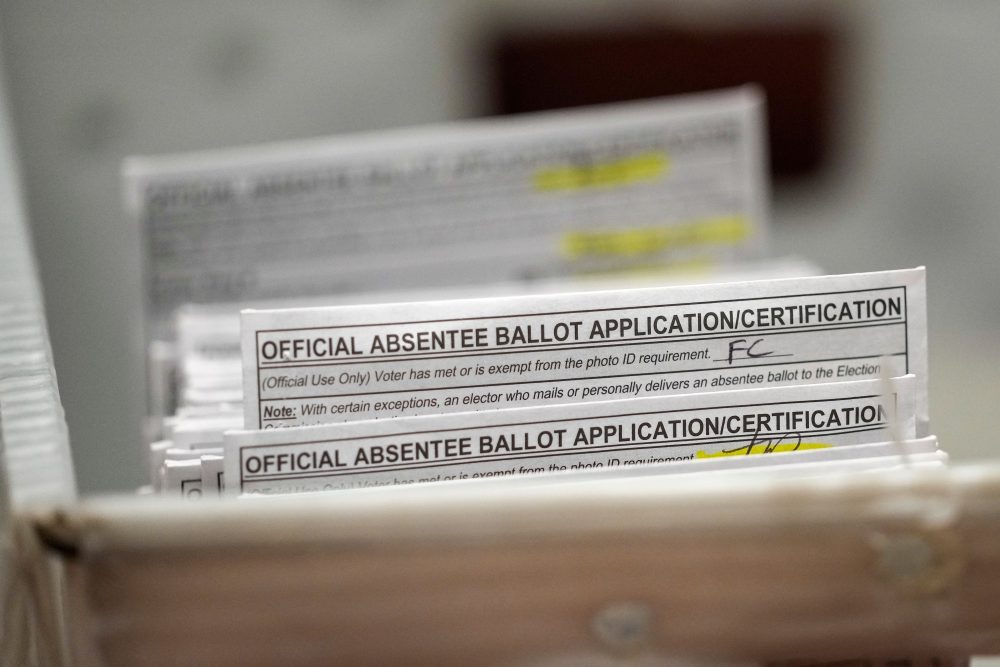
By Friday, approximately 279,000 ballots had been submitted for Tuesday’s election, primarily through early in-person voting.
Most of South Carolina’s 46 counties typically report their complete or near-complete early in-person and mail voting tallies in the evening’s first update, usually before releasing Election Day in-person voting results.
During the 2022 primary, the AP issued its first results at 7:21 p.m. ET, 21 minutes after polls closed. The final vote update occurred at 1:14 a.m. ET, with 99.9% of votes tallied.
The AP doesn’t make projections and only declares winners when no possible scenario exists for a trailing candidate to overcome the deficit. For uncalled races, the AP will report significant developments like candidate concessions or victory claims while clarifying that no winner has been declared and explaining the reasoning.
South Carolina mandates automatic recounts when the margin between winning and losing candidates equals 1% or less of total votes. The AP may call a winner in recount-eligible races if the lead appears too substantial for a recount or legal challenge to alter the outcome.
Following Tuesday’s primary, 14 days remain until June 23 primary runoffs and 147 days until the Nov. 3 general election.