Chinese technology giant Tencent Holdings has attracted investor orders exceeding $6 billion for its upcoming dual-currency bond offering, according to orderbook data obtained by Reuters on Tuesday.
Investor demand for the company’s offshore yuan bonds, including 10-year and 30-year options, surpassed 20.5 billion yuan (equivalent to $3.02 billion), the data revealed.
Additionally, orders for Tencent’s dollar-denominated bonds, featuring 10-year and 20-year terms, topped $3 billion based on separate orderbook information.
Preliminary pricing details showed the proposed 10-year dollar bond was set at U.S. Treasuries plus 80 basis points, while the 20-year dollar bond carried guidance of U.S. Treasuries plus 90 basis points, according to term sheet documentation obtained by Reuters.
For the yuan-denominated offerings, the 10-year offshore bond carried guidance around 2.95%, with the 30-year bond priced at approximately 3.55%, the term sheet indicated.
According to the documentation, Tencent intends to allocate the bond proceeds toward general corporate uses, including debt refinancing activities.
Sources familiar with the matter told Reuters on Monday that Tencent is targeting $4 billion in total fundraising through this bond issuance.
When contacted by Reuters via email on Tuesday, the company had not provided an immediate response for comment.
Tencent’s stock price gained 3.9% during early Tuesday trading sessions.
The company’s previous foray into international bond markets occurred in September, when it successfully raised 9 billion yuan through an offshore yuan bond. Prior to that, Tencent’s most recent dollar bond was a $4.15 billion offering completed in April 2021.
Exchange rate reference: $1 equals 6.7771 Chinese yuan renminbi
A portion of Route 896 southbound is currently shut down to accommodate road maintenance activities in the area where Welsh Tract Road and Old Baltimore Pike intersect.
Transportation officials report that crews are conducting mobile operations to install rumble strips and apply fresh line markings to the roadway surface. The work requires the temporary closure of the southbound lanes in this section.
Motorists traveling through the area should expect delays and plan alternate routes until the maintenance work is completed and normal traffic flow resumes.
The Philippines experiences frequent seismic activity due to its position along the Pacific Ring of Fire, a zone of geological fault lines surrounding the ocean where the majority of global earthquakes take place. Below is a chronological review of significant recent earthquakes that have impacted the island nation:
On June 8, 2026, a magnitude 7.8 earthquake occurred offshore near Mindanao, resulting in the deaths of no fewer than 35 individuals. The seismic event generated tsunami waves that reached coastal areas.
October 10, 2025 brought two major offshore earthquakes to Davao Oriental province within hours of each other. The initial 7.4 magnitude earthquake claimed the lives of at least seven people. A second 6.8 magnitude tremor followed, also triggering local tsunami alerts.
A magnitude 6.9 earthquake struck Bogo City in Cebu province on September 30, 2025. The event surprised the area completely since the nearby Bogo Bay fault line had remained inactive for more than four centuries, as reported by the Philippine Institute of Volcanology and Seismology. The uncommon tremor occurred at shallow depth during nighttime hours while people were sleeping, resulting in no fewer than 72 fatalities, hundreds of injuries, and extensive property damage.
On December 2, 2023, a magnitude 7.6 earthquake hit near Mindanao around midnight, causing numerous residents to evacuate their homes in fear. The event resulted in at least three deaths.
November 17, 2023 saw a magnitude 6.7 earthquake off Mindanao’s coast that killed nine individuals, as confirmed by the National Disaster Risk Reduction and Management Council. Shopping center ceilings gave way, while landslides and building damage were documented throughout impacted regions.
A magnitude 7.0 earthquake affected Luzon island in the northern Philippines on July 27, 2022, causing 11 deaths.
December 15, 2019 brought a magnitude 6.8 earthquake to Davao del Sur in Mindanao, killing 13 people. This marked the fourth earthquake exceeding magnitude 6 to impact Mindanao since October of that year.
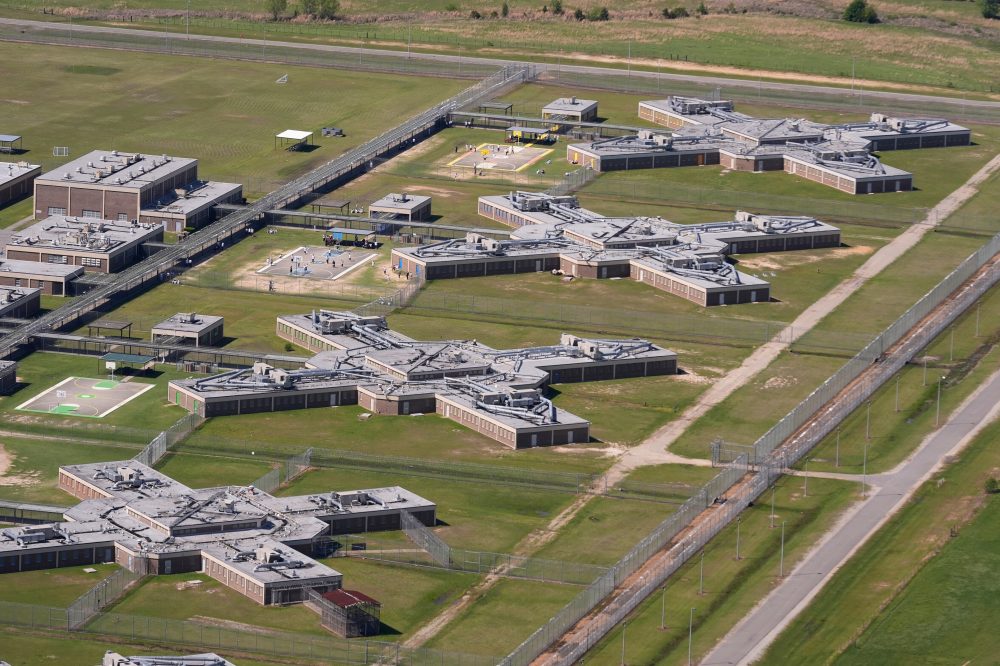
A federal appeals court has ordered further examination of Alabama’s nitrogen gas execution protocol, questioning whether the method violates constitutional protections against cruel and unusual punishment, according to a Monday ruling.
Alabama became the first state to implement nitrogen gas for capital punishment in 2024. The court’s decision could impact an execution planned for Thursday. The procedure involves placing a mask over the condemned person’s face and administering pure nitrogen instead of breathable air, leading to death by oxygen deprivation.
On Monday evening, a three-judge appeals panel overturned a lower court’s May decision that found the nitrogen protocol constitutional. The case was sent back for further review following a legal challenge brought by Jeffery Lee, a death row inmate set to be executed Thursday at a prison in southern Alabama.
While the panel did not halt Lee’s scheduled execution, they instructed the lower court to examine whether his suggested alternative method of execution by firing squad would be practical.
Federal law requires challengers of execution methods to meet two criteria: demonstrating the method creates substantial risk of additional pain beyond death, and proving a viable alternative exists. The appeals court determined Lee satisfied the first requirement but returned the case to evaluate the second.
The appeals panel expressed specific worries about the nitrogen procedure and the duration before unconsciousness occurs.
“In our view, the overall suffering described by the district court, which lasts for one to three minutes, presents a substantial risk of serious harm over and above death itself,” the panel wrote. “Counting to 60 or 180 seconds is not a quick exercise, and constitutionally speaking, that timeframe is intolerable given the suffering that would likely take place under Alabama’s nitrogen hypoxia protocol.”
The Alabama Attorney General’s Office has not yet responded to the ruling. State officials have consistently defended the method as constitutional.
Critics of the execution method welcomed the court’s decision.
“For the first time a court has acknowledged what I and so many others have seen with our own eyes. Nitrogen executions are a unique form of horror,” said the Rev. Jeff Hood, who served as spiritual adviser during two nitrogen executions.
Eight executions using nitrogen gas have occurred nationwide — seven in Alabama and one in Louisiana. Lee’s legal team contends the method inflicts unnecessary suffering. Alabama’s most recent nitrogen execution required over 30 minutes to complete.
Lee received conviction on two capital murder charges for the deaths of Jimmy Ellis and Elaine Thompson during a pawn shop robbery on Dec. 12, 1998. According to prosecutors, Lee entered Jimmy’s Pawnshop armed with a sawed-off shotgun and fatally shot Ellis, the shop’s owner, and Thompson, an employee.
A jury recommended life imprisonment for Lee by a 7-5 vote. A judge overruled this recommendation and imposed the death sentence. Alabama discontinued judicial override in 2017, preventing judges from overturning jury sentencing decisions in capital cases.
The court’s decision came hours after supporters held a vigil at the Alabama Capitol, asking the governor to commute Lee’s sentence to life imprisonment.
Alabama Attorney General Steve Marshall opposed the clemency petition.
“The people of Alabama have not forgotten Jimmy and Elaine. I have not forgotten them,” Marshall said. “Anything short of carrying out the sentence imposed by the court falls short of justice for the victims, and that is not what victims of this state deserve.”
A teenage golf sensation has earned his way into his first major championship at just 17 years of age.
Miles Russell secured his spot in the U.S. Open after surviving a playoff that determined the final two qualifying positions at one of the USGA’s 10 final qualifying locations Monday in Palm Beach Gardens, Florida.
Russell and fellow amateur Ryder Cowan defeated Tyler Collet in a 3-for-2 playoff following a three-way tie for third place at BallenIsles Country Club’s East Course. Amateur Giuseppe Puebla shared medalist honors with Canada’s Ben Silverman at 7-under-par 137 after 36 holes, while Russell, Cowan and Collet finished at 6-under 138.
Russell, who holds the No. 1 position in the American Junior Golf Association rankings and ranks No. 10 in the World Amateur Golf Ranking, plans to attend Florida State this fall and had a future teammate serving as his caddie Monday — Charlie Woods, the son of Tiger Woods.
“We kept it so light,” Russell said of the partnership, per the PGA Tour. “It is the first time I had a buddy on the bag, and I liked it.”
Russell was performing well in his opening round before recording a triple-bogey 7 on his closing hole for a 71. He recovered in the second round with seven birdies, including four consecutive at holes 4-7, finishing with a 67. He made birdie on the par-3 16th to reach 6 under for the day.
“I don’t think it has quite set in yet,” Russell said of making the U.S. Open. “I am pretty speechless at the moment. It is something you dream of and practice for.”
The Florida location was among 10 sites active on Monday, known as “Golf’s Longest Day” as professionals and amateurs compete in 36-hole qualifiers attempting to earn spots in the U.S. Open field. Earlier qualifiers took place in England, Japan and Dallas. The number of available spots at each location depends on the quality and depth of the competing fields.
Max McGreevy, William Mouw and Englishman John Parry prevailed in an 8-for-3 playoff at Lambton Golf and Country Club in Toronto. England’s Matt Wallace and Canadian Adam Svensson became first and second alternates from that location, which attracts PGA Tour professionals due to its proximity to this week’s RBC Canadian Open.
Two players from Argentina, Emiliano Grillo (9-under 131) and Alejandro Tosti (8-under 132), claimed the top two positions there. Colombia’s Marcelo Rozo earned the third qualifying spot at 7-under 133.
Max Homa participated in Toronto’s 8-for-3 playoff but made bogey on the opening hole — reportedly missing a par putt by inches — ending his qualifying attempt in disappointment.
Kevin Roy, Max Greyserman, Ben James and James Nicholas advanced from Century Country Club & Golf Club in Purchase, New York.
Neal Shipley and Zac Blair shared medalist honors at Springfield (Ohio) Country Club, while Dylan Wu, Billy Horschel and Nick Hardy finished one stroke back to claim the remaining three positions. Hardy successfully qualified at Springfield for the sixth time in 12 years. Shipley earned low amateur honors at the 2024 U.S. Open.
Davis Thompson, J.B. Holmes and amateurs Vaughn Harber and Arni Sveinsson of Iceland captured the four available spots from Lakes Golf & Country Club in Westerville, Ohio. Holmes, Harber and Sveinsson advanced through a 4-for-3 playoff while amateur Sam Udovich became first alternate.
Jackson Suber, Ben Kohles, amateur Logan Reilly and Jake Sollon qualified from Woodmont Country Club’s North Course in Rockville, Maryland. Sollon prevailed in a 2-for-1 playoff against amateur Bryan Lee.
Amateur Jackson Ormond and China’s Carl Yuan led the field at Gaston Country Club in Gastonia, North Carolina. Jackson Van Paris, Brandon Wu and Cole Hammer also qualified from that location.
PGA Tour veteran Chris Kirk, who tied for 12th at last year’s U.S. Open, topped the leaderboard with a 15-under 129 at Hawks Ridge Golf Club in Ball Ground, Georgia. Jake Peacock, Keith Mitchell, Robbie Higgins and amateur Chase Kyes also earned spots from that site.
Qualifying continued at two additional locations in Sacramento, California, and Creswell, Oregon.
Several notable professionals failed to qualify alongside Homa, including Tony Finau, Brandt Snedeker, Matt Jones of Australia, Webb Simpson, Harry Higgs, Aaron Wise, Japan’s Ryo Ishikawa, Venezuela’s Jhonattan Vegas, Denny McCarthy, South Africa’s Erik van Rooyen and Lucas Glover.
The 126th U.S. Open is set for June 18-21 at Shinnecock Hills Golf Club in Southampton, New York.
Powerful winds and dangerous seas hammered Wellington, New Zealand on Tuesday, shutting down air and water transportation while officials ordered hundreds of people living near the southern coastline to leave their homes.
Strong gusts at Wellington’s airport temporarily flipped a small aircraft onto its wing and wheel after the plane had completed its landing, according to an airport spokesperson who provided details via email.
“Nobody was injured and it was quickly righted,” the spokesperson stated.
The New Zealand Herald reported that passengers had already gotten off the aircraft when the wind caused it to tip over.
Wellington’s airport saw approximately eight flight cancellations. Air New Zealand notified travelers that predicted strong winds might affect departures from Wellington and provided alternative booking arrangements, according to Radio New Zealand’s coverage.
Officials declared an emergency situation for certain areas of Wellington after meteorologists issued warnings about waves reaching heights of 9 metres (29.5 ft) along the southern shoreline.
“We are now entering the forecast period for most significant swell impacts. If you are in the evacuation zone and have not left your property, please shelter in place,” Wellington City Council announced through a Facebook message.
Passenger boat operations connecting New Zealand’s North and South Islands were suspended Tuesday.
Weather officials predicted waves would increase quickly during Tuesday morning and early afternoon hours along eastern coastlines of both major islands and at the Chatham Islands.
Jonathan Delich, an Island Bay resident who runs Cook Strait Fishing Charters, informed the New Zealand Herald that he had canceled all Tuesday and Wednesday bookings.
“We wouldn’t take you fishing even if you wanted to … no one in their right mind would go out on the water today,” Delich commented.
A soccer referee from Somalia who was poised to make history as the first official from his nation to work a World Cup match has been blocked from entering the United States, according to a FIFA spokesperson who spoke Monday.
Omar Abdulkadir Artan was turned away at Miami International Airport over the weekend and will now miss the opportunity to train and officiate at the World Cup, which begins Thursday.
“FIFA is not involved in host country immigration processes, including visa adjudications, and has been informed by authorities that Mr Artan’s status will not be changed at present,” the spokesperson said.
Despite missing this historic opportunity, Artan expressed optimism about his future in an official statement.
“I would like to thank FIFA and CAF for all their support and I promise to keep my refereeing levels up as I concentrate on the future,” he said.
“I want to thank the football family for their messages and wish my colleagues all the best success during the World Cup and I look forward to joining them again in future competitions.”
U.S. Customs and Border Protection confirmed that a Somali citizen flying from Istanbul landed at Miami International Airport on Saturday but was turned away due to what the agency described as vetting concerns, though officials did not specify the nature of those issues.
The individual went through standard additional screening procedures before being refused admission, according to the agency.
“Admissibility determinations are made on a case-by-case basis using law enforcement, national security, and immigration information available at the time of inspection,” the CBP said.
Immigration restrictions under the Trump administration have raised questions leading up to the World Cup. The previous year, Washington implemented an extensive travel prohibition affecting citizens from 12 nations, with Somalia among them.
According to news reports, Artan possessed a valid visa for entry. Artan had received recognition as the Confederation of African Football’s Best Male Referee for 2025. Somalia’s embassy in Washington had not provided a response to requests for comment.
The American dollar maintained its position close to a two-month peak on Tuesday, strengthening against most major currencies as ongoing Middle East tensions dampened investor risk appetite while traders increased their expectations for a Federal Reserve interest rate increase later this year.
Following an appeal from U.S. President Donald Trump, Iran and Israel ceased their attacks against one another on Monday, though tensions remained elevated as Tehran issued warnings to restart strikes should Israel continue targeting Iran-backed Hezbollah forces in Lebanon.
American diplomatic efforts aimed at securing a permanent resolution with Iranian officials to conclude their conflict, which has lasted more than three months, have shown minimal progress, keeping oil prices high and strengthening safe-haven demand for the dollar.
The euro traded at $1.1528 while the British pound reached $1.3335, with both currencies declining approximately 0.05% during Asian trading hours after reaching two-month lows in the prior session.
Risk-sensitive currencies also declined, with the Australian dollar dropping 0.1% to $0.7039 and the New Zealand dollar trading at $0.5804.
The Japanese yen continued its weakness, falling to as much as 160.295, remaining near the 160 level that market observers widely consider a threshold for potential official intervention.
The dollar index, which tracks the greenback’s performance against a collection of currencies including the yen and euro, showed little movement at 100.03, staying close to Monday’s two-month high of 100.21.
“When you think about this idea of a peace deal or some sort of truce… what have we achieved in the past couple of weeks? Not a great deal,” NAB’s senior FX strategist Rodrigo Catril said in a podcast.
“We’ve seen the dollar being stronger because of this uncertainty, but also because of strong data in the U.S.”
The offshore yuan remained steady at 6.7857 per dollar, with traders awaiting trade data scheduled for release later in the day that economists expect will demonstrate strengthened Chinese export growth during May.
Financial markets are closely monitoring Wednesday’s U.S. inflation data for insights into the Federal Reserve’s future policy direction, particularly after last week’s strong employment report increased speculation about a rate increase this year. According to CME FedWatch, Fed funds futures traders now assign a 70% probability to a rate hike by December.
Treasury yields stayed broadly elevated due to rate hike expectations, with two-year note yields remaining near a 15-month high while the benchmark 10-year Treasury yield held firmly above 4.5%.
“Coming hot on the heels of Friday’s robust non-farm payrolls report, a hotter-than-expected CPI print would undoubtedly add to mounting fears of a Fed rate hike before year-end,” said Tony Sycamore, market analyst at IG.
“This scenario would provide fresh support for the U.S. dollar while putting renewed downward pressure on U.S. equities.”
Meanwhile, the European Central Bank is widely anticipated to implement a rate increase this week, with another boost likely in September, as officials work to balance energy-driven inflation pressures against a weakening economic environment.
Business conditions in Australia stopped their downward slide in May as companies reported slightly better sales figures, according to a new survey released Tuesday. However, business confidence continues to remain pessimistic as rising expenses put pressure on company profits.
National Australia Bank’s latest survey found their business conditions measurement stayed at +3 during May, breaking a four-month streak of declining numbers. The confidence reading showed modest improvement, moving to -14 from April’s deeply negative -23.
“With global uncertainty persisting, the domestic backdrop softening and cost pressures remaining elevated, confidence remains very weak and in negative territory across all industries,” said Michael Hayes, an economist at NAB.
“Of note, the profitability sub-component is furthest below its long-run average, suggesting margin pressures persist.”
While cost measurements dropped slightly in May, they continue to run high by historical standards. Business capacity utilization dropped below 82% for the first time since early 2025, reflecting the country’s slower economic expansion.
Australia’s central bank has implemented three interest rate increases, bringing rates to 4.35% in efforts to combat persistent inflation. Officials worry that companies may transfer their increasing energy expenses to customers, potentially fueling expectations for additional price increases.
A dangerous parasitic organism that was successfully eliminated from the United States during the 1960s has made an unwelcome return to South Texas, creating alarm among livestock producers and agricultural officials.
The screwworm, which consists of fly larvae that parasitize animals, has been discovered again in the region, marking the first confirmed cases since its eradication more than six decades ago. The parasite represents a significant danger to cattle and other livestock operations throughout the area.
Agricultural inspectors are monitoring the situation closely at livestock checkpoints, working to assess the scope of the outbreak and prevent further spread of the harmful organism. The reemergence of this pest raises serious questions about potential impacts on the region’s vital cattle industry.
The pontiff Pope Leo XIV concluded a seven-day journey through Spain, traveling to a nation where Catholicism once held deep roots but where participation in religious life has significantly diminished over time.
The papal trip included visits to both mainland Spain and the Canary Islands.
This collection of photographs was assembled by AP photo editors to document the visit.
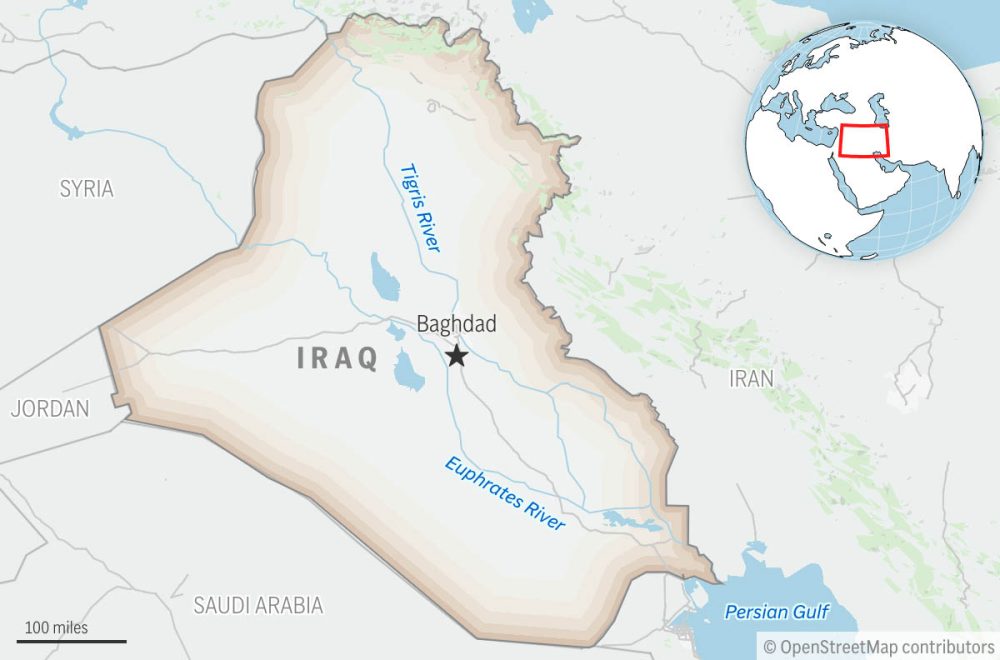
Authorities in Iraq are working Monday to determine the identities of those killed in a devastating bus accident that claimed 21 lives, according to a provincial official.
The passenger vehicle crashed and caught fire on Sunday in Iraq’s southern region, marking another tragic incident on the nation’s deteriorating roadways.
Ahmad Saleem, spokesperson for the Thi Qar provincial council, reported that fourteen victims were so severely burned they cannot be recognized or identified. He noted that officials suspect two Iranian citizens may be among those who perished, though their remains have yet to be confirmed.
According to Saleem, the bus was making its way from Najaf — a sacred city for Shiite Muslims that draws many religious visitors — toward the southern coastal city of Basra when the accident happened around 3 p.m. on Sunday. The crash took place in Thi Qar province, positioned between Thi Qar and Diwaniyah.
Beyond the fatalities, 20 additional passengers sustained injuries in the wreck. Among the wounded were two Iranian citizens who were transported back to Iran on Monday morning with assistance from the Iranian Consulate in Basra, the official reported.
Saleem blamed the accident on deteriorating road conditions, explaining that local officials had previously identified the roadway as dangerous. He also mentioned that a critical shortage of emergency vehicles in the province made it difficult to respond effectively to the disaster.
Such traffic accidents occur frequently throughout Iraq, where years of war, government corruption and insufficient funding have left the nation’s basic infrastructure crumbling. The country’s roadways lack proper upkeep, many cars and buses are old and unsafe, and traffic laws are rarely enforced.
Last year, another bus filled with religious pilgrims heading to the Iraqi city of Karbala crashed in an area north of Baghdad, resulting in 18 deaths.
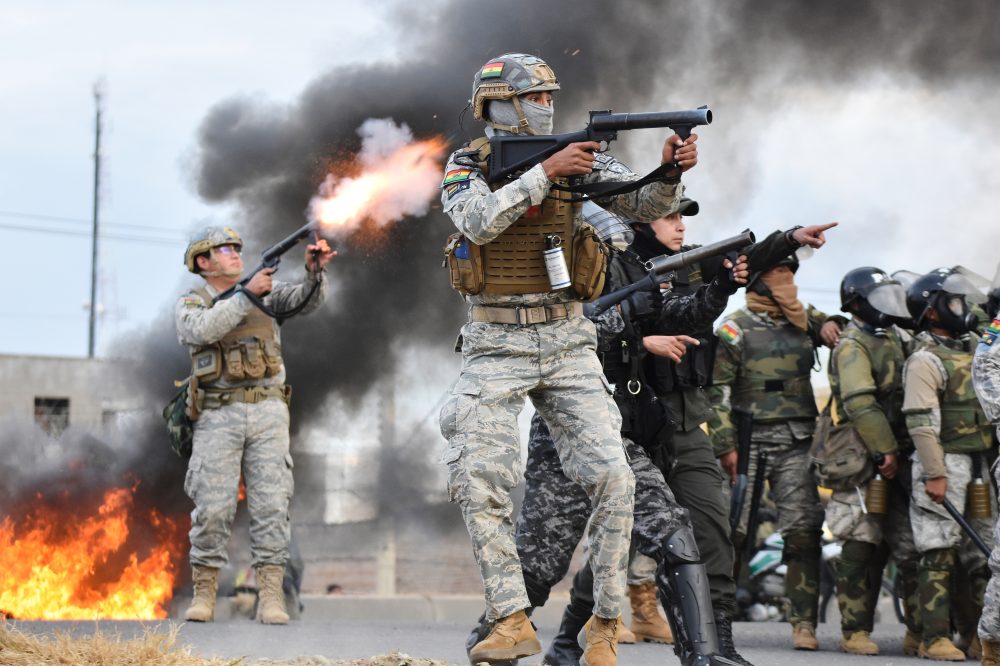
LA PAZ, Bolivia — Violence broke out between demonstrators and law enforcement in Bolivia on Monday after conservative President Rodrigo Paz enacted legislation that could facilitate a more aggressive government response to ongoing protests calling for his removal from office.
In the central city of Cochabamba, protesters threw explosives, rocks and wooden objects at officers, who retaliated with tear gas, resulting in numerous detentions as roadway blockades continue to bring the Andean country to a standstill.
The fresh violence occurred following Paz’s approval of a law that streamlines the process for implementing tough governmental measures against demonstrations that have disrupted Bolivia for five weeks, creating transportation chaos and shortages of essential goods including food, gasoline and medical items.
Labor unions, rural farming communities and mountain Indigenous populations — angered by Paz’s elimination of fuel subsidies and dissatisfied with his inability over seven months to address Bolivia’s ongoing economic challenges — have established 90 roadblocks on major highways across the country, cutting off major urban areas, particularly La Paz, the governmental center, and nearby El Alto. Struggling with increasing prices and minimal pay, many demonstrators claim Paz has abandoned them despite their electoral support.
An independent public ombudsman’s weekend report indicated that between May 1 and June 2, the civil unrest caused 10 fatalities, 37 wounded individuals and 365 detentions. Officials state that seven deaths resulted from inadequate medical care, though all cases remain under investigation.
While Paz has attempted negotiations with demonstrators and called for limited police force, protesters have mostly declined meetings with the president and maintain their demand for his complete removal just seven months into his term. His victory last year concluded almost two decades of continuous governance by Bolivia’s Movement Toward Socialism, or MAS, the organization established by former President Evo Morales.
Growing pressure exists for Paz to take stronger action against the disorder. Monday’s signed legislation simplifies the government’s capacity to declare an emergency status that would halt constitutional protections and authorize military intervention to restore stability and eliminate blockades. However, Paz must issue an additional decree for emergency status to take effect. Whether he will choose this path remains uncertain, given that violent military suppression of demonstrations has previously removed Bolivian leaders from power.
“This law is to protect the majority of the country from the narco-terrorism that is instigating the protests,” Paz said in a national address after signing the law. “I extend my hand to the social organizations that have legitimate demands and reiterate my willingness to engage in dialogue.”
Following his remarks, groups attacked a public transportation union facility in El Alto amid rising tensions over fuel scarcity, resulting in at least 28 detentions, according to police. Violence spread through Cochabamba, where protesting agricultural workers tried to block a bridge linking the area to the country’s western region. Officers arrested 23 individuals while using tear gas to scatter demonstrators hurling rocks and explosives.
Legal counsel for the leader of Wisconsin’s biggest mosque claims their client is being refused essential medical treatment for diabetes and has dropped 30 pounds during the two months he has been held by immigration authorities.
Salah Sarsour, who was born in Palestine and holds legal permanent residency in the United States, was apprehended by U.S. Immigration and Customs Enforcement officers in April. His legal team contends he is being held on unfounded allegations that he poses a foreign policy risk, but they suspect he was really singled out for criticizing Israel and due to a juvenile conviction from Israeli military tribunals.
He maintains a clean criminal history in the U.S., where he has resided for over three decades.
Sarsour suffers from Type 2 diabetes and his glucose levels are not being regularly monitored, creating dangers of organ damage or death without proper treatment, his legal representatives informed a federal judge on Monday. Sarsour remains confined in an Indiana county detention facility while his immigration proceedings continue.
“We had the opportunity to make a direct, urgent appeal to the court about the need for Salah’s release, including being able to report that he has lost a staggering 30 pounds while in detention,” Luna Droubi, an attorney for Sarsour, said in a press release. “The Judge raised questions about the medical care Salah is receiving, and we will continue to press this case.”
Representatives from ICE and the Department of Homeland Security did not provide immediate responses to requests for comment. Legal documents submitted by lawyers representing DHS and ICE appeared to be under seal in the online federal court records, making any official response to the claims made by Sarsour’s legal team unavailable for review.
A joint investigation by KFF Health News and The Associated Press discovered that hundreds of detainees across at least 33 states have initiated federal legal action with comparable claims of medical negligence. These legal cases involve other detainees who report being refused medications or experiencing treatment delays for ailments including cancer, high blood pressure, epilepsy, Parkinson’s, HIV, diabetes, infections, depression and additional conditions.
Sarsour’s legal representatives provided additional information about his confinement circumstances in correspondence sent recently to U.S. District Judge James Patrick Hanlon. They are requesting the judge grant Sarsour’s release while his case proceeds.
“Mr. Sarsour’s health continues to deteriorate,” they wrote. “Though he recently developed severe abdominal pain, he was told by officials in the jail that they could not help him and that he must purchase his own medication. His blood sugar levels are not being consistently checked.”
Sarsour is also facing harassment from detention guards who refused him access to a Quran and who continuously disrupt him during prayer times in accordance with his Muslim faith, his legal team stated. When Sarsour requested an appropriate diet to manage his glucose levels, he was advised to buy BBQ pork rinds from the commissary, despite this food conflicting with his religious convictions and dietary requirements, his lawyers reported.
“Just over two months ago, my dad would have been starting his day as usual by checking in on my grandmother and heading to work,” said Kareem Sarsour, Salah’s son. “We’re not only fighting now for my dad’s legal right to be here, but also for his health — and basic due process guaranteed by his constitutional rights to speak up about injustice.”
JUNEAU, Alaska — An Alaska Senate hopeful named Dan Sullivan admits that having the identical name and Republican party registration as the current senator provides him with “an instant megaphone” in the competitive primary contest. However, Sullivan insists his political bid isn’t fraudulent or orchestrated by Democratic operatives.
The candidate explained that acquaintances have jokingly called him senator for years and questioned whether he’d ever considered seeking office. He noted he’s been mulling over a run for over ten years.
“This is my choice,” Sullivan, a resident of the small fishing town of Petersburg, stated during a Monday phone conversation.
Previously, Sen. Dan Sullivan claimed the challenger Sullivan was “trying to trick” voters to benefit his primary opponent in the race, Democratic former U.S. Rep. Mary Peltola. The sitting senator alleged the other Sullivan’s entry into the August primary was part of a coordinated Democratic scheme involving Peltola’s campaign to mislead voters, charges they reject. He warned of potential legal action to investigate the matter.
The situation has drawn national Republican attention as the party works to maintain their Senate majority during what’s anticipated to be a challenging midterm cycle for the governing party. Sullivan, the challenger, rejected assertions that his campaign serves merely as a ploy to damage the senator’s reelection prospects.
He stated he’s had zero communication with Peltola’s campaign — “zero, none, zilch” — and answered “no” when questioned whether state Democratic Party members or national Democratic operatives had approached him about running.
A Peltola spokesperson, Harry Child, stated the campaign “has no involvement with either Sullivan campaign.” The Alaska Democratic Party’s executive director, Jenny-Marie Stryker, said her organization “is in no way affiliated with either Dan Sullivan.” Democratic Senatorial Campaign Committee spokesperson Monica Robinson answered “no” when asked if the group had encouraged the challenger Sullivan to enter the race.
Sullivan described having the same name as Alaska’s sitting U.S. senator as “a matter of fate” and maintained he’d committed no wrongdoing.
“I have every right to run for whatever office I’m qualified for, and I’m qualified for this office,” the challenger stated, continuing: “I think I’m doing what most Americans would think would be a patriotic thing to do when you’re unsatisfied with the status quo. You stand up and say, I’m going to fight for things I believe that are going to make my community better.”
Previous Alaska ballots haven’t identified incumbents, though the Alaska Division of Elections’ current online candidate roster does. It also separates the candidates using middle initials — Dan S. Sullivan for the senator and Dan J. Sullivan for the challenger.
Alaska conducts open primaries where the top four vote recipients, regardless of party, proceed to the ranked choice general election in November. Sen. Sullivan’s campaign fears having two Dan Sullivans on the ballot might mislead voters.
Sen. Sullivan’s campaign stated Monday, “Alaskans deserve a fair and honest election — not political games meant to manipulate the ballot and benefit Democrats.”
The challenger revealed he was affiliated with the limited government-oriented Alaskan Independence Party for decades, until the party’s termination late last year. Election authorities indicated voters registered with the party could switch their affiliation, but those who didn’t would be listed as “undeclared.” Sullivan said he was then categorized as undeclared until filing for office, when he registered as Republican.
He explained he was partially inspired by his deceased father, whom he characterized as a “true, compassionate, conservative Republican.” He said if forced to categorize himself, it would be “a pragmatic Republican centrist” — comparable to Alaska’s senior U.S. senator, Lisa Murkowski, but “with touches of a Rand Paul Republican in there.”
He mentioned growing up in the Chicago region but was attracted to Alaska and established roots nearly five decades ago in Petersburg. The fishing community of approximately 3,400 in southeast Alaska’s Tongass National Forest is nicknamed “Little Norway” for its numerous residents with Scandinavian heritage. He was employed by the U.S. Forest Service before switching careers to become an educator. He has since retired.
Like many Alaska communities, Petersburg lacks connection to the state’s primary road network and is reachable only by aircraft or boat. Juneau, the closest city, is roughly 45 minutes away by plane.
Petersburg is located on Mitkof Island, characterized by mountains, dense forest stands and swampy areas called muskeg. Sea lions resting on buoys and humpback whales and orcas are frequently spotted off its coastline.
Sullivan, who turns 69 this weekend, declined an interview request last Friday, he explained, because the king salmon were running and he wanted to fish.
Regarding his office bid, the challenger said he intends to conduct some fundraising and hopes to campaign in the state’s major cities, including Anchorage and Juneau, though he currently has no concrete plans and is working out the specifics.
He finds the current controversy surrounding his Senate campaign — and the incumbent’s response — somewhat unexpected.
“I guess my thought would be, ‘Dude, why don’t you just run your campaign?’ If you’ve got a strong record, run on your record. People will love you for it and you’ll be swept back into office,” he said Monday. “Why would he be concerned that a guy out of Petersburg is this huge threat?”
SpaceX’s chief executive Elon Musk announced Monday that constructing artificial intelligence data centers in orbit won’t pose major technical hurdles, as his company gears up for a massive initial public offering later this week.
The tech mogul explained that most of the necessary technology is already incorporated into the company’s existing Starlink satellite constellation.
“Part of what we want to convey here is that there is not some magic that is necessary, that doesn’t exist,” Elon Musk stated during a company-released video presentation.
“A lot of this is technology we’ve already made for the Starlink V3 satellites. We don’t think this is a super hard problem compared to the things we already do.”
These statements arrive as financial backers examine SpaceX’s orbital AI data center strategy, which represents a crucial component of the firm’s future expansion plans before going public with an anticipated worth of approximately $1.75 trillion.
During the presentation, Musk and company engineer Ian Dahl detailed their vision for AI satellites functioning as computational hubs in space, utilizing solar power and dissipating heat through radiation into the vacuum of space.
SpaceX contends that positioning computational infrastructure in orbit could address power limitations that increasingly challenge ground-based AI data facilities.
Based on their presentation materials, the initial proposed AI satellite would produce approximately 150 kilowatts of maximum power and maintain 120 kilowatts for continuous computing operations.
Musk noted this output is similar to one Nvidia GB300 AI server rack, which generally requires about 140 kilowatts during peak operation.
The company indicated these satellites would extensively utilize technologies currently being implemented in their advanced Starlink V3 satellites, such as solar panel arrays and heat management systems.
Dahl characterized these spacecraft as less complex than Starlink satellites since they wouldn’t need the massive phased-array antennas required for internet communications.
SpaceX stated that their Starship’s completely reusable framework would ultimately enable launching the substantial quantities of solar panels, heat radiators and computer processors required to expand orbital computing operations.
Musk revealed that SpaceX anticipates their AI satellite manufacturing facility in Bastrop, Texas, will achieve significant production levels by late next year.
This space-based computing project represents part of a wider plan to establish SpaceX as not just a rocket launch and satellite communication provider, but also as a leading AI infrastructure company as it transitions to public ownership.
Crude oil markets saw modest increases during early Tuesday trading as tensions between Iran and Israel kept investors cautious about the durability of a temporary ceasefire between the two nations.
Brent crude futures climbed 13 cents to reach $94.38 per barrel, marking a 0.14% increase at 0001 GMT. Meanwhile, U.S. West Texas Intermediate crude gained 11 cents to $91.41 per barrel, representing a 0.12% rise.
The energy markets had experienced significant volatility during the prior trading session, with prices jumping as much as 5% following fresh Israeli military action against Iran and operations in Lebanon that dampened expectations for a swift end to the broader conflict. However, those gains were reduced after Iran’s military forces declared an end to their operations targeting Israel.
“While there is some relief from the latest pause in direct strikes, investors are not convinced the truce will hold,” said Tim Waterer, chief market analyst at KCM Trade.
According to Waterer, the market continues to factor in ongoing uncertainty instead of expecting a permanent solution.
Both Iran and Israel announced they had suspended their mutual attacks following an intervention by U.S. President Donald Trump, who urged them to immediately “stop ‘shooting’.” However, Tehran indicated it would restart military strikes if Israel persisted in targeting Hezbollah forces in Lebanon.
“While this helped stop the situation snowballing, the geopolitical backdrop remains tense, and a lasting peace deal remains elusive,” said Tony Sycamore, market analyst at IG.
In a video message broadcast on Israeli television, Israeli Prime Minister Benjamin Netanyahu declared that Israel would respond forcefully should Iran launch another attack.
During an interview with Axios published Monday, Trump revealed he had cautioned Netanyahu that he could end up fighting without support if he returned to warfare with Iran.
“The key question is whether current de-escalation efforts can finally translate into a longer-lasting resolution, or if we’re simply in another temporary lull,” Waterer said.
Among the primary issues Washington is pursuing with Tehran during peace negotiations is the reopening of the Strait of Hormuz, a waterway that carried approximately one-fifth of global oil supplies before U.S. and Israeli airstrikes targeted Iran in late February.
U.S. military forces intercepted an empty oil tanker in the Gulf of Oman on Monday after the vessel tried to reach an Iranian port despite the current blockade restrictions against Iran, according to military officials.
A seasoned cornerback who captured two Super Bowl championships with the Kansas City Chiefs is returning to pursue a third title.
L’Jarius Sneed has agreed to a one-year agreement with Kansas City valued at up to $5 million, according to Monday reports from ESPN.
The defensive back began his professional football journey with the Chiefs, playing his initial four NFL seasons in Kansas City before getting dealt to the Tennessee Titans during spring 2024. However, his tenure in Tennessee proved disappointing, as he appeared in only 12 contests across two seasons without recording a single interception.
Tennessee cut ties with Sneed on March 13, creating approximately $11.4 million in salary cap relief.
During his original stint with Kansas City, Sneed compiled 10 interceptions, 6.5 sacks and 40 pass breakups across 57 appearances, including 54 as a starter. He participated in 13 postseason contests during that four-year period, recorded two sacks in three rookie-year games, and was a starter for the Chiefs squads that captured consecutive Super Bowl titles in the 2022 and 2023 campaigns.
The cornerbacks room Sneed returns to features mostly new faces. Following the free agent signings of Kade Kohou and Kaiir Elam this offseason, Kansas City selected Mansoor Delane as the sixth overall draft choice in April. Delane inked a four-year, $41.9 million deal on Monday.
Drivers traveling on E Main St will encounter lane restrictions due to ongoing construction work affecting traffic flow through the early morning hours.
The eastbound right lane remains blocked between Library Ave (DE 72) and Tyre Ave as crews continue their work. The lane closure is scheduled to remain in effect until 4:00 AM.
Motorists are advised to allow extra travel time and use caution when navigating through the construction zone. Traffic may experience delays during the closure period.
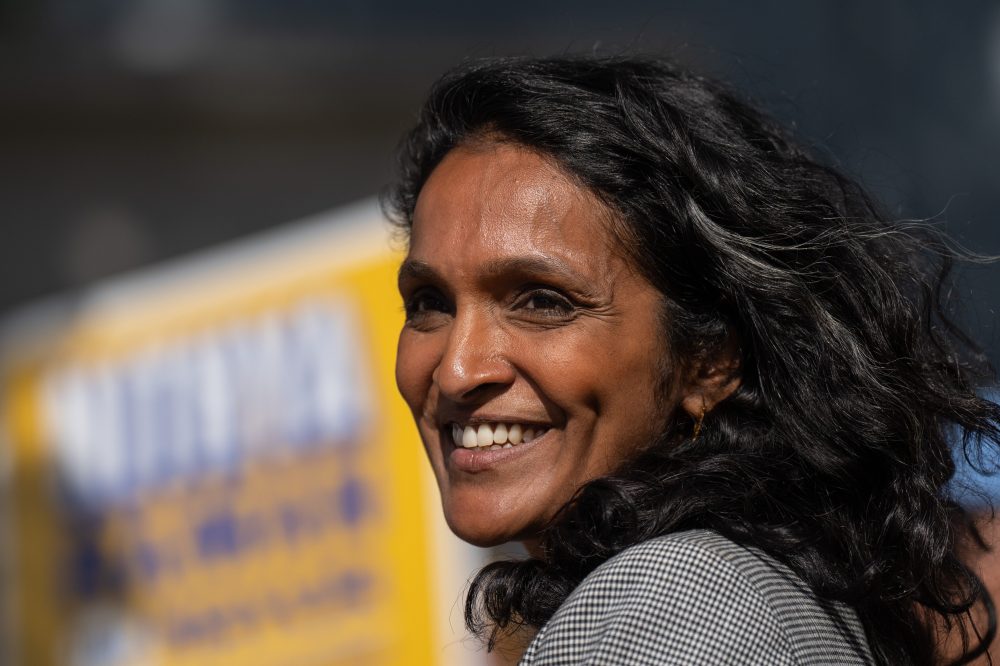
LOS ANGELES (AP) — City council member Nithya Raman has secured her place in November’s mayoral runoff against incumbent Karen Bass, creating an unforeseen contest between two former political allies who are both Democrats vying to lead the nation’s second-largest city with nearly 4 million residents.
The results eliminate Spencer Pratt, a Republican and former reality TV star from “The Hills,” from contention. While his celebrity status and willingness to challenge liberal policies in the heavily Democratic city attracted national media coverage, that attention failed to generate sufficient votes to reach the runoff.
Raman entered the mayoral contest at the last moment, despite having previously endorsed Bass for another term. With backing from the Democratic Socialists of America during her council election, the race will determine if voters in this overwhelmingly Democratic metropolis are ready to embrace more progressive solutions to persistent challenges including homelessness, deteriorating infrastructure, and rising housing costs.
The contest carries significant historical implications. Bass holds the distinction of being the first Black woman to serve as mayor, while Raman could become the first South Asian woman to hold the office.
Bass campaign strategist Douglas Herman released a statement saying, “A campaign against Nithya Raman, who allows encampments near schools and cuts the police force, is one Mayor Bass looks forward to winning.”
Though officially nonpartisan, with no party labels appearing beside candidates’ names on ballots, the mayoral contest revealed Bass’s political vulnerability as incomplete results showed her receiving less than 35% of votes — a weak showing for a sitting mayor.
Raman trailed in third place until Sunday but steadily gained ground with each vote tally update released by Los Angeles election officials since the June 2 primary.
As the incumbent, Bass embodies the Democratic establishment with endorsements from Gov. Gavin Newsom, former Vice President Kamala Harris, and former House Speaker Nancy Pelosi, plus support from powerful labor organizations. Her political resume includes service in the state Legislature and Congress before winning the mayor’s office in 2022, and she was considered as a potential running mate for former President Joe Biden in 2020.
Making her first citywide campaign, Raman has pledged to accelerate housing development, restore entertainment industry employment, and enhance city services in a municipality notorious for unclean streets, traffic congestion, and widespread homeless encampments throughout numerous neighborhoods.
“What we are doing right now is just not working,” Raman says. “LA’s primary strategy for homelessness has been to move encampments from one block to another, from your block to your neighbor’s block and back again. … It’s political theater.”
Determining Bass’s November opponent required nearly a full week due to California’s famously lengthy vote-counting procedures. All eligible voters receive mailed ballots, which are tallied if postmarked by Election Day and delivered to election offices within seven days.
Los Angeles, similar to other California counties, processes and counts mailed ballots approximately in the sequence they arrive, meaning the final submissions are the last to be tallied.
Tuesday evening after voting concluded, Los Angeles published results from early-returned and pre-processed mail ballots plus same-day votes. Those tallies placed Bass ahead with Pratt second and Raman third. Subsequently, the county has been processing and announcing results from later-arriving mail ballots.
Voting data indicates substantial numbers of Democrats retained their mail ballots until the campaign’s closing days before returning them, explaining why Bass and Raman have performed better than Pratt in votes counted since primary day.
Born in India, Raman relocated to the United States during childhood and obtained degrees from Harvard University and the Massachusetts Institute of Technology, where she focused on urban planning studies.
She has resisted efforts to ban homeless individuals from establishing tents within 500 feet (152 meters) of schools and childcare facilities. Nevertheless, she seems to have moderated her opposition to no-camping zones designed to limit encampment expansion and clear streets. Despite voting against dozens of such measures on the council, she later indicated she would not obstruct them as mayor.
Raman’s stance on city policing has also evolved.
She previously advocated for a significantly reduced department and shared “defund the police” messages on social media in 2020. She opposed the mayor’s 2023 police contract, arguing it was too costly for the financially struggling city.
Recently, she stated the Los Angeles Police Department should maintain its current staffing of approximately 8,600 officers, down from roughly 10,000 in 2020. The police union has criticized her in advertisements, dubbing her “Flip Floppin’ Raman.”
In ethnically diverse Los Angeles, successful mayoral candidates must build coalitions across ethnic and geographic lines. To exceed 50% of votes and claim victory, Raman must attract additional supporters.
“I don’t think it’s impossible, but she is going to have to expand beyond her ideological base,” said Democratic consultant Bill Carrick, who views Bass as vulnerable.
“The people who didn’t vote for Nithya weren’t voting against her, they were voting for somebody else. Karen (Bass) had a good number of people who were voting against her,” Carrick added.
Despite their opposing political philosophies, both Raman and Pratt have appealed to voters dissatisfied with the city’s current direction.
Tanika Vickers, employed by a Los Angeles housing nonprofit, described feeling part of a group of working, taxpaying citizens who have been “forgotten.” She expressed frustration with tax dollar allocation, particularly “throwing” additional money toward homelessness without measurable results.
She supported Raman for mayor because she believed Raman was most capable of implementing her proposals and addressing the city’s needs.
“I think that we are all looking for change,” she said.
Regional authorities in Ukraine’s Kharkiv region confirmed Tuesday that three civilians lost their lives during Russian strikes on the northeastern area, with emergency responders working to control resulting fires.
Regional governor Oleh Syniehubov announced on the Telegram messaging platform that the fatalities occurred in the town of Chuhuiv and included two men aged 70 and 50, along with a 70-year-old woman.
Meanwhile, the regional capital near the Russian border, also named Kharkiv, saw six people wounded from the bombardment, according to Mayor Ihor Terekhov’s Telegram post. The mayor reported damage to a utility facility and multiple fires erupting throughout the city.
The military strikes occurred while Ukrainian President Volodymyr Zelenskiy was traveling back to Kyiv following discussions in London with officials from Britain, France and Germany regarding potential paths forward for resolving the four-year conflict.
Peace negotiations led by the United States between Ukraine and Russia have reached an impasse as Washington concentrates on addressing the Iran war situation.
On Monday, Zelenskiy described his meeting with U.S. envoys Steve Witkoff and Jared Kushner as “positive,” commending their willingness to pursue a Ukraine war resolution in the upcoming weeks.
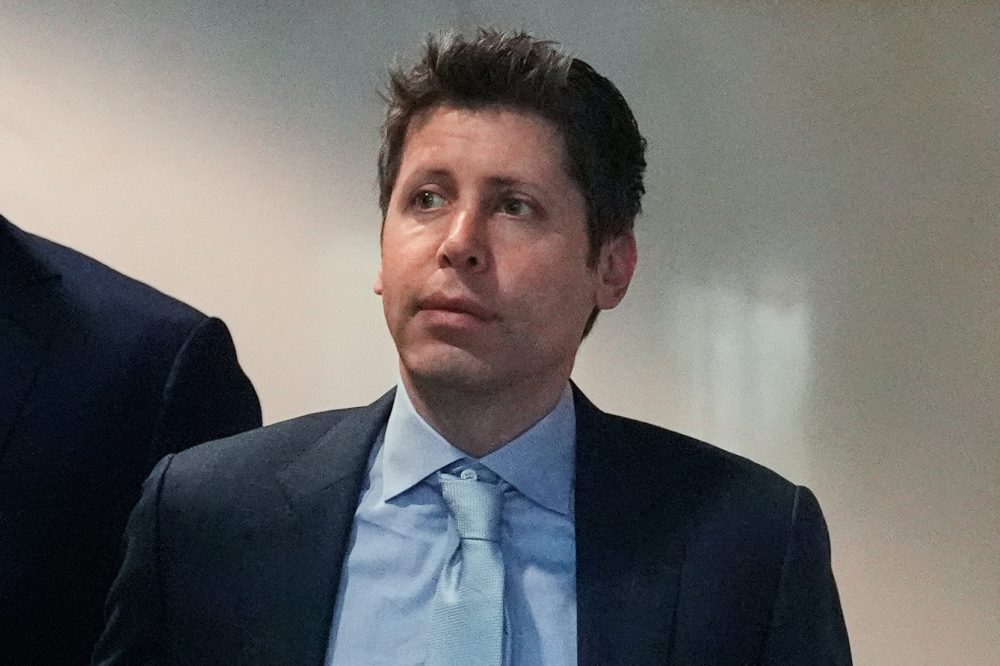
The company behind ChatGPT announced Monday that it has quietly submitted paperwork for a stock market debut in the United States, following competitor Anthropic’s similar move as investors look for ways to capitalize on the artificial intelligence surge.
The artificial intelligence company has not revealed when it might go public or provided details about how much money it plans to raise through the stock offering.
Financial experts weighed in on the announcement:
Michael Ashley Schulman, a partner at Cerity Partners, said: “Undoubtedly, OpenAI is keeping options open as Anthropic edged ahead with its filing after a monster funding round, yet both giants operate on timelines dictated by their own regulatory whirlwinds and internal builds rather than copycat moves. For broader markets, an eventual OpenAI listing could accelerate the narrative that artificial intelligence is infrastructure, pulling more public capital into the sector; until then, expect the company to keep leveraging private advantages to maintain its lead.”
Gil Luria, managing director of D.A. Davidson, commented: “What OpenAI does not want is for the public market capital to exhaust itself. Not only are SpaceX and Anthropic ahead of it in line to IPO, large public competitors could also raise tens of billions of dollars each in public market secondary issuances, as Google just completed last week.”
Josef Schuster, IPOX CEO, noted: “SpaceX, OpenAI and Anthropic are now engulfing onto the public markets to finance their massive growth. While the markets currently welcome the firms with open arms, they will be relentless in rewarding and punishing as their fundamental profile builds over time. Given that their IPO offerings characteristics diverge so much from the average U.S. IPO, including offering size and initial float, it is a given that their life as a publicly traded entity will be highly dynamic.”
Jake Dollarhide, CEO of Longbow Asset Management, said: “With SpaceX, everyone knows Elon Musk, everyone knows what they’re getting or think they’re getting. Anthropic and Open AI will have much more to do with what people are choosing to use personal entertainment or for work, as far as AI. Some use Claude and live and die by it, and some use Chat GPT and live and die by it, and so I think you’re going to get very specific investors who use those services who want to buy that stock.”
Adam Sarhan, chief executive of 50 Park Investments, added: “There’s nothing surprising here. They are likely waiting to see how the market reacts to the other largely anticipated IPOs before announcing the timing.”
Motorists traveling westbound on Capitol Trail are encountering construction-related delays this morning as work crews continue their project in the area.
The right lane remains blocked to traffic from E. Green Valley Circle to Harmony Road, with the closure scheduled to lift at 5 AM.
Drivers are advised to allow extra time for their commute and use caution when navigating through the construction zone.
Motorists traveling on northbound Route 896 should expect to encounter mobile painting operations currently in progress along a stretch of the roadway.
The maintenance work is taking place between the intersection with Old Baltimore Pike on the south end and Welch Tract Road on the north end, according to traffic officials.
The painting operation is scheduled to continue until 5 AM, potentially affecting traffic flow during overnight and early morning hours in the area.
Major index provider MSCI announced Monday it will stick with current policies that allow large initial public offerings fast-track entry into its Global Standard Indexes, potentially opening the door for SpaceX when it goes public later this month.
The decision could drive significant demand for SpaceX shares from passive investment funds that follow MSCI’s benchmarks. These funds manage trillions in assets and must purchase stocks when they’re added to the indexes they track.
SpaceX plans to raise $75 billion through its public offering while seeking a massive $1.75 trillion company valuation. That figure would rank the space exploration company among the 10 most valuable publicly traded U.S. companies, despite only about 7% of shares being available for public trading when it debuts June 12.
The aerospace firm run by Elon Musk appears positioned to meet MSCI’s requirements for size and available shares needed for expedited index inclusion.
MSCI’s approach differs sharply from S&P Global’s stance. Last week, S&P Global blocked SpaceX from quick entry into the S&P 500 index, maintaining existing standards that require companies to show profits.
SpaceX reported a $4.94 billion net loss in 2025, though the company’s revenue jumped 33% to $18.67 billion.
The company plans to finalize its IPO pricing June 11, with Nasdaq trading beginning the following day. Under MSCI’s timeline, SpaceX could join the provider’s indexes within 10 trading days after going public.
Passive funds that follow MSCI indexes controlled approximately $5.79 trillion in assets as of February, according to an MSCI blog post.
Nasdaq has already adjusted its rules to smooth the path for SpaceX, Anthropic and other large newly public companies to enter its Nasdaq 100 index.
SpaceX also qualifies for quick inclusion in Russell U.S. Equity Indexes and the FTSE Global Equity Index Series under new fast-track policies from index provider FTSE Russell.
LOS ANGELES (AP) — The Los Angeles Kings have chosen Peter Laviolette as their new head coach, according to a source with knowledge of the negotiations who spoke to The Associated Press on Monday.
The source requested anonymity since the Kings have not yet officially announced the conclusion of their extensive search for a permanent replacement for interim coach D.J. Smith, who took over from Jim Hiller in March.
The 61-year-old Laviolette is anticipated to receive a three-year deal to lead his seventh NHL franchise. While the Kings have qualified for the playoffs in five straight seasons, they have also suffered five consecutive first-round eliminations under three different head coaches and two general managers.
Laviolette is making his return to the NHL following his dismissal by the New York Rangers in April 2025. Throughout his 23-year coaching career, he has guided the New York Islanders, Carolina, Philadelphia, Nashville and Washington, with his career highlight being a Stanley Cup title with the Hurricanes in 2006.
Teams under Laviolette’s leadership have qualified for the postseason in 11 of the last 14 seasons he completed behind the bench, and he also guided the Flyers (2010) and the Predators (2017) to Stanley Cup Final appearances. His 1,594 career games coached rank ninth most in NHL history.
In his first NHL position on the West Coast, Laviolette inherits a talented team that remains trapped in a significant slump, unable to emerge as a legitimate Stanley Cup contender.
General manager Ken Holland dismissed Hiller shortly following the Olympic break during the coach’s second complete season leading the team, and the Kings posted an 11-6-6 record after Smith was promoted from his assistant coaching position. Smith, who was considered for the permanent role, helped the Kings secure the final Western Conference playoff berth — but Los Angeles was eliminated in a four-game sweep by the Colorado Avalanche.
The Kings’ four prior first-round eliminations all came against the Edmonton Oilers, resulting in the exit of general manager Rob Blake one year ago.
Los Angeles has not advanced past the first round since capturing the Stanley Cup in 2014, though the roster maintains a strong core of talent despite the retirement of longtime captain Anze Kopitar.
Holland brought in high-scoring forward Artemi Panarin from the New York Rangers last winter, and productive forwards Adrian Kempe, Quinton Byfield and Kevin Fiala are all set to return this fall.
The passionate Laviolette has built a reputation for developing aggressive offensive systems and achieving rapid franchise transformations at his previous destinations. He may represent an organizational philosophy change for the Kings, who have operated as a defense-focused organization for two decades — often at the expense of their offensive production.
Los Angeles ranked 29th in the NHL in scoring last season with only 220 goals, by far the lowest total among playoff-qualifying teams. The Kings have ranked in the bottom half of NHL scoring over the past five seasons despite reaching the playoffs annually.
Holland publicly questioned whether the Kings rely too heavily on defensive play after they managed just five goals during their four-game elimination by the Avs, though he stopped short of promising a philosophical overhaul.
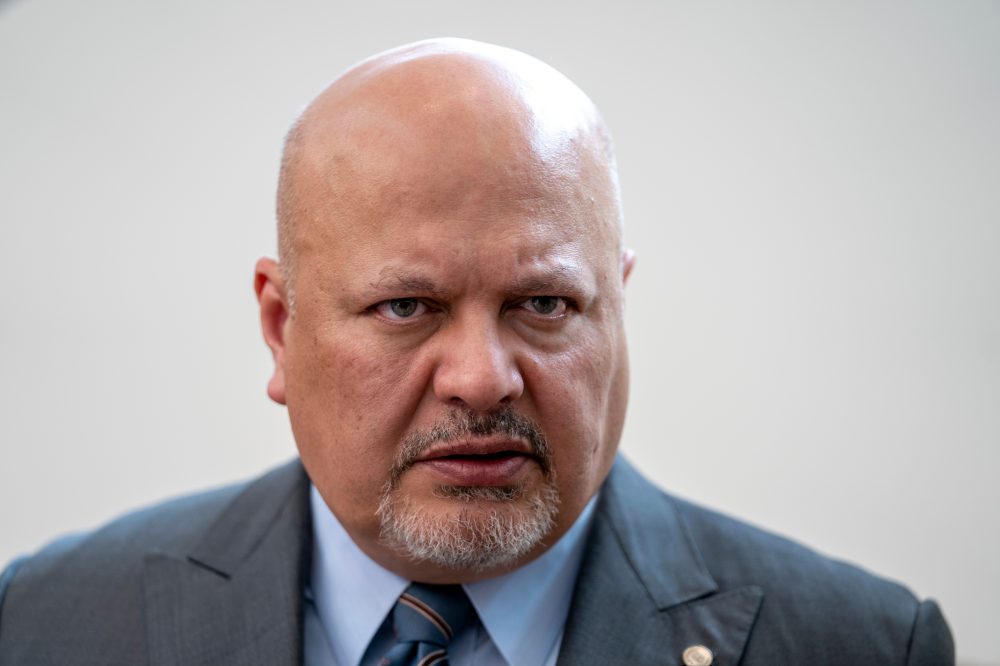
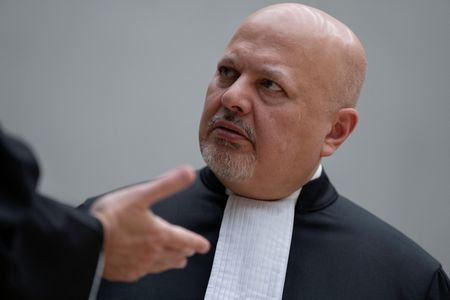
THE HAGUE, Netherlands — The top prosecutor at the International Criminal Court has been removed from his duties in a historic first for the international tribunal, as oversight officials moved forward with disciplinary action against Karim Khan following sexual misconduct accusations.
The 56-year-old British attorney faces claims of inappropriate sexual behavior involving a female staff member, a controversy that has persisted for over two years. Khan has consistently maintained his innocence throughout the proceedings.
The Assembly of States Parties, which serves as the ICC’s governing authority, will now determine Khan’s future through a special meeting to assess whether he should continue leading the international court.
Officials from the Bureau of the Assembly of States parties explained their choice was informed by multiple sources of information, stating it was “based on the report of an investigation undertaken by the United Nations Office of Internal Oversight Services (OIOS), the underlying evidence, the advice of an ad hoc Panel of judicial experts, and written submissions.”
The bureau emphasized that Khan’s temporary removal while awaiting the assembly’s decision “is not an indication of the final outcome.”
United Nations investigators discovered proof that Khan engaged in “nonconsensual sexual contact with (the aide) in his office, at his private residence, and whilst on mission,” based on their report obtained by The Associated Press. Despite these findings, a three-member judicial panel reviewing the evidence determined the investigation lacked sufficient conclusiveness.
Khan’s attorneys indicated they would release a public response on Tuesday when approached for their reaction.
Khan had previously stepped aside voluntarily in May 2025 while the investigation continued. This situation marks the first of its kind for the ICC, forcing the Assembly of States Parties to develop new procedures to handle the unprecedented circumstances.
The accusations against Khan were initially brought to the court’s independent oversight office more than two years ago. An Associated Press review uncovered claims that Khan spotted the woman in a different ICC division and transferred her to his office. Documents from whistleblowers indicate she subsequently became a frequent companion on official travel.
During one international trip, Khan reportedly invited her to lie down with him on a hotel bed before “sexually touched her,” according to the documentation. Additional alleged inappropriate actions described in the records included securing his office door and placing his hand in her pocket. He also reportedly made multiple requests for her to join him on personal vacation trips.
The Assembly of States Parties holds exclusive power to dismiss Khan from his position, which would require majority approval through confidential voting among its 125 member nations. Removing him would need support from sixty-three countries.
While no specific date has been announced for the assembly meeting, officials confirmed it will take place at the earliest opportunity.
The first day of women’s tennis at the Netherlands tournament in ‘s-Hertogenbosch delivered major surprises as both the top two seeded players were eliminated in straight-set defeats Monday.
Russia’s Ekaterina Alexandrova, holding the tournament’s No. 1 seed and winner of back-to-back titles in 2022 and 2023, was defeated 6-4, 7-6 (5) by Hungary’s Panna Udvardy. The upset was particularly notable given the ranking gap, with Udvardy sitting nearly 50 positions below Alexandrova at 65th compared to 17th. Despite closely matched statistics throughout the contest, Udvardy’s slight edge in break point conversions (3 of 6 opportunities) proved decisive in the evenly contested match.
Denmark’s Clara Tauson, seeded second, also suffered an early exit with a 6-4, 6-4 loss to 17-year-old Mia Pohankova from Slovakia. The teenager secured victory by winning the match’s final five games, earning her first career victory against a top-30 ranked player. Belgium’s Elise Mertens, the third seed, managed to avoid a similar upset by dominating Canada’s Bianca Andreescu 6-1, 6-2.
Additional first-round results saw Poland’s Magda Linette mount a comeback victory over Australia’s Kimberly Birrell 2-6, 6-1, 6-2. Robin Montgomery also staged a rally to defeat Australia’s Daria Kasatkina 5-7, 6-0, 6-4, while Ukraine’s Daria Snigur handled Spain’s Paula Badosa 6-1, 7-6 (2).
At the HSBC Championships in London, Czech Republic’s Karolina Pliskova overcame a first-set loss to defeat McCartney Kessler 6-7 (1), 6-3, 6-3 in opening round play.
Despite serving struggles that included 11 double faults against just three aces, Pliskova compensated by winning 51% of return points and capitalizing on 8 of 11 break point chances.
Rain disrupted the London schedule, with only two other matches reaching completion Monday. Great Britain’s Harriet Dart prevailed over Russia’s Liudmila Samsonova 5-7, 6-4, 6-3, and Romania’s Jaqueline Cristian defeated Qinwen Zheng 6-4, 7-6 (4).
The day’s final scheduled match between Canada’s eighth-seeded Leylah Fernandez and Great Britain’s Katie Boulter was halted by darkness. Play was suspended with Fernandez leading one set to none and the second set tied 3-3.
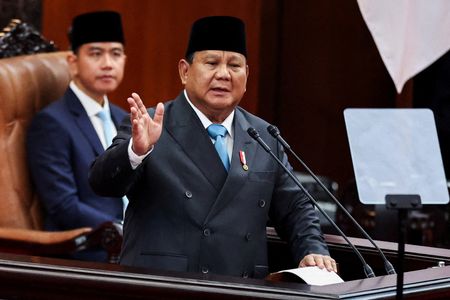
Indonesian markets are experiencing a devastating collapse as President Prabowo Subianto’s ambitious spending programs and unconventional economic policies drive away international investors.
Since assuming office in 2024, the former special forces commander turned politician has implemented sweeping changes including free school meal programs for millions of children while abandoning the fiscal restraint policies that had been in place for decades in pursuit of economic growth.
However, the global energy crisis combined with several controversial policy decisions have severely damaged investor trust. These include placing commodity exports under the control of a massive sovereign wealth fund that answers directly to Prabowo, and imposing new employment and growth requirements on the central bank.
These actions have tarnished what was considered an emerging market success story just two years ago. Credit default swaps now suggest that Southeast Asia’s biggest economy may lose its investment-grade rating.
Indonesian stocks have become the world’s worst-performing market in 2026, plummeting over 42%. The rupiah currency has also taken a severe beating, becoming both a consequence and cause of the economic turmoil as its decline triggers additional selling pressure.
The currency has dropped 8% this year and fallen 7% since the Iran conflict began. It currently trades at 18,190 against the U.S. dollar, marking an all-time low, with its steepest decline in three weeks since 2020.
“Indonesia is suffering from a genuine confidence crisis, with serious governance red flags that overshadow any valuation argument,” said Tan Altundag, investment manager for emerging equities at Pictet Asset Management, which has aggressively cut its exposure to Indonesian stocks.
“The rupiah at 18,000/USD is not just eroding real returns for foreign investors … the currency slide risks becoming a self-reinforcing loop, pushing up inflation … tightening financial conditions, and ultimately weighing on growth.”
The currency continues falling despite a significant 50-basis-point interest rate increase in May and a $12 billion decline in Indonesia’s foreign exchange reserves this year, which the central bank typically uses for currency defense. The negative effects are now spreading throughout the economy.
Foreign stock sales totaling a net $3.2 billion through May represent the largest outflow since 2009. Data reveals that international ownership of government bonds, which reached nearly 40% before the COVID-19 pandemic, has crashed to a nearly 20-year low of just 12.6%.
“It’s true, there is a doom-loop forming,” said John Woods, Asia chief investment officer at Lombard Odier, a private bank.
“Persistent outflows, with foreign holdings in bonds and stocks at multi-year lows, would continue to pressure the rupiah, liquidity, and asset prices – prolonged outflows could slow infrastructure and growth plans.”
Indonesia’s credit and stock ratings face serious threats. Rating downgrades would force investors to sell their holdings and increase borrowing costs for credit.
Index provider MSCI is examining trading and transparency concerns in the equity markets and has warned of a potential downgrade to frontier status, though investors consider this unlikely.
Moody’s and Fitch have downgraded their debt rating outlooks to negative, pointing to diminished policy credibility, while S&P has indicated its rating will depend on efforts to strengthen fiscal reserves.
Markets are particularly concerned that the energy crisis resulting from the U.S.-Israeli conflict with Iran has intensified economic pressure and strained the budget through fuel subsidies, yet Prabowo has intensified his costly agenda.
Indonesia recently enacted comprehensive legislation, not fully disclosed to the public, granting parliament new authority over the central bank and adding “real sector growth” to its responsibilities, which analysts view as undermining its independence.
Earlier this year, Prabowo appointed his nephew as a deputy central bank governor.
Last month, he announced that the government would assume control of commodity exports through Danantara, a sovereign wealth fund he created.
“The underlying concern is that the direction of policy is not great and is becoming less transparent,” said Kieran Curtis, head of emerging markets local debt at Aberdeen in London.
“It is too early to say there has been damage from that policy, but it is not as efficient as exports finding their own market.”
External pressures from the Iran conflict’s impact on energy markets and credit default swaps, which may overstate downgrade risks, have added to the strain. However, investors believe only significant policy changes will reverse the trend.
“Yes, it is possible for countries to pull themselves out of a negative spiral where they have put themselves in that position to begin with,” said Mark Ledger-Evans, Asia-focused emerging markets fixed income portfolio manager at Ninety One, an investment management firm.
“In Indonesia’s case, we believe it stems largely from the idea of pursuing growth rates which are not feasible, which then filters down into execution, and hence it’s not so easy to pull out of the negative spiral without a re-think of the ideas.”
Chinese companies that helped develop Indonesia’s nickel industry into the world’s leading producer are already seeking alternatives due to policy pressures, while returning investors will demand better pricing.
“Indonesia is no longer being priced as a reliably orthodox emerging market,” said Hemant Mishr, chief investment officer at fund manager S CUBE Capital, “but as one carrying rising policy risk.”
According to reports from Sportsnet and ESPN on Monday, the Los Angeles Kings are finalizing a three-year contract with Peter Laviolette to become their new head coach.
The veteran coach had been in discussions with the Toronto Maple Leafs about their coaching position as recently as last week, multiple sources indicated, while the Edmonton Oilers had also considered him for their open head coaching role.
At 61 years old, Laviolette brings 23 seasons of NHL head coaching experience to the Kings organization.
His coaching resume includes a Stanley Cup championship with the Carolina Hurricanes in 2006. Laviolette also guided teams to the Stanley Cup Final on two other occasions – with the Philadelphia Flyers in 2010 and the Nashville Predators in 2017.
His most recent position was with the New York Rangers, where he served from 2023-25. During his initial season with the Rangers, Laviolette’s team posted a 55-23-4 record for 114 points and made it to the Eastern Conference finals before falling to the Florida Panthers in six games. However, the following season saw New York struggle to a 39-36-7 record with 85 points, missing the playoffs by six points and resulting in Laviolette’s firing in April 2025.
Throughout his coaching career with the New York Islanders (2001-03), Hurricanes (2003-09), Flyers (2009-14), Predators (2014-20), Washington Capitals (2020-23) and Rangers, Laviolette has compiled an 846-562-161 record with 25 ties.
Among coaches born in the United States, his 846 regular-season victories represent the most in NHL history and rank seventh overall.
As a player, Laviolette appeared in 12 NHL contests as a defenseman, all coming during the 1988-89 campaign with the Rangers.
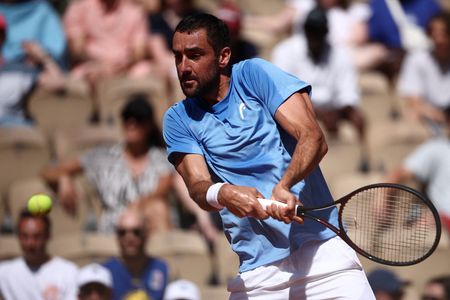
Making his return to the tournament for the first time in seven years, Croatia’s Marin Cilic began his grass-court campaign with a stunning three-set victory over seventh-seeded Denis Shapovalov of Canada during first-round play at the Libema Open on Monday in ‘s-Hertogenbosch, Netherlands. The final score was 6-7 (5), 6-4, 7-5.
The Croatian player found himself down 4-2 in the second set but managed to win four consecutive games to even the match at one set apiece. In the deciding third set, Cilic once again fell behind by a break but successfully broke Shapovalov’s serve in each of his last three service games, capitalizing on 7 of 10 break-point opportunities.
Cilic’s next opponent will be Portugal’s Nuno Borges, who defeated France’s Terence Atmane in straight sets, 6-4, 6-4. While Borges managed only two aces compared to Atmane’s 13, he committed significantly fewer unforced errors (12 versus 23) and successfully defended all his service games without facing a single break point.
The fifth-seeded Frenchman Ugo Humbert cruised through his opening match in just over an hour, defeating Swedish qualifier Elias Ymer 6-4, 6-3 in the day’s final contest. Humbert will meet fellow Frenchman Benjamin Bonzi in the next round, after Bonzi dispatched 18-year-old Dutch player Mees Rottgering 6-4, 6-4.
At the BOSS Open in Stuttgart, Germany, Italy’s Mattia Bellucci scored an upset victory over seventh-seeded Spaniard Alejandro Davidovich Fokina, winning 6-2, 6-7 (5), 6-1 in their first-round encounter.
Following a narrow loss in the second-set tiebreak that prevented a straight-set victory, Bellucci took control of the final set with a commanding 5-0 advantage. Though he connected on only 48% of his first serves in the third set, Bellucci won an impressive 74% of his service points and successfully converted five break-point opportunities compared to just one for Davidovich Fokina.
Spanish player Martin Landaluce achieved his maiden tour-level victory on grass courts Monday, overcoming France’s Pierre-Hugues Herbert 5-7, 6-3, 6-4. Landaluce faces a challenging second-round matchup against second-seeded defending champion Taylor Fritz, who received a first-round bye as one of the tournament’s top four seeds.
Belgian qualifier Gauthier Onclin defeated Hungary’s Fabian Marozsan 7-6 (6), 6-3, and now waits to learn his next opponent from the suspended match between France’s Giovanni Mpetshi Perricard and Russian lucky loser Roman Safiullin. Play was halted due to rain with Safiullin holding a 4-1 lead in the third set.
The Southeastern Conference has achieved an unprecedented milestone by securing five spots in the eight-team College World Series lineup that kicks off Friday in Omaha, Nebraska.
After top-seeded UCLA and second-ranked Georgia Tech were eliminated during Regional play, third-ranked Georgia emerged as the tournament’s highest-seeded survivor advancing to Super Regionals. The Bulldogs completed a sweep of Mississippi State to earn their first College World Series berth since 2008.
Georgia will face fellow SEC competitors in Omaha, including sixth-ranked Texas, seventh-ranked Alabama, along with unranked Ole Miss and Oklahoma. Each team secured their spots by completing Super Regional sweeps, with Ole Miss defeating fourth-seeded Auburn and Oklahoma pulling off a road upset against 15th-ranked Kansas.
This year’s tournament will crown a new champion following LSU’s elimination. Among the remaining teams, Ole Miss holds the most recent championship title from 2022, when the Rebels defeated Oklahoma in the finals. Prior to that victory, Texas claimed the crown in 2005, and the Longhorns now make their record-setting 39th College World Series appearance.
Four programs – Alabama, Troy, fifth-ranked North Carolina, and 16th-ranked West Virginia – are pursuing their inaugural CWS championships. West Virginia became the first team to secure their Omaha spot this season by sweeping Cal Poly at home.
Troy stands as the sole representative from outside the Power 4 conferences. The Trojans required an at-large selection to reach Regional competition, then traveled to Gainesville where they defeated Florida twice to advance. They subsequently dominated Little Rock in Super Regional play, outscoring their opponents 19-4 across two games.
Just five of the tournament’s top 16 national seeds successfully reached Omaha, matching last year’s total. Notably, none of the 2025 College World Series participants managed to advance beyond Regional competition this season.
COLLEGE WORLD SERIES SCHEDULE
All Times ET
June 12 Game 1: No. 16 West Virginia vs. Troy | 2 p.m. Game 2: No. 5 North Carolina vs. Ole Miss | 7 p.m.
June 13 Game 3: No. 7 Alabama vs. Oklahoma | 3 p.m. Game 4: No. 3 Georgia vs. No. 6 Texas | TBD
June 14 Game 5: Loser of Game 1 vs. Loser of Game 2 | 2 p.m. Game 6: Winner of Game 1 vs. Winner of Game 2 | 7 p.m.
June 15 Game 7: Loser of Game 3 vs. Loser of Game 4 | 2 p.m. Game 8: Winner of Game 3 vs. Winner of Game 4 | 7 p.m.
June 16 Game 9: TBD vs. TBD | 2 p.m. Game 10: TBD vs. TBD | 8 p.m.
June 17 Game 11: TBD vs. TBD | 2 p.m. Game 12: TBD vs. TBD | 7 p.m.
June 18 Bracket 1: TBD vs. TBD | TBD (if necessary) Bracket 2: TBD vs. TBD | TBD (if necessary)
Motorists traveling along Polly Drummond Hill Road should expect periodic lane restrictions due to ongoing construction work.
The construction activity is affecting the roadway between Kirkwood Highway (DE 2) and New Linden Hill Road, with lane closures occurring intermittently.
According to transportation officials, these construction-related lane restrictions will remain in effect until 5 AM.
Drivers are advised to plan for potential delays and consider alternate routes when traveling through the area during construction hours.
Drivers should expect delays on a busy stretch of Janice Road today as construction crews have shut down the left lane for southbound traffic.
The lane closure affects the section of Janice Road between Siham Boulevard and Coastal Highway (Route 1), with work expected to continue until 5 PM this evening.
Motorists are advised to allow extra travel time and use caution when navigating through the construction zone.
Drivers traveling through a section of Frederica Street should plan for potential delays due to construction activity affecting traffic flow.
The roadway between Front Street and David Street is experiencing periodic lane closures as work crews complete their project. These intermittent restrictions are expected to continue through 4 PM today.
Motorists are advised to allow extra travel time when using this route and to exercise caution when approaching the work zone area.
THE HAGUE, June 8 – The chief prosecutor of the International Criminal Court, Karim Khan, has been suspended from his duties while member nations prepare to vote on his future, according to an announcement Monday from the court’s governing body. This action follows an investigation into sexual harassment allegations against him.
According to a diplomatic source familiar with the matter, the governing body’s executive bureau determined that Khan engaged in serious misconduct after completing an 18-month investigation. The probe examined claims that Khan had non-consensual sexual encounters with an attorney working in his office.
Khan has consistently rejected these allegations. The governing body will now forward their findings to all 125 countries that are members of the ICC, who are anticipated to hold a vote on potentially removing Khan from his position at a future date.
Drivers traveling northbound on Route 1 should expect delays due to construction activity that has shut down the right lane between Cedar Beach Road and the Kent County border.
The construction work has also forced the closure of the northbound entrance ramp from Cedar Beach Road onto Route 1.
According to transportation officials, these lane restrictions will remain in effect until 6 AM. Motorists are advised to allow extra travel time and use caution when driving through the work zone.
Financial markets demonstrated more stability Monday as investors worked to regain ground lost during the previous week’s trading session.
Crude oil values climbed Monday in response to military conflict between Israel and Iran, though energy prices retreated from their peak increases during the day.
The S&P 500 gained 0.3% after experiencing a 2.6% decline on Friday, marking its steepest single-day loss since October. The Dow Jones Industrial Average decreased 0.2%, while the Nasdaq composite advanced 0.9%.
Technology firms specializing in semiconductors, memory components, and other artificial intelligence-related products posted strong gains. These same companies had suffered significant losses Friday as investors questioned whether stock prices had risen too rapidly due to AI excitement.
Monday’s closing numbers:
The S&P 500 gained 21.99 points, or 0.3%, finishing at 7,405.73.
The Dow Jones Industrial Average dropped 80.77 points, or 0.2%, closing at 50,786.01.
The Nasdaq composite increased 220.23 points, or 0.9%, ending at 25,929.66.
The Russell 2000 index of smaller companies advanced 21.92 points, or 0.8%, to 2,855.42.
Year-to-date performance:
The S&P 500 has increased 560.23 points, representing an 8.2% gain.
The Dow has risen 2,722.72 points, up 5.7%.
The Nasdaq has climbed 2,687.67 points, posting an 11.6% increase.
The Russell 2000 has advanced 373.52 points, showing a 15% gain.
The creator of ChatGPT has submitted secret documents to federal regulators that could lead to the company going public on the stock market, joining two other major artificial intelligence firms in a rush toward Wall Street launches.
OpenAI, headquartered in San Francisco, announced Monday that it has submitted confidential documents to the U.S. Securities and Exchange Commission.
“We expect it to leak so we’re just announcing it,” the company said in a written statement. “We have not decided on timing yet; it may be a while because there are things we want to do that are likely easier as a private company. But it’s a complicated set of tradeoffs and this gives us the option to go public sooner if that ends up being best.”
The submission comes after competitor Anthropic revealed on June 1 that it too is pursuing an initial public stock offering. Both companies are now joining Elon Musk’s space company SpaceX, which has begun promoting itself to investors as an AI-focused space enterprise.
OpenAI CEO Sam Altman initially suggested the possibility of going public last fall, calling it the “most likely path” for the organization given its scale and need for enormous amounts of funding to develop its technology.
Starting in 2015 as a nonprofit focused on creating AI for public benefit, OpenAI has transformed into a company worth $852 billion.
The path toward public trading was cleared when OpenAI restructured its operations last year, converting to a public benefit corporation while still remaining under nonprofit oversight.
During an April interview, OpenAI’s chief financial officer Sarah Friar would not provide a specific timeline for a possible IPO but noted the company was already “acting with the good hygiene of a public company,” including tracking revenue in ways that publicly traded companies must report to the SEC.
“I want us to be ready,” she told The Associated Press. “I think it’s good to be able to tap the public markets. They’re much bigger than the private markets if you believe compute is a competitive advantage.”
She noted that OpenAI’s current worth would place it among the 15 largest companies in the S&P 500.
She also mentioned there is a “credentializing moment of being a public company.”
“At that point, people are checking your balance sheet, the SEC is governing you and so on,” she said.
WASHINGTON — The Defense Department has designated several high-profile Chinese corporations, including technology powerhouse Alibaba, automobile manufacturer BYD, and internet search company Baidu, as entities supporting China’s military operations, barring them from securing contracts with the U.S. military.
The updated roster, released Monday by the Pentagon, now includes 188 Chinese organizations, marking an increase from approximately 130 entities listed previously. This expansion targets well-recognized private Chinese enterprises outside traditional defense sectors, demonstrating heightened concern over Beijing’s approach of leveraging civilian businesses for military advancement.
Established in 2021 through congressional direction, the designation aims to spotlight Chinese enterprises the Pentagon believes maintain connections to China’s armed forces — encompassing not just those under direct military oversight but also organizations supporting the nation’s defense manufacturing capabilities.
During last year’s update, Pentagon officials noted that Chinese military forces were working to obtain cutting-edge technologies and knowledge from Chinese corporations, academic institutions, and research initiatives that “appear to be civilian entities.”
Chinese Embassy representatives on Monday criticized the United States for “overstretching the concept of national security and making discriminatory lists to go after Chinese companies.” Embassy officials stated that Chinese businesses comply with legal requirements in their operating countries. “The U.S. should stop its wrong practice and create a fair, just and non-discriminatory environment for Chinese companies,” the embassy said in a statement.
While companies appearing on this designation may continue U.S. operations, they encounter reputation challenges and potential additional regulatory constraints. The list previously included organizations like DJI, a leading consumer drone manufacturer.
Regarding Alibaba’s inclusion, Pentagon officials cited the company’s connection to China’s Ministry of Industry and Information Technology as evidence of its contribution to the country’s defense manufacturing sector. The technology company maintains listings on the New York Stock Exchange.
Defense officials indicated that BYD and Baidu share affiliations with the same ministry, which directs China’s technological and industrial strategies. BYD holds a leading position in worldwide electric vehicle sales, and President Donald Trump indicated in January his openness to Chinese automakers like BYD establishing U.S. manufacturing facilities and employing American personnel.
Nevertheless, multiple U.S. congressional members have expressed intentions to pursue legislation banning Chinese electric vehicles.
The updated list also features Chinese robotics firm Unitree, whose performing robots gained attention from Simon Cowell on NBC’s “America’s Got Talent.” Pentagon officials stated the company “knowingly received assistance” from Chinese authorities through recognition as a small or medium-sized enterprise deemed highly innovative, globally competitive, and essential to national supply chains.
Alibaba, BYD, Baidu and Unitree did not immediately respond to emails seeking comment.
A Brooklyn jury has found a young man guilty of manslaughter as a hate crime in connection with the fatal stabbing of O’Shae Sibley, a professional dancer who was attacked while voguing with friends at a gas station.
Twenty-year-old Dmitriy Popov was convicted Monday following a three-week trial in New York State Supreme Court in Brooklyn. Popov, who was 17 when the incident occurred, claimed during testimony that he acted in self-defense when he fatally wounded 28-year-old Sibley in 2023.
According to prosecutors, Popov was motivated by hatred, harassing and mocking Sibley before fatally attacking him when Sibley responded to the harassment.
The jury deliberated for one week before reaching their decision on the first-degree manslaughter conviction. Popov was also found guilty of second-degree menacing, second-degree aggravated harassment and fourth-degree criminal possession of a weapon. However, jurors cleared him of the more severe murder as a hate crime charge, which could have resulted in a life sentence.
In a statement, the district attorney expressed hope that the verdict would provide comfort to Sibley’s loved ones and the broader community as Pride Month begins, emphasizing that hatred has no place in Brooklyn.
The prosecutor noted that Sibley aspired to work as a dancer and choreographer, but his life was tragically ended by someone who “couldn’t stand the sight of O’Shae and his friends just being themselves and living their lives openly as black gay men.”
Defense attorney Mark Pollard announced plans to appeal the decision, calling it “probably bittersweet for both sides.”
“We’re happy he wasn’t guilty of murder but disappointed he wasn’t acquitted on the rest of the charges,” Pollard stated.
The defense lawyer indicated his client could receive between eight and 25 years behind bars for the manslaughter conviction.
Sentencing is set for June 30.
The deadly encounter unfolded on July 29, 2023, when Sibley and his companions stopped at the gas station following a day at the beach. While refueling their vehicle, one member of their group began dancing, which caught the attention of a nearby cluster of young men and teenagers. Members of that group proceeded to taunt and mock the dancers, some of whom were shirtless and wearing swimwear.
Trial evidence included security footage that captured the incident.
The confrontation lasted approximately two minutes before both groups began to separate. Sibley’s party returned to their vehicle while most of the other group went back into the gas station, with the exception of Popov.
Trial testimony revealed that Popov continued shouting insults while filming with his mobile device. Popov denied using any discriminatory language.
The situation escalated when Sibley approached Popov again, moving past someone who attempted to intervene between them. Popov claimed Sibley pursued and struck him in the head. While the security cameras did not capture the fatal moment, Popov testified he used a 5-and-a-half-inch blade against Sibley in what he described as self-defense.
“I was scared that I was going to get hurt,” Popov said during his testimony.
Sibley was a performer with the Philadelphia-based dance company Philadanco and studied with the Alvin Ailey American Dance Theater’s Ailey Extension program in New York. He incorporated dance into celebrating his LGBTQ+ identity through works including “Soft: A Love Letter to Black Queer Men,” choreographed by Kemar Jewel.
Approximately 200 people attended Sibley’s funeral service in his native Philadelphia. Various politicians and celebrities, including Beyoncé and Spike Lee, honored him through social media tributes.
Popov, who was born in the United States to parents of Russian heritage, was a high school senior when he was taken into custody.
Leaders from North Korea and China met in Pyongyang on Monday, with both nations pledging to strengthen their partnership across multiple areas, according to reports from North Korean state media KCNA released Tuesday.
Kim Jong Un and Xi Jinping held discussions during the summit, with both sides committing to take their bilateral relationship to the next level, KCNA reported.
A soccer referee from Somalia was refused admission to the United States when he landed at Miami International Airport over the weekend, despite holding valid documentation to work FIFA World Cup matches, according to U.S. Customs and Border Protection officials.
The official arrived Saturday on a flight from Istanbul International Airport but was turned away due to unspecified vetting issues, CBP announced Monday. Authorities did not elaborate on the nature of their concerns that led to the denial of entry.
While CBP officials declined to identify the individual, news outlets reported the referee was Omar Artan, an accomplished official who was poised to become the first person from Somalia to work World Cup games.
The Somali embassy in Washington has not yet responded to requests for comment regarding the incident.
The situation highlights ongoing concerns about the Trump administration’s restrictive immigration approach affecting World Cup participants. Last year, the administration implemented broad travel restrictions affecting citizens from 12 nations, with Somalia among the countries included in the ban.
A massive $4.7 billion international crossing between Detroit and Windsor, Ontario is preparing to welcome traffic in the coming weeks, according to bridge officials who spoke Monday.
The Gordie Howe International Bridge is scheduled to begin operations on June 15, as reported by Detroit-area news organizations on Monday. Bridge authority representatives confirmed the project remains on schedule despite concerns previously raised by U.S. President Donald Trump in February.
An official ribbon-cutting ceremony is planned for later this week, according to a source who spoke with Reuters.
A powerful earthquake with a magnitude of 6.1 rattled Cuba’s northwest coastline Monday, creating the most significant seismic event the region has experienced in almost 150 years, according to official sources.
The U.S. Geological Survey (USGS) recorded the tremor at a relatively shallow depth of 26 kilometers (16 miles), with its center located 104 kilometers west-northwest of Mantua, Cuba – roughly two to four hours by vehicle from Havana.
This seismic activity was particularly uncommon for this Caribbean region, explained Paul Earle, a seismologist with the USGS. He noted the earthquake happened within a tectonic plate, where such events typically occur less frequently and are more dispersed compared to those along plate boundaries.
The last earthquake of comparable strength within 322 kilometers (200 miles) of Monday’s event occurred in 1880, when a 6.0 magnitude tremor struck near San Cristobal, Cuba, Earle stated.
While officials have not documented significant damage or injuries, the earthquake raised alarm in Cuba, where years of economic hardship have left many structures in poor condition. Widespread power outages throughout the area have complicated communication efforts.
“It felt strong. I had never felt anything like that,” said Yusmila Hernandez, 44, at her home in Pinar del Rio, in western Cuba.
“People ran outside, everyone scared. I can’t even explain it. It felt like no earthquake has ever felt here before,” Hernandez said.
The USGS confirmed that tremors reached Florida as well. In Mexico, the earthquake was experienced in popular tourist destinations including Cancun, Playa del Carmen and Tulum on the Yucatan peninsula. Residents and employees in Cancun’s downtown area, unaccustomed to significant seismic activity, fled from buildings.
Officials in Mexico’s Yucatan and Quintana Roo states implemented emergency procedures, though both governors reported via social media that no damage had been documented yet.
The U.S. National Weather Service did not issue any tsunami warnings or advisories following the earthquake.
The social media company Meta announced plans to launch a $115 million workforce training initiative focused on preparing technicians for data center construction positions, as the tech giant accelerates infrastructure development to support artificial intelligence projects.
The training initiative, called America’s Workforce Academy, will offer instruction at no cost to participants and guarantee employment opportunities for those who complete the program, according to company officials.
A company representative explained that the academy will offer comprehensive preparation for data center technician positions. Employment opportunities will include full-time positions with general contractors involved in Meta’s data center construction projects, the representative noted.
When asked for specifics about the number of available positions, which companies would be hiring, and whether union positions would be included, the company representative did not provide details.
The Associated Builders and Contractors, a construction trade group, indicated it anticipates providing instruction to thousands of individuals throughout the program’s duration.
“The AI revolution is bringing change but also historic opportunities,” said Dina Powell McCormick, Meta president and vice-chairman.
This training program represents a small portion of the $600 billion commitment Meta has made toward U.S. infrastructure and employment over the coming three years, supporting the construction of large-scale data centers needed for CEO Mark Zuckerberg’s ambitious artificial intelligence initiatives.
Zuckerberg has outlined plans to develop AI assistants capable of operating independently on users’ behalf to develop applications, schedule appointments and handle transactions.
Last year, he launched an extensive recruitment campaign to support his vision of “personal superintelligence,” providing $100 million signing incentives to AI researchers from competing companies like OpenAI.
Recently, he has implemented AI-focused organizational changes within Meta, eliminating 10% of staff positions, approximately 8,000 workers, while reassigning nearly the same number to new departments focused on enhancing the company’s AI systems and capabilities.
Typically, data center projects generate temporary construction activity and limited long-term employment opportunities.
For example, a data center project in Texas where Meta began construction last year — among the largest planned in the nation — is anticipated to employ more than 1,800 workers during peak construction phases but generate approximately 100 positions once fully operational.
A separate Meta data center project in Oklahoma is projected to provide more than 1,000 construction positions at peak activity and roughly 100 operational positions after completion.
Listen to the Evening Delmarva Farm Report Update — June 8, 2026
DELMARVA — Corn and soybean planting is wrapping up across the country, with the USDA reporting 97% of the nation’s corn crop is in the ground as of Sunday, matching the 5-year average of 96%. 86% has emerged and 67% is rated good to excellent. Soybeans hit 92% planted with 65% rated good to excellent.
Crop Health
Agricultural specialists are urging soybean farmers to watch for red crown rot this season. Michigan State University plant pathologist Marty Chilvers says the disease continues expanding through Midwest regions. Red crown rot has now been confirmed in Ohio, Wisconsin and Minnesota as of last year. Farmers should conduct thorough plant inspections and testing when they spot suspicious symptoms.
Markets
Soybeans started the week lower on fund and technical selling. Market participants are watching Thursday’s crop production report for direction. At Laurel Grain Company in Laurel, Delaware, corn for July delivery is bringing $4.64 a bushel. December corn is $4.61. Soybeans for July are $10.56. November beans are $10.86.
Forecast
The forecast calls for 73° this afternoon with sunny skies. Tonight drops to 57° and mostly clear. Tuesday climbs to 78° and mostly sunny with Wednesday bringing a chance of showers and thunderstorms.
This article is based on the Delmarva Farm Report Update Evening Edition, June 8, 2026. Hosted by Tom Bradley.
A 23-year-old New Castle resident faces multiple convictions after being found guilty in connection with a deadly collision that claimed one life and left several others injured in Newark during April 2025.
Gordon Turner was found guilty on June 5 of first-degree murder, manslaughter, two charges of first-degree assault, six charges of third-degree assault, two charges of possessing a deadly weapon during the commission of a felony, disregarding a police signal, and reckless endangering.
The convictions stem from the April incident that resulted in the death of one bystander and injuries to multiple other individuals in the Newark area.
A suspended law enforcement officer from Delmar is facing serious criminal charges following a grand jury indictment handed down June 8 in Sussex County Superior Court.
Darrell Powell, age 27, has been charged with stalking, offensive touching, four separate counts of unlawful sexual contact, and three counts of official misconduct. The criminal charges are connected to an investigation examining several incidents of alleged improper behavior that took place from July 2025 through February 2026.
Attorney General Kathy Jennings condemned the officer’s alleged behavior in a statement. “The alleged actions of this officer are beyond unacceptable,” Jennings said. “Rest assured that any misdeeds will be held accountable to the full extent of the law.”
JERUSALEM (AP) — Recent military actions by Israel against Lebanon and Iran have revealed a growing rift between U.S. President Donald Trump and Israeli Prime Minister Benjamin Netanyahu, two leaders who began this conflict as unified partners but now pursue different objectives.
Trump had openly cautioned Israel against attacking Beirut during its conflict with Iran-supported Hezbollah forces. Despite this warning, Israel launched strikes on Sunday, prompting Iran to retaliate with ballistic missiles targeting Israel for the first time since April’s ceasefire. Israel subsequently attacked Iran, even as Trump was conducting sensitive diplomatic talks with Iranian officials.
While the military exchanges have calmed, the strategic disagreements between the two leaders appear set to continue.
Trump, whose political party confronts upcoming elections, aims to conclude an increasingly unpopular military campaign and reopen the Strait of Hormuz to reduce fuel costs. Iranian officials have indicated that achieving a complete ceasefire in Lebanon remains essential for any comprehensive agreement.
Netanyahu, who similarly faces electoral pressure this year, must demonstrate success in stopping Hezbollah’s offensive operations while showing he can defeat Iran and its regional partners. He also must balance his relationship with Israel’s key ally without appearing subordinate.
The Feb. 28 joint American-Israeli assault on Iran initially displayed strong alliance unity.
Netanyahu declared the mission would weaken the Islamic Republic’s armed forces, eliminate its nuclear and missile capabilities, and overthrow its leadership. Trump confirmed the death of Iran’s supreme leader during the initial bombardment and encouraged Iranian citizens to reclaim their nation.
However, divergent goals quickly emerged: Trump sought rapid victory similar to his success in Venezuela, while Netanyahu pursued complete defeat of Iran and its allies regardless of timeline.
As Iran endured sustained attacks while keeping the Strait of Hormuz blocked, frustration mounted in both countries for different reasons.
American gas prices and consumer costs skyrocketed, leading former Trump supporters to accuse him of abandoning campaign pledges and entangling America in another Middle Eastern conflict. He has defended against these criticisms as growing public anger threatens Republican chances in November’s congressional races.
Israeli citizens expressed anger over Netanyahu’s inability to achieve decisive wins in conflicts triggered by Hamas’ Oct. 7, 2023, assault during his leadership. More than two years later, Hamas maintains control over Gaza sections, Hezbollah continues rocket attacks, and Iran’s government and nuclear infrastructure survive despite significant casualties.
The disagreement centers on Lebanon, where Israeli-Hezbollah combat continues despite ceasefire declarations.
Iran insists Lebanon must be part of any broader regional peace agreement, a condition Trump appears willing to accept for diplomatic progress. Iran has warned of renewed attacks on Israel if Lebanese strikes continue.
Israel remains committed to separating the conflicts and pursuing its Lebanese operations, having seized substantial southern territory, until the Hezbollah threat ends completely.
Public tensions emerged last week when Trump confirmed a heated phone conversation with Netanyahu regarding Lebanon. He acknowledged using profanity and calling the Israeli leader “crazy,” expressing frustration that Israel’s Hezbollah campaign jeopardized Iranian negotiations.
Through multiple interviews, Trump clearly expressed displeasure with Israel’s Sunday Beirut attack, which occurred without advance notice and struck civilian housing, killing two people and injuring 20 according to Lebanese officials.
He subsequently called for Israeli restraint following Iran’s missile barrage that same day. “I call all the shots,” not Netanyahu, Trump declared to the Financial Times.
Israel bombed Iran within hours.
Trump initially advocated restraint to stabilize markets and preserve ongoing negotiations, according to someone familiar with U.S.-Israeli discussions who requested anonymity due to the sensitive nature of these conversations.
Israeli representatives argued that America would not accept attacks without immediate retaliation. The source noted both sides understood that failing to respond to Iranian strikes would create political difficulties for Netanyahu domestically.
Netanyahu has minimized any apparent disagreements.
Following recent strikes, he addressed reporters in Hebrew, stating “Israel has a full right to self-defense, and we are exercising it to the extent necessary.”
“I say this to you, just as I say this, with appreciation and respect, in my good conversations with my friend, President Trump,” he continued.
This marks another instance of Trump publicly disagreeing with Netanyahu regarding military operations.
In March, barely three weeks into the conflict, Trump criticized Netanyahu’s choice to target a crucial Iranian energy facility, which led Iran to strike Gulf region energy infrastructure.
“I told him, ‘Don’t do that,’” Trump recalled. “We get along great. It’s coordinated, but on occasion he’ll do something.”
Despite Trump’s public criticism, two sources familiar with the situation who lacked authorization for public comment revealed the U.S. received advance notification of Israel’s attack plans.
The lasting impact of this recent disagreement remains uncertain.
“It’s not so uncommon for the U.S.-Israel relationship to have these kinds of tensions. What’s so different right now is how publicly it’s playing out,” observed Michael Singh, managing director at the Washington Institute for Near East Policy.
He pointed out that Trump has engaged in similar public disputes with other world leaders, including close allies.
Eytan Gilboa, a specialist in U.S.-Israel relations at Israel’s Bar-Ilan and Reichman universities, expressed doubt that the disagreement seriously endangers the alliance. He noted Netanyahu’s caution in avoiding excessive confrontation.
“If there was a big threat, like if Israel were to continue the war in Iran and drag the U.S. into it, that would have been a different situation,” he explained. “But that is not happening.”
He acknowledged, however, that “basic disagreements between Netanyahu and Trump on Iran, Lebanon and Gaza” remain unresolved.
A federal court has overturned the Trump administration’s controversial decision to impose a $100,000 fee on new H-1B visas, delivering a victory to states and employers who challenged the dramatic cost increase.
U.S. District Court Judge Leo Sorokin in Boston ruled Monday in favor of 20 states, determining that the executive branch overstepped its legal boundaries and failed to follow proper federal rulemaking procedures when implementing the fee hike.
“The Court finds that the Policy imposes a tax on H-1B petitions without the requisite delegation by Congress,” Sorokin wrote.
The administration had defended the substantial fee increase as a measure to protect American workers from foreign competition for jobs. Previously, H-1B applications typically cost several thousand dollars, making the new fee structure a massive jump that created widespread confusion and concern among employers and workers.
H-1B visas target positions requiring specialized skills that are challenging to fill with domestic workers. Technology firms represent the largest user group, with approximately three-quarters of approvals granted to workers from India. The challenging states contended that recruiting essential professionals like doctors and teachers through the H-1B system was already problematic before the fee increase took effect.
The legal landscape remains complex, with multiple court cases producing conflicting outcomes. The U.S. Chamber of Commerce filed a separate challenge in Washington, D.C. federal court and has appealed an unfavorable ruling, leaving the higher fee temporarily in place until September 2026. Religious organizations and labor groups have also filed suit in San Francisco federal court, potentially creating conflicting decisions across different appellate circuits.
State officials argued the policy would severely impact their capacity to recruit educators for elementary and secondary schools, staff public universities, support academic research initiatives, and maintain adequate medical personnel levels.
“The Proclamation makes various overtures to domestic economic policy goals to justify the unprecedented $100,000 fee,” plaintiffs wrote in their complaint. “But the Proclamation gives no indication that the President gave any consideration to how the fee would affect Plaintiff States and their ability to provide their residents access to education, healthcare, and other basic human needs.”
The Department of Homeland Security expressed strong disagreement with the court’s decision, characterizing it as inappropriate judicial interference with immigration policy reforms.
“Under President Trump and Secretary Mullin, our immigration system is being reformed to serve American citizens, American workers, and American families and to preserve our national identity — not to rapidly import foreigners who take American jobs, commit crimes, burden our welfare system, and erode our cultural and social fabric,” the agency stated.
WASHINGTON — Foreign nationals seeking to visit the United States for business or tourism will soon have the option to pay an additional $750 for faster visa processing through a new State Department initiative.
The department plans to announce a pilot “premium” service this week through a Federal Register publication, enabling applicants to secure interview appointments within 10 days of payment at selected U.S. embassies and consulates worldwide.
According to internal documents reviewed by The Associated Press and confirmed by a State Department official who requested anonymity prior to the official announcement, the expedited service will operate from July 1 through December 31.
This premium option comes as the current administration has implemented stricter entry requirements for foreign visitors, including bond payments reaching $15,000 for certain countries, particularly in Africa, and extensive background checks covering years of personal information and social media activity.
These enhanced screening measures have created significant processing backlogs globally, generating widespread criticism from applicants and advocacy groups.
Citizens from nations outside the Visa Waiver Program currently face interview wait times extending several months or longer. While the $750 premium service — added to the standard $185 application fee — guarantees a quicker interview, it does not ensure visa approval.
Officials have not yet revealed which embassies and consulates will participate in the expedited program, though this information will be released before the July launch date. The six-month pilot could be extended based on applicant demand and program success.
Wall Street experienced a tepid bounce-back Monday following Friday’s technology-driven market decline, with major indexes posting mixed results as investors remained cautious about interest rate concerns and artificial intelligence market fever.
The S&P 500 and Nasdaq managed to recover some ground from Friday’s steep losses, helped by news of potential easing tensions between Israel and Iran and bargain-hunting by investors seeking discounted stocks. However, the rebound lacked conviction, indicating persistent anxiety about monetary policy and AI investment enthusiasm.
Market analyst Jamie McGeever examined whether the traditional warning that “economic expansions don’t die of old age, they’re murdered by the Fed” might apply to the current AI-fueled stock rally. Friday’s market retreat following robust employment data suggests this concern may be warranted.
Monday’s trading showed the recovery’s uneven nature across different market segments. While the S&P 500 climbed 0.3% after Friday’s 2.6% drop, and the Nasdaq rose 0.9% following a 4% decline, the Dow Jones continued sliding with a 0.2% loss after Friday’s 1.3% retreat. Only three of eleven S&P 500 sectors managed gains.
The semiconductor sector led the comeback with the “SOX” chip index jumping 6%. Technology, energy, and consumer discretionary sectors were the only areas showing positive movement. Intel surged 11% while Micron Technology gained 10%, though Apple declined 2%.
Global markets showed significant variation, with South Korea dropping 9%, Japan falling 4%, and China declining 3%. European and UK markets remained relatively stable.
Currency markets saw the dollar dip slightly, with the USD/JPY pair holding above 160.00. The South Korean won soared 2% as the biggest emerging market gainer, while the Chilean peso fell more than 1% as the largest decliner.
Bond markets reflected continued uncertainty, with Japanese government bond yields rising 5 basis points and U.S. yields climbing 4 basis points at the long end, creating a bear steepening curve pattern. Oil prices advanced approximately 1%.
The subdued recovery proved surprising given hopes for an Israel-Iran ceasefire. However, investors have experienced numerous Middle East false hopes recently, and longer-dated Treasury bonds actually increased rather than retreating.
Looking ahead, a major IPO development looms as SpaceX prepares to list Friday, targeting $75 billion in what would become the largest initial public offering ever, valuing the company at $1.75 trillion. Despite strong investor demand, concerns exist about insider early exits, Elon Musk’s continued control, and the company’s ongoing losses.
European defense cooperation faced a setback as Germany and France reportedly abandoned their joint next-generation fighter jet development project due to industrial rivalries. This decision affects Europe’s most ambitious defense program at a time when Russian and U.S. threats are pressuring European nations to strengthen their military capabilities.
Tuesday’s market focus will center on potential Middle East developments, along with economic data from Australia, Taiwan, South Korea, Germany, Mexico, Canada, and the United States. The U.S. Treasury will also conduct a $58 billion auction of 3-year notes.
Applied Digital announced Monday it has secured a massive 15-year lease agreement with a major U.S. technology company that will generate approximately $5.2 billion in revenue, causing the company’s stock to surge 8.7% in after-hours trading.
The deal highlights the growing investment by large technology firms in data center infrastructure needed to power advanced artificial intelligence systems, creating increased demand for electricity, computing power and specialized facilities.
According to the company, roughly 70% of Applied Digital’s contracted revenue now comes from U.S.-based investment-grade hyperscalers.
The latest contract involves 210 megawatts of computing power at Delta Forge 2, Applied Digital’s newest AI Factory campus, structured as a take-or-pay lease arrangement.
While Applied Digital declined to identify the customer, the company revealed this marks its third long-term lease with the same investment-grade hyperscaler.
Should all renewal options be utilized, the agreement could potentially bring in around $12.7 billion in revenue across a 30-year timeframe.
Applied Digital’s current contracted portfolio encompasses five campuses, totaling 1.4 gigawatts of critical IT load and approximately 2.15 gigawatts of grid-connected utility power.
The company reported its contracted base-term lease revenue has grown to roughly $36 billion and could reach about $86 billion if all renewal options are executed.
Delta Forge 2 will feature Applied Digital’s waterless cooling technology and high-power density infrastructure specifically engineered for AI workloads. The campus is scheduled to begin initial operations during the first quarter of 2028.
Criminal gangs operating in Nigeria’s northwestern region have captured dozens of community members who attended what they believed would be peace discussions, according to law enforcement and local sources who spoke Monday. The incident underscores the deteriorating safety conditions plaguing the area.
Law enforcement officials report that 39 individuals were taken captive on Sunday during a forest gathering close to Magamin Diddi village within Maradun municipality in northwestern Zamfara State. Local community members and government representatives suggest the actual number of victims may reach 50.
The Zamfara State Police Command issued a statement explaining that those captured had been meeting with family members of a criminal leader, hoping to establish peace agreements and lift movement restrictions that had been placed on their community.
Zamfara sits at the heart of an ongoing security emergency where criminal organizations, known locally as bandits, conduct large-scale abductions, murders and attacks on villages. This violence has interrupted agricultural activities and forced thousands from their homes.
The police statement confirmed that law enforcement agencies have sent officers and intelligence resources to find the missing individuals.
Community members report that several people were freed to deliver the criminals’ financial demands to the village.
Bashar Aliyu, who lives in Magamin Diddi, stated that the criminal organization is seeking 125 million naira ($91,880) to free those who were taken.
Across numerous communities, locals have begun conducting direct negotiations with criminal groups to access their farmland or free kidnapping victims, despite official discouragement of such practices that authorities find difficult to stop.
A labor dispute at a key General Motors parts supplier has stretched into its second week as negotiations between management and workers remain stalled.
The work stoppage at Dauch Corp’s Michigan facility involves approximately 1,000 employees represented by United Auto Workers Local 2093. The plant, located in Three Rivers, Michigan, manufactures axles and other parts for GM’s full-size and midsize pickup trucks.
Josh Jager, who serves as bargaining chairman for Local 2093, expressed frustration with the company’s approach to negotiations during a Monday afternoon update.
“Unfortunately, we just walked away from the table. The company is trying to play games with words and not providing anything productive,” Jager stated, though he added that the union is preparing another proposal to present to management.
“We’re still making progress,” he said.
A company representative for Dauch, which was previously called American Axle, indicated that discussions are ongoing.
“We continue to have ongoing discussions with the union in hopes of promptly reaching a mutually beneficial and market-competitive contract,” the spokesman said, adding that the company remains “in close communication with our customers regarding the work stoppage.”
The wage dispute centers on compensation levels that have been a concern since 2008, when plant employees accepted reduced pay. According to Jager, the highest hourly wage has risen by $4 since then to reach $22 per hour. The union is seeking to increase top wages to $30 per hour by 2030.
While sources indicated last week that GM had approximately two weeks of axle inventory to maintain production, a GM representative said Monday that none of the automaker’s facilities have been impacted by the strike so far.
A school district located near Boston has found a creative way to incorporate the World Cup into their educational curriculum, using the international soccer tournament as a learning opportunity for young students.
Elementary school children in the district are discovering various aspects of different nations through the global competition, including exploring the languages spoken in competing countries, studying their traditional foods, and learning about the wildlife native to these regions.
A pet food company based in Cottonwood Heights, Utah has widened a recall that was initially announced in February to encompass another batch of its freeze-dried chicken dog food product.
Go Raw LLC announced on June 8, 2026 that it is extending its February 17, 2026 recall to cover one additional lot of Steve’s Real Food Freeze-Dried Chicken Recipe. The company cited concerns about insufficient thiamine levels in the affected product.
Thiamine, also known as Vitamin B1, is a crucial nutrient for pet health. The recall expansion indicates that testing has revealed the additional product lot may contain inadequate amounts of this essential vitamin.
A private credit fund operated by Blue Owl Capital has successfully secured $500 million through an investment-grade bond sale, Bloomberg News reported Monday, according to a source with knowledge of the transaction.
The fund had previously implemented restrictions on investor withdrawals earlier this year following unprecedented redemption requests.
Blue Owl has not yet responded to requests for comment regarding the bond sale.
According to the Bloomberg report, Blue Owl Credit Income Corp (OCIC) set the pricing for five-year notes at 255 basis points above U.S. Treasuries, with a reoffer price of 98.771.
The pricing spread narrowed by approximately 25 basis points from the initial discussions, the report indicated.
The funds raised through the bond sale will go toward debt repayment, according to the report.
OCIC operates as a business development company, which combines equity funding with borrowed capital to provide financing primarily to medium-sized businesses.
In recent months, affluent investors have attempted to pull money from private credit investments due to worries about declining lending quality and artificial intelligence’s potential impact on the software industry, which represents significant exposure for many of these funds.
Earlier this year, the company had restricted withdrawals to 5% of shares across two of its funds following an unprecedented volume of redemption requests during the first quarter.
The Board of Trustees for the Maryland Agricultural Land Preservation Foundation has announced their upcoming meeting scheduled for June 23, 2026, beginning at 9 am through teleconference.
The board session will address standard organizational matters and routine business items on the agenda.
Community members who wish to share feedback, raise questions, or express concerns about the foundation’s work are encouraged to contact Michelle Cable, who serves as Executive Director of the Maryland Agricultural Land Preservation Foundation. She can be reached via email at [email protected] or by phone at (410).
A 15-year-old girl from Wilmington faces multiple charges after attacking two people with scissors at a hair salon on Sunday afternoon, according to Delaware State Police.
Officers were called to Fransiah African Braids on North Market Street around 4:30 p.m. on June 7, 2026, following reports of a stabbing incident. Investigators determined the teenage customer became dissatisfied while getting her hair braided at the establishment.
According to police, the situation escalated when the girl began throwing objects around the salon before grabbing scissors from her stylist and going into a bathroom. When she came out, she threatened the hairdresser with the scissors, leading to a confrontation that ended with the teen attacking and stabbing the salon worker repeatedly.
Another person at the salon tried to stop the attack and hold down the teenager but was also stabbed in the process. Emergency responders took both injured victims to a nearby hospital where they were treated for injuries that were not considered life-threatening.
Police officers found the suspect outside the hair salon and arrested her without any problems. She was processed at Troop 1 and appeared before Justice of the Peace Court 11, where she received a $10,100 secured bond and was placed in the custody of the Department of Services for Children Youth and Their Families.
TEL AVIV, Israel (AP) — Following Monday’s missile exchange between Israel and Iran that marked the most significant escalation since their fragile ceasefire in April, exhausted Israeli citizens returned to practiced wartime behaviors with feelings of resignation and detachment. Citizens sought shelter during morning alarm warnings, then some remained at home while others continued daily activities like shopping or bringing children to playgrounds in efforts to preserve everyday life.
Throughout Tel Aviv, the nation’s business and cultural center, typically busy roads showed less activity than usual, with shops and establishments seeing reduced foot traffic compared to typical weekdays. This quieter environment contrasted sharply with the vibrant, multicolored Pride celebration decorations displayed throughout the city in preparation for the June 12 annual parade.
Earlier that day, projectiles were fired from Yemen and Iran targeting Israel. These attacks followed Israel’s weekend strikes on southern Beirut neighborhoods, where Israeli officials claimed Hezbollah, Tehran’s regional partner, maintained military facilities.
“We’re not normalizing it,” said Liron Eldad, a mother of two children, referring to the ongoing conflict while accompanying other parents at a Tel Aviv playground located beside a community bomb shelter. However, she added, “we can’t just sit there and be bitter.”
This response has become a predictable cycle following the Hamas assault on Oct. 7, 2023, which sparked conflicts across Gaza, Lebanon and Iran. The continuous fighting, emergency warnings and daily life interruptions have created widespread exhaustion and despair among Israeli residents.
Eldad expressed her disappointment with national leadership and anticipation for political transformation through October elections. “It’s clearly not working, what we’re doing, and instead we’re getting deeper and deeper into wars,” she stated.
Throughout Israel on Monday, educational institutions remained shuttered and medical facilities suspended non-emergency services, relocating certain patients to lower levels while Israeli defense systems neutralized incoming missiles.
Following Iran’s announcement that it would cease offensive actions against Israel, these limitations were removed and classes were scheduled to restart Tuesday. By Monday night, Israeli Prime Minister Benjamin Netanyahu also indicated that Israel’s military operations had concluded, though he warned the nation would react “with force” to any subsequent Iranian aggression.
Nevertheless, the temporary return to conflict left Israelis anxious. “I feel like I’m stuck in a place where you have no control over your life,” expressed Rana Raslan, a physician and mother who was also present at the Tel Aviv playground.
Numerous residents also criticized Netanyahu and his government coalition for rekindling the hostilities. Following Israel’s weekend Beirut strikes, Iran threatened retaliation for the assault, which Israel conducted despite Washington’s appeals to avoid major operations near the Lebanese capital.
“The behavior of the government and the prime minister, and the way he’s brought us into unending wars and his constant lies to his infantile base, don’t help me sleep well at night,” commented Moshe Regev, 63, a retired economist visiting Tel Aviv’s beachfront.
The conflict started on Oct. 7, 2023, when Hamas-led forces attacked southern Israel, resulting in 1,200 deaths and 251 kidnappings. Since that time, over 72,700 people have died in Israel’s Gaza campaign, according to the Gaza Health Ministry, which operates under Hamas administration and whose statistics are typically accepted as credible by international organizations.
A few streets inland from the coastline, 75-year-old Shlomi Yakobi, who sells fresh produce, commended Netanyahu’s leadership during the previous three years. He described this as a chaotic time that would have overwhelmed a weaker leader, noting his five decades operating a stand in Tel Aviv’s Carmel marketplace.
“People are hiding at home instead of going out,” he observed while serving apricots to several visitors. Yakobi explained that the conflict has hurt his business, though he believes the country had limited alternatives. He sometimes finds himself with excess inventory, which he gives to the neighboring synagogue.
“For two years now, you never know what’s going to happen in the next five minutes,” he said.
American airlines faced a massive fuel bill of more than $6 billion in April, marking a 78% increase from the previous year even though they consumed roughly the same amount of fuel, according to government data released Monday. At the same time, the aviation industry’s leading global trade organization cautioned that rising energy costs could slash worldwide airline profits nearly in half by 2026.
The disruption began when Middle East tensions escalated earlier this year following strikes by the U.S. and Israel on Iran, effectively shutting down much of the shipping activity through the Strait of Hormuz — a vital oil transportation corridor that runs along Iran’s border. This disruption has driven up both crude oil and jet fuel prices significantly.
To manage these rising expenses, airlines worldwide have implemented higher ticket prices and additional fees, eliminated various customer benefits, and reduced flight schedules or canceled routes entirely.
Data from the Bureau of Transportation Statistics shows U.S. airlines paid approximately $6.5 billion for fuel in April, a dramatic increase from roughly $3.6 billion during the same month last year. Despite the higher costs, actual fuel usage dropped slightly to 1.573 billion gallons from 1.575 billion gallons in April of the previous year.
These numbers emerged alongside a Sunday report from the International Air Transport Association, which revised its profit projections for airlines globally. The organization now anticipates combined net earnings of $23 billion in 2026, significantly lower than its earlier prediction of $41 billion and down from $45 billion expected in 2025.
“Airlines are bearing the brunt of the fuel price shock,” said Willie Walsh, director general of IATA, which represents most of the world’s carriers. “While airfares are rising, airlines are still absorbing part of the hike in their bottom lines.”
The trade association projects jet fuel will cost an average of $152 per barrel in 2026, representing nearly a 70% increase from 2025 levels. This surge will push the worldwide airline fuel expense to approximately $350 billion, up from $252 billion the year before. The organization estimates fuel will represent more than 31% of airline operational costs in 2026, compared to roughly 25% last year.
Within the United States, jet fuel prices reached $4.11 per gallon in April, according to the Bureau of Transportation Statistics. The same month last year, the price was $2.31 per gallon.
Demonstrating the continuing impact of the regional conflict on travel, American Airlines announced last week it would suspend certain summer routes. Similarly, in April, the group said it would eliminate 20,000 short-distance flights through October, while Air Canada revealed it was halting service to New York’s airport from June until late October.
Additional airlines across different regions — including U.S. carriers and international airlines in Europe and Asia — have responded by reducing flights, modifying their schedules, or putting expansion plans on hold for this year.
Almost five decades following the death of Elvis Presley, a group of energetic youngsters and teenagers brought excitement to his birthplace of Tupelo, Mississippi, determined to preserve the legendary performer’s memory for future audiences.
The young performers, spanning ages seven through 17 and many dressed in sparkling jumpsuits, performed during the youth tribute artist contest at the Tupelo Elvis Festival held last week.
Unlike many of their contemporaries who might be unfamiliar with Elvis’s music, these dedicated competitors have invested countless hours perfecting the icon’s vocal style, characteristic movements, and distinctive appearance.
The participants emphasize their role as Elvis tribute artists rather than mere impersonators. While impersonators may portray exaggerated versions of Elvis, tribute artists focus on genuine recreation. Many donned authentic outfits made by B&K Enterprises Costume Co., an officially licensed company that reproduces Elvis’s wardrobe for films, stage productions, and television programs.
Tucker Gladden, a 17-year-old from Madison, Mississippi, explained their mission: “We’re not trying to be him. We want to recreate the experience as much as we can for people that maybe didn’t get to see Elvis in their lifetime.”
When discussing their attraction to the deceased musician, many tribute artists pointed to the 2022 “Elvis” film as their initial inspiration. Some discovered distant family connections to Elvis that sparked their interest. Others found motivation in Elvis’s religious beliefs and philanthropic work. Several participants have been performing Elvis songs since age three.
Ayden Maloy, 16, from Logansport, Indiana, found solace in Elvis’s music during personal struggles, leading him to start tribute performances three years ago.
“I just broke down in tears because it healed me,” Maloy shared. “I think Elvis is the healer.”
The afternoon showcase featured spectacular costumes and bold choreography, with audiences joining in by clapping, singing, and moving to the Elvis classics. The competition concluded with RJ Hursey, a 14-year-old from Bloomington, Illinois, claiming victory.
Hursey, whose grandfather passed down his Elvis appreciation, maintains daily practice sessions and conducts research when illness prevents singing. He regularly performs at senior care facilities and dreams of starring in a future Elvis film remake.
“It’s humbling,” Hursey reflected. “It makes you feel good because we know that he died thinking he’d be forgotten, and we’re just so glad he’s still around.”
During their Tupelo visit, the tribute artists explored the Elvis Presley Birthplace, an extensive site featuring his birth home and the church where he first encountered Southern gospel music.
Charles Session, 15, from Morrilton, Arkansas, expressed his emotions about the experience: “It feels so surreal to pay tribute to Elvis in his hometown. I hope that he’s looking down and smiling at all these young performers.”
An immigration detention center in Louisiana has recorded another detainee death, marking the second fatality at the facility in under two months amid ongoing concerns about conditions and medical care.
Mamuka Artmeladze, 43, from Georgia, was discovered unresponsive on June 4 at the Winn Correctional Center located in Winnfield, Louisiana, according to a Sunday announcement from U.S. Immigration and Customs Enforcement. Officials said facility personnel immediately started life-saving efforts before paramedics transported him to a nearby hospital, where medical staff declared him deceased within an hour of arrival.
ICE has not released further details about the circumstances leading to his death, stating that autopsy results will determine the cause. Artmeladze had spent almost four months at the detention center, which operates under management by the Winn Parish Sheriff’s Office alongside ICE contractor LaSalle Corrections.
The detention center houses over 1,500 male detainees, with Artmeladze among the majority who lacked criminal backgrounds. Immigration officials said he crossed into the United States illegally at an undetermined time, and after Border Patrol agents encountered him in September 2022, he was permitted to stay temporarily under ICE monitoring. Authorities apprehended him in Alabama this past February when officials decided he no longer qualified to remain in the country legally.
This death brings the total number of detainees who have perished in ICE custody to 19 since the start of the year, with two occurring at Winn since April 11. Records obtained by The Associated Press reveal that 49-year-old Alejandro Cabrera Clemente was discovered unresponsive during a routine security inspection on that date, with staff attempting revival efforts before his transport to the same medical facility where Artmeladze later died.
Medical examiners determined that Cabrera, originally from Mexico but recently residing in Tennessee, succumbed to natural causes related to heart disease. Documentation shows he awakened approximately 2½ hours before being found unresponsive, experiencing coughing and breathing difficulties, though he indicated he felt fine and returned to sleep.
A separate ICE investigation into Cabrera’s death noted that fellow detainees alerted nursing personnel to his condition, finding him “with left-sided facial droop” and skin discoloration indicating oxygen deprivation. Medical records show Cabrera received ongoing treatment for elevated blood pressure and additional health issues throughout his detention period.
These fatalities occur as federal oversight agencies intensify examination of whether ICE detention centers are providing inadequate medical attention to detainees and maintaining substandard living environments, allegations that ICE disputes.
The Department of Homeland Security’s Office of Inspector General released findings last week from a surprise inspection at Winn, documenting violations across multiple areas including environmental health and safety, food service operations, use-of-force protocols, and medical care standards.
Inspectors documented water seepage through kitchen ventilation systems, ceiling damage with exposed insulation materials in the intake facility, and food products stored at temperatures exceeding safety requirements in freezer units.
Healthcare personnel at Winn failed to maintain current treatment documentation and laboratory test records, creating conditions that could “negatively impact detainee health care and safety,” according to the inspection findings.
The review also identified improper use-of-force incidents, including one officer who applied a prohibited chokehold on a detainee and another officer who punctured a detainee’s thumb with a writing instrument after the individual refused to move his hand from a doorway.
According to the report, ICE accepted nine recommendations for facility improvements at Winn and has already put several corrective measures into practice.
Vice President JD Vance has installed a custom chicken coop at his official Naval Observatory residence in Washington, complete with a dozen baby chicks housed in a structure designed to mirror the Victorian home where the second family resides.
The henhouse, featuring a circular turret and artificial slate roofing, was provided by Carolina Coops, a North Carolina business that markets high-end coops and has built a substantial social media presence. Company owner and founder Matthew DuBoise confirmed the custom structure was finished on May 29.
“It’s something I thought was amazing to do for this country,” DuBoise explained during an interview. “It’s a place of history and a place of significance.”
According to a source familiar with the project who requested anonymity due to lack of authorization to speak publicly, no taxpayer funds were used for the coop’s construction. The same source revealed that the residence held a family gathering this past weekend where local 4-H students educated other children about the newly constructed coop.
Since 1977, vice presidents have made the 72-acre Naval Observatory grounds their home, with many leaving personal touches on the property. Joe Biden established a heritage garden, Mike Pence’s wife, Karen, introduced beehives, and Kamala Harris made updates including pink wallpaper in the house’s library. Dan Quayle installed a heated swimming pool on the premises in 1991.
Backyard chicken keeping has experienced renewed popularity in American households recently. According to a 2025 American Pet Products Association survey, 11 million U.S. households now keep chickens.
The Daily Wire initially broke the story about Vance’s new coop.
During his 2024 campaign appearances, Vance frequently referenced expensive egg prices as evidence of inflation he attributed to then-President Joe Biden. Vance would joke about his two young sons’ egg consumption, once claiming they “eat about 14 eggs every single morning.”
DuBoise explained that he instructed his team to create a custom design the Vances would adore. His designer took cues from the 19th century home, incorporating its circular turret and green accents.
As the finishing touch, Vance and his family selected 12 chicks to begin their flock, DuBoise noted.
DuBoise characterized having his business selected for the project as an “American dream” experience. He supervised the installation process and provided guidance to Vance, his wife, Usha, and their children. According to DuBoise, when Vance first saw the completed coop, the vice president’s expression showed pure delight.
“I couldn’t have been happier to see that excitement,” he said. “They’re just very, very happy, and I’m glad.”
A federal judge in Miami has demanded that Donald Trump’s legal team provide justification for missing a court-mandated deadline in the former president’s $10 billion defamation case against the BBC.
On Monday, U.S. District Judge Roy Altman issued an order requiring Trump’s attorneys to explain why they shouldn’t face sanctions for their “apparent disregard of court deadlines” after they failed to respond by Friday to the BBC’s request to have the case thrown out. Attempts to reach Trump’s legal representatives for comment on Monday were unsuccessful.
The defamation case centers on Trump’s allegations that Britain’s publicly owned broadcaster deliberately spliced together portions of a speech to create the false impression that he directly instructed his supporters to attack the U.S. Capitol following his defeat in the 2020 presidential race.
The BBC has previously issued an apology to Trump, conceding that their editing constituted poor judgment and recognizing that the altered footage incorrectly suggested he had explicitly called for violence.
In court documents filed in March, the BBC argued for dismissal of the lawsuit, contending that Trump failed to adequately demonstrate that the broadcaster deliberately published misleading content or acted with reckless disregard for accuracy.
Lebanon’s President Joseph Aoun issued an uncommon direct message to Israeli leadership and citizens during a CNN interview that broadcast Monday, urging them to choose diplomatic negotiations over continued warfare and cautioning that military approaches “will never provide you with security and safety.”
“We are ready, we are willing, we are committed. Are you? If you are, let’s sit and talk,” Aoun stated.
Despite resistance from the armed organization Hezbollah, which continues battling Israeli forces in Lebanon’s southern region, the Lebanese administration is engaging in direct discussions with Israel through Washington’s mediation to achieve a complete halt to fighting.
Aoun indicated he would refuse to meet with Israeli Prime Minister Benjamin Netanyahu until a war-ending agreement is secured. He clarified that such an arrangement would constitute a non-aggression agreement rather than a comprehensive peace treaty.
“We need to end the state of hostility between Lebanon and Israel. Forever. And this (pact) could be a path forward for a just and lasting peace,” Aoun explained.
The Lebanese leader said his country would align with the 2002 Arab Peace Initiative, which proposes Arab world normalization with Israel in return for Palestinian statehood and Israeli withdrawal from occupied lands.
“But we cannot jump from A to B directly. We have to go through different steps,” Aoun noted.
The conflict began March 2 when Hezbollah launched attacks against Israel to support its Tehran ally. Israel countered with aerial bombardments and ground operations that have resulted in Israeli occupation of large portions of southern Lebanon.
Israeli attacks on Lebanon have resulted in over 3,600 deaths and displaced more than one million Lebanese citizens. Although the U.S. announced a ceasefire April 16, combat has persisted, with Lebanon reporting nearly 3,500 Israeli strikes following the truce declaration.
Sunday saw Israel target Beirut’s southern neighborhoods in response to Hezbollah attacks on northern Israel, sparking a 24-hour period of direct fire exchange between Iran and Israel that risked undermining Washington’s diplomatic efforts to broker an agreement with Tehran regarding their conflict spanning more than three months.
During his CNN appearance, Aoun expressed Lebanon’s desire for positive relations with Iran built on mutual respect and non-interference, while asserting that Lebanese citizens were dying to advance Iran’s agenda.
In interview segments that aired Friday, Aoun criticized Iran for treating Lebanon as a negotiating tool in discussions with the United States, representing some of his harshest public comments about Tehran to date.
A new national poll reveals President Donald Trump’s approval rating continues to hover near historic lows, with 35% of Americans supporting his job performance as the majority anticipate fuel costs will climb higher.
The Reuters/Ipsos survey, completed on Monday, found Trump’s approval unchanged from mid-May polling. This figure sits just one point above his current term’s lowest mark of 34% recorded in April, and remains close to his first presidency’s bottom of 33% from December 2017.
The Republican leader has encountered significant public dissatisfaction in recent months following his choice to engage in military action against Iran, resulting in escalated gasoline costs nationwide.
Although pump prices have declined somewhat recently due to speculation the Iranian conflict might conclude, 59% of poll participants predicted U.S. fuel prices would worsen over the coming year. Only 17% believed costs would improve, while remaining respondents were uncertain or expected prices to remain stable, according to the six-day survey.
Military operations against Iran began February 28 when Trump authorized strikes alongside U.S. ally Israel. Iranian retaliation has effectively halted shipping through a critical waterway that previously handled one-fifth of worldwide oil commerce. While the frequency of military exchanges has decreased since April, diplomatic efforts have not produced a permanent resolution.
Americans show particularly strong disapproval of Trump’s handling of household expenses, with just 22% supporting his cost-of-living management compared to 70% who disapprove. This represents worse performance than his Democratic predecessor Joe Biden, who ended his presidency with 29% approval and 63% disapproval on cost-of-living issues.
Biden’s administration grappled with extended periods of elevated inflation, ultimately damaging his party’s prospects in the 2024 presidential race and contributing to Trump’s victory over Democrat Kamala Harris. Trump’s campaign centered on pledges to address inflation, but continuing high fuel costs are now threatening his party’s congressional control in November’s midterm contests.
Public support for Iranian military action remains limited, with 36% of Americans backing the strikes. An even smaller portion – 25% – believed the benefits justified the expenses.
The nationwide polling data showed registered voters would favor Democrats over Republicans 41% to 37% in today’s congressional races. While Republicans previously held advantages on economic management in last year’s surveys, that edge has disappeared. The current poll found 36% of voters trust Democrats’ economic plans compared to 37% supporting Republican approaches.
The online survey collected responses from 4,531 American adults with a 2 percentage point margin of error.
NEW YORK, June 8 – Treasury bond yields showed varied performance Monday following Friday’s robust employment report that strengthened expectations for Federal Reserve interest rate increases later this year.
Previously, worries about weakening employment conditions were viewed as limiting potential rate hikes, despite inflation remaining above the Fed’s annual 2% goal. Friday’s employment figures changed this outlook, with fed funds futures traders now assigning a 70% probability to rate increases by December.
“The front end now of the Treasury yield curve has priced in a rate hike,” stated Kevin Flanagan, head of investment strategy at WisdomTree.
However, Flanagan noted, “I don’t think the Fed is there yet.”
“I think you would need to see more jobs reports and CPI reports like we’re going to get this week that would suggest perhaps that the Fed does need to make that move and move policy back into a rate hike mode,” Flanagan explained.
Rising oil costs due to supply interruptions from the Iran war have heightened concerns that inflation could become more deeply rooted in consumer pricing.
However, numerous market watchers view Fed rate increases as improbable unless inflation expectations climb higher and inflation becomes embedded in core consumer costs.
“We do have this obvious push from energy inflation that’s increasing the headline numbers and pushing us further away from target. But I think on the other side of this, there is a pretty steep decline in energy prices that’s eventually going to come,” explained Thomas Simons, chief U.S. economist at Jefferies.
Simons anticipates consumer price inflation will drop below 2% within twelve months as this year’s inflation increases make next year’s numbers appear lower through comparison.
Wednesday’s consumer price inflation figures are projected to reveal that core consumer prices moderated monthly in May to 0.3% from April’s 0.4%, while increasing annually to 2.9% from 2.8% during the period, based on Reuters economist surveys.
Two-year note yields, which generally track Fed rate expectations, decreased 0.9 basis points to 4.153%.
Benchmark 10-year note yields increased 1.4 basis points to 4.55%.
The spread between 2-year and 10-year notes widened to 39.4 basis points.
The Treasury plans to auction $119 billion in new coupon-bearing securities this week, consisting of $58 billion in three-year notes Tuesday, $39 billion in 10-year notes Wednesday, and $22 billion in 30-year bonds Thursday.
The White House announced Monday that U.S. President Donald Trump has formally transmitted Todd Blanche’s nomination to the U.S. Senate for consideration as attorney general.
The June 8 announcement moves Blanche’s nomination into the Senate confirmation process, where lawmakers will review his qualifications for the nation’s top law enforcement position.
DelDOT has notified drivers of an upcoming lane closure that will affect southbound Route 202 traffic this weekend in New Castle County.
Beginning at 9:00 am on Friday, June 12th, the right lane will be blocked off between Nichols Avenue and Woodrow Avenue. The restriction is scheduled to remain in place for approximately 24 hours, ending at 9:00 am on Saturday, June 13th.
Work crews will use this time to complete repairs on a barrier wall in the area.
DelDOT is advising drivers to exercise caution while traveling through the construction zone and to plan for possible minor delays during the closure period.
Drivers in Newark will need to find alternate routes starting Thursday as state transportation officials prepare to shut down a major bridge for an extended repair project.
The Delaware Department of Transportation has announced that the Route 72 bridge spanning the Amtrak railroad tracks will be closed beginning Thursday, June 11th. The bridge, also known as Library Avenue, requires repairs that are anticipated to take approximately eight weeks to complete.
Transportation officials say they will establish alternate routing for motorists during the closure period. The repair work represents a significant infrastructure project that will impact local traffic patterns for nearly two months.
The National Agricultural Statistics Service has issued its most recent assessment of crop development and agricultural conditions nationwide.
The federal agency’s latest report provides updated statistics on farming progress across various regions, offering insights into current agricultural trends and crop status.
This regular reporting helps track the ongoing state of the nation’s agricultural sector through systematic data collection and analysis.
MIAMI (AP) — Weather officials announced Monday that Tropical Storm Cristina has developed in Pacific waters near Nicaragua.
According to the National Hurricane Center in Miami, the storm is packing maximum sustained winds of 45 mph (75 kph). The system’s center was positioned 100 miles (160 kilometers) west-southwest of Managua, Nicaragua, and approximately 170 miles (275 kilometers) southeast of San Salvador, El Salvador.
Weather officials have issued a tropical storm warning spanning from Puerto Sandino to the Guatemala/El Salvador border.
The storm system is expected to produce rainfall amounts between 4 and 8 inches across coastal areas of Nicaragua, Honduras, El Salvador and Guatemala through Thursday, with some locations potentially receiving up to 12 inches (30 centimeters) of precipitation.
This marks the second tropical storm currently active in the Eastern Pacific Ocean. Tropical Storm Boris was also churning off Mexico’s coast Monday and was projected to reach landfall there on Tuesday.
Florida law enforcement officials have officially concluded their investigation into the death of wrestling superstar Hulk Hogan, determining that the WWE icon passed away from natural causes.
The Clearwater Police Department issued a comprehensive 72-page investigative summary on Friday, marking the end of their thorough examination into Hogan’s death. The legendary performer, born Terry Bollea, passed away on July 24 last year at the age of 71.
“There has been no evidence to indicate the death of Terry Bollea was anything other than natural,” the report said. “Through the course of the investigation, there has been no evidence to indicate any criminal wrongdoing related to his death. This case will be closed, and will be considered solved, non-criminal.”
The investigation included extensive analysis of witness testimonies, medical documentation, video surveillance, and physical examination of the deceased. According to investigators, Hogan was at his residence with his spouse Sky Daily Hogan, along with a home health aide and occupational therapist, when he ceased breathing. His wife immediately contacted emergency services while the three individuals administered CPR until emergency responders took over.
Family members informed detectives that the wrestling icon had been battling numerous serious health conditions in the weeks leading up to his death, including leukemia, an irregular hearth rhythm, pneumonia and kidney failure. He had also undergone many hospitalizations and surgeries in the years before his death.
Initial comments from the occupational therapist to investigators sparked theories that Hogan’s passing might have been connected to phrenic nerve damage from recent surgical procedures. However, the therapist subsequently clarified that stress from performing life-saving measures had affected his initial statements and that he had spoken inappropriately.
The county medical examiner determined that cardiac arrest caused Hogan’s death and opted against conducting a complete autopsy. An independent autopsy commissioned by the family supported this conclusion, discovering “no reasonable traumatic or terminal toxicologic contributions.”
The wrestling superstar stands as arguably the most recognizable performer in WWE history, celebrated for his charismatic presence and athletic achievements. He headlined the inaugural WrestleMania event in 1985 and remained a central figure for years, competing against legendary opponents including Andre The Giant and Randy Savage to The Rock and even WWE co-founder Vince McMahon.
Throughout his career, Hogan captured no fewer than six WWE championship titles and received Hall of Fame induction in 2005, with reinstatement occurring in 2018. His Hall of Fame status was temporarily revoked in 2015 following the emergence of recordings containing racist remarks directed at Black individuals, for which he issued public apologies.
Several weeks following Hogan’s passing, family and friends gathered for a well-attended private memorial service at a Largo, Florida church.
A Houston resident faces federal charges after allegedly sneaking aboard a United Airlines aircraft using fraudulent travel documents, forcing the Los Angeles-bound flight to return to the gate at George Bush Intercontinental Airport, according to court filings.
The 25-year-old suspect was discovered hiding in an aircraft restroom during mid-May as the plane prepared for takeoff, after another traveler alerted cabin crew to suspicious behavior, authorities report.
Last week, prosecutors filed charges against the man for impairing or interrupting operation of critical infrastructure facility. His attorney did not respond to requests for comment Monday.
Airport security footage revealed the suspect initially experienced difficulties with his travel documents at a Transportation Security Administration screening area when he arrived at the Houston airport early May 18, court records show.
After successfully passing through security screening, he attempted to board a different Los Angeles flight but was denied when his pass failed to scan properly, the filing states.
Approximately two hours afterward, the man positioned himself at another departure gate and waited for United staff checking travel documents to become occupied with other tasks, court papers indicate. He then simulated showing his pass, bypassed employees and entered the aircraft, prosecutors allege.
TSA officials confirmed in a statement that the individual initially presented valid travel documentation and completed standard security procedures without carrying any forbidden materials. The agency directed additional inquiries to Houston police and United Airlines. United directed all questions to law enforcement.
After boarding the aircraft, the man searched for available seating before entering a lavatory, where his behavior caught another passenger’s attention who notified flight crew, the complaint states. He provided cabin staff with false identification before officials determined he was not an authorized passenger, court documents reveal.
All travelers were required to exit the aircraft while authorities conducted an explosives inspection, creating a three-hour departure delay, the filing indicates.
A United representative later informed investigators that the man had created a flight reservation, but the booking was terminated due to non-payment, court papers show.
The suspect displayed a confirmation number on his mobile device and what appeared to be legitimate travel documents to Houston police, but a United employee confirmed to authorities the pass was fraudulent and could not have been generated without payment, the complaint concluded.
Reality television personalities Todd and Julie Chrisley have filed a legal malpractice lawsuit against their former defense counsel, claiming inadequate representation resulted in their federal convictions and imprisonment.
The couple faced initial charges in August 2019 and were found guilty by an Atlanta jury in June 2022 on multiple counts including bank fraud and tax evasion. Todd Chrisley received a 12-year federal prison sentence, while Julie Chrisley was given seven years. President Donald Trump granted them pardons last year, leading to their release.
In the complaint filed Friday, the Chrisleys target the law firm Balch & Bingham, stating the firm “held itself out as capable of defending Todd and Julie Chrisley in one of the most consequential federal criminal prosecutions in the country. It was not.”
According to the lawsuit, the lead defense attorney Chris Anulewicz “had no meaningful defense experience,” which the firm either knew or should have recognized. The filing alleges the firm allowed him to handle the case “because the Chrisley name meant money, publicity, and the kind of high-profile notoriety that brings in business.”
The couple is requesting a jury trial and seeking compensatory damages “in excess of $25 million,” plus coverage of legal expenses and attorney fees.
The lawsuit also claims that while representing them, Anulewicz “found time to steer the Chrisleys into a $75,000 investment in his brother-in-law’s startup food truck business — exploiting his position as their attorney to benefit himself and his family while neglecting his duty to them.” Anulewicz has since moved to a different law firm.
Patrick T. O’Connor, representing Balch & Bingham and Anulewicz, stated Monday that he could not provide comment since they have not yet received the lawsuit. However, he indicated “it will be vigorously defended.”
The Chrisleys, currently residing in Tennessee, gained celebrity status through their reality series “Chrisley Knows Best,” which showcased their close family bonds and luxurious lifestyle.
According to prosecutors, before achieving television fame, the Chrisleys and a former business associate provided fraudulent documentation to Atlanta-area banks to secure millions in illegitimate loans. They allegedly used the money for expensive vehicles, high-end clothing, property purchases, and travel, while obtaining additional fraudulent loans to cover previous debts. Todd Chrisley subsequently declared bankruptcy, abandoning over $20 million in loan obligations, prosecutors stated.
The malpractice lawsuit contends that the federal investigation stemmed from an illegal, warrantless search conducted by the Georgia Department of Revenue at a storage facility containing Chrisley belongings. While the judge agreed to suppress physical documents from that search, the lawsuit argues that Anulewicz failed to request suppression of “derivative evidence,” including emails, bank records and financial documents that “formed the core of the government’s case.”
The filing states that federal investigators launched their probe using the seized information, then obtained search warrants for specific documents from the Chrisleys’ email accounts.
“Without that evidence, the government would not have had sufficient evidence to support a conviction,” the lawsuit claims.
The Department of Natural Resources and Environmental Control has revealed the champions of this year’s Youth Fishing Tournament, announcing winners from each of the state’s three counties along with the overall tournament victor.
Gabriel Alfaro claimed the top prize as this year’s overall champion, hauling in an impressive 10.1 pounds of fish during the annual competition.
The tournament recognized young anglers across all three counties, with DNREC making the announcement today regarding the various category winners and Alfaro’s championship performance.
WASHINGTON – Six Democratic senators called Monday for a federal investigation into Transportation Secretary Sean Duffy over a family vacation road trip that was recorded for an online video series and funded by corporate donors whose businesses fall under his department’s regulatory oversight.
The lawmakers – Senators Patty Murray, Elizabeth Warren, Tammy Duckworth, Ben Ray Lujan, Mazie Hirono and Richard Blumenthal – have requested the DOT Office of Inspector General examine the video project. In their request, they stated that Duffy’s involvement creates “serious questions about use of funds and potential misconduct.”
The controversy centers around the transportation chief’s participation in the filmed vacation trip that was financed by companies his agency oversees, raising potential conflict of interest concerns.
A major private equity firm that has worked closely with consumer products giant Nestle SA for years has withdrawn from the competition to acquire the company’s water division, Bloomberg News reported Monday.
PAI Partners, described as Nestle’s longtime private equity partner, is no longer pursuing the water business that features popular brands such as Perrier, according to the report.
Reuters was unable to immediately confirm the Bloomberg report.
The news outlet cited sources familiar with the situation who indicated that Clayton Dubilier & Rice and Platinum Equity, owned by billionaire Tom Gores, continue to compete for a 50% ownership interest in Nestle’s water operations.
Another major player, KKR & Co, also exited the bidding process within recent weeks, the report stated.
When contacted for comment, Nestle refused to provide a statement.
Representatives from Clayton Dubilier & Rice, Platinum Equity, KKR, and PAI Partners did not respond immediately to requests for comment.
The water division of Nestle has attracted attention from various buyers over many years, including both private equity firms and strategic purchasers, according to Sanjay Bahadur, who served as the company’s head of group strategy and business development when he spoke with Reuters in a 2024 interview.
A prominent proxy advisory firm is calling on Warner Bros Discovery investors to reject compensation packages for top company executives linked to the media giant’s proposed Paramount Skydance deal.
ISS delivered its recommendation Monday, targeting CEO David Zaslav and other senior leadership’s pay arrangements connected to the massive corporate merger. Warner Bros investors already gave their approval to the $110 billion deal back in April, though they voted against the executive pay plans in an advisory capacity.
The proxy adviser highlighted several concerning aspects of the compensation structure:
ISS pointed out that Zaslav’s $3 million base salary and $22 million target short-term bonus both exceed what comparable executives typically earn. Should the sale move forward, the CEO stands to collect as much as $887 million under the proposed pay structure, which ISS characterized as “extremely large.”
The advisory firm’s review found evidence of a “misalignment between CEO pay and company performance.” ISS also criticized how the compensation committee handled last year’s failed annual pay vote, where only 40.5% of votes supported the proposals.
The firm is advising shareholders to withhold their backing from five compensation committee members: Paul Gould, Richard Fisher, Debra Lee, Kenneth Lowe and Geoffrey Yang. ISS cited their inadequate response to investor concerns following the unsuccessful pay vote.
The merger faces additional hurdles beyond shareholder approval. Sources told Reuters last week that California, New York and other states are preparing legal action to stop the deal. The European Union has until July 7 to make its decision on whether to approve the transaction.
Some Hollywood celebrities have spoken out against the merger, expressing concerns it could eliminate jobs in the film and television industry.
The Pentagon on Monday published a revised roster of prominent Chinese corporations that Washington believes are supporting Beijing’s armed forces, adding e-commerce giant Alibaba, search engine company Baidu, and electric vehicle manufacturer BYD to the designation.
This long-anticipated revision replaces a previous roster from early 2025 and arrives less than four weeks following President Donald Trump’s meeting with China’s Xi Jinping during a Beijing visit, where both leaders preserved a fragile trade war ceasefire.
In February, as Trump’s China visit was still being planned, the Pentagon temporarily published an updated roster, called the 1260H or CMC list, but swiftly retracted it without providing detailed reasoning.
Monday’s release matches the retracted February roster except for adding China’s leading memory chip manufacturers CXMT and YMTC, two firms that had been dropped from the brief February index, disappointing Washington’s China hardliners.
Additional companies now included are biotechnology firm WuXi AppTec, artificial intelligence robotics company RoboSense Technology Co Ltd, and Unitree, a prominent Chinese manufacturer of humanoid and four-legged robots. On June 1, U.S. artificial intelligence chip producer Nvidia announced plans to collaborate with Unitree on building robots for research purposes.
China’s embassy in Washington has not yet provided a response to requests for comment.
Several companies, including two subsidiaries of Chinese state-controlled oil giant China National Offshore Oil Corporation (CNOOC) — CNOOC China Ltd and CNOOC International Trading — were dropped from the list. Nevertheless, CNOOC subsidiary China BlueChemical Limited was added, and the department’s documentation emphasized that CNOOC operates under direct Chinese government control.
Firms may sometimes be removed not because the U.S. concludes they lack military connections to China, but because they have ceased American operations or changed their corporate names.
Alibaba, Baidu, CXMT, YMTC, Unitree and CNOOC have not yet responded to comment requests.
The designated companies “qualify for designation as ‘Chinese military companies,’” and maintain operations within the United States, according to the Pentagon’s documentation, which federal law mandates at least yearly. The companies may request removal, the filing stated.
The roster now encompasses a wide range of China’s leading technology corporations essential to strengthening Beijing’s military and industrial capabilities, and its release may heighten tensions between the competing nations, which remain engaged in economic and geopolitical rivalry.
While the Pentagon roster doesn’t directly impose sanctions on Chinese corporations, under new legislation, the department will be barred in future years from contracting and purchasing from listed companies.
Inclusion on the roster also signals Pentagon suppliers and other federal agencies about the U.S. military’s assessment of these firms, several of which have filed lawsuits against the United States challenging their designation.
RAMALLAH, West Bank (AP) — A fragile peace agreement in the Middle East has managed to survive, though just barely, despite being tested by multiple outbreaks of violence during the last two months. However, the ceasefire now faces its greatest threat of complete collapse, potentially plunging the region back into widespread warfare — with Lebanon serving as the potential trigger.
Weekend Israeli attacks targeting Hezbollah fighters in Beirut prompted retaliation from their primary backer, Iran, which conducted its initial strikes against Israel since the peace agreement took effect April 7. Israel countered with attacks on Iranian locations, while Iran’s allied forces in Yemen and Iraq made threats to expand the conflict. The U.S. and other peace brokers scrambled to keep the violence from escalating beyond control.
Should calm be restored, the underlying factors that sparked this violent episode remain unchanged.
Israel and the U.S. continue their confrontation with Iran and Hezbollah over determining the region’s future power structure, with all parties believing they operate from positions of advantage. U.S. President Donald Trump and Israeli Prime Minister Benjamin Netanyahu, both confronting important elections, have conflicting priorities.
Here’s how each party evaluates the dangers, benefits and way forward:
Israel approaches its initial nationwide elections following Hamas’ Oct. 7, 2023, assault on Israel that sparked the region’s conflicts. Netanyahu faces demands to demonstrate power after making repeated promises to eliminate Hezbollah. Through multiple wars and combat cycles, Israel has failed to permanently stop Hezbollah attacks into northern Israel.
Netanyahu also remains cautious about seeming subordinate to Trump, facing domestic criticism that yielding to the U.S. prevents the nation from achieving its military objectives. Trump has urged Netanyahu to prevent Lebanese fighting from undermining U.S. efforts to negotiate region-wide peace, and has declared that he, not Netanyahu, is the one who “calls the shots.”
Therefore, while Israel has begun direct talks with Lebanon’s government and achieved multiple ceasefire deals with it recently, Netanyahu has continued operations in southern Lebanon, capturing significant territory and advancing further north beyond Lebanon’s Litani River. It has maintained raids in the south targeting what it claims are Hezbollah’s rocket and drone stockpiles.
Netanyahu sought a display of strength following Hezbollah’s rocket attacks on northern Israel Sunday — an action Israeli officials had warned would prompt Israeli attacks on Beirut.
Hezbollah has dismissed the ceasefires accepted by Israel and the Lebanese government and declared it will not stop fighting while Israel maintains its attacks and keeps forces in southern Lebanon. The militant organization has sustained attacks on Israeli soldiers in southern Lebanon along with barrages into northern Israel.
Iran mostly abandoned Hezbollah to fight alone during much of an earlier 2024 conflict. Following that war, Hezbollah ended its missile attacks on Israel — although Israel maintained regular strikes on what it identified as Hezbollah positions in Lebanon. However, when Israel participated with the U.S. in attacking Iran on Feb. 28, Hezbollah launched attacks on northern Israel supporting its partner.
Iran’s response to Israel regarding the Beirut attacks demonstrated its readiness to risk renewed regional warfare for its Lebanese interests and most significant regional partner.
Hezbollah faces mounting pressure as Israeli forces advance north of the Litani, approaching the city of Nabatiyeh, a regional center where Hezbollah maintains broad support. The organization also confronts growing tensions with the Lebanese government, where the prime minister and president have criticized Hezbollah for resuming conflict with Israel.
Hezbollah has resisted giving up its weapons, something Lebanese officials have promised will occur. The organization has stated it would only consider abandoning its weapons as part of a broader governmental “defense strategy,” possibly one incorporating Hezbollah into the Lebanese military.
Iran’s strike against Israel for Hezbollah’s sake involves significant dangers. Should full-scale warfare resume, Iran would face additional economic damage plus attacks on its military and top leadership.
However, Iran’s leaders have attempted to display confidence that the Islamic Republic and its economy can survive the impact. They have repeatedly risked the ceasefire’s failure over the past two months by maintaining a rigid position in U.S. negotiations.
Iran is wagering that its massive disruption of Strait of Hormuz traffic provides leverage to resist U.S. and Israeli objectives in negotiations – and that Trump’s hesitation to return to war will ensure the U.S. controls Israel.
Iran has demanded Lebanon’s inclusion in any regional settlement, and seeks to prevent a pattern allowing Israel to attack Lebanese and Iranian targets without facing retaliation.
The United States and Israel coordinated the Iranian strikes that initiated the war. However, public disputes between Trump and Netanyahu have recently become visible.
The war presents risks for Trump’s Republican Party, with midterm elections in November. Trump has claimed the elections — and economic concerns — don’t influence his war decisions. However, his party and advisers likely worry about potential voter damage from an ongoing conflict that increases gas prices and other costs. The president also wants to avoid voters seeing him as pulling the United States into another expensive Middle East conflict.
Similar to Lebanon, the U.S. and Israel increasingly express different positions on Iran.
In negotiations, the U.S. has prioritized resolving Iran’s nuclear program and ensuring free shipping through the Strait of Hormuz. Israel, historically worried about Iran’s nuclear program, also recognizes a unique chance to weaken Iran’s ballistic missile capabilities and its support for regional armed groups.
Despite extensive discussions, there’s minimal indication Iran is ready to compromise on its enriched materials and nuclear program’s future.
Gulf Arab nations want the conflict ended as rapidly as possible. Before the April ceasefire stopped most fighting, Iranian air attacks damaged regional infrastructure. Airports, desalination facilities, aluminum plants and oil installations were all hit.
Renewed broader warfare would expose those targets to additional attacks. An Iranian drone attack on Kuwait’s airport last week reminded everyone of the danger.
Meanwhile, Iran’s control of the Strait of Hormuz has affected oil and gas exports for Gulf nations dependent on sending tankers through the passage between the Persian Gulf and Arabian Sea.
U.S.-allied Gulf states have historically hosted American naval, air and military installations because they view the partnership as protection from Iran. Yet when war erupted, they remained vulnerable to attacks, challenging their confidence in an alliance meant to ensure security.
The Gulf states have little to benefit from extended warfare and much to lose if instability becomes the region’s standard condition.
ISTANBUL (AP) — Venezuelan acting President Delcy Rodríguez conducted meetings with Turkish President Recep Tayyip Erdogan in Istanbul on Monday, focusing on expanding bilateral partnerships in trade, energy, and mining sectors, according to an announcement from the Turkish president’s office.
Rodríguez, who took office following the capture of former president Nicolás Maduro by U.S. forces in January, traveled to Turkey after completing a visit to India where she worked on strengthening energy partnerships.
“President Erdogan expressed that our country always stands by the friendly people of Venezuela. He emphasized Turkey’s determination to further advance cooperation with Venezuela in many fields, particularly trade, energy, and mining,” the statement from the Turkish presidential communications directorate said.
The oil-wealthy South American nation and Turkey have developed strong diplomatic relationships during the past ten years, which were reinforced when Maduro supported Erdogan following the unsuccessful coup attempt in 2016. Turkey has consistently provided diplomatic backing for Maduro, and both nations have established agreements for energy and gold trade cooperation despite facing international sanctions.
During the discussions at Istanbul’s Dolmabahce Palace, Rodríguez and Erdogan also explored strategies to increase bilateral trade from its current level of $448 million in 2025 to an ambitious goal of $3 billion.
The leaders also discussed international developments during their meeting, according to the official statement.
AUSTIN, Texas (AP) — A Houston defense attorney who spent nearly ten years representing Texas Attorney General Ken Paxton against corruption and securities fraud charges has announced his backing for Democrat James Talarico in a major U.S. Senate contest.
On Monday, Talarico’s campaign highlighted receiving support from Dan Cogdell, a Houston lawyer who served on Paxton’s legal team during the Republican’s landmark 2023 impeachment proceedings that resulted in his acquittal.
While Paxton’s history of legal issues forms a key component of Talarico’s campaign strategy, Cogdell’s endorsement did not reference worries about his former client’s legal past.
According to Cogdell, he holds no personal animosity toward Paxton and believes Texas legislators made the correct decision in clearing the attorney general. However, from a political standpoint, Cogdell expressed concern that Paxton prioritizes satisfying President Donald Trump over other considerations.
“I worked my ass off for the man for nine years,” Cogdell told The Associated Press during an interview. “But that’s a different inquiry, my obligation to Ken ended at the courthouse steps and my obligation as a citizen is to do what I think is the right thing.”
Cogdell emphasized that Texas faces significant challenges in areas like education and healthcare, “and to simply bootlick or rubber stamp Trump, that’s not what we need in D.C. right now.” He also recently conducted an extended interview with Talarico on Cogdell’s podcast.
When contacted for a response, a campaign representative for Paxton noted that Cogdell is a Democrat and characterized the endorsement as predictable.
Tony Buzbee, who served as lead counsel during Paxton’s impeachment trial, echoed this sentiment on X while announcing his own support for Paxton in the race.
Cogdell acknowledged his Democratic registration, though Texas does not require voters to register by party affiliation. He clarified that he views himself as a moderate who has historically donated more campaign funds to Republican rather than Democratic candidates.
Talarico has energized Democratic hopes for turning the statewide Texas seat blue as the party works to regain U.S. Senate control this November.
Paxton’s outsider campaign defeated Sen. John Cornyn in last month’s Republican Senate primary runoff, boosted by a Trump endorsement in the race’s final stretch.
The international vaccine alliance Gavi announced Monday it expects to receive $600 million in restored United States funding that will primarily support malaria vaccination programs and other immunization initiatives.
The funding, originally authorized by Congress for fiscal years 2025 and 2026, had been blocked by U.S. Health Secretary Robert F. Kennedy Jr., who questioned the organization’s safety protocols last June without offering supporting evidence. The United States also has not committed additional resources for Gavi’s future operations.
Last week, U.S. Secretary of State Marco Rubio indicated the government was ready to resume cooperation and confirmed the $600 million allocation would be transferred to Gavi in the near future, though he did not provide a specific timeline. Questions remain about whether the U.S. will provide additional funding beyond this amount.
According to a Gavi representative, obtaining these congressional funds along with commitments from other international donors remains essential. The spokesperson emphasized that insufficient funding would significantly impact the organization’s malaria vaccination work, its capacity to conduct disease prevention campaigns for illnesses such as cholera, and its ability to maintain adequate global vaccine reserves.
“Securing these Congressional appropriations, as well as pledges from other donors, will be critical,” said a Gavi spokesperson, pointing to the impact a lack of funding would have on the group’s malaria work, as well as its ability to support preventive campaigns for diseases like cholera and keep global vaccine stockpiles replenished.
Earlier this year, Gavi reported a significant $1.9 billion budget shortfall for the 2026-2030 period, warning that this gap would limit access to new malaria vaccines for children across sub-Saharan Africa.
The restored funding will also help accelerate Gavi’s transition to two alternative vaccines that do not include thimerosal, a mercury-containing preservative. Kennedy had made eliminating thimerosal a requirement for continued U.S. support.
Anti-vaccination organizations, including one established by Kennedy, have spent decades asserting connections between thimerosal and autism or other developmental conditions, despite extensive scientific research worldwide finding no evidence of such safety concerns.
The vaccine alliance intends to transition toward supporting nations with an updated meningitis vaccine and an expanded immunization that guards against six diseases instead of five, providing enhanced protection. Both newer formulations are manufactured without thimerosal.
Gavi’s chief executive stated last week that the organization had already begun planning this transition prior to Kennedy’s demands, as part of its ongoing commitment to provide countries with the most advanced tools available, though U.S. financial support would facilitate the changeover.
Israeli leadership declared Monday it would cease military strikes against Iran following a security cabinet session, with an Israeli official stating the halt came after President Trump made the request during a phone call with Israeli Prime Minister Benjamin Netanyahu.
“At Trump’s request, we’re stopping the strikes on Iran,” the official stated.
The official clarified that military operations would persist if Hezbollah launches attacks on northern Israeli communities, saying: “We’re continuing in Lebanon with full force according to the equation that if they fire at the communities-we’ll strike in Dahieh.”
The decision follows Israeli military actions in the Beirut suburb of Dahieh that preceded Iran’s Sunday missile attack, during which the Islamic Republic fired 11 missiles toward Israel.
Despite recent tensions, the Israeli official characterized Monday’s phone conversation between President Trump and Israeli Prime Minister Benjamin Netanyahu as constructive.
“Good overall. The two countries see eye to eye, despite the fact that twice we acted contrary to his public position in the last day-both in the strike in Beirut and in the response in Iran,” the official explained.
The official emphasized that Israel maintained its stance while preserving diplomatic ties with Washington: “Israel has proven its ability to stand its ground on its right to self-defense even against the president, but without breaking the rope and while maintaining the strategic partnership. The feeling is that the current escalation is behind us.”
Earlier Monday, Iranian news agency Fars reported that “Iran’s armed forces announced the end of military operations against Israel,” while issuing a warning that “if Israel attacks Lebanon again, we will respond more severely.”
Prior to Iran’s statement, President Trump posted on Truth Social that “Israel and Iran want an immediate ceasefire.”
Trump further stated that “final discussions on ‘peace’ are ongoing, but are being affected by ignorant fools who are interfering with them. The siege will continue at full force until a ‘final deal’ is reached.”
In a separate earlier post, President Trump declared that “Israel and Iran must immediately stop the ‘firing.’”
Chile has ended a diplomatic standoff lasting nearly three years by naming a new ambassador to Israel, marking one of President José Antonio Kast’s most significant foreign policy moves since taking office.
The South American nation had been without diplomatic representation in Israel for 947 days, a gap that started when former President Gabriel Boric recalled the previous ambassador in October 2023, less than a month after the Hamas attack on October 7.
Gabriel Zaliasnik, a prominent attorney and former leader of Chile’s Jewish community, will fill the vacant post. His selection represents more than just a routine diplomatic assignment – it signals a fundamental shift in how Chile approaches its relationship with Israel.
Following the announcement by Chile’s Foreign Ministry, Zaliasnik expressed gratitude on social media platform X, thanking Kast for “the trust placed in me by appointing me ambassador to the State of Israel.” He pledged that Chile would “take care of the strategic bilateral relationship of more than 70 years” and said he would assume the role “with strength and hope.”
The Foreign Ministry highlighted Zaliasnik’s credentials as a University of Chile-educated attorney, founder of the Albagli Zaliasnik law firm, and former Justice Ministry adviser on criminal procedure reform. However, his political significance extends beyond his legal background – he previously served as president of the Jewish Community of Chile and has been a vocal advocate on Israel-related issues.
The diplomatic post became vacant on October 31, 2023, when Boric ordered Ambassador Jorge Carvajal back to Santiago for consultations following the October 7 attack and Israel’s subsequent military response in Gaza. Carvajal never returned to Tel Aviv and was later reassigned to the Netherlands.
Under Boric’s administration, Chile-Israel relations deteriorated significantly. The former president initially refused to receive Israeli Ambassador Gil Artzyeli’s credentials in 2022, citing the death of a Palestinian teenager during an Israeli military operation. After October 7, Chile joined Mexico in referring Gaza’s situation to the International Criminal Court and later supported South Africa’s genocide case against Israel at the International Court of Justice.
The breakdown in relations particularly affected the more than 10,000 Chileans living in Israel. Five Chilean citizens were killed in the October 7 attack, and others were taken hostage. Community members criticized Boric for failing to provide adequate public recognition of their losses while simultaneously distancing Chile from Israel diplomatically.
The Chilean Community of Israel released a statement calling the appointment “a great day for Chilean democracy” and describing it as “an act of repair.” The organization’s president, Hernán López, and vice president, Sivan Gobrin, accused Boric of having “instrumentalized the figure of the ambassador as a weapon against the government of Israel.”
In an interview, López described the recall of the previous ambassador as making him “basically a hostage of the president to punish Israel.” He argued that this policy also punished “the Chilean community in Israel and the 10,000 Chileans who live here.”
Gabriel Silber, a former member of Chile’s Chamber of Deputies and Jewish community member, characterized the Boric years as marked by “an absolutely ideologized bilateral agenda.” He argued that previous Chilean governments, regardless of political orientation, had viewed Israel through the lens of national interest, focusing on technology, security, water management, mining, agriculture, and innovation.
“Chile, under governments of the left and the right, saw Israel as a relevant ally,” Silber explained. “What mattered was Chile’s own agenda.” He contended that this changed under Boric, who “moved toward an agenda centered on anti-Israel sentiment.”
The Jewish Community of Chile also welcomed Zaliasnik’s appointment, emphasizing the restoration of normal diplomatic ties. The organization expressed hope for “new opportunities for cooperation in areas of great relevance” and “a new stage of encounter and bridge-building between Chile and Israel.”
Dafne Englander, executive director of the Jewish Community of Chile, said the appointment fulfilled promises Kast made during his campaign. She noted that he had avoided making public statements about Israel during the election to prevent controversy, instead telling Jewish leaders he would “act” once in power.
“It is a very powerful signal,” Englander said. “It means putting Israel back in a relevant place as a strategic partner for Chile.” She emphasized that Kast chose someone who would inevitably draw criticism, demonstrating his commitment to the relationship.
The appointment has drawn criticism from Palestinian organizations in Chile. The Palestinian Community of Chile called the decision “a very serious decision,” “contrary to the national interest,” and “deeply offensive” to Chileans of Palestinian origin. The group asked the government to reverse the appointment.
Antonia Orellana, a former minister for women and gender equality under Boric, also criticized the decision, calling it “a terrible signal for Chile’s interests” and arguing that Zaliasnik had defended positions “contrary to Chile’s historical position.”
The controversy reflects deeper tensions within Chile, which hosts one of the largest Palestinian diasporas outside the Middle East. In April 2025, Maurice Khamis, president of the Palestinian Community of Chile, and Marcela Sabat, its director of public affairs, became the first Chilean-Palestinian representatives to join the PLO Central Committee.
Khamis has been a controversial figure, stating in a 2021 interview: “I absolutely support Hamas, because Hamas is a resistance movement.” After October 7, he said the Palestinian Community condemned attacks against Israeli civilians and rejected violence as a political method.
Englander suggested that the Palestinian community leadership has little interest in separating local coexistence from the Middle East conflict. “Their objective is to keep the conflict permanently in the public arena,” she said.
The appointment ends the diplomatic vacancy but faces significant challenges. The embassy requires staffing, budget allocation, and political support to function effectively. Agreements that stalled under political pressure will need revival, and defense and technology partnerships must be carefully managed.
López expressed cautious optimism about the opening created by Zaliasnik’s appointment while acknowledging the difficulties ahead. He noted that the new ambassador arrives at “a Foreign Ministry that does not have great resources” and an embassy that is “semi-dismantled in terms of staff and budget.”
Despite these challenges, López sees an opportunity to move beyond the defensive posture of recent years. “We do not have to continue being the opposition to an antisemitic government,” he said. “We can be a normal, constructive civil organization.”
The appointment represents Kast’s first major step in repairing Chile-Israel relations. The more challenging task will be demonstrating that Zaliasnik’s selection marks not just a reversal of Boric’s policies, but the foundation for lasting strategic cooperation between the two nations.
Middle Eastern tensions reached a dangerous new level Monday as Israel and Iran launched direct military strikes against each other for the first time since a ceasefire in April, creating a widening rift between President Trump and Israeli Prime Minister Benjamin Netanyahu over military strategy.
The escalation unfolded after Israel conducted airstrikes against Hezbollah positions in Beirut’s southern neighborhoods on Sunday, responding to what officials described as missile attacks from the militant group targeting northern Israel. Iran, which had previously warned against further Israeli operations in Beirut, retaliated by launching ballistic missiles toward Israeli territory. Israel then responded with its own airstrikes targeting Iranian petrochemical, missile, and military installations, despite urgent appeals from the US president to avoid further military action.
Israeli defense officials reported successfully intercepting Iranian missiles aimed at Israeli territory, while Iranian authorities claimed their strikes focused on Israeli air installations, including the Nevatim and Tel Nof bases. While no significant Israeli casualties were immediately confirmed, missile debris caused damage to several residential structures in a West Bank settlement, according to Israeli media reports.
Various sources provided conflicting estimates of the Iranian missile barrage, with some reports indicating approximately 30 missiles were fired toward Israel since Sunday evening, while others suggested the initial wave involved 10 or 11 projectiles. Israeli forces also intercepted a missile launched from Yemen, marking what appeared to be the first Houthi attack on Israel since the April truce.
Missile debris from the Israel-Iran exchange landed in Syria’s Daraa province, where Syrian Civil Defense teams conducted inspections on June 7. Syrian state media also reported that an Iranian missile fell near Quneitra in southwestern Syria after Israeli interception efforts.
The Iran-supported Houthi movement, which has consistently targeted Israel and maritime routes throughout the broader conflict, announced what it termed a complete blockade of Red Sea shipping for vessels connected to Israel. “We declare a complete and total ban on Israeli maritime navigation in the Red Sea,” the Houthis’ military wing stated, warning that Israel-linked shipping would be considered legitimate military targets.
Monday’s sudden escalation threatens to undermine American-led diplomatic initiatives aimed at extending the fragile Iranian ceasefire and advancing toward a comprehensive agreement addressing Tehran’s nuclear program, sanctions relief, maritime passage through the Strait of Hormuz, and the status of Iran-backed militant groups throughout the region.
President Trump, who has consistently indicated that Washington and Tehran are approaching an agreement, pressed Netanyahu to avoid additional strikes. According to reports from American and Israeli officials, the US president contacted the Israeli prime minister by telephone from Bedminster, New Jersey, warning that continued Israeli attacks could jeopardize negotiation progress.
Subsequently, President Trump maintained that the recent military exchange would not disrupt ongoing talks. In comments to the Financial Times, he declared, “It’s not going to have any impact on the deal. I call the shots. I call all the shots. He doesn’t call the shots.”
The statement was remarkably direct even by President Trump’s standards and highlighted a growing division between Washington and Jerusalem. Netanyahu has consistently portrayed himself to Israeli voters as uniquely skilled at managing relations with the US president. However, recent days have challenged that image through reports of a contentious phone conversation in which the American president criticized the Israeli prime minister regarding Israeli military operations in Lebanon and Iran.
Washington has encouraged Israeli restraint, particularly regarding Lebanon, to maintain diplomatic channels with Tehran. Netanyahu, facing pressure from Israeli security officials and political supporters, has maintained that Israel cannot permit Hezbollah to attack northern Israel or reconstruct its military capabilities in Lebanon while using ceasefire negotiations as protection.
In a video statement last week, Netanyahu declared, “There will be no situation in which Hezbollah attacks our cities and our citizens, and its terrorist headquarters in Beirut, in Dahiyeh, will remain out of bounds.”
The tension between the two leaders reflects a fundamental strategic disagreement. The US administration seeks a regional arrangement that would reopen the Strait of Hormuz, extend the ceasefire, constrain Iran’s nuclear program, and reduce attacks on American and allied targets. Israel focuses on degrading Iran’s missile capabilities and striking Hezbollah, which it considers Tehran’s most threatening proxy along its northern border.
Lebanon served as the immediate catalyst. Israel attacked Beirut’s Dahiyeh district, a Hezbollah stronghold in the capital’s southern areas, following what Netanyahu described as Hezbollah fire toward northern Israel. Lebanese state media reported at least two fatalities and approximately twelve injuries from the strike. Israeli officials identified the target as a Hezbollah command facility.
The attack followed days of uncertainty regarding American-mediated efforts to stabilize the Lebanese front. Last week, Israel and Lebanon accepted elements of a ceasefire proposal discussed in Washington, but Hezbollah rejected the arrangement and insisted on complete Israeli withdrawal from southern Lebanon. Israel continued operations in southern Lebanon and stated it would not cease activities while Hezbollah maintained armed positions near the border.
Iran has consistently argued that any broader ceasefire with the United States must encompass Lebanon. Tehran and Hezbollah have accused Israel of attempting to separate the Lebanese front from the wider conflict, allowing Washington and Tehran to negotiate while Israel continues targeting Hezbollah.
Tehran officials responded sharply following the Beirut strike. Mohammad Bagher Ghalibaf, Iran’s parliamentary speaker and chief peace negotiator, stated that American bases and Israeli assets in the region had become legitimate targets due to hostile actions, including what he termed the “violation of agreements over Lebanon.” Iranian lawmakers also threatened a “decisive and painful” response.
By early Monday, Iran had fulfilled that threat, launching ballistic missiles at Israel for the first time in two months. Iran’s Islamic Revolutionary Guard Corps described the attack as retaliation for Israeli strikes and claimed Israeli military installations were targeted.
From Tehran’s perspective, the attack served as both retaliation and warning. “The operation was carried out in response to a missile attack launched by the Zionist regime … against several radar sites in three different places” in Iran, the Revolutionary Guards stated in comments reported by AFP.
Israel then conducted retaliatory strikes inside Iran. The Israeli military reported hitting multiple targets at the Mahshahr petrochemical complex, marking the first Israeli attack on an Iranian energy-related facility since the April ceasefire, along with additional military targets. Iranian media confirmed damage to portions of the facility, though the full extent remained unclear.
Explosions were reported in Tehran, Isfahan, Tabriz, Karaj, and Kermanshah, while Iranian and regional sources also indicated strikes near security-related positions elsewhere in the country. Iranian media reported attacks on security installations, including in the Madan district, and separate accounts pointed to strikes around Shiraz airport. Iranian opposition sources claimed that Basij members abandoned some positions due to targeting fears, though those reports could not be independently confirmed.
The Israeli strikes were significant not only for directly targeting Iran but because they occurred after the US president had requested restraint. For Washington, the timing could not have been worse. American and Iranian negotiators have been attempting to preserve a tentative framework that would extend the ceasefire for 60 days, reopen or stabilize transit through the Strait of Hormuz, and initiate a new phase of nuclear discussions.
Negotiations remain delicate. Iran demands sanctions relief, access to frozen assets, and recognition of its role in regulating Strait of Hormuz passage. The United States seeks stronger guarantees that Iran will not develop nuclear weapons and wants stricter terms than the 2015 nuclear agreement, which President Trump abandoned during his first term.
Iranian media indicated that all flights at Tehran’s Mehrabad Airport and Mashhad International Airport were canceled indefinitely. Additional reports suggested operations at Tehran’s main international airport and portions of Iran’s western airspace were temporarily suspended following the Israeli strikes.
Foreign governments began warning their citizens about deteriorating regional security and travel conditions. The Indian Embassy in Tehran urged Indian nationals to leave Iran immediately using available commercial options and advised against travel to the country. Canada also warned its citizens to avoid all travel to Iran and recommended that those already present should depart if safely possible. Other governments have cautioned about sudden airport closures, flight cancellations, and rapidly changing security conditions across the region.
Throughout the Gulf, the situation has remained unstable. Over the weekend, Iran fired missiles and drones toward Bahrain and Kuwait, claiming to target American military assets following US strikes on Iranian coastal surveillance facilities. Bahrain and Kuwait reported intercepting the attacks. US Central Command confirmed American forces shot down Iranian drones over the Strait of Hormuz and reported no American casualties.
Markets responded immediately. Oil prices increased more than 3% Monday, with benchmark Brent crude rising above $96 per barrel as traders evaluated the risk of renewed fighting near the Strait of Hormuz and Bab el-Mandeb, crucial routes for global oil, liquefied natural gas, and commercial shipping.
Houthi officials also indicated that maritime attacks could intensify. “We consider all enemy movements to be legitimate military targets for our armed forces,” the group stated after pledging to halt Israeli maritime navigation in the Red Sea.
In Israel, renewed missile fire prompted tightened Home Front Command restrictions nationwide. Schools and educational activities were closed throughout the country Monday, examinations were canceled, and gatherings were limited to 200 people outdoors and 500 indoors. Israelis were also instructed to ensure safe rooms and shelters remained accessible.
The escalation also created new pressure on Ben Gurion Airport. As of Monday morning, Israeli officials indicated no decision had been made to close the country’s airspace or halt Ben Gurion Airport operations, but professional discussions were underway after Home Front Command requested limiting the number of people in the airport area to 2,500 at any given time.
The Transportation Ministry argued there was no reason to close Ben Gurion Airport as long as takeoffs and landings remained feasible. Transport officials sought a broader limit, with Israeli media reporting the ministry preferred an initial cap of up to 5,000 passengers and workers rather than the 2,500-person threshold requested by Home Front Command.
The Israel Airports Authority announced that, following an assessment led by the transportation minister, Ben Gurion Airport was operating normally. The authority stated it was conducting ongoing evaluations and maintaining continuous contact with the Transportation Ministry, the Civil Aviation Authority, and other relevant bodies to preserve operational continuity and passenger service. Travelers were advised to verify with their airlines and follow official information channels.
Foreign airlines nevertheless began adjusting schedules. Wizz Air announced canceling all flights to Israel for the next 24 hours, adding to renewed uncertainty for passengers and airlines after months of disruption related to the Iran conflict.
For Israel, the challenge lies in the interconnected but distinct nature of each front. Hezbollah in Lebanon, the Houthis in Yemen, Iranian forces, and pro-Iranian armed groups in Iraq and Syria all operate within Tehran’s regional network, but each maintains its own priorities and battlefield calculations. A strike in Beirut can provoke fire from Iran. An American strike in the Gulf can trigger attacks on Kuwait or Bahrain. A Houthi missile can force Israel to respond far from its borders.
This interconnectedness explains why the American president advocates for a comprehensive agreement. However, it also explains why Israel’s prime minister hesitates to reduce military pressure. Israeli officials argue that ceasefire diplomacy cannot become protection behind which Iran and Hezbollah rebuild military capabilities. They maintain that Hezbollah fire on northern Israel and Iranian missile launches require direct military responses.
Domestic politics have intensified the dilemma. Israeli opposition figures who criticized Netanyahu’s handling of the April ceasefire claim the government has failed to convert military gains into a lasting strategic outcome. Opposition Leader Yair Lapid stated after the April pause that “It will take us years to repair the political and strategic damage that Netanyahu caused due to arrogance, negligence, and lack of strategic planning.”
Yair Golan, head of the left-wing Democrats party, characterized the ceasefire as a “strategic failure” by Netanyahu. “He promised a historic victory and security for generations, and in practice, we got one of the most severe strategic failures Israel has ever known,” Golan stated.
Former Prime Minister Naftali Bennett also accused Netanyahu’s government of failing to transform the conflict into a decisive strategic victory. “Unfortunately, as every child can see, Hamas, Hezbollah, and Iran are still standing. This is because a government that is tearing Israel apart from within cannot defeat the enemy from without,” Bennett declared.
Consequently, the region is now trapped in a volatile triangle: Washington seeks leverage for an agreement, Tehran wants concessions without appearing weak, and Jerusalem wants freedom of action against Iran and its proxies. Each side attempts to influence the ceasefire without being perceived as the party that violated it.
Currently, President Trump appears committed to maintaining negotiations despite the missiles and airstrikes. Netanyahu appears equally determined to preserve Israel’s capability to strike Hezbollah and Iran when Israeli officials believe deterrence is threatened.
This tension may characterize the next phase of the crisis. If the United States and Iran can still achieve a ceasefire extension, Israel will face pressure to limit Lebanese operations and avoid further strikes inside Iran. If the talks fail, Monday’s exchange may be remembered not as a contained flare-up but as the opening phase of a renewed regional conflict.
Regardless, the past 24 hours have demonstrated that the April ceasefire no longer functions as an effective brake on escalation. Iran has again fired directly at Israel. Israel has again struck inside Iran. Hezbollah remains a trigger point in Lebanon. The Houthis have returned to the missile equation. Civilian life and aviation in Israel and Iran are again being restricted by missile fire threats. And the US president and Netanyahu, once publicly aligned on confronting Iran, are now openly divided over how to end the conflict without allowing Tehran or its proxies to claim victory.
Israeli military leadership announced Monday that American forces assisted in defending against Iranian missile strikes, while Israeli warplanes carried out extensive attacks on Iranian military targets and prepared for potential extended combat operations.
In a military briefing, Israel Defense Forces (IDF) Spokesperson Brigadier General Effii Defrin discussed recent tensions with Iran and claimed Tehran broke the ceasefire agreement.
“Iran allegedly connects the IDF strike in Dahieh to its attack, it violated the two-month ceasefire yesterday with its fire toward Israel. This may indicate the Iranians’ inability to sign an agreement with the Americans, and to buy time they violated the ceasefire,” Defrin stated.
Regarding collaboration with Washington, Defrin explained: “We coordinated with CENTCOM [US Central Command] also in defense. They took part in the interceptions yesterday.”
Military sources reported that IDF Chief of Staff Lt. Gen. Eyal Zamir has held three separate conversations with CENTCOM commander Adm. Brad Cooper.
The armed forces revealed that numerous Israeli Air Force aircraft carried out an extensive mission against Iran’s key air defense infrastructure. Military officials said Iran had recently positioned defense equipment at various sites to rebuild detection and protection capabilities that were previously compromised. The attacks eliminated these installations and, the military stated, enhanced the Israeli Air Force’s ability to operate within Iranian airspace.
During nighttime operations, multiple Israeli Air Force jets attacked nine Iranian air defense installations across western and central Iran. On Monday morning, Israeli aircraft also hit three manufacturing facilities at a petrochemical site in southwest Iran.
The IDF indicated it is readying for several additional days of combat and has prepared for the potential of an extended confrontation.
By Monday midday, Iran had fired no fewer than 20 ballistic missiles toward Israel, the military reported. The IDF stated these missiles were either stopped by defenses or struck unpopulated regions.
The IDF additionally noted that Iran-backed Houthis in Yemen launched two ballistic missiles at Israel on Monday morning. Military officials said one projectile was intercepted while the other failed to reach Israeli territory.
US Ambassador to Israel Mike Huckabee shared social media updates from a Jerusalem bomb shelter Monday while Iranian missiles targeted Israeli territory, expressing strong support for Israel and harsh criticism of Iran during the attack.
Writing on X during the missile barrage, Huckabee stated: “Iran fired missiles at Israel last night & early today. The missile alerts sounded at 6am in Jerusalem. They were intercepted thank God! Iran & its proxy agents of evil want to incinerate America & Israel. Mothership of Satan is in Tehran.”
Approximately one hour afterward, the ambassador shared another update indicating he had moved to a shelter as more warning sirens activated.
“In the shelter now. Hearing loud booms overhead. Hopefully it’s the interception. Another day we live under threat of crazed Iranian regime,” he posted.
These social media messages occurred during ongoing military conflict between Israel and Iran that extended into Monday. Iranian forces launched eleven separate missile volleys at Israel the night before, forcing Israeli citizens to take cover in shelters. The Home Front Command shuttered educational institutions and limited large public events, while major medical centers relocated their operations to basement levels.
Huckabee’s statements backed Israel’s defensive measures and held Iran responsible for escalating tensions.
Meanwhile, President Trump revealed he had advised Israeli Prime Minister Benjamin Netanyahu against launching counter-strikes following Iran’s assault.
During a conversation with Channel 12’s Barak Ravid on Sunday evening, President Trump commented: “The Iranian strikes didn’t hurt anybody. Hopefully Israel is not going to retaliate. If Bibi strikes them back, it’s just gonna keep going like the last 47 years, or the last 3000 years.”
President Trump additionally stated: “We are very close to a final deal with Iran. It is going to be a good deal. I don’t want it to blow up because of what is happening now.”
“I am going to call Bibi right now and tell him not to retaliate. Each of them had their fun. Israel had its strike and Iran had its strike. We don’t need another one,” he added. “I don’t want to see an additional attack tonight.”
In a separate Financial Times interview, President Trump declared: “Netanyahu will have no choice but to accept a deal with Iran. He doesn’t decide, I decide.”
He further noted that “the (Iranian) attack did not change my desire to complete the negotiations with Iran.”
Israeli military officials announced Monday they successfully intercepted all Iranian missiles launched toward their air bases, while acknowledging their forces struck a petrochemical facility in Iran during the latest exchange between the two nations.
The Israel Defense Forces (IDF) stated they shot down all missiles fired from Iran on Monday morning, contradicting Tehran’s assertions that Iranian projectiles successfully hit the Nevatim and Tel Nof air bases.
An Israeli official verified that their Air Force targeted a petrochemical plant in Iran. The governor of Iran’s Khuzestan province informed the Iranian news agency Fars that Israeli forces attacked the Karoun petrochemical plant in Mahshahr, resulting in partial damage to the facility.
Iran’s Revolutionary Guards issued a statement explaining their actions: “The operation was carried out in response to a missile attack launched by the Zionist regime… against several radar sites in three different places” in Iran.
Emergency sirens echoed throughout Israel, forcing citizens into protective shelters. The Home Front Command maintained active restrictions, including limitations on school activities and gatherings exceeding 200 people.
The Health Ministry’s director-general ordered hospitals to move operations to underground areas and prepare staff for emergency protocols. The IDF simultaneously mobilized to support hospital operations.
Rescue services reported damage to multiple homes in a West Bank settlement from debris believed to be from an Iranian missile. No casualties were recorded, with the IDF determining the damage likely resulted from fragments of an intercepted projectile.
Alerts extended beyond Israeli borders. Saudi Arabia’s Ministry of Defense confirmed sirens in Al-Kharj province and near the Prince Sultan US base. Early Monday, the US Department of Defense noted “there are indications of missiles or drones in Jordanian airspace,” prompting the US Embassy in Jordan to advise residents to stay near protected locations.
Israeli Ambassador to the United States Yechiel Leiter posted on X late Sunday: “Iran launched 11 ballistic missiles toward Israel today. Each of these missiles can destroy an entire neighborhood and kill hundreds. No self-respecting nation in the world would tolerate such an attack, and neither will Israel. Israel is now targeting Iranian surface-to-surface missile launch sites, as well as infrastructure facilities unrelated to the energy sector.”
These comments followed President Trump’s statement that he encouraged Israeli Prime Minister Benjamin Netanyahu to avoid responding to Sunday’s Iranian strikes. In an interview with Channel 12’s Barak Ravid, President Trump stated: “The Iranian strikes didn’t hurt anybody. Hopefully Israel is not going to retaliate. If Bibi strikes them back, it’s just gonna keep going like the last 47 years, or the last 3000 years.”
President Trump continued: “We are very close to a final deal with Iran. It is going to be a good deal. I don’t want it to blow up because of what is happening now.”
“I am going to call Bibi right now and tell him not to retaliate. Each of them had their fun. Israel had its strike and Iran had its strike. We don’t need another one,” he added. “I don’t want to see an additional attack tonight.”
In remarks to the Financial Times, President Trump also declared that “Netanyahu will have no choice but to accept a deal with Iran. He doesn’t decide, I decide.” He emphasized that “the (Iranian) attack did not change my desire to complete the negotiations with Iran.”
RALEIGH, N.C. (AP) — While the Carolina Hurricanes celebrated their advancement to their first Stanley Cup Final in twenty years, defenseman Jalen Chatfield faced an urgent situation requiring his immediate departure.
Chatfield discovered his wife Drew had entered labor just before the team’s Eastern Conference Final victory. Following a quick shower and clothing change, he jumped into an unmarked police vehicle for an emergency rush to the medical facility with lights flashing.
“Everything was good, yeah, I made it on time with a couple of hours to spare,” Chatfield said of son Rhodes. “He was born at like 2 a.m., so, perfect.”
The pressure of pursuing hockey’s ultimate prize creates enough stress for both the Hurricanes and Vegas Golden Knights in this unpredictable series featuring nightly comeback victories and two overtime conclusions. Adding life-altering events at home while managing diaper duties or sleepless nights with crying infants creates an overwhelming situation.
Since early May, three Hurricanes players have become fathers during these playoffs. Several Golden Knights members are anticipating their own arrivals this month, potentially expanding the postseason birth surge during hockey’s premier event that could extend until June 17 with a potential Game 7. Vegas holds a 2-1 series advantage entering Tuesday night’s Game 3.
“It’s going to be a lot of great stories to talk about,” said Vegas center Nic Dowd, whose wife, Paige, is due for their third child this month. “Having a new baby and trying to win a Stanley Cup, I’m going to compartmentalize those things. They’re different than each other, but definitely exciting and stressful. The biggest challenges in life are going to have the best rewards.”
This became evident watching Hurricanes defenseman K’Andre Miller following their Montreal series victory in the Eastern Conference Final on May 29.
Nearly four weeks prior, Miller and girlfriend Addison Clark welcomed son Kashton just hours before Miller played almost 21 minutes in their 3-0 victory opening Round 2 against Philadelphia. On the evening Chatfield rushed to the hospital, viral footage showed an emotional Miller on the bench afterward, cradling Kashton while shaking his head and taking deep breaths during a touching moment.
Teammate Sean Walker experienced a hectic 36-hour period that will become family legend for years to come.
Following the Hurricanes’ road victory over the Flyers in Game 3, Walker received a 1 a.m. phone call from wife Taylor in North Carolina. Labor had begun. Her water broke, and their first child was arriving. Walker immediately contacted team services manager Mike Brown for emergency flight arrangements — maintaining FaceTime contact with his wife during travel — and arrived in time for daughter Quinn’s birth.
“The baby gods were on my side for that one,” Walker said.
The following day, he consumed his pregame meal in the hospital cafeteria before flying back to Philadelphia, arriving approximately four hours before the sweep-completing victory on May 9. Fortunately, the Hurricanes enjoyed an 11-day break between series, the longest playoff gap in over a century, allowing the Walker-Miller defensive partnership to adjust as new fathers.
Walker treasures those weeks as a meaningful period in an ongoing journey. When the Cup final commenced, his mother-in-law was visiting in an “all hands on deck” home support effort. Teammates contributed by delivering regular meal deliveries and simple gestures like coffee throughout the process.
“There was so much food, I kind of lost who all brought over everything,” Walker chuckled. “The support’s been amazing. It’s a family and everyone’s really showed that for us.”
Teammate Eric Robinson relates completely. He and forward Sebastian Aho became fathers during last year’s Eastern final run.
“The coolest part is you get to experience two of the best moments of your life kind of happening at the same time,” Robinson said.
Multiple Vegas players shared this experience during their 2023 Stanley Cup campaign. History could repeat itself.
Along with Dowd, captain Mark Stone, Jack Eichel, Noah Hanifin and Shea Theodore — who scored the Game 3 double-overtime winner Saturday — are competing for the Cup while preparing for baby arrivals.
Theodore’s wife, Mariana, expects their second child this month “very shortly” after the series concludes; the gender remains unknown.
“My wife is handling it amazing,” Theodore said. “I think especially when you’re in a playoff grind, there’s just some days where I’m not available. So she’s been handling everything so good, she’s been really good with it.”
Hanifin’s wife, Monique, is expecting a daughter.
“It’s probably more stressful for my wife, to be honest,” Hanifin said before Game 1. “She’s at home going through it all, but we have a lot of family in town right now, just kind of with her, which is huge. … Hopefully everything goes smoothly and we can win and celebrate a new baby at the end of June.”
Stone’s wife, Hayley, gave birth to a daughter just before their 2023 championship run. She’s expecting again with a delivery that could occur during this series.
“I guess my wife will be the telling tale of that one,” Stone said.
Chatfield’s wife contacted Brown’s assistant announcing her labor with the couple’s second child shortly before Game 5 of the Eastern final against the Canadiens. However, she requested they wait until afterward to inform him.
Brown delivered the news to Chatfield following the traditional post-series handshake ceremony. Chatfield participated in the team photograph with the Prince of Wales trophy, then departed immediately.
“It was a special night for me, to be able to win the Eastern Conference Final and then shoot to the hospital,” Chatfield said. “My adrenaline was still going. It was a very confusing moment: I just went from celebrating with the guys to rushing out and being in a quiet hospital room, getting ready to have a baby. But there was no other way I’d rather have it. It was special and one of the best nights of my life.”
Hurricanes coach Rod Brind’Amour has witnessed everything from a unique viewpoint. He has coached his son Skyler in several Hurricanes games over the past two seasons and observed players in the dressing room evolve from emerging prospects to veterans with expanding families, learning to navigate life with newborns.
“It’s supposed to be a little crazy,” Brind’Amour said last month.
This proves especially accurate in this Cup final, both during games and away from the rink.
“To be able to get these moments already with our new children is so special,” Walker said. “Obviously, they won’t really remember it at all. But we will.”
WASHINGTON — The United States imposed travel restrictions on over 100 Nicaraguan government officials and their relatives Monday, escalating pressure on the Central American nation’s leadership over human rights violations.
The new penalties were announced by Secretary of State Marco Rubio, who cited the recent death of imprisoned activist Brooklyn Rivera as a key factor in the decision. Rivera had been a vocal critic of Nicaraguan President Daniel Ortega and his wife and co-president Rosario Murillo before his death last month while in custody.
“The United States stands with the Nicaraguan people who, like Rivera, aspire to see a free Nicaragua,” Rubio stated.
Nicaraguan government representatives have not yet provided a response to the sanctions announcement.
These latest restrictions bring the total number of Nicaraguan officials and family members barred from U.S. entry to more than 2,350. Officials did not disclose the names of those targeted in this most recent action.
The U.S. Bureau of Western Hemisphere Affairs posted on X expressing concern about six of Rivera’s relatives and associates who have disappeared, condemning their vanishing.
Earlier this year in April, the current administration imposed penalties on two sons of Nicaragua’s co-ruling couple.
Rivera was a prominent Indigenous rights advocate who dedicated years to championing his community’s causes before authorities detained him in September 2023. His imprisonment occurred amid an extended government campaign against civil society groups and opposition voices that started after widespread demonstrations in 2018, which officials violently suppressed.
According to Nicaragua’s government, Rivera’s death resulted from a bacterial infection that developed after his health deteriorated following a COVID-19 diagnosis, causing both physical and neurological decline.
International human rights advocates and organizations condemned Rivera’s death, and U.S. officials had demanded his freedom after the government released images showing him hospitalized in serious condition.
Nicaragua’s administration has detained political opponents, religious figures, journalists and others before forcing them into exile, removing citizenship and seizing property from hundreds of individuals. The government has closed over 5,000 organizations since 2018, mostly religious groups, while compelling thousands of citizens to leave the country.