
As SpaceX prepares for its highly anticipated public debut on Friday in what analysts expect to be a record-breaking IPO, the milestone represents the culmination of two decades during which founder and CEO Elon Musk worked to revolutionize rocket technology, satellite communications and human space exploration.
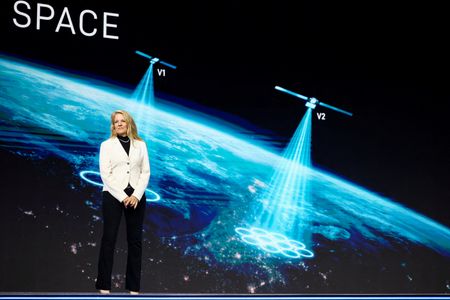
Throughout this journey, a largely behind-the-scenes executive has provided crucial leadership: company president Gwynne Shotwell, who has dedicated 24 years to developing and marketing SpaceX using her technical background and business acumen.
During this time, associates say the 62-year-old Shotwell mastered a particularly challenging skill: effectively working with Musk.
Shotwell describes her role in straightforward language, explaining to Time magazine this year that she aims to be “helpful to Elon” and “add value.” However, SpaceX veterans and industry analysts view her as a crucial leader at the aerospace company, whose career advancement has positioned her among the globe’s most influential female business leaders.
“She was a bridge between what Elon wanted and what could be done,” explained Jim Cantrell, a former SpaceX executive who assisted in bringing Shotwell to the company.
This positions her within a recognizable corporate pattern: the reliable deputy who transforms a visionary founder’s concepts into practical results, similar to executives like Tim Cook working with Apple’s Steve Jobs or Sheryl Sandberg supporting Meta’s Mark Zuckerberg.
“When Elon says something, you have to pause and not blurt out ‘Well, that’s impossible,’” Shotwell explained during a 2018 TED conference. “You zip it, you think about it and you find ways to get it done. I’ve always felt like my job was to take these ideas and turn them into company goals, to make them achievable.”
Associates describe how Shotwell established herself as demanding high performance and making tough staffing choices, while maintaining employee dedication and team unity. A former worker noted she could provide harsh criticism “and it would taste like honey.”
This delicate approach faces greater challenges following the IPO as SpaceX pursues increasingly ambitious objectives, goals that have led investors to consider valuing the enterprise at an impressive $1.75 trillion.
Leading up to the stock market debut, Musk has continuously shared on his social media platform X about an expansive new direction that reaches beyond rockets to include artificial intelligence and orbital data facilities.
Shotwell’s efforts have remained more traditional: presenting Starlink at a telecommunications conference in Barcelona, building relationships with policymakers in India as the service pursues regulatory clearance, and discussing with Washington officials the consequences of AI’s increasing power requirements.
SpaceX declined to provide comments or arrange an interview with Shotwell.
A mechanical engineer who studied at Northwestern University, Shotwell started her professional life at Aerospace Corporation in California, combining commercial innovations with government and military space initiatives.
She came to SpaceX in 2002, its founding year, and rapidly became its business development leader. Her industry connections provided access to government agencies, contractors and initial clients when Musk remained relatively unknown in the aerospace field.
She obtained launch agreements even before SpaceX achieved orbital success, contributing to the company’s reputation building. The major breakthrough occurred in 2008, when SpaceX secured a $1.6 billion NASA agreement to supply the International Space Station, which provided stability for SpaceX following multiple Falcon 1 setbacks that had created financial difficulties.
Musk acknowledged her contributions by elevating her to president and chief operating officer.
Her earnings have increased alongside SpaceX’s achievements. In the previous year, her total compensation reached $85 million, primarily from equity grants, based on IPO documentation. For context, Boeing CEO Kelly Ortberg’s compensation package totaled $9.4 million in 2025, even though the aerospace corporation’s revenue exceeds SpaceX’s by more than four times.
In 2010, SpaceX obtained an agreement with satellite company Iridium that represented the largest space launch contract any commercial organization had secured at that point. Former founding engineer Tom Mueller remembered receiving the announcement at a distant testing location: “We all drank the champagne.”
Typically wearing dark blazers and jeans, Shotwell displays an engineer’s modest assurance rather than the showmanship often linked with executive leadership, former staff members observed, with one characterizing her as “the glue” maintaining company cohesion.
Previous colleagues remembered her practice of entering mission control or visiting the production floor to pose very detailed inquiries, covering everything from astronaut preparation exercises to manufacturing operations.
SpaceX’s upcoming chapter will depend on Shotwell’s strength: implementation. Starlink, the satellite internet service Shotwell helped develop commercially, generates the majority of the company’s earnings, and it provides funding for SpaceX’s substantial capital investments in artificial intelligence and experimental projects including orbital data centers and lunar settlements.
These goals, along with supporting NASA’s Artemis initiative to send astronauts back to the Moon and expanding Starlink worldwide, will determine whether the operational excellence Shotwell established for rockets can apply to a much larger business operation.