In honor of America’s 250th birthday, a special series titled Faith and Freedom is underway, exploring the deep ties between religious faith and the freedoms that have defined the United States since its founding.
This installment marks Part 13 of the series, which continues to examine how faith has shaped the American experience across generations.
Motorists traveling along Dupont Boulevard, also known as Route 113, are being advised of a right lane closure currently in effect between Beach Highway (Route 16) and Fleatown Road.
The lane restriction is the result of ongoing construction activity in the area. Drivers should plan for possible slowdowns and allow extra travel time if their route takes them through that stretch of roadway.
The closure is scheduled to be lifted by 10:30 a.m. Motorists are encouraged to use caution when passing through the work zone.
PARIS (AP) — It was supposed to be men’s fashion season. But women were a constant presence throughout.
At Amiri and Ami, women and men shared the runway together. At Vetements, female models wore much of what was billed as menswear, with Sharon Stone closing out the show in thigh-high boots.
Within the fashion world, none of this raised an eyebrow.
The blurring of gender lines wasn’t happening on the fringes — it was woven into the fabric of Paris Men’s Fashion Week, which concluded Sunday. The event is where a multibillion-dollar luxury industry previews what it believes men will want to wear next.
The trend has made its way into advertising as well. In 2023, a pregnant Rihanna served as the face of Pharrell Williams’ debut Louis Vuitton men’s campaign, appearing on a massive Paris billboard with her baby bump on display and her arms draped in Vuitton bags.
Joseph McBrinn, an art historian at Ulster University, noted that this isn’t entirely new territory. Women have been appearing in menswear collections for so many seasons that fashion insiders barely take notice anymore — even as a Gen Z audience, only now discovering the gender-bending style that David Bowie made famous in the 1970s, treats it as something revolutionary.
Over recent decades, McBrinn said, fashion has shifted “from very binary understandings of gender and fashion to something which is today very fluid” — a reflection, he added, of how younger generations now see the world.
At Issey Miyake’s IM Men, the brand said the entire cast was male — yet the show still carried a distinctly androgynous feel.
The boundary between men’s and women’s clothing keeps wearing away, both on bodies and on the fashion calendar. It hasn’t disappeared entirely, and that erosion has as much to do with money as with gender identity.
Andrew Groves, a menswear systems professor at the University of Westminster, put it plainly: “Androgyny only works because people understand what is being crossed.” He added that the real story isn’t that menswear has broken free of its rules, but that designers are discovering new creative freedom within one of fashion’s most restrictive playbooks. The runways may look like they’re dissolving gender — but it’s precisely those categories that make the statement meaningful.
At Dior, Jonathan Anderson — the first designer in the house’s history to oversee both its men’s and women’s lines — dressed models in pearls, pink, and sheer blouses with soft bows at the collar. He told reporters the collection was about how he “connects with the feminine.”
At Saint Laurent, male models went shirtless in body-hugging tops, wore leather briefs, and walked in transparent shoes borrowed directly from the women’s runway. Saint Laurent opened Paris Men’s Week, and its investment in menswear goes beyond aesthetics — reports indicate the house has set a goal of doubling men’s sales by 2030.
Many fashion houses have merged their men’s and women’s collections onto a single shared runway. What once felt like a bold provocation became a scheduling strategy by the late 2010s — part creative vision, part convenience, and largely driven by commerce.
When Anthony Vaccarello took the helm at Saint Laurent in 2016, he eliminated the brand’s standalone menswear show and integrated men into the women’s runway, only bringing back a separate men’s show in 2018. Vetements and Balenciaga made similar moves around the same time.
Valerie Steele, director of the Museum at the Fashion Institute of Technology, was candid about the motivation: “I don’t think having men and women on the same runway means a greater belief in nonbinary genders. That’s really more of an economic thing.”
A combined show consolidates media attention and allows a designer to tell one unified story — something that matters in a luxury market that has faced headwinds over the past couple of years.
Women already purchase menswear regularly, which helps explain why Ami, originally launched in 2011 as a men’s brand, eventually expanded into womenswear.
The blending of clothing styles is actually the older part of this story. Long before “nonbinary” entered everyday conversation, Yves Saint Laurent was putting women in men’s tailoring back in 1966. Bowie smudged the line in the ’70s. Jean Paul Gaultier sent men out in skirts in the ’80s. Fashion was speaking this language long before society had the words for it.
Veteran fashion critic Suzy Menkes traces the history even further back. Men once wore “the most dramatic, precious, glamorous and priceless jewels,” she noted, without anyone questioning whether such adornments were appropriate for them. It was the 20th century, she said, that narrowed the concept of male dress — before fashion began to push those boundaries open again.
The exchange between men’s and women’s fashion has never been balanced: a woman in a men’s suit, 60 years later, barely registers; a man in a skirt or heels still reads as transgression.
“Women’s bodies are still consumed in ways that men’s bodies are not,” McBrinn said. Men, he added, “can still be seen as deviant” when they cross that line.
Away from the runway, the cultural moment is tense: aggressive online masculinity movements, “manosphere” influencers like the Tate brothers, and a wave of anti-trans legislation are all part of the backdrop.
Last year, J.Crew sparked a conservative backlash simply by marketing a pink sweater to men — even as Dior, Paul Smith, and Willy Chavarria were sending pink down their own runways. The controversy was cultural, but there was a commercial dimension too: reports showed pink apparel sellouts climbed 17% year-over-year in spring-summer 2025.
Menkes said color is part of the same broader story. Post-war Europe helped cement the idea that certain colors were “suitable” for men, she said, and it took “a surprisingly long time” for shades like lilac or pale pink to be accepted as male choices.
Steele noted that openness to androgyny peaked in the 1920s, the ’70s, and the ’90s — and pulled back each time.
“Everything is moving to the right,” McBrinn said. “Fashion may go back to being much more entrenched within gender binary” — possibly, he warned, within five to 10 years.
After years of expanding legal protections for LGBTQ+ people, progress is now reversing in many countries, with transgender individuals at the center of the debate.
“We are seeing tremendous backlash internationally against trans people,” Steele said.
Ultimately, Steele argued, the runway matters less than everyday life. Real change happens when people see androgynous clothing on friends, coworkers, and the men around them.
Increasingly, she suggested, they’re just clothes.
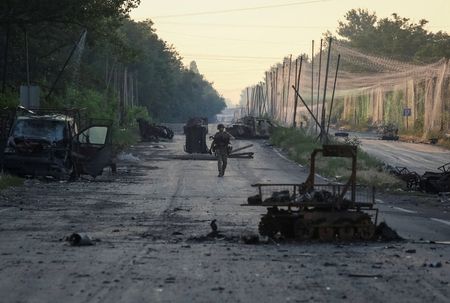
KYIV, Ukraine — At least eight civilians lost their lives and 35 others were hurt Monday after Russian missiles and drones struck multiple locations across Ukraine, prompting Ukrainian President Volodymyr Zelenskyy to denounce what he called “horrific attacks.”
Russia launched its full-scale invasion of Ukraine more than four years ago and has since carried out sustained bombing campaigns aimed at crippling the country’s infrastructure and breaking the will of its people. The United Nations reports that more than 16,000 Ukrainian civilians have been killed since the conflict began.
Zelenskyy announced on social media that a Russian missile aimed at infrastructure hit the central city of Dnipro, leaving five people dead and 29 injured. Separately, Russian drones struck a passenger minibus in the southern city of Zaporizhzhia, killing three people and wounding six others, including a child.
National Police also reported that drone attacks in Ukraine’s northeastern Sumy region claimed the lives of a 69-year-old woman and a 77-year-old man. Authorities said deadly strikes also took place in at least six additional regions of the country.
The wave of attacks also disrupted electricity service for customers across eight Ukrainian regions on Monday. Grid operator Ukrenergo noted that demand had already been elevated due to hot weather, as residents turned to air conditioning to cope with the heat.
Zelenskyy used the occasion to renew his appeal for European nations to accelerate the development of air defense systems capable of intercepting Russia’s ballistic missiles, which have proven difficult to shoot down.
“People need greater protection from such horrific attacks,” Zelenskyy said. “Above all, we need anti-ballistic capabilities. It is essential that Europe is as active as possible in developing its own anti-ballistic defense – its own systems and missiles.”
Western officials say the war has shifted notably in recent months, as Ukraine’s growing drone strike campaign has caused fuel shortages inside Russia and in Russian-occupied territory. Analysts say those strikes have weakened Russian military supply lines along the eastern and southern front lines, slowing Russia’s advance.
Ukraine’s advancements in drone technology have made it a recognized leader in military drone use, and the country is now assisting partner nations — a reversal from its earlier position of seeking foreign military aid.
Russian President Vladimir Putin acknowledged Sunday that Ukrainian long-range drone strikes on Russian oil facilities have contributed to fuel shortages within Russia. Those shortages have sparked public frustration, with people waiting in line for hours at gas stations. Despite this, Putin rejected any concessions to end the war and maintained that Russia would ultimately win, dismissing current difficulties as “temporary.”
Kremlin spokesman Dmitry Peskov echoed that position, saying Russia’s stance on Ukraine has not changed and that Russian forces are pressing forward with their offensive operations. “Their effort makes us confident that our goals will be achieved,” Peskov told reporters.
The Institute for the Study of War, a Washington-based think tank, characterized the Kremlin’s posture as an attempt to pressure the West and Ukraine into accepting Russia’s terms. However, the organization added that “Russia’s battlefield performance continues to decline in 2026 and Russia’s ability to seize its objectives militarily is in question.”
Russia’s Defense Ministry reported that its air defenses intercepted 209 Ukrainian drones between late Sunday and early Monday. Ukraine’s air force said it shot down 82 of the 108 drones Russia launched overnight.
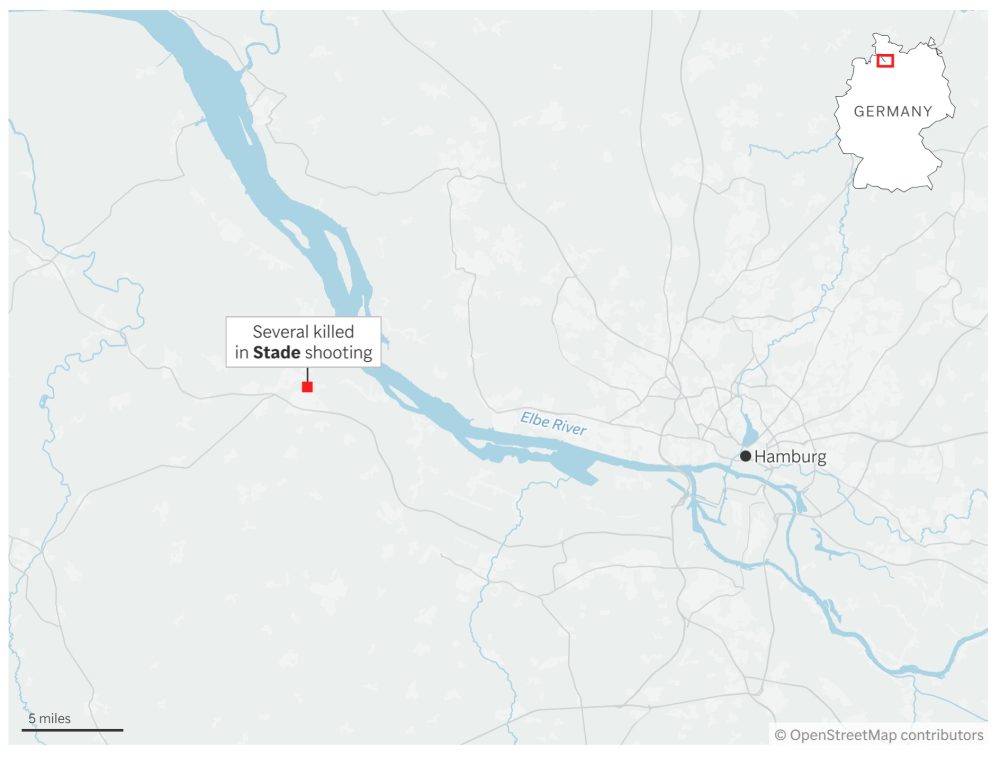
Five people lost their lives Monday in a shooting at a youth welfare facility in Stade, a town in northern Germany, according to police. Two individuals were taken into custody in connection with the incident, one of whom is believed to be the gunman.
Authorities confirmed that additional people were injured in the attack, though no specific number of wounded was provided.
The shooting occurred at a facility on Dankersstrasse, a street located south of Stade’s town center. The facility serves as temporary housing for pregnant women and young mothers with children.
Police stated there is no ongoing threat to the general public. Video recorded after the shooting showed a heavy law enforcement presence at the scene, joined by other emergency responders and multiple ambulances.
Investigators said they are actively working to determine the circumstances surrounding the shooting and piece together exactly what took place.
Germany maintains stricter gun laws than the United States, and while mass shootings in the country are uncommon, they are not without precedent.
Stade is home to roughly 50,000 residents and sits approximately 40 kilometers — about 25 miles — from the city of Hamburg.
President Trump took to social media Monday claiming that Iran had requested a meeting with U.S. officials, set to take place Tuesday in Doha, Qatar. Iranian officials, however, pushed back, saying no such meeting was on the calendar.
The conflicting statements come at a critical moment, as Trump works to hold together an increasingly fragile interim deal with Iran while tensions have been building in the Strait of Hormuz. Rising hostilities in the waterway could push oil prices higher, potentially undermining Trump’s argument to American voters that inflation is under control.
On Monday, Trump celebrated the fact that U.S. oil futures were trading at around $69 a barrel, attributing the drop to the interim agreement with Iran. He also claimed that $69 a barrel represents a price lower than before the conflict began — a claim that is false. Oil futures were actually trading in the $65 to $66 range before the war started in late February.
Iran’s president, Masoud Pezeshkian, said Monday that Qatar would release $6 billion in frozen Iranian assets. The announcement appeared designed to help sell the Iranian public on the interim deal, even as Iran’s hold on the Strait of Hormuz has been challenged by efforts to open Oman’s territorial waters to commercial traffic. Iran’s actions had previously blocked cargo ships and tankers from moving through the strait, through which roughly one-fifth of the world’s traded oil and natural gas passed during peacetime, sparking a global energy crisis. Iran also launched drone and missile attacks targeting Bahrain and Kuwait on Sunday.
On a separate front, Trump has stirred controversy by suggesting that Syria — rather than Israel — should take on the Iran-backed militant group Hezbollah in Lebanon. Trump has proposed that the Islamist-led forces who overthrew Syria’s former autocratic leader and now govern the country would be more effective at rooting out Hezbollah than the Israeli military. Syrian President Ahmad al-Sharaa has flatly rejected the idea, saying he has no interest in such a conflict and that Trump’s remarks were misunderstood. Trump has continued to push the proposal despite the pushback. The suggestion has raised serious concerns in Lebanon and in Israel, which views al-Sharaa’s government with deep suspicion and has taken control of a portion of southern Syria since he came to power.
The Supreme Court is also in the spotlight this week as it prepares to wrap up a term heavily shaped by Trump’s broad assertions of presidential authority. Among the remaining cases are disputes over Trump’s efforts to restrict birthright citizenship, his push to fire the heads of independent federal agencies, and his attempt to remove a sitting Federal Reserve governor. The court is also weighing laws in roughly half the states that bar transgender girls and women from competing in public school and college sports. Two election-related cases and a dispute over cellphone location tracking by law enforcement are also pending decisions.
Elsewhere, a new poll from AP-NORC finds that Americans have grown less proud of their country’s history and democratic processes over the past decade. Pride in the U.S. military and its global political influence has declined since 2017. Much of the drop is driven by Democrats, who have become increasingly disillusioned since Trump’s first term in office. The poll also found that Republicans are far more likely than Democrats or independents to say being American is a central part of their personal identity, while younger adults are less likely than older Americans to feel that way.
In other news, the former House Speaker is partnering with the University of California, Berkeley, to launch a new nonpartisan academic institute aimed at strengthening democracy. The Democrat, who is leaving Congress after nearly 40 years representing San Francisco, said she wants to “strengthen our democratic institutions and forge a future that serves the public good.” The Nancy Pelosi Institute for Representative Democracy is set to launch in January and has already secured more than $35 million in philanthropic commitments. She plans to co-teach a course on Congress through the institute.
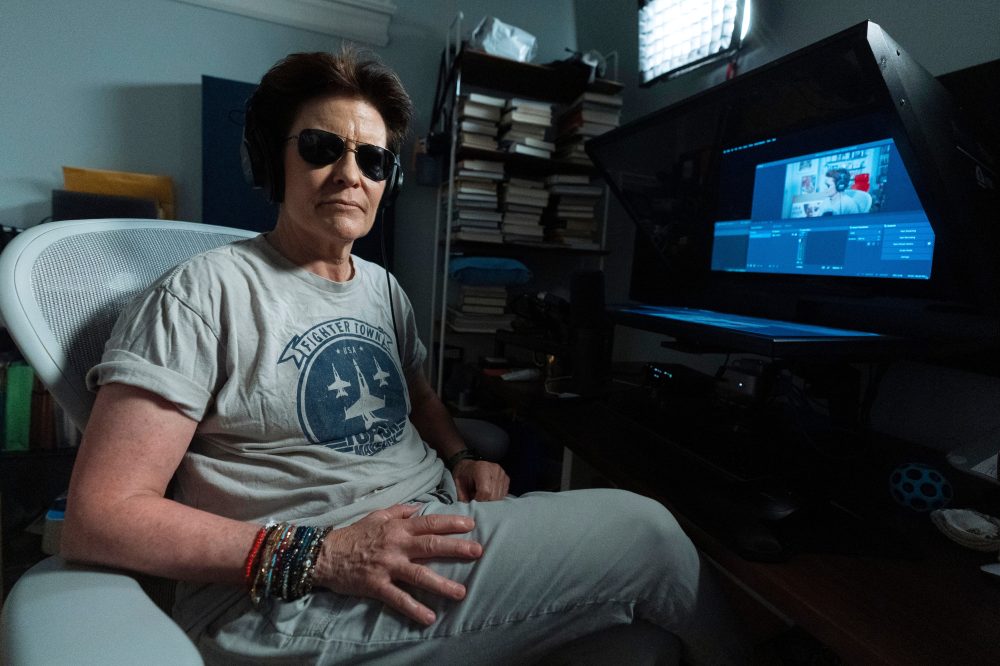
Also making news, tech journalist Kara Swisher — known for her candid interviews with major figures like Mark Zuckerberg and Elon Musk — is expanding her reach into political media. Her podcasts, including “On with Kara Swisher” and “Pivot,” are drawing growing audiences as political platforms. Swisher told The Associated Press from her Washington home that presidential candidates have been reaching out to her, and she plans to interview all of them.
Finally, Trump on Sunday toured several of his construction projects near the nation’s capital, later suggesting that his redevelopment of the East Potomac Golf Links could one day host major tournaments. “When completed, this Course will have the ability to host Major Golf Tournaments, including The U.S. Open, The Ryder Cup, The PGA Championship, and other top PGA Tour events,” Trump wrote on social media. He toured the course alongside Interior Secretary Doug Burgum, various aides, and golf course architect Tom Fazio and his son, Gavin Fazio. The redevelopment project is currently the subject of a federal lawsuit. Tournament locations are typically chosen years in advance — U.S. Open venues are already booked through 2051, with some openings in 2043, 2046, and 2048, while the PGA Championship is scheduled through 2035.
Elite units from Iraq’s Counter-Terrorism Service took 38 politicians, lawmakers, and high-ranking government figures into custody during overnight raids carried out inside Baghdad’s heavily fortified Green Zone, as part of a widening corruption probe.
The operation was conducted under the direct supervision of Prime Minister Ali al-Zaidi. Security forces sealed off all access points to the Green Zone at approximately 2:00 a.m. Sunday before launching coordinated raids on the residences of prominent officials throughout the secured district.
Security sources also confirmed that authorities simultaneously raided the headquarters of the Midland Oil Company, located south of Baghdad, as part of the same operation.
In the wake of the arrests, videos circulating on social media captured extended bursts of gunfire in the area. Military vehicles and tanks were also filmed moving through the Green Zone following the operation.
Among those taken into custody were at least five sitting members of Parliament, whose legislative immunity had previously been lifted. Several senior security officials and civil servants were also arrested. Security sources noted that a number of suspects managed to flee before authorities arrived, triggering an expanded manhunt for additional individuals connected to the investigation.
The crackdown traces back to the arrest last month of former Deputy Oil Minister Adnan al-Jumaili. Officials say his confessions, along with documents recovered during his detention, allegedly revealed what investigators described as a large, organized network engaged in corruption, illegal accumulation of wealth, and abuse of power.
According to security sources, Sunday’s overnight operation stands as one of the largest coordinated enforcement actions ever taken against senior officials in the Iraqi capital. The raids were concentrated within the Green Zone, the tightly guarded enclave that houses major government buildings and official residences.
Authorities have not indicated that the investigation is complete. The search for suspects who evaded arrest continues, and officials say the broader corruption inquiry remains active as they pursue all individuals allegedly tied to the reported network.
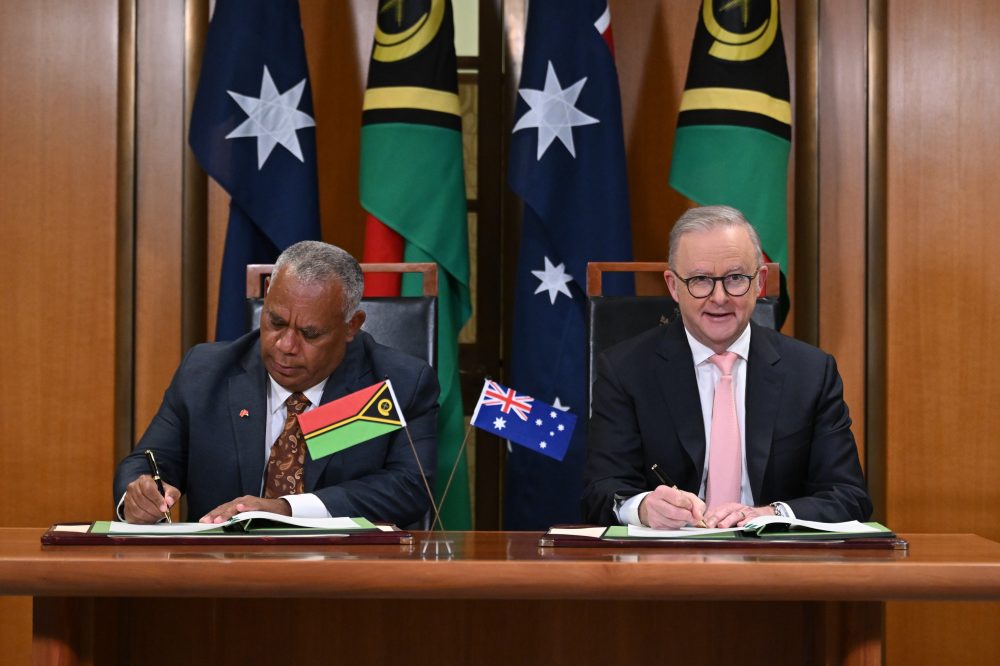
In a unanimous decision on Sunday, Israel’s cabinet approved a resolution formally recognizing the Armenian Genocide — a significant policy reversal that now moves to the Knesset for a final legislative vote.
The measure was put forward by Foreign Minister Gideon Sa’ar, who described the formal acknowledgment of the mass killings as a “moral and historical duty.” Following the cabinet’s approval, Sa’ar took to X to express his reaction, writing: “It’s never too late to do the right thing.” He went on to say, “I thank Prime Minister Netanyahu for the support and the government ministers for their unanimous support in approving the resolution proposal.”
The resolution formally acknowledges the killing of approximately 1.5 million Armenians during the dying years of the Ottoman Empire. It also calls on Israel to stand against any attempts to deny, downplay, or distort the historical record surrounding those events.
Sa’ar introduced the proposal last week, setting off what the government characterized as a notable change in policy direction. For many decades, Israel had avoided formally recognizing the genocide in order to preserve diplomatic and trade ties with Turkey and Azerbaijan. The cabinet’s vote signals a departure from that stance, coming amid growing tensions between Israel and Turkey in recent years.
The legislation still requires approval from the Knesset before it can take effect as state law.
Background text accompanying the proposal explains that the Armenian Genocide began in April 1915, when Ottoman authorities arrested, deported, and killed hundreds of Armenian intellectuals, community leaders, and members of the educated class in Constantinople. What followed, according to the proposal, was a broader, systematic campaign against the Armenian population at large.
Armenian men were forced into labor before being killed. Women, children, and elderly civilians were driven from their homes and made to march toward the Syrian desert, where victims were subjected to mass murder, rape, deliberate starvation, and dehydration, the proposal states.
The document further notes that the genocide wiped out a cultural and historical legacy that had existed across Anatolia for thousands of years. It also highlights what it describes as ongoing, organized efforts to deny or minimize what happened — pointing specifically to what it calls the manipulative rewriting of history books, primarily by Turkey.
According to the proposal, 32 countries have already recognized the Armenian Genocide through parliamentary resolutions, legislation, or official declarations. Beyond recognition, the Israeli resolution calls for condemnation of all efforts to obscure, minimize, or deny the atrocities carried out against the Armenian people.
Hezbollah’s top leadership came out swinging on Saturday against a newly signed Israel-Lebanon framework agreement, branding it a “humiliation” and declaring it has no legal standing.
The agreement was finalized on Friday following five rounds of negotiations in Washington. It lays out a step-by-step plan to wind down the conflict by gradually replacing Israeli Defense Forces positions in southern Lebanon with the Lebanese army, while also pushing forward the disarmament of the Iran-backed terrorist organization Hezbollah.
Hezbollah leader Naim Qassem declared the deal “null and void” and a “humiliation,” insisting it should be thrown out in favor of a memorandum of understanding currently being negotiated — one that would fold a Lebanon ceasefire into a broader agreement involving Iran. Israel has pushed back against that approach.
Qassem drew a hard line, saying any attempt to link an Israeli withdrawal from southern Lebanon to Hezbollah giving up its weapons crossed “red lines.” He further argued that entering into such a deal with Israel would “legitimize the Zionist occupation.”
Lebanese Parliament Speaker Nabih Berri, a known ally of Hezbollah, went even further, calling the accord an “incitement to civil war.”
Hezbollah’s Lawyers’ Association also weighed in, contending the agreement conflicts with Lebanon’s constitution because it states that Israel and Lebanon “affirm the right of each state to exist in peace.” The group argued the constitution “considers Zionism to be a challenge to human dignity” and calls for working “to eliminate it.”
The U.S. State Department, for its part, described the framework as a structured process to dismantle Hezbollah’s terrorist infrastructure, strip the group of its weapons, and allow Israeli forces to exit Lebanon once the threat posed by Hezbollah has been neutralized.
Under the terms of the deal, the United States will create a new trilateral body called the Military Coordination Group for Lebanon, or MCG4L, charged with overseeing how the framework is put into practice. Washington also pledged to bolster the capabilities of Lebanon’s armed forces, back Lebanese military operations against Hezbollah, and deliver $100 million in humanitarian aid to be coordinated through the United Nations.
Israeli Prime Minister Benjamin Netanyahu praised the agreement on Friday, calling it “a major achievement for the State of Israel.” He said Israel would “remain [in] the security zone in southern Lebanon” while working through a phased withdrawal of Israeli Defense Forces as the Lebanese army moves in, disarms Hezbollah, and asserts its authority over the region.
“The favorite is whoever is not in power, not whoever is on the right,” said Andrés Malamud, a senior research fellow at the Institute of Social Sciences of the University of Lisbon, as he described the changing political landscape across Latin America. The victories of Javier Milei in Argentina, José Antonio Kast’s rise in Chile, Abelardo De La Espriella’s win in Colombia, and Keiko Fujimori’s return to power in Peru may appear to be a sweeping conservative movement — but Malamud says the data tells a more complicated story: voters are turning against whoever holds power, punishing governments that failed to control crime, rein in inflation, fight corruption, and maintain basic order.
“What is happening in Latin America in this decade is a shift toward the opposition more than a shift toward the right,” he said. That distinction carries real weight as right-wing parties gain ground across the region. Argentina kicked off this cycle in November 2023 when Milei, a libertarian outsider, channeled widespread anger at the political establishment into a presidential victory. Chile followed when Kast took office in March 2026 after a campaign focused on crime, immigration, and fiscal discipline. Colombia rejected Gustavo Petro and chose De La Espriella, a hardline right-wing newcomer to national politics. Peru, after years of political turmoil and repeated unsuccessful runs, has brought the Fujimorismo movement back to the presidency under Fujimori.
The picture is not uniform, however. Brazil and Mexico — the two largest nations in Latin America — remain under left-wing leadership. Uruguay returned the Frente Amplio to power in 2024. In Brazil, President Luiz Inácio Lula da Silva is still polling ahead of Senator Flávio Bolsonaro before an October election that analysts say will either confirm the regional rightward drift or reveal its limits. That uncertainty is why experts are hesitant to declare a definitive ideological realignment. The right is winning more frequently, but not everywhere, and not always by large margins.
What has spread more rapidly than any ideology, analysts say, is voter impatience.
Malamud offered historical context for the shift. In the first decade of this century, he said, left-wing candidates won approximately 60% of presidential elections in Latin America. In the following decade, that figure dropped to around 55%. So far in this decade, the share has fallen further to roughly 40%, meaning right-wing candidates now win more often than before. But the stronger pattern, he said, is alternation — opposition candidates now win about 75% of elections regardless of ideology. “The right wins 60% in this decade, the oppositions win 75%,” he said. “That means the favorite is the one who is not in power.”
That framing matters, Malamud explained, because several recent victories — including those in Colombia and Peru — were decided by narrow margins. Describing the moment as a simple rightward tide, he argued, risks underestimating how closely divided public opinion actually is and how intense political polarization has become. Latin America, in his view, is moving both to the right and against incumbents simultaneously.
The new wave of right-wing leaders is far from a unified bloc. Milei represents an economic and libertarian rebellion in Argentina. El Salvador’s Nayib Bukele has built his government around a security-first approach. Kast’s Chile leans more conservative and institutional. De La Espriella’s Colombia blends law-and-order politics, deregulation, and open admiration for President Donald Trump. Fujimori carries a family political brand tied to security, market economics, authoritarian history, and Peru’s long institutional crisis. Malamud said what these leaders share is a common language of rejection — broadly opposing what they label communism, globalism, socialism, and feminism — more than any shared governing agenda.
Christian Pino, a Chilean journalist with a master’s degree in international relations, security, and defense from Chile’s National Academy of Political and Strategic Studies, ANEPE, views the movement through the lens of Chile’s history of political pendulum swings. Chile, he noted, has spent two decades alternating between left and right: Michelle Bachelet, Sebastián Piñera, Bachelet again, Piñera again, Gabriel Boric, and now Kast. Similar back-and-forth patterns have played out in Argentina — moving between Kirchnerism, Mauricio Macri, and Milei — and in Brazil, which shifted from Jair Bolsonaro to Lula.
But Pino said the pendulum is now “being dyed with more conservative ideas,” primarily because voters are demanding order. In Chile and elsewhere, he argued, irregular immigration, organized crime, and new forms of violence have reshaped political debate. “Mainly, I understand it, because of the demand for order that irregular immigration has brought in several countries,” he said, drawing comparisons to the appeal of the punitive public security model championed by El Salvador’s President Bukele.
Security stands out as the clearest common thread running through many of the region’s new right-wing campaigns, even where economic platforms differ. Malamud said Kast, Fujimori, De La Espriella, and Bukele are all responding to public safety as a top voter concern. Milei is an exception, he noted, because Argentina’s crisis was primarily economic. Bolsonaro’s original rise, Malamud added, was driven more by opposition to Brazil’s Workers’ Party and anger over corruption than by crime — even though insecurity has long been a serious issue in Brazil.
Prof. Arie Kacowicz, professor of international relations and the Chaim Weizmann Chair in International Relations at the Hebrew University of Jerusalem, also urged caution against drawing simple conclusions. “It is not one explanation,” he told The Media Line. Some observers link the shift to what they call the “effect” of President Donald Trump’s return to power — as though Latin American countries were rushing to align with Washington. Kacowicz acknowledged that may be part of the backdrop but said he does not view it as the central driver. The deeper issue, he argued, is whether citizens believe governments “deliver or do not deliver.”
For Kacowicz, Latin America’s capacity to punish incumbents is one of the region’s most powerful political forces. When voters conclude the economy is stagnant, corruption remains entrenched, or crime is unchecked, governments get replaced. That dynamic, he said, helps explain the elections in Colombia, Peru, and Chile without reducing them to a single ideological narrative. He described the current moment as a “grey tide” — a conservative counterpart to the earlier “pink tide” of left-wing governments — but emphasized that voters typically prioritize their daily lives. The average Latin American voter, he said, is less focused on geopolitical issues like Iran, Hezbollah, Israel, or the Middle East than on whether he can walk down the street without being robbed.
Immigration — particularly from Venezuela — has intensified that domestic debate. Malamud said Venezuelan immigration has had its greatest political impact in the Andean countries and in Chile, where it has become a central political rather than merely social issue. In Argentina and Uruguay, he noted, many Venezuelan migrants arrived as professionals and did not provoke the same political reaction. In Colombia, Ecuador, Peru, and Chile, by contrast, Venezuelan immigration became closely linked to debates over public safety, state capacity, and national identity.
Pino described the Venezuelan crisis as a regional shock that disrupted Chile’s long-held sense of geographic isolation. Chile, he said, had traditionally viewed itself as protected by the northern desert, the Andes to the east, Antarctica to the south, and the Pacific Ocean to the west. The arrival of new criminal networks and high-profile violent crimes shattered that self-image. Kast’s promise of “order and justice,” Pino said, created high expectations that will be difficult to meet quickly. He added that Brazil could face a similar political dynamic if crime and public frustration come to dominate that country’s campaign.
Beyond domestic politics, the shift carries geopolitical implications. The new right-wing governments tend to speak more comfortably with Washington, more warmly toward Israel, and more skeptically about China, Russia, and Iran. But the gap between campaign rhetoric and actual state policy remains large. The Trump administration has positioned Latin America within a broader competition over influence, infrastructure, communications, and strategic alignment. Yet even governments sympathetic to the US president cannot easily break from Beijing, which has become central to trade, investment, and infrastructure across much of South America.
Malamud said Washington’s concern about China extends beyond Trump and reflects a broader anti-Chinese consensus within the US political establishment. That consensus, he said, has produced red lines for allies — especially regarding communications technology such as Huawei’s 5G and 6G networks — and in sensitive infrastructure like deep-water ports or space observation facilities with potential military applications. Sometimes Washington manages to shape or block projects before they move forward; sometimes it arrives too late.
He also rejected the idea that China, Russia, and Iran function as a coordinated bloc in Latin America. Washington may group them together, he said, but in practice their cooperation is limited. China pursues commercial interests. Russia pursues its own agenda. Iran seeks political influence, but neither Russia nor China intervened directly when Iran came under attack. Right-wing Latin American leaders may be inclined to accept Washington’s framing, but trade creates firm limits. Both Bolsonaro and Milei talked about reducing business with China, Malamud said, yet neither could break from Beijing because the commercial relationship was too important.
Brazil illustrates that constraint clearly. During Bolsonaro’s presidency, Malamud said, the government’s public rhetoric leaned strongly toward the West, but the military establishment quietly maintained ties with China. Former Vice President Hamilton Mourão, himself a military figure, helped preserve that relationship when Bolsonaro neglected it. For Malamud, the example demonstrates why ideology does not automatically override trade relationships, institutions, or geography.
Chile faces a similar tension. Pino said China, Russia, and Iran have all expanded their presence in Latin America, with China especially visible in Argentina and Chile. He cited the debate over a Chile-China communications cable as an example of the pressures facing Santiago. Chile, he said, is “caught in the middle” — a country of 20 million people navigating a relationship with a power the size of China. In his view, Kast’s government is working to repair what he described as a damaged foreign policy under Boric, particularly regarding Israel and in areas connected to defense and commerce.
Israel is where the ideological shift becomes most visible, even if it rarely drives voter decisions. Under Milei, Argentina has developed an unusually close relationship with Jerusalem. Chile, after years of diplomatic friction under Boric, is moving toward rebuilding those ties. Colombia, after Petro severed relations with Israel, is expected to restore them under De La Espriella. Brazil remains the larger unresolved question: relations under Lula have been deeply strained but not formally broken.
Kacowicz said Israel tends to view Latin American elections through a narrow lens — whether a given candidate is pro-Israel or anti-Israel. Colombia is the clearest case, because Petro broke off relations and a new government is expected to reopen diplomatic channels. Kacowicz noted that Colombia has historically been a close Israeli partner in security matters and also sells coal to Israel. Brazil, he said, is more strategically significant and more complicated. Lula, he said, is not anti-Semitic, but made “very, very extreme” statements about Israel’s actions in Gaza, including comparisons to the Nazis.
Still, Kacowicz cautioned that pro-Israel rhetoric does not translate equally across the region. Argentina has gone further than most under Milei, moving its embassy to Jerusalem and deepening ties with Israel. Brazil remains more complicated because of its relationships with Arab nations, China, and Iran, and because its diplomatic tradition has generally resisted abrupt breaks. Those constraints apply even to governments that are friendlier toward Israel. “It is complicated,” he said. Even so, he added, Israel stands to benefit from the rightward shift if diplomatic relations improve in Chile, Colombia, and — depending on Brazil’s election — in Brasília as well.
Malamud was more direct in describing Israel as an ideological marker. In today’s Latin America, he said, left-wing governments tend to be suspicious of Israel’s government while right-wing governments tend to support it. But he stressed that this matters far more to political elites than to ordinary voters. Leaders can take strong positions on Israel because the electoral cost is typically low. Latin American voters, he said, mostly cast their ballots based on security, the economy, and immigration — with Israel ranking much lower on the public agenda.
In Chile, Pino said the issue is especially sensitive because of the country’s large Palestinian community and much smaller Jewish community. Publicly supporting Israel, he said, carries social and political costs. But he also argued that the Middle East remains distant for most Chileans, beyond activists and communities directly engaged with the issue. Chile lost citizens in the October 7, 2023 attack, but Pino said the country never fully told their stories or made the attack part of a national conversation. For most voters, crime, wages, and immigration remain far more immediate concerns.
That is why Brazil now stands at the center of what comes next. If the right wins in October, the ideological map of South America will look dramatically different. If Lula survives, the region stays divided, and the notion of a consolidated conservative wave becomes much harder to sustain.
Kacowicz called Brazil the most important case to watch — for both Latin America and Israel — not only because of its size but because its runoff election system makes coalition-building decisive.
Malamud argued that even a right-wing victory in Brazil would not automatically produce a coherent conservative bloc across the region. Ideological affinity, he said, has rarely generated durable regional institutions in Latin America. The left-wing cycle of the early 2000s brought leaders like Lula, Néstor Kirchner, and Hugo Chávez to power simultaneously, yet left few lasting structures. “There is no pipeline that goes from Caracas to Buenos Aires,” he said. A new right-wing wave could generate enthusiasm and high-profile summits, but economic integration would remain limited because the region’s main commercial partners lie outside Latin America. Security cooperation would also face obstacles because right-wing leaders tend to be strongly protective of national sovereignty.
That leaves Latin America in a paradox. The region is moving right, but it is not necessarily building a conservative international order. Its leaders may speak more favorably about President Trump, more warmly about Israel, and more skeptically about China, Russia, and Iran. But they govern divided societies, unstable legislatures, crime-plagued borders, and economies tied to Chinese demand, US pressure, and local hardship. Their voters want immediate order — not geopolitical doctrine.
For now, the balance has shifted enough to be significant. Argentina has moved openly toward Washington and Jerusalem. Chile is repairing its relationship with Israel and drawing closer to regional conservatives. Colombia is preparing to reverse Petro’s break with Israel. Peru is returning Fujimorismo to the presidency. Ecuador, Panama, and others have added to the broader rightward trend. But Mexico remains under Morena, Brazil remains under Lula, Uruguay has returned to the center-left, and the new conservative governments still have to prove they can actually govern after winning on public anger.
For Israel, the change is already tangible. A region that recently included several governments openly hostile to Jerusalem now offers the possibility of restored diplomatic ties, renewed security cooperation, and a more receptive political climate in Santiago, Buenos Aires, Bogotá, and — depending on Brazil — Brasília. For Washington, the same movement creates an opening to rebuild influence in a hemisphere where China has become too economically embedded to ignore.
But the rightward turn will not erase the other powers already deeply rooted in Latin America. China will remain a buyer, lender, and infrastructure partner. Russia and Iran will continue seeking political, media, and diplomatic space. Even governments that feel ideologically aligned with Trump or Israel will face the constraint Malamud described: campaign language can move faster than trade relationships, institutions, or geography. The new political map should be read as an opening — not a reversal of the regional order.
Israeli Prime Minister Benjamin Netanyahu took to the podium Saturday to defend the framework agreement his country reached with Lebanon, making the case that the deal strengthens Israel’s position rather than limiting it.
At the start of the briefing, Netanyahu explained that Israeli forces had only pulled back from two pilot areas that military commanders determined were not operationally needed. He said Israeli troops would continue holding what he referred to as the “yellow security zone.”
“We remain in the yellow security zone that protects us, and that is a tremendous, tremendous achievement,” he said, noting that outside pressure to remove Israeli forces from that area had not succeeded.
Netanyahu extended thanks to President Donald Trump, Secretary of State Marco Rubio, Ambassador Yechiel Leiter, the Israeli negotiating team, and the Lebanese government for their roles in reaching the accord. He said Israel had “dealt Hezbollah a severe blow” and was “breaking not only Iran’s axis of terror, but also its political axis.”
The prime minister said Hezbollah had held approximately 150,000 rockets and missiles before the conflict began. He said Israel had destroyed around 90% of that stockpile, eliminated Hezbollah leader Hassan Nasrallah along with commanders of the Radwan Force, and killed more than 1,000 Hezbollah fighters since the war started — including more than 200 in just the past two weeks.
Netanyahu also noted that Israeli forces had taken control of the Beaufort and the Ali al-Taher Ridge overlooking Bint Jbeil, and that operations to dismantle Hezbollah’s infrastructure throughout the security zone were continuing.
“There are bunkers there, there are tunnels there, there are terror villages there. We are eliminating all of it,” he said, while acknowledging that explosive drones remain a significant ongoing threat.
When i24NEWS reporter Nadav Elimelech asked whether the agreement restricts Israel’s operational freedom against Hezbollah, Netanyahu was direct. He said military orders remain unchanged and that soldiers are required to act when they identify a threat.
“If you see a threat, act,” he said. “It is not only the right to act — it is the obligation to act against an immediate threat.” He cited a recent operation in which Israeli forces destroyed a building housing seven Hezbollah fighters before they could carry out an attack.
On the topic of domestic politics, Netanyahu called for national unity, invoking former Prime Minister Menachem Begin. “As Menachem Begin said, ‘No more civil war.’ There will not be one here,” he said. He expressed his intention to form “a broad national government — not a narrow government, not a left-wing government dependent on Arab parties,” and said any party that supports Israel as the nation-state of the Jewish people, individual rights, a free economy, technological progress, and Israel’s right to defend itself would be welcome.
On the question of Haredi conscription, raised by Elimelech, Netanyahu said arresting Torah students inside yeshivas discourages military enlistment rather than encouraging it. “Young Haredim want to enlist,” he said, arguing that such enforcement produces “exactly the opposite” effect. He added, however, that those not engaged in Torah study should still be subject to the full force of the law.
Channel 14 reporter Saria Herush pressed Netanyahu on what would happen if Hezbollah violated the agreement and what guarantees Israel had received from Lebanon and the United States. Netanyahu replied that Israel’s main assurance was its own military strength. “The moment they violate the agreement … we strike with great force,” he said. He called Lebanon’s decision to sign the deal “a very courageous move” because it effectively communicated to Hezbollah and Iran, “We are making peace with Israel.”
Netanyahu said support for the agreement had come from Lebanon’s Christian, Druze, Muslim, and even some Shiite communities. He cautioned, however, that Israel would evaluate the deal based on Lebanon’s actions, and he said the Lebanese army still needs to reform because, in his words, “There are jihadists within its ranks.”
Ynet reporter Itamar Eichner raised criticism from opposition lawmaker Gadi Eisenkot, who called Lebanon “a political graveyard for prime ministers.” Netanyahu brushed off the remark, saying that following Eisenkot’s advice would have meant halting operations in Khan Yunis, bypassing Rafah, staying out of Lebanon, and leaving Hamas and Hezbollah largely untouched.
“So, you know what I say? I’ll answer you in Yiddish,” Netanyahu said. “Who cares?” He added that national security, not politics, drives his decisions. On a separate question about recognizing the Armenian Genocide, he responded, “I did not block it, and I certainly support it.”
Israel Hayom reporter Danny Zaken asked whether the Lebanon deal conflicted with a US-Iran memorandum of understanding. Netanyahu said Israel is not party to that agreement but will continue acting in its own interests. He announced plans to send a delegation to Washington to present Israel’s stance on Iran’s nuclear program and said Secretary of State Marco Rubio had backed Israel’s position on maintaining the security zone in southern Lebanon.
On the question of future coalition partners, Netanyahu said he would welcome any party that accepts his core principles. He firmly rejected the creation of a Palestinian state “between the Mediterranean Sea and the Jordan River,” saying public sentiment has shifted during the war. He argued that most Israelis oppose internal conflict and that a broad national consensus is needed to build on military gains in Gaza, Lebanon, and Iran.
Closing the press conference, Netanyahu pushed back against critics who said Israel had fallen short of its wartime goals. “Your government didn’t achieve 100 percent; you only achieved 80 or 90 percent,” he said of his opponents. “That is a joke. It is simply not serious.”
He said Israel had neutralized the immediate nuclear threat from Iran, significantly damaged Tehran’s ballistic missile production, secured the return of all hostages from Gaza, dismantled most of Hamas’s military capability, and shifted the strategic balance in Lebanon. He concluded that those achievements must now be protected through a broad national government capable of tackling what remains and pursuing further regional agreements.
A months-long investigation into suspected drug distribution activity in New Castle County has led to the arrest of a local woman on both narcotics and firearm charges.
Detectives working with the New Castle County Division of Police Violent Crime Interdiction Team launched the investigation in June 2026, targeting 46-year-old Nicole Malice of New Castle. Investigators suspected Malice had been distributing narcotics across New Castle County.
The investigation came to a head on Friday, June 26, 2026, when detectives approached Malice in a parking lot. The encounter ultimately resulted in her arrest on drug and firearm-related charges.
Drivers heading northbound or southbound on Atlanta Road should be aware of a lane shift currently in place between West Stein Highway and Brighton Drive.
The lane shift is the result of construction activity in the area and is expected to remain in effect until 6 PM.
Motorists traveling through the affected stretch are encouraged to slow down, stay alert, and follow any posted signs or traffic control instructions in the construction zone.
Genetic testing firm Natera and cancer drug developer Aveta Biomics announced Monday that they are joining forces on a large, late-stage clinical trial of an experimental treatment for head and neck cancer, with the goal of better tracking how patients respond to therapy.
At the center of the study is Aveta’s APG-157, an experimental oral medication intended to help the body’s immune system fight tumors. The trial will focus on patients diagnosed with locally advanced head and neck cancer.
As part of the partnership, Natera’s Signatera test will be used throughout the study to measure molecular residual disease and evaluate how patients are responding to treatment. The test is set to serve as a secondary endpoint in the trial and will be administered before, during, and after treatment.
Aveta Biomics said the study aims to enroll approximately 826 patients from sites across North America, Europe, Asia-Pacific, and Australia. The companies said they expect to begin enrolling participants in the second half of 2026.
The companies noted that the trial builds on results from an earlier mid-stage study, which showed the therapy helped keep tumors under control and produced encouraging data on patient survival.
Martin Marietta Materials has reached an agreement to merge with limestone producer Lhoist North America in a deal valued at $13.5 billion, including debt, according to a Wall Street Journal report published Monday that cited sources with knowledge of the transaction.
Shares of the Raleigh, North Carolina-based Martin Marietta fell roughly 1.5% in premarket trading following the news.
According to the report, Martin Marietta plans to finance the acquisition using approximately $7 billion in cash combined with shares worth around $6.5 billion.
Representatives for both Martin Marietta and Lhoist were not immediately available to respond to requests for comment.
The Wall Street Journal also reported that Lhoist’s Berghmans family is anticipated to hold approximately 15% ownership of Martin Marietta once the deal closes.
Comcast has announced it will divide into two independent, publicly traded companies by spinning off NBCUniversal and Sky, drawing a clear line between its steady broadband and cable revenue stream and a media and entertainment division facing mounting pressure from streaming competitors and industry consolidation.
The news sent Comcast shares surging more than 20% in premarket trading on Monday.
The announcement is the latest major shakeup in the American media landscape, coming after years of consumers cutting the cord on traditional cable. Legacy media companies have been scrambling to grow in order to keep pace with Netflix, while a $110 billion deal merging Paramount Skydance with Warner Bros Discovery is expected to intensify competition even further.
Comcast relies heavily on its cable division for cash flow, but the company has also been losing broadband subscribers to fixed wireless services offered by T-Mobile and Verizon, as well as to fiber internet providers expanding their networks.
Brian Roberts, chairman and co-CEO of Comcast, described the strategic reasoning behind the decision. “The transaction we are announcing will unlock a more entrepreneurial management approach and open up a multitude of new opportunities for each business,” he said.
The separation is expected to be finalized within approximately one year. When complete, one company will be built around Comcast’s cable, wireless, and business services operations. The other will be centered on Universal theme parks, film and television studios, NBC, the Peacock streaming platform, and the European media company Sky.
Mike Cavanagh, who currently serves as co-CEO of Comcast, will take the helm of the new NBCUniversal entity. Meanwhile, Michael Angelakis, a former chief financial officer for the company, will return to lead Comcast as CEO. Angelakis had previously come back to the company as a strategic adviser in advance of the planned separation.
Current Comcast shareholders will hold stock in both companies once the transaction is finalized. Comcast also intends to retain a stake of up to 19.9% in NBCUniversal for as long as one year after the spinoff, with plans to convert that stake into cash over time.
Motorists traveling along South Dupont Highway, also known as Route 13, are advised of a right shoulder closure currently in effect between Plymouth Road and Andrews Lake Road.
The closure is the result of ongoing construction in the area and is expected to remain active until 6:00 PM.
Drivers are encouraged to use caution while passing through the work zone and should allow for extra travel time if heading through that stretch of roadway.
Motorists in the Pike Creek area should be aware of a road closure affecting East Pike Creek Road today.
According to Delaware transportation officials, East Pike Creek Road is shut down between Upper Pike Creek Road and Kirkwood Highway due to ongoing construction work.
The closure is expected to remain in place until 5:00 p.m. Drivers in the area are advised to allow extra travel time and seek alternate routes to avoid the affected stretch of road.
LA GUAIRA, Venezuela — A powerful aftershock shook Venezuela in the early morning hours Monday, adding to the fear and uncertainty already gripping the country following last week’s pair of devastating earthquakes, as both civilians and emergency crews pressed on in their search for anyone still alive beneath the wreckage.
The tremor hit at 7:01 a.m. local time, centered roughly 27 kilometers — about 17 miles — north of Caraballeda along Venezuela’s Caribbean coast. The United States Geological Survey measured the aftershock at magnitude 4.6, while Colombia’s geological survey placed it slightly higher at 5.1.
Jorge Rodríguez, the head of the Venezuelan National Assembly, reported that no additional damage had been confirmed from Monday’s quake, though the shaking was strong enough to send residents of the capital city of Caracas running and screaming into the streets.
Among those who fled their homes was Concepción Hernández, a 51-year-old resident of the Chacao municipality of Caracas, who evacuated her apartment building when the ground began to move. “Here we are again, back in the street. I don’t know when we’ll have a moment of true peace,” she said.
The aftershock also rattled the already hard-hit port city of La Guaira, where local and international rescue teams have been working around the clock since the twin earthquakes struck the northern region five days ago.
The government has confirmed at least 1,450 deaths tied to the earthquakes, and thousands more people are still unaccounted for. Officials are facing mounting criticism from Venezuelans who say the government’s response has been insufficient and overshadowed by civilian-led rescue operations at collapsed buildings.
Despite the dwindling odds of finding survivors as time passed, rescue workers continued to pull people from the debris, giving desperate families reason to hold onto hope. While the critical window for survival following a disaster is typically the first 48 to 72 hours, experts note that survival is possible longer when victims have access to food and water.
Venezuela’s acting President Delcy Rodríguez said late Sunday that the search for survivors would go on even after that time threshold had passed. The government reported that more than 2,600 rescue workers had arrived from countries around the world, bringing with them trained search dogs and heavy equipment.
Colorado voters head to the polls Tuesday for a state primary that carries significant consequences — not just for the governor’s race, but potentially for the balance of power in the U.S. Senate.
On the Democratic side, U.S. Sen. Michael Bennet and state Attorney General Phil Weiser are squaring off for the party’s gubernatorial nomination. The winner would seek to succeed term-limited Democratic Gov. Jared Polis. Weiser has described the current political climate as a “revenge campaign” by President Donald Trump against Colorado and its outgoing governor.
The race carries an added layer of political intrigue: if Bennet wins the nomination and the general election, he would have to give up his U.S. Senate seat. Under that scenario, the sitting governor would appoint a replacement to serve until the next general election in 2028. Bennet has stated he intends to hold onto his seat until taking office as governor, at which point he would name his own successor rather than leaving that choice to Polis.
During a June 4 debate, Bennet said any replacement he appoints would be under 50 years old. Three of the four Democrats currently in Colorado’s congressional delegation meet that threshold: Jason Crow, Joe Neguse, and Brittany Pettersen — all of whom have endorsed Bennet.
Bennet has also made clear that Polis would not be under consideration, citing the governor’s decision to commute the sentence of Tina Peters — a former Mesa County Clerk who was convicted in connection with a security breach of county election equipment following the 2020 election. Peters became a prominent figure in election conspiracy circles supported by Trump and his allies.
If Weiser prevails, Bennet would remain in the Senate for the two years left on his term. Some Weiser backers have leaned into that outcome, sporting bumper stickers reading “Weiser for governor! Bennet for Senate.”
This marks the second time Bennet has pursued another office while serving in the Senate. He briefly sought the Democratic presidential nomination in 2019. He is currently one of four sitting U.S. senators running for governor this cycle — the most in recent memory.
On the Republican side, the Democratic nominee will face one of three candidates: state Rep. Scott Bottoms, state Sen. Barb Kirkmeyer, or pastor and Marine Corps veteran Victor Marx. Marx leads the GOP field in fundraising, having brought in roughly $2.8 million in contributions with about $200,000 remaining on hand heading into the final 20 days of the campaign. His totals more than doubled the combined figures for both Kirkmeyer and Bottoms.
Colorado Secretary of State records show that outside groups have directed more than $400,000 in television and digital advertising toward supporting Marx. He has also been the target of a several-hundred-thousand-dollar ad effort opposing him and backing Kirkmeyer. A separate group has spent a smaller amount on social media and email ads opposing Marx while supporting Bottoms.
In the Democratic race, Weiser has raised approximately $6.5 million compared to Bennet’s $4.8 million. Both campaigns have also benefited from outside group spending in the millions — both in support of their own candidate and against the other.
Democrats have dominated Colorado’s gubernatorial contests in recent years, winning nine of the last 11 races and holding the office continuously since 2007.
At the top of the ballot, first-term Democratic U.S. Sen. John Hickenlooper is facing a primary challenge from state Sen. Julie Gonzales. The winner will go on to face Republican state Sen. Mark Baisley, who is running unopposed in his primary.
A closely watched U.S. House contest is shaping up in the 8th Congressional District in the northern Denver suburbs, where Republican U.S. Rep. Gabe Evans is seeking a second term. His Democratic challenger will be either former state Rep. Shannon Bird or state Rep. Manny Rutinel. Control of the House could hinge on that seat come November.
The state’s most populous jurisdictions include El Paso County and the city and county of Denver. The counties of Arapahoe, Jefferson, Adams, and Douglas — which ring Denver — also have large voter populations, as do Larimer, Weld, Boulder, Pueblo, and Mesa counties.
Together, those 11 counties account for roughly 87% of Colorado’s total registered voters and will be the primary sources of primary votes for both parties. Republican-leaning El Paso and Douglas counties tend to carry more weight in GOP primaries, while heavily Democratic Denver and Boulder counties play a larger role on the Democratic side.
Polls close at 7 p.m. Mountain Time, which is 9 p.m. Eastern Time.
As of June 1, Colorado had approximately 4.4 million registered voters — including about 1.1 million registered Democrats, roughly 997,000 registered Republicans, and approximately 2.3 million voters with no party affiliation. Unaffiliated voters may participate in the Democratic, Republican, or Unity Party primaries, though registered party members may only vote in their own party’s contest.
By Thursday, roughly 327,000 Democratic primary ballots and about 228,000 Republican primary ballots had already been submitted, reflecting Colorado’s predominantly mail-based election system.
In the 2022 state primary, results first came in at 9:04 p.m. ET — four minutes after polls closed. By midnight ET, about 79% of votes had been tallied, with the final update of the night arriving at 4:05 a.m. ET when roughly 90% of ballots had been counted.
Under Colorado law, an automatic recount is triggered if the margin between the top two finishers is 0.5% or less of the leading candidate’s vote total. As of Tuesday, 126 days remain until the 2026 midterm elections.
Former House Speaker Nancy Pelosi has big plans for her retirement, announcing a partnership with the University of California, Berkeley to launch a new nonpartisan academic institute dedicated to bolstering democracy.
Pelosi, a Democrat who has represented San Francisco for close to four decades and is not running for reelection, will take an active role in the institute’s academic life — including co-teaching a course focused on Congress. The Nancy Pelosi Institute for Representative Democracy is set to open in January.
“I am honored to partner with this exceptional community of scholars and students so we can equip the next generation with the tools they need to strengthen our democratic institutions and forge a future that serves the public good,” Pelosi said.
According to the university, the institute will be built around four core areas: reinforcing America’s democratic institutions, tackling challenges facing society, the economy, and the environment, advancing human and civil rights, and cultivating political leadership that reflects a wide range of backgrounds and viewpoints.
Among the topics researchers plan to explore are strategies for combating climate change, addressing wealth inequality, and identifying electoral reforms that could help reduce political polarization among voters.
The institute has already secured more than $35 million in philanthropic pledges. UC Berkeley Chancellor Rich Lyons said the initiative fits squarely with the university’s mission to encourage civil dialogue and prepare students for leadership roles on the world stage. The institute will be housed within the university’s political science department.
“We intend to do more than simply study democracy,” Lyons said. “We are building this institute to strengthen it.”
The institute will also feature an exhibit documenting Pelosi’s long career, which included two separate terms as House speaker. She first took the gavel while Republican George W. Bush was finishing his presidency, becoming the first woman ever to hold the speakership. She continued in that role during Democrat Barack Obama’s first two years in the White House, playing a central part in pushing the Affordable Care Act into law.
Her second stint as speaker came during President Donald Trump’s time in office, a period marked by the House impeaching Trump twice — though he was acquitted by the Senate on both occasions.
One of the most iconic moments of Pelosi’s career came when she tore up her copy of Trump’s 2020 State of the Union address. She held up the remnants toward her family seated in the gallery and later told reporters that “it was a manifesto of mistruths.” The move drew sharp criticism from Republicans.
Trump, who was no admirer of Pelosi, responded to news of her retirement last year by telling reporters he was pleased she would be leaving Congress.
Now 86, Pelosi continues to wield considerable influence within Democratic politics, especially in her home state of California. Since stepping back from leadership in 2023, she has served as a rank-and-file House member unlike most, operating as a speaker emerita who stays engaged in the day-to-day work of legislating while offering guidance to the next wave of Democratic leaders.
SRN News brings listeners a compelling daily feature called Global Landscape — a fast-paced, two-minute audio segment designed to keep audiences informed on the most important religion-focused news stories happening around the world.
Each edition of the feature covers a range of topics, from significant faith-based developments to cultural shifts and major events where religion and global affairs come together. The segment is crafted to give busy listeners a meaningful snapshot of the day’s top stories in just a couple of minutes.
For the full audio segment and more details, visit www.srnnews.com.
A construction project is causing intermittent lane closures at the intersection of Navaho Court and East Seneca Drive, according to traffic officials.
The lane restriction is expected to remain in place until 5 PM. Drivers passing through the area may experience brief delays as work crews operate in the roadway.
Motorists are encouraged to use caution when traveling through the construction zone and to allow additional time if the route is part of their regular commute.
A construction-related lane closure affected eastbound traffic on Foulk Road between Chatham Drive and Stones Throw Road, with the right lane shut down until 3 PM.
Drivers traveling through that stretch were encouraged to allow extra time or seek alternate routes to avoid delays during the closure window.
LA GUAIRA, Venezuela — A coastal housing complex built under the late Venezuelan leader Hugo Chávez once represented hope for residents displaced by deadly flooding years earlier. Today, two devastating earthquakes have reduced parts of that same development to rubble, and engineers are demanding the government immediately inspect similar public housing that remains standing.
The 1,100-unit complex, informally called ‘Los Cocos’ after a nearby beach, was partially destroyed when two back-to-back earthquakes struck on Wednesday. Resident Yelsa Rojas, who has lived on the second floor of the building since 2015, returned to find her apartment completely destroyed.
“I lost my whole apartment,” Rojas said. “We think everyone on the second floor is dead.” She survived only because she happened to be at a medical appointment when the quakes hit.
While construction specialists say it is premature to pinpoint the exact reasons individual buildings failed, they believe that years of neglect, poor enforcement of building codes, and questionable licensing practices under both Chávez and his successor, Nicolás Maduro, likely increased the human toll of the disaster. Experts also cited soil instability in La Guaira state as a major contributing factor.
As rescue teams continue searching for survivors in the debris, civil engineers fear other structures may still be at risk. So far, the government has met with the country’s main professional engineering association but has not launched any formal assessments — a delay that is drawing sharp criticism.
“It’s criminal that the government is not taking up offers from engineers and universities more quickly,” said Enrique Larrañaga, an architect and urban planner at Simon Bolivar University who has previously advised the government on national development.
Venezuela’s Communication Ministry did not respond to a request for comment. On Sunday, interim President Delcy Rodriguez announced she was forming a commission to evaluate damaged housing structures, though she gave no timeline for when those evaluations would begin.
The government has also faced criticism for being slow to deploy heavy rescue equipment and search teams in the critical first days after the disaster, leaving residents to dig through wreckage with their bare hands, shovels, and ropes. By Saturday, state television showed heavy machinery sorting through crushed concrete and brick. Residents said foreign rescue teams had helped recover bodies and called for additional support.
Larrañaga said many housing developments were rushed for political reasons and have been safety hazards for years. He also noted that Venezuela lost a significant portion of its engineering expertise during the country’s economic collapse that began in 2013. “They need to give people that have know-how access to information and resources,” he said.
Because the government has yet to begin its own inspections, volunteer engineers have stepped in to assist residents directly, according to Glennys Gonzalez, an architect and civil engineer who is coordinating dozens of professionals. Her group’s early findings suggest building codes were not followed in many instances, but further study is needed to understand why some structures survived while others completely collapsed.
La Guaira has a long history with catastrophic natural disasters. In 1999, mudslides wiped out entire coastal communities in the area, killing between 10,000 and 30,000 people. The region’s geography — steep mountains that drop sharply to a narrow strip of coastline — means floods and landslides tend to funnel directly into populated areas, said Richard Casanova, director of Venezuela’s College of Engineers.
That same geography produces soft soil, Casanova explained, making the area especially vulnerable during seismic events. He drew a comparison to the 2023 earthquakes in Turkey and Syria, where similar geological conditions contributed to the deaths of more than 50,000 people.
Four days after the 7.2-magnitude and 7.5-magnitude earthquakes, Venezuelan officials confirmed on Sunday that at least 1,450 people had died and 3,150 others were injured. Citizen-organized efforts to document the missing have gathered nearly 50,000 names.
Nicolás Labrópoulos, a civil engineer and professor at Universidad Católica Andrés Bello in Caracas, explained that the loose sand, gravel, and debris that makes up La Guaira’s ground can cause seismic waves to slow down but grow more intense, amplifying the shaking felt at the surface. Casanova added that, squeezed between mountains and sea, the soil can become almost fluid during an earthquake, making building there even more dangerous.
Many private buildings in the area also collapsed, likely due to a combination of the same soil weaknesses, years of corrosion, and inadequate quality control, Casanova said. He also noted that older structures may not have been updated to meet stronger codes put in place after a 1967 earthquake. “You can build there,” he said, “but you have to really adhere to strict codes, and given how the government has handled construction over the past two-and-a-half decades, I have my doubts in many cases.”
Following the 1999 disaster, Venezuela updated its construction laws and building codes, Casanova said. The problem, however, has never been the code itself — it has been enforcement.
Chávez’s government began constructing complexes like Los Cocos just before Venezuela’s 2012 elections as part of a broader initiative to build millions of affordable housing units across the country. Maduro continued and expanded the program. But as both leaders consolidated power, institutional oversight weakened, and so did quality controls over new construction and maintenance of existing buildings, according to architects and engineers.
The developments were built rapidly by a mix of government agencies and contractors from China, Turkey, and Belarus, working under military supervision but with little public transparency, according to Gonzalez and Casanova. The lax enforcement of codes in public buildings also sent a signal to private developers that they could cut corners, Casanova said — a stark contrast to countries like Chile, where stricter enforcement has kept earthquake death tolls relatively low.
A magnitude-8.8 earthquake in Chile in 2010 killed roughly 525 people, an outcome widely credited to rigorous building codes. In contrast, a weaker magnitude-7.0 quake in Haiti that same year killed hundreds of thousands.
Reports from multiple organizations and news outlets in recent years have documented corruption and shoddy construction tied to Venezuela’s public housing program, including buildings erected in geologically risky zones and structures showing cracks, leaks, and other serious deficiencies.
“The history of Chávez’s public housing is one of corruption and low-quality constructions built without supervision, inspection or adherence to specific codes in many cases,” Casanova said.
Northbound travelers on Levels Road, also known as Route 15, are being asked to use caution as a flagging operation is currently underway in the area.
The work zone is set up between St. Anne’s Boulevard and Freestone Boulevard, where crews are directing traffic through the area.
The flagging operation is expected to remain active until 3 p.m. Drivers are encouraged to allow extra travel time or consider an alternate route if possible.
The U.S. Supreme Court has chosen not to allow a Rastafarian prisoner to pursue a lawsuit against prison officials who cut his hair, and legal experts are calling it an unusual blow to religious freedom at the nation’s highest court. Specialists in the field say the case highlights just how complicated religious freedom protections have become in the United States, particularly as the country’s faith landscape grows more diverse. Christians now make up 62 percent of the American population, a significant drop from 78 percent two decades ago. Roughly 30 percent of adults now identify with no religion at all, while the remaining population follows a variety of other faith traditions. Despite the outcome, the Rastafarian prisoner’s case attracted backing from a wide range of religious communities across the country.
The Trump administration is taking steps to bring back a dedicated LGBT option on the 988 mental health crisis hotline for young callers. The hotline currently provides specialized routing for specific groups, including military veterans and Spanish-speaking callers. About a year ago, the administration discontinued the “press 3” option for LGBT youth, citing a lack of funding. Now, officials are working toward restoring the service before the end of the year, following a congressional directive requiring that $33 million be directed toward LGBT-focused mental health programs for youth. Democratic lawmakers were the driving force behind that funding requirement.
A newly released survey from Talker Research shows that Americans remain sharply divided on the subject of Gay Pride Month. According to the poll, 17 percent of respondents believe Pride Month should not be observed at all, while another eight percent feel it has grown excessive and should be reduced in scope. On the other side, 28 percent of those surveyed said Pride Month is meaningful and deserves public support, and 21 percent said they support the concept in principle but acknowledge little personal investment in it. Researchers noted that these views closely mirror political party lines — support for the importance of Gay Pride Month is more than double among Democrats compared to Republicans, and roughly one in three Republicans said the observance should be eliminated entirely.
Venezuela is in recovery mode following two devastating earthquakes that rocked the South American nation last week, and Christian humanitarian organizations are already on the ground working to help.
Operation Blessing has dispatched its disaster response team to the affected region, while Samaritan’s Purse is airlifting an emergency field hospital along with tons of critical supplies to assist those impacted.
The two earthquakes, each registering above a magnitude of 7.0 on the Richter Scale, struck just minutes apart near the capital city of Caracas. The back-to-back tremors left widespread damage in their wake.
Scientists note that Venezuela’s geographic position near the meeting point of two enormous tectonic plates puts the country at heightened risk for powerful earthquakes like those that struck last week.
Two of Canada’s most prominent Christian churches are moving to embrace physician-assisted suicide, raising significant questions about the intersection of faith and end-of-life decisions.
The United Church, the largest Protestant denomination in Canada, has a congregation in British Columbia that is actively advertising a seminar designed to guide people on how to access physician-assisted suicide.
Meanwhile, the Anglican Church of Canada is developing a formal religious liturgy specifically for individuals who choose to end their lives with a doctor’s assistance. The liturgy under development includes, in the church’s own words, “prayers to be read immediately before the fatal drugs are administered, as well as prayers after the patient’s death.”
The moves by both denominations signal a broader shift in how some mainline Canadian churches are responding to the country’s legal framework around medically assisted dying.
A new survey from LifeWay Research posed a straightforward but thought-provoking question to Protestant churchgoers: do the people around you know that you are a Christian?
The results show a divided picture. Only 53% of respondents said that most people in their lives are aware of their faith in Christ, while 30% said that most people in their circle do not know they are believers.
Despite that gap, the survey found that the majority of Christians feel ready and willing to speak up about their beliefs. A full 65% of those surveyed said they would have no hesitation in letting a non-Christian know that they follow the Christian faith.
The new 2026/27 Delaware Hunting and Trapping Guide has been released and is ready for hunters and trappers to pick up ahead of the upcoming season.
DNREC has made the guide available at participating license agents throughout the state, as well as at the Division of Fish and Wildlife’s licensing desk located in Dover.
For those who prefer to access it digitally, the guide can also be found on the de.gov/hunting webpage.
A section of Delaware Route 14 westbound is currently closed to traffic as construction crews work in the area.
The closure affects the stretch of roadway between Farmington Road and Whiteleysburg Road. Drivers can expect the road to remain closed until 4:00 PM.
Motorists traveling in that area are encouraged to allow extra time and seek alternate routes until the construction work is complete and the road reopens.
A flagging operation is underway on Hollymount Road between Indian Mission Road (Route 5) and Beaver Dam Road, and drivers can expect traffic to be slowed or stopped in that stretch.
The operation is scheduled to remain active until 5 p.m. Drivers traveling through the area should allow extra time or consider using an alternate route to avoid delays.
A moving operation is causing a left lane closure on US-301 southbound between Route 1 and Boyds Corner Road, according to Delaware traffic officials.
The closure is expected to remain in place until 12:00 PM. Drivers in the area should anticipate potential slowdowns and allow extra travel time.
Motorists are encouraged to use caution when passing through the affected stretch of roadway and to follow any posted signage or instructions from crews on the ground.
Comcast has unveiled plans to break itself into two distinct, independently traded companies by spinning off NBCUniversal and Sky.
The company announced Monday that its board and management believe both businesses will be better positioned to chase their own strategic goals, invest in growth, and deliver long-term value to shareholders as separate entities.
This latest announcement follows a move Comcast made in November 2024, when it said it would spin off several cable networks — including USA, Oxygen, E!, SYFY, Golf Channel, CNBC, and MSNBC — into a new standalone company. Movie ticketing platform Fandango and the Rotten Tomatoes film review website were also part of that planned separation.
In recent years, Comcast and other cable providers have been moving away from traditional cable television and focusing more on streaming services, film studios, theme parks, and wireless and internet offerings.
NBCUniversal, a media and entertainment giant, includes a theme parks division, Universal film and television studios, the NBC and Telemundo broadcast networks, the Peacock streaming service, and Bravo. Going forward, its portfolio will also include the European media business Sky.
Comcast, headquartered in Philadelphia, will remain focused on delivering internet services to both residential and business customers.
Comcast co-CEO Mike Cavanagh is set to take over as CEO of NBCUniversal. Meanwhile, Comcast’s former Chief Financial Officer Michael Angelakis will step into the role of Comcast CEO once the separation is finalized. Until that time, he will serve in an advisory capacity.
Comcast Chairman and co-CEO Brian Roberts will remain actively engaged in leading both Comcast and NBCUniversal, working alongside the CEOs of each company.
“Comcast will continue to build on its leadership in connectivity, while NBCUniversal, together with Sky, will have the scale, brands, content and financial resources to compete as a premier global media and entertainment company,” Cavanagh said in a prepared statement.
When the transaction is finalized, current Comcast shareholders will hold shares in both companies. The process is expected to wrap up in roughly one year, though it still requires final board approval and must clear regulatory hurdles.
Comcast has indicated it plans to retain up to a 19.9% ownership stake in NBCUniversal for as long as one year following the completion of the spinoff.
Comcast shares jumped 24% in premarket trading following the announcement.
KUALA LUMPUR, Malaysia — The Malaysian government has agreed to extend its deep-sea search for the missing Malaysia Airlines Flight MH370 by another year, keeping alive the hopes of families who have waited more than a decade for answers.
The country’s Cabinet gave its approval on Friday to extend a contract with marine robotics company Ocean Infinity through June 30 of next year. Transport Minister Anthony Loke announced the decision Monday, describing it as a sign of the government’s dedication to the families affected.
“This decision is a manifestation of the government’s continuous and unwavering commitment to provide a closure for the next of kin of the passengers aboard flight MH370,” Loke said in a written statement.
The additional time will allow Ocean Infinity to finish searching the remaining 7,428.54 square kilometers — roughly 2,868 square miles — of ocean floor that has yet to be covered. The company had temporarily shifted its main search vessels to other commercial work before the extension was granted.
Flight MH370 was a Boeing 777 that vanished from radar shortly after departing on March 8, 2014. The aircraft was carrying 239 people, the majority of them Chinese nationals, on a trip from Kuala Lumpur to Beijing. Satellite tracking data indicated the plane deviated from its intended route and flew south toward the far reaches of the Indian Ocean, where investigators believe it went down.
A large-scale multinational search effort failed to locate the aircraft, though pieces of debris later washed up along the East African coastline and on various Indian Ocean islands. A separate private search conducted by Ocean Infinity in 2018 also came up empty.
Last year, Malaysia authorized Ocean Infinity to launch a renewed effort at a new search zone covering 15,000 square kilometers — about 5,800 square miles — in the southern Indian Ocean. Ocean Infinity, which maintains headquarters in both the United States and Britain, stands to receive $70 million only if wreckage from the plane is actually found.
Loke noted that Ocean Infinity’s vessels are expected to return to the MH370 search mission sometime between November and April of next year. That window is considered the safest and most productive period for underwater operations due to calmer sea conditions in the region.
WASHINGTON — House Speaker Mike Johnson is hoping for a more productive week on Capitol Hill, aided by a social media push from President Donald Trump, as he tries to smooth over deep divisions within his Republican conference and advance key legislative goals ahead of this fall’s elections.
Last week, Johnson sent members home early after internal turmoil within the GOP blocked votes on two spending bills and a measure related to veterans’ benefits. On top of that, the legislative workload grew when Trump requested $87.6 billion in new federal spending, largely to cover costs tied to the war with Iran.
How this week unfolds could reveal whether Johnson is capable of turning a brief summer session into a stretch of meaningful lawmaking that resonates with voters come November.
“We have got a lot more to do. We have got to keep it going,” Johnson said during an appearance on Fox News Channel’s “Sunday Morning Futures.”
After the House wrapped up its shortened workweek, Johnson traveled to the White House and came back with something valuable — a Trump social media post calling on Republicans to stop voting down the procedural rules that are needed to bring bills to a final vote.
“No more grandstanding, please!” Trump wrote.
Before that message went out, both Republican and Democratic lawmakers were openly questioning whether the House would even bother returning this week or simply follow the Senate’s example and take an early break ahead of the July Fourth holiday.
“I got to have everybody working here on all cylinders, and I’m excited to bring them back,” Johnson said on Fox.
The week did begin on a positive note, with the House passing bipartisan legislation aimed at reducing housing costs — a win that directly addresses voters’ concerns about affordability and represented years of effort from members on both sides of the aisle.
However, Trump unexpectedly canceled the bill-signing ceremony, stating he would not sign the housing legislation until Congress passed a separate bill requiring proof of citizenship for voter registration. Johnson said he plans to send the housing bill to Trump on Monday, expressing hope that the president signs it with the “biggest, boldest marker that he has.”
Conservative hard-liners in the House have rallied behind Trump’s demand for the elections bill. More than two dozen of them have signed a letter vowing to vote against any Senate legislation unless the elections measure is attached to it. Rep. Anna Paulina Luna, R-Fla., spearheaded the blockade that forced Johnson to dismiss lawmakers early last week.
Democrats wasted no time pointing out the Republican dysfunction.
“This is the incredibly pathetic Congress,” said Rep. Jim McGovern, D-Mass. “The fact they can’t get their act together, can’t establish discipline to keep this place running, is stunning. I’ve never seen such incompetence.”
Republicans themselves expressed frustration as well.
“I just think it’s a very self-defeating position for anyone to take, that they’re going to shut everything down over one issue,” said Rep. Brian Fitzpatrick, R-Pa.
Meanwhile, Rep. Andy Harris, R-Md., warned that gridlock will continue unless legislation including the elections bill is sent to Trump. The House has already passed a version of the measure, but it has stalled in the Senate.
“Yeah, I think everything is going to be held up until we come to an agreement on voter ID and especially confirming the citizenship of Americans before they register to vote,” Harris said.
When asked whether Americans want Congress to focus on other matters beyond the voting bill — known as the SAVE America Act — Harris replied: “I think they truly believe that this is a very important bill. I’m not sure they believe that a lot of the other things we’re doing here in Washington are very important.”
Trump’s call for Republicans to stop blocking procedural votes will face its first real test this week, as House leadership is expected to bring up a vote on the annual defense policy bill — must-pass legislation that includes some of the increased Pentagon spending Trump has been seeking.
Luna, a Trump ally, was not making any commitments to stand down, even in the wake of the president’s social media message. She has floated the idea of attaching the elections legislation directly to the defense bill. With the Republican majority so narrow, it takes only a handful of GOP “no” votes to prevent a bill from moving forward.
“If they want my vote, they should entertain it, debate it, and if they block it, then we’ll see. But that’s how you get my vote,” Luna told reporters.
The House is scheduled to be in session for roughly 28 days before the midterm elections, with members away for nearly all of August and October to campaign in their home districts.
Within that limited window, lawmakers must pass legislation to fund the government past the September 30 end of the budget year. Republicans are also hoping to pass a party-line bill that would boost defense spending, offset in part by cuts to other programs — an effort they have framed as targeting waste and fraud.
That bill would follow up on last year’s major tax and spending cut legislation, which extended tax cuts from Trump’s first term and added new breaks for income earned through tips and overtime. That earlier measure also prioritized immigration enforcement, funded partly through reductions to Medicaid and nutrition assistance programs.
Johnson has spoken optimistically about passing such a bill before the August recess and met with House Budget Committee members last week to map out a path forward. But Republican senators are skeptical it will happen on that timeline, and doubters exist in the House as well, given the procedural complexity required to bypass a Senate filibuster.
“I’m just not seeing a path forward on it,” said Rep. David Valadao, a Republican who represents a competitive district in California’s farm belt.
Budget Committee Chairman Jodey Arrington, R-Texas, offered a more optimistic view, saying members are close to reaching a framework agreement. He predicted political rewards await if Republicans can deliver on election integrity and spending cuts.
“We have to energize our base, and we have to address the enthusiasm gap,” Arrington said.
WASHINGTON — Technology journalist Kara Swisher has become nearly impossible to avoid these days.
She has been filling in for Joy Behar on ABC’s “The View,” appearing alongside Meryl Streep in “The Devil Wears Prada 2,” starring in a CNN documentary, preparing for a national tour, and producing four podcasts most weeks that feature lengthy interviews and commentary.
That level of visibility stems from more than 30 years spent covering the technology industry with a self-described disregard for power — a stance that elevated her into a rare category of journalistic celebrity.
She used that standing to convince rivals Steve Jobs and Bill Gates to share a stage, and her pointed questioning once made Mark Zuckerberg visibly uncomfortable enough to break into a sweat. She once had Elon Musk’s personal cell number — the two are currently not in contact — and regularly communicates with tech and business leaders by text.
Now, Swisher is betting that the clout she built in Silicon Valley will carry over into the political arena, particularly as podcasts increasingly replace traditional media as the go-to platform for candidates seeking a public audience.
During President Donald Trump’s second Republican term, potential Democratic presidential hopefuls have lined up to appear on Swisher’s programs — including California Gov. Gavin Newsom, former Vice President Kamala Harris, former Transportation Secretary Pete Buttigieg, and former White House chief of staff Rahm Emanuel. Swisher expects that list to keep growing.
“We get called by all the presidential candidates,” said the 63-year-old Swisher during an interview at her Washington home. “We’re going to get to all of them.”
Swisher is far from the only podcast host diving into political commentary. Conservative voices like Megyn Kelly and Tucker Carlson, along with liberal programs such as “Pod Save America” — hosted by former aides to Barack Obama — draw larger audiences. All of them are overshadowed by Joe Rogan’s massive following.
But few podcasters can match Swisher’s deep knowledge of the technology sector and her ability to connect that expertise to broader political discussions.
“When I first went on her podcast when I just got into Congress in 2017, she was very well respected in tech circles,” said Rep. Ro Khanna, a California Democrat whose district includes Silicon Valley. “But now she’s emerged as a larger cultural force, especially at a time where there’s such anger at the tech billionaires and tech arrogance.”
When she is not traveling, Swisher typically records from a basement studio in her Washington home, where she lives with her wife, children, and a cat named Lovely. Her interview podcast, “On with Kara Swisher,” often feeds into discussions on “Pivot,” which she co-hosts with entrepreneur Scott Galloway.
Those conversations have produced memorable moments. When Newsom filled in for Galloway on “Pivot,” Swisher criticized him for going too easy on longtime Trump aide Steve Bannon during an appearance on Newsom’s own podcast.
“You had an opportunity to engage,” Swisher pressed. “Why not engage?”
The typically composed Newsom acknowledged, “I’m not the pro that some of these others are, but I appreciate the insight.”
Swisher also challenged Buttigieg over why he waited so long to publicly say that President Joe Biden, a fellow Democrat, should not have sought reelection. Buttigieg responded that he had not been consulted.
“Sure, but you have eyes,” Swisher shot back.
Her interview with Harris caught the former vice president in a candid moment, as she described policies from Trump’s Health and Human Services secretary, Robert F. Kennedy Jr., as “f—— up.” Harris said solemnly that she “can’t laugh” about such issues, though Swisher later noted on a subsequent podcast that the two had actually joked about Kennedy before the cameras rolled.
“Be the person backstage because that’s the person who gave a great answer,” Swisher said in that follow-up episode.
In a separate interview, Newsom said Swisher “calls out my bulls—-.”
“She’ll send me missives unsolicited,” he added. “She’s usually right, and it drives me crazy.”
Sen. Mark Warner, a Virginia Democrat who has known Swisher for years, agreed that sitting down with her is “not a layup.”
Even Sen. Thom Tillis of North Carolina — a rare Republican guest on her show — said the experience was valuable, even though Swisher pressed him on whether he only began speaking out against the Trump White House after deciding not to seek reelection.
“If you’re a politician, you should be able to walk up anywhere and hold your own,” Tillis said. “Do the prep, get on the show. You may end up having an opportunity, like in my experience, to give a completely different perspective.”
Influencing political debate was never the original goal when “Pivot” launched in 2018. Galloway recalled that the show was conceived as a look at the overlap between technology and business. That remains a core focus, but major stories in those fields — such as the anticipated initial public offering for Musk’s SpaceX or the rapid rise of artificial intelligence — now carry unavoidable political dimensions.
“Show me a big business or tech story, and I’m going to show you a political overlay,” Galloway said.
This shift aligns with a growing urgency among Democrats to be more assertive on digital platforms, where audiences are increasingly concentrated.
“The single most important quality that every candidate needs to have is the ability to talk and the ability to talk anywhere,” said Teddy Goff, co-founder of Precision Strategies and digital director for Obama’s 2012 presidential campaign. “That might mean a two-hour podcast interview. It might mean a 15-second digital video.”
Democrats are still feeling the sting of Rogan’s nearly three-hour interview with Trump during the final stretch of the 2024 campaign. Rogan, who does not consider himself a journalist, has said Harris’ campaign declined to meet his conditions. Harris has described being turned away by Rogan.
Swisher agreed that Democrats should lean into podcasts but pushed back on the idea that she is simply a left-leaning answer to Rogan.
“You can’t manufacture this stuff,” she said. “It just doesn’t work, right? The kids like what the kids like.”
Still, the podcasts have translated into both influence and financial reward. Galloway said “Pivot” — effectively a joint venture between himself, Swisher, and Vox Media — is on track to be a $15 million to $20 million business this year. With a staff of just five people, that makes it a highly profitable operation at a time when traditional media is being reshaped by mergers and acquisitions.
Vox Media itself has been revitalized following a recent acquisition by James Murdoch, who brought together New York magazine, the Vox Media Podcast Network, and the Vox editorial brand under one umbrella, with podcasts serving as the fastest-growing segment of the business.
“Podcasts are the NBA,” Galloway said. “There’s a small amount of people making a lot of money.”
While Swisher’s guest list leans heavily Democratic, she has recently hosted Tillis and conservative CNN commentator Scott Jennings. She hopes to bring on more Republicans soon and said she reached out to Steve Hilton’s wife — a former Google executive — hoping to book him shortly after he advanced in California’s governor’s race.
“What we’re going for is to be popular among the entire populace,” she said. “So that people who don’t feel they want to be in a constant state of anger, whether it’s on the left or the right, can have a place to go.”
Her pointed remarks about Trump and other Republicans could make that goal harder to achieve. Kelly McBride, an ethics expert at the Poynter Institute, a journalism think tank, said programs like Swisher’s can sometimes “butt right up against the type of podcasts that I would not consider journalism.”
“The way you separate them out is that the intention and the system surrounding the podcast is engineered in a way to create fact-based information,” McBride said.
Swisher describes her own work as “reported analysis,” citing tech writer Om Malik, who died last week, as a source of inspiration.
As for the tone of her podcasts, Swisher views it as part of the authenticity that defines her brand. She and Galloway have built a distinctive chemistry — his tendency toward colorful language often makes her come across as comparatively refined.
“We don’t shy away from our faults,” she said. “We don’t shy away from our biases. We don’t shy away from things that most people try to.”
AMANA, Iowa — When President Trump launched his sweeping trade tariffs, few American companies seemed better positioned to benefit than Whirlpool, the appliance giant whose workers hand-assemble refrigerators at a sprawling Iowa facility. But the reality on the ground tells a very different story.
At the facility known as “Big Blue” — a nickname drawn from the robin’s-egg-colored exterior of the building — the company has eliminated more than half of its workforce of nearly 2,000 people over the past year. This has happened even as the administration pushed tariffs as a way to protect and grow American manufacturing jobs.
“Jobs and factories will come roaring back into our country,” Trump declared in April 2025 during his self-described “Liberation Day” tariff announcement.
Whirlpool was widely seen as one of the companies that stood to gain the most. The Michigan-based company produces roughly 80% of the products it sells in the United States across 10 domestic factories — with an 11th on the way — making it far less vulnerable to import duties than many of its competitors. In theory, that should have given it an edge as foreign-made appliances became pricier for American consumers.
Instead, the plant that once ran five assembly lines and turned out close to one million refrigerators per year now operates just a single line. An additional 288 workers are scheduled to be let go in July.
CEO Called Company a ‘Net Winner’
Whirlpool’s CEO Marc Bitzer had been optimistic about the tariffs, telling investors last year that the company was a “net winner” from the trade policies. But that confidence has not translated into job security at the Iowa plant, nor has it reversed a dramatic slide in the company’s stock price, which has now fallen to its lowest level since the financial crisis of 2007 to 2009.
The tariffs have cut two ways for Whirlpool. While they have narrowed the cost gap between Whirlpool and lower-priced foreign competitors, they have also pushed up the company’s expenses for steel and imported parts. A sluggish housing market has further dampened demand for appliances. At the same time, Whirlpool has shifted some production to its facilities in Mexico and China and relocated certain specialty models to a newly updated Ohio plant.
The situation highlights the complicated and still-unfolding impact of the tariff strategy. Some businesses report that the measures have encouraged domestic investment, while others are grappling with higher costs and disrupted supply chains — with very different outcomes for workers depending on where they are.
Political Stakes in a Competitive Iowa District
The job losses are drawing political attention, particularly in Iowa’s 1st U.S. Congressional District, where the Whirlpool plant is located. The seat is considered one of just 18 true toss-up races in the country, according to the Cook Political Report. Republican incumbent Mariannette Miller-Meeks defeated Democrat Christina Bohannan by fewer than 1,000 votes in the 2024 election, making the November midterm contest extremely competitive.
Manufacturing job losses have become a flashpoint in the district. Beyond Whirlpool, tractor maker CNH shut down its Burlington, Iowa plant in May, and John Deere has trimmed its workforce at multiple Iowa locations.
Miller-Meeks and fellow Iowa Republican U.S. Representative Ashley Hinson both sent a letter to Whirlpool CEO Bitzer following a layoff announcement in March. “These layoffs would hollow out a community and undermine the very domestic manufacturing base that American workers have spent decades building,” the letter stated.
Democratic challenger Bohannan also sent her own letter to Bitzer. The two candidates have sparred over who has been more forceful in pushing back on the company. “She didn’t say anything about it until after I put out my statement,” Bohannan told Reuters. She added that many voters backed Trump in 2024 because of his promises to restore jobs. “But reckless, chaotic tariffs are not the way to do it.”
Miller-Meeks responded with her own statement: “I remain deeply disappointed by Whirlpool’s decision. From the moment we learned of the layoffs, I engaged directly with Whirlpool leadership and followed immediately with a formal letter.”
White House Defends the Strategy
The Trump administration maintains that tariffs will ultimately revive domestic production by making imported goods more expensive and less attractive.
White House spokesman Kush Desai said, “The Trump administration is implementing a nimble and multi-faceted strategy for America’s long-term reindustrialization,” and noted that industry leaders including Whirlpool have pledged to invest “trillions into American manufacturing.”
Whirlpool does say it is expanding its U.S. footprint — just not yet in Iowa. In October, the company announced a $300 million investment in its washer and dryer plants in Marion and Clyde, Ohio. In April, it committed another $60 million to build a new Ohio facility that will produce plastic parts for its laundry products.
Company officials say the Iowa plant overhaul is part of a long-term commitment to domestic refrigerator production. “We are one of the last who think we can be competitive making refrigerators in the U.S.,” said Jason Ebert, Whirlpool’s vice president of North American manufacturing. He explained that the workforce and assembly line reductions were necessary to make room for new technology and updated production layouts, which are currently in the design phase. The company is also working to bring more component manufacturing in-house at the Iowa location.
Luke Harms, Whirlpool’s director of government relations, said trade policies have helped level the playing field against low-cost foreign competitors, particularly Chinese manufacturers. He pointed to the administration’s decision to extend steel tariffs to include finished products like appliances and to apply those tariffs to the full value of the goods. “That’s made us more confident in our modernization plan,” he said. Even so, tariffs on steel and imported parts have added to the company’s overall costs.
Workers Feel Left Behind
For many of the workers still on the job in Amana, the mood is bleak. The plant was producing more than 900,000 refrigerators per year just a few years ago, according to the International Association of Machinists and Aerospace Workers, the union that represents the employees. That figure has now dropped to fewer than 250,000 units annually.
Kerry Waddell, a 36-year veteran of the plant who now serves as business agent for the union, said he has watched the facility shrink as Whirlpool poured investment into its refrigerator operations in Mexico. The sense of defeat was evident at the most recent monthly union meeting, held at a local community center, where only a handful of members showed up. One item on the agenda was arranging to clear out furniture from the union’s old hall — a space the shrunken workforce can no longer afford to maintain.
Greg Cousins, a 63-year-old forklift driver who attended the meeting, was blunt about where he thinks the work is going. “It’s all going to Mexico. I’ve thought that for the last three years,” he said. Cousins said he plans to retire next year and will be relieved to leave. When asked about Whirlpool’s modernization plans, he said he sees no evidence of them. “Just stuff going out.”
Aaron Southard, a 44-year-old auto press operator who describes himself as a Republican and voted for Trump in the last election, said he is now considering supporting Democrats in the midterms. “We thought we’d be getting our jobs back,” he said. “I feel betrayed — they’re out there stomping and saying Make America Great and bring jobs back.”
Many workers, including Southard, have begun searching for other employment. One company drawing interest from displaced Whirlpool employees is Sub-Zero, a high-end refrigerator manufacturer that is building a new, non-union plant in nearby Cedar Rapids.
Building refrigerators in the United States presents unique challenges. The appliances are labor-intensive, often containing hundreds of parts and complex features such as through-door ice and water dispensers and multiple compartment doors. That makes them harder to automate compared to products like washing machines or stoves, which can be assembled more quickly on automated production lines.
The pressure isn’t limited to Whirlpool. Sweden-based Electrolux announced in April that it would end refrigerator production at its 1,255-employee plant in South Carolina, moving that work to Ciudad Juárez, Mexico. The company said it plans to retool the South Carolina facility to manufacture laundry equipment instead.
Across the U.S. appliance industry, conditions remain difficult. The tariff rollout triggered a rush of imports as companies tried to stockpile goods before the taxes took effect, which drove down prices and squeezed profit margins for domestic producers — all against the backdrop of a housing market that has been slow to recover.
Investors have also grown frustrated. Whirlpool’s share price has tumbled roughly 70% since Trump returned to office 17 months ago and began issuing a rapid succession of tariff orders. The company recently suspended its dividend, ending a streak of consecutive payouts that had lasted seven decades.
That last move hit Southard personally. Over his decade at the plant, he had accumulated Whirlpool stock as part of his retirement savings. “I used to make $600 a year from it,” he said, referring to the dividend income. “Now, that’s gone.”
For years, JPMorgan Chase CEO Jamie Dimon has addressed the question of who would eventually take his place — but a concrete plan always seemed just out of reach. Now, according to people familiar with the situation, a real succession timeline is finally in motion.
Dimon is expected to remain chief executive for as many as three more years, with sources indicating the bank could name his replacement — either Troy Rohrbaugh or Doug Petno, the bank’s newly appointed co-presidents — before that window closes.
Rohrbaugh, who has been assigned to oversee JPMorgan’s large consumer banking division, is viewed internally as the leading candidate, according to two senior executives at the firm. They noted that his move from the commercial and investment banking side of the business to consumer operations signals he may be the top pick to eventually succeed Dimon.
When the transition does occur, Dimon is expected to shift into an executive chairman role, according to a separate source with knowledge of the private discussions. That aligns with what Dimon has previously said in public settings.
Such a handoff would bring an end to one of Wall Street’s longest-running open questions: who will step into the shoes of the banker who transformed JPMorgan into the largest and one of the most profitable banks in the United States.
Shareholders appear ready for the change, though they want it handled carefully. Walter Todd, chief investment officer at Greenwood Capital in South Carolina — a firm that holds JPMorgan shares — called the transition “inevitable” but emphasized the importance of how it unfolds. “My only request of the firm is that it is very clearly laid out and handled seamlessly,” Todd said.
TIMELINE TAKING SHAPE
Dimon has been open about the subject both in public and in private conversations. A source said that weeks ago, at a social gathering at the bank’s new Manhattan headquarters, Dimon voluntarily brought up the topic with a senior Wall Street executive, pointing to the “deep bench” of talent available to succeed him. JPMorgan declined to comment on those conversations.
According to one source, a successor could be announced within two to two-and-a-half years, even if Dimon stays on for the full three-year stretch. Board meetings are reportedly dedicating a considerable amount of time to the succession discussion. Once Dimon hands over the CEO title, he is expected to serve as executive chairman for a couple of years.
Dimon’s comments on the subject have varied over time. In 2024, he suggested he planned to exit in under five years — a similar message to one he gave back in 2018. Earlier this year he said he wanted to stay at least five more years, though his spokespeople later indicated that was a joke. In February, he said he expected to remain CEO for a few more years.
Spokespeople for both Rohrbaugh and Petno declined to comment.
RISKS OF A LONGER WAIT
Even a two-to-three year timeline comes with potential downsides.
Two senior executives noted that waiting up to three years could increase the risk of losing potential successors to other opportunities — a concern they said the board is likely mindful of. While JPMorgan has awarded multimillion-dollar retention packages to four top executives, including Petno and Rohrbaugh, the board would not want to lose them or other candidates during what amounts to an unofficial waiting period.
Several high-profile executives have departed the firm during Dimon’s tenure to take top roles at other companies, including Matt Zames, Charlie Scharf, and Bill Demchak. None of them immediately responded to requests for comment.
If either Rohrbaugh or Petno quickly demonstrates they are ready for the top job, the bank could accelerate the timeline, the two executives said. One noted that Rohrbaugh holds the internal edge, having built an impressive career rising through trading ranks. A separate source cautioned, however, that Petno should not be overlooked given his track record of securing major deals.
On the prediction platform Kalshi, Rohrbaugh leads with 45% odds, compared to Petno’s 34%.
Taking on the CEO role would represent a significant shift for Rohrbaugh, who made his name on trading floors. He would be overseeing JPMorgan’s broad network of branches, credit cards, and mortgages — a division that generated nearly 39% of the bank’s total revenue in the first quarter. The 56-year-old started his career as a foreign-exchange trader and joined JPMorgan in 2005.
Petno, 61, now has sole leadership of the commercial and investment bank after 35 years with JPMorgan. He is a veteran banker who spent more than two decades in investment banking and previously led the bank’s Global Natural Resources Group. His division covers global banking, markets, payments, and securities services — some of the bank’s most profitable areas.
An accelerated succession at JPMorgan would echo what happened at rival Morgan Stanley, where Ted Pick was selected to succeed longtime CEO James Gorman more than two years after being named co-president.
Despite the transition plans, many shareholders are in no rush to see Dimon go. Eric Kuby, chief investment officer at North Star Investment Management Corp., which holds JPMorgan shares, said the stock commands a premium compared to other major bank stocks in part because of Dimon’s presence.
“The market is well aware of his intentions to not run JPMorgan for very much longer,” Kuby said. “But we think he does a great job, so the longer he is steering the ship, the better.”
A Russian court has sentenced three people — the owner of an LGBT nightclub and two of its employees — to prison terms in what the court described as the first case prosecuted under Russia’s prohibition on what the government labels the “LGBT movement.”
The court announced Monday that the three individuals, arrested following a law enforcement raid on a club called “Pose” in the southwestern city of Orenburg two years ago, had organized and taken part in activities connected to what authorities classified as an “extremist organization.”
Club owner Vyacheslav Khasanov, 37, was sentenced to seven years in prison and ordered to pay a fine of 1 million roubles, equivalent to approximately $12,755. Club manager Diana Kamilyanova, 30, received a sentence of six years and three months, while art director Alexander Klimov, 23, was sentenced to two years and three months behind bars. All three maintained their innocence.
Under President Vladimir Putin, Russia has significantly restricted LGBT rights, framing them as a Western influence that undermines what the government describes as traditional Russian values rooted in family, national identity, and Orthodox Christian faith.
In 2023, Russia’s Supreme Court officially classified the “LGBT movement” as an extremist organization, and those who support it have been designated as terrorists. That ruling opened the door to serious criminal charges against LGBT individuals and those who advocate for them.
The crackdown has extended broadly — music platforms and online film services face routine fines for hosting LGBT-related content, and in April, employees of a Russian book publisher were questioned by authorities over potential “LGBT propaganda” found within its catalog.
The Pose club had been in operation since 2021, regularly hosting drag performances. As restrictions on LGBT expression grew, the venue began promoting itself as a “parody bar theatre,” according to Russian independent news outlet Mediazona.
In March 2024, the club was raided by Orenburg regional authorities alongside Russia’s National Guard. Video footage posted online by a far-right group captured patrons standing with their hands raised as masked individuals moved through the club’s neon-lit interior. Others were shown lying on the floor with their hands crossed over their heads.
In its ruling, the court stated that the three defendants had “under the guise of running a nightclub, organised events centred on the common theme of demonstrating affiliation with people of non-traditional sexual orientation for an unspecific group of the venue’s patrons.”
LGBT rights attorneys in Russia have stated that the Orenburg case will function as a legal precedent, enabling future prosecutions of LGBT people and their supporters, while also eliminating what they describe as remaining “safe havens” for LGBT individuals within the country.
NEW YORK — The U.S. economy and the American stock market are increasingly moving in opposite directions, and the month of June has made that divide hard to ignore.
It has been a busy month, marked by the launch of the record-breaking SpaceX IPO and the first Federal Reserve meeting under new chief Kevin Warsh — and it has been filled with contradictions. Economic data has held up well, with steady job gains and strong consumer spending pushing sentiment higher. But at the same time, both the Nasdaq and S&P 500 are in the red for the month, and the group of powerful technology companies known as the Magnificent Seven has fallen more than 10% by at least one measurement. Treasury bonds climbed in value, pushing yields down — even after inflation topped 4% last week for the first time in three years.
Guy LeBas, chief fixed income strategist at Janney Montgomery Scott in Philadelphia, pointed to a notable trend: “The one thing that sticks out to me is that through a period of higher energy prices, consumers have remained resilient in their spending in non-energy goods and services. So that kind of combination strongly suggests a level of economic stability, resilience and strength over and above what we intuitively expected heading into the year. And so that creates a little bit of upside risk” for U.S. growth estimates.
RISING REAL RATES SHAKE UP THE MARKET
Investors find themselves at a turning point as inflation-adjusted interest rates climb higher, creating ripple effects through markets that have been largely driven by the AI investment surge. Warsh’s more hawkish stance has sparked increased bets that the Fed will raise rates, though many analysts are skeptical that will actually happen. Tightening financial conditions have already pushed gold and bitcoin sharply lower, along with shares of Microsoft and Meta.
Meanwhile, Wall Street continues to issue new stocks and debt at a rapid pace — partly to fund further AI investment, and partly reflecting continued demand from investors. Those pushing AI spending dismiss any comparisons to a market bubble, but the tension between a generally healthy economy and a market dominated by one sector remains unresolved.
Goldman Sachs analyst Kamakshya Trivedi noted that the easing of war fears and falling oil prices have brought markets back to a “friendly fundamental/cyclical backdrop but one that is reflected in high valuations.” He added: “That tension is most acute in the AI space, which is now also the primary source of volatility in equity markets.”
Much of the market’s swings come from investors rapidly shifting from one hot trade to another. Since war fears peaked in late March, the semiconductor index has surged nearly 87% for the year. Micron has quadrupled in value, while Intel and Marvell Technology have each tripled in 2026.
By contrast, the Magnificent Seven — led by Nvidia, Apple, and Alphabet — is down for the year after those same stocks accounted for roughly 40% of S&P 500 gains in 2025 through price appreciation and dividends.
DEBT LEVELS SHIFT INVESTOR MOOD
Many investors say a rethinking of the major tech companies building AI infrastructure began late last year, when firms like Oracle — once known for conservative balance sheets — started taking on more debt. Companies such as Amazon and Alphabet have issued $60 billion in bonds across multiple currencies over the past 12 months. Investment-grade bond sales by these so-called hyperscalers have already surpassed their full-year 2025 total and are on pace to hit BNP Paribas’ forecast of $250 billion this year.
Jake Dollarhide, chief executive officer of Longbow Asset Management in Tulsa, Oklahoma, put it plainly: “AI is working for the providers” of products such as chipmakers. “It is not working for the spenders. That’s why Mag 7 is down on the year. They are the spenders.”
Some investors worry the selloff in those tech-spending giants could accelerate given how large those companies are. This past week, UBS reduced its exposure to semiconductor and hardware stocks in its AI portfolio, warning that hyperscalers may cut back on AI capital spending in the future given the declines in their share prices.
Any pullback in AI spending would likely have broader economic consequences, given how much the largest tech companies are investing.
LeBas pointed to the scale of the stakes involved: “The biggest swing factor in economic growth is corporate spending, corporate investment.” He referenced current plans among the biggest hyperscalers to spend $700 billion or more on capital projects in the coming years. “It’s very hard to have a material economic downturn when the biggest swing factor in GDP is growing.”
Still, Dollarhide cautioned against getting ahead of the situation, noting that U.S. markets have shown remarkable resilience in recent years. “This is a market that is trained like Pavlov’s dog when there is blood in the water to buy the dip,” he said.
Richard Jackson has been at the helm of Occidental Petroleum for less than a month, and he’s already facing a daunting set of challenges — including a sluggish stock price, a heavy debt load, and costly dividend obligations to one of its largest investors.
Down the road, Jackson may confront an even bigger question: whether the Houston-based oil company, valued at roughly $51 billion, should seek a buyer altogether.
Berkshire Hathaway holds a preferred stake in Occidental that requires the oil company to pay the conglomerate hundreds of millions of dollars in dividends each year. Berkshire also owns 26.9% of Occidental’s common stock, along with warrants to purchase an additional $5 billion worth of shares.
Jackson, who first came to Occidental in 2003, officially took over as CEO on June 1. He replaced Vicki Hollub, who led the company for a decade and orchestrated two major acquisitions that shifted Occidental’s oil production heavily toward the United States.
That domestic focus turned out to be a strategic advantage when tensions from the U.S.-Israeli conflict with Iran shook confidence in Middle Eastern oil supplies. Competitors such as Exxon Mobil, which produces roughly 20% of its oil in that region, faced greater exposure to potential supply disruptions.
Still, those acquisitions came with a heavy price tag. At their peak, they left Occidental carrying as much as $38.5 billion in long-term debt. Hollub managed to bring that figure down to $15.2 billion by the time she stepped down — but during her tenure, Occidental’s share price dropped 26%, badly trailing its peers. Over the same period, ConocoPhillips delivered returns of 153% and Chevron returned 88%.
Investors are pushing for change. “The biggest opportunity is to clean up the capital structure, strengthen the balance sheet and increase shareholder returns,” said David Byrns, a portfolio manager at American Century Investments, which holds an Occidental stake valued at approximately $131 million.
Jackson has signaled his intentions. During an earnings call in May, he said his near-term priority is to cut the company’s principal debt down to $10 billion, boost free cash flow, and grow oil production organically through the use of technology.
An Occidental spokesperson noted that Jackson has been actively engaging with investors: “Richard has been spending time meeting with investors, hearing their points of view and reinforcing that our value improvement starts with executing from a strong balance sheet.”
Much of the financial pressure stems from Occidental’s 2019 acquisition of Anadarko Petroleum for $55 billion, including debt. To help finance that deal, Berkshire provided $10 billion in exchange for preferred stock that carries an 8% annual dividend — a rate higher than what a typical junk bond currently pays. Critics have long argued that arrangement benefits Berkshire far more than Occidental’s other shareholders.
Occidental has paid back about $1.5 billion of that preferred stock and plans to start redeeming the remainder at a 5% premium when it becomes eligible to do so in August 2029.
A former Occidental executive described Jackson as well-liked within the company and credited him with successfully turning around a previously troubled global drilling operation. But some investors say that operational progress alone may not be enough.
Bill Smead, chief investment officer at Smead Capital Management — which holds an Occidental position worth roughly $201 million — argued the company must either grow through additional acquisitions or position itself to be absorbed by a larger player. “Either Occidental needs to get bigger and beef up the oil in the tank, or they’re probably going to have to be part of a larger oil and gas company,” Smead said.
He also called on Occidental and Berkshire to clarify whether they envision Occidental eventually becoming a full subsidiary of the conglomerate. Billionaire Warren Buffett, who served as Berkshire’s CEO when it first invested in Occidental, has previously stated he had no plans to acquire the company outright. Berkshire, now led by CEO Greg Abel, declined to comment on the matter.
Smead added that Berkshire’s oversized stake is itself an obstacle, deterring other potential buyers from making a move. “It keeps other investors from being aggressive,” he said.
Travelers using Dinahs Corner Road should be aware of intermittent lane closures currently in effect between Pearson Corner Road and West Denny Road.
The closures are the result of construction activity in the area and are expected to continue until 6:00 PM.
Drivers are encouraged to use caution when passing through the affected stretch of roadway and to consider alternate routes if possible to avoid delays.
A disabled vehicle is causing a right lane closure on Delaware Route 896 northbound at Old Baltimore Pike, according to the Delaware Department of Transportation.
Drivers traveling in that direction should expect possible delays as traffic merges into the remaining open lane. Authorities are working to clear the vehicle from the roadway.
Motorists in the area are encouraged to allow extra travel time or consider an alternate route until the lane is fully reopened.
DOYLESTOWN, Pennsylvania — Betsy Halsey, 63, still keeps mementos from America’s 1976 bicentennial in her childhood bedroom. But the retired teacher says her deep opposition to President Donald Trump means she has no interest in marking the nation’s 250th birthday.
“I don’t want to be at the same party with people feeling enthusiastic about where our country is going,” said Halsey, who lives in Doylestown, Pennsylvania, and regularly votes Democratic.
Just a short distance away in Langhorne Manor, 70-year-old Republican and laundromat owner Dan Marrazzo has a very different outlook. He plans to celebrate by cooking for friends and family, convinced that America is doing well under Trump. “The poorest person in America has a better lifestyle than some of the richest people in the rest of the world,” he said.
As the country approaches its semiquincentennial — marking 250 years since the July 4, 1776 Declaration of Independence from Great Britain — the sharp political fault lines of the Trump era are putting pressure on what has long been a unifying summer tradition: honoring the nation’s founding with fireworks, parades, and patriotic decorations.
With Trump placing his stamp on the official anniversary events, and with his second term defined by contentious positions on immigration, the economy, and foreign policy, many citizens are finding it hard to separate the celebration from the controversy.
“The very idea of celebrating has become political and partisan,” said Beverly Gage, a historian at Yale University. “What is striking about our moment is how widespread the pessimism seems to be.”
A Reuters/Ipsos poll found that one in five Americans say they will not celebrate Independence Day this year — including roughly a quarter of Democrats and 8% of Republicans. Additionally, two out of five Americans do not believe the country will survive another 250 years.
To get a clearer picture of how Americans are feeling ahead of the anniversary, Reuters spoke with more than two dozen residents, activists, historians, and elected officials in Bucks County, where both Halsey and Marrazzo live.
Once considered a political afterthought, Bucks County has become a snapshot of the cultural and partisan divisions tearing at the fabric of the country. Located in Pennsylvania — a critical swing state — the county was won by Trump in 2024 by fewer than 300 votes out of roughly 400,000 cast.
Trump has made himself a central figure in the birthday festivities. Last year, the White House launched Freedom 250, a public-private partnership to coordinate anniversary events, even though a congressionally chartered commission called America250 had already spent years developing plans.
Freedom 250’s flagship event is the Great American State Fair, a two-week exhibition on the National Mall. Trump held a campaign-style rally to open the fair and is scheduled to deliver another on July 4 itself — drawing criticism that he is converting the national celebration into a political showcase.
Several states led by Democrats and a number of musical performers declined to take part, citing concerns about the event’s close ties to Trump. The U.S. Mint is also planning to release a 250th anniversary commemorative gold coin featuring Trump’s image.
Back in Bucks County, college professor and former Democratic school board member Tabitha Dell’Angelo, 56, said she has no plans to celebrate July 4 this year — a departure from her usual routine — because of her concerns about the country’s direction.
“I love my country. I am a proud American,” she said. “But this version of the celebration does not feel like it’s about America, but instead a celebration of Trump.”
The county is home to some of the nation’s most storied Revolutionary War landmarks, tucked among its river towns, wooded neighborhoods, and farmland. Yet it has also been a battleground over unproven claims of election fraud, debates about book bans, and disagreements over how American history should be presented in classrooms.
Residents said that despite the holiday’s traditional themes of shared identity and history, it has done little to ease their worries about divisions at both the local and national level. Many are wrestling with fundamental questions: Are there still common values that hold Americans together? Or has partisan loyalty overtaken patriotism?
Jim Worthington, 69, a Trump supporter and health club owner, said he cannot understand why anyone would choose to skip the 250th anniversary celebrations. He believes the simple fact of America’s long existence is reason enough to celebrate, regardless of who holds office.
“This is a celebration of 250 years of history, the greatest experiment in the history of the world,” Worthington said.
Doylestown Councilman Connor O’Hanlon, 30, a Democrat, pointed out that his generation has grown up entirely in an era of intense partisanship, shaped by “an overall nihilism and cynicism about the direction our country is going in.” Still, he believes July 4 should be an opportunity to reflect on shared values — though some of his neighbors are doubtful many remain.
Doreen Stratton, a writer and activist in Doylestown, can trace her family roots to the earliest days of the republic — her great-great-grandfather was among the small number of free Black residents living in Philadelphia in 1776. She now worries that decades of progress, particularly for Black Americans, is being reversed under an administration that has rolled back certain civil rights protections for minorities.
“I almost look at it like I’m in mourning,” she said of the approaching holiday.
The conflicting emotions have put local event organizers in a difficult position: how do you mark the occasion without pushing people away?
Dick Creter, whose nonprofit America Celebrates is organizing festivities in New Hope, Pennsylvania, and neighboring Lambertville, New Jersey, said multiple people have reached out wanting assurance that the events would stay nonpartisan.
“I think that to let the celebration of our 250 go by without embracing it, regardless of your political stance, is a mistake,” Creter said.
Historians point out that previous milestone anniversaries also fell during troubled times. In 1876, the country was still healing from the wounds of the Civil War. In 1976, the Vietnam War and the Watergate scandal had badly damaged public trust in government.
“One thing I’m very aware of is how poor people are at judging their own historical moment,” said Yale’s Gage. “The story of some of the deepest moments of crisis in America were followed by the moments of deepest change.”
At Washington Crossing Historic Park in Bucks County, a stone marker commemorates the famous 1776 crossing, when George Washington led his troops through a Christmas night snowstorm across the Delaware River to launch a surprise attack on British-allied German soldiers in New Jersey — a turning point in the Revolutionary War.
In preparation for the 250th anniversary, the park conducted research into the contributions of women, Black soldiers, and civilians to the war effort, responding to questions from visitors, said Jennifer Martin, executive director of the nonprofit that manages the park.
“It’s important that we are telling accurate stories, and that we are not allowing the political climate to influence how we tell histories,” she said.
John Godzieba, a retired police officer who has portrayed Washington in reenactments at Washington Crossing for more than 15 years, believes most Americans will find a way to come together on the day — even if only briefly.
“Maybe on July 5, they’ll go back to being angry and disenchanted about the country,” he said. “But I think on July 4, they will be here.”
An Israeli airstrike struck a tent housing displaced Palestinians in the Gaza Strip on Monday, leaving at least three people dead, among them a young child. Israel said the strike was aimed at a militant sheltering in the tent.
Gaza health officials said the attack hit a residential area in Deir al-Balah, a city in central Gaza that has seen relatively less destruction than other parts of the territory. Al-Aqsa Martyrs Hospital reported that those killed were two adult men and an 8-year-old child, with a fourth person — another man — suffering injuries.
The Israeli military named the intended target as Zaher Abu Salem, describing him as an active member of Islamic Jihad who played a role in the October 7, 2023 militant attack on Israel — the assault that set off the current war.
Although the most intense combat has died down since a ceasefire went into effect in October, Israeli forces have continued to carry out airstrikes across Gaza. Health officials in the territory say those strikes have claimed the lives of 1,045 Palestinians. Israel has publicly announced multiple strike operations targeting militants, including three separate strikes over the past weekend.
Gaza’s Health Ministry, which operates under the Hamas-led government, keeps detailed records of casualties. United Nations agencies and independent analysts generally consider those records to be credible, though the ministry does not distinguish between civilian and militant deaths. Militants have also carried out shooting attacks against Israeli troops, and Israel says its ongoing strikes are a direct response to those and other violations of the ceasefire terms. Five Israeli soldiers have died since the ceasefire began.
The October 7 attack killed approximately 1,200 people in Israel and resulted in 251 individuals being taken hostage. In response, Israel launched a military offensive in Gaza. Since that campaign began, Gaza’s Health Ministry reports that more than 73,058 Palestinians have been killed, a figure that includes those who have died since the ceasefire took effect.
Australian police announced Monday that a Thai airline worker has been arrested and charged with allegedly smuggling more than one kilogram — roughly 2.2 pounds — of heroin into Melbourne.
The 26-year-old woman was working aboard an international flight when it landed at Melbourne Airport on Thursday. Authorities say she drew suspicion during a routine baggage screening, prompting a closer look by the Australian Federal Police.
An X-ray scan and follow-up testing revealed white powder hidden inside the linings of 12 tote bags she was carrying. A preliminary test came back positive for heroin, and the total seizure was estimated to have a street value of roughly 500,000 Australian dollars — approximately $345,000 U.S.
She now faces charges of importing and possessing an illegal drug. The offense carries a maximum penalty of 25 years behind bars. She is scheduled to appear before a Melbourne court in September.
The agency’s Acting Commander Simone Butcher issued a firm warning in the wake of the arrest. “The AFP remains unwavering in its efforts to target individuals who use their employment or community standing to support drug trafficking,” she said.
Australian police have not released the woman’s name or identified the airline she works for. However, Thai Airways — Thailand’s national carrier — confirmed in a statement Monday that one of its staff members had been detained in Melbourne and said the airline has been working with the relevant authorities.
Thai Airways said it would “take decisive action” if misconduct is confirmed, adding that its workers are strictly forbidden from any involvement with narcotics or illegal items. The airline also stated it is working to ensure the detained employee has access to basic legal protections.
Luigi Mangione, the 28-year-old accused of gunning down a major health insurance executive on a New York City sidewalk in 2024, is scheduled to appear in federal court Monday for a pretrial hearing.
Mangione is charged with killing UnitedHealthcare CEO Brian Thompson, who was shot outside a Midtown Manhattan hotel. The case drew widespread attention and, while condemned by public officials, also became a symbol for many Americans frustrated with rising healthcare costs and the practices of the health insurance industry.
Monday’s court session before U.S. District Judge Margaret Garnett in Manhattan is expected to address jury selection procedures and scheduling matters ahead of Mangione’s federal trial, currently set for November.
The federal case has narrowed significantly since charges were first filed. Judge Garnett dismissed the murder and weapons charges in January, citing legal technicalities. That decision eliminated the possibility of a federal death penalty in this case. However, Mangione could still face a life sentence if convicted on the remaining stalking charges. Capital punishment is an option in federal murder cases but is not available under New York state law.
Mangione has entered a not guilty plea in the federal proceedings. He also faces a separate set of charges in New York state court, where Manhattan District Attorney Alvin Bragg has brought murder, weapons, and forgery charges against him. That state trial is scheduled to begin in September before Justice Gregory Carro in Manhattan, and Mangione has pleaded not guilty in that case as well.
Thompson was the head of UnitedHealth Group’s insurance division. He was killed in the early morning hours outside a hotel where an investor conference was being held. Mangione was taken into custody in Pennsylvania following a five-day manhunt.
The case has attracted a vocal group of supporters who have rallied behind Mangione, raising money for his legal defense and showing up at court hearings to express solidarity, citing grievances against the health insurance industry.
Saks Global stepped out of bankruptcy last week with a smaller footprint and a clear pivot toward upscale luxury — hoping to turn the page on one of the most turbulent stretches in the company’s long history.
But the American department store giant now faces a far more difficult challenge: recapturing the loyalty of luxury shoppers and steering clear of another courtroom, a fate that has befallen many brick-and-mortar retailers after bankruptcy.
Saks Global was formed through a heavily leveraged merger in 2024, bringing together Saks Fifth Avenue, Neiman Marcus, and Bergdorf Goodman — three pillars of American luxury fashion that have served shoppers for well over a century. The original Saks Fifth Avenue was founded by retail pioneer Andrew Saks back in 1867.
The company, now operating under the name Exemplar Luxury Group, sought Chapter 11 bankruptcy protection in January following delays in paying vendors and months of withheld inventory that strained its supplier relationships.
According to the company, it now stands on more solid financial ground after cutting its store count by more than half, concentrating on its top-performing premium locations while largely walking away from its discount-oriented outlets.
The leaner approach, Saks says, positions it to hit ambitious targets — including compound annual revenue growth of 7% between fiscal years 2027 and 2030.
Achieving that, however, requires bringing customers back through the door.
Whether that happens remains to be seen, according to Mark Cohen, former director of retail studies at Columbia Business School. He noted that major luxury labels — from Chanel to Louis Vuitton — have increasingly directed their most coveted products to their own brand-owned stores, a trend that accelerated during Saks’ difficulties.
At the same time, competitors Bloomingdale’s and Nordstrom have moved to capitalize on Saks’ struggles to attract new business.
“The Saks-Neiman network has to start demonstrating positive sales,” Cohen said. “Their forecasts for recovery are highly optimistic.”
The bankruptcy restructuring also reduced Saks’ overall debt by 75%, bringing it down to roughly $1.2 billion. Existing shareholders — including Amazon — were wiped out, and senior lenders took over control of the company.
Throughout the bankruptcy process, Saks’ largest luxury vendors held a distinct advantage, receiving exclusive payouts on claims from before the bankruptcy filing. Meanwhile, many smaller brands were largely left without meaningful recourse, according to four people with direct knowledge of the payment arrangements.
This dynamic highlights the ongoing influence that top-tier luxury brands will have as Saks narrows its retail focus. The company also severed its e-commerce partnership with Amazon during the proceedings as part of a broader retreat from mass-market retail.
High-end designer and luxury goods represent “the space that they understand best,” said Gary Wassner, CEO of Hilldun, a factoring firm that backs orders for approximately 180 Saks vendors.
Jonathan Saven, CEO of luxury women’s fashion label L’Agence, expressed confidence in Saks’ new leadership team to run the business effectively going forward.
Smaller luxury brands, however, appear to be getting a raw deal. One vendor owed at least $20,000 in unpaid invoices said he has not recovered any of his pre-bankruptcy claims and has abandoned hope of ever seeing that money.
The company noted that nearly half of the vendors offered any recovery on pre-bankruptcy claims were small and independent designers or brands.
On the inventory side, fashion brands are pushing for greater control over their products to protect themselves from future financial shocks. Saks is maintaining hundreds of agreements that allow vendors to either lease space within its stores or hold ownership of their goods until a sale is made, according to court records. Some brands that don’t yet have these so-called concession and consignment agreements are now seeking to enter into them, three sources familiar with vendor plans said.
That could spark a new conflict. A company spokesperson said wholesale accounts for 75% of Saks’ business — a model the company says “will account for an even larger share of our revenue going forward.” The company added that it “regularly” collaborates with brands on shared strategies but intends to keep wholesale as its priority.
Concession and consignment arrangements could also squeeze out smaller and up-and-coming brands even further.
“It’s not a fair system,” said Thomai Serdari, a luxury brand strategist and marketing professor at New York University’s Stern School of Business. “It favors brands that have more capital available.”
Apple is pushing back hard against an antitrust investigation in India, accusing the country’s competition watchdog of essentially lifting arguments straight from the company’s rivals instead of conducting its own independent review. Regulatory documents obtained by Reuters reveal the sharp new challenge filed by the tech giant.
The filing, dated June 25 and being reported publicly for the first time, represents the most aggressive move yet by Apple in its ongoing battle with the Competition Commission of India, known as the CCI. Among Apple’s opponents in the case are Match, the company that owns Tinder, along with several Indian technology startups.
Back in 2024, CCI investigators privately released a report concluding that Apple had engaged in what they called “abusive conduct” related to its iOS app platform, and that the company had improperly required developers to use its own payment system.
Apple has rejected those findings. In its latest submission, the company described itself as a “minuscule player” in India, holding less than 6% of the smartphone market. Apple argued the investigation’s conclusions were built on statements from competitors rather than the CCI’s own independent work.
The company also warned that being forced to alter how its App Store operates “could disrupt its integrated business model,” and pushed back against any fines or requirements that would change how it does business. Apple added that imposing such penalties “would create regulatory uncertainty and could deter investments in India’s digital economy.”
Neither the CCI nor its head of investigations responded to questions from Reuters. Apple also declined to comment.
Similar arguments from major corporations have not worked in the past. In 2023, Google made comparable claims during its own antitrust case, warning that the CCI’s order could stall its growth — but the company was ultimately required to change how it promoted its Android operating system, which holds a dominant position in India’s smartphone market.
A closed-door hearing involving all parties in the Apple case is set for July 21.
In its submission, Apple created comparison tables showing that the CCI’s investigation team had allegedly copied language from opponents in the case — including Match, Walmart’s Indian payments app PhonePe, and Indian competitor Paytm — rather than analyzing the issues independently.
“The DG (Director General) made no effort whatsoever to independently verify or critically assess these statements, often parroting them verbatim,” Apple said in the filing.
Match, Paytm, and PhonePe did not respond to requests for comment from Reuters.
Apple also took issue with a graphic used in the CCI investigation report, saying it was “blindly replicated” from a 2024 European Union ruling against Apple, even though India’s market conditions differ significantly from Europe’s. A Reuters review found that both the EU order and the Indian report cited data from Statista, an online research platform.
This isn’t the first time such accusations have been made. During Google’s 2023 case, the company also alleged that Indian investigators had copied from a European ruling. At the time, the CCI responded by saying, “We have not cut, copy and pasted.”
The CCI has accused Apple of dragging out the case for more than two years by delaying its responses to the investigation’s findings and separately challenging India’s antitrust penalty law. That law allows fines of up to 10% of a company’s total revenue over the previous three fiscal years. While the CCI has not specified which Apple revenues would be used in any penalty calculation, the potential fine could reach into the millions of dollars.
Apple’s own documents show the company has submitted its “relevant turnover of Apple in India” for fiscal years 2022 through 2024, which regulators typically use when calculating fines.
Apple is also arguing in its submission that investigators never gave the company “a single opportunity to record its statements and provide oral evidence” during the probe — a chance that was reportedly extended to Google during its Android case.
Gautam Shahi, an antitrust lawyer at Dua Associates in India, offered perspective on that argument. “While desirable, the CCI’s investigation team is under no legal obligation to give an oral hearing if it feels it has conclusive evidence,” he said. “CCI’s members will now decide if Apple should have been given that opportunity.”
The case comes at a critical time for Apple, which has been expanding iPhone manufacturing in India as it works to reduce its reliance on China. According to Counterpoint Research, India is on track to produce 26% of the world’s iPhones by 2026, up from just 6% four years ago.
If the CCI does move forward with penalties, Apple has asked that mitigating factors be taken into account, pointing to what it called its “unblemished record” and noting that it has exported $51 billion worth of iPhones from India over the past five years.
A major milestone has rattled investor confidence in Strategy, the Michael Saylor-founded company known for its massive bet on bitcoin — its overall market valuation has dropped below the total worth of its bitcoin holdings for the very first time.
Investors have been closely watching a metric known as “mNAV,” which measures the company’s enterprise value against the value of its bitcoin on hand. The focus on that number intensified after CEO Phong Le stated late last year that the company might consider selling off some of its bitcoin if the ratio dropped under 1.
As of the most recent market close, that ratio sits at 0.99, meaning the company’s enterprise value is now lower than the value of the bitcoin it carries on its balance sheet, according to the company’s own website.
Earlier this month, Strategy disclosed its first bitcoin sale since 2022 in a regulatory filing — a significant departure for the world’s largest corporate holder of the cryptocurrency.
The company also reported a larger-than-expected loss for the first quarter, driven by a sharp drop in bitcoin prices that eroded the value of its substantial crypto portfolio.
Strategy’s market capitalization as of the latest close stood at $29.54 billion — less than half of its record high valuation of more than $71 billion reached in 2024. The company’s stock has fallen more than 45% since the start of this year.
According to the company’s website, Strategy currently holds 847,363 bitcoin, a stash that would be valued at roughly $50.4 billion based on bitcoin’s Sunday closing price of $59,577.82.
Bitcoin itself was recently trading near 20-month lows at $59,897.50, having lost about half its value from its all-time high of $126,223.18 set in October of last year.
Nic Puckrin, a cross-asset analyst and founder of Coin Bureau, offered a stark assessment of the situation. “It’s bad news for overall investor sentiment toward crypto and bitcoin, which is already close to rock bottom,” he said.
Puckrin added: “MSTR was the one digital treasury company that investors continued to have faith in, but that faith is now eroding. We’re already seeing this reflected in the bitcoin price.”
The broader cryptocurrency market has struggled throughout this year, weighed down by heightened volatility, investor attention shifting toward anticipated major IPOs, and ongoing outflows from exchange-traded funds that track digital assets.
Cricket is returning to the Olympics in 2028, and the United States men’s team is in — but the women’s side has been left on the sidelines. A qualification pathway approved by the International Olympic Committee (IOC) confirms that the US, along with reigning world champions India, Britain, and host nation South Africa, will take part in the men’s Twenty20 tournament at the Los Angeles Games.
According to a document distributed to National Olympic Committees and international federations, one team from each of the world’s five continents will earn a berth based on International Cricket Council (ICC) rankings as of December 31, 2026. The US will represent the Americas in the men’s draw, as long as it remains within the top 15 in the ICC rankings.
In the Oceania region, Australia and New Zealand will compete against each other for the single available spot. Because the IOC does not recognize West Indies as a qualifying entity, a separate Caribbean regional qualifier will be held to determine which individual country represents that area. That Caribbean representative will then join seven other teams — the highest-ranked sides not yet qualified — in a global qualifying tournament, with the winner rounding out the six-team field in Los Angeles. England’s rankings were used to determine Britain’s inclusion.
The women’s competition will also feature six teams, but the US won’t be among them. Australia, Britain, South Africa, and India have already locked up spots by being the top-performing continental teams in the current World Cup. The US was excluded because neither the American team nor any other Americas squad appears in the ICC’s top 15 women’s rankings.
A fifth women’s berth will be awarded after next year’s Champions Trophy, going to the highest-ranked T20 team outside the four nations that have already qualified. As with the men’s bracket, the winner of a Caribbean regional qualifier will enter an eight-team global qualifying event, with the victor claiming the final spot for the LA 2028 Games.
Good morning, Delmarva! Start your Monday with a little patience — we’ve got some patchy fog out there early, especially before 8 a.m. Visibility could be reduced in spots, so take it slow on your commute. The good news? That fog will burn off quickly, giving way to a mostly sunny and beautiful summer day with a high near 84 degrees. A light east wind at 5 to 10 mph will keep things feeling comfortable along the coast.
Tonight looks lovely — mostly clear skies with a mild low of 65 degrees. Perfect for leaving a window open!
Looking ahead to Tuesday, we’re cranking things up just a notch. Expect full sunshine and a warmer high near 88 degrees. It’ll feel like classic Delmarva summer. Tuesday night stays mostly clear with a low around 70 degrees.
No storm concerns in sight — just sunshine and summer! Enjoy the beautiful stretch of weather, Delmarva. I’ll see you back here tomorrow morning!
A wave of racist, mob-driven violence in Northern Ireland earlier this month has put a global network of white nationalist youth groups back under the spotlight.
The groups in question are commonly referred to as “active clubs” — a worldwide movement rooted in fascist and white nationalist ideology that organizes young people around mixed martial arts training and competition.
In the aftermath of the violence, questions have emerged about whether these so-called active clubs had any involvement in fueling or participating in the riots.
SANTORINI, Greece — Standing in a vineyard on the Greek island of Santorini, winemaker Yiannis Boutaris points to a withered vine that once thrived for nine decades. Trained into a basket shape — a traditional style called a ‘kouloura’ designed to shield grapes from the intense summer sun — the plant ultimately could not survive the relentless heat and drought that have hammered the island in recent years.
That dead vine tells a larger story. Across Santorini, low rainfall and scorching temperatures between 2023 and 2025 have driven up grape prices, dramatically cut wine production, and deepened fears about the island’s water supply. It’s a problem spreading across much of Greece as climate change pushes summers to become hotter and rainfall increasingly unpredictable.
“The lack of rain, in combination with the lack of cultivation, in the last couple of years has led to these old vineyards really dying,” said Boutaris, who both maintains his own vineyards and purchases grapes from other growers — including the vineyard where those dying vines stand.
“The main thing for our winery is we are not abandoning tradition … we are adapting the vineyard to the new circumstances,” he added.
Boutaris is a sixth-generation winemaker who leads the Domaine Sigalas winery, now part of the Kir-Yianni family of wineries. He is currently running a pilot program alongside local officials and scientists that would redirect wastewater from homes and hotels to irrigate the vines. Supporters of the approach say it could be more sustainable and energy-efficient than relying on costly desalination plants — a method also used in California.
He is also experimenting with planting vines in rows rather than in the traditional scattered arrangement, making irrigation more manageable. Another technique under trial is atmospheric water harvesting, which pulls moisture from the air using hydrogels and then extracts it as usable water through heat generated by solar panels.
The struggle facing winemakers is part of a broader competition for land and water resources across Greece. During the tourist season, when millions of visitors flood islands like Santorini, farmers, hotel operators, and swimming pool owners all find themselves vying for a shrinking share of the available water.
The toll on production has been severe. Santorini’s prized Assyrtiko grape yield dropped from 2,500 metric tons in 2022 to just 500 tons last year. As a result, winemakers are now paying farmers 10 euros — roughly $11 — per kilogram, prices comparable to prestigious wine regions like Champagne. By contrast, a kilogram of grapes in cooler northern Greece fetches only about 80 cents.
“Santorini reached a limit of dramatic conditions in 2023 and 2024,” said Stefanos Koundouras, a professor of viticulture at Aristotle University in Thessaloniki. He noted that temperatures during that stretch were the hottest recorded in 60 years.
Koundouras warned that the wine industry could become increasingly unsustainable across Europe — especially in Mediterranean areas — if warming and drying trends continue. “We are already seeing problems in the quality and special character of the wines,” he said.
Fellow winemaker Yiannis Papaeconomou is also planning to tap into the wastewater irrigation project for his six-year-old vines. In the meantime, he has been testing subsurface irrigation — a system that delivers water directly beneath the soil to cut down on evaporation — as well as trellising techniques that allow for more efficient watering.
“So we must adapt and proceed in a new way of thinking and, you know, find a way out,” Papaeconomou said.
MANCHESTER, England — Andy Burnham, the man widely expected to become Britain’s next prime minister, is preparing to deliver a major speech Monday laying out a sweeping economic plan centered on shifting power away from London and toward local governments across the country.
Burnham’s office says the speech will present a 10-year vision for what he calls “good growth in every postcode” — a direct response to the long-standing concentration of wealth and political power in London and southern England.
Speaking in Manchester, where he spent nine years serving as mayor, Burnham is expected to announce plans to relocate part of his prime ministerial operation to the northwestern city. He also intends to expand the authority of regional mayors, giving them greater control over housing, welfare, and education policy.
His broader economic approach draws from his time leading Greater Manchester, where he worked to combine public and private investment to improve transportation, housing, and infrastructure. He hopes to apply that same model across the entire United Kingdom.
The speech is also expected to include pledges to create new industrial jobs, expand educational opportunities, and overhaul the country’s privatized water and energy utility systems, which have been widely criticized as inefficient and costly.
While Burnham earned considerable praise for his work revitalizing Manchester, he has been absent from national government for nearly two decades. Critics question whether his so-called “Manchesterism” approach can be successfully scaled up to a nationwide level.
His rise to power comes as current Prime Minister Keir Starmer prepares to step down. Starmer, who won a landslide election victory in July 2024 after announcing his own 10-year national transformation plan, is departing after just two years in office. His tenure was marked by a series of political missteps and poor judgment calls that damaged his standing with both his own party and the broader public.
Burnham secured a seat in Parliament through a special election on June 18 and was officially sworn in as a lawmaker on June 22 — the very same day Starmer announced his resignation, effective once a replacement is selected.
As the clear frontrunner in the Labour Party leadership contest, Burnham faces no declared challengers at this point. If that remains the case, he could be installed as prime minister as soon as July 20.
Despite being regarded as more personable than the reserved Starmer, Burnham will inherit many of the same difficult challenges — a sluggish economy, struggling public services, and a cost-of-living crisis. He will also be bound by Labour’s 2024 election promises, which included a commitment not to raise taxes on working people.
On the international front, Burnham will face pressure shared by all NATO member nations to significantly boost defense spending in response to growing Russian aggression and uncertainty about U.S. reliability as an ally. A long-awaited defense investment plan — which triggered the resignation of Defense Secretary John Healey on June 11 — is expected to be released ahead of a NATO summit in Turkey scheduled for July 7 and 8. Burnham’s government would be expected to honor whatever commitments are included in that plan.
Not everyone is impressed with Burnham’s pitch. Conservative Party Chairman Kevin Hollinrake dismissed the economic vision, saying: “Andy Burnham’s big idea is to shuffle power between politicians. Not fix the welfare system. Not cut the taxes strangling working families and British business. Not fund the defense our country desperately needs.”
SEOUL, South Korea — Two of South Korea’s largest technology companies, Samsung Electronics and SK Hynix, announced Monday a combined investment of 800 trillion won — equivalent to approximately $518 billion — to construct a major new computer chip manufacturing hub in the nation’s southwestern region, aiming to capitalize on explosive demand fueled by artificial intelligence.
President Lee Jae Myung stood alongside the chairmen of both companies at Monday’s announcement, which aligns with the government’s broader strategy to spread economic investment beyond the greater Seoul metropolitan area — currently the country’s economic and semiconductor industry center.
The southwestern region has historically lagged behind in economic development and lacks major industrial hubs. It has also long served as a political stronghold for President Lee’s liberal Democratic Party.
Samsung and SK Hynix together account for roughly two-thirds of the world’s memory chip production. Both companies announced plans to each build two fabrication plants in the southwest, expanding beyond their current manufacturing facilities in Gyeonggi Province, located south of Seoul.
Samsung Chairman Lee Jae-yong said the company’s new chip factories will be constructed in the southwestern city of Gwangju. Experts have identified several potential sites there, including land currently occupied by a military air base that is scheduled to be relocated.
Neither company provided a specific timeline for when the new southwestern facilities would be completed. SK Hynix Chairman Chey Tae-won described the undertaking as a massive and complex project, saying it would require “vast sites, along with sufficient power, water and skilled workers.” He noted that it took SK Hynix nine years to establish its major manufacturing cluster in Gyeonggi Province, but stressed that significant expansion is necessary to keep pace with worldwide demand.
Government officials pushed back on concerns about whether the southwestern region has adequate power and water supplies to support large-scale chip manufacturing. They argued that the region’s existing strength in renewable energy would actually give the chipmakers a competitive advantage as global pressure mounts to shift toward cleaner electricity sources.
Both Samsung and SK Hynix have posted record profits in recent months, driven by surging global investment in data centers and artificial intelligence infrastructure — all of which requires large quantities of memory chips. Government and business leaders expect AI-related demand to keep climbing as the technology expands into areas like AI-powered industrial robots and self-driving vehicles. Officials warn that the companies’ existing facilities in Gyeonggi Province could reach full capacity sooner than previously anticipated.
At Monday’s event, government officials also outlined a broader vision for a nationwide semiconductor ecosystem. Under the plan, existing manufacturing hubs in the southeast would ramp up production of chip components and materials, the central Chungcheong region would specialize in chip packaging, and data centers would be developed throughout the country.
President Lee emphasized the urgency of the effort, stating: “We must establish the core building blocks of artificial intelligence faster than any other country. Semiconductors, physical AI and AI data centers are the three pillars of our next great leap forward.”
WASHINGTON — A new poll from The Associated Press-NORC Center for Public Affairs Research shows that Americans have become significantly less proud of their country’s history and democratic system over the past ten years.
The survey, conducted in April during a period when the United States and Iran were engaged in an ongoing conflict following joint U.S. and Israeli strikes on Iran, found that pride across several key national attributes has fallen since 2017 — including the country’s military and its political influence on the world stage.
Separate new Gallup polling reinforces those findings, showing that just 53% of American adults describe themselves as “extremely” or “very” proud to be American. That marks the lowest point in Gallup’s trend on this question, which stretches back to 2001.
Researchers say the decline reflects a broader erosion of patriotic feeling during a turbulent stretch of American life — one that spans much of President Donald Trump’s first term in office, the COVID-19 pandemic, and a period of rising inflation that fueled voter frustration with President Joe Biden. The timeframe also includes Trump’s return to the presidency, during which he has pursued more aggressive stances on immigration and foreign policy.
Democrats account for much of the drop. The party’s members have grown increasingly disillusioned with the country since Trump’s first term.
Despite the declining pride, most Americans still say that being an American is “extremely” or “very” important to their personal identity — suggesting that a sense of national belonging persists even as criticism of the country’s past and present grows.
Pride in the way American democracy functions has dropped 14 percentage points since February 2017, falling from 42% to 28%. Pride in the U.S. armed forces has declined 19 percentage points over the same period, and pride in the nation’s history is down 14 points. In each case, Democrats are the primary driver of the decline, with some movement among independents as well.
Karla Galdamez, a 48-year-old Democrat and former U.S. history teacher from California, feels the country has gone backward under the current administration. While she is not proud of Trump, she says she takes pride in how much the country has accomplished over 250 years.
“It’s a country that really wanted to be different and really wanted to be better,” she said. “Despite some of the very ugly history that we have of segregation and slavery … if you look at the trajectory of the last 250 years, we’ve done nothing but get better and move toward a more egalitarian nation.”
According to the new Gallup poll, only 14% of Democrats and 28% of independents say they are “extremely” proud to be American, compared with 70% of Republicans.
The AP-NORC poll found that Republicans are particularly proud of the nation’s military. About nine in ten Republicans say the armed forces make them “extremely” or “very” proud, compared with roughly six in ten Americans overall.
Samantha Fulks, a 40-year-old Republican from San Antonio, Texas, wears her patriotism openly. She flies an American flag in her front yard, displays Trump flags in the back, and plans to dress in red, white and blue for the Fourth of July. Fulks comes from a military family and, while she questions the necessity of U.S. involvement in Iran, she remains firmly behind the troops.
“I still support our troops no matter what they do,” Fulks said.
Matt Stafford, a 39-year-old from Massachusetts, is proud to be American but finds the country’s political system deeply frustrating. He has a bald eagle tattooed on his back to symbolize the United States, its freedoms, and “all the things we’re supposed to stand for as a country.” A self-described centrist who calls himself “politically homeless,” Stafford wants both parties to stop pulling toward the extremes and start focusing on everyday Americans.
“I love America, but our biggest problem is how we’re pushing both sides — like the left and the right — to the extremes,” he said.
The polls also highlight how deeply partisanship shapes national identity. Republicans are far more likely than Democrats or independents to say being an American is highly important to who they are as a person.
A generational divide also stands out. About three-quarters of Americans age 60 and older say being American is highly important to their identity, compared with only about one-third of adults under 30.
The AP-NORC survey found that 73% of Black Americans say their race or ethnicity is “extremely” or “very” important to how they see themselves — a higher share than those who say the same about being American.
Vincent Harris, a 60-year-old from California, says his identity as a Black man takes precedence because of the way Black men are treated in this country.
“A lot of people are scared of Black men just because we are Black and we are male. And that’s crazy,” Harris said. “People don’t even take you for who you are as a person; they just look at your race.”
About half of Hispanic Americans say their race or ethnicity is highly important to their identity, compared with 22% of white Americans. Black and Hispanic adults are also more likely than white adults to say their family ancestry or country of origin plays a significant role in how they see themselves.
Harris, who also identifies as a gay man, says that despite the challenges he has faced, being an American is still something he values deeply because of the freedoms it provides.
“It’s great to be an American — regardless of race, gender, sexual orientation, religion, or whatever. As long as you have that freedom of choice as an American, that’s a great thing,” Harris said. “Right now, I wouldn’t live in any other country in the world. I’m here. I love it.”
The AP-NORC poll surveyed 2,596 adults between April 16 and 20, using a sample drawn from NORC’s probability-based AmeriSpeak Panel, which is designed to represent the U.S. population. The margin of sampling error for all adults is plus or minus 2.6 percentage points.
DUBAI, United Arab Emirates — Iran’s president declared Monday that $6 billion in frozen Iranian funds held by Qatar are set to be released, even as ongoing hostilities in the Persian Gulf put pressure on negotiations between Iran and the United States.
President Masoud Pezeshkian’s remarks appear designed to build domestic support for the interim agreement, especially as Iran’s hold over the Strait of Hormuz has come under pressure. Recent efforts have sought to open Oman’s territorial waters to both incoming and outgoing traffic through the Persian Gulf. Iranian attacks and threats had halted the movement of cargo ships and oil tankers through the strait — a waterway through which roughly one-fifth of all globally traded oil and natural gas passed during peacetime — triggering a worldwide energy crisis.
Though the strait runs through the territorial waters of both Iran and Oman, it has long been treated as an international waterway. In recent days, Iran attacked vessels twice along a route near the Omani side of the strait, prompting retaliatory U.S. airstrikes and raising fears that peace negotiations could be thrown off course. On Sunday, Iran also launched drone and missile attacks directed at Bahrain and Kuwait.
Pakistan, which is serving as a key mediator in the talks, indicated that negotiations between the U.S. and Iran over the terms of their interim agreement would pick back up on Tuesday. The Trump administration stated Sunday that nothing has been called off and that technical discussions remain on schedule. Iran has not yet confirmed whether it will participate.
Pezeshkian praised the interim deal in remarks published Monday by Iran’s state-run IRNA news agency, describing it as “a great victory for the Iranian people.”
“Based on the plans made, $6 billion out of the total $12 billion of Iranian resources in Qatar will be released and returned to the country, and necessary follow-ups are being carried out,” he said, without providing further details.
Pezeshkian, who is considered a reformist within Iran’s theocratic government, is the most senior Iranian official to publicly reference the release of the Qatar-held funds. Qatar, along with Pakistan, has been playing a central mediating role in the negotiations. However, U.S. officials maintain that no frozen Iranian assets have actually been released. Qatar has not acknowledged any such transfer, and notably, Iran struck a tanker carrying Qatari crude oil during the weekend’s clashes in the Persian Gulf.
When most travelers think about airport security in the United States, the Transportation Security Administration — better known as the TSA — comes to mind. But not every airport in the country relies on that federal agency to keep passengers safe.
Around 20 U.S. airports have chosen a different path, contracting with private security companies instead of using TSA officers to screen travelers and cargo.
Even so, these private firms are not operating outside the rules. They are still required to follow federal aviation safety standards, meaning passengers should expect the same level of screening regardless of which type of security is in place at a given airport.
The existence of this two-track system — federal TSA screeners at most airports and private contractors at others — highlights an often-overlooked aspect of how air travel security is managed across the country.
BEIRUT — Lebanon’s Parliament Speaker Nabih Berri, a prominent ally of Hezbollah, is speaking out forcefully against a U.S.-brokered agreement between Lebanon and Israel, warning that it could fracture Lebanese society and declaring that it will never take effect.
In remarks published by Lebanon’s al-Akhbar newspaper on Monday, Berri argued that negotiations between Iran and the United States represent the only realistic path toward getting Israeli forces out of Lebanon. He said any effort to keep Lebanon separate from the U.S.-Iran diplomatic track would only extend Israel’s occupation of the country.
Israel has been occupying a portion of southern Lebanon following a war with Hezbollah that began on March 2, when the group launched attacks against Israel in a show of solidarity with Tehran after Iran came under assault by U.S. and Israeli forces.
The conflict in Lebanon has become deeply intertwined with broader diplomatic efforts to resolve the wider U.S.-Iran standoff. Iran has insisted that any interim deal with Washington must include a ceasefire in Lebanon. Meanwhile, the United States has been facilitating separate, direct negotiations between the Lebanese and Israeli governments — talks that Beirut has participated in despite Hezbollah’s strong opposition.
The agreement was signed by the Lebanese and Israeli ambassadors to Washington on Friday. Israeli Prime Minister Benjamin Netanyahu praised the deal, saying it allows Israeli troops to remain in southern Lebanon as long as Hezbollah has not disarmed. Hezbollah, which had demanded that Beirut walk away from direct talks with Israel, has rejected the agreement outright, calling it a capitulation to Israel.
Berri, who leads the Shi’ite Muslim Amal Movement, dismissed the agreement as nothing more than “dictates.” According to al-Akhbar, he said the most alarming aspect of the deal was not just its political terms, but “the potential for it to incite internal divisions and draw the Lebanese into a confrontation among themselves.” He added flatly that the agreement “won’t be implemented.”
The Lebanese government, led by Maronite Christian President Joseph Aoun and Prime Minister Nawaf Salam, a Sunni Muslim, chose to engage in direct talks with Israel early in the conflict despite fierce resistance from Shi’ite Hezbollah. The move exposed deep rifts over Hezbollah’s decision to enter the war in support of Iran. Since last year, the Beirut government has been working toward disarming Hezbollah, after the group suffered significant losses during a previous war with Israel in 2024.
President Aoun spoke by phone with U.S. President Donald Trump on Saturday, expressing hope that Washington would push Israel to pull its forces out of southern Lebanon. Israel established what it calls a security zone stretching into Lebanese territory during the war, saying it was necessary to protect northern Israel from Hezbollah rocket fire.
On the ground, the Israeli military reported overnight that it destroyed a Hezbollah tunnel measuring 200 meters — roughly 656 feet — in the south. The military also said it struck three Hezbollah command centers in southern Lebanon on Sunday, citing what it described as ceasefire violations by Hezbollah.
Hezbollah pushed back in a statement issued Monday, saying it has honored the ceasefire “until now” and asserting its right “to defend its homeland and its people.”
Malaysia has given deep-sea exploration company Ocean Infinity one additional year to continue its underwater search for the long-missing Malaysia Airlines flight MH370, according to the country’s transport ministry.
The Boeing 777 jet disappeared in 2014 while traveling from Kuala Lumpur to Beijing. The aircraft was carrying 227 passengers and 12 crew members when it vanished, leaving behind one of aviation history’s most baffling unsolved mysteries. Despite multiple search efforts focused on the southern Indian Ocean, the plane has never been found.
Ocean Infinity had previously conducted search operations for the aircraft through 2018. Last year, the company entered into a renewed agreement with Malaysia to resume the search across a zone covering 15,000 square kilometers — roughly 5,792 square miles. Under the terms of that deal, Ocean Infinity would only receive payment of $70 million if it actually locates the wreckage.
Malaysia’s Transport Minister Anthony Loke announced that the contract extension covers the period from July 1 of this year through June 30, 2027.
“This decision is a manifestation of the government’s continuous and unwavering commitment to provide a closure for the next of kin of the passengers aboard flight MH370,” Loke said in an official statement.
The additional time is intended to allow Ocean Infinity to finish searching a remaining area of approximately 7,428.54 square kilometers that has yet to be fully covered, Loke explained.
The minister also noted that the extended timeline accounts for Ocean Infinity’s other business obligations, which will require the search team’s main equipment to be temporarily shifted to a different location between November 2026 and April 2027.
French biotech firm Ipsen announced Monday that it has agreed to acquire U.S.-based Kartos Therapeutics in a $450 million deal aimed at strengthening its lineup of cancer treatments.
The purchase gives Ipsen access to navtemadlin, an experimental oral drug currently being tested in a Phase III clinical trial targeting myelofibrosis, a rare form of blood cancer.
Under the terms of the agreement, Kartos shareholders could receive up to $1.3 billion in additional payments depending on whether the therapy meets certain regulatory approval and sales benchmarks.
Early results from the ongoing clinical trial are anticipated in 2027, which could potentially open the door for the treatment to reach the market as soon as 2028.
Ipsen indicated the deal is expected to positively impact its core operating income beginning in 2029.
The transaction is projected to close by the end of the third quarter of this year, pending antitrust regulatory approval.
Swiss pharmaceutical and diagnostics company Roche officially introduced its highly anticipated Axelios gene sequencing platform on Monday, making a direct move to challenge the market dominance of U.S.-based Illumina in the next-generation sequencing industry.
The rollout is currently limited to academic and research-oriented institutions. It marks Roche’s return to the sequencing arena more than ten years after the company’s unsuccessful hostile takeover bid for Illumina, which was valued at $6.8 billion at the time.
The Axelios system is built to quickly read and interpret DNA at a large scale, with potential uses spanning disease research and pharmaceutical development.
Industry analysts expect Roche’s push into the market to be a slow and steady climb rather than an immediate shake-up of a sector currently worth approximately $7.3 billion. Illumina continues to hold a commanding position, with estimates suggesting it controls roughly 70% of the next-generation sequencing systems market.
Roche has set a goal of deploying around 100 machines during the platform’s first year on the market. The company views this as a stepping stone toward building what it describes as a future “blockbuster” product line capable of generating more than 1 billion Swiss francs — equivalent to about $1.1 billion — in yearly revenue over the long haul.
To support the platform’s capabilities and encourage adoption, Roche has entered into partnerships with 10x Genomics and Google DeepVariant for data analysis purposes. Early validation of the platform has also come from Broad Clinical Labs and the Hartwig Medical Foundation.
The company confirmed that commercial shipments have already begun and that pre-orders have been secured. The initial launch focuses on the United States, United Kingdom, Germany, and France, with plans to rapidly expand into additional markets.
Listen to the Morning Delmarva Farm Report Update — June 29, 2026
DELMARVA — Federal agriculture officials have confirmed New World screwworm has been detected inside the United States, marking a serious development for livestock producers across the region.
The first case was identified in a calf in Texas on June 3. Since then, additional cases have been found in both livestock and pets in other parts of the country. The USDA has responded with quarantines and movement restrictions in affected areas.
New World screwworm larvae feed on the living tissue of warm-blooded animals, posing a serious threat to any livestock operation. Farmers and pet owners are urged to stay vigilant and report any suspected cases to authorities immediately.
Markets
With calf prices at historic highs, proper weaning management has never carried higher stakes. Over the past 3 years, the market value of a 550-pound steer has doubled. Producers are being urged to reduce stress during weaning, as a mishandled transition now carries a much steeper financial penalty than it once did.
At Laurel Grain Company in Laurel, Delaware, corn is bringing $4.50/bu on the December contract. November soybeans are trading at $11.00/bu.
Forecast
The National Weather Service has issued an Extreme Heat Watch today, running through July 4 at 8 p.m. Monday’s high reaches 84°F with patchy morning fog clearing to mostly sunny skies. Tuesday climbs to 88°F and sunny. Temperatures will continue rising through the holiday weekend, with dangerous heat developing by midweek.
Livestock producers are advised to keep animals watered and limit their movement during peak afternoon hours.
This article is based on the Delmarva Farm Report Update Morning Edition, June 29, 2026. Hosted by Tom Bradley.
A crash on southbound Route 1 at the Interstate 95 flyover has resulted in the closure of the right lane, according to traffic officials.
Motorists traveling through that area should anticipate delays and are encouraged to allow extra travel time or consider an alternate route if possible.
Drivers are urged to slow down and use caution when approaching the scene. Updates will be provided as the situation develops.
A Washington state attorney who marketed herself as a champion for immigrants is now at the center of multiple lawsuits and a legal ethics investigation, accused of running a massive visa fraud operation that left tens of thousands of people vulnerable to deportation.
Alexandra Lozano allegedly built a system that fabricated stories of domestic abuse and human trafficking in order to file humanitarian visa applications — all without her clients’ knowledge, according to the lawsuits and investigators. Critics say she took advantage of immigrants’ fear and desperation, emptying their bank accounts while putting their futures at risk.
Among the accusations: hiring workers without proper legal credentials, rushing through applications on an assembly-line basis, and even forging clients’ signatures on documents they had never seen.
Gabriel Martinez Garcia, 30, said his family paid $30,000 and trusted Lozano completely — only to be betrayed. Despite his mother being married to a naturalized U.S. citizen, he says Lozano’s actions resulted in his mother being placed in deportation proceedings. “I put the trust of my family with her,” he said. “We believed in her and then she just let us down.”
Lozano’s firm, Luz del Camino Legal, shut its doors this month as the allegations mounted. Rather than face disciplinary action from the bar association, she permanently gave up her law license. She denies any wrongdoing.
The scale of the alleged fraud is staggering. Bar records show her signature appears on more than 53,000 pending cases. While it remains unclear how many of those cases involved fraud — or whether any clients knowingly participated — those who filed suit say they were completely in the dark.
Erika Gonzalez, an attorney with the Coalition to Abolish Slavery and Trafficking, said the fallout from Lozano’s collapse is hitting the immigration system “like a tidal wave.”
Lozano’s practice centered on two federal laws: the Victims of Trafficking and Violence Protection Act of 2000 and the Violence Against Women Act of 1994, which applies to all genders. These programs are designed to protect abuse victims by keeping their immigration status from being used against them by abusers. The evidence requirements are intentionally flexible to help real victims — but immigration attorneys say that flexibility also makes the programs easier to exploit.
According to attorneys now representing many of Lozano’s former clients, the firm would probe clients about problems in their personal or work lives, then shape those situations into abuse narratives that didn’t actually qualify under the legal standards for these humanitarian programs.
Clients often obtained work permits quickly, but ran into serious problems years later when applying for permanent residency and their claims faced closer examination.
Angelo Calfo, the attorney representing Lozano, defended her record, saying clients were supposed to review their applications before signing and that any false statements were their responsibility. “Alexandra’s practice has always been to fight for her clients, zealously pursue every lawful option available to them, and support their efforts to build lives in this country,” his statement read.
The bar association formally accused Lozano of fraud in May, and her firm closed on June 10. According to emails obtained by the Associated Press, she is now under investigation by the fraud unit of U.S. Citizenship and Immigration Services. The Department of Homeland Security declined to comment on the matter.
Immigration service scams are on the rise nationally. Federal Trade Commission data analyzed by the AP shows at least 920 such scams were reported in 2025 alone — more than the combined total from the first three years of the previous administration. Experts believe the real number is much higher, since many immigrants are reluctant to report fraud.
Lozano is accused of using hundreds of employees based in Colombia, Mexico, and Argentina to provide legal advice and handle visa applications — meaning clients may never have spoken with a licensed U.S. attorney at all.
Rafael Alvarez, who worked for Lozano from 2022 to 2024 in Colombia, said he was directed to embellish case details. “Alexandra was telling us to please invent more information about the abuse because it is not real abuse,” he said. “There were a lot of cases that were not true.”
The firm’s former chief operating officer, Amy Rios, testified in 2024 that Luz del Camino Legal earned $1.7 million by teaching other law firms its approach to humanitarian visa cases and had “changed the way many attorneys now approach immigration law.” At least two other firms — one in Texas and one in Ohio — are now accused in recent lawsuits of copying Lozano’s methods, which both firms deny.
Erika Sanchez and her husband entered the country without authorization. After being told by multiple lawyers that there was no legal way to adjust their immigration status from inside the United States, Lozano promised them a successful outcome after a single consultation in 2020, according to a lawsuit filed in May by the couple and seven other former clients.
The couple said the firm asked them to sign blank pieces of paper, which they trusted. They lived frugally and paid Lozano more than $32,000. “We truly did believe that she was doing the right thing,” Sanchez said. They later discovered that the application filed for her husband contained fabricated claims that his teenage daughter had abused him. He is now in deportation proceedings.
Some clients didn’t learn of the alleged fraud until years after the fact. Nora Murillo Moreno said she was only informed of the false abuse claims in her application the day before her green card interview. “Should I say what really happened, or what is written?” she recalled thinking. “I knew things didn’t match.”
The surge in Lozano’s caseload appears to mirror a dramatic rise in humanitarian visa applications overall. Domestic abuse visa applications more than tripled between fiscal years 2020 and 2025, climbing from roughly 15,000 to more than 53,000 per year. Applications from parents claiming abuse by a child increased nearly twelvefold. Human trafficking visa applications jumped from around 1,000 to more than 37,000 during the same period.
In December, the immigration agency announced it would overhaul the domestic violence visa program, citing what it called “rampant fraud” based solely on the spike in applications, without providing additional evidence. The changes narrow the definition of abuse and give more weight to statements from accused abusers.
Cecelia Levin, an attorney with the nonprofit Alliance for Immigrant Survivors, argued that restricting access for real abuse victims is the wrong approach. She said the focus should instead be on prosecuting attorneys who run fraudulent operations like the one Lozano allegedly operated.
Immigration attorneys say Lozano’s social media presence was filled with warning signs, including claims that the Virgin Mary personally blessed all of her cases.
In 2023, the Washington bar said it had concerns about Lozano’s practice but dismissed an ethics complaint against her, determining she was shielded by legal disclaimers. The complaint had alleged deceptive advertising and other misconduct. Sara Niegowski, a spokesperson for the bar, said the organization moved to block Lozano from practicing law “as quickly as possible.”
Former clients are now scrambling to recover their case files from the shuttered firm. Hundreds attended recent consultations with volunteer attorneys in Washington and Oregon. Many have joined a lawsuit seeking compensation for legal malpractice, while a separate class action aims to recover the attorney fees they paid.
Vicente Omar Barraza, the attorney leading the malpractice lawsuit, said hundreds of former clients have told him they still have no idea what was written in their applications. He fears many have permanently lost their best chances at legal immigration status.
Martinez Garcia, whose mother is now facing deportation despite what he says was Lozano’s mishandling of her case, said the uncertainty weighs on him every day. “I’m just praying really, really, really hard for her,” he said. “None of this should have happened.”
With a critical deadline just hours away, several non-governmental organizations across Spain are making a last-ditch effort to help undocumented migrants register for the country’s special mass regularisation program before it closes on Tuesday.
The program, which offers a one-year residence permit, has drawn far more interest than officials expected. Between April and June, the Spanish government received close to double the 500,000 applications it had projected. By Friday, the total number of submissions had climbed to 1.27 million, according to Cesar Perez, the union leader for Spain’s immigration officers.
Rights organizations CEAR and Cepaim are urging migrants to submit their applications even if they are still waiting on required documents from countries such as Mali, Iran, or Venezuela. Spain is estimated to have around 840,000 people working without legal status, and obtaining legal residency through normal channels can take more than a year.
Elena Muñoz, coordinator of CEAR’s legal team, described the final push underway at her organization. “We’re carrying out a final check of all the people who have come to our offices and who may have been missing some documentation at the start of the process,” she said. “If a case is not yet complete … we will submit it before June 30 so that they do not miss the opportunity to benefit from the regularisation process.”
Juan Segura, director-general of Cepaim, explained that migrants are being encouraged to apply now because doing so will give them additional time to supply any missing documents afterward.
Experts have noted that migrants from conflict-affected nations such as Iran and Mali have run into obstacles when trying to get documents authenticated at Spanish consulates — a process that has also proven difficult in Algeria and Nigeria. Venezuelans, meanwhile, have faced delays in obtaining apostilles for criminal record certificates. Spain’s policy changes earlier this month also forced some asylum seekers to switch to this regularisation process with little time to prepare their paperwork.
“This meant some Venezuelans had less time to gather the necessary documents,” Segura said, adding that extending the deadline would be advisable given the difficulties many applicants now face.
However, Spain’s Migration Ministry has stated it has no plans to push back the deadline.
Silvana Cabrera, who leads an NGO in Valencia, reported that the application platforms had experienced technical problems in the final hours. “It’s a distressing situation … many migrants may not manage to register,” she said.
NGOs are also concerned about what happens after the deadline. CEAR has argued that a permanent solution is needed so that migrants are not required to spend two years in an irregular status before they can obtain residency. Advocates also fear that at least 20% of the roughly one million applications submitted could ultimately be rejected, largely because of missing documents and limited flexibility within the administrative process.
One applicant, Jose Luis Quiroga, a Colombian migrant who arrived in Spain just hours after the eligibility cutoff date, submitted his application on the advice of the NGO Aculco. “There’s no certainty, but it seems unfair they wouldn’t approve my application just because I was four hours late,” he said.
British American Tobacco announced Monday that it plans to eliminate 5,500 positions and transfer an additional 3,500 roles to outside strategic partners as part of a sweeping restructuring effort — a move that will affect approximately 20% of the company’s total global workforce.
The London-based tobacco company stated that the majority of affected employees have already been informed of the changes, with any remaining consultations being conducted in accordance with local laws and regulations in each country.
Importantly, the company confirmed that workers in the United States will not be affected by the job cuts.
The restructuring is being driven by an artificial intelligence-focused transformation initiative. British American Tobacco projects the cost-cutting measures will generate £600 million in additional annualized savings by 2028, building on a previously announced target of £500 million in savings by 2027.
KABUL, Afghanistan — At least 36 civilians are dead and more than 160 others were injured after Pakistani military forces carried out overnight airstrikes inside Afghanistan, Afghan officials announced Monday, deepening an already volatile conflict between the two neighboring nations.
Pakistan’s Information Minister Attaullah Tarar said security forces first conducted a ground operation along the shared border late Sunday, then followed up with strikes against what officials described as militant hideouts and safe havens. Pakistani authorities reported 29 fighters were killed in the operations, which they said were launched in direct response to a series of militant attacks carried out inside Pakistan.
Afghanistan’s Taliban government sharply condemned the strikes, calling them a “cowardly act of aggression” and an “act of brutality.”
Hamdullah Fitrat, the deputy spokesman for Afghanistan’s Taliban government, said Pakistani forces initially struck a residence in the Chamkani district of Paktia province, killing an elderly man and a child while injuring several other family members. When local residents rushed to the scene to help the wounded, the area was struck a second time, leaving 28 villagers dead and 158 more injured, Fitrat said.
Six additional people — most of them women and children — were killed when another home was hit in the Giyan district of Paktika province, according to Fitrat. A separate home in Kunar province was also struck, though no human casualties were reported there; approximately 30 livestock were killed.
Militant attacks on Pakistan’s police and security personnel have risen sharply in recent years. Pakistani authorities have attributed most of the violence to the Pakistani Taliban — formally known as Tehrik-e-Taliban Pakistan, or TTP — along with allied militant organizations. The Pakistani Taliban, while distinct from Afghanistan’s ruling Taliban, share an alliance with the Afghan Taliban, who reclaimed power in 2021.
The military operation came after a militant assault on the regional headquarters of Pakistan’s paramilitary Rangers in Karachi, which left three soldiers dead. Pakistani security forces killed three of the attackers and captured a fourth, who the military identified as a wounded Afghan national. Jamaat-ul-Ahrar, a splinter group of the Pakistani Taliban, claimed responsibility for the Karachi attack.
Sunday’s strikes and ground operation took place less than three weeks after Pakistan’s military conducted a previous round of airstrikes on alleged militant positions inside Afghanistan — ending roughly a month of relative quiet following what Islamabad had characterized as an “open war” between the two countries, despite international efforts to negotiate a durable peace agreement.
The latest violence is part of a months-long cycle of retaliatory military exchanges. Hundreds of lives have been lost in cross-border clashes since February, when Afghanistan launched its own strikes in response to earlier Pakistani airstrikes on Afghan soil.
Numerous rounds of diplomatic talks have failed to produce a lasting ceasefire. China brought both sides together for negotiations in April, and Beijing later reported that Pakistan and Afghanistan had agreed to avoid further escalation and to work toward a peaceful resolution.
Chinese memory chipmaker ChangXin Memory Technologies, known as CXMT, has locked in a major long-term supply contract with internet giant Tencent Holdings worth more than 20 billion yuan — approximately $2.94 billion — just before the company’s highly anticipated stock market debut, according to three individuals with knowledge of the deal who requested anonymity because the details are not public.
The contract involves the supply of DRAM chips for servers over a span of several years. Two of the sources indicated the agreement runs up to three years, while a third source said it could extend as long as five years.
DRAM, which stands for dynamic random-access memory, is a vital component that allows servers to handle cloud computing, database operations, and artificial intelligence tasks. Data centers depend on DRAM to keep applications running smoothly, and with a prolonged global shortage driving memory chip prices sharply higher, major tech companies have been eager to secure long-term supply commitments.
It remains unclear whether the deal includes CXMT’s high-bandwidth memory, or HBM — a specialized chip type that plays a key role in high-performance AI computing. Neither CXMT nor Tencent responded to requests for comment.
Established in 2016 with support from the Chinese government, CXMT is at the center of China’s effort to compete in a global DRAM market that has long been controlled by South Korean and American companies.
The deal, which had not been previously reported, comes at a pivotal moment for CXMT. In May, the Shanghai Stock Exchange approved the company’s application for an initial public offering on the STAR Market, with plans to raise 29.5 billion yuan in what could rank among the largest listings on mainland China in years.
The scale of Tencent’s commitment represents a significant vote of confidence in the Hefei-based chipmaker, which has historically been seen as trailing far behind global industry leaders. Two additional sources said CXMT is also in talks with other major Chinese internet firms about similar arrangements. According to its IPO filing, the company already counts Tencent, Alibaba Cloud, ByteDance, Lenovo, and Xiaomi among its key customers.
Explosive Growth
The Tencent agreement reflects a wider transformation underway in China’s technology supply chain, as leading domestic internet companies race to secure memory chip supply during a global shortage.
DRAM contract prices jumped roughly 95% quarter-over-quarter in the first three months of 2026, according to UBS, which projects the memory market upswing to continue at least through late 2027. The investment bank estimates the global memory market could hit $786 billion this year and grow to $1.2 trillion by 2027.
CXMT, which held approximately 7.7% of the global DRAM market in 2025 — making it the world’s fourth-largest producer — has seen remarkable growth during this upcycle. The company posted first-quarter revenue of 50.8 billion yuan, a 700% jump compared to the same period a year earlier, and recorded a net profit of 25 billion yuan, a sharp turnaround from a loss of 1.6 billion yuan in the prior-year quarter.
Long-term contracts featuring set price ranges and advance payments have become standard practice across the industry, with major cloud computing companies — often called hyperscalers — locking in supply commitments, sometimes covering more than half of their needs over three-to-five-year terms, according to UBS.
Doubling Production Capacity
CXMT is moving aggressively to expand its manufacturing output to take advantage of the current market conditions, according to multiple sources.
Beyond its existing Shanghai facility focused on high-bandwidth memory packaging, the company has broken ground on a new DRAM manufacturing plant in the same city, two sources confirmed. Currently, CXMT operates two 12-inch DRAM fabrication plants in Hefei and one in Beijing, with a combined monthly output of around 300,000 wafers.
Once the new Shanghai plant and other additional capacity come online, CXMT’s total DRAM wafer production is expected to double to approximately 600,000 wafers per month, all three sources said.
Still, the company faces hurdles. One source noted that CXMT struggled with low production yields on its DDR5 next-generation memory products during the first quarter — a reminder that a meaningful technology gap still separates the company from the world’s leading chipmakers.
Authorities in San Jose, California are investigating a deadly shooting that took place Sunday at a popular entertainment area that has been serving as a World Cup fan zone during the international soccer tournament.
San Jose police confirmed that one person was killed at the scene and a second victim was rushed to a nearby hospital with injuries described as life-threatening. The shooting took place at San Pedro Square, a gathering spot that has drawn large crowds to watch World Cup matches on big screens.
“One victim was pronounced deceased on scene. The second victim was transported to a local hospital with life-threatening injuries,” police wrote in a post on social media platform X.
Officers noted the shooting is being handled as a homicide investigation. “This incident is being investigated as a homicide. Several surrounding streets are closed in the area,” police added.
Notably, no World Cup games were being screened at the time of the violence. The only match scheduled for that day had ended around 2 p.m. local time.
The San Francisco Bay Area has been a hub for World Cup activity, hosting five matches so far. The most recent game was a knockout round matchup on Wednesday between Bosnia and co-host nation the United States. Dozens of fan zones are spread throughout the region.
A Reuters journalist at the scene reported a heavy law enforcement presence, with multiple police vehicles and a person on a stretcher — partially covered by a white sheet — being quickly moved away from the area by uniformed personnel. Most nearby bars were shuttered and the scene was cordoned off following the incident.
A security guard who witnessed the aftermath, speaking anonymously because she was not authorized to talk to the media, described what she saw. “The person was still moaning and groaning. There was blood around his neck and upper back,” she said. “Police were talking to security and a couple of witnesses.”
COPENHAGEN — Canada has awarded C$7 million (approximately $4.93 million U.S.) in grant funding to support a molybdenum mining operation in Greenland, according to an announcement Monday from Greenland Resources.
The company is working to develop the open-pit Malmbjerg mine in eastern Greenland, which sits atop significant deposits of molybdenum — a metal that both the European Union and the United States have classified as a critical mineral.
The Canadian government formalized the commitment through a signed agreement providing a non-repayable contribution via Natural Resources Canada’s Critical Minerals Research, Development and Demonstration programme, the company said.
Greenland Resources noted that Canada has become the first G7 nation to put money into Greenland’s mining sector.
Molybdenum is a silvery-white metal used mainly to reinforce steel and boost its ability to withstand heat and corrosion. Those properties make it essential for industries including defence manufacturing and clean energy development.
Western nations have grown increasingly uneasy about access to the metal after China — which produces roughly 40% of the world’s molybdenum supply — imposed export restrictions on it in early 2025.
Interest in Greenland’s mineral wealth has surged in recent months following efforts by former President Trump to pursue control of the Arctic island, a push that was rejected by both Denmark and Greenland’s government. Despite its abundant natural resources, Greenland’s mining sector has historically struggled to grow due to regulatory hurdles and limited access to financing.
Dutch digital services operator Prosus delivered a major financial milestone on Monday, reporting an 84% increase in full-year adjusted core profit — marking the first time its consumer platforms have been profitable in every region where it operates.
Adjusted earnings before interest, tax, depreciation, and amortization across the company’s digital services and e-commerce businesses climbed to $1.3 billion, while total revenue surged 57% to reach $9.7 billion.
Prosus is majority-owned by South Africa’s Naspers and holds the largest outside stake in Chinese technology giant Tencent. Over the past two years, the company has shifted away from being a passive investment holding firm, transforming itself into an active operator of consumer-facing digital services — including food delivery, travel, and financial technology — across Europe, Latin America, and India.
The company set a new record for free cash flow, bringing in $1.5 billion compared to $1 billion the previous year. It also announced a 40% increase in its full-year dividend, raising it to 28 euro cents per share.
Prosus’s European food delivery service Just Eat Takeaway.com, which the company purchased for €4.1 billion ($4.7 billion) last year, generated $1.9 billion in revenue and $83 million in adjusted earnings.
In Latin America, the food delivery platform iFood saw its adjusted earnings skyrocket 178% to $400 million. Meanwhile, the European online marketplace OLX posted a 61% increase in adjusted earnings, reaching $481 million.
The National Weather Service office in Mount Holly, New Jersey has issued an Extreme Heat Watch, warning residents of potentially dangerous heat conditions expected to develop in the region.
The watch went into effect on June 29th at 2:46 AM Eastern Time and is set to remain active through July 4th at 8:00 PM Eastern Time — covering the entire Independence Day holiday weekend.
An Extreme Heat Watch means that conditions are favorable for a dangerous heat event to occur. Residents are urged to take precautions, stay hydrated, limit outdoor activity during the hottest parts of the day, and check on elderly neighbors, young children, and pets.
Those without access to air conditioning should identify cooling centers in their area ahead of the anticipated heat. Never leave people or animals in parked vehicles during extreme heat conditions.
TV Delmarva will continue to monitor this weather alert and bring you the latest updates as the holiday weekend approaches.
MELBOURNE, Australia — Australia and Vanuatu have officially signed a long-anticipated security and economic treaty that prohibits China from establishing a military base on the South Pacific island nation.
Australian Prime Minister Anthony Albanese and his Vanuatuan counterpart Jotham Napat put pen to paper on the so-called Nakamal Agreement in Australia’s capital on Monday. The signing came nine months after Vanuatu’s government turned down an earlier version of the deal, citing concerns that the original terms would restrict its ability to bring in infrastructure investment from other countries.
Speaking to reporters after the signing, Albanese said, “Our agreement reflects and confirms Australia’s role as Vanuatu’s largest and most comprehensive economic, security and development partner, a responsibility that we take seriously.”
Napat added that the pact “reaffirms our shared commitment to continuing and strengthening the comprehensive partnership between our two countries, founded on mutual respect, trust and our common vision for a peaceful, stable and prosperous Pacific.”
According to an official government statement, the agreement requires Vanuatu to prohibit any foreign military base or military-related infrastructure within its borders. It also mandates that the nation’s critical infrastructure remain free from militarization, foreign interference, or unauthorized access.
The Nakamal Agreement is part of a broader effort by Australia to strike security deals with neighboring Pacific nations in order to limit China’s growing influence in the region.
Under the finalized terms, Vanuatu must consult with Australia before entering into any third-party arrangements involving its critical infrastructure. However, unlike the original proposal, Australia does not hold veto power over those decisions.
The agreement also commits Vanuatu to giving priority to policing cooperation with members of the Pacific Islands Forum — a group of 18 countries and territories that includes Australia. Notably, the deal does not explicitly exclude Chinese police. While China does not maintain a permanent police presence in Vanuatu, Chinese police personnel do make regular visits to the nation, which has a population of approximately 350,000 people.
Additionally, Vanuatu has agreed to turn first to Australia, New Zealand, and France when responding to major natural disasters.
The original draft of the agreement had included a proposed financial commitment of 500 million Australian dollars — roughly $344 million U.S. — to be provided to Vanuatu over ten years. Albanese indicated that the financial details of the updated agreement would be released publicly by December.
Napat also addressed a separate agreement Vanuatu is negotiating with China, saying the details would be shared once the deal received “clearance from Beijing.” He has previously referred to that deal — known as the Namele Agreement — as a “comprehensive development cooperation” arrangement, stressing that it is not a security pact.
Vanuatu has received substantial loans and aid from China in recent years, funding the construction of buildings, wharves, and other infrastructure projects.
“Currently, it’s not yet signed. We will share the (Namele) agreement. There is nothing to hide. Our government is transparent and I am so grateful that the Prime Minister (Albanese) has also given me the clearance to share with them (China) the Nakamal Agreement,” Napat said.
The road to Monday’s signing was not without setbacks. Last September, Albanese was informed that Vanuatu had rejected a previous draft of the treaty just hours before he was scheduled to fly there for the original signing ceremony.
KYIV/NEAR DRUZHKIVKA, Ukraine — Russian forces are slowly fighting their way into Kostiantynivka, a pivotal stronghold in Ukraine’s eastern defensive corridor that Moscow has long sought to capture, even as progress along most of the roughly 1,200-kilometer front line has largely ground to a halt.
Combat has now begun to spill into the city itself. Senior Ukrainian military commanders reported last week that small groups of Russian soldiers are attempting to push into the city’s outskirts — a development that suggests street-level, close-quarters fighting may be on the horizon.
Kostiantynivka sits at the southern end of a chain of four critical settlements that form a defensive line Ukraine is relying on to hold the heavily industrialized Donetsk region in the country’s east.
Russia’s continued push toward the city highlights Moscow’s persistent advantage in troop numbers, even as Ukrainian mid-range drone strikes targeting Russian supply lines have degraded some of its battlefield capabilities, according to analysts.
Emil Kastehelmi of the Black Bird conflict analysis team in Finland put it plainly: “The effect (of mid-range strikes) hasn’t been so great that it would have forced the Russians to suspend their offensive. So even though Russia has been taking increasingly heavy losses in the rear, they are still able to continue their offensives, at least in certain sectors.”
Taking Kostiantynivka would give Russian forces a launching point to push northward along the defensive belt, which has become the central focus of their military campaign. However, analysts warn that any such advance would likely be prolonged and costly — potentially mirroring the brutal sieges seen in other eastern cities like Pokrovsk and Avdiivka.
President Vladimir Putin has repeatedly stated that Russia must gain full control of the Donetsk region before the war concludes. Ukraine still controls roughly one-fifth of the region after more than four years of conflict.
Putin said last week that Russian forces were on the verge of capturing Kostiantynivka, a city whose pre-war population of nearly 70,000 has dwindled to around 2,000 residents. Senior commanders of Ukraine’s 19th Army Corps pushed back on that claim in comments to Ukrainian media, calling it an exaggeration and saying their troops were eliminating small Russian units that had managed to enter the city.
Maj. Gen. Viktor Nikoliuk, who leads Ukraine’s eastern operational command, told Ukraine’s public broadcaster on Thursday that Kostiantynivka could continue to hold at the current pace, provided troop levels and resources remain steady.
While the situation on the ground is deteriorating for Ukrainian forces, the U.S.-based Institute for the Study of War said in a June 23 assessment that the Russian infiltrations are not sufficient to trigger “a rapid operational breakthrough.”
Nevertheless, Russian efforts to surround the city using pincer movements are steadily making it more costly for Kyiv to keep defending it, according to Ukrainian analyst Ruslan Mykula of the DeepState open-source mapping group. “A choice will have to be made: either raise the stakes or withdraw,” Mykula said. “And right now, the situation is such that the stakes are rising with each passing day.”
Kastehelmi added that the city’s fall “seems to be more of a question of time.”
Russian troops are also pressing on the northern end of the defensive corridor, threatening the cities of Sloviansk and Kramatorsk with regular air and drone attacks launched from roughly 15 kilometers away.
Ukrainian supply routes in the area are under sustained attack, with artillery, drones, and guided bombs striking infrastructure along the road running north from Kostiantynivka, according to troops stationed nearby.
Reuters recently accompanied members of the “Predator” rifle brigade, part of the National Police, as they patrolled the battered supply route against drone threats and remotely dropped mines. Fiber-optic cable used to guide first-person-view drones was visible strewn across anti-drone netting stretched over the road, glinting in the intense summer heat.
Ground robots carrying food, water, and supplies — now the primary means of delivery within what soldiers call the “kill zone” — rolled back and forth along the route while soldiers zipped past on quad bikes.
Serviceman Oleksandr Kosmin, 34, explained that the route is far too dangerous for standard vehicles to carry out casualty evacuations: “Everything happens on foot.”
Civilian life in the surrounding area is collapsing under the weight of the ongoing fighting. In Druzhkivka, located about 12 kilometers to the north, residents are being forced to flee as the conflict creeps closer. On one tree-lined street, a husband and wife were found dead inside a van that had been struck by a Russian drone — white ribbons intended to identify the vehicle as civilian still fluttered from its roof.
Larysa Sereda, 59, spoke from inside a police evacuation vehicle as she prepared to leave. “Why am I leaving? Because I’m scared. Drones are flying,” she said. “But I plan to return home. I don’t want to stay in some strange place. The war will end, and I’ll come home.”
Russia’s slow advance around Kostiantynivka is unfolding despite growing pressure on its war effort from Ukrainian strikes on supply lines to and from Crimea, as well as longer-range attacks on Russia’s oil sector. Russian-installed authorities on the occupied Black Sea peninsula have declared a state of emergency to address economic problems and have suspended all fuel sales to individuals and businesses.
Across the broader battlefield, Russian forces appear stretched thin, with frontline assaults often involving only one or two soldiers at a time, according to analyst Mykula.
Still, Denis Pushilin, the Kremlin-installed leader of the occupied portion of Ukraine’s Donetsk region, told Reuters that Russia’s push to take more cities was ongoing. “Talking about whether this is happening slowly or quickly isn’t really the point,” he said.
Meanwhile, Russian hardliners have been pressuring Putin to walk away from the U.S.-backed peace process and escalate military operations as Ukrainian strikes intensify — including attacks reaching into Moscow itself.
South Korea’s government revealed Monday that two of the world’s leading chipmakers — Samsung Electronics and SK Hynix — each intend to build a pair of large semiconductor manufacturing plants in the nation’s southwestern region.
The announcement is part of an ambitious national effort to establish a chip production “ecosystem” with a total estimated value of 800 trillion won, which equals approximately $517.87 billion at current exchange rates.
Officials unveiled the plans alongside three new so-called “mega-projects” that South Korea and these global semiconductor leaders are pursuing together, with the goal of accelerating economic growth and securing a leading position in the rapidly expanding artificial intelligence industry.
At the time of the announcement, one U.S. dollar was equal to 1,544.80 South Korean won.
SYDNEY — Australia is set to introduce new legislation in parliament aimed at strengthening its ban on social media use for children under the age of 16, while also expanding the powers of its internet regulator to take tech giants to court when they fail to follow the rules.
The proposed laws come after the country became the first in the world to enact such restrictions, which went into effect last December. Many other nations have been watching Australia’s approach closely, especially as evidence continues to emerge that children are still finding ways onto the platforms.
Prime Minister Anthony Albanese said tech companies are not doing nearly enough to comply with the existing law, and that far too many children remain active on social media.
“We’re calling time on the social media companies today and doubling down on the changes that we have made and that we’re prepared to make,” Albanese told reporters in Canberra.
“Today, we’ll introduce legislation this afternoon that goes further to ensure social media companies are doing everything within their power to stop children under 16 being on their platforms,” he added.
Australia’s internet regulator is currently investigating five platforms for possible violations: Meta’s Facebook and Instagram, Snapchat, TikTok, and Google’s YouTube. Meta, Google, and Snapchat had no immediate response, while TikTok declined to offer any comment.
Albanese also urged the conservative coalition opposition to support the bill, pointing out that the original policy received backing from both sides of the political aisle.
The proposed changes, which were announced on Sunday, would double the maximum penalty for non-compliance from A$49.5 million to A$99 million — roughly $68.2 million U.S. dollars.
The new legislation would also give the eSafety Commissioner the authority to demand internal company documents, including board meeting minutes and private emails, to help build the strongest possible legal cases against platforms that are not complying.
Communications Minister Anika Wells made clear the government has no intention of backing down.
“My message to Big Tech is this: we are not stopping. Every effort you make to frustrate these laws will be met with our efforts to make these laws work,” she said.
“If the eSafety Commissioner finds companies are not doing everything they can to comply, they will face the full force of the law,” Wells added.
The Democratic Republic of Congo announced late Sunday that the number of confirmed Ebola infections within its borders has climbed to 1,274, with 360 of those cases resulting in death.
The figures represent the latest toll from an ongoing outbreak that has made this one of the most serious Ebola crises the country has faced in recent history.
DALLAS — World Cup fans arriving in the Dallas-Fort Worth area are walking into a heat danger that won’t show up on any weather app — and experts say it could put their health at serious risk.
Weather forecasts may show a relatively manageable 90 degrees Fahrenheit (32 degrees Celsius), but the pavement fans are walking on could be reaching temperatures closer to 122 F (50 C). That’s a dangerous gap between what visitors expect and what they actually encounter on the long walks from parking lots, train stations, and open plazas to the stadium.
Every stretch of asphalt, every metal security gate, and every shadeless fan zone creates what experts call a “heat trap” — and it’s one that smartphone weather apps simply don’t account for.
“Concrete can actually absorb some of that heat, especially if you come across blacktop or that kind of colored surface that you’re walking on,” said Jennifer Dunn, a meteorologist with the National Weather Service. “That will absorb and reflect that, and that can raise the temperature even more on those surfaces.”
Dunn stressed that fans need to pay close attention to how their bodies feel during those walks. “So it’s really important to pay attention to how you are feeling as you are walking across those surfaces, especially on some of these farther distances. If you need to stop and sit down and take a break, or if you need to find medical attention, don’t hesitate to do that,” she said.
A study of Dallas’s urban heat island, conducted in August 2023 by CAPA Strategies — a team of analysts who evaluate climate action — found that temperatures can vary by as much as 10 F (5.6 C) depending on the surrounding environment. The study was designed to track how different conditions shape urban heating, and it found that the real-world experience on the ground can swing dramatically between comfort and danger regardless of the overall air temperature and humidity.
Commercial areas including parking lots and industrial zones tend to trap and hold heat throughout the day, while shaded residential streets and preserved natural areas help keep temperatures lower, the study found.
Fans already in Dallas have noticed the difference. “It’s hot,” said Mathias Milane from Argentina. “When you walk, you don’t feel anything, but here, if you just don’t move, it’s hot, really hot. A lot of buildings, a lot of cars, everything, concrete. Everything is concrete here.”
Dunn echoed that observation. “There’s a lot of concrete within Dallas. So it can be difficult to find shelter areas within an urbanized area like this. So you do want to maybe look for those grassy areas or those AC buildings. Some of Dallas may feel a little bit hotter because of the amount of infrastructure and because of the amount of concrete in it. But that hot feeling is going to be uniform across the entire region here because we are highly urbanized,” she said.
The hottest window of the day in northern Texas falls between 2 p.m. and 7 p.m. — precisely the hours when fans will be traveling to and from Dallas Stadium. One silver lining: matches are played indoors, shielding spectators from the worst of the heat once they’re inside.
Swedish fan Victor Blomdahl described the experience bluntly. “It’s crazy. I’m not getting used to it. I’m just like enduring it, surviving, trying to find my ways.”
Meteorologist Dunn offered practical advice for anyone heading to a match. “If you can, wearing lightweight, light-colored, loose-fitting clothing, taking those breaks, and taking advantage of water, cooling towels, misters, or any of our heat mitigation accessories that might be out there. That’s really going to be the best,” she said.
She also cautioned fans not to underestimate how quickly the heat can take a toll. “If you think you’re feeling fine, you can easily get kind of run over with impacts from heat within a few minutes. So if you start to feel rundown, start to feel warm, start to feel sunburned even, it’s time to find a place to take shelter and get out of that direct sun,” Dunn warned.
TAIPEI, Taiwan — China announced new export control measures Monday targeting 40 Japanese companies, accusing them of contributing to what Beijing calls Japan’s “remilitarization.”
According to China’s Commerce Ministry, 20 of those companies — including Mitsui E&S, a manufacturer of ship engines and related equipment — have been added to a watch list covering dual-use items, meaning products that can serve both civilian and military functions.
Chinese companies that wish to export goods to those firms will now be required to obtain special licenses, provide risk assessment reports on the Japanese businesses, and submit written commitments that any dual-use items will not be used for military purposes.
Separately, 20 additional Japanese companies that were placed on a watch list back in February have now been moved to a stricter control list. Under that designation, both Chinese and foreign exporters are prohibited from selling them any dual-use products manufactured in China. Among those on the control list are several divisions of Mitsubishi Corporation.
In its official statement, China’s Commerce Ministry defended the actions: “China’s measures are entirely justified, reasonable and lawful. They are aimed at firmly deterring Japan’s reckless pursuit of ‘new militarism.’”
The statement went further, adding: “We hope Japan will recognize its mistakes, reverse its wrongful course, genuinely reflect on its past and return to the right track.”
The friction between the two nations has been building since Japanese Prime Minister Sanae Takaichi suggested last year that Japan could step in militarily if China moved against Taiwan — a self-governing island democracy that Beijing claims as its own territory.
Takaichi’s government has also been expanding Japan’s military capacity, including placing longer-range missiles on remote islands and opening the door to lethal weapons exports under a newly adopted policy. Japan is also expected to revise its defense and security documents by December, a move that could push its defense budget even higher.
On Monday, Japan’s Ground Self-Defense Force announced the deployment of a Type-12 missile launcher on Minamitorishima, the country’s southernmost remote island — a move widely seen as a response to China’s growing military presence in the Pacific.
China’s latest actions mirror steps it took in February, when it placed 20 Japanese companies on an export control list and another 20 on a watch list.
Beijing has been steadily increasing military pressure on Taiwan, viewing the island as territory that must eventually be reunified with the mainland, by force if needed.
Earlier this month, China’s Coast Guard conducted patrols east of Taiwan, which state media described as a “pointed warning” to Japan and the Philippines following a joint announcement that the two countries would discuss their shared maritime boundaries in waters Beijing considers its own.
Last week, the United Kingdom, Germany, and France issued an unusual joint statement condemning Chinese actions in the waters east of Taiwan and declaring their opposition to any change in the current status quo between China and Taiwan.
PARIS (AP) — The phone at one Paris mortuary rings every few minutes, and the answer is almost always the same. Since a record-breaking heat wave began claiming lives across France and filling cold storage facilities beyond capacity, funeral directors and grieving families have been calling mortuary owner Zouhaeir Hertelli with one desperate question: Is there any room left?
With all 32 spaces in his cold room occupied, Hertelli finds himself forced to gently say “Non” — again and again.
“We’re facing a really catastrophic situation,” he said. “I’m getting hundreds of calls.”
As the historic heat wave pushed its deadly temperatures eastward into other parts of Europe over the weekend, France began the grim task of counting lives lost in its aftermath.
The full accounting of heat-related deaths — a process that can take weeks or even months — has only just begun. But it is already clear that the suffering caused by the relentless extreme temperatures was severe in France, the first country to be struck starting in mid-June. Older people who died alone at home made up a significant portion of the casualties.
“We’re dealing with an enormous spike of deaths because of the heat wave and we’re really full, full, full,” Hertelli said.
In an initial preliminary estimate, France’s national public health agency reported that deaths climbed sharply during the heat wave’s peak last week, when temperatures in many areas surpassed 40 degrees Celsius (104 degrees Fahrenheit) across much of the country. Nighttime temperatures also broke records, leaving already exhausted bodies with no chance to recover.
Public Health France reported more than 1,200 deaths last Wednesday — the day France recorded its hottest temperature ever, breaking a record that had only been set the day before. The death toll climbed further to more than 1,400 on Thursday and another 1,400 on Friday. For comparison, France’s typical daily death rate in April and May hovered between 900 and 1,000.
The agency warned that its estimate of at least 1,000 additional deaths during just those three peak days is likely to grow as more death certificates arrive from people who died at home and in care facilities for the elderly — locations where electronic death registration is still not widely used.
“Mortality will as a consequence be higher than these first figures,” the agency stated.
The agency also noted that 85% of deaths recorded during the three days studied involved people aged 65 and older, and that deaths at home jumped by roughly 40%, particularly in the Paris region.
Hertelli and other funeral industry professionals said Paris mortuaries ran out of storage space almost immediately. City Hall announced that two temporary storage units, each holding 20 bodies, were set up at municipal mortuaries, and city hospitals added another 50 spaces. Even so, Hertelli said funeral directors told him they were transporting bodies as far as Chartres — 80 kilometers, or about 50 miles, from Paris — and to other surrounding regions just to find available space. He said he has requested permission from authorities to set up refrigerated containers outside his mortuary near Paris’s Orly airport, but is still waiting for approval.
“Families are suffering,” he said. “We have no solution to offer them, because the funeral homes are full. So we are deeply affected, we have empathy for them, but there’s nothing we can offer. We are really facing a problem, a big problem.”
The current heat wave surpassed the historic high temperatures of 2003, which were blamed for 15,000 deaths in France and sparked a national conversation about how the country cares for its elderly population. An exceptionally hot summer the previous year was also linked to more than 5,700 deaths.
Paris funeral director Véronique Bertrand said she worries that the hard lessons of 2003 have faded from public memory.
“Most of the deaths that we are dealing with at the moment were people who were living alone at home, isolated. Given the circumstances in which they were found, there can be no other conclusion than that these were deaths caused by the heat,” Bertrand said.
She urged the public to reconnect with a sense of community responsibility. “I think people absolutely need to wake up, that solidarity needs to come back, that what happened in 2003 led to a movement in that direction, with people thinking about their neighbors, of those around them who live alone and perhaps checking from time to time that they’re drinking water and are being looked after,” she said.
“With the passing years, we’ve perhaps forgotten that it could happen again and that things would even perhaps be worse,” Bertrand added.
HONG KONG — A nearly 40-hour voyage on a small rubber dinghy with a fading phone battery and detention in South Korea — that’s part of the extraordinary ordeal Chinese dissident Dong Guangping went through to escape his homeland. He touched down in Canada late last week, reaching a country he had been trying to get to for more than ten years.
Dong had been imprisoned in China multiple times, including for activities honoring the memory of pro-democracy demonstrators who were suppressed in Beijing’s Tiananmen Square in 1989, as well as for previous escape attempts.
“It’s like living in a cage. Very suffocating,” he told The Associated Press during a video interview conducted from Toronto, describing the absence of free expression in China.
The 68-year-old said that following his release from prison, he was cut off from retirement benefits, could not renew his passport, and was kept under continuous police surveillance.
He had tried to flee China at least three times before: in 2015 to Thailand, where he was deported back to China; in 2019 when he attempted to swim to a Taiwanese island off China’s eastern coast; and in 2020 when he made it to Vietnam, only to be sent back once again.
Last month, he made another attempt.
In the early morning hours of May 24, Dong departed from Weihai — a coastal city in Shandong province in eastern China — aboard a gray rubber dinghy equipped with an engine, under clear skies. His destination was Japan, where he believed authorities would not force him to return to China.
The following day brought thick fog. When he noticed his phone — his only GPS navigation tool — was down to its last bar of battery, panic set in. His backup power bank had also given out. He quickly pivoted to his backup plan and set his course for South Korea instead.
He recalled the deep fear that gripped him, knowing his small vessel could overturn if conditions worsened. But he had no way to turn back, and he pushed past his fear of dying.
“Living conditions back in the country are so terrible that being alive is little different than being dead. So there is no point fearing death,” he said. “If you move forward, there’s a chance at life.”
As evening fell, he spotted lights in the distance and steered toward them. The first vessel he approached could not hear his calls for help and moved on. He eventually came across a fishing boat whose crew agreed to bring him aboard. He asked the fishermen to contact authorities on his behalf.
The South Korean Coast Guard took him into custody for allegedly breaking the country’s immigration laws. Officials sought a formal arrest warrant, but a court turned it down, ruling it was “difficult to recognize sufficient grounds and necessity” for his arrest.
Dong was then transferred to a refugee center in Incheon, a port city near Seoul. Earlier this month, the U.N. refugee agency reached out to him via video call, he said.
A manager at the refugee center later asked him about his height, weight, and eye color. Though he was initially nervous, it turned out to be a promising sign. His attorney informed him the request had come from the Canadian diplomatic mission, he said.
Roughly a week later, Dong boarded a plane and arrived in Toronto on Friday. He said he was still unsure exactly what legal steps were involved, but believed it came down to coordination between the South Korean and Canadian governments along with the U.N. agency.
“I feel very surprised, extremely surprised. It’s like still in a dream. It’s very fast,” he said.
He believes the resettlement status in Canada that his family secured back in 2015 — before Thai authorities sent him back to China — remains valid.
The Canadian Embassy in South Korea declined to comment on his situation. The U.N. refugee agency and the South Korean government did not respond to requests for comment in time for publication.
Dong said he feels at home now that he’s in Toronto, describing it as the first taste of genuine freedom he’s had in more than a decade.
“There’s not even a hint of fear,” he said.
He hopes to support himself by working as a truck driver or an Uber driver.
Despite his relief, Dong has not forgotten how Thailand and Vietnam both sent him back to China. In 2015, he and his family traveled to Thailand to seek refugee status through the U.N. refugee agency, but Thai authorities arrested him and returned him to China, according to Amnesty International. His ex-wife and daughter were able to settle in Canada. He fled to Vietnam in 2020 but was sent back in 2022. Each time he was returned to China, he was jailed. He said he intends to consult a lawyer about the possibility of suing both Thailand and Vietnam.
For Dong, the struggle is not over. He also plans to continue advocating for China’s democratization.
In the late 1990s, the former police officer distributed leaflets containing his writings on subjects including the Tiananmen crackdown. He was sentenced to three years in prison in 2001 on charges of inciting subversion of state power. He also spent more than eight months behind bars after being arrested in 2014 for participating in a memorial for victims of the crackdown.
“My ultimate goal is for China to achieve constitutional democracy,” he said.
HONG KONG (AP) — Stock markets across Asia delivered a mixed performance Monday, with a pullback in artificial intelligence-related shares weighing heavily on indexes in Japan and South Korea, even as gains elsewhere helped cushion the blow.
U.S. futures moved higher and oil prices edged up, though both remained near the levels seen before the Iran war broke out in late February.
The situation between the U.S. and Iran grew more tense over the weekend after Iran launched new drone and missile strikes on Bahrain and Kuwait in retaliation for fresh U.S. airstrikes. The escalation is adding to concerns about the global economic outlook.
Tokyo’s Nikkei 225 index slipped 1% to close at 68,704.70, following a steep 4.2% drop on Friday. SoftBank Group, the multinational investment firm that holds a stake in OpenAI, tumbled 5.9% — coming on the heels of a 12.5% plunge the previous session.
South Korea’s Kospi index fell 2% to 8,246.50, after losing 5.8% on Friday. Samsung Electronics dropped 6%, and memory chip manufacturer SK Hynix declined 4.5%.
Taiwan’s Taiex index managed to climb 1.1%, recovering a portion of the 3.6% it lost on Friday. Taiwan’s market has been a major beneficiary of the global AI boom, home to a number of prominent tech companies including chipmaker TSMC.
Both Japan and South Korea have seen their markets surge in recent years, largely because major technology companies in those countries supply computer chips and other high-value components essential to artificial intelligence systems. Growing concerns about AI stock valuations have begun to eat into some of those gains.
Hong Kong’s Hang Seng index climbed 2.1% to 23,153.89, and the Shanghai Composite added a modest 0.2% to reach 4,034.08. Australia’s S&P/ASX 200 rose 0.4% to 8,798.00, while India’s Sensex finished virtually flat.
On Wall Street Friday, AI-related anxiety rippled through trading, though the major indexes finished with mixed results. The S&P 500 dipped less than 0.1% to 7,354.02, the tech-focused Nasdaq composite fell 0.2% to 25,297.62, and the Dow Jones Industrial Average declined 0.1% to 51,876.11. Among chip stocks, Micron Technology fell 6.7%, Intel dropped 3.4%, Nvidia lost 1.6%, and Advanced Micro Devices (AMD) shed 2.1%.
In the oil market Monday morning, Brent crude — the international benchmark — rose 0.7% to $73.27 per barrel, compared to roughly $72 a barrel before the war started. U.S. benchmark crude gained 0.8% to $70.02 per barrel.
ING commodities strategists Warren Patterson and Ewa Manthey warned in a Monday commentary that significant risks remain in the oil market due to the possibility of further U.S.-Iran escalation. They noted that recent attacks on ships have raised fresh concerns about the safety of vessels passing through the Strait of Hormuz.
The strategists said oil traders have been “too optimistic” about how quickly Persian Gulf oil supplies might recover. “This complacency is odd and clearly leaves significant upside risk if the supply recovery proves slow — or if we see significant re-escalation,” they wrote.
In currency markets, the U.S. dollar edged up to 161.81 Japanese yen from 161.71 yen, while the euro held steady at $1.1386.
In the intensifying global competition between the United States and China over artificial intelligence technology, Chinese chipmaker Huawei is now outpacing industry giant Nvidia on its home turf.
Nvidia CEO Jensen Huang attracted crowds of admirers during a visit to Beijing — even stopping for a bowl of traditional zhajiangmian noodles — while attending U.S. President Donald Trump’s May summit with Chinese leader Xi Jinping. Despite his rock-star reception, Huang’s company has struggled to capitalize on China’s booming AI market.
Washington’s export controls on advanced technology, put in place over national security concerns, effectively blocked sales of Nvidia’s powerful H200 AI chips in China. By the time Trump agreed to allow those sales to proceed, Beijing had already pivoted — actively encouraging Chinese companies to use domestically produced chips, with Huawei leading the charge.
Huang has been candid about the setback. “Well, we were in China for 30 years, and before the export control banned Nvidia out of China we had about 95% market share, and so we were competing just fine,” he told The Associated Press in a recent interview.
He also weighed in on the broader policy challenge: “We have to have, number one, make sure that we have national security and that we protect our nation, but we also simultaneously should go and compete and grow our technology industry and maximize our exports.”
The roots of this shift go back to 2019, when the U.S. began cutting off Huawei — and eventually China more broadly — from purchasing the world’s most advanced chips and chip-manufacturing equipment. That move accelerated China’s push for semiconductor independence, spurring local companies to develop their own chips and expertise.
Nvidia, headquartered in Santa Clara, California, along with its main rival AMD, still dominate the U.S. AI chip industry and hold a strong position globally. However, Huawei has made substantial gains inside China, fueled in part by Chinese AI companies like DeepSeek pushing for better chip performance at lower costs.
According to a report by Bernstein, a global equity research and brokerage firm, Nvidia held roughly 40% of China’s AI chip market in 2025 — nearly matching Huawei. But Bernstein projects Nvidia’s share will fall to around 8% this year, while Huawei’s is expected to climb to approximately 50%.
“Nvidia has definitely lost significant ground to Huawei, which (now) leads domestically,” said Antonia Hmaidi of the Mercator Institute for China Studies, who specializes in semiconductors.
Industry analysts say Huawei’s most advanced commercial AI chips — the Ascend 950 series — are now considered roughly comparable to Nvidia’s H200, one of Nvidia’s most powerful products.
“China now believes in its own self-sufficiency and supply capabilities,” said He Hui, director of semiconductor research at research and advisory firm Omdia.
Last September, Huawei announced it was launching some of the world’s most powerful AI computing clusters — combining the processing power of thousands of chips — despite being limited to Chinese-made semiconductors due to U.S. export restrictions.
When asked recently how Huawei’s chip technology stacks up against global competitors, including those in the United States, He Tingbo, head of Huawei’s semiconductor business, offered a measured response: “We have found pretty good solutions.” She added, “Who can walk faster? Huawei or other companies? I don’t know the answer. I think only time will tell.”
Experts note that no single country can manufacture a cutting-edge AI chip entirely on its own — the supply chain is inherently global.
Despite the competitive gains by Huawei, demand for AI chips in China still outpaces available supply, according to Rui Ma, founder of Tech Buzz China. Several recent smuggling cases involving Nvidia AI chips being brought into China illegally underscore just how much appetite remains for Nvidia’s technology.
Nvidia designs the world’s most powerful AI chips, relying on Dutch company ASML’s extreme ultraviolet lithography machines — which themselves depend on U.S. components — and Taiwan chipmaking giant TSMC to manufacture a significant portion of its top chips. China is currently barred from purchasing either Nvidia’s most advanced chips or ASML’s EUV machines.
Huawei’s high-performance chips still trail Nvidia’s most advanced offerings in several key areas. Analysts say that cutting-edge work in China — such as training large AI models like those developed by DeepSeek — still depends on Nvidia chips. Chinese universities and major tech companies also continue to seek access to chips like the H200 for research and development purposes.
Meanwhile, Nvidia’s overall global business continues to grow. The company projects approximately $91 billion in revenue for the May-through-July period, up from nearly $82 billion the prior quarter, not counting any data center revenue from China. Nvidia’s most recent annual revenue reached nearly $216 billion, compared to $126 billion for Huawei over a comparable period.
DeepSeek — the fast-growing Chinese AI company that competes with products like OpenAI’s ChatGPT and Anthropic’s Claude — announced in April that its latest V4 AI model was adapted to run on Huawei’s Ascend chips. Paul Triolo, a partner at DGA-Albright Stonebridge Group, said there is likely “significant effort going into collaboration between DeepSeek and Huawei” to train future models on domestic hardware.
That development signals the potential for Chinese chips to replace Nvidia’s in certain applications, according to Phelix Lee, an analyst at Morningstar. However, Lee cautioned that “we don’t expect an abrupt switch toward (Huawei’s) Ascend.”
Nvidia previously engineered a stripped-down version of its chip — the H20 — specifically designed to be sold in China without violating U.S. export rules. Through last year, the company was still moving H20 chips into China, though shipments were gradually tapering off, according to Brady Wang, a Taipei-based semiconductor analyst with Counterpoint Research.
Beijing’s official position on importing H200 chips has remained ambiguous. Nvidia has stated it has not sold H200 chips in China, and at a recent shareholders meeting, Huang said the company had “yet to generate any revenue, and we are uncertain whether any imports will be allowed into the country.”
Already the world’s largest supplier of telecommunications network equipment, Huawei has been expanding its global footprint, and its chip ambitions are no different. The company says it operates across 170 countries and regions.
While international demand for Huawei’s chips may exist, China’s domestic production capacity for advanced chips still falls short of meeting demand at home. Wang of Counterpoint Research noted that as China’s chip manufacturing capacity grows and prices become more competitive, Chinese chips could gain ground in markets like Southeast Asia and beyond.
“China’s strategy of pursuing technological self-sufficiency — and eventually exporting its technologies — is unlikely to change regardless of whether Nvidia can sell its chips in China,” Wang said.
A senior Israeli cybersecurity official says the number of Iranian cyberattacks targeting Israel has risen sharply since the start of a U.S.-Israeli military offensive against Iran this year.
Yossi Karadi, Director General of Israel’s National Cyber Directorate, spoke with German newspaper Die Welt, revealing that Israeli authorities recorded approximately 1,600 hostile cyber incidents during June 2025, when Israeli military operations against Iran were underway. That number soared to roughly 4,800 incidents during the same month in 2026.
“Some groups are very skilled,” Karadi told the newspaper. “We can handle them, but we have to take them seriously. Unlike in the kinetic realm, there’s no ceasefire in cyberspace.”
Karadi explained that the attacks have been aimed at a wide range of targets, including critical infrastructure systems, major organizations, small and medium-sized businesses, and the general public. He specifically mentioned law practices and accounting firms among the smaller entities that have been hit.
“So far — and hopefully it stays that way — we’ve managed to fend off attacks on critical infrastructure,” he said.
He added that organizations with weaker defenses often had their computer systems completely wiped out, though he declined to name any specific victims.
Iran has historically denied involvement in hacking operations against other nations, even as it reports being the target of cyberattacks itself.
The Nashville Predators wasted little time locking up their newest forward. Just four days after landing Jack Drury in a trade with the Colorado Avalanche, the team officially signed the 26-year-old to a five-year contract worth $22.5 million on Sunday night.
Drury arrives in Nashville following one of his best professional seasons. He appeared in all 82 regular-season games for Colorado, posting a career-best 10 goals and tying his personal high with 27 points.
The trade was completed Wednesday, with Drury and forward prospect Chase Bradley heading to Nashville in exchange for forwards Zachary L’Heureux and Fedor Svechkov.
Predators general manager and president of hockey operations Chris MacFarland praised the acquisition in a team press release following the trade. “Jack Drury is a hard-working, reliable, full-sheet of the ice center who can handle the tough assignments while being elite in the faceoff circle,” MacFarland said. “His addition to our forward group bolsters our depth in the middle of the ice, and we’re thrilled to have him.”
Originally selected by the Carolina Hurricanes in the second round of the 2018 draft, Drury has built a solid NHL resume over 268 regular-season games with the Hurricanes from 2021 to 2025 and the Avalanche in 2025-26, totaling 30 goals and 52 assists. His faceoff ability stands out as one of his strongest attributes — his 58.1% win rate ranked fifth in the league among players who took part in 900 or more faceoffs.
Belarusian President Alexander Lukashenko traveled to Beijing for a face-to-face meeting with Chinese leader Xi Jinping, according to the Belarusian presidential Telegram channel Pul Pervogo, which reported the development on Monday.
During the meeting, Xi told Lukashenko that relations between China and Belarus have reached their “historic peak,” as quoted by Pul Pervogo.
Lukashenko responded warmly to the remark. “This is exactly what we talked with you before,” he said, according to the Telegram post. “And perhaps, to some extent, what we had dreamed of on the eve of this global cooperation between Belarus and … China.”
The Beijing visit follows talks Lukashenko held with Russian President Vladimir Putin just last week. The diplomatic activity comes at a time of heightened tension between Belarus and Ukraine, whose president, Volodymyr Zelenskiy, has stated his belief that Putin is working to push Lukashenko into increasing his backing of Russia’s ongoing war against Ukraine.
Global financial markets are navigating a turbulent stretch, caught between an uneasy pause in Middle East fighting, growing skepticism about sky-high technology stock valuations, and the prospect that interest rates could stay elevated for longer than expected.
Oil prices, which had surrendered nearly all of the gains recorded since U.S.-Iran hostilities broke out in late February, ticked back up as fighting resumed — but then pulled back again after signs emerged that new negotiations could produce a temporary agreement.
That partial relief helped push U.S. and European stock futures higher. However, Asian markets continued to struggle as investors worried about inflated tech valuations and the headwinds created by a stronger American dollar.
Questions are mounting about whether the artificial intelligence boom that has been driving global stocks to record levels is beginning to lose momentum. Investors are increasingly asking whether the enormous sums being poured into AI infrastructure will ultimately generate adequate returns.
The picture is mixed on that front. Micron’s upbeat earnings forecast last week suggested demand for memory chips remains strong, but Apple’s decision to raise prices highlighted the difficulties companies face when they try to pass along higher chip costs to their customers.
The U.S. dollar held near a one-year high, weighing on most other currencies — but the Japanese yen has been hit hardest. The yen sat at 161.78 per dollar, hovering just above 40-year lows of 161.96. The only factor preventing a further slide is the possibility that Japanese authorities could intervene in currency markets again.
Officials in Japan did step in to support the yen in late April through early May, but as with similar moves in 2022 and 2024, the intervention did not fundamentally alter the yen’s downward path.
With markets now pricing in a Federal Reserve rate hike this year, analysts say only a dramatic policy shift from the Bank of Japan could meaningfully reverse the yen’s fortunes.
On the economic calendar Monday, euro zone sentiment surveys for June are among the key data points investors will be watching.
Toyota Motor reported Monday that its global vehicle sales continued to slide in May, marking the fourth consecutive month of year-over-year declines, as challenging conditions in China and the Middle East took a toll on overall numbers.
Worldwide sales fell 7.2% compared to May of last year, coming in at 834,279 vehicles. International sales outside Japan dropped 9.6%, while domestic Japanese sales bucked the trend with an 11.1% increase, boosted by strong buyer interest in models like the RAV4 and bZ4X.
Breaking the numbers down by region, China saw the sharpest drop, with sales plunging 31.7% amid difficult market conditions that included rising gasoline prices. The Middle East experienced an even steeper percentage decline, with sales falling 38.6%. In the United States — Toyota’s largest market globally — sales edged down a modest 0.6%.
On the production side, Toyota’s global output fell 5.5% from a year ago. A 3.8% decrease in U.S. production and a 13.3% drop across Asia more than cancelled out gains made in Japan.
Toyota’s reported figures also include results from its luxury vehicle brand, Lexus.
Whether you’re in the mood for a mystery, a musical throwback, or a coming-of-age story, this week’s streaming and entertainment arrivals have something for everyone. Here’s a look at what’s worth your time, as highlighted by entertainment journalists at The Associated Press.
First up, the film “Obsession” — which surprised everyone with its box-office performance — is now available at home. Director Curry Barker’s feature arrives Tuesday, June 30, on premium video-on-demand. Despite being made on a modest $750,000 budget, the Focus Features release has pulled in over $337 million in ticket sales worldwide since hitting theaters in mid-May. The story follows a character named Bear (played by Michael Johnston), who uses a One Wish Willow to make his crush (played by Inde Navarrette) fall in love with him.
Millie Bobby Brown is back as Sherlock Holmes’ younger sister in “Enola Holmes 3,” dropping July 1 on Netflix. In this third chapter, Enola is preparing for her upcoming wedding to Lord Tewkesbury (Louis Partridge) when her brother Sherlock (Henry Cavill) goes missing after being kidnapped.
Music fans have reason to celebrate as well. Madonna is releasing “Confessions II” on Friday — a follow-up to her widely praised 2005 dance album “Confessions on a Dance Floor,” making it a 21-year gap between the two records. The original was celebrated as a triumphant comeback, producing hit songs including “Hung Up,” “Sorry,” “Get Together” and “Jump.” Early previews of the new album include the track “I Feel So Free,” the house-influenced “Love Sensation,” and a collaboration with Sabrina Carpenter titled “Bring Your Love.”
Oscar winner Jean Dujardin, known for his role in “The Artist,” takes on the iconic role of Zorro in a new French limited series of the same name. Set in 1821 Los Angeles, the show follows Don Diego de la Vega, a wealthy nobleman who hasn’t used his Zorro persona in two decades. When he unexpectedly becomes the city’s mayor, he’s thrust back into vigilante life while juggling family and political pressures. The series begins streaming Tuesday, June 30, on MHz Choice and its subscription channels available through Prime Video and Roku.
Prime Video is also launching “Elle” on Wednesday, July 1 — a prequel series to the beloved “Legally Blonde” films. The show takes viewers back to Elle Woods’ teenage years, before her Harvard law school days. When her father lands a new job, the upbeat, pink-loving California girl is uprooted to Seattle, where she finds herself navigating a school steeped in grunge culture, complete with Nirvana on the airwaves and flannel-wearing cheerleaders. Newcomer Lexi Minetree steps into the role of the younger Elle, and the resemblance to Reese Witherspoon is striking. A second season has already finished filming.
History buffs may want to tune in Sunday, July 5, for “Ralph Lauren’s American Icons” on the History Channel app, History.com, and On Demand. The special explores the story behind a USPS stamp collection designed by Ralph Lauren to mark America’s 250th birthday. The collection features 13 stamps capturing iconic American imagery, and the program includes previously unseen archival footage along with interviews with David Lauren, Ken Burns, and others.
Finally, gamers can look forward to “Rhythm Heaven Groove,” arriving Thursday, July 2, on the Nintendo Switch. Continuing a long tradition of rhythm-based games on Nintendo platforms dating back to the Game Boy era, this new title challenges players to chop vegetables, punch fruit, and swing sledgehammers — all in time to the beat. The package includes 80 single-player minigames as well as Beatspell, a rhythm-driven role-playing adventure. Up to four players can also compete or cooperate in 30 multiplayer challenges.
Alex Murdaugh, the fallen South Carolina attorney whose legal downfall became a national true crime obsession, is set to appear in court Monday for a pretrial hearing as prosecutors and defense lawyers work toward a potential murder retrial.
Last month, the South Carolina Supreme Court threw out Murdaugh’s murder convictions and life sentence. Monday’s court session is expected to be relatively brief in legal terms, with the main agenda items being deadlines for exchanging evidence and scheduling future hearings and a possible retrial date.
The hearing is drawing enormous media attention, with dozens of outlets — ranging from international news agencies to local TV stations to true crime podcasters — descending on the Lexington County courthouse to document every moment involving the once-prominent Southern lawyer.
For many observers, Monday also offers a rare public glimpse at how the now-58-year-old Murdaugh has been changed by prison life. He continues to serve time in a South Carolina facility, where he is simultaneously working through a 40-year federal sentence and a 27-year state sentence tied to his financial crimes — charges stemming from his guilty plea to stealing roughly $12 million from clients and his family’s law firm.
Before the hearing officially begins at 10 a.m. Monday, the court may also take up a request from Murdaugh’s defense team. His attorneys are asking the judge to allow him to appear in civilian clothing rather than a prison jumpsuit and to have his restraints removed during hearings and throughout any future retrial.
As his legal team put it in their written request: “Mr. Murdaugh’s convictions for non-violent, white-collar crimes in no way justify presenting him to the jury pool as a shackled prisoner in a prison jumpsuit via video cameras at televised pretrial hearings.”
Defense attorneys have also submitted additional pretrial motions, including one requesting that DNA found beneath his wife’s fingernails — which investigators said came from an unknown, unrelated man — be sent to a private laboratory for independent testing.
Murdaugh’s legal team is also seeking to provide him with a laptop without internet access in prison so he can review evidence without requiring everything to be printed. They are additionally pushing to move the next trial out of Colleton County, where both the killings took place and the first trial was held.
Murdaugh has consistently denied killing his wife, Maggie, and their younger son, Paul, whose bodies he said he discovered outside their home in 2021. While he has acknowledged being a thief, an insurance fraudster, a liar, and a poor attorney, he has firmly maintained his innocence in the murders.
A jury found him guilty of two counts of murder in 2023 and sentenced him to life without the possibility of parole.
However, during that trial, several jurors reported that the Colleton County clerk of court — who was assigned to manage the evidence and oversee the jury — told them to pay close attention to Murdaugh’s body language when he testified and warned them not to be misled by what he said.
The state Supreme Court determined that guidance amounted to an implicit suggestion that Murdaugh was guilty, which led to the overturning of his convictions.
The justices also raised concerns about the extensive testimony during the murder trial regarding Murdaugh’s financial crimes. While some background is appropriate, they said detailed accounts of how he stole from vulnerable or disabled clients could have unfairly swayed jurors who were supposed to focus solely on whether he committed the killings.
The Trump administration has been anything but quiet when it comes to birthright citizenship — the longstanding policy that automatically grants U.S. citizenship to nearly anyone born on American soil.
President Donald Trump has called the practice “a disgrace.” Top White House adviser Stephen Miller went further, describing it on X as “the gravest and most preposterous of all constitutional abominations.” Vice President JD Vance, speaking in 2025, called it “the dumbest immigration policy in the world.”
The Supreme Court is expected to rule in the coming days on a Trump executive order that would overturn more than a century of constitutional precedent on the matter. “It’s all up to a couple of people,” Trump told reporters recently. “I hope they do what’s right.”
One claim Trump has repeated often is that the United States stands alone in offering birthright citizenship. “You know, we’re the only country that has it,” he has said in multiple interviews. That claim, however, is false.
Here is a closer look at the facts surrounding birthright citizenship.
Birthright citizenship was established in 1868 when the 14th Amendment was ratified following the Civil War. One of its primary purposes was to ensure that formerly enslaved people would be recognized as citizens.
In the late 1800s, the Supreme Court expanded the policy through the case of Wong Kim Ark — a man born in the United States to Chinese parents — to include children of immigrants. Later court rulings extended that protection further, establishing that anyone born on U.S. soil is a citizen, even if their parents are in the country illegally or only temporarily.
A small number of exceptions exist, primarily for children born in the U.S. to foreign diplomats.
For most of American history, birthright citizenship was considered settled law and attracted little controversy. That includes among Republicans — President Ronald Reagan, speaking at a 1984 naturalization ceremony in Detroit, praised immigrants who “have crawled over walls and under barbed wire and through mine fields” to reach the United States, adding, “And all of them have added to the sum total of what your new country is.”
Opposition to immigration has been a defining theme of Trump’s political career. He has pointed to frustrations over illegal border crossings, including during the Biden administration when border arrests from Mexico hit a record high of 250,000 in a single month.
The administration frames birthright citizenship as a “magnet for illegal immigration,” frequently citing illegal “birth tourism” operations that allegedly bring non-citizens to the U.S. specifically to give birth. Government lawyers have focused their legal challenge on a single phrase in the 14th Amendment — “subject to the jurisdiction thereof” — arguing it allows the government to deny citizenship to babies born to mothers who are in the country illegally. That interpretation breaks with the view held by most legal scholars.
Even some conservative justices on the Supreme Court expressed skepticism about that argument during oral arguments held in April.
As for the claim that the U.S. is unique in its birthright citizenship policy — that is not accurate. While it is true that most countries tie a child’s citizenship to that of their parents regardless of birthplace, dozens of other nations also offer unrestricted birthright citizenship. The majority are in the Western Hemisphere, including Canada, Mexico, and numerous countries throughout Central and South America.
Many additional countries, ranging from Germany to Australia, use a combination of factors — including parentage, place of birth, residency, and ethnicity — to determine citizenship, representing a middle-ground approach.