The U.S. Justice Department has quietly ended its criminal investigation into Abbott Laboratories over how the company managed a baby formula manufacturing plant connected to potentially deadly bacteria and the deaths of infants, the Wall Street Journal reported Sunday.
Reuters was unable to independently confirm the report. Neither the Justice Department nor Abbott Laboratories responded to requests for comment made outside of normal business hours.
The situation dates back to 2022, when Abbott pulled its infant formula products from shelves and shuttered its Michigan manufacturing facility after investigators discovered traces of a dangerous bacteria at the site. That recall and plant closure deepened a nationwide baby formula shortage that had already been building due to pandemic-related supply chain disruptions.
At the time, Abbott maintained there was no evidence directly connecting its products to any infant illnesses. A company spokesperson told the Wall Street Journal that no unopened, distributed Abbott infant formula products have tested positive for the bacteria that made babies sick.
According to the Journal’s report, some prosecutors felt they had enough evidence to bring criminal charges against the company. However, top decision-makers within the department chose to close the case. Rather than pursuing prosecution, officials opted for a lesser approach — recovering money Abbott received from selling formula through federally funded nutrition programs.
A Justice Department spokeswoman explained the decision to the Wall Street Journal, saying: “Ensuring the safety of our nation’s food supply is a top priority for the Trump administration; however, this Department of Justice does not believe in regulation by prosecution.”
The Journal also reported that prosecutors had been weighing a misdemeanor charge against Abbott for allegedly violating the federal Food, Drug and Cosmetic Act, along with a separate count for allegedly misleading the government. Prosecutors had also been considering charges against at least one individual before the case was dropped.
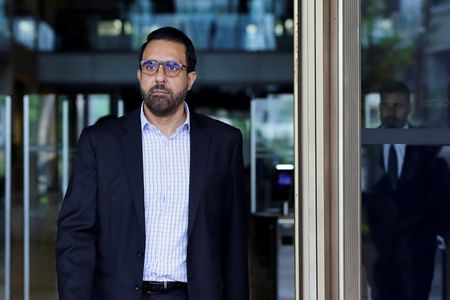
Singapore’s largest opposition party has decided to stand by its leader, voting to keep Pritam Singh in the role of secretary-general despite a court conviction that cost him his official parliamentary designation earlier this year.
The Workers’ Party held a meeting on Sunday where Singh addressed members and fielded their questions regarding his conviction before the vote was taken. A supermajority of the party’s cadres backed Singh in the decision, according to Workers’ Party Central Executive Committee member Gerald Giam, who spoke to local media.
“This decision reflects the considered judgment of the Party’s cadres, and the Party’s commitment to democratic principles and due process,” the party said in an official statement.
In February 2025, a Singapore court found Singh guilty of providing false testimony to a parliamentary committee in 2021 concerning a fellow party member. He had appealed the ruling, but the High Court rejected that appeal in December of last year.
Following the conviction, Prime Minister Lawrence Wong removed Singh from the designated role of Leader of the Opposition in January of this year, stating that Singh’s position had become impossible to maintain. In Singapore, it is the head of government — not the constitution or parliament’s standing orders — who designates who holds the Leader of the Opposition title.
Wong had urged the Workers’ Party to put forward a different lawmaker, one not connected to the controversy, to fill the opposition leader role. The party, which secured 10 seats in last year’s general election, declined to nominate anyone else. The party maintained in January that whoever leads the largest opposition bloc in parliament should naturally hold the Leader of the Opposition designation.
The position carries meaningful benefits and responsibilities, including additional financial allowance, dedicated staff support, and access to confidential government briefings.
In the rough waters of the Taiwan Strait, a coast guard officer named Yeh Chih-sheng boards his patrol vessel carrying something beyond standard equipment — temple charms blessed by deities long revered by seafarers for protection on the water.
Yeh serves as first mate aboard the CG1005, a 2,400-ton vessel stationed in Taiwan’s Penghu islands. His ship stands as part of Taiwan’s maritime defense line as China continues to press its claim of sovereignty over the democratically governed island.
When he’s not on duty, Yeh takes on a very different role — that of an assistant priest, known in Taiwanese as a “sio-huat,” at a Penghu temple dedicated to the Five Lords, guardian deities traditionally worshipped by coastal communities for calm seas and protection from disease.
Yeh’s connection to these deities goes back to his childhood, when he began assisting spirit mediums during religious rituals in which gods are believed to come down from the heavens and offer guidance.
“The Coast Guard is a tangible backing people can see,” Yeh said. “The Five Lords are a spiritual anchor in people’s hearts. Both help bring fishermen and ordinary people a sense of reassurance.”
That combination of professional duty and personal faith has grown increasingly meaningful for Yeh as China ramps up military pressure on Taiwan. Beijing has not ruled out using force to bring Taiwan under its control, while Taipei firmly rejects those territorial claims — including China’s assertion that it has the right to conduct “law enforcement” patrols in Taiwanese waters.
The situation has drawn concern from the United States and some of its allies, who said last week that recent Chinese operations off Taiwan’s eastern coast posed a threat to regional stability. China’s defense ministry pushed back on Thursday, calling its coast guard patrols “lawful, legitimate and necessary.”
Reuters was given rare access to Yeh’s ship while it was anchored in Penghu, an island chain sitting in the Taiwan Strait — a critical waterway through which billions of dollars in trade flows annually.
Yeh described a changed reality at sea, saying Chinese warships and coast guard vessels now regularly cross what was once an informal dividing line — the median line — and come close to Taiwan’s 24-nautical mile contiguous zone.
“They have already erased the median line,” Yeh said. He added that his mission is to monitor and warn off Chinese vessels using tools like water cannons, loudspeakers, LED display boards, and radio communications, rather than escalating confrontations.
He said he follows the coast guard’s guiding principle of “not provoking and not yielding,” and he takes talismans and ceremonial command tablets from the temple with him whenever he goes out on patrol.
Standing near the temple’s Chienchiu Paochien — a ceremonial divine boat — Yeh drew a parallel between the sacred vessel and his coast guard ship, saying both exist to guard the Taiwan Strait and shield fishermen and everyday people from harm.
“What we protect is people’s sense of safety and peace of mind,” Yeh said. “With the coast guard and navy there, people can live normally.”
Three Chinese brokerage firms — Yongan Futures, Orient Futures, and Guotai Junan Futures — are preparing to seek membership on the London Metal Exchange, according to sources with knowledge of the situation. The move would significantly increase China’s influence on the globe’s largest trading venue for industrial metals.
The effort is driven by a desire among Chinese firms to claim a bigger piece of revenue generated by metals derivatives trading and to advance their broader goals of international expansion.
Currently, only six of the exchange’s more than 40 clearing members — companies responsible for clearing and settling trades — are Chinese. This leaves the world’s top consumer of metals with a relatively small footprint at the exchange.
According to one source, Guotai Junan Futures has already begun the formal application process for LME membership. Orient Futures is also planning to apply, though two sources said the timeline for that move remains uncertain.
Yongan Futures, which is headquartered in Hangzhou, is working on its own application following the establishment of a UK-based entity last year. Four sources, who spoke on condition of anonymity because the plans have not been made public, confirmed this development.
All three brokerages are major participants on China’s primary metals exchange, the Shanghai Futures Exchange, and each has built subsidiary operations in Singapore over the past decade.
Yongan’s British operation, known as Yongan International Financial (UK), recently brought on Zhang Wei to lead the unit and steer the firm through the LME membership approval process, the sources said. Corporate registration records show Zhang was named as a director in April.
Prior to joining Yongan, Zhang worked in London for GF Financial Markets, an existing Chinese LME member, as well as for China Merchants Securities, which gave up its LME membership in early 2021 after holding it for six years. Zhang could not be reached for comment, and Yongan did not respond to a request for a statement. Orient Futures and Guotai Junan Futures also did not reply to requests for comment.
Earlier this month, Yongan stated on an interactive investor platform that it is seeking a regulatory licence from Britain’s Financial Conduct Authority and working to build a strong base for lawful operations across UK and European markets. Two sources said obtaining that licence would be a stepping stone toward applying for LME membership, although Yongan made no direct reference to the exchange in its statement.
In its own words, Yongan said: “In the future, leveraging the advantages of London as an international financial centre and collaborating with resources in Hong Kong and Singapore, we aim to become a leading cross-border integrated financial services provider.”
The LME, which is owned by Hong Kong Exchanges and Clearing, recorded a record-breaking 183.3 million futures contracts traded last year — a 7.7% increase from 2024. However, most of that activity has been processed through non-Chinese clearing members, which earn fees on every transaction.
CLSA UK, a firm owned by China’s CITIC Securities, received LME membership approval last month and is set to begin trading on Monday.
An LME spokesperson commented on China’s role in the global metals market, saying: “As the world’s largest industrial metals producer and consumer, China is fundamental to the global metals market and represents significant activity in the LME market.” The spokesperson declined to address any pending membership applications.
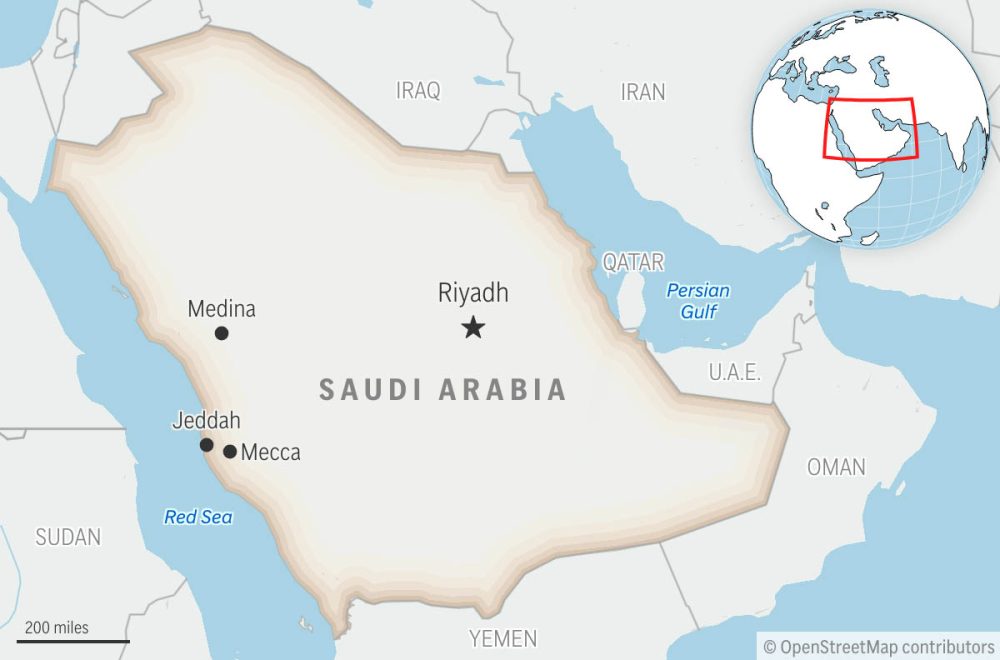
All 14 people aboard a helicopter owned by Aramco, the world’s largest oil company, died when the aircraft went down in Saudi Arabia early Sunday morning, according to the Saudi Ministry of Energy.
The crash took place at approximately 6 a.m. in Ras Tanura. Officials confirmed that every person killed was a Saudi national. Authorities have opened a formal investigation to determine the cause of the accident.
The helicopter was the property of Aramco, a company that is majority-owned by the Saudi Arabian government.
The crash comes at an already challenging time for Aramco. The company has been navigating disruptions caused by the Iran war, which has affected oil supplies and pushed prices higher. Aramco has stated that it managed to redirect some of its oil exports through a pipeline in order to work around the Strait of Hormuz, a key waterway that has seen disruptions as Iran has moved to assert control over it.
BANGKOK — A human rights organization is raising serious concerns about Vietnam’s growing use of broadly worded criminal laws to detain activists, critics, and others seen as threats to Communist Party rule, according to a new report released Monday.
The 88 Project, an organization focused on human rights conditions in Vietnam, recorded 56 politically motivated arrests in 2025 alone — the third year in a row that figure has climbed, and twice the number seen in 2022. Ben Swanton, co-director of the group, noted the report only counts cases where the arrested individual could be identified by name and the case monitored, meaning the true total is likely far greater.
The report describes Vietnam under leader To Lam as a government that “routinely weaponizes criminal law” to stamp out dissent. To Lam, who previously served as the country’s top security official, has held the position of general secretary of the Communist Party since 2024 and was also elected president earlier this year.
According to the report, much of the crackdown stems from the leadership’s fear of a popular uprising — the kind of so-called “color revolution” seen in Ukraine’s 2004 Orange Revolution or the Philippines’ 1986 Yellow Revolution.
That same fear is shared by Communist Party leadership in neighboring China, which has faced similar accusations of suppressing critics. Despite tensions over competing territorial claims in the South China Sea, Vietnam and China agreed earlier this year to jointly “prioritize political security and enhance efforts to prevent and resist color revolutions,” according to the Chinese state-run Xinhua News Agency.
“With the ascendancy of To Lam, the country has become a literal police state that tolerates no dissent,” Swanton said. “This represents a serious regression from the period of relative openness in the 2010s when some dissent was tolerated and civil society groups were able to engage in policy activism.”
Vietnam’s Foreign Ministry did not respond to requests for comment on the report’s findings.
The report highlights a growing reliance on Article 331 of Vietnam’s penal code, a law that makes it a criminal offense — carrying up to seven years in prison — to “abuse democratic freedoms to infringe upon the interests of the state.”
Once rarely enforced, New York-based Human Rights Watch wrote in a report last year that authorities have “enlarged the scope and application of Article 331 so that it reaches further into society, beyond human rights and democracy dissidents … to all those who voice any grievance with state or local Communist Party and government officials.”
Human Rights Watch also described the trend as “a little known facet of the government’s expanding crackdown on ordinary people who are seeking to use social media and other peaceful means to publicly raise important social issues, including religious freedom, land rights, rights of Indigenous people, and government and Communist Party corruption.”
Among those arrested under Article 331 last year were three men behind a YouTube channel called “Nguoi Da Tin” — translated as “The Messenger” — who were accused of uploading videos containing “distorted content” that violated the law, according to The 88 Project.
Other politically related arrests documented in the report include an activist representing the minority Montagnard community who was detained in Thailand and sent back to Vietnam, a writer accused of spreading “propaganda against the state,” and an individual who assisted residents of Ha Tinh province in filing complaints seeking fair payment for land seized to build a new highway.
“The Vietnamese government has dealt alarmingly severe punishments to longstanding targets like journalists and human rights activists, while displaying an increasing willingness to attack groups previously thought safe, such as political exiles and legal petitioners,” the report concluded.
Argentine President Javier Milei announced Sunday that he is replacing his chief of cabinet, tapping Interior Minister Diego Santilli for the top government post. The announcement came via a post on Milei’s X account.
Santilli steps into the role vacated by Manuel Adorni, who submitted his resignation Saturday following corruption allegations against him. The transition is scheduled to take effect Tuesday.
The leadership change comes at a difficult moment for Milei, whose approval ratings have been slipping amid the corruption controversy and growing tensions within his administration.
Santilli brings a lengthy political resume to the position. An accountant by training, he comes from the center-right PRO party, which was founded by former president Mauricio Macri. He has previously held positions including deputy chief of the City of Buenos Aires, congressman, senator, and security minister of the City of Buenos Aires.
In his own post on X, Santilli expressed his commitment to the administration’s agenda. “I am going to give everything so that this government continues to advance in the structural reforms that Argentina has needed for decades,” he wrote.
Adorni, the outgoing cabinet chief, is currently under investigation for alleged illicit enrichment, among other charges. He also drew public criticism over several personal trips taken with family members — including a first-class holiday to the Caribbean island of Aruba during the Christmas season and a private jet trip to Uruguay during Carnival.
Adorni has pushed back against the criticism, maintaining that his wealth was accumulated before he joined the government and that all personal travel expenses were covered with his own private funds.
Chinese autonomous driving technology company Momenta Global is looking to raise as much as HK$5.89 billion — roughly $751.10 million — through an initial public offering on the Hong Kong stock exchange, according to a filing submitted Monday. The company says the funds will help strengthen its research and development operations.
Beyond boosting R&D, Momenta plans to use the IPO proceeds to advance its self-driving technology and speed up the rollout of its Robotaxi service. Any remaining funds will go toward working capital and general business needs, according to the exchange filing.
The company is offering 19.9 million shares priced at HK$295.60 each. Allocation results are expected to be announced by July 7, with Class A ordinary shares set to begin trading the following day.
Several major investors are expected to participate as cornerstone backers, potentially including existing supporter Mercedes-Benz, as well as BlackRock and China’s Boyu Capital.
Momenta, which develops advanced driver-assistance systems comparable to Tesla’s self-driving technology, disclosed in its IPO filings that it recorded a loss of 3.46 billion yuan ($508.97 million) in 2025 — up from a 3.21 billion yuan loss reported in 2024.
The listing comes as Hong Kong’s IPO market has seen significant growth. Combined IPOs and secondary listings of A-share companies raised $21.6 billion in the first half of 2026, a 51% jump compared to the same period last year, based on preliminary data compiled by LSEG.
Momenta was founded in 2016 by Cao Xudong, a former Microsoft employee who now serves as the company’s CEO. The firm counts major automakers Toyota, Mercedes-Benz, SAIC, and General Motors among its backers, along with investment firms Temasek and Tencent.
The company has been expanding internationally, establishing a research hub in Germany where it plans to test Level 4 autonomous vehicles by 2026 in collaboration with Uber.
Momenta’s driver-assistance systems are currently deployed in Toyota, Mercedes-Benz, and Audi vehicles sold in China.
Reuters had previously reported on the IPO plans last Tuesday, citing sources familiar with the matter who were not identified by name.
(Exchange rates used: $1 = 7.8418 Hong Kong dollars; $1 = 6.7980 Chinese yuan)
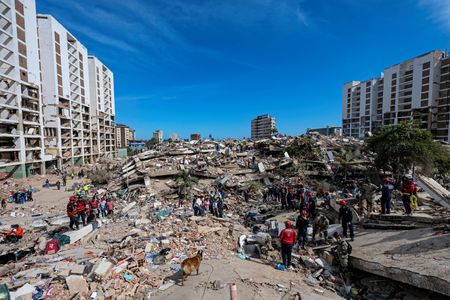
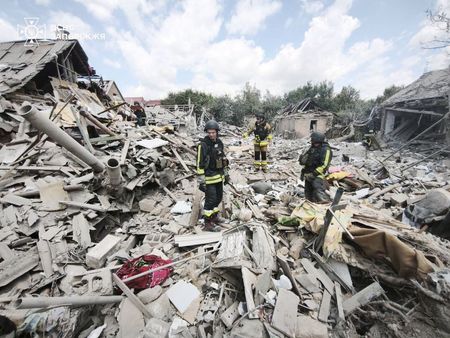
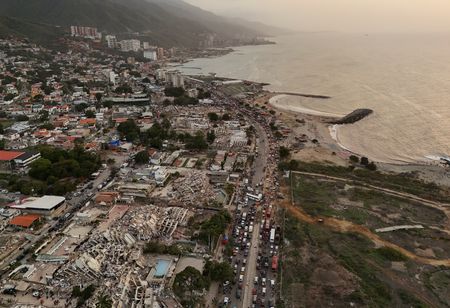
LA GUAIRA, Venezuela — A father and his son have been pulled from the ruins of a collapsed building, surviving four days beneath the rubble left behind by Venezuela’s deadly earthquakes.
The dramatic rescue unfolded Sunday in La Guaira, offering a rare moment of hope for the French and American rescue crews working around the clock to find more survivors before time runs out.
Rescue workers carried both men through debris-covered streets on makeshift fabric stretchers, visibly exhausted and wearing masks, toward a waiting ambulance as onlookers gathered near the emergency vehicles.
La Guaira, a coastal state, was the hardest-hit area when the earthquakes struck on Wednesday, leaving at least 1,450 people dead and thousands more unaccounted for.
The rescue took approximately 12 hours of careful, painstaking work. Teams used specialized search cameras to comb through the unstable wreckage before safely reaching the two survivors.
“They are extremely weak, as any patient trapped under rubble for four days would be, so we are doing everything possible to rehydrate them and administer various medications during the extraction process, which is moving very slowly,” said a member of the French Civil Security.
The rescue operation in that area involved members of the French Civil Security alongside American responders from the Fairfax County Urban Search and Rescue Team in Virginia. That same team had rescued a mother and her 9-month-old baby just the day before.
Prior to removing the father and son from the rubble, rescuers set up intravenous drips and cleared surrounding debris. Other team members stayed close to the wreckage, searching for additional signs of life and staying in communication with colleagues working through the remains.
At least 33 people were rescued over the course of the weekend. However, tens of thousands are still reported missing, raising growing concerns that the window for finding survivors alive is closing fast.
Specialists warn that after 72 hours following an earthquake, the chances of locating victims alive under rubble drop sharply.
Among the burger stands, beer tents, and global corporate sponsors at Vancouver’s FIFA World Cup fan festival, one booth stood apart. Laurine Daniels and her family, members of the Squamish Nation, spent Sunday selling handcrafted jewelry to soccer fans who had gathered to watch Canada take on South Africa.
Thousands of red-clad supporters packed Hastings Park for the occasion, and they were rewarded with a 1-0 victory, sealed by a late goal from Stephen Eustaquio. It marked the first men’s World Cup knockout round win in Canadian soccer history.
“It’s amazing. This is one reason why we said yes when we were asked to come and represent Squamish Nation — we were excited because this is part of history,” Daniels told Reuters. “We’re making history by having the World Cup, and we’re part of the hosts, so it’s amazing.”
While other festivalgoers lined up for food and drinks from some of the world’s largest companies, Daniels and her daughters Amanda and Heather worked from the shade of their stand, displaying handmade earrings, necklaces, and trinkets that caught the attention of many passersby.
“We’re beaders, we’re artists, and this is part of our culture,” Daniels explained. “That’s why we’re here, there’s a lot of people, there’s a great vibe here. Everybody’s energetic and happy, and we’ve had some people show up and show interest in the bead work. We’ve sold a few pieces.”
Business slowed during the match itself as fans rushed toward the large screens set up around the venue, but once the final whistle blew, the three women found themselves surrounded by interested customers eager to learn more about their work.
The beading methods and designs used by the Daniels family have been passed down through generations among the Squamish people, one of three indigenous groups with roots in the Vancouver region. Participating in the FIFA fan festival gave the family a rare platform to introduce their heritage to a global audience.
“We have a family business, and this is unceded territory, this is our world,” Daniels said, referring to the indigenous land on which Vancouver sits.
While some small Vancouver businesses struggled during the World Cup — dealing with road closures and tightly enforced copyright regulations — the Daniels family described their experience as entirely positive.
“This puts us on the map — like, people on the other side of the world have never heard of Squamish Nation, so now that we’re here being co-hosts, we’re on the map, people know who we are. It’s amazing,” Daniels said.
The 2026 FIFA World Cup is being co-hosted by Canada, Mexico, and the United States.
A world record in the 50-meter freestyle has changed hands — and it didn’t take long. The previous mark lasted just nine days before American swimmer Gretchen Walsh came along and topped it.
Walsh, who trains alongside the previous record holder Kate Douglass, posted a time of 23.55 seconds at the Sette Colli meet in Rome on Sunday. That performance was four-hundredths of a second quicker than Douglass’ record-setting swim at the TYR Pro Swim Series in Indianapolis on June 19.
Sweden’s Sarah Sjostrom, who had held the world record before Douglass claimed it, finished in second place Sunday with a time of 23.86 seconds.
At just 23 years old, Walsh is already one of the most decorated swimmers in the world. She holds the long-course world record in the 100-meter butterfly with a time of 54.60 seconds, as well as the short-course world record in the 50 freestyle at 22.83 seconds, along with several other short-course and relay world marks.
Walsh also had a standout performance at the 2024 Olympic Games in Paris, where she took home two gold medals and two silver medals, all in relay events.
SANTA CLARA, California — Before the World Cup kicked off, the San Francisco Bay Area was drawing plenty of criticism. Despite the region’s enormous tech wealth and global business clout, its lineup of matches was considered anything but exciting, leaving fans grumbling about the absence of high-profile teams.
While other host cities like Kansas City landed Argentina and Boston welcomed England, the Bay Area was stuck with a more obscure set of nations. Switzerland, ranked 16th in the world, was the highest-ranked team to visit in the first five matches.
For fans of Arab soccer, however, the schedule was a treat — Qatar, Algeria, and Jordan each played at the home of the NFL’s San Francisco 49ers, with Jordan appearing twice.
Social media users ranked the Bay Area as having the dullest fixture list among all 11 U.S. host cities. Add in the limited nightlife options near the stadium in quiet Santa Clara, and there were real concerns the region would come up short. A San Francisco Chronicle headline even asked days before the tournament began: “The World Cup was supposed to be a Bay Area bonanza. Why does it feel like a flop?”
That pessimistic outlook has since done a complete reversal. Fans have shown up in large numbers to all five matches held so far.
James Fay, a recently retired CFO from a tech company, spoke with Reuters at last Thursday’s Australia-Paraguay group match. “I follow European football, so for sure, I was disappointed, I would have liked more balance in the teams we got here, for my own self-interest,” he said. “But having a World Cup here is fantastic, there was no way I was going to miss it. I didn’t get to go in ’94, it’s my first World Cup, so I’m coming, no matter what.”
Fay was part of a crowd of 68,827 — just a few hundred shy of the venue’s maximum capacity of 69,391. The smallest crowd recorded by organizers was 67,966, for the opening match between Switzerland and Qatar.
Neutral fans have been a consistent presence at every game. During the Australia-Paraguay match, American spectators erupted in cheers when the scoreboard flashed a goal update from the simultaneous U.S.-Turkey game being played elsewhere.
Mexican fans from San Jose and other large Latino communities across the South Bay Area have been especially enthusiastic, turning out in particular for Paraguay’s two appearances.
“It has been amazing to see the diversity and international fandom that has come into the Bay and participated in fan marches, attended games, and experienced everything we have to offer,” the Bay Area Host Committee said in a statement provided to Reuters.
Bay Area resident Nick Zhang attended the Australia-Paraguay match with two friends, paying $330 for a seat in the stadium’s uppermost deck, sitting in direct afternoon sunlight. “Well, there was a game on and we just wanted the experience. We’re way up high but we can still get a taste of it,” he said.
Once dismissed as boring, the Bay Area is now having the last laugh. The region is gearing up to host co-host nation the United States on Wednesday in a round-of-32 showdown against Bosnia. Resale ticket prices have surged dramatically, with the lowest-priced option on StubHub listed at nearly $2,000.
Outside the stadium, organizers are preparing for a massive celebration at the main fan zone at San Pedro Square in San Jose, where a fourth giant screen is being installed for the knockout stage game. According to the Bay Area Host Committee, more than 350,000 people have visited the square since the tournament began.
“There’s been some left-field teams coming to town but the U.S. will be a good finish to the party,” said James Martinez, a local student, speaking to Reuters at the Bay Area Stadium.
Motorists traveling eastbound on Pulaski Highway, also known as Delaware Route 40, are facing a left lane closure overnight due to ongoing construction work.
The lane restriction runs from Becks Woods Drive to Salem Church Road and is expected to remain in effect until 6 a.m.
Drivers in the area are advised to plan ahead and allow extra travel time, or consider an alternate route until the closure is lifted.
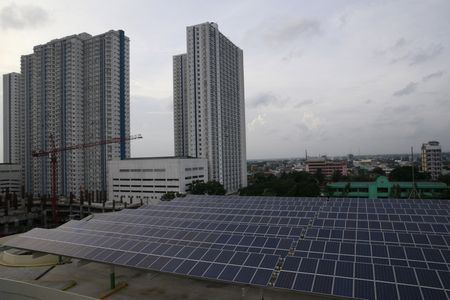
Residents across the Philippines are racing to put solar panels on their rooftops as electricity bills climb to painful levels, pushing the island nation to the top of the global rankings for solar panel imports.
The country’s leading power distributor, Meralco, has raised electricity rates by 10% since a conflict broke out in the Middle East in late February. For a typical household using around 200 kilowatt-hours per month — roughly the amount consumed by three people — electricity now eats up about 12% of monthly income.
Unlike most of its neighbors in Southeast Asia, the Philippines offers almost no government subsidies for power, leaving residents with some of the highest residential electricity rates in the region. Only Singapore has comparable prices, but Singaporeans have nearly 13 times the purchasing power of the average Filipino.
Adrian Sabatera, a 39-year-old software engineer, had considered going solar for years but held off due to the cost. As panel prices dropped and electricity bills kept climbing, he finally made the move — spending 570,000 pesos (about $9,300) on a system for the Manila home he shares with three others.
“I wouldn’t be shocked if a third of the middle-class population eventually finds their way to this setup,” Sabatera said.
The surge in rooftop solar installations has driven $407 million worth of panel imports in the three-month period ending in May — a 145% jump compared to the same period a year ago, according to trade figures from China, which supplies the bulk of the world’s solar panels. Even when overall Chinese panel exports fell 13% in May following the removal of a tax rebate, shipments to the Philippines actually grew by nearly a third.
While the Netherlands technically ranks as a larger market on paper, analysts note that it functions primarily as a transshipment hub rather than an end consumer.
INQUIRIES FLOODING IN
Philergy German Solar, a Manila-based installation company, reported receiving more than two-and-a-half times as many customer inquiries in the first five months of this year compared to the same stretch last year. At peak times, the company was handling as many as 3,000 inquiries in a single day, according to managing partner Jochen Staudter.
Staudter noted that customers are making up their minds “much faster than before” and predicted that “demand will continue to be driven by high electricity prices.”
According to Alnie Demoral, an analyst at energy think tank Ember, distributed solar capacity in the Philippines could nearly triple to 3,500 megawatts within two years — matching the country’s existing large-scale solar infrastructure. Loan repayment periods are also shrinking, from four years down to about 3.1 years, making the investment more attractive.
Currently, solar power accounts for less than 4% of the country’s total electricity consumption, according to government figures.
OBSTACLES REMAIN
A weakening currency has made the electricity crisis worse, since the Philippines depends heavily on imported coal and natural gas to generate power. That dependency has contributed to rising inflation and slower economic growth.
Manila entrepreneur Jason Porciuncula installed a 12-kilowatt solar system with battery storage back in January. When power prices hit record levels in May, his monthly electricity bill fell to just one-fifth of what he paid last summer — when bills reached 21,000 pesos.
Still, the industry faces real growing pains. Brenda Valerio, the Philippines director at New Energy Nexus, said installations are struggling to keep pace with demand due to hoarding of components, unpredictable equipment costs, and insufficient quality control.
Government loans for solar installations are available up to 500,000 pesos at a below-market interest rate of 5%, but private-sector employees are excluded from the program.
The biggest barrier remains the steep upfront cost, which typically exceeds the average annual household income of 353,200 pesos.
“The opportunity is real, but the upfront cost is often too high for a household or business, no matter how quick the payback time is,” Ember’s Demoral said.
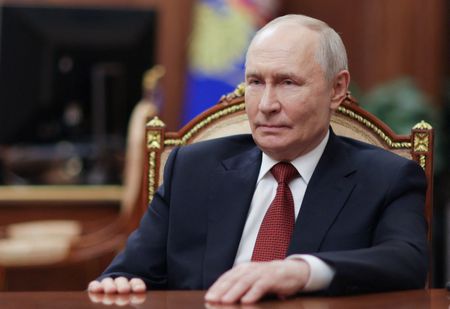
Russian President Vladimir Putin announced Sunday that Russia has no intention of slowing its military push to seize full control of four Ukrainian regions, dismissing a recent Ukrainian proposal aimed at reducing the intensity of the ongoing conflict, now in its fifth year.
Speaking in an interview with Russian state television, Putin said Russia also needs to rapidly expand its air defense capabilities in response to a growing wave of Ukrainian drone strikes targeting the country’s oil sector. He maintained that Russia is handling the fuel supply disruptions caused by those attacks.
Earlier that same day, Putin acknowledged at a Kremlin meeting with government ministers and senior officials that the drone strikes had caused fuel shortages in several Russian regions — but insisted the situation was under control.
During the television interview, Putin addressed a Ukrainian proposal calling for both sides to stop launching long-range strikes as a possible step toward peace. He dismissed the idea, saying Moscow viewed it as nothing more than a tactic to ease military pressure on Ukrainian forces along the 1,250-kilometer (775-mile) front line.
“It is clear why this proposal is being made, because our counter-strikes deep into Ukrainian territory are much stronger, have greater impact and are, frankly, more destructive,” Putin said.
“Given their catastrophic shortage of personnel, the Ukrainian Armed Forces apparently believe this could be their salvation. But saving the Kyiv regime is not part of our plans,” he added.
A spokesperson for Ukrainian President Volodymyr Zelenskiy did not respond to a request for comment on Putin’s statements, as the request was submitted during late-night hours in Ukraine.
Earlier this month, Zelenskiy sent Putin an open letter requesting a direct, face-to-face meeting — an invitation the Russian leader has turned down.
Putin framed Ukraine’s ongoing strikes as an attempt to pull Russian forces away from their core military goals, saying the attacks were “aimed at diverting our attention and forces from achieving the main objectives – the complete liberation of Donbas and Novorossiya.” That phrase refers to the Donbas region as well as the neighboring regions of Zaporizhzhia and Kherson.
Putin has consistently demanded that Ukraine give up its remaining positions in the Donetsk region of Donbas as a fundamental condition for any peace agreement. Seven months after launching its 2022 invasion, Russia formally annexed all four regions — Donetsk, Luhansk, Kherson, and Zaporizhzhia — though it only partially controls the latter two.
On the subject of Ukraine’s drone campaign, Putin said the top priority is to “quickly and significantly ramp up production of those air defence systems that are most needed.”
He also downplayed the impact of the strikes, saying: “All the strikes, wherever they hit our infrastructure, absolutely do not affect the situation on the front, on the line of combat contact.”
Putin said Russia is anticipating a renewed round of U.S.-led diplomatic efforts to end the war, including a planned return visit to Moscow by U.S. envoys Steve Witkoff and Jared Kushner — but only after the “hot phase” of the U.S.-Israeli conflict with Iran has concluded.
He also appeared to align with remarks made last week by U.S. Secretary of State Marco Rubio, who said no formal agreement came out of Putin’s talks in Alaska with U.S. President Donald Trump, though American proposals were discussed.
“Nobody signed anything, but we talked about certain possibilities for ending the conflict in Ukraine,” Putin said, adding that the U.S. side had asked Russia for compromises as part of those discussions.
Putin also suggested that Belarusian President Alexander Lukashenko — with whom he held two days of talks this week — could play a role in facilitating peace negotiations. He made no mention of Ukraine’s claims that Russia is trying to draw Belarus more deeply into the conflict. While Belarus allowed Russian forces to use its territory during the February 2022 invasion, Lukashenko has pledged not to send Belarusian troops into combat.
Five-star wide receiver Eric McFarland announced his commitment to Texas A&M on Sunday, giving coach Mike Elko’s already impressive 2027 recruiting class yet another high-profile addition.
The Aggies currently sit atop the national recruiting rankings for the 2027 cycle, holding the No. 1 spot according to both 247Sports and ESPN. McFarland is now the sixth ESPN five-star prospect to pledge to Texas A&M for that class — a group that could set a program record if all six players sign in December.
According to the 247Sports composite rankings, McFarland checks in as the No. 38 overall prospect in the country and the sixth-best receiver in the entire class.
The 5-foot-8, 177-pound pass-catcher plays at IMG Academy in Florida and has drawn attention for his quickness and explosive playmaking ability. Georgia and Florida were the other two schools he was seriously considering before landing on Texas A&M.
Tampa Bay Rays designated hitter Yandy Diaz had to exit Sunday’s 5-1 victory against the Arizona Diamondbacks after suffering a left shoulder strain, though he believes the injury won’t keep him out of the lineup for long.
Diaz, who leads the American League with a .336 batting average, appeared to hurt his shoulder during a lengthy 10-pitch at-bat against pitcher Merrill Kelly in the fifth inning at Tropicana Field. After fouling off a pitch, he showed visible signs of discomfort, prompting manager Kevin Cash and head athletic trainer Joe Benge to come out and check on him.
He managed to finish the at-bat, grounding out to shortstop, though he still appeared to be in pain as he jogged toward first base. He eventually left the dugout alongside Benge, and Richie Palacios stepped in as a pinch-hitter at the start of the seventh inning.
“I’m not going to lie. I’m hurting a little bit,” Diaz said through an interpreter, according to MLB.com. “But it’s stuff that I’ve managed, and we’ve got to keep at it and keep going day to day and take it a game at a time and keep moving forward.”
Cash noted that Diaz has been dealing with shoulder discomfort for “five years, probably,” and that the issue can flare up when he swings or slides. Diaz acknowledged that he feels it even when simply raising his arm, but said he has handled similar problems before and is confident in his ability to push through.
“I’ve done everything. Honestly, I’ve even played a little bit while hurting,” Diaz said. “Look, I’m going to keep doing what I’ve got to keep doing. I’ve done this in the past. I feel really good about this moving forward.”
Diaz is currently listed as day-to-day. Tampa Bay has a scheduled off-day on Monday, which gives him a bit of extra time to recover before the Rays open a series against the Kansas City Royals on Tuesday.
“I feel like I’ll be ready,” Diaz said.
The slugger went 1-for-2 on Tuesday, bumping his AL-best average from .334 to .336. Through 78 games this season, he has posted 12 home runs, 53 RBIs, and a .932 OPS for Tampa Bay.
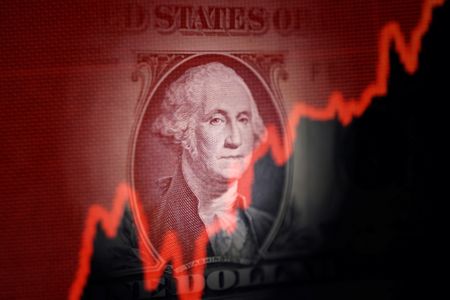
Sovereign wealth funds and central banks collectively managing $29 trillion in assets are shifting their focus toward energy investments while raising red flags about the future of the U.S. dollar, according to a new survey released Monday by global investment management firm Invesco.
The survey, which included responses from 90 sovereign wealth funds and 54 central banks, found that growing geopolitical instability — including trade tariffs, disrupted shipping lanes, and ongoing wars in Ukraine and the Middle East — is pushing major investors to rethink how they build and protect their portfolios.
A full 80% of respondents identified energy security and energy transition infrastructure as the most credible ways to make their holdings more resilient. Infrastructure now accounts for 9% of sovereign wealth fund assets in 2026. The growing demand for energy-intensive artificial intelligence infrastructure has added further appeal to these investments, the report found.
Invesco’s head of research, Benjamin Jones, said the findings reflect a fundamental shift in how large-scale investors are approaching risk. “In a world of inflation shocks, geopolitical fragmentation and more concentrated markets, investors are rethinking old assumptions about diversification and redesigning portfolios to withstand a wider range of outcomes,” Jones said. “Resilience is becoming a hard requirement, not a nice-to-have.”
Concerns about the U.S. dollar were described as “widespread and deepening” in the report. Sixty-one percent of central banks surveyed said that U.S. debt levels are negatively affecting the dollar’s long-term standing as the world’s primary reserve currency — a dramatic jump from just 20% who felt that way in 2024.
While the dollar has gained roughly 3% this year amid the U.S.-Israeli conflict with Iran, analysts warn that policy uncertainty and mounting national debt could weaken the currency over time. Despite those concerns, the absence of a clear alternative means any move away from the dollar is expected to happen gradually. Still, 29% of survey participants believe the dollar’s reserve-currency status will be diminished within five years, up from 12% in 2022.
Several institutions told Invesco they are also reconsidering their dependence on U.S.-based financial custodians, counterparties, and clearing systems due to geopolitical tensions. One European central bank said it had already switched away from its U.S. custodian, while a Latin American central bank said it was establishing new non-U.S. custodial arrangements to prepare for a “worst-case scenario.”
However, one central bank respondent cautioned that such moves carry their own risks, warning that “this act in and of itself could be interpreted as hostile by the U.S.”
Separately, about one-third of those surveyed said they plan to increase their gold holdings as part of the broader diversification trend. The traditional reliance on bonds for portfolio balance has also weakened in recent years, with more investors now turning to liquid assets and real-world holdings instead.
A dangerous stretch of extreme heat is forecast to blanket large portions of the United States this week and into the July 4th holiday weekend, according to the National Weather Service.
Meteorologists are pointing to a “heat dome” — a weather pattern that traps hot air over a region — as the driving force behind the hazardous conditions expected to affect millions of Americans in the coming days.
The National Weather Service has been tracking the developing heat threat as it spreads across significant portions of the country, raising concerns about public safety during one of the busiest holiday weekends of the summer.
Residents across affected areas are encouraged to stay hydrated, limit time outdoors during peak afternoon hours, and check on elderly neighbors and vulnerable family members as the dangerous heat moves in.
LA GUAIRA, Venezuela — She was lying on her bed, thinking about watching a Brazil soccer match, when the bedframe began shaking violently, like a mechanical bull.
Reuters journalist Vivian Sequera pressed herself against the mattress, fixed her eyes on the open window, said a prayer for her parents, shut her eyes, and braced for the ceiling to come down on her.
The two earthquakes that hit Venezuela on Wednesday evening arrived just 39 seconds apart — the first registering a magnitude 7.2, followed almost immediately by a magnitude 7.5.
Then, suddenly, it stopped.
She grabbed her phone and sent a message to her Reuters colleagues. The power had held — at least for the moment. In other parts of the area, electricity had already gone dark.
The walls of her apartment were left with long cracks running through them, resembling claw marks on fabric. As she made her way down the emergency stairwell from the sixth floor, the damage grew progressively worse. By the time she reached the ground floor, the glass doors had been completely shattered.
Outside, there was no cell signal. Anxiety set in. She photographed neighbors gathered in the street and documented damage to surrounding buildings before steeling herself to go back upstairs to retrieve her laptop and phone charger.
These were the fifth and sixth earthquakes she has covered since beginning her journalism career with newswires in 1991 in Caracas.
Each one, she said, shares a familiar pattern in its early moments: chaos, silence, pain, uncertainty, and thousands of stunned faces trying to process what just happened — followed by the arrival of foreign rescue teams, varying levels of government response, delays in aid, looting, and ultimately, burials.
TWO DAYS LATER: RANDOM, INDISCRIMINATE DESTRUCTION
Two days after the quakes, Sequera traveled to the city of La Guaira, roughly a 30-minute drive from Caracas — the area the government had designated as ground zero for the disaster.
The contrast she encountered was striking.
In some parts of the city, streets were clean, buildings were standing, and avenues were nearly empty, all bathed in soft Caribbean morning sunlight. Then, just one block away, structures on both sides of the road had been reduced to rubble.
The further her team ventured into the city’s parishes — Caraballeda and Los Corales — the more devastating the scenes became. In the early morning hours, near silence dominated the streets.
But as the sun climbed higher, voices grew louder and movement increased. Swarms of motorcycles carried aid and transported survivors through a backdrop of noise, disorder, and scattered sobbing.
Thousands of young people in shorts and t-shirts — some barefoot or wearing sandals — moved rocks from debris piles that towered more than 10 meters high. Others swung sledgehammers at concrete slabs in a desperate race to find anyone still alive beneath the wreckage.
Meanwhile, exhausted survivors sat motionless in plastic chairs under trees, seeking whatever shade they could find from the relentless midday Caribbean heat.
To cope, Sequera pressed handfuls of ice from a cooler in the car against her skin. She made a mental note: next time, bring two coolers.
Many residents of La Guaira expressed frustration over delays in the arrival of rescue equipment and food. There was also some looting reported in the disaster zone.
Standing amid the wreckage, she described the feeling that the mountains of rubble seemed immovable — and the question that kept surfacing: when can any of this be repaired?
What struck her most, she said, was the sheer and indiscriminate force of tectonic violence. It does not distinguish between neighborhoods, social classes, or religions. And yet it is also unpredictable — one building left completely intact while the one right next to it is entirely gone.
Back home, on her nightstand, a glass of wine sat untouched and upright. Nearby, photographs of her parents from when they were dating remained standing, along with a photo of her elderly mother at a flower market in Caracas.
Canadian midfielder Stephen Eustaquio delivered one of the most emotional moments of the World Cup so far, scoring a stunning stoppage-time winner to lift Canada past South Africa 1-0 on Sunday and book their spot in the round of 16.
The 29-year-old struck a powerful half-volley from outside the penalty box in the second minute of added time, breaking open what had been a tightly contested match in Los Angeles. For coach Jesse Marsch, the goal meant far more than just three points.
“I couldn’t think of a more deserving human being in a group of incredible human beings,” Marsch said following the victory. “Maybe Steph is the most deserving to have a moment like that. So I’m really happy for him, and I think from somewhere his parents are looking down, and they saw that.”
Eustaquio has faced profound personal loss in recent years, having lost his mother in April 2023 and his father in May 2024 — both within just over a year of each other.
Marsch praised Eustaquio as one of the most dependable players on the squad, saying the goal reflected the mental composure the team has worked hard to build.
“Steph is one of the people in the team that I think is the most reliable and understands what we’re trying to achieve as a group,” Marsch said. “We talk a lot about having calmness… It was good to see him in that moment just thinking about how to strike the ball in a way to give it the best chance to go in.”
The coach also spoke about the broader impact the dramatic victory could have back home, saying, “The timing of the goal means that the win is incredibly dramatic. I think the effect that it will have in Canada and the inspiring of people will be immense.”
Marsch, an American, acknowledged that Canada had been disappointed to play their group stage matches outside their home country, but said relocating to Los Angeles had not been a major disruption. “We’re used to playing in the States. We actually play more games in the States than we do in Canada,” he noted.
Canada’s next challenge comes on July 4 in Houston, where they will face either Morocco or the Netherlands. Marsch said he welcomes the tough matchup, calling it “a free hit” and vowing to go all out for a win. He described Morocco as “a modern giant” and the Netherlands as “a traditional giant.”
Oil prices ticked upward on Monday following several days of exchanged military strikes between the United States and Iran across the Middle East, raising fresh concerns about the durability of the two countries’ short-term peace arrangement and once again slowing the flow of energy tankers through the Strait of Hormuz.
Brent crude futures gained 50 cents, or 0.69%, reaching $72.49 per barrel as of 2204 GMT. Meanwhile, U.S. West Texas Intermediate crude rose 73 cents, or 1.05%, to trade at $69.96 per barrel.
The uptick in prices reflects growing market anxiety as the renewed hostilities between Washington and Tehran cast doubt on whether the fragile ceasefire arrangement between the two nations can hold, particularly given the strategic importance of the Strait of Hormuz as a global energy shipping corridor.
LA GUAIRA, Venezuela — On Sunday, a crowd of rescue workers and civilians gathered around a massive pile of rubble along Venezuela’s northern coastline — wreckage that looked much like the countless other collapsed structures left behind by two catastrophic earthquakes.
For days following Wednesday’s magnitude 7.2 and 7.5 quakes, search teams and local residents had seen no indication that anyone could still be alive beneath the concrete debris in La Guaira state, one of the regions hit hardest by the disaster.
Then Sunday brought an extraordinary development. Rescue crews from Virginia, France, and Venezuela reached into a gap in the rubble and pulled out a pair of dust-covered legs — and then the man they belonged to.
Workers carefully lifted the man from the structure where he had spent four days trapped, his body limp but his hand still clutching his phone. Rescuers placed him on a black tarp and began administering an IV.
Moments later, his young son was brought out — shirtless and barely conscious — passed over the heads of hard-hat-wearing rescue workers with the words “Fairfax County Urban Search & Rescue” printed across their backs.
“Slow, slow, gentle, gentle,” teams called out in a blend of Spanish and English as they moved the father and son through the watching crowd and into a waiting ambulance.
The rescue teams erupted in applause — a rare celebration during days of grim search efforts when the prospect of finding survivors had been fading.
Associated Press journalists Juan Pablo Arraez and Matías Delacroix were among those who witnessed the rescue firsthand. Arraez said the team had been combing the La Guaira area “trying to see if we can see any miracles” when they came upon the U.S. rescue crews and local civilians quietly working to free the two survivors.
“At this stage many begin to lose hope. You see that in their faces,” Arraez said, as helicopters passed overhead. “When somebody makes it out alive, this father and son. It’s more than a glimpse, it’s real hope for people.”
The back-to-back earthquakes represent the worst natural disaster Venezuela has experienced in decades. By Sunday, authorities had confirmed at least 1,450 deaths, with thousands more injured and many others still unaccounted for.
Disaster response experts note that the first 48 to 72 hours following a major earthquake are the most critical window for rescuing survivors, though people with access to food and water can sometimes survive much longer.
Amid the widespread grief, small but powerful moments of compassion and resilience have emerged. Venezuelan firefighters were seen carefully pouring water into the mouth of a dust-covered dog whose head was poking through cracks in the concrete.
One woman, after spending 70 hours buried beneath debris, was brought out on a stretcher sitting upright — smiling and waving to cheering onlookers as she was loaded into an ambulance.
LONDON — Andy Burnham, the Labour lawmaker widely anticipated to take over as Britain’s next prime minister, is preparing to share his governing vision on Monday, according to his office. The centerpiece of his pitch: shifting political power away from London and into the hands of regional communities across the country.
Burnham made his return to Westminster earlier this month after securing a parliamentary seat, and he stands as the sole declared candidate to succeed Keir Starmer. He could be taking up residence at Downing Street within a matter of weeks.
Starmer announced last week that he would be stepping down — just two years after leading Labour to a sweeping parliamentary victory — as his public approval ratings declined sharply.
Burnham built his national profile as mayor of Greater Manchester, earning the nickname “King of the North.” His Monday address will place the devolution of power to regions and local communities at the heart of his leadership platform.
Beyond governance structure, Burnham is also expected to commit to a decade-long effort to improve living standards through reindustrialisation, expanded housing, infrastructure investment, and reform of utility services. His office described the focus as being not just about who holds power in Britain, but about fundamentally changing how the country is governed.
He plans to outline how he intends to “lift Britain back up to where it should be” and deliver the “circuit-breaker it needs,” along with a pledge to overhaul public procurement in ways that better support British workers and industry.
Should Burnham take office, he would become the seventh person to serve as British prime minister within a single decade. Many within his party believe he uniquely possesses both the personality and the vision needed to reconnect with voters and push back against the growing influence of Nigel Farage’s anti-immigration Reform UK party.
Despite the ambitious agenda, economic realities may constrain how far Burnham can go. Britain’s economy has been strained by the fallout from the war in Ukraine and, more recently, the energy disruptions tied to the U.S. conflict with Iran, leaving little room for sweeping new spending commitments.
Burnham previously suggested the government should “get beyond this thing of being in hock to the bond markets,” though he later maintained those remarks had been taken out of context. He has also walked back earlier positions calling for widespread nationalisation or a near-term return to the European Union.
Housing minister Steve Reed said Sunday that Burnham intends to honor the commitments Labour made ahead of the 2024 election and to abide by the government’s fiscal rules — including keeping day-to-day spending in line with tax revenues and reducing national debt as a proportion of economic output.
“When it comes to the fundamentals, Andy has been clear he will stick to the fiscal rules that have delivered this country stability in the economy for the first time in over 15 years,” Reed told Sky News.
Canada etched its name in World Cup history Sunday, defeating South Africa 1-0 on a stunning stoppage-time goal to advance to the last 16 for the very first time.
The decisive moment came when Stephen Eustaquio collected the ball at the edge of the South Africa penalty area and unleashed a powerful shot that flew past goalkeeper Ronwen Williams, who could only dive in vain. The dramatic finish capped a tense match played at Los Angeles Stadium in Inglewood, California.
South Africa had appeared willing to let the game stretch into extra time and potentially a penalty shootout, but made several desperate — and ultimately unsuccessful — attempts to equalize in the final moments after the sun emerged over the stadium.
Canada will now square off against either the Netherlands or Morocco on July 4 in Houston, with a berth in the quarterfinals on the line.
After the final whistle, Canada coach Jesse Marsch gathered his players in a huddle and delivered an emotional message.
“It’s about the two years we’ve been together,” Marsch told the team. “Think about how we talked about sticking to the plan… you guys showing your character. You guys are Canadian heroes here.”
The first half was a cautious, low-scoring affair, with neither team — both making their knockout-round debut — able to create many clear-cut chances. Canada’s best opportunity before the break came off a corner kick that caused chaos in the South Africa box. Moise Bombito directed a header toward goal, only to have Aubrey Modiba clear it off the line, and a follow-up close-range attempt by Tajon Buchanan struck Williams squarely in the chest.
Shortly after, Richie Laryea went to the ground inside the area, and Canada’s supporters — who filled the stands in a sea of red — loudly demanded a penalty. However, a VAR review upheld the original decision not to award a spot kick, drawing heavy boos from the crowd. Marsch continued voicing his displeasure as both teams headed to the locker room at halftime, with Bombito appearing to steer him away from the referee.
Canada’s frustration carried into the second half as South Africa showed little urgency to push forward. Just before a scheduled hydration break, Tani Oluwaseyi’s shot deflected off the goalkeeper, and Jonathan David attempted to head in the rebound, but Mbekezeli Mbokazi made a superb defensive play to clear the ball and keep the match scoreless — setting the stage for Eustaquio’s history-making moment later in the game.
Motorists traveling eastbound on Kirkwood Highway, also known as Delaware Route 2, are facing a left lane closure overnight due to ongoing construction work.
The lane restriction runs from East Green Valley Road to Pike Creek Road and is expected to remain in effect until 6 a.m.
Drivers in the area are advised to plan accordingly and allow extra travel time until the closure is lifted.
Congress has approved what is being called the most far-reaching housing legislation passed in decades, raising hopes that relief may be on the way for Americans struggling with the cost of finding a place to live.
The sweeping new bill is drawing attention from housing policy experts across the country, including Vincent Reina, a housing specialist at the University of Pennsylvania, who is examining whether this kind of legislation can truly move the needle on affordability.
The push to make housing more accessible and affordable has been a growing concern for many households, and this congressional action represents one of the most significant attempts in recent memory to address the issue at the federal level.
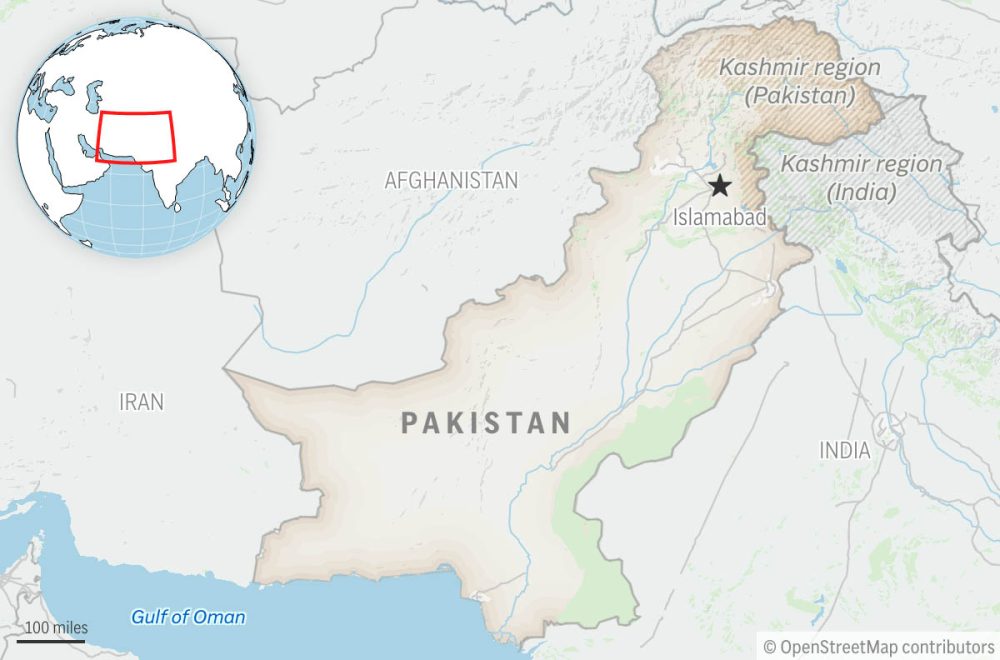
Pakistan’s military conducted an intelligence-driven ground operation along its border with Afghanistan on Sunday, then followed up with what officials described as “calibrated strikes” against militant hideouts, resulting in the deaths of 29 fighters, according to a Monday report from the Associated Press citing government officials.
Information Minister Attaullah Tarar announced the operation on the social media platform X, stating it was launched in direct response to a series of militant attacks that had taken place across the country.
Reuters, which reported on the AP account, noted it was unable to independently confirm the details at the time of publication.
With the World Cup making its way to the Pacific Northwest, Indigenous communities in the region are seizing the moment to share their culture with soccer fans from around the globe.
Native peoples in the Seattle area have been welcoming visitors through traditional ceremonies, live music, and cultural showcases — all while using the international spotlight to highlight the deep history tied to the land on which the games are being played.
The massive global audience that the World Cup brings has created a rare and meaningful opportunity for Indigenous voices to reach people who might otherwise never encounter their traditions or stories.
CAIRO — Israel’s military has demolished an underground tunnel network belonging to Lebanese militant group Hezbollah in a southern Lebanon village, according to a Sunday joint statement issued by Israel’s prime minister and defense minister.
The strike hit a 200-meter (656-foot) tunnel located in the town of Majdal Zoun. Israeli Prime Minister Benjamin Netanyahu and Defense Minister Israel Katz confirmed in their statement that the United States was notified before the attack took place.
According to the Israeli statement, the tunnel was packed with hundreds of weapons and rocket launchers.
The operation followed earlier Israeli military strikes the same day, when forces targeted Hezbollah fighters carrying rocket-propelled grenades and hit a rocket launcher in the Nabatieh region of southern Lebanon.
Just days earlier, on Friday, a security deal brokered by the United States was reached between Lebanon and Israel. The agreement calls for a gradual Israeli pullback from certain parts of southern Lebanon while the Lebanese army moves in. However, Israeli forces would be allowed to remain in an expanded security zone for the foreseeable future.
Hezbollah’s leader Naim Qassem flatly rejected the deal, calling it a capitulation to Israel and vowing that his group would press on with armed resistance.
In his Sunday night statement, Netanyahu said Israeli forces would hold their position in the southern Lebanon security zone and would “continue to destroy terrorist infrastructure, remove threats from the northern communities, and safeguard the security of Israel’s citizens.”
The ongoing conflict has forced more than one million Lebanese residents out of their homes. Hezbollah and Iran have claimed that Washington committed to ending hostilities in Lebanon as part of a memorandum of understanding signed two weeks ago to bring a halt to the broader war with Iran.
A brand-new podcast is pulling back the curtain on the secrets lurking beneath the surface of the Great Lakes. Called Beyond the Shore, the series comes from Michigan Public and is hosted by Rebecca Williams.
Williams guides listeners through a fascinating underwater world, shining a light on long-lost shipwrecks, remarkable animal life, and the little-known ecosystems that exist beneath one of North America’s most iconic natural landmarks.
A newly constructed bridge linking the United States and Canada could be blocked from opening, according to reports — and the hold-up appears to be coming straight from the White House.
The Gordie Howe Bridge, which stretches across the most heavily trafficked border crossing between the U.S. and Canada, has become the center of a political standoff. President Donald Trump has reportedly stated that he does not want the bridge to open at this time.
The crossing has been widely regarded as a critical piece of infrastructure for trade and travel between the two neighboring nations. Any delay in its opening could have significant implications for cross-border commerce and transportation.
DEIR AL-BALAH, Gaza Strip — At least four Palestinians, including a 13-year-old girl, were killed Sunday in Israeli strikes across the Gaza Strip, according to local health officials.
The Palestinian Red Crescent Society reported that the first strike hit a group of people in Beit Lahiya in northern Gaza, leaving two dead and one wounded.
A second Israeli strike in southern Gaza took the life of a man, health officials at Nasser hospital confirmed.
Also in southern Gaza, a 13-year-old girl named Eileen al-Farra died after being struck by shrapnel from Israeli tank shelling, Nasser hospital reported.
The Israeli military did not immediately respond to a request for comment, though it did state that one of the strikes targeted a “Hamas terrorist,” offering no further details.
Residents across Gaza described a Sunday marked by heavy tank shelling and the constant presence of quadcopters — small unmanned aerial vehicles — flying overhead.
While the most intense fighting in Gaza has subsided following a fragile ceasefire agreement reached in October between Israel and the Hamas militant group, Palestinians report new deaths nearly every day. Israel maintains that its strikes target Hamas and other militants who pose a threat or who have violated the terms of the ceasefire.
Gaza’s Health Ministry, which operates under the Hamas-led government, reports that more than 1,040 people in Gaza have been killed since the ceasefire went into effect. United Nations agencies and independent experts generally consider the ministry’s casualty data to be reliable. The ministry does not separate civilian deaths from militant deaths, but notes that women and children account for roughly half of all fatalities.
Israel has reported five of its own soldiers killed since the ceasefire began.
The current conflict was sparked by a Hamas-led attack on southern Israel on October 7, 2023, in which approximately 1,200 people were killed and 251 others were taken hostage. Israel’s military response in Gaza has since resulted in the deaths of more than 73,050 Palestinians, including those killed after the ceasefire, according to Gaza’s Health Ministry.
Pakistan’s military announced that its security forces launched an intelligence-driven ground operation along the border shared with Afghanistan, followed by what officials described as “calibrated strikes” targeting terrorist hideouts and safe havens in the area.
According to Pakistani authorities, the combined operation resulted in the deaths of 29 militants. The strikes were focused on known terrorist positions within the border region.
As of the time of the announcement, no response had been issued by officials in Kabul regarding the Pakistani military action.
President Donald Trump made stops Sunday at several construction and renovation projects near the nation’s capital, later claiming that his planned overhaul of the East Potomac Golf Links would transform it into a venue fit for championship play.
“When completed, this Course will have the ability to host Major Golf Tournaments, including The U.S. Open, The Ryder Cup, The PGA Championship, and other top PGA Tour events,” Trump wrote in a social media post following his visit.
The president walked the course alongside Interior Secretary Doug Burgum, several aides, golf course architect Tom Fazio, and Fazio’s son Gavin. The renovation project is currently the subject of an ongoing lawsuit in U.S. District Court.
While Trump used his post to criticize the condition of the grass and the course’s sprinkler system, the public golf course has also become a dumping ground for debris from the demolition of the White House East Wing. The National Park Service reported last month that testing of that debris revealed the presence of lead, chromium, and other hazardous metals.
Trump stated in his post that construction work on the golf course is set to begin September 1st. In addition to the golf course, the president also checked on improvements underway at Lafayette Park, located on the north side of the White House, and had his motorcade travel the route where he intends to construct a triumphal arch.
In a separate social media post, Trump announced he would be sitting down with Janeese Lewis George, who recently won the Democratic primary for Washington’s mayoral race. Trump referred to Lewis George as a “Communist” in his post.
Lewis George addressed the situation at a news conference on Thursday, saying that as the city’s likely next mayor, she would “work with anyone including the president for the best interest of D.C. residents.” However, she made clear she would not agree “in advance” to any administration demands that might undermine the authority of the locally elected government.
What began with the 1969 Stonewall uprising in New York City has grown into a worldwide celebration spanning continents. Pride Month brought marches and festivals to cities across the Americas, Europe, Africa, and Asia throughout June, wrapping up Sunday with landmark parades in New York and San Francisco.
The monthlong observance highlights and celebrates LGBTQ+ communities around the globe, with this year’s events drawing participants and spectators in cities large and small. The iconic U.S. parades on Sunday served as the grand finale to a month filled with colorful events worldwide.
A photo gallery curated by AP photo editors captured the scope of Pride celebrations from around the world.
A lengthy and potentially dangerous stretch of extreme heat is expected to sweep across a large portion of the central and eastern United States this week, according to the National Weather Service. Temperatures are on the rise heading into the July Fourth holiday, and high humidity arriving alongside the heat will make conditions feel significantly worse than the thermometer alone suggests.
As of Sunday, parts of the country — particularly Phoenix, central Texas, and much of the Southwest — were already recording temperatures near 100 degrees Fahrenheit (38 degrees Celsius). The weather service also issued warnings about rapidly developing wildfire conditions across much of the West, where new fires were breaking out across the region.
More than 130 million Americans across southern and Great Plains states were already under moderate to severe heat risk conditions on Sunday, according to weather service maps. That affected area is expected to grow and intensify as the week continues.
Forecasters are predicting several consecutive days of extreme temperatures — some topping 100 degrees F — settling over the lower Great Lakes, the mid-Atlantic region, and the Mississippi and Ohio River valleys. Weather service meteorologist Bryan Putnam said some record high temperatures could be broken in areas stretching from the lower Great Lakes through the mid-Atlantic and into New England later in the week.
Several major cities may record their hottest temperatures of the year so far, even as they host World Cup matches and celebrations marking America’s 250th anniversary. East Coast cities including New York, Philadelphia, Washington, and Baltimore are expected to feel the brunt of the heat, along with Midwestern and Great Lakes cities such as Chicago, Indianapolis, St. Louis, and Detroit. Southern cities including Dallas, Little Rock, Arkansas, and Memphis, Tennessee, will also face dangerous heat conditions.
The heat is forecast to linger into next weekend across the Great Plains, the Southeast, and the mid-Atlantic, the weather service said. Temperatures are expected to climb well into the 90s and low 100s Fahrenheit, with heat indexes — which account for humidity — reaching between 100 and 110 degrees F (40 to 43 degrees Celsius), and potentially as high as 115 degrees F (46 degrees Celsius) in some locations.
Putnam stressed the broad danger this heat poses. “That’s heat that’s impactful to anyone,” he said. “It’s not just older adults or younger children or people who are spending a ton of time outdoors, maybe straining themselves a little more than normal. This is heat that really could impact everyone, especially with people outdoors going into the holiday weekend.”
AccuWeather meteorologist Tyler Roys noted that temperatures will run significantly above seasonal averages. In Washington, for example, temperatures around July Fourth typically average around 89 degrees F (32 degrees Celsius), while Indianapolis averages around 85 degrees F (29 degrees Celsius). This week, both cities are expected to run 10 to 11 degrees hotter than those averages, Roys said.
Roys described the high-pressure system driving the heat as acting like a “rock” that forces storms around it and cuts off rainfall across the East — a pattern sometimes referred to as a “heat dome.” Overnight temperatures dropping only into the 70s F or even the high 80s will offer little relief, meteorologists said.
For people without air conditioning, particularly in East Coast cities like New York where nighttime lows may not fall below 80 degrees F (27 degrees Celsius), Roys said sleeping will be miserable. He also warned that this is a prime time for heat-related illness, because the body has no opportunity to recover and cool down overnight.
The National Weather Service advises people to reduce outdoor activity during peak heat hours, drink plenty of water, and make sure they have access to air conditioning or other cooling locations.
Meanwhile, wildfire conditions remain severe across the West. Three firefighters working for the U.S. Wildland Fire Service and the U.S. Forest Service were killed near the Colorado-Utah border when fast-moving flames overtook them. Two other firefighters sustained burn injuries in the same incident. Wildfire activity has been intensifying across Utah, Colorado, Arizona, and other parts of the Western U.S. as hot, dry, and windy weather continues to fuel the blazes.
Iran opted out of technical negotiations that were set to take place on Sunday, according to a statement carried by Iranian state television. An official from the Office of Preservation and Publication of the Works of Iran’s Supreme Leader cited two main reasons for the decision: recent attacks on Iran and conditions outlined in a memorandum of understanding with the United States that have yet to be satisfied.
Mehdi Fazaeili, the official who spoke to state TV, pointed to the frozen funds issue as a key sticking point. “For example one of the reasons is checking if we have access to the unfrozen funds, if there is no access then this condition has not been fulfilled,” he said.
The announcement signals continued tension in diplomatic efforts between Iran and the United States, with Iran making clear it will not move forward in talks until it believes the agreed-upon conditions have been honored.
The Charlotte Hornets are in the midst of a major roster transformation, shipping forward Miles Bridges to the Phoenix Suns in a multi-piece trade reported by ESPN on Sunday. In exchange, Charlotte receives guards Grayson Allen and Royce O’Neale, plus a 2033 first-round draft pick. Heading to Phoenix along with Bridges are a 2029 first-round pick and a 2027 second-round pick.
The deal comes just three days after Charlotte sent All-Star LaMelo Ball to the Minnesota Timberwolves, signaling a significant new direction for the franchise.
Bridges spent his entire NBA career with the Hornets and was a central figure in the team’s first play-in tournament appearance since 2022. Last season, he averaged 17.1 points, 5.8 rebounds, and 3.2 assists across 77 games. He is heading into the final year of a three-year, $75 million contract and is owed $22.8 million next season.
Over seven seasons and 501 games — 396 of which he started — Bridges has posted career averages of 15.9 points, 6.1 rebounds, and 2.8 assists. He was originally selected 12th overall by the Los Angeles Clippers in the 2018 NBA Draft and was traded to Charlotte on draft night.
Bridges missed the 2022-23 season and a portion of the following campaign after serving a suspension stemming from a no-contest plea to a felony domestic abuse charge.
With Bridges now in Phoenix, Naz Reid could step in at power forward for Charlotte. Reid came to the Hornets as part of the Ball trade with Minnesota.
The Suns had reportedly been pursuing Bridges for some time. The deal saves Phoenix approximately $20 million in luxury tax payments and opens up a roster spot ahead of free agency, which begins Tuesday.
Allen, 30, and O’Neale, 33, add seasoned experience to a young Hornets roster. Allen averaged 16.5 points last season, while O’Neale contributed 9.8 points per game. Allen was taken 21st overall by the Utah Jazz in the 2018 draft and has appeared in 454 career games across eight seasons with four teams, averaging 11.2 points, 3.0 rebounds, and 2.2 assists. Last season he posted 3.8 assists and 3.0 rebounds in 51 games, starting 27 of them.
O’Neale appeared in 78 games last season, starting 67, and averaged 4.8 rebounds and 2.7 assists. Across nine seasons with three organizations and 678 career games, he has averaged 7.4 points, 4.8 rebounds, and 2.4 assists in 386 starts.
Trayvon Bromell delivered a stunning upset at the Paris Diamond League on Sunday, defeating reigning Olympic 100m champion Noah Lyles to claim victory in the men’s 100-meter race at Stade Charlety in Paris.
Bromell finished with a time of 9.91 seconds, handing Lyles the first defeat he has suffered this season. Italy’s Lamont Marcell Jacobs, who won the 100m gold at the Tokyo 2020 Olympics, came in third with a personal season-best time of 9.96 seconds. South Africa’s Akani Simbine rounded out the top four, finishing in 9.97 seconds.
In the pole vault, Armand Duplantis put on an impressive show, clearing a meeting record height of 6.13 meters. He then made three attempts at the world record height of 6.32 meters but was unable to clear the bar on any of those tries.
Elsewhere in the competition, Botswana’s Busang Collen Kebinatshipi set a Diamond League record in the men’s 400 meters, finishing in 43.54 seconds. The Dominican Republic’s Marileidy Paulino, the reigning Olympic champion in the event, took the women’s 400m title with a world-leading time. Switzerland’s Audrey Werro claimed the women’s 800m crown, setting a Diamond League record of one minute and 53.80 seconds — the third fastest time ever recorded in that event.
German automaker Volkswagen is reportedly preparing to dissolve its automated driving partnership with auto parts supplier Bosch, according to Germany’s Bild newspaper, which cited multiple internal sources in a Sunday report.
The collaboration between Bosch and Volkswagen’s software division, Cariad, got underway in 2022 with the goal of developing driver assistance and self-driving software for use across Volkswagen’s lineup of vehicle brands.
When reached for comment, a Volkswagen spokesperson directed questions to Cariad. In response, Bosch and Cariad issued a joint statement saying they do not address market rumors. The statement acknowledged the two companies have maintained a close working relationship for years and share a goal of bringing automated driving technology to consumers around the world at scale.
“As a matter of principle, we regularly review our development partnership and continuously assess whether it aligns with our strategic and technological goals as well as current market developments,” the statement read, adding that the companies do not discuss the details of confidential partner conversations.
According to Bild’s internal sources, the venture failed to deliver on its promises after approximately €1.5 billion — roughly $1.71 billion — was poured into it. Internal reviews reportedly concluded that the technology had not reached a competitive level.
Bild reported that the wind-down of the Bosch arrangement is expected to follow the terms laid out in the existing contract, with a formal end no earlier than Monday.
Volkswagen is said to be actively searching for a new partner to supply both the hardware and software needed for its automated driving systems, with a contract expected to be finalized by September.
The latest development comes on the heels of reports from Friday indicating that the struggling automaker is weighing the closure of four factories in Germany and may cut its workforce by as many as 100,000 jobs.
The San Francisco Giants made a roster move Sunday, reinstating outfielder Heliot Ramos from the injured list and designating first baseman Buddy Kennedy for assignment.
Ramos, 26, had been out of action since May 15 after suffering a right quadriceps strain. Before hitting the injured list, he was putting together a solid season, batting .267 with four home runs and 20 RBIs across 44 games.
Over five seasons in the major leagues, all with San Francisco, Ramos has proven himself as a capable contributor. The 2024 National League All-Star carries a career batting average of .257, with 48 home runs and 163 RBIs in 356 games.
Kennedy, 27, struggled in his time with the Giants this season, going hitless in seven at-bats over seven games. Across five major league seasons with six different organizations, he holds a career batting average of .171 with two home runs and 20 RBIs in 74 games.
At least four people lost their lives Sunday as Russian forces carried out attacks in two separate regions of Ukraine, according to regional officials.
In the southeastern city of Zaporizhzhia, two people were killed and 16 others were wounded in strikes that tore through the area. Regional Governor Ivan Fedorov shared details of the attack on Telegram, posting images that showed a building engulfed in flames and portions of a neighborhood left in ruins.
Further north, in the Kharkiv region along Ukraine’s northeastern border — an area that has been repeatedly targeted by Russian forces — a missile strike hit the town of Zmiiv. That attack killed one person and left eight others injured, including two children, according to Regional Governor Oleh Syniehubov.
Authorities in the Kharkiv region also reported that a police officer was killed while working to coordinate the evacuation of residents in a community located to the north of Zmiiv.
Reuters was not able to independently confirm the accounts provided by officials from either side of the conflict. Both Russia and Ukraine maintain that they do not deliberately target civilians in what has now become a more than four-year-long war.
CHARLOTTE, N.C. — The Charlotte Hornets are not done reshaping their roster this offseason.
According to a person with knowledge of the deal who spoke to the Associated Press under the condition of anonymity, Charlotte has reached an agreement to send forward Miles Bridges, a 2029 first-round draft pick, and a 2027 second-round pick to the Phoenix Suns. In return, the Hornets will receive guard Grayson Allen, forward Royce O’Neale, and a 2033 first-round pick. The deal, first reported by ESPN, still requires official approval from the NBA.
This move follows closely on the heels of Charlotte trading away star point guard LaMelo Ball to Minnesota in a separate deal that netted the Hornets Naz Reid, along with draft picks and pick swaps.
Together, these moves signal a sweeping organizational rebuild in Charlotte — and that’s coming just months after the team won 24 more games than the previous season under second-year head coach Charles Lee. Despite that improvement, the Hornets were eliminated in the play-in round by Orlando.
Bridges, 28, stood 6-foot-7 and was the longest-serving player on Charlotte’s roster. He was originally drafted by the Hornets in the first round in 2018 out of Michigan State. Over seven seasons, he put up averages of 15.9 points, 6.1 rebounds, and 2.8 assists per game, connecting on 46.1% of his field goal attempts and 33.8% from three-point range. His career peak came in the 2023-24 season, when he averaged 21 points and 7.3 rebounds while hitting 34.9% of his three-point attempts.
Bridges missed the entire 2022-23 season after facing accusations of domestic abuse. He was arrested in June 2022 — on the eve of free agency — on charges that included felony child abuse and injuring a child’s parent. The NBA required him to sit out while his legal case worked its way through the courts. He ultimately entered a no-contest plea to a felony domestic violence charge in November 2022. The league suspended him for 30 games in April 2023, though he received a 20-game credit for the full season he had already missed.
During his entire time in Charlotte, the team never reached the playoffs.
His departure could open a starting role at power forward for Naz Reid, who is widely regarded as one of the best reserve players in the league.
Allen, 30, is 6-foot-3 and spent three seasons with Phoenix, where he developed into a reliable scorer. Last season, he posted career-best averages of 16.5 points and 3.8 assists per game, though he was limited to just 51 games due to injuries. He is considered one of the better three-point shooters in the league, although his accuracy from long range dipped to 34.9% last season. He will become the third former Duke player currently on Charlotte’s roster.
O’Neale, 33, is a versatile veteran heading into his 10th NBA season. The 6-foot-6 forward spent the last two and a half seasons in Phoenix and set a personal scoring best last season with 9.8 points per game, while shooting nearly 41% from beyond the arc.
Authorities in Fortuna, California, have uncovered a disturbing scene at an animal shelter that marketed itself as a “no-kill” facility — the buried remains of at least 117 dogs, many of which appear to have been shot.
The Humboldt County Sheriff’s Office announced Friday that searches of Miranda’s Rescue Animal Sanctuary, a 50-acre property, also turned up 21 canine skulls, hundreds of bones, and additional animal remains scattered across the grounds.
During a search conducted Thursday, investigators identified an area inside a barn that they believe was used as a site where dogs were killed. More than 600 dog collars were discovered nearby.
Sheriff William Honsal described the scene as “horrific.” As of now, no criminal charges have been filed in connection with the case.
The shelter’s founder, Shannon Miranda, has not responded to requests for comment. However, a statement posted to the shelter’s website on June 18 said that media reports and online commentary “have presented an incomplete and, in some cases, inaccurate picture of our work.”
“At Miranda’s Rescue, our mission is to save as many animals as we safely can — always balancing compassion for animals with our responsibility to protect families, children, other pets, and the public,” Miranda wrote.
The sheriff’s office said the investigation began in April after officials received what they described as “credible information” pointing to “allegations of felony animal abuse, animal cruelty, fraud, and conspiracy.”
According to an affidavit from an earlier search of the property, two animal advocates initially brought the situation to authorities. One of them owns land adjacent to the shelter and had set up trail cameras near a suspected burial area. The two later entered the shelter’s property and dug up dog remains themselves.
Using ground-penetrating radar, investigators located 117 intact remains in various stages of decomposition buried in an open field. On-site X-rays of 70 of those remains revealed bullet fragments in many of them, leading investigators to conclude that gunshot wounds were likely the cause of death for a significant number of the animals.
The shelter reportedly collected fees from other shelters when accepting animal transfers, as well as donations intended to cover food, housing, veterinary care, medications, and staffing costs. Hundreds of dogs were said to have been brought to the facility by private individuals and other animal shelters.
In his earlier statement, Miranda maintained that the rescue does not euthanize animals simply to free up space, but acknowledged that there are limited circumstances in which it may occur.
“There are rare circumstances in which euthanasia may be necessary — when an animal is suffering from a terminal condition or when it poses a serious, ongoing danger to people or other animals,” Miranda wrote. “In those situations, we make the most humane and responsible decision we can, always with public safety and animal welfare in mind.”
Sheriff Honsal made clear the investigation is far from over. “This investigation is just getting started,” he said. “There is a tremendous amount of data to process, witnesses to interview, and evidence to examine.”
WASHINGTON — President Donald Trump announced Sunday that the National Mall’s reflecting pool is once again open for visitors after sustaining damage, and that work on a new Washington, D.C. golf course is set to begin this September.
Trump made the announcements via his Truth Social platform, touting both developments as significant achievements. On the golf course, he wrote: “We will build one of the Greatest Golf Courses anywhere in the World which, importantly, will also be made available to the Public.”
The president emphasized that the planned course would not be exclusively private, noting that public access is a key component of the project. Ground is expected to break on the facility in September.
U.S. Representative Julia Letlow has clinched the Republican nomination for a Louisiana Senate seat, riding a wave of support from President Donald Trump to defeat state Treasurer John Fleming in a Saturday runoff election, according to results published by the Louisiana Secretary of State’s office.
The runoff came after a tight three-way contest in May that also included two-term Republican Senator Bill Cassidy, who failed in his bid to hold onto his seat. Cassidy’s political troubles stemmed largely from his vote to convict President Trump during the second Senate impeachment trial in 2021. More recently, Cassidy clashed openly with Trump at the Capitol in a shouting match over the Iran war, following his vote in favor of a resolution to stop military action against Iran.
Letlow had secured Trump’s backing even before she officially announced she was running. Following Saturday’s results, the president took to Truth Social to celebrate her victory.
“Great News!!! Julia Letlow WON in Louisiana, beating conclusively a very strong and smart opponent. Congratulations to Julia. She will be a truly GREAT Senator!” Trump wrote.
Letlow’s path to Congress began in 2021, when she won a special election to fill the seat left vacant by the death of her husband, Luke Letlow. Before entering politics, she had a career as an educator and university administrator.
In the general election, Letlow will go up against Democrat Jamie Davis, a farmer. Analysts consider her a strong favorite heading into that contest.
The Baltimore Orioles welcomed back two key players Sunday, activating catcher Adley Rutschman and right fielder Dylan Beavers and inserting them directly into the starting lineup for the series finale against the Washington Nationals at home.
Rutschman, slotted third in the batting order, had spent time on the 7-day concussion injured list after being struck in the head by a wayward throw on June 18. He was placed on the IL two days later, on June 20. The 28-year-old two-time All-Star enters Sunday’s game with a .254 batting average, eight home runs, and 40 RBIs across 54 games this season.
Beavers, batting sixth Sunday, had been sidelined since May 11 due to a right oblique strain. The 24-year-old worked his way back through a six-game rehab stint, seeing action at both the Triple-A and Double-A levels. A first-round selection by Baltimore in the 2022 draft, Beavers is posting a .243 average with two home runs and 12 RBIs in 33 games during his first full major league season.
To clear two spots on the active roster, the Orioles optioned utility player Jeremiah Jackson to Triple-A Norfolk and designated catcher Sam Huff for assignment. The move to keep three catchers on the roster — Rutschman, Samuel Basallo, and Chadwick Tromp — drove the decision to send Jackson down.
Jackson, 26, had been with the team all season, batting .251 with seven home runs and 32 RBIs over 66 games. Huff, 28, hit .174 in nine appearances but earned praise for his work managing the pitching staff and his defensive contributions.
Tromp, 31, made his first Baltimore appearance of 2026 on Saturday, going 2-for-3 with an RBI and a run scored in a loss to the Nationals. Basallo, 21, has been one of the team’s steadier bats, hitting .254 with 12 home runs and 36 RBIs in 70 games heading into Sunday.
Baidu’s artificial intelligence chip division, Kunlunxin, is working toward a public stock offering in Hong Kong with an eye on a $50 billion valuation, according to a report published Sunday by The Information, which cited two people familiar with the matter.
As part of the initial public offering process, investors are reportedly being asked to purchase chips at a value between three and seven times what they plan to invest in Kunlunxin shares, the report indicated.
Reuters was unable to independently confirm the details of the report, and Baidu had not responded to a request for comment at the time of publication.
In a related development reported earlier this month, TikTok’s parent company ByteDance was said to be exploring the use of Kunlunxin chips, according to sources cited by Reuters. Additionally, one source indicated that Tencent is already a paying customer of Kunlunxin chips.
Back in January, Baidu announced that Kunlunxin had quietly submitted a listing application to the Hong Kong stock exchange, setting the stage for the chip unit to be spun off and listed separately from its parent company.
The planned IPO comes as technology stock offerings within China are on pace for their best year since 2023. Beijing has been actively encouraging listings of chip and artificial intelligence companies as part of a broader strategy to achieve technological independence in the face of its ongoing competition with the United States.
Kunlunxin was established in 2012 as an internal team within Baidu focused on developing AI chips. Over time, it evolved into an independently run operation, though Baidu still holds a controlling ownership stake. While the company has historically supplied chips primarily to Baidu, it has expanded its sales to outside customers over the past two years.
INGLEWOOD, California — Canadian soccer captain Alphonso Davies will once again start from the bench as co-host Canada squares off against South Africa in a World Cup Round of 32 showdown on Sunday. The star player, who has been battling a hamstring injury, was left out of the starting eleven but is available as a substitute while his fitness remains a topic of concern.
South Africa welcomed back key midfielder Teboho Mokoena to their starting lineup after he missed the team’s previous match against South Korea in Monterrey due to a suspension. Mokoena’s return is the only adjustment to South Africa’s lineup, with defensive midfielder Thalente Mbatha dropping out to make room for him.
Canada, one of the tournament’s co-hosts, made four changes to their squad. Moise Bombito steps in for Luc De Fougerolles at centre back, while Stephen Eustaquio has recovered from an injury and takes over from Mathieu Choiniere in midfield. Liam Millar also enters the lineup, replacing Ali Ahmed in another midfield shift, and Tani Oluwaseyi takes the attacking spot previously held by Cyle Larin.
Meanwhile, South Africa’s experienced playmaker Themba Zwane remains on the sidelines, serving the final game of a three-match suspension he received after being shown a red card during South Africa’s opening tournament match against co-host Mexico.
LA GUAIRA, Venezuela — Rescue workers from Venezuela and around the globe are growing increasingly desperate in their search for survivors four days after two powerful earthquakes devastated the northern state of La Guaira.
Venezuelan authorities reported a death toll exceeding 1,400 as of Saturday, even as the government faced mounting criticism that its response has been insufficient. Much of the search effort has been driven by ordinary citizens looking for missing loved ones beneath the ruins of collapsed buildings. Online databases set up for families to report and track missing persons indicate thousands of people are still unaccounted for.
Acting President Delcy Rodriguez announced Sunday that 33 people had been pulled from the wreckage the previous day, though she stopped short of releasing a new total death count.
A rescue team from Virginia in the United States successfully freed a man and his son from the debris Sunday morning. The two survivors, coated in dust, were carefully transported on a black tarp into a waiting ambulance, where they received fluids through an IV as a large crowd looked on.
Aid organizations generally regard the first 48 to 72 hours following a natural disaster as the most critical window for finding people alive — though that timeframe can stretch longer if survivors have had access to food and water. The United Nations reported that more than 2,200 rescue workers from countries around the world had arrived by Saturday, with additional teams still coming in.
As expressions of solidarity poured in from across the globe, Pope Leo offered prayers for “the eternal rest of the deceased.” He added, “Likewise, I express my gratitude and encouragement to all those who are generously working in the search and rescue efforts.”
Rodriguez stated on state television Saturday that more than 14,000 military and police personnel are now patrolling La Guaira state, which has been closed to the public — requiring special permits to enter. Despite this, many residents in the disaster zones reported seeing little presence from their government.
The catastrophe presents an enormous challenge for Rodriguez, the former vice president who assumed office in January following the capture and removal of then-President Nicolás Maduro by the United States. Venezuela has been mired in economic turmoil for over a decade, and significant portions of the population do not recognize the legitimacy of the political movement Rodriguez leads.
Scenes of anguish played out across the disaster zone. Some people climbed the ruins of buildings and called out names, hoping to hear a response. A thick layer of dust blanketed coastal communities, and as temperatures soared, more people began wearing masks as the smell of decomposition spread through the air. Elsewhere in La Guaira, workers loaded stacks of bodies — some in white bags, others without covering — onto white trucks from a dirt hospital parking lot, where they were being identified.
Lacking proper safety equipment, both civilian volunteers and rescue workers resorted to wearing motorcycle helmets while picking through debris.
Frustration with the government’s handling of the disaster boiled over in some areas. After state workers were seen taking selfies in front of flattened buildings before leaving without assisting, some angry residents physically blocked an excavator from departing a collapse site and removed the operator from the cab. Officials from the ruling party are known to frequently photograph themselves at government-related events.
The International Organization for Migration estimated that more than 6 million people could ultimately be affected by the disaster, including roughly 2 million in the capital, Caracas.
Experts noted that the damage was worsened by the rapid sequence of shallow quakes. Smaller aftershocks have continued to rattle Caracas and surrounding areas in the days since, including one registering 4.8 on Saturday.
Search and rescue teams and humanitarian aid have been arriving from Mexico, the United States, Brazil, El Salvador, France, and other nations.
On Saturday, Mexican rescue teams scaled collapsed structures and pressed into gaps in the crushed concrete, listening for any signs of life. “We’re rescuers from the Mexican military, if there’s anyone down there still alive, make noise or scream. Now!” one team member shouted into the rubble.
For survivors like Yonahí Regalado, the arrival of international teams offered a measure of hope. She had been calling out the names of her sister and 1-year-old nephew and godson since 1 a.m. the morning after the earthquakes — continuing until foreign aid workers began showing up. “It doesn’t matter who it is, whoever, whether it’s family or somebody else. If there is anyone alive, let’s get them out,” she said, as helicopters circled above.
Moments of compassion emerged amid the devastation. One video captured a Venezuelan rescuer reassuring a frightened elderly woman trapped under rubble who feared moving would cause the structure to collapse on her. “The roof won’t cave in. If it falls, I’ll be here with you,” he told her.
Simón Bolívar International Airport, which serves Caracas, sustained significant damage. Jeremy Lewin, a senior State Department official overseeing foreign assistance, told reporters that one runway is now operational as U.S. teams work to restore the airport’s full capacity. Lewin also said a U.S. Navy transport vessel is stationed off the coast and ready to receive airlifted survivors requiring medical care, calling the ongoing effort “a race against the clock.”
A significant heat alert is now in place after the National Weather Service office in Mount Holly, New Jersey issued an Extreme Heat Watch starting June 28th at 2:11 PM Eastern Time.
The watch remains in effect through the evening of July 4th, ending at 8:00 PM Eastern Time — covering nearly the entire Independence Day holiday weekend.
An Extreme Heat Watch means that conditions are favorable for a dangerous heat event in the coming days. Residents are urged to stay hydrated, limit time outdoors during peak afternoon hours, and check on elderly neighbors, young children, and pets who may be especially vulnerable to extreme heat.
If you do not have air conditioning at home, local cooling centers may be available in your area. Residents should monitor updated forecasts from the National Weather Service as the holiday weekend approaches.
The Texas Rangers made a pair of roster moves Sunday, placing outfielder Wyatt Langford on the 10-day injured list due to a left hamstring strain while bringing back outfielder Evan Carter from his own stint on the IL, where he had been recovering from an oblique strain.
Langford had already been ruled out of Saturday’s contest against the Toronto Blue Jays before the injury designation was made official.
Selected fourth overall in the 2023 draft, the 24-year-old Langford has put together solid numbers this season — hitting .278 with eight home runs and 20 RBIs — but has only appeared in 40 games after missing six weeks earlier in the year with a right forearm strain. Over his three-year career with Texas, spanning 308 games, he carries a .251 batting average with 46 home runs and 156 RBIs.
Carter, 23, returns to the lineup after his own injury layoff. Through 66 games this season, he is hitting .176 with six home runs and 21 RBIs. In four seasons with the Rangers across 197 career games, Carter holds a .216 batting average with 21 home runs and 73 RBIs.
Hot dogs are a cookout staple, but not all cooking methods are created equal. A recent investigation set out to answer a question that backyard chefs everywhere have debated for years — what is truly the best way to cook a hot dog?
Researchers put four popular cooking methods head to head: the microwave, the slow cooker, the air fryer, and the classic outdoor grill. Each approach was tested with an eye toward which one delivers the most flavor and the most enjoyment for the person eating it.
Whether you are rushing to get dinner on the table with a quick spin in the microwave or taking your time over a charcoal grill, the method you choose can make a real difference in the final result. The slow cooker and air fryer also made the lineup, offering alternatives for those who want something between fast and fancy.
So before your next family gathering, it may be worth experimenting with a few of these techniques to find out which one wins over your crowd.
Military officials say multiple agencies are continuing their search for a U.S. Marine who went missing during a training exercise in the waters off southern California.
Search crews first launched their efforts early Thursday morning, just after midnight, according to a Navy news release. The Marine was reported missing from the USS Anchorage while the Makin Island Amphibious Ready Group and the 13th Marine Expeditionary Unit were conducting integrated training operations together.
This marks at least the second time in six weeks that the U.S. military has had to mount a search for missing service members. Earlier, in May, the Army confirmed that the remains of two U.S. Army soldiers — who had gone missing during military exercises in Morocco — were recovered, bringing a multinational search to a close. That operation had utilized air assets, naval resources, and artificial intelligence technology.
In a news release this week, the Navy offered its condolences, stating: “Our thoughts and prayers are with the family and all who are affected during this difficult time.”
By Friday evening, the Navy had shifted from a search-and-rescue operation to a search-and-recovery mission. The missing Marine’s identity is being withheld until the service member’s family has been notified.
So far, the search has covered approximately 2,400 square miles — or about 6,200 square kilometers — and has drawn resources from three surface ships and 12 aircraft belonging to the Navy, Marine Corps, Coast Guard, and Air Force.
The USS Anchorage, an amphibious transport dock ship, is home-ported at Naval Base San Diego.
Qatar’s interior ministry announced Sunday that a Qatari national lost his life after suffering shrapnel wounds attributed to what officials described as “military operations in the area.”
The incident came to light after a boat carrying the deceased and one other individual was reported missing. Search efforts launched the day before ultimately led authorities to locate the vessel in the early morning hours of Sunday.
The second person aboard the boat survived but sustained injuries, according to the ministry.
Officials did not disclose the exact location where the incident took place. The ministry also stopped short of clarifying whether the shrapnel that struck the victims had any connection to Iranian drone attacks launched against U.S. military installations in Kuwait and Bahrain on Sunday.
The Nation of Islam has confirmed the passing of Khadijah Farrakhan, the longtime wife of movement leader Louis Farrakhan, who died Saturday at the age of 90.
Known affectionately as “Mother Khadijah,” she spent decades working alongside her husband — a charismatic and often controversial figure — as they together helped shape the Nation of Islam, a movement rooted in Black self-reliance. The couple made their home at Mosque Maryam on Chicago’s south side, which also served as the movement’s headquarters.
The Shura Executive Council released an official statement on behalf of Louis Farrakhan, saying: “The Honorable Minister @LouisFarrakhan with deep sadness yet with profound gratitude to Allah informs you that his beloved wife of 72 years, the first lady of the Nation of Islam, Mother Khadijah has returned to Allah (may Allah be pleased).”
Her death came just seven months after supporters celebrated her 90th birthday. The statement noted that details about funeral services will be shared at a later time.
Mosque Maryam honored her memory, describing her as “a devoted follower” with “a precious soul, a sweet heart.”
R&B artist ZaRio Son Rise also paid tribute on Facebook, writing that she was “a true queen, a righteous woman, and one of the greatest examples of dignity, faith, loyalty, and grace our generation has ever witnessed.”
Born Betsy Ross, Khadijah Farrakhan wed her husband — who went by Louis Walcott at the time — on September 12, 1953, in Boston. Together they raised nine children. Tragedy struck the family twice in recent years: their eldest son, Louis Farrakhan Jr., died in 2018, and another son, Joshua Farrakhan, passed away in 2023.
Khadijah embraced Islam in 1955, the same year her husband joined the Chicago-based organization after being deeply inspired by his Boston friend Malcolm X. Both husband and wife took on new names around that time.
Louis Farrakhan rose to lead the Nation of Islam in the wake of Malcolm X’s assassination in 1965. One of his most celebrated achievements was organizing the Million Man March in Washington in 1995.
Two years after that historic gathering, Khadijah Farrakhan addressed a major assembly of Black women in Philadelphia known as the Million Woman March.
“A nation can rise no higher than its women,” she told the crowd. “We focus on women but cannot lose sight that we must rise as a family — men, women and children.”
Thousands of protesters were expected to flood the Serbian city of Kraljevo on Sunday, just one day after President Aleksandar Vucic announced his intention to resign and open the door to early presidential and parliamentary elections.
Vucic has held the reins of power in Serbia — first as prime minister, then as president — for 12 years. His tenure has been rocked by months of student-led demonstrations that were ignited by the deadly collapse of a concrete canopy at a railway station in the northern city of Novi Sad in late 2024, which claimed the lives of 16 people.
That tragedy has come to represent widespread frustration over what many citizens view as government corruption and mismanagement under Vucic’s leadership. The resulting wave of protests has grown into the largest Serbia has seen since the fall of Slobodan Milosevic in 2000. Vucic has consistently denied any wrongdoing or corruption.
“This is not just a political struggle but a fight between good and evil,” said Jelena Danicic, a Serbian language professor who met up with friends in the city center ahead of the rally.
Despite sweltering heat, crowds made their way into Kraljevo, where street vendors hawked T-shirts bearing the slogan “Students are winning.”
What started as a demand for accountability over the deaths in Novi Sad gradually evolved into broader calls for Vucic to leave office and hold early elections.
While many in the protest movement feel that Vucic’s announcement vindicates their efforts, they are not convinced he will truly exit the political stage. Political analysts suggest he may seek to run for prime minister and place a trusted ally in the presidency, allowing him to maintain his influence behind the scenes.
“I cannot imagine that he will step down and leave power to someone else,” said Marko Djokic, a 41-year-old IT professional who traveled back to his hometown specifically to take part in the demonstrations.
The situation in Serbia is drawing close attention from both the European Union and Russia. Serbia is a candidate for EU membership and sits just outside the bloc’s eastern border, but it also maintains deep ties with Russia and China — a delicate balancing act Vucic has long navigated.
Before Serbia can join the EU, it must strengthen the rule of law, create conditions for free and fair elections, crack down on corruption and organized crime, bring its foreign policy in line with EU positions, and normalize relations with Kosovo, which declared independence from Serbia in 2008.
Both Brussels and Moscow are watching closely to see how the situation unfolds in the weeks ahead. The EU has spoken out against the use of force on peaceful protesters and has also expressed concern about press freedom and judicial independence in the country.
MOSCOW — Russia’s ruling party has announced its slate of lead candidates for a parliamentary election set to take place this September, placing a wounded Ukraine war veteran and a state television correspondent at the top of the ticket.
At United Russia’s pre-election congress, party chairman and former president Dmitry Medvedev revealed that Vladislav Golovin, a veteran of the Ukraine conflict, and Yevgeny Poddubny, a war correspondent for state television, would head the party’s candidate list.
Golovin, 29, gained recognition through state media coverage beginning in 2022, when he served as a naval infantry platoon commander during the battle for the Ukrainian port city of Mariupol — a fight in which he sustained injuries. Poddubny was also wounded, suffering injuries in 2024 while covering combat in Russia’s Kursk region.
Rounding out the top five are Foreign Minister Sergei Lavrov, Moscow Mayor Sergei Sobyanin — both described as among Russia’s most prominent and well-regarded officials — and Maria Lvova-Belova, who serves as Russia’s commissioner for children’s rights.
United Russia has consistently captured large majorities in every national election it has entered, though polling data suggests the party is considerably less popular than President Vladimir Putin, who secured another presidential term in 2024 that keeps him in power through at least 2030.
Despite the ongoing war in Ukraine and fuel supply disruptions caused by Ukrainian drone attacks, analysts expect United Russia to again win a commanding majority, aided by Putin’s backing and a parliamentary opposition that largely aligns with the Kremlin’s position on Ukraine.
While high-profile national figures frequently appear on United Russia’s candidate lists, they do not always claim seats in the lower chamber of parliament, known as the State Duma. Putin has spoken on multiple occasions about his desire to see Ukraine war veterans become part of Russia’s new political leadership class.
Thirty-three people have been rescued so far this weekend in the aftermath of Venezuela’s catastrophic twin earthquakes, the country’s interim president announced, among them several children. However, tens of thousands of people remain unaccounted for, and rescuers say the critical window for finding survivors alive is rapidly closing.
The death toll from Wednesday’s dual earthquakes climbed past 1,400 as of Saturday, as international rescue teams flooded into La Guaira — the coastal state that bore the brunt of the destruction.
Before those more than 1,600 foreign rescue workers arrived, families and volunteers spent days pulling both survivors and bodies from collapsed buildings. Many complained of a lack of heavy equipment and minimal official support, while hundreds of aftershocks continued to cause additional damage and kept residents living in fear.
Venezuela’s government — currently led by interim President Delcy Rodriguez, who took over after her predecessor was removed by the United States in a January raid — had initially praised civilian volunteers for delivering aid to La Guaira. The government later significantly restricted access to the road leading to the area, citing traffic as an obstacle to emergency vehicles and limiting use of the roadway to accredited individuals only.
While the government has acknowledged hundreds of people as missing or trapped, a website run by the country’s political opposition listed just under 50,000 people as unaccounted for as of Sunday. That number represented a slight drop from Saturday’s figure of 55,000.
The U.S. Geological Survey has estimated that more than 10,000 deaths could ultimately result from the magnitude 7.2 and 7.5 earthquakes — a toll that would rank them among the deadliest in Latin America over the past century.
Rescue experts stressed that time is running out. “There exists a window of roughly three days, 72 hours, where the probability afterwards decreases that you can save people alive,” said Sebastian Eugster, the leader of the Swiss rescue team, speaking to reporters on Saturday. His 80-member team had located multiple living survivors in the rubble with the help of eight search dogs, but was unable to extract them in time to save their lives. Saturday evening marked exactly 72 hours since the earthquakes struck.
Eugster said the Swiss team will coordinate with other rescue groups and local authorities to determine when to officially end rescue operations, though the team plans to stay in the region to assist with broader relief efforts.
Among those rescued were several children. The U.S. State Department celebrated the rescue of an infant by American crews on Saturday, sharing video footage on social media showing rescuers in helmets lifting a blanket-wrapped, crying baby from the debris.
A Colombian rescue team saved an 11-year-old boy named Moises, who had been buried roughly 3 meters — about 10 feet — underground. Rescuers used a scanner to pinpoint his location and removed him on a stretcher with a broken arm, his eyes covered with cloth to shield them from the sudden exposure to daylight. His mother and sister did not survive.
In the town of Caraballeda, Mexican rescuers pulled another 11-year-old boy from the ruins of a collapsed building, interim President Rodriguez announced late Saturday on social media, sharing video of crews carrying the child out on a stretcher. “In these hours each life is hope for Venezuela,” Rodriguez said. The government also shared footage of a young man being freed from debris by rescue workers.
Additional government videos showed Rodriguez meeting with international rescue teams, during which she provided the updated count of people saved on Saturday. Officials also reported that more than 3,000 people have been injured and a similar number are currently living in emergency shelters.
In Caraballeda on Saturday, U.S. rescuers worked side by side with civilian volunteers, some of whom were searching for their own missing family members. Rescuers had originally marked the rubble with the name of the apartment building that once stood there. By Saturday evening, they had updated the markings with codes indicating they no longer believed any living person remained in that section of ruins.
Pope Leo addressed worshippers gathered for the Angelus prayer in Rome on Sunday, expressing his desire to “express my closeness to the Venezuelan sisters and brothers affected by the recent earthquakes” and offering gratitude to all rescue workers involved.
The European Union’s foreign policy chief announced on social media that the EU had mobilized 5 million euros — approximately $5.9 million — in emergency aid, and that the EU’s Copernicus satellite system is being used to map the damage and guide assistance to the areas most in need.
A senior U.S. official said Saturday that a funding package worth hundreds of millions of dollars is expected to be announced within the next day or so, in addition to $150 million already committed by the Trump administration.
The disaster may carry political consequences for Rodriguez, who has presented herself as a force for change despite having previously served as vice president under her predecessor. Meanwhile, electrical power was gradually being restored across the region, though Venezuela’s power grid — weakened by years of underinvestment and economic sanctions — routinely suffers from failures that cause hours-long blackouts in parts of the country.
The 139th edition of Wimbledon is officially underway in London, but both of the tournament’s top-seeded players are arriving with more questions than answers heading into the prestigious grass-court major.
On the women’s side, Belarusian Aryna Sabalenka is dealing with performance concerns, while Italian defending champion Jannik Sinner on the men’s side has been managing health-related challenges. Despite strong stretches of play over the past six months, neither has claimed a Grand Slam title yet in 2026.
Sabalenka’s preparation for Wimbledon was limited to just one grass-court event, held in Berlin two weeks ago, where Jessica Pegula handed her a bagel — a 6-0 set — in a semifinal third set. Still, Sabalenka appeared unbothered heading into her Monday opener against Serbian qualifier Teodora Kostovic.
“I don’t want to stay too much in those sets, in those numbers,” Sabalenka said. “Overall I feel like things are clicking back together. Now I’m here, I’m happy and I can’t wait to start playing.”
Sabalenka could potentially square off against Great Britain’s Emma Raducanu in the third round. Raducanu, seeded 30th and a former U.S. Open champion, recently made it to the finals at Queen’s Club earlier this month.
Perhaps the biggest talking point of the entire women’s draw is the return of seven-time Wimbledon champion Serena Williams to singles competition. The 44-year-old accepted a wild card invitation and is scheduled to face 20-year-old Australian Maya Joint in her opening-round match on Tuesday. Williams last competed in a singles match at the 2022 U.S. Open and has played in two grass-court doubles matches in preparation for this week’s tournament.
Second-seeded Elena Rybakina of Kazakhstan and third-seeded defending champion Iga Swiatek of Poland have largely flown under the radar after disappointing results on grass. Rybakina appears to have one of the more favorable paths to the quarterfinals among the top four seeds, though a potential clash with ninth-seeded Czech Linda Noskova — who has been rising quickly through the rankings — could be waiting.
Swiatek is chasing history, attempting to become the first woman in a decade — since Serena Williams — to win back-to-back Wimbledon titles.
“I feel proud of what happened last year,” Swiatek said. “But … I feel like I’m starting from a totally different position and keeping my expectations low. It’s not going to be smooth because of last year. Even though I won, I still have stuff to figure out.”
On the men’s side, top seed Sinner opted to skip the grass-court season entirely in an effort to address heat-related health problems. At the French Open in Paris, he dropped a match in the second round to Juan Manuel Cerundolo after leading two sets to none, ultimately falling in five sets.
Sinner, who opens his Wimbledon campaign against Serbia’s Miomir Kecmanovic on Monday, explained his thinking about skipping warm-up events.
“I feel good,” Sinner said. “I think grass is a very different surface, obviously. You come here trying to do your best. At the same time if you play a tournament before here, maybe it’s not going the way you would like to, you come here with some doubts. If you don’t play any tournament, you don’t have these doubts, you just go out and play.”
Another major name in the men’s draw is seven-time Wimbledon champion Novak Djokovic, seeded seventh, who is making his 11th attempt at winning a record-breaking 25th Grand Slam title. Like Sinner — with whom he practiced at the All England Club this week — Djokovic hasn’t played since a third-round exit at Roland Garros. But the 39-year-old expressed strong confidence on the Wimbledon surface.
“I think I’m better prepared here than I was for Roland Garros,” Djokovic said on Saturday. “I always loved playing on grass. I have a very good score here, history, in Wimbledon. That gives me a higher dose of confidence coming into the tournament.”
Second-seeded German Alexander Zverev, riding high after claiming his first major title at Roland Garros, faces an immediate challenge in his opener against top-ranked Belgian Alexander Blockx, who sits at No. 37 in the world.
American tennis fans have reason for optimism heading into the tournament. No. 4 Ben Shelton claimed the title in Stuttgart, while No. 17 Frances Tiafoe won his first ATP 500 event in Halle. No. 6 Taylor Fritz and No. 21 Tommy Paul also reached finals during the June grass-court stretch.
However, Fritz faces a difficult first-round draw against London native and former World No. 4 Jack Draper, who is working his way back from right knee and left arm injuries.
The entire men’s field also gets a boost from the absence of defending champion Carlos Alcaraz, who will sit out his second consecutive Grand Slam due to a wrist injury.
Dover Police are asking for the public’s help in locating a missing Dover man after activating a Gold Alert Sunday morning.
Benjamin Moore, 28, of Dover, was last seen at approximately 9:47 a.m. on Sunday, June 28th, 2026, at Dover Behavioral Health, located at 725 Horsepond Road in Dover. Moore had been at the facility receiving treatment for an undisclosed condition when he went missing.
Moore is described as a white male with blonde/brown hair and brown eyes. He stands 5 feet 8 inches tall and weighs approximately 200 pounds. When last seen, he was wearing green hospital scrubs.
Anyone with information regarding Moore’s whereabouts is asked to contact the Dover Police Department at 302-736-7111.
BAGHDAD (AP) — Dozens of Iraqi political figures have been taken into custody on corruption charges, according to a report Sunday from Iraq’s state-run Iraqi News Agency.
Authorities said the arrests stemmed from a statement given by former Deputy Minister of Oil Adnan al-Jumaili, who himself was arrested last month. The report noted that the detained individuals “included members of Parliament whose immunity had been lifted.”
Early Sunday morning, Iraqi security forces locked down all entry points to Baghdad’s heavily fortified Green Zone — the compound that serves as home to major government buildings and foreign embassies — and carried out raids throughout the area.
The state news agency later put the total number of arrests at 47, though it remained unclear whether all of those individuals were taken into custody on Sunday or whether some had been detained in earlier operations.
Officials released the names of 15 people who were arrested, among them 12 current members of Parliament, one former legislator, a former advisor to ex-Prime Minister Mohammed Shia al-Sudani, and another senior official from the oil ministry. Several of the arrested lawmakers were affiliated with al-Sudani’s Shiite political bloc, while others belonged to the Azm Alliance, a prominent Sunni political party.
The specific charges each individual faces were not immediately disclosed.
Al-Sudani’s political bloc secured the largest number of seats in November’s parliamentary elections, but he ultimately withdrew from contention for a new term after a stalemate within the Coordination Framework — a coalition of Shiite parties with ties to Iran that originally helped bring him to power — over who should lead the country next.
Al-Sudani was succeeded by Ali al-Zaidi, a businessman with no prior political experience, who emerged as a compromise choice and received support from the United States.
The wave of arrests is expected to have far-reaching consequences across Iraq’s fragmented political environment, where corruption allegations are often entangled with broader struggles for power and influence.
A small aircraft carrying skydivers crashed in northeastern France on Sunday, leaving no survivors among the 11 people on board, officials confirmed.
The plane experienced a mechanical failure and “fell almost vertically” shortly after departing from the Nancy-Essey airfield, located on the edge of the city of Nancy, according to Yves Séguy, the prefect of the Meurthe-et-Moselle region.
Séguy told broadcaster BFM-TV that the aircraft went down near a residential neighborhood close to the airfield. “Had it occurred just a few dozen meters away, the accident could have caused collateral casualties,” he warned.
Flight tracking data from Flightradar24 showed the plane veered left after liftoff and struck the ground less than a minute later, coming to rest near nearby homes.
According to local newspaper L’Est Républicain, those killed included five parachuting instructors, five clients, and the pilot.
Nancy Mayor Mathieu Klein told public broadcaster France Info that the passengers had been planning tandem jumps — a type of skydive in which two people, typically an experienced instructor and a first-time jumper, are harnessed together for the descent.
Klein also noted that some of the victims had family members and friends present at the airfield who watched the plane go down, resulting in “numerous” cases of psychological trauma.
Séguy said emergency responders were on scene immediately and were offering psychological support to relatives of those killed, while authorities also worked to gather witness accounts. “We are deploying all available resources,” he said, citing emergency medical teams, firefighters, police, and mental health professionals.
Flight tracking websites identified the aircraft as a single-engine Pilatus PC-6, a small plane commonly used to transport freight, passengers, and skydivers.
A nearby resident, identified by BFM-TV as John Curaku, said he was in his garden when he heard what sounded like an engine cutting out, followed immediately by a loud impact. He said he went to the scene and found “no signs of life,” with two victims found several meters from the wreckage. Police have since cordoned off the crash site.
Bad weather has thrown a wrench into the conclusion of the KPMG Women’s PGA Championship, delaying the start of Sunday’s final round.
Storms moved through the area surrounding Hazeltine National Golf Club in Chaska, Minnesota, forcing officials to shut down the practice facilities. Although the first tee time had been set for 8:24 a.m. ET, no play had gotten underway as of 10 a.m. ET.
Sunday’s weather outlook included the possibility of showers and thunderstorms through the morning hours before noon.
Heading into the final round, South Korea’s Haeran Ryu holds the top spot on the leaderboard at 11-under-par 205, giving her a one-stroke advantage over Canada’s Brooke Henderson.
Meanwhile, American Nelly Korda finds herself four strokes behind Ryu. Korda is chasing what would be a historic achievement — a third consecutive major championship victory.
George Russell delivered a dominant performance at the Austrian Grand Prix on Sunday, winning from pole position and narrowing the Formula One championship gap between himself and Mercedes teammate Kimi Antonelli to just 40 points.
Max Verstappen, who had crashed during qualifying and was forced to start from fifth on the grid, managed to fight his way to a second-place finish at his Red Bull team’s home track in Spielberg, Austria — ending up 1.6 seconds behind Russell at the checkered flag. Antonelli came home third, just 0.3 seconds behind Verstappen, in a dramatic late charge to the finish line.
Sunday’s victory was Russell’s second of the 2025 season, having previously won the opening race in Australia. Mercedes has now taken seven wins from the first eight rounds of the campaign.
In the overall standings, Antonelli leads the drivers’ championship with 171 points, followed by Russell at 131. Ferrari’s Lewis Hamilton sits third with 125 points after finishing fifth on Sunday, a result that came after he had been running second and engaged in a fierce wheel-to-wheel battle with Verstappen during the race.
WASHINGTON — House Speaker Mike Johnson announced Sunday that he plans to deliver a housing affordability bill to President Donald Trump on Monday, following its passage through both chambers of Congress.
Johnson made the announcement during an appearance on Fox News’ “Sunday Morning Futures” program, expressing confidence that the legislation would soon become law.
“It’s passed by both chambers. I’m sending it to him on Monday, and it will become law,” Johnson said during the broadcast.
Three firefighters were killed and two others were injured as crews fought to hold back multiple wildfires raging along the Colorado-Utah border, officials reported.
The fatalities occurred amid intensifying fire conditions across a parched landscape, where firefighting teams have been stretched thin battling several blazes at once.
A helicopter was photographed dropping water on one of the fires, known as the Cottonwood Fire, near Beaver, Utah, on Saturday, June 27, 2026, as crews continued their efforts to gain control of the situation.
The loss of life underscores the extreme dangers faced by wildland firefighters as drought conditions fuel increasingly aggressive fire behavior across the region.
Fireworks shows are lighting up skies all across the United States as the nation marks its 250th birthday — but while the celebrations are spectacular for people, they can be frightening and stressful for household pets.
Dogs and cats are especially vulnerable to the loud, sudden sounds that come with fireworks displays. Veterinarians advise that when the booming begins, pets should be brought inside and kept away from the noise as much as possible.
While your furry companions might be fine joining in on daytime Fourth of July festivities, the nighttime fireworks are a different story. Experts say keeping animals in a safe, quiet indoor space is the best way to protect them when the celebrations get loud.
TEL AVIV, Israel — Israel’s Cabinet has unanimously voted to formally label the mass killing of Armenians by the Ottoman Empire during World War I as a genocide, a significant diplomatic step that still requires approval from the country’s parliament.
The decision reflects the increasingly troubled relationship between Israel and Turkey. Turkey has long and aggressively pushed other nations not to officially classify the Armenian deaths as genocide, while Armenian advocates have worked just as hard to gain that recognition.
Scholars and historians estimate that as many as 1.5 million Armenians lost their lives at the hands of Ottoman Turks around 1915 — an event widely regarded by academics as the first genocide of the 20th century. Turkey rejects that characterization, arguing the death toll has been exaggerated and that those who died were casualties of civil conflict and widespread unrest.
For many years, Israel deliberately avoided taking an official stance on the matter to preserve its relationship with Turkey. However, those ties have steadily deteriorated over the past two decades, and have grown especially strained in recent years amid ongoing conflicts in Gaza, Lebanon and involving Iran.
Israeli Foreign Minister Gideon Saar, who brought the proposal before the government, spoke strongly in support of the recognition. “Despite the extensive and unambiguous historical documentation, the Armenian Genocide remains to this day the subject of an institutionalized campaign of denial and minimization, including a manipulative rewriting of history, mainly by the Turkish government,” he said.
Saar pointed out that Israeli leaders — including Prime Minister Benjamin Netanyahu — have previously referred to the violence against Armenians as a genocide in personal statements. However, Israel’s parliament, the Knesset, has never put the matter to a formal vote.
“It is never too late to do the right thing,” Saar declared on Sunday, describing the recognition as a “moral and historical duty.”
He also noted that 32 other nations — among them the United States, Syria and Lebanon — have already officially classified the killings as genocide. It remains unclear when the Cabinet’s unanimous decision will be brought before parliament for a vote. Turkey had not issued any public response as of Sunday.
Israel and Turkey were once considered close allies, but that partnership began unraveling with the rise of Turkey’s Islamist President Recep Tayyip Erdogan, prompting Israel to reconsider its long-held silence on the Armenian question.
The move comes as Israel itself faces genocide accusations from multiple fronts, including from the United Nations and Turkey, related to its military offensive in Gaza. Israel, a nation established in the aftermath of the Holocaust, strongly denies those allegations.
Israel launched its military campaign in Gaza following Hamas’ attack on October 7, 2023. Gaza’s Health Ministry, which operates under the Hamas government, reports that more than 73,000 people have been killed, with roughly half being women and children. Israel maintains that it does not deliberately target civilians and accuses Hamas of using Palestinian civilians as human shields.
Just last week, a panel of independent experts appointed by the United Nations accused Israel of intentionally shooting children in Gaza and repeated claims that Israel’s actions amount to genocide. Israel dismissed the report as a “libelous sham.”
An Australian artificial intelligence infrastructure company has announced a landmark agreement with chip giant Nvidia Corp that could reshape how smaller AI firms access the computing power they need to compete.
Firmus Technologies announced Monday that it had entered into a strategic partnership with Nvidia that would allow it to purchase Nvidia infrastructure and then offer Nvidia-powered cloud services to what the company calls “AI Native” customers, among others. Under the terms of the deal, Nvidia would receive both product revenue and a portion of cloud service revenue.
The agreement calls for the delivery of 170,000 Graphics Processing Units, commonly known as GPUs, beginning in the first quarter of 2027 and running through early 2028. Those units will be housed in Batam, Indonesia.
Firmus said it anticipates generating as much as $30 billion in revenue during the first six years of the partnership, based on existing customer commitments.
Company co-chief executive Tim Rosenfield explained the motivation behind the deal, telling Reuters: “We have worked to figure out how to close the gap between the cost benefits that the large guys have access to, which they do because they have great credit ratings, and the guys that are up and comers. This is actually a really material way to level the playing field a little bit to give the next a chance to compete with the big guys.”
The Australian-founded firm noted that Nvidia has taken part in previous rounds of capital fundraising, making the chip company an existing investor in Firmus.
Earlier this year in April, Firmus disclosed it had raised $1.35 billion over the prior six months, placing its post-money valuation at $5.5 billion. Sources familiar with the situation say the company has also brought on investment banks to explore a possible initial public offering, though Rosenfield declined to address those reports when asked.
WASHINGTON — The nation’s top Homeland Security official is sending a clear message to migrants living in the United States under temporary protected status: apply for permanent residency or prepare to return home.
Homeland Security Secretary Markwayne Mullin made the remarks Sunday during an appearance on CNN’s “State of the Union” program. His comments come on the heels of a divided Supreme Court ruling last week that gave the Trump administration the green light to revoke humanitarian protections for hundreds of thousands of Haitian and Syrian immigrants — protections that had shielded them from being deported to countries ravaged by conflict and poverty.
“Either try to fill out the paperwork and be here underneath a permanent status or we’ll help you get back to your country,” Mullin said.
He added that the government is prepared to assist those who choose to leave. “We’ll actually give you a plane ticket, plus roughly $2,100 to help you re-establish when you get there, but temporary protective status, according to the courts and in its name itself, is not permanent status,” Mullin said.
Under federal law, the government has the authority to grant temporary legal residency to individuals fleeing war, natural disasters, or other dangerous conditions in their home countries. That status had routinely been renewed over the years, but the current administration has moved to end those renewals.
Despite that move, the State Department continues to advise Americans against traveling to either Haiti or Syria, pointing to widespread violence, crime, terrorism, and kidnapping in both countries.
The United States first extended temporary protected status to Haitians following a catastrophic earthquake in 2010, and to Syrians after their country fell into civil war in 2012.
During the 2024 presidential campaign, President Trump made false claims that Haitians living in Ohio were eating other people’s pets. The Supreme Court’s conservative majority, however, determined that Haitians who sued the administration were unlikely to win their argument that the administration’s actions were motivated by racial bias.
A crash on Interstate 95 northbound has forced the closure of the left lane near Exit 10, according to traffic officials.
Motorists traveling in that direction should anticipate slowdowns in the area and are encouraged to allow extra travel time or consider alternate routes until the lane is reopened.
No additional details regarding the crash or an estimated time for the lane to reopen have been provided at this time. Drivers are urged to remain alert and use caution when passing through the affected zone.
Austria is lobbying the European Union to explore hosting Anthropic’s artificial intelligence system inside Europe, according to a Bloomberg News report published Sunday.
The effort is described as a response to moves by the United States to restrict foreign access to Anthropic’s most cutting-edge AI models.
Reuters, which first carried the report, noted it was unable to immediately verify the information independently.
Belgian tennis player Zizou Bergs made history on Sunday, capturing his first ATP tour-level championship and becoming the first Belgian man to win an ATP title on a grass court in the Open Era. Bergs defeated Frenchman Ugo Humbert 3-6, 6-1, 6-4 in the rain-delayed final of the Eastbourne Open.
The 27-year-old, who had previously fallen short in two final appearances, sprinted to embrace his support team the moment victory was secured.
Speaking to his team during the trophy presentation, Bergs reflected on the journey that brought him to this moment. “The results are not there, we keep focusing on improving. And that’s why we’re here today, standing with the trophy,” he said.
It was Humbert who got off to the stronger start, breaking at a crucial moment to go up 5-3 and take the opening set. However, Bergs regrouped in the second set, leaning on a reliable second serve while Humbert’s game unraveled — the Frenchman committed 16 unforced errors in that set alone, a dramatic jump from just three in the first.
Bergs carried that momentum into the third set, continuing to expose Humbert’s mistakes while directing shots toward the sidelines. The approach paid dividends when Humbert sent a forehand wide, handing Bergs a break and a 4-3 lead.
From there, Bergs held his serve to close out the match, with a frustrated Humbert hitting the net on the final point to end the contest.
The two players are set to meet once more when Wimbledon gets underway, drawn against each other in the first round of the tournament.
VATICAN CITY — Pope Leo on Sunday called for support and expressed his heartfelt solidarity with the people of Venezuela as the country continues to reel from two powerful earthquakes that struck earlier this week.
Speaking in Spanish to worshippers gathered in Rome for the Sunday Angelus prayer, the pontiff said, “I wish to express my closeness to the Venezuelan sisters and brothers affected by the recent earthquakes that caused numerous victims and injuries.”
Prior to his papacy, Leo spent many years serving as a missionary and bishop in Peru, a Spanish-speaking nation in South America. He is also planning an extensive trip to southern Latin America in November, with stops expected in Peru, Argentina, and Uruguay.
The pope also took a moment to thank rescue workers and volunteers who have been working to help Venezuelans in the wake of the disaster.
On the international front, EU foreign policy chief Kaja Kallas announced via a post on X that the European Union has committed 5 million euros — roughly $5.9 million — in emergency relief funding for communities impacted by the earthquakes.
Kallas also shared that she personally spoke with Venezuela’s interim president, Delcy Rodriguez, to convey Europe’s support for the Venezuelan people during this difficult time.
“We have activated the European Civil Protection Mechanism, with several member states rapidly deploying search-and-rescue teams, firefighters and medical personnel,” Kallas stated.
She further noted that the EU’s Copernicus satellite system is being used to assess the extent of the damage and help direct aid to the areas in greatest need.
LISBON — A 4.1 magnitude earthquake rattled southern Portugal’s Algarve region on Sunday morning, though authorities say there are no reports of injuries or property damage, according to the country’s sea and atmosphere institute, known as IPMA.
IPMA reported the quake struck at 7:59 a.m. and was felt by residents in the cities of Lagos and Portimao. Based on information available at the time, officials said there were no casualties or structural damage to report.
The earthquake’s epicenter was traced to the Atlantic Ocean, roughly 70 kilometers off Cape St. Vincent, according to IPMA.
Southern Portugal and the Lisbon region sit along a geologically active boundary where the Eurasian and African tectonic plates meet, though seismic activity in the area has been relatively quiet in recent years.
The region has a long history with destructive earthquakes. In 1755, a massive quake and the tsunami that followed it devastated the Portuguese capital, killing an estimated 30,000 to 40,000 people — making it one of the deadliest seismic events in European history.
More recently, in 1969, a magnitude 7.9 earthquake — also centered off Cape St. Vincent — killed at least 13 people and left dozens more injured across the region.
Pakistan’s media watchdog has yanked the broadcast license of television channel Geo News for a 15-day period, citing content that aired during a program tied to Muharram — one of the most sensitive observances on the Islamic calendar.
The regulator determined that “religious visualisations” shown during the June 26 broadcast had the potential to offend religious sensibilities, damage interfaith harmony, and threaten public order.
In response, Geo News issued an apology on Sunday, stating that the material was broadcast unintentionally and does not represent the channel’s editorial stance or beliefs.
The issue of depicting the Prophet Mohammed or other revered Islamic figures carries enormous weight in Pakistan. The country has seen large-scale protests in the past triggered by cartoons published in Western nations, and religious disputes can rapidly inflame public anger across the Muslim-majority nation. During Muharram observances, Pakistani authorities routinely increase security measures.
Geo News, regarded as one of Pakistan’s biggest private broadcasters, confirmed that the footage in question has been pulled from all of its platforms. The channel explained that the video showed rituals observed by some communities in Iraq and the Middle East, and was meant to document local customs — not to promote any particular religious viewpoint.
The media regulator found that Geo News had failed to exercise proper editorial judgment and ordered the channel to launch an internal investigation. The case has also been forwarded to the regulator’s Council of Complaints for further review.
Pakistan has long faced scrutiny over the state of press freedom within its borders. Television broadcasters there have repeatedly encountered regulatory crackdowns, suspensions, and restrictions on their transmissions. Reporters Without Borders placed Pakistan at 153rd out of 180 countries in its 2026 World Press Freedom Index.
New Mexico has put in place a program aimed at making childcare free for families living in the state, and early results are drawing national attention.
Reporter Katerina Barton joined NPR’s Ayesha Rascoe to discuss how New Mexico’s free childcare initiative is playing out and what the policy looks like in practice for state residents.
The conversation highlights that New Mexico is not alone in pursuing this type of approach — but it is among the states leading the way in making childcare accessible at no cost to families.
CAPE CANAVERAL, Fla. — NASA is in a race against time to prevent a valuable space telescope from tumbling back into Earth’s atmosphere, and a bold rescue mission is set to begin as early as this week.
The agency has committed $30 million to the salvage effort, which involves launching a robotic spacecraft designed to push the Swift Observatory into a higher, safer orbit. NASA contracted startup company Katalyst Space Technologies for the job, and the firm has built a three-armed robotic craft to chase down and grab the telescope once it reaches space.
The rescue vehicle will launch aboard a Pegasus rocket — a system carried aloft by an airplane — lifting off from an atoll in the Marshall Islands in the Pacific Ocean. Liftoff could happen as early as Tuesday.
Swift has been scanning the skies since 2004, but a recent surge in solar activity has been pulling it closer to Earth at an increasing rate. The telescope must be moved to a higher, more stable orbit before it’s too late.
Katalyst’s autonomous spacecraft, called Lift, is roughly the size of a small kitchen refrigerator and has a solar panel wingspan of about 40 feet (12 meters). It features three arms, each stretching just over 3 feet (1 meter), tipped with two finger-like pinching grippers that resemble the hands of a Lego mini figure.
Once Lift launches, it will take roughly a month to catch up with Swift and latch on, followed by another two months to raise the telescope’s orbit from its current altitude of 224 miles (360 kilometers) up to 373 miles (600 kilometers). The critical threshold is 185 miles (300 kilometers) — if Swift drops below that point before the rescue is complete, the mission fails. Current estimates put that deadline around October.
Katalyst Space CEO Ghonhee Lee said this is uncharted territory for American space operations. “This is the first American space robot to go up and do anything like this,” he told the Associated Press. “NASA has all these big senior observatories … all of them can benefit from a service like this. So what we’re proving with this mission is this is a new play in the playbook that’s available.”
Only China has previously attempted something similar, successfully moving a satellite to a higher orbit four years ago.
Swift, which weighs 1.6 tons (1.4 metric tons), was never built to be serviced or retrieved — making the operation particularly difficult. NASA officials acknowledge there are no guarantees. The agency signed its contract with Katalyst last September with two basic conditions: move fast, and don’t make things worse. Nine months later, the company is ready to proceed.
“I have to be honest. No one thought it was going to be possible. No one thought we would get as far as we’ve already gotten today,” said Shawn Domagal-Goldman, NASA’s astrophysics director.
To buy more time, NASA shut down all of Swift’s scientific instruments in February to slow its descent. NASA’s science mission chief Nicky Fox said the effort is absolutely worth it.
“If we let Swift reenter, we would lose that telescope. We would lose a lot of capability,” Fox said. “We don’t currently have the budget to build another one to replace that.”
Swift earned its name — the telescope is built to swiftly pivot and capture fleeting cosmic events like gamma ray bursts and exploding stars. With more discoveries expected from the Webb Space Telescope and the soon-to-launch Roman Space Telescope, a rescued Swift would be busier than ever, serving as what NASA describes as its “first responder” in space.
Katalyst views this mission as the foundation for a new space repair industry. The company’s next-generation robotic rescuer, expected to fly next year, will be capable of reaching satellites as high as 22,300 miles (35,800 kilometers) above Earth. Lee envisions a future with hundreds of robots in orbit — not just repairing and repositioning satellites, but also refueling them and helping construct solar farms, data centers, and other space-based platforms.
NASA’s Hubble Space Telescope, now 36 years old, could be the next candidate for a Katalyst rescue mission, potentially in 2028. Like Swift, Hubble is also losing altitude due to heightened solar activity. Lee said his company’s next-generation robot, currently in development, could extend Hubble’s life within a couple of years.
“It’s a national treasure,” Fox said of Hubble. “People love Hubble.”
If everything goes according to plan with the Swift mission, Lee says the telescope could be back in scientific operation by September.
France’s public health agency announced Sunday that the country experienced roughly 1,000 more deaths than usual last week during the peak of a record-shattering heat wave, even as other parts of Europe faced yet another day of broken temperature records, dangerous wildfires, and widespread heat-related suffering.
The extreme heat continued pushing eastward across the continent over the weekend, toppling temperature records in several nations along the way.
In Germany, a new nighttime temperature record was set Sunday in Kubschütz, located in eastern Saxony, where temperatures never fell below 29.4 degrees Celsius — that’s about 84.9 degrees Fahrenheit. That overnight record came just hours after a daytime record of 41.5 degrees Celsius, or 106.7 degrees Fahrenheit, was measured in Möckern-Drewitz in Saxony-Anhalt. Those figures came from preliminary data released by the German Weather Service, known as DWD. Remarkably, the previous record had only been set the day before.
A new study released Friday by the World Weather Attribution — a Europe-based scientific collaboration — concluded that the extreme heat and humidity gripping Europe this week simply could not have occurred without the influence of climate change. The rapid analysis found that conditions like these would have been virtually impossible just 50 years ago, and are now 200 times more likely than they were just two decades ago.
France’s national public health agency, Public Health France, reported that death tolls surged dramatically during the worst days of the heat wave. On Wednesday — when France endured its hottest temperatures ever recorded — more than 1,200 deaths were counted. That figure climbed to more than 1,400 deaths on each of the two days that followed. For context, France’s typical daily death rate during April and May, before the heat arrived, hovered between 900 and 1,000. The agency calculated that at least 1,000 deaths above normal occurred during those three days alone, and officials cautioned that number will likely grow as additional data — including deaths that occurred at home — is gathered.
The agency also noted a sharp rise in emergency calls to private residences, particularly in the Paris region. The deadliest impact was felt in areas that had been placed under red extreme heat warnings, which covered roughly three-quarters of France at the heat wave’s peak. Officials said that 85 percent of the deaths involved people aged 65 and older.
Germany also faced serious wildfire threats. In Gohrischheide in eastern Germany, a fire broke out in a large forest that remains contaminated with leftover ammunition from World War II, making the firefighting effort significantly more hazardous. A similar situation unfolded near the town of Traisen in southwestern Germany, where a forest fire ignited in an area containing unexploded ordnance. Firefighting operations had to be temporarily halted after explosions occurred, and a bomb disposal unit was brought in to continuously evaluate the danger, according to the German news agency dpa.
Meanwhile, city fire departments across Germany were overwhelmed with heat-related medical emergencies. Berlin alone saw 500 additional ambulance calls on Saturday, the vast majority of them tied to the heat.
Berlin police came up with an unusual way to bring some relief to residents and visitors. Officers deployed two large water cannons — equipment typically reserved for crowd control during protests — in front of the city’s famous Brandenburg Gate and sprayed cool water over cheering crowds gathered in the heat.
The extreme temperatures also took a toll on Germany’s transportation infrastructure. Concrete surfaces on highways cracked and buckled across the country, and the national rail operator Deutsche Bahn urged passengers to avoid non-essential train travel over the weekend. In the eastern city of Leipzig, tram service was suspended entirely until early Monday morning after the intense heat caused the sealant used in track joints and switches to melt and clump together throughout the city’s transit network, according to the Leipzig Public Transportation Authority.
Elsewhere in Europe, Greece’s Civil Protection agency issued a warning Sunday of a “very high fire risk” across five regions of the country. Wildfires are a persistent challenge in Greece given its dry, mountainous terrain and more than 100 inhabited islands. Authorities there have been exploring new space-based technology to help detect and combat fires more quickly.
In Denmark, which set new temperature records on Saturday, the extreme heat gave way to powerful thunderstorms. By Sunday morning, the country had recorded 1,156 lightning strikes, according to public broadcaster DR.
WASHINGTON (AP) — When democratic socialist Claire Valdez pulled off a victory in a New York congressional primary last week, the celebration at her Brooklyn warehouse party quickly took a pointed turn.
Supporters broke into chants of “You’re next!” as a photo of House Democratic leader Hakeem Jeffries of New York appeared on TV screens at the event.
That moment rattled Democratic Rep. Gregory Meeks, whose congressional district sits adjacent to the one Valdez is set to represent. Meeks noted that Jeffries would likely become the first Black speaker of the House if Democrats win back the majority — an achievement he said people “died to see something like that opportunity.”
The scene captures a broader struggle playing out inside the Democratic Party during a populist era.
As left-wing candidates gain ground in New York and other states, their campaigns are bumping up against long-standing institutions led by people of color. For a party that has long championed diversity, these confrontations are intensifying arguments over identity politics and widening the divide between progressive and moderate factions.
The result of these battles will determine who holds influence within the Democratic coalition as the party fights for control of Congress and gears up for what is expected to be a wide-open presidential primary in 2028.
Historically, minority-led organizations were seen as more radical and anti-establishment. Now, some Democratic leaders view the current left-wing surge as being largely driven by white college graduates. Progressives, however, maintain that their platform continues to resonate within communities of color.
“It’s complicated,” said Juan Proaño, CEO of the League of United Latin American Citizens. “But these changes are a real opportunity for our communities, and maybe a passing of the baton to a younger generation of leaders.”
When asked whether he might face a primary challenge of his own, Jeffries dismissed the question outright.
“When you ask me a serious question, I’ll give you a serious answer,” he told a reporter from Fox Business.
The political networks in many communities of color — once the distant aspirations of Black and Latino activists — have grown into a central pillar of the Democratic establishment. They played a major role in pushing the party to embrace civil rights and diversity as foundational values.
Some of the party’s longest-serving members and most influential political families now come from those communities, and figures like Jeffries climbed through those very systems to reach leadership positions.
But those organizations were built for a different political era.
“A lot of our communities are anchored in older, more traditional voters, and those older, more traditional voters carry older, more traditional values,” said Dallas Jones, who served as the Texas political director for Democrat Joe Biden’s 2020 presidential campaign. In the current Democratic debate pitting “people versus elites,” Jones said, “you cannot help but find that the Black community is caught up in the middle of it.”
Jones said that desire for generational change played a role in the May defeat of Texas Rep. Al Green, a progressive who was seeking his 12th term in Congress. Green, 78, a veteran civil rights activist, lost to Christian Menefee, a 38-year-old first-term congressman who is also Black, in a majority-Black district centered around Houston.
The Democratic electorate became slightly whiter in 2024 as former President Donald Trump made modest gains among Black and Hispanic voters. Meanwhile, white Democrats have grown more likely to identify as liberal than their Black and Hispanic counterparts, according to 2022 Gallup research.
Progressives contend they are challenging veteran lawmakers based on their ties to the establishment — not because of any demographic shift in the party. They point to recent progressive wins in House Democratic primaries for majority-minority districts in Pennsylvania and New Jersey as evidence of broader appeal.
“The point of being a senior Democrat is you’re supposed to be able to deliver more and impact the agenda,” said Regina Monge, a strategist who led a political action committee backing democratic socialist Zohran Mamdani in last year’s New York City mayoral race. “People are supposed to feel the benefits of their leadership in the district.”
Senior Democratic lawmakers are doubtful that last week’s results carry much national significance, even though Mamdani successfully backed a trio of insurgent candidates.
“Our path to 218” — the number of House seats needed for a majority — “wasn’t affected by those races that are getting a lot of news,” said Democratic Rep. Pete Aguilar of California, the highest-ranking Latino in Congress. “The mayor made some endorsements, and those individuals won, and I presume that they’re going to come and vote with the Democratic caucus when they get here.”
Many of today’s insurgent candidates are emerging from outside the traditional civil rights and community organizing structures that shaped politics in minority communities for generations.
Valdez, who is Latina and Native American, won the primary to fill the seat being vacated by retiring Rep. Nydia Velázquez, a former chair of the Congressional Hispanic Caucus who was born in Puerto Rico.
The current caucus leader, Rep. Adriano Espaillat of New York, lost his own primary to Darializa Avila Chevalier, another democratic socialist, in a district covering parts of Manhattan and the Bronx. Espaillat was born in the Dominican Republic; Chevalier’s parents are Dominican immigrants.
“We’re really looking at a moment in time where people are anxious about the future of our country,” said Katharine Pichardo, who heads Latino Victory.
Pichardo, who was a senior adviser during Espaillat’s first successful congressional run in 2016, said his message “needed to focus more on kitchen table issues” and be “forward looking” if he hoped to hold off Chevalier’s challenge.
She said incumbents hoping to fend off populist and ideologically driven challengers must “give people a sense of security against the very real anxiety over what’s going on in Washington, D.C.”
Basil Smikle, a former executive director of the New York State Democratic Party who now teaches at Columbia University, said insurgent candidates and their supporters view institutions as “inherently flawed.” He argued that party leaders “would do well to turn with the momentum and not against it.”
“This is an opportunity for Hakeem to turn around and say, ‘Look, I’m with you, I’m not going to stand in your way, let’s iron out our differences and make me speaker, get us back to power,’” Smikle said. “That would be the best way to bridge this divide.”
On Saturday, Jeffries took a step toward reconciliation by publicly congratulating New York City’s Democratic nominees, including both Valdez and Chevalier. He made no mention of his ideological differences with them or his backing of their opponents, focusing instead on the shared goal of working to “crush far-right extremism.”
“The path is different but the work is the same,” Jeffries said.
Comedian Bill Maher is being honored Sunday with the Mark Twain Prize for American Humor at the Kennedy Center in Washington — an event that could be one of the last major performances at the venue for years to come.
The Mark Twain Prize has been given out since 1998 to recognize individuals who have made lasting contributions to American comedy and social commentary. When the Kennedy Center announced Maher’s selection back in March, it described him as someone who has shaped American comedy “one politically incorrect joke at a time” — a nod to the late-night program “Politically Incorrect” that he hosted through much of the 1990s and that helped launch his career into the national spotlight.
Past recipients of the honor include Conan O’Brien, Dave Chappelle, Julia Louis-Dreyfus, David Letterman, Carol Burnett, and Tina Fey. Among the celebrities expected to take the stage Sunday night are Woody Harrelson, Arianna Huffington, and Jay Leno.
President Donald Trump, who has spent a significant portion of his second term reshaping the Kennedy Center, is not anticipated to be in attendance.
The timing of the ceremony is complicated by the turmoil surrounding the Kennedy Center itself. After returning to the White House in January 2025, Trump fired most of the center’s leadership and put in place a board made up largely of his allies. He was named chairman, and his name was added to the building’s well-known exterior — a move that sparked a legal challenge that became a broader battle over presidential authority.
Trump later announced plans to shut down the Kennedy Center in July for a two-year renovation project. However, U.S. District Judge Christopher Cooper threw a wrench into those plans in May, ruling that Trump’s name had been illegally placed on the building and ordering its removal. The judge also put a stop to the planned closure.
Trump’s name has since been taken off the building as required by the court order, but the area where the letters once appeared is now covered with a tarp. The closure remains on hold, and lawyers for the Kennedy Center have indicated they are not currently working to book new programming.
“The Court’s order did not affirmatively require the Board to reschedule programming that had previously been cancelled or to seek new programming,” the center’s attorneys stated in a recent court filing.
Judge Cooper has requested an update next month on how long the tarp will stay in place. As things stand, the last event on the books for the Kennedy Center’s Concert Hall is “The Freedom Gathering: A Musical Celebration” on July 3.
Maher’s selection for the award carries extra weight given his complicated history with Trump. Back in 2013, before Trump entered politics, Trump filed a $5 million lawsuit against Maher over comments the comedian made on Jay Leno’s “The Tonight Show.” During that appearance, Maher offered to donate $5 million to a charity of Trump’s choosing if Trump could prove he was not “the spawn of his mother having sex with an orangutan.” Trump claimed that after he produced his birth certificate, Maher refused to pay, leading to the lawsuit — which Trump ultimately dropped.
Their relationship flared up again earlier this year when Trump took to social media to claim he had wasted his time having dinner with Maher the previous year. “He came into the famed Oval Office much different than I thought he would be,” Trump wrote. “He was extremely nervous, had ZERO confidence in himself.” Trump also claimed the comedian admitted he was “scared.”
Maher pushed back during his April 11 episode of “Real Time,” offering his own account of the dinner. He said Trump was “gracious and measured” and not like the “person who plays a crazy person on TV.” Maher flatly denied being scared.
During his “New Rules” segment that night, Maher also acknowledged some Trump policies he agreed with, including what he called the “mass removal of stone cold criminals” and pushing NATO allies to pay “their fair share.” “I may be the last person from the lunatic left that is still an honest broker when it comes to you,” he said.
Just ahead of Sunday’s ceremony, Maher welcomed Vice President JD Vance onto his show. Vance, who is currently promoting a book, said he watches “Real Time” and admitted he laughed at Maher’s opening monologue “even though you were making fun of me.” During the sit-down, Maher challenged Vance on topics including the situation in Iran, immigration enforcement, and claims of election fraud.
“You guys have two outcomes that an election can be,” Maher told Vance. “Either we win or they cheated. That s—- has to stop.”
Maher’s selection wasn’t without drama either. After The Atlantic reported in March that he would receive the award, the White House pushed back sharply. White House communications director Steven Cheung took to social media to call the story “literally FAKE NEWS,” and press secretary Karoline Leavitt also dismissed it as “fake news,” insisting Maher “will NOT be getting this award.” The situation was eventually resolved following further discussions between the Kennedy Center and event organizers.
Other celebrities expected at Sunday’s ceremony also have complicated histories with Trump. Huffington, for example, has feuded with the president at various points over more than a decade. Sports analyst Stephen A. Smith, also expected to appear, recently criticized Trump for attending the NBA Finals in New York earlier this month, calling the move “selfish” and “narcissistic.” Smith has also hinted at political ambitions of his own.
America’s 250th anniversary of breaking free from British rule began with a campaign-style event on the National Mall hosted by President Donald Trump — a president whose image already appears on banners hanging from federal buildings throughout Washington, D.C.
Those images have come to symbolize how thoroughly Trump has dominated American public life since returning to power, and for many observers, they call to mind the imagery of a monarch rather than the elected leader of the world’s oldest democracy. But it is not just the imagery — it is how he has exercised power that has fueled comparisons to an imperial presidency.
Since taking office again in January 2025, Trump has nominated one of his personal attorneys to serve as attorney general, directed the Department of Justice to go after political opponents, sent U.S. Marines into the nation’s second-largest city, and used the presidency in ways that have personally benefited himself and his family.
He has called for comedians who ridicule him to be fired, attached his name to the Kennedy Center, pushed to take control of elections, filed lawsuits against news outlets whose reporting he found objectionable, and sued his own government seeking $10 billion in taxpayer funds.
As the nation’s founding anniversary draws near, Trump’s own celebration plans have largely eclipsed the bipartisan, congressionally authorized commission that was created to organize commemorative events. He has announced plans to return to the National Mall on July Fourth for what he is calling a “Trump rally.”
The president’s conduct has drawn comparisons to King George III, the British monarch whose rule sparked the American Revolution — a parallel Trump firmly rejects.
“I’m not a king,” he told CBS’ “60 Minutes” earlier this year. “If I was a king, I wouldn’t be dealing with you.”
American political history is filled with opponents labeling presidents as kings. But Julian Zelizer, a historian at Princeton University, argues the comparison lands differently with Trump.
“It’s more about how he imagines who he is and what the presidency is,” Zelizer said. “We’re celebrating founding principles, and that was a driving issue — fears of how a centralized power can be corrupted. And here we are again.”
When King Charles III visited Trump this year, the official White House account on X posted a photo of the two men with the caption “TWO KINGS.” At the beginning of his second term, Trump declared he had ended a New York City transportation program and posted: “LONG LIVE THE KING.” Those posts appeared to suggest a willingness to lean into the label and the reaction it stirs among his critics.
It is no coincidence that the primary resistance movement during Trump’s second term adopted the slogan “No Kings.” Ezra Levin of the group Indivisible said activists had the America 250 celebration in mind when selecting that phrase.
“It looks like the same kind of tyranny we were rebelling against 250 years ago, the type of domination of Americans by a secret police force that’s murdering people in the streets like in Minneapolis this year and in Boston in 1770,” Levin said, referring to demonstrations against the administration’s immigration crackdown that resulted in the fatal shootings of two protesters by federal officers this year.
When asked to respond, the White House pointed to Trump’s own statements regarding his use of executive authority. The president has spoken openly about his expansive approach to presidential power on multiple occasions.
During his first term, he cited Article II of the Constitution while telling attendees at a youth summit, “I have the right to do whatever I want as president,” adding that it “gives me all of these rights at a level nobody has ever seen before.” In an interview with The New York Times this year, he said the only constraint on his global power was “my own morality. My own mind. It’s the only thing that can stop me.”
At the same time, Trump has pushed back against characterizations of his leadership as authoritarian. “I’m not a dictator,” he told reporters last year. When asked about concentrating power in the presidency, he told Time magazine in an interview last year, “I don’t think so. I think I’m using it properly, and I’m also using it as per my election.”
With a largely compliant Republican-controlled Congress, the courts have emerged as the primary remaining check on Trump’s authority. The president has been sharply critical of judges who have ruled against him, and his administration has at times disregarded their orders.
Nevertheless, his drive to expand presidential power has received significant support from the conservative majority on the U.S. Supreme Court, which has ruled in Trump’s favor on numerous occasions after lower courts moved to limit him.
In the middle of the 2024 campaign, the high court ruled that presidents enjoy broad immunity from criminal prosecution. That decision derailed several investigations connected to Trump’s first term, including one examining his efforts to reverse the outcome of the 2020 election.
Trump has argued that courts cannot restrain him on key matters, including his claimed authority to dismiss members of independent agencies. One of the most striking examples came in 2024, when a judge during the immunity case asked whether a president could face prosecution for ordering the killing of a political rival. Trump’s attorney, D. John Sauer, responded with a “qualified yes.”
Sauer now serves as solicitor general, the official responsible for presenting arguments before the Supreme Court. He has continued to argue that courts have no authority to review presidential decisions.
“Once the President has made a determination … at that point, there’s no work for the reviewing court to do,” Sauer said during Supreme Court arguments in a case over whether Trump could remove Lisa Cook, a Federal Reserve governor, from her position.
The Supreme Court, however, has allowed Cook to remain in her role while it deliberates. The court’s majority also struck down Trump’s sweeping global tariffs, ruling that only Congress holds that authority.
Such decisions show that presidential power does have boundaries, according to John Yoo, a law professor at the University of California, Berkeley.
“The presidency today, even when colored by President Trump’s worst excesses, is not a monarchy,” he said.
Trump entered the presidency as the wealthiest person ever to hold the office. During his first term, he faced criticism over properties where foreign officials and those seeking his favor spent heavily. Those conflicts of interest have grown more pronounced in his second term.
Trump introduced cryptocurrencies both before and after returning to office. By conservative estimates, one has generated $320 million this year alone, while another sold $550 million in tokens. A third received a $2 billion investment from a foreign wealth fund.
Earlier this year, Trump took the unusual step of filing a private $10 billion lawsuit against the IRS over the leak of his tax returns during his first term. His Department of Justice then directed the IRS to settle the case, creating a $1.776 billion fund to compensate people who claimed the federal government had unfairly prosecuted them.
The administration later withdrew the settlement following backlash from both Democratic and Republican members of Congress. But Todd Blanche, a former personal attorney for Trump who now serves as acting attorney general, said at least one element remains in place — a prohibition on the IRS auditing Trump.
Zelizer said Trump’s financial dealings may represent the most monarchy-like aspect of his administration.
“We have not seen a person who has a business operation of this scale and scope benefiting directly from the decisions he makes,” Zelizer said.
The Justice Department’s involvement in the IRS lawsuit is one illustration of how Trump has directed executive branch employees to function as instruments of his personal will.
In breaking down the traditional separation between the White House and the Justice Department, Trump has pushed federal prosecutors to go after his adversaries. In one social media post last year, he publicly called out by name Pam Bondi, who was serving as attorney general at the time, pressuring her to prosecute several of his political opponents: “JUSTICE MUST BE SERVED, NOW!!!” Trump wrote.
Indictments followed shortly thereafter, including charges against former FBI Director James Comey and New York Attorney General Letitia James, a Democrat. The cases against both were eventually dismissed, but the department under Blanche filed new charges against Comey.
The targeting is not confined to past adversaries.
For his 80th birthday this month, the president hosted a UFC fight — a company he has invested in — on the White House lawn. The event aired on a network owned by the son of one of the president’s major donors. The spectacle drew a sharp response from California Gov. Gavin Newsom, a frequent Trump critic and potential 2028 Democratic presidential candidate.
“The White House was built to serve the American people. Tonight it was used to promote a company the President owns stock in, sell subscriptions, promote corporate sponsors, push Trump crypto, and enrich the President and his family,” Newsom wrote on X. “The founders warned us about kings enriching themselves from public office.”
Within days, Newsom revealed that Trump’s Department of Justice had launched an investigation into him and his wife.
If you’ve never heard of a juneberry, you’re not alone — but farmers across the country want to change that.
The small fruit, which also goes by the name serviceberry, is currently in season. Despite being ripe for the picking, juneberries remain largely unavailable to most consumers in the United States.
Now, a new effort is underway to get more of these berries growing on farms and into the hands of everyday shoppers. Growers are hoping that with more production, the juneberry can finally earn a spot alongside more familiar fruits at markets and grocery stores.
Fourteen people lost their lives Sunday when a helicopter belonging to Aramco, Saudi Arabia’s state-owned oil company, went down in the city of Ras Tanura, according to the Saudi state news agency.
Officials have not yet identified a cause for the crash. Authorities have launched an investigation into the incident, though no further details have been released at this time.
July 4th weekend is almost here, and that means millions of Americans will be reaching for one of the holiday’s most beloved staples — the hot dog. But before you start cooking, there’s a big question to answer: which method actually delivers the best result?
It turns out the humble hot dog can be prepared in a surprising number of ways, each with its own pros and cons. The classic backyard grill is always a crowd favorite, but the microwave, air fryer, and slow cooker are all in the running as well.
Whether you’re feeding a small family or a big holiday crowd, the cooking method you choose can make a real difference in taste and texture. An in-depth look at all the options can help you decide which approach is right for your celebration this Fourth of July weekend.
It has been five years since a beachfront condominium building in the Miami Beach community of Surfside, Florida came crashing down in one of the deadliest building collapses in American history — but for the Gonzalez family, moving forward has proven to be an enormous challenge.
The family survived the catastrophic collapse, but they were left with devastating injuries that have continued to affect their daily lives in the years since the tragedy. Their struggle to heal — both physically and emotionally — is ongoing.
As the five-year anniversary of the collapse arrives, the Gonzalez family’s story serves as a sobering reminder that for survivors, the disaster did not end when the rubble was cleared.
Emergency authorities in France are on the scene of an incident involving a civilian aircraft in the northeastern town of Tomblaine, according to the local prefecture.
The incident was reported on Sunday. Local newspaper L’Est Republicain reported that the aircraft involved was transporting a group of skydivers and had crashed.
Further details are limited at this time as authorities continue to respond to the scene.
Three firefighters are dead and two more are injured after responding to the rapidly spreading Snyder wildfire burning along the border of Utah and Colorado, according to the U.S. Wildland Fire Service.
Colorado Governor Jared Polis declared a disaster emergency in response to the blaze on Saturday, a move that allows the Colorado National Guard to step in and assist with firefighting efforts.
The fire has consumed an estimated 28,000 acres and is currently at zero percent containment, according to a statement released by the Colorado governor’s office.
The fire originated Saturday morning as the Snyder Mesa Fire in Grand County in eastern Utah before crossing the state line into Colorado. Once there, it merged with two smaller blazes — the Jones and Knowles fires in Mesa County — combining to form what is now being called the Snyder Fire.
Authorities have issued evacuation warnings for several smaller communities located in Mesa County, Colorado, as the fire continues to spread.
BEIRUT — A surprising proposal from President Donald Trump has sent shockwaves through the Middle East: rather than continuing to support Israel’s prolonged conflict with Hezbollah in Lebanon, Trump has suggested that Syria step in and handle the Iran-backed militant group instead.
Trump has indicated that the Islamist-led insurgents who toppled Syria’s longtime autocratic leader Bashar Assad roughly a year and a half ago — and who now lead a new Syrian government — would be more effective at eliminating Hezbollah than the Israeli military has been.
Syrian President Ahmad al-Sharaa has firmly rejected the notion, insisting that Trump’s comments were taken out of context. Trump, however, has continued to push the idea.
While it remains uncertain just how committed the White House is to the proposal, the mere suggestion of a Syrian military incursion has triggered serious alarm in Lebanon. It has also unsettled Israel, which views al-Sharaa’s Islamist-led government with deep suspicion and has already seized a portion of southern Syrian territory since al-Sharaa came to power.
The situation has also inflamed tensions between Israel and Turkey — a key supporter of al-Sharaa’s government — as both countries maneuver to limit each other’s foothold in Syria. Top Israeli security officials held a meeting specifically to address the issue on Wednesday, according to a source who requested anonymity because they were not permitted to speak publicly.
On the sidelines of the G7 summit earlier this month, Trump voiced frustration with the pace of Israel’s campaign against Hezbollah, complaining that it has gone on too long and that “too many people are being killed.”
Since Hezbollah joined the broader Iran conflict with a March 2 attack on Israel, more than 4,000 people have died in Israeli strikes on Lebanon, among them hundreds of women and children. Israel maintains that its strikes are directed at Hezbollah and that it takes steps to minimize civilian casualties.
Trump was blunt in his criticism of Israel’s approach: “You don’t have to knock down an apartment house every time you’re looking for somebody, because there are a lot of people in those apartment houses and they’re not all Hezbollah.”
He went further, saying: “I suggested to Israel to let Syria take care of Hezbollah. ‘Cause to be honest with you, I think they’d do a better job.”
Shortly after, on the opening day of U.S.-Iran talks held in Switzerland, Fox News correspondent Trey Yingst reported that Trump — during an interview — expressed frustration that Israel has been unable to “put Hezbollah away” and said he is “close to giving it to Syria,” believing al-Sharaa would handle it with more precision. The White House declined to elaborate and pointed back to Trump’s existing public statements.
Syrian officials moved quickly to contain the fallout. In a June 13 speech in Damascus, al-Sharaa stated clearly: “There are people spreading rumors that Syria will intervene in Lebanon. This is not true. We are calling for a permanent end to the war and the strengthening of institutions and for there to be economic ties and a calming of the situation in Lebanon.”
In a June 21 interview with the Emirati network Al Mashhad, al-Sharaa said Trump’s words had been misread. Trump “spoke about Syria’s role in finding a safe and peaceful solution, but the statement was misinterpreted as if Syria were going to invade Lebanon tomorrow morning,” al-Sharaa said. He added that Syria had “presented our vision for a solution to the United States, which is to stop the war and address the negative effects on Lebanon and Syria, and to find different economic, political and social solutions.”
The history between Syria and Hezbollah is deeply complicated. Hezbollah — alongside Iran — intervened in Syria’s 14-year civil war on behalf of Assad, while al-Sharaa led the insurgency trying to remove him. Despite that bitter past, Syria’s new leadership has said since taking power in December 2024 that it is focused on rebuilding the nation and has no desire to get drawn into regional conflicts or settle old scores.
When Israel and the U.S. launched their war against Iran — which set off a broader regional conflict — Syria deliberately stayed on the sidelines. In the early weeks of fighting, Syrian forces were sent to reinforce the border with Lebanon, officially to prevent weapons smuggling and stop the conflict from spilling over. In March, Syria accused Hezbollah of firing artillery shells across the border at Syrian army positions — a charge Hezbollah denied — but the standoff did not escalate further. Turkish Foreign Minister Hakan Fidan told The Associated Press in March that Turkey had stepped in to ease those tensions.
Al-Sharaa acknowledged in his Al Mashhad interview that Hezbollah’s decision to get involved in Syria’s civil war “was wrong,” but said he remained open to holding “dialogue” with the group and even to serving as a mediator among Lebanese factions debating the future of Hezbollah’s weapons arsenal.
Back in March, U.S. envoy to Syria Tom Barrack had denied reports that Washington was floating the idea of Syrian intervention against Hezbollah. Since then, Trump has begun making the suggestion openly and publicly.
Randa Slim, director of the Middle East Program at the Washington-based Stimson Center, was sharply critical of the proposal, calling it, “at best, driven by a profound ignorance of the dynamics on the ground.”
“Syria needs to focus on a myriad of complex and daunting challenges — not least rebuilding a shattered country and repatriating millions of refugees,” she said. “Syrian forces are far from a coherent military institution; they include thousands of foreign jihadi fighters of uncertain loyalty and discipline.”
The months following Assad’s ouster were marked by repeated outbreaks of violence between factions loyal and opposed to al-Sharaa, some of which escalated into sectarian attacks in which Sunni Islamist fighters aligned with the new government struck Alawite and Druze civilians. Those events stoked fears of cross-border violence among Lebanon’s Shiite, Christian, and Druze communities.
Many in Lebanon also carry painful memories of Syria’s decades-long military occupation of their country — a presence that began during the Lebanese civil war with initial backing from Lebanese authorities and Arab states, and did not end until 2005.
The Israeli official who spoke anonymously said Israel is watching for signs that Syria might try to reclaim its old political role in Lebanon, but emphasized that Israel’s primary concern remains Hezbollah itself.
KAMPALA, Uganda — Soldiers were sent to enforce the shutdown of a prominent news organization’s offices in Uganda’s capital on Sunday, acting on orders from the country’s military chief, who declared that all media outlets in the East African nation “will follow the rules.”
Gen. Muhoozi Kainerugaba, the eldest son of President Yoweri Museveni, has held the position of top military commander since 2024. In the days following Museveni’s swearing-in for a seventh straight term, Kainerugaba has issued a string of directives typically associated with a head of state, signaling a tightening of his personal authority.
Troops appeared outside the Kampala offices of the Daily Monitor newspaper early Sunday morning. The publication is owned by Nation Media Group, a company headquartered in Nairobi, the capital of Kenya.
Taking to X — his go-to platform for public statements — Kainerugaba made his position clear: “I have the power in Uganda to shut down ANY media house I want to. I have had this power since 2017. This power was given to me by my great father.”
He followed that with a blunt warning: “From now on ALL media in Uganda will follow the rules!”
Beyond the Daily Monitor, Kainerugaba said his closure order also applied to local television broadcaster NTV, another outlet operating under the Nation Media Group umbrella.
The National Association of Broadcasters released a statement confirming that at least six publishing and broadcasting organizations — all belonging to Nation Media Group — had been forced to close. “We are deeply concerned about this action and its impact on the media ecosystem,” the group said.
Kainerugaba has openly stated his intention to succeed his father as president, a prospect that appears increasingly realistic as the 81-year-old leader leans more heavily on his son’s military clout.
Earlier this month, Kainerugaba took action against a well-known attorney who had attempted to hold him accountable over his alleged involvement in rights violations against opposition figure Kizza Besigye. Besigye was taken into custody in Nairobi in 2024 and has since faced treason charges that he contends are politically motivated. His lawyer, Erias Lukwago, was removed from his home and later charged with an offense connected to concealing treason.
Museveni has governed Uganda since 1986 and has given no indication of when he plans to step down. With no serious challengers within the ruling party, many observers believe the military will play a decisive role in determining who leads the country next.
Those close to Kainerugaba describe him as a disciplined military figure who avoids showy displays of wealth and takes a hard stance against government corruption. He received his military training at schools in the United States and Britain before taking command of a presidential guard unit that has since grown into an elite special forces organization. Outside of his military role, he founded a political activist group called the Patriotic League of Uganda, whose supporters and members include figures ranging from the parliamentary speaker to government ministers.
KYIV, Ukraine — Ukraine continued its intense drone campaign against Russia on Sunday, igniting a major oil refinery in the country’s south and leaving at least two people dead, according to Russian officials.
Kyiv has been conducting large-scale, long-range drone strikes aimed at squeezing Russia’s fuel supplies and disrupting military logistics — a strategy Ukrainian authorities describe as an effort to pressure the Kremlin into peace negotiations.
Gov. Veniamin Kondratyev of Russia’s Krasnodar region reported that wreckage from intercepted Ukrainian drones touched off a fire at a refinery in Slavyansk-na-Kubani, a town located east of occupied Crimea. Regional officials said the falling debris claimed one life in Slavyansk and left another person injured in a nearby village.
Photos and videos spreading across Russian social media appeared to show a massive plume of black smoke rising over what users identified as the Slavyansk refinery. The Associated Press was unable to independently confirm the authenticity of those images.
Ukrainian President Volodymyr Zelenskyy publicly acknowledged that Ukraine carried out the Slavyansk strike. He also stated that a second refinery was hit — this one located in Russia’s Yaroslavl region, roughly 700 kilometers (435 miles) from the Ukrainian border.
“Tonight, our ‘long-range sanctions’ reached two oil refineries in Russia,” Zelenskyy posted on the Telegram messaging platform. “Each (strike) means a reduction in the resources that fuel the Russian war machine, and another step toward peace.”
Over recent months, Ukraine has significantly intensified its long-range strikes on Russian military production sites and energy infrastructure. The goal, according to Western officials, is to cut into Moscow’s income from its now fifth-year invasion and force Russian civilians to feel the toll of the war. Those officials say the campaign has helped slow Russian advances on the battlefield and increased pressure on the Kremlin.
The Slavyansk facility ranks among southern Russia’s most significant refineries, handling close to 4 million tons of crude oil annually, according to the operator’s website. It also serves as a critical supplier of petroleum products — including fuel oil, naphtha, and marine fuel — destined for export through Russia’s Black Sea ports.
Russian authorities did not immediately release information about the reported strike on the Yaroslavl refinery. However, local Gov. Mikhail Evraev announced Sunday morning that some roads connecting Moscow to the regional capital of Yaroslavl had been temporarily shut down following what he described as “an enemy attack by Ukrainian drones.”
Yaroslavl’s airport also shut down briefly overnight, joining several other airports in southern and western Russia that were temporarily closed, the country’s civil aviation authority reported.
In a separate incident, Ukrainian drone strikes in Russia’s Belgorod border region killed one person and wounded another, according to acting Gov. Alexander Shuvayev.
Russia’s Defense Ministry announced that its forces intercepted 213 Ukrainian drones overnight across Russian territory, occupied Crimea, and the Black and Azov seas.
On the other side of the conflict, Ukraine’s air force reported that Russia launched 142 long-range strike drones and eight missiles at Ukraine during the night. Of those, 125 drones and seven missiles were successfully shot down, the air force said.
Washington D.C. is set to light up the sky with a spectacular fireworks show as the United States marks a major milestone — the 250th anniversary of its independence.
The display over the nation’s capital is drawing significant attention this year, with the landmark anniversary making this Fourth of July celebration particularly notable for Americans across the country.
The fireworks are scheduled to illuminate some of Washington’s most iconic landmarks, including the Lincoln Memorial, the Washington Monument, and the U.S. Capitol, creating a dramatic backdrop for the historic occasion.
Crowds are expected to gather in the Washington area and across the Potomac River in Virginia to take in the patriotic display marking two and a half centuries of American history.
WASHINGTON — The U.S. Supreme Court is approaching the end of its current term with a handful of significant cases still unresolved, including three that put Donald Trump’s expansive claims of presidential power to the test.
The high court, which leans conservative by a 6-3 margin, has seven cases left to rule on and has designated Monday as its next scheduled day for issuing decisions. The court’s terms begin each October and generally conclude around the end of June, though they occasionally run into early July.
At the heart of the Trump-related cases are his moves last year to remove a member of the Federal Reserve Board of Governors and a member of the Federal Trade Commission, as well as an executive order he issued to limit birthright citizenship. All three actions are being scrutinized for how far presidential power can legally reach.
The court handed Trump wins in two immigration cases on Thursday and has sided with him in several emergency rulings since he returned to office last year, allowing certain policies to take effect while legal fights continued in lower courts. However, the justices dealt him a notable defeat in February, rejecting his sweeping tariffs that were issued under a law designed for national emergencies.
Firing Federal Officials
During arguments in January, the justices appeared doubtful about Trump’s attempt to remove Lisa Cook from the Federal Reserve — a move seen as a threat to the central bank’s independence from political influence.
No president has attempted to fire a Fed official since the institution was established in 1913. When Congress created the Fed, it built in protections against political interference, requiring that governors only be dismissed “for cause.” The law does not spell out what that phrase means or lay out any removal process.
Trump pointed to unverified allegations of mortgage fraud — which Cook has denied — as his justification for the firing. Cook, who has remained in her position throughout the legal battle, has said the allegations are simply a cover for removing her over disagreements on monetary policy.
Meanwhile, the conservative justices signaled during December arguments that they would likely uphold Trump’s dismissal of Rebecca Slaughter, a Democratic member of the Federal Trade Commission, citing policy disagreements. Lower courts had previously ruled that Trump overstepped his authority in that case.
U.S. Solicitor General D. John Sauer, representing the administration, urged the court to overturn a 1935 precedent — Humphrey’s Executor v. United States — which has long limited a president’s ability to remove the heads of independent federal agencies. While the court has chipped away at that precedent in recent decades, it has not yet fully overturned it.
The conservative wing of the court appeared receptive to the administration’s argument that congressional job protections for leaders of independent agencies infringe on the president’s constitutional authority. The court allowed Trump to remove Slaughter while the case was still being litigated last year.
Election-Related Cases
Two rulings tied to election law are also expected, with the November midterm elections on the horizon and Republicans working to hold onto their congressional majority.
During March arguments, the conservative justices seemed skeptical of a Mississippi law — challenged by Republicans — that allows mail-in ballots received up to five business days after Election Day to be counted, as long as they were postmarked by Election Day or earlier. A lower court had ruled against the law, and the outcome of this case could tighten voting rules across the nation.
The administration backed the challenge to Mississippi’s law. Separately, Trump signed an executive order in March aimed at restricting mail-in ballots nationwide, but a federal judge in Boston blocked that order from taking effect on Thursday.
The court also heard arguments in December in a case involving Vice President JD Vance, centered on a Republican-led effort to strike down federal limits on how much political parties can spend in coordination with their candidates. Some conservative justices appeared open to the challenge, while the court’s liberal members seemed inclined to keep the restrictions in place. The dispute centers on whether those spending limits violate the First Amendment’s free speech protections. A lower court had upheld the restrictions.
Transgender Athletes
In January, the court heard arguments over laws in Idaho and West Virginia that prohibit transgender athletes from competing on female sports teams at public schools, including universities. The conservative justices appeared prepared to uphold those laws. Supporters say the measures protect fair competition for women and girls, while critics argue they are part of a broader push to curtail the rights of transgender Americans.
‘Geofence’ Warrants
The court also heard arguments in April in a Virginia case examining whether law enforcement’s use of so-called “geofence” warrants — which use cellphone location data to identify potential suspects near a crime scene — runs afoul of the Fourth Amendment’s prohibition on unreasonable searches.
LONDON — The 2026 Wimbledon Championships opened Monday, with all eyes on defending men’s champion Jannik Sinner as he pursues a fifth Grand Slam title, while women’s top seed Aryna Sabalenka looks to get her season back on track with her first major win of the year.
SINNER OPENS AGAINST KECMANOVIC
With rival and two-time Wimbledon winner Carlos Alcaraz absent from this year’s draw, Sinner enters as the clear favorite. However, the 24-year-old Italian faces questions about his readiness after skipping all warm-up tournaments leading into Wimbledon. That decision came after he suffered painful cramping in hot conditions during a second-round loss at the French Open, where he had been close to advancing.
Sinner told reporters Saturday that sitting out the pre-Wimbledon tournaments might actually give him a mental edge heading into his opening match against Serbia’s Miomir Kecmanovic.
“If you play a tournament before here, maybe it’s not going the way you would like to, you come here with some doubts,” he said. “If you don’t play any tournament, you don’t have these doubts, you just go and play.”
SABALENKA SEEKS REDEMPTION ON GRASS
Aryna Sabalenka has held the top spot in the WTA rankings since late 2024, but the Belarusian has captured only one Grand Slam title over the past 18 months despite making it to four finals. Her French Open campaign ended in stunning fashion last month when she dropped 10 consecutive games against Diana Shnaider in the quarterfinals.
Following that collapse, Sabalenka admitted she wanted to “quit tennis,” but she has since worked with a psychologist. She said a semifinal loss to Jessica Pegula at this month’s Berlin Open didn’t hit her as hard emotionally, calling it a sign of progress.
“I felt really good throughout the tournament there. I struggled a little bit here and there, (but) overall I feel like things are clicking back together,” she said ahead of her first-round match against Teodora Kostovic.
A four-time Grand Slam champion, Sabalenka has never won Wimbledon, though she has reached the semifinals in each of her last three appearances at the All England Club.
DJOKOVIC CHASING HISTORY
Novak Djokovic has spent the last two and a half years in pursuit of a 25th Grand Slam title, which would move him past Margaret Court for the all-time record. The 39-year-old Serb, who holds seven Wimbledon titles with his most recent coming in 2022, has reached two finals and a semifinal at the tournament since then.
Djokovic’s most recent match was a five-set defeat to Brazil’s Joao Fonseca at the French Open. He told reporters he feels better prepared for Wimbledon than he was at Roland Garros, pointing to the physical demands of grass versus clay.
“Playing on grass, comparing to clay, you don’t need to exert as much physical effort. So that’s better for me,” he said. “I always loved playing on grass. I have a very good score here, history, in Wimbledon. That gives me a higher dose of confidence coming into the tournament.”
MONDAY ORDER OF PLAY
On Centre Court, play begins at 12:30 p.m. GMT with Jannik Sinner facing Miomir Kecmanovic, followed by Aryna Sabalenka against Teodora Kostovic, and then Wu Yibing of China taking on seventh-seeded Novak Djokovic.
Court Number One action starts at noon GMT, featuring Emma Raducanu against Antonia Ruzic, Daniil Medvedev against Marin Cilic, and Mirra Andreeva against Magda Linette.
Court Number Two opens at 10:00 a.m. GMT with fourth-seeded Jessica Pegula, third-seeded Felix Auger-Aliassime, and seventh-seeded Coco Gauff all in action.
France’s public health agency, Sante Publique, announced Sunday that the country has recorded 1,000 excess deaths connected to the intense heatwave that has been scorching much of Europe — and officials say that number will almost certainly climb.
In releasing its early death toll figures, Sante Publique noted that the majority of those who died were elderly. The agency added that it anticipates the mortality numbers to increase as additional data becomes available regarding deaths that occurred in residential care facilities and private homes.
Across Europe, people have been suffering through dangerously high temperatures during a heatwave tied to dozens of deaths. The extreme heat has also shattered temperature records, disrupted power generation, and caused damage to infrastructure throughout the continent.
Scientists have described the heatwave — which began on June 20 — as the worst ever documented in Europe, a region where the climate is warming at a faster pace than the global average.
While the heatwave has been shifting eastward, France’s weather agency reported that the most extreme heat has eased in most parts of the country. However, some areas in the northeast remained under a heatwave advisory.
Health Minister Stephanie Rist cautioned in an interview with La Tribune newspaper that the health consequences of the extreme heat could persist for up to 10 days even after temperatures return to normal.
“The episode is not finished,” she also told broadcaster BFM.
Sante Publique confirmed that while most of the deaths involved people aged 65 and older, the health impacts of the extreme heat were felt across all segments of the population.
BAGHDAD — Iraqi security forces moved in the early hours of Sunday morning to arrest politicians, lawmakers, and high-ranking government officials as part of what security and legal sources are calling the opening phase of a major anti-corruption campaign directed by Prime Minister Ali al-Zaidi.
Elite units from the Counter Terrorism Service conducted raids on homes located inside Baghdad’s heavily secured Green Zone, detaining multiple individuals, according to sources who asked not to be identified because they are not authorized to discuss sensitive matters with the press.
As of Sunday, no official statement had been released regarding the arrests.
Al-Zaidi, who assumed the role of prime minister in May, has made a public commitment to confronting deep-rooted corruption — one of the most enduring problems facing Iraq’s government, despite pledges from numerous administrations over the years to hold wrongdoers accountable.
Sunday’s raids were carried out under direct orders from al-Zaidi after Iraqi judicial authorities issued arrest warrants targeting what sources described as suspected corruption networks operating within the government.
The operation follows a series of recent arrests of senior officials, including a deputy oil minister who was taken into custody on corruption-related charges. According to three sources, those earlier arrests led to the issuance of new warrants that were then executed on Sunday.
The Green Zone, where Sunday’s raids took place, serves as home to parliament, foreign embassies, and the prime minister’s office, and is where many senior Iraqi officials, lawmakers, and political figures maintain residences or workplaces.
A senior source cited by the state news agency INA said that some of Sunday’s arrests stemmed from testimony given by Adnan al-Jumaili, the deputy oil minister for refining affairs, following his detention on corruption charges. According to INA, al-Jumaili’s statements pointed to a broader network of officials allegedly involved in corrupt activities.
Some individuals managed to escape before security forces arrived, prompting authorities to seal off entrances to the Green Zone and expand their search. The three sources indicated that the anti-corruption campaign is expected to press forward over the coming days.
Good morning, Delmarva! It’s a muggy Sunday ahead, so here’s what you need to know before you head out the door.
We’re starting the day with patchy fog, so give yourself extra time on the roads this morning. Fog should lift by mid-morning, but cloudy skies will stick around. Temperatures climb to a warm high near 81°F with a light east breeze around 5 mph. There’s a 30% chance of rain showers through early afternoon, then we’ll watch for the possibility of a few thunderstorms developing later in the day. Most of us stay dry, but keep an umbrella handy just in case!
Tonight, any lingering showers and storms taper off, with patchy fog redeveloping overnight and lows settling around 67°F.
Looking ahead to Monday, fog burns off early and we’re trending in a much nicer direction — mostly sunny skies and a pleasant high near 84°F. Monday night looks lovely with mostly clear conditions and a comfortable low of 65°F.
Enjoy your Sunday, Delmarva — stay weather aware out there!