As the United States was taking its first steps as a nation, the foods Americans consumed revealed a great deal about where they stood in society.
Diets of the era ranged widely — some people enjoyed dishes like Parmesan ice cream and terrapin, while others made do with far more modest fare. But access to those foods wasn’t equal. Your social status played a major role in determining what ended up on your dinner table.
A display at Hogshead Trades Museum showcases what a typical meal looked like for working-class people during the 18th and 19th centuries, offering a glimpse into the stark differences that defined everyday life in early America.
A major international financial organization is warning that the world economy faces mounting dangers driven by rising government debt, questions surrounding the artificial intelligence investment wave, and deepening financial fragilities.
The Bank for International Settlements released its Annual Economic Report on Sunday, identifying a complicated web of risks that it says demand swift and coordinated action from policymakers around the globe.
“Policy actions must reinforce each other to avoid a pull and push on the global economy. Ultimately, success depends on sound fiscal and financial foundations,” said BIS General Manager Pablo Hernandez de Cos.
The report zeroes in on four major trouble spots. First, inflation has begun creeping back up, and the BIS cautions that more frequent disruptions to supply chains could cause households and businesses to start expecting persistently higher prices — a situation that would be difficult to reverse.
“The readiness to act if the central banks observe that there is the anchoring of inflation expectations is the main message that we want to set,” de Cos told reporters.
He also noted that the recent ceasefire between the United States and Iran and the reopening of the Strait of Hormuz was “good news” that should help prevent the worst-case scenarios from playing out, though he acknowledged the oil market would likely need time to “normalise.”
The BIS also raised concerns about whether the current flood of investment into artificial intelligence can be sustained. While AI has lifted confidence and helped economic growth through expectations of productivity gains, the organization warned it is also stoking fears about job losses. Additionally, supply bottlenecks and fierce competition could trigger the kind of overinvestment that has historically led to boom-and-bust cycles.
For central banks, the AI surge is raising fundamental questions about how economies will operate going forward, though de Cos said it would currently be “unwise” to be too prescriptive about how they should respond.
Financial vulnerabilities round out the BIS’s list of concerns. High asset prices and signs that investors may be growing too comfortable with risk have left core bond markets in a more fragile state. Meanwhile, the financing behind the AI boom is becoming increasingly dependent on debt and complicated funding arrangements throughout the supply chain.
Record levels of public debt, combined with sovereign bond markets now heavily influenced by large, highly leveraged hedge funds, have created what the BIS calls “a new sovereign-financial stability nexus” — a situation that poses growing dangers.
“The new fiscal-financial stability nexus may mean more frequent and sharper drops in sovereign bond values,” said Frank Smets, acting head of the BIS monetary and economic department, adding that such swings could quickly tighten financial conditions worldwide.
De Cos described the BIS’s overall message as one of “urgency” when it comes to reducing debt in major economies, “because the fact is that today debt is high, and this is financed through non-bank financial intermediaries.”
The organization is urging policymakers to make price stability a top priority, ensure government finances are on a sustainable path, strengthen oversight of financial institutions beyond just traditional banks, and pursue structural reforms.
“Policymakers must act now. Delay will only make the necessary adjustments more costly,” de Cos said.
TIRANA, Albania (AP) — A protest movement sweeping through Albania has captured worldwide attention, partly due to its connection with Donald Trump’s son-in-law Jared Kushner, and partly because of its unlikely symbol: the flamingo.
At the heart of the controversy is a two-part luxury development plan — one piece involving a resort on the uninhabited island of Sazan, and another calling for construction along the Narta Lagoon, a protected wildlife area where flamingos and other wetland birds are known to gather.
For weeks, demonstrators numbering in the thousands have filled the streets of Tirana each evening, waving flamingo cutouts in the air. Their movement has earned a fitting name: “The Flamingo Revolution.” Below are three of the people who make up that movement.
Fatma Paja, 28, is a Tirana resident who co-runs a creative studio alongside her two sisters. She belongs to a collective of artists responsible for crafting the flamingo cutouts that have become synonymous with the nightly demonstrations.
“I have long used art as a means to express the injustices and dissatisfaction associated with everyday civilian life in Albania,” Paja told the Associated Press on a Friday afternoon, as she painted a foam flamingo pink ahead of that night’s march.
Her group also sets up art activities for children at the protests, giving parents a way to participate while keeping their kids engaged. During the marches, Paja takes up a loudspeaker and leads the crowd in chants: “Albania is not for sale!” and “Don’t touch Narta!”
Environmentalists warn that the proposed development would permanently destroy a pristine and irreplaceable natural habitat. Protesters have voiced frustration over what they see as a lack of transparency and a history of similar projects failing to meet environmental standards.
“I am against a pro-elitist project that is blocking a fully protected area and destroying it,” Paja said. “It is a project that has no legal basis and has not been supported by any study on the damage it would cause to the environment and nature.”
Despite the tension, Paja said she feels hopeful, believing the protests have already made a difference. “This protest has motivated people to speak up and react,” she said, noting that the movement’s independence from political parties has helped build widespread trust and solidarity.
Though the protesters are not formally aligned with any party, they are nearly unanimous in calling for the resignation of Prime Minister Edi Rama.
Arben Kola, one of the earliest participants in the Flamingo Revolution, has spent more than ten years working as a tour guide, leading visitors through Albania’s historical and natural landmarks — including the area now targeted for development.
Tourism in Albania has surged in recent years, with travelers drawn to the country’s vast, largely untouched coastline. Among those who took notice were Kushner and Trump’s daughter, Ivanka Trump, who described on a podcast last month how they stumbled upon the development site while swimming from a friend’s boat.
For Kola, the project was one too many examples of government overreach. He joined the protest movement in its earliest days.
“Albania is facing a high level of corruption, with the privatization and giveaway of land, beaches, valleys and rivers,” said the 46-year-old during an interview while guiding a group through Tirana.
Albania’s anti-corruption agency has launched an investigation tied to the project. The government maintains the land is privately owned, though competing claims about how it was privatized have surfaced.
In a recent interview with the AP, Prime Minister Rama brushed off environmental objections as stemming from misinformation. He argued the development was transforming Albania into a destination “where the big capital wants to come and the big investors want to come.”
Kushner’s exact financial role in the project remains unclear, though Rama has confirmed he is involved. The prime minister also said a formal environmental impact study has not yet begun because the development plan is still being finalized by international architects and environmental specialists.
Kola, however, sees things differently. He says it looks like the project is already well underway, pointing to excavators and heavy machinery already clearing land inside the nature reserve. Today, he helps manage the crowds at demonstrations, speaking into a loudspeaker. He says he’s still amazed by how large the movement has grown.
“We didn’t believe the protest would reach this size,” Kola said. When people ask him whether the movement will keep going, his answer is simple: “It depends on the people.”
What sets this round of protests apart from most of Albania’s demonstrations over its three decades of democracy is the mix of ages in the crowd. Younger demonstrators have been joined by a growing number of retirees — including Bujare Ishmi, 70.
The retired engineer shows up to the protests nearly every night, wearing a sign that reads: “You have the power of crime, we have the power of truth.” When she arrives, fellow protesters greet her with chants of “Nona! Nona!” — an Albanian term of endearment for an older female family member — recognizing her as a kind of matriarch of the movement.
Ishmi said she has long hoped to witness a protest like this one, describing Albania’s political structure as a “half-hearted democracy.” Her husband is a former political prisoner from the era of Enver Hoxha’s four-decade rule, and she says neither of them opposes foreign investment in principle. Their primary concern is the absence of transparency.
Investment can bring progress, she said, “but the location must be known and the proper parameters must be maintained.”
The idea that federal student lending and college tuition prices are linked is not a new one — in fact, that theory has been around for close to 40 years. But whether restricting how much students can borrow through federal programs will actually result in lower tuition bills is a much harder question to answer.
Economists who study higher education are weighing in on the debate, and the picture they paint is complicated. While there is a widely discussed belief that more available loan money gives colleges room to raise their prices, the reverse — that cutting loan access will force schools to lower costs — is far less certain.
The connection between government-backed student borrowing and what universities decide to charge has long been a topic of debate in education policy circles. Supporters of loan limits argue that reducing the amount students can borrow will pressure institutions to make their programs more affordable. Critics, however, are not convinced the math works out that way in practice.
The question is especially relevant now as policymakers consider changes to federal student loan programs. Whether those changes will deliver real relief to students and families — or simply reduce access to education without bringing prices down — remains an open question among those who study the economics of higher education.
TYRE/BEIRUT, Lebanon — An ancient column at a UNESCO-listed site in Lebanon’s port city of Tyre had its crown blown off. A pilgrimage site sacred to both Muslims and Christians was leveled in another southern town. A historic market from the Mamluk era in the city of Nabatieh was struck by Israeli bombs, and centuries-old villages along Lebanon’s border were bulldozed by Israeli forces.
Lebanese Culture Minister Ghassan Salame told Reuters that Israel’s roughly four-month air and ground campaign — which Israel said was aimed at the Iran-backed armed group Hezbollah — has left a trail of destruction through some of southern Lebanon’s most treasured heritage sites.
Even though a ceasefire went into effect a week ago, authorities still cannot get a complete picture of the damage. Israeli forces remain in control of a zone stretching about 10 kilometers, or roughly 6.2 miles, into Lebanese territory, and Lebanese officials are barred from entering. “We cannot work under the shadow of occupation,” Salame said.
Within that restricted zone lies the medieval Beaufort Castle and numerous ancient villages that were home to Christian, Shi’ite Muslim, and Sunni Muslim communities, along with their houses of worship. “There are villages that have been completely bulldozed,” Salame said.
Historic towns located outside the occupied zone also suffered heavy bombardment. Tyre and Nabatieh both sustained significant damage from airstrikes. The town of Tebnin was heavily bombed, raising fears that its Crusader-era fortress may have been damaged as well, according to Salame.
“Heritage is not only Roman and Phoenician antiquities,” Salame said. “Heritage is also historic buildings, archaeological sites, and buildings with a cultural function.”
When asked by Reuters for comment, the Israeli military said it does not seek to “cause excessive damage to civilian infrastructure and strikes only out of military necessity, with consideration for the safety of its citizens” — referring to residents of northern Israel, which Hezbollah has attacked. The military added that it takes into account the presence of “sensitive sites” and follows “a rigorous approval process as required.” Israel has also accused Hezbollah of storing weapons inside Beaufort Castle, a claim Lebanese authorities reject.
Modern-day Lebanon sits at the crossroads of multiple ancient civilizations — including the Phoenicians, Byzantines, Mamluks, and Crusaders — each of which left behind temples, castles, and mausoleums. Tyre, nearly 5,000 years old, is home to Roman ruins that reflect this rich layered history. The city, originally built as an island fortress, was permanently joined to the mainland by Alexander the Great during his conquest.
Tyre has endured many conflicts throughout the centuries, but the recent war has left much of the city in ruins. Dust-covered cars with shattered windows sit near ancient columns that were once erected in honor of long-forgotten gods. Protective barriers put in place to shield the ruins from strikes or shrapnel were found blown into the middle of the very sites they were meant to guard.
“Look at the damage that happened to it, it’s as if it all exploded from underneath, as if an earthquake hit it,” said Adnan Istanbouli, an official from Lebanon’s antiquities department, while standing near a Roman mosaic.
Alwan Charafeddine, deputy mayor of Tyre, said the city “is supposed to be one of the cities that is internationally protected, or that should never be targeted in any way, in any conflict.”
The United Nations Educational, Scientific and Cultural Organization (UNESCO) issued a statement last month expressing concern over the condition of Tyre, which holds World Heritage Site status and has been granted the organization’s enhanced protection designation. UNESCO also said it was “deeply alarmed” by reports of damage to a citadel in the southern town of Chama and by fighting near Beaufort Castle, condemning what it called “unlawful attacks against cultural property.” The agency had previously raised similar concerns about historical sites in Iran in March.
After Israeli bombing reached the ruins of Tyre, Salame formally requested that UNESCO reclassify the site as a World Heritage Site in Danger — a designation that would place greater responsibilities on UNESCO and the broader international community to act. As of now, that reclassification has not been granted.
Earlier in the conflict, Israel’s Defense Minister stated that Israel would demolish all homes along Lebanon’s border with Israel. Salame expressed fear that Israel’s campaign could permanently wipe out centuries of Lebanese history. “There is something systematic: a systematic destruction of villages, hamlets, and entire towns,” he said.
French shipping company CMA CGM announced Sunday morning that its Galapagos container ship has successfully navigated through the Strait of Hormuz, a critical international waterway that has been at the center of escalating tensions in the region.
The development comes at a turbulent time. The United States and Iran had reached a temporary agreement to end their four-month conflict, with the strait expected to reopen as a result. However, both nations have since resumed military exchanges and are accusing each other of breaking the terms of that agreement.
In a statement, CMA CGM described the vessel’s passage as a significant development, saying, “This crossing marks an important milestone in a regional context that remains complex and requires constant vigilance.”
The company declined to provide any additional details about the specific conditions surrounding the ship’s exit from the strait.
CMA CGM also noted that 10 of its other vessels remain in the Gulf, where they have been stranded since the outbreak of the conflict.
A Thai family is heartbroken after the body of their 17-year-old daughter was discovered stuffed inside a suitcase in the resort city of Pattaya, with an Australian man now behind bars and charged with her murder.
Thai police arrested the suspect, identified as Simon Peter Carman, an Australian man in his 40s, in the early morning hours of Saturday at Bangkok’s Suvarnabhumi airport. Authorities said he was on the verge of boarding a flight back to Australia when officers took him into custody.
Carman now faces a series of serious charges, including murder, concealment of a body, moving or destroying a body, and taking a minor for sexual purposes.
According to police, investigators reviewed surveillance camera footage that captured Carman entering a condominium together with the young girl. Hours later, the footage showed him leaving the building alone, carrying a suitcase. Police posted on their official Facebook page that he then loaded the suitcase onto a motorcycle and rode to a grassy area near a set of railway tracks.
Authorities subsequently obtained an arrest warrant and intercepted Carman at the airport before he could leave the country. While in an investigation room at the police station, Carman addressed the victim’s family before being transferred to the Pattaya Provincial Court.
“I feel bad for what happened to your daughter. It was out of my control,” he said.
The girl’s father, Thongchai Donhomla, 46, spoke about the devastating impact of losing his child.
“I am deeply saddened. My daughter had no mother, so whenever she wanted anything, she would find a way herself, and she always helped me too,” he said.
The victim’s stepmother, Oradee Bussarakum, made clear she wants the harshest possible punishment for the accused.
“I told the police I want him executed. As a (step)mother, I don’t know what else to say … I just want him to face the full consequences,” she said.
Police have not yet announced when Carman will make his first appearance before the court.
KYIV — Ukrainian President Volodymyr Zelenskiy announced Sunday that Ukraine carried out overnight strikes against two Russian oil refineries, one located in the Krasnodar region and another in the Yaroslavl region, as part of Kyiv’s expanding drone campaign targeting Russia’s fuel infrastructure.
Ukraine’s growing use of drone strikes has been creating serious fuel supply problems in parts of Russia — one of the largest oil-producing nations in the world — with drivers facing long lines and fuel rationing at gas stations.
“We continue our operations that weaken Russia’s ability to wage this war,” Zelenskiy wrote on social media. He noted that the two refineries were located approximately 300 kilometers and 700 kilometers from Ukrainian territory — roughly 190 miles and 430 miles respectively.
The governor of the Krasnodar region, Veniamin Kondratiev, confirmed via Telegram on Sunday that a fire had broken out at the refinery in Slavyansk-na-Kubani. He reported that one person was killed and another was injured in a nearby village. Unverified video circulating on social media appeared to show a large blaze at the facility.
The Slavyansk refinery is a privately owned operation capable of processing around 100,000 barrels of oil per day, supplying fuel for both domestic consumption and export.
Further north, in the Yaroslavl region east of Moscow, the regional governor confirmed that area also came under drone attack. As a precaution, temporary movement restrictions were put in place on certain road routes leading to the Russian capital.
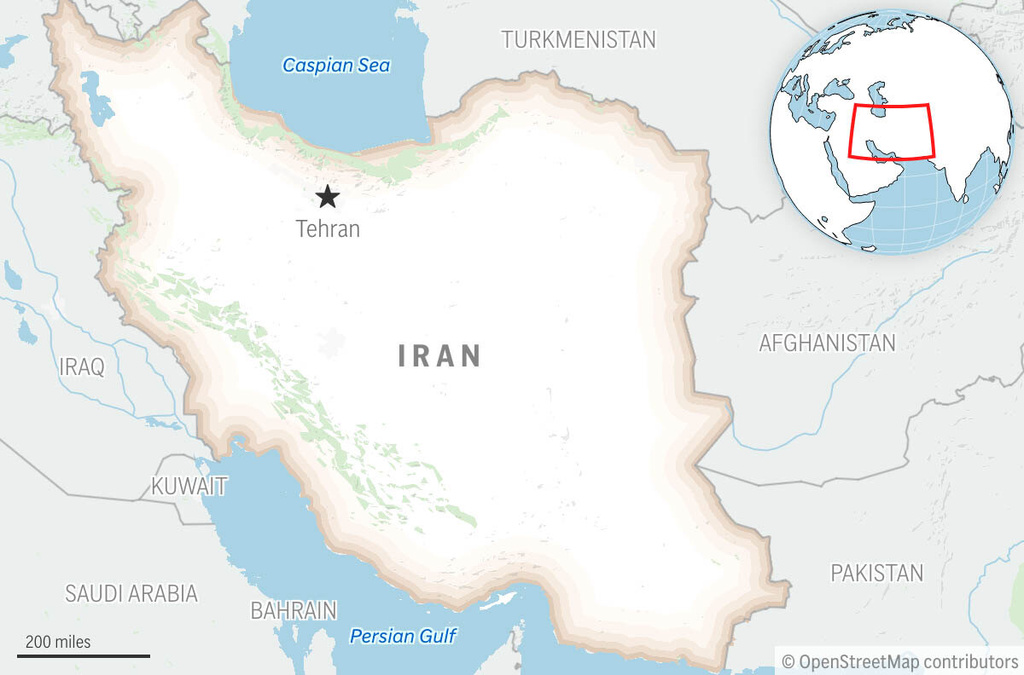
DUBAI, United Arab Emirates (AP) — Iran’s paramilitary Revolutionary Guard fired drones and missiles at Bahrain and Kuwait on Sunday, striking back after U.S. airstrikes hit Iranian targets, while also warning that peace negotiations could be brought to a “complete halt” if Washington presses forward with its military campaign.
The escalating conflict has been further inflamed by a dispute over control of the Strait of Hormuz. A multinational maritime organization operating under U.S. Navy oversight announced Saturday that it would widen a shipping lane near Oman to accommodate both arriving and departing vessels — a move that put it on a direct collision course with Tehran.
Iran has insisted that once the war is over, it must have sole authority over the strait — the narrow waterway at the mouth of the Persian Gulf that once carried roughly one-fifth of the world’s oil and natural gas supply. While the international community has long viewed the strait as an open international passage, it runs through the territorial waters of both Iran and Oman. In recent days, Iran has attacked ships twice that were using a route along the Omani side of the strait, a route backed by a United Nations agency.
Kuwait’s military reported that its air defense systems successfully intercepted Iranian drones and missiles Sunday morning, shortly after the U.S. conducted its strikes. Kuwait, which is home to a major U.S. Army installation, confirmed it detected and shot down two ballistic missiles, with no reported casualties or damage on the ground.
In Bahrain, the Interior Ministry confirmed that Iranian strikes damaged a residential building located near the country’s international airport, though no fatalities were reported. The ministry shared photographs showing an eight-story structure with its top floor completely obliterated — reduced to rubble with windows blown out throughout the building.
Bahrain serves as the home port for the U.S. Navy’s 5th Fleet, whose base there had come under repeated fire during the ongoing war. Sunday’s damaged building was not located near the fleet’s headquarters in downtown Manama.
Bahrain’s Foreign Ministry released a sharp condemnation, calling the attacks “a dangerous escalation that reveals that what Tehran is doing is not a passing act, nor an isolated incident, but rather a deliberate approach and a systematic pattern of repeated aggression against the sovereignty of the kingdom, and the security of its citizens and residents.”
The strikes unfolded after a weekend of back-and-forth military action between the U.S. and Iran. The U.S. military’s Central Command stated it had hit Iranian “surveillance infrastructure, communication systems, air defense sites, drone storage facilities and minelayer capabilities” on Sunday, following an attack on a vessel at sea early Saturday morning. That ship — the Panamanian-flagged tanker Kiku — was carrying crude oil for the state-run energy company of Qatar, which has been serving as a key mediator between Iran and the United States.
Trump posted on social media that the U.S. had “struck Iranian missile and drone storage locations, and coastal radar sites, for violating the Cease Fire Agreement, AGAIN!” He cautioned that there may come a point where the U.S. can no longer exercise restraint “and will be forced to militarily complete the job.”
“If that happens, the Islamic Republic of Iran will no longer exist!” Trump wrote on Truth Social.
This latest exchange mirrors a similar cycle of attacks that played out just days earlier, when an Iranian drone struck a merchant ship off the Omani coast on Thursday, prompting U.S. military retaliation.
The Revolutionary Guard claimed responsibility for both Sunday’s attacks, saying it targeted Al Asad Air Base in Kuwait. The Guard also issued a stark warning: “Let the enemy know that violating the ceasefire … will lead to a complete halt of ongoing processes.”
The Guard, which maintains control over Iran’s ballistic missile stockpile and reports solely to Supreme Leader Ayatollah Mojtaba Khamenei, is believed to hold growing sway within the Islamic Republic.
The U.S. military stated that “Iran had a chance to honor the ceasefire agreement” but “elected not to” when its forces attacked the Kiku.
Ship-tracking data shows the Kiku had departed a Qatari oil field in the middle of the Persian Gulf earlier in the week and was headed toward a port in the United Arab Emirates situated on the Gulf of Oman, just beyond the Strait of Hormuz. The vessel appeared to be navigating an alternate route along the Omani coastline — an option that bypasses the Iran-sanctioned corridor running through Iranian waters.
All northbound lanes on Interstate 495 are currently shut down near the East 12th Street off-ramp following a crash, according to traffic officials.
Motorists traveling in the area are urged to plan for significant delays and consider using alternate routes until the roadway is cleared and lanes are reopened.
No further details regarding the crash have been made available at this time. Drivers should stay alert for updates as conditions change.
Hunter Goodman turned in the best power-hitting performance of his career Saturday, launching three home runs and knocking in five runs to carry the Colorado Rockies to an 8-5 victory over the Minnesota Twins in Minneapolis.
Kyle Karros chipped in with a two-run home run, and Jake McCarthy went 2-for-5 with a triple and scored twice for Colorado, which has alternated between wins and losses across its last seven outings.
Michael Lorenzen earned the win, improving to 3-9 on the season, snapping a winless stretch that had stretched across 10 starts. His last victory had come back on April 24. He held Minnesota to two runs on seven hits across 5 2/3 innings. Jimmy Herget closed it out, recording the final two outs for his third save of the year.
Trevor Larnach paced the Twins with a 3-for-5 effort that included a three-run double. Minnesota has now dropped four of its last five games. Starter Mike Paredes fell to 0-1, allowing three runs on eight hits in 5 1/3 innings.
Giants 5, Braves 0
Logan Webb kept rolling through June, Rafael Devers clubbed two home runs, and San Francisco blanked Atlanta to even their three-game series at one game apiece.
San Francisco held the Braves to just one hit all game. Devers got things started in the second inning with a leadoff solo shot off Atlanta starter Bryce Elder, who dropped to 5-6. Webb, now 5-5, surrendered just that one hit over seven innings of work.
The lone Atlanta hit off Webb was a Mauricio Dubon double with one out in the second. Elder was pulled after four innings, having given up all five San Francisco runs on five hits.
Red Sox 4, Yankees 1
Rookie Jake Bennett was outstanding over 6 1/3 innings, surrendering just one run, while Masataka Yoshida and Anthony Seigler each hit solo home runs as Boston beat New York for the third consecutive day.
Bennett, who improved to 2-3, didn’t allow his first hit until two outs in the fifth inning. He departed to a standing ovation after giving up just three hits and two walks while striking out three. Seigler — the Yankees’ first-round pick from the 2018 draft — launched his first career major league home run in the second inning, putting Boston up 2-0.
New York starter Gerrit Cole fell to 2-3, allowing four runs and seven hits in 5 1/3 innings. Max Schuemann hit a solo homer for the Yankees, who have lost six of their last eight games and now share the AL East lead with the Tampa Bay Rays.
Astros 8, Tigers 6
Isaac Paredes delivered a go-ahead two-run double in the eighth inning as Houston rallied to beat Detroit on the road.
Jeremy Pena, who contributed a game-tying hit earlier in the eighth, finished with three hits, two runs, and two RBIs. Christian Walker had four hits, and Cam Smith added a two-run homer. Reliever AJ Blubaugh improved to 4-2 after throwing two scoreless innings, and Josh Hader worked the ninth for his seventh save.
Framber Valdez started for Detroit against his former team for the second time this season, giving up four runs on eight hits over six innings. Kerry Carpenter hit the Tigers’ first grand slam of the year, and Hao-Yu Lee also went deep before Will Vest blew a late lead to fall to 3-5.
Rangers 7, Blue Jays 4
Jake Burger went 3-for-4 with two RBIs as Texas swept a three-game series in Toronto.
Corey Seager added a solo home run, while Alejandro Osuna and Elias Diaz each drove in two runs for the Rangers. Starter Cal Quantrill threw four scoreless innings, and Peyton Gray improved to 3-0 by striking out four across 2 1/3 scoreless relief innings.
Yohendrick Pinango hit a two-run homer for Toronto, and Alejandro Kirk added a solo shot. Starter Dylan Cease struck out 10 but fell to 4-4, giving up four runs, four hits, and five walks across 4 2/3 innings.
White Sox 2, Royals 1
Jacob Gonzalez lined a walk-off single with one out in the ninth inning, giving Chicago a franchise-record 10th consecutive home series victory over Kansas City.
Colson Montgomery, Chase Meidroth, and Braden Montgomery each singled to open the ninth against Daniel Lynch IV, who dropped to 2-2. Gonzalez then lined a 3-2 fastball past shortstop Bobby Witt Jr. with a five-man infield deployed, as the first-place White Sox improved to 4-1 on their current six-game homestand.
Grant Taylor earned the win, improving to 3-1, after throwing two perfect innings with four strikeouts. Kansas City’s Michael Massey went 2-for-2 with a walk, but the Royals managed just six hits total.
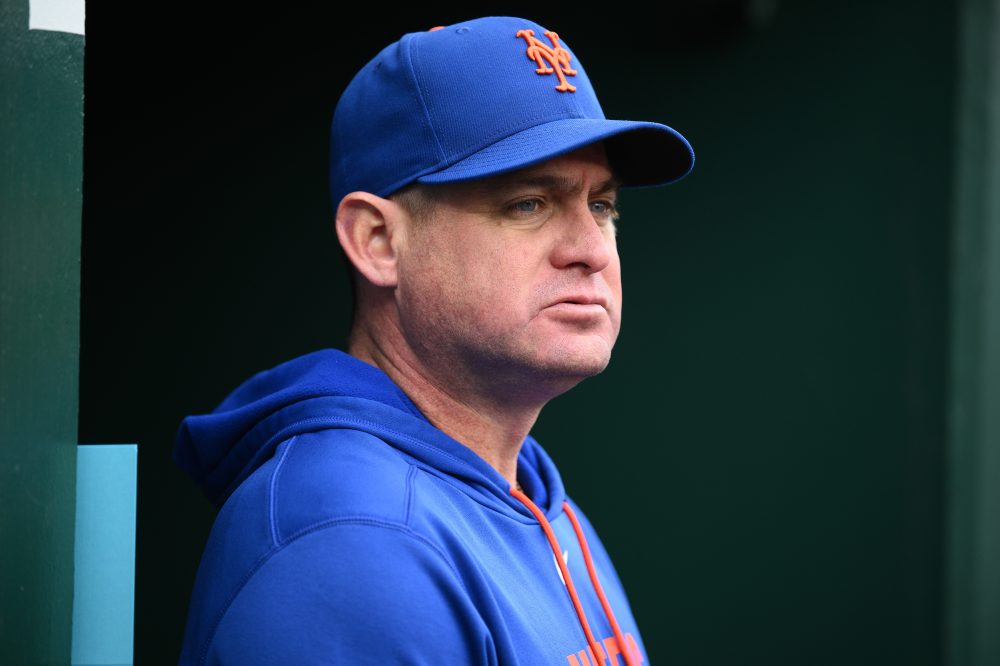
Mets 6, Phillies 2
Francisco Lindor and A.J. Ewing each drove in two runs during a big sixth inning as New York ended a seven-game losing skid with a comeback win over Philadelphia at home.
The Mets failed to advance a runner past first base over the opening five innings against Tim Mayza and Alan Rangel before rallying from a 2-0 deficit by sending the entire lineup around in the sixth. New York starter Christian Scott, activated off the 15-day injured list before the game, gave up two runs on three hits across 4 1/3 innings.
Bryce Harper was Philadelphia’s only multi-hit performer, going 2-for-4 with a two-run homer, as the Phillies saw their four-game winning streak come to an end. Rangel fell to 0-1 after surrendering four runs on four hits in four innings.
Guardians 4, Mariners 3
Rookie Kahlil Watson hit an RBI double in the fourth inning, and fellow rookie Cooper Ingle followed with his first career major league hit — a two-run single — as Cleveland beat visiting Seattle.
Slade Cecconi improved to 4-6 and earned his first home win of the season after posting six-plus scoreless innings. The Guardians recorded their fourth win in 11 games since All-Star Jose Ramirez broke his left wrist. Cade Smith allowed two baserunners in the ninth but closed it out for his 25th save.
Randy Arozarena belted a three-run homer in the eighth to pull Seattle within 4-3. Mariners starter Logan Gilbert fell to 6-5 after working seven innings and surrendering four runs on seven hits.
Reds 9, Pirates 7
With Cincinnati down to its final strike, Eugenio Suarez launched a go-ahead three-run home run in the top of the ninth inning to lift the Reds past host Pittsburgh.
It was Suarez’s eighth homer of the year and gave Cincinnati back-to-back victories. Chase Burns struck out a season-best 10 batters, tying a career high, but had a team-record run of 12 straight appearances allowing two or fewer runs snapped. Burns gave up five runs on nine hits across six-plus innings.
Brandon Lowe led Pittsburgh with four RBIs, and Jared Triolo had three hits. Gregory Soto served up Suarez’s game-winning blast, dropping to 4-2, while Caleb Ferguson picked up the win at 1-0. Chase Petty threw a hitless ninth inning for his first career save.
Rays 4, Diamondbacks 2
Jonathan Aranda broke a tie with a two-run homer, and Junior Caminero also went deep as Tampa Bay defeated Arizona in St. Petersburg.
Caminero gave the Rays the early lead with his sixth home run over the past five games. Michael Grove earned the win at 1-0 in his Tampa Bay debut, giving up just one hit over three scoreless innings.
Ketel Marte homered for Arizona, which has scored just three combined runs while dropping the first two games of the series. Starter Jose Cabrera fell to 0-1 after allowing four runs and seven hits in five-plus innings in just his second career major league start.
Nationals 4, Orioles 3 (10 innings)
Daylen Lile singled in the go-ahead run on the first at-bat of the 10th inning as visiting Washington halted a four-game skid with a victory over Baltimore.
The Orioles loaded the bases with two outs in the 10th before Justin Lawrence secured his first save since 2024 on Samuel Basallo’s groundout. Washington starter Foster Griffin held Baltimore to just one unearned run across seven innings. Luis Garcia Jr. homered and finished with four hits for the Nationals.
Baltimore tied the game in the eighth on Pete Alonso’s RBI double and a pinch-hit single by Basallo. Orioles starter Brandon Young gave up two runs on seven hits over five innings. Ryan Helsley dropped to 0-4 with the loss.
Cubs 8, Brewers 2
Ian Happ belted a three-run homer as part of a four-run sixth inning, helping visiting Chicago even its three-game series with Milwaukee.
Seiya Suzuki and Michael Conforto also went deep for the Cubs. David Peterson, acquired in a trade with the Mets on Wednesday, gave up a homer on his very first pitch as a Cub but settled in to allow just five hits and two runs across 5 2/3 innings, improving to 4-6.
Milwaukee starter Kyle Harrison gave up two runs on three hits over five innings before Chad Patrick surrendered four runs in just two-thirds of an inning, falling to 5-4. Jackson Chourio opened the bottom of the first with a home run.
Marlins 5, Cardinals 1
Xavier Edwards went 3-for-5 with an RBI single, Kyle Stowers drove in two runs, and visiting Miami won for the fourth straight time, beating St. Louis.
Javier Sanoja had three hits, an RBI, and two stolen bases for the Marlins, who improved to 18-5 in June — the best record in the major leagues this month. Ryan Gusto threw 3 1/3 scoreless innings before handing the ball to John King, who improved to 6-1 and threw 1 1/3 shutout frames against his former club.
Masyn Winn had an RBI single, and JJ Wetherholt and Lars Nootbaar each had two hits for St. Louis, which has lost four straight and seven of its last nine. Andre Pallante fell to 9-5 after giving up a career-high 11 hits and five runs over 6 2/3 innings, ending a five-decision winning run.
Dodgers 15, Padres 3
Kyle Tucker, Dalton Rushing, and Mookie Betts all went deep during a massive sixth inning as Los Angeles routed San Diego on the road.
After the teams were tied 1-1 through five innings, the Dodgers erupted for nine runs in the sixth with 12 batters coming to the plate. Tucker finished with three of Los Angeles’s 17 hits and four RBIs. Yoshinobu Yamamoto improved to 8-5, allowing five hits and two runs across six innings.
Gavin Sheets homered and added an RBI single for San Diego. Bulk reliever Randy Vasquez fell to 6-6 after being tagged for eight hits and seven runs — five earned — in 3 1/3 innings.
Angels 5, Athletics 2
Jo Adell hit a two-run triple and Denzer Guzman delivered a go-ahead single as Los Angeles beat the Athletics in Anaheim.
Oswald Peraza and Logan O’Hoppe also had RBI singles as the Angels won for the fifth time in their last seven games. Starter Reid Detmers went 5 2/3 innings, giving up two runs and four hits. Ryan Zeferjahn improved to 4-3 by striking out two in the seventh.
Jonah Heim celebrated his 31st birthday with a 445-foot home run for the Athletics, who have lost five of their last seven. The A’s played without shortstop Jacob Wilson for the third straight game due to a shoulder injury, and left fielder Tyler Soderstrom exited after 2 1/2 innings with left hip tightness.
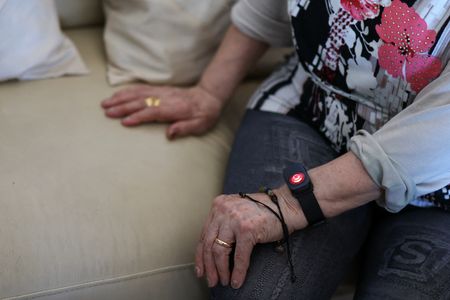
ROME — At 85 years old, Dina Gazzella lives alone in her home on the eastern edge of Rome. She lost her husband in 2023 and her cat a year after that. But a small electronic device on her wrist means she is never truly without support.
Gazzella is one of around 700 elderly Romans enrolled in a smart bracelet program launched by Rome’s city government using EU funds set aside after the COVID pandemic. The initiative carries a price tag of €400 million — roughly $456 million — and provides participants with a wearable device at no cost.
The black plastic bracelet, worn like a wristwatch, does much more than tell time. It continuously monitors the wearer’s heart rate and sleep patterns, detects falls through built-in motion sensors, and allows the user to call for emergency assistance at the press of a button — whether they are inside their home or out on the street.
City officials are pointing to the bracelet as a vital health tool, particularly as a deadly heatwave continues to push temperatures in Rome into the upper 30s degrees Celsius.
Clinical psychologist Piera Pomente, who coordinates a support desk for the program at a local pharmacy, explained why the device is so important right now. “The bracelet is crucial for elderly people in this hot period, especially because their blood pressure drops, their heart rate is slightly lower than normal, they really suffer,” she said.
For Gazzella herself, the bracelet brings peace of mind. She appeared lively during a visit to her apartment — showing off photos of her grandchildren, brewing espresso, and recounting a recent outing to a World War Two bunker with a local community group.
“If I feel unwell, this is a lifesaver,” she said. She added that social workers persuaded her to sign up by pointing out the risks of living alone. “They convinced me because they told me it was necessary, because I’m alone in the house and if something happens, if I fall, no one will pick me up; instead this one beeps, and someone will come.”
Pomente and her team handle applications and track participants’ data through a computer at the pharmacy. The monitoring runs Monday through Friday from 8:30 a.m. to 7 p.m. During nights and weekends, alerts from the bracelets are forwarded to family members through a mobile app.
In the past year, Pomente’s team has handled two emergencies — one involving a man who fell in the street and another who slipped from his wheelchair at home. In both cases, relatives were alerted and responded in time.
On quieter days, the work is more about connection than crisis. Social workers make daily phone calls to check whether participants have taken their medications, ask how they are holding up in the heat, or simply chat with those who are feeling lonely or bored.
“It’s about helping them share their day, their emotions, and the excessive heat,” Pomente said.
Not everyone has embraced the program. Privacy concerns have led some to drop out — of the roughly 70 people who initially enrolled through the pharmacy, only about 45 have remained. Pomente said she hopes to bring the others back and was quick to address the concern directly. “It’s not like we spy inside their homes with cameras,” she said.
The National Weather Service office in Mount Holly, New Jersey has put an Extreme Heat Watch into effect for the region, and it covers a significant stretch of time heading into the holiday weekend.
The watch went into effect on June 28th at 3:57 in the morning and is set to remain active until 8:00 in the evening on July 4th.
An Extreme Heat Watch means that conditions are favorable for a dangerous heat event to develop in the coming days. Residents are urged to stay hydrated, limit time outdoors during the hottest parts of the day, and check on elderly neighbors, young children, and pets who may be especially vulnerable to extreme heat.
Stay with TV Delmarva for the latest updates on this heat watch as the Fourth of July holiday approaches.
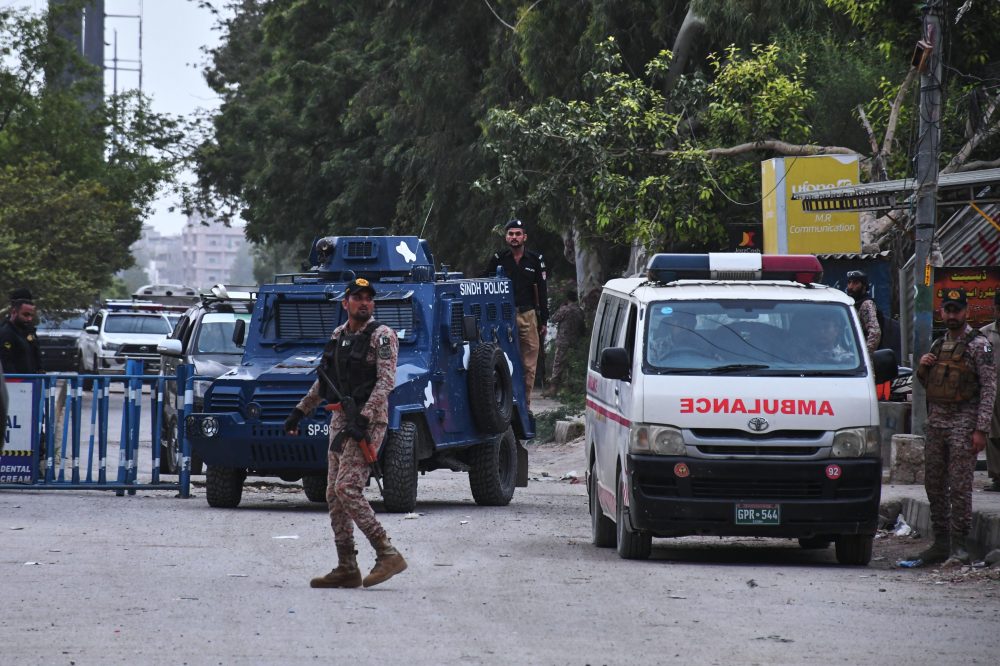
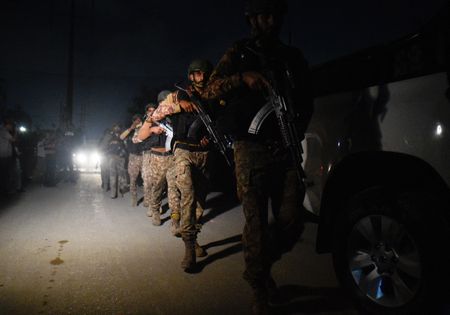
KARACHI, Pakistan — Pakistan’s military announced Sunday that three members of its paramilitary Rangers force lost their lives and four additional personnel were injured after militants launched an assault the previous night on a regional headquarters in the southern port city of Karachi.
According to police and witnesses, a militant drove a vehicle loaded with explosives into the provincial headquarters of the Pakistan Rangers on Saturday night, setting off a fierce exchange of gunfire between the attackers and security forces.
In an official statement, the military reported that security forces killed three of the attackers and took a fourth into custody. The captured suspect, who was wounded during the confrontation, was identified as an Afghan national.
The military said operations remained active in the surrounding area and issued a warning that Pakistan would strike back against those behind the assault. In recent years, Pakistan has conducted airstrikes inside Afghanistan, stating they were aimed at militants responsible for attacks on Pakistani soil. Afghanistan’s government has repeatedly denied that militant groups are permitted to use Afghan territory to carry out cross-border attacks.
The militant organization Jamaat-ul-Ahrar, which broke away from the Pakistani Taliban, took responsibility for the attack shortly after it took place.
Pakistan’s military characterized the group as a proxy of India, though it offered no evidence to back up that claim. India did not immediately respond, and New Delhi has rejected similar accusations in the past.
President Asif Ali Zardari honored the three Rangers personnel who were “martyred” in the attack, offered his condolences to their families, and wished a full recovery to those who were wounded, according to a statement from his office. He also recognized the sacrifices made by Pakistan’s security forces in combating militancy and reaffirmed the country’s commitment to wiping out terrorism.
Prime Minister Shehbaz Sharif likewise condemned the assault and commended security forces for successfully repelling the attackers.
The attack is part of a broader pattern, as Pakistan has seen a significant rise in militant strikes targeting law enforcement and military personnel in recent years.
The military confirmed that operations were still underway to track down and eliminate any remaining associates of those who carried out the attack.
There was no shortage of worry heading into this year’s FIFA World Cup. Questions swirled about whether the host nations were ready, whether the expanded format would work, and whether the matches would live up to the hype.
But with the group stage now in the books and the knockout round scheduled to begin Sunday, it’s safe to say the North American World Cup has delivered. The tournament has been a genuine thrill for soccer fans across the continent.
One early highlight came on June 12, 2026, when U.S. forward Folarin Balogun — wearing number 20 — helped his team to a strong performance in their opening group match against Paraguay in Inglewood, California. Balogun scored his team’s third goal of the game, celebrating with teammates in what became a statement moment for the American squad.
As the competition shifts into its knockout phase, the stakes grow higher with every match. Unlike the group stage, there are no second chances — one loss and a team goes home.
Stay with TV Delmarva for continued coverage as the World Cup enters its most exciting stretch.
Ukrainian drones launched overnight strikes against targets in Russia’s southern Krasnodar region, hitting an oil refinery and causing at least one death, according to local authorities.
Krasnodar region governor Veniamin Kondratiev announced via Telegram on Sunday that a fire erupted at a refinery located in the city of Slavyansk-na-Kubani. He reported that one person was killed and a second was injured in a nearby village as a result of the attack.
Video circulating on social media, though not independently verified, appeared to show a massive blaze burning at the refinery facility.
The Slavyansk refinery is a privately owned operation capable of processing roughly 100,000 barrels of oil per day. The plant produces fuel both for use within Russia and for export markets.
The attack is part of a broader Ukrainian strategy of striking Russian energy infrastructure, a campaign that has contributed to serious fuel supply problems in various parts of Russia.
Drone attacks were also reported in the Yaroslavl region, located east of Moscow. That region’s governor confirmed the strikes and said temporary movement restrictions were put in place on certain roads leading to the Russian capital.
JAKARTA — Indonesia’s national human rights commission is demanding the government put a stop to basic military training for future managers of President Prabowo Subianto’s signature village cooperative initiative, following the deaths of five participants in just the first 10 days of a 45-day program.
The cooperative initiative, known as the “Red and White Cooperatives” program, was launched in July of last year. It aims to establish roughly 80,000 village cooperatives throughout Indonesia with the goals of creating employment and helping the country reach an 8% economic growth target by 2029. The cooperatives are designed to sell everyday goods, subsidized cooking gas, and fertilizer.
Nearly 35,000 prospective cooperative managers are required to complete the military training, which began on June 14 and is scheduled to run through July 31 at various regional military training facilities.
A rights commission official, Pramono Ubaid Tantowi, stated that the agency “recommends the government stop … the basic military training for the prospective managers of the cooperatives and fishing villages programmes, considering that cooperatives are economic institutions oriented in business management, services to members, and organisational governance.”
On Saturday, the defense ministry — which is overseeing the training — confirmed that five individuals died between June 17 and June 26. Officials attributed the deaths to a range of medical causes, including cardiac arrest, heat stroke, tuberculosis, and pneumonia.
Major General Ketut Gede Wetan, who heads human resource development at the defense ministry, stated: “The five participants have different medical conditions and received medical treatment according to the standard procedures.”
Ketut also noted that all participants had undergone medical screenings prior to beginning the training and were cleared to participate. He further emphasized that the training was not combat-focused and did not involve intense physical activity.
The defense ministry announced plans to carry out a “comprehensive evaluation” of the program, which would include closer health monitoring, earlier identification of participants at risk, and adjustments to the intensity of training activities. The health ministry will also be brought in to assist, officials added.
Pramono argued that training for cooperative managers should center on building managerial skills, leadership abilities, and financial knowledge. “Basic military training does not directly support the achievement of those competencies,” he said.
The human rights commission is also urging the government to investigate the five deaths and is calling on police to seek forensic autopsies to help determine the cause of each death as part of any potential criminal inquiry.
President Prabowo, a former military general who assumed office in 2024, has broadened the role of the military in civilian matters, including in the administration of his key government programs.
Google has restricted how much access Meta has to its Gemini artificial intelligence models after the social media company requested more computing capacity than the tech giant was able to supply, according to a report published Sunday by the Financial Times.
Google, which operates under parent company Alphabet, informed Meta around March that it was unable to fulfill the full amount of Gemini capacity the company had wanted to purchase. That shortfall has disrupted and delayed certain AI projects Meta was working on internally, the newspaper reported.
Other Google clients have also been affected by similar capacity limitations, though the impact on those companies has been less severe. Meta has been hit especially hard because of its unusually high demand for Google’s AI models, the Financial Times noted.
Reuters, which first reported on the story, was unable to independently confirm the details. The report was based on sources familiar with the situation. Neither Google nor Meta responded to requests for comment made outside of normal business hours.
As a result of the restrictions, Meta has reportedly encouraged its employees to use AI tokens more carefully. AI tokens are the standard unit used to measure how much artificial intelligence processing is being consumed.
The situation reflects a growing challenge across the technology industry: even as companies pour billions of dollars into computer chips and data centers, many are still struggling to generate enough computing power to meet the rapidly increasing demand for AI services.
Google’s cloud division brought in $20 billion in revenue during the first quarter ending in March. However, the company’s CEO noted that computing capacity limitations held back even stronger growth and contributed to the cloud unit’s order backlog nearly doubling compared to the previous quarter.
SEOUL — South Korea and Japan came together Sunday to restate their dedication to ridding the Korean peninsula of nuclear weapons, while also agreeing to bring back joint search-and-rescue military drills as part of growing security cooperation between the two neighboring nations.
South Korean Defence Minister Ahn Gyu-back sat down with his Japanese counterpart Shinjiro Koizumi in Seoul for their sixth round of bilateral talks. The two ministers agreed to pursue regional stability both on their own and through their shared alliance with Washington.
“Both ministers shared the view to continue cooperation for maintaining regional peace and stability amid a grave security environment,” South Korea’s defence ministry said in an official statement following the meeting.
With encouragement from the United States, South Korea and Japan have been working since 2022 to build stronger ties and move past long-standing historical grievances. That effort has continued under President Lee Jae Myung and Prime Minister Sanae Takaichi.
The relationship has not always been smooth. In 2019, Seoul moved to dissolve the GSOMIA intelligence-sharing agreement with Japan after Tokyo placed restrictions on semiconductor material exports and removed South Korea from its preferential trade list — disputes rooted in Japan’s colonial rule over the Korean peninsula.
In 2025, Japan’s then-Prime Minister Shigeru Ishiba and President Lee committed to deeper security and economic cooperation. Their defence ministers pledged to coordinate with Washington to counter North Korea’s nuclear ambitions and Pyongyang’s expanding military relationship with Russia, including collaboration on artificial intelligence, unmanned systems, and annual trilateral military exercises.
In January 2026, Takaichi and Lee agreed to strengthen shuttle diplomacy between the two countries, and in May they broadened their cooperation to include energy matters.
Sunday’s meeting also produced an agreement to continue exchanges between the two nations’ elite aerobatic flight teams — South Korea’s Black Eagles and Japan’s Blue Impulse — as well as to advance joint search-and-rescue exercises covering a range of maritime emergency scenarios.
The two defence ministers had previously met in Japan in January and again in May at the Shangri-La Dialogue in Singapore, where discussions touched on a potential military logistics support agreement involving fuel, food, and ammunition. They had also agreed at that time to conduct a joint humanitarian search-and-rescue exercise in June — the first such drill in nearly ten years.
Despite the progress, tensions between the two countries have not fully faded. Disputes remain over Korean women who were forced to serve in Japanese military brothels during World War Two. In February, Seoul formally protested a Japanese government event honoring a group of contested islands — called Takeshima in Japan and Dokdo in South Korea — which are currently under South Korean control.
The Israeli military announced on Sunday that it had killed Hezbollah fighters who were armed with rocket-propelled grenades in the Nabatieh area of southern Lebanon.
According to the Israeli military, the operation was carried out to eliminate threats to its troops in the region. Forces targeted the building from which the Hezbollah militants were operating and also dismantled a rocket launcher that had been identified as a danger to Israeli soldiers.
Sunday marks the pinnacle of Pride Month, with massive parades taking place in New York City and San Francisco — along with several other cities — on the anniversary of the Stonewall uprising of 1969, a pivotal moment that helped reshape and energize the modern LGBTQ+ rights movement.
Pride events have long blended festivity with advocacy, and this year is no different. The parades and festivals happening across the country this month come as President Donald Trump’s administration moves to dismantle transgender rights protections and roll back diversity, equity and inclusion programs. Earlier this year, the administration removed a rainbow Pride flag from the Stonewall National Monument, though it ultimately backed down following a legal challenge.
“As LGBTQIA+ events and symbols are being erased, it’s vital that our community have safe spaces to show up and march to make clear: We are here,” said Chris Piedmont, a spokesperson for New York parade organizers Heritage of Pride, in a statement released Friday. “We will not be erased.”
On the other side of the political spectrum, several Republican governors have declared June under conservative-themed names such as “Nuclear Family Month,” with some openly framing the designations as a pushback against Pride. Other prominent Republicans, including Vice President JD Vance, have weighed in on Major League Baseball’s handling of San Francisco Giants players who chose to add Bible verses to their rainbow-themed Pride Night caps.
Against this charged political backdrop, both the NYC Pride March and the San Francisco Pride Parade are moving forward as two of the largest and most historic celebrations of their kind in the world.
Both events trace their origins to 1970 gatherings held to honor the Stonewall rebellion, which occurred on June 28, 1969, when customers at a New York gay bar known as the Stonewall Inn fought back against a police raid, sparking a wave of LGBTQ+ activism that continues to this day.
The Stonewall Inn remains an operating bar. The Stonewall National Monument is centered around a small park directly across the street, located roughly half a mile from the Pride March route at its nearest point.
Also taking place in Manhattan on Sunday is the Queer Liberation March, a newer event created by activists who felt the main Pride March had become too corporate and institutionalized.
This year, some transgender rights advocates pushed Pride organizers to prohibit certain New York City hospital groups from participating in the march. Those hospitals recently announced they would no longer offer gender-affirming treatments for transgender youth — decisions that came in response to funding pressure from the Trump administration. At least some of those hospitals also received federal Justice Department subpoenas seeking transgender patients’ medical records, though a judge has temporarily put that demand on hold.
Heritage of Pride said it has been in discussions with the hospitals over the matter. The organization also pointed out that parade contingents are organized by LGBTQ+ employee groups within those institutions, not by the hospital executives who made the decisions about care.
Organizers of the San Francisco parade were asked whether they faced similar pressure, but no response was immediately available.
Other cities hosting Pride parades on Sunday include Seattle, where a World Cup soccer match on Friday took on an added dimension after the nations whose teams were playing — Iran and Egypt — unsuccessfully attempted to have the Pride celebrations called off.
A newly enacted Mississippi law is giving the state’s leading law enforcement agency the authority to compile a registry of undocumented immigrants residing within its borders — and the move is drawing sharp criticism from those who advocate for immigrant communities.
The law, which takes effect Wednesday, directs the state Department of Public Safety to use every reasonable and lawful investigative tool at its disposal to identify and count all undocumented immigrants in Mississippi. The information to be gathered includes names, home addresses, country of origin, whether the individual is an adult or a child, any criminal history, and details about deportation proceedings.
The department is also required to share information about individuals suspected of breaking laws with state and local law enforcement. Notably, the law neither mandates nor prohibits sharing that database with U.S. Immigration and Customs Enforcement.
Republican state Sen. Angela Hill, the bill’s sponsor, defended the measure, arguing that states have both the right and the responsibility to help the federal government curb illegal immigration, which she said enables crimes like human trafficking and drug smuggling.
“The new law seems like commonsense to me,” Hill said. “In order to address the problems caused by illegal immigration, we need to understand the magnitude of the problem. Identifying the number and identity of illegal aliens in Mississippi is a concrete way to better understand the problem.”
The legislation arrives as immigration policy has become a flashpoint across the country. According to an Associated Press count, more than 100 immigration-related laws have been passed by states so far this year. Republican-led states have largely moved in step with President Donald Trump’s immigration agenda, requiring local sheriffs to partner with ICE, tightening eligibility for public benefits, and directing election officials to cross-check voter rolls against a federal citizenship verification system. Democratic-led states, by contrast, have moved to block cooperation with ICE and restrict immigration enforcement in sensitive locations like schools and hospitals.
The Mississippi law bears a resemblance to a 2021 executive order issued by Republican Florida Gov. Ron DeSantis, which directed that state’s law enforcement agency to use all lawful investigative means to identify undocumented immigrants transported from the southwest border to Florida. The Florida agency did not respond when the Associated Press sought information about the outcome of that order.
Unlike a one-time count, Mississippi’s law calls for an ongoing, two-year tracking effort — a scope that critics say makes it logistically difficult to carry out accurately.
“You can be undocumented today, and then have status tomorrow, and then lose it again next month, and then regain it three months from now,” said Efrén Olivares, vice president of litigation and legal strategy at the National Immigration Law Center, a nonprofit that advocates for low-income immigrants.
“It’s practically unworkable, but it’s also very worrisome, because it’s eerily reminiscent of other countries that have created lists of certain groups of people,” Olivares added.
Jessica Vaughan, director of policy studies at the Center for Immigration Studies — a nonprofit that supports tighter immigration restrictions — acknowledged that officials would need to develop “a credible and fairly foolproof way of correctly determining someone’s immigration status.” Still, she said the law “makes a lot of sense,” noting that it “raises the likelihood that someone’s illegal presence is going to come to the attention of federal authorities.”
Mississippi already has one of the smallest undocumented immigrant populations in the nation. A report from the American Immigration Council, drawing on 2023 Census Bureau data, estimates fewer than 28,000 undocumented immigrants live in the state — less than 1% of its total population.
Victoria Francis, deputy director of state and local initiatives for the American Immigration Council, called the law “very concerning for a bunch of different reasons,” including the possibility that it could pull law enforcement resources away from public safety duties and toward investigating people from other countries who may be contributing economically to their communities.
“A mandate like this invites profiling and turning entire communities into targets,” Francis said.
Lydia Grizzell, policy and advocacy manager for the American Civil Liberties Union of Mississippi, warned that the law could erode the trust between police and the communities they serve.
“That increases the likelihood of individuals not reaching out to law enforcement when it’s needed — and that is opposite of the mission,” she said.
Amy Neville calls Kristin Bride her “soulmate” — a bond born from the worst day either woman has ever experienced. On June 23, 2020, both mothers lost their teenage sons to harms connected to social media use. The boys lived a thousand miles apart and never crossed paths in life, but their deaths linked their families forever.
When the two women first connected through their advocacy efforts, Bride recalled feeling “totally alone.” Since then, however, they have watched a growing movement take shape, with dozens of other grieving parents joining the push for stronger online protections for children.
Advocates say the momentum is building. Two significant jury verdicts this year have opened a new path toward holding technology companies legally accountable, and calls for federal regulation are gaining renewed energy in Congress.
“Moving forward for me, it’s this groundswell. We now have the court of public opinion on our side, and that is powerful. That has brought things to the next level,” Neville said.
Neville described her son Alexander as “brilliant and intense,” with an entrepreneurial drive and “the best laugh in the world.” At age 14, a drug dealer reached him through Snapchat and sold him the pill that ended his life. Kristin Bride described her son Carson as the “bright light” of their family — funny, caring, and someone who loved connecting with others. He died by suicide at 16 following severe cyberbullying.
This past Tuesday, both teenagers were honored in Washington, D.C., along with 270 other young people whose deaths have been linked to online harms. The event fell on the sixth anniversary of the boys’ deaths — a date their families have been working to officially establish as Social Media Victims Remembrance Day.
Globally, awareness of the risks social media poses to young, still-developing minds has led to a wave of new laws. Australia, the United Kingdom, Turkey, Indonesia and other nations have enacted bans preventing children under 15 or 16 from accessing platforms such as TikTok, YouTube and Instagram. The United States has not gone nearly that far.
In the U.S., progress shifted after jury verdicts went against Meta twice and against Google once, energizing child safety advocates. Court proceedings revealed internal company communications in which employees compared their own products to drugs and casinos.
The fact that a Los Angeles trial accusing social media platforms of deliberately harming children was allowed to proceed at all was described as a turning point by Matthew Bergman, who leads the Social Media Victims Law Center. The organization represents more than 1,000 people suing social media companies.
A longstanding legal shield — Section 230 of the 1996 Communications Decency Act — has historically protected tech companies from being held responsible for content posted on their platforms. Lawsuits are now working around that protection by targeting the companies’ intentional design decisions rather than the content itself.
“It is still a hurdle, but it is no longer a barrier,” Bergman said.
Federal action on social media regulation has moved slowly. The Children’s Online Privacy Protection Act, which took effect in 2000, requires apps and websites aimed at children to obtain parental consent before gathering personal data on users under 13.
This week, House lawmakers announced a bipartisan proposal called the Kids Internet and Digital Safety Act. It incorporates elements of the Kids Online Safety Act, which the Senate passed in 2024. However, critics argue the new bill has been stripped of its most critical element — a “duty of care” provision that would legally require companies to take reasonable steps to avoid harming children.
“Without a duty of care, Big Tech companies will maintain the status quo of putting profit before the safety of our children,” said Sen. Marsha Blackburn, R-Tenn., in a written statement.
Bride said advocates must pursue three simultaneous strategies: legislation, litigation and education. That way, she explained, “when one stalls, like legislation, then we have the trials and we have litigation. So we keep pressing forward. We’re not going to give up.”
Representatives from Meta, YouTube and TikTok did not respond to requests for comment. Snap issued a written statement saying the company continuously works to strengthen safety measures on its platform.
Over the years, social media companies have rolled out some protective features, such as placing minors in dedicated teen accounts with tighter controls. Instagram, for example, now limits teen accounts to content rated similarly to PG-13, sets those accounts to private by default and prevents strangers from sending direct messages. YouTube offers a separate app for younger children and parental control options on its main platform.
But advocates for children say far more is needed.
“Their fundamental incentive to design products that maximize engagement has not changed,” Bergman said. “Yes, there have been some improvements. A 13-year-old child is not by default provided with an open account for adult predators to prey upon. So, you know, there are baby steps, but there are steps in the right direction. We just need more of them.”
Since 2024, the Senate has passed a resolution each year recognizing June 23 as Social Media Harms Victim Remembrance Day, honoring those who died from online-related harms including suicide, drug poisoning, cyberbullying and dangerous social media challenges.
At Tuesday’s event, senators joined parents and advocates — including Bride and Neville — in calling for urgent action. Sen. Amy Klobuchar, D-Minn., called for repealing Section 230. Sen. Richard Blumenthal, D-Conn., urged those gathered to “fight like hell for the living.” Sen. Josh Hawley, R-Mo., criticized fellow lawmakers for their inaction, saying “we all know why” Congress has failed to act.
“It’s the same reason that the companies want the kids online, want their privacy destroyed, want all their information — it’s money,” Hawley said, pointing to the technology industry’s campaign contributions and millions spent on lobbying each year.
The Senate Judiciary Committee has invited the chief executives of Meta, Alphabet, TikTok and Snap to testify at an upcoming hearing focused on children’s safety on their platforms. The committee framed the moment starkly in the hearing’s title: “Is This Social Media’s Big Tobacco Moment?”
Bride and Neville plan to listen closely to what the tech executives say under oath — just as they did during a similar hearing in 2024 — and both say they remain hopeful.
“Every morning I wake up, lives are on the line. If we’re not talking about these things, if we’re not doing something about it, lives are on line,” Neville said. “And that’s probably not good for my nervous system, but that’s the state that I’ll live in until I’ll probably die on this hill.”
The Orlando Magic made a financially motivated roster move Saturday, releasing forward Jonathan Isaac just 24 hours before his salary for the 2026-27 season would have become fully guaranteed.
By parting ways with Isaac when they did, the Magic avoided paying him $14.5 million for next season. Instead, the team is now on the hook for just $8 million.
ESPN reports that Orlando chose not to spread that $8 million obligation over seven years, which leaves the door open for Isaac to potentially rejoin the Magic if he doesn’t land a more attractive offer elsewhere.
Isaac, 28, struggled through the most difficult statistical season of his seven-year NBA career in 2025-26. Playing exclusively off the bench across 52 games, he put up career-low numbers — averaging just 2.6 points, 2.5 rebounds, and 0.4 assists per game.
The Magic originally brought Isaac into the organization when they selected him with the sixth overall pick in the 2017 NBA Draft out of Florida State. He has spent his entire professional career in Orlando, although injuries forced him to miss the 2020-21 and 2021-22 seasons entirely.
Across 328 career NBA appearances, including 109 starts, Isaac holds career averages of 6.8 points, 4.5 rebounds, and 0.7 assists per game.
Redden Road is closed in both directions between U.S. Route 113 and McColleys Chapel Road due to police activity, according to traffic officials.
The closure is currently in effect, and no estimated time of reopening has been provided. Motorists traveling through the area should plan for delays and find an alternate route to avoid the affected stretch of roadway.
Further details about the nature of the police activity have not been released at this time. TV Delmarva will provide updates as more information becomes available.
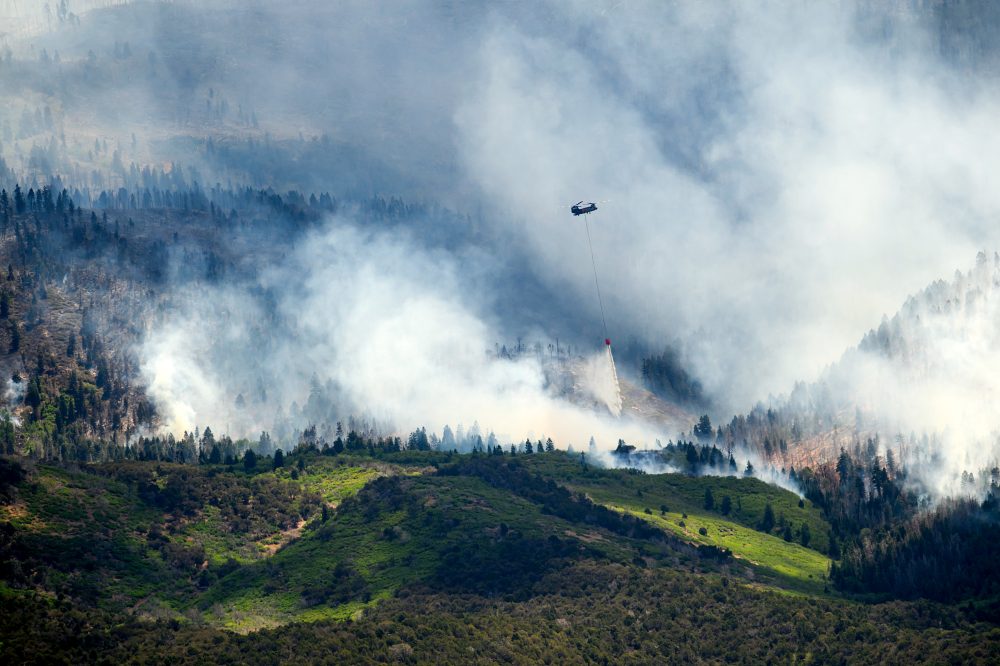
Wildfire activity is surging across the western United States as back-to-back days of scorching heat, parched conditions, and strong winds have fed fast-moving flames in Utah, Arizona, and beyond — with new fires continuing to break out throughout the region.
The biggest blaze, known as the Cottonwood Fire, is tearing through rugged terrain in southwest Utah. By Saturday, it had grown to more than 144 square miles — roughly 373 square kilometers — after sweeping through canyons and along steep mountainsides, taking out a portion of a ski resort and a number of summer cabins in its path.
Damage assessment teams in Beaver County began working alongside fire crews Saturday, though no specific damage figures were immediately released. Gov. Spencer Cox took to social media to describe the situation as grim, while also expressing gratitude to firefighting crews for what he described as “several miraculous stops and saves.”
The rugged landscape has made firefighting even more difficult. Alyssa Mason, a spokesperson assigned to the Cottonwood Fire, explained the challenges crews are facing on the ground.
“It’s hard to get dozers and other heavy equipment into that. It’s hard to get engines into that,” she said. “It doesn’t make it impossible to firefight, but it does just kind of slow things down.”
Hundreds of firefighters have been deployed across Utah to tackle both newly ignited blazes and fires that have continued to spread. Weather forecasters have described current conditions as critical fire weather — a combination of dangerously low humidity, warm temperatures, and strong gusts.
The threat is compounded this year by Utah’s record-low snowpack and its warmest winter ever recorded. According to the National Interagency Fire Center, much of the western United States is dealing with similar conditions.
On Saturday, firefighting crews from Alaska to Florida worked to contain dozens of active fires, including 36 classified as large and uncontained. Across the country, close to 3 million acres — approximately 1.2 million hectares — have burned since January 1, surpassing the 10-year average.
The severity of conditions in Utah prompted Gov. Spencer Cox to declare a state of emergency earlier this week, which also cleared the way for a statewide fireworks ban ahead of the July Fourth holiday. Officials say Utah is currently experiencing one of its worst wildfire seasons in recent memory, driven by historic drought.
State Forester Jamie Barnes said that over the past week, Utah has seen a sharp rise in new fire starts, with each one displaying unusual and unpredictable behavior — pushing the state’s wildland firefighting resources to their limits.
The National Weather Service has issued red flag warnings across a broad stretch of the West in recent days, covering areas from California through Arizona and New Mexico.
In Arizona, south of Grand Canyon National Park, a newly ignited wildfire was reported to be moving away from Grand Canyon Village and the nearby community of Tusayan as of Saturday. However, roughly 50 miles away, a separate fire led Coconino County authorities to order evacuations for residents near Kendrick Mountain.
Parts of northern Arizona lost power Saturday after the local utility initiated a precautionary shut-off to reduce wildfire risk. Such power shutoffs have grown more common across the West as fire danger has increased — typically used as a last resort after utility companies weigh wind speeds, available fuel, and terrain.
In Utah, Rocky Mountain Power also cut electricity to Beaver County and surrounding areas as extreme fire conditions continued to persist.
Drivers in Sussex County should be on alert this morning as foggy conditions have been observed across the area at varying levels of intensity.
Authorities are urging motorists to take extra care while behind the wheel until the fog clears. Reduced visibility can make driving significantly more dangerous, so slowing down and increasing following distances is strongly recommended.
Phoenix Mercury head coach Nate Tibbetts went public Saturday with his frustration over the way the WNBA handled the suspension of star player Alyssa Thomas, calling the process deeply flawed.
The league handed down a one-game suspension to Thomas on Friday, stemming from an incident during a Mercury matchup against the Indiana Fever. According to the WNBA, Thomas was found to have “recklessly making contact with her fist to the throat area” of Fever guard Caitlin Clark while Clark was down on the court. No foul was whistled during the play, though Fever coach Stephanie White publicly described it as a “cheap shot.”
The moment happened with 6:52 remaining in the second quarter of a game Phoenix ultimately won 111-109 on the road in Indiana. Video of the play spread rapidly across social media in the days that followed, with many calling for the league to take action.
Tibbetts stood firmly behind his player and made clear he was troubled by the fact that no one from the Mercury was asked to weigh in before the suspension was issued.
“I’d like to hit on my disappointment in the suspension process by our league and our leaders in the W,” Tibbetts said. “This was not a thorough investigation in my opinion. The people involved were not questioned at all.”
Thomas served her suspension Saturday as Phoenix went on to beat the Toronto Tempo 89-80 without her. Her teammates rallied around her in postgame comments, echoing the coach’s concerns.
“We’re with AT,” said guard Kahleah Copper. “We just wish it would have been handled the right way. We wish somebody also called her and checked on her and made sure that she was okay. I don’t think it played out how it should have professionally.”
MIAMI GARDENS, Fla. — Colombia wrapped up the World Cup’s opening group stage as the Group K champion Saturday night, playing to a scoreless tie against Portugal at the stadium in Miami Gardens.
Neither team needed the result to advance — both had already punched their tickets to the knockout round before kickoff. What remained to be determined was who they would face next.
As Group K winner, Colombia will now take on Ghana, which fell 2-1 to Croatia earlier in the day. Portugal, entering this expanded 48-team tournament as one of the favorites, will meet Croatia as the group’s runner-up.
Despite the scoreless final, both sides brought energy to the pitch. Bruno Fernandez nearly put Portugal on the board in the first half, but was stopped by goalkeeper Camilo Vargas. Portugal’s Diogo Costa finished with six saves — more than he recorded across the team’s previous two matches combined. Colombia’s Davinson Sanchez thought he had broken the deadlock with a header at the back post just one minute into stoppage time, but an offside ruling wiped the goal off the board.
Cristiano Ronaldo’s Portugal side, still chasing its first-ever World Cup championship, navigated a bumpy group stage to reach the knockout round. The team opened with a surprising 1-1 draw against Congo, drawing criticism of Ronaldo for going scoreless. He responded in the next match by netting two goals in a 5-0 rout of Uzbekistan, becoming the first player in history to score in six different World Cups.
Colombia, which had failed to qualify for the 2022 World Cup, bounced back in style — opening this tournament with a 3-1 victory over Uzbekistan before edging Congo 1-0.
Saturday’s match was played at the home stadium of the NFL’s Miami Dolphins and drew a sellout crowd of 64,478. Among those in attendance were former Colombia soccer legend Carlos Valderrama, FIFA President Gianni Infantino — who watched from a suite alongside FBI Director Kash Patel and U.S. Secretary of State Marco Rubio — NFL quarterback Jameis Winston, NBA player Jimmy Butler, actor Matt Damon, and former NFL wide receiver Chad Johnson.
For fans who couldn’t get tickets to the high-demand game, watch parties were held throughout South Florida, including one drawing thousands of attendees at the home arena of the NHL’s Florida Panthers.
Voters in New Caledonia headed to the polls Sunday for long-overdue provincial elections, with tight security measures in place across the French-ruled Pacific island territory, according to New Zealand public broadcaster RNZ.
Approximately 2,500 police officers were stationed at polling locations to provide security and oversight as voting began at 8 a.m. local time (2100 GMT Saturday).
The elections had been postponed since 2024, following a period of serious violence between indigenous Kanak people and those loyal to France. The results are considered crucial to setting the stage for future negotiations between New Caledonia and France regarding the territory’s political status.
The question of independence has been put to voters three times, with the most recent referendum in 2021. All three votes produced majorities in favor of staying under French rule.
Before polling stations even opened in the capital city of Noumea, residents were already forming long lines outside a voting location at Hotel de Ville, RNZ reported.
Located in the southwest Pacific roughly 1,500 kilometers — about 930 miles — east of Australia, New Caledonia is home to approximately 270,000 residents. Around 41% of the population is Melanesian Kanak, while about 24% is of European descent, predominantly French.
British explorer Captain James Cook first named the islands in 1774. France took control in 1853 and officially designated the territory an overseas territory in 1946. For decades, the islands have been at the center of an ongoing dispute over France’s influence in local affairs.
Drivers traveling along DE-141 near Commons Boulevard should be prepared for intermittent lane closures as utility work is currently underway in that area.
Delaware Department of Transportation has reported that lanes along that corridor are being closed on and off to allow crews to carry out the necessary utility work safely.
Motorists are encouraged to slow down, stay alert, and expect possible delays when traveling through the affected zone. If possible, consider using an alternate route until the work is completed.
The Pittsburgh Penguins pulled off one of the most memorable moves of Day 2 at the 2026 NHL Draft in Buffalo on Saturday, bringing twin brothers Liam and Markus Ruck into the same organization.
Having already grabbed Liam with the 22nd overall pick during Friday’s first round, Pittsburgh returned to the podium at No. 39 in the second round to add his twin brother Markus. Both forwards spent time tearing up the Western Hockey League with the Medicine Hat Tigers, where Markus topped the entire league with 108 points — 21 goals and 87 assists — while Liam was right behind him at 104 points on 45 goals and 59 assists.
The decision keeps together two brothers who have long shaped their games around one another. Liam brings a goal-scorer’s mentality as a winger, while Markus is widely regarded as the playmaker of the pair. Their back-to-back selections make them the highest-drafted pair of siblings since the Vancouver Canucks chose Daniel and Henrik Sedin second and third overall back in 1999.
The family theme carried throughout the day. The Calgary Flames opened the third round by selecting Joe Iginla 65th overall. Joe is the son of Flames franchise icon and Hockey Hall of Famer Jarome Iginla, who still holds the organization’s all-time records in goals, points, and games played. Joe split last season between the Edmonton Oil Kings and Vancouver Giants, recording 15 goals and 31 points across 59 WHL games.
Speaking about the scrutiny that comes with his famous last name, Joe Iginla told Sportsnet: “Obviously, haters are gonna always say something, and people will say something about your dad, but I feel like at this point in my career I’ve heard about every insult and chirp there is about my dad. So I think I’m just gonna go out there and try to prove them wrong.”
San Jose made draft history in the seventh round, selecting defenseman Alexander Karmanov 201st overall. Standing 7-foot-1 and weighing 272 pounds, the 18-year-old became the tallest player ever taken in the NHL Draft. Karmanov also made history as the first player from Moldova to hear his name called on draft day.
The family connections didn’t stop there. Detroit selected Victor Plante, the son of former NHL forward Derek Plante, at No. 47. Ottawa chose Adam Nemec — brother of former second-overall pick and recently traded defenseman Simon Nemec — at No. 72. Philadelphia grabbed Kent Sauer in the fifth round; his uncles are former NHL defensemen Kurt and Michael Sauer.
Montreal added another storied hockey surname in the sixth round, picking Parker Trottier, grandson of Hockey Hall of Famer Bryan Trottier. Washington also got in on the family theme by selecting Logan Stuart in the seventh round — the son of longtime NHL defenseman Brad Stuart.
Beyond the draft picks, NHL teams completed 20 trades on Saturday, though 16 of those involved only draft selections. Among the notable player deals, the St. Louis Blues acquired forward Brandon Carlo from the Toronto Maple Leafs in exchange for two 2026 third-round picks. Meanwhile, the Stanley Cup champion Carolina Hurricanes sent defenseman Kyle Masters and a sixth-round selection to the Anaheim Ducks to secure negotiating rights to free-agent defenseman John Carlson. The 36-year-old Carlson has put together a career spanning 17 seasons, totaling 112 goals and 396 assists in 785 regular-season games.
BUENOS AIRES, Argentina — Argentine President Javier Milei lost one of his most trusted allies Saturday when Cabinet chief Manuel Adorni submitted his resignation amid a widening corruption scandal that has shaken the libertarian government to its core.
Adorni first rose to national prominence as Milei’s spokesperson in 2023, becoming the public face of the president’s aggressive austerity measures and his crusade against political corruption. Milei later elevated him to Cabinet chief, a powerful role that put him at the center of negotiations with regional governors and members of Congress.
In recent months, however, Adorni found himself at the heart of controversy as reports surfaced about lavish spending and real estate acquisitions that appeared far beyond what his government salary could support. Federal prosecutors launched an investigation into him for alleged illicit enrichment — the very kind of behavior that both Milei and Adorni had publicly condemned in Argentina’s left-leaning opposition. Adorni has denied any wrongdoing.
In a resignation letter posted publicly to social media, Adorni addressed the president directly. “For the first time since December 10, 2023, I am going against your wishes,” he wrote, citing the date Milei assumed office. “Thank you for always trusting me and thank you for supporting me through this unjust, painful and exhausting process for me and my family.”
Despite the political damage caused by the scandal, Milei had stood firmly behind his Cabinet chief. During a visit to Spain last week, the president told local media, “Manuel is innocent. I stand by my ministers to the bitter end.”
Milei’s spokesperson did not respond to requests for comment following Adorni’s announcement. The president’s sister and top adviser, Karina Milei, offered public praise for Adorni, thanking him for his “tireless work” and calling him an “upright, valuable and much-loved” member of their libertarian movement.
The scrutiny of Adorni’s personal finances began in March, when his wife — who holds no government position — traveled with him aboard the presidential aircraft to a conference in New York. Shortly after, video emerged showing him and his family taking a private jet to the upscale Punta del Este beach resort in Uruguay. Reports also indicated he had purchased two properties since Milei took office: an apartment in Buenos Aires and a weekend home outside the city. Photographs later circulated of him on additional luxury vacations, including an all-cash trip to Aruba.
Public financial disclosures showed Adorni’s monthly government salary was approximately $2,600 until late last year — a figure that left lawmakers and journalists pressing him to explain the gap between his earnings and his apparent lifestyle. He repeatedly struggled to provide a satisfactory answer.
As pressure intensified earlier this month, Adorni admitted to purchasing U.S. dollars through Argentina’s black market and concealing $500,000 in savings from tax authorities. While technically illegal, such practices are widespread in Argentina’s economically unstable environment and rarely prosecuted. Adorni maintained the money was earned through legitimate means, including cryptocurrency investments.
No announcement has been made regarding who will take over as Cabinet chief.
Baltimore Orioles veteran right-handed pitcher Chris Bassitt has gone under the knife to have a bone spur removed from his back, with team general manager Mike Elias sharing the news with reporters on Saturday.
Bassitt had initially been treated with back injections, but neither the 37-year-old pitcher nor the organization were satisfied with how he responded to that treatment, leading to the decision to pursue surgery.
Elias downplayed the severity of the procedure, telling reporters: “It’s a pretty minor procedure, and we’ll see where he’s at in a couple weeks and see if and when he can start throwing. We’re feeling pretty good about things right there. We feel there’s a very strong possibility we get him back in better condition before the end of the season.”
Bassitt last took the mound for Baltimore on June 3. Through 12 appearances this season — including 10 starts — he holds a 4-4 record with a 5.27 ERA. He joined the Orioles as a free agent prior to this season.
Over the course of his 12-year major league career, Bassitt has compiled an 87-69 record with a 3.71 ERA across 244 appearances and 228 starts with five different teams. He spent the three seasons prior to joining Baltimore with the Toronto Blue Jays and earned an All-Star selection in 2021 while with the then-Oakland Athletics.
Elias also provided an update on star catcher Adley Rutschman, who has been out since June 18 after taking a throw to the head while running the bases. The general manager indicated the 28-year-old could be back on the field soon.
“Adley’s doing well,” Elias said. “It’s improved the last couple of days. I think we’re getting close there.”
Rutschman, a two-time All-Star and the No. 1 overall pick in the 2019 draft, is hitting .254 this season with eight home runs and 40 RBIs in 54 games. He is also posting the best slugging percentage of his five-year career at .458.
O.J. Simpson made history as the first player ever inducted into the Buffalo Bills’ Wall of Fame in 1980, but when the team’s brand-new Highmark Stadium opens its doors, his name and likeness will not be among those honored inside.
The Bills announced the decision to leave Simpson out of the new venue’s Wall of Fame. Simpson, a running back who played for Buffalo from 1969 to 1977, passed away in 2024 at the age of 76 after a battle with cancer. He was widely considered the franchise’s first true superstar.
Simpson’s legacy has long been shadowed by the 1994 stabbing deaths of his ex-wife, Nicole Brown Simpson, and waiter Ronald Goldman. Although he was acquitted in criminal court, he was later found liable in a civil wrongful death lawsuit and ordered to pay $33.5 million in damages to the victims’ families.
Bills president of business operations Pete Guelli addressed the decision in a formal statement, saying, “We have made an organizational decision that he is not a fit to display inside our new stadium and family circle.”
Simpson’s name had remained visible at the team’s previous stadium throughout its final years, even as public debate swirled over whether it was appropriate to keep it there. The first regular-season game at Highmark Stadium is set for September 17 against the Detroit Lions.
Before becoming a Bill, Simpson won the 1968 Heisman Trophy while playing college football at the University of Southern California. Buffalo then selected him with the very first overall pick in the 1969 NFL Draft. In 1973, he became the first running back in NFL history to surpass 2,000 rushing yards in a single season, finishing with 2,003 yards over just 14 games.
Simpson earned five first-team All-Pro honors and was selected to six Pro Bowls during his career. He totaled 10,183 rushing yards as a Bill, which stands second in franchise history behind Pro Football Hall of Famer Thurman Thomas, who accumulated 11,938 yards from 1988 to 1999.
A single-game franchise rushing record of 273 yards, set by Simpson in 1976, still ranks sixth in NFL history. At the time he set it, the mark was an NFL record.
Prior to the murders in 1994, Simpson had built a second career as a broadcaster and actor and was one of the most recognizable and well-liked former athletes in the country. His reputation collapsed in the aftermath of the killings, and he became one of the most controversial figures in American public life.
When Simpson died of cancer in 2024, neither the Bills nor his former college program at USC publicly acknowledged his passing.
Kansas City Royals starting pitcher Cole Ragans is set to go under the knife on July 1 for a procedure on his left elbow, according to MLB.com.
Surgeons won’t have a complete picture of the damage until they are actually performing the operation, which will be carried out by Dr. Neal ElAttrache. How long Ragans will be sidelined depends on what doctors discover once the surgery is underway. Royals manager Matt Quatraro confirmed on Tuesday that the procedure is moving forward.
“They’ve read the MRI, but I think they’re not going to be clear on the extent of (the surgery) until they get in there and understand what they see,” Quatraro said.
Ragans had been the team’s Opening Day starting pitcher for each of the past three seasons, but he hasn’t taken the mound in the major leagues since May 6 because of an impingement in his left elbow. He made one rehabilitation start for Triple-A Omaha on May 24, but when his elbow failed to respond well after that outing, he was placed on the 60-day injured list.
On the season, Ragans compiled a 1-4 record with a 4.84 ERA across eight starts. He delivered three standout performances — highlighted by a six-inning, one-hit gem on April 14 at Detroit — but also struggled through two outings in which he gave up more runs than innings he pitched.
Over his career, Ragans holds a 22-24 record with a 3.76 ERA in 91 appearances, including 74 starts. He has been a consistent strikeout threat, averaging 10.86 punchouts per nine innings with 506 strikeouts in 419 and one-third innings pitched.
The week of June 19 through 25, 2026, brought dramatic and turbulent events across Latin America and the Caribbean.
Venezuela was struck by two powerful earthquakes in rapid succession, unleashing widespread destruction across the country. The back-to-back seismic events left a rising number of fatalities and thousands of people with injuries.
In Colombia, election officials declared conservative outsider Abelardo de la Espriella the winner of the presidential runoff vote. The millionaire, widely regarded as a political newcomer with no prior experience in government, will now lead the country as its next president.
Bolivia, meanwhile, experienced a brief respite from weeks of turmoil. The Andean New Year celebration brought traditional offerings to Pachamama and marked a turning point toward normalcy following the conclusion of a state of emergency. That emergency had been declared after more than 50 days of road blockades that effectively cut off La Paz and other parts of the country from the rest of the nation.
This photo collection was assembled by photojournalist Fernando Llano, who is based in Mexico City.
Four people have lost their lives due to flooding triggered by powerful thunderstorms in Kentucky, with the state’s governor declaring a state of emergency on Saturday as more heavy rain was forecast to move through the region.
The National Weather Service had flash flood warnings active Saturday for portions of both Kentucky and Indiana. By late Saturday afternoon, the agency reported that between 4 and 10 inches of rain had already soaked parts of southwestern Indiana, with more precipitation still possible.
Gov. Andy Beshear’s office said some areas of Kentucky could see up to 7 inches of rain through late Saturday evening.
Beshear announced on social media that three of the deaths occurred in Madison County and one in Jackson County, all attributed to flooding.
“This is a serious flooding event, where teams have already had to conduct multiple water rescues from vehicles and homes across the commonwealth,” Beshear said in a statement. “As more heavy rain continues through late tonight, we need folks to remain alert and to avoid driving, especially after dark when there is limited visibility.”
The governor noted that Madison County had “significant roads underwater” and that search and rescue teams had been deployed to the area. He added that at least 12 state roads were “out of commission” due to flooding conditions.
In northwestern Kentucky, just outside Louisville, emergency management officials in Bullitt County called on residents along a rural road to evacuate as a precautionary measure after a landslide occurred at a dam embankment. Officials said the dam itself was holding and showed no signs of imminent failure.
The National Weather Service reported that the Bullitt County area had received approximately 3 inches of rain over the previous two days.
The U.S. military has launched another round of strikes against Iran, just hours after a tanker was hit in the Strait of Hormuz — the most serious flare-up since the two nations agreed to a temporary peace deal two weeks ago.
Both countries are pointing fingers at each other, each claiming the other side broke the agreement that was meant to bring an end to a four-month-long conflict.
U.S. Central Command announced Saturday that its forces conducted new strikes following a drone attack by Iran on a Panama-flagged tanker earlier that morning. Iran’s state broadcaster IRIB reported early Sunday local time that explosions were heard in the southern Iranian city of Sirik, though no additional details were provided.
“Iran was given a chance to honor the ceasefire agreement but elected not to,” U.S. Central Command said in an official statement. The command described the strikes as “in direct response to continued Iranian aggression against commercial shipping,” saying they targeted Iranian military surveillance, communications, air defense, drone storage, and mine-laying facilities.
A U.S. defense official later confirmed to Fox News that the strikes on Iranian targets had been completed.
Washington had previously reported hitting Iranian targets overnight, while Iran said it responded Saturday by striking locations connected to U.S. forces.
The tanker attack Saturday came on the heels of a cargo ship strike on Thursday, which set off the latest round of hostilities. Iran has been making renewed efforts to assert authority over the Strait of Hormuz — the world’s most critical route for energy shipments — which had only recently begun reopening after months of disruption.
Britain’s UKMTO maritime security agency reported that the tanker struck Saturday suffered damage to its bridge, though all crew members were confirmed safe. The Joint Maritime Information Center, operated by a coalition of navies working to protect shipping lanes, elevated its security threat level in response to the recent incidents.
Iran has not directly addressed reports of specific ship attacks. However, Iranian state television reported that the Revolutionary Guards fired “warning shots” at unidentified vessels trying to pass through shipping channels not authorized by Iran, and that ships were now seeking Iranian permits before attempting to cross the strait.
Iran’s foreign ministry earlier described its attacks on U.S.-linked military targets as “defensive” in nature. Bahrain, which serves as the home base for the U.S. Navy’s regional headquarters, reported an Iranian drone attack on its territory. The U.S. military did not immediately respond to those reports.
Iran has accused the United States of failing to uphold the interim agreement, specifically by not maintaining a promised ceasefire in Lebanon, which U.S. ally Israel invaded in March in pursuit of the Iran-backed militant group Hezbollah.
Israel and Lebanon have agreed to multiple U.S.-brokered ceasefires, with the most recent announced on Friday. However, these agreements have had limited effectiveness. Israel has insisted it will not pull back from territory it has taken, while Hezbollah has repeatedly refused to disarm as long as Israeli troops remain present.
Lebanese state television reported an Israeli drone strike Saturday in the Nabatiyeh area in southern Lebanon, a region that has been repeatedly hit throughout the conflict. The Israeli military said it had targeted an individual who posed a threat to its forces.
Hezbollah leader Naim Qassem rejected the day-old Israel-Lebanon ceasefire as a surrender, calling it “null and void.”
With hundreds of thousands of Lebanese citizens — primarily Shi’ite Muslims — still unable to return to homes in Israeli-occupied areas, resentment over the agreement has spread well beyond Hezbollah into the broader Shi’ite community.
Israeli Defense Minister Israel Katz praised the agreement, saying it allows Israel to maintain its hold over what he called a security zone in Lebanon and prevents displaced residents from returning.
Mohsen Rezaei, an adviser to Iran’s supreme leader, said Washington had violated the war-ending memorandum of understanding by backing what he described as proxy forces in the region and by creating tensions in the Strait of Hormuz.
Iran has also struck neighboring Gulf states that host major U.S. military installations. Iranian state television reported that the Revolutionary Guards delivered “a decisive response” after U.S. forces struck a communications tower in the port city of Sirik. Iran’s Mehr news agency reported that the port was operating normally, with no damage to its facilities or equipment.
Bahrain stated that Iran’s latest attacks were a violation of the memorandum of understanding.
Hundreds of ships, including oil-laden tankers, had been blocked inside the Gulf since the conflict began. As they started moving through the strait over the past two weeks, oil prices have dropped sharply — falling close to pre-war levels due to the surge in supply.
The U.S. has been encouraging ships to use a southern shipping lane along Oman’s coast, while Iran — which ultimately wants to collect fees for use of the strait — is pushing vessels to take a northern route through Iranian waters under its control.
Ebrahim Azizi, who chairs the Iranian parliament’s national security committee, said Saturday that any ship ignoring Iran’s navigation instructions would face a decisive response.
Vice President JD Vance, who serves as President Donald Trump’s lead negotiator on the conflict, said the United States has held up its end of the ceasefire deal and placed the blame squarely on Iran for any renewed hostilities.
“Iran signed a ceasefire agreement. We have honored it. If they have disagreements about how the MOU is being applied, they can pick up the phone. But violence will be met with violence,” Vance posted on X.
WASHINGTON — American military forces conducted a fresh round of strikes against Iran on Saturday, according to the U.S. Central Command, hitting a number of targets that included military surveillance infrastructure.
“CENTCOM forces launched strikes today in direct response to continued Iranian aggression against commercial shipping,” the command announced in an official statement.
Officials explained that the previous day’s strikes had come after Iran attacked the commercial vessel M/V Ever Lovely. Following that initial U.S. response, Iran was offered an opportunity to abide by an existing ceasefire agreement — but instead chose to send a one-way attack drone that struck the commercial tanker M/T Kiku on Saturday morning.
“After yesterday’s U.S. strikes in response to the Iranian attack on M/V Ever Lovely, Iran was given a chance to honor the ceasefire agreement but elected not to when its forces launched a one-way attack drone that hit M/T Kiku this morning,” CENTCOM stated.
Argentine President Javier Milei lost his top cabinet official on Saturday when Manuel Adorni stepped down amid an ongoing investigation into allegations that his personal spending far exceeded what his income could explain.
Adorni had been serving as cabinet chief since November of last year. He was originally brought into the administration as a spokesperson shortly after Milei took office in late 2023, and the two have been considered close allies.
In a resignation letter posted to the social media platform X, Adorni addressed Milei directly, writing: “For the first time since December 10, 2023, I am going against your wishes. I am closing this chapter. I leave peacefully and serenely, but above all, with a clear conscience.”
Adorni has faced accusations of illicit enrichment, with critics pointing to lavish personal travel that appears inconsistent with his official salary. Among the trips drawing scrutiny were a first-class holiday to Aruba over the Christmas season and a private jet trip to Uruguay during Carnival.
Adorni has maintained that he built his fortune before entering public service and that all family travel was covered with his own private money. “I haven’t committed any crime and I’m going to show that in court,” he told Congress during an address on the state of the nation in late April.
However, this month Adorni acknowledged in an interview with the Argentine newspaper La Nacion that he had kept undeclared savings for years — a practice he described as something done “like all Argentines.” He said he had updated his financial disclosures for 2023 and 2024 to account for approximately half a million dollars that had not previously been reported.
“The mea culpa I do is for having dragged an involuntary mistake and I am going to pay everything that corresponds,” Adorni said.
President Milei had firmly stood behind his cabinet chief as recently as May, telling La Nacion that “no way will Adorni leave” and that “I’m not going to execute an innocent person.”
The resignation adds to a growing list of political headaches for Milei, who is also contending with broader corruption allegations within his government and an economy where purchasing power has not kept pace with inflation. A poll conducted by Opina Argentina in May found that 39% of voters now hold a favorable view of Milei — a notable drop from an approval rating of 53% recorded more than a year ago.
Canadian soccer captain Alphonso Davies is healthy and ready to take the field Sunday when Canada faces South Africa in a last-32 knockout match, head coach Jesse Marsch announced.
Davies had been working his way back from a hamstring injury he sustained during Bayern Munich’s Champions League semifinal against Paris Saint-Germain. The injury kept the 25-year-old on the sidelines throughout Canada’s group stage competition.
Speaking on Saturday, Marsch expressed enthusiasm about having his captain available. “Now that we have Alphonso back and healthy and ready to perform, I think it’s a big moment for the team and a big boost for the team,” the coach said.
Davies reportedly pushed to get playing time during Canada’s final Group B contest against Switzerland, a match the team dropped 2-1. However, Marsch held him back, determining it was not the right time to risk his star player’s health.
The captain was candid about how difficult it was to watch from the sidelines. “It was hard to watch those three games,” Davies said. “It was painful. The only thing you want to do is play.”
Marsch defended his cautious approach to managing injured players, comparing top athletes to high-performance vehicles. “You have to treat them like they’re Ferraris,” the coach explained.
Motorists traveling northbound on US-13 near Voshell Mill Road are facing a lane restriction following a crash that has closed the left lane.
The incident has been reported by transportation officials, and drivers in the affected area should anticipate slowdowns. Travelers are encouraged to allow extra time or seek an alternate route if possible.
No additional details about the crash have been released at this time. Stay with TV Delmarva for updates as more information becomes available.
Listen to the Evening Delmarva Farm Report Update — June 27, 2026
DELMARVA — President Trump signed an executive order Friday making regenerative agriculture a national priority, a move that could shape federal resources available to Delmarva growers in the seasons ahead. During a White House event Thursday with farmers and agricultural leaders, the President directed his administration to fast-track programs aimed at improving soil health, building farm resilience, and strengthening food security.
Markets
Grain markets settled mixed at Friday’s close. July corn finished at $4.12¾, down 2 cents. July soybeans closed at $11.26¼, off 1¼ cents. July Chicago wheat saw the steepest drop, falling 12¾ cents to $5.78¼.
Livestock markets were mostly lower. August live cattle settled at $245.82, down $1.40. August feeder cattle dropped $3.45 to $369.85. July lean hogs bucked the trend, adding 22 cents to close at $92.92.
Locally, corn at Laurel Grain Company in Laurel is bringing $4.57 per bushel on the December contract. Soybeans there are at $11.07 on the November contract.
Poultry
USDA reports May chicken output came in at 4.069 billion pounds, up 1% from a year ago, driven by heavier bird weights rather than higher slaughter numbers.
Forecast
Showers and thunderstorms are likely through Saturday evening, with highs near 79°F. Sunday brings more of the same, with scattered storms and a high in the low 80s. Growers are advised to plan fieldwork around the wet windows.
This article is based on the Delmarva Farm Report Update Evening Edition, June 27, 2026. Hosted by Tom Bradley.
With America on the verge of its 250th birthday, demonstrators took to the streets in cities across the country Saturday, pushing back against the Trump administration’s official Freedom 250 celebrations with a message of their own.
The rallies offered what protesters described as a different vision for the nation — one that stands in contrast to the administration’s commemorative events marking the historic milestone.
A reporter visited one of the demonstrations held near the White House, where participants gathered to make their voices heard ahead of the landmark anniversary.
CHICAGO (AP) — While the White Sox were busy piling up runs in a lopsided 22-1 win over Kansas City on Friday night, a wedding was quietly taking place in a ballpark suite. Former Chicago slugger Ron Kittle exchanged vows with his girlfriend, Barbara, as team chairman Jerry Reinsdorf served as the officiant.
The ceremony unfolded in Reinsdorf’s suite right in the middle of a 10-run third inning. Chicago’s run total that night was the highest for the franchise since a 22-13 win at Boston on May 31, 1970.
Kittle, who won the American League Rookie of the Year award in 1983, joked the next day about Reinsdorf’s habits. “He’s so superstitious he might marry somebody today in the bottom of the third,” Kittle said.
Two of Kittle’s former teammates from the 1983 White Sox squad — Harold Baines and Greg Walker — attended the ceremony along with their spouses.
Kittle described keeping the event low-key out of respect for his new wife. “My better half doesn’t want any notoriety, recognition. She wants to keep it to herself,” he said. “But I invited Harold Baines and his wife and Greg Walker and his wife, and we did it and I was pretty excited. I think Jerry is excited. We’ve become a family over the years.”
The wedding came on the same weekend the 1983 White Sox — who captured the AL West title that year — were honored in a pregame ceremony before Saturday’s matchup between Chicago and Kansas City.
Kittle also revealed a unique distinction: he is himself an ordained officiant and performed a wedding ceremony in the outfield last season during Bill Veeck Day. “Now I’m the only player to marry someone at the park and get married at the park,” Kittle said. “And I’m good.”
Other members of the 1983 team who took part in the pregame reunion at Rate Field included Hall of Famer Tony La Russa, who currently serves as a White Sox special adviser, along with Richard Dotson and Greg Luzinski.
A steelworkers strike that erupted in Homestead, Pennsylvania back in 1892 may be more than 130 years old, but its lessons are still being felt in today’s economy.
NPR’s Don Gonyea traveled to Homestead to take a closer look at one of the most consequential labor battles in American history — and to ask what it can tell us about the state of workers and the economy right now.
The Homestead strike stands as one of the defining moments in the story of organized labor in the United States, and the community where it all unfolded remains a touchstone for understanding how workers have fought for their rights over the decades.
Alejandro Davidovich Fokina finally broke through for his first ATP Tour championship on Saturday, taking down Ethan Quinn 7-6 (4), 6-3 at the Mallorca Championships.
The second-seeded Spaniard made history in the process, becoming the first Spanish player to win the grass-court event in its six-year existence. The 27-year-old had reached tour-level finals five times before without capturing a title — Saturday marked his sixth attempt and his first victory.
Davidovich Fokina wrapped up the match in 1 hour and 44 minutes, closing it out with his sixth ace of the day against the unseeded American. He successfully defended three of four break point opportunities while benefiting from seven double faults committed by Quinn, who fell short in his own bid for a maiden tour title.
At the Lexus Eastbourne Open in England, rain brought the final to a halt Saturday before it could be completed. Sixth-seeded Ugo Humbert and Zizou Bergs were only into the first set when players were pulled from the court. At the time of the suspension, Humbert held a 2-1 lead in the opening set after saving a break point in the third game. Bergs had been serving at 15/30 in the fourth game when the delay began. After waiting more than three and a half hours, officials decided to push the conclusion to Sunday, with play set to restart at 11 a.m. local time from where it left off.
Both players have extra motivation heading into the final — Bergs is still chasing his first-ever ATP Tour title, while Humbert is looking to add his first championship of this season. The two are also scheduled to meet again in the opening round at Wimbledon next week.
The New York Rangers made a roster move Saturday, trading center Adam Edstrom to the Nashville Predators in return for prospect Massimo Rizzo and the 148th overall selection in the NHL Draft. The announcement came on the second day of the draft, which is being held at KeyBank Center in Buffalo.
Edstrom’s time with the Rangers spanned three seasons, during which he recorded 10 goals, six assists, and 189 hits. However, his 2025-26 campaign was cut short by injuries, limiting him to just 35 appearances.
The 25-year-old was originally selected 161st overall back in 2019.
As for Rizzo, also 25, the Rangers were not anticipated to extend him a qualifying offer, meaning he is expected to become a free agent later this week.
This deal follows another trade the Rangers completed on Friday, when they swapped prospects with the Montreal Canadiens — sending Brett Berard to Montreal in exchange for William Trudeau.
The move to trade Edstrom comes as players like Jaroslav Chmelar and Adam Sykora have stepped up within the organization, leaving little room on the roster. By moving Edstrom, New York opens the door for other up-and-coming players to compete for a spot.
LOS ANGELES — In a city built around the car, something unusual is happening: soccer fans are willingly hopping on buses and trains to get to World Cup matches.
On every match day, tens of thousands of fans — both American and international — are flooding into Union Station in downtown Los Angeles to board special buses headed directly to the Inglewood stadium. Thousands more are gathering in the Fan Zone set up inside and outside the station’s historic Art Deco building to watch games on big screens.
The moment fans step inside, they’re greeted by “ambassadors” ready to point them toward the buses, the Fan Zone, or — if the heat and noise become too much — toward “calming pods” and hydration stations.
“We’ve had folks come in who are overwhelmed by all the sounds and the activity happening at the station,” said Armando Roman, a manager in LA Metro’s civil rights, racial equity and inclusion and accessibility group. “We’ve also had folks who have come in and used it to pray, we’ve also had folks come in and breast-feed, all types of different reasons.”
LA Metro, the region’s public transit authority, isn’t exactly cashing in on the World Cup. A round trip to the stadium runs just $3.50, and the agency has spent heavily — hiring hundreds of extra staff, wrapping buses in World Cup branding, and managing the complicated traffic and security situation around the stadium. But the agency sees its investment as part of a larger goal of building what it calls “the most ambitious transportation infrastructure program in the United States.”
For fans who’ve done their homework, choosing transit over driving in car-obsessed Los Angeles was an easy call.
“We didn’t want to sit in traffic and this was a lot less expensive,” said Crystal Gristina, 46, from New Orleans, who was heading to Thursday’s U.S.-Turkey match along with her children, husband, and friends. Renting a car and shelling out around $200 for stadium parking was simply not something they were willing to do.
Brandon Luna, 29, of San Diego, and his uncle Brian Stanton, 51, from Maryland, showed up draped in American flags, stars-and-stripes bandanas, and U.S. soccer shirts. The two had just stepped off an Amtrak train from San Diego and were waiting in line for a World Cup bus.
“On the Amtrak you chill, you just sit, you can have a drink, watch the ocean go by,” Luna said. “I saw all the World Cup buses around the county and said ‘Yup, that’s what I’m going to do.’”
Stanton admitted he had doubts about riding public transit in Southern California, but came around quickly. “The train was fun,” he said, noting that some U.S. fans aboard were dressed as historical figures like George Washington.
The numbers back up the enthusiasm. More than 20,000 people have ridden the special World Cup buses to each match, with many thousands more arriving via regular bus and train routes. The June 18 Switzerland-Bosnia and Herzegovina match drew more than 52,000 transit riders — exceeding half the stadium’s capacity. LA Metro reports that ridership has continued to grow as the tournament progresses.
Back inside Union Station, hundreds of Colombia and Germany supporters were cheering loudly in front of a giant TV screen in the Fan Zone, even though they weren’t heading to the stadium that day. For many, the communal experience was the whole point.
“We just wanted the World Cup feeling, the fan-fest, to be part of it, and just feel the excitement,” said Jorge Yunda, 45, an Ecuadorean American who brought his wife, sons, a grandson, his sister-in-law, and her family to the station. “We love it. As South Americans we feel the passion.”
BELGRADE, Serbia — Serbian President Aleksandar Vucic announced Saturday that he intends to leave office within the coming weeks, opening the door to early elections after prolonged youth-driven demonstrations rattled his long-standing control over the country.
Vucic stopped short of naming a specific date for his departure or clarifying whether the upcoming vote would be for a new parliament, a new president, or both. He has previously hinted at the possibility of stepping down from the presidency, with speculation that he may attempt to shift into the role of prime minister — a position that carries more formal authority in Serbia.
Under Serbia’s election rules, Vucic is barred from seeking a third presidential term, as he is currently finishing his second. Both presidential and parliamentary elections are already scheduled for next year.
Speaking to thousands of his supporters gathered in the heart of Belgrade, Vucic declared, “I will be president for several weeks more and then I will submit my resignation.” He added that he plans to support his right-wing Serbian Progressive Party in the elections ahead, telling the crowd, “We will win more convincingly than ever before.” He acknowledged that the rally was likely the final time he would speak to supporters in his capacity as president.
University students have been at the forefront of more than a year of demonstrations against what they describe as Vucic’s increasingly authoritarian style of governing. Protesters have been pushing for early parliamentary elections for over a year, though Vucic had repeatedly avoided committing to a timeline.
Vucic and his populist party have steadily consolidated power over Serbia during the past 14 years. A deadly accident at a train station in northern Serbia in November 2024 — in which a collapsing concrete canopy killed 16 people — ignited months of large-scale public protests calling for accountability. Demonstrators have pointed to what they say is corruption-driven negligence in major government infrastructure projects as the root cause of the Novi Sad railway station tragedy.
Vucic has responded aggressively to the protest movement, and Serbia has also drawn criticism from the European Union over what officials describe as a retreat from democratic standards, including restrictions placed on the media. Hundreds of demonstrators have been taken into custody, and Serbia’s police force has faced accusations of using excessive force and making arbitrary arrests.
LA GUAIRA, Venezuela — When Daniel Cordero was pulled from the wreckage of a collapsed building in Catia La Mar, his face covered in blood, rescue workers carefully lifted him onto a stretcher while onlookers recorded the moment on their phones.
Three days after a pair of devastating earthquakes struck Venezuela, Friday’s rescue of Cordero and others is giving a glimmer of hope to families still desperately searching for missing loved ones.
The earthquakes — measuring 7.2 and 7.5 in magnitude — struck on Wednesday, and the death toll has been rising ever since. Government officials confirmed Saturday that at least 1,430 people have lost their lives, a number authorities expect to keep climbing. Thousands more have been wounded, and tens of thousands remain unaccounted for.
Search efforts pressed on through Saturday, driven largely by ordinary citizens, while an increasing number of international rescue teams have arrived to assist. Emergency aid organizations typically consider the first 48 to 72 hours the most critical window for finding people alive, though survivors can endure longer if they have access to food and water.
As volunteers and family members labored beneath a blazing sun, some of their efforts drew cheers from onlookers. A 4-year-old child was rescued alive. An elderly man, his eye blackened from the ordeal, was greeted with applause when he was brought out safely.
But for many others, the outcome has been devastating.
In La Guaira — one of the hardest-hit areas — Daritza Polo received the crushing news Friday that her mother had not survived. “I have no words,” she said.
The grief in La Guaira has been overwhelming. Siblings Leyder Rojas and Leymar Rojas, ages 3 and 10, were recovered from the debris wrapped in a sheet. Their mother collapsed in anguish as two women tried to support her, and she fainted to the ground. Rescue operations continued even as she lay there.
The children’s uncle, Ramón Eduardo, struggled to hold back tears as he described the scene. “It’s horrible, we have seen way too much,” he said. “We got one alive, thank God” — referring to the siblings’ 4-year-old brother Adrián — “but not all of them, we could not get them.”
For some families, the absence of any news at all is what they are clinging to.
The apartment building in La Guaira where Noribel Mendoza lived with her two sons — Andrés David Molina Mendoza, 21, and Ángel Eduardo Molina Mendoza, 19 — came down Wednesday, and no one has heard from either young man since.
“We don’t know if they were there, they weren’t there, if they’re in the hospital or a clinic, still nothing,” said the boys’ aunt, Ángela Molina Castro, 30, speaking by phone from Puerto Píritu in Anzoátegui State.
Molina Castro said another aunt has been standing outside the collapsed building waiting for any update, but no official rescue teams have appeared. Neighbors and friends have been attempting to move the debris by hand, though much of it is too heavy to shift.
On Friday, a friend and his pregnant wife were confirmed among the dead. Molina Castro said she hopes she does not receive similar news about her nephews.
“Even if they are not family, friends or acquaintances, they are still human beings like us,” she said of all the victims. “It’s a tragedy that I’m living for the first time in my life.”
Flor María González has been waiting since Wednesday for any word about her daughter, Dilinyer Caroley Rada González, 33, and three grandchildren — Jonas, 10, Ashley, 8, and Angely, 6 — after the apartment building where they lived in La Guaira came down.
González had just returned to the western city of Maracaibo after a visit with her two daughters near Caracas when she learned of the earthquake. She has been watching from a distance as neighbors and rescue teams comb through the wreckage.
Her other daughter has kept a vigil outside Rada González’s building, holding onto the hope that her sister and the children will be found alive.
President Donald Trump announced Saturday that he plans to nominate Lance Schroyer, a former Oklahoma state trooper, to take over as the director of Immigration and Customs Enforcement.
Trump made the announcement on his Truth Social platform, describing Schroyer as a “PATRIOT with real operational experience, and proven leader with DECADES of experience locking up the worst of the worst.”
The move comes following the resignation of former ICE director Todd Lyons, who stepped down at the end of May. Since then, David Venturella, who previously worked as an executive at a private prison company, has been filling the role as acting head of the agency.
Department of Homeland Security Secretary Markwayne Mullin, a former congressman who also hails from Oklahoma, is still getting settled into his position leading the Cabinet department that oversees ICE. Mullin has pledged to keep his agency out of the spotlight and has signaled a more measured approach to immigration, though he is expected to support the president’s push for mass deportations.
Mullin wasted no time praising the nomination on X, writing: “With over 29 years of law enforcement experience, Lance will play a vital role in helping deliver on the President’s mandate from the American people to target, arrest, and deport illegal aliens.”
WASHINGTON — President Donald Trump announced Saturday that he plans to nominate Lance Schroyer to serve as the next director of U.S. Immigration and Customs Enforcement.
Taking to social media, Trump highlighted Schroyer’s background, writing, “Lance has over 29 YEARS of Law Enforcement experience in Oklahoma.” The president also urged lawmakers to act quickly, adding, “The Senate must CONFIRM Lance, IMMEDIATELY — Do not delay.”
The nomination comes after years of ICE operating under leaders serving in a temporary “acting” capacity. The last time the agency had a director formally confirmed by the Senate was in early 2017.
Since returning to office last year, Trump has placed immigration enforcement at the top of his agenda. However, civil rights organizations have pushed back, arguing that the administration’s enforcement tactics infringe on civil liberties and have created a climate of fear — particularly for ethnic minority communities.
ICE has played a central role in that enforcement push, carrying out immigration detentions and deportation efforts across the country. The agency drew intense national scrutiny in January after ICE agents fatally shot two American citizens in Minnesota — Alex Pretti and Renee Good — an incident that triggered widespread protests.
The president has defended the immigration crackdown, stating its goal is to reduce illegal immigration and strengthen national security.
Senior officials from both Mexico and the United States came together Saturday to open a sterile fly production facility in Metapa de Dominguez, a town in the southern Mexican state of Chiapas near the Guatemalan border — marking a significant step in the ongoing battle against the New World screwworm.
Mexican President Claudia Sheinbaum and U.S. Agriculture Secretary Brooke Rollins were both present at the opening of the plant, which was built as a joint project between the two nations at a cost of more than $50 million. Once fully operational, the facility is expected to produce as many as 100 million sterile flies per week, which will be released to reduce the population of wild screwworm.
The screwworm is a parasite that burrows into the flesh of warm-blooded animals and can prove deadly if left untreated.
Experts have cautioned that even with the new plant running at full capacity, the total number of sterile flies available will still fall short of what would be needed to fully wipe out the pest.
The plant’s opening comes more than 18 months after Mexico recorded its first confirmed screwworm case back in November 2024. The infestation gradually moved northward through Mexico before crossing into the United States, where the first cases in several decades were confirmed in Texas in early June. Those U.S. cases have raised serious alarms about the potential impact on the American cattle industry.
“Our countries have beaten this before, 40, 50 years ago. We will beat the New World screwworm again sooner than anyone would have thought because of the extraordinary work that is going to happen at this facility,” Rollins said at the event.
Warning signs had actually emerged as far back as 2023, when the Panama-United States Commission for the Eradication and Prevention of Screwworm — known as COPEG — flagged that the parasite was moving northward. Despite those early alerts, officials were unable to stop its spread. By the time action was taken, the screwworm had already infected more than 30,000 animals across Mexico. Plans for the new plants in both Chiapas and Texas were not announced until 2025.
In response to the outbreak, the U.S. has kept its border largely closed to live cattle from Mexico since May 2025. That closure has disrupted a trade relationship that previously brought more than one million animals annually into U.S. feedlots. The shortage has hit Texas particularly hard, with some feedlots sitting nearly empty and cattle inventories reaching historically tight levels.
The trade disruption has also changed how Mexican ranchers operate. Many who previously exported live cattle to the north have instead begun fattening and processing animals within Mexico, spurring investment in domestic feedlots and slaughter facilities. As a result, Mexican beef shipments to the U.S. rose sharply in 2026.
President Sheinbaum addressed the importance of cross-border cooperation at the ceremony. “Animal diseases, pests and the challenges of food safety aren’t limited by borders,” she said. “In the face of those challenges, the best response is to team up, share our experiences and build solutions together.”
The new Chiapas facility is projected to roughly double the number of sterile insects available for release beyond what COPEG’s existing plant in Panama currently provides. That Panama plant has been running at full capacity, producing around 100 million flies weekly. Most recently, those sterile flies have been deployed along the U.S.-Mexico border near Texas.
Crews battling what is currently the largest active wildfire in the country are facing an uphill battle as historic weather conditions fuel dangerous fire behavior in southern Utah.
The blaze, which is burning near Marysvale in southern Utah, has been driven by extreme weather, and conditions are not expected to improve anytime soon. Officials say the fire is likely to continue behaving erratically through the weekend.
Firefighters are working under what experts are calling critical fire weather — a combination of factors including dry conditions that make containing the massive blaze significantly more challenging.
The British government has announced a two-pronged immigration approach: opening new legal pathways for eligible refugees while simultaneously making it easier to remove those who are in the country without authorization.
Under the new plan, community organizations, universities, and businesses would be able to sponsor refugees to relocate to the United Kingdom. Officials said the initiative draws inspiration from a comparable program in Canada that has successfully resettled approximately 400,000 people since 1979.
Home Secretary Shabana Mahmood outlined the approach on Friday, stating, “I will open new legal routes for genuine refugees, while closing loopholes that have been too often abused.”
Mahmood also announced that upcoming immigration legislation would target what she described as “abuse” of existing human rights laws and crack down on “vexatious claims.” The bill would also narrow the legal definition of family to include only immediate relatives.
Some critics have long argued that the European Convention on Human Rights is frequently used as a legal shield to block the deportation of individuals who have no lawful right to remain in the UK.
The policy announcement came as Mahmood faces uncertainty about her future in the role, following Prime Minister Keir Starmer’s announcement Monday that he intends to resign. Starmer, who has been in office for two years, saw his standing with both his party and the public diminish due to a series of missteps and poor judgments. He is expected to leave office within weeks once the governing Labour Party selects a new leader.
Former Greater Manchester mayor Andy Burnham is widely anticipated to succeed Starmer as Britain’s next prime minister, likely without a formal party contest.
Immigration has emerged as a deeply divisive political issue across Britain and many other Western nations, as large numbers of migrants flee conflict, poverty, climate-related hardships, and political persecution in search of better lives.
In the UK specifically, public debate has centered on migrants making dangerous crossings of the English Channel in overcrowded boats operated by smugglers, as well as growing frustration over the cost of housing tens of thousands of asylum seekers at taxpayer expense.
At least three members of Pakistan’s Sindh Rangers paramilitary force lost their lives Saturday following an attack on the force’s headquarters in Karachi, the Dawn newspaper reported.
The assault involved both an explosion and gunfire along a major road in the city, situated near multiple universities and Pakistan’s meteorological department, according to Pakistani media outlets.
Sindh Inspector General Javed Alam Odho confirmed to Dawn that three militants were also killed during the attack on the Sindh Rangers’ local headquarters.
A Reuters journalist who was at the scene reported that the shooting had stopped and the area had returned to calm. Authorities are describing this as the most significant attack in Karachi since an October 2024 explosion that targeted a Chinese convoy and claimed the lives of two Chinese nationals.
While large-scale attacks in Pakistan’s major urban areas have grown increasingly uncommon in recent years, a rise in militant activity along the country’s border with Afghanistan has sparked fears that violence could once again spread into the nation’s cities.
Civilian lives were lost on both sides of the Russia-Ukraine border Saturday as drone strikes and artillery fire struck multiple areas, according to local officials.
In Russia’s Bryansk border region, two people were killed when a Ukrainian drone hit their vehicle in a village close to the border. The region’s acting Governor Yegor Kovalchuk shared the news on Telegram.
Russia’s Defence Ministry, as cited by Russian news agencies, reported that 124 Ukrainian drones were shot down over Russian territory during a 12-hour window between 8 a.m. and 8 p.m. local time (0500-1700 GMT).
Moscow Mayor Sergei Sobyanin released a series of updates throughout the day reporting that Ukrainian drones headed toward the Russian capital had been intercepted. Russian news agencies tracking the situation tallied approximately 21 drones intercepted over the course of the day.
On the Ukrainian side, Oleksandr Ganzha, the governor of the southeastern Dnipropetrovsk Region, reported that a combination of more than 40 drone strikes and artillery attacks near the city of Nikopol resulted in one fatality and one injury.
Nikopol sits across the Dnipro River from the Russian-controlled Zaporizhzhia nuclear power plant and has been a repeated target of Russian attacks.
The Toronto Blue Jays have landed outfielder Jesus Sanchez on the 10-day injured list following a right ankle sprain he suffered during Saturday’s game.
Along with that move, the club promoted infield prospect Sean Keys and outfielder Yohendrick Pinango from Triple-A Buffalo. To make room on the roster, outfielder Davis Schneider was optioned back down to Buffalo.
Sanchez went down with the injury during Friday’s 5-4 home loss to the Texas Rangers, rolling his ankle while hauling in a catch during the top of the seventh inning. X-rays taken after the game came back negative.
The 28-year-old Sanchez has been a solid contributor in his first year with Toronto, hitting .274 with seven home runs and 29 RBIs across 73 games. He came to the Blue Jays via a February 13 trade that sent outfielder Joey Loperfido to the Houston Astros.
Keys, 23, wasted no time making his presence felt, stepping right into the starting lineup for his major league debut Saturday against the Rangers. He started at first base and batted sixth in the order.
Rated the No. 14 prospect in the Toronto organization by MLB Pipeline, Keys was a fourth-round draft selection in 2024 out of Bucknell. Between stops at Double-A New Hampshire and Triple-A Buffalo this season, he has put up strong numbers — batting .284 with 21 home runs and 54 RBIs in just 67 games.
Pinango, 24, is no stranger to the big league roster, having made his MLB debut on April 26. In 43 games with the Blue Jays this season, he is hitting .283 with four home runs and 18 RBIs.
Schneider, 27, struggled at the plate during his time in Toronto, batting .153 with three home runs and 12 RBIs in 49 games before being sent back to Buffalo.
According to a report from ESPN published Saturday, the Boston Celtics plan to bring back forward Ron Harper Jr. on a fresh three-year contract worth $9 million.
Rather than exercise the existing $2.6 million team option they held for the 2026-27 season, the Celtics are choosing to let it lapse and instead lock Harper into the longer-term agreement.
The 26-year-old appeared in 29 games during his debut season with Boston in 2025-26, including three starts, and put up averages of 4.2 points and 11.0 minutes per outing.
Across parts of four NBA seasons — with stints on the Toronto Raptors, Detroit Pistons, and Celtics — Harper has averaged 3.7 points per game over 40 appearances, with three starts to his name.
Harper went undrafted out of Rutgers in 2022. He comes from an NBA family: his father, Ron Harper, won five NBA championships during his playing career, and his younger brother, Dylan Harper, currently plays guard for the San Antonio Spurs.
The New York Mets have shown the door to manager Carlos Mendoza — and he’s far from the only one who’s been let go this year.
Pete Alonso, Edwin Diaz, Brandon Nimmo, and Jeff McNeil are all gone. Last year’s entire coaching staff was replaced. And more roster moves could be coming before the Aug. 3 trade deadline, with pitchers Freddy Peralta and Clay Holmes potentially on the block.
Over the past eight months, president of baseball operations David Stearns has overhauled a franchise that, not long ago, looked like a World Series contender. On June 12, 2025, the Mets had the best record in all of Major League Baseball. Things have gone sideways in a big way since then.
The most recent major shake-up came Friday — exactly the midpoint of the season — when Mendoza was dismissed and replaced by Andy Green, a former San Diego Padres manager who had already been working within the Mets organization. Green was given the interim manager title for the remainder of the season.
“In my estimation, our estimation, change is needed right now,” Stearns told reporters. “Clearly, we’ve fallen short.”
At the halfway mark, the Mets stood at 34-47, sitting 15 games behind the NL East-leading Atlanta Braves and 9.5 games out of the final wild-card spot. Then they went out Friday night and dropped their seventh game in a row, falling 2-1 to the rival Philadelphia Phillies. During that seven-game skid, New York has been outscored 56-23.
“For whatever reason, we haven’t come together and found, I guess, what our identity is,” said infielder Bo Bichette.
Mets owner Steve Cohen had set high expectations for a club that hasn’t won a World Series since 1986. The team entered this season carrying baseball’s largest payroll at $358 million, with an additional $124 million projected in luxury tax payments.
“There is no sugar-coating it: This season has been a disappointment and our fans deserve better than what we’ve delivered,” Cohen said in a written statement.
With Stearns having cut loose so many players and now a manager, the question looming over the organization is how much longer he has to turn things around before Cohen decides a front-office change is also needed.
Stearns, who grew up a Mets fan in Manhattan, partnered with Mendoza in their first season together to lead the club on a surprising run to the 2024 National League Championship Series. The following offseason, the team signed slugger Juan Soto to a record-breaking $765 million, 15-year deal, and the Mets raced to a 45-24 record through June 12 of that year — the best mark in the majors.
Since that high point, however, the Mets have gone 72-103 and missed the playoffs last season entirely. This year, injuries to Soto, Holmes, Francisco Lindor, and others have hampered the club. Stearns drew the ire of fans by allowing beloved players Alonso and Diaz to leave as free agents last offseason. Nimmo and McNeil were traded away, and the players brought in to replace them — including Bichette, Marcus Semien, Jorge Polanco, and Luis Robert Jr. — have either spent significant time on the injured list or failed to live up to expectations.
“I understand fans’ skepticism. If I were sitting in the fans’ seat, I would share that,” Stearns said. “This is never on one person. It’s certainly not all on Carlos. As I said, I take responsibility for our record on the field. I take responsibility for the entirety of our baseball operations department.”
When asked directly at a Citi Field press conference whether he had thought about stepping down, Stearns — currently in the third year of a five-year contract — was unequivocal.
“I have not,” he said. “I believe that we are building the foundation of an organization that can deliver what we all want. I don’t believe that our record on the field this year is indicative of some of the advancements that we’ve made as an organization. But clearly, our record is nowhere near good enough.”
Stearns also indicated that ownership remains in his corner, saying that he and Cohen speak regularly and that Cohen has expressed continued support.
Looking ahead, the organization may pivot toward a sell-off approach at the trade deadline. Peralta, a two-time All-Star pitcher acquired from Milwaukee in exchange for two highly regarded prospects, is set to become a free agent after the World Series. Holmes, who could return from a broken leg in August, also has the ability to opt out of his $12 million player option next offseason — a move that appears likely. That reality makes both players potential trade candidates before Aug. 3.
The Mets already moved struggling pitcher David Peterson — the team’s longest-tenured player — to the Chicago Cubs on Thursday in exchange for a minor leaguer. Peterson is also eligible for free agency this fall.
“I understand we have an uphill battle ahead of us this year, but we’re not turning the page,” Stearns said. “I think sometimes a new voice, a new perspective, a new view, helps. And sometimes it’s really difficult to explain why or how. But at this point, it was time to try.”
Green, 48, is a former major league infielder who joined the Mets in 2023 as senior vice president of baseball development and had been overseeing their farm system. After the season ends, Stearns said Green will return to a front-office role, and the team will conduct a full search for a permanent manager. Alex Cora, who was let go by the Boston Red Sox in April, is expected to be a sought-after candidate for multiple teams, including potentially New York.
The Mets are also reportedly considering bringing in an experienced general manager to work alongside Stearns and provide additional front-office support.
“I understand our fans’ frustration and anger. I think I share that. And we will do everything we can to improve,” Stearns said.
ABUJA, Nigeria — Armed gunmen stormed a farming community in northwestern Nigeria on Friday, leaving at least 15 people dead, according to an official statement released Saturday.
The deadly raid occurred in the Talata Mafara area of Zamfara state, a region that has endured persistent and deadly violence over the years. No group has stepped forward to claim responsibility for the attack.
Abdullaziz Yari, a national lawmaker representing the district, took to social media to condemn the assault, calling it a “terrorist attack” against the community.
The elected local government chairman overseeing the area, Yahaya Yari — no relation to the lawmaker — was captured on video at the victims’ funeral Friday evening. In an emotional appeal, he urged President Bola Tinubu and the junior defense minister, who comes from the same region, to take action and put an end to the ongoing killings.
This latest attack follows a similar incident earlier this month, when gunmen killed 17 farmers and injured at least 13 others while they were working in their fields in Goron Namaye, another part of Zamfara state.
According to the United Nations, an ongoing insurgency in northern Nigeria has claimed thousands of lives and forced millions of people from their homes. Armed criminal groups operating in the north-central and northwestern parts of the country are known to kidnap people for ransom, extort farming communities, and carry out illegal mining operations.
Despite pledges from the Tinubu administration to bring the crisis under control, the violence has continued unabated.
Last year, Nigeria signed a military cooperation agreement with the United States after a diplomatic dispute in which U.S. officials claimed a “Christian genocide” was underway in the country. Nigeria’s government denied the characterization, and analysts noted that the situation is far more complex — with victims often targeted regardless of their religious background. Nigeria is broadly divided between a Christian-majority south and a Muslim-majority north.
New federal data shows that approximately 3 million fewer Americans were enrolled in Affordable Care Act health insurance plans this past February compared to the same month in 2025.
The U.S. Department of Health and Human Services released the report on Friday, noting that enrollment fell 13% — dropping from 22.1 million people in 2025 down to 19.2 million this year. The agency suggested the decline may be tied to a federal crackdown on fraudulent or so-called “phantom” enrollments. However, health policy analysts believe the more likely cause is the January 1st expiration of federal subsidies, which triggered steep premium increases that many enrollees simply could not afford.
Cynthia Cox, a vice president and director of the ACA program at the healthcare research nonprofit KFF, said the impact on real people is undeniable. “We know that real people lost their health insurance coverage,” she said, pointing to survey data from people who had dropped their plans. “This coverage loss happened at the same time millions of people faced double or even triple digit increases in their premium payments.”
The newly released figures were compiled in April but reflect coverage as of February — making this the federal government’s first official snapshot of how unpaid first-of-the-year bills affected total plan enrollment, following the close of a nonpayment grace period.
An earlier federal estimate from January had already shown about 800,000 fewer sign-ups compared to the prior year, marking the first enrollment decline in four years during that stage of the open enrollment window.
Cox said KFF anticipates enrollment will keep sliding throughout the year, potentially bottoming out at around 17.5 million people. That would represent a significant setback for the government’s primary subsidized health insurance program for working-age adults who don’t qualify for Medicaid. In recent years, ACA plans have become a go-to option for gig workers, farmers, ranchers, hairstylists, and others who don’t receive health benefits through an employer.
The subsidies that lapsed this year had been at the heart of a contentious congressional debate last fall, with Democrats and a number of Republicans pushing for their extension. The rising cost of health coverage — across ACA and other insurance programs — is emerging as a major issue heading into the November elections, with voters consistently ranking affordability among their biggest concerns.
American consumers turned to Amazon’s annual Prime Day sales event in force, snapping up deals on electronics, appliances, children’s products and everyday household items. According to data firm Adobe Analytics, shoppers spent more than $26.4 billion between June 23 and June 26 — a 9.3% increase compared to the same event last year.
Retail experts say the jump in spending doesn’t necessarily mean consumers are feeling flush. Instead, they point to a combination of persistent inflation and shoppers taking advantage of steep markdowns to finally purchase higher-priced items they had been putting off — things like electronics, toys, appliances and personal care products.
Adobe noted that the strong discounts during the four-day event pushed many buyers toward those pricier purchases, and warned that retailers may need to keep offering significant price cuts to move products during the upcoming holiday shopping season.
CFRA Research analyst Arun Sundaram pointed to another factor that may have fueled spending: tax refunds. He said those refunds “could have provided a sizable tailwind to a lot of these discretionary categories.” He cautioned, however, that tax refunds won’t be a factor for most shoppers heading into the fall and winter months.
According to data from the U.S. Internal Revenue Service, tax refund amounts climbed 11.1% to $3,462 in 2026, giving many households extra cash to spend on purchases they had been holding back on.
Shoppers also loaded up on back-to-school items, kids’ clothing, personal hygiene products and home goods. Sonia Lapinsky, managing director of retail at consultancy Alix Partners, said the buying patterns suggest Prime Day customers were stocking up on “things that they were going to buy anyway.”
“It’s really pointing to that fatigued consumer. They’re not necessarily spending more — they’re just trying to spread what they have over better deals and discounts,” Lapinsky said.
Discount levels during this year’s Prime Day were roughly in line with last year’s event, Adobe reported. Electronics averaged a 24% discount compared to 23% last year, apparel was also discounted at 24% versus 23% previously, and toys were marked down 20% compared to 19% a year ago.
A separate analysis by data firm Numerator, which tracked more than 178,000 Prime Day orders, found that the average order size dropped to $47.66, down from $53.34 last year. Some analysts say that decline is a sign that consumer spending power is weakening.
HOUSTON — World Cup fever may be sweeping the nation, but in Houston, Texas, there’s another sport quietly making serious noise. Across the city, the sound of leather ball striking willow bat is becoming more familiar as baseball fields make room for cricket pitches and the centuries-old game gains a foothold in the Lone Star State.
Much of the sport’s momentum in Houston comes from communities with deep ties to cricket-playing nations — immigrants and their children from India, England, the West Indies, Australia, and South Africa. But organizers have bigger ambitions, hoping to bring the game into communities where it hasn’t yet caught on, using soccer’s American success story as their roadmap.
Surya Saladi founded what is now known as the Triggers Cricket Consortium, or TCC, back in 2004. The organization has become a major engine for growing cricket throughout Harris County and the surrounding region. What began as an adult club evolved 12 years ago to include youth teams, and the response has been remarkable.
“We started with 30 kids but now have over 1,000 players between the ages of seven and 17 playing youth cricket in Houston,” Saladi told Reuters. “We have adult teams that compete in the Houston Cricket League, our own tapedball league with around 45 youth teams and we also run high-performance courses for youth cricketers.”
Tapedball cricket is a modified version of the sport that uses a tennis ball wrapped in tape, producing a smoother, heavier ball that works on virtually any playing surface.
TCC currently has access to 35 cricket grounds across the Houston area, ranging from traditional grass wickets to astroturf facilities. Still, Saladi sees room for much more growth.
“Cricket is a foreign sport in this country and getting the community backing is very important,” he said. “Slowly we are building an eco-system where cricket will be an affordable sport and gets the attention it deserves. For us to make this a mainstream sport, getting into schools is important. If you go back to the 1980s, soccer was in a similar situation, it never got the attention it deserved. But what worked for soccer was that at a grassroots level it grew, even if the commercial appeal wasn’t there at the time.”
A Dutch coach who runs an Atlanta-based academy team regularly brings his players to Houston for tournaments and has been struck by how much the sport has expanded across the country.
“There is so much cricket being played, it is unreal,” said Job van Bunge. “When I came out here for the first time it was all baseball diamonds and now it is cricket pitches and indoor centres with 10 lanes. The participation rates are growing and I don’t think it is stopping anytime soon.”
Gholam Nousher, a former Bangladesh international cricketer, also sees the quality of play improving alongside the numbers.
“The standard is growing. Players are starting to understand the game because professional coaches are here,” he said. “Even with women’s cricket. We have a girls’ team starting from the age of seven. Houston’s cricket is growing.”
The sport has also become a viable professional pursuit in the United States, giving young players something to aim for beyond just recreational competition.
Fifteen-year-old Ishaan Malpani, an all-rounder in Houston’s youth club system, already has his sights set on an international career.
“I have been playing for almost 10 years,” he said. “My Dad introduced me to the game and I loved it. My ambition is to play all over the world. I play games on Saturday and Sunday and train almost every day of the week.”
Dipak Singh, a committee member with the Houston Youth Cricket Consortium, says those kinds of dreams are no longer out of reach.
“Five kids out of Houston have recently made the United States Under-19 team,” Singh said. “One of the biggest tournaments in the country happens in Houston each year, the National Youth Cricket Tournament. Fifty-six teams come and play over four days. Parents and kids are now thinking about professional cricket, so the mindset is changing.”
BELGRADE — Serbian President Aleksandar Vucic declared Saturday that he intends to leave office within weeks, triggering early presidential and parliamentary elections in the country.
The populist leader made his announcement against the backdrop of approximately a year and a half of widespread anti-corruption protests led by students. Those demonstrations were sparked by the collapse of an awning at a railway station in Novi Sad, a city in northern Serbia, which claimed the lives of 16 people.
Just days before Vucic’s announcement, students gathered in Novi Sad to mark the 2024 deaths and call for snap general elections.
Speaking to supporters at a pro-government rally in the capital city of Belgrade, Vucic stated, “I will be president for only a couple of weeks, and then I will resign.” His second and final term in office was not set to expire until mid-2027.
Vucic indicated he intends to assist his Serbian Progressive Party in winning the upcoming elections, which include the early parliamentary vote that had originally been scheduled for 2027. However, he stopped short of providing a specific date for his resignation or clarifying when he might dissolve parliament — a necessary step before early parliamentary elections can be held.
Opposition groups, protesters, and human rights organizations have argued that the railway station disaster was evidence of widespread government mismanagement of construction projects and deep-rooted corruption. Activists from the student-led movement say they plan to challenge Vucic and his party in both the upcoming presidential and parliamentary races.
Defending Wimbledon champion Iga Swiatek says she is not putting pressure on herself as she gears up to defend her title, pointing to a well-established pattern of women’s singles winners failing to claim back-to-back crowns at the All England Club.
Over the past 10 editions of the tournament, nine different players have walked away with the women’s title — a trend that has not escaped the notice of the six-time Grand Slam champion.
“For sure it’s a tournament that creates maybe different challenges when you come back as the defending champion because of the whole thing that is happening around it,” Swiatek told reporters on Saturday. “I think there were players that won this tournament that already have won many tournaments and Grand Slams. Why particularly it’s hard to repeat that, I have no idea.”
The Polish player won last year’s Wimbledon title in dominant fashion, defeating American Amanda Anisimova 6-0 6-0 in the final. But this season has been a different story, marked by a string of early exits and inconsistent performances.
Swiatek reached only the quarterfinals at the Australian Open, Qatar, and Indian Wells, before suffering a shocking second-round defeat to fellow Polish player Magda Linette in Miami. That loss led to a coaching change, with Swiatek parting ways with Wim Fissette and bringing in Francisco Roig.
Her most painful result came at Roland Garros, where the four-time champion was eliminated in the fourth round by Ukraine’s Marta Kostyuk — a result few saw coming.
Her grass-court tune-up events did little to inspire confidence either, as she fell to Emma Navarro in the last 16 at Bad Homburg despite being the top seed heading into that event.
“I feel like I’m starting from a totally different position and I’m really in a place that I’m keeping my expectations low,” the 25-year-old said. “Even though everybody is talking about this (being the defending champion), I feel like I need to play matches and I need to adjust. It’s not going to be smooth because of last year.”
Seeded third this year, Swiatek opens her Wimbledon campaign against American Taylor Townsend on Tuesday, and she says her goal is simply to find her footing early and build from there.
“When I watch myself from last year, I remember that I was just so focused on the goal, didn’t have many doubts,” she said. “At the beginning of the tournament, obviously you don’t know what your level is. You need to figure it out in the early matches. I could progress match by match.”
An Alaska judge has ordered that a challenger sharing the name of a sitting U.S. senator must be placed back on the state’s August 18 Republican primary ballot, overturning a decision by a state election official who had removed him.
Dan J. Sullivan, a former U.S. Forest Service worker and retired teacher, was pulled from the ballot last week by Carol Beecher, director of the Alaska Division of Elections. Republican Party officials had argued his presence on the ballot would confuse voters.
Senator Dan Sullivan and other Republicans have also claimed that Democrats deliberately recruited the challenger to create voter confusion and boost Democratic Senate candidate Mary Peltola, a former U.S. representative.
Superior Court Judge Thomas Matthews issued his ruling late Friday, finding that the removal of the challenger had been based on criteria described as “good-faith” but which do not appear in either the Alaska Constitution or the state’s election laws. “Mr. Dan Sullivan is declared to be an eligible candidate,” the judge wrote in his conclusion.
According to local media reports, Judge Matthews’ ruling is expected to be appealed to the Alaska Supreme Court before a Tuesday deadline, when state election officials are scheduled to begin printing ballots.
Alaska uses a nonpartisan primary system in which all candidates, regardless of party, appear together on a single ballot. The top four vote-getters then move on to the November general election.
A spokesperson for the Peltola campaign, Harry Child, issued a statement saying the campaign has no involvement with either Sullivan’s campaign.
Senator Sullivan’s campaign did not respond to a request for comment, nor did the Alaska Democratic Party. A representative for Dan J. Sullivan’s campaign was also unavailable for comment.
The National Weather Service out of Mount Holly, New Jersey issued a Severe Thunderstorm Warning on June 27, effective from 1:57 PM EDT through 2:30 PM EDT.
Residents in the affected area were advised to remain alert and take appropriate safety measures during the warning period. Severe thunderstorms can bring dangerous lightning, strong winds, and heavy rainfall in a short amount of time.
As always, people are encouraged to stay indoors, away from windows, and avoid travel during severe weather events. Monitor local forecasts for any updates or extensions to the warning.
The National Weather Service out of Mount Holly, New Jersey issued a Severe Thunderstorm Warning on June 27, beginning at 1:44 PM EDT and remaining in effect until 2:30 PM EDT.
Residents in the warned area are urged to seek shelter immediately, stay away from windows, and avoid outdoor activities until the warning has expired.
No additional details regarding storm location, movement, or specific hazards were included in the alert text. Check back for updates as conditions develop.
The National Weather Service office in Mount Holly, New Jersey issued a Severe Thunderstorm Warning on June 27, effective from 1:34 PM EDT through 2:00 PM EDT.
The warning was issued to alert residents in the affected area of dangerous thunderstorm conditions. Severe thunderstorms can bring damaging winds, large hail, and heavy rainfall in a short period of time.
Residents were advised to move indoors, stay away from windows, and avoid using electrical equipment during the storm. Those outdoors were urged to seek sturdy shelter immediately until the warning expired.
No additional details regarding specific storm impacts or damage reports were included in the original alert.
The National Weather Service office based in Mount Holly, New Jersey issued a Severe Thunderstorm Warning on June 27, effective from 1:10 PM EDT through 2:00 PM EDT.
The warning was put in place to alert residents in the covered area of dangerous thunderstorm conditions. Severe thunderstorms can bring damaging winds, large hail, and heavy rainfall in a short period of time.
Residents are always encouraged to stay indoors during severe thunderstorm warnings, avoid windows, and stay away from flood-prone areas. If driving, pull over safely and avoid flooded roadways.
The New York Mets have reinstated right-handed pitcher Christian Scott from the 15-day injured list, bringing him back just in time to take the mound against the Philadelphia Phillies on Saturday.
The 27-year-old Scott had been out of action since June 11, when a right hip impingement forced him to the sidelines.
To clear a spot on the active roster, left-hander Zach Thornton was sent down to Triple-A Syracuse late Friday night.
Through nine starts this season, Scott has put together a strong 2-0 record with a 3.10 ERA — a notable improvement over his rookie campaign in 2024, when he went 0-3 with a 4.56 ERA across nine appearances. He missed all of 2025 recovering from Tommy John surgery.
Thornton, 24, made his big league debut on May 20 and finished with a 0-1 record and a 4.35 ERA over two starts before being optioned back down.
HOUSTON — Cape Verde goalkeeper Vozinha says his teammates have proven they belong among the world’s elite after the small African nation pulled off a stunning run to the knockout stage of the World Cup, setting up a second-round clash with world champions Argentina.
The 40-year-old vice-captain recorded his second shutout of the tournament on Friday against Saudi Arabia, as Cape Verde completed an unlikely third straight draw to advance from Group H as runners-up — an extraordinary achievement on their very first World Cup appearance.
Vozinha’s first clean sheet came against European champions Spain, a result that put him in front of cameras around the globe. But the veteran goalkeeper has been consistent in pointing out that this remarkable journey belongs to the entire squad, not just one player.
“We know we come from a small country, but we also know we came here to compete,” he told reporters following the Saudi Arabia match.
“There is a lot of quality in our national team. Maybe many of you think Cape Verdeans are not good enough, but we came here to show that we have real quality and that we are here to compete.”
“Our players can play anywhere — in major competitions and in the biggest leagues,” he added.
Cape Verde, an archipelago of 10 volcanic islands home to roughly 500,000 people, has now become the least populous country in history to reach the World Cup’s knockout rounds. Vozinha said the message to other small nations is to develop a strong, clear identity.
“I think we showed the resilience of the Cape Verdean people,” he said. “We showed the passion we have for our country, and we also showed that we are here to represent not just the players, but all Cape Verdeans.”
“We may be small, but we have big hearts, and we are fighters. We are fighters,” he declared.
Vozinha had special support in the stands Friday — his mother was in Houston to watch him play for the second time at this World Cup, after U.S. officials stepped in to help facilitate her entry into the country.
Ana Candida Evora will next watch her son play in Miami, where Cape Verde will put their six-match unbeaten streak on the line against Argentina in the round of 32 on Friday.
“I don’t think any of us really dreamed this would happen, even though we knew we had a lot of quality,” Vozinha said. “Qualifying for the next round is incredibly rewarding for us. For any player, facing Argentina and Lionel Messi is a dream.”
Despite his impressive performances on the world stage, Vozinha currently has no club to return to. His contract with Portuguese second-division side Chaves ran out at the end of last season, leaving him a free agent.
“I’m currently a free agent. I hope something comes up soon,” he said.
Motorists traveling southbound on US-13 should be prepared for delays after a crash forced the closure of the right lane at the DE-71 intersection.
The lane closure is currently in effect as crews respond to the scene. Drivers in the area are advised to use caution and allow extra travel time.
No further details regarding the crash, including the number of vehicles involved or any injuries, have been made available at this time. Updates are expected as the situation develops.
The National Weather Service office in Mount Holly, New Jersey issued a Severe Thunderstorm Warning on June 27, beginning at 1:22 PM EDT and remaining in effect until 2:00 PM EDT.
Residents in the warned area are urged to move indoors, stay away from windows, and avoid unnecessary travel until the warning has expired. Severe thunderstorms can bring dangerous lightning, damaging winds, and heavy rain.
No additional details regarding the specific affected counties or storm characteristics were included in the original alert. Viewers should monitor local forecasts and official weather sources for the latest updates.
The St. Louis Blues bolstered their defensive corps Saturday by landing veteran blue-liner Brandon Carlo from the Toronto Maple Leafs, giving up a pair of third-round picks in the deal.
Toronto walked away with the 73rd and 76th overall selections in the draft. With the 73rd pick, the Maple Leafs chose forward Zach Olsen from the Saskatoon Blades of the WHL, and at No. 76, they selected Swedish defenseman Mans Gudmundsson.
Carlo, who turns 29, spent his first full season in Toronto during 2025-26, putting up seven assists across 55 games. An ankle injury that required surgery kept him sidelined for 23 games during that stretch.
Over the course of his NHL career, Carlo has appeared in 692 games — first with the Boston Bruins from 2016 to 2025, then with the Maple Leafs in 2025-26. He has accumulated 119 career points on 29 goals and 90 assists, a plus-137 rating, and 381 penalty minutes. Boston originally drafted him in the second round back in 2015.
As for the players Toronto selected with the acquired picks, 18-year-old Olsen put together a solid 2025-26 season with Saskatoon, recording 34 points on 18 goals and 16 assists in 57 games. Gudmundsson, also 18, contributed two goals and 29 assists in 40 games playing for Farjestad Jr. in Sweden.
San Francisco 49ers tight end George Kittle is using the World Cup as ammunition in the ongoing debate over playing surfaces in the NFL.
After watching soccer’s biggest tournament played on natural grass at NFL stadiums across the country, Kittle is asking a simple question: if it can be done for the World Cup, why can’t the NFL make it happen full-time?
“We’ve made it clear that we prefer grass fields. We know it’s better on our bodies. And clearly, we know it’s possible based on everything that went into putting down grass fields for the World Cup in each stadium,” Kittle said, through the NFL Players Association.
For the tournament, multiple NFL venues made the switch from artificial turf to natural grass, including SoFi Stadium in Inglewood, California; Lumen Field in Seattle; AT&T Stadium in Arlington, Texas; MetLife Stadium in East Rutherford, New Jersey; Gillette Stadium in Foxborough, Massachusetts; NRG Stadium in Houston; and Mercedes-Benz Stadium in Atlanta.
“At this point, it comes down to the NFL making it a priority and choosing to invest in us as players, because our bodies are our business, which they get to capitalize on,” Kittle added.
Worth noting: Kittle himself suffered an Achilles tendon tear on January 11 during an NFC wild-card game — and that injury actually occurred on a grass field, hosted by the Philadelphia Eagles.
The 32-year-old had a productive 2024 season, hauling in 57 catches for 628 yards and seven touchdowns across 11 games.
A seven-time Pro Bowl selection, Kittle has accumulated 595 career receptions for 8,008 yards and 52 touchdowns over 124 games with San Francisco, including four seasons where he surpassed 1,000 receiving yards.
Brazil’s World Cup Round of 32 clash with Japan on Monday in Houston offers Carlo Ancelotti’s squad an opportunity to settle the score from a painful defeat earlier in his tenure — and a chance to prove just how much the team has grown under his leadership.
The five-time world champions suffered a 3-2 defeat to Japan in October 2025, despite jumping out to a 2-0 advantage. Japan rallied with three goals in under 20 minutes, claiming their first-ever victory over Brazil in 14 all-time meetings between the two nations.
That result underscored the challenge Ancelotti took on when he stepped away from Real Madrid with just one year to transform a struggling Brazilian side into a legitimate World Cup contender.
Brazil were in rough shape when the Italian manager came aboard. The team had just wrapped up their worst-ever South American qualifying campaign, finishing fifth after cycling through four different head coaches.
With only five international windows available before finalizing his 26-man roster, Ancelotti used the final three to expose his squad to a variety of competition — scheduling matches against opponents from Asia, Europe, and Africa.
The Asian portion of that tour started on a high note. Brazil dismantled South Korea 5-0 in Seoul and appeared headed for another easy result in Tokyo after storming to a 2-0 lead in the first 30-plus minutes. But Japan came roaring back in the second half, leaving Brazil with an uncomfortable memory.
Monday’s meeting, however, figures to be a very different kind of contest.
Japan manager Hajime Moriyasu acknowledged the stakes after his team drew 1-1 with Sweden to clinch second place in Group F behind the Netherlands. “Perhaps… they will be even more motivated,” Moriyasu said of Brazil. “We will be playing against a Brazil side that is very keen to win. I’m looking forward to it.”
Japan will look considerably different from the team that pulled off that upset. Injuries have sidelined captain Wataru Endo, wingers Kaoru Mitoma and Takefusa Kubo, and forward Takumi Minamino — who found the net in the October win over Brazil.
Brazil has also undergone significant changes. The entire defensive unit that started in Tokyo is gone from Ancelotti’s World Cup roster, and the squad has gained momentum after an opening 1-1 draw with Morocco. Consecutive wins have lifted the team’s confidence, Vinicius Jr. has tallied four goals, and Neymar has rejoined the national team following a three-year absence due to recurring injuries.
“We’re not perfect. We can improve. For example, our pace on the ball. We can be quicker,” Ancelotti said following Brazil’s 3-0 win over Scotland. “But I’m pleased because the team has improved a lot since the first match. Now it’s a knockout competition. We need to show real grit.”
The matchup also carries a rich historical backdrop. Brazil has long served as a model and inspiration for Japanese football, a connection deeply tied to the legendary Zico.
After a celebrated career with Flamengo, Udinese, and the Brazilian national team, Zico came out of retirement to play for Sumitomo Metal — later known as Kashima Antlers — from 1991 to 1994, playing a significant role in shaping Japan’s emerging professional soccer scene. He went on to manage Kashima and currently serves the club as a technical adviser.
Zico also took charge of the Japanese national team from 2002 to 2006, leading them to the 2004 Asian Cup title and guiding them to the 2006 World Cup. In that tournament, Brazil defeated Japan 4-1 in the group stage, ending Japan’s run. With history on both sides, Monday’s match in Houston carries plenty of weight for each team.
LONDON — Novak Djokovic says he has never seen Serena Williams working harder in the gym than she is right now, as excitement continues to build around the 44-year-old American’s return to Wimbledon after a four-year absence.
Williams’ comeback has generated enormous buzz at the All England Club, with players across the draw expressing admiration for the 23-time Grand Slam singles champion ahead of her highly anticipated return to competitive tennis.
“I see her in the gym more than I have, I think, seen her when she was at her prime,” Djokovic told reporters. “It tells me that she really wants this to work out the best way possible.”
Djokovic himself is no stranger to chasing history. The seventh seed, who is 39 years old, is pursuing a record-breaking 25th Grand Slam singles title and an eighth Wimbledon crown during the tournament.
Williams last competed in a singles match at the 2022 U.S. Open. If she were to claim an eighth Wimbledon singles title, it would be considered one of the most extraordinary comebacks in the history of sport.
When asked what he said to Williams after crossing paths with her at the All England Club this week, Djokovic did not hold back.
“First and foremost, what she’s doing is inspirational and it’s epic. That’s what I told her. I always admired her career, her journey, her story. Of course, Venus’ as well,” said Djokovic, who opens his tournament against China’s Wu Yibing.
“It’s admirable, honestly, the effort she’s putting in. Of course, all eyes are on her, her comeback. I just hope she will enjoy because she really deserves. She created something historical, legendary in her career.”
Djokovic went on to highlight just how significant the moment is, saying: “For her to come back after years of being absent from the tour, two children later, and to give so much effort to, not just for her own satisfaction or coming back on the tour, but also to give all of us a pleasure of seeing her back on the court — in singles as well as doubles — is remarkable.”
“I told her that whatever happens, what she’s doing is truly inspirational for me personally, and I’m sure for millions around the world,” he added.
Fellow American Ben Shelton also weighed in on Williams’ return, calling it a standout moment in the sport.
“Seeing her out here, as focused as she is, really going for it at 44 years old is insanely impressive, obviously one of the biggest icons in sports history, not just tennis,” Shelton said.
Newly crowned French Open champion Mirra Andreeva, who is 19 years old and competing in her first Grand Slam alongside Williams, admitted she was relieved not to have been drawn against the American legend in the first round. That task falls to Australia’s Maya Joint on Tuesday.
“I would never think I would actually play the same tournament as her,” the Russian player said. “When I arrived on site and I was warming up for my practice, they were doing the draw ceremony, I was watching like this (nervously) because I don’t think anyone in the draw would have wanted to play against Serena.”
“I’m going to speak for myself. I wouldn’t want to play against Serena. I would be just very nervous. I just think that it’s amazing that she came back,” Andreeva added.
Emma Raducanu’s preparations for Wimbledon have once again been disrupted by injury concerns, and former British top player Johanna Konta says the 23-year-old needs to work on handling adversity better if she wants to reach her potential.
Raducanu’s career since her remarkable 2021 U.S. Open victory — achieved as a teenage qualifier — has been marked by a string of physical setbacks and illnesses, along with a revolving door of coaching staff.
Recently reunited with coach Andrew Richardson, the same coach she parted ways with shortly after her stunning Flushing Meadows win, Raducanu showed renewed form by reaching the Queen’s Club final two weeks ago. She enters Wimbledon as the 30th seed.
However, fresh concerns have emerged after Raducanu withdrew from the Nottingham Open. On Saturday, she was spotted with her lower leg wrapped due to shin discomfort and ended her practice session early. She also called off her pre-tournament media appearance, fueling anxiety ahead of her Monday first-round match against Croatia’s Antonia Ruzic on Court One.
Konta, who advanced to the Wimbledon semi-finals in 2017 and climbed as high as number four in the world rankings, suggested that some of Raducanu’s physical troubles may be connected to the weight of expectation placed on her shoulders. Konta will be part of Eurosport’s commentary team during the tournament.
“My opinion on Emma… it’s her building, her continuing to build up her tolerance to adversity,” Konta told Reuters. “Not in the sense that she can’t handle tough times but I think when it comes to, on a day-to-day, week-to-week, month-to-month basis, when things aren’t going well, you feel pain much more, it’s much easier to feel injured.”
Konta went on to explain that injury perception can be heavily influenced by how a player is performing mentally and emotionally. “And it’s not because you are necessarily looking for an excuse or you are necessarily looking for an easy, quote unquote, an easy way out. When you are on a match court, and things aren’t going well, if you have a niggle, an injury that you’re going into that match with, you will definitely feel it a lot more than if things are going well,” she said.
“So I think for her, I’ve been really keen to see her really make peace with the difficulty of it,” Konta added.
Konta described Raducanu’s U.S. Open triumph as “insane” and noted that winning a Grand Slam so early has essentially put her career in reverse order. “Since then, it’s been a bit of a catch-up. She’s been trying to gain experience, trying to gain match fitness, trying to gain years on tour being a Grand Slam champion,” Konta said.
Konta also addressed the pressure Raducanu faces to constantly explain her results. “I think for me, I’m really willing and hoping for her to not get the monkey off her back or make peace with the monkey. I feel like there’s pressure to explain away why things aren’t going well, the pressure to feel like she has to have a reason why things aren’t (going well). A lot of these injuries, I think, will be rooted in stress more than anything as well.”
Raducanu’s recent history has been difficult. This year she dealt with a post-viral illness and a back problem before losing in the first round of the French Open. In 2023, she missed both the French Open and Wimbledon after undergoing procedures on both hands and an ankle. She also cut her 2023 season short due to illness.
Delaware State Police are investigating a deadly two-vehicle crash that took place Friday evening in Milford, leaving two people dead and one seriously injured.
The collision happened on June 26, 2026, at around 9:15 p.m. on Milford Harrington Highway near the intersection of Church Hill Road. Investigators say a Ford Mustang was heading westbound at a high rate of speed when it struck the rear of a Nissan Rogue that had just turned right onto the highway from Church Hill Road. The force of the impact caused the Nissan to spin out, flip over into a utility pole, and burst into flames.
Both the driver and passenger of the Nissan were pronounced dead at the scene. Their identities have not yet been determined.
The driver of the Ford Mustang, a 36-year-old man from Harrington, Delaware, was transported to a nearby hospital with life-threatening injuries.
The highway remained closed for roughly four hours while troopers worked to investigate and clear the scene.
The Delaware State Police Collision Reconstruction Unit is continuing its investigation into the cause of the crash. Anyone who witnessed the incident or has video footage is urged to reach out to Master Corporal J. Lane at (302) 698-8457. Tips can also be submitted through a private Facebook message to the Delaware State Police or by contacting Delaware Crime Stoppers at 1-800-847-3333.
Those who have been affected by this incident or any violent crime can reach the Delaware State Police Victim Services Unit and Delaware Victim Center around the clock by calling the toll-free hotline at 1-800-VICTIM-1 (1-800-842-8461). You may also contact the Victim Services Unit by email at [email protected].
Motorists in the area should plan for a detour as St. Augustine Road is currently shut down between Farm Lane and West Market Street due to a tree that has fallen across the roadway.
The closure remains in effect while crews work to remove the downed tree and restore normal traffic flow. No timeline for reopening has been announced at this time.
Drivers are encouraged to use alternate routes and allow extra travel time until the road is cleared and reopened.
WASHINGTON — Senior U.S. officials are growing frustrated with Venezuelan opposition leader Maria Corina Machado over her renewed efforts to secure American assistance in returning to her home country in the aftermath of devastating earthquakes, according to a White House official.
Machado has contacted multiple U.S. administration figures in recent days, including officials at the White House, the State Department, and several members of Congress, requesting help arranging her return to Venezuela, the official told Reuters while speaking on condition of anonymity.
The urgency of her outreach comes after twin earthquakes struck Venezuela this week, leaving more than 900 people dead. Machado, 58, departed Venezuela back in December, defying a travel ban that had been in place for a decade in order to accept the Nobel Peace Prize. Prior to leaving, she had spent more than a year largely living in hiding following disputed elections in 2024.
The White House official expressed clear irritation with the timing of her request. “We support her returning to Venezuela, but does it have to be 24 hours after a massive humanitarian catastrophe where the death toll continues to climb?” the official said.
A representative for Machado did not respond to a request for comment.
The political backdrop to Machado’s push is complicated. The U.S. took former President Nicolas Maduro into custody in January, which had raised expectations among some of his opponents that Machado would step into a leading role in governing the country. However, U.S. President Donald Trump instead threw his support behind Delcy Rodriguez, Maduro’s former deputy, stating that Machado lacked the backing necessary to lead Venezuela in the near term.
Machado has continued to advocate for free and fair elections in Venezuela. Before this week’s earthquakes, she had publicly stated her intention to return to her homeland before the end of this year. Since departing Venezuela, she has been living primarily in the United States.
In response to the disaster, Washington has launched a significant relief operation. A State Department spokesperson confirmed that the U.S. has deployed search and rescue teams, is coordinating the delivery of medical supplies, and has released $150 million in humanitarian assistance for Venezuela.
BUDAPEST, Hungary — Enormous crowds filled the streets of the Hungarian capital on Saturday to mark the 31st Budapest Pride celebration, a milestone event made especially significant by the recent political shift that removed former Prime Minister Viktor Orbán from power.
The march got underway Saturday afternoon under extreme heat, with temperatures climbing to at least 38 degrees Celsius — roughly 100 degrees Fahrenheit — as a record-setting heat wave continued to bake much of Europe. To help marchers cope with the conditions, organizers handed out water bottles, and the city’s public water utility opened fountains at points along the parade route.
The procession started at Budapest’s famous Opera house, moved through the heart of the city, and eventually crossed the Erzsébet Bridge spanning the Danube River. Members of Hungary’s LGBTQ+ community and a large number of allies danced to music and waved rainbow flags throughout the route.
Luca Új, attending her third Pride event, said the atmosphere felt noticeably different now that Orbán’s government — which spent 16 years enacting policies hostile to LGBTQ+ people — had been turned out of office.
“There used to be a lot of tension. But now I see people as being somehow happier, and there are more older people, too,” she said.
Saturday’s celebration came just over a year after Orbán’s nationalist-populist government passed a law and a constitutional amendment specifically designed to prohibit the event, moves that drew sharp condemnation from human rights organizations and elected officials throughout the European Union.
Despite that ban, last year’s Pride proceeded as scheduled and became the largest in Hungary’s history, with organizers putting attendance at more than 350,000 people. That massive showing — coming after months of government insistence that the march would not be allowed — was widely viewed as a serious blow to Orbán’s standing.
Orbán was decisively defeated in the April election by center-right challenger Prime Minister Péter Magyar and his Tisza party. While Hungary’s new government has not yet overturned the Orbán-era legislation banning Pride, police this year approved the event and stationed officers along the route to ensure security.
Kristóf Györgyi, who was attending Pride for the first time and had traveled to Budapest from the southern city of Szeged, said he is hopeful the new government will move to extend rights to LGBTQ+ people that are already standard in many other European nations.
“The fact that there’s already a debate in Parliament about whether an orphaned child is better off with a same-sex couple or in an orphanage is a positive sign,” he said, referencing the Orbán-era prohibitions on same-sex adoption and same-sex marriage.
“Obviously, the laws haven’t changed yet, but there are already many signs of hope for our community,” he added.
Hungary’s former government had long argued that Pride events violated children’s rights to moral and spiritual development — a claim widely rejected by rights organizations and experts.
In April, the European Union’s top court ruled that Orbán-era legislation from 2021 — which restricted LGBTQ+ content from being available to minors — violates EU law and conflicts with a foundational treaty that guarantees human rights and equality protections.
Back in 1978, two Scottish soccer fans with nearly empty wallets managed to hitch a ride on a ship bound for Argentina, earning their passage by painting the vessel along the way — a story so remarkable it ended up in a BBC documentary.
For generations, working-class fans found creative ways to follow their national teams — hopping on buses, trains, or hitchhiking to reach distant stadiums. When Brazil hosted the tournament in 2014, thousands of South American supporters made the journey affordable by traveling and bunking in camper vans.
But this year’s World Cup is a different story entirely. Skyrocketing ticket and lodging costs have transformed the tournament into an event increasingly accessible only to those with deep pockets.
“You’ve got to pay to play,” said Mike Gill, a British real estate developer based in Canada who was cheering on England against Ghana near Boston on Tuesday. “It’s extortionate but people are paying the prices, so what are you going to do?”
Greg Connor, who runs an automotive repair shop in Oklahoma, shelled out $9,600 for four tickets so his family could watch France take on Norway on Friday. “It’s insane,” Connor said. “We were considering going to five or six games, but we’re just going to the one.”
DYNAMIC PRICING DRIVES COSTS THROUGH THE ROOF
When tickets for group-stage matches first went on sale this year, the top official price was $575 per seat. Compare that to the 2022 World Cup, where the priciest group-stage ticket was $220.
FIFA adopted a dynamic pricing model for this tournament — one that allows ticket prices to rise and fall based on demand. The result: first-round resale tickets have climbed past $1,000, with prices for later rounds going even higher.
As of Friday, the average lowest available price for upcoming matches on secondary resale platforms was $1,600, according to Ticketdata, a price-tracking service.
Renato Perez, a resident of the Galapagos Islands in Ecuador, said his family of five spent roughly $22,000 on tickets, travel, lodging, and other costs to watch Ecuador defeat Germany in New Jersey on Thursday. “But it’s worth every cent,” Perez said. “I would do it all over again.”
The dramatic price jump is changing the makeup of who fills the seats at World Cup venues.
Reuters spoke with more than 50 fans at various stadiums during the group stage. About 30 were employed in higher-paying fields, with sales, finance, and real estate well represented. Four were business owners, three were engineers, and two were doctors. Among lower-wage professions, two electricians and two nurses were also in attendance.
For American fans used to dynamic pricing at concerts and sporting events, the high costs weren’t entirely shocking.
Colleen Cheesman, a partner at a consulting firm who attended England’s match against Ghana, said she had been prepared to spend up to $3,000 on a ticket — only to be offered seats at $420 apiece from friends who had purchased them through an early FIFA lottery. “We got six and brought our friends,” she said. “They’re so cheap. You can’t even see a concert for that these days.”
For others, the expense was a real strain. Caroline Dowie, an Australian who owns a house-clearing business in Adelaide, said she and her husband paid $4,000 for four tickets — not counting travel or accommodation.
Some in the soccer world are troubled by the shift in who shows up to games, both at the World Cup and in domestic leagues.
“The World Cups are blown out of proportion — the costs, everything else,” said Paraguay coach Gustavo Alfaro. “The essence of football is lost. And football can’t be a business, it has to be football.”
A FIFA spokesperson defended the organization’s approach, noting that 130,000 tickets across the tournament were made available at just $60 each. The spokesperson said the broader pricing strategy mirrors standard market practices for major sporting and entertainment events in the host countries, and that revenue generated would be reinvested into soccer development.
However, that discounted ticket offering — announced in December after public backlash over pricing plans — represents only a small fraction of the approximately 7 million total tickets available. It’s also well below the 400,000 reduced-price tickets offered at the 2014 Brazil World Cup, where students could get in for as little as $15.
Despite the steep costs, demand remains strong. Total ticket sales for the tournament hit a record 3.6 million as of Thursday.
MILLION-DOLLAR EXPERIENCES FOR THE ULTRA-WEALTHY
For those at the very top of the income scale, cost appears to be no barrier at all.
Luxury concierge company Knightsbridge Circle offered a $4 million hospitality package that included six front-row seats on the halfway line at the World Cup final, along with access to the pitch during the trophy ceremony. That package sold within 24 hours. Two additional seats, also with pitchside access for the ceremony, remain on sale at $1.5 million each.
Stefan Szymanski, a professor of sport management at the University of Michigan, said the surge in World Cup ticket prices reflects soccer’s unmatched global appeal and its expansion into newer markets like the United States.
“Although this was already the world’s most popular sport 30-40 years ago, that popularity has actually grown even further, and particularly amongst affluent people,” Szymanski said.
“We will watch this, we will be glued to it (and) people will pay huge prices to go to the games,” he added. “And then once it’s over, Americans will forget about it immediately and get into the NFL and all the other things with the World Series coming up.”
The Chicago Bulls are holding on to forward Leonard Miller, exercising a $2.4 million team option to keep him on the roster for the 2026-27 season, according to a Saturday report from Spotrac.
Miller’s deal is expected to become fully guaranteed come Tuesday, per the same report.
The 22-year-old made a solid impression after joining Chicago in a Feb. 5 trade with Minnesota, putting up averages of 11.7 points and 5.8 rebounds across 27 games, including 12 starts.
Originally selected by the San Antonio Spurs in the second round of the 2023 NBA Draft, the 6-foot-10 Canadian has compiled career averages of 5.4 points and 2.8 rebounds over 76 games — 12 as a starter — split between his time with the Timberwolves from 2023 to 2026 and his more recent stint with the Bulls.
World number seven Coco Gauff is heading into Wimbledon with a candid admission — grass courts and she haven’t exactly been the best of friends.
The 22-year-old American, a two-time Grand Slam champion, is still searching for her first deep run at the All England Club. In six previous appearances at Wimbledon, she has never advanced past the fourth round — making it the only major tournament where she has yet to break through.
Her recent results on grass haven’t helped build confidence. At this year’s Berlin Open grasscourt event, she was eliminated in the round of 16 by Paula Badosa. And her 2025 Wimbledon campaign got off to a rough start when she fell in a stunning first-round upset to Ukraine’s Dayana Yastremska.
Speaking to reporters on Saturday, Gauff was straightforward about her complicated relationship with the surface. “Yeah, we don’t have the best relationship,” she said.
“I always have, like, fond memories on the grass,” she added. “I obviously had a couple (of) fourth rounds here. I definitely think that I have the ability to play on it. I think it’s more about the confidence.”
Her draw at this year’s tournament isn’t making things easier. Gauff opens against world number 79 Tamara Korpatsch, but a potential path through the bracket could bring her face-to-face with fourth seed Jessica Pegula and top-ranked Aryna Sabalenka in the later stages.
“Also, I’m not going to lie, I haven’t (had) about the best draws here at Wimbledon,” Gauff said. “I think that’s also been tough. Yeah, something that I’m learning to play on. I don’t think it’s a natural surface for me but we’re going to make it natural.”
Away from the court, Gauff also weighed in on the ongoing player-led prize money protests. Even though Wimbledon announced a record 20% increase in its total prize purse for this year, she said the boost still falls short of what players are looking for.
“I think people have to remember there are a lot of players below the rankings who are very good, top 100, top 200 in the world of their sport,” Gauff said. “They come back from injury and are not necessarily getting that support. Also we ask some of the slams to participate in the welfare programmes that we want just to help the quality of our sport as a whole.”
“I definitely think the increase is good but it’s quite not where we would like it to be. That’s why my stance has still kind of been the same,” she added.
Gauff kicks off her quest for a first Wimbledon title when play begins Monday at the All England Club.
George Russell delivered a standout qualifying performance Saturday in Spielberg, Austria, putting Mercedes at the top of the grid for the Formula One Austrian Grand Prix.
The British driver edged out Ferrari’s Charles Leclerc and Lewis Hamilton, who claimed second and third on the starting grid respectively. The result extended Mercedes’ remarkable run, marking the eighth straight race in which the team has claimed pole position.
Championship leader Kimi Antonelli, also driving for Mercedes, will start Sunday’s race from fourth place.
Russell had previously taken pole at the Barcelona-Catalunya Grand Prix two weeks earlier. His final qualifying lap — the one that ultimately put him ahead of Leclerc — came under scrutiny after Max Verstappen crashed out during that same lap, raising questions about a possible double-yellow flag violation.
Officials launched an investigation into the matter, but it was later closed without any penalty.
Speaking after qualifying, Russell addressed the situation directly. “It was a single yellow and should be okay,” he said.
Los Angeles Angels outfielder Mike Trout says don’t expect to see him swinging for the fences in the Home Run Derby this year. A strained right hamstring is expected to keep the star player on the sidelines for the event, which is set to take place in Philadelphia.
Despite sitting out the derby, Trout is hopeful he will be healthy enough to suit up for the All-Star Game on July 14, the evening following the home run competition. The event holds special meaning for Trout, who was raised in Millville, N.J., roughly an hour from Philadelphia.
When asked about the derby, Trout was candid about his decision. “They asked me when we were in Sacramento last weekend, but I probably won’t do it,” he said on Friday. “It would have been cool to do it, but the injury kind of threw things off.”
The 34-year-old had been on quite a roll before the injury, appearing in 74 of the team’s first 75 games this season while posting a .234 batting average with 17 home runs and 36 RBIs.
A three-time American League MVP and 11-time All-Star selection, Trout had managed to stay largely healthy over the past two seasons after a stretch of injury-plagued campaigns. He played in 130 games in 2025, a sharp contrast to the prior four seasons when he surpassed 82 games just once due to various injuries. During the COVID-shortened 2020 season, he appeared in only 53 games.
Over the course of his 16-season career with the Angels, Trout has accumulated 421 home runs, 1,054 RBIs, and 221 stolen bases across 1,722 games. His career slash line stands at .291/.406/.566.
BEIRUT — Just one day after Israel and Lebanon signed a framework agreement in Washington aimed at ending months of conflict, Hezbollah’s leader came out strongly against it Saturday, casting serious doubt on whether the deal can hold.
The agreement, reached Friday without Hezbollah at the table, ties Israel’s military withdrawal from Lebanon directly to the disarmament of the Iran-backed militant group — a condition Hezbollah has flatly refused. It wouldn’t be the first time a ceasefire deal involving Lebanon and Israel has failed to take effect; several previous agreements have collapsed before being implemented.
Hezbollah leader Naim Kassem declared Saturday that his group would continue fighting until Israel is forced out of Lebanon. Supporters of the group took to the streets of Beirut in protest following the announcement. Kassem went further, saying from his perspective the deal simply does not exist.
He labeled the agreement a “humiliation” and described the condition linking Israel’s withdrawal to Hezbollah’s disarmament as a “very dangerous suggestion.”
One of the group’s officials, Hassan Fadlallah, issued a stark warning that the deal could spark civil war, saying Hezbollah will not surrender its weapons and will resist any attempt by the Lebanese army to enforce the agreement.
Despite the signing of the deal, violence continued. Lebanon’s state news agency reported an Israeli drone strike near the southern city of Nabatiyeh on Saturday. The agency also reported that three Lebanese and three Syrian workers, detained near the southern village of Ain Arab on Friday, were released by the Israeli military.
Details released Saturday by the U.S. State Department reveal that both countries aim to ultimately end the state of war between them — a conflict that dates back to Israel’s founding in 1948. Under the agreement, Israel would begin by withdrawing from two small designated areas, referred to as pilot zones, though the specific locations were not disclosed. The Lebanese army would gradually take over full security responsibility in those areas, with additional withdrawal zones to be agreed upon later.
A security annex outlining the specifics of Lebanese army deployment and Israeli troop movements was included in the deal but was not released to the public.
The agreement also emphasizes that Hezbollah’s disarmament across all of Lebanon, along with additional security measures to be negotiated, would eliminate any future need for Israeli military action or presence in Lebanese territory.
The Lebanon-Israel negotiations were conducted separately from an interim agreement reached earlier this month between the U.S. and Iran regarding the fighting in that country.
In an effort to cut off Hezbollah’s financial lifeline — in what appeared to be a reference to Iran, which has provided the group with billions of dollars over four decades — the deal commits both Lebanon and the United States to blocking funds from reaching non-state armed groups. The Lebanese government also explicitly pledged to ensure reconstruction money does not flow to such organizations.
Lebanon’s top public prosecutor, Judge Ahmed Rami al-Hajj, responded to the unrest by ordering the heads of the country’s security agencies Saturday to take steps to prevent rioting.
Reactions among ordinary people were sharply divided. At the border town of Metula in Israel, citizen Ronit Belson expressed skepticism about the deal’s staying power. “Personally, I don’t think it will be lasting because the Lebanese military cannot really stand a chance against Hezbollah,” she said.
In the southern Lebanese city of Sidon, opinions were split. Resident Rabie Sammour voiced support, saying: “People just want to rest for good. I support the Lebanese authorities in the decision” taken. But fellow Sidon resident Khaled Ghannoum took a very different view, saying the deal “legitimized Israel’s occupation.”
An Israeli drone strike on Saturday left two Palestinian siblings dead and at least seven others wounded in southern Gaza, according to Nasser hospital, where the victims were brought for treatment.
The attack struck tents housing displaced Palestinians at the large camp of Muwasi, claiming the lives of 15-year-old Islam Moussa and her 30-year-old brother, Abdullah Moussa.
The Israeli military confirmed it had carried out a strike in the Muwasi area, stating it had targeted a Hamas militant, though no additional details were immediately released.
At the hospital, grieving family members gathered in the courtyard, weeping over the bodies wrapped in white burial shrouds.
Separately on Saturday, a loud explosion was reported by Palestinians in Gaza City. According to Shifa hospital, an Israeli strike hit a tent sheltering displaced people in western Gaza City, injuring at least 12 individuals. The Palestinian Red Crescent Society’s ambulance service reported that two of those hurt were in critical condition and that most of the wounded were women. The Israeli military did not respond to a request for comment on that strike, and the intended target was not immediately known.
Even with a fragile ceasefire reached in October that slowed the most intense fighting between Israel and Hamas, Israel has continued to conduct near-daily strikes and shelling throughout the coastal territory. Both Israel and Hamas have accused each other of breaching the ceasefire agreement. Israel maintains its strikes are aimed at Hamas fighters and other armed groups posing a threat, carried out in response to ceasefire violations.
Since the ceasefire took effect, Gaza’s Health Ministry — part of the Hamas-led government — reports that Israeli strikes have killed more than 1,030 people in Gaza. The ministry’s casualty figures are considered broadly reliable by United Nations agencies and independent analysts, though they do not distinguish between civilians and combatants.
Last week, the ministry reported that more than 250 children have been killed in Gaza since the ceasefire began.
A panel of independent experts appointed by the United Nations has accused Israel of deliberately targeting children in Gaza and has repeated allegations that Israel has committed genocide in the territory. Israel firmly denies the genocide accusation.
The conflict began on October 7, 2023, when a Hamas-led attack on southern Israel killed approximately 1,200 people and resulted in 251 individuals being taken hostage. Israel’s military response in Gaza has since killed more than 73,050 Palestinians, including those killed after the ceasefire went into effect, according to Gaza’s Health Ministry.
PESHAWAR, Pakistan — A 5.9 magnitude earthquake shook portions of Pakistan and the neighboring country of Afghanistan on Saturday, causing alarmed residents throughout Pakistan to rush outside their homes in a panic, according to officials. No damage or casualties were reported in the immediate aftermath.
Pakistan’s Meteorological Department identified the epicenter as being located in Afghanistan’s Hindu Kush region. The U.S. Geological Survey placed the earthquake’s strength slightly higher, at magnitude 6.1.
The shaking was felt in the capital city of Islamabad, as well as in Punjab province to the east and the northwestern province of Khyber Pakhtunkhwa, which shares a border with Afghanistan. Residents in Pakistan-administered Kashmir also reported feeling the tremors.
Emergency services in Khyber Pakhtunkhwa confirmed that local district administrations had been placed on high alert following the quake.
Anwar Shahzad, a spokesperson for the Provincial Disaster Management Authority, stated that early assessments turned up no reports of deaths, injuries, or structural damage.
Pakistan sits within an active seismic zone and regularly experiences earthquakes. The country suffered one of its deadliest disasters in 2005 when a magnitude 7.6 earthquake killed tens of thousands of people in Pakistan and Kashmir — the disputed Himalayan territory that is divided between Pakistan and India, with both nations claiming it as their own.
As of Saturday, no Afghan officials had issued a statement about the earthquake. Afghanistan has also endured a series of devastating earthquakes in recent years, with several events claiming thousands of lives.
Motorists making their way northbound on Delaware Route 1 between Dewey Beach and Lewes should expect significant delays this afternoon.
According to traffic reports, heavy congestion along that corridor is causing backups of approximately 20 to 30 minutes for drivers traveling in that direction.
No specific cause beyond general traffic congestion has been cited for the delays. Drivers are advised to allow extra travel time or consider using alternate routes to avoid the slowdown.
Madison Keys etched her name further into tennis history on Saturday, beating Germany’s Tatjana Maria 7-5, 6-4 to secure her third Eastbourne Open title in the United Kingdom.
The second-seeded American previously won the grass-court tournament in 2014 and 2023, and now stands alongside two of the sport’s all-time greats — Chris Evert and Martina Navratilova — as the only players to have claimed the Wimbledon tune-up event three or more times.
Keys wrapped up her 11th career WTA Tour title in one hour and 33 minutes. While she connected on just 58% of her first serves, she made them count — winning 88% of those points, going 29 for 33 — and was tested by only a single break point throughout the match.
Bad Homburg Open
In Germany, fourth-seeded Karolina Muchova of the Czech Republic claimed her first-ever grass-court title after sixth-seeded Naomi Osaka of Japan was forced to retire in the second set due to a foot injury.
Muchova held a commanding 6-1, 1-0 lead when the match came to a halt after just 46 minutes of play. She had converted three of four break point opportunities against the four-time Grand Slam champion, earning her third WTA Tour title overall.
Osaka, who had been chasing her first championship since taking the 2021 Australian Open, addressed the crowd after the match. “I just want to say thank you to everyone who came to watch the match,” she said. “I apologize for not being able to finish, but this atmosphere was incredible throughout the week.”
A powerful earthquake rocked Afghanistan’s Hindu Kush region on Saturday, according to the European Mediterranean Seismological Centre, with shaking felt across Kabul and into neighboring Pakistan.
In Pakistan’s northern Khyber Pakhtunkhwa province, residents in the Swat district rushed out of their homes in a panic. Local resident Daniyal Ahmad described the scene to Reuters, saying the quake was intense and went on for an unusually long time.
“It was very huge here in Swat and it lasted for quite a long time,” Ahmad said. “People came out of their houses and women and children were seen crying in panic.”
The Afghanistan National Disaster Management Authority released a statement saying there were no confirmed reports of casualties or damage at that time, but that assessments were still being conducted across affected areas.
The European Mediterranean Seismological Centre measured the quake at magnitude 6, placing its depth at approximately 100 kilometers — or about 62 miles — below the surface.
Earlier that same Saturday, a separate earthquake measuring magnitude 5.4 had already struck Pakistan, also according to the European Mediterranean Seismological Centre.
LONDON — Novak Djokovic has offered a glowing endorsement of Serena Williams as the American tennis legend gears up for her highly anticipated return to Wimbledon, with the Serbian champion revealing she is working harder in the gym now than she ever did during her peak years.
Speaking to reporters on Saturday, Djokovic said, “I see her in the gym more than I have, I think, seen her when she was at her prime. It tells me that she really wants this to work out the best way possible.”
Djokovic, who enters the tournament as the seventh seed at age 39, is himself chasing history — a record-breaking 25th Grand Slam singles title and a potential eighth Wimbledon crown. Still, much of the spotlight has shifted to Williams, who has been away from competitive singles play for four years.
Should Williams claim an eighth Wimbledon singles title, many believe it would stand as the greatest sporting comeback ever witnessed.
When asked what he said after crossing paths with Williams at the All England Club this week, Djokovic did not hold back. “First and foremost, what she’s doing is inspirational and it’s epic. That’s what I told her. I always admired her career, her journey, her story. Of course, Venus’ as well,” said Djokovic, who opens his tournament against China’s Wu Yibing.
Djokovic continued: “It’s admirable, honestly, the effort she’s putting in. Of course, all eyes are on her, her comeback. I just hope she will enjoy because she really deserves. She created something historical, legendary in her career.”
He went on to highlight the extraordinary circumstances surrounding her return. “For her to come back after years of being absent from the tour, two children later, and to give so much effort to, not just for her own satisfaction or coming back on the tour, but also to give all of us a pleasure of seeing her back on the court — in singles as well as doubles — is remarkable.”
Djokovic closed his remarks by saying, “I told her that whatever happens, what she’s doing is truly inspirational for me personally, and I’m sure for millions around the world.”
American player Ben Shelton added his voice to the chorus of admiration. “Seeing her out here, as focused as she is, really going for it at 44 years old is insanely impressive, obviously one of the biggest icons in sports history, not just tennis,” Shelton said.
Wimbledon’s first round gets underway Monday with a packed schedule headlined by the sport’s biggest stars, including top seeds Jannik Sinner and Aryna Sabalenka — both of whom happen to be drawn against Serbian opponents in their opening matches.
Sinner, representing Italy, will face Serbia’s Miomir Kecmanovic on Centre Court, while Sabalenka of Belarus takes on fellow Serbian Teodora Kostovic. Later on the same court, Serbia’s Novak Djokovic — seeded seventh — will face China’s Wu Yibing as he chases his 25th Grand Slam championship title.
On Court Number One, play begins at 12:00 PM GMT with British contender Emma Raducanu, seeded 30th, squaring off against Croatia’s Antonia Ruzic. That same court will also feature eighth-seeded Daniil Medvedev of Russia against Croatia’s Marin Cilic, followed by fifth-seeded Mirra Andreeva — fresh off her French Open victory — taking on Poland’s Magda Linette.
Court Number Two gets an early start at 10:00 AM GMT. American fourth seed Jessica Pegula opens against Czech Republic’s Darja Vidmanova. Also on that court, seventh-seeded Coco Gauff of the U.S., a two-time Grand Slam champion, will battle Germany’s Tamara Korpatsch. Canada’s Felix Auger-Aliassime, seeded third, meets Kazakhstan’s Aleksandr Shevchenko, and Britain’s 26th-seeded Cameron Norrie faces American Michael Zheng.
Economic pressures were a major focus over the past week, with new data showing that trips to the grocery store and gas station are costing Americans more than they did a year ago — and those rising costs are shaping decisions for both families and businesses alike.
The Federal Reserve’s go-to measure of inflation jumped to a three-year high in May, fueled in part by a spike in gas prices. The development could create political headaches for President Donald Trump and his party as midterm elections approach.
According to the Commerce Department, consumer prices in May were 4.1% higher than the same month a year ago — the steepest annual jump since April 2023. Month-over-month, prices rose 0.4%, matching April’s pace but lower than the 0.7% increase seen in March.
Much of the increase came from pricier gasoline, along with higher costs for semiconductors and computer hardware driven by surging demand related to the artificial intelligence boom.
Apple announced it is raising prices on its Mac computers and iPad tablets, pointing to a shortage of memory chips caused by that same AI-driven demand surge. The company described the situation as an “unprecedented challenge” for the consumer electronics sector.
“We have never seen a component price increase this much, this quickly,” Apple said in a written statement.
The new entry-level MacBook Neo now carries a price tag of $699, up from $599. The 512-gigabyte MacBook Air has risen to $1,299 from $1,099. The one-terabyte MacBook Pro now costs $1,999, compared to its previous price of $1,699. On the iPad side, the 128-gigabyte iPad Air is now $749, up from $599, and the 256-gigabyte iPad Pro Wi-Fi model has climbed to $1,199 from $999.
In a separate report, the Commerce Department said the U.S. economy grew at a stronger-than-anticipated annual rate of 2.1% during the first three months of the year — a final estimate that topped an earlier projection of 1.6% growth. That marked a significant rebound from the sluggish 0.5% pace recorded in the final quarter of 2025, a period weighed down by a 43-day federal government shutdown.
Business investment climbed sharply, likely tied to the AI investment wave, but consumer spending — which makes up roughly 70% of all U.S. economic activity — declined notably from the previous quarter. Analysts believe higher gasoline prices stemming from the war with Iran are prompting consumers to pull back.
Home borrowing costs edged up slightly this week. The benchmark 30-year fixed mortgage rate rose to 6.49% from 6.47% the prior week, according to mortgage buyer Freddie Mac. That rate has hovered near 6.5% for the past six weeks. A year ago at this time, the rate stood at 6.77%.
When mortgage rates increase, monthly payments for homebuyers can rise by hundreds of dollars, cutting into how much house they can afford.
The 15-year fixed mortgage rate, commonly used by homeowners looking to refinance, also ticked upward — moving to 5.84% from 5.81% last week. One year ago, that rate was 5.89%, Freddie Mac reported.
On the employment front, fewer Americans filed for unemployment benefits last week, a sign that layoffs are staying low even as economic uncertainty lingers. For the week ending June 20, jobless claims fell by 12,000 to 215,000, the Labor Department reported. That came in well below the 225,000 applications that analysts surveyed by data firm FactSet had predicted.
Weekly unemployment filings are widely viewed as a close-to-real-time indicator of how healthy the job market is.
U.S. stock markets finished the final trading session of the week on a positive note after oil prices retreated to pre-war levels, though a pullback in artificial intelligence-related stocks limited the gains. The S&P 500 recorded its second losing week out of the past 13, largely due to a retreat in the technology sector — particularly among AI companies and related tech firms.