
BEIRUT — Lebanon’s Parliament Speaker Nabih Berri, a prominent ally of Hezbollah, is speaking out forcefully against a U.S.-brokered agreement between Lebanon and Israel, warning that it could fracture Lebanese society and declaring that it will never take effect.
In remarks published by Lebanon’s al-Akhbar newspaper on Monday, Berri argued that negotiations between Iran and the United States represent the only realistic path toward getting Israeli forces out of Lebanon. He said any effort to keep Lebanon separate from the U.S.-Iran diplomatic track would only extend Israel’s occupation of the country.
Israel has been occupying a portion of southern Lebanon following a war with Hezbollah that began on March 2, when the group launched attacks against Israel in a show of solidarity with Tehran after Iran came under assault by U.S. and Israeli forces.
The conflict in Lebanon has become deeply intertwined with broader diplomatic efforts to resolve the wider U.S.-Iran standoff. Iran has insisted that any interim deal with Washington must include a ceasefire in Lebanon. Meanwhile, the United States has been facilitating separate, direct negotiations between the Lebanese and Israeli governments — talks that Beirut has participated in despite Hezbollah’s strong opposition.
The agreement was signed by the Lebanese and Israeli ambassadors to Washington on Friday. Israeli Prime Minister Benjamin Netanyahu praised the deal, saying it allows Israeli troops to remain in southern Lebanon as long as Hezbollah has not disarmed. Hezbollah, which had demanded that Beirut walk away from direct talks with Israel, has rejected the agreement outright, calling it a capitulation to Israel.
Berri, who leads the Shi’ite Muslim Amal Movement, dismissed the agreement as nothing more than “dictates.” According to al-Akhbar, he said the most alarming aspect of the deal was not just its political terms, but “the potential for it to incite internal divisions and draw the Lebanese into a confrontation among themselves.” He added flatly that the agreement “won’t be implemented.”
The Lebanese government, led by Maronite Christian President Joseph Aoun and Prime Minister Nawaf Salam, a Sunni Muslim, chose to engage in direct talks with Israel early in the conflict despite fierce resistance from Shi’ite Hezbollah. The move exposed deep rifts over Hezbollah’s decision to enter the war in support of Iran. Since last year, the Beirut government has been working toward disarming Hezbollah, after the group suffered significant losses during a previous war with Israel in 2024.
President Aoun spoke by phone with U.S. President Donald Trump on Saturday, expressing hope that Washington would push Israel to pull its forces out of southern Lebanon. Israel established what it calls a security zone stretching into Lebanese territory during the war, saying it was necessary to protect northern Israel from Hezbollah rocket fire.
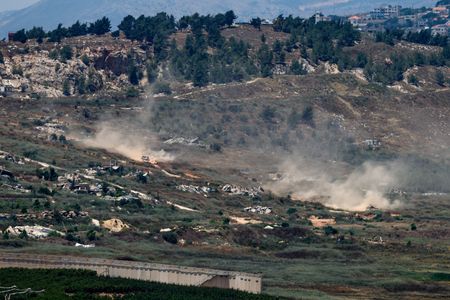
On the ground, the Israeli military reported overnight that it destroyed a Hezbollah tunnel measuring 200 meters — roughly 656 feet — in the south. The military also said it struck three Hezbollah command centers in southern Lebanon on Sunday, citing what it described as ceasefire violations by Hezbollah.
Hezbollah pushed back in a statement issued Monday, saying it has honored the ceasefire “until now” and asserting its right “to defend its homeland and its people.”