A high-ranking United Arab Emirates official declared Friday that Iran cannot be relied upon for any independent agreements concerning the Strait of Hormuz, highlighting the deep distrust among all parties as diplomatic efforts to resolve the ongoing conflict continue to stall.
The crucial shipping lane remains mostly shut down two months after hostilities began, due to Iran’s blockade and U.S. Navy restrictions on Iranian oil exports. This closure has disrupted one-fifth of global oil and gas distribution, driving up worldwide energy costs and sparking fears of economic recession.
While a ceasefire has held since April 8, reports that President Donald Trump would receive briefings on potential new military operations to force Iran into negotiations sent oil prices soaring to four-year peaks Thursday.
According to two senior Iranian officials speaking anonymously to Reuters, Iran has prepared its air defense systems and is planning a comprehensive response if attacked, anticipating a brief but intense U.S. assault possibly followed by Israeli strikes.
The White House has remained silent about its future actions. Trump expressed dissatisfaction Tuesday with Iran’s most recent proposal, while mediator Pakistan has yet to schedule additional negotiations to end the conflict that has claimed thousands of lives, primarily in Iran and Lebanon.
Following U.S. and Israeli air attacks on February 28, Iran retaliated against American bases, infrastructure, and U.S.-affiliated companies throughout Gulf nations. Meanwhile, Iran-supported Hezbollah fired missiles at Israel, prompting Israeli counterstrikes on Lebanon.
Highlighting Gulf state anxieties, UAE presidential adviser Anwar Gargash emphasized that “collective international will and provisions of international law” serve as the main guarantees for navigation freedom through the strait.
“And, of course, no unilateral Iranian arrangements can be trusted or relied upon following its treacherous aggression against all its neighbors,” Gargash stated.
Trump confronts a Friday deadline under the 1973 War Powers Resolution to either conclude the conflict or justify its continuation to Congress. However, this deadline appears unlikely to change the war’s trajectory, as a senior administration official indicated that hostilities technically ended with the April ceasefire between Tehran and Washington.
Financial and energy markets remain volatile due to concerns about the negotiation deadlock and potential extended closure of the Strait of Hormuz.
Brent crude futures climbed again Friday, rising slightly above $111 per barrel and heading toward a 5.7% weekly increase after reaching $126 Thursday, the highest point since March 2022.
Iranian Foreign Ministry spokesman Esmaeil Baghaei warned Thursday against anticipating rapid progress from diplomatic talks.
A senior Revolutionary Guards official threatened that any fresh U.S. attack on Iran, regardless of scope, would trigger “long and painful strikes” against American regional installations. Aerospace Force Commander Majid Mousavi was quoted in Iranian media saying: “We’ve seen what happened to your regional bases, we will see the same thing happen to your warships.”
Trump reiterated Thursday that Iran will not be permitted to obtain nuclear weapons and predicted that gasoline prices—a key Republican concern before November’s midterm elections—would “drop like a rock” once the war concludes.
Iran maintains its nuclear program serves exclusively civilian purposes.
While Trump described Iran’s economy as “a disaster” Thursday, analysts suggest that if he expects Iran to surrender first in this economic standoff, he may face a lengthy wait.
The conflict has worsened Iran’s severe economic difficulties, threatening post-war catastrophe, but the nation appears capable of enduring a Gulf standoff for now, despite the U.S. blockade eliminating its energy exports.
Axios reported that military leaders were scheduled to brief Trump Thursday on a plan involving ground forces to seize part of the strait and reopen commercial shipping. Officials indicate Trump is also weighing options to expand the U.S. blockade or declare unilateral victory.
Washington has not disclosed specific details about its intentions.
Signaling potential U.S. preparation for hostilities to end, a State Department message scheduled for oral delivery to partner nations by May 1 invites them to join a new coalition called the Maritime Freedom Construct to facilitate ship navigation through the strait.
France, Britain, and other nations have discussed contributing to such a coalition but stated they would assist in reopening the Strait only after the conflict ends.
Stock market futures showed gains Friday morning following Wall Street’s most impressive monthly performance in years, as strong corporate earnings helped offset worries about significant disruptions in global oil markets.
Technology giant Apple saw its shares climb 2.8% during pre-market trading after strong sales of its iPhone 17 and MacBook Neo devices led the company to project healthy revenue growth for its upcoming fiscal third quarter.
Fresh economic data revealed that U.S. growth picked up momentum during the opening quarter of the year while inflation rose in March, supporting arguments for maintaining higher interest rates, though these factors haven’t dampened the stock market surge.
The current buying enthusiasm might face challenges ahead. Household spending, which drives most economic activity, slowed during the quarter. Additionally, the rate at which Americans save money dropped, indicating people are drawing from their savings accounts to maintain their spending habits.
The economic figures only capture one month of disruption from the ongoing Middle East conflict. As this war continues with no clear resolution, rising fuel costs could place additional strain on family budgets, particularly as first-quarter tax refund benefits fade.
Oil prices for Brent crude have surged past $110 per barrel due to ongoing disruptions affecting the critical Strait of Hormuz shipping corridor.
“GDP expanded at a respectable-looking pace in Q1, but a glance under the hood suggests the economy’s underlying momentum already was anemic before the energy shock was felt in earnest,” said Samuel Tombs, chief U.S. economist at Pantheon Macroeconomics.
This situation arrives at a challenging time for investors as markets move into May, which historically marks the beginning of a six-month period of weaker stock performance.
Historical data from Fidelity shows that from 1945 through April 2026, the S&P 500 has averaged approximately 2% growth from May through October. This contrasts with roughly 7% average gains during the November through April period.
Early Friday morning at 5:12 a.m. ET, Dow E-minis had gained 44 points or 0.09%, while S&P 500 E-minis increased 4.5 points or 0.06%. Nasdaq 100 E-minis declined 40.25 points or 0.15%.
April concluded with the S&P 500 recording its largest monthly percentage increase since November 2020, while the Nasdaq Composite posted its strongest showing since April 2020. The Dow’s monthly advancement represented its best performance since November 2024.
Notable pre-market movements included gaming platform Roblox, which dropped 23.5% after reducing its annual bookings projections.
Social media platform Reddit jumped 16.1% following an optimistic quarterly revenue outlook.
Good morning, Delmarva! We’re starting off this beautiful Friday with fantastic weather across the peninsula. Expect plenty of sunshine today with temperatures climbing to a comfortable 66 degrees. Light west winds around 5 mph will keep things pleasant, making it a perfect day to get outside and enjoy some fresh air.
However, changes are coming as we head into the weekend. Tonight, we’ll see our first chance of rain showers moving in, with temperatures dropping to around 48 degrees. Pack an umbrella if you’re heading out for Friday night activities!
Saturday brings continued shower chances throughout the day, so weekend outdoor plans might need to be flexible. Highs will be cooler at around 60 degrees, and those scattered showers will likely persist into Saturday night as temperatures dip to 43 degrees.
While the weekend won’t be a washout, it’s definitely looking like indoor activities might be your best bet. Enjoy today’s sunshine while we have it! Stay dry, Delmarva, and have a wonderful weekend!
Drivers traveling on southbound Foulk Road should expect delays this afternoon as construction crews have closed the right lane at the Silverside Road intersection.
According to the Delaware Department of Transportation, the lane restriction is in place due to active construction work in the area. Officials say the closure will remain in effect until 3:30 PM today.
Motorists are advised to use caution when traveling through the work zone and consider alternate routes if possible to avoid potential traffic backups during the afternoon commute.
A concerning movement known as ‘looksmaxxing’ is gaining traction among teenage boys and young men, prompting child development experts to sound the alarm about potentially harmful practices being promoted online.
This emerging trend focuses on maximizing physical attractiveness through various methods, but specialists warn that some techniques being promoted can pose serious health risks to impressionable young people seeking to improve their appearance.
Mental health professionals and pediatric experts are now encouraging parents to engage in open conversations with their sons about developing a healthy relationship with their body image and understanding the difference between safe self-improvement and dangerous practices.
The phenomenon has caught the attention of researchers who study adolescent behavior, as social media platforms continue to amplify content that may influence young people’s perceptions of ideal physical standards.
Experts emphasize the importance of fostering positive self-esteem in young men while teaching them to critically evaluate online content that promotes unrealistic or potentially harmful beauty standards.
Federal agencies have maintained a busy schedule this week, prompting a new quiz to test how closely Americans have been following current events.
The weekly challenge asks readers to fill in the blank regarding which target the Trump administration focused on during recent days. According to the quiz creators, those who have been keeping up with the news deserve recognition for their attention to detail.
This week’s government activities have encompassed a wide range of developments, from building renovations to legal proceedings and the creation of special commemorative products. The quiz format encourages civic engagement by rewarding those who stay informed about federal operations and policy decisions.
Activists across the country organized May Day demonstrations on Thursday, urging Americans to participate in widespread boycotts as a form of protest against current federal policies.
The coordinated effort encouraged people to skip work, avoid shopping, and stay home from school as part of what organizers called a statement against Trump administration initiatives. Demonstrators gathered in cities including Washington, D.C., where crowds marched toward the White House.
According to protest leaders, the demonstrations aimed to challenge what they view as excessive influence by wealthy individuals in government decision-making. The movement adopted messaging around rejecting what activists termed a “billionaire takeover” of federal institutions.
The May Day protests represented a continuation of ongoing political activism, with organizers hoping the economic boycott would amplify their message about democratic governance and corporate influence in politics.
Nebraska launched new Medicaid work requirements on May 1st, marking the first implementation of rules that will soon affect most states across the nation.
The new mandate requires many Medicaid recipients in Nebraska to demonstrate employment as a condition of maintaining their healthcare coverage. This change comes as a result of President Trump’s budget legislation, which establishes similar work verification requirements that other states must begin enforcing starting in January.
The implementation has generated concern among healthcare advocates and beneficiaries who worry about potential coverage gaps for vulnerable populations who may struggle to meet the employment documentation standards.
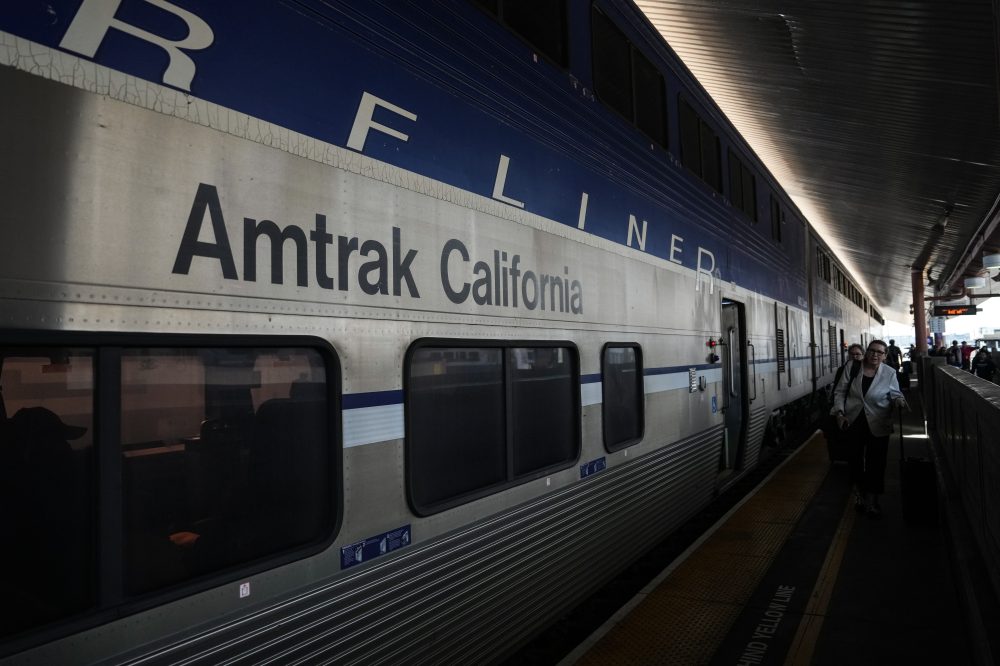
Railway companies nationwide are witnessing dramatic increases in passenger traffic as Americans look for alternatives to driving amid soaring fuel costs.
The surge in train travel comes as gasoline prices have climbed to their highest levels since the Iranian conflict began, prompting more travelers to consider rail transportation as a cost-effective option.
Amtrak, the national passenger rail service, documented a 5% rise in ridership during March when compared to the same period last year. The increase reflects a broader trend of consumers seeking transportation alternatives as they feel the pinch at gas pumps across the country.
Meanwhile, Brightline, Florida’s privately-operated passenger rail system, achieved its most successful month on record in March. The company’s exceptional performance highlights how regional rail services are benefiting from the shift away from automobile travel.
The connection between rising fuel costs and increased rail usage demonstrates how economic pressures influence American travel habits, with many passengers choosing trains over cars for both short and long-distance journeys.
Prime Minister Gaston Browne of Antigua and Barbuda has secured his fourth consecutive term in office following Thursday evening’s emergency parliamentary election, which was heavily influenced by ongoing tensions with the United States regarding visa policies.
According to initial official results, Browne’s Labour Party captured a commanding 15 out of 17 available seats in the nation’s parliament, demonstrating strong voter support despite the diplomatic challenges facing the Caribbean nation.
The snap election was called amid mounting concerns over restrictions placed on visas between the two countries, an issue that became a central focus of the campaign leading up to the vote.
Japan’s currency experienced a dramatic surge Friday following stern warnings from Tokyo officials that they stand ready to take additional market action, just hours after the country conducted its first currency intervention in nearly two years.
The sharp rise in the yen’s value triggered widespread speculation among currency traders that Japan may be preparing another round of market intervention.
After remaining stable through the night, the dollar tumbled during London trading hours, declining as much as 0.66% to reach a session low of 155.60 from an earlier high of 157.12, fueling further intervention speculation among already anxious traders.
“Liquidity is thin and people are nervous after yesterday so there is a susceptibility to volatility in the dollar/yen,” explained Jeremy Stretch, head of G10 FX strategy at CIBC Capital Markets.
The escalated warnings from Tokyo come as Japan’s currency faces continued pressure from significant interest rate differences between the U.S. and Japan, with officials particularly concerned about potential speculative attacks during the upcoming holiday period.
When questioned about possible market intervention, Japan’s top foreign exchange diplomat Atsushi Mimura told reporters: “I won’t comment on what we’ll do ahead. But I will tell you that Japan’s Golden Week holidays have just started.”
Mimura’s statements followed Thursday’s warning from Japanese Finance Minister Satsuki Katayama that “decisive action” was approaching. Katayama also advised reporters to keep their smartphones readily available throughout the holidays, sending a clear message about Tokyo’s willingness to act against speculators who might exploit reduced trading volume to weaken the yen further.
Following those warnings, Japan entered the market to bolster the yen, marking its first official currency intervention since nearly two years ago, according to two sources familiar with the situation who spoke to Reuters. The action sent Japan’s currency soaring by as much as 3%.
When asked directly about Thursday’s market intervention, Mimura refused to comment. Regarding whether currency movements remained speculative in nature, he stated: “There’s no change to my view on markets.”
Mimura emphasized that Japan maintains “extremely close contact” with the United States, noting that both nations agree action may be necessary based on market conditions.
“Every time we see a substantial move in the yen there will be questioning about what is driving this given the warnings we have had,” Stretch from CIBC Capital Markets observed.
Following Thursday’s intervention that pushed the yen to 155.5 per dollar, the currency gave back some gains and traded at 156.99, still stronger than the 160 level that Japanese authorities reportedly view as their intervention threshold.
Market anxiety was evident in options trading, where the cost of hedging against major yen fluctuations over the next week approached its highest level in a month, according to LSEG data.
Prior to this latest action, Japan’s most recent currency market intervention occurred in July 2024, when officials purchased yen after it reached a 38-year low of 161.96 against the dollar.
Data from U.S. market regulators shows speculators currently hold their largest bearish yen position since July 2024, valued at approximately $7.5 billion.
Japanese financial markets will remain closed Monday through Wednesday for Golden Week celebrations, which analysts warn could trigger significant yen volatility due to reduced trading activity.
The Bank of Japan’s gradual approach to interest rate increases has contributed to yen weakness. Even the central bank’s more aggressive signals on Tuesday failed to provide sustained support, as the dollar strengthened on expectations that rising inflation will prevent the U.S. Federal Reserve from reducing rates.
“The yen will remain under downward pressure on inflation concerns from high oil prices, slow BOJ rate hikes and the hawkish tone of other central banks,” said Rinto Maruyama, FX and rates strategist at SMBC Nikko Securities.
Mimura has previously indicated Japan might intervene in crude oil futures markets due to concerns that oil market volatility could impact yen movements.
“We have conditions in place and are always ready to take action,” Mimura told reporters when asked about volatile crude oil futures trading.
BAKU – Azerbaijan’s government called in the European Union’s top diplomat Friday to formally object to a recent EU resolution that criticized how the country handles Armenian detainees and supports the rights of people from Nagorno-Karabakh.
The EU measure criticized what it termed Azerbaijan’s “unjust detention” of Armenian prisoners of war, detainees and hostages and demanded their immediate release. The resolution also restated EU support for the rights of Nagorno-Karabakh Armenians and called for accountability for the destruction of Armenian cultural and religious heritage.
Azerbaijan’s foreign ministry Friday rejected the resolution as “unfounded and biased,” stating that Karabakh Armenians had departed the area of their own accord. The ministry added that individuals the EU describes as prisoners of war had committed serious crimes, including war crimes.
Armenian ethnic groups in Karabakh, which is internationally recognized as part of Azerbaijan, separated from Baku’s authority as the Soviet Union collapsed in 1991.
Two conflicts erupted between Azerbaijan and Armenia over the mountainous region before Baku regained control in 2023, prompting the entire Armenian population of approximately 100,000 residents to escape to Armenia.
Karabakh leaders detained during that period faced trial in Baku starting in January 2025, facing multiple accusations including war crimes. International human rights organizations have expressed concerns about whether the proceedings are fair.
In February, Ruben Vardanyan, an Armenian-born billionaire banker who held a high-ranking position in Nagorno-Karabakh, received a 20-year prison sentence.
A private girls’ summer camp in central Texas will remain shuttered this summer following a devastating flood disaster that claimed 27 lives last year.
Camp Mystic officials announced they have pulled their application to resume operations for the upcoming summer season. The facility became the site of tragedy when flooding swept through the central Texas area, resulting in the deaths of 27 individuals.
The decision means families who may have been hoping to send their daughters to the camp will need to make alternative arrangements for summer activities.
Rail companies across America are reporting significant increases in passenger numbers as fuel costs have spiked following the outbreak of conflict in Iran. The rising cost of gasoline is driving more travelers to consider train travel as an alternative to driving.
Florida’s Brightline railroad, which operates as a private passenger service, achieved record-breaking ridership numbers during the month of March, marking the company’s strongest performance since beginning operations.
The trend reflects a broader shift in travel patterns as Americans seek more cost-effective transportation options amid the current fuel price surge linked to international tensions in the Middle East.
Listen to the Morning Delmarva Farm Report Update — May 1, 2026
DELMARVA — The U.S. House of Representatives approved the Farm, Food and National Security Act of 2026 yesterday morning in a narrow 224-200 vote, earning praise from agricultural organizations nationwide. The legislation now advances to the Senate for the next phase of the legislative process.
The Senate Committee on Agriculture, Nutrition and Forestry will craft their own version of the legislation before it can be considered for a vote on the Senate floor.
Conservation
A significant victory for agricultural preservation has been achieved in Sussex County, where the local land trust has successfully protected an 88-acre family farming operation from development. The Sussex County Land Trust recently completed the conservation of Ard Na Gréine Farm, located in Lewes, ensuring this family-owned agricultural property will continue operating as working farmland indefinitely.
Markets
Yesterday’s grain futures closed mixed. May corn settled at $4.64¾/bu, down $0.01¾. Soybeans for May delivery closed at $11.82/bu, down $0.00¼. Chicago wheat for May delivery ended at $6.23¾/bu, declining $0.18½.
At Laurel Grain Company in Laurel, Delaware, corn for July delivery is bringing $5.22/bu, while soybeans for July are at $11.42.
Forecast
Expect sunny skies today with a high near 62°F. Tonight turns mostly cloudy with rain showers possible. Tomorrow brings a chance of rain showers with temperatures near 59°F.
This article is based on the Delmarva Farm Report Update Morning Edition, May 1, 2026. Hosted by Tom Bradley.
Russia’s space program achieved a milestone Thursday evening with the inaugural test flight of its advanced Soyuz-5 rocket, according to an announcement from the nation’s space agency.
The rocket departed from Kazakhstan’s Baikonur launch facility at 9 p.m. Moscow time on April 30th without complications, Roscosmos officials reported. The space agency touts the vehicle as featuring the globe’s most potent liquid-fuel propulsion system.
According to Roscosmos, the advanced rocket can transport cargo weighing as much as 17 metric tons while delivering substantial cost savings compared to previous models. The agency emphasized the vehicle’s enhanced efficiency for deploying satellites and other equipment into low Earth orbit.
Dmitry Bakanov, Roscosmos director, praised the achievement as representing a “new step in space exploration” and predicted the program would generate employment opportunities across Russia and Kazakhstan.
The Soyuz-5 represents Russia’s first newly engineered launch system since 2014, according to previous statements Bakanov made to President Vladimir Putin.
Violence erupted in Alice Springs, Australia, on Thursday evening when roughly 400 Indigenous protesters confronted emergency responders following the detention of a suspect in the murder of a 5-year-old Aboriginal girl.
The confrontation occurred at the medical facility where 47-year-old Jefferson Lewis was receiving treatment after community members beat him unconscious when he turned himself in at a local town camp. Lewis is the primary suspect in the death of the young girl, who has been named Kumanjayi Little Baby according to traditional Indigenous practices.
Northern Territory Police Commissioner Martin Dole explained during a press briefing that Lewis voluntarily appeared at one of the community camps. “As a result of presenting himself, members of that town camp decided to inflict vigilante justice upon Jefferson,” Dole stated.
The demonstration turned destructive as participants hurled objects and set fires, resulting in injuries to several law enforcement officers and medical personnel. Emergency vehicles, including police cars, ambulances, and fire trucks, sustained damage during the unrest. Authorities deployed tear gas to break up the crowd.
Video coverage from Australia’s public television network ABC captured protesters demanding traditional Aboriginal justice, which typically involves physical retribution.
The child disappeared from her residence on the outskirts of Alice Springs late Saturday night. Search teams consisting of hundreds of volunteers discovered her remains Thursday in the thick wilderness surrounding the tourist town in Australia’s Northern Territory.
Lewis, who had been identified as a person of interest earlier in the week, has a criminal history including assault convictions and was recently discharged from prison.
For security reasons, authorities transferred Lewis to Darwin, the territorial capital, in the early morning hours of Friday. Formal charges are expected to be filed within days.
Australian Prime Minister Anthony Albanese acknowledged the community’s “anger and frustration” while encouraging unity and peaceful resolution.
Robin Granites, a respected Aboriginal community leader speaking for the victim’s family, called for moderation in response to the arrest.
“This man has been caught, thanks to community action, and we must now let justice take its course while we take the time to mourn Kumanjayi Little Baby and support our family,” Granites said in his statement. “Now is not the time to be heroes on social media or make trouble.”
Northern Territory Chief Minister Lia Finocchiaro announced emergency measures including a temporary prohibition on off-premise alcohol sales and the deployment of additional officers from Darwin to maintain order. The community already operates under partial alcohol restrictions on specific weekdays as a crime prevention strategy.
The tragedy highlights ongoing tensions in Australia’s relationship with its Indigenous communities, who have occupied the continent for approximately 50,000 years but faced marginalization under British colonial rule.
While Indigenous Australians represent roughly 3.8% of the nation’s 27 million residents, they consistently rank lowest in most economic and social measures and experience significantly higher rates of suicide and imprisonment.
Many Indigenous families, including the victim’s relatives, reside in settlement areas called camps around Alice Springs, where adequate housing and essential services are frequently lacking.
The iconic motorcycle manufacturer Harley-Davidson has issued a safety recall affecting 88,039 bikes across the United States, according to federal transportation safety officials who announced the action Friday.
The National Highway Traffic Safety Administration reports that the recalled motorcycles have a defective breathing port in the airbox backplate that can become obstructed. When this happens, dangerous pressure can accumulate within the engine’s crankcase, creating a potential safety hazard for riders.
The federal safety agency made the recall announcement on May 1, alerting motorcycle owners to the mechanical flaw that affects tens of thousands of Harley-Davidson vehicles nationwide.
TOKYO – Japan has finalized its initial $2.2 billion financing package to launch the first wave of projects under a massive $550 billion investment commitment to the United States, marking the beginning of funding connected to a trade agreement that reduced American tariffs on Japanese goods to 15%.
The state-owned Japan Bank for International Cooperation announced Friday that it will supply approximately one-third of the $2.2 billion in funding, while private banking institutions will cover the remaining portion.
According to sources with knowledge of the arrangement, the private sector financing will come from Mitsubishi UFJ Financial Group, Sumitomo Mitsui Financial Group, and Mizuho Financial Group, with backing from the government-owned Nippon Export and Investment Insurance.
The initial trio of projects carries a total value of $36 billion and encompasses an oil export terminal in Texas, a facility for manufacturing industrial diamonds in Georgia, and a natural gas power generation plant in Ohio.
The financial structure between Japan and the United States calls for splitting investment returns equally between both nations until reaching a predetermined threshold, at which point 90% of proceeds will flow to the United States.
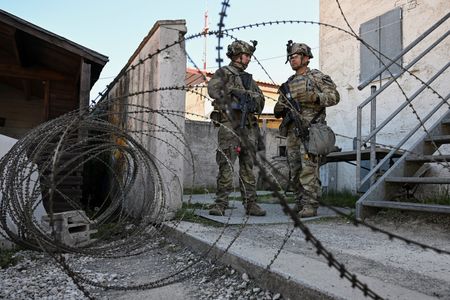
Senior military officials at an American Army training base in Germany defended the strategic importance of U.S. forces stationed in Europe, just one day after President Donald Trump indicated he was considering reducing American troop strength in the region.
Speaking to reporters at the Hohenfels training facility in southern Germany on Thursday, several high-ranking officers outlined key advantages of maintaining the current military presence, including strengthening partnerships with NATO allies, discouraging hostile nations, and incorporating tactical knowledge gained from the ongoing conflict in Ukraine.
The military leaders either avoided discussing Trump’s statements directly or refused to address them when asked. Representatives from U.S. Army Europe and Africa Command, as well as European Command, did not provide immediate responses regarding how potential troop cuts might affect operations.
Germany currently hosts America’s most significant military presence in Europe, with approximately 35,000 active-duty service members stationed throughout the country. The nation functions as a crucial training center, particularly the Hohenfels installation, which covers 163 square kilometers of forested terrain and conducts large-scale combat exercises for American forces alongside NATO partners.
During Thursday’s visit, an armored brigade was midway through an intensive 10-day training exercise that included avoiding enemy surveillance and drone attacks. The unit was completing a nine-month assignment in Poland and other Eastern European locations as part of an Army program designed to strengthen NATO partnerships and military readiness.
Colonel Michael Ziegelhofer, the brigade commander, emphasized that the European presence demonstrates to potential enemies that any conflict would involve “the most ready, trained, lethal fighting force, and not just the United States, but the United States and its NATO allies.” He added, “The fact that we’re out here represents, you know, really our country’s support for NATO and our allies.”
Standing near a simulated village used for training scenarios, Ziegelhofer stressed the importance of joint exercises with international partners. “If a crisis were to take place over here, we’d be in the fight together, so training like this helps us to build the interoperability, not just with the equipment that we have, but between the people and the systems and the processes in our unit,” he explained.
The colonel noted that his brigade has gained valuable experience with unmanned aircraft during their European deployment. “We worked all the way from learning how to fly them to getting pretty sophisticated in understanding the systems and processes, both in using them ourselves and how to counter the enemy’s use of those since we’ve been over here,” Ziegelhofer said.
Lieutenant Colonel Michael Cryer, who leads the permanent opposition force at Hohenfels known as the “warrior” battalion, explained how lessons from the Russia-Ukraine war are being integrated into current training programs, particularly regarding drone technology and electronic warfare capabilities.
“It’s been a cat-and-mouse game, as you’ve seen in Ukraine,” Cryer observed. “Where one side develops this capability, another side develops a countermeasure.”
According to Cryer, one of the most significant tactical challenges involves conducting offensive operations while under constant drone surveillance. “It is nearly impossible to hide,” he stated. “Across the army, we haven’t totally come to grips with that.”
Ford Motor Company announced a major safety recall affecting nearly 180,000 vehicles across the United States due to defective front seat components, federal transportation officials reported Friday.
The recall encompasses 179,698 Ford Ranger pickup trucks and Bronco SUVs from the 2024 through 2026 model years, according to the National Highway Traffic Safety Administration.
Safety investigators discovered that bolts securing the front seat frames can become loose or detach completely, creating a serious hazard for vehicle occupants during collisions.
Federal regulators warned that compromised seating systems may fail to adequately protect passengers in the event of a crash when the bolt becomes dislodged.
Ford dealerships will examine affected vehicles and install replacement pivot links and bolts where needed, with all repair work provided free of charge to owners, transportation safety officials confirmed.
Congressional Republicans are expressing their continued support for President Donald Trump’s approach to handling the delicate ceasefire agreement with Iran.
GOP lawmakers indicated they plan to follow Trump’s lead on the matter as tensions remain high during this critical diplomatic period.
The backing from Republican members of Congress comes at a time when the ceasefire with Iran remains unstable and requires careful navigation of international relations.
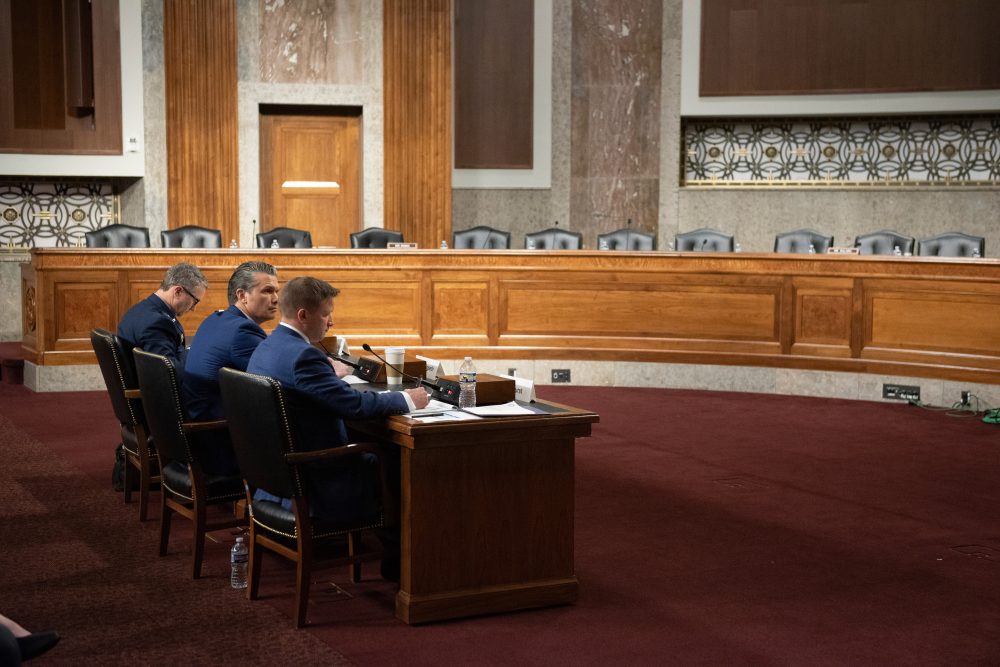
Defense officials, including Secretary of Defense Pete Hegseth and Chairman of the Joint Chiefs of Staff Air Force Gen. Danial Caine, recently appeared before the Senate Armed Services Committee to discuss the Department of Defense budget amid these ongoing tensions.
MINNEAPOLIS — The championship glory that Nikola Jokic brought to Denver three seasons ago feels like a distant memory after the Nuggets’ disappointing first-round playoff elimination.
The Minnesota Timberwolves knocked out Denver in six games, sending the team into an uncertain offseason filled with questions about whether they can compete for another title in the competitive Western Conference. For the first time since 2020, the Nuggets won’t be playing basketball in May.
“We just lost in the first round, so I think we are far away,” Jokic commented after recording 28 points, 10 assists and nine rebounds in Thursday’s 110-98 series-ending defeat.
Minnesota’s defensive anchor Rudy Gobert, a four-time Defensive Player of the Year, effectively contained Jokic throughout the series using his wingspan, tireless energy and smart positioning to limit the Serbian center’s impact.
While Jokic showed improvement in the final two contests, his running mate Jamal Murray struggled significantly. The All-Star guard, who appeared in a career-high 75 regular season games, was consistently stifled by Minnesota defender Jaden McDaniels. Murray managed only 4 of 17 field goal attempts in the finale with a team-worst minus-18 plus-minus rating.
“When I get the looks that I need, they don’t go down,” Murray explained. “So that’s the frustrating part, not showing up when my team needed me the most tonight. I feel like if I would’ve played a little bit better we would’ve had that game.”
Denver’s depth issues became apparent with key forwards Aaron Gordon sidelined for half the series due to a calf problem and Peyton Watson unavailable throughout with a hamstring injury. While Cameron Johnson provided a late scoring burst with 27 points in Game 5, the Nuggets lacked sufficient offensive contributions beyond their two stars against a Timberwolves squad also dealing with backcourt injuries. The trademark pick-and-roll chemistry between Jokic and Murray was notably missing.
“They were missing a bunch of guys tonight, and they still won. So did we need them? Definitely, but if they are not here, we cannot think, ‘If, if, if, if,’” Jokic noted.
Denver led the NBA in offensive efficiency during the regular season and scored under 100 points just twice. Against Minnesota’s aggressive defense, they failed to reach triple digits three times in six games.
“It’s a miss-or-make league. We couldn’t make any shots,” Jokic observed. “I’m confident in my and Jamal’s two-man game.”
The three-time MVP, who will begin his 12th NBA season in 2026-27, becomes eligible for another maximum contract extension this summer. When questioned about his future plans, his response was immediate.
“I still want to be Nuggets forever,” he declared.
Head coach David Adelman lacks similar job security after completing his first full campaign. Could organizational changes be coming to Denver?
“That’s not my decision,” Jokic responded. “Definitely, if we were in Serbia, we would all be fired.”
However, the center known as “The Joker” expressed strong support for his coach.
“It’s not his fault we couldn’t rebound. It’s not his fault we couldn’t catch the ball very well. There is nothing to blame David Adelman. It was all us,” Jokic stated.
The disappointing finish came after Denver closed the regular season with 12 consecutive victories.
“Very disappointing end to the season. I’m the head coach. I take responsibility for things that didn’t go well here,” Adelman said.
NEW YORK (AP) — Eight New York City police officers were injured when a Queens residence exploded in a dramatic blast that hurled the responding officers across a yard during the early morning hours of Thursday.
The officers had been called to the scene regarding reports of an armed individual with a knife and the odor of gas when the devastating explosion occurred. All eight officers sustained minor injuries, including burns and at least one head wound, according to police officials. Medical personnel treated the injured officers, and authorities confirmed that everyone who had been inside the residence was located, though several required hospital treatment.
Dramatic body camera footage captured the terrifying moment just before 3 a.m. when officers approached the small Queens home. As one officer began opening the front door, a tremendous explosion erupted, shattering windows and launching the officers backward across the yard into a fence. The video shows the officers struggling to get back on their feet amid the debris while smoke poured from the damaged structure, with officers checking on each other’s welfare.
“You guys good?” one of the officers can be heard saying.
The footage then jumps forward about a minute, showing an officer assisting two young children from the home while several other residents stumbled out of the building.
“I want to be clear: We got very lucky today, alright,” Assistant Chief Christopher McIntosh of the New York Police Department said at a news briefing hours later. “This could have turned out really differently.”
“Thankfully, today, luck was on their side,” he said of the officers.
According to McIntosh, the individual who triggered the initial emergency call had come to the residence while intoxicated, carrying a knife and two garbage bags containing canisters filled with an “unknown substance.” The man forced entry by pushing through an air conditioning unit to access a basement apartment where his wife, daughter and two grandchildren were living.
The family members managed to escape the building before officers arrived on scene. The suspect remains missing, McIntosh reported.
The residence completely collapsed following the explosion, and surrounding homes also sustained damage, authorities confirmed.
LONDON – The Japanese yen experienced a sharp upward movement against the U.S. dollar on Friday, occurring one day following widespread speculation that Tokyo officials had stepped in to support their nation’s currency.
The U.S. dollar declined as much as 0.66% during trading, reaching a daily low of 155.60 yen compared to its earlier position of 157.12.
The specific factors driving this currency shift remained uncertain.
Financial markets across the globe are bracing for a turbulent period as multiple economic pressures converge, from escalating oil costs due to Middle East warfare to critical employment data and central bank policy decisions.
Market analysts from major financial centers are monitoring several key developments that could shape trading in the coming days.
Energy Crisis Deepens
Crude oil costs have surged once more, momentarily climbing past $120 per barrel this week to reach levels not seen since 2022, driven by the ongoing Iran conflict now in its third month.
The United States and Iran are under mounting pressure to resolve hostilities that have effectively blocked the Strait of Hormuz, creating what experts describe as the most significant energy supply disruption in recent history.
Each additional week of strait closure and sustained high oil prices amplifies economic dangers through increased inflation, sluggish growth, or potentially both scenarios simultaneously. Japan recently took action to support its yen, which has weakened due to the conflict’s impact.
Despite the turmoil, international stock markets continue showing resilience, supported by solid corporate earnings and artificial intelligence developments. However, market observers question whether this stability can persist if the war continues.
With a new month beginning, some investors are considering the traditional market wisdom: “sell in May and go away.”
Employment Report on the Horizon
While the American economy deals with consequences from Middle Eastern warfare, Wall Street’s attention shifts to Friday’s April employment statistics.
Economic forecasters surveyed by Reuters predict the creation of 73,000 new positions. March employment figures showed an increase of 178,000 jobs, marking the strongest performance since December 2024, though this followed February’s significant drop.
These employment numbers arrive as Federal Reserve officials display increasingly hawkish attitudes, with Donald Trump’s nominee Kevin Warsh preparing to assume the chairmanship while the president advocates for interest rate reductions.
The Federal Reserve maintained current rates on Wednesday as anticipated, but three policymakers objected because they believed language suggesting an “easing bias” was no longer suitable, suggesting the Fed may face obstacles in cutting rates this year.
Political Pressure in Britain
Thursday’s local elections across Britain, typically insignificant for investors, may significantly impact markets, with polling data suggesting a substantial loss for Prime Minister Keir Starmer’s Labour Party.
British government bonds have declined this year during periods threatening Starmer’s political standing.
The Prime Minister faces criticism for naming Peter Mandelson as Britain’s U.S. ambassador, despite Mandelson’s documented connections to deceased American sex offender Jeffrey Epstein.
A decisive electoral defeat could trigger broader calls for his removal among party legislators and increase expectations of a replacement more inclined toward relaxed fiscal policies, potentially harming British bonds further.
The 10-year government bond has already become the poorest performer among G7 nations since the Iran conflict began February 28, by a considerable margin.
European Corporate Results
European companies face a significant earnings week, with energy giants Shell and Equinor, banking institutions Commerzbank and HSBC, and defense contractors Rheinmetall, Leonardo and Renk scheduled to report.
Collectively, European corporate earnings are projected to demonstrate strong 3.2% growth for the first quarter, according to LSEG I/B/E/S data.
However, the underlying situation presents greater complexity.
This growth is anticipated to come from only three industries: financial services, technology, and energy. The energy sector stands to benefit most from the Iran conflict through elevated oil and gas prices.
Should the war and energy price increases continue, Europe’s overall earnings prospects could shift.
The current reporting period may be premature for companies to reflect these concerns in their guidance, but it warrants monitoring in upcoming months.
This uncertainty may explain why investors are redirecting focus toward climbing U.S. equities.
Australian Rate Decision
The Reserve Bank of Australia’s Tuesday decision regarding a possible third consecutive rate increase may be extremely close, as inflation concerns and Middle East conflict remain as unclear as during the previous meeting.
The RBA increased its benchmark rate by 25 basis points to 4.1% in March following a narrow 5-4 vote, the closest margin since detailed vote breakdowns began last year. Meeting records revealed that war duration concerns were paramount as officials balance inflation and economic risks.
Another increase would push the RBA’s rate to a post-pandemic peak and reverse all of last year’s rate reductions.
Governor Michele Bullock emphasized the division reflected timing rather than policy direction, with all board members agreeing additional tightening was needed. Markets expect an 80% probability of an increase, slightly reduced from before Wednesday’s lower-than-expected core inflation data.
Defense Secretary Pete Hegseth underwent his initial congressional testimony following the commencement of military operations against Iran under the Trump administration, encountering sharp criticism from Democratic lawmakers.
During the House Armed Services Committee session focused on the Department of Defense’s Fiscal Year 2027 budget, Hegseth confronted intense scrutiny from doubtful Democratic representatives who challenged the administration’s military strategy and decision-making process.
The April 29, 2026 Capitol Hill hearing marked Hegseth’s debut appearance before Congress since hostilities with Iran escalated, setting the stage for what proved to be a contentious exchange between the Defense Secretary and skeptical committee members.
Restaurant operators in Dubai are facing significant challenges obtaining specialty ingredients as the ongoing conflict in Iran enters its second month, forcing many establishments to reduce their offerings and adapt their business models.
Shaw Lash, who operates the Mexican eatery Lila Molino, typically imports avocados and tomatillos – small green fruits essential to Central American cooking – to create her vibrant, spicy menu items. However, the Iranian conflict has disrupted supply chains and increased transportation costs throughout the Gulf region.
The restaurant owner has implemented several cost-cutting measures including reducing staff hours, purchasing smaller ingredient quantities, and scaling back overall production. She’s currently emphasizing her popular take-home fajita packages and retail product line while waiting for conditions to improve.
“The reality is cargo has gotten more expensive, gas prices have gone up, the Strait of Hormuz is still blocked,” Lash explained during an interview at her establishment located in Dubai’s popular Alserkal Avenue cultural district. “This is really creating a problem for us as far as our supply.”
Restaurants throughout the cosmopolitan city are modifying their menus in response, with many switching to regional ingredients or reducing the number of dishes they offer. Local government officials have implemented economic assistance programs, reduced various fees, and launched promotional campaigns to encourage dining out.
The situation poses significant challenges for the United Arab Emirates’ restaurant industry, which market research firm Mordor Intelligence valued at $9.5 billion in the previous year. Prior to the conflict, analysts had projected 20% growth reaching $11.3 billion for this year.
However, the war may alter these projections. Following strikes by the United States and Israel against Iran in late February, the Gulf region experienced weeks of Iranian missile and drone attacks. While a ceasefire took effect on April 8, the Strait of Hormuz – the UAE’s only maritime access point – remains essentially blocked. The country relies on imports for over 80% of its food supply.
The conflict has reduced tourist arrivals, decreased shopping activity in upscale retail centers, affected luxury vehicle sales, and disrupted restaurants – a cornerstone of Dubai’s thriving hospitality sector built on its reputation for luxury and security.
Research conducted by Juniper Strategy and the Global Restaurant Investment Forum revealed that UAE food service businesses are experiencing an average 27% decline in customer demand compared to last year. Supply costs have increased by an average of 13%, according to their report based on surveys of 30 industry executives between April 1-8, representing approximately 400 restaurants.
The study found that establishments in tourist areas and business districts face the most pressure, while neighborhood restaurants have shown better resilience and some have even grown.
The Dubai Department of Economy and Tourism acknowledged in a statement that some businesses are navigating a “period of disrupted footfall” while finding innovative solutions.
“Across the city, restaurants, chefs and platforms are adapting through new formats, targeted offers and community-led initiatives,” the department stated in materials provided to Reuters.
Kelvin Cheung, head chef at the fusion establishment Jun’s Dubai, described the difficulty and expense of finding alternative transportation methods for delicate specialty items like Norwegian scallops or specific Japanese seafood products.
“Your only option was then to fly air freight, which would increase our costs by about thirty, thirty-five percent,” Cheung noted, explaining that he has shifted to featuring local fish varieties on his menu.
Air transportation costs have surged up to 70% on certain routes as the conflict has disrupted Gulf oil shipments and driven up aviation fuel prices. Flight operations to and from the UAE are gradually returning to normal levels.
“Tourism has taken a huge hit,” Cheung observed. “That massive influx of tourists who provide that extra boost of economy, of spend, across all industries is what we’re missing now.”
Cheung has launched a six-course dining experience priced at 225 dirhams ($61) featuring locally sourced ingredients. His restaurant has maintained its full workforce. Additional establishments plan to offer discounted fixed-price meals during May’s Restaurant Week promotion.
Food industry expert Courtney Brandt, who has worked in the region since 2007, noted that the conflict has intensified existing problems including high operational costs, dependence on tourism, and supply chain vulnerabilities. She pointed out that the market was already oversaturated before the war began.
“We were due for a correction,” Brandt explained, suggesting that international restaurant chains with celebrity chef partnerships and stronger financial backing might weather the crisis better, though rising costs remain challenging despite local government support. “Difficult decisions have to be made if businesses are going to survive.”
Several upscale dining establishments, including venues in the luxury Atlantis resort complexes on Dubai’s famous artificial palm-shaped island, have temporarily closed for renovations without specifically citing the war as a factor. Meanwhile, new restaurants continue opening, including the Italian restaurant Siena in Dubai in early April and Isabel Mayfair in the UAE capital of Abu Dhabi.
Both Lash and Cheung remain optimistic about market recovery.
“Over the last few weeks, especially with the ceasefire and schools resuming, we’ve started to see a positive uplift in business and overall movement across the city. There is a sense of normalcy slowly returning,” Cheung said.
LONDON (AP) — Authorities have filed attempted murder charges against a 45-year-old man following knife attacks that targeted Jewish men in London this week.
Essa Suleiman is facing three separate counts of attempted murder in connection with the Wednesday incidents, according to police. Two of the charges stem from an assault in the Golders Green neighborhood, while the third charge relates to another attack that occurred elsewhere in the city on the same day.
Suleiman is scheduled to appear before a judge for his initial court hearing on Friday.
Following Wednesday’s stabbings, British officials have committed to addressing the growing problem of antisemitism in the country.
Commercial aviation between the United States and Venezuela has returned after a seven-year hiatus, with direct flights now operating between the two countries once again during the week of April 24-30, 2026.
The restoration of air service marks a significant development in US-Venezuela relations after years of suspended commercial flights.
Meanwhile, other major events unfolded across Latin America and the Caribbean during the same period. In Colombia, funeral services were held for victims killed in an assault on the Pan-American Highway, with government officials attributing the attack to former FARC rebel groups that rejected peace agreements.
In Haiti, displaced children living in emergency shelters received a special visit from Princess Sarah Zeid of Jordan, who serves as an adviser to the World Food Program. The youngsters are among families forced from their homes due to ongoing gang violence plaguing Port-au-Prince.
The week’s events were documented through photography curated by Leslie Mazoch, a photo editor working from Mexico City.
Overnight drone strikes launched by Russian forces targeted shipping facilities in Ukraine’s Odesa region, leaving two civilians injured and causing significant damage to port operations, according to regional governor Oleh Kiper’s Friday announcement.
The attacks struck residential areas in Odesa city, completely destroying one apartment unit and igniting a rooftop fire in a 16-story residential building. A separate high-rise structure suffered extensive damage when flames consumed its 12th floor, emergency responders reported.
Emergency services released images showing the burning high-rise structure and rescue teams actively working to combat the fires at multiple locations.
Ukraine’s maritime port authority confirmed that facilities within the Greater Odesa shipping hub as well as Danube River ports were targeted during the assault.
The authority reported that the bombardment resulted in damage to docking areas and warehouse facilities while sparking several fires that emergency crews successfully extinguished.
Despite the attacks, port operations remain functional, officials confirmed.
MADRID, May 1 – Belgian tennis player Alexander Blockx turned what should have been a qualifying tournament appearance into a career-defining moment at the Madrid Open, advancing to the semifinals after receiving a last-minute spot in the main draw due to player withdrawals.
The 21-year-old athlete defeated several higher-ranked opponents, including Brandon Nakashima, Felix Auger-Aliassime, and Francisco Cerundolo, before stunning defending champion Casper Ruud with a straight-set victory of 6-4, 6-4 on Thursday. His remarkable run earned him a semifinal matchup against Alexander Zverev.
Blockx, who climbed from outside the world’s top 100 just two months ago to his current ranking of 69th, could potentially break into the top 30 with another victory. However, the young player acknowledged his week has already exceeded all expectations.
“I was already happy with getting into the main draw … at the last minute on Friday, just before the deadline. Winning my first match (against Cristian Garin) was already a bonus,” Blockx explained.
“Then all the other matches, I never thought I’d get that far. But once you get confident and you feel your game, a lot can happen.”
After facing challenges maintaining consistency on the professional tour following his appearance in the Next Gen ATP Finals championship match last December, Blockx began showing renewed promise with a third-round performance at the Monte Carlo Masters in recent weeks.
His impressive Madrid performance, highlighted by defeating two-time French Open finalist Ruud, has provided additional confirmation of his abilities on clay courts.
“It’s nice beating the defending champion, whose favourite conditions are here. That shows I can play well on clay too,” Blockx stated.
“The ranking is going up really fast. It’s nice to be able to play bigger tournaments now. I don’t know the ceiling, I’ll just see match by match, and hopefully get as high as I can.”
Blockx’s semifinal against Zverev is scheduled for Friday, while world number one Jannik Sinner faces Arthur Fils in the tournament’s other semifinal match.
South Australia finds itself in a difficult situation regarding a $32 million golf course renovation project following news that Saudi Arabia will discontinue funding for LIV Golf after the 2026 season.
The Saudi Public Investment Fund, which has invested over $5 billion in the breakaway golf tour since it began in 2022, announced Thursday that financial backing will cease at the end of 2026, forcing LIV officials to search for alternative funding sources.
The Australian state has already begun construction on transforming the North Adelaide Golf Course with a design by Greg Norman, intending to host the LIV tournament there starting in 2028.
Environmental activists have organized protests against the development, which requires cutting down nearly 600 trees. Demonstrators held a “vigil” at the golf course this week to oppose the tree removal.
State lawmaker Robert Simms, who opposes the renovation, criticized the government’s commitment to the project. “The government only ever committed to this project on the basis that it was going to be supposedly the jewel in the crown for LIV Golf,” Simms stated.
However, Premier Peter Malinauskas, South Australia’s top elected official, stood by the decision to move forward with the project, which received approval more than a year ago.
“Well look, LIV hasn’t been cancelled so I think … we’d be putting the cart before the horse if we just, sort of, decided to cancel the golf course when LIV very much intend to be here into the future,” Malinauskas said during a Friday interview with ABC Radio Adelaide. “Now, let’s wait and see how that plays out.”
Despite criticism from traditional golf fans who dislike LIV’s team-oriented format and entertainment focus, the Adelaide tournament has achieved remarkable success since its 2023 debut in a nation that typically struggles to attract top golf talent.
The February event at The Grange Golf Club drew more than 115,000 spectators, with Saturday’s attendance of 38,500 setting a new record for the largest single-day crowd in LIV Golf history.
The tournament has earned recognition as the World’s Best Golf Event for three consecutive years from the World Golf Awards, an industry organization focused on golf tourism.
State officials consider the event a cornerstone of the Labor government’s major events strategy, claiming the tournaments from 2023-2025 generated approximately $217 million for South Australia’s economy.
Malinauskas revealed that LIV Golf CEO Scott O’Neil has provided guarantees that the Adelaide event will proceed as scheduled.
“As far as South Australia’s concerned, particularly given the unqualified success this event has been economically for our state, that’s a good thing,” the Premier explained. “Having said that, I’m not naive to the fact that these reports have been going on for a good, you know, almost a fortnight and it’s something we continue to monitor very closely.”
While major American and European tours have prohibited LIV participants from competing in their events, Australia’s smaller professional tour has welcomed these players and benefited from the attention they generate.
The all-Australian Ripper GC team, led by captain Cameron Smith, claimed the team championship in Adelaide this February, thrilling local fans and golf administrators.
“Not only are they great golfers, they’re great ambassadors for Australia,” said James Sutherland, CEO of Golf Australia. “They not only play here on the local tour but push their mates on the LIV tour to come down as well.”
OG Anunoby dominated the first half with 26 of his 29 total points, propelling the New York Knicks to a crushing 140-89 win over the Atlanta Hawks on Thursday night. The victory sealed the Knicks’ first-round Eastern Conference playoff series triumph at 4-2.
The performance marked several franchise milestones for New York. Their 140 points represented the highest-scoring playoff game in team history, while the 51-point blowout became their largest postseason victory margin ever. The Knicks’ only bigger win came during the regular season this year when they demolished Brooklyn 120-66 on January 21st.
Atlanta suffered through their second-worst playoff loss in franchise history. The most devastating defeat occurred when the St. Louis Hawks fell 133-75 to Minneapolis on March 19, 1956.
New York dominated early with a commanding 63-11 first-half surge and held leads as large as 61 points. They captured three consecutive victories against Atlanta to reach the conference semifinals for the fourth consecutive season. Karl-Anthony Towns achieved his second career playoff triple-double, recording 12 points, 11 rebounds, 10 assists and three steals. The starting players were benched by the middle of the third quarter due to the massive lead.
Timberwolves 110, Nuggets 98
Terrence Shannon Jr., thrust into the starting rotation due to multiple injuries, delivered a career playoff-best 24 points to help Minnesota eliminate Denver in Game 6 at home.
The sixth-seeded Timberwolves will now face the second-seeded Spurs in the Western Conference semifinals, beginning Monday night in San Antonio.
Minnesota played without several key contributors including All-NBA guard Anthony Edwards (knee injury), Donte DiVincenzo (Achilles), Game 4 standout Ayo Dosunmu (calf strain) and veteran Kyle Anderson (illness). Shannon, who sat out the series’ first three contests, responded brilliantly by shooting 9-of-20 from the field and delivering a critical three-point play that sparked a decisive 10-1 closing run.
Jaden McDaniels led all scorers with 32 points in the victory. Nikola Jokic kept Denver competitive throughout, posting team-leading totals of 28 points, 10 assists and nine rebounds.
76ers 106, Celtics 93
Tyrese Maxey poured in 30 points as Philadelphia defeated visiting Boston once again, setting up a winner-take-all Game 7 in their opening-round matchup.
The second-seeded Celtics previously controlled the series 3-1 after demolishing Philadelphia by 32 points on Sunday. However, the seventh-seeded Sixers have responded with consecutive double-digit victories in Games 5 and 6. The deciding contest will take place Saturday in Boston, where Philadelphia hopes to complete their first-ever 3-1 series comeback.
Paul George contributed 23 points for the Sixers, while Joel Embiid added 19 points, 10 rebounds and eight assists in just his third appearance since undergoing emergency appendix surgery. Jaylen Brown paced Boston with 18 points but struggled with ball security, committing five of the team’s 13 turnovers.
The world’s largest automaker, Toyota Motor Corporation, is preparing to announce another quarterly profit decline next week, marking the fourth consecutive period of reduced earnings compared to the previous year.
Financial analysts predict Toyota will reveal operating profits of 813 billion yen (approximately $5.17 billion) for the January through March period, representing a 27% decrease from the same timeframe last year. Seven analysts surveyed by LSEG provided the median forecast.
This anticipated decline would push Toyota’s annual operating profit to its lowest point in three years, reaching approximately 4 trillion yen. The drop comes despite the company maintaining high production levels and strong sales figures worldwide.
Several factors are contributing to the profit squeeze, including increased wages throughout the supply chain, import tariffs imposed by the United States under President Donald Trump’s administration, and elevated raw material costs connected to ongoing Middle East tensions.
Toyota had previously projected operating profits of 3.8 trillion yen for the recently concluded financial year. The company continues to see strong performance in major markets like the United States, where higher-profit hybrid vehicles have helped maintain revenue streams.
The Middle East situation, which escalated on February 28, has particularly impacted aluminum pricing and other essential materials used in vehicle manufacturing. Car shipments to the Middle East region have also faced significant disruptions.
“If the current situation in the Middle East continues, higher aluminum prices would be quite tough to absorb,” stated Yuya Takahashi, who works as an analyst at Marusan Securities.
Toyota’s Middle East sales dropped by nearly one-third during March, contributing to two consecutive months of declining global sales figures, according to company data released last week. While the Middle East represents a smaller market for Toyota with roughly 34,000 vehicles sold monthly, the region typically purchases higher-profit vehicle models.
Industry watchers will be closely monitoring how newly appointed CEO Kenta Kon addresses the earnings announcement scheduled for May 8. Kon, who previously served as secretary to Chairman Akio Toyoda and is considered a close ally, assumed the chief executive role last month.
Kon played a significant role in the successful tender offer to privatize group company Toyota Industries, which concluded in March despite resistance from investors including activist fund Elliott Investment Management.
Takahashi noted that aluminum price increases typically affect automaker costs with approximately a six-month delay, suggesting Toyota and its suppliers may face greater financial impact during the current fiscal year that began April 1.
Despite Toyota’s investments in workforce development and supply chain strengthening over recent years, which have improved resilience against external disruptions, fully offsetting rising material costs may prove challenging, according to Takahashi.
Toyota’s stock performance has suffered significantly, declining more than 20% since late February when the United States and Israel conducted attacks on Iran. Year-to-date, shares have fallen approximately 10%.
On Tuesday, major Toyota suppliers including Aisin, Denso, and Toyoda Gosei issued warnings about increasing uncertainty in their business outlooks. Company executives highlighted potential profit reductions from rising aluminum and petroleum-based input costs.
Financial market observers will pay particular attention to how Toyota plans to address Middle East conflict impacts on vehicle sales volumes and the extent to which increasing material prices might affect profits throughout the current fiscal year.
“The question is to what extent those two factors will be reflected in the guidance,” Takahashi explained regarding investor expectations for the upcoming earnings report.
Federal authorities made public on Thursday surveillance footage capturing what they describe as an armed individual’s attempt to breach the White House Correspondents’ Association dinner with the alleged intent to assassinate President Donald Trump.
The released video evidence shows the suspect, who investigators say was carrying firearms and bladed weapons, making his attempt to infiltrate the prestigious Washington media event.
Court documents from the Department of Justice include images of Cole Tomas Allen inside his Washington hotel room on Saturday, April 25, 2026, where he can be seen photographing himself with his mobile device in front of a mirror.
The footage represents key evidence in the federal case against the suspect, who authorities allege planned and attempted to carry out violence against the president at one of Washington’s most prominent annual gatherings of journalists and political figures.
Delaware State University doctoral candidates have earned a spot in the final round of a prestigious national competition focused on compassionate healthcare initiatives.
The students advanced to the concluding phase of the Robert Wood Johnson Foundation’s Compassion Challenge, a competitive program that highlights innovative approaches to improving health and wellness in communities across the country.
The foundation’s challenge seeks to identify and support groundbreaking ideas that demonstrate how compassion can be integrated into healthcare practices and community health solutions.
Delaware State University’s doctoral program participants now compete alongside other finalists from institutions nationwide for recognition and potential funding of their compassionate healthcare proposals.
TEHRAN, Iran (AP) — Inside her Tehran studio, fashion designer Amen Khademi set up a photo session for a jacket featuring Persian-inspired designs. While touching up her model’s makeup, her mind wandered to a pressing concern: whether her business could survive four months without its primary customer connection — internet access.
For the majority of 2026, Iran’s 90 million citizens have been disconnected from the web in what ranks among the globe’s most extensive and severe national blackouts. The shutdown is decimating a digital marketplace that had previously withstood government controls and international penalties. Businesses spanning fashion, fitness, marketing, and retail have watched their revenue disappear.
Khademi’s sales have completely stopped. “The internet outage in the past four months has completely destroyed not only my business, but many online businesses,” she said.
Even with a fragile ceasefire involving the United States and Israel, Iranian leadership refuses to end the blackout they’ve characterized as essential during wartime. However, they’re confronting growing criticism as the shutdown compounds widespread unemployment from industrial strikes and continued U.S. economic barriers.
Prior to January, Iranian citizens had web access despite authorities blocking substantial content. Currently, all connections to the worldwide internet have been severed. While some bypass methods exist, their costs have skyrocketed beyond most Iranians’ financial reach.
The digital blackout drains approximately $30-40 million from the economy each day, with secondary losses potentially doubling that figure, according to Iran’s Chamber of Commerce member Afshin Kolahi, who spoke to local media. Communications Minister Sattar Hashemi estimates roughly 10 million workers depend on internet connectivity for their livelihoods.
During years of financial instability caused by sanctions and poor governance, social platforms including Instagram and WhatsApp enabled small enterprises to locate clients while helping citizens generate supplemental income amid soaring costs for essential items.
Iranian officials initially blocked internet access in January amid widespread anti-government demonstrations. As that restriction began lifting, authorities implemented total internet elimination on February 28 when the U.S. and Israel initiated military action.
Internet censorship specialist Mahsa Alimardani noted that Kashmir and Myanmar have experienced longer regional or platform-specific restrictions. Nations such as China, through its “Great Firewall,” and North Korea have consistently maintained tight global internet controls.
“What makes Iran’s shutdown unprecedented is the combination of scale and severity: an entire country of 90 million people with a developed digital economy deliberately reverted to a controlled national intranet,” said Alimardani, an associate director for technology threats and opportunities at the rights group Witness.
DigiKala, a prominent Iranian online retailer, recently announced workforce reductions affecting 200 employees, representing roughly 3% of its staff. The damage spreads to “production, foreign trade and even traditional business,” stated Reza Olfatnasab, who leads a national organization representing digital enterprises, in remarks published by Iranian outlets.
Instagram serves as Khademi’s storefront. Her studio’s account, which attracted over 30,000 followers, now sits dormant. She conducted the photo session to preserve images for future use while searching for alternatives.
Her model, Farnaz Ojaghloo, also works as a fitness instructor. The blackout has eliminated both her modeling opportunities and the online training programs she offered to domestic and international clients.
“Psychologically, it really hits hard,” Ojaghloo said. “All the plans you had for six months or a year ahead get pushed aside, and your only concern becomes surviving in the moment.”
For years, Iranian authorities maintained content filters and monitored platforms including YouTube and Instagram. Before the conflict, citizens could circumvent limitations using affordable virtual private networks (VPNs) and other accessible methods.
The current shutdown has driven up costs for underground VPN services. Iranian government media frequently report detentions of individuals using prohibited VPNs or the American Starlink satellite network, which was outlawed last year.
High-ranking government officials receive “white” SIM cards providing global internet access. Responding to pressure over economic damage, authorities now permit limited internet access to select professions, businesses, and media organizations.
A Tehran e-commerce association criticized this hierarchical approach in Iranian media Wednesday, describing it as “an abuse of an obvious need of every citizen.” The group warned the outage threatens “the destruction of the country’s infrastructure at the hands of our own decision-makers.”
Most citizens must rely solely on Iran’s domestic network.
A Tehran advertising professional explained that clients show little interest in paying for content that cannot appear on major platforms like Instagram, where he maintains tens of thousands of followers. His earnings have dropped to nearly nothing since the war commenced.
An Isfahan-based gamer with substantial YouTube and Instagram followings described Iran’s domestic network as “terrible” — sluggish, vulnerable, and error-prone. He has also lost virtually all sponsor and donation income.
Iran operates its own social media platforms designed to mirror services like WhatsApp and YouTube, though content faces strict monitoring and frequent censorship.
“Nobody really wants to use these platforms, but there is no other option,” the gamer explained. Both he and the advertising professional requested anonymity due to safety concerns.
The shutdown has intensified hardships for Iran’s previously substantial and well-educated middle class, already struggling following a prewar currency collapse.
Iran’s economic deterioration has triggered repeated anti-government protests, most recently in December. Now, increasing numbers of Iranians consider emigration, according to a software developer.
The developer — also speaking anonymously for security reasons — explained that the internet shutdown has eliminated remote employment opportunities. He lost his position when his previous employer terminated nearly all staff in recent weeks.
The impact appears in Tehran’s growing street vendor population. Reza Amiri, a 32-year-old former internet provider employee, now sells hats and umbrellas near a subway station. He became unemployed after the war began and hasn’t received his final paycheck.
Monireh Pishgahi sells decorative items and accessories on the capital’s renowned Vali Asr Street. Her tailoring operation previously supplied three online retailers. As business declined, she closed the shop and dismissed her five workers.
Downtown merchant Mohammad Rihai said he stopped trying to convince street vendors to clear the sidewalk in front of his establishment. “After the war, you see them all along the sidewalk. I cannot fight them anymore.”
BEIRUT (AP) — For more than ten years, Ahed Badawi made her home in Bahrain, a tiny Gulf nation that offered peace and stability unlike her war-torn homeland of Syria.
The small country served as sanctuary for Badawi, her sister, and their aging mother throughout Syria’s devastating 14-year civil conflict.
“Nothing at all ever happened there,” she explained. “I mean, the Bahrainis don’t even know what war is.”
However, when the United States and Israel launched attacks against Iran, triggering a broader regional conflict, Bahrain and other Gulf nations suddenly became targets in Iran’s retaliation. The family made the surprising decision to return to their home in Aleppo, once a battleground of Syria’s bloodiest fighting but now offering unexpected safety.
The conflict-scarred nation has emerged as an unusual pocket of stability during the region’s current crisis. Syrian leadership has been working to repair diplomatic ties with Arab and Western nations that had isolated Syria during Bashar Assad’s rule, before rebels removed him from power in December 2024 and established new leadership.
Following the start of the U.S.-Israeli conflict with Iran and Iran’s blockade of the Strait of Hormuz, Damascus has capitalized on this chance to strengthen international relationships by maintaining neutrality.
Syria has “presented itself as the solution to strategic crises in the region,” explained Obayda Ghadban, a Syrian Foreign Ministry representative.
Following the U.S.-Israeli strikes, Iran launched missiles not just at Israel but also targeted Gulf nations that house American military installations. In Lebanon, fighting resumed between Israel and Hezbollah, the Iran-supported militant organization. Iraq, hosting both Iranian-backed militias and U.S. military bases, became caught between opposing forces.
Even with missiles crossing Syrian airspace and occasionally landing within its borders, Syria successfully remained uninvolved while establishing itself as an alternate shipping route for oil that can no longer pass through the blocked strait.
“Syria, which was once an arena for others’ conflicts, has today chosen, through the will of its people and institutions, to be a bridge to security and a fundamental pillar of the solution,” interim Syrian President Ahmad al-Sharaa declared during a recent gathering of European officials in Cyprus.
He promoted his nation as “the alternative and secure artery connecting Central Asia and the Gulf to the heart of the European continent.”
With Iran controlling access to the strait, oil shipments now travel by truck from Iraq into Syria before being transported to European customers through Syria’s Baniyas port, avoiding the Hormuz passage. A crucial border crossing linking northern Iraq and Syria resumed operations last month after more than a decade of closure, with authorities promoting it as another pathway for energy shipments.
This land-based route costs more and operates less efficiently than maritime transport through the strait, but it offers a viable alternative while Iran maintains control over the waterway.
Ghadban emphasized that his nation had no desire to align with either warring faction.
“The parties participating in it are strategic enemies of Syria, whether we talk about Iran and its affiliates, or if we talk about Israel and its aggressive expansionist policy in Syria,” he stated. “Both parties have an interest in weakening Syria.”
Iran served as Assad’s crucial supporter during the civil war, alongside Hezbollah and allied Iraqi militias. This alliance put them at odds with the groups currently governing Damascus.
Israel has maintained suspicion and sometimes open hostility toward Syria’s new Islamist leadership. Following Assad’s removal, Israeli forces took control of a UN-monitored buffer zone in southern Syria and continue their occupation.
During the initial phase of the U.S.-Israeli war with Iran, some observers predicted Syria might enter the conflict to retaliate against Hezbollah.
Instead, Syrian military forces remained inactive, while al-Sharaa and other officials emphasized their lack of interest in Lebanese involvement.
Noah Bonsey, who serves as senior adviser on Syria with the International Crisis Group, noted that while “Damascus was really clear from the beginning that it wanted no part of this war and signaled to everyone accordingly,” its successful neutrality resulted partly from favorable circumstances.
American troops had maintained bases in eastern Syria for years, but the U.S. had reduced its military presence before the Iranian conflict began.
When clashes erupted between Syria’s central government forces and the Kurdish-led Syrian Democratic Forces in the northeast during January, U.S. military personnel relocated thousands of detained Islamic State suspects from Syrian facilities to Iraq. The military also reduced its Syrian presence, where preventing IS resurgence had been the primary objective.
“Because the withdrawal had gone so far by the time the war (with Iran) started, there were very few U.S. assets and personnel still in the country” that might have attracted Iranian attacks, Bonsey observed.
While Syria may have gained diplomatic advantages through its neutral stance, the nation will still face economic consequences from the regional conflict, according to Bonsey.
Damascus had anticipated that Syria’s post-conflict reconstruction would attract investment from prosperous Gulf Arab nations previously recognized for their commercial centers and modern architecture.
However, these countries will now have reduced resources and “less bandwidth to spare for lower-priority issues” as they concentrate on “shoring up their own defense and getting their own economies back up to speed” following the war, Bonsey explained.
Although Syria might eventually benefit from infrastructure developments like proposed railway connections and gas pipelines linking the Gulf to Turkey and European markets, such projects would require years to complete, if they materialize at all.
Currently, Syria’s new administration confronts growing public dissatisfaction over the nation’s struggling economy.
Despite these challenges, Badawi remains content with her decision to return home.
“There’s nothing like being in your own country,” she reflected. “When you’re in your own country, you feel a different kind of security.”
A groundbreaking trade agreement between the European Union and South American nations began provisional implementation on Friday, establishing what officials describe as a massive trans-Atlantic marketplace worth an estimated $22 trillion and serving 720 million consumers.
The historic pact between the EU and the Mercosur bloc – comprising Brazil, Argentina, Uruguay, and Paraguay – was formally signed on January 17th during a South American group meeting. However, European Commission President Ursula von der Leyen’s decision to bypass EU Parliament approval and implement the deal provisionally has sparked a legal challenge that could halt the agreement.
“This is good news for EU businesses of all sizes, good news for our consumers and good news for our farmers, who will gain valuable new export opportunities, with full protection for sensitive sectors,” von der Leyen stated Thursday.
The European Commission President is scheduled to participate in a virtual meeting Friday with leaders from all four Mercosur member countries to mark the agreement’s launch.
Brazilian President Luiz Inácio Lula da Silva, a strong advocate for the deal, officially endorsed it through a presidential decree earlier this week. He characterized the agreement as Brazil’s answer to unilateral trade policies implemented by U.S. President Donald Trump last year and a commitment to international cooperation.
“Nothing better than believing in the exercise of democracy, in multilateralism, and in cordial relations between nations,” Lula declared during a celebration ceremony in Brazil’s capital city of Brasilia, marking the culmination of more than 25 years of negotiations.
Brazil’s Vice President Geraldo Alckmin, who participated in the deal’s negotiations, told The Associated Press and other media outlets last week that failing to secure this EU partnership would have left South American nations at a disadvantage while competitors formed alternative trade relationships.
As Mercosur’s dominant economic force, Brazil maintains a gross domestic product projected to exceed $2.3 trillion in 2025.
Lia Valls, a research associate at the Rio de Janeiro-based think tank Fundacao Getulio Vargas, believes the agreement represents a strong counter to growing global unilateralism.
“The EU and Mercosur are showing that it is possible for big blocs to reach a deal in this world where that multilateral system is being very weakened and where the U.S. clearly operates to do that,” Valls explained to the AP. “It is a very positive sign.”
The pact encountered significant resistance from European agricultural interests and environmental advocates, causing delays in December before being submitted to the EU’s highest court for review.
South American agricultural sectors, particularly beef, fruit, and mineral exporters, anticipate substantial growth in European market access. Meanwhile, European automotive manufacturers, pharmaceutical companies, and technology firms see new opportunities in Mercosur territories.
However, the deal has generated concerns on both sides. Mercosur-based companies worry about intensified competition from European technology firms, while European farmers express anxiety about pricing pressures and imports that may not meet comparable environmental standards.
French President Emmanuel Macron, a vocal opponent of the agreement, has consistently pushed for protective measures to prevent major economic disruption within the EU, stricter regulations in Mercosur countries including pesticide limitations, and enhanced inspection procedures for imports at European ports.
The comprehensive agreement systematically eliminates trade barriers and tariffs between both regions while maintaining economic protection clauses that allow European countries to shield certain industries from overwhelming competition, including poultry, beef, sugar, and fruit sectors.
While Anthony Joshua has already lined up a preparatory bout before his highly anticipated all-British heavyweight showdown with Tyson Fury scheduled for later this year, Fury is also seeking to add an additional fight to his calendar.
Promoter Frank Warren confirmed Thursday that Fury is pushing for his own interim contest before the major bout.
“I think he will probably want to be doing something in between, let’s see,” Warren stated during a press conference. “AJ has got his fight. Tyson, I’m quite sure, will have a fight in between. That’s what he’s asking for and we’ll see where we go from there.”
The two British heavyweights, with Fury at 37 and Joshua at 36, have reached an agreement for their matchup, though specific details regarding the date and location remain undisclosed beyond confirmation that the fight will take place in the latter part of this year.
Joshua, who holds a record of 29-4 with 26 knockouts, is set to face Kristian Prenga (20-1, 20 KOs) on July 25 in Riyadh, Saudi Arabia.
Fury, with a record of 35-2-1 and 24 KOs, experienced consecutive defeats in decision losses to Oleksandr Usyk before rebounding with a unanimous decision victory over Arslanbek Makhmudov earlier this month in London.
Joshua’s most recent ring appearance saw him deliver a sixth-round knockout victory over internet personality Jake Paul last December. Prior to that victory, he suffered a knockout loss to Daniel Dubois in September 2024 in London.
Fury first captured a portion of the world heavyweight championship in 2015 and held part of the title going into his initial fight with Usyk in May 2024.
Joshua held at least a portion of the heavyweight championship from 2016 until he also experienced back-to-back defeats to Usyk, with the first loss occurring in 2021.
The Philadelphia Phillies delivered an unforgettable performance for their home crowd, capturing both ends of a doubleheader against the San Francisco Giants with thrilling walk-off victories that had fans on their feet.
In the opening contest, Philadelphia found themselves down 2-1 heading into the final frame before mounting a spectacular comeback. Bryson Stott launched a crucial triple that evened the score in the ninth inning, then crossed home plate on Justin Crawford’s infield grounder to secure a 3-2 triumph.
The dramatic finish came after Adolis Garcia opened the ninth with a base hit and came around to score on Stott’s clutch hit to the right field corner. Following Edmundo Sosa’s out, Crawford delivered the game-winner by beating shortstop Willy Adames’ throw to first base on a ground ball to the left side.
Kyle Schwarber reached a significant milestone during the opener, connecting for his 350th career home run. Philadelphia starter Cristopher Sanchez turned in a solid performance, surrendering just two runs while recording seven strikeouts across 6 2/3 innings of work.
Giants starter Logan Webb pitched effectively for seven innings, giving up only one run and fanning six batters. He appeared headed for a victory until Ryan Walker (0-1) surrendered the lead in the ninth inning.
The nightcap proved equally exciting, with Philadelphia claiming a 6-5 victory in extra innings. Alec Bohm’s sacrifice fly in the tenth inning brought home the decisive run, completing the sweep with another walk-off celebration.
Schwarber continued his outstanding day with a perfect 4-for-4 performance in the second game, including a clutch two-out hit in the ninth that forced extra innings. The veteran outfielder and Trea Turner both launched home runs in the opening frame to give Philadelphia an early advantage.
Chase Shugart (2-0) made history by becoming the first Phillies pitcher since 2022 to earn victories in both games of a doubleheader. Drew Gilbert collected three hits for San Francisco, which was swept in the three-game series. Matt Gage (2-1) took the loss despite retiring both batters he faced.
In other MLB action, Detroit snapped a lengthy losing streak against Atlanta with a 5-2 comeback victory. Gleyber Torres contributed three hits and delivered a crucial sacrifice fly during a two-run eighth-inning rally that lifted the Tigers over the Braves.
Matt Vierling had an exceptional game for Detroit with three hits, including a double, while scoring twice and driving in two runs. The Tigers ended a 10-game losing streak against Atlanta. Rookie Kevin McGonigle walked three times to extend his on-base streak to 26 games, though his 13-game hitting streak came to an end.
Baltimore and Houston split their doubleheader, with the Orioles winning the opener 10-3 behind grand slams from Adley Rutschman and Jeremiah Jackson. The Astros responded with an 11-5 victory in the nightcap, led by Cam Smith’s three-run homer during a five-run first inning.
St. Louis completed a four-game sweep of Pittsburgh with a 10-5 victory, while Washington rallied past New York 5-4 on CJ Abrams’ go-ahead two-run homer in the eighth inning. Cincinnati defeated Colorado 6-4 behind TJ Friedl’s go-ahead blast, and Milwaukee hammered Arizona 13-1 with William Contreras collecting four hits and four RBIs.
Global financial markets are experiencing a dramatic split as technology company earnings continue to fuel stock market gains while oil prices climb to concerning levels.
U.S. investors are aggressively purchasing stocks despite mounting concerns about rising energy costs, with technology earnings providing the primary driver for market optimism.
Industrial giant Caterpillar surprised analysts by incorporating artificial intelligence into its business strategy, reporting that data center demand for its power equipment helped the company exceed Wall Street expectations and boost its stock price by nearly 10%.
Apple also surpassed earnings projections, though by smaller margins than previous quarters, prompting analysts to describe the results as “solid.” The tech giant’s shares rose a modest 1.9% in after-hours trading.
However, Goldman Sachs analysts are raising red flags about the current market behavior, suggesting the situation has evolved beyond normal momentum trading into dangerous territory. “This is straying beyond momentum and into mania,” the investment firm warned.
The current Wall Street surge represents one of the most concentrated rallies in recent history, with earnings improvements limited almost exclusively to semiconductor, information technology, and communications companies.
Meanwhile, oil markets are experiencing unprecedented disruption. Brent crude has pulled back from its peak of $126.41, though this decline primarily reflects the transition from June to July contracts. July contracts have climbed approximately 1% to above $111.00, with no resolution in sight for the Strait of Hormuz situation as Iran and the United States continue exchanging threats.
Energy experts predict prices for gasoline, diesel, jet fuel, and other petroleum products will continue rising as supplies dwindle and demand must be forced downward to restore market balance.
Central banking officials are taking notice of these inflationary pressures. Four major central banks issued warnings this week about upcoming inflation risks, with both the European Central Bank and Bank of England suggesting interest rate increases could occur as early as June.
The oil price surge is also complicating Japan’s currency intervention efforts, as the country’s trade deficit is expected to expand dramatically in coming months. While initial intervention helped push the dollar down from 160.00 to 155.50 yen, the currency has since rebounded above 157.00 as markets test Tokyo’s resolve.
Looking ahead, key market-moving events include a presentation by Bank of England Chief Economist Huw Pill regarding the central bank’s latest interest rate decision and the release of April’s ISM manufacturing survey.
United Nations Secretary-General Antonio Guterres delivered a stern message Thursday regarding America’s outstanding debt to the international organization, declaring the multi-billion dollar obligation cannot be subject to conditions following reports that Washington was demanding reforms in exchange for payment.
According to development news outlet Devex, the United States circulated two diplomatic communications outlining nine specific “quick-hit” changes required before additional funding would be released, encompassing further budget reductions and initiatives to diminish China’s role within the UN.
When reporters questioned Guterres about these developments, he emphasized the nature of the payments. “The money we are talking about is referred to as assessed contributions,” Guterres stated. “Assessed contributions are an obligation of member states. They are non-negotiable.”
While Guterres acknowledged ongoing reform initiatives driven by member state pressure, particularly from the United States, he stressed the UN’s commitment to improvement. The organization would continue working “to make sure that we make this organization as effective and as cost-effective and as able to deliver for the people we care for,” he explained.
“But these are two separate things,” Guterres emphasized.
The reported American demands for budget reductions encompassed significant changes to UN operations, including restructuring the organization’s pension system, eliminating business-class air travel for certain senior staff and all mid-level employees, reducing senior leadership positions, and implementing a 10% decrease in prolonged, underperforming peacekeeping operations.
Additionally, the conditions reportedly sought to prevent China from directing tens of millions of dollars annually into a discretionary account managed by the secretary-general’s office, representing an effort to curtail Chinese influence within the organization.
The U.S. mission to the United Nations declined to address the reports. American officials have consistently stated their intention to maintain pressure on the UN for organizational changes, following this year’s withdrawal from numerous UN agencies and last year’s funding reductions totaling millions of dollars.
Earlier this year in January, Guterres cautioned that the UN was approaching “imminent financial collapse” due to outstanding member contributions, with the majority owed by the United States. February reports indicated America had remitted approximately $160 million toward its total debt of more than $4 billion to the international body.
WELLINGTON, New Zealand — New Zealand’s beloved national symbol, the kiwi bird, disappeared from Wellington’s surrounding hills more than 100 years ago. Today, local residents are leading an extraordinary grassroots effort to bring these endangered flightless creatures back to their nation’s capital.
“They are a part of who we are and our sense of belonging here,” said Paul Ward, founder of the Capital Kiwi Project, a charitable trust. “But they’ve been gone from these hills for well over a century and we decided as Wellingtonians that wasn’t right.”
Under cover of darkness Tuesday evening, Ward and fellow volunteers carefully transported seven containers across challenging terrain on a misty hillside overlooking the waters separating New Zealand’s North and South Islands. Each container held a precious cargo — a kiwi bird, with one representing the milestone 250th bird brought back to Wellington through the Capital Kiwi Project’s efforts.
New Zealanders derive their common nickname from this unique bird species. The kiwi presents an unusual appearance with its tiny, undeveloped wings and whisker-like facial features, combined with its naturally timid behavior.
Holding deep spiritual meaning for many New Zealanders, the kiwi’s likeness can be found throughout the country, even adorning the nation’s air force aircraft — an ironic choice given that this bird lacks a tail and cannot achieve flight.
Experts believe approximately 12 million kiwi birds inhabited New Zealand’s landscape before human settlement. Current estimates place the surviving population at roughly 70,000 birds nationwide, with numbers declining by 2% annually.
On the windswept hills where Wellington’s kiwi population now calls home, Tuesday night’s only sounds came from spinning wind turbines. Ward and his team positioned their containers in pairs, carefully opened them, and gently angled the boxes forward.
Several quiet observers became emotional during the release. A participant offered a karakia, a traditional Māori prayer.
Each container gradually revealed a distinctive long, curved beak as the kiwi birds cautiously emerged into their new shadowy environment, then quickly accelerated into runs before vanishing into the night.
For the first time in history, kiwi birds entered New Zealand’s Parliament building this week. Before the seven newest Wellington residents were taken to their hillside habitat, handlers brought them into Parliament’s elegant banquet hall to commemorate the 250th kiwi’s arrival in the city.
Both legislators and students expressed hushed amazement at observing these shy, nighttime creatures at close range — many experiencing their first encounter as conservation staff held the substantial birds similar to human infants, with their weathered feet extended.
“This animal has given us as a people so much in terms of our sense of identity,” Ward told The Associated Press. “We want to challenge our civic leaders, our politicians and say this is a relationship we need to honor.”
New Zealand hosts several of the planet’s most unusual and rare bird species. Many have survived only through ambitious conservation programs that sometimes operate with uncertain financial support.
Earlier conservation efforts relocated all remaining birds of certain species to predator-free offshore islands or protected sanctuaries where careful monitoring and protection was possible, though few New Zealanders would encounter them there.
Ward and his colleagues envisioned something different: New Zealand’s symbolic national bird thriving alongside residents in a busy capital city, despite human development and non-native predators previously eliminating the kiwi population.
“Where people are is also the places where we can bring them back because we’ve got the means to do that guardianship,” Ward said.
While unprotected kiwi populations continue declining, their numbers have flourished in well-managed wild bird reserves — so successfully that some protected locations have reached capacity.
This success has enabled relocations to areas like Wellington, where organizations like Ward’s encourage residents to welcome their new avian neighbors. Late-night mountain bikers have encountered kiwi, and the birds have appeared on residential security cameras throughout the capital, according to Ward.
“They’re living and calling and being encountered on the hills surrounding our city,” Ward said.
Achieving this required significant coordination. Throughout the past ten years, collaboration between property owners, the local Māori tribe, and the Capital Kiwi Project has created an extensive 24,000-hectare area where kiwi can freely roam.
More than 5,000 traps targeting stoats — the primary threat to kiwi chicks — are distributed across this territory. Wellington’s kiwi population currently maintains an impressive 90% chick survival rate.
This kiwi restoration represents part of New Zealand’s ambitious goal to eliminate introduced predators, including feral cats, possums, rats, and stoats, by 2050. While debate continues regarding the feasibility of this target established by a previous government in 2016, community organizations have embraced the challenge enthusiastically.
Certain Wellington areas now exist completely free of mammalian predators except for domestic pets, allowing native bird species to thrive. Volunteers monitor neighborhoods with exceptional thoroughness, watching for even a single rat’s appearance.
“When I think of endangered species globally, for the most part you can’t do much other than campaign or donate money,” said Michelle Impey, chief executive of Save the Kiwi. “But we have this incredible movement throughout the country where everyday people are taking it on under their own steam to do what they can to protect a threatened species.”
ATLANTA — Standing inside the wooden framework of what will soon become his first home, 27-year-old Ozzy Herrera let his imagination run wild on a recent morning. He pictured rich brown leather furniture complementing the flooring, warm terra-cotta paint on the walls, and a stylish bar cart positioned near the kitchen area.
The dual-job airport worker never thought homeownership would be possible at his age.
“It’s special. It’s magical,” he said.
This coming May, approximately 1,000 volunteers working with Habitat for Humanity will finish construction on Herrera’s residence along with 23 additional affordable housing units in Atlanta’s Sylvan Hills area as part of the 40th Carter Work Project.
These concentrated week-long construction efforts, honoring former President Jimmy Carter and his deceased wife Rosalynn, have resulted in approximately 5,000 homes across 14 nations since beginning in 1984. Atlanta will host the project for the first time since 1988, when the Carters participated in building 21 residences in a different area of the city.
The Sylvan Hills development represents Habitat for Humanity’s evolving approach toward real estate development as the organization marks its 50th year during an escalating affordable housing shortage and expanding political debates over housing costs.
“The gap between what a family can afford and what it costs to create that unit of housing is the widest it has been in modern history,” said Jonathan Reckford, CEO of the international organization.
The charitable organization intends to take on developer responsibilities for additional projects since many smaller development companies remain unable to recover from COVID-19 pandemic financial damage or have closed permanently.
Within Sylvan Hills, Habitat for Humanity is constructing on an 8-acre property acquired in 2015. The organization also secured rezoning approval for the former saw-blade manufacturing site to allow residential construction. The 24 housing units will combine single-family houses and townhomes, creating a new neighborhood called Langston Park. This represents Atlanta Habitat for Humanity’s inaugural multifamily townhome construction project.
“We do believe it’s important to get the best use out of every precious piece of land that we’re able to acquire and come by so that we can serve more families,” said Atlanta Habitat for Humanity President and CEO Rosalyn Merrick.
Each Langston Park residence will require approximately $200,000 to construct. Future homeowners will make monthly mortgage payments calculated according to their earnings, though Habitat eliminates interest charges. Plans call for constructing an additional 40 homes at the location eventually.
Phileena Daniel, also 27, received approval to purchase one of the houses. She and her 7-year-old child have faced housing difficulties over the last two years, including residing in a pest-infested apartment with rats and cockroaches. She appreciates the security that permanent housing in Langston Park will provide.
“You know, sometimes we don’t see ourselves going far in life as young Black women in this society,” she said. “This is giving us an opportunity to expand.”
Habitat for Humanity’s transition into community development represents “a classic example of a nonprofit organization really trying to be responsive to community needs,” said Vincent Reina, urban economics and planning professor at the University of Pennsylvania.
“They can still be true to their core mission, which is advancing homeownership opportunities, but they are also acknowledging that we need a diverse set of housing solutions to really meet the needs of individuals,” said Reina, who is also founder and faculty director of the Housing Initiative at Penn.
Elevated home prices and 30-year mortgage rates exceeding 7% have placed homeownership beyond reach for moderate-income families in all except a few of the 98 most costly metropolitan regions nationwide, according to research released last year by Reina and Benjamin J. Keys, a Wharton real estate and finance professor.
This transformation has elevated affordable housing into a significant national concern.
In Congress, both chambers have approved separate affordable housing legislation. Legislative leaders are working to resolve disagreements before sending final legislation to President Donald Trump for his signature.
Trump has issued executive directives aimed at reducing housing regulatory obstacles and assisting smaller financial institutions in providing home loans. His proposed 2027 budget, though, calls for reducing Department of Housing and Urban Development funding and eliminating various community development initiatives that currently assist cities in creating affordable housing.
Meanwhile in Atlanta, Herrera continues contemplating the opportunities that homeownership might create. His mother battled breast cancer, and both his parents could move in with him if circumstances required. Predictable, affordable monthly housing costs would also support his ambition of opening a coffee shop. Herrera explained that increasing rental prices throughout the Atlanta region had previously forced him to relocate, consuming time and resources that could have advanced that business goal.
WASHINGTON — Congressional Republicans are allowing a critical Friday deadline to expire without taking action on President Trump’s military involvement in Iran, despite previous assurances they would step in by the May 1 cutoff date.
The War Powers Resolution from 1973 requires lawmakers to either declare war or approve military force within 60 days of engagement — with Friday marking that deadline — or within 90 days if the president requests additional time. However, Congress has made no effort to enforce this mandate, departing for a weeklong break Thursday following the Senate’s sixth rejection of a Democratic proposal to end the military action.
The Trump White House has demonstrated no interest in seeking legislative approval whatsoever. Administration officials contend the legal deadlines don’t apply since military operations in Iran essentially concluded when a ceasefire took effect in early April.
Senate Majority Leader John Thune of South Dakota stated Thursday he has no plans for a vote authorizing Iranian military action or other intervention.
“I’m listening carefully to what the members of our conference are saying, and at this point I don’t see that,” Thune said.
This hesitation to challenge Trump on military matters comes during a politically challenging period for Republicans, as public dissatisfaction grows regarding both the conflict and rising gasoline costs. Nevertheless, most GOP legislators express support for Trump’s wartime decisions or indicate willingness to allow him additional time given the delicate ceasefire situation.
North Dakota Republican Senator Kevin Cramer indicated he would support war authorization if Trump requested it. However, he questioned whether the War Powers Resolution, enacted during the Vietnam era to restore congressional authority, is even constitutionally valid.
“Our founders created a really strong executive, like it or not like it,” Cramer said.
However, some Republican senators have expressed desire for eventual congressional involvement. Alaska’s Lisa Murkowski announced during Thursday floor remarks that she plans to introduce limited military force authorization when the Senate reconvenes after recess if the administration hasn’t presented what she termed a “credible plan.”
“I do not believe we should engage in open-ended military action without clear accountability,” Murkowski said. “Congress has a role.”
Several GOP senators have maintained for weeks that Congress should exercise its war authority at some point. Maine’s Susan Collins, one such senator, joined Democrats for the first time Thursday in voting to end the military action. Her statement emphasized wanting a clear strategy for conflict resolution.
“The president’s authority as commander-in-chief is not without limits,” Collins said, noting the 60-day deadline is “not a suggestion, it is a requirement.”
Beyond Collins and Murkowski, Republican Senators John Curtis of Utah, Thom Tillis of North Carolina, and Josh Hawley of Missouri have recently expressed interest in eventual voting.
Curtis stated he wouldn’t support continued war funding until Congress authorizes it.
“It is time for decision-making from both the administration and from Congress — and that can happen in league with one another, not in conflict,” Curtis said.
Thune recommended increased White House communication with legislators through briefings and hearings to maintain Capitol Hill support.
“Obviously, getting readouts from our military leadership on a somewhat regular basis I think will be helpful in terms of shaping the views of our members about how comfortable they are with everything that’s happening there, and the direction headed forward,” Thune said.
The 1973 War Powers Resolution mandates presidents have 60 calendar days after congressional notification of U.S. military engagement to either conclude operations or obtain legislative approval. The White House may request a 30-day extension for safe troop withdrawal, requiring congressional notification.
While Friday marks the 60-day expiration, Defense Secretary Pete Hegseth testified Thursday, “We are in a ceasefire right now, which our understanding means, the 60-day clock pauses or stops.”
A senior administration official, speaking anonymously about the administration’s stance, claimed that for war powers purposes, “the hostilities that began on Saturday, Feb. 28 have terminated.” The official noted no military exchanges between U.S. and Iranian forces since the two-week ceasefire beginning April 7.
The administration maintains this position despite Iran’s continued control of the Strait of Hormuz and ongoing U.S. Navy blockade preventing Iranian oil tankers from reaching open waters.
Democrats dismissed suggestions that May 1 isn’t the actual deadline. “I do not believe the statute would support that,” Virginia Senator Tim Kaine told Hegseth during hearings.
California Senator Adam Schiff argued that military operations continue with warships and other assets despite halted bombing during the ceasefire.
“Ceasing to use some forces while using others does not somehow stop the clock,” Schiff said.
The development didn’t surprise at least one House Democrat with military oversight responsibilities.
Representative Adam Smith, ranking Democrat on the House Armed Services Committee, told The Associated Press: “Is the expectation that the Trump administration is going to follow the law? I do not have that expectation.”
Those who believe journalism offers a glamorous lifestyle should examine Ann Hermes’ photograph of Tom Haley during a cold winter day at his Vermont workplace.
The image shows Haley writing in a notebook while reclining in his office chair, wearing loose-fitting khakis and a baseball cap. His left foot props up on the only clear space of a desk otherwise buried under stacks of notebooks, newspapers, printed documents and a lanyard dangling from a stray photo. A crooked calendar decorates the wall behind him, while worn blue carpeting covers the floor.
Hermes specializes in capturing subjects that represent bygone eras or face extinction. Her previous work includes documenting North America’s final operating Morse code station and old-fashioned department store photo studios. Recently, she’s focused her lens on newsrooms similar to Haley’s workplace at the Rutland Herald.
The Brooklyn photographer has documented approximately 50 newsrooms throughout America, primarily in smaller communities, creating a visual record of spaces and careers threatened by decades of industry decline. One newspaper she photographed in Alameda, California, has already ceased operations.
Her project continues to expand.
Despite her own newsroom experience as a former Christian Science Monitor employee, Hermes never expected this work to become such an intensive personal mission.
“I love these spaces,” she says. “I love spending time with these people. The more time I spent in newsrooms and hearing about their difficulties of life, it took on a different agenda. I couldn’t have spent so much of my free time on this if I didn’t enjoy it.”
Her photographs challenge stereotypes about journalism as an elite, prestigious profession, particularly at the community level. The images reveal dedicated workers in modest environments that would horrify interior designers. Sticky notes cling to computer screens. Writing supplies, notebooks, and paper boxes clutter bookshelves alongside half-finished whiskey bottles. Carpet stains remain unaddressed. Antacid containers rest atop microwaves.
One empty metal filing system sits beneath a sign reading “stories to be written,” evidence of an abandoned organizational effort.
New Yorker writer Zach Helfand observes: “News people tend to pay their surroundings little mind. There’s too much to do and always a deadline looming. What you see hanging around these rooms isn’t designed but improvised, and more revealing.”
Newsrooms aren’t the only endangered elements Hermes captures. Physical newspapers, increasingly rare as publications abandon printing for digital formats, appear throughout her images. They overflow from storage spaces, yellow with age, pile up in delivery vehicles, and stack in precarious towers requiring careful navigation.
Additional newspapers fill archival storage areas, or “morgues,” a term gaining unfortunate relevance. These cardboard files contain clipped articles that once served research purposes before digital databases emerged.
These archives preserve community history, however. Their disappearance means losing countless local memories.
“This is really a love letter to local journalism,” Hermes says. “It’s not a ‘gotcha’ piece.”
She admires the “true believers” who remain committed to their profession despite facing criticism from public officials who resist scrutiny and economic pressures that have forced colleagues into other careers.
“The rewards are diminishing in doing this job,” she says. “You have to really believe in the fundamental civic service that you are providing. Otherwise, why else would you do it? It’s a really difficult job.”
Hermes displays her work online and hopes to compile her newsroom photography into a published collection. She believes her role has evolved beyond documentation into advocacy, planning exhibitions in communities she’s visited to emphasize local journalism’s importance.
Her target involves photographing 100 newsrooms total: “I feel like I learn something new in every newsroom I visit.”
TALLAHASSEE, Fla. — Florida Democrats who anticipated making electoral gains this cycle now face the prospect of surrendering as many as four congressional seats following new district boundaries approved by the state’s Republican-dominated legislature.
The redistricting plan could flip up to four House seats from Democratic to Republican control, despite Democrats’ hopes of capitalizing on shifting political winds in the state.
Governor Ron DeSantis defended the redistricting effort, stating it accurately represents Florida’s demographic changes and political preferences. Democratic leaders denounced the move as a calculated power play supported by former President Trump, who has encouraged similar redistricting efforts nationwide.
The new boundaries employ classic gerrymandering strategies known as “packing and cracking.” These techniques either concentrate similar voters into fewer districts to limit their broader influence, or spread them across multiple districts to weaken their electoral impact in any single race.
Analysis from political experts across party lines shows 24 districts where Trump secured double-digit victories in 2020 under the revised map. Republican victories in all these districts would represent a four-seat pickup for the party.
Legal challenges to the new map appear inevitable, but here’s how the boundary changes impact current Democratic strongholds across Florida.
The Tampa Bay region, encompassing Pinellas and Hillsborough counties, previously served as a crucial swing area in national elections. Voters around Tampa and St. Petersburg historically functioned as political barometers for presidential races.
The existing configuration divides the metro area between Republican Anna Paulina Luna’s conservative-leaning district and Democrat Kathy Castor’s liberal-leaning seat. The revised map creates three districts with Republican advantages, while adding more conservative rural territory to Castor’s constituency.
Castor condemned the new boundaries as “blatantly illegal” due to Florida’s constitutional prohibition against partisan gerrymandering. However, she pledged: “No matter how new districts are drawn, I will keep fighting for Tampa Bay families.”
Luna, a priority Democratic target this November, gained additional Republican-friendly precincts, though Washington Democrats maintain the seat remains winnable given Trump’s declining approval ratings.
Currently, Democrats Darren Soto and Maxwell Frost hold adjacent Orlando-area districts, with Frost representing the urban core while Soto covers Kissimmee and extends across much of Osceola County.
The new map consolidates Orlando’s metropolitan center into one overwhelmingly Democratic district. Simultaneously, other Orlando neighborhoods join a more expansive, Republican-leaning district stretching across greater distances.
Frost criticized the design for connecting urban residents with voters living two hours away. “That’s how hard DeSantis map-makers had to work to dilute the impact of voters in Orange County and make this district red,” he posted on social media.
Soto, who is Puerto Rican and currently represents a significant Puerto Rican population, directed sharp criticism at the governor.
“DeSantis declared war against Florida’s 1.3M Puerto Ricans,” he wrote online. “We are American citizens, our people served and died for this country, and we vote.”
The redistricting plan eliminates a predominantly Black South Florida district previously held by Sheila Cherfilus-McCormick before her recent resignation amid a House ethics investigation regarding campaign fund usage. This district was originally created to satisfy Voting Rights Act requirements that the Supreme Court significantly weakened this week.
DeSantis characterized the district as an extreme example of racial gerrymandering, noting its inland core with two extensions reaching toward coastal Democratic communities.
Under the new plan, this district essentially disappears, with its territory distributed among several other districts.
Representatives Lois Frankel and Jared Moskowitz currently hold neighboring districts spanning portions of Palm Beach and Broward counties, both with slight Democratic advantages.
The revised map establishes a more solidly Democratic district centered on West Palm Beach, combining some of Frankel’s constituents with those previously represented by Cherfilus-McCormick. Moskowitz faces greater challenges, as his current territory gets divided among three districts.
Parkland, Moskowitz’s hometown, will join a more Republican district extending across the state to Naples. Already a top Republican target before redistricting, Moskowitz has not announced which district he will choose for his reelection campaign.
Representatives Debbie Wasserman-Schultz, former Democratic National Committee chair, and Frederica Wilson currently serve adjacent districts south of the Frankel-Moskowitz area.
Wasserman-Schultz represents north Broward, including her home in Weston, plus Hollywood, Pembroke Pines, and part of Miramar. Wilson, residing in Miami Gardens, holds the second-most Democratic district on the current map, covering south Broward and sections of Miami-Dade.
The new configuration creates just one concentrated Democratic district in Miami-Dade, positioning Wilson to retain her seat there. A heavily Democratic Broward district sits between that Miami-Dade constituency and Frankel’s Palm Beach County base. Wasserman-Schultz doesn’t live in that Broward section, forcing her to choose between running there or competing in one of the more Republican districts Moskowitz is also considering.
Wasserman-Schultz labeled the redistricting “a nakedly partisan scheme” that “breaks state law.”
In potentially positive news for national Democrats, the South Florida changes didn’t significantly strengthen Republican Representatives María Elvira Salazar of Coral Gables or Carlos Giménez, another Miami-Dade legislator. Democrats plan to continue targeting both seats in this year’s midterm elections.
A Massachusetts-based pharmaceutical company exceeded its fundraising goals Thursday when it completed its debut on the stock market, collecting approximately $255 million from investors.
Seaport Therapeutics announced it had successfully sold 14.16 million shares at $18 per share in its initial public offering, surpassing the company’s original expectations.
The Boston pharmaceutical firm had initially projected raising up to $212.4 million through the sale of 11.8 million shares, with pricing anticipated between $16 and $18 per share. That original plan would have valued the company at roughly $912 million.
Seaport specializes in creating oral medications targeting depression, anxiety, and additional neuropsychiatric conditions. The company’s primary treatment candidate, known as GlyphAllo, is currently in development as a therapy for major depressive disorder.
The successful stock market launch reflects a broader trend of biotechnology companies returning to public markets following a prolonged period of limited activity through much of 2025. Industry analysts attribute this resurgence to recent interest rate reductions by central banks, which have helped restore investment capital flow, though potential rate increases driven by war-related inflation remain a concern for later this year.
Trading of Seaport shares is anticipated to begin on the Nasdaq exchange using the ticker symbol “SPTX.”
Major financial institutions including Goldman Sachs, J.P. Morgan, and Leerink Partners served as underwriters for the stock offering.
Motorists traveling through New Castle County should plan for delays on McKennans Church Road due to ongoing construction work.
Delaware Department of Transportation officials report that drivers will encounter periodic lane restrictions along the stretch of McKennans Church Road running from Bardell Drive to Newport Gap Pike. The construction activity is causing intermittent closures that will remain in effect until 5 a.m.
Commuters are advised to allow extra travel time and consider alternate routes when possible to avoid potential delays in the area.
Financial markets across Asia posted positive results Friday, despite numerous exchanges being shuttered for May Day holiday observances.
Oil prices showed stability with Brent crude maintaining its position at $111.66 per barrel, while American benchmark crude increased by 46 cents to reach $105.53 per barrel.
Negotiations for establishing a three-week ceasefire in the Iran conflict face uncertainty after Iran’s supreme leader declared the country would safeguard its nuclear and missile programs as essential national resources.
Tokyo’s Nikkei 225 index climbed 0.7% to close at 59,687.65 as Japan’s currency strengthened against the American dollar. The dollar traded at 157.16 yen, rising from Thursday’s late session rate of 156.61 yen, though remaining significantly below Thursday’s peak of 160 yen.
Down under, Australia’s S&P/ASX 200 jumped 1% to finish at 8,750.40.
American market futures showed positive momentum following Thursday’s record-breaking performance driven by impressive earnings from Alphabet, Caterpillar, and other major corporations. These advances occurred despite volatile oil price movements that initially surged to near-record levels since the Iran war started before retreating.
The S&P 500 advanced 1% to surpass its previous record high, ending at 7,209.01 and capping off its strongest monthly performance in over five years. The Dow Jones Industrial Average jumped 1.6% to 49,652.14, while the Nasdaq composite rose 0.9% to a new record of 24,892.31.
Alphabet dominated the session with a 10% surge after Google and YouTube’s parent company reported quarterly earnings that nearly doubled analyst projections. “Investments in artificial intelligence are lighting up every part of the business,” stated CEO Sundar Pichai.
The company joins a growing list of businesses delivering stronger-than-expected profits for early 2026, despite elevated oil costs and economic uncertainties.
Friday witnessed some stabilization in oil markets after Thursday’s dramatic price swings driven by concerns about the conflict’s long-term effects on crude supply. Iran’s closure of the Strait of Hormuz has trapped oil tankers in the Persian Gulf, preventing deliveries to global customers, while a U.S. Navy blockade stops Iran from exporting its own petroleum.
Market participants actively traded contracts for various oil types extending months into the future. In the most liquid Brent crude segment for July delivery, prices peaked at $114.70 per barrel, dropped toward $107, and settled at $110.40 Thursday, showing minimal change from the previous session.
Throughout the war period, the highest price for the most actively traded Brent contract reached $119.50 last month.
In less liquid Brent trading, June delivery prices briefly exceeded $126 overnight before falling back to approximately $114.
Before the conflict began, Brent crude traded around $70 per barrel.
Corporate earnings drove significant stock movements, with Caterpillar surging 9.9%, Eli Lilly advancing 9.8%, and O’Reilly Automotive climbing 8.4% after all three exceeded quarterly profit forecasts. This trend matters significantly since stock valuations typically track corporate earnings over extended periods.
Meta Platforms dropped 8.7% despite the Facebook and Instagram owner posting better-than-expected quarterly profits. Investors concentrated on the company’s increased spending projections for data centers and other investments as it expands artificial intelligence capabilities.
Some investors remain skeptical about whether substantial AI investments will generate sufficient profits and productivity improvements to justify the costs.
Microsoft declined 3.9% after similarly raising its investment and capital spending forecasts.
Amazon gained 0.8% after fluctuating throughout the session, having significantly exceeded analyst earnings expectations for the latest quarter.
Treasury bond yields decreased as oil prices retreated. Economic data indicated the U.S. economy’s first-quarter growth rate fell short of economist predictions, while March inflation measures worsened roughly in line with expectations.
Additional employment data showed fewer Americans filed for unemployment benefits last week, suggesting reduced layoffs despite companies announcing substantial workforce reductions.
London’s FTSE 100 rose 1.6% following the Bank of England’s decision to maintain current interest rates. This action mirrored similar choices by the U.S. Federal Reserve Wednesday and the Bank of Japan Tuesday to keep rates unchanged.
Japanese tennis star Kei Nishikori announced Friday that he will retire following the 2026 season, concluding a groundbreaking professional career that opened doors for tennis players across Japan.
The 36-year-old athlete made history in 2014 when he became the first Japanese competitor to advance to a Grand Slam singles championship match at the U.S. Open. He also achieved the distinction of being only the second Asian male player, following Thailand’s Paradorn Srichaphan, to break into the world’s top 10 rankings.
Nishikori’s career peaked in 2015 when he climbed to fourth place in global rankings and captured 12 ATP Tour championships throughout his professional journey. However, persistent injuries have taken their toll, dropping his current world ranking to 464th position.
His last appearance in the top 10 rankings occurred in October 2019, and just last month he acknowledged he was “barely hanging on” regarding his physical condition.
In a social media announcement, Nishikori reflected on his accomplishments: “Reaching the ATP Tour, playing at the highest level of competition and maintaining a presence in the top 10 is something I am extremely proud of.”
“Whether in victory or defeat, the special atmosphere I felt in packed arenas is irreplaceable … To be honest, I still wish I could continue my playing career. Even so, looking back on everything up to this point, I can proudly say that I gave it my all,” he continued.
“I am truly happy to have walked this path. I will cherish every moment of the remaining matches and fight to the very end,” Nishikori added.
The tennis veteran last competed in a tour-level tournament at the Cincinnati Open in 2023, although he has participated in five Challenger events during the current year.
Among his notable achievements, Nishikori captured an Olympic bronze medal at the 2016 Rio Games, where he defeated Spain’s Rafael Nadal in a three-set match.
Community activists and hospitality workers gathered Thursday outside the FIFA Congress meeting in Vancouver, voicing concerns that World Cup preparations are harming the city’s most vulnerable populations.
Members of an anti-FIFA coalition accused city officials of already beginning to displace homeless residents through increased street cleanups, tent restrictions, and seizure of personal belongings.
The demonstrators demanded an end to police raids on homeless camps and criticized Vancouver’s February human rights action plan for the tournament as insufficient and lacking concrete commitments.
“There’s a lot of anxiety and fear in the community about what’s going to happen with the FIFA games,” community advocate Fiona York told Reuters.
York explained that many homeless individuals worry about experiencing the same treatment as during the 2010 Vancouver Olympics, when residents recall heightened displacement and increased police presence. She contended that tournament funds could better serve the community by supporting shelters, small housing units, or secure parking areas for people living in vehicles.
“Right now there’s already a crisis and there’s a big fear that it’s going to get even worse,” she said.
Hotel workers from Unite Here Local 40 joined the demonstration outside the Pan Pacific Hotel, where FIFA Congress attendees were reportedly lodged.
Union representative Michelle Travis explained that rising hotel rates have not translated to improved wages for employees, many of whom face lengthy commutes because Vancouver’s cost of living prevents them from residing in the city.
The demonstrators urged FIFA and tournament organizers to prevent the World Cup from exacerbating homelessness, displacement, or worker struggles, proposing a “FIFA dividend” to compensate affected communities.
“Folks love FIFA, they love soccer, but they also want to make sure that these events aren’t pushing people out, whether they work in the hotels, whether they’re on the streets,” she said.
“They want to see FIFA contribute if they’re going to be here.”
Vancouver is scheduled to host its first of seven World Cup matches on June 13.
A court-appointed overseer has identified serious management problems within the United Auto Workers union regarding how it handled investment funds following last year’s major strike against Detroit’s big three automakers.
Attorney Neil Barofsky, who serves as the federal monitor for the UAW, released findings Thursday showing “significant dysfunction, supervisory shortcomings, communication failures, and governance weaknesses” that left the union’s investment strategy misaligned with its own policies.
The controversy stems from the UAW’s decision to cash out approximately $340 million in investments during August 2023 to support striking workers and cover other costs during their six-week work stoppage against Ford, General Motors, and Stellantis. However, union leadership failed to reinvest those funds according to their established investment guidelines for more than twelve months following the strike’s conclusion.
While Barofsky’s investigation cleared Secretary-Treasurer Margaret Mock of any wrongdoing, it identified substantial problems with communication and oversight within her department. The monitor determined that UAW policies created confusion about who was responsible for investment decisions, and some key decision-makers lacked the necessary experience to properly manage the union’s financial portfolio.
The report also revealed that Mock’s office failed to adequately inform UAW leadership when investments fell out of compliance with union policy.
Union officials had initially estimated the delayed reinvestment cost them roughly $80 million in missed opportunities, but Barofsky disputed this calculation. In his report, he stated that the union’s loss estimate was “based on deeply flawed and inaccurate assumptions that significantly exaggerated any loss amount.”
The monitor explained that UAW staff calculated potential losses using specific target investment percentages rather than the policy’s allowable ranges. For instance, they used the 30% equity target for their calculations instead of considering the policy’s permitted range of 22% to 38% equity investments.
The UAW pushed back against portions of the monitor’s findings in an official statement, though they did not specify which aspects they disagreed with. Union representatives said they have been following their investment policy for nearly a year and committed to implementing Barofsky’s suggested improvements to their governance and investment oversight procedures.
Neither UAW President Shawn Fain nor Mock provided immediate responses to requests for comment.
The monitor’s report also highlighted ongoing tensions between Fain and Mock, noting that Fain’s office attempted to place blame for the investment delays on Mock. Barofsky characterized some of Fain’s actions toward Mock as “retaliatory.”
According to the findings, the union’s board unanimously approved the August 2023 decision to liquidate investments for strike funding, but the vote did not establish a clear timeline or strategy for reinvesting the money once the strike ended. The report indicated that union officers were unclear about their investment-related responsibilities.
Barofsky was installed as UAW monitor following a 2020 agreement between the union and the U.S. Department of Justice to address a corruption scandal within the organization.
The monitor confirmed that the UAW returned to compliance with its investment policy by late June 2024, achieving a 22% equity allocation. His recommendations include developing new policies to clarify investment roles and responsibilities, along with annual financial management training for the union’s investment committee and board members.
Memory storage company SanDisk delivered exceptional financial results Thursday, driven by surging demand for its products in the rapidly expanding artificial intelligence market.
The tech firm announced revenue that more than tripled to $5.95 billion for its third quarter ending April 3, far exceeding analyst projections of $4.70 billion. Adjusted earnings reached $23.41 per share, crushing expectations of $14.50 per share and marking a dramatic turnaround from a 30-cent loss during the same period last year.
SanDisk has emerged as a major winner in the AI revolution, as its NAND storage memory chips have become essential components for AI systems processing vast amounts of legal documents and software code. However, memory chip prices have historically experienced volatile swings based on market demand cycles.
To address this challenge, CEO David Goeckeler revealed the company has established five long-term supply deals with customers spanning one to five years. Three agreements finalized during the recent quarter total $42 billion in value, with two additional contracts signed in the current period.
“The bane of this industry has been the boom-bust cycle,” Goeckeler explained in a Reuters interview. “We want to get out of that. We want consistent, predictable economics.”
The executive acknowledged investor concerns about long-term memory industry contracts, noting previous attempts have failed when customers renegotiated during market downturns. SanDisk has structured these new agreements with protective measures including price limits, market-based adjustments, and binding financial commitments that prevent customers from abandoning contracts without payment.
“Consistency is very important to me,” Goeckeler stated. “We put a financial structure in place that says at the beginning of the contract, if you make a financial commitment to me as the customer, if you walk away from a contract, I get that money.”
Looking ahead, SanDisk projected current quarter sales between $7.75 billion and $8.25 billion, with adjusted earnings of $30 to $33 per share. Both forecasts significantly exceed analyst estimates of $6.49 billion in revenue and $22.70 per share in profits.
The company also announced a $6 billion stock repurchase program effective immediately with no expiration date. SanDisk shares have surged more than 360% this year, though they declined 6% in after-hours trading following the earnings announcement despite initial gains.
BEREA, Kentucky — A deadly bank robbery in Kentucky has left two employees dead and sparked an intensive manhunt for the gunman, law enforcement officials announced Thursday.
The shooting occurred at a U.S. Bank location in Berea when an armed individual wearing a gray-white hoodie, mask and gloves entered the building and opened fire on a male and female worker, according to Kentucky State Police spokesperson Trooper Scottie Pennington.
“They’re our people that work in our community, and they’re no longer with us,” Pennington told reporters. “At this time we do have some leads, and we’re trying our best to bring this evil person to justice.”
Authorities have launched a comprehensive search operation involving local police, state troopers, FBI agents and additional federal agencies. The effort includes door-to-door canvassing for witness accounts and security footage, along with aerial searches using helicopters and drones, plus K-9 teams, Pennington explained.
Officials have not determined how the perpetrator escaped the scene or disclosed whether any money was stolen during the incident, the spokesperson noted.
Kentucky State Police have released a photograph of the suspect through social media channels and are asking the public for assistance in identifying the individual.
“If you see something strange and you don’t feel right about it — you know, your dogs are acting weird — call us,” Pennington said. He advised community members to stay alert, keep exterior lights illuminated and ensure their cell phones remain charged.
Several nearby schools implemented temporary security lockdowns until officials confirmed the campuses were secure. Parents were required to personally collect their children rather than allowing normal bus transportation, Pennington reported.
U.S. Bank officials stated they are cooperating fully with investigators and pledged assistance to the victims’ relatives and fellow employees.
“We’re deeply saddened by the tragic event that took the lives of two of our employees at our Berea, Kentucky branch earlier today,” the company said in a statement. “Our hearts go out to the families of the victims, our colleagues and the entire Berea community.”
Berea is located approximately 36 miles south of Lexington.
Federal securities regulators have given Nasdaq the go-ahead to launch a new type of investment product that works more like a casino bet than traditional stock trading.
The Securities and Exchange Commission approved Nasdaq’s request Thursday to offer binary options contracts tied to major stock market indexes, marking another step toward mainstream acceptance of prediction market investing.
These new financial instruments operate as simple yes-or-no wagers on whether stock indexes will finish above or below specific price points. Winners receive exactly $100 per contract, while losers get nothing.
Nasdaq MRX, the company’s electronic options platform, plans to initially offer these contracts based on the Nasdaq-100 index and its micro version. The Nasdaq-100 follows the performance of 100 major non-financial companies trading on the exchange, featuring tech giants like Apple, Nvidia and Intel. The micro version represents one-hundredth of the main index’s value.
The commission fast-tracked Nasdaq’s March application, determining the proposal met regulatory standards without raising fresh oversight issues.
“We welcome the SEC’s approval of Nasdaq MRX’s proposal to list and trade Outcome‑Related Options (OROs) tied to the Nasdaq-100 Index,” a company representative stated.
This approval reflects growing interest among financial companies in prediction markets, which allow participants to wager on real-world outcomes while potentially creating new profit opportunities and market intelligence.
Competitor Cboe Global Markets is also preparing to launch similar all-or-nothing contracts focused on financial and economic events, targeting a second-quarter rollout pending regulatory clearance.
Alaska’s Republican Governor Mike Dunleavy rejected comprehensive election reform legislation on Thursday, expressing concerns about implementation challenges and potential legal issues.
The comprehensive reform package represented over ten years of development and aimed to modernize Alaska’s voting system by enabling voters to monitor their ballots throughout the counting process.
Additional provisions in the legislation included expanding valid forms of voter identification, updating voter registration maintenance procedures, adjusting mail-in ballot deadlines, and establishing a liaison role for rural communities. Alaska covers more territory than any other state while having the nation’s lowest population density.
The state will conduct elections this year for governor, lieutenant governor, congressional representation, and state legislative positions.
Both chambers of Alaska’s legislature had approved the measure with support from Republicans and Democrats alike.
While acknowledging merit in certain aspects of the proposal, Dunleavy stated in his official response that the legislation presented unspecified legal complications. He warned the complete package would create substantial administrative challenges and could potentially compromise Alaska’s electoral integrity.
“The Division of Elections warns such changes would be extremely difficult, if not impossible, to implement securely and reliably in advance of the 2026 elections,” Dunleavy stated in correspondence to the Senate president.
The Senate Rules Committee had sponsored the legislation. Committee chair Bill Wielechowski, a Democrat, has not yet provided a response regarding the veto.
Republican Senate Minority Leader Mike Cronk characterized the proposal as solid foundational legislation that would improve electoral processes for Alaska residents.
The Constitution grants individual states authority over conducting federal elections within their borders.
Development of Alaska’s reform bill began before recent efforts by various states responding to claims from former President Donald Trump and other prominent Republicans alleging insufficient measures against voter fraud, despite state reviews and academic research consistently showing such fraud occurs infrequently.
Five additional states have entered a federal antitrust lawsuit opposing Nexstar Media Group’s $6.2 billion purchase of broadcasting competitor Tegna, following a federal judge’s decision to temporarily halt the merger’s implementation.
California Attorney General Rob Bonta announced Thursday that Massachusetts, Vermont, Indiana, Kansas, and Pennsylvania are now part of the legal challenge that his office and seven other states initially filed in March.
Federal District Judge Troy Nunley in Sacramento determined on April 17 that the state attorneys general have a strong likelihood of proving the merger will significantly reduce competition across numerous local television markets throughout the country.
While Nunley’s court order prevents Nexstar from merging its operations with Tegna during ongoing litigation, it does not reverse the completed transaction.
The acquisition received approval from both the Justice Department and Federal Communications Commission on March 19, allowing the deal to finalize rapidly. Nexstar referenced these federal approvals when announcing its intention to appeal Nunley’s ruling.
The combined entity would become America’s largest broadcast television station owner, with programming reaching 80% of households nationwide. State officials contend the consolidation will eliminate jobs, drive up cable television costs, and “significantly impact the delivery of news and other media content to Americans nationwide.”
Nexstar maintains that acquiring Tegna will enhance local broadcasting stations and boost funding for community journalism initiatives.
Drivers celebrating the 100th anniversary of the iconic Route 66 are facing sticker shock at California gas stations, where fuel prices have soared to $6 per gallon – the steepest cost in two years and an emerging political hot topic with elections approaching.
The ongoing Iran conflict has created unprecedented disruptions to worldwide oil distribution, pushing gasoline costs higher globally and creating specific challenges for California, America’s most populated state with the largest number of vehicles.
California faces some of the nation’s steepest fuel costs due to strict environmental regulations, elevated taxes, and dependence on foreign oil imports.
With California’s gubernatorial primary just one month out, political candidates clashed during this week’s debate over proposals to eliminate the state’s 61-cent per gallon fuel tax, which ranks as the country’s highest.
Nationally, elevated gas prices appear destined to become a significant campaign issue before November’s congressional midterm elections, as President Donald Trump’s Republican party fights to maintain power.
According to an April Reuters/Ipsos survey, three-quarters of Americans held the Trump administration accountable for recent gas price increases, while most respondents predicted fuel costs would continue rising over the next twelve months.
GasBuddy statistics revealed California’s average gas price reached $6.01 per gallon Thursday, topping all states and marking the highest amount state drivers have paid since October 2023. Meanwhile, the national average rose to $4.34 per gallon, the peak since July 2022.
The fuel cost spike has strained American consumers, contributing to March’s largest annual inflation increase in nearly three years.
Experts anticipate worsening conditions as the Iran situation – which has shut down the Strait of Hormuz and blocked nearly 20% of global oil movement – continues into America’s busy summer travel period, typically running from Memorial Day through Labor Day.
California depends significantly on Asian imports to satisfy domestic fuel needs, making it among the most vulnerable U.S. states to supply shortages caused by the Iran war. Asian refineries have reduced output and limited exports while searching for crude oil alternatives to Middle Eastern supplies, leaving less available for California shipments.
Supply shortages have prompted international buyers to purchase crude and fuel from the U.S. Gulf Coast, driving benchmark oil prices upward along with nationwide fuel costs.
March saw U.S. gasoline exports climb to 834,000 barrels daily, the highest since November, with at least two shipments heading to Asia, according to Kpler data.
California’s fuel reserves reached record lows in April. Gas imports to California plummeted after peaking at a record 195,000 barrels per day during the week beginning April 13, dropping to under 75,000 barrels per day last week, Kpler data indicated.
“California is arguably the state most impacted by the Strait of Hormuz in the United States, which has been largely insulated from the events,” stated Denton Cinquegrana, chief oil analyst at Dow Jones Energy.
Rising fuel costs are generating political disputes in California and across the nation.
California’s sitting Governor Gavin Newsom, among Trump’s harshest critics, has attributed his state’s soaring gas prices to the Iran war.
“Every American who fills up their tank this week, buys groceries, or books a flight is paying Donald Trump’s Iran war tax,” Newsom declared in Thursday’s press release.
Newsom has received criticism from Trump after energy policies he supported led to California refinery closures, increasing the state’s import dependency.
Last year, the California Energy Commission attempted to reassure drivers that Asian import capabilities would prevent potential price surges following the shutdown of two refineries that supplied roughly 20% of state motor fuel needs. However, this has proven to be a weakness rather than an advantage during the current energy crisis.
Miguel Angel Cruz, a landscaping business owner, explained that filling his truck previously cost $50 but now requires $80. While speaking, the gas station pump display in Carlsbad shot past $80 to reach $85.75 for slightly over 13 gallons.
“I cannot drive any less,” Cruz stated, referencing his business requirements. “Every time we get a new president in the White House, they say this year is gonna be better. But nothing’s changed. It’s the same story, except now it’s worse because of the war in Iran.”
The federal Route 66 Centennial Commission and individual drivers have organized multiple events celebrating the 100th anniversary of the 2,400-mile Route 66 – commonly known as “The Mother Road” – which spans eight states connecting Chicago to Los Angeles.
An AAA survey found that approximately 41% of Americans planned to visit Route 66 sections during the 2026 centennial celebration. The famous highway remains a popular summer vacation destination for road trip enthusiasts.
“I don’t believe gas in California should cost this much at all … I cannot afford this gas,” said Amanda Martinez, a video editor who recently relocated to California from Texas. She mentioned that further price increases would force her to reduce driving.
Martinez plans to request more remote work options or a gas allowance from her employer and is considering purchasing an electric vehicle since her office sits about 20 miles from home.
Asian stock markets experienced a welcome recovery Friday as technology sector strength and retreating oil prices boosted investor confidence, while Japan took unprecedented action to support its struggling currency.
Technology giant Apple led the charge by surpassing earnings expectations and offering positive sales projections, despite cautioning about potential semiconductor supply issues. Apple’s stock jumped 2.7% in after-hours trading, joining impressive gains from Caterpillar and Alphabet, both of which exceeded analyst predictions by 10%.
The technology rally helped drive remarkable April performance across major indices. The S&P 500 posted gains exceeding 10% for the month, while the Nasdaq soared 15% in its strongest showing since 2020. Friday’s futures trading showed continued momentum with S&P 500 contracts up 0.2% and Nasdaq futures gaining 0.1%.
Asian markets also celebrated an exceptional April, with Japan’s Nikkei climbing 16%, Taiwan advancing 23%, and South Korea surging nearly 31%.
Despite market holidays limiting Friday’s trading activity across Asia, the Nikkei managed a 0.4% increase while Australian markets added 0.7%. The MSCI Asia-Pacific index excluding Japan edged up 0.3%.
Energy concerns continue to weigh on Asian economies, which depend heavily on imported oil and gas. Current disruptions through the strategically important Strait of Hormuz remain a significant worry for the region.
Iran escalated tensions Thursday by threatening “long and painful strikes” against U.S. positions if Washington launches additional attacks, while reasserting its territorial claims over the strait.
Oil markets responded with Brent crude rising 1.2% to $111.70 per barrel, though this remains well below Thursday’s four-year high of $126.41. U.S. crude increased 0.5% to $105.64 per barrel.
Currency markets saw dramatic action after Japanese officials reportedly intervened Thursday by selling dollars to purchase yen, marking the country’s first such intervention since 2022. The move initially sent the dollar tumbling five yen to a two-month low of 155.50.
However, dollar buyers returned Friday, pushing the currency back up to 157.29 yen, suggesting Tokyo may need additional intervention to establish a firm barrier at the 160.00 yen level.
“The cost is likely to be in the tens of billions of dollars based on history,” commented Tim Baker, a macro strategist at Deutsche Bank, discussing the intervention’s scale.
“We’re not convinced USD/JPY will keep falling, or even stay here for long,” Baker explained. “The cross may well be high relative to rates, but it’s actually low relative to a simple model that includes rates, equities and oil.”
Japan’s complete dependence on oil imports means rising crude prices will significantly expand the nation’s trade deficit.
The dollar selling indirectly strengthened the euro to $1.1729, moving it away from a three-week low of $1.1655. The British pound gained to a 10-week high of $1.3612.
Both European currencies received support from aggressive central bank messaging.
The Bank of England cautioned that Iran conflict fallout could trigger “forceful” interest rate increases if energy costs continue climbing, with one board member already advocating for immediate rate hikes.
European Central Bank President Christine Lagarde indicated officials are considering rate increases, noting that upcoming six weeks of economic data will determine their decision.
“The messages conveyed during the press conference leave us with a distinct perception that the consensus among governors is that they will hike policy rates at the next meeting on June 11,” Citi analysts wrote in a research note.
“We find no reason to alter our expectation of back-to-back rate hikes in June and July.”
This follows the Federal Reserve’s hawkish stance Wednesday, which eliminated market expectations for any U.S. rate cuts this year.
The policy shift left U.S. 10-year Treasury yields up 8 basis points for the week at 4.390%, though below the recent peak of 4.436%.
In commodity trading, gold remained unchanged at $4,623 per ounce, continuing its narrow trading range that has persisted for over a month.
The United States Air Force has committed to purchasing five additional Boeing E-7A Wedgetail surveillance planes, Air Force Secretary Troy Meink announced during congressional testimony on Thursday.
Meink informed members of the House Appropriations defense subcommittee that the service will acquire five engineering and manufacturing development versions of the E-7A aircraft. This purchase comes on top of two prototype models that are already under contract.
The surveillance aircraft program faced uncertainty in the previous year when Pentagon officials stepped back from an original plan to purchase 26 Boeing E-7A units. That larger acquisition was intended to modernize the military’s aging fleet of airborne early warning and control system aircraft, known as AWACS, which dates back to the Cold War era.
When the Defense Department reduced its acquisition plans, NATO also abandoned its own proposal to purchase six E-7A aircraft.
The E-7A Wedgetail is built using Boeing’s widely-used 737 commercial aircraft as its foundation. The United States had previously committed to acquiring the two prototype versions of the surveillance plane.
Chinese technology giant Huawei is forecasting a significant surge in its artificial intelligence chip business, with revenues expected to climb by more than 60% in 2024, according to a Financial Times report published Friday.
The telecommunications company anticipates its chip division will generate approximately $12 billion this year, representing a substantial increase from the $7.5 billion recorded in 2023, sources told the Financial Times. This projection is based on orders the company has already secured.
Much of the growth stems from strong interest in Huawei’s newest Ascend processor model, the 950PR, which began large-scale manufacturing in March. The majority of this year’s orders have been for this latest processor, according to the report. Additionally, Huawei plans to introduce an enhanced version called the 950DT during the final quarter of the year.
The surge in demand appears to be driven primarily by Chinese companies seeking domestic alternatives for their AI computing needs. Reuters noted it was unable to independently confirm the Financial Times report.
ATLANTA — NBA playoff history was made Thursday evening as the New York Knicks established a commanding 47-point halftime advantage over the Atlanta Hawks during Game 6 of their Eastern Conference opening round matchup.
At intermission, New York held an 83-36 advantage after their lead had swelled to as much as 51 points during the second quarter.
The massive halftime margin surpassed the previous NBA playoff record of 41 points, which had occurred on two prior occasions: Cleveland’s 72-31 advantage over Boston on May 19, 2017, and Indiana’s 80-39 lead against the Cavaliers on May 11, 2025.
New York’s 47-point advantage matches the second-largest halftime lead in NBA history since the shot-clock era began in 1954, including both playoff and regular season contests. Dallas holds the record with a 50-point halftime lead over the Los Angeles Clippers on December 27, 2020, while Golden State previously held a 47-point advantage against Sacramento on November 2, 1991.
The Knicks also matched the third-highest first-half scoring performance in NBA playoff history with their 83 points. Oklahoma City previously scored 87 against Denver on May 7, 2025, Cleveland tallied 86 versus Golden State on June 9, 2017, and Dallas recorded 83 against Sacramento on May 8, 2003.
Despite Atlanta opening the game with a 9-0 scoring burst to take a 9-5 advantage, New York responded with a devastating 43-6 run that completely changed the game’s momentum.
BROOK PARK, Ohio — Cleveland Browns owner Jimmy Haslam and his family celebrated a major project milestone Thursday as they officially commenced construction on their new covered stadium, which is slated to welcome fans for the 2029 football season.
However, several financial hurdles remain unresolved as work begins on the 67,500-seat venue, positioned adjacent to Cleveland Hopkins International Airport approximately 15 miles south of Cleveland’s city center.
A class-action lawsuit has frozen Ohio’s promised $600 million contribution to the project. The legal challenge contests a state budget provision that allocated $1 billion from Ohio’s Unclaimed Funds Account toward sports venue construction, claiming it violates constitutional protections against government seizure of private property.
Governor Mike DeWine expressed uncertainty about whether the legal dispute would resolve before he completes his second term in January.
“This is clearly going to go on for a while and so I’m not happy about that. There’s nothing we can do about that, but we’re going to go ahead,” he said after the ceremony. “I think that we’re going to win this case in court. It’s slow, certainly and we’re waiting, but I think eventually we win. If we do not win, if we ultimately lose, there’s another alternative. My initial proposal was to tax the sports gaming companies. I think that’s still a possibility that we could do.”
Additionally, Brook Park officials have not yet given final approval to their planned $245 million investment. The Haslam Sports Group — established by Dee and Jimmy Haslam along with their daughter and son-in-law — will shoulder the majority of expenses at $1.76 billion and assume responsibility for any budget increases.
According to Haslam, conversations about the stadium began in 2018, initially focusing on updating the Browns’ existing lakefront facility.
The current venue debuted in 1999 as Cleveland Browns Stadium, replacing Cleveland Municipal Stadium that operated from 1931 until demolition in 1996.
Plans shifted toward a new location beginning in 2021 when constructing a fresh facility became more practical than renovation.
The upcoming stadium and accompanying residential and commercial developments will occupy 178 acres where two Ford Motor Company manufacturing plants previously operated.
Cleveland officials initially contested the Browns’ decision to relocate from downtown before both parties reached an agreement. The team will finance demolition of their current home following the 2028 season, clearing space for lakefront redevelopment.
Due to its proximity to airport operations, the structure will extend 80 feet underground and rise 221 feet above ground level. The Ohio Department of Transportation granted an exception to the 150-foot height restriction above airport ground elevation after independent analysis confirmed the stadium would not interfere with aircraft routes. The facility will include Federal Aviation Administration-mandated marking and lighting systems.
“It was a bumpy road to get here, but we’re excited we’re here,” Haslam said. “I think everybody is finally beginning to sense that this is reality.”
The venue will showcase a folded plate transparent roof design, permitting natural light while protecting spectators from harsh winter conditions that characterize late-season Browns games.
The redesigned Dawg Pound represents the stadium’s most distinctive interior element. Constructed at a 34-degree angle, it will span more than 60 rows extending nearly to one of the massive video displays. The freestanding section will offer foldable seating options for fans who prefer sitting.
This area draws inspiration from European soccer venues, particularly modeling the “Yellow Wall” section at Borussia Dortmund’s stadium in Germany’s Bundesliga.
The Browns and design firm HKS report the closest seats will sit just 16 feet from the playing field, while the furthest will be only 248 feet away — closer than any other NFL facility. Approximately 80% of seating will be located in the lower level.
Officials expect the new stadium to compete for hosting the NCAA Men’s Final Four, major concerts, and other premier sporting competitions.
Regarding Super Bowl possibilities, the timeline appears more distant.
Commissioner Roger Goodell acknowledged after the groundbreaking that while the stadium will meet Super Bowl standards, Northeast Ohio faces additional obstacles, particularly insufficient hotel accommodations required for the championship game.
Goodell estimated Cleveland currently has only half the minimum room capacity needed for Super Bowl hosting. However, he indicated Cleveland remains under consideration for hosting the NFL Draft again, having done so in 2021 under COVID-19 capacity restrictions.
“I think the real challenge is going to be how transformational this is here. The airport is important for us, hotels are important for us. All of the facilities are the biggest challenge for hosting a Super Bowl,” Goodell said. “It’s great for economic impact, but it’s hard for cities to be able to meet some of those requirements on the facilities. So that’s the biggest challenge.”
The Browns join a wave of NFL stadium construction projects. Buffalo’s new facility opens this season, Tennessee’s debuts next year, and Jacksonville’s renovated stadium launches in 2028.
Labor activists around the world are preparing for International Workers’ Day demonstrations on Friday, demanding improved wages and workplace conditions while workers struggle with increased energy expenses and reduced buying power connected to Middle East conflicts.
The annual observance serves as a public holiday in numerous nations, with demonstrations planned for major metropolitan areas globally. Some previous rallies have resulted in violence.
“Working people refuse to pay the price for Donald Trump’s war in the Middle East,” declared the European Trade Union Confederation, representing 93 labor organizations across 41 European nations. “Today’s rallies show working people will not stand by and see their jobs and living standards destroyed.”
Across the United States, groups opposing President Trump’s policies have organized marches and economic boycotts for the holiday.
Economic hardship stemming from Middle Eastern conflicts is anticipated to dominate Friday’s demonstrations worldwide.
Philippine organizers in Manila predict large turnouts among laborers. “There will be a louder call for higher wages and economic relief because of the unprecedented spikes in fuel prices,” Renato Reyes, a leader with the left-wing organization Bayan, told reporters.
“Every Filipino worker now is aware that the situation here is deeply connected to the global crisis,” explained Josua Mata, who heads the SENTRO coalition of labor groups.
Indonesian trade unions have cautioned about deteriorating economic conditions domestically. “Workers are already living paycheck to paycheck,” stated Said Iqbal, president of Indonesia’s Trade Union Confederation.
While Pakistan observes May Day as an official holiday featuring demonstrations, many daily laborers cannot afford to miss work.
“How will I bring vegetables and other necessities home if I don’t work?” questioned Mohammad Maskeen, a 55-year-old construction worker near Islamabad.
Increased petroleum costs have driven inflation to approximately 16% according to government estimates, affecting a nation that depends heavily on International Monetary Fund assistance and support from allied countries.
Labor organizations historically utilize May Day to advocate for wage increases, pension protections, inequality reduction and broader political concerns.
Demonstrations are scheduled from Seoul, Jakarta and Istanbul to European Union capitals and American cities nationwide.
French unions have organized rallies in Paris and other locations using the theme “bread, peace and freedom,” connecting workers’ everyday struggles to conflicts in Ukraine and the Middle East.
Italy’s government this week approved nearly 1 billion euros ($1.17 billion) in employment incentives before May Day, designed to promote job stability and combat workplace exploitation. The measures extend tax reductions to encourage hiring young people and disadvantaged women while addressing problems in platform-based employment. Opposition politicians criticized the package as “pure propaganda.”
In Portugal, proposed employment law modifications by the center-right administration triggered a general strike and street demonstrations last year. After nine months of discussions with unions and employers, no agreement has been reached. Labor groups argue the proposals would undermine worker protections by expanding overtime requirements and reducing certain benefits.
This year’s May Day holds particular significance in France following intense discussion about permitting employees to work on the nation’s most protected public holiday — the sole day when most workers receive mandatory paid time off.
Nearly all businesses, retail stores and shopping centers remain closed, with only essential services like hospitals, transportation and hotels operating.
A recent legislative proposal to expand work permissions for the holiday generated significant opposition from unions and left-wing politicians.
“Don’t touch May Day,” labor unions declared in a collective statement.
Responding to the controversy, the government introduced legislation this week to allow bakeries and flower shops to operate on May Day. French tradition involves giving lily of the valley flowers on the holiday for good fortune.
“May 1 is not just any day,” explained Small and Medium-sized Businesses Minister Serge Papin. “It symbolizes social gains stemming from a century of building social rules that have led to the labor code we know in France. It is indeed a special day.”
Activists and labor organizations are coordinating street demonstrations and boycotts throughout the United States, where May Day lacks federal holiday status.
May Day Strong, a coalition of activist organizations and unions, has urged people to participate under the slogan “workers over billionaires.”
Expressing strong resistance to Trump’s policies, organizers have listed thousands of May Day events nationwide and seek an economic shutdown through “no school, no work, no shopping.”
Their demands include taxing wealthy individuals and ending the Trump administration’s immigration enforcement efforts.
Although labor and immigrant rights have historically been connected, American May Day rallies shifted focus to immigration in 2006. That year, approximately 1 million people, including nearly 500,000 in Chicago alone, protested federal legislation that would have made unauthorized residence in the U.S. a felony.
May Day, also known as International Workers’ Day, originated over a century ago during a crucial period in American labor history.
During the 1880s, unions advocated for eight-hour workdays through strikes and demonstrations. In May 1886, a Chicago gathering turned fatal when a bomb detonated and police responded with gunfire. Several labor advocates — most of them immigrants — were found guilty of conspiracy and other charges; four received execution.
Unions subsequently designated May 1 to commemorate workers. A memorial in Chicago’s Haymarket Square honors them with the inscription: “Dedicated to all workers of the world.”
May Day is now recognized globally across Europe, Latin America, Africa and Asia.
WASHINGTON — The White House is claiming that military operations against Iran have concluded thanks to a ceasefire implemented in early April, a position that would let the administration bypass congressional authorization requirements.
This stance builds upon arguments presented by Defense Secretary Pete Hegseth during Senate testimony Thursday, where he stated the ceasefire essentially put the conflict on hold. Using this logic, the administration contends it hasn’t reached the threshold established by the 1973 War Powers Resolution requiring formal congressional consent for military operations lasting more than 60 days.
An unnamed senior administration official explained the government’s position, stating that “the hostilities that began on Saturday, Feb. 28 have terminated.” The official noted that American forces and Iranian military units haven’t engaged in combat since the two-week truce started on April 7.
Despite the extended ceasefire, Iran continues controlling the Strait of Hormuz while U.S. naval forces maintain a blockade preventing Iranian oil vessels from reaching international waters.
The War Powers Resolution, designed to limit presidential military authority, required President Donald Trump to obtain congressional approval or end combat operations by Friday. The legislation also permits administrations to extend this timeframe by an additional 30 days.
Democratic lawmakers have demanded formal authorization for the Iranian conflict, with the 60-day milestone expected to become a crucial decision point for Republican legislators who supported initial action against Tehran while demanding congressional involvement for extended operations.
“That deadline is not a suggestion; it is a requirement,” stated Sen. Susan Collins, R-Maine, who supported Thursday’s measure to halt Iranian military action without congressional approval. She emphasized that “further military action against Iran must have a clear mission, achievable goals, and a defined strategy for bringing the conflict to a close.”
Richard Goldberg, former National Security Council director for countering Iranian weapons of mass destruction during Trump’s initial presidency, recommended transitioning to a fresh operation potentially named “Epic Passage,” serving as a follow-up to Operation Epic Fury.
This new mission would “inherently be a mission of self-defense focused on reopening the strait while reserving the right to offensive action in support of restoring freedom of navigation,” according to Goldberg, currently a senior adviser at the Foundation for Defense of Democracies, a Washington-based hawkish policy institute.
“That to me solves it all,” Goldberg added.
During Senate Armed Services Committee hearings Thursday, Hegseth testified it was the administration’s “understanding” that the 60-day timeline was suspended during the bilateral ceasefire period.
Katherine Yon Ebright, counsel at the Brennan Center’s Liberty and National Security Program and war powers specialist, described this interpretation as a “sizeable extension of previous legal gamesmanship” concerning the 1973 legislation.
“To be very, very clear and unambiguous, nothing in the text or design of the War Powers Resolution suggests that the 60-day clock can be paused or terminated,” she explained.
Previous administrations have contended their military actions were either insufficient in intensity or too sporadic to fall under War Powers Resolution requirements. However, Trump’s Iranian conflict wouldn’t qualify for such exemptions, Ebright noted, urging lawmakers to challenge the administration’s reasoning.
Wall Street celebrated the end of April with a powerful rally Thursday as technology sector earnings and artificial intelligence investment data reinforced expectations that the AI revolution still has significant room for growth. Simultaneously, the Japanese yen experienced its strongest performance since 2022 following Japan’s decision to step into foreign exchange markets.
Market analyst Jamie McGeever noted in his Thursday column that central bank disagreements are becoming more frequent, signaling increased uncertainty and potentially more volatile trading conditions ahead – developments that could challenge both investors and businesses.
The day’s major market developments included several key stories worth monitoring:
Japan made its move against currency weakness through market intervention, causing the yen to rally sharply. Artificial intelligence-focused investments and renewed government expenditures provided a boost to first-quarter U.S. economic performance. Google Cloud emerged as a leader while major technology companies’ AI investments reached a combined $700 billion. The European Central Bank maintained current interest rates while keeping June increases as a strong possibility.
Thursday’s Market Performance Summary:
Stock markets showed mixed results globally. Asian markets declined, with Japan’s Nikkei falling 1% and South Korea’s KOSPI dropping 1.4%. European trading was notably positive, with the STOXX 600 climbing 1.4% and London’s FTSE 100 gaining 1.6%. U.S. markets posted strong advances, led by the S&P 500’s 1% rise and the Russell 2000’s impressive 2% jump.
Sector performance varied significantly. Communications services reached record territory with a 4% surge, while most S&P 500 sectors advanced except technology. Notable individual stock movements included Qualcomm’s 15% gain, Alphabet’s 10% increase, and Eli Lilly’s 10% rise. However, Meta declined 9% and Nvidia fell 5%.
Currency markets saw dramatic action as the yen soared following Japanese intervention, marking its largest single-day advance since 2022. This movement pulled the dollar index down 1%, representing one of its steepest declines in twelve months.
Bond markets reflected the currency volatility. Japan’s 10-year government bond yield climbed above 2.5% for the first time since 1997, while European and U.S. yields finished lower. American yields dropped 5 basis points at shorter maturities as the yield curve steepened.
Commodity markets remained relatively calm, with oil prices slipping as July futures contracts replaced June as the primary benchmark.
Key Market Themes:
Japan’s currency intervention marked its first such action in nearly two years, according to market sources. Officials achieved significant impact, driving the dollar down from over 160 yen to 155 yen. The yen concluded Thursday 2.5% stronger in its best daily performance since 2022.
The intervention’s lasting effectiveness remains uncertain. Currency traders currently hold their largest net short yen positions since July 2024, when Japan last intervened, suggesting the rally could continue. Some analysts speculate dollar/yen could reach 150.00, though renewed Federal Reserve hawkishness compared to the Bank of Japan could eventually pressure the yen lower again.
Central banks worldwide demonstrated heightened vigilance this week. Both the European Central Bank and Bank of England maintained current rates Thursday while signaling readiness to increase them if conflict-related inflation pressures intensify. Similar positioning emerged from the Federal Reserve and Bank of Japan earlier in the week.
Inflation data from both the U.S. and eurozone Thursday, plus the Cleveland Fed’s latest inflation forecast showing annual PCE at 3.7%, support these hawkish tendencies. Tokyo’s consumer price index, due Friday, will provide additional insight.
April concluded as a remarkable month for global markets. South Korea’s KOSPI delivered a stunning 30% gain, its strongest monthly performance since 1998. The Nasdaq’s 15% advance marked its best showing since 2020, while Japan’s 10-year bond yield topped 2.5% for the first time since 1997. Interestingly, Brent crude oil actually declined during this period.
Looking ahead to May, several factors warrant attention. U.S. employment data arrives next week, and following Thursday’s jobless claims – the lowest since 1969 – along with strong first-quarter business investment figures, these reports could carry unusual significance. The following week brings President Trump’s China visit and Kevin Warsh’s replacement of Jerome Powell at the Federal Reserve. These developments unfold against ongoing Middle East conflicts, energy market disruptions, AI expansion, and Japan’s currency intervention.
Friday’s Potential Market Drivers:
Middle Eastern developments and energy market movements will be closely watched. Economic data includes Australia’s first-quarter producer price inflation, Japan’s April Tokyo consumer price index, and South Korea’s March trade figures. The UK releases April purchasing managers’ index data, while Bank of England chief economist Huw Pill is scheduled to speak.
U.S. markets will focus on April’s ISM manufacturing index and major corporate earnings from Berkshire Hathaway, Exxon Mobil, and Chevron.
Japan’s currency pulled back modestly against the U.S. dollar on Friday, though it remained positioned for its largest weekly increase in more than two months following government intervention that lifted it from nearly two-year lows.
Market watchers stayed vigilant for additional intervention from Japan’s Ministry of Finance, particularly as May 1 holidays reduced trading activity and Tokyo prepared for a three-day closure next week.
Ken Crompton, head of rates strategy at National Australia Bank, commented on Japan’s intervention efforts: “The difficulty is they are sort of fighting against some underlying fundamentals there.”
He continued: “The weak yen is probably there for a reason and how successful the MOF will be in fighting against the tide on a sustained basis is sort of hard to see at the moment.”
The Japanese currency retreated 0.25% versus the dollar to 156.99 per dollar, though Thursday’s rally positioned it for a 1.8% weekly increase, marking its strongest performance since mid-February.
The dollar index, tracking the greenback against multiple currencies, showed minimal movement at 98.14. The euro declined marginally by 0.03% to $1.1727.
Sources with knowledge of the situation confirmed to Reuters that authorities had intervened by purchasing yen after it reached its weakest position against the dollar since July 2024. The dramatic shift in the dollar-yen exchange rate happened during London trading hours and came after Japanese Finance Minister Satsuki Katayama indicated that the moment for “decisive” action was approaching.
Katayama also instructed reporters to keep their phones accessible throughout the upcoming holidays.
Kristina Clifton, senior currency strategist at Commonwealth Bank of Australia, noted in a research report: “Past intervention has had only a temporary effect on the yen if the underlying fundamentals haven’t shifted. Continued yen depreciation may prompt several rounds of intervention, which in turn would cause larger two-way swings in USD/JPY.”
In energy markets, oil prices stayed high amid Tehran’s threats of “long and painful strikes” against U.S. positions should Washington resume attacks on Iran, while President Donald Trump confronts a deadline to conclude the conflict.
Currencies from Japan and other energy-importing countries had weakened since late February, when the U.S. and Israel began air strikes against Iran, resulting in the shutdown of the Strait of Hormuz oil shipping route.
Trump is anticipated to inform Congress of either a 30-day operation extension or complete disregard of the 60-day legal requirement, with his administration claiming that the current ceasefire with Tehran represents the conflict’s conclusion.
The dollar index dropped 1.76% in April following March’s surge that highlighted the U.S. economy’s relatively reduced vulnerability to rising oil prices compared to the eurozone and Japan.
The European Central Bank and Bank of England maintained unchanged interest rates Thursday, as anticipated, matching earlier decisions by the Federal Reserve and Bank of Japan. However, the ECB and BOJ indicated willingness to raise rates as early as June to address imported energy inflation.
Sakura Koike, an analyst at Mitsubishi UFJ Bank, wrote in a note: “Combined with the Bank of Japan’s ‘hawkish hold,’ if the market starts to price in a rate hike at the next meeting in June, yen buying could gather momentum.”
In digital currencies, bitcoin dropped 0.17% to $76,330.16, while ether fell 0.27% to $2,257.53.
Two American golfers have seized control at the top of the leaderboard following Thursday’s opening round of the Riviera Maya Open in Playa del Carmen, Mexico. Brianna Do closed her round with a birdie on the final hole to match fellow American Melanie Green at 6-under-par 66.
Green, competing in her first year on the LPGA Tour, recorded a hole-in-one during an eventful front nine and finished with a birdie followed by a bogey on her final two holes to reach 6-under.
Spanish golfer Carlota Ciganda sits one stroke behind the leaders in third place at 5-under 67, posting seven birdies against two bogeys during her round.
Do got off to a fast start at El Camaleon Golf Course, recording four birdies within her opening five holes. She stumbled with her only bogey to end the front nine but bounced back with back-to-back birdies on holes 11 and 12, contributing to a 3-under performance on the back nine.
Despite challenging windy conditions, Do remained composed thanks to recent experience in similar weather during her U.S. Open qualifier.
“I actually had my U.S. Open qualifier, I don’t know, like two weeks ago or a week ago, and it was very windy, so it kind of helped me prepare myself for this week mentally,” Do said.
“(My strong start) kind of gave me a good start and a good cushion to kind of play aggressive the rest of the round.”
Green began her round on the back nine and reached 6-under through nine holes with an ace, five birdies, and one bogey. After recording birdies on holes 17 and 18, she temporarily reached 7-under with another birdie on the par-3 8th before dropping a shot on the final par-4.
The most memorable moment of Green’s round occurred on the par-3 15th hole, though she missed seeing her ball find the cup and initially doubted her caddie’s announcement.
“I’m like, ‘Shane, that’s not nice. It’s not in the hole. That’s not nice,’” Green recalled. “I walk up there and all I could see was the cross. I was so excited. Yeah, thought I just went way left. But whatever. Good bounce.
“I can’t say that (a hole-in-one) was a goal of mine this year, but always fun to have. It’s more fun when you can see it go in, but that’s OK.”
The 36-year-old Do joined the tour in 2013, while 24-year-old Green is in her debut season. Both players are still seeking their first LPGA Tour victory.
Do’s best career finish came at last year’s inaugural Riviera Maya Open, where she tied for ninth at 3-under.
“Having a good week here last year brought good vibes coming back, so I was excited to be back here and try and better how I played last year,” Do said.
World No. 1 Nelly Korda, who reclaimed the top ranking with her victory at last week’s Chevron Championship, is among six players sharing fourth place at 4-under. The group also includes Japan’s Erika Hara, Mexico’s Gaby Lopez, Japan’s Cocona Sakurai, South Korea’s Soo Bin Joo, and Thailand’s Suvichaya Vinijchaitham.
Defending champion Chizzy Iwai of Japan struggled in her title defense, sitting tied for 85th at 3-over 75 after a double bogey on the par-3 8th hole.
WASHINGTON – Federal health officials are facing scrutiny after a government database inadvertently made healthcare workers’ Social Security numbers available to the public, according to an investigation published Thursday by the Washington Post.
The security breach involved a Medicare database that fed information into a physician lookup tool launched last year by the Centers for Medicare and Medicaid Services. The directory was designed to assist elderly patients in locating medical providers in their area.
According to the Post’s findings, the compromised database could be accessed by anyone and contained sensitive personal information including Social Security numbers that were connected to healthcare providers’ names.
Officials with the Centers for Medicare and Medicaid Services have not yet provided a response regarding the data exposure incident.
The University of Delaware softball team captured a 6-3 victory against Western Kentucky on Thursday, April 30, kicking off their final regular season series with a memorable performance.
Freshman standout Maddie Diamond made program history by launching her 15th home run of the season, matching the school record for most homers by a first-year player. The powerful swing helped propel the Blue Hens to their important conference victory.
The triumph also carried special significance for Delaware’s veteran players. Seniors Katie Scheivert, Sydney Shaffer, and Kristen Luzon celebrated their 135th career win together, equaling another program milestone for most victories by a graduating class.
With the victory, Delaware improved their conference record to 16-9 as the regular season winds down. Western Kentucky holds an 18-7 mark in league play with just two games left on their schedule.
The Blue Hens will look to build on this momentum as they conclude their regular season series and prepare for postseason play.
Motorists traveling on South Old Baltimore Pike northbound at Route 896 should prepare for potential delays as construction crews continue work that requires intermittent lane closures.
The lane restrictions are currently in effect and are scheduled to continue until 6 a.m., according to DelDOT traffic information.
Drivers are advised to use alternate routes when possible or allow extra travel time when passing through the construction zone. The intermittent nature of the closures means lanes may open and close periodically as work progresses.
VANCOUVER, British Columbia — After more than a year without any public interest, an investor group has stepped forward with plans to purchase the Vancouver Whitecaps soccer franchise and relocate the Major League Soccer team to Las Vegas.
Grant Gustavson, whose grandfather B. Wayne Hughes established Public Storage, leads the investment consortium. The Whitecaps have been on the market for 16 months, with Thursday marking the first time potential purchasers have publicly announced their intentions.
“In the coming weeks and months, we look forward to the opportunity to share more, however, out of respect for the league’s deliberations and community stakeholders, we are refraining from sharing details of our proposal,” Gustavson said in a statement. “We look forward to continuing to work for a positive outcome for the game, the fans, the league and Las Vegas.”
According to Gustavson, the investor group plans to use private funds for both the acquisition and relocation, emphasizing the proposal is “not connected to any of the recently announced arena ideas in Las Vegas.”
Major League Soccer officials have indicated they will “evaluate all options” regarding the Whitecaps’ future, including potential relocation. The franchise currently uses BC Place as its home venue, which will serve as a host site for seven matches during this summer’s World Cup. However, league leadership has expressed dissatisfaction with the stadium lease arrangement and prefers a soccer-dedicated facility.
“It’s reaching a critical point,” MLS Commissioner Don Garber said Tuesday during a meeting with the Associated Press Sports Editors in New York.
Garber pointed to restrictive scheduling limitations imposed by the government entity managing the facility and the inability to install premium seating options.
British Columbia officials announced Tuesday they are collaborating with the Whitecaps to reduce operational expenses and increase revenue opportunities at BC Place, though they will not purchase the franchise to prevent its departure.
Team supporters attended Thursday’s FIFA Congress meeting in Vancouver, displaying numerous “Save the ‘Caps” signs and distributing similar posters throughout the downtown area.
Ravi Kahlon, B.C.’s minister of jobs and economic growth, revealed the team currently operates at the stadium without rental fees, and similar arrangements from this year could continue for another year.
“Look, I think we should all be concerned,” Vancouver Mayor Ken Sim said following the congress at the Vancouver Convention Center. “And that goes well before Vegas came into the picture. We’ve been concerned. We’ve been working on this for more than a year. We can’t control what other groups that have an interest in our team, what they do. All we can do is control our destiny.”
Sim mentioned the city has located a potential site where new ownership could construct a stadium and entertainment complex using private investment rather than public funds. The following phase would involve negotiating an interim agreement with provincial authorities.
The Whitecaps and the provincial government, which controls BC Place through the Crown corporation PavCo, executed a one-year lease agreement earlier this year that provides the club with approximately $1 million to $1.5 million annually from provincial hosting revenues.
Garber has indicated optimism that the Whitecaps might find a solution to stay in Vancouver while noting that Las Vegas expansion remains another option. Las Vegas is not the sole city under consideration.
In a statement released earlier this week, the Whitecaps reported having “serious conversations with more than 100 parties, and to date, no viable offer has emerged that would keep the club here.”
“The club has faced well-documented structural challenges around stadium economics, venue access, and revenue limitations that have made it difficult to attract buyers committed to keeping the team in Vancouver.”
MLS franchise values have skyrocketed from tens of millions required for entry 15 years ago to hundreds of millions today. San Diego paid a $500 million expansion fee in May 2023 to become the league’s 30th franchise.
TACOMA, Wash. — Authorities in Tacoma, Washington rushed to Foss High School Thursday afternoon after receiving reports of a knife attack that left six people wounded, including the student responsible for the assault.
Four students and one adult security guard sustained injuries during the incident, while the attacking student was also hurt and taken into police custody, according to Tacoma Police Department spokesperson Shelbie Boyd.
Emergency responders from the Tacoma Fire Department arrived at the school at 1:38 p.m. following the attack report, said spokesperson Chelsea Shepherd. Medical crews provided treatment and transported five victims to area hospitals, with four listed in critical condition and one suffering minor wounds.
The student suspect, who was the sixth injured person, remained under police supervision while receiving medical care at a local hospital for minor injuries. By late afternoon, all victims were reported to be in stable condition.
Fire department officials declined to specify the exact nature of the injuries sustained during the incident.
“The school is secure, and we are currently investigating. Parents can pick up their kids in the student’s parking lot. There’s a reunification area there,” Boyd explained.
School officials implemented immediate lockdown procedures at 1:38 p.m., with students safely released from the building at 2:45 p.m., Tacoma Public Schools confirmed in a written statement. All school activities and after-school programs scheduled for Friday have been called off.
Classes will resume Monday with mental health counselors available on campus to assist students and faculty members.
“We are grateful for the quick, calm action of our staff and our first responders,” district officials stated.
The United Nations Security Council approved a significant reduction in peacekeeping personnel for South Sudan on Thursday, cutting troop levels from 17,000 to 12,000 as the African nation continues to struggle with political turmoil and renewed violence.
The resolution, written by the United States, passed with 13 votes in favor and abstentions from Russia and China. The measure also extends the peacekeeping mission’s authorization through April 30, 2027.
U.S. Ambassador Mike Waltz explained that the resolution aims to return the mission to its core responsibilities of maintaining peace, safeguarding civilians, and ensuring humanitarian organizations can deliver aid. “Back to basics,” Waltz told the council.
South Sudan achieved independence from Sudan in 2011 amid great optimism, but the oil-rich nation descended into brutal civil conflict by December 2013. The war pitted forces supporting President Salva Kiir, who belongs to the Dinka ethnic group, against troops backing Riek Machar, an ethnic Nuer leader.
The devastating conflict claimed over 400,000 lives before ending with a 2018 peace accord that established a unity government with Kiir remaining as president and Machar serving as vice president. However, tensions escalated again when Kiir’s administration placed Machar under house arrest in March 2025, alleging he engaged in subversive behavior. Machar now confronts treason accusations.
The detention of Machar has coincided with a surge in violence and the effective collapse of the 2018 peace framework, even as the country prepares for long-delayed presidential elections scheduled for December.
Ambassador Waltz expressed American concerns that Kiir’s administration is “exploiting international support and obstructing those that are genuinely trying to help.”
Waltz detailed how UN peacekeepers documented more than 480 instances between October and March where their operations faced interference, including blocked access, prevented humanitarian deliveries, disrupted repatriation flights, and forced base closures that resulted in millions of dollars in losses.
The ambassador emphasized that America views UN peacekeeping operations as temporary measures designed to assist governments in addressing security and peace challenges.
Russia’s deputy ambassador Anna Evstigneeva opposed the troop reduction, arguing for maintaining current force levels. “The mission must be ready for any scenario and security challenges,” she stated. “It should have a sufficient level of resources for that.”
Motorists traveling on southbound Route 896 should expect delays due to ongoing construction activities causing intermittent lane restrictions.
The Delaware Department of Transportation reports that lanes are being closed periodically along the stretch of Route 896 South between the Interstate 95 interchange and Old Baltimore Pike.
These construction-related lane closures will continue until 6 a.m., according to DelDOT officials.
Drivers are advised to plan for extra travel time and exercise caution when navigating through the work zone area.
BUENOS AIRES, April 30 – The Argentine presidential palace will restore media access beginning Monday, ending a week-long ban on credentialed reporters, according to a presidential spokesperson who spoke with Reuters Thursday.
President Javier Milei’s administration had prohibited journalists from entering the Casa Rosada on April 23, claiming “illegal espionage” occurred when a television station broadcast video captured using smart glasses technology.
The government building serves as the venue for official press briefings and media events.
The Federal Emergency Management Agency has brought back to work more than a dozen employees who were suspended last August following their participation in a public letter that criticized agency leadership and policies.
The return to work was verified Thursday by a U.S. lawmaker and the nonprofit organization that published the critical letter on its website.
According to Stand Up for Science, the nonprofit group involved, “all signers who are placed on administrative leave have been given the return to work order.”
The suspensions last year raised questions about the Trump administration’s tolerance for internal criticism, particularly as the president placed loyalists in key positions across federal agencies following his return to office in early 2025.
Senator Andy Kim, a Democrat who pushed for the workers’ reinstatement, confirmed he had discussed the matter with the new Department of Homeland Security secretary.
NBC News first broke the story, referencing email communications between DHS and the senator. Media reports also quoted some of the returning employees, including one who described feeling “vindicated.”
The controversial letter, sent to Congress last year by current and former disaster response agency staff, expressed alarm that inexperienced leadership appointments under the Trump administration could result in emergency response failures comparable to Hurricane Katrina.
The correspondence specifically targeted policies and decisions made under former DHS Secretary Kristi Noem’s leadership.
Since Trump’s return to the presidency, FEMA has experienced substantial workforce reductions. Trump dismissed Noem in early March and selected Markwayne Mullin to lead the Department of Homeland Security.
A FEMA representative stated the agency is “addressing outstanding personnel actions to ensure workforce stability.”
“As we approach the 2026 hurricane season and the FIFA World Cup, FEMA is taking targeted steps to stabilize our workforce and strengthen readiness,” the spokesperson explained to news organizations.
JACKSONVILLE, Fla. – The University of Delaware women’s lacrosse squad earned a spot in the ASUN Conference Championship game after delivering a decisive 10-4 semifinal victory against Lindenwood on Thursday afternoon.
The top-seeded Blue Hens showcased their defensive prowess by completely blanking the fourth-seeded Lions throughout the second half, using that momentum to pull away for the convincing win in Jacksonville, Florida.
Delaware’s triumph extends their impressive winning streak to 12 consecutive games and brings their overall record to 13-4 for the season. Meanwhile, Lindenwood’s campaign comes to an end with an 8-11 final record.
The Fightin’ Blue Hens now advance to compete for the Atlantic Sun Conference championship title, riding high on their dominant defensive performance that completely stifled their opponents’ offensive efforts in the game’s final 30 minutes.
President Trump has authorized a significant cross-border oil infrastructure project that would transport petroleum from Canada into the United States.
The approved Bridger Pipeline Expansion would feature a 3-foot diameter conduit running from the Montana-Canada border southward through eastern portions of Montana and Wyoming. The pipeline would eventually connect to existing petroleum transport infrastructure in the region.
Despite receiving presidential approval, the project must still secure additional permits from state and federal regulatory agencies before construction can commence. These supplementary approvals represent standard requirements for major energy infrastructure developments that cross state boundaries and international borders.
The pipeline represents part of ongoing efforts to expand North American energy transport capacity and strengthen cross-border energy partnerships between the United States and Canada.
A gunfire incident at the White House Correspondents’ Dinner has sparked fresh conversations about political violence, protection of the president, and how security vulnerabilities are viewed by both allies and opponents of America. The event forced the emergency removal of President Donald Trump, the first lady, Vice President JD Vance, Cabinet officials, and other high-ranking government members, and is now being analyzed both as a narrowly avoided security catastrophe and as a significant moment at one of Washington’s most prominent gatherings of political and media leadership.
Dr. Dan Diker, president of the Jerusalem Center for Security and Foreign Affairs, shared his perspective with The Media Line, stating: “America can learn something from Israel’s secret service, otherwise known as the Shabak—Shin Bet. This is a reminder to the [US] Secret Service that they can never be too careful.” Diker characterized the event as “the third assassination attempt that the president has faced, unprecedented in presidential history in the United States.”
While acknowledging the ongoing investigation, Diker emphasized caution in drawing conclusions. “I don’t want to speculate because all the information is not yet available,” he explained. “The investigation is ongoing. But the timing is rather notable of this particular attempt. And it was a very serious event.” He noted that the individual involved was “heavily armed” and suggested the situation warrants a comprehensive examination of security measures surrounding American political figures.
Diker highlighted how the attack’s occurrence during a prominent media gathering in a democratic society carries particular significance. He observed that open societies face unique risks because diverse political expression can coexist with extreme and violent language. “Democratic societies, of course, are free and transparent,” he noted. “And that type of culture, inviting freedom of expression, also has a risky side to it.”
Drawing attention to America’s constitutional protections, Diker explained: “Certainly, in the United States, the First Amendment to the Constitution is the guarantee of free speech. Sometimes when you have an era in which free speech is brought to the levels of incitement to murder, … it’s protected speech in the United States … unless it’s known to lead directly to an act of terror, then it’s illegal.”
According to Diker, the challenge extends beyond securing individual events to understanding how political atmosphere relates to physical threats. “Here in the United States, particularly, you always run the risk that violent speech can lead to violent acts,” he said. “All of this is under investigation. But just the larger point here is that the risk that the United States takes as being the most outstanding example of guaranteed freedom of expression is that it can end up in very unfortunate situations like this.”
The shooting has already triggered internal security assessments and conversations regarding protective measures for major public gatherings involving senior leadership. Officials are also evaluating the response itself, including how quickly the venue was secured and evacuation procedures were executed, as part of a comprehensive review of readiness and coordination.
Diker anticipated that U.S. agencies might seek consultation with Israeli counterparts following this incident. “There are lessons learned from these types of events that would really ratchet up the security protocols for public figures,” he said. “I definitely think that there will be changes in protocols. And I would be very unsurprised if the government would be consulting Israel on exactly how to strengthen those protocols.”
He positioned this potential collaboration within existing security cooperation between the nations. “The United States police departments have turned to Israel to learn advanced policing techniques. And here, I would be very unsurprised if this would be happening on the level of the FBI and Israel’s national security services.”
Mike Evans, founder of the Friends of Zion Heritage Center, expressed confidence in the protective response surrounding the president. “I wasn’t concerned about the president,” Evans told The Media Line. “I know the Secret Service would handle it all. Obviously, it was very uncomfortable to see that again after several terrorist attacks, but I know the president, and I know he’s very strong.”
Evans noted that the incident had particular impact among pro-Israel and evangelical communities, where many view President Trump as a strong Israel supporter. “Israel, the Israeli people are tremendous supporters of Donald Trump,” he said. “They know he’s the greatest president in Israel’s history, and I think it’ll work in reverse. When Donald Trump is faced with a crisis, he gets more focused, and I think the Iranians will find that he’s not weak at all, and by the way, it’ll make the American people unite more behind him.”
Following his return to the White House, President Trump addressed the incident and announced the dinner would be rescheduled. He stressed that officials remained safe and conveyed a message of normalcy despite the disruption.
Diker viewed this decision as carrying strategic importance. “The president actually mirrored, it appears, the Israeli approach to these types of violent assaults,” he said. “The Israelis, if we remember, always clear the scene of any terror attack very quickly and return to normal life very quickly. And this is an expression of strength, resilience, and power.”
“The message that President Donald Trump conveyed in having a press conference immediately after, within 30 minutes of the event, is to say, ‘I’m going to speak directly to American people’,” Diker explained. “I am fine. We are fine. We’re continuing business as usual.”
Evans echoed this sentiment, also referencing Israel’s approach. “This is the strength of Israel,” he said. “They don’t give in to the fear. They force themselves to go on with their lives.” He described the announcement that officials were safe and the event would be rescheduled as “very important” because “the objective of the terror is to instill terror and fear and break the will of the individual and of the nation.”
Both experts viewed the attack as involving more than just physical security concerns, but also matters of perception. Diker noted that foreign adversaries monitor such incidents carefully, particularly during periods of heightened tension involving the United States, Israel, and Iran. “The cognitive effect of an assassination attempt has to be taken into account as a component in the ongoing war,” he said.
“When something like this happens, especially repeatedly, it conveys a message on the face of it that America is exposed,” Diker explained. “These types of attacks always deepen this divide between the perception of power and the perception of weakness.” However, he added that the outcome also enabled the United States to demonstrate control. “On the other hand, no one was hurt. The attempted killer was apprehended.”
Evans framed the incident within what he characterized as a broader ideological battle over leadership and public confidence. “There’s many different types of attempts at destroying leadership,” he said. “You have assassination attempts … but then there’s other attempts at destruction. There are attempts to destroy the reputation of a leader.”
He also connected instances of political violence to the information landscape. “He who defines the terms controls the debate,” Evans said. He cautioned that public opinion is being influenced by misinformation and ideological messaging. “Probably 80% of the information in social media is false information, and it’s an AI war,” he said.
Evans offered straightforward advice to supporters who felt unsettled. “I would say don’t worry about it,” he said. “This is what happens in the lives of great men.” He drew comparisons between the risks President Trump faces and historical attacks on American leaders, suggesting that leadership inherently involves exposure to personal risk. “The greater the president, the greater the attempt by individual [assassins],” he said. “So, we have incredible security. Everything will be fine. But this is the price they have to pay for leadership.”
The shooting has generated multiple interpretations. Security professionals see it as raising questions about access control, screening procedures, and protection of senior officials at events combining political leadership, media attention, and large public gatherings. Pro-Israel voices have used it as an opportunity to discuss deterrence, resilience, and whether America should embrace more of the defensive mindset developed by Israel under constant threat.
Diker emphasized that the most crucial response is preventing the incident from appearing as weakness. “There has to be absolutely no tolerance,” he said. He maintained that the U.S. must continue demonstrating strength against its enemies “to deter any future attacks.”
For Evans, the solution involves maintaining continuity and moral conviction. “It doesn’t make any difference if you’re Donald Trump or Benjamin Netanyahu,” he said. “If you’re going to be a leader and make the tough decisions, don’t expect to have a whole lot of friends. It’s a very lonely job at the top because you’re making decisions based upon moral clarity.”
The United Arab Emirates declared Tuesday it will depart from OPEC and OPEC+, concluding almost 60 years of membership in the oil producers’ organization. This decision eliminates the cartel’s third-biggest producer just one day before members were scheduled to convene in Vienna, occurring during the ninth week of conflict between Iran and the US-Israeli coalition.
The departure becomes effective May 1, granting Abu Dhabi complete authority over production capacity it has developed for years toward 5 million barrels daily, liberating the UAE from the quota framework through which Saudi Arabia has managed Gulf oil policy for decades.
Rauf Mammadov, formerly with SOCAR, Azerbaijan’s state oil company and currently at Fuld & Company, informed The Media Line the OPEC departure represented “a significant blow to OPEC and particularly to Saudi Arabia.” Riyadh, according to Mammadov, has faced challenges maintaining market control since 2015, when global oil production balance started shifting from OPEC to non-cartel producers. He calculated UAE production represents 9%-11% of OPEC output and approximately 5% of OPEC+ output, the expanded producer alliance including Russia and other non-OPEC exporters.
UAE Energy Minister Suhail Mohamed Al Mazrouei informed CNBC the nation selected this timing to reduce disruption to remaining producers and explained the decision to The National, an Abu Dhabi newspaper, as a policy-driven evolution matching long-term market fundamentals.
The declaration occurred alongside two additional breaks within the Gulf alliance this week. Both indicated Abu Dhabi was no longer prepared to contribute its political influence to Saudi-led wartime coordination.
Mohamed bin Zayed Al Nahyan, the UAE president, refused to attend the “Decisiveness Summit” Crown Prince Mohammed bin Salman organized in Jeddah on Tuesday, dispatching the foreign minister instead. The meeting, designed as the GCC’s primary wartime gathering in the ninth week of the Iran conflict, generated calls for accelerated completion of a Gulf joint missile warning system and expediting new oil, gas, and water projects, according to Jasem Mohamed AlBudaiwi, secretary general of the Gulf Cooperation Council, the six Arab Gulf monarchies bloc. The Emirati president’s absence deprived the summit of head-of-state authority necessary to convert declarations into binding commitments. The communique’s appeals for accelerated joint defense reflected what the GCC’s most influential non-Saudi member had declined to endorse personally.
Anwar Gargash, diplomatic adviser to the UAE presidency, spoke at the Gulf Influencers Forum in Abu Dhabi on Monday. He utilized the platform to openly criticize the Gulf Cooperation Council’s wartime performance. He distinguished between the GCC’s logistical coordination, which he said had operated effectively, and the council’s diplomatic and military stance, which he said had failed. “Politically and militarily, I think their position has been the weakest historically,” Gargash stated, referring to the GCC. The rupture with Riyadh was the public delivery of criticism by a senior Emirati presidency figure, made twenty-four hours before bin Zayed snubbed the Jeddah summit and the UAE departed OPEC.
Ebtesam Al Ketbi, president of the Emirates Policy Centre, described the OPEC departure on social network X as a transition from collective quota-based commitments to sovereign flexibility in managing production. The change, she wrote, would enable faster response to disruptions such as those connected to the Strait of Hormuz.
An analyst at a Dubai-based research center, requesting anonymity, told The Media Line that Vienna, the Jeddah summit, and Gargash’s remarks were not coincidental. The three signals, the analyst explained, are synchronized elements of deliberate diplomatic messaging by Abu Dhabi, with Gargash’s public criticism establishing ideological groundwork, the Jeddah absence serving as visible diplomatic gesture, and the OPEC departure delivering as the operational decision.
The three ruptures this week extended a Saudi-Emirati break visible since New Year’s Eve, when Saudi forces struck an Emirati arms shipment at Yemen’s Mukalla port on December 30, 2025. The UAE withdrew its troops from Yemen on January 3, and the UAE-backed Southern Transitional Council dissolved on January 9. The pattern had been openly developing for four months.
Bar-Ilan University energy specialist Elai Rettig told The Media Line the OPEC announcement was both economic and political. The UAE, Rettig explained, has spent years following OPEC production quotas while observing most other members produce above their quotas, misrepresent their production figures, and leave the Saudis and Emiratis to absorb the cost. Departing OPEC, he said, represents the UAE’s declaration that it will no longer comply with Saudi terms.
Brent crude declined after the UAE news before recovering as traders reassessed the risk premium they attach to Gulf production. The political signal overshadowed the market response. The UAE selected a moment when Saudi Arabia faced its weakest Gulf negotiating position in a generation to make the most public possible declaration that the joint Saudi-Emirati posture supporting US Middle East policy for two decades is finished. Riyadh and Abu Dhabi had operated as paired pillars of the security and energy architecture Washington constructed after 2003, with the Abraham Accords formalizing the convergence in 2020. That convergence concluded this week.
The Dubai analyst told The Media Line the timing reflected Abu Dhabi seizing a unique opportunity. Global markets lack reliable supply, the analyst said, and the UAE possesses both spare capacity and infrastructure to deliver it. Adhering to OPEC+ quotas in this specific crisis environment, the analyst said, had become strategically impossible.
Amer Al-Shobaki, an economic researcher specializing in energy affairs, told Al Jazeera the move marks a transition to deeper conflict over oil market leadership, dangerous because it comes from a central Gulf producer with high productive capacity rather than a marginal one.
The Iran war eliminated 7.88 million barrels per day of OPEC production in March, The National reported. OPEC output fell 27% to 20.79 million barrels per day, the largest single-month supply drop for the group in recent decades.
The Strait of Hormuz closure affected Gulf producers unevenly. Saudi Arabia, with the East-West Crude Oil Pipeline running from eastern oil fields to Red Sea terminals, weathered the disruption better than Qatar, whose liquefied natural gas exports have no comparable alternative, or Bahrain, which depends on imports through the channel. The UAE has invested extensively in the Habshan-Fujairah pipeline, routing crude past Hormuz to a Gulf of Oman terminal.
Iran stated Tuesday it has the right to take “necessary and proportionate measures” in the strait, blaming Washington for shipping disruptions.
The Dubai analyst commented the asymmetric Hormuz disruption fundamentally changed the risk-reward calculation of OPEC+ membership for Abu Dhabi. Producers relying entirely on the strait had stopped extraction as their storage filled, while the UAE maintained physical ability to export crude directly to the Gulf of Oman through the Habshan-Fujairah pipeline. Remaining inside OPEC+, the analyst said, effectively meant the UAE was limiting its own unencumbered exports to maintain solidarity with a cartel whose other major members could not physically reach the market. The coordination mechanism, the analyst said, was no longer distributing market burdens fairly and had begun forcing the UAE to “absorb the cost of a geopolitical crisis it possessed the infrastructure to bypass.”
Rettig has monitored the energy logic of the war as it has developed. He told The Media Line that Washington’s temporary lift on Iranian oil sanctions reflected a calculation that the United States was willing to pay short-term market costs to buy time for more decisive action against Iran’s ability to close the strait. The Hormuz closure, the professor added, means the UAE will struggle to export all the oil it can produce, but over the medium-term Abu Dhabi will be able to release more oil onto the market without aligning itself with OPEC quotas.
The same pressure was reshaping other Gulf arrangements that the Iran war had stress-tested. Cartel discipline was one. Qatar’s hosting of Hamas was another.
Qatar’s Adjustment
Israeli political analyst Amit Segal reported earlier this week, citing unnamed sources, that Doha was preparing to end its 20-year hosting of Hamas. Gerd Nonneman, professor of international relations and Gulf studies at Georgetown University in Qatar and editor of the Journal of Arabian Studies, told The Media Line the reporting was not surprising, but its framing missed how the arrangement actually functioned.
“Qatar never considered itself as Hamas’ patron,” Nonneman said. Doha hosted Hamas’ political office and channeled funds to Gaza at Washington and Israel’s request, with Gaza funds moving through Israel itself. The arrangement had been losing utility as mediation efforts stalled. Hamas’ response to Iranian strikes on Qatari territory, Nonneman said, may have proven the tipping point of a policy whose value to Doha had already diminished sharply.
The adjustment extended beyond Hamas to a wider Gulf grievance with Egypt and Al-Azhar. Imad K. Harb of Arab Center Washington DC wrote on April 21 that Gulf intellectuals had publicly criticized Egypt’s reluctance to act more directly supporting the GCC, even after President Abdel Fattah el-Sisi visited Saudi Arabia, Bahrain, Qatar, and the UAE to condemn Iran’s strikes. Al-Azhar’s institutional condemnation of Iranian attacks did not arrive until March 17, and Sheikh Ahmed el-Tayeb’s personal statement came on April 7, more than five weeks after strikes began. Skeptics in the Gulf, Harb wrote, were now “asking whether Cairo really has the GCC’s interests at heart.”
The Saudi-Emirati split has extended beyond Yemen and OPEC. February was the turning point. Hesham Alghannam, a Saudi political scientist and nonresident scholar at the Malcolm H. Kerr Carnegie Middle East Center, made the rivalry visible to Washington in a report identifying the Saudi-UAE rivalry as a central GCC fault line. Despite Riyadh’s historical closeness to Abu Dhabi compared with Doha, Alghannam wrote, the Kingdom viewed the Emirates’ assertive foreign policy with alarm, particularly when Saudi and Emirati positions diverged over access to the Arabian Sea and the Bab al-Mandeb Strait, the chokepoint linking the Red Sea to the Indian Ocean. Absent binding GCC mechanisms to manage such divergences, he warned, the council was liable to “drift toward inconsequentiality.” On Al Jazeera Arabic on Monday evening, hours before the OPEC announcement, Alghannam said Gulf states had capacity to absorb prolonged pressure from the Hormuz crisis longer than Iran could.
Nonneman characterized Riyadh’s response to the OPEC departure as restrained, expecting regret rather than substantive retaliation.
Mammadov said the cascade question for Vienna was whether Kuwait or Bahrain among original OPEC members, or Azerbaijan or Kazakhstan among newer OPEC+ participants, would follow the UAE out. Qatar left OPEC in January 2019, during the diplomatic and trade blockade that Saudi Arabia, the UAE, Bahrain, and Egypt imposed on Doha from 2017 to 2021. Two Gulf monarchies have now left the cartel during periods of rupture within their own bloc.
The Vienna meeting on Wednesday was the final OPEC gathering in nearly six decades to count the UAE as a member. Russia, the second-largest OPEC+ producer, said Tuesday it would remain in the group and hoped Abu Dhabi’s departure would not unravel the cartel. Saudi Arabia’s options narrowed sharply this week. Riyadh can pressure remaining members to honor agreed production limits and watch Abu Dhabi capture market share, or ease those limits and accept a price collapse.
The Dubai analyst noted that production sovereignty gives Abu Dhabi a diplomatic lever it could not exercise inside the cartel. Outside OPEC+, the UAE can position itself as the sole reliable Gulf supplier during a Hormuz blockade and trade unique export capacity for bilateral security partnerships with major global powers desperate for energy security.
Rettig said the UAE departure forces Saudi Arabia and remaining OPEC members into deeper dependence on Russia, the partnership that has held OPEC+ together since 2016. Moscow’s weight in OPEC+ decisions, he said, will now grow. The shift, Rettig said, means Washington must now coordinate Gulf production diplomacy directly with Abu Dhabi rather than through Saudi Arabia alone, with both governments aligned on keeping the global market well-supplied as the Trump administration manages pressure on Iran and Russia. The UAE, freed from OPEC restrictions, is likely to increase production by roughly 1 million barrels per day, Rettig told The Media Line, “without having to take into account the interests of Saudi Arabia or Russia.”
A cutting-edge Israeli company is revolutionizing mental health treatment through what it calls ‘automation therapy’ – an innovative approach that combines artificial intelligence with gentle physical movements to help people overcome stress and trauma.
Emanuel Natanov, co-founder of the biofeedback company ARHIMOTION, believes modern society has created a dangerous mismatch between human biology and contemporary life demands. People are naturally designed as social creatures who thrive in communities built on trust, but today’s world has replaced these foundations with digital isolation and relentless technological pressures that our nervous systems weren’t built to handle.
“We are forced into a high-paced global competition where the demand for speed, higher salaries, and mercantile achievement creates unbearable pressure,” Natanov told The Media Line. “We see this clearly in our stress-driven economy, where the constant push for immediate results and wealth generation keeps workers in a state of chronic hyperarousal, while the overwhelming flood of information paralyzes our ability to make decisions, essentially eroding our spiritual foundation.”
Natanov further explained that “by prioritizing economic velocity over human well-being, we have created a world of global tension where we are running faster than our biology allows, leaving us materially ambitious but spiritually and emotionally exhausted.”
The solution, according to Natanov, lies in nervous system regulation – helping individuals sleep better, respond less impulsively, and feel physically secure. He views this individual transformation as the building block for broader societal improvement.
“When we transform a stressed, reactive individual into a calm, balanced parent, partner, or colleague, that ripple effect creates the tolerance and collective well-being we envision,” Natanov explained. “Ultimately, success is normalizing ‘mental fitness’ so that happiness becomes a sustainable state, not just a fleeting moment.”
Medical research has extensively documented how prolonged stress can trigger severe health complications and debilitating symptoms, including persistent headaches, exhaustion, irritability, and emotional instability.
Several years ago, shortly before the October 7 massacre, Natanov – who had spent over 15 years working in the technology sector – came to a startling realization. He noticed that society frequently employs technology to boost productivity while ignoring the human element. This insight sparked his desire to reverse that trend and make technology work in service of human health and wellbeing, “because we cannot truly succeed if our mental well-being is broken.”
This epiphany led to ARHIMOTION’s creation – a biofeedback enterprise that merges clinical neuroscience, sophisticated robotics, and artificial intelligence. Traditional biofeedback devices monitor involuntary bodily responses like heart rate and skin temperature, then transform this data into visual or auditory signals.
When Hamas launched its attack on Israel, the company hadn’t yet obtained the funding necessary for expansion or completed its regulatory testing programs. This limitation restricted how many people they could assist during this crucial time period.
Nevertheless, the massacre and continuing conflict motivated the team to accelerate their efforts. The company rapidly opened its facilities to offer complimentary therapy sessions to those impacted, and encouraging outcomes quickly emerged.
“This [October 7] situation proved to me, not just as a founder but as a daily user of the technology, that the urgency is 1000% real,” Natanov said. “We witnessed a nation in trauma facing a severe shortage of therapists, a gap that our robotics were designed to fill. If we had the resources to deploy even just 15 additional automated units, we could have treated thousands more, effectively providing an ‘army’ of automated support.”
Understanding ARHIMOTION’s Technology
ARHIMOTION operates on the principle of ‘automation therapy,’ where artificial intelligence systems function as supportive companions by helping individuals restore internal balance.
According to Natanov, automation therapy “transforms the user from a passive recipient into an active creator of their own care.” He differentiated it from wearable devices that simply monitor information and from applications that provide unchanging content. ARHIMOTION merges therapeutic treatment and diagnostic capabilities into one comprehensive, adaptive system.
“We are building a platform where advanced AI doesn’t just deliver a pre-set treatment; it allows us to ‘teach’ it,” Natanov said. “Users and therapists can program their own therapeutic sessions, customizing movements and sensory inputs, and share them with a community. In this model, the AI acts as a student and an optimizer. Through advanced data analysis and policy learning, it observes which user-generated sessions are most effective, learning from our collective wisdom to continuously refine and create the ‘best’ therapy protocols. … The therapy evolves faster than any static medical device ever could.”
More specifically, ARHIMOTION consists of a biofeedback system that, in its present form, is integrated into a mattress with potential for expansion into additional formats. During what the company terms a ‘therapeutic session,’ patients recline on the bed and initially receive guidance from a therapist’s voice until the movement itself assumes control and leads the person into profound relaxation.
During an ‘active biofeedback session,’ which ARHIMOTION refers to as ‘mental fitness training,’ patients actively engage with the system while receiving real-time feedback. In this configuration, the AI operates similarly to a personal fitness coach.
Therapists can also utilize the system’s ‘creator mode,’ lying on the bed and directing the AI to develop new treatment protocols instantly, training the system to recognize specific biological markers for future patients. As explained on the Mayo Clinic’s website, biofeedback devices ‘mirror’ physiological processes. This enables individuals to immediately observe the effects of changes they’re implementing through actions like controlled breathing and improved management of bodily functions such as heart rate and muscle responses.
“We aren’t rewriting biology; we are simply speaking its language,” Natanov said. “The mechanisms we activate are deeply rooted in our nature, much like the instinct to rock a crying baby to soothe them. We leverage scientifically validated methods like vestibular stimulation, which has extensive research supporting its ability to regulate emotions, along with bilateral stimulation and vibration therapy, which are well-known for releasing muscle tension and calming the nervous system. These are primal, effective pathways that the human body already understands and trusts.”
Natanov describes this approach as ‘body biofeedback.’
The company has progressed beyond theoretical concepts and is now preparing for clinical validation through active partnerships with hospitals to prove the technology’s effectiveness. Natanov stated that ARHIMOTION is pursuing funding, has already developed the testing protocol, and has established a partnership with Tel Aviv’s Hormesis health and wellness center.
“Think of our system like automated robotic surgery: the robotics provides the physical intervention, while the AI acts as the ‘surgeon’s brain,’” Natanov explained. “The Internet of Medical Things is the nervous system that binds them into a living, learning entity. It doesn’t just connect the parts; it creates a continuous value loop.”
He expanded on this concept, explaining that on an individual basis, the system enables remote therapy sessions, allowing verification of the device’s mechanical performance and enabling therapists to conduct sessions from distant locations. On a broader scale, it powers the company’s data analysis capabilities. Collecting anonymous information across thousands of sessions enables ongoing protocol improvement and can even provide regional or national perspectives on mental health patterns. This capability gives the system predictive abilities similar to diagnostic applications, but based on direct physiological responses.
Natanov emphasized that the specific algorithms controlling how the system adapts remain confidential, but he stated the ultimate objective is for the system to actively train patients to manage their own stress responses.
Regarding people suffering from post-traumatic stress disorder (PTSD), insufficient clinical evidence currently exists. Natanov mentioned the team has received input from psychiatrists suggesting that the platform shows effectiveness for acute trauma, particularly sleep disruptions, which are often fundamental to PTSD.
“By physically resolving that immediate physiological tension and restoring the ability to sleep, we are directly addressing the acute root of the trauma, not just managing long-term stress,” Natanov said.
He noted that, on a community level, the number of people utilizing the system could serve a vital function.
“Take, for example, soldiers dealing with PTSD or people suffering from anxiety due to the war and geopolitical situation. When the society around them is also highly stressed, it becomes less tolerant and has no patience for their pain,” Natanov said. “This creates a dangerous downward spiral: the person is already suffering, and the lack of societal support makes their condition even worse. We focus on stress because if we can lower the general pressure, we don’t just heal the individual; we build a more tolerant society that gives people the space they need to actually recover.”
Consider Eden, who shared her experience through video with ARHIMOTION and requested that her complete name not be disclosed. Eden, who also works in the technology sector, had tried various treatments to help her better cope with life’s pressures. Yet she stated, “I never experienced anything like ARHIMOTION.”
Eden reported that an 18-minute session felt like an hour, as she became so deeply relaxed that time appeared to slow down.
“I felt like I was healing, letting go of my whole body,” she said. When the session concluded, Eden described her body as “full of strength. I felt like I could run a marathon, even though I have never run before. I felt so much energy.”
This feeling persisted for hours following the treatment.
While many users approach the technology with skepticism and the experience may sound too promising to believe, Natanov explained that people are willing to attempt it because their need for relief is so urgent. Since the technology is medication-free, non-invasive, and physically resembles a comforting massage, there are relatively few obstacles to beginning treatment.
He observed that the greater challenge involves earning the confidence of the investment community, which is more familiar with digital applications and pharmaceutical solutions. Investors frequently have difficulty understanding the economic potential and urgency of this type of therapy.
“We find ourselves constantly having to educate the market on why this tangible, robotic revolution is the inevitable next step for mental health,” Natanov commented.
Natanov has published extensively on his company’s blog about how robots can support therapeutic care, from interactive systems that engage directly with patients to technologies that provide remote assistance or companionship.
He stressed that robots can offer more accessible, consistent, and ‘non-judgmental’ therapy for people who struggle with traditional cognitive therapy methods.
This doesn’t mean concerns don’t exist. Natanov recognized fears that people using tools like his for treatment might become overly dependent on technology. Simultaneously, he argued that some alternatives may be even more concerning, pointing to what he described as the world’s ‘opioid and benzo crisis.’
According to research published by the National Institute on Drug Abuse, combining opioids and benzodiazepines can increase overdose risk because both drug types can cause sedation and suppress breathing. In 2021, the institute documented that more than 10% of overdose deaths involving opioids also involved benzodiazepines.
Natanov noted that dependency isn’t exclusive to machines. It’s also a recognized issue in traditional psychotherapy, where patients can become excessively reliant on their human therapists.
The use of robots in therapy also presents ethical considerations, particularly concerns about the potential for emotional attachment to machines. Natanov stated he believes the most ethical approach is one that works with nature rather than against it. “Because our solution is based on natural mechanisms, like rocking or vibration, it creates an intuitive, subjective experience where consent is felt physically. We see this clearly in our data: about 90% of users naturally adapt and surrender to the motion, while 10% instinctively feel it isn’t for them, preferring options like medication, yoga, or sport. We respect that completely. We don’t believe in a single universal solution.”
Looking ahead, ARHIMOTION plans to develop additional automation therapy solutions, including applications for neurological disorders, complex rehabilitation, and physiotherapy.
Natanov stated Israel will continue serving as the company’s research and development center. In the United States, the device is already being utilized as a flexible exploration platform, rigorously testing diverse body biofeedback configurations to refine its models in a different cultural environment. The company has also contacted an institute in Germany to help facilitate entry into the European market.
“We are proud to be the pioneers defining this category, proving that the most effective way to treat stress in a chaotic world is through intelligent, automated physical intervention,” Natanov concluded. “We plan to lead this revolution, believing that even a small improvement in individual resilience can create a massive ripple effect for society.”
Three NHL teams will attempt to punch their tickets to the second round of the Stanley Cup playoffs Friday night, as elimination pressure mounts in the first round.
Friday’s triple-header features three Game 6 matchups where Montreal, Buffalo, and Vegas each hold 3-2 series leads and hope to avoid the uncertainty of a winner-take-all seventh game.
The evening begins with Tampa Bay traveling to face the Canadiens, followed by Buffalo’s journey to Boston, and concludes with Vegas visiting the Utah Mammoth.
For Montreal and Buffalo, advancing to the next round would represent a massive achievement for franchises whose devoted supporters are eager to experience deeper playoff runs again.
Buffalo’s fanbase has endured the longest drought, waiting 14 seasons to witness playoff hockey before this year’s squad captured their first Atlantic Division championship.
However, the Sabres now face their biggest challenge yet — finishing off a playoff opponent. Buffalo came agonizingly close in their initial opportunity Tuesday, falling to Boston in overtime during Game 5 on home ice.
The Sabres’ roster lacks postseason experience, with only 10 players having previously participated in a series-clinching opportunity.
“We trusted the process to get to this point,” Buffalo coach Lindy Ruff said. “You’ve got to continue to trust it. It’s a team (that for) a whole year has won together and lost together, but embrace this moment — and somebody for us is going to be a big time player. I can’t tell you who that is, but somebody will.”
Buffalo’s man-advantage unit remains problematic: Rasmus Dahlin’s tally in Game 5 marked the Sabres’ lone power-play goal in 18 attempts this series. The team enters Game 6 having scored on just one of 20 power-play opportunities against Boston after going scoreless in their final 22 chances of the regular season.
Buffalo’s most recent playoff series triumph came against the New York Rangers in the 2007 second round.
When/Where to Watch: Game 6, Friday, 10 p.m. EDT (ESPN).
Series: Golden Knights lead 3-2.
Vegas stands one win from advancing thanks to their special teams performance.
The Golden Knights’ power play has frustrated coach John Tortorella, who has adjusted his top two units searching for solutions from what was one of the league’s most effective regular-season groups.
Special teams proved decisive in Wednesday’s 5-4 double-overtime triumph over Utah. Pavel Dorofeyev’s opening goal came on the power play, and he tied the game with a six-on-five marker with 52.7 seconds remaining in regulation before Brett Howden netted the short-handed game-winner.
Vegas also successfully defended all five of Utah’s power-play attempts. The Mammoth have managed just one goal in 14 power-play chances throughout the series.
“It really came up big for us tonight,” Tortorella said of the penalty kill. “It’s a skilled team, a very dangerous power play, really big in OT as far as the kill. It’s steadied itself. Utah gets a lot of momentum off their power play whether they score or not. I think we’ve done a better job as the series has gone on.”
Vegas must still solve their power-play struggles. Dorofeyev’s first goal broke a 13-opportunity scoring drought, and they’ve converted just 3 of 18 chances in the series.
This makes Vegas’ series lead even more impressive. According to OptaSTATS, 29 teams have been behind in the third period of each of the first five games in a series, including the Golden Knights. The other 28 teams either trailed after five games or faced elimination.
Vegas defied those odds.
This gives Utah significant optimism as they fight elimination. They’ve remained competitive, dropping consecutive overtime contests, or the Mammoth would already be preparing for Anaheim or Edmonton in round two.
“We’re a confident group and we believe in one another and our team,” Mammoth captain Clayton Keller said. “These are the most fun games to be a part of. Down 3-2, we get to go home and play in front of our fans. I’m fired up for that.”
When/Where to Watch: Game 6, Friday, 7:30 p.m. EDT (ESPN).
Series: Sabres lead 3-2.
David Pastrnak’s breakaway strike 9:14 into overtime secured a 2-1 victory over Buffalo on Tuesday, extending Boston’s season.
The Bruins return to TD Garden hoping to repeat that success, though their home venue hasn’t provided much comfort in this series: Boston was outscored 9-2 during home defeats in Games 3 and 4.
Coach Marco Sturm believes Tuesday’s dramatic victory doesn’t mean they’ve solved Buffalo, despite making tactical adjustments that favored Boston.
The Bruins posted a 29-11-1 home record during the regular season.
“(Being home) should elevate your game,” Sturm said. “We’re against the wall, so home or away I see it more like we have to bring our A-game. Otherwise we go home, so we’re going to approach it that way. It’s a one-game mission again.”
Buffalo will be missing a crucial contributor as they pursue their first playoff series victory since defeating the New York Rangers in six games during the 2007 second round.
Rookie forward Noah Ostlund sustained a lower-body injury in Tuesday’s opening period.
Sabres coach Lindy Ruff declined to specify the injury details, stating “it doesn’t look good.” Ostlund had just returned from an upper-body injury in Game 3, where he recorded a goal and assist.
When/Where to Watch: Game 6, Friday, 7 p.m. EDT (ESPN2).
Series: Canadiens lead 3-2.
This matchup has delivered exceptional drama, featuring five straight one-goal decisions, three overtime periods, and numerous clutch performances from both teams. Montreal sits one victory from their first playoff advancement in five seasons, and the Bell Centre crowd will create an electric atmosphere.
The Canadiens received instant production in Game 5 from Brendan Gallagher, who found the net in his series debut after being scratched four times. The veteran’s physical presence and net-front determination embodied coach Martin St. Louis’ desired approach against the experienced Lightning.
Tampa Bay faces their fourth straight first-round elimination, but coach Jon Cooper’s squad can draw confidence from their hard-fought Game 4 road victory when they again confront the hostile Montreal crowd.
NEW YORK — Mets pitcher Luke Weaver believes his team is being crushed by the mental burden of their historically poor start to the season, following New York’s latest heartbreaking defeat.
The right-hander surrendered a crucial two-run home run to Washington’s CJ Abrams during the eighth inning on Thursday, as the Nationals rallied for a 5-4 victory that marked the Mets’ 17th defeat in their last 20 contests.
“At the end of the day, this pursuit of perfection is just an ultimate pressurized failure mindset,” Weaver said softly during a lengthy postgame introspection. “Everybody wants to be the hero because we care and we want to win really, really bad, and I just don’t think success lives in that realm. It just truly doesn’t and I think the freedom of which we play day to day is just kind of being suffocated a little bit.”
The Mets currently hold baseball’s worst record at 10-21. Their .323 winning percentage through April ranks as the franchise’s fourth-worst start, trailing only disastrous beginnings in 1962 (3-13), 1964 (2-10) and 1981 (4-10).
Despite rallying from a three-run deficit to grab a 4-3 advantage on MJ Melendez’s three-run blast in the third inning and Mark Vientos’ RBI double in the sixth, New York squandered another lead for the 10th time this season.
Luis García Jr. connected on Weaver’s first offering in the eighth inning, and Daylen Lile successfully avoided a double play with his speed. Abrams then crushed a poorly located changeup 403 feet to right-center field for the decisive blow.
“I want to do my job. It’s that simple. There’s moments that feel really close, and then there’s just one — mistakes that magnify our situation,” Weaver said. “And, so, of course I sit there and feel the weight of the world, and feel like I let the team down. But at the end of the day, I do feel like I’m in a good spot. It’s just, we sit there and we just tell you guys, ‘It’ll come. This is the game. This is the law of averages’ and all these things, but at the end of the day those words just don’t hold the same weight when you continue to go (lose) day after day.”
High expectations surrounded the Mets following an aggressive offseason restructuring that saw Pete Alonso, Brandon Nimmo and Edwin Díaz leave town, while Bo Bichette, Marcus Semien and Devin Williams joined the organization. So far, those moves have produced disappointing results.
New York entered the campaign with Major League Baseball’s largest payroll at $358.4 million. After posting an outstanding 45-23 record through June 13 last season, the Mets have gone 48-76 since that point.
The team currently ranks 27th among 30 clubs with a .227 batting average, 29th with just 106 runs scored, and dead last with a .631 OPS.
“Typically we don’t see an entire kind of collective group at the same time not playing their best brand of baseball,” Weaver said.
Only two position players in New York’s regular lineup are hitting above .240: $765 million superstar Juan Soto, whose 15-game absence due to a right calf injury coincided with a 12-game losing streak, and MJ Melendez, who began the year in the minor leagues but has recently batted third behind Soto.
Injuries have decimated one-third of the Mets’ opening day starting lineup. Center fielder Luis Robert Jr. (lumbar spine disk herniation) joined shortstop Francisco Lindor (left calf) and first baseman/designated hitter Jorge Polanco (left Achilles, right wrist) on the disabled list Thursday.
Weaver and Williams, acquired from the crosstown Yankees by president of baseball operations David Stearns to strengthen the bullpen’s late innings, have posted a combined 6.86 ERA with three blown saves.
Starting pitchers are lasting barely five innings per appearance on average. Rotation members excluding Clay Holmes and rookie Nolan McLean have compiled a 6.04 ERA.
“It just feels like there’s a little bit of a culture that’s just kind of adapted to it unintentionally,” Weaver said. “It’s just how winning and losing goes. When you win, you feel like you’re on top of the world. When you’re losing, everybody wants to talk about the failures and the outcomes. And the magnification just becomes immense.
“Sleep is lost. The mind wanders and you just kind of get into a fixation that you don’t really need to be in.”
New York trails the National League’s final playoff position by 8½ games and sits 11½ games behind the division-leading Atlanta Braves. Only two franchises in baseball history — the 1914 Boston Braves and the 1981 Kansas City Royals — have reached the postseason after starting 10-21 or worse, with Kansas City achieving that feat by capturing the American League West second-half title during the strike-shortened season.
“It’s hard for all of us,” embattled manager Carlos Mendoza said. “We’re in this together. It’s not easy. But we’ve got to keep going. There’s no other choices here. We have a responsibility and we have to turn this thing around.”
The solution may require returning to baseball’s fundamental joys.
“It’s simplifying the process and maybe doing less,” Weaver said. “Maybe it’s less reps. Maybe it’s more about just enjoying why you do this for a living and trying to just find your inner kid and the joy of why you play the game and not trying to do it for other people.”
Israeli military officials confirmed Thursday that a 19-year-old soldier lost his life during combat operations in southern Lebanon when Hezbollah forces launched a deadly drone attack.
The fallen soldier, Sergeant Liam Ben Hamo, served with the Golani Brigade’s Battalion 13 when the fatal strike occurred. A second Israeli Defense Forces member sustained moderate injuries in the same incident and was transported to a medical facility for care.
In a separate attack earlier Thursday, military officials reported that a dozen soldiers were hurt when an explosive drone targeted forces in northern Israel. Two of those injured suffered moderate wounds while ten others received minor injuries.
Military sources revealed that Hezbollah operatives deployed two explosive drones against the 7th Brigade combat team stationed in the Qantara region. While one drone detonated near the troops, Israeli forces successfully intercepted and destroyed the second device.
Israeli Prime Minister Benjamin Netanyahu expressed his condolences, stating: “Together with all the citizens of Israel, my wife and I mourn the fall of Golani fighter Sgt. Liam Ben Hamo, who was killed in combat in southern Lebanon.” Netanyahu emphasized that “Liam fought bravely and courageously against the Hezbollah terrorist organization in order to protect the security of Israel.”
Defense Minister Israel Katz also offered his sympathies, saying: “On behalf of the entire defense establishment, I send heartfelt condolences to his dear family, embrace you in this difficult hour, and wish a speedy recovery to all our heroic soldiers who were wounded.”
According to reports from Walla news, a security official indicated that Katz is weighing potential retaliation measures against Hezbollah while diplomatic discussions between Lebanon and Israel remain active. Israeli Air Force units responded by targeting Hezbollah facilities across southern Lebanon, focusing on communities where drone launches against Israeli personnel and territory originated.
SANTA FE, N.M. — Meta is threatening to completely withdraw its social media platforms from New Mexico rather than comply with stringent child protection measures being sought by state officials in an ongoing legal battle.
The dramatic possibility has surfaced as part of legal maneuvering before next week’s bench trial addressing claims that Meta creates a public nuisance. This represents the second stage of litigation that previously led to $375 million in civil fines after a jury concluded Meta deliberately damaged children’s mental wellbeing while hiding knowledge about child sexual abuse on its networks.
State officials are requesting court-mandated modifications to youth accounts on social platforms designed to eliminate habit-forming elements, enhance age confirmation processes, and stop child exploitation through automatic privacy protections and increased monitoring.
Company leaders have stressed that Meta constantly enhances child protection measures and tackles compulsive social media behavior. The corporation claims it’s being unfairly targeted among countless applications teenagers utilize.
According to a court document made public Thursday, Meta declared it impossible to achieve a suggested mandate requiring 99% precision in confirming child users meet the minimum age of 13, along with additional stipulations.
“As a practical matter, this requirement effectively requires Meta to shut down its services — for all users in the state — or else comply with impossible obligations,” Meta stated in the document.
Such a complete withdrawal affecting New Mexico’s 2.1 million residents would eliminate personal communications on Meta’s widely-used platforms, including Facebook and WhatsApp, while also disrupting commercial advertising operations.
Through exiting New Mexico, Meta would address any worries about child harm, though this action might seem deliberately antagonistic and could trigger unexpected results, according to Eric Goldman, codirector of the High Tech Law Institute at Santa Clara University School of Law in California.
Goldman referenced how Canadian officials in 2023 criticized Facebook for prioritizing profits over public safety when the platform restricted local news during devastating wildfires and evacuations. Facebook’s action responded to new legislation requiring technology companies to compensate publishers for linking to or repurposing their online content.
A Los Angeles jury recently determined both Meta and YouTube were responsible for harming children using their services, confirming long-standing worries about social media dangers.
New Mexico’s lawsuit against Meta marks the first to proceed to trial among over 40 state attorneys general who have sued the company claiming it fuels a youth mental health emergency. Most are seeking solutions through U.S. federal courts.
“I highly doubt that they’re going to be willing and able to turn the lights off for their product all over the country,” New Mexico Attorney General Raúl Torrez stated during an online press briefing.
Torrez challenged Meta’s position that suggested modifications are unrealistic, referencing “before times” in the constantly changing social media environment when “we didn’t have infinite scroll and we didn’t have auto-play.” Torrez, a Democrat seeking reelection for a second term in November, declared he won’t be “turning a blind eye to exploited children in the state of New Mexico because people have an advertising contract.”
Outside the United States, other nations have enacted or are developing numerous restrictions on children’s internet activities, from social media prohibitions to mandating younger teenagers connect their accounts to parental oversight. New Mexico is also pursuing parent-child account connections in its Meta lawsuit, plus court-supervised child safety monitoring to track progress over time.
Goldman noted there are certain countries Facebook “doesn’t directly support in part because it’s just not worth it to provide that custom instance.”
“The cost of maintaining the separate service is greater than any value from that territory,” he explained. “And that could be the case with New Mexico as well.”
Authorities in Syria and Iraq have successfully broken up an international drug trafficking operation, seizing roughly 1.73 million Captagon pills that were set to be smuggled across international borders to nearby nations.
This collaborative security effort represents a significant example of intelligence sharing between the two countries, according to officials who announced the operation’s success.
Syria’s Interior Ministry media office revealed that the mission stemmed from coordinated intelligence work between agencies in both nations, following extensive surveillance that tracked the criminal organization’s activities and movements both within Syria and in other regions.
Anti-narcotics units conducted coordinated strikes at multiple sites throughout Damascus countryside and Homs province, locations that investigators believe served as drug storage facilities and preparation centers for smuggling operations, the ministry reported.
The raids led to the confiscation of the complete drug shipment and resulted in eight arrests of individuals believed connected to the trafficking ring, including one woman.
Initial findings suggest the disbanded organization operated an international smuggling network using various transportation routes to move drugs between multiple nations, exploiting connected border areas and regions that are challenging to monitor effectively.
Iraq’s Interior Ministry verified its role in the operation through intelligence sharing and coordinated field activities, emphasizing that this partnership was crucial in locating the network’s operations, completely dismantling the organization, and preventing the attempted smuggling of the confiscated drugs.
Law enforcement officials from both nations described the operation as the outcome of extended collaborative efforts, which involved intensive surveillance of the network’s operations and members, plus monitoring their financial backing and distribution channels, allowing for coordinated strikes that ended their criminal activities.
This breakthrough occurs as regional security initiatives intensify their fight against drug trafficking, especially Captagon, which has become increasingly common throughout the region in recent years.
Multiple nations are strengthening security partnerships and information sharing to combat the operations of international criminal networks active in drug trafficking.
Relevant agencies confirmed that coordination between Damascus and Baghdad will continue to investigate any remaining network connections and pursue additional suspects both domestically and internationally, as part of a comprehensive approach focused on eliminating organized smuggling operations and disrupting their supply chains.
Motorists traveling on Interstate 95 southbound should expect to see cleanup operations underway through late afternoon today.
Delaware Department of Transportation crews are currently working to remove litter along the highway’s left shoulder in the stretch between the Pennsylvania border and Delaware Avenue. The cleanup work is scheduled to continue until 4 PM.
Drivers are advised to use caution when passing through the work zone and to be aware of crews operating near the roadway during the cleanup efforts.
Delaware Department of Transportation officials report that a vehicle collision has shut down traffic lanes on southbound Interstate 495 near the Philadelphia Pike interchange.
The accident has forced the closure of the right travel lane along with the entrance ramp in that area. DelDOT crews are currently working to clear the crash scene and restore normal traffic flow.
Drivers traveling through this corridor should anticipate significant delays and may want to consider using alternative routes until the roadway fully reopens.
No additional details about the crash, including potential injuries or the number of vehicles involved, have been released at this time.
Denver Broncos quarterback Bo Nix underwent a follow-up procedure on his right ankle but remains on track to participate in training camp and the upcoming regular season, according to a source familiar with the situation who spoke to The Associated Press.
The source requested anonymity Thursday as the team has not publicly disclosed specifics about the cleanup surgery performed by Dr. Norman Waldrop III. Waldrop was the same surgeon who treated Nix after the quarterback fractured a bone in his right ankle during Denver’s AFC playoff game on January 18.
Denver will likely take a cautious approach with their starting quarterback following this additional surgery, which team officials had planned to conduct either this spring or after the conclusion of next season.
While Nix has been participating in workouts at the team’s facility in suburban Denver, backup quarterbacks Jarrett Stidham and Sam Ehlinger will likely handle most of the repetitions leading up to late July training camp, when Nix is anticipated to resume full activities.
Aside from next week’s rookie minicamp, the Broncos have scheduled their organized team activities and minicamp for June.
Head coach Sean Payton acknowledged Nix’s surgical follow-up after Denver wrapped up the NFL draft on Saturday but declined to provide specifics about the procedure.
“He had a recheck that was scheduled,” Payton said. “He’s doing great. We’re excited about his progress. Nothing to report.”
The injury occurred as Nix was directing the Broncos’ game-winning field goal drive in overtime against Buffalo during the divisional round of the playoffs. Stidham took over starting duties the next week for the AFC championship game, which Denver dropped 10-7 at home to New England in snowy conditions.
During the NFL owners meetings in Arizona, team owner and CEO Greg Penner informed reporters that Nix was “ahead of schedule, no concerns at all for OTAs and games.” Payton had also expressed similar confidence, stating Nix would participate fully in organized team activities.
However, those original plans shifted when Nix and his medical team, working with the organization, decided to proceed with the cleanup procedure now instead of postponing it until the next offseason.
The 25-year-old quarterback has compiled a 25-11 record over his first two NFL seasons since Denver selected him 12th overall in the 2025 draft following his college career at Oregon.
PITTSBURGH — Paul Skenes has built a reputation for meticulous preparation in just his second season, but the Pittsburgh Pirates star pitcher admits he never knows what kind of performance awaits until he takes the mound and faces that first batter.
Sometimes, like his recent outing in Milwaukee, everything clicks perfectly. Other days, like Thursday’s matchup with St. Louis, his typically dominant command appears surprisingly ordinary.
Cardinals rookie JJ Wetherholt connected on Skenes’ third pitch of the game, sending it over the right-field wall at PNC Park. Three hitters later, Jordan Walker launched a sweeper that failed to break properly into the left-field bleachers, propelling St. Louis toward a 10-5 triumph and completing their four-game sweep.
The defeat left Skenes (4-2) winless in five career starts against the Cardinals, though his 2.95 ERA against St. Louis tells a different story. Even after surrendering five runs (four earned) in his most challenging outing since a difficult season opener against the Mets in New York, those numbers reflect the incredibly high expectations surrounding the young star.
“Nobody expects more out of Paul Skenes than Paul does out of himself,” Pirates manager Don Kelly said. “I think when he has a game like today or the opener, we have to find a way to pick him, because he picks us up all the time.”
Facing an opportunity to halt Pittsburgh’s recent struggles, Skenes couldn’t find his usual dominance. He fell behind Wetherholt 2-0 before the Cardinals infielder attacked a 95 mph fastball — slower than Skenes’ typical 98-99 mph velocity — and drove it beyond the Roberto Clemente Wall in right field.
Ivan Herrera reached on an infield hit, setting up Walker’s blast on an 83 mph sweeper that caught too much of the strike zone. The ball cleared left fielder Jake Mangum’s glove, launching the Cardinals toward their first four-game sweep at PNC Park since 2019.
When asked about St. Louis’s relative success against him, the 23-year-old Skenes delivered his characteristic blend of dry humor and honest assessment.
“They score more runs than us,” he said.
Though Skenes found his rhythm later — recording a season-high nine strikeouts — the Cardinals made the most of their contact opportunities. They extended their lead in the third following Alec Burleson’s infield single and rookie shortstop Konnor Griffin’s throwing error, which led to Nolan Gorman’s RBI hit. In the fifth inning, Burleson worked a changeup well outside the zone into left field, plating Wetherholt.
“I think that sometimes teams go up there, try to work his pitch count, try to get that up,” Kelly said. “It doesn’t seem to be the case. They’re going up there swinging and trying to get their swing off. … They put some good swings on the ball today.”
The loss dropped Pittsburgh to 16-16, far from last season’s disastrous start that led to former manager Derek Shelton’s dismissal, but still behind the pace in the competitive NL Central as first-place Cincinnati arrives for the weekend series.
“I mean, every team is going to have skids,” Skenes said. “Just got to get back to who we are and just play our game. Not try to do too much. Just think we’re trying to do too much a little bit, especially today. Just got to be us.”
Pirates second baseman Brandon Lowe highlighted how accustomed the team has become to Skenes’ excellence when the familiar No. 30 takes the hill.
“It’s pretty difficult when you sit there and you’re saying, ‘Oh, he struggled’ and he gave up three (runs),” Lowe said.
Lowe, among several veterans brought in during the offseason to support Pittsburgh’s young core featuring Skenes and 20-year-old Griffin, isn’t worried about the recent rough stretch derailing what began as a promising campaign.
“When you’re in the training room, you’re in the tubs and stuff like that, showers, you just kind of have conversations and talking with these guys for a long time,” said Lowe, who launched his eighth homer of the year in the seventh inning. “They have a pretty good head on their shoulders and the way they look at things. … So it’s just one of those things, you kind of flush the bad ones and focus on the next one.”
J. Craig Venter, the pioneering scientist who spearheaded efforts to decode human DNA and revolutionized our understanding of genetics, passed away Wednesday at age 79.
The J. Craig Venter Institute, which operates genomics research facilities in La Jolla, California, and Rockville, Maryland, confirmed his passing. Officials said Venter died in San Diego following hospitalization due to complications from recent cancer therapy.
During the 1990s, Venter challenged a massive federal initiative known as the Human Genome Project by wagering he could employ alternative sequencing methods to decode human DNA faster. His gamble paid off when Celera Genomics, his private firm, joined with Human Genome Project scientists in 2000 to announce they had successfully mapped the 3.1 billion building blocks of DNA that serve as humanity’s genetic blueprint. The complete genome was officially finished in April 2003.
“Some have said to me that sequencing the human genome will diminish humanity by taking the mystery out of life,” Venter remarked during a 2000 White House ceremony celebrating the achievement. “Nothing could be further from the truth.”
His groundbreaking research actually uncovered deeper mysteries while simultaneously helping medical researchers identify genetic factors behind rare disorders and widespread illnesses like heart disease and cancer. The work also revealed genetic variations that could increase disease susceptibility in individuals.
The Navy veteran, who served during the Vietnam conflict, credited that experience with showing him life’s fragility and sparking his fascination with how billions of human cells work together to sustain life.
During his tenure at the National Institutes of Health, Venter contributed to developing methods for rapidly identifying extensive sections of human genetic material.
He later became the first person to publish his complete genetic sequence publicly, hoping researchers could analyze it to determine inherited traits from both parents and identify potential health vulnerabilities. This work paved the way for personalized medical treatments based on individual genetic profiles. His team also achieved a major synthetic biology milestone by engineering a bacterial cell using laboratory-created DNA.
DURHAM, N.C. — Amazon’s streaming platform Prime Video has entered the college sports arena through a groundbreaking partnership with Duke University’s renowned men’s basketball program.
The tech giant and the university revealed on Thursday that they’ve finalized a multi-year deal for Prime Video to stream three neutral-site non-conference games each season featuring the Blue Devils. This represents Prime Video’s inaugural venture into college athletics, adding to their existing portfolio that includes professional football and basketball coverage.
The upcoming season’s lineup features three high-profile contests: Duke will take on UConn in Las Vegas on Nov. 25, recreating their dramatic NCAA Elite Eight encounter where the Huskies overcame a 19-point deficit to win on a buzzer-beater. The Blue Devils will then clash with defending national champion Michigan at New York’s Madison Square Garden on Dec. 21, followed by a showdown with Gonzaga in Detroit on Feb. 20.
“Duke basketball games transcend the schedule,” said Charlie Neiman, Prime Video’s head of sports partnerships, “and the creation of this all-new offering gives fans more of what we all want, marquee matchups featuring the most successful programs in the nation.”
According to Duke’s announcement, the Blue Devils have committed to participating in additional ESPN-operated events during the 2027-28 and 2028-29 seasons “in exchange for the flexibility” to accommodate these Prime Video broadcasts. These arrangements complement ESPN’s existing relationship with Duke’s conference, the Atlantic Coast Conference.
Duke athletic director Nina King stated that the agreement “expands the global reach” for the program that has captured five NCAA championships.
Motorists traveling on Route 113 are experiencing lane restrictions tonight as DelDOT has shut down the left lane in both the northbound and southbound directions.
The affected stretch runs between Avenue of Honor and Delaware Avenue, with the closure expected to last until 2 AM.
Drivers are advised to use caution in the area and allow extra travel time due to the reduced lane capacity.
Tech giant Apple delivered impressive quarterly financial results Thursday, though Wall Street’s focus has shifted to the company’s pending leadership transition and artificial intelligence plans.
Earlier this month, CEO Tim Cook revealed his intention to step down, with hardware engineering chief John Ternus scheduled to assume leadership responsibilities later this year.
Thursday’s first-quarter findings demonstrate ongoing strength in iPhone sales performance. Cook described the period as the company’s strongest March quarter on record, featuring “double-digit growth across every geographic segment.”
The technology company generated $29.58 billion in profits, equivalent to $2.01 per share, during the three-month span ending in March, representing approximately 22% growth compared to the previous year’s corresponding period.
Total revenue climbed roughly 17% to reach $111.18 billion, up from $95.36 billion twelve months earlier. iPhone sales dominated revenue streams, contributing $56.99 billion to the total.
The California-based corporation exceeded Wall Street projections for the quarter. Financial analysts polled by FactSet Research had predicted earnings of $1.95 per share with revenue totaling $109.46 billion.
During the preceding December quarter, Apple reported record iPhone sales figures, despite ongoing delays in delivering promised Siri artificial intelligence enhancements. March quarter iPhone revenue reached new heights, driven by “such extraordinary demand” for the iPhone 17 series, Cook stated.
This past March saw Apple unveiling the iPhone 17e alongside the MacBook Neo, an entry-level laptop computer, marking the company’s boldest push into budget-friendly market segments.
Cook has led Apple for fifteen years after taking over from the late Steve Jobs. Under his leadership, the corporation’s market capitalization increased by over $3.6 trillion throughout an iPhone-driven period of growth.
Ternus will begin his CEO duties on September 1, while Cook transitions to executive chairman at the Cupertino headquarters.
Following Thursday’s earnings release, Ternus participated briefly in the analyst conference call, with Cook presenting his successor and expressing strong confidence in the upcoming transition. Cook emphasized their collaborative approach during the coming months to ensure seamless leadership handover.
“This is the most exciting time in my 25 year career at Apple to be building products and services,” Ternus commented. “There are so many opportunities before us, and I couldn’t be more optimistic about what’s to come.”
A U.S. Coast Guard vessel that vanished during a devastating World War I attack has been located by divers more than 100 years after it disappeared beneath the waves off England’s coast.
Coast Guard officials revealed Wednesday that the USCGC Tampa has been discovered approximately 50 miles from Newquay, Cornwall, resting more than 300 feet below the surface of the Atlantic Ocean. The British technical diving group Gasperados confirmed the identity of the sunken cutter.
Coast Guard Commandant Admiral Kevin Lunday stated that the bravery and sacrifice demonstrated by the Tampa’s crew exemplifies the service’s tradition of protecting America throughout every military conflict since its establishment in 1790.
“When the Tampa was lost with all hands in 1918, it left an enduring grief in our service,” Lunday said. “Locating the wreck connects us to their sacrifice and reminds us that devotion to duty endures.”
The vessel met its fate when struck by a torpedo from a German submarine while traveling through the Bristol Channel, according to officials. The ship went down in under three minutes, claiming the lives of everyone on board – totaling 131 casualties. Among the victims were 111 Coast Guard members, four Navy sailors, and 16 British naval personnel and civilians. This tragedy represents the greatest single loss of American naval lives during World War I combat operations.
The Gasperados diving team made 10 separate expeditions to potential wreck sites during their search.
“This discovery is the result of three years of research and exploration,” team leader Steve Mortimer wrote on Facebook. “TAMPA is of huge importance to the United States and the relatives of everyone who died that day. Their final resting place is known at last.”
The volunteer diving group initially reached out to the Coast Guard Historian’s Office in 2023 about the Tampa investigation.
“We provided the dive team with historical records and technical data to assist in confirming the wreck site,” Coast Guard Atlantic Area Historian William Thiesen explained. “This included the archival images of the deck fittings, ship’s wheel, bell, weaponry, and archival images of the Tampa.”
Coast Guard leadership is currently working on plans for future underwater research and exploration of the site.
The national passenger railroad is exploring plans to install secure storage containers on trains across its network, a move that would significantly expand where firearms can be transported by rail passengers, according to sources familiar with the discussions.
This policy consideration has been under review since the beginning of the year, following pressure from Trump administration representatives to reduce current weapon transport limitations, two individuals with knowledge of the plan told The Associated Press. These sources requested anonymity as they lack authorization to discuss the matter publicly.
The railway company has not dropped the idea even after Saturday’s incident involving a suspect who allegedly used Amtrak service to travel from California to the nation’s capital while carrying weapons with the intention of harming President Donald Trump and other government officials during Saturday’s White House Correspondents’ Association dinner.
Cole Tomas Allen was taken into custody after law enforcement says he attempted to breach security barriers near the hotel venue hosting the event, leading to gunfire being exchanged with Secret Service personnel. A Secret Service agent wearing protective armor was struck in the vest but survived the encounter.
Law enforcement reports Allen carried a shotgun and semi-automatic handgun during his rail journey from Torrance, California to Washington. Amtrak has not disclosed whether he complied with current regulations, which require passengers to declare firearms and permit the company to secure them with checked luggage. Allen’s legal representative states he lacks a criminal history and maintains presumption of innocence.
The railway’s potential rule modification, which could enter testing phases shortly, involves installing secure containers throughout its fleet to permit passengers nationwide to transport weapons, rather than limiting such transport to trains equipped with locked baggage compartments, according to AP sources.
This modification would affect over 1,500 daily train services – including routes serving approximately 750,000 daily passengers along Amtrak’s Northeast Corridor – compared to current restrictions limiting firearms to several dozen primarily long-distance services with secured baggage areas.
John Feinblatt, who leads Everytown for Gun Safety, expressed concerns about reduced safety measures.
“Just days after a man took an Amtrak train to Washington with a shotgun and pistol and tried to assassinate the president and other federal officials, the Trump Administration is trying to open the floodgates for firearms on every Amtrak route, while also moving to hollow out the agency responsible for enforcing gun laws and preventing gun trafficking,” he said. “This will only make Americans less safe and Congress must step in before the next tragedy.”
Representatives from Amtrak and the Transportation Department have not provided immediate responses regarding the firearms policy discussions.
Present regulations require passengers to declare firearm possession and store them unloaded in rigid containers. Weapons must comply with specific size and weight standards and are restricted to checked baggage, mirroring airline firearm transport procedures.
The potential modification would maintain weapon security requirements aboard trains, with only conductors holding access keys, according to the two AP sources. The strategy involves equipping every train with secure storage containers.
Questions remain about how Amtrak would verify legal firearm possession and whether destination jurisdictions would permit such transport. Certain locations, including New York City, impose carrying restrictions and may require permits, while other areas maintain more permissive regulations.
Despite existing Amtrak firearm policies, some passengers may already carry weapons aboard trains. Unlike airports with passenger and luggage screening, train travelers face no security checks, and Amtrak does not conduct criminal background verification through passenger name searches. This applies to busy terminals like Washington’s Union Station and small unstaffed stations nationwide where trains collect passengers during overnight hours.
At remote unstaffed locations, passengers frequently board and trains depart before conductors make contact or scan tickets, creating several minutes before weapons could be secured under the proposed system.
Security researcher Sheldon Jacobson, whose work influenced TSA PreCheck development, suggests railways should enhance passenger screening by gathering more ticket purchase information and conducting background verification. However, he notes enforcement challenges when no screening mechanism exists.
“The initial condition is that there’s almost 400 million guns in this country,” he said. “Then work from there as opposed to trying to create a utopian environment where there’s not guns and we’re going to keep it that way.”
Rail transportation presents lower risks than air travel, making extensive passenger screening systems at every station economically unfeasible compared to TSA airport procedures, Jacobson explained. He acknowledged this assessment could shift following any major passenger train incident.
“You have to weigh the risks and rewards. And you have to say, where are we going to put our money to get the greatest risk reduction for the greatest benefit with the least inconvenience to people?” he said.
Labor organizations have advocated for enhanced passenger rail worker protections for nearly ten years, following incidents such as the 2017 conductor shooting by an angry passenger at Naperville, Illinois station.
Two Congressional proposals would provide rail employees protections similar to airline crew members by establishing federal crimes for interfering with or assaulting rail workers during duty performance. Unions have achieved some success with state-level legislation.
Following September 11th attacks, Amtrak and numerous ground transportation companies prohibited weapons on trains and buses, though none implemented comprehensive passenger firearm detection or screening systems. In 2010, Congressional legislation mandated that Amtrak and other companies permit firearm transport when properly checked.