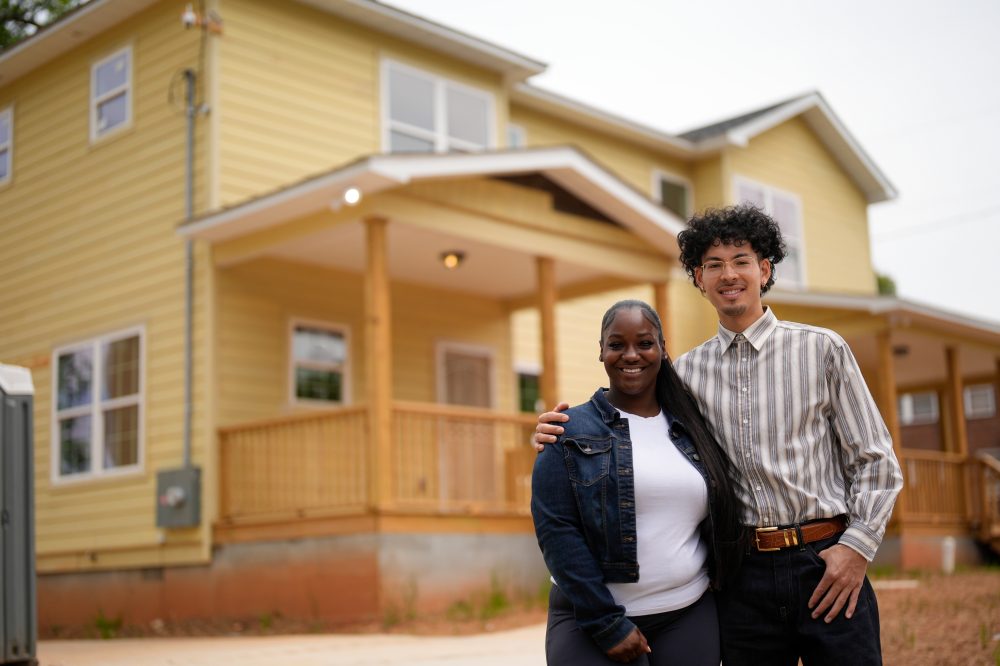

ATLANTA — Standing inside the wooden framework of what will soon become his first home, 27-year-old Ozzy Herrera let his imagination run wild on a recent morning. He pictured rich brown leather furniture complementing the flooring, warm terra-cotta paint on the walls, and a stylish bar cart positioned near the kitchen area.
The dual-job airport worker never thought homeownership would be possible at his age.
“It’s special. It’s magical,” he said.
This coming May, approximately 1,000 volunteers working with Habitat for Humanity will finish construction on Herrera’s residence along with 23 additional affordable housing units in Atlanta’s Sylvan Hills area as part of the 40th Carter Work Project.
These concentrated week-long construction efforts, honoring former President Jimmy Carter and his deceased wife Rosalynn, have resulted in approximately 5,000 homes across 14 nations since beginning in 1984. Atlanta will host the project for the first time since 1988, when the Carters participated in building 21 residences in a different area of the city.
The Sylvan Hills development represents Habitat for Humanity’s evolving approach toward real estate development as the organization marks its 50th year during an escalating affordable housing shortage and expanding political debates over housing costs.
“The gap between what a family can afford and what it costs to create that unit of housing is the widest it has been in modern history,” said Jonathan Reckford, CEO of the international organization.
The charitable organization intends to take on developer responsibilities for additional projects since many smaller development companies remain unable to recover from COVID-19 pandemic financial damage or have closed permanently.
Within Sylvan Hills, Habitat for Humanity is constructing on an 8-acre property acquired in 2015. The organization also secured rezoning approval for the former saw-blade manufacturing site to allow residential construction. The 24 housing units will combine single-family houses and townhomes, creating a new neighborhood called Langston Park. This represents Atlanta Habitat for Humanity’s inaugural multifamily townhome construction project.
“We do believe it’s important to get the best use out of every precious piece of land that we’re able to acquire and come by so that we can serve more families,” said Atlanta Habitat for Humanity President and CEO Rosalyn Merrick.
Each Langston Park residence will require approximately $200,000 to construct. Future homeowners will make monthly mortgage payments calculated according to their earnings, though Habitat eliminates interest charges. Plans call for constructing an additional 40 homes at the location eventually.
Phileena Daniel, also 27, received approval to purchase one of the houses. She and her 7-year-old child have faced housing difficulties over the last two years, including residing in a pest-infested apartment with rats and cockroaches. She appreciates the security that permanent housing in Langston Park will provide.
“You know, sometimes we don’t see ourselves going far in life as young Black women in this society,” she said. “This is giving us an opportunity to expand.”
Habitat for Humanity’s transition into community development represents “a classic example of a nonprofit organization really trying to be responsive to community needs,” said Vincent Reina, urban economics and planning professor at the University of Pennsylvania.
“They can still be true to their core mission, which is advancing homeownership opportunities, but they are also acknowledging that we need a diverse set of housing solutions to really meet the needs of individuals,” said Reina, who is also founder and faculty director of the Housing Initiative at Penn.
Elevated home prices and 30-year mortgage rates exceeding 7% have placed homeownership beyond reach for moderate-income families in all except a few of the 98 most costly metropolitan regions nationwide, according to research released last year by Reina and Benjamin J. Keys, a Wharton real estate and finance professor.
This transformation has elevated affordable housing into a significant national concern.
In Congress, both chambers have approved separate affordable housing legislation. Legislative leaders are working to resolve disagreements before sending final legislation to President Donald Trump for his signature.
Trump has issued executive directives aimed at reducing housing regulatory obstacles and assisting smaller financial institutions in providing home loans. His proposed 2027 budget, though, calls for reducing Department of Housing and Urban Development funding and eliminating various community development initiatives that currently assist cities in creating affordable housing.
Meanwhile in Atlanta, Herrera continues contemplating the opportunities that homeownership might create. His mother battled breast cancer, and both his parents could move in with him if circumstances required. Predictable, affordable monthly housing costs would also support his ambition of opening a coffee shop. Herrera explained that increasing rental prices throughout the Atlanta region had previously forced him to relocate, consuming time and resources that could have advanced that business goal.
“Now, I can finally take some risks,” he said.