Hong Kong has claimed the top position as the world’s premier destination for managing international wealth, displacing Switzerland from a role it has long held, according to a new report from Boston Consulting Group released Wednesday.
The Asian financial center now manages $2.95 trillion in offshore assets for wealthy clients worldwide, just edging out Switzerland’s $2.94 trillion, marking the first time the European nation has lost its leading position in cross-border wealth management, according to BCG’s 2026 Global Wealth Report.
Hong Kong’s rise was fueled by an influx of Chinese capital and a surge in initial public offerings during 2025, establishing the territory as a massive offshore financial hub.
“Hong Kong is cementing its role as China’s gateway to global markets, though that same concentration ties its trajectory tightly to economic and regulatory developments on the mainland,” the authors said.
The momentum appears likely to continue, with both Hong Kong and Singapore expected to expand their cross-border wealth operations by approximately 9% each year through 2030. Switzerland, meanwhile, is projected to grow at a more modest 6% annually during the same timeframe.
Worldwide, cross-border wealth expanded by 8.4% to reach $15.7 trillion in the past year, powered by robust financial markets and increasing client demand for geographic asset diversification. This growth concentrated heavily among the world’s top 10 financial centers, BCG reported.
However, Switzerland’s broader client base spanning multiple regions may provide stability advantages compared to Asian centers that rely heavily on Chinese economic growth, the report noted.
“Geopolitical uncertainty reaffirms Switzerland’s role as a core global booking centre, attracting flight-to-safety flows from more volatile regions such as the Middle East,” BCG said.
Financial industry sources have indicated that wealthy Middle Eastern clients have been moving assets to Switzerland amid ongoing regional conflicts.
Michael Kahlich, who co-authored the BCG report, emphasized that geographic proximity to clients drives success in wealth management. “What ultimately matters is client proximity,” said Kahlich, noting that two distinct regional hubs are emerging globally – Singapore and Hong Kong serving Asia, while Switzerland, the UK, and the U.S. cater to Western markets.
Recognizing the importance of client access, Swiss financial institutions have established significant operations in major Asian centers, Kahlich noted. “UBS is number one in wealth management in both Singapore and Hong Kong,” he said.
Electric and hybrid vehicle sales powered European auto market growth in April, while traditional gas and diesel car purchases declined, according to new data from the European Automobile Manufacturers’ Association released Wednesday.
Vehicle registrations across the European Union, Britain and the European Free Trade Association climbed 7% in April to reach 1,152,315 units. For the first four months of the year, total registrations were up 4.8% compared to the same period last year.
Electric vehicles, including battery-electric, plug-in hybrid and hybrid models, saw registrations jump approximately 21% and accounted for more than two-thirds of all vehicle registrations. Meanwhile, gasoline and diesel vehicle sales dropped roughly 15% and 17% respectively.
The data reinforces how government incentives, subsidies and rising fuel prices are steering consumers toward cleaner vehicles, particularly in Europe’s largest automotive markets.
This transition is also changing the competitive landscape among car manufacturers.
Tesla saw its third consecutive month of recovery, with April registrations climbing 46.5% to 10,654 units following more than a year of sales declines. However, the American electric vehicle maker still trailed China’s BYD, which recorded a 114.5% surge to 27,008 vehicle registrations.
Chinese manufacturer Chery experienced explosive growth with registrations soaring about 322%. Traditional automakers showed varying performance: Volkswagen increased 3.5%, Stellantis gained 6.7%, Bayerische Motoren Werke rose 2.4% and Mercedes-Benz grew 7%, while Renault dropped 3.6%.
During the first four months of 2024, Italy, France and Germany emerged as the strongest markets for battery-electric vehicles, posting registration increases of approximately 73%, 48% and 41% respectively.
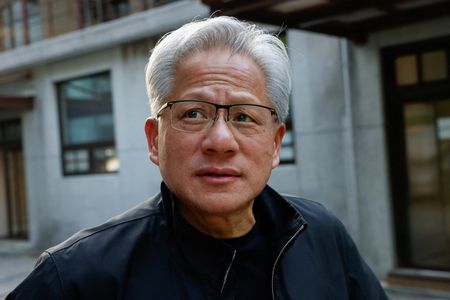
Taiwanese authorities are investigating allegations that three people illegally transported Nvidia computer chips to China by first routing the shipment through Japan, according to a Bloomberg News report published Wednesday.
The report, which cited sources with knowledge of the investigation, claims prosecutors believe the individuals managed to successfully complete at least one such smuggling operation.
The news agency Reuters noted they were unable to independently confirm the Bloomberg report’s details.
The San Antonio Spurs have followed a clear pattern throughout the Western Conference finals: when Victor Wembanyama dominates the game, they emerge victorious. When he struggles, they fall short.
Tuesday evening saw the latter scenario unfold in devastating fashion.
While Wembanyama’s subpar performance wasn’t the sole factor in San Antonio’s 127-114 defeat to the Oklahoma City Thunder in Game 5, it certainly played a major role. The towering center, who previously erupted for 41 and 33 points in the team’s series victories, never found his groove as the Spurs dropped into a precarious position.
Facing elimination, San Antonio must win Game 6 on their home court Thursday evening to force a decisive seventh game, with their championship hopes hanging in the balance.
The French sensation managed just 20 points — his series low — and needed a perfect 12-for-12 showing at the free-throw line to reach that total in Game 5. He connected on only 4 of 15 field goal attempts and went 0-for-5 from beyond the arc, struggling to establish any consistent offensive flow.
“He’s got to take more than 15 shots, even with the free throws,” Spurs coach Mitch Johnson said. “He’s going to have to score more than 20 points, for sure. … OKC did a good job. We’ve got to do a better job.”
Early in the third quarter, with Oklahoma City holding an 18-point advantage, Wembanyama delivered a passionate message to his teammates during a timeout just two minutes into the period. The rally cry initially sparked results — though the Thunder immediately responded to push their lead to 20, San Antonio managed to cut the gap to eight points later in the quarter.
Brief optimism emerged for the Spurs’ chances. However, they couldn’t mount a sustained comeback. Entering the final quarter down 10 points, San Antonio managed only two points in the opening 4:02 of the fourth period, watching any momentum from Wembanyama’s timeout speech evaporate completely.
Oklahoma City’s defensive strategy proved effective, rotating multiple defenders including Isaiah Hartenstein, Chet Holmgren, Jaylin Williams, and Alex Caruso while employing various schemes against the 7-foot-4 star. Wembanyama simply couldn’t solve the puzzle presented by the Thunder’s approach.
“It’s a team defense,” Thunder guard Jared McCain said. “We talked about it. We made adjustments to it. We know that when he gets going, their whole team gets going.”
KANSAS CITY, Mo. — As Yankees skipper Aaron Boone observed the hits accumulating on Kauffman Stadium’s distinctive crown-shaped scoreboard in center field, he recognized his team was delivering an exceptional performance against Kansas City.
What he didn’t realize until later was that they were making franchise history.
The Yankees launched six home runs, with Amed Rosario contributing two, and collected 24 hits during their 15-1 demolition — their highest hit total since facing Baltimore in July 2011. However, what distinguished Tuesday night’s offensive showcase from every other game in Yankees history — surpassing even contests featuring legendary players like Lou Gehrig, Babe Ruth, Joe DiMaggio and Mickey Mantle — was this remarkable achievement: Every single starter recorded multiple hits for the first time ever.
“I did see all the hits on the board,” Boone said afterward, “and I was like, ‘Man, you don’t see that very often.’”
The Yankees benefited from facing Kansas City during a bullpen game. Struggling pitcher Bailey Falter took the mound first, surrendering seven hits while recording just seven outs. Luinder Avila provided little improvement as his replacement.
The final hits came against outfielder Tyler Tolbert, who delivered a consistent stream of 44 mph tosses to complete the ninth inning.
Nevertheless, this doesn’t diminish what ranks among the most remarkable offensive displays in Yankees history. Their hit total matched their eighth-highest ever, while the 24 hits represented their most productive road performance since August 31, 1974, against Chicago.
The six home runs marked the season high for any major league team.
“The performance they put up today,” Yankees pitcher Cam Schlittler said, “that was awesome to watch.”
The offensive onslaught started with Cody Bellinger’s second consecutive day with a homer, a two-out blast in the opening frame. The attack intensified following Paul Goldschmidt’s double, when Ben Rice lined a sinking hit toward right field that Royals outfielder Jac Caglianone casually fielded at ground level. Boone contested the out ruling, and replay review revealed the ball had hit the turf for an RBI single.
Rosario stepped up next and launched a two-run blast approximately 420 feet to left field.
Anthony Volpe contributed his season’s first homer in the second frame, while the Yankees added four more runs through consecutive singles in the third. Aaron Judge delivered an RBI double during the fifth, Trent Grisham connected in the seventh, Jazz Chisholm Jr. — the final starter to reach two hits — homered in the eighth, and Rosario added his second blast in the ninth.
He admitted with embarrassment that he was simply attempting to avoid striking out against Tolbert’s slow-motion offerings.
“It feels good to be part of history,” Rosario said through a translator. “It’s a team effort and being part of it is great.”
The Yankees have now launched 82 home runs this season, leading all major league teams by a wide margin. Kansas City, in contrast, has hit 51, including Bobby Witt Jr.’s solo shot in the third inning that provided their lone run.
The 24 hits Kansas City surrendered represented the fourth-most in franchise history. Rosario collected four hits while Grisham, Rice, Volpe and Austin Wells each recorded three. Every remaining starter contributed exactly two hits.
“Look,” Boone said with a smile, “as hard as hitting is — as hard as it is now, night-in and night-out — to have a day where everyone, you know, can fatten up a little bit, it’s good.”
NAIROBI, Kenya (AP) — Solar and wind installations combined with battery storage are becoming the dominant choice for Africa’s emerging power infrastructure, as nations and financial backers move away from coal plants and massive hydroelectric dams seeking more affordable, quicker-to-build and dependable electricity sources.
This transformation is evident in a $1.5 billion power deal between China and Zambia revealed in early May, featuring three distinct 300-megawatt developments covering solar, wind and coal-powered generation.
Although coal’s presence highlights the continent’s ongoing requirement for steady baseline power, African nations confronting increased fuel import costs due to the Iran war, unstable electrical grids and expanding industrial needs are progressively embracing renewable power developments that can be constructed more rapidly and economically than conventional facilities.
Among the 322 power projects unveiled throughout Africa in 2025, 173 involved solar installations, with hydropower following at 46, wind at 34, gas at 22 and combined energy developments at 14, based on data from energy research company Electron Intelligence.
“Africa is not on the periphery of the global energy transition, it is sitting at its center,” said Mugwe Manga, climate finance lead at FSD Kenya. “The continent holds the world’s best renewable resources, and the economics have now decisively turned in favor of clean energy.”
According to Olamide Niyi-Afuye, CEO of the Africa Minigrid Developers Association (AMDA), the continent is undergoing a broader strategic shift in how energy infrastructure is being developed, with an emphasis on systems that can be deployed faster and expanded gradually with flexible financing.
Niyi-Afuye pointed to the growing role of solar within mini-grid systems.
According to the International Renewable Energy Agency, Africa added a record 11.3 gigawatts of renewable energy capacity in 2025, triple the previous year. South Africa, Egypt and Ethiopia accounted for much of the growth.
Declining technology prices are providing assistance. Large-scale solar energy expenses have plummeted by almost 90% worldwide since 2010, while land-based wind expenses have decreased approximately 70%, establishing renewables as the most economical option for fresh electricity production in numerous African regions.
“Renewable energy is now unequivocally the fastest, cheapest, and most bankable way to connect people, companies and economies to the megawatts they need to grow,” said Matt Tilleard, CEO of CrossBoundary Energy, which invests in renewable energy in Africa.
A significant portion of the expansion occurs through decentralized solar and battery installations placed directly at mining operations, manufacturing facilities, telecommunications towers and residential properties.
“Most official statistics still measure the energy transition the old way, by counting megawatts connected to national grids,” he said. “But solar and batteries don’t need central utilities.”
Information from the Africa Solar Industry Association reveals 23.4 gigawatts of functioning solar developments had been documented throughout Africa by 2025’s conclusion. However, Chinese shipping data shows 58.1 gigawatts of solar panels have been delivered to African nations since 2017, indicating solar implementation may be advancing much more rapidly than government records reflect.
Financial backers increasingly prefer renewable developments because they can produce profits more quickly and with reduced vulnerability to international fuel price fluctuations.
“Solar and wind projects are especially attractive at this moment because they combine strong commercial fundamentals with relatively lower investment risk,” Niyi-Afuye said.
At the Kamoa-Kakula copper complex in the Democratic Republic of Congo, CrossBoundary Energy is developing a 233-megawatt solar and battery project to supply one of Africa’s largest copper mines. Tilleard said the project moved from signing to more than 80% completion within a year. Coal-fired plants can take up to 12 years to complete, while major hydropower projects often require a decade or more.
“Investors deploy capital and see assets generating revenue within 18 months,” Tilleard said.
The continent’s renewable push is also being accelerated by policy changes. Ethiopia was the first country to ban imports of internal combustion engine vehicles, spurring faster adoption of electric vehicles. In South Africa, relaxing limits on private power generation has opened the door to a surge in industrial renewable energy projects.
Nevertheless, significant challenges persist. Numerous African power companies face financial difficulties. Consequently, lenders remain cautious about extended power purchasing contracts. Funding expenses for renewable developments in Africa reach up to three times those in developed nations due to perceived national risk, according to the International Energy Agency.
Development finance institutions, including the African Development Bank and the International Finance Corporation, are helping bridge the gap with concessional loans, guarantees and risk-sharing structures.
“What remains is not a question of technology or cost,” Manga said. “It is a question of finance, political will and preparing bankable projects that will drive demand for power on the continent.”
Technology stocks powered gains across Asian markets Wednesday while crude oil prices declined following another record-setting session on Wall Street.
South Korea’s Kospi soared nearly 5% and Taiwan’s main index also posted strong gains as artificial intelligence enthusiasm sparked heavy investment in semiconductor manufacturers and other tech firms.
Tokyo’s Nikkei 225 benefited from technology sector strength, advancing 1.3% to close at 65,816.62. The index crossed above 66,000 during trading for the first time ever.
Shares of computer chip equipment manufacturer Tokyo Electron surged 5.9% while testing equipment producer Advantest climbed 5.7%.
The technology rally followed Micron Technology’s dramatic 19.3% surge, which provided the biggest boost to the S&P 500 after UBS analysts led by Timothy Arcuri increased their 12-month stock price target to $1,625 from $535. Micron finished trading at $895.88.
The analysts predict ongoing robust demand for computer memory products. Micron’s shares have more than tripled this year and the company recently joined the exclusive $1 trillion market value club alongside Nvidia, Apple and Microsoft, each of which has exceeded $3 trillion in value.
Investment enthusiasm for AI technology has driven stock prices in South Korea and Taiwan to new peaks throughout this year.
Seoul’s Kospi climbed 4.9% to reach 8,457.09, establishing a new all-time record as Samsung Electronics shares jumped 7%.
Taiwan’s Taiex advanced 2.7%.
Other Asian markets showed mixed results, with Hong Kong’s Hang Seng declining 0.7% to 25,426.92 and Shanghai’s Composite index falling 0.2% to 4,136.87.
Australia’s S&P/ASX 200 managed a slight 0.1% gain to 8,662.10.
Tuesday’s U.S. trading session produced fresh records as the S&P 500 gained 0.6% to 7,519.12 following the Memorial Day holiday break, reaching a new all-time peak. The Nasdaq composite jumped 1.2% to establish its own record at 26,656.18, while the Dow Jones Industrial Average slipped 0.2% to 50,461.68.
American markets were recovering ground lost to international peers the previous day, when President Donald Trump indicated that discussions were “proceeding nicely” with Iran regarding ending their conflict.
However, uncertainty persists as military operations continue in the area. Financial markets have previously rallied on expectations of a war resolution with Iran, only to see hostilities persist.
Crude oil prices have dominated financial market movements since the United States and Israel launched attacks against Iran in late February. The resulting conflict has shut down the Strait of Hormuz and trapped oil tankers in the Persian Gulf rather than delivering crude to global customers. This situation has elevated oil costs and triggered widespread inflation concerns worldwide.
Expectations for an agreement to restore oil flow patterns boosted shares of companies facing substantial fuel expenses. United Airlines gained 6%, while Norwegian Cruise Line Holdings advanced 4.9%.
Despite market gains, American households remain pessimistic about economic conditions due to rising inflation, with Tuesday’s report showing consumer confidence declining slightly in May, though results exceeded economists’ worst-case projections. This followed Friday’s data indicating U.S. consumer sentiment reached its lowest point on record.
Early Wednesday trading saw Brent crude, the global benchmark, drop 94 cents to $95.73 per barrel. U.S. crude oil prices fell $1.35 to $92.54 per barrel.
Declining oil costs contributed to lower yields in U.S. bond markets, reducing pressure on Wall Street. The 10-year Treasury yield decreased to 4.48% from Friday’s close of 4.56%.
Currency markets showed the U.S. dollar weakening to 159.28 Japanese yen from 159.30 yen. The euro strengthened to $1.1636 from $1.1631.
LONDON (AP) — The United Kingdom and its international partners face the possibility of defeat in digital warfare against enemies like Russia if citizens, businesses and government agencies don’t make cybersecurity a far more pressing priority, according to a top British intelligence official.
Anne Keast-Butler, who leads the communications intelligence agency GCHQ, plans to deliver a warning Wednesday that Moscow is “relentlessly targeting critical infrastructure, democratic processes, supply chains and public trust” throughout Britain and Europe. Speaking at a historic World War II codebreaking facility outside London, she will claim Russia is conducting technology theft while planning sabotage operations and assassination plots.
Keast-Butler intends to state that swift developments in artificial intelligence indicate “the ground beneath our feet is shifting” and there exists a “narrowing window for the U.K. and allies to stay ahead” of nations like China, which she describes as a science and technology “superpower.”
She will contend that efforts must be made “from boardrooms to living rooms” to make cybersecurity “10 times more urgent,” based on excerpts provided beforehand by GCHQ, which stands for Government Communications Headquarters.
This represents another in a series of alerts from Western intelligence officials and security specialists that Russia is escalating aggressive actions in what they call a “gray zone” that remains just short of actual warfare.
Over recent months, government officials in nations including Sweden, Poland, Denmark and Norway have claimed that computer hackers connected to Russia have attacked their essential infrastructure, including electrical facilities and water systems.
Richard Horne, who directs the U.K.’s National Cyber Security Centre, cautioned last month that antagonistic nations including Russia, China and Iran are responsible for the most dangerous cyber attacks facing the country. He indicated such assaults might escalate significantly if Britain enters an international military conflict.
Keast-Butler intends to emphasize how crucial international cooperation remains as U.S. President Donald Trump’s “America First” approach to foreign relations and dismissal of traditional allies creates tension between London and Washington.
Notably, she will present the annual GCHQ director’s address at Bletchley Park, an estate located 45 miles (72 kilometers) northwest of London where hundreds of mathematicians, code specialists, puzzle solvers, chess experts and other professionals labored to break Nazi Germany’s supposedly impenetrable secret communications.
Their efforts both reduced the length of the war and accelerated the development of contemporary computing technology.
A wealthy California Democrat has shattered national records for political advertising expenditures in his quest to become the state’s chief executive, according to campaign finance data.
Tom Steyer, a billionaire who previously managed hedge funds before becoming a progressive political activist, has invested or committed over $195 million toward television, cable, and radio advertisements, with spending continuing to climb, based on information gathered by AdImpact, which monitors political advertising.
The massive advertising campaign by the former White House hopeful has sparked accusations that he’s attempting to purchase the state’s top political position. His advertising expenditures dwarf those of his closest Democratic competitor, Xavier Becerra, by more than 2,000 percent as both candidates compete for advancement to the general election in November.
Across the United States, no other candidate approaches Steyer’s spending levels.
In second place nationally, Georgia Republican healthcare business leader Rick Jackson has invested approximately $83 million on campaign advertisements in his gubernatorial primary contest, which is advancing to a June runoff election. The third-highest spender is Jackson’s Republican opponent, Lt. Gov. Burt Jones, who enjoys President Donald Trump’s backing and has committed nearly $31 million to advertising, AdImpact reports.
Behind Jones was Democratic U.S. Rep. Raja Krishnamoorthi of Illinois, who invested more than $28 million on advertisements in an unsuccessful Senate campaign.
Katie Porter, a former U.S. House member competing among seven prominent Democrats in the California contest, has consistently attacked Steyer for utilizing his personal wealth to maintain constant voter exposure while facing minimal financial competition from other candidates.
“She isn’t spending hundreds of millions of dollars of personal wealth trying to buy the governor’s office,” her campaign wrote in an email to supporters.
Steyer’s advertising expenditure has surpassed the previous 2010 benchmark established by Republican Meg Whitman, who invested $178.5 million total in an unsuccessful gubernatorial campaign, primarily using personal funds. That contest represented the most expensive statewide campaign in American political history at the time. However, when accounting for inflation, Whitman maintains the state spending record, though her total covered the complete election cycle rather than just the primary phase.
Despite his unprecedented financial commitment, Steyer hasn’t established a commanding lead in the competitive race. He remains part of a top-tier group of several contenders — including Becerra and Republican Steve Hilton — as the campaign approaches the June 2 primary election. Mail-in voting commenced earlier this month.
Nevertheless, Steyer’s financial resources provide him a significant promotional advantage during the campaign’s critical final phase. He’s maintained consistent advertising and digital content challenging Becerra’s qualifications and track record, while Becerra, a former state attorney general and Biden administration health secretary, lacks comparable resources for effective responses.
One Becerra advertisement attempted to appeal to voters potentially overwhelmed by Steyer’s advertising saturation. It featured peaceful imagery of Joshua trees, ocean waves, and towering redwoods with a subtle message: “You can stop the endless Tom Steyer ads. Vote Xavier Becerra.”
Steyer’s monetary advantage has enabled him to expand his campaign presence beyond conventional television and radio spots, maintaining regular content on digital platforms including YouTube and Instagram. The New York Times revealed his campaign compensated a progressive Texas influencer $100,000 to support Steyer’s election bid. The Sacramento Bee also reported Becerra had engaged an influencer.
Numerous voters have delayed casting ballots in a contest lacking a prominent frontrunner and clear leader. The ballot will feature more than 50 candidates. California employs a “top two” primary format placing all candidates on a single ballot, with only the highest two vote recipients proceeding to November, irrespective of political party.
“In a race this close, it all matters,” said Democratic consultant Andrew Acosta.
Historical evidence demonstrates that financial resources don’t guarantee electoral success.
Billionaire developer Rick Caruso invested more than $100 million in 2022 pursuing the Los Angeles mayoral position, largely using personal funds, but suffered a decisive loss to Mayor Karen Bass, who spent significantly less than Caruso’s total. Billionaire former New York City Mayor Michael Bloomberg committed over $1 billion of personal wealth to his 2020 presidential campaign before withdrawing. Steyer’s financial resources failed to establish him as a viable contender in the 2020 presidential race, leading to his early withdrawal following disappointing results in the South Carolina primary.
Democratic San Jose Mayor Matt Mahan’s gubernatorial campaign received support from independent committees funded with millions from technology executives and venture capital investors, yet he struggled to build momentum in the race.
Steyer has never served in elected office.
During a 2019 Associated Press interview, when asked about accusations of attempting to purchase the presidency, Steyer responded:
“I don’t think that’s possible,” Steyer said at the time, before adding, “I’m never going to apologize for succeeding in business. That’s America, right?”
The election occurs as California faces ongoing homelessness challenges, wildfire insurance availability issues, anticipated budget deficits, and housing expenses beyond many working families’ means. Voters simultaneously confront increasing daily costs for food, utilities, and gasoline.
The AdImpact information excludes advertisements on certain popular streaming platforms like Hulu and YouTube or direct mail campaigns.
Immigration detainees under federal custody are ending their own lives at rates never before seen in the agency’s 20-year existence, exposing what specialists describe as critical breakdowns in medical care and supervision, a new investigation by The Associated Press reveals.
The probe discovered that no fewer than 10 individuals have committed suicide while in Immigration and Customs Enforcement custody since President Donald Trump resumed office in January 2025 and directed the agency to expand arrests and removals. Seven of these fatalities have occurred since October, marking the highest number recorded in any fiscal year. Historically, ICE has documented only one suicide death annually, or sometimes none at all.
This surge in self-inflicted deaths outpaces the expansion of ICE’s detained population, representing almost 20% of the 51 individuals who have perished in agency custody since January 2025.
Lauren Bies, acting assistant secretary for the Department of Homeland Security, characterized suicide deaths within ICE facilities as continuing to be “extremely rare.”
According to Bies, facility personnel adhere to established procedures designed to safeguard detainees displaying warning signs of self-harm, and ICE mandates yearly suicide prevention education. She stated that detainees are provided complete healthcare services, including psychological support.
The investigation’s findings show that nine of the ten deceased were Hispanic males, while one held Chinese citizenship. The victims averaged 32 years of age.
Most had spent fewer than 30 days in ICE custody, with some having been detained for only several days, based on AP’s analysis of agency records, medical examiner reports, coroner determinations and law enforcement files.
The victims included a 19-year-old worker from Mexico, a 27-year-old house painter from Colombia, and a 36-year-old restaurant employee from Nicaragua. Seven of the ten individuals had clean records regarding violent offenses.
These fatalities have exposed significant gaps in care and supervision throughout ICE’s network, where the detained population has grown by 50% to 60,000 individuals during Trump’s current presidency, the investigation determined.
Five deaths occurred at facilities operated by established ICE detention contractors, CoreCivic and the GEO Group. Another death happened at a facility run by an inexperienced contractor that ICE subsequently terminated. Three fatalities took place in sheriff-operated jails, while one occurred at a federal correctional institution.
“We are deeply saddened by and take very seriously the passing of any individual in our care,” stated CoreCivic spokesperson Brian Todd.
GEO Group spokesperson Christopher Ferreira explained that his company provides staff training on suicide prevention and works “to maintain a safe and secure environment in compliance with the standards and requirements set by the federal government.” County jail administrators chose not to provide statements.
The AP investigation determined that ICE detention facilities have consistently failed to meet standards in ways that breach the agency’s own requirements.
Personnel overlooked warning signs of psychological distress, postponed mental health interventions and failed to properly supervise detainees already identified as high-risk. They also allowed detainees access to items that could be used for self-harm.
In certain instances, troubled detainees were placed in solitary confinement, a practice that can worsen feelings of shame and powerlessness, according to specialists.
Three facilities where ICE detainees took their own lives have had difficulty meeting the agency’s mandate that detainees undergo medical and psychological evaluations within 12 hours of arrival, based on inspection documentation and jail records.
Specialists described the record number of suicides as evidence that officials are inadequately supervising the detention of tens of thousands of immigrants caught up in the Trump administration’s intensive removal efforts.
“Something is going profoundly wrong from any kind of public health or mental health perspective,” explained Dr. Sanjay Basu, a University of California-San Francisco epidemiologist who co-authored research documenting rising death and suicide rates among ICE detainees. “This is one of those alarming, sudden increases.”
Dr. Homer Venters, former chief medical officer of New York City jails and a specialist on ICE detainee deaths, described the suicide increase as terrifying.
The rise “reflects failures in how the system’s being operated, and particularly failures in how the first stages of coming into detention are happening so that people aren’t being assessed adequately,” he explained. “And then if that receiving screening picks up red flags, they’re not acted on in a way that reduces the risk of them having preventable death.”
The 2024 suicide of 27-year-old Brayan Rayo Garzon at the Phelps County Jail in Rolla, Missouri, demonstrates shortcomings in how facilities evaluate, monitor and treat such detainees, specialists noted.
The Colombian national had been arrested by police in St. Louis on a minor fraud charge and transferred to ICE custody. The agency transported him to the Missouri jail, which had recently begun accepting ICE detainees to increase revenue.
The facility failed to conduct an intake evaluation on Rayo for 35 hours. At that point, he displayed difficulty breathing, reported feeling anxious and asked for psychological treatment that was never provided.
Rayo became sick with COVID-19 in subsequent days, suffering from body aches, fever, chills and nausea. The jail scheduled him twice for routine mental health appointments, but both were cancelled—first due to staff concerns, then because of his illness.
Rayo was placed in medical isolation, confining him alone in a cell and preventing his nightly phone conversations with his mother. On his fourth day, he wrote notes in Spanish to English-speaking guards pleading to contact her.
Less than an hour later, he was discovered unconscious. He died the following day. An autopsy confirmed he had taken his own life.
Brayan Rayo Garzon was desperate. Held by Immigration and Customs Enforcement, he had spent four days in isolation at a Missouri jail while fighting COVID-19 symptoms of fever and chills.
Medical records reveal his mental health treatment request had been delayed, and jail staff had banned Rayo from his nightly phone calls to his mother to prevent virus transmission.
In handwritten messages, he begged his guards to arrange a conversation with her. “I feel in my heart that she’s very worried about me,” he wrote in Spanish.
A guard took the note and left. Jail records show that within an hour, he was discovered unconscious in his cell. Medical examiners ruled his death a suicide.
Rayo’s April 2025 death marked the beginning of a troubling surge in suicides among ICE detainees that has concerned public health experts and detention specialists. They describe the record number of suicide deaths as evidence that officials are inadequately supervising the detention of tens of thousands of immigrants caught in the Trump administration’s intensive deportation efforts.
A comprehensive Associated Press investigation discovered that no fewer than 10 detainees, all male, have taken their own lives since President Donald Trump assumed office in January 2025, a rate that dramatically outpaces the increase in the detainee population, based on analysis of ICE data, autopsy findings, coroner determinations, and police documentation. Since October, seven deaths have been ruled suicides, already setting a record for any fiscal year in the agency’s existence. ICE typically records one or zero such deaths each year.
“Something is going profoundly wrong from any kind of public health or mental health perspective,” said Dr. Sanjay Basu, a University of California-San Francisco epidemiologist who cowrote a study documenting the increase in mortality and suicide rates among ICE detainees. “This is one of those alarming, sudden increases.”
Nine of those who died were Hispanic men from four different countries, the AP discovered. One individual was a Chinese citizen. They averaged 32 years old. While Trump has described deportation targets as the “worst of the worst,” seven of the 10 had no history of violent offenses in the U.S.
These suicides represent nearly one-fifth of the 51 deaths in ICE custody since January 2025. Most of those deaths resulted from natural causes, and experts believe many could have been prevented with prompt medical attention.
Department of Homeland Security acting assistant secretary Lauren Bies said suicide deaths in ICE custody remain “extremely rare.”
Bies said detention staff follow protocols to protect detainees who show signs of self-harming and that ICE requires annual suicide prevention training. She said detainees receive comprehensive healthcare, including mental health services.
The causes behind any suicide are complicated, and each death typically involves multiple contributing elements, experts note. ICE detainees describe overwhelming stress following detention, anxiety about returning to countries where they may face danger, and frustration and isolation from communication difficulties due to language barriers.
Detainees can also experience hopelessness because of immigration law’s complexity. Unlike those in the criminal justice system, most detainees lack legal representation and their detention for immigration violations is not intended as punishment.
ICE assumes responsibility for their welfare when they enter detention, and experts say properly managed facilities should experience few, if any, suicides. This is because staff can take measures to reduce the likelihood that detainees harm themselves by identifying at-risk individuals, providing them care and monitoring them carefully, the experts explained.
AP’s investigation found that ICE detention centers have repeatedly fallen short in ways that violate ICE’s own standards.
A review of the 10 suicide deaths showed the men died throughout ICE’s detention network, including at centers operated by private contractors for years and county jails that recently became ICE partners. The AP discovered that facility staff overlooked warning signs of distress, postponed mental health treatment and failed to monitor detainees already considered at risk. They also allowed detainees access to materials that could be used for self-harm, according to AP’s examination of ICE inspection reports and death records.
In some instances, they placed distressed detainees in isolation, which can worsen feelings of humiliation and helplessness, experts say.
ICE has consistently stated that it screens detainees within 12 hours of arrival for medical, dental and mental health conditions.
At least three of the nine facilities where ICE detainees died by suicide have had difficulty meeting that standard, according to ICE inspection reports and jail records.
Dr. Homer Venters, former chief medical officer of New York City jails who previously consulted with ICE on preventing detainee deaths, called the rise in suicides terrifying.
The increase “reflects failures in how the system’s being operated, and particularly failures in how the first stages of coming into detention are happening so that people aren’t being assessed adequately,” Venters said. “And then if that receiving screening picks up red flags, they’re not acted on in a way that reduces the risk of them having preventable death.”
Among those who ended their own lives was a 19-year-old from Mexico who had been detained after a misdemeanor traffic violation while riding his scooter.
Another was a 36-year-old restaurant employee who lost touch with his family in Nicaragua after ICE detained him in Minnesota and transferred him to a crowded facility in Texas. A third was a 45-year-old who had repeatedly entered the U.S.-Mexico border illegally and had an extensive criminal history.
Rayo, who took his own life after pleading to speak with his mother, was a Colombian military veteran who had worked as a street vendor in his homeland. A week after celebrating his 26th birthday in 2023, his family crossed the U.S. border in California. He was held for three months before being allowed to live with family in St. Louis, records and interviews reveal.
His mother, Adriana Garzon, said Rayo adapted quickly to American life, forming friendships easily and working as a house painter and food delivery driver. He wanted to save money to hire an attorney to help him remain in the country after a judge in 2024 ordered his return to Colombia, she said.
He was arrested in March 2025 by St. Louis police after being caught using a stolen credit card, which he had received from a friend, at a vape shop, court records show. ICE then took him into custody. An ICE record obtained by AP classified Rayo as a laborer who was a low risk to public safety.
ICE placed Rayo in the Phelps County jail in Rolla, about 100 miles (160 kilometers) from St. Louis.
The deaths have exposed gaps in treatment and oversight across ICE’s system, where the detained population has increased by 50% to 60,000 during Trump’s second term.
Five died in centers operated by longtime ICE detention partners, CoreCivic and the GEO Group. A sixth died at a facility run by an inexperienced contractor that ICE has since replaced. Three died in jails operated by sheriffs, and one at a federal prison.
“We are deeply saddened by and take very seriously the passing of any individual in our care,” CoreCivic spokesperson Brian Todd said.
GEO Group spokesperson Christopher Ferreira said the company trains staff on suicide prevention and seeks “to maintain a safe and secure environment in compliance with the standards and requirements set by the federal government.” Officials at the three jails either declined comment or didn’t return messages.
Leo Cruz Silva, a 34-year-old who had repeatedly illegally entered the country from Mexico, experienced a severe mental health crisis following his detention after an arrest for public intoxication last fall in a St. Louis suburb, records show.
For two nights in Missouri’s Ste. Genevieve County Jail, Cruz screamed, hid under his bed and reported hallucinations, according to an ICE report on his death. Yet he did not get help quickly.
A nurse ordered antipsychotic medications and planned to get him treatment the next week, the ICE report said.
On the third day, he was found dead in his cell.
Chaofeng Ge arrived in ICE custody last summer at a Pennsylvania facility run by the GEO Group in mental distress, having pleaded guilty to a minor gift card fraud and attempted suicide in state custody, said David Rankin, an attorney representing Ge’s family.
In five days at the facility, he did not get mental health treatment and was unable to communicate because no one spoke Mandarin, Rankin said. Ultimately, Ge went unmonitored before he was found hanged in a shower stall.
“It’s clear that ICE has taken very few steps to ensure the safety of these people,” Rankin said. “They appear to want to make this process as cruel and inhuman as possible. It’s completely unacceptable.”
At Camp East Montana in El Paso, Texas, 36-year-old Victor Diaz died by suicide in a medical holding room in January, according to an ICE report. He had been moved into isolation after reporting harassment by fellow detainees, the report said.
Days earlier at the same facility, Geraldo Lunas Campos died of asphyxia after ICE said guards restrained him following a suicide attempt. His death was ruled a homicide by a medical examiner, and Trump administration officials said the FBI was investigating its circumstances.
ICE inspectors visited the facility in February, documenting 49 violations of detention standards at what was then ICE’s largest detention facility, according to their report.
The report found that staff did not record “required checks to prevent significant self-harm and suicide” while inspectors found tools and equipment unsecured and unaccounted for throughout the facility that could be used for harm. Calls to 911 show several other detainees had attempted suicide there.
At the time of the deaths and inspections, Acquisition Logistics was the contractor running the facility. ICE has since replaced Acquisition Logistics with another contractor. Acquisition Logistics did not return messages seeking comment.
The Phelps County Jail had started taking ICE detainees a month before Rayo’s arrival. Sheriff Michael Kirn, a Republican in a county where voters overwhelmingly supported Trump’s reelection, told commissioners his department’s budget was hurting and partnering with ICE could generate millions in revenue.
Records show Rayo’s trouble started immediately. It took the jail 35 hours to conduct the initial medical screening that ICE promises within 12 hours, according to jail records obtained by the AP under the open records law.
Rayo exhibited labored breathing and told a nurse he was anxious and wanted mental health treatment.
A nurse who didn’t speak Spanish used a “handheld translator” to assess Rayo, concluding he denied thoughts of suicide and depression, according to the documents compiled by the Missouri State Highway Patrol during an investigation into Rayo’s death.
She recommended him for the general population, listing his physical and mental condition as stable, records show. And she referred him for a routine mental health appointment.
Two days later, he reported head pain and body aches. Staff learned he was positive for exposure to tuberculosis bacteria. He was sent to a hospital, where he was diagnosed with COVID-19. He was returned to jail the following day.
The mental health appointment was scheduled but canceled due to “mental health clinic time and staff,” a jail record shows. Two days later, they again canceled his appointment, this time citing his coronavirus infection.
The delays violated an ICE standard requiring mental health treatment within a week of a referral.
Bies, the DHS spokesperson, said Rayo received “high-quality medical care during his time in ICE custody.”
To ease his anxiety, Rayo called his mother before bed to share a Catholic blessing. “I gave him strength,” said Garzon, whose first name Adriana was tattooed on her son’s arm.
As Rayo grew sicker with nausea, chills and aches, staff moved him into a cinderblock isolation cell with a surveillance camera overhead for closer monitoring and to prevent the spread of disease. He was not allowed to call his mother.
On his fourth day of isolation, Rayo passed two notes under his door, begging guards to let him talk to his mom. In one, which was reviewed by AP, he appealed to the guard’s humanity. “I know you have family, and you know that they worry about us,” he wrote in Spanish. “God bless you.”
The English-speaking guard used a colleague’s phone to translate the notes, and wrote in a report that he planned to follow up.
Within an hour, guards found Rayo unconscious on his bed with a sheet around his neck.
Emergency responders tried to revive him, transporting him to a hospital. That’s when an official called Rayo’s mother — to let her know her son was in very bad shape and would be flown to a St. Louis medical center. At the hospital, a doctor gave her the devastating news: Her son was dead.
An intense redistricting push before November’s elections has transformed congressional voting maps for millions of Americans across the nation — and the process continues to unfold.
Following President Donald Trump’s call for Texas Republicans to redraw U.S. House boundaries last year, GOP lawmakers in Missouri, North Carolina, Ohio, Florida and Tennessee have also approved new maps that may help their party secure additional seats in upcoming midterm contests. Louisiana appears poised to follow suit, while Alabama Republicans are challenging a court ruling that blocked their preferred map.
To date, Republicans believe their redistricting work could yield as many as 14 additional seats, while Democrats anticipate gaining six seats through new boundaries in California and Utah.
Trump is banking on this uncommon mid-decade redistricting to help Republicans maintain control of the narrowly divided House, even with unfavorable approval numbers and historical patterns showing the incumbent party typically loses seats during midterms.
Here’s an overview of recent developments in the redistricting fight:
The U.S. Supreme Court ruled in April against Louisiana’s congressional map, striking down the plan that included two majority-Black districts represented by Democrats as an unlawful racial gerrymander. This decision led Republican Gov. Jeff Landry to delay Louisiana’s May 16 congressional primary until later in the summer, providing time for map revisions.
The state House is set to review a modified congressional map this week that would boost Republicans’ prospects of capturing one of those two seats. The Senate has already approved a different version of the updated map. Both chambers are working to reach agreement on a redistricting plan before their legislative session concludes on June 1.
Republican Attorney General Steve Marshall announced he is challenging a preliminary injunction issued Tuesday by a federal judicial panel that bars the state from implementing a Republican-designed House map in the midterm elections.
The judges determined the plan, featuring just one majority-Black district, “intentionally discriminated based on race.” They directed the state to keep using a court-mandated map with two districts where Black residents make up a majority or near-majority. Democrats currently represent both of those seats.
The Missouri Supreme Court has already dismissed two challenges to a new U.S. House map that improves Republicans’ odds of winning another seat by reconfiguring a Democratic-held district centered in Kansas City.
Judges will hear arguments Wednesday in a third challenge asserting that no extraordinary circumstances justified Republican Gov. Mike Kehoe’s decision to convene lawmakers for a special redistricting session last year.
As early in-person voting started Tuesday for South Carolina’s June 9 primaries, the Republican-controlled state Senate ended an effort to redraw the state’s congressional districts this year. A proposal previously approved by the House aimed to reshape the state’s sole Democratic-held district to improve Republicans’ winning chances.
However, some Republican senators argued it was too late for any modifications. Others worried the plan might backfire by incorporating too many Democratic voters into Republican-held districts.
Voting rights organizations argue Florida’s new congressional districts should be overturned for violating a state prohibition on intentional partisan gerrymandering. But a state judge on Tuesday refused to grant a preliminary injunction preventing use of the map in the midterm elections.
The judge stated the plaintiffs hadn’t demonstrated their partisanship claims were likely to prevail. Voting rights groups said they were rapidly appealing to a higher court and would pursue the case to the state Supreme Court if needed.
A federal court on Tuesday refused to grant a temporary restraining order in a lawsuit claiming Tennessee’s new U.S. House districts are racially discriminatory. The new Republican-designed map splits up a majority-Black district in Memphis — a city where over half the population is Black — improving Republicans’ chances of winning the state’s only Democratic-held seat.
This case represents one of several challenges to the map currently moving through the court system.
PLANO, Texas — Despite extensive efforts to demonstrate allegiance, it ultimately proved insufficient.
For more than a year, U.S. Senator John Cornyn attempted to demonstrate to Donald Trump and Texas Republicans that he stood firmly with the president.
Cornyn shared an image of himself reading Trump’s “The Art of the Deal.” He introduced legislation to designate a portion of interstate highway in Trump’s honor. Most notably, the Senate institutionalist who had long defended the filibuster changed his stance in an unsuccessful attempt to push forward voting restrictions that represent a key priority for the president.
The strategy failed. Tuesday saw Cornyn join a growing list of Republicans who suffered primary defeats after losing favor with a president who shows little patience for disagreement and appears to have an endless desire for payback. The senator serving his fourth term was defeated by substantial margins by Texas Attorney General Ken Paxton, whom Trump backed last week, calling him “a true MAGA Warrior.”
Regarding Cornyn, Trump declared he “was VERY disloyal to me,” according to his social media post.
Trump’s involvement in the Texas runoff followed weeks of successfully supporting primary opponents in Indiana, Louisiana and Kentucky as payback against sitting officials who opposed his agenda.
Cornyn’s efforts to escape a similar outcome caused discomfort even among his allies.
“You look at the positions he took to please the president and the groveling and whatever,” said former Sen. Jeff Flake of Arizona, a Republican and Trump critic who didn’t seek reelection during the president’s first midterm in 2018. “It was rather painful to watch.”
Cornyn’s defeat occurred despite significant political maneuvering and enormous campaign expenditures.
His campaign launched a commercial last summer — part of a remarkable nearly-$100-million advertising campaign by the senator and supporting organizations — featuring Cornyn addressing the camera directly and declaring, “I voted with President Trump 99% of the time.”
Cornyn’s campaign website prominently displays an image of Trump and Cornyn standing together with upward-pointing thumbs, designed to demonstrate unity. Further into the site, a section labeled “The Trump-Cornyn Record” highlights the senator’s efforts in securing support for Trump’s landmark 2017 tax reduction legislation.
Cornyn has also been promoting elements in Trump’s major tax-and-spending bill that fund construction along the U.S.-Mexico border wall.
The senator had criticized the project as “naive” during Trump’s 2016 campaign. However, in January, he appeared alongside a completed wall section in Texas’ Rio Grande Valley, praising the measure’s $11 billion allocation for Texas contractors’ work “at the direction of the president of the United States, to whom I am very grateful.”
While Cornyn’s support for his party’s leader and president was typical, it contrasted sharply with comments Cornyn made in May 2023, as Trump was launching his presidential comeback effort.
“Trump’s time has passed him by,” he told reporters. “I don’t think President Trump understands that when you run in a general election, you have to appeal to voters beyond your base.”
Trump subsequently secured the nomination easily and won every competitive state in the general election.
Cornyn maintained close alignment with the president throughout the first 16 months of his second term, hoping for either his endorsement or his neutrality.
However, Trump remembered previous criticisms.
“John Cornyn is a good man, and I worked well with him, but he was not supportive of me when times were tough,” he wrote on social media while endorsing Paxton.
Cornyn had lightheartedly attempted to demonstrate Trump support, posting a social media image last year showing himself carefully reading Trump’s 1987 memoir and business guide, “The Art of the Deal.”
In a more direct approach, he proposed naming a section of U.S. highway extending from the Texas Gulf Coast to Montana as “Interstate 47,” honoring a 47th president known for his fondness for having things named after himself. In a news release about the proposal, issued just over two weeks before Tuesday’s runoff, Cornyn stated it would be called the “Trump Interstate.”
The most significant change occurred in March, after Trump had suggested he might endorse either Cornyn or Paxton in the runoff.
Paxton quickly announced he would consider withdrawing from the race if the Republican-controlled Senate eliminated the filibuster and approved the SAVE America Act, a package of voting restrictions that Trump has called a crucial component of his agenda.
The next week, Cornyn published an opinion piece in the New York Post — Trump’s preferred local newspaper — abandoning his previous filibuster support. He promised to “support whatever changes to Senate rules that may prove necessary” to move the bill “through the Senate and on the president’s desk for his signature.”
Flake observed with concern.
“I know John and his long-held positions on the filibuster and the Senate’s institutions,” he said. “No office is worth that.”
A major investment firm executive expressed support for large-scale mergers within the mining sector, arguing that bigger companies would attract more mainstream investors and have greater capacity to handle complex projects essential for new supply development.
Speaking at the Australian Financial Review conference in Perth on Wednesday, Olivia Markham highlighted scale as a significant challenge for the mining industry when compared to sectors like technology.
“When you speak to a U.S. generalist investor, they want a large liquid equities to invest in. Bigger companies have better access to capital, they typically trade at a better multiple, and I think within the context of the mining sector, bigger companies have also got the teams and the people to go and build all these complex projects,” she stated.
Markham noted that while the industry has already experienced merger activity, she believes additional consolidation would be beneficial.
“We’ve had a wave of M&A, but I see merit in more,” she commented.
“If there are sensible deals to be done that can make companies bigger, I see merit in doing that,” she continued.
The comments come after two major mining companies, Glencore and Rio Tinto, considered a potential merger earlier this year that would have created a $240 billion entity, combining Glencore’s marketing operations and copper holdings with Rio Tinto’s operational capabilities to meet growing copper demand.
Rio Tinto ultimately declined the proposal, stating insufficient cost benefits at the time. However, industry observers suggest Glencore CEO Gary Nagle remains interested in the Anglo-Australian company and might pursue renewed discussions if the Swiss miner’s stock performance continues to exceed Rio Tinto’s.
BlackRock maintains ownership positions in both companies as well as top global miner BHP.
Crude oil markets experienced a downturn Wednesday as investors monitored diplomatic developments between the United States and Iran following escalating tensions that have disrupted efforts to reopen a crucial shipping route.
Brent crude futures dropped $1.42, representing a 1.43% decline to $98.16 per barrel at 0253 GMT. Meanwhile, U.S. West Texas Intermediate crude decreased $1.66, falling 1.77% to $92.23 per barrel.
The energy markets had surged Tuesday following U.S. military operations targeting Iranian positions, dampening weekend optimism that both nations might reach a resolution to end ongoing hostilities.
Iranian officials stated Tuesday that American forces had broken a ceasefire agreement by conducting strikes near the disputed Strait of Hormuz. U.S. officials characterized their military actions as defensive measures.
After an April ceasefire concluded three months of conflict, representatives from both countries suggested they were making headway in discussions about reopening the Strait, which serves as a vital passage for international oil and gas shipments. However, escalating tensions now jeopardize those diplomatic efforts.
Tensions increased further when Israel intensified bombing operations in Lebanon Tuesday, adding additional strain to regional peace initiatives.
Despite these setbacks, reports that several LNG tankers have successfully navigated through the strait recently have boosted hopes that the waterway could reopen in the near future, potentially increasing global energy supplies.
Memory chip manufacturer SK Hynix achieved a historic $1 trillion market valuation Wednesday, becoming the latest semiconductor company to reach this significant milestone amid an artificial intelligence-fueled market surge.
The South Korean company’s stock price soared by as much as 14.9%, pushing its market capitalization to a record 1,680 trillion won ($1.12 trillion) and helping drive the country’s main stock index to an all-time high.
SK Hynix now joins its competitors Samsung Electronics and Micron Technology in the exclusive trillion-dollar club. Samsung first crossed this threshold on May 6, while Micron achieved the milestone just one day before SK Hynix on Tuesday.
The remarkable growth stems from intense demand for advanced memory chips essential for AI processing systems, including those created by companies like Nvidia. This heightened demand has created supply shortages and pushed prices significantly higher, creating substantial profits for leading semiconductor manufacturers.
Memory chip pricing has experienced dramatic increases, doubling during the first quarter compared to the previous period. Industry forecasts predict prices could climb an additional 63% in the current quarter as AI data center requirements strain supplies typically allocated for smartphones, laptops, and vehicles.
This achievement makes South Korea notable as the first nation outside the United States to have multiple companies reach trillion-dollar valuations. Only three Asian corporations have joined this exclusive group, including TSMC.
The semiconductor rally propelled South Korea’s main stock index up as much as 5.09% to 8,457.09, setting a new record. The rapid gains were so significant they triggered automatic trading restrictions designed to temporarily pause algorithmic transactions.
Samsung and SK Hynix now represent half of the index’s total market value following Wednesday’s surge. The benchmark index has become the world’s top performer during the global AI boom, climbing 91% this year after gaining 76% in the previous year.
“We expect memory chip demand to continue exceeding supply by 2028 to keep price levels high,” Kim Young-gun, an analyst at Mirae Asset Securities in Seoul, said in a report, raising target prices for SK Hynix and Samsung by 18.8% and 14.6% to 3.8 million won per share and 550,000 won, respectively.
SK Hynix shares were trading around 2.3 million won on Wednesday.
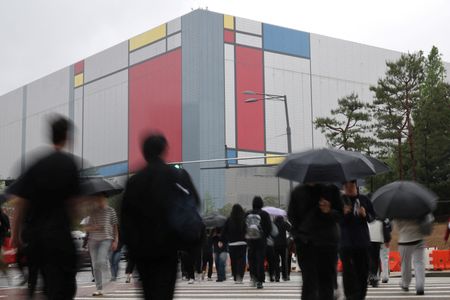
Samsung’s stock also climbed as much as 8% to 323,000 won Wednesday, reaching a fresh record high. The gains came as unionized workers in South Korea approved a tentative wage agreement, preventing a potential strike that could have disrupted global chip production.
Investment firm UBS announced Tuesday it had more than tripled its price target for Micron, citing “the structural changes AI has driven to the entire memory complex.”
Year-to-date performance has been exceptional across all three companies: Samsung shares have increased 149%, SK Hynix has gained 215%, and Micron has surged 245%.
Recent weeks have seen American retail investors pour billions into a new exchange-traded fund providing exposure to Samsung and SK Hynix stocks.
New South Korean leveraged ETFs connected to both semiconductor companies experienced strong debuts Wednesday, posting double-digit gains as chip stocks continued their rally.
The Korea Financial Investment Association’s educational website temporarily went offline Wednesday as investors rushed to complete required courses for trading leveraged ETFs, according to local media reports.
The Oklahoma City Thunder moved one step closer to their second straight NBA Finals appearance Tuesday night, defeating the San Antonio Spurs 127-114 at home in Game 5 of the Western Conference finals.
Shai Gilgeous-Alexander delivered 32 points to power the Thunder to victory, giving Oklahoma City a 3-2 advantage in the best-of-seven series. Game 6 will take place Thursday in San Antonio.
Thunder head coach Mark Daigneault adjusted his starting lineup due to ongoing injuries to Jalen Williams (hamstring) and Ajay Mitchell (calf). Rather than starting Cason Wallace, who got the nod in Game 4 on Sunday, Daigneault chose to go with Jared McCain.
McCain struggled early after managing only four points in the Thunder’s 103-82 defeat that tied the series at 2-2. He started slowly again Tuesday, connecting on just 1 of 5 shots for two points in the opening half.
The second half told a different story for McCain, who exploded for 18 points after intermission.
While Gilgeous-Alexander shot just 7 for 19 from the floor, he dominated at the free-throw line, converting 16 of 17 attempts.
Alex Caruso bounced back after being held scoreless in Game 4 with only one field goal attempt. The key reserve came out firing and contributed 22 points for Oklahoma City.
The Thunder’s bench players outproduced their San Antonio counterparts 40-33.
For the Spurs, Stephon Castle paced the scoring with 24 points on efficient 7-of-11 shooting. Julian Champagnie chipped in 22 points, while Victor Wembanyama managed 20 points despite struggling from the field at 4 of 15. Wembanyama also pulled down six rebounds.
Unlike the previous two contests where Oklahoma City dug themselves into early 15-point first-quarter deficits, Tuesday’s eight-point hole proved much more manageable for the Thunder.
Oklahoma City rallied to grab the lead late in the first quarter behind five straight points from Gilgeous-Alexander.
The Thunder built an 11-point halftime advantage and expanded their lead immediately after the break, opening the third quarter with nine unanswered points.
San Antonio refused to fold, twice cutting the gap to eight points late in the third quarter.
The Spurs couldn’t get any closer as Oklahoma City sealed the victory to rebound from their Game 4 setback.
Late in the third quarter, Spurs coach Mitch Johnson challenged an out-of-bounds ruling that went against San Antonio, with replays appearing to show the ball last touched Oklahoma City’s Chet Holmgren.
When officials denied the challenge and Gilgeous-Alexander drew a foul on the ensuing possession, Johnson received a technical foul. Gilgeous-Alexander capitalized by sinking all three free throws, stretching the Thunder’s lead to 101-88.
Holmgren recorded a double-double with 16 points and 11 rebounds for Oklahoma City, while Isaiah Hartenstein contributed 12 points and 15 rebounds.
Keldon Johnson provided 15 points off the bench for San Antonio.
Investment banking giant Goldman Sachs announced Tuesday it has boosted its year-end 2026 projection for the S&P 500 stock index to 8,000, marking an increase from its earlier forecast of 7,600.
The financial firm attributed the revised outlook to improved earnings projections after companies delivered an exceptionally strong first-quarter reporting period.
According to the brokerage, ongoing earnings expansion is expected to drive additional gains in the stock market.
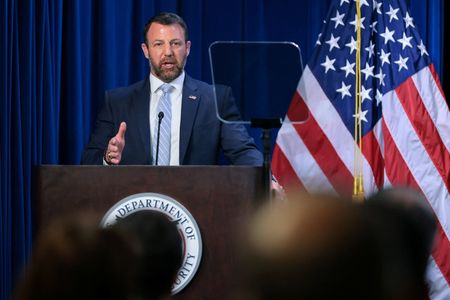
WASHINGTON – The Trump administration is developing proposals to potentially suspend international traveler and cargo operations at airports located in sanctuary cities that have refused to assist with immigration enforcement efforts.
Homeland Security Secretary Markwayne Mullin revealed during a Tuesday evening Fox News Channel interview with Sean Hannity that his department is considering such measures. Mullin stressed that while he has discussed the matter with White House officials, no final determination has been reached on whether to move forward.
Earlier this month, Mullin reportedly briefed U.S. travel industry leaders in private meetings about the department’s potential decision to halt customs and immigration services for international passengers, according to Reuters and other news outlets reporting last week.
The cities that could face such restrictions include Denver, Philadelphia, Chicago, Los Angeles, New York City, Newark, Seattle and San Francisco, according to Mullin’s statements.
Former Air Force service member Carlos De La Cruz secured the Republican Party’s nomination on Tuesday for Texas’ 35th congressional district, defeating John Lujan in the primary race, according to projections from U.S. media outlets.
The contest was held for the San Antonio-area congressional seat on May 26.
Baseball has lost one of its memorable power hitters as Bob Horner, the former Atlanta Braves star known for his incredible four-home-run performance, passed away Tuesday at 68 years old.
The Kansas-born athlete made an extraordinary leap from college baseball directly to the major leagues after Atlanta selected him as the top pick in the 1878 Amateur Draft from Arizona State University. Just one week after being drafted, Horner stepped onto the field for his first big-league appearance on June 16 against the Pittsburgh Pirates at age 20, marking the occasion with a home run off future Hall-of-Famer Bert Blyleven.
His rookie season proved exceptional, as Horner posted a .266 batting average across 89 games while launching 23 home runs and driving in 63 runs. These impressive numbers earned him National League Rookie of the Year honors, edging out future Hall-of-Fame shortstop Ozzie Smith.
Horner’s most legendary moment came on July 6, 1986, when he launched four home runs during a single game at Atlanta Fulton-County Stadium, despite the Braves falling to the Montreal Expos 11-8. This remarkable achievement placed him among just 21 players in baseball history to accomplish this feat, and made him only the second Brave to do so, following Joe Adcock’s four-homer performance against the Brooklyn Dodgers on July 31, 1954, during his time with the Milwaukee Braves.
Despite battling injuries that limited him to 120 or more games in only five of his 10 major league seasons, the third baseman accumulated 218 career home runs and maintained a .499 slugging percentage. His standout 1982 All-Star season featured 32 home runs and 97 RBIs, contributing to the Braves’ National League West Division championship.
Horner’s professional career spanned nine seasons with Atlanta from 1978 to 1986, followed by a year in Japan with the Yakult Swallows in 1987, where he hit 31 home runs and batted .327 in 93 games. He concluded his major league career with one season for the St. Louis Cardinals in 1988.
His death follows the recent losses of former Braves manager Bobby Cox, who was Horner’s first manager, and former team owner Ted Turner.
BUNIA, Congo — A massive displacement camp housing 10,000 residents in eastern Congo is battling an Ebola outbreak with severely limited resources: just a single handwashing station and one infrared thermometer.
Camp officials instruct residents to clean their hands before meals using soap when available. Those without soap are told to substitute with oatmeal or sand for hand cleaning.
“My fear is that we are here with nothing to protect ourselves. We have no protection, no water or soap, and we live near garbage,” said Francine Leve Janguzi, a resident of the ISP camp, speaking to reporters while demonstrating a non-functioning water tap surrounded by makeshift shelters.
Emergency supplies are being transported to Ituri province as relief organizations and medical teams work to control the infectious disease outbreak, which has been classified as a global health emergency.
However, emergency responders worry the virus could reach the crowded displacement facilities near Bunia, where thousands live in cramped conditions lacking basic sanitation resources.
“Eastern DRC’s years of conflict and displacement have left health systems on their knees, and that makes containing this outbreak all the harder,” stated Heather Kerr, Congo director with the International Rescue Committee.
Conflict in Ituri has forced nearly one million people from their homes, according to United Nations data.
This means the Ebola crisis is “unfolding in communities already facing insecurity, displacement and fragile healthcare systems,” explained Gabriela Arenas, a regional coordinator at the International Federation of Red Cross and Red Crescent Societies.
Most ISP camp residents — named for its location near the Higher Pedagogical Institute, or Institut Superieur Pedagogique in French — fled their villages in Djugu territory after attacks by CODECO, among several armed groups active in the area.
“I’ve been here for eight and a half years. Now we’re hearing about Ebola,” camp resident Janguzi said. “Look at the state of where we’re sleeping. We don’t have any help whatsoever. We don’t have soap or water, yet we’re told to wash our hands regularly and be clean.”
No vaccine or treatment exists for the uncommon Bundibugyo variant of Ebola, which has been circulating undetected for weeks in eastern Congo. Traditional testing methods have difficulty identifying the Bundibugyo strain.
More than 1,000 suspected cases and at least 220 fatalities have been documented through Tuesday, including seven confirmed cases in Uganda. The World Health Organization and field aid groups believe the actual outbreak scope is significantly larger.
Ebola spreads through contact with bodily fluids including vomit, blood or semen. The resulting illness is uncommon but serious and frequently deadly. Signs include fever, headache, muscle pain, weakness, diarrhea, vomiting, stomach pain and unexplained bleeding or bruising.
Eastern Congo has endured years of violence from numerous separate rebel and militant organizations, some connected to foreign nations or the extremist Islamic State group.
The Rwanda-backed M23 rebels control portions of the region. Though the Congolese government maintains general authority over northeastern Ituri Province, the Ebola outbreak’s center, that authority remains fragile. The Allied Democratic Forces, a Ugandan Islamist organization linked to IS, dominates as a rebel group there and conducts violent attacks on civilian populations.
Prior to the outbreak, humanitarian organization Doctors Without Borders reported in an evaluation that Ituri’s security situation had deteriorated recently, forcing medical staff to evacuate and creating overwhelmed health centers and “catastrophic conditions” in some areas.
Gérard Maki, a community leader in the camp, told reporters the disease creates tremendous fear. “I’ve learned that there’s no cure, which is why it scares me. … Our government should also do everything possible to find a solution to this disease.”
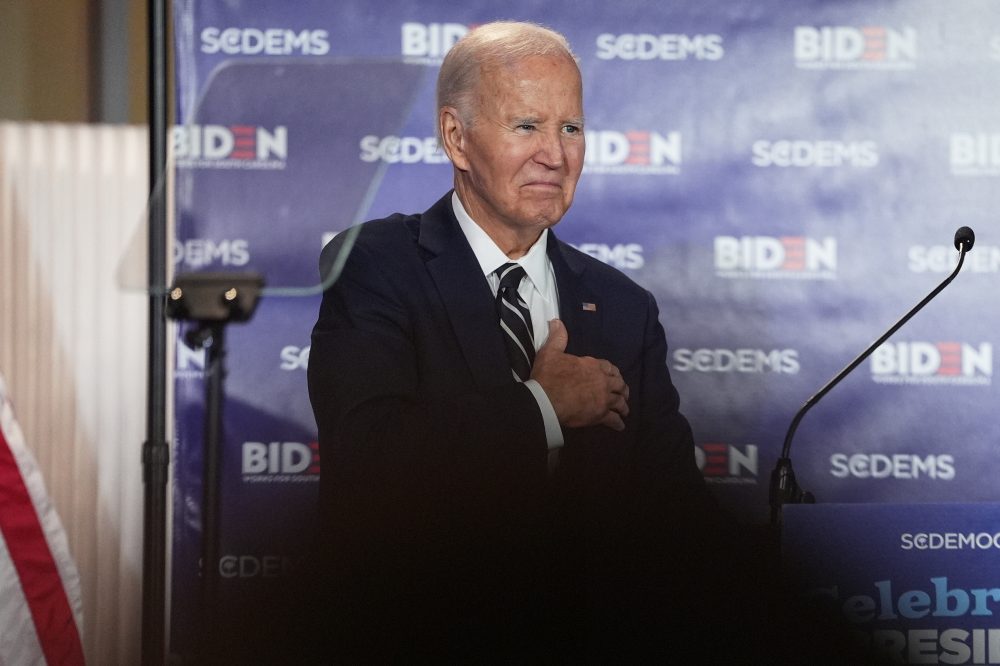
Former President Joe Biden filed a federal lawsuit Tuesday seeking to prevent the Justice Department from releasing audio recordings and transcripts from his conversations with a ghostwriter, materials that were collected during a special counsel investigation into his handling of classified documents.
The legal filing in Washington’s federal court claims the Justice Department intends to provide these materials to Congress and the Heritage Foundation, a conservative organization, despite previously maintaining the files were protected from public disclosure under records laws.
Biden’s legal team contends the release would “constitute an unwarranted invasion of President Biden’s privacy.”
“Every American, including a sitting or former Vice President, has a right to privacy in the personal conversations he has within his own home,” his attorneys wrote. “And when the U.S. Department of Justice obtains that private information through a criminal investigation, the Department bears a particular responsibility to protect it from disclosure.”
The disputed materials include audio recordings and written records from Biden’s conversations at his residence during 2016 and 2017 with Mark Zwonitzer, who assisted Biden with writing his two memoirs. Special counsel Robert Hur examined these files during his investigation into the president’s inappropriate retention of classified materials from his tenure as a senator and vice president.
Hur’s year-long investigation resulted in a 345-page report that raised questions about Biden’s age and mental fitness but concluded no criminal charges should be filed against the then-81-year-old. Hur determined there was inadequate evidence to successfully pursue prosecution in court.
Biden has also challenged separately the release of audio from his interview with Hur. In 2024, the House voted to find Biden Attorney General Merrick Garland in contempt of Congress for declining to provide that audio after the White House claimed executive privilege, protecting it from congressional review.
Transcripts from five hours of Biden’s interviews with federal investigators were made public that same year. Although Biden insisted he handled classified information responsibly, the transcript revealed he was sometimes unclear about dates and specifics and stated he was unfamiliar with the documentation process for some sensitive materials he managed.
Republicans have claimed Biden received preferential treatment from his own Justice Department and that Trump faced unfair treatment from prosecutors. Democrats emphasized Biden’s cooperation with the investigation and drew sharp contrasts with the separate criminal case involving Trump, who was charged with refusing to return classified documents requested by the National Archives that he kept at his Florida property.
The chief executive of Nvidia declared Wednesday that Taiwan serves as the central hub of the artificial intelligence revolution and predicted the island nation will remain the globe’s primary technology production center for years ahead.
Jensen Huang made these remarks during a celebration event in Taipei announcing the semiconductor company’s upcoming Taiwan headquarters facility. He revealed that construction will commence this year, with the facility expected to begin operations in 2030.
Employees represented by unions at Samsung Electronics have voted to accept a disputed compensation package that prevents a potential 18-day work stoppage while creating significant wage disparities across different divisions of the technology giant.
Representatives from two labor unions announced Wednesday that 74% of the 62,616 employees who participated in the vote supported the compensation agreement.
Samsung’s stock price jumped 6% following the news, with additional gains driven by investor enthusiasm surrounding artificial intelligence technology that has boosted semiconductor company valuations.
The settlement, brokered by government mediators following five months of contentious negotiations, has brought widespread relief throughout South Korea, where Samsung represents approximately 25% of the nation’s total exports.
Developed amid intense pressure to match the exceptionally high compensation packages offered by competing chipmaker SK Hynix, the agreement primarily favors employees working in the company’s memory chip operations, which have experienced significant profit growth due to massive global AI investments. Some employees in this division are expected to earn bonuses approaching $416,000 during the current year.
Employees in Samsung’s additional chip manufacturing units will earn smaller but still significant bonuses, while workers in consumer electronics departments will receive considerably less compensation in comparison.
“The atmosphere is pretty gloomy and many of us lost motivation,” said one chip foundry worker in Pyeongtaek, declining to be identified.
“It really is an ironic situation — being depressed despite receiving more money.”
According to the settlement terms, all semiconductor workers will earn a standard cash bonus equivalent to 50% of their yearly wages. Samsung will additionally allocate 10.5% of its chip division’s operating profits for special bonuses, distributed as company stock. One-third of these shares become tradable immediately, another third becomes available after one year, and the final portion after two years.
Bonus distributions depend on Samsung achieving specific profit targets. The company must generate more than 200 trillion won in yearly operating profits from 2026 through 2028, and 100 trillion won per year from 2029 through 2035.
Samsung’s annual profits for this year are projected to reach 300 trillion won ($200 billion), representing the company’s highest earnings ever and far exceeding its previous record of 58.9 trillion won established in 2018.
NBC News called the Democratic primary race Tuesday evening for Johnny Garcia, who serves as a spokesperson for the Bexar County sheriff in Texas, declaring him the winner in his bid for a congressional district nomination in the San Antonio area.
Garcia emerged victorious over his primary opponent Maureen Galindo in what was considered a competitive contest for the Democratic nomination.
Health authorities in India have isolated a Ugandan woman in Bengaluru due to concerns over a possible Ebola case, according to reports from local news outlets on Wednesday.
The woman has been placed under quarantine in the Indian city as medical officials investigate the suspected infection.
Major international corporations anticipate that artificial intelligence will speed up innovation and intellectual property development at their Indian technology facilities, highlighting the nation’s expanding role as a center for technological advancement as AI transforms workplace operations.
Leaders from companies including Epsilon (part of Publicis Groupe), Kimberly-Clark, and Daimler Truck informed Reuters that automation is enabling employees at their global capability centres to shift away from basic tasks and concentrate on sophisticated projects while developing proprietary technologies.
“The number of IPs, the patents and the trade secrets created by (GCCs in India) is already increasing,” Radhakrishnan Kodakkal, head of Daimler Truck Innovation Center India, said at a Reuters summit. “AI would accelerate it.”
India’s technology centers have evolved significantly from their original purpose as affordable back-office operations, transforming into innovation hubs for international businesses. However, AI capabilities that can increasingly perform tasks like software development have raised questions about the future direction of these facilities.
Despite global economic uncertainty, India’s substantial pool of AI-trained professionals and competitive cost structure continue attracting investment to these centers.
According to a study by Nasscom and consultancy Zinnov, Indian global capability centres earned approximately $98.4 billion in revenue during the previous fiscal year, reaching industry forecasts four years earlier than expected.
Another Nasscom study indicated patent applications in India increased by 11.3% to more than 90,000 during fiscal 2024, with nearly half originating from multinational corporations, although it didn’t specify contributions from global capability centres.
Company leaders noted that Indian centers’ contributions are likely underrepresented, since much of their intellectual property gets filed through parent companies in the United States and Europe.
“At Kimberly-Clark, we do not do any patent filing from India. Whatever we do, we do through (the) U.S. because of the difficulty here,” said Deena Dayalan, global head of digital operations and cloud transformation at the consumer goods maker.
Dayalan explained that patent applications in India require five to six months, roughly twice the duration needed in the U.S. The approval process takes several additional years, he noted.
According to Nasscom, India employs significantly fewer patent examiners compared to the U.S., causing processing delays. The industry organization has also stated that expensive legal fees and unclear procedures discourage companies from filing patents domestically.
“At the Indian Patent Office, backlog and manpower shortages have long slowed the pace of examination and grant,” said Harsh Kaushik, a New Delhi-based IP lawyer.
However, he noted that recent efforts to digitize more Patent Office operations and implement centralized application distribution have streamlined the filing process. The office has also increased video hearing usage, making the system more accessible for applicants.
Company executives also emphasized that the solid infrastructure established by Indian global capability centres would support continued expansion in high-value activities.
“I see more and more IP work happening (here),” said Pratik Nath, managing director of Epsilon India.
WASHINGTON — U.S. forces conducted another operation Tuesday targeting a boat believed to be carrying drugs in the eastern Pacific, resulting in one fatality and two people rescued from the water.
Social media footage released by U.S. Southern Command captures the vessel racing across the ocean before bursting into flames. According to Southern Command, officials “immediately notified the U.S. Coast Guard to activate the Search and Rescue system for the survivors.”
This operation continues the Trump administration’s ongoing effort to destroy suspected drug-running boats throughout Latin American waters, spanning the eastern Pacific and Caribbean Sea regions. The campaign, which began in early September, has resulted in at least 194 deaths overall. Military officials have not released proof that any targeted vessels actually contained narcotics.
Last week, the Pentagon watchdog announced plans to assess whether U.S. forces adhered to proper targeting protocols during these boat attacks. The established six-phase Joint Targeting Cycle encompasses military commander’s intent, target development, analysis, decision, execution and assessment.
According to the Pentagon inspector general’s office, this review was “self-initiated.” The investigation will not examine whether the strikes violate international law, despite facing harsh criticism from some Democratic lawmakers and military legal scholars.
The Trump administration maintains the U.S. is engaged in warfare against Latin American drug cartels, which it blames for the epidemic of fatal drug overdoses devastating American communities nationwide.
NEW YORK — Donald E. Newhouse, who led one of America’s largest family-owned publishing companies and previously served as board chairman of The Associated Press, has passed away at age 96, according to his family. He died Tuesday at his residence in New Jersey.
Throughout his lengthy career, Newhouse held the position of president at the Star-Ledger in Newark, New Jersey, and led Advance Publications’ newspaper division, guiding the organization through the transition to digital media.
“You reveled in his company. He filled you with energy and humor when you felt doubtful and weak,” said Anna Wintour, the global editorial director of Vogue and Conde Nast’s chief content officer.
“He was scrupulous about not interfering in editorial business, but if you turned to him for counsel, he invariably offered judicious advice,” she said in an obituary released Tuesday night by the Newhouse family.
A New York resident, Newhouse managed the 35 newspapers under Advance Publications for almost five decades. The media company was established by his father, Samuel Irving Newhouse Sr., in 1922. His elder brother, S.I. Newhouse Jr., led the company and managed Conde Nast magazines until his death in 2017.
Louis D. Boccardi, retired president and CEO of the AP, described Newhouse as an exceptional chairman for the cooperative.
“His voice was never the loudest in the room, but it was often the wisest,” Boccardi said. Newhouse was naturally private, but behind that exterior, Boccardi said, was a generous individual who felt comfortable anywhere and remained curious about everything.
“He could come across as self-effacing and deferential, but in Don’s skilled hands those were qualities that made him an enormously strong and effective leader,” Boccardi said. “You don’t often see the adjective ‘warm’ attached to a titan of industry, but it applied to him.”
Born in 1929, Newhouse was recognized for avoiding public attention. When a reporter once asked him to identify the biggest risks he had taken during his career, he responded: “Inviting your questions.”
The typically private Newhouse did emerge publicly when he assumed leadership of the Newspaper Association of America from 1993 to 1994 and later became chairman of the AP board of directors from 1997 to 2002. He had been an AP board member for nine years prior to becoming chairman.
“He was a smart and shrewd businessman but as thoughtful and kind a man as you’ll find. Being in his presence was always a joy,” said Doug Clifton, editor of one of Newhouse’s papers, The Plain Dealer in Cleveland, from 1999 to 2007.
Newhouse studied at Syracuse University but left before graduating to join the family’s newspaper enterprise. He made regular visits to his publications but delegated operational authority to his publishers.
“Each of our newspapers operates independently, with publishers who are strong, who set policy for their individual organizations and who have the authority and responsibility of carrying out the policies they set,” he said in 1993 when assuming leadership of the newspaper association.
Newhouse was recognized for investing resources to ensure papers obtained the finest stories. Jim Willse, editor of The Star-Ledger in Newark, N.J., from 1995 until 2010, said he would provide “us all the resources we needed to make The Ledger really special.” Willse said Newhouse had a passion for newspapers and those who worked in journalism.
“He especially enjoyed it when we’d have a story about some politician caught with his hand in the cookie jar, or a spicy feature about stuffed shirts behaving badly,” Willse said.
Newhouse’s strategy of investing in quality journalism while maintaining editorial independence resulted in numerous achievements, including several Pulitzer Prizes.
Many of those publications were able to flourish and stay profitable due to their market dominance, but Newhouse acknowledged his awareness of what he termed the “dramatically changing media landscape” and evolving news consumption habits.
“The 15th-century revolution was epitomized by the printing of the Gutenberg Bible; ours by Ted Turner’s cable news network and by web-based news sites — news in real time from anywhere to everywhere,” he said in 2004 at the rededication of a communications school named after his father at Syracuse University.
Three years later, he told one of his papers, The Post-Standard of Syracuse, N.Y., that newspapers can survive “by producing content that is relevant, interesting, accurate and entertaining for newspapers and the internet.”
However, the publications eventually faced financial difficulties.
Advance was recognized in the industry for a commitment that non-union employees would retain employment despite economic challenges or technological changes. In 2009, the company announced this guarantee would be eliminated.
The company also shifted away from daily publication for several papers. In 2012, it announced that the Post-Standard; The Times-Picayune in New Orleans, Louisiana; the Patriot-News in Harrisburg, Pennsylvania and the Birmingham News, the Press-Register of Mobile and The Huntsville Times, all in Alabama, would end daily publication and would only offer print editions on Wednesdays, Fridays and Sundays. These changes resulted in hundreds of job cuts.
“His conservative approach left both the papers and its employees somewhat unprepared for the realities of the internet,” said Thomas Maier, who wrote a 1994 biography of the family.
Newhouse’s eldest son, Steven, led the company’s expansion into Internet and mobile platforms. Steven Newhouse currently serves as co-president of Advance Publications.
“My dad spent his life in the newspaper business and was devoted to it, built it up and enjoyed many good years. When it became more challenging, he was first in line to work through, finding solutions to keep the local journalism franchise going,” he said.
Newhouse is also survived by another son, Michael, daughter Katherine Mele and grandchildren. His wife, Susan, died in 2015.
Kansas City Chiefs quarterback Patrick Mahomes returned to the practice field Tuesday, sporting a substantial protective brace on his left knee following surgical repair.
The three-time Super Bowl champion took part in the team’s initial organized team activities session, with the Chiefs sharing footage on social media showing him stepping backward to mimic receiving a snap before delivering a pass. The team’s post included the caption “QB1” alongside a clock symbol.
Details about Mahomes’ time on the field and the scope of his participation remain unknown, as reporters and the public were not permitted to observe the practice session.
The quarterback sustained tears to his left anterior cruciate ligament and lateral collateral ligament during Kansas City’s December 14 defeat against the Los Angeles Chargers, requiring surgery the next day.
Speaking publicly for the first time following his procedure in January, Mahomes expressed his goals for the upcoming 2026 campaign: “I want to be ready for Week 1. The doctors said I could, but I can’t predict what happens throughout the process. That’s the goal, to play Week 1 and have no restrictions. You want to be out there healthy and give us the best chance to win. I hope to do some things in OTAs and training camp and be able to do things there.”
These ligament injuries mark the most significant health setback of Mahomes’ professional football career.
The 30-year-old signal-caller recorded 3,587 passing yards along with 22 touchdown passes and 11 interceptions across 14 appearances last season. He also achieved a personal best with 422 rushing yards and five rushing scores.
Mahomes, who has earned regular-season MVP honors twice, holds a 95-31 record as a starting quarterback throughout his nine NFL campaigns, all with Kansas City. His career statistics include a 66.2% completion percentage with 35,939 passing yards, 267 touchdown throws, and 85 interceptions. His 285.2 yards per game average leads all quarterbacks in league history.
Kansas City acquired Justin Fields through a trade in March as a potential starting option should Mahomes be unavailable for the season opener. The Chiefs also selected quarterback Garrett Nussmeier from LSU in the seventh round of last month’s draft. Chris Oladokun, who posted an 0-2 record filling in for Mahomes at the end of last season, continues with the organization.
Consumer price increases in Australia came in below expectations during April, helped by government reductions to fuel taxes, according to new data released Wednesday. However, underlying inflation measures continued climbing as elevated oil costs impacted the broader economy.
The Australian Bureau of Statistics reported its monthly consumer price index climbed 0.4% in April compared to the prior month, while the yearly rate dropped to 4.2% from the previous 4.6%.
Economists had projected a monthly increase of 0.6% and an annual rate of 4.4%.
The trimmed mean core inflation gauge rose 0.3% for the month, meeting expectations while pushing the annual rate to 3.4% – the highest level since late 2024 and well above the Reserve Bank of Australia’s target range of 2% to 3%.
The softer headline numbers caused the Australian dollar to drop 0.1% to $0.7157, while three-year bond futures gained 5 ticks to 95.49. Markets reduced the probability of a fourth rate increase from the RBA in August to 40% from 51%.
“We expect headline inflation to peak at 4.9% in Q2 before falling below the 3% ceiling of the RBA’s target band in mid-2027,” said Harry McAuley, economist for Oxford Economics Australia.
“Considered alongside the jump in the unemployment rate in March, we are firm on our view that the rate hike cycle is on hold.”
The central bank has implemented three rate increases this year, bringing rates to 4.35% to combat an energy shock driven by war, completely unwinding policy easing from 2025. Central banks globally have adopted more aggressive stances, with the European Central Bank expected to raise rates next month and the Federal Reserve considering abandoning its easing position.
Unemployment unexpectedly rose to a 4-1/2 year peak of 4.5% in April, potentially indicating the job market may be softening enough to prevent additional rate hikes. Financial markets are pricing in one additional increase to 4.6% after the RBA indicated it now has room to evaluate how the Iran conflict develops.
The United States has targeted boats and missile installations in Iran while Tehran has accused Washington of breaking a delicate ceasefire that has lasted nearly seven weeks. Oil and gas shipments through the Strait of Hormuz – which handles 20% of global energy transport – have been reduced to minimal levels.
Wednesday’s data revealed automotive fuel costs dropped 7% during the month after surging 32.8% previously, as the government cut fuel excise taxes in half starting in April.
Elevated oil prices were impacting products and services with significant freight and transportation expenses. Postal service prices surged 12.4% while new home construction costs increased 4.7% compared to the previous year.
Israel’s armed forces reported Wednesday that a missile launched from Lebanese territory landed in an uninhabited section of Israel following the activation of warning sirens across multiple northern communities, with authorities confirming no casualties occurred.
Union workers at Samsung Electronics in South Korea have voted to accept a proposed wage agreement on Wednesday, preventing a potential work stoppage that could have disrupted worldwide semiconductor production and harmed South Korea’s economic stability.
Approximately 74% of the 62,616 employees who participated in the voting process supported the proposed agreement, according to union officials.
The vote concluded a contentious five-month disagreement regarding performance bonuses connected to the company’s thriving artificial intelligence chip operations, which had caused significant divisions among employees at the technology giant.
Union representatives and company management had previously reached a preliminary accord last Wednesday after emergency intervention by South Korea’s Labour Minister, occurring just hours before organized workers were set to begin their planned work stoppage.
However, a smaller union representing the corporation’s consumer electronics employees announced on Tuesday that it had petitioned a South Korean court to prevent voting on a wage agreement that mainly advantages their counterparts in the company’s semiconductor operations.
According to the approved agreement’s provisions, Samsung will establish a new decade-long special performance bonus program for its semiconductor operations, along with an average salary increase of 6.2%.
Drivers using Capitol Trail in both directions should prepare for potential delays as road crews conduct striping operations along a stretch of the roadway.
The rolling striping work is affecting traffic on Route 2 eastbound and westbound lanes between Cleveland Avenue and Dillwyn Road. According to transportation officials, the construction-related activity will continue through the early morning hours until 5 AM.
Motorists are advised to allow extra travel time and exercise caution when driving through the work zone area.
A Canadian official confirmed Tuesday that the country has finalized an agreement to ship liquefied natural gas to Germany through a proposed export terminal on the Pacific Coast.
According to the official, who requested anonymity since they lacked authorization to discuss the matter before Wednesday’s formal announcement, Canada will enter into the contract with Germany’s SEFE group, an organization focused on Securing Energy for Europe. The gas will come from the planned KSI Lisims export facility located along British Columbia’s coastline.
Under the agreement, as much as 1 million metric tons (1.1 million US tons) of liquefied natural gas will be shipped annually.
Prime Minister Mark Carney has established an objective to increase non-U.S. trade by 100% within ten years. Currently, Canada, despite its abundant oil and gas resources, sends nearly all of its energy exports to the United States.
British Columbia Premier David Eby stated earlier Tuesday that securing a contract to provide Canadian liquefied natural gas to Germany represents a crucial milestone for the partners involved in the Ksi Lisims project as they consider moving forward with their $10-billion Canadian (US$ 7.2 billion) processing plant and export terminal.
The Ksi Lisims facility, situated on Pearse Island near the Alaska border, has obtained necessary permits, but the consortium has not yet committed to final investment approval that would trigger construction.
According to Eby, establishing purchase contracts with buyers represents an essential requirement before Ksi Lisims can achieve that goal.
The joint venture has previously secured supply contracts with a division of London-headquartered Shell and France-based TotalEnergies.
SEFE operates as a prominent German energy company. The organization previously functioned as Gazprom’s German division until Germany took control of it in 2022 amid Europe’s energy shortage connected to the Ukraine conflict and ongoing Middle East tensions.
When European nations backed Ukraine, Russia dramatically reduced natural gas deliveries used for home heating, electricity production, and industrial operations, sparking an energy shortage that has driven up inflation and forced manufacturing facilities to close as costs have soared.
Before the conflict began, Germany relied heavily on Russian gas imports.
North Korea announced Wednesday that its recent weapons testing involved several advanced military systems, including nuclear-capable cruise missiles that the nation’s leader Kim Jong Un intends to position with front-line forces along the South Korean border as he continues building up military strength.
The announcement from North Korean state media followed Tuesday’s detection by South Korean forces of multiple projectiles launched by the North, including at least one short-range ballistic missile fired toward western waters. South Korea’s Joint Chiefs of Staff reported the missile traveled approximately 80 kilometers (50 miles) without providing details about other weapons systems used.
According to North Korea’s official Korean Central News Agency, Kim oversaw Tuesday’s weapons trials that included ballistic missiles equipped with new warheads for battlefield nuclear operations, nuclear-capable cruise missiles using artificial-intelligence guidance systems, and 240-millimeter rocket artillery featuring “ultra-precision” navigation capabilities. South Korean military officials have not yet responded to North Korea’s assertions.
KCNA reported that Kim showed approval of the testing results, especially the cruise missile systems designated for front-line long-range artillery units positioned near the South Korean border. The agency stated he demanded accelerated modernization and strengthening of artillery forces to ensure “no one can match.”
Kim has accelerated North Korea’s nuclear and missile development programs following the breakdown of diplomatic talks with U.S. President Donald Trump in 2019. He has also taken a confrontational stance toward South Korea, labeling it his nation’s “most hostile enemy” and working to cut long-established inter-Korean relationships. State media reported that during last week’s meeting with military leaders, Kim discussed reinforcing border units as part of the state objective to transform the frontier into “an impregnable fortress.”
Kim’s international strategy has increasingly turned toward Russia, which has accepted thousands of North Korean soldiers and substantial conventional weapons shipments for its Ukraine conflict. He has also pursued stronger relationships with China, North Korea’s primary ally and economic supporter, while presenting Pyongyang as part of a larger coalition opposing Washington.
Trump has stated multiple times his desire to restart diplomatic engagement with Kim, but Pyongyang has dismissed these attempts and maintained that Washington must drop nuclear disarmament demands as a requirement for negotiations.
MELBOURNE, Australia (AP) — Officials leading a major Australian investigation into antisemitism announced Tuesday that Jewish individuals who testified before the commission are experiencing online harassment and intimidation.
The Royal Commission on Antisemitism and Social Cohesion was established following a December attack where two gunmen, reportedly motivated by the Islamic State group, killed 15 people during a Hanukkah celebration in Sydney. These royal commissions represent Australia’s most significant type of public investigation.
Virginia Bell, a former High Court judge leading the commission, reported that Jewish individuals who shared their experiences with antisemitism during public sessions that started May 4 have faced online “harassment and intimidation.”
“We have received reports from a number of witnesses concerning a dramatic increase in online hate messages after they have given evidence,” Bell said.
“Quite what this undiluted level of hatred and bigotry directed towards members of the Jewish community is thought to benefit by those who post these remarks is lost on me,” she added.
Bell noted the commission is documenting these “offensive social media posts,” and authorities have been contacted about at least one harassment case.
“The commission has, as one of its principal objects, understanding and assessing the lived experience of antisemitism by members of the Jewish community and it is being informed by conduct of this character,” she said.
The initial two weeks of proceedings examined how widespread antisemitism is within Australia’s organizations and broader society.
During the opening week of testimony, authorities arrested a 68-year-old man for displaying a shirt featuring a “prohibited Nazi symbol” near the commission building in Sydney, according to police.
The design appeared to incorporate a Star of David superimposed over a swastika with the slogan: “Antisemitism. Proud to be accused. Speak up!”
Commission officials released a statement expressing they were “appalled” that someone wore an “antisemitic shirt” near their location. They reassured witnesses that security measures were implemented around the facility.
“The royal commission is determined to investigate antisemitism in Australia without fear or intimidation,” the statement said.
IRVINE, Calif. — A legendary war photographer who worked for the Associated Press during the Vietnam conflict has passed away at 91 years old. Dang Van Phuoc, who continued his dangerous work even after losing his sight in one eye from an explosion, died Saturday in Southern California following a sudden collapse, according to his nephew Van Nguyen.
The Associated Press brought Phuoc aboard in 1965 when former photo chief Horst Faas recruited him to fill the position of another local photographer who had been killed while working. Phuoc quickly became known among fellow journalists and American and South Vietnamese military personnel for his remarkable talent in locating the most intense combat situations.
Born in 1935 in a Vietnamese village close to Quang Ngai, located south of Da Nang, Phuoc was the youngest among several siblings. Around age 10, local Viet Cong insurgents killed his father. His mother’s death occurred several years afterward, leaving the young boy without a home.
“He was a really very extraordinary man who grew up from very bad treatment when he was a boy,” Nguyen said.
During his youth, Phuoc offered to help transport equipment at a Saigon film studio where Nguyen’s mother was employed as a cook. At this location, Phuoc initially handled a camera and learned photography techniques on his own, according to his nephew.
His supervisor called Phuoc the AP’s “secret weapon” because of his practice of walking alongside the “point man” during military patrols. This positioning allowed him to capture outstanding photographs while simultaneously placing him in extremely dangerous situations.
Throughout his decade with the AP in Vietnam, Phuoc suffered injuries on at least five occasions, with the initial incident occurring just five months into his employment. Shrapnel from a grenade blast wounded his chest and leg, though he returned to covering the prolonged civil war between Communist North Vietnamese forces and the American-supported South Vietnamese army within months.
During 1968, a rocket struck him in the head while he documented urban combat in Saigon, causing a concussion. That same year, Phuoc braved sniper fire to rescue an injured American soldier, earning recognition from the Ninth U.S. Army Infantry Division for his life-saving actions.
A grenade explosion in 1969 cost Phuoc his right eye while he accompanied a Ranger battalion south of Da Nang on Vietnam’s central coastline. He adapted his shooting technique for single-eye vision and resumed his duties.
During a 2011 archival interview with AP, Phuoc explained the challenges of operating with one eye while needing to peer through his camera lens and simultaneously observe silent hand signals from the soldiers he accompanied on patrol.
Huỳnh Công “Nick” Út, who worked with Phuoc at AP’s Saigon office, characterized him as both fearless and resourceful during fieldwork. Away from the action, he was generous and devoted, treating Út as family.
“Everyone loved him so much,” Út said. “When I heard, I cried, ‘My brother, he’s gone.’”
While Phuoc gained recognition for his action photography, the images that most affected him were those showing civilians trapped in the conflict. In his 2011 interview, he described himself as a “small grain of sand” who used photography to share their experiences with the world.
Following Saigon’s fall in 1975, Phuoc escaped with his family carrying virtually nothing except their clothing and a milk bottle. AP reporter Linda Deutsch, who was covering the refugee camp conditions, helped rescue his family from a camp in Guam, and they were transported to Camp Pendleton.
Phuoc briefly returned to Asia for work with AP in Hong Kong before departing the company and permanently relocating to Southern California with his family.
He established himself as a professional portrait photographer in Orange County, which houses Little Saigon, the world’s largest concentrated community of South Vietnamese refugees.
His great-nephew Kim Nguyen reflected Tuesday on the portraits Phuoc created of him as an infant and recalled bringing his own child to view Phuoc’s exhibited work at a Vietnamese museum.
In California, Phuoc helped establish The Artistic Photography Association and mentored emerging photographers. He also served as a civilian volunteer with the Los Angeles County Sheriff’s Department and received the county’s volunteer of the year award in 1994.
A federal appeals court has granted additional time for a former Columbia University graduate student to challenge deportation proceedings initiated against him.
Mahmoud Khalil, who holds lawful permanent resident status in the United States, was taken into custody by immigration officials last year following his involvement in pro-Palestinian protests at Columbia during spring 2024.
Government officials contended that Khalil’s continued presence in the United States posed a threat to the nation’s foreign policy objectives.
After spending several months in custody, Khalil was released when a federal judge in New Jersey determined that the government’s actions violated constitutional protections.
The case then moved to the 3rd U.S. Circuit Court of Appeals, which determined that the New Jersey judge lacked jurisdiction to intervene and ordered the matter to proceed through immigration court channels first.
On Tuesday, however, the appeals court announced it would suspend its previous decision while Khalil pursues an appeal with the U.S. Supreme Court.
Brett Max Kaufman, senior counsel with the American Civil Liberties Union representing Khalil, expressed appreciation for the court’s action.
“We look forward to asking the Supreme Court to make clear that the government cannot use the threat of detention and deportation to silence dissent,” he said in a statement.
A Supreme Court appeal is anticipated within the coming months, potentially by late summer.
The U.S. Department of Homeland Security has not yet responded to requests for comment regarding the decision.
Following the court’s instructions, Khalil’s legal team has also presented arguments in immigration court proceedings, though those efforts have been unsuccessful thus far. A separate appeal from those hearings is currently awaiting review by the 5th U.S. Circuit Court of Appeals in Louisiana.
The temporary suspension issued Tuesday by the 3rd U.S. Circuit Court of Appeals offers Khalil additional protection from potential re-arrest and removal while his other legal challenges remain active.
The court provided no explanation for its decision but noted that if no petition is submitted within the required timeframe, all parties must notify the court in writing.
Texas Attorney General Ken Paxton has won the Republican nomination for U.S. Senate after defeating longtime incumbent Senator John Cornyn in a heated primary contest.
The divisive primary battle saw Paxton receive President Trump’s backing as he mounted his challenge against Cornyn’s bid for reelection. The contentious fight between the two Republicans resulted in campaign spending exceeding $100 million.
Paxton, who has faced controversy during his tenure as the state’s top prosecutor, will now advance to face Democratic nominee James Talarico, a state representative, in the November general election.
The primary victory represents a significant upset, with Paxton successfully ousting a sitting senator who had held the seat for multiple terms. The race highlighted divisions within the Texas Republican Party and demonstrated Trump’s continued influence in GOP primaries.
The UFC has announced an exciting lightweight matchup for its upcoming Las Vegas event, with ranked contenders Benoit Saint Denis and Paddy Pimblett set to face off on July 11 at UFC 329: McGregor vs. Holloway 2.
Saint Denis, who holds the No. 5 ranking and fights under the nickname “God of War,” brings an impressive 17-3 record into the octagon with six knockout victories. The 30-year-old fighter from Paris enters the bout riding a four-fight winning streak, most recently defeating Dan Hooker with a second-round TKO at UFC 325 in February.
His opponent, Liverpool’s Pimblett, currently sits at No. 6 in the lightweight rankings with a 23-4 record that includes seven knockouts. The 31-year-old English fighter’s most recent performance was a unanimous decision victory over Justin Gaethje, which has earned consideration for Fight of the Year honors.
The highly anticipated bout will take place at T-Mobile Arena in Las Vegas as part of UFC 329: McGregor vs. Holloway 2. The event’s main card will mark Conor McGregor’s return to UFC competition after a five-year absence from the organization.
Currency markets watched the Japanese yen closely on Wednesday as it traded near weakness levels that have previously prompted government action, while investors evaluated potential escalation risks in the Iran conflict.
The yen edged slightly higher to 159.20 against the U.S. dollar during early Asian trading, but stayed dangerously close to the 160 threshold that many analysts consider a trigger point for official intervention to strengthen Japan’s currency.
Market uncertainty intensified following U.S. military action against Iran, which dampened hopes for a quick resolution to hostilities and the reopening of the strategically important Strait of Hormuz shipping route.
U.S. Secretary of State Marco Rubio indicated that reaching a negotiated settlement to end the conflict could “take a few days.”
Bank of Japan Governor Kazuo Ueda adopted a more aggressive stance on Wednesday, warning that war-related oil price shocks might persist in an economic climate already marked by elevated inflation expectations and increasing wages.
Financial markets are currently pricing in approximately 70% probability for a quarter-point interest rate increase when the Bank of Japan meets June 15-16.
Matthew Ryan, head of market strategy at Ebury, noted the competing pressures facing Japan’s currency. “While the threat of further intervention and growing bets in favour of a June hike from the Bank of Japan should be supporting the yen, Japan’s high exposure to the energy crisis is keeping the currency under pressure,” he explained.
Ryan added that upcoming Tokyo consumer price data on Friday will receive significant attention from traders. “We doubt that anything will derail a June hike from the BOJ at this stage, although a soft set of figures here could ease bets for tightening beyond then.”
The U.S. dollar remained relatively stable against other major currencies after gaining 0.15% the previous day, as measured by the dollar index which tracks performance against six rival currencies including the yen.
Other Pacific currencies showed mixed movements, with the Australian dollar rising 0.15% to $0.7177 ahead of important consumer price data that could influence interest rate expectations. The New Zealand dollar recovered with a 0.16% gain to $0.5846 after declining 0.6% on Tuesday, with the Reserve Bank expected to maintain current rates despite some economists predicting potential increases by September’s end.
The euro showed little movement, holding steady at $1.1638 against the dollar.
Despite Wall Street reaching new peaks, two out of three Americans are reducing their spending as economic pressures mount, according to recent survey data.
Consumer confidence took a hit this month, dropping as fuel costs remained elevated and inflation continued to burden households. This economic reality stands in stark contrast to the stock market’s climb toward record territory. The Conference Board reported Tuesday that its consumer confidence measure fell 0.7 points to 93.1 in May, marking the first drop following three consecutive months of improvement. Public opinion polling indicates Americans have grown critical of President Trump’s economic approach, which could spell trouble for Republicans as midterm elections approach. Fuel costs have jumped to a national average of $4.49 per gallon from $2.98 just before the conflict started in late February, staying at or above $4.50 per gallon throughout most of May.
In corporate news, PayPal finds itself battling to protect its digital payment territory as competitors chip away at its market position. The payment processing pioneer, operating for nearly three decades, faces mounting pressure from Apple, Shopify, and emerging buy-now-pay-later platforms including Affirm and Klarna. The company’s shares have dropped almost 40% over the last year and approximately 80% across five years. Leadership changes include a new CEO and restructuring into three separate business divisions. Industry analysts worry that PayPal failed to capitalize on its established reputation, creating openings for rivals to capture market territory. Company officials plan to brief investors on recovery plans in the near future.
Transportation workers in Massachusetts achieved a groundbreaking victory as drivers for ride-sharing platforms including Uber and Lyft established the nation’s first statewide union for such services. Labor organizers hailed this achievement as the most significant private-sector unionization success since Ford automotive workers organized in 1941. Drivers cite increasing expenses for fuel, insurance, and vehicle upkeep, combined with unexpected account suspensions, as factors creating financial hardship. Union supporters also point to growing concerns about autonomous vehicle technology threatening employment. This success may serve as a blueprint for similar organizing efforts underway in California and Illinois.
Political tensions emerge among Democrats regarding personal stock transactions as the party develops its anti-corruption platform against President Donald Trump for upcoming midterm races. Primary contests nationwide feature Democrats questioning opponents’ individual trades and personal wealth to establish credibility with voters. Public polling reveals widespread disapproval of insider trading in government and support for stronger anti-corruption measures. These discussions have blurred traditional party divisions, with some moderate members challenging progressive opponents over previous stock transactions. Progressive members question whether Democrats recently emphasizing this issue are genuinely committed to addressing money’s influence in politics.
Ferrari introduced its inaugural fully electric vehicle to Italy’s President and Pope Leo XIV on Tuesday, though the launch received mixed reactions from automotive experts and financial markets. The luxury carmaker’s new Luce EV debuted as other premium brands scale back their electrification goals due to declining demand in certain global markets. The Luce delivers 1,000 horsepower, accelerates to 100 kilometers per hour in 2.5 seconds, and provides over 530 kilometers of range using four electric motors, one per wheel.
Energy company BP removed its chairman citing significant concerns about governance standards, oversight, and conduct issues. Albert Manifold’s departure came suddenly and without warning, despite his appointment just last year. The board appointed member Ian Tyler as temporary chair Tuesday, taking effect immediately, while beginning the search for a permanent replacement. Manifold assumed the role in October, succeeding Helge Lund, after serving as CEO of CRH plc from January 2014 through December 2024. London-based BP ranks among the world’s five largest oil exploration and production companies by revenue and profit.
Wall Street extended its record-setting streak Tuesday as trading resumed following Monday’s holiday, with markets catching up to global gains from the previous day when President Donald Trump indicated negotiations with Iran were progressing well toward ending their conflict. The S&P 500 advanced 0.6% to establish a new all-time high, while the Nasdaq composite surged 1.2% to its own record. The Dow Jones Industrial Average slipped 0.2% from its peak. Micron Technology drove gains, with shares more than tripling year-to-date, as the company joins Wall Street’s latest $1 trillion valuation club. Bond market activity showed Treasury yields declining.
The Congressional Black Caucus urged major American corporations to resist Republican-led redistricting initiatives aimed at eliminating majority-Black congressional districts. A letter distributed Tuesday to over 250 companies asks them to denounce what lawmakers characterize as attempts to suppress Black voting power. Multiple states have moved to eliminate districts represented by Black Democratic members following a recent Supreme Court decision that significantly weakened Voting Rights Act protections. President Donald Trump initiated the redistricting campaign by encouraging Texas legislators to redraw maps favoring Republican candidates.
Financial advisors suggest that overly conservative retirement spending may actually harm retirees’ financial security and quality of life. Many Americans struggle with determining appropriate retirement income levels after being responsible for both building savings and managing withdrawals. The fear of running out of money often leads to excessive caution that may prevent retirees from enjoying their savings. Financial experts recommend that retirees establish personal goals to motivate appropriate spending, similar to how goals motivated saving during working years.
A prominent religious leader in southern Syria has announced that his community’s movement to break away from the central government cannot be stopped, marking a significant escalation in tensions within the war-torn country.
Sheikh Hikmat al-Hijri, who serves as the spiritual leader of the Druze community in As-Suwayda province, made the announcement during a televised address that featured unusually harsh criticism of Syrian authorities. The religious leader branded Damascus as a “terrorist government” and demanded international action regarding what he termed “violations and crimes” against people living in southern Syria.
Al-Hijri stated that “self-determination” has become a non-negotiable path forward, explaining that the Druze community in As-Suwayda wants to create an independent political and security structure free from Damascus’ control in an area he called “Jabal Bashan.”
“There is no leadership or guardianship over this mountain except by those chosen by its people,” al-Hijri stated, appearing to dismiss any outside political or military influence.
The comments highlight growing friction between local groups in southern Syria and the national government, following years of economic devastation, worsening security situations, and weakened government control throughout various regions.
In perhaps the most striking portion of his address, al-Hijri openly thanked Israel—including both its government and citizens—for what he characterized as assistance with “the Druze cause.” He also mentioned “international allies and guarantors” working to strengthen Druze independence in the area.
These comments represent some of the most politically charged public statements made in Syria in recent years, considering the long history of official antagonism between Syria and Israel and the potential for such declarations to have major regional and political consequences during current Middle East tensions.
The increasing demands for self-governance in As-Suwayda pose a fresh challenge to Syria’s national unity, particularly as the nation continues dealing with security instability and political division more than ten years after the Syrian conflict began. Experts caution that additional self-rule movements could encourage more sectarian and regional division during a period when Syria still confronts major obstacles regarding rebuilding and political stability.
Those backing independent administration in As-Suwayda, though, contend that the action responds to what they view as the Syrian government’s inability to safeguard local populations and deliver essential security and services.
Al-Hijri’s statements arrive during an especially delicate regional period, with Israel-Iran tensions continuing to intensify and local armed groups expanding their power in southern Syria, making any political or security changes in As-Suwayda increasingly significant to regional and international observers.
Although the Syrian government has not yet provided an official reaction to these statements, the address demonstrates broader changes in political sentiment across portions of southern Syria and may signal the start of a new chapter in disputes over governance and Syria’s future governmental structure.
Israeli security officials reportedly held discussions with an exiled Palestinian political figure in the United Arab Emirates during the ceasefire period, according to media reports from Kan.
The meeting allegedly involved Shin Bet chief David Zini and Mohammed Dahlan, a Palestinian politician who has been living in exile and is considered a political opponent of Palestinian Authority President Mahmoud Abbas.
Kan’s report indicated the discussion occurred while Zini was traveling in the UAE. Dahlan previously held a senior position within the Preventive Security Force in the Gaza Strip and has long been considered a potential figure who could participate in Gaza’s administration following Hamas.
When asked about the reported meeting, the Shin Bet refused to provide direct confirmation, stating: “We do not comment on the schedules of the service chief.”
Dahlan relocated to Abu Dhabi in 2011 after experiencing a contentious political conflict with Palestinian Authority President Mahmoud Abbas. The situation intensified when Dahlan faced allegations of attempting to undermine the leadership, engaging in financial misconduct, and purported participation in Yasser Arafat’s poisoning. Throughout his time in exile, Dahlan has developed strong ties with UAE Mohamed bin Zayed Al Nahyan.
Despite various appeals for reconciliation, Abbas has consistently refused to restore relations with Dahlan, who has maintained his public criticism of the PA from his UAE base.
This alleged encounter follows earlier reporting by the Wall Street Journal in May detailing how Mossad chief David Barnea traveled to the UAE on multiple occasions in March and April during Operation Roaring Lion to coordinate war-related matters.
In recent statements to The Economist, Dahlan shared his perspective on post-conflict Gaza administration. He proposed that the Gaza Strip should operate under technocratic leadership for two years prior to conducting elections and establishing some form of Palestinian statehood, regardless of whether borders are clearly defined.
While Dahlan’s suggestions may share certain similarities with President Trump’s 20-point plan, there is no evidence suggesting his direct participation in the current framework being considered.
The existing technocratic committee chosen to oversee Gaza Strip administration is led by Ali Shaath, a former Palestinian Authority deputy minister.
OKLAHOMA CITY — The Oklahoma City Thunder declared Jalen Williams unavailable for Tuesday night’s Game 5 of the Western Conference finals, despite his status remaining uncertain throughout the day due to continuing problems with a strained left hamstring.
Ajay Mitchell, who normally fills Williams’ starting role, was also sidelined by the Thunder earlier with a strained right soleus muscle.
Oklahoma City chose to insert Jared McCain into the starting five, joining Shai Gilgeous-Alexander, Chet Holmgren, Isaiah Hartenstein and Lugentz Dort in the lineup.
This marked McCain’s inaugural playoff start in his professional career. Coming into Tuesday’s contest, he had posted an average of 8.8 points across 12 playoff appearances as a reserve player for Oklahoma City.
Williams made his comeback in the opening game against the Spurs, putting up 26 points over 37 minutes during the Thunder’s 122-115 double-overtime defeat a week ago Monday in Oklahoma City. During Game 2, he managed four points in seven minutes of first-quarter action, highlighted by an alley-oop slam with 2:12 remaining in the period, and has been absent from the court since then.
Throughout this season, including playoff games, Williams has been unavailable for 58 of Oklahoma City’s 95 total contests. Among those missed games, 19 resulted from right wrist problems while 39 stemmed from hamstring complications — with the right hamstring sidelining him for 30 regular season games and the left hamstring now accounting for nine playoff absences.
When Joe Mazzulla of the Boston Celtics was questioned several months back about potentially earning the Coach of the Year recognition this season, his response was brief and direct.
“I don’t need it,” he stated in March. “I think it’s a stupid award.”
On Tuesday evening, Mazzulla received that very award he had criticized.
The NBA named Mazzulla as its premier coach for the 2025-26 campaign, following the Celtics’ achievement of securing the second seed in the Eastern Conference. This accomplishment came despite spending much of the season without Jayson Tatum as he rehabilitated from Achilles surgery, and amid widespread expectations of a rebuilding year after losing key players including Al Horford, Kristaps Porzingis and Jrue Holiday.
Mazzulla’s earlier criticism of the award stemmed from his belief that it should honor entire coaching staffs rather than individual coaches – a perspective he maintained during Tuesday’s announcement ceremony. He opened his NBC remarks by acknowledging those who contributed to his success.
“The long nights, the trips, game plans, the video guys that are clipping up the film and coding it, the assistants who are putting in the game plan, I think there’s so much that goes into winning one game,” Mazzulla explained. “It starts with the players, but it goes to our staff. I feel bad that they’re not here — but forever indebted to the guys that we have that give up time with their families and their time to give us a chance to win every day.”
At 37 years old, Mazzulla becomes the youngest recipient of this honor since Phil Johnson claimed it in 1975, according to the NBA.
The Boston coach will receive the Red Auerbach Trophy, named after the iconic Celtics leader. Mazzulla joins three other Boston coaches who have earned this distinction: Auerbach in 1965, Tom Heisohn in 1973, and Bill Fitch in 1980. The Hall of Fame coach Auerbach led the Celtics to nine NBA titles, including an unprecedented eight consecutive championships from 1959 through 1966.
“This is well deserved recognition and a testament to both Joe and his staff,” commented Celtics President of Basketball Operations Brad Stevens. “With all of our unknowns entering the season, Joe did a fantastic job building and growing a team. He pours everything he has into competing at a high level, while helping players find the best versions of themselves within the framework of a team.”
Detroit’s J.B. Bickerstaff claimed second place for the second straight year, while San Antonio’s Mitch Johnson earned third position.
The recognition focuses exclusively on regular-season performance. A panel of 100 NBA reporters and broadcasters submitted their ballots during the play-in tournament over a month ago.
This Coach of the Year honor differs from the award presented earlier this spring by the National Basketball Coaches Association, which Bickerstaff received. Tuesday’s announcement marked the final major award ceremony for the 2025-26 season.
The complete award recipients include:
— Shai Gilgeous-Alexander, Oklahoma City: Most Valuable Player and Clutch Player of the Year.
— Victor Wembanyama, San Antonio: Defensive Player of the Year.
— Cooper Flagg, Dallas: Rookie of the Year.
— Keldon Johnson, San Antonio: Sixth Man of the Year.
— Nickeil Alexander-Walker, Atlanta: Most Improved Player.
— Bam Adebayo, Miami: Social Justice Champion.
— Derrick White, Boston: Sportsmanship Award.
— DeAndre Jordan, New Orleans: Twyman-Stokes Teammate of the Year.
— Brad Stevens, Boston: Executive of the Year.
— Moussa Diabaté, Charlotte: Hustle Award.
— The All-NBA, All-Defensive and All-Rookie teams.
OKLAHOMA CITY (AP) — Manhattan streets have echoed with passionate calls from New York Knicks supporters even before their team secured the Eastern Conference championship.
The rallying cry heard throughout the city: “We want Wemby! We want Wemby!”
New York has accomplished their mission by reaching the NBA Finals. Their next step involves waiting until Thursday at the earliest to learn their opponent from the Western Conference matchup between Victor Wembanyama’s San Antonio Spurs and the reigning champion Oklahoma City Thunder.
Prior to Tuesday evening’s Game 5 between the Spurs and Thunder, San Antonio’s head coach Mitch Johnson was questioned about whether he’d become aware of the fan demonstrations in New York.
Johnson admitted he hadn’t heard about them but expressed little surprise at their occurrence.
“I know New York’s on fire. They won so that city is obviously enjoying it and they’ve had a heck of a playoff run,” Johnson said. “But unfortunately, I’ve been pretty locked-into what we’ve got going right here in front of us.”
New York has strung together 11 straight victories, overcoming a 2-1 series deficit against Atlanta in the opening round before completing sweeps of Philadelphia and Cleveland in subsequent rounds.
Social media footage captured some Knicks supporters expressing their “We want Wemby!” desires following Game 1 of the Eastern Conference finals against the Cavaliers.
“Tip your cap to New York, for sure,” Johnson said. “They’re having a heck of a run.”
KANSAS CITY, Mo. — Five months after undergoing surgery to fix damaged ligaments in his left knee, Kansas City Chiefs quarterback Patrick Mahomes participated in Tuesday’s opening voluntary practice session of the team’s offseason program, with just four months remaining until their season begins.
While reporters weren’t permitted to observe the practice session, the Chiefs shared a video clip on social media showing the two-time MVP throwing passes while wearing a brace on his left knee. The team plans to hold another practice session Wednesday before meeting with the media on Thursday.
“He’s in a good position to do some things,” Chiefs coach Andy Reid said earlier this month. “There’s some rules and regulations that go with that, so we just have to make sure we’re on top of that part. But if he can do some things — phase 2 (of the offseason), remember, is there’s no contact, no offense versus defense. It’s phase 3 that you get into that.”
“So you just have to evaluate what you want to do there,” Reid said. “He’s in a position where he can do everything, I think.”
The quarterback sustained the knee injury during the final moments of Kansas City’s defeat to the Chargers on Dec. 14, a loss that essentially ended the Chiefs’ playoff hopes. Surgery was performed the following day in Dallas, with the ongoing expectation — reinforced by workout videos Mahomes shared on social media — being that he would be prepared for the first week of the coming season.
The Chiefs will face AFC West division opponent Denver on Sept. 14 in a featured Monday night game.
During previous offseasons, Mahomes would typically return to his Texas residence, where receivers and tight ends would often join him for voluntary, player-organized training sessions. However, this year Mahomes chose to complete his rehabilitation at the Chiefs’ training facility alongside longtime trainer Julie Frymyer, enabling the team to closely monitor his progress.
“He’s throwing the ball,” Reid said, “and he does it on his own, so he’s not getting in any trouble here.”
Green Bay Packers star running back Josh Jacobs was taken into custody Tuesday on five criminal charges stemming from a weekend domestic incident, including a felony count of strangulation and suffocation.
According to Hobart/Lawrence Police Chief Michael Renkas, officers responded to a disturbance call involving Jacobs on Saturday morning at 8:37 a.m. Jacobs was subsequently arrested and taken to Brown County Jail facing charges of strangulation and suffocation, battery-domestic abuse, criminal damage to property-domestic abuse, disorderly conduct-domestic abuse and intimidation of a victim.
“This remains an active and ongoing investigation,” Renkas stated. “No further information will be released at this time.”
Court records show the strangulation charge carries felony status while the remaining four counts are classified as misdemeanors.
A legal team representing Jacobs — attorneys David Chesnoff, Richard Schonfeld and Clarence Duchac — released a statement defending their client.
“Josh vehemently denies the allegations, and this matter is in the early stages of investigation with important evidence that has not yet been made public,” the lawyers stated. “We ask for fairness and restraint while the judicial process takes its course.”
The arrest involves Green Bay’s primary ball carrier, who accumulated 929 rushing yards and 13 touchdowns in the previous season. His performance followed a 2024 campaign where he gained 1,329 yards and scored 15 times while earning his third Pro Bowl recognition.
Jacobs was the sole Packers player to reach 200 rushing yards last season. Emanuel Wilson, who finished second in team rushing statistics, departed for the Seattle Seahawks during the offseason.
The team launched organized team activities Tuesday, with head coach Matt LaFleur scheduled to meet with media Wednesday.
“We are aware of the matter involving Josh Jacobs,” a team representative stated. “As it is an ongoing legal situation, we will withhold further comment.”
League spokesperson Brian McCarthy confirmed that “we are aware of the report and have been in contact with the club.”
Before joining Green Bay, Jacobs played five seasons with the Raiders, earning All-Pro recognition and leading the NFL with 1,653 rushing yards in 2022 while in Las Vegas.
Throughout his seven-year professional career, he has accumulated 7,803 rushing yards and 74 touchdowns. Among current players, only Baltimore’s Derrick Henry with 122 and Buffalo’s Josh Allen with 79 have more career rushing touchdowns.
Josh Jacobs, the star running back for the Green Bay Packers, was taken into custody Tuesday and faces five criminal charges, including multiple domestic violence allegations, according to the Hobart/Lawrence (Wis.) Police Department. He was processed at the Brown County Jail in Green Bay.
The 28-year-old athlete is facing domestic violence charges that include battery, criminal damage to property and disorderly conduct, along with intimidation of a victim and felony strangulation and suffocation.
Law enforcement from the Hobart-Lawrence Police Department responded to a disturbance call involving Jacobs on Saturday morning around 8:37 a.m.
“This remains an active and ongoing investigation. No further information will be released at this time,” stated Hobart-Lawrence police chief Michael Renkas.
Through his legal representation, Jacobs has disputed the accusations.
“Josh vehemently denies the allegations, and this matter is in the early stages of investigation with important evidence that has not yet been made public,” stated attorneys David Chesnoff, Richard Schonfeld and Clarence Duchac. “We ask for fairness and restraint while the judicial process takes its course.”
The NFL confirmed to The Athletic that it has been communicating with the Packers organization. The team acknowledged awareness of the situation but stated it “will withhold further comment” due to it being “an ongoing legal situation.”
Currently in his third year with Green Bay following a four-year, $48 million contract signed in 2024, Jacobs has earned three Pro Bowl honors (2020, 2022, 2024) and received first-team All Pro recognition in 2022. That year, he topped the NFL in rushing yards while playing for the Las Vegas Raiders. Throughout his seven-year professional career, he has accumulated 7,803 rushing yards on 1,840 carries with 74 touchdowns.
Major technology companies are pushing back against proposed Canadian legislation that they say could force them to weaken encryption protections without proper court oversight.
During testimony before Canada’s parliament on Tuesday, representatives from Apple and Google called for amendments to Bill C-22, which is currently under consideration by the House of Commons. The legislation was introduced by Canada’s ruling Liberal Party.
The proposed law mirrors similar measures already in place in Britain and Australia, designed to give law enforcement agencies access to encrypted information. Canadian officials say the legislation would enable them to detect security threats sooner and respond more rapidly.
End-to-end encryption ensures that nobody – not law enforcement agencies or technology companies themselves – can read protected data without the proper decryption key.
While Bill C-22 doesn’t directly mandate that tech companies disable encryption on their products, Apple, Google and Meta Platforms have all voiced opposition to the proposal. These companies contend the legislation creates a framework where government agencies could secretly order them to create backdoor access to their systems without informing users or the general public.
During their appearance before the House of Commons’ Standing Committee on Public Safety and National Security, both Apple and Google representatives advocated for explicit encryption safeguards and mandatory judicial review.
“Secret orders are out of step with other democratic countries and would severely restrict companies’ ability to be transparent with users about how their data is protected,” testified Jeanette Patell, director for government affairs and public policy in Canada for Google.
Apple previously received a confidential order to disable encryption in the UK last year, leading the company to remove encrypted cloud backup services from that country.
When Frank Caputo, a Conservative member from British Columbia, asked Erik Neuenschwander, senior director for user privacy and child safety at Apple, whether the company might exit Canada if forced to build backdoors into its products, Neuenschwander declined to speculate.
“I can’t speculate what would happen in that situation,” Neuenschwander responded. “Through this engagement and the continued dialogue, we hope to have positive amendments made to the bill.”
The NCAA rejected Texas Tech quarterback Brendan Sorsby’s reinstatement request on Tuesday, prompting the university’s president to promise an appeal of the decision.
Sorsby lost his eligibility following investigations that revealed he had wagered thousands of dollars on various sporting events through betting applications, which violates NCAA regulations.
When filing a legal injunction against the NCAA last week, Sorsby acknowledged placing the wagers, including at least one bet supporting Indiana football during his time with that team. While he stated he never wagered on games in which he participated or against his own teams, current NCAA rules prohibit student-athletes from betting on any NCAA-approved or professional sporting events. Athletes face potential lifetime bans for wagering on their own teams.
Sorsby’s lawsuit criticized what he described as the NCAA’s “deeply hypocritical” positions regarding sports betting. His legal team indicated they had requested a two-game suspension, which the NCAA rejected. Sorsby is now scheduled to appear in Lubbock County, Texas court on June 1 as he pursues eligibility for 2026.
After transferring to Texas Tech from Cincinnati during the offseason, Sorsby was expected to be the Red Raiders’ starting quarterback for 2026. ESPN had ranked him as the top transfer player in this year’s class.
In an open letter to the campus community Tuesday, Texas Tech president Lawrence Schovanec stated that the NCAA’s decision “should be reversed or modified” considering the circumstances and “context” surrounding Sorsby’s situation.
“As a generation of college athletes face the legalization and rapid proliferation of sports betting in our country, gambling addiction is rising to the point of epidemic among college aged men in particular,” Schovanec wrote. “The NCAA’s stated mission includes ‘fostering (student-athletes’) lifelong well-being,’ and they have claimed their goal is to promote a ‘culture of care’ for student athletes’ mental health. Gambling addiction is a clinically recognized behavioral disorder.”
Earlier on Tuesday, Sorsby announced through social media that he had finished a 35-day inpatient rehabilitation program in Arizona last Friday to address “a diagnosed gambling addiction and anxiety disorder.”
“While I accept responsibility for my behavior and know that I have a lot of work ahead of me, for the first time in many years I feel more free and no longer fully at the mercy of my addiction,” Sorsby wrote in part.
“With the support of my coaches, teammates and the university, I’m looking forward to returning to campus in Lubbock. If I’m blessed and fortunate enough to have the opportunity to continue my college career at Texas Tech, I know I will get the support I need, including through the school’s Center for Students in Addiction Recovery. I am deeply sorry to everyone I’ve disappointed and am committed to the hard and necessary work ahead.”
In his letter, Schovanec outlined Texas Tech’s commitment to providing Sorsby with “Ongoing outpatient clinical care; participation in group and individual therapy; mentor resources; treatment for his related anxiety disorder; active monitoring of his technological devices; installation of software to block betting sites from his devices; the appointment of a custodian to oversee his personal finances; and periodic compliance checks.”
Russian legislators have enacted new legislation authorizing the nation’s central bank and financial institutions to deploy anti-drone defense capabilities and provide weapons to employees for protection against aerial attacks, according to documentation released by the lower parliamentary chamber on Tuesday.
Following Moscow’s comprehensive invasion in February 2022, Ukraine has maintained regular drone operations targeting Russian territory, with energy facilities often serving as primary objectives as Kyiv seeks to cut off Moscow’s revenue streams and end the conflict.
Anti-drone protection systems will be positioned at the central bank, Sberbank which is the nation’s largest banking institution, and the Russian Cash Collection Association. Personnel at these facilities will receive authorization to carry weapons.
According to statements reported by RBC news, Anatoly Aksakov, who leads the financial committee in Russia’s lower parliamentary house, the State Duma, indicated that these institutions will bear the expenses for drone protection systems themselves.
During Tuesday’s proceedings, Alexander Shokhin, who heads Russia’s most influential business organization, informed President Vladimir Putin that companies are prepared to fund the acquisition of advanced weaponry and electronic defense systems to protect their facilities from drone assaults.
Singapore’s top diplomat Vivian Balakrishnan held discussions with North Korean Foreign Minister Choe Son Hui on Tuesday in Pyongyang, focusing on ways to enhance diplomatic relations between their countries, according to North Korea’s state-run KCNA news agency reporting Wednesday.
The two officials also shared perspectives on international and regional matters, though KCNA provided no additional details about those conversations.
Following his North Korean visit, Balakrishnan is scheduled to travel to South Korea, marking an uncommon diplomatic journey to both Korean nations by a Singapore official.
The Singaporean minister served in his country’s cabinet when Singapore played host to the historic first meeting between North Korean and American leaders in 2018.
During that June 2018 gathering, U.S. President Donald Trump and North Korean leader Kim Jong Un put their signatures on a joint declaration committing to establish new peaceful diplomatic relations and collaborate on dismantling Pyongyang’s nuclear weapons program.
Trump has expressed interest in arranging another meeting with Kim and has described their relationship positively, though North Korea has not provided a direct response to these diplomatic overtures.
A section of Telegraph Road remains impassable to motorists following a utility pole incident that has prompted authorities to block traffic in both directions.
The roadway shutdown extends from St. James Church Road to Stanton Christiana Road, creating a significant detour for drivers who typically use this route.
Transportation officials have not yet provided an estimated timeline for when the roadway will reopen to normal traffic flow.
Drivers traveling westbound on E. Chestnut Hill Road should expect delays due to construction activity affecting traffic flow in the area.
The right lane and right turn lane are currently blocked between Salem Church Road and Route 273, with the closure scheduled to remain in effect until 5AM.
Motorists are advised to plan alternate routes or allow extra travel time when passing through this construction zone.
GARDEN GROVE, Calif. — Roughly 16,000 residents in Southern California continue living away from their homes as authorities maintain evacuation orders due to an ongoing threat from a dangerously overheated chemical storage tank.
Last week’s emergency displaced 50,000 people from the Orange County community of Garden Grove and surrounding areas. When a fortuitous crack developed in the tank’s structure, it released built-up pressure and prevented what could have been a devastating blast, enabling most displaced residents to return during the Memorial Day holiday weekend.
However, concerns about a potential smaller blast or chemical leak have kept evacuation requirements active for roughly one-third of those originally forced to leave. These residents are currently staying in hotel accommodations, temporary shelters at educational facilities, camping areas, or with relatives and friends.
Among those still displaced is Isabel Mendez, who remains away from her mobile home residence. During last week’s evacuation, she experienced facial skin irritation, lip numbness, and throat discomfort. Following costly hotel stays, she has relocated to stay with her mother in the Los Angeles region.
Mendez expressed skepticism about official safety declarations regarding her neighborhood’s condition.
“Of course it is still dangerous,” she said.
According to the federal Environmental Protection Agency, contact with methyl methacrylate — an extremely combustible substance used in plastic manufacturing — may result in severe breathing difficulties, nervous system complications, and irritation affecting skin, eyes, and throat. The storage vessel at GKN Aerospace Transparency Systems, a manufacturer of aircraft cockpit windows, canopies and windshields, holds between 6,000 and 7,000 gallons of this chemical.
“We apologize for the ongoing disruption this incident is causing and our priority remains its safe resolution,” the company said, “so that residents can return to their homes as quickly as possible.”
In a separate incident Tuesday, a chemical tank explosion at a Washington state pulp and paper facility resulted in at least 10 injuries, with an unknown number of fatalities and missing persons.
Work teams at the California facility operated through the night to secure two adjacent tanks, ensuring they would remain unaffected by the damaged container, according to Orange County Fire Capt. Brian Yau.
Fire officials determined the tank’s overheating resulted from a malfunctioning valve in its cooling mechanism.
“That’s what kept it at 50 degrees,” or 10 degrees Celsius, said TJ McGovern, interim chief of the Orange County Fire Authority.
“Due to that failure, the tank went into the heating-up process because it wasn’t continuing to be chilled,” he said at a news conference Monday evening.
Emergency responders continuously sprayed water onto the tank until its internal temperature dropped to 92 F (33.3 C) from the weekend’s peak of 100 F (37.7 C), fire officials reported Tuesday. The water application delivered 1,250 gallons per minute across five days, totaling approximately 9 million gallons used.
The facility’s sprinkler system continues cooling the tank, while company technical experts and firefighters have stripped away insulation to enhance the cooling process.
Fire authorities also examined storm drain water and confirmed its cleanliness, McGovern reported.
“There was no contamination,” Orange County Health Director Regina Chinsio-Kwong said at a Monday news conference. “You should feel comfortable going home even if you’re across the street from that new zone line.”
The emergency unfolded in central Orange County’s densely populated region, encompassing multiple interconnected cities including Garden Grove. This community of 170,000 residents, along with adjacent Westminster, houses Little Saigon, the world’s largest Vietnamese population center outside Vietnam. The area sits near Anaheim, location of Disneyland’s two theme parks, which remained outside evacuation zones.
The situation disrupted Memorial Day activities, graduation events, and routine daily activities.
Henry Nguyen, a 56-year-old automotive repair worker, and his family initially spent two nights sleeping in their vehicle.
Several days into the evacuation period, Nguyen said he secretly returned to their Stanton residence, which was filled with chemical vapors, to retrieve the family’s dog, cat, and betta fish.
He also collected camping gear and established a tent near an emergency shelter that officials created in a nearby park facility in Fountain Valley. Nguyen said he’s attempting to view the situation as a camping adventure in the middle of heavily populated Orange County.
He even transported archery gear to use at a park range to help occupy his teenage daughter, who returned to high school Tuesday, while they await clearance to go home.
“There’s no time frame,” he said.
The South Coast Air Quality Management District plans to conduct air monitoring for several months while the EPA will examine sewer and storm drainage systems for potential spills, Orange County Supervisor Janet Nguyen announced.
As the tank’s temperature rose, the chemical transformed from liquid to vapor form, increasing pressure and explosion potential, explained Andrew Whelton, a Purdue University engineering professor specializing in environmental contamination studies. Some methyl methacrylate may have already solidified into stable plastic material resembling plexiglass, decreasing the hazard level, he noted.
“The tank was on track for a catastrophic explosion,” Whelton said. “The formation of a crack seems to have allowed pressure to vent.”
Risks persist for a smaller explosion that might launch debris or create a chemical cloud moving toward nearby residences, he warned.
The tank requires cooling to approximately 60 to 70 degrees Fahrenheit (15.6 to 21.1 degrees C) before conditions become substantially safer, he indicated.
This California emergency echoes a 2014 chemical spill in Charleston, West Virginia, when storage tanks failed. That incident prevented the capital city and surrounding communities from using tap water for multiple days. Local businesses temporarily closed while hundreds sought emergency medical care for symptoms ranging from nausea to skin rashes. The disaster led to new state legislation mandating increased inspections and registration requirements for above-ground storage tanks.
The director of Puerto Rico’s primary economic development agency stepped down Tuesday, launching sharp criticism at the U.S. territory’s administration led by Jenniffer González and alleging government meddling in departmental operations.
Sebastián Negrón Reichard’s exit from the influential Department of Economic Development and Commerce occurs during a crucial period as Puerto Rico works to rebuild its economy and draw in affluent investors.
In his resignation statement, Negrón Reichard revealed that over 10 senior agency officials — including the chief of staff, general counsel and finance director — had also quit following what he described as government interference. He stated this included overturning two summary suspensions he had implemented after an inquiry revealed inappropriate meddling in the agency’s procurement processes.
The administration’s decisions “made it impossible to continue performing the duties of the position with the integrity and autonomy that the role requires and that every secretary owes to the public,” Negrón Reichard stated.
He further noted that these actions left “unprotected the staff who reported alleged irregularities in internal processes.” Negrón Reichard indicated he would refrain from additional comments while legal proceedings are pending.
When reporters asked Gov. González about the resignation, she voiced her disappointment and deflected questions regarding the alleged interference claims.
“I’m disappointed because I think he was a great agency secretary,” she stated. “We accomplished a lot and worked hard.”
Puerto Rico Senate President Thomás Rivera Schatz, who has recently clashed with González despite sharing the same pro-statehood party affiliation, described the resignation as “extremely regrettable.”
“I hope that those responsible for evaluating and understanding the scope of these circumstances will do so and take the corrective actions they need to take, which I’ve been warning them about for quite some time,” Rivera Schatz stated.
“If they don’t, well, I’ll be talking to these people, and if they bring evidence to me that shows something is wrong, I’ll go after them,” he continued.
CUPERTINO, Calif. — Clarence B. Jones, the attorney and speechwriter who collaborated with the Rev. Dr. Martin Luther King Jr. on his iconic “I Have A Dream” address, has passed away at the age of 95.
Jones passed away Friday at a senior care facility in Cupertino, a community in the San Francisco Bay Area, with family members by his side, according to a family statement.
“Our father lived a life of conscience,” the family of Jones stated Tuesday. “He believed, until his final days, that an idea” is “more powerful than the march of any army. We are grateful beyond words for the love, the prayers, and the friendships that sustained him, and us, across this long and remarkable life.”
Serving as King’s legal counsel, Jones played a crucial role in pivotal moments during the Civil Rights Movement. He is recognized for secretly transporting portions of King’s “Letter from Birmingham Jail” from his prison cell and continued crafting speeches with the civil rights leader until King’s assassination in 1968.
Jones assisted in developing King’s 1967 “Beyond Vietnam: A Time to Break Silence” speech delivered at Riverside Church in New York exactly one year prior to King’s death. The address became a landmark moment in King’s opposition to the Vietnam War and American militarism overall. King contended that America’s involvement in the conflict worsened poverty throughout the nation.
Jones entered the world on Jan. 8, 1931 in Philadelphia, with parents who worked as domestic help for an affluent Quaker household located miles away in New Jersey, according to the Clarence B. Jones Institute for Social Advocacy. Jones earned the honor of class valedictorian at an integrated high school in Palmyra, New Jersey. His talent for speechwriting emerged in 1949 when he delivered a graduation address focused on dismantling racial barriers.
Jones continued his education at Columbia University in New York. Following graduation, he was drafted into the U.S. Army but received an honorable discharge nearly two years afterward. He subsequently obtained his law degree from Boston University.
In 1960, marking the beginning of a transformative partnership, Jones was contacted by King to join his legal defense team for a tax evasion case filed by Alabama. Jones shifted away from his entertainment law practice in California and relocated his family to New York City. This move allowed him to work closely with King and the Southern Christian Leadership Conference while serving as a full-time advisor, attorney and speechwriter.
Jones participated as a legal team member in the 1964 New York Times v. Sullivan case. The Supreme Court reversed a libel judgment against the publication, which had printed an advertisement criticizing police actions toward civil rights protesters in Montgomery, Alabama.
Following King’s assassination, Jones transitioned to employment with a Wall Street investment banking company and achieved the distinction of becoming the first Black American to receive allied member status with the New York Stock Exchange.
Jones later pursued academic endeavors. In 2012, he became a faculty member at the University of San Francisco, instructing law students and undergraduates in classes including “From Slavery to Obama.” In 2018, he helped establish the Institute for Nonviolence and Social Justice at the institution. During this period, he also accepted a scholar-in-residence position at Stanford University’s Martin Luther King Jr. Research and Education Institute.
In 2023, Jones released a memoir about his time working alongside King, titled “Last of the Lions: An African American Journey in Memoir.”
The next year, he was honored with the Presidential Medal of Freedom, the country’s highest civilian recognition, from then-President Joe Biden. Several weeks afterward, an emotional Jones made an appearance at a San Francisco Giants baseball game alongside Golden State Warriors basketball player Stephen Curry to deliver the ceremonial first pitch. Curry has produced and co-directed a documentary short film about Jones.
“The Baddest Speechwriter of All” received recognition at the Sundance Film Festival in January and is scheduled to become available on Netflix later this year.
Jones leaves behind five children and his longtime partner Lin Walters.
Arrangements for funeral services and a public memorial celebration are currently being developed.
A senior British intelligence leader will deliver stark warnings Wednesday about mounting security challenges facing the United Kingdom from hostile nations and rapidly evolving technology threats.
Anne Keast-Butler, who heads GCHQ, plans to address what she describes as a critical juncture for Britain during her agency’s inaugural annual lecture. Her prepared remarks characterize the current global situation as a “new era of radical uncertainty, contested geopolitics and rapidly changing technology.”
“The risk of miscalculation is as high as I’ve ever seen it,” Keast-Butler will tell audiences, according to advance excerpts from her presentation.
GCHQ serves as one of three British intelligence branches, focusing on communications monitoring and national cybersecurity operations. The agency has consistently raised alarms about security risks from Russia and China in recent years.
Just last month, officials from the National Cyber Security Centre, operating under GCHQ’s umbrella, cautioned that Britain should prepare for increased cyberattacks from unfriendly governments.
Speaking from Bletchley Park, the historic site where British codebreakers operated during World War Two, Keast-Butler will describe how Russia is “scaling up its daily hybrid activity against the UK and Europe” while “relentlessly targeting critical infrastructure, democratic processes, supply chains and public trust.”
The intelligence chief will also outline her organization’s efforts in “disrupting Russia’s efforts to smuggle Western tech, fending off cyber attacks, and countering reckless sabotage and assassination attempts,” based on speech previews.
Regarding technological developments like artificial intelligence breakthroughs, Keast-Butler will note that the “ground beneath our feet is shifting,” creating competitive pressures for Britain and allied nations to maintain their advantage over rivals including China.
Motorists traveling on southbound Route 113 should expect delays today as construction crews have closed the shoulder between Airport Road and Buccaneer Street.
The shoulder closure on this section of the highway is part of ongoing construction activities and is expected to last until 3 PM today.
Drivers are advised to use caution when traveling through the work zone and allow extra time for their commute.
Motorists traveling through the area should plan for potential delays as construction crews have temporarily closed the right lane on northbound N James Street.
The lane restriction is in effect along the section of roadway that runs from E Justis Street to McMichaels Court. According to traffic officials, the closure is expected to remain in place until 3 PM today.
Drivers are advised to use caution when passing through the construction zone and to consider alternate routes if possible to avoid congestion.
Motorists should avoid Tree Line Court today as the roadway remains completely impassable due to ongoing water main repair operations.
The full road closure spans the stretch of Tree Line Court running from Millcreek Road to Crossgates Drive. Repair crews are working to fix the damaged water main, with the closure scheduled to remain in effect until 4 PM this afternoon.
Drivers are advised to seek alternate routes and allow extra travel time when navigating the area.
A prominent evangelical leader who has been a strong supporter of President Donald Trump is already making bold predictions about the 2028 presidential election, claiming that a potential campaign pairing Secretary of State Marco Rubio with Ivanka Trump would be virtually unwinnable for Democratic opponents.
Dr. Mike Evans, who founded the Friends of Zion Museum, shared his thoughts with The Media Line on Tuesday morning, expressing confidence that such a political combination could successfully unite Trump’s core supporters with broader American voters.
“If this opportunity is seized, no one could run against these candidates,” Dr. Evans stated during the interview. “There’s no Democrat who could run and beat them. They’ll 100% win the White House back.”
Dr. Evans conducted this interview as international tensions were escalating, with Israeli forces reportedly advancing further into Lebanon territory, while President Trump simultaneously announced that the United States and Iran were approaching a potential agreement, even as American forces targeted Iranian positions in what Tehran described as a “grave violation” of the fragile ceasefire between the nations.
The evangelical leader praised both potential candidates, saying that Ivanka Trump “has the intelligence, she has the communication skills, she has it all, and she can cross over the base. Marco Rubio is the veteran with all the experience. So, I personally believe, if Marco Rubio and Ivanka run … no one can touch them with a 10-foot pole.”
According to Dr. Evans, Ivanka Trump could potentially reach the presidency within the next ten years, but serving as vice president initially would allow her to continue her father’s political legacy, with “the entire evangelical base, 100% of them, will support that on steroids.”
Shifting focus to international affairs, Dr. Evans discussed his belief that President Trump is currently pursuing a diplomatic agreement with Iran, though he emphasized this doesn’t mean the president would tolerate Iranian uranium enrichment, ballistic missile development, interference with the Strait of Hormuz shipping lanes, or continued funding of regional terrorist activities.
Dr. Evans characterized President Trump’s approach by saying he “plays the long game, so he’s looking at Iran, and he’s also looking at the clock. He knows he has two and a half years [left in office].”
The evangelical leader warned that President Trump refuses to allow anyone to “play him for the fool,” and if they attempt to do so, he will “go for your throat with revenge.” Dr. Evans suggested that if Tehran attempts to deceive or underestimate President Trump, “Iran can’t imagine in their worst nightmare what he will do to them. He will come back in a way they couldn’t possibly imagine.”
Dr. Evans has established himself as an influential evangelical figure who claims to have predicted major political developments, including the Abraham Accords years before their implementation during a speech at a conference hosted by a major publication. He also maintains that he anticipated President Trump’s political resurgence following his 2020 election defeat. During a 2024 speech in Jerusalem, Dr. Evans mentioned correspondence he had sent to President Trump during the period between his presidencies, urging him to use his Republican Party influence to advocate for military action against Kharg Island.
The evangelical leader has consistently positioned himself as one of President Trump’s most dedicated religious supporters and has been a vocal advocate for aggressive policies toward Iran, frequently discussing the conflict through both political and religious perspectives.
Dr. Evans expressed his belief that President Trump recognizes the significance of the upcoming midterm elections and the potential political limitations that could result from Republicans losing control in Washington.
“The Republicans need to stay in power, because then if the Democrats are in power, they can pass legislation to block the president from everything, including war in Iran,” Dr. Evans explained. “So we need to win these midterms. This is very important.”
Based on this political calculation, he anticipates that President Trump will likely delay any major escalation with Iran until after the midterm elections conclude.
However, Dr. Evans also argued that President Trump has already demonstrated his willingness to authorize significant military operations despite potential political consequences.
“I don’t think he’s capitulating over the midterms, because if he was basing his decisions on the midterm, he would have never attacked Iran,” Dr. Evans observed. He noted that President Trump is “dancing with the gorilla in the midterms, and the dilemma you have with this gorilla he’s dancing with is it’s affecting the US economy, affecting the prices of food, affecting the prices of oil, and he doesn’t want to lose the midterms, because we know what the Democrats will do to him in the next two years.”
He suggested that even if President Trump reaches an agreement with Iran, the country should not anticipate significant concessions from the United States. Instead, Dr. Evans argued, President Trump would provide Iran with an opportunity to demonstrate good faith, and if Tehran fails to meet expectations, “he’s not going to allow Iran to play games … He’s had the courage to do the right thing, and the damage he’s done to Iran is unbelievably significant, so I think he’s trying his best to balance both these complicated dilemmas, without compromising.”
Dr. Evans also predicted that President Trump will work to expand the Abraham Accords by bringing Saudi Arabia and other nations into the agreement before the midterm elections and their political ramifications take effect.
“This will be a game changer for the state of Israel, because it builds a firewall for Israel,” Dr. Evans stated.
President Trump facilitated the original Abraham Accords between Israel and the United Arab Emirates, Bahrain, and later Morocco during the final period of his first presidency. Sudan also became a signatory to the accords, though its involvement has been effectively suspended due to the civil conflict that erupted in the country in April 2023. Kazakhstan became the most recent addition to the Abraham Accords when it officially joined on November 6, 2025.
Dr. Evans added that the “greatest military maneuver is sometimes not advancing but retrenching. It’s regrouping for the next battle. So, I’m not one bit worried about Israel.”
In May 2024, Dr. Evans installed prominent billboards throughout Jerusalem displaying an hourglass image overlaid on the Islamic Republic’s flag, accompanied by a prediction that the Iranian Ayatollah regime would fall by October 28, 2028. This date corresponds with the 7th of Aban in the Iranian calendar, which is observed as Cyrus the Great Day.
Many evangelical Christians draw comparisons between President Trump and Cyrus, who is referenced in the Book of Isaiah, as an example of how imperfect, non-believing leaders can still be instruments for advancing divine purposes.
“I still believe by 2028 it’ll happen,” Dr. Evans maintained. “It may not happen in the exact month I’m saying, but I believe it’s going to happen in the fall of that year.”
He explained that the collapse of the Iranian regime requires time and that “Trump knows what he’s doing … I believe he’s playing the long game, and I believe he knows exactly what he’s doing, and it’ll be just fine.”
Dr. Evans also discussed the anticipated Israeli election, which is expected to occur within the next five months. He advocated for Prime Minister Benjamin Netanyahu to seek reelection, stating that “he’s done an enormous amount of good for the state of Israel. No prime minister has done what he’s done.”
He dismissed Netanyahu’s opponents, including former Prime Minister Naftali Bennett, as “characters.”
In 2021, Dr. Evans launched a harsh public criticism of then-Yamina leader Bennett for his role in removing Netanyahu from power. He distributed a letter to Bennett that gained widespread attention on social media, in which he accused the leader of having “betrayed the very principles that a generation gave their blood for and died for. You want to be in bed with the Muslim Brotherhood and leftists. God have mercy on your soul. You’re a pathetic, bitter little man so obsessed with murdering Netanyahu that you’re willing to damage the State of Israel for your worthless cause.”
Dr. Evans subsequently issued a personal apology for that letter.
He informed The Media Line that Christians will continue supporting Israel regardless of who serves as prime minister, but emphasized that “no person on the planet is more loved by evangelicals than Benjamin Netanyahu, not even Donald Trump … If you think of evangelicals globally all over the world, this is the bridge builder, this is the one who speaks our language.”
He suggested that alternative prime ministers would be unlikely to understand how to effectively engage with evangelicals to the same degree as Netanyahu and would probably lack meaningful relationships with this constituency.
“They’ll be at a tremendous disadvantage,” he concluded.
LAS VEGAS — The head coach of the Las Vegas Aces is holding firm on her controversial stance about shorter players leading championship teams, despite Jalen Brunson’s success in taking the New York Knicks to the NBA Finals.
Becky Hammon originally shared her views during an ESPN appearance in December 2023, declaring that the Knicks would be unable to capture a championship with the 6-foot-2 Brunson as their top performer.
“If your best player is small, you’re not winning,” Hammon said at the time.
Her remarks have resurfaced following Brunson’s outstanding performance in earning the Larry Bird Trophy as Eastern Conference finals MVP after the Knicks completed a sweep of the Cleveland Cavaliers on Monday evening. During the series, he posted averages of 25.5 points and 7.8 assists per game.
New York will meet either defending champion Oklahoma City or San Antonio in the championship series.
“I speak from experience,” Hammon stated on Tuesday. “Allen Iverson got MVP and he lost in the finals. I think the two best teams are probably in the West, but I’m up for being proven wrong. That’s the other thing, I think Jalen Brunson’s a hell of a player, a hell of a player. I’m speaking historically on the NBA with what I said. I don’t know why everybody’s so stuck on that. I said it two years ago.
“I said what I said. If he proves me wrong, he proves me wrong.”
Hammon, whose coaching has led the Aces to three WNBA titles in the last four seasons, has personal ties to the current NBA playoff picture.
The Hall of Fame player previously suited up for the San Antonio Silver Stars — the franchise that later relocated to Las Vegas and transformed into the Aces — and subsequently served as an assistant coach with the Spurs organization under coach Gregg Popovich.
RAQQA, Syria (AP) — Officials in Syria issued evacuation warnings Tuesday for people living along the Euphrates River after water levels climbed significantly over recent days, triggering widespread flooding across northern and eastern regions.
The flooding has impacted two provinces – Raqqa in the north and Deir el-Zour in the east – though no injuries have been documented so far. Such flooding events have become uncommon in Syria following the construction of Turkish dams years ago that now regulate water flow into Syria and Iraq.
According to state media reports, the rising waters have damaged farmland along with residential and commercial properties in areas that saw fighting between government troops and Kurdish forces earlier this year.
Officials attribute the flooding to unusually heavy rainfall this season, which forced authorities to release water through gates at the Euphrates Dam to relieve structural pressure on the facility.
The state news agency SANA reported that opening the dam gates has created a flow rate of approximately 1,800 cubic meters (63,566 cubic feet) per second, potentially causing further water level increases.
Forecasters predict river levels could climb an additional 2 meters (6.5 feet) in the coming hours.
Mohammed Amin, 65, owns the well-known Greek House restaurant in Raqqa, which suffered partial submersion and thousands of dollars in losses. Fish were spotted swimming through the main dining area where water reached several centimeters deep.
“Our losses are huge,” Amin stated, explaining that refrigeration equipment failed and floodwaters swept away more than 200 chairs positioned along the riverbank.
Sabha Mohammed, 50, who was forced to leave her home in Maadan within Raqqa province, watched as flood waters destroyed much of her possessions at the riverside tent where she currently lives. “It was early in the morning when the flood began,” she explained.
Syria’s Civil Defense organization issued safety warnings advising people to stay out of the river and avoid crossing small bridges or using boats during the flooding. The agency also recommended that residents relocate themselves and their livestock to elevated areas.
LIMA, Peru (AP) — An international heritage organization that focuses on preserving world-famous archaeological locations has extended an offer to collaborate with Peru’s leadership to address persistent issues at Machu Picchu, where visitors regularly encounter lengthy waits, excessive crowds, and undependable transportation services.
The New7Wonders foundation made this announcement on Tuesday, several months following their September warning that Machu Picchu’s status as one of the New Seven Wonders of the World — a title awarded in 2007 — could be jeopardized due to ongoing visitor service problems.
Jean Paul De la Fuente, who heads the foundation, stated he had observed “no progress” at the ancient site following last year’s alert, blaming Peru’s “political paralysis” for the lack of improvement.
De la Fuente, who is currently visiting Peru to meet with tourism authorities, expressed his readiness to engage with Peru’s incoming administration to “explore solutions” for the inadequate services plaguing the location.
Peruvian officials have not yet responded to the offer. The country is preparing for a presidential runoff election on June 7 to select its next leader — marking the ninth president in ten years.
The electoral contest features Keiko Fujimori, whose father previously served as president before being imprisoned for human rights violations, competing against Roberto Sanchez, a former commerce minister who has pledged significant changes to the country’s mining industry. The winner will form the next government.
“People travel to Machu Picchu thinking that they will visit a marvel of the world,” De la Fuente said. “But for many that dream is turning into a nightmare.”
The ancient Inca fortress, constructed during the 15th century, received UNESCO World Heritage Site status in 1983. Twenty-four years later, it earned recognition through an internet-based survey organized by the New7Wonders foundation, where travelers selected seven modern world wonders.
De la Fuente noted that visitor numbers have increased dramatically since that designation, while Peruvian officials have failed to implement necessary infrastructure improvements.
He emphasized that removing Machu Picchu’s wonder status is not currently under consideration, though he hopes the government will review his organization’s improvement proposals.
“We hope to be able to work with a new leadership once its in place, to find a positive outcome for Machu Picchu,” De la Fuente said. “Going from a negative situation to making sure than Machu Picchu can be an example that many of the other wonders of the world can look up to.”
A devastating house blast in Plainfield Township, Michigan early Tuesday morning resulted in one fatality and left another person fighting for their life, according to local officials.
The cause of the explosion and subsequent fire remains under investigation by authorities. The incident occurred around 4 a.m. in the township located north of Grand Rapids.
The Kent County Sheriff’s Office reported that when emergency responders reached the scene, the residence had been completely destroyed with burning debris scattered around the area. Officials confirmed one fatality at the scene.
Two heroic neighbors managed to rescue a woman from the wreckage after they heard her cries for help.
“I had to get in there and get her out,” neighbor Tim Johnson told WOOD-TV. He described how they “grabbed her arms and pulled her out as far as we could.”
Emergency crews transported the rescued woman to a local hospital where she remains in critical condition.
The powerful explosion was strong enough to shake Johnson’s nearby home. During the rescue effort, Johnson sustained second-degree burns to his head and hand.
Authorities announced Tuesday that the deadly blaze and blast at a Maine lumber facility that claimed a firefighter’s life and wounded twelve others was unintentional and began at the bottom of a storage silo.
The May 15 incident at Robbins Lumber in Searsmont resulted in the death of Andrew Cross, 27, from the Morrill Volunteer Fire Department. Those hurt in the incident included family members who operate the lumber facility as well as other emergency personnel. The blaze created massive clouds of dark smoke and necessitated hundreds of firefighters from multiple departments to bring it under control.
Quick ignition of dust particles led to a blast inside the silo that lifted it off its concrete foundation and released substantial amounts of sawdust and other debris, according to a Tuesday statement from the Maine State Fire Marshal’s Office. The storage structure then collapsed and flames spread throughout the surrounding area, officials reported.
The fire marshal’s office indicated that investigators plan to return to the site in upcoming months for a more thorough examination.
“Investigators also determined the facility’s fire suppression system, which was located near the top of the silo, did not activate because temperatures at that elevation did not reach the activation threshold after the fire originated at the base of the silo,” the office’s statement said.
Facilities that process lumber are significant sources of flammable dust. Strong winds during the investigation postponed the release of findings, according to Maj. Aaron Turcotte, a spokesperson for the Maine Department of Public Safety, who spoke last week.
“High winds throughout the day created difficult working conditions on scene, resulting in flying debris and periodic interruptions to investigative operations. Drone operations and aerial photography were particularly challenging due to the wind, causing delays in some scene documentation,” Turcotte said in a statement.
The blast in Searsmont, located approximately 95 miles northeast of Portland, prompted a large-scale emergency response to this remote area of the state. Personnel from the state fire marshal and the federal Bureau of Alcohol, Tobacco, Firearms and Explosives launched an investigation following the explosion and fire, which required several hours to control.
Gov. Janet Mills subsequently directed that state flags be lowered to half-staff last week to honor Cross.
“My heart goes out to the family, friends and colleagues of Andrew Cross,” Mills said. “He died a hero.”
The company’s website characterizes Robbins Lumber as a “high-tech lumber manufacturer” operating since 1881 and owned by the same family for five generations. Christian Halsted, speaking for the family, stated following the fire that it was a “hugely devastating day for the family” and confirmed the family’s cooperation with investigators.
Wood and lumber products represent a vital and longstanding industry in Maine. According to the Maine Forest Products Council, the sector generated over $8 billion for the state’s economy in 2024 and employs approximately 29,000 people.
Robert F. Kennedy Jr., the U.S. health secretary, has internet users talking after posting footage of himself bare-handedly capturing two serpents, marking another chapter in his well-documented history of wildlife encounters.
The clip, which Kennedy posted to his personal social media Tuesday, shows him grasping the tails of two harmless black racer snakes while removing them from the outdoor space belonging to Centers for Medicare and Medicaid Services Administrator Dr. Mehmet Oz.
Kennedy, known for his outdoor pursuits, has frequently documented his interactions with various wild creatures through photos and videos over the years. His animal-related stories include a past admission of placing a deceased bear in New York’s Central Park as a joke.
The recent snake footage drew mixed reactions online, with viewers expressing everything from delight to disbelief to criticism. The video captures the serpents attempting to bite toward Kennedy’s hands while Oz inquires about the creatures. Kennedy’s spouse, actress Cheryl Hines, can be heard questioning “Why?” and urging him to release the animals.
Wildlife specialists confirmed the snake species poses minimal threat to people, even when biting occurs. However, they emphasized that handling wild animals creates stress for the creatures and advised against Kennedy’s tail-grabbing technique, which risks spinal damage to the snakes.
“That is not how I would handle the snakes, but I’m a trained professional,” said Bonnie Keller, a herpetologist and former board member of the Virginia Herpetological Society.
Sean McKnight, director of programs at the nonprofit Rattlesnake Conservancy, said he encourages people to minimize the duration that they’re handling any kind of wildlife, because they are “potentially stressing out the animals more than needed.”
Kennedy’s recent animal interactions include a photo from earlier this month showing him holding a bird he described as rescuing a starling at Dulles Airport in northern Virginia.
During his 2024 presidential campaign, he shared footage of himself using a net and small shovel to catch a rattlesnake in his California driveway. That video showed him carefully gripping the poisonous snake with his bare hands and displaying its fangs for the camera. McKnight noted he wouldn’t recommend anyone handle rattlesnakes in this manner, as there’s no safe way to restrain them manually.
Kennedy also drew criticism in 2024 when he revealed he had taken a bear carcass from a roadside and positioned it in Central Park as a prank in 2014. He mentioned at that time having collected roadkill throughout his life and once maintaining a “freezer full of it” at his residence. His campaign spokesperson Stefanie Spear, now a senior adviser at the nation’s health department, explained that roadkill served as food for Kennedy’s birds, as he has long practiced falconry.
WASHINGTON (AP) — Attorneys for the Southern Poverty Law Center told a federal judge Tuesday that criminal charges against their organization represent a politically motivated prosecution that should be thrown out, claiming the case stems from a coordinated effort to target President Donald Trump’s perceived adversaries.
The civil rights organization based in Alabama faces fraud and money laundering allegations filed in April, with prosecutors claiming the group deceived contributors by compensating informants within white supremacist and extremist organizations to gather intelligence about their operations.
Defense attorneys for the SPLC previously contended that law enforcement has been aware for years that the organization compensated informants to monitor hate group activities. They also pointed out that acting Attorney General Todd Blanche made inaccurate statements during a press conference and media appearances when he claimed the organization withheld information gathered from informants from law enforcement agencies. Blanche later seemed to modify his position in a television appearance, acknowledging the SPLC had “selectively” provided information to law enforcement throughout the years.
In Tuesday’s dismissal motion, the organization’s legal team built upon these arguments, describing the prosecution as the “culmination of a top-down, retributive campaign” where Trump pressured the Justice Department “to go after those individuals and groups he deemed his political enemies, including the SPLC.”
The filing comes amid other controversial prosecutions that have sparked worries about the Justice Department being used as a tool against Trump’s critics. The motion attempts to connect the SPLC case with the human smuggling charges against Kilmar Abrego Garcia, which a judge dismissed Friday on similar vindictive prosecution grounds, calling it an “abuse of prosecuting power.”
The SPLC has explained that its discontinued informant compensation program was created to gather crucial intelligence about hate group activities to help protect potential targets. While an earlier federal probe into these practices ended without charges, the current motion portrays the Justice Department as pursuing the matter with renewed and hasty determination.
According to the defense filing, the department moved forward with the indictment without interviewing any current SPLC staff members and didn’t request documents from the organization until after informing defense counsel that criminal charges would be filed. When defense lawyers requested a meeting hoping to prevent the indictment, Justice Department officials told them the charging decision had already been finalized, the motion reveals.
“These procedural irregularities show that the charges against the SPLC were a foregone conclusion based on prosecutorial vindictiveness — driven by the White House and FBI leadership’s retribution campaign — rather than the result of a good faith examination of the evidence,” the motion states, describing the indictment as “premised on conclusory accusations but devoid of provable facts or a proper statement of the law.”
The motion also references whistleblower reports that alleged senior Justice Department officials rushed the indictment despite internal doubts about the case’s merit and evidence quality.
“For weeks, we have been arguing against these false allegations levied against the SPLC — an organization that for 55 years has stood as a beacon of hope fighting white supremacy and various forms of injustice to create a multiracial democracy where we can all live and thrive,” Bryan Fair, the interim president and CEO of SPLC, said in a statement. “The government can’t prosecute the SPLC as payback for its protected speech — it violates basic constitutional rights.”
Established in 1971 as a civil rights organization, the SPLC has spent decades using legal action to combat white supremacist organizations. The group also monitors the activities and locations of domestic extremists. However, this work has made it a frequent target among Republicans who view it as excessively liberal and partisan.
The organization gained renewed scrutiny last year following the assassination of conservative activist Charlie Kirk, as the SPLC had featured a section about the organization Kirk established and headed, Turning Point USA, in a publication called “The Year in Hate and Extremism 2024.”
FBI Director Kash Patel announced in October that the bureau would end its relationship with the SPLC, characterizing it as a “partisan smear machine” and accusing it of defaming “mainstream Americans” through its “hate map” that documents alleged anti-government and hate groups across the United States.
The defense motion argues that “animus” from high-ranking administration officials influenced the indictment.
Among the examples cited, the motion includes Trump’s own remarks calling the SPLC “a total scam run by the Democrats,” along with a media interview where Harmeet Dhillon, the Justice Department’s top civil rights official, described the indictment as “personal” to her because she had “a lot of journalist friends … and groups that I’ve represented who have been targeted by the Southern Poverty Law Center.”
WASHINGTON — Construction workers are busy installing a temporary but elaborate project on the White House grounds that’s unlike anything seen before at the presidential residence.
An eight-sided fighting arena is being assembled on the South Lawn to accommodate a UFC event scheduled for next month, serving as part of the country’s 250th anniversary celebration and President Donald Trump’s 80th birthday.
Digital mockups show the planned appearance of the wire-mesh-enclosed combat area before the June 14 event. The fighting space will be encircled by a patriotic red, white and blue platform beneath a massive archway decorated with star and stripe designs and two jumbo screens broadcasting the action in real time.
The arena and platform will be encircled by thousands of temporary bleachers, including front-row areas designated for a complete marching band that will provide loud musical accompaniment to the entire spectacle.
This construction represents one element of multiple events planned to commemorate the semiquincentennial of when the Declaration of Independence was signed on July 4, 1776. Additional scheduled activities include an IndyCar race route that will travel past the White House and the Great American State Fair happening on the National Mall.
Trump has described the completed UFC installation as featuring “a 5,000-seat arena right outside the front door of the White House.” Extra jumbo screens showing the matches will be positioned in a park at the nearby Ellipse, with the UFC planning to distribute up to 85,000 complimentary tickets for viewers at both venues.
“I have never seen anybody want anything so much as people want those tickets,” Trump said recently regarding attendance demand for the UFC event, adding, “That’s gonna be something.”
Online fans have criticized the fight lineup as disappointing, with only two title matches scheduled. Brazil’s Alex Pereira will face France’s Ciryl Gane for the interim UFC heavyweight title. Then Spanish-Georgian lightweight champion Ilia Topuria takes on interim champ Justin Gaethje, one of just two Americans who currently hold even a share of the UFC’s 11 championship belts.
The eight-sided ring and accompanying infrastructure represent the newest addition to the White House construction surge Trump is overseeing.
The president’s additional efforts to create his legacy include removing portions of the Rose Garden to create patio areas similar to his Mar-a-Lago property in Florida, installing partisan plaques along the colonnade wall for a Presidential Walk of Fame, remodeling the bathroom connected to the Lincoln Bedroom and updating the Palm Room, adding new flag poles to the north and south lawns and completely demolishing the East Wing for an expansive ballroom.
The president also plans to repaint the Eisenhower Executive Office Building next to the White House and construct a 250-foot arch at the nearby Lincoln Memorial — the same location where weigh-ins for the upcoming UFC event are scheduled to occur, according to event organizers.
Cleveland Cavaliers head coach Kenny Atkinson is set to return for another season behind the bench, sources indicate.
The Cavaliers’ season came to an end when they were swept by the New York Knicks in the Eastern Conference finals. The series started with Cleveland surrendering a 22-point fourth-quarter advantage in the opening game and concluded Monday evening with a decisive 130-93 defeat.
Atkinson earned NBA Coach of the Year honors last season and inked a five-year contract upon his hiring in 2024.
Star player Donovan Mitchell voiced his backing for Atkinson on Monday, praising the coach for guiding the team to the conference finals following consecutive second-round exits in previous years.
“We love Kenny. I ride with Kenny,” Mitchell stated.
During his two seasons leading the Cavaliers, Atkinson has compiled a 116-48 regular-season record. His previous head coaching experience includes a stint with the Brooklyn Nets from 2016-2020, and he has worked as an assistant coach for various teams since 2008, including his most recent role with the Golden State Warriors from 2021-2024.
The Cavaliers roster may undergo changes heading into next season.
Mitchell can sign a long-term extension, while James Harden must decide whether to exercise his $42.3 million player option for the 2026-27 season. Reports suggest Harden is expected to negotiate a new two-year contract at a reduced salary to stay in Cleveland. He expressed Monday night that he “definitely wants to be” with the Cavaliers.
Cleveland could also pursue a third stint with LeBron James, who mentioned last week that he is still considering his options for the upcoming season.
However, the Cavs have reportedly shown considerable interest in pursuing Bucks forward Giannis Antetokounmpo. Sources indicate Cleveland approached Milwaukee during the trade deadline but couldn’t reach an agreement because they refused to include Evan Mobley in any deal.
WASHINGTON, May 26 (Reuters) – The United Nations Security Council issued a formal condemnation Tuesday regarding an assault on the Barakah Nuclear Plant located in the United Arab Emirates, declaring in an official statement that such actions represent a breach of international law.
The security council stopped short of assigning responsibility for the assault.
According to UAE officials from the previous week, six unmanned aircraft were deployed against the nation from Iraqi territory, with one of the drones sparking a blaze at the nuclear facility in the Gulf nation. Iraq serves as a base for influential militia organizations backed by Iran, which have taken credit for strikes against “enemy bases in Iraq and the region” throughout the U.S.-Israeli conflict with Iran.
Soccer fans across the country now know where they might catch a glimpse of their favorite international teams preparing for competition. FIFA has announced the complete roster of American cities that will serve as training headquarters for 39 national teams during the 2026 World Cup.
The international soccer organization completed its selection process this week, revealing which municipalities will welcome teams for practice sessions throughout the tournament. The decision affects communities nationwide as they prepare to host some of the world’s top soccer talent.
With 11 American venues already selected to host actual World Cup matches, the training site announcements add another layer of excitement for fans hoping to experience the global tournament closer to home. The training facilities will give supporters additional opportunities to see international players in action beyond the official match schedule.
Naomi Osaka came prepared for pushback when she stepped onto the court at the French Open wearing a dazzling yellow-brown and gold dress, packing plain alternatives just in case tournament officials raised concerns about her fashion choice.
The Japanese tennis star elevated the style game in Paris during the third day of competition, making her entrance on Court Suzanne Lenglen wearing a black Kevin Germanier skirt before revealing her shimmering layered Nike competition outfit for her match against Laura Siegemund on Tuesday.
“When I first saw the match dress in real life, I felt I look like the Eiffel Tower at night, when it’s bright,” Osaka shared with media following her 6-3 7-6(3) victory.
“I actually got a little worried, because when the sun hits the dress, it reflects a lot. So I was a little scared that the umpire was going to kick me off the court.”
“So I got two backup normal Nike dresses… thank God I didn’t have to wear them, though. I thought that the reflection of the dress was really beautiful, but it just reminded me of the Eiffel Tower a little bit.”
The tennis player, who previously caught attention with a jellyfish-themed outfit at this year’s Australian Open, acknowledged she’s grown comfortable with her reputation as a fashion trendsetter on the women’s professional circuit.
“I’m a little used to it now. I think in Australia … the Yoon (Ahn) Ambush dress first started it all off (in 2024). The U.S. Open, the roses in my hair (last year), that’s when I started to really get into it a lot more,” she explained.
“In Australia (this year), it was a real conversation starter. I don’t really feel like it’s a big deal to do that and then play after. I can see where people think I feel a little stressed or whatever. I think that’s the thing about it.”
“Sometimes people say athletes are in show business or are entertainers, or whatever. I feel like for me, Grand Slam walk-ons are the only time that I possibly feel I’m an entertainer.”
Osaka expressed enthusiasm about the possibility of style icon and 23-time Grand Slam winner Serena Williams making a comeback to professional tennis.
The 44-year-old American hasn’t competed since the 2022 U.S. Open, following which she announced she was “evolving away from tennis,” but has sparked comeback rumors after rejoining the sport’s anti-doping program last year.
“Just to see her around the sites and playing matches again I think is really cool for tennis,” Osaka commented.
“I would be excited to see her outfits again, too. But also her playing. I think she’s one of the best players in the world, of course.”
WASHINGTON/MEXICO CITY – The Trump administration’s chief trade official announced Tuesday that the United States intends to impose tariffs on its North American free trade partners while highlighting major trade disputes with Canada.
Speaking at a forum, U.S. Trade Representative Jamieson Greer stated that tariff implementation will continue as long as the country faces substantial trade deficits.
“We’re going to have tariffs as long as we have a giant trade deficit,” Greer explained during his remarks. “The reality is we’ve spent the past year and a half going to countries telling them we have to have some level of tariff.”
Head coach Mauricio Pochettino revealed the United States men’s soccer team’s 26-player World Cup roster on Tuesday, with Christian Pulisic, Tyler Adams and Weston McKennie serving as the squad’s cornerstone players for a tournament where Americans are hoping for a strong performance on home turf.
The roster features an equal balance of 13 first-time World Cup participants and 13 veterans from the 2022 Qatar tournament, where the United States advanced to the round of 16. The returning group features the team’s three goal scorers from Qatar: Pulisic, Tim Weah and Haji Wright.
“We are confident this is the best group of 26 players to help us achieve success at the World Cup,” Pochettino stated.
“These were very difficult decisions, and we are thankful to all the players who were part of this journey. This group is very focused and ready to give everything they have to represent the United States and deliver performances that will make the fans and the country proud.”
The AC Milan player Pulisic continues to be the squad’s most prominent figure, while Adams, who captained the 2022 team, brings a fighting spirit and flexibility to the midfield following his campaign with Premier League side Bournemouth.
AS Monaco forward Folarin Balogun is anticipated to vie for the top striker position if the United States deploys Pochettino’s favored 3-4-2-1 system, and may become a crucial offensive weapon this summer.
Despite receiving minimal minutes at Borussia Moenchengladbach this season, Gio Reyna secured his spot, providing the United States with an additional creative attacking option.
Alejandro Zendejas also made the cut following an impressive end to his season with Liga MX team Club America, after being excluded from the March roster.
Two significant absences include Diego Luna, who has been managing an injury, and Lyon midfielder Tanner Tessmann.
The United States is jointly hosting the tournament alongside Mexico and Canada. This represents the first occasion the nation has welcomed soccer’s premier global competition since 1994.
McKennie expressed that the team has an opportunity to energize a new wave of American supporters.
“It’s a great opportunity for everyone on the roster and also for the fans who maybe don’t know a lot about soccer here in America to feel the passion,” he commented during a roster announcement event in Manhattan.
“I hope that we can make people fall in love with the game here and maybe be able to etch our names in the history books.”
The United States will begin their Group D matches against Paraguay on June 12 at SoFi Stadium near Los Angeles.
Listen to the Evening Delmarva Farm Report Update — May 26, 2026
DELMARVA — Spring planting across the United States is nearing completion, with 86% of the nation’s corn crop in the ground as of Sunday, according to USDA figures released this week. The planting progress exceeds the 5-year average of 83%.
Emergence rates have accelerated significantly, with 60% of corn already emerged, up sharply from 39% a week earlier. Soybean planting is also running ahead of schedule at 79% complete.
Disease Alert
Corn producers are being urged to monitor for tar spot, a disease continuing to spread through Midwest farming regions. Jason Gibson with Corteva Agriscience warned that the disease can rapidly worsen when conditions favor its development, but protective fungicide treatments like Forcivo can help safeguard yields.
Markets
Grain futures mostly declined in Tuesday trading. July corn settled at $4.57 1/2, down 5 3/4 cents. July soybeans closed at $11.86, dropping 10 1/2 cents. July soybean meal finished at $328.60, down $3.30. July soybean oil rose 38 points to $74.36. July Chicago wheat ended at $6.35 1/2, down 10 3/4 cents.
In livestock markets, June live cattle fell $1.07 to $248.22. August feeders declined 40 cents to $349.45. June lean hogs gained 37 cents, finishing at $96.12.
Forecast
The afternoon forecast calls for 72 degrees under cloudy skies. Tonight will bring patchy fog with a slight chance of showers and thunderstorms, with a low around 63 degrees. Wednesday brings rain showers likely with a high near 74 degrees.
This article is based on the Delmarva Farm Report Update Evening Edition, May 26, 2026. Hosted by Tom Bradley.
The space agency has begun placing orders for equipment needed to establish a lunar outpost, just weeks following the successful Artemis II mission that broke records for deep space travel.
On Tuesday, NASA revealed details for the initial stage of constructing a moon base, distributing contract awards worth hundreds of millions to four American companies.
Blue Origin, owned by Jeff Bezos, will supply two landing vehicles to transport lunar rovers to the moon’s surface near the south polar region. The moon vehicles will be manufactured by Astrolab and Lunar Outpost. Firefly Aerospace, which achieved a successful moon landing last year, will transport the initial aerial drones to the lunar surface.
The timeline calls for all equipment to reach the moon ahead of the first Artemis crew landing, currently scheduled for 2028 at the earliest.
This past April, four astronauts completed the Artemis II mission by circling the moon, venturing further from Earth than any Apollo crews during their missions in the late 1960s and early 1970s. The upcoming Artemis III mission next year will see astronauts rehearse connecting NASA’s Orion spacecraft with lunar landing vehicles in Earth orbit, which are being developed by Blue Origin and SpaceX, led by Elon Musk.
NASA has set a target of mid-2027 for Artemis III, followed by a two-person lunar landing mission as early as 2028. The lunar base’s second development stage, spanning from 2029 through the early 2030s, will focus on establishing permanent infrastructure including electrical systems. The facility is expected to accommodate astronauts for long-duration stays in dedicated living quarters during the third phase sometime in the 2030s.
“Then we’ll be able to say, ‘Hey, we’re permanently here and we’re not giving it up,’” said NASA’s moon base program executive Carlos Garcia-Galan.
Garcia-Galan pictures a lunar facility extending across hundreds of square miles, with boundaries defined by drones called MoonFall positioned at strategic points.
Isaacman explained that these boundary markers are designed to show consideration for other nations’ spacecraft and equipment that may be operating in the vicinity. He anticipates similar courtesy from other countries.
The lunar base aims to foster commercial lunar activities while supporting scientific studies and preparing for future Mars missions, according to Isaacman.
“For those waiting patiently, the grand return is close at hand and we will not slow down,” Isaacman said. “We are really just getting started.”
Late Tuesday evening, Israeli forces launched dual airstrikes in Gaza City, resulting in three fatalities and leaving 12 people wounded, according to medical officials. The military action occurred just hours before Eid al-Adha, one of Islam’s most significant religious celebrations.
Israeli Prime Minister Benjamin Netanyahu, along with defense minister Israel Katz, issued a joint statement confirming the strikes aimed at Mohammed Odeh, who they identified as Hamas’ new military wing commander. The officials described Odeh as “one of the architects” behind the October 7, 2023, assault that sparked more than two years of ongoing conflict.
This latest military action follows another recent Israeli operation that eliminated Izz al-Din al-Haddad, the former commander of Hamas’ military branch, less than two weeks earlier.
Hamas has not yet responded to the strikes. Medical personnel transported the victims’ remains to Gaza’s Shifa Hospital, where officials verified the casualties.
The timing of the operation coincided with the start of Eid al-Adha, traditionally marked by festive family reunions and celebratory feasts.
For Gaza residents, this year’s holiday observance remains muted, as most of the population continues living in displacement camps and makeshift accommodations following extensive warfare destruction.
The October ceasefire agreement between Israeli and Hamas forces continues to face challenges. Since the truce began, Israeli military operations have resulted in more than 880 Palestinian deaths. Israeli officials justify these actions as responses to Hamas ceasefire breaches or security threats against their troops, though Palestinian medical authorities report significant civilian casualties among the fatalities. During the same timeframe, four Israeli military personnel have also lost their lives.
Israel’s Gaza military campaign began following Hamas’ October 2023 offensive, which claimed approximately 1,200 lives and resulted in 250 individuals being taken captive.
Gaza’s Palestinian Health Ministry reports that Israeli military action has killed more than 72,700 Palestinians. The ministry, operating under Gaza’s Hamas administration, does not distinguish between civilian and combatant casualties in its tallies.
ATHENS, Greece — The former Greek prime minister who battled European creditors during his nation’s financial crisis has made his political comeback, announcing the formation of a new party ahead of upcoming elections.
Alexis Tsipras unveiled the Greek Left Alliance on Tuesday during a rally held outdoors near the Acropolis, with enthusiastic supporters in attendance.
“We cannot stand by and watch society suffocate,” Tsipras declared, claiming the current center-right administration’s business-friendly policies have increased income disparity. “We don’t want to get used to a world of war and injustice.”
The 51-year-old politician has concluded a three-year hiatus from political activity, though he continues to divide public opinion.
Tsipras gained power in 2015 by pledging to eliminate the severe austerity policies required by Greece’s European lenders and the International Monetary Fund. The confrontation shook international markets as Greece nearly exited the eurozone. The country ultimately agreed to additional loans and continued austerity measures.
The former leader now aims to draw support — and possibly legislators — from competing opposition groups as he prepares to confront conservative Prime Minister Kyriakos Mitsotakis and his attempt at securing a third term.
During the party launch, Tsipras emphasized affordable housing, enhanced worker protections, and growing economic disparity — issues his supporters believe could appeal to younger and working-class voters facing increased living expenses. He also denounced the administration’s strong relationship with Israeli Prime Minister Benjamin Netanyahu.
Even with ongoing cost-of-living pressures and a corruption controversy affecting his administration, Mitsotakis maintains a substantial lead in polling, supported by consistent economic expansion and decreasing joblessness.
The nation’s opposition remains severely divided, with seven parties holding parliamentary seats.
Multiple new groups and smaller organizations are working to build momentum before the election. Recently, the parent of a 19-year-old college student who died in Greece’s 2023 train crash created an anti-corruption movement, increasing challenges for established opposition factions.
Supporters of Tsipras claim he protected working-class Greeks throughout the nation’s most difficult economic period and accepted difficult compromises to prevent national catastrophe.
However, detractors charge him with deceiving voters by opposing austerity measures during his campaign, then later agreeing to a strict bailout deal.
“No matter how hard Mr. Tsipras tries — investing in communication that has no substance — to bury his record deep in the ground, the truth will follow him forever,” government spokesperson Pavlos Marinakis said.
TORONTO (AP) — Canadian authorities announced Tuesday they will mandate a 21-day quarantine period for visitors arriving from regions experiencing Ebola outbreaks, while also putting a temporary hold on immigration application decisions for people from Congo, South Sudan and Uganda.
Luc Brisebois, director-general for the Centre for Border and Travel Health at the Public Health Agency of Canada, explained the policies are being put in place as an “abundance of caution” and will remain effective through Aug. 29.
Any visitors showing symptoms will be transported to medical facilities for additional evaluation. These enhanced border controls take effect Saturday, with Canadian officials providing isolation accommodations for those who lack suitable quarantine locations.
Canadian authorities also announced that beginning Wednesday, they will suspend final rulings on immigration requests from individuals in outbreak-affected nations for a 90-day period, though this timeframe may be adjusted depending on how the health crisis develops.
The current outbreak is concentrated in northeastern Congo and involves an uncommon strain of Ebola that is overwhelming containment efforts, according to the World Health Organization, which reports over 900 suspected infections and more than 220 fatalities. Relief operations have been stepped up, and WHO officials indicate the outbreak may continue for several months.
WASHINGTON — The Scripps National Spelling Bee has relocated to a prestigious new location this year after spending a decade and a half at a Maryland convention center. The competition now takes place at Constitution Hall, the capital’s premier concert facility.
However, participants in this week’s contest have varying opinions about the venue change.
“I feel like they should not have moved it. The old venue was better. Because it’s a bit of a hassle, getting on the bus and going there and then coming back,” said 14-year-old Yahya Mohammed, a three-time speller from Hoffman Estates, Illinois. “The old venue was more spacious, and it feels kind of isolated in the hotel.”
While Tuesday’s opening rounds commenced, contestants and their relatives found themselves admiring the historic importance of their new location and nearby attractions, though they also faced practical challenges including packed corridors, few food choices, and required transportation between their accommodations and the competition site.
The Daughters of the American Revolution constructed Constitution Hall in 1929, positioning it just blocks away from the Washington Monument and the White House. Participants are lodging at the adjacent J.W. Marriott, a popular destination for lobbyists and advocacy organizations, with what would typically be an easy walk across the Ellipse to reach the competition.
But the Ellipse currently features temporary barriers and security stations as workers assemble an outdoor octagon on the South Lawn of the White House for UFC Freedom 250, a June 14 event timed for President Donald Trump’s 80th birthday and marking the 250th anniversary of the nation’s founding.
“Two very disparate forms of entertainment,” said Rajeev Malhotra of Boston, the father of speller Rajeev Malhotra, describing the bee and the mixed martial arts extravaganza.
Enhanced security measures were implemented at the venue, including guards and metal detectors at all entrances plus explosive-sniffing dogs walking the corridors. Just three blocks away three days prior, a gunman attacked a White House security checkpoint, wounding a bystander before Secret Service officers killed him.
At the previous location, the Gaylord National Resort & Convention Center in Oxon Hill, Maryland, contestants could move around the facility without restrictions, traveling between their rooms, the competition ballroom, and an extensive food court where they ate quick meals during final preparation sessions.
“Last year was better,” said Arpit Aggarwal of Columbia, Missouri, whose daughter, Ananya, is competing for the second time. “Everything was in one place.”
“It’s an adjustment,” Ananya’s mom, Deepti Bahl, said diplomatically.
Some participants welcomed the excitement of meeting in the downtown area, believing it better suited a national championship. The competition started in 1925 and occurred at various Washington hotels before relocating to suburban areas in 2011.
“I just love being here, right next to the National Mall. You can see the Smithsonian, you can see the Jefferson Memorial. It’s such a lively and unique city and I love being in the heart of it,” said three-time speller Oliver Halkett, a 14-year-old from Los Angeles. “There’s so much history, there’s so much culture. The memorials and the museums are fascinating to go to.”
Speller Andie Seavey of Fairbanks, Alaska, and her mom, Kristin, went to see the musical “The Great Gatsby” at the National Theater next door to the hotel.
Following Tuesday’s elimination of 80 contestants through stage spelling and vocabulary challenges, the remaining 167 participants returned to their hotel for a crucial written examination that selected approximately 100 who advanced to Wednesday morning’s quarterfinals. The championship ends Thursday evening.
Previous year’s winner Faizan Zaki claimed the National Spelling Bee title despite making an error and hearing the elimination bell from head judge Mary Brooks. He recognized his mistake early and told Brooks, “Just ring the bell.”
Faizan’s error allowed his two remaining opponents another opportunity, as all three made mistakes in that round.
Kushi Gottimukkala of Morrisville, North Carolina, represents one of several current contestants familiar with that experience.
During her regional competition, sponsored by the NFL’s Carolina Panthers, Kushi faced two other spellers for the final national berth. She incorrectly spelled “anchialine” and assumed she was finished, only to watch the other competitors also fail.
Kushi experienced the dramatic ups and downs but eventually succeeded.
“I was still thinking about the mistake, but I was also really grateful that I got a second chance, and so I took that into consideration and decided to focus on my next word,” she said.
Contestants must prepare for scenarios where spelling errors don’t necessarily mean elimination.
Oliver Halkett also participated in a competition where he misspelled but continued. He overcame the setback by concentrating solely on his next challenge.
“It’s a peculiar situation, but I think, above all, mental clarity is so important, especially in those latter rounds,” he said. “I close my eyes and do some deep breathing and I visualize the word, and it’s just me and the word. That’s how you have to approach every single word.
“Treat every word as if it’s your first and last word.”
Two college basketball standouts have committed to pursuing professional careers by remaining in the 2026 NBA Draft pool.
Christian Anderson, a sophomore guard from Texas Tech, and Allen Graves, a freshman forward from Santa Clara, have both chosen to keep their names in the draft rather than return to college basketball.
Draft analysts project both players will be selected in the first round.
Anderson significantly boosted his professional prospects during this month’s scouting combine, where he demonstrated reliable performance and exceptional shooting range in workout sessions.
The Red Raiders guard posted impressive numbers last season, scoring 18.5 points per game while ranking tied for fourth nationally with 7.4 assists per game. ESPN’s draft projections place him as a potential lottery selection (top 14 overall) for next month’s draft. The third-team All-American connected on 41.5% of his three-point attempts.
Standing 6-foot-3, Anderson compensates for his height with aggressive drives to the basket, aided by his impressive 40.5-inch vertical leap that was confirmed at the Chicago combine.
Anderson made his draft intentions public through social media on Tuesday.
Multiple media outlets report that Graves has also decided to remain eligible for the draft.
The 6-foot-9 forward made a significant contribution at Santa Clara following a redshirt season. Coming primarily off the bench, Graves posted 11.8 points and 6.5 rebounds per game for the Broncos last season.
His playing time increased during the latter portion of the season, and Graves delivered what seemed to be a game-winning three-pointer against Kentucky during the NCAA Tournament’s first round in March. However, Santa Clara and Graves watched in disbelief as Otega Oweh connected on a half-court buzzer-beater less than a second later, sending the game to overtime. The Wildcats ultimately won 89-84.
College players who still have eligibility must decide by 11:59 p.m. ET on Wednesday whether to withdraw from this year’s draft and return to their schools. The draft will take place in New York beginning June 23.
Medical device manufacturer Insulet Corporation announced Tuesday it is conducting a voluntary recall of specific insulin pump pods following the discovery of a manufacturing defect that may prevent patients from receiving adequate insulin doses.
The company’s stock price dropped 8% during after-hours trading following the announcement.
Key details of the recall include:
• The recall impacts particular batches of Omnipod 5, Omnipod DASH and the Omnipod Insulin Management System that were distributed throughout the United States and certain international markets.
• The defect, discovered during standard quality monitoring procedures, can create a small rupture in the cannula tubing above the patient’s skin, which may cause insulin to leak out rather than being properly administered.
• Patients might observe moisture or detect the odor of insulin, although the malfunction could potentially remain unnoticed.
• Insufficient insulin delivery can result in elevated blood glucose levels and, in extreme situations, diabetic ketoacidosis, a potentially fatal complication.
• This recall is distinct from a previous correction in March 2026 and stems from a separate manufacturing procedure, although both issues involved cannula processing at the company’s Massachusetts manufacturing plant, according to Insulet’s regulatory submission.
• Approximately 7 million pods are covered by this current recall, with roughly 60% already consumed or past their expiration date, accounting for about 8.5% of worldwide pod manufacturing in 2025, the company stated.
• Insulet documented 24 serious adverse reactions, including hospital admissions, but reported no fatalities.
• The company anticipates no interruptions to product supply and estimates related expenses could reach $50 million this year.
NEW YORK, May 26 – Major stock indices reached unprecedented closing levels on Tuesday, driven by enthusiasm surrounding artificial intelligence technology that helped overcome concerns about ongoing Middle East diplomatic efforts and recent military actions involving Iran.
Technology companies focused on semiconductors powered the market gains, with Micron experiencing a remarkable 19% surge that pushed the company’s market capitalization to $1 trillion for the first time. This milestone came after UBS analysts raised their price target for the stock from $535 to $1,625.
Strong corporate earnings reports and renewed investor confidence in artificial intelligence investments have propelled equity markets upward despite international tensions with Iran. Market participants are now focusing on potential public offerings from major private AI companies, including SpaceX.
“For those of us that have been working that long, the tech rallies we’ve been seeing this year are reminiscent of the boom at the end of the 1990s,” said Chris Zaccarelli, chief investment officer for Northlight Asset Management.
“It’s also possible that some of the lessons that were learned after the tech bubble burst over 25 years ago will prevent the same thing from happening again.”
Investors found reassurance in statements from U.S. Secretary of State Marco Rubio, who indicated that reaching an agreement with Tehran to end hostilities could “take a few days.” Meanwhile, Iran’s Tasnim news agency reported that Tehran is pursuing the release of $24 billion in frozen Iranian assets held overseas.
“Even though we don’t have an end of the war yet, there’s a very high likelihood the situation will resolve itself in a peaceful fashion sooner rather than later,” said Adam Sarhan, chief executive of 50 Park Investments.
“But the reality is that earnings are expected to grow even with high inflation. The economy is still growing, and the market is a mirror of the economy to a large extent.”
The Dow Jones Industrial Average dropped 118.02 points, or 0.23%, closing at 50,461.68. The S&P 500 climbed 45.65 points, or 0.61%, finishing at 7,519.12, while the Nasdaq Composite jumped 312.21 points, or 1.19%, to end at 26,656.18.
All three major indices – the S&P 500, Nasdaq, and Russell 2000 – achieved intraday record highs during Tuesday’s session, highlighting the momentum behind the current market advance.
Oil prices surged approximately 4% following U.S. military operations in Iran, creating additional uncertainty about prospects for a swift resolution to the conflict and potential impacts on shipping through the Strait of Hormuz.
Qualcomm shares climbed nearly 4.5% after reports emerged that the company secured a chip supply agreement with ByteDance, TikTok’s parent company. Marvell Technology finished 6% higher, while the Philadelphia SE Semiconductor Index achieved a new all-time high with a 5.5% gain.
As the current earnings season nears completion, first-quarter profit growth is projected at 29% compared to the same period last year, significantly higher than the 16.1% estimate from a month earlier, according to LSEG data released Friday.
On the New York Stock Exchange, advancing stocks outnumbered declining ones by a 2.47-to-1 margin. The exchange recorded 627 new highs against 90 new lows.
Nasdaq trading showed 3,078 stocks rising while 1,785 declined, with advancing issues leading by a 1.72-to-1 ratio.
The S&P 500 registered 42 new 52-week highs and one new low, while the Nasdaq Composite logged 185 new highs and 70 new lows.
Trading volume across U.S. exchanges totaled 18.85 billion shares, compared to the 18.71 billion average over the past 20 trading sessions.
Cybersecurity company Zscaler announced Tuesday that its projected fourth-quarter earnings would fall short of Wall Street expectations, as the firm grapples with mounting competition in the cloud security sector and more cautious business spending on security technologies.
The company’s stock price tumbled 15% during after-hours trading following the announcement, which highlighted the increasingly competitive landscape in cybersecurity services.
Zscaler operates primarily in the Secure Access Service Edge market, known as SASE, which merges network infrastructure and security functions into one unified platform designed to connect users, devices and applications regardless of location.
The SASE sector represents one of cybersecurity’s most rapidly expanding areas, fueled by ongoing cloud migration and the artificial intelligence revolution that continues reshaping network security frameworks.
However, Zscaler must contend with pressure from bigger competitors like Palo Alto Networks, which are aggressively pursuing greater market control through their own comprehensive platform solutions.
For the upcoming fourth quarter, the cloud security provider anticipates revenue ranging from $875 million to $878 million, falling below the $878.6 million average projection from analysts surveyed by LSEG.
The company does expect to exceed profit expectations, projecting adjusted earnings of $1.08 to $1.09 per share for the fourth quarter, surpassing analyst estimates of $1.03.
Zscaler’s third-quarter performance showed revenue of $850.5 million, which topped analyst predictions of $835.4 million.
During the third quarter, the company’s total operational costs climbed approximately 25% to $687.5 million, up from $547.5 million during the same period last year.
Athletic apparel company Lululemon Athletica is close to reaching a settlement agreement with company founder Chip Wilson that would resolve their ongoing proxy battle, according to sources with knowledge of the negotiations.
The proposed agreement under discussion would expand the company’s board of directors by adding two individuals chosen by Wilson, with plans to identify an additional mutually acceptable director at a later time, sources who are not authorized to speak publicly about the private negotiations revealed. The deal would also provide Wilson with regular access to incoming chief executive officer Heidi O’Neill, according to the sources.
Wilson, who established the company in 1998 and currently holds an 8.6% ownership stake, would agree to refrain from publicly or privately criticizing Lululemon for approximately two years under the proposed terms. His ownership percentage would also be limited to roughly 10%, the sources indicated.
However, sources emphasized that reaching a final agreement is not certain.
Neither company representatives nor Wilson were available for immediate comment.
These latest negotiations follow the recent collapse of earlier attempts to resolve what has become one of this year’s most notable proxy battles. After those talks failed, both sides exchanged sharp criticisms. The company stated in a regulatory filing last week that Wilson, who departed Lululemon’s board in 2015, holds “outdated perspectives” regarding the company’s strategic direction and has “troubling conflicts of interest.”
For several months, Wilson has voiced criticism of the company, claiming it has lost its “cool” factor and expressing concerns about current management practices.
Wilson initiated a proxy fight late last year and has spent recent months attempting to convince shareholders to support his three director candidates rather than the company’s three board members up for election at next month’s annual shareholder meeting.
The athletic wear company has experienced declining sales in North America, with its stock price dropping more than 60% over the past year as it faces increased competition from brands like Alo and Vuori.
With a market valuation approaching $15 billion, the company’s stock recently traded around $127, significantly down from its peak near $510 reached in late 2023.
Despite these challenges, the company has been preparing for a new phase by naming O’Neill, who developed Nike’s women’s business division, as its new CEO. The board has also welcomed former Levi Strauss CEO Chip Bergh and former Unilever chief growth and marketing officer Esi Eggleston Bracey as new directors.
Teri List, previously chief financial officer at Gap, joined the board in 2024. Directors David Mussafer and Shane Grant are scheduled to leave the board at the upcoming annual meeting.
O’Neill, who has a noncompete clause with Nike, is set to begin her role in September after being unanimously selected by the board, according to sources familiar with the selection process and investors who requested anonymity.
Motorists traveling southbound on Interstate 95 are encountering construction-related lane restrictions this morning. The right lane remains blocked between the Welcome Center and the DE 896 interchange.
According to traffic officials, the lane closure is expected to continue until 7:00 AM. Drivers are advised to plan for potential delays and use caution when traveling through the work zone.
Delaware State Police have released the name of the victim who died in Saturday evening’s deadly crash in Harrington. The victim has been identified as Leondre Boone, 34, of Lincoln, Delaware, according to authorities.
The deadly single-vehicle accident occurred on Sandbox Road and remains under active investigation by Delaware State Police Troop 3 Collision Reconstruction Unit. Authorities are seeking any witnesses or individuals with information about the crash to reach out to Master Corporal W. Booth at (302) 698-8451. Tips can also be submitted through private Facebook messages to Delaware State Police or by contacting Delaware Crime Stoppers at (800) 847-3333.
Those affected by crime, witnesses, or families who have experienced sudden loss can access support through the Delaware State Police Victim Services Unit and Delaware Victim Center. These services are available around the clock via a toll-free hotline at 1-800-VICTIM-1 (1-800-842-8461). Support can also be requested by emailing [email protected].