
Memorial Day weekend brought cloudy skies and overcast conditions that weren’t ideal for beach trips, but created perfect circumstances for fishing enthusiasts throughout Maryland waters.
Beginning June 1, striped bass regulations will become much simpler to follow as all Maryland sections of the Chesapeake Bay and tidal waterways will allow striped bass fishing through July 31. Anglers must follow a 19-inch to 24-inch slot restriction with a daily limit of one fish per person.
This week features a full moon – the second of the month, making it a blue moon. This lunar event will trigger the yearly May worm swarms, providing fish with abundant nutrition. Spot fish have reached many Bay areas, and fishing enthusiasts must remember they are required to use non-offset circle hooks when pursuing striped bass with live or cut bait.
Water Conditions: May 27 – June 2
NOAA monitoring stations report main Bay surface and river mouth temperatures have dropped slightly to the upper 60s and should remain steady throughout the week. Smaller waterways and streams are also maintaining temperatures in the upper 60s. Smaller streams and downwind locations on sunny days will heat up more quickly and frequently reach the low to mid 70s. As waters warm, bottom oxygen concentrations are beginning to decline. Currently, most Bay bottom waters have sufficient oxygen levels except around Quantico on the Potomac River and near the Bay Bridge.
Most Maryland rivers and streams should experience typical flow levels. Water clarity should be average for most Maryland Bay areas and rivers. Above-normal tidal movements are expected all week due to the May 31 full moon. Horseshoe crabs should begin appearing on beaches with salt levels above 6ppt for their spring mating migration.
Upper Chesapeake Bay
Weekend rainfall increased flows at the Conowingo Dam this week, where anglers are successfully targeting blue and flathead catfish in the dam pool. Blue catfish action mixed with channel catfish continues downstream along the Susquehanna and into the upper Bay. All regional tidal rivers also contain blue and channel catfish populations.
Overcast weather has created excellent striped bass fishing conditions that anglers are reporting this week. Casting paddletails and soft plastic jigs near structure and jigging along channel edges produces good results. Pooles Island, Hart-Miller Island, the Love Point rocks, the Patapsco River mouth, and Baltimore Harbor all offer productive light tackle fishing spots. Trolling umbrella rigs along 30-foot channel edges effectively locates striped bass when fish are scattered.
The season’s first spot are being caught off Sandy Point State Park, with enough numbers for live-lining striped bass. White perch are appearing at the Bay Bridge’s west end, the Magothy River mouth, and lower sections of regional tidal rivers.
Middle Bay
Striped bass fishing at Bay Bridge piers has been productive this past week and should continue. Boats anchor up-current of bridge piers on the east side and drift live spot and various baits back to pier foundations. Other anglers position near piers and cast soft plastic jigs to pier bases with good success.
Light tackle striped bass fishing is excellent for anglers casting and jigging at many traditional middle Bay locations. Eastern Bay, Poplar Island, Thomas Point, and the Choptank River mouth are among locations where casting paddletails and soft plastic jigs works well. Shallow waters are good for casting paddletails and topwater lures. Deeper channel edges are ideal for jigging with soft plastics. Bluefish have reached the middle bay region this past week, so soft plastics may get damaged.
Trolling along channel edges at approximately 30-foot depths effectively targets striped bass this week. Channel edges at Bloody Point, the Buoy 83 edge, and the False Channel are productive trolling locations. Umbrella rigs with bucktail trailers have been popular. With bluefish arriving in the region, adding Drone spoons to trolling spreads might be beneficial. Spot are arriving and anglers are already using this striped bass bait for live-lining at preferred locations.
White perch are gradually moving to summer habitat locations at tidal river and creek mouths near oyster reefs and structure including docks, piers, and submerged objects. Bottom rigs baited with grass shrimp or bloodworm pieces work well around deep structure. Casting spin jigs and small lures along promising shoreline structure provides enjoyable evening light tackle fishing.
Lower Bay
Deeper channel edge waters are being targeted by anglers jigging with soft plastic jigs or trolling with umbrella rigs along 30-foot edges. Adding several Drone spoons behind inline weights for regional bluefish is recommended. The steep Potomac channel edge from St. Georges Island to Piney Point, the lower Patuxent, and the eastern bay side from Buoy 76 to Buoy 72 deserve exploration.
Red and black drum are being found on the Bay’s eastern side from the Middle Grounds past the Target Ship and Tangier Sound. Finding them on depth finders and dropping soft crab baits is the most popular technique. Red drum can also be caught by jigging with large soft plastics or trolling large spoons behind inline weights.
Spot have arrived in the lower Patuxent River, St. Marys River, near Hoopers Island, and Tangier Sound, where anglers will begin live-lining spot near traditional channel edges. Anglers must remember to use non-offset circle hooks when targeting striped bass with live or cut bait.
White perch are steadily moving into typical summer habitats, though some report the process seems slower than previous years. Bottom rigs baited with grass shrimp or bloodworm pieces work well in deeper waters, while casting spin jigs and small lures in shallower waters provides entertaining fishing.
Blue Crabs
Many crabbers were active over the weekend during foggy and sometimes rainy conditions, attempting to provide crabs for Memorial Day Weekend gatherings. Most managed successful catches in all Bay regions. Recreational crabbers in the lower Eastern Shore performed best, with most reporting 8-12 feet of water as the optimal depth for crabs.
Freshwater Fishing
Maryland’s spring trout stocking season has concluded. Stocking began in February and finished on May 18. A total of 254,810 trout were stocked; 182,260 trout went into open waters and 72,550 were stocked during the closure period. Trout were placed in 118 waterbodies, including 53 streams and rivers and 65 lakes and ponds. The next regular trout stocking period begins in October.
Due to warming temperatures, some delayed harvest trout management waters (Group I) in central and parts of western regions will open to trout harvest from June 1 to September 30. Other areas known as Group II in the western region will open to trout harvest from June 16 to September 30. This strategy allows anglers catch-and-release fishing during months when cold temperatures provide good trout survival, and keeping five trout daily when temperatures become too warm for good survival.
Many Maryland rivers and streams received needed rainfall, resulting in increased flows. Upper Potomac River levels at Paw Paw were measured at four feet last Thursday and are predicted to reach 17 feet on May 28. The North Branch, higher in the watershed, only experienced a three-foot gauge increase. River flows will decrease in coming weeks.
The fish hatchery program supplements upper Potomac smallmouth bass and walleye populations annually with fingerlings to boost recruitment of these valuable species. Walleye fingerlings are also stocked in selected rivers and reservoirs to increase angling opportunities.
Triadelphia Reservoir will receive walleye fingerlings measuring about one inch. Fisheries biologist Ross Williams noted this program dates back to 1992. In a 2024 gill net survey at Triadelphia Reservoir, biologists surveyed 11 walleye weighing between 3 pounds. Walleye fingerlings are also regularly stocked in the lower Susquehanna River, Rocky Gorge, Liberty and Savage reservoirs.
Largemouth bass anglers are enjoying excellent fishing opportunities this week. Bass are in post-spawn feeding patterns and feeding throughout the day due to cooler temperatures and overcast skies. Intermediate waters outside shallow grass areas are good targets for spinnerbaits, jerkbaits, crankbaits and soft plastics. Shallower grass beds are good locations for topwater lures.
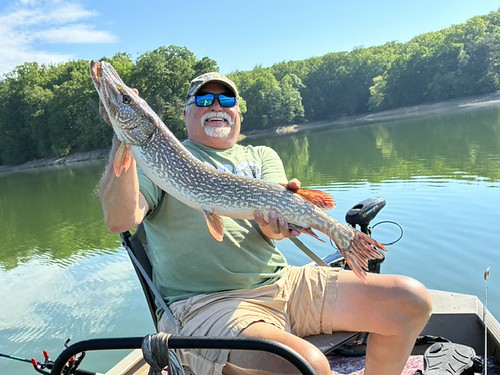
Chesapeake Channa, also known as snakeheads, can be found in grass bed areas in tidal waters, with many beginning to spawn. Noisy and disruptive topwater lures effectively attract attention from parent fish protecting eggs or fry balls.
Chain pickerel fishing always provides exciting entertainment and they can be found on grass bed outside edges. Crappie can be found near structure this month. Various sunfish species can be found roaming outside shallower waters.
Blue catfish and channel catfish offer active fishing in the bay’s tidal rivers while flathead catfish in the upper Potomac provide action. Blue and channel catfish are attracted to cut baits and scented baits. Flathead catfish prefer live bait.
Atlantic Ocean and Coastal Bays
Surf anglers are enjoying productive fishing off Ocean City and Assateague Island beaches. Anglers using large cut baits are catching large striped bass, red drum and bluefish. Most striped bass measure over the maximum slot size of 31 inches but provide exciting catch-and-release action, as do large red drum. Black drum are being caught on sand fleas and clams.
At the Ocean City Inlet and Route 50 Bridge area, anglers are catching striped bass by casting soft plastic jigs and paddletails. A fair number of striped bass being caught fall within the 28-31 inch slot. Anglers drifting cut baits in the inlet during evening hours are catching good numbers of striped bass. Flounder are moving through the inlet with catch and release tautog fishing available.
Back bay channels leading from the inlet are productive places to drift for flounder as they move through channels and spread throughout back bay waters. Striped bass are being caught near Route 90 and Verrazzano bridge piers by anglers casting soft plastic jigs and paddletails.
Offshore fishing at wrecks and reefs for black sea bass has been very productive with limit catches being common. Flounder and ling can be part of the mix for anglers. Farther offshore at the canyons, anglers are finding the first yellowfin tuna and dolphin with reports of bluefin tuna moving through canyon areas.